How to Peform CPR [An Update]

The Crucial Steps You Should Know – Including for Pets

[By Monica Gomez]

Anybody can and anybody should learn how to perform CPR (Cardiopulmonary resuscitation).

According to the American Heart Association, a stunning 70% of Americans don’t know how what to do if somebody is experiencing a cardiac emergency because they don’t know how to administer CPR or they forgot the exact technique. This is especially alarming since almost 90% of cardiac arrests occur at home — where patients depend on the immediate respiratory care response of their family members.

In brief, knowing how to perform CPR can save the life of a loved one someday.

***

CPR-How-To

 CPR-How-To-ChildrenSurvival Rates

While 400,000 cardiac arrests happen outside of hospitals each year in the U.S. alone, hands-on CPR can actually double or triple an adult’s chance of survival. However, you need to act quickly. At four minutes without oxygen, the patient will suffer from permanent brain damage. At eight to ten minutes, the patient can die. Almost 90% of cardiac arrest patients die because no one performed CPR at the scene.

Before You Start CPR

First of all, check if the patient can respond by tapping them on the shoulder and shouting “Are you okay?” If they don’t respond, call for medical emergency services immediately. If others are around, instruct them to call 911 and if you’re alone, do it yourself. If the patient is an animal, call the closest animal hospital. If you happen to be near an AED (defibrillator), read the instructions and give one shock to the patient (this applies to humans only).

CPR Steps For Adults and Children 9 and Older: Hands-Only CPR

  1. Lay the patient on their back and kneel next to their neck and shoulders.
  2. Place the heel of one hand on the center of the patient’s chest.
  3. Place the heel of your other hand over the first and lace fingers together.
  4. Keep your elbows straight and align your shoulders directly over your hands.
  5. Begin compression:
  • As hard as possible
  • At least 100x/minute
  • Allow the chest to rise fully between compressions.

TIP: Give compressions to the beat of disco hit “Stayin’ Alive”!

CPR Steps For Younger Children and Infants

  1.  Tilt the head back a bit and lift chin to open the airway and check for breathing.
  2. If there’s no breathing, give either of these two rescue breaths:
  • Child: Pinch the nose shut and make a complete seal over their mouth
  • Infant: Make a complete seal over their mouth and nose.
  1. Blow in for one second, so the chest visibly rises and repeat this once.
  2. Give 30 chest compressions (100x/minute):
  • Child: Push with one or two hands about two inches deep
  • Infant: Push with two to three fingers about 1.5 inches deep.
  1. Repeat these steps three to four times.

Pet CPR – For Dogs and Cats

[Follow these CPR instructions for puppies]

For Animals Under 10kg/22lbs:

  1.  Use the one-handed technique, wrapping the hand over sternum and chest.
  2. Give 30 chest compressions (100-120x/minute).
  3. Allow the chest to fully recoil between compressions.
  4. Give two mouth-to-snout rescue breaths after each set of compressions (30:2).

For Medium to Giant Dogs:

  • Position the animal on its side.
  • Use the two-handed technique, placing your hands over the widest part of the chest.

For Deep, Narrow-Chested Dogs Like Greyhounds:

  • Use the two-handed technique, placing your hands directly over the heart.

For Barrel-Chested Dogs Like English Bulldogs:

Place animal on its back and use the same positioning and technique as for adult humans Whether you perform CPR on an adult, child, infant, or pets, DO NOT STOP unless:

  • The patient starts breathing
  • An EMS or another citizen responder takes over
  • An AED is ready to use
  • The scene becomes unsafe
  • You are physically incapable of continuing

Assessment

Make sure to practice and/or brush up your CPR abilities today, so you’re ready to potentially save someone’s life in the future! Furthermore, if you’re interested in making it your profession to help people suffering from respiratory conditions like asthma, bronchitis, lung cancer, heart attack, stroke, chronic obstructive pulmonary disease (COPD) or sleep apnea, you should look into Carrington College’s respiratory care program. This two-year program combines classroom lectures, laboratory instruction, and clinical experience in order to prepare you to work in a variety of healthcare settings. If you’d like to assist and educate people regarding respiratory health concerns, our training program is the ideal fit for you!

Conclusion

Your thoughts and comments on this ME-P are appreciated. Feel free to review our top-left column, and top-right sidebar materials, links, URLs and related websites, too. Then, subscribe to the ME-P. It is fast, free and secure.

Speaker: If you need a moderator or speaker for an upcoming event, Dr. David E. Marcinko; MBA – Publisher-in-Chief of the Medical Executive-Post – is available for seminar or speaking engagements. Contact: MarcinkoAdvisors@msn.com

OUR OTHER PRINT BOOKS AND RELATED INFORMATION SOURCES:

Product DetailsProduct Details

Are Doctors Practitioners of Conspicuous Consumption?

Conspicuous Consumption by Definition

[By Dr. David Marcinko MBA and staff reporters]

Conspicuous consumption is a term introduced by the Norwegian-American economist and sociologist Thorstein Veblen in his book “The Theory of the Leisure Class” published in 1899.

***

af

“A Man of Wealth and Taste”

***

The term refers to consumers who buy expensive items to display wealth and income rather than to cover the real needs of the consumer. www.HealthDictionarySeries.org

A flashy consumer uses such behavior to maintain or gain higher social status. Most classes have a flashy consumer affect and influence over other classes, seeking to emulate the behavior.

***

eccentric

The result, according to Veblen, is a society characterized by wasted time and money.

 ***


***

Assessment

Are doctors today, or yesterday, practitioners of this theory?

Conclusion

Your thoughts and comments on this ME-P are appreciated. Feel free to review our top-left column, and top-right sidebar materials, links, URLs and related websites, too. Then, subscribe to the ME-P. It is fast, free and secure.

Speaker: If you need a moderator or speaker for an upcoming event, Dr. David E. Marcinko; MBA – Publisher-in-Chief of the Medical Executive-Post – is available for seminar or speaking engagements.

Book Marcinko: https://medicalexecutivepost.com/dr-david-marcinkos-bookings/

Subscribe: MEDICAL EXECUTIVE POST for curated news, essays, opinions and analysis from the public health, economics, finance, marketing, IT, business and policy management ecosystem.

MORE FOR DOCTORS AND NURES:

“Insurance & Risk Management Strategies for Doctors” https://tinyurl.com/ydx9kd93

“Financial Management Strategies for Hospitals” https://tinyurl.com/yagu567d

“Operational Strategies for Clinics and Hospitals” https://tinyurl.com/y9avbrq5

Risk Management, Liability Insurance, and Asset Protection Strategies for Doctors and Advisors: Best Practices from Leading Consultants and Certified Medical Planners™8Comprehensive Financial Planning Strategies for Doctors and Advisors: Best Practices from Leading Consultants and Certified Medical Planners™

***


EXPERT INVITATION TO THE MEDICAL EXECUTIVE-POST

Join our Subscriber Reactor Panel

***

***

About the “Medical Executive-Post”

The “Medical Executive-Post” is about connecting doctors, health care executives and modern consulting advisors. It’s about free-enterprise, business, practice, policy, personal financial planning and wealth building capitalism. We have an attitude that’s independent, outspoken, intelligent and so Next-Gen; often edgy, usually controversial.

So – Let Your Voice and Opinions Be Heard!

The Medical Executive-Post is inviting physicians and medical professionals, health care  accountants, management consultants and fiduciary financial advisors to join our Subscriber Reactor Panel.

This select group will help our publication focus on the most important issues for today’s physicians and all medical professionals.

JOIN US TODAY!

This image has an empty alt attribute; its file name is image-3.png

[It’s fast, free and secure]

← Back

Thank you for your response. ✨

No More ICO’s Before Reading This …

To my valued connections,

By Alan Yong

I have serious concerns about the current state of ICO’s and their future potential could be in jeopardy, if the current trend continues. Please take a moment to read the following articles before investing in, participating with, giving legal advice on, or launching your own ICO. Personally, I believe that ICOs are the best tools for capital formation if properly regulated.

Investopedia report finds 80% of all ICO’s to be scams – 92% never reach exchange
https://www.investopedia.com/news/80-icos-are-scams-report/

Alan Yong Provides Long Term Viability Solution for ICO’s
https://www.nasdaq.com/press-release/dnotes-global-ceo-alan-yong-cites-nextgen-vc-as-solution-for-ico-conundrum-20180906-00718

***

Risk Management, Liability Insurance, and Asset Protection Strategies for Doctors and Advisors: Best Practices from Leading Consultants and Certified Medical Planners™8Comprehensive Financial Planning Strategies for Doctors and Advisors: Best Practices from Leading Consultants and Certified Medical Planners™

Conclusion

Your thoughts and comments on this ME-P are appreciated. Feel free to review our top-left column, and top-right sidebar materials, links, URLs and related websites, too. Then, subscribe to the ME-P. It is fast, free and secure.

Speaker: If you need a moderator or speaker for an upcoming event, Dr. David E. Marcinko; MBA – Publisher-in-Chief of the Medical Executive-Post – is available for seminar or speaking engagements.

Book Marcinko: https://medicalexecutivepost.com/dr-david-marcinkos-bookings/

Subscribe: MEDICAL EXECUTIVE POST for curated news, essays, opinions and analysis from the public health, economics, finance, marketing, IT, business and policy management ecosystem.

MORE FOR DOCTORS AND NURES:

“Insurance & Risk Management Strategies for Doctors” https://tinyurl.com/ydx9kd93

“Financial Management Strategies for Hospitals” https://tinyurl.com/yagu567d

“Operational Strategies for Clinics and Hospitals” https://tinyurl.com/y9avbrq5

Non ED Venues for Low-Acuity Conditions

Usage Trends 2008-2015

By http://www.MCOL.com

***

***

Conclusion

Your thoughts and comments on this ME-P are appreciated. Feel free to review our top-left column, and top-right sidebar materials, links, URLs and related websites, too. Then, subscribe to the ME-P. It is fast, free and secure.

Speaker: If you need a moderator or speaker for an upcoming event, Dr. David E. Marcinko; MBA – Publisher-in-Chief of the Medical Executive-Post – is available for seminar or speaking engagements.

Book Marcinko: https://medicalexecutivepost.com/dr-david-marcinkos-bookings/

Subscribe: MEDICAL EXECUTIVE POST for curated news, essays, opinions and analysis from the public health, economics, finance, marketing, IT, business and policy management ecosystem.

DOCTORS:

“Insurance & Risk Management Strategies for Doctors” https://tinyurl.com/ydx9kd93

“Fiduciary Financial Planning for Physicians” https://tinyurl.com/y7f5pnox

“Business of Medical Practice 2.0” https://tinyurl.com/yb3x6wr8

HOSPITALS:

“Financial Management Strategies for Hospitals” https://tinyurl.com/yagu567d

“Operational Strategies for Clinics and Hospitals” https://tinyurl.com/y9avbrq5

***

Product DetailsProduct Details

On “Negative Bond Duration”

Negative Duration Bonds

Courtesy: www.CertifiedMedicalPlanner.org

WHAT IT IS – HOW IT WORKS?

Bond duration is a measure of the volatility of a bond’s return over time. It measures the price reduction of a bond, over the change in interest rate of the bond. It is slightly correlated to how long it takes for the bond to mature, but it is not an exact relationship.

ESSAY: https://medicalexecutivepost.com/2008/10/20/understanding-bond-duration/

But, “negative duration” is a situation in which the price of a bond or other debt security moves in the same direction of interest rates. That is, negative duration occurs when the bond prices go up along with interest rates and vice versa.

***

See the source image

https://www.etf.com/sections/features/20920-how-a-negative-duration-bond-etf-works.html?nopaging=1

ASSESSMENT

Your thoughts are appreciated.

MORE INVESTING FOR DOCTORS:

“Insurance & Risk Management Strategies for Doctors” https://tinyurl.com/ydx9kd93

“Fiduciary Financial Planning for Physicians” https://tinyurl.com/y7f5pnox

“Business of Medical Practice 2.0” https://tinyurl.com/yb3x6wr8

***

Risk Management, Liability Insurance, and Asset Protection Strategies for Doctors and Advisors: Best Practices from Leading Consultants and Certified Medical Planners™8Comprehensive Financial Planning Strategies for Doctors and Advisors: Best Practices from Leading Consultants and Certified Medical Planners™


Remembering 9/11

Rest in Peace

The ME-P Remembers

[Never Forget]

The Surprising Spending Patterns of High Earners

If you want to guess someone’s income level, look at what they buy

By Rick Kahler CFP®

***

Obviously, the rich and the poor will spend their available funds on different things.  Just what those things are, however, is less obvious. To illustrate, here is a pop quiz: Since 1992, what two products most consistently indicated that those using them were in the top 25% of all income earners in the U. S.?

Guessing a new car or a house would be logical, but wrong. The top two products indicative of being in that top one-fourth were dishwashers and dishwashing detergent. According to a fascinating study done by Marianne Bertrand and Emir Kamencia, “Coming Apart? Cultural Distances in the United States Over Time,” published in June 2018, if you use either there is about a 70% chance you are in the highest-earning 25%.

The study’s broader focus was on cultural differences, but what I couldn’t stop reading was the economic information. The products indicating affluence were nowhere near what I would have guessed.

Let’s start with 1992. The top product purchased by the rich was a dishwasher. If you owned one, there was a 70.4% chance you were in the top quartile of income earners. If you used dishwasher detergent, the chances were 70.2% you earned a high income. If you took a vacation where you traveled away from home, the chances were 67.0% you were high income. The top brands purchased by the affluent/rich were Grey Poupon Dijon mustard (62.2%), Kodak film (61.6%), and Thomas English muffins (61.5%). The top TV shows watched were Autoworks 200 (57.3%), Bush Clash (57.1%), and Tour du Pont (56.7%). Sorry, but I’ve never heard of any of these shows.

Moving on to 2004, the preferences of high income earners shifted slightly. The top product purchased by the affluent was a new vehicle (73.6%), followed by dishwashing detergent (71.6%), and owning a dishwasher (70.8%). A vacation was in fourth place with 70.5%. The top brands indicating affluence were Land O’ Lakes butter (59.2%), Kikkoman soy sauce (58.7%), and people who did not use a BIC lighter (58.7%). The top TV shows were the Super Bowl (58.5%), NFL Monday Night Football (56.1%), and NFL Regular Season Football (55.9%).

Jaguar Touring sedan XJ-V8-LWB

What about today? In 2016—the last year of data studied—the top product was a vacation (70.9%), owning a passport (70.3%), and having a Bluetooth in your vehicle (70.2%). Eight of the top 10 items related to travel or technology. The other two? Numbers five and six were owning a dishwasher and using dishwasher detergent. The top brand indicative of a high income was far and away Apple, with an iPhone first (69.1%) and an iPad second (66.9%). Across all years in their data, no individual brand was as predictive of being high-income than these two products. Other brands high on the list were Verizon Wireless (61.0%), an Android phone (59.5%), and Kikkoman soy sauce. Top TV shows were the Super Bowl (57.1%), Love It Or List It (55.9%), and Property Brothers (55.7%).

Keep in mind that the study showed seven out of 10 people who own iPhones, travel on vacation, or use dishwashers are in the top 25% of income earners. Not all people who do these things are affluent. Still, the odds that they are high earners are far better than the odds of winning any game of chance in Deadwood.

Assessment

So next time you want to size up the chances of someone being high income, ask them where they went on vacation this year and whether they took vacation photos with an iPhone or iPad. Or just ask how often they run their dishwasher.

Conclusion

Your thoughts and comments on this ME-P are appreciated. Feel free to review our top-left column, and top-right sidebar materials, links, URLs and related websites, too. Then, subscribe to the ME-P. It is fast, free and secure.

Speaker: If you need a moderator or speaker for an upcoming event, Dr. David E. Marcinko; MBA – Publisher-in-Chief of the Medical Executive-Post – is available for seminar or speaking engagements.

Book Marcinko: https://medicalexecutivepost.com/dr-david-marcinkos-bookings/

Subscribe: MEDICAL EXECUTIVE POST for curated news, essays, opinions and analysis from the public health, economics, finance, marketing, IT, business and policy management ecosystem.

MORE FOR DOCTORS AND NURES:

“Insurance & Risk Management Strategies for Doctors” https://tinyurl.com/ydx9kd93

“Financial Management Strategies for Hospitals” https://tinyurl.com/yagu567d

“Operational Strategies for Clinics and Hospitals” https://tinyurl.com/y9avbrq5

***

Risk Management, Liability Insurance, and Asset Protection Strategies for Doctors and Advisors: Best Practices from Leading Consultants and Certified Medical Planners™8Comprehensive Financial Planning Strategies for Doctors and Advisors: Best Practices from Leading Consultants and Certified Medical Planners™

Investors Have Misdiagnosed Amazon’s Push Into The Pharmacy Business

Investors Have Misdiagnosed Amazon’s Push Into The Pharmacy Business

By Vitaliy Katsenelson CFA

***

Companies everywhere, in every business, are paranoid about Amazon.com. This sort of paranoia is healthy for the long-term well-being of our investment portfolio, as it is creating interesting buying opportunities.

A case in point: My firm spent a lot of time thinking about pharmacies when we were analyzing investments in McKesson and other drug distributors. We struggled with a question: How will the retail pharmaceutical industry look in the future? Or more precisely, how will Amazon’s entrance into the retail pharmacy business change this industry?

Our inability to answer this question kept us away from retail pharmacies. Then we had a small but important insight that shifted our thinking on Walgreens Boots Alliance. The preponderance of drugs in the U.S. is consumed by an older population, whose habits change slowly or not at all. Accordingly, it’s likely that Amazon’s online pharmacy will not significantly impact the existing drug industry.

Here’s why: Americans currently spend $450 billion a year on drugs. Walmart is the fourth-largest pharmacy in the U.S., with sales of $21 billion, or 4.6% of the company’s total sales. Let’s say that over the next five years Amazon gets to Walmart’s sales level of $21 billion. If the U.S. pharmaceutical industry grows 2% a year over that time, total drug sales will have increased by $45 billion, or the equivalent of two Walmarts (we are ignoring compounding here), to $495 billion. Walgreens, with its pharmacy selling about $70 billion a year, would barely notice Amazon’s presence.

I’ve made this point before, but it is important to repeat: 10 years ago Amazon was not taken too seriously. Giants like Google, now Alphabet, and Microsoft ignored Amazon’s entry into cloud hosting, thinking “What does a bookseller know about the cloud?” They have regretted it ever since.

Nowadays everyone is taking Amazon too seriously, bestowing CEO Jeff Bezos with walk-on-water-like superpowers. Boardrooms today are filled to overflowing with chatter about Amazon. There‘s admittedly a lot Corporate America can learn from Bezos (for instance, about ignoring short-term results), but Bezos is not superhuman and Amazon cannot bend the laws of economic gravity.

Walgreens’ U.S. business, which is about 75% of its total sales, is impressive. A single stand-alone store produces revenues of about $10 million a year — $7 million in the pharmacy and $3 million in front-end sales (milk, candy bars, T-shirts, etc.) A single store fills about 121,000 scripts a year (up from 97,000 four years ago). Walgreens has one of the highest sales-per-square-foot numbers in the retail industry, at around $1,000 per-square-foot (compared to Walmart’s $450, Kroger’s $550, and Target’s $300). (Note that Tesco’s U.K. stores have sales per square foot of $1,100 — this is why we like the U.K. grocery business more than ones in the US).

Walgreens also has an underutilized asset: the front end of the store. Think about it: The pharmacy takes up 20% of the floor space but generates 70% of revenue. In other words 80% of the store (the front end) brings in only 30% of revenue. Walgreens is experimenting with different ways to optimize this underutilized asset — it’s opening medical clinics and bringing LabCorp into its stores, for instance.

In 2018 Walgreens bought 1,900 stores from Rite Aid, bringing its total U.S. store count up to around 10,000. Store-count growth days are behind Walgreens, but the scripts-per-store-growth will continue, since baby boomers are not getting any younger. Accordingly, total sales growth will continue at a level of at least 2%-3% a year. When retailers mature and cannot open new stores, their free cash flows explode. Which begs the question, what will Walgreens do with its cash?

Already Walgreens is taking a quite different approach than its largest counterpart, CVS Health Corp. CVS owns one of the largest pharmacy benefit management (PBM) companies (a business that has a lot of political risk, as it’s ridden with conflicts of interest), and CVS is doubling down on complexity and buying Aetna , a health insurance company. CVS is trying to become an integrated healthcare provider. We don’t know if CVS will be successful in this endeavor, but the historical odds of success with acquisitions of this complexity clearly do not favor CVS.

Walgreens is run by Stefano Pessina, who owns 13% of the company; and thus 13 cents of every dollar spent is his. Walgreens has therefore been deleveraging its business, buying back stock, and paying a dividend. Walgreens is expected to earn $6 a share in 2018. My estimate is that earnings, helped by the Rite Aid acquisition, same-store sales growth, and share buybacks (WBA repurchased 8% of its shares in 2018 and has an authorization to buy another 13%), will exceed $8 per share in 2021.

***

drugs

***

Assessment

If Walgreens shares trade at 13 times its $8 earnings per share in three years, then the upside from here is about 70%; if it trades at 15 times then it’s a double (Walmart trades currently at 18 times estimated 2018 earnings, while Target is at 15 times). We bought Walgreens at a little over 10 times estimated 2018 earnings in July 2018. Walgreens is a better business than Target and at least as good a business as Walmart. At this valuation, heads we win, tails we win — the only question is by how much.

Conclusion

Your thoughts and comments on this ME-P are appreciated. Feel free to review our top-left column, and top-right sidebar materials, links, URLs and related websites, too. Then, subscribe to the ME-P. It is fast, free and secure.

Speaker: If you need a moderator or speaker for an upcoming event, Dr. David E. Marcinko; MBA – Publisher-in-Chief of the Medical Executive-Post – is available for seminar or speaking engagements.

Book Marcinko: https://medicalexecutivepost.com/dr-david-marcinkos-bookings/

Subscribe: MEDICAL EXECUTIVE POST for curated news, essays, opinions and analysis from the public health, economics, finance, marketing, IT, business and policy management ecosystem.

MORE FOR DOCTORS AND NURES:

“Insurance & Risk Management Strategies for Doctors” https://tinyurl.com/ydx9kd93

“Financial Management Strategies for Hospitals” https://tinyurl.com/yagu567d

“Operational Strategies for Clinics and Hospitals” https://tinyurl.com/y9avbrq5

***

Risk Management, Liability Insurance, and Asset Protection Strategies for Doctors and Advisors: Best Practices from Leading Consultants and Certified Medical Planners™8Comprehensive Financial Planning Strategies for Doctors and Advisors: Best Practices from Leading Consultants and Certified Medical Planners™

Medical Provider Directories

What’s Next for Provider Data Exchange?

By http://www.MCOL.com

***

***

Conclusion

Your thoughts and comments on this ME-P are appreciated. Feel free to review our top-left column, and top-right sidebar materials, links, URLs and related websites, too. Then, subscribe to the ME-P. It is fast, free and secure.

Speaker: If you need a moderator or speaker for an upcoming event, Dr. David E. Marcinko; MBA – Publisher-in-Chief of the Medical Executive-Post – is available for seminar or speaking engagements.

Book Marcinko: https://medicalexecutivepost.com/dr-david-marcinkos-bookings/

Subscribe: MEDICAL EXECUTIVE POST for curated news, essays, opinions and analysis from the public health, economics, finance, marketing, IT, business and policy management ecosystem.

MORE FOR DOCTORS AND NURES:

“Insurance & Risk Management Strategies for Doctors” https://tinyurl.com/ydx9kd93

“Financial Management Strategies for Hospitals” https://tinyurl.com/yagu567d

“Operational Strategies for Clinics and Hospitals” https://tinyurl.com/y9avbrq5

***

Product DetailsProduct DetailsProduct Details

Top 15 pharmaceutical products by sales worldwide in 2017

Top 15 pharmaceutical products by sales worldwide in 2017

***

Conclusion

Your thoughts and comments on this ME-P are appreciated. Feel free to review our top-left column, and top-right sidebar materials, links, URLs and related websites, too. Then, subscribe to the ME-P. It is fast, free and secure.

Speaker: If you need a moderator or speaker for an upcoming event, Dr. David E. Marcinko; MBA – Publisher-in-Chief of the Medical Executive-Post – is available for seminar or speaking engagements.

Book Marcinko: https://medicalexecutivepost.com/dr-david-marcinkos-bookings/

Subscribe: MEDICAL EXECUTIVE POST for curated news, essays, opinions and analysis from the public health, economics, finance, marketing, IT, business and policy management ecosystem.

MORE FOR DOCTORS AND NURES:

“Insurance & Risk Management Strategies for Doctors” https://tinyurl.com/ydx9kd93

“Financial Management Strategies for Hospitals” https://tinyurl.com/yagu567d

“Operational Strategies for Clinics and Hospitals” https://tinyurl.com/y9avbrq5

***

Product DetailsProduct Details

On Hospital Price Growth

Explosion in Spending – Inflation Since 1960

By CMS

***

[Click to Enlarge]

***

The greatest wealth transfer in American history has been from the working/middle class to a wasteful healthcare system.

Sadly, once-mission-based hospitals lost their way failing to address healthcare caused 20 yr long economic depression for working/middle class. Employers spending far more on employees than 20 years ago but all of it has gone to healthcare with no demonstrable outcomes improvement

-Dave Chase [Creator HealthRosetta]

***

Conclusion

Your thoughts and comments on this ME-P are appreciated. Feel free to review our top-left column, and top-right sidebar materials, links, URLs and related websites, too. Then, subscribe to the ME-P. It is fast, free and secure.

Speaker: If you need a moderator or speaker for an upcoming event, Dr. David E. Marcinko; MBA – Publisher-in-Chief of the Medical Executive-Post – is available for seminar or speaking engagements.

Book Marcinko: https://medicalexecutivepost.com/dr-david-marcinkos-bookings/

Subscribe: MEDICAL EXECUTIVE POST for curated news, essays, opinions and analysis from the public health, economics, finance, marketing, IT, business and policy management ecosystem.

DOCTORS:

“Insurance & Risk Management Strategies for Doctors” https://tinyurl.com/ydx9kd93

“Fiduciary Financial Planning for Physicians” https://tinyurl.com/y7f5pnox

“Business of Medical Practice 2.0” https://tinyurl.com/yb3x6wr8

HOSPITALS:

“Financial Management Strategies for Hospitals” https://tinyurl.com/yagu567d

“Operational Strategies for Clinics and Hospitals” https://tinyurl.com/y9avbrq5

***

Product DetailsProduct Details

Nursing Career Goals by Age

A Survey

By http://www.MCOL.com

***

***

Conclusion

Your thoughts and comments on this ME-P are appreciated. Feel free to review our top-left column, and top-right sidebar materials, links, URLs and related websites, too. Then, subscribe to the ME-P. It is fast, free and secure.

Speaker: If you need a moderator or speaker for an upcoming event, Dr. David E. Marcinko; MBA – Publisher-in-Chief of the Medical Executive-Post – is available for seminar or speaking engagements.

Book Marcinko: https://medicalexecutivepost.com/dr-david-marcinkos-bookings/

Subscribe: MEDICAL EXECUTIVE POST for curated news, essays, opinions and analysis from the public health, economics, finance, marketing, IT, business and policy management ecosystem.

MORE FOR DOCTORS AND NURES:

“Insurance & Risk Management Strategies for Doctors” https://tinyurl.com/ydx9kd93

“Financial Management Strategies for Hospitals” https://tinyurl.com/yagu567d

“Operational Strategies for Clinics and Hospitals” https://tinyurl.com/y9avbrq5

***

Product DetailsProduct Details

More on US Health Care Costs

Highest in the World?

By Rick Kahler MS CFP®

The soaring cost of health care in the United States is painfully obvious to anyone who looks at a medical bill. This aspect of our system has been out of control for decades.

For example, a recent study by the Kaiser Foundation compared health care prices in the U.S. with those in other developed nations, virtually all of which have some form of universal health care. It found ours to be the highest in the world. The average American spends more than $10,348 a year on health care, amounting to a total of 18% of GDP. The average for citizens in other developed countries was about $5,198 per year, or 9% of total GDP.

Despite paying more, Americans average fewer physician consultations. Our rate of about 3.9 per person per year is well below the 7.6 average in the other countries studied. The researchers also found American hospital stays to be shorter, averaging 6.1 days while the average in other countries was 10.2 days.

The Kaiser study also compared costs for several expensive drugs and various medical procedures, including angioplasty and coronary bypass surgery, MRI exams, colonoscopies, appendectomies, and knee replacements. Costs in the U.S. were significantly higher. In fact, the average cost of replacing one knee here ($28,184) would almost pay for two new ones in Australia, where the average cost per knee is $15,941.

The study doesn’t attempt to assess the impact of the Affordable Care Act on U.S. medical costs or to offer any suggested solutions. Nor does it address the respective tax burdens of the various countries. This last is a shortcoming of the study that is important to consider.

***

***

Many of the European countries that feature significant “cradle to grave” universal health systems also have considerably higher taxes than does the U.S. According to data from the Tax Policy Center, the taxes at all levels of government in many European countries exceed 40 percent of GDP. Taxes in the U.S. are low in comparison. In 2015, U.S. taxes represented 26 percent of GDP. Of the 34 member countries of the Organisation for Economic Co-operation and Development (OECD), only four (Korea, Chile, Mexico, and Ireland) collected less than the United States as a percentage of GDP. It may not be surprising that these countries generally provide more extensive government services than the U.S. does.

Let’s put this into perspective. If Americans pay 18% of GDP in health care costs but spend 14% of GDP less in taxes than many European countries, that would leave the US paying a net of 4% of GDP for health care. This is almost half of what Europeans pay. Perhaps the lower amount we actually spend on health care is explained by the fewer physician visits and shorter hospital stays.

Certainly, not all of the 14% higher GDP in taxes collected by European nations goes to health care. Still, it is reasonable to assume that a significant portion of it does.

***

***

Another fact that is often omitted by studies critical of the US for not having universal health care is that the US does have government funded health care that (as of April 2018) covers over 130 million people through Medicare, Medicaid, and CHIP. This compares with some 179 million people (2016 numbers) with private insurance. In addition, many U.S. citizens currently qualify for health insurance premium subsidies. A family of four with an income under $72,000 a year would qualify.

Assessment

The high cost of U.S. health care is certainly a serious problem that needs to be addressed. However, a valid comparison of costs here to those in other countries needs to include the differences in tax burdens.

Conclusion

Your thoughts and comments on this ME-P are appreciated. Feel free to review our top-left column, and top-right sidebar materials, links, URLs and related websites, too. Then, subscribe to the ME-P. It is fast, free and secure.

Speaker: If you need a moderator or speaker for an upcoming event, Dr. David E. Marcinko; MBA – Publisher-in-Chief of the Medical Executive-Post – is available for seminar or speaking engagements.

Book Marcinko: https://medicalexecutivepost.com/dr-david-marcinkos-bookings/

Subscribe: MEDICAL EXECUTIVE POST for curated news, essays, opinions and analysis from the public health, economics, finance, marketing, IT, business and policy management ecosystem.

***

Product DetailsProduct Details

Top Ten Money Truisms

Top Ten Money Truisms

By Rick Kahler CFP®

Jonathan Clements is a longtime former columnist for the Wall Street Journal, editor of the HumbleDollar blog, and author whose latest book, From Here to Financial Happiness, comes out in September. I’ve long been a fan of his, and I appreciate his list of 41 Twitter-length truisms that pack a lot of wisdom into a few words.

Here are what I think are the top ten:

1. “We get just one shot at making the journey from birth to retirement. Flirting with financial disaster is not advisable.” I would add that flirting with financial disaster can come as much from being afraid to take action as from taking the wrong action.

2. “We are voracious acquirers of financial information, but mostly to buttress opinions we already hold.” I find very few people have open minds about money. Most hold on tightly to their money scripts because they are too frightened to entertain the notion that they don’t know.

3. “Picking superior investments is a crowded trade. Saving more is an easy win.” One of the least dramatic but most important components to creating wealth is frugality, whether it takes the form of choosing lower-fee investments or living below one’s means.

4. “What’s the difference between an equity-indexed annuity and an index fund? One needs an army of salespeople. The other sells itself.” I have never, ever had a client who purchased an annuity of any kind on their own accord. I have had scores who purchased index funds. Avoiding “investments” being aggressively pushed by salespeople can save you thousands and potentially make you millions.

5. “Cash value life insurance isn’t an investment, it’s a religion—and you’ll never meet a more prickly group of disciples.” I absolutely agree, and the proof is in the nasty comments that fill my email inbox every time I write about this topic.

6. “Draw up a list of your greatest pleasures in life. Then ask yourself: Do you need great wealth to enjoy any of them?” Of course you don’t need great wealth to spend time with those you love, drink in a gorgeous sunset, or do something nice for someone else. You do, however, need some financial well-being to make meaningful pleasures happen.

7. “When you’re ill, you realize how great it is to feel healthy. Money’s similar: When you’re broke, you realize how great it is to be solvent.” The flip side of this truism is the gratitude many of my clients feel for having financial security.

8. “A boat is not your financial friend, but a friend with a boat is.” Buying toys, tools, or other big-ticket items you rarely use and can barely afford is a common money mistake.

9. “Trying to beat the market is a game for the rich. Only they can afford the inevitable disappointing results.” Timing markets doesn’t work whether you are poor or rich; even the rich can only afford to be wrong for a while.

10. “The big financial risk isn’t dying early in retirement but, rather, living longer than we ever imagined.” Most people significantly underestimate how long they will live. That is why 48% start Social Security benefits at age 62 and another 48% start them at age 66. Only 4% wait until age 70, despite statistics showing the odds are this choice will net more lifetime income.

Assessment

I know that’s ten, but one more seems appropriate to end with: “Our only earthly immortality will be the recollection of others. Make sure those memories are good.” One of the ways we can be remembered fondly is through giving back to our communities with both our money and our time.

Conclusion

Your thoughts and comments on this ME-P are appreciated. Feel free to review our top-left column, and top-right sidebar materials, links, URLs and related websites, too. Then, subscribe to the ME-P. It is fast, free and secure.

Speaker: If you need a moderator or speaker for an upcoming event, Dr. David E. Marcinko; MBA – Publisher-in-Chief of the Medical Executive-Post – is available for seminar or speaking engagements.

Book Marcinko: https://medicalexecutivepost.com/dr-david-marcinkos-bookings/

Subscribe: MEDICAL EXECUTIVE POST for curated news, essays, opinions and analysis from the public health, economics, finance, marketing, IT, business and policy management ecosystem.

***

Comprehensive Financial Planning Strategies for Doctors and Advisors: Best Practices from Leading Consultants and Certified Medical Planners™

More Changes to Medicare for Doctors

More Changes to Medicare

By Ira Nash MD

Conclusion

Your thoughts and comments on this ME-P are appreciated. Feel free to review our top-left column, and top-right sidebar materials, links, URLs and related websites, too. Then, subscribe to the ME-P. It is fast, free and secure.

Speaker: If you need a moderator or speaker for an upcoming event, Dr. David E. Marcinko; MBA – Publisher-in-Chief of the Medical Executive-Post – is available for seminar or speaking engagements.

Book Marcinko: https://medicalexecutivepost.com/dr-david-marcinkos-bookings/

Subscribe: MEDICAL EXECUTIVE POST for curated news, essays, opinions and analysis from the public health, economics, finance, marketing, IT, business and policy management ecosystem.

***

Product DetailsProduct Details


Why My Firm Sold Short-Term Bond ETFs and Bought U.S. Treasury Bills

Why My Firm Sold Short-Term Bond ETFs and Bought U.S. Treasury Bills

By Vitaliy Katsenelson, CFA

Conclusion

Your thoughts and comments on this ME-P are appreciated. Feel free to review our top-left column, and top-right sidebar materials, links, URLs and related websites, too. Then, subscribe to the ME-P. It is fast, free and secure.

Speaker: If you need a moderator or speaker for an upcoming event, Dr. David E. Marcinko; MBA – Publisher-in-Chief of the Medical Executive-Post – is available for seminar or speaking engagements.

Book Marcinko: https://medicalexecutivepost.com/dr-david-marcinkos-bookings/

Subscribe: MEDICAL EXECUTIVE POST for curated news, essays, opinions and analysis from the public health, economics, finance, marketing, IT, business and policy management ecosystem.

DOCTORS:

“Insurance & Risk Management Strategies for Doctors” https://tinyurl.com/ydx9kd93

“Fiduciary Financial Planning for Physicians” https://tinyurl.com/y7f5pnox

“Business of Medical Practice 2.0” https://tinyurl.com/yb3x6wr8

HOSPITALS:

“Financial Management Strategies for Hospitals” https://tinyurl.com/yagu567d

“Operational Strategies for Clinics and Hospitals” https://tinyurl.com/y9avbrq5

***

Risk Management, Liability Insurance, and Asset Protection Strategies for Doctors and Advisors: Best Practices from Leading Consultants and Certified Medical Planners™8Comprehensive Financial Planning Strategies for Doctors and Advisors: Best Practices from Leading Consultants and Certified Medical Planners™

Geographic Variation in Maternal Deaths

In the USA

By http://www.MCOL.com

***

***

Conclusion

Your thoughts and comments on this ME-P are appreciated. Feel free to review our top-left column, and top-right sidebar materials, links, URLs and related websites, too. Then, subscribe to the ME-P. It is fast, free and secure.

Speaker: If you need a moderator or speaker for an upcoming event, Dr. David E. Marcinko; MBA – Publisher-in-Chief of the Medical Executive-Post – is available for seminar or speaking engagements.

Book Marcinko: https://medicalexecutivepost.com/dr-david-marcinkos-bookings/

Subscribe: MEDICAL EXECUTIVE POST for curated news, essays, opinions and analysis from the public health, economics, finance, marketing, IT, business and policy management ecosystem.

DOCTORS:

“Insurance & Risk Management Strategies for Doctors” https://tinyurl.com/ydx9kd93

“Fiduciary Financial Planning for Physicians” https://tinyurl.com/y7f5pnox

“Business of Medical Practice 2.0” https://tinyurl.com/yb3x6wr8

HOSPITALS:

“Financial Management Strategies for Hospitals” https://tinyurl.com/yagu567d

“Operational Strategies for Clinics and Hospitals” https://tinyurl.com/y9avbrq5

***

Product DetailsProduct Details

How Low Can Healthcare Prices Really Go?

How Low Can Healthcare Prices Really Go?

Conclusion

Your thoughts and comments on this ME-P are appreciated. Feel free to review our top-left column, and top-right sidebar materials, links, URLs and related websites, too. Then, subscribe to the ME-P. It is fast, free and secure.

Speaker: If you need a moderator or speaker for an upcoming event, Dr. David E. Marcinko; MBA – Publisher-in-Chief of the Medical Executive-Post – is available for seminar or speaking engagements.

Book Marcinko: https://medicalexecutivepost.com/dr-david-marcinkos-bookings/

Subscribe: MEDICAL EXECUTIVE POST for curated news, essays, opinions and analysis from the public health, economics, finance, marketing, IT, business and policy management ecosystem.

MORE FOR DOCTORS AND NURES:

“Insurance & Risk Management Strategies for Doctors” https://tinyurl.com/ydx9kd93

“Financial Management Strategies for Hospitals” https://tinyurl.com/yagu567d

“Operational Strategies for Clinics and Hospitals” https://tinyurl.com/y9avbrq5

***

Product DetailsProduct Details


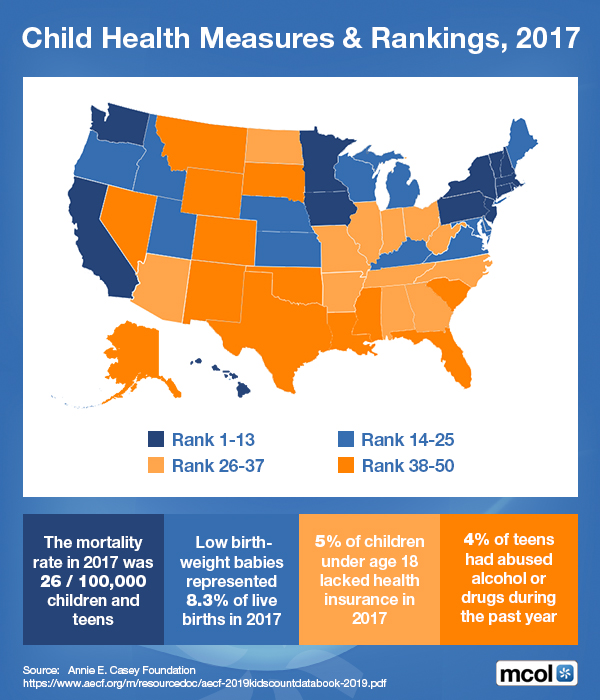
Worst and Best States for Healthcare

US Costs and Outcomes

By http://www.MCOL.com

***’

***

Conclusion

Your thoughts and comments on this ME-P are appreciated. Feel free to review our top-left column, and top-right sidebar materials, links, URLs and related websites, too. Then, subscribe to the ME-P. It is fast, free and secure.

Speaker: If you need a moderator or speaker for an upcoming event, Dr. David E. Marcinko; MBA – Publisher-in-Chief of the Medical Executive-Post – is available for seminar or speaking engagements.

Book Marcinko: https://medicalexecutivepost.com/dr-david-marcinkos-bookings/

Subscribe: MEDICAL EXECUTIVE POST for curated news, essays, opinions and analysis from the public health, economics, finance, marketing, IT, business and policy management ecosystem.

MORE FOR DOCTORS AND NURES:

“Insurance & Risk Management Strategies for Doctors” https://tinyurl.com/ydx9kd93

“Financial Management Strategies for Hospitals” https://tinyurl.com/yagu567d

“Operational Strategies for Clinics and Hospitals” https://tinyurl.com/y9avbrq5

***

Product DetailsProduct Details

Questions I’d be Asking If I Owned Tesla Stock

Questions I’d be Asking If I Owned Tesla Stock

By Vitaliy Katsenelson CFA

 What happened to 345,000 reservations?

When Tesla’s Model 3 was released, it was supposed to be a $35,000 car. Four hundred thousand people, including yours truly, put down a $1,000 deposit to reserve their spots in line so they could get their hands on that marvel as soon as it became available. It was a brilliant move by Tesla, as it provided the company $400 million of interest-free financing — the biggest crowdfunding project ever.

Today, after some delays, the Model 3 is being produced. However, $35,000 seems to have been a fiction of CEO Elon Musk’s imagination. Though the car is getting great reviews from auto critics, the price for a bare-bones Model 3 starts at $49,000, and the tax incentives are fading away.

But something interesting happened recently. I received an email from Tesla that said: Model 3 is available to order, and no reservation is required in the U.S. We’re now offering all our best options — including our Long Range and Performance configurations with dual motor all-wheel drive. You can design and order yours today for delivery in approximately 2–4 months.

On the surface this sounds like great news, except that it begs a question: What happened to 345,000 orders? Let me explain. According to Bloomberg, which has been tracking Tesla’s production, to date (as of July 28, 2018) Tesla has produced 55,000 Model 3 cars. Since a $1,000 deposit was supposed to secure buyers a place in line, any car ordered today will only be delivered after orders that were placed years ago are fulfilled — after all, 400,000 people paid Tesla $1,000 to hold their places.

Thus there are only three possible explanations for the email I received. One is that Model 3 production is expected to accelerate at an exponential rate to 40,000 cars a week, starting now. However, Bloomberg estimates that Tesla’s normal production cadence of the Model 3 is closer to 2,825 cars a week, so this is a highly unlikely scenario.

Or two, maybe Tesla has been extremely liberal with its statement of a two-to-four month delivery schedule because it still has 345,000 cars to produce before it can start fulfilling new orders, and the company is using that email to raise additional funds from new customers making deposits. (The required deposit is now $2,500.)

There is a third explanation: The bulk of the original 400,000 orders were for a $35,000 car. When it came time to actually buy the car, consumers may have realized that the out-of-pocket expense was much more than expected and simply canceled their orders, draining Tesla’s balance sheet of $345 million.

How sound is Tesla’s balance sheet?

What Musk has achieved with Tesla and SpaceX is truly astounding. I have incredible respect for him, but he is also a magician playing a confidence game. If Musk can continue to convince the market that Tesla has a bright future, then the market will continue to finance Tesla’s losses, and maybe Musk will figure out how to produce the Model 3 more cheaply and then Tesla will sell hundreds of thousands of Model 3s and the future will be as bright as Musk paints it.

For that to happen, Tesla needs to maintain its high stock price, and investors have to believe that Musk is the Iron Man. Investors have to suspend belief, ignore current problems, and focus on the future. However, if the market loses confidence in Tesla and Musk, Tesla is done. This company is losing billions of dollars a year; it has an over-levered balance sheet. This is where Musk’s confidence game comes in.

If you believe in magic stop reading right now. Okay, you’ve been warned.

There is no magic. Magic is just the art of misdirection. The magician gets you to focus on the shiny object he holds in his left hand and you don’t see what he is doing with his right hand.

Musk has been showing us a lot of shiny objects. Some are real, like the success of SpaceX; some are superfluous, like sending a Tesla Roadster into space, and some are future promises on which Musk may or may not be able to deliver, like his futuristic underground railroad for cars (the hyperloop) and the Tesla truck, which is unlikely to be produced on time and at the promised price. The list is long in this category and never-ending; Musk’s futuristic thinking knows no bounds.

But importantly, these promises are the shiny objects that keep Tesla’s stock price high.

If I was a Tesla investor I’d be seriously worried about the company’s balance sheet. There are some ominous signs that Tesla’s financial situation is deteriorating rapidly. Tesla reportedly recently sent an email to its suppliers asking them to give some money back to help the company with its profitability.

Such requests are made by companies looking for Hail Mary solutions to significant financial problems. If suppliers start questioning Tesla’s financial viability, they’ll start shortening their accounts receivables periods and start requesting letters of credit. This would escalate the company’s problems. Hail Marys are acts of desperation. Putting this in the context of the likely Model 3 cancellations, — Tesla’s cash burn has likely gotten a lot worse.

 How effective is Musk at running Tesla?

Tesla is Elon Musk. He has achieved more than many of us will achieve in a thousand lifetimes. But today Musk is running half a dozen companies (Tesla, SpaceX, Solar City, Boring, OpenAI, Hyperloop). To make matters worse, he is also an incredible micromanager. I read that he interviews (or at least used to) every new employee who joins Tesla and SpaceX.

It is clear that Musk is quite exhausted, and his behavior is becoming more erratic. In a conference call snafu in April, he called the British diver who saved the Thai cave kids a “pedo” on Twitter. This sort of thing undermines Musk’s Iron Man image — if he loses that, the confidence game is lost and Tesla is done.

Another red flag went up recently: Musk started to attack short sellers. A short seller who went under the name of Montana Sceptic posted negative research on Tesla on Twitter and SeekingAlpha. Elon Musk personally called the man’s employer and threatened a lawsuit if the employer didn’t silence Montana Sceptic. Historically, companies that have gone after short sellers have had something to hide or were playing a confidence game. (The short sellers were interfering with the misdirection to shiny objects.)

Assessment

Tesla investors are still fascinated by the shiny objects, but I note that CDS insurance on Tesla’s bonds prices in a 24% risk of default by 2025. I am not long or short the stock. But if I were long Tesla’s shares I’d be asking myself these questions. After all, you’re paying $50 billion for a company that trades completely on the spoils of future dreams.

 Conclusion

Your thoughts and comments on this ME-P are appreciated. Feel free to review our top-left column, and top-right sidebar materials, links, URLs and related websites, too. Then, subscribe to the ME-P. It is fast, free and secure.

Speaker: If you need a moderator or speaker for an upcoming event, Dr. David E. Marcinko; MBA – Publisher-in-Chief of the Medical Executive-Post – is available for seminar or speaking engagements.

Book Marcinko: https://medicalexecutivepost.com/dr-david-marcinkos-bookings/

Subscribe: MEDICAL EXECUTIVE POST for curated news, essays, opinions and analysis from the public health, economics, finance, marketing, IT, business and policy management ecosystem.

DOCTORS:

“Insurance & Risk Management Strategies for Doctors” https://tinyurl.com/ydx9kd93

“Fiduciary Financial Planning for Physicians” https://tinyurl.com/y7f5pnox

“Business of Medical Practice 2.0” https://tinyurl.com/yb3x6wr8

HOSPITALS:

“Financial Management Strategies for Hospitals” https://tinyurl.com/yagu567d

“Operational Strategies for Clinics and Hospitals” https://tinyurl.com/y9avbrq5

***

Risk Management, Liability Insurance, and Asset Protection Strategies for Doctors and Advisors: Best Practices from Leading Consultants and Certified Medical Planners™8Comprehensive Financial Planning Strategies for Doctors and Advisors: Best Practices from Leading Consultants and Certified Medical Planners™


Employee Healthcare Cost Projections

In 2019 per Employee Health Benefit Costs

By http://www.MCOL.com

***

***

Conclusion

Your thoughts and comments on this ME-P are appreciated. Feel free to review our top-left column, and top-right sidebar materials, links, URLs and related websites, too. Then, subscribe to the ME-P. It is fast, free and secure.

Speaker: If you need a moderator or speaker for an upcoming event, Dr. David E. Marcinko; MBA – Publisher-in-Chief of the Medical Executive-Post – is available for seminar or speaking engagements.

Book Marcinko: https://medicalexecutivepost.com/dr-david-marcinkos-bookings/

Subscribe: MEDICAL EXECUTIVE POST for curated news, essays, opinions and analysis from the public health, economics, finance, marketing, IT, business and policy management ecosystem.

MORE FOR DOCTORS AND NURES:

“Insurance & Risk Management Strategies for Doctors” https://tinyurl.com/ydx9kd93

“Financial Management Strategies for Hospitals” https://tinyurl.com/yagu567d

“Operational Strategies for Clinics and Hospitals” https://tinyurl.com/y9avbrq5

***

Product DetailsProduct DetailsProduct Details

On Medicare Bureaucratization

Isn’t limited to governments

By Rick Kahler MS CFP®

A client recently told me about her first medical checkup after becoming eligible for Medicare. “The doctor said things like, ‘They require us to fill out this form,’ and ‘This test is covered every three years, so we can’t do it this year,’ and ‘Medicare will pay for a baseline EKG even though you have no history of heart disease.’ I’ve gone to this doctor for ten years. I’m the same person I was a year ago. Yet it felt as if I had moved to a category where the appointment was all about the paperwork instead of my health. ”

A situation like this, where the paperwork seems more important than the person, demonstrates something I call the Principle of Bureaucratization: the idea that the more layers of decision-making are added to an organization, the less efficient it becomes in delivering its goods or services.

While this phenomenon affects organizations and governments of all sizes, the negative outcomes seem to increase the larger a company becomes or the further away the seat of government is from its constituents. Municipal services seem to be delivered more efficiently than state services. State services tend to be more efficient that those coming from the federal government. There are some exceptions, but not many.

One reason is that the further removed from you the decision-maker is, the less personal the services will be. Moving from the private health care system to the government-run health care system called Medicare is just one example. The same principle seems to apply in other countries. I have visited the UK numerous times, and it seems that every time I’ve read a newspaper article about some specific failing of the NHS (National Health Service). Just recently, at a workshop in Europe, a participant from the UK told me that the waiting list to see a psychiatrist was one year. “The NHS simply works against you,” she said with exasperation.

I think most Americans can agree that our healthcare system is badly flawed. We may disagree on the causes and cures. I see as one major problem that our federal government has created a regulatory structure which allows a select number of health insurance and pharmaceutical companies control over the health care system. These regulations have sent insurance costs soaring by almost eliminating competition. Third-party payment of medical bills means those receiving the services don’t have any incentive to even ask about costs.

***

***

Bureaucratization isn’t limited to governments. It also affects large companies where the policies are made by people many layers away from the customers, and the employees dealing with customers don’t have the authority to make decisions or solve problems. Who hasn’t experienced having a seemingly easy problem to solve with a service provider, calling a customer service representative, and ending up on the phone for 45 minutes being passed from department to department and supervisor to supervisor?

Many employees of large firms and governments are equally frustrated by the bureaucracy created in their organizations. Bureaucratic organizations stagnate innovation and responsiveness. They are especially inefficient when those dealing directly with consumers don’t have any significant consequences riding on the quality of the goods or services provided. This is one reason why many, like Brian Robertson in his book Holacracy, believe the “best practices” governance model for organizations is a self-organizing structure that empowers employees closest to consumers to make decisions.

What’s the bottom line?

You’re ultimately responsible for your own well-being. Ask questions, be the squeaky wheel, and, above all, make connections with those working in the bureaucracies you deal with. Help them keep in mind that their purpose is to serve people, not paperwork. 

Conclusion

Your thoughts and comments on this ME-P are appreciated. Feel free to review our top-left column, and top-right sidebar materials, links, URLs and related websites, too. Then, subscribe to the ME-P. It is fast, free and secure.

Speaker: If you need a moderator or speaker for an upcoming event, Dr. David E. Marcinko; MBA – Publisher-in-Chief of the Medical Executive-Post – is available for seminar or speaking engagements.

Book Marcinko: https://medicalexecutivepost.com/dr-david-marcinkos-bookings/

Subscribe: MEDICAL EXECUTIVE POST for curated news, essays, opinions and analysis from the public health, economics, finance, marketing, IT, business and policy management ecosystem.

***

Product DetailsProduct Details


Update on Mobile Health 2018

Latest on m-Health

[By staff reporters]

With Amazon in Mind, Walgreens Unveils New Digital Platform to Connect Patients to Doctors
Walgreens has unveiled a new digital platform to connect customers to medical services, just weeks after its stock dove on news that Amazon is expanding into the pharmacy business. Deerfield-based Walgreens’ new Find Care Now platform, available online and on the pharmacy chain’s app, allows patients to schedule appointments at its in-store Advocate clinics, talk with doctors and therapists through telehealth company MDLIVE, and schedule online dermatology appointments through online dermatology service DermatologistOnCall. Chicago Tribune, July 27, 2018

Anthem and IBM Announce Agreement to Drive Digital Transformation
Expanded agreement with IBM Services to improve healthcare experience for nearly 40-million consumers IBM (NYSE: IBM) today announced the expansion of a services agreement with Anthem, Inc., one of the nation’s leading healthcare companies. With this collaboration, IBM and Anthem will work together to help drive Anthem’s digital transformation and deliver an enhanced digital experience for its nearly 40 million consumers. IBM Newsroom, July 26, 2018

***

smart phone mobile ME-P

***

UnitedHealth Group Touts Digital Health Efforts as it Posts Earnings Gains
The new chief executive of UnitedHealth Group’s fast-growing Optum division told investors Tuesday that digital health is a key part of the company’s future as he touted a United-backed business that soon will open a new office in Minneapolis. For several years, UnitedHealth has been developing a digital health platform called Rally, which includes online and mobile tools that subscribers use to compare insurance benefit options, search for health care providers and participate in employer wellness programs. Star Tribune, July 17, 2018

What Do Patients, Consumers Want in Digital Health Tools?
As patients continue to assume the role of healthcare consumer, healthcare providers and payers are beginning to leverage healthcare technology that helps connect patients to their care. Those innovations, when utilized correctly, help drive an overall better consumer experience, according to a recent Black Book survey. Patient Engagement HIT, July 12, 2018

Conclusion

Your thoughts and comments on this ME-P are appreciated. Feel free to review our top-left column, and top-right sidebar materials, links, URLs and related websites, too. Then, subscribe to the ME-P. It is fast, free and secure.

Speaker: If you need a moderator or speaker for an upcoming event, Dr. David E. Marcinko; MBA – Publisher-in-Chief of the Medical Executive-Post – is available for seminar or speaking engagements.

Book Marcinko: https://medicalexecutivepost.com/dr-david-marcinkos-bookings/

Subscribe: MEDICAL EXECUTIVE POST for curated news, essays, opinions and analysis from the public health, economics, finance, marketing, IT, business and policy management ecosystem.

DOCTORS:

“Insurance & Risk Management Strategies for Doctors” https://tinyurl.com/ydx9kd93

“Fiduciary Financial Planning for Physicians” https://tinyurl.com/y7f5pnox

“Business of Medical Practice 2.0” https://tinyurl.com/yb3x6wr8

HOSPITALS:

“Financial Management Strategies for Hospitals” https://tinyurl.com/yagu567d

“Operational Strategies for Clinics and Hospitals” https://tinyurl.com/y9avbrq5

***

Product DetailsProduct Details


Medicare Reimbursement for Remote Monitoring Should Drive Adoption (What a long, strange trip it’s been….)

The cHealth Blog

The Centers for Medicare & Medicaid Services (CMS) released the 2018 Physician Fee Schedule about two weeks ago and there is at least one nugget in there that should speed the adoption of remote patient monitoring.  In fact, the news is even better, but I’m getting ahead of myself.  First, let’s examine the broader context of what adoption of remote monitoring will mean for healthcare delivery and the amazing story of how we got here.

Why it matters

By 2050, 16% of the world’s population will be over 65, more than double the number under five years old.  Inevitably, older people require more healthcare resources and caregiving.  The math is too stark to ignore:  we’re running out of young people to care for our elders if we continue to offer only one-to-one, face-to-face care as an option.  If you want to learn more about this conundrum, it is covered…

View original post 1,275 more words

Value-based or Fee-For-Service Connected Health Reimbursement: Which Canoe Should We Put Our Feet In?

The cHealth Blog

About 10 years ago, I and many others, started talking about how care delivery enabled by connected health should be an ideal strategy in the world of value-based (VB) reimbursement. To date, there have been just a few instances where this has come to pass. Most relevant is Kaiser Permanente, where > 50% of patient interactions are virtual.  Unfortunately, there are few other examples of organizations that have invested heavily in connected health and state publicly that it represents a strategy for success in a value-based world.

Image courtesy of National Telehealth Policy Resource Center

By contrast, in the past decade, there has been significant progress in payer reimbursement for telehealth as a service (fee-for-service [FFS] payments).  For example, 48 states now have Medicaid requirements for telehealth reimbursement (10 years ago it was about 25); 21 states have requirements for remote monitoring reimbursements; and 15 for store-and-forward telemedicine reimbursement.  Currently, 33…

View original post 871 more words

CMS to Review Stark Law Relevance Once Again

CMS to Review Stark Law Relevance Once Again

***

By Health Capital Consultants LLC

***

On June 25, 2018, the Centers for Medicare & Medicaid Services (CMS) issued a Request for Information (RFI) related to the regulatory burden of the physician self-referral law (known as the Stark Law), on both providers and the overall healthcare industry.
***
***
The aim of this request is to determine whether revision(s) of healthcare fraud and abuse laws is needed in order to remove any regulatory impediments to the accelerating shift toward value-based reimbursement (VBR) and coordinated care, and further innovation in the U.S. healthcare delivery system. (Read more…) 
***

Conclusion

Your thoughts and comments on this ME-P are appreciated. Feel free to review our top-left column, and top-right sidebar materials, links, URLs and related websites, too. Then, subscribe to the ME-P. It is fast, free and secure.

Speaker: If you need a moderator or speaker for an upcoming event, Dr. David E. Marcinko; MBA – Publisher-in-Chief of the Medical Executive-Post – is available for seminar or speaking engagements.

Book Marcinko: https://medicalexecutivepost.com/dr-david-marcinkos-bookings/

Subscribe: MEDICAL EXECUTIVE POST for curated news, essays, opinions and analysis from the public health, economics, finance, marketing, IT, business and policy management ecosystem.

DOCTORS:

“Insurance & Risk Management Strategies for Doctors” https://tinyurl.com/ydx9kd93

“Fiduciary Financial Planning for Physicians” https://tinyurl.com/y7f5pnox

“Business of Medical Practice 2.0” https://tinyurl.com/yb3x6wr8

HOSPITALS:

“Financial Management Strategies for Hospitals” https://tinyurl.com/yagu567d

“Operational Strategies for Clinics and Hospitals” https://tinyurl.com/y9avbrq5

 ***

Product DetailsProduct Details

The Micro-Hospital Reimbursement Environment

The New Kid on the Block:

***
By Health Capital Consultants LLC
***
Micro-hospitals are licensed as general acute care hospitals, and they are reimbursed as such by public and private payors (e.g., under the inpatient prospective payment system [IPPS]).
***
***
However, given their small size and volume of services compared to traditional hospitals, micro-hospitals may have the advantage of remaining exempt from certain reimbursement regulations, e.g., mandatory quality reporting under VBR programs such as the Merit-based Incentive Program (MIPS). (Read more…) 
***

Conclusion

Your thoughts and comments on this ME-P are appreciated. Feel free to review our top-left column, and top-right sidebar materials, links, URLs and related websites, too. Then, subscribe to the ME-P. It is fast, free and secure.

Speaker: If you need a moderator or speaker for an upcoming event, Dr. David E. Marcinko; MBA – Publisher-in-Chief of the Medical Executive-Post – is available for seminar or speaking engagements.

Book Marcinko: https://medicalexecutivepost.com/dr-david-marcinkos-bookings/

Subscribe: MEDICAL EXECUTIVE POST for curated news, essays, opinions and analysis from the public health, economics, finance, marketing, IT, business and policy management ecosystem.

DOCTORS:

“Insurance & Risk Management Strategies for Doctors” https://tinyurl.com/ydx9kd93

“Fiduciary Financial Planning for Physicians” https://tinyurl.com/y7f5pnox

“Business of Medical Practice 2.0” https://tinyurl.com/yb3x6wr8

HOSPITALS:

“Financial Management Strategies for Hospitals” https://tinyurl.com/yagu567d

“Operational Strategies for Clinics and Hospitals” https://tinyurl.com/y9avbrq5

 ***

Product DetailsProduct Details

Value-at-Risk

Another Portfolio Risk Meter

 By Dr. David Edward Marcinko; MBA, CMP™

[Publisher-in-Chief]

Value at Risk [VAR] is a technique used to estimate the probability of portfolio losses based on the statistical analysis of historic price trends and volatilities.

And, as a measure of investment portfolio peril, VAR has been gaining in popularity for several reasons.  


Gaining Popularity 

  1. First, physician investors, portfolio managers and their clients intuitively evaluate risk in monetary terms rather than standard deviation.  
  2. Second, in marketable portfolios, deviations of a given amount below the mean are less common than deviations above the mean for that same amount.

Unfortunately, measures such as standard deviation assume symmetrical risk. VAR measures the risk of loss at some probability level over a given period of time.  

Risk Example

For example, a doctor or investment manager may desire to know the portfolio’s risk over a one-day time period. The VAR can be reported as being within a desired quantile of a single day’s loss.  

Paranoia 

For paranoid physicians or other risk-intolerant investors, risk is about the odds of losing money, and VAR is based on that common-sense fact.  

By assuming doctor-investors care about the odds of a really big loss, VAR answers the question, “What is my worst-case scenario?” or “How much could I lose in a really bad month?” 

VAR Example 

In other words, assume a portfolio possesses a one-day 90% VAR of $5 million. This means that in any one of 10 days the portfolio’s value could be expected to decline by more than $5 million.  

Assessment 

Note that VAR is only useful for the liquid portions of a portfolio and cannot be used to assess risks in classes such as private equity, commodities or real assets. 

Conclusion 

And so, are you aware of VAR, and have you considered it when constructing your own investment portfolio? Why or why not? 

Speaker: If you need a moderator or a speaker for an upcoming event, Dr. David Edward Marcinko; MBA – Editor and Publisher-in-Chief – is available for speaking engagements. Contact him at: MarcinkoAdvisors@msn.com or Bio: http://www.stpub.com/pubs/authors/MARCINKO.htm 

Risk Management, Liability Insurance, and Asset Protection Strategies for Doctors and Advisors: Best Practices from Leading Consultants and Certified Medical Planners™8Comprehensive Financial Planning Strategies for Doctors and Advisors: Best Practices from Leading Consultants and Certified Medical Planners™

SCOTUS Nominee Brett Kavanaugh’s Paper Trail & Influence on U.S. Healthcare Laws

SCOTUS Nominee Brett Kavanaugh’s Paper Trail & Influence on U.S. Healthcare Laws

***
Health Capital Consultants LLC
***
The future of healthcare policy could be significantly affected by the appointment of President Donald Trump’s nominee, Judge Brett M. Kavanaugh, to the Supreme Court of the United States (SCOTUS).
***
***
SCOTUS has been highly influential in U.S. healthcare policy in the past, and going forward, it has the power to drastically change the healthcare system, perhaps most severely by declaring laws or past executive action to be unlawful or unconstitutional. (Read more…) 
***

Conclusion

Your thoughts and comments on this ME-P are appreciated. Feel free to review our top-left column, and top-right sidebar materials, links, URLs and related websites, too. Then, subscribe to the ME-P. It is fast, free and secure.

Speaker: If you need a moderator or speaker for an upcoming event, Dr. David E. Marcinko; MBA – Publisher-in-Chief of the Medical Executive-Post – is available for seminar or speaking engagements.

Book Marcinko: https://medicalexecutivepost.com/dr-david-marcinkos-bookings/

Subscribe: MEDICAL EXECUTIVE POST for curated news, essays, opinions and analysis from the public health, economics, finance, marketing, IT, business and policy management ecosystem.

DOCTORS:

“Insurance & Risk Management Strategies for Doctors” https://tinyurl.com/ydx9kd93

“Fiduciary Financial Planning for Physicians” https://tinyurl.com/y7f5pnox

“Business of Medical Practice 2.0” https://tinyurl.com/yb3x6wr8

HOSPITALS:

“Financial Management Strategies for Hospitals” https://tinyurl.com/yagu567d

“Operational Strategies for Clinics and Hospitals” https://tinyurl.com/y9avbrq5

 ***

Product DetailsProduct Details

Inflation Rates of Selected Items

1998 to Present

By U.S. BLS

***

***

Conclusion

Your thoughts and comments on this ME-P are appreciated. Feel free to review our top-left column, and top-right sidebar materials, links, URLs and related websites, too. Then, subscribe to the ME-P. It is fast, free and secure.

Speaker: If you need a moderator or speaker for an upcoming event, Dr. David E. Marcinko; MBA – Publisher-in-Chief of the Medical Executive-Post – is available for seminar or speaking engagements.

Book Marcinko: https://medicalexecutivepost.com/dr-david-marcinkos-bookings/

Subscribe: MEDICAL EXECUTIVE POST for curated news, essays, opinions and analysis from the public health, economics, finance, marketing, IT, business and policy management ecosystem.

DOCTORS:

“Insurance & Risk Management Strategies for Doctors” https://tinyurl.com/ydx9kd93

“Fiduciary Financial Planning for Physicians” https://tinyurl.com/y7f5pnox

“Business of Medical Practice 2.0” https://tinyurl.com/yb3x6wr8

HOSPITALS:

“Financial Management Strategies for Hospitals” https://tinyurl.com/yagu567d

“Operational Strategies for Clinics and Hospitals” https://tinyurl.com/y9avbrq5

***

Risk Management, Liability Insurance, and Asset Protection Strategies for Doctors and Advisors: Best Practices from Leading Consultants and Certified Medical Planners™8Comprehensive Financial Planning Strategies for Doctors and Advisors: Best Practices from Leading Consultants and Certified Medical Planners™

Aging and Technology: An Intimate Discussion with Thought Leaders

kvedar_2013_chealth-blog

By Joseph Kvedar MD

The cHealth Blog

We all want to live a long and healthy life…

This was my opening statement at an event we co-hosted earlier this month.  We did so in collaboration with our friends at the d.health Summit, after learning that they were bringing their yearly thought-provoking gathering on all things aging to Boston. When Ray Dorsey first brought me into the fold as a member of their advisory board, he said to me, “The ‘d’ is for disrupt, not digital,” which, in my opinion, best describes why this is a must-attend conference for anyone in or interested in the field.

So we wanted to do something collaborative with them; to welcome Ray, Anna Stevenson and company, and show our support in hopes that they’ll bring the d.health Summit back to Boston in future years. For our part, we collaborated with Ray and his team, as well as the Personal Connected Health…

View original post 1,172 more words

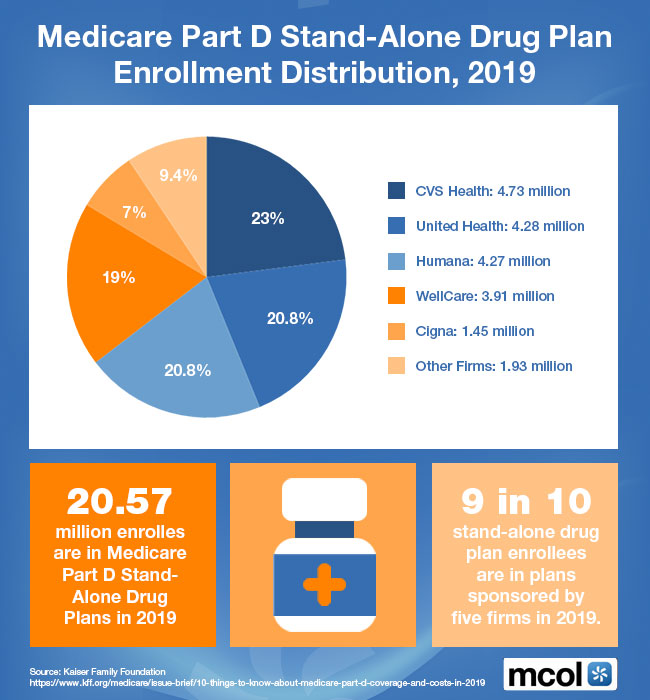
Medicare Part D Prescriptions

And … Rebates in 2016

By http://www.MCOL.com

***

***

Conclusion

Your thoughts and comments on this ME-P are appreciated. Feel free to review our top-left column, and top-right sidebar materials, links, URLs and related websites, too. Then, subscribe to the ME-P. It is fast, free and secure.

Speaker: If you need a moderator or speaker for an upcoming event, Dr. David E. Marcinko; MBA – Publisher-in-Chief of the Medical Executive-Post – is available for seminar or speaking engagements.

Book Marcinko: https://medicalexecutivepost.com/dr-david-marcinkos-bookings/

Subscribe: MEDICAL EXECUTIVE POST for curated news, essays, opinions and analysis from the public health, economics, finance, marketing, IT, business and policy management ecosystem.

DOCTORS:

“Insurance & Risk Management Strategies for Doctors” https://tinyurl.com/ydx9kd93

“Fiduciary Financial Planning for Physicians” https://tinyurl.com/y7f5pnox

“Business of Medical Practice 2.0” https://tinyurl.com/yb3x6wr8

HOSPITALS:

“Financial Management Strategies for Hospitals” https://tinyurl.com/yagu567d

“Operational Strategies for Clinics and Hospitals” https://tinyurl.com/y9avbrq5

Product DetailsProduct Details

***

Where is the Elon Musk of Healthcare?

SEARCHING FOR … !

By Fred Goldstein

***

Advancements

Where is the Elon Musk of Healthcare?

Conclusion

Your thoughts and comments on this ME-P are appreciated. Feel free to review our top-left column, and top-right sidebar materials, links, URLs and related websites, too. Then, subscribe to the ME-P. It is fast, free and secure.

Speaker: If you need a moderator or speaker for an upcoming event, Dr. David E. Marcinko; MBA – Publisher-in-Chief of the Medical Executive-Post – is available for seminar or speaking engagements.

Book Marcinko: https://medicalexecutivepost.com/dr-david-marcinkos-bookings/

Subscribe: MEDICAL EXECUTIVE POST for curated news, essays, opinions and analysis from the public health, economics, finance, marketing, IT, business and policy management ecosystem.

DOCTORS:

“Insurance & Risk Management Strategies for Doctors” https://tinyurl.com/ydx9kd93

“Fiduciary Financial Planning for Physicians” https://tinyurl.com/y7f5pnox

“Business of Medical Practice 2.0” https://tinyurl.com/yb3x6wr8

HOSPITALS:

“Financial Management Strategies for Hospitals” https://tinyurl.com/yagu567d

“Operational Strategies for Clinics and Hospitals” https://tinyurl.com/y9avbrq5

***

Product DetailsProduct Details

Even More IRA Mistakes

Three More Critical Mistakes to Avoid

By Rick Kahler CFP®

Previously, I discussed two critical IRA mistakes, based on information I learned from Jeff Levine of Fully Vested Advice, Inc., at the 2018 spring conference of the National Association of Personal Financial Advisors. This week I will cover three more.

1. Failing to understand beneficiary options on inherited IRAs. You may well be among the millions of Americans, most of them spouses, who will inherit IRAs. Knowing the options you have can save you thousands of dollars in benefits and taxes.

Spouses have the right to remain as a beneficiary of the plan or roll it over into their own IRA. Which to choose depends upon the age of the person who has died, and the age and financial needs of the beneficiary. The “99% rule” says beneficiaries under age 59½ should retain the plan as an inherited IRA; those over 59½ should roll it over. The “1%” scenario is when the deceased spouse was over age 70½ and the beneficiary is more than 11 years younger. A rollover is best if the beneficiary doesn’t need any IRA distributions until after age 59½.

Another option for IRA owners is to name a trust as the beneficiary of the IRA. Levine suggests not doing this if you can accomplish your goals without it. But there are many cases when a trust will accomplish things that giving the IRA outright to a beneficiary won’t do. Estate planning attorney Ilene McCauley, from Scottsdale, AZ, says some of those instances are when you want to protect the IRA from a divorce of a beneficiary or guarantee that the proceeds go to your children when your spouse dies or remarries. McCauley recommends using a living trust as the IRA beneficiary rather than a testamentary trust established through a will.

2. Not understanding the RMD aggregation rules. These are widely misunderstood even by advisors. Levine asked the group of about 50 advisors this question: “If a 72-year-old client had two traditional IRAs, two 401ks, and two 403bs, how many RMD checks would need to be issued?” Only three advisors got the right answer—four. You can aggregate the RMDs from the two traditional IRA accounts and take the combined RMD out of just one account. You can do the same with the two 401k accounts. But with the 403b accounts you must take the RMD separately from each account. You can’t aggregate them or you face penalties and taxes.

3. Not doing periodic reviews of IRA beneficiaries. It’s important to review your IRA beneficiaries regularly. This is especially crucial when a beneficiary dies or you get remarried. For example, assume you want your employer’s retirement plan to go to your children upon your death. You remarry, but don’t have your new spouse sign a disclaimer waiving rights to your retirement plan. If you die after one year of marriage your new spouse, not your children, inherits the employer’s retirement plan funds.

The reverse is true with an IRA or a 403b. Let’s assume you listed your kids as the beneficiaries on either of these accounts. If you remarry and want the proceeds to go to your new spouse but you forget to sign a change of beneficiary form, there is no one-year rule as there is with an employer’s plan. Your kids , not your spouse, will inherit the account.

Assessment

The bottom line is that, to get the most benefit from a retirement plan, you need to do your homework and seek appropriate advice. The money you save by avoiding IRA mistakes can make a big difference in your security and standard of living in retirement. 

Conclusion

Your thoughts and comments on this ME-P are appreciated. Feel free to review our top-left column, and top-right sidebar materials, links, URLs and related websites, too. Then, subscribe to the ME-P. It is fast, free and secure.

Speaker: If you need a moderator or speaker for an upcoming event, Dr. David E. Marcinko; MBA – Publisher-in-Chief of the Medical Executive-Post – is available for seminar or speaking engagements.

Book Marcinko: https://medicalexecutivepost.com/dr-david-marcinkos-bookings/

Subscribe: MEDICAL EXECUTIVE POST for curated news, essays, opinions and analysis from the public health, economics, finance, marketing, IT, business and policy management ecosystem.

DOCTORS:

“Insurance & Risk Management Strategies for Doctors” https://tinyurl.com/ydx9kd93

“Fiduciary Financial Planning for Physicians” https://tinyurl.com/y7f5pnox

“Business of Medical Practice 2.0” https://tinyurl.com/yb3x6wr8

HOSPITALS:

“Financial Management Strategies for Hospitals” https://tinyurl.com/yagu567d

“Operational Strategies for Clinics and Hospitals” https://tinyurl.com/y9avbrq5

Risk Management, Liability Insurance, and Asset Protection Strategies for Doctors and Advisors: Best Practices from Leading Consultants and Certified Medical Planners™8Comprehensive Financial Planning Strategies for Doctors and Advisors: Best Practices from Leading Consultants and Certified Medical Planners™

***

Medicare Advantage Plan Enrollment

UPDATE 2018

By http://www.MCOL.com

***

***

Conclusion

Your thoughts and comments on this ME-P are appreciated. Feel free to review our top-left column, and top-right sidebar materials, links, URLs and related websites, too. Then, subscribe to the ME-P. It is fast, free and secure.

Speaker: If you need a moderator or speaker for an upcoming event, Dr. David E. Marcinko; MBA – Publisher-in-Chief of the Medical Executive-Post – is available for seminar or speaking engagements.

Book Marcinko: https://medicalexecutivepost.com/dr-david-marcinkos-bookings/

Subscribe: MEDICAL EXECUTIVE POST for curated news, essays, opinions and analysis from the public health, economics, finance, marketing, IT, business and policy management ecosystem.

DOCTORS:

“Insurance & Risk Management Strategies for Doctors” https://tinyurl.com/ydx9kd93

“Fiduciary Financial Planning for Physicians” https://tinyurl.com/y7f5pnox

“Business of Medical Practice 2.0” https://tinyurl.com/yb3x6wr8

HOSPITALS:

“Financial Management Strategies for Hospitals” https://tinyurl.com/yagu567d

“Operational Strategies for Clinics and Hospitals” https://tinyurl.com/y9avbrq5

***

Product DetailsProduct Details

On Un-Necessary Antibiotic Prescribing

The Sixty [60] – Forty [40] – Percent Ratio

By http://www.MCOL.com

***

***

Conclusion

Your thoughts and comments on this ME-P are appreciated. Feel free to review our top-left column, and top-right sidebar materials, links, URLs and related websites, too. Then, subscribe to the ME-P. It is fast, free and secure.

Speaker: If you need a moderator or speaker for an upcoming event, Dr. David E. Marcinko; MBA – Publisher-in-Chief of the Medical Executive-Post – is available for seminar or speaking engagements.

Book Marcinko: https://medicalexecutivepost.com/dr-david-marcinkos-bookings/

Subscribe: MEDICAL EXECUTIVE POST for curated news, essays, opinions and analysis from the public health, economics, finance, marketing, IT, business and policy management ecosystem.

DOCTORS:

“Insurance & Risk Management Strategies for Doctors” https://tinyurl.com/ydx9kd93

“Fiduciary Financial Planning for Physicians” https://tinyurl.com/y7f5pnox

“Business of Medical Practice 2.0” https://tinyurl.com/yb3x6wr8

HOSPITALS:

“Financial Management Strategies for Hospitals” https://tinyurl.com/yagu567d

“Operational Strategies for Clinics and Hospitals” https://tinyurl.com/y9avbrq5

***

Product DetailsProduct Details

Capitation? What Capitation?

Capitation? What Capitation?

headless-skeleton

By Ira Nash MD

Conclusion

Your thoughts and comments on this ME-P are appreciated. Feel free to review our top-left column, and top-right sidebar materials, links, URLs and related websites, too. Then, subscribe to the ME-P. It is fast, free and secure.

Speaker: If you need a moderator or speaker for an upcoming event, Dr. David E. Marcinko; MBA – Publisher-in-Chief of the Medical Executive-Post – is available for seminar or speaking engagements.

Book Marcinko: https://medicalexecutivepost.com/dr-david-marcinkos-bookings/

Subscribe: MEDICAL EXECUTIVE POST for curated news, essays, opinions and analysis from the public health, economics, finance, marketing, IT, business and policy management ecosystem.

DOCTORS:

“Insurance & Risk Management Strategies for Doctors” https://tinyurl.com/ydx9kd93

“Fiduciary Financial Planning for Physicians” https://tinyurl.com/y7f5pnox

“Business of Medical Practice 2.0” https://tinyurl.com/yb3x6wr8

HOSPITALS:

“Financial Management Strategies for Hospitals” https://tinyurl.com/yagu567d

“Operational Strategies for Clinics and Hospitals” https://tinyurl.com/y9avbrq5

***

Product DetailsProduct Details

Transformative Forces in Health Care

Navigating the Forces

By http://www.PublicisHealth.com

***

***

Conclusion

Your thoughts and comments on this ME-P are appreciated. Feel free to review our top-left column, and top-right sidebar materials, links, URLs and related websites, too. Then, subscribe to the ME-P. It is fast, free and secure.

Speaker: If you need a moderator or speaker for an upcoming event, Dr. David E. Marcinko; MBA – Publisher-in-Chief of the Medical Executive-Post – is available for seminar or speaking engagements.

Book Marcinko: https://medicalexecutivepost.com/dr-david-marcinkos-bookings/

Subscribe: MEDICAL EXECUTIVE POST for curated news, essays, opinions and analysis from the public health, economics, finance, marketing, IT, business and policy management ecosystem.

DOCTORS:

“Insurance & Risk Management Strategies for Doctors” https://tinyurl.com/ydx9kd93

“Fiduciary Financial Planning for Physicians” https://tinyurl.com/y7f5pnox

“Business of Medical Practice 2.0” https://tinyurl.com/yb3x6wr8

HOSPITALS:

“Financial Management Strategies for Hospitals” https://tinyurl.com/yagu567d

“Operational Strategies for Clinics and Hospitals” https://tinyurl.com/y9avbrq5

***

Product DetailsProduct Details

Avoid Costly IRA Mistakes

Avoid These 2 Mistakes

By Rick Kahler CFP®

Investing through an IRA is a foundational method of retirement saving. Opening and contributing to an individual retirement account is not hard. That doesn’t mean IRAs are simple and easy to understand.

National Association of Personal Financial Advisors

I was reminded of this at the 2018 spring conference of the National Association of Personal Financial Advisors, where I attended a workshop by Jeff Levine of Fully Vested Advice, Inc., on “10 Critical IRA Mistakes.”

Top on his list of mistakes was failing to make charitable contributions out of your IRA when you are over 70½. These are called Qualified Charitable Distributions (QCDs). Here is why giving to charity directly from your IRA is a good idea.

For traditional IRAs, at age 70½ you must begin to withdraw required minimum distributions (RMDs) whether you want to or not. An RMD is taxable at ordinary income rates. Further, if you make a charitable donation and you are over age 65, you now must have over $13,300 of itemized deductions per person to get any portion of it deductible. By donating out of your IRA, you can reduce your RMD by an amount equal to your charitable gift. This makes your charitable gift 100% deductible and lowers your adjusted gross income, which can also help lower your Medicare premiums.

Here’s an example

Assume you are age 71, give $9,000 a year to charity, your property taxes on your home are $2,500, you are in the 22% tax bracket, and your RMD is $10,000. Without planning you will take your $10,000 RMD and pay $2,200 of income tax on it. Since you only have $11,500 in itemized deductions you will take the standard deduction of $13,300.

If instead you contribute $9,000 to charity out of your IRA, you reduce your taxable RMD from $10,000 to $1,000, slashing your tax liability on it from $2,200 to $220. The savings of $1,980 would cover most of your property tax.

If you make a QCD like this, it’s essential to inform your tax preparer. There is no required written evidence from your IRA custodian that your RMD needs to be offset by the amount of your gift. It’s your responsibility to tell your accountant so they report the correct reduced amount of the RMD on your tax return.

In Bankruptcy

Another significant source of mistakes is the complex asset protection rules for IRAs and retirement plans. Protection differs between bankruptcy and non-bankruptcy creditor actions.

In bankruptcy, all employer plans (ERISA), SEP and SIMPLE IRAs, and rollovers from retirement plans to IRAs are 100% protected from creditors. Amounts you personally contributed to traditional and Roth IRAs are protected up to a total of $1,283,025. However, inherited IRAs are not covered. You can see why it’s important to keep traditional, rollover and inherited IRAs in separate IRA accounts.

To make it even more complicated, different rules apply if creditors sue in non-bankruptcy proceedings. ERISA plans are 100% protected in all states. All IRAs are 100% protected in most states, except California, Georgia, Maine, Mississippi, Nebraska, South Dakota, and Wyoming, where they have limited to no protection.

Solo 401(k), SEP IRA, and SIMPLE IRA plans are fully protected from non-bankruptcy proceedings in about half of the states. The others, including South Dakota, have limited or no protection. If you live in one of these states and have a Solo 401(k), SEP, or SIMPLE, you want to roll it into an IRA as soon as circumstances allow.

Assessment

Mistakes like the two described here can be costly. To avoid them, especially if your circumstances are at all complex, it’s wise to get tax and IRA withdrawal advice from qualified financial advisors.

Conclusion

Your thoughts and comments on this ME-P are appreciated. Feel free to review our top-left column, and top-right sidebar materials, links, URLs and related websites, too. Then, subscribe to the ME-P. It is fast, free and secure.

Speaker: If you need a moderator or speaker for an upcoming event, Dr. David E. Marcinko; MBA – Publisher-in-Chief of the Medical Executive-Post – is available for seminar or speaking engagements.

Book Marcinko: https://medicalexecutivepost.com/dr-david-marcinkos-bookings/

Subscribe: MEDICAL EXECUTIVE POST for curated news, essays, opinions and analysis from the public health, economics, finance, marketing, IT, business and policy management ecosystem.

DOCTORS:

“Insurance & Risk Management Strategies for Doctors” https://tinyurl.com/ydx9kd93

“Fiduciary Financial Planning for Physicians” https://tinyurl.com/y7f5pnox

“Business of Medical Practice 2.0” https://tinyurl.com/yb3x6wr8

HOSPITALS:

“Financial Management Strategies for Hospitals” https://tinyurl.com/yagu567d

“Operational Strategies for Clinics and Hospitals” https://tinyurl.com/y9avbrq5

***

Risk Management, Liability Insurance, and Asset Protection Strategies for Doctors and Advisors: Best Practices from Leading Consultants and Certified Medical Planners™8Comprehensive Financial Planning Strategies for Doctors and Advisors: Best Practices from Leading Consultants and Certified Medical Planners™

More on Health Leadership Development

 Leadership Development

***

th

***

By Ira Nash MD

MORE: Dr. Marcinko Leadership Diversity Philosophy

Conclusion

Your thoughts and comments on this ME-P are appreciated. Feel free to review our top-left column, and top-right sidebar materials, links, URLs and related websites, too. Then, subscribe to the ME-P. It is fast, free and secure.

Speaker: If you need a moderator or speaker for an upcoming event, Dr. David E. Marcinko; MBA – Publisher-in-Chief of the Medical Executive-Post – is available for seminar or speaking engagements.

Book Marcinko: https://medicalexecutivepost.com/dr-david-marcinkos-bookings/

Subscribe: MEDICAL EXECUTIVE POST for curated news, essays, opinions and analysis from the public health, economics, finance, marketing, IT, business and policy management ecosystem.

DOCTORS:

“Insurance & Risk Management Strategies for Doctors” https://tinyurl.com/ydx9kd93

“Fiduciary Financial Planning for Physicians” https://tinyurl.com/y7f5pnox

“Business of Medical Practice 2.0” https://tinyurl.com/yb3x6wr8

HOSPITALS:

“Financial Management Strategies for Hospitals” https://tinyurl.com/yagu567d

“Operational Strategies for Clinics and Hospitals” https://tinyurl.com/y9avbrq5

***

Product DetailsProduct Details

The “Quantified Self”

 Quantified Self

By Ira Nash, MD


EQ

Conclusion

Your thoughts and comments on this ME-P are appreciated. Feel free to review our top-left column, and top-right sidebar materials, links, URLs and related websites, too. Then, subscribe to the ME-P. It is fast, free and secure.

Speaker: If you need a moderator or speaker for an upcoming event, Dr. David E. Marcinko; MBA – Publisher-in-Chief of the Medical Executive-Post – is available for seminar or speaking engagements.

Book Marcinko: https://medicalexecutivepost.com/dr-david-marcinkos-bookings/

Subscribe: MEDICAL EXECUTIVE POST for curated news, essays, opinions and analysis from the public health, economics, finance, marketing, IT, business and policy management ecosystem.

DOCTORS:

“Insurance & Risk Management Strategies for Doctors” https://tinyurl.com/ydx9kd93

“Fiduciary Financial Planning for Physicians” https://tinyurl.com/y7f5pnox

“Business of Medical Practice 2.0” https://tinyurl.com/yb3x6wr8

HOSPITALS:

“Financial Management Strategies for Hospitals” https://tinyurl.com/yagu567d

“Operational Strategies for Clinics and Hospitals” https://tinyurl.com/y9avbrq5

***

Product DetailsProduct Details

Three things hospitals can do to improve their financial situation?

Join Our Mailing List 

About the Dupont Decomposition Equation [DDE]

DEM blueBy Dr. David E. Marcinko MBA CMP

[Editor-in-Chief] http://www.CertifiedMedicalPlanner.org

According to the Dupont Decomposition Equation – which involves the conglomeration of net operating income, revenues, expenses and average operating assets – ROI and economic profit is increased in three prioritized ways:

  1. Cost and expense reductions.
  2. Revenue increases [Rev]
  3. Reduced average operating assets [AOO]

Note: ROI = NOI / Rev X Rev / AOO

Cost and expense reductions

Although many hospitals have reduced expenses, postponed projects and put clinical or information technology projects on hold because of the MU conundrum, this may be unwise and quality may suffer. And, mental health care programs are almost always the first cost center to be reduced in tough times.

Upgrades today, especially with concurrent marketing and advertising promotions, may well be considered a strategic competitive advantage, and at bargain basement prices for those with cash or credit. This cost reduction is easy because it gives the biggest buck-bang in the ROI equation, and is the first line of ROI augmentation by savvy administrators and CEOs. It is also intuitive and wholly “wrung-out” in the marketplace, to date.

Revenue increases

On the other hand, revenues can usually be only incrementally increased by improving services like emergency care, urgent care, wellness, out-patient and/or surgical departments. This is the more difficult part of the equation and yields a positive, but lesser return in the ROI equation.

Three Modern Collections Rules

The following medical practice procedures will markedly increase upfront office collections:  

  • Train staff to handle exceptions. What is your policy if the patient payment is significant? Will you allow 25% payments—one today and three over the next three months? Communicate your policy to all staff. What will you do if a patient shows up without an insurance card? There will be other exceptions. Train employees to call the appropriate practice-management contact when an exception does not fit in the categories you provide and make sure those managers are responsive.
  • Understand that not everyone will shine in collections. The value of this new front-desk function should be reflected in job descriptions and wages. Track staff performance and hold employees accountable for collection goals. The most successful practices collect in the 90% range.
  • Provide professional signage that states your basic policy. “Payments are due at time of service.” Avoid typewritten, lengthy explanations taped to walls or desks that look like clutter.

Reduced average operating assets

Finally, any delay in updating facilities – while easy and may reduce operating assets – there is little ROI advantage and profit potential. Of course, facility asset upgrades mean borrowing funds through tax-exempt bonds – the main source of debt for most hospitals – and is currently difficult or impossible in this climate. Loans from banks, private investors, angels, venture capitalists or other financial institutions are similarly difficult to obtain. Thus, this part of the equation may often be neglected; as is the case now.

***

hospital

***

Conclusion

Your thoughts and comments on this ME-P are appreciated. Feel free to review our top-left column, and top-right sidebar materials, links, URLs and related websites, too. Then, subscribe to the ME-P. It is fast, free and secure.

Speaker: If you need a moderator or speaker for an upcoming event, Dr. David E. Marcinko; MBA – Publisher-in-Chief of the Medical Executive-Post – is available for seminar or speaking engagements. Contact: MarcinkoAdvisors@msn.com

OUR OTHER PRINT BOOKS AND RELATED INFORMATION SOURCES:

Product DetailsProduct Details

Value your money enough to fight for it

US Health Spending Trends

1966 – 2026

By http://www.MCOL.com

***

***

Conclusion

Your thoughts and comments on this ME-P are appreciated. Feel free to review our top-left column, and top-right sidebar materials, links, URLs and related websites, too. Then, subscribe to the ME-P. It is fast, free and secure.

Speaker: If you need a moderator or speaker for an upcoming event, Dr. David E. Marcinko; MBA – Publisher-in-Chief of the Medical Executive-Post – is available for seminar or speaking engagements.

Book Marcinko: https://medicalexecutivepost.com/dr-david-marcinkos-bookings/

Subscribe: MEDICAL EXECUTIVE POST for curated news, essays, opinions and analysis from the public health, economics, finance, marketing, IT, business and policy management ecosystem.

DOCTORS:

“Insurance & Risk Management Strategies for Doctors” https://tinyurl.com/ydx9kd93

“Fiduciary Financial Planning for Physicians” https://tinyurl.com/y7f5pnox

“Business of Medical Practice 2.0” https://tinyurl.com/yb3x6wr8

HOSPITALS:

“Financial Management Strategies for Hospitals” https://tinyurl.com/yagu567d

“Operational Strategies for Clinics and Hospitals” https://tinyurl.com/y9avbrq5

Product DetailsProduct Details

***

Crossing Warren Buffett, Richard Branson and Steve Jobs?

What would you get if you crossed Warren Buffett, Richard Branson and Steve Jobs?

By Vitaliy Katsenelson CFA

Introduction

Masayoshi Son, the Korean-Japanese, University of California, Berkeley-educated founder of one of Japan’s most successful companies, SoftBank Group.

Like Buffett, Son is a tremendous capital allocator with a highly impressive record: Over the past nine and a half years, SoftBank’s investments have delivered a 45% annualized rate of return. A big chunk of this success can be attributed to one stock: Chinese e-commerce giant Alibaba, a $100 million investment SoftBank made in 2001 that is worth about $80 billion today.

Though you may put Alibaba in the (positive) black swan column, Son’s success as an investor goes well beyond it — the list of his investments that have brought multibagger returns is long. The 57-year-old Son is Japan’s richest person, and SoftBank, which he started in 1981 and owns 19% of, has a market capitalization of $72 billion.

Like Apple co-founder Jobs, Son is blessed with clairvoyance. He saw the internet as an transformative force well before that fact became common knowledge. In 1995 he invested in a then-tiny company, Yahoo!, earning six times his investment. But he didn’t stop there; he created a joint venture with Yahoo! by forming Yahoo! Japan, putting about $70 million into a company that today is worth around $8 billion. (Yahoo! Japan is a publicly traded company listed in Japan.)

What is shocking is that Son saw that the iPhone would revolutionize the telecom industry before Apple announced it or even invented it. See for yourself in this excerpt from an interview with Charlie Rose, where Son describes his conversation with Jobs in 2005 — two years before the iPhone was introduced:

“I brought my little drawing of [an] iPod with mobile capabilities. I gave [Jobs] my drawing, and Steve says, “Masa, you don’t give me your drawing. I have my own.” I said, “Well, I don’t need to give you my dirty paper, but once you have your product, give me for Japan.” He said, “Well, Masa, you are crazy. We have not talked to anybody, but you came to see me as the first guy. I give to you.”

Like Virgin Group founder Branson, who created Virgin Atlantic Airways in the U.K. to compete against the state-owned behemoth British Airways, Son started two telecom businesses in Japan — one fixed-line and one wireless — with which he challenged the state-owned NTT monopoly. In 2001, disgusted with Japan’s horrible broadband speeds, he convinced the government to deregulate the telecom industry. When no other companies emerged to rival NTT, Son took it upon himself to start a fixed-line competitor, Yahoo! BB (broadband). Thanks to him, now Japan enjoys one of the highest broadband speeds in the world and Yahoo! BB is a leading fixed-line telecom.

It took Son four years to bring his broadband business to profitability. This is how the Wall Street Journal described that period in 2012: “The problems at the broadband unit contributed to losses for the entire company for four consecutive years. Mr. Son set up an office in a meeting room 13 floors below his executive suite to be closer to the problem unit. He slept in the office at times and routinely summoned executives and partners for meetings late at night. . . . He worked out of the meeting room for 18 months, until the broadband unit had cut enough costs and moved enough customers to more lucrative plans.”

stock-exchange-

A normal person might have taken a break and enjoyed the fruits of his labor at that point, but not Son. Just as his broadband business went into the black, Son executed on his vision for the internet and bought Vodafone K.K., a struggling, poorly run wireless telecom in Japan. SoftBank paid about $15 billion, borrowing $10 billion.

Fast-forward eight years, and SoftBank Mobile is a success. It is one of the largest mobile companies in Japan, even faster-growing than DoCoMo (a subsidiary of almighty NTT). Today it spits out about $5 billion in operating profits annually — not bad for a $5 billion equity investment.

Son has a highly ambitious goal for SoftBank: He wants it to become one of the largest companies in the world. Unlike the average Wall Street CEO, whose time horizon has shrunk to quarters, Son thinks in centuries: He has a 300-year vision for SoftBank. Practically speaking, 300 years is a bit challenging even for long-term investors, but at the core of his vision Son is building a company that he wants to last forever (or 300 years, whichever comes first).

Son views SoftBank as an internet company and is committed to investing in internet companies in China and India. He believes that as these countries develop, their GDPs will eclipse those of the U.S. and Europe.

Jobs, Branson, Buffett — it is rare for somebody to embody strengths of each of these business giants. None of them has the qualities of the other two. Buffett is a business builder but does not run the companies in his portfolio. Branson is not a visionary — in his book Losing My Virginity he admits to not seeing analog music (CDs) being destroyed by digital music (iTunes) and demolishing his music store business. Jobs probably came the closest, as both a visionary and a business builder, but he was not known for his investing acumen.

Valuation (updated)

You’d think SoftBank would be priced to reflect Son’s premium. Instead, its stock currently trades at around a 50% discount to the fair value of its known assets (SoftBank has about 1,300 investments, many of them not consolidated on its financials).

The gap between what SoftBank is worth (its fair value) and its stock price has widened substantially over the last few years despite the stock’s appreciation. Our fair-value estimate of SoftBank shares is about $80.

Frustrated with SoftBank’s valuation, Son has begun to make strategic moves to deleverage SoftBank. Last February, SoftBank announced it may take its Japanese telecom business public. SoftBank is expected to sell about 30% of its stake and should raise about $20 billion.

SoftBank owns a large chuck of Didi, the largest Chinese ride-hailing company, a Chinese version of Uber, which in fact bought Uber’s assets in China. Didi is a privately held company. Recently SoftBank announced that it is going to sell its shares of Didi to Vision Fund for $20 billion. Vision Fund is a $100-billion private equity-like investment vehicle created by Son. SoftBank owns one-third of Vision fund and has an even larger economic interest in it.

And then there is Sprint — SoftBank owns 82% of its publicly listed shares. After dating T-Mobile for almost a year, Sprint and T-Mobile finally decided to merge. There is a chance that the government might not approve this merger, but we think the probability of approval is high. The telecom industry requires scale: the cost of a network (cell towers, equipment, and spectrum) is mostly fixed, and profitability of a carrier is for the most part determined by the number of users.

T-Mobile and Sprint are each half the size of giant incumbents Verizon Communications and AT&T, which achieved their size through dozens of acquisitions. The combination of Sprint and T-Mobile would reduce competition in the short run, but in the long run it would create a strong and viable competitor and thus stable prices for consumers. T-Mobile and (especially) Sprint on their own would eventually get marginalized into irrelevance by AT&T and Verizon by the large cost of 5G rollout.

If the merger goes through it would improve the optics of SoftBank’s balance sheet. SoftBank owns 82% of Sprint and thus has to consolidate Sprint’s $30 billion of debt on its balance sheet. Despite SoftBank’s control of Sprint, in the event of bankruptcy SoftBank is not liable for Sprint’s debt. After the merger SoftBank will own around 27% of the combined entity and thus, magically, the debt of the new company will migrate from SoftBank’s balance sheet to the balance sheet of Deutsche Telecom — the majority owner of T-Mobile.

Between the sale of Didi, the Japanese telecom IPO, and the Sprint/T-Mobile merger, SoftBank should see its debt drop by about $70 billion. The current discount between the fair value of SoftBank’s assets and its stock price is caused by the perception of enormous leverage, and as the leverage gets cured so will the perception.

Conclusion

There are many ways to look at SoftBank. You can think of it as buying a stock at a roughly 50% discount to the market value of its assets or as a way to buy Alibaba at less than half its current price. Alibaba is a great play on the Chinese consumer who is spending more and more money shopping online. Alibaba is synonymous with Chinese online shopping, whose growth may accelerate with higher smartphone penetration and, just as important, the ongoing rollout of a fast wireless LTE network.

You can also look at SoftBank as a vehicle through which to invest in emerging markets — not just China but India as well. It is almost like hiring the combination of Buffett, Branson and Jobs to go to work for you investing in markets whose economies in a few decades will surpass that of the U.S., while also investing in a segment of the economy — the internet — that is growing at a much faster rate than the overall economy. And, of course, you have Masayoshi Son, the Buffett-Branson-Jobs fusion, making these investments for you. With SoftBank at this valuation, you can ditch your emerging-markets mutual fund.

stock market

Additional thoughts

Some additional thoughts. I don’t expect every bet Mr. Son makes in Vision Fund to work out. Not at all. I look at Vision Fund as a portfolio of bets. For instance, his investment in WeWork and WeWork’s valuation make me cringe. I am also concerned that he feels the need to spend $100 billion all at once. There will be a time when this money will buy a lot more than it does today.

I feel uneasy that the $100 billion will be like a pig going through the python of Silicon Valley, inflating the prices of technology companies. But a few things let me sleep well owning Softbank: First, Mr. Son owns 20% of the company – every dollar Softbank spends, 20 cents are his. As Nassim Taleb would put it, Mr. Son has skin in the game. Second, the discount of Softbank stock to the fair value of its assets is so huge that it could absorb the blow-up of Vision Fund. And finally, I remind myself that I’d probably have had a similar feeling of uneasiness about Mr. Son’s decisions at any time in his 30-plus-year career (PCs in the ’80s, Internet in the ’90s, telecom Japan and internet in China in the ’00s). And this is when I remember Einstein’s quotes.

P.S.
To understand Mr. Son’s thinking, read my article on exponential growth. To understand the structure of Vision Fund, read this article.

Conclusion

Your thoughts and comments on this ME-P are appreciated. Feel free to review our top-left column, and top-right sidebar materials, links, URLs and related websites, too. Then, subscribe to the ME-P. It is fast, free and secure.

Speaker: If you need a moderator or speaker for an upcoming event, Dr. David E. Marcinko; MBA – Publisher-in-Chief of the Medical Executive-Post – is available for seminar or speaking engagements.

Book Marcinko: https://medicalexecutivepost.com/dr-david-marcinkos-bookings/

Subscribe: MEDICAL EXECUTIVE POST for curated news, essays, opinions and analysis from the public health, economics, finance, marketing, IT, business and policy management ecosystem.

DOCTORS:

“Insurance & Risk Management Strategies for Doctors” https://tinyurl.com/ydx9kd93

“Fiduciary Financial Planning for Physicians” https://tinyurl.com/y7f5pnox

“Business of Medical Practice 2.0” https://tinyurl.com/yb3x6wr8

HOSPITALS:

“Financial Management Strategies for Hospitals” https://tinyurl.com/yagu567d

“Operational Strategies for Clinics and Hospitals” https://tinyurl.com/y9avbrq5

Risk Management, Liability Insurance, and Asset Protection Strategies for Doctors and Advisors: Best Practices from Leading Consultants and Certified Medical Planners™8Comprehensive Financial Planning Strategies for Doctors and Advisors: Best Practices from Leading Consultants and Certified Medical Planners™

On Frugality and Money

The Essential Money Survival Skill

By Rick Kahler CFP®

Someone recently asked me to share my number-one financial tip that would make the greatest impact on a person’s financial well-being. For someone who can speak for hours on the topic, that’s a daunting task. I wanted to quote the late Dick Wagner’s advice to “Spend less, save more, and don’t do anything stupid,” but that sentence contains three tips.

I had to pick one and chose “spend less.” The greatest common denominator of financial success is not talent, IQ, career choices, income, inheritance, investment choices, being in the right place at the right time, or luck. It’s frugality.

Someone who has mastered the art of frugality has an essential survival skill. Their ability to save, to squirrel away money in times of prosperity, enables them to roll with almost any financial calamity. They tend to master their money rather than let money master them.

Frugal people find saving somewhat of a game. They get high off of building savings and finding bargains. They clip coupons, shop sales, and buy generic store brands. They buy used everything whenever possible, especially large ticket items like cars, appliances, and furniture. They do as much home maintenance themselves as is prudent. They rent things they won’t use much rather than buy. They don’t smoke, drink in excess, or do recreational drugs. They cook at home a lot. They pay off credit cards monthly, take on debt carefully, and pay down debt ahead of time, if possible. They find affordable ways to do the things they enjoy.

As frugal people accumulate wealth, they don’t give up their thrifty habits. As an example, I have a client who chose to vacation in Ireland this year. Why? It was a bargain. He got $700 roundtrip tickets by snagging a one-day sale on American Airlines.

Even though the external trappings of frugality are easy to spot, becoming frugal is really an inside job. If you aren’t naturally a saver, it’s not easy to just decide to become frugal. Changing to thrifty habits because you know you “should” doesn’t work any better than just deciding to lose 20 or 60 pounds does. Lifestyle shifts like this take something more than cognition.

To develop frugality you need to change your mindset about and your relationship with money. How do you do that? With intention, persistence, humility, patience, and curiosity.

There are many ways to begin changing your money mindset. I recommend starting with discovering the subconscious beliefs you have about money and how it works. I call these money scripts and have written about them in my books and blog.

Next, you may want to uncover the roots of those money scripts. This involves taking a look at how money was viewed in your family growing up and chronicling the positive and negative life events that have happened in your life. We help clients do this with two exercises called the Money Atom and the Money Egg. Slowly you will see themes emerge that completely explain why frugality is not your strong suit. This understanding is the foundation for change.

It is also valuable to find an accountability partner, someone who is frugal themselves, to be a mentor. This is similar to the Alcoholics Anonymous program’s recommendation to find a sponsor. It’s a tried and true model that produces results. Another option is to look for a financial coach or therapist (check at financialtherapyassociation.org) in your area or available to meet with you online.

Assessment

Becoming frugal doesn’t mean becoming a miser or depriving yourself. It means using your money thoughtfully to support the life you want to live. And it is a mindset you can learn.

Conclusion

Your thoughts and comments on this ME-P are appreciated. Feel free to review our top-left column, and top-right sidebar materials, links, URLs and related websites, too. Then, subscribe to the ME-P. It is fast, free and secure.

Speaker: If you need a moderator or speaker for an upcoming event, Dr. David E. Marcinko; MBA – Publisher-in-Chief of the Medical Executive-Post – is available for seminar or speaking engagements.

Book Marcinko: https://medicalexecutivepost.com/dr-david-marcinkos-bookings/

Subscribe: MEDICAL EXECUTIVE POST for curated news, essays, opinions and analysis from the public health, economics, finance, marketing, IT, business and policy management ecosystem.

DOCTORS:

“Insurance & Risk Management Strategies for Doctors” https://tinyurl.com/ydx9kd93

“Fiduciary Financial Planning for Physicians” https://tinyurl.com/y7f5pnox

“Business of Medical Practice 2.0” https://tinyurl.com/yb3x6wr8

HOSPITALS:

“Financial Management Strategies for Hospitals” https://tinyurl.com/yagu567d

“Operational Strategies for Clinics and Hospitals” https://tinyurl.com/y9avbrq5

Risk Management, Liability Insurance, and Asset Protection Strategies for Doctors and Advisors: Best Practices from Leading Consultants and Certified Medical Planners™8Comprehensive Financial Planning Strategies for Doctors and Advisors: Best Practices from Leading Consultants and Certified Medical Planners™

National Collector Car Appreciation Day

Join Our Mailing List

Doctors … and their Cars

By Dr. David Edward Marcinko MBA

[Publisher-in-Chief]

Friday July 13th, marks the eighth year in a row the Specialty Equipment Market Association (SEMA) has secured federal acknowledgement of “National Collector Car Appreciation Day (NCCAD),” an annual opportunity to recognize and generate awareness for the collector car hobby.

American Collectors Insurance has partnered with Rides.com to commemorate the occasion at its Cherry Hill, NJ headquarters with a night of cool rides and hot rods.

###

Dr. Marcinko 1972 Vette

###

DEM in his 1990 Miata

###

3K33If3L35L75I45F2d5pcefa680cfd0b1c86

###

Assessment

For details on the celebration at the American Collectors Insurance headquarters in Cherry Hill, NJ visit http://www.AmericanCollectors.com/NCCAD/ 

To learn more about National Collector Car Appreciation Day events across the country, visit: www.semaSAN.com/CCAD

MORE: https://www.worldnationaldays.com/collector-car-appreciation-day-2018/

Conclusion

Your thoughts and comments on this ME-P are appreciated. Feel free to review our top-left column, and top-right sidebar materials, links, URLs and related websites, too. Then, subscribe to the ME-P. It is fast, free and secure.

Speaker: If you need a moderator or speaker for an upcoming event, Dr. David E. Marcinko; MBA – Publisher-in-Chief of the Medical Executive-Post – is available for seminar or speaking engagements. Contact: MarcinkoAdvisors@msn.com

OUR OTHER PRINT BOOKS AND RELATED INFORMATION SOURCES:

Product DetailsProduct DetailsProduct Details

Product Details  Product Details

Product DetailsProduct Details

Risk Management, Liability Insurance, and Asset Protection Strategies for Doctors and Advisors: Best Practices from Leading Consultants and Certified Medical Planners™8Comprehensive Financial Planning Strategies for Doctors and Advisors: Best Practices from Leading Consultants and Certified Medical Planners™

About Dr. David Edward Marcinko MBA CMP™

At Your Service

***

DEM blue

Chief Executive / Education Officer * Speaker * Author * Researcher and Professor of Health Economics, Finance & Policy Management 

***

http://www.DavidEdwardMarcinko.com

Product DetailsProduct Details

Risk Management, Liability Insurance, and Asset Protection Strategies for Doctors and Advisors: Best Practices from Leading Consultants and Certified Medical Planners™8Comprehensive Financial Planning Strategies for Doctors and Advisors: Best Practices from Leading Consultants and Certified Medical Planners™

Product DetailsProduct DetailsProduct Details

Product DetailsProduct Details

***

On Medication Non-Adherence

Data and Analytics Can Make an Impact

http://www.MCOL.com

***

***

Conclusion

Your thoughts and comments on this ME-P are appreciated. Feel free to review our top-left column, and top-right sidebar materials, links, URLs and related websites, too. Then, subscribe to the ME-P. It is fast, free and secure.

Speaker: If you need a moderator or speaker for an upcoming event, Dr. David E. Marcinko; MBA – Publisher-in-Chief of the Medical Executive-Post – is available for seminar or speaking engagements.

Book Marcinko: https://medicalexecutivepost.com/dr-david-marcinkos-bookings/

Subscribe: MEDICAL EXECUTIVE POST for curated news, essays, opinions and analysis from the public health, economics, finance, marketing, IT, business and policy management ecosystem.

***

Product DetailsProduct DetailsProduct Details