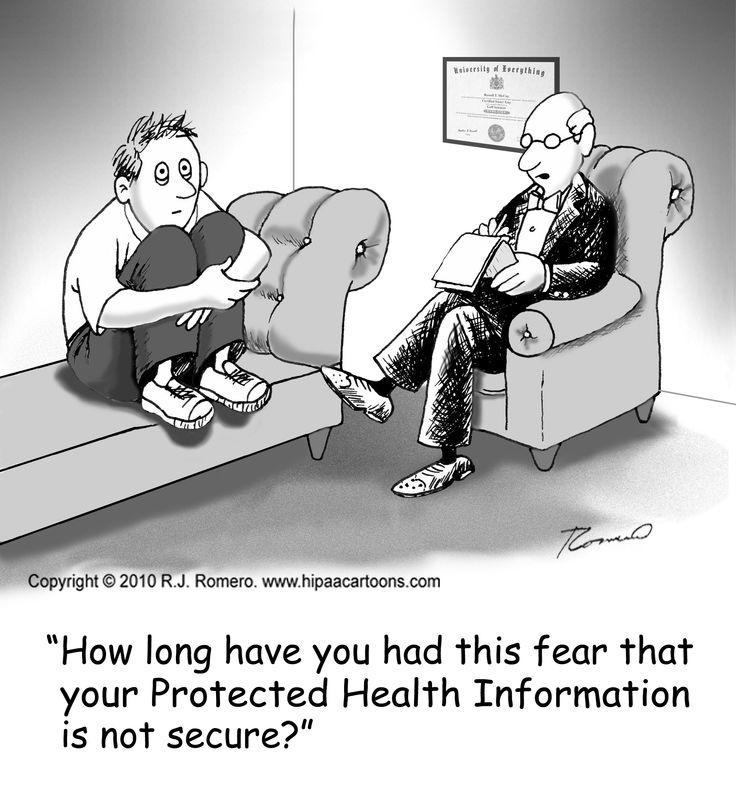
Dental EHRs are a Scam?

Electronic dental records are a scam. They have always been a scam.

By Darrell Pruitt DDS

“Microsoft & Google unable to detect new zero-day ransomware.” By Anthony Spadafora for ITProPortal, February 7, 2018
https://www.itproportal.com/news/microsoft-google-unable-to-detect-new-zero-day-ransomware/

Spadafora: “The ShurL0ckr ransomware was able to avoid detection by a majority of anti-virus engines and cloud applications. As organisations have adopted cloud services to increase their productivity and agility, so to have hackers who see cloud services as the next big target for distributing malware and stealing sensitive data from businesses and individuals.”

Over a decade ago, I warned the American Dental Association leadership about EHRs’ poor security. So did ADA leadership warn Congress? Oh hell no.

“Patient records will be adequately protected through organizational policies and technical security controls.”Dr. Robert H. Ahlstrom, representing the ADA in testimony before the National Committee on Vital and Health Statistics (NCVHS) on the benefits of EHRs in dentistry.

(See: “Testimony of the American Dental Association, National Committee on Vital and Health Statistics Subcommittee on Standards and Security July 31, 2007.”) http://www.ncvhs.hhs.gov/070731p08.pdf

Assessment

Conflict of interest caused unaccountable leaders to lie to us, Doc. How does that make you feel?

Conclusion:

Your thoughts and comments on this ME-P are appreciated. Feel free to review our top-left column, and top-right sidebar materials, links, urls and related websites, too. Then, subscribe to the ME-P. It is fast, free and secure.

Speaker: If you need a moderator or speaker for an upcoming event, Dr. David E. Marcinko; MBA – Publisher-in-Chief of the Medical Executive-Post – is available for seminar or speaking engagements. https://medicalexecutivepost.com/dr-david-marcinkos-bookings/

Contact: MarcinkoAdvisors@msn.com

Subscribe: MEDICAL EXECUTIVE POST for curated news, essays, opinions and analysis from the public health, economics, finance, marketing, I.T, business and policy management ecosystem.

CALIFORNIA LAUNCHES INVESTIGATION FOLLOWING STUNNING ADMISSION BY AETNA MEDICAL DIRECTOR

A CNN Exclusive

(CNN) California’s insurance commissioner has launched an investigation into Aetna after learning a former medical director for the insurer admitted under oath he never looked at patients’ records when deciding whether to approve or deny care.

California Insurance Commissioner Dave Jones expressed outrage after CNN showed him a transcript of the testimony and said his office is looking into how widespread the practice is within Aetna.

http://www.cnn.com/2018/02/11/health/aetna-california-investigation/index.html

Conclusion

Your thoughts and comments on this ME-P are appreciated. Feel free to review our top-left column, and top-right sidebar materials, links, URLs and related websites, too. Then, subscribe to the ME-P. It is fast, free and secure.

Speaker: If you need a moderator or speaker for an upcoming event, Dr. David E. Marcinko; MBA – Publisher-in-Chief of the Medical Executive-Post – is available for seminar or speaking engagements. https://medicalexecutivepost.com/dr-david-marcinkos-bookings/

Contact: MarcinkoAdvisors@msn.com

***

65% of Hospitals Have a Mobile Device Policy

FY 2017

[Staff reporters]

Zebra Technologies recently released survey results from nurse managers and IT executives on clinical mobility. Here are some key findings from the report:

• 65% of hospitals had a mobile device policy in 2017.
• By 2022, 98% of hospitals will expect to have a mobile device policy.
• Half of hospitals have had a predictive data analytics policy for 3+ years.
• 42% of hospitals have had a predictive data analytics policy for < 1 year.
• 3 in 4 IT executives say clinical mobility investments will increase by 2022.
• 97% expect workflow notifications to be sent to mobile devices by 2022.

Source: Zebra Technologies, January 2018

The entry point for medical app publishers into the healthcare market

Coaching Services

ralf

By Ralf-Gordon Jahns

Dear David,

Please find below Research2Guidance’s latest insights on “Coaching services: The entry point for medical app publishers into the healthcare market.”

Majority of mHealth app solutions are still operating outside the traditional healthcare market. App supported coaching services are more and more seen as the missing bridge between digital Health start-ups and healthcare incumbents. Coaching services are a win/win for both sides.

What are the six success factors of best in class digital enabled health coaching services?

Thank you for your time!Kind regards,
Research2Guidance

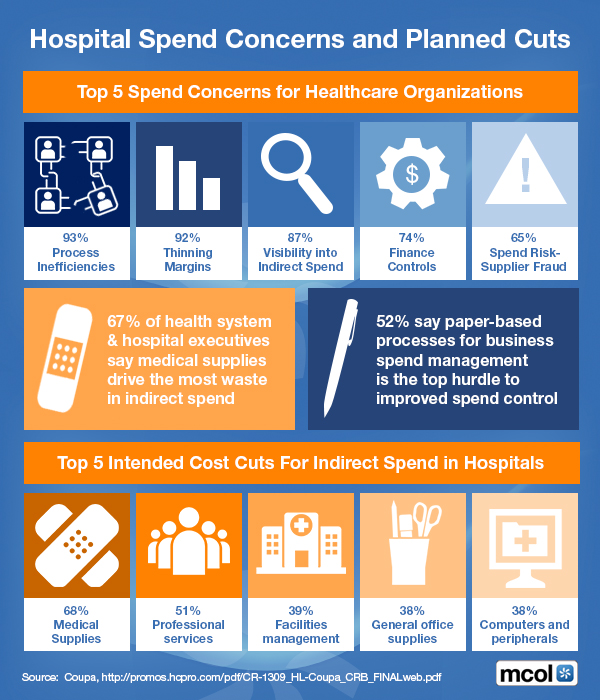
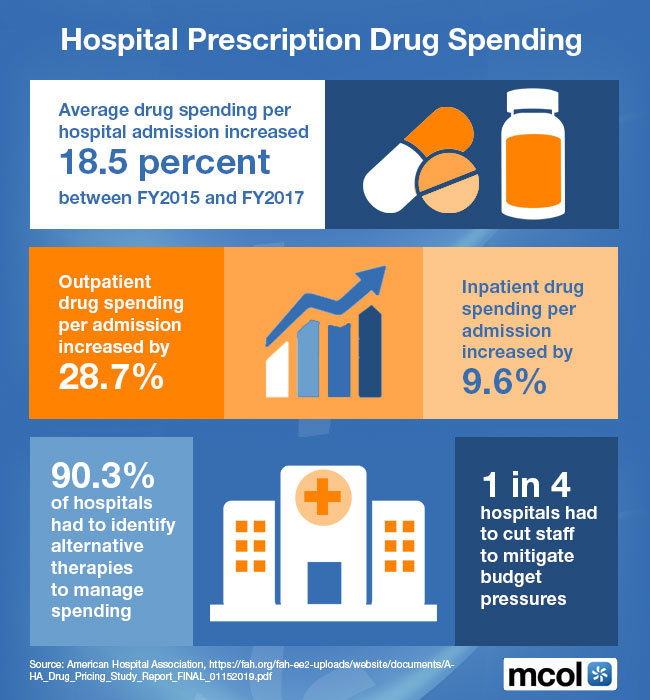
Top Healthcare Spender Trends

FY 2015

By http://www.MCOL.com

***

***

Conclusion

Your thoughts and comments on this ME-P are appreciated. Feel free to review our top-left column, and top-right sidebar materials, links, URLs and related websites, too. Then, subscribe to the ME-P. It is fast, free and secure.

Speaker: If you need a moderator or speaker for an upcoming event, Dr. David E. Marcinko; MBA – Publisher-in-Chief of the Medical Executive-Post – is available for seminar or speaking engagements.

Book Marcinko: https://medicalexecutivepost.com/dr-david-marcinkos-bookings/

Subscribe: MEDICAL EXECUTIVE POST for curated news, essays, opinions and analysis from the public health, economics, finance, marketing, IT, business and policy management ecosystem.

***

Hospital Inpatient Spending and Utilization

For 2012 – 2016

By http://www.MCOL. com

***

***

Conclusion

Your thoughts and comments on this ME-P are appreciated. Feel free to review our top-left column, and top-right sidebar materials, links, URLs and related websites, too. Then, subscribe to the ME-P. It is fast, free and secure.

Speaker: If you need a moderator or speaker for an upcoming event, Dr. David E. Marcinko; MBA – Publisher-in-Chief of the Medical Executive-Post – is available for seminar or speaking engagements.

Book Marcinko: https://medicalexecutivepost.com/dr-david-marcinkos-bookings/

Subscribe: MEDICAL EXECUTIVE POST for curated news, essays, opinions and analysis from the public health, economics, finance, marketing, IT, business and policy management ecosystem.

https://www.crcpress.com/Comprehensive-Financial-Planning-Strategies-for-Doctors-and-Advisors-Best/Marcinko-Hetico/p/book/9781482240283

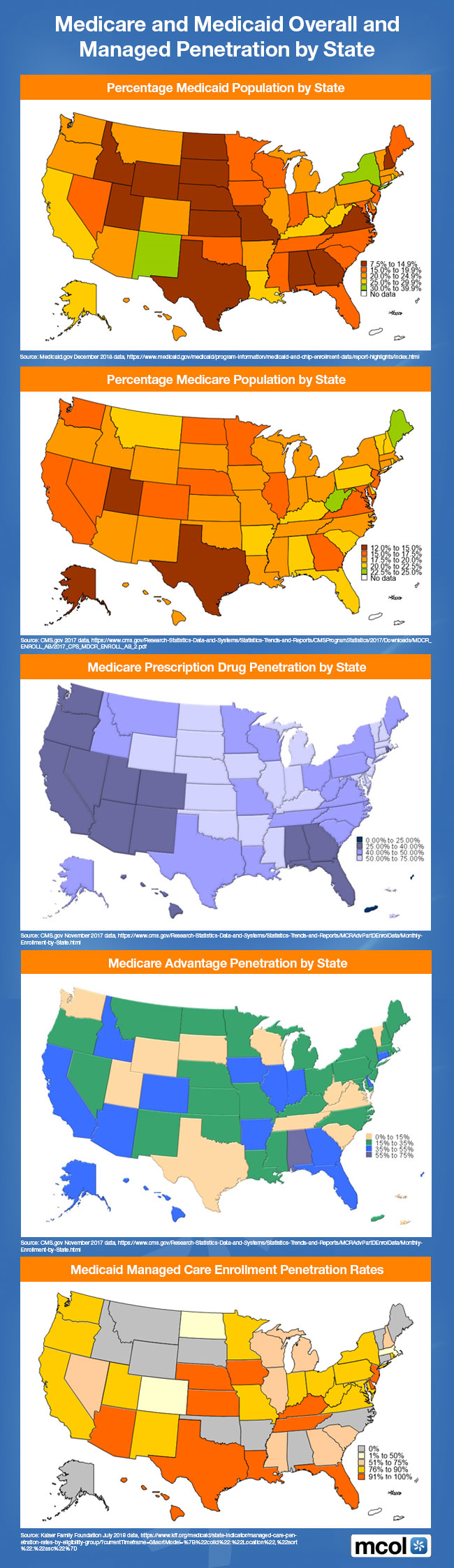
On Medicare ACOs

The Numbers for 2018

By http://www.MCOL.com

***

mcol

***

***

Conclusion

Your thoughts and comments on this ME-P are appreciated. Feel free to review our top-left column, and top-right sidebar materials, links, URLs and related websites, too. Then, subscribe to the ME-P. It is fast, free and secure.

Speaker: If you need a moderator or speaker for an upcoming event, Dr. David E. Marcinko; MBA – Publisher-in-Chief of the Medical Executive-Post – is available for seminar or speaking engagements.

Book Marcinko: https://medicalexecutivepost.com/dr-david-marcinkos-bookings

Subscribe: MEDICAL EXECUTIVE POST for curated news, essays, opinions and analysis from the public health, economics, finance, marketing, IT, business and policy management ecosystem.

https://www.crcpress.com/Comprehensive-Financial-Planning-Strategies-for-Doctors-and-Advisors-Best/Marcinko-Hetico/p/book/9781482240283

Helping Hospitals THRIVE

SPONSORED

Join Our Mailing List

HOSPITAL AND HEALTH CARE OPERATIONS, ORGANIZATIONAL BEHAVIOR AND FINANCIAL MANAGEMENT COMPANION TEXT BOOK  SET

***

 Product DetailsProduct Details

[Foreword Dr. Phillips MD JD MBA LLM] 

[Foreword Dr. Nash MD MBA FACP]

***

PURCHASE TODAY – FLOURISH TOMORROW!

About the Lorenz Curve

What it is – How it works
By staff reporters

HISTORY:

The Lorenz curve is a graphical representation of income inequality or wealth inequality developed by American economist Max Lorenz in 1905.

DEFINITION:

The graph plots percentiles of the population according to income or wealth on the horizontal axis. It plots cumulative income or wealth on the vertical axis, so that an x-value of 45 and a y-value of 14.2 would mean that the bottom 45% of the population controls 14.2% of the total income or wealth. http://www.HealthDictionarySeries.org

***

***

USE:

The concept is useful in describing inequality among the size of individuals in ecology and in studies of biodiversity, where the cumulative proportion of species is plotted against the cumulative proportion of individuals.

It is also useful in business modeling: e.g., in consumer finance, to measure the actual percentage y% of delinquencies attributable to the x% of people with worst risk scores.

MORE: https://www.investopedia.com/terms/l/lorenz-curve.asp

Conclusion

Your thoughts and comments on this ME-P are appreciated. Feel free to review our top-left column, and top-right sidebar materials, links, URLs and related websites, too. Then, subscribe to the ME-P. It is fast, free and secure.

Speaker: If you need a moderator or speaker for an upcoming event, Dr. David E. Marcinko; MBA – Publisher-in-Chief of the Medical Executive-Post – is available for seminar or speaking engagements. https://medicalexecutivepost.com/dr-david-marcinkos-bookings/

Contact: MarcinkoAdvisors@msn.com

***

https://www.crcpress.com/Comprehensive-Financial-Planning-Strategies-for-Doctors-and-Advisors-Best/Marcinko-Hetico/p/book/9781482240283

More on Physician Burn-Out

And … Depression

***

***

Conclusion

Your thoughts and comments on this ME-P are appreciated. Feel free to review our top-left column, and top-right sidebar materials, links, URLs and related websites, too. Then, subscribe to the ME-P. It is fast, free and secure.

Speaker: If you need a moderator or speaker for an upcoming event, Dr. David E. Marcinko; MBA – Publisher-in-Chief of the Medical Executive-Post – is available for seminar or speaking engagements.

Book Marcinko: https://medicalexecutivepost.com/dr-david-marcinkos-bookings

Subscribe: MEDICAL EXECUTIVE POST for curated news, essays, opinions and analysis from the public health, economics, finance, marketing, IT, business and policy management ecosystem.

***

Risk Management, Liability Insurance, and Asset Protection Strategies for Doctors and Advisors: Best Practices from Leading Consultants and Certified Medical Planners™

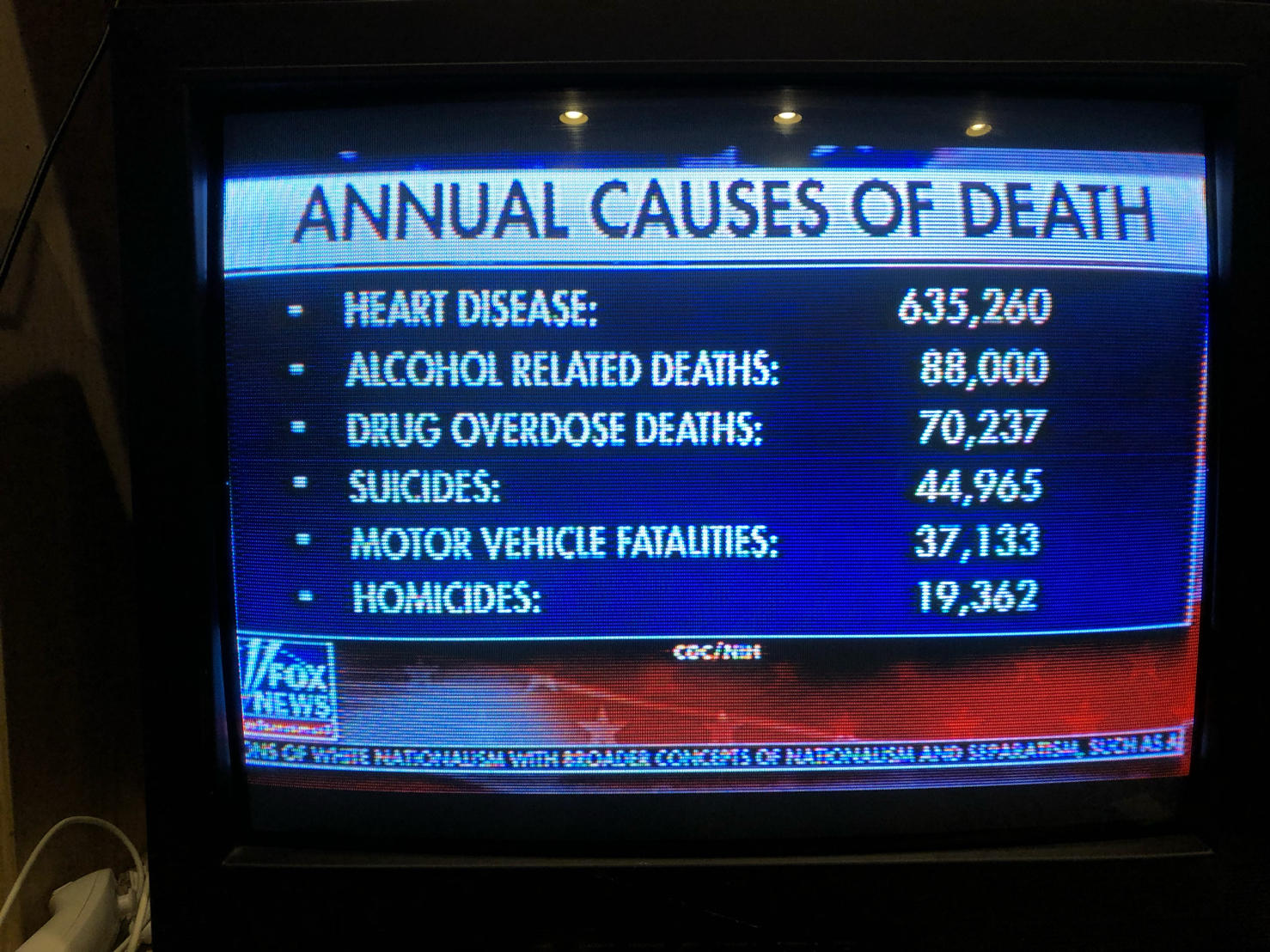
On Drug Overdose Deaths

2016 – 2017

By http://www.MCOL.com

***

***

Conclusion

Your thoughts and comments on this ME-P are appreciated. Feel free to review our top-left column, and top-right sidebar materials, links, urls and related websites, too. Then, subscribe to the ME-P. It is fast, free and secure.

Speaker: If you need a moderator or speaker for an upcoming event, Dr. David E. Marcinko; MBA – Publisher-in-Chief of the Medical Executive-Post – is available for seminar or speaking engagements. https://medicalexecutivepost.com/dr-david-marcinkos-bookings/

Contact: MarcinkoAdvisors@msn.com

Subscribe: MEDICAL EXECUTIVE POST for curated news, essays, opinions and analysis from the public health, economics, finance, marketing, I.T, business and policy management ecosystem.

***

MONEY: Spend it -OR- Give it Away

MONEY: The two choices

By Rick Kahler CFP®

A colleague recently reminded me that there are ultimately two things we can do with money: spend it or give it away. That’s it.

At first glance, this seems too simplistic. What about saving? What about investing for our future security? What about creating wealth?

Even when we are in the process of accumulating money and building wealth, we do so for the inevitable day we choose to spend it or give it away. Investing for retirement is about providing money to spend when we’re no longer earning an income. And whatever we have left at the end of life is ultimately given away.

Furthermore, the decision to spend or give away money is always a choice, even when it may seem we have no choice.

Here is why 

Most money experts break spending into “discretionary” and “non-discretionary” categories. Another way to frame this is “wants” and “needs.” Discretionary spending includes items that we want which aren’t necessary for survival, such as entertainment, vacations, designer clothes, and gourmet food. Non-discretionary items, or needs, include basic housing, food, clothing, and transportation.

Discretionary spending is clearly a choice. Yet even though we may tell ourselves we have “no choice” but to spend money on non-discretionary needs, fundamentally we always have a choice.

We may think we make the mortgage or rent payment because we “have” to, but actually it’s a choice because the alternative is to find a new place to live or be homeless. We make the car payment because we choose not to walk or use public transportation. We may choose to work at a job we dislike because it allows us to spend money on other choices we deem more important than job satisfaction. We choose to pay our taxes in order to avoid serious consequences like heavy fines or even going to jail.

We choose to earn and spend our funds in the ways we do, not because we “have to,” but because there is a payoff that makes the choice worthwhile.

Giving money away may seem more obviously a matter of choice. Yet giving to charity or to family members out of guilt or a sense of obligation sometimes seems like a “must.”

The choice

Yet in every case, it’s still a choice. Even when we give because it seems to be the only way to avoid detrimental or catastrophic consequences, we’re still making a choice. In some cases, choosing not to give (to a child, for example) may result in some wonderfully rich life lessons or behavioral changes.

The one time it seems that we really have no choice on whether we spend or give away our money is when we die. But even then, the choices about giving what we have left are made during our lifetime. Those who don’t do estate planning are choosing to let others decide how their money will be given away, with those decisions constrained by the provisions of their state’s laws.

Assessment

The bottom line is that when it comes to spending or giving money, we always have a choice. Ultimately, all of the money we choose not to spend while we are alive is money we are choosing to give away after death.

When we view our spending and giving as a matter of choice, it may be easier to see the importance of making money choices thoughtfully and consciously. The way we use our financial resources is crucial both for supporting our own life aspirations and for giving back to our families and communities. Choosing to spend consciously and give wisely is one more way we can choose to live richer, more fulfilling lives.

Conclusion

Your thoughts and comments on this ME-P are appreciated. Feel free to review our top-left column, and top-right sidebar materials, links, URLs and related websites, too. Then, subscribe to the ME-P. It is fast, free and secure.

Speaker: If you need a moderator or speaker for an upcoming event, Dr. David E. Marcinko; MBA – Publisher-in-Chief of the Medical Executive-Post – is available for seminar or speaking engagements.

Book Marcinko: https://medicalexecutivepost.com/dr-david-marcinkos-bookings

Subscribe: MEDICAL EXECUTIVE POST for curated news, essays, opinions and analysis from the public health, economics, finance, marketing, IT, business and policy management ecosystem.

***

2018 Markets Update Video

The Business Cycle

As part of Merk’s in-house research meetings, they are studying a variety of charts that might affect the markets, ranging from charts on the economy, equities, fixed income, currencies, and commodities.

So, they now share with us  an update on select charts on the business cycle and why they might matter when thinking about the markets in 2018.

Please view: The Business Cycle

***

The “Millionaire Class”

From Investors to Millionaires

By Rick Kahler CFP®

A few weeks ago I wrote about the increasing use of the term “Investor Class” as an inaccurate and generally disparaging synonym for the rich. https://medicalexecutivepost.com/2017/12/14/a-new-term-the-investor-class/

The same day I wrote that piece, a reader sent me an article by Christopher Ingraham that appeared December 7, 2017, in The Washington Post. It was titled, “Economy is creating millionaires at an astonishing pace. But what’s it doing for everyone else?” In it he refers to another group that he calls the “Millionaire Class.”

References

Ingraham references a paper, issued in November 2017 by New York University economist Edward N. Wolff, that finds the number of households with a net worth of $1 million (measured in constant 1995 dollars) increased from 2.4 million households in 1983 to 9.1 million in 2016, a growth of 279%. The total number of households increased by 50% during this period, meaning the number of millionaires increased at over five times the rate of increase of the overall population. Keep in mind that all these numbers refer not to income but to net worth—the total value of a household’s assets (including retirement accounts, homes, and other property), minus debts.

Wolff notes in his study that the bulk of the increase in the number of millionaire households happened between 1995 and 2001 and was due directly to the run-up in stock prices. He notes that more recently the increase in real estate values has nudged the number of millionaire households upward.

Ingraham writes that, “In 1983 fewer than 3% of households had a net worth greater than $1 million or more in constant 1995 dollars. By 2016 over 7% of households were worth that much.” His take is that the creation of all these new millionaires is more of what’s wrong with America. Yet there is another way of viewing it.

Ingraham refers to data from the Pew Research Center that finds the middle class is shrinking while the lower middle class and poor increased by 4%. He uses this as evidence of increasing income inequality as the poor get poorer and the rich get richer.

Confused?

Confusingly, data that I found and reported on in August of 2016 finds just the opposite. According to a study by Stephen J. Rose with the Urban Institute, between 1979 and 2014 every class of American became wealthier. The upper middle class (households earning between $100,000 and $350,000) increased from 12.9% to 29.4%. The poor (households earning under $30,000) contracted from 24.3% to 19.8%.

It isn’t astounding news that people who invest in stocks and real estate increase their wealth faster than those who don’t. These are the two asset classes that have the highest returns over almost any lengthy time period. If you want to build wealth you first need to be frugal—that is, have the ability to save money to invest—and then you need to invest in either businesses (stocks) or real estate.

Anyone with a few hundred dollars can own a slice of hundreds of the same stocks and real estate properties owned by the rich. Starting small and investing modest but consistent amounts over time is the way many people build wealth until they do indeed accumulate a net worth of a million dollars. This is not a sign of something wrong; it is an achievement worth celebrating.

Assessment

It seems to me all the reference to “investor classes” or “millionaire classes” is an attempt to shame and demagogue the uber rich. However, using these terms also shames everyday Americans who take pride in being responsible for their financial future and who take advantage of opportunities to provide security for that future.

Conclusion

Your thoughts and comments on this ME-P are appreciated. Feel free to review our top-left column, and top-right sidebar materials, links, URLs and related websites, too. Then, subscribe to the ME-P. It is fast, free and secure.

Speaker: If you need a moderator or speaker for an upcoming event, Dr. David E. Marcinko; MBA – Publisher-in-Chief of the Medical Executive-Post – is available for seminar or speaking engagements.

Book Marcinko: https://medicalexecutivepost.com/dr-david-marcinkos-bookings

Subscribe: MEDICAL EXECUTIVE POST for curated news, essays, opinions and analysis from the public health, economics, finance, marketing, IT, business and policy management ecosystem.

***

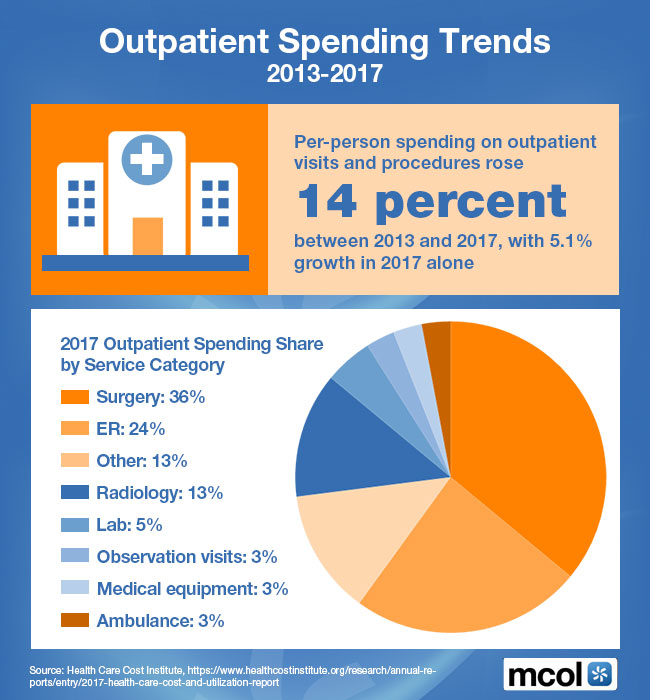
On Emergency Department Usage

Annual Visits

By http://www.MCOL.com

***

***

Conclusion

Your thoughts and comments on this ME-P are appreciated. Feel free to review our top-left column, and top-right sidebar materials, links, URLs and related websites, too. Then, subscribe to the ME-P. It is fast, free and secure.

Speaker: If you need a moderator or speaker for an upcoming event, Dr. David E. Marcinko; MBA – Publisher-in-Chief of the Medical Executive-Post – is available for seminar or speaking engagements.

Book Marcinko: https://medicalexecutivepost.com/dr-david-marcinkos-bookings/

Subscribe: MEDICAL EXECUTIVE POST for curated news, essays, opinions and analysis from the public health, economics, finance, marketing, IT, business and policy management ecosystem.

***

The “Comprehensive Health Record”

About icucare

[Dr. David Edward Marcinko MBA]

http://www.CertifiedMedicalPlanner.org

There is much discussion today about the concept of a “Comprehensive Health Record”. This is an extension of the traditional terminology of “Electronic Health Records (EHR), Electronic Medical Records and Personal Health Records”, etc.

http://www.HealthDictionarySeries.org

From theory to practice

Etymology notwithstanding, the ISeeYouCare’s patient-centric healthcare platform is founded on the premise that the patient’s electronic health record must be accessible throughout the care continuum, no matter the venue, source or time of day. This level of integration and transparency drives clinical quality, positive provider and patient experience and lower costs in a value based world. The family of solutions impacts from the hospital to the home with an unmatched level of clinical collaboration for the payer to the provider, patient and family.

At ISeeYouCare, they support the concept of a Comprehensive Health Record (CHR). Furthermore, they  see it as true to the original concept of electronic health records.


Benefits of a Comprehensive Health Record

There are many reported reasons for a patient to manage and maintain their own comprehensive health record.

• Obtaining medical records from hospital systems and disparate providers can take a great deal of time. Often, patients need information in a timely manner, due to an emergency or a new diagnosis. The delay in getting information is frustrating and can be deadly in case of an emergency.

• Health care providers do not have to keep your records forever. The requirements vary from state-to-state, but in general, most do not have to maintain records beyond ten years.

• Maintaining a full longitudinal record of your health improves care coordination and promotes easier sharing of information with family and caregivers.

• Having full copies of your medical records with accurate information makes it easier to connect with other patients or conduct research online so you have a better understanding of any health concerns.

• You can save costs by providing doctors with results of tests and procedures performed by other organizations.

• It helps you make sure that your health information is accurate

Assessment: So, decide for yourself: EHR or CHR? https://icucare.com/

Conclusion

Your thoughts and comments on this ME-P are appreciated. Feel free to review our top-left column, and top-right sidebar materials, links, urls and related websites, too. Then, subscribe to the ME-P. It is fast, free and secure.

Speaker: If you need a moderator or speaker for an upcoming event, Dr. David E. Marcinko; MBA – Publisher-in-Chief of the Medical Executive-Post – is available for seminar or speaking engagements. https://medicalexecutivepost.com/dr-david-marcinkos-bookings/

Contact: MarcinkoAdvisors@msn.com

***

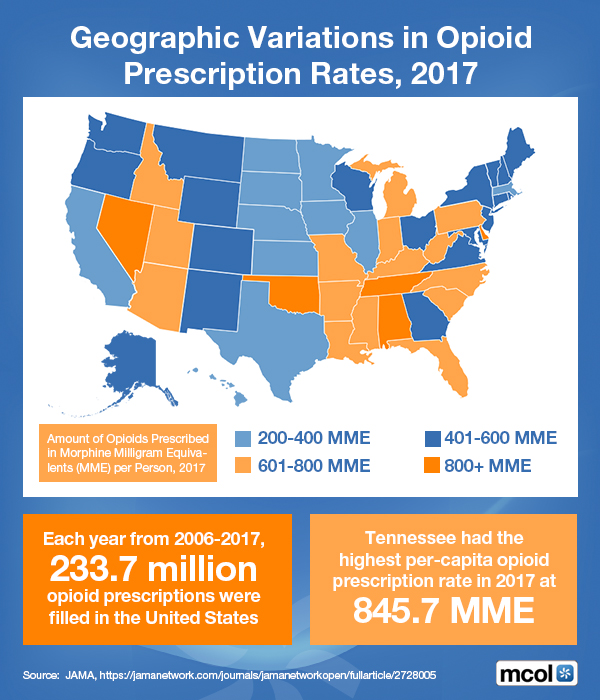
Is this the NEXT OPIOID CRISIS?

A Gabapentin Prescriptions Surge May be Brewing Out-There!

By Dr. David Edward Marcinko MBA

Prescriptions for nerve pain medicines like gabapentin (Neurontin) and pregabalin (Lyrica) have more than tripled in recent years, driven by increased use among chronically ill older adults and patients already taking opioids, a U.S. study suggests. The proportion of US adults prescribed gabapentin and other drugs in the same family of medicines climbed from 1.2% in 2002 to 3.9% by 2015, a period that also saw a surge in opioid overdoses and deaths.

The drug class, known as gabapentinoids, includes gabapentin (Neurontin, Gralise, Horizant) and pregabalin. “Nearly 1 in 25 adults takes a gabapentinoid during a year, which matters because we have little data to support much use of this drug class and minimal data to support the long-term safety of the medications,” said study author Dr. Michael Johansen of the Heritage College of Osteopathic Medicine at Ohio University in Athens.

Source: Reuters Health News via MDLinx [1/8/18]

***

Assessment

I hate to admit that these drugs did not even exist when I was in medical school. So, can we assume that most doctors today learned about them thru drug reps, TV, radio, internet, blog and vlog advertising, etc? 

More: https://www.painmedicinenews.com/Clinical-Pain-Medicine/Article/03-18/Gabapentin-and-Opioids-a-Potentially-Deadly-Combination/47053?sub=C143BC655DA759D99E56383AE3C0C55ECB64ABF25DFEFEA185C6CA3F4F86B4&enl=true&lipi=urn:li:page:d_flagship3_feed;y0AoiQmuRTy3ozEhwaJ0iQ%3D%3D

Is this the next opioid or drug crisis in the USA? Doctor colleagues, please think about the antibiotic resistance problem. Economic colleagues, please think about the “law of substitutions.” All, think about recreational marijuana? http://www.HealthDictionarySeries.org

Conclusion

Your thoughts and comments on this ME-P are appreciated. Feel free to review our top-left column, and top-right sidebar materials, links, URLs and related websites, too. Then, subscribe to the ME-P. It is fast, free and secure.

Speaker: If you need a moderator or speaker for an upcoming event, Dr. David E. Marcinko; MBA – Publisher-in-Chief of the Medical Executive-Post – is available for seminar or speaking engagements.

Book Marcinko: https://medicalexecutivepost.com/dr-david-marcinkos-bookings/

Subscribe: MEDICAL EXECUTIVE POST for curated news, essays, opinions and analysis from the public health, economics, finance, marketing, IT, business and policy management ecosystem.

***

Product DetailsProduct DetailsProduct Details

***

Continued focus on improving EHRs (or is it CHRs?)

From EHR to CHR

By Dr. David Edward Marcinko MBA

http://www.CertifiedMedicalPlanner.org

I read this curated article and decided to send it right out to our ME-P readers for comment [EHR = CHR].

Nothing more needs to be said, on my part. Is this mere definitional obfuscation for flawed technology? http://www.HealthDictionarySeries.org

So, what do you think?

http://www.healthcareitnews.com/news/epic-ceo-judy-faulkner-standing-behind-switch-ehrs-chrs

Assessment

A rose by any other name still smells sweet. But, does not an onion stink?

Conclusion

Your thoughts and comments on this ME-P are appreciated. Feel free to review our top-left column, and top-right sidebar materials, links, URLs and related websites, too. Then, subscribe to the ME-P. It is fast, free and secure.

Speaker: If you need a moderator or speaker for an upcoming event, Dr. David E. Marcinko; MBA – Publisher-in-Chief of the Medical Executive-Post – is available for seminar or speaking engagements.

Book Marcinko: https://medicalexecutivepost.com/dr-david-marcinkos-bookings/
Subscribe: MEDICAL EXECUTIVE POST for curated news, essays, opinions and analysis from the public health, economics, finance, marketing, IT, business and policy management ecosystem.

***

On National Healthcare Spending

Product and Service Distribution for FY 2016

By http://www.MCOL.com

***

***

Conclusion

Your thoughts and comments on this ME-P are appreciated. Feel free to review our top-left column, and top-right sidebar materials, links, URLs and related websites, too. Then, subscribe to the ME-P. It is fast, free and secure.

Speaker: If you need a moderator or speaker for an upcoming event, Dr. David E. Marcinko; MBA – Publisher-in-Chief of the Medical Executive-Post – is available for seminar or speaking engagements. https://medicalexecutivepost.com/dr-david-marcinkos-bookings

Contact: MarcinkoAdvisors@msn.com

***

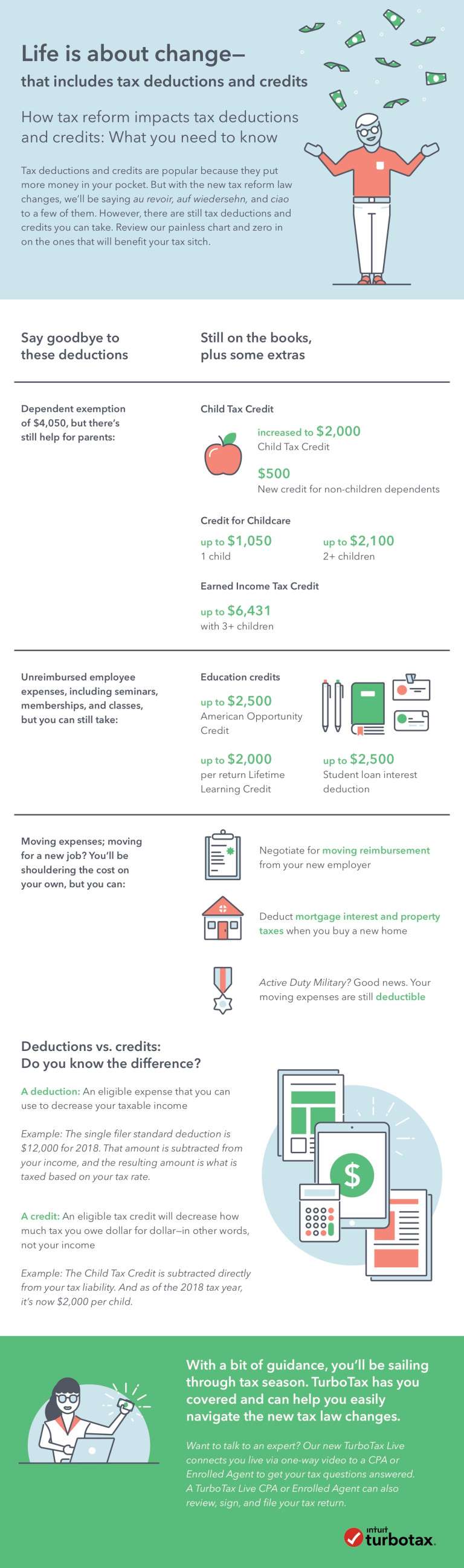
On The Tax Cut and Jobs Act (TCJA)

The Tax Cut and Jobs Act (TCJA)

By Rick Kahler CFP®

The Tax Cut and Jobs Act (TCJA) has generated a lot of media hype, much of which is coming from the extreme wings of both political parties and much of which is simply not true.

Here is some perspective

When he signed the bill President Trump called it “the largest tax cuts in our history”. This is not so.

According to a November 2, 2017, article in Reuters, the largest personal tax cuts in U.S. history came from Presidents Warren Harding and Calvin Coolidge, both Republicans. In 1922, the top tax rate was 73 percent. By 1925, it was only 25 percent.

Under Presidents John Kennedy and Lyndon Johnson, both Democrats, the tax cuts of 1964 and 1965 cut the top rate from 91 percent to 70 percent. The 1986 Reagan cuts lowered the top rate from 70 percent to 28 percent.

In comparison, the Trump cuts reduced the top rate from 39.6% to 37%, a miniscule 6.6% drop.

The new tax rules do mean some significant changes 

The good news is that the standard deduction will nearly double and the maximum child tax credit will increase from $1000 to $2000. But almost nowhere do you read about the bad news: the current personal exemptions will go away.

For 2017, an individual can take the $6350 standard deduction plus the $4050 personal exemption for a total of $10,400 (plus $4050 for each dependent). For 2018, this is $12,000, only $1,600 more in deductions. This means a median tax savings of about $192 per person, and only if you don’t itemize.

The even worse news

Home office expenses, moving expenses to relocate for a new job, casualty and gambling losses, unreimbursed business expenses, tax preparation software, tax preparation fees, and investment advisory fees will no longer be deductible on Schedule A.

This tax act has been labeled as terrible for the middle class and wonderful for the uber-rich. I don’t see that either claim is true. It appears to me that the winners (not “big winners”) are the middle class. Yes, the uber-rich also get a small 6.6% reduction—hardly a big deal compared to the cuts of 23% to 73% under Kennedy, Reagan, Harding, and Coolidge.

Corporate taxes

The real impact of the TCJA is its reductions on corporate taxes, not personal taxes. Taxes on C-corporations are cut from 34% to 21% (a 38% reduction). What isn’t reported is that reducing America’s corporate income tax has had bipartisan support for several years. The current US rate of 34% is the highest in developed countries, when the average global corporate tax rate is 22.6%.

Those who attack “big corporations that will just pass tax savings on to investors” tend to forget that 43% of Americans invest in these same corporations, including those with 401(k), IRA, or 403(b) retirement plans.

You also probably haven’t read that the new law actually raises taxes on corporations with taxable incomes of under $50,000, from 15% to 21% (a 38% increase). These corporations are those most generally owned by the Main Street business person.

The TCJA helps tax payers that are sole proprietors, partners and shareholders of S-corporations, LLCs and partnerships, which pass profits or losses through to be taxed in the taxpayer’s personal tax brackets. The new law allows most of these pass-through entities to exclude 20% of their profit from taxes. However, if you are in the profession of law, accounting, medicine, or financial planning, or are a professional musician or athlete, the exclusion probably doesn’t apply.

Assessment-Irony

Finally, for the 51% of Americans who pay taxes, the TCJA adds an unbelievable amount of complexity to an already complex tax code.

Conclusion

Your thoughts and comments on this ME-P are appreciated. Feel free to review our top-left column, and top-right sidebar materials, links, URLs and related websites, too. Then, subscribe to the ME-P. It is fast, free and secure.

Speaker: If you need a moderator or speaker for an upcoming event, Dr. David E. Marcinko; MBA – Publisher-in-Chief of the Medical Executive-Post – is available for seminar or speaking engagements.

Book Marcinko: https://medicalexecutivepost.com/dr-david-marcinkos-bookings

Subscribe: MEDICAL EXECUTIVE POST for curated news, essays, opinions and analysis from the public health, economics, finance, marketing, IT, business and policy management ecosystem.

***

On U.S. State Health Rankings

FOR FY 2017

By http://www.MCOL.Com

***

***

Conclusion

Your thoughts and comments on this ME-P are appreciated. Feel free to review our top-left column, and top-right sidebar materials, links, URLs and related websites, too. Then, subscribe to the ME-P. It is fast, free and secure.

Speaker: If you need a moderator or speaker for an upcoming event, Dr. David E. Marcinko; MBA – Publisher-in-Chief of the Medical Executive-Post – is available for seminar or speaking engagements.

Book Marcinko: https://medicalexecutivepost.com/dr-david-marcinkos-bookings/
Subscribe: MEDICAL EXECUTIVE POST for curated news, essays, opinions and analysis from the public health, economics, finance, marketing, IT, business and policy management ecosystem.

***

On “Fancy-Smancy” EMRs, IT and Cyber Security, etc.

EMRs – Providers Need to Prepare for Virulent Ransomware in 2018

[By staff reporters]

Ransomware emerged as a significant threat on the worldwide stage in 2017, but new variants will challenge healthcare providers well into 2018, with some versions of new malware not even needing a network to distribute themselves throughout an organization. Previous variants of ransomware, particularly the WannaCry attack in May, showed the ability to self-propagate and spread across a network and onto other networks via the Internet.

Educating a healthcare’s organization workforce on cyberattacks is necessary, but it’s not enough to bring them up to speed on phishing and other threats. Practices need to harden their own email systems; for example, Matt Sherman, a malware outbreak specialist at Symantec, advises using secure email systems as a best practice along with two-factor authentication software. Email systems should scan links contained in incoming messages, and they should enable automatic image loading in messages.

Source: Joseph Goedert, adapted from Health Data Management [12/28/17]

***Courtesy: FunnyBones

Conclusion

Your thoughts and comments on this ME-P are appreciated. Feel free to review our top-left column, and top-right sidebar materials, links, URLs and related websites, too. Then, subscribe to the ME-P. It is fast, free and secure.

Speaker: If you need a moderator or speaker for an upcoming event, Dr. David E. Marcinko; MBA – Publisher-in-Chief of the Medical Executive-Post – is available for seminar or speaking engagements.

Book Marcinko: https://medicalexecutivepost.com/dr-david-marcinkos-bookings/

Subscribe: MEDICAL EXECUTIVE POST for curated news, essays, opinions and analysis from the public health, economics, finance, marketing, IT, business and policy management ecosystem.

***

Bitcoin …. SLOWS

And, we don’t mean price!

[By MIT Technology Review]

Bitcoin transactions have always been slow, but now they are expensive too, which means that small transactions are no longer worth it. The average cost has gone from less than a dollar at the beginning of 2017 to more than $40 per transaction yesterday, as the growing demand for new transactions has exceeded the network’s capacity to confirm them. Arguments over what to do about the bottleneck have grown into a full-fledged Bitcoin civil war.

One proposed solution is to build a secondary network that lets people transact “off-chain.” Some exchanges already allow users to exchange Bitcoin with each other without using the main blockchain. But in the context of blockchain research and development, “off-chain” means something more sophisticated.

The challenge: Bitcoin maintains its distributed ledger by having each computer running the Bitcoin software, called a “node,” process every single transaction. This is the essence of its decentralized nature, but it also makes the process of confirming transactions very slow, at least compared with traditional credit card networks. (Bitcoin can handle only a few transactions per second, whereas Visa can handle thousands.) Ethereum, the second largest public blockchain system, works similarly, which is why the network was brought to a near standstill recently by a mega-popular new platform for trading digital cats.

Finding a faster, more efficient way to confirm transactions on public blockchains would also reduce fees. Ideally, not every node would have to validate every transaction. But the trick will be achieving this without compromising the rest of the network’s trust.

How off-chain payments would work: It’s possible for multiple users to set up a “state channel,” in which a part of the main blockchain is locked in a certain state and can only be unlocked if each of the users signs off. The individuals can then send payments among themselves in a cryptographically-secure way, but without touching the main blockchain. At some point, users can update the state on the real chain to validate all of the transactions in between. The idea is that this principle can be extended to build a more complex payment network made of multiple channels, with a system for routing payments through them.

The players: One project aimed at creating a “layer two” for Bitcoin that would facilitate off-chain microtransactions is called the Lightning Network. An effort to achieve a similar goal for Ethereum is called the Raiden Network.

The current state of the tech: The Lightning and Raiden networks are still in the early stages of development, and each faces significant technical challenges. A simplified version of the Raiden Network that makes it possible to set up unidirectional payment channels is already available, however. The Lightning Network is said to have achieved a major milestone earlier this month when developers sent two Lightning transactions over the Bitcoin blockchain.

bitcoin

Conclusion

Your thoughts and comments on this ME-P are appreciated. Feel free to review our top-left column, and top-right sidebar materials, links, urls and related websites, too. Then, subscribe to the ME-P. It is fast, free and secure.

Speaker: If you need a moderator or speaker for an upcoming event, Dr. David E. Marcinko; MBA – Publisher-in-Chief of the Medical Executive-Post – is available for seminar or speaking engagements. https://medicalexecutivepost.com/dr-david-marcinkos-bookings/

Contact: MarcinkoAdvisors@msn.com

Subscribe: MEDICAL EXECUTIVE POST for curated news, essays, opinions and analysis from the public health, economics, finance, marketing, I.T, business and policy management ecosystem.

The Tax Cuts and Jobs Act of 2018

The Tax Cuts and Jobs Act

By Robert Whirley CPA

Congress has enacted the biggest tax reform law in thirty years, one that will make fundamental changes in the way you, your family and your business calculate your federal income tax bill, and the amount of federal tax you will pay. Since most of the changes will go into effect next year, there’s still a narrow window of time before year-end to soften or avoid the impact of crackdowns and to best position yourself for the tax breaks that may be heading your way.

Attached you will find summaries of the various provisions. We have tried to make sure these are final given the fact that the law changed three times in 24 hours.

Here’s a quick rundown of last-minute moves you should think about making

Lower tax rates coming. The Tax Cuts and Jobs Act will reduce tax rates for many taxpayers, effective for the 2018 tax year. Additionally, many businesses, including those operated as pass-through, such as partnerships, may see their tax bills cut.

The general plan of action to take advantage of lower tax rates next year is to defer income into next year. Some possibilities follow:

• . . . If you are about to convert a regular IRA to a Roth IRA, postpone your move until next year. That way you’ll defer income from the conversion until next year and have it taxed at lower rates.

• . . . Earlier this year, you may have already converted a regular IRA to a Roth IRA but now you question the wisdom of that move, as the tax on the conversion will be subject to a lower tax rate next year. You can unwind the conversion to the Roth IRA by doing a recharacterization—making a trustee-to-trustee transfer from the Roth to a regular IRA. This way, the original conversion to a Roth IRA will be cancelled out. But you must complete the recharacterization before year-end. Starting next year, you won’t be able to use a recharacterization to unwind a regular-IRA-to-Roth-IRA conversion.

• . . . If you run a business that renders services and operates on the cash basis, the income you earn isn’t taxed until your clients or patients pay. So if you hold off on billings until next year—or until so late in the year that no payment will likely be received this year—you will likely succeed in deferring income until next year.

• . . . If your business is on the accrual basis, deferral of income till next year is difficult but not impossible. For example, you might, with due regard to business considerations, be able to postpone completion of a last-minute job until 2018, or defer deliveries of merchandise until next year (if doing so won’t upset your customers). Taking one or more of these steps would postpone your right to payment, and the income from the job or the merchandise, until next year. Keep in mind that the rules in this area are complex and may require a tax professional’s input.

• . . . The reduction or cancellation of debt generally results in taxable income to the debtor. So if you are planning to make a deal with creditors involving debt reduction, consider postponing action until January to defer any debt cancellation income into 2018.

Disappearing or reduced deductions, larger standard deduction. Beginning next year, the Tax Cuts and Jobs Act suspends or reduces many popular tax deductions in exchange for a larger standard deduction.

Here’s what you can do about this right now:

• Individuals (as opposed to businesses) will only be able to claim an itemized deduction of up to $10,000 ($5,000 for a married taxpayer filing a separate return) for the total of (1) state and local property taxes; and (2) state and local income taxes. To avoid this limitation, pay the last installment of estimated state and local taxes for 2017 no later than Dec. 31, 2017, rather than on the 2018 due date. But don’t prepay in 2017 a state income tax bill that will be imposed next year – Congress says such a prepayment won’t be deductible in 2017. However, Congress only forbade prepayments for state income taxes, not property taxes, so a prepayment on or before Dec. 31, 2017, of a 2018 property tax installment is apparently OK.

• The itemized deduction for charitable contributions won’t be chopped. But because most other itemized deductions will be eliminated in exchange for a larger standard deduction (e.g., $24,000 for joint filers), charitable contributions after 2017 may not yield a tax benefit for many because they won’t be able to itemize deductions. If you think you will fall in this category, consider accelerating some charitable giving into 2017.

• The new law temporarily boosts itemized deductions for medical expenses. For 2017 and 2018 these expenses can be claimed as itemized deductions to the extent they exceed a floor equal to 7.5% of your adjusted gross income (AGI). Before the new law, the floor was 10% of AGI, except for 2017 it was 7.5% of AGI for age-65-or-older taxpayers. But keep in mind that next year many individuals will have to claim the standard deduction because many itemized deductions have been eliminated. If you won’t be able to itemize deductions after this year, but will be able to do so this year, consider accelerating “discretionary” medical expenses into this year. For example, before the end of the year, get new glasses or contacts, or see if you can squeeze in expensive dental work such as an implant.

IRS

Other year-end strategies

Here are some other last minute moves that can save tax dollars in view of the new tax law:

• The new law substantially increases the alternative minimum tax (AMT) exemption amount, beginning next year. There may be steps you can take now to take advantage of that increase. For example, the exercise of an incentive stock option (ISO) can result in AMT complications. So, if you hold any ISOs, it may be wise to postpone exercising them until next year. And, for various deductions, e.g., depreciation and the investment interest expense deduction, the deduction will be curtailed if you are subject to the AMT. If the higher 2018 AMT exemption means you won’t be subject to the 2018 AMT, it may be worthwhile, via tax elections or postponed transactions, to push such deductions into 2018.

• Like-kind exchanges are a popular way to avoid current tax on the appreciation of an asset, but after Dec. 31, 2017, such swaps will be possible only if they involve real estate that isn’t held primarily for sale. So if you are considering a like-kind swap of other types of property, do so before year-end. The new law says the old, far more liberal like-kind exchange rules will continue apply to exchanges of personal property if you either dispose of the relinquished property or acquire the replacement property on or before Dec. 31, 2017.

• For decades, businesses have been able to deduct 50% of the cost of entertainment directly related to or associated with the active conduct of a business. For example, if you take a client to a nightclub after a business meeting, you can deduct 50% of the cost if strict substantiation requirements are met. But under the new law, for amounts paid or incurred after Dec. 31, 2017, there’s no deduction for such expenses. So if you’ve been thinking of entertaining clients and business associates, do so before year-end.

• Under current rules, alimony payments generally are an above-the line deduction for the payor and included in the income of the payee. Under the new law, alimony payments aren’t deductible by the payor or includible in the income of the payee, generally effective for any divorce decree or separation agreement executed after 2017. So if you’re in the middle of a divorce or separation agreement, and you’ll wind up on the paying end, it would be worth your while to wrap things up before year end. On the other hand, if you’ll wind up on the receiving end, it would be worth your while to wrap things up next year.

• The new law suspends the deduction for moving expenses after 2017 (except for certain members of the Armed Forces), and also suspends the tax-free reimbursement of employment-related moving expenses. So if you’re in the midst of a job-related move, try to incur your deductible moving expenses before year-end, or if the move is connected with a new job and you’re getting reimbursed by your new employer, press for a reimbursement to be made to you before year-end.

• Under current law, various employee business expenses, e.g., employee home office expenses, are deductible as itemized deductions if those expenses plus certain other expenses exceed 2% of adjusted gross income. The new law suspends the deduction for employee business expenses paid after 2017. So, we should determine whether paying additional employee business expenses in 2017, that you would otherwise pay in 2018, would provide you with an additional 2017 tax benefit.

***

***

Also, now would be a good time to talk to your employer about changing your compensation arrangement—for example, your employer reimbursing you for the types of employee business expenses that you have been paying yourself up to now, and lowering your salary by an amount that approximates those expenses. In most cases, such reimbursements would not be subject to tax.

Assessment

Please keep in mind that I’ve described only some of the year-end moves that should be considered in light of the new tax law.

Robert Whirley & Associates, LLC + ProActive Advisory
11675 Rainwater Drive
Suite 430, Bldg 600
Alpharetta, GA 30009
http://www.WhirleyProactive.com
770.932.1919
770.932.1192 (fax)

***

Top 10 Highest Health Care Paying Jobs

USA 2017

By CareerCast

***

***

Risk Management, Liability Insurance, and Asset Protection Strategies for Doctors and Advisors: Best Practices from Leading Consultants and Certified Medical Planners™8Comprehensive Financial Planning Strategies for Doctors and Advisors: Best Practices from Leading Consultants and Certified Medical Planners™

Health Plan Provider Data Quality Confidence

For 2016

By http://www.MCOL.com

***

***

Conclusion

Your thoughts and comments on this ME-P are appreciated. Feel free to review our top-left column, and top-right sidebar materials, links, URLs and related websites, too. Then, subscribe to the ME-P. It is fast, free and secure.

Speaker: If you need a moderator or speaker for an upcoming event, Dr. David E. Marcinko; MBA – Publisher-in-Chief of the Medical Executive-Post – is available for seminar or speaking engagements.

Book Marcinko: https://medicalexecutivepost.com/dr-david-marcinkos-bookings/

Subscribe: MEDICAL EXECUTIVE POST for curated news, essays, opinions and analysis from the public health, economics, finance, marketing, IT, business and policy management ecosystem.

***

Spirituality and Financial Planning

What does spirituality have to do with financial planning?

By Rick Kahler CFP®

That was my first thought when Stephen Brody, CFP, ChFC, EdD, contacted me about being interviewed for his doctoral dissertation on “Assessing Spirituality in Financial Life Planning.” The incongruity of the idea intrigued me, so I agreed.

Definitions: http://www.HealthDictionarySeries.org

Financial life planning

In order to understand Brody’s work, I first needed to know his definitions of both financial life planning and spirituality. Financial life planning is an integrated approach sometimes described by terms such as client-centered financial planning. It includes investment advising, but the scope of the engagement is much broader and emphasizes clients’ overall well-being.

Brody writes that financial life planning “is literally a matter of connecting your money and your values with your life. . . .the life of the client becomes the axis around which the financial plan develops and evolves. The client is at the center of the plan, and the money is simply the details to support a life well lived.”

Spirituality

Spirituality, for many people, is equal to religion. I used to believe that a spiritual person was a religious person and one couldn’t be a religious person without being a spiritual person.

That is not Brody’s definition of spirituality, which he views on a faith-neutral basis. One of his cited definitions of spirituality that makes sense to me is that it relates to searching for meaning, purpose, and a moral framework for connecting with self, others, and the ultimate reality.

Methodologies

Financial life planners use a number of methodologies which lead clients to a greater level of meaning and well-being. They look at money as a tool that supports someone in finding and living a life of meaning and purpose. Seen from this perspective, I have to agree that what a financial life planner does is spiritual. After all, I’ve never heard of someone’s last words being, “Life was so good—my financial planner helped me earn 5.76% compounded annually for 20 years.”

Brody’s research finds there are three types of intelligence needed by a financial life planner. They are IQ (intellectual intelligence), EQ (emotional intelligence), and SQ (spiritual intelligence). Brody describes IQ, which deals with knowledge, as the learning stage of the financial planning process. I contend that education is 50% of what a financial planner does. The psychological factors of dealing with money require EQ, or what he calls the understanding stage.

Brody defines SQ as “The ability to behave with wisdom and compassion, all the while maintaining inner and outer peace, regardless of the situation.” This refers to the character and moral factor involved in planning, which Brody suggests is the enlightening stage. This is where money supports meaning.

Like both intellectual and emotional intelligence, spiritual intelligence has its own skill set. Brody discusses 21 specific skills. Eight of them are summed up in just being aware of things like one’s own world view, purpose, values, and limitations.

From his research, Brody suggests that the ideal financial planning engagement is based on deep and meaningful conversations. He says it is “a process that seeks the development of the whole person,” as opposed to just focusing on concerns like rates of return and tax strategies. From these more meaningful conversations comes “a discovery and awareness that leads to the understanding of your life’s meaning, purpose, and moral framework.”

One participant in the survey said that appropriately sequenced questions help clients have a “glide path into self-discovery” and greater clarity of what’s important to them in life.

Assessment

From that understanding, planner and client can work together co-create a financial plan that aligns with the person’s vision of their ideal self and supports a fulfilling life.

Conclusion

Your thoughts and comments on this ME-P are appreciated. Feel free to review our top-left column, and top-right sidebar materials, links, URLs and related websites, too. Then, subscribe to the ME-P. It is fast, free and secure.

Speaker: If you need a moderator or speaker for an upcoming event, Dr. David E. Marcinko; MBA – Publisher-in-Chief of the Medical Executive-Post – is available for seminar or speaking engagements.

Book Marcinko: https://medicalexecutivepost.com/dr-david-marcinkos-bookings/

Subscribe: MEDICAL EXECUTIVE POST for curated news, essays, opinions and analysis from the public health, economics, finance, marketing, IT, business and policy management ecosystem.

***

Comprehensive Financial Planning Strategies for Doctors and Advisors: Best Practices from Leading Consultants and Certified Medical Planners™

The Merk Investing Outlook for 2018

What can possible go wrong in 2018?

By Axel G. Merk

Dear Dr. David E Marcinko and ME-P Readers,

With the stock market and Bitcoin reaching all-time highs, what can possible go wrong?

****

In offering my thoughts on 2018, I see my role in reminding investors to stress test their portfolios. Is your portfolio built of straw, sticks or brick?

***

http://www.merkinvestments.com/insights/2017/2017-12-07.php?utm_source=merk&utm_medium=link&utm_campaign=merk-campaign&registered=yes

***

Conclusion

Your thoughts and comments on this ME-P are appreciated. Feel free to review our top-left column, and top-right sidebar materials, links, URLs and related websites, too. Then, subscribe to the ME-P. It is fast, free and secure.

Speaker: If you need a moderator or speaker for an upcoming event, Dr. David E. Marcinko; MBA – Publisher-in-Chief of the Medical Executive-Post – is available for seminar or speaking engagements.

Book Marcinko: https://medicalexecutivepost.com/dr-david-marcinkos-bookings/

Subscribe: MEDICAL EXECUTIVE POST for curated news, essays, opinions and analysis from the public health, economics, finance, marketing, IT, business and policy management ecosystem.

***

Healthcare Spending Distribution

For FY 2016

By MCOL.com

***

***

Conclusion

Your thoughts and comments on this ME-P are appreciated. Feel free to review our top-left column, and top-right sidebar materials, links, URLs and related websites, too. Then, subscribe to the ME-P. It is fast, free and secure.

Speaker: If you need a moderator or speaker for an upcoming event, Dr. David E. Marcinko; MBA – Publisher-in-Chief of the Medical Executive-Post – is available for seminar or speaking engagements.

Book Marcinko: https://medicalexecutivepost.com/dr-david-marcinkos-bookings/

Subscribe: MEDICAL EXECUTIVE POST for curated news, essays, opinions and analysis from the public health, economics, finance, marketing, IT, business and policy management ecosystem.

***

The “CLOUD” Could Get Expensive for Health Care

 AND … DOCTORS

By Darrell K. Pruitt DDS

Without net-neutrality, cloud-based practice management (which is already more expensive than office-based) could cost even more.

The Impactful Industries

“4 industries that could be impacted by net neutrality – With a historic net neutrality vote set to take place tomorrow, people across the United States are rightly concerned about the future of the internet. Visions of price-tiered online spaces dancing in their heads, constituents all over the country are reaching out to their elected officials in a likely doomed effort to forestall what many see as the inevitable destruction of our mostly level digital playing field.”  Healthcare is one of the four.

Jack Morse for Mashable
[December 13, 2017]
http://mashable.com/2017/12/13/net-neutrality-impacts/#rypwq_M6Gmqi

Morse Speaks:

In addition to just being a pain in the ass, the repeal of net neutrality could do real harm to your health. That’s because the modern medical field has come to depend on that aforementioned free and open internet — something very much at odds with Federal Communications Commission chairman Ajit Pai’s plans.

These days, electronic health records are often kept in the cloud, and fast and reliable access to this data is vital to patient care. What’s more, telemedicine — remotely providing healthcare via some form of telecommunication — is super data heavy. Whether that’s remotely analyzing X-rays, or a rural patient connecting with a doctor in a far-off city, this stuff takes a lot of bandwidth.

***

***

Assessment

Will your small-town hospital be able to compete with the Facebooks of the world when it comes to buying a piece of bandwidth pie? Unfortunately, we may soon have to find out.

Conclusion

Your thoughts and comments on this ME-P are appreciated. Feel free to review our top-left column, and top-right sidebar materials, links, URLs and related websites, too. Then, subscribe to the ME-P. It is fast, free and secure.

Speaker: If you need a moderator or speaker for an upcoming event, Dr. David E. Marcinko; MBA – Publisher-in-Chief of the Medical Executive-Post – is available for seminar or speaking engagements.

Book Marcinko: https://medicalexecutivepost.com/dr-david-marcinkos-bookings

Subscribe: MEDICAL EXECUTIVE POST for curated news, essays, opinions and analysis from the public health, economics, finance, marketing, IT, business and policy management ecosystem.

***

A New Term: The “Investor Class”

On the Impending Tax Reform Legislation

By Anonymous Physician

In any discussion of the current tax reform bills, a new buzzword has popped up: “the investor class.” This seems especially true during the current bitcoin craze. Every time I’ve heard this term on a political talk show, it has been used derogatorily to frame the proposed tax changes as resulting in “the rich getting richer” and the “poor getting poorer.”

Definitions

In every instance, “the rich” and “the investor class” were used interchangeably. This is no more accurate than using the terms “millionaire” and “billionaire” as if they are the same, which they certainly are not. A million-dollar investment portfolio will safely produce $30,000 a year in income. A billion-dollar portfolio will produce $30,000,000. That’s a big, big difference.

Equating “the investor class” with “the rich” is just as absurd. To illustrate, here is some information from a 2008 poll of 24,000 voters by Zogby International. According to an article by CEO John Zogby, “Who Belongs To The Investor Class,” which appeared in Forbes on February 12, 2009, 38% of those surveyed identified themselves as being in the investor class.

Of this 38%, almost two-thirds had a household income under $100,000, 44% did not have college degrees, 15% were Hispanic or African American, and 15% held blue-collar jobs. This last number is especially interesting because blue-collar workers made up only 21% of the total of those surveyed.

However, the most surprising statistic from the survey was this: of the people who said they were not in the investor class (62% of those surveyed), more than half had money in a 401(k) retirement plan. This means they were investors.

***

https://www.amazon.com/Comprehensive-Financial-Planning-Strategies-Advisors/dp/1482240289/ref=sr_1_1?ie=UTF8&qid=1418580820&sr=8-1&keywords=david+marcinko

***

Obviously these folks saw the “investor class” as people other than themselves. My guess is that being an investor has a negative connotation with most Americans, perhaps related to the idea that “investor” equals “millionaire” equals “the rich.”

This is especially unfortunate, because if you don’t become an investor, your future isn’t all that rosy. Becoming an investor is mandatory if you want to provide for yourself in retirement. The alternatives—winning the lottery or eking out a meager existence on Social Security—are extremely unlikely or extremely unappealing.

Ironically, despite claims to the contrary, the proposed tax changes do not even favor the “investor class.” For decades Congress has taxed the profits from investments differently than ordinary income. This tax, the capital gains tax, is generally lower than the income tax rate charged on your earned income.

IRS

Neither the House or the Senate bill changes the way the IRS taxes capital gains. Instead, both versions would actually penalize investors. With lowering the ordinary income brackets, there will be cases where investors will actually pay a higher tax on their capital gains than on their ordinary income. I am guessing this may be an unintended consequence of the proposed act. However, it will be part of the new tax law unless the conference committee changes the capital gains tax brackets to match the new expanded brackets.

Regardless of the final version of the tax plan that becomes law, I suggest being skeptical about the term “investor class.” It is not the same as “wealthy.” Anyone using it probably has an agenda rooted in resentment of the rich.

Assessment

The real investor class is broad and easy to join. You belong to it already if you put even a small amount each month into an IRA or a 401(k) plan at work. OR, if you contribute to a 529 college savings plan for your kids. OR, if you have any money invested in mutual funds through an online brokerage. If you are wise enough to invest for the future, you are a part of the investor class.

Conclusion

Your thoughts and comments on this ME-P are appreciated. Feel free to review our top-left column, and top-right sidebar materials, links, URLs and related websites, too. Then, subscribe to the ME-P. It is fast, free and secure.

Speaker: If you need a moderator or speaker for an upcoming event, Dr. David E. Marcinko; MBA – Publisher-in-Chief of the Medical Executive-Post – is available for seminar or speaking engagements.

Subscribe: MEDICAL EXECUTIVE POST for curated news, essays, opinions and analysis from the public health, economics, finance, marketing, IT, business and policy management ecosystem.

***

U.S. Childhood Obesity Growth Projection Trends

The trend is NOT our friend!

By http://www.MCOL.com

***

***

Conclusion

Your thoughts and comments on this ME-P are appreciated. Feel free to review our top-left column, and top-right sidebar materials, links, URLs and related websites, too. Then, subscribe to the ME-P. It is fast, free and secure.

Speaker: If you need a moderator or speaker for an upcoming event, Dr. David E. Marcinko; MBA – Publisher-in-Chief of the Medical Executive-Post – is available for seminar or speaking engagements.

Book Marcinko: https://medicalexecutivepost.com/dr-david-marcinkos-bookings/

Subscribe: MEDICAL EXECUTIVE POST for curated news, essays, opinions and analysis from the public health, economics, finance, marketing, IT, business and policy management ecosystem.

***

About Medical Alert Tattoos

It’s all about the …. INK!

[By staff reporters]

A medical alert tattoo is quite different from a scar tattoo. People dealing with a serious medical condition, such as diabetes can have a tattoo showing that they are a diabetic, thus meaning a higher likelihood of getting help should they fall under attack and not be able to communicate their problem verbally.

Alert medical tattoos offer a permanent solution as compared to medical alert bracelets. Bracelets have been known to break, and that not only means waiting for a new bracelet, but usually having to spend more money to get a replacement as well. With the consent of their parents, these medical tattoos have even been known to be a solution for children dealing with these kinds of diseases.

People experiencing allergies that can lead to major complications may also consider medical alert tattoos. People who have a penicillin or peanut allergy for example, can benefit from this type of tattoo in the event they eat something that has peanuts in it without their knowledge. This can result in something called anaphylaxis, which is a condition that requires immediate attention and treatment.

***

Still0914_00003_1473896831872_6077107_ver1_0

***

DNR: https://www.cbsnews.com/news/do-not-resuscitate-dnr-tattoo-leaves-doctors-debating-whether-to-save-his-life/

MORE: Medical tattoos: http://www.freetattoodesigns.org/medical-tattoos.html

EVEN MORE DNR: https://www.kevinmd.com/blog/2017/11/worst-case-scenario-question-must-ask-patients-even-healthy-ones.html?utm_content=buffer4077d&utm_medium=social&utm_source=linkedin.com&utm_campaign=buffer

Conclusion

Your thoughts and comments on this ME-P are appreciated. Feel free to review our top-left column, and top-right sidebar materials, links, URLs and related websites, too. Then, subscribe to the ME-P. It is fast, free and secure.

Speaker: If you need a moderator or speaker for an upcoming event, Dr. David E. Marcinko; MBA – Publisher-in-Chief of the Medical Executive-Post – is available for seminar or speaking engagements.

Book Marcinko: https://medicalexecutivepost.com/dr-david-marcinkos-bookings/

Subscribe: MEDICAL EXECUTIVE POST for curated news, essays, opinions and analysis from the public health, economics, finance, marketing, IT, business and policy management ecosystem.

***

n-screaming-super-tease

“Getting Old is Better than the Alternative”

More on Retirement Planning

By Rick Kahler CFP®

At the gym where I work out it’s not uncommon to hear us old guys complaining in the locker room about our aches and pains. When the complaining subsides, inevitably someone will remark, “Well, at least getting old is better than the alternative.”

If you are fortunate enough not to die prematurely, you are going to grow old one day. As youth begins to gradually fade and health limitations increase, the reality that you will not be able to earn a living forever will present itself. At some point in time your financial support will need to come from something other than your job or business.

It’s very easy to dismiss this when we are young, because we’ve never known anything but being young. We take our health, vigor, and capabilities for granted. Just like anything that is “normal,” only when it’s gone do we tend to really appreciate it.

Normalacy

I never gave any thought to opening a door, drinking a cup of coffee, or cutting up the food on my plate—until I tore my rotator cuff and my right arm was rendered useless. A few weeks of doing without it taught me a whole new appreciation for the value and ease a functioning right arm brings to my life.

Unfortunately, many of the capabilities we lose with aging do not return after a few weeks of healing. The harsh reality is that eventually most of us will not be able to take care of ourselves in the ways we are used to.

Retirement planning

So when you think about “retirement planning,” here is what that really means: When you can’t earn an income, how will you be provided for? Where is the money for rent and utilities going to come from? How are you going to get to doctor appointments and the store when you can’t drive anymore? Who will help you pay your bills when your eyesight or your mind aren’t as clear as they once were? Who is going to help you with meal preparation or remind you to take your medications?

If you have fully funded your retirement, you can feel secure that, no matter what care and assistance you may need, you will have the means to pay for it. If you haven’t saved adequately, you will need to rely on others to take care of you financially as well as physically.

The “others”

For many people, “others” mean first spouses, then children, and finally governmental or charitable organizations. These all have limitations.

Spouses. What happens if you don’t have a partner? Or when they can no longer care for you? Or when both of you need care?

Children. Unlike many other countries and cultures, “living with the kids” is not necessarily expected or accepted in the U.S. Most children are not equipped emotionally or especially financially to become caretakers for aging parents.

According to studies I’ve read, the cost of caring for a parent who has not provided for themselves ranges from $250,000 to $700,000 in lost wages, opportunities, and out-of-pocket expenses. People may have to quit jobs to care for a parent or hire care at a cost of up to $100,000 a year. Few in American can afford that.

Government and charities. Social Security provides only a minimal income. Medicaid pays for only basic care such as shared living space. Services like public transportation, subsidized elder housing, and reliable in-home services are not available everywhere, especially in rural areas.

***

https://www.amazon.com/Comprehensive-Financial-Planning-Strategies-Advisors/dp/1482240289/ref=sr_1_1?ie=UTF8&qid=1418580820&sr=8-1&keywords=david+marcinko

***

Assessment

This is not a pretty picture of retirement. Unfortunately, it is reality for millions of Americans. The consequences of neglecting to prepare financially for old age are all too real.

Conclusion

Your thoughts and comments on this ME-P are appreciated. Feel free to review our top-left column, and top-right sidebar materials, links, URLs and related websites, too. Then, subscribe to the ME-P. It is fast, free and secure.

Speaker: If you need a moderator or speaker for an upcoming event, Dr. David E. Marcinko; MBA – Publisher-in-Chief of the Medical Executive-Post – is available for seminar or speaking engagements.

Book Marcinko: https://medicalexecutivepost.com/dr-david-marcinkos-bookings/

Subscribe: MEDICAL EXECUTIVE POST for curated news, essays, opinions and analysis from the public health, economics, finance, marketing, IT, business and policy management ecosystem.

***

Risk Management, Liability Insurance, and Asset Protection Strategies for Doctors and Advisors: Best Practices from Leading Consultants and Certified Medical Planners™8Comprehensive Financial Planning Strategies for Doctors and Advisors: Best Practices from Leading Consultants and Certified Medical Planners™

R.I.P Robert James Cimasi

In Memoriam

By Dr. David Edward Marcinko MBA

[Publisher Emeritus]

Robert James Cimasi MHA, ASA, FRICS, MCBA, CVA, CM&AA, CMP served as CEO of Health Capital Consultants, a nationally recognized healthcare financial and economic consulting firm headquartered in St. Louis, MO, serving clients in 49 states since 1993.

Mr. Cimasi had over 35 years of experience in serving clients, with a professional focus on the financial and economic aspects of healthcare service sector entities including: valuation consulting and capital formation services; healthcare industry transactions, including joint ventures, mergers, acquisitions, and divestitures; litigation support & expert testimony; and, certificate-of-need and other regulatory and policy planning consulting.

Bob served as an expert witness on cases in numerous courts, and has provided testimony before federal and state legislative committees. He and the experts at HCC also contributed greatly to our many textbooks and related publications. He will be missed.

https://www.healthcapital.com/hcc-news/hcc-news-archives

“Requiem in Pace” 

Rest in peace my friend. Robert Pine said it well when he noted,

“What we have done for ourselves is soon forgotten but what we have done for others remains and is immortal.”

***

Why a CVS-Aetna Merger Could Benefit Consumers

Why a CVS-Aetna Merger Could Benefit Consumers

The following originally appeared on The Upshot (copyright 2017, The New York Times Company)

There are reasons for consumers to be optimistic about CVS’s reported purchase of Aetna for $69 billion. It’s one of the largest health care mergers in history, and in general, consolidation in health care has not been good for Americans.

But by disrupting the pharmacy benefits management market, and by more closely aligning management of drug benefits and other types of benefits in one organization, CVS could be acting in ways that ultimately benefit consumers.

You probably know CVS as a retail pharmacy chain — it runs nearly 10,000drugstores. But over the years, it has diversified. It now runs walk-in clinics, including in Target stores. And it runs one of the largest specialty pharmacies, dispensing high-priced drugs that require special handling.

In a big move a decade ago that set the stage for more recent developments, CVS purchased a majority of shares of Caremark for nearly $27 billion to enter the pharmacy benefits management business.

Pharmacy benefits managers are companies that help insurers devise and run their drug benefits, including serving as middlemen in negotiating prices between insurers and drug manufacturers.

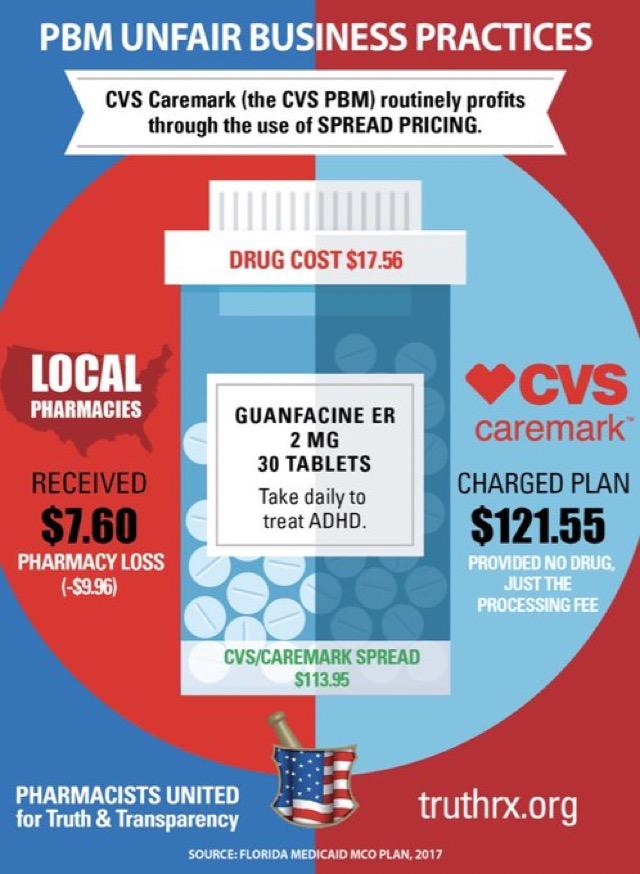
Many health industry experts believe that pharmacy benefits managers effectively increase prescription drug prices to raise their own profits. This is because they make money through opaque rebates that are tied to drug prices (so their profits rise as those prices do). Competition among pharmacy benefits management companies could push these profits down, but it is a highly concentrated market dominated by a few firms, CVS among the largest.

But CVS’s recent moves may shake up an already changing pharmacy benefits landscape. In October, the insurer Anthem announced its intentions to part ways with the pharmacy benefits management firm Express Scripts. Instead, it will partner with CVS to develop its own pharmacy management business.

Anthem would not be the first insurer to forgo external pharmacy benefits management and take on the role internally. The insurer UnitedHealth Group also runs a leading pharmacy benefit management business, OptumRx. And CVS’s purchase of Aetna would also remove it as a middleman acting between that insurer and drug companies.

“While it’s still early, the moves by Anthem and Aetna have the feeling of the beginning of the end of the stand-alone pharmacy benefits manager business,” said Craig Garthwaite, a health economist with Northwestern University’s Kellogg School of Management. These insurers, and UnitedHealth Group, have concluded that outsourcing pharmacy benefits management may not serve their interests.

This removal of profit-taking middlemen could be good for consumers in the short run if it leads to lower drug prices. “In the long run, it might be harder for new insurers to enter the market because they won’t be able to negotiate lower drug prices than the larger firms,” Mr. Garthwaite said. “This could result in further concentration in the health insurance market.” That could harm future consumers, though not in ways we can predict today.

The CVS-Aetna deal would be just another of the many recent mergers across business lines in health care. Insurers are buying or partnering with health care providers. Health systems are offering insurance. Hospitals are employing physicians. Even Amazon is jumping into the pharmacy business in some states. This may be part of the motivation for CVS to buy Aetna — defensive jockeying to maintain access to a large customer base that might otherwise begin to fill drug prescriptions online.

Typically, mergers in the sector have led to higher prices and no better outcomes. But a CVS-Aetna merger might be different because their business lines complement each other. The most significant overlap is in the management of Medicare drug benefits: Both companies offer stand-alone Medicare prescription drug plans.

But there is a lot of competition in the Medicare drug plan market, so this overlap may not be a leading area of concern.

The CVS-Aetna merger is primarily about a supplier and its customer joining forces, what economists call a vertical merger. This type of merger can enhance a firm’s ability to coordinate across interlocking lines of business.

In this case, CVS-Aetna might more effectively manage certain patients with chronic conditions (those insured by Aetna), reducing costs. Let’s imagine that Aetna could leverage CVS’s pharmacies and clinics to help patients — who require medications to avoid hospitalizations — stay on their drug regimen. That could save the merged organization money. It could also translate into both better care and lower premiums, though there’s no guarantee at this stage of either.

One source of optimism: Research shows that coordinating pharmacy and health benefits has value because it removes perverse incentives that arise when drug and nondrug benefits are split across organizations. When pharmacy benefits are managed by a company that’s not on the hook for the cost of other care, like hospitalization, it doesn’t have as strong an incentive for increasing access to drugs that reduce other types of health care use. That could end up costing more over all.

So there’s reason to believe that a combined CVS-Aetna might find ways to reduce costs — and represent an instance when consumers actually come out ahead after health care consolidation.

Conclusion

Your thoughts and comments on this ME-P are appreciated. Feel free to review our top-left column, and top-right sidebar materials, links, URLs and related websites, too. Then, subscribe to the ME-P. It is fast, free and secure.

Speaker: If you need a moderator or speaker for an upcoming event, Dr. David E. Marcinko; MBA – Publisher-in-Chief of the Medical Executive-Post – is available for seminar or speaking engagements. https://medicalexecutivepost.com/dr-david-marcinkos-bookings/

Subscribe: MEDICAL EXECUTIVE POST for curated news, essays, opinions and analysis from the public health, economics, finance, marketing, IT, business and policy management ecosystem.

***

Bitcoin – “Millennials Fake Gold”

Bitcoin – The  Digital Generation’s Gold Surrogate

By Vitaliy Katsenelson CFA

I’ve been asked about Bitcoin a lot lately. I’ haven’t written anything about it because I find myself in an uncomfortable place in agreeing with the mainstream media: It’s a bubble.

Bitcoin started out as what I’d call “millennial gold” – the young (digital) generation looked at it as their gold substitute.

http://contrarianedge.com/2017/12/01/bitcoin-millennials-fake-gold/

***

Conclusion

Your thoughts and comments on this ME-P are appreciated. Feel free to review our top-left column, and top-right sidebar materials, links, URLs and related websites, too. Then, subscribe to the ME-P. It is fast, free and secure.

Speaker: If you need a moderator or speaker for an upcoming event, Dr. David E. Marcinko; MBA – Publisher-in-Chief of the Medical Executive-Post – is available for seminar or speaking engagements.

Book Marcinko: https://medicalexecutivepost.com/dr-david-marcinkos-bookings/

Subscribe: MEDICAL EXECUTIVE POST for curated news, essays, opinions and analysis from the public health, economics, finance, marketing, IT, business and policy management ecosystem.

***

Identity Management is a Challenge Health Plans Must Meet

Is your organization ready?

http://www.MCOL. com

***

***

Conclusion

Your thoughts and comments on this ME-P are appreciated. Feel free to review our top-left column, and top-right sidebar materials, links, URLs and related websites, too. Then, subscribe to the ME-P. It is fast, free and secure.

Speaker: If you need a moderator or speaker for an upcoming event, Dr. David E. Marcinko; MBA – Publisher-in-Chief of the Medical Executive-Post – is available for seminar or speaking engagements.

Book Marcinko: https://medicalexecutivepost.com/dr-david-marcinkos-bookings/

Subscribe: MEDICAL EXECUTIVE POST for curated news, essays, opinions and analysis from the public health, economics, finance, marketing, IT, business and policy management ecosystem.

***

On Microsoft Health Accelerator, Merck Accelerator and Samsung NEXT

Microsoft Accelerator, Merck Accelerator and Samsung NEXT
have the highest awareness of all corporate health accelerators

By Markus Pohl

Among corporate health accelerators Microsoft Accelerator has the highest awareness level. Merck Accelerator and Samsung NEXT are ranking second and third. 42.8% of the digital health community has heard of Microsoft Accelerator. 26.7% have heard of Merck Accelerator, 26.4% of SAMSUNG Next and 24.8% of Grants4Apps by Bayer. Techstars (Barclays Accelerator, London) (18.2%) follows fifth with some distance behind.

These findings are part of our mHealth Economics program, the biggest survey of its kind with 2,400 answers from the digital global health community. In the ranking of of corporate accelerators’ awareness 21 corporate accelerators investing in healthcare have been included.

***

Here is the full ranking:

Microsoft Accelerator, Merck Accelerator and Samsung NEXT have the highest awareness of all corporate health accelerators

Conclusion

Your thoughts and comments on this ME-P are appreciated. Feel free to review our top-left column, and top-right sidebar materials, links, URLs and related websites, too. Then, subscribe to the ME-P. It is fast, free and secure.

Speaker: If you need a moderator or speaker for an upcoming event, Dr. David E. Marcinko; MBA – Publisher-in-Chief of the Medical Executive-Post – is available for seminar or speaking engagements.

Book Marcinko: https://medicalexecutivepost.com/dr-david-marcinkos-bookings/
Subscribe: MEDICAL EXECUTIVE POST for curated news, essays, opinions and analysis from the public health, economics, finance, marketing, IT, business and policy management ecosystem.

***

The Home Office Tax Deduction Explained

What it is – How it works?

By Dr. David Edward Marcinko MBA CMP™
http://www.CertifiedMedicalPlanner.org

A taxpayer’s business use of his or her home may give rise to a deduction for the business portion of expenses related to operating the home.

The basic requirement:

1. There must be a specific room or area that is set aside for and used exclusively on a regular basis as:
a. The principal place of any business, or
b. A place where the taxpayer meets with patients, clients or customers in the normal course of their trade or business, or
c. A separate structure that is used in the taxpayer’s trade or business and is not attached to their house or residence.

2. An employee can take a home office deduction if he or she meets the regular and exclusive use test and the use is for the convenience of the employer.

Deductions

Deductible expenses include business portions of mortgage interest, property taxes, depreciation, repairs and maintenance to the overall home that help the business use area, janitorial services or maid, utilities, insurance as well as other expenses directly related to the operating the remainder of the home.

***

https://www.amazon.com/Comprehensive-Financial-Planning-Strategies-Advisors/dp/1482240289/ref=sr_1_1?ie=UTF8&qid=1418580820&sr=8-1&keywords=david+marcinko

Conclusion

Your thoughts and comments on this ME-P are appreciated. Feel free to review our top-left column, and top-right sidebar materials, links, URLs and related websites, too. Then, subscribe to the ME-P. It is fast, free and secure.

Speaker: If you need a moderator or speaker for an upcoming event, Dr. David E. Marcinko; MBA – Publisher-in-Chief of the Medical Executive-Post – is available for seminar or speaking engagements.

Book Marcinko: https://medicalexecutivepost.com/dr-david-marcinkos-bookings/

Subscribe: MEDICAL EXECUTIVE POST for curated news, essays, opinions and analysis from the public health, economics, finance, marketing, IT, business and policy management ecosystem.

***

Appreciating Post Cyber Monday Stock Market Volatility

Join Our Mailing List

Living with Ambiguity [Is it Friend or Foe?]

By Robert Klosterman CFP® http://www.whiteoakswealth.com/

The stock market was down a bit last month and up last week, and then down today; back and forth, rising and falling and rising again the last few years, etc, etc.

Now: 23 557 DJIA

Whipsaw is the word I’ve heard to describe it lately. And, without a doubt, the question that gets asked the most is “How do you like this volatility?”

My reply, without exception, is “I LOVE volatility. I do prefer upside volatility to downside though”. The response is a smile or an outright laugh. Of course, few physicians or laymen I have ever met get worried about upside price movements in investing.

Third Quarter 2017

The third quarter of 2017 – post election results – clearly experienced both major up and downside volatility with the recent emphasis on the upside. Investors that fully invested in equities saw their portfolios rise in the positive and record-breaking direction.

Europe

The market pundits have a daily hero to pin the market movements on. Europe, Syria, Russia and Putin, Turkey, Greece, US Congress stalemates and other forces like the death of Fidel Castro are some of the most recent “good guys” that have given rise to Mr. Market’s positivity. Did we mention  Donald Trump?

How Long?

The bigger question is how long will these issues persist? Established societies, often described as western economies, have some significant headwinds facing them for the next few years: high debt, mounting costs of social insurance programs, and the likelihood of higher taxes to solve the problems.

There is nothing new or unique about that last sentence. There seems to be a wide consensus on those points and coupled with the record low interest rates, investors seem to have few traditional options to consider. It appears likely that it will take a few years to resolve these issues and provide a platform for above average growth.

Strategies

There are a number of strategies that can utilize volatility including Long-Short, Mean Reversion, Managed Futures and Market Neutral, etc [previously noted on this ME-P]. These provide returns in a secular bear market that may continue for a few more years.

Link: https://medicalexecutivepost.com/2007/11/28/what-is-a-market-neutral-fund/

It’s also important to recognize that while the US and Western Europe maybe having to face the headwinds there are economies in parts of the world that will likely experience above average growth rates for the next few years. For the most part, these emerging markets include Brazil, Russia, India and China (BRIC). A strong dollar not-withstanding.

BRIC Analogs to the USA

In the 1870‘s, the US was an emerging market the same way the BRIC economies are today’s emerging markets; developmentally analogous. Whereas the US and Western Europe face many headwinds, some of these emerging economies actually have wind in their backs. Trade surplus, demographics, low debt and low cost of Government are some of the key advantages. These countries’ standard of living is changing to the positive, and they have a large percentage of their population that can move up and be a purchaser of goods and services where previously they could not.

Income Generation

Another important focus will be on income generation. For many years the income portion of an investment in equities was half or more of its return. Only in recent years has the largest portion come from capital gains. We are likely “back to the old days” in order to achieve returns that will offset inflation and meet longer-term investment goals

Opportunities exist in a variety of areas, including real estate, Mortgage Backed Securities, Private Equity and others to have more focus on income as a dominant portion of the total return.

Assessment

Volatility is going to be with us and it would be wonderful to have the confidence needed to say the emphasis would be on upside volatility, but that is not the case right now. The optimum strategies are to align portfolios with the world we live in today.

IOW: Doctors, medical professionals and all investors must learn to “live with ambiguity.”

About the Author

Robert J. Klosterman® has been listed as one of the Top 250 Financial Advisors in the United States by Worth Magazine. He has also been recognized as one of the top 150 Financial Advisors by Mutual Fund Magazine, Medical Economics and Bloomberg’s Wealth Manager Magazine. Bob’s published quotes appear frequently in dozen’s of local and national publications, including USA Today, the New York Times, Minneapolis Star Tribune, CFP Today, Barron’s and Fortune.

Channel Surfing the ME-P

Have you visited our other topic channels? Established to facilitate idea exchange and link our community together, the value of these topics is dependent upon your input. Please take a minute to visit. And, to prevent that annoying spam, we ask that you register. It is fast, free and secure.

Conclusion

Your thoughts and comments on this ME-P are appreciated. Feel free to review our top-left column, and top-right sidebar materials, links, URLs and related websites, too. Then, subscribe to the ME-P. It is fast, free and secure.

Speaker: If you need a moderator or speaker for an upcoming event, Dr. David E. Marcinko; MBA – Publisher-in-Chief of the Medical Executive-Post – is available for seminar or speaking engagements. Contact: MarcinkoAdvisors@msn.com

OUR OTHER PRINT BOOKS AND RELATED INFORMATION SOURCES:

Product Details  Product Details

***

Comprehensive Financial Planning Strategies for Doctors and Advisors: Best Practices from Leading Consultants and Certified Medical Planners(TM)

***

Healthcare Executive Attitudes Toward Artificial Intelligence

Opportunities and Obstacles

By http://www.MCOL.com

***

***

Conclusion

Your thoughts and comments on this ME-P are appreciated. Feel free to review our top-left column, and top-right sidebar materials, links, urls and related websites, too. Then, subscribe to the ME-P. It is fast, free and secure.

Speaker: If you need a moderator or speaker for an upcoming event, Dr. David E. Marcinko; MBA – Publisher-in-Chief of the Medical Executive-Post – is available for seminar or speaking engagements.

Book Marcinko: https://medicalexecutivepost.com/dr-david-marcinkos-bookings/

Subscribe: MEDICAL EXECUTIVE POST for curated news, essays, opinions and analysis from the public health, economics, finance, marketing, IT, business and policy management ecosystem.

***

Health Plan Premium [Increase] Projections

Projections for 2018

By http://www.MCOL.com

***

***

Conclusion

Your thoughts and comments on this ME-P are appreciated. Feel free to review our top-left column, and top-right sidebar materials, links, urls and related websites, too. Then, subscribe to the ME-P. It is fast, free and secure.

Speaker: If you need a moderator or speaker for an upcoming event, Dr. David E. Marcinko; MBA – Publisher-in-Chief of the Medical Executive-Post – is available for seminar or speaking engagements.

Book Marcinko: https://medicalexecutivepost.com/dr-david-marcinkos-bookings/

Subscribe: MEDICAL EXECUTIVE POST for curated news, essays, opinions and analysis from the public health, economics, finance, marketing, I.T, business and policy management ecosystem.

***

On Health Care Spending Increases

Circa 1996 – 2013

By http://www.MCOL.com

***

***

Conclusion

Your thoughts and comments on this ME-P are appreciated. Feel free to review our top-left column, and top-right sidebar materials, links, urls and related websites, too. Then, subscribe to the ME-P. It is fast, free and secure.

Speaker: If you need a moderator or speaker for an upcoming event, Dr. David E. Marcinko; MBA – Publisher-in-Chief of the Medical Executive-Post – is available for seminar or speaking engagements.

Book Marcinko: https://medicalexecutivepost.com/dr-david-marcinkos-bookings/

Subscribe: MEDICAL EXECUTIVE POST for curated news, essays, opinions and analysis from the public health, economics, finance, marketing, IT, business and policy management ecosystem.

***

An End of Year Financial Check List

Important for your Financial Health

By Patrick Bourbon CFA

The last few weeks of the year are often a mad rush so we thought that it is a good time to share this checklist of important items to consider before the calendar year ends, all related to your investments and finances so that you can reach your goals and dreams faster.

1. Review your IRA – 401(k) / 403(b) retirement accounts – Are you on track for a comfortable retirement?
2. Start tax planning! It’s not too early to think about taxes – Asset location & Tax efficiency
3. Rebalance your portfolio
4. Harvest your capital losses
5. Check your emergency fund
6. Review your insurance policies
7. Contribute to your Health Spending Account
8. Take your Required Minimum Distribution
9. Contribute to your 529 Plan
10. Determine your net worth
11. Check your credit score
12. Check your beneficiaries
13. Update your estate plan
14. Maximize your business deductions
15. Spending and automated savings – You want to look ahead

Assessment

Short and sweet.

Conclusion

Your thoughts and comments on this ME-P are appreciated. Feel free to review our top-left column, and top-right sidebar materials, links, urls and related websites, too. Then, subscribe to the ME-P. It is fast, free and secure.

Speaker: If you need a moderator or speaker for an upcoming event, Dr. David E. Marcinko; MBA – Publisher-in-Chief of the Medical Executive-Post – is available for seminar or speaking engagements.

Book Marcinko: https://medicalexecutivepost.com/dr-david-marcinkos-bookings/

Subscribe: MEDICAL EXECUTIVE POST for curated news, essays, opinions and analysis from the public health, economics, finance, marketing, I.T, business and policy management ecosystem.

***

R.I.P Uwe Reinhardt PhD

Good-Bye Professor Reinhardt

By Dr. David Ewdard Marcinko MBA CMP™

***

https://en.wikipedia.org/wiki/Uwe_Reinhardt

Uwe Reinhardt PhD, the famed economist and James Madison professor of political economy and health economics at Princeton University in New Jersey, died this week after an undisclosed illness.

Here is his obituary from colleague Austin Frakt PhD.

https://THEINCIDENTALECONOMIST.COM/WORDPRESS/UWE-REINHARDT-GIANT-MENSCH-KNIFE-TWISTER/

Assessment

Along with Ken Arrow PhD, Uwe was a professional hero of mine. And, although I never met him, I did cite and quote him in several of my books, white-papers and texts. In fact, he wrote and e-mailed me several times, with words of encouragement, throughout my career.

Robert Pine said it well, when he noted:

“What we have done for ourselves is soon forgotten but what we have done for others remains and is immortal.”

Rest in peace my friend.

Conclusion

Your thoughts and comments on this ME-P are appreciated. Feel free to review our top-left column, and top-right sidebar materials, links, urls and related websites, too. Then, subscribe to the ME-P. It is fast, free and secure.

Speaker: If you need a moderator or speaker for an upcoming event, Dr. David E. Marcinko; MBA – Publisher-in-Chief of the Medical Executive-Post – is available for seminar or speaking engagements.

Book Marcinko: https://medicalexecutivepost.com/dr-david-marcinkos-bookings/

Subscribe: MEDICAL EXECUTIVE POST for curated news, essays, opinions and analysis from the public health, economics, finance, marketing, IT, business and policy management ecosystem.

***

Regulator Floats Idea of Merging Banks and Commerce

On the Bank of Amazon? Wal-Bank, Face-Bank, etc.

https://www.bloomberg.com/news/articles/2017-11-08/banking-commerce-divide-may-be-unnecessary-u-s-regulator-says

Conclusion

Your thoughts and comments on this ME-P are appreciated. Feel free to review our top-left column, and top-right sidebar materials, links, urls and related websites, too. Then, subscribe to the ME-P. It is fast, free and secure.

Speaker: If you need a moderator or speaker for an upcoming event, Dr. David E. Marcinko; MBA – Publisher-in-Chief of the Medical Executive-Post – is available for seminar or speaking engagements.

EDITOR

Contact: MarcinkoAdvisors@msn.com

***

The Marine Corp Anniversary

Happy Birthday!

By Dr. David Marcinko MBA

Yesterday, (Nov 10th) in 1775 the Marine Corp was established in a small tavern in Philadelphia to provide protection for our fleets. The Corp is steeped in history; history that I am proud of and thankful for as an American. We are far from a perfect nation, but we should ALL be proud and thankful for the blessing that is our country.

We live free by NEVER “taking a knee.”

This was from the  Commandant of the Marine Corp (his address to all Marines yesterday):

Seventy-Five years ago today, after months of fighting at Henderson Field and along Edson’s Ridge, Marines on Guadalcanal spent the night of 10 November 1942 planning and preparing. Although the Battle of Guadalcanal would continue for three more months, the plans laid on our Corps’ most sacred day became integral to the amphibious campaigns that followed. Success at Guadalcanal proved to be the turning point that ultimately paved the way for Allied victory in the Pacific. Those warriors defended their positions in brutal conditions against a formidable enemy – and triumphed. Through every major conflict our Nation has seen since the Revolution, Marines performed their duty with utmost courage, devotion, and raw determination. Their valiant deeds in the face of overwhelming challenges give us confidence and inspire us to meet the trials of today. As we pause to celebrate the birth of our Corps this year, we honor the legacy that was passed down to us and we recommit ourselves to carrying those traditions into the future.

This November 10th marks 242 years of warfighting excellence. At places like Trenton, Tripoli, Chapultepec, Belleau Wood, Guadalcanal, Chosin, Khe Sanh, Fallujah, Sangin, and so many others, Marines have fought with an inner spirit – a spirit that bonds us, binds us together as a cohesive team. It’s that intangible spirit that has formed the foundation of our warfighting reputation for the past 242 years. Now it’s our responsibility to ensure we honor and carry on that legacy. The American people expect a Corps of men and women who are committed, selfless, willing to sacrifice, who epitomize honor, courage, commitment, virtue, and character. We owe our Nation and our predecessors no less.

Today, as we celebrate our 242nd birthday, we must remember who we are, where we came from, and why we’re here. We must remember the past, honor those who are no longer with us, focus on today’s battles, and get ready for tomorrow. We can and will prevail as we always have, in any clime and place. But we must prevail together, united by the unyielding spirit in each of us that makes our Corps unique – that willingness to put our Corps and fellow Marines ahead of ourselves. Victory in battle comes through the integrated efforts of many – teamwork. We value the sacrifices and contributions of every Marine and Sailor, as well as our family members without whose support we would not be able to accomplish our mission. And we remain committed to being our Nation’s Expeditionary Force in Readiness that sets the standard for honor, discipline, and courage. I am proud of each and every one of you. Happy Birthday, Marines!

***

coin-side-flat-b

Semper Fidelis

***

APPLE and the iPhone X

Now Apple must show what’s next after iPhone X

By  Vitaliy Katsenelson CFA

The iPhone X is likely to be a phenomenal success for Apple. But its success will not be driven by anything new that the new phone packs inside. Instead, its success will be based on the phone’s screen size. Essentially, iPhone X provides the same screen real-estate as an iPhone Plus, but with the sleeker form factor of the iPhone 7 or 8.

Apple has done a great job at changing the paradigm of our thinking about the iPhone. If you only care about making phone calls, then an iPhone 4 is good enough. Why pay for more? You probably don’t even need to upgrade your phone for years, as long as the battery keeps holding its charge. However, for most, the actual “phone” function is the least important of the iPhone.

Earnings

From an earnings perspective, iPhone X will be a tremendous boost. It will increase the average selling price per unit by a few hundred dollars, which should help not just sales, but profit margins as well. This is actually healthy for both Apple and the entire iPhone ecosystem (including DRAM and solid state drive makers — for example, we still have a large position in Micron Technology). People were also postponing buying new iPhones while waiting for the iPhone X; thus, the number of units sold will probably exceed most optimistic expectations.

What is next?

Then the question becomes, What is next? Higher-priced iPhones will also change the dynamics of the upgrade cycle. Apple is going to have a harder time convincing iFanatics to shell out $1,000-$1,200 every year (or even every two years). The upgrade cycle will likely be elongating to three or four years.

***

***

Thus, any blow-out success of iPhone X in 2017 and early 2018 will be coming at the expense of future years. Even if you are a loyal Apple shareholder, you have to be prepared for this.

Assessment

Absent a new category of products, Apple is turning into a fully ripe stock. Yes, it will look statistically cheap based on 2018 earnings, but that will not be the case if you look at 2019 or 2020 earnings.

As all the excitement subsides, Apple stock will have to answer an extremely important question: What is next? After all, the value of any business is a lot more than the earnings generated next year, but far beyond that.

Conclusion

Your thoughts and comments on this ME-P are appreciated. Feel free to review our top-left column, and top-right sidebar materials, links, urls and related websites, too. Then, subscribe to the ME-P. It is fast, free and secure.

Speaker: If you need a moderator or speaker for an upcoming event, Dr. David E. Marcinko; MBA – Publisher-in-Chief of the Medical Executive-Post – is available for seminar or speaking engagements.

Contact: MarcinkoAdvisors@msn.com

Subscribe: MEDICAL EXECUTIVE POST for curated news, essays, opinions and analysis from the public health, economics, finance, marketing, I.T, business and policy management ecosystem.

***

On Health Plan Communication Preferences

According to Age

By http://www.MCOL.com

***
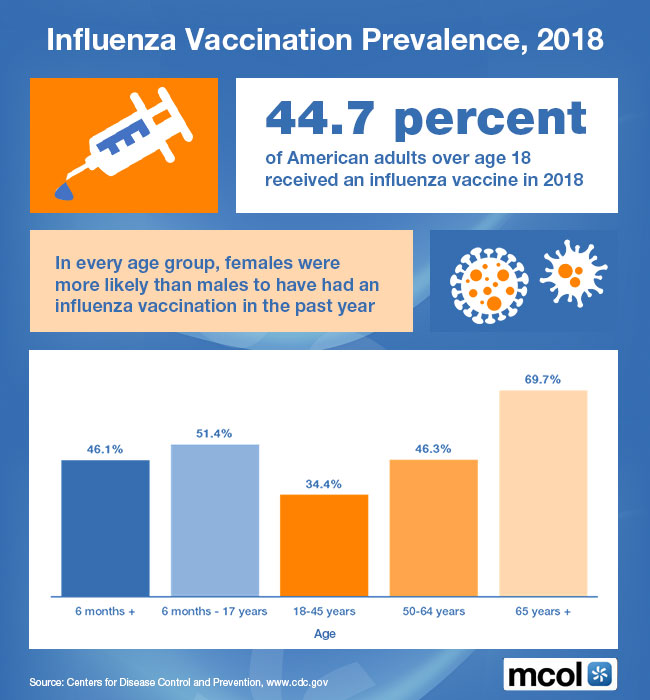
Conclusion

Your thoughts and comments on this ME-P are appreciated. Feel free to review our top-left column, and top-right sidebar materials, links, urls and related websites, too. Then, subscribe to the ME-P. It is fast, free and secure.

Speaker: If you need a moderator or speaker for an upcoming event, Dr. David E. Marcinko; MBA – Publisher-in-Chief of the Medical Executive-Post – is available for seminar or speaking engagements.

Book Dr. Marcinko: https://medicalexecutivepost.com/dr-david-marcinkos-bookings

Subscribe: MEDICAL EXECUTIVE POST for curated news, essays, opinions and analysis from the public health, economics, finance, marketing, I.T, business and policy management ecosystem.

***