Underwriting US Government Securities Issues

Join Our Mailing List

A Primer for Physician Investors and Medical Professionals

By: Dr. David Edward Marcinko; MBA, CMP™

[Editor-in-Chief] http://www.CertifiedMedicalPlanner.org

[PART 4 OF 8]

Dr. Marcinko at Emory University

NOTE: This is an eight part ME-P series based on a weekend lecture I gave more than a decade ago to an interested group of graduate, business and medical school students. The material is a bit dated and some facts and specifics may have changed since then. But, the overall thought-leadership information of the essay remains interesting and informative. We trust you will enjoy it.

Introduction

The underwriting of US Government securities is the largest underwriting market in the world, but are issued a bit differently than we have seen to date, in this series..

For example, there is no such thing as a negotiated underwriting on a US Government security. All offerings of the Treasury are sold by auction. The auction is conducted by the Federal Reserve Bank of New York in accordance with a published schedule. Unfortunately, they are not open to the public, just primary dealers. A bank or investment dealer is appointed by the president of the Federal Reserve Bank of New York and are the only entities authorized to buy and sell government securities in direct dealings with the FED. One becomes a primary dealer through qualifications of reputation, underwriting capacity, and adequacy of staff and facilities.

Currently, 13 and 26-week treasury bills are offered every week on Mondays, while 52- week bills are auctioned once a month. Treasury notes and bonds are auctioned much less frequently on a schedule that will not be asked on your exam. Those dealers wishing to acquire a particular Treasury security enter bids on a yield basis rather than at a specific  price. This method is sometimes called a Dutch auction. As a practical matter, about a week or so before the proposed auction, the Treasury announces the following four items: amount, maturity date, nominal or coupon rate anticipated, and  the minimum denominations available (except for T bills which don’t have interest coupons and always carry a minimum denomination of $10,000).

Can the individual medical professional purchase newly issued Treasuries? Yes! Rather than turning in a competitive bid, as the primary dealer does, the individual will turn in a non-competitive bid. Competitive bidding with governments is similar to the other competitive bidding discussed above. The underwriter turning in the lowest bid, wins. Due to the enormous size of Treasury offerings, it is extremely rare that the lowest bidder is able to take the entire issue. That being the case, the Treasury moves to the next best and the next best bidders, until most of the issue is taken. There is always a small portion left over for the non-competitive bidders.  Non-competitive bids may only be made in amounts of $1 million or less.  All non-competitive bids are automatically filled at the average yield of the competitive bids which have been accepted.

Underwriting  State Issues (Blue Sky Registration)

Unlike Federal issues, there are three types of State registration that are important for the medical professional to know:

Notification: This is the simplest form of registration and is used by a an issuer who has been in continuous operation for at least the previous three years.  Most, but not all, states permit registration by notification. 

Coordination: This occurs when an issuer wishes to coordinate a Federal registration under the Securities Act of 1933 with Blue Sky registration in one or more states. Under most circumstances, the Blue Sky registration automatically becomes effective when the Federal registration statement becomes effective.

Qualification: Any security may be registered in a state by qualification, but it’ s most commonly used by those issuers who are unable to use notification or coordination. Registration by Qualification becomes effective when so ordered by the State Administrator.

Exempt Securities

There are many securities which are exempt from the Act of ’33 registration and prospectus requirements. They include:

  • US Government and  Federal Agency issues.
  • Municipal, State issues and commercial paper with a maturity not in excess of 270 days.
  • Intra-state offerings (Rule 147)  because they are blue-sky chartered within the state.
  • Small Public offerings (Regulation A) if the value of the securities issued does not exceed $5,000,000 in any  12 month period. An issuer using the Regulation A exemption does not make the normal filings with the SEC in Washington. Instead, they file a simplified disclosure document with their SEC Regional Office, known as an Offering Statement. It must be file at least 10 business days prior to the initial offering of the securities. No securities may be sold unless issuer has furnished an offering circular (full disclosure document) to the purchaser at least 48 hours prior to the mailing of confirmation of the sale, and, if not completed within 9 months from the date of the offering circular, a revised circular must be filed. Every 6 months, issuers must file a report with the SEC of sales made under the Regulation A exemption until offering is completed.
  • Traditional insurance policies are considered to be securities and are exempt, as are fixed annuities. However, some of the newer forms of life insurance, like variable life, as well as variable annuities, have investment characteristics and, therefore are not exempt from registration.
  • Commercial paper and banker’s acceptances (9 month or shorter maturity), since they are money market instruments.

US capitol

The Private Placement (Regulation D) Securities Exemption

Since the Securities Act of 1933 requires disclosure of all public offerings (other than the exemptions just described), it should make sense that any securities offering not offered to the public would also be exempt. The Act provides a registration exemption for private placements, know as Regulation D.

Since one of the stated purposes of the Act of 1933 is to prevent fraud on the sale of new public issues, an issue which has only a limited possibility of injuring the public may be granted an exemption from registration. The SEC just doesn’t have the time to look at everything so they exempt offerings which do not constitute a “public offering”. Strict adherence to the provisions of the law, however, is expected and is scrutinized by the SEC. This exemption provision of the Act of ’33 lies within Regulation D.

Regulation D describes the type and number of investors who may purchase the issue, the dollar limitations on the issue, the manner of sale, and the limited disclosure requirements. Bear in mind at all times that from the issuer’s viewpoint, the principal justification for doing a private, rather than public offering, is to save time and money, not to evade the law. Remember, it is just as illegal to use fraud to sell a Regulation D issue as it is in a public issue. However, if done correctly, a Regulation D can save time and money, and six separate rules (501-506).

Rule 501: Accredited investors are defined as: corporations and partnerships with net worth of $5,000,000 not formed for the purpose of making the investment; corporate or partnership “insiders”; individuals and medical professionals with a net worth (individual or joint) in excess of $1,000,000; individuals with income in excess of $200,000 (or joint income of $300,000) in each of the last two years, with a reasonable expectation of having income in excess of $200,000 (joint income of $300,000) in the year of purchase; and any entity 100% owned by accredited investors.

Rule 502:  The violations of aggregation and integration are defined:

Aggregation: Sales of securities in violation of the dollar limitations imposed under Rules 504 and 505 (506 has no dollar limitations).

Integration: Sales of securities to too large a number of non-accredited investors, in violation of the “purchaser limitations” set forth in Rules 505 and 506 (504 has no “purchaser limitations”).

Rule 503: Sets forth notification requirements. An issuer will be considered in violation of Regulation D, and therefore subject to Federal penalties, if a Form D is not filed within 15 days after the Regulation D offering commences.

Rule 504: Enables a non-reporting company to raise up to $1,000,000 in a 12-month period without undergoing the time land expense of an SEC registration. Any number of accredited and non-accredited investors may purchase a 504 issue.

Rule 505: Enables corporations to raise up to $5,000,000 in a 12-month period without a registration. The “purchaser limitation” rule does apply here. It states that the number of non-accredited investors cannot exceed 35.

Rule 506: Differs from 505 in two significant ways. The dollar limit is waived and the issuer must take steps to assure itself that, if sales are to be made to non-accredited investors, those investors meet tests of investment “sophistication”. Generally speaking, this means that either the individual non-accredited investor has investment savvy and experience with this kind of offering, or he is represented by someone who has the requisite sophistication. This representative, normally a financial professional, such as an investment advisor, accountant, or attorney, is referred to in the securities business as a Purchaser Representative.

Obviously, we would have few problems if only medical investors in private placements were accredited investors, but that is not always the case. Since we are limited to a maximum of 35 non-accredited investors, how we count the purchasers becomes an important consideration. The SEC states that if a husband and wife each purchase securities in a private placement for their own accounts, they count as one non- accredited investor, not two. It would also be true that if these securities were purchased in UGMA accounts for their dependent children, we would still be counting only one non- accredited investor.

In the case of a partnership, it depends upon the purpose of the partnership. If the partnership was formed solely to make this investment, then each of the partners counts as an individual accredited or non-accredited investor based upon their own personal status, but if the partnership served some other purpose, such as a law firm, then it would only count as one purchaser .

Regulation D further states that no public advertising or solicitation of any kind is permitted. A tombstone ad may be used to advertise the completion of a private placement, not to announce the availability of the issue.

As a practical matter, however, whether required by the SEC or not, a Private Offering Memorandum for a limited partnership, for example, is normally prepared and furnished so that all investors receive disclosure upon which to base an investment judgment.

If any of the provisions of the Securities Act of 1933 are violated by an issuer, underwriter, or investor, this is known as “statutory underwriting”, underwriting securities in violation of statute. One who violates the ’33 Act is known as a statutory underwriter. One all too common example of this occurs when a purchaser of a Regulation D offering offers his unregistered securities for re-sale in violation of SEC Rule 144, an explanation of which is given below:

In simple English, SEC Rule 144 was created so that certain re-sales of already-existing securities could be made without having to file a complete registration statement with the SEC. The time and money involved in having to file such a registration is usually so prohibitive as to make it uneconomical for the individual seller. What kinds of re-sales are covered by Rule 144 and are important to the medical investor? Let’s first define a few terms.

Restricted Securities: Unregistered Securities purchased by a medical or other investor in a private placement. Also called Letter Securities, Legend Securities, referring to the fact that purchasers must sign an “Investment Letter” attesting to their understanding of the restrictions upon re-sale and to the “Legend” placed upon the certificates indicating restriction upon resale.

Control Person: A corporate director, officer, greater than 10% voting Stockholder, or the spouse of any of the preceding, are loosely referred to as Insiders or Affiliates due to their unique status within the issuer .

Control Stock: Stock held by a control person. What makes it control stock is who owns it, not so much how they acquired it.

Non-Affiliate:  An investor who is not a control person and has no other affiliation with the issuer other than as an owner of securities.

Rule 144 says that restricted securities cannot be offered for re-sale by any owner without first filing a registration statement with the SEC:

  1. unless the securities have been held in a fully paid-for status for at least two years;
  2. unless a notice of Sale is filed with the SEC at the time of sale and demonstrating compliance with Rule 144
  3. unless small certain quantity apply.

Your thoughts and comments on this ME-P are appreciated. Feel free to review our top-left column, and top-right sidebar materials, links, URLs and related websites, too. Then, subscribe to the ME-P. It is fast, free and secure.

Link: http://feeds.feedburner.com/HealthcareFinancialsthePostForcxos

Speaker: If you need a moderator or speaker for an upcoming event, Dr. David E. Marcinko; MBA – Publisher-in-Chief of the Medical Executive-Post – is available for seminar or speaking engagements. Contact: MarcinkoAdvisors@msn.com

OUR OTHER PRINT BOOKS AND RELATED INFORMATION SOURCES:

Product DetailsProduct DetailsProduct Details

Product DetailsProduct Details

Product Details

Risk Management, Liability Insurance, and Asset Protection Strategies for Doctors and Advisors: Best Practices from Leading Consultants and Certified Medical Planners™8Comprehensive Financial Planning Strategies for Doctors and Advisors: Best Practices from Leading Consultants and Certified Medical Planners™

The RAND Corporation’s Health IT Legacy‏

Join Our Mailing List 

Understanding ObamaCare and HIT Data Breaches

[By Darrell K. Pruitt DDS]

1-darrellpruittTwo current topics in the HIT industry: (1) A dishonest 2005 RAND study set up lawmakers for disappointment in electronic health records, which are essential to Obamacare, and (2) I told you so.

The Reports

Just the other day, there were reports of two data breaches of EHRs involving over 734,000 patients in Texas and California.

http://www.ihealthbeat.org/articles/2013/10/23/health-facilities-in-california-texas-report-health-data-breaches

For reasons like this, the wisdom of an ambitious mandate for paperless healthcare by 2014 is beginning to be questioned by the same lawmakers who were sucked in years ago by RAND’s tainted 2005 study.

According to the vendor-friendly results gleaned from vendor-friendly data supplied by vendors, EHRs should have started saving 100,000 lives and $77 billion a year, years ago. Predictably, that has not happened. Far from it!

The Findings 

The happy findings – discredited even by RAND in January of this year – were paid for by Cerner and GE, who profited immensely from their RAND investment. Since nationwide adoption of EHRs became a bi-partisan goal with bubbly beginnings and millions of campaign dollars, the costs and danger of healthcare IT didn’t appear to bother conservatives until three months after RAND admitted the study was garbage.

In April, six GOP senators, led by Sen. John Thune (R-S.D.), released a detailed report criticizing HHS Secretary Kathleen Sebelius’ execution of a $35 billion initiative to promote EHRs as part of the ARRA stimulus package. (See: “GOP senators raise concerns with push for electronic medical records,” by Sam Baker, April 16, 2013, The Hill).

http://thehill.com/blogs/healthwatch/medicare/294273-gop-senators-raise-concerns-with-push-for-electronic-medical-records

Wither ARRA?

Have you ever wondered why ARRA was passed as a jobs bill rather than as part of healthcare reform? Any ideas?

More recently, with the conservatives’ failure to stop Obamacare even by shutting down government, EHRs have become recognized as the ACA’s next best weakness. Yesterday, Greg Scandlen, writing for RightSideNews.com, posted “The Tyranny of Electronic Systems.” It goes downhill from there.

http://www.rightsidenews.com/2013102333379/life-and-science/health-and-education/the-tyranny-of-electronic-systems.html

Even More

Also yesterday, Michelle Mailkin writing for Townhall.com, an ultra-conservative website similar to RightSideNews, posted, “Don’t Forget Obamacare’s Electronic Medical Records Wreck.

http://townhall.com/columnists/michellemalkin/2013/10/23/dont-forget-obamacares-electronic-medical-records-wreck-n1730172?utm_source=TopBreakingNewsCarousel&utm_medium=story&utm_campaign=BreakingNewsCarousel

Assessment 

Conservatives found traction: Without the anticipated healthcare savings from EHRs, Obamacare will not survive. These times are not as happy for EHR stake-holders as RAND led them to expect.

Conclusion

Your thoughts and comments on this ME-P are appreciated. Feel free to review our top-left column, and top-right sidebar materials, links, URLs and related websites, too. Then, subscribe to the ME-P. It is fast, free and secure.

Link: http://feeds.feedburner.com/HealthcareFinancialsthePostForcxos

Speaker: If you need a moderator or speaker for an upcoming event, Dr. David E. Marcinko; MBA – Publisher-in-Chief of the Medical Executive-Post – is available for seminar or speaking engagements. Contact: MarcinkoAdvisors@msn.com

OUR OTHER PRINT BOOKS AND RELATED INFORMATION SOURCES:

LEXICONS: http://www.springerpub.com/Search/marcinko
PHYSICIANS: www.MedicalBusinessAdvisors.com
PRACTICES: www.BusinessofMedicalPractice.com
HOSPITALS: http://www.crcpress.com/product/isbn/9781466558731
CLINICS: http://www.crcpress.com/product/isbn/9781439879900
ADVISORS: www.CertifiedMedicalPlanner.org
BLOG: www.MedicalExecutivePost.com

Product DetailsProduct DetailsProduct Details

Product Details  Product Details

Product DetailsProduct Details

Product Details

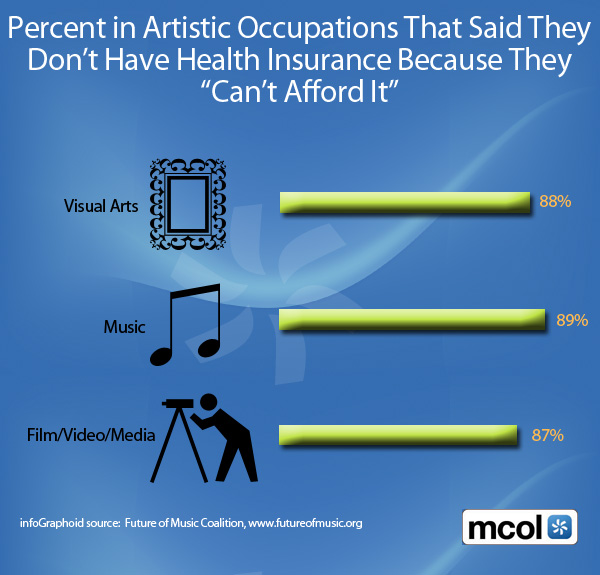
Artistic Occupations without Health Insurance

Join Our Mailing List

Health Insurance Cost Update

By www.MCOL.com

ImageProxy

More:

Conclusion

Your thoughts and comments on this ME-P are appreciated. Feel free to review our top-left column, and top-right sidebar materials, links, URLs and related websites, too. Then, subscribe to the ME-P. It is fast, free and secure.

Link: http://feeds.feedburner.com/HealthcareFinancialsthePostForcxos

Speaker: If you need a moderator or speaker for an upcoming event, Dr. David E. Marcinko; MBA – Publisher-in-Chief of the Medical Executive-Post – is available for seminar or speaking engagements. Contact: MarcinkoAdvisors@msn.com

OUR OTHER PRINT BOOKS AND RELATED INFORMATION SOURCES:

LEXICONS: http://www.springerpub.com/Search/marcinko
PHYSICIANS: www.MedicalBusinessAdvisors.com
PRACTICES: www.BusinessofMedicalPractice.com
HOSPITALS: http://www.crcpress.com/product/isbn/9781466558731
CLINICS: http://www.crcpress.com/product/isbn/9781439879900
ADVISORS: www.CertifiedMedicalPlanner.org
BLOG: www.MedicalExecutivePost.com

Product Details  Product Details

Product DetailsProduct Details

Should We With-Hold Payment to Doctors, Financial Advisors and Others Who Make Mistakes?

Join Our Mailing List 

A Modified Reprint … and Different Perspective on “Never-Events”

By Dr. David Edward Marcinko FACFAS, MBA, CMP™

Dr. MarcinkoOK; I admit it. I played HS baseball as a youth. Today, I am a doctor and financial advisor. I owned and operated a surgical center and did musculoskeletal surgery for two decades.

Later, as a health economist and financial planner, I acted as an SEC registered investment advisor to medical colleagues for almost 15 years.  I’ve been a reporter, writer and journalist for three decades and Editor-in-Chief of this ME-P for eight years. Along my career path several physician-partners were dual degreed lawyers.

I still am deeply involved in all these activities as a hobbyist, consultant, part-time practitioner, editor and educator. Occasionally, I do make mistakes. There … I admit it. I am not perfect!

For example; I remember the time when I ordered the wrong patient medication dose [noted and corrected by an astute RN] – Dropped an infield fly ball and lost the game – Used the wrong corporate EBIDTA, for an estimated financial calculation, which cost me and the client a few bucks – Referenced the wrong citation and made an author angry – Forgot to check a reference source which made my publisher mad at me – AND – Confused two different medical malpractice cases I was reviewing to the chagrin of my defendant doctor and his attorney; etc, etc.  You get the picture.

Mea culpa – mea maxima culpa!

The Encore Post

And so, it is with delight that the ME-P re-posts the following essay – on mistakes – by colleague Dr. Michael Kirsch who is a gastroenterologist that blogs at MD Whistleblower.

Medical Errors Earn Hospitals Money – Who Knew?

In brief, it goes something like this.

Never-Events

The argument to withhold payment for medical care that resulted from medical error is potent.  This is known as a never-event because it is not supposed to happen – ever! Giving a patient the wrong blood type during a transfusion is a good example of a never-event.

Unfortunately – Keep in mind that defining a medical error is not as easy as it sounds.  One can easily imagine how easy it would be too confuse a medical complication, which is a blameless event, from an error or a negligent act.

Consider This

If the patient develops a complication, should I, the hospital and those I consult not be paid for the additional care required?

Now, by extension, let us consider some other professions in the same way; especially those for which I am associated.

IOW: Would every profession consent to returning fees for mistaken advice or service?  So, do you agree with the following?

  • Financial advisors should return fees if investment performance is below a designated threshold or differs from their peers.
  • Attorneys that offered ineffective legal arguments at trial should surrender fees after appeal.
  • A professional baseball player who drops a fly ball should lose a day’s pay.
  • A newspaper publisher should offer a rebate to all readers if a news story is found to be inaccurate owing to a lack of proper editorial oversight; etc.

I think you get the picture! And, see how I personalized these examples.

More

We realize that mistakes of all types cost money, as do some of the hypothetical examples above.  We also accept that financial incentives can change behavior and can be an effective tool.

Medical-errors

Assessment

But, every human endeavor has a finite error rate and we should be cautious before using an economic drone attack against only the medical profession; or even the others mentioned above … and more.

Let’s use a scalpel here and not a sledge hammer.  And, those of you outside of medicine; please feel free to explain why your occupation should be spared from this health reform strategy?

The Reprint: Would every profession consent to returning fees for mistakes?

Conclusion

Your thoughts and comments on this ME-P are appreciated. Feel free to review our top-left column, and top-right sidebar materials, links, URLs and related websites, too. Then, subscribe to the ME-P. It is fast, free and secure.

Link: http://feeds.feedburner.com/HealthcareFinancialsthePostForcxos

  • Speaker: If you need a moderator or speaker for an upcoming event, Dr. David E. Marcinko; MBA – Publisher-in-Chief of the Medical Executive-Post – is available for seminar or speaking engagements. Contact: MarcinkoAdvisors@msn.com


Product DetailsProduct Details

Risk Management, Liability Insurance, and Asset Protection Strategies for Doctors and Advisors: Best Practices from Leading Consultants and Certified Medical Planners™8Comprehensive Financial Planning Strategies for Doctors and Advisors: Best Practices from Leading Consultants and Certified Medical Planners™

***

Invite Dr. Marcinko

***

Modern Office Management Skills for Savvy Physicians

Join Our Mailing List

“Learning” about The Business of Medical Practice in Modernity

By Ann Miller RN MHA

www.BusinessofMedicalPractice.com

###

Medical Business Advisors

###

Product DetailsProduct DetailsProduct Details

###

LEXICONS: http://www.springerpub.com/Search/marcinko
PHYSICIANS: www.MedicalBusinessAdvisors.com
PRACTICES: www.BusinessofMedicalPractice.com
HOSPITALS: http://www.crcpress.com/product/isbn/9781466558731
CLINICS: http://www.crcpress.com/product/isbn/9781439879900
ADVISORS: www.CertifiedMedicalPlanner.org
BLOG: www.MedicalExecutivePost.com

###

Changes are Afoot at the CFP-Board of Directors

Join Our Mailing List 

Well-intentioned attempts to protect consumers backfire?

By Rick Kahler CFP® http://www.KahlerFinancial.com

Rick Kahler CFPIntegrity. Trustworthiness.

A commitment to clients’ best interests. These are all essential qualities for any advisor you entrust with your financial affairs.

One clue to financial planners’ trustworthiness is the certifications they hold. Designations such as CFP® (Certified Financial Planner) and Chartered Financial Consultant (ChFC) require adhering to certain professional standards and codes of ethics.

The organizations that maintain these standards safeguard the integrity of their professional designations and especially the well-being of consumers who seek out their members’ services. Yet sometimes, their well-intentioned attempts to protect consumers can backfire.

New Rules

The CFP® Board recently adopted new rules meant to prevent financial planners from calling themselves “fee-only” while still receiving commissions by selling financial products through separate companies. Now, CFP®s and members of their families can no longer own an interest in financial service companies that earn commissions if they wish to brand themselves as “fee only.”

This would be good, except the Board has cast its net so wide that it is catching the dolphins along with the sharks. It defines “financial service company” too broadly, including real estate firms, mortgage companies, and property management companies. It also illogically focuses on what clients could pay and what the planner could receive, rather than what clients do pay and what the planner does receive.

Example:

I have a minority interest in and occasionally receive dividends from a real estate brokerage and a property management firm. While I do maintain a license as a real estate broker, I am not active in the business. Because I could potentially receive a commission for selling real estate and because I do receive dividends, I’ve been told by a representative of the CFP® Board that I can no longer call myself “fee only” and must advertise myself as a “fee and commission” financial planner.

This would dishonestly insinuate I sell mutual funds, life insurance, or annuities. “Fee-only,” which to consumers means I sell no financial products, is much more accurate.

Disgruntled Calls Growing

I’ve received calls from other CFP®s affected in similar ways by the new rules.

Example:

One is a young fee-only planner who does not sell any financial products or own a portion of any company that does. Yet, he recently married a woman who owns a minority interest in her family’s property casualty insurance company. She holds an insurance license but does not work in the business. Because she, a “related party,” could legally receive commissions, her husband can no longer hold himself out as a “fee-only” CFP® and must list himself as a “fee and commission” planner.

00290065-0000-0000-0000-000000000000_bd9e518c-8b9e-4904-b459-4f2b1c196df1_20130621181508_noh8

Is the CFP-BOD, and the CFP® mark, in Jeopardy? [VOTE]

If a financial planner’s clients pay only fees and do not purchase financial products like mutual funds, insurance, and annuities from a related company, the CFP® Board needs to designate the planner as “fee only.” The same applies to planners who maintain financial services licenses (as those in Illinois must if they give insurance advice) but do not receive commissions. The CFP® Board should not consider companies that offer services unrelated to financial planning, such as selling and managing real estate or originating mortgages, as financial services companies.

I understand and fully support the CFP® Board’s intent to stop those who were abusing the brand of “fee only.” Yet the Board’s rules in their present form will only devalue the CFP® designation.

Assessment

It appears the only way I can continue to honestly advertise my practice as “fee-only” is to terminate as a CFP®. What’s most important for me is to be seen as a fiduciary planner, working with integrity in the best interest of my clients. I won’t dishonestly brand myself as a “fee and commission” planner to keep my CFP® designation.

Conclusion

Your thoughts and comments on this ME-P are appreciated. Feel free to review our top-left column, and top-right sidebar materials, links, URLs and related websites, too. Then, subscribe to the ME-P. It is fast, free and secure.

Link: http://feeds.feedburner.com/HealthcareFinancialsthePostForcxos

Speaker: If you need a moderator or speaker for an upcoming event, Dr. David E. Marcinko; MBA – Publisher-in-Chief of the Medical Executive-Post – is available for seminar or speaking engagements. Contact: MarcinkoAdvisors@msn.com

OUR OTHER PRINT BOOKS AND RELATED INFORMATION SOURCES:

LEXICONS: http://www.springerpub.com/Search/marcinko
PHYSICIANS: www.MedicalBusinessAdvisors.com
PRACTICES: www.BusinessofMedicalPractice.com
HOSPITALS: http://www.crcpress.com/product/isbn/9781466558731
CLINICS: http://www.crcpress.com/product/isbn/9781439879900
BLOG: www.MedicalExecutivePost.com

Product Details  Product Details

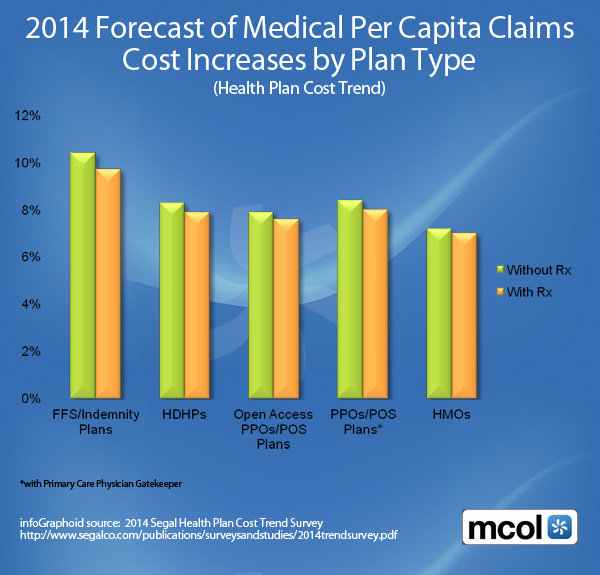
2014 Forecast of Medical Per Capita Claims

Join Our Mailing List

Cost Increases by Plan Type

By www.MCOL.com

###

ImageProxy

###

Your thoughts and comments on this ME-P are appreciated. Feel free to review our top-left column, and top-right sidebar materials, links, URLs and related websites, too. Then, subscribe to the ME-P. It is fast, free and secure.

Link: http://feeds.feedburner.com/HealthcareFinancialsthePostForcxos

Speaker: If you need a moderator or speaker for an upcoming event, Dr. David E. Marcinko; MBA – Publisher-in-Chief of the Medical Executive-Post – is available for seminar or speaking engagements. Contact: MarcinkoAdvisors@msn.com

OUR OTHER PRINT BOOKS AND RELATED INFORMATION SOURCES:

LEXICONS: http://www.springerpub.com/Search/marcinko
PHYSICIANS: www.MedicalBusinessAdvisors.com
PRACTICES: www.BusinessofMedicalPractice.com
HOSPITALS: http://www.crcpress.com/product/isbn/9781466558731
CLINICS: http://www.crcpress.com/product/isbn/9781439879900
ADVISORS: www.CertifiedMedicalPlanner.org
PODIATRISTS: www.PodiatryPrep.com
BLOG: www.MedicalExecutivePost.com

Product DetailsProduct Details

Product Details

Understanding Global Location Numbers Used in Healthcare Today

Join Our Mailing List 

Defining Global Location Numbers in Hospital Supply Chain Management

By Adam Higman and Brian Mullahey

By Kristin Spenik and Jerzy Kaczor

Product DetailsProduct DetailsProduct Details

Global Location Numbers (GLNs) are widely used throughout healthcare supply chain groups.

The Dictionary of Health Information Technology and Security defines a GLN as a unique, 13-digit number that links the name, industry, and address of a particular item that pinpoints the “legal, functional, or physical location within a business or organizational entity”, in particular hospitals and healthcare organizations.

  • Legal: Hospitals, healthcare organizations, distributors, suppliers, freight carriers, etc.
  • Functional: Specific departments within legal entities, i.e. purchasing departments, nursing stations, wards, etc. in hospitals
  • Physical: Hospital rooms, hospital wings, cabinets, shelving units, delivery points, loading docks, warehouses, etc.

AHRMM

According to the Association for Healthcare Resource & Materials Management, the premier organization for healthcare supply chain professionals, global locations numbers can recover your facility’s revenue stream, enhance the accuracy of documenting Group Purchasing Organization [GPO] sales, and end the use “of single purpose proprietary supplier numbers”.

The Objective

The ultimate objective is getting everyone involved in the supply chain process to use identical numbers.

For instance, if the GPO communicates to the manufacturer that your hospital utilizes a specific GLN, then it is more likely that the manufacturer will associate the hospital’s materials and supplies with the correct GPO contract price.

In addition, if distributors utilize GLNs along with manufacturers and producers to determine the manufacturer’s price that was given, the hospital will likely secure the correct rate when purchasing supplies directly from distributors.

Conclusion

Your thoughts and comments on this ME-P are appreciated. Feel free to review our top-left column, and top-right sidebar materials, links, URLs and related websites, too. Then, subscribe to the ME-P. It is fast, free and secure.

Link: http://feeds.feedburner.com/HealthcareFinancialsthePostForcxos

Speaker: If you need a moderator or speaker for an upcoming event, Dr. David E. Marcinko; MBA – Publisher-in-Chief of the Medical Executive-Post – is available for seminar or speaking engagements. Contact: MarcinkoAdvisors@msn.com

OUR OTHER PRINT BOOKS AND RELATED INFORMATION SOURCES:

LEXICONS: http://www.springerpub.com/Search/marcinko

PHYSICIANS: www.MedicalBusinessAdvisors.com

PRACTICES: www.BusinessofMedicalPractice.com

HOSPITALS: http://www.crcpress.com/product/isbn/9781466558731

CLINICS: http://www.crcpress.com/product/isbn/9781439879900

ADVISORS: www.CertifiedMedicalPlanner.org

PODIATRISTS: www.PodiatryPrep.com

BLOG: www.MedicalExecutivePost.com

Product DetailsProduct Details

Product Details

Hospital Information Systems and the PP-ACA

Join Our Mailing List

Extension of Hospital Information Systems Beyond the Hospital

By Brent A. Metfessel MD

Dr. MetfesselThe Patient Protection and Affordable Care Act (ACA), affirmed after the November 7th 2012 presidential election, includes a number of policies and potential projects with the aim of improving quality of care while reducing costs – or at least greatly slowing increases in health care costs from year to year.

Included in this effort are CMS payment incentives for providers that can show care patterns that meet the goals of high quality, cost-efficient care.

HHS and ACOs 

On March 31, 2011, the Department of Health and Human Services (HHS) released a set of proposed new rules to aid clinicians, hospitals, and other health facilities and providers to improve coordination of care for Medicare patients using a model known as Accountable Care Organizations (ACOs). ACOs that are shown to lower health care cost growth while meeting CMS quality benchmarks, including measures of patient/caregiver experience of care, care coordination, patient safety, preventive health, and health of high-risk populations, will receive incentive payments as part of the Medicare Shared Savings Program.

But, in some proposed models ACOs may also be held accountable for shared losses.

Care Co-ordination

Coordination of care means that hospitals, physician offices, and other providers have a complete record of patients’ episodes of care, including diagnostic tests, procedures, and medication information.  This potentially would decrease extra costs from unnecessary duplication of services as well as reducing medical errors from incomplete understanding of the patients’ illness histories and medical care provided.

It is also believed that better coordination of care may prevent 30-day hospital readmissions (which occur for nearly one in five Medicare discharges), since needed post-discharge care would be more readily obtainable with more aggressive care coordination.

Medicare patients in ACOs, however, would still be allowed to see providers outside of the ACO, and proposals exist to prevent physicians in ACOs from being penalized for patients with a greater illness severity or complexity.

According to a CMS analysis, ACOs may result in Medicare savings of up to $960 million over three years.  Although the Affordable Care Act’s ACO provisions primarily target Medicare beneficiaries, private insurers are also beginning to create care models based on the accountable care paradigm.  Insurers could offer similar incentives to the ACO model described above, and which might include features such as performance based contracting or tiered benefit models that favor physicians who score highly on care quality and cost-efficiency measures.

Balance

Only the Beginning

ACOs and other implementations of the accountable care paradigm, however, are in their beginning stages, with a number of pilots around the country currently being conducted to more fully evaluate the concept, and there still is some controversy over the best way to achieve these goals. It is a continuing balancing act.

The critical point here is that in all likelihood, with the advent of the ACA and other initiatives, stemming the upward tide of medical cost increases becomes an even higher priority, and no matter what the final models will look like, the success of any of the models requires a high level of care coordination – requiring information systems that are fully compatible and allow seamless and errorless transmission of information between sites of service and the various providers that can be involved in patient care.

More:

  1. Ground Breaking Book Explains Why Accountable Care Organizations May Be the Answer the Health Care Industry Has Been Seeking!
  2. Evaluating ACOs at Mid-Launch
  3. How Using a ‘Scorecard’ Can Smooth Your Hospital’s Transition to a Population Health-Based Reimbursement Model
  4. Doubting the Accountable Care Organization B-Model

Assessment

Thus, wherever a patient goes for care, all the information needed to provide high-quality and cost-efficient care is immediately available.

References

Feds Take Critical Look at Meaningful Use Payments”, InformationWeek Healthcare, October 24, 2012.  http://www.informationweek.com/healthcare/policy/feds-take-critical-look-at-meaningful-us/240009661 [Accessed on November 2, 2012].

Conclusion

Your thoughts and comments on this ME-P are appreciated. Feel free to review our top-left column, and top-right sidebar materials, links, URLs and related websites, too. Then, subscribe to the ME-P. It is fast, free and secure.

Link: http://feeds.feedburner.com/HealthcareFinancialsthePostForcxos

Speaker: If you need a moderator or speaker for an upcoming event, Dr. David E. Marcinko; MBA – Publisher-in-Chief of the Medical Executive-Post – is available for seminar or speaking engagements. Contact: MarcinkoAdvisors@msn.com

OUR OTHER PRINT BOOKS AND RELATED INFORMATION SOURCES:

LEXICONS: http://www.springerpub.com/Search/marcinko
PHYSICIANS: www.MedicalBusinessAdvisors.com
PRACTICES: www.BusinessofMedicalPractice.com
HOSPITALS: http://www.crcpress.com/product/isbn/9781466558731
CLINICS: http://www.crcpress.com/product/isbn/9781439879900
ADVISORS: www.CertifiedMedicalPlanner.org
PODIATRISTS: www.PodiatryPrep.com
BLOG: www.MedicalExecutivePost.com

Product DetailsProduct Details

Product Details

Top 12 Articles [Health Administration Reading List]

Join Our Mailing List

By Staff Reporters via Austin Frakt PhD

On Health Economics, Finance and Insurance, Quality Care and Organizational Behavior

1. Substantial Health And Economic Returns From Delayed Aging May Warrant A New Focus For Medical Research

By Dana Goldman and others (Health Affairs)

2. Trends Underlying Employer Sponsored Health Insurance Growth For Americans Younger Than Age Sixty-Five

By Carolina-Nicole Herrera and others (Health Affairs)

3. Accountable Care Organization Formation Is Associated With Integrated Systems But Not High Medical Spending

By David Auerbach, Hangsheng Liu, Peter Hussey, Christopher Lau, and Ateev Mehrotra (Health Affairs)

4. The Quality Of Care Delivered To Patients Within The Same Hospital Varies By Insurance Type

By Christine S. Spencer, Darrell J. Gaskin, and Eric T. Roberts  (Health Affairs)

5. Understanding State Variation In Health Insurance Dynamics Can Help Tailor Enrollment Strategies For ACA Expansion

By John Graves and Katherine Swartz (Health Affairs)

6. When Medicare Cuts Hospital Prices, Seniors Use Less Inpatient Care

By Chapin White and Tracy Yee (Health Affairs)

7. More Americans Living Longer With Cardiovascular Disease Will Increase Costs While Lowering Quality Of Life

By Ankur Pandya, Thomas Gaziano, Milton Weinstein, and David Cutler (Health Affairs)

8. Surgical Skill and Complication Rates after Bariatric Surgery

By John Birkmeyer and others (New England Journal of Medicine)

Reading list

9. Who Is in Control? The Determinants of Patient Adherence with Medication Therapy

By Sergei Koulayev, Niels Skipper and Emilia Simeonova (National Bureau of Economic Research)

10. Fifty Years of Family Planning: New Evidence on the Long-Run Effects of Increasing Access to Contraception

By Martha Bailey (National Bureau of Economic Research)

11. Identifying the Health Production Function: The Case of Hospitals

By John Romley and Neeraj Sood (National Bureau of Economic Research)

12. ACA Standoff

By Jeffrey Drazen and Gregory Curfman (New England Journal of Medicine)

Assessment

Feel free to send us links to your own hot topic reading list so that we may share.

Conclusion

Your thoughts and comments on this ME-P are appreciated. Feel free to review our top-left column, and top-right sidebar materials, links, URLs and related websites, too. Then, subscribe to the ME-P. It is fast, free and secure.

Link: http://feeds.feedburner.com/HealthcareFinancialsthePostForcxos

Speaker: If you need a moderator or speaker for an upcoming event, Dr. David E. Marcinko; MBA – Publisher-in-Chief of the Medical Executive-Post – is available for seminar or speaking engagements. Contact: MarcinkoAdvisors@msn.com

OUR OTHER PRINT BOOKS AND RELATED INFORMATION SOURCES:

LEXICONS: http://www.springerpub.com/Search/marcinko
PHYSICIANS: www.MedicalBusinessAdvisors.com
PRACTICES: www.BusinessofMedicalPractice.com
HOSPITALS: http://www.crcpress.com/product/isbn/9781466558731
CLINICS: http://www.crcpress.com/product/isbn/9781439879900
ADVISORS: www.CertifiedMedicalPlanner.org
PODIATRISTS: www.PodiatryPrep.com
BLOG: www.MedicalExecutivePost.com

Product DetailsProduct Details

Product Details

How to Transition into Medicare?

Join Our Mailing List

The Timing, Costs, and Factors to Know

By Lon Jefferies MBA CFP® http://www.NewWorthAdvice.com

Lon JeffriesDid you know that the choices you make during your first year of Medicare eligibility will have long-term financial consequences? Yes, it is true!

And unfortunately, most people and even medical professionals have to make these decisions at a time when they are only beginning to familiarize themselves with a complex program.

The Rules

If you don’t follow Medicare’s enrollment rules, you may pay lifelong penalties for coverage. You have a seven-month window to enroll in Medicare as you turn 65. This window begins three months before the month of your birthday, includes the month of your birthday, and continues for the following three months.

The Parts

Part A

In most cases, you should sign up for Medicare Part A, which covers hospital stays, when you turn 65, even if you have other health insurance coverage. There is no cost for this coverage as long as you have 40 quarters of work in which you paid FICA taxes.

However, be aware that you are not allowed to contribute to a health savings account (HSA) if you are receiving benefits from Medicare. Thus, you may want to defer beginning Part A to continue building up your HSA balance to help offset future healthcare costs not covered by Medicare.

Part B

Medicare Part B covers services and supplies that are needed to diagnose or treat medical conditions, and health care to prevent illness. The standard monthly premium for Part B in 2013 is $104.90, but individuals with a modified adjusted gross income (MAGI) more than $85,000 and couples with a MAGI more than $170,000 pay more.

The premium ranges from $146.90 to $335.70 for those with incomes above the thresholds. If you have group health insurance through your own or a spouse’s employer, you may want to delay beginning Part B.

However, for this to be done without penalty, be sure to enroll in Part B coverage within eight months of the time your employment ceases. Otherwise, for every 12-month period that you could have been enrolled in Medicare Part B but were not, you will pay a 10 percent penalty on your Part B premium for life.

Part D

Medicare Part D covers prescription drugs. This coverage is usually purchased at the same time as Part B.  Part D monthly premiums vary by plan. However, higher-income beneficiaries (singles with a MAGI over $85,000 and couples with a MAGI over $170,000) pay from $11.60 to $66.60 more each month.

There is also a late enrollment penalty for Part D that is one percent of the “national base beneficiary premium” ($31.17 in 2013) multiplied by the number of full months you went without drug coverage.

Part C

Note that Medicare Part C is not a separate benefit. Part C, sometimes referred to as a Medicare Advantage Plan [MAP], is the portion of Medicare that allows private health insurance companies to provide Medicare benefits.

Part C is an alternative method for obtaining the same coverage that Part A and Part B provide, but do so through private insurance providers with different rules, costs and coverage restrictions. You can also get Part D as part of the benefits package if you choose. Although significant research is required, determining whether Part C is a viable option for you is simply a matter of considering your health, the medical services you use regularly, your prescription drug medications, and your budget.

medicare

Assessment

Medicare is a complex program. Enrolling on time and making informed decisions about coverage can save you thousands of dollars each year during retirement.

Conclusion

Your thoughts and comments on this ME-P are appreciated. Feel free to review our top-left column, and top-right sidebar materials, links, URLs and related websites, too. Then, subscribe to the ME-P. It is fast, free and secure.

Link: http://feeds.feedburner.com/HealthcareFinancialsthePostForcxos

Speaker: If you need a moderator or speaker for an upcoming event, Dr. David E. Marcinko; MBA – Publisher-in-Chief of the Medical Executive-Post – is available for seminar or speaking engagements. Contact: MarcinkoAdvisors@msn.com

OUR OTHER PRINT BOOKS AND RELATED INFORMATION SOURCES:

DICTIONARIES: http://www.springerpub.com/Search/marcinko
PHYSICIANS: www.MedicalBusinessAdvisors.com
PRACTICES: www.BusinessofMedicalPractice.com
HOSPITALS: http://www.crcpress.com/product/isbn/9781466558731
CLINICS: http://www.crcpress.com/product/isbn/9781439879900
BLOG: www.MedicalExecutivePost.com
FINANCE: Financial Planning for Physicians and Advisors
INSURANCE: Risk Management and Insurance Strategies for Physicians and Advisors

Product DetailsProduct DetailsProduct Details

Product Details  Product Details

How the Medical Executive-Post Survived to our 8th Anniversary?

Join Our Mailing List

And … Why the American Medical News was Shuttered after 50 Years!

[Some Musing on our Eighth Anniversary]

Ann Miller RN MHA

[Executive-Director]

Happy BirthdayAccording to well known healthcare industry journalist Kevin B. O’Reilly, a dramatic drop in medical-publishing revenues caused the recent closure of the American Medical News, effective with a final edition of the newspaper published just last month.

Published for more than five decades, AMNews was hit hard by industrywide trends. The newspaper’s revenue fell by two-thirds during the last decade, as reported by Thomas J. Easley, senior vice-president and publisher of periodic publications for the American Medical Association [AMA].

Unsustainable financial losses forced the move despite the newspaper’s editorial quality, the AMA’s senior management reportedly said. But, the Association’s other news operations will be enhanced.

###

amn

###

What the Death of American Medical News Says About the Future of American Medicine

###

How we survive!

We’ve been online for eight years now. We have a skeleton staff, a scalable business model, an almost free distribution model, no print analog, and a tiny electronic advertising revenue stream.

Oh, let’s not forget some brilliant essayists, contrarian contributors, insightful commentators and controversial opinions that are often the elephant in the virtual room. 

Our gratitude to you all is without limits.

So, how else do we do it?

Interestingly – Our print books are good, better and best sellers. We’ve been releasing one major, semi-peer reviewed text each year …. and sales are brisk. And, we are now negotiating to begin our next and ninth volume for 2014-15. We maintain our own copy-rights, perform in-house editing, seek out the best contributing authors, and reduce the cost of numerous channels of distribution. How do we do it, year after year? In a word, professional crowdsourcing.

Our consulting business is increasingly robust, too. Cudos to healthcare reform, managed care, and the PP-ACA!

And … another thing

I ask again. How do we do it? How do we stay in business?

Here are some more ways to help-us, do just that:

  1. Subscribe to the ME-P site
  2. Tell a friend or colleague about us
  3. Visit our Blogroll list
  4. Use our classified ads or advertise with us
  5. Purchase a printed handbook, dictionary, software product or textbook
  6. Use our career and educational resources
  7. “Ask a Consultant” for free advice
  8. Request a strategic competitive consultation
  9. Hire us for a medical practice valuation or revenue enhancement review
  10. Request a medical business planning RFP
  11. Purchase a practice management checklist
  12. Seek out our financial planning advice
  13. Ask for second opinion; hire our thought-leaders
  14. Request a healthcare econometrics review
  15. Seek out our practice management or business advice
  16. Become a Certified Medical Planner™ www.CertifiedMedicalPlanner.org
  17. Request a speaker for a pharmaceutical seminar or health convention
  18. Attend a seminar, sponsor or take a learning-teaching cruise with us
  19. Donate to us …  and repeat
  20. Buy a link … and repeat again
  21. Send a thank you note to our Publisher-in-Chief and Managing Editor
  22. Visit us often to review, read, rant and rave.

Bottom Line Eight Years Out

The ME-P is an austere … Labor of Love.

Please support us: Support the “Medical Executive-Post”

Printable Donation Form: Printable Donation Form

Electronic Donations: www.e-junkie.com/ecom/gb.php?c=cart&i=641232&cl=109140&ejc=2

Multi-Year Pledge Form: Multi-Year Pledge

###

QuestionEverythingWallpaper

###

Assessment

So, does the demise of the American Medical News really say anything at all about the ME-P; in addition to the future of domestic medicine? How do we avoid the same fate? Please tell us. Question Everything … Trust No One … Paddle your Own Canoe … Keep the Faith!

Conclusion

Your thoughts and comments on this ME-P are appreciated. Did the AMNews forget the aphorism; No margin – No Mission?

Feel free to review our top-left column, and top-right sidebar materials, links, URLs and related websites, too. Then, subscribe to the ME-P. It is fast, free and secure.

Link: http://feeds.feedburner.com/HealthcareFinancialsthePostForcxos

Speaker: If you need a moderator or speaker for an upcoming event, Dr. David E. Marcinko; MBA – Publisher-in-Chief of the Medical Executive-Post – is available for seminar or speaking engagements. Contact: MarcinkoAdvisors@msn.com

OUR OTHER PRINT BOOKS AND RELATED INFORMATION SOURCES:

LEXICONS: http://www.springerpub.com/Search/marcinko
PHYSICIANS: www.MedicalBusinessAdvisors.com
PRACTICES: www.BusinessofMedicalPractice.com
HOSPITALS: http://www.crcpress.com/product/isbn/9781466558731
CLINICS: http://www.crcpress.com/product/isbn/9781439879900
ADVISORS: www.CertifiedMedicalPlanner.org
BLOG: www.MedicalExecutivePost.com

Product DetailsProduct DetailsProduct Details

Product Details  Product Details

Product DetailsProduct Details

Product Details

Some US Federal Budget Proposals

Join Our Mailing List

Government Shutdown Hoopla for Retirees, Inheritors and Savers

By Rick Kahler CFP® http://www.KahlerFinancial.com

Rick Kahler CFPLost in the hoopla over the government shutdown, defunding Obamacare, and raising the debt ceiling are some proposals contained in President Obama’s budget that will have a significant impact on retirees, inheritors, and savers.

Most of the President’s proposals are aimed at enforcing higher taxes on savers who maximize their retirement plans. This is a way to raise revenue for government entitlement programs, like subsidies for health insurance, Medicare, and Social Security.

Retirement and Retirees

Back from last year is his proposal to cap contributions to IRA’s and 401(k)’s when the balance reaches a level determined by a set formula which is tied to interest rates. The proposal sets the cap at $3.4 million initially. As interest rates rise, the cap will lower. When a saver’s IRA balance hits the cap, he or she will not be allowed to make further contributions to any retirement plan.

This will mostly affect savers who terminate employment and roll large accumulations from profit-sharing plans and lump-sum distributions from defined benefit plans into their IRA’s. It will shut down their ability to save into the future.

Taxes and Inheritors

The President has yet another plan to end tax-deductible contributions for upper income earners. Only 28% of a contribution would be deductible for any taxpayer whose bracket exceeds 28%. For a taxpayer in the highest bracket, this means a tax increase of about 50%.

Another of the President’s proposals would end the ability of anyone other than a spouse to inherit a tax-deferred IRA. Under the proposal, all non-spouses inheriting an IRA would have five years to terminate the IRA and pay income taxes on the distributions. This proposal really impacts Roth IRA conversions, as most parents convert traditional IRA’s to Roths with the intention of leaving their children a non-taxable sum of money that can continue to grow tax free during their lifetime. If the President’s proposal passes, many older savers will discover that the intentions behind their Roth conversions have been nullified.

Forced Savings and Savers

While President Obama wants to cap what successful savers can stash away in retirement plans, he also wants to force employees to save for retirement. Employers will be required to open IRA’s for every employee and to fund the plan at a minimum of 3% of the employee’s pay, unless the employee specifically opts out. The employee can contribute more than 3%, up to the $5,000 cap for those under 50 and $6,000 for those over 50.

Of course, savvy savers and ME-P readers know most of us need to be saving 20% to 50% of our salaries, depending on our ages, so saving just 3% of pay won’t amount to much in the way of retirement income.

Good News

On the positive side, the President wants to end required minimum distributions on IRA balances under $75,000. This will reduce some paperwork for savers with smaller IRA’s who are not making withdrawals.

Typically, most retirees with small IRA’s are those with less savings anyway, who need to take withdrawals from their IRA’s to make ends meet. So it’s doubtful this rule change will have much impact.

Finally, the President proposes letting inherited non-spousal IRA’s enjoy the same benefit of a 60-day rollover window on any distribution, similar to what they can do with a non-inherited IRA. This will simply eliminate a lot of confusion, as most people don’t understand the 60-day rollover provision does not include inherited IRA’s.

Shutdown[US Federal Government Shut-Down]

Assessment

Of course, whether any or all of these proposals make it into law is anyone’s guess. Anyone whose retirement and estate planning includes saving in IRA’s will want to keep an eye on these provisions as the budget moves through Congress.

Conclusion

Your thoughts and comments on this ME-P are appreciated. Feel free to review our top-left column, and top-right sidebar materials, links, URLs and related websites, too. Then, subscribe to the ME-P. It is fast, free and secure.

Link: http://feeds.feedburner.com/HealthcareFinancialsthePostForcxos

Speaker: If you need a moderator or speaker for an upcoming event, Dr. David E. Marcinko; MBA – Publisher-in-Chief of the Medical Executive-Post – is available for seminar or speaking engagements. Contact: MarcinkoAdvisors@msn.com

OUR OTHER PRINT BOOKS AND RELATED INFORMATION SOURCES:

LEXICONS: http://www.springerpub.com/Search/marcinko
PHYSICIANS: www.MedicalBusinessAdvisors.com
PRACTICES: www.BusinessofMedicalPractice.com
HOSPITALS: http://www.crcpress.com/product/isbn/9781466558731
CLINICS: http://www.crcpress.com/product/isbn/9781439879900
ADVISORS: www.CertifiedMedicalPlanner.org
PODIATRISTS: www.PodiatryPrep.com
BLOG: www.MedicalExecutivePost.com

Product DetailsProduct DetailsProduct Details

Product Details  Product Details

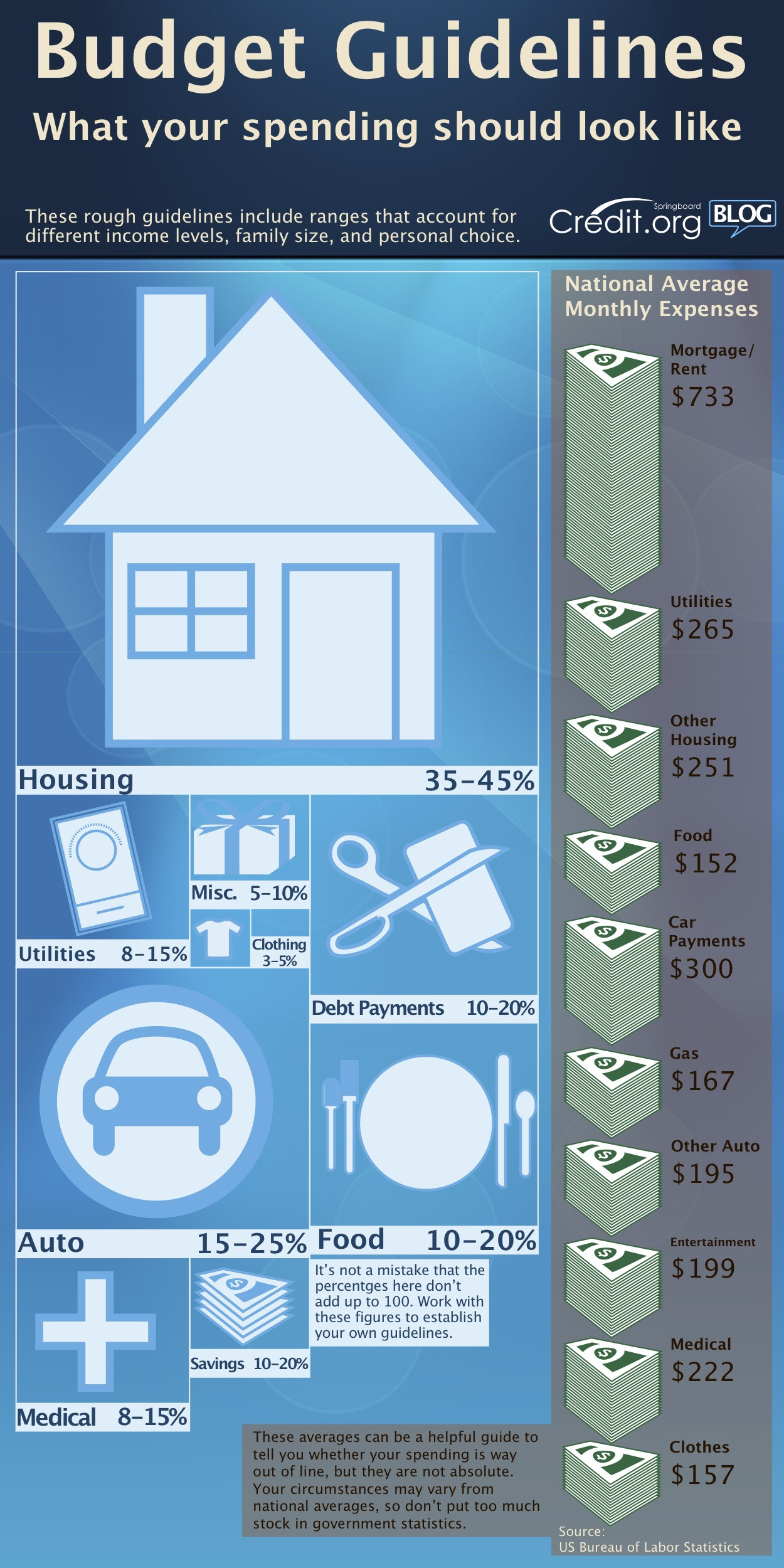
On Setting Your Household Budget [ugh!]

 Join Our Mailing List 

Trim Daily Expenditures or Don’t Sweat the Small Stuff?

By Lon Jefferies MBA CFP® http://www.NewWorthAdvice.com

Lon JefferiesHow often do you see articles containing money saving tips? Make dinner at home more often and eat out less, rent movies rather than going out, bring lunch to work rather than visit a restaurant, take advantage of coupons, and brew your coffee rather than driving-through Starbucks.

Do Advice Tips Work?

Are these tips worthwhile? If we spare the $8 expense of a lunch five days per week, 50 weeks per year, we could save $2,000 – nothing to scoff at!

However, what’s the cost of these savings? Eating at our desk everyday removes our ability to get outside and away from our work for that important hour, and prevents us from spending time, talking to, and laughing with friends. Is there a better way?

The DOL Report

According to a new study released by the Department of Labor, the average U.S household earns $65,132 per year before taxes, and spends an average of $50,631 on annual expenditures (excluding taxes and savings). Of that spending, $20,093, or 39.7%, goes towards housing expenses.

Additionally, $11,211, another 22.1%, goes towards transportation and automobiles. Combined, those elements make up 61.8% of the average household’s spending!

By comparison, only $10,835, or 21.4%, of our spending goes toward food, apparel and services, and entertainment combined. If we are going to explore ways to reduce spending, shouldn’t we start with the elements that are costing us the most?

Example:

For instance, most financial professionals say only 28% of our gross income should be committed to housing costs. Of the average $65,132 gross income, 28% would mean reducing our housing spending from $20,093 to $18,236, saving us $1,857 per year.

Assuming a 250-day work year, this savings could allow us to spend nearly $7.50 per day on lunch, enjoying our friends, and taking a break from the office.

More dramatically, reducing our mortgage payment by $500 per month, saving us $6,000 per year, pays for a whole lot of dinner and movie date nights.

Similarly, assume we spend $4 per day enjoying our morning coffee at Starbucks with friends five times a week, for 50 weeks a year. Annually this would cost us $1,000. Now suppose we purchase a nice used automobile for $15,000 rather than a new car for $25,000. This saves us $10,000 or 10 years worth of coffee breaks with friends (plus interest!).

Prioritize

Of course, everyone has different priorities. I suggest spending your money on what you are passionate about. For the occasional car fanatic, perhaps spending more on a car that makes you happy each day is preferable to other spending options.

Likewise, if homes happen to be your hot spot, heavy spending in this area makes sense.

Different Doctors?

However, I’d suggest that for most people, the experience of constantly eating with friends or spending a night out with your spouse is more likely to bring happiness than the possession of an expensive home or car. After all, would you rather eat out with friends or clip coupons alone in a large kitchen?

But, are doctors any different?

Budgets

Assessment

Consequently, reducing large expenses like a home mortgage or car loan may be the most effective way to stay within your budget and maintain your level of happiness – especially for docs!

Conclusion

Your thoughts and comments on this ME-P are appreciated. Feel free to review our top-left column, and top-right sidebar materials, links, URLs and related websites, too. Then, subscribe to the ME-P. It is fast, free and secure.

Speaker: If you need a moderator or speaker for an upcoming event, Dr. David E. Marcinko; MBA – Publisher-in-Chief of the Medical Executive-Post – is available for seminar or speaking engagements. Contact: MarcinkoAdvisors@msn.com

OUR OTHER PRINT BOOKS AND RELATED INFORMATION SOURCES:

Product Details  Product Details

Marketplace HIE Enrollment Update

Join Our Mailing List

In Selected States

[By www.MCOL.com]

###

enrollment

###

Conclusion

Your thoughts and comments on this ME-P are appreciated. Feel free to review our top-left column, and top-right sidebar materials, links, URLs and related websites, too. Then, subscribe to the ME-P. It is fast, free and secure.

Link: http://feeds.feedburner.com/HealthcareFinancialsthePostForcxos

Speaker: If you need a moderator or speaker for an upcoming event, Dr. David E. Marcinko; MBA – Publisher-in-Chief of the Medical Executive-Post – is available for seminar or speaking engagements. Contact: MarcinkoAdvisors@msn.com

OUR OTHER PRINT BOOKS AND RELATED INFORMATION SOURCES:

DICTIONARIES: http://www.springerpub.com/Search/marcinko
PHYSICIANS: www.MedicalBusinessAdvisors.com
PRACTICES: www.BusinessofMedicalPractice.com
HOSPITALS: http://www.crcpress.com/product/isbn/9781466558731
CLINICS: http://www.crcpress.com/product/isbn/9781439879900
BLOG: www.MedicalExecutivePost.com
FINANCE: Financial Planning for Physicians and Advisors
INSURANCE: Risk Management and Insurance Strategies for Physicians and Advisors

Product DetailsProduct DetailsProduct Details

Product DetailsProduct Details

How affordable is the new health care law – Really?

Join Our Mailing List 

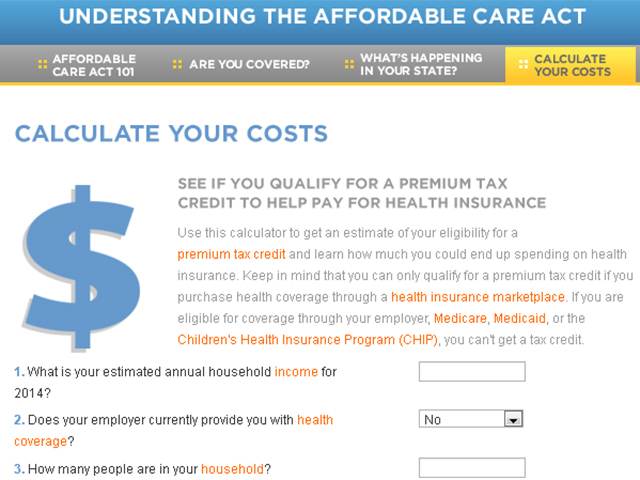
Calculate your costs

[By Staff Reporters]

The Affordable Care Act is going to change health care for tens of millions of Americans.

But, what about the cost?

LET’S BEGIN

ACA

###

NOW CALCULATE

Whether you’re an individual who has health insurance or needs it, or a small business owner, you need to know how health care reform affects you.

What’s it going to cost? What’s happening in your state?

### 8C9220491-tdy-130929-aca-calculator-4x3-606p_blocks_desktop_large

### 

Link: http://www.nbcnews.com/health/how-affordable-new-health-care-law-really-calculate-your-cost-8C11296290

Conclusion

Your thoughts and comments on this ME-P are appreciated. Feel free to review our top-left column, and top-right sidebar materials, links, URLs and related websites, too. Then, subscribe to the ME-P. It is fast, free and secure.

Link: http://feeds.feedburner.com/HealthcareFinancialsthePostForcxos

Speaker: If you need a moderator or speaker for an upcoming event, Dr. David E. Marcinko; MBA – Publisher-in-Chief of the Medical Executive-Post – is available for seminar or speaking engagements. Contact: MarcinkoAdvisors@msn.com

OUR OTHER PRINT BOOKS AND RELATED INFORMATION SOURCES:

Health Dictionary Series: http://www.springerpub.com/Search/marcinko

Practice Management: http://www.springerpub.com/product/9780826105752

Physician Financial Planning: http://www.jbpub.com/catalog/0763745790

Medical Risk Management: http://www.jbpub.com/catalog/9780763733421

Hospitals: http://www.crcpress.com/product/isbn/9781439879900

Physician Advisors: www.CertifiedMedicalPlanner.org

Product DetailsProduct DetailsProduct Details

Product Details  Product Details

Product DetailsProduct Details

Understanding Basics of the Health Insurance Exchanges [HIEs]

Join Our Mailing List 

The Four Basic Categories of the PP-ACA

By Rick Kahler CFP® http://www.KahlerFinancial.com

Rick Kahler CFPThe opening date was yesterday, October 1, 2013. And today, the competition is lined-up and ready to go after bronze, silver, gold, and even platinum.

These competitors aren’t athletes, but insurance providers. The field they are entering is the new health insurance exchanges [HIEs] as mandated by Obamacare [ACA].

The New Year

Beginning January 1st 2014, nearly everyone in the US will need to have health insurance or pay a tax penalty. Those not insured through their employers can apply for coverage through these health insurance exchanges, also called “marketplaces.” Enrollment began October 1st, 2013 for coverage starting in January, 2014.

These exchanges are intended to make it easier to find insurance providers and compare their coverage and costs. Each state’s exchange website will list all the policies available in that state, with prices and policy provisions.

So far, over half of the states (including my State of South Dakota) have opted to use exchanges managed by the federal government instead of setting up their own.

The Four Basic [Colors] Categories

Bronze, silver, gold, and platinum describe the four basic categories of policies that will be available through the exchanges at different costs. Here is a very brief summary of each category.

Bronze

The least expensive option is a bronze plan, which might be the best choice for younger people with lower incomes and good health. The plan will pay 60% of health care costs and the insured will be responsible for 40%.

Silver

The second level, silver, will pay 70% of health care costs.

Gold and Platinum

Gold covers 80%, and a platinum plan covers 90%. Obviously, the categories with higher benefits also will have higher premiums.

The Essential Benefits

All these plans are required to cover “essential health benefits.” These include preventive and wellness care like cancer screening, chronic disease management, pediatric care, many prescription drugs, injury rehabilitation, mental health and addiction treatment, maternity and newborn care, hospitalization, and emergency services.

Companies are not allowed to deny coverage or charge more for those with pre-existing conditions. There are no lifetime benefit limits.

The Carrot and Stick Approach

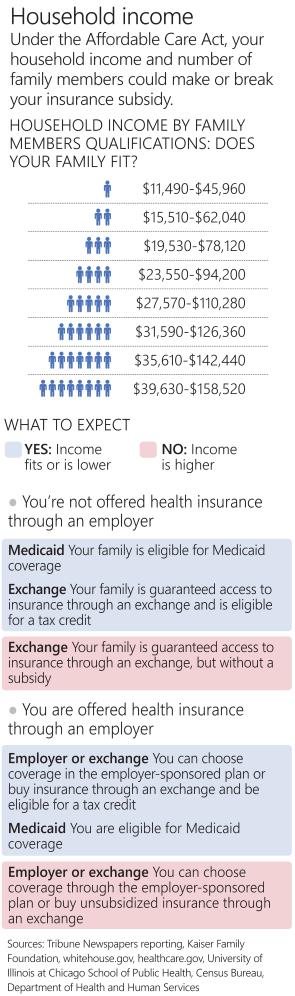
The requirement to have health insurance coverage, the “stick” of Obamacare, is accompanied by a “carrot” in the form of federal subsidies to help pay insurance premiums. It’s estimated that two-thirds of Americans will be eligible for subsidies, which will be figured on a sliding scale. The upper limit for qualifying is four times the federal poverty level, which amounts to about $88,000 a year for a family of four.

Other Outlines

This ME-P summary is just the barest outline of the health care changes coming our way. To find out more, it’s a good idea to spend some time online, especially at two sites that offer a lot of helpful information.

  1. The First site is the federal government website at www.HealthCare.gov. It provides links to the state exchanges, plus detailed information that for the most part is explained in straightforward, plain English.
  2. The Second site is the Henry J. Kaiser Family Foundation at kff.org. An especially useful tool available here (http://kff.org/interactive/subsidy-calculator/) is a calculator to determine the federal subsidy that applies at your family’s income level.

Obamacare 2014

The elements of Obamacare that take effect in 2014 represent a huge shift in the way we cover health care costs. I strongly recommend that you start now to figure out what this will mean for you and your family.

###

Obama Care

###

Don’t wait until December and end up making hasty decisions in a last-minute rush. The more informed you are; the better insurance choices you can make.

Assessment

The changeover to the new insurance environment is likely to be chaotic and confusing. Navigating it will take some energy, commitment, and stamina. When all the scrambling is over, we can only hope the ultimate winners will be the American people.

Conclusion

Your thoughts and comments on this ME-P are appreciated. Feel free to review our top-left column, and top-right sidebar materials, links, URLs and related websites, too. Then, subscribe to the ME-P. It is fast, free and secure.

Link: http://feeds.feedburner.com/HealthcareFinancialsthePostForcxos

Speaker: If you need a moderator or speaker for an upcoming event, Dr. David E. Marcinko; MBA – Publisher-in-Chief of the Medical Executive-Post – is available for seminar or speaking engagements. Contact: MarcinkoAdvisors@msn.com

OUR OTHER PRINT BOOKS AND RELATED INFORMATION SOURCES:

DICTIONARIES: http://www.springerpub.com/Search/marcinko
PHYSICIANS: www.MedicalBusinessAdvisors.com
PRACTICES: www.BusinessofMedicalPractice.com
HOSPITALS: http://www.crcpress.com/product/isbn/9781466558731
CLINICS: http://www.crcpress.com/product/isbn/9781439879900
BLOG: www.MedicalExecutivePost.com
FINANCE: Financial Planning for Physicians and Advisors
INSURANCE: Risk Management and Insurance Strategies for Physicians and Advisors

Product DetailsProduct Details

Product Details

Affordable Care Act HIEs at Launch

Join Our Mailing List

Some Important Launching Information for Doctors and Business Owners

By Bobby Whirley CPA

[Whirley & Associates LLC – Alpharetta, GA]

Dear ME-P Readers,

The ACA (Affordable Care Act) requires employers to provide their workers with a notice about the state health insurance exchanges.

Today October 1st is the deadline for providing these notices.

These exchanges will sell insurance to individuals who don’t get coverage through their employers. The exchanges are also available to medical practices and small businesses, which may or may not currently offer heath care coverage.

The Fines?

Some doctors or business owners are concerned about paying a fine of up to $100 per day under the general non-compliance penalty provisions.

The recent notice of the Affordable Health Care Act states that there will be no penalty.  Please refer to http://www.dol.gov/ebsa/faqs/faq-noticeofcoverageoptions.html

If your medical practice, clinic or company is covered by the Fair Labor Standards Act (you have one or more employees, sales of over $500,000, and deal in interstate commerce), you must provide a written notice to your employees about the Health Insurance Marketplace by Oct 1, 2013.

Model Notices

The U.S. Department of Labor has two model notices to help employers comply. There is one model for employers who do not offer a health plan and another model for employers who offer a health plan or some or all employees.

More:

The model notices are also available in Spanish and MS Word format at http://www.dol.gov/ebsa/healthreform/

###

Health-Information-Exchange

###

Assessment

Employers may use one of these models, as applicable, or a modified version. More compliance assistance information is available in a Technical Release issued by the US Department of Labor.

Your thoughts and comments on this ME-P are appreciated. Feel free to review our top-left column, and top-right sidebar materials, links, URLs and related websites, too. Then, subscribe to the ME-P. It is fast, free and secure.

Link: http://feeds.feedburner.com/HealthcareFinancialsthePostForcxos

Speaker: If you need a moderator or speaker for an upcoming event, Dr. David E. Marcinko; MBA – Publisher-in-Chief of the Medical Executive-Post – is available for seminar or speaking engagements. Contact: MarcinkoAdvisors@msn.com

OUR OTHER PRINT BOOKS AND RELATED INFORMATION SOURCES:

LEXICONS: http://www.springerpub.com/Search/marcinko
PHYSICIANS: www.MedicalBusinessAdvisors.com
PRACTICES: www.BusinessofMedicalPractice.com
HOSPITALS: http://www.crcpress.com/product/isbn/9781466558731
CLINICS: http://www.crcpress.com/product/isbn/9781439879900
ADVISORS: www.CertifiedMedicalPlanner.org
BLOG: www.MedicalExecutivePost.com

Product DetailsProduct Details

Product Details