DAILY UPDATE: Scripps Health & WHO as US Stock Markets Rise

MEDICAL EXECUTIVE-POST TODAY’S NEWSLETTER BRIEFING

***

Essays, Opinions and Curated News in Health Economics, Investing, Business, Management and Financial Planning for Physician Entrepreneurs and their Savvy Advisors and Consultants

Serving Almost One Million Doctors, Financial Advisors and Medical Management Consultants Daily

A Partner of the Institute of Medical Business Advisors , Inc.

http://www.MedicalBusinessAdvisors.com

SPONSORED BY: Marcinko & Associates, Inc.

***

http://www.MarcinkoAssociates.com

Daily Update Provided By Staff Reporters Since 2007.
How May We Serve You?
© Copyright Institute of Medical Business Advisors, Inc. All rights reserved. 2025

REFER A COLLEAGUE: MarcinkoAdvisors@outlook.com

SPONSORSHIPS AVAILABLE: https://medicalexecutivepost.com/sponsors/

ADVERTISE ON THE ME-P: https://tinyurl.com/ytb5955z

Your Referral Count -0-

FIRST DAY OF SPRING

CITE: https://www.r2library.com/Resource

Stat: $1.2 billion. That’s how much San Diego-based Scripps Health plans to spend building a new hospital in San Marcos, California. (Becker’s Hospital Review)

Read: What WHO Director-General Tedros Adhanom Ghebreyesus said about USAID cuts. (Stat)

Pharm fresh: Check out in-depth strategies designed to help increase engagement between pharma reps and primary care clinicians. It’s all right here in Pri-Med’s research. Read the report.

CITE: https://tinyurl.com/2h47urt5

Shares of Charles Schwab Corp. SCHW+1.51% rallied 1.51% to $78.73 Wednesday, on what proved to be an all-around favorable trading session for the stock market, with the S&P 500 Index SPX+1.08% rising 1.08% to 5,675.29 and the Dow Jones Industrial Average DJIA+0.92% rising 0.92% to 41,964.63.

CITE: https://tinyurl.com/tj8smmes

Visualize: How private equity tangled banks in a web of debt, from the Financial Times.

COMMENTS APPRECIATED

PLEASE SUBSCRIBE: MarcinkoAdvisors@outlook.com

Thank You

***

***

***

***

EDUCATIONAL TEXTBOOKS: https://tinyurl.com/4zdxuuwf

***

BRAIN HEALTH: Bilingualism

Bilinguals show evidence of brain maintenance in Alzheimer’s disease

By Staff Reporters

***

***

A new analysis of neuro-imaging data has found that individuals with Alzheimer’s disease who speak only one language (monolinguals) have reduced hippocampal volume in the brain. This reduction was not observed in individuals who speak at least two languages (bilinguals).

The research was published in Bilingualism: Language and Cognition.

COMMENTS APPRECIATED

Refer and Subscribe

***

***

WORLD: Sexual Health Day

By Staff Reporters

***

***

Today is World Sexual Health Day, and according to the World Health Organization,good sexual health is fundamental to the overall health and well-being of individuals, couples, and families.

This year’s theme is all about forming positive relationships, so consider taking some time today to reflect on yours (and maybe tell someone what they mean to you).

***

Sexual Rights as Human Rights

One of the main aims of WSHD is to help people around the world recognize that sexual rights are basic human rights, and they are essential for peoples’ well-being and for living a fulfilled life. The day fosters a positive perspective on sexuality, one that is respectful of everyone’s sexual identity, irrespective of where they see themselves on the human sexuality spectrum. The spectrum is a continuous scale that goes beyond conventional gender binaries and suggests that sexuality is a fluid concept – one that can change over time and space.

Talking About It

Sexuality is an integral part of an individual’s life and identity. Despite this, sexuality and sexual health are often considered taboo subjects. World Sexual Health Day attempts to change this by engaging youth, adults, educators, sexual health practitioners, nonprofit organizations, and government policy-makers in an open and earnest conversation about sex, sexuality, and sexual health.

The day also encourages parents, teachers, guardians, and pediatricians to provide children and youth under their care with age-appropriate and scientifically accurate sex education. Comprehensive sexuality education can help young people and, eventually, adults, to be more sex-positive – the notion that all sex is good as long as it involves consenting participants and does not compromise their health. In addition, sex education promotes safe sex, which is one of the bedrocks of sexual health. It also helps make consent an integral part of all sexual encounters.

What Happens on World Sexual Health Day?

World Sexual Health Day is not an official holiday so businesses, schools, and government offices are open. Sexual health groups and educators organize outreach drives, conferences, and workshops to bring attention to the importance of sexual health in maintaining a happy and fulfilling lifestyle.

COMMENTS APPRECIATED

Thank You

***

***

DAILY UPDATE: Deutsche Bank, YouTube Health Initiative and the Markets

By Staff Reporters

***

***

Regulators fined Deutsche Bank $186 million for not fixing anti-money laundering, due diligence, and sanctions controls. This is the third time since 2015 that the Federal Reserve has fined the troubled bank for internal control failures. (CNN Business)

***

Under the YouTube Health Initiative, the company partnered with several healthcare organizations, including traditional health systems like Cleveland Clinic in Ohio and Mass General Brigham in Boston, as well as online health education platforms like Osmosis and Psych Hub. Other partners include the medical journal the New England Journal of Medicine, the World Health Organization, and the American Public Health Association.

These health organizations created videos on a range of health topics, which YouTube curates in what it calls “carousels” and labels to indicate that the information comes from reputable sources. If someone searches for information on diabetes, for example, they’ll get a carousel of videos from the health partners on diabetes.

***

***

Here is where the major benchmarks ended yesterday and for the week:

  • The S&P 500 Index was up 1.47 points at 4,536.34, up 0.7% for the week and the benchmark’s eighth weekly gain in the past 10; the Dow Jones industrial average was up 2.51 points at 35,227.69, up 2.1% for the week; the NASDAQ Composite was down 30.50 points (0.2%) at 14,032.81, down 0.6% for the week.
  • The 10-year Treasury note yield (TNX) was down about 2 basis points at 3.837%.
  • CBOE’s Volatility Index (VIX) was down 0.39 at 13.60.

Utility and health care shares were among the strongest performers Friday, which may reflect investors rotating into more “defensive” sectors, which haven’t participated as much in this year’s rally and may be seen as a “relative value” or “catch-up” play.

Energy stocks were also strong as crude oil futures jumped over 2% and posted a fourth straight weekly gain. Regional banks and communication services were among the weakest sectors, while the small-cap-focused Russell 2000 (RUT) fell slightly.

***

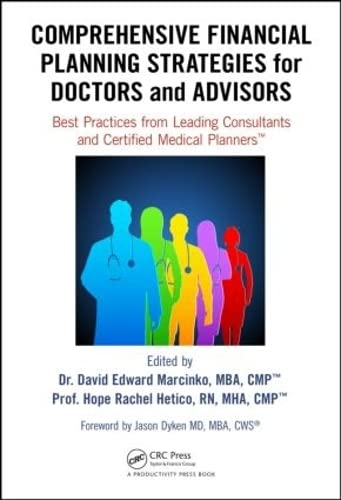
ORDER: https://www.routledge.com/Comprehensive-Financial-Planning-Strategies-for-Doctors-and-Advisors-Best/Marcinko-Hetico/p/book/9781482240283

***

COMMENTS APPRECIATED

Thank You

***

WORLD HEALTH ORGANIZATION: World Health Day

Happy 75th Birthday

By Staff Reporters

***

***

It’s World Health Day and the 75th birthday of the World Health Organization (WHO). Thanks to the WHO, we have almost eradicated diseases like polio and smallpox, and the organization led the largest-ever response to a global health crisis against the Covid-19 pandemic.

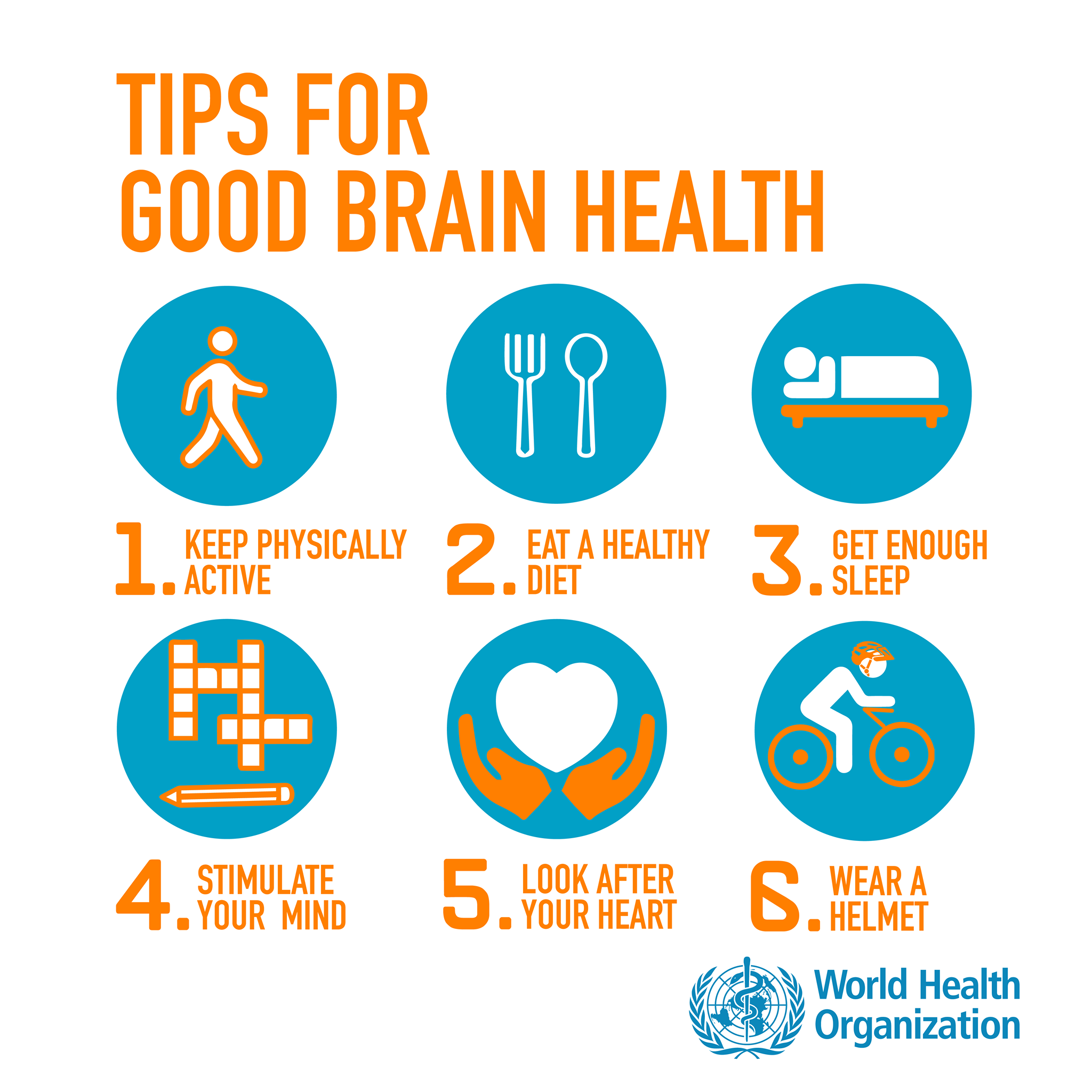
So, why not Celebrate this World Health Day by taking care of yourself? It doesn’t have to be tough or uninteresting to eat a well-balanced, nutrient-dense diet, reduce alcohol intake or go for a walk or other exercise. And, stick around for next year!

READ: https://www.who.int/westernpacific/news-room/events/detail/2023/04/07/western-pacific-events/world-health-day-2023

***

***

COMMENTS APPRECIATED

Thank You

***

DAILY UPDATE: The WHO Calls for Radiology Readiness and Bonds Sell-Off

By Staff Reporters

***

***

A new World Health Organization (WHO) report calling for an increased global preparedness for radiological and nuclear emergencies doesn’t spell out any particular current conflict, but it doesn’t need to. The world has become fully aware of the increased dangers of radiological and nuclear threats.

  • The World Health Organization’s updated list of critical medicines puts a focus on radiological and nuclear emergencies.
  • The WHO says governments need to have treatments available for citizens exposed to radiation.
  • New formulas developed in the last decade have, in part, prompted the updated guidelines from WHO.

In the just-issued report, the WHO updated its list of medicines that governments should stockpile for these types of emergencies, including medicines that “either prevent or reduce exposure to radiation or treat injuries once exposure has occurred.”

***

Finally, a major sell-off in bonds sent Treasury yields higher, making stocks less attractive to investors. Last week, the major US stock indexes posted their biggest weekly losses of the year.

ORDER: https://www.routledge.com/Comprehensive-Financial-Planning-Strategies-for-Doctors-and-Advisors-Best/Marcinko-Hetico/p/book/9781482240283

***

ORDER: https://www.amazon.com/Dictionary-Health-Information-Technology-Security/dp/0826149952/ref=sr_1_5?ie=UTF8&s=books&qid=1254413315&sr=1-5

COMMENTS APPRECIATED

Thank You

***

UPDATE: The WHO and the US Dollar

By Staff Reporters

***

***

The World Health Organization declared the outbreak of monkeypox to be a public health emergency of international concern. “The global monkeypox outbreak represents a public health emergency of international concern,” WHO Director-General Dr. Tedros Adhanom Ghebreyesus said during a briefing in Geneva. At the virtual press conference, Ghebreyesus also said that the outbreak has spread around the world “rapidly” and that officials understand “too little” about the disease.

And, the U.S. Dollar had an incredible run throughout 2022, appreciating against most major currencies as the world’s central banks continue to combat rising inflation. This year alone, the dollar is up 15% against the Japanese yen, 10% against the British pound, and 5% compared to China’s Renminbi. The Wall Street Journal’s Dollar Index, which measures the dollar against 16 other major currencies, has also had its best first half performance since 2010 this year, rising more than 10% year-to-date.  And for the lucky Americans who could find cheap airfare to Europe (and made it through with all their luggage), the dollar even reached equal standing with the euro for the first time in two decades earlier this month. 

***

CITE: https://www.r2library.com/Resource/Title/082610254

COMMENTS APPRECIATED

Thank You

***

Will Mr. Market Eat Too Much Pi?

By Vitaliy Katsenelson CFA

****

This Holiday, Will Mr. Market Eat Too Much Pi?
You can also listen to a professional narration of this article on iTunes, Google & online.

Mr. Market was less than kind to our portfolio over the last few months, and especially the last few weeks. I cannot tell you how little it worries us what Mr. Market thinks about our stocks at any particular point in time. We love* our portfolio even if the Mr. Market doesn’t fancy it today.

Also, before we take Mr. Market seriously, let us tell you about the rationality of Mr. Market lately. The World Health Organization (WHO) names each variant of the Covid virus by going to the next letter of the Greek alphabet. After Delta, which is currently the most predominant variant of the virus ravaging the world, there must have been nine others that were not important enough because we never heard of them. Why nine? Because when the latest variant of concern was found in South Africa, it emerged that the letter Nu was supposed to be applied to it. But Nu sounds a lot like new. WHO didn’t want to confuse people, so it skipped to the next letter in the Greek Alphabet, which is Xi – oops, that’s the Chinese supreme dictator. So, for the sake of global political stability, that letter was skipped, too.
This brings us to Omicron, the name of the latest variant.

This is where this story gets a bit more interesting.

The one disruption that really puzzles me is the labor shortage. There are millions of jobs going unfilled today. I hear stories of Starbucks stores being closed due to a lack of workers. Every service that has a heavy labor component has gotten worse – be it restaurants, ride-sharing, or pharmacies. There happens to be a cryptocurrency, one of thousands, that is also named Omicron. I still cannot grasp the logic behind it, but that cryptocurrency was up 900% on the day the South African variant was christened. There must have been a trading algorithm or a lot of bored investors looking for the next gamble, to drive something seemingly worthless up 900%.

That is the drunken Mr. Market that is pricing our stocks today.

I am going to repeat what you will find me saying several times in the letter: We own businesses that are priced, not valued, by Mr. Market thousands of times a day. We have done a lot of work on each company in the portfolio, and through diligent research we have reached the conclusion that each is worth more than the price it is changing hands at today. Are we going to be right about each and every stock? Of course not. This is a numbers game. But we use a time-tested methodology centered on common sense and the cash flows these businesses generate. Also, this is not our first rodeo. We’ll go on making small tweaks, taking advantage of Mr. Market’s manic-depressive moods, at least when it comes to anything that generates cash flows.

Of course, we could change our investment process and load up on the cryptocurrency called Pi Coin, which happens to take its name from the letter in the Greek alphabet that follows Omicron. But I think we all agree we should stick to our knitting, buying high-quality businesses that are significantly undervalued. (Anyway we already loaded up on pie during Thanksgiving.)

Our advice – enjoy this holiday season. Spend time with your loved ones; don’t look at your portfolio. Let us worry about it – after all, we own the same stocks you do.

We wish you joyful and safe holidays.

***
COMMENTS APPRECIATED.

Thank You

SUBSCRIBE TO THE MEDICAL EXECUTIVE-POST

***

Recent Weekend Stock Market Volatility

By Staff Reporters

***

WHAT A WEEK!

  • Markets: Stocks ended a topsy-turvy week with another stinker yesterday, dragged netherward (big word alert) by the tech sector. Meta shares nearly entered a bear market, falling almost 20% from a closing record in September. Still, the S&P was down less than 1% for the week.
  • CITE: https://www.r2library.com/Resource/Title/0826102549
  • Covid: The first bits of solid Omicron data are starting to trickle out. One study from South Africa showed that the new variant may cause a higher rate of reinfection in people who already got Covid. Critical information on the effectiveness of current vaccines against Omicron could come in a few days, a WHO scientist said.

COMMENTS APPRECIATED.

Thank You

***

***

WHAT IS Ro [r-NOUGHT] IN HEALTH EPIDEMIOLOGY?

A Relationship to Financial Investing?

Courtesy: www.CertifiedMedicalPlanner.org

By Dr. David E. Marcinko MBA CMP

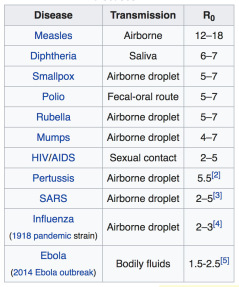
The basic reproduction number R0, [r nought) of an infection is the number of cases it generates on average over the course of its infectious period, in an otherwise uninfected population.

LINK: https://www.amazon.com/Dictionary-Health-Insurance-Managed-Care/dp/0826149944/ref=sr_1_4?ie=UTF8&s=books&qid=1275315485&sr=1-4

The metric determines whether or not a disease can spread through a population. The root concept is traced to Alfred Lotka and Ronald Ross, but its first application was by George MacDonald in 1952, with malaria.

LINK: https://www.healthline.com/health/r-nought-reproduction-number

FORMULA: When

R0 < 1

the infection will die out in the long run. But if

R0 > 1

the infection will be able to spread in a population.

LINK: https://wwwnc.cdc.gov/eid/article/25/1/17-1901_article

ASSESSMENT: Generally, the larger the value of R0, the harder it is to control the epidemic. In the past week, Corona virus estimates ranged from 1.4 to 5.5. The World Health Organization (WHO) range was 1.4 and 2.5. In comparison, seasonal flu affects millions each year but has an R0 of just 1.3. The R0 rate for measles ranges from 12 to 18.

***

***

ECONOMY: http://www.msn.com/en-us/money/markets/coranavirus-outbreak-clouds-2020-view-global-economy-week/ar-BBZyEDY

Your thoughts are appreciated.

LINK: https://www.marketwatch.com/story/coronavirus-spreads-damage-to-wall-street-could-the-us-economy-be-next-2020-02-01?mod=home-page

BUSINESS, FINANCE AND INSURANCE TEXTS FOR DOCTORS:

1 – https://lnkd.in/ebWtzGg

2 – https://lnkd.in/ezkQMfR

3 – https://lnkd.in/ewJPTJs

THANK YOU

Risk Management, Liability Insurance, and Asset Protection Strategies for Doctors and Advisors: Best Practices from Leading Consultants and Certified Medical Planners™8Comprehensive Financial Planning Strategies for Doctors and Advisors: Best Practices from Leading Consultants and Certified Medical Planners™

***

Healthcare Policy on Health and Ethics

Join Our Mailing List

By Ben’s Bitter Blog

Healthcare Policy on Health and Ethics Healthcare policy is defined as “decisions, plans, and actions that are undertaken to achieve specific health care goals within a society” (WHO, 2016).

Do you believe that your life is affected by healthcare policy?

YES. The policy directs which doctor you can see, which hospital you can visit, and […]

***

dc7jRLqc9

Healthcare Policy on Health and Ethics

***

WHITE PAPER: Ethics Dr. Marcinko

Conclusion

Your thoughts and comments on this ME-P are appreciated. Feel free to review our top-left column, and top-right sidebar materials, links, URLs and related websites, too. Then, subscribe to the ME-P. It is fast, free and secure.

Speaker: If you need a moderator or speaker for an upcoming event, Dr. David E. Marcinko; MBA – Publisher-in-Chief of the Medical Executive-Post – is available for seminar or speaking engagements. Contact: MarcinkoAdvisors@msn.com

OUR OTHER PRINT BOOKS AND RELATED INFORMATION SOURCES:

Product Details

***

Broadening the Strategic Value of Integrated Medical Provider Management‏

How Health Plans Can Create Scalable and Competitive Products that Enable Affordable and High-Quality Care

Join Our Mailing List 

By Sam Muppalla – Vice President, McKesson Health Solutions Network Performance Management

[Part 6 in a 6 part series]

Over the past few weeks, I’ve covered a lot of ground in this ME-P series of six essays. We looked at the pressures on health plans and the ways in which those pressures are forcing a new dynamic in how the plans create new, scalable competitive products that enable affordable, high-quality care. We talked about some of the innovations that leading health plans are bringing to the areas of product, network, care model and reimbursement designs.

The pilot initiatives in these areas continue to show positive results. The next level of scaling requires an integrated and automated approach to enable health plans to deploy, manage and maintain these innovations in a much more rapid fashion. This all has to be done without increasing health plan costs while delivering new value to a health plan’s customers, providers and members.

Affordable Care Can be Achieved

It is our position at NPM that achieving this alignment will deliver affordable care. Additionally, through this alignment, health plans will gain a competitive and cost savings leadership position. Through collaborative and independent research with our health plan partners, we have identified three main areas of competitive and cost savings leadership. The potential cost savings of achieving alignment are impressive. For example, working with a regional Blues plan with three million members, the potential cost savings due to achieving an integrated approach to network design were projected to be:

Administrative Cost Savings [Total Potential Annual Savings = $13 million to $25 million]

  • Provider data administration cost reductions: $5 million to $10 million
  • Provider outreach cost reductions: $0.75 million to $1.25 million
  • Contract management cost reductions: $1 million to $3 million
  • Administrative reimbursement cost reductions: $3 million to $5 million
  • Provider service cost reductions: $1.5 million to $2.5 million
  • Credentialing cost reductions: $1.5 million to $3 million

Medical Cost Savings [Total Potential Annual Savings = $45 million to $100 million]

  • Streamlined member health advocacy: $5 million to $10 million
  • Pay for Performance: $15 million to $40 million
  • Network design and performance improvements: $25 million to $50 million

Provider IT Cost Savings [Total Potential Annual Savings = $.5 million to $2.5 million]

  • Redundant system consolidations: $0.25 million to $2 million
  • IT change management cost reductions: $0.25 million to $0.5 million

The total aggregated annual potential for savings is between $59 million and $127 million.

Some Final Thoughts

In 2009, the National Health Expenditure (NHE) rose to $2.5 trillion or 17.6 percent of the Gross Domestic Product (GDP) with private health insurance accounting for 32 percent of the NHE. Yet all of this spending is not translating into any measure of higher quality care as the World Health Organization (WHO) also ranks the U.S. as 72nd in overall level of health in the world. To affect high-quality, affordable care, health plans must be able to harness innovative product, network, care model and reimbursement designs. Network design is the critical element that will orchestrate the operational scaling of innovation. Therefore, automation of network design and efficient implementation of it through end-to-end integration will be crucial to success of health plans in the post reform world.

Assessment

Thanks for taking the time to follow me, and the ME-P, on this journey. If you’ve joined us late in the discussion, fear not. We’ve collected all the related threads in the Unlocking Affordable Care by Aligning Products white paper, which you can download by visiting our website at http://ow.ly/7MFKb.

MORE: Strategic Management Improvement

Conclusion

And so, your thoughts and comments on this ME-P are appreciated. Please review our top-left column, and top-right sidebar materials, links, URLs and related websites, too. Then, subscribe to the ME-P. It is fast, free and secure.

Link: http://feeds.feedburner.com/HealthcareFinancialsthePostForcxos

Speaker: If you need a moderator or speaker for an upcoming event, Dr. David E. Marcinko; MBA – Publisher-in-Chief of the Medical Executive-Post – is available for seminar or speaking engagements. Contact: MarcinkoAdvisors@msn.com

Our Other Print Books and Related Information Sources:

Health Dictionary Series: http://www.springerpub.com/Search/marcinko

Practice Management: http://www.springerpub.com/product/9780826105752

Physician Financial Planning: http://www.jbpub.com/catalog/0763745790

Medical Risk Management: http://www.jbpub.com/catalog/9780763733421

Healthcare Organizations: www.HealthcareFinancials.com

Physician Advisors: www.CertifiedMedicalPlanner.com

Subscribe Now: Did you like this Medical Executive-Post, or find it helpful, interesting and informative? Want to get the latest ME-Ps delivered to your email box each morning? Just subscribe using the link below. You can unsubscribe at any time. Security is assured.

Link: http://feeds.feedburner.com/HealthcareFinancialsthePostForcxos

Sponsors Welcomed: And, credible sponsors and like-minded advertisers are always welcomed.

Link: https://healthcarefinancials.wordpress.com/2007/11/11/advertise
 

Reflections on Healthcare and Karate in Finland; etc.

Join Our Mailing List

One Visiting Doctor’s Experience on Healthcare … There and Elsewhere!

[By Dr. David Edward Marcinko; FACFAS, MBA, CMP™]

[Publisher-in-Chiefdr-david-marcinko12]

As readers and colleagues know, I’m a great fan of the Finnish culture, lifestyle and people. I’ve visited the country several times, touring and speaking, meeting with government, academia and local industry leaders and politicians in Helsinki, Tempere, Seinajori, Turku, Oulu and Northern Lapland, among other places; and especially Rovaniemi which is home to the world’s most northern branch restaurant of McDonald’s. Of course, the famed Arktikum there is also very comprehensive museum of arts, science and technology. Every time my wife and I visit, we learn more about the language, the arts and tradition.

Recent Visit to Finland

On our most recent month-long visit to Finland, we were able to visit a Japanese Honbu [karate gymnasium], meet several black-belt Taido karate students, and even take an actual class to stay in shape. I’ve been an avid runner for more than 30 years so aerobic cardio-vascular output was not-problematic. The trip was also remarkable for the many insights into the challenges of the Finnish healthcare system, their plans for eHRs and their emerging interest in American medical care. I’ve also made several friends and new colleagues, ingested cold raw dead-fish stew, and mastered the Finnish railway system. And so, my national healthcare service impressions follow; along with a bit more about the art and science of Taido styled karate.

Taido in Finlandkarate-mac

Prior to our departure, we asked my daughter’s karate instructor, Sensei Uchida in Atlanta, GA, about the possibility of attending a Taido work-out in Finland. We were surprised when he informed us that the country has the largest number of Taido students in the world, second only to Japan. This interesting fact was later confirmed by the Finnish Athletic Association. The reason is that this form of exercise is covered under the country’s national health insurance system and is available to all citizens, free of charge. But, of course, income taxes are very high.

In fact, we learned that just the city of Helsinki itself, had nine Honbu’s to choose from and we selected what proved to be the most interesting, indeed! Another American instructor, Sensei Brent, mentioned that he visited the country a few years ago and still has some Taido friends from there, too.

The Taido Karate Honbu

Built during World War II to protect the population living in the City of Tempere from bombs, the Gymnasium in North East Helsinki is built into the side of a huge granite mountain, not unlike our own Stone Mountain here in Atlanta. Since it was originally constructed as an air-raid shelter during WW II, with many snaking corridors and smaller caverns, it is cool all year round with many miles of tunnels maintaining an even 56 degree temperature, just like natural underground caves. No air conditioning is needed for the short summers, and no heating system is needed for the very long winters.

Enter the Health Gymnasium

As we entered the “Health Gymnasium” as it was known, it was as if we were walking into a long tunnel through the woods, about 100 yards long. This entrance to the bomb shelter was really a railroad track line that was still visible after all these years. It was guarded by two huge iron doors several stories high. Inside, was a general reception area where we were directed to the actual Taido Honbu, itself, known as Budo # 6. As we walked through the long winding corridors, we noted that the walls were solid granite, painted white, and that each studio was separated only by a color-coded curtain; much like long rows with individual partitions. There was no graffiti and, although there was no sound-proof protection, the entire Gymnasium was surprisingly quiet.

A Linguistics Error

As we walked along, we noted studios for fencing, gymnastics, boxing and kickboxing, table tennis, ballet, weight lifting, volleyball, rowing and many different types of Karate and other martial arts, like Aikido, Bando Thaing, Capoei, Gatka, Hapkido, JuJitsu, Judo, Kendo, Kung Fu, Sumo and of course Tai Kwon Do. But alas, no Taido Honbu! We were horrified. Did we make a linguistic error! Was the term Taido misinterpreted as a generic terms for all these others types of martial arts or Karate forms? My daughter Mackenzie’s enthusiasm was crushed [after seven years of intensive study, with both national and international competition] as she is a black-belt candidate still in need of some teaching and karate internship credits to reach her ultimate goal. After-all, she brought her Gi [uniform] a long way to not to be able to use it. So, back to the reception area we went, inquiring again in our rudimentary Finnish. Fortunately, the problem was not a language faux-pau at all, but a one of timing. In our excitement, we had merely arrived an hour too early. Soon, the sign on one of the larger partitioned studios was changed to “TAIDO”, and students began filling-in, talking, laughing and giggling before class, just like they do in Atlanta.

Teaching Introductions

The class was comprised of blue, green and brown belt student [there are eight belt ranks], even though we took care to register for the same rank as daughter, Mackenzie. But, it was for about a dozen young adults, ages 18-30, and evenly split between guys and gals! No children. One student had been taking classes for about two years (she averaged 3-4 classes per week), while another was in his ninth year (able to participate only about once or twice per week). Nevertheless, Mac was agreeable to work-out with the adults, under the leadership of Sense Arie, who spoke English and was very cordial to us. When he then asked us what we had learned, we quickly listed Untai, Sentai and Hentai hokis [ritual movements; a Hoki is a pattern of techniques originally put together for mental and physical health and as a practice form of “free fighting.”], as he replied, “that will be sufficient for today”. No doubt, he and the other students were as curious about us, as we were about them. Introductions were made to all students, including moms, dads, grand-moms and grand-dads. We then settled down to watch Mackenzie and the class.

Class Comparisons

Like the Finnish healthcare system, the Taido karate class itself had several similarities and several differences compared to what we are used to, in Atlanta, GA.

1. First, the students and instructors wore the same colored GIs; solid black pants with roughly woven white tops. The GIs also were fancier with many epilates, patches and insignias. The belt color-coded system of the States was not used. Shoes were left outside, all bowed as a sign of respect upon entry, and lined up according to rank. There were no mirrors, horizontal warm-up bares, and virtually no padding in the mats on the floor! The epithet OUS, was replaced by a loudly shouted, EEEE!

2. Second, it was a longer class; an hour and a half, with a ten minute break in-between. Warm-ups were also longer and a bit more strenuous and aerobic orientated; running backwards, sideways and with lunges often performed in-between the hoki’s.  But again, this was an adult class.

3. Third, the class was subdivided into smaller groups like our own, to practice kicks and punches initiated by sound or hand movement, as reaction-time was tested and improved. Mac’s partner had to kneel for her to reach his out-stretched hands, and she in turn had to raise her hands high overhead, as palms were used as targets. Her older partner worked with great diligence to best his younger opponent.  

Finally, the ritualized hoki’s terminated a bit differently than our own, and they were performed much more slowly; almost ritualistically and with great concentration. And, form was a bit more casual than what were are used to, and not as sharp or precise as American Sensei Uchida or Sensei Matsuaki usually demands. 

Health Status of Finlandersfinnish-american-students

Health services are available to all in Finland, regardless of their financial situation. Public health services are mainly financed from tax revenues. The child mortality rate in Finland is one of the lowest in the world; the infant mortality rate is below 4% and the life expectancy for a girl born now is 81 years, for a boy it is 73 years. Much like the US, the life expectancy of Finnish men has deteriorated by cardiovascular disease, excessive consumption of alcohol and accidents. Cardiovascular mortality has declined in response to effective health and nutritional education in recent decades but excessive blood cholesterol levels and obesity remain common in Finland. Smoking and drug abuse are significantly less frequent in Finland than in Europe on average. But, alcoholism and depression are national concerns because of the dark, prolonged and harsh winter climates. The aim of Finnish health policy is to lengthen the active and healthy lifetimes of citizens, to improve quality of life, and to diminish differences in health between population groups. Prevention receives particular emphasis in primary health care.

Finnish Healthcare System

The larger health care system in Finland is attracting international attention. For example, the European Observatory on Health Care Systems just launched a report examining Finland’s health system alongside that of other European countries. The system also has certain special features compared with systems in other countries. The main responsibility for organizing and financing health care is delegated to 448 local municipalities, which have exceptionally small and homogenous population bases, by US comparison. Another special feature is the existence of parallel financing and delivery systems alongside the municipal service system. The Finnish health care system survived the severe economic crisis of the 1990s fairly well, even though marked cuts were made in many public-sector budgets. As a result, it has emerged stronger today. The quantity and quality of health care services were largely maintained by improved management, efficiencies, electronic connectivity and resource allocation. A number of other initiatives are now developing in different directions.

Finnish Medical Association

On a more grass-roots level patient-care basis, the Finnish Medical Association [FMA] collaborates with various authorities and decision-making bodies in relation to the development of personalized medical care in Finland. It pursues patient initiatives and issues a number of statements each year with the aim of improving health care and related legislation, and puts forward plans to ensure a sound financial basis for provision of health services. For example, the national strike by physicians in 2001 drew national attention to the critical lack of resources provided for health care. The FMA plays a significant role in establishing a general patient insurance scheme and developing a family-doctor [US medical-home concept] system for Finnish health centers and practitioners. The Association promotes the rights of patients to have access to the treatment they need promptly. But, the possibilities for choosing a doctor and place of treatment need to be improved.

Contemporary Profile of a Health System in Transition

The Finnish healthcare system, much like the domestic healthcare system, is undergoing a period of reflection, modernization and reform. A special report, known as the Health Care Systems in Transition (HiT) series, profiles and analyzes the health care systems of over 40 European countries, Australia, Canada and the USA. The report for Finland was written by Ms Jutta Järvelin, Researcher at STAKES (the National Research and Development Centre for Welfare and Health), and in collaboration with the Finnish Ministry of Social Affairs and Health and the Observatory. STAKES is a center of expertise overseen by the Ministry of Social Affairs and Health.

On Finnish Longevity

Finnish super-centenarian Aarne Armas “Arska” Arvonen, the oldest Finnish male ever, just passed away at age 111 on January 1, 2009. He was the last living person in Finland who was born in the 1890s, and the third oldest man in Europe. He was also the seventh oldest man in the world. At the time of his death, Aronen was considered among the 20 oldest verified men to have ever lived in Europe.

Assessment

The formal report, Health Care Systems in Transition – Finland [Vol. 4, No 1. 2002]; Copenhagen, European Observatory on Health Care Systems, 2002 is available on the European Observatory on Health Care Systems website:

www.observatory.dk

http://www.euro.who.int/document/e74071.pdf

The report can also be ordered from the European Observatory on Health Care Systems, WHO Regional Office for Europe, Scherfigsvej 8, DK-2100 Copenhagen, Denmark, tel. +45 39 17 1363, fax +45 39 17 1818.

e-mail: observatory@who.dk

And, additional more current information can be obtained from:

Researcher Jutta Järvelin

STAKES, tel. +358 9 3967 2254

e-mail: jutta.jarvelin@stakes.fi and,

WHO e-mail: vge@who.dk

Conclusion

Your thoughts and comments on this ME-P are appreciated. Feel free to review our top-left column, and top-right sidebar materials, links, URLs and related websites, too. Then, subscribe to the ME-P. It is fast, free and secure.

Speaker: If you need a moderator or speaker for an upcoming event, Dr. David E. Marcinko; MBA – Publisher-in-Chief of the Medical Executive-Post – is available for seminar or speaking engagements. Contact: MarcinkoAdvisors@msn.com

OUR OTHER PRINT BOOKS AND RELATED INFORMATION SOURCES:

Product DetailsProduct DetailsProduct Details

Understanding Medical Billing Methodologies

The Cash Conversion Cycle

[By Staff Reporters]

Most patients and financial advisors don’t have a clue about how doctor’s get paid in our current system; but it’s not by magic. Yet, a number of different steps occur during the processing of a medical claim that can be seen in a flow chart. Each step in the process can be mapped out and each is subject to claim payment-or-claim rejection. A payment time line for a typical FFS or PPO can also be subjected to a number of variables, depending on different factors including staff competency, time, outside vendors, information management, management decisions in general, or regulatory requirements. The total transit times may take weeks for electronic claims or up to two-years for some paper based claims.

First Make the Diagnosis

• ICD-9 alpha numeric code for disease classes, not billing.

• HHS offers ICD-9 [CM] for MDs and facilities.

• WHO-1900, updated every 3-10 years, e-ICD-10 [2013].

• Diagnostic Statistical Manual Mental Disorders, 4th Edition [DSM-IV].

Then Select the Current Procedure Terminology® Code

Medical, surgical and diagnostic task & service billing code numbers [5-digit] of AMA used by payers:

• Thousands updated annually

• Secretive with registered mark ®

• Office Visits: [brief, inter, extended, etc]

• # 99214 physical exam

• # 90658 H1N1 flu shot

• # 12002 one-inch laceration suture

• CDT® and HCPCS codes, too!

Document the Visit in Patient Progress Notes

Subjective:

“I was gardening and noticed my wrist was swollen and itched like crazy”

Objective:

A 4 inch linear red rash with circular oozing papules and swollen skin is present. Patient is wearing a small tennis bracelet which was tight.

Assessment:

Rule out rues dermatitidis versus nickel allergy.

Plan:

Soap soaks, with OTC calamine lotion with Rx oral diphenhydramine or [benadryl].

Submit the “Super Bill”

Not a “big bill” or expensive medical invoice; just an invoice

• Official standard billing form used by doctors submitting MC/MD claims.

• Also used by some private insurers and managed care plans.

• Contains patient demographics, diagnostic codes, CPT®, HCPC codes, etc.

• Generic billing form, like the generic HCFA 1500 claim form.

Join Our Mailing List

Conclusion

Your thoughts and comments on this ME-P are appreciated. Feel free to review our top-left column, and top-right sidebar materials, links, URLs and related websites, too. Then, subscribe to the ME-P. It is fast, free and secure.

Link: http://feeds.feedburner.com/HealthcareFinancialsthePostForcxos

Speaker: If you need a moderator or speaker for an upcoming event, Dr. David E. Marcinko; MBA – Publisher-in-Chief of the Medical Executive-Post – is available for seminar or speaking engagements. Contact: MarcinkoAdvisors@msn.com

OUR OTHER PRINT BOOKS AND RELATED INFORMATION SOURCES:

Product DetailsProduct DetailsProduct Details

Medical Coding and Billing Vocabulary

Join Our Mailing List

Basic HIT Nomenclature and HIPAA

[By Richard J. Mata; MD, MIS, CMP™ [Hon]

For the Health Information Technology [HIT] department of a hospital, clinic or medical practice and its coders, the following medical vocabularies are mandated by the Health Insurance Portability and Accountability Act [HIPAA].

Diseases 

For diseases: the 9th or 10th International Classification of Diseases (ICD) Clinical Modification should be used.  ICD9-CM is maintained by the Centers for Disease Control National Center for Health Statistics, while ICD-10 is maintained by the World Health Organization.

Procedures

For medical procedures: a combination of ICD-9-CM, Current Procedural Terminology maintained by the American Medical Association, the Current Dental Terminology maintained by the American Dental Association, and Healthcare Common Procedure Coding System (HCPCS) maintained by CMS, which is also used for medical devices.

Pharmaceuticals

For drugs: these should be coded according to their National Drug Code classification.

Assessment

“A recent change to Medicare policy made by the Centers for Medicare & Medicaid Services (CMS) helps ensure claims processing isn’t delayed when the only missing information on the CMS-1490S form is the provider or supplier’s National Provider Identifier (NPI).

CMS Transmittal 1747, Change Request 6434, issued May 22, notifies A/B Medicare Administrative Contractors (MAC) and carriers of editorial changes to Medicare policy in Pub. 100-04, Medicare Claims Processing Manual, chapter 1 regarding the monitoring of claims submission violations and the handling of incomplete or invalid claims.

In either case, as stated in the transmittal, “If the beneficiary furnishes all other information but fails to supply the provider or supplier’s NPI, the contractor shall not return the claim but rather look up the provider or supplier’s NPI using the NPI registry.”

http://www.aapc.com/news/index.php/2009/06/missing-npi-no-reason-to-deny-says-cms/

Conclusion

Your thoughts and comments on this ME-P are appreciated. Feel free to review our top-left column, and top-right sidebar materials, links, URLs and related websites, too. Then, subscribe to the ME-P. It is fast, free and secure.

Speaker: If you need a moderator or speaker for an upcoming event, Dr. David E. Marcinko; MBA – Publisher-in-Chief of the Medical Executive-Post – is available for seminar or speaking engagements. Contact: MarcinkoAdvisors@msn.com

OUR OTHER PRINT BOOKS AND RELATED INFORMATION SOURCES:


Product DetailsProduct DetailsProduct Details