How to Regain a Charitable Exemption

Provisions of the Pension Protection Act

By Children’s Home Society of Florida Foundation

Join Our Mailing List 

Under provisions of the Pension Protection Act and other statutes, charities that failed to file the required IRS Form 990, Form 990EZ or Form 990-N for three years have lost exempt status. Most organizations impacted by this rule failed to file for years 2007, 2008 and 2009.

Smaller Organizations

Because many smaller organizations did not file the required Form 990-N ePostcard, their exemptions were automatically revoked. As a result of the large number of revocations, the IRS published guidance on methods to reinstate charitable exempt status.

Larger Organizations

Some larger organizations with receipts over $50,000 in 2010 failed to file IRS Form 990 or 990EZ. Rev. Notice 2011-44 explains the steps these organizations must take for reinstatement. The organizations are required to file IRS Form 1023, “Application for Recognition of Exemption Under Sec. 501(c)(c) of the Internal Revenue Code.” If there is a request for a retroactive reinstatement, reinstatement is available by showing reasonable cause for failure to file a return. However, this reasonable cause must exist for all three years of the failure to file.

A reinstatement request is permitted within 15 months after the publication of an IRS revocation letter or the date the IRS posts the organization name on the IRS website.

Lost Exempt Status

For small organizations that have lost exempt status, the requirements are specified in Notice 2011-43. These small organizations typically failed to file Form 990-N ePostcards for years 2007, 2008 and 2009. The small organization also must submit IRS Form 1023. A small organization must write “Notice 2011-43” on the top of the form. The small organization is permitted a reduced user fee of $100 for the application for reinstatement of its tax exemption.

Assessment

The IRS also published Rev. Proc. 2011-36 to specify the $100 reduced fee for small organizations. In addition, it published frequently asked questions (FAQ) on automatic revocation and reinstatement procedures on www.irs.gov.

Conclusion

And so, your thoughts and comments on this ME-P are appreciated. Feel free to review our top-left column, and top-right sidebar materials, links, URLs and related websites, too. Then, subscribe to the ME-P. It is fast, free and secure.

Link: http://feeds.feedburner.com/HealthcareFinancialsthePostForcxos

Speaker: If you need a moderator or speaker for an upcoming event, Dr. David E. Marcinko; MBA – Publisher-in-Chief of the Medical Executive-Post – is available for seminar or speaking engagements. Contact: MarcinkoAdvisors@msn.com

Our Other Print Books and Related Information Sources:

Health Dictionary Series: http://www.springerpub.com/Search/marcinko

Practice Management: http://www.springerpub.com/product/9780826105752

Physician Financial Planning: http://www.jbpub.com/catalog/0763745790

Medical Risk Management: http://www.jbpub.com/catalog/9780763733421

Healthcare Organizations: www.HealthcareFinancials.com

Physician Advisors: www.CertifiedMedicalPlanner.com

Subscribe Now: Did you like this Medical Executive-Post, or find it helpful, interesting and informative? Want to get the latest ME-Ps delivered to your email box each morning? Just subscribe using the link below. You can unsubscribe at any time. Security is assured.

Link: http://feeds.feedburner.com/HealthcareFinancialsthePostForcxos

Sponsors Welcomed: And, credible sponsors and like-minded advertisers are always welcomed.

Link: https://healthcarefinancials.wordpress.com/2007/11/11/advertise

Product Details  Product Details

Is an MBA Worth It?

How about for Doctors?

Join Our Mailing List 

By knewton.com via holykaw.alltop.com and Master Degree Online

Is the value of a business degree worth the investment of time and money? The higher the degree the more marketable you will become!

And, what does it really take to get an MBA?


Assessment

As Publisher for the ME-P, and one who received his MBA back in 1998, it has totally been worth it for me. In fact, I recouped my entire tuition costs, as a healthcare consultant, within the first six months of graduation. The rest was gravy and ultimately launched  my transition out of clinical medicine. And, this was after almost 20 years of practice.

-Dr. David Edward Marcinko FACFAS, MBA

###

NOTEContinual education is key to successful business. Whether you are in the medical profession or a http://www.pastryschools.net/degree-programs-and-curriculum pastry chef, you must keep current.

Conclusion

Your thoughts and comments on this ME-P are appreciated. Feel free to review our top-left column, and top-right sidebar materials, links, URLs and related websites, too. Then, subscribe to the ME-P. It is fast, free and secure.

Speaker: If you need a moderator or speaker for an upcoming event, Dr. David E. Marcinko; MBA – Publisher-in-Chief of the Medical Executive-Post – is available for seminar or speaking engagements. Contact: MarcinkoAdvisors@msn.com

OUR OTHER PRINT BOOKS AND RELATED INFORMATION SOURCES:

Product DetailsProduct DetailsProduct Details

Product Details  Product Details

   Product Details 

Physicians … Beware the Medical Management Consultants?

Desperate Doctors – Desperate Measures!

By Dr. David Edward Marcinko MBA CMP™

[Publisher-in-Chief]

Are you a doctor desperate for practice enhancement solutions, but don’t know where to turn for help? Or, maybe you’ve already had a bad experience with a non-fiduciary business consultant, or management guru, more interested in his bottom line than your success?

www.CertifiedMedicalPlanner.com

Federal Government Report

Read this Federal Government report to learn what can happen when your advisor is not an informed Certified Medical Planner© designated medical management practitioner.

Link: http://oig.hhs.gov/fraud/docs/alertsandbulletins/consultants.pdf

Assessment

This caution was released in June 2001, a decade ago. It is as true today, as it was then … perhaps even more so.

Link: www.MedicalBusinessAdvisors.com

Conclusion

And so, your thoughts and comments on this ME-P are appreciated. Feel free to review our top-left column, and top-right sidebar materials, links, URLs and related websites, too. Then, subscribe to the ME-P. It is fast, free and secure.

Link: http://feeds.feedburner.com/HealthcareFinancialsthePostForcxos

Speaker: If you need a moderator or speaker for an upcoming event, Dr. David E. Marcinko; MBA – Publisher-in-Chief of the Medical Executive-Post – is available for seminar or speaking engagements. Contact: MarcinkoAdvisors@msn.com

Our Other Print Books and Related Information Sources:

Health Dictionary Series: http://www.springerpub.com/Search/marcinko

Practice Management: http://www.springerpub.com/product/9780826105752

Physician Financial Planning: http://www.jbpub.com/catalog/0763745790

Medical Risk Management: http://www.jbpub.com/catalog/9780763733421

Healthcare Organizations: www.HealthcareFinancials.com

Physician Advisors: www.CertifiedMedicalPlanner.com

Subscribe Now: Did you like this Medical Executive-Post, or find it helpful, interesting and informative? Want to get the latest ME-Ps delivered to your email box each morning? Just subscribe using the link below. You can unsubscribe at any time. Security is assured.

Link: http://feeds.feedburner.com/HealthcareFinancialsthePostForcxos

Sponsors Welcomed:  And, credible sponsors and like-minded advertisers are always welcomed.

Link: https://healthcarefinancials.wordpress.com/2007/11/11/advertise

Product DetailsProduct DetailsProduct Details       

Product Details  Product Details

   Product Details 


What Hurts Your Credit Score?

Facts that Doctors – and All of Us – Should Know

Join Our Mailing List 

By freescore.com

Learn about the biggest factors that can hurt your credit score, from declaring bankruptcy and foreclosure to missing credit card payments and blowing off your bills entirely.

Conclusion

Your thoughts and comments on this ME-P are appreciated. Feel free to review our top-left column, and top-right sidebar materials, links, URLs and related websites, too. Then, subscribe to the ME-P. It is fast, free and secure.

Speaker: If you need a moderator or speaker for an upcoming event, Dr. David E. Marcinko; MBA – Publisher-in-Chief of the Medical Executive-Post – is available for seminar or speaking engagements. Contact: MarcinkoAdvisors@msn.com

OUR OTHER PRINT BOOKS AND RELATED INFORMATION SOURCES:

Product Details  Product Details

Private v. Public Healthcare

A Look Around the World

Join Our Mailing List

By MPH Degree Programs.com 


Conclusion

And so, your thoughts and comments on this ME-P are appreciated. Feel free to review our top-left column, and top-right sidebar materials, links, URLs and related websites, too. Then, subscribe to the ME-P. It is fast, free and secure.

Link: http://feeds.feedburner.com/HealthcareFinancialsthePostForcxos

Speaker: If you need a moderator or speaker for an upcoming event, Dr. David E. Marcinko; MBA – Publisher-in-Chief of the Medical Executive-Post – is available for seminar or speaking engagements. Contact: MarcinkoAdvisors@msn.com

Our Other Print Books and Related Information Sources:

Health Dictionary Series: http://www.springerpub.com/Search/marcinko

Practice Management: http://www.springerpub.com/product/9780826105752

Physician Financial Planning: http://www.jbpub.com/catalog/0763745790

Medical Risk Management: http://www.jbpub.com/catalog/9780763733421

Healthcare Organizations: www.HealthcareFinancials.com

Physician Advisors: www.CertifiedMedicalPlanner.com

Subscribe Now: Did you like this Medical Executive-Post, or find it helpful, interesting and informative? Want to get the latest ME-Ps delivered to your email box each morning? Just subscribe using the link below. You can unsubscribe at any time. Security is assured.

Link: http://feeds.feedburner.com/HealthcareFinancialsthePostForcxos

Sponsors WelcomedAnd, credible sponsors and like-minded advertisers are always welcomed.

Link: https://healthcarefinancials.wordpress.com/2007/11/11/advertise

Product DetailsProduct DetailsProduct Details

Product Details  Product Details

   Product Details 

Proposed Regulations on HIPAA Accounting of Disclosures

New Rules and Regulations for Covered Healthcare Entities

ADVERTISEMENT

Join Our Mailing List 

By HCR@garfunkelwild.com

Proposed regulations regarding HIPAA accounting of disclosures have been recently published and are open for public comments.  If enacted in their current form, the new regulations will require Covered Entities to make significant revisions to their current HIPAA procedures and may require modifications to current computer systems.  

The HI-TECH Act

Under the HITECH Act, regulations must be enacted that allow individuals to receive a much expanded accounting of disclosures of electronic health information, including disclosures made for treatment, payment and health care operations. 

In order to accomplish this, the proposed regulations differentiate between “accountings of disclosures” and “access reports.”  Accountings will continue to be a list of certain limited types of disclosures.  Access reports will be similar to “audit trails” and must include information regarding each access to an individual’s electronic health information.  Covered Entities must be able to provide, upon request, both accountings and access reports.

Covered Entities

The proposed regulations also include specific requirements, including the following:

  • Accountings and access reports must be available in regard to disclosures or access, as applicable, for 3 years and must be provided within 30 days of the request. 
  • Accountings and access reports will be required only for health information maintained in designated record sets (e.g., medical records, billing records).
  • Accountings and access reports must include information about disclosures of, and access to, information maintained by business associates.
  • There are additional exceptions to the types of disclosures that must be included on an accounting (e.g., exceptions will include disclosures about abuse and to medical examiners).

Conclusion

And so, your thoughts and comments on this ME-P are appreciated. Feel free to review our top-left column, and top-right sidebar materials, links, URLs and related websites, too. Then, subscribe to the ME-P. It is fast, free and secure.

Link: http://feeds.feedburner.com/HealthcareFinancialsthePostForcxos

Speaker: If you need a moderator or speaker for an upcoming event, Dr. David E. Marcinko; MBA – Publisher-in-Chief of the Medical Executive-Post – is available for seminar or speaking engagements. Contact: MarcinkoAdvisors@msn.com

Our Other Print Books and Related Information Sources:

Health Dictionary Series: http://www.springerpub.com/Search/marcinko

Practice Management: http://www.springerpub.com/product/9780826105752

Physician Financial Planning: http://www.jbpub.com/catalog/0763745790

Medical Risk Management: http://www.jbpub.com/catalog/9780763733421

Healthcare Organizations: www.HealthcareFinancials.com

Physician Advisors: www.CertifiedMedicalPlanner.com

Subscribe Now: Did you like this Medical Executive-Post, or find it helpful, interesting and informative? Want to get the latest ME-Ps delivered to your email box each morning? Just subscribe using the link below. You can unsubscribe at any time. Security is assured.

Link: http://feeds.feedburner.com/HealthcareFinancialsthePostForcxos

Sponsors Welcomed: And, credible sponsors and like-minded advertisers are always welcomed.

Link: https://healthcarefinancials.wordpress.com/2007/11/11/advertise

Product Details 

The Unsung Heroes of Medicine

Male Nurses

Join Our Mailing List 

By onlinenursingschools.com via guyism.com

Though male nurses make up a small minority of the nursing population, they still manage to be the butts of a majority of jokes when it comes to the medical profession.

Assessment

However, that shouldn’t be the case and our buddies over at Online Nursing Schools decided it was time to recognize our unsung heroes of medicine.


Conclusion

And so, your thoughts and comments on this ME-P are appreciated. Feel free to review our top-left column, and top-right sidebar materials, links, URLs and related websites, too. Then, subscribe to the ME-P. It is fast, free and secure.

Link: http://feeds.feedburner.com/HealthcareFinancialsthePostForcxos

Speaker: If you need a moderator or speaker for an upcoming event, Dr. David E. Marcinko; MBA – Publisher-in-Chief of the Medical Executive-Post – is available for seminar or speaking engagements. Contact: MarcinkoAdvisors@msn.com

Our Other Print Books and Related Information Sources:

Health Dictionary Series: http://www.springerpub.com/Search/marcinko

Practice Management: http://www.springerpub.com/product/9780826105752

Physician Financial Planning: http://www.jbpub.com/catalog/0763745790

Medical Risk Management: http://www.jbpub.com/catalog/9780763733421

Healthcare Organizations: www.HealthcareFinancials.com

Physician Advisors: www.CertifiedMedicalPlanner.com

Subscribe Now: Did you like this Medical Executive-Post, or find it helpful, interesting and informative? Want to get the latest ME-Ps delivered to your email box each morning? Just subscribe using the link below. You can unsubscribe at any time. Security is assured.

Link: http://feeds.feedburner.com/HealthcareFinancialsthePostForcxos

Sponsors Welcomed: And, credible sponsors and like-minded advertisers are always welcomed.

Link: https://healthcarefinancials.wordpress.com/2007/11/11/advertise 

Product DetailsProduct DetailsProduct Details

Product Details  Product Details

   Product Details 

Misdirection in Goldman Sachs’s Housing Short

Goldman Sachs appears to be trying to clear its name

By Jesse Eisinger

ProPublica, June 15, 2011, 3:10 pm

Join Our Mailing List 

The compelling Permanent Subcommittee on Investigations report on the financial crisis [1] is wrong, the bank says. Goldman Sachs didn’t have a Big Short against the housing market.

About The Trade

In this column, co-published with New York Times’ DealBook, I monitor the financial markets to hold companies, executives and government officials accountable for their actions. Tips? Praise? Contact me at jesse@propublica.org

But the size of Goldman’s short is irrelevant.

No one disputes that, by 2007, the firm had pivoted to reduce its exposure from mortgages and mortgage securities and had begun shorting the market on some scale. There’s nothing wrong with that. Don’t we want banks to reduce their risk when they see trouble ahead, as Goldman did in the mortgage markets?

Nor should shorting itself be seen as a bad thing. Putting money behind a bet that a stock (or bond or commodity or derivative) is overpriced is necessary for the efficient functioning of capital markets. Short-sellers can keep prices from getting out of whack and help deflate bubbles.

The problem isn’t that Goldman went short and reduced risk — it’s how.

It is How … Short?

To establish many of its short positions, the Senate report says, Goldman created new securities, backed them with its good name, and then strung together misleading statements to its customers about what it was actually doing. By shorting the way it did, the bank perverted the market instead of correcting it.

Take Hudson Mezzanine, a $2 billion collateralized debt obligation created by Goldman in 2006 [2]. In marketing material, the firm wrote that “Goldman Sachs has aligned incentives with the Hudson program.”

I suppose that was technically true: Goldman had made a small investment in the C.D.O. and therefore had an aligned incentive with the other investors. But the material failed to mention the firm’s much larger bet against the C.D.O. — a huge adverse incentive to its customers’ interests.

Goldman told investors that the Hudson assets had been “sourced from the Street,” which most investors would understand to mean that Goldman had purchased the assets from other broker-dealers. In fact, all the assets had come from Goldman’s own balance sheet, the Senate report found.

In his April 2010 testimony to the Senate, Goldman’s chief executive, Lloyd C. Blankfein, argued that Goldman was merely making a market in these securities and derivatives, matching willing and sophisticated buyers and sellers. But, Goldman was acting like an underwriter, not a market maker.

As the underwriter, Goldman threw its marketing muscle behind Hudson Mezzanine and other C.D.O.’s. When the bank’s salespeople ran into trouble selling the securities, they begged for help from the executives who created them. One requested material to give to clients about “how great” the sector was. One needed the aid to get a client to invest, to be “THERE AND IN SIZE,” according to e-mails cited in the report.

Sometimes, Goldman took advantage of the opaque markets. According to the Senate report, Goldman executives had extensive concerns about the prices of its 2007 Timberwolf C.D.O. Goldman sold the C.D.O. securities anyway, often at higher prices than it had them recorded on its books. In summer 2007, Goldman marked some Timberwolf assets at 55 cents on the dollar, but sold similar securities to an Israeli bank at 78.25 cents at the same time, according to the report. Oh, well, tough luck!

Goldman’s Famous Mantra

For decades, Goldman’s famous mantra was to be “long-term greedy” and a central element of that was putting customers first. In these C.D.O.’s, the bank’s customers were “only first in the same way that on Thanksgiving, the turkey is first,” a former C.D.O. professional told me.

Goldman declined to address these specific disclosures from the report. A spokesman maintained the firm fulfilled its obligations to buyers of these kinds of C.D.O.’s, which were made up of derivatives. The customers were large and sophisticated investors who knew that one side had to be long while the other was short. And they knew, or should have known, that Goldman might be on the other side.

“It was fully disclosed and well known to investors that banks that arranged synthetic C.D.O.’s took the initial short position,” a spokesman wrote in an e-mail.

True, but few thought that the bank that had created and hawked the C.D.O.’s expected them to fail.

Goldman’s techniques harmed the capital markets. Goldman brought something into the world that didn’t exist before. Instead of selling something — thereby decreasing the price or supply of it — and giving the market a signal that it was less desirable, Goldman did the opposite. The firm created more mortgage investments and gave the world the signal that there was more demand, for C.D.O.’s and for the mortgages that backed them.

Assessment

By shorting C.D.O.’s, Goldman also distorted the pricing of the underlying assets. The bank could have taken the securities it owned and sold them en masse in a fairly negotiated sale, though it likely would have gotten less for them than it was able to make by shorting the C.D.O.’s it created.

Because of Goldman’s actions, the financial system took greater losses than there otherwise would have been. Goldman’s form of shorting prolonged the boom and made the crisis that followed much worse.

Goldman executives surely hope to change the subject from the firm’s specific actions to a more general discussion of how much and when it shorted. We shouldn’t let them.

Link: http://www.propublica.org/thetrade/item/misdirection-in-goldman-sachss-housing-short/

Conclusion

Your thoughts and comments on this ME-P are appreciated. Feel free to review our top-left column, and top-right sidebar materials, links, URLs and related websites, too. Then, subscribe to the ME-P. It is fast, free and secure.

Link: http://feeds.feedburner.com/HealthcareFinancialsthePostForcxos

Speaker: If you need a moderator or speaker for an upcoming event, Dr. David E. Marcinko; MBA – Publisher-in-Chief of the Medical Executive-Post – is available for seminar or speaking engagements. Contact: MarcinkoAdvisors@msn.com

OUR OTHER PRINT BOOKS AND RELATED INFORMATION SOURCES:

DICTIONARIES: http://www.springerpub.com/Search/marcinko
PHYSICIANS: www.MedicalBusinessAdvisors.com
PRACTICES: www.BusinessofMedicalPractice.com
HOSPITALS: http://www.crcpress.com/product/isbn/9781466558731
CLINICS: http://www.crcpress.com/product/isbn/9781439879900
BLOG: www.MedicalExecutivePost.com
FINANCE: Financial Planning for Physicians and Advisors
INSURANCE: Risk Management and Insurance Strategies for Physicians and Advisors

Product DetailsProduct DetailsProduct Details

Product Details  Product Details

The Foreign Exchange Market Explained

Doctors are You Curious to Trade?

From Infographics Archive

Join Our Mailing List 

By CMSFOREX

This infographic was developed by CMS Forex, a Forex industry leader, explains the basics of Forex and presents an excellent starting point for anyone who is curious about how to trade Forex.

Assessment

It’s also great for experienced Forex traders who want to explain what they do to colleagues, friends and family.


Conclusion

And so, your thoughts and comments on this ME-P are appreciated. Feel free to review our top-left column, and top-right sidebar materials, links, URLs and related websites, too. Then, subscribe to the ME-P. It is fast, free and secure.

Link: http://feeds.feedburner.com/HealthcareFinancialsthePostForcxos

Speaker: If you need a moderator or speaker for an upcoming event, Dr. David E. Marcinko; MBA – Publisher-in-Chief of the Medical Executive-Post – is available for seminar or speaking engagements. Contact: MarcinkoAdvisors@msn.com

Our Other Print Books and Related Information Sources:

Health Dictionary Series: http://www.springerpub.com/Search/marcinko

Practice Management: http://www.springerpub.com/product/9780826105752

Physician Financial Planning: http://www.jbpub.com/catalog/0763745790

Medical Risk Management: http://www.jbpub.com/catalog/9780763733421

Healthcare Organizations: www.HealthcareFinancials.com

Physician Advisors: www.CertifiedMedicalPlanner.com

Subscribe Now: Did you like this Medical Executive-Post, or find it helpful, interesting and informative? Want to get the latest ME-Ps delivered to your email box each morning? Just subscribe using the link below. You can unsubscribe at any time. Security is assured.

Link: http://feeds.feedburner.com/HealthcareFinancialsthePostForcxos

Sponsors Welcomed: And, credible sponsors and like-minded advertisers are always welcomed.

Link: https://healthcarefinancials.wordpress.com/2007/11/11/advertise

Product Details  Product Details

A Review of HIPAA EHR Security Regulations

Join Our Mailing List

Focus on the Hospital Industry

Carol S. MillerBy Carol S. Miller BSN MBA

With the implementation of EMRs, Internet access, intranet availability throughout the hospital and physician complexes, as well as from home or any virtual site, the potential for security violations and associated vulnerabilities may have already caused serious harm to many hospitals and to the IT community in general.  Implementation of HIPAA security standards across the United States at hospitals, clinics, medical complexes, universities, federal facilities such as the VA, DoD or IHS and others have been inconsistent.  In addition, the HIPAA privacy regulations have given the responsibility for the patient health record to the patient — the impact of which has not been fully addressed nor is it supported by healthcare IT rules and regulations.

In Control?

Throughout the entire healthcare industry, there are concerns over who has access, who is in control, and whether the release of information impacts the privacy and security of the patient medical information or presents a risk to patient well-being, the quality of patient care, compliance issues, and potential fines to the hospital community.

The simple fact is that security is a problem that could have a catastrophic effect on any hospital.  Most Chief Information Officers have increased their “security-related” and “computer specialist” staff to address security issues, but most believe that their security is still vulnerable and needs to be improved.  Understanding a complex group of technologies and processes that have been built and modified many times over the years, especially at a large university or medical center complex, will be not only time-consuming, but also costly.  Security, like complex IT systems, was never designed in any organized manner.  It simply expanded as more and more access was made available, patient rights were defined, technology capabilities expanded, and more Internet-related communications and document-sharing occurred.

Hospital Security Concerns

Further, HIPAA security requirements were thrown into the mix in an era when hospital budgets were shrinking, and hospitals were trying to meet their costs through consolidation or reduction of programs and staff.

The prime concerns for information security are:

  • confidentiality – information is accessible only by authorized people and processes;
  • integrity – information is not altered or destroyed; and
  • availability – information is there when you need it.

Hospitals will continue to review, update and further document their security issues, monitor changes, and develop processes to mitigate the problems.  Gap analyses will continue to determine where vulnerabilities are or potentially could occur.  This process will be time consuming, but will enable the hospitals to determine how each system is integrated into their portfolio of systems and applications, and how it will be integrated with new technology.  Most importantly, it will facilitate identification of the detailed process of requesting, securing, and approving access to confidential patient records, systems, or applications.  It will enable hospitals to move forward with other technology enhancements in a secure manner.

Patchwork Security Quill

As stated previously, security has grown piecemeal as needs have been integrated with system, application, and software program growth.  It is literally a patchwork of various security functions and restrictions that may just be applicable to a certain application or software product or may be applicable to several applications but not all.  Various security software or SaaS packages have been deployed at different facilities across the United States that provide firewalls, access controls, tracking systems, and various other HIPAA security compliant capabilities; however, even with all these controls no one person within a hospital environment is fully aware of all the security requirements, security structures, the integration of the security network or whether any of the security network works efficiently and effectively.  Building a basic understanding of the entire network is the basis for developing and improving the entire HIPAA-related security process.  Besides the security involved within the hospital systems and through the Internet, there is still the issue of physical security, security theft or inappropriate access to patient information.

Typical Security Queries

The following list provides examples of typical questions related to security of information stored either on the laptop or on an accessible Intranet site from the laptop that should be addressed. All of these questions relate to additional time and expense in having an assigned individual monitor all aspects of this tracking process:

  • Is there an accurate record or log of each piece of equipment referenced at the hospital?
  • Do I know how many of the laptops are portable and used at home?
  • Are personal digital assistants (PDAs) and laptops encrypted and is the employee required to change passwords frequently?
  • Do I know how many of these portable systems are used for personal services?
  • Do I know how many of these laptops are used by family members?
  • Do I know how secure the portable systems are?
  • Do I know if they are just password protected or whether other security measures are in place?
  • Is every piece of equipment accounted for when employees leave, including PDA, laptop, CD, DVD, or other storage devices?
  • Do I know who can access confidential patient information from a remote office or home?
  • Is there a defined process for discarding old computers and old media?
  • Do employees know the hospital’s reporting process if their laptop is stolen or hacked?
  • Is virus and spyware software continually updated?
  • Are employees provided with information on how to secure their laptops or blackberries?
  • Do employees know what to do when attachments from unknown sources are sent and/or downloaded?
  • Does the employee use home-burned CDs/DVDs on their laptop?
  • Is system backup maintained by every employee?
  • Do employees know to “log off” when leaving their desktop or is there an automatic “log off” capability built within the system?

Security Administrators and Managers

Hospitals are employing security administrators and security staff to identify potential risks, vulnerabilities, risk scenarios, and develop policy and procedures to address all of these issues.  HIPAA compliance reviews and approval processes from HIPAA officers or legal counsel will be an added process for the hospital as part of any security consideration.  All of these security review processes, requirements, and staffing represent new and most likely unbudgeted costs with higher-than-anticipated associated costs to the hospital.  Costs need to be based on the affiliated risk, and the associated manpower or technical systems/software required to fix the risk; these indirect costs (i.e., not direct labor costs related to patient care) are being met from the hospital profits.

Risk Assessment Queries

Every covered entity should complete a risk assessment and review it periodically.  Focus areas that need to be addressed in the risk plan include the following:

  • workforce clearance (does the job require access to patient information and is it documented in the job description);
  • training (ongoing awareness and reminders); and
  • termination (what are the processes and procedures for assuring that a terminated employee does not have future access to any confidential patient information).

Today it is important for all hospitals to focus on contingency plans and disaster recovery to prevent any arbitrary loss of patient information.  Hospitals need to plan for and demonstrate that disasters such as Katrina or 9/11 or Japan or Alabama will not affect the security of the systems or access to patient information.

Many hospitals provide routine reviews, and system maintenance and updates to combat potential security problems or concerns with regard to confidential patient information.  However, inadvertent or even intentional changes to systems can cause serious data problems as the data integrates throughout the hospital IT environment.  Security breaches at this level can come from inside or outside the hospital.  They can be malicious or accidental and they can be related to system function disruption or data degradation.  They can relate to potential failures to properly share data and coordinate information.  They can also be the cause of major patient clinical errors, physician dissatisfaction, inaccurate record information, duplication of records, and as always, additional cost to the hospital that must identify the potential breach, develop a solution, and correct the issue at hand.

Main Concern

Direct access to information is probably the biggest security issue.  It affects personnel access to the systems they need in their daily jobs and tends to be poorly controlled.  Because hospitals need to provide access to information, they are sometimes lax about who has that access.  As an example, ask any hospital to not only identify each access user on the system, but also identify who uses each specific application.  Few hospitals have that capability. They would require additional resources to develop not only a major computerized index, but also the time and attention to monitor and to change users’ rights to access.  Many hospitals routinely request that the business or IT manager provide access for new employees that is similar to what another comparable staff person has — not really addressing the particular “right to know” or determining whether the new employee really needs a particular level of access.  Experience within the hospital environment also shows that many of the staff still have the same access to systems that they have had for years, even though they may have changed positions several times.

Finally, many staff have access to confidential patient information, yet few of the hospitals have ever linked this “right of access” to a background check.  Access to the hospital system is given to employees to perform a job.  In turn, the hospital is widely opening its doors to access a wide range of financial or confidential information, or even competitive information.  Many of these hospitals have employed designated staff to change and delete access rights, or allow read-only access, or read/write access; however, vulnerability still can exist.  Security is a trade-off between control and flexibility and there will always be weak points.  For those hospitals that have in place a comprehensive security review process, policy and procedures, and a contingency plan, the risks and liability can be limited.

Assessment

Regardless of the cost, HIPAA security and privacy regulations have changed the hospital environment.  The hospital and its IT and security staff need to be proactive.  There is simply too much at stake and potentially too many issues where mistakes could cause the hospital a serious system problem or result in a large fine.  HIPAA and the responsibility to provide reasonable patient care risk reduction mandate secure healthcare IT operations.  To do less simply allows patient care and healthcare delivery outcomes to be exposed to unacceptable levels of unnecessary risk.

About the Author

Carol S. Miller has an extensive healthcare background in operations, business development and capture in both the public and private sector. Over the last 10 years she has provided management support to projects in the Department of Health and Human Services, Veterans Affairs, and Department of Defense medical programs. In most recent years, Carol has served as Vice President and Senior Account Executive for NCI Information Systems, Inc., Assistant Vice President at SAIC, and Program Manager at MITRE. She has led the successful capture of large IDIQ/GWAC programs, managed the operations of multiple government contracts, interacted with many government key executives, and increased the new account portfolios for each firm she supported.

She earned her MBA from Marymount University; BS in Business from Saint Joseph’s College, and BS in Nursing from the University of Pittsburgh. She is a Certified PMI Project Management Professional (PMP) (PMI PMP) and a Certified HIPAA Professional (CHP), with Top Secret Security clearance issued by the DoD in 2006. Ms. Miller is also a HIMSS Fellow, Past President and current Board member and an ACT/IAC Fellow.

Conclusion

Your thoughts and comments on this ME-P are appreciated. Feel free to review our top-left column, and top-right sidebar materials, links, URLs and related websites, too. Then, subscribe to the ME-P. It is fast, free and secure.

Speaker: If you need a moderator or speaker for an upcoming event, Dr. David E. Marcinko; MBA – Publisher-in-Chief of the Medical Executive-Post – is available for seminar or speaking engagements. Contact: MarcinkoAdvisors@msn.com

OUR OTHER PRINT BOOKS AND RELATED INFORMATION SOURCES:

Product DetailsProduct Details

How to Detect a Dishonest Mortgage Loan Officer

Some Red Flags for Doctors and Others to Consider

From Infographics Archive

Join Our Mailing List 

By creditsesame.com

Mortgage loan officers with questionable ethical standards profited sweetly during the go-go years of the real estate boom, mostly by pushing risky loans to borrowers who didn’t necessarily have what it took to qualify for one the honest way.

The Red Flags

Now, thanks to new legislation and regulations, predatory loan officers are all but out of business. But. that doesn’t necessarily mean you should trust your lender wholeheartedly.

Here are some of the red flags that your loan officer may not be completely honest with you — along with signs that they do have your best interest at heart.

Assessment

Link: http://www.infographicsarchive.com/economics/how-to-detect-a-dishonest-mortgage-loan-officer/

Conclusion

Your thoughts and comments on this ME-P are appreciated. Feel free to review our top-left column, and top-right sidebar materials, links, URLs and related websites, too. Then, subscribe to the ME-P. It is fast, free and secure.

Link: http://feeds.feedburner.com/HealthcareFinancialsthePostForcxos

Speaker: If you need a moderator or speaker for an upcoming event, Dr. David E. Marcinko; MBA – Publisher-in-Chief of the Medical Executive-Post – is available for seminar or speaking engagements. Contact: MarcinkoAdvisors@msn.com

OUR OTHER PRINT BOOKS AND RELATED INFORMATION SOURCES:

DICTIONARIES: http://www.springerpub.com/Search/marcinko
PHYSICIANS: www.MedicalBusinessAdvisors.com
PRACTICES: www.BusinessofMedicalPractice.com
HOSPITALS: http://www.crcpress.com/product/isbn/9781466558731
CLINICS: http://www.crcpress.com/product/isbn/9781439879900
BLOG: www.MedicalExecutivePost.com
FINANCE: Financial Planning for Physicians and Advisors
INSURANCE: Risk Management and Insurance Strategies for Physicians and Advisors

Product Details  Product Details

Paper Medical Records Keep Good Dentists [and Physicians] Honest

Join Our Mailing List

Good Fences Keep Good Neighbors

[By D Kellus Pruitt DDS]

“Changes to an EHR (electronic health record) can go unnoticed and can be harder to trace than changes made to paper records”

Sen. Mark Leno [D-San Francisco, the author of SB 850]

Yesterday, Kendall Taggart posted “Bill would require ‘track changes’ on electronic medical records” on California Watch.com.

http://www.chron.com/disp/story.mpl/deadbymistake/ca/6555170.html

It seems there is a growing problem with providers in California who cannot be held accountable for altering patients’ digital health records to protect themselves rather than their patients. With paper records on the other hand, erasures, ink and even handwriting can be scrutinized should a court of law need reliable evidence. What’s more, Sen. Leno’s feel-good law will not make EDRs any cheaper. Meanwhile, the multifaceted safety of paper dental records is not only proven by a very long track record, but it is irrefutable and free. Hard evidence is the innocent dentist’s friend. Otherwise it’s “he said, she said” and an unpredictable jury that might not like dentists anyway.

Tagggart writes: “A bill working its way through the state Legislature would make it more difficult for health care providers [including dentists] to modify or delete electronic medical records and leave no record of the change … The bill would require providers to automatically record any change or deletion of electronically stored medical information and identify who made the change. Furthermore, the bill would make it possible for patients to see the changes if they requested their medical records.” Do Democrats from California ever consider the price tag of their ideas? Is there any wonder why healthcare costs continue to rise?

Kaiser Responds 

Teresa Stark of Kaiser Permanente responds: “Our system can’t do that, and we’re not aware of any system that can. Given the level of investment required to bring our EHR up to that level, is this really what we want to be spending our money on?”

Regulatory expenses in healthcare are like tsunamis to dentists. Big boats like Kaiser in deep water might hardly notice the swell that will overwhelm our inflatable water wings in the shallows.

And, if it is too expensive for Kaiser – one of the largest healthcare systems in the nation with thousands of staff – imagine how expensive and time-consuming the new law will make electronic dental records? Since California often leads the nation in swell regulatory ideas, will California dentists be the first to flee to paper records should the costs of digital keep rising?

Even before California’s latest regulatory patch is slapped on EDRs, they offer no return on investment. That means paperless practices are more expensive to maintain than paper practices, and ultimately, patients will pay an increased price for paperless dentistry.

Assessment 

Micromanagement of small practices is expensive even if performed using the EDRs dentists themselves purchase. Swell ideas from well-meaning lawmakers are pricing miracle discoveries from safely interconnected EDRs out of reach. Why is HIT incompatible with common sense?

Conclusion

Your thoughts and comments on this ME-P are appreciated. Feel free to review our top-left column, and top-right sidebar materials, links, URLs and related websites, too. Then, subscribe to the ME-P. It is fast, free and secure.

Speaker: If you need a moderator or speaker for an upcoming event, Dr. David E. Marcinko; MBA – Publisher-in-Chief of the Medical Executive-Post – is available for seminar or speaking engagements. Contact: MarcinkoAdvisors@msn.com

OUR OTHER PRINT BOOKS AND RELATED INFORMATION SOURCES:

 Join Our Mailing List

Product Details 


IRS and the Affordable Care Act

Proud of Track Record

By Children’s Home Society of Florida Foundation

Join Our Mailing List 

IRS Commissioner Douglas Shulman testified before the Senate Appropriations Subcommittee on Financial Services and General Government on June 8 2011. He stated, “Mr. Chairman, the IRS is also proud of its implementation track record over the past few years.”

IRS Successes

There are multiple areas the IRS views as significant successes:

1. Collecting Taxes on International Funds – The IRS created a “landmark deal” with the government of Switzerland and has recovered substantial amounts of income tax. Over 15,000 taxpayers participated in the Voluntary Disclosure Program (VDP). In addition, 4,000 other taxpayers have voluntarily disclosed bank accounts throughout the world. The bank accounts have produced substantial taxes and penalties for the IRS. In addition, the overseas funds will be subject to U.S. taxes in the future.

2. Preparer Tax Identification Numbers (PTIN) – The PTIN now is required for all tax return preparers. Over 700,000 preparers have registered. This enables the IRS to monitor preparers’ qualificatons and to identify preparers who are committing tax fraud.

3. Telephone Support – The IRS has a goal of 93% toll-free tax law accuracy. The toll-free customer satisfaction rating for the IRS the past year was 92%.

4. Website – http://www.irs.gov has been very popular with taxpayers. There were 305 million webpage visits to the site in the past year. This is up 14% over the prior year. The “Where’s My Refund?” electronic tracking tool also increased in popularity.

5. Smart Phone – The IRS unveiled its first application for smart phones called “IRS2Go.” This application allows taxpayers with smart phones to check the status of tax refunds and obtain additional information.

6. eFiling – Each year, over 100 million taxpayers use the eFile Program. The IRS has been able to close five of 10 sites that previously were processing paper returns because of the efficiency of the eFile System.

IRS Changes

The IRS is also preparing for major increased responsibility that will be required under the Affordable Care Act (ACA). Under the wide-ranging healthcare law, there will be major changes for most Americans. The majority of these changes will affect individuals in 2014:

1. Premium Assistance Tax Credit – Individuals with lower and moderate incomes may qualify for a healthcare tax credit.

2. Advanced Premium Payments – Individuals who qualify for the healthcare tax credit may receive advance monthly payments to their healthcare insurance provider.

3. Reconciling Tax Credits – For those individuals who receive advance healthcare payments to providers, their tax return will necessarily require a reconciliation of the tax credits with the advance payments. It appears that the first date for this return will be April 15, 2015. IRS forms will include a reconciliation for the 2014 tax credits.

4. Individual Coverage Requirement – For individuals in 2014, there will be a mandatory coverage requirement. Those without coverage will be required to make a payment to the IRS.

5. Employer Payments – For employers who are required to participate in the healthcare programs for employees, they will need to report that participation or make an employer payment to the IRS.

ACA

Editor’s Note: Your editor and this organization take no position with respect to IRS practices and the comments of IRS Commissioner Shulman. This information is offered as a service to our readers.

Channel Surfing the ME-P

Have you visited our other topic channels? Established to facilitate idea exchange and link our community together, the value of these topics is dependent upon your input. Please take a minute to visit. And, to prevent that annoying spam, we ask that you register. It is fast, free and secure.

Conclusion

Your thoughts and comments on this ME-P are appreciated. Feel free to review our top-left column, and top-right sidebar materials, links, URLs and related websites, too. Then, subscribe to the ME-P. It is fast, free and secure.

Speaker: If you need a moderator or speaker for an upcoming event, Dr. David E. Marcinko; MBA – Publisher-in-Chief of the Medical Executive-Post – is available for seminar or speaking engagements. Contact: MarcinkoAdvisors@msn.com

OUR OTHER PRINT BOOKS AND RELATED INFORMATION SOURCES:

Product DetailsProduct DetailsProduct Details

Product Details  Product Details

   Product Details 

The Cost of a Cared For-Nation

By Infographics

Courtesy Medical Billing and Coding

 Join Our Mailing List 

There’s nothing cheap about medical care expenses. In fact, there’s only one constant when it comes to the price of healthcare and medical treatment: it’s expensive.

Now Just imagine picking up the tab for an entire nation. The price of Medical services are rising at a faster rate than any other service and far exceed the pace of inflation. The following graphic breaks down the most expensive medical procedures by cost and takes a closer look into the rising cost of healthcare in our country.

Assessment

Have you ever wondered which states pay the highest premiums or how much the average premium has gone up in recent years? Take a look to learn more.


Source: http://carrington.edu/cccblog/carrington-college-california-news/health-care-cost/

Conclusion

And so, your thoughts and comments on this ME-P are appreciated. Feel free to review our top-left column, and top-right sidebar materials, links, URLs and related websites, too. Then, subscribe to the ME-P. It is fast, free and secure.

Link: http://feeds.feedburner.com/HealthcareFinancialsthePostForcxos

Speaker: If you need a moderator or speaker for an upcoming event, Dr. David E. Marcinko; MBA – Publisher-in-Chief of the Medical Executive-Post – is available for seminar or speaking engagements. Contact: MarcinkoAdvisors@msn.com

Our Other Print Books and Related Information Sources:

Health Dictionary Series: http://www.springerpub.com/Search/marcinko 

Practice Management: http://www.springerpub.com/product/9780826105752

Physician Financial Planning: http://www.jbpub.com/catalog/0763745790

Medical Risk Management: http://www.jbpub.com/catalog/9780763733421

Healthcare Organizations: www.HealthcareFinancials.com

Physician Advisors: www.CertifiedMedicalPlanner.com

Subscribe Now: Did you like this Medical Executive-Post, or find it helpful, interesting and informative? Want to get the latest ME-Ps delivered to your email box each morning? Just subscribe using the link below. You can unsubscribe at any time. Security is assured.

Link: http://feeds.feedburner.com/HealthcareFinancialsthePostForcxos

Sponsors Welcomed: And, credible sponsors and like-minded advertisers are always welcomed.

Link: https://healthcarefinancials.wordpress.com/2007/11/11/advertise

Product DetailsProduct DetailsProduct Details       

Product Details  Product Details

   Product Details 


Supply-Chain Management in Healthcare

Understanding Competitive Trends

By Dr. David Edward Marcinko MBA MEd

[Editor-in-Chief]

Improved management of the supply chain has long been a focus in many industries; it is now having an impact on the healthcare industry.

For instance, one study has shown that hospitals in the United States have been more successful than hospitals in France in reducing levels of supplies inventory.

Just In Time Inventory Management

Just-in-time approaches to inventory management can improve financial performance. Improved supply chain management can reduce costs by eliminating unnecessary delays and eliminating defects in healthcare supplies.

Competitive Trends

Current competitive trends will likely make supply chain management more important. For example, the emergence of complementary medicine has implications for the supply function in hospitals, as these therapies require supplies of rather exotic items such as acupuncture needles, herbs, beads and so on. Of course, DME is the obvious example.

Thus, improvements in patient care often require concomitant improvements in operations management processes.

Patient Focused Care

Improving the quality of care using patient-focused care can also improve the financial performance of a facility. Patient-focused care not only refers to a holistic approach to care, but it also refers to the re-engineering of processes to facilitate patient care. This re-engineering may lead to increased efficiency of healthcare providers that result in lower costs.

In another example, in an effort to provide patient-focused care, a hospital may conduct job analyses leading to cross-training of personnel and the elimination of the duplication of performance of tasks.

Strategic Management Improvement

SCM Dr. DEM SAMPLE

Conclusion

Your thoughts and comments on this ME-P are appreciated. Feel free to review our top-left column, and top-right sidebar materials, links, URLs and related websites, too. Then, subscribe to the ME-P. It is fast, free and secure.

Speaker: If you need a moderator or speaker for an upcoming event, Dr. David E. Marcinko; MBA – Publisher-in-Chief of the Medical Executive-Post – is available for seminar or speaking engagements. Contact: MarcinkoAdvisors@msn.com

OUR OTHER PRINT BOOKS AND RELATED INFORMATION SOURCES:

Product DetailsProduct Details

About the HumanCondition [HCX]

Join Our Mailing List

Transformational Experiences and Innovation in Healthcare

[By Staff Reporters]

To solve human problems

HumanCondition [HCX] was created with the notion that in order to truly innovate – you need to be sensitive, yet take risks and make bold moves. Listen well, understand modern technologies and above all understand how to benefit from insightful, sensitive and intelligent design.

The Vision

The HCX vision is through a wide lens to see opportunities others would miss. They make sure to vet carefully to avoid dredging and believe there are smarter and faster ways to problem solving if you know the appropriate tools to use–and if these tools don’t exist, to create them. Intelligent human capital coupled with the application of off-the-shelf and advanced technologies is a powerful mix.

To Innovate

The term innovation means a new way of doing something. It may refer to incremental or revolutionary changes in thinking, products, processes, or organizations. Ideas alone are one thing, yet true innovation is an idea applied successfully.

How to innovate?

HCX believes that in order to solve real business needs and problems you have to first really understand the problems. Don’t take a shotgun approach to problem solving. Rather, build insight, define goals, present observations then begin iterative ideation using modern design thinking.

To love what you do

You don’t often find such a diverse mix of talent from the creative, technical and business strategy worlds in one place. HCX stays focused on the end user’s experience and business objectives. What do you want them to say when they leave, and what do you want them to tell their friends and neighbors? How many years do you want them to remember your experience?

Assessment

HCX analyzes challenging problems in health care and develops insightful solutions through proven methodologies. HCX works with healthcare facilities, pharmaceutical organizations, medical manufactures, teaching organizations and governments to define and create systems, products, training and communications toolsets that address the very specific needs of the healthcare industry.

Link: http://www.hcxdesign.com

Assessment

So, give em’ a click and tell us what you think?

Conclusion

Your thoughts and comments on this ME-P are appreciated. Feel free to review our top-left column, and top-right sidebar materials, links, URLs and related websites, too. Then, subscribe to the ME-P. It is fast, free and secure.

OUR OTHER PRINT BOOKS AND RELATED INFORMATION SOURCES:

Speaker: If you need a moderator or speaker for an upcoming event, Dr. David E. Marcinko; MBA – Publisher-in-Chief of the Medical Executive-Post – is available for seminar or speaking engagements. Contact: MarcinkoAdvisors@msn.com

Product DetailsProduct DetailsProduct Details

Product Details  Product Details

   Product Details 

On Rising Unemployment

Will Tax Reform Create Jobs?

By Children’s Home Society of Florida Foundation

Join Our Mailing List 

With a jobs report showing 54,000 new jobs last month, unemployment moved back up to 9.1%. Both parties are in agreement that the current economy is not producing a sufficient number of new jobs to reduce the unemployment rate.

House Ways and Means Committee

The House Ways and Means Committee continued to conduct hearings on tax reform that may increase employment. Chairman Dave Camp (R-MI) opened the June 2 meeting with a statement that it is time for “a systematic review of the tax code for a very simple reason – the tax code is preventing, not promoting, job creation.”

Chairman Camp notes that it is important to reform the tax code by lowering rates. He suggests that lowering marginal tax rates on business income will facilitate job creation.

Camp stated that the “combined federal-state corporate tax rate of 39.1%” is one of the highest in the world. In addition, there are over 200 federal tax provisions that are expected to expire in the next few years. Without a stable tax system and low rates, it is difficult for companies to grow and create new jobs. Chairman Camp has proposed a reduction in corporate and individual tax rates to 25%. The purpose of the hearings is to discuss how to reduce corporate and personal deductions so that overall tax rates can be lowered.

Ranking Minority Member Sander Levin (D-MI) commented, “I think most of us agree that a lower corporate rate is desirable. But the trade-offs involved in getting there truly matter.”

Assessment

At a subsequent meeting the next day with a group in Washington, Levin noted that it is one thing to propose a reduction in rates to 25%. However, reducing the personal rate would require a substantial change in the rules for mortgage interest and health insurance deductions. Similarly, reducing corporate rates would require a substantial change in the manufacturing deduction and the research credit.

While both individuals and corporations like the concept of lower rates, the changes in those deductions will affect many Americans. Rep. Levin suggests that it will be important to have an extensive discussion of those changes before there is legislation.

Editor’s Note: Tax reform for 2011 is still quite uncertain. However, as the unemployment numbers continue to hold near 9%, both parties are clearly concerned about the 14 million unemployed Americans. The high level of unemployment may be a motivator to consider substantial tax change this year.

Conclusion

And so, your thoughts and comments on this ME-P are appreciated. Feel free to review our top-left column, and top-right sidebar materials, links, URLs and related websites, too. Then, subscribe to the ME-P. It is fast, free and secure.

Link: http://feeds.feedburner.com/HealthcareFinancialsthePostForcxos

Speaker: If you need a moderator or speaker for an upcoming event, Dr. David E. Marcinko; MBA – Publisher-in-Chief of the Medical Executive-Post – is available for seminar or speaking engagements. Contact: MarcinkoAdvisors@msn.com

Our Other Print Books and Related Information Sources:

Health Dictionary Series: http://www.springerpub.com/Search/marcinko

Practice Management: http://www.springerpub.com/product/9780826105752

Physician Financial Planning: http://www.jbpub.com/catalog/0763745790

Medical Risk Management: http://www.jbpub.com/catalog/9780763733421

Healthcare Organizations: www.HealthcareFinancials.com

Physician Advisors: www.CertifiedMedicalPlanner.com

Subscribe Now: Did you like this Medical Executive-Post, or find it helpful, interesting and informative? Want to get the latest ME-Ps delivered to your email box each morning? Just subscribe using the link below. You can unsubscribe at any time. Security is assured.

Link: http://feeds.feedburner.com/HealthcareFinancialsthePostForcxos

Sponsors Welcomed: And, credible sponsors and like-minded advertisers are always welcomed.

Link: https://healthcarefinancials.wordpress.com/2007/11/11/advertise 

Product DetailsProduct DetailsProduct Details       

Product Details  Product Details

“Meaningful Use” for Ambulatory Care Medical Practices

Join Our Mailing List

EHR Objectives and Measures

By Shahid N. Shah MS  

For ambulatory care practices and physicians there are about 25 objectives and measures that must be met to become a “meaningful user”. Keep in mind that meaningful use is not tied to a certified EHR alone; in fact, unless you use the EHR properly and in all the ways the government wants you to, you will not be a “meaningful user”.

Don’t be fooled by EHR vendors guaranteeing that they will make you a “meaningful user” – no vendor’s software, no matter how nice, can get your staff to use the software in the way the government wants. You, as the CIO of your practice, are the only one that can guarantee that. In fact, you don’t even need an EHR from a vendor to meet the requirements – you can even roll your own, use open source, or find any other means.

Fear and Promises

In general, as long as you can attest and send data to the government that they require you can do it in any way that you want. Be aware that some unscrupulous vendors are scaring practices and making promises that they cannot keep.

Final MU Rules

The final Meaningful Use (MU) Rule was published by HHS on July 13, 2010. It defines 24 objectives for and measures eligible hospitals that could be met to become a meaningful user and qualify for incentive funding. There is a “core set” that must be met by all institutions and a “menu set” of from which organizations must implement at least 5 objectives.

Core Set Objectives

These are the “core set” of 14 objectives that must be met by all institutions and a “menu set” of 10 from which organizations must implement at least 5 objectives (at least 1 public health objective must be chosen from that set).

  1. Use Computer Provider Order Entry (CPOE).
  2. Implement drug-drug, drug-allergy, and drug-formulary checks.
  3. Record demographics.
  4. Implement one clinical decision support rule.
  5. Maintain an up-to-date problem list of current and active diagnoses based on ICD-9-CM or SNOMED CT.
  6. Maintain active medication list.
  7. Maintain active medication allergy list.
  8. Record and chart changes in vital signs.
  9. Record smoking status for patients 13 years or older.
  10. Report hospital clinical quality measures to CMS or States.
  11. Provide patients with an electronic copy of their health information, upon request.
  12. Provide patients with an electronic copy of their discharge instructions at time of discharge, upon request.
  13. Capability to exchange key clinical information among providers of care and patient-authorized entities electronically.
  14. Protect electronic health information.

Menu Set Objectives

These are the “menu set” of 10 objectives from which organizations must implement at least 5. At least one public health objective must be chosen from this set as well (numbers 8 or 9). Drug-formulary checks.

  1. Record advanced directives for patients 65 years or older.
  2. Incorporate clinical lab test results as structured data.
  3. Generate lists of patients by specific conditions.
  4. Use certified EHR technology to identify patient-specific education resources and provide to patient, if appropriate.
  5. Medication reconciliation.
  6. Summary of care record for each transition of care/referrals.
  7. Capability to submit electronic data to immunization registries/systems.
  8. Capability to provide electronic submission of reportable lab results to public health agencies.
  9. Capability to provide electronic syndromic surveillance data to public health agencies.

Government Agencies and Participants Involved in MU

As you can see in the Figure, the Office of the National Coordinator for Healthcare IT (ONCHIT) is a component of the Department of Health and Human Services (HHS). ONCHIT, usually abbreviated just ONC, is the principal policy group of the Federal Government that defines and manages NHIN.

Figure Link: Figure 

* ONC is responsible for coordinating with the Department of Commerce’s National Institute of Standards and Technology (NIST) on the specifications for the NHIN standards.

* The HIT Policy and HIT Standards Committees are the working groups that advise ONC on what to put in the standards.

* NIST is responsible for coming up with the test materials (assertions, procedures, methods, tools, data, and so on) that will be used to certify working systems 

Conclusion

Your thoughts and comments on this ME-P are appreciated. Feel free to review our top-left column, and top-right sidebar materials, links, URLs and related websites, too. Then, subscribe to the ME-P. It is fast, free and secure.

Link: http://feeds.feedburner.com/HealthcareFinancialsthePostForcxos

Speaker: If you need a moderator or speaker for an upcoming event, Dr. David E. Marcinko; MBA – Publisher-in-Chief of the Medical Executive-Post – is available for seminar or speaking engagements. Contact: MarcinkoAdvisors@msn.com

OUR OTHER PRINT BOOKS AND RELATED INFORMATION SOURCES:

Product Details 

Doctors on Drugs

By Infographics

Courtesy Medical Billing and Coding

Join Our Mailing List 

Increasing in costs each year, prescription pills are one of the most profitable and dominating industries in the nation, with annual sales in the hundreds of billions. Prescribed medications constitute a significant bulk of work that medical coders must transcribe. Shockingly, the prescription pill industry has questionable practices to increase their bottom line, and in turn, increase coding workload through unnecessary prescriptions.

Though pharmaceutical companies have long-earned a reputation for wooing doctors with gifts, bribes, and incentives, it was only revealed in recent years that they’ve also been paying doctors huge sums of money to promote certain products – and doctors are taking up these offers. These pre-selected medications are not only violating a conflict of interest, they can be largely responsible for increases in patient and insurance costs: a doctor may feel obligated to prescribe an expensive “sponsored” medication over a cheaper alternative.

This in turn, is reflected on the overall rising cost of healthcare, which unfortunately, is exactly what the doctor ordered. 

Conclusion

And so, your thoughts and comments on this ME-P are appreciated. Feel free to review our top-left column, and top-right sidebar materials, links, URLs and related websites, too. Then, subscribe to the ME-P. It is fast, free and secure.

Link: http://feeds.feedburner.com/HealthcareFinancialsthePostForcxos

Speaker: If you need a moderator or speaker for an upcoming event, Dr. David E. Marcinko; MBA – Publisher-in-Chief of the Medical Executive-Post – is available for seminar or speaking engagements. Contact: MarcinkoAdvisors@msn.com

Our Other Print Books and Related Information Sources:

Health Dictionary Series: http://www.springerpub.com/Search/marcinko

Practice Management: http://www.springerpub.com/product/9780826105752

Physician Financial Planning: http://www.jbpub.com/catalog/0763745790

Medical Risk Management: http://www.jbpub.com/catalog/9780763733421

Healthcare Organizations: www.HealthcareFinancials.com

Physician Advisors: www.CertifiedMedicalPlanner.com

Subscribe Now: Did you like this Medical Executive-Post, or find it helpful, interesting and informative? Want to get the latest ME-Ps delivered to your email box each morning? Just subscribe using the link below. You can unsubscribe at any time. Security is assured.

Link: http://feeds.feedburner.com/HealthcareFinancialsthePostForcxos

Sponsors Welcomed: And, credible sponsors and like-minded advertisers are always welcomed.

Link: https://healthcarefinancials.wordpress.com/2007/11/11/advertise

Product DetailsProduct DetailsProduct Details       

Product Details  Product Details

   Product Details 

Dentistry’s Low Hanging Fruit – Podcast on “What We Fix First”

An Internet Radio Interview with a ME-P “Mover and Shaker”

By Ann Miller RN MHA and The Whole Tooth

As announced last week, we are privileged to have Dr. Darrell Pruitt share his topic is “Dentistry’s Low Hanging Fruit – What We Fix First”.

About Dr. Pruitt

If you know Dr. Pruitt thru this ME-P, or elsewhere, then you know that he doesn’t hold anything back! Like always, join your hosts Hogan Allen & Richard Train, along with occasional clinical guest hosts, for “The Whole Tooth”. The show airs every Tuesday at 8 P.M. EST, with a weekly conversation with not only the “who’s who” in dentistry, but many other experts who you ‘should’ get to know.

About The Whole Tooth

“The Whole Tooth” is the premier internet radio show for dental practices which discusses how you can make more money, save more money and improve processes for everyone in your dental office. Topics include: clinical dentistry, what’s “hot” in hygiene, practice management, internet strategies, finance and more.

Assessment

“The Whole Tooth” is a fun half hour filled with great information and can fit into any schedule. If you miss a show, feel free to download the archive, or catch us on iTunes for FREE!

Podcast link: http://www.blogtalkradio.com/thewholetooth/2011/06/01/dentistrys-low-hanging-fruit-what-we-fix-1st-wdr-pruitt

Conclusion

And so, your thoughts and comments on this ME-P are appreciated. Feel free to review our top-left column, and top-right sidebar materials, links, URLs and related websites, too. Then, subscribe to the ME-P. It is fast, free and secure.

Link: http://feeds.feedburner.com/HealthcareFinancialsthePostForcxos

Our Other Print Books and Related Information Sources:

Health Dictionary Series: http://www.springerpub.com/Search/marcinko

Practice Management: http://www.springerpub.com/product/9780826105752

Physician Financial Planning: http://www.jbpub.com/catalog/0763745790

Medical Risk Management: http://www.jbpub.com/catalog/9780763733421

Healthcare Organizations: www.HealthcareFinancials.com

Physician Advisors: www.CertifiedMedicalPlanner.com

Subscribe Now: Did you like this Medical Executive-Post, or find it helpful, interesting and informative? Want to get the latest ME-Ps delivered to your email box each morning? Just subscribe using the link below. You can unsubscribe at any time. Security is assured.

Link: http://feeds.feedburner.com/HealthcareFinancialsthePostForcxos

Sponsors Welcomed: And, credible sponsors and like-minded advertisers are always welcomed.

Link: https://healthcarefinancials.wordpress.com/2007/11/11/advertise

Product DetailsProduct DetailsProduct Details       

Product Details  Product Details

   Product Details 

Events Planner: June 2011

ADVERTISEMENT

Events-Planner: JUNE 2011

By Staff Writers

“Keeping track of important health economics and financial industry meetings, conferences and summits”

Welcome to this issue of the Medical Executive-Post and our Events-Planner. It contains the latest information on conferences, news, and relevant resources in healthcare finance, economics, research and development, business management, pharmaceutical pricing, and physician/entity reimbursement!  Watch for a new Events-Planner each month.

First, a little about us! The Medical Executive-Post is still a relative newcomer. But today, we have almost 175,000 visitors and readers each month from all over the country, in addition to our growing subscriber base. We have been a successful collaborative effort, thanks to your contributions.  As a result, we are adding new resources daily. And, we hope the website continues to provide the best place to go for journals, books, conferences, educational resources, tools, and other things you need to establish the value your healthcare consulting and financial advisory intervention.

So, enjoy the Medical Executive-Post and this monthly Events-Planner with our compliments. 

A Look Ahead this Month – And now, the important dates:

  • June 09-10: Re-Engineering the OR Conference, Boston MA
  • June 12-15: ASHP Summer Meeting, Denver, CO
  • June: 17-19: Health Forum and AHA Leadership Summit: San Diego, CA
  • June 23-27: NMA Convention, Washington, DC.

Please send in your meetings and dates for listing in the next issue of our Events-Planner.

MarcinkoAdvisors@msn.com

Speaker: If you need a moderator or speaker for an upcoming event, Dr. David E. Marcinko; MBA – Publisher-in-Chief of the Executive-Post – is available for seminar or speaking engagements. Contact: MarcinkoAdvisors@msn.com 

Subscribe Now: Did you like this Medical Executive-Post, or find it helpful, interesting and informative? Want to get the latest E-Ps delivered to your email box each morning? Just subscribe using the link below. It’s free. You can unsubscribe at any time. Security is assured.

Link: http://feeds.feedburner.com/HealthcareFinancialsthePostForcxos

Product DetailsProduct DetailsProduct Details       

Product Details  Product Details

   Product Details 

Seeking Chief Medical Director [CMD]

Magnolia Health Plan

By Missy Wohldmann

Dear Dr. Marcinko and ME-P Readers, 

Centene Corporation is seeking a Chief Medical Director (CMD) for Magnolia Health Plan (Magnolia), a wholly-owned subsidiary and HMO for the state of Mississippi. The regional headquarters for Magnolia is located in Jackson, Mississippi.

About Centene

A Fortune 500 company, Centene is a national leader in low-cost solutions for high quality healthcare services for uninsured and underinsured patients. Centene’s subsidiary health plans bring better health outcomes to their 1.5 million members. Centene’s core philosophy is that quality healthcare is best delivered locally. This local approach enables them to provide accessible, high quality and culturally sensitive healthcare services to their members in their own communities.

Visionary Needed

The Chief Medical Director will establish the strategic vision and attendant policies and procedures for Magnolia Health Plan. The CMD will provide leadership and direction to the medical management, quality improvement and credentialing functions for Magnolia Health Plan based on, and in support of, the company’s strategic plan. The CMD will review analyses of activities, costs, operations and forecast data to determine progress toward stated goals and objectives. Also within the purview of CMD will be oversight for compliance with National Committee on Quality Assurance (NCQA) and/or Joint Commission on Accreditation of Healthcare Organization (JACHO) standards as determined for accreditation of the health plan.

Candidates

Successful candidates will be physician leaders with thorough knowledge of quality improvement practices and familiarity with medical information systems, medical claims payment processing and coding. Knowledge of managed care, Medicaid, and case management programs are also essential. Board certification in a recognized medical specialty and an active medical license are required.

We welcome your interest, or nominations, for this highly visible role.

Assessment
Cejka Executive Search
4 CityPlace Dr., Ste. 300
St. Louis, MO 63141
314.236.4478 Office
mwohldmann@cejkasearch.com
http://www.cejkaexecutivesearch.com

Conclusion

And so, your thoughts and comments on this ME-P are appreciated. Feel free to review our top-left column, and top-right sidebar materials, links, URLs and related websites, too. Then, subscribe to the ME-P. It is fast, free and secure.

Link: http://feeds.feedburner.com/HealthcareFinancialsthePostForcxos

Speaker: If you need a moderator or speaker for an upcoming event, Dr. David E. Marcinko; MBA – Publisher-in-Chief of the Medical Executive-Post – is available for seminar or speaking engagements. Contact: MarcinkoAdvisors@msn.com

Our Other Print Books and Related Information Sources:

Health Dictionary Series: http://www.springerpub.com/Search/marcinko

Practice Management: http://www.springerpub.com/product/9780826105752

Physician Financial Planning: http://www.jbpub.com/catalog/0763745790

Medical Risk Management: http://www.jbpub.com/catalog/9780763733421

Healthcare Organizations: www.HealthcareFinancials.com

Physician Advisors: www.CertifiedMedicalPlanner.com

Subscribe Now: Did you like this Medical Executive-Post, or find it helpful, interesting and informative? Want to get the latest ME-Ps delivered to your email box each morning? Just subscribe using the link below. You can unsubscribe at any time. Security is assured.

Link: http://feeds.feedburner.com/HealthcareFinancialsthePostForcxos

Sponsors Welcomed: And, credible sponsors and like-minded advertisers are always welcomed.

Link: https://healthcarefinancials.wordpress.com/2007/11/11/advertise

Product DetailsProduct DetailsProduct Details       

Product Details  Product Details

   Product Details 

The “Whole Tooth” Blog Talk Radio to Interview Dr. Darrell Pruitt on eHRs

Join Our Mailing List

Plugging my Interview and Otherwise Clogging Things

[By D. Kellus Pruitt DDS]

Where are the EDR cheerleaders when I need them? On Tuesday May 31st, I’ve got a show to put on!

http://www.blogtalkradio.com/thewholetooth

Where are the EDR Cheerleaders?

Every now and then I still come across EDR vendors on the internet who would mislead naïve dentists about their product to make a sale. Today, I held FirstEMR representative Robert Evans accountable for self-serving misinformation he posted on EMR and HIPAA forum. (My dad would be proud that I told him “Get that garbage out of here!”). Then, remembering my manners, I invited Mr. Evans to please call into The Whole Tooth Blogtalkradio program on May 31 to further discuss the future of EHRs in dentistry. Unfortunately, because of things like the reflexive “garbage” statement, I don’t think he’ll show.

I try my best to be “collegial,” but I simply cannot pretend unethical sales techniques are acceptable in my neighborhood, and I want to help my friends easily recognize them… so what if I have a little fun.

http://www.emrandhipaa.com/emr-and-hipaa/2010/11/18/emr-stimulus-q-and-a-emr-stimulus-money-and-dentists/comment-page-1/#comment-133132

Of Robert Evans

Thanks for your response, Robert Evans.

As I read your list of 6 rationalizations for electronic dental records here on the EMR and HIPAA forum , it occurred to me that you haven’t had a chance to read my detailed post on this thread from November 22 (Number 14) in which I de-bunked 28 similar myths – substantially including your 6. But since I never tire of doing this, let’s once again go through the details of a popular national blunder in dentistry you and other well-intentioned stakeholders in the HIT industry were sucked into.

“My personal background is medical administration and operations.” That would explain your misconceptions about EHRs in the unique field of dentistry.

For your first mistake, you say “Dentists can qualify as eligible providers for ARRA incentives” You really should have gone on to explain that for a dentist to qualify for the stimulus money, 30% of his or her practice has to be from Medicare/Medicaid. Since you surely should have known that, to fail to mention it could easily be interpreted as deceptive.

This is just a guess, but I’d say less than 10% of the dentists in the nation in private practice would make it on that qualification alone even if it made business sense to accept government money and the expensive demands that come with it. Since you are in the EHR business, you may have more accurate figures on that. What’s more, our grandchildren’s money will be gone long before the stimulus makes it to dentistry. You should already know that as well.

“All of our clients, including Dentists, Endodontists, Periodontists, Implant Surgeons and more are extremely pleased that they made the transition “ All of them, Robert? Really?

The ME-P Forum 

This ME-P forum right here is full of stories about disappointed providers – perhaps other than your clients – who are finding huge problems with the transition. De-installations are far too common. It seems like a while back it was close to 30%. Then again, since you are in the business, you probably have more accurate figures for that as well.

Even the stimulus money isn’t sufficient subsidy for physicians to realize a return on investment in EMRs. And virtually nobody is interoperable as planned. That means the office tools you sell raise the cost of healthcare rather than lower it. What’s more, physicians stand to benefit from interoperability much more than dentists regardless of stimulus money. And if a dentist can’t expect ROI from an office tool, it’s called a hobby.

By the way, have you looked at the Stage 2 Meaningful Use requirements that stand between dentists and disappearing ARRA money? Well-meaning outsiders with plans for the common good just don’t realize that someone has to enter every piece of irrelevant detail about dental patients that CMS requires in order to receive full payment.

It’s a trap, Robert. And it’s not very well hidden. Dentists don’t take candy from strangers.

The Benefits

“The benefits to your office are numerous and too many to mention here; but, please take into account the following”:

1. Never having to worry about compliance issues, as we are 100% compliant with all standards and formats that CMS is mandating.

– You are 100% scary. As long as a provider stores or transmits electronic PHI he or she clearly must be concerned about HIPAA compliance issues. What’s more, as a Business Entity for the dentists you serve, if your computer system is hacked or someone on your end otherwise fumbles or steals 500 or more of a dentists’ patients’ PHI, all of the dentist’s patients must be notified of the danger of identity theft. In addition, federal law stipulates that news of the data breach must be broadcast as a press release in the dentist’s local media. This can easily bankrupt a dentist… You just had to know about this before today.

Your compliancy claim is not only wrong, but it is irresponsible and unethical advertising. You are not 100% compliant. Since the Rule is intentionally vague, nobody is. Get that garbage out of here!

2. Greatly reduce or even eliminate human error. Some offices have brought back billing into their control and terminated the outsourcing.

– Are you kidding? Eliminate human error? Someone put you up to this didn’t they. And “outsourcing”? Once again, this is misleading and irresponsible information, Robert. What about keystroke errors? Only frustrated vendors wish computers would replace human intelligence.

3. Facilitate lab and prescription orders. Offices using e-scribe services are already on board into accepting the benefits of an EMR.

– So does this mean that when the lab delivery person comes to my office to pick up plaster models of a patient’s teeth, the prescription for the restoration must be sent separately by email instead of inserting a short hand-written note in the package… with the relevant patient’s models?

– I don’t sign enough prescriptions to make e-prescribing worth it. I really, really don’t. So how expensive would you make dental care?

4. Simple and efficient scheduling. The reception and schedulers are not tied to the telephone, fax and charting tasks as well as insurance verifications.

– That’s never before been a significant problem. Dental offices were run surprisingly efficient for decades before computers were around. Since dentistry is intricate handwork, the bottleneck in dental offices isn’t the front desk. It’s the dentist.

– What’s so wrong with telephone and fax, by the way? One doesn’t have to be a HIPAA-covered entity to use those tools.

– As for insurance verification, is the EDR intended to help the patient or the insurance company?

5. No fumbling for charts, paperwork, etc. (significant cost savings)

– Prove it.

6. Gain 15+ hours per week, back!

– Where did find this chunk of information? Please don’t insult us with wild, irresponsible statements to improve sales of your product. That would be unethical.

“Again, there are too many to list here, but contact me anytime for a quick on-site or online demonstration and let us prove to you that FirstEMR is the most appropriate solution to meet your required EMR needs.”

eDR Mandate? 

Did you intentionally say my “required” EMR needs? You wouldn’t be implying that EMRs are somehow “mandated” in dentistry are you, Robert? That would be called a rookie mistake and you would be about a year behind information published in the ADA News, which was wrong to mislead members on this point in 2008.

http://www.ada.org/5348.aspx

Rather than contacting you for a quick on-site or online demonstration, I’ll do you one better. I am to be interviewed on “The Whole Tooth” blogtalkradio on May 31 concerning the future of EHRs in dentistry. It promises to be an unprecedented discussion about the obscure topic, and is certain to be educational to thousands of dentists who have been misled for years about HIPAA and EDRs.

http://www.blogtalkradio.com/thewholetooth

Assessment

When the time comes, a telephone number will be provided for live questions. I invite you to call in, Robert, and we can discuss EHRs in dentistry before an audience of around 15,000.

Conclusion

Your thoughts and comments on this ME-P are appreciated. Feel free to review our top-left column, and top-right sidebar materials, links, URLs and related websites, too. Then, subscribe to the ME-P. It is fast, free and secure.

Speaker: If you need a moderator or speaker for an upcoming event, Dr. David E. Marcinko; MBA – Publisher-in-Chief of the Medical Executive-Post – is available for seminar or speaking engagements. Contact: MarcinkoAdvisors@msn.com

OUR OTHER PRINT BOOKS AND RELATED INFORMATION SOURCES:

Product DetailsProduct DetailsProduct Details

Product Details  Product Details

   Product Details 


Some Interesting Information on STDs

Join Our Mailing List

By Infographics

[Courtesy Medical Billing and Coding]

Here are some facts about sexually transmitted diseases [STDs].

Conclusion

Your thoughts and comments on this ME-P are appreciated. Feel free to review our top-left column, and top-right sidebar materials, links, URLs and related websites, too. Then, subscribe to the ME-P. It is fast, free and secure.

Link: http://feeds.feedburner.com/HealthcareFinancialsthePostForcxos

Speaker: If you need a moderator or speaker for an upcoming event, Dr. David E. Marcinko; MBA – Publisher-in-Chief of the Medical Executive-Post – is available for seminar or speaking engagements. Contact: MarcinkoAdvisors@msn.com

OUR OTHER PRINT BOOKS AND RELATED INFORMATION SOURCES:

DICTIONARIES: http://www.springerpub.com/Search/marcinko
PHYSICIANS: www.MedicalBusinessAdvisors.com
PRACTICES: www.BusinessofMedicalPractice.com
HOSPITALS: http://www.crcpress.com/product/isbn/9781466558731
CLINICS: http://www.crcpress.com/product/isbn/9781439879900
BLOG: www.MedicalExecutivePost.com
FINANCE: Financial Planning for Physicians and Advisors
INSURANCE: Risk Management and Insurance Strategies for Physicians and Advisors

Product DetailsProduct DetailsProduct Details

What Counts as a Good Doctor-Patient Relationship?

Nuances of Patient-Centricity

By Mario Moussa PhD MBA

By Jennifer Tomasik MS

Join Our Mailing List

Researchers at the University of Pennsylvania are experimenting with an electronic nose that literally smells disease. In the not-too-distant future, it may be able to detect whether a patient has an infection in the lungs or somewhere else. There is no need to be radiated with an X-ray, or to wait anxiously for two days as bacteria sprouts from a biological sample. One simply lies in a hospital bed while the super-sensitive machine monitors the body’s exhalations.

Of Hippocrates

Hippocrates, the founding father of Western medicine, did it differently. He relied on smell, too. But, he used his actual nose. He sniffed and inspected his patients’ stool, as well as their earwax, pus, and phlegm. Then he went further, recording the details of his patients’ diets, the water they drank, the local weather, and even the positioning of their house. He spent a lot of time getting to know the highly personal facts of his patients’ lives. He was an early practitioner of individualized and holistic medicine.

Rise of the Historical Symptoms Review

But, doctors in the Hippocratic tradition have not always had this kind of intimate relationship with their patients. In 17th. and 18th. century Europe, the standards of human dignity imposed limits, especially on physical contact. Health providers were just as likely to scrutinize the story of an illness as its observable symptoms. Dr. John Symcotts, who had a successful practice that encompassed two English villages, captured his patients’ narratives in casebooks that contained vivid descriptions of intense subjective experiences. One patient, Miss Christian Tenum, complained of “a heavy burden or weight continually pressing down upon the top of her head,” a “pulsing of the arteries,” and “images passing before her eyes.” The diagnosis was unclear. Symcotts prescribed a fluid diet and a medicine that helped her expel stones with her urine. The outcome? Miss Tenum was cured.

Subjective Reporting

In Symcotts’ era, physicians treated subjective reporting as a valid source of information. Using an ancestral form of telemedicine, they even based diagnoses on letters. John Morgan, a founder of the University of Pennsylvania’s Medical School in the late 1700s, offered his expert opinion on patients who lived “ a distance from Philadelphia, whenever the history of the case is properly drawn up and transmitted to me for advice.” Why the emphasis on spoken and written first-hand accounts? In the words of one physician, there was a “repugnance” to physical examination that was “natural and proper.”

Link: www.BusinessofMedicalPractice.com

Assessment

Bottom line: intimacy can take strikingly different forms. This is especially important to remember in the world of Health 2.0, where you have so many choices for communicating.

In purely human terms, we think the relationship that Hippocrates had with his patients was neither better nor worse than the one Symcotts had with Miss Tenum or that Morgan had with his epistolary advice-seekers. Hippocrates paid meticulous attention to a patient’s circumstances: emotional outlook, diet, bodily secretions, family relationships and friends, climate, dwelling. Symcotts may not have known his patient in all of these ways, but he could hardly have been more committed to understanding Miss Tenum’s story in her own terms.

Conclusion

And so, your thoughts and comments on this ME-P are appreciated. In different, but equally valid ways, can Hippocrates, Symcotts, and Morgan be considered patient-centered? Feel free to review our top-left column, and top-right sidebar materials, links, URLs and related websites, too. Then, subscribe to the ME-P. It is fast, free and secure.

Link: http://feeds.feedburner.com/HealthcareFinancialsthePostForcxos

Speaker: If you need a moderator or speaker for an upcoming event, Dr. David E. Marcinko; MBA – Publisher-in-Chief of the Medical Executive-Post – is available for seminar or speaking engagements. Contact: MarcinkoAdvisors@msn.com

Our Other Print Books and Related Information Sources:

Health Dictionary Series: http://www.springerpub.com/Search/marcinko 

Practice Management: http://www.springerpub.com/product/9780826105752

Physician Financial Planning: http://www.jbpub.com/catalog/0763745790

Medical Risk Management: http://www.jbpub.com/catalog/9780763733421

Healthcare Organizations: www.HealthcareFinancials.com

Physician Advisors: www.CertifiedMedicalPlanner.com

Subscribe Now: Did you like this Medical Executive-Post, or find it helpful, interesting and informative? Want to get the latest ME-Ps delivered to your email box each morning? Just subscribe using the link below. You can unsubscribe at any time. Security is assured.

Link: http://feeds.feedburner.com/HealthcareFinancialsthePostForcxos

Sponsors Welcomed: And, credible sponsors and like-minded advertisers are always welcomed.

Link: https://healthcarefinancials.wordpress.com/2007/11/11/advertise

   Product Details 

Cost Conflicts-of-Interest in Medicine

Clinical Care versus Finance

By Render S. Davis MHA CHE

Join Our Mailing List 

Conflicts of interest are not a new phenomenon in medicine. In the fee-for-service system, physicians controlled access to medical facilities and technology, and they benefited financially from nearly every order or prescription they wrote. Consequently, there was an inherent temptation to over-treat patients. Even marginal diagnostic or therapeutic procedures were justified on the grounds of both clinical necessity and legal protection against threats of negligence. 

Costs Rarely Considered

While it could be construed that this represented a direct conflict of interest, it could also be argued that most patients were well served in this system because the emphasis was on thorough, comprehensive treatment – where cost was rarely a consideration.  It was a well known adage that physicians “could do well, by doing good.” 

Managed Care

In managed care, the potential conflicts between patients and physicians took on a completely different dimension.  By design, in health plans where medical care was financed through prepayment arrangements, the physician’s income was enhanced not by doing more for his or her patients, but by doing less.  Patients, confronted with the realization that their doctor would be rewarded for the use of fewer resources, could no longer rely with certainty on the motives underlying a physician’s treatment plans.  One inevitable outcome was the continuing decline in patients’ trust in their physicians.  This has been exacerbated to some degree by revelations of significant financial remuneration to physicians by pharmaceutical and medical products firms for their services as researchers or active participants on corporate-funded advisory panels, calling into question the physician’s objectivity in promoting the use of company products to their peers or patients.

Conflicts of Interest

Conflicts of interest may also create concerns at a much higher level, as evidenced by the issues raised in 2008 litigation against Ingenix, a company that for more than a decade, provided information to the insurance industry on payments to out-of-network physicians for their “usual and customary rates (UCR).” As noted in court documents, Ingenix was a wholly-owned subsidiary of United Healthcare and the UCR information sold by the company to insurers may have been fundamentally biased in favor of the insurers, causing patients to pay larger out-of-pocket fees.

Assessment

As a result, New York attorney general Andrew Cuomo filed suit against Ingenix.  This action was followed by suits brought against major insurers by the American Medical Association and several state medical groups for systematic underpayment to members, based on the biased data.  To date there have been monetary settlements, but the issue continues to raise growing concerns regarding conflicts of interest among the key payers for health care.

Conclusion

And so, your thoughts and comments on this ME-P are appreciated. Feel free to review our top-left column, and top-right sidebar materials, links, URLs and related websites, too. Then, subscribe to the ME-P. It is fast, free and secure.

Link: http://feeds.feedburner.com/HealthcareFinancialsthePostForcxos

Speaker: If you need a moderator or speaker for an upcoming event, Dr. David E. Marcinko; MBA – Publisher-in-Chief of the Medical Executive-Post – is available for seminar or speaking engagements. Contact: MarcinkoAdvisors@msn.com

Our Other Print Books and Related Information Sources:

Health Dictionary Series: http://www.springerpub.com/Search/marcinko

Practice Management: http://www.springerpub.com/product/9780826105752

Physician Financial Planning: http://www.jbpub.com/catalog/0763745790

Medical Risk Management: http://www.jbpub.com/catalog/9780763733421

Healthcare Organizations: www.HealthcareFinancials.com

Physician Advisors: www.CertifiedMedicalPlanner.com

Subscribe Now: Did you like this Medical Executive-Post, or find it helpful, interesting and informative? Want to get the latest ME-Ps delivered to your email box each morning? Just subscribe using the link below. You can unsubscribe at any time. Security is assured.

Link: http://feeds.feedburner.com/HealthcareFinancialsthePostForcxos

Sponsors Welcomed: And, credible sponsors and like-minded advertisers are always welcomed.

Link: https://healthcarefinancials.wordpress.com/2007/11/11/advertise

Product Details 

The Truth about the War on Drugs

By Infographics

[Courtesy Staff Reporters and Medical Billing and Coding]

Here are some interesting facts about the nation’s war on drugs:

Conclusion

And so, your thoughts and comments on this ME-P are appreciated. Feel free to review our top-left column, and top-right sidebar materials, links, URLs and related websites, too. Then, subscribe to the ME-P. It is fast, free and secure.

Link: http://feeds.feedburner.com/HealthcareFinancialsthePostForcxos

Speaker: If you need a moderator or speaker for an upcoming event, Dr. David E. Marcinko; MBA – Publisher-in-Chief of the Medical Executive-Post – is available for seminar or speaking engagements. Contact: MarcinkoAdvisors@msn.com

Subscribe: http://feeds.feedburner.com/HealthcareFinancialsthePostForcxos

Sponsors Welcomed: And, credible sponsors and like-minded advertisers are always welcomed.

Link: https://healthcarefinancials.wordpress.com/2007/11/11/advertise

Product DetailsProduct DetailsProduct Details

***

Implementing the Global Strategic Health Plan

A Human Resources Issue for International Physician Entrepreneurs

By Henry H. Goldman PhD CPCM


Strategic planning is a fairly easy business managerial chore; not so for healthcare. Yet, physician executives and medical managers can usually determine the direction in which the company should move. They can generally determine, or make educated guesses about new services, products, expanded markets, changes in competition, innovations in technology, financing requirements, etc.

Gs and Os

Goals and objectives setting are staples of business management, worldwide. Most large organizations have accepted Russell Ackoff’s plea for them to create their own futures. It is not a difficult task to create a comprehensive set of alternative strategies at the corporate or divisional level. Making the strategies work for healthcare is the real issue.

Implementation

Implementing the strategic plan is an often-overlooked aspect of the planning process. Corporate and medical executives assume that the plan will be implemented. Generals always expect that their orders will be carried out, even if those orders are wrong. While strategy formulation is regarded as a staff function, strategic implementation is generally viewed as a key function of line management. If the strategic plan is to be put into place in a timely manner and the results of that plan, the anticipations and expectations that long-term goals and short-term objectives will be attained, then planners must examine the organizational issues involved in making the plan happen.

Full Link: goldman.strategic planning

Conclusion

The clear understanding of and the ability to deal with these issues during the strategy formulation process may make the difference between an international healthcare strategic plan that has become only an academic exercise – and a living, vital guideline to future profits and continued corporate success.

About the Author

Risk Management Associates International, LLP
5005 SW Raintree Circle
Lee’s Summit, MO 64082

Henry H. Goldman, Ph.D. is the Managing Director of the GOLDMAN-NELSON GROUP (USA), a global management consulting and executive training organization that he founded in 1981. Dr. Goldman’s areas of expertise include supervisory and management training, decision-making and problem solving, team building, international financial management, and strategic planning. He is frequently invited to facilitate programs and workshops on such diverse subjects as “Leading Organizational Change,” “Decision-Making for Managers,” “Budgeting in the Borderlands,” as well as issues dealing with global business and finance. Goldman recently served as Co-Editor of Taking Stock: A Survey on the Practice and Future of Change Management (Berlin, 2005). He has worked with executives and managers, worldwide, to develop an understanding of management and financial concerns in a global marketplace. He has conducted training programs along the Pacific Rim, Southern Africa, and the Middle East and among the Newly Independent States of the former Soviet Union. His clients include MGM Studios, Lucent Technologies–China, General Motors, Hughes Aircraft Company and Citizens’ Development Corps. He served as adjunct professor of management at the University of Macau, China, where he taught “Team Building” to MBA students. He is currently affiliated with the National Graduate School and Boston University’s Center for Executive Education. Dr. Goldman was recently appointed to the Mine Relief Global Business Council to assist in the remediation of land mines, world-wide, with a particular focus on the Turkey-Syria border.
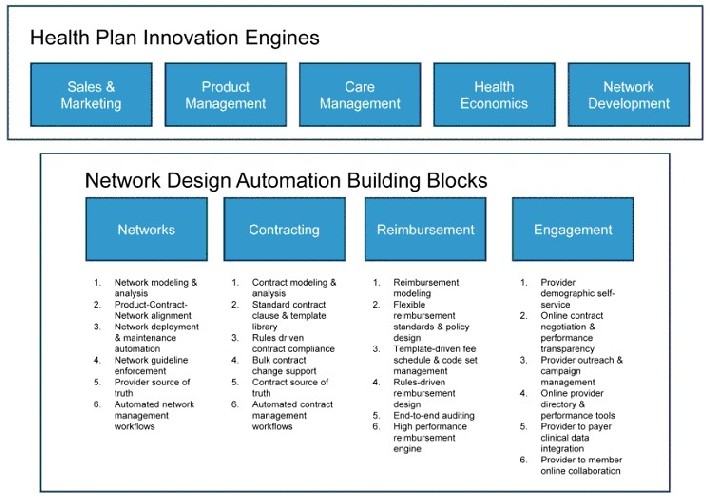
Speaker: If you need a moderator or speaker for an upcoming event, Dr. David E. Marcinko; MBA – Publisher-in-Chief of the Medical Executive-Post – is available for seminar or speaking engagements. Contact: MarcinkoAdvisors@msn.com

Our Other Print Books and Related Information Sources:

Health Dictionary Series: http://www.springerpub.com/Search/marcinko

Practice Management: http://www.springerpub.com/product/9780826105752

Physician Financial Planning: http://www.jbpub.com/catalog/0763745790

Medical Risk Management: http://www.jbpub.com/catalog/9780763733421

Healthcare Organizations: www.HealthcareFinancials.com

Physician Advisors: www.CertifiedMedicalPlanner.com

Subscribe Now: Did you like this Medical Executive-Post, or find it helpful, interesting and informative? Want to get the latest ME-Ps delivered to your email box each morning? Just subscribe using the link below. You can unsubscribe at any time. Security is assured.

Link: http://feeds.feedburner.com/HealthcareFinancialsthePostForcxos

Sponsors Welcomed: And, credible sponsors and like-minded advertisers are always welcomed.

Link: https://healthcarefinancials.wordpress.com/2007/11/11/advertise

Product Details 

Send Us Your Good News

Tell Us Your Success Story and Allow Us to Brag on You!

By Ann Miller RN MHA

[Executive-Director]

Email: MarcinkoAdvisors@msn.com

Join Our Mailing List

  • Do you have a new job?
  • Did you win an award?
  • Spoken at an industry conference or seminar?
  • Or, have you published a new book or white paper?
  • How about an amusing anecdote to share with us?

Attention

Doctors, medical management consultants and financial advisors, alike!

We want to know what ME-P readers, members and visitors are up to.

Please share your good news with your colleagues by emailing it to me. 

Conclusion

It is our contention that the ME-P attracts the “brightest and the best” in our niche space.

Now – here is you chance to prove it to us and the world – Go for it!

Our Other Print Books and Related Information Sources:

Health Dictionary Series: http://www.springerpub.com/Search/marcinko

Practice Management: http://www.springerpub.com/product/9780826105752

Physician Financial Planning: http://www.jbpub.com/catalog/0763745790

Medical Risk Management: http://www.jbpub.com/catalog/9780763733421

Healthcare Organizations: www.HealthcareFinancials.com

Physician Advisors: www.CertifiedMedicalPlanner.com

Subscribe Now: Did you like this Medical Executive-Post, or find it helpful, interesting and informative? Want to get the latest ME-Ps delivered to your email box each morning? Just subscribe using the link below. You can unsubscribe at any time. Security is assured.

Link: http://feeds.feedburner.com/HealthcareFinancialsthePostForcxos

Sponsors Welcomed: And, credible sponsors and like-minded advertisers are always welcomed.

Link: https://healthcarefinancials.wordpress.com/2007/11/11/advertise

Product DetailsProduct DetailsProduct Details       

Product Details  Product Details

   Product Details 

Is HI-TECH Dead?

Join Our Mailing List

You Decide!

[By D. Kellus Pruitt DDS]

Yesterday, Don Fluckinger, Features Writer for SearchhealthIT, posted “Blumenthal: Building national health network could take decades”

“When Dr. David Blumenthal was national health IT coordinator, he focused on 2015, the HITECH Act’s original target date for meeting meaningful use criteria. Now that he’s back in civilian life, he’s taking a longer view of the initiative to create a national health network triggered by the HITECH Act’s cash incentives to physicians and hospitals using electronic health record (EHR) systems.”

http://searchhealthit.techtarget.com/news/2240035845/Blumenthal-Building-national-health-network-could-take-decades

Even though Fluckinger assures us that post-ONC, Blumenthal is still a “HITECH Act champion,” I’m not so sure. Perhaps in spirit only!

A Multi-Decade Project?

Last week, Dr. Blumenthal was the keynote speaker at the Massachusetts annual health IT conference. According to Fluckinger, he told the audience that building a secure, national, interoperable health information system “was always going to be a multi-year, maybe even multi-decade project.” That’s not what I remember. I remember being told that if I didn’t purchase a network-ready EHR for my dental practice by 2014, I wouldn’t be paid by insurance companies.

What Happened?

So, what happened to President Bush’s 2004 Executive Order of “interoperability (even with dentists) by 2014”? Is it too soon to say that he failed? So who is going to tell the thousands of HIT stakeholders who have been attracted by the smell of stimulus billions? Blumenthal?

Assessment 

I can only imagine that now that Dr. Blumenthal left his job as head of the ONC for a new job as a health policy professor at Harvard School of Public Health, the openness of life outside government makes him uncomfortable with the lame talking points he once pushed as part of his job, without cracking a smile.

Conclusion

Your thoughts and comments on this ME-P are appreciated. Feel free to review our top-left column, and top-right sidebar materials, links, URLs and related websites, too. Then, subscribe to the ME-P. It is fast, free and secure.

Speaker: If you need a moderator or speaker for an upcoming event, Dr. David E. Marcinko; MBA – Publisher-in-Chief of the Medical Executive-Post – is available for seminar or speaking engagements. Contact: MarcinkoAdvisors@msn.com

OUR OTHER PRINT BOOKS AND RELATED INFORMATION SOURCES:

Product DetailsProduct DetailsProduct Details

Product Details  Product Details

   Product Details 

At a Time of Needed Financial Overhaul

A Leadership Vacuum

By Jesse Eisinger
ProPublica, May 18, 2011, 3:10 p.m.

Join Our Mailing List 

After the worst crisis since the Great Depression, President Obama has unleashed an unusual force to regulate the financial system: a bunch of empty seats [1].

With Sheila C. Bair soon to leave her post at the Federal Deposit Insurance Corporation, the Obama administration will have five major bank regulatory positions either unfilled or staffed with acting directors.

About The Trade

In this column, co-published with New York Times’ DealBook, I monitor the financial markets to hold companies, executives and government officials accountable for their actions. Tips? Praise? Contact me at jesse@propublica.org

The administration has inexplicably left open the vice chairman for banking supervision, a new position at the Federal Reserve created by the Dodd-Frank Act, despite having a candidate that many people think is an obvious choice: Daniel K. Tarullo [2]. The new Consumer Financial Products Board chairman is unnamed. There are some lower-level positions that don’t have candidates, including the head of the Treasury’s Office of Financial Research and the Financial Stability Oversight Council insurance post.

Perhaps most important, the Office of the Comptroller of the Currency, is being headed by an acting comptroller, John Walsh, who took over the agency last August. Nine months have passed without a leader who might better reflect the Obama administration’s views on banking regulation, a time lag made worse by the office’s coddling of the banks [3] even as they have acknowledged rampant abuse and negligence in the foreclosure process.

The vacancies come at a time that calls for stiffer regulatory examination. The financial regulatory system was remade under Dodd-Frank and requires strong leaders to put the changes into effect. Though the acting heads insist they feel empowered to make serious decisions, they have roughly the same authority as substitute high school teachers.

The Obama Administration

Supposedly, the Obama administration is getting close to naming people to head the comptroller’s office and the F.D.I.C. But we’ve been hearing that for a while. In April, Barbara A. Rehm of American Banker wrote that the administration was working on a big package of nominations to send to the Hill all at once. A month later, we’re still twiddling our thumbs in anticipation.

So what’s going on?

In a vacuum of leadership, conspiracy theories arise. One is that Treasury Secretary Timothy F. Geithner is making a power grab and doesn’t mind that these roles aren’t filled. The idea is that he is asserting his influence over the Dodd-Frank rule-making process. A former adviser to Mr. Geithner dismissed that notion as ridiculous, and that’s persuasive to me. It seems too Machiavellian by half.

If it’s not Mr. Geithner, then who or what is responsible for the vacancies? Not surprisingly, people close to the administration blame Republicans. The nomination process has become hopelessly broken in Washington. Even low-level appointments are now deeply partisan affairs, the playthings of score-settling senators with memories like elephants and the social responsibility of hyenas (which probably insults hyenas).

The Obama administration put up Peter A. Diamond for a position on the Federal Reserve board. Winning a little something called the Nobel Prize [4] hasn’t helped him with confirmation, however Sen. Richard Shelby, the powerful Alabama Republican and ranking member of the banking committee, is standing in his way. The senator also quashed the nomination [5] of Joseph A. Smith Jr. to head the Federal Housing Finance Agency.

Blame Game

But much of the blame for this situation lies with the Obama administration. It’s almost as if the president and his staff have thrown up their hands. The administration has had trouble finding good candidates who are willing to go through the vetting process and has shied away from fights. It also hasn’t seeded the ground or supported the nominations it has made, people complain.

A Democratic Senate staff member confided worry to me about the fate of Mark Wetjen, whom the administration nominated last week as a candidate for a seat on the Commodity Futures Trading Commission. “They didn’t shop it and they didn’t get buy-in,” the staff member said. “The administration doesn’t seem to be putting any sort of effort into it.”

Making these appointments will help answer a question: Where does Mr. Obama stand on financial regulation?

With the Geithner appointment, the president chose early on the path of continuity over muscular regulation. Immediately, the Treasury secretary became the personification of every Obama financial policy. Mr. Geithner remains the most politically costly appointment Mr. Obama has made, saddling him with all the Bush presidency’s financial crisis decisions. After all, Mr. Geithner, as head of the Federal Reserve Bank of New York, was intimately involved in the emergency actions of September 2008. Republicans made great hay tying Democrats to the Wall Street bailouts in the 2010 midterm elections. Now, of course, Republicans are leading Democrats in Wall Street campaign donations [6].

With these positions unfilled, Mr. Obama is losing out on a political opportunity to draw a line between himself and his opposition.

Assessment

But it’s more important than that. Allowing these vacancies to linger drains leadership from the financial overhaul at the exact moment when it is needed most.

Link: http://www.propublica.org/thetrade/item/at-a-time-of-/0763745790

Channel Surfing the ME-P

Have you visited our other topic channels? Established to facilitate idea exchange and link our community together, the value of these topics is dependent upon your input. Please take a minute to visit. And, to prevent that annoying spam, we ask that you register. It is fast, free and secure.

Conclusion

Your thoughts and comments on this ME-P are appreciated. Feel free to review our top-left column, and top-right sidebar materials, links, URLs and related websites, too. Then, subscribe to the ME-P. It is fast, free and secure.

Speaker: If you need a moderator or speaker for an upcoming event, Dr. David E. Marcinko; MBA – Publisher-in-Chief of the Medical Executive-Post – is available for seminar or speaking engagements. Contact: MarcinkoAdvisors@msn.com

OUR OTHER PRINT BOOKS AND RELATED INFORMATION SOURCES:

Product DetailsProduct DetailsProduct Details

Product Details  Product Details

   Product Details 

Some Data on Cosmetic Surgery

Infographics

Courtesy Medical Billing and Coding

Here are some fun facts about the many people undergo some sort of cosmetic surgery in the world

Conclusion

And so, your thoughts and comments on this ME-P are appreciated. Feel free to review our top-left column, and top-right sidebar materials, links, URLs and related websites, too. Then, subscribe to the ME-P. It is fast, free and secure.

Link: http://feeds.feedburner.com/HealthcareFinancialsthePostForcxos

Speaker: If you need a moderator or speaker for an upcoming event, Dr. David E. Marcinko; MBA – Publisher-in-Chief of the Medical Executive-Post – is available for seminar or speaking engagements. Contact: MarcinkoAdvisors@msn.com

Our Other Print Books and Related Information Sources:

Health Dictionary Series: http://www.springerpub.com/Search/marcinko

Practice Management: http://www.springerpub.com/product/9780826105752

Physician Financial Planning: http://www.jbpub.com/catalog/0763745790

Medical Risk Management: http://www.jbpub.com/catalog/9780763733421

Healthcare Organizations: www.HealthcareFinancials.com

Physician Advisors: www.CertifiedMedicalPlanner.com

Subscribe Now: Did you like this Medical Executive-Post, or find it helpful, interesting and informative? Want to get the latest ME-Ps delivered to your email box each morning? Just subscribe using the link below. You can unsubscribe at any time. Security is assured.

Link: http://feeds.feedburner.com/HealthcareFinancialsthePostForcxos

Sponsors Welcomed: And, credible sponsors and like-minded advertisers are always welcomed.

Link: https://healthcarefinancials.wordpress.com/2007/11/11/advertise

Product DetailsProduct DetailsProduct Details       

Scientists Cast Doubt on TSA Tests of Full Body Scanners

Safe or Not – A Controversy

By Michael Grabell

ProPublica, May 16, 2011, 2:11 p.m.

Join Our Mailing List 

The Transportation Security Administration says its full-body X-ray scanners are safe and that radiation from a scan is equivalent to what’s received in about two minutes of flying. The company that makes them says it’s safer than eating a banana [1].

But some scientists with expertise in imaging and cancer say the evidence made public to support those claims is unreliable. And in a new letter [2] sent to White House science adviser John Holdren, they question why the TSA won’t make the scanners available for independent testing by outside scientists.

The machines, which are designed to reveal objects hidden under clothing, have the potential to close a significant security gap for the TSA because metal detectors can’t find explosives or ceramic knives, which can be just as sharp as the box cutters that hijackers used on 9/11.

Enhanced Pat-Downs

They are also important for TSA’s public relations battle over the alternative, the “enhanced pat-down,” which has bred an epidemic of viral videos: A 6-year-old girl [3] is touched from head to toe. A former Miss USA [4] says she was violated. A software programmer warns a screener, “If you touch my junk [5], I’m going to have you arrested.”

After the underwear bomber tried to blow up a Northwest Airlines plane on Christmas Day 2009, the TSA ramped up deployment of full-body scanners and plans to have them at nearly every security line by 2014.

Scanner Types

There are two types of body scanners [6]. Millimeter wave machines emit a radio frequency similar to cellphones. Backscatters work like a fast-moving X-ray. In the latter, the rays bounce off the skin and create a fuzzy white image [7] of the passenger’s body. Because the beam doesn’t go through the body, most of its radiation is received by the skin

The FDA

The TSA says the backscatter technology has been evaluated by the Food and Drug Administration [8], the National Institute for Standards and Technology [9] and the Johns Hopkins University Applied Physics Laboratory [10]. Survey teams are using radiation-detecting dosimeters to check the machines at airports. The TSA says the results have all confirmed that the scanners don’t pose a significant risk to public health.

According to the agency and many radiation experts, the dose is so low, even for children or cancer patients; that someone would have to pass through the machines more than a thousand times before approaching the annual limit set by radiation safety organizations.

Test Flaws

But the letter to the White House science adviser, signed by five professors at University of California, San Francisco, and one at Arizona State University, points out several flaws in the tests. Studies published in scientific journals in the last few months have also cast doubt on the radiation dose and the machines’ ability to find explosives.

A number of scientists, including some who believe the radiation is trivial, say more testing should be done given the government’s plans to put millions of passengers through the machines. And they have been disturbed by the TSA’s reluctance to do so.

“There’s no real data on these machines, and in fact, the best guess of the dose is much, much higher than certainly what the public thinks,” said John Sedat, a professor emeritus in biochemistry and biophysics at UCSF and the primary author of the letter.

The same group stirred controversy last year when it sent a letter to Holdren [11] arguing that while the overall dose to the body may be low, the TSA hadn’t quantified the dose to the skin. Last fall, FDA and TSA officials released a study [12] that estimated the dose to the skin to be twice the dose to the body, though still extremely low.

In the most recent letter sent to Holdren on April 28th, the professors note that the Johns Hopkins lab didn’t test an actual airport machine. Instead, the tests were done on a model built by the manufacturer, Rapiscan [13], and configured to resemble a system previously tested by the TSA.

The researchers’ names have been kept secret, and the report on the tests is so “heavily redacted” that “there is no way to repeat any of these measurements,” they wrote.

The physics and medical professors also took issue with the device used to measure the radiation. Although the device, known as an ion chamber, is commonly used to test medical equipment, they argue that the detector gets overwhelmed by the amount of radiation the backscatter deposits in a short time and might not provide accurate readings.

Helen Worth, a spokeswoman for the Johns Hopkins lab, referred questions to the TSA.

Part of the trouble is that there is no ideal device for measuring the radiation dose given by backscatter X-rays, said David Brenner, director of theColumbia University Centerf or Radiological Research. The machines emit a pencil beam that rapidly moves across and up and down the body, he said.

“We are one of the oldest and biggest radiological research centers in the country, and we find this to be a very hard technical problem,” said Brenner, who was not involved with the letter.

Another issue is that there is a lot of uncertainty with the model used to estimate cancer risk from radiation exposure to the skin, said Rebecca Smith-Bindman, a UCSF radiologist who also was not involved in the letter.

Smith-Bindman, who has testified before Congress about excessive radiation from medical scans, studied the TSA reports and said she wasn’t concerned about the airport X-rays.

The risks are “truly trivial,” she wrote in an article [14] for the Archives of Internal Medicine. A passenger would have to undergo 50 airport scans to reach the level of a dental X-ray, 1,000 for a chest X-ray, and 4,000 for a mammogram.

Though imperfect, the available models predict that the backscatters would lead to only six cancers over the course of a lifetime among the approximately 100 million people who fly every year, Smith-Bindman concluded.

“There’s really unnecessary fear related to these scans,” she said. “What I’m not as comfortable with is that there has not been access to these machines. They are not being tested on the same regulatory basis that we see on medical equipment.”

After her article was published, Smith-Bindman was contacted by a TSA public affairs officer. During the conversation, she suggested that she or other outside scientists be allowed to test the machine. The official was shocked by the suggestion and said such access could tip off people who want to avoid detection, Smith-Bindman said.

“It was not appreciating that there’s legitimate scientific questions that have to be balanced against the security questions,” she said.

ProPublica

The TSA did not respond to ProPublica’s questions about why it wouldn’t allow outside testing. But at a congressional hearing [15] in March, Robin Kane, assistant administrator for security technology, said doing so would expose a lot of sensitive information the agency wouldn’t normally share publicly. The machines had already been tested several times, he said, and if set up securely, the agency would allow more testing.

The available information leaves scientists with little to work with. Peter Rez, theArizonaStatephysics professor who signed the letter to Holdren, has tried to calculate the radiation by examining the handful of backscatter images that have been released publicly.

The Electronic Privacy Information Center [16], a civil liberties group, sued the Department of Homeland Security, TSA’s parent agency, in federal court seeking release of 2,000 backscatter images used in testing. But, it has not been successful.

The few images that have been made public do not reveal faces or detailed private features. The TSA says the images Rez used are out of date, but Rez says the current image on TSA’s website is unusable.

Using the earlier images, Rez concluded [17] in the Radiation Protection Dosimetry journal that it was highly unlikely the machines could have produced such high-quality images with doses of radiation as low as those described by TSA. He estimated the dose, while still very small, is 45 times higher than the results measured by Johns Hopkins.

Applying Rez’s numbers, Brenner wrote a paper [18] for the journal Radiology, estimating that 100 additional cancers would develop for every 1 billion scans.

For Rez, the real danger occurs if the machine stops in the middle of a scan, allowing the beam to focus on a tiny area for several seconds. Given that the backscatter works with a wheel rotating at a high speed, and that the agency plans to use the scanners continuously 365 days a year, mechanical failures are likely, he said.

Assessment

The TSA says that the scanners have safety systems, such as automatic shutoffs and emergency stop buttons, that will kill the beam in the event of any problem that could result in abnormal radiation. How those fail-safe systems work isn’t entirely clear.

When Johns Hopkins researchers visited the Rapiscan facility, the automatic termination appeared to work. But, the full results of the shutoff tests are redacted.

What’s more, the test system didn’t have an emergency stop button.

Link: http://www.propublica.org/article/scientists-cast-doubt-on-tsa-tests-of-full-body-scanners

Conclusion

Your thoughts and comments on this ME-P are appreciated. Feel free to review our top-left column, and top-right sidebar materials, links, URLs and related websites, too. Then, subscribe to the ME-P. It is fast, free and secure.

Speaker: If you need a moderator or speaker for an upcoming event, Dr. David E. Marcinko; MBA – Publisher-in-Chief of the Medical Executive-Post – is available for seminar or speaking engagements. Contact: MarcinkoAdvisors@msn.com

OUR OTHER PRINT BOOKS AND RELATED INFORMATION SOURCES:

Product DetailsProduct DetailsProduct Details

Product Details  Product Details

   Product Details 

US Reaches Debt Limit

May 16th 2011 Deadline

By Children’s Home Society of Florida Foundation

Join Our Mailing List 

In February of 2010, the federal debt limit was set by Congress at $14.294 trillion. Treasury Secretary Timothy Geithner indicates that the United States will reach that debt limit on May 16th, 2011. Through various internal borrowing strategies, Secretary Geithner believes that there will not be an actual default on U.S. bonds until August 2nd, 2011. However, the Federal Government may face funding problems by late July if there is no expansion of the debt limit.

Three Sets of Negotiations

Facing a serious economic problem if the debt limit is not expanded, there are at least three sets of negotiations underway in Washington.

  • First, the “Gang of Six” Senators from both parties are still attempting to move forward with a bill that implements the recommended solution by the 2010 Presidential Fiscal Commission.
  • Second, at the request of President Obama, Vice President Joseph Biden is meeting with House and Senate leaders of both parties.
  • Finally, Senate Majority Leader Harry Reid (D-NV) disclosed this week that Senate Budget Chair Kent Conrad (D-ND) has prepared a new proposed compromise plan. The proposal by Sen. Conrad is to increase taxes in an amount equal to the budget cuts. In effect, the proposal is 50% tax increases and 50% budget reductions.

The Skeptics

Minority Leader Mitch McConnell (R-KY) was skeptical that the “Gang of Six” plan would succeed. He stated, “With all due respect to the Gang of Six or any other bipartisan discussion going on in this issue, the discussions that can lead to a result between now and August are the talks being led by Vice President Biden.”

House Speaker John Boehner (R-OH) spoke May 9th to the Economic Club of New York. He indicated that tax increases were not acceptable and that the deficit plan should instead focus on spending reductions.

In response to the comments by Boehner, White House Press Secretary Jay Carney suggested that the Speaker is “holding the US economy hostage.” Press Secretary Carney indicated that there needs to be flexibility in order to produce compromise.

Assessment

Majority Leader Reid continued the discussion later in the week and noted that it would be essential to have some tax increases. He stated that it “can’t all be done with spending cuts.

“House Majority Leader Eric Cantor (R-VA) is part of the discussion group with Vice President Biden. He indicated that he cannot disclose the specifics of the negotiations. However, in his view, House Republicans continue to support the spending reduction plan introduced by Rep. Paul Ryan (R-WI).

Editors Note: Your editor and this organization take no specific position on these comments. It is widely expected that the discussions on increasing the federal debt limit will lead to a compromise before the August deadline. The Republican negotiators continue to seek a solution that involves spending cuts. It now appears that Democratic negotiators are moving to a proposal with 50% tax increases and 50% budget reductions. Final negotiations are likely to produce a result that reduces federal spending and may include tax increases.

Conclusion

Your thoughts and comments on this ME-P are appreciated. Feel free to review our top-left column, and top-right sidebar materials, links, URLs and related websites, too. Then, subscribe to the ME-P. It is fast, free and secure.

Speaker: If you need a moderator or speaker for an upcoming event, Dr. David E. Marcinko; MBA – Publisher-in-Chief of the Medical Executive-Post – is available for seminar or speaking engagements. Contact: MarcinkoAdvisors@msn.com

OUR OTHER PRINT BOOKS AND RELATED INFORMATION SOURCES:

Sponsors Welcomed: Credible sponsors and like-minded advertisers are always welcomed.

Product DetailsProduct DetailsProduct Details

Product Details  Product Details

   Product Details 

Interesting Facts About Sex

Join Our Mailing List

Infographics

Courtesy Medical Billing and Coding

Sex: it is everywhere, from the news to TV shows and Internet ads.  Here are some interesting facts about sex

Conclusion

Your thoughts and comments on this ME-P are appreciated. Feel free to review our top-left column, and top-right sidebar materials, links, URLs and related websites, too. Then, subscribe to the ME-P. It is fast, free and secure.

Link: http://feeds.feedburner.com/HealthcareFinancialsthePostForcxos

Speaker: If you need a moderator or speaker for an upcoming event, Dr. David E. Marcinko; MBA – Publisher-in-Chief of the Medical Executive-Post – is available for seminar or speaking engagements. Contact: MarcinkoAdvisors@msn.com

OUR OTHER PRINT BOOKS AND RELATED INFORMATION SOURCES:

Product DetailsProduct DetailsProduct Details

Meet Mackson Consulting LLC

Our Newest Sponsor

ADVERTISEMENT

By Ann Miller RN MHA

Join Our Mailing List

Who They Are

Mackson Consulting is a premier IT services firm headquartered in Reston, Virginia with a focus on straightforward approaches to optimizing business results. Mackson develops and integrates complete systems of all sizes.

For every engagement they bring to bear our unique combination of technical expertise, broad experience to quickly understand our customer environments, and strong systems engineering and program management skills. Their focus is on optimizing the business results of our clients and resolving problems of crucial importance to our nation.

Capabilities

  • Full range of Software Development Lifecycle capabilities (SDLC)
  • Enterprise Architecture design and delivery
  • Business Process reengineering
  • Operations and Maintenance support
  • Database design and optimization
  • Oracle application, middleware and database experts
  • Project Management Leadership
  • Subject Matter Expertise in Health IT

Assessment

Mackson is a professional services and technology solutions provider specializing in application development, enterprise architecture and project management services. They provide a wide variety of IT services to both public sector and commercial clients.

Contact:

Carol S. Miller BSN, MBA

Mackson Consulting LLC
1818 Library Street
Suite 500
Reston, Virginia 20190

www.MacksonConsulting.com

info@macksonconsulting.com

Why Your Stitches Cost $1,500 [Part II]

InfoGraphics – Part 2

Courtesy Medical Billing and Coding

Join Our Mailing List

The United States has fallen behind other nations, failing to provide affordable health care to its citizens. Americans spend $477 billion a year MORE on health care than other advanced countries.

So why do we pay so much compared to other wealthy nations?

Part 2 of 2 in a Series

This Infographic is part two in a two part series which dissects the state of our health care system and presents some alarming numbers.

Assessment

Link: http://www.medicalbillingandcoding.org/medicals-costs-2/

Part 1: https://medicalexecutivepost.com/2011/04/25/why-your-stitches-cost-1500/

Conclusion

And so, your thoughts and comments on this ME-P are appreciated. Feel free to review our top-left column, and top-right sidebar materials, links, URLs and related websites, too. Then, subscribe to the ME-P. It is fast, free and secure.

Link: http://feeds.feedburner.com/HealthcareFinancialsthePostForcxos

Speaker: If you need a moderator or speaker for an upcoming event, Dr. David E. Marcinko; MBA – Publisher-in-Chief of the Medical Executive-Post – is available for seminar or speaking engagements. Contact: MarcinkoAdvisors@msn.com

Our Other Print Books and Related Information Sources:

Health Dictionary Series: http://www.springerpub.com/Search/marcinko

Practice Management: http://www.springerpub.com/product/9780826105752

Physician Financial Planning: http://www.jbpub.com/catalog/0763745790

Medical Risk Management: http://www.jbpub.com/catalog/9780763733421

Healthcare Organizations: www.HealthcareFinancials.com

Physician Advisors: www.CertifiedMedicalPlanner.com

Subscribe Now: Did you like this Medical Executive-Post, or find it helpful, interesting and informative? Want to get the latest ME-Ps delivered to your email box each morning? Just subscribe using the link below. You can unsubscribe at any time. Security is assured.

Link: http://feeds.feedburner.com/HealthcareFinancialsthePostForcxos

Sponsors Welcomed: And, credible sponsors and like-minded advertisers are always welcomed.

Link: https://healthcarefinancials.wordpress.com/2007/11/11/advertise

Product DetailsProduct DetailsProduct Details       

Product Details  Product Details

   Product Details

On Physician Relations Management [PRM] Technology

Join Our Mailing List

Criteria for Selection

By Dr. Gary L. Bode MSA, CPA, LLC

Both research and experience reveals an often confusing, complicated world of claims, features, and upgrades, a wide array of technical architectures, and an even wider array of pricing structures when it comes to choosing Physician [Customer] Relations Management [PRM] software.

For me – as a medical practice management consultant – critical criteria for selection includes the following features.

Scalability:

In a young medical practice, a scalable marketing program and PRM infrastructure should be flexible enough to accommodate specialty trends effortlessly and seamlessly without crushing your marketing infrastructure or its’ people, patients or processes. A scalable PRM infrastructure should allow a new channel, a new patient segment, a medical product or service-line seamlessly and with minimum incremental effort or cost.

Interoperability:

You may need an authoring tool today to develop your collateral data, and so select a simple MSFT Word® program. Later, you may want to conduct campaigns to re-introduce your practice or gauge satisfaction among current patients through an online survey. The software you build or purchase for individual activities should be able to co-exist and talk to each other. The software you purchase does not have to be monolithic, but it needs to be modular and work together incrementally.

For example, your e-mail campaign software, CPOESs [computerized physician order entry systems] and e-prescribing functions should work with your authoring tools and eMR.

In today’s complex and fast paced evolution of PRM products, newer technologies need to co-exist with older legacy technologies, and futuristic eMR systems; so interoperability is one of the critical criteria for PRM technology selection.

Ease of Use:

As a young medical practice, pulled in different directions, it is important to have a PRM solution that is easy to use and does not necessitate extensive user training.

Cost structure:

Remember, all PRM software comes with obvious costs as well as hidden costs. Ask the right questions and find out the hidden costs for systems implementation, integration and user training.

Assessment

Channel Surfing the ME-P

Have you visited our other topic channels? Established to facilitate idea exchange and link our community together, the value of these topics is dependent upon your input. Please take a minute to visit. And, to prevent that annoying spam, we ask that you register. It is fast, free and secure.

Conclusion

Your thoughts and comments on this ME-P are appreciated. Feel free to review our top-left column, and top-right sidebar materials, links, URLs and related websites, too. Then, subscribe to the ME-P. It is fast, free and secure.

Speaker: If you need a moderator or speaker for an upcoming event, Dr. David E. Marcinko; MBA – Publisher-in-Chief of the Medical Executive-Post – is available for seminar or speaking engagements. Contact: MarcinkoAdvisors@msn.com

OUR OTHER PRINT BOOKS AND RELATED INFORMATION SOURCES:


Product Details 

Bitching about Dental Insurance

Join Our Mailing List

Both Hippocratic and Patriotic

By D. Kellus Pruitt DDS

For the benefit of our trusting patients, let’s start openly discussing the unethical practices of dental insurance companies’ right here. Marketplace conversation about deceit in healthcare is not only the Hippocratic thing to do, but once the awkwardness wears off, it’s really, really fun sport. We simply must lower the cost of dental care in the nation, and I say we start with dental insurance executives’ salaries and bonuses. Are you with me; Doctor? And let’s not forget all the non-productive busywork insurance companies never reimburse us for.

Are you Fed Up?

Are you fed up with successfully doing intricate handwork to exacting tolerances in mouths of anxious patients and then having to fight to get the patients’ insurance company to pay what they rightfully owe THEIR CLIENT? Are you tired of the way anonymous and unaccountable insurance employees treat you and your staff when their company’s contractual relationship is not with anyone in your office?

In my opinion, Delta Dental, United Concordia, UnitedHealth, BCBSTX and most other secretive dental insurance companies have been cheating Americans for decades under the cover of the McCarran-Ferguson Act of 1945 – which protects them from prosecution by the FTC and cries out to be repealed (tell your Congressperson).

The Age of Transparency

Even in the age of transparency, old habits die hard, especially when there is a profit and campaign funds involved. Dental “insurance” has always harbored fraudulent business activities and has never made sense as a wise purchase – even if one doesn’t brush their teeth. It’s a business built on complicated rules, client deceit and intrusion into their relationship with their dentist.

Dental insurance crime as policy has long avoided market correction because up until now, dentists had no control over the media (and dentistry is boring). Not unexpectedly, when business entities are shielded from accountability in an otherwise free market, it is always the clueless consumer who wastes money on lousy dental insurance policies.

IMHO

In my opinion, employers should be offering their employees the choice of cash or dental insurance. Then let Adam Smith’s invisible hand of competition spank the butts of the greedy and deceitful.

Dentists

Dentists, if you were given the opportunity to effectively voice your opinion directly to employers who carelessly purchase bad dental plans they know nothing about according to the appearance of an ad, what would you say? So why aren’t you saying it right here, right now? If not now, when, Doc?

Assessment

If you don’t make your complaints known, do you think MBA benevolence will eventually improve the dental insurance industry in the nation? I say we do what feels natural and bitch. Let’s live on the wild side and take our chances on someone calling us “unprofessional.” We owe it to our patients to promote honesty in our community. Otherwise, how can your silence possibly help your patients?

Conclusion

Your thoughts and comments on this ME-P are appreciated. Feel free to review our top-left column, and top-right sidebar materials, links, URLs and related websites, too. Then, subscribe to the ME-P. It is fast, free and secure.

Speaker: If you need a moderator or speaker for an upcoming event, Dr. David E. Marcinko; MBA – Publisher-in-Chief of the Medical Executive-Post – is available for seminar or speaking engagements. Contact: MarcinkoAdvisors@msn.com

OUR OTHER PRINT BOOKS AND RELATED INFORMATION SOURCES:

Product Details 

On Oil and Gas Tax Breaks

Reducing Tax Incentives?

By Children’s Home Society of Florida Foundation

Join Our Mailing List

In his address to the nation last week, President Obama indicated that he favors a reduction in the tax incentives for oil and gas companies. He noted that gas in some communities is now over $4.00 a gallon and oil companies had $25 billion in profits during the early months of 2011.

While he does not have “a problem with any company or industry being rewarded for their success,” the President suggests that it would be appropriate to reduce tax incentives for the oil and gas industry.

The Response

House Ways and Means Committee Democrats responded with a letter to Chairman Dave Camp (R-MI). They noted that a specific Sec. 199 Domestic Manufacturing Deduction saved the oil companies approximately $1 billion last year in taxes. Democratic Members of the House Ways and Means Committee recommend that this benefit be eliminated for the oil companies.

Assessment

The energy industry responded to the proposals. American Petroleum Institute (API) President Jack Gerard suggested, “We need to stay focused on energy policy, not demonizing industries.” The energy industry notes that there are 9.2 million Americans who are engaged in the domestic oil and gas industry. Oil and gas represents 7.7% of GDP. If the incentives were reduced, there could be lower employment and higher costs due to greater imports of foreign oil.

Editor’s Note: Sen. Max Baucus has indicated that he will introduce legislation to reduce the oil and gas tax incentives within the next two weeks. He plans to spend the revenue gained through changes in oil and gas tax rules on new incentives for clean energy.

Conclusion

And so, your thoughts and comments on this ME-P are appreciated. Feel free to review our top-left column, and top-right sidebar materials, links, URLs and related websites, too. Then, subscribe to the ME-P. It is fast, free and secure.

Link: http://feeds.feedburner.com/HealthcareFinancialsthePostForcxos

Speaker: If you need a moderator or speaker for an upcoming event, Dr. David E. Marcinko; MBA – Publisher-in-Chief of the Medical Executive-Post – is available for seminar or speaking engagements. Contact: MarcinkoAdvisors@msn.com

Our Other Print Books and Related Information Sources:

Health Dictionary Series: http://www.springerpub.com/Search/marcinko

Practice Management: http://www.springerpub.com/product/9780826105752

Physician Financial Planning: http://www.jbpub.com/catalog/0763745790

Medical Risk Management: http://www.jbpub.com/catalog/9780763733421

Healthcare Organizations: www.HealthcareFinancials.com

Physician Advisors: www.CertifiedMedicalPlanner.com

Subscribe Now: Did you like this Medical Executive-Post, or find it helpful, interesting and informative? Want to get the latest ME-Ps delivered to your email box each morning? Just subscribe using the link below. You can unsubscribe at any time. Security is assured.

Link: http://feeds.feedburner.com/HealthcareFinancialsthePostForcxos

Sponsors Welcomed: And, credible sponsors and like-minded advertisers are always welcomed.

Link: https://healthcarefinancials.wordpress.com/2007/11/11/advertise

Product DetailsProduct DetailsProduct Details       

Product Details  Product Details

Pod-Casts from the Institute of Health Economics [IHE]

Seeking an International Flavour for the ME-P

By Staff Reporters

Join Our Mailing List

About The Institute

The Institute of Health Economics (IHE) is a Canadian non-profit organization committed to producing, gathering, and disseminating health research findings from health economics, health policy, health technology assessment and comparative effectiveness to improve the delivery of health care and support a sustainable future.

Vision 

The IHE vision is to be an international center for excellence for health economics, health outcomes, and health policy research, and be recognized nationally and internationally for our contributions towards the efficient and effective use of health care resources.

Mission

The IHE mission is to deliver outstanding health economics, health outcomes, health policy research, and related services to governments, health care providers, the health industry, and universities, for the betterment of society. 

Objectives 

  • Facilitate partnerships among government, academia, industry and health care providers  to address important issues in health care
  • Assess the clinical, economic, social, and ethical implications of both established and new health technologies and practices
  • Support health service delivery with evidence from research in health economics and health technology assessment.
  • Provide relevant economic research to guide policy makers in ensuring high quality care and cost-effective care.

Values
IHE’s values are: Partnership, Creativity, Independence, Quality, Relevance, Accountability, Transparency and Trust

Assessment

Visit Website: www.IHE.ca

Three podcasts released within the last 48 hours:

View PodCasts: http://vimeo.com/ihe

Conclusion

And so, your thoughts and comments on this ME-P are appreciated. Feel free to review our top-left column, and top-right sidebar materials, links, URLs and related websites, too. Then, subscribe to the ME-P. It is fast, free and secure.

Link: http://feeds.feedburner.com/HealthcareFinancialsthePostForcxos

Speaker: If you need a moderator or speaker for an upcoming event, Dr. David E. Marcinko; MBA – Publisher-in-Chief of the Medical Executive-Post – is available for seminar or speaking engagements. Contact: MarcinkoAdvisors@msn.com

Our Other Print Books and Related Information Sources:

Health Dictionary Series: http://www.springerpub.com/Search/marcinko

Practice Management: http://www.springerpub.com/product/9780826105752

Physician Financial Planning: http://www.jbpub.com/catalog/0763745790

Medical Risk Management: http://www.jbpub.com/catalog/9780763733421

Healthcare Organizations: www.HealthcareFinancials.com

Physician Advisors: www.CertifiedMedicalPlanner.com

Subscribe Now: Did you like this Medical Executive-Post, or find it helpful, interesting and informative? Want to get the latest ME-Ps delivered to your email box each morning? Just subscribe using the link below. You can unsubscribe at any time. Security is assured.

A Video Vision of Healthcare’s Future from Microsoft

By Staff Reporters

Medical Tourism and Health Information Technology in Malaysia

Join Our Mailing List

According to Dan Dunlop, over at The Healthcare Marketer, the following video promotes Malaysia as a preferred healthcare destination. It positions the country as a one stop destination for all medical and tourism related needs, bringing together related service providers on a single platform. Malaysia would like to be seen as being on the leading edge of technology.

Malaysia Healthcare

In fact, here’s what the Malaysia Healthcare website had to say about the video:

“With state of the art hospitals being built in Malaysia; it’s just a matter of time before we experience seamless healthcare delivery. Malaysia Healthcare patients use a portable Personal Health Record (PHR) called the iPHER that carries all their PHI which includes, medications, lab tests, diagnosis, immunizations, alternative procedures, digital images, dental records, ophthalmic care (lens and contact prescriptions) and DNA any where in the world with no need to access the Internet to view the information. Malaysia Healthcare currently uses this PHR to reduce medical errors and create continuity of care for all their patients and to provide seamless healthcare delivery.”

Assessment

This is an incredible video that demonstrates how Microsoft sees the future of healthcare and shows one vision for how technology will potentially improve our way of life!

***

ME-P medical malpractice education

***

More:

Link: http://www.youtube.com/watch?v=6aKNK7OTHKs&feature=player_embedded#at=235

Conclusion

Your thoughts and comments on this ME-P are appreciated. Feel free to review our top-left column, and top-right sidebar materials, links, URLs and related websites, too. Then, subscribe to the ME-P. It is fast, free and secure.

Speaker: If you need a moderator or speaker for an upcoming event, Dr. David E. Marcinko; MBA – Publisher-in-Chief of the Medical Executive-Post – is available for seminar or speaking engagements. Contact: MarcinkoAdvisors@msn.com

OUR OTHER PRINT BOOKS AND RELATED INFORMATION SOURCES:

Product DetailsProduct DetailsProduct Details

Product Details  Product Details

   Product Details 

Seeking Director of Quality Improvement

ADVERTISEMENT

Clear Lake Regional Medical Center

By Shawn Harding
National Management Recruiter
USr Healthcare
(615) 445-3035 Office
(800)826-8127 Toll Free
http://www.usrhealthcare.com

The Director of Quality Improvement will direct the hospital wide organizational performance improvement program reporting to the Service Line Director of Quality. The Director of Quality Improvement will be responsible, either personally or through delegation, for coordinating those systems necessary for the identification and resolution of known or suspected problems and opportunities to improve the dimensions of performance in health care. He/she will be responsible for ensuring hospital wide compliance with all accreditation and licensure standards, and will provide guidance and education to facility leadership, clinical personnel, Board of Trustees and Medical Staff members related to performance improvement.

POSITION REQUIREMENTS:

Education:
• At a minimum: Graduate of an accredited school of nursing with a Baccalaureate degree in nursing.
• Masters Degree in a healthcare discipline highly preferred.

Experience:
• Minimum of 5 years of current clinical experience in an acute care facility required as a Director of Quality Management.
• Supervisory and/or management experience required.

Special Qualifications:
• Comfortable and skilled at working with physicians, healthcare providers and other stakeholders in the organization.
• Capable of gaining immediate credibility with individuals through experience, presentation, communication skills, empathy, and compassion.
• Analytical skills including working knowledge of basic statistics and statistical analysis methodologies.
• Knowledge of PC based computer software (i.e., Word, Excel, Access and/or similar systems preferred).
• Ability to work independently and interdependently.
• Knowledge of healthcare-related regulatory and accreditation requirements.

To apply, please go to http://www.usrhealthcare.com and click on the CAREERS tab, or contact Shawn Harding @ 1.800.826.8127, or email your resume to sharding@usrhealthcare.com

Our Other Print Books and Related Information Sources:

Health Dictionary Series: http://www.springerpub.com/Search/marcinko

Practice Management: http://www.springerpub.com/product/9780826105752

Physician Financial Planning: http://www.jbpub.com/catalog/0763745790

Medical Risk Management: http://www.jbpub.com/catalog/9780763733421

Healthcare Organizations: www.HealthcareFinancials.com

Physician Advisors: www.CertifiedMedicalPlanner.com

Subscribe Now: Did you like this Medical Executive-Post, or find it helpful, interesting and informative? Want to get the latest ME-Ps delivered to your email box each morning? Just subscribe using the link below. You can unsubscribe at any time. Security is assured.

Link: http://feeds.feedburner.com/HealthcareFinancialsthePostForcxos

Sponsors Welcomed: And, credible sponsors and like-minded advertisers are always welcomed.

Link: https://healthcarefinancials.wordpress.com/2007/11/11/advertise

Product DetailsProduct DetailsProduct Details       

Product Details  Product Details

   Product Details 

John Maynard Keynes v.s. FA Hayek

A Rapping Video

By Staff Reporters

Join Our Mailing List

Is the Great Recession over?

***

***

How is prosperity best created? By government spending or free, unencumbered markets!

***

ext

***

John Maynard Keynes and FA Hayek rap it out on this YouTube video, released last week by collaborators John Papola and Russ Roberts.


Video Links:

  • Check out the very hilarious and brilliant video here.
  • Round 1 here.
  • And here’s a podcast about Papola and Hayek’s collaboration.

MORE:

Conclusion

In any case, early planning is the key to supporting both your kids’ futures and your retirement. Making logical college funding decisions, rather than emotional ones, creates a win/win for everyone.

Your thoughts and comments on this ME-P are appreciated. Feel free to review our top-left column, and top-right sidebar materials, links, URLs and related websites, too. Then, subscribe to the ME-P. It is fast, free and secure.

Link: http://feeds.feedburner.com/HealthcareFinancialsthePostForcxos

Speaker: If you need a moderator or speaker for an upcoming event, Dr. David E. Marcinko; MBA – Publisher-in-Chief of the Medical Executive-Post – is available for seminar or speaking engagements. Contact: MarcinkoAdvisors@msn.com

OUR OTHER PRINT BOOKS AND RELATED INFORMATION SOURCES:

DICTIONARIES: http://www.springerpub.com/Search/marcinko
PHYSICIANS: www.MedicalBusinessAdvisors.com
PRACTICES: www.BusinessofMedicalPractice.com
HOSPITALS: http://www.crcpress.com/product/isbn/9781466558731
CLINICS: http://www.crcpress.com/product/isbn/9781439879900
BLOG: www.MedicalExecutivePost.com
FINANCE: Financial Planning for Physicians and Advisors
INSURANCE: Risk Management and Insurance Strategies for Physicians and Advisors

Product DetailsProduct DetailsProduct Details

Product Details  Product Details

Should Health Insurance Pay for Patient Exercise Programs?

Or – Enough with the “Benefits” Already!

By Dr. David Edward Marcinko MBA, CMP™

[Former Licensed Insurance Agent]

[ME-P Editor-in-Chief]

An editorial just published in the Journal of the American Medical Association says research supports consideration of a wider policy of reimbursing for structured exercise programs, particularly in high-risk groups, such as diabetics.

Link: http://jama.ama-assn.org/content/305/17/1808.full

Present Status

Currently, health-insurance plans don’t treat exercise as medicine; only some plans offer a fitness benefit, usually a partial reimbursement for gym membership.

Link: http://blogs.wsj.com/health/2011/05/04/reader-consult-should-insurance-reimburse-for-exercise-programs/

Yet, the push for this benefit does seem to be growing.

My Opinion

And yes, as a doctor and surgeon who treated diabetic bone and soft tissue infections, ulcers and related necrotic gangrene for two decades, there’s something to this philosophy in-theory. But, this “theory” is not grounded in risk-management principles or economic sense; and it does seem counter-intuitive to most insurance models that I know.

Note: Most adult diabetics are Type II, maturity onset and controllable.

Examples

For example, auto insurance does not pay for routine car maintenance, nor does home owner’s insurance or most other standard insurance policy types.

Question: Why should health insurance be any different?

Answer: Because it is a public good.

Oh, come on now!  Obeying moral codes and legal boundaries is also a public good for civility; but we don’t mitigate the risk of breaking them with insurance policies; do we?

Why? They would be too expensive. Believe me, if insurance companies thought they could make a buck this way, they surely would!

Assessment

Aren’t these types of benefits already in place in some Flexible Spending Accounts, High Deductible Medical [Health] Savings Accounts , and employee cafeteria plans, etc.

Moreover, don’t we all know that we aren’t supposed to smoke, use street drugs, drink excessively, pig-out, or have promiscuous sex? Yet – we still do – like the diabetic who excessively indulges.

If you want to get-or-stay healthy[ier]; exercise more and eat less. A simple – understandable – and free healthcare Rx; but no best selling book, “breaking news” or JAMA report, here.

Conclusion

And so, your thoughts and comments on this ME-P are appreciated. Should health insurance pay for exercise programs? Feel free to review our top-left column, and top-right sidebar materials, links, URLs and related websites, too. Then, subscribe to the ME-P. It is fast, free and secure.

Link: http://feeds.feedburner.com/HealthcareFinancialsthePostForcxos

Speaker: If you need a moderator or speaker for an upcoming event, Dr. David E. Marcinko; MBA – Publisher-in-Chief of the Medical Executive-Post – is available for seminar or speaking engagements. Contact: MarcinkoAdvisors@msn.com

Our Other Print Books and Related Information Sources:

Health Dictionary Series: http://www.springerpub.com/Search/marcinko

Practice Management: http://www.springerpub.com/product/9780826105752

Physician Financial Planning: http://www.jbpub.com/catalog/0763745790

Medical Risk Management: http://www.jbpub.com/catalog/9780763733421

Healthcare Organizations: www.HealthcareFinancials.com

Physician Advisors: www.CertifiedMedicalPlanner.com

Subscribe Now: Did you like this Medical Executive-Post, or find it helpful, interesting and informative? Want to get the latest ME-Ps delivered to your email box each morning? Just subscribe using the link below. You can unsubscribe at any time. Security is assured.

Link: http://feeds.feedburner.com/HealthcareFinancialsthePostForcxos

Sponsors Welcomed: And, credible sponsors and like-minded advertisers are always welcomed.

Link: https://healthcarefinancials.wordpress.com/2007/11/11/advertise

Product DetailsProduct DetailsProduct Details       

Product Details  Product Details

   Product Details