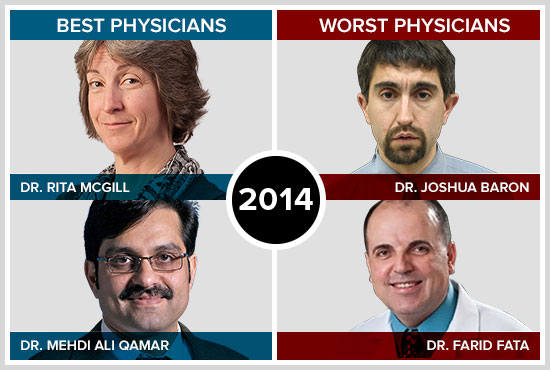
Laudable Physicians and Shameful Doctors of 2014

Join Our Mailing List

Physicians of the Year [Best and Worst‏]

[From Medscape]

Which physicians made us proud this year and which made us cringe? See who made the list and what they did to make the hall of fame (or shame).

Physicians of the Year

[Of Saints and Sinners]

Here is the list according to Medscape.

ImageProxy

Link: https://login.medscape.com/login/sso/getlogin?urlCache=aHR0cDovL3d3dy5tZWRzY2FwZS5jb20vZmVhdHVyZXMvc2xpZGVzaG93L3BoeXNpY2lhbnMtb2YtdGhlLXllYXIyMDE0P3NyYz13bmxfZWRpdF9zcGVjb2w=&ac=402&uac=193200AX

More:

OIG Most Wanted Fugitives: https://oig.hhs.gov/fraud/fugitives/index.asp?ref=widget

Channel Surfing the ME-P

Have you visited our other topic channels? Established to facilitate idea exchange and link our community together, the value of these topics is dependent upon your input. Please take a minute to visit. And, to prevent that annoying spam, we ask that you register. It is fast, free and secure.

Conclusion

Your thoughts and comments on this ME-P are appreciated. Feel free to review our top-left column, and top-right sidebar materials, links, URLs and related websites, too. Then, subscribe to the ME-P. It is fast, free and secure.

Speaker: If you need a moderator or speaker for an upcoming event, Dr. David E. Marcinko; MBA – Publisher-in-Chief of the Medical Executive-Post – is available for seminar or speaking engagements. Contact: MarcinkoAdvisors@msn.com

OUR OTHER PRINT BOOKS AND RELATED INFORMATION SOURCES:

Product DetailsProduct Details

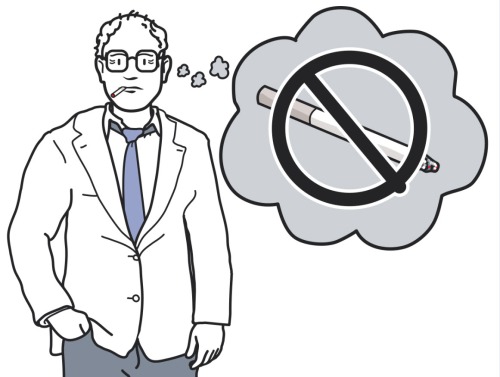
Where There’s Smoke?

Join Our Mailing List

Cytisine versus Nicotine Replacement Therapy

[By staff reporters and Rena Xu]

Doctors and financial advisors know that motivation is often half the battle of behavior change.  In the battle against nicotine addiction however, motivation alone may not be enough.  Mass media campaigns have helped to raise awareness about the dangers of smoking. We’ve even mentioned them on this ME-P

But, for the majority of smokers who already want to quit, the question remains: how?

smoke

Where There’s Smoke: Cytisine versus Nicotine Replacement Therapy

Assessment

We thought the non-healthcare readers of this ME-P might enjoy seeing how a practicing doctor is “detailed”; or informed about a new drug or treatment. In the past, drug “reps” accomplished this task in the office; “eye-2-eye” with folders and flip-charts, etc.

Today; not so much in the digital era!

And, insightful FAs realize the similarity to “wholesalers” in the financial services industry.

More:

Chest pain

Conclusion

Your thoughts and comments on this ME-P are appreciated. Feel free to review our top-left column, and top-right sidebar materials, links, URLs and related websites, too. Then, subscribe to the ME-P. It is fast, free and secure.

Speaker: If you need a moderator or speaker for an upcoming event, Dr. David E. Marcinko; MBA – Publisher-in-Chief of the Medical Executive-Post – is available for seminar or speaking engagements. Contact: MarcinkoAdvisors@msn.com

OUR OTHER PRINT BOOKS AND RELATED INFORMATION SOURCES:

Product Details  Product Details

About Crowd-Med [Case Review Service]

***
CMP logo
***
DR. DAVID EDWARD MARCINKO MBA
[By ME-P Staff Reporters]

CrowdMed Company Background

CrowdMed purports to harnesses the wisdom of crowds to collaboratively solve even the world’s most difficult medical cases quickly and accurately online.

The company offers individuals, insurance providers, and self-insured corporate customers the ability to more quickly diagnose medical conditions and reduce healthcare costs without compromising care.

***

152_1

***

The results speak for themselves?

Since launching publicly in April 2013, CrowdMed has helped solve hundreds of medical cases for patients around the world, and this number is quickly growing as word spreads of the new service. On average, these patients had been sick for 8 years, seen 8 doctors, and incurred more than $50,000 in medical expenses. Despite the difficulty of their cases, more than half of these patients tell us that the crowd successfully brought them closer to a correct diagnosis or cure.

Anyone can submit a case on the CrowdMed website for free (with a $50 refundable deposit), or along with a cash compensation offer to draw more attention to their case. They use incentives to increase participation, and the overall quality and confidence levels of suggested diagnoses. Thousands of people with diverse backgrounds in medicine, health care, education and research have already joined the crowd, and they are continually recruiting new medical and disease experts to help solve cases.

During early testing of the CrowdMed platform, the founder [Jared] submitted his own sister’s [Carly] anonymous case information to the crowd to test the system. More than 300 people participated, evaluating the same symptoms that had been provided to Carly’s original doctors. In just three days, the crowd gave Jared their answer: Fragile X-associated primary ovarian insufficiency

Founded by veteran technology entrepreneur Jared Heyman and based in San Francisco, CA, CrowdMed has received more than $2.4 million in funding from some of Silicon Valley’s top venture capital firms including NEA, Andreessen Horowitz, Greylock Partners, SV Angel, Khosla Ventures and Y Combinator. The company’s advisors have founded and run some the world’s most successful online healthcare companies including WebMD. CrowdMed graduated from Y Combinator’s Winter 2013 class, and was officially launched during the TEDMED 2013 conference in Washington DC.

You can read more about CrowdMed’s leadership team click here.

More:

  1. Will Future Doctors Need a Medical License?
  2. Is Medical Licensing Really Necessary?
  3. On Replacing Doctors with Computers and Smart Phones 

Assessment

Check em’ out today: http://blog.crowdmed.com

Channel Surfing the ME-P

Have you visited our other topic channels? Established to facilitate idea exchange and link our community together, the value of these topics is dependent upon your input. Please take a minute to visit. And, to prevent that annoying spam, we ask that you register. It is fast, free and secure.

Conclusion

Your thoughts and comments on this ME-P are appreciated. Feel free to review our top-left column, and top-right sidebar materials, links, URLs and related websites, too. Then, subscribe to the ME-P. It is fast, free and secure.

Speaker: If you need a moderator or speaker for an upcoming event, Dr. David E. Marcinko; MBA – Publisher-in-Chief of the Medical Executive-Post – is available for seminar or speaking engagements. Contact: MarcinkoAdvisors@msn.com

OUR OTHER PRINT BOOKS AND RELATED INFORMATION SOURCES:

Product DetailsProduct DetailsProduct Details

Product DetailsProduct Details

The Resurgence of Polygraph “Lie-Detection” in an age of Evidence-Based Medicine

Join Our Mailing List

On Junk-Science in the Medical Profession

A SPECIAL ME-P REPORT

By Michael Lawrence Langan MD

***

If you are ever asked to take a polygraph test–don’t do it. Those involved in the criminal justice system, including lawyers, are largely uneducated in the realm of scientific scrutiny and experimental methodology.

They may not separate science and pseudo-science, and erroneously believe that the polygraph is an accurate scientific instrument. Their interactions are with polygraph examiners who proselytize its use, and they have little or no interaction with scientists, psychologists, and physicians who refute its use.

Refuse to take the test and educate them. Cite the Frye Doctrine, go to the medical library, copy the scientific articles which belie its validity, and present them to whomever requested you to take the test. State that the principles and assumptions underlying polygraphy are not supported by our understanding of psychology, neurology, and physiology.

*** Polygraph_Test_-_Limestone_Technologies_Inc***

Junk-Science in the Medical Profession: The Resurgence of Polygraph “Lie-Detection” in an age of Evidence-Based Medicine.

Assessment

Then, put the burden of proof on their heads. Tell them to present you with scientific evidence that corroborates the validity of the test. There is simply no rational basis for a machine to detect liars.

More:

Channel Surfing the ME-P

Have you visited our other topic channels? Established to facilitate idea exchange and link our community together, the value of these topics is dependent upon your input. Please take a minute to visit. And, to prevent that annoying spam, we ask that you register. It is fast, free and secure.

poly

About the Author

Dr. Langan graduated from Oregon Health Sciences University School Of Medicine, Portland Oregon with an MD 21 years ago. He had his residency training of Geriatric Medicine-Internal Medicine at Beth Israel Deaconess Medicine Center and Internal Medicine at St Vincent Hospital Medicine Center.

Conclusion

Your thoughts and comments on this ME-P are appreciated. Feel free to review our top-left column, and top-right sidebar materials, links, URLs and related websites, too. Then, subscribe to the ME-P. It is fast, free and secure.

Speaker: If you need a moderator or speaker for an upcoming event, Dr. David E. Marcinko; MBA – Publisher-in-Chief of the Medical Executive-Post – is available for seminar or speaking engagements. Contact: MarcinkoAdvisors@msn.com

OUR OTHER PRINT BOOKS AND RELATED INFORMATION SOURCES:

Product DetailsProduct DetailsProduct Details

Product Details

On Happiness and Discretionary Spending

Join Our Mailing List 

Can Money But Happiness? [The age old question]

By Rick Kahler MS CFP® http://www.KahlerFinancial.com

Rick Kahler MS CFPGiving away money makes people happy; especially during this holiday season.

Spending money on others makes people happier than spending money on themselves. Spending money on experiences makes people happier than spending money on things.

Does that mean it’s okay to max out your credit card to take all 37 members of your extended family on a cruise for Christmas? Not exactly.

The Research

Yes, research shows that some kinds of spending are linked to happiness. Andrew Blackman cites some of that research in an excellent article, “Can Money Buy Happiness?“, published online November 10 in The Wall Street Journal.

Before you pull out the plastic and start shopping, though, there’s one important point to keep in mind: Any spending to create happiness must come from your discretionary money. This is money we have available to spend for our lifestyle, after we’ve paid all our fixed expenses like rent, loan payments, utilities, retirement contributions, building emergency reserves, insurance premiums, etc.

Discretionary spending can include luxuries or extras like eating out, vacations, gifts, entertainment, and gadgets of all types. But it also can include items that may be necessities or fixed expenses like housing, vehicles, clothing, and food. For example, owning a car is a necessity for most South Dakotans.

However, a 10-year-old Toyota Avalon with 90,000 miles on the odometer, well maintained, can transport you just as effectively as a new model. The older model costs around $10,000; the new one costs around $35,000. The $25,000 difference is discretionary spending.

So, if you want more discretionary money for happiness spending, like giving or experiences, you might choose to spend more frugally on necessities. The other option, borrowing for happiness spending, generally doesn’t work. Research finds that borrowing and debt creates unhappiness that pretty much cancels out the happiness created by the spending.

***

UnHappiness

***

The Psychologist

Elizabeth Dunn, associate professor of psychology at the University of British Columbia and co-author of the book Happy Money, puts it this way in The Wall Street Journal article: “Savings are good for happiness; debt is bad for happiness. But, debt is more potently bad than savings are good.”

In a series of studies, Professor Dunn found that the spending producing the highest amount of happiness was spending on others. She found it wasn’t the dollar amount given but the perceived impact of the gift that mattered. Seeing your money make an impact in someone’s life will produce happiness, even though the gift is very small.

Life Experiences

The impact experiences have on our lives may be the reason we gain more happiness from experiences than from material things. Even though we tend to see tangible things as offering more value, the memories and learning we gain from experiences actually provide more happiness.

Creating experiences can involve the purchase of some stuff. Buying baseball equipment with the intention of playing with your children is one example. Buying a camper or a boat for shared family experiences is another. Of course, buying stuff to be used in creating experiences only creates happiness if you use it. We don’t gain much happiness from sports equipment gathering dust in the basement or a camper abandoned in the back yard.

Pro-Bono Medical Care?

More:

Assessment

After reading this research on the value of spending on giving and experiences, I came up with what might be the ultimate happiness spending scenario: Giving the gift of an experience that includes both the recipient and the giver. While I haven’t found any research validating that hypothesis, I am guessing this may be the perfect happiness two-for-one.

Maybe, if you can afford it out of discretionary money, taking the family on that cruise isn’t such a bad idea after all.

Channel Surfing the ME-P

Have you visited our other topic channels? Established to facilitate idea exchange and link our community together, the value of these topics is dependent upon your input. Please take a minute to visit. And, to prevent that annoying spam, we ask that you register. It is fast, free and secure.

Conclusion

Your thoughts and comments on this ME-P are appreciated. Feel free to review our top-left column, and top-right sidebar materials, links, URLs and related websites, too. Then, subscribe to the ME-P. It is fast, free and secure.

Speaker: If you need a moderator or speaker for an upcoming event, Dr. David E. Marcinko; MBA – Publisher-in-Chief of the Medical Executive-Post – is available for seminar or speaking engagements. Contact: MarcinkoAdvisors@msn.com

OUR OTHER PRINT BOOKS AND RELATED INFORMATION SOURCES:

Financial Planning MDs 2015

Comprehensive Financial Planning Strategies for Doctors and Advisors: Best Practices from Leading Consultants and Certified Medical Planners™

Why You’re Probably Using the Wrong [Medical] Dictionary [er…ah…Tchotchkes?]

About the iMBA Inc, Health Glossary and Administration Dictionary Series … with Book Reviews

[By Staff Reporters]

HDS

***

The Health Dictionary Series of Administrative Terms and Definitions

According to James Somers, the way we use an ordinary [medical] dictionary is to look up words, acronyms or initialisms we’ve never heard of; or whose sense we’re unsure of, or need more clarification or spelling direction. Makes sense!

http://jsomers.net/blog/dictionary

But, you would never look up health administration industry specific words or terms in an ordinary medical dictionary — words like HL7, “meaningful-use”, “skinny networks”, managed care organization, hospital cloud computing, patient portal, stop-loss ratio, economic externality, PHO, MPT, SAR-BOX, Fama-French, US Patriot Act, the Treynor index, Asset Pricing Theory, PP-ACA, or ACOs — because all you’ll learn is nothing about what they mean.

Extreme Utility – Not just tchotchkes! 

You would need an industry specific dictionary of health administration terms and definitions, right? And, preferably designated as a Doody’s Core Title for credibility, and written by leading experts.

So; try these 3 dictionaries for 10,000 health 2.0 administration terms and definitions, EACH.

  1. Dictionary of Health Insurance and Managed Care
  2. Dictionary of Health Economics and Finance
  3. Dictionary of Health Information Technology and Security

Product DetailsProduct DetailsProduct Details

Dictionary Forewords

More:

Forget the Paper Weights

According to Wikipedia, a tchotchke (/ˈɒkə/ CHOCH-ka) is a small bauble or miscellaneous item. The word has long been used by Jewish-Americans and in the regional speech of New York City and elsewhere. Tchotchkes are often given at Chanukkah as part of a game.

The word may also refer to free promotional items dispensed at financial services trade shows, medical conventions, and similar large events. They can also be sold as cheap souvenirs which are sometimes called “tchotchke shops”.

***

paperweights

***

Not a Throw-Away

But, if you want to give your hospital, medical clinic or physician clients an advertising item that’s both useful and handy at the same time, try using these dictionaries. Make an IMPACT, and forget those paper-weights.

As a Financial Advisor [FA], or drug rep, you can represent your eagerness to be there for clients and prospects anytime they need your service by having the dictionaries engraved or placing your business card, inside. Plus, they serve as a great addition to a wonderfully decorated medical office or home library. It is an item they will refer to again and again; not just throw-away.

Give one … or all three … they are so reasonably priced.

Conclusion

Your thoughts and comments on this ME-P are appreciated. Feel free to review our top-left column, and top-right sidebar materials, links, URLs and related websites, too. Then, subscribe to the ME-P. It is fast, free and secure.

Speaker: If you need a moderator or speaker for an upcoming event, Dr. David E. Marcinko; MBA – Publisher-in-Chief of the Medical Executive-Post – is available for seminar or speaking engagements. Contact: MarcinkoAdvisors@msn.com

OUR OTHER PRINT BOOKS AND RELATED INFORMATION SOURCES:

Comprehensive Financial Planning Strategies for Doctors and Advisors: Best Practices from Leading Consultants and Certified Medical Planners(TM)

Retirement Planning and Physicians [An Oxymoron]?

Join Our Mailing List 

Confidence Eluded

By Shikha Mittra MBA CFP® AIF® http://www.feeonlynetwork.com/Shikha-Mittra

Shikha-MittraAccording to a survey from the Employee Benefit Research Institute [EBRI] and Greenwald & Associates; nearly half of workers without a retirement plan were not at all confident in their financial security, compared to 11 percent for those who participated in a plan, according to the 2014 Retirement Confidence Survey (RCS).

Retirement Money

In addition, 35 percent of workers have not saved any money for retirement, while only 57 percent are actively saving for retirement. Thirty-six percent of workers said the total value of their savings and investments—not including the value of their home and defined benefit plan—was less than $1,000, up from 29 percent in the 2013 survey. But, when adjusted for those without a formal retirement plan, 73 percent have saved less than $1,000.

Debt

Debt is also a concern, with 20 percent of workers saying they have a major problem with debt. Thirty-eight percent indicate they have a minor problem with debt. And, only 44 percent of workers said they or their spouse have tried to calculate how much money they’ll need to save for retirement. But, those who have done the calculation tend to save more.

Shifting Demographics

The biggest shift in the 24 years has been the number of workers who plan to work later in life. In 1991, 84 percent of workers indicated they plan to retire by age 65, versus only 9 percent who planned to work until at least age 70. In 2014, 50 percent plan on retiring by age 65; with 22 percent planning to work until they reach 70.

***

z93

*** 

Physician Statistics

Now, compare and contrast the above to these statistics according to a 2013 survey of physicians on financial preparedness by American Medical Association [AMA] Insurance.

The statistics are still alarming:

  • The top personal financial concern for all physicians is having enough money to retire.
  • Only 6% of physicians consider themselves ahead of schedule in retirement preparedness.
  • Nearly half feel they were behind
  • 41% of physicians average less than $500,000 in retirement savings.
  • Nearly 70% of physicians don’t have a long term care plan.
  • Only half of US physicians have a completed estate plan including an updated will and Medical directives.

Assessment

More:

Conclusion

Your thoughts and comments on this ME-P are appreciated. Feel free to review our top-left column, and top-right sidebar materials, links, URLs and related websites, too. Then, subscribe to the ME-P. It is fast, free and secure.

Speaker: If you need a moderator or speaker for an upcoming event, Dr. David E. Marcinko; MBA – Publisher-in-Chief of the Medical Executive-Post – is available for seminar or speaking engagements. Contact: MarcinkoAdvisors@msn.com

OUR OTHER PRINT BOOKS AND RELATED INFORMATION SOURCES:

Comprehensive Financial Planning Strategies for Doctors and Advisors: Best Practices from Leading Consultants and Certified Medical Planners(TM)

About Peer-to-Peer Lending [P2PL]

Join Our Mailing List 

What it is – How it works?

big_picBy TIMOTHY J. McINTOSH; MBA, MPH, CFP®, CMP™ [Hon]

Similar to private equity or venture capital, peer-to-peer lending [aka person-to-person lending, peer-to-peer investing and social lending] is the practice of lending money to unrelated individuals without the benefit a traditional financial intermediary like a bank or financial institution. P2P lending takes place online using various platforms and credit checking tools.

And, it has been in existence for about a decade.

Here are some important characteristics:

  • P2PL offers a chance to get a lower interest rate than a bank, and gives investors a chance to receive higher returns. Of course, more rewards means more risk.
  • The two largest P2PL companies are Prosper.com and LendingClub.com.  Prosper is older, Lending Club is bigger.  Prosper allows bidding on the interest rates you’re willing to provide a loan. Lending Club sets the rates.
  • Initial returns on Prosper were disappointing because default rates were high; today it is better. For loans originating in the last six months of 2009, both Lending Club and Prosper have a default rate (including currently late loans) of about 13.5%. Using loans from that same time period, Prosper had overall returns of 8.3% and Lending Club had returns of 4.3%.
  • Since avoiding defaults is an important part of P2PL, investors should buy many lots of notes – for as little as $25 each – which make it relatively easy to achieve broad diversification.  Compared to buying index funds and rebalancing once a year, P2PL is more time-consuming as you must pick the loans to invest in individually.  Filtering through the offered loans is time-consuming, but can be rewarding. Some investors sell off their notes at a discount once the borrower goes late on a payment for instance, or just because they need their money out of the investment before the term is up.
  • No matter how closely watched there will be a drag on returns from the cash in your portfolio.  It takes time to choose loans acceptable and then for them to be approved.  Just as with a mutual fund, this will lower your returns, perhaps as much as 1%.
  • One of the real benefits of P2PL is a low correlation with other investments, as it is different than other asset classes and ought to perform differently from equity and fixed income investments.

я74

More:

Assessment

The Author

Timothy J. McIntosh is Chief Investment Officer and founder of SIPCO.  As chairman of the firm’s investment committee, he oversees all aspects of major client accounts and serves as lead portfolio manager for the firm’s equity and bond portfolios. Mr. McIntosh was a Professor of Finance at Eckerd College from 1998 to 2008. He is the author of The Bear Market Survival Guide and the The Sector Strategist.  He is featured in publications like the Wall Street Journal, New York Times, USA Today, Investment Advisor, Fortune, MD News, Tampa Doctor’s Life, and The St. Petersburg Times.  He has been recognized as a Five Star Wealth Manager in Texas Monthly magazine; and continuously named as Medical Economics’ “Best Financial Advisors for Physicians since 2004.  And, he is a contributor to SeekingAlpha.com., a premier website of investment opinion. Mr. McIntosh earned a Bachelor of Science Degree in Economics from Florida State University; Master of Business Administration (M.B.A) degree from the University of Sarasota; Master of Public Health Degree (M.P.H) from the University of South Florida and is a CERTIFIED FINANCIAL PLANNER® practitioner. His previous experience includes employment with Blue Cross/Blue Shield of Florida, Enterprise Leasing Company, and the United States Army Military Intelligence.

Conclusion

Your thoughts and comments on this ME-P are appreciated. Feel free to review our top-left column, and top-right sidebar materials, links, URLs and related websites, too. Then, subscribe to the ME-P. It is fast, free and secure.

Speaker: If you need a moderator or speaker for an upcoming event, Dr. David E. Marcinko; MBA – Publisher-in-Chief of the Medical Executive-Post – is available for seminar or speaking engagements. Contact: MarcinkoAdvisors@msn.com

OUR OTHER PRINT BOOKS AND RELATED INFORMATION SOURCES:

Comprehensive Financial Planning Strategies for Doctors and Advisors: Best Practices from Leading Consultants and Certified Medical Planners(TM)

How to Protect Your Vehicle During Long-Term Storage

 Join Our Mailing List

Hibernation and Your Luxury Car

silver balls on snow with snowfall - blue heaven

[By Dr. David Edward Marcinko MBA]

[By Nalley-Lexus Roswell, GA]

An ME-P Special Winter Report

***

DEM at Univ of Pittsburgh

***

I was speaking at a seminar in Pittsburgh PA recently, and I realized how cold it gets there. Moreover, I just learned of an impeding Christmas Eve storm this year.

Hence this ME-P.

***

Many car drivers use their vehicle every day, but from time to time – and during the winter – it’s necessary to consider long-term storage. Some physicians however, don’t use their car over the winter months, or need to leave the country for a while on vacation, and this means that it’s time to store away that luxury automobile.

The Storage Steps:

So, if you need to put your car into long-term storage, use the following tips to make sure that your vehicle remains in excellent working order.

Find a good place to store the car

You probably won’t want to leave your car exposed to the elements if you’re not going to use it. Find a sheltered place to keep the car like a garage, shed, or outhouse that can protect the vehicle from the rain. Search local ads for reasonably priced accommodation if you don’t have your own garage. If there’s nothing available, invest in a high-quality weatherproof car cover which will at least protect your car from the weather.

Thoroughly clean the car

Dirt and debris on your car may cause damage, so give the car a thorough clean before storing it. Remove bird droppings or tree sap, which can both damage paint work, and get rid of mud or oil from the wheels and fenders. Apply a good quality wax or sealant to the exterior, as this will protect the paint from any dirt or dust that accumulates in storage.

Fill up your gas tank

Some doctors and other drivers make the mistake of emptying the gas tank when they put their cars into storage.

Follow your car dealer recommendations but use premium if you can. Topping off your gas tank stops moisture from accumulating inside the tank, and will also make sure the seals don’t dry out. Gas is cheap currently, so do not forget this step.

And, consider adding a fuel stabilizer, which may protect the engine from rust and ensure the fuel doesn’t deteriorate [debatable issue].

Charge the battery

Even though you aren’t going to drive the car for a while, it’s a good idea to make sure the battery charge doesn’t run out. If you can’t get somebody to come and visit the car, charge and disconnect the battery completely.

Otherwise, you can buy a battery tender [not trickle charger] that plugs into the electricity supply and continuously gently charges the battery. I have one for my vintage 2000 Jaguar XJ-V8-XL and they are great.

Inflate your tires

It’s always a good idea to inflate your tires to the manufacturer’s recommended pressure. While the car is stationary, the weight of the vehicle pressing on the tires can cause damage, particularly in cold temperatures.

Another solution to consider is removing all four wheels and jacking the car up on all four corners. This is hard work, but it’s worth it for cars that will be stored for a month or more.

***

My Jaguar XJ-V8

***

My Jaguar***

JaguarBoot

***

Protect the car from pests

Cars give rats and mice lots of places to hide and keep warm and these creatures can cause damage if they gnaw at wires. Plug obvious places (like the exhaust pipe) where rodents could get in, and consider laying traps or poison. Make sure you close all the car windows tightly and remove any food or trash from the car that may attract pests.

Don’t cancel your insurance

Your car is a valuable asset. Even though it’s not on the road, it could still suffer damage in storage. If you cancel your insurance, you may have to pay more when you decide to start driving it again. Talk to your insurance company about the options available to you.

More:

Assessment

It’s important to prepare your car properly for long-term storage. Your vehicle is probably worth a lot of money, so protect your investment and make sure your car is just the way you left it when you come back.

Channel Surfing the ME-P

Have you visited our other topic channels? Established to facilitate idea exchange and link our community together, the value of these topics is dependent upon your input. Please take a minute to visit. And, to prevent that annoying spam, we ask that you register. It is fast, free and secure.

Conclusion

Your thoughts and comments on this ME-P are appreciated. Feel free to review our top-left column, and top-right sidebar materials, links, URLs and related websites, too. Then, subscribe to the ME-P. It is fast, free and secure.

Speaker: If you need a moderator or speaker for an upcoming event, Dr. David E. Marcinko; MBA – Publisher-in-Chief of the Medical Executive-Post – is available for seminar or speaking engagements. Contact: MarcinkoAdvisors@msn.com

OUR OTHER PRINT BOOKS AND RELATED INFORMATION SOURCES:

Product DetailsProduct DetailsProduct Details

Product DetailsProduct Details

Product Details

***

A Video Presentation by Political Economic Strategist Greg R. Valliere

Join Our Mailing List

Chief Political and Economic Strategist at Potomac Research Group Holdings, LLC

Video Pod-Cast Sponsored By

  • Sharkey, Howes & Javer
  • 720 S Colorado Blvd – So. Tower, Suite 600
  • Denver, CO 80246

Dear David,

We thoroughly enjoyed our time with those of you who were able to attend our annual Client and Friends Appreciation Event.

Since then, many of you have been requesting to see Greg R. Valliere’s presentation from the event. So, we recently posted the video on our website and would like to invite you, your family and friends to view it. If you missed the event, Greg’s speech was thought provoking, insightful and is well worth a watch.

Enjoy!

SHJ

***

Watch

< Click here to watch now >

SHJ

***

About Greg R. Valliere

Greg R. Valliere is a Chief Political Strategist at Potomac Research Group Holdings, LLC. He coordinates political and economic research. Mr. Valliere focuses on how Congress and the White House shape fiscal policies and monitors the Federal Reserve Board’s interest rate policies. He has over 30 years of experience in covering Washington for institutional investors. 

Prior to joining the firm, Mr. Valliere served as Chief Policy Strategist for Soleil Securities Group Inc. He was also employed at Stanford Group Company, Research Division. He previously held key strategy roles at Charles Schwab’s Washington Research Group and The Washington Forum. 

Mr. Valliere co-founded The Washington Forum in 1974, serving as Chief Political Analyst and Editor of the group’s publications, and ultimately as Research Director. He began his career in 1972 at F-D-C reports, monitoring the pharmaceutical industry. Mr. Valliere is an exclusive commentator for CNBC, appearing regularly on network programs such as ‘Squawk Box,’ ‘Power Lunch,’ ‘The Closing Bell,’ and ‘Kudlow & Company.’ He earned his Bachelor’s degree in Journalism from The George Washington University.

Channel Surfing the ME-P

Have you visited our other topic channels? Established to facilitate idea exchange and link our community together, the value of these topics is dependent upon your input. Please take a minute to visit. And, to prevent that annoying spam, we ask that you register. It is fast, free and secure.

Conclusion

Your thoughts and comments on this ME-P are appreciated. Feel free to review our top-left column, and top-right sidebar materials, links, URLs and related websites, too. Then, subscribe to the ME-P. It is fast, free and secure.

Speaker: If you need a moderator or speaker for an upcoming event, Dr. David E. Marcinko; MBA – Publisher-in-Chief of the Medical Executive-Post – is available for seminar or speaking engagements. Contact: MarcinkoAdvisors@msn.com

OUR OTHER PRINT BOOKS AND RELATED INFORMATION SOURCES:

Financial Planning MDs 2015

Comprehensive Financial Planning Strategies for Doctors and Advisors: Best Practices from Leading Consultants

Pitfalls with Health Care Provider Data

Join Our Mailing List

Physician Licensure and Medical Care Quality?

By http://www.MCOL.com

Data

More:

Channel Surfing the ME-P

Have you visited our other topic channels? Established to facilitate idea exchange and link our community together, the value of these topics is dependent upon your input. Please take a minute to visit. And, to prevent that annoying spam, we ask that you register. It is fast, free and secure.

Conclusion

Your thoughts and comments on this ME-P are appreciated. Feel free to review our top-left column, and top-right sidebar materials, links, URLs and related websites, too. Then, subscribe to the ME-P. It is fast, free and secure.

Speaker: If you need a moderator or speaker for an upcoming event, Dr. David E. Marcinko; MBA – Publisher-in-Chief of the Medical Executive-Post – is available for seminar or speaking engagements. Contact: MarcinkoAdvisors@msn.com

OUR OTHER PRINT BOOKS AND RELATED INFORMATION SOURCES:

Product DetailsProduct Details

Product Details

A Frank Look at Physician Suicide

Join Our Mailing List

Staring Down the Enemy

[By Staff Reporters]

We have skirted around this issue before on the ME-P; as well as our related physician-executive leadership, risk-management and career development essays in our books and print publications.

But now, we look directly into the face of the terminal demon/beast.

So, her is a powerful look at the growing problem of physician suicide by two leading physicians and expert-bloggers Michael Lawrence Langan MD; an ME-P “thought-leader” – as well as a video by Pamela Wible MD.

***

suicide

***

Physician Suicide

Conclusion

Your thoughts and comments on this ME-P are appreciated. Feel free to review our top-left column, and top-right sidebar materials, links, URLs and related websites, too. Then, subscribe to the ME-P. It is fast, free and secure.

Speaker: If you need a moderator or speaker for an upcoming event, Dr. David E. Marcinko; MBA – Publisher-in-Chief of the Medical Executive-Post – is available for seminar or speaking engagements. Contact: MarcinkoAdvisors@msn.com

OUR OTHER PRINT BOOKS AND RELATED INFORMATION SOURCES:

 Product DetailsProduct Details

Product Details

Product Details  Product Details


About the INSTITUTE OF MEDICAL BUSINESS ADVISORS, Inc.

Join Our Mailing List

About

INSTITUTE OF MEDICAL BUSINESS ADVISORS, Inc.

  ***

The Institute of Medical Business Advisors, Inc provides a team of experienced, senior level consultants led by iMBA Chief Executive Officer Dr. David Edward Marcinko MBA CMPMBBS [Hon] and President Hope Rachel Hetico RN MHA CMP™ to provide going contact with our clients throughout all phases of each project, with most of the communications between iMBA and the key client participants flowing through this Senior Team.

Product Details

iMBA Inc., and its skilled staff of certified professionals have many years of significant experience, enjoy a national reputation in the healthcare consulting field, and are supported by an unsurpassed research and support staff of CPAs, MBAs, MPHs, PhDs, CMPs™, CFPs® and JDs to maintain a thorough and extensive knowledge of the healthcare environment.

Product Details

The iMBA team approach emphasizes providing superior service in a timely, cost-effective manner to our clients by working together to focus on identifying and presenting solutions for our clients’ unique, individual needs.

Product Details

The iMBA Inc project team’s exclusive focus on the healthcare industry provides a unique advantage for our clients.  Over the years, our industry specialization has allowed iMBA to maintain instantaneous access to a comprehensive collection of healthcare industry-focused data comprised of both historically-significant resources as well as the most recent information available.  iMBA Inc’s specific, in-depth knowledge and understanding of the “value drivers” in various healthcare markets, in addition to the transaction marketplace for healthcare entities, will provide you with a level of confidence unsurpassed in the public health, health economics, management, administration, and financial planning and consulting fields.

 Product DetailsProduct DetailsProduct Details

iMBA Inc’s information resources and network of healthcare industry textbook resources enhanced by our professional consultants and research staff, ensure that the iMBA project team will maintain the highest level of knowledge regarding the current and future trends of the specific specialty market related to the project, as well as the healthcare industry overall, which serves as the “foundation” for each of our client engagements.

Product Details  Product Details

Ann Miller RN MHA

www.MedicalBusinessAdvisors.com

Financial Advisor Education Letterhead CMP

Solicitation Letterhead.iMBA, Inc

Sample iMBA Engagements

iMBA Seminar Topics

***

Financial Planning MDs 2015

Comprehensive Financial Planning Strategies for Doctors and Advisors: Best Practices from Leading Consultants and Certified Medical Planners™

***

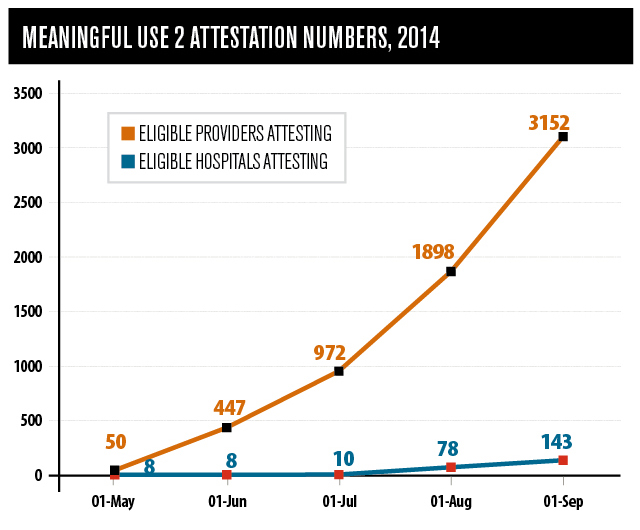
Understanding “Meaningful Use” Attestation Numbers for 2014

Join Our Mailing List

Providers versus Hospitals

By CMS

ME121014_PAGE_16

Assessment

So, what do the hospitals know –  that the doctors do not?

Channel Surfing the ME-P

Have you visited our other topic channels? Established to facilitate idea exchange and link our community together, the value of these topics is dependent upon your input. Please take a minute to visit. And, to prevent that annoying spam, we ask that you register. It is fast, free and secure.

Conclusion

Your thoughts and comments on this ME-P are appreciated. Feel free to review our top-left column, and top-right sidebar materials, links, URLs and related websites, too. Then, subscribe to the ME-P. It is fast, free and secure.

Speaker: If you need a moderator or speaker for an upcoming event, Dr. David E. Marcinko; MBA – Publisher-in-Chief of the Medical Executive-Post – is available for seminar or speaking engagements. Contact: MarcinkoAdvisors@msn.com

OUR OTHER PRINT BOOKS AND RELATED INFORMATION SOURCES:

Product DetailsProduct Details

Product Details

Introducing the International Institute of Research Against Counterfeit Medicines

Join Our Mailing List

Launching an e-learning program on the counterfeiting of medicines

[By staff reporters]

Because with every passing day, men, women and children, your loved ones, even yourself, can be victims of counterfeit medicines.

Thousands of lives are at stake; especially with drugs produced in China. That is why the International Institute of Research Against Counterfeit Medicines (IRACM) is launching an electronic learning program on the counterfeiting of medicines.

***

IRACM

***

OBJECTIVES OF THE CAMPAIGN

• To promote and support the fight against trafficking in counterfeit medicines.
• To protect the health of patients by training and informing people.

Today, to fulfil these front line health objectives, IRACM needs you and your network to disseminate this e-learning on your digital media.

Why Counterfeit Medicines?

Check out the image below; need we say more?

***

benjamin-bills3

***

Channel Surfing the ME-P

Have you visited our other topic channels? Established to facilitate idea exchange and link our community together, the value of these topics is dependent upon your input. Please take a minute to visit.

And, to prevent that annoying spam, we ask that you register. It is fast, free and secure.

Assessment

Check em’ out today.

Tell us what you think?

Conclusion

Your thoughts and comments on this ME-P are appreciated. Feel free to review our top-left column, and top-right sidebar materials, links, URLs and related websites, too. Then, subscribe to the ME-P. It is fast, free and secure.

Speaker: If you need a moderator or speaker for an upcoming event, Dr. David E. Marcinko; MBA – Publisher-in-Chief of the Medical Executive-Post – is available for seminar or speaking engagements. Contact: MarcinkoAdvisors@msn.com

OUR OTHER PRINT BOOKS AND RELATED INFORMATION SOURCES:

Product DetailsProduct Details


Do You Have a Taxable Investment Account – Doctor?

Join Our Mailing List

Is it Time to Harvest?

[By Lon Jefferies MBA CFP®]

Lon JeffriesTax harvesting is the process of selling assets for the purpose of creating either long-term capital gains or losses to minimize your tax bill. This procedure is usually conducted near the end of a calendar year.

While many people are familiar with the concept of tax loss harvesting, fewer physicians or clients are familiar with the more recently developed process of tax gain harvesting. Between these two procedures, virtually everyone with a taxable (not tax-advantaged) investment account should make adjustments to their portfolio before the year ends.

Who Qualifies For the 0% Capital Gains Rate?

First, it is important to understand that capital gains (the growth on investments within a taxable, non retirement investment account) are taxed differently than ordinary income (wages, pensions, Social Security, IRA distributions, etc.). While short-term capital gains (recognized on the sale of assets held less than a year) are essentially considered ordinary income, long term capital gains, or recognized gains on assets held more than a year, are taxed at advantageous tax rates. While ordinary income tax rates range from 10% to 39.6%, capital gains tax rates range from 0% to 20%.

Second, it is crucial to understand what enables a taxpayer to qualify for the 0% capital gains rate. If a taxpayer is in the 10% or 15% ordinary income tax bracket, they qualify for the 0% long-term capital gains rate.

For a married couple filing jointly, the 15% tax bracket ends at $73,800 of taxable income ($36,900 for single taxpayers). Thus, if a married taxpayer has a taxable income (which includes long-term capital gains but is also after deductions and exemptions) of less than $73,800, all their long-term capital gains will be tax free. If the taxpayer is in a tax bracket anywhere between 25% and 35% (taxable income of $73,800 and $457,600, or between $36,900 and $406,750 for single tax filers), they will pay long-term capital gains taxes at 15%. Only those in the top tax bracket of 39.6% (married taxpayers with a taxable income over $457,600 and single taxpayers with taxable income over $406,750) will pay capital gains taxes at 20%.

Tax Loss Harvesting

During the calendar year, assets have been purchased and sold in most taxable investments accounts. The sale of an asset creates a net gain or loss, both having tax implications. Investors should have an understanding of what their long-term capital gains tax rate will be so they can determine whether a taxable gain or loss is preferable.

For instance, an individual who does not qualify for the 0% capital gains tax rate may wish to minimize the amount of taxable gains they recognize during the year, which would reduce their tax bill. If the investor currently has a net long-term capital gain (which is probable after the strong year the market had in 2013), then it is likely worthwhile to sell any assets in the portfolio that are currently worth less than the investor’s purchase price. This tax loss harvesting would reduce the net gain recognized during the year and lower the investor’s tax bill.

In some cases, by taking advantage of all potential losses within a portfolio an investor has the ability to negate all capital gains created during the year, completely eliminating their capital gains tax bill. Further, the IRS will allow investors to recognize a net capital loss of up to a -$3,000 per year. This -$3,000 loss can be used to lower the taxpayers ordinary income. This is particularly advantageous in that the capital loss reduces a type of income that is taxed at higher tax rates.

Harvesting Gains

Harvesting gains from a taxable portfolio is a more recently developed concept. Once the 0% long-term capital gains tax rate became a permanent part of the tax code with the passing of the American Taxpayer Relief Act of 2012 (signed January 2nd, 2013), in some scenarios it began making sense to recognize long-term capital gains on purpose to potentially avoid a larger tax bill in the future.

Suppose a taxpayer’s taxable income is consistently $65,000 a year. Additionally, suppose our hypothetical taxpayer won’t withdraw funds from his taxable account during the next few years, but may need a large lump sum distribution five years down the road. Recall that the 0% capital gains rate ends when a married taxpayer’s taxable income (which includes long-term capital gains) exceeds $73,800. Consequently, this hypothetical taxpayer has the ability to recognize $8,800 ($73,800 – $65,000) in long-term capital gains every year without increasing his tax bill. If this $8,800 in gains is recognized every year by simply selling and immediately repurchasing appreciated assets, he would raise the cost basis of his investment by $44,000 ($8,800 gain recognized annually for five straight years). He could then sell and withdraw that $44,000 without creating a tax liability.

Alternatively, if the investor does not harvest gains during the years when no distributions are taken, withdrawing $44,000 of gains five years down the road would create a sizable tax bill. He would still be able to recognize $8,800 of gains tax free in the year of distribution, but the remaining $35,200 of gains would cause his taxable income to be over the $73,800 limit, eliminating access to the 0% capital gains rate. That $35,200 would be taxed at the 15% capital gains rate, creating a federal tax bill of $5,280. With proper planning, this significant tax bill can be avoided.

***

Portfolio analysis

***

The Bottom Line

Tax harvesting has no purpose in tax-advantaged retirement accounts such as IRAs and 401ks because all distributions from these accounts are taxed as ordinary income. However, taxable individual or trust investment accounts can almost certainly benefit from tax harvesting. Speak to your accountant and financial planner to understand whether capital gains or losses are desirable for you this year and determine the amount of taxable gains already recognized. This will help you determine what type of harvesting should take place.

Tax harvesting can be a difficult and confusing concept. However, a competent financial planner who utilizes this procedure within your taxable investment account can significantly lower your tax bill. Speak to your adviser to ensure you are reaping the tax benefits available to you.

Channel Surfing the ME-P

Have you visited our other topic channels? Established to facilitate idea exchange and link our community together, the value of these topics is dependent upon your input. Please take a minute to visit. And, to prevent that annoying spam, we ask that you register. It is fast, free and secure.

Conclusion

Your thoughts and comments on this ME-P are appreciated. Feel free to review our top-left column, and top-right sidebar materials, links, URLs and related websites, too. Then, subscribe to the ME-P. It is fast, free and secure.

Speaker: If you need a moderator or speaker for an upcoming event, Dr. David E. Marcinko; MBA – Publisher-in-Chief of the Medical Executive-Post – is available for seminar or speaking engagements. Contact: MarcinkoAdvisors@msn.com

OUR OTHER PRINT BOOKS AND RELATED INFORMATION SOURCES:
Financial Planning MDs 2015

Comprehensive Financial Planning Strategies for Doctors and Advisors: Best Practices from Leading Consultants

About “OOP” National Health Care Expenses

Join Our Mailing List

Detailing “Out-Of-Pocket” Expenses not included in Federal NHE Calculations

By http://www.MCOL.com

Expenses

More:

Channel Surfing the ME-P

Have you visited our other topic channels? Established to facilitate idea exchange and link our community together, the value of these topics is dependent upon your input. Please take a minute to visit. And, to prevent that annoying spam, we ask that you register. It is fast, free and secure.
Conclusion

Your thoughts and comments on this ME-P are appreciated. Feel free to review our top-left column, and top-right sidebar materials, links, URLs and related websites, too. Then, subscribe to the ME-P. It is fast, free and secure.

Speaker: If you need a moderator or speaker for an upcoming event, Dr. David E. Marcinko; MBA – Publisher-in-Chief of the Medical Executive-Post – is available for seminar or speaking engagements. Contact: MarcinkoAdvisors@msn.com
OUR OTHER PRINT BOOKS AND RELATED INFORMATION SOURCES:

Product DetailsProduct Details

My Stock Market Forecast for 2015

Join Our Mailing List 

All Forecasts Will Be Wrong

[By Lon Jefferies MBA CFP®]

Lon JeffriesThe investment media is a rare industry in which professionals are rewarded for making bold projections but never punished for being wrong. The more outlandish a pundit’s forecast the more attention it receives.

Yet, surprisingly little consideration is given to how accurate the prediction turns out to be.

At the beginning of 2014, there were some widely-accepted expectations regarding the investment environment.

Let’s review those predictions and analyze how precise they really were.

Interest Rates

In a study conducted by Bloomberg at the beginning of the year, all 72 economists surveyed predicted higher interest rates and falling bonds prices in 2014. Consequently, investors were questioning whether they should reduce or eliminate the bond portion of their portfolios until the rate increase occurred.

So, have we experienced this rise in interest rates?

On January 1st, 2014, the yield on the 10-year Treasury note was 3 percent. On November 13th, the yield on the same note was 2.35 percent. That’s right — interest rates actually decreased significantly during the year. As a result, intermediate U.S. government bonds (ticker – IEF) produced a return of 7.38% during the year. Not bad for the conservative portion of your portfolio!

Quantitative Easing

The most widely promoted fear among forecasters was that the phasing out of the Federal Reserve’s quantitative easing (QE) program would diminish stock returns. Prognosticators worried that the Fed would lower the amount of loans the government would buy from commercial banks, thus reducing the amount of money available for new businesses to borrow leading to less innovation and the creation of fewer jobs.

But, was the reduction of quantitative easing a legitimate fear? In fact, this possibility came to fruition. In December of 2013, the Federal Reserve was buying $85 billion of financial assets from commercial banks each month. The Fed reduced this amount during every meeting it held this year, finally eliminating the action completely in October.

However, the elimination of Quantitative Easing did not have a negative impact on the unemployment rate, which declined from 6.7% in January to 5.8% in October. Further, the S&P 500 has gained 12.31% year-to-date (as of 11/13/14). Clearly, fading out the Quantitative Easing program didn’t have the negative impact on stocks that many pundits expected.

Increased Volatility

Another widely held viewpoint at the beginning of the year was that 2014 was likely to be more volatile than anything experienced in 2012 or 2013. There was talk about valuations and P/E ratios being too high, concern about the war in Ukraine (ISIS wasn’t even in the headlines yet), and endless noise about unfavorable weather patterns impacting the market.

So, has 2014 been a wild ride? Since 1929, the S&P 500 has experienced either a rise or a decline of more than 1% during 23% of trading days. In 2014, the S&P 500 moved more than 1% only 15% of the time. Less movement equates to less volatility, so again forecasters were inaccurate.

2015 Forecasts

Bloomberg News recently published a story titled Predictors of ’29 Crash See 65% Chance of 2015 Recession, in which the grandson of a prognosticator who luckily forecasted the Great Depression is still getting attention for a guess his grandfather made 85 years ago. If giving credence to forecasters isn’t ridiculous enough, suggesting there is a gene for forecasting is insane!

The article doesn’t mention that the same grandson made similar headlines with the same forecast in both 2010 and 2012; of course, those predictions did not work out so well. You will start hearing many 2015 projections soon, so pay no heed.

***

glasses

***

Ignore the Pundits

The most significant lesson inherent in these numbers is that market expectations are essentially useless. Despite their abysmal track record, the news media loves forecasters because they capture attention and fill space. Unfortunately, pundits making projections are rarely held to their inaccurate forecasts and are allowed to continue making a living showing they have no greater knowledge than the average investor.

Of course, this is not to say that interest rates will never rise, that bond values will never decline, and that the market won’t return to the roller coaster it is. In fact, all those things are certain to happen. Unfortunately, anyone who contends to know “when” likely doesn’t actually know anymore than you or me. For this reason, having and sticking to a diversified investment strategy that coincides with a detailed financial plan is the most probable path to financial success.

More: 

Channel Surfing the ME-P

Have you visited our other topic channels? Established to facilitate idea exchange and link our community together, the value of these topics is dependent upon your input. Please take a minute to visit. And, to prevent that annoying spam, we ask that you register. It is fast, free and secure.

Conclusion

Your thoughts and comments on this ME-P are appreciated. Feel free to review our top-left column, and top-right sidebar materials, links, URLs and related websites, too. Then, subscribe to the ME-P. It is fast, free and secure.

Speaker: If you need a moderator or speaker for an upcoming event, Dr. David E. Marcinko; MBA – Publisher-in-Chief of the Medical Executive-Post – is available for seminar or speaking engagements. Contact: MarcinkoAdvisors@msn.com

OUR OTHER PRINT BOOKS AND RELATED INFORMATION SOURCES:

Comprehensive Financial Planning Strategies for Doctors and Advisors: Best Practices from Leading Consultants

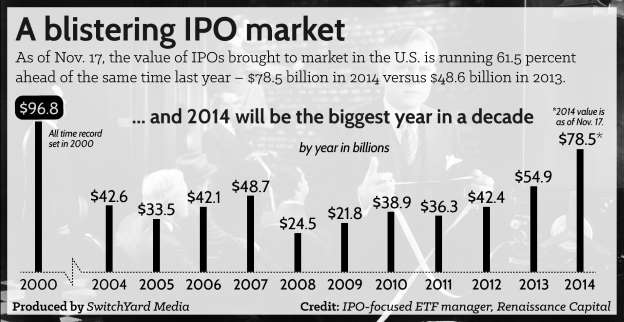
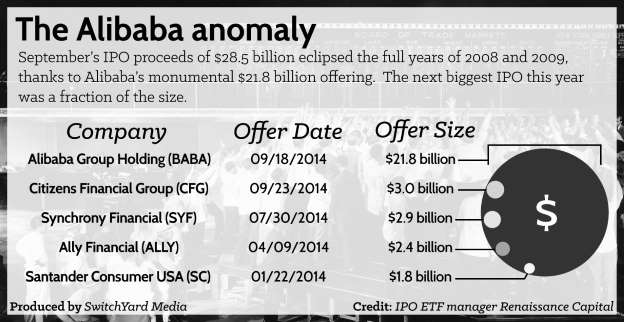
2014 – A Near Record Year for IPOs

Join Our Mailing List

A 2014 Wrap-Up 

[By Inside the Ticker]

***

1

***

2

***

3

***

More:

Assessment

Channel Surfing the ME-P

Have you visited our other topic channels? Established to facilitate idea exchange and link our community together, the value of these topics is dependent upon your input. Please take a minute to visit. And, to prevent that annoying spam, we ask that you register. It is fast, free and secure.

Conclusion

Your thoughts and comments on this ME-P are appreciated. Feel free to review our top-left column, and top-right sidebar materials, links, URLs and related websites, too. Then, subscribe to the ME-P. It is fast, free and secure.

Speaker: If you need a moderator or speaker for an upcoming event, Dr. David E. Marcinko; MBA – Publisher-in-Chief of the Medical Executive-Post – is available for seminar or speaking engagements. Contact: MarcinkoAdvisors@msn.com

OUR OTHER PRINT BOOKS AND RELATED INFORMATION SOURCES:

Financial Planning MDs 2015

Comprehensive Financial Planning Strategies for Doctors and Advisors: Best Practices from Leading Consultants

***

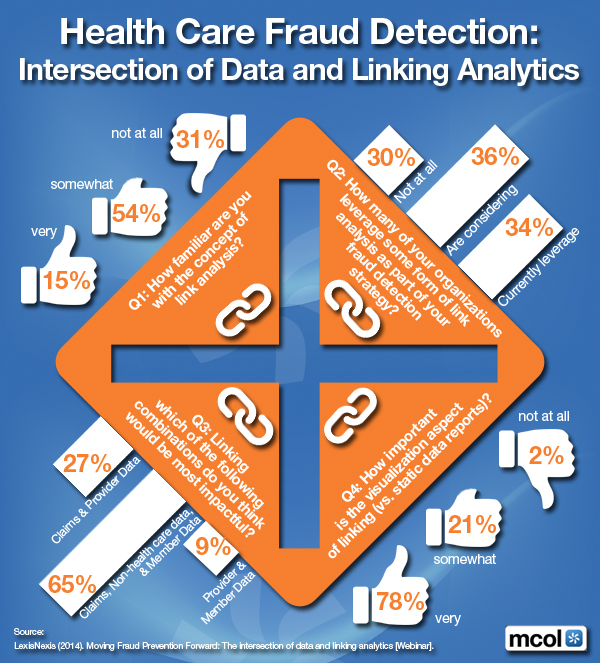
On Health Care Fraud Detection Analytics

Join Our Mailing List

On the Intersection of Data and Linking Analytics

By http://www.MCOL.com

fraud

More:

Channel Surfing the ME-P

Have you visited our other topic channels? Established to facilitate idea exchange and link our community together, the value of these topics is dependent upon your input. Please take a minute to visit. And, to prevent that annoying spam, we ask that you register. It is fast, free and secure.

Conclusion

Your thoughts and comments on this ME-P are appreciated. Feel free to review our top-left column, and top-right sidebar materials, links, URLs and related websites, too. Then, subscribe to the ME-P. It is fast, free and secure.

Speaker: If you need a moderator or speaker for an upcoming event, Dr. David E. Marcinko; MBA – Publisher-in-Chief of the Medical Executive-Post – is available for seminar or speaking engagements. Contact: MarcinkoAdvisors@msn.com

OUR OTHER PRINT BOOKS AND RELATED INFORMATION SOURCES:

Product DetailsProduct DetailsProduct Details

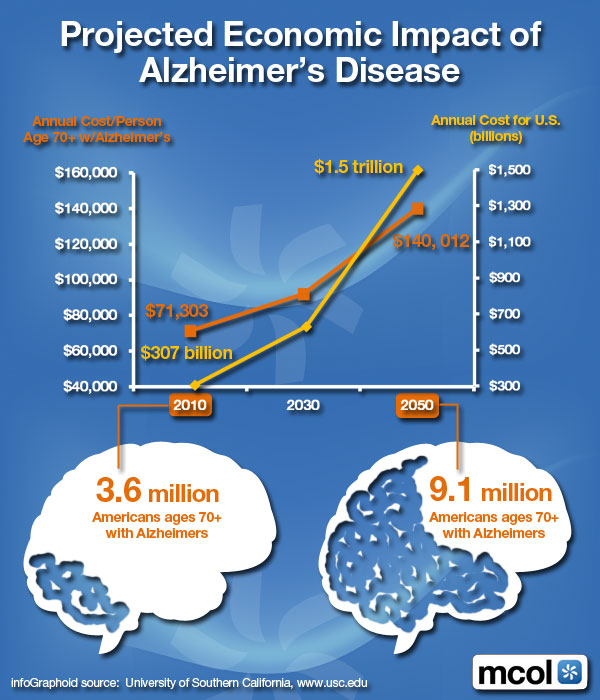
The Economic Impact of Alzheimer’s Disease

Join Our Mailing List

Economic Projections 

By http://www.MCOL.com

economics Az

Channel Surfing the ME-P

Have you visited our other topic channels? Established to facilitate idea exchange and link our community together, the value of these topics is dependent upon your input. Please take a minute to visit. And, to prevent that annoying spam, we ask that you register. It is fast, free and secure.

Conclusion

Your thoughts and comments on this ME-P are appreciated. Feel free to review our top-left column, and top-right sidebar materials, links, URLs and related websites, too. Then, subscribe to the ME-P. It is fast, free and secure.

Speaker: If you need a moderator or speaker for an upcoming event, Dr. David E. Marcinko; MBA – Publisher-in-Chief of the Medical Executive-Post – is available for seminar or speaking engagements. Contact: MarcinkoAdvisors@msn.com

OUR OTHER PRINT BOOKS AND RELATED INFORMATION SOURCES:

 Product DetailsProduct DetailsProduct Details


Physician Couples and Money Management

Join Our Mailing List 

On Cash Management Techniques

By Rick Kahler MS CFP® www.KahlerFinancial.com

Rick Kahler MS CFPMoney is just one of many challenges to becoming part of a couple; especially for physicians. Probably the most common question couples ask me concerns the best way to handle their cash management.

Specifically, they wonder if they should combine all their cash flow into one joint checking account, keep everything separate, or have some combination of both.

Stock Answers

My stock answer is “yes.” It seems that, the older I become, the fewer right answers there are and the more often I say, “It depends.” This is one of those situations where there is no one best method.

Future Physicians

Let’s consider the advantages and disadvantages of each approach.

  1. Combining everything in one joint account

The plus side of this scenario is that there is total financial transparency as to where the money comes from and goes to. Each party has full access to and opportunity to be fully aware of the money flow. It’s easy to track. There are no secrets.

Which brings us to the downside: there are no secrets, no autonomy. Each party can see the other’s spending and spend the other’s money. This works well in some relationships where the shared belief is, “My money is your money and your money is my money.” It doesn’t work well absent that philosophy. I find this scenario is often problematic when one or both of the parties want autonomy over how they spend their money without the watchful (often critical) eye of the other. Often this arrangement doesn’t work well in second marriages or where both parties have careers.

  1. Keeping everything completely separate

The positive of this scenario is that each party has complete autonomy and control over his or her money. This often works well for two-career couples or second marriages where both partners came into the union with significant pensions or assets. It may also be a good fit for unmarried couples. If one partner is a spendthrift, it can protect the other partner from unauthorized purchases.

The negatives are that it can be more difficult to manage joint expenses like housing costs and that neither party has any specifics into the spending of the other. If a partner has any type of addiction, separate accounts can serve to enable the addiction by hiding the extent of the problem from the other partner.

  1. Combination of joint and separate accounts

The advantage to this scenario is that it provides more autonomy than putting everything into a joint account, yet it offers an easier way to manage joint expenses. It can often result in a clear agreement on what is mine, yours, and ours. Some couples have a system where each one’s earnings are their own, and they each contribute put fixed amounts into joint account. Another method is to deposit all the income into the joint account and give each partner a periodic allowance.

The disadvantages to this are the need to manage three accounts and to decide who writes the checks from the joint account.

Spouses

Case Example:

Personally, my wife and I use the third option. As the major breadwinner, I deposit most of my income into the joint account, from which she pays all the family bills. A smaller amount of my income goes into my separate account that I use to pay for private schooling, funding 529 plans, and personal care like massages and haircuts.

Assessment

Problems often arise when partners assume the money should be managed (or is being managed) in a certain way. No matter which approach couples use, the most important factor is to discuss it and agree, as equal partners, to a system that works for them.

Channel Surfing the ME-P

Have you visited our other topic channels? Established to facilitate idea exchange and link our community together, the value of these topics is dependent upon your input. Please take a minute to visit. And, to prevent that annoying spam, we ask that you register. It is fast, free and secure.

More:

  1. Physician Cash Maximization Rules
  2. On Emergency Funds for Physicians
  3. Essential Insights on Successful Physician Budgeting

Conclusion

Your thoughts and comments on this ME-P are appreciated. Feel free to review our top-left column, and top-right sidebar materials, links, URLs and related websites, too. Then, subscribe to the ME-P. It is fast, free and secure.

Speaker: If you need a moderator or speaker for an upcoming event, Dr. David E. Marcinko; MBA – Publisher-in-Chief of the Medical Executive-Post – is available for seminar or speaking engagements. Contact: MarcinkoAdvisors@msn.com

OUR OTHER PRINT BOOKS AND RELATED INFORMATION SOURCES:

Comprehensive Financial Planning Strategies for Doctors and Advisors: Best Practices from Leading Consultants and Certified Medical Planners™

Integrity and Accountability [The Declining State of Physician Health and the Urgent Need for Ethical and Evidence-Based Leadership]

Join Our Mailing List

SPECIAL ME-P REPORT

[By Michael Lawrence Langan MD]

Integrity and Accountability—The Declining State of Physician Health and the Urgent Need for Ethical and Evidence-Based Leadership.

***

gag

***

Channel Surfing the ME-P

Have you visited our other topic channels? Established to facilitate idea exchange and link our community together, the value of these topics is dependent upon your input. Please take a minute to visit. And, to prevent that annoying spam, we ask that you register. It is fast, free and secure.

Conclusion

Your thoughts and comments on this ME-P are appreciated. Feel free to review our top-left column, and top-right sidebar materials, links, URLs and related websites, too. Then, subscribe to the ME-P. It is fast, free and secure.

Speaker: If you need a moderator or speaker for an upcoming event, Dr. David E. Marcinko; MBA – Publisher-in-Chief of the Medical Executive-Post – is available for seminar or speaking engagements. Contact: MarcinkoAdvisors@msn.com

OUR OTHER PRINT BOOKS AND RELATED INFORMATION SOURCES:

Product DetailsProduct Details

The Financial Planner’s Responsibility?

Join Our Mailing List 

Are Consumers Losing Ethical Ground?

By Rick Kahler MS CFP http://www.KahlerFinancial.com

Rick Kahler MS CFPSuppose one of my clients has his heart set on using half of his retirement account to buy each of his grandchildren a new car.

Or, a physician-client in a panic over falling markets wants to sell all her stocks and buy gold. What is my responsibility as their financial planner? How far should planners go to try to keep clients from making serious financial mistakes?

Just as with the patient engagement, it’s important for planners to respect clients’ competence and ability to make their own life decisions. Client-centered planners also need to remember that the goal is to help clients get what they want, not what the planner might want or think the client should want.

On the other hand, should a planner stand idly by and watch someone walk off what the planner perceives as the edge of a financial cliff?

Potential Answers?

Part of the answer to this dilemma stems from a planner’s legal obligation. Most advisors who sell financial products have no fiduciary duty and are not legally required to put their customers’ interests first. Fiduciary advisors, which include those who are fee-only, do have a legal obligation to act in their clients’ best interests.

Fiduciary Responsibility

Doctors, clergymen and attorneys are fiduciaries. But, what is the legal responsibility of a fiduciary financial planner who believes clients are about to do themselves financial harm?

Example:

Let’s say I have a client who is about to do something that may be viewed by a court of law as “extreme” or “imprudent.” (An example would be putting all his money into one asset class like gold, cash, penny stocks, etc.) At the minimum, I would need to protect myself by carefully fulfilling my legal responsibilities. This would include making certain I emphasized to the client that, given the research and data available, his actions could hurt him financially. I also would want to be sure the client fully understood and took responsibility for his actions.

***

comedy

***

In terms of the broader aspect of what financial planners owe to their clients, meeting this legal obligation is not enough. In my view, fiduciary planners’ obligation to put clients’ interests first includes an ethical responsibility to do no harm. Sometimes this ethical and legal responsibility requires planners to give clients information they may not want to hear.

As we focus on the clients’ goals and help them carry out their wishes, part of our role is to make sure they have all the information they need. This gives us a responsibility to educate ourselves so the advice we offer is as sound as we can make it. We also need to do whatever we can to help clients hear and understand that advice.

Clients who are hovering on the edge of a financial cliff are typically about to act out of strong emotions such as fear. They often can’t take in financial advice until they are able to move through that fear. It only makes things worse if financial advisors shame clients, bully them, or abandon them to their fears. The challenge for planners is to help clients reach a more rational place so they can gather additional information and make decisions that will serve them well.

Industry Update is Not Good – Give Up the ‘Fiduciary’ Fight

According to industry pundit Bob Veres, so-called Financial Advisors need to face a hard truth – Independent Registered Investment Advisors [RIAs] have lost this round.

But, we already told you so on this ME-P.

Fortunately, there are other better ways to set yourself in the medical ecosystem.

The Certified Medical Planner™ Designation

A Certified Medical Planner is a fiduciary at all times.

More:

Assessment

With the right kind of support, clients are almost always able to get past the fear that is pushing them to make imprudent decisions. Providing such support by working with clients’ emotions and beliefs about money, perhaps with the help of a financial therapist or financial coach, is well within a financial planner’s ethical responsibility. Our role is not merely to do no harm. It is also to use all the tools we have to help clients act in their own best interests.

Product Details  Product Details

Conclusion

Your thoughts and comments on this ME-P are appreciated. Feel free to review our top-left column, and top-right sidebar materials, links, URLs and related websites, too. Then, subscribe to the ME-P. It is fast, free and secure.

Speaker: If you need a moderator or speaker for an upcoming event, Dr. David E. Marcinko; MBA – Publisher-in-Chief of the Medical Executive-Post – is available for seminar or speaking engagements. Contact: MarcinkoAdvisors@msn.com

OUR OTHER PRINT BOOKS AND RELATED INFORMATION SOURCES:

Financial Planning MDs 2015

Comprehensive Financial Planning Strategies for Doctors and Advisors: Best Practices from Leading Consultants and Certified Medical Planners™

The Medical Profession, Moral Entrepreneurship, Moral Panics, and Social Control

Disrupted Physician

IMG_9005The Medical Profession, Moral Entrepreneurship, and Social Control

Sociologist Stanley Cohen  used the term “”moral panic” to characterize the amplification of deviance by the media, the public, and agents of social control.1  Labeled as being outside the central core values of consensual society, the deviants in the designated group are perceived as posing a threat to both the values of society and society itself.   Belief in the seriousness of the situation justifies intolerance and unfair treatment of the accused.   The evidentiary standard is lowered.

Howard Becker describes the role of “moral entrepreneurs,” who crusade for making and enforcing rules that benefit their own interests by bringing them to the attention of the public and those in positions of power and authority under the guise of righting a society evil. 2

And according to cultural theorist Stuart Hall, the media obtain their information from the primary definers of social…

View original post 2,659 more words

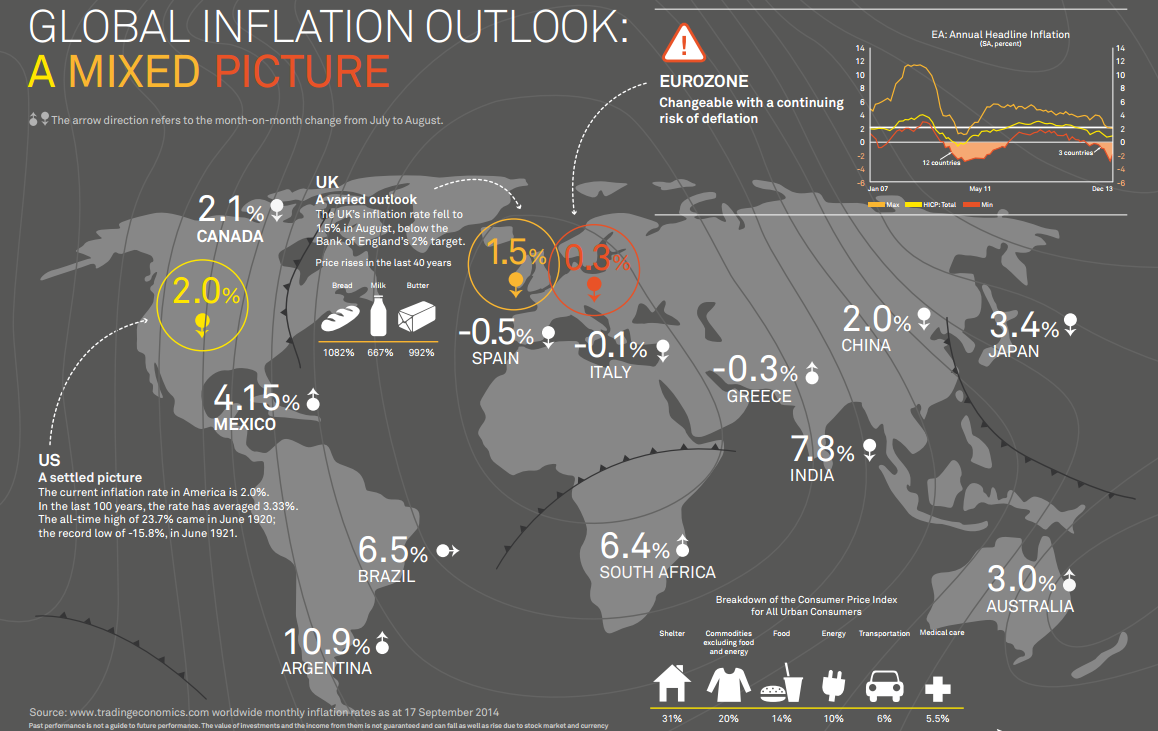
Out-Look on Global Inflation Rates for 2015

Join Our Mailing List

A Mixed Picture

[By BNY Mellon]

inflation

[Click to Enlarge]

Channel Surfing the ME-P

Have you visited our other topic channels? Established to facilitate idea exchange and link our community together, the value of these topics is dependent upon your input. Please take a minute to visit. And, to prevent that annoying spam, we ask that you register. It is fast, free and secure.

More:

Conclusion

Your thoughts and comments on this ME-P are appreciated. Feel free to review our top-left column, and top-right sidebar materials, links, URLs and related websites, too. Then, subscribe to the ME-P. It is fast, free and secure.

Speaker: If you need a moderator or speaker for an upcoming event, Dr. David E. Marcinko; MBA – Publisher-in-Chief of the Medical Executive-Post – is available for seminar or speaking engagements. Contact: MarcinkoAdvisors@msn.com

OUR OTHER PRINT BOOKS AND RELATED INFORMATION SOURCES:

Financial Planning MDs 2015

Comprehensive Financial Planning Strategies for Doctors and Advisors: Best Practices from Leading Consultants and Certified Medical Planners™