BOARD CERTIFICATION EXAM STUDY GUIDES Lower Extremity Trauma
[Click on Image to Enlarge]
ME-P Free Advertising Consultation
The “Medical Executive-Post” is about connecting doctors, health care executives and modern consulting advisors. It’s about free-enterprise, business, practice, policy, personal financial planning and wealth building capitalism. We have an attitude that’s independent, outspoken, intelligent and so Next-Gen; often edgy, usually controversial. And, our consultants “got fly”, just like U. Read it! Write it! Post it! “Medical Executive-Post”. Call or email us for your FREE advertising and sales consultation TODAY [678.779.8597] Email: MarcinkoAdvisors@outlook.com
Medical & Surgical e-Consent Forms
ePodiatryConsentForms.com
iMBA Inc., OFFICES
Suite #5901 Wilbanks Drive, Norcross, Georgia, 30092 USA [1.678.779.8597]. Our location is real and we are now virtually enabled to assist new long distance clients and out-of-town colleagues.
ME-P Publishing
SEEKING INDUSTRY INFO PARTNERS?
If you want the opportunity to work with leading health care industry insiders, innovators and watchers, the “ME-P” may be right for you? We are unbiased and operate at the nexus of theoretical and applied R&D. Collaborate with us and you’ll put your brand in front of a smart & tightly focused demographic; one at the forefront of our emerging healthcare free marketplace of informed and professional “movers and shakers.” Our Ad Rate Card is available upon request [678-779-8597].
A SPECIAL MEDICAL-EXECUTIVE-POST GUEST PRESENTATION
***
What Is a Special Purpose Vehicle (SPV)?
A special purpose vehicle is a subsidiary created by a parent company to isolate financial risk. It’s also called a special purpose entity (SPE). Its legal status as a separate company makes its obligations secure even if the parent company goes bankrupt. A special purpose vehicle is sometimes referred to as a bankruptcy-remote entity for this reason.
These vehicles can become a financially devastating way to hide company debt if accounting loopholes are exploited, as seen in the 2001 Enron scandal.
Posted on July 9, 2025 by Dr. David Edward Marcinko MBA MEd CMP™
MEDICAL EXECUTIVE-POST–TODAY’SNEWSLETTERBRIEFING
***
Essays, Opinions and Curated News in Health Economics, Investing, Business, Management and Financial Planning for Physician Entrepreneurs and their Savvy Advisors and Consultants
“Serving Almost One Million Doctors, Financial Advisors and Medical Management Consultants Daily“
A Partner of the Institute of Medical Business Advisors , Inc.
Record VC investments for women’s health: Venture-backed women’s health startups experienced unprecedented investment last year, according to a new SVB report. The report examines the factors driving such record-breaking funding—like growing recognition of how various health conditions affect women differently and disproportionately, plus the causes and biological drivers behind this imbalance. Read it here.
Stocks: Investors mostly yawned and the major indexes held steady a day after President Trump reignited his trade war by announcing higher tariffs would go into effect on 14 countries starting August 1st. Wall Street banks don’t seem concerned either, as Goldman Sachs and Bank of America became the latest strategists to raise their year-end target for the S&P 500.
Commodities: Copper futures popped as much as 17% to a new record, the largest intra-day gain since at least 1988, after Trump said he plans to place a 50% tariff on copper imports.
Posted on May 31, 2025 by Dr. David Edward Marcinko MBA MEd CMP™
By AI
***
***
What Is a SAFE Note?
A SAFE note is a type of convertible security that specifies a certain amount of money an investor will pay you as a business owner. In exchange, you agree to give the investor a certain amount of equity in your company at an agreed-upon future date. In other words, a SAFE note confers the right for an investor to purchase shares in your company in a future-priced round.
How SAFE Notes Work
According to ContractsCounsel, a SAFE note works in the following way:
An investor provides funding in exchange for the right to future equity.
You use the funding to grow your business.
After your company grows sufficiently, you secure another investor, and your company receives a “post-money valuation.”
You calculate your company’s price per share.
You convert the SAFE note into the applicable number of shares and distribute them to the SAFE investor. Typically, a SAFE note converts after an equity financing round.
Example of a SAFE Note
An investor purchases a SAFE note with a valuation cap of $20 million. During the next funding round, the value of your company is set at $40 million at $20 a share. Because the SAFE note has a valuation cap of $20 million, its owner can purchase twice as many shares of your company as new investors can. This was the incentive for the SAFE investor to provide funding earlier.
Within venture capital financing, a convertible note is a type of short-term debt financing that’s used in early-stage capital raises. In other words, convertible notes are loans to early-stage startups from investors who are expecting to be paid back when their note comes due. But, instead of being paid back in principal with interest—as would be the case with a typical loan—the investor can be repaid in equity in your company.
You might also think of a convertible note like an IOU. An investor provides you with capital now and the convertible note, acting as a short-term loan, ensures that you give the investor a stake in your startup later. From the investor’s point of view, the benefit in this exchange is that if they give you capital and a vote of confidence early on and you do well, you’ll repay them many times over.
How Do Convertible Notes Work?
Typically, an investor will provide an early-stage startup in need of capital with a loan (with repayment terms in the ballpark of a standard short-term loan, usually a year or two), along with repayment terms. This is the “note.” The note will include a due date at which time it’s mature and the balance will be due, along with interest. Generally, however, the note is not repaid like a normal short-term loan. Instead, you repay the investor for their loan with equity in your company, usually in conjunction with another funding round.
If, however, the maturity date comes along and your startup has not yet converted the note to equity, the investor can either extend the convertible note’s maturity date or call for the actual repayment of the note.
This being said, the whole idea behind convertible notes is that your company is on a strong growth trajectory and that is why the note is being issued—it amasses value for the investor and beelines to a priced round. Ultimately, the point of a convertible note is that the noteholder, or investor, doesn’t want to get their loan paid back— they want their debt to convert into a heavily discounted security in a successful, valuable company that’s growing extremely quickly.
Cons: The major downside of a convertible note is that you will eventually be giving up some control over your business. When the convertible note comes due, the investor will be granted equity in your business. If you’re not ready to split ownership of your business with outside parties, this is not the right financing option for you.
Posted on April 26, 2025 by Dr. David Edward Marcinko MBA MEd CMP™
MEDICAL EXECUTIVE-POST–TODAY’SNEWSLETTERBRIEFING
***
Essays, Opinions and Curated News in Health Economics, Investing, Business, Management and Financial Planning for Physician Entrepreneurs and their Savvy Advisors and Consultants
“Serving Almost One Million Doctors, Financial Advisors and Medical Management Consultants Daily“
A Partner of the Institute of Medical Business Advisors , Inc.
Despite rising Medicare Advantage (MA) utilization, Elevance Health has come out of Q1 2025 unscathed. The company reported adjusted diluted earnings per share of $11.97 and stuck to its prediction of $34.15 to $34.85 adjusted earnings per share for 2025. This contrasts with peer UnitedHealth Group, which lowered its earnings predictions for the year in its call last week following a disappointing quarter. (Elevance released a preview of its earnings in a Form 8-K on April 17, hours after UnitedHealth detailed its surprisingly bad quarter, to reassure investors.)
Tesla gained 9.80% following a White House announcement yesterday that it will loosen US regulations around self-driving cars.
Boston Beer popped 2.26% thanks to strong light beer sales offsetting lower craft beer revenue.
Charter Communications climbed 11.43% after it lost fewer internet customers than last year and beat estimates on both the top and bottom line.
VeriSign rose 8% following strong results for the internet infrastructure company, as well as the announcement of a new dividend.
SoFi Technologies got a 4.63% boost from Citizens JMP analysts, who initiated coverage of the fintech stock with an “outperform” rating and called the company “a compelling long-term investment opportunity.”
What’s down
T-Mobile tumbled 11.22% after the cell carrier added 495,000 new wireless phone subscribers last quarter, below Wall Street’s forecasts.
Gilead Sciences sank 2.81% due to a revenue miss in the first quarter thanks to lower sales of its cancer and Covid treatments.
Avantor plummeted 16.58% after the lab chemicals manufacturer missed estimates, cut its forecast, and announced its CEO is departing.
Saia plunged 30.66% thanks to an enormous first-quarter miss from the shipping company due to customer pullback amid tariff uncertainty.
Investments are soaring: A new SVB report found that women’s health startups saw a whopping 55% increase in VC investments in 2024. Learn about the factors driving this record-breaking funding and the sector’s long-term potential.*
Visualize: How private equity tangled banks in a web of debt, from the Financial Times.
There are a myriad of reasons for obtaining a Fair Market Value [FMV], Venture Capital [VC} and/or Investment Banking [IB] funding appraisal engagement:
Outright Selling-Buying
Partnership and Associate buy-in / buy-out
Mergers and Acquisitions
Organic growth tracking
Hospital integrations
Private and public reporting
Financing and Venture Capital
Estate and Tax Planning
And, there are many cautions, too. On July 19, 2023, the Federal Trade Commission (FTC) and the Department of Justice (DOJ) released a draft update of its Merger Guidelines, which guides the regulatory agencies in their review of both mergers and acquisitions in evaluating compliance with federal antitrust laws.
The new Guidelines replace, amend, and consolidate the Vertical Merger Guidelines and Horizontal Merger Guidelines, which were published in 2020 and 2010, respectively.
Venture capital funding in the digital health space cooled a bit in 2022 following a red-hot 2021. Overall, digital health companies raised $15.3 billion last year, down from the $29.1 billion raised in 2021—but still above the $14.1 billion raised in 2020, according to Rock Health a seed fund that supports digital health startups.
Nevertheless, analysts predict VC investors and IBs will still put a good amount of money into digital health in 2024 and 2025, especially in alternative care, drug development, health information technology, artificial intelligence, EMRs and software that reduces physician workload.
Of course. an essential first part of attracting VC interest and IB money is the crafting and presentation of your formal business plan [“pitch”] ; as well as the needed technical and managerial experience. This is crucial for success and exactly where we can assist.
At Marcinko & Associates, we appreciate that Venture Capital funding for entrepreneurs in the digital health space cooled a bit in 2020-22 following a red-hot 2018-20. And, overall, digital health companies raised $15.3 billion last year, down from the $29.1 billion raised in 2021—but still above the $14.1 billion raised in 2020, according to Rock Health a seed fund that supports digital health startups.
Nevertheless, other analysts predict VC investors and Investment Bankers will still put a good amount of money into digital health in 2024 thru 2027, especially in alternative care, drug development, health information technology, artificial intelligence, EMRs and software that reduces physician workload.
An essential first part of attracting VC interest and IB money is the crafting and presentation of your formal business plan [“elevator pitch”]; as well as the needed technical and managerial experience. This too is crucial for success and exactly where we can assist.
Of course, companies focused on scaling and growing will have different needs across the business lifecycle.
And so, no matter where you are in your journey—from seeking early funding to making final preparations for your IPO—we have equity and insightful administration solutions for you and can assist at any stage of your growth spectrum.
Posted on May 13, 2024 by Dr. David Edward Marcinko MBA MEd CMP™
By Staff Reporters
***
***
Women’s health startups are still closing multi million-dollar funding deals despite a challengingventure capital (VC) landscape in which VC dollars are on track to fall by 73% this year compared to last.
For example, in the last year, virtual maternity care program Pomelo Careraised $33 million in seed and Series A rounds led by Andreessen Horowitz; Caraway Health, a digital mental, physical, and reproductive health services platform, raised almost $17 million in a Series A round led by Maveron and GV (formerly Google Ventures); and Intrinsic, which acquires brands that make women’s health products, announced a $15 million equity fund raise (which is when a company raises money by selling its shares).
Posted on May 7, 2024 by Dr. David Edward Marcinko MBA MEd CMP™
MEDICAL EXECUTIVE-POST–TODAY’SNEWSLETTERBRIEFING
***
Essays, Opinions and Curated News in Health Economics, Investing, Business, Management and Financial Planning for Physician Entrepreneurs and their Savvy Advisors and Consultants
“Serving Almost One Million Doctors, Financial Advisors and Medical Management Consultants Daily“
A Partner of the Institute of Medical Business Advisors , Inc.
Low-income communities often struggle to access healthcare services, but a new analysis of federally qualified health centers (FQHCs)—which provide quality care to patients regardless of ability to pay—has helped nail down one reason. When it comes to screening for certain cancers, these nonprofit community health centers have fallen far behind the national average, according to a study led by cancer center researchers at the University of Texas MD Anderson and the University of New Mexico.
Healthcare bankruptciessurged in 2023, and it turns out many of the companies that went under had one thing in common: private equity (PE) ownership. At least 21% of the 80 healthcare companies that filed for bankruptcy last year were PE-owned, according to a report from the nonprofit Private Equity Stakeholder Project (PESP).
Warren Buffett oncontemplated his own mortality at Berkshire’s meeting.Succession was the topic du jour at the Berkshire Hathaway shareholder meeting in Omaha last week. After his longtime business partner Charlie Munger died last year at 99, CEO Warren Buffett—who turns 94 in August—revealed his heir apparent, Greg Abel, will have the final say on investment decisions in his absence. Buffett ended his Q&A portion with the quip, “I not only hope you come next year. I hope I come next year.” Adding to the ominous vibes, Buffett said AI is a genie that “scares the hell out of me.”
The S&P 500 index climbed 52.95 points (1.0%) to 5,180.74; the Dow Jones Industrial Average gained 176.59 points (0.5%) to 38,852.27; the NASDAQ Composite advanced 192.92 points (1.2%) to 16,349.25.
The 10-year Treasury note yield (TNX) fell about 1 basis point to 4.491%.
The CBOE Volatility Index® (VIX) was little changed at 13.48.
Semiconductors were among the strongest performers Monday behind Micron Technology (MU), whose shares rallied 4.7% after Robert W. Baird upgraded the chipmaker to “outperform” from “neutral.” Micron Technology was the top gainer in the Philadelphia Semiconductor Index (SOX), which advanced 2.2% to near a four-week high.
Small-cap stocks also got out of the gate strong this week. The Russell 2000® Index (RUT) gained 1.2% to end at a four-week high but is still up just 1.7% for the year, while the S&P 500 has gained 8.6%.
Venture capital funding in the digital health space cooled a bit in 2022 following a red-hot 2021. Overall, digital health companies raised $15.3 billion last year, down from the $29.1 billion raised in 2021—but still above the $14.1 billion raised in 2020, according to Rock Health a seed fund that supports digital health startups.
Nevertheless, analysts predict VC investors and bankers will still put a good amount of money into digital health in 2024 and 2025, especially in alternative care, drug development, health information technology technology, EMRs and software that reduces physician workload.
Of course. an essential first part of attracting VC interest and money is the crafting and presentation of your formal business plan [“elevator pitch”]; as well as the needed technical and managerial experience. This is crucial for success and exactly where we can assist.
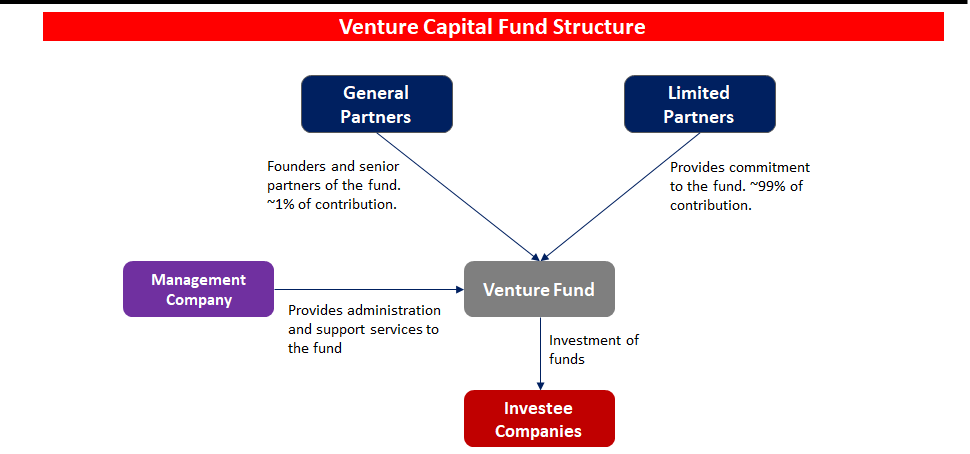
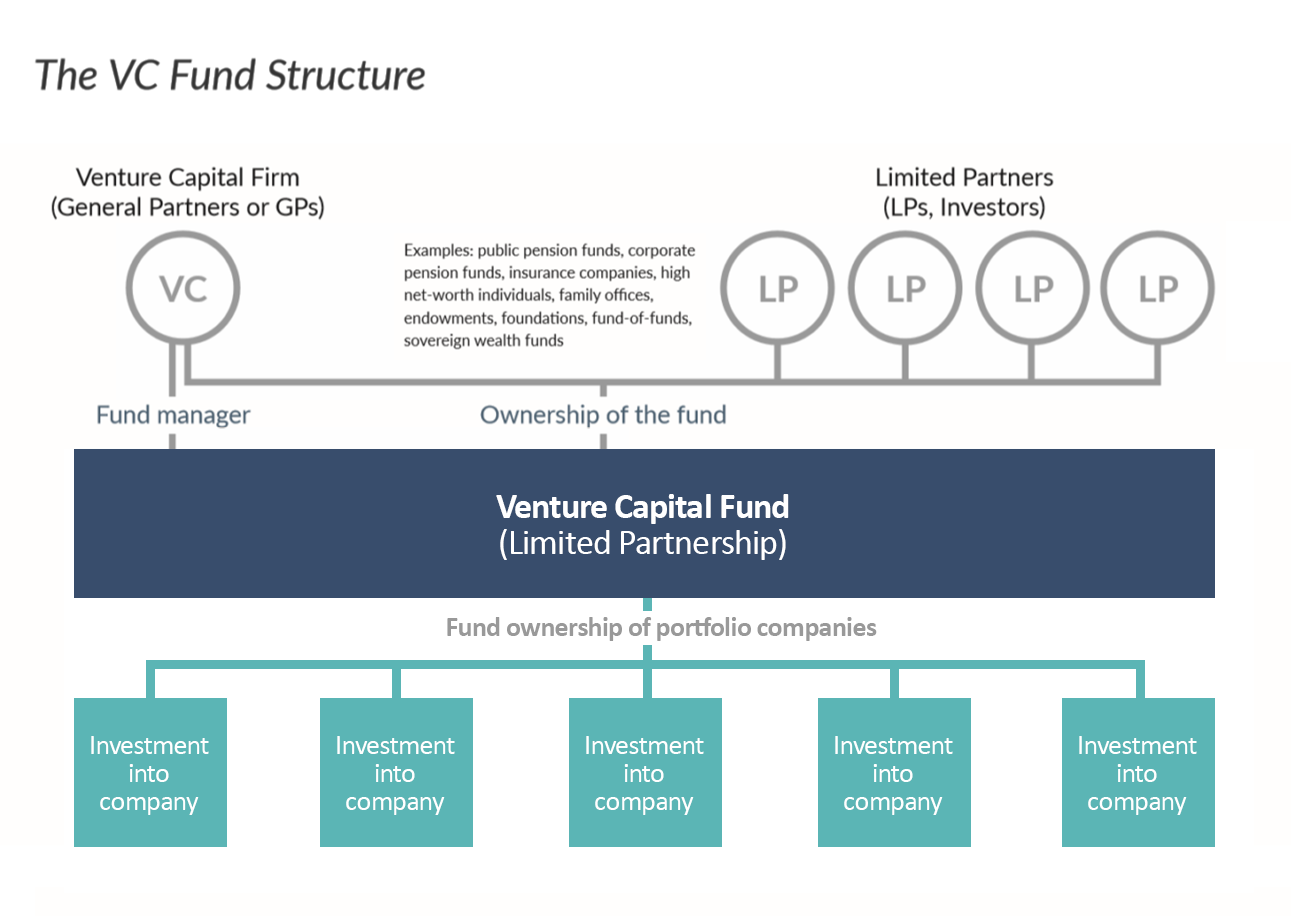
DEFINITION: Venture capital (VC) is a form of private equity and a type of financing that investors provide to start-up companies and small businesses that are believed to have long term growth potential. Venture capital generally comes from well-off investors, investment banks, and any other financial institutions. Venture capital doesn’t always have to be money. In fact, it often comes as technical or managerial expertise. VC is typically allocated to small companies with exceptional growth potential or to those that grow quickly and appear poised to continue to expand.
DEFINITION:Disruptive innovation is a business that creates a new market or value network, or enters at the bottom of an existing market and eventually displaces established market-leading firms, products, and alliances. The term, “disruptive innovation” was popularized by the American academic Clayton Christensen and his collaborators beginning in 1995, but the concept had been previously described in Richard N. Foster‘s book “Innovation: The Attacker’s Advantage” and in the paper Strategic Responses to Technological Threats.
Start-Ups and industry disruptors: Here are just a few of the recent collapses, as per the New York Times:
WeWork, which raised over $11 billion as a private startup, went bankrupt earlier this fall.
Hopin, the virtual events startup that rode a Covid Virus wave to a $7.6 billion valuation, sold its primary business units for $15 million.
The e-scooter company Bird, which became the fastest startup ever to land a $1 billion valuation, was de-listed from the NYSE and is now worth $7 million.
Overall, more than 3,200 private venture-capital backed US startups that have collectively raised $27.2 billion have gone out of business this year, according to the New York Times and PitchBook. So, why are the disruptors doing down?
Well, the Federal Reserve raised interest rates to a 22-year high. The cost of capital has become far more expensive, and investments that are less risky have gotten more attractive. This year has been particularly bad.
It’s a sad and instantaneous end to the golden Venture Capital years fueled by low interest rates and the growth of the mobile interne. Investment in US startups jumped by 8x between 2012 and 2022 to $344 billion dollars.
DEFINITION: According to the Food and Drug Administration [FDA], the broad scope of digital health includes categories such as mobile health (mHealth), health information technology (IT), wearable devices, tele-health and tele-medicine, and personalized medicine. From mobile medical apps and software that support the clinical decisions doctors make every day to artificial intelligence and machine learning, digital technology has been driving a revolution in health care. Digital health tools have the vast potential to improve our ability to accurately diagnose and treat disease and to enhance the delivery of health care for the individual. Digital health technologies use computing platforms, connectivity, software, and sensors for health care and related uses. These technologies span a wide range of uses, from applications in general wellness to applications as a medical device. They include technologies intended for use as a medical product, in a medical product, as companion diagnostics, or as an adjunct to other medical products (devices, drugs, and biologics). They may also be used to develop or study medical products.
As many investors predicted, digital health funding took a dive in 2023, according to Rock Health’s year-end funding report. Startups got creative to stay afloat but many digital health founders will have to “face the music” in 2024, the VC firm’s analysts say.
Editor’s Note: I am on the Advisory Board of Medblob™a start-up based in Boston, MA. The digital mission of Medblob™ is to improve community and national health by allowing patients to better manage their health, providers to better treat their patients, and researchers to have the best information to discover cures to the most prevalent and pernicious diseases.
The markets are down again and stocks continued their September slump with tech companies getting hit especially hard as investors fretted about another possible Fed rate hike because of data showing prices for manufacturing and services trending upward. It was a mixed bag for the meme stock faithful, with AMC hitting an all-time low after releasing a plan to sell new shares and GameStop rising after-hours thanks to better-than-expected sales last quarter.
This all may demonstrate that private companies looking to fund growth in this high-interest rate environment are facing a tough time raising capital amidst falling valuations, according to a new Deloitte survey.
The problem is particularly acute for smaller companies. Many of the companies challenged by capital raising saw themselves putting out the “For Sale” sign within the next six months, which could lead to an M&A boom later this year.
“The No. 1 largest factor that people saw as a challenge or a barrier was a decrease in valuations of their business,” Wolfe Tone, vice chair and US and Global Deloitte Private leader, told CFO Brew. “Clearly, increasing interest rates and pricing was closely behind that. Liquidity challenges not far behind that.”
Private companies have been looking to raise capital to fund a range of growth initiatives; meeting talent needs and expanding tech capabilities are at the top of the list, Tone said. Not far behind was “increasing productivity and improving cost structures.”
From 2020 to 2021, when VC money was cheap and tech IPOs were hot, the tech companies that went public via IPO were mostly growth-focused unicorns that had yet to see any profits. But Instacart, which has turned a profit for the last five quarters, is something different.
Chip design company Arm, which debuted last week in the year’s biggest IPO, was the first venture-capital-backed startup to go public in the US since December 2021. It may have broken the ice, but Instacart is the next big test.
However, being profitable and being valuable aren’t the same thing. In 2020, investors valued Instacart at $39 billion, its highest valuation and roughly $29 billion more than what it’s expected to be worth to investors today.
Late-stage investors in Instacart, such as Fidelity and T. Rowe Price, stand to lose 40% or more.
Sequoia Capital—Instacart’s largest external shareholder—was also one of its earliest. Its initial $8 million investment in 2013 is worth $1 billion today, but its later investment of $50 million in 2021 has shrunk to $12 million.
Over the past decade, hospital acquisitions have changed the healthcare market, with transactions leading to hospital consolidation and resulting in larger health systems and fewer hospitals.
An August 2023 study conducted by the Public Policy Institute of health insurer Elevance Health (formerly known as Anthem) found that when independent hospitals are acquired by health systems, employers, payors, and consumers are exposed to higher pricing without a similar increase in hospital care access or quality of care. This Health Capital Topics article will review the Elevance study and the impact of acquisitions on independent hospital pricing. (Read more…)
Venture capital funding in the digital health space cooled a bit in 2022 following a red-hot 2021. Overall, digital health companies raised $15.3 billion last year, down from the $29.1 billion raised in 2021—but still above the $14.1 billion raised in 2020, according to Rock Health a seed fund that supports digital health startups.
Nevertheless, analysts predict VC investors and bankers will still put a good amount of money into digital health in 2024 and 2025, especially in alternative care, drug development, health information technology technology, EMRs and software that reduces physician workload.
Of course. an essential first part of attracting VC interest and money is the crafting and presentation of your formal business plan [“elevator pitch”]; as well as the needed technical and managerial experience. This is crucial for success and exactly where we can assist.
Posted on August 25, 2023 by Dr. David Edward Marcinko MBA MEd CMP™
By Staff Reporters
***
***
A private equity firm just ate Subway
More precisely, the families that founded the sandwich chain agreed to sell it to PE firm Roark Capital after seeking a buyer. The terms of the deal weren’t made public, but the Wall Street Journal previously reported that Roark offered ~$9.6 billion.
Subway, which has been losing market share to other sandwich chains, will be in good foodie company at Roark as it also owns Dunkin’, Jimmy John’s, Baskin-Robbins, Auntie Anne’s, Carvel, Cinnabon and other eateries.
Venture capital funding in the digital health space cooled a bit in 2022 following a red-hot 2021. Overall, digital health companies raised $15.3 billion last year, down from the $29.1 billion raised in 2021—but still above the $14.1 billion raised in 2020, according to Rock Health a seed fund that supports digital health startups.
Nevertheless, analysts predict VC investors and bankers will still put a good amount of money into digital health in 2024 and 2025, especially in alternative care, drug development, health information technology technology, EMRs and software that reduces physician workload.
Of course. an essential first part of attracting VC interest and money is the crafting and presentation of your formal business plan [“elevator pitch”]; as well as the needed technical and managerial experience. This is crucial for success and exactly where we can assist.
Venture capital funding in the digital health space cooled a bit in 2022 following a red-hot 2021. Overall, digital health companies raised $15.3 billion last year, down from the $29.1 billion raised in 2021—but still above the $14.1 billion raised in 2020, according to Rock Health a seed fund that supports digital health startups.
Nevertheless, analysts predict VC investors and IBs will still put a good amount of money into digital health in 2024 and 2025, especially in alternative care, drug development, health information technology, artificial intelligence, EMRs and software that reduces physician workload.
Of course. an essential first part of attracting VC interest and IB money is the crafting and presentation of your formal business plan [“pitch”] ; as well as the needed technical and managerial experience. This is crucial for success and exactly where we can assist.
Posted on April 27, 2023 by Dr. David Edward Marcinko MBA MEd CMP™
By Staff Reporters
***
***
Venture capital funding in the digital health space cooled significantly in 2022 following a red-hot 2021; according to Healthcare Brew. Overall, digital health companies raised $15.3 billion last year, down substantially from the $29.1 billion raised in 2021—but still above the $14.1 billion raised in 2020, according to research from Rock Health, a seed fund that supports digital health startups.
Analysts predict investors will still put a good amount of money into digital health in 2023, particularly in alternative care, drug development technology, and software that reduces physician workload. But investors will likely pull dollars away from a few specific sectors this year.
“There is definitely more diligence, a little bit more skepticism in the investments that are made. So you tend to see investments go slower because diligence is taking longer or investors are being a little bit more conservative,” Adriana Krasniansky, head of research at Rock Health, told Healthcare Brew.
Direct-to-consumer products. The first sector in which Krasniansky expects to see funding slow this year is direct-to-consumer (DTC) products. One reason is that with recession fears, “Consumer spend is not as readily available,” Krasniansky said.
But Apple’s new data privacy rules are also partially to blame. As of April 2021, apps sold through Apple’s App Store must ask users for permission to track activity, and users can opt out. That tracking data is crucial for advertisers to create personalized ads.
“Apple’s privacy measures have impacted customer acquisition costs, making the DTC channel more challenging for a lot of startups—and not just digital health startups,” said Krasniansky.
Posted on February 24, 2023 by Dr. David Edward Marcinko MBA MEd CMP™
For Healthcare Entrepreneurs
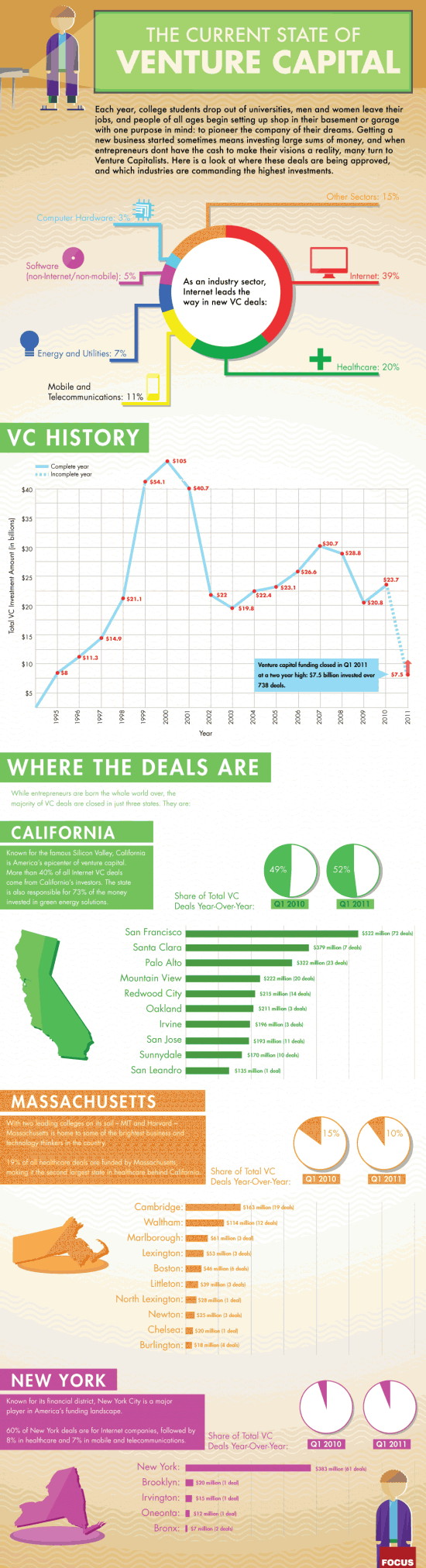
Getting a new medical practice or healthcare business up and running sometimes means investing large sums of money, and when physician entrepreneurs don’t have the cash to make their visions reality, many turn to venture capitalists.
Here is a look at where these deals are being approved, and which industries are commanding the highest investments. Brought to you by focus.com in collaboration with Column Five
Conclusion
Your thoughts and comments on this ME-P are appreciated. Feel free to review our top-left column, and top-right sidebar materials, links, URLs and related websites, too. Then, subscribe to the ME-P. It is fast, free and secure.
Speaker: If you need a moderator or speaker for an upcoming event, Dr. David E. Marcinko; MBA – Publisher-in-Chief of the Medical Executive-Post – is available for seminar or speaking engagements. Contact: MarcinkoAdvisors@msn.com
OUR OTHER PRINT BOOKS AND RELATED INFORMATION SOURCES:
Posted on December 12, 2022 by Dr. David Edward Marcinko MBA MEd CMP™
By Staff Reporters
***
***
In recent months, Japan’s SoftBank Group Corp. has pared its stakes in the Chinese e-commerce company Alibaba Group Holding Ltd. and the Indian mobile-payments company Paytm, in both cases following declines in their share prices. Berkshire Hathaway Inc., Warren Buffett’s company, has been gradually reducing its stake in BYD Co., a Chinese electric-vehicle maker that it has owned shares in since 2008.
And, Tencent Holdings Ltd., a tech giant that earlier amassed stakes in hundreds of tech firms, is divesting itself of billions of dollars in shares of listed companies. Meanwhile, Tencent‘s biggest shareholder, Prosus NV, is cutting its large stake in the Chinese social-media and gaming company.
***
Finally, the value of new Venture Capital deals globally is down 42% in the first 11 months of this year compared to last, to $286 billion, according to research firm Preqin. That’s the deepest slump the researchers have recorded yet, surpassing the nadirs of the early 2000s and the 34% collapse after the 2008 financial crisis.
Posted on September 14, 2022 by Dr. David Edward Marcinko MBA MEd CMP™
By Dan McCarthy
***
***
Like everyone’s desire to work, venture funding sank to a new low during the dog days of summer. In August, global venture funding fell to $25.2 billion, per Crunchbase, less than half of the ~$53 billion invested one year prior, and the lowest monthly venture-funding total in two years. It’s down ~10% from the previous month.
Even so…The ongoing pullback didn’t stop several companies—including Adam Neumann’s, uh, controversial, comeback project Flow—from locking down significant investment rounds in August. Here are three rounds that stood out to us…all of which happen to play in the clean-energy space:
Terrapower, a nuclear tech developer founded by Bill Gates,raised $750 million. Gates co-led the round with SK Group, which plowed $250 million into the company. In addition to nuclear power generation, the company is also researching nuclear medicine techniques.
Longroad Energy, a renewable energy developer based in Boston, raised $500 million. The company said that the funding would catalyze a shift toward an owned-and-operated business model and enable it to grow the capacity of its wind, solar, and storage assets from 1.5 gigawatts (GW) to 8.5 GW in the next five years.
Lunar, a home-electrification startup founded by a former Tesla Energy exec, debuted with $300 million in funding, with residential solar bigwig Sunrun and SK Group (hello again) as investors. Later this year, Lunar plans to begin releasing hardware and software products that make it easier for homes to generate, use, and store carbon-free energy.
Monthly venture funding has been trending down since it hit a record high of $69.4 billion last November, as rising rates, inflation, and general economic uncertainty have turned the investing temperature from “deep summer” to “that first really cold day of winter where you neglect to wear a proper coat.” But it’s time for two of our most common refrains on this subject: 1) $25 billion in monthly VC funding is still a lot of money 2) VCs are sitting on a record high of more than half a trillion dollars in dry powder. Those reserves are unlikely to be emptied in 2022, but there is a lot of committed capital on hand for startups to vie for.
Posted on May 29, 2022 by Dr. David Edward Marcinko MBA MEd CMP™
By Staff Reporters
***
Crypto-currency trader Capo reported that Bitcoin (CRYPTO: BTC) is poised to hit a new 52-week low as another sell-off event is insight. The prediction comes as the market is showing signs of weakness, and as Bitcoin managed to trade above $28,400, slightly higher than its 52-week low of $26,910. Capo warned that the support area of around $28,000 is flashing signs of demand exhaustion, as BTC has revisited the price level six times quickly.
***
Finally, some venture capital firms are telling their portfolio companies to start cutting costs and looking for ways to cushion their cash position. It’s a stark contrast to last year, when IPOs were raising record amounts of cash, valuations were sky high and venture firms’ wallets were wide open. For example, Y Combinator said companies have to “understand that the poor public market performance of tech companies significantly impacts VC investing.”







 Support our online development, and advance our onground research initiatives in free market economics, as we seek to showcase the brightest Next-Gen minds.
THE ME-P DISCLAIMER: Posts, comments and opinions do not necessarily represent iMBA, Inc., but become our property after submission. Copyright © 2006 to-date. iMBA, Inc allows colleges, universities, medical and financial professionals and related clinics, hospitals and non-profit healthcare organizations to distribute our proprietary essays, photos, videos, audios and other documents; etc. However, please review copyright and usage information for each individual asset before submission to us, and/or placement on your publication or web site. Attestation references, citations and/or back-links are required. All other assets are property of the individual copyright holder.
Support our online development, and advance our onground research initiatives in free market economics, as we seek to showcase the brightest Next-Gen minds.
THE ME-P DISCLAIMER: Posts, comments and opinions do not necessarily represent iMBA, Inc., but become our property after submission. Copyright © 2006 to-date. iMBA, Inc allows colleges, universities, medical and financial professionals and related clinics, hospitals and non-profit healthcare organizations to distribute our proprietary essays, photos, videos, audios and other documents; etc. However, please review copyright and usage information for each individual asset before submission to us, and/or placement on your publication or web site. Attestation references, citations and/or back-links are required. All other assets are property of the individual copyright holder.

































 The Leading Business Education Network for Doctors, Financial Advisors and Health Industry Consultants