AI in Medicine – Who is Responsible?
[By staff reporters]
https://qz.com/1905712/when-ai-in-healthcare-goes-wrong-who-is-responsible-2/
Filed under: iMBA, Inc., Information Technology | Tagged: AI, AI in medicine, HIT, IT | 3 Comments »
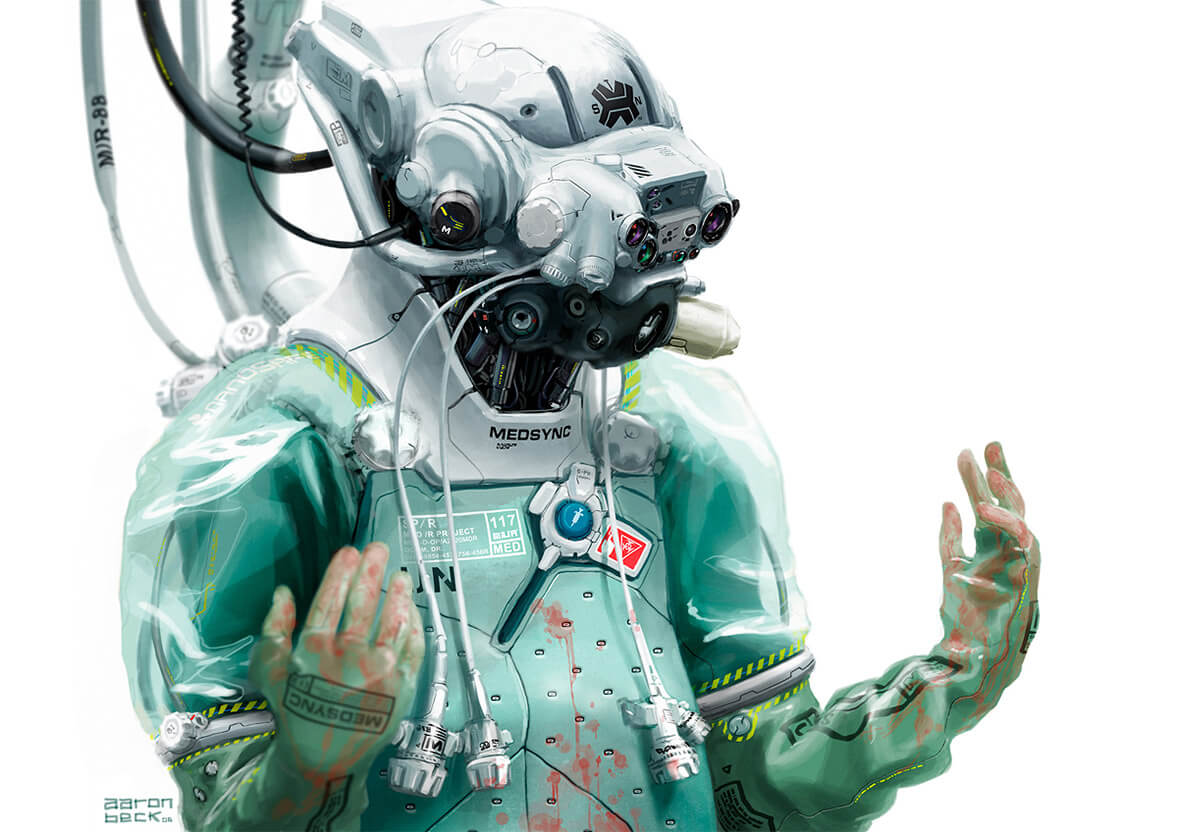
AI in Medicine – Who is Responsible?
[By staff reporters]
Filed under: iMBA, Inc., Information Technology | Tagged: AI, AI in medicine, HIT, IT | 3 Comments »
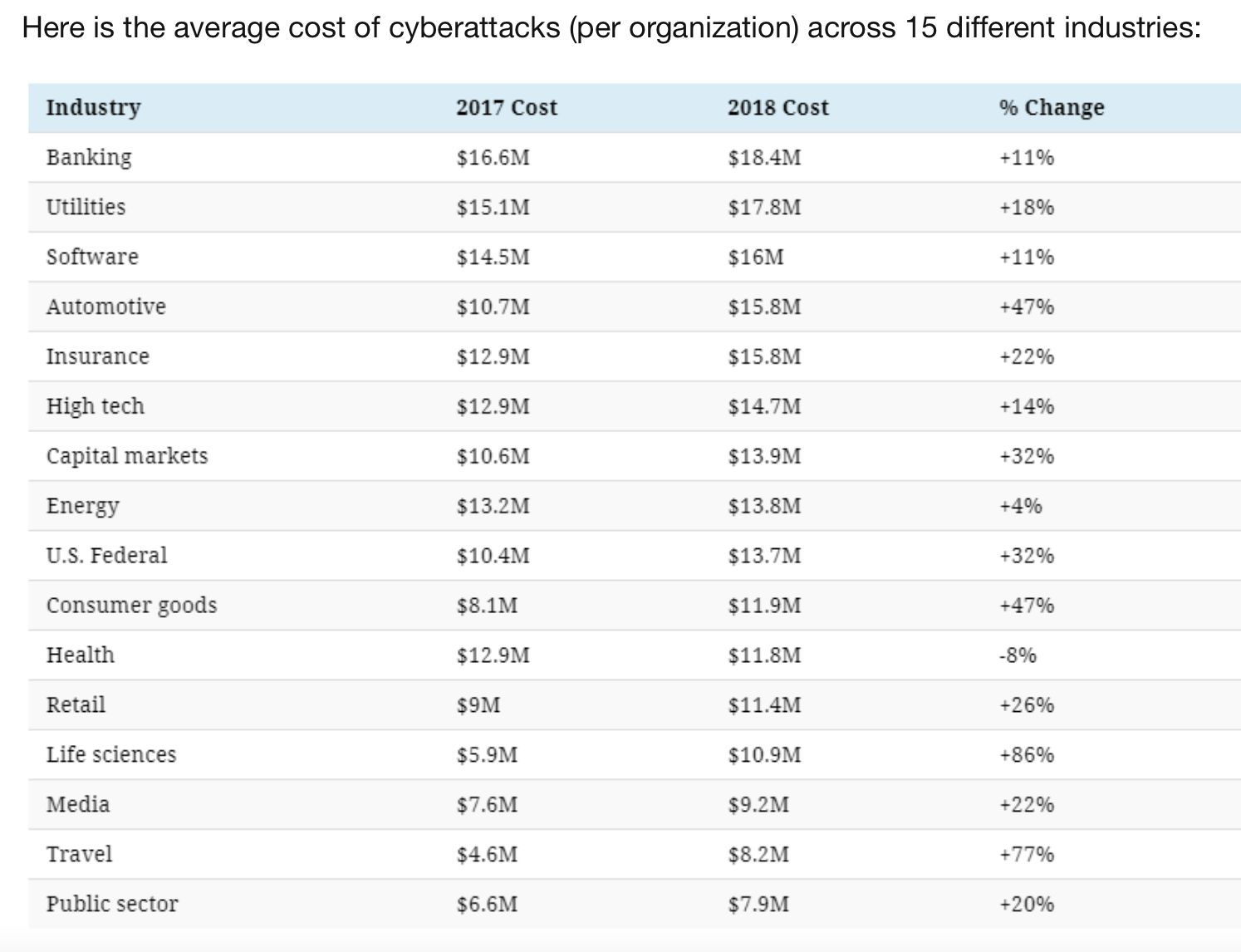
Across 15 Industries – Including Healthcare
***
***
Filed under: iMBA, Inc., Information Technology | Tagged: cyber attacks, hackers, IT | 2 Comments »
***
Filed under: Information Technology | Tagged: digital health funding, Health information, HIT, IT | Leave a comment »
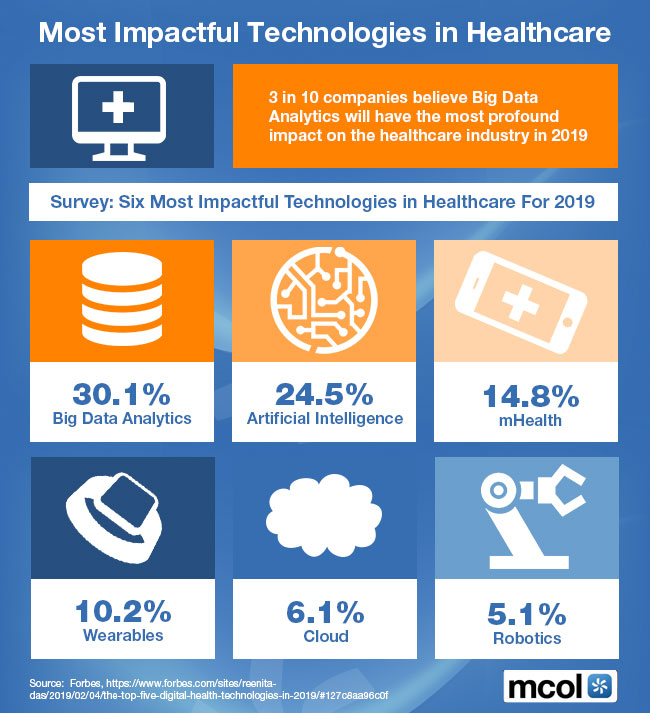
A Survey
***
***

Subscribe: MEDICAL EXECUTIVE POST for curated news, essays, opinions and analysis from the public health, economics, finance, marketing, IT, business and policy management ecosystem.
DOCTORS:
“Insurance & Risk Management Strategies for Doctors” https://tinyurl.com/ydx9kd93
“Fiduciary Financial Planning for Physicians” https://tinyurl.com/y7f5pnox
“Business of Medical Practice 2.0” https://tinyurl.com/yb3x6wr8
***
Filed under: Information Technology | Tagged: Health Technology Today, HIT, IT | Leave a comment »
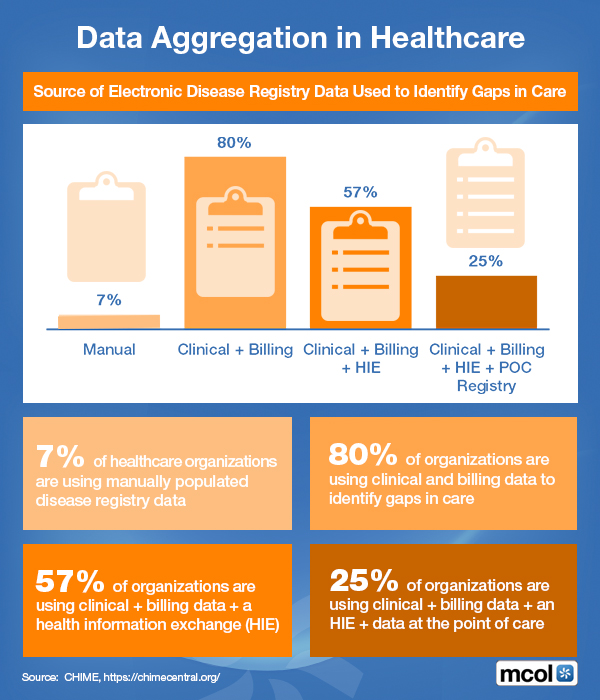
Electronic “Disease” Registry Data Used to Identify Care Gaps
***
***

Conclusion
Your thoughts and comments on this ME-P are appreciated. Feel free to review our top-left column, and top-right sidebar materials, links, URLs and related websites, too. Then, subscribe to the ME-P. It is fast, free and secure.
Speaker: If you need a moderator or speaker for an upcoming event, Dr. David E. Marcinko; MBA – Publisher-in-Chief of the Medical Executive-Post – is available for seminar or speaking engagements.
Book Marcinko: https://medicalexecutivepost.com/dr-david-marcinkos-bookings/
Subscribe: MEDICAL EXECUTIVE POST for curated news, essays, opinions and analysis from the public health, economics, finance, marketing, IT, business and policy management ecosystem.
DOCTORS:
“Insurance & Risk Management Strategies for Doctors” https://tinyurl.com/ydx9kd93
“Fiduciary Financial Planning for Physicians” https://tinyurl.com/y7f5pnox
“Business of Medical Practice 2.0” https://tinyurl.com/yb3x6wr8
HOSPITALS:
“Financial Management Strategies for Hospitals” https://tinyurl.com/yagu567d
***
Filed under: Information Technology | Tagged: ARRA HITECH, Healthcare Data Aggregation, HIT, IT | Leave a comment »
By Staff Reporters
Healthcare consumers show mounting interest in virtual, on-demand care
Fierce Healthcare, August 14, 2017
Transforming the mHealth Experience With Digital Health Assistants
HIT Consultant, August 14, 2017
Google buys smartphone health monitoring startup Senosis
Pharma Phorum, August 14, 2017
Could Trump’s Opioid Emergency Boost Telemedicine, mHealth Use?
mHealth Intelligence, August 11, 2017
Trump Administration Takes on VA Telehealth Opportunities
The Natonal Law Review, August 11, 2017
More and more businesses are offering telehealth services as an employee benefit
MedCity News, August 9, 2017
VR Glasses Give Doctors a New mHealth Tool to Treat Concussions
mHealth Intelligence, July 31, 2017
New Senate bill seeks to reduce restrictions on telemedicine use
MobiHealth News, July 31, 2017
The allure of health care for tech giants
Axios, July 20, 2017
Conclusion
Your thoughts and comments on this ME-P are appreciated. Feel free to review our top-left column, and top-right sidebar materials, links, URLs and related websites, too. Then, subscribe to the ME-P. It is fast, free and secure.
Speaker: If you need a moderator or speaker for an upcoming event, Dr. David E. Marcinko; MBA – Publisher-in-Chief of the Medical Executive-Post – is available for seminar or speaking engagements. Contact: MarcinkoAdvisors@msn.com
OUR OTHER PRINT BOOKS AND RELATED INFORMATION SOURCES:
***
Filed under: Information Technology | Tagged: American Telemedicine Association, HIT, IT, Medicare Telehealth, mHealth, Mobile Health, teleHealth | 5 Comments »
10 Reasons Why People Should Not Fear Digital Health Technologies
***
***
Conclusion
Your thoughts and comments on this ME-P are appreciated. Feel free to review our top-left column, and top-right sidebar materials, links, URLs and related websites, too. Then, subscribe to the ME-P. It is fast, free and secure.
Speaker: If you need a moderator or speaker for an upcoming event, Dr. David E. Marcinko; MBA – Publisher-in-Chief of the Medical Executive-Post – is available for seminar or speaking engagements. Contact: MarcinkoAdvisors@msn.com
OUR OTHER PRINT BOOKS AND RELATED INFORMATION SOURCES:


Mike Stahl PhD MBA / Foreword Dr.Mata MD CIS / [Dr. Getzen PhD
***
Filed under: Experts Invited, Information Technology | Tagged: Bertalan Meskó, health information technolgy, HIT, IT, MD PhD | 3 Comments »
A Review
By Robert E.H. Khoo MD FRCS(C) FACS
***
***
Conclusion
Your thoughts and comments on this ME-P are appreciated. Feel free to review our top-left column, and top-right sidebar materials, links, URLs and related websites, too. Then, subscribe to the ME-P. It is fast, free and secure.
Speaker: If you need a moderator or speaker for an upcoming event, Dr. David E. Marcinko; MBA – Publisher-in-Chief of the Medical Executive-Post – is available for seminar or speaking engagements. Contact: MarcinkoAdvisors@msn.com
OUR OTHER PRINT BOOKS AND RELATED INFORMATION SOURCES:
***

[Mike Stahl PhD MBA] *** [Foreword Dr.Mata MD CIS] *** [Dr. Getzen PhD]
***
Filed under: Information Technology | Tagged: HIT, IT, Robert E.H. Khoo, Windows 10 | 1 Comment »
The Presidential Election 2012
This November saw healthcare executives pay big campaign money to both political parties.
Health IT vendors, however, upped the ante this election year, paying out some hefty donations of their own. Judith Faulkner, CEO of Epic, and Allscripts CEO Glen Tullman are among this year’s top spenders.
Conclusion
Your thoughts and comments on this ME-P are appreciated. Feel free to review our top-left column, and top-right sidebar materials, links, URLs and related websites, too. Then, subscribe to the ME-P. It is fast, free and secure.
Link: http://feeds.feedburner.com/HealthcareFinancialsthePostForcxos
Speaker: If you need a moderator or speaker for an upcoming event, Dr. David E. Marcinko; MBA – Publisher-in-Chief of the Medical Executive-Post – is available for seminar or speaking engagements. Contact: MarcinkoAdvisors@msn.com
Our Other Print Books and Related Information Sources:
Health Dictionary Series: http://www.springerpub.com/Search/marcinko
Practice Management: http://www.springerpub.com/product/9780826105752
Physician Financial Planning: http://www.jbpub.com/catalog/0763745790
Medical Risk Management: http://www.jbpub.com/catalog/9780763733421
Hospitals: http://www.crcpress.com/product/isbn/9781439879900
Physician Advisors: www.CertifiedMedicalPlanner.org
Filed under: Information Technology | Tagged: Allscripts, AthenaHealth, EHRs, EMRs, Epic, Glen Tullman, Health IT Vendors Pony up Political Cash to Both Parties, HITECH, IT, Jonthan Bush, Judith Faulkner | 3 Comments »
An Encore Presentation from a ME-P Thought-Leader
By Ann Miller RN MHA [Executive-Director]
In this ME-P, Shahid N. Shah MS shares his best advice for information technology workers looking to get started in the healthcare industry.
Mr. Shah is also known as the Healthcare IT Guy [http://www.healthcareguy.com] informing us about technology issues in the healthcare field.
Link: http://www.physbiztech.com/video/shahid-shah-how-get-started-healthcare-it
###
More Expert Advice from Leaders in Healthcare Management
And, sourced below are related interviews with these experts:
Link: Health Administration Degrees http://www.healthadministrationdegrees.com
Assessment
Shahid also authored Chapter 13 on eMRs, HIT and Clinical GroupWare [INTEROPERABLE e-MRs FOR THE SMALL-MEDIUM SIZED MEDICAL PRACTICE] in our best-selling book, the “Business of Medical Practice” http://businessofmedicalpractice.com/chapter-13-2/
So, the text and videos are worth a look www.BusinessofMedicalPractice.com Our colleague, and uber hospitalist Robert Wachter MD, is also mentioned in the book.
Conclusion
Your thoughts and comments on this ME-P are appreciated. Feel free to review our top-left column, and top-right sidebar materials, links, URLs and related websites, too. Then, subscribe to the ME-P. It is fast, free and secure.
Link: http://feeds.feedburner.com/HealthcareFinancialsthePostForcxos
Speaker: If you need a moderator or speaker for an upcoming event, Dr. David E. Marcinko; MBA – Publisher-in-Chief of the Medical Executive-Post – is available for seminar or speaking engagements. Contact: MarcinkoAdvisors@msn.com
Our Other Print Books and Related Information Sources:
Health Dictionary Series: http://www.springerpub.com/Search/marcinko
Practice Management: http://www.springerpub.com/product/9780826105752
Physician Financial Planning: http://www.jbpub.com/catalog/0763745790
Medical Risk Management: http://www.jbpub.com/catalog/9780763733421
Hospitals: http://www.crcpress.com/product/isbn/9781439879900
Physician Advisors: www.CertifiedMedicalPlanner.org
Filed under: Career Development, Experts Invited, Information Technology, Videos | Tagged: EHRs, EMRs, Healthcare IT Guy, HIT, How to Get Started in Healthcare IT, IT, Shahid Shah MS | 1 Comment »
A Growing Trend?
By Cyndi Laurenti
The rapidly evolving technological era has ushered a host of industries into the digital world, including the medical field. Health care professionals in private and public institutions and even masters and PhD programs are quickly learning the immense benefits of utilizing technology in their practices and this has specifically included the use of the tablet computer.
Convenience and Mobility
In addition to the convenience tablets offer in size and mobility, more and more production companies are creating interfaces and programs specifically geared towards the healthcare industry and the tablet computer makes them more accessible and dynamic than the traditional clipboard. This is crucial in an industry where time is of the essence and life-changing decisions are made from moment to moment. Having a tablet computer puts the latest resources and tools in doctors and other health care professionals’ hands so they can make decisions efficiently.
Brand Neutral?
Although Tablet computers tend to be associated with the most popular brands like the iPad by Apple, a recent survey of 178 doctors indicated that even though the healthcare industry wants a tablet, it may not necessarily want the iPad in particular which does not have all the applications they require.
A whole industry of tablets has been specifically designed to meet the medical field’s particular needs, one example being the motion computing tablet PC. The West Clinic in Memphis which was founded by Supportive Oncology Services (SOS) and which caters for over 10,000 patients found that the motion computing tablet computer enabled them not only to streamline information between patients and physicians, but that it also lead to an improved quality of care and life for their patients and increased efficiency for their caregivers.
Other Healthcare Early Adopters
Another facility that adapted the use of tablet computers is the Lancaster General Hospital in Lancaster, PA, which has been rated as one of the top 100 hospitals for its efficiency and quality of care. The doctors and nurses are currently using 170 tablet computers in 21 units for a variety of tasks. Jon White, M.D. called it a ‘productivity tool’ and it is utilized around the hospital for patient safety through an application that assigns drugs through a unique bar code which ensures the right patient is getting the right medication and dose. It is also used to access patient records from anywhere in the hospital, review patient orders or test results, and access a library of medical reference information.
A third facility that utilizes the tablet computer is St. Mary’s Medical Center, an acute care facility in Evanville, Indiana, that provides inpatient and outpatient care. The tablet computer has currently replaced their paper-based patient charts, and cut down nurses’ charting times significantly.
Assessment
There is little doubt that the tablet computer has and will continue to revolutionize the healthcare industry. Tremendous positive changes have been made like the streamlining of once time-consuming and arduous processes. This increased efficiency ultimately translates into quality care for patients and the continued advancement of the medical field.
Conclusion
And so, your thoughts and comments on this ME-P are appreciated. Feel free to review our top-left column, and top-right sidebar materials, links, URLs and related websites, too. Then, subscribe to the ME-P. It is fast, free and secure.
Link: http://feeds.feedburner.com/HealthcareFinancialsthePostForcxos
Speaker: If you need a moderator or speaker for an upcoming event, Dr. David E. Marcinko; MBA – Publisher-in-Chief of the Medical Executive-Post – is available for seminar or speaking engagements. Contact: MarcinkoAdvisors@msn.com
Our Other Print Books and Related Information Sources:
Health Dictionary Series: http://www.springerpub.com/Search/marcinko
Practice Management: http://www.springerpub.com/product/9780826105752
Physician Financial Planning: http://www.jbpub.com/catalog/0763745790
Medical Risk Management: http://www.jbpub.com/catalog/9780763733421
Healthcare Organizations: www.HealthcareFinancials.com
Physician Advisors: www.CertifiedMedicalPlanner.com
Subscribe Now: Did you like this Medical Executive-Post, or find it helpful, interesting and informative? Want to get the latest ME-Ps delivered to your email box each morning? Just subscribe using the link below. You can unsubscribe at any time. Security is assured.
Link: http://feeds.feedburner.com/HealthcareFinancialsthePostForcxos
Sponsors Welcomed: And, credible sponsors and like-minded advertisers are always welcomed.
Link: https://healthcarefinancials.wordpress.com/2007/11/11/advertise
Filed under: Information Technology, Op-Editorials | Tagged: Apple iPad, Apple Tablet PC, health information technology, HIT, IT, Jon White MD, Lancaster General Hospital, St. Mary's Medical Center, Supportive Oncology Services, tablet PC, Tablet Usage in the Health Care Industry | 8 Comments »
What they are – How they work
The eHealth Initiative and the Foundation for eHealth Initiative are independent, non-profit affiliated organizations, whose shared mission is to improve the quality, safety, and efficiency of healthcare information technology [HIT].
Protean Stakeholders
Both organizations are focused on engaging diverse stakeholders–including hospitals and other healthcare organizations, clinician, consumers and patient groups, employers and purchasers, health plans, manufacturers, public health agencies, academic and research institutions, and public sector stakeholders–to define and then implement specific actions that will address the quality, safety and efficiency challenges of domestic medical care through the use of interoperable HIT.
Membership
Since 2001, the eHealth Initiative has represented a diverse membership that is improving HIT. Over the years, eHI membership has grown to over 200 organizations.
Coalition Growth
In 2005, eHI launched the eHI Connecting Communities Membership, a rapidly growing coalition of leaders representing more than 200 state, regional and community-based initiatives focused on improving health through information exchange.
In 2009, eHI adopted the Information Therapy (Ix) Action Alliance. The IxAction Alliance, previously a part of the Center for Information Therapy – an eHI member – resides at the intersection of patient-centered care and HIT, focusing on issues relating to the prescription and use of targeted health information to help people make good health decisions and lead healthy lives.
Assessment
The adoption of e-health initiatives promises to revolutionize health care in the United States by reducing errors, improving the quality of care delivered, reducing costs, and empowering consumers to better understand and address their own health care needs.
eHI is one of the few organization that represents all stakeholders in the industry. eHI advocates for the use of health IT that is practical, sustainable and addresses stakeholder needs, particularly those of patients.
Conclusion
So, give em’ a click and tell us what you think: www.eHealthInitiative.org Feel free to review our top-left column, and top-right sidebar materials, links, URLs and related websites, too. Then, be sure to subscribe to the ME-P. It is fast, free and secure.
Link: http://feeds.feedburner.com/HealthcareFinancialsthePostForcxos
Get our Widget: Get this widget!
Our Other Print Books and Related Information Sources:
Practice Management: http://www.springerpub.com/prod.aspx?prod_id=23759
Physician Financial Planning: http://www.jbpub.com/catalog/0763745790
Medical Risk Management: http://www.jbpub.com/catalog/9780763733421
Healthcare Organizations: www.HealthcareFinancials.com
Health Administration Terms: www.HealthDictionarySeries.com
Physician Advisors: www.CertifiedMedicalPlanner.com
Subscribe Now: Did you like this Medical Executive-Post, or find it helpful, interesting and informative? Want to get the latest ME-Ps delivered to your email box each morning? Just subscribe using the link below. You can unsubscribe at any time. Security is assured.
Link: http://feeds.feedburner.com/HealthcareFinancialsthePostForcxos
Sponsors Welcomed
And, credible sponsors and like-minded advertisers are always welcomed.
Link: https://healthcarefinancials.wordpress.com/2007/11/11/advertise
Filed under: Career Development, Information Technology | Tagged: eHealth Initiative, EHRs, EMRs, ePRs, Foundation for eHealth Initiative, health exchanges, health information technology, HIT, IT | 3 Comments »
On eMRs – Just Go for IT
Neil Versel, a frequent contributor to FierceEMR, posted an article titled “CCHIT’s Leavitt: Don’t wait for final rules to proceed with EHR.”
Half-Baked Ideas
Even though many states are spending eHR stimulus bucks as fast as they can on half-baked, expensive ideas that enrich HIT stakeholders, most physicians and most all dentists are delaying investing tens of thousands of dollars in HIT fantasy until HHS Secretary Kathleen Sebelius gets her act together. Sebelius is in way over her head. She hasn’t even settled on the definition of “meaningful use” for crying out loud.
Soon to Be Former CCHIT Leader
Foot-dragging upsets the soon to be former head of CCHIT Dr. Mark Leavitt. He says doctors should put caution aside and just go for it.
“We believe that it’s risky for providers to wait until all the federal rules are final. If you wait to purchase an eHR until the rules are final and the accreditation process for certifying bodies is complete, I will put my reputation on the line and say that you will not achieve meaningful use in 2011.”
Assessment
So, Dr. Leavitt, even as you are no longer wanted at CCHIT and are leaving in less than six weeks, you promise American doctors that your reputation is like (stimulus) money in the bank. Will you co-sign loan agreements? Talk is cheap, Dude.
Conclusion
And so, your thoughts and comments on this ME-P are appreciated. Feel free to review our top-left column, and top-right sidebar materials, links, URLs and related websites, too. Then, be sure to subscribe to the ME-P. It is fast, free and secure.
Link: http://feeds.feedburner.com/HealthcareFinancialsthePostForcxos
Speaker: If you need a moderator or speaker for an upcoming event, Dr. David E. Marcinko; MBA – Publisher-in-Chief of the Medical Executive-Post – is available for seminar or speaking engagements. Contact: MarcinkoAdvisors@msn.com
Get our Widget: Get this widget!
Our Other Print Books and Related Information Sources:
Practice Management: http://www.springerpub.com/prod.aspx?prod_id=23759
Physician Financial Planning: http://www.jbpub.com/catalog/0763745790
Medical Risk Management: http://www.jbpub.com/catalog/9780763733421
Healthcare Organizations: www.HealthcareFinancials.com
Health Administration Terms: www.HealthDictionarySeries.com
Physician Advisors: www.CertifiedMedicalPlanner.com
Subscribe Now: Did you like this Medical Executive-Post, or find it helpful, interesting and informative? Want to get the latest ME-Ps delivered to your email box each morning? Just subscribe using the link below. You can unsubscribe at any time. Security is assured.
Link: http://feeds.feedburner.com/HealthcareFinancialsthePostForcxos
Sponsors Welcomed
And, credible sponsors and like-minded advertisers are always welcomed.
Link: https://healthcarefinancials.wordpress.com/2007/11/11/advertise
Filed under: Health Law & Policy, Information Technology, Practice Management | Tagged: CCHIT, Darrell Pruitt, EHRs, EMRs, FierceEMR, IT, Kathleen Sebelius, Mark Leavitt, Neil Versel | 6 Comments »
3D Head-Tracking Interface
By Ann Miller; RN, MHA
According to SoftwareAdvice.com, Apple is the hottest topic in the tech blogosphere these days. Even if you ignore all news of the “iSlate,” and the new tablet PC, dozens of rumors abound.
Head Tracking Technology
One interesting idea is a patent for 3-Dimensional head-tracking. Instead of using a mouse and keyboard, Mac users simply move their head or body to control an image on screen. Some think this technology would perfect for healthcare.
Video Presentation
Here’s a short video from Houston Neal to help you visualize the device:
http://www.softwareadvice.com/articles/medical/apple-3d-head-tracking-for-doctors-1011410/
Conclusion
Feel free to review our top-left column, and top-right sidebar materials, links, URLs and related websites, too. Then, be sure to subscribe to the ME-P. It is fast, free and secure.
Get our Widget: Get this widget!
Our Other Print Books and Related Information Sources:
Practice Management: http://www.springerpub.com/prod.aspx?prod_id=23759
Physician Financial Planning: http://www.jbpub.com/catalog/0763745790
Medical Risk Management: http://www.jbpub.com/catalog/9780763733421
Healthcare Organizations: www.HealthcareFinancials.com
Health Administration Terms: www.HealthDictionarySeries.com
Physician Advisors: www.CertifiedMedicalPlanner.com
Filed under: Breaking News, Information Technology, Videos | Tagged: 3D, Apple, head tracking, HIT, Houston Neal, iSlate, IT, MAC, Software Advice, tablet PC | 5 Comments »
[By Alberto Borges; MD]
Is the HITECH Act Unconstitutional? – PART 2
Is the HITECH Act Unconstitutional? – PART 1
Dr. Borges is a ME-P thought-leader in private practice. He is an associate clinical professor of medicine at the George Washington University in Washington, DC.
Assessment
Check out his website at http://msofficeemrproject.com
Conclusion
Your thoughts and comments on this ME-P are appreciated. Feel free to review our top-left column, and top-right sidebar materials, links, URLs and related websites, too. Then, subscribe to the ME-P. It is fast, free and secure.
Link: http://feeds.feedburner.com/HealthcareFinancialsthePostForcxos
Speaker: If you need a moderator or speaker for an upcoming event, Dr. David E. Marcinko; MBA – Publisher-in-Chief of the Medical Executive-Post – is available for seminar or speaking engagements. Contact: MarcinkoAdvisors@msn.com
OUR OTHER PRINT BOOKS AND RELATED INFORMATION SOURCES:
DICTIONARIES: http://www.springerpub.com/Search/marcinko
PHYSICIANS: www.MedicalBusinessAdvisors.com
PRACTICES: www.BusinessofMedicalPractice.com
HOSPITALS: http://www.crcpress.com/product/isbn/9781466558731
CLINICS: http://www.crcpress.com/product/isbn/9781439879900
BLOG: www.MedicalExecutivePost.com
FINANCE: Financial Planning for Physicians and Advisors
INSURANCE: Risk Management and Insurance Strategies for Physicians and Advisors
Filed under: Career Development, Information Technology, Op-Editorials | Tagged: Alberto Borges, ARRA, Borges, EHRs, EMRs, HIT, HITECH, IT | 5 Comments »
Understanding Concepts and Terms
By Dr. Richard J. Mata; MIS
Firewalls are devices or systems that control the flow of health information network traffic between networks or between a host and a network. A firewall acts as a protective barrier because it is the single point through which communications pass. Internal information that is being sent can be forced to pass through a firewall as it leaves a network or host. Incoming data can enter only through the firewall.
www.HealthDictionarySeries.com
The Federal publication NIST Special Publication 800-41, Guidelines on Firewalls and Firewall Policy provides details of firewalls and firewall product selection that are beyond the scope of this post.
Implications Beyond Internet Connectivity
While firewalls and firewall environments are often discussed in the context of Internet connectivity, firewalls have applicability in network environments beyond Internet connectivity.
For example, many corporate healthcare enterprise intranets employ firewalls to restrict connectivity to and from internal networks servicing more sensitive functions, such as the accounting or personnel department. By employing firewalls to control connectivity to these areas, an organization can prevent unauthorized access to the respective systems and resources within the more sensitive areas. The inclusion of an internal firewall environment can therefore provide an additional layer of security that would not otherwise be available.
Imperfect Security
Although firewalls afford protection of certain resources within an organization, there are some threats that firewalls cannot protect against: connections that bypass the firewall, new threats that have not yet been identified, and viruses that have been injected into the internal network.
Assessment
It is important to remember these shortcomings because considerations will have to be made in addition to the firewall in order to counter these additional threats and provide a more comprehensive security solution.
Conclusion
So, tell us what you think about this information. Feel free to review our top-left column, and top-right sidebar materials, links, URLs and related websites, too. Then, be sure to subscribe to the ME-P. It is fast, free and secure.
Get our Widget: Get this widget!
Our Other Print Books and Related Information Sources:
Practice Management: http://www.springerpub.com/prod.aspx?prod_id=23759
Physician Financial Planning: http://www.jbpub.com/catalog/0763745790
Medical Risk Management: http://www.jbpub.com/catalog/9780763733421
Healthcare Organizations: www.HealthcareFinancials.com
Health Administration Terms: www.HealthDictionarySeries.com
Physician Advisors: www.CertifiedMedicalPlanner.com
Subscribe Now: Did you like this Medical Executive-Post, or find it helpful, interesting and informative? Want to get the latest ME-Ps delivered to your email box each morning? Just subscribe using the link below. You can unsubscribe at any time. Security is assured.
Link: http://feeds.feedburner.com/HealthcareFinancialsthePostForcxos
Sponsors Welcomed
And, credible sponsors and like-minded advertisers are always welcomed.
Link: https://healthcarefinancials.wordpress.com/2007/11/11/advertise
Filed under: Health Law & Policy, Information Technology | Tagged: bots, HIT, IT, Richard Mata, security firewalls, trojans, viruses | 1 Comment »
Fundamentals of Software Implementation
By David J. Piasecki; CPIM
By Hope Rachel Hetico; RN, MHA
Dr. David Edward Marcinko; MBA
The singular focus of any Hospital Materials Management Information System (HMMIS) is to deliver significant improvements in the ability of hospital facilities, networks, and other healthcare organizations to optimize the processes and work flows associated with materials management systems and reduce the costs related to inventory, durable medical equipment, pharmaceuticals and supply chain management (SCM).
Understanding Strategies
Strategically, hospitals must exploit contemporary technologies and connectivity with suppliers and trading partners to:
Software Implementation
As with the selection process written about previously, ERP software implementation may also require outside assistance. Whether you use consultants from the software vendor, a business partner, or an independent firm, the implementation plan will likely be the same. It’s very important to listen to consultants and be prepared to dedicate the resources outlined in the implementation plan. A common mistake made by healthcare entities going through their first major implementation is to underestimate the complexity of their operations, the extent of system setup and testing, and the impact the implementation will have on their operation.
ERP Implementation
Here is an outline of a common scenario in single-hospital ERP implementations.
Don’t let this be you. The only thing to assume about the implementation is that it that it will be much more difficult than expected, it will take longer than you expected, and it will cost more than expected.
Like most other projects, the success of a software implementation will be based upon the skill of the people involved, training, planning, and the effort put forth. Plan to have the most knowledgeable employees heavily involved in the system setup and testing.
Testing Programs
Adequate time should be dedicated to make sure every aspect of every process is thoroughly tested. An example of a detailed testing program is listed below:
After the system has been thoroughly tested, employee training begins. Remember, dealing with unexpected issues is the norm; you don’t also need to be training employees after the system is supposed to be operating.
Hands-On Training
The training should consist of hands-on training and include written procedures for the tasks performed. For most positions, make sure that each employee has entered the equivalent of at least a full day’s transactions during the training. Using an actual day’s transactions is a good way to make sure the variety of transactions an employee is likely to encounter have been experienced. The most common mistake made in training is a lack of adequate repetition. Just because someone was able to perform the task once, during a training session on a Saturday three weeks prior to “going-live” does not mean they will be able to perform the task with system start-up. If they have repeated the task many times over a series of training sessions, they are much more likely to remember how to do it.
Assessment
Watch the data. During and immediately after the implementation it is incredibly important to watch the data and make sure everything is working as planned. Monitor the status of orders, purchase orders, and delivery orders paying specific attention to “stuck orders” or other exceptions. Conduct some aggressive cycle counting of fast-moving items to make sure transactions are working correctly.
Conclusion
So, tell us what you think about your hospital’s SCM software implementation? Feel free to review our top-left column, and top-right sidebar materials, links, URLs and related websites, too. Then, be sure to subscribe to the ME-P. It is fast, free and secure.
Get our Widget: Get this widget!
Our Other Print Books and Related Information Sources:
Practice Management: http://www.springerpub.com/prod.aspx?prod_id=23759
Physician Financial Planning: http://www.jbpub.com/catalog/0763745790
Medical Risk Management: http://www.jbpub.com/catalog/9780763733421
Healthcare Organizations: www.HealthcareFinancials.com
Health Administration Terms: www.HealthDictionarySeries.com
Physician Advisors: www.CertifiedMedicalPlanner.com
Subscribe Now: Did you like this Medical Executive-Post, or find it helpful, interesting and informative? Want to get the latest ME-Ps delivered to your email box each morning? Just subscribe using the link below. You can unsubscribe at any time. Security is assured.
Link: http://feeds.feedburner.com/HealthcareFinancialsthePostForcxos
Sponsors Welcomed
And, credible sponsors and like-minded advertisers are always welcomed.
Link: https://healthcarefinancials.wordpress.com/2007/11/11/advertise
Filed under: Information Technology | Tagged: david marcinko, David Piasecki, DME, durable medical equipment, ERP, HIT, HMMIS, hope hetico, IT, SCM, supply chain management, www.healthcarefinancials.com | 1 Comment »
Video Clip from Microsoft
Health Tech Today is a new monthly, on-line video series at the intersection of health and information technology. The show premiers November 10th 2009, but you can view a video trailer of their first show on the link below, right now
HealthBog
HealthBlog includes thoughts, comments, news, and reflections about healthcare IT from Microsoft’s worldwide health senior director Bill Crounse MD, on how information technology can improve healthcare delivery and services around the world.
Link: http://blogs.msdn.com/healthblog/default.aspx
Assessment
Please help them spread the word. Blog about it. Tweet your friends. Post information about Health Tech Today on Facebook. Health IT has a new voice. We think you’ll like what you see.
Conclusion
And so, your thoughts and comments on this Medical Executive-Post are appreciated. So, give em’ a click and tell us what you think! Feel free to review our top-left column, and top-right sidebar materials, links, URLs and related websites, too. Then, be sure to subscribe to the ME-P. It is fast, free and secure.
Our Other Print Books and Related Information Sources:
Practice Management: http://www.springerpub.com/prod.aspx?prod_id=23759
Physician Financial Planning: http://www.jbpub.com/catalog/0763745790
Medical Risk Management: http://www.jbpub.com/catalog/9780763733421
Healthcare Organizations: www.HealthcareFinancials.com
Health Administration Terms: www.HealthDictionarySeries.com
Physician Advisors: www.CertifiedMedicalPlanner.com
Sponsors Welcomed
And, credible sponsors and like-minded advertisers are always welcomed.
Link: https://healthcarefinancials.wordpress.com/2007/11/11/advertise
Filed under: "Doctors Only", Breaking News, Career Development, Information Technology, Videos | Tagged: Bill Crounse, health information technology, Health Technology Today, HealthBlog, HIT, IT, microsoft | 2 Comments »
Do dentists qualify for “meaningful use” incentives under ARRA?
By Ann Miller; RN, MHA
[Executive Director]
A simple and direct query asked by an ME-P subscriber.
Channel Surfing
Have you visited our other topic channels? Established to facilitate idea exchange and link our community together, the value of these topics is dependent upon your input. Please take a minute to visit. And, to prevent that annoying spam, we ask that you register.
Conclusion
Your thoughts and comments on this ME-P are appreciated. Feel free to review our top-left column, and top-right sidebar materials, links, URLs and related websites, too. Then, subscribe to the ME-P. It is fast, free and secure.
Link: http://feeds.feedburner.com/HealthcareFinancialsthePostForcxos
Speaker: If you need a moderator or speaker for an upcoming event, Dr. David E. Marcinko; MBA – Publisher-in-Chief of the Medical Executive-Post – is available for seminar or speaking engagements. Contact: MarcinkoAdvisors@msn.com
OUR OTHER PRINT BOOKS AND RELATED INFORMATION SOURCES:
DICTIONARIES: http://www.springerpub.com/Search/marcinko
PHYSICIANS: www.MedicalBusinessAdvisors.com
PRACTICES: www.BusinessofMedicalPractice.com
HOSPITALS: http://www.crcpress.com/product/isbn/9781466558731
CLINICS: http://www.crcpress.com/product/isbn/9781439879900
BLOG: www.MedicalExecutivePost.com
FINANCE: Financial Planning for Physicians and Advisors
INSURANCE: Risk Management and Insurance Strategies for Physicians and Advisors
Filed under: "Doctors Only", Information Technology | Tagged: ARRA, DDS, dentists, EHRs, EMRs, HIPAA, Information Technology, IT, meaningful use, PHIs | 13 Comments »
What it is – How it works
According to Dr. Richard Mata MS, a client-server system configuration occurs when one or more “repository” computers [ known as “servers”] store large amounts of data but perform limited processing. Communicating with the server(s) are client workstations that perform much of the data processing and often have graphical user interfaces (GUIs) for ease of use.
High Functionality
Both customizability and resource use is high, depending on the desired sophistication. Many clinical medical information systems that process data directly related to patient care use this configuration.
VA Example
For instance, the Veterans Health Administration, which has implemented what is likely the largest integrated healthcare information system in the United States, uses client-server architecture. Known as the Veterans Health Information Systems and Technology Architecture (VistA), this system provides technology infrastructure to about 1,300 care facilities, including hospitals and medical centers, outpatient facilities, and long-term care centers. VistA utilizes a client-server architecture that links together workstations and personal computers using software that is accessed via a graphical user interface.
Assessment
Overall, for hospitals that have the financial and manpower resources for a significant investment in IT, client-server architectures are the fastest-growing and typically the most preferred of the system architectures, due in large part to their local adaptability and flexibility to meet changing hospital and medical center needs.
Conclusion
Your thoughts and comments on this ME-P are appreciated. Feel free to review our top-left column, and top-right sidebar materials, links, URLs and related websites, too. Then, subscribe to the ME-P. It is fast, free and secure.
Link: http://feeds.feedburner.com/HealthcareFinancialsthePostForcxos
Speaker: If you need a moderator or speaker for an upcoming event, Dr. David E. Marcinko; MBA – Publisher-in-Chief of the Medical Executive-Post – is available for seminar or speaking engagements. Contact: MarcinkoAdvisors@msn.com
OUR OTHER PRINT BOOKS AND RELATED INFORMATION SOURCES:
Filed under: Information Technology, Military Medicine | Tagged: ARRA, client servers, EHRs, EMRs, GUIs, health information technology, HITECH, IT, rack servers, Richard Mata MD, VA, Veterans Health Information Systems and Technology Architecture, VistA, www.healthcarefinancials.com | 24 Comments »
Where is the ADA’s Representative?
He or she should have been talking with me long ago. I have the audience and I’m giving you that opportunity I promised you, Dr. Donald Cohen.
Rest Easy
I’m aware that I possibly make you uncomfortable, considering how “unprofessionally” I’ve publicly treated lesser devoted HIPAA consultants. Rest easy! As soon as I read your article, I could tell that you’re different from your colleagues I’ve met. First of all, like me, you’re a dentist. That’s very important. Secondly, your credentials are impressive and reveal that compliancy is not a hobby for you like it is for others. Nobody can accumulate a history as impressive as yours without professional dedication. The last point, and the most important of the three, you seem honest about HIPAA compliance.
A Professional
It wasn’t lost on me that in your article you were professionally non-judgmental of the Rule. Instead of trying to justify a defenseless law, your job is to help dentists comply with the mandate as it is written or risk significant fines. Like tax-collecting, someone’s got to do the job of delivering bad news. You have a legitimate purpose to be involved in the dental industry, even if what you teach makes little difference at all if a dentist’s records are breached. I argue that following the inevitable bankruptcy from a breach, HHS fines are hardly a deterrent. And that is the issue: eDRs containing patient identifiers are too risky for the marketplace.
Electronic Dental Records
I think you would have to agree that eDRs are going nowhere until records are safe, and encryption is not going to be sufficient to protect dentists against dishonest employees. Ambitious bureaucrats in waiting, such as HIPAA consultants Travis Criswell, Sharalyn Fichtl, Kelly Mclendon and Olivia Wann – not a dentist among them – hooked their careers to the HIPAA mandate to avoid the tough sales jobs competition otherwise demands in the free market. All four share an authoritarian misconception that since it is the law, dentists will be forced to purchase their products – even if they are utterly senseless. I think we both know that they are oh so wrong. I promised earlier to give you an opportunity to publicly support truth in eDRs if you so choose. Perhaps we could rationally discuss in front of everyone how dentists can wriggle free of the approaching mess. There is no pressure here, other than this is public invitation. Since you haven’t made unrealistic claims about eDRs like others have, I am not interested in hounding you further. I simply ask you to consider responding to the article I posted in your name on PennWell titled “Dr. Donald Cohen’s opportunity.”
http://community.pennwelldentalgroup.com/forum/topics/dr-donald-cohens-opportunity
Assessment
I sincerely appreciate the respect you have shown me, and I pledge to afford you the same. Of all the consultants I have approached with my concerns about HIPAA and eDRs, you are the first to even acknowledge a problem simply by posting my concerns. I think you have the courage to face the realities of the marketplace, while others foolishly think dentists are a captive market.
Note: I submitted this to be posted following an August 28th press release posted by HIPAA consultant Dr. Donald Cohen titled, “Dentists Should Know about New HIPAA Rules.”
If you are interested in discussing the topics of interoperability with fax machines, de-identified eDRs and security that surpasses paper records, in front of you is the opportunity to address your largest audience yet, Dr. Cohen. I’m self-syndicated.
Note: Do you realize that if Dr. Cohen takes me up on the offer, this will be the first time two dentists have openly discussed eDRs on the Internet? Do you think it’s about time?
Conclusion
Your thoughts and comments on this ME-P are appreciated. Feel free to review our top-left column, and top-right sidebar materials, links, URLs and related websites, too. Then, subscribe to the ME-P. It is fast, free and secure.
Link: http://feeds.feedburner.com/HealthcareFinancialsthePostForcxos
Speaker: If you need a moderator or speaker for an upcoming event, Dr. David E. Marcinko; MBA – Publisher-in-Chief of the Medical Executive-Post – is available for seminar or speaking engagements. Contact: MarcinkoAdvisors@msn.com
OUR OTHER PRINT BOOKS AND RELATED INFORMATION SOURCES:
DICTIONARIES: http://www.springerpub.com/Search/marcinko
PHYSICIANS: www.MedicalBusinessAdvisors.com
PRACTICES: www.BusinessofMedicalPractice.com
HOSPITALS: http://www.crcpress.com/product/isbn/9781466558731
CLINICS: http://www.crcpress.com/product/isbn/9781439879900
BLOG: www.MedicalExecutivePost.com
FINANCE: Financial Planning for Physicians and Advisors
INSURANCE: Risk Management and Insurance Strategies for Physicians and Advisors
Filed under: Information Technology, Practice Management, Pruitt's Platform, Quality Initiatives | Tagged: ADA, American Dental Association, Darrell Pruitt, DDS, dental records, DMD, doctoroogle.com, Dr. Donald Cohen, eDRs, EHRs, ePRs, health information technology, HHS, HIPAA, HIT, IT, kelly McLendon, medical records, Olivia Wann, PennWell, Sharalyn Fichtl, Travis Criswell | 11 Comments »
Mitigating the Unintended Consequences of HIPAA
Many patients and pundits opine how today’s HIPAA regulations [written in the relative paper based stone age] say that while doctors must provide a copy of your records, they can take a month to do so. And, if they want, they can say that’s not enough and take another month. However, when a patient needs medical care; that time-line is not acceptable.
Enter a Website and Start a Movement
According to the website www.HealthDataRights.org, in an era when technology allows personal health information to be more easily stored, updated, accessed and exchanged, the following rights should be self-evident and inalienable. We the people:
Assessment
These principles express basic human rights as well as essential elements of health care that is participatory, Health 2.0 appropriate and in the interests of each patient. No law or policy should abridge these rights.
Conclusion
And so, your thoughts and comments on this Medical Executive-Post are appreciated. Visit the site, join the movement by signing their petition, and tell us what you think. Feel free to review our top-left column, and top-right sidebar materials, links, URLs and related websites, too. Then, be sure to subscribe to the ME-P. It is fast, free and secure.
Link: http://feeds.feedburner.com/HealthcareFinancialsthePostForcxos
Speaker: If you need a moderator or speaker for an upcoming event, Dr. David E. Marcinko; MBA – Publisher-in-Chief of the Executive-Post – is available for seminar or speaking engagements. Contact: MarcinkoAdvisors@msn.com
Get our Widget: Get this widget!
Our Other Print Books and Related Information Sources:
Practice Management: http://www.springerpub.com/prod.aspx?prod_id=23759
Physician Financial Planning: http://www.jbpub.com/catalog/0763745790
Medical Risk Management: http://www.jbpub.com/catalog/9780763733421
Healthcare Organizations: www.HealthcareFinancials.com
Health Administration Terms: www.HealthDictionarySeries.com
Physician Advisors: www.CertifiedMedicalPlanner.com
Subscribe Now: Did you like this Medical Executive-Post, or find it helpful, interesting and informative? Want to get the latest ME-Ps delivered to your email box each morning? Just subscribe using the link below. You can unsubscribe at any time. Security is assured.
Link: http://feeds.feedburner.com/HealthcareFinancialsthePostForcxos
Sponsors Welcomed
And, credible sponsors and like-minded advertisers are always welcomed.
Link: https://healthcarefinancials.wordpress.com/2007/11/11/advertise
Filed under: Ethics, Health Law & Policy, Information Technology | Tagged: EHRs, electronic medical records, EMRs, health data, health information technology, HIPAA, HIT, IT, www.HealthDataRights.org | Leave a comment »
Review of Automatic Data Collection Equipment
By David J. Piasecki, with
Hope Hetico; RN, MHA
While hardware costs of automatic data collection [ADC] equipment continue to come down for hospital and healthcare organizations, the cost of integration will often prove to be the project buster. Software and integration costs will often be several times the cost of the hardware, especially in smaller health system operations where only a few devices will be used. Integration of ADC technologies is also far from standardized.
Example:
For example, when implementing a system with portable terminals, one integrator may create a program on the terminals that will write directly to the file on the host system, another may create programs on a separate server to do this, another may write or modify a program on your host system and use terminal emulation software, and another may use a screen mapping tool to reformat an existing program to be used on the portable device. So, make sure to speak with several integrators to ensure the best solution. Also, make sure to participate heavily in equipment selection and program/process design (prompts, data input) to ensure a system that provides the highest levels of accuracy and productivity.
Real-Time Locator System
A real-time locator system (RTLS) uses RFID technology that provides the objects they are attached to the ability to transmit their current location. The system requires some type of RFID tag to be attached to each object that needs to be tracked, and RF transmitters/receivers located throughout the facility to determine the location and send information to a computerized tracking system. While it sounds like a great way to eliminate “lost” inventory, the systems are still too costly for most inventory-tracking operations and are more likely to be used to track more valuable assets.
Screen Mapping/Screen Scraping
This software provides the functionality to change the arrangement of data fields on a computer screen that accesses a mainframe computer program. Screen mapping is frequently used in combination with terminal-emulation software to “remap” data fields from a standard mainframe program to be used on the smaller screen of a portable hand-held device.
Speech-Based Technology
Speech-based technology, also known as voice technology is really composed of two technologies: (1) voice directed, which converts computer data into audible commands, and (2) speech recognition, which allows user voice input to be converted into data. Portable voice systems consist of a headset with a microphone and a wearable computer.
Terminal Emulation
Software used on desktop and portable computers is available that allows the computer to act like a terminal connected to a mainframe system. If you have a networked desktop PC and are accessing mainframe programs (green screen programs) you are using terminal emulation. Terminal emulation is also a common method used to connect portable computers (as in pharmacy bar-code ADC systems) to mainframe software.
Warehouse Management System
Computer software designed specifically for managing the movement and storage of materials throughout the healthcare system warehouse or chain of command generally controls the following three operations: (1) put-away, (2) replenishment, and (3) picking. The key to these systems is the logic to direct these operations to specific locations based on user-defined criteria. Warehouse Management Systems (WMSs) are often set up to integrate with ADC systems.
Conclusion
And so, your thoughts and comments on this Medical Executive-Post are appreciated. Can you think of any other data integration technologies? Tell us what you think. Feel free to review our top-left column, and top-right sidebar materials, links, URLs and related websites, too. Then, be sure to subscribe to the ME-P. It is fast, free and secure.
Link: http://feeds.feedburner.com/HealthcareFinancialsthePostForcxos
Speaker: If you need a moderator or speaker for an upcoming event, Dr. David E. Marcinko; MBA – Publisher-in-Chief of the Executive-Post – is available for seminar or speaking engagements. Contact: MarcinkoAdvisors@msn.com
Get our Widget: Get this widget!
Our Other Print Books and Related Information Sources:
Practice Management: http://www.springerpub.com/prod.aspx?prod_id=23759
Physician Financial Planning: http://www.jbpub.com/catalog/0763745790
Medical Risk Management: http://www.jbpub.com/catalog/9780763733421
Healthcare Organizations: www.HealthcareFinancials.com
Health Administration Terms: www.HealthDictionarySeries.com
Physician Advisors: www.CertifiedMedicalPlanner.com
Subscribe Now: Did you like this Medical Executive-Post, or find it helpful, interesting and informative? Want to get the latest ME-Ps delivered to your email box each morning? Just subscribe using the link below. You can unsubscribe at any time. Security is assured.
Link: http://feeds.feedburner.com/HealthcareFinancialsthePostForcxos
Sponsors Welcomed
And, credible sponsors and like-minded advertisers are always welcomed.
Link: https://healthcarefinancials.wordpress.com/2007/11/11/advertise
Filed under: Career Development, Experts Invited, Glossary Terms, iMBA, Inc., Information Technology, Practice Management | Tagged: ADC, automatic data collection, CPOE, David Piasecki, HIT, hope hetico, hospital information technology, IT, real-time locator system, RFID, RTLS, screen mapping, Speech-Based Technology, Warehouse management systems, WMS | 1 Comment »
By Darrell K. Pruitt; DDS
Dateline: 8.15.09
Dear Kelly Mclendon, Registered Health Information Administrator
You are beginning to make me feel insulted, and I will not have that. I just noticed that the last two comments I submitted to your Website, www.spacecoastmedicine.com, on August 9 and 10, are still “awaiting moderation.”
(For clarity, the comments which scared Mr. Mclendon are copied below)
Over five days have passed, and I want you, your readers and my readers to know that I spent a lot of time preparing those two pieces exclusively for you at your invitation for comments. You are as sincere as I am, aren’t you?
When I’ve caught others in the squeeze you might be experiencing, several have pleaded that the censorship was an innocent oversight, and did the right thing immediately by posting everything I send them (include this comment, please). And then again, there are a few slow-learning, command-and-control types who think they cam still somehow control the content of their Websites. Like you, Kelly, an anonymous dentalblogs.com editor whom I call “Nancy” by default, also informed me that my comments were awaiting indefinite moderation. What a foolish, rookie mistake that proved to be. For example, if you google “dentalblogs.com,” my article “Dentalblogs.com hates D. Kellus Pruitt DDS” is their 4th hit. It seems to be very popular.
How’s this for the title of a comment that should make it to your first page by Monday: “Kelly Mclendon RHIA censors D. Kellus Pruitt DDS”? Please, no phone calls.
D. Kellus Pruitt; DDS
Dateline 8.9.09
I’m sure physicians’ businesses are no different than dentists’ when it comes to the liability of data breaches – especially considering the giddy, mindless momentum of HITECH-empowered HIPAA. If a computer is stolen in a burglary, compromised by a dishonest employee who sells IDs on the side, or otherwise hacked, and the dentist reports the tragedy according to the letter of the law, it inevitably means bankruptcy even before the feel-good fines are levied by HHS (HIPAA) and the FTC (Red Flags Rule) for not having required irrelevant documentation of administrative trivia in order. What were our lawmakers thinking?
I guess the HIPAA blunder proves that when politicians, insurers and healthcare IT entrepreneurs get together in vendor clubs like CCHIT, the only government-approved eHR certification authority, they can mandate damn well any law that suits their needs.
Allscripts CEO Glen Tullman, who is an influential friend of Barack Obama as well as a Trustee of CCHIT told Bloomberg.com reporter Alex Nussbaum in an interview almost a year ago that providers should make the financial commitment “to ensure that doctors have some skin in the game.”
Glen Tullman is only one reason our nation’s healthcare IT industry stinks from the top down.
D. Kellus Pruitt; DDS
Dateline: 8.10.09
Thank you, Kelly Mclendon, for providing a rare venue to possibly clear up a few items of uncertainty about eHRs in dentistry. First of all, if a technological advancement such as eDRs does not pay for itself, even with government subsidies, who pays for it? That seems like a quick way to increase the costs of dental care – and for what? How do dental patients benefit from expensive HIT solutions when the telephone, fax machine and US Mail serve us fine?
Digitalization of records offers no benefits to dental patients. Only stakeholders who would grab our patients’ money benefit from HIT. Everyone else loses. Trusting, naive dental patients lose the most.
Electronic dental records are expensive hazards. If you can think of a lame reason for them, please let me hear it. You can bet I’ve crushed it before. I’ve been down this road with others many, many times.
Within a week, the government will price computerization smooth out of dentistry. Over 90% of dentists have patient identities on their computers today. If HIPAA is enforced, with or without the Red Flags Rule, I predict that less than half of the nation’s dentists will be computerized a year from now.
As for your argument that eHRs somehow provide up-to-date and otherwise superior medical histories for dental patients, think about this: If someone changes a paper medical history, it leaves a paper trail. If an insurance thief alters allergies on a digital record to suit his or her own needs, nobody in the emergency room can tell. Whoever said “Paper kills,” lied. It is a catchy PR pitch, though.
Conclusion
Your thoughts and comments on this ME-P are appreciated. Feel free to review our top-left column, and top-right sidebar materials, links, URLs and related websites, too. Then, subscribe to the ME-P. It is fast, free and secure.
Speaker: If you need a moderator or speaker for an upcoming event, Dr. David E. Marcinko; MBA – Publisher-in-Chief of the Medical Executive-Post – is available for seminar or speaking engagements. Contact: MarcinkoAdvisors@msn.com
OUR OTHER PRINT BOOKS AND RELATED INFORMATION SOURCES:
Filed under: Ethics, Health Insurance, Information Technology, Managed Care, Op-Editorials, Practice Management, Pruitt's Platform | Tagged: Alex Nussbaum, Allscripts, Bloomberg.com, CCHIT, Darrell Pruitt, DDS, dental records, Dentalblogs.com, DMD, EHRs, electronic dental records, EMRs, FTC, Glen Tullman, Health I.T., healthcare information technology, HHS, HIPAA, HITECH, IT, kelly McLendon, obama, red flag rules, Registered Health Information Administrator, RHIA, www.spacecoastmedicine.com | 12 Comments »
The Great HIT Debate
All ME-P subscribers and readers are invited to watch a debate between Dr. Alberto Borges and Dr. Joseph Kvedar. In the original broadcast, by HCPLive, both participants were asked some very interesting questions about health information technology [HIT] when posed to them. And so, if you were unable to attend the live event, it is now re-broadcasted in podcast form for your review.
About Alberto A. Borges; MD
Al Borges is Founder and CEO of the MS Office eMR Project http://www.msofficeemrproject.com He is the project author, visionary and main content developer for the independent website. As a board certified physician, he practices oncology, hematology, and internal medicine in Arlington, Virginia. He is also a clinical professor at the George Washington University Medical School. Dr. Borges is a colleague and thought-leader for the ME-P
About Joseph C. Kvedar; MD
Joe Kvedar is the Founder and Director of the Center for Connected Health http://www.connected-health.org The Center is known for applying communications technology and online resources to increase access and improve the delivery of quality medical services and patient care outside of the traditional medical setting. A division of Partners HealthCare; the Center for Connected Health works with Harvard Medical School-affiliated teaching hospitals, including Massachusetts General and Brigham and Women’s Hospitals. Dr. Kvedar is also a board-certified dermatologist and Associate Professor of Dermatology at Harvard Medical School
Podcast Link: http://www.hcplive.com/hcplive/great_debate
Assessment
Feel free to email questions, or to post follow-up comments, for all our viewers to consider and respond. The principals are asked to weigh-in, as well.
And the Winner is … ?
Conclusion
Your thoughts and comments on this ME-P are appreciated. Feel free to review our top-left column, and top-right sidebar materials, links, URLs and related websites, too. Then, subscribe to the ME-P. It is fast, free and secure.
Speaker: If you need a moderator or speaker for an upcoming event, Dr. David E. Marcinko; MBA – Publisher-in-Chief of the Medical Executive-Post – is available for seminar or speaking engagements. Contact: MarcinkoAdvisors@msn.com
OUR OTHER PRINT BOOKS AND RELATED INFORMATION SOURCES:
Filed under: Information Technology, Interviews, Point-Counter Point, Practice Management, Videos, Voting Polls | Tagged: Al Borges, ARRA, Brigham and Women’s Hospitals, Center for Connected Health, EHRs, electronic medical records, EMRs, George Washington University Medical School, Harvard Medical School, health information technology, HIT, HITECH, IT, Joseph Kvedar, Massachusetts General, obama, Office eMR project, Partners Healthcare, personal medical records, protected health records | 7 Comments »
ADVERTISEMENT
Whither the Dictionary of Health Insurance and Managed Care?
A simple query that demands a cogent answer!
Why do we need the Dictionary of Health Insurance and Managed Care, and, why do payers, providers, benefits managers, consultants, and consumers need a credible and unbiased source of explanations for their health insurance needs and managed care products?
The Answer is Clear!
Health care is the most rapidly changing domestic industry. The revolution occurring in health insurance and managed care delivery is particularly fast. Some might even suggest these machinations were malignant, as many industry segments, professionals, and patients suffer because of them. And so, because knowledge is power in times of great flux, codified information protects all people from physical, as well as economic harm.
We appreciate the support of our sponsors. So, click-on on the links and review all dictionary products.
Link: http://healthdictionaryseries.com/TechnologySecurity.aspx
Link: http://www.findbookprices.com/author/Hope_Hetico
Subscribe Now: Did you like this Medical Executive-Post, or find it helpful, interesting and informative? Want to get the latest ME-Ps delivered to your email box each morning? Just subscribe using the link below. You can unsubscribe at any time. Security is assured.
Link: http://feeds.feedburner.com/HealthcareFinancialsthePostForcxos
Sponsors Welcomed
And, credible sponsors and like-minded advertisers are always welcomed.
Link: https://healthcarefinancials.wordpress.com/2007/11/11/advertise
Filed under: Book Reviews, Career Development, Health Economics, Health Insurance, Health Law & Policy, Healthcare Finance, iMBA, Inc., Managed Care, Practice Management, Recommended Books, Sponsors | Tagged: CPAs, david marcinko, doctors, financial advisors, health information technology, Health Insurance, healthare reform, HIT, hope hetico, INSURANCE COMPANIES, IT, Managed Care, MEDICAL PROVIDERS, nurses, obama, patients, PAYERS, physicians, www.healthdictionaryseries.com | 1 Comment »
A Dedicated Terminology Website
By Staff Reporters
Understanding and defining the new era of healthcare information technology in America.
The ARRA and HITECH concept of “meaningful use” for e-MRs is nebulous and ill defined. This new website is intended to be a collaborative destination site in order to promote the national dialogue and education around the term, “meaningful use”, by providing the HIT community a single-central location to access resources, influence and discuss the definition of “meaningful use” and learn how to take advantage of the HITECH stimulus funds.
According to the site, registration for the www.MeaningfulUse.org discussion board is only used for the purpose of posting and will not be used for any marketing purposes. The site is supported by the Association of Medical Directors of Information Systems (AMDIS) and sponsored by Compuware Corporation.
Conclusion
Your thoughts and comments on this ME-P are appreciated. Feel free to review our top-left column, and top-right sidebar materials, links, URLs and related websites, too. Then, subscribe to the ME-P. It is fast, free and secure.
Speaker: If you need a moderator or speaker for an upcoming event, Dr. David E. Marcinko; MBA – Publisher-in-Chief of the Medical Executive-Post – is available for seminar or speaking engagements. Contact: MarcinkoAdvisors@msn.com
OUR OTHER PRINT BOOKS AND RELATED INFORMATION SOURCES:
Filed under: Breaking News, Career Development, Glossary Terms, Health Economics, Information Technology | Tagged: AMDIS, ARRA, Association of Medical Directors of Information Systems, CCHIT, Compuware Corporation., economic stimulus funds, HIT, HITECH, IT, Mark Leavitt, meaningful use, www.healthcarefinancials.com, www.healthdictionaryseries.com, www.MeaningfulUse.org | 13 Comments »
Basic HIT Nomenclature and HIPAA
[By Richard J. Mata; MD, MIS, CMP™ [Hon]
For the Health Information Technology [HIT] department of a hospital, clinic or medical practice and its coders, the following medical vocabularies are mandated by the Health Insurance Portability and Accountability Act [HIPAA].
Diseases
For diseases: the 9th or 10th International Classification of Diseases (ICD) Clinical Modification should be used. ICD9-CM is maintained by the Centers for Disease Control National Center for Health Statistics, while ICD-10 is maintained by the World Health Organization.
Procedures
For medical procedures: a combination of ICD-9-CM, Current Procedural Terminology maintained by the American Medical Association, the Current Dental Terminology maintained by the American Dental Association, and Healthcare Common Procedure Coding System (HCPCS) maintained by CMS, which is also used for medical devices.
Pharmaceuticals
For drugs: these should be coded according to their National Drug Code classification.
Assessment
“A recent change to Medicare policy made by the Centers for Medicare & Medicaid Services (CMS) helps ensure claims processing isn’t delayed when the only missing information on the CMS-1490S form is the provider or supplier’s National Provider Identifier (NPI).
CMS Transmittal 1747, Change Request 6434, issued May 22, notifies A/B Medicare Administrative Contractors (MAC) and carriers of editorial changes to Medicare policy in Pub. 100-04, Medicare Claims Processing Manual, chapter 1 regarding the monitoring of claims submission violations and the handling of incomplete or invalid claims.
In either case, as stated in the transmittal, “If the beneficiary furnishes all other information but fails to supply the provider or supplier’s NPI, the contractor shall not return the claim but rather look up the provider or supplier’s NPI using the NPI registry.”
http://www.aapc.com/news/index.php/2009/06/missing-npi-no-reason-to-deny-says-cms/
Conclusion
Your thoughts and comments on this ME-P are appreciated. Feel free to review our top-left column, and top-right sidebar materials, links, URLs and related websites, too. Then, subscribe to the ME-P. It is fast, free and secure.
Speaker: If you need a moderator or speaker for an upcoming event, Dr. David E. Marcinko; MBA – Publisher-in-Chief of the Medical Executive-Post – is available for seminar or speaking engagements. Contact: MarcinkoAdvisors@msn.com
OUR OTHER PRINT BOOKS AND RELATED INFORMATION SOURCES:
Filed under: Glossary Terms, Health Insurance, Information Technology, Practice Management, Research & Development | Tagged: ADA, AMA, CDC, CDT, Centers for Disease Control National Center for Health Statistics, CMS, CPT, current dental terminology, current procedural terminology, david marcinko, HCPCS, Healthcare Common Procedure Coding System, HIPAA, hope hetico, ICD-10, ICD-9, international classification of diseases, IT, MAC, medicare, National Drug Code, National Provider Identifier, NPI, Richard Mata, WHO | 2 Comments »
US Defense Department Leads the Way
By Staff Reporters
According to Peter Bauxbaum on May 13, 2009, the Defense Health Information Management System [DHIMS] is in the process of deploying AHLTA [Armed Forces Health Longitudinal Technology Application] Dental; a module eDR included with the new AHLTA 3.3 release.
It is the U.S. military’s first integrated dental and medical electronic health record.
Link: http://govhealthit.com/articles/2009/05/13/dod-electronic-dental-record.aspx?s=GHIT_190509
Assessment
And so, when will eHRs for osteopaths [eOsteoRs], podiatrists [ePodRs] and optometrists [eOptRs] become available? Is this an occasion when the military is an early HIT adopter?
Conclusion
Your thoughts and comments on this ME-P are appreciated. Feel free to review our top-left column, and top-right sidebar materials, links, URLs and related websites, too. Then, subscribe to the ME-P. It is fast, free and secure.
Link: http://feeds.feedburner.com/HealthcareFinancialsthePostForcxos
Speaker: If you need a moderator or speaker for an upcoming event, Dr. David E. Marcinko; MBA – Publisher-in-Chief of the Medical Executive-Post – is available for seminar or speaking engagements. Contact: MarcinkoAdvisors@msn.com
OUR OTHER PRINT BOOKS AND RELATED INFORMATION SOURCES:
DICTIONARIES: http://www.springerpub.com/Search/marcinko
PHYSICIANS: www.MedicalBusinessAdvisors.com
PRACTICES: www.BusinessofMedicalPractice.com
HOSPITALS: http://www.crcpress.com/product/isbn/9781466558731
CLINICS: http://www.crcpress.com/product/isbn/9781439879900
BLOG: www.MedicalExecutivePost.com
FINANCE: Financial Planning for Physicians and Advisors
INSURANCE: Risk Management and Insurance Strategies for Physicians
Filed under: "Doctors Only", Breaking News, Career Development, Military Medicine, Quality Initiatives, Research & Development | Tagged: AHLTA, AHLTA 3.3, Armed Forces Health Longitudinal Technology Application, DHIMS, EHRs, EMRs, HIT, IT, Military Medicine, Peter Bauxbaum, US Defense Department | 12 Comments »
By Staff Reporters
Are you ready to maximize American Recovery and Reinvestment Act (ARRA) opportunities in your medical practice?
The Webinar Series
This webinar series is designed to support physician practices as they prepare for a new health care environment. As new information becomes available, experts and health care leaders representing diverse sectors will review key components of ARRA and offer insights on the impact to the physician community.
Topic: Stimulus 101: Basics of the Health Information Technology Provisions
When: Thursday, May 21, 12:00 PM CST
Presenters:
Assessment
Plus, hear from practices using eHR systems and how they made the transition.
Registration: https://cc.readytalk.com/cc/schedule/display.do?udc=1ip8sqjax7frw
Conclusion
And so, your thoughts and comments on this Medical Executive-Post, and webinar series, are appreciated; especially from seminar participants. Feel free to review our top-left column, and top-right sidebar materials, links, URLs and related websites, too. Then, be sure to subscribe to the ME-P. It is fast, free and secure.
Link: http://feeds.feedburner.com/HealthcareFinancialsthePostForcxos
Speaker: If you need a moderator or speaker for an upcoming event, Dr. David E. Marcinko; MBA – Publisher-in-Chief of the Executive-Post – is available for seminar or speaking engagements. Contact: MarcinkoAdvisors@msn.com or Bio: www.stpub.com/pubs/authors/MARCINKO.htm
Filed under: "Doctors Only", Breaking News, Career Development, Information Technology, Op-Editorials, Practice Management, Research & Development, Videos | Tagged: Allscripts, AMA, ARRA, EHRs, EMRs, Glen Tullman, HIT, HITECH, IT, Margaret Gariks, webinar, www.healthcarefinancials.com, www.healthdictionaryseries.com | 6 Comments »
Release of a new unified intelligence system allows enterprise health providers to unlock the power of all data from their existing IT systems.
REDMOND, Wash. — April 9, 2008
Microsoft Corp. today announced the availability of Microsoft Amalga, the new unified intelligence system that allows hospital enterprises to unlock the power of all their data sitting in isolated clinical, financial and administrative solutions.
What it is – How it works
Amalga is part of the Microsoft Amalga Family of Health Enterprise Systems, a portfolio of enterprise-class health solutions that provides rich integration, giving clinicians and executive’s quick access to valuable, up-to-the-minute information across their health enterprise. Microsoft also announced the availability of the Amalga family of health enterprise products across Europe at conhIT 2008, a healthcare IT conference being held in Berlin this week (http://www.microsoft.com/emea/presscentre).
Health Vault
The patient compliment to Amalga is MSFT’s Health Vault initiative which helps consumers collect, store, and share critical patient health information, for free.
Assessment 2009
Video interview, by Matthew Holt, originally appeared on The Health Care Blog [THCB] on April 16th, 2009.
Conclusion
And so, your innovative thoughts and constructive comments on this Medical Executive-Post are appreciated?
Link: http://feeds.feedburner.com/HealthcareFinancialsthePostForcxos
Speaker: If you need a moderator or speaker for an upcoming event, Dr. David E. Marcinko; MBA – Publisher-in-Chief of the Executive-Post – is available for seminar or speaking engagements. Contact: MarcinkoAdvisors@msn.com or Bio: www.stpub.com/pubs/authors/MARCINKO.htm
Get our Widget: Get this widget!
Our Other Print Books and Related Information Sources:
Practice Management: http://www.springerpub.com/prod.aspx?prod_id=23759
Physician Financial Planning: http://www.jbpub.com/catalog/0763745790
Medical Risk Management: http://www.jbpub.com/catalog/9780763733421
Healthcare Organizations: www.HealthcareFinancials.com
Health Administration Terms: www.HealthDictionarySeries.com
Physician Advisors: www.CertifiedMedicalPlanner.com
Subscribe Now:Did you like this Medical Executive-Post, or find it helpful, interesting and informative? Want to get the latest ME-Ps delivered to your email box each morning? Just subscribe using the link below. You can unsubscribe at any time. Security is assured.
Link: http://feeds.feedburner.com/HealthcareFinancialsthePostForcxos
Filed under: Career Development, Information Technology, Managed Care, Practice Management, Research & Development, Videos | Tagged: amalga, Chris Sullivan, conhIT, EHRs, EMRs, ePHs, health information technology, healthvault, Heath Enterprise Systems, IT, microsoft, MS-HUG, Randy Fusco, SUNSHINE, unified intelligence system | 2 Comments »
Video Clip from the HIMSS Meeting
By Ann Miller; RN, MHA
[Executive-Director]
There is a major controversy in the modern healthcare community over eMRs and how to pay for them; or even if they are effective in improving medical outcomes. Of course, by eMRs we mean interoperable medical records that span the pan-healthcare ecosystem; and not just the stand-alone digital records that many, if not most, physicians use in their daily practices to some degree or another.
Link: https://healthcarefinancials.wordpress.com/2009/03/10/on-the-hitech-act-of-2009/
Proponents
As readers of the ME-P are aware, one vocal camp supports certification and eMR industry mandates, standards, and governmental initiatives, etc. The recent $20 billion taxpayer input from the Obama Administration, courtesy of HITECH, further emboldens CCHIT and related wonks.
Opponents
One the other hand, one vocal ME-P opponent is dentist Darrell Pruitt. He and many others believe that current eMRs may be too expensive, unwieldy, and counter-productive. This camp advocates a mix of other data sources, technology processes and doctor/patient education to get us where we need to be in terms of improving medial outcomes; quicker and less expensively.
Assessment
Rather than read, research and write more on this controversy, which was apparently a red-hot topic at the recent HIMSS meeting, we have embedded a video link of Glen Tullman [CEO of Allscripts] and Mark Leavitt, [Chair of CCHIT], below.
It even includes a clip of Jonathan Bush, CEO of AthenaHealth. And, although they don’t all agree; some common ground may be developing in this controversial issue.
Source: This link originally appeared on The Health Care Blog [THCB], by Matthew Holt.
Disclaimer:We are members of AHIMA, HIMSS, MS-HUG and SUNSHINE. We just released the Dictionary of Health Information Technology and Security, with Foreword by Chief Medical Information Officer Richard J. Mata; MD MS MS-CIS, of Johns Hopkins University; and the second edition of the Business of Medical Practice with Foreword by Ahmad Hashem; MD PhD, who was the Global Productivity Manager for the Microsoft Healthcare Solutions Group at the time.
Conclusion
Your thoughts and comments on this ME-P are appreciated. Feel free to review our top-left column, and top-right sidebar materials, links, URLs and related websites, too. Then, subscribe to the ME-P. It is fast, free and secure.
Speaker: If you need a moderator or speaker for an upcoming event, Dr. David E. Marcinko; MBA – Publisher-in-Chief of the Medical Executive-Post – is available for seminar or speaking engagements. Contact: MarcinkoAdvisors@msn.com
OUR OTHER PRINT BOOKS AND RELATED INFORMATION SOURCES:
Filed under: Breaking News, Career Development, Experts Invited, Information Technology, Interviews, Videos | Tagged: AHIMA, Ahmad Hashem, Allscripts, AthenaHealth, CCHIT, CMIO, Darrell Pruitt, Dictionary Health Information Technology Security, eDRs, EHRs, EMRs, Glenn Tullman, health information technology, HIMSS, HIT, HITECH, IT, Johns Hopkins, Jonathan Bush, Mark Leavitt, Matthew Holt, Microsoft Healthcare Solutions, MS-HUG, MSFT, obama, Richard Mata, SUNSHINE, THCB, www.healthdictionaryseries.com | 20 Comments »
Considering Pay-for-Retention [P-4-R]
Here is the question on lots of minds these days; how can we change the way medical providers are paid so they are both incentivized and adequately compensated to provide consistent, high-quality, patient-centered medical homes?
My Novel Idea
Here is a solid, common sense idea; increase providers’ pay gradually according to how long the doctors retain patients – who are free to choose any doctor they wish. Consistency is the mortar of a medical home [i.e., pay-4-retention].
An Ounce of Prevention
If prevention, which predates eHRs by thousands of years, is more than just a modern buzzword, the nation can still shave much more expense from health care by promoting continual, personalized care for consumers than from digital health records alone – void of prevention incentives. Who in the audience still cannot understand that concept? Think of it this way. How do business leaders in the land of the free retain the best employees? They pay bonuses. Even waiters get tips to encourage interest in providing service consumers will return for. What do US physicians get? Guaranteed cuts in their Medicaid payments over the next decade. Physicians no longer encourage their children to become doctors. Surprised? Scared?
Consumers Should Rule
In place of consumers ruling their healthcare in the US, well-positioned, giant stakeholders have persuaded lawmakers to offer physicians bonus money (that will later be taken away), not for curing patients, but for using digital records “in a meaningful manner.” It’s called “Mark and Michael Leavitts’ Clicking for Cash.” Since the rules are made up along the way, they change like the weather. That is why the larger and more progressive medical facilities pay bonuses to retain their best “Coders” and other informatics specialists who keep up with the current Ingenix-styled games in order to maximize profits. It is my opinion that health care IT’s complexity works well with the economic stimulus plan to improve employment in the nation. Entrepreneurial stakeholders will continue to be movie-star popular right up until the complete collapse of Medicare. Then they’ll be impossible to find www.HealthDictionarySeries.com
HIMSS
Have you ever heard of HIMSS?
“The Healthcare Information and Management Systems Society (HIMSS) is the healthcare industry’s membership organization exclusively focused on providing leadership for the optimal use of healthcare information technology (IT) and management systems for the betterment of healthcare.”
– From the HIMSS Web site.
HIMSS Annual Meeting
A week ago, HIMSS convened its annual convention in Chicago. The keynote speakers for the four day event were actor Dennis Quaid; followed by the Chairman and CEO of Kaiser Foundation Health Plan, George C. Halvorson; then the economist and former Chairman, Board of Governors of the Federal Reserve, Alan Greenspan, and finally; Jerry M. Linenger, MD, MSSM, MPH, PhD, Captain, Medical Corps, USN (Ret.), NASA Astronaut, and Space Analyst, NBC News. As one can tell, healthcare IT has lots of momentum. In fact, Dave Roberts, the HIMSS vice president for government relations confidently told Bob Brewin on NextGov.com
“The e-records initiative is an entitlement program like Social Security.”
http://www.nextgov.com/nextgov/ng_20090406_1509.php
Another Entitlement Program – Entitlement for Whom
In Regina Herzlinger’s 2007 book “Who Killed Health Care?” the Harvard School of Business professor argues that entitled stakeholders, including a few ambitious members of HIMSS, are destroying health care in the name of reform. In the first half of her 260 page book, she spells out entrepreneurial malfeasance in simple well-annotated terms. In the last half, she describes why Consumer-Driven Health Care [CDHC] makes sense to her. Professor Herzlinger does not specifically mention the words “medical home” in her book, yet she emphasizes the importance of continuity of care. To promote continuity, she suggests that managed care insurance policies be extended to three years duration and longer. Although she also does not mention dentistry, it is obvious to me that since chronic illnesses like diabetes are exacerbated by poor oral health, continuity of care in dentistry is of special importance. It occasionally takes years to improve some patients’ oral health care. And sometimes we fail.
Assessment
If these assumptions about continuity of care are accurate, it follows that the physical and economic health of the nation depends on long-term medical insurance contracts with employers and freedom-of-choice in providers. So is prevention worth holding ourselves accountable to consumers for once? Maybe it is just me, but I think unprecedented truth in healthcare will soon emerge regardless of stakeholders’ needs for confusion and obscurity. It is called consumerism. And it goes hand-in-hand with the Hippocratic Oath, the free-market and common sense.
Conclusion
Your thoughts and comments on this ME-P are appreciated. Feel free to review our top-left column, and top-right sidebar materials, links, URLs and related websites, too. Then, subscribe to the ME-P. It is fast, free and secure.
Link: http://feeds.feedburner.com/HealthcareFinancialsthePostForcxos
Speaker: If you need a moderator or speaker for an upcoming event, Dr. David E. Marcinko; MBA – Publisher-in-Chief of the Medical Executive-Post – is available for seminar or speaking engagements. Contact: MarcinkoAdvisors@msn.com
OUR OTHER PRINT BOOKS AND RELATED INFORMATION SOURCES:
Health Dictionary Series: http://www.springerpub.com/Search/marcinko
Practice Management: http://www.springerpub.com/product/9780826105752
Physician Financial Planning: http://www.jbpub.com/catalog/0763745790
Medical Risk Management: http://www.jbpub.com/catalog/9780763733421
Hospitals: http://www.crcpress.com/product/isbn/9781439879900
Physician Advisors: www.CertifiedMedicalPlanner.org
Filed under: Career Development, Ethics, Health Insurance, Information Technology, Managed Care, Op-Editorials, Practice Management, Quality Initiatives, Recommended Books, Research & Development | Tagged: ADA, Alan Greenspan, Bob Brewin, CDHC, consumer driven healthcare, CPT codes, Darrell Pruitt, David Roberts, DDS, Dennis Quaid, EMRs, eRs, George C. Halvorson, HBS, Herzlinger, HIMSS, Hippocratic Oath, HIT, insurance coers, IT, Jerry M. Linenger, Mark Leavitt, medical home, michael leavitt, P4R, Regina Herzlinger, www.healthcarefinancials.com, www.healthdictionaryseries.com, www.NextGov.com | 3 Comments »
CCHIT Meet Sam Walton
Dana Blankenhorn posted an article recently on zdnet titled “Wal-Mart Selling Windows Health Records.”
Link: http://healthcare.zdnet.com/?p=1966
After reading it, I opened a good, cost-effective fortified breakfast wine and began hammering out my comment that I copied below, long before the sun came up. Hope you enjoy it. I’m going to get some sleep.
Looks Like Rein
Coach Glen Tullman’s traditionally favored and tough Allscripts-Misys team originating in CCHIT meets Walton’s consumer-supported, nimble team from Arkansas in front of Sam’s home town crowd. As a sports fan and occasional off-color commentator standing on the sidelines, Dana, I think this ball game could get exciting. The weather is perfect for sloppy, poor conditions and heaven knows that these two ideologies share history.
Wal-Mart HIT
Some odds-makers say Wal-mart’s success in selling healthcare IT at Sam’s Club prices and quality is likely to take off in their patented free-market style in the next few months.
The big question is; could this threaten federally-favored Allscripts’ early advantage?
For example; if things get competitive, and the value of MDRX starts to falter under natural pressure, will Trustee Tullman call on the reserve strength of his exclusive Club CCHIT to out-flank the quick and slippery Sam’s Club wide-ended attorneys? Some say that if CCHIT suddenly selects surprising, deceptive and occasionally lame applications for certification requirements – that happen to already reflect Allscripts pre-determined game plan – it is a cinch to give Tullman’s team a head start around their strong side with a pulling guard or three from the right (weak side) to lead interference.
Assessment
Will Sam protest such a rule? You bet. It could get messy. Snot could fly.
Here is the question on this reporter’s mind. If close calls are occasionally ruled in the home team’s favor, will Tullman move on down the road? I like to watch the cheerleaders.
Conclusion
And so, your thoughts and comments on this Medical Executive-Post are appreciated.
Speaker: If you need a moderator or speaker for an upcoming event, Dr. David E. Marcinko; MBA – Publisher-in-Chief of the Medical Executive-Post – is available for seminar or speaking engagements. Contact: MarcinkoAdvisors@msn.com or Bio: www.stpub.com/pubs/authors/MARCINKO.htm
Get our Widget: Get this widget!
Our Other Print Books and Related Information Sources:
Practice Management: http://www.springerpub.com/prod.aspx?prod_id=23759
Physician Financial Planning: http://www.jbpub.com/catalog/0763745790
Medical Risk Management: http://www.jbpub.com/catalog/9780763733421
Healthcare Organizations: www.HealthcareFinancials.com
Health Administration Terms: www.HealthDictionarySeries.com
Physician Advisors: www.CertifiedMedicalPlanner.com
Subscribe Now:Did you like this Medical Executive-Post, or find it helpful, interesting and informative? Want to get the latest ME-Ps delivered to your email box each morning? Just subscribe using the link below. You can unsubscribe at any time. Security is assured.
Link: http://feeds.feedburner.com/HealthcareFinancialsthePostForcxos
Filed under: Information Technology, Practice Management, Research & Development | Tagged: Allscripts, Allscripts-Misys, CCHIT, Dana Blankenhorn, eHR, electronic health records, electronic medical records, eMR, Glen Tullman, HIT, IT, MDRX, Sam Walton, Wal-Mart | 3 Comments »
The Continuing eHR Saga
If you were one of fifty governors who decide to jump off a cliff because flying looks so cool, would you proudly race to be the first to grab the air? Blissfully, Minnesota Governor Tim Pawlenty is way ahead of the pack. He’s so confident in healthcare information technology [IT] that he doesn’t even have to watch where he’s going – leaving him free to smile for the cameras. Now that’s cool.
Initial Ambitious Plans
Attention ME-P readers! Please gather around to watch a world-class belly-flop of a gutsy statewide eHR mandate. A few years ago, Governor Pawlenty had ambitious plans to lead the nation with an interoperable eHR system that was touted to include all providers – that means Minnesota dentists as well. Your landing could be vertical and abrupt, Pawlenty.
CCHIT Approved?
In fairness to a brick, back in 2005 Pawlenty could not have predicted the economic collapse that began three years later, nor could he have known about the subsequent $19 billion eHR money that would be made available to providers – but only if they purchase healthcare IT software that is approved by the Certification Commission for Healthcare Information Technology (CCHIT).
CCHIT Laggards
Even if the descending Pawlenty could have predicted the recent changes in the terrain, including the CCHIT qualification, he would have never guessed that to this day in March of 2009, the certifying commission would still be yet to certify even one single electronic dental record – thereby blocking Minnesota dentists from copious federal help in their efforts to become compliant in Pawlenty’s brave new state.
“The government is actually looking for places to spend the money where there is a strong likelihood of success stories”.
–Mike Ubl
Executive Director Minnesota Health Information Exchange
[Owned by Blue Cross Blue Shield of Minnesota, HealthPartners, Medica, Fairview Health Services, UCare and the Minnesota Department of Health].
Link: http://www.twincities.com/ci_11830085
“And that after this is accomplished, and the brave new world begins – When all men are paid for existing and no man must pay for his sins”.
-Rudyard Kipling
The CCHIT qualification was incredibly bad luck for Pawlenty’s nifty ideas of interoperability with all providers. When Minnesota dentists discover that they must pay $30 thousand for software they don’t want in order to practice in paradise, some may just swallow their pride, sell the portable ice-fishing house, and move to slow-moving Iowa.
Dentists, MDA and the ADA News
Why the surprisingly quick landing? If Pawlenty actually gave any consideration for dentistry at all, just like everyone else, he must have assumed that dentists’ concerns about digital records would be adequately attended to by the Minnesota Dental Association [MDA] and the American Dental Association. It was easy to make that mistake because of the enthusiasm for eDRs radiating from ADA Headquarters and expressed in confident terms in ADA News Online articles that have since stopped appearing. Most eDR enthusiasts naturally assumed that by now the majority of dentists in the nation would be saving money, lives and trees with paperless practices. However, the ADA has been nowhere to be found for a long time. As it turns out, the professional organization has still not yet even contacted the certifying commission. We know this, because when I personally contacted CCHIT a few weeks ago, it caught them off guard. I was told that I was one of the first to ever mention dentistry.
No Endorsements
To show how far the ADA has slipped, and as an example of its flagging influence on membership, I doubt that more than 5% of American dentists have made the ADA-endorsed leap from paper to digital. Why should they? It makes good business sense to wait, and most dentists are not techno-silly. Consider this; Even if a dentist is happy with a costly eDR system that demanded unanticipated time and effort to learn, in less than a year, CCHIT could determine that his or her favorite system is not worthy of certification because it does not integrate with physicians’ one-size-fits-all, CCHIT-certified eMRs. Tough luck, Minnesota dentists! Uncertified eDRs will be outlawed, while favored, large healthcare IT companies in Madison and Chicago will profit and pay more state taxes with Twin-Cities’ dollars. By then, all the stimulus money will be gone and lawmakers will no longer be giddy about eHRs due to the imminent explosion of data breaches everywhere caused by moving too fast. No return on investment [ROI] there.
Assessment
Still, Tim Pawlenty could have never known, yet away he sails with a stupid grin on his face.
Conclusion
And so, your thoughts and comments on this Medical Executive-Post are appreciated.
Speaker: If you need a moderator or speaker for an upcoming event, Dr. David E. Marcinko; MBA – Publisher-in-Chief of the Executive-Post – is available for seminar or speaking engagements. Contact: MarcinkoAdvisors@msn.com or Bio: www.stpub.com/pubs/authors/MARCINKO.htm
Get our Widget: Get this widget!
Our Other Print Books and Related Information Sources:
Practice Management: http://www.springerpub.com/prod.aspx?prod_id=23759
Physician Financial Planning: http://www.jbpub.com/catalog/0763745790
Medical Risk Management: http://www.jbpub.com/catalog/9780763733421
Healthcare Organizations: www.HealthcareFinancials.com
Health Administration Terms: www.HealthDictionarySeries.com
Physician Advisors: www.CertifiedMedicalPlanner.com
Subscribe Now: Did you like this Medical Executive-Post, or find it helpful, interesting and informative? Want to get the latest E-Ps delivered to your email box each morning? Just subscribe using the link below. You can unsubscribe at any time. Security is assured.
Link: http://feeds.feedburner.com/HealthcareFinancialsthePostForcxos
Filed under: Career Development, Health Insurance, Information Technology, Op-Editorials | Tagged: ADA, American Dental Association, Blue Cross, Blue Shield of Minnesota, CCHIT, Certification Commission for Healthcare Information Technology, Darrell Pruitt, david marcinko, DDS, DMS, eDRs, EHRs, EMRs, HealthPartners, HIPAA, HIT, IT, MDA, Medica, Mike Ubl, Minnesota Department of Health, ROI, Tim Pawlenty, UCare | 1 Comment »
Address Medical ID Theft
[By Darrell Pruitt; DDS]
Yesterday, an important message titled “Don’t Rush eHRs Without Addressing Medical ID Theft” was posted on ModernHealthcare.com by Martin Ethridgehill, a provider training specialist with Blue Cross and Blue Shield of New Mexico.
Link: http://www.modernhealthcare.com/apps/pbcs.dll/article?AID=/20090302/REG/303029965
Mr. Ethridgehill points out that if a patient’s electronic medical identity is stolen by someone for health insurance benefits, critical information about the patient can be imperceptibly altered, leading to accidental death in an emergency room for any number of reasons. Furthermore, he points out that even if the real patient is aware that his or her record is tainted by a false patient’s data, it is very difficult to get the comingled record cleared up.
I have also read elsewhere that HIPAA actually impedes resolution of the nightmare because the Rule also protects the privacy of the false patient – prohibiting the real patient from examining his or her own health record.
Reasons to Go Slow
Ethridgehill is particularly critical of the EHR industry which lately has downplayed the importance of patient privacy in order to sell dangerous products. He gives these reasons for the need to slow down in the rush for interoperability:
Conclusion
Your thoughts and comments on this ME-P are appreciated. Feel free to review our top-left column, and top-right sidebar materials, links, URLs and related websites, too. Then, subscribe to the ME-P. It is fast, free and secure.
Speaker: If you need a moderator or speaker for an upcoming event, Dr. David E. Marcinko; MBA – Publisher-in-Chief of the Medical Executive-Post – is available for seminar or speaking engagements. Contact: MarcinkoAdvisors@msn.com
OUR OTHER PRINT BOOKS AND RELATED INFORMATION SOURCES:
Filed under: Health Law & Policy, Information Technology, Research & Development | Tagged: ADA, CCHIT, Darrell Pruitt, david marcinko, dentists, eDRs, EHRs, EMRs, HIPAA, HIT, IT, Martin Ethridgehill, ModernHealthcare | 20 Comments »
Another Emerging Ethical Dilemma
[By Hope Rachel Hetico; RN, MHA, CMP™]
Much has been said, and much has been written, about the various healthcare 2.0 initiatives and the new-wave patient collaborative schemes among medical stakeholders. Even our federal government, vis-a-vie, the American Recovery and Reinvestment Act [ARRA], of 2009 [“stimulus”] has increased funding related to health information technology [HIT] for physicians, hospitals and healthcare organizations; hopefully to benefit us all.
Information Technology Money
In fact, according to Steve Lieber, President of the Health Information Management Systems Society [HIMSS], about $20 billion will be investment into health information technology [HIT] at one time. Some money will flow into the current calendar year, some dollars will flow in subsequent years, and some funding will be available until spent.
Consumer-Oriented Websites
And so, it comes with surprise and dismay to me that some doctors may be telling their patients to censor themselves – or find another physician. This, of course, is anathema to consumer oriented websites like RateMDs and Vitals.com, etc. These sites give internet users the chance to recommend and review physicians and hospitals nationwide.
Unethical Behavior
But, some ethicists believe that such self-interested behavior is not professional and when a doctor acts primarily out of self-interest, it is ethically suspect. For example, according to Fox News on February 19, 2009, among groups spearheading the move to censor is a company called Medical Justice® which says it’s only helping protect doctors from online libel as an “emerging threat” within the medical profession. Founder Dr. Jeffrey Segal, a former neurosurgeon robustly supports the consumer rating sites in theory, but in practice they aren’t properly monitored and can do irreparable harm to a doctor’s reputation – especially when people pretending to be former patients write phony reviews.
Assessment
Medical Justice® has been mentioned on this forum before, and according to its website
Medical Justice® creates a practice infrastructure to prevent, deter, and respond to frivolous medical malpractice suits. A membership-based organization, Medical Justice® is relentlessly committed to protecting physicians’ reputations and practices.
Link: http://www.medicaljustice.com
The Center for Peer Review Justice is also a related group of physicians, podiatrists, dentists and osteopaths who have witnessed the perversion of medical peer review by malice and bad faith.
Link: https://healthcarefinancials.wordpress.com/2008/04/17/physician-peer-review
Industry Indignation Index: 65
Channel Surfing the ME-P
Have you visited our other topic channels? Established to facilitate idea exchange and link our community together, the value of these topics is dependent upon your input. Please take a minute to visit. And, to prevent that annoying spam, we ask that you register. It is fast, free and secure.
Conclusion
Your thoughts and comments on this ME-P are appreciated. Feel free to review our top-left column, and top-right sidebar materials, links, URLs and related websites, too. Then, subscribe to the ME-P. It is fast, free and secure.
Speaker: If you need a moderator or speaker for an upcoming event, Dr. David E. Marcinko; MBA – Publisher-in-Chief of the Medical Executive-Post – is available for seminar or speaking engagements. Contact: MarcinkoAdvisors@msn.com
OUR OTHER PRINT BOOKS AND RELATED INFORMATION SOURCES:
Filed under: Ethics, Industry Indignation Index, Information Technology, Managed Care, Op-Editorials, Quality Initiatives, Research & Development | Tagged: AARA, Center for Peer Review Justice, Dr. Jeffrey Segal, HIMSS, HIT, IT, Medical Justice, RateMDs.com, Steve Lieber, Vitals.com | 20 Comments »
Funds Difficult to Obtain – AHA Report
By Staff Reporters
According to a survey from the American Hospital Association [AHA], the “capital crunch” and the recession are severely restricting US hospitals in obtaining funds to upgrade their facilities or invest in new clinical and health information technologies [HIT].
Bond Financing
The vast majority of hospitals surveyed in the report said that borrowing funds through tax-exempt bonds – the main source of borrowing for most hospitals – is difficult or impossible. Loans from banks or other financial institutions are similarly difficult to obtain [www.HealthcareFinancials.com]
Survey Results
According to the survey, the planned hospital projects now put on hold would have responded to a variety of healthcare needs:
Moreover, the vast majority of hospitals that have postponed projects have delayed updating their facilities, while more than six out of 10 hospitals have put clinical and information technology projects on hold:
Assessment
The AHA survey, “Report on the Capital Crisis: Impact on Hospitals,” provided data from 639 hospitals collected from late December 2008 to January 6, 2009.
Conclusion
And so, your thoughts and comments on this Medical Executive-Post are appreciated. How is your hospital or healthcare entity faring in the current recession and have you seen the above described capital financing crunch?
Speaker: If you need a moderator or speaker for an upcoming event, Dr. David E. Marcinko; MBA – Publisher-in-Chief of the Executive-Post – is available for seminar or speaking engagements. Contact: MarcinkoAdvisors@msn.com or Bio: www.stpub.com/pubs/authors/MARCINKO.htm
Our Other Print Books and Related Information Sources:
Practice Management: http://www.springerpub.com/prod.aspx?prod_id=23759
Physician Financial Planning: http://www.jbpub.com/catalog/0763745790
Medical Risk Management: http://www.jbpub.com/catalog/9780763733421
Healthcare Organizations: www.HealthcareFinancials.com
Health Administration Terms: www.HealthDictionarySeries.com
Physician Advisors: www.CertifiedMedicalPlanner.com
Get our Widget: Get this widget!
Subscribe Now: Did you like this Medical Executive-Post, or find it helpful, interesting and informative? Want to get the latest E-Ps delivered to your email box each morning? Just subscribe using the link below. You can unsubscribe at any time. Security is assured.
Link: http://feeds.feedburner.com/HealthcareFinancialsthePostForcxos
Filed under: Accounting, Alerts Sign-Up, Breaking News, Health Economics, Monthly Reports | Tagged: AHA, American Hospital Association, bond financing, debt financing, HIT, hospitals, IT | Leave a comment »
[Partners for Online Personal Health Records
By Staff Reporters]
According to MarketWire, February 5, 2009, IBM, Google and the Continua Health Alliance [CHA] announced new software that will enable personal medical devices used for patient monitoring, screening and routine evaluation to automatically stream data results into a patient’s Google Health Account [GHA] or other Personal Health Records [PHR].
PHR Value Extension
This breakthrough extends the value of PHRs to patients and also helps to ensure that such records are current and accurate at all times. Once stored in a PHR, the data can also be shared with physicians and other members of the extended care network at a user’s discretion.
Daschle and e-Health Reform
Of course,Tom Daschle’s recent decision to withdraw his nomination as the Department of Health and Human Services [DHHS] secretary clouds hopes that President Obama will make significant progress on health-care reform in his first 100 days in the White House. But the problems of unaffordable medical bills and millions of uninsured are not going away, and a deepening recession has more Americans feeling worried about their jobs and insecure about their health benefits.
Assessment
The breakthrough of this triumvirate extends the value of PHRs to consumers and also helps to ensure that such records are current and accurate at all times. Once stored in a PHR, the data can also be shared with physicians and other members of the extended care network at a user’s discretion.
Channel Surfing the ME-P
Have you visited our other topic channels? Established to facilitate idea exchange and link our community together, the value of these topics is dependent upon your input. Please take a minute to visit. And, to prevent that annoying spam, we ask that you register. It is fast, free and secure.

Conclusion
Your thoughts and comments on this ME-P are appreciated. Feel free to review our top-left column, and top-right sidebar materials, links, URLs and related websites, too. Then, subscribe to the ME-P. It is fast, free and secure.
Speaker: If you need a moderator or speaker for an upcoming event, Dr. David E. Marcinko; MBA – Publisher-in-Chief of the Medical Executive-Post – is available for seminar or speaking engagements. Contact: MarcinkoAdvisors@msn.com
OUR OTHER PRINT BOOKS AND RELATED INFORMATION SOURCES:
Filed under: Information Technology | Tagged: Continua Health Alliance, Daivd Marcinko, DHHS, eMR, ePR, Google Health, health information technology, healthcare, HHS, HIT, hope hetico, IBM, IT, obama, PHR, Tom Daschle | 15 Comments »
On eMRs Dangers and Expenses
Submitted by Darrell K. Prutt; DDS
Like communicable diseases that nobody wants to discuss; eMRs are dangerous, incredibly expensive and not worth having for free.
A Fresh Look at eMRs
A couple of weeks ago, Hayward Zwerling, M.D. uncovered a fresh look at what makes current eMRs so lame, and clinically described the underlying problem in a blunt way that only a doctor with clinical experience can do. Dr. Zwerling’s informative comment on Boston.com is in response to Lisa Wangsness’ Jan. 1 article, “Letter highlights hurdles in digitizing health records.”
We should have known that CCHIT would draw parasites for natural reasons.
http://people.boston.com/articles/nation/?p=articlecomments&activityId=6778798549471809193
Dr. Hayward Zweling Speaks
Under the Federal Government’s direction, CCHIT has been given the task of promoting IT (information technology) within the health care industry. Approximately half of CCHIT’s Board of Directors work for medical insurance companies, commercial medical informatic companies, physicians employed by very large group practices or eMR companies. As a result, CCHIT’s priorities have been tailored to reflect the interests of it’s Board of Directors, rather than the needs of the physicians and the health interests of our society at large.
CCHIT Force
CCHIT is now attempting to coerce physicians to purchase specific, expensive and “CCHIT certified” electronic medical record programs, which are designed to collect medical information. This information is “quantified; ” thereby creating a huge repository of all US healthcare interactions. As 16% of the US GDP is spent on healthcare, the amount of information that will be stored in these databases is massive and will eventually be available (for sale) to third parties. One can logically conclude that those organizations that have access to this information will be able to exert a hugh influence on the future of US healthcare.
Enter the Non-CCHIT Vendors
There are now several hundred non-CCHIT certified eMRs on the market which provide low cost and innovative solutions that are not otherwise available to physicians. If CCHIT’s influence remains unchecked, many small eMR companies will be forced out of business. The end result will be extremely disruptive to small medical practices, while forcing them to adopt expensive and bloated software while creating a frighteningly comprehensive healthcare database.
Unique Position
As a practicing physician who also has more than 15 years experience incorporating IT into small medical practice, I am in a unique position to understand the needs of the healthcare community and the potential of health IT. I am a firm believer that the appropriate use of health IT can improve the quality of healthcare. However, it is my opinion that the Federal Government needs to force the Certification Commission for Health Information Technology to alter their priorities so that they mirror the needs of the the majority of the medical community, rather than the interests of CCHIT’s Board of Directors and their representative companies. This can only be accomplished by replacing CCHIT’s Board of Directors, who has a financial interest in the health information technology industry, with people who have no financial connection to the medical-health IT-pharmaceutical industrial complex.
Eisenhower’s Farewell Address
In President Eisenhower’s Farewell Address, he said ” … we must guard against the acquisition of unwarranted influence … by the military-industrial complex … Only an alert and knowledgeable citizenry can compel the proper meshing of the huge industrial and military machinery … so that … liberty may prosper …”
The size of US’s medical-health IT-pharmaceutical industrial complex now rivals the size of its’ military-industrial complex and the parallel between the two industries is too obvious to be discounted. If we choose to ignore this historical precedent, then the future of healthcare in the USA will be controlled by several powerful industries, whose priorities do not necessarily parallel the health interests of our society. And once these industries take control of the health industry, their political influence will ensure that they will remain in control for many decades into the future.
Hayward Zwerling; MD, FACP, FACE
President, ComChart Medical Software
The Lowell Diabetes & Endocrine Center
Information Resources, LLC, Denver, Colorado
Speaker: If you need a moderator or speaker for an upcoming event, Dr. David E. Marcinko; MBA – Publisher-in-Chief of the Executive-Post – is available for seminar or speaking engagements. Contact: MarcinkoAdvisors@msn.com or Bio: www.stpub.com/pubs/authors/MARCINKO.htm
Subscribe Now: Did you like this Medical Executive-Post, or find it helpful, interesting and informative? Want to get the latest ME-Ps delivered to your email box each morning? Just subscribe using the link below. You can unsubscribe at any time. Security is assured.
Link: http://feeds.feedburner.com/HealthcareFinancialsthePostForcxos
Filed under: "Doctors Only", Career Development, Information Technology, Op-Editorials, Research & Development | Tagged: CCHIT, ComChart Medical Software, EHRs, EMRs, Hayward Zwerling, HIT, IT | 13 Comments »
Predictable Reaction – Unknown Results
I posted this on the PennWell forum, and notified Lisa A. Algeo, editor of Advance for Health Information Professionals website, that I intend to adjust her reputation.
A few weeks ago, on December 15, when I posted “Itching to Start Something in HIM’s neighborhood,” I think we all suspected that my Advance website project would not end well for Advance.
http://community.pennwelldentalgroup.com/forum/topics/itching-to-start-something-in
This is how I closed the initial comment of the doomed conversation: “If I get any action, I’ll post it here on this thread. If there are no responses from the stakeholders, we’ll have some fun with the website itself.”
Time to Have Fun
You knew it would happen. I consider it my civic duty to make an example of the Advance website and its archaic, slow-moving editorial policies. I intend to make it clear to impressionable good ol’ boys that these days, customers should never be taken for granted. Any one of us can reach out and grab you. And now, the time has come to publicly adjust the reputation of an editor to show you how it is done.
Advance for Health Information Professionals
It looks like the information management specialists at the Advance for Health Information Professionals website cannot manage this provider’s information. That is regrettable, but it is as predictable as human nature in the absence of competition. The leaders of the Advance website, which caters to healthcare IT vendors, forgot that providers like me are the market. That is a predictable poor business habit that reliably develops when there is lack of accountability in the marketplace. It was this mentality produced the 1975 East-German Trabant automobile – the worst car ever. Four years later, similar market protectionism in the US spawned the 1979 Ford Pinto – the second worst car ever. Now we have eMRs that are so poor that they require Medicare kick-backs to entice doctors to even try them.
History to Decide
In a few years, history could easily show that value and safety in healthcare didn’t matter as much to the Obama administration as preserving American jobs in the healthcare IT industry. That would be a harmful and avoidable waste. As far as I can tell, it is up to me to stop healthcare IT before it gets to dentistry, any way I can. If it becomes entertainment, so be it. Up until today, I had been graciously allowed to post occasional comments following the inviting Advance article “Help Write the History of HIM (Health Information Management).” (no byline)
http://community.pennwelldentalgroup.com/forum/topics/will-pawlenty-drive-dentistry
Medical Executive-Post
Over the last month, I provided the website some of my best (polite) work. Versions of the several of the pieces I posted on the Advance website went on to become fairly popular with Medical Executive-Post’s audience.
https://healthcarefinancials.wordpress.com/?s=darrell+pruitt+dds
Creative Disagreements
Even though I was admittedly looking for a [polite] fight going into this adventure, I still thought there was a chance that information professionals, of all people, would be interested in an accurate history of HIM – including the perspective of a provider who is on the business end of their expensive and dangerous products. As incredible as it sounds, it turns out that some information professionals don’t want truth at all. Creative history is not beyond the ethics of this type of ambitious, mandate-hugging collection of entrepreneurs.
Many of you who should know better; still cite a widely discredited 2005 Rand study that estimates that $77 billion will be saved in healthcare if providers will just go ahead and purchase expensive IT products. It makes no difference to this crowd that the study – funded by healthcare IT interests – was transparently one sided in favor of those who purchased the results as a business investment.
Advance Editor Responds
Yesterday, shortly after submitting “Will Pawlenty drive dentistry out of Minnesota?” to the Advance website, I received the following email from Lisa A. Algeo, editor of Advance for Health Information Professionals (except dentists).
Hi Mr. Pruitt;
“I’m going to stop posting your comments, as they really aren’t relevant toward the article you’re posting on. Our audience does not consist of dentists.”
Sincerely,
Lisa A. Algeo
Editor
Assessment
It is my opinion that Lisa A. Algeo and Advance for Health Information Professionals are irrelevant. Now let’s see if I can make my opinion stick on Google, just like I did for another Advance contributor, Mark Rempe, vice president of Iron Mountain Health Information Services.
Reference: (See “Bad move, Mark Rempe”) http://community.pennwelldentalgroup.com/forum/topics/itching-to-start-something-in?page=1&commentId=2013420%3AComment%3A22893&x=1#2013420Comment22893
Or; just googlesearch his name – my comment will return to his first page soon. Information is the product and digitalization the tool. Not the other way around.
Conclusion
And so, your thoughts and comments on this Medical Executive-Post are appreciated. Was this predictable HIM behavior from Advance?
Note: Dr. Pruitt blogs at PenWell and others sites, where this post first appeared.
Speaker: If you need a moderator or speaker for an upcoming event, Dr. David E. Marcinko; MBA – Publisher-in-Chief of the Executive-Post – is available for seminar or speaking engagements. Contact: MarcinkoAdvisors@msn.com or Bio: www.stpub.com/pubs/authors/MARCINKO.htm
Our Other Print Books and Related Information Sources:
Practice Management: http://www.springerpub.com/prod.aspx?prod_id=23759
Physician Financial Planning: http://www.jbpub.com/catalog/0763745790
Medical Risk Management: http://www.jbpub.com/catalog/9780763733421
Healthcare Organizations: www.HealthcareFinancials.com
Health Administration Terms: www.HealthDictionarySeries.com
Physician Advisors: www.CertifiedMedicalPlanner.com
Subscribe Now: Did you like this Medical Executive-Post, or find it helpful, interesting and informative? Want to get the latest E-Ps delivered to your email box each morning? Just subscribe using the link below. You can unsubscribe at any time. Security is assured.
Link: http://feeds.feedburner.com/HealthcareFinancialsthePostForcxos
Filed under: Ethics, Information Technology, Op-Editorials, Research & Development | Tagged: HIM, HIT, IT, Lisa Algeo | 3 Comments »
The $100-B Question
Staff Reporters
Reporting in a January 6, 2009 article in Politico, Chris Frates says the healthcare industry could potentially gain more than $100 billion from the $775 billion economic stimulus plan that President-elect Obama and congressional Democrats are now assembling.
Insiders Speak
Frates reports that some pundits opine the vast majority [$80 billion] will be earmarked for state Medicaid programs. Apparently, President-elect Obama now realizes that many states have been put into a bad financial position, with failing budgets and increasing pressure on Medicaid programs, and massive layoffs across the country.
Health IT Earmarks
The other $20 billion would likely go to updating medical care delivery with health information technology. The money probably will be distributed as pay-for-performance [P4P] rewards, with some of it being used as grants to hospitals and healthcare systems that need help building IT infrastructures.
Assessment
Link: http://www.politico.com/news/stories/0109/17119.html
Conclusion
And so, your thoughts and comments on this Medical Executive-Post are appreciated. Can Obama achieve his stated healthcare goal of complete eMR adoption within five years?
Speaker: If you need a moderator or speaker for an upcoming event, Dr. David E. Marcinko; MBA – Publisher-in-Chief of the Executive-Post – is available for seminar or speaking engagements. Contact: MarcinkoAdvisors@msn.com or Bio: www.stpub.com/pubs/authors/MARCINKO.htm
Subscribe Now: Did you like this Medical Executive-Post, or find it helpful, interesting and informative? Want to get the latest E-Ps delivered to your email box each morning? Just subscribe using the link below. It’s free. You can unsubscribe at any time. Security is assured.
Link: http://feeds.feedburner.com/HealthcareFinancialsthePostForcxos
Filed under: Breaking News, Health Economics, Health Law & Policy, Information Technology | Tagged: bailout, economic stimulus, healthcare economics, HIT, Information Technology, IT | Leave a comment »
Let the Conversation Begin

By Darrell Kellus Pruitt; DDS
If someone says computerization in dentistry is inevitable, remind them that the metric system is inevitable as well. Sometimes inevitable takes a long time though – even when it makes sense. Interoperable dental records don’t.
Contrary to what healthcare IT stakeholders promise to win financing from a newbie Obama administration, interoperable eDRs will increase my cost of providing care, increase my liability as a businessman and endanger my patients’ health and welfare. Those are just three of many reasons why I intend to firmly stand in the way of their adoption until security problems are resolved to my satisfaction. I dare not grow discouraged, for there are far too many depending on me.
If my grandchildren are to benefit from the miracles of trusted Open Source Evidence Based Dentistry, we must not allow today’s temporary collection of reckless stakeholders to burn consumers’ trust in eDRs even once.
It is for these reasons that I watch very closely for the mention of eHRs on the Internet. I am particularly alerted to danger when someone tells lawmakers that they have their own special plans for my patients’ dental records – without first discussing them with me. I’m funny that way about my Hippocratic obligations and I don’t care what anyone thinks.
The Professor and IT Advocate
Valerie Powell, PhD., a professor of informatics at Robert Morris University, began commenting about dentistry and eHRs on ModernHealthcare.com in April. She has posted five comments. Her most recent appeared on November 25, and it was in response to my counterpoint titled “Dentistry EHRs not necessarily inevitable.”
http://modernhealthcare.com/article/20081124/REG/311249951
I continued my point-by-point critique of her uninformed ideas right here on the Medical Executive-Post in an article titled “Dental eHR Controversy Continues.”
Valerie Powell never returned a response.
www.HealthDictionarySeries.com
Today, Powell’s name popped up on my google-alert. She was interviewed for an article posted on the Pittsburgh Tribune-Review, written by Allison M. Heinrichs and titled “Experts lobby to add key dental data to medical records.”
http://www.pittsburghlive.com/x/pittsburghtrib/s_603452.html
She and her lobby went over my head. That was wrong, as well as foolish.
I must say this in defense of her courage, however. In the last two years, Valerie Powell PhD., is the only person in the US who is publicly pushing for interoperable health records in dentistry. She continues to hopefully plod along even though there are no longer any dentists promoting them – from what I can tell. The ADA long ago gave up on unwittingly pushing dentists to go paperless. In fact, because of the palpable resentment among membership over being misled about the NPI number, the ADA Department of Dental Informatics [ADA-DDI] no longer even suggests that members sign up for them. Just ask the department for yourself at NPI@ada.org
Tell them I sent you. They know who I am.
Even the eHR debate that limped along on PennWell was seemingly unnoticed by not only representatives from the ADA Department of Dental Informatics [ADA-DDI] but also by software vendors whose very market awaited their responses. There still must be a dozen or so unanswered questions about eHRs in dentistry featured on this thread. Does it not seem strange to anyone else that dental software firms are not tripping all over each other to get the names of their products in front of thousands of dentists for virtually no cost? Transparency on the Internet certainly beats traditional advertisement if a business can tolerate the matching accountability.
Other than Dr. Powell, why do you think healthcare IT stakeholders are so shy? And when they do speak up, why do they continue to over-stretch worn out rationalizations rather than offer tangible reasons for eHR adoption in dentistry?
For example, the lame Hurricane Katrina excuse for digitalization of dental records was stupid even before it was approved by some committee as a talking point. For anyone here in west Texas, it sounds really, really silly. Here is another almost extinct slow-moving talking-point I like to lampoon, “Someone can steal paper charts just as easily as they can steal digital records.” Is there anyone in the nation who can argue that point successfully? Please step forward; Your audience awaits.
Recently, I heard a fresh, incredible reason why dentists should computerize – malpractice protection. Someone who really should have known better told me with a straight face that there are not only more negligence lawsuits filed in dentistry than digital privacy breaches, but that if a dentist has a paperless practice, almost all malpractice lawsuits could be prevented. I find it hard to believe that a dentist could be so naïve. Or worse, that a dentist would assume a colleague is so naïve.
Regardless of bald lies mixed in with irrelevant talking points, some rationalizations for connectivity are better than others. But that still does not mean dentists must computerize their practices to accomplish worthy goals. For example, one thing Dr. Powell understands on a professional level is the importance of dental health in overall health.
“The research shows that there is a close relationship between diabetes and periodontal disease, also with stroke, respiratory disease, and kidney disease. Some research shows that certain oral diseases are associated with conditions that lead to low birth weight. And yet dentists and physicians aren’t communicating. I really don’t believe we’re going to get an optimal improvement in clinical care until we take care of this problem.”
Valerie Powell, PhD [Piittsburgh Tribune-Review]
Dr. Powell’s goal is sound, and I cannot argue with her about the urgent need for better communications between all healthcare providers. In fact, with the sudden downturn in the economy, it so important that we quickly gain control of the expensive and preventable chronic illnesses she mentions, that the nation cannot afford to wait until dentists are paperless. That could be decades. The $25 billion bailout that the healthcare IT industry is requesting will be squandered in part for political favors by members of Dr. Powell’s lobby. I call that churning profits. That was the old, inefficient way of doing things in dentistry.
We need something now and we need something that will cost virtually nothing. We need a system for better communications that can be erected in less than six months and will allow taxpayers to keep their $25 billion. Above all, in order to make this work, we must avoid HIPAA as much as possible.
I’ve put some thought to the serious problem that Dr. Powell describes. I think I have found a hybrid solution that will not require dentists to become HIPAA-covered entities to communicate more effectively with physicians’ computers. In fact, physicians also don’t have to be covered entities. And no, it is not a person-to-person phone call – an increasingly underrated form of communication in my opinion that also does not require HIPAA’s involvement.
Do you know what the solution is yet?
Keep reading. There’s more. A solution?
My solution would allow e-prescribing to occur in dentistry, without the dentist having to “volunteer” for a dangerous NPI number. This would help Glen Tullman, the shy CEO of Allscripts – a monster stakeholder in e-prescriptions. Otherwise, poor Glen is fresh out of ideas.
Committees just do not creative thinkers make.
That’s not all! The hardware necessary already exists in most dental offices, and can be obtained for less than $200 at any electronics store. And just wait until my solution is combined with state-of-the-art voice-recognition capabilities. All communications with physicians and pharmacies could be done chair-side in the presence of the dental patient without having to store their identifying information digitally anywhere. All that is needed is a universally acceptable paper format and an acknowledgement that paper is going nowhere soon – thank goodness.
So what is the revolutionary idea? It is so simple it will knock you down.
(Drum roll)… Make eDRs and eMRs compatible with common fax machines as a requirement for ONCHIT accreditation.
Wow! Now how difficult was that?
Assessment
I invite Dr. Valerie Powell, Dr. Franklin Din, or anyone else interested in finding a solution rather than funding, to discuss with me problems with my idea. I happen to think it is a cheap, common sense solution that will give us all the benefits Powell promises without excessively endangering anyone other than dental software vendors looking for bailout money. Another difference is my plan has a chance in hell of working www.HealthcareFinancials.com
Conclusion
And so, your thoughts and comments on this Medical Executive-Post are appreciated. What do you think? What is your plan? Let the conversation begin.
Note: Dr. Pruitt blogs at PenWell and others sites, where this post first appeared.
Speaker: If you need a moderator or speaker for an upcoming event, Dr. David E. Marcinko; MBA – Publisher-in-Chief of the Executive-Post – is available for seminar or speaking engagements. Contact: MarcinkoAdvisors@msn.com or Bio: www.stpub.com/pubs/authors/MARCINKO.htm
Subscribe Now: Did you like this Medical Executive-Post, or find it helpful, interesting and informative? Want to get the latest E-Ps delivered to your email box each morning? Just subscribe using the link below. You can unsubscribe at any time. Security is assured.
Link: http://feeds.feedburner.com/HealthcareFinancialsthePostForcxos
Filed under: Information Technology, Op-Editorials | Tagged: eDRs, EHRs, EMRs, HIT, IT, medical records | 8 Comments »
Works Progress Administration
By Darrell K. Pruitt; DDS
In an article posted on www.ModernHealthcare.com HITS staff writer Matthew DoBias writes:
“President-elect Barack Obama said that his economic recovery plan to create 2.5 million new jobs in part will rely on ‘technology and healthcare modernization,’ a nod toward increasing the use of health information technology among physicians and hospitals as well as the trained staff who will be needed to run it.”
http://www.modernhealthcare.com/article/20081126/REG/311269965
Economic Recovery
The title of the article is “Obama links healthcare reform to economic recovery.”
http://www.modernhealthcare.com/article/20081126/REG/311269965
More Expenses
I was afraid that this would happen. It looks like American citizens are going to help pay for economic recovery through the additional medical expenses necessary for trained healthcare IT staff. I guess it is still a far better plan for getting us out of a depression than a world war.
As a healthcare provider who has many patients who will go without dental care if I raise my fees to cover the cost of healthcare IT, plus the additional costs of HIPAA compliance, doesn’t that make Obama’s plans counter to the Hippocratic Oath? Don’t forget the indisputable fact that electronic dental records are more likely to cause dental patients harm than good.
Assessment
Obama scares me. When a customer enters my place of business, they want to pay for safe dentistry, not mandated, busy work jobs carrying tremendous liability that are designed to stimulate the economy.
Conclusion
And so, your thoughts and comments on this Executive-Post are appreciated.
Speaker: If you need a moderator or speaker for an upcoming event, Dr. David E. Marcinko; MBA – Publisher-in-Chief of the Executive-Post – is available for seminar or speaking engagements. Contact: MarcinkoAdvisors@msn.com or Bio: www.stpub.com/pubs/authors/MARCINKO.htm
Subscribe Now: Did you like this Executive-Post, or find it helpful, interesting and informative? Want to get the latest E-Ps delivered to your email box each morning? Just subscribe using the link below. You can unsubscribe at any time. Security is assured.
Link: http://feeds.feedburner.com/HealthcareFinancialsthePostForcxos
Filed under: Health Insurance, Health Law & Policy, Information Technology, Practice Management | Tagged: dental IT, HIT, IT | 4 Comments »