Say’s Law in Classical Economics

By Dr. David Edward Marcinko MBA MEd

***
***

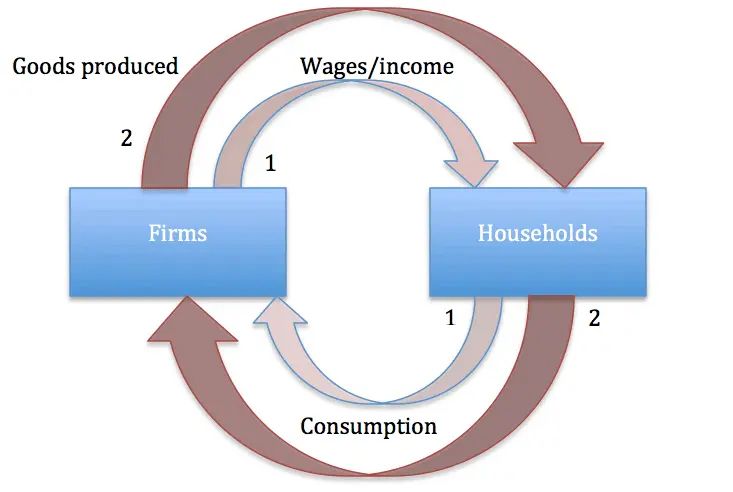
Say’s Law, named after the French economist Jean‑Baptiste Say, is a foundational idea in classical economics. Often summarized as “supply creates its own demand,” the law suggests that the act of producing goods and services inherently generates the income necessary to purchase them. This principle shaped economic thought throughout the 19th century and continues to influence debates about markets, government intervention, and the causes of economic crises.

Origins and Meaning Jean‑Baptiste Say introduced his law in the early 1800s in his Treatise on Political Economy. He argued that production is the source of demand: when producers create goods, they pay wages, rents, and profits, which in turn become purchasing power. In this view, general overproduction is impossible because every supply of goods corresponds to an equivalent demand. If imbalances occur, they are temporary and limited to specific sectors, not the economy as a whole.

Core Principles Say’s Law rests on several assumptions:

  • Markets are self‑correcting: Any surplus in one area leads to adjustments in prices and production.
  • Money is neutral: It serves only as a medium of exchange, not as a driver of demand.
  • Production drives prosperity: Economic growth depends on increasing output, not stimulating consumption.
  • No long‑term unemployment: Since supply creates demand, workers displaced in one industry will eventually find employment elsewhere.

These ideas aligned with classical economists’ belief in minimal government intervention and the efficiency of free markets.

Influence on Classical Economics Say’s Law became a cornerstone of classical economics, reinforcing the belief that recessions or depressions were temporary and self‑correcting. Economists like David Ricardo and John Stuart Mill adopted versions of the law, using it to argue against policies aimed at stimulating demand. The law supported laissez‑faire approaches, suggesting that governments should avoid interfering with markets, as production itself would ensure economic balance.

Criticism and Keynesian Revolution Say’s Law faced its greatest challenge during the Great Depression of the 1930s. Widespread unemployment and idle factories contradicted the idea that supply automatically generates demand. John Maynard Keynes famously rejected Say’s Law in his General Theory of Employment, Interest, and Money (1936). Keynes argued that demand, not supply, drives economic activity. He showed that insufficient aggregate demand could lead to prolonged recessions, requiring government intervention through fiscal and monetary policies.

Keynes’s critique marked a turning point in economics. While Say’s Law emphasized production, Keynesian economics highlighted consumption and demand management. This shift reshaped economic policy, leading to active government roles in stabilizing economies.

Modern Perspectives Today, Say’s Law is not accepted in its original form, but elements of it remain relevant. Supply‑side economists, for example, argue that policies encouraging production—such as tax cuts and deregulation—can stimulate growth. In contrast, Keynesians stress the importance of demand management. The debate reflects a broader tension in economics: whether prosperity depends more on producing goods or ensuring people have the means and willingness to buy them.

Conclusion: Say’s Law was a bold attempt to explain the self‑sustaining nature of markets. While its claim that “supply creates its own demand” proved too simplistic in the face of modern economic realities, it remains a vital part of the history of economic thought. The controversy surrounding Say’s Law highlights the evolving nature of economics, where theories are tested against real‑world crises and adapted to new circumstances. Even today, discussions of supply‑side versus demand‑side policies echo the enduring influence of Say’s original insight.

COMMENTS APPRECIATED

EDUCATION: Books

SPEAKING: Dr. Marcinko will be speaking and lecturing, signing and opining, teaching and preaching, storming and performing at many locations throughout the USA this year! His tour of witty and serious pontifications may be scheduled on a planned or ad-hoc basis; for public or private meetings and gatherings; formally, informally, or over lunch or dinner. All medical societies, financial advisory firms or Broker-Dealers are encouraged to submit an RFP for speaking engagements: CONTACT: Ann Miller RN MHA at MarcinkoAdvisors@outlook.com -OR- http://www.MarcinkoAssociates.com

Like, Refer and Subscribe

***

***

How a Broke 50-Year-Old Doctor Can Still Retire at 65?

By Dr. David Edward Marcinko MBA MEd

SPONSOR: http://www.MarcinkoAssociates.com

***

***

Turning 50 with little to no savings can be daunting, especially for a doctor who has spent decades in a demanding profession. Yet, all is not lost. With strategic planning, discipline, and a willingness to adapt, a broke 50-year-old physician can still build a solid retirement foundation by age 65.

First, it’s essential to confront the financial reality. This means calculating current income, expenses, debts, and any assets, however small. A clear picture allows for realistic goal-setting. The target should be to save aggressively—ideally 30–50% of income—over the next 15 years. While this may seem steep, doctors often have above-average earning potential, even in their later years, which can be leveraged.

Next, lifestyle adjustments are crucial. Downsizing housing, eliminating unnecessary expenses, and avoiding new debt can free up significant cash flow. If possible, relocating to a lower-cost area or refinancing existing loans can also help. Every dollar saved should be redirected into retirement accounts such as a 401(k), IRA, or a solo 401(k) if self-employed. Catch-up contributions for those over 50 allow for higher annual deposits, which can accelerate growth.

Investing wisely is non-negotiable. A diversified portfolio with a mix of stocks, bonds, and alternative assets can provide both growth and stability. Working with a fiduciary financial advisor ensures that investments align with retirement goals and risk tolerance. Time is limited, so the focus should be on maximizing returns without taking reckless risks.

Increasing income is another powerful lever. Many doctors can boost earnings through side gigs like telemedicine, consulting, teaching, or locum tenens work. These flexible options can add tens of thousands annually without requiring a full career shift. Additionally, monetizing expertise—writing, speaking, or creating online courses—can generate passive income streams.

Debt reduction must be prioritized. High-interest loans, especially credit card debt, can erode savings potential. Paying off these balances aggressively while avoiding new liabilities is key. For student loans, exploring forgiveness programs or refinancing options may offer relief.

Finally, mindset matters. Retirement at 65 doesn’t have to mean complete cessation of work. It can mean transitioning to part-time roles, passion projects, or advisory positions that provide income and fulfillment. The goal is financial independence, not necessarily total inactivity.

In conclusion, while starting late is challenging, a broke 50-year-old doctor can still retire comfortably at 65. It requires a blend of financial discipline, income optimization, smart investing, and lifestyle changes. With focus and determination, the next 15 years can be transformative—turning a precarious situation into a secure and dignified retirement.

COMMENTS APPRECIATED

EDUCATION: Books

SPEAKING: Dr. Marcinko will be speaking and lecturing, signing and opining, teaching and preaching, storming and performing at many locations throughout the USA this year! His tour of witty and serious pontifications may be scheduled on a planned or ad-hoc basis; for public or private meetings and gatherings; formally, informally, or over lunch or dinner. All medical societies, financial advisory firms or Broker-Dealers are encouraged to submit an RFP for speaking engagements: CONTACT: Ann Miller RN MHA at MarcinkoAdvisors@outlook.com 

Like, Refer and Subscribe

***

***

MEDICAL SCHOOLS: What They Do Not Teach About Money!

By Dr. David Edward Marcinko MBA MEd

SPONSOR: http://www.MarcinkoAssociates.com

***

WARNING! WARNING! All DOCTORS

What Medical School Didn’t Teach Doctors About Money

Medical school is designed to mold students into competent, compassionate physicians. It teaches anatomy, pathology, pharmacology, and clinical skills with precision and rigor. Yet, despite the depth of medical knowledge imparted, one critical area is often overlooked: financial literacy. For many doctors, the transition from student to professional comes with a steep learning curve—not in medicine, but in money. From managing debt to understanding taxes, investing, and retirement planning, medical school leaves a financial education gap that can have long-term consequences.

The Debt Dilemma

One of the most glaring omissions in medical education is how to manage student loan debt. The average medical student graduates with over $200,000 in debt, yet few are taught how to navigate repayment options, interest accrual, or loan forgiveness programs. Many doctors enter residency with little understanding of income-driven repayment plans or Public Service Loan Forgiveness (PSLF), missing opportunities to reduce their financial burden. Without guidance, some make costly mistakes—such as refinancing federal loans prematurely or choosing repayment plans that don’t align with their career trajectory.

Income ≠ Wealth

Medical students often assume that a high salary will automatically lead to financial security. While physicians do earn more than most professionals, income alone doesn’t guarantee wealth. Medical school rarely addresses the importance of budgeting, saving, and investing. As a result, many doctors fall into the “HENRY” trap—High Earner, Not Rich Yet. They spend lavishly, assuming their income will always cover expenses, only to find themselves living paycheck to paycheck. Without a solid financial foundation, even high earners can struggle to build net worth.

***

***

Taxes and Business Skills

Doctors are also unprepared for the complexities of taxes. Whether employed by a hospital or running a private practice, physicians face unique tax challenges. Medical school doesn’t teach how to track deductible expenses, optimize retirement contributions, or navigate self-employment taxes. For those who open their own clinics, the lack of business education is even more pronounced. Understanding profit margins, payroll, insurance billing, and compliance regulations is essential—but rarely covered in medical training.

Investing and Retirement Planning

Another blind spot is investing. Medical students are rarely taught the basics of compound interest, asset allocation, or retirement accounts. Many don’t know the difference between a Roth IRA and a traditional 401(k), or how to evaluate mutual funds and index funds. This lack of knowledge delays retirement planning and can lead to missed opportunities for long-term growth. Some doctors rely on financial advisors without understanding the fees or conflicts of interest involved, putting their wealth at risk.

Insurance and Risk Management

Medical school also fails to educate students on insurance—life, disability, malpractice, and health. Doctors need robust coverage to protect their income and assets, but many don’t know how to evaluate policies or understand terms like “own occupation” or “elimination period.” Inadequate coverage can leave physicians vulnerable to financial disaster in the event of illness, injury, or litigation.

Emotional and Behavioral Finance

Beyond technical knowledge, medical school overlooks the emotional side of money. Physicians often face pressure to maintain a certain lifestyle, especially after years of sacrifice. The desire to “catch up” can lead to impulsive spending, luxury purchases, and financial stress. Without tools to manage money mindset and behavioral habits, doctors may struggle with guilt, anxiety, or burnout related to finances.

The Case for Financial Education

Fortunately, awareness of this gap is growing. Organizations like Medics’ Money and podcasts such as “Docs Outside the Box” are working to fill the void by offering financial education tailored to physicians.

These resources cover everything from budgeting and debt management to investing and entrepreneurship. Some medical schools are beginning to incorporate financial literacy into their curricula, but progress is slow and inconsistent.

Conclusion

Medical school equips doctors to save lives, but it doesn’t prepare them to secure their own financial future. The lack of financial education leaves many physicians vulnerable to debt, poor investment decisions, and lifestyle inflation. To thrive both professionally and personally, doctors must seek out financial knowledge beyond the classroom. Whether through self-study, mentorship, or professional guidance, understanding money is as essential as understanding medicine. After all, financial health is a cornerstone of overall well-being—and every doctor deserves to master both.

COMMENTS APPRECIATED

EDUCATION: Books

SPEAKING: Dr. Marcinko will be speaking and lecturing, signing and opining, teaching and preaching, storming and performing at many locations throughout the USA this year! His tour of witty and serious pontifications may be scheduled on a planned or ad-hoc basis; for public or private meetings and gatherings; formally, informally, or over lunch or dinner. All medical societies, financial advisory firms or Broker-Dealers are encouraged to submit an RFP for speaking engagements: CONTACT: Ann Miller RN MHA at MarcinkoAdvisors@outlook.com -OR- http://www.MarcinkoAssociates.com

Like, Refer and Subscribe

***

***

DIVIDEND STOCK ARISTOCRATS: Pros and Cons

By AI

SPONSOR: http://www.CertifiedMedicalPlanner.org

***

***

SPONSOR: http://www.MarcinkoAssociates.com

According to wikipedia, the S&P 500 Dividend Aristocrats is a stock market index composed of the companies in the S&P 500 index that have increased their dividends in each of the past 25 consecutive years. It was launched in May 2005.

There are other indexes of dividend aristocrats that vary with respect to market cap and minimum duration of consecutive yearly dividend increases. Components are added when they reach the 25-year threshold and are removed when they fail to increase their dividend during a calendar year or are removed from the S&P 500. However, a study found that the stock performance of companies improves after they are removed from the index The index has been recommended as an alternative to bonds for investors looking to generate income.

To invest in the index, there are several exchange traded funds (ETFs), which seek to replicate the performance of the index.

STOCK DIVIDENDS: https://medicalexecutivepost.com/2025/03/02/stock-dividends-company-earnings-distribution/

***

And so, to clarify, the following are the advantages and disadvantages of US dividend aristocrats:

Advantages

  1. They certainly display consistent, blue-chirp corporations with an extended history of vital funds and dividend increments.
  2. Additionally, these stocks offer fixed revenue growth.
  3. In other words, they tend to possess lower price volatility.
  4. Please note that dividend investing supporters prefer a credible income source.
  5. They are sufficiently stable for continuous annual dividend increments across decades, certainly even through recessions.
  6. Above all, it helps quicker portfolio building through reinvestment in these stocks.
  7. They certainly ensure successful long-term investing.
  8. Regarded as among the most famous investment strategies, they relish extensive consumer confidence.

Disadvantages

  1. To clarify, they are considered taxable earnings.
  2. In other words, they offer a lack of control over their distribution timing.
  3. Above all, these shares have under performed S&P 500.
  4. Company development certainly consumes a lot of time.
  5. Additionally, they are subject to market fluctuations.
  6. Moreover, they are considered unimaginative.

STOCK: https://medicalexecutivepost.com/2024/08/20/preferred-versus-common-stock/

COMMENTS APPRECIATED

Like and Refer

***

***

PRIVATE EQUITY COMPENSATION: Carried Interest [Pros and Cons]

DEFINITION

By Staff Reporters

SPONSORS: http://www.MarcinkoAssociates.com

***

***

Carried interest accounts for the bulk of private equity fund managers’ compensation. It is calculated as a share of fund profits, historically 20% above a threshold rate of return for limited partners.

In contrast with most other forms of employment compensation and business income, carried interest earned from fund investments held for at least three years is taxed as a long-term capital gain at a rate below the top marginal income tax rate.

Critics of the provision contend it taxes highly compensated private equity managers at a lower rate than comparably paid providers of labor or business services.

Defenders of carried interest argue taxing it as income would be unfair because it represents capital gains even if they’re not derived from recipients’ capital.

COMMENTS APPRECIATED

Refer and Subscribe

***

***

MEDICAL PRACTICE: Valuation Adjustments

NET INCOME STATEMENT AND BALANCE SHEET ADJUSTMENTS

By Dr. David Edward Marcinko; MBA MEd CMP®

***

***

SPONSOR: http://www.MarcinkoAssociates.com

Net Income Statement Adjustments

When analyzing a set of financial statements to determine practice value, adjustments (normalizations) generally are needed to produce a clearer picture of likely future income and distributable cash flow. It also allows more of an “apples to apples” line item comparison. This normalization process usually consists of making three main adjustments to a medical practice’s net income (profit and loss) statement.

1. Non-Recurring Items: Estimates of future distributable cash flow should exclude non-recurring items. Proceeds from the settlement of litigation, one-time gains/losses from the selling of assets or equipment, and large write-offs that are not expected to reoccur, each represent potential nonrecurring items. The impact of nonrecurring events should be removed from the practice’s financial statements to produce a clearer picture of likely future income and cash flow.

2. Perquisites: The buyer of a medical practice may plan to spend more or less than the current doctor-owner for physician executive compensation, travel and entertainment expenses, and other perquisites of current management. When determining future distributable cash flow, income adjustments to the current level of expenditures should be made for these items.

3. Non-cash Expenses: Depreciation expense, amortization expense, and bad debt expense are all non-cash items which impact reported profitability. When determining distributable cash flow, you must analyze the link between non-cash expenses and expected cash expenditures.

The annual depreciation expense is a proxy for likely capital expenditures over time. When capital expenditures and depreciation are not similar over time, an adjustment to expected cash flow is necessary. Some practices reduce income through the use of bad debt expense rather than direct write-offs. Bad debt expense is a non-cash expense that represents an estimate of the dollar volume of write-offs that are likely to occur during a year. If bad debt expense is understated, practice profitability will be overstated.

***

***

Balance Sheet Adjustments

Adjustments also can be made to a practice’s balance sheet to remove non-operating assets and liabilities, and to restate asset and liability value at market rates (rather than cost rates). Assets and liabilities that are unrelated to the core practice being valued should be added to or subtracted from the value, depending on whether they are acquired by the buyer.

Examples include the asset value less outstanding debt of a vacant parcel of land, and marketable securities that are not needed to operate the practice. Other non-operating assets, such as the cash surrender value of officer life insurance, generally are liquidated by the seller and are not part of the business transaction.

EDUCATION: Books

SPEAKING: Dr. Marcinko will be speaking and lecturing, signing and opining, teaching and preaching, storming and performing at many locations throughout the USA this year! His tour of witty and serious pontifications may be scheduled on a planned or ad-hoc basis; for public or private meetings and gatherings; formally, informally, or over lunch or dinner. All medical societies, financial advisory firms or Broker-Dealers are encouraged to submit a RFP for speaking engagements: CONTACT: MarcinkoAdvisors@outlook.com 

COMMENTS APPRECIATED

Subscribe, Refer and Like

***

***

EARNED INCOME: Defined

By Staff Reporters

SPONSOR: http://www.MarcinkoAssociates.com

***

***

What Counts as ‘Earned Income’?

The IRS defines earned income as money you get for working, including the following:

  • Wages
  • Commissions
  • Bonuses
  • Tips
  • Honorariums for speaking, writing or taking part in a conference or convention
  • Self-employment income

Income that doesn’t qualify includes:

  • Taxable pension payments
  • Interest income
  • Dividends
  • Rental income
  • Alimony
  • Withdrawals from Roth IRAs or other non-taxable retirement accounts
  • Annuity income
  • Welfare benefits
  • Unemployment compensation
  • Worker’s compensation payments
  • Social Security income.

Cite: https://www.irs.gov/credits-deductions/individuals/earned-income-tax-credit/earned-income-and-earned-income-tax-credit-eitc-tables

COMMENTS APPRECIATED

Refer and Subscribe

***

***

PHANTOM: Income Tax on TIPS

By Staff Reporters

Sponsor: http://www.MarcinkoAssociates.com

***

***

“Phantom Tax” or “Phantom Income” for direct owners of Treasury inflation-protected securities (TIPS) TIPS adjust their principal values and interest payments for inflation. As with other directly owned Treasury securities, TIPS principal, including the inflation adjustments, is not paid back to investors until the securities mature.

However, the principal adjustments are taxed by the IRS as income in the year in which they occur, even though no actual payments are made in those years to investors who own TIPS directly. This is why this income is called “phantom income” and the tax on it is known as the “phantom tax.”

Investors can avoid the phantom income/tax issue for TIPS by holding TIPS in tax-deferred retirement accounts. Mutual funds and Exchange Traded Funds (ETFs) typically take the “phantom” factor out of TIPS ownership by distributing the principal adjustments as taxable dividends.

As with direct ownership of TIPS, the tax consequences of these distributions by mutual funds and ETFs can be reduced by holding TIPS-owning instruments in tax-deferred retirement accounts

COMMENTS APPRECIATED

Subscribe and Like

***

***

RICHARD EASTERLIN: Happiness Paradox

By Staff Reporters

***

***

Richard Easterlin PhD, Paradox: For countries with income sufficient to meet basic needs, the reported level of happiness does not correlate with national income per person.

According to colleague Dan Ariely PhD, one explanation is that my happiness depends on a comparison between my income and my perceptions of the average standard of living. If everyone’s income increases, my increased income gives a short boost to my happiness, since I do not realize that the average standard of living has gone up. Some time later, I realize that the average standard of living has also gone up, so the happiness boost produced by my increased income disappears. It is the contradiction between the point-of-time and time series findings that is the root of the paradox: while there is a correlation at a fixed point, there is no trend over multiple points.

That is, in the short run, everyone perceives increases in income to be correlated with happiness and tries to increase their incomes. However, in the long run, this proves to be an illusion, since everyone’s efforts to raise standards of living lead to increasing averages, leaving everyone in the same place in terms of relative income.

Various theories have been advanced to explain the paradox, but the paradox itself is solely an empirical generalization. The existence of the paradox has been strongly disputed by other researchers.

COMMENTS APPRECIATED

Subscribe and Like Today!

***

***

INCOME: It Depends on the Meaning of the Word?

By Staff Reporters

***

Incomes Keep Rising| Concrete Construction Magazine

***

DEFINITION: Income is the money you receive in exchange for your labor or products. Income may have different definitions depending on the context—for example, taxation, financial accounting, or economic analysis. For most people, income is their total earnings in the form of wages and salaries, the return on their investments, pension distributions, and other receipts. For businesses, income is the revenue from selling services, products, and any interest and dividends received with respect to their cash accounts and reserves related to the business. Economists have different definitions of income and different ways of measuring it, from focusing on earnings, savings, consumption, production, public finance, capital investment or other topics … Maybe?

CITE: https://www.r2library.com/Resource

WASHINGTON (Reuters) – The U.S. Supreme Court is set on Tuesday to consider a challenge to the legality of a tax targeting owners of foreign corporations that could undermine efforts at imposing a wealth tax on the very rich in a case that has already sparked controversy over a call for Justice Samuel Alito to recuse.

The justices are due to hear arguments in an appeal by Charles and Kathleen Moore – a retired couple from Redmond, Washington couple – of a lower court’s decision rejecting their challenge to the tax on foreign company earnings, even though those profits had not been distributed.

The one-time “mandatory repatriation tax” (MRT), which applied to taxpayers owning at least 10% of certain foreign corporations, was part of a 2017 Republican-backed tax bill signed into law by former President Donald Trump.

At issue in the case is whether this levy on unrealized gains is allowed under the U.S. Constitution’s 16th Amendment, which enabled Congress to “collect taxes on incomes.” The Moores, backed by the Competitive Enterprise Institute and other conservative and business groups, contend that “income” means only those gains that are realized through payment to the taxpayer, not a mere increase in the value of property.

COMMENTS APPRECIATED

Thank You

***

***

Rags to Riches thru [Medical] Education?

Or … Riches to Rags for Docs and the ACA?

Join Our Mailing List

American society prides itself on being a meritocracy, particularly with the fruition of the ‘American Dream’ being achieved by individuals from all types of backgrounds; like doctors, Financial Advisors [FAs] and all medical professionals.

Success

Success today typically involves some form of higher education, to expand intellectual capacity and to hone a skill-set.

However, the highest quality education is not the most easily accessible. And so, this infographic takes a look at how the elite tend to fare well, and how the disadvantaged aren’t provided the same opportunities.

Source: www.onlineschools.org

Conclusion

Your thoughts and comments on this ME-P are appreciated. Feel free to review our top-left column, and top-right sidebar materials, links, URLs and related websites, too. Then, subscribe to the ME-P. It is fast, free and secure.

Link: http://feeds.feedburner.com/HealthcareFinancialsthePostForcxos

Speaker: If you need a moderator or speaker for an upcoming event, Dr. David E. Marcinko; MBA – Publisher-in-Chief of the Medical Executive-Post – is available for seminar or speaking engagements. Contact: MarcinkoAdvisors@msn.com

OUR OTHER PRINT BOOKS AND RELATED INFORMATION SOURCES:

DICTIONARIES: http://www.springerpub.com/Search/marcinko
PHYSICIANS: www.MedicalBusinessAdvisors.com
PRACTICES: www.BusinessofMedicalPractice.com
HOSPITALS: http://www.crcpress.com/product/isbn/9781466558731
CLINICS: http://www.crcpress.com/product/isbn/9781439879900
BLOG: www.MedicalExecutivePost.com
FINANCE: Financial Planning for Physicians and Advisors
INSURANCE: Risk Management and Insurance Strategies for Physicians and Advisors

Product Details

The Economic “American Dream”

On Income Earners

Join Our Mailing List

Understanding the Top 50 Percent

[By Anonymous Reader]

QUESTION: How much do you need to make to be in the top 50 percent of earners?

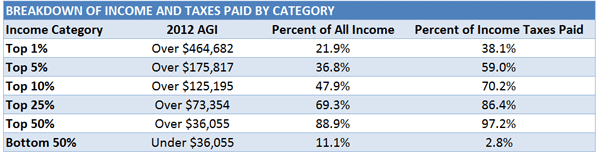
ANSWER: Just $36,055. Fall below that level and you are in the bottom half, along with about 68 million of your fellow taxpayers. All told, that group earned just 11.1 percent of the AGI reported on 2012 Federal returns.

Half of all taxpayers earn less than $35,055

If the top one percent where the decision makers live were to quit squeezing so hard, the rest of the population might be subject to paying more taxes.

The problem with the American Dream sold to the masses is that it is not achievable for them. Yet, they keep on voting for it. The biggest problem with voters is they do not have a solid grounding in economics.

Thus, they cannot judge economic policy in any rational way. If the voting public voted for what was truly in their interest, the top one percent would see their influence wane rapidly. It is the height of insanity that the public keeps on voting for politicians who espouse policies that are designed to benefit the economic elite.

***

Tax

***

Note: A recent finding by Oxfam that the top one percent will control fifty percent of the worlds’ wealth by 2016.

Channel Surfing the ME-P

Have you visited our other topic channels? Established to facilitate idea exchange and link our community together, the value of these topics is dependent upon your input. Please take a minute to visit. And, to prevent that annoying spam, we ask that you register. It is fast, free and secure.

More:

Conclusion

Your thoughts and comments on this ME-P are appreciated. Feel free to review our top-left column, and top-right sidebar materials, links, URLs and related websites, too. Then, subscribe to the ME-P. It is fast, free and secure.

Speaker: If you need a moderator or speaker for an upcoming event, Dr. David E. Marcinko; MBA – Publisher-in-Chief of the Medical Executive-Post – is available for seminar or speaking engagements. Contact: MarcinkoAdvisors@msn.com

OUR OTHER PRINT BOOKS AND RELATED INFORMATION SOURCES:

Product DetailsProduct DetailsProduct Details

How Much Money Do You Make – Doctor?

Join Our Mailing List

Ruminations on the Last Taboo!

By Rick Kahler MS CFP® http://www.KahlerFinancial.com

Rick Kahler CFP“How much money do you make?”

We don’t ask people, let alone doctors and medical professionals, that question; but we’d love to know the answer.

In this country, we’re fixated on a person’s annual income. That’s the primary measure we use to determine social status and define success.

Income Qualifier?

Income also is the qualifier for government welfare programs. It defines people as poor, middle class, or rich. And, of course, it determines how much of your income the government will take. The more you bring in, the higher the percentage of your earnings you will pay in federal, state, and local taxes.

Income as a Poor Indicator of Net Worth

While we project a lot of things onto someone’s income, most of what we project is untrue. Income is not the best indicator of a person’s wealth or net worth.

Examples:

Last year Dr. Brent’s tax return showed an adjusted gross income of $20,000. Dr. Bill’s was $2 million. Who is richer? Most people would say Bill. The US and state governments also would say Bill. Actually, Brent is far and away the wealthier of the two.

Why and How?

Consider these two real-life examples:

  • Dr. Bill lives in New York, New York, which has both high property taxes and a city income tax. Paying city, state, and federal income taxes, plus property taxes on his luxurious home, takes around half of his salary. With take-home pay of about $1 million, Bill spends $1.2 million a year on his mortgage payments, college and private school tuition, and his lifestyle. He overspends his net income by $200,000 a year. He owes more on his condo than it’s worth, and he has significant credit card debt. When you total his assets and liabilities, he has a negative net worth of $1 million. He has managed to hold everything together so far, but technically, Bill is bankrupt.

Jaguar XJ

  • Dr. Brent lives in Rapid City, South Dakota. He is retired, owns a modest home which is paid for, and lives on about $40,000 a year. He didn’t pay any income taxes last year, partly because some of his income is from tax-free municipal bonds and mostly because he wrote off a large investment loss which left him with $20,000 of adjusted gross income. Brent has no debt. His net worth is $5,000,000.

Steering Jaguar

The truth is that what people make tells us very little about whether they are rich or not. In these examples, judging from income alone, it would be easy to reach the inaccurate conclusion that Bill must be far wealthier than Brent. His lifestyle is certainly more lavish—which of course is part of the reason he isn’t wealthy.

Many people who have high incomes but are heavily in debt might have lifestyles lower than others who make significantly less but have no debt. It’s not uncommon that people with high incomes choose to live a lifestyle that is far below what they could afford. In fact, this is one of the best ways to build real wealth.

The Income Non-Indicator

Income is a poor indicator of whether someone is rich. Even more important, it’s a poor indicator of how they handle money. I once worked with a family with an annual income of around $5 million who had a net worth of minus $3.5 million. They may have looked like “millionaires,” but they were not.

On the other hand, I work with many clients who have annual incomes around $100,000 a year, spend $60,000 a year, and are worth $2 to $5 million.

Assessment

The bottom line is that wealth is defined by net worth, not income. A high income doesn’t equal wealth; it equals a better opportunity to build wealth. Not everyone is wise enough to take advantage of that opportunity.

More:

Conclusion

Your thoughts and comments on this ME-P are appreciated. Feel free to review our top-left column, and top-right sidebar materials, links, URLs and related websites, too. Then, subscribe to the ME-P. It is fast, free and secure.

Speaker: If you need a moderator or speaker for an upcoming event, Dr. David E. Marcinko; MBA – Publisher-in-Chief of the Medical Executive-Post – is available for seminar or speaking engagements. Contact: MarcinkoAdvisors@msn.com

OUR OTHER PRINT BOOKS AND RELATED INFORMATION SOURCES:

Product Details  Product Details

Product Details

Asset Allocation Methods for Physician-Investors

What’s Old … is New Again?

By Dr. David Edward Marcinko; MBA, CMP™

Publisher-in-Chiefdem23

Asset allocation policies, incorporating the risk/return fundamental equation, have traditionally been classified under the following approaches: Principal Stability and Income, Income, Income-Oriented, Balanced, Growth, and Aggressive Growth.

Traditional Concepts

In all forms of traditional asset allocation and diversification policy approaches, the physician-investor is presumed to diversify within the chosen asset class in order to reduce the potential for specific or unsystematic risk.

Principal stability and income approach

Objective: Income, liquidity, and stability of principal.

Investment: Shorter-term fixed income securities with a large concentration in money market exposure to enhance liquidity and price stability. Accounts tend to maintain cash equivalent reserve balance of 30–50% of the portfolio.

Income approach

Objective: Maximum income.

Investment: 100% fixed income exposure.

Income portfolios arise from the traditional notion that an investor should spend only income and reinvest capital gains. Sometimes this is a legal requirement, as in a trust that has an income beneficiary distinct from the principal beneficiary.

Income-oriented approach

Objective: Income and some capital growth.

Investment: Accounts tend to maintain 15–35% in equity investments; balance of investment in fixed income.

Income and growth approach

Objective: Capital growth and income using a balanced approach to limit volatility.

Investment:  Accounts tend to maintain 45–65% equity exposure; balance of investment in fixed income.

Income and growth portfolio policies generally refer to both the fixed income and equity portions of the portfolios. Because of the income bias, the overall stock portion of the portfolio will usually have a dividend yield greater than the market yield. This method allows the portfolio manager to invest in some no- or low-dividend yielding issues.

Growth approach

Objective: Capital growth with income as a secondary objective.

Investment: Accounts tend to maintain between 65%–85% equity exposure; balance of investment in fixed income, usually cash reserves.

Aggressive growth approach

Objective: Long-term capital growth.

Investment: Accounts maintain 100% equity exposure. Exposure to variety of equity types normal (small capitalization, international, emerging markets, etc).

fp-book15

Assessment Of course, the above is much more accurate during stable economic times, than it is today; don’t you think? Are newer concepts required today … or is past … prologue.

Link: https://healthcarefinancials.wordpress.com/2008/10/25/new-wave-thoughts-on-investing/

Conclusion

And so, your thoughts and comments on this Medical Executive-Post are appreciated.

Speaker: If you need a moderator or speaker for an upcoming event, Dr. David E. Marcinko; MBA – Publisher-in-Chief of the Executive-Post – is available for seminar or speaking engagements. Contact: MarcinkoAdvisors@msn.com  or Bio: www.stpub.com/pubs/authors/MARCINKO.htm

Get our Widget: Get this widget!

Our Other Print Books and Related Information Sources:

Practice Management: http://www.springerpub.com/prod.aspx?prod_id=23759

Physician Financial Planning: http://www.jbpub.com/catalog/0763745790

Medical Risk Management: http://www.jbpub.com/catalog/9780763733421

Healthcare Organizations: www.HealthcareFinancials.com

Health Administration Terms: www.HealthDictionarySeries.com

Physician Advisors: www.CertifiedMedicalPlanner.com

Subscribe Now: Did you like this Medical Executive-Post, or find it helpful, interesting and informative? Want to get the latest E-Ps delivered to your email box each morning? Just subscribe using the link below. You can unsubscribe at any time. Security is assured.

Link: http://feeds.feedburner.com/HealthcareFinancialsthePostForcxos