Understanding Behavioral Finance Paradoxes

By Staff Reporters

SPONSOR: http://www.MarcinkoAssociates.com

***
***

 “THE INVESTOR’S CHIEF problem—even his worst enemy—is likely to be himself.” So wrote Benjamin Graham, the father of modern investment analysis.

With these words, written in 1949, Graham acknowledged the reality that investors are human. Though he had written an 800 page book on techniques to analyze stocks and bonds, Graham understood that investing is as much about human psychology as it is about numerical analysis.

In the decades since Graham’s passing, an entire field has emerged at the intersection of psychology and finance. Known as behavioral finance, its pioneers include Daniel Kahneman, Amos Tversky and Richard Thaler. Together, they and their peers have identified countless human foibles that interfere with our ability to make good financial decisions. These include hindsight bias, recency bias and overconfidence, among others. On my bookshelf, I have at least as many volumes on behavioral finance as I do on pure financial analysis, so I certainly put stock in these ideas.

At the same time, I think we’re being too hard on ourselves when we lay all of these biases at our feet. We shouldn’t conclude that we’re deficient because we’re so susceptible to biases. Rather, the problem is that finance isn’t a scientific field like math or physics. At best, it’s like chaos theory. Yes, there is some underlying logic, but it’s usually so hard to observe and understand that it might as well be random. The world of personal finance is bedeviled by paradoxes, so no individual—no matter how rational—can always make optimal decisions.

As we plan for our financial future, I think it’s helpful to be cognizant of these paradoxes. While there’s nothing we can do to control or change them, there is great value in being aware of them, so we can approach them with the right tools and the right mindset.

Here are just seven of the paradoxes that can bedevil financial decision-making:

  1. There’s the paradox that all of the greatest fortunes—Carnegie, Rockefeller, Buffett, Gates—have been made by owning just one stock. And yet the best advice for individual investors is to do the opposite: to own broadly diversified index funds.
  2. There’s the paradox that the stock market may appear overvalued and yet it could become even more overvalued before it eventually declines. And when it does decline, it may be to a level that is even higher than where it is today.
  3. There’s the paradox that we make plans based on our understanding of the rules—and yet Congress can change the rules on us at any time, as it did just last year.
  4. There’s the paradox that we base our plans on historical averages—average stock market returns, average interest rates, average inflation rates and so on—and yet we only lead one life, so none of us will experience the average.
  5. There’s the paradox that we continue to be attracted to the prestige of high-cost colleges, even though a rational analysis that looks at return on investment tells us that lower-cost state schools are usually the better bet.
  6. There’s the paradox that early retirement seems so appealing—and has even turned into a movement—and yet the reality of early retirement suggests that we might be better off staying at our desks.
  7. There’s the paradox that retirees’ worst fear is outliving their money and yet few choose the financial product that is purpose-built to solve that problem: the single-premium immediate annuity.

How should you respond to these paradoxes? As you plan for your financial future, embrace the concept of “loosely held views.”

In other words, make financial plans, but continuously update your views, question your assumptions and rethink your priorities.

COMMENTS APPRECIATED

Subscribe, Refer and Like

***

***

BUY & HOLD: Challenging Investment Rules and Key Investor Traits

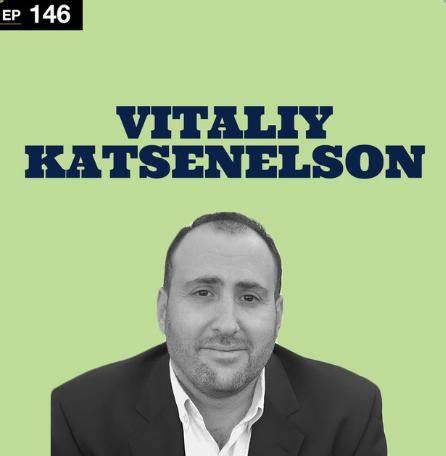
By Vitaliy Katsenelson CFA

***

***

Today, we’re diving into two thought-provoking questions:

What’s a famous investment rule I don’t agree with? Which key characteristics should a good investor have? Again:

  1. What’s a famous investment rule I don’t agree with?
  2. Which key characteristics should a good investor have?

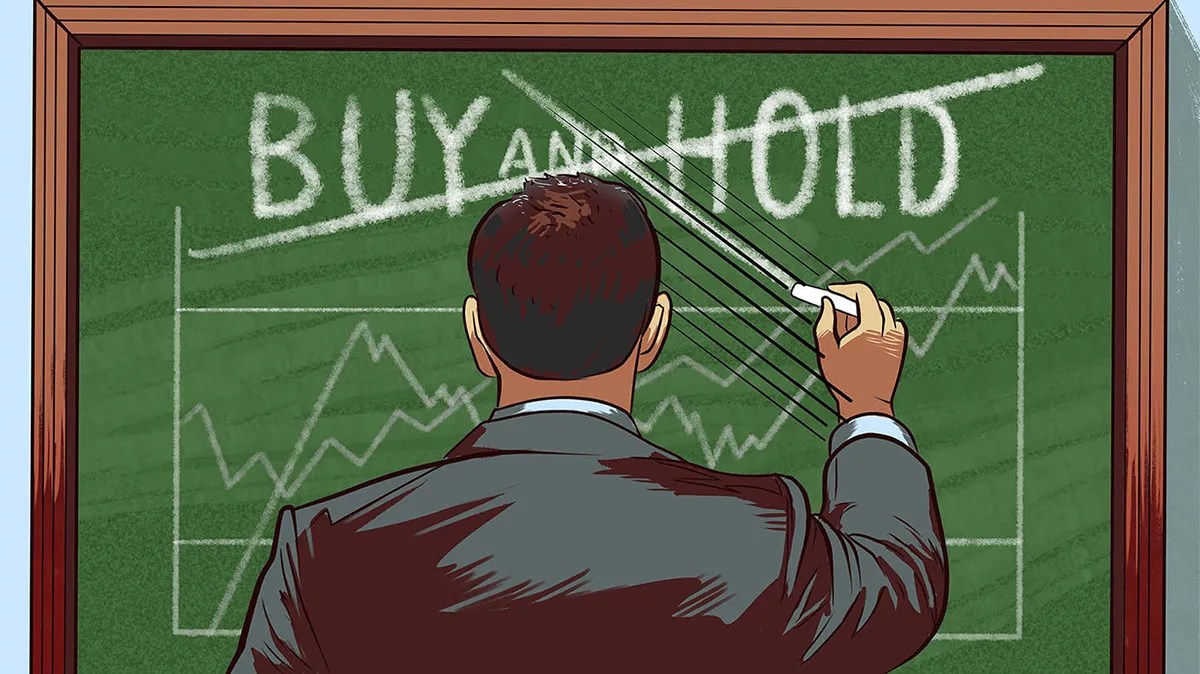
A Famous Investment Rule I Don’t Agree With: “Buy and Hold”

Buy and hold becomes a religion during bull markets. Then, holding a stock because you bought it is often rewarded through higher and higher valuations. There’s a Pavlovian bull market reinforcement – every time you don’t sell (hold) a stock, it goes higher.

Buying is a decision. So is holding, but it should not be a religion but a decision. The value of any company is the present value of its cash flows. When the present value of cash flows (per share) is less than the price of the stock, the stock should not be “held” but sold.

Warren Buffett is looked upon as the deity of buy and hold.

Look at Coca Cola when it hit $40 in 1999. Its earnings power at the time was about $0.80. It was trading at 50 times earnings. It was significantly overvalued, considering that most of the growth for this company was in the past.

Fast-forward almost a quarter of a century – literally a generation. Today the stock is at $60. It took more than a decade to reclaim its 1999 high. Today, Coke’s earnings power is around $1.50–1.90. Earnings have stagnated for over a decade. If you did not sell the stock in 1999, you collected some dividends, not a lot but some. The stock is still trading at 30–40x earnings. Unless they discover that Coke cures diabetes (not causes it), its earnings will not move much. It’s a mature business with significant health headwinds against it.

“Long-term” and “buy-and-hold” investing are often confused.

People should not own stocks unless they have a long-term time horizon. Long-term investing is an attitude, an analytical approach. When you build a discounted cash flow model, you are looking decades ahead. However, this doesn’t mean that you should stop analyzing the company’s valuation and fundamentals after you buy the stock, as they may change and affect your expected return. After you put in a lot of analytical work and buy the stock, you should not simply switch off your brain and become a mindless buy-and-hold investor.

This doesn’t mean you shouldn’t be patient, but holding, not selling, a stock is a decision.

COMMENTS APPRECIATED

Refer and Like

***

***

DAILY UPDATE: Merck and the Surging Stock Markets

MEDICAL EXECUTIVE-POST TODAY’S NEWSLETTER BRIEFING

***

Essays, Opinions and Curated News in Health Economics, Investing, Business, Management and Financial Planning for Physician Entrepreneurs and their Savvy Advisors and Consultants

Serving Almost One Million Doctors, Financial Advisors and Medical Management Consultants Daily

A Partner of the Institute of Medical Business Advisors , Inc.

http://www.MedicalBusinessAdvisors.com

SPONSORED BY: Marcinko & Associates, Inc.

***

http://www.MarcinkoAssociates.com

Daily Update Provided By Staff Reporters Since 2007.
How May We Serve You?
© Copyright Institute of Medical Business Advisors, Inc. All rights reserved. 2025

REFER A COLLEAGUE: MarcinkoAdvisors@outlook.com

SPONSORSHIPS AVAILABLE: https://medicalexecutivepost.com/sponsors/

ADVERTISE ON THE ME-P: https://tinyurl.com/ytb5955z

Your Referral Count -0-

CITE: https://www.r2library.com/Resource

Merck rose 1.40% today after beating earnings expectations. The problem is that the pharma giant expects a $200 million hit to its bottom line due to tariffs. And that doesn’t count the potential additional pharmaceutical levies Trump has indicated he’s planning.

CITE: https://tinyurl.com/2h47urt5

🟢 What’s up

  • Alphabet warned some remote employees that they must return to the office three days a week or lose their jobs. Shareholders clearly approve: The stock gained 2.53%.
  • Amazon and Nvidia executives made it clear that contrary to popular belief, demand for AI data centers isn’t slowing down. Amazon rose 3.29%, while Nvidia climbed 3.62%.
  • Newmont gained 4.80% after the gold miner reported strong earnings thanks to gold’s incredible run.
  • ServiceNow soared 15.49% after the enterprise tech company posted a beat-and-raise earnings report.
  • Texas Instruments popped 6.56% thanks to a strong first quarter and healthy fiscal guidance from the domestic semiconductor company.
  • Chipotle eked out a 1.60% gain despite a mixed quarter that saw same-store sales fall for the first time since 2020.

What’s down

  • IBM topped analyst expectations on sales and profits, but the tech stock fell 6.58% thanks to a poor performance from its consulting and its mainframe businesses.
  • Nokia tumbled 8.65% following a big earnings miss last quarter, and warned that tariffs will take a serious toll on its business this quarter.
  • Fiserv plunged 18.52% after the software provider beat expectations for profits but missed on revenue.
  • Procter & Gamble outpaced Wall Street’s forecast for earnings but fell short on revenue and cut its fiscal guidance, pushing shares of the consumer goods giant down 3.74%.
  • Comcast also beat analyst estimates on both the top and bottom lines, but sank 3.71% after reporting it lost 199,000 broadband customers last quarter.

CITE: https://tinyurl.com/tj8smmes

  • Warren Buffett owns 5% of all Treasury bills—more than the Federal Reserve
  • A list of every company that’s announced it’s moving manufacturing to the US
  • Home sales fell 5.9% in March, their biggest drop since 2022
  • The $TRUMP crypto surged over 50% after President Trump invited the coin’s top 220 holders to a private dinner
  • Durable goods orders, AKA purchases of big-ticket items like autos and aircraft, popped 9.2% as people rushed to buy ahead of tariffs
  • Speaking of, US liquor exports surged 10% to a record $2.4 billion

COMMENTS APPRECIATED

PLEASE SUBSCRIBE: MarcinkoAdvisors@outlook.com

Thank You

***

***

***

***

EDUCATIONAL TEXTBOOKS: https://tinyurl.com/4zdxuuwf

***

REPUTATIONAL BANKRUPTCY: Of the American Dollar

By Vitaliy Katsenelson CFA

***

***

The Reputational Bankruptcy of the American Dollar
I am in an unenviable position. The policy coming out of the White House has a significant impact on economics, more than ever before in my career. If I say anything positive about that policy, I’ll be put in the MAGA camp. If I criticize it, I’ll be accused of suffering from Trump derangement syndrome. I am hired by you to make the best investment decisions possible. Rather than see me as engaged in political commentary, I’d ask that you view my remarks as purely analytical.

Let me give you this analogy. I live in Denver. Let’s imagine I am a huge Broncos fan, and the Broncos are playing the Chicago Bears. If I am betting a significant amount of money on this game, I should put my affinity for the Broncos and hatred of the Chicago Bears aside and analyze data and facts. The Broncos are either going to win or lose; my wanting them to win has zero impact on the outcome. The same applies to my analysis here. My motto in life is Seneca’s saying, “Time discovers truth.” I just try to discover it before time does.

When it comes to politics, I also have a significant advantage. I was not born in this country. From a young age, I was brainwashed about communism, not about team Republican versus team Democrat. The failure of the Soviet Union de-brainwashed me fast concerning the virtues of communism and converted me into a believer in free markets.

As a result, I never bought into either party’s ideology, and thus in the last four presidential elections I voted for a Republican, an independent, a Democrat, and wrote in my youngest daughter, Mia Sarah (not in that order). In my articles I have criticized the policies of both Biden (student loan forgiveness, unions) and Trump (Bitcoin reserve).

I remind myself that in times like these you have to be a nuanced thinker. Some of Trump’s policies are terrific, others … not so much (I am being diplomatic here).

Scott Fitzgerald once said “The test of a first-rate intelligence is the ability to hold two opposed ideas in mind at the same time, and still retain the ability to function.” In 2025 we are taking this “first-rate intelligence” test daily.

What will happen to the US dollar? The US dollar will likely continue to get weaker, which is inflationary for the US. Let me start with some easily identifiable reasons:

We have too much debt. We ran 6-7% budget deficits while our economy was growing and unemployment was at record lows. Now we have $36 trillion in debt. Our interest expenses exceed our defense spending, and these costs will continue to climb. If/when we go into recession, we may see something we have not seen in a long time – higher interest rates. Our budget deficits will balloon to between 9–12%, and the debt market, realizing that inflation (i.e., money printing) is inevitable, will say, “Pay up!”

New competition from Bitcoin. President Trump’s approval of Bitcoin as a potential reserve currency is one of the most self-serving and anti-American things I’ve seen any president do. The US dollar is the world’s reserve currency. We still have little competition for that title. China could be a contender, but it is not a democracy and has capital controls. This policy has no upside for America, only downside.

A stronger Europe. Ironically, we may inadvertently create a stronger Europe by threatening to abandon NATO. I don’t want to insult European clients (or my European friends), but the following analogy describes the US-Europe relationship on some level: Europe gradually evolved into a trust fund kid (when it came to security) and the US turned into its sugar daddy. The trust fund kid was incredibly dependent on the sugar daddy. It criticized its parent for being a barbarian and money-driven, but it relied heavily on that parent to protect it from bullies.

President Trump cut off Europe’s allowance by threatening that the US might not protect Europe from Russia. This has forced Europe to spend more money on defense. Outside of Germany (which has little debt), few European economies can afford that. This may force Europe (or at least some European countries) to become more pragmatic – to cut social programs and bureaucracy. If this leads to a stronger Europe both economically and militarily, the euro will be competing with the US dollar. This is a big if.

Our new foreign policy.

When people describe President Trump’s foreign policy as “transactional,” they’re highlighting a fundamental shift in how America engages with the world – one with profound implications for our global standing, national interests, and the US dollar. The shift affects both types of capital – financial and reputational.

Reputational capital isn’t at risk in ‘one-shot’ transactions like house selling. Imagine you’re selling your primary residence and moving elsewhere. Do you disclose every flaw, or let the buyer figure things out? Your incentive is to maximize short-term profits. You’ll likely never meet this buyer again, and therefore there are incentives not to care what they’ll think of you afterward. You’ll be transactional, seeking the highest price possible for your biggest asset. This exemplifies a ‘one-shot’ system where future interactions aren’t expected.

Contrast this with a relationship- and trust-based system. Now imagine you are a homebuilder in a small town. Your suppliers only extend credit if you have a reputation for paying on time. Your employees do quality work only if you treat them fairly. Your buyers tell friends about their experience with you. The incentives naturally create a relational approach. In this trust-based system, incentives skew toward maximizing long-term profits, where reputational capital becomes the glue creating continuity.

Reputational capital radiates predictability – you know how someone will behave based on their history – but operating with low or negative reputational capital is difficult and expensive. People won’t enter long-term contracts with you or will demand external guarantees. Many potential partners will simply refuse to deal with you.

Building reputational capital works like adding pennies to a jar – each good deed incrementally adds to your standing. Yet reputational capital can collapse instantly by removing the jar’s bottom. A single breach of trust doesn’t just remove one penny; it can wipe out your entire balance and plunge you into reputational bankruptcy. The math is brutally asymmetric: good deeds might add a point or two, while bad deeds subtract by factors of 50 or 100.

This doesn’t mean transactions shouldn’t be profitable. If you’re accumulating reputational capital while consistently losing money, you’re probably in the wrong business. Each deal should be evaluated considering both long-term financial and reputational capital.

Individual transactions can sacrifice some profit but cannot afford to lose reputational capital. A “one-shot” transactional approach used in a trust-system environment may provide greater short-term profitability, but if this success comes at the expense of reputational capital, the long-term consequences for America’s global position could be devastating.

This brings us to our current foreign policy.

Relationships between nations are a trust-based system. I’d argue it’s a super-relational system because it’s multigenerational, lasting beyond the life of any one human. Reputational capital is paramount here.

Part of the US’s strength has been the soft power – the reputational capital – it exerted. We had a lot of friends, which helped us to be more effective in dealing with our foes. We keep telling ourselves that America is an “exceptional” nation. This exceptionalism didn’t just come from our financial and military might – it accumulated based on our reputational capital.

Though we don’t always succeed, we are a people who try to do the right thing. Our exceptionalism has been earned through our actions. We are the country that helped rebuild Europe and gave it six decades to repay lend-lease. We toppled communism.

I don’t know the nuances of the Ukraine mineral deal, but initially it had the optics of extortion. Though I think the renegotiated and signed version appears to be fair to both sides, forcing repayment while Ukraine is dodging Russian missiles made the US look transactional.

Actions by President Trump over the last month have undermined our reputation. We are quickly becoming a “one-shot” transactional player in a trust-based environment. Imposing tariffs on Canada on a whim to try to get it to become the 51st state erodes American reputational capital. So does not ruling out America invading Greenland. This puts us on the same moral plane as Russia invading Ukraine.

The conversation about tariffs has many nuances. For instance, I don’t know anyone who opposes reciprocal tariffs – they seem fair and don’t consume any reputational capital. But tariffs that are used as weapons in a trade war in order to annex another country erode reputational capital. Threatening to leave NATO and not protect countries that don’t spend enough on their defense diminishes reputational capital. Maybe the only way to get European countries to spend on defense was to threaten not to defend them – you can agree or disagree with the rationale behind each of Trump’s decisions, but what can’t be argued is that they undermined our reputational capital.

As we lose soft power, our influence will diminish, and thus so will perceptions of our power. The world will start looking at us not from the perspective of the continuity of generations but of presidential cycles. The word of the American president will have an expiration date of the next presidential or mid-term election.

There are two negotiation styles – Warren Buffett’s and Donald Trump’s. Both have their advantages and disadvantages. Buffett will give you one offer and one offer only. Once the deal is agreed to, even just verbally, that is the deal. Critics would say that there is downside to that predictability, as foes know how you are going to respond. Donald Trump’s style is to be unpredictable, which has its own advantages when you deal with foes – it keeps opponents guessing. But it destroys trust with your allies.

In a world of fiat currencies, all currency is a financial and reputational promise. President Trump, with the help of DOGE (and maybe even tariffs) may increase our financial strength. I hope he does, but it will likely come at a very high cost to our reputational capital, and therefore US global influence and the US dollar will continue its decline.

How are we positioned for this?

About half of our portfolio is foreign companies whose sales are not in dollars. They will benefit from a weaker dollar. We also have exposure to oil, which is priced in the US dollar and usually appreciates when the dollar weakens.

A weaker dollar means our imports will become more expensive, which is inflationary. We own many companies with pricing power and also companies that have claims on someone else’s revenues. Take Uber for example: they get about 20% of each ride. If the cost of the ride goes up, so does their dollar take.

Why does President Trump keep pushing crypto?

In July 2019, Trump said the following: “I am not a fan of Bitcoin and other cryptocurrencies, which are not money, and whose value is highly volatile and based on thin air.” Five years later he promised to establish the US Crypto Reserve, and in 2025 he did.

What changed? There is no logical reason for an American president to endorse crypto. None. Here is the honest answer: Crypto bros made mega-contributions to his campaign.

To top it off, three days before he took office he issued $TRUMP – a shitcoin. Believe it or not, “shitcoin” is a technical term in the crypto community (any coin other than Bitcoin is called a shitcoin by Bitcoin “maximalists”, folks who believe Bitcoin is the one and only digital currency). The future sitting president literally issued – I don’t want to call it a currency, so I guess shitcoin is the right name – that will at some point decline to zero in value. In other words, he’ll fleece his loyal followers who purchase $TRUMP of billions of dollars.

I previously referenced both reputational capital and soft power. These types of acts by a sitting president subtract from both.

***

***

COMMENTS APPRECIATED

Refer and Subscribe

***

***

***

ECONOMIC: Paradoxes all Financial Advisors Should Know

BY DR. DAVID EDWARD MARCINKO MBA MEd CMP™

SPONSOR: http://www.MarcinkoAssociates.com

SPONSOR: http://www.CertifiedMedicalPlanner.org

***

***

A paradox is a logic and self-contradictory statement or a statement that runs contrary to one’s expectation. It is a statement that, despite apparently valid reasoning from true or apparently true premises, leads to a seemingly self-contradictory or a logically unacceptable conclusion. A paradox usually involves contradictory-yet-interrelated elements that exist simultaneously and persist over time. They result in “persistent contradiction between interdependent elements” leading to a lasting “unity of opposites”.

***

And so, as we plan for our financial future thru a New Year Resolution for 2025, it’s helpful to be cognizant of these paradoxes. While there’s nothing we can do to control or change them, there is great value in being aware of them, so we can approach them with the right tools and the right mindset.

According to Adam Grossman, here are seven [7] of the paradoxes that can bedevil financial decision-making, clients and financial advisors, alike:

  1. There’s the paradox that all of the greatest fortunes—Carnegie, Rockefeller, Buffett, Gates—have been made by owning just one stock. And yet the best advice for individual investors is to do the opposite: to own broadly diversified index funds. More: https://tinyurl.com/285vftx4
  2. There’s the paradox that the stock market may appear over valued and yet it could become even more overvalued before it eventually declines. And when it does decline, it may be to a level that is even higher than where it is today.
  3. There’s the paradox that we make plans based on our understanding of the rules—and yet Congress can change the rules on us at any time, as the recent 2024 election results attest.
  4. There’s the paradox that we base our plans on historical averages—average stock market returns, average interest rates, average inflation rates and so on—and yet we only lead one life, so none of us will experience the average.
  5. There’s the paradox that we continue to be attracted to the prestige of high-cost colleges, even though rational analysis that looks at return on investment tells us that lower-cost state schools are usually the better bet.
  6. There’s the paradox that early retirement seems so appealing—and has even turned into a movement—and yet the reality of early retirement suggests that we might be better off staying at our desks.
  7. There’s the paradox that retirees’ worst fear is outliving their money and yet few choose the financial product that is purpose-built to solve that problem: the single-premium immediate annuity.

CITE: https://www.r2library.com/Resource/Title/0826102549

How should you respond to these paradoxes? As you plan for your financial future, embrace the concept of “loosely held views.”

In other words, make financial plans, but continuously update your views, question your assumptions and rethink your priorities.

COMMENTS APPRECIATED

Subscribe Today!

***

***

PODCAST: RIP James Simons [Renaissance Technologies]

HEDGE FUND

By Staff Reporters

***

***

“I did a lot of math. I made a lot of money, and I gave almost all of it away. That’s the story of my life.”

There are longer versions of the life story of Jim Simons, the legendary mathematician, quantitative investing pioneer, and philanthropist who just died at age 86, but his summary is pretty good.

In 1978, Simons started what would become his wildly successful hedge fund, Renaissance Technologies, where he used his mathematical savvy to deliver a performance that outpaced Warren Buffett and George Soros. Its signature fund averaged 66% annual returns.

With his wife, Marilyn Simons, he also started the Simons Foundation, which gave billions to causes they cared about—including, most recently, the Dublin–New York portals.

PODCAST: https://www.youtube.com/watch?v=QNznD9hMEh0

COMMENTS APPRECIATED

Thank You

***

***

Why the Survival and Dominance of Car Manufacturers is Far from Certain

A SPECIAL REPORT

(In case you missed it)

***

#12: Vitaliy Katsenelson, Value Investor (invest like Buffett, stocks ...

By Vitaliy Katsenelson CFA

***

I am going to share with you excerpts from a research paper I wrote in 2018 about Tesla and electrical vehicles (EVs), which I have turned into a small book for reader convenience (it is available for free, here). I want to share these essays with you today because we are at a pivotal moment for traditional carmakers, and these essays, which I have not updated, present an important thinking framework about the industry.

It is easier to convince shareholders and the board of directors to invest money into new factories when the demand for EVs is growing, even if you are losing money per vehicle. At least there is hope that once you get to scale and perfect new technology, the losses will turn into profits.

However, when the demand for electrical vehicles stutters and your inventory of EVs starts piling up – which is exactly what is happening right now – investing in EVs becomes very difficult (I wrote about it here).

Retreating to what you know, what has worked for almost a century, what doesn’t generate huge losses with every vehicle sold, and what your current workforce is trained for, and comfortable producing, seems like a natural decision. The decisions traditional carmakers will make over the next year or two will be very important for what their future looks like a decade or two from now.
Why the Survival and Dominance of Car Manufacturers is Far from Certain

CITE: https://www.r2library.com/Resource

COMMENTS APPRECIATED

Thank You

***

***

UPDATE: SPACS, Markets and Covid-19 Fraud

By Staff Reporters

***

***

Chamath Palihapitiya, the billionaire investor who once claimed to be the next Warren Buffett, is winding down two of his special purpose acquisition companies (SPACs) and returning $1.5 billion to investors. It marks the symbolic end to the SPAC bubble that Palihapitiya is credited with instigating.

***

  • Markets: Investors pre-gamed the Fed’s big interest rate decision coming this afternoon by sending stocks lower and Treasury yields higher; they’re sweating what’s expected to be the central bank’s third 75-basis-point hike in a row to tamp down inflation. Speaking of inflation, Ford’s stock had its worst day in 11 years after warning of $1 billion in extra supplier costs.

***

Finally, the Justice Department charged 47 people for allegedly carrying out the single largest Covid relief fraud scheme to date. Feds say that by exploiting a program meant to feed needy Minnesota children, the defendants stole $250 million. Prosecutors say the fraud was committed by a network of individuals connected to the nonprofit Feeding Our Future and was overseen by the nonprofit’s founder, Aimee Bock. Feeding Our Future was one of a handful of organizations Minnesota trusted to oversee the distribution of meals to children in low-income families during the pandemic. Instead, prosecutors allege, the organization operated a “pay-to-play scheme” in which individuals submitted fake meal sites and children’s names, raking in government money with fraudulent invoices.

COMMENTS APPRECIATED

Thank You

***

RELATED: https://www.amazon.com/Financial-Management-Strategies-Healthcare-Organizations/dp/1466558733/ref=sr_1_3?ie=UTF8&qid=1380743521&sr=8-3&keywords=david+marcinko

****

UPDATE: Market Predictions and the Global Economy?

By Staff Reporters

***

***

  • Predictions: The stock market could surge 7% this week as quarter-end re-balancing leads to a buying spree in equities, according to JPMorgan. The bank expects re-balancing trades to favor equities after a year-to-date decline of nearly 20%. “Next week’s re-balance is important since equity markets were down significantly over the past month, quarter and six-month time periods.”
  • Markets: With the S&P having plunged nearly 18% this year, expect W. Buffett to preach the value of value stocks (aka steady, non-flashy public companies). By one measure, they’re on track to beat growth stocks by the widest margin in more than two decades, according to the WSJ.
  • Global economy: Russia defaulted on its foreign-currency sovereign debt for the first time since the Bolshevik Revolution in 1918 after failing to pay bondholders $100 million worth of interest by the end of a 30-day grace period. The default marks the beginning of a complex legal journey for bondholders, but it’s not expected to have any major consequences for the Russian economy, which has already been battered by Western sanctions.

CITE: https://www.r2library.com/Resource/Title/0826102549

***

COMMENTS APPRECIATED

Thank You

***

***

On Value Investor Guy Spier

Join Our Mailing List

What I Learned from Value Investor Guy Spier 

By Vitaliy N. Katsenelson CFA

***

A few months ago I was asked by the CFA Institute to give talks to CFA societies in London (October 27), Zurich (October 29) and Frankfurt (November 3). I enjoy giving occasional talks (but only a few a year, otherwise they become a chore). I also love Europe — history, old buildings and cultures, museums, sometimes a mild adventure. But this offer was much more interesting — I was asked to give a joint presentation with Guy Spier.

About  Guy

Guy Spier is a tremendous value investor who happens to be a good friend whose company I truly enjoy. He is the most cosmopolitan person I know. He was born in South Africa, spent his childhood in Iran and Israel, received his bachelor’s degree from Oxford and MBA from Harvard, lived in New York and in 2008 got sick of the New York hedge fund rat race and moved with his family to Zurich. His wife, Lory, is Mexican, so in addition to being fluent in languages of all the above-mentioned countries, he romances in Spanish.

Last year Guy published a book, The Education of a Value Investor: My Transformative Quest for Wealth, Wisdom, and Enlightenment. It is not a traditional investing book. In fact, I’ll say that differently: This is the most untraditional book on investing you’re likely to run into. It is a self-effacing memoir of Guy’s transformation from a Gordon Gekko wannabe who believes that his Ivy League education entitles him to Wall Street riches to a committed follower of Warren Buffett and his sidekick, Charlie Munger.

It must have taken a lot of guts and self-confidence (overcoming a lot of self-doubt) to write this book. To be honest, I am not sure I could have written it. It is one thing to strive for intellectual honesty; it is another to unearth and expose one’s own greed, arrogance and envy. Many of us are trying to hide such character traits in plain sight, never mind telling the world about them in a popular book.

After all, Guy is not writing about a fictional character; he is writing about himself. The humility he displays is what makes the book so effective — you can clearly follow the deliberate transformation of a cockroach (the Wall Street version of a caterpillar) into a butterfly.

This memoir is able to achieve something that many other investments books don’t (including my own): It reveals the real, practical, behavioral side of investing, not the way you read about it in behavioral finance textbooks but the raw emotions every investor experiences.

There are a lot of lessons we can learn from Guy. The first one — and, for me, the most important one — is that environment matters.

***

value

[Eye for Value]

Enter Dan Ariely PhD

Dan Ariely PhD, the well-known behavioral economist, was interviewed on Bloomberg Television and asked, What can one do to lose weight? He said, Start with the environment around you. If you come to work and there is a box of doughnuts on your desk, losing weight is going to be difficult. Also, look in your fridge: All the stuff that is probably not good for your diet is staring you in the face, whereas the fruits and vegetables that are essential to healthy eating are buried in the hard-to-access bottom drawers.

The same applies to investing: We may not notice it, but the environment around us impacts our ability to make good decisions. Guy writes, “We like to think that we change our environment, but the truth is that it changes us. So we have to be extraordinarily careful to choose the right environment — to work with, and even socialize with, the right people.”

I have found that checking the prices of stocks I own throughout the day shrinks my time horizon, impacts my mood and wastes my brain cells as I try to interpret data that have very little information. I am getting better; I am already down checking prices only once a day. My goal is to do it just once every few days.

Guy is ahead of me: He checks them once a week. Recently, I put in price alerts for stocks my firm owns or follows. If a stock price changes more than 10 percent or crosses a certain important (buy or sell) point, I’ll get an e-mail alert.

Guy finds that he isn’t effective when he gets to the office because of external distractions. In his Zurich office he has a quiet room that he calls the library. It doesn’t have phones or computers, and this is where he reads, thinks and naps. Here in Denver, I have a lawn chair (bought at Costco for $50) that I take outside to sit on, put on headphones, and listen to music and read. My friend Chris goes to Starbucks or the local library in the morning for four hours before he goes to his office, and that’s where he does his reading. The key is to figure out what works for you and try not to fight your external environment.

Another lesson I have learned is that misery loves company. I was talking to Guy about his book, and he told me that people who love the book appreciate the fact that he is so honest about the emotions that consume him when he is struggling in the stock market. As investors, we often put on a brave face, but if we aren’t emotionally honest, our opinion of ourselves, our self-worth, may fluctuate with the performance of our portfolio.

Personally, I can really relate to this. When I read Guy’s book the first time (I’ve read it twice), I was going through a tough time with my portfolio. I found this book extremely therapeutic. In fact, I recommended it to a friend of mine who was going through a similar rough patch.

Another lesson:

Surround yourself with the right people. Friendships matter. I’ve been blatantly plagiarizing Guy on this for years. Guy created a conference called VALUEx Zurich, a gathering of like-minded people who get together and share investment ideas. I attended the very first one in 2010, and since then I have hosted a very similar event, VALUEx Vail, every year in June.

Guy has a latticework group of eight investors that meets every quarter and discusses the stock market, the investment process and personal issues. I’ve copied that, too. Four of us got together in Atlanta in October. We visited a few companies and debated stocks, industry trends, diets, women . . . okay, you get the point. That was our first latticework event, but I hope we’ll meet a few times a year.

Attending Guy’s conference in Zurich and organizing VALUEx Vail have resulted in enduring friendships. These conferences allowed me to create a large network of like-minded investors I talk to regularly. Every member of my latticework group I met at VALUEx Vail.

(A short side note: One of the most important things we can do as parents of teenage kids is to make sure they have good friends. That’s paramount. We as parents lose influence on our kids when they become teenagers. Their friends have a disproportionately larger impact on their choices than we do. We can influence the environment around our kids by helping them select friends.)

And then there are thank-you cards. Over the years Guy has written tens of thousands of them. He is indiscriminate about them — at one point he wrote to every employee at a boutique hotel he stayed in. All right, maybe he took it too far that time. But, writing a thank-you card to value investor Mohnish Pabrai changed his life. He attended Pabrai Investment Funds’ annual meeting in Chicago. After the meeting he sent Pabrai a thank-you note. A few months later Pabrai came to New York and invited Guy to dinner. This was the start of the Spier-Pabrai bromance. Thank-you cards work because so few people write them. They leave a lasting impression on the receiver because they say, “I like you. You are important to me.”

***

stock-exchange

[Stock-Exchanges]

Mentors

The last point is, Be yourself. Having mentors is important. For many value investors, Buffett and Munger are our north stars. There are lots of things we can learn from them. But we also have to realize that we must be ourselves, because we are not them. I remember reading a long time ago that Buffett did not do spreadsheets. That impacted me for a few months — I stopped building models and creating spreadsheets. I thought, If Buffett doesn’t do it, I shouldn’t do it either. Wrong.

Buffett is a lot smarter than I am; he is able to analyze companies in his head. He is Buffett. I have found that spreadsheets work for me because they help me think. When Buffett and I look at a company philosophically, we are looking for the same things, but I need a computer to assist me, and he doesn’t.

Mohnish Pabrai owns just a handful of stocks. Guy, on the other hand, knows that he would not be able to be a rational decision maker if he had only a handful of stocks. There will be a significant overlap between Guy’s and Pabrai’s portfolios, but Guy’s will have two or three times as many stocks.

Assessment

Dear ME-P Readers, I spoke with your Editor-in-Chief Dr. Dave Marcinko a few weeks ago, and as you can tell from this ME-P essay, I am a very biased book reviewer. I am not even sure this qualifies as a book review. Despite my biases, I can safely say that The Education of a Value Investor is one of the best books I’ve read in 2015. (I promise you that it is not the only book I’ve read this year.) Before you commit your time and money to this book, watch Guy’s presentation on Talks at Google.

ABOUT

Vitaliy N. Katsenelson, CFA, is Chief Investment Officer at Investment Management Associates in Denver, Colo. He is the author of Active Value Investing (Wiley 2007) and The Little Book of Sideways Markets (Wiley, 2010).  His books have been translated into eight languages.  Forbes called him – the new Benjamin Graham.

Conclusion

Your thoughts and comments on this ME-P are appreciated. Feel free to review our top-left column, and top-right sidebar materials, links, URLs and related websites, too. Then, subscribe to the ME-P. It is fast, free and secure.

Speaker: If you need a moderator or speaker for an upcoming event, Dr. David E. Marcinko; MBA – Publisher-in-Chief of the Medical Executive-Post – is available for seminar or speaking engagements. Contact: MarcinkoAdvisors@msn.com

OUR OTHER PRINT BOOKS AND RELATED INFORMATION SOURCES:

***

Comprehensive Financial Planning Strategies for Doctors and Advisors: Best Practices from Leading Consultants and Certified Medical Planners(TM)

***


2015 Could Be Rough on Stocks?

Join Our Mailing List

Here’s Why!

Daniel Crosby PhDBy Daniel Crosby, Ph.D.

“In the short run, the market is a voting machine but in the long run, it is a weighing machine.” – Benjamin Graham

***

Believing as I do in the sage advice of Mr. Graham, I recently set out to quantify my growing unease with the heights obtained by the bull market of the last five-plus years. As you read below, please realize that this is not a forecast or prognostication about what will happen – especially not in the short term. Timing the market on any sort of a short-term basis is a fool’s errand, as is deviating from your specific financial plan on the advice of a stranger.

Consider this more of a “Where are we at?” with respect to market valuations, secure in the knowledge that times of sensational highs and lows tend to be fleeting and that the market has a tendency to mean-revert (that is, become a weighing machine) in the long term. Having now sufficiently hemmed and hawed my way through the legal stuff – let me say that I find the market significantly overvalued and think that some sort of defensive measures will be wise for most investors in the year(s) to come.

The Levels

To corroborate this belief, I’d like to present you with four measures of market value, all at historically high levels. They are:

  1. Shiller Cyclically Adjusted Price to Earnings Ratio (CAPE)

What it is – The work of Nobel Prize winning behavioral economist Robert Shiller, the CAPE is the price/earnings ratio based on average, inflation-adjusted earnings for the previous ten years.

What it says – The CAPE currently sits at 27.2, 63.9% higher than its’ historical mean of 16.6. The CAPE has only crested or approached 27 three other times – 1929, 1997-2000, and 2007.

What it means – The CAPE is a poor predictor of short-term market movements (most everything is), but is much more reliable in speaking to the long term return horizon. Using Shiller’s own expected return formula (taken from value investing site GuruFocus), yields an expected return over the next 8 years of .3%. What is much more informative than a single prediction, however, is considering the range of possible distributions for the longer term, which are as follows:

Scenario Returns for next 8 years from today

Really Lucky 5.2%

Lucky 3%

Unlucky -3%

Really Unlucky -7.5%

It is certainly worth noting that even the “Really Lucky” scenario that might play out over the next 8 years vastly underperforms the market average.

  1. S&P 500 Price to Earnings Ratio

What it is – A simple measure of the price paid for every dollar of earnings among some of the best capitalized and most liquid US securities.

What it says – The current P/E ratio of the S&P 500 is 19.96, well above it’s historical mean of 15.53 and median of 14.57.

What it means – As with the Shiller CAPE, greatly elevated levels of price to earnings have signaled a much lower return environment in the years to come. Ned Davis research has done the math on times when the market has been over or undervalued relative to fundamentals and has discovered the following:

Returns of S&P 500 Percentage Over/Under Valued (3-31-1926 to 5-31-2014)

More than 20% Overvalued (parentheses denote negative returns)

6 months – (.2)

1 year – (3.6)

2 years – (1.6)

3 years – 6.8

More than 20% Undervalued

6 months – 14

1 year – 19.4

2 years – 30.1

3 years – 47.3

Market Performance

6 months – 3.9

1 year – 8

2 years – 16

3 years – 23.6

According to Ned Davis and company, we are now well over 30% overvalued, comfortably above the threshold for the paltry “Overvalued” returns you see above.

*** future***

  1. Wilshire 5000/GDP – aka, “Buffett Valuation Indicator”

What it is – A sort of price to sales marker for the broader economy, once mentioned by Buffett as his favorite measure of market valuation.

What it says – The current market cap/GDP ratio sits at 127.3%, which is more than two standard deviations from the mean value of 68.8%.

What it meansGiven historical returns from this significantly elevated level of market cap to GDP, the predicted return for ’15 is .7%, which includes dividends. Drawing on Buffett’s comments, GuruFocus considers a 75 to 90% ratio fair value, with 90 to 115% modestly overvalued and anything over 115% significantly overvalued. The only other time since 1950 that this indicator has broken past two standard deviations of overvaluation is, you guessed it, in the run up to the 2000 crash.

  1. Crosby Irrationality Index

What it is – A measure of market sentiment that is comprised of sub-measures of volatility, valuation, fund flows, momentum and interest rate spreads.

What it says – The CII has spent all of 2014 at a level of elevated optimism just short of mania. While valuations have driven the score up, it has not reached “manic” levels, largely as a result of this having been “the most hated bull run in history.”

What it means – The CII provides one and three year projections based on the current levels of market sentiment. These projections should be understood less as specific predictions and more as headwinds or tailwinds to growth. The current projections are for slightly negative (-1.001) returns this year that persist even three years down the road (-2.6266).

Caveats

As with any measure, those listed above are subject to a number of failings. The CAPE includes data from the Great Recession that skew the results, a number of the measures fail to account for the interest rate environment, and so on. While no single measure is flawless, when so many measures point in the same direction, I believe it is worth taking note.

This information in and of itself is meaningless but should take on meaning as you discuss your individual needs with your advisor (you DO have an advisor, right?).

More:

For very long-term investors, even profound hiccups in the market may be little more than a contrarian buying opportunity. After all, there are more fun and important things to do in life than obsess over financial footnotes.

Assessment

But for those nearing retirement, an unambiguous picture seems to be emerging that returns for the next 8 to 10 years are likely to be depressed in light of the eye-popping returns of the more recent past. Do not act in haste or deviate from your plan if one is in place, but please accept this gentle warning from a concerned party who knows that “this time is never different.”

Even More:

Channel Surfing the ME-P

Have you visited our other topic channels? Established to facilitate idea exchange and link our community together, the value of these topics is dependent upon your input. Please take a minute to visit. And, to prevent that annoying spam, we ask that you register. It is fast, free and secure.

Conclusion

Your thoughts and comments on this ME-P are appreciated. Feel free to review our top-left column, and top-right sidebar materials, links, URLs and related websites, too. Then, subscribe to the ME-P. It is fast, free and secure.

Speaker: If you need a moderator or speaker for an upcoming event, Dr. David E. Marcinko; MBA – Publisher-in-Chief of the Medical Executive-Post – is available for seminar or speaking engagements. Contact: MarcinkoAdvisors@msn.com

OUR OTHER PRINT BOOKS AND RELATED INFORMATION SOURCES:

Comprehensive Financial Planning Strategies for Doctors and Advisors: Best Practices from Leading Consultants and Certified Medical Planners(TM)