ALTERNATIVE INVESTMENTS: Asset Classes Defined

By A. I. and Staff Reporters

SPONSOR: http://www.MarcinkoAssociates.com

***

***

Here is a broad menu of asset classes and alternative investments to consider:

Real Assets

  • Real Estate: Rental properties, REITs (Real Estate Investment Trusts), land, commercial buildings.
  • Commodities: Gold, silver, oil, natural gas, agricultural products.
  • Collectibles: Art, vintage cars, rare coins, wine, sports memorabilia.

Private Market Investments

  • Private Equity: Investing in private companies, often through venture capital or buyout funds.
  • Venture Capital: Early-stage investments in startups with high growth potential.
  • Angel Investing: Direct investment in startups, usually by individuals.

Intellectual Property & Royalties

  • Music Royalties: Buying rights to songs and earning income from plays or licensing.
  • Patents & Trademarks: Licensing intellectual property for recurring revenue.

Structured Products & Alternatives

  • Hedge Funds: Pooled funds using advanced strategies like short selling, derivatives, and leverage.
  • Structured Notes: Debt securities with embedded derivatives for customized risk-return profiles.
  • Options & Futures: Derivatives for speculation or hedging.

Impact & Sustainable Investing

  • ESG Funds: Focused on environmental, social, and governance criteria.
  • Green Bonds: Bonds that fund environmentally friendly projects.
  • Social Impact Funds: Investments aimed at generating positive societal outcomes.

Tangible Assets

  • Precious Metals: Physical gold, silver, platinum.
  • Farmland & Timberland: Income from agriculture or forestry.
  • Infrastructure: Toll roads, airports, energy grids—often via specialized funds.

Income-Producing Alternatives

  • Peer-to-Peer Lending: Lending money via platforms like LendingClub or Prosper.
  • Annuities: Insurance products that provide guaranteed income streams.
  • Royalties from Books or Software: Passive income from intellectual property.

COMMENTS APPRECIATED

EDUCATION: Books

Like, Refer and Subscribe

***

***

VARIABLE ANNUITIES: Retired Physicians Beware!

By A.I. and Dr. David Edward Marcinko MBA MEd CMP

SPONSOR: http://www.CertifiedMedicalPlanner.org

***

***

After a lifetime of hard work practicing medicine and saving, you’re at the retirement finish line. Instead of a paycheck, you’re relying on your nest egg and investment income to cover the bills. Picking the right investments is even more important, as you won’t have much chance to recover as a retired MD, DO, DPM or DDS.

“You made it to the top of the mountain through a systematic approach and are trying to make your way down safely,” says retirement planner John Gillet John Gillet in Hollywood, Fla. “Why throw all caution to the wind and try something different now?”

***

***

Definitions

An annuity is an insurance contract designed to grow your money and then repay it as income. There are different versions. An immediate annuity turns your lump sum into future guaranteed income payments, like your own personal pension. They are simple to understand with no or small fees.

Fixed annuities pay a guaranteed interest rate over a set period to grow your money, like 5% a year for five years. These options could make sense as part of a retirement plan.

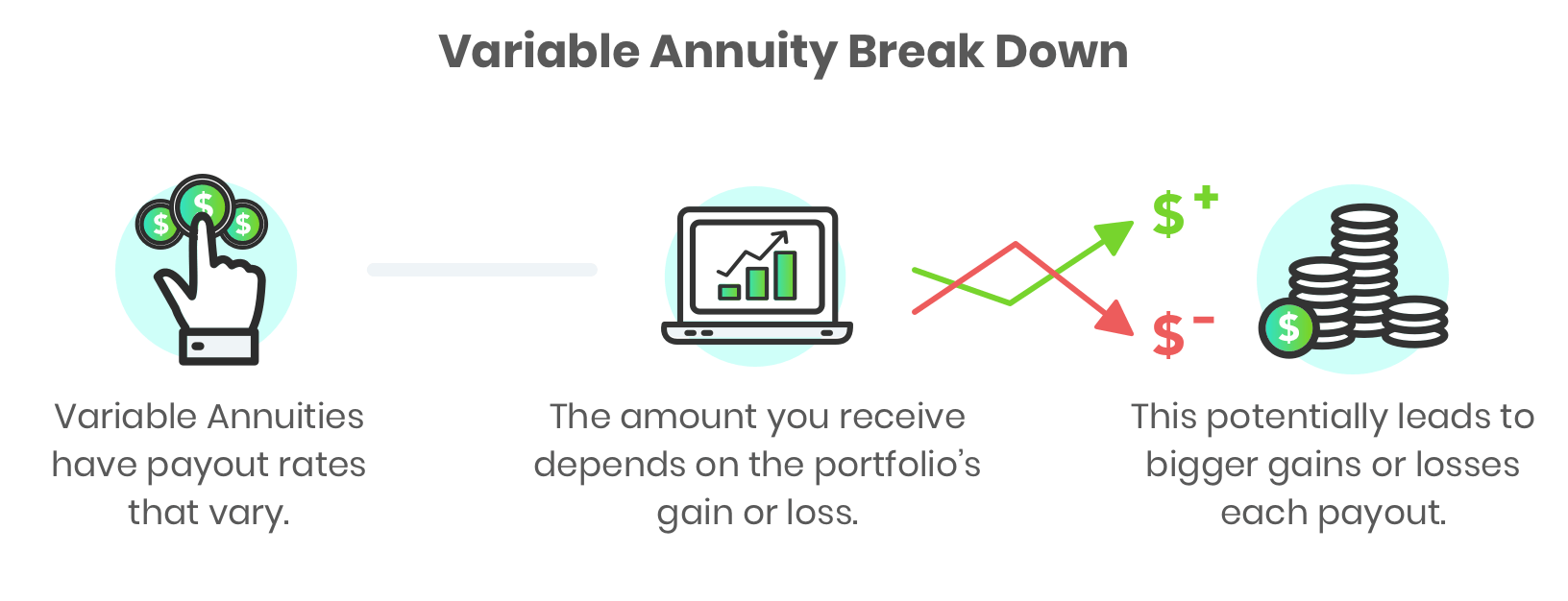
A variable annuity, on the other hand, invests your savings in mutual funds. While you can buy riders that guarantee a minimum income, you’ll be paying very much for it. “All in, the annual fees can be 3% or more of your balance,” says Jeff Bailey, an advisor from Nashville. “That’s a huge withdrawal rate from your portfolio versus investing on your own.”

The variable annuity will lock up your money for years. If you cancel early, you owe a surrender charge that could start at 7% or more of your annuity balance before gradually going down as time goes by. “Clients believe they can walk away with their contract value, but that’s often not true,” says Bailey.

COMMENTS APPRECIATED

EDUCATION: Books

SPEAKING: Dr. Marcinko will be speaking and lecturing, signing and opining, teaching and preaching, storming and performing at many locations throughout the USA this year! His tour of witty and serious pontifications may be scheduled on a planned or ad-hoc basis; for public or private meetings and gatherings; formally, informally, or over lunch or dinner. All medical societies, financial advisory firms or Broker-Dealers are encouraged to submit an RFP for speaking engagements: CONTACT: Ann Miller RN MHA at MarcinkoAdvisors@outlook.com -OR- http://www.MarcinkoAssociates.com

Like and Subscribe

***

***

TONTINE Funds

By Staff Reporters

DEFINITION

***

***

According to Wikipedia, a tontine (/ˈtɒntaɪn, -iːn, ˌtɒnˈtiːn/) is an investment linked to a living person which provides an income for as long as that person is alive. Such schemes originated as plans for governments to raise capital in the 17th century and became relatively widespread in the 18th and 19th centuries.

Tontines enable subscribers to share the risk of living a long life by combining features of a group annuity with a kind of mortality lottery. Each subscriber pays a sum into a trust and thereafter receives a periodical payout. As members die, their payout entitlements devolve to the other participants, and so the value of each continuing payout increases. On the death of the final member, the trust scheme is usually wound up.

Tontines are still common in France. They can be issued by European insurers under the Directive 2002/83/EC of the European Parliament. The Pan-European Pension Regulation passed by the European Commission in 2019 also contains provisions that specifically permit next-generation pension products that abide by the “tontine principle” to be offered in the 27 EU member states.

Questionable practices by U.S. life insurers in 1906 led to the Armstrong Investigation in the United States restricting some forms of tontines. Nevertheless, in March 2017, The New York Times reported that tontines were getting fresh consideration as a way for people to get steady retirement income.

MORE: http://www.tontine.com

COMMENTS APPRECIATED

Subscribe, Review and Refer

***

***

QUALIFIED EXCHANGE: 1035 Life Insurance Policy

DEFINITION

By Staff Reporters

***

***

1035 Exchange

DEFINITION: A method of exchanging insurance-related assets without triggering a taxable event. Cash-value life insurance policies and annuity contracts are two products that may qualify for a 1035 exchange.

***

A 1035 exchange is a feature in the tax code that permits individuals to transfer funds from an existing life insurance endowment, or annuity policy to a new one without tax consequences.

The IRS permits these like-kind trades under Internal Revenue Code section 1035, where this process takes its name from.

These transactions are not subject to tax deductions or tax credits but rather tax deferrals, meaning that individuals would only pay taxes on any earnings once they receive money from the policy later.

Without this provision, policyholders would have to close their previous accounts and be subjected to both taxes and surrender charges before they could open a new account.

Cite: https://www.annuity.org/annuities/1035-exchange/

COMMENTS APPRECIATED

Subscribe and Refer

***

***

Annuities and their Associated Costs

Another Look at Expenses

By Rick Kahler MS CFP™

Rick Kahler MS CFPAnnuities are popular investments; almost every new physician or other client I see has one. Part of any investment adviser’s due diligence is to understand the history and intentions of the investments in a portfolio.

When I ask why someone purchased an annuity, the most common responses are: “We didn’t have to pay any fees or commissions.” “There are no ongoing expenses.” “All my money is working for me.” “The principal is guaranteed.”

Warning … Warning!

Any time you read or hear “no fees,” “no commissions,” “no expenses,” “free,” or “guaranteed” used in conjunction with an investment, it’s a red flag. All investments, including annuities, have costs associated with them. You need to ask some probing questions about those costs before proceeding.

Fixed Annuity Example

Let’s look at the costs for one popular type of annuity, the fixed annuity. This simply gives you a stated rate of return that often can change annually, similar to a bank certificate of deposit.

Suppose Investor A is sold a fixed annuity with a guaranteed return of 3.5%. Investor B invests her money in a plain vanilla portfolio of mutual funds holding 60% stocks and 40% bonds, which has a long-term projected return of 6%.

The insurance company selling the annuity must earn enough of a return on Investor A’s money to cover their expenses, pay commissions, and return something to Investor A. There is no magic formula on how that’s done. The insurance company invests the money in the same asset classes available to anyone. For the sake of this example, it’s reasonable to assume the insurance company would hold the same 60/40 portfolio as Investor B.

The annuity incurs internal costs for administration, managing the money, insuring the return of principal, and commissions paid to salespeople. While these vary somewhat from company to company, a cost of 2.5% isn’t unreasonable.

***

business-insurance

***

If the company earns 6% and deducts 1% to recoup the upfront commission paid to the salesperson, 1.0% for management costs, and 0.5% for administrative fees, they pay out the remainder as a “fixed” return of 3.5%. Investor A only sees that 3.5% fixed return. If Investor A wants out of the policy before the cost of the up-front commission is fully recovered (usually 4 to 15 years), he will also incur a “surrender penalty” that is approximately equal to the remaining amount of commission paid to the broker selling the policy.

Investor B’s 60/40 portfolio will have the same 6% gross return as the insurance company’s portfolio. If Investor B purchases index funds from a company like Vanguard, her costs could be as low as 0.10%, leaving her a return of 5.9%.

Suppose Investors A and B each accumulates $1 million in retirement funds. The difference between Investor A’s guaranteed 3.5% return and Investor B’s average and unguaranteed 5.9% return is potentially an extra $2,000 a month in retirement income. Guarantees come with a cost.

Why Bother?

Given these numbers, you may wonder why anyone would purchase a fixed annuity? Why bother?

One reason is that many buyers don’t have the confidence that they can invest the money wisely or the stomach to watch the portfolio’s inevitable peaks and valleys.

Another reason is that most buyers don’t fully understand the costs.

Assessment

Unlike stocks, bonds, and mutual funds, most annuities are sold, not bought. I have never had a new client who independently purchased a no-load annuity. The annuities I typically see were sold by someone who received a commission. Commissions are not inherently bad, but in most cases they do inherently create a conflict of interest.

There are always fees associated with any investment. In my experience, the less transparent those fees are, the higher they are.

More:

Even More:

Conclusion

Your thoughts and comments on this ME-P are appreciated. Feel free to review our top-left column, and top-right sidebar materials, links, URLs and related websites, too. Then, subscribe to the ME-P. It is fast, free and secure.

Speaker: If you need a moderator or speaker for an upcoming event, Dr. David E. Marcinko; MBA – Publisher-in-Chief of the Medical Executive-Post – is available for seminar or speaking engagements. Contact: MarcinkoAdvisors@msn.com

OUR OTHER PRINT BOOKS AND RELATED INFORMATION SOURCES:

Comprehensive Financial Planning Strategies for Doctors and Advisors: Best Practices from Leading Consultants and Certified Medical Planners(TM)

FINANCIAL ASSET CLASSES: Like a Box of Valentine Chocolates?

On Valentine’s Day Diversification

                                         By Rick Kahler MS CFP® ChFC CCIM 

                                                   www.KahlerFinancial.com

Rick Kahler CFPThe stock markets crashed yesterday after the new CPI report and update.

Nevertheless, with displays of Valentine candy in every store, February is the perfect time to talk about chocolate. A creative financial planner might even steal Forrest Gump’s analogy and say, “Diversification is like a box of chocolates.”

Except that it isn’t.

True, a box of chocolates might have a lot of variety. Cream centers. Caramels. Nougats. Nuts. Dark chocolate. Milk chocolate. Truffles. Yet it’s all still chocolate.

Retirement Savings

Buying that box would be like investing your retirement savings in a variety of US stocks. Even if you had a dozen different companies, they would all be the same basic category of investment, or asset class.

For example, suppose you gave your true love a slightly more diversified Valentine gift made up of chocolates, Girl Scout cookies, baklava, and apple pie. That would compare to investing in different types of stocks like US, international, or emerging markets. But, everything would still be dessert.

Wiser Physician-Investors

You would be a wiser doctor-investor if you took your true love out for dinner and had a meat course, a salad, vegetables, bread, dessert, and wine. Now you’d start to see real diversification.

In addition to US, international, and emerging market stocks (all dessert), you might have some other asset classes like US and international bonds (meat), real estate (bread), cash (salad), commodities (veggies), and absolute return strategies (wine).

***

box

***

Long Term Growth Generator

This kind of asset class diversification is the best investment strategy for long-term growth. My preference is eight or nine different classes. For many clients, I recommend a mix of US and international stocks and bonds, real estate investment trusts, a commodities index fund, market neutral funds like merger arbitrage and managed futures, junk bonds, and Treasury Inflation Protected Securities (TIPS).

Market Fluctuations

Fluctuations in the market will tend to affect the various securities within a given asset class in the same way. Most US stocks, for example, would generally move up or down at the same times. So, owning shares of several different stocks wouldn’t protect you against changes in the market. When a portfolio is well-diversified, the volatility is reduced even during times when the markets are moving strongly up or down.

When I talk about investing in a variety of asset classes, I don’t mean owning stocks, real estate, gold, or other assets directly. For individual investors, mutual funds are a much better choice. Occasionally, someone will ask me, “But why should I have everything in mutual funds? That isn’t diversified, is it?”

Mutual Funds

Mutual funds are not an asset class. A mutual fund isn’t like a type of food; it’s like the plate you put the food on. A single plate might hold one food item or servings from several different food groups. More specifically, mutual funds are pools of money invested by managers. One fund might invest in real estate investment trusts (REITS). Another might have international stocks chosen for their high returns. Still others invest in a diversified mix of asset classes. The mutual fund is just the container that holds the investments.

heart[Courtesy GE Healthcare]

Annuities

Annuities and IRAs aren’t asset classes, either, but are also examples of different types of containers that hold investments. If you use your IRA to purchase an annuity, all you’re doing is stacking one plate on top of another. It doesn’t give you another asset class, it just costs you more for the second plate.

Assessment

Having a box of chocolates for dinner might seem more appealing in the short term than eating a balanced meal. Investing in the “get-rich-now” flavor of the month might seem tempting, too. Yet in the long run, asset class diversification is the best way to make sure you have a healthy investment diet.

***

February 14th, 2024

***

Conclusion

Your thoughts and comments on this ME-P are appreciated. Feel free to review our top-left column, and top-right sidebar materials, links, URLs and related websites, too. Then, subscribe to the ME-P. It is fast, free and secure.

Speaker: If you need a moderator or speaker for an upcoming event, Dr. David E. Marcinko; MBA – Publisher-in-Chief of the Medical Executive-Post – is available for seminar or speaking engagements. Contact: MarcinkoAdvisors@msn.com

OUR OTHER PRINT BOOKS AND RELATED INFORMATION SOURCES:

***

  Comprehensive Financial Planning Strategies for Doctors and Advisors: Best Practices from Leading Consultants and Certified Medical Planners(TM)* 8

Is Social Security a Rip-Off?

Join Our Mailing List

 “WHERE DID THAT MONEY GO?”

Rick Kahler MS CFP

By Rick Kahler MS CFP http://www.KahlerFinancial.com

A reader recently forwarded me an email that began, “Who died before they collected Social Security?” It asked how many people only collected a small portion of what they paid into Social Security because they, or a spouse, died soon after retiring. Then it screamed in all caps, “WHERE DID THAT MONEY GO?”

Introduction

The rest of the piece, after calculations of how much an average person pays into Social Security, suggested the government is short-changing those who die before they receive back in benefits everything they paid in. It claimed that Social Security premiums were to have been put in a “locked box,” that instead they were loaned to the US Treasury, and that Social Security is therefore running out of money.

The many misstatements and errors in this piece highlight a common misunderstanding about the Social Security insurance program. It is not an income tax. Nor; is it actually insurance – or an investment!

Example:

If you earn a salary, you are familiar with the FICA (Federal Insurance Contributions Act) tax that, like federal income tax, is withheld from your paycheck. Everyone must pay it on their first $118,500 of earned income. The current rate for employees is 7.65% (6.2% for Social Security and 1.45% for Medicare), an amount matched by employers. The self-employed pay 15.3%.

FICA payments are not an income tax, but are insurance premiums used to fund the Social Security program. It is a direct transfer program, meaning the money coming into the plan is immediately paid out to retired or disabled participants. The proceeds are not directly deposited to the general account to be spent however Congress wishes.

***

train station

***

The Tipping Point?

However, in the past, because more money came into Social Security than was paid out in benefits, the program did loan the excess to the US Treasury Department (receiving bonds in return) to fund the operating expenses of the federal government. The program built up a significant investment in US Treasuries until 2010, when it began paying more out in benefits than it receives from participants. The program is now beginning to redeem the bonds. Officials project that in 2033 the program will have depleted the investment in bonds and will need to either adjust benefits, raise the payroll tax, or borrow from the US Treasury.

What it’s not?

  • Social Security isn’t insurance in the sense that insurance pays only when a person suffers a loss. With Social Security, everyone who has worked for more than 10 years will collect a monthly income upon retirement.
  • SS is also not a savings account or a retirement plan like an IRA or a 401(k). It is not set aside in a segregated account with your name on it. The money you pay in doesn’t accumulate or earn interest. If Social Security were designed as a retirement plan that would refund what participants pay in, plus some type of return, the payroll tax would far surpass 15.3%.

What it is?

So if Social Security isn’t an income tax, an insurance plan, or a retirement plan, what is it? It’s an annuity. Participants are guaranteed a monthly income for life; a lesser amount if they retire at age 62 or a higher amount if they wait until full retirement age or later.

Like any annuity, when you die the payments stop. The amount of the payroll tax/premium incorporates actuarial estimates of how many people will die before the average mortality age or live long past it. The money paid in by people who die early is not “missing.”

Assessment

If you have questions about Social Security, you can find detailed information at www.socialsecurity.gov. It’s a much more reliable source than anonymous forwarded emails.

Conclusion

Your thoughts and comments on this ME-P are appreciated. Feel free to review our top-left column, and top-right sidebar materials, links, URLs and related websites, too. Then, subscribe to the ME-P. It is fast, free and secure.

Speaker: If you need a moderator or speaker for an upcoming event, Dr. David E. Marcinko; MBA – Publisher-in-Chief of the Medical Executive-Post – is available for seminar or speaking engagements. Contact: MarcinkoAdvisors@msn.com

OUR OTHER PRINT BOOKS AND RELATED INFORMATION SOURCES:

Risk Management, Liability Insurance, and Asset Protection Strategies for Doctors and Advisors: Best Practices from Leading Consultants and Certified Medical Planners™8Comprehensive Financial Planning Strategies for Doctors and Advisors: Best Practices from Leading Consultants and Certified Medical Planners™


“The medical education system is grueling and designed to produce excellence in medical knowledge and patient care. What it doesn’t prepare us for is the slings and arrows that come our way once we actually start practicing medicine. Successfully avoiding these land mines can make all the difference in the world when it comes to having a fulfilling practice. Given the importance of risk management and mitigation, you would think these subjects would be front and center in both medical school and residency – ‘they aren’t.’

Thankfully, the brain trust over at iMBA Inc., has compiled this comprehensive guide designed to help you navigate these mine fields so that you can focus on what really matters – patient care.”

 Dennis Bethel MD [Emergency Medicine Physician]


Top Ten Wealth Management Posts for Doctors

Join Our Mailing List

By Michael Zhuang

Conclusion

Your thoughts and comments on this ME-P are appreciated. Feel free to review our top-left column, and top-right sidebar materials, links, URLs and related websites, too. Then, subscribe to the ME-P. It is fast, free and secure.

Speaker: If you need a moderator or speaker for an upcoming event, Dr. David E. Marcinko; MBA – Publisher-in-Chief of the Medical Executive-Post – is available for seminar or speaking engagements. Contact: MarcinkoAdvisors@msn.com

OUR OTHER PRINT BOOKS AND RELATED INFORMATION SOURCES:

Product Details  Product Details

Should the Government Mandate 401(k) Annuities?

About the Guaranteed Retirement Accounts Proposal
By Robert Giese
bob.giese@chsfl.org

Recent hearings in the House and Senate have focused on the need for 401(k) and IRA accounts to provide better retirement income. Vice President Joe Biden referred to these discussions in the White House Task Force on the Middle Class. He suggested creating “Guaranteed Retirement Accounts [GRAs].”

The guaranteed retirement accounts may replace conventional 401(k)s and could eventually provide annuity income to individuals.

Response to GAO Report

In response to a White House request, the General Accounting Office (GAO) released a report on April 28, 2010 that discussed some of these retirement issues. The GAO noted that a couple age 62 has at least a 47% probability that one of the two spouses will live to age 90. While life expectancy is in the mid-to-late 70s when one is born, the age at maturity increases as we grow older. Therefore, the average retirement age couple in America has a reasonable prospect that the survivor will live to be age 90.

GAO reports that Social Security is the primary support for lower income retired Americans. For the median retired person, Social Security is expected to provide approximately 47% of retirement income. The balance will come from savings or investments, a qualified plan such as a 401(k) or IRA and retirement earnings from employment.

Better than Conservative Investments?

The GAO report notes that an annuity may provide more income than a conservative investment, such as a bond or CD.

Assessment

Republican lawmakers this week wrote a letter to Treasury Secretary Timothy Geithner and expressed concern about the guaranteed retirement accounts. They noted that a number of the witnesses before the various committees would “dismantle the present private-sector 401(k) system” and replace it with the GRA.
Their letter expressed concern and opposition to any effort to “nationalize” the 401(k) system. The Republican lawmakers continued by noting that over 90% of households have a favorable opinion of 401(k) or IRA accounts.

Conclusion

And so, your thoughts and comments on this ME-P are appreciated. Is this new vehicle really better than a bond or CD? Is it the correct vehicle for a long-term retirement strategy? Is it even appropriate for physicians and medical professionals?

Feel free to review our top-left column, and top-right sidebar materials, links, URLs and related websites, too. Then, be sure to subscribe. It is fast, free and secure.

Link: http://feeds.feedburner.com/HealthcareFinancialsthePostForcxos

Get our Widget: Get this widget!

Our Other Print Books and Related Information Sources:

Practice Management: http://www.springerpub.com/prod.aspx?prod_id=23759

Physician Financial Planning: http://www.jbpub.com/catalog/0763745790

Medical Risk Management: http://www.jbpub.com/catalog/9780763733421

Healthcare Organizations: www.HealthcareFinancials.com

Health Administration Terms: www.HealthDictionarySeries.com

Physician Advisors: www.CertifiedMedicalPlanner.com

Subscribe Now: Did you like this Medical Executive-Post, or find it helpful, interesting and informative? Want to get the latest ME-Ps delivered to your email box each morning? Just subscribe using the link below. You can unsubscribe at any time. Security is assured.

Link: http://feeds.feedburner.com/HealthcareFinancialsthePostForcxos

Sponsors Welcomed

And, credible sponsors and like-minded advertisers are always welcomed.

Link: https://healthcarefinancials.wordpress.com/2007/11/11/advertise

Product Details  Product Details

Ask an Advisor about Financial Seminars

Questions of Secrecy

By a Registered NurseLight Bulb

I attended a retirement planning seminar about a year ago; after the big stock market drop. It focused on annuities along with the “free” dinner. The strange thing was that the host asked that no recording devices be used during the presentation for copyright purposes. I know a bit about annuities and don’t think he said anything wrong, other than using a few common scare tactics. He had virtually no academic credentials and so I enjoyed the dinner and went on with my life.

Personal Invitation

A few days ago I was “personally” invited by mail to a financial planning seminar hosted by a group of attorneys, accountants and estate planners to an extremely prestigious, and no doubt expensive, restaurant. This time, the following warning appeared in writing on the invitation.

“Due to the copyright nature of this material, attorneys, accountants, insurance agents or financial planning practitioners are not admitted without express permission. And, no audio or video recording devices will be allowed.”

Assessment

As a nurse I am not in the dis-invited group, and realize that the “personal” nature of the invitation was bogus. But, I was wondering if this copyright warning was “kosher”, or am I just being paranoid?

Conclusion

And so, your thoughts and comments on this Medical Executive-Post are appreciated. Is this secrecy standard industry practice? Feel free to review our top-left column, and top-right sidebar materials, links, URLs and related websites, too. Then, be sure to subscribe to the ME-P. It is fast, free and secure.

Link: http://feeds.feedburner.com/HealthcareFinancialsthePostForcxos

Speaker: If you need a moderator or speaker for an upcoming event, Dr. David E. Marcinko; MBA – Publisher-in-Chief of the Executive-Post – is available for seminar or speaking engagements. Contact: MarcinkoAdvisors@msn.com 

Get our Widget: Get this widget!

Our Other Print Books and Related Information Sources:

Practice Management: http://www.springerpub.com/prod.aspx?prod_id=23759

Physician Financial Planning: http://www.jbpub.com/catalog/0763745790

Medical Risk Management: http://www.jbpub.com/catalog/9780763733421

Healthcare Organizations: www.HealthcareFinancials.com

Health Administration Terms: www.HealthDictionarySeries.com

Physician Advisors: www.CertifiedMedicalPlanner.com

I Jealously “Shake my Fist” at Somnath Basu PhD

On CFP® Mis [Trust] – One Doctor’s Painful Personal Experience

[“So Sorry to Say it … but I Told You So”]

By: Dr David Edward Marcinko; FACFAS, MBA, CMP™

[Publisher-in-Chief]dem21

According to Somnath Basu, writing on April 6, 2009 in Financial Advisor a trade magazine, the painful truth is that many financial practitioners are merely sales people masquerading, as financial planners [FPs] and/or financial advisors [FAs] in an industry whose ethical practices have a shameful track record. Well, I agree, and completely. This includes some who hold the Certified Financial Planner® designation, as well as the more than 98 other lesser related organizations, logo marks and credentialing agencies [none of which demand ERISA-like fiduciary responsibility]. For more on this topic, the ME-P went right to the source last month, in an exclusive interview with Ben Aiken; AIF® of Fi360.com  

fp-book4

The CFP® Credential – What Credential?

Basu further writes that stockbrokers and insurance agents who earn commissions from buying and selling stocks, insurance and other financial products realize that a Certified Financial Planner® credential will help grow the volume of their business or branch them into other related and lucrative products and services. After all, there are more than 55,000 of these “credentialed” folks. And, this marketing designation seems to have won the cultural wars in the hearts and minds of an unsuspecting – i.e., duped public; probably because of sheer numbers. Didn’t a CFP Board CEO state that its’ primary goal was growth, a few years ago? Can you say “masses of asses”, as the oft quoted Bill Gates of Microsoft used to say when only 2,000 micro-softies defeated 400,000 IBMers during the PC operating system wars of the early 1980’s. Quantity, and marketing money, can trump quality in the public-relations business; ya’ know … if you repeat the lie often enough … yada … yada … yada! Yet, as the so-called leading industry designation, the CFP® entry-barrier standard is woefully low. Moreover, the SEC’s [FINRA] Series #7 general securities licensure sales examination is not worth much more than a weekend’s study attention, even to the uninitiated.

insurance-book2

Easy In – Worth Less Out

In our experience, we agree with Basu and others who suggest that scores of lightly educated, and sometimes wholly in-articulate and impatient individuals are zipping through the CFP® Board of Standards approved curriculum in three to six months of online, on-ground, or “self-study”. But, that some can do so without a bachelor’s degree when they join wire-houses and financial institutions, which cannot be trusted to adequately train them, is an abomination. And, even more sadly, some of these CFP™ mark-holders, and other folks, believe they have actually received an “education” from same. Of course, their writing skills are often non-existent and I have cringed when told that, in their opinion, advertiser-driven trade magazines constitute “peer-reviewed” and academic publications. Incidentally, have you noticed how thin these trade-rags are getting lately? Much like the print newspaper industry, are they becoming dinosaurs? One agent even told me, point-blank, that his CLU designation was the equivalent of an “academic PhD in insurance.” This was at an industry seminar, where he thought I was a lay insurance prospect.

THINK: No critical thinking skills.

biz-book4

Education

There is another sentiment that may be applied in many of these cases; “hubris.” I mean, these CFP® people … just don’t know – how much they don’t know.”  The very real difference between training versus education is unknown to many wire-houses and FAs, isn’t it? And, please don’t get me started on the differences in pedagogy, heutagogy and androgogy. Moreover, it’s sad when we see truly educated youngsters become goaded by wire-houses into thinking that these practices are de-rigor for the industry. One such applicant to our Certified Medical Planner™ program, for example, had both an undergraduate degree in finance and a graduate degree in economics from the prestigious Johns Hopkins University – in my home town of Baltimore, MD [name available upon request]. He was told, in his Smith Barney wire-house training program, to eschew CMP™ accountability and RIA fiduciary responsibility, when working with potential physician and lay clients; but to get his CFP® designation to gather more clients. To mimic my now 12 year-old daughter; it seems that: SEC Suitability Rules – and – Fiduciary Accountability Drools. And, to quote Hollywood’s “Mr. T”; I pity the fools, er-a, I mean clients. But, T was an actor, and this is serious business.

cmp-logo1

Of CEU Credits and Ethics

Beside trade-marks and logos, we are all aware that continuing education, and a code of ethics, is another important marketing and advertising component of state insurance agents and CFP licensees. It’s that old “be” – or “pretend to be” – a trusted advisor clap-trap. Well, I say horse-feathers for two reasons. First, both my insurance and CFP® Continuing Educational Unit [CEU] requirements were completed by my daughter [while age 7-10], by filling in the sequentially identical and bubble-coded, multiple-choice, answer-blanks each year. Second, this included the mandatory “ethics” portions of each test. When I complained to my CEU vendor, and state insurance department, I was told to “enjoy-the-break.”  My daughter even got fatigued after the third of fourth time she took the “home-based tests” for me.  After I opened my big mouth, the exact order of questions was changed to increase acuity, but remained essentially the same, nevertheless. My daughter got bored, and quit taking the tests for me, shortly thereafter. She always “passed.”dhimc-book3

Thus, like Basu, I also find that far too many financial advisors are unwilling to devote the time necessary to achieve a sound education that will help attain their goals, and would rather sell variable or whole life products than simple term life, even when the suitability argument overwhelmingly suggests so, for a higher payday. We not only have met sale folks without undergraduate degrees, but also too many of those with only a HS diploma, or GED. Perhaps this is why a popular business truism suggests that the quickest way for the uneducated/under educated class to make big bucks, is in sales. Just note the many classified ads for financial advisors placed in the newspaper job-section, under the heading “sales.” Or, in more youthful cultural terms, “fake it – until you make it.”

Of the iMBA, Inc Experience

According to Executive Director Ann Miller RN MHA, and my experience at the Institute of Medical Business Advisors, Inc:

“Far too many financial advisors who contact us about matriculation in our online Certified Medical Planner™ program – in health economics and management for medical professionals – don’t even know what a Curriculum Vitae [CV] is? Instead, they send in Million Dollar Roundtable awards, Million Dollar Producer awards, or similar sales accomplishments as resume’ boosters. It is also not unusual for them to list some sort of college participation on their resumes, and websites, but no school affiliation or dates of graduation, etc. And, they become furious to learn that we require a college degree for our fiduciary focused CMP™ program, and not from an online institution, either. The onslaught of follow-up nasty phone-calls; faxes and emails are laughable [frightening] too.”  

www.MedicalBusinessAdvisors.com

Assessment

More often than not, it is the financial institutions that FAs and CFP™ certificants’ work for that reward sales behavior with higher commissions, rather than salaries; which encourage such behavior and create the vicious cycles that are now the norm.

THINK: ML, AIG, Citi, WAMU, Wachovia, Hartford, Prudential, etc.

Note: Original author of Restoring Trust in the CFP Mark, Somnath Basu PhD, is program director of the California Institute of Finance in the School of Business at California Lutheran University where he’s also a professor of finance. He can be reached at (805) 493 3980 or basu@callutheran.edu. We have asked him to respond further.

My Story: I am a retired surgeon and former Certified Financial Planner® who resigned my “marketing trademark” over the long-standing fiduciary flap. I watched this chicanery for more than a decade after protesting to magazines like Investment Advisor, Financial Advisor, Registered Rep, Financial Planner, the FPA, etc; up to, and even including the CFP® Board of Standards; to no avail. Feel free to contact me for a copy of a 43 page fax, and other supportive documentation from the CFP® Board of Standards – and their outsourced intellectual property attorneys – over a Federal trademark infringement lawsuit they tried to institute against me for innocent website errors placed by a visually impaired intern. Obviously, they disliked the launch of our CMP™ program. As a health economist and devotee of Ken Arrow PhD, I polity resigned my license, as holding no utility for me, to the shocked CFP Board. They later offered to consider re-instatement for a mere $600 fee with letter of explanation, to which I politely declined. Of course, my first thought after living in the streets of South Philadelphia while in medical school, during the pre-Rocky era, was to say f*** off – but I didn’t. Nevertheless, I still seem to be on their mailing list, years later. No doubt, the list is sold, and re-sold, to various advertisers for much geld. And, why shouldn’t they; an extra bachelor, master and medical degree holder on their PR roster looks pretty good. I distrust the CFP® Board almost as much as I distrust the AMA, and its parsed and disastrous big-pharma funding policies. Right is right – wrong is wrong – and you can’t fool all of the people, all of the time, especially in this age of internet transparency.

Shaking my Fist at Somnath … in Envy

And so, why do I shake my fist at Somnath Basu? It’s admittedly with congratulations, and a bit of schadenfreude, because he wrote an article more eloquently than I ever could, and will likely receive much more publicity [good or slings-arrows] for doing so. You know, it’s very true that one is never a prophet in his own tribe. Oh well, Mazel Tov anyway for stating the obvious, Somnath. The financial services industry – and more specifically – the CFP® emperor have no clothes! Duh!

ho-journal5

Good Guys and White Hats

Now that Basu’s article has appeared in Financial Advisor News e-magazine, the other industry trade magazines are sure to follow the CFP® certification denigration reportage, in copy-cat fashion. And, the fiduciary flap is just getting started. This is indeed unfortunate, because I do know many fine CFP® certificants, and non-CFP® certified financial advisors, who are well-educated, honest and work very diligently on behalf of their clients. It’s just a shame the public has no way of knowing about them – there is no white hat imprimatur or designation for same – most of whom are Registered Investment Advisors [RIAs] or RIA reps. For example, we know great folks like Douglas B. Sherlock MBA, CFA; Robert James Cimasi MHA, AVA, CMP™; J. Wayne Firebaugh, Jr CPA, CFP®, CMP™; Lawrence E. Howes MBA, CFP®; Pati Trites PhD; Gary A. Cook MSFS, CFP®, CLU; Tom Muldowney MSFS, CLU, CFP®, CMP™;  Jeffrey S. Coons PhD, CFP®; Alex Kimura MBA, CFP®; Ken Shubin-Stein MD, CFA; and Hope Hetico RN, MHA, CMP™; etc. And, to use a medical term, there are TNTC [too many, to count] more … thankfully!

Conclusion

Your thoughts and comments on this ME-P are appreciated. Feel free to review our top-left column, and top-right sidebar materials, links, URLs and related websites, too. Then, subscribe to the ME-P. It is fast, free and secure.

Speaker: If you need a moderator or speaker for an upcoming event, Dr. David E. Marcinko; MBA – Publisher-in-Chief of the Medical Executive-Post – is available for seminar or speaking engagements. Contact: MarcinkoAdvisors@msn.com

OUR OTHER PRINT BOOKS AND RELATED INFORMATION SOURCES:

Product DetailsProduct DetailsProduct Details

  Product DetailsProduct Details

Product Details

SEC Rule 151-A and Insurance Agents

NAFA Criticizes the SEC

Staff Reportersinsurance-book

Insurance agents without securities licenses won’t be able to sell index annuities under this new proposed rule.

NAFA Opines

The National Association of Fixed Annuities (NAFA) recently took a firm stand against the Security & Exchange Commission’s (SEC) proposed Rule 151A, which would regulate index annuities as securities rather than as insurance products.

Insurance-Securities Hybrid Product

NAFA said in a statement issued in July that it “strongly disagrees with the SEC proposal and will pursue all available avenues of recourse,” including taking legal recourse, if required.

Assessment

NAFA Says Nix SEC Rule 151A.

Conclusion

In other words, if Rule 151A is adopted, insurance agents without securities licenses would not be able to sell Index Annuities [IAs].  IAs are investment products that combine both fixed income investments and equity index options so as to be able to leverage opportunities in both.

Please comment and opine; especially insurance agents, investment advisors and financial planners.

Speaker: If you need a moderator or speaker for an upcoming event, Dr. David E. Marcinko; MBA – Publisher-in-Chief of the Executive-Post – is available for seminar or speaking engagements. Contact: MarcinkoAdvisors@msn.com  or Bio: www.stpub.com/pubs/authors/MARCINKO.htm

Subscribe Now: Did you like this Executive-Post, or find it helpful, interesting and informative? Want to get the latest E-Ps delivered to your email box each morning? Just subscribe using the link below. You can unsubscribe at any time. Security is assured.

Link: http://feeds.feedburner.com/HealthcareFinancialsthePostForcxos

Copyright 2008 iMBA Inc: All rights reserved, USA, unless otherwise noted. Use is restricted to Executive-Post subscribers only. No redistribution is allowed. To avoid violation of iMBA Inc copyright restrictions and redistribution policy, please register for your own free Executive-Post membership. Detailed information and registration links are available at:

Link: http://feeds.feedburner.com/HealthcareFinancialsthePostForcxos

Referrals: Thank you in advance for your electronic referrals to the Executive-Post

A Fresh Look at Annuities

An Often Maligned Insurance-Investment Vehicle

[By Staff Reporters] 

Join Our Mailing List 

Most doctors are familiar with fixed annuities (particularly during periods of high interest rates like two decades ago), which come in two basic varieties—the traditional single or multiple-year initial rate guarantee product or the market value adjusted (MVA) interest rate product.

Once the guaranteed rate ends however, the physician-investor is at the mercy of the insurance company’s renewal rate.

MVAs have offered higher interest rates but function much like bonds if surrendered before the end of the guarantee period. If interest rates have declined, the cash surrender value increases and vice versa. This can be mitigated by “laddering” as one would do with bonds.

Literature Review

In his article “Annuities on the Horizon” (Financial Strategies, Fall 1996, pp. 44–46, Investors Financial Group Inc.), author Clifford Jack acquainted financial advisors and others with a recoup of vintage annuities.

For instance, while variable annuities were historically limited to the most basic of investment portfolios, many now offer portfolios that include international equity, mid-cap equity, high yield bonds, REITS, ETFs, and global bonds with many different fund management companies. Others include multiple guaranteed accounts offering competitive interest rates, which provide the flexibility to make a tax-free transfer into these types of accounts or to dollar cost average into the equity accounts.

Indexed Annuities

The equity indexed annuity product allows participation in the upside of the S&P 500 Index by crediting an interest rate that is tied directly to the performance of the index. Most guarantee a percentage participation rate that varies depending on the current interest rate environment. If the contract is held until the end of the guarantee period, investors can be assured of a return of original premium, plus a minimum guaranteed interest rate of 3%.

An equity indexed-annuity is likely to outperform fixed annuities when interest rates are low and variable annuities when the market is trending downward. They permit participation in stock market-like rates of return with downside protection. And, for retirement age physician investors, look at immediate versions of equity index annuity products, which link income payments to an index and thereby offer an inflation hedge.

Assessment

Faced with a rocky market and unknown interest rate scenarios, annuities may be a consideration to the portfolios of suitable physicians; if costs are appreciated, other qualified retirement plans fully funded and time-line long. Comments on this often contentious topic, are appreciated. Are these annuities an insurance product, investment product, or both; and why not use a “purer-play for same?”

***

critics

***

Conclusion

Your thoughts and comments on this ME-P are appreciated. Feel free to review our top-left column, and top-right sidebar materials, links, URLs and related websites, too. Then, subscribe to the ME-P. It is fast, free and secure.

Speaker: If you need a moderator or speaker for an upcoming event, Dr. David E. Marcinko; MBA – Publisher-in-Chief of the Medical Executive-Post – is available for seminar or speaking engagements. Contact: MarcinkoAdvisors@msn.com

OUR OTHER PRINT BOOKS AND RELATED INFORMATION SOURCES:

Product Details  Product Details

Comprehensive Financial Planning Strategies for Doctors and Advisors: Best Practices from Leading Consultants and Certified Medical Planners(TM)

Financial Advisors Not “Up” on Annuities?

Join Our Mailing List

Results of a New Survey

[By Staff Reporters]

In the interactive June edition of Investment Advisor magazine, Savita Iyer-Ahrestani reported on a new study of annuities.

Of course, subscribers of the Medical Executive-Post already know that more and more Americans are counting on financial advisors to help them prepare for a secure retirement; rightly or wrongly. And, this includes physicians and medical professionals.

But, what if the “advisors” are not up to the task – or even just product salesmen – as reported by Iyer-Ahrestani?

The Spectrem Group Survey

Mitch Politzer, senior VP of Lincoln, Nebraska-based Ameritas Advisor Services, had a suspicion that might be the case, so he teamed up with Chicago-based market research firm Spectrem Group and put together a survey aimed at testing advisor know-how and opinion on the kinds of investment products available on the market today.

Results

“The results of the survey showed that most financial advisors are really very skilled at investing for their clients, as they’re driven by equity markets (and to a lesser degree bond markets) and a desire to outperform industry benchmarks,” Politzer says.

“This works for the accumulation phase of a client’s life, yet advisors are less skilled when they have to shift gears for the phase of a client’s life when they’re interested in income and sustaining their assets.”

Gun-Shy on Annuities

Most advisors, Politzer says, seem to have dated beliefs about various retirement products, are slow to innovate, and most are gun-shy when it comes to annuities. According to the survey, 70% of advisors are concerned about locking their clients into a long-term retirement income product, and if they do, they would prefer the product not be an annuity.

Assessment

This survey of professional advisors shows strength in the “accumulation-phase” that is not matched when it comes to income and asset preservation during the “distribution-phase.” www.MedicalBusinessAdvisors.com

And, are FAs really shy about annuity product sales with their traditionally high commission rates?

Conclusion

Your thoughts and comments on this ME-P are appreciated. Feel free to review our top-left column, and top-right sidebar materials, links, URLs and related websites, too. Then, subscribe to the ME-P. It is fast, free and secure.

Speaker: If you need a moderator or speaker for an upcoming event, Dr. David E. Marcinko; MBA – Publisher-in-Chief of the Medical Executive-Post – is available for seminar or speaking engagements. Contact: MarcinkoAdvisors@msn.com

OUR OTHER PRINT BOOKS AND RELATED INFORMATION SOURCES:

Product Details  Product Details

Annuity Insurance Products

Join Our Mailing List

A Brief Overview of Annuities for Physicians

[By Gary A. Cook, MSFS, CFP®, CLU, ChFC, RHU, LUTCF, CMP™ (Hon)]

[By Kathy D. Belteau, CFP®, CLU, ChFC, FLMI]

[By Philip E. Taylor, CLU, ChFC, FLMI]fp-book1

 Introduction

Annuities were reportedly first used by Babylonian landowners to set aside income from a specific piece of farmland to reward soldiers or loyal assistants for the rest of their lives.

Today’s annuities substitute cash for farmland; however the concept is the same. In 1770, the first annuities were sold in the United States and were issued by church corporations for the benefit of ministers and their families. Annuities have grown on a tax-deferred basis since enactment of the Federal Income Tax Code in 1913.  They began to gain widespread acceptance in the early 1980s when interest rates credited exceeded 10%.  During the last two decades, annuities have been the fastest growing sector of premiums for life insurance companies.

Nevertheless, are they actually “needed” by contemporary physicians – – or merely “sold” to them? 

An annuity is a legal contract between an insurance company and the owner of the contract. The insurance company makes specific guarantees in consideration of money being deposited with the company.

Annuities are generally classified as fixed or variable – deferred or immediate.  As their names indicate, deferred annuities are designed as saving funds to accumulate for future use.They are growth-oriented products where the tax on the interest earned is deferred until the money is withdrawn.  An immediate annuity is used for systematically withdrawing money without concern for the money lasting until the end.  The insurance company assumes this risk.

Deferred Annuities

The deferred annuity contract, like a permanent life insurance policy, has been found by some to be a convenient method of accumulating wealth.  Funds can be placed in deferred annuities in a lump sum, called Single Premium Deferred Annuities, or periodically over time, called Flexible Premium Deferred Annuities.  Either way, the funds placed in a deferred annuity grow without current taxation (tax-deferred).  .

Fixed Deferred Annuity

Fixed deferred annuities provide a guaranteed minimum return of return (usually around 3 percent per year) and typically credit a higher, competitive rate based on the current economic conditions.

Fixed annuities are usually considered conservative investments as the principal (premium) is guaranteed not to vary in value. Insurance companies are required by state insurance laws to maintain a reserve fund equal to the total value of fixed annuities.  Fixed annuities are also protected by State Guaranty Fund Laws. 

Example: 

Dr. Park, a retired physician, desires a safe financial vehicle for $100,000 of her excess savings.  She doesn’t need the earnings of this investment for current income and also wants to reduce her income tax liability.  She decides to purchase a fixed deferred annuity with her $100,000.  The annuity guarantees a 3 percent annual return and the current rate is 6 percent. 

After the first year, $6,000 of interest is credited to the annuity and Dr. Park has no current income taxes as a result.  If the 6 percent interest rate does not change, after 3 years, the annuity will have $119,102 of value.

Variable Deferred Annuity

Recently, variable deferred annuities have become very popular.  Like fixed annuities, variable deferred annuities offer tax-deferred growth, but this is where the similarities end.  Variable annuities are not guaranteed.  The appreciation or depreciation in value is totally dependent on market conditions.

Variable deferred annuities assets are maintained in separate accounts (similar to mutual funds) that provide different investment opportunities.  Most of the separate accounts have stock market exposure, and therefore, variable annuities do not offer a guaranteed rate of return.

But, the upside potential is typically much greater than that of a fixed annuity. The value of a variable deferred annuity will fluctuate with the values of the investments within the chosen separate accounts.  Although similar to mutual funds, there are some key differences.  These include:

·  A variable annuity provides tax deferral whereas a regular mutual fund does not

·  If a variable annuity loses money because of poor separate account performance, and the owner dies, most annuities guarantee at least a return of principal to the heirs.  This guarantee of principal only applies if the annuity owner dies.  If the annuity value decreases below the amount paid in, and the annuity is surrendered while the owner is alive, the actual cash value is all that is available.

·  When money is eventually withdrawn from a deferred annuity, it is taxable at ordinary income tax rates.  With taxable mutual funds, they can be liquidated and taxed at lower, capital gains rates.

·  There is also a 10 percent penalty if the annuity owner is under 59½ when money is withdrawn.  There is no such charge for withdrawals from a mutual fund.

· The fees charged inside of a variable annuity (called mortality and expense charges) are typically more than the fees charged by a regular mutual fund. 

Assessment

Variable deferred annuities are sensible for physicians who want stock market exposure while minimizing taxes.  Most financial advisors and Certified Medical Planners™ [CMP™] recommend regular mutual funds when the investment time horizon is under 10 years.  But if the time horizon is more than 10 years, variable annuities may occasionally become more attractive because of the additional earnings from tax-deferral. 

Both types of deferred annuities are subject to surrender charges.  Surrender charges are applied if the annuity owner surrenders the policy during the surrender period, which typically run for 5 to 10 years from the purchase date.  The charge usually decreases each year until it reaches zero.  The purpose of the charge is to discourage early surrender of the annuity. 

Equity Index Annuity 

The equity index annuity combines the basic elements of both the variable and the fixed annuity. The credited interest earnings are generally linked to a percent of increase in an index, such as the Standard & Poor’s 500 Composite Stock Price Index (S&P 500). This percentage is called the Participation Rate and may be guaranteed for a specified period of up to 10 years or adjusted annually. Thus, the physician annuity owner is able to participate in a portion of market gains while limiting the risk of loss. 

Typically, the indexed annuity has a fixed principal, with the insurance company and contract owner sharing the investment risk.  If the S&P 500 Index goes up, so do interest earnings.  If it declines, the insurance company guarantees the principal.   

So, the physician contract owner accepts the risk of an unknown interest yield based on the growth or decline of the S&P 500.  Medical professionals and healthcare practitioners should pay particular attention to surrender penalties, asset management fees and any monthly caps on appreciation. 

Immediate Annuities

Immediate annuities provide a guaranteed income stream.  An immediate annuity can be purchased with a single deposit of funds, possibly from savings or a pension distribution, or it can be the end result of the deferred annuity, commonly referred to as annuitization.  Just like deferred annuities, immediate annuities can also be fixed or variable.  

Immediate annuities can be set up to provide periodic payments to the policy owner annually, semiannually, quarterly or monthly.  The annuity payments can be paid over life or for a finite number of years.  They can also be paid over the life of a single individual or over two lives. 

Insurance Agent Commissions

Immediate Fixed Annuity

Immediate fixed annuities typically pay a specified amount of money for as long as the annuitant lives.They may also be arranged to only pay for a specified period of time, i.e., 20 years.  They often contain a guaranteed payout period, such that, if the annuitant lives less than the guaranteed number of years, the heirs will receive the remainder of the guaranteed payments. 

A note of caution here, as the selection of an immediate annuity is an irrevocable decision! 

Example: 

Dr. Jones is 70 years old and retired.  He is only of average wealth, but is concerned that if he lives too long, he could deplete his savings.  He decides to use $100,000 and purchase a lifetime immediate annuity with 20 years certain.  The insurance company promises to pay him $7,000 per year as long as he lives. If Dr. Jones dies four years after purchase, he would only have received $28,000 out of a $100,000 investment.  However, his heirs will receive $7,000 for the next 16 years.  If Dr. Jones survives to the age of 98, he would have received $196,000 (or 28 years of $7,000).

Immediate Variable Annuity

Immediate variable annuities provide income payments to the annuitant that fluctuates with the returns of the separate accounts chosen.  The theory is that since the stock market has historically risen over time, the annuity payments will rise over time and keep pace with inflation.   If this is indeed what happens, it is a good purchase, but it cannot be guaranteed. 

Some companies will, at a minimum, provide a guarantee of a low minimum monthly payment no matter how poorly the separate accounts perform.

Split annuities

A popular method of adding income and yet still accumulating savings is through the use of two separate annuity policies.  Part of the funds is placed in an immediate annuity to provide monthly income.  The balance is placed in a deferred annuity grows to the total value of the premium paid for both annuities.  

The income that is received from the Immediate Annuity includes a portion of the initial premium, as well as the taxable interest earned.   Only the portion of income that is interest is taxable. The ratio between the annuity principal and interest being paid out is called an Exclusion Ratio. 

Example:

Dr. Jeanne Jones has put $100,000 into a 5-year non-tax deferred vehicle at 5%. The earnings to supplement Jeanne’s retirement is $25,000.  With a combined federal and state tax of 33%, the net after tax income would be $16,750. Jeanne takes the same $100,000 using the split annuity concept she would receive $24,444 over the 5 years.  Based on an exclusion ration of 89%, her total taxable amount is $2,797.  This would yield $923 in taxes at the same 33% tax rate.  Jeanne would have $23,521 of spendable income with the split annuity compared to the $16,750.

Qualified Annuities

The term qualified refers to those annuities which permit tax-deductible contributions under one of the Internal Revenue Code (IRC) sections, i.e., § 408 Individual Retirement Accounts (IRA), § 403(b) Tax Sheltered Annuities, § 401(k) Voluntary Profit Savings Plans.  Qualified annuities can also result from a rollover from such a plan.  

Assessment

Currently, there is much lively debate in the industry as to whether an annuity, which is tax-deferred by nature, should be used as a funding vehicle within a tax-qualified plan, i.e., a tax-shelter within a tax-shelter.  Since the investment options within the annuity are also generally available to the plan participant without the additional management expenses of the annuity policy, it is felt this could be a breach of fiduciary responsibility. And, most insurance agents are not fiduciaries. 

Both the National Association of Securities Dealers (NASD) and the Securities and Exchange Commission (SEC) have gone on record as criticizing these sales.  

However, there are numerous examples of deferred annuities that have outperformed similar investment-category mutual funds, even after taking the annuity expenses into account. 

Conclusion

Your thoughts and comments on this ME-P are appreciated. Feel free to review our top-left column, and top-right sidebar materials, links, URLs and related websites, too. Then, subscribe to the ME-P. It is fast, free and secure.

Speaker: If you need a moderator or speaker for an upcoming event, Dr. David E. Marcinko; MBA – Publisher-in-Chief of the Medical Executive-Post – is available for seminar or speaking engagements. Contact: MarcinkoAdvisors@msn.com

OUR OTHER PRINT BOOKS AND RELATED INFORMATION SOURCES: