A Hospital Industry Outlook for 2013

Join Our Mailing List

One Expert’s Opinion

By Ann Miller RN MHA

[Managing Editor]

The ME-P and nation recently celebrated National Hospital Week for 2013. And so, what better time than now to ask health economist and financial expert Robert James Cimasi MHA, ASA, AVA, CMP for his take on the industry outlook. www.HealthCapital.com

cimasiHistory Background and Overview

The U.S. Healthcare Delivery System is facing what is perhaps its greatest challenge in the expected demand for increased health services from the aging of the “baby-boom” generation, the fastest-growing segment of the population.

The enactment of healthcare reform in March 2010, requiring increased insurance coverage requirements for individuals and employers, will also increase patient demand for hospital inpatient and outpatient services in the coming years.

Hospital Industry 

The hospital industry continues to face many challenges in the changing healthcare environment, including workforce shortages, rising healthcare costs to provide care, and difficulty acquiring needed capital. With consistent financial stresses, hospitals in some areas appear to be struggling.

However, general acute-care hospitals recorded record high profits of $35.2 billion in 2006, an increase of over 20% from 2005.  Total net revenues for general acute-care hospitals were $587.1 billion, resulting in an average profit margin of 6% (the highest since 1997, when the average profit margin was 6.7%).

While the demand for healthcare continues to rise, the site of service also continues to evolve as more procedures are performed on an outpatient basis and by freestanding facilities rather than by inpatient acute care hospitals.  As evidence of this trend, the number of freestanding ambulatory care surgery centers increased from 2,864 in 2000 to 5,197 in 2006.

U.S. healthcare costs are again increasing after their rate of growth slowed in the mid-1990s.

In 2009, total national health expenditures (NHE) in the U.S. grew to $2.5 trillion, a 5.7% increase from 2008.  Meanwhile, the nation’s gross domestic product (GDP) shrank by 1.1%, and as a result, NHE increased from 16.2% to 17.3% of the GDP: the largest one-year increase-in history. Additionally, healthcare spending has been projected to grow to 19.6% by 2016. The potential impact of the 2010 healthcare reform legislation to reduce rising healthcare expenditures is yet uncertain.

According to a 2002 study conducted by the Blue Cross and Blue Shield Association (BCBSA), inpatient costs are responsive to hospital market organization.  Each 1% increase in for-profit hospital market share is associated with a 2% increase in inpatient expenditure per person.  Conversely, each 1% increase in network hospital market share corresponds to a 1% decrease in inpatient expenditures.

Risk Sharing

As healthcare costs again continue to rise faster than inflation in the overall economy in 2013, driven by advances in technology and treatment (as well as the growing baby-boomer population), pressures to reduce costs, such as those included in the ACA will result in a changed paradigm for healthcare delivery.

Reimbursement mechanisms are increasingly designed to control costs and access, and hospitals must continually adjust to deal with increasing pressure to contain reimbursement and utilization levels; ie., share financial risks.

The Marketplace

The healthcare marketplace continues to experience dramatic change as the business of healthcare becomes increasingly competitive, particularly in the outpatient ancillary services arena.  Providers and payors continue to seek to control costs and markets. Legal and regulatory issues also affect change as providers adapt to new opportunities and restrictions.

In particular, there are a wide variety of cost, operational, and regulatory pressures impacting the specialty and surgical hospital industry.

Of course, these pressures are offset by the stable and increasing demand for hospital services, particularly for those hospitals already in operation.

national-hospital-week

Assessment

Bob feels that hospitals that are operationally efficient will continue to be successful within this environment; others will not. How about you?

More: Financial Management Strategies for Hospitals and Healthcare Organizations : Tools, Techniques, Checklists and Case Studies

More: Arkansas Medical News Interviews Dr. Marcinko

Conclusion

Your thoughts and comments on this ME-P are appreciated. Feel free to review our top-left column, and top-right sidebar materials, links, URLs and related websites, too. Then, subscribe to the ME-P. It is fast, free and secure.

Link: http://feeds.feedburner.com/HealthcareFinancialsthePostForcxos

Speaker: If you need a moderator or speaker for an upcoming event, Dr. David E. Marcinko; MBA – Publisher-in-Chief of the Medical Executive-Post – is available for seminar or speaking engagements. Contact: MarcinkoAdvisors@msn.com

OUR OTHER PRINT BOOKS AND RELATED INFORMATION SOURCES:

Health Dictionary Series: http://www.springerpub.com/Search/marcinko

Practice Management: http://www.springerpub.com/product/9780826105752

Physician Financial Planning: http://www.jbpub.com/catalog/0763745790

Medical Risk Management: http://www.jbpub.com/catalog/9780763733421

Hospitals: http://www.crcpress.com/product/isbn/9781439879900

Physician Advisors: www.CertifiedMedicalPlanner.org

Product Details

Doubting the Accountable Care Organization B-Model

New Healthcare Business Model or Edsel Model?

Join Our Mailing List 

By David Edward Marcinko MBA http://www.CertifiedMedicalPlanner.org

[Publisher-in-Chief]

Dr. Marcinko with ME-P FansDefined by Professor Michael Porter at Harvard Business School, value is defined as a function of outcomes and costs. Therefore to achieve high value we must deliver the best possible outcomes in the most efficient way, outcomes which matter from the perspective of the individual receiving healthcare and not provider process measures or targets.

Sir Muir Gray expanded on the idea of technical value (outcomes/costs) to specifically describe ‘personal value’ and ‘allocative value’, encouraging us to focus also on shared decision making, individual preferences for care and ensuring that resources are allocated for maximum value.

Healthcare Value and ACOs

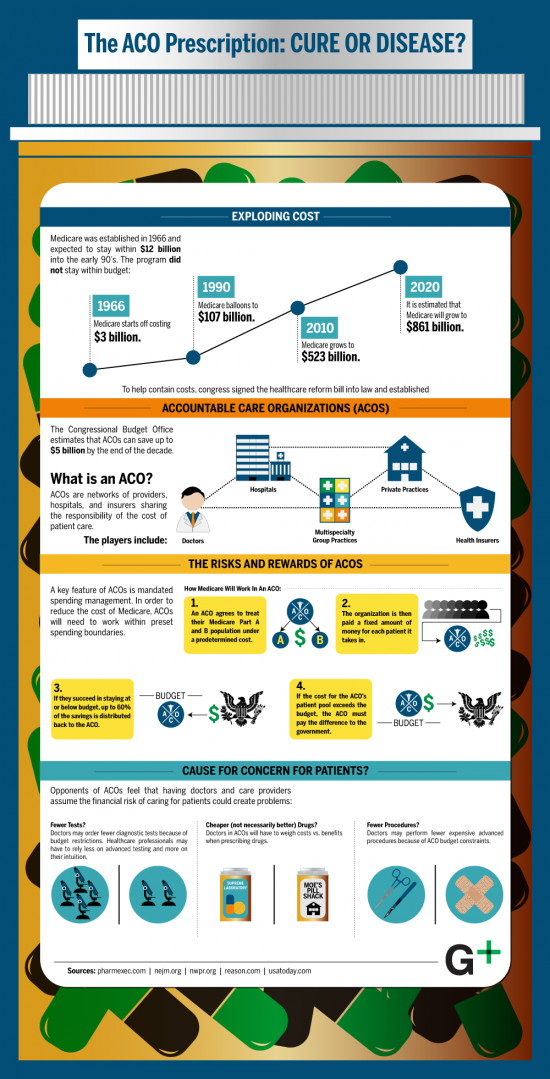
According to our Medical Executive-Post Health Dictionary Series of administrative terms http://www.HealthDictionarySeries.org  and health economist and colleague Robert James Cimasi MHA, ASA, AVA CMP™ of www.HealthCapital.com; an ACO is a healthcare organization in which a set of providers, usually large physician groups and hospitals, are held accountable for the cost and quality of care delivered to a specific local population.

ACOs aim to affect provider’s patient expenditures and outcomes by integrating clinical and administrative departments to coordinate care and share financial risk.

ACO Launch

Since their four-page introduction in the PP-ACA of 2010, ACOs have been implemented in both the Federal and commercial healthcare markets, with 32 Pioneer ACOs selected (on December 19, 2011), 116 Federal applications accepted (on April 10, 2012 and July 9, 2012), and at least 160 or more Commercial ACOs in existence today.

Federal Contracts

Federal ACO contracts are established between an ACO and CMS, and are regulated under the CMS Medicare Shared Savings Program (MSSP) Final Rule, published November 2, 2011.  ACOs participating in the MSSP are accountable for the health outcomes, represented by 33 quality metrics, and Medicare beneficiary expenditures of a prospectively assigned population of Medicare beneficiaries.

If a Federal ACO achieves Medicare beneficiary expenditures below a CMS established benchmark (and meets quality targets), they are eligible to receive a portion of the achieved Medicare beneficiary expenditure savings, in the form of a shared savings payment.

Commercial Contracts

Commercial ACO contracts are not limited by any specific legislation, only by the contract between the ACO and a commercial payor.

In addition to shared savings models, Commercial ACOs may incentivize lower costs and improved patient outcomes through reimbursement models that share risk between the payor and the providers, i.e., pay for performance compensation arrangements and/or partial to full capitation.

Although commercial ACOs experience a greater degree of flexibility in their structure and reimbursement, the principals for success for both Federal ACOs and Commercial ACOs are similar.

###

Eidsel

Dr. David E. Marcinko with 1960 Ford Edsel

[© iMBA, Inc. All rights reserved, USA.]

[The Edsel was an automobile marque that was planned, developed, and manufactured by the Ford Motor Company during the 1958, 1959, and 1960 model years. With the Edsel, Ford had expected to make significant inroads into the market share of both General Motors and Chrysler and close the gap between itself and GM in the domestic American automotive market. But, contrary to Ford’s internal plans and projections, the Edsel never gained popularity with contemporary American car buyers and sold poorly. The Ford Motor Company lost millions of dollars on the Edsel’s development, manufacturing and marketing].

More:


Update

Junking the Merit-Based Incentive Payment System (MIPS) would undoubtedly let the proverbial air out of the MACRA balloon, dealing a significant blow to the value-based reimbursement shift; right?

Assessment

Although nearly any healthcare enterprise can integrate and become an ACO, larger enterprises, may be best suited for ACO status.

Larger organizations are more able to accommodate the significant capital requirements of ACO development, implementation, and operation (e.g., healthcare information technology), and sustain the sufficient number of beneficiaries to have a significant impact on quality and cost metrics.

Conclusion

But, will this new B-Model work? Isn’t leading doctors in a shared collaborative effort a bit like herding cats? And, what about patients, HIEs, outcomes management, data analytics and … Population Health via our colleague David B. Nash MD MBA of Thomas Jefferson University, often considered the “father” of Pop Health?

OR, what about the developing IRS scandal and full PP-ACA launch in 2014? Will it affect federal funding, full roll-out, or even repeal of the entire Act?

Your thoughts and comments on this ME-P are appreciated. Feel free to review our top-left column, and top-right sidebar materials, links, URLs and related websites, too. Then, subscribe to the ME-P. It is fast, free and secure.

Link: http://feeds.feedburner.com/HealthcareFinancialsthePostForcxos

Speaker: If you need a moderator or speaker for an upcoming event, Dr. David E. Marcinko; MBA – Publisher-in-Chief of the Medical Executive-Post – is available for seminar or speaking engagements. Contact: MarcinkoAdvisors@msn.com

OUR OTHER PRINT BOOKS AND RELATED INFORMATION SOURCES:

DICTIONARIES: http://www.springerpub.com/Search/marcinko
PHYSICIANS: www.MedicalBusinessAdvisors.com
PRACTICES: www.BusinessofMedicalPractice.com
HOSPITALS: http://www.crcpress.com/product/isbn/9781466558731
CLINICS: http://www.crcpress.com/product/isbn/9781439879900
BLOG: www.MedicalExecutivePost.com
FINANCE: Financial Planning for Physicians and Advisors
INSURANCE: Risk Management and Insurance Strategies for Physicians and Advisors

Product DetailsProduct Details

Healthcare Promises [aka ACA]

Join Our Mailing List

On the Affordable Care Act

By Rick Kahler MS CFP® ChFC CCIM www.KahlerFinancial.com

Rick Kahler CFP“I’m not sure what’s wrong or what kind of surgery you need, but we have to operate right now.”

If you heard this from your doctor, you’d jump off the examination table and run for the door. Yet that’s essentially the approach the President and Congress used three years ago to pass a bill, optimistically called the Affordable Care Act, which was the largest transformation of the U.S. health care system in our lifetime.

The Debate

During the frenzied debate our elected leaders made many promises as to the amazing benefits this legislation would bestow on Americans. After listening to speeches from President Obama, Speaker of the House Nancy Pelosi, and President of the Senate Harry Reid, I recounted those promises in this blog on March 21, 2010.

The Promises

Let’s revisit those promises.

  1. All Americans will now receive affordable, or free, quality health care.
  2. No one will ever be denied coverage.
  3. No one will ever go into bankruptcy because of the costs of health care.
  4. There will be increased access to health care for 95% of Americans.
  5. There will be no decline in the quality of health care.
  6. Health care costs will go down.
  7. Health insurance coverage will be affordable to the middle class.
  8. There will be no decline in Medicare benefits.
  9. Insurance premiums will decline for the middle class.
  10. It will unleash unprecedented entrepreneurial opportunity for the economy.
  11. The deficit will decline, saving taxpayers $1.3 trillion.
  12. It will cut $500 billion of waste, fraud, and abuse out of Medicare.
  13. No government funds will be used to fund abortion.

Are these promises coming true? Many of them are pending full implementation of the act in 2014. Others have fallen flat or encountered the law of unintended consequences.

Obama Care

Business Owner’s

I’ve heard recently from several owners of small businesses about their increased health insurance costs. In addition to premium increases of nearly 50% over the past two years, they are seeing increased administrative costs from what one person called the “insanity and complexity” of the new regulations.

Businesses with fewer than 50 employees aren’t required to provide health insurance. The incentive for owners of businesses close to that threshold is to keep employee numbers below 50, which means curtailing growth or even laying people off.

Those without employer-provided insurance are supposed to be able to shop for coverage in new health care exchanges, beginning this October. However, half the states have chosen to rely on the federal government instead of setting up their own exchanges.

This has brought criticism even from former supporters like Democratic Senator Max Baucus of Montana, who helped write the health care bill. He is concerned that the exchanges will not open on time and consumers won’t have the information they need to use them. He told the Huffington Post that Obamacare is headed for a “train wreck.”

ACA Cost Estimates

The proponents said the ACA would cost $938 billion over 10 years. In addition to the promised Medicare savings, this was to be covered by a total tax increase of $562 billion over 10 years. This included a Medicare tax of 3.8% on dividends, rents, interest, and investment income on individuals and small business earning over $250,000.

The Office of Management and Budget, however, places the cost at $1.8 trillion over 10 years, resulting in a shortfall of around $900 billion.

Assessment

Whether Obamacare becomes the wild success the proponents guaranteed is yet to be seen. However, what we’ve seen so far isn’t promising. We as consumers would be well advised to pay close attention and ask tough questions before we accept this drastic surgery.

More

Conclusion

Are these promises coming true? Your thoughts and comments on this ME-P are appreciated. Feel free to review our top-left column, and top-right sidebar materials, links, URLs and related websites, too. Then, subscribe to the ME-P. It is fast, free and secure.

Link: http://feeds.feedburner.com/HealthcareFinancialsthePostForcxos

Speaker: If you need a moderator or speaker for an upcoming event, Dr. David E. Marcinko; MBA – Publisher-in-Chief of the Medical Executive-Post – is available for seminar or speaking engagements. Contact: MarcinkoAdvisors@msn.com

OUR OTHER PRINT BOOKS AND RELATED INFORMATION SOURCES:

DICTIONARIES: http://www.springerpub.com/Search/marcinko
PHYSICIANS: www.MedicalBusinessAdvisors.com
PRACTICES: www.BusinessofMedicalPractice.com
HOSPITALS: http://www.crcpress.com/product/isbn/9781466558731
CLINICS: http://www.crcpress.com/product/isbn/9781439879900
BLOG: www.MedicalExecutivePost.com
FINANCE: Financial Planning for Physicians and Advisors
INSURANCE: Risk Management and Insurance Strategies for Physicians and Advisors

Product DetailsProduct DetailsProduct Details

Product Details  Product Details

Product DetailsProduct Details


How the Affordable Care Act Affects Taxpayers Now? [Audio-Link]

Join Our Mailing List

Sound Medicine –  How does the Affordable Care Act affect taxpayers now?

By Ann Miller RN MHA

Sound Medicine is a radio show produced by the Indiana University School of Medicine and WFYI Public Radio.

In the last few years Aaron Carroll MS MD associate professor of pediatrics at the Indiana University School of Medicine, has been their go-to guy on health policy.

Audio Link

So, for those of you who would find your day brightened by the sound of his voice, enjoy the following from www.theIncidentalEconomist.com

Assessment

Dr. Carroll discusses how the Affordable Care Act will affect taxpayers in the coming months. The Affordable Care Act officially takes effect in January 2014, but several provisions are being implemented this year. These provisions specifically affect Medicare and Medicaid recipients, caregivers and all taxpayers.

Conclusion

Your thoughts and comments on this ME-P are appreciated. Feel free to review our top-left column, and top-right sidebar materials, links, URLs and related websites, too. Then, subscribe to the ME-P. It is fast, free and secure.

Link: http://feeds.feedburner.com/HealthcareFinancialsthePostForcxos

Speaker: If you need a moderator or speaker for an upcoming event, Dr. David E. Marcinko; MBA – Publisher-in-Chief of the Medical Executive-Post – is available for seminar or speaking engagements. Contact: MarcinkoAdvisors@msn.com

Our Other Print Books and Related Information Sources:

Health Dictionary Series: http://www.springerpub.com/Search/marcinko

Practice Management: http://www.springerpub.com/product/9780826105752

Physician Financial Planning: http://www.jbpub.com/catalog/0763745790

Medical Risk Management: http://www.jbpub.com/catalog/9780763733421

Hospitals: http://www.crcpress.com/product/isbn/9781439879900

Physician Advisors: www.CertifiedMedicalPlanner.org

Product DetailsProduct Details

Fixing the Mental Health Infrastructure of the US

Join Our Mailing List

The Political Topic Du Jour

By David K. Luke MIM CMP™ www.NetWorthAdvice.com

David K. LukeThe sad events of the recent tragedy which occurred in at Sandy Hook Elementary School in Connecticut where 20 children and 6 adults were killed painfully reminds us of two problems that are not going away in the United States: continued gun violence and untreated mental illness.

As a Father I could not bear to watch the news coverage. Resolving the problem of high gun violence in this country typically leads to an emotional debate over gun control and gun rights, a debate that in the past has ended with both sides drawing the line and little being accomplished. Politicians that would like to be reelected avoid this emotionally charged hot potato like a leper colony with the hope that the Topic Du Jour will change quickly back to how they can reduce taxes, increase entitlements, or frankly any other issue that will ensure their livelihood for the current elected term. In the meantime, this stalemate is unnecessarily costing the lives of our innocent children and productive citizens that happen to be in the wrong place at the wrong time.

Commonalities

The common thread to almost all of the tragic public gun violence episodes in the past few decades is that the shooter is suffering a serious mental illness. An estimated 26.2 percent of Americans suffer from a diagnosable mental disorder in a given year according to the National Institute of Mental Health (http://www.nimh.nih.gov/health/publications/the-numbers-count-mental-disorders-in-america/index.shtml).

Unique among the developed countries is the position of the United States that those with mental illness, like those with any other disease, can receive treatment as long as they pay for it. Those that can’t or choose not to pay for it often end up in dire straits in one of our emergency rooms (the de facto health care solution in the United States for the uninsured) forcing our overworked and understaffed emergency room health professionals to deal with the problem and our hospital systems with spiraling unpaid ER bills. As a country that was founded on the principles of self-reliance and freedom of choice, we recognize the fact that some individuals may prefer not to pay for their health care by electing to not have private health insurance. Lest we become too judgmental of our fellow citizens that do not have health insurance, we should be reminded that our for-profit health insurance industry in the United States that provides the largest portion of payment for healthcare services also precludes individuals that are unhealthy from purchasing coverage. This is done by hiking premiums to unaffordable levels or simply by flat issuing a denial of coverage. So individuals with mental illness, even those diagnosed with mild depression, are often branded by the system that considers mental health issues as preexisting conditions.

Which brings about the question:  How does an individual with a mental health illness in the US normally get medical treatment?

Link: Chapter 07: Workplace Violence

Standard Protocol

Normally, the individual sees their primary care physician, talks about the problem, is diagnosed by the physician and receives treatment, which often includes prescription medications. The individual’s private health insurance plan (or Medicare or Medicaid, depending on the age or financial qualification of the individual), covers all this with typically a small or no copay at the doctor’s office. If a medication is prescribed, the drug (often a generic) is covered typically by a small copay at the pharmacy. Further checkups and treatment are all typically covered by insurance with little money out-of-pocket.

Here are the complications to the “normal” answer regarding an individual with a mental illness in the United States seeking help:

Reasons Mental Illness Goes Untreated That Involve Lack of Access to Medical Care

  1. The individual does not have insurance.  The cost to treat the problem may be considered unaffordable.
  2. The individual has insurance but the mental illness has been ruled a preexisting condition and is not covered under the policy. The cost to treat the problem may be considered unaffordable.
  3. The individual does not see a health service provider on a regular basis and may not realize that they are sick with a mental illness or consider that it is just stress or a temporary mood change.

Reasons Mental Illness Goes Untreated In Spite of Access to Medical Care

  1. The individual considers seeing a physician for such an issue to be a hassle or too time consuming. Some primary care practices in some parts of the country require a long wait to be scheduled and then a long wait in the waiting room to be seen.
  2. The individual would like to receive treatment for their mental illness, but knows that such treatment will be recorded on their medical records and likewise have repercussions that could include such events as losing their job, tarnishing their reputation in their community, family, church, or other organization, or denying them access to a gun license, pilot’s license, medical licenses, etc. Military service people and police officers, for example can be rightfully disqualified from their positions if certain mental illnesses were revealed on a medical record. Also having a mental illness on their medical record could increase their cost to get life insurance or their ability to get new health insurance should they leave their current employer. Likewise many of these individuals may seek help “off the record” or may avoid seeking help all together and simply “man up” as expected.
  3. The individual, for reasons mentioned above and regardless of medical care access, avoids professional medical care and self-diagnoses their mental illness. Likewise, an individual suffering from severe depression may decide that they have only mild depression and based on “Dr. Google” may start a regimen of Vitamin B, a chromium supplement, and some St. John’s Wort. Self-treatment of mental illness issues with easy access to information and prescription drugs through the internet lulls some individuals into a false sense that they are on the road to recovery when their condition can actually worsen.
  4. The individual may know they need help, may have access to qualified medical help, but may be discouraged from seeking help due to a trusted family member or friend that assures them professional medical help is not necessary. I have even witnessed a loving father tell his diagnosed schizophrenic son who had just experienced a manic episode to “shake it off and be happy”. Can you imagine telling your child who suffers from a serious chronic disease such as heart disease, cancer, or diabetes to just “shake it off and be happy”?
  5. The individual perceives that continued medical treatment of their mental illness could threaten their personal freedoms, by resulting in a court ordered commitment to a psychiatric facility for example. Fearing such restrictions, the individual cuts off all medical treatment. In fact recent news is now coming forth that Adam Lanza, the 20-year-old Sandy Hook shooter, had been taken to a psychiatrist by his mother and was in fear of being committed to a facility, which may have been part of the motive for the mass shooting spree, which included the killing of his mother.

[Re-Thinking our Gun Control Dialog]

Gun control dialog

Will the PP-ACA Fix Our Maligned Mental Health Care System?

Mental health services are a part of the services provided under the Affordable Care Act. The Mental Health Parity and Addiction Equity Act, which was signed into law in 2008, also helped increase coverage that includes mental health services by requiring employers with more than 50 workers to cover them at the same level as other medical conditions offered by the insurance plan.

In other words, the plan could not provide fewer inpatient hospital days or require higher out-of-pocket costs for mental health conditions. It is still possible however for larger employers to not offer mental health coverage in their insurance plans even after 2014. The ACA will require small group and individual plans however to offer the coverage in 2014 through health exchanges created under the law. An individual that earns less than 138 percent of the federal poverty level may be eligible for Medicaid coverage in 2014, which offers mental health benefits.

It is estimated that as many as 30 million people will gain insurance coverage and likewise mental health care beginning in 2014. Some estimates are lower, with the expectation that many will forgo the mandated insurance coverage and pay the “tax” instead. Even with more Americans having access to mental health care, many will opt to forgo such care as outlined above in “Reasons Mental Illness Goes Untreated In Spite Of Access To Medical Care”.

For those folks we can fault the independent American spirit, good old fashioned stubbornness, the desire to avoid any stigma attached to mental illness, or simply the desire to be unencumbered by a system that threatens to “lock you up and put you away” for your disease. As with the case of Adam Lanza, access to mental health care does not mean the disease is cured or that the patient is an obedient, willing participant.

Assessment

Sadly, preventing another Sandy Hook from occurring is impossible. Whether or not the gun debate this time around will produce any results remains to be seen. Where is the limit of personal freedoms? However, with increased mental health access beginning in 2014 and with increased mental health awareness and acceptance we can hope that such events in the future will be less common.

About the Author:

David K. K. Luke focuses on helping physicians and successful retirees with financial planning, investment and risk management. In the past 24 years of industry experience, David has held licenses including general securities registered representative, registered investment advisor, Branch management supervision, and Life, Accident, and Health Producers.  David, a fee-only advisor, is able to help his clients to achieve peace of mind and greater assurance with their financial goals by giving advice and providing investment management that is in their best interest, untainted by commissions or sales objectives. Likewise, in a true fiduciary capacity, he is able to help investors determine the reliability and suitability of products and services that they have been sold by other advisors. David began his career managing money in 1986 in the General Motors of Canada Banking and Investments department where he was engaged in cash management, foreign currency hedging, and the debt issuance of a $100 million Eurobond and a $300 million Note Issuance facility. In 1988 as Supervisor of Borrowings for GMAC Canada David was responsible for the daily average issuance of $125 million in short-term Commercial Paper. David worked as a stock broker and portfolio manager for 2 major national brokerage firms (A.G. Edwards and Wachovia Securities) from 1989 to 2008. Additionally, at Wachovia Securities David was among an elite group of financial advisors approved as a PIM (Private Investment Management) Portfolio Manager. Prior to joining Net Worth Advisory Group in 2010, David managed his own independent firm, Luke Wealth Strategies, working as a registered representative and investment advisor.

He is also a Certified Medical Planner™ charterholder: www.CertifiedMedicalPlanner.org

Conclusion

Your thoughts and comments on this ME-P are appreciated. Feel free to review our top-left column, and top-right sidebar materials, links, URLs and related websites, too. Then, subscribe to the ME-P. It is fast, free and secure.

Link: http://feeds.feedburner.com/HealthcareFinancialsthePostForcxos

Speaker: If you need a moderator or speaker for an upcoming event, Dr. David E. Marcinko; MBA – Publisher-in-Chief of the Medical Executive-Post – is available for seminar or speaking engagements. Contact: MarcinkoAdvisors@msn.com

OUR OTHER PRINT BOOKS AND RELATED INFORMATION SOURCES:

LEXICONS: http://www.springerpub.com/Search/marcinko
PHYSICIANS: www.MedicalBusinessAdvisors.com
PRACTICES: www.BusinessofMedicalPractice.com
HOSPITALS: http://www.crcpress.com/product/isbn/9781466558731
CLINICS: http://www.crcpress.com/product/isbn/9781439879900
ADVISORS: www.CertifiedMedicalPlanner.org
BLOG: www.MedicalExecutivePost.com

Buy from Amazon

Learn How to Profit and Thrive in the PP-ACA Era

BOOK FOREWORD / TESTIMONIAL

Spending for Private Health Insurance in the United States

Join Our Mailing List

Health Costs Doubled in the Past Decade

By NIHCM Foundation www.NIHCM.org

The total cost of health care for a typical family with employer-sponsored coverage has more than doubled in the past decade to nearly $21,000 per year, outpacing both inflation and income growth.

Skyrocketing health care costs are already straining budgets and could jeopardize the availability of affordable coverage under the ACA. To shed light on the factors behind increased spending on private insurance, this brief examines

  • trends in premiums and cost-sharing in the group and non-group markets,
  • how premium dollars are spent by insurers,
  • which sectors are driving premiums upward, and
  • the importance of price increases in explaining spending growth.

healthcare costs

Assessment

Read more…

Conclusion

Your thoughts and comments on this ME-P are appreciated. Feel free to review our top-left column, and top-right sidebar materials, links, URLs and related websites, too. Then, subscribe to the ME-P. It is fast, free and secure.

Speaker: If you need a moderator or speaker for an upcoming event, Dr. David E. Marcinko; MBA – Publisher-in-Chief of the Medical Executive-Post – is available for seminar or speaking engagements. Contact: MarcinkoAdvisors@msn.com

OUR OTHER PRINT BOOKS AND RELATED INFORMATION SOURCES:

Product Details  Product Details

Product Details

Physician’s Personal Income Tax Review for 2013

Join Our Mailing List

Are Dramatic Increases Ahead – For us All?

By Children’s Home Society of Florida Foundation

Following the November election, Congress will return for a “lame-duck” legislative session. Major decisions are needed on both taxes and spending. If Congress does not take action, there will be dramatic tax increases on January 1, 2013.

These potential changes include personal income taxes, long term capital gains tax, dividend tax, a new Medicare tax and the estate tax.

Personal Income Taxes

The major change in personal income taxes is that the rates will return to the 2003 schedule. The tax reductions passed in 2001 and 2003 are no longer applicable after 10 years. Therefore, tax rates are scheduled to increase. The table below shows the rates for 2012 and the new increased rates scheduled for 2013.

###

2012 Rates 2013 Rates
10% 15%
15% 15%
25% 28%
28% 31%
33% 36%
35% 39.6%

Long-Term Capital Gains

The long-term capital gains rate for 2012 is 15%. Most investment property held more than one year qualifies for the 15% rate. In 2013, long-term capital gains will be taxed at 20%. However, the new 3.8% Medicare tax will apply to capital gains for higher-income persons. Their top rate will be 23.8%.

Dividend Taxes

Dividend taxes in 2012 are at a reduced level for payments from U.S. corporations and some foreign corporations. In 2012, most dividends are taxed at the 15% long-term capital gain rate. If the law is not changed, in 2013 they will be taxed as ordinary income. The top rate for dividends could be 39.6%. In addition, the 3.8% Medicare tax applies to dividends, producing a potential tax on dividends of 43.4% for higher-income taxpayers.

New Medicare Tax

The Patient Protection and Affordable Care Act (PPACA) creates a new Medicare tax in 2013. The tax is 3.8% on the amount of income that exceeds $200,000 for a single person and $250,000 for a married couple. The tax is generally applicable on interest, dividends, passive income from a business, sales of property and other income from financial instruments.

Fortunately, IRA and other pension income are not subject to the increased Medicare tax. However, this retirement income may increase your total income levels. If total income exceeds the $250,000 or $200,000 levels, then your IRA distributions may cause other investment and capital gain income to be subject to the Medicare tax.

Other Personal Tax Changes

There are other changes that will affect individuals. Under PPACA, individuals with incomes over $200,000 (single) or $250,000 (married couples), will pay an additional payroll tax of 0.9% on the excess amount. The personal exemption phase out and limitations on itemized deductions will be reinstated.

Finally, the medical expense deduction floor increases from 7.5% to 10% for most taxpayers. It is retained at 7.5% for persons age 65 and older. Only qualified medical expenses in excess of the floor are deductible.

Estate Tax

In 2012, the applicable exclusion amount for gift and estate taxes is $5.12 million. In addition, a spouse may pass away and transfer his or her available exemption to a surviving spouse. The surviving spouse therefore could have an estate exemption up to double the standard amount.

If there is no tax bill, the exemption reverts to $1 million plus indexed increases over the past decade. In addition, the current 35% estate tax rate will increase to a top rate of 55%, starting at a $3 million estate. Estates from the $1 million plus indexed amount to $3 million will pay tax at a reduced rate. The marital portability, or option to transfer your exemption to a surviving spouse, will not apply unless extended by Congress.

Editor’s Note: It is probable that there will be significant tax changes on January 1, 2013. Because the November legislative session is very short, Congress may change some provisions, but is not likely to change all of these tax rates. It will be important for all Americans to be in contact with their tax advisor to take appropriate action to reduce taxes in December of 2012.

Conclusion

Your thoughts and comments on this ME-P are appreciated. Feel free to review our top-left column, and top-right sidebar materials, links, URLs and related websites, too. Then, subscribe to the ME-P. It is fast, free and secure.

Link: http://feeds.feedburner.com/HealthcareFinancialsthePostForcxos

Speaker: If you need a moderator or speaker for an upcoming event, Dr. David E. Marcinko; MBA – Publisher-in-Chief of the Medical Executive-Post – is available for seminar or speaking engagements. Contact: MarcinkoAdvisors@msn.com

Our Other Print Books and Related Information Sources:

Health Dictionary Series: http://www.springerpub.com/Search/marcinko

Practice Management: http://www.springerpub.com/product/9780826105752

Physician Financial Planning: http://www.jbpub.com/catalog/0763745790

Medical Risk Management: http://www.jbpub.com/catalog/9780763733421

Hospitals: http://www.crcpress.com/product/isbn/9781439879900

Physician Advisors: www.CertifiedMedicalPlanner.org

Product Details


With Obama Election Win “Mr. Market” Weighs in on the ACA Equity Winners and Losers

Join Our Mailing List

The Wisdom of Crowds

By David K. Luke MIM, Certified Medical Planner™

Website: www.networthadvice.com

The first trading session following the election on Wednesday, November 7, 2012 gave us some clues on how different sectors of the health care market may be affected by the ACA, as Obama’s win confirms that health reform marches forward. “Mr. Market” has spoken.

“Mr. Market”

For those that may be unaware, “Mr. Market” was Benjamin Graham’s term for the stock market in explaining fluctuations. Graham is the father of value investing and Warren Buffet’s most influential mentor. According to Graham, Mr. Market is emotionally unstable but doesn’t mind being slighted. If Mr. Market’s quotes are ignored, he will be back again tomorrow with a new quote.

So, the point is that successful investors do not place themselves in emotional whirlwinds often created by the market. This first post-election trading session was such a whirlwind. Large groups of people (such as those that voted with their pocketbook in this telling stock market session) are smarter than an elite few, or so goes the premise of James Surowiecki’s Wisdom of the Crowds.

Now; what did we learn from the combined investing public wisdom about the future of healthcare companies profitability with ACA?

Keep in mind the overall market was down 2.4% on the day as measured by both the Dow Jones Industrial Average and the Standard & Poor 500. The biggest concern of the day was investor worry about the so called “fiscal cliff” and the debate over billions in spending and tax increases. Considering the total market on November 7th, health care stocks performed as a group better than the averages, but Mr. Market definitely parsed health care stocks by sector from “great” to “dreadful” based on the implications of impending health care reform:

Great:

Hospital Stocks

  • Health Management Associates (HMA) +7.3%
  • HCA Holdings Inc. (HCA) +9.4%
  • Community Health Systems Inc. (CYH) +6.0%
  • Tenet Healthcare Corp. (THC) +9.6%

Yes, there were stocks that went up stridently on the big down day. Not surprisingly, hospital stocks are expected to benefit from the estimated 30 million Americans who will line up for insurance coverage beginning in 2014, increasing profits and decreasing bad debts.

Medicaid HMOs

  • Molina Healthcare Inc. (MOH) +4.6%
  • Centene Corp. (CNC) +10.1%
  • WellCare Health Plans Inc. (WCG) +4.4%

Health insurers that typically focus heavily on Medicaid are up in line with ACA provisions to expand care for the poor. Mr. Market tips his hat to Centene Corporation, which has been successful in procuring multi-line coverage contracts with States including long-term care, vision, dental, behavioral health, CHIP and disability.

Good:

Drug Wholesalers

  • McKesson (MCK) +1.3%
  • Cardinal Health (CAH) +.5%
  • AmerisourceBergen (ABC) +1.0%

Growth in prescription drug spending means increased revenues for the drug wholesalers, so ACA should be a positive for this group. But because a majority of wholesaler profits come from generic drugs, and because wholesalers are indirectly affected by changes in pharmacies, pricing pressures will keep the wholesalers in check.

Fair:

Pharmacy Benefit Mangers

  • Express Scripts (ESRX) -0.4%
  • CVS Caremark Corp (CVS) -0.4%

As an intermediary between the payor and everyone else in the health-care system, PBMs process prescriptions for groups such as insurance companies and corporations and use their large size to drive down prices. These companies are incentivized to cut costs and have been thought to benefit greatly from ACA, and will expand prescription drug insurance plans sold through health insurance exchanges starting in 2014.

Generic Pharmaceuticals

  • Teva Pharmaceutical Industries Ltd ADR (TEVA) -0.7%
  • Mylan Inc (MYL) -0.8%
  • Dr. Reddy’s Labs (RDY) -0.6%

Health care reform is good for generic drugs with anticipated increased dispensing of drugs in general.  With more funds spent on Medicaid, the ACA will certainly be generic oriented and should fare better than the name-brand drugs. Pricing pressures are expected over the longer term however.

Testing Laboratories

  • Quest Diagnostics (DGX) -1.5%
  • Laboratory Corp of America (LH) -1.9%

More patients you would think would mean more medical tests. In a recent Gallup survey, physicians attributed 34 percent of overall healthcare costs to defensive medicine (think diagnostic blood tests/invasive biopsies, etc). ACA may curb this expensive part of medicine and appears to have very negative implications going forward as Labs will have intense pressure to reduce rates. However, these larger labs held up better than the market averages suggesting that lab work isn’t going away with ACA.

Big Pharmaceutical Companies

  • Pfizer Inc.  (PFE) -2.2%
  • GlaxoSmithKline PLC (GSK) -0.8%
  • Eli Lily & Co. (LLY) -1.2%

The name-brand large Pharmaceutical companies have agreed to rebate Uncle Sam on Medicaid purchases and must give the elderly discounts. But there will be a lot more of us taking drugs too.

I’ve ranked these 4 health care sectors “fair” considering that broader stock market averages were down 2.4% for the day and Mr. Market was kinder to this group with only a slight negative. Likewise, it appears that he is anointing this group as a benefactor of upcoming reforms.

Not Good:

Medical Device Companies

  • Medtronic Inc. (MDT) -3.0%
  • Stryker Corporation (SYK) -1.6%
  • Boston Scientific Corp. (BSX) -3.6%
  • Zimmer Holdings Inc. (ZMH) -1.8%

The 2.3% excise tax on revenue of medical-device companies is looking more inevitable, in spite of industry lobbying group efforts.

Dreadful:

Medicare Part D Companies

  • Humana Inc. (HUM) -7.9%
  • WellPoint (WLP) -5.5%
  • Cigna Corp. (CI) -0.7%

Even though managed-care companies should gain millions of new customers thanks to the ACA, profit margins are expected to decline significantly.  Mr. Market went easy on Cigna, perhaps because of the company’s focus on self-insured large employers.

Currently

Currently it is unclear how the increased revenue generated from more patients will affect the increased margins to the various sectors of the healthcare market. Also, too much weight should not be placed on this one day action by the market. One thing is clear however, and that is how Mr. Market and the market at large feels at first blush towards the impending implementation of the ACA based on the November 7, 2012 trading of the respective stocks.

Assessment

Remember: Mr. Market is temperamental and can change his mind anytime!

About the Author:

David K. Luke MIM, a Certified Medical Planner™, focuses on helping physicians, medical professionals, and successful retirees with financial planning, investment and risk management. He directs physicians through their complex planning needs, helping them foster a better medical practice and lifestyle. David is a fee-only financial planner.

Disclosure:

Percentage changes in price of stocks represent published change in price from closing price November 6, 2012 to closing price November 7, 2012. Stocks listed here are not considered to be past, present or future recommendations to buy or sell securities and is for educational purposes only. This information should NOT be considered as investment recommendations or advice but rather summary comments and opinions on the health care market by David K. Luke, MIM CMP™, who is entirely responsible for the contents of this article.

Link: www.CertifiedMedicalPlanner.org

Conclusion

Your thoughts and comments on this ME-P are appreciated. Feel free to review our top-left column, and top-right sidebar materials, links, URLs and related websites, too. Then, subscribe to the ME-P. It is fast, free and secure.

Link: http://feeds.feedburner.com/HealthcareFinancialsthePostForcxos

Speaker: If you need a moderator or speaker for an upcoming event, Dr. David E. Marcinko; MBA – Publisher-in-Chief of the Medical Executive-Post – is available for seminar or speaking engagements. Contact: MarcinkoAdvisors@msn.com

OUR OTHER PRINT BOOKS AND RELATED INFORMATION SOURCES:

DICTIONARIES: http://www.springerpub.com/Search/marcinko
PHYSICIANS: www.MedicalBusinessAdvisors.com
PRACTICES: www.BusinessofMedicalPractice.com
HOSPITALS: http://www.crcpress.com/product/isbn/9781466558731
CLINICS: http://www.crcpress.com/product/isbn/9781439879900
BLOG: www.MedicalExecutivePost.com
FINANCE: Financial Planning for Physicians and Advisors
INSURANCE: Risk Management and Insurance Strategies for Physicians and Advisors

Product DetailsProduct DetailsProduct Details

Product Details  Product Details

The Challenges of Pricing Health Insurance for the 2014 Exchanges

Join Our Mailing List

Expert Voices Essay – NIHCM Foundation

By Ann Miller RN MHA

The PP-ACA has introduced sweeping market changes that bring new uncertainty to the task of developing premiums for products to be offered in the health insurance exchanges beginning in 2014. The added complexity greatly increases the chances that these premiums will be off the mark.

In this essay, Alice Rosenblatt explains how actuaries set premiums, shows how key provisions of the ACA will affect their pricing for the October 2013 open enrollment period and describes what’s at stake if they don’t get it right.

Read more…

PDF: http://nihcm.org/images/stories/The_Challenges_of_Pricing_Health_Insurance_for_the_2014_Exchanges.pdf

Conclusion

Your thoughts and comments on this ME-P are appreciated. Feel free to review our top-left column, and top-right sidebar materials, links, URLs and related websites, too. Then, subscribe to the ME-P. It is fast, free and secure.

Link: http://feeds.feedburner.com/HealthcareFinancialsthePostForcxos

Speaker: If you need a moderator or speaker for an upcoming event, Dr. David E. Marcinko; MBA – Publisher-in-Chief of the Medical Executive-Post – is available for seminar or speaking engagements. Contact: MarcinkoAdvisors@msn.com

OUR OTHER PRINT BOOKS AND RELATED INFORMATION SOURCES:

DICTIONARIES: http://www.springerpub.com/Search/marcinko
PHYSICIANS: www.MedicalBusinessAdvisors.com
PRACTICES: www.BusinessofMedicalPractice.com
HOSPITALS: http://www.crcpress.com/product/isbn/9781466558731
CLINICS: http://www.crcpress.com/product/isbn/9781439879900
BLOG: www.MedicalExecutivePost.com
FINANCE: Financial Planning for Physicians and Advisors
INSURANCE: Risk Management and Insurance Strategies for Physicians and Advisors

Product Details

What Does Health Reform Mean for You?

Join Our Mailing List

Ideas Changing the World

By National Center for Policy Analysis [NCPA]

Although the third presidential debate last night centered on foreign affairs, the PP-ACA seems to be the moniker of the Obama Presidency.

And so, here is a slide-show and white paper [updated September 2012] from the NCPA on what health reforms means for you.

Slide show MSFT-ppt link: What-Does-Health-Reform-Mean-for-You_Presentation

White paper .pdf link: What-Does-Health-Reform-Mean-for-You-A-Consumers-Guide

About the NCPA

The National Center for Policy Analysis is a public policy research organization that develops and promotes private alternatives to government regulation and control.

Conclusion

Your thoughts and comments on this ME-P are appreciated. Feel free to review our top-left column, and top-right sidebar materials, links, URLs and related websites, too. Then, subscribe to the ME-P. It is fast, free and secure.

Link: http://feeds.feedburner.com/HealthcareFinancialsthePostForcxos

Speaker: If you need a moderator or speaker for an upcoming event, Dr. David E. Marcinko; MBA – Publisher-in-Chief of the Medical Executive-Post – is available for seminar or speaking engagements. Contact: MarcinkoAdvisors@msn.com

Our Other Print Books and Related Information Sources:

Health Dictionary Series: http://www.springerpub.com/Search/marcinko

Practice Management: http://www.springerpub.com/product/9780826105752

Physician Financial Planning: http://www.jbpub.com/catalog/0763745790

Medical Risk Management: http://www.jbpub.com/catalog/9780763733421

Hospitals: http://www.crcpress.com/product/isbn/9781439879900

Physician Advisors: www.CertifiedMedicalPlanner.org

Product DetailsProduct DetailsProduct Details

Doctors’ Use of For-Profit Algorithms Considered UnSportsManLike Conduct

Join Our Mailing List

On Protecting Medical Coding Jobs

By Darrell K. Pruitt DDS

The US government moves quickly to protect tedious upcoding jobs from being taken over by upcoding software.

Medical Billing and Coding for Dummies

In coding expert Karen Smiley’s July 2012 book, “Medical Billing and Coding for Dummies,” she writes: “It really does pay to be a certified medical biller/coder, no matter what designation you choose to pursue. Surveys conducted by the AAPC [American Academy of Professional Coders] indicate that coder salaries have continued to increase despite economic downturns. One possible reason for this is that getting payers to pay claims is becoming increasingly difficult.”

Call me cynical, but to me, her defense of the coding profession confirms that healthcare’s increasing demand for highly-paid coders (who have nothing to do with directly providing care to patients) is artificial, and originates with an administration which complicates providers’ payments in order to create new, high-paying jobs in the HIT industry – quietly adding to the cost of healthcare to cosmetically boost employment figures before an election. Who ultimately pays the bill for all non-productive healthcare costs?

Amazon Morphs

Less than 3 months following the appearance of “Medical Billing and Coding for Dummies” on Amazon for under $25 (paperback), EMR software suddenly changed or morphed the entire game, and the administration reacts by changing the rules to protect political investments.

Similar to algorithmic trading’s proven advantage over low-tech investors on Wall Street, the computation capabilities of modern EMRs allegedly provide an unfair advantage to doctors and hospitals, and at taxpayers’ expense – according to HHS and Justice Department officials.

Enter Eric Holder and Kathleen Sebelius

“On Monday [September 24], Attorney General Eric Holder and HHS Secretary Kathleen Sebelius sent a strongly worded letter warning that the Obama administration will not tolerate hospitals’ attempts to ‘game the system’ by using EHR systems to boost Medicare and Medicaid payments.” – iHealthBeat, September 26, 2012.

http://www.ihealthbeat.org/articles/2012/9/26/stakeholders-react-to-warning-on-use-of-ehrs-for-upcoding.aspx#ixzz29fYzjPUH

This was followed by an article posted yesterday, also on iHealthBeat titled, “Mostashari To Launch Review of Using EHRs for ‘Upcoding,’”

http://www.ihealthbeat.org/articles/2012/10/17/mostashari-to-launch-review-of-using-ehrs-for-upcoding.aspx#ixzz29fDElIKL

Enter the NCHIT

“National Coordinator for Health IT Farzad Mostashari MD plans to launch an internal review to determine whether electronic health record systems are prompting some health care providers to overbill Medicare by selecting higher-paying treatment codes, a process known as ‘upcoding,’ the Center for Public Integrity reports.”

Apparently, it only recently occurred to lawmakers that the EMRs they promote greatly simplify Medicare’s intentionally tedious and time-consuming reimbursement requirements mentioned by Karen Smiley – making profits much easier for providers without having to hire even more staff just to get paid for work done long ago. In addition, the alleged upcoding software threatens to eliminate the need for recently-graduated coding professionals – whose education was backed by ARRA stimulus (taxpayer) money. While our nation’s leaders might wink at institutional investors’ highly-profitable algorithmic trading on the stock market, unemployed coding specialists with outstanding college loans would only increase the potential embarrassment for the administration should doctors and hospitals be permitted to computerize billing decisions – leading to payment for services previously given away because they weren’t worth the hassle and expense of documentation!

Assessment

Unlike investors playing the stock market, according to Medicare’s emerging rules, doctors’ use of algorithms to increase profits is considered unsportsmanlike conduct. With the election only days away, can you blame them?

Conclusion

Your thoughts and comments on this ME-P are appreciated. Feel free to review our top-left column, and top-right sidebar materials, links, URLs and related websites, too. Then, subscribe to the ME-P. It is fast, free and secure.

Link: http://feeds.feedburner.com/HealthcareFinancialsthePostForcxos

Speaker: If you need a moderator or speaker for an upcoming event, Dr. David E. Marcinko; MBA – Publisher-in-Chief of the Medical Executive-Post – is available for seminar or speaking engagements. Contact: MarcinkoAdvisors@msn.com

Our Other Print Books and Related Information Sources:

Health Dictionary Series: http://www.springerpub.com/Search/marcinko

Practice Management: http://www.springerpub.com/product/9780826105752

Physician Financial Planning: http://www.jbpub.com/catalog/0763745790

Medical Risk Management: http://www.jbpub.com/catalog/9780763733421

Hospitals: http://www.crcpress.com/product/isbn/9781439879900

Physician Advisors: www.CertifiedMedicalPlanner.org

Product Details

Pre-2014 Medicaid Expansion for the PP-ACA

Join Our Mailing List

States Acceptance – Cost and Savings Factors

Link: http://www.healthcarefinancenews.com/infographic/infographic-factors-consider-medicaid-expansion

Conclusion

Your thoughts and comments on this ME-P are appreciated. Feel free to review our top-left column, and top-right sidebar materials, links, URLs and related websites, too. Then, subscribe to the ME-P. It is fast, free and secure.

Speaker: If you need a moderator or speaker for an upcoming event, Dr. David E. Marcinko; MBA – Publisher-in-Chief of the Medical Executive-Post – is available for seminar or speaking engagements. Contact: MarcinkoAdvisors@msn.com

OUR OTHER PRINT BOOKS AND RELATED INFORMATION SOURCES:


Product DetailsProduct DetailsProduct Details

Product Details Product Details

Product Details

Understanding the House Democrats’ Health Plan [PP-ACA]

Join Our Mailing List

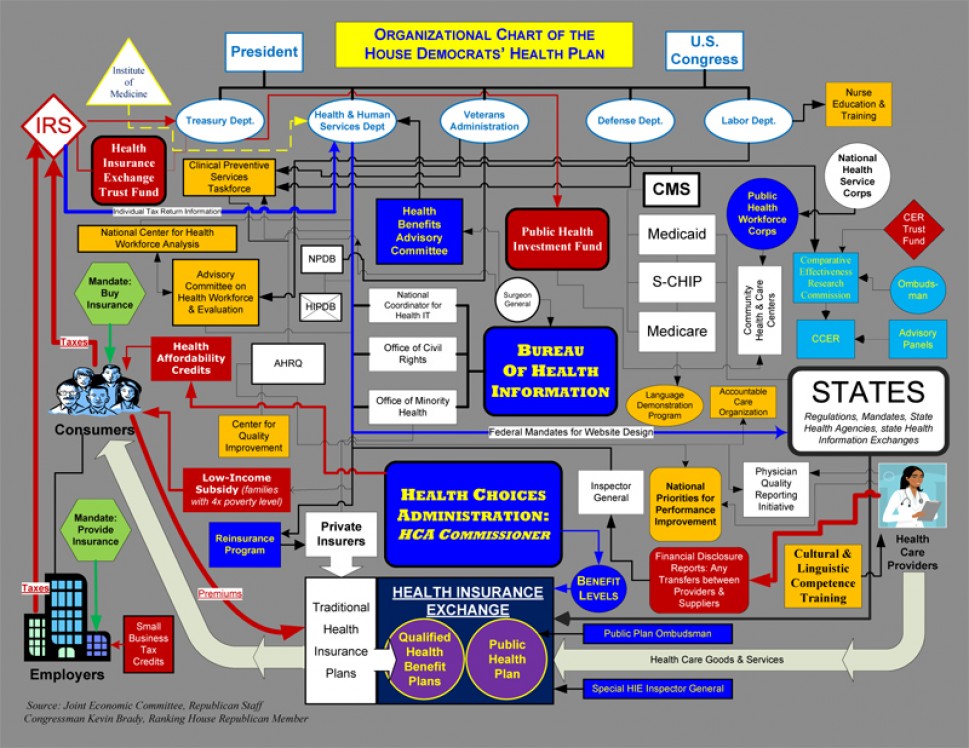
An Organization Chart

By Staff Reporters

If you have ever wondered exactly how health care reform will work for the United States, there is unfortunately no easy answer.

But, with the democrats and republicans strongly divided on universal health care, it can be tough for the average American citizen to find answers.

Fortunately, the graphic below will help.

PP-ACA

Assessment

However, it is important to listen to both sides to make a well-rounded decision of whether or not you can get behind health care reform.

Conclusion

Your thoughts and comments on this ME-P are appreciated. Feel free to review our top-left column, and top-right sidebar materials, links, URLs and related websites, too. Then, subscribe to the ME-P. It is fast, free and secure.

Link: http://feeds.feedburner.com/HealthcareFinancialsthePostForcxos

Speaker: If you need a moderator or speaker for an upcoming event, Dr. David E. Marcinko; MBA – Publisher-in-Chief of the Medical Executive-Post – is available for seminar or speaking engagements. Contact: MarcinkoAdvisors@msn.com

Our Other Print Books and Related Information Sources:

Health Dictionary Series: http://www.springerpub.com/Search/marcinko

Practice Management: http://www.springerpub.com/product/9780826105752

Physician Financial Planning: http://www.jbpub.com/catalog/0763745790

Medical Risk Management: http://www.jbpub.com/catalog/9780763733421

Hospitals: http://www.crcpress.com/product/isbn/9781439879900

Physician Advisors: www.CertifiedMedicalPlanner.org

Product DetailsProduct DetailsProduct Details

Product Details  Product Details

Product Details

Update on Health Information Exchanges [HIEs]

Join Our Mailing List

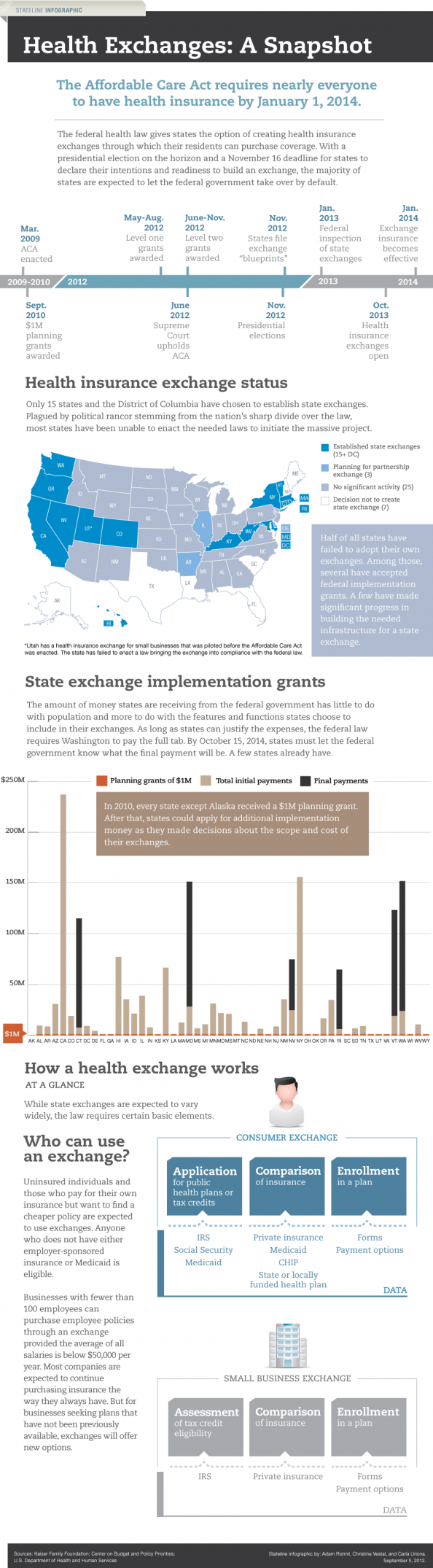
A Snapshot as Deadlines Approach

http://www.MCOL.com

The federal health law [PP-ACA] gives states the option of creating health insurance exchanges [HIEs] through which residents can purchase coverage.

Now, with a November 16 deadline for states to declare their readiness to build an exchange, most states are expected to let the feds take over by default–only 15 states, and the District of Columbia, have created a health insurance exchange thus far.

Conclusion

Your thoughts and comments on this ME-P are appreciated. Feel free to review our top-left column, and top-right sidebar materials, links, URLs and related websites, too. Then, subscribe to the ME-P. It is fast, free and secure.

Link: http://feeds.feedburner.com/HealthcareFinancialsthePostForcxos

Speaker: If you need a moderator or speaker for an upcoming event, Dr. David E. Marcinko; MBA – Publisher-in-Chief of the Medical Executive-Post – is available for seminar or speaking engagements. Contact: MarcinkoAdvisors@msn.com

OUR OTHER PRINT BOOKS AND RELATED INFORMATION SOURCES:

DICTIONARIES: http://www.springerpub.com/Search/marcinko
PHYSICIANS: www.MedicalBusinessAdvisors.com
PRACTICES: www.BusinessofMedicalPractice.com
HOSPITALS: http://www.crcpress.com/product/isbn/9781466558731
CLINICS: http://www.crcpress.com/product/isbn/9781439879900
BLOG: www.MedicalExecutivePost.com
FINANCE: Financial Planning for Physicians and Advisors
INSURANCE: Risk Management and Insurance Strategies for Physicians and Advisors

Product DetailsProduct DetailsProduct Details

Product Details  Product Details

Product Details

Where the Presidential Candidates Stand on Medicare and Medicaid

Join Our Mailing List

The Big Picture View

By Suevon Lee ProPublica, Sept. 14, 2012, 2:26 p.m.

Medicare and Medicaid, which provide medical coverage for seniors, the poor and the disabled, together [1]make up nearly a quarter [1] of all federal spending. With total Medicare spending projected to cost [2] $7.7 trillion over the next 10 years, there is consensus that changes are in order. But what those changes should entail has, of course, been one of the hot-button issues [3] of the campaign.

With the candidates slinging charges [4], we thought we’d lay out the facts. Here’s a rundown of where the two candidates stand on Medicare and Medicaid:

THE CANDIDATES ON MEDICARE

Big Picture

Earlier this year, the Medicare Board of Trustees estimated [5] that the Medicare hospital trust fund would remain fully funded only until 2024. Medicare would not go bankrupt or disappear, but it wouldn’t have enough money to cover all hospital costs.

Under traditional government-run Medicare, seniors 65 and over and people with disabilities are given health insurance for a fixed set of benefits, in what’s known as fee-for-service [6] coverage. Medicare also offers a subset of private health plans known as Medicare Advantage, in which roughly one-quarter [7] of Medicare beneficiaries are currently enrolled. Obama retains this structure.

The Obama administration has also made moves that it says would keep Medicare afloat. It says the Affordable Care Act would extend solvency [8] by eight years, mainly by imposing tighter spending controls on Medicare payments to private insurers and hospitals.

In contrast, Rep. Paul Ryan, Mitt Romney’s running mate, has proposed a more fundamental overhaul of Medicare, which he says [9] is on an “unsustainable path.” On his campaign website [10], Romney says that Ryan’s proposals “almost precisely mirrors” his ideas on Medicare. But he’s been fuzzy on other aspects of the plan.

A Romney-Ryan administration would replace a defined benefits system with a defined contribution system [11] in which seniors are given federal vouchers to purchase health insurance in a newly created private marketplace known as Medicare Exchange. In this marketplace, private health plans, along with traditional Medicare, would compete for enrollees’ business. These changes wouldn’t start until 2023, meaning current beneficiaries aren’t affected – just those under 55.

Under the Romney-Ryan, the vouchers would be valued [12] at the second-cheapest private plan or traditional Medicare, whichever costs less. Seniors who opt for a more expensive plan would pay the difference. If they choose a cheaper plan, they keep the savings.

Who’s Covered

In the current system, people 65 and over are eligible for Medicare, which Obama has said he would keep [13] for now.

Romney has proposed [14]raising the eligibility age for Medicare beneficiaries from 65 to 67 in 2022, then increasing it by a month each year after that. In the long run, he would index [15] eligibility levels to “longevity.” Ryan’s budget plan proposes [16] raising Medicare eligibility age by two months a year starting in 2023, until it reaches 67 by 2034.

Many others looking to keep Medicare solvent have also proposed [17]raising the age of eligibility.

The Congressional Budget Office estimates [18]that raising the minimum age from 65 to 67 would reduce annual federal spending by 5 percent.But it would also result in higher premiums and out-of-pocket costs for seniors who would lose access to Medicare.

Obama’s health care law also adds [19] some benefits for seniors, such as annual wellness visits without co-pays, preventive services like free cancer screenings and prescription drug savings.

Proposed Savings

The Affordable Care Act is projected to reduce Medicare spending by $716 billion over the next 10 years. These reductions, as detailed [20] by Washington Post’s Wonkblog, will come mostly from reducing payments to hospitals, nursing homes and private health care providers.

While Ryan criticized [21] such spending cuts in his speech at the Republican National Convention, his own budget proposed [22] keeping these reductions.

“The ACA grows the trust fund by giving more general revenue to the Treasury, which then gives the trust fund bonds. But it then uses the money from those bonds to expand coverage for low- and middle-income people,” explains [23] Dylan Matthews on Washington Post’s Wonkblog.

Romney hasn’t really come up with a solid answer: he previously said he would restore [24] the $716 billion savings that the health care law imposes. Per this New York Times story [24], the American Institutes for Research calculates this would increase premiums and co-payments for Medicare beneficiaries by $342 a year on average over the next 10 years.

For more on where the candidates stand on the $716 billion, the private health policy Commonwealth Fund offers this helpful explanation [25].

Caps on Spending

Both Obama and Ryan have set an identical target rate [26] that would cap Medicare spending at one-half a percentage point above the nation’s gross domestic product.

But they have different ideas on mechanisms to achieve it.

The Affordable Care Act establishes a 15-member Independent Payment Advisory Board [27] that, starting in 2015, would make binding recommendations to reduce spending rates. As Jonathan Cohn points out [28] in the New Republic, the commission is prohibited from making any changes that would affect beneficiaries.

Ryan has proposed hard caps on spending and derided [29]this panel of appointed members as “unelected, unaccountable bureaucrats.” When laying out his plan in a 2011 memo [30], Ryan wrote that to control spending, “Congress would be required to intervene and could implement policies that change provider reimbursements, program overhead, and means-tested premiums.”

Romney hasn’t stated [31] clear proposals for imposing a cap on spending.

THE CANDIDATES ON MEDICAID

Big Picture

Though, it’s far less discussed [32] on the campaign trail, Medicaid actually covers more people than Medicare. The joint federal-state insurance program for the poor, the disabled, and elderly individuals in long-term nursing home care currently covers about 60 million Americans. The Affordable Care Act hasexpanded [33] Medicaid coverage further. Beginning 2014, Medicaid will include [34]people under 65 with income below 133 percent of the federal poverty level (roughly $15,000 for an individual, $30,000 for a family of four). This was estimated [35] to cover an additional 17 million Americans as eligible beneficiaries.

In June, however, the U.S. Supreme Court ruled [36] that states could opt out of the Medicaid expansion. A ProPublica analysis estimated [37] that the 26 states that challenged the health care law, and thus may possibly opt out, would account for up to 8.5 million of those new beneficiaries.

Romney and Ryan would overhaul this current system by turning Medicaid into a system of block grants [38]: the federal government would issue lump sum payments to the states, who would determine eligibility criteria and benefits for enrollees. These grants would begin in 2013.

Effects on spending

The Congressional Budget Office estimates [39] that Medicaid expansion under the new health care law would cost an additional $642 billion over the next 10 years.

Under the Ryan plan, federal Medicaid grants would be adjusted only for inflation, but not health care costs, which grow at a much higher rate. The CBO estimates [40] Ryan’s plan would save the federal government $800 billion over the next 10 years. Another study conducted by Bloomberg News shows that the block-grants could decrease Medicaid funding by as much as $1.26 trillion [41] over the next nine years.

Actual Impact

The New York Times points out [42] that more than half of Medicaid spending goes toward the elderly and disabled. An Urban Institute analysis estimates [43] the Ryan plan would result in 14 million to 27 million fewer people receiving Medicaid coverage by 2021.

Assessment

Though rarely mentioned by any of the candidates, Medicaid costs are soaring to cover the elderly who require long-term nursing care. As the Times’ details [44] how, states saddled by high Medicaid costs have begun turning to private managed care plans to blunt the cost.

Conclusion

Your thoughts and comments on this ME-P are appreciated. Feel free to review our top-left column, and top-right sidebar materials, links, URLs and related websites, too. Then, subscribe to the ME-P. It is fast, free and secure.

Speaker: If you need a moderator or speaker for an upcoming event, Dr. David E. Marcinko; MBA – Publisher-in-Chief of the Medical Executive-Post – is available for seminar or speaking engagements. Contact: MarcinkoAdvisors@msn.com

OUR OTHER PRINT BOOKS AND RELATED INFORMATION SOURCES:

Product DetailsProduct DetailsProduct Details

Product Details  Product Details

Product Details

The Tax Man Cometh to Police You on Health Care

Join Our Mailing List

About the New Health Care Tax and IRS Job Creation

WASHINGTON (AP)

The Supreme Court’s decision to uphold most of President Barack Obama’s health care law will come home to roost for most taxpayers in about 2 1/2 years, when they’ll have to start providing proof on their tax returns that they have health insurance.

LINK: New Jobs: IRS to hire thousands more agents to collect new health care taxes

Conclusion

Your thoughts and comments on this ME-P are appreciated. Feel free to review our top-left column, and top-right sidebar materials, links, URLs and related websites, too. Then, subscribe to the ME-P. It is fast, free and secure.

Link: http://feeds.feedburner.com/HealthcareFinancialsthePostForcxos

Speaker: If you need a moderator or speaker for an upcoming event, Dr. David E. Marcinko; MBA – Publisher-in-Chief of the Medical Executive-Post – is available for seminar or speaking engagements. Contact: MarcinkoAdvisors@msn.com

Our Other Print Books and Related Information Sources:

Health Dictionary Series: http://www.springerpub.com/Search/marcinko

Practice Management: http://www.springerpub.com/product/9780826105752

Physician Financial Planning: http://www.jbpub.com/catalog/0763745790

Medical Risk Management: http://www.jbpub.com/catalog/9780763733421

Hospitals: http://www.crcpress.com/product/isbn/9781439879900

Physician Advisors: www.CertifiedMedicalPlanner.org

Product Details  Product Details

The Supreme Court Permits Healthcare Taxation “Penalty”

Join Our Mailing List

On the PP-ACA

By Children’s Home Society of Florida Foundation

In 2010 Congress passed the Patient Protection and Affordable Care Act (PPACA). A key part of the Act is an individual mandate for health insurance. All individuals must have health insurance by 2014 or pay a tax-penalty.

The Tax Penalty

The tax-penalty starts at the greater of $285 per family or 1% of income in 2014. However, by 2016, the tax-penalty increases to $2,085 per family or 2.5% of income, whichever is larger.

Commerce Clause

Many states sued the federal government and asked that the individual mandate be held invalid. While the various courts had different positions on the issue, some federal judges were concerned that requiring a person to purchase insurance could be a violation of the Commerce Clause of the U.S. Constitution.

CJSC John Roberts

Chief Justice of the Supreme Court John Roberts wrote the opinion for a 5-4 majority in the PPACA case. First, he determined whether or not the Court was prohibited from ruling on the case under the Anti-Injunction Act. He decided that the required payment would be a “penalty” for purposes of that Act and not a tax. Therefore, the Supreme Court could issue a ruling.

Second, Chief Justice Roberts reviewed the powers of government under the Commerce Clause. He agreed with the other four justices opposing PPACA that Congress had the right to regulate commerce, but does not have the right to regulate non-activity. Therefore, requiring individuals to purchase health insurance is not a permitted power under that provision. PPACA could not be approved under the Commerce Clause.

However, Roberts observed that it is permissible for the Court to consider the validity of PPACA under the power of the government to tax. He determined that the individual mandate to purchase insurance or pay a penalty-tax is permitted under that power. Roberts stated, “Because the Constitution permits such a tax, it is not our role to forbid it, or to pass upon its wisdom or fairness.” He carefully approved the use of the power without discussing the appropriateness of PPACA provisions.

Roberts found several reasons for permitting the taxing power. The tax-penalty will be paid when filing IRS Form 1040. As is true with other tax provisions, lower-income individuals are excluded from this tax-penalty. The tax-penalty is part of the Internal Revenue Code and will be collected by the IRS.

Dissenters

The four dissenting Justices would have determined that PPACA fails to meet the requirements of the Commerce Clause and would have invalidated the entire bill.

Editor’s Note: The taxes to pay for PPACA include a new tax on medical devices that will increase costs to individuals and healthcare providers. There also is a new 3.8% Medicare tax. It applies in 2013 to income and capital gains. If the expected post-election tax bill extends the current 15% capital gain rate, then the capital gains tax rate will be 18.8% in 2013. However, if the 15% federal capital gains tax rate is increased to 20%, then the new rate in January of 2013 will be 23.8%. The increase in capital gains rate may influence charitable gifts of appreciated property in 2013.

Conclusion

Your thoughts and comments on this ME-P are appreciated. Feel free to review our top-left column, and top-right sidebar materials, links, URLs and related websites, too. Then, subscribe to the ME-P. It is fast, free and secure.

Link: http://feeds.feedburner.com/HealthcareFinancialsthePostForcxos

Speaker: If you need a moderator or speaker for an upcoming event, Dr. David E. Marcinko; MBA – Publisher-in-Chief of the Medical Executive-Post – is available for seminar or speaking engagements. Contact: MarcinkoAdvisors@msn.com

Our Other Print Books and Related Information Sources:

Health Dictionary Series: http://www.springerpub.com/Search/marcinko

Practice Management: http://www.springerpub.com/product/9780826105752

Physician Financial Planning: http://www.jbpub.com/catalog/0763745790

Medical Risk Management: http://www.jbpub.com/catalog/9780763733421

Hospitals: http://www.crcpress.com/product/isbn/9781439879900

Physician Advisors: www.CertifiedMedicalPlanner.org

Product Details

Taxes and the SCOTUS ACA Decision

Join Our Mailing List

My Synopsis for Physician Investors

By Dr. David Edward Marcinko FACFAS MBA CMP™

www.CertifiedMedicalPlanner.org

[Publisher-in-Chief]

I was at Emory University this past weekend for an unrelated colloquium. But all the chatter, of course, was about SCOTUS, taxes and the just announced ACA decision.

Most doctors I know – just don’t like paying needless taxes. So, what’s the buzz for physicians and other medical professional investors, and their financial advisors [FAs]?

The Synopsis

The taxes to pay for the Affordable Care Act include a new tax on medical devices that will increase costs to individuals and healthcare providers.

There also is a new 3.8% Medicare tax. It applies in 2013 to income and capital gains.

If the expected post-election tax bill extends the current 15% capital gain rate, then the capital gains tax rate will be 18.8% in 2013. However, if the 15% federal capital gains tax rate is increased to 20%, then the new rate in January of 2013 will be 23.8%.

In addition to dividend seeking investors, the increase in capital gains rate may also influence charitable gifts of appreciated property in 2013.

Assessment

Please weigh-in all you FAs and healthcare focused CPAs. What is a physician investor supposed to do, now?

Conclusion

Your thoughts and comments on this ME-P are appreciated. Feel free to review our top-left column, and top-right sidebar materials, links, URLs and related websites, too. Then, subscribe to the ME-P. It is fast, free and secure.

Speaker: If you need a moderator or speaker for an upcoming event, Dr. David E. Marcinko; MBA – Publisher-in-Chief of the Medical Executive-Post – is available for seminar or speaking engagements. Contact: MarcinkoAdvisors@msn.com

OUR OTHER PRINT BOOKS AND RELATED INFORMATION SOURCES:

Product Details

Community Rating and Guaranteed Issue in the Individual Health Insurance Market

Join Our Mailing List

Expert Voices

[By Staff Reporters]

In this essay Dr. Anthony Lo Sasso provides empirical evidence of the adverse selection that resulted when states adopted community rating and guaranteed issue requirements in their individual health insurance markets but did not implement complementary mechanisms to keep lower risk individuals in the insurance risk pools.

Results of Adverse Selection

Such adverse selection can raise premiums, destabilize markets and even lead to market failure through the following cycle of events:

  • Community rating prohibits differential premiums based on health status, effectively lowering premiums for individuals in poorer health and increasing them for healthier individuals.
  • Guaranteed issue allows people to purchase coverage when they get sick, decreasing the need to maintain insurance coverage.
  • Healthy individuals respond by dropping coverage and entering the market only when they need coverage, thus the pool of enrollees becomes increasingly older and sicker.
  • This adverse selection pushes premiums for all remaining enrollees higher, provoking further departures by those at the healthier end of the spectrum.
  • Premiums increase again to reflect the ever-worsening risk pool of enrollees.
  • The cycles continue, further destabilizing the market and potentially leading to complete market collapse.

Assessment

Dr. Lo Sasso’s findings highlight the importance of providing effective mechanisms to protect the integrity of the risk pool in conjunction with the community rating and guaranteed issue provisions contained in the SCOTUS upheld Patient Protection and Affordable Care Act.

Link: EV-LoSassoFINAL

Conclusion

Your thoughts and comments on this ME-P are appreciated. Feel free to review our top-left column, and top-right sidebar materials, links, URLs and related websites, too. Then, subscribe to the ME-P. It is fast, free and secure.

Speaker: If you need a moderator or speaker for an upcoming event, Dr. David E. Marcinko; MBA – Publisher-in-Chief of the Medical Executive-Post – is available for seminar or speaking engagements. Contact: MarcinkoAdvisors@msn.com

OUR OTHER PRINT BOOKS AND RELATED INFORMATION SOURCES:

Product DetailsProduct DetailsProduct Details

Product Details  Product Details

Product Details


ACA – UPHELD

The Patient Protection and Affordable Care Act

S.C.O.T.U.S.

UPHELD

Read the Entire Court Ruling

CBO Director Elmendorf on Debt and Taxes

Join Our Mailing List

A CBO Political Review

By Children’s Home Society of Florida Foundation

The nonpartisan Congressional Budget Office (CBO) is responsible for providing Congress with financial estimates for future budget and tax policies. CBO Director Douglas Elmendorf testified before the Budget Committee of the House of Representatives on June 6.

Elmendorf started by noting that the public federal debt for the past 40 years has averaged 38% of the economy. At the end of 2008, the public debt was 40% of gross domestic product (GDP). By the end of 2012, the public debt will be 70% of GDP.

Elmendorf pointed out that there are two major trends that will substantially impact the federal budget. First, there are 78 million baby boomers that will be retiring and receiving benefits from Social Security and Medicare. Second, the cost of healthcare for the past decade has been increasing more rapidly than the general inflation rate. He suggests that this increasing cost for healthcare is going to continue for the foreseeable future.

Elmendorf then offered two scenarios for the future. He called these the “baseline scenario” and the “alternative scenario.”

Baseline Scenario

The baseline scenario assumes that the current law will be applicable. On January 1, 2013, the existing tax cuts will expire. In addition to higher tax rates, many individuals will be subject to alternative minimum tax. Finally, the 3.8% tax under the Affordable Care Act will apply starting in 2013.

With the substantial tax increases under the baseline scenario, federal tax revenue increases to 24% of the economy by the year 2037. Elmendorf noted that this would be the highest level of taxation since World War II. Under this scenario, the increasing tax revenue permits debt to be reduced from the current 70% to 53% of GDP by 2037.

The alternative scenario assumes that Congress will follow the pattern of the past four years. The tax cuts enacted in 2001 and 2003 will be extended. The alternative minimum tax exemptions will be indexed. The $5.12 million applicable exclusion amount for gift and estate taxes will continue (with indexed increases in future years). Medicare payment rates for physicians will continue to increase. This last provision has been called the “Doc Fix” in Washington. Finally, federal budgets will continue with the same general provisions that exist today.

Under the alternative scenario, the increasing deficits lead to public debt of 90% of GDP by 2022. With the rising expenditures for the baby boom generation, the public debt increases to 200% of GDP by 2037.

Elmendorf Opines

Elmendorf noted that many economists believe that this large debt may lead to creation of fewer new jobs. He suggested that it will be necessary to increase revenue and decrease spending substantially from projected levels to avoid a large increase in the national debt. He did not specify how this should be accomplished.

Assessment

Chairman of the Federal Reserve Ben Bernanke also testified before Congress this week. He pointed out that January 1 is a “fiscal cliff” that could have great impact on the nation. Bernanke believes that the scheduled increase in taxes and reduction in spending should be spaced out over time to avoid a dramatic impact in January. However, he also declined to offer any advice on specific ways to increase taxes or cut spending.

Editor’s Note: These discussions in Congress are preparations for the legislative session that will occur following the November election. Congress is debating the combination of tax increases and budget cuts to pass this year. In addition, preparations are being made for a major tax reform act in 2013.

Conclusion

Your thoughts and comments on this ME-P are appreciated. Feel free to review our top-left column, and top-right sidebar materials, links, URLs and related websites, too. Then, subscribe to the ME-P. It is fast, free and secure.

Link: http://feeds.feedburner.com/HealthcareFinancialsthePostForcxos

Speaker: If you need a moderator or speaker for an upcoming event, Dr. David E. Marcinko; MBA – Publisher-in-Chief of the Medical Executive-Post – is available for seminar or speaking engagements. Contact: MarcinkoAdvisors@msn.com

Our Other Print Books and Related Information Sources:

Health Dictionary Series: http://www.springerpub.com/Search/marcinko

Practice Management: http://www.springerpub.com/product/9780826105752

Physician Financial Planning: http://www.jbpub.com/catalog/0763745790

Medical Risk Management: http://www.jbpub.com/catalog/9780763733421

Hospitals: http://www.crcpress.com/product/isbn/9781439879900

Physician Advisors: www.CertifiedMedicalPlanner.org

Product DetailsProduct DetailsProduct Details

Product Details  Product Details

Product Details

The Increased Competition of Ambulatory Surgery Centers (ASCs) to US Hospitals

Join Our Mailing List

The Competition Heats Up!

By Dr. David Edward Marcinko MBA CMP™

www.CertifiedMedicalPlanner.org

[Editor-in-Chief]

Over the last 10 years, Ambulatory Surgery Centers’ (ASCs) footprints have increased dramatically.

As hospitals and health systems accelerate towards population health/ global payment models, such as Accountable Care Organizations (ACOs), lower priced ASCs will become more critical competitors to hospitals.

Assessment

I acquired the Certificate-of-Need [CON], co-founded and operated an ASC for 15 years before sale in 2000 to a public company. My local hospital fought me tooth and nail. I likely would not do so, again, today!

Conclusion

Your thoughts and comments on this ME-P are appreciated. Feel free to review our top-left column, and top-right sidebar materials, links, URLs and related websites, too. Then, subscribe to the ME-P. It is fast, free and secure.

Speaker: If you need a moderator or speaker for an upcoming event, Dr. David E. Marcinko; MBA – Publisher-in-Chief of the Medical Executive-Post – is available for seminar or speaking engagements. Contact: MarcinkoAdvisors@msn.com

OUR OTHER PRINT BOOKS AND RELATED INFORMATION SOURCES:

Product Details

Anatomy of Health Insurance

Join Our Mailing List

An Overview

Health insurance is a hotly debated topic in this year’s presidential elections. Obama-care has some doctors and citizens fuming over the possibility of universal healthcare. But, before preaching, one should get a full grasp of what health insurance entails for a typical buyer.

This infographic gives an overview of how the health insurance industry works. One thing for sure, the health insurance industry is a booming business, as the typical 22-year old will pay $400,000 for health care and insurance in his or her lifetime.

Assessment

So study up with our handbooks, textbooks, dictionaries and this ME-P so you can responsibly select an insurance plan that is right for you.

Conclusion

Your thoughts and comments on this ME-P are appreciated. Feel free to review our top-left column, and top-right sidebar materials, links, URLs and related websites, too. Then, subscribe to the ME-P. It is fast, free and secure.

Link: http://feeds.feedburner.com/HealthcareFinancialsthePostForcxos

Speaker: If you need a moderator or speaker for an upcoming event, Dr. David E. Marcinko; MBA – Publisher-in-Chief of the Medical Executive-Post – is available for seminar or speaking engagements. Contact: MarcinkoAdvisors@msn.com

Our Other Print Books and Related Information Sources:

Health Dictionary Series: http://www.springerpub.com/Search/marcinko

Practice Management: http://www.springerpub.com/product/9780826105752

Physician Financial Planning: http://www.jbpub.com/catalog/0763745790

Medical Risk Management: http://www.jbpub.com/catalog/9780763733421

Hospitals: http://www.crcpress.com/product/isbn/9781439879900

Physician Advisors: www.CertifiedMedicalPlanner.org

Product DetailsProduct DetailsProduct Details

Product Details  Product Details

Product Details

Pre-Reform Impact of Self-Pay Patients on US Hospitals

Join Our Mailing List

Pre-healthcare reform, and full PP-ACA implementation, many hospitals experience significant uncompensated care costs from self-pay patients.  This infographic illustrates the variation in self-pay uncompensated care costs across US hospitals and regions.

Despite the uncompensated care risk, 1/6th of self-pay inpatients are scheduled admissions, though their procedures are much less elective than the procedures of the insured.

Conclusion

Your thoughts and comments on this ME-P are appreciated. Feel free to review our top-left column, and top-right sidebar materials, links, URLs and related websites, too. Then, subscribe to the ME-P. It is fast, free and secure.

Link: http://feeds.feedburner.com/HealthcareFinancialsthePostForcxos

Speaker: If you need a moderator or speaker for an upcoming event, Dr. David E. Marcinko; MBA – Publisher-in-Chief of the Medical Executive-Post – is available for seminar or speaking engagements. Contact: MarcinkoAdvisors@msn.com

Our Other Print Books and Related Information Sources:

Health Dictionary Series: http://www.springerpub.com/Search/marcinko

Practice Management: http://www.springerpub.com/product/9780826105752

Physician Financial Planning: http://www.jbpub.com/catalog/0763745790

Medical Risk Management: http://www.jbpub.com/catalog/9780763733421

Hospitals: http://www.crcpress.com/product/isbn/9781439879900

Physician Advisors: www.CertifiedMedicalPlanner.org

Product Details

The Best, Most Revealing Reporting on Our Healthcare System

Join Our Mailing List

Reading and Reviewing

By Blair Hickman and Cora Currier

ProPublica,  March 30, 2012, 1:44 pm

As we wait for the Supreme Court to issue its verdict on the health-care reform law  we rounded up some of the most revealing reporting on the issues.

They’re grouped roughly into articles on high costs and those on insurance.

Assesment

Link: http://www.propublica.org/article/top-muckreads-the-best-most-revealing-reporting-on-our-healthcare-system

Conclusion

Your thoughts and comments on this ME-P are appreciated. Feel free to review our top-left column, and top-right sidebar materials, links, URLs and related websites, too. Then, subscribe to the ME-P. It is fast, free and secure.

Link: http://feeds.feedburner.com/HealthcareFinancialsthePostForcxos

Speaker: If you need a moderator or speaker for an upcoming event, Dr. David E. Marcinko; MBA – Publisher-in-Chief of the Medical Executive-Post – is available for seminar or speaking engagements. Contact: MarcinkoAdvisors@msn.com

Our Other Print Books and Related Information Sources:

Health Dictionary Series: http://www.springerpub.com/Search/marcinko

Practice Management: http://www.springerpub.com/product/9780826105752

Physician Financial Planning: http://www.jbpub.com/catalog/0763745790

Medical Risk Management: http://www.jbpub.com/catalog/9780763733421

Hospitals: http://www.crcpress.com/product/isbn/9781439879900

Physician Advisors: www.CertifiedMedicalPlanner.org

Hospitals & Healthcare Organizations: Management Strategies, Operational Techniques, Tools, Templates and Case Studies

Hospitals & Healthcare Organizations: Management Strategies, Operational Techniques, Tools, Templates and Case Studies

Buy from Amazon

Dire Emails About New Medicare Surtax Have It Wrong

Join Our Mailing List

Enter the Obama Care Fear Mongers

By Rick Kahler MS, CFP®, ChFC, CCIM

www.KahlerFinancial.com

Ronald Reagan was noted for saying, “Trust but verify.” And, that was before Al Gore invented the Internet. When it comes to believing forwarded emails with dire warnings, it’s a good idea to go even further and “Verify before trusting.”

My e-mail

Here are a few lines from an email I’ve received numerous times over the past two years: “Did you know that if you sell your house after 2012 you will pay a 3.8% sales tax on it? That’s $3,800 on a $100,000 home . . . It’s in the health care bill and goes into effect in 2013. . . . Under the new health care bill all real estate transactions will be subject to a 3.8% Sales Tax. If you sell a $400,000 home, there will be a $15,200 tax.”

Before trusting this, I verified it with Paul Thorstenson, an accountant with Ketel Thorstenson in Rapid City, South Dakota. He said, “The information in this email is nearly entirely false.”

As with a lot of what you read on the Internet and hear from politicians, if you sift through the rubbish in this statement you will find a few grains of truth.

The True, and Not So True, Grains

First the truth

There is a 3.8% Medicare surtax contained in the health care act passed by Congress and signed into law by President Obama in 2009. It does take effect in 2013.

Now the falsehoods

This is not a sales tax. Sales taxes apply to the gross sale price of an item. Thorstenson explained this is a surtax that only applies to a gain (not the sales price) on sale of an investment asset. This not only includes real estate, but other investments like stocks, bonds, mutual funds, commodities, precious metals, and collectables. The surtax will also apply to other passive and investment income, such as interest, dividends, and net rental income.

The act only applies the surtax to investment gains when the total adjusted gross income on a return exceeds $250,000 for couples and $200,000 for single taxpayers. If your adjusted gross income is less than those amounts, the surtax will not apply.

If you sell a primary residence, the surtax will not apply to the first $500,000 of gain for couples or the first $250,000 of gain for individuals (IRS Code Section 121). “The surtax will only apply if the gain is above $500,000,” explained Thorstenson, who added, “And who even has a gain in a home these days, let alone over $500,000?”

Section 121

What is important to note is there is no Section 121 exclusion on the gains of vacation homes, second homes, or rental property. So if your adjusted gross income tips over $200,000 for individuals and $250,000 for couples in the year you sell an investment like a mutual fund, rental property, second home, or small business, you will be hit with a 3.8% tax on the portion that exceeds the $200/$250 threshold.

Assessment

Now consider what happens if President Obama gets his way and raises the capital gains tax to 28% on taxpayers earning over the $200/$250 limits. You could easily see the capital gains rate more than double from 15% to 31.8%. On every $100,000 of gain, that means a tax increase from $15,000 to $31,800.

Thorstenson told me, “This law is an atrocity in my opinion. It is an attack on successful investors, and the tax revenues aren’t even earmarked for Medicare. The proceeds just go into the general fund.”

The truth about this surtax is bad enough without believing exaggerations about it. The next time this particular email shows up in your inbox, just delete it. Trust me; I verified.

Conclusion             

And so, your thoughts and comments on this ME-P are appreciated. Please review our top-left column, and top-right sidebar materials, links, URLs and related websites, too. Then, subscribe to the ME-P. It is fast, free and secure.

Link: http://feeds.feedburner.com/HealthcareFinancialsthePostForcxos

Speaker: If you need a moderator or speaker for an upcoming event, Dr. David E. Marcinko; MBA – Publisher-in-Chief of the Medical Executive-Post – is available for seminar or speaking engagements. Contact: MarcinkoAdvisors@msn.com

Our Other Print Books and Related Information Sources:

Health Dictionary Series: http://www.springerpub.com/Search/marcinko

Practice Management: http://www.springerpub.com/product/9780826105752

Physician Financial Planning: http://www.jbpub.com/catalog/0763745790

Medical Risk Management: http://www.jbpub.com/catalog/9780763733421

Healthcare Organizations: www.HealthcareFinancials.com

Physician Advisors: www.CertifiedMedicalPlanner.org

Subscribe Now: Did you like this Medical Executive-Post, or find it helpful, interesting and informative? Want to get the latest ME-Ps delivered to your email box each morning? Just subscribe using the link below. You can unsubscribe at any time. Security is assured.

Link: http://feeds.feedburner.com/HealthcareFinancialsthePostForcxos

Sponsors Welcomed: And, credible sponsors and like-minded advertisers are always welcomed.

Link: https://healthcarefinancials.wordpress.com/2007/11/11/advertise

Product DetailsProduct DetailsProduct Details

Product Details  Product Details

Product Details

Healthcare Reform Thru 2018

Join Our Mailing List

An Evolving System

Conclusion

Your thoughts and comments on this ME-P are appreciated. Feel free to review our top-left column, and top-right sidebar materials, links, URLs and related websites, too. Then, subscribe to the ME-P. It is fast, free and secure.

Link: http://feeds.feedburner.com/HealthcareFinancialsthePostForcxos

Speaker: If you need a moderator or speaker for an upcoming event, Dr. David E. Marcinko; MBA – Publisher-in-Chief of the Medical Executive-Post – is available for seminar or speaking engagements. Contact: MarcinkoAdvisors@msn.com

Our Other Print Books and Related Information Sources:

Health Dictionary Series: http://www.springerpub.com/Search/marcinko

Practice Management: http://www.springerpub.com/product/9780826105752

Physician Financial Planning: http://www.jbpub.com/catalog/0763745790

Medical Risk Management: http://www.jbpub.com/catalog/9780763733421

Hospitals: http://www.crcpress.com/product/isbn/9781439879900

Physician Advisors: www.CertifiedMedicalPlanner.org

Product DetailsProduct DetailsProduct Details

Product Details  Product Details

Product Details

What’s at Stake in the Supreme Court’s Health Care Decisions?

Join Our Mailing List

On the PP-ACA

By Lena Groeger ProPublica

Yesterday, the Supreme Court began hearing arguments on the health care reform law. So, in this essay, we made a map of the possible outcomes following the Court’s schedule over the next three days.

The Court will hear all three days of arguments, even if they eventually decide not to decide the bulk of the case, and is unlikely to issue a decision on the case until late June or early July.

Assessment

Link: http://www.propublica.org/special/mapping-the-supreme-courts-health-care-arguments

For more information on different states’ progress implementing health care reforms, see this comprehensive list.

Conclusion

Your thoughts and comments on this ME-P are appreciated. Feel free to review our top-left column, and top-right sidebar materials, links, URLs and related websites, too. Then, subscribe to the ME-P. It is fast, free and secure.

Link: http://feeds.feedburner.com/HealthcareFinancialsthePostForcxos

Speaker: If you need a moderator or speaker for an upcoming event, Dr. David E. Marcinko; MBA – Publisher-in-Chief of the Medical Executive-Post – is available for seminar or speaking engagements. Contact: MarcinkoAdvisors@msn.com

Our Other Print Books and Related Information Sources:

Health Dictionary Series: http://www.springerpub.com/Search/marcinko

Practice Management: http://www.springerpub.com/product/9780826105752

Physician Financial Planning: http://www.jbpub.com/catalog/0763745790

Medical Risk Management: http://www.jbpub.com/catalog/9780763733421

Hospitals: http://www.crcpress.com/product/isbn/9781439879900

Physician Advisors: www.CertifiedMedicalPlanner.org

Product Details

The ACA and Rising Healthcare Costs?

Join Our Mailing List
Effects of Affordable Care Act on Private Health Care Costs Remain to be Seen
[By Staff Reporters]
###
The latest data on economic growth shows the American economy spent the last quarter growing at a rate equal to 2.5 percent a year. That’s neither recession-level bad nor full employment recovery-level good, but it’s worth diving into the numbers to see exactly what’s driving this slow expansion.
###
A significant part of the growth came from personal spending on health care as insurance premiums continue to rise, meaning a lot of that growth wasn’t very productive. That health care costs are rising—and rising faster than most other expenses—is a problem that businesses and policymakers have struggled with for years: It’s the major cause of federal budget deficits and the reason behind the health care law passed in 2010. While the effects of the Affordable Care Act on private health care costs remain to be seen—many of its provisions will not go into affect for another two years—health care economists like Harvard’s David Cutler say it draws on nearly every idea that exists to lower costs.
###
But, Cutler adds that while we wait for pilot programs to succeed and scale or fail, more changes to the system—including a public insurance option and further incentives for health providers to reform delivery—should be on the table.While policymakers in Washington and state capitals wait on politics and legal challenges to the 2010 law, consumers can take action themselves to lower costs. Innovative health care companies are coming up with new ways to make cost savings easier to find.

infographic, healthcare, politics, business, cost, transparency, GOOD

Source: Simplee

Conclusion

Your thoughts and comments on this ME-P are appreciated. Feel free to review our top-left column, and top-right sidebar materials, links, URLs and related websites, too. Then, subscribe to the ME-P. It is fast, free and secure.

Link: http://feeds.feedburner.com/HealthcareFinancialsthePostForcxos

Speaker: If you need a moderator or speaker for an upcoming event, Dr. David E. Marcinko; MBA – Publisher-in-Chief of the Medical Executive-Post – is available for seminar or speaking engagements. Contact: MarcinkoAdvisors@msn.com

OUR OTHER PRINT BOOKS AND RELATED INFORMATION SOURCES:

DICTIONARIES: http://www.springerpub.com/Search/marcinko
PHYSICIANS: www.MedicalBusinessAdvisors.com
PRACTICES: www.BusinessofMedicalPractice.com
HOSPITALS: http://www.crcpress.com/product/isbn/9781466558731
CLINICS: http://www.crcpress.com/product/isbn/9781439879900
ADVISORS: www.CertifiedMedicalPlanner.org
PODIATRISTS: www.PodiatryPrep.com
BLOG: www.MedicalExecutivePost.com
FINANCE: Financial Planning for Physicians and Advisors
INSURANCE: Risk Management and Insurance Strategies for Physicians and Advisors

Product DetailsProduct Details

Barriers to Performance Based Healthcare Networks and Medical Cost Savings

 Understanding the need to align care models, payment, products and networks

Join Our Mailing List 

[Number 4 in a series of 6]

By Sam Mupalla – Vice President, McKesson Health Solutions, Network Performance Management (NPM)

I wanted to follow up on last month’s ME-P discussion about Performance-based Networks and Medical Cost Savings. I wrote about the need to align care models, payment, products and networks, and then promised to address some of the barriers standing in the way of achieving alignment. Well, that’s what I’m writing about today.

Strategic Difficulties

Health plan operations responsible for supporting the intent of the provider network designs will find it increasingly difficult to maintain strategies that provide affordable care by applying existing methods and systems.

Currently, the systems and processes that enable these operations are frequently based on systems that are neither integrated nor automated, rather relying on various manual interventions to achieve some scale of efficiency. Creating and maintaining innovative value-based offerings in this environment requires process excellence coupled with tight coordination executed across multiple departments. As the complexity and frequency of demand for these offerings increase, this approach becomes more challenging to sustain, thus risking long term success of the affordable care promise.

Figure 1: Today’s operational engine interactions are not optimized for enabling innovation.

The traditional systems and processes that health plans have used to respond to specific client demands appear in Figure 1.

For example, product demands from consumers may come in through the sales team, which manually interacts with the product management, care management, network development, and health economic teams to design a product to meet the market need. This first set of interactions, in effect, becomes the innovation engine for value-based product designs. Additionally, it becomes the starting point for a myriad of manual and highly paper-based interactions that ripple throughout the enterprise.

The interactions within this innovation engine then set forth a series of parallel and independent sequences with three different operational engines: the provider contracting department, the provider management department and the claims operations department. Each of these areas relies heavily upon their own set of manual and paper-based processes and interactions. The inefficiency of this current approach suggests the potential for an annual administrative cost savings opportunity of $5-25 million, depending on the health plan’s size and current system architecture.

In addition to administrative costs, this approach creates inefficiency and waste in IT costs and medical costs that could be between $40-100 million.

Assessment

So, how can you unlock these savings and eliminate this waste? We’ll discuss that next week. I’ll say only three words here: Integrated Building Blocks. I’m not going to say a word more — but if you can’t wait for next week you can read the entire Unlocking Affordable Care by Aligning Products white paper; it’s available on our website now.

Conclusion

Your thoughts and comments on this ME-P are appreciated. Feel free to review our top-left column, and top-right sidebar materials, links, URLs and related websites, too. Then, subscribe to the ME-P. It is fast, free and secure.

Link: http://feeds.feedburner.com/HealthcareFinancialsthePostForcxos

Speaker: If you need a moderator or speaker for an upcoming event, Dr. David E. Marcinko; MBA – Publisher-in-Chief of the Medical Executive-Post – is available for seminar or speaking engagements. Contact: MarcinkoAdvisors@msn.com

OUR OTHER PRINT BOOKS AND RELATED INFORMATION SOURCES:

DICTIONARIES: http://www.springerpub.com/Search/marcinko
PHYSICIANS: www.MedicalBusinessAdvisors.com
PRACTICES: www.BusinessofMedicalPractice.com
HOSPITALS: http://www.crcpress.com/product/isbn/9781466558731
CLINICS: http://www.crcpress.com/product/isbn/9781439879900
BLOG: www.MedicalExecutivePost.com
FINANCE: Financial Planning for Physicians and Advisors
INSURANCE: Risk Management and Insurance Strategies for Physicians and Advisors

Product DetailsProduct DetailsProduct Details

Product Details  Product Details

   Product Details

Controlling Health Care Spending [An NIHCM Foundation Webinar]

The Imperative to Act and Diverse Views of the Road Forward

Join Our Mailing List 

The U.S.now spends $2.5 trillion annually on health care, accounting for well over 17 percent of GDP and growing rapidly with challenging fiscal consequences. Despite the imperative to control spending, we face much uncertainty about how to move to a more sustainable path.

Political opposition threatens implementation of the Affordable Care Act, and many of its cost-control measures are still unproven. A long-term fix for Medicare physician payment remains elusive. The trigger mechanism activated by the failure of the Super Committee is poised to affect myriad health programs, but decisions on the specific cuts await sure-to-be intense congressional negotiations.

And, the many ideas for entitlement reform that were advanced during deficit reduction talks continue to generate much debate but little consensus.

Topics

To shed light on these complex issues, this webinar will feature leading health policy experts discussing topics including:

  • health spending growth and the implications for government budgets, employers and individuals
  • the societal trade-offs we face as health spending grows and as we think about ways to control spending
  • alternative viewpoints on the viability of cost control approaches now being tried and the most promising options for the future.

Assessment

Visit NIHCM Foundation’s website to view an agenda and additional resources on health care spending. And, please register by noon (EST) on February 1st.

Conclusion        

And so, your thoughts and comments on this ME-P are appreciated. Please review our top-left column, and top-right sidebar materials, links, URLs and related websites, too. Then, subscribe to the ME-P. It is fast, free and secure.

Link: http://feeds.feedburner.com/HealthcareFinancialsthePostForcxos

Speaker: If you need a moderator or speaker for an upcoming event, Dr. David E. Marcinko; MBA – Publisher-in-Chief of the Medical Executive-Post – is available for seminar or speaking engagements. Contact: MarcinkoAdvisors@msn.com

Our Other Print Books and Related Information Sources:

Health Dictionary Series: http://www.springerpub.com/Search/marcinko

Practice Management: http://www.springerpub.com/product/9780826105752

Physician Financial Planning: http://www.jbpub.com/catalog/0763745790

Medical Risk Management: http://www.jbpub.com/catalog/9780763733421

Healthcare Organizations: www.HealthcareFinancials.com

Physician Advisors: www.CertifiedMedicalPlanner.com

Subscribe Now: Did you like this Medical Executive-Post, or find it helpful, interesting and informative? Want to get the latest ME-Ps delivered to your email box each morning? Just subscribe using the link below. You can unsubscribe at any time. Security is assured.

Link: http://feeds.feedburner.com/HealthcareFinancialsthePostForcxos

Sponsors Welcomed: And, credible sponsors and like-minded advertisers are always welcomed.

Link: https://healthcarefinancials.wordpress.com/2007/11/11/advertise

Product Details

Health Plans Under Pressure to Deliver Affordable and High Quality Care

Join Our Mailing List

US Healthcare Expenditures Reaching Unsustainable Levels

[By Sam Muppalla]

Vice President: McKesson Health Solutions, Network Performance Management (NPM)

Expenditures on healthcare in the United States continue to increase and are rapidly reaching unsustainable levels. Pressures by businesses, households and the government to address these escalating costs and ensure high-quality healthcare are multiplying.

This is the first in a series of six essays that examine the challenges facing health plans and the ways that network design can unlock affordable care by aligning products, care models, and reimbursement.

Health insurance companies are faced with addressing a rapidly changing healthcare environment on multiple fronts. These changes are being driven by the goal of achieving a more affordable, higher quality healthcare system. Shifting market needs, increased regulatory initiatives, and a demand for administrative efficiency are requiring innovative approaches to unlocking affordable care. These pressures are originating from key healthcare stakeholders—employers, members and the government (Figure 1).

Employer Pressure

As the competition for the group insurance market increases, health plans need to respond to employer demands for products that deliver greater value. Delivering high value requires products which are tailored to the health of the employer’s specific population and emphasize wellness and prevention. An employer that can offer benefits and programs tailored to meet their employee needs can both improve their workforce productivity and optimize their healthcare spend. The employer’s insistence for reduction in premiums and decrease in the rate of premium growth is challenging health plans to develop more innovative strategies.

Consumer/Member Pressure

With the passage of the Patient Protection and Affordable Care Act of 2010 (PPACA), the Congressional Budget Office (CBO) estimates (Figure 2) that approximately 32 million more individuals will require access to healthcare services. This represents a significant increase in the number of new healthcare consumers at a time when health insurance companies are required to guarantee issue and re-newability of coverage. Steering this influx of new members to the right care teams will be a very critical core competency for health plans to develop. It is one of the few risk management tools left in the plan’s arsenal in a guaranteed access world. The growth of the individual market is also being accompanied by an increase in member financial responsibility. Members are increasingly demanding greater transparency into their provider quality, performance and cost information.

Government/Regulatory Pressure

Evolving healthcare regulation puts still more pressure on health plans. New regulations within the PPACA Section 9016, stipulate an 80% MLR cap for small groups (fewer than 100 lives) and an 85% Medical Loss Ratio (MLR) cap for large groups (more than 100 lives). These regulations also cap the percentage of revenues that can be earmarked for operational and administrative expenses at 15-20%. This poses a unique challenge for health plans; it requires plans to innovate in the areas of products, care models, and reimbursement designs without increasing the administrative and operational overhead.

There are roughly eighteen additional PPACA provisions that put further pressure on health plans by promoting increased collaboration (sections: 6301, 4201, 3027, 3011, 3021, 10333, 3022, 3024) and accountability (sections: 2705, 3006 & 10301, 3001, 3025, 2706, 2704, 3023, 3004, 3008 and 3002). The Bureau of National Affairs best summarized these provisions by stating,

“The comprehensive provisions in the act regarding payment and delivery reform reflect both the payment system continuum—from fee-for-service to bonus incentives for quality to bundled payments to partial and full global payments as well as the delivery system continuum—from independent clinicians and hospitals to small group practices to multi-provider networks to partially or virtually integrated organizations to fully integrated systems with common ownership and employment.”

These demands mean that health plans need to offer new high-value products that incorporate outcome-based reimbursement to drive quality outcomes and not pay for potentially avoidable costs.

According to studies by the Robert Wood Johnson Foundation and Prometheus Payment (2009), “Up to 40 cents of every dollar spent on chronic conditions and 15 to 20 cents of every dollar spent on acute hospitalization and procedures are attributable to potentially avoidable complications (PACs).”

With evidence like this health plans are taking a new, hard look at when and how care is delivered.

Assessment

Next time, we’ll be looking at how health plans are responding to these challenges with innovations in products, care models, and reimbursement structures. Visit the blog next week for “The Three Levers of Innovation for Care Affordability.”

If you can’t wait, you can read the entire Unlocking Affordable Care by Aligning Products white paper now; it’s available on our website.

A Webinar 

On December 8th, we’ll be hosting a webinar on Lean Provider Lessons for Post Reform Success. Plan to attend this free webinar for more insights into designing for affordable high-quality care.

Channel Surfing the ME-P

Have you visited our other topic channels? Established to facilitate idea exchange and link our community together, the value of these topics is dependent upon your input. Please take a minute to visit. And, to prevent that annoying spam, we ask that you register. It is fast, free and secure.

Conclusion

Your thoughts and comments on this ME-P are appreciated. Feel free to review our top-left column, and top-right sidebar materials, links, URLs and related websites, too. Then, subscribe to the ME-P. It is fast, free and secure.

Speaker: If you need a moderator or speaker for an upcoming event, Dr. David E. Marcinko; MBA – Publisher-in-Chief of the Medical Executive-Post – is available for seminar or speaking engagements. Contact: MarcinkoAdvisors@msn.com

OUR OTHER PRINT BOOKS AND RELATED INFORMATION SOURCES:

Product DetailsProduct DetailsProduct Details

Product Details  Product Details

   Product Details

Accountable Care Organizations are Here

The Final Federal Guidelines

By Garfunkel Wild PC

http://www.garfunkelwild.com

Join Our Mailing List

The much anticipated final federal regulations on accountable care organizations (ACOs) were published on October 20th, 2011. The Affordable Care Act created ACOs to deliver seamless, high quality care to traditional fee-for-service Medicare beneficiaries while reducing the cost of care to those beneficiaries. If successful, ACOs will receive a portion of the shared savings they achieve for the Medicare program.

ACO Workgroup 

The Garfunkel Wild ACO Workgroup is in the process of analyzing these final regulations, and we will be hosting a webinar in the near future to discuss ACO participation and other ways providers can move towards collaborative care.

Final Regulations

In reviewing the final regulations, it is clear CMS took public comments to their proposed regulations seriously and made significant changes that should strengthen the ACO program. Some of these changes include:

  • Allowing ACOs to participate in an upside shared savings track (without being subject to downside losses) for the first three years of participation
  • Expanding the definition of participants eligible to form ACOs to include federally qualified health centers (“FQHCs”)
  • Reducing by about half the number of quality measures ACOs have to report
  • Permitting ACOs to share in first dollar saved once a minimum savings rate is achieved
  • Creating more flexibility for start dates for ACOs beginning in 2012
  • Removing EHR readiness as a condition of participation
  • Revising the process of assigning beneficiaries to ACOs from a pure retrospective process to a prospective process that includes retroactive adjustments

Assessment

Also published with the CMS final regulations were interim final regulations published by the Office of Inspector General addressing the waiver of the application of federal fraud and abuse laws; a final policy statement issued by the Federal Trade Commission and Department of Justice outlining the agencies’ antitrust enforcement policies for ACOs, and an IRS Fact Sheet regarding tax exempt organizations participating in the Medicare Shared Savings program.

Conclusion                

And so, your thoughts and comments on this ME-P are appreciated. Feel free to review our top-left column, and top-right sidebar materials, links, URLs and related websites, too. Then, subscribe to the ME-P. It is fast, free and secure.

Link: http://feeds.feedburner.com/HealthcareFinancialsthePostForcxos

Our Other Print Books and Related Information Sources:

Health Dictionary Series: http://www.springerpub.com/Search/marcinko

Practice Management: http://www.springerpub.com/product/9780826105752

Physician Financial Planning: http://www.jbpub.com/catalog/0763745790

Medical Risk Management: http://www.jbpub.com/catalog/9780763733421

Healthcare Organizations: www.HealthcareFinancials.com

Physician Advisors: www.CertifiedMedicalPlanner.com

Subscribe Now: Did you like this Medical Executive-Post, or find it helpful, interesting and informative? Want to get the latest ME-Ps delivered to your email box each morning? Just subscribe using the link below. You can unsubscribe at any time. Security is assured.

Link: http://feeds.feedburner.com/HealthcareFinancialsthePostForcxos

Sponsors Welcomed: And, credible sponsors and like-minded advertisers are always welcomed.

Link: https://healthcarefinancials.wordpress.com/2007/11/11/advertise

Product Details

How Much Money Should a Medical Practice Spend on a Strategic Marketing Campaign?

Join Our Mailing List

Today – A Frequently Asked Question

By John Deutsch

As a web services company specializing in medical practice marketing and medical web design, we are asked this question frequently.

Introduction

In this turbulent post healthcare reform era, physicians are now being challenged to either adjust to the market or be forced to join a hospital in order to stay profitable. The physicians who are adjusting to the changes are adopting new ideas in order to remain profitable – such as implementing Electronic Medical Record (EMR) systems with government stimulus money, introducing new cash-based or high profit services such as aesthetic treatments, or introducing concierge medicine care and launching marketing campaigns to attract higher-profit patients.

So – What is the industry standard for marketing budgets?

While suggested marketing budgets vary significantly from one industry to the next, the US Small Business Administration (SBA) suggests a marketing budget between 2% and 10% of gross revenue.

However, budgets for Business-to-Consumer, retail companies and pharmaceutical companies can exceed 20%. But, with a range of between 2% and 20%, where should a medical practice be?

How much should I spend?

Here’s a few questions to consider when identifying a marketing budget for your practice. Start with a recommended 5% marketing budget and add/subtract from there.

1)  Do you receive the majority of your patients through physician referrals – SUBTRACT 2%? If you do, and consider that a business model of receiving referrals from physicians is a sustainable one then you’re in the clear. Keep in mind that many practices are now being bought by hospitals and will therefore refer internally.

2)  Do you have any high-profit or cash-pay products/services – ADD 2%? If your business depends almost entirely on insurance/medicare reimbursement and there is limited profit margin on these products, your business is at a very high-risk since the trends in reimbursement have not been positive. You should consider introducing new products/services to diversify your revenue channels.

3)  Have you recently introduced new high-profit products/services such as aesthetics, concierge, diagnostics or nutraceuticals – ADD 5%? If you have, you’ve likely introduced new hard costs into your business. You therefore need to market these services enough to surpass your break-even point and generate a positive ROI on these new ventures.

4)  Are you located in or near a major metropolitan area – ADD 1%? If you have the ability to draw from a large pool of customers, especially where competition is higher, you must have sufficient marketing budget.

5)  Are you losing market share to another business in your area – ADD 2%? If you are, it is a slippery slope. The vast majority of medical practices are poorly marketed, even hospitals. Introducing a new marketing campaign in order to win back your market share will likely not require significant investment.

6)  Are your current marketing efforts producing a positive ROI – ADD MAX? If your marketing efforts are producing a positive ROI its an easy decision – max out your budget to a level that is sustainable for your current work load capability while maintaining a positive ROI on your marketing efforts. Sometimes businesses lose focus on which marketing campaigns are working and which are not. They get lumped together and focus is lost. Try to identify which of your marketing campaigns have been a success, track these campaigns as much as possible and make educated decisions for increasing the budget – while decreasing budgets on your poor performers. Internet marketing is one of the most effective forms of marketing and also offers the highest ability for precise ROI tracking.

About the Author

John Deutsch is the founder and CEO of Medical Web Experts, a marketing group for physicians, hospitals and healthcare organizations. Since 2001 he has specialized in healthcare marketing and has implemented hundreds of marketing campaigns. For additional marketing tips by John Deutsch, please read his blogs: johndeutsch.blogspot.com and medicalwebexperts.com/blog/

Conclusion

Your thoughts and comments on this ME-P are appreciated. Feel free to review our top-left column, and top-right sidebar materials, links, URLs and related websites, too. Then, subscribe to the ME-P. It is fast, free and secure.

Link: http://feeds.feedburner.com/HealthcareFinancialsthePostForcxos

Speaker: If you need a moderator or speaker for an upcoming event, Dr. David E. Marcinko; MBA – Publisher-in-Chief of the Medical Executive-Post – is available for seminar or speaking engagements. Contact: MarcinkoAdvisors@msn.com

OUR OTHER PRINT BOOKS AND RELATED INFORMATION SOURCES:

DICTIONARIES: http://www.springerpub.com/Search/marcinko
PHYSICIANS: www.MedicalBusinessAdvisors.com
PRACTICES: www.BusinessofMedicalPractice.com
HOSPITALS: http://www.crcpress.com/product/isbn/9781466558731
CLINICS: http://www.crcpress.com/product/isbn/9781439879900
BLOG: www.MedicalExecutivePost.com
FINANCE: Financial Planning for Physicians and Advisors
INSURANCE: Risk Management and Insurance Strategies for Physicians and Advisors

   Product Details 

The ACA Individual Mandate [Voter Opinion Survey]

Individual Mandate Opinion Survey

Join Our Mailing List

Do you think the individual mandate of PPACA should be overturned?

Conclusion

Your thoughts and comments on this ME-P are appreciated. Feel free to review our top-left column, and top-right sidebar materials, links, URLs and related websites, too. Then, subscribe to the ME-P. It is fast, free and secure.

Speaker: If you need a moderator or speaker for an upcoming event, Dr. David E. Marcinko; MBA – Publisher-in-Chief of the Medical Executive-Post – is available for seminar or speaking engagements. Contact: MarcinkoAdvisors@msn.com

OUR OTHER PRINT BOOKS AND RELATED INFORMATION SOURCES:

   Product Details 

A Nutrition Label for Health Insurance Plans?

Appreciating “Search Frictions”

By Dr. David Edward Marcinko MBA CMP™

[Editor-in-Chief]

Because products vary so much across many characteristics, health insurance is not easy to shop for. Comparing plans is an apples-to-oranges problem.

Of Search Frictions and Economic Externalities

As a former insurance agent for more than a decade, this is a situation by design – to obfuscate the patient and consumer.  

The challenges of comparison – health insurance plan – shopping then, creates what economist and colleague Austin Frakt PhD calls “search frictions” or inefficiencies in the ability to wisely choose. This may be likened to economic “externalities” and perhaps even motivated the recent development of (draft) standards for health plan labeling.

Beginning March 2012

So, how much will the new health plan labels, required starting next March, help consumers in their search for plans? How much grease will they add to the otherwise highly frictional process? I sure don’t know.

A good place to start however, is an examination of those frictions. What are they and how much do they matter?

Link: http://www.healthcare.gov/news/factsheets/labels08172011b.pdf

Assessment

Did food nutrition labeling, and the old food pyramid help – or confuse – consumers? What about the old and new cigarette warning label warnings? Or – the prohibition of alcohol for pregnant women – helpful or not! Any labeling for that matter?

Conclusion

And so, your thoughts and comments on this ME-P are appreciated. Feel free to review our top-left column, and top-right sidebar materials, links, URLs and related websites, too. Then, subscribe to the ME-P. It is fast, free and secure.

Link: http://feeds.feedburner.com/HealthcareFinancialsthePostForcxos

Our Other Print Books and Related Information Sources:

Health Dictionary Series: http://www.springerpub.com/Search/marcinko

Practice Management: http://www.springerpub.com/product/9780826105752

Physician Financial Planning: http://www.jbpub.com/catalog/0763745790

Medical Risk Management: http://www.jbpub.com/catalog/9780763733421

Healthcare Organizations: www.HealthcareFinancials.com

Physician Advisors: www.CertifiedMedicalPlanner.com

Subscribe Now: Did you like this Medical Executive-Post, or find it helpful, interesting and informative? Want to get the latest ME-Ps delivered to your email box each morning? Just subscribe using the link below. You can unsubscribe at any time. Security is assured.

Link: http://feeds.feedburner.com/HealthcareFinancialsthePostForcxos

Sponsors Welcomed: And, credible sponsors and like-minded advertisers are always welcomed.

Link: https://healthcarefinancials.wordpress.com/2007/11/11/advertise

Product Details  Product Details

America’s One-Stop Shop for Healthcare [HIEs]

Health Insurance Exchanges [HIEs]

Join Our Mailing List 

Brought to you by ACS a Xerox Company

For some Americans, selecting a health insurance plan will soon feel a bit like shopping. As part of healthcare reform, each state is required to have a Health Insurance Exchange (HIE or HIX) in operation by Jan. 1, 2014.

Given the complexity of the topic, we’ve created the attached infographic that visually represents the process Americans will experience when participating. If you’re planning to write about HIXs in the near future – we hope you’ll consider using this graphic to help explain the process to your readers.

Here is additional information on HIXs to support the infographic:

  • Q:  How will states develop a HIX? A: States can either build their own HIX structure or buy a platform from the federal government.
  • Q:  Who can participate in a HIX? A: Only individuals without other coverage, individuals from whom coverage is unaffordable or inadequate, or small employers can participate in the exchange in 2014. Large employers can join the exchange in 2017.
  • Q:  How many people are expected to participate? A: The Exchanges are expected to cover as many as 29 million people by 2019, including five million with employment-based coverage.

Conclusion

Your thoughts and comments on this ME-P are appreciated. Feel free to review our top-left column, and top-right sidebar materials, links, URLs and related websites, too. Then, subscribe to the ME-P. It is fast, free and secure.

Link: http://feeds.feedburner.com/HealthcareFinancialsthePostForcxos

Speaker: If you need a moderator or speaker for an upcoming event, Dr. David E. Marcinko; MBA – Publisher-in-Chief of the Medical Executive-Post – is available for seminar or speaking engagements. Contact: MarcinkoAdvisors@msn.com

OUR OTHER PRINT BOOKS AND RELATED INFORMATION SOURCES:

DICTIONARIES: http://www.springerpub.com/Search/marcinko
PHYSICIANS: www.MedicalBusinessAdvisors.com
PRACTICES: www.BusinessofMedicalPractice.com
HOSPITALS: http://www.crcpress.com/product/isbn/9781466558731
CLINICS: http://www.crcpress.com/product/isbn/9781439879900
BLOG: www.MedicalExecutivePost.com
FINANCE: Financial Planning for Physicians and Advisors
INSURANCE: Risk Management and Insurance Strategies for Physicians and Advisors

Product DetailsProduct DetailsProduct Details

Product Details  Product Details

   Product Details 

The ACO Prescription?

Cure or Disease?

Join Our Mailing List 

Accountable Care Organizations are the ACA’s [Obamacare] answer to skyrocketing Medicare costs, but who wins besides the government? Doctors take on the financial risk, and patients could suffer as a result.

Here’s a look at how Accountable Care Organizations could affect the quality of healthcare in the near future. Brought to you by gplus.com

Conclusion

Your thoughts and comments on this ME-P are appreciated. Feel free to review our top-left column, and top-right sidebar materials, links, URLs and related websites, too. Then, subscribe to the ME-P. It is fast, free and secure.

Speaker: If you need a moderator or speaker for an upcoming event, Dr. David E. Marcinko; MBA – Publisher-in-Chief of the Medical Executive-Post – is available for seminar or speaking engagements. Contact: MarcinkoAdvisors@msn.com

OUR OTHER PRINT BOOKS AND RELATED INFORMATION SOURCES:

***

Product Details 

***

Is HI-TECH Dead?

Join Our Mailing List

You Decide!

[By D. Kellus Pruitt DDS]

Yesterday, Don Fluckinger, Features Writer for SearchhealthIT, posted “Blumenthal: Building national health network could take decades”

“When Dr. David Blumenthal was national health IT coordinator, he focused on 2015, the HITECH Act’s original target date for meeting meaningful use criteria. Now that he’s back in civilian life, he’s taking a longer view of the initiative to create a national health network triggered by the HITECH Act’s cash incentives to physicians and hospitals using electronic health record (EHR) systems.”

http://searchhealthit.techtarget.com/news/2240035845/Blumenthal-Building-national-health-network-could-take-decades

Even though Fluckinger assures us that post-ONC, Blumenthal is still a “HITECH Act champion,” I’m not so sure. Perhaps in spirit only!

A Multi-Decade Project?

Last week, Dr. Blumenthal was the keynote speaker at the Massachusetts annual health IT conference. According to Fluckinger, he told the audience that building a secure, national, interoperable health information system “was always going to be a multi-year, maybe even multi-decade project.” That’s not what I remember. I remember being told that if I didn’t purchase a network-ready EHR for my dental practice by 2014, I wouldn’t be paid by insurance companies.

What Happened?

So, what happened to President Bush’s 2004 Executive Order of “interoperability (even with dentists) by 2014”? Is it too soon to say that he failed? So who is going to tell the thousands of HIT stakeholders who have been attracted by the smell of stimulus billions? Blumenthal?

Assessment 

I can only imagine that now that Dr. Blumenthal left his job as head of the ONC for a new job as a health policy professor at Harvard School of Public Health, the openness of life outside government makes him uncomfortable with the lame talking points he once pushed as part of his job, without cracking a smile.

Conclusion

Your thoughts and comments on this ME-P are appreciated. Feel free to review our top-left column, and top-right sidebar materials, links, URLs and related websites, too. Then, subscribe to the ME-P. It is fast, free and secure.

Speaker: If you need a moderator or speaker for an upcoming event, Dr. David E. Marcinko; MBA – Publisher-in-Chief of the Medical Executive-Post – is available for seminar or speaking engagements. Contact: MarcinkoAdvisors@msn.com

OUR OTHER PRINT BOOKS AND RELATED INFORMATION SOURCES:

Product DetailsProduct DetailsProduct Details

Product Details  Product Details

   Product Details 

The Great Health Care Challenges [A Slide show]

The US Health Care Crisis and the Complexities of Reform

By Austin Frakt PhD

Dr. Austin Frakt blogs over at The Incidental Economist which contemplates health care with a focus on research, and an eye on reform. It is about economics, health policy, health services, health care and – yes – politics. And, Austin is a health policy wonk that we admire here at the ME-P

 www.TheIncidentalEconomist.com 

Last fall he created a slide show on the challenges presented by our health care system. He has updated it circa March 11 2011 and has now allowed us, and others, to post freely. We appreciate him for this educational gesture.

Thank you.

Ann Miller RN MHA

[Executive-Director]

Link: Frakt Great Healthcare Challenges

About Austin Frakt PhD

Austin is the creator, manager, host, and primary author of The Incidental Economist. He is a health economist with an educational background in physics and engineering. After receiving his PhD in statistical and applied mathematics he spent four years at a research and consulting firm conducting policy evaluations for federal health agencies. Austin now has a joint appointment with the Department of Health Policy and Management at Boston University’s (BU’s) School of Public Health and Health Care Financing & Economics (HCFE) at the Boston VA Healthcare System, U.S. Department of Veterans Affairs. He studies economic issues pertaining U.S. health care policy with a recent but not exclusive focus on Medicare and the uninsured. He has authored numerous peer-reviewed, scholarly publications, many relevant to health care financing, economics, and policy. His papers have appeared in Health Care Financing Review, Health Affairs, Health Economics, International Journal of Health Care Finance and Economics, Journal of Health Politics, Policy and Law, among other journals. For over a year, he has been a regular columnist for Kaiser Health News and he has contributed commentary for the New York Times’ Room for Debate forum.

Austin’s interests include economics and health care, of course, but also politics, personal finance, and the amusements of family life. Outside of his principal work duties, he manages his household’s finances, is CFO of a small business, and looks after his two children.

You are welcome to “friend” Austin on Facebook, follow the blog via his Google Buzz feed, and subscribe to his Google Reader bundles. Austin does not have a personal Twitter account. When he has something to communicate he does it on this blog. If you wish, contact Austin with anything on your mind via the contact form. (The views expressed in Austin’s posts are his own and do not necessarily reflect the positions of the Department of Veterans Affairs or Boston University.)

Conclusion

And so, your thoughts and comments on this ME-P are appreciated. Feel free to review our top-left column, and top-right sidebar materials, links, URLs and related websites, too. Then, subscribe to the ME-P. It is fast, free and secure.

Speaker: If you need a moderator or speaker for an upcoming event, Dr. David E. Marcinko; MBA – Publisher-in-Chief of the Medical Executive-Post – is available for seminar or speaking engagements. Contact: MarcinkoAdvisors@msn.com and http://www.springerpub.com/Search/marcinko

Our Other Print Books and Related Information Sources:

Health Dictionary Series: http://www.springerpub.com/Search/marcinko

Practice Management: http://www.springerpub.com/product/9780826105752

Physician Financial Planning: http://www.jbpub.com/catalog/0763745790

Medical Risk Management: http://www.jbpub.com/catalog/9780763733421

Healthcare Organizations: www.HealthcareFinancials.com

Physician Advisors: www.CertifiedMedicalPlanner.com

Subscribe Now: Did you like this Medical Executive-Post, or find it helpful, interesting and informative? Want to get the latest ME-Ps delivered to your email box each morning? Just subscribe using the link below. You can unsubscribe at any time. Security is assured.

Link: http://feeds.feedburner.com/HealthcareFinancialsthePostForcxos

Sponsors Welcomed: And, credible sponsors and like-minded advertisers are always welcomed.

Link: https://healthcarefinancials.wordpress.com/2007/11/11/advertise

Product DetailsProduct DetailsProduct Details       

Product Details  Product Details

   Product Details 

On the Anniversary of the Affordable Care Act [A Video]

An Audio-Video Review One Year Later

By Staff Reporters

Join Our Mailing List

Reforms under the Affordable Care Act have brought an end to some of the worst abuses of the insurance industry. These reforms have given Americans new rights and benefits, by helping more children get health coverage, ending lifetime and most annual limits on care, allowing young adults under 26 to stay on their parent’s health insurance, and giving patients access to recommended preventive services without cost.

Link: http://www.healthcare.gov/?gclid=CO72rYyUkKgCFeM85QoddjY3yg

Other Benefits

Many other new benefits of the law have taken effect, including 50% discounts on brand-name drugs for seniors in the Medicare “donut hole,” and tax credits for small businesses that provide insurance to employees. More rights, protections and benefits for Americans are on the way through 2014.

Assessment

See major parts of the law on this interactive timeline, or read the Patient’s Bill of Rights.

And, find out how the Patient Protection and Affordable Care Act [ACA]  provides better benefits and better health.

Video Link: http://www.healthcare.gov/law/introduction/index.html

Conclusion

And so, your thoughts and comments on this ME-P are appreciated. Is this post a shill for Obama-Care and the Federal Government? Feel free to review our top-left column, and top-right sidebar materials, links, URLs and related websites, too. Then, subscribe to the ME-P. It is fast, free and secure.

Link: http://feeds.feedburner.com/HealthcareFinancialsthePostForcxos

Speaker: If you need a moderator or speaker for an upcoming event, Dr. David E. Marcinko; MBA – Publisher-in-Chief of the Medical Executive-Post – is available for seminar or speaking engagements. Contact: MarcinkoAdvisors@msn.com

Our Other Print Books and Related Information Sources:

Health Dictionary Series: http://www.springerpub.com/Search/marcinko

Practice Management: http://www.springerpub.com/product/9780826105752

Physician Financial Planning: http://www.jbpub.com/catalog/0763745790

Medical Risk Management: http://www.jbpub.com/catalog/9780763733421

Healthcare Organizations: www.HealthcareFinancials.com

Physician Advisors: www.CertifiedMedicalPlanner.com

Subscribe Now: Did you like this Medical Executive-Post, or find it helpful, interesting and informative? Want to get the latest ME-Ps delivered to your email box each morning? Just subscribe using the link below. You can unsubscribe at any time. Security is assured.

Link: http://feeds.feedburner.com/HealthcareFinancialsthePostForcxos

Sponsors Welcomed: And, credible sponsors and like-minded advertisers are always welcomed.

Link: https://healthcarefinancials.wordpress.com/2007/11/11/advertise

Product Details 

Healthcare Reform at a Glance

A One-Stop-Look-See with Comparisons

By Staff Reporters

Link: Health-Care-Reform-Comparison-in-Brief

[Courtesy: BuckConsultants]

Conclusion

And so, your thoughts and comments on this ME-P are appreciated. Feel free to review our top-left column, and top-right sidebar materials, links, URLs and related websites, too. Then, subscribe to the ME-P. It is fast, free and secure.

Speaker: If you need a moderator or speaker for an upcoming event, Dr. David E. Marcinko; MBA – Publisher-in-Chief of the Medical Executive-Post – is available for seminar or speaking engagements. Contact: MarcinkoAdvisors@msn.com and http://www.springerpub.com/Search/marcinko

Our Other Print Books and Related Information Sources:

Health Dictionary Series: http://www.springerpub.com/Search/marcinko

Practice Management: http://www.springerpub.com/product/9780826105752

Physician Financial Planning: http://www.jbpub.com/catalog/0763745790

Medical Risk Management: http://www.jbpub.com/catalog/9780763733421

Healthcare Organizations: www.HealthcareFinancials.com

Physician Advisors: www.CertifiedMedicalPlanner.com

Subscribe Now: Did you like this Medical Executive-Post, or find it helpful, interesting and informative? Want to get the latest ME-Ps delivered to your email box each morning? Just subscribe using the link below. You can unsubscribe at any time. Security is assured.

Link: http://feeds.feedburner.com/HealthcareFinancialsthePostForcxos

Sponsors Welcomed: And, credible sponsors and like-minded advertisers are always welcomed.

Link: https://healthcarefinancials.wordpress.com/2007/11/11/advertise

Product Details 

On Track for Meaningful Use?

Are we on track to be a huge disappointment to our children’s children – or What?

[By Darrell K. Pruitt DDS]

When our grandchildren get the bill for the Obama administration’s subsidies benefitting primarily the health information technology industry, I bet they’re going to be really, really pissed at us for allowing today’s lawmakers to blow their 28 billion dollars to please HIT advocates who mislead consumers as well as lawmakers about the benefits of EHRs.

The Doctors Speak 

According to physicians who actually do the hard lifting in healthcare, the “meaningful use” requirements that they must prove in order to qualify for stimulus money will arguably increase both the cost and danger of healthcare – all for the benefit of stakeholders rather than principals. For one thing, “meaningful use” is meaningless if it fails to help physicians treat their patients. I think HIT stakeholders’ grandchildren should somehow be held accountable to my grandchildren.

Opposing Opinions  

Just days apart this week, two HIT reporters, Rich Daly from ModernHealthcare.com and Joseph Goedert from HealthDataManagment.com described two opposing letters the Office of the National Coordinator for Health Information Technology (ONC) recently received: One from doctors and one from patients (et al).

On Monday, here is how Daly’s article “AMA to ONC: EHR program doesn’t work for docs” began:

http://www.modernhealthcare.com/article/20110302/NEWS/303029950/1153

“Many physicians—specialists in particular—will not participate in the federal electronic health-record adoption incentive program because it requires them to include patient data that they do not otherwise collect, according to a Feb. 25 letter from 39 medical organizations letter to the Office of the National Coordinator for Health Information Technology”

On Wednesday, Joseph Goedert, writing for HealthDataManagment.com began “Consumer Groups: Hold Strong on MU” with this:

http://www.healthdatamanagement.com/news/meaningful-use-criteria-comments-consumers-42080-1.html

“A coalition of 25 consumer groups and unions is asking federal officials to hold firm on more stringent criteria for Stage 2 of electronic health records meaningful use, and expressing support for going further. For instance, because patients still trust their providers more than other information sources, holding providers accountable for actual usage of a patient Web portal ‘is entirely appropriate and we strongly urge ONC to resist pressure from the provider community to absolve them from responsibility for making these services available and useful to their patients,’ according to a comment letter to the Office of the National Coordinator”

  • AARP
  • Advocacy for Patients with Chronic Illness, Inc.
  • AFL-CIO
  • American Association on Health and Disability
  • American Hospice Foundation
  • Caring from a Distance
  • Center for Democracy & Technology
  • Childbirth Connection
  • Consumers for Affordable Health Care
  • Consumers Union
  • Families USA
  • Family Caregiver Alliance
  • Healthwise
  • Mothers Against Medical Error
  • National Alliance for Caregiving
  • National Coalition for Cancer Survivorship
  • National Consumers League
  • National Family Caregivers Association
  • National Health Law Program
  • National Partnership for Women & Families
  • National Women’s Health Network
  • OWL – The Voice of Midlife and Older Women
  • SEIU
  • The Children’s Partnership

Like the “Record Demographics” MU mandate, this is all for the “common good” I suppose. Consumer Advocasy groups wouldn’t mislead patients, would they?

I doubt many Americans represented by these 25 organizations ever imagined a new federal requirement that doctors record each patient’s demographics. (Notice of Proposed Rulemaking: Medicare and Medicaid Programs; Electronic Health Record Incentive Program; Federal Register / Vol. 75, No. 8 / Wednesday, January 13, 2010 / page 1861; RIN 0938-AP78).

This means that the 25 stakeholder groups are doing their best to help American taxpayers hold physicians accountable to record and share their patients’ demographic information with the US government – private information about me and my family members that I personally don’t trust the government to be given – even if I’m in vulnerable need of health care.

Daly’s Article 

According to Daly’s article, the demands of MU are distractions for increasingly busy doctors and staff whose focus, I believe, should include eye-contact with patients with specific health problems rather than irrelevant data needs of third parties, including consumer advocacy groups.

On the other hand, if consumer advocacy groups have successfully defined for the federal government what clueless patients allegedly need, who will the mandate really benefit? 25 consumer advocacy groups don’t equal one consumer, so their letter isn’t grass roots at all. It’s deception wearing lipstick. Gullible and vulnerable patients are again being misrepresented by HIT stakeholders for a cut of our grandchildren’s 28 billion.

Assessment

Finally, if MU requirements are an arguably expensive and dangerous distraction for physicians, how can the law possibly be any less absurd for dentists? I’ll look at meaningful use as well at the ADA’s apparently flagging commitment to EHRs next. The ADA is abandoning state informatics departments – leaving them exposed to ADA members’ questions they are unable to answer. It looks to me that intra-ADA relationships are deteriorating quickly, but nevertheless, traditional stoicism still hasn’t been broken. “Image is everything” – ADA/IDM slogan.

Dentists

Here’s a teaser, dentists: Chances are, your state ADA organization hasn’t yet shared with you how the MU requirement of CPOE (Computerized physician order entry – page 1858) will change your practice communications. If you are a HIPAA-covered entity with an NPI number and you don’t email instructions to your denture lab rather than include a hand-written note with the relevant patient’s plaster models, you won’t qualify for stimulus money. What can possibly go wrong with that meaningful idea?

Conclusion

Your thoughts and comments on this ME-P are appreciated. Feel free to review our top-left column, and top-right sidebar materials, links, URLs and related websites, too. Then, subscribe to the ME-P. It is fast, free and secure.

Speaker: If you need a moderator or speaker for an upcoming event, Dr. David E. Marcinko; MBA – Publisher-in-Chief of the Medical Executive-Post – is available for seminar or speaking engagements. Contact: MarcinkoAdvisors@msn.com

OUR OTHER PRINT BOOKS AND RELATED INFORMATION SOURCES:

Product DetailsProduct DetailsProduct Details

Product Details  Product Details

   Product Details 

About HealthCareAndYou.org

What it is – How it works?

By Staff Reporters

Join Our Mailing List 

At a time when many Americans are confused about the healthcare overhaul law, a coalition of groups representing doctors, nurses, pharmacists and consumers has launched a website to answer questions about the Affordable Care Act.

The new website – HealthCareandYou.org – doesn’t delve into the politics behind the law, but spells out what the law means to consumers, depending on the state they live in and their age. The website also provides a timeline, telling consumers when different parts of the law go into effect.

The Site

According to the site, The Affordable Care Act is a health care law that aims to improve our current health care system by increasing access to health coverage for Americans and introducing new protections for people who have health insurance.

If you have health insurance, you will benefit from steps to stop insurance companies from cancelling your coverage if you get sick. The law will also require insurance plans to cover your out-of-pocket costs for many proven preventive and screening services, such as colonoscopies and mammograms, to catch problems at their earliest, most treatable stages.

Your job might not offer health insurance. Or, maybe you have been denied coverage because of a pre-existing condition such as asthma or cancer. The law now offers health plans for people with pre-existing conditions who have had trouble finding care. And it will increase access to coverage for more Americans in 2014.

The law helps small businesses pay for health insurance for their employees. And it supports programs that will help increase the number of primary care physicians, nurses, physician assistants and other health care professionals.

Assessment

It is important to understand what the law means for you. Check out what changes have already taken place and learn more about what is happening in your state.

Link: http://www.healthcareandyou.org

Conclusion

And so, your thoughts and comments on this ME-P are appreciated. Feel free to review our top-left column, and top-right sidebar materials, links, URLs and related websites, too. Then, subscribe to the ME-P. It is fast, free and secure.

Speaker: If you need a moderator or speaker for an upcoming event, Dr. David E. Marcinko; MBA – Publisher-in-Chief of the Medical Executive-Post – is available for seminar or speaking engagements. Contact: MarcinkoAdvisors@msn.com and http://www.springerpub.com/Search/marcinko

Our Other Print Books and Related Information Sources:

Health Dictionary Series: http://www.springerpub.com/Search/marcinko

Practice Management: http://www.springerpub.com/product/9780826105752

Physician Financial Planning: http://www.jbpub.com/catalog/0763745790

Medical Risk Management: http://www.jbpub.com/catalog/9780763733421

Healthcare Organizations: www.HealthcareFinancials.com

Physician Advisors: www.CertifiedMedicalPlanner.com

Subscribe Now: Did you like this Medical Executive-Post, or find it helpful, interesting and informative? Want to get the latest ME-Ps delivered to your email box each morning? Just subscribe using the link below. You can unsubscribe at any time. Security is assured.

Link: http://feeds.feedburner.com/HealthcareFinancialsthePostForcxos

Sponsors Welcomed: And, credible sponsors and like-minded advertisers are always welcomed.

Link: https://healthcarefinancials.wordpress.com/2007/11/11/advertise

Product DetailsProduct DetailsProduct Details       

Product Details  Product Details

   Product Details 

Tax Exempt Hospitals Granted IRS Filing Delay

Recent Developments on Form 990 and Schedule H

By Children’s Home Society of Florida Foundation

Join Our Mailing List 

In Announcement 2011-20; 2011-10 IRB 1 (23 Feb 2011), the IRS granted a three-month automatic filing extension for most tax-exempt hospitals.

Form 990 and Schedule H

Following the development of a new Form 990 Return for Charitable Organizations, the IRS published a comprehensive Schedule H for medical centers. With the passage of the Patient Protection and Affordable Care Act of 2010, both the IRS and many medical centers need additional time to properly prepare for filing of Form 990 with the Schedule H for medical centers.

As a result, the IRS indicates that the earliest permitted filing date for tax-exempt medical centers filing Form 990 and Schedule H will be July 1, 2010. This is the earliest filing date whether the filing is in paper form or electronic format.

Filing Extension Form 8868

For those medical centers with return due dates before August 15, 2011, there is an automatic three-month extension of time to file. This extension is available without filing Form 8868, Application for Extension of Time to File an Exempt Organization Return.

However, there may be new organizations that have not filed Form 990 Schedule H for tax year 2009. In this case, they may choose to file Form 8868 to clarify their intention to extend the deadline. If a medical center requires an additional three months to file, then it should file Form 8868.

Assessment

Finally, for those medical centers that qualify for this automatic extension, there will be no penalty if they file within the additional three-month period.

Conclusion

And so, your thoughts and comments on this ME-P are appreciated. Feel free to review our top-left column, and top-right sidebar materials, links, URLs and related websites, too. Then, subscribe to the ME-P. It is fast, free and secure.

Speaker: If you need a moderator or speaker for an upcoming event, Dr. David E. Marcinko; MBA – Publisher-in-Chief of the Medical Executive-Post – is available for seminar or speaking engagements. Contact: MarcinkoAdvisors@msn.com and http://www.springerpub.com/Search/marcinko

Our Other Print Books and Related Information Sources:

Health Dictionary Series: http://www.springerpub.com/Search/marcinko

Practice Management: http://www.springerpub.com/product/9780826105752

Physician Financial Planning: http://www.jbpub.com/catalog/0763745790

Medical Risk Management: http://www.jbpub.com/catalog/9780763733421

Healthcare Organizations: www.HealthcareFinancials.com

Physician Advisors: www.CertifiedMedicalPlanner.com

Subscribe Now: Did you like this Medical Executive-Post, or find it helpful, interesting and informative? Want to get the latest ME-Ps delivered to your email box each morning? Just subscribe using the link below. You can unsubscribe at any time. Security is assured.

Link: http://feeds.feedburner.com/HealthcareFinancialsthePostForcxos

Sponsors Welcomed: And, credible sponsors and like-minded advertisers are always welcomed.

Link: https://healthcarefinancials.wordpress.com/2007/11/11/advertise

Product DetailsProduct DetailsProduct Details       

Product Details  Product Details

   Product Details 

“Journal of Financial Management Strategies” for Healthcare Organizations

ADVERTISEMENT

Hospitals and Healthcare Organizations

[A Textbook of Financial Management Strategies]

Buy from Amazon


Is Informatics the The Curse of Healthcare Reform?

Join Our Mailing List

Medical Coding Complications and Greed

[By Darrell K. Pruitt DDS]

Coding complications in government healthcare ALWAYS favor the house — CMS guarantees it with lawsuits and whistleblower rewards that could attract dishonest employees. Are you careful who you hire?

Complications 

Complications in healthcare informatics – including 5-digit CPT® code mistakes as well as foul-ups that involve physicians’ “voluntary” 10-digit National Provider Identifier numbers – ALWAYS grant insurers more time to pay past-due bills owed to their clients and their clients’ doctors.

Call me Cynical 

Call me cynical, but if interest rates climb ever higher as predicted, watch for unexplained, proportional increases in coding errors to help fund insurance CFOs’ bonuses while raising the cost of healthcare even more without improving value. Is it any wonder why Americans don’t get the quality of healthcare we purchase compared to citizens in other countries? Tax-payers in my neighborhood are begging for in-network providers who put their patients’ interests ahead of insurers’ as much as allowed by insurers’ self-serving rules – without committing fraud. As a general rule, healthcare stakeholders accommodate parasites more than principals.

CPT® Codes and Patient Care 

Accurate CPT® coding may have nothing to do with patient care, but CMS makes it nevertheless important to physicians. Whereas the most innocent NPI foul-ups reliably delay payment and never turn out well for providers, the new fraud and abuse provisions of the Patient Protection and Affordable Care Act [ACA] can cause an innocent coding mistake on a Medicare claim to land the doc in court with charges of fraud depending on the quality of employees one hires – but only if the error favors the provider and not the payer. In June, David Burda posted “Attorney tells audience to brace for a storm of whistle-blower lawsuits” on ModernHealthcare.com.

http://www.modernhealthcare.com/article/20100623/NEWS/306209989/-1

Of Whistle-Blower Lawsuits

Burda reports that healthcare attorney Joanne Judge, a partner with Stevens & Lee in Reading, Pa., predicts a significant increase in whistle-blower lawsuits simply because the new law makes it far too easy for a dishonest employee to file an unwarranted lawsuit. No longer is there a requirement for the whistleblower, who stands to win money from his or her patriotic effort, to directly witness the crime. That kind of idea could catch on in this economy.

computer-hardware1

“The new law also converts accidental Medicare overpayments to providers into potential false claims, Judge said. She said the law considers an overpayment as fraud if the overpayment isn’t identified by the provider and returned to the government within 60 days. Judge said that will require providers to beef up their internal billing systems to detect an overpayment as soon as possible and then send Medicare back its money.”

Assessment 

What can possibly go wrong with that plan? Thorough background checks on all new employees is increasingly important, doc. For my employment security issues, I’ve learned to depend on Richard at Investigation Resource Service out of Dallas. He’s never let me down (This is not a paid ad).

Conclusion

Your thoughts and comments on this ME-P are appreciated. Feel free to review our top-left column, and top-right sidebar materials, links, URLs and related websites, too. Then, subscribe to the ME-P. It is fast, free and secure.

Speaker: If you need a moderator or speaker for an upcoming event, Dr. David E. Marcinko; MBA – Publisher-in-Chief of the Medical Executive-Post – is available for seminar or speaking engagements. Contact: MarcinkoAdvisors@msn.com

OUR OTHER PRINT BOOKS AND RELATED INFORMATION SOURCES:

Product Details 

Has the HIT Bubble Already Popped?

Long Before Reaching … Dentistry

[By Darrell K. Pruitt DDS]

HCPlexus recently partnered with Thompson Reuters to conduct a nationwide survey of almost 3,000 physicians about their opinions of the quality of health care in the near future considering the Patient Protection and Affordable Care Act (PPACA), Electronic Medical Records, and their effects on physicians and their patients. (See “5-page Executive Summary”)

http://www.hcplexus.com/PDFs/Summary—2011-Thomson-Reuters-HCPlexus-National-P

Results:

“Sixty-five percent of respondents believe that the quality of health care in the country will deteriorate in the near term. Many cited political reasons, anger directed at insurance companies, and critiques of the reform act – some articulating the strong feelings they have regarding the negative effects they expect from the PPACA.”

What’s more, one in four physicians think eHRs will cause more harm than help. So what’s the accepted threshold for the Hippocratic Oath to come into play?

Do you also find excitement in healthcare reform’s surprises? Experiencing the sudden, last minute turns healthcare reform has taken lately is like riding shotgun with Mayhem behind the wheel, texting. Here’s other discouraging news from the same HCPlexus-Thompston Reuters survey: “A surprising 45% of all respondents indicated they did not know what an ACO is, exposing a much lower awareness of ACOs versus the broader implications of PPACA. It appears there has been a lack of physician education in this area.”

ACOs Defined 

Since I also had no idea what an ACO is, I searched the term and came across a timely article that was posted on NPR only days ago titled, “Accountable Care Organizations, Explained.”

http://www.npr.org/2011/01/18/132937232/accountable-care-organizations-explained

Author Jenny Gold writes: “ACOs are a new model for delivering health services that offers doctors and hospitals financial incentives to provide good quality care to Medicare beneficiaries while keeping down costs.” Does that remind anyone of insurance HMO promises just before the bad idea collided with surprisingly intelligent consumers in the early 1990s? Kelly Devers, a senior fellow at the nonprofit Urban Institute, is quoted: “Some people say ACOs are HMOs in drag,” There’s a sharp turn nobody warned us about.

HMO Differentiation 

Further blurring the difference between ACOs and HMOs, Gold adds “An ACO is a network of doctors and hospitals that shares responsibility for providing care to patients. Under the new law, ACOs would agree to manage all of the health care needs of a minimum of 5,000 Medicare beneficiaries for at least three years.” I wonder if we’ll see a resurrection of HMO gag orders preventing physicians from discussing effective but expensive treatment alternatives not offered by the ACO.

As expected, not only are hospitals and doctors competing for the opportunity to run ACOs, but so are former HMO insurance agents. Devers explains, “Insurers say they can play an important role in ACOs because they track and collect data on patients, which is critical for coordinating care and reporting on the results.” As a provider, do you trust UnitedHealth’s Ingenix data mining tendencies? A few years ago, NY State Attorney General Andrew Cuomo spanked the company for selling insurers pseudo-scientific excuses to cheat out-of-network physicians.

Just like Health Maintenance Organizations don’t maintain health, insurer-based Accountable Care Organizations will not bring accountability to care any more than the Patient Protection and Affordable Care Act provides patient protection and affordable care. And since I’m exposing blatant bi-partisan deceptions, there is no privacy or accountability in the Health Insurance Portability and Accountability Act, and the “HIPAA Administrative Simplification Statute and Rules Act” doesn’t.

HITECH Funding

Gold suggests that because HITECH rules were written intentionally vague in order to push the envelope of stakeholders’ imaginations, similar to HIPAA’s ineffective security rules I suppose, the doctors’ predictable ignorance of ACOs is understandable.

But then again, all this may not even matter in a few months. According to Howard Anderson, Executive Editor of HealthcareInfoSecurity.com, HITECH funding itself is threatened. He recently posted “GOP Bill Would Gut HITECH Funding – Unobligated HITECH Act Funds Would be Eliminated.”

http://www.govinfosecurity.com/articles.php?art_id=3306

Assessment

While Obama’s healthcare reform teeters between two houses, I encourage consumers to plead with their lawmakers to stop being suckered in by cheap, meaningless buzzwords sprinkled in the titles of bills. I’m hoping we can at least get them to read a little deeper. Be on your toes. Mayhem is “recalculating.”

Conclusion

Your thoughts and comments on this ME-P are appreciated. Feel free to review our top-left column, and top-right sidebar materials, links, URLs and related websites, too. Then, subscribe to the ME-P. It is fast, free and secure.

Speaker: If you need a moderator or speaker for an upcoming event, Dr. David E. Marcinko; MBA – Publisher-in-Chief of the Medical Executive-Post – is available for seminar or speaking engagements. Contact: MarcinkoAdvisors@msn.com

OUR OTHER PRINT BOOKS AND RELATED INFORMATION SOURCES:

Product DetailsProduct DetailsProduct Details

Product Details  Product Details

   Product Details