PP-ACA Change or Repeal for 2017?

Join Our Mailing List

Potential Component Changes

By http://www.MCOL.com

***

infographic

***

MORE: Podcast: Third Quarter Health Plan Financial Reports

Conclusion

Your thoughts and comments on this ME-P are appreciated. Feel free to review our top-left column, and top-right sidebar materials, links, URLs and related websites, too. Then, subscribe to the ME-P. It is fast, free and secure.

Speaker: If you need a moderator or speaker for an upcoming event, Dr. David E. Marcinko; MBA – Publisher-in-Chief of the Medical Executive-Post – is available for seminar or speaking engagements. Contact: MarcinkoAdvisors@msn.com

OUR OTHER PRINT BOOKS AND RELATED INFORMATION SOURCES:

Risk Management, Liability Insurance, and Asset Protection Strategies for Doctors and Advisors: Best Practices from Leading Consultants and Certified Medical Planners™8Comprehensive Financial Planning Strategies for Doctors and Advisors: Best Practices from Leading Consultants and Certified Medical Planners™

***

Racial Disparities in UnInsured Rates

Join Our Mailing List 

On Health Insurance [PP- ACA]

By http://www.MCOL.com

***

graphoid111616

***

Conclusion

Your thoughts and comments on this ME-P are appreciated. Feel free to review our top-left column, and top-right sidebar materials, links, URLs and related websites, too. Then, subscribe to the ME-P. It is fast, free and secure.

Speaker: If you need a moderator or speaker for an upcoming event, Dr. David E. Marcinko; MBA – Publisher-in-Chief of the Medical Executive-Post – is available for seminar or speaking engagements. Contact: MarcinkoAdvisors@msn.com

OUR OTHER PRINT BOOKS AND RELATED INFORMATION SOURCES:

Risk Management, Liability Insurance, and Asset Protection Strategies for Doctors and Advisors: Best Practices from Leading Consultants and Certified Medical Planners™8Comprehensive Financial Planning Strategies for Doctors and Advisors: Best Practices from Leading Consultants and Certified Medical Planners™

***

Are Soaring Health-Care Costs Hurting the U.S. Economy?

Are Soaring Health-Care Costs Hurting the U.S. Economy?

Join Our Mailing List 

dan

By Dan Timotic CFA

About 8% of U.S. household spending went toward health care in 2015, up from 5.8% in 2007. Even though the growth of nationwide health-care spending has slowed, the cost burden is falling more heavily on consumers.1

More than 118 million people qualify for coverage through government programs such as Medicare, which serves individuals age 65 and older and the disabled, or Medicaid, which provides care for the poor. Still, more than 55% of the U.S. population rely on health insurance provided by an employer.2

The health-care landscape has changed over the last decade, but some economists believe uncontained costs still pose a threat to broader economic growth. Here’s a closer look at recent trends, and why it’s more important than ever to be an informed health-care consumer.

Public Spending

Growth in U.S. health-care spending has outpaced total economic growth over the past five decades. In 2014, health-care expenditures accounted for about 17.5% of GDP, up from 5.6% in 1965.3 Though major advances in medical technology have contributed to spending growth, they have also led to better health and well-being overall.4

Public-sector spending has grown more quickly than private spending, largely due to an aging population, rising Medicare enrollment, and the expansion of Medicaid. The share of total spending by Medicare and Medicaid increased from 6.8% in 1966 to 36.8% in 2014.5

ACA Under Way

The Affordable Care Act created state-based exchanges where self-employed individuals, part-time workers, and others without access to group coverage can buy private health insurance. Consumers can compare plans online, and families with incomes up to 400% of the federal poverty level may be eligible for tax credits that reduce premiums. As income rises, subsidies decrease. In 2016, about 85% of the 12.7 million individuals who purchased coverage from the Health Insurance Marketplace received a subsidy.6

Since 2014, all citizens and legal residents have been required to have “minimum essential” health coverage or pay a penalty. The health insurance mandate was intended to add healthy individuals to the insurance pool and counterbalance a provision that prohibits insurers from excluding people with pre-existing conditions. As a result, the uninsured rate has decreased from 13.3% in 2013 to 9.1% in 2015.7

division-of-population-health-logo_crop

Workplace Plans

Employers have been paying around 80% of individual health insurance premiums, but plan changes, including higher deductibles and coinsurance rates, have shifted costs to workers who use health-care services.8

For example, the average deductible for individual coverage in an employer-provided health plan was $1,318 in 2015, up from $917 in 2010. A deductible is the amount the patient must pay before the insurance payments kick in. Health insurance deductibles grew 67% between 2010 and 2015, almost three times as fast as premiums and about seven times as fast as wages and inflation.9

If health insurance premiums continue to rise, it is conceivable that employers could pass more of the costs on to workers by raising premiums and coinsurance or limiting wage increases.

Accounting for Costs

It’s estimated that total U.S. health- care spending increased 5.5% to reach $3.2 trillion in 2015, and growth is projected to average 5.8% annually through 2025. Cost increases have moderated after averaging nearly 8% annually over the previous two decades, but they are still increasing much more than overall inflation.10 Prescription drug prices have been rising at a faster pace. According to one drug-benefits manager, the average price of brand-name drugs rose 16.2% in 2015, surging 98.2% since 2011.11

The research and development of breakthrough medical technologies is undoubtedly a valuable endeavor. Even so, experts say newer and more expensive treatments are not always more effective than existing lower-cost options. It has also been suggested that the fee-for-service payment model — in which insurers reimburse providers based on the number and type of treatments — may drive inefficiency and unnecessary spending by rewarding the quantity rather than the quality of care.12

Economic Impact

Even with insurance coverage, an illness or injury can cause financial pain for a middle-class family with limited disposable income. The prospect of medical bills may cause some families to skip or postpone necessary care, and those who do seek treatment have less money available to spend on other basic needs. A Brookings Institution analysis found that middle-income household spending on health care increased nearly 25% between 2007 and 2014, while spending on restaurant meals and clothing dropped significantly (–13.4% and –18.8%, respectively).13

Health spending across the economy is expected to accelerate and reach 20% of GDP by 2025, which could put additional strain on consumers, employers, and the federal budget.14

Obama Care

Open Enrollment

This is the time of year when employers introduce changes to their benefit offerings, so choosing — and then using — your health plan carefully could help you save money. Before you sign up for a specific plan, consider the extent to which your prescription drugs are covered, estimate your potential out-of-pocket costs based on last year’s usage, and check to see whether your doctors are in the insurer’s network.

Citations:

1, 8, 11, 13) The Wall Street Journal, August 25, 2016 2, 7) U.S. Census Bureau, 2016 3, 5, 10, 14) Centers for Medicare and Medicaid Services, 2016 4, 12) The Brookings Institution, 2015 6) U.S. Department of Health and Human Services, 2016 9) Kaiser Family Foundation, 2015. 

Conclusion

Your thoughts and comments on this ME-P are appreciated. Feel free to review our top-left column, and top-right sidebar materials, links, URLs and related websites, too. Then, subscribe to the ME-P. It is fast, free and secure.

Speaker: If you need a moderator or speaker for an upcoming event, Dr. David E. Marcinko; MBA – Publisher-in-Chief of the Medical Executive-Post – is available for seminar or speaking engagements. Contact: MarcinkoAdvisors@msn.com

OUR OTHER PRINT BOOKS AND RELATED INFORMATION SOURCES:

Product DetailsProduct Details

***

Sherlock Health Administration Expense Benchmarks Invitation

Join Our Mailing List

Sherlock Benchmarks – Participation and Licensing

By Douglas B. Sherlock CFA

sherlock@sherlockco.com

thoughtSherlockHello All ME-P Readers and Subscribers:

This email invites your participation and/or licensing of the Sherlock Benchmarks.

A central effect of the Affordable Care Act is to sharply increase the incentive for health plans to minimize their administrative expenses. The Sherlock Benchmarks can be a catalyst to respond to these incentives since they identify and prioritize cost variances.

Use of the Sherlock Benchmarks reflects this:

• At least 40 health plans serving at least 40 million people with health insurance are so far committed as participants in this year’s Sherlock Benchmarking study.

• Of the 36 U.S. – based Blue Cross Blue Shield primary licensees, one-half are participating in this year’s Sherlock Benchmarking Study, either as an enterprise or through a subsidiary.

• Of the 13 members of the Alliance of Community Health Plans that are not focused on public programs or are staff-model plans, 11 are participating in this year’s Sherlock Benchmarking Study for Independent / Provider – Sponsored Health Plans.

• Most of the largest members of the Health Plan Alliance that are not focused on public programs are participating in this year’s Sherlock Benchmarking Study for Independent / Provider – Sponsored Health Plans.

• Health plans serving at least one-half of all insured Americans are licensed users of Sherlock Benchmarks since January 1, 2015.

Licensing and participation is available to all health plans

We have recently launched the Independent / Provider – Sponsored and Blue Cross Blue Shield surveys. There is still time, but the financial metrics survey form must be returned to us by the end of April.

So please contact me immediately if you wish to join these robust panels.

Our universes of Medicaid and Medicare plans will launch in a few months to avoid conflict with your Medicare bid process. If a plurality of your members are in either Medicare or Medicaid, please contact us about participation. Note that all costs are segmented by product as well as by function to assure an apples-to-apples comparison between the plans.

Licensing is available without participation. Licensing costs more but it entails less effort.  The 2016 Sherlock Benchmarks for Blue Cross Blue Shield Plans and Independent / Provider – Sponsored plans will be available beginning in July. The 2016 Sherlock Benchmarks for Medicare plans and Medicaid plans will be available beginning in September. 

Assessment

We look forward to working with you.

Conclusion

Your thoughts and comments on this ME-P are appreciated. Feel free to review our top-left column, and top-right sidebar materials, links, URLs and related websites, too. Then, subscribe to the ME-P. It is fast, free and secure.

Speaker: If you need a moderator or speaker for an upcoming event, Dr. David E. Marcinko; MBA – Publisher-in-Chief of the Medical Executive-Post – is available for seminar or speaking engagements. Contact: MarcinkoAdvisors@msn.com

OUR OTHER PRINT BOOKS AND RELATED INFORMATION SOURCES:

[HEALTH INSURANCE, MANAGED CARE, ECONOMICS, FINANCE AND HEALTH INFORMATION TECHNOLOGY COMPANION DICTIONARY SET]

      Product DetailsProduct DetailsProduct Details

 ***

The PP-ACA’s Impact on Medical Liability Insurance?

Join Our Mailing List 

A SPECIAL ME-P REPORT

robert-cimasi

BY ROBERT JAMES CIMASI; MHA, ASA, FRICS, MCBA, AVA, CM&AA, CMP

HEALTH CAPITAL CONSULTANTS, LLC

www.HealthCapital.com

Aside from differences in insurer behavior, malpractice lawsuit rates, and political responses at the state level, the ACA may also have an impact on the medical liability insurance market. Following several months of partisan controversy and political debate during President Obama’s first term, Congress passed the ACA in March 2010.[1] While not achieving a universal coverage insurance program or a single payor system, the 2010 healthcare reform legislation marked the beginning of a new era in healthcare reform, resulting in a paradigm change in the way healthcare services are delivered and paid for in the U.S.

Some of the ACA’s initiatives have already had significant impact upon many aspects of the healthcare delivery system, including: (1) increased regulatory scrutiny aimed at combating fraud and abuse and antitrust violations; (2) health plan regulation; (3) addressing physician shortages; (4) access to and quality of care initiatives; and, (5) increased attention to public health and wellness activities, among others.[2]

In contrast, the ACA’s impact on the medical liability insurance market, and the medical malpractice system, is relatively unknown. The Medical Liability Monitor’s 2010 annual rate survey noted that 41% of medical liability insurers did not believe that the ACA would impact medical liability insurance markets;[3] however, by 2011, as stated above, this attitude had changed to reflect increasing concerns about provider consolidation and self-insurance for professional liability by providers.[4] These concerns continue to reflect the thinking of medical liability insurers, in part, because there have been few, if any, answers to alleviate their concerns and measure the ACA’s impact on the incidence and cost of medical malpractice.

Some of the medical liability insurer concerns regarding the ACA’s impact stems from the reality that the only one of two sections of the ACA directly relating to medical liability insurance and the current medical malpractice system have been implemented. Section 6801 of the ACA simply provides a policy statement regarding medical malpractice, stating that the U.S. Senate believes that “health care reform presents an opportunity to address issues related to medical malpractice and medical liability insurance,” and encourages Congress, as a whole, to develop demonstration programs with the goal of discovering alternatives to the current civil litigation system for medical malpractice.[5] Additionally, Section 10607 of the ACA authorizes HHS to award grants to states “for the development, implementation, and evaluation of alternatives to current tort litigation” for medical malpractice claims.[6] This section allows HHS to make $50 million available for these demonstration projects subject to Congressional approval.[7] To date, neither Congress nor the President has requested funding for these projects.[8]

Even without these direct impacts, the medical malpractice system may still face changes as a result of the ACA. First, as providers consolidate with larger health systems, medical liability insurers fear the medical liability insurance market “will shrink as their former customers become their competitors.”[9] From 2011 to 2014, medical liability insurers consistently noted to the Medical Liability Monitor that hospital or ACO acquisitions of physician practices act as “the biggest threat to their market share” because of the entity’s ability to better absorb the risk related to malpractice liability.[10] In theory, this ability to absorb medical professional liability risk will allow higher rates of self-insurance, which can affect the rates of straight indemnity insurers.  Second, the number of malpractice claims is expected to increase as more individuals gain health insurance coverage as a result of ACA enactments.
Obama Care

A 2007 Journal of the American Medical Association study concluded that insured persons who suffer a chronic condition receive higher quality and increased care compared to non-insured persons; reinforcing earlier studies suggesting insured persons receive more care than uninsured persons.[11] Building on this premise, a RAND report on the ACA and liability insurance relationships estimated that with the expected influx of newly-insured individuals, particularly in states expanding Medicaid, more physician-patient encounters will increase the volume of overall medical errors, leading to an increase in medical malpractice lawsuits.[12] Consequently, the RAND report estimates that the number of liability payments in medical malpractice actions will increase by 3.4% between pre-ACA insurance plan enrollment and enrollment post-ACA implementation.[13]

Additionally, the RAND report argues that, due to an increase in insurance plan enrollment, medical malpractice payments per claim will actually decrease in states adopting limitations to the collateral source rule. Under the collateral source rule, the damage awards for injured parties do not take into account payments previously received from other sources; consequently, the damage award includes the value of funds collected by another source (e.g., insurance) while allowing the injured party to keep the benefits of that previous value received.[14] In the medical malpractice context, plaintiffs in states adopting the collateral source rule can collect from the physician (or his medical liability insurer) as well as keep the benefits of healthcare reimbursed by their own health insurer. However, some states limit the application of the collateral source rule in medical malpractice cases where the plaintiff’s health insurance already paid for care resulting from the negligent actions of the physician, thereby preventing the plaintiff from receiving this double windfall. As insurance rates rise, RAND estimates that payouts per claim will decrease by 0.6% nationally.[15] Considering the three effects together, RAND projects that total liability claim costs will increase by 2.8% nationally by 2016 as a result of the ACA.[16]

Conversely, other healthcare industry commentators argue that the ACA’s expansion of coverage to previously uninsured individuals, as well as quality of care initiatives, will actually decrease malpractice costs by reducing the number of adverse events suffered by patients.[17] In a 2010 editorial in the Journal of Law, Medicine, and Ethics, Mark A. Rothstein, the Director of Institute for Bioethics, Health Policy, & Law at the University of Louisville – Louis D. Brandeis School of Law, argued that quality and infrastructure initiatives such as increased EHR usage, expansion of outcomes research and use of evidence-based medical standards, and better care coordination, will limit the number of adverse events that provide the basis for a medical malpractice claim.[18] Further, Rothstein posited that, by simply being insured, “significant numbers of injured patients are likely to forego medical malpractice claims.”[19]

Although President Obama signed the ACA in 2010, the effects of this landmark law on the medical malpractice market remain hazy. The current trend toward healthcare consolidation, accountable care, and self-insurance mirrors similar consolidation practices in the mid-1990s, which increased competition in the medical liability insurance market and eroded proper underwriting practices. Nevertheless, other critical ACA effects remain unknown. The impact of the expansion of health insurance coverage will likely remain unclear for the near future because new enrollees began receiving coverage through health insurance exchanges in 2014, limiting the amount of exposure to healthcare interactions that could give rise to an adverse event and result in a medical malpractice suit. Additionally, the average length of litigation surrounding preventable adverse events lasts 43.1 months from the date of the incident to the date of resolution,[20] which limits medical liability insurers from realizing the full costs of a claim and the aggregate of claims in its risk pool.

RISK

Assessment

Now, assuming that increased enrollment does not affect the average length of medical malpractice litigation,[21] the average newly insured person who suffered a preventable adverse event in July 2014 will not resolve his or her claim until March 2018. With this lag time of almost four years between adverse events and claims, it is likely that the full impact of the ACA on the medical malpractice market and medical liability insurance premiums will not be fully known until the next decade.

Conclusion

Your thoughts and comments on this ME-P are appreciated. Feel free to review our top-left column, and top-right sidebar materials, links, URLs and related websites, too. Then, subscribe to the ME-P. It is fast, free and secure.

Speaker: If you need a moderator or speaker for an upcoming event, Dr. David E. Marcinko; MBA – Publisher-in-Chief of the Medical Executive-Post – is available for seminar or speaking engagements. Contact: MarcinkoAdvisors@msn.com

OUR OTHER PRINT BOOKS AND RELATED INFORMATION SOURCES:

References 

[1]      “Patient Protection and Affordable Care Act,” Public Law 111-148, 124 Stat. 119 (March 23, 2010); “Health Care and Education Reconciliation Act” Public Law 111-152, 124 Stat. 1029 (March 25, 2010).

[2]       “Restructuring, Consolidation in Health Care Make Reform Top Health Law Issue for 2010,” By Susan Carhart et al., BNA Health Law Reporter, Vol. 19, No. 5 (January 8, 2010).

[3]       “Now Hard & Crunchy on the Outside: Could Strong Financials be Hiding a Market That’s Growing Soft Within?” By Chad C. Karls, FCAS, MAAA, Medical Liability Monitor, Vol. 35, No. 10, October 2010, p. 4.

[4]       “From Crunchy Candy to Simmering Frogs: Waiting and Hoping for a Hardening Market as the Market Trends Slowly, Steadily Softer,” By Chad C. Karls, FCAS, MAAA, Medical Liability Monitor, Vol. 36, No. 10 (October 2011), p. 5.

[5]       “Patient Protection and Affordable Care Act,” Public Law 111-148, 124 Stat. 804 (March 23, 2010).

[6]       “Patient Protection and Affordable Care Act,” Public Law 111-148, 124 Stat. 1009 (March 23, 2010).

[7]       “Patient Protection and Affordable Care Act,” Public Law 111-148, 124 Stat. 1014 (March 23, 2010).

[8]       “Medical Liability Reform – Demonstration Grants,” American College of Physicians, 2013, http://www.acponline.org/advocacy/where_we_stand/assets/iii12-medical-liability-reform-demo.pdf (Accessed 12/23/14).

[9]       “From Crunchy Candy to Simmering Frogs: Waiting and Hoping for a Hardening Market as the Market Trends Slowly, Steadily Softer,” By Chad C. Karls, FCAS, MAAA, Medical Liability Monitor, Vol. 36, No. 10 (October 2011), p. 5.

[10]     “The Slinky Effect: With Medical Professional Liability Insurance Rates Continuing to – Slowly and Steadily – Decline During the Most Recent Soft Market, It Appears It will Take Several More Years Before the Market Hardens and Rates Accelerate Upward,” By Chad C. Karls, FCAS, MAAA, Medical Liability Monitor, Vol. 39, No. 10 (October 2014), p. 6; “Casualty Actuarial Society Session Debates Potential Medical Professional Liability Implications of PPACA,” Medical Liability Monitor, Vol. 39, No. 7 (July 2014), p. 4.

[11]     “Insurance Coverage, Medical Care Use, and Short-Term Health Changes Following an Unintentional Injury or the Onset of a Chronic Condition,” By Jack Hadley, Ph.D., Journal of the American Medical Association, Vol. 297, No. 10 (March 14, 2007), p. 1080.

[12]     “How Will the Patient Protection and Affordable Care Act Affect Liability Insurance Costs?” By David I. Auerbach et al., RAND Corporation, 2014, p. 30.

[13]     “How Will the Patient Protection and Affordable Care Act Affect Liability Insurance Costs?” By David I. Auerbach et al., RAND Corporation, 2014, p. 30.

[14]     “How Will the Patient Protection and Affordable Care Act Affect Liability Insurance Costs?” By David I. Auerbach et al., RAND Corporation, 2014, p. 18.

[15]     “How Will the Patient Protection and Affordable Care Act Affect Liability Insurance Costs?” By David I. Auerbach et al., RAND Corporation, 2014, p. 18.

[16]     “How Will the Patient Protection and Affordable Care Act Affect Liability Insurance Costs?” By David I. Auerbach et al., RAND Corporation, 2014, p. 37.

[17]  “How Will the Patient Protection and Affordable Care Act Affect Liability Insurance Costs?” By David I. Auerbach et al., RAND Corporation, 2014, p. 40-41

[18]     “Currents in Contemporary Bioethics: Health Care Reform and Medical Malpractice Claims,” By Mark A. Rothstein, Journal of Law, Medicine, and Ethics, Winter 2010, p. 871.

[19]     “Currents in Contemporary Bioethics: Health Care Reform and Medical Malpractice Claims,” By Mark A. Rothstein, Journal of Law, Medicine, and Ethics, Winter 2010, p. 872.

[20]     “On Average, Physicians Spend Nearly 11 Percent of their 40-Year Careers with an Open, Unresolved Malpractice Claim,” By Seth A. Seabury et al., Health Affairs, Vol. 32, No. 1 (January 2013), p. 114.

[21]     This assumption is faulty, as it is unknown at this point whether or not claims will increase, whether insurers will or will not enter the market, and whether malpractice caseloads will increase due to the ACA.

Risk Management, Liability Insurance and Asset Protection Strategies for Doctors and Advisors

[Best Practices from Leading Consultants and Certified Medical Planners™]

   Risk Management, Liability Insurance, and Asset Protection Strategies for Doctors and Advisors: Best Practices from Leading Consultants and Certified Medical Planners™

 Harvard Medical School

Boston Children’s Hospital – Psychiatrist

Yale University

***

Health Insurance Costs [circa 2016]

Join Our Mailing List 

The most devious tax increases in modern history? 

Rick Kahler MS CFP

By Rick Kahler MS CFP®

http://www.KahlerFinancuial.com  

A few months ago I scoffed when my wife told me about a report from CNN that the average individual, unsubsidized health insurance premium was going up over 60%.

After receiving my 2016 premium notice from Wellmark Blue Cross and Blue Shield, I’m no longer scoffing. My monthly premium for family coverage went from $1,400 to $2,140, an increase of $740, or 53%. According to healthcare.gov, the average Wellmark increase in South Dakota is 43%.

I immediately started looking for ways to decrease my premiums. This has become an annual ritual ever since Obamacare was pushed through Congress in 2010. Back then, my family health insurance policy (now considered a Platinum plan) had a low deductible with a maximum out-of-pocket of $3,500 and cost $660 a month.

Despite the President’s promise that “If you like your plan you can keep your plan,” I can’t even purchase that same plan today. If I could, I estimate it would cost over $3,500 a month. In order to keep health insurance affordable, each year I’ve reduced my coverage, increased my deductibles, and paid a higher premium than the year before.

***

kidney

***

I set out to analyze my options for 2016. After spending six hours crunching numbers and pouring over online calculators, I admitted defeat. There is no simple way to analyze plans to determine whether, based on your personal health care expenditures, you are better served to go with a copay or a deductible plan, a Bronze or a Silver plan, or if a Health Savings Account is preferable to a plan with coinsurance. All the online calculators I found were limited in scope and woefully generic. My health insurance agent didn’t know of any better ones, either.

Adding to my angst, while Wellmark makes policyholders’ year-to-date healthcare expenses available on its website, it doesn’t provide any breakdown of costs. You must figure out for yourself how many drug or doctor co-pays you had, the average cost of a copay visit, the average total costs of those visits, and any other information you need for any type of analysis.

This task was daunting for me, a financial planner and numbers guy. How are average consumers supposed to navigate it? The need for this information is so obvious, one wonders what the insurance companies are hiding by not providing it.

Ultimately, I selected a Bronze plan with no copays and an out-of-pocket cap of $11,900 on in-network providers and $18,500 on out-of-network providers. Based on my family’s average health care costs for the last three years, my out-of-pocket spending for premiums, covered drugs, and approved in-network medical providers will be $2,612 per month, or $31,344, in 2016. It was $11,420 in 2010. That’s an increase of 273%, or 18.3% a year.
By comparison, during the same time period medical costs only increased 16.0%, or 2.7% a year. The increase in premiums is clearly not about increasing health costs.

The $1,660 extra per month I had available to spend on consumer goods and services in 2010 is now going to insurance companies to subsidize the health care of others. This is a clear-cut example of a massive transfer of wealth.

Based on my family’s needs, if I earned $97,000 a year I would qualify for a subsidy of $912 a month. But since I earn over $98,000, I pay the full premium.

***

incontinence

***

Assessment

Clearly, the only people who find the Affordable Care Act affordable are those who receive a subsidy or who have preexisting conditions. For them, Obamacare was a godsend. For the rest of us, it turned out to be one of the most devious tax increases in modern history. 

Conclusion

Your thoughts and comments on this ME-P are appreciated. Feel free to review our top-left column, and top-right sidebar materials, links, URLs and related websites, too. Then, subscribe to the ME-P. It is fast, free and secure.

Speaker: If you need a moderator or speaker for an upcoming event, Dr. David E. Marcinko; MBA – Publisher-in-Chief of the Medical Executive-Post – is available for seminar or speaking engagements. Contact: MarcinkoAdvisors@msn.com

OUR OTHER PRINT BOOKS AND RELATED INFORMATION SOURCES:

Risk Management, Liability Insurance, and Asset Protection Strategies for Doctors and Advisors: Best Practices from Leading Consultants and Certified Medical Planners™  Risk Management, Liability Insurance, and Asset Protection Strategies for Doctors and Advisors: Best Practices from Leading Consultants and Certified Medical Planners™

***

On Criminal Penalties for Acts Involving Federal Healthcare Programs

Join Our Mailing List

“Knowingly and Willfully”

Carol S. Miller

[By Carol S. Miller RN MBA]

Individuals and entities are prohibited from “knowingly and willfully” making false statements or presentations in applying for benefits or payments under all federal and state healthcare programs. Individuals also are prohibited from fraudulently concealing or failing to disclose knowledge of an event relating to an initial or continued right to payments.

There is also prohibition against knowingly and willingly soliciting or receiving any remuneration (including any kickbacks, bribes, or rebates) directly or indirectly, in cash or in kind, in exchange for referrals. Violations may result in felony convictions with penalties including imprisonment and fines.

Individuals or entities can be excluded from Medicare and Medicaid and more than 200 other federal healthcare programs for a minimum of five years if there is one prior fraud or abuse conviction. Thee exclusions last for ten years and if there are two prior convictions, the exclusion can become permanent. The minimum period of discretionary exclusion is three years, unless DHHS determines that a different period is appropriate.

It is just as important to communicate to the employees when laws or regulations do not impact your organization, such as the Family Medical Leave Act (FMLA), the employment provisions of the Americans with Disabilities Act (ADA) or continuation of health benefits under the Consolidated Omnibus Budget Reconciliation Act (COBRA). These benefits apply only to organization with a specific number of employees, so smaller organizations are not necessarily required to offer these benefits.

***

business-valuation

***

However, the Patient Protection and Affordable Care Act (PPACA) provides a slightly different situation for the provider’s practice. PP-ACA mandated coverage, penalizing employers who failed to provide it, and creating mechanisms for people to pool risk and buy insurance collectively.

Further the Act stated: 1) all individuals not covered by an employer sponsored health plan, Medicare or Medicaid or other public insurance programs such as Tricare to secure an approved private-insurance policy or pay a penalty, unless the individual has a financial hardship or is a member of a recognized religious sect exempted by the Internal Revenue Service and 2) businesses, including larger medical practices which employ 50 or more people but do not offer health insurance to their full-time employees will pay a tax penalty if the government has subsidized a full-time employee’s healthcare through tax deductions or other means.

This is known as the employer mandate. What this means for the provider’s practice is that if the provider is offering healthcare benefits to their staff, the coverage needs to be comparable with the requirements stated in the PP-ACA and if the practice is not offering healthcare benefits, then the practice must direct the individual to one of the Health Insurance Exchanges that are offering individual coverage plans.

More:

Conclusion

Your thoughts and comments on this ME-P are appreciated. Feel free to review our top-left column, and top-right sidebar materials, links, URLs and related websites, too. Then, subscribe to the ME-P. It is fast, free and secure.

Speaker: If you need a moderator or speaker for an upcoming event, Dr. David E. Marcinko; MBA – Publisher-in-Chief of the Medical Executive-Post – is available for seminar or speaking engagements. Contact: MarcinkoAdvisors@msn.com

OUR OTHER PRINT BOOKS AND RELATED INFORMATION SOURCES:

***

[PHYSICIAN FOCUSED FINANCIAL PLANNING AND RISK MANAGEMENT COMPANION TEXTBOOK SET]

 Risk Management, Liability Insurance, and Asset Protection Strategies for Doctors and Advisors: Best Practices from Leading Consultants and Certified Medical Planners™  Comprehensive Financial Planning Strategies for Doctors and Advisors: Best Practices from Leading Consultants and Certified Medical Planners™

***

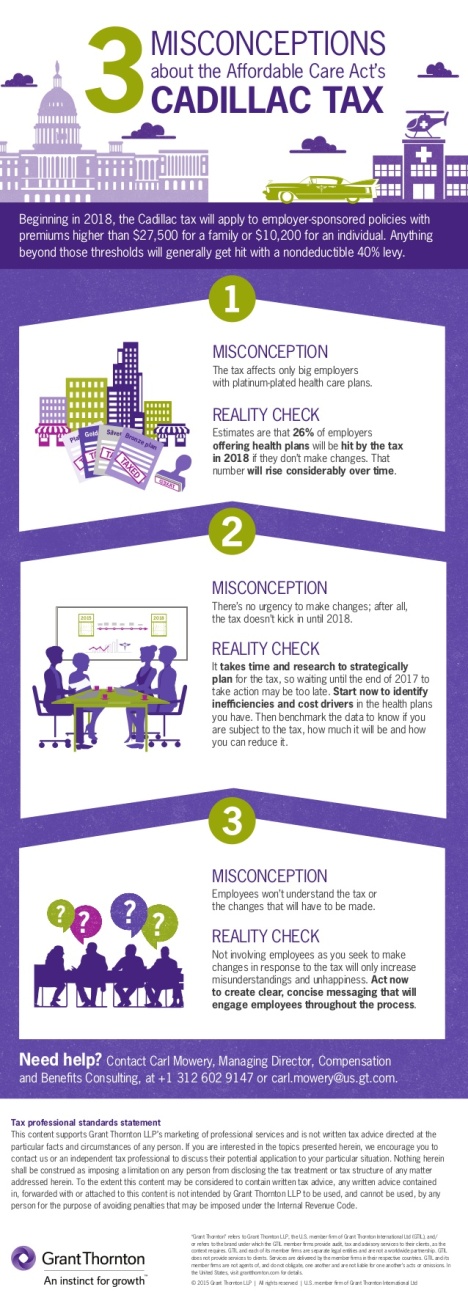
Three common misunderstandings and reality checks about the ACA’s Cadillac tax

Join Our Mailing List

Beginning in 2018

[By Grant Thornton]

***

3-misconceptions-about-the-affordable-care-acts-cadillac-tax-1-638

***

Conclusion

Your thoughts and comments on this ME-P are appreciated. Feel free to review our top-left column, and top-right sidebar materials, links, URLs and related websites, too. Then, subscribe to the ME-P. It is fast, free and secure.

Speaker: If you need a moderator or speaker for an upcoming event, Dr. David E. Marcinko; MBA – Publisher-in-Chief of the Medical Executive-Post – is available for seminar or speaking engagements. Contact: MarcinkoAdvisors@msn.com

OUR OTHER PRINT BOOKS AND RELATED INFORMATION SOURCES:

[PRIVATE MEDICAL PRACTICE BUSINESS MANAGEMENT TEXTBOOK – 3rd.  Edition]

Product DetailsProduct Details

  [Foreword Dr. Hashem MD PhD] *** [Foreword Dr. Silva MD MBA]

***

A primer to tonight’s GOP debate

Join Our Mailing List

Health Entitlements & the Deficit

By Nancy Chockley PhD

NIHCM.org

Congress is poised to pass a budget plan that will raise funding levels for the next two years. While these changes are paid for, the plan does not include structural changes to the health entitlement programs that are a leading driver of our budget deficits and mounting debt.

The GOP presidential candidates are likely to discuss a variety of proposals for structural reforms to these programs during tonight’s debate.

As a primer to this important conversation, this chart story presents essential facts about spending for Medicare, Medicaid and the Affordable Care Act and the impact of these programs on the deficit.

http://www.nihcm.org/health-entitlement-spending-a-growing-threat#one

business-valuation1

See the rest of the story

***

[HEALTH INSURANCE, MANAGED CARE, ECONOMICS, FINANCE AND HEALTH INFORMATION TECHNOLOGY COMPANION DICTIONARY SET]

      Product DetailsProduct DetailsProduct Details

[Mike Stahl PhD MBA] *** [Foreword Dr.Mata MD CIS] *** [Dr. Getzen PhD]

***

Finally – Why the Healthcare.gov Site Failed?

Join Our Mailing List

No … Really!

By Robert E.H. Khoo MD FRCS(C) FACS

http://www.colondoc.com

***

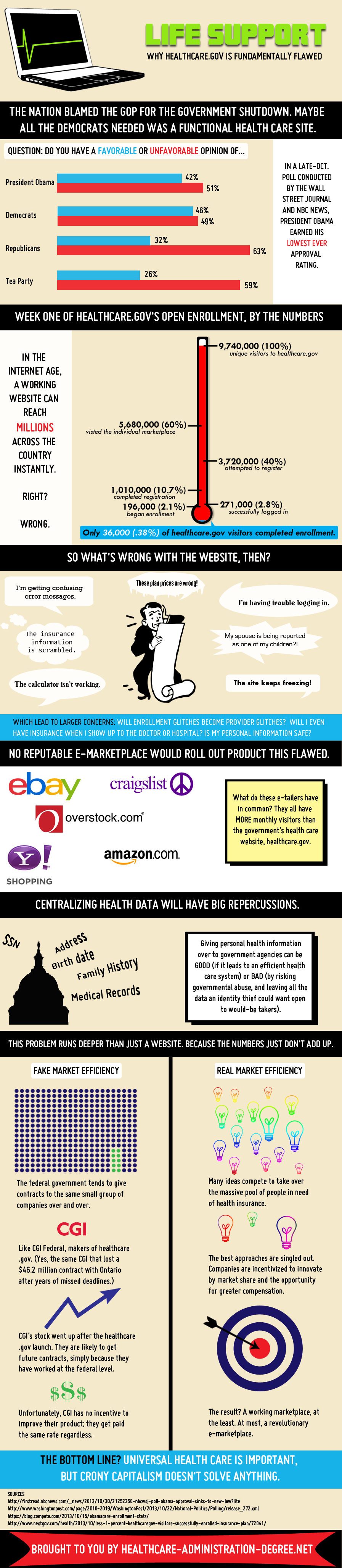
health care gov

Why the Healthcare.gov Site Failed

***

Conclusion

Your thoughts and comments on this ME-P are appreciated. Feel free to review our top-left column, and top-right sidebar materials, links, URLs and related websites, too. Then, subscribe to the ME-P. It is fast, free and secure.

Speaker: If you need a moderator or speaker for an upcoming event, Dr. David E. Marcinko; MBA – Publisher-in-Chief of the Medical Executive-Post – is available for seminar or speaking engagements. Contact: MarcinkoAdvisors@msn.com

OUR OTHER PRINT BOOKS AND RELATED INFORMATION SOURCES:

***

Product Details

***

ME-P News Stories Wrap-Up for August 2015

Join Our Mailing List

[By ME-P Staff Reporters]

Latest News

Editor’s Pick: 

Daily Round-Up of Headlines for August 2015

BREAKING-EVENTS AND AGGREGATED STORIES 

[Editor’s Pick: A Daily Round-Up of Headlines for August 2015]

Risk Management, Liability Insurance, and Asset Protection Strategies for Doctors and Advisors: Best Practices from Leading Consultants and Certified Medical Planners™8Comprehensive Financial Planning Strategies for Doctors and Advisors: Best Practices from Leading Consultants and Certified Medical Planners™

Editor’s Pick: 

Daily Round-Up of Headlines for July 2015

BREAKING-EVENTS AND AGGREGATED STORIES 

Product DetailsProduct Details

Editor’s Pick: 

Daily Round-Up of Headlines for May 2015

BREAKING-EVENTS AND AGGREGATED STORIES 

Comprehensive Financial Planning Strategies for Doctors and Advisors: Best Practices from Leading Consultants and Certified Medical Planners(TM)  

Editor’s Pick: 

Daily Round-Up of Headlines for April 2015

Comprehensive Financial Planning Strategies for Doctors and Advisors: Best Practices from Leading Consultants and Certified Medical Planners(TM)  

***

Editor’s Pick: 

Daily Round-Up of Headlines for March 2015

Comprehensive Financial Planning Strategies for Doctors and Advisors: Best Practices from Leading Consultants and Certified Medical Planners(TM)

***

Editor’s Pick: 

Daily Round-Up of Headlines for February 2015

Comprehensive Financial Planning Strategies for Doctors and Advisors: Best Practices from Leading Consultants and Certified Medical Planners(TM)* 8

***

Editor’s Pick: 

Daily Round-Up of Headlines for January 2015

Comprehensive Financial Planning Strategies for Doctors and Advisors: Best Practices from Leading Consultants and Certified Medical Planners(TM)* 8

Editor’s Pick: 

Daily Round-Up of Headlines for December 2014

 ***

Comprehensive Financial Planning Strategies for Doctors and Advisors: Best Practices from Leading Consultants and Certified Medical Planners(TM)

***

Editor’s Pick: 

Daily Round-Up of Headlines for November 2014

Channel Surfing the ME-P

Have you visited our other topic channels? Established to facilitate idea exchange and link our community together, the value of these topics is dependent upon your input. Please take a minute to visit. And, to prevent that annoying spam, we ask that you register. It is fast, free and secure.

Conclusion

Your thoughts and comments on this ME-P are appreciated. Feel free to review our top-left column, and top-right sidebar materials, links, URLs and related websites, too. Then, subscribe to the ME-P. It is fast, free and secure.

Speaker: If you need a moderator or speaker for an upcoming event, Dr. David E. Marcinko; MBA – Publisher-in-Chief of the Medical Executive-Post – is available for seminar or speaking engagements. Contact: MarcinkoAdvisors@msn.com

OUR OTHER PRINT BOOKS AND RELATED INFORMATION SOURCES:

Product DetailsProduct DetailsProduct Details

Product Details  Product Details

Product DetailsProduct Details

Comprehensive Financial Planning Strategies for Doctors and Advisors: Best Practices from Leading Consultants and Certified Medical Planners(TM)  

Product Details

Blue Cross Blue Shield, Independent / Provider – Sponsored Plans

Join Our Mailing List

Transcripts and Slides

DougBy Douglas B. Sherlock, CFA sherlock@sherlockco.com

The Affordable Care Act is intended to create strong incentives to reduce the administrative costs of health insurers. The medical loss ratio rules and the new ACA-related taxes are manifestations of this policy, and the recent announced business combinations between leading national health insurers are adaptations to these incentives.

It follows that the most recent rate of increase in health plan administrative expenses, excluding the new taxes, is dramatically lower than in recent years. Sherlock Company materials summarizing the results of our surveys are found below.

Independent / Provider – Sponsored Plans

Blue Cross Blue Shield Plans

Assessment

The contents above are a very small portion of the 1,000 page Sherlock Benchmarks for each of these universes. The Sherlock Benchmarks are essential tools to manage administrative costs for your health plan.

budget

Conclusion

Your thoughts and comments on this ME-P are appreciated. Feel free to review our top-left column, and top-right sidebar materials, links, URLs and related websites, too. Then, subscribe to the ME-P. It is fast, free and secure.

Speaker: If you need a moderator or speaker for an upcoming event, Dr. David E. Marcinko; MBA – Publisher-in-Chief of the Medical Executive-Post – is available for seminar or speaking engagements. Contact: MarcinkoAdvisors@msn.com

OUR OTHER PRINT BOOKS AND RELATED INFORMATION SOURCES:

Product DetailsProduct Details

[Foreword Dr. Phillips MD JD MBA LLM] *** [Foreword Dr. Nash MD MBA FACP]

***

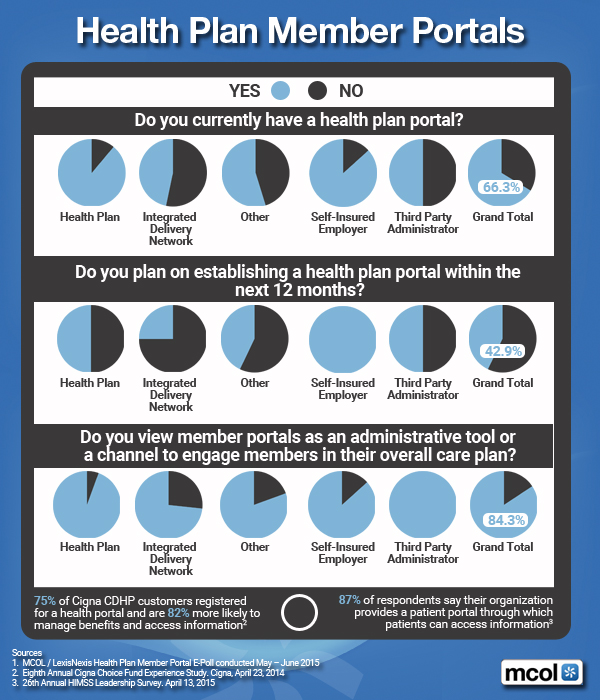
On Health Plan Member Portals

Join Our Mailing List

By http://www.MCOL.com

ImageProxy

Conclusion

Your thoughts and comments on this ME-P are appreciated. Feel free to review our top-left column, and top-right sidebar materials, links, URLs and related websites, too. Then, subscribe to the ME-P. It is fast, free and secure.

Speaker: If you need a moderator or speaker for an upcoming event, Dr. David E. Marcinko; MBA – Publisher-in-Chief of the Medical Executive-Post – is available for seminar or speaking engagements. Contact: MarcinkoAdvisors@msn.com

OUR OTHER PRINT BOOKS AND RELATED INFORMATION SOURCES:

Product DetailsProduct Details

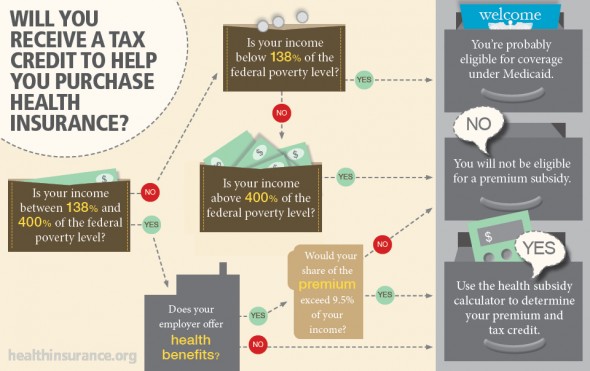
Will you receive a tax credit to help you purchase health insurance?

Join Our Mailing List

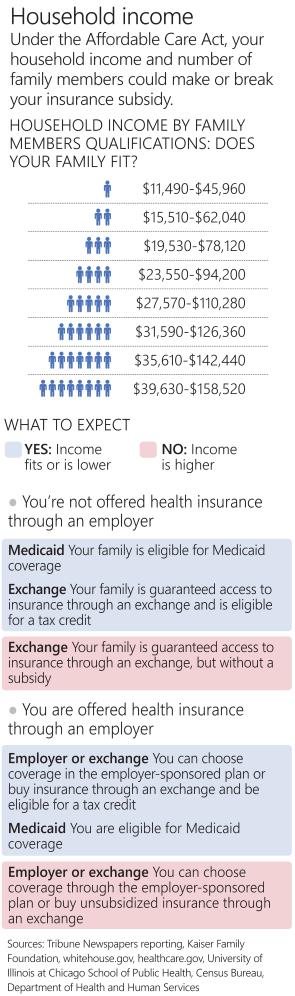
An Infographic

By Healthinsurance.org

This infographic helps Americans determine whether they will be eligible for a health insurance premium subsidy under the Affordable Care Act aka Obamacare.

The infographic accompanies a story by blogger Maggie Mahar, who explains not only how eligibility for health insurance tax credits is determined, but also how much recipients should expect to receive.

The article also includes a chart with federal poverty level (FPL) numbers and links to a Kaiser Family Foundation premium subsidy calculator

Link: Healthinsurance.org

The graphic was created by Mahar, HIO editor Steve Anderson, and designer Barb Etzkorn. It was posted on the Blog of the Health Insurance Resource Center, one of the longest running sources of consumer health insurance information on the Web.

***

obamacare-and-premium-subsidies-590x371

[Click to Enlarge]

Assessment

All healthcare and medical professionals should be aware of the information in this info-graphic; all FAs, too!

More:

Conclusion

Your thoughts and comments on this ME-P are appreciated. Feel free to review our top-left column, and top-right sidebar materials, links, URLs and related websites, too. Then, subscribe to the ME-P. It is fast, free and secure.

Speaker: If you need a moderator or speaker for an upcoming event, Dr. David E. Marcinko; MBA – Publisher-in-Chief of the Medical Executive-Post – is available for seminar or speaking engagements. Contact: MarcinkoAdvisors@msn.com

OUR OTHER PRINT BOOKS AND RELATED INFORMATION SOURCES:

Product DetailsProduct Details

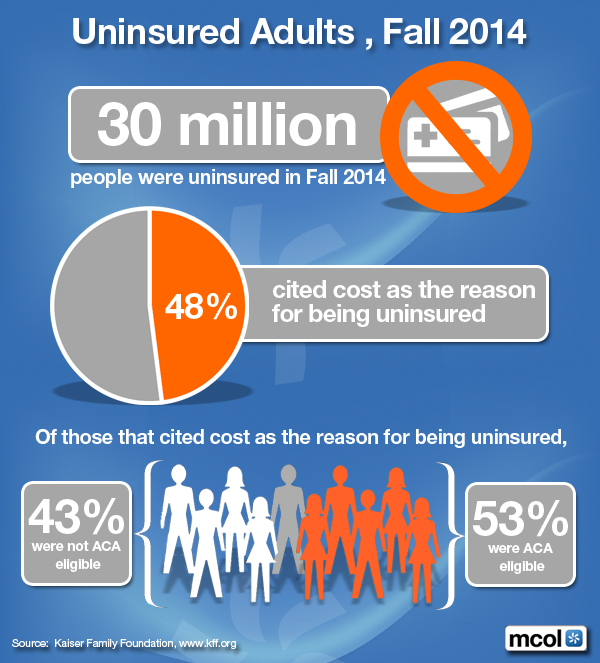
Un-Insured Adults in the USA

Join Our Mailing List

Fall 2014

http://www.MCOL.com

un insured

Channel Surfing the ME-P

Have you visited our other topic channels? Established to facilitate idea exchange and link our community together, the value of these topics is dependent upon your input. Please take a minute to visit. And, to prevent that annoying spam, we ask that you register. It is fast, free and secure.

Conclusion

Your thoughts and comments on this ME-P are appreciated. Feel free to review our top-left column, and top-right sidebar materials, links, URLs and related websites, too. Then, subscribe to the ME-P. It is fast, free and secure.

Speaker: If you need a moderator or speaker for an upcoming event, Dr. David E. Marcinko; MBA – Publisher-in-Chief of the Medical Executive-Post – is available for seminar or speaking engagements. Contact: MarcinkoAdvisors@msn.com

OUR OTHER PRINT BOOKS AND RELATED INFORMATION SOURCES:

Product DetailsProduct Details

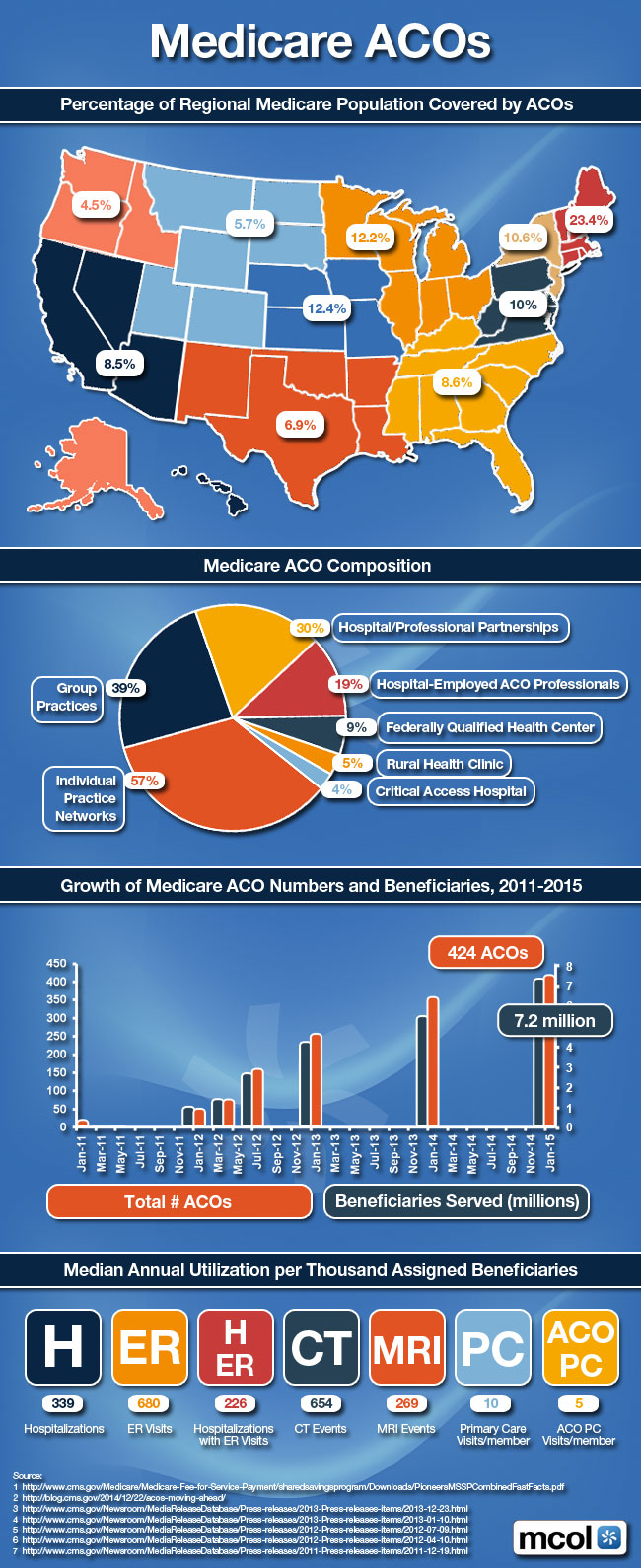
On Medicare ACOs

Join Our Mailing List

Percent of Regionally Covered Populations

By http://www.MCOL.com

ACOs

Channel Surfing the ME-P

Have you visited our other topic channels? Established to facilitate idea exchange and link our community together, the value of these topics is dependent upon your input. Please take a minute to visit. And, to prevent that annoying spam, we ask that you register. It is fast, free and secure.

More Articles on Accountable Care Organizations:

Conclusion

Your thoughts and comments on this ME-P are appreciated. Feel free to review our top-left column, and top-right sidebar materials, links, URLs and related websites, too. Then, subscribe to the ME-P. It is fast, free and secure.

Speaker: If you need a moderator or speaker for an upcoming event, Dr. David E. Marcinko; MBA – Publisher-in-Chief of the Medical Executive-Post – is available for seminar or speaking engagements. Contact: MarcinkoAdvisors@msn.com

OUR OTHER PRINT BOOKS AND RELATED INFORMATION SOURCES:

Product DetailsProduct Details

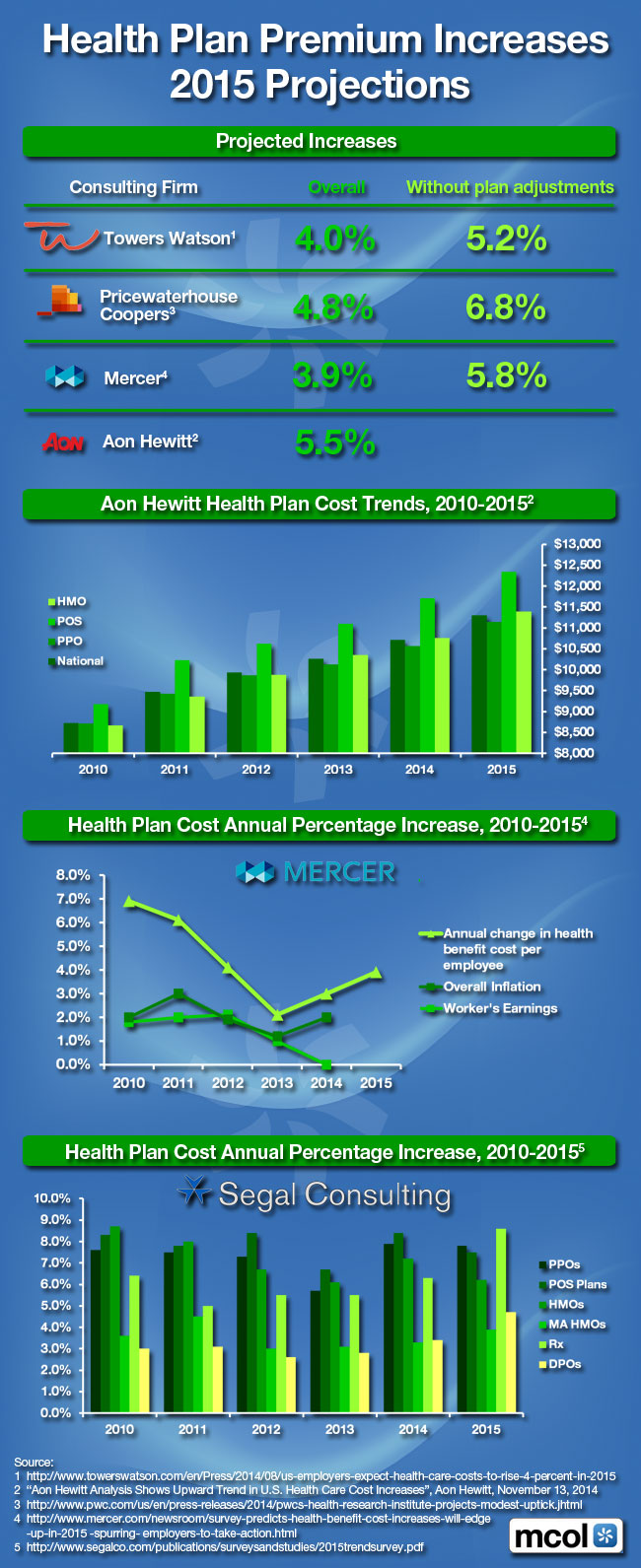
2015 Health Plan Premium Increases

Join Our Mailing List

Projections

By http://www.MCOL.com

premium

Channel Surfing the ME-P

Have you visited our other topic channels? Established to facilitate idea exchange and link our community together, the value of these topics is dependent upon your input. Please take a minute to visit. And, to prevent that annoying spam, we ask that you register. It is fast, free and secure.

Conclusion

Your thoughts and comments on this ME-P are appreciated. Feel free to review our top-left column, and top-right sidebar materials, links, URLs and related websites, too. Then, subscribe to the ME-P. It is fast, free and secure.

Speaker: If you need a moderator or speaker for an upcoming event, Dr. David E. Marcinko; MBA – Publisher-in-Chief of the Medical Executive-Post – is available for seminar or speaking engagements. Contact: MarcinkoAdvisors@msn.com

OUR OTHER PRINT BOOKS AND RELATED INFORMATION SOURCES:

Product DetailsProduct Details

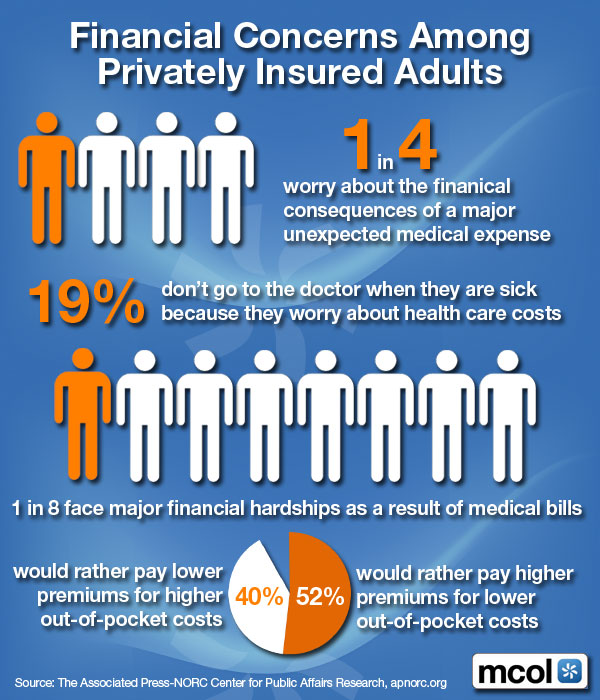
Some Financial Health Insurance Hardships and Concerns of Adults

Join Our Mailing List

Privately Insured

By http://www.MCOL.com

***

123

***

Assessment

Conclusion

Your thoughts and comments on this ME-P are appreciated. Feel free to review our top-left column, and top-right sidebar materials, links, URLs and related websites, too. Then, subscribe to the ME-P. It is fast, free and secure.

Speaker: If you need a moderator or speaker for an upcoming event, Dr. David E. Marcinko; MBA – Publisher-in-Chief of the Medical Executive-Post – is available for seminar or speaking engagements. Contact: MarcinkoAdvisors@msn.com

OUR OTHER PRINT BOOKS AND RELATED INFORMATION SOURCES:

Product DetailsProduct Details

The “ObamaCare Opportunity” for Financial Advisors

Join Our Mailing List

Why Physicians Need Financial Advisors Now!

[By Vicki Rackner MD]

http://www.CertifiedMedicalPlanner.org

VR MDI recently attended a surgical meeting. Most conversations with my physician colleagues turned to the same singular topic: physicians’ new financial reality.

And the message is, “It hurts!”

Physicians’ Financial Plans

Financially savvy physicians execute thoughtful retirement plans. Yet, today about half of surveyed physicians are behind where they would like to be in retirement preparedness. Further, today only about half of physicians work with professional financial planners.

As a physician myself, I understand why smart physicians fail to take smart financial action. We physicians dedicate ourselves to the alleviation of pain and suffering of others. Retirement is a distant personal concern that does not cause immediate financial pain today. We put it off.

Lesson from My Dentist

Years ago my dentist recommended that I undergo a procedure to replace a filling. He explained that the filling material put in my mouth about 40 years ago tends to pull from the tooth over time and allow new cavities to form.

As much as I like my dentist, I actively avoid spending time in his dental chair. I put off the recommended filling replacement year after year. That is, of course, until I experienced vague throbbing from that tooth. I rearranged my schedule so I could tend to this small problem before it became a much bigger problem. Who wants a root canal!

For physicians retirement planning is like that proactive filling replacement. We understand that without action there will be problems down the road. However, the threat of a problem in the distant future does not propel many like myself to action today.

***

Product Details  Product Details

***

The ObamaCare [PP-ACA] Opportunity for Financial Advisors

ObamaCare is the source of acute financial pain for physicians. It’s the financial toothache. Practicing physicians are looking at:

  • Higher taxes. Doctors represent 9 of the 10 highest earners in the US.
  • Rising costs of goods and services as businesses address their own higher tax bills.
  • The costs of building the infrastructure that will lead to greater healthcare efficiencies, like converting to electronic medical records, hiring new staff to address new administrative demands and aligning with new compliance requirements.
  • Lower professional fees. The 24% Medicare fee reduction that was averted this year will become reality soon. As Medicare goes, so, too, go the rest of the insurance fee schedules.
  • Decreasing patient referrals as primary care doctors sell their practices.
  • Physicians know they need to act now to avoid the financial root canal. Each physician is in the process of creating a personal ObamaCare plan.

Physicians’ Wants and Needs

As a financial advisor, you know that physicians NEED a retirement plan. Kids need to eat their broccoli, too. It’s good for them.

Physicians WANT a plan to help them achieve the personal, professional and financial goals that drew them to a career in medicine. Engaging physicians by address their ObamaCare plan is about as hard as getting kids to eat ice cream.

What This Means for You

Today physicians actively seek experts to help them create their ObamaCare plans.

Financial advisor are winning new physician clients. As Seattle Seahawks quarterback Russell Wilson asks, “Why not you?”

If you want to work with more physician clients, this is your moment! Seize it. You have a chance to join the high-performing financial advisors mining the treasures in the medical market.

Assessment

Should wish to learn more here’s a video that addresses 4 questions:

  • Why do physicians need you now?
  • What do you need to know about physicians now?
  • How do you engage physicians now?
  • How do you conduct yourself so physicians want to conduct business with you now?

About the Author

Vicki Rackner MD is an author, speaker and consultant who offers a bridge between the world of medicine and the world of business. She helps businesses acquire physician clients.

VIDEO: https://www.youtube.com/watch?v=CeCyidc4JP8&feature=player_embedded

Enter the Certified Medical Planners

Conclusion

Your thoughts and comments on this ME-P are appreciated. Feel free to review our top-left column, and top-right sidebar materials, links, URLs and related websites, too. Then, subscribe to the ME-P. It is fast, free and secure.

Speaker: If you need a moderator or speaker for an upcoming event, Dr. David E. Marcinko; MBA – Publisher-in-Chief of the Medical Executive-Post – is available for seminar or speaking engagements. Contact: MarcinkoAdvisors@msn.com

OUR OTHER PRINT BOOKS AND RELATED INFORMATION SOURCES:

Financial Planning MDs 2015

Comprehensive Financial Planning Strategies for Doctors and Advisors: Best Practices from Leading Consultants and Certified Medical Planners™

Update on US Health Insurance Coverage

Join Our Mailing List

Census Bureau 2013 Data

By http://www.MCOL.com

kkkkkkkk

Conclusion

Your thoughts and comments on this ME-P are appreciated. Feel free to review our top-left column, and top-right sidebar materials, links, URLs and related websites, too. Then, subscribe to the ME-P. It is fast, free and secure.

Speaker: If you need a moderator or speaker for an upcoming event, Dr. David E. Marcinko; MBA – Publisher-in-Chief of the Medical Executive-Post – is available for seminar or speaking engagements. Contact: MarcinkoAdvisors@msn.com

OUR OTHER PRINT BOOKS AND RELATED INFORMATION SOURCES:

Product DetailsProduct Details

PP-ACA Premium Percent Changes from 2014-2015-2017

Join Our Mailing List

For the Silver Plan 

[By Kaiser Family Foundation]

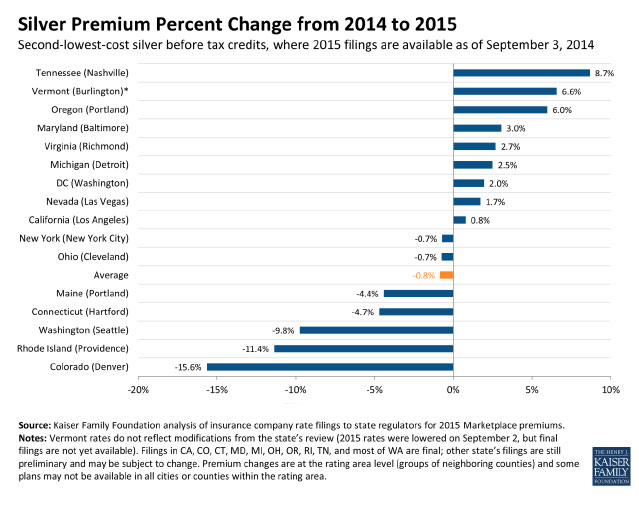
Premiums for the silver insurance premium plan that is used to benchmark tax credits under the Affordable Care Act (ACA) will fall by an average .8% in 2015, according to a new study.

Meanwhile, premiums for the lowest-cost bronze option available through the ACA’s healthcare exchanges will increase by an average of 3.3%.

Silver plans were chosen by 65% of exchange enrollees in 2014, and bronze plans were chosen by about 20% of enrollees, according a report from the U.S. Department of Health and Human Services.

***

kaiser_chartfinal

***

Reference: http://medicaleconomics.modernmedicine.com/medical-economics/news/aca-exchanges-silver-premiums-decrease-average-8-2015

More:

Conclusion

Your thoughts and comments on this ME-P are appreciated. Feel free to review our top-left column, and top-right sidebar materials, links, URLs and related websites, too. Then, subscribe to the ME-P. It is fast, free and secure.

Speaker: If you need a moderator or speaker for an upcoming event, Dr. David E. Marcinko; MBA – Publisher-in-Chief of the Medical Executive-Post – is available for seminar or speaking engagements. Contact: MarcinkoAdvisors@msn.com

OUR OTHER PRINT BOOKS AND RELATED INFORMATION SOURCES:

Product DetailsProduct Details

State Uninsured Patient Rate Reductions

Join Our Mailing List

Five State with Highest Percentage Change for 2013-14

By http://www.MCOL.com

uninsured

Conclusion

Your thoughts and comments on this ME-P are appreciated. Feel free to review our top-left column, and top-right sidebar materials, links, URLs and related websites, too. Then, subscribe to the ME-P. It is fast, free and secure.

Speaker: If you need a moderator or speaker for an upcoming event, Dr. David E. Marcinko; MBA – Publisher-in-Chief of the Medical Executive-Post – is available for seminar or speaking engagements. Contact: MarcinkoAdvisors@msn.com

OUR OTHER PRINT BOOKS AND RELATED INFORMATION SOURCES:

Product DetailsProduct Details


State Requirements for Individual Market Benefit Design and Cost-Sharing

Join Our Mailing List

For Health Benefits

By http://www.MCOL.com

ACA State Requirements

Conclusion

Your thoughts and comments on this ME-P are appreciated. Feel free to review our top-left column, and top-right sidebar materials, links, URLs and related websites, too. Then, subscribe to the ME-P. It is fast, free and secure.

Speaker: If you need a moderator or speaker for an upcoming event, Dr. David E. Marcinko; MBA – Publisher-in-Chief of the Medical Executive-Post – is available for seminar or speaking engagements. Contact: MarcinkoAdvisors@msn.com

OUR OTHER PRINT BOOKS AND RELATED INFORMATION SOURCES:

Product DetailsProduct Details


Employer Health Benefits Post PP-ACA

Join Our Mailing List

Percentage of Employers who View Health Reform Impact on Aspects of Employer Benefits as Moderate / Tremendous

By http://www.MCOL.com

ImageProxy

 HealthcareWebSummit Events

Upcoming Webinars:

On Demand: IBM Webcast: Using Analytics to Improve Outcomes at the Point of Care
On Demand: A Fresh Approach to CDH: 5 Ways to Get In It to Win It
Predictive Modeling Web Summit June 4, 2014
Large Employers and Exchanges: Minimum Standards and Private HIX Considerations June 5, 2014
Cigna’s Collaborative Care Strategy: Engaging Healthcare Professionals June 18, 2014
Provider Contracts and Quality Measurement June 19, 2014
Understanding Medicare DSH Changes-Hospital/Medicare Advantage Plan Implications June 24, 2014
Accountable Care at a Tipping Point: Oliver Wyman ACO Research Findings June 27, 2014
2015 Medical Cost Trends & Implications: PwC Research Behind the Numbers July 15, 2014
Readmissions Web Summit August 14, 2014
Accountable Care Web Summit December 11, 2014

Flash Drives of Past Events

Conclusion

Your thoughts and comments on this ME-P are appreciated. Feel free to review our top-left column, and top-right sidebar materials, links, URLs and related websites, too. Then, subscribe to the ME-P. It is fast, free and secure.

Link: http://feeds.feedburner.com/HealthcareFinancialsthePostForcxos

Speaker: If you need a moderator or speaker for an upcoming event, Dr. David E. Marcinko; MBA – Publisher-in-Chief of the Medical Executive-Post – is available for seminar or speaking engagements. Contact: MarcinkoAdvisors@msn.com

OUR OTHER PRINT BOOKS AND RELATED INFORMATION SOURCES:

Product DetailsProduct DetailsProduct Details


Two Healthcare Sectors the Stock Market Got Wrong on Election Day 2012

Join Our Mailing List

How various sectors in the Health Care Industry fared under the PP-ACA legislation?

[A SPECIAL R&D REPORT FOR THE ME-P]

By David K. Luke MIM, MS-PFP, CMP™ [Certified Medical Planner™]

Website: http://www.networthadvice.com

David K. LukeThere has been a lot of speculation since the words “Affordable Care Act” were first whispered years ago on how the various sectors in the Health Care Industry would fare under such legislation. I proposed that a good indicator would be to look at the performance of the individual health care sector stocks on the first trading day after the election.

(See With Obama Election Win, “Mr. Market” Weighs in on the ACA Equity Winners and Losers by David K. Luke on November 16, 2012).

Link: With Obama Election Win “Mr. Market” Weighs in on the ACA Equity Winners and Losers

The day after Pres. Obama’s reelection on Wednesday, November 7, 2012 the stock market was down over 2% as measured by the S&P 500 and the Dow Jones Industrial Average (DJIA). The common reason given was increased doubt that the impending “fiscal cliff” issue, which was splitting the House and the Senate, would be resolved. There was however, another big concern on investor’s mind: the future of the Affordable Care Act. While the election was close when measured by the popular vote with President Obama earning 51.06% versus Mitt Romney with 47.20%, the electoral vote showed a hands-down Obama victory with 332 versus 206 votes. Investors voted with their pocketbooks with that first trading session following the election showing certain healthcare sectors up in price, other healthcare sectors with moderate returns, and certain healthcare sectors down in price.

Disparate Health Care Sector Returns

It is interesting to look back now over a year and a half later and see how accurate those investor votes were on that first day of realization that health care reform was continuing forward at a much faster pace now that President Obama would be serving a second term. Keeping in mind that the day was a very negative day as a whole in the stock market, a number of healthcare sectors were up in price. This group includes Hospital Stocks and Medicaid HMOs. Note the phenomenal one-day returns (in a down 2% market!) on the sample stocks in these two groups:

Hospital Stocks

  • Health Management Associates (HMA) +7.3%
  • HCA Holdings Inc. (HCA) +9.4%
  • Community Health Systems Inc. (CYH) +6.0%
  • Tenet Healthcare Corp. (THC) +9.6%

Medicaid HMOs

  • Molina Healthcare Inc. (MOH) +4.6%
  • Centene Corp. (CNC) +10.1%
  • WellCare Health Plans Inc. (WCG) +4.4%

Such positive returns on a big down day in the market indicates investors assessing these healthcare sectors being good investments under an Obama presidency and a positive outlook for the implementation of the Affordable Care Act. The other up sector on that day was the Drug Wholesalers, up almost 1% on that negative day. (See “Selected Health Care Performance” Chart – below).

The market had a tepid response to the Pharmacy Benefit sector, as well as the Generic Pharmacy, Testing Labs, and Big Pharma. In my sample group, these sectors were down -.4%, -7%, -1.7%, and -1.4% respectively. It is important to note however that these sectors while slightly positive or barely negative still performed better than the general market that day.

Two Sectors

But, the two healthcare sectors that the stock market severely punished with the voting of substantially more sellers than buyers by investors on that first post-election day were the Medical Device Companies (down 2.5% in the sample group) and the Medicare Part D Companies (down 4.7% in the sample group). The thought at the time was that Medical Device Companies, facing an impending medical device excise tax of 2.3% on the sale of most medical devices in the United States, would be devastated, and that Medicare Part D Companies would face severe profit constraints with tighter-fisted government regulations imposed by the ACA.

***

Stock_Market

***

The Retro-Specto-Scope

In hindsight, investors were correct on two out of the three predictions based on stock market prices on the various healthcare sectors. Hospital Stocks, Medicaid HMOs, and Drug Wholesalers, the leading sectors indicated to be winners with the impending implementation of the ACA, are up 69.8%, 63.6% and 76.5% respectively in the sample groups since November 7, 2012. This remarkable and closely parallel return for these three sectors seemed to prove that the stock market on November 7, 2012 correctly picked the three winning health care sectors! The S&P 500 index for the same time is up 32.02%, a nice return for 1 ½ years but about half the return of these apparently huge benefactors of the ACA. The healthcare sectors that investors felt less positive about (but more positive than the general stock market) on that first postelection day were Pharmacy Benefit Companies, Generic Pharmacy Companies, Testing Labs, and Big Pharma. These four health care sectors are up 43.8%, 40.5%, 6.4%, and 20.5% respectively. Again, in terms of ranking the sectors, these four sectors performed in line based on the comparative returns of the other healthcare sectors.

Wisdom of Crowds

Amazingly, it appears that the emotional Mr. Market predicated quite accurately on Wednesday, November 7, 2012, in one day of trading, not just which health sectors would be good investments for the near future, but the actually ranking of the future performance of the sectors! It seems as though the stock market, as one large voting machine, precisely dissected the over 20,000 pages + of resulting legislation created from the original 906 pages (pdf here) of the PPACA law and distilled it down to profits and losses with the resulting winners and losers in the health care industry in one trading session.

Two [2] Big Misses

Investors however were way off on their concerns about Medical Device Companies and Medicare Part D Companies. The two sample groups were up 71.3% and 66.4% in the time of November 7, 2012 to May 19, 2014 respectively, more than double the S&P 500 for the same period, and in line with the best performing sectors! This is spite of the fact that stock sample of these two groups were the two worst performers on post-election day trading. What happened?

***

Bear + A Falling Stock Chart

***

The “Medical Device Excise Tax” Fable and the “Private Insurers Will Control Costs” Fairy Tale

Wall Street has sharpened their pencils in the last year and a half and realized they have gravely underestimated the profit potential of the Medical Device makers and the Managed Care Health Insurers, in spite of the ACA. Based on stock price performance of the sample group of major players in the past 18 months, fewer sectors look as profitable as the Medical Device Industry and the Medicare Part D Industry. What happened?

The Medical Device industry states that the tax will cost the US “tens of thousands of jobs” and that those jobs will be shipped overseas. A number of issues that are involved here however refute these claims (http://www.factcheck.org/2013/10/boehner-and-the-medical-device-tax/. It appears that any targeted reductions were not related to the implementation of the tax, which became effective January 1, 2013, in spite of heavy protest by the industry. Medical technology continues to have a bright future regardless of the tax.

The notion that the “Affordable” Care Act will help reign in the rampant cost increases of Medicare’s “Part D” program seem to be elusive. Private insurers have done a poor job of keeping drug prices down, especially when compared to the discounts the government gets for Medicaid. Medicare Part D companies wield significant influence on Capitol Hill, and impending steeper discounts look unlikely.

Everybody Wins, Except …

Before the ACA implementation, about 85% of Americans had health insurance. Currently with an additional 7 million Americans with health insurance thanks to Obamacare, an additional 2.2% of Americans now have coverage, or about 87% of all Americans. How can such a slight increase in new health care consumers be responsible for such large anticipated profits in the health care sector? It cannot. Wall Street is telling us that the new health law is not about new customers, but about increased profit margins for the health care industry. I can draw three conclusions:

  1. The Affordable Care Act may not be so affordable for health consumers
  2. Most companies in the Health Care Industry stand to gain financially with ACA. There is one sure loser with ACA: The physician, who can only look forward to increased workloads and mpending Medicare SGR pay cuts.

THE CHART [Research and Development]

Selected Health Care Sector Stock Performance Random Sampling of Publically Traded Companies From President Obama Re-election Date to Present

Chart

Conclusion

Your thoughts and comments on this ME-P are appreciated. Feel free to review our top-left column, and top-right sidebar materials, links, URLs and related websites, too. Then, subscribe to the ME-P. It is fast, free and secure.

Link: http://feeds.feedburner.com/HealthcareFinancialsthePostForcxos

Speaker: If you need a moderator or speaker for an upcoming event, Dr. David E. Marcinko; MBA – Publisher-in-Chief of the Medical Executive-Post – is available for seminar or speaking engagements. Contact: MarcinkoAdvisors@msn.com

OUR OTHER PRINT BOOKS AND RELATED INFORMATION SOURCES:

Product DetailsProduct DetailsProduct Details

Product DetailsProduct Details

Product Details  Product Details

Product Details

How the ACA Affects Your RXs

Join Our Mailing List

On Four Large Groups of Import

By http://www.HelpRx.info

To give you a jumpstart about how the Affordable Care Act will impact you and your prescription drug coverage we’ve researched the major impacts on four large groups of people who could see the greatest impact.

Review the info-graphic below to learn about the benefits and requirements of the ACA and share it with your friends and family that still have questions about how the ACA will affect them.

***

infographic

***

Assessment

See more at: http://www.helprx.info/blog/infographics/infographic-how-the-affordable-care-act-impacts-you#sthash.6bk5zU0D.dpuf

Conclusion

Your thoughts and comments on this ME-P are appreciated. Feel free to review our top-left column, and top-right sidebar materials, links, URLs and related websites, too. Then, subscribe to the ME-P. It is fast, free and secure.

Link: http://feeds.feedburner.com/HealthcareFinancialsthePostForcxos

Speaker: If you need a moderator or speaker for an upcoming event, Dr. David E. Marcinko; MBA – Publisher-in-Chief of the Medical Executive-Post – is available for seminar or speaking engagements. Contact: MarcinkoAdvisors@msn.com

OUR OTHER PRINT BOOKS AND RELATED INFORMATION SOURCES:

Product DetailsProduct DetailsProduct Details

Product DetailsProduct Details

Product Details

Regional Distribution of Un-Insured Adults in the Coverage Gap

Join Our Mailing List

Due to State Decisions NOT to Expand Medicaid

http://www.MCOL.com

ImageProxy

Conclusion

Your thoughts and comments on this ME-P are appreciated. Feel free to review our top-left column, and top-right sidebar materials, links, URLs and related websites, too. Then, subscribe to the ME-P. It is fast, free and secure.

Link: http://feeds.feedburner.com/HealthcareFinancialsthePostForcxos

Speaker: If you need a moderator or speaker for an upcoming event, Dr. David E. Marcinko; MBA – Publisher-in-Chief of the Medical Executive-Post – is available for seminar or speaking engagements. Contact: MarcinkoAdvisors@msn.com

OUR OTHER PRINT BOOKS AND RELATED INFORMATION SOURCES:

Product DetailsProduct Details

Product Details


The New “Patient Centered Health Plan” Video

Join Our Mailing List 

An Alternative to Obamacare?

[By Staff Reporters]

Did you know that Tennessee’s US senatorial candidate, Dr. George Flinn, just announced his Patient Centered Health Plan as a sustainable alternative to Obamacare?

“This country needs a strong, positive alternative,” said Flinn. “We need to unite behind a solid proposal now because the longer Obamacare is in place, the harder it will be to repeal.”

The PCHP [Patient Centered Health Plan]

The Patient Centered Health Plan advocates a quality, affordable system promoting principles such as portability, competition across state lines, and the expansion of health savings accounts (HSA).

Flinn stated that his plan aims to end the assault Obamacare has created on our liberty and free enterprise in this country.

From massive job loss, decreased quality of care, doctor shortages, layoffs in health services, and millions still uninsured, Obamacare is doing the opposite of what it was made to do.

***

GF

***

The Plan Link

The plan is available in detail at www.patientcenteredhealthplan.com

Selected Lists On Health Savings Accounts:

Assessment

Both parties criticize one another for different aspects of Obamacare. The only consensus is its inability to effectively function. For the betterment of the United States, party lines need to be overlooked in order to find a solution.

Patient Centered Health may be the answer.

Conclusion

Your thoughts and comments on this ME-P are appreciated. Feel free to review our top-left column, and top-right sidebar materials, links, URLs and related websites, too. Then, subscribe to the ME-P. It is fast, free and secure.

Link: http://feeds.feedburner.com/HealthcareFinancialsthePostForcxos

Speaker: If you need a moderator or speaker for an upcoming event, Dr. David E. Marcinko; MBA – Publisher-in-Chief of the Medical Executive-Post – is available for seminar or speaking engagements. Contact: MarcinkoAdvisors@msn.com

OUR OTHER PRINT BOOKS AND RELATED INFORMATION SOURCES:

Product DetailsProduct Details

Product Details

  •  

Appreciating the Highest Rates of Uninsured or Underinsured‏ Americans

Join Our Mailing List

For the Five States with the Highest Percent of People Under Age 65

***

Uninsured

***

Conclusion

Your thoughts and comments on this ME-P are appreciated. Feel free to review our top-left column, and top-right sidebar materials, links, URLs and related websites, too. Then, subscribe to the ME-P. It is fast, free and secure.

Link: http://feeds.feedburner.com/HealthcareFinancialsthePostForcxos

Speaker: If you need a moderator or speaker for an upcoming event, Dr. David E. Marcinko; MBA – Publisher-in-Chief of the Medical Executive-Post – is available for seminar or speaking engagements. Contact: MarcinkoAdvisors@msn.com

OUR OTHER PRINT BOOKS AND RELATED INFORMATION SOURCES:

Product DetailsProduct Details

Product Details


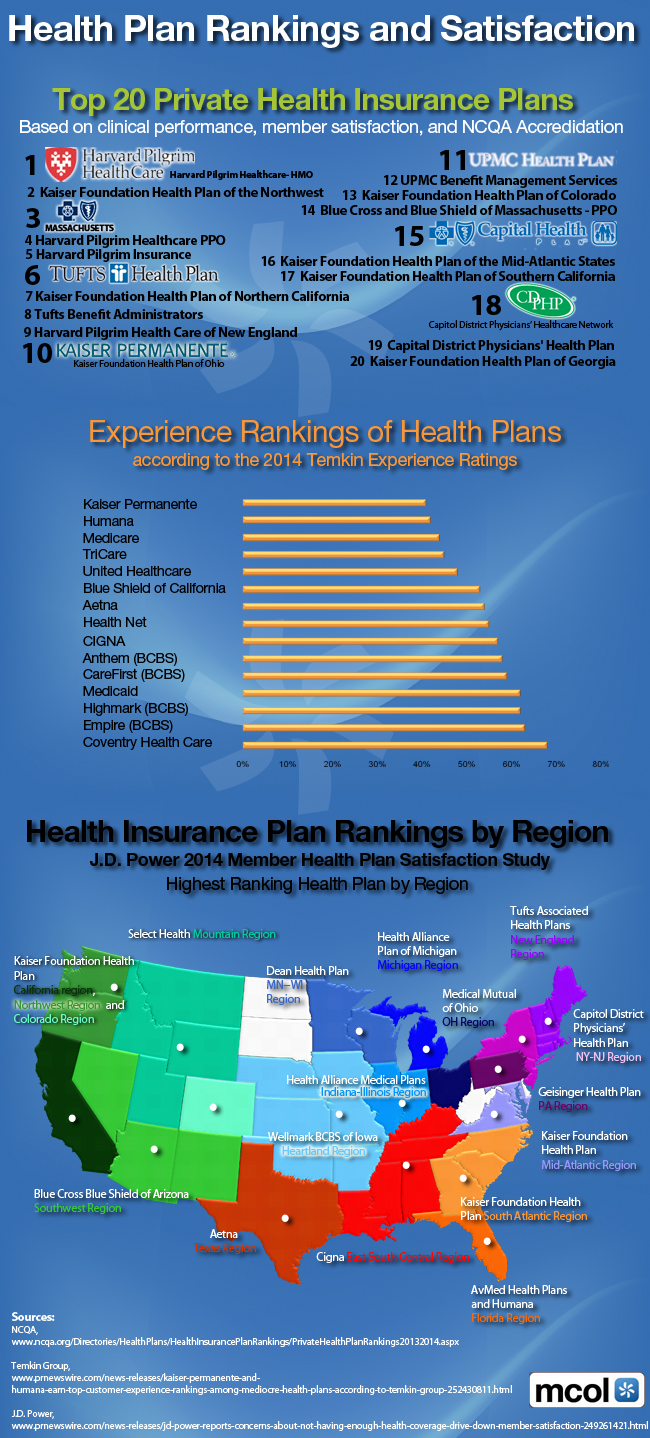
Health Plan Rankings and Satisfaction‏

Join Our Mailing List

 Top 20 Private Health Insurance Plans [HIPs]

By www. MCOL.com

ImageProxy 1

Conclusion

Your thoughts and comments on this ME-P are appreciated. Feel free to review our top-left column, and top-right sidebar materials, links, URLs and related websites, too. Then, subscribe to the ME-P. It is fast, free and secure.

Link: http://feeds.feedburner.com/HealthcareFinancialsthePostForcxos

Speaker: If you need a moderator or speaker for an upcoming event, Dr. David E. Marcinko; MBA – Publisher-in-Chief of the Medical Executive-Post – is available for seminar or speaking engagements. Contact: MarcinkoAdvisors@msn.com

OUR OTHER PRINT BOOKS AND RELATED INFORMATION SOURCES:

Product DetailsProduct Details

Product Details


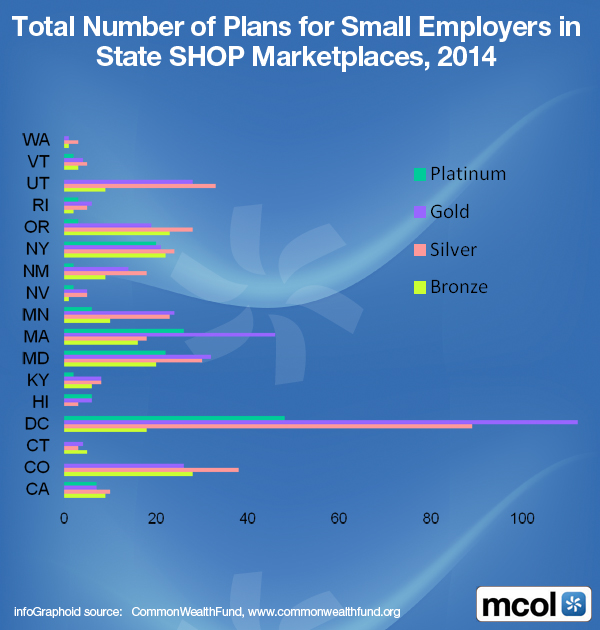
The State SHOP Market-Places 2014

Join Our Mailing List

Total Number of Plans for Small Employers 2014

SHOP

Conclusion

Your thoughts and comments on this ME-P are appreciated. Feel free to review our top-left column, and top-right sidebar materials, links, URLs and related websites, too. Then, subscribe to the ME-P. It is fast, free and secure.

Link: http://feeds.feedburner.com/HealthcareFinancialsthePostForcxos

Speaker: If you need a moderator or speaker for an upcoming event, Dr. David E. Marcinko; MBA – Publisher-in-Chief of the Medical Executive-Post – is available for seminar or speaking engagements. Contact: MarcinkoAdvisors@msn.com

OUR OTHER PRINT BOOKS AND RELATED INFORMATION SOURCES:

Product DetailsProduct Details

Product Details

Can Politically-Correct Names Save Obamacare?

Join Our Mailing List

Saving Electronic Health Record Interoperability?

1-darrellpruittBy D. Kellus Pruitt DDS

If HHS successfully persuades Americans to use happy names for its bad ideas, will the cheap trick save electronic health record interoperability which is critical to the success of Obamacare?

Healthcare Lexicon 

According to the government’s modernized healthcare lexicon, doctors have been demoted to “providers,” insurance companies, including Medicare/Medicaid, have been promoted to “payers,” and patients’ position in the hierarchy has diminished from “principals” to “stakeholders” – a rank on par with 3rd parties such as insurers, HHS and other unaccountable parasites.

Wall of Shame

Ominously, HHS recently changed the contentious name “Wall of Shame” to a more innocuous“ breach reporting tool,” to describe the public list of data breaches involving the medical records of more than 500 patients. It turns out that the growing list of major data breaches is unexpectedly shaming  far too many providers and payers – including Medicare/Medicaid. Imagine that!

In fact, since Americans’ growing disgust with privacy breaches threatens the very success of Obamacare, there is evidence that HHS has turned to betraying its lawful obligation to the nation by hiding breaches from those who are most vulnerable – Americans.

HIPAA Failure

The half-baked plan to shame providers who experience data breaches – perhaps through no fault of their own – is not working out like HHS had hoped. Due to HIPAA’s abysmal failure to halt data breaches, the Wall of Shame has become a national embarrassment and an obstacle to EHR adoption. I expect the public listing of major breaches to be quietly scrapped soon in favor of keeping patients in the dark concerning their risks of identity theft.

Dentistry 

In dentistry, on the other hand, common sense as well as market resistance evidently caused HHS and other stakeholders to give up trying to prohibit use of the 8 syllable “electronic dental records” in favor of the 14 syllable “electronic health records for dental practices.”

Nevertheless, holdouts (including Dissent Doe) still occasionally feel it is important to correct this dentists when I use “EDR” instead of “EHR.” You got to love ‘em.

Obama Care 

Assessment 

Transparent silliness suggests that HHS is failing in its duties. Due to lack of accountability, we can expect EHRs and EDRs to become even more expensive and more dangerous, possibly bringing an end to Obamacare.

Conclusion

Your thoughts and comments on this ME-P are appreciated. Feel free to review our top-left column, and top-right sidebar materials, links, URLs and related websites, too. Then, subscribe to the ME-P. It is fast, free and secure.

Link: http://feeds.feedburner.com/HealthcareFinancialsthePostForcxos

Speaker: If you need a moderator or speaker for an upcoming event, Dr. David E. Marcinko; MBA – Publisher-in-Chief of the Medical Executive-Post – is available for seminar or speaking engagements. Contact: MarcinkoAdvisors@msn.com

OUR OTHER PRINT BOOKS AND RELATED INFORMATION SOURCES:

DICTIONARIES: http://www.springerpub.com/Search/marcinko
PHYSICIANS: www.MedicalBusinessAdvisors.com
PRACTICES: www.BusinessofMedicalPractice.com
HOSPITALS: http://www.crcpress.com/product/isbn/9781466558731
CLINICS: http://www.crcpress.com/product/isbn/9781439879900
BLOG: www.MedicalExecutivePost.com
FINANCE: Financial Planning for Physicians and Advisors
INSURANCE: Risk Management and Insurance Strategies for Physicians and Advisors

Product DetailsProduct DetailsProduct Details

Eligibility for Health Insurance Coverage as of 2014

Join Our Mailing List

Among the Currently Un-insured for Selected United States

By www.MCOL.com

Eligibility

Conclusion

Your thoughts and comments on this ME-P are appreciated. Feel free to review our top-left column, and top-right sidebar materials, links, URLs and related websites, too. Then, subscribe to the ME-P. It is fast, free and secure.

Link: http://feeds.feedburner.com/HealthcareFinancialsthePostForcxos

Speaker: If you need a moderator or speaker for an upcoming event, Dr. David E. Marcinko; MBA – Publisher-in-Chief of the Medical Executive-Post – is available for seminar or speaking engagements. Contact: MarcinkoAdvisors@msn.com

OUR OTHER PRINT BOOKS AND RELATED INFORMATION SOURCES:

DICTIONARIES: http://www.springerpub.com/Search/marcinko
PHYSICIANS: www.MedicalBusinessAdvisors.com
PRACTICES: www.BusinessofMedicalPractice.com
HOSPITALS: http://www.crcpress.com/product/isbn/9781466558731
CLINICS: http://www.crcpress.com/product/isbn/9781439879900
BLOG: www.MedicalExecutivePost.com
FINANCE: Financial Planning for Physicians and Advisors
INSURANCE: Risk Management and Insurance Strategies for Physicians and Advisors

Product DetailsProduct Details

Product Details


American’s Personal Experience with the PP-ACA

Join Our Mailing List

The Law of the Land

By www.MCOL.com

ACA

More:

Assessment

So, tell us your personal experi9ence with the ACA

Conclusion

Your thoughts and comments on this ME-P are appreciated. Feel free to review our top-left column, and top-right sidebar materials, links, URLs and related websites, too. Then, subscribe to the ME-P. It is fast, free and secure.

Link: http://feeds.feedburner.com/HealthcareFinancialsthePostForcxos

Speaker: If you need a moderator or speaker for an upcoming event, Dr. David E. Marcinko; MBA – Publisher-in-Chief of the Medical Executive-Post – is available for seminar or speaking engagements. Contact: MarcinkoAdvisors@msn.com

OUR OTHER PRINT BOOKS AND RELATED INFORMATION SOURCES:

DICTIONARIES: http://www.springerpub.com/Search/marcinko
PHYSICIANS: www.MedicalBusinessAdvisors.com
PRACTICES: www.BusinessofMedicalPractice.com
HOSPITALS: http://www.crcpress.com/product/isbn/9781466558731
CLINICS: http://www.crcpress.com/product/isbn/9781439879900
BLOG: www.MedicalExecutivePost.com
FINANCE: Financial Planning for Physicians and Advisors
INSURANCE: Risk Management and Insurance Strategies for Physicians and Advisors

Product DetailsProduct Details

Product Details

Percentage of Families with Medical Care Financial Burdens

Join Our Mailing List

The CDC Definition

By www.MCOL.com

CDC

Conclusion

Your thoughts and comments on this ME-P are appreciated. Feel free to review our top-left column, and top-right sidebar materials, links, URLs and related websites, too. Then, subscribe to the ME-P. It is fast, free and secure.

Link: http://feeds.feedburner.com/HealthcareFinancialsthePostForcxos

Speaker: If you need a moderator or speaker for an upcoming event, Dr. David E. Marcinko; MBA – Publisher-in-Chief of the Medical Executive-Post – is available for seminar or speaking engagements. Contact: MarcinkoAdvisors@msn.com

OUR OTHER PRINT BOOKS AND RELATED INFORMATION SOURCES:

DICTIONARIES: http://www.springerpub.com/Search/marcinko
PHYSICIANS: www.MedicalBusinessAdvisors.com
PRACTICES: www.BusinessofMedicalPractice.com
HOSPITALS: http://www.crcpress.com/product/isbn/9781466558731
CLINICS: http://www.crcpress.com/product/isbn/9781439879900
BLOG: www.MedicalExecutivePost.com
FINANCE: Financial Planning for Physicians and Advisors
INSURANCE: Risk Management and Insurance Strategies for Physicians and Advisors

Product DetailsProduct DetailsProduct Details

Product Details  Product Details


Enrollment, Coverage and the PP-ACA

Join Our Mailing List
For Medicaid

By www.MCOL.com

ImageProxy

Assessment

1. Aetna CEO: Only 11% Of ObamaCare Signups Have Been Uninsured 
2. The Individual Mandate for Health Insurance in the U.S.
3. Survey of Americans’ Preparations for Health Care in Retirement
4. Medi-Cal at a Crossroads: What Enrollees Say About the Program 
5. The Affordable Care Act: The Exchanges Go Live

Conclusion

Your thoughts and comments on this ME-P are appreciated. Feel free to review our top-left column, and top-right sidebar materials, links, URLs and related websites, too. Then, subscribe to the ME-P. It is fast, free and secure.

Link: http://feeds.feedburner.com/HealthcareFinancialsthePostForcxos

Speaker: If you need a moderator or speaker for an upcoming event, Dr. David E. Marcinko; MBA – Publisher-in-Chief of the Medical Executive-Post – is available for seminar or speaking engagements. Contact: MarcinkoAdvisors@msn.com

OUR OTHER PRINT BOOKS AND RELATED INFORMATION SOURCES:

DICTIONARIES: http://www.springerpub.com/Search/marcinko
PHYSICIANS: www.MedicalBusinessAdvisors.com
PRACTICES: www.BusinessofMedicalPractice.com
HOSPITALS: http://www.crcpress.com/product/isbn/9781466558731
CLINICS: http://www.crcpress.com/product/isbn/9781439879900
BLOG: www.MedicalExecutivePost.com
FINANCE: Financial Planning for Physicians and Advisors
INSURANCE: Risk Management and Insurance Strategies for Physicians and Advisors

Product DetailsProduct Details

Product Details

My Experience with ObamaCare

Join Our Mailing List 

Not a Unique Story – to Date

Rick Kahler CFPBy Rick Kahler CFP® http://www.KahlerFinancial.com

Like millions of Americans, I jumped on Healthcare.gov on October 1 to view the long-anticipated plans on the insurance exchanges mandated by the Affordable Healthcare Act, known as Obamacare. I needed a new healthcare plan and purposely held off buying one in September to compare the coverage and prices of an Exchange plan.

My disappointment paralleled that of thousands of other Americans wanting to do the same. After six tries that day, I gave up. I tried the site multiple times for each of the next six days. No luck.

The Short Form

Finally, on the seventh day, the site actually let me start an application. I chose to go with the “short” form since I was certain I would not qualify for a subsidy.

The short form application took 30 minutes to fill out. There were very few questions about health, just whether anyone in the household smoked. A number of questions had me wondering if I was applying for a passport. These included my Social Security number, race, citizenship, relationships to everyone in the family, and whether I was ever incarcerated.

When I reached the end of the form, I hit “submit,” anticipating that plan options and costs would appear. Instead, I was sent back to the starting page of the form. After 60 minutes of trying to get out of this endless loop, I gave up.

Three More Weeks of Trying

For the next three weeks, I went to the site at least once a day. I was never able to get past the endless loop to view plans or prices. I took a two-week break.

On November 14, I tried again. Success! Well, sort of. No endless loop. Instead, the site said it lost my original application and I needed to complete a new one. After another 60 minutes filling out the application, I ended up stuck in a loop again, unable to view plans or prices, much less choose one.

Giving Up

Frustrated, I decided to give it a rest until the site re-launched on December 1. I figured I would still have plenty of time to meet the December 15 deadline for enrollment.

On December 1, I eagerly popped onto the site. Not only was the site not functional, it had lost my application for the third time.

I gave up.

Enter the Insurance Broker

I phoned my insurance broker. She was able to give me all the information I had tried to get out of healthcare.gov for the past 60 days. She also said my insurance company was canceling my current plan. Obamacare deemed the coverage substandard because it did not cover pregnancy, mental health costs, and pediatric dental and vision costs. Although I don’t want or need any of that coverage, Obamacare gives me no choice.

Prices

My old policy cost $1,192 a month. The new one costs $1,506, which includes $59 a month in mandated surcharges on non-exchange policies to help fund Obamacare. My maximum family out-of-pocket expenses must also increase $208 a month. The total potential increase is a staggering $524 a month.

###

Obama Care

###

A Skeptic

As someone who listened with great skepticism as politician after politician promised that Obamacare would lower health care costs, lower our deficit, and guarantee we could keep any existing plan, I feel sadly vindicated. In March 2010, when Congress passed Obamacare, I paid $660 a month for health care that had better coverage than I have now. For that same coverage today, my premium would be $2,450 a month.

Assessment

Unfortunately, my story is not unique. It is ubiquitous to the average American who has health insurance. Our elected officials and government agencies failed us miserably. So far, there appears to be no relief in sight.

More

Conclusion

Your thoughts and comments on this ME-P are appreciated. Feel free to review our top-left column, and top-right sidebar materials, links, URLs and related websites, too. Then, subscribe to the ME-P. It is fast, free and secure.

Link: http://feeds.feedburner.com/HealthcareFinancialsthePostForcxos

Speaker: If you need a moderator or speaker for an upcoming event, Dr. David E. Marcinko; MBA – Publisher-in-Chief of the Medical Executive-Post – is available for seminar or speaking engagements. Contact: MarcinkoAdvisors@msn.com

OUR OTHER PRINT BOOKS AND RELATED INFORMATION SOURCES:

DICTIONARIES: http://www.springerpub.com/Search/marcinko
PHYSICIANS: www.MedicalBusinessAdvisors.com
PRACTICES: www.BusinessofMedicalPractice.com
HOSPITALS: http://www.crcpress.com/product/isbn/9781466558731
CLINICS: http://www.crcpress.com/product/isbn/9781439879900
BLOG: www.MedicalExecutivePost.com
FINANCE: Financial Planning for Physicians and Advisors
INSURANCE: Risk Management and Insurance Strategies for Physicians and Advisors

Product DetailsProduct Details

Product Details

Pity the Poor Hospitals?

Join Our Mailing List

A Historical Look-Back to the Future?

wayne-firebaugh

By Wayne Firebaugh CPA, CFP® CMP™

www.CertifiedMedicalPlanner.org

Dr. Malcolm T. MacEachern, Director of Hospital Activities for the American College of Surgeons, presciently observed that:

… our hospitals are now involved in the worst financial crisis they have ever experienced. It is absolutely necessary to all of us to put our heads together and try to find some solution. If we are to have effective results we must have concerted and coordinated immediate action. … Repeated adjustments of expenses to income have been made. Never before has there been such a careful analysis of hospital accounting and study of financial policies. It is entirely possible for us to inaugurate improvements in business methods which will lead to greater ways and means of financing hospitals in the future. … It is true that all hospitals have already trimmed their sales to better meet the financial conditions of their respective communities. This has been chiefly through economies of administration. There has been more or less universal reduction in personnel and salaries; many economies have been effected. Everything possible has been done to reduce expenditures but this has not been sufficient to bring about immediate relief in the majority of instances. The continuance of the present economic conditions will force hospitals generally to further action. The time has come when this problem must be given even greater thought, both from its community and from its national aspect. [1]

In Agreement

Many health administration and endowment managers would agree that Dr. MacEachern accurately describes today’s healthcare funding environment. Although they might be startled to learn that Dr. MacEachern made these observations in 1932, there is the old truism that there is nothing new under the sun.

Today

More current healthcare statistics after the November 7th 2012 presidential election and Patient Protection-Affordable Care Act confirmation, suggest that the financial crises are much the same for today’s hospitals as they were for hospitals during the Great Depression.  The American Hospital Association (AHA) recently reported a number of gloomy statistics for hospitals: [2]

  • Hospitals provided $39 billion in uncompensated care to patients in 2010 representing 5.8% of their expenses.
  • Technology costs are soaring as traditional technologies such as X-Ray machines, for $175,000, are being replaced by contemporary technologies such as CAT Scanners at $1 million, that are in turn being replaced by CT Functional Imaging with PET Scans costing $2.3 million. Even such a “simple” instrument as a scalpel that costs $20, is being replaced by equipment for electrocautery costing $12,000, that is then being replaced by harmonic scalpels costing $30,000.

More Metrics

A further review added more daunting numbers: [3]

  • In 2010, 22.4% of hospitals reported a negative total margin.
  • From 1997 through 2009, hospitals saw a small net surplus from government payments from sources such as Medicare and Medicaid deteriorate into a deficit approaching $35 billion.
  • Emergency departments in 47% of all hospitals report operating at, or over, capacity partially reflecting an approximate 10% decline in the number of emergency departments since 1991.
  • The average age of hospital plants has increased 22.5% from 8.0 years to 9.8 years in just fifteen years.
  • From 2003 through September 2007, hospital bond downgrades have outpaced hospital bond upgrades by 19%.

In a time when so much seems different yet so much seems the same, hospitals are increasingly viewing their endowments as a source of help. But what is an endowment?

Latin Roots

The same Latin words that give rise to the word “dowry” also give rise to the word endowment.[4] Interestingly, the concepts of a dowry and an endowment are in many ways similar. Both are typically viewed as gifts for continuing support or maintenance.

With respect to the healthcare entity, an endowment is generally used to smooth variations in operating results and to fund extra programs or plant purchases. Any entity that enjoys the support of an endowment also encounters the conflicting objectives between current income and future growth.

Hospital

Assessment

Dean William Inge, a 19th century cleric and author, aptly noted that: “Worry is interest paid on trouble before it is due.”

When managing an endowment, it is important that the institution focus its attention on those items that it can control rather than worrying about those it cannot control. Successful endowment managers seem to agree that there are at least two major areas subject to the endowment’s control: asset allocation (also known as investment policy) and payout policy.

More:

Conclusion

Your thoughts and comments on this ME-P are appreciated. Feel free to review our top-left column, and top-right sidebar materials, links, URLs and related websites, too. Then, subscribe to the ME-P. It is fast, free and secure.

Link: http://feeds.feedburner.com/HealthcareFinancialsthePostForcxos

Speaker: If you need a moderator or speaker for an upcoming event, Dr. David E. Marcinko; MBA – Publisher-in-Chief of the Medical Executive-Post – is available for seminar or speaking engagements. Contact: MarcinkoAdvisors@msn.com

OUR OTHER PRINT BOOKS AND RELATED INFORMATION SOURCES:

DICTIONARIES: http://www.springerpub.com/Search/marcinko
PHYSICIANS: www.MedicalBusinessAdvisors.com
PRACTICES: www.BusinessofMedicalPractice.com
HOSPITALS: http://www.crcpress.com/product/isbn/9781466558731
CLINICS: http://www.crcpress.com/product/isbn/9781439879900
BLOG: www.MedicalExecutivePost.com
FINANCE: Financial Planning for Physicians and Advisors
INSURANCE: Risk Management and Insurance Strategies for Physicians and Advisors


[1]   MacEachern, M.T., MD. “Some Economic Problems Affecting Hospitals Today and Suggestions for Their Solution.” The Bulletin of the American Hospital Association. July 1932.

[2]   Steinberg, C. Overview of the U.S. Healthcare System.  American Hospital Association (2003). Carline Steinburg is Vice President, Health Trends Analysis, for AHA.

[3]   “Trends Affecting Hospitals and Health Systems.”  TrendWatch Chartbook 2010.  American Hospital Association (2010).

[4]   Merriam-Webster Online.

Product DetailsProduct Details

What is Form 834?

Join Our Mailing List 

President Obama’s Most Important Number

[By Staff Reporters]

This is an “834 EDI transmission.”

Health Insurers sometimes call it, more simply, “an 834.” It is a technical, back-end reporting tool that consumers never see on the Federal Website. It is meant to be read by computers, not human beings. It’s the form that tells the insurer’s system who you are and what you need. And, it might be the new health-care law’s biggest problem.

Insurers report that, in some cases, 834s are coming in wrong. That’s a much more serious problem than the online traffic bottlenecks that have dominated coverage of the health-care law’s rollout.

Washington Post Article:

This is an “834 EDI transmission.” Insurers sometimes call it, more simply, “an 834.” It is a technical, back-end reporting tool that consumers never see. It is meant to be read by computers, not human beings. It’s the form that tells the insurer’s system who you are and what you need. And it might be the new health-care law’s biggest problem.

Insurers report that, in some cases, 834s are coming in wrong. That’s a much more serious problem than the online traffic bottlenecks that have dominated coverage of the health-care law’s rollout.

HIEs

What is the ANSI 834 Enrollment Implementation Format?

The 834 Transaction is the HIPAA-compliant Benefit Enrollment and Maintenance Transaction. Its purpose is to electronically transmit enrollment and dis-enrollment information.

In 2004, DHCS implemented a 4010 834 solution, however, this was implemented along with a supplemental transaction that held eligibility history.

The HIPAA 5010 version of all transactions is scheduled to be implemented on January 1st, 2012. DHCS will implement a compliant 5010 834 on this date. The current FAME file will continue to be made available for a short period of time after this date to allow plans time to transition. Once this transition period has been completed the FAME file will no longer be made available to managed care plans.

Impacted Covered Entities

Internal DHCS program areas and DHCS Health Plan trading partners.

Links:

5010 834 Documents

General FAME Documents

MEDICARE PART D INFORMATION

Project Information

DHCS Medicare Part D information web page

MMA Part D Carrier Cross Reference Table (pdf)

File Layouts

MMEF 2100 Medicare Part D layout (pdf)

MMEF REC Medicare Part D layout (pdf)

Assessment

best-diagram

Conclusion

Your thoughts and comments on this ME-P are appreciated. Feel free to review our top-left column, and top-right sidebar materials, links, URLs and related websites, too. Then, subscribe to the ME-P. It is fast, free and secure.

Link: http://feeds.feedburner.com/HealthcareFinancialsthePostForcxos

Speaker: If you need a moderator or speaker for an upcoming event, Dr. David E. Marcinko; MBA – Publisher-in-Chief of the Medical Executive-Post – is available for seminar or speaking engagements. Contact: MarcinkoAdvisors@msn.com

OUR OTHER PRINT BOOKS AND RELATED INFORMATION SOURCES:

DICTIONARIES: http://www.springerpub.com/Search/marcinko
PHYSICIANS: www.MedicalBusinessAdvisors.com
PRACTICES: www.BusinessofMedicalPractice.com
HOSPITALS: http://www.crcpress.com/product/isbn/9781466558731
CLINICS: http://www.crcpress.com/product/isbn/9781439879900
BLOG: www.MedicalExecutivePost.com
FINANCE: Financial Planning for Physicians and Advisors
INSURANCE: Risk Management and Insurance Strategies for Physicians and Advisors

Product DetailsProduct Details

Product Details

Take the Accountable Care Organization 2013 e-Poll

Join Our Mailing List 

TAKE THE POLL

www.MCOL.com and Accountable Care News are conducting the 2013 Accountable Care e-Poll. Please respond by 5 PM Pacific, Friday December 13th, 2013. Results will be emailed to participating respondents upon request.

e-Poll

You can take the e-poll by going to: http://aco2013.questionpro.com/
The e-poll asks the following questions:

  1.  Please indicate your perspective:
  2. Is your organization involved with ACOs- including development, operation, or contracting arrangements?
  3. When would you estimate ACOs would have a material impact in your marketplace:
  4. If ACO Medicare pilots are not ultimately successful, will that cause commercial and Medicaid ACO arrangements to generally fail as well?
  5. What will be the impact of the newly enrolled individuals coming into the system as a result of Medicaid expansion and the health insurance exchanges?
  6. How confident are you that ACOs will actually generate the necessary savings?
  7. Will bundled payments prove to be a more effective delivery and payment reform model than ACOs?

Advocacy

Assessment

Again, to take the e-poll now, go to: http://aco2013.questionpro.com/

Conclusion

Your thoughts and comments on this ME-P are appreciated. Feel free to review our top-left column, and top-right sidebar materials, links, URLs and related websites, too. Then, subscribe to the ME-P. It is fast, free and secure.

Link: http://feeds.feedburner.com/HealthcareFinancialsthePostForcxos

Speaker: If you need a moderator or speaker for an upcoming event, Dr. David E. Marcinko; MBA – Publisher-in-Chief of the Medical Executive-Post – is available for seminar or speaking engagements. Contact: MarcinkoAdvisors@msn.com

OUR OTHER PRINT BOOKS AND RELATED INFORMATION SOURCES:

DICTIONARIES: http://www.springerpub.com/Search/marcinko
PHYSICIANS: www.MedicalBusinessAdvisors.com
PRACTICES: www.BusinessofMedicalPractice.com
HOSPITALS: http://www.crcpress.com/product/isbn/9781466558731
CLINICS: http://www.crcpress.com/product/isbn/9781439879900
BLOG: www.MedicalExecutivePost.com
FINANCE: Financial Planning for Physicians and Advisors
INSURANCE: Risk Management and Insurance Strategies for Physicians and Advisors

Product DetailsProduct Details

Product Details

On Healthcare.Gov System Availability

Join Our Mailing List

A Review of Website “Uptime”

By www.MCOL.com

HG

Conclusion

Your thoughts and comments on this ME-P are appreciated. Feel free to review our top-left column, and top-right sidebar materials, links, URLs and related websites, too. Then, subscribe to the ME-P. It is fast, free and secure.

Link: http://feeds.feedburner.com/HealthcareFinancialsthePostForcxos

Speaker: If you need a moderator or speaker for an upcoming event, Dr. David E. Marcinko; MBA – Publisher-in-Chief of the Medical Executive-Post – is available for seminar or speaking engagements. Contact: MarcinkoAdvisors@msn.com

OUR OTHER PRINT BOOKS AND RELATED INFORMATION SOURCES:

DICTIONARIES: http://www.springerpub.com/Search/marcinko
PHYSICIANS: www.MedicalBusinessAdvisors.com
PRACTICES: www.BusinessofMedicalPractice.com
HOSPITALS: http://www.crcpress.com/product/isbn/9781466558731
CLINICS: http://www.crcpress.com/product/isbn/9781439879900
BLOG: www.MedicalExecutivePost.com
FINANCE: Financial Planning for Physicians and Advisors
INSURANCE: Risk Management and Insurance Strategies for Physicians and Advisors

Product DetailsProduct DetailsProduct Details

Product Details  Product Details

Product DetailsProduct Details

Product Details

How You Can Financially Profit from the PP-ACA?

Join Our Mailing List 

An Obamacare Sales Opportunity

By Dr. David Edward Marcinko MBA CMP™

[Editor-in-Chief] www.CertifiedMedicalPlanner.org

Dr. MarcinkoPresumably, as a result of my financial advisory activities, I received this email solicitation the other day,

So, I thought I’d pass it along [unchanged] to our ME-P readers, FAs, insurance agents and subscribers for comment.

USA BENEFITS GROUP EAGLE DIVISION  ………. PROVIDING CAREER SOLUTIONS FOR 36 YEARS 

[Better Contracts + Better Schedule + Better Career Opportunities] 

Dear Prospect [that would be ME],

I received your resume on Monster.  You already know that the real money in any organization is in sales. The salespeople of the world make things happen and are highly rewarded for that work.  But it’s hard work.

The Product

What if you could find a product that everybody needs, that they have money budgeted to purchase, and are looking for someone to help them buy it?  Do you think you could help that person? That’s exactly  the situation in the health insurance industry today!

Our government is telling people they HAVE to have it.  Folks are either buying it now from somewhere or will soon be eligible for subsidies so they CAN buy it.  And EVERYONE is confused and looking for someone with answers on how to get this product!

You can be that Person

Over the next sixty months, billions of dollars are going to change hands as people readjust to a dynamic health care environment.  How can you get into the river and get your hands on some of that money?  By preparing to serve people!

USA Benefits Group 

The USA Benefits Group is a highly successful team of insurance brokers who are “reform ready” – staying up to date on this perhaps once-in-a-lifetime shift in this industry.  We are independent, non-captive agents who are setting up qualified, turn-key “private exchanges” to help people obtain health insurance in a webinar-based setting from our home offices.

I’m encouraging you to click here: www.usabg.net/dcollins to learn more. If you’re serious and ready to make a move, you can call me toll-free now at 866-328-6182. If you’re qualified, I also have Regional Management positions available.

Advantages of working with my Eagle Division 

  1. 1. 36 year old system for success
  2. 2. 100% control of your future
  3. 3. Equal opportunity
  4. 4. Recession proof
  5. 5. Top Companies to represent
  6. 6. Excellent co-op lead program
  7. 7. Weekly advance commissions ($2,000 To $4,000 Net Weekly)
  8. 8. Vested Lifetime Renewals ($10,000 To $20,000 Monthly In Under 3 Years)
  9. 9. Annual Incentive Trips
  10. 10. Annual Production Bonuses to $50,000+

I’m looking forward to talking to you.
David Collins
DIVISION MANAGER
866.328.6182
DC@usabg.net

Assessment

  • Is this a good product to sell? If so, why does it need an intermediary to push it?
  • Don’t subsidies, carve-outs, exemptions and sales commissions serve to jack-up price and lower quality? [think eMRs]? What about the overall cost of healthcare delivery; up or down?
  • What about the USA Benefits Group; credible or not? Are cold calls the way to go?
  • What is your impression of Division Manager Mr. David Collins and his Eagle Division? Feel free to contact him … and tell him what you think.

Conclusion

Your thoughts and comments on this ME-P are appreciated. Feel free to review our top-left column, and top-right sidebar materials, links, URLs and related websites, too. Then, subscribe to the ME-P. It is fast, free and secure.

Link: http://feeds.feedburner.com/HealthcareFinancialsthePostForcxos

Speaker: If you need a moderator or speaker for an upcoming event, Dr. David E. Marcinko; MBA – Publisher-in-Chief of the Medical Executive-Post – is available for seminar or speaking engagements. Contact: MarcinkoAdvisors@msn.com

OUR OTHER PRINT BOOKS AND RELATED INFORMATION SOURCES:

DICTIONARIES: http://www.springerpub.com/Search/marcinko
PHYSICIANS: www.MedicalBusinessAdvisors.com
PRACTICES: www.BusinessofMedicalPractice.com
HOSPITALS: http://www.crcpress.com/product/isbn/9781466558731
CLINICS: http://www.crcpress.com/product/isbn/9781439879900
BLOG: www.MedicalExecutivePost.com
FINANCE: Financial Planning for Physicians and Advisors
INSURANCE: Risk Management and Insurance Strategies for Physicians and Advisors

Product DetailsProduct DetailsProduct Details

Product Details  Product Details

Product DetailsProduct Details

Product Details

Should HHS Secretary Kathleen Sebelius be Replaced?

 Join Our Mailing List

A Voting and Opinion Poll

[By Ann Miller RN MHA]

We are all aware that critics are calling for the head of Kathleen Sebelius after the clumsy online rollout of the PP-ACA.

And so, we ask:

Assessment

After you vote; please leave a cogent opinion, too.

Conclusion

Your thoughts and comments on this ME-P are appreciated. Feel free to review our top-left column, and top-right sidebar materials, links, URLs and related websites, too. Then, subscribe to the ME-P. It is fast, free and secure.

Link: http://feeds.feedburner.com/HealthcareFinancialsthePostForcxos

Speaker: If you need a moderator or speaker for an upcoming event, Dr. David E. Marcinko; MBA – Publisher-in-Chief of the Medical Executive-Post – is available for seminar or speaking engagements. Contact: MarcinkoAdvisors@msn.com

OUR OTHER PRINT BOOKS AND RELATED INFORMATION SOURCES:

LEXICONS: http://www.springerpub.com/Search/marcinko
PHYSICIANS: www.MedicalBusinessAdvisors.com
PRACTICES: www.BusinessofMedicalPractice.com
HOSPITALS: http://www.crcpress.com/product/isbn/9781466558731
CLINICS: http://www.crcpress.com/product/isbn/9781439879900
ADVISORS: www.CertifiedMedicalPlanner.org
BLOG: www.MedicalExecutivePost.com

Product DetailsProduct Details

Product Details

Is HEALTHCARE.GOV Fundamentally Flawed?

Join Our Mailing List

You Decide

By Ayo Fathiah

Hello Dr. David Edward Marcinko,

My name is Ayo, I’m the mother of two beautiful kids and one of the Americans that was relying on healthcare.gov to provide me with a reasonably priced health insurance.

I came across your ME-P articles when researching what exactly has gone wrong with the website. I was one of the millions that tried to sign up during the first days after the launch and couldn’t get through due to a bunch of errors. While I’m still trying to find the best insurance for my family, I just wanted to share with you some stats showing why the website was a major flop.

***

interface

***

And, I thought it might be interesting to your readers, because I saw a many readers talking about it. Isn’t it surprising that less than 1% of people that went on the website signed up for an insurance?

HCdotGOV_final

The Website

1.) Had extremely low login success rates. 2.) Long delays and time outs 3.) Confusing Error Messages 4.) Non-functional calculators 5.) Scrambled insurance information 6.) Spouses reported as children 7.) Plan pricing misreported.

Assessment

Leading to the larger questions:

  • Will enrollment glitches become provider glitches?
  • Will people who enrolled with the glitchy show up at hospitals with no insurance?
  • Will the information of those who enrolled be at risk?

DANGER: Centralized data SSN Address Ages Names Health conditions Family History

Leads to centralized power over everyday Americans

Good: if we can make an efficient healthcare system

Bad: Governmental Abuse, and all the data an identity thief could want

But this problem runs deeper than just a website… Because the numbers just don’t add up.

Universal healthcare is important, but crony capitalism doesn’t solve anything.

Citations:

  1. http://msnbcmedia.msn.com/i/MSNBC/Sections/A_Politics/_Today_Stories_Teases/Late_October_NBC_WSJ.pdf
  2. https://blog.compete.com/2013/10/15/obamacare-enrollment-stats/
  3. http://www.nextgov.com/health/2013/10/less-1-percent-healthcaregov-visitors-successfully-enrolled-insurance-plan/72041/

Conclusion

Your thoughts and comments on this ME-P are appreciated. Feel free to review our top-left column, and top-right sidebar materials, links, URLs and related websites, too. Then, subscribe to the ME-P. It is fast, free and secure.

Link: http://feeds.feedburner.com/HealthcareFinancialsthePostForcxos

Speaker: If you need a moderator or speaker for an upcoming event, Dr. David E. Marcinko; MBA – Publisher-in-Chief of the Medical Executive-Post – is available for seminar or speaking engagements. Contact: MarcinkoAdvisors@msn.com

OUR OTHER PRINT BOOKS AND RELATED INFORMATION SOURCES:

LEXICONS: http://www.springerpub.com/Search/marcinko
PHYSICIANS: www.MedicalBusinessAdvisors.com
PRACTICES: www.BusinessofMedicalPractice.com
HOSPITALS: http://www.crcpress.com/product/isbn/9781466558731
CLINICS: http://www.crcpress.com/product/isbn/9781439879900
ADVISORS: www.CertifiedMedicalPlanner.org
BLOG: www.MedicalExecutivePost.com

Product DetailsProduct DetailsProduct Details

Product Details  Product Details

Product DetailsProduct Details

Product Details

Some US Federal Budget Proposals

Join Our Mailing List

Government Shutdown Hoopla for Retirees, Inheritors and Savers

By Rick Kahler CFP® http://www.KahlerFinancial.com

Rick Kahler CFPLost in the hoopla over the government shutdown, defunding Obamacare, and raising the debt ceiling are some proposals contained in President Obama’s budget that will have a significant impact on retirees, inheritors, and savers.

Most of the President’s proposals are aimed at enforcing higher taxes on savers who maximize their retirement plans. This is a way to raise revenue for government entitlement programs, like subsidies for health insurance, Medicare, and Social Security.

Retirement and Retirees

Back from last year is his proposal to cap contributions to IRA’s and 401(k)’s when the balance reaches a level determined by a set formula which is tied to interest rates. The proposal sets the cap at $3.4 million initially. As interest rates rise, the cap will lower. When a saver’s IRA balance hits the cap, he or she will not be allowed to make further contributions to any retirement plan.

This will mostly affect savers who terminate employment and roll large accumulations from profit-sharing plans and lump-sum distributions from defined benefit plans into their IRA’s. It will shut down their ability to save into the future.

Taxes and Inheritors

The President has yet another plan to end tax-deductible contributions for upper income earners. Only 28% of a contribution would be deductible for any taxpayer whose bracket exceeds 28%. For a taxpayer in the highest bracket, this means a tax increase of about 50%.

Another of the President’s proposals would end the ability of anyone other than a spouse to inherit a tax-deferred IRA. Under the proposal, all non-spouses inheriting an IRA would have five years to terminate the IRA and pay income taxes on the distributions. This proposal really impacts Roth IRA conversions, as most parents convert traditional IRA’s to Roths with the intention of leaving their children a non-taxable sum of money that can continue to grow tax free during their lifetime. If the President’s proposal passes, many older savers will discover that the intentions behind their Roth conversions have been nullified.

Forced Savings and Savers

While President Obama wants to cap what successful savers can stash away in retirement plans, he also wants to force employees to save for retirement. Employers will be required to open IRA’s for every employee and to fund the plan at a minimum of 3% of the employee’s pay, unless the employee specifically opts out. The employee can contribute more than 3%, up to the $5,000 cap for those under 50 and $6,000 for those over 50.

Of course, savvy savers and ME-P readers know most of us need to be saving 20% to 50% of our salaries, depending on our ages, so saving just 3% of pay won’t amount to much in the way of retirement income.

Good News

On the positive side, the President wants to end required minimum distributions on IRA balances under $75,000. This will reduce some paperwork for savers with smaller IRA’s who are not making withdrawals.

Typically, most retirees with small IRA’s are those with less savings anyway, who need to take withdrawals from their IRA’s to make ends meet. So it’s doubtful this rule change will have much impact.

Finally, the President proposes letting inherited non-spousal IRA’s enjoy the same benefit of a 60-day rollover window on any distribution, similar to what they can do with a non-inherited IRA. This will simply eliminate a lot of confusion, as most people don’t understand the 60-day rollover provision does not include inherited IRA’s.

Shutdown[US Federal Government Shut-Down]

Assessment

Of course, whether any or all of these proposals make it into law is anyone’s guess. Anyone whose retirement and estate planning includes saving in IRA’s will want to keep an eye on these provisions as the budget moves through Congress.

Conclusion

Your thoughts and comments on this ME-P are appreciated. Feel free to review our top-left column, and top-right sidebar materials, links, URLs and related websites, too. Then, subscribe to the ME-P. It is fast, free and secure.

Link: http://feeds.feedburner.com/HealthcareFinancialsthePostForcxos

Speaker: If you need a moderator or speaker for an upcoming event, Dr. David E. Marcinko; MBA – Publisher-in-Chief of the Medical Executive-Post – is available for seminar or speaking engagements. Contact: MarcinkoAdvisors@msn.com

OUR OTHER PRINT BOOKS AND RELATED INFORMATION SOURCES:

LEXICONS: http://www.springerpub.com/Search/marcinko
PHYSICIANS: www.MedicalBusinessAdvisors.com
PRACTICES: www.BusinessofMedicalPractice.com
HOSPITALS: http://www.crcpress.com/product/isbn/9781466558731
CLINICS: http://www.crcpress.com/product/isbn/9781439879900
ADVISORS: www.CertifiedMedicalPlanner.org
PODIATRISTS: www.PodiatryPrep.com
BLOG: www.MedicalExecutivePost.com

Product DetailsProduct DetailsProduct Details

Product Details  Product Details

How affordable is the new health care law – Really?

Join Our Mailing List 

Calculate your costs

[By Staff Reporters]

The Affordable Care Act is going to change health care for tens of millions of Americans.

But, what about the cost?

LET’S BEGIN

ACA

###

NOW CALCULATE

Whether you’re an individual who has health insurance or needs it, or a small business owner, you need to know how health care reform affects you.

What’s it going to cost? What’s happening in your state?

### 8C9220491-tdy-130929-aca-calculator-4x3-606p_blocks_desktop_large

### 

Link: http://www.nbcnews.com/health/how-affordable-new-health-care-law-really-calculate-your-cost-8C11296290

Conclusion

Your thoughts and comments on this ME-P are appreciated. Feel free to review our top-left column, and top-right sidebar materials, links, URLs and related websites, too. Then, subscribe to the ME-P. It is fast, free and secure.

Link: http://feeds.feedburner.com/HealthcareFinancialsthePostForcxos

Speaker: If you need a moderator or speaker for an upcoming event, Dr. David E. Marcinko; MBA – Publisher-in-Chief of the Medical Executive-Post – is available for seminar or speaking engagements. Contact: MarcinkoAdvisors@msn.com

OUR OTHER PRINT BOOKS AND RELATED INFORMATION SOURCES:

Health Dictionary Series: http://www.springerpub.com/Search/marcinko

Practice Management: http://www.springerpub.com/product/9780826105752

Physician Financial Planning: http://www.jbpub.com/catalog/0763745790

Medical Risk Management: http://www.jbpub.com/catalog/9780763733421

Hospitals: http://www.crcpress.com/product/isbn/9781439879900

Physician Advisors: www.CertifiedMedicalPlanner.org

Product DetailsProduct DetailsProduct Details

Product Details  Product Details

Product DetailsProduct Details

Understanding Basics of the Health Insurance Exchanges [HIEs]

Join Our Mailing List 

The Four Basic Categories of the PP-ACA

By Rick Kahler CFP® http://www.KahlerFinancial.com

Rick Kahler CFPThe opening date was yesterday, October 1, 2013. And today, the competition is lined-up and ready to go after bronze, silver, gold, and even platinum.

These competitors aren’t athletes, but insurance providers. The field they are entering is the new health insurance exchanges [HIEs] as mandated by Obamacare [ACA].

The New Year

Beginning January 1st 2014, nearly everyone in the US will need to have health insurance or pay a tax penalty. Those not insured through their employers can apply for coverage through these health insurance exchanges, also called “marketplaces.” Enrollment began October 1st, 2013 for coverage starting in January, 2014.

These exchanges are intended to make it easier to find insurance providers and compare their coverage and costs. Each state’s exchange website will list all the policies available in that state, with prices and policy provisions.

So far, over half of the states (including my State of South Dakota) have opted to use exchanges managed by the federal government instead of setting up their own.

The Four Basic [Colors] Categories

Bronze, silver, gold, and platinum describe the four basic categories of policies that will be available through the exchanges at different costs. Here is a very brief summary of each category.

Bronze

The least expensive option is a bronze plan, which might be the best choice for younger people with lower incomes and good health. The plan will pay 60% of health care costs and the insured will be responsible for 40%.

Silver

The second level, silver, will pay 70% of health care costs.

Gold and Platinum

Gold covers 80%, and a platinum plan covers 90%. Obviously, the categories with higher benefits also will have higher premiums.

The Essential Benefits

All these plans are required to cover “essential health benefits.” These include preventive and wellness care like cancer screening, chronic disease management, pediatric care, many prescription drugs, injury rehabilitation, mental health and addiction treatment, maternity and newborn care, hospitalization, and emergency services.

Companies are not allowed to deny coverage or charge more for those with pre-existing conditions. There are no lifetime benefit limits.

The Carrot and Stick Approach

The requirement to have health insurance coverage, the “stick” of Obamacare, is accompanied by a “carrot” in the form of federal subsidies to help pay insurance premiums. It’s estimated that two-thirds of Americans will be eligible for subsidies, which will be figured on a sliding scale. The upper limit for qualifying is four times the federal poverty level, which amounts to about $88,000 a year for a family of four.

Other Outlines

This ME-P summary is just the barest outline of the health care changes coming our way. To find out more, it’s a good idea to spend some time online, especially at two sites that offer a lot of helpful information.

  1. The First site is the federal government website at www.HealthCare.gov. It provides links to the state exchanges, plus detailed information that for the most part is explained in straightforward, plain English.
  2. The Second site is the Henry J. Kaiser Family Foundation at kff.org. An especially useful tool available here (http://kff.org/interactive/subsidy-calculator/) is a calculator to determine the federal subsidy that applies at your family’s income level.

Obamacare 2014

The elements of Obamacare that take effect in 2014 represent a huge shift in the way we cover health care costs. I strongly recommend that you start now to figure out what this will mean for you and your family.

###

Obama Care

###

Don’t wait until December and end up making hasty decisions in a last-minute rush. The more informed you are; the better insurance choices you can make.

Assessment

The changeover to the new insurance environment is likely to be chaotic and confusing. Navigating it will take some energy, commitment, and stamina. When all the scrambling is over, we can only hope the ultimate winners will be the American people.

Conclusion

Your thoughts and comments on this ME-P are appreciated. Feel free to review our top-left column, and top-right sidebar materials, links, URLs and related websites, too. Then, subscribe to the ME-P. It is fast, free and secure.

Link: http://feeds.feedburner.com/HealthcareFinancialsthePostForcxos

Speaker: If you need a moderator or speaker for an upcoming event, Dr. David E. Marcinko; MBA – Publisher-in-Chief of the Medical Executive-Post – is available for seminar or speaking engagements. Contact: MarcinkoAdvisors@msn.com

OUR OTHER PRINT BOOKS AND RELATED INFORMATION SOURCES:

DICTIONARIES: http://www.springerpub.com/Search/marcinko
PHYSICIANS: www.MedicalBusinessAdvisors.com
PRACTICES: www.BusinessofMedicalPractice.com
HOSPITALS: http://www.crcpress.com/product/isbn/9781466558731
CLINICS: http://www.crcpress.com/product/isbn/9781439879900
BLOG: www.MedicalExecutivePost.com
FINANCE: Financial Planning for Physicians and Advisors
INSURANCE: Risk Management and Insurance Strategies for Physicians and Advisors

Product DetailsProduct Details

Product Details

Affordable Care Act HIEs at Launch

Join Our Mailing List

Some Important Launching Information for Doctors and Business Owners

By Bobby Whirley CPA

[Whirley & Associates LLC – Alpharetta, GA]

Dear ME-P Readers,

The ACA (Affordable Care Act) requires employers to provide their workers with a notice about the state health insurance exchanges.

Today October 1st is the deadline for providing these notices.

These exchanges will sell insurance to individuals who don’t get coverage through their employers. The exchanges are also available to medical practices and small businesses, which may or may not currently offer heath care coverage.

The Fines?

Some doctors or business owners are concerned about paying a fine of up to $100 per day under the general non-compliance penalty provisions.

The recent notice of the Affordable Health Care Act states that there will be no penalty.  Please refer to http://www.dol.gov/ebsa/faqs/faq-noticeofcoverageoptions.html

If your medical practice, clinic or company is covered by the Fair Labor Standards Act (you have one or more employees, sales of over $500,000, and deal in interstate commerce), you must provide a written notice to your employees about the Health Insurance Marketplace by Oct 1, 2013.

Model Notices

The U.S. Department of Labor has two model notices to help employers comply. There is one model for employers who do not offer a health plan and another model for employers who offer a health plan or some or all employees.

More:

The model notices are also available in Spanish and MS Word format at http://www.dol.gov/ebsa/healthreform/

###

Health-Information-Exchange

###

Assessment

Employers may use one of these models, as applicable, or a modified version. More compliance assistance information is available in a Technical Release issued by the US Department of Labor.

Your thoughts and comments on this ME-P are appreciated. Feel free to review our top-left column, and top-right sidebar materials, links, URLs and related websites, too. Then, subscribe to the ME-P. It is fast, free and secure.

Link: http://feeds.feedburner.com/HealthcareFinancialsthePostForcxos

Speaker: If you need a moderator or speaker for an upcoming event, Dr. David E. Marcinko; MBA – Publisher-in-Chief of the Medical Executive-Post – is available for seminar or speaking engagements. Contact: MarcinkoAdvisors@msn.com

OUR OTHER PRINT BOOKS AND RELATED INFORMATION SOURCES:

LEXICONS: http://www.springerpub.com/Search/marcinko
PHYSICIANS: www.MedicalBusinessAdvisors.com
PRACTICES: www.BusinessofMedicalPractice.com
HOSPITALS: http://www.crcpress.com/product/isbn/9781466558731
CLINICS: http://www.crcpress.com/product/isbn/9781439879900
ADVISORS: www.CertifiedMedicalPlanner.org
BLOG: www.MedicalExecutivePost.com

Product DetailsProduct Details

Product Details

Some Modern Issues Impacting Hospital Revenue Cycles

Join Our Mailing List

By Carol S. Miller RN CPM MHA

By Dr. David Edward Marcinko MBA CMP™

Carol S. Miller “Collectively the healthcare industry spends over $350 Billion to submit and process claims while still working with cumbersome workflows, inefficient processes, and a changing landscape marked by increasing out-of-pocket cost for patients as well as increasing operating costs.”

The Norm Continues Downhill

For many years hospitals and healthcare organizations have struggled to maintain and improve their operating margins.  They continue to face a widening gap between their operating costs and the revenues required to cover not only current costs, but also to finance strategic growth initiatives and investments.

Faced with increased operational costs and associated declines in rates of reimbursement, many healthcare hospital executives and leaders are concerned that they will not achieve margin targets.  To stabilize the internal financial issue, some hospital have focused on lowering expenses in order to save costs – an area they control and an area that will show an immediate impact; however, that is not the best solution.

Beware Cost Reductions

Hospital executives are concerned with the effect that these reductions may have on patient quality and service.  Finding ways to maximize workflow to lower operating costs is vital.  Every dollar not collected negatively impacts short- and long term capital projects, lowers patient satisfaction scores and possibly affects quality of patient care.

Status Today

Hospitals, healthcare organizations and all medical providers are under great pressure to collect revenue in order to remain solvent. And so, here are some of the issues impacting the modern hospital revenue cycle as Obama-Care, or the PP-ACA of 2010, is launched next month?

Issues Impacting the Revenue Cycle

Several of the major leading issues facing the revenue cycle are:

  • Impact of Consumer-driven Health – This process has emerged as a new approach to the traditional managed care system, shifting payment flows and introducing new “non-traditional” parties into the claims processing workflow.  As market adoption enters the mainstream, consumer-driven health stands to alter the healthcare landscape more dramatically than anything we have seen since the advent of managed care.  This process places more financial responsibility on the consumer to encourage value-drive healthcare spending decisions.
  • Competing high-priority projects –Hospitals are feeling pressured to maximize collections primarily because they know changes are coming down the pike due to healthcare reform and they know they will need to juggle these major initiatives along with the day-to-day revenue cycle operations.
  • Lack of skilled resources in several areas – Hospital have struggled to find the right personnel with sufficient knowledge of project management, clinical documentation improvement, coding and other revenue cycle functions, resulting in inefficient operations.
  • Narrowing margins – Declines in reimbursement are forcing hospitals to look at their organization to determine if they can increase efficiencies and automate to save money.  Hospitals are faced with the potential of increased cost to upgrade and adapt clinical software while not meeting budget projections.  There are a number of factors contributing to the financial pressure including inefficient administrative processes such as redundant data collection, manual processes, and repetitive rework of claims submissions.  Also included are organizations using outdated processes and legacy technologies.
  • Significant market changes – Regardless of what happens with the Patient Protection and Affordable Care Act, hospitals will have to deal with fluctuating amounts of insured and uninsured patients and variable payments.
  • Limited access to capital – With the trend towards more complex and expensive systems, industry may not have the internal resources and funding to build and manage these systems that keep pace with the trends.
  • Need to optimize revenue – There are five core areas hospitals have to examine carefully and they are:
    • ICD-10 – This is an entirely new coding and health information technology issue but is also a revenue issues
    • System integration – Hospitals need to look at integrating software and hardware systems that can combine patient account billing, collections and electronic health records.
    • Clinical documentation – Meaningful use will require detailed documentation in order for payment to be made and this is another revenue issue.
    • Billing and claims management – Reducing denials and reject claims, training staff, improving point-of-service collections and decreasing delays in patient billing can improve the revenue cycle productivity,
    • Contract analysis – Hospitals need to focus more on negotiating rates with insurers in order to increase revenue.

Hospital

Conclusion

Your thoughts and comments on this ME-P are appreciated. Feel free to review our top-left column, and top-right sidebar materials, links, URLs and related websites, too. Then, subscribe to the ME-P. It is fast, free and secure.

Speaker: If you need a moderator or speaker for an upcoming event, Dr. David E. Marcinko; MBA – Publisher-in-Chief of the Medical Executive-Post – is available for seminar or speaking engagements. Contact: MarcinkoAdvisors@msn.com

OUR OTHER PRINT BOOKS AND RELATED INFORMATION SOURCES:

Product Details

Product DetailsProduct Details

***

PP-ACA Physician Ownership Provisions

Join Our Mailing List

Understanding the “whole hospital exception” to the Stark laws

By Dr. David Edward Marcinko MBA CMP®

www.CertifiedMedicalPlanner.org

Dr. David E. Marcinko MBAThis was a big week for healthcare reform, wasn’t it? Some provisions of the PP-ACA requiring the employer mandates were delayed another year; until January 1, 2015.

But, before passage of the ACA in 2010, the “whole hospital exception” to the Stark law allowed physicians to have an ownership interest in a hospital to which those physicians refer patients, provided the physician is invested in the whole hospital and not a subdivision of the hospital, with no limitations as to the amount or extent of physician ownership, on either an aggregate or individual basis.

Prohibitions

Now, according to colleague Robert James Cimasi MHA, AVA, ASA, MCBA, CMP®, of www.HealthCapital.com, The ACA completely prohibits physician-owned hospitals which were not Medicare-certified by December 31, 2010.

[1] The ACA allows hospitals with a provider agreement prior to December 31, 2010 to continue Medicare participation if they meet the following four criteria: (1) located in a county with a population growth rate of at least150% the state’s population growth over the last 5 years; (2) have Medicaid inpatient admission percentage of at least the average of all hospitals in the county; (3) located in a state with below-national-average bed capacity; and, (4) have bed occupancy rate greater than state average. [2]

Grandfathered

A very limited number of physician-owned hospital existing in 2010 met or were close to meeting all 4 of criteria.[3] The Reconciliation Act provided a limited exception to the ACA growth restrictions for grandfathered physician owned hospitals that treat the highest percentage of Medicaid patients in their county (and are not the sole hospital in a county).[4]

###

Financial Management Strategies for Hospitals and Healthcare Organizations: Tools, Techniques, Checklists and…

### 

Assessment

Based on these provisions, the 2010 healthcare reform legislation will likely have a considerable negative impact on physician-owned hospitals, in terms of impeding development of new hospitals and expansion of existing hospitals.

Conclusion

Your thoughts and comments on this ME-P are appreciated. Feel free to review our top-left column, and top-right sidebar materials, links, URLs and related websites, too. Then, subscribe to the ME-P. It is fast, free and secure.

Link: http://feeds.feedburner.com/HealthcareFinancialsthePostForcxos

Speaker: If you need a moderator or speaker for an upcoming event, Dr. David E. Marcinko; MBA – Publisher-in-Chief of the Medical Executive-Post – is available for seminar or speaking engagements. Contact: MarcinkoAdvisors@msn.com

OUR OTHER PRINT BOOKS AND RELATED INFORMATION SOURCES:

Health Dictionary Series: http://www.springerpub.com/Search/marcinko

Practice Management: http://www.springerpub.com/product/9780826105752

Physician Financial Planning: http://www.jbpub.com/catalog/0763745790

Medical Risk Management: http://www.jbpub.com/catalog/9780763733421

Hospitals: http://www.crcpress.com/product/isbn/9781439879900

Physician Advisors: www.CertifiedMedicalPlanner.org


[1]       “Section-by-Section Analysis with Changes Made by Title X and Reconciliation included within Titles I-IX,” Democratic Policy Committee, http://dpc.senate.gov/healthreformbill/healthbill96.pdf (Accessed 5/24/2010).

[2]       “Section-by-Section Analysis with Changes Made by Title X and Reconciliation included within Titles I-IX,” Democratic Policy Committee, http://dpc.senate.gov/healthreformbill/healthbill96.pdf (Accessed 5/24/2010).

[3]       “Healthcare Reform: A Brief Analysis on How it Impacts ASCs and Physician-OwnedHospitals – 10 Observations”, By Scott Becker, Leigh Page, and Rob Kurtz, Becker’s Hospital Review, http://www.beckersorthopedicandspine.com/news-a-analysis/legal-a-regulatory/1193-healthcare-reform-abrief- analysis-on-how-it-impacts-ascs-and-physician-owned-hospitals-10-observations (Accessed 5/20/10).

[4]       “Section-by-Section Analysis with Changes Made by Title X and Reconciliation included within Titles I-IX,” Democratic Policy Committee, http://dpc.senate.gov/healthreformbill/healthbill96.pdf (Accessed 5/24/2010).

Product DetailsProduct Details