An Entrepreneurial Mindset Can Hinder Wealth Building

“Help Wanted: Entrepreneur”

By RICK KAHLER, CFP

You have probably never seen an ad like this, because entrepreneurs are not hired. They hire themselves. Merriam-Webster defines an entrepreneur as “a person who starts a business and is willing to risk loss in order to make money” or “one who organizes, manages, and assumes the risks of a business or enterprise.”

God bless entrepreneurs. Without them our world would look much different. We would probably still be living in caves, hunting with clubs, and eating raw meat. They create companies from scratch. In so doing, they create jobs and take significant monetary risks of a business failure.

They also stand to gain substantial rewards for success, but that success is far from guaranteed. Few people realize that most entrepreneurs fail in their attempts in business. According to Investopedia, 50% of all new businesses fail in 5 years, 66% in 10 years, and 75%  in 15 years.

Given those statistics, the entrepreneurs who succeed must be rich, right? A study by Career Explorer found that the average full-time salary of an entrepreneur is $43,240 a year. To put this into perspective, the average starting salary for a graduating four-year degree student at the South Dakota School of Mines and Technology is $63,354. Maybe there should be a song, “Mamas, don’t let your babies grow up to be entrepreneurs.”

My experience, however, is that it really doesn’t matter what Mama says. The entrepreneurial mindset is somewhat inextinguishable. While there have been some attempts at teaching entrepreneurial skills, it’s hard to teach grit, determination, and perseverance, coupled with a good dose of fantasy thinking and denial. It’s really hard to “tell” an entrepreneur anything.

Fittingly, entrepreneurs love to invest in their own companies. Investment advisors call such holdings “tangible” investments, ones you can see and touch. Tangible investments include start-up businesses, family-owned businesses, and all types of directly owned real estate. They are inherently non-diversified and illiquid. Typically, entrepreneurs have the vast portion of their net worth tied up in their businesses. It’s incredibly rare to find one with a stash of cash or any type of liquid portfolio or retirement plan.

Why? The entrepreneurial mindset. First, entrepreneurs don’t believe in traditional diversification. Why settle for earning an average of 5% a year when you can earn ten times that in your business? Never mind that the chance of losing it all is three to one. Most entrepreneurs firmly believe they are the one guaranteed to succeed even though the deck is stacked against them.

Second is that since 75% of businesses ultimately fail, most entrepreneurs are losing, not making, money. They are perennially cash-poor and need every dollar they can find to fund their negative cash flows. Even those who are making money rarely have any liquid investments because entrepreneurs are always looking for new ventures, which of course, need funding.

One of the most difficult tasks I face is persuading a successful entrepreneur to take some hard-earned “chips” off the table and sock away a low-risk, diversified nest egg to assure a comfortable retirement. The only ones I’ve convinced to do that were older entrepreneurs who had owned their companies for well over 15 years and were under five years from retirement. All the younger entrepreneurs to whom I have given that advice have refused the notion. All have eventually lost 75% to 90% of their net worth and, sadly, the opportunity to secure their future.

The entrepreneurial mindset of determination and perseverance can bring significant financial rewards. Expanding that mindset to include a broader, more diversified view of investing for the future can turn those rewards into long-term financial independence.

Assessment: Your thoughts are appreciated.

BUSINESS, FINANCE, INVESTING & INSURANCE TEXTS FOR DOCTORS:

1 – https://lnkd.in/ebWtzGg

2 – https://lnkd.in/ezkQMfR

3 – https://lnkd.in/ewJPTJs

THANK YOU

***

MY ADVISORY BUSINESS MODEL SYNOPSIS

HOW I EARN – AND YOU PROFIT!

By Dr. David E. Marcinko MBA

My fee is $250 per hour prorated, so you only pay for the time used. This fee covers almost any medical practice management, insurance and risk management, personal financial planning or investment-related topic, including document review, phone consultation, research, and written investment strategies.

I also offer a special program for first-time potential clients called a Physician Practice-Portfolio Second Opinion™.  This all-inclusive $450 program takes about two hours in total and includes a pre-call document review, 60-minute phone consultation, and summary with observations and recommendations.

Docotor colleagues find this to to be a good value because their questions are answered under one fee.

So, it does not matter if you are a new, mid-career or mature practitioner, or where your money is invested or how much you have invested. Simply, I serve along side you as a fiduciary by upholding a duty of loyalty, fairness and good faith in all decision making.

At your professional service!

THANK YOU
Dr. David Edward Marcinko MBA MEd CMP™
Certified Medical Planner
phone: 770-448-0769
MarcinkoAdvisors@msn.com

***

Risk Management, Liability Insurance, and Asset Protection Strategies for Doctors and Advisors: Best Practices from Leading Consultants and Certified Medical Planners™8Comprehensive Financial Planning Strategies for Doctors and Advisors: Best Practices from Leading Consultants and Certified Medical Planners™

***

Financial Stress in Times of Transition

Financial Stress Adaptation

By Rick Kahler CFP®

Stress is what happens when something you care about is at stake. This definition comes from Susan Bradley, CFP, author of Sudden Money and a specialist in the financial aspect of life transitions.

The stress around these transitions is a common reason that people seek out financial advice. We tend to be driven to consult advisors as a result of stressful changes in our lives, such as a divorce, a sudden money event like an inheritance or insurance settlement, an investment or job loss, retirement, or the death of a loved one.

While all these life events certainly have financial components, it’s almost always the emotional components of the change—how we respond to them—that are the cause of the stress.

Any change includes three stages: an ending, a period of passage while we relate and adapt to the change, and a new beginning. This period of transition can be fraught with emotion and behaviors that can trip us up in many ways, including financially.

Susan identifies nine such emotions and behaviors that she sees commonly in people in transition.

1. Lack of identity. If the transition results in the loss of a familiar role—spouse or employee, for example—you may struggle with “Who am I now? “There is often confusion and ambivalence about the future, and an inability to make decisions.

2. Confusion/Overwhelm/Fog. There is a sense of defeat by everything. You may physically slump, have a glazed-over look, and ask others to repeat a lot. It’s hard to understand, be present, respond, focus, or move forward.

3. Hopelessness. You may have a sense of having given up, not being in control of your fate, or being a victim. It may seem that there is nothing you can do to change yourself or the outcome. Financial decision-making is very difficult.

4. Invincibility. This can happen with a big positive change in your finances. You may think everything is going to turn out fine. You may feel euphoric, confident, and smarter than your advisors. You may spend more and take greater investment risks.

5. Mental and Physical Fatigue. Change can be exhausting, and the exhaustion can go undetected by others and even yourself. You may have difficulty following an agenda and tasks.

6. Numb/Withdrawn. You may feel ambivalent about and indifferent to exploring the changes in your life, what you want, and what the future may hold. You don’t give much feedback and are withdrawn and non-expressive. You may miss or not return phone calls or emails. The planning process often comes to a standstill.

7. Narrow or Fractured Focus. You may either be preoccupied with one area that excludes everything else or have an inability to focus on anything. In either case, focusing on what’s important becomes difficult or impossible.

8. Inconsistent Behavior. This is the inability to hold to one position. Instead, you may change your mind repeatedly or switch between opposite positions. You are uncertain and often embrace opposites in your wants and desires in the same breath. Making decisions become impossible.

9. Combative. You may hold on to feelings of anger, resentment, victimization, and rage regardless of the facts. You are outwardly emotionally expressive and challenging. You don’t respond well to logic and practicality. A combative person doesn’t have problems making decisions, but does have difficulty making good decisions that are in their best interests.

Assessment

Emotions and behaviors like these are generally temporary. Financial decisions made in the midst of transition-based stress, though, can have lasting negative consequences. The support of trustworthy advisors can be invaluable in navigating through both painful and joyful life changes.

***

Risk Management, Liability Insurance, and Asset Protection Strategies for Doctors and Advisors: Best Practices from Leading Consultants and Certified Medical Planners™8Comprehensive Financial Planning Strategies for Doctors and Advisors: Best Practices from Leading Consultants and Certified Medical Planners™

***

On the Unintended Consequences of High Taxes on the Rich

On the two types of tax increases

[By Rick Kahler CFP®]

Two types of tax increases are being promoted by several presidential candidates and members of Congress. The less common idea, which I wrote about recently, is a wealth tax on net worth. The more common proposal is a significant increase in income taxes.

Presidential candidate Bernie Sanders favors a progressive income tax that tops out at 54.2% on incomes over $10 million. Not to be outdone, Congresswoman Alexandria Ocasio-Cortez supports increasing the income tax on the same group to 70%.

If you think these proposals are so radical that only the most liberal of voters would support them, a poll conducted by Hill-HarrisX in January 2019 found that 59% of all voters favored a 70% tax bracket. The survey asked 1001 registered voters if they favored a 70% top rate for “the 10 millionth dollar and beyond for individuals making $10 million a year or more in reportable income.” While predictably most Democrats polled—71%—favored the steep increase, 60% of Independents and 45% of Republicans also supported it.

When you consider how popular the notion of a 70% top income bracket is, it isn’t a stretch by any means to imagine these same voters in the 2020 election giving control of Congress and the Presidency to politicians favorable to hiking taxes. The chance of seeing such massive increases on the wealthy goes from a remote possibility to a real probability.

Promoters of the anticipated windfall revenues from such a tax want to redistribute the proceeds to fund things like free college education, affordable health care for all, high speed rail trains, and converting existing buildings to comply with “green” regulations.

While all these outcomes are well intended, perhaps even desirous, before we forge ahead it may be a good idea to consider unforeseen consequences. Let’s look at how past attempts to fund massive government benefits by raising taxes on the rich have worked.

France

In 2012 France raised the top tax bracket to 75% on individuals earning over $1 million. French economist Thomas Piketty, who really wanted to see the tax at 80%, was so exuberant about the move that he predicted many other countries would follow suit.

Government officials estimated that tax revenues would soar to 30 billion euros in 2013. They were roughly half right: revenues came in at 16 billion euros. One of the reasons the tax revenue windfall didn’t develop was a consequence that politicians had not considered. The wealthy packed their bags and moved, taking their investments and income with them.

By 2015, around 2.5 million French citizens lived in the U.K., Belgium, Singapore, and other countries that had much more competitive tax rates. The French economy ground to a halt, growth stagnated, and unemployment soared to 10%. In 2015 France repealed the ill-fated tax.

England

According to The Times of London in March 2019, one-third of British billionaires have left the country because of high taxes, most in the last ten years.

Maryland

The state of Maryland has had a similar experience due to high state and municipal taxes. In October 2013, the Maryland Public Policy Institute reported on throngs of wealthy retirees  “moving out of Maryland to save money on taxes and leave more to their children. This is costing the state millions in tax revenue.”

***

***

Assessment

If the U.S. enacts a similar tax, it is foolish to assume the outcome will be any different. A plethora of other countries with great amenities and competitive tax rates will appeal to those affected by the tax. Tax policies that regard the wealthy primarily as sources of revenue rather than investors in their communities do little to keep those citizens anchored at home.

And so, your thoughts are appreciated.

***

Risk Management, Liability Insurance, and Asset Protection Strategies for Doctors and Advisors: Best Practices from Leading Consultants and Certified Medical Planners™8Comprehensive Financial Planning Strategies for Doctors and Advisors: Best Practices from Leading Consultants and Certified Medical Planners™

***

Consider Taxes Before Retiring Abroad

Physicians Considering Retirement in Another Country?

By Rick Kahler CFP®

One way for a retiring doctor to stretch a retirement nest egg is to relocate your retirement nest. Finding a place with a lower cost of living can include considering retirement in another country.

International Living

According to International Living, Panama is one of the best options for Americans looking for affordable living costs, good medical services, and an appealing climate. Costa Rica, Mexico, and Belize are also good possibilities.

Before you pack your sunhat and flip-flops and head for a low-cost retirement haven like Panama, however, take a look at all the factors affecting your retirement income and expenses. One of those is taxes.

Taxes

Moving out of the country does not mean your tax bill to the US government or your current state will decrease. Short of giving up your US passport, there is nothing you can do to escape paying US taxes on your income, even if you don’t live in the US. We are one of two countries worldwide—the other is Eritrea—that taxes our citizens based on both residence and citizenship.

You might assume, however, that moving out of the country would end your liability for state income taxes. That isn’t always the case. Some states still want to tax your income even though you don’t live there. According to Vincenzo Villamena in a December 2018 article for International Living magazine titled “How to Minimize Your State Tax Bill as an Expat,” it’s especially problematic if you end up returning to your old address in the state and start filing an income tax return. Eventually, he says, “the state will see the gap” and may require you to pay taxes on the missing years.

You have nothing to worry about if you live in one of the seven states with no income tax: South Dakota, Wyoming, Nevada, Washington, Texas, Florida, and Alaska. Tennessee and New Hampshire aren’t bad, either, as they don’t tax your earnings but they do tax your investment income. Most other states will let you off the hook if you submit evidence that your residence is in another country and you haven’t lived in the state for a while.

Then there are the states that won’t let go of their former residents easily. Those are California, Virginia, New Mexico, South Carolina, North Carolina, Massachusetts, and Maryland. Assuming that when you leave you will be coming back, they require that you continue to pay state tax on your income.

***

Solutions?

The solution to this issue takes a little financial planning and some extra time. The best way to escape paying taxes to a state you no longer live in is to move to a state with no income tax first before relocating abroad. You must prove to your old state that you have left and have no intention of ever coming back.

***

***

This means moving for real—cutting as many ties to your old state as possible and establishing as many as possible in your new state. You will want to sell your home, close bank accounts, cancel any mailing addresses, change healthcare providers and health insurance companies (including Medicare), be sure no dependents remain in the state, and register to vote and get a driver’s license in the new state. As a final good-bye you will want to notify the tax authorities that you are filing a final tax return for your last year that you lived in the state.

Assessment

In case you need a good state from which to launch your leap into expat status, consider South Dakota. Not only would my income tax-free home state let you go easily, it would welcome you back if you should decide to return to the US.

Your thoughts are appreciatedBook of Month

[PHYSICIAN FOCUSED FINANCIAL PLANNING AND RISK MANAGEMENT COMPANION TEXTBOOK SET]

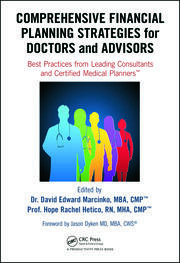
Comprehensive Financial Planning Strategies for Doctors and Advisors: Best Practices from Leading Consultants and Certified Medical Planners™

Risk Management, Liability Insurance, and Asset Protection Strategies for Doctors and Advisors: Best Practices from Leading Consultants and Certified Medical Planners™

***

Contribute to a Leading Physician Focused Practice Management and Financial Planning Resource

Join Our Mailing List

Get Published – Get Known

By Ann Miller RN MHA [Executive Director] MarcinkoAdvisors@msn.com

The ME-P is one of the leading online and onground resources for medical professionals, financial advisors and medical management consultants.

Want to Contribute Your Thought Leadership?

By submitting a guest article, video, infographic, or case study/report related to our forum, you can:

  • Raise your personal/company’s brand visibility/awareness
  • Build your social influence
  • Garner a larger audience
  • Spark a networkeffect to exponentially reach potential viewers across the healthcare and financial services industry.

Article/Guest Post Submission Guidelines

  1. All articles submitted for publication should be the guest author’s original work
  2. Articles should be reviewed for clarity, spelling, punctuation and grammar
  3. Articles should be between 350 – 1000 words. Longer articles will be accepted depending upon content relevance
  4. We reserves the right to revise any submission to meet the needs of the readers
  5. Include a brief bio about yourself and a company link with a brief summary about your business or website.

Submission Process

  1. Please submit all articles via email to: MarcinkoAdvisors@msn.com
  2. We will respond to your submission within 3 business days of receipt.
  3. Once accepted, your article will run at our discretion. All accepted articles retain full rights to every article, which can be published on their own site as well. If you have any additional questions about the submission guidelines, feel free contact us.

The ME-P also welcomes the submission of all white papers and case studies that will be posted in the appropriate channel section of the site.

Article/Guest Post Writing Tips

  1. Articles/Guest Posts should be well written, informative, engaging and relevant to the industries we serve.
  2. Please provide specific examples to illustrate your point through recent reports, studies, surveys, case studies, etc.
  3. We encourage using photos, tables, charts or figures as effective methods of providing documentation and support to your point of view. Please remember to cite your sources as necessary providing proper attribution.

Conclusion

Your thoughts and comments on this ME-P are appreciated. Feel free to review our top-left column, and top-right sidebar materials, links, URLs and related websites, too. Then, subscribe to the ME-P. It is fast, free and secure.

Link: http://feeds.feedburner.com/HealthcareFinancialsthePostForcxos

Speaker: If you need a moderator or speaker for an upcoming event, Dr. David E. Marcinko; MBA – Publisher-in-Chief of the Medical Executive-Post – is available for seminar or speaking engagements. Contact: MarcinkoAdvisors@msn.com

OUR OTHER PRINT BOOKS AND RELATED INFORMATION SOURCES:

DICTIONARIES: http://www.springerpub.com/Search/marcinko
PHYSICIANS: www.MedicalBusinessAdvisors.com
PRACTICES: www.BusinessofMedicalPractice.com
HOSPITALS: http://www.crcpress.com/product/isbn/9781466558731
CLINICS: http://www.crcpress.com/product/isbn/9781439879900
BLOG: www.MedicalExecutivePost.com
FINANCE: Financial Planning for Physicians and Advisors
INSURANCE: Risk Management and Insurance Strategies for Physicians and Advisors

Product DetailsProduct DetailsProduct Details

Product Details Product Details

Product Details

WHAT CAN A Certified Financial Planner® REALLY DO FOR YOU?

That a NON-CFP® Certificant … CAN-NOT?

[By Dr. David Edward Marcinko MBA CMP®]

http://www.CertifiedMedicalPlanner.org

OK – I was a Certified Financial Planner® before my academic team launched the Certified Medical Planner™ online and on-ground chartered education and board certification designation program a few years ago. I am now reformed and in remission.

MORE: Enter CPMs

Enter the Certified Medical PlannerChartered Designation

Today, we are gratified that Certified Medical Planner™ mark notoriety is growing organically in the healthcare, as well as financial services, industry.

In fact, even uber-blogger Mike Kitces MSFS, MTAX, CFP, CLU, ChFC, RHU, REBC, CASL has taken note of us in his musings on the Nerd’s Eye View website.

And, the reality is that there are a growing number of CFP educational programs at the post-CFP niche market level. But, none for healthcare industrial complex: for doctors … by doctors!

CMP

QUERY

Nevertheless, I was a bit flummoxed when a physician college recently asked me this simple question:

Q: What can a CFP® mark holder do for me that a non-CFP® certificant can not?

Assessment

Now, much like a good interrogating attorney, I think I already know the answer to this question. Nevertheless, it is important to determine and understand what our ME-P readers believe; and why they believe it!

MORE: Enter CPMs

So, please opine and tell us what you think.

Conclusion

Your thoughts and comments on this ME-P are appreciated. Feel free to review our top-left column, and top-right sidebar materials, links, URLs and related websites, too. Then, subscribe to the ME-P. It is fast, free and secure.

Speaker: If you need a moderator or speaker for an upcoming event, Dr. David E. Marcinko; MBA – Publisher-in-Chief of the Medical Executive-Post – is available for seminar or speaking engagements.

Book Marcinko: https://medicalexecutivepost.com/dr-david-marcinkos-bookings/

Subscribe: MEDICAL EXECUTIVE POST for curated news, essays, opinions and analysis from the public health, economics, finance, marketing, IT, business and policy management ecosystem.

DOCTORS:

“Insurance & Risk Management Strategies for Doctors” https://tinyurl.com/ydx9kd93

“Fiduciary Financial Planning for Physicians” https://tinyurl.com/y7f5pnox

“Business of Medical Practice 2.0” https://tinyurl.com/yb3x6wr8

Risk Management, Liability Insurance, and Asset Protection Strategies for Doctors and Advisors: Best Practices from Leading Consultants and Certified Medical Planners™8     Comprehensive Financial Planning Strategies for Doctors and Advisors: Best Practices from Leading Consultants and Certified Medical Planners™

Product DetailsProduct Details

HOSPITALS:

“Financial Management Strategies for Hospitals” https://tinyurl.com/yagu567d

“Operational Strategies for Clinics and Hospitals” https://tinyurl.com/y9avbrq5

Product DetailsProduct Details

ADULT LEARNERS AND STUDENTS:

Product DetailsProduct DetailsProduct Details

***

A Financial “Christmas Carol” [Part 2]

Join Our Mailing List 

By Rick Kahler MS CFP® http://www.KahlerFinancial.com

Rick Kahler MS CFPPreviously, in Part 1, we discussed the most important step of changing a problematic financial behavior: becoming willing to admit that changing the behavior is important and to seriously contemplate the change. Ebenezer Scrooge in A Christmas Carol took that step when he heeded a warning from the ghost of Jacob Marley.

Financial Transformations

The next step in the financial transformation process is probably the most difficult and requires the most courage. It is looking into the past to revisit the events in our lives where our strongly held delusions were formed. Scrooge resisted this step and tried his best to skip over it. Yet his guide, the Ghost of Christmas Past, gently turned him toward the past.

Bringing objectivity and understanding to entrenched financial delusions isn’t easy. Many people want to focus instead on obtaining more information on how to save, invest, or spend wisely. We try to jump into the present before visiting the past, which is typically the last thing we want to do.

Yet, what we need most for transformation is emotional intelligence, which cannot be learned academically or developed by oneself. It must be learned emotionally, experientially, and in community. Just as Scrooge found a guide in the Ghost of Christmas Past, people wanting to gain the emotional intelligence needed to change their financial behaviors require the assistance of a financial coach or therapist. This is a journey that cannot be taken alone.

The New Reality?

Once we have taken that difficult but transformational journey into the past, we are ready to become present and see reality with new clarity. While Scrooge was less resistant to looking at the present than the past, it was the one step that terrified him the most. Once emotional intelligence is gained, we must face replacing our faulty beliefs with accurate cognitive information. This is the place for learning about budgeting, debt reduction, investments, and other financial skills.

In Changing for Good, Dr. James O. Prochaska calls this the stage of preparation, where we begin to acquire necessary knowledge and take the necessary steps to get ready to act. Scrooge’s guide, the Ghost of Christmas Present, helped him negotiate the present and obtain this knowledge. Our real-world guides may include accountants, attorneys, financial planners, and educational books and workshops.

When we gain accurate financial knowledge, we are ready to look toward the future to see where our previous delusional decisions potentially were taking us. Like the vision that the Ghost of Christmas Future unveils before Scrooge, the scene is often harsh. However, because of our preparation, we have the capacity and tools to enter what Prochaska calls the action phase.

***

100_1

***

Now we can begin to create a future that is consciously and deliberately planned. We can take control of our money rather than our money controlling us. Our guides can be financial advisors, financial planners, and financial mentors.

Many of us try to shortcut the transformation process by starting here, in the last step of looking toward the future. Sadly, without first taking the critical steps of viewing the past and learning the present, we often lose heart. This is why resolutions for financial change often fail, not because the goal is bad or unattainable, but because we are unprepared to go into action.

The end product of Scrooge’s difficult journey with the three Spirits was a transformed person, full of joy, generosity, and spirit. He experienced this transformation because he had the courage and conviction to start the process.

Assessment

It’s not possible to give the gift of a financial transformation. It is a gift that can only be received. This Christmas and New Year 2019, perhaps it’s time for you to receive yours.

Part 1: A Financial “Christmas Carol” [Part 1]

Conclusion

Your thoughts and comments on this ME-P are appreciated. Feel free to review our top-left column, and top-right sidebar materials, links, URLs and related websites, too. Then, subscribe to the ME-P. It is fast, free and secure.

Speaker: If you need a moderator or speaker for an upcoming event, Dr. David E. Marcinko; MBA – Publisher-in-Chief of the Medical Executive-Post – is available for seminar or speaking engagements. Contact: MarcinkoAdvisors@msn.com

OUR OTHER PRINT BOOKS AND RELATED INFORMATION SOURCES:

Comprehensive Financial Planning Strategies for Doctors and Advisors: Best Practices from Leading Consultants and Certified Medical Planners(TM)

Meet David K. Luke MIM CMP™ [An ME-P Thought-Leader]

Join Our Mailing List

A Physician Focused Financial Advisior and Certified Medical Planner™

Financial Management Experience

https://www.medicuswealthplanning.com/team/david-k-luke

David K. Luke focuses on helping physicians, medical professionals, and successful retirees with financial planning, investment and risk management.

In the past 24 years of industry experience, David has held licenses including general securities registered representative, registered investment advisor, Branch management supervision, and Life, Accident, and Health Producers.

David, a fee-only advisor, is able to help his clients to achieve peace of mind and greater assurance with their financial goals by giving advice and providing investment management that is in their best interest, untainted by commissions or sales objectives. Likewise, in a true fiduciary capacity, he is able to help investors determine the reliability and suitability of products and services that they have been sold by other advisors.

David began his career managing money in 1986 in the General Motors of Canada Banking and Investments department where he was engaged in cash management, foreign currency hedging, and the debt issuance of a $100 million Eurobond and a $300 million Note Issuance facility. In 1988 as Supervisor of Borrowings for GMAC Canada David was responsible for the daily average issuance of $125 million in short-term Commercial Paper. David worked as a stock broker and portfolio manager for 2 major national brokerage firms (A.G. Edwards and Wachovia Securities) from 1989 to 2008.

Additionally, at Wachovia Securities David was among an elite group of financial advisors approved as a PIM (Private Investment Management) Portfolio Manager. Prior to joining Net Worth Advisory Group in 2010, David managed his own independent firm, Luke Wealth Strategies, working as a registered representative and investment advisor.

Education and Designations

  • President 2009/2010, Financial Planning Association (FPA) – Utah Chapter Affiliate
  • National Association of Personal Financial Advisors (NAPFA)
  • Member, Medical Group Management Association Master of International Management (Finance concentration)
  • American Graduate School of International Management Bachelor of Arts, Brigham Young University
  • Certified Medical Planner™ Professiobnal Designation from iMBA, Inc www.CertifiedMedicalPlanner.org

http://www.CertifiedMedicalPlanner.org

Assessment

David is our newest ME-P “thought-leader”. We look foward to his insider comments and posts. So, please welcome him and give his site a click: http://networthadvice.com/our-team/david-k-luke/

Product DetailsProduct DetailsProduct Details

Product Details  Product Details

Product Details

Book Dr. David E. Marcinko MBA for your Next Seminar

 Join Our Mailing List

Schedule Marcinko for Your Next Seminar!

DEM 2012

***

http://www.CertifiedMedicalPlanner.org

***

Book Dr. David Edward Marcinko CMP®, MBA, MBBS for your Next Medical, Pharma or Financial Services Seminar or Personal and Corporate Coaching Sessions 

Dr. Dave Marcinko enjoys personal coaching and public speaking and gives as many talks each year as possible, at a variety of medical society and financial services conferences around the country and world.

These have included lectures and visiting professorships at major academic centers, keynote lectures for hospitals, economic seminars and health systems, keynote lectures at city and statewide financial coalitions, and annual keynote lectures for a variety of internal yearly meetings.

Topics Link: toc_ho

***

[PHYSICIAN FOCUSED FINANCIAL PLANNING AND RISK MANAGEMENT COMPANION TEXTBOOK SET]

  Risk Management, Liability Insurance, and Asset Protection Strategies for Doctors and Advisors: Best Practices from Leading Consultants and Certified Medical Planners™ Comprehensive Financial Planning Strategies for Doctors and Advisors: Best Practices from Leading Consultants and Certified Medical Planners™

***

[HOSPITAL OPERATIONS, ORGANIZATIONAL BEHAVIOR AND FINANCIAL MANAGEMENT COMPANION TEXTBOOK SET]

Product DetailsProduct Details

[Foreword Dr. Phillips MD JD MBA LLM] *** [Foreword Dr. Nash MD MBA FACP]

***

On Lost or Stolen Credit, ATM and Debit Cards

 Why I Dislike Debit Cards –  And You Should Too!

[By Dr. David Edward Marcinko MBA]

If your credit, ATM, or debit card is lost or stolen, federal law limits your liability for unauthorized charges. Your protection against unauthorized charges depends on the type of card — and when you report the loss.

***

https://www.consumer.ftc.gov/articles/0213-lost-or-stolen-credit-atm-and-debit-cards

***

MORE: Pros and Cons

Debit vs. credit | Pros, cons and protections for your money

Assessment

Your thoughts are appreciated.

MORE FOR DOCTORS:

“Insurance & Risk Management Strategies for Doctors” https://tinyurl.com/ydx9kd93

“Fiduciary Financial Planning for Physicians” https://tinyurl.com/y7f5pnox

“Business of Medical Practice 2.0” https://tinyurl.com/yb3x6wr8

Risk Management, Liability Insurance, and Asset Protection Strategies for Doctors and Advisors: Best Practices from Leading Consultants and Certified Medical Planners™8Comprehensive Financial Planning Strategies for Doctors and Advisors: Best Practices from Leading Consultants and Certified Medical Planners™

THANK YOU

The Future of Health Care?

A National Survey of Physicians

The 2018 Future of Healthcare report, compiled from the observations of more than 3,400 doctors, has uncovered a complex picture of the attitudes of physicians nationwide toward the important issues facing the industry. 

 ***

https://www.thedoctors.com/future

***

Assessment

Your thoughts are appreciated.

MORE FOR DOCTORS:

“Insurance & Risk Management Strategies for Doctors”

https://tinyurl.com/ydx9kd93

“Fiduciary Financial Planning for Physicians”

https://tinyurl.com/y7f5pnox

“Business of Medical Practice 2.0”

https://tinyurl.com/yb3x6wr8

***

Risk Management, Liability Insurance, and Asset Protection Strategies for Doctors and Advisors: Best Practices from Leading Consultants and Certified Medical Planners™8Comprehensive Financial Planning Strategies for Doctors and Advisors: Best Practices from Leading Consultants and Certified Medical Planners™

THANK YOU

The Surprising Spending Patterns of High Earners

If you want to guess someone’s income level, look at what they buy

By Rick Kahler CFP®

***

Obviously, the rich and the poor will spend their available funds on different things.  Just what those things are, however, is less obvious. To illustrate, here is a pop quiz: Since 1992, what two products most consistently indicated that those using them were in the top 25% of all income earners in the U. S.?

Guessing a new car or a house would be logical, but wrong. The top two products indicative of being in that top one-fourth were dishwashers and dishwashing detergent. According to a fascinating study done by Marianne Bertrand and Emir Kamencia, “Coming Apart? Cultural Distances in the United States Over Time,” published in June 2018, if you use either there is about a 70% chance you are in the highest-earning 25%.

The study’s broader focus was on cultural differences, but what I couldn’t stop reading was the economic information. The products indicating affluence were nowhere near what I would have guessed.

Let’s start with 1992. The top product purchased by the rich was a dishwasher. If you owned one, there was a 70.4% chance you were in the top quartile of income earners. If you used dishwasher detergent, the chances were 70.2% you earned a high income. If you took a vacation where you traveled away from home, the chances were 67.0% you were high income. The top brands purchased by the affluent/rich were Grey Poupon Dijon mustard (62.2%), Kodak film (61.6%), and Thomas English muffins (61.5%). The top TV shows watched were Autoworks 200 (57.3%), Bush Clash (57.1%), and Tour du Pont (56.7%). Sorry, but I’ve never heard of any of these shows.

Moving on to 2004, the preferences of high income earners shifted slightly. The top product purchased by the affluent was a new vehicle (73.6%), followed by dishwashing detergent (71.6%), and owning a dishwasher (70.8%). A vacation was in fourth place with 70.5%. The top brands indicating affluence were Land O’ Lakes butter (59.2%), Kikkoman soy sauce (58.7%), and people who did not use a BIC lighter (58.7%). The top TV shows were the Super Bowl (58.5%), NFL Monday Night Football (56.1%), and NFL Regular Season Football (55.9%).

Jaguar Touring sedan XJ-V8-LWB

What about today? In 2016—the last year of data studied—the top product was a vacation (70.9%), owning a passport (70.3%), and having a Bluetooth in your vehicle (70.2%). Eight of the top 10 items related to travel or technology. The other two? Numbers five and six were owning a dishwasher and using dishwasher detergent. The top brand indicative of a high income was far and away Apple, with an iPhone first (69.1%) and an iPad second (66.9%). Across all years in their data, no individual brand was as predictive of being high-income than these two products. Other brands high on the list were Verizon Wireless (61.0%), an Android phone (59.5%), and Kikkoman soy sauce. Top TV shows were the Super Bowl (57.1%), Love It Or List It (55.9%), and Property Brothers (55.7%).

Keep in mind that the study showed seven out of 10 people who own iPhones, travel on vacation, or use dishwashers are in the top 25% of income earners. Not all people who do these things are affluent. Still, the odds that they are high earners are far better than the odds of winning any game of chance in Deadwood.

Assessment

So next time you want to size up the chances of someone being high income, ask them where they went on vacation this year and whether they took vacation photos with an iPhone or iPad. Or just ask how often they run their dishwasher.

Conclusion

Your thoughts and comments on this ME-P are appreciated. Feel free to review our top-left column, and top-right sidebar materials, links, URLs and related websites, too. Then, subscribe to the ME-P. It is fast, free and secure.

Speaker: If you need a moderator or speaker for an upcoming event, Dr. David E. Marcinko; MBA – Publisher-in-Chief of the Medical Executive-Post – is available for seminar or speaking engagements.

Book Marcinko: https://medicalexecutivepost.com/dr-david-marcinkos-bookings/

Subscribe: MEDICAL EXECUTIVE POST for curated news, essays, opinions and analysis from the public health, economics, finance, marketing, IT, business and policy management ecosystem.

MORE FOR DOCTORS AND NURES:

“Insurance & Risk Management Strategies for Doctors” https://tinyurl.com/ydx9kd93

“Financial Management Strategies for Hospitals” https://tinyurl.com/yagu567d

“Operational Strategies for Clinics and Hospitals” https://tinyurl.com/y9avbrq5

***

Risk Management, Liability Insurance, and Asset Protection Strategies for Doctors and Advisors: Best Practices from Leading Consultants and Certified Medical Planners™8Comprehensive Financial Planning Strategies for Doctors and Advisors: Best Practices from Leading Consultants and Certified Medical Planners™

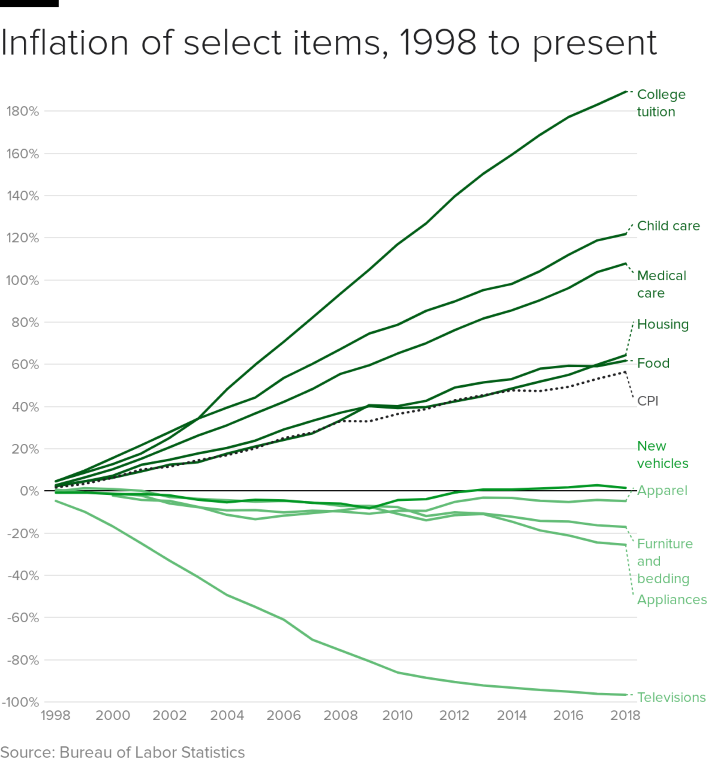
Inflation Rates of Selected Items

1998 to Present

By U.S. BLS

***

***

Conclusion

Your thoughts and comments on this ME-P are appreciated. Feel free to review our top-left column, and top-right sidebar materials, links, URLs and related websites, too. Then, subscribe to the ME-P. It is fast, free and secure.

Speaker: If you need a moderator or speaker for an upcoming event, Dr. David E. Marcinko; MBA – Publisher-in-Chief of the Medical Executive-Post – is available for seminar or speaking engagements.

Book Marcinko: https://medicalexecutivepost.com/dr-david-marcinkos-bookings/

Subscribe: MEDICAL EXECUTIVE POST for curated news, essays, opinions and analysis from the public health, economics, finance, marketing, IT, business and policy management ecosystem.

DOCTORS:

“Insurance & Risk Management Strategies for Doctors” https://tinyurl.com/ydx9kd93

“Fiduciary Financial Planning for Physicians” https://tinyurl.com/y7f5pnox

“Business of Medical Practice 2.0” https://tinyurl.com/yb3x6wr8

HOSPITALS:

“Financial Management Strategies for Hospitals” https://tinyurl.com/yagu567d

“Operational Strategies for Clinics and Hospitals” https://tinyurl.com/y9avbrq5

***

Risk Management, Liability Insurance, and Asset Protection Strategies for Doctors and Advisors: Best Practices from Leading Consultants and Certified Medical Planners™8Comprehensive Financial Planning Strategies for Doctors and Advisors: Best Practices from Leading Consultants and Certified Medical Planners™

On Frugality and Money

The Essential Money Survival Skill

By Rick Kahler CFP®

Someone recently asked me to share my number-one financial tip that would make the greatest impact on a person’s financial well-being. For someone who can speak for hours on the topic, that’s a daunting task. I wanted to quote the late Dick Wagner’s advice to “Spend less, save more, and don’t do anything stupid,” but that sentence contains three tips.

I had to pick one and chose “spend less.” The greatest common denominator of financial success is not talent, IQ, career choices, income, inheritance, investment choices, being in the right place at the right time, or luck. It’s frugality.

Someone who has mastered the art of frugality has an essential survival skill. Their ability to save, to squirrel away money in times of prosperity, enables them to roll with almost any financial calamity. They tend to master their money rather than let money master them.

Frugal people find saving somewhat of a game. They get high off of building savings and finding bargains. They clip coupons, shop sales, and buy generic store brands. They buy used everything whenever possible, especially large ticket items like cars, appliances, and furniture. They do as much home maintenance themselves as is prudent. They rent things they won’t use much rather than buy. They don’t smoke, drink in excess, or do recreational drugs. They cook at home a lot. They pay off credit cards monthly, take on debt carefully, and pay down debt ahead of time, if possible. They find affordable ways to do the things they enjoy.

As frugal people accumulate wealth, they don’t give up their thrifty habits. As an example, I have a client who chose to vacation in Ireland this year. Why? It was a bargain. He got $700 roundtrip tickets by snagging a one-day sale on American Airlines.

Even though the external trappings of frugality are easy to spot, becoming frugal is really an inside job. If you aren’t naturally a saver, it’s not easy to just decide to become frugal. Changing to thrifty habits because you know you “should” doesn’t work any better than just deciding to lose 20 or 60 pounds does. Lifestyle shifts like this take something more than cognition.

To develop frugality you need to change your mindset about and your relationship with money. How do you do that? With intention, persistence, humility, patience, and curiosity.

There are many ways to begin changing your money mindset. I recommend starting with discovering the subconscious beliefs you have about money and how it works. I call these money scripts and have written about them in my books and blog.

Next, you may want to uncover the roots of those money scripts. This involves taking a look at how money was viewed in your family growing up and chronicling the positive and negative life events that have happened in your life. We help clients do this with two exercises called the Money Atom and the Money Egg. Slowly you will see themes emerge that completely explain why frugality is not your strong suit. This understanding is the foundation for change.

It is also valuable to find an accountability partner, someone who is frugal themselves, to be a mentor. This is similar to the Alcoholics Anonymous program’s recommendation to find a sponsor. It’s a tried and true model that produces results. Another option is to look for a financial coach or therapist (check at financialtherapyassociation.org) in your area or available to meet with you online.

Assessment

Becoming frugal doesn’t mean becoming a miser or depriving yourself. It means using your money thoughtfully to support the life you want to live. And it is a mindset you can learn.

Conclusion

Your thoughts and comments on this ME-P are appreciated. Feel free to review our top-left column, and top-right sidebar materials, links, URLs and related websites, too. Then, subscribe to the ME-P. It is fast, free and secure.

Speaker: If you need a moderator or speaker for an upcoming event, Dr. David E. Marcinko; MBA – Publisher-in-Chief of the Medical Executive-Post – is available for seminar or speaking engagements.

Book Marcinko: https://medicalexecutivepost.com/dr-david-marcinkos-bookings/

Subscribe: MEDICAL EXECUTIVE POST for curated news, essays, opinions and analysis from the public health, economics, finance, marketing, IT, business and policy management ecosystem.

DOCTORS:

“Insurance & Risk Management Strategies for Doctors” https://tinyurl.com/ydx9kd93

“Fiduciary Financial Planning for Physicians” https://tinyurl.com/y7f5pnox

“Business of Medical Practice 2.0” https://tinyurl.com/yb3x6wr8

HOSPITALS:

“Financial Management Strategies for Hospitals” https://tinyurl.com/yagu567d

“Operational Strategies for Clinics and Hospitals” https://tinyurl.com/y9avbrq5

Risk Management, Liability Insurance, and Asset Protection Strategies for Doctors and Advisors: Best Practices from Leading Consultants and Certified Medical Planners™8Comprehensive Financial Planning Strategies for Doctors and Advisors: Best Practices from Leading Consultants and Certified Medical Planners™

On Legacy Parenting

What Are You Passing On?

By Rick Kahler CFP®

Fiduciary, client-centered financial planning is dynamic, ongoing, and evolving. The collaboration between client and planner is a relationship that often lasts for a client’s’ lifetime.

Sometimes that relationship even extends beyond a client’s lifetime if they have children or leave money to a foundation. It’s not uncommon for clients’ children to become the stewards of their parents’ financial legacy via an inheritance or being appointed the overseers of a trust fund. Nor is it unusual for the children to become clients of the financial planner, either as they create their own financial success or as they inherit from their parents.

Children often form partnerships with a parent’s financial planner as their parents age and they become caretakers of their parents’ financial affairs. It’s very common that at some point, a child will have a durable power of attorney. This responsibility includes not just paying bills, but maintaining the investment portfolio, selling real estate, and making a plethora of other financial decisions that are crucial to the parents’ wellbeing. If children don’t have good money skills or don’t know about the specifics of their parents’ finances, the task can be overwhelming. A planner’s help can be invaluable.

Evolution lack

Sometimes, however, that next generation of relationships doesn’t evolve. I once had a long-time client who developed dementia. My financial planning meetings were now with his children, who had no understanding of the history I had with their father or the investment philosophy of the portfolio. They questioned everything I was doing: the investments, our fees, our philosophy.

Eventually, the children suggested I liquidate the portfolio and loan the money to them to use in their business. Even though they had the legal right to direct me to do that, I resisted.

This created a real emotional conflict of interest. Even though my client had legally passed the decision-making on to the children, what they wanted was not in his best interest. And knowing my client as I did through our long relationship, he would have not agreed in the least to what they requested. I decided I would rather face a judge as a result of acting in the best interest of my client instead of following the requests of the children. Fortunately, they didn’t persist.

Example:

When the client passed away, almost immediately the children called and asked me to liquidate their father’s investments and distribute cash as quickly as possible. Before long, I heard that much of the father’s estate was being squandered. After I had worked closely with this man for so long and helped him build that estate, this saddened me.

Yet this client’s legacy was no longer my concern. When children become stewards of their parents’ legacies, the money belongs to them. They might feel chained by guilt and obligation to carry out a parent’s wishes. They might squander a parent’s legacy on ill-advised pursuits, spending, and investment schemes. Ideally, they will have developed enough financial and emotional intelligence to follow a more balanced middle path.

***

***

To help children find that middle path, perhaps the best legacy parents can leave is their values. This can be done by teaching children about finances, family businesses, and family history, by leaving ethical wills, and above all by example.

Assessment

Those values and the financial legacies to support them start a new cycle. Inheritances are meant to support children’s own dreams and quests for meaning. Unless the funds are left to a trust, the decision-making is literally and figuratively out of the hands of both the parents and their financial planner. The planner, as a torchbearer for clients, has the responsibility to pass that torch to the next generation.

Conclusion

Your thoughts and comments on this ME-P are appreciated. Feel free to review our top-left column, and top-right sidebar materials, links, URLs and related websites, too. Then, subscribe to the ME-P. It is fast, free and secure.

Speaker: If you need a moderator or speaker for an upcoming event, Dr. David E. Marcinko; MBA – Publisher-in-Chief of the Medical Executive-Post – is available for seminar or speaking engagements.

Book Marcinko: https://medicalexecutivepost.com/dr-david-marcinkos-bookings/

Subscribe: MEDICAL EXECUTIVE POST for curated news, essays, opinions and analysis from the public health, economics, finance, marketing, IT, business and policy management ecosystem.

DOCTORS:

“Insurance & Risk Management Strategies for Doctors” https://tinyurl.com/ydx9kd93

“Fiduciary Financial Planning for Physicians” https://tinyurl.com/y7f5pnox

“Business of Medical Practice 2.0” https://tinyurl.com/yb3x6wr8

HOSPITALS:

“Financial Management Strategies for Hospitals” https://tinyurl.com/yagu567d

“Operational Strategies for Clinics and Hospitals” https://tinyurl.com/y9avbrq5

Comprehensive Financial Planning Strategies for Doctors and Advisors: Best Practices from Leading Consultants and Certified Medical Planners™

***

The Top Physician “Side Hustles”

Side Gig Nation

Curated by Jan Greene

The Takeaway

Physicians have a variety of ways to make extra money outside of their main day jobs, most often consulting or other medical work, a Medical Economics survey finds.

***

***

Details

The top 14 sources of secondary income for doctors, according to the magazine’s annual survey, are:

  • consulting (23% of respondents),
  • other medical work (19%),
  • clinical work (13%),
  • expert witness (12%),
  • teaching (11%),
  • nursing home (9%),
  • speaking (9%),
  • hospice (7%),
  • urgent care (5%),
  • locum tenens (4%),
  • preceptor (4%),
  • clinical trials (3%),
  • military (2%), and
  • telemedicine (1%).

Assessment

The online survey, conducted in October 2015, had 2065 responses from confirmed physicians actively practicing medicine, with a margin of error of 2.1%.

Conclusion

Your thoughts and comments on this ME-P are appreciated. Feel free to review our top-left column, and top-right sidebar materials, links, URLs and related websites, too. Then, subscribe to the ME-P. It is fast, free and secure. 

Speaker: If you need a moderator or speaker for an upcoming event, Dr. David E. Marcinko; MBA – Publisher-in-Chief of the Medical Executive-Post – is available for seminar or speaking engagements. https://medicalexecutivepost.com/dr-david-marcinkos-bookings/

 Contact: MarcinkoAdvisors@msn.com

***

Product DetailsProduct Details

A New FINANCIAL PLANNING TEXTBOOK for DRs and Physician Focused Financial Advisors

Join Our Mailing List

 THRIVE IN 2019

Our New Text – “Take a Peek Inside 

Now Available –

***

Comprehensive Financial Planning Strategies for Doctors and Advisors: Best Practices from Leading Consultants and Certified Medical Planners(TM)

Front Matter with Foreword by Jason Dyken MD MBA

logos

“BY DOCTORS – FOR DOCTORS – PEER REVIEWED – FIDUCIARY FOCUSED”

***

Book Reviews

Written by doctors and healthcare professionals, this textbook should be mandatory reading for all medical school students—highly recommended for both young and veteran physicians—and an eliminating factor for any financial advisor who has not read it. The book uses jargon like ‘innovative,’ ‘transformational,’ and ‘disruptive’—all rightly so! It is the type of definitive financial lifestyle planning book we often seek, but seldom find.
LeRoy Howard MA CMPTM, Candidate and Financial Advisor, Fayetteville, North Carolina

I taught diagnostic radiology for over a decade. The physician-focused niche information, balanced perspectives, and insider industry transparency in this book may help save your financial life.
Dr. William P. Scherer MS, Barry University, Ft. Lauderdale, Florida

This book was crafted in response to the frustration felt by doctors who dealt with top financial, brokerage, and accounting firms. These non-fiduciary behemoths often prescribed costly wholesale solutions that were applicable to all, but customized for few, despite ever-changing needs. It is a must-read to learn why brokerage sales pitches or Internet resources will never replace the knowledge and deep advice of a physician-focused financial advisor, medical consultant, or collegial Certified Medical Planner™ financial professional.
—Parin Khotari MBA, Whitman School of Management, Syracuse University, New York

In today’s healthcare environment, in order for providers to survive, they need to understand their current and future market trends, finances, operations, and impact of federal and state regulations. As a healthcare consulting professional for over 30 years supporting both the private and public sector, I recommend that providers understand and utilize the wealth of knowledge that is being conveyed in these chapters. Without this guidance providers will have a hard time navigating the supporting system which may impact their future revenue stream. I strongly endorse the contents of this book.
—Carol S. Miller BSN MBA PMP, President, Miller Consulting Group, ACT IAC Executive Committee Vice-Chair at-Large, HIMSS NCA Board Member

This is an excellent book on financial planning for physicians and health professionals. It is all inclusive yet very easy to read with much valuable information. And, I have been expanding my business knowledge with all of Dr. Marcinko’s prior books. I highly recommend this one, too. It is a fine educational tool for all doctors.
—Dr. David B. Lumsden MD MS MA, Orthopedic Surgeon, Baltimore, Maryland

There is no other comprehensive book like it to help doctors, nurses, and other medical providers accumulate and preserve the wealth that their years of education and hard work have earned them.
—Dr. Jason Dyken MD MBA, Dyken Wealth Strategies, Gulf Shores, Alabama

I plan to give a copy of this book written
by doctors and for doctors’ to all my prospects, physician, and nurse clients. It may be the definitive text on this important topic.
—Alexander Naruska CPA, Orlando, Florida

Health professionals are small business owners who need to apply their self-discipline tactics in establishing and operating successful practices. Talented trainees are leaving the medical profession because they fail to balance the cost of attendance against a realistic business and financial plan. Principles like budgeting, saving, and living below one’s means, in order to make future investments for future growth, asset protection, and retirement possible are often lacking. This textbook guides the medical professional in his/her financial planning life journey from start to finish. It ranks a place in all medical school libraries and on each of our bookshelves.
—Dr. Thomas M. DeLauro DPM, Professor and Chairman – Division of Medical Sciences, New York College of Podiatric Medicine

Physicians are notoriously excellent at diagnosing and treating medical conditions. However, they are also notoriously deficient in managing the business aspects of their medical practices. Most will earn $20-30 million in their medical lifetime, but few know how to create wealth for themselves and their families. This book will help fill the void in physicians’ financial education. I have two recommendations: 1) every physician, young and old, should read this book; and 2) read it a second time!
—Dr. Neil Baum MD, Clinical Associate Professor of Urology, Tulane Medical School, New Orleans, Louisiana

I worked with a Certified Medical Planner™ on several occasions in the past, and will do so again in the future. This book codified the vast body of knowledge that helped in all facets of my financial life and professional medical practice.
Dr. James E. Williams DABPS, Foot and Ankle Surgeon, Conyers, Georgia

This is a constantly changing field for rules, regulations, taxes, insurance, compliance, and investments. This book assists readers, and their financial advisors, in keeping up with what’s going on in the healthcare field that all doctors need to know.
Patricia Raskob CFP® EA ATA, Raskob Kambourian Financial Advisors, Tucson, Arizona

I particularly enjoyed reading the specific examples in this book which pointed out the perils of risk … something with which I am too familiar and have learned (the hard way) to avoid like the Black Death. It is a pleasure to come across this kind of wisdom, in print, that other colleagues may learn before it’s too late— many, many years down the road.
Dr. Robert S. Park MD, Robert Park and Associates Insurance, Seattle, Washington

Although this book targets physicians, I was pleased to see that it also addressed the financial planning and employment benefit needs of nurses; physical, respiratory, and occupational therapists; CRNAs, hospitalists, and other members of the health care team….highly readable, practical, and understandable.
Nurse Cecelia T. Perez RN, Hospital Operating Room Manager, Ellicott City, Maryland

Personal financial success in the PP-ACA era will be more difficult to achieve than ever before. It requires the next generation of doctors to rethink frugality, delay gratification, and redefine the very definition of success and work–life balance. And, they will surely need the subject matter medical specificity and new-wave professional guidance offered in this book. This book is a ‘must-read’ for all health care professionals, and their financial advisors, who wish to take an active role in creating a new subset of informed and pioneering professionals known as Certified Medical Planners™.
—Dr. Mark D. Dollard FACFAS, Private Practice, Tyson Corner, Virginia

As healthcare professionals, it is our Hippocratic duty to avoid preventable harm by paying attention. On the other hand, some of us are guilty of being reckless with our own financial health—delaying serious consideration of investments, taxation, retirement income, estate planning, and inheritances until the worry keeps one awake at night. So, if you have avoided planning for the future for far too long, perhaps it is time to take that first step toward preparedness. This in-depth textbook is an excellent starting point—not only because of its readability, but because of his team’s expertise and thoroughness in addressing the intricacies of modern investments—and from the point of view of not only gifted financial experts, but as healthcare providers, as well … a rare combination.
Dr. Darrell K. Pruitt DDS, Private Practice Dentist, Fort Worth, Texas

This text should be on the bookshelf of all contemporary physicians. The book is physician-focused with unique topics applicable to all medical professionals. But, it also offers helpful insights into the new tax and estate laws, fiduciary accountability for advisors and insurance agents, with investing, asset protection and risk management, and retirement planning strategies with updates for the brave new world of global payments of the Patient Protection and Affordable Care Act. Starting out by encouraging readers to examine their personal ‘money blueprint’ beliefs and habits, the book is divided into four sections offering holistic life cycle financial information and economic education directed to new, mid-career, and mature physicians.

This structure permits one to dip into the book based on personal need to find relief, rather than to overwhelm. Given the complexity of modern domestic healthcare, and the daunting challenges faced by physicians who try to stay abreast of clinical medicine and the ever-evolving laws of personal finance, this textbook could not have come at a better time.
—Dr. Philippa Kennealy MD MPH, The Entrepreneurial MD, Los Angeles, California

Physicians have economic concerns unmatched by any other profession, arriving ten years late to the start of their earning years. This textbook goes to the core of how to level the playing field quickly, and efficaciously, by a new breed of dedicated Certified Medical Planners™. With physician-focused financial advice, each chapter is a building block to your financial fortress.
Thomas McKeon, MBA, Pharmaceutical Representative, Philadelphia, Pennsylvania

An excellent resource … this textbook is written in a manner that provides physician practice owners with a comprehensive guide to financial planning and related topics for their professional practice in a way that is easily comprehended. The style in which it breaks down the intricacies of the current physician practice landscape makes it a ‘must-read’ for those physicians (and their advisors) practicing in the volatile era of healthcare reform.
—Robert James Cimasi, MHA ASA FRICS MCBA CVA CM&AA CMP™, CEO-Health Capital Consultants, LLC, St. Louis, Missouri

Rarely can one find a full compendium of information within a single source or text, but this book communicates the new financial realities we are forced to confront; it is full of opportunities for minimizing tax liability and maximizing income potential. We’re recommending it to all our medical practice management clients across the entire healthcare spectrum.
Alan Guinn, The Guinn Consultancy Group, Inc., Cookeville, Tennessee

Dr. David Edward Marcinko MBA CMP™ and his team take a seemingly endless stream of disparate concepts and integrate them into a simple, straightforward, and understandable path to success. And, he codifies them all into a step-by-step algorithm to more efficient investing, risk management, taxation, and enhanced retirement planning for doctors and nurses. His text is a vital read—and must execute—book for all healthcare professionals and physician-focused financial advisors.
Dr. O. Kent Mercado, JD, Private Practitioner and Attorney, Naperville, Illinois

Kudos. The editors and contributing authors have compiled the most comprehensive reference book for the medical community that has ever been attempted. As you review the chapters of interest and hone in on the most important concerns you may have, realize that the best minds have been harvested for you to plan well… Live well.
Martha J. Schilling; AAMS® CRPC® ETSC CSA, Shilling Group Advisors, LLC, Philadelphia, Pennsylvania

I recommend this book to any physician or medical professional that desires an honest no-sales approach to understanding the financial planning and investing world. It is worthwhile to any financial advisor interested in this space, as well.
David K. Luke, MIM MS-PFP CMP™, Net Worth Advisory Group, Sandy, Utah

Although not a substitute for a formal business education, this book will help physicians navigate effectively through the hurdles of day-to-day financial decisions with the help of an accountant, financial and legal advisor. I highly recommend it and commend Dr. Marcinko and the Institute of Medical Business Advisors, Inc. on a job well done.
Ken Yeung MBA CMP™, Tseung Kwan O Hospital, Hong Kong

I’ve seen many ghost-written handbooks, paperbacks, and vanity-published manuals on this topic throughout my career in mental healthcare. Most were poorly written, opinionated, and cheaply produced self-aggrandizing marketing drivel for those agents selling commission-based financial products and expensive advisory services. So, I was pleasantly surprised with this comprehensive peer-reviewed academic textbook, complete with citations, case examples, and real-life integrated strategies by and for medical professionals. Although a bit late for my career, I recommend it highly to all my younger colleagues … It’s credibility and specificity stand alone.
Dr. Clarice Montgomery PhD MA, Retired Clinical Psychologist

In an industry known for one-size-fits-all templates and massively customized books, products, advice, and services, the extreme healthcare specificity of this text is both refreshing and comprehensive.
Dr. James Joseph Bartley, Columbus, Georgia

My brother was my office administrator and accountant. We both feel this is the most comprehensive textbook available on financial planning for healthcare providers.
Dr. Anthony Robert Naruska DC, Winter Park, Florida

***

business-valuation

***

Becoming financially independent to help other people?

Help both the planet and the poor


By Rick Kahler CFP®

Here’s is how you can help both the planet and the poor: Live frugally and save for your own old age.

In other words, become a millionaire or close to it.

  • Are you concerned about saving the planet?
  • Would you like to see more government funding for research into projects like developing clean energy?
  • How about helping people who cannot help themselves?
  • Would you like to see more government spending for marginalized populations?

It’s easy to see that reducing your lifestyle can reduce your carbon footprint to help the planet. But how does your becoming financially independent help other people?

It means you will not become a consumer of precious government or charitable resources that could be redirected to making a difference in both preserving the planet and eliminating poverty. If you don’t provide for yourself financially, chances are good that you will end up dependent on government funding for your existence.

Take long-term health care, for example

Forty-five percent of all nursing home spending is funded by our tax dollars. Of Medicaid’s $565 billion dollar annual budget (2016 figures), 20% or $113 billion goes for nursing home care. The federal government—meaning we the taxpayers—picks up the tab for 65% of all people in nursing homes. Medicaid pays for about 1 million of the some 1.5 million nursing home beds in the US.

The average annual amount the government spends is $113,000 for a semi-private room. What’s interesting is the actual average cost of a semi-private nursing home room is around $225 a day, or about $82,000. I am not sure where the other $31,000 goes, but my hunch is that it’s inefficiently spent on the salaries of those who administer the program. So, if you can save enough to pay your nursing home costs, you get an extra bonus of saving an additional $31,000 in government spending.

One way to relieve the government of the cost of your nursing home care is to purchase long term care insurance. According to Morningstar, the average annual premium for long-term care policies being sold in 2014 was $2772. While this isn’t cheap, neither is it prohibitively expensive for many middle-class Americans, especially compared to common expenditures like unlimited cell phone service or annual vacations.

In addition to direct payments like Medicaid, there’s another cost to society from those who fail to or are unable to provide for their own old age. This is the need for family members to become unpaid caregivers. For 2013, Morningstar estimated the dollar value of such care at $470 billion. If caregivers quit jobs or take time off, or if they are forced to take Social Security benefits early, the result is lost tax revenue and increased government spending. In addition, those who sacrifice their own resources to care for parents may carry a pattern of retirement scarcity on into the next generation.

The wealthy

It appears to be a common misperception that “the wealthy” are somehow a drain on society who use more than their fair share of resources. There may be some validity to this perception for the relatively few uber-rich with multiple homes and conspicuously lavish lifestyles.

However, quite the opposite is true for the much greater number of ordinary people who accumulate enough wealth to take care of themselves until the end of their lives. When you are able to fund your own lifetime care, you do not need your family members and fellow taxpayers to provide the resources you require. And at the end of your life, you might even be able to bequeath some of your estate to help the poor and the planet. 

***

***

Conclusion

Your thoughts and comments on this ME-P are appreciated. Feel free to review our top-left column, and top-right sidebar materials, links, URLs and related websites, too. Then, subscribe to the ME-P. It is fast, free and secure.

Speaker: If you need a moderator or speaker for an upcoming event, Dr. David E. Marcinko; MBA – Publisher-in-Chief of the Medical Executive-Post – is available for seminar or speaking engagements.

Book Marcinko: https://medicalexecutivepost.com/dr-david-marcinkos-bookings/

Subscribe: MEDICAL EXECUTIVE POST for curated news, essays, opinions and analysis from the public health, economics, finance, marketing, IT, business and policy management ecosystem.

***

***

On Domestic Price Changes and Inflation

1997 – 2017 Selected Goods, Services and Wages

By BLS

***

***

Conclusion

Your thoughts and comments on this ME-P are appreciated. Feel free to review our top-left column, and top-right sidebar materials, links, URLs and related websites, too. Then, subscribe to the ME-P. It is fast, free and secure.

Speaker: If you need a moderator or speaker for an upcoming event, Dr. David E. Marcinko; MBA – Publisher-in-Chief of the Medical Executive-Post – is available for seminar or speaking engagements.

Book Marcinko: https://medicalexecutivepost.com/dr-david-marcinkos-bookings

Subscribe: MEDICAL EXECUTIVE POST for curated news, essays, opinions and analysis from the public health, economics, finance, marketing, IT, business and policy management ecosystem.

***

***

Cost-of-Living USA

Goods and Services [1975 – 2015]

By BLS

***

***

Conclusion

Your thoughts and comments on this ME-P are appreciated. Feel free to review our top-left column, and top-right sidebar materials, links, URLs and related websites, too. Then, subscribe to the ME-P. It is fast, free and secure.

Speaker: If you need a moderator or speaker for an upcoming event, Dr. David E. Marcinko; MBA – Publisher-in-Chief of the Medical Executive-Post – is available for seminar or speaking engagements.

Book Marcinko: https://medicalexecutivepost.com/dr-david-marcinkos-bookings

Subscribe: MEDICAL EXECUTIVE POST for curated news, essays, opinions and analysis from the public health, economics, finance, marketing, IT, business and policy management ecosystem.

***

COUPLES: “one is a spender and one is a saver”

On Couples and Money

By Rick Kahler CFP®

“With couples, usually one is a spender and one is a saver.”

I’ve heard this many times, and I’ve even said it myself. Money issues are one of the most common areas of stress between partners, and conflicting views over spending and saving is a major contributor.

However, a recent study done by Brigham Young University and Kansas State University led me to see marital money issues in a new way. The study, published last year in the Journal of Financial Planning under the title “Tightwads and Spenders: Predicting Financial Conflict in Couple Relationships,” found that partners’ perceptions of each other’s money behavior often does not match reality. The fact that you may see your partner as a spender has actually no correlation to whether they are. Yet there is a huge correlation between thinking your partner is a spender and experiencing financial conflict in the marriage.

Study

Ashley LeBaron, a BYU graduate student and co-author of the study, said this in a BYU News article published August 15, 2017: “The fact that partners’ perceptions of each other’s spending behaviors were so predictive of financial conflict suggests that when it comes to the impact of finances on relationships, perceptions may be just as important, if not more important, than reality.”

As it turns out, the highest contributors to financial conflict between partners weren’t disagreements over how much to fund children’s education, save toward retirement, or spend on a vacation or a car. It was whether one partner considered the other partner a spender or a tightwad—regardless of their actual spending patterns.

If you want to bring more harmony and objectivity around money to your couple-ship, you might consider taking the following steps:

1. Define “spender” in your own words. What does it mean to you if someone is a spender?
2. Define “tightwad” in your own words.
3. Think of your definition of “spender.” Write down all the one-word feelings that you can identify when you think of a spender.
4. Do the same with your definition of “tightwad.”
5. Write a list of all the evidence you can think of that your partner is a spender. Stick with the facts, not a projection. For example, a statement that “my partner spends too much money on coffee” is a projection. Instead, “Three days a week, my partner spends $2.50 on an Americano at Starbucks,” is an observation.
6. In the same way, list all the evidence that your partner is a tightwad.
7. Repeat steps 5 and 6, but about yourself.
8. Look back at the one-word feelings you listed in step 3. Which of those might your partner feel about your spending?
9. Consider which of the one-word feelings you listed in step 4 that your partner might feel about your saving.
10. Now, give this exercise to your partner to complete.

***

***

Finally, select a time to compare answers. Choose one of you to go first while the other listens with absolutely no interruptions, cross talk, or comment. This is hard, but crucial. When the first partner is done, then switch roles without any comments.

If your partner isn’t willing to participate, consider doing this exercise on your own. The insight you gain could be valuable.

Assessment

If the level of money conflict in your relationship is so high that you can’t even imagine doing this exercise together, you also might consider setting up an appointment with a financial therapist. Conflicts over money can be resolved, but it often takes both partners having the willingness do so. Even more, it often takes one or both partners having the courage to ask for help.

Conclusion

Your thoughts and comments on this ME-P are appreciated. Feel free to review our top-left column, and top-right sidebar materials, links, URLs and related websites, too. Then, subscribe to the ME-P. It is fast, free and secure.

Speaker: If you need a moderator or speaker for an upcoming event, Dr. David E. Marcinko; MBA – Publisher-in-Chief of the Medical Executive-Post – is available for seminar or speaking engagements.

Book Marcinko: https://medicalexecutivepost.com/dr-david-marcinkos-bookings/
Subscribe: MEDICAL EXECUTIVE POST for curated news, essays, opinions and analysis from the public health, economics, finance, marketing, IT, business and policy management ecosystem.

***

About the Lorenz Curve

What it is – How it works
By staff reporters

HISTORY:

The Lorenz curve is a graphical representation of income inequality or wealth inequality developed by American economist Max Lorenz in 1905.

DEFINITION:

The graph plots percentiles of the population according to income or wealth on the horizontal axis. It plots cumulative income or wealth on the vertical axis, so that an x-value of 45 and a y-value of 14.2 would mean that the bottom 45% of the population controls 14.2% of the total income or wealth. http://www.HealthDictionarySeries.org

***

***

USE:

The concept is useful in describing inequality among the size of individuals in ecology and in studies of biodiversity, where the cumulative proportion of species is plotted against the cumulative proportion of individuals.

It is also useful in business modeling: e.g., in consumer finance, to measure the actual percentage y% of delinquencies attributable to the x% of people with worst risk scores.

MORE: https://www.investopedia.com/terms/l/lorenz-curve.asp

Conclusion

Your thoughts and comments on this ME-P are appreciated. Feel free to review our top-left column, and top-right sidebar materials, links, URLs and related websites, too. Then, subscribe to the ME-P. It is fast, free and secure.

Speaker: If you need a moderator or speaker for an upcoming event, Dr. David E. Marcinko; MBA – Publisher-in-Chief of the Medical Executive-Post – is available for seminar or speaking engagements. https://medicalexecutivepost.com/dr-david-marcinkos-bookings/

Contact: MarcinkoAdvisors@msn.com

***

https://www.crcpress.com/Comprehensive-Financial-Planning-Strategies-for-Doctors-and-Advisors-Best/Marcinko-Hetico/p/book/9781482240283

MONEY: Spend it -OR- Give it Away

MONEY: The two choices

By Rick Kahler CFP®

A colleague recently reminded me that there are ultimately two things we can do with money: spend it or give it away. That’s it.

At first glance, this seems too simplistic. What about saving? What about investing for our future security? What about creating wealth?

Even when we are in the process of accumulating money and building wealth, we do so for the inevitable day we choose to spend it or give it away. Investing for retirement is about providing money to spend when we’re no longer earning an income. And whatever we have left at the end of life is ultimately given away.

Furthermore, the decision to spend or give away money is always a choice, even when it may seem we have no choice.

Here is why 

Most money experts break spending into “discretionary” and “non-discretionary” categories. Another way to frame this is “wants” and “needs.” Discretionary spending includes items that we want which aren’t necessary for survival, such as entertainment, vacations, designer clothes, and gourmet food. Non-discretionary items, or needs, include basic housing, food, clothing, and transportation.

Discretionary spending is clearly a choice. Yet even though we may tell ourselves we have “no choice” but to spend money on non-discretionary needs, fundamentally we always have a choice.

We may think we make the mortgage or rent payment because we “have” to, but actually it’s a choice because the alternative is to find a new place to live or be homeless. We make the car payment because we choose not to walk or use public transportation. We may choose to work at a job we dislike because it allows us to spend money on other choices we deem more important than job satisfaction. We choose to pay our taxes in order to avoid serious consequences like heavy fines or even going to jail.

We choose to earn and spend our funds in the ways we do, not because we “have to,” but because there is a payoff that makes the choice worthwhile.

Giving money away may seem more obviously a matter of choice. Yet giving to charity or to family members out of guilt or a sense of obligation sometimes seems like a “must.”

The choice

Yet in every case, it’s still a choice. Even when we give because it seems to be the only way to avoid detrimental or catastrophic consequences, we’re still making a choice. In some cases, choosing not to give (to a child, for example) may result in some wonderfully rich life lessons or behavioral changes.

The one time it seems that we really have no choice on whether we spend or give away our money is when we die. But even then, the choices about giving what we have left are made during our lifetime. Those who don’t do estate planning are choosing to let others decide how their money will be given away, with those decisions constrained by the provisions of their state’s laws.

Assessment

The bottom line is that when it comes to spending or giving money, we always have a choice. Ultimately, all of the money we choose not to spend while we are alive is money we are choosing to give away after death.

When we view our spending and giving as a matter of choice, it may be easier to see the importance of making money choices thoughtfully and consciously. The way we use our financial resources is crucial both for supporting our own life aspirations and for giving back to our families and communities. Choosing to spend consciously and give wisely is one more way we can choose to live richer, more fulfilling lives.

Conclusion

Your thoughts and comments on this ME-P are appreciated. Feel free to review our top-left column, and top-right sidebar materials, links, URLs and related websites, too. Then, subscribe to the ME-P. It is fast, free and secure.

Speaker: If you need a moderator or speaker for an upcoming event, Dr. David E. Marcinko; MBA – Publisher-in-Chief of the Medical Executive-Post – is available for seminar or speaking engagements.

Book Marcinko: https://medicalexecutivepost.com/dr-david-marcinkos-bookings

Subscribe: MEDICAL EXECUTIVE POST for curated news, essays, opinions and analysis from the public health, economics, finance, marketing, IT, business and policy management ecosystem.

***

Spirituality and Financial Planning

What does spirituality have to do with financial planning?

By Rick Kahler CFP®

That was my first thought when Stephen Brody, CFP, ChFC, EdD, contacted me about being interviewed for his doctoral dissertation on “Assessing Spirituality in Financial Life Planning.” The incongruity of the idea intrigued me, so I agreed.

Definitions: http://www.HealthDictionarySeries.org

Financial life planning

In order to understand Brody’s work, I first needed to know his definitions of both financial life planning and spirituality. Financial life planning is an integrated approach sometimes described by terms such as client-centered financial planning. It includes investment advising, but the scope of the engagement is much broader and emphasizes clients’ overall well-being.

Brody writes that financial life planning “is literally a matter of connecting your money and your values with your life. . . .the life of the client becomes the axis around which the financial plan develops and evolves. The client is at the center of the plan, and the money is simply the details to support a life well lived.”

Spirituality

Spirituality, for many people, is equal to religion. I used to believe that a spiritual person was a religious person and one couldn’t be a religious person without being a spiritual person.

That is not Brody’s definition of spirituality, which he views on a faith-neutral basis. One of his cited definitions of spirituality that makes sense to me is that it relates to searching for meaning, purpose, and a moral framework for connecting with self, others, and the ultimate reality.

Methodologies

Financial life planners use a number of methodologies which lead clients to a greater level of meaning and well-being. They look at money as a tool that supports someone in finding and living a life of meaning and purpose. Seen from this perspective, I have to agree that what a financial life planner does is spiritual. After all, I’ve never heard of someone’s last words being, “Life was so good—my financial planner helped me earn 5.76% compounded annually for 20 years.”

Brody’s research finds there are three types of intelligence needed by a financial life planner. They are IQ (intellectual intelligence), EQ (emotional intelligence), and SQ (spiritual intelligence). Brody describes IQ, which deals with knowledge, as the learning stage of the financial planning process. I contend that education is 50% of what a financial planner does. The psychological factors of dealing with money require EQ, or what he calls the understanding stage.

Brody defines SQ as “The ability to behave with wisdom and compassion, all the while maintaining inner and outer peace, regardless of the situation.” This refers to the character and moral factor involved in planning, which Brody suggests is the enlightening stage. This is where money supports meaning.

Like both intellectual and emotional intelligence, spiritual intelligence has its own skill set. Brody discusses 21 specific skills. Eight of them are summed up in just being aware of things like one’s own world view, purpose, values, and limitations.

From his research, Brody suggests that the ideal financial planning engagement is based on deep and meaningful conversations. He says it is “a process that seeks the development of the whole person,” as opposed to just focusing on concerns like rates of return and tax strategies. From these more meaningful conversations comes “a discovery and awareness that leads to the understanding of your life’s meaning, purpose, and moral framework.”

One participant in the survey said that appropriately sequenced questions help clients have a “glide path into self-discovery” and greater clarity of what’s important to them in life.

Assessment

From that understanding, planner and client can work together co-create a financial plan that aligns with the person’s vision of their ideal self and supports a fulfilling life.

Conclusion

Your thoughts and comments on this ME-P are appreciated. Feel free to review our top-left column, and top-right sidebar materials, links, URLs and related websites, too. Then, subscribe to the ME-P. It is fast, free and secure.

Speaker: If you need a moderator or speaker for an upcoming event, Dr. David E. Marcinko; MBA – Publisher-in-Chief of the Medical Executive-Post – is available for seminar or speaking engagements.

Book Marcinko: https://medicalexecutivepost.com/dr-david-marcinkos-bookings/

Subscribe: MEDICAL EXECUTIVE POST for curated news, essays, opinions and analysis from the public health, economics, finance, marketing, IT, business and policy management ecosystem.

***

Comprehensive Financial Planning Strategies for Doctors and Advisors: Best Practices from Leading Consultants and Certified Medical Planners™

An End of Year Financial Check List

Important for your Financial Health

By Patrick Bourbon CFA

The last few weeks of the year are often a mad rush so we thought that it is a good time to share this checklist of important items to consider before the calendar year ends, all related to your investments and finances so that you can reach your goals and dreams faster.

1. Review your IRA – 401(k) / 403(b) retirement accounts – Are you on track for a comfortable retirement?
2. Start tax planning! It’s not too early to think about taxes – Asset location & Tax efficiency
3. Rebalance your portfolio
4. Harvest your capital losses
5. Check your emergency fund
6. Review your insurance policies
7. Contribute to your Health Spending Account
8. Take your Required Minimum Distribution
9. Contribute to your 529 Plan
10. Determine your net worth
11. Check your credit score
12. Check your beneficiaries
13. Update your estate plan
14. Maximize your business deductions
15. Spending and automated savings – You want to look ahead

Assessment

Short and sweet.

Conclusion

Your thoughts and comments on this ME-P are appreciated. Feel free to review our top-left column, and top-right sidebar materials, links, urls and related websites, too. Then, subscribe to the ME-P. It is fast, free and secure.

Speaker: If you need a moderator or speaker for an upcoming event, Dr. David E. Marcinko; MBA – Publisher-in-Chief of the Medical Executive-Post – is available for seminar or speaking engagements.

Book Marcinko: https://medicalexecutivepost.com/dr-david-marcinkos-bookings/

Subscribe: MEDICAL EXECUTIVE POST for curated news, essays, opinions and analysis from the public health, economics, finance, marketing, I.T, business and policy management ecosystem.

***

Royal College of General Practitioners Recommends: “Comprehensive Financial Planning Strategies for Doctors and Advisors”

 Join Our Mailing List

Comprehensive Financial Planning Strategies for Doctors and Advisors

RECOMMENDATION

***

rcgp-logo

Drawing on the expertise of multi-degreed doctors, and multi-certified financial advisors, Comprehensive Financial Planning Strategies for Doctors and Advisors [Best Practices from Leading Consultants and Certified Medical Planners™] will shape the industry landscape for the next generation as the current ecosystem strives to keep pace.

Traditional generic products and sales-driven advice will yield to a new breed of deeply informed financial advisor or Certified Medical Planner™.

The profession is set to be transformed by “cognitive-disruptors” that will significantly impact the $2.8 trillion healthcare marketplace for those financial consultants serving this challenging sector. There will be winners and losers.
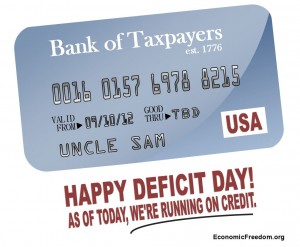
The text, which contains 24 chapters and champions healthcare providers while informing financial advisors, is divided into four sections compete with glossary of terms, Certified Medical Planner™ curriculum content, and related information sources.

cmp

http://www.CertifiedMedicalPlanner.org

1. For ALL medical providers and financial industry practitioners
2. For NEW medical providers and financial industry practitioners
3. For MID-CAREER medical providers and financial industry practitioners
4. For MATURE medical providers and financial industry practitioners

Using an engaging style, the book is filled with authoritative guidance and healthcare-centered discussions, providing the tools and techniques to create a personalized financial plan using professional advice.

Comprehensive coverage includes topics likes behavioral finance, modern portfolio theory, the capital asset pricing model, and arbitrage pricing theory; as well as insider insights on commercial real estate; high frequency trading platforms and robo-advisors; the Patriot and Sarbanes–Oxley Acts; hospital endowment fund management, ethical wills, giving, and legacy planning; and divorce and other special situations.

The result is a codified “must-have” book, for all health industry participants, and those seeking advice from the growing cadre of financial consultants and Certified Medical Planners™ who seek to “do well by doing good,” dispensing granular physician-centric financial advice:

Omnia pro medicus-clientis

  Risk Management, Liability Insurance, and Asset Protection Strategies for Doctors and Advisors: Best Practices from Leading Consultants and Certified Medical Planners™8Comprehensive Financial Planning Strategies for Doctors and Advisors: Best Practices from Leading Consultants and Certified Medical Planners™

DR. DAVID EDWARD MARCINKO MBA CMP™

ISBN Number: 9781482240283

Number of pages: 744

Publisher: CRC Press

reward

AWARDS

***

More on Recent Interest Rate Hikes

Impending IRs and … the Economy

By http://www.MCOL.com

***

***

Conclusion

Your thoughts and comments on this ME-P are appreciated. Feel free to review our top-left column, and top-right sidebar materials, links, URLs and related websites, too. Then, subscribe to the ME-P. It is fast, free and secure.

Speaker: If you need a moderator or speaker for an upcoming event, Dr. David E. Marcinko; MBA – Publisher-in-Chief of the Medical Executive-Post – is available for seminar or speaking engagements. Contact: MarcinkoAdvisors@msn.com

OUR OTHER PRINT BOOKS AND RELATED INFORMATION SOURCES:

Risk Management, Liability Insurance, and Asset Protection Strategies for Doctors and Advisors: Best Practices from Leading Consultants and Certified Medical Planners™8Comprehensive Financial Planning Strategies for Doctors and Advisors: Best Practices from Leading Consultants and Certified Medical Planners™

***

How millennials are making the most of parental support

Four [4] Financial Metrics

[By Fidelity]

***

[Click to Enlarge] Continue reading

Some Book Reviews on Value Investing

Articles and Papers, too:

By Michael at: https://valuestockgeek.com

If you like want to learn more about value investing, below are some great resources.

***

***

 Resources

Conclusion

Your thoughts and comments on this ME-P are appreciated. Feel free to review our top-left column, and top-right sidebar materials, links, URLs and related websites, too. Then, subscribe to the ME-P. It is fast, free and secure.

Speaker: If you need a moderator or speaker for an upcoming event, Dr. David E. Marcinko; MBA – Publisher-in-Chief of the Medical Executive-Post – is available for seminar or speaking engagements. Contact: MarcinkoAdvisors@msn.com

OUR OTHER PRINT BOOKS AND RELATED INFORMATION SOURCES:

8Comprehensive Financial Planning Strategies for Doctors and Advisors: Best Practices from Leading Consultants and Certified Medical Planners™

***

Holistic Financial Planning Specialists

Beyond “Primary Care Planning”

By Rick Kahler CFP®

I believe strongly in the value of financial planning and of working with a fiduciary planner who acts in your best interests. However, a planner is not necessarily the only money professional you may need to maintain your financial wellness. In many ways, a planner is similar to a primary care physician. Both these professionals know that providing the best patient or client service includes knowing when to consult a specialist.

When you see your doctor for an annual physical, the main purpose is to evaluate your health to find any potential problems before they become irreversible or life-threatening. This is important: most of us can think of someone who attributes being alive to “catching something early” because of a routine checkup.

While primary care physicians are skilled at diagnosing and treating many conditions, they are also trained to recognize health concerns that are beyond their areas of expertise. In these cases, they will often refer patients to an appropriate specialist for further treatment.

In similar fashion, a true financial planner is also a generalist whose role is to evaluate and maintain your financial health. This includes diagnosing financial threats and potential threats.

While the financial planner can address some of these conditions, others require referrals to specialists.

Here are a few examples of possible threats and a specialist whose help might be appropriate.

  • Critical gaps in insurance coverage. An insurance agent.
  • An inability to save for retirement. A financial therapist, if the financial planner has been unable to help the client resolve the emotional issues behind this behavior.
  • Potentially devastating issues in existing wills. An attorney specializing in estate planning.
  • Squandered tax-saving opportunities. An accountant and/or attorney with expertise in tax law and planning.
  • Lack of personal or business record-keeping and money management. A bookkeeper.
  • High-fee investment products that are draining retirement resources. This most often would be dealt with by the financial planner.

One of the many differences between doctors and financial planners is that most patients don’t have previous relationships with specialists, so primary care physicians often control the referrals they make. However, people often wait until they are in their 30s or 40s to engage a financial planner. This means they are likely to have existing relationships with attorneys, accountants, and insurance agents.

When a financial issue needing a specialist comes up, then, it’s common to assume one of the professionals you already know is the right person to deal with it. This may or may not be the case. For example, the attorney who handled your divorce or drafted your will is not necessarily an expert on real estate law or asset protection. Not every accountant understands the tax planning inherent in spendthrift trusts or life estates.

***

***

It’s often a better idea, if your financial planner recommends getting help from a specialist, to ask the planner to recommend someone who has the necessary expertise.

It might also be appropriate to ask for a recommendation from a current professional, such as your attorney or accountant. They may be glad to help, for two reasons. One, your relationship with them does not need to end because you engage a different professional whose particular skills you need. Two, they may well prefer not to take on a matter outside of their usual areas of expertise when a specialist could serve you better.

Assessment

Keep in mind, as well, that it’s your financial health at stake. Whether a professional is your generalist financial planner or a financial specialist, you need them to act in your best interests. This includes making sure they are professional enough to know and acknowledge what they don’t know.

Conclusion

Your thoughts and comments on this ME-P are appreciated. Feel free to review our top-left column, and top-right sidebar materials, links, URLs and related websites, too. Then, subscribe to the ME-P. It is fast, free and secure.

Speaker: If you need a moderator or speaker for an upcoming event, Dr. David E. Marcinko; MBA – Publisher-in-Chief of the Medical Executive-Post – is available for seminar or speaking engagements. Contact: MarcinkoAdvisors@msn.com

OUR OTHER PRINT BOOKS AND RELATED INFORMATION SOURCES:

Risk Management, Liability Insurance, and Asset Protection Strategies for Doctors and Advisors: Best Practices from Leading Consultants and Certified Medical Planners™8Comprehensive Financial Planning Strategies for Doctors and Advisors: Best Practices from Leading Consultants and Certified Medical Planners™

***

The American Dream is Slipping Away?

Is the American Dream slipping away?

By Rick Kahler CFP®

Is the American Dream slipping away? Yes, according to an article by David Leonhardt, The American Dream, Quantified at Last, published in the New York Times in December 2016.

Leonhardt cites research done for The Equality of Opportunity Project and reported as Trends in Absolute Income Mobility Since 1940. It concludes that the ability to attain the American Dream has fallen from 92% in 1940 to 50% today.

For me, this report raised a few questions

First, how do we define the American Dream?

Merriam-Webster calls it a “happy way of living that is thought of by many Americans as something that can be achieved by anyone in the U.S. especially by working hard and becoming successful.”

Wikipedia says it is “the set of ideals (democracy, rights, liberty, opportunity, and equality) in which freedom includes the opportunity for prosperity and success, and an upward social mobility for the family and children, achieved through hard work in a society with few barriers.”

James Truslow Adams, in his 1931 book The American Dream, defines it as life being “better and richer and fuller for everyone, with opportunity for each according to ability or achievement.”

These definitions suggest the American Dream is every person having the opportunity through ingenuity and hard work to achieve financial and emotional well-being.

Interestingly, the study Leonhardt cites chose a definition from Lawrence Samuel’s 2012 book, The American Dream: A Cultural History: “the ideal that children have a higher standard of living than their parents.”

The study found that those born in 1940 had a 92% chance of earning more than their parents at age 30. Those born in 1950 had a 79% chance, in 1960 a 62% chance, in 1970 a 61% chance, and in 1980 a 50% chance.

Leonhardt calls this data “deeply alarming.” He says, “It’s a portrait of an economy that disappoints a huge number of people that have heard that they live in a country where life gets better, only to experience something quite different.” I am guessing the disappointment to which he refers is what most people experience as life getting worse.

Yet defining the American Dream as an economy where children perpetually make more money (adjusted for inflation and taxes) than their parents misses the mark. As an economy improves and matures, that’s not sustainable.

***

***

Indeed, our country is experiencing exponential decreases—decreases in those living in extreme poverty. We are actually experiencing substantial increases in those earning more. Research in 2016 by Stephen J. Rose found that from 1979 through 2014 the number of households becoming affluent (incomes were adjusted for inflation) increased eighteen times, from 0.1% of the population in 1979 to 1.8% in 2014. The upper middle class increased from 12.9% to 29.4%. This, of course, left significantly fewer people in the categories of middle class, lower middle class, and poor.

As more people increase their standard of living, it’s only logical that the relative income growth of future generations will decrease. At some point in time, enough is enough.

Instead of seeing the American Dream solely as out-earning our parents, it may be more useful to go back to the second part of James Truslow Adams’ definition: “It is not a dream of motor cars and high wages merely, but a dream of social order in which each man and each woman shall be able to attain to the fullest stature of which they are innately capable, and be recognized by others for what they are, regardless of the fortuitous circumstances of birth or position.”

Assessment

Once someone achieves financial, physical, and emotional well-being, earning more than one’s parents becomes immaterial.

Conclusion

Your thoughts and comments on this ME-P are appreciated. Feel free to review our top-left column, and top-right sidebar materials, links, URLs and related websites, too. Then, subscribe to the ME-P. It is fast, free and secure.

Speaker: If you need a moderator or speaker for an upcoming event, Dr. David E. Marcinko; MBA – Publisher-in-Chief of the Medical Executive-Post – is available for seminar or speaking engagements. Contact: MarcinkoAdvisors@msn.com

OUR OTHER PRINT BOOKS AND RELATED INFORMATION SOURCES:

Comprehensive Financial Planning Strategies for Doctors and Advisors: Best Practices from Leading Consultants and Certified Medical Planners™

***

A Stock Market Top?

Happy eighth birthday of the bull market!

By Rick Kahler CFP®

March 9, 2017, was the eighth birthday of the bull market in the US S&P 500. In its lifetime it gained 314.4%, an average annual return of 19.4%. This raises a question as to how much longer it will last.

An article posted on MarketWatch.com, “Seven Signs We’re Near a Market Top and What to Do Now” gives some interesting perspective on what to look for to answer that question.

  1. Small investors begin pouring money into stock mutual funds out of fear they might miss out on another year of growth.
  2. Surveys of professional money managers show a declining number who are anticipating an imminent bear market, while more of them think the bull market will continue for a little longer.
  3. The VIX market index, which is a barometer of traders’ expectation of near term volatility (always present with a bear market), signals calm ahead.
  4. There are record price/earnings ratios, which means buyers are bidding up the price of stocks faster than earnings are rising.
  5. Investors have started to forget the pain of the last bear market and are becoming more complacent and optimistic.
  6. The Nasdaq index begins a bull run.
  7. Greed begins to outweigh fear, as investors start fearing missing out on further market gains instead of fearing future market losses.

Even to a casual observer, many of these signs look evident in the equity markets.

I’ve spoken with investors who have been on the sidelines but are thinking it’s time to get into the stock market, given its double-digit returns over the past 12 months along with the Trump rally. This is usually a reliable sign that markets are nearing a top as this new money drives the market to dizzying new highs.

When a market top looks inevitable—and we know the market will fall—what should investors do to protect their capital from being eroded away by a bear market? Selling out your stocks and moving the money to cash is always an option, but not a very good one. How do we really know this is the top and that the market won’t continue to go higher? Often the most profitable and exciting part of a bull market is the frothy run-up just before the fall.

Even more problematic, if you do get out in time to miss the crash, how will you know when it’s time to get back in? The most common answer I am given by investors to that question is, “When the economy looks good again.” That’s similar to a deer hunter saying he will load his gun when he sees a deer. By the time the economy looks good, the run up in stocks is usually nearing its end.

***

***

Act?

The best course of action is to fasten your seat belt and get ready for some terrifying turbulence. Most bear markets drop quickly and recover quickly. Investors who get out usually do so near the bottom and completely miss the inevitable recovery. All bear markets have ended with a new bull market, although the bottom is not identified as such, but rather seen as a pause before another certain downturn.

One more thing!

Don’t feel that missing when to get out and when to get back in would make you inadequate. The majority of those who attempt to time the market for a living will miss it, too. That MarketWatch.com article that listed the seven signs of a market top? It advised investors to start edging out of the markets as soon as possible because red flags were everywhere. And it was published in March 2014—three years ago.

Conclusion

Your thoughts and comments on this ME-P are appreciated. Feel free to review our top-left column, and top-right sidebar materials, links, URLs and related websites, too. Then, subscribe to the ME-P. It is fast, free and secure.

Speaker: If you need a moderator or speaker for an upcoming event, Dr. David E. Marcinko; MBA – Publisher-in-Chief of the Medical Executive-Post – is available for seminar or speaking engagements. Contact: MarcinkoAdvisors@msn.com

OUR OTHER PRINT BOOKS AND RELATED INFORMATION SOURCES:

Risk Management, Liability Insurance, and Asset Protection Strategies for Doctors and Advisors: Best Practices from Leading Consultants and Certified Medical Planners™8Comprehensive Financial Planning Strategies for Doctors and Advisors: Best Practices from Leading Consultants and Certified Medical Planners™

***


R.I.P. Richard Wagner JD CFP®

On the Life of “Dick” Wagner


By Rick Kahler CFP®

The financial planning profession lost one of its most significant figures this past week. Richard Wagner, my friend and mentor, died suddenly.

Dick, a longtime financial planner in Colorado, was one of the pioneers and thought leaders of personal financial planning. His visionary leadership and commentary were closely followed and highly respected by financial planners worldwide.

Dick’s influence on financial planning was profound. He was one of the early leaders to understand the emotional impact that money has on our lives and to believe that financial planning must include that emotional component in order to fully serve clients’ needs. We each have an individual relationship with money, which affects everyone in all facets of our lives. For this reason, Dick called money “the most powerful and pervasive secular force on the planet.”

He served as the President of the Institute of Certified Financial Planners and received the Financial Planning Association’s (FPA) highest honor, the P. Kemp Fain, Jr. He was a co-founder of the Nazrudin Project, a leaderless brain trust of 100 of the more forward-thinking planners, therapists, and coaches in financial planning. From this group emerged many FPA presidents, as well as scores of influential books and white papers. For its size, Nazrudin has had a disproportionate and continuing impact on the financial planning profession.

Dick also served on the founding board of the Financial Therapy Association. His keynote address at the group’s first conference eloquently laid the foundation for this embryonic movement of blending psychology and financial planning.

Dick’s life work, the beloved passion he carried for decades, was to see financial planning become a profession. In fact, he envisioned financial planning as the most important 21st century profession because of its focus on money. He challenged financial planners to give their best to their clients and their profession. Even further, he urged us to build an authentic profession—one he saw as dedicated to helping people manage intangible but essential functions, maintaining a responsibility to put clients’ interest first, and serving not only individuals but humanity and the greater good. One of Dick’s last contributions to the profession was the publication of the book he labored for 20 years to write, Financial Planning 3.0.

Anyone who knew Dick for more than a minute knew that he told it like it was—with gusto, clarity, and passion. He characteristically would sum up the essence of financial planning as:

“Save more, spend less, and don’t do anything stupid.”

Most importantly, I knew him as an immensely caring, passionate, wise, and conscientious soul. He was one of my valued mentors. The scope of his ideas and the depth of his creative vision challenged me to question my assumptions and expand my own views of what my chosen profession could become.

I had the privilege of spending many weekends with Dick as a member of a small group of financial planning pioneers who were trying to make sense of this union of emotions and money. I often equated listening to Dick’s visions of “what could be” to flying a commercial airliner at 45,000 feet. While he was soaring, I would spend most of my time trying to figure out if and where we could land the plane.

Wherever he may be now, I believe Dick is still soaring—once again, far higher and farther than those of us left behind. His passing leaves me shocked and saddened, with a sense of grief not yet eased by the gratitude I feel for having known him. The financial planning profession to which he devoted so much of his life was vastly enriched by his ideas and his work. 

Publisher’s Note:

Although I never personally met Dick, I do consider him a friend and colleague. We emailed and spoke on the phone, often. In fact, he contributed to the first edition of our book: Financial Planning Handbook For Physicians And Advisors; now in it’s fourth iteration: Comprehensive Financial Planning Strategies for Doctors

Rest in peace my friend. Robert Pine said it well when he noted,

“What we have done for ourselves is soon forgotten but what we have done for others remains and is immortal.”

-Dr. David Marcinko MBA

Conclusion

Your thoughts and comments on this ME-P are appreciated. Feel free to review our top-left column, and top-right sidebar materials, links, URLs and related websites, too. Then, subscribe to the ME-P. It is fast, free and secure.

Speaker: If you need a moderator or speaker for an upcoming event, Dr. David E. Marcinko; MBA – Publisher-in-Chief of the Medical Executive-Post – is available for seminar or speaking engagements. Contact: MarcinkoAdvisors@msn.com

OUR OTHER PRINT BOOKS AND RELATED INFORMATION SOURCES:

Risk Management, Liability Insurance, and Asset Protection Strategies for Doctors and Advisors: Best Practices from Leading Consultants and Certified Medical Planners™8Comprehensive Financial Planning Strategies for Doctors and Advisors: Best Practices from Leading Consultants and Certified Medical Planners™

***

The Apartment Rent vs Home Buy Decision

Join Our Mailing List

***

5-mt-juliet

***

Lately and frequently, the topic of homeownership has been popping up in my life.

I don’t know if this is a result of my age or current economic trends, but I figured I might as well organize my thoughts on the subject.

Generally, the renting vs buying debate goes something like this: renting is essentially […]

 Economics #7: Rent vs Buy — Wiser Daily

Conclusion

Your thoughts and comments on this ME-P are appreciated. Feel free to review our top-left column, and top-right sidebar materials, links, URLs and related websites, too. Then, subscribe to the ME-P. It is fast, free and secure.

Speaker: If you need a moderator or speaker for an upcoming event, Dr. David E. Marcinko; MBA – Publisher-in-Chief of the Medical Executive-Post – is available for seminar or speaking engagements. Contact: MarcinkoAdvisors@msn.com

OUR OTHER PRINT BOOKS AND RELATED INFORMATION SOURCES:

***

Comprehensive Financial Planning Strategies for Doctors and Advisors: Best Practices from Leading Consultants and Certified Medical Planners™

***

On Extreme Poverty

Join Our Mailing List

Known / Unknown to Health Professionals?

Rick Kahler MS CFPBy Rick Kahler MS CFP®

Do you think the world is getting better, or worse, or neither?

Based on a recent survey by Max Roser of the University of Oxford, you probably said “worse.” That was the answer from about 95% of the survey respondents, who were from Sweden, Germany, and the US.

To be fair, it might have been good to put a time frame in that question. How would you have answered if the time frame was the last 70 years, 40 years, or 10 years? I suspect if people were asked if the world is getting better based on how it was 200 years ago, there may have been more positive answers.

The data time-line

In a recent article on ourworldindata.org, Roser noted that in 1820 only a miniscule slice of the elite enjoyed higher standards of living. Over 99% of people lived in extreme poverty, which the researchers measured as earning less than $1.90 a day. That number is adjusted for inflation, different price levels in countries, and currency differences.

Things really improved over the next 130 years. In 1950 (nearly 70 years ago) only 75% of the world was living in extreme poverty. In 1981 (nearly 40 years ago) that number was down to 44%. In the last ten years, the number of those living in extreme poverty dropped from 21% to 10%. That is amazing, especially when we consider that two-thirds of those in the US think extreme poverty has almost doubled in recent years.

As surprising as this data is, Roser adds another factor: the fall in extreme poverty is even more notable when we consider that the world population increased seven-fold in the last 200 years. Conventional wisdom may have assume such an increase in population would have had the opposite effect.

Change

What changed globally to produce such an incredible increase in the global standard of living in the light of exploding population growth? The world experienced an unprecedented period of economic growth and increasing productivity.

What was behind the economic growth?

My guess is that an experiment in democracy and free markets begun about 250 years ago with the founding of the United States had a lot to do with it.

It’s interesting that we’ve seen nothing about this trend in the media or from politicians. Wouldn’t a headline reading, “Extreme Poverty Rate Falls 50% in Ten Years” be noteworthy? Or how about “130,000 Fewer People A Day Are In Extreme Poverty Since 1990?”

During the same 200 year period illiteracy dropped from 88% to 15%. Global child mortality decreased from 42% to 4%. The number of those living in democratic societies rose from 1% to 53%. Even global income inequality as measured by the Gini coefficient, while still very high, fell by 5% between 2003 and 2013.

We have heard nothing about any of that. Our news and our politicians do not emphasize how the world is changing but rather what is wrong in the world. Roser notes that, “The media focuses on single events and single events are often bad.” Most of us know intellectually that sensationalism sells and a steady diet of sensationalism can cause us to lose perspective.

***

***

Assessment

The stories we hear of how financial well-being is in decline are not true. Such misinformation could be one of the biggest global threats we face. Believing that the poor are getting poorer and the rich growing richer on the backs of the poor polarizes and divides us. If the truth of the progress we’ve made became common knowledge, it could provide a foundation of collaboration and hope which would serve to unite us to continue the progress.

Conclusion

Your thoughts and comments on this ME-P are appreciated. Feel free to review our top-left column, and top-right sidebar materials, links, URLs and related websites, too. Then, subscribe to the ME-P. It is fast, free and secure.

Speaker: If you need a moderator or speaker for an upcoming event, Dr. David E. Marcinko; MBA – Publisher-in-Chief of the Medical Executive-Post – is available for seminar or speaking engagements. Contact: MarcinkoAdvisors@msn.com

OUR OTHER PRINT BOOKS AND RELATED INFORMATION SOURCES:

Risk Management, Liability Insurance, and Asset Protection Strategies for Doctors and Advisors: Best Practices from Leading Consultants and Certified Medical Planners™8Comprehensive Financial Planning Strategies for Doctors and Advisors: Best Practices from Leading Consultants and Certified Medical Planners™

***

On Financial Product Sales Commissions

Join Our Mailing List

Rick Kahler MS CFPBy Rick Kahler MS CFP®

What’s wrong with earning a commission from the sale of a financial product?

Nothing. It isn’t any more inappropriate than a car salesperson earning a commission when you buy a vehicle.

Yet there’s one important difference. When you buy a car the roles are clear. You know going in that the salesperson is there to sell you their product. You understand it’s your responsibility to do your homework and know what you need and can afford.

Role Confusion

That clarity of roles is purposely clouded in the financial services industry. The “salespeople” are rarely referred to as such. Instead they call themselves creatively contrived variations like “financial advisor,” “financial planner,” “financial consultant,” or “financial representative.” The only advice a financial salesperson gives is in conjunction with the sales pitch to buy their product, where the incentive for them is receiving a commission.

This pretense that salespeople are working for the customer rather than the financial firm that employs them creates an inherent conflict of interest. The salesperson’s financial rewards come from pushing products versus giving client-oriented, comprehensive financial advice.

Conflict of interest

The conflict of interest resulted in many brokerage and insurance firms in the 1980’s providing incentives for their salespeople to push high commission products while hiding the high fees.

Examples:

  • Just one of many examples was described in a 1993 article in the Los Angeles Times. Prudential allowed salespeople to cheat customers out of $3 billion of losses invested into 700 Prudential limited partnerships that were high-risk and “rife with misconduct” while telling investors they were “safe, high-yield investments comparable to bank certificates of deposit.” The company finally agreed to a fine of $371 million, representing about 12% of what investors lost.

You might think that, 24 years later, things have changed and large financial firms selling products have changed. They haven’t.

  • One recent example was the $185 million fine paid by Wells Fargo over charging their customers fees for financial products they didn’t authorize.
  • Also, two years ago JPMorgan was fined $307 million for product pushing. Last year they were fined $264 million for their part in a vast foreign bribery scheme.
  • In 2015, one of the top JPMorgan representatives, Johnny Burris, who has been in the business for more than 25 years, refused to steer clients into proprietary JPMorgan funds that he felt had become rife with high fees. As reported in Financial Planning magazine, he was let go by the company.

But wait, that’s not all.

  • If you think Wells Fargo and JPMorgan’s fines were notable, think again. According to the Columbus Dispatch, Bank of America has paid $76.6 billion in 31 settlements from 2009 to 2016. During the same period, Chase Bank paid $38 billion in 22 settlements and Citigroup paid $15.8 billion in 15 settlement cases.

With a track record like this, you might think that consumers would be demanding wholesale changes in the way we regulate financial advice. They probably would be if they were personally aware of how hidden costs and fees cost the average investor thousands of dollars a year. No wonder that big financial firms can afford to pay billions in fines as a cost of doing business.

***

aamzlyk

***

Assessment

Other countries, including Australia, Canada, and the UK, have required a distinct separation of financial advice from financial sales. Hopefully the US won’t let another 24 years go by with no changes in the way we regulate companies that sell financial products. For those changes to be driven by consumer demand, more investors need to learn about the costs they pay and to realize that sellers of financial products are not that different from sellers of cars.

Conclusion

Your thoughts and comments on this ME-P are appreciated. Feel free to review our top-left column, and top-right sidebar materials, links, URLs and related websites, too. Then, subscribe to the ME-P. It is fast, free and secure.

Speaker: If you need a moderator or speaker for an upcoming event, Dr. David E. Marcinko; MBA – Publisher-in-Chief of the Medical Executive-Post – is available for seminar or speaking engagements. Contact: MarcinkoAdvisors@msn.com

OUR OTHER PRINT BOOKS AND RELATED INFORMATION SOURCES:

Comprehensive Financial Planning Strategies for Doctors and Advisors: Best Practices from Leading Consultants and Certified Medical Planners™

***

The Retail Retirement Wars

Join Our Mailing List

The Retail Retirement Wars

Although no one is paying much attention to it just yet, there is a battle brewing in financial services to create a next-generation retirement vehicle.

And because the winner stands to inherit the power to redirect $14 trillion dollars of mutual fund assets and disrupt long-standing retirement asset monopolies, this battle is likely to go down as the largest industry duel in the history of commerce – dwarfing the cola and software wars by trillions.

Read the two articles below on order to gain a firm understanding of who will prevail and what it will mean for both conventional financial services as well as FinTech.

Part 1:

The Battle to Launch a Next-Generation Retirement Product & Control $14 Trillion in Investment Direction

Click Here to Read Article

Part 2:

DOL Fiduciary Rule or Not – Why Brokerages will be Distancing Themselves from the Retail Retirement Market

Conclusion

Your thoughts and comments on this ME-P are appreciated. Feel free to review our top-left column, and top-right sidebar materials, links, URLs and related websites, too. Then, subscribe to the ME-P. It is fast, free and secure.

Speaker: If you need a moderator or speaker for an upcoming event, Dr. David E. Marcinko; MBA – Publisher-in-Chief of the Medical Executive-Post – is available for seminar or speaking engagements. Contact: MarcinkoAdvisors@msn.com

OUR OTHER PRINT BOOKS AND RELATED INFORMATION SOURCES:

Risk Management, Liability Insurance, and Asset Protection Strategies for Doctors and Advisors: Best Practices from Leading Consultants and Certified Medical Planners™8Comprehensive Financial Planning Strategies for Doctors and Advisors: Best Practices from Leading Consultants and Certified Medical Planners™

***

Novartis (NVS) offers slight dividend increase, but future is bright.

Join Our Mailing List

timBy DividendMGR and TIMOTHY J. McINTOSH; MBA, MPH, CFP®, CMP™ [Hon]

Novartis’ (NYSE:NVS) dividend was increased by 1%. Its overall yield is 3.80%.  The firm started paying a dividend in 1993. Novartis AG (NYSE:NVS) is a large pharmaceutical firm based in Switzerland.

Its shares trade on the NYSE as an American Depository Receipt, or ADR. The company was created by the merger of Sandoz AG and Ciba-Geigy AG.

***

drugs

Continue reading Novartis (NVS) offers slight dividend increase, but future is bright.

Read more of this post

***

Conclusion

Your thoughts and comments on this ME-P are appreciated. Feel free to review our top-left column, and top-right sidebar materials, links, URLs and related websites, too. Then, subscribe to the ME-P. It is fast, free and secure.

Speaker: If you need a moderator or speaker for an upcoming event, Dr. David E. Marcinko; MBA – Publisher-in-Chief of the Medical Executive-Post – is available for seminar or speaking engagements. Contact: MarcinkoAdvisors@msn.com

OUR OTHER PRINT BOOKS AND RELATED INFORMATION SOURCES:

Comprehensive Financial Planning Strategies for Doctors and Advisors: Best Practices from Leading Consultants and Certified Medical Planners™

***

On the “Care-Taking” of Your Financial Affairs

Join Our Mailing List

Rick Kahler MS CFP

By Rick Kahler MS CFP®

One area that few seniors prepare for is arranging for someone else to handle their financial affairs when they can no longer fully care for themselves.

This is easy to put off, for three primary reasons.

First, there are a lot of difficult emotions involved with the thought of losing our cognitive ability and the inherent freedom to financially care for ourselves. This is something we have done for ourselves all our lives, so it’s very hard to imagine not being able to do so.

Second, for many of us the loss of cognitive ability is slow and almost unrecognizable. There isn’t an urgency that suggests we need to do anything soon. Often by the time we do realize we need help, it’s too late for us to arrange for it.

Finally, while we’re in good health we tend not to consider the possibility of a sudden catastrophic health event. Yet such a crisis can leave us without a plan and no way in which to have any say in what happens.

National Association of Personal Financial Advisors

Fortunately, if you are reading this you have time to prepare. The following information is based on the work of Carolyn McClanahan, MD CFP®, particularly a presentation given to the National Association of Personal Financial Advisors in May of 2016.

She suggests the major questions to answer are:

  1. Who will be in charge?
  2. Are the right documents in place?
  3. How will you monitor your decline?
  4. Do you have a written investment policy?
  5. How will the transition occur?

Who will be in charge?

Choosing a trusted third party to take over bill paying, investment management, and financial caretaking is essential. Options include a spouse, a child or other relative, a friend, a professional bookkeeper, or a financial planner. For couples, the odds are that both partners won’t lose their ability to handle financial affairs at the same time. If one spouse handles most of the money matters, it’s important that the noninvolved spouse becomes involved in the bill paying routine and understands the basics of the couple’s finances. If you are the caretaking or surviving spouse, or if you are single, designating a financial caretaker is crucial.

***

200298593-001

***

Are the right documents in place?

The most important document is your power of attorney that names the person or organization who will be in charge of your finances. If the bulk of your net worth is in retirement accounts, annuities, and jointly owned, another option is to create a living trust, place everything you own individually in it, and identify the successor trustee who is in charge when you can no longer make decisions.

How will you monitor your decline?

It’s important to have some written agreement in place—even if for no one but yourself—that lists the triggering events which will indicate to you the time has come to transfer the control to someone else. It’s up to you to determine what these triggers are and to self-assess every few years.

Do you have a written investment policy?

And is it current? This is a good time to review your investment policy, making sure it’s been updated to reflect your changing cash flow needs and asset allocation. You might also evaluate your ownership of any complicated and illiquid assets like real estate or closely held business interests. It may be wise to simplify and liquidate them while you’re still capable of managing them, before it’s time to pass responsibility to a surrogate.

Assessment

Once you’ve answered these four questions, it’s time to consider the last step that will be addressed in a future ME-P: how the transition should take place?

Five Reasons Families Fight Over Estates

Conclusion

Your thoughts and comments on this ME-P are appreciated. Feel free to review our top-left column, and top-right sidebar materials, links, URLs and related websites, too. Then, subscribe to the ME-P. It is fast, free and secure.

Speaker: If you need a moderator or speaker for an upcoming event, Dr. David E. Marcinko; MBA – Publisher-in-Chief of the Medical Executive-Post – is available for seminar or speaking engagements. Contact: MarcinkoAdvisors@msn.com

OUR OTHER PRINT BOOKS AND RELATED INFORMATION SOURCES:

Comprehensive Financial Planning Strategies for Doctors and Advisors: Best Practices from Leading Consultants and Certified Medical Planners™

***

Vital Financial Texts for Doctors

SPONSORED

http://www.CertifiedMedicalPlanner.org

Join Our Mailing List

PHYSICIAN FOCUSED FINANCIAL PLANNING AND RISK MANAGEMENT COMPANION TEXTBOOK SET

***

 Risk Management, Liability Insurance, and Asset Protection Strategies for Doctors and Advisors: Best Practices from Leading Consultants and Certified Medical Planners™           Comprehensive Financial Planning Strategies for Doctors and Advisors: Best Practices from Leading Consultants and Certified Medical Planners™

[Dr. Cappiello PhD MBA] *** [Foreword Dr. Krieger MD MBA]

Front Matter with Foreword by Jason Dyken MD MBA

Enter the CMPs

***

“How to Think About Money”

Join Our Mailing List

A Book Review

Rick Kahler MS CFPBy Rick Kahler CFP®

As the author of the Old Testament book the Song of Solomon penned many years ago, “There is nothing new under the sun.”

Humbling as it is, there is very little financial advice I’ve written about in this column for 25 years that is really proprietary. Many other personal financial advisors and authors intuitively embrace the same principles as I.

One of them is Jonathan Clements, a personal financial columnist for The Wall Street Journal since 1994. His philosophy sounds very similar to mine: invest heavily in index funds, tilt your portfolio in favor of stocks, diversify globally, and spend much less than you make.

Clements has a new book out, How to Think About Money, which is well worth reading

Here are some of the points he covers:

  1. Demographics Are Destiny. Over the past 50 years, the U.S. economy has grown roughly three percentage points a year faster than inflation. Those days are over. Because of a shrinking workforce, economic growth is likely to be slower. Stocks probably won’t match their strong historical performance, though they will likely still outpace the returns from bonds and cash investments.
  1. Start With Everything. Invest in a global market portfolio—the investable universe of stocks, bonds, and other investments owned collectively by all investors.
  1. Ponder Your Paycheck. Your most valuable asset is your income-earning ability. Design your financial planning around that income source, or the lack thereof. If you are employed, you may need disability and life insurance. You also need to invest heavily in stocks because you don’t need income from their portfolio. If you are retired, you probably don’t need disability or life insurance. You do need to hold more bonds and cash now that you draw from your portfolio for income.
  1. Stay Grounded. In late 2008 and early 2009, many investors inflicted huge financial damage on themselves by bailing out of stocks at deeply depressed prices. You must avoid that mistake in the future. Clements forecasts that stocks will give a long-term return of 6%. He says, “Imagine a line climbing steadily at 6% every year. In the short run, however, stock performance will be all over the map. If returns are above the 6%-a-year growth path, we should smile at our good fortune, but realize we’ll likely pay a price later, in the form of lower returns. When performance is below 6% a year, we may not smile as much, but we should take comfort in the notion that—at some point—stock performance will likely play catch-up.”
  1. Fix Your Future. Our savings rate collapsed over the past three decades. Most Americans can’t save more because they simply spend too much. Clements says you need to aim for spending no more than 50% of your pretax income on living expenses, which allows you to save more and build more financial security.
  1. Don’t Retire. Not only does an additional source of income stretch the longevity of your portfolio, but work can provide additional satisfaction and happiness.
  1. Dying Isn’t the Problem. The risk is living longer than you ever imagined and running out of money before you run out of life. Clemens suggests delaying Social Security until at least age 66 and perhaps to age 70 (which I agree with) and purchasing lifetime income annuities (which is an area of disagreement for me).
  1. Aim for Enough. The goal isn’t to die with the most toys, but to have enough money to lead the life you want.

***

financial-planning

***

Assessment

It may be nothing new, but it’s clear, sound, ageless advice. Even Solomon would probably agree.

Conclusion

Your thoughts and comments on this ME-P are appreciated. Feel free to review our top-left column, and top-right sidebar materials, links, URLs and related websites, too. Then, subscribe to the ME-P. It is fast, free and secure.

Speaker: If you need a moderator or speaker for an upcoming event, Dr. David E. Marcinko; MBA – Publisher-in-Chief of the Medical Executive-Post – is available for seminar or speaking engagements. Contact: MarcinkoAdvisors@msn.com

OUR OTHER PRINT BOOKS AND RELATED INFORMATION SOURCES:

Comprehensive Financial Planning Strategies for Doctors and Advisors: Best Practices from Leading Consultants and Certified Medical Planners™

***

How financial advisers can get unstuck in 2017?

Join Our Mailing List

By Michael Gerber [Re-Post]

How financial advisers can get unstuck in the New Year

Most financial advisers started their firm because they had a dream for a different life and a vision of how to get there. Rather than taking their dream to the next level, too many advisers are stuck.

Michael Gerber discusses this trap in his book “The E-Myth.” What he describes translates perfectly into what happens when the adviser takes off their business-owner hat and stops working on their practice (Investment News).

***

networking advisors

***

Conclusion

Your thoughts and comments on this ME-P are appreciated. Feel free to review our top-left column, and top-right sidebar materials, links, URLs and related websites, too. Then, subscribe to the ME-P. It is fast, free and secure.

Speaker: If you need a moderator or speaker for an upcoming event, Dr. David E. Marcinko; MBA – Publisher-in-Chief of the Medical Executive-Post – is available for seminar or speaking engagements. Contact: MarcinkoAdvisors@msn.com

OUR OTHER PRINT BOOKS AND RELATED INFORMATION SOURCES:

Risk Management, Liability Insurance, and Asset Protection Strategies for Doctors and Advisors: Best Practices from Leading Consultants and Certified Medical Planners™8Comprehensive Financial Planning Strategies for Doctors and Advisors: Best Practices from Leading Consultants and Certified Medical Planners™

***

How debt affects the income to happiness ratio?

Join Our Mailing List

Debt and Un-Happiness

Rick Kahler MS CFP

By Rick Kahler CFP®

I have written previously about the plethora of research that shows a link between income and happiness.

Most of those studies find that the more money people bring in, the happier they are—until earnings exceed $75,000, at which time the correlation declines.

What I’ve never thought to address when I have reported on these studies is how debt affects the income to happiness ratio. I inherently assumed that the income level was free of consumer debt, meaning the individual lived on what they made. The only debt I assumed was a mortgage payment, that also included property taxes and insurance, of no more than 25% of income. This means a family earning $75,000 has a maximum housing cost of 1,500 per month.

In Rapid City, SD, that will get you a very comfortable, upper middle-class home or rental.

Further, I assumed any increase in income meant no corresponding increase in consumer debt. A few comments from readers who didn’t understand my unwritten assumption opened my eyes.

***

broken PC

UNHAPPINESS

***

Example:

One man—I’ll call him Sean—said my data must be flawed.

For him, a significant increase in income when he graduated from college did not increase his well-being but actually created increased ill-being. When Sean graduated from college he was earning $20,000 at his minimum wage job but had no debt. Upon graduation he secured a position paying $70,000 a year, which theoretically should have had him doing a financial happy dance.

Here’s what happened instead:

He upgraded his paid-off clunker for a brand new car, taking on a $45,000 debt with an $823 a month payment. From dorm living at his state school of about $500 a month, he went to a $1,500 a month mortgage payment on a starter home he bought for $225,000 with a $25,000 down payment gifted to him by his grandparents. To furnish the house, he ran up a $20,000 balance on his credit card, which meant monthly payments of $750. His student debt of $80,000 kicked in, with payments of $750 a month. That’s $3,323 a month in additional spending, or $39,876 a year, and a total debt of $345,000. That means his $70,000 new job was actually the equivalent of earning $30,124 a year with no debt.

No wonder he wasn’t happier.

The Studies

A study from Purdue, “Debt and Subjective Well-being: The Other Side of the Income-Happiness Coin,” published in the Journal of Happiness Studies, finds my hunch was right. More income coupled with more debt does not mean more happiness. In fact, as in Sean’s case, it often means just the opposite.

The study specifically targeted the impact of college loan debt on students who had been out of college and in the work force for seven years. The study found the higher the debt to income ratio, the lower the overall happiness.

In another study from the University of Wisconsin-Madison, “Household Debt and Adult Depressive Symptoms,” researchers Lawrence M. Berger, J. Michael Collins, and Laura Cuesta found that consumer debt is positively associated with ill-being and greater depression. The groups most affected by consumer debt are those less educated or who are approaching retirement age.

Assessment

My recommendation for financial well-being is that, if you have to borrow to buy something other than real estate, don’t.

  • Keeping your financial obligations to a sensible amount of long-term housing debt is the best foundation for building financial well-being.
  • Don’t let an increase in income lure you into an increase in debt.

When you keep your consumer debt load small, earning more money is much more likely to increase your overall happiness and well-being.

MORE:

Conclusion

Your thoughts and comments on this ME-P are appreciated. Feel free to review our top-left column, and top-right sidebar materials, links, URLs and related websites, too. Then, subscribe to the ME-P. It is fast, free and secure.

Speaker: If you need a moderator or speaker for an upcoming event, Dr. David E. Marcinko; MBA – Publisher-in-Chief of the Medical Executive-Post – is available for seminar or speaking engagements. Contact: MarcinkoAdvisors@msn.com

OUR OTHER PRINT BOOKS AND RELATED INFORMATION SOURCES:

Risk Management, Liability Insurance, and Asset Protection Strategies for Doctors and Advisors: Best Practices from Leading Consultants and Certified Medical Planners™    Comprehensive Financial Planning Strategies for Doctors and Advisors: Best Practices from Leading Consultants and Certified Medical Planners™

***

The Financial Instability “Hypothesis”

Join Our Mailing List

By David Shahrestani

On January 13, 2010, the chief executives of four top Wall Street institutions gathered together in Washington to testify on what went wrong in the years leading up to the great recession …

***

journalism_grants_image

 Financial Instability Hypothesis

***

Conclusion

Your thoughts and comments on this ME-P are appreciated. Feel free to review our top-left column, and top-right sidebar materials, links, URLs and related websites, too. Then, subscribe to the ME-P. It is fast, free and secure.

Speaker: If you need a moderator or speaker for an upcoming event, Dr. David E. Marcinko; MBA – Publisher-in-Chief of the Medical Executive-Post – is available for seminar or speaking engagements. Contact: MarcinkoAdvisors@msn.com

OUR OTHER PRINT BOOKS AND RELATED INFORMATION SOURCES:

Risk Management, Liability Insurance, and Asset Protection Strategies for Doctors and Advisors: Best Practices from Leading Consultants and Certified Medical Planners™8Comprehensive Financial Planning Strategies for Doctors and Advisors: Best Practices from Leading Consultants and Certified Medical Planners™

***

What is the right relationship to money?

Join Our Mailing List

Money often costs too much.

-Ralph Waldo Emerson

By Gus: https://www.wisedrugged.com

Presented By J. Krishnamurti

As the Dow Jones soars to new peaks, it seems many of us feel a sense of security within the realm of money.

Less preoccupation maybe? Is th…

***

Money

***

What is the right relationship to money? presented by J. Krishnamurti

Conclusion

Your thoughts and comments on this ME-P are appreciated. Feel free to review our top-left column, and top-right sidebar materials, links, URLs and related websites, too. Then, subscribe to the ME-P. It is fast, free and secure.

Speaker: If you need a moderator or speaker for an upcoming event, Dr. David E. Marcinko; MBA – Publisher-in-Chief of the Medical Executive-Post – is available for seminar or speaking engagements. Contact: MarcinkoAdvisors@msn.com

OUR OTHER PRINT BOOKS AND RELATED INFORMATION SOURCES:

Product Details

***

On Prospect Theory

Join Our Mailing List

And … the reality of decision making!

By David Shahrestani

In the early 1980s, Daniel Kahneman and Amos Tverskey proved in numerous experiments that the reality of decision making differed greatly from the assumptions held by economists.

They published their findings in Prospect Theory: An analysis of decision making under risk, which quickly became one of the most cited papers in all of economics. To […]

***

285e8c18796363_562d1c0223d65

Human Nature #9: Prospect Theory — Wiser Daily

***

Conclusion

Your thoughts and comments on this ME-P are appreciated. Feel free to review our top-left column, and top-right sidebar materials, links, URLs and related websites, too. Then, subscribe to the ME-P. It is fast, free and secure.

Speaker: If you need a moderator or speaker for an upcoming event, Dr. David E. Marcinko; MBA – Publisher-in-Chief of the Medical Executive-Post – is available for seminar or speaking engagements. Contact: MarcinkoAdvisors@msn.com

OUR OTHER PRINT BOOKS AND RELATED INFORMATION SOURCES:

Risk Management, Liability Insurance, and Asset Protection Strategies for Doctors and Advisors: Best Practices from Leading Consultants and Certified Medical Planners™

***

More on Long Term Care Insurance

Join Our Mailing List

LTCI

By Rick Kahler MSFS CFP®

Rick Kahler MS CFP

Knowing how long you may live is an important variable to consider in putting together a successful retirement plan. Many online sites can give you a scientific estimate of your life expectancy; one that I recommend is livingto100.com. When I retook the evaluation recently, I was surprised that my life expectancy had increased from 93 to 98.

In an instant I related to one of the greatest fears of older Americans: outliving your sources of income.

The greatest financial risk for depleting retirement resources is an unexpected and lengthy stay in a long-term health care facility, like a nursing home or an assisted living center. Not surprisingly then, “What do you think about long term care insurance (LTCI)?” is one of the questions I often hear.

LTCI is a difficult product to analyze and recommend. It has existed in some form for 40 years, but the industry seems to exist in a continual state of disarray. Low interest rates, low lapse rates, and rising longevity have driven premiums high enough that sales of the insurance have declined 70% from their high in 2002.

The “Guarantee”

Exacerbating the problem is that most LTCI companies issued policies with “guaranteed” premiums.

According to a report by Michael Kitces at kitces.com, just a small variation in actuarial assumptions can have a significant impact on premiums. He says “it’s estimated that as little as a 1% change in interest rates correlates to a 15% required change in premiums to keep an LTC insurance policy actuarially sound. Having a 1% lapse rate instead of a 5% lapse rate can increase future claims for an insurer by as much as 50%.”

As a result, Kitces notes, LTCI providers have struggled to be profitable. In some cases, companies were unable to honor their original prices and had to request permission from state insurance departments to increase premiums on existing policies by as much as 85%. Premiums for new policies have gone even higher.

Simply stated, a guaranteed premium LTC policy needs to be priced high enough to provide a cushion against these variables or the company may be unable to regain profitability with rate increases later.

***

9ba3da18796363_562cf73a57e77

***

One way of addressing this challenge is to eliminate any aspect of a “guaranteed” premium and make long-term care insurance premiums more flexible. One flexible premium policy envisions paying dividends similar to a participating life insurance policy issued by a mutual insurance company. Kitces notes, “To the extent that future claims (or the insurance company’s investment returns) turn out to be better than the original (conservative) projections, the ‘excess’ results will be returned to the policy owner in the form of either an “Insurance Credit” or an “Interest Credit”, to help reduce future premiums.” One such policy is currently priced 20 to 30% under traditionally priced policies with “guaranteed” premiums.

Naturally, there is no guarantee a flexible premium policy will end up costing less than the traditional polity with a guaranteed premium. Probably the biggest concern is the conflict of interest a shareholder-owned company will face in deliberately refunding any savings in the form of dividends to the policy holders. This conflict does not exist with a mutual insurance company, where the owners of the company are the policy holders.

Assessment

Still, the potential benefits look interesting enough that taking a hard look at a flexible premium LTCI policy makes sense. Long-term health care is one of the aspects of aging that most of us don’t want to think about but many of us will need. While LTCI is not for everyone, considering it is a worthwhile part of financial planning for retirement. 

Conclusion

Your thoughts and comments on this ME-P are appreciated. Feel free to review our top-left column, and top-right sidebar materials, links, URLs and related websites, too. Then, subscribe to the ME-P. It is fast, free and secure.

Speaker: If you need a moderator or speaker for an upcoming event, Dr. David E. Marcinko; MBA – Publisher-in-Chief of the Medical Executive-Post – is available for seminar or speaking engagements. Contact: MarcinkoAdvisors@msn.com

OUR OTHER PRINT BOOKS AND RELATED INFORMATION SOURCES:

Risk Management, Liability Insurance, and Asset Protection Strategies for Doctors and Advisors: Best Practices from Leading Consultants and Certified Medical Planners™8Comprehensive Financial Planning Strategies for Doctors and Advisors: Best Practices from Leading Consultants and Certified Medical Planners™

***

Best Times to Buy a Used Car

Join Our Mailing List

Automotive Advice for Teens  and Young Adults

By Amanda Scherer

***

***

00n0n_bhEquNHGvP3_600x450

Best Times to Buy a Used Car

***

Conclusion

Your thoughts and comments on this ME-P are appreciated. Feel free to review our top-left column, and top-right sidebar materials, links, URLs and related websites, too. Then, subscribe to the ME-P. It is fast, free and secure.

Speaker: If you need a moderator or speaker for an upcoming event, Dr. David E. Marcinko; MBA – Publisher-in-Chief of the Medical Executive-Post – is available for seminar or speaking engagements. Contact: MarcinkoAdvisors@msn.com

OUR OTHER PRINT BOOKS AND RELATED INFORMATION SOURCES:

Comprehensive Financial Planning Strategies for Doctors and Advisors: Best Practices from Leading Consultants and Certified Medical Planners™

***

Odds you will live out your last years in a SNF?

Join Our Mailing List

More On Medicaid Elder Care

Rick Kahler MS CFP

By Rick Kahler MSFS CFP®

If you’ve ever visited someone in a nursing home, chances are you walked out afterward vowing, “I’m never going to end up in a place like this.” That vow is one most of us would make. Keeping it, however, is another matter.

Let’s consider some facts

What are the odds you will live the last years of your life in a skilled care facility (nursing or assisted living home)?

About 14 percent of all people over age 64 have two to three chronic conditions that negate their ability to live independently. According to the U.S. Bureau of the Census, 5 percent of people over age 65 live in nursing or assisted living homes and 25 percent of them will spend some time in one. The chance of a stay in a nursing home increases 1.4 percent a year from age 65 on. Almost 50 percent of those over age 95 live in nursing homes.

While staying in the comforting surroundings of our homes is what most of us would prefer, just saying so isn’t going to make it happen. Unless you have a written plan and the finances to carry out that plan, the chances are high you will not be able to afford living in your home once you need daily assistance of some type.

The problem is that spending your last years in a nursing home is expensive, too. At rates of around $7,000 to $12,000 a month, it is very easy to spend $250,000 or more during the last years of one’s life. While this is doable if you have the money, it becomes a financial disaster if you have a spouse and spend through your estate in your last years. In this case, the first one to die wins at the expense of the survivor.

More U.S. Census Bureau Data

According to the U.S. Census Bureau, 70 percent of Americans age 65 and over have a household net worth of just $344,870. If one spouse enters a skilled care facility there is a real threat that the other will run out of money to fund living expenses, relying only on Social Security.

Once someone’s assets are spent down, Medicaid will begin paying for nursing home costs. This may mean changes such as moving to a facility that accepts Medicaid and out of a private room into a shared room. It also may mean waiting for a bed to become available.

***2016-CRS_Fall_Hourglass_6-14_hero

***

The Short Version

The “short version” of the law is that Medicaid begins paying once assets are spent down to $2000. However, there are provisions meant to protect the non-institutionalized spouse from destitution. Some of the couple’s assets are exempt from being spent down for nursing home care.

Example:

In South Dakota, for example, the spouse may keep half of the combined assets up to $119,220. Other exempt assets generally include personal possessions, one vehicle, equity up to $552,000 in the couple’s personal residence, prepaid funeral plans, and assets that are considered “inaccessible”. There are also limits on monthly income from pensions. The numbers above are for South Dakota; all of these limits vary by state so be sure to research your own state’s laws.

Assessment

Obviously, planning for long term care is vitally important, and it needs to be done well before the event that sends someone to a skilled care facility. Unfortunately, those events are often sudden and impossible to predict. The sad reality is that very few people plan ahead—even those who do financial planning in other areas. Many elders have a deep resistance to doing end-of-life planning.

That is sad, because the less planning you do, the more limited your options become. 

Conclusion

Your thoughts and comments on this ME-P are appreciated. Feel free to review our top-left column, and top-right sidebar materials, links, URLs and related websites, too. Then, subscribe to the ME-P. It is fast, free and secure.

Speaker: If you need a moderator or speaker for an upcoming event, Dr. David E. Marcinko; MBA – Publisher-in-Chief of the Medical Executive-Post – is available for seminar or speaking engagements. Contact: MarcinkoAdvisors@msn.com

OUR OTHER PRINT BOOKS AND RELATED INFORMATION SOURCES:

Risk Management, Liability Insurance, and Asset Protection Strategies for Doctors and Advisors: Best Practices from Leading Consultants and Certified Medical Planners™8Comprehensive Financial Planning Strategies for Doctors and Advisors: Best Practices from Leading Consultants and Certified Medical Planners™

***