Take the Hospital eHR Implementation Challenge!

Illustrative Case Model – Are You CMP™ Worthy?

By Staff Reporters Washington DC

The fictitional Washington Hospital is embroiled in the healthcare reform debate and interested in implementing an electronic health record (EHR) for its major clinic areas. The flagship hospital currently utilizes a legacy-based system and several of the clinics have independently purchased software programs to provide a more inclusive electronic data base particular to that clinic.

Scenario

In addition, each of the software programs purchased in specific clinics has been modified to serve their own needs. The other satellite hospitals and clinics are not linked to the flagship hospital and have independent systems, applications and software in place. The hospital is interested in obtaining one EHR system that can be used in a standardized and uniform methodology and process throughout all of its hospitals and clinics.

Key Issues

Should the Washington Hospital?

1) Abandon the clinic’s software programs in lieu of a more centralized EHR?

2) Assess various EHR systems for healthcare providers available in the marketplace, comparing a series of hospital and clinic developed requirements against vendor capabilities?

3) Obtain an EHR product that provides interface to the existing clinic software products?

4) Assess whether the EHR vendors totally comply with HIPAA and privacy regulations as well as update their systems automatically with HIPAA changes?

5) Have the vendors assess the existing system/applications/software programs currently in use at each of the hospitals and clinics and determine the best application configuration?

6) Utilize the internal Information Technology staff to develop an interface solution?

Assessment

Medical management consultants, are you up to answering this challenge? We dare you to respond! Visit: www.CertifiedMedicalPlanner.com

Conclusion

And so, your thoughts and comments on this Medical Executive-Post are appreciated. Feel free to review our top-left column, and top-right sidebar materials, links, URLs and related websites, too. Then, be sure to subscribe to the ME-P. It is fast, free and secure.

Link: http://feeds.feedburner.com/HealthcareFinancialsthePostForcxos

Speaker: If you need a moderator or speaker for an upcoming event, Dr. David E. Marcinko; MBA – Publisher-in-Chief of the Executive-Post – is available for seminar or speaking engagements. Contact: MarcinkoAdvisors@msn.com 

Get our Widget: Get this widget!

Our Other Print Books and Related Information Sources:

Practice Management: http://www.springerpub.com/prod.aspx?prod_id=23759

Physician Financial Planning: http://www.jbpub.com/catalog/0763745790

Medical Risk Management: http://www.jbpub.com/catalog/9780763733421

Healthcare Organizations: www.HealthcareFinancials.com

Health Administration Terms: www.HealthDictionarySeries.com

Physician Advisors: www.CertifiedMedicalPlanner.com

VOTE: Poll on Rule 206(4) of the IAA of 1940?

 Please Vote


Get our Widget: Get this widget!

Our Other Print Books and Related Information Sources:

Practice Management: http://www.springerpub.com/prod.aspx?prod_id=23759

Physician Financial Planning: http://www.jbpub.com/catalog/0763745790

Medical Risk Management: http://www.jbpub.com/catalog/9780763733421

Healthcare Organizations: www.HealthcareFinancials.com

Health Administration Terms: www.HealthDictionarySeries.com

Physician Advisors: www.CertifiedMedicalPlanner.com

Subscribe Now: Did you like this Medical Executive-Post, or find it helpful, interesting and informative? Want to get the latest ME-Ps delivered to your email box each morning? Just subscribe using the link below. You can unsubscribe at any time. Security is assured.

Link: http://feeds.feedburner.com/HealthcareFinancialsthePostForcxos

Sponsors Welcomed

And, credible sponsors and like-minded advertisers are always welcomed.

Link: https://healthcarefinancials.wordpress.com/2007/11/11/advertise

Meet Richard A. Berning MD

Our Newest “Thought-Leader”

By Ann Miller; RN, MHA

The Medical Executive-Post is proud to introduce Richard Berning MD as our newest thought-leader for medical practice management modernity.

Richard Berning MD

About Dr. Berning

Dr. Richard A. Berning attended the University of Cincinnati – College of Medicine. He is a pediatric cardiologist and Assistant Clinical Professor of Pediatrics who practices in Hartford, CT. His patients call him “DrRichB.”

PrivatePractice.MD [An Emerging Network]

PrivatePractice.MD (pronounced “Private Practice dot MD”) is an emerging Health 2.0 community of experienced physicians in private practice, and the supporting experts and advisors who help them start and manage private medical practices. It is the brain-child of Dr. Berning who believes that a well-run medical practice results in better patient care, physician income and quality of life. Health care is rapidly changing and is destined to change at an even faster pace in the future.

The Website

According to the website, experienced doctors can discuss business decisions with other experienced experts in each of the listed aspects of managing the business side of medical practice. Questions about practice structure, partnership issues, medical billing, electronic medical records, quality control, staff and other medical office management issues are addressed; and others are in development. Physician-specific issues such as credentialing, medical malpractice, and insurance, investing, pensions and retirement planning are also discussed. A job board will soon list opportunities, and a classified ad section will list new and used equipment and real estate for sale, trade or barter. The goal for PrivatePractice.MD is to be a deep resource for all medical providers in private practice today.

Assessment

We are in luck, too! Rich has promised to publish his most exciting ideas and innovative works on our blog. He is also available through PrivatePractice.MD. So, let’s give a warm ME-P “shout-out” to Dr. Richard A. Berning, our newest “thought-leader.” Stethoscope

Conclusion

And so, your thoughts and comments on this Medical Executive-Post are appreciated. Feel free to send in your comments whenever Rich posts. Visit his site, sign-up for his newsletter, and let the discussions begin.

Feel free to review our top-left column, and top-right sidebar materials, links, URLs and related websites, too. Then, be sure to subscribe to the ME-P. It is fast, free and secure.

Link: http://feeds.feedburner.com/HealthcareFinancialsthePostForcxos

Speaker: If you need a moderator or speaker for an upcoming event, Dr. David E. Marcinko; MBA – Publisher-in-Chief of the Executive-Post – is available for seminar or speaking engagements. Contact: MarcinkoAdvisors@msn.com 

Get our Widget: Get this widget!

Our Other Print Books and Related Information Sources:

Practice Management: http://www.springerpub.com/prod.aspx?prod_id=23759

Physician Financial Planning: http://www.jbpub.com/catalog/0763745790

Medical Risk Management: http://www.jbpub.com/catalog/9780763733421

Healthcare Organizations: www.HealthcareFinancials.com

Health Administration Terms: www.HealthDictionarySeries.com

Physician Advisors: www.CertifiedMedicalPlanner.com

Subscribe Now: Did you like this Medical Executive-Post, or find it helpful, interesting and informative? Want to get the latest ME-Ps delivered to your email box each morning? Just subscribe using the link below. You can unsubscribe at any time. Security is assured.

Link: http://feeds.feedburner.com/HealthcareFinancialsthePostForcxos

Sponsors Welcomed

And, credible sponsors and like-minded advertisers are always welcomed.

Link: https://healthcarefinancials.wordpress.com/2007/11/11/advertise

Product DetailsProduct DetailsProduct Details   

Understanding the Health Maintenance Organization Delivery Model

ho-journal8Defining Terms and Concepts

By Staff Writers

www.HealthcareFinancials.com

An HMO is a legal corporation that offers health insurance and medical care. It is a health care delivery system that provides comprehensive services for subscribing members in a particular geographic area. Most HMO care is provided through a managed network made up of MD/DOs, hospitals, and other allopathic/osteopathic professionals selected by the HMO. HMO enrollees are required to obtain care from this network of providers in order for their care to be covered, except in cases of emergency. All the care the members may need is paid for by the single monthly fee, plus nominal co-payments. HMOs typically offer a range of health care services at a fixed price (capitation).

Different Types

The types of HMOs are:

1. STAFF MODEL: Organization owns its clinics and employs its doctors.

2. GROUP MODEL: Contract with medical groups for services.

3. INDEPENDENT PHYSICIAN ASSOCIATION (IPA) MODEL: IPA contract that in turn contracts with individual physicians.

4. DIRECT CONTRACT or NETWORK MODEL: Contracts directly with individual physicians.

5. MIXED MODEL: Members get options ranging from staff to IPA models.

6. OPEN-PANEL MODEL: A managed care plan or HMO where members can see any provider for an extra premium cost.

Assessmentdhimc-book18

Link: www.HealthDictionarySeries.com

Conclusion

And so, your thoughts and comments on this Medical Executive-Post are appreciated?

Link: http://feeds.feedburner.com/HealthcareFinancialsthePostForcxos

Speaker: If you need a moderator or speaker for an upcoming event, Dr. David E. Marcinko; MBA – Publisher-in-Chief of the Executive-Post – is available for seminar or speaking engagements. Contact: MarcinkoAdvisors@msn.com  or Bio: www.stpub.com/pubs/authors/MARCINKO.htm

Get our Widget: Get this widget!

Our Other Print Books and Related Information Sources:

Practice Management: http://www.springerpub.com/prod.aspx?prod_id=23759

Physician Financial Planning: http://www.jbpub.com/catalog/0763745790

Medical Risk Management: http://www.jbpub.com/catalog/9780763733421

Healthcare Organizations: www.HealthcareFinancials.com

Health Administration Terms: www.HealthDictionarySeries.com

Physician Advisors: www.CertifiedMedicalPlanner.com

Subscribe Now: Did you like this Medical Executive-Post, or find it helpful, interesting and informative? Want to get the latest ME-Ps delivered to your email box each morning? Just subscribe using the link below. You can unsubscribe at any time. Security is assured.

Link: http://feeds.feedburner.com/HealthcareFinancialsthePostForcxos

Understanding Collateralized Mortgage Obligations

Defining Terms and Concepts for Medical Professionals

By Staff Reporters

www.HealthcareFinancials.comho-journal9

A CMO is a debt security backed by mortgages. These mortgage pools are usually separated into different maturity classes called tranches (from the French word for “slice”). The securities were issued by private issuers, as well as the Federal Home Loan Mortgage Corporation (Freddie Mac). As the mortgages were usually government-guaranteed, CMOs usually carried AAA ratings until their current financial meltdown. The early versions of CMOs were known as “plain vanilla,” but recent developments gave us PACs (planned amortization certificates) and TACs (targeted amortization certificates); among too many others. They were all variations on how principal repayments in advance of maturity date were treated.

Assessmentdhimc-book19

Link: www.HealthDictionarySeries.com

Conclusion

And so, your thoughts and comments on this Medical Executive-Post are appreciated?

Link: http://feeds.feedburner.com/HealthcareFinancialsthePostForcxos

Speaker: If you need a moderator or speaker for an upcoming event, Dr. David E. Marcinko; MBA – Publisher-in-Chief of the Executive-Post – is available for seminar or speaking engagements. Contact: MarcinkoAdvisors@msn.com  or Bio: www.stpub.com/pubs/authors/MARCINKO.htm

Our Other Print Books and Related Information Sources:

Practice Management: http://www.springerpub.com/prod.aspx?prod_id=23759

Physician Financial Planning: http://www.jbpub.com/catalog/0763745790

Medical Risk Management: http://www.jbpub.com/catalog/9780763733421

Healthcare Organizations: www.HealthcareFinancials.com

Health Administration Terms: www.HealthDictionarySeries.com

Physician Advisors: www.CertifiedMedicalPlanner.com

Subscribe Now:Did you like this Medical Executive-Post, or find it helpful, interesting and informative? Want to get the latest ME-Ps delivered to your email box each morning? Just subscribe using the link below. You can unsubscribe at any time. Security is assured.

Link: http://feeds.feedburner.com/HealthcareFinancialsthePostForcxos

Product DetailsProduct DetailsProduct Details

Medical News of Arkansas Interviews Dr. Marcinko

Join Our Mailing List

Current Status of Hospitals and the Economy [Op-Ed]

[By Steve Brawner]

atlanta-skylineWhat: An exclusive telephonic and email interview.

Who: Dr. David Edward Marcinko; FACFAS, MBA [Editor, administrator and health economist]

Topic: The recession and economy, hospital operations, and the Obama administration.

Where: The telephone and internet virtual ME-P ether.

Why: To forecast informed opinions and pontifications on the healthcare industrial complex.

Among the dilemmas in healthcare, we seek answers to queries like:

• When will the recession end, and how will it affect hospitals and physicians?
• What operations and organizational policies can hospitals pursue to survive?
• How will the Obama stimulus affect hospitals and healthcare organizations?

Now, in as much as this controversy affects patients, administrators, politicians, Wall Street, nurse-executives and physicians alike, we went right to the source for up-to-date information regarding this current topic.

Assessment

Get ready for this controversial [unedited] interview and Q-A session, with Dr. David Edward Marcinko; Publisher-in-Chief, of this ME-P.

Arkansas Medical News Interviews Dr. Marcinko

Read it Here: interview-dr-marcinko1

Sponsored Link: www.MedicalBusinessAdvisors.com

Conclusion

Your thoughts and comments on this ME-P are appreciated. Feel free to review our top-left column, and top-right sidebar materials, links, URLs and related websites, too. Then, subscribe to the ME-P. It is fast, free and secure.

Speaker: If you need a moderator or speaker for an upcoming event, Dr. David E. Marcinko; MBA – Publisher-in-Chief of the Medical Executive-Post – is available for seminar or speaking engagements. Contact: MarcinkoAdvisors@msn.com

OUR OTHER PRINT BOOKS AND RELATED INFORMATION SOURCES:

[HOSPITAL OPERATIONS, ORGANIZATIONAL BEHAVIOR AND FINANCIAL MANAGEMENT COMPANION TEXTBOOK SET]

Product DetailsProduct Details

***

About Sharkey, Howes & Javer

Advertisement

Enhanced Listing about Our Practiceshj

At Sharkey, Howes & Javer, we specialize in people, their money and their choices. We offer our clients peace of mind and the guidance to help them make wise lifetime decisions along their path to success.

Team Approach

We are a team, working in partnership with our clients and their other professional advisors to ensure a comprehensive approach to long-lasting financial decisions.

Our History

We were established in Denver, Colorado in 1990, when Eileen M. Sharkey, CFP®, formed the firm of Sharkey, Howes & Javer, a partnership with Lawrence E. Howes, MBA, CFP® and Joel B. Javer, CLU, CFP®. Since then, our team of professional planners and support staff has grown to serve over 1000 clients.

Industry Acknowledged Certifications

Larry Howes, MBA, AIF®, CFP® is a founder and principal of Sharkey, Howes & Javer, Inc., a firm that provides financial planning and portfolio management to individuals and businesses. He received his MBA from Regis University and Bachelor of Science degree in Management from Metropolitan State College in Denver and was admitted to the Registry of Financial Planning Practitioners in 1986. He received his CFP® designation in 1987. Larry was awarded an AIF®, Accredited Investment Fiduciary, in 2004 from the University of Pittsburgh. He is also a Certified Medical Planner™ (Hon).

Fiduciary – Yes

RIA – Yes

Published Authors and Educators

Mr. Howes is an adjunct professor of financial planning at Metropolitan State College – Denver.

Larry teaches the Investment course for the Certified Financial Planning certification program for Metro.

Larry is a featured writer for the Metropolitan Denver Dental Society’s journal entitled Articulator.  Larry is also a featured writer for Colorado Medicine.  In addition, Larry co-authored the Estate Planning and Execution chapter in the book entitled the Financial Planning Handbook for Physicians and Advisors


fp-book14

Clean CRD record – Yes

Clean Criminal record – Yes


More information:

Tammy K. Durnford; MA

Manager of Client Relations

tammy@shwj.com

Sharkey, Howes & Javer, Inc.

720 S. Colorado Blvd.

Suite 600 South Tower

Denver, Colorado 80246

303-639-5100

800-557-9380

Fax 303-759-2335

Website: www.shwj.com

Product Details  Product Details


Physician Cash Maximization Rules

One Doctor- Advisor’s [How-To] Diatribe

[By Dr. David Edward Marcinko; MBA]

[Publisher-in-Chief] www.CertifiedMedicalPlanner.orgdr-david-marcinko4

For some doctors – even more than laymen – cash management is the pivotal issue in the financial planning process. Accumulation of investment assets cannot occur if cash inflows do not exceed cash outflows. On the other hand, accumulated assets are eventually spent to fund expenses during planned time periods when cash outflow exceeds inflow.

Inflation

Traditionally, financial advisors have opined that inflation has a dramatic impact on both ends of the cash management spectrum because inflation has a compounding effect. That compounding effect means that a mere ¼% change in planning assumptions about anticipated inflation can have more significant influence over long-term projected outcomes than a 5% change in the amount of a particular item of budgeted income or expense. Well, true enough if projected linearly using some Monte-Carlo type software simulation. But, in the real word, economists appreciate cost and efficiency improvements [email over snail mail] and the potential for substitution of goods [diesel fuel for gasoline – chicken for steak, etc].

fp-book2

Be More Like … my Dad

On the other hand, far too few of my fellow medical colleagues – and financial advisors – are like my dad. Not well educated by academic standards, but with common sense that seems a precious commodity, today.

Dave, he used to tell me – and still does at age 84:

“Invest your money for growth carefully – and take some risks – but don’t be too afraid of inflation.”

 Why not, dad?

“Because; if you’re not a conspicuous consumer, you’ll have less to worry about.”

Cash Management

Well, most of us are not like my dad; me included. But, his depression-mentality has never completely worn off. A doctor’s household can maximize the cash available for investing by setting up the account in this manner.

1. The first step is to open a checking account, money market account, and a brokerage account. The money market account is often included in a brokerage account.

2. The second step is to initiate electronic direct deposit of the paycheck into the money market account.

3. The third step is to determine the amount of cash reserve needed. As mentioned elsewhere on this ME-P, we are suggesting 3-5 years of cash-reserves on-hand, as an emergency fund for most medical professionals.

Once, when, and if, the amount of the reserve is determined and achieved, any extra money should be transferred to the brokerage account and invested according to personal goals, objectives and risk-tolerance. A small balance of a few thousand dollars can be kept in the checking account to prevent overdrafts. Beyond the few thousand dollars, the checking account should serve as a pass-through account where money is transferred from the money market account to cover checks written for the budgeted expenses.

Example of Managing Cash Reserve Amountsbiz-book1

A physician client recently asked me to help him increase his savings. He explained that he had a very detailed realistic budget, but had a hard time staying within the budget when cash was available; as he lectured occasionally and was fortunate to have a few extra dollars every now and then.

Recommendations

As a financial planner, and the founder of an online educational-certification program for physician focused advisors, I recommend that he set up his checking, money market and investment accounts and have his medical practice directly deposit his paycheck in the money market account. He then was to transfer only enough money to his checking account each month, to cover his very carefully budgeted and spread-sheet driven expenses. Furthermore, his money market account was to be equal to our predetermined cash reserve needs, with any excess cash transferred to his investment account and according to his financial and investing plan.

Assessment

Of course, his carefully constructed budget included no cash reserves or emergency fund!  He forgot to budget cash! And so; the usual conundrum ensued.

Conclusion

Your thoughts and comments on this ME-P are appreciated. Feel free to review our top-left column, and top-right sidebar materials, links, URLs and related websites, too. Then, subscribe to the ME-P. It is fast, free and secure.

Link: http://feeds.feedburner.com/HealthcareFinancialsthePostForcxos

Speaker: If you need a moderator or speaker for an upcoming event, Dr. David E. Marcinko; MBA – Publisher-in-Chief of the Medical Executive-Post – is available for seminar or speaking engagements. Contact: MarcinkoAdvisors@msn.com

OUR OTHER PRINT BOOKS AND RELATED INFORMATION SOURCES:

LEXICONS: http://www.springerpub.com/Search/marcinko
PHYSICIANS: www.MedicalBusinessAdvisors.com
PRACTICES: www.BusinessofMedicalPractice.com
HOSPITALS: http://www.crcpress.com/product/isbn/9781466558731
CLINICS: http://www.crcpress.com/product/isbn/9781439879900
ADVISORS: www.CertifiedMedicalPlanner.org
BLOG: www.MedicalExecutivePost.com

Product Details  Product Details

Comprehensive Financial Planning Strategies for Doctors and Advisors: Best Practices from Leading Consultants and Certified Medical Planners™

On Emergency Funds for Physicians

dr-david-marcinko3Cash Reserves Now More Important Than Ever!

By Dr. David Edward Marcinko; MBA, CMP™

[Publisher-in-Chief]

CEO: www.MedicalBusinessAdvisors.com

This is a basic question in financial planning circles that has generated much activity in the medical community, of late. Previously considered so mundane – as to be dismissed by some haughty physicians – it has acquired increased urgency with the current financial meltdown.

What Security Level Desired?

Yet, the answer to this question is dependent upon the security level desired by the medical provider and his/her family. Traditionally, financial planners suggested most people with solid employment, and transferrable skills, have at least three months of living expenses (not including taxes) in a reserve fund that is easily accessible (i.e., liquid). The amount needed for a one-month reserve is equal to the amount of expenses for the month, rather than the amount of monthly income. This is because during no-income months – there is no income tax.

The Usual Checklist

We suggest the following questions as helpful in determining the amount of reserve needed by medical professionals:

1. How many incomes do you have in your household?

2. How secure is your current practice, or medical job?

3. Do you have other unrelated sources of income; medically or non-medically related?

4. How long would it take you to find another position in your specialty, if suddenly unemployed? [Hint: Assume one month per ten grand of income; at $150-k annually, this means searching for 15 months].

5. How much money do you spend, and save, each month?

6. Would you be willing [able] to lower your monthly [fixed or variable] expenses, if you were unemployed?

Many Factors to Considerinsurance-book1

But, many other factors come into play when determining how much money a particular physician and his/her family should have on hand. Does the family have one income or two? How stable is this income source? Does the doctor work for himself [managing partner], or is she employed [minority partner, associate, etc]? What kind of firm, company or hospital employs him; private, HMO, MCO, Federal or State entity? Does the family use all of the income each month? What about, life, health, disability or LTC insurance as fringe benefits? Does the family anticipate the possibility of large liability exposures and expenses occurring in the future (i.e., medical school or practice start-up debt, private tuition for the kids, medical expenses, liability suits etc.)? Are you willing to relocate for a new job?

Family Situation Appraisal

If the doctor is in a dual-income family – with stable incomes – and/or lives on a single income – the need for a liquid reserve is minimal; but still much more than for the average layman. On the other hand, if the doctor is a single individual, with an unstable income and she spends everything each month, the need for a liquid cash reserve is higher.

In the previous example, and in the stable past, the doctor may have opted for a six-to-nine month reserve if the need for security was high; and a three-to-six month reserve if the need for security was low. For the last five to seven years however, we have suggested to our medical clients that they expand this reserve cash corpus to 12-24 months; and as a blanket rule of thumb for all medical professionals. Of course, I was roundly criticized for it; until now.

Today, we are suggesting 3-5 years; with considerably less criticism. Cash is power, choice, swagger, potency, freedom and represents options. Acquire it!

Stashing the Cash

Once the amount of reserve is determined, the doctor should consider the appropriate investment vehicles for the reserve fund. At minimum, the reserve should be invested in a money market mutual fund with NAV @ 1.00 USD. Larger income earners may opt for tax-exempt money market mutual funds, as needed.  For larger reserves, an ultra-short term, no-low bond fund, might be appropriate for amounts over three months – in periods of deflation; not so during inflationary periods.

Assessment

Today, we recommend doctors keep 3-5 years of cash-on-hand. Yes, I am aware of the “paradox-of-thrift” conundrum. But, do you want to help the domestic GDP, or your family; you decide? Personally, my own concern is not the macro-economic milieu.

Full disclosure: I am a former insurance agent, registered investment advisor; board certified surgeon and Certified Financial Planner™

Conclusion

And so, your thoughts and comments on this Medical Executive-Post are appreciated. How stressed out are you, right now? You are sleepless if previously considered cash, as trash.

But, if sitting on a little pile; you should be sleeping like a baby.    

Link: http://feeds.feedburner.com/HealthcareFinancialsthePostForcxos

Speaker: If you need a moderator or speaker for an upcoming event, Dr. David E. Marcinko; MBA – Publisher-in-Chief of the Medical Executive-Post – is available for seminar or speaking engagements. Contact: MarcinkoAdvisors@msn.com

OUR OTHER PRINT BOOKS AND RELATED INFORMATION SOURCES:

LEXICONS: http://www.springerpub.com/Search/marcinko
PHYSICIANS: www.MedicalBusinessAdvisors.com
PRACTICES: www.BusinessofMedicalPractice.com
HOSPITALS: http://www.crcpress.com/product/isbn/9781466558731
CLINICS: http://www.crcpress.com/product/isbn/9781439879900
ADVISORS: www.CertifiedMedicalPlanner.org
BLOG: www.MedicalExecutivePost.com

***

Comprehensive Financial Planning Strategies for Doctors and Advisors: Best Practices from Leading Consultants and Certified Medical Planners(TM) 

Front Matter with Foreword by Jason Dyken MD MBA

logos

“BY DOCTORS – FOR DOCTORS – PEER REVIEWED – FIDUCIARY FOCUSED”

***

Health HR Webinar Invitation Credibility?

Reaching-Out for ME-P Subscriber Advice?

secova1

Dear Dr. David E. Marcinko,

One of my political friends mentioned that you would be a perfect candidate for an informational Webinar we will be hosting. With you being a thought-leader on healthcare, we would be honored if you could be a co-presenter for a complimentary webinar we will be hosting on the stimulus package relating to healthcare, and what it means to companies today. As you know the stimulus package is making its way through congress. Currently the House and the Senate passed their version and currently the conference committee is making one version.

Your Input Requested

Where do you fit in? Many health issues, including health insurance assistance for the unemployed are heavily being discussed. We and other HR professionals would like to hear your thoughts on this tentative new health care policy, before it is too late. What does this mean for businesses today?

Our Mission 

The mission of our company is to support, educate and inform companies on how to control and drive down the cost of delivering Human Resources and Employee Benefit Services. Shortly after you speak we will provide administrative tips and ideas for those who are going to have to deal with the administrative burden of covering all those uninsureds dating back a year ago.

The Oportunity 

We hope your interest in the problems of, and opportunities for educating, company HR executives will be helpful. We would be happy to provide feedback from our attendees for you if you would like. With your busy schedule we will make this as seamless as possible. We will schedule a short interview with you, ask you questions, write the power point, have you approve it, and provide your transportation to our office; or we will go to yours.

Assessment 

I look forward to a favorable reply, and as soon as I receive it, I will reply accordingly. 

Yours Sincerely,

Sarah Soss

Marketing & Business Development

5000 Birch Street, East Tower Suite 300

Newport Beach, CA 92660

office – direct: 714-384-0590

internal ext. 4590

secure fax: 714-384-0600

email: sarah.soss@secova.com

Conclusion

And so, your thoughts and comments on this Medical Executive-Post are appreciated. Is this organization credible? How about the invitation; real or sham? Have any ME-P readers or subscribers ever heard-of, or dealt-with, this company? Should the invitation be accepted? Please advise prudently.

Speaker: If you need a moderator or speaker for an upcoming event, Dr. David E. Marcinko; MBA – Publisher-in-Chief of the Executive-Post – is available for seminar or speaking engagements. Contact: MarcinkoAdvisors@msn.com  or Bio: www.stpub.com/pubs/authors/MARCINKO.htm

Get our Widget: Get this widget!

Our Other Print Books and Related Information Sources:

Practice Management: http://www.springerpub.com/prod.aspx?prod_id=23759

Physician Financial Planning: http://www.jbpub.com/catalog/0763745790

Medical Risk Management: http://www.jbpub.com/catalog/9780763733421

Healthcare Organizations: www.HealthcareFinancials.com

Health Administration Terms: www.HealthDictionarySeries.com

Physician Advisors: www.CertifiedMedicalPlanner.com

Get our Widget: Get this widget!

Subscribe Now: Did you like this Medical Executive-Post, or find it helpful, interesting and informative? Want to get the latest E-Ps delivered to your email box each morning? Just subscribe using the link below. You can unsubscribe at any time. Security is assured.

Link: http://feeds.feedburner.com/HealthcareFinancialsthePostForcxos

About In-Situ Medical Practitioners

Searching for Definitional Clarity

Staff Reporters

solo-consultant2Apparently, there is a growing trend toward so called “in-situ medical practitioners”. In this model, specialists like internists or diabetologists, add a certain medical expertise to address a large number of patients with specific needs in a general or primary care practice. 

Link: www.HealthDictionarySeries.com

Business Savvy

This clearly indicates that physicians are becoming more business savvy, are becoming more sophisticated in driving the growth of their practice, and better understand the structure and needs of their local health care market. 

Assessment

Regardless, the basic principles of relationship building and relationship management apply – treating each party with mutual respect and engaging in open and honest dialogue. Of course, we seek input form readers and subscribers to further define this emerging trend; if not merely a group of isolated incidents made known to us.

Conclusion

And so, your thoughts and comments on this Medical Executive-Post are appreciated.

Speaker: If you need a moderator or speaker for an upcoming event, Dr. David E. Marcinko; MBA – Publisher-in-Chief of the Executive-Post – is available for seminar or speaking engagements. Contact: MarcinkoAdvisors@msn.com  or Bio: www.stpub.com/pubs/authors/MARCINKO.htm

Subscribe Now: Did you like this Medical Executive-Post, or find it helpful, interesting and informative? Want to get the latest E-Ps delivered to your email box each morning? Just subscribe using the link below. You can unsubscribe at any time. Security is assured.

Link: http://feeds.feedburner.com/HealthcareFinancialsthePostForcxos

Why Hire a Financial Advisor?

Join Our Mailing List

Worth of Services Questioned by Some

[Staff Reporters]

houses1

While at a conference in Baltimore, DC, VA and the Eastern Shore of Maryland; and nestled among the rustic rowhouses and quaint scenic homes; a rural doctor recently asked us this traditional question but with a new spin.

Q: Does software, the internet and cloud computing, ETFs and index funds, etc., obviate the need for financial advisors? His email query was similar, but even more pointed.

Value Added – or No

In other words, he wrote, “for many informed investors, firms like Vanguard, Fidelity, Schwab, TD Waterhouse – and other mutual fund companies and discounters – and even independents like www.FinancialFinesse.com  offer the same or similar services of Financial Advisors, benefits managers, Financial Consultants, stock-brokers, Certified Financial Planners®, Financial Analysts and Wealth Managers for free. Some do, or don’t, have account minimums. Some charge, while others do not. Far too many appear self-biased. Far too many have the same mind-set.” 

Assessment

So, why pay brokerage commissions – or a percentage-of-assets – on a corpus they didn’t earn in the first place? Please tell me why this medical practitioner should “hire” a financial advisor, especially now that the market is so bad and the entire industry seems to have gotten it so wrong?

Channel Surfing the ME-P

Have you visited our other topic channels? Established to facilitate idea exchange and link our community together, the value of these topics is dependent upon your input. Please take a minute to visit. And, to prevent that annoying spam, we ask that you register. It is fast, free and secure.

Conclusion

Your thoughts and comments on this ME-P are appreciated. Feel free to review our top-left column, and top-right sidebar materials, links, URLs and related websites, too. Then, subscribe to the ME-P. It is fast, free and secure.

Speaker: If you need a moderator or speaker for an upcoming event, Dr. David E. Marcinko; MBA – Publisher-in-Chief of the Medical Executive-Post – is available for seminar or speaking engagements. Contact: MarcinkoAdvisors@msn.com

OUR OTHER PRINT BOOKS AND RELATED INFORMATION SOURCES:

Product Details  Product Details

MD Seeking an Advisor

Desperate Doctor Seeking Advice and/or Financial Advisor

Hi Ann Miller,

I have contacted you thru the Executive-Post before regarding financial advisement for myself and you have been helpful.

Currently, like many people, I am having tremendous financial problems. I am experiencing a negative personal cash flow and have had to increase my credit card debt to keep ahead of my obligations. I have also maximized my home equity line of credit.

I was wondering if you know of any way that I can obtain capital to help me get over this rough financial time that I am having. I have not had much success with my local bank or credit union.

All comments are appreciated, and I am willing to work with a professional financial advisor, as needed.

Thanks again for your help; and voice.

Anonymous, MD
Los Angeles, CA


Physician Compensation Trends Query?

Tacoma / Seattle Washington Area

As compensation professionals, Certified Medical Planners [CMPs] and financial advisors [FAs], what kinds of trends are you observing in physician compensation for multi-specialty hospitals in the Tacoma/Seattle Washington state locations? 

Additionally, what innovations (in 2008) are observed in the manner doctors and hospital leadership are compensated?

Please e-mail ASAP, if possible to Kkyewu1@aol.com

Thank you ever so much!
Warm Regards.
Beverly Motley


Ask a Financial Advisor

Certified Medical Planner

Second-to-Die Life Insurance

QUESTION: Why has second-to-die life insurance become so popular with medical professionals and others?

Conclusion

Your thoughts and comments on this ME-P are appreciated. Feel free to review our top-left column, and top-right sidebar materials, links, URLs and related websites, too. Then, subscribe to the ME-P. It is fast, free and secure.

Link: http://feeds.feedburner.com/HealthcareFinancialsthePostForcxos

Speaker: If you need a moderator or speaker for an upcoming event, Dr. David E. Marcinko; MBA – Publisher-in-Chief of the Medical Executive-Post – is available for seminar or speaking engagements. Contact: MarcinkoAdvisors@msn.com

OUR OTHER PRINT BOOKS AND RELATED INFORMATION SOURCES:

LEXICONS: http://www.springerpub.com/Search/marcinko
PHYSICIANS: www.MedicalBusinessAdvisors.com
PRACTICES: www.BusinessofMedicalPractice.com
HOSPITALS: http://www.crcpress.com/product/isbn/9781466558731
CLINICS: http://www.crcpress.com/product/isbn/9781439879900
ADVISORS: www.CertifiedMedicalPlanner.org
BLOG: www.MedicalExecutivePost.com

Product DetailsProduct DetailsProduct Details

Product Details  Product Details

Milliman Medical Index Components of Spending

Components of Medical Costs

Staff Reporters 

According to the just released Milliman Medical Index Components of Spending [MMICS], the total medical costs for a domestic family of four reached $15,609 in 2008, as allocated below.


2008 MMI Component of Spending

Total Medical Cost*

Percentage

Physician

$5,435

35%

Inpatient

$4,724

30%

Outpatient

$2,516

16%

Pharmacy

$2,302

15%

Other

$633

4%

Total

$15,609

100%


*Includes both the portion of the costs paid by an employer’s benefit plan and the portion paid by the family in the form of out-of-pocket cost sharing.

Full report: http://www.milliman.com/expertise/healthcare/products-tools/mmi/pdfs/milliman-medical-index-2008.pdf 

Conclusion

Your thoughts and comments are appreciated?

Related Information Sources:

Practice Management: http://www.springerpub.com/prod.aspx?prod_id=23759

Physician Financial Planning: http://www.jbpub.com/catalog/0763745790

Medical Risk Management: http://www.jbpub.com/catalog/9780763733421

Healthcare Organizations: www.HealthcareFinancials.com

Health Administration Terms: www.HealthDictionarySeries.com

Physician Advisors: www.CertifiedMedicalPlanner.com

Speaker: If you need a moderator or speaker for an upcoming event, Dr. David E. Marcinko; MBA – Publisher-in-Chief of the Executive-Post – is available for seminar or speaking engagements. Contact him at: MarcinkoAdvisors@msn.com  or Bio: http://www.stpub.com/pubs/authors/MARCINKO.htm

Subscribe Now: Did you like this Executive-Post, or find it helpful, interesting and informative? Want to get the latest E-Ps delivered to your email box each morning? Just subscribe using the link below. You can unsubscribe at any time. Security is assured.

Link: http://feeds.feedburner.com/HealthcareFinancialsthePostForcxos

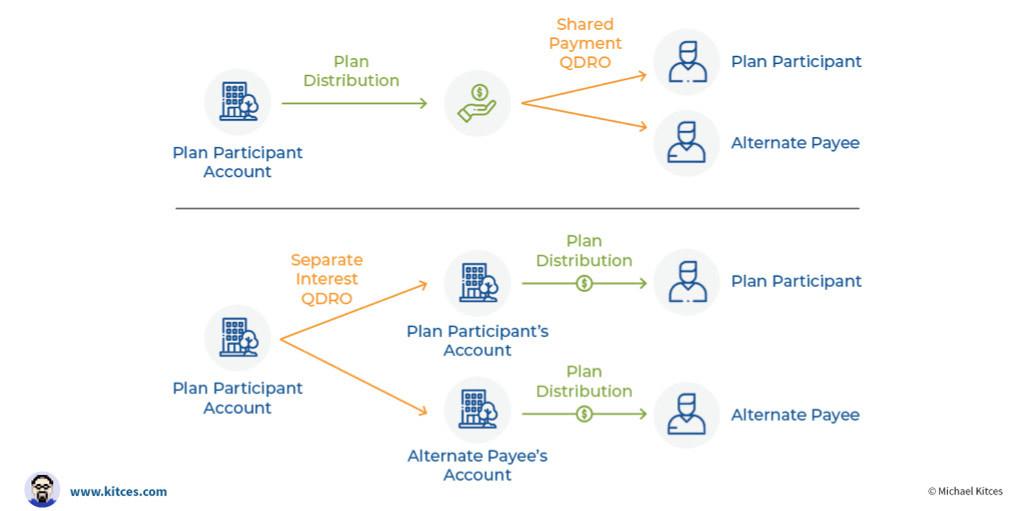
What is a QDRO?

Physician Divorce Situation

Hello,

I am an internist who is in the midst of a divorce situation. My attorney is talking about something called a QDRO with respect to my retirement plan.

Question: What is a QDRO?

Thanks

Dr. Joseph Burton Rellim

Springfield, Ohio

***

Secular Annuities

What Exactly is a Secular Hospital Annuity?

Your assistance is appreciated.

Thank you.

Anonymous Physician-Executive

Lake Worth, Florida


Query on Variable Annuities?

Join Our Mailing List

Point-Counter Point Debates

Question:

Annuities are a controversial product in the financial services industry today; especially variable equity annuities. They are often touted as a solution to the retirement income question for medical professionals. Many sales consultants and financial advisors advocate their use; while others absolutely detest and abhor them. And, it has been said that annuities are often sold, but rarely purchased.

For example, insurance fee components are high, sales-loads are great, and most annuities are deferred, but few are annuitized. Some are even sold within qualified retirement plans by fear mongering salesmen/women.

And so, what is your opinion on this controversial subject and ever-evolving contentious financial product? Please omit the default “it depends on the client and situation” answer-of-choice; and clearly opine pro or con; and why.

Assessment

Parsing aside; will annuities remain a bane, or finally morph into a more transparent and efficient product in the future? And, what are some alternatives for physician investors and healthcare executives? Cogent, thoughtful and experienced repliers are appreciated; sales slogans and aphorisms are not. Please opine?

Conclusion

Your thoughts and comments on this ME-P are appreciated. Feel free to review our top-left column, and top-right sidebar materials, links, URLs and related websites, too. Then, subscribe to the ME-P. It is fast, free and secure.

Speaker: If you need a moderator or speaker for an upcoming event, Dr. David E. Marcinko; MBA – Publisher-in-Chief of the Medical Executive-Post – is available for seminar or speaking engagements. Contact: MarcinkoAdvisors@msn.com

OUR OTHER PRINT BOOKS AND RELATED INFORMATION SOURCES:

Comprehensive Financial Planning Strategies for Doctors and Advisors: Best Practices from Leading Consultants and Certified Medical Planners(TM)

Stock Options Query

Question:

My hospital wants to give me some stock options. I am a senior nurse manager. What are hospital stock options anyway, and why are they so popular? Should I ask for cash instead?

IOW: Show me the money! Please advise if you can.

Thank you.

PS: Great blog!

Samuel [Sam] M. Jefferson; RN

Baltimore, MD

Requesting Help with Case-Mix Adjustments?

Question:

I am the quality improvement co-coordinator for a small rural tertiary care center in the Upper Peninsula of Michigan. We are just beginning to implement case-mixes and newer case-mix severity evaluations.

What is the real purpose of medical case-mix adjustments for a physician or healthcare facility; and how should we proceed?

Thank you.

Sarah J. Silvers-Inen

Medical Quality Coordinator

Marquette, MI

Healthcare Workplace Advice Survey

Employees Want Financial Planners and Benefit Advisors at the Workplace 

Staff Writers

Survey Results: [Table] 


2004

2005

2006

2007

Financial Planners (401K) at Work

43%

43%

38%

49%

Benefits Advisors at Work

N/A

36%

33%

47%

Financial Planners (All Needs) at Work

38%

37%

30%

44%

Source: The 6th Annual MetLife Study of Employee Benefit Trends:

Findings from the National Survey of Employers and Employees: Metlife, April 2008

http://www.whymetlife.com/trends/

Assessment: Is this contemporary trend also true for hospitals, medical clinics and the modern healthcare workplace?

Conclusion: Please comment and opine.

Related Information Sources:

Practice Management: http://www.springerpub.com/prod.aspx?prod_id=23759

Financial Planning: http://www.jbpub.com/catalog/0763745790

Risk Management: http://www.jbpub.com/catalog/9780763733421

Healthcare Organizations: www.HealthcareFinancials.com

Administrative Terms: www.HealthDictionarySeries.com

Speaker: If you need a moderator or speaker for an upcoming event, Dr. David E. Marcinko; MBA – Publisher-in-Chief of the Executive-Post – is available for seminar or speaking engagements. Contact him at: MarcinkoAdvisors@msn.com  or Bio: http://www.stpub.com/pubs/authors/MARCINKO.htm

Subscribe Now: Did you like this Executive-Post, or find it helpful, interesting and informative? Want to get the latest E-Ps delivered to your email box each morning? Just subscribe using the link below. You can unsubscribe at any time. Security is assured.

Link: http://feeds.feedburner.com/HealthcareFinancialsthePostForcxos


Hospital Stock and Taxes?

Q: I am a hospital employee. What are the ways that I can acquire stock in my public company without current cash activity; i.e.; taxes; any thoughts?

For example, at this time I do know it is important that any loans be subject to full recourse liability.

I also understand that if the loan is secured by the stock on a non-recourse basis, the transaction may be treated as if it were a grant of an option, and thus there would be no transfer of property until the loan is paid.

Thanks for your help. 

Dr. William Henry Biggerstaff

Costa Mesa, CA  

Doctor Economic Profiling

Q: What is physician economic profiling?

My hospital is considering this investigational methodology and many of us are naturally suspect. Can anyone shed some insight on the matter? Is it for real; punitive, instructional, collegial or are we all just paranoid; and/or any or all of the above! Thanks in advance. 

Dr. Joseph Martin Battalion                                                                             South-East Alabama


Fixed Annuity Tax Query?

Join Our Mailing List

Dear Medical Executive-Post,

I purchased a fixed contract annuity for $50,000 in 2004.

This was a guaranteed principle annuity with MetLife. I used money from a CD. This was not an IRA. I withdrew interest monthly and withdrew the allowed 10% per year.

In January 2007, the interest was so low (2%), that I decided to withdraw all funds. I was charged a 6% early withdrawal penalty (approx. $2,300).

  • How is this treated for taxes?
  • Early withdrawal penalty on Line 33?
  • Loss on investment?

This does not show on the 1099, but it is on the remittance advice.

Thank you.
Linda

Comprehensive Financial Planning Strategies for Doctors and Advisors: Best Practices from Leading Consultants and Certified Medical Planners(TM)

Doubting Doctor AUM Model

Join Our Mailing List

Dear Medical Executive-Post

This is an excellent communications forum and blog; I tell all my friends about it. So, here is my dilemma. 

The Problem?

My financial planner charges me a percentage of assets-under-management. He explained that in this way we are both on the “same side of the economic table”, with aligned interests. It all sounded good at first; but now I am wondering after doing some research and readings?  

For example: 

  1. Doesn’t this produce an “equity bias”, as he earns more income with equities than cash or bonds? This seems especially problematic with automated DRIP programs that don’t produce cash for purchases during market price downturns, but seem to constantly buy-up; at least 2/3 of the time according to my readings.
  2. Why can’t I pay a percentage of the assets he “grows” for me, rather than on the assets I have already amassed myself – without his help, or brought in from elsewhere?  And, why pay if he looses money?
  3. Is it true that my account is just bundled and outsourced with many other similar accounts, and is not really specific for me at all? Of course, this probably does reduce his risk by remaining within the “standard of care” for his industry. But, common industry practice doesn’t mean it’s good for me. And, why do I have to sign a brokerage arbitration agreement? Why is he not a fiduciary like my CPA and attorney?
  4. What is the deal with all these meetings and client engagements that don’t seem to add any value? And, he doesn’t seem interested in financial planning at all, despite being a “financial planner.” My other concerns are glossed-over, and then he just recommends I see an “expert”, when pressed.

Assessment

Is it time for me to “do-it-myself”; and go to a passive investment management style, use index funds or ETFs, and be done with it all? This strategy sure seems a lot cheaper. Of course, I fear my “doubts” will affect our relationship.

Conclusion

Am I wrong, or right? The more I investigate and learn about all these industry practices, the more concerned I have become. Any thoughts are appreciated?  Yet, maybe I don’t really have a problem at all! 

Nevertheless, where does a doctor (or anyone else for that matter) go for “honest advice”?  

PS: Your books are excellent sources, but I still need some help with execution.

Thank you. 

Dr. Mark-Me Anonymous

[Washington, DC]   

***

Comprehensive Financial Planning Strategies for Doctors and Advisors: Best Practices from Leading Consultants and Certified Medical Planners™

***

Ask a Consultant

Ask an Executive Post Consultant [beta version] 

Finally … electronic, fax or telephonic advice for healthcare executives and medical professionals that is:


• Objective, medically focused and personalized
• Rendered by medical management consultants and financial advisors
• Offered free of charge – for fist time users – by phone, fax, public or secure e-mail transmission.


The Executive Post Advice Forum™ is an executive-to-advisor e-mail platform that connects independent financial professionals and medical management consultants, with doctors or healthcare executives desiring unbiased financial, health economics or business advice on a complimentary initial basis. The relationship can then be continued if a mutual fit exists; depending on your impressions of the advisor, need, fees, venue, expertise, etc.   

Medical professionals and healthcare executives can now receive direct free access to consulting professionals in the areas of Practice Enhancement, Investing, Financial Planning, Asset Allocation, Portfolio Management, Taxes, Insurance, Mortgage and Lending, Practice Management, Information Technology, Human Resources, Profit Augmentation, Accounting, Operations and Strategy, and Employee Benefits, etc. 

The Executive Post Advice Forum™ is designed to fill a growing need for medically focused financial or managerial advice that traditional consultants have not been able to serve.

Now, with this platform, all Post viewers can receive unbiased information and objective business opinions on their own terms, anytime-anywhere. All free for first time users; in either public or private settings.

The Post Advice Forum™ eliminates conflicts of interest by providing advice on a free initial basis. To further assist our doctor / healthcare executives and blog community members; consulting advisors can then be contracted for ongoing engagements subject to existing state laws, licensure and the usual, customary and reasonable protocol and nature of the consultant. 

So, ultimately you pay only for only what you want and need. We do not sell financial or business products. The result is a unique “no pressure”, and “no conflicts-of-interest experience.”  

Get started with your free consultation, now.  Use either public or private forums; but we do favor transparent postings for all to benefit. 

How the Post Advice Forum™ Works:


  1. Contact a listed consultant by email, fax or phone
  2. Set up a free initial conference using your venue of choice              
  3. Select a public post or private format (fax, email or telephone)
  4. Execute the private conference call, fax, email; or public post
  5. Continue or reject further contact with the consultant.  

Collegiality and privacy is maintained and controlled by you. 

The Post is not affiliated with consultants, nor are we responsible for relationships or engagement outcomes; if any. As always in this type of situation, caveat emptor.

So, get started now!

“Ask a Consultant” in the message-box, below. 

Have a question about the operation of your healthcare entity, or your personal financial situation? Your question will be answered within three to five business days.

← Back

Thank you for your response. ✨