Call for Resignation of GDA’s Tommy Irvin

GDA and the National Salmonella Scandal

By Dr. David Edward Marcinko; MBA, CMP™dr-david-marcinko5
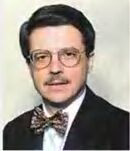
[Editor-in-Chief]

Tommy Irvin is the longest serving statewide official in Georgia, as well as in the United States.  Since 1969, he has served as Georgia’s Agriculture Commissioner. He was elected to his 10th four-year term this past November 2006. And, according to the Georgia Department of Agriculture’s website,

Pride and integrity run deep in Georgia. Our fruit, vegetable and nut growers strive to bring you the very best in quality, variety, dependability, and value.

The site states that Commissioner Irvin was recognized nationally for his service as an agriculture leader with broad experiences and keen insights. He continues to be sought after on the local, state and regional levels not only for his knowledge and experience but also for his political acumen in working with diverse groups and individuals.

Oh, really! What about the Peanut Corporation of American [PCA] salmonella incident that is now unfolding in the small town of Blakely, in South Georgia and nationally? 

About the GDA

Georgia Department of Agriculture [GDA] was established in 1874. While it is the oldest state department of agriculture in the US; Irvin is not quite as old. And, it is not a branch of USDA; but maybe it should be?

The department’s mission is to provide excellence in services and regulatory functions, to protect and promote agriculture and consumer interests, and to ensure an abundance of safe food and fiber for Georgia, America, and the world by using state-of-the-art technology and a professional workforce. The department has 696 employees under the leadership of Commissioner of Agriculture Tommy Irvin.

But, according to current news reports, the GDA has only 16 peanut plant inspectors and is spread far too thin.

GDA Units

Units within the department include: Administration, Animal Industry, Consumer Protection, Plant Industry and Marketing. The Georgia Department of Agriculture regulates, monitors, or assists with the following areas: grocery stores, convenience stores, food warehouses, bottling plants, food processing plants, pet dealers and breeders, animal health, gasoline quality and pump calibration, antifreeze, weights and measures, marketing of Georgia agricultural products domestically and internationally, pesticides, structural pest control, meat processing plants, seed quality, Vidalia onions, state farmers markets, plant diseases, nurseries and garden centers, fertilizer and lime, potting soil; feed, boll weevil eradication, apiaries, Humane Care for Equines Act, bottled water, peanuts and other responsibilities.

The Salmonella Peanut Butter Incident

As of Friday, January 23, 2009, Irvin is alerting consumers to the recall of more products that may contain peanut ingredients, supplied by Peanut Corporation of America, which is the subject of an FDA investigation concerning recent Salmonella outbreaks.

Death Toll

For a complete list of recalled products, see http://www.fda.gov/opacom/7alerts.html
 

The following companies are recalling products:

Aspen Hills, Inc of Garner, Iowa is recalling of some cookie dough products. The products are sold nationwide in 3 lb. pails, and 3 lb. corrugated boxes to distributors who are involved in fund raising.

The following products are recalled:

Baker Jo’s Peanut Butter, Peanut Butter Chocolate Chunk, and Monster 3 lb. pails – Date codes: 08273, 08281
Ovens of Ashley Monster 3 lb. pails – Date code: 08273
Gourmet Cookie Dough Peanut Butter, and Peanut Butter Chocolate Chunk 3 lb. pails – Date code: 08273
Gigi’s Peanut Butter 3 lb. pail – Date code: 08281 Gigi’s Peanut Butter 3 lb. corrugated box – Date code: 08277
Arizona Gold Peanut Butter, and I love Peanut Butter 3 lb. pails – Date code: 08281
ABC Dough Peanut Butter 3 lb. pails – Date codes: 08261, 08263, 08268, 08277, 08288, 08297  

No other Aspen Hills products are included in the recall. Consumers who have purchased the recalled products should dispose of them. Those with questions can contact Aspen Hills at 888-273-0302.
 

South Bend Chocolate Company

The South Bend Chocolate Company of South Bend, Ind. is recalling the following candies sold under the company brand name:

Assorted chocolates in 5 ounce (Products with labels reading 121 and 121R,UPC #4482300121 are under recall), 8 ounce (Products with labels reading 122, 122DK and 122R, UPC #4482300122 are under recall), 12 ounce (Products with labels reading 123 and 123DK, UPC #4482300123 are under recall) and 26 ounce (Product 124, UPC #4482300124 is under recall) boxes. [Note: the sugar free assorted chocolates are not affected, and are not part of the recall].

Hoosiers in 1.5 ounce (Product 010, UPC# 4482300011) and 3.0 ounce (Product 011, UPC# 4482300010.  [Note:  These are corrected sizes].
Valentine Heart, 14 ounces (Products with labels reading 1020 and 1020R, UPC #4482310201 are under recall).

Additionally Christmas gift boxes (CC, CCLG, CCXL and CCXXL) and any other gift baskets may have included the assorted chocolate boxes.

The following products are also being recalled and are sold to retail stores in bulk for sales of smaller quantities to their customers: 

4.5lb Peanut Butter Fudge, Product 228, UPC #4482300228
4 lb. Hoosiers, Product 410, UPC #4482300410
5 lb. Peanut Butter Meltaway, Milk Chocolate, Product 204, UPC #4482300204
5 lb. Peanut Butter Meltaways-Dark Chocolate, Product 204D, UPC #4482302044
4.5lb Peanut Butter Chocolate Fudge, Product 229, UPC #4482300229

Replacement products that are not under recall can be distinguished from recalled products by the presence of a round gold sticker, which are placed on the bottom of the boxes and/or baskets of replacement products that are not being recalled.

Consumers who have purchased the recalled products should discard them or return them to the place of purchase. Those with questions may contact the South Bend Chocolate Company at 574-233-2577.

Rain Creek Baking Company

The Rain Creek Baking Corporation of Madera, Calif. is recalling of Sinbad and Rain Creek Baking Company branded dessert products produced with peanut butter. The products will be marked with an “exp” (as in expiration date), “best before” date or a lot code. The expiration date or the best before date will read July 22, 2009 and prior. Lot numbers are 08182 sequentially through 08366 and 09001 sequentially through 09022. These lot numbers can be found on the bottom label next to the ingredient statement:

SinbadSweets.com 12pc Peanut Butter Princess     
0 38105 10304 3
Sinbad® Special Baklava Assortment
0 38105 10933 0
19 pc Bakery and Sweets
0 38105 10985 4
Sinbad® Sweets Enrobed Peanut Butter Princesses
0 38105 10996 0
Sinbad® Sweets Enrobed Peanut Butter Baskets
0 77589 37133 0
Rain Creek Baking Company® Peanut Butter Princesses
0 38105 20013 1
Rain Creek Baking Company® Peanut Butter Turtles
0 38105 20026 1
Rain Creek Baking Company® Peanut Butter Turtle Shells
0 38105 20031 5
Sinbad® Baklava & Sweets
0 38105 20101 5
Sinbad® Baklava & Sweets
0 38105 20102 2
Sinbad® Baklava & Sweets
0 38105 20103 9
Sinbad® Galleta estilo Baklava
0 38105 20106 0
Sinbad® Baklava & Sweets
0 38105 20117 6
Sinbad® Baklava & Sweets
0 38105 20120 6
Sinbad® Baklava & Sweets
0 38105 20124 2
Sinbad® Baklava & Sweets
0 38105 20127 5
Sinbad® Sweets Peanut Butter Princess Baklava
0 38105 20128 2
Sinbad® Baklava & Sweets
0 38105 20129 9
Sinbad® Baklava & Sweets
0 38105 20130 5
Sinbad® Galletas estilo Baklava
0 38105 20180 0
Rain Creek Baking Company® Baklava Assortment *
0 38105 20211 1
Rain Creek Baking Company® Baklava Assortment
0 38105 20213 5
Sinbad® Baklava & Sweets
0 38105 21335 3
Sinbad® Sweets European Baklava Assortment *
0 38105 21339 1
Sinbad® Sweets Baklava & Sweets
0 38105 21375 9
Sinbad® Sweets Baklava & Sweets
0 38105 21382 7
Sinbad® Sweets Caffe Sweets
0 38105 22143 3
Rain Creek Baking Corporation® Baklava Assortment *
0 38105 22280 5
Michael’s Baklava Assortment
0 38105 22297 3
Rain Creek Baking Corporation® Hand Crafted Baklava
0 38105 22306 2
Items with an asterisk (*) are the only 2009 produced items (when looking for lot numbers). Consumers who have purchased the following products with the expiration dates listed should dispose of the products or return them to the place of purchase for a full refund.

Chef Jay’s Food Products

Chef Jay’s Food Products of Las Vegas, Nev. is recalling some peanut butter-related products. The following products, in all sizes and packages, with the “Best By” dates ranging from 06/Sept/09 thru 16/Jan/10 are included in the recall: 

Peanut Butter Tri-O-Plex Duo Bar (100 gram)
Peanut Butter Tri-O-Plex Cookie (85 gram)
Peanut Butter Chocolate Chip Tri-O-Plex Cookie (85 gram)
Peanut Butter Chocolate Chip Tri-O-Plex Lite Bites Cookie (57 gram)
Peanut Butter Tri-O-Plex Brownie (85 gram)

Consumers who have purchased the recalled products are urged to dispose of them immediately but may retain the package with the “Best By” dates ranging 06/Sept/09 thru 16/Jan/10 in order to receive replacement product.

Those with questions regarding product replacement can find these details at www.chefjays.com, by emailing customerservice@chefjays.com or calling 702-450-7711. 

Arbonne International

Arbonne International, LLC, Irvine, Calif. is recalling certain lots of Arbonne Figure 8 Chews because the products contain peanut butter. The recall includes only the Arbonne Figure 8 Chews with the following lot numbers (with shipping dates ranging from October 27, 2008 to January 19, 2009):

A8296-8291 / EXPIRATION DATE 10/2009
A8331-8291 / EXPIRATION DATE 10/2009
A8331-8309 / EXPIRATION DATE 11/2009
B8331-8309 / EXPIRATION DATE 11/2009
C8331-8309 / EXPIRATION DATE 11/2009
A8336-8291 / EXPIRATION DATE 10/2009

The chews were sold in individual packages and as a component of the Go Figure 8 30-Day Program Set and the Figure 8 Ready, Set, Go! Vanilla product bundles. The lot number for Arbonne Figure 8 Peanut Butter Chews may be found on the lower left back panel of the bag.

Arbonne will replace the product with Arbonne Figure 8 Chocolate Chews or refund the money paid for the recalled product. In order to exchange the product or receive a refund, the consumer must provide the lot number of the recalled product. If Arbonne consumers are unsure if they have the recalled product, they are requested to contact the Arbonne Customer Service Center. Requests for refunds, product exchanges or other questions should be addressed to Arbonne’s Customer Service Center at 1-800-ARBONNE.

Parker Products, Inc.

Parker Products, Inc., Fort Worth, Texas has announced the recall of the following products. The products are sold nationwide in bulk pack cases as an ingredient to manufacturers and companies for private label.  
None of these products are sold directly to consumers.

Chocolate Peanut Butter Cup 1442
Manufactured on 11/6/08, lot code 08296, 30 pound case.
Peanut Butter Cookies & Crème Organic Bark 2348
Manufactured on 10/3/08, lot code 08277, 10 pound case.
Peanut Butter Milk Blend 2310
Manufactured on 07/31/08, lot code 08184, 30 pound case.
Consumers who have purchase the recalled products should dispose of them. Those with questions regarding this recall may contact Parker Products at 800-433-5749.

General Nutrition Centers, Inc.

General Nutrition Centers, Inc. (GNC), Pittsburgh, Pa, is issuing a voluntary recall of some Peanut Butter Soft Chews.

The recall involves only GNC Triflex Peanut Butter Soft Chews with lot numbers ending in 8275 and 8255. The product’s ten digit lot number can be found on the bottom of the product’s package. No other GNC brand products have been impacted by the recall. Those who have purchased the recalled product should discard it. Consumers with questions or who would like a refund may contact GNC’s Customer Service at 888-462-2548.

Jimmy’s Chocolate Chip Cookies, Inc.

Jimmy’s Chocolate Chip Cookies, Inc., Fair Lawn, N.J. is recalling certain packages of cookies that have peanut butter as an ingredient. The products subject to recall include Jimmy’s Cookies and One Smart Cookie Peanut Butter Chocolate Chunk cookies in retail pack sizes 4 oz, 12.5 oz, and 18 oz. and cookie dough in 15 lb, 20 lb and 25 lb foodservice pack sizes with pack dates 12/4/08 – 1/14/09. No other Jimmy’s Cookies or One Smart Cookie retail packages are included in this recall. Jimmy’s Cookies and One Smart Cookie brands are distributed in most Eastern, Southern and Midwestern states through supermarket in store bakeries, convenience stores and lunch trucks.  The packaging is clear plastic, round, rectangular, or octagonal, with a label bearing the brand name. Consumers who have purchased the recalled cookies should either discard or return them to the place of purchase for a full refund. Questions may be directed to the company at 800-937-5050.

Trader Joe’s

Trader Joe’s of Monrovia, Calif. is recalling three peanut butter-related products. The recalled products include private label Peanut Butter Chewy Coated & Drizzled Granola Bars, 7.4-ounce (UPC 88713), Nutty Chocolate Chewy Coated & Drizzled Granola Bars 7.4-ounce (UPC 88721) and Sutter’s Formula Cookies, 16-ounce (SKU 00176).

The affected Sutter’s Formula Cookies were sold only in Trader Joe’s stores located in Southern California, Arizona, New Mexico and Nevada. The Peanut Butter Chewy Coated & Drizzled Granola Bars and Nutty Chocolate Chewy Coated & Drizzled Granola Bars were sold at Trader Joe’s stores nationwide.

Consumers who have purchased these items (any date code) are urged to return them to any Trader Joe’s for a full refund.  Those with questions may contact Trader Joe’s Customer Service at 626-599-3817.

As of Jan 24, 2009 – The peanut butter salmonella outbreak has now killed at least eight people, and sickened 550 others in 43 states. A Minnesota woman in her eighties is the latest victim. Enough is enough!

Assessment

I studied, if you can call it that, almost 15 years ago for my Georgia State insurance license. Then, as is now, there was only one question about the GDA. The answer was always the same; Irvin. He was one powerful dude in the sticks of South Georgia and usually ran unopposed for his position [think Boss Hogg in the “Dukes of Hazard”]. But now, we ask that you call and demand the resignation of Tommy Irvin. After 40 years, he deserves the rest; and so do we. We sure don’t need any more RIPs.

Georgia Department of Agriculture
19 Martin Luther King, Jr. Dr, SW
Atlanta, Georgia  30334

Tele: (404) 656-3645
Toll Free: (800) 282-5852
TTY: (404) 657-8387

Furthermore, if you call the Georgia Department of Agriculture during regular business hours, 8 a.m. to 4:30 p.m., you will always be greeted by a person, not a machine:

“We believe when you contact your Department of Agriculture, you should be able to talk directly to a person who can give you the individual attention that you deserve and expect.”

Industry Index Indignation Rating: 90

Conclusion

And so, your thoughts and comments on this Medical Executive-Post are appreciated. Tell the live-person at the GDA that “Irvin must go”; or leave a message on their new machine. Of course, defenders of Irvin are also asked to opine, and defend him, in good-faith. Perhaps former President Jimmy Carter will chime-in on the Irvin controversy?

Subscribe Now: Did you like this Medical Executive-Post, or find it helpful, interesting and informative? Want to get the latest E-Ps delivered to your email box each morning? Just subscribe using the link below. You can unsubscribe at any time. Security is assured.

Link: http://feeds.feedburner.com/HealthcareFinancialsthePostForcxos 

About Healthcare Financials.com

Healthcare Organizations [Financial Management Strategies]

By Hope Rachel Hetico; RN, MHA
Managing Editor
hetico3

This 2-volume, quarterly subscription print publication will reshape the hospital management landscape by following three important principles www.HealthcareFinancials.com

1. World Class Advisory Board

First, we have assembled a world-class editorial advisory board and independent team of contributors and asked them to draw on their experience in economic thought leadership and managerial decision making in the healthcare industrial complex. Like many readers, each struggles mightily with the decreasing revenues, increasing costs, and high consumer expectations in today’s competitive healthcare marketplace.  Yet, their practical experience and applied operating vision is a source of objective information, informed opinion, and crucial information for this manual and its quarterly updates.

2. Writing Style

Second, our writing style allows us to condense a great deal of information into each quarterly issue.  We integrate prose, applications and regulatory perspectives with real-world case models, as well as charts, tables, diagrams, sample contracts, and checklists.  The result is a comprehensive oeuvre of financial management and operation strategies, vital to all healthcare facility administrators, comptrollers, physician-executives, and consulting business advisors.

3. Compelling Content

Third, as editors, we prefer engaged readers who demand compelling content. According to conventional wisdom, printed manuals like this one should be a relic of the past, from an era before instant messaging and high-speed connectivity. Our experience shows just the opposite. Applied healthcare economics and management literature has grown exponentially in the past decade and the plethora of Internet information makes updates that sort through the clutter and provide strategic analysis all the more valuable. Oh, it should provide some personality and wit, too! Don’t forget, beneath the spreadsheets, profit and loss statements, and financial models are patients, colleagues and investors who depend on you.

Assessment

ho-journal1

Rest assured, Healthcare Organizations [Financial Management Strategies] will become an important peer-reviewed vehicle for the advancement of working knowledge and the dissemination of research information and best practices in our field. In the years ahead, we trust these principles will enhance utility and add value to both your print and this e-companion subscription.

Conclusion

Most importantly, we hope to increase your return on investment. If you have any comments or would like to contribute material or suggest topics for a future update, please contact us.

Speaker: If you need a moderator or speaker for an upcoming event, Dr. David E. Marcinko; MBA – Publisher-in-Chief of the Executive-Post – is available for seminar or speaking engagements. Contact: MarcinkoAdvisors@msn.com  or Bio: www.stpub.com/pubs/authors/MARCINKO.htm

Subscribe Now: Did you like this Medical Executive-Post, or find it helpful, interesting and informative? Want to get the latest E-Ps delivered to your email box each morning? Just subscribe using the link below. You can unsubscribe at any time. Security is assured.

Link: http://feeds.feedburner.com/HealthcareFinancialsthePostForcxos

Physician Retirement Threats and Opportunities

Investing Vehicle Updates for Modernity

By Steven Podnos; MD, MBA, CFP®

coins

Most physicians count on their retirement plans for the bulk of their financial security. Yet, few of us understand the intricate workings of these plans, and are therefore misled or at the least miss out on a number of cost savings and benefits. Here are some examples to consider, especially during this time of financial upheaval:

1. Jim L, an endocrinologist in private practice, works with his wife as office manager and has four other employees.  Jim had a “free” prototype profit sharing plan with a well known brokerage and has been putting 15% of his total employee compensation away every year in order to fund about $35,000 dollars a year into his own plan.  He pays his wife $60,000 dollars a year in order to get a $9,000 dollar annual contribution for her, but at a social security cost of the same $9,000 dollars.  His plan is invested in a variety of “loaded” mutual funds and stocks at the brokerage, and he was not really sure how it was doing in terms of performance.

Change:

The plan was changed to a customized 401k/profit sharing plan using a Third Party Administrator at a cost of 2500 dollars.  Jim’s wife lowered her salary to $20,000 dollars, which saved over $5,000 dollars a year in social security taxes.  Yet Jim and his wife were now able to contribute over $65,000 dollars in pretax money (rather than $44,000 dollars in prior years.  His employee cost for the plan dropped from 15% of a $100,000dollar payroll to 6%, another annual savings of $9,000 dollars. 

2. Statewide Healthcare medical group had an insurance based “retirement” plan.  All of the investments allowed were wrapped in variable annuity/insurance wrappers with an annual expense ratio of between 2 and 4% annually. The plan was “free” to the group but did not allow any differentiation in benefits or contributions between the physicians and their employees

Change:

An unbundled 401k/profit sharing plan was designed that allowed physicians to contribute the maximum in salary deferral and profit sharing contributions. Using an age-weighted contribution formula, the physicians were able to put away 14% of their salary in the profit sharing plan as compared with a 5% contribution for employees.  The new investment portfolios carried an annual cost well below 1% annually and were actively monitored by a fee only fiduciary advisor, mostly relieving the group from the fiduciary responsibility for the fund investments.

3. Kirk L, an orthopedic surgeon employed his wife and 5 employees in a busy practice.  He is 55 years of age and looking towards retirement in ten years.  He had a reasonably well designed 401k/profit sharing plan advisor which let him and his wife put away about 70-75 thousand dollars a year with an employee cost of about 15 thousand dollars. He was beginning to worry about not having enough savings to make his retirement goal.

Change:

Kirk and two of his younger employees were switched to a new Defined Benefit plan, but also continued in the 401k salary deferral plan. Kirk’s wife and the remaining employees stayed in the old plan and his wife’s salary was reduced to lower Social Security costs.  With the new plan, Kirk and his wife are now putting away about $200,000 dollars in pretax contributions annually at a marginally higher cost for the employees.

Poorly Designed Retirement Plans

None of these stories are unusual, in fact they are typical.  Most physician retirement plans are poorly designed, expensive and misunderstood.  Few existing plans are updated to capture the many positive changes made in tax law over the last decade.  Many plans are shoddily designed to catch the “quick” dollar, with financially terrible consequences to the physicians.

Qualified Plans

And so, I’ll review the most common types of retirement plans available to medical practices and discuss the pros, cons and specific opportunities each type for most practices. Note that most of these plans are considered “qualified” plans by the US Government.  Being qualified means that contributions to the plans are allowed to be deducted as business expenses and that the plan assets are generally protected from creditors.  In exchange, the government requires extensive paperwork and mandatory contributions for employees on the lower end of the salary scale. 

1. SEP-IRA

The SEP-IRA allows a fixed percentage of salary (up to 25% of W2 income) to be contributed to individual IRAs of most employees (including the physicians). There can be no discrimination in what percentage of compensation is used between owner/managers and lower paid employees, making this a relatively expensive plan in terms of employee funding. There is no component of salary deferral by employees, and all plan funding is immediately “vested” (belongs to the employee immediately if they leave employment).

The advantages of the SEP plan include a minimum of paperwork and ease of setup. Generally, SEP-IRA plans are used by small family owned businesses with few to no outside employees. It does work well for physicians that act as Independent Contractors (no employees) such as many Emergency Room physicians.  However, an individual contractor with an income of less than around $170,000 dollars can actually put more pre-tax money away in a Self-Employed 401k plan.

2. SIMPLE-IRA

This plan is another relatively easy one to set up and administer. It allows companies that have less than 100 employees to open individual IRA accounts for employees. The employees may defer salary in amounts of $10,500-$13,000 (depending on age), and the employer supplies a “match.” All money in the plan is immediately vested. The match is generally (but not always) a dollar for dollar matching contribution of up to 3% of the employee’s compensation.

For example, a company owner with a compensation of 100,000 dollars would be able to defer salary in an amount of up to $13,000 (if age 50 or older), and then have the company “match” 3% or $3,000 more. A SIMPLE IRA plan is a good choice for small businesses in which the owners are highly compensated, and few employees wish to defer salary. The disadvantages of the SIMPLE-IRA are immediate vesting for the matched funds, and relatively low total amounts of contributions compared to other qualified plans. 

NOTE:

I have seen these plans work well in small practices that wish to avoid paperwork, have few to no employees that wish to defer salary, and who don’t mind the limited ability to make contributions.  Note one unusual feature of this plan, in that the 3% match has no limits. I have seen one physician with a small group of employees and an income of $600,000 dollars per year put away 13,000 in salary deferrals and another ($600K X 3%) 18K in the match at no employee cost!

3. 401k/PROFIT SHARING PLAN

This is by far the most common type of qualified plan in existence.  These plans actually have three components:


a)       401k salary deferral-In 2008, employees may defer between 15,500 and 20,500 dollars. This money and earnings on it are not subject to Federal income tax until withdrawn in retirement, and are immediately vested.

b)       A “match”-this is an optional part of the plan in which an employer may offer to contribute a matching amount of dollars to give employees an incentive to participate.  Matching funds are usually subject to vesting on a time schedule.

c)       Profit sharing-like the match, this is a discretionary contribution by the employer of up to 25% of payroll and usually subject to vesting.


It is crucial to have a skilled plan designer customize a 401K plan for your individual practice.  The most common abuse of these plans is the use of “cookie cutter” prototype plans used by brokerages and insurance companies. These prototype plans are for the convenience and profit of the person “selling” the plan, and are a solid negative for the practice. Customization allows the physicians to have maximal participation at the lowest employee cost.

There is also a self employed 401k option for small practices that have no full time employees other than the physician and spouse. They operate in much the same way, but with little expense and much less paperwork.

4. DEFINED BENEFIT PLAN

Once common, these plans are now rarely used by most companies. They are based completely on company contributions to a fund (no salary deferral) that are actuarially designed to produce a set benefit amount at retirement. All the risk for providing the promised benefit is the responsibility of the employer, which is an advantage when the major beneficiary is the physician. Defined Benefit plans work best for practices in which the physician/employee ratio is low and the physician(s) is approaching age 50 or older. The advantage of this plan is allowing much higher contributions on a pretax basis, with the disadvantage of higher administrative costs. These plans work extremely well for high income businesses employing one individual (plus or minus a spouse) who is nearing age 50 or over. However, physician practices that employ a spouse or physicians of different ages can often use a Defined Benefit Plan in conjunction with a 401k/profit sharing plan to great benefit as in example three.

Assessment

Doctors have a tremendous opportunity to review and enhance the retirement plan options. Although the article focuses on these medical professionals and related occupations, much of the material applies to other professional and business clients.  A relationship with a good Third Party Administrator [TPA] and some independent study are invaluable to your ability to perform this function well.

Conclusion

Dr. Podnos is a fee-only financial planner and the author of “Building and Preserving Your Wealth, A Practical Guide to Financial Planning for Affluent Investors” (available at Amazon.com and bookstores). He can be reached at Steven@wealthcarellc.com And so, your thoughts and comments on this Medical Executive-Post are appreciated.

Speaker: If you need a moderator or speaker for an upcoming event, Dr. David E. Marcinko; MBA – Publisher-in-Chief of the Executive-Post – is available for seminar or speaking engagements. Contact: MarcinkoAdvisors@msn.com  or Bio: www.stpub.com/pubs/authors/MARCINKO.htm

Our Other Print Books and Related Information Sources:

Practice Management: http://www.springerpub.com/prod.aspx?prod_id=23759

Physician Financial Planning: http://www.jbpub.com/catalog/0763745790

Medical Risk Management: http://www.jbpub.com/catalog/9780763733421

Healthcare Organizations: www.HealthcareFinancials.com

Health Administration Terms: www.HealthDictionarySeries.com

Physician Advisors: www.CertifiedMedicalPlanner.com

Subscribe Now: Did you like this Medical Executive-Post, or find it helpful, interesting and informative? Want to get the latest E-Ps delivered to your email box each morning? Just subscribe using the link below. You can unsubscribe at any time. Security is assured.

Link: http://feeds.feedburner.com/HealthcareFinancialsthePostForcxos

Recent Elder Housing Updates

Legal Protections, Home Equity Resources and Housing Options

By Staff Reporters

insurance-book1

Recently, significant updates and expanded coverage of the housing market for the elderly has occurred. Several items include efforts to protect consumers, and senior medical professionals, from current difficulties in the housing market. For example, these include the following three updates:

1. FINRA on Reverse Mortgages

An alert issued by the Financial Industry National Regulatory Authority (FINRA), warns that:

“as more Americans near retirement age, some financial institutions are aggressively marketing reverse mortgages as an easy, cost-free way for retirees to finance lifestyles – or to pay for risky investments  that can jeopardize their financial futures.” 

FINRA’s position is that such vehicles should be used only as a last resort.

2. HECM on Primary Residences

The Home Equity Conversion Mortgage Demonstration (HECM) program, which was first authorized by Congress in 1987, helps elderly homeowners meet their financial needs and provides borrowers with insurance against lender default. Now, homeowners can also use a HECM to purchase a primary residence if they are able to use cash on hand to pay the difference between the HECM proceeds and the sales price plus closing costs for the property they are purchasing.

3. ERA Home-Keeper Program

As a result of the passage of the Housing and Economic Recovery Act of 2008, Fannie Mae announced the discontinuance of its Home Keeper reverse mortgage program, effective as of December 31, 2008.  Some state programs encourage the use of reverse mortgages, in contrast to federal warnings, as a financial tool to help elderly homeowners pay for home and community services so they can “age in place.”

Conclusion

And so, your thoughts and comments on this Medical Executive-Post are appreciated, as we follow-up our four part series on: At Home or Nursing Home Care for Long Term Care. Comments from physicians and LTC insurance agents are especially valued.

Speaker: If you need a moderator or speaker for an upcoming event, Dr. David E. Marcinko; MBA – Publisher-in-Chief of the Executive-Post – is available for seminar or speaking engagements. Contact: MarcinkoAdvisors@msn.com  or Bio: www.stpub.com/pubs/authors/MARCINKO.htm

Our Other Print Books and Related Information Sources:

Practice Management: http://www.springerpub.com/prod.aspx?prod_id=23759

Physician Financial Planning: http://www.jbpub.com/catalog/0763745790

Medical Risk Management: http://www.jbpub.com/catalog/9780763733421

Healthcare Organizations: www.HealthcareFinancials.com

Health Administration Terms: www.HealthDictionarySeries.com

Physician Advisors: www.CertifiedMedicalPlanner.com

Subscribe Now: Did you like this Medical Executive-Post, or find it helpful, interesting and informative? Want to get the latest E-Ps delivered to your email box each morning? Just subscribe using the link below. You can unsubscribe at any time. Security is assured.

Link: http://feeds.feedburner.com/HealthcareFinancialsthePostForcxos


Goodbye Julie Gerberding MD

CDC Accused of Information Stone-Walling

By Dr. David Edward Marcinko; MBA, CMP™dr-david-marcinko3

Julie Louise Gerberding; MD, MPH [born August 22, 1955, Estelline, South Dakota] is an infectious disease expert who was the former Director of the Centers for Disease Control and Prevention [CDC], and administrator for the Agency for Toxic Substances and Disease Registry [ATSDR] here in Atlanta, Georgia.

Allegedly never held in much esteem by the local medical community and her employees, it is with some insider schadenfreude that she announced her resignation – from a leadership position that began in 2002 – effective January 20, 2009.

Controversial Stewardship

Soon after her arrival at the CDC, Gerberding began an overhaul of the agency’s organizational structure. Since then, several senior scientists either left or announced plans to do so. She is regarded as having been a highly controversial director, whose stewardship was inculcated in several noxious healthcare incidents, such as:


  • Terrorism and Counter-Terrorism
  • Hurricane Karina
  • Autism Vaccine Controversy
  • AIDS and Retroviruses
  • Tuberculosis [MDR-TB and XDR-TB]

Freedom of Information Act

The FOIA presumes that federal records belong to citizens and puts the onus on government to justify why they should be blinded; with proprietary trade-secrets, medical privacy issues or national security as reasonable exemptions. The law is intended to allow citizens to hold government accountable.

CDC Obfuscation

However, it is because of alleged FOIA obfuscations that we believe Gerberding’s resignation, at the Obama Administration’s request, was a correct one.

For example, although the law requires a response within 20 days, a breaking local report in the Atlanta-Journal-Constitution newspaper [February 1, 2009: by Alison Young, CDC Can be Slow to Release Documentation] documents that information requests have been pending for more than 12 months, with some more than two years.    

Environmental Scanning

Perhaps, the most noxious initiative, under Gerberding’s tenure however, was the so-called policy on “environment-scanning” or, monitoring the news-media, internet space, blogs and other venues to identify “emerging threats to the agencies’ reputation.”   

Assessment

The acting CDC director is non-physician Richard Besser.

Additional Information Sources:


NOTE: If you have a tip or experience regarding governmental healthcare, economics or financial information stonewalling, we want to hear from you.

Conclusion

And so, your thoughts and comments on this Medical Executive-Post are appreciated. Are you saddened or delighted to see the departure of Dr. Julie Gerberding from the CDC?

Speaker: If you need a moderator or speaker for an upcoming event, Dr. David E. Marcinko; MBA – Publisher-in-Chief of the Executive-Post – is available for seminar or speaking engagements. Contact: MarcinkoAdvisors@msn.com  or Bio: www.stpub.com/pubs/authors/MARCINKO.htm

Subscribe Now: Did you like this Medical Executive-Post, or find it helpful, interesting and informative? Want to get the latest E-Ps delivered to your email box each morning? Just subscribe using the link below. You can unsubscribe at any time. Security is assured.

Link: http://feeds.feedburner.com/HealthcareFinancialsthePostForcxos

Enhancing Revenue Cycles with Recondo

About SurePayHealthPayment Processing

Staff Reporters

stk305087rknConsumer-driven health care [CDHC], high-deductible health plans [HDHPs], medical and health savings accounts [MSAs/HSAs] are changing the rules of revenue cycle management for medical practices, clinics, retail facilities and hospitals. In fact, compared to other industry segments, health care payment processing remains extremely inefficient; for example, the retail segment settles payments for less than two percent of revenue, and financial services settles payments for less than one percent. Some health economists even estimate that if health care could settle payments even for 10 percent of revenue, savings would exceed $100 billion.

Graphs: http://www.recondotech.com/pdf/HSA-AHIP-January-2008.pdf

About Recondo Technolgy

According to the website, Recondo Technology was formed by a veteran team of experienced software developers with a singular goal: to build tools that help hospitals, offices and medical clinics accelerate patient payments and streamline claims to payers; especially in the emerging Consumer Directed Health Care model of US health care.

Product Offerings

Recondo is an early pioneer in verifying patient information, financially approving and clearing patients, predicting payment accurately, and automating the Medicaid/charity approval process. Recondo offers: 

· Real-time access to information that ensures payment sources for services are properly identified prior to, during, and after care delivery.

· Statement processing that handles approximately 300 million patient documents annually for healthcare providers throughout the country. 

Link: http://www.recondotech.com

Assessment

Accelerating the healthcare cash conversion cycle is a desirable business goal, especially if collection occurs at the point-of-contact. Nevertheless, all medical professionals should realize that their guiding principle should always be: Omnia pro Aegroto [all for the patient].   

Conclusion

And so, your thoughts and comments on this Medical Executive-Post are appreciated; especially from our retail and concierge medical practitioners and subscribers.

Speaker: If you need a moderator or speaker for an upcoming event, Dr. David E. Marcinko; MBA – Publisher-in-Chief of the Executive-Post – is available for seminar or speaking engagements. Contact: MarcinkoAdvisors@msn.com  or Bio: www.stpub.com/pubs/authors/MARCINKO.htm

Subscribe Now: Did you like this Medical Executive-Post, or find it helpful, interesting and informative? Want to get the latest E-Ps delivered to your email box each morning? Just subscribe using the link below. You can unsubscribe at any time. Security is assured.

Link: http://feeds.feedburner.com/HealthcareFinancialsthePostForcxos

At-Home or Nursing-Home for Long Term Care [Part III]

Cost and Duration of Long-Term Care at Home

By Dr. David Edward Marcinko; FACFAS, M.B.A., CPHQ™, CMP™

By Thomas A. Muldowney; M.S.F.S., CLU, ChFC, CFP® CMP™

By Hope Rachel Hetico; R.N., M.H.A., CPHQ™, CMPdr-david-marcinko1

This is the third post, in an exclusive four part series for the ME-P titled: At-Home or Nursing Home Care for Long-Term.”

Average Nursing Home Stays

It is generally agreed that if short, recuperative stays are excluded, the average stay in a nursing home is about 21/2 years. Nursing home studies show that residents experience four types of stay before death: 12 percent remain for less than 90 days; 21 percent stay between 91 and 365 days; 43 percent stay for up to five years; and 24 percent stay longer than five years. It is not possible to know in advance which type of stay you or your family may experience. But, put in another way, two-thirds stay more than one year and one-quarter stay more than five years. Most seniors also have home care services before entering a nursing home.

Custodial Services 

Custodial nursing home services are paid from the elder’s savings or by Medicaid. The current estimated annual cost for a nursing home resident is about $35-40,000. However, the annual cost for a nursing home in metropolitan areas may be at least twice as much.

Assessment

In the past decade, nursing home charges increased 8 percent a year. At a minimum, these costs may be expected to climb at a 5 percent annual rate in the future.

Conclusion

Your thoughts and comments on this ME-P are appreciated. Feel free to review our top-left column, and top-right sidebar materials, links, URLs and related websites, too. Then, subscribe to the ME-P. It is fast, free and secure.

Link: http://feeds.feedburner.com/HealthcareFinancialsthePostForcxos

Speaker: If you need a moderator or speaker for an upcoming event, Dr. David E. Marcinko; MBA – Publisher-in-Chief of the Medical Executive-Post – is available for seminar or speaking engagements. Contact: MarcinkoAdvisors@msn.com

OUR OTHER PRINT BOOKS AND RELATED INFORMATION SOURCES:

DICTIONARIES: http://www.springerpub.com/Search/marcinko
PHYSICIANS: www.MedicalBusinessAdvisors.com
PRACTICES: www.BusinessofMedicalPractice.com
HOSPITALS: http://www.crcpress.com/product/isbn/9781466558731
CLINICS: http://www.crcpress.com/product/isbn/9781439879900
BLOG: www.MedicalExecutivePost.com
FINANCE: Financial Planning for Physicians and Advisors
INSURANCE: Risk Management and Insurance Strategies for Physicians and Advisors

Product DetailsProduct DetailsProduct Details

Product Details  Product Details

Launching our ME-P Advertising Initiative

Learning and Growing with your Help

By Medical Executive-Post Staff stk321042rkn

This complimentary and companion blog forum for the 2-volume, 1,200 pages, quarterly print-journal at www.HealthcareFinancials.com provides the very latest news, information, insider reports, rated commentary, white-papers, professional posts and ranked subject matter information on the health care industrial complex. We see it as a “between-the-issues” communications forum, with in-vivo knowledge repository integrated with a ranking utility and professional social network for modernity.

Linking Stakeholders

In other words, we link movers-shakers and promote those in the profession with financial advisors, medical management consultants and health economists. All stakeholders of the healthcare industrial complex are invited to read, vote, submit posts and become involved with us.

Complimentary Resources

In order to make these high-level resources available to you at no cost, we promote our in-house textbooks, dictionaries, white papers, handbooks and print journal; online. www.MedicalBusinessAdvisors.com We also promote our consulting services, seminars, speaking engagements and online education program in heath economics and management for consultants www.CertifiedMedicalPlanner.com  

Soon, we intend to sparsely sell ads to sponsors interested in reaching out to our informed audience.

Privacy Assured

Of course, our sponsors will require some anonymous, aggregate data for reporting purposes

www.HealthDictionarySeries.com But, at no time will personal information or e-mail address be shared with vendors, sponsors or other sites. Please feel free to review our privacy policy.

Assessment

Don’t forget to send in your informed posts, and comments, too! Deep subject matter content is our lifeblood.

Read, rant, rate, rank and rave!

Please be sure to subscribe here for increased functionality.

Link: http://feeds.feedburner.com/HealthcareFinancialsthePostForcxos

Conclusion

And so, your thoughts and comments on this Medical Executive-Post are appreciated. Will subscribers object to some focused and target-specific advertisements on this blog-site? Or, shall we remain purists? Why or why not?

Speaker: If you need a moderator or speaker for an upcoming event, Dr. David E. Marcinko; MBA – Publisher-in-Chief of the Executive-Post – is available for seminar or speaking engagements. Contact: MarcinkoAdvisors@msn.com  or Bio: www.stpub.com/pubs/authors/MARCINKO.htm

Subscribe Now: Did you like this Medical Executive-Post, or find it helpful, interesting and informative? Want to get the latest E-Ps delivered to your email box each morning? Just subscribe using the link below. You can unsubscribe at any time. Security is assured.

Link: http://feeds.feedburner.com/HealthcareFinancialsthePostForcxos

About Doctor Evidence.com

Join Our Mailing List

Providing Evidence Based and Medical Data Driven Solutions

[Staff Reporters]solo-consultant

Doctor Evidence.com is devoted to delivering revolutionary solutions to address the current deficiency in the evidence-based clinical market. Unlike most “evidence-based” companies that summarize and reference evidence found in clinical studies, Doctor Evidence actually delivers answers derived directly from the clinical data. It is this Data-Driven approach that makes Doctor Evidence a unique company, offering the highest level of transparency in the marketplace today.

Mission

According to their website, The Doctor Evidence mission is:

to improve clinical outcomes by finding and delivering medical evidence to healthcare professionals, medical associations, policy makers and manufacturers through revolutionary solutions that enable anyone to make informed decisions and policies using medical data that is more accessible, relevant and readable.

Goals

Doctor Evidence aims to succeed in achieving their mission by providing state-of-the-art tools and technologies that find, categorize, store and convert complex medical information from clinical studies into distributive databases to be delivered in a user-friendly format. A team of clinicians, librarians, and IT specialists work in tandem with medical or lay clients to increase the value of their most important asset: clinical evidence.

Assessment

You are invited to investigate the technologies and services of Doctor Evidence and report back to us with your findings.

Link: www.DoctorEvidence.com

Channel Surfing the ME-P

Have you visited our other topic channels? Established to facilitate idea exchange and link our community together, the value of these topics is dependent upon your input. Please take a minute to visit. And, to prevent that annoying spam, we ask that you register. It is fast, free and secure.

Conclusion

Your thoughts and comments on this ME-P are appreciated. Feel free to review our top-left column, and top-right sidebar materials, links, URLs and related websites, too. Then, subscribe to the ME-P. It is fast, free and secure.

Speaker: If you need a moderator or speaker for an upcoming event, Dr. David E. Marcinko; MBA – Publisher-in-Chief of the Medical Executive-Post – is available for seminar or speaking engagements. Contact: MarcinkoAdvisors@msn.com

OUR OTHER PRINT BOOKS AND RELATED INFORMATION SOURCES:

Product Details  Product Details

Proposed Disallowance of Fair Market Value for FLPs

On the HR 436 Proposal for FLPs

By Linda Trugman; CPAtrugman, MBA, ABV, ASA, MCBA

On January 9, 2009 the US House of Representatives introduced HR 436. The Bill would establish the federal estate tax exemption at $3,500,000, and set the tax rate for estates exceeding that amount at 45 percent, eliminating the currently scheduled 2010 phase-out and subsequent reversion to pre-Bush tax cut levels with the $1 million exclusion and a 55 percent tax rate.

Estate Planning Technique Elimination

Importantly, the Bill, if enacted as proposed, would remove a popular estate planning technique by eliminating most discounts associated with what is referred to generically as family limited partnerships [FLPs, a general term applied to closely held asset holding companies often holding non-business assets].

FLP Non-Controlling Interests

Currently, when a physician-investor or any other individual transfers a non-controlling interest in a FLP, whether by gift or at death, the interest is valued at the price that a willing buyer would pay for the partnership interest, or fair market value. Since such FLP interests are not publicly traded, and do not represent a controlling interest in the partnership, business appraisers often assign substantial discounts in valuing these interests.

Case Model:

For example, a 10 percent limited partnership interest in a partnership that holds $1 million worth of securities would not be valued at $100,000 under current law. Rather, because a buyer of the partnership interest cannot sell the interest on the open market, nor exert control prerogatives on the partnership, he or she would pay materially less for the interest [perhaps 30 percent to 50 percent less]. 

Elimination of FMV Standards

The Bill as drafted would be effective for transfers occurring after the date of enactment. However, there is always the possibility that any final statute might be applied retroactively. While the fate of this piece of legislation is uncertain, it may reflect the attitude of the new administration towards keeping and strengthening the estate tax. 

If HR 436 becomes law, appraisers would no longer be allowed to apply Fair Market Value standards to valuing these non-control FLP interests; they would not be able to apply any discounts to “non-business” assets held by partnerships or other entities. Instead, those assets would be valued as though they were transferred directly to the recipient. 

Assessment

The Bill as drafted would be effective for transfers occurring after the date of enactment. However, there is always the possibility that any final statute might be applied retroactively. While the fate of this piece of legislation is uncertain, it may reflect the attitude of the new administration towards keeping and strengthening the estate tax. I have attached the proposed legislation to this post.

File:  hr-436 

Conclusion

And so, your thoughts and comments on this Medical Executive-Post are appreciated.

Speaker: If you need a moderator or speaker for an upcoming event, Dr. David E. Marcinko; MBA – Publisher-in-Chief of the Executive-Post – is available for seminar or speaking engagements. Contact: MarcinkoAdvisors@msn.com  or Bio: www.stpub.com/pubs/authors/MARCINKO.htm

Our Other Print Books and Related Information Sources:

Practice Management: http://www.springerpub.com/prod.aspx?prod_id=23759

Physician Financial Planning: http://www.jbpub.com/catalog/0763745790

Medical Risk Management: http://www.jbpub.com/catalog/9780763733421

Healthcare Organizations: www.HealthcareFinancials.com

Health Administration Terms: www.HealthDictionarySeries.com

Physician Advisors: www.CertifiedMedicalPlanner.com

Subscribe Now: Did you like this Medical Executive-Post, or find it helpful, interesting and informative? Want to get the latest E-Ps delivered to your email box each morning? Just subscribe using the link below. You can unsubscribe at any time. Security is assured.

Link: http://feeds.feedburner.com/HealthcareFinancialsthePostForcxos

WorldFocus Interviews Uwe Reinhardt PhD

How We Compare to Canada’s Healthcare System

Staff Reporters56359795

WorldFocus interviewed Uwe Reinhardt PhD on January 28, 2009.

In this extended interview, Dr. Reinhardt, a leading adviser on health care economics and professor of political economy at Princeton University, compares the Canadian and American health care systems.

Reinhardt criticizes the US health care culture and expresses his optimism about the new Obama administration.

Video: http://worldfocus.org/blog/2009/01/28/how-the-us-measures-up-to-canadas-health-care-system/3783/#comments

Conclusion

And so, your thoughts and comments on this Medical Executive-Post are appreciated. Decide for yourself; is Uwe correct; or not? Why, or why not? Despite Democratic control, is healthcare reform even likely?

Speaker: If you need a moderator or speaker for an upcoming event, Dr. David E. Marcinko; MBA – Publisher-in-Chief of the Executive-Post – is available for seminar or speaking engagements. Contact: MarcinkoAdvisors@msn.com  or Bio: www.stpub.com/pubs/authors/MARCINKO.htm

Our Other Print Books and Related Information Sources:

Practice Management: http://www.springerpub.com/prod.aspx?prod_id=23759

Physician Financial Planning: http://www.jbpub.com/catalog/0763745790

Medical Risk Management: http://www.jbpub.com/catalog/9780763733421

Healthcare Organizations: www.HealthcareFinancials.com

Health Administration Terms: www.HealthDictionarySeries.com

Physician Advisors: www.CertifiedMedicalPlanner.com

Subscribe Now: Did you like this Medical Executive-Post, or find it helpful, interesting and informative? Want to get the latest E-Ps delivered to your email box each morning? Just subscribe using the link below. You can unsubscribe at any time. Security is assured.

Link: http://feeds.feedburner.com/HealthcareFinancialsthePostForcxos

On Physician Leadership Today

Past versus Present in the Health 2.0 Era

By Susan Bock; MAOM, SPHRmedfrd1210

If you don’t know where you’re going, any road can take you there.

Hundreds, if not thousands, of books, articles and training materials have been published on leadership skills; far fewer for physicians of course; but the basics remain the same.

Self Help Proliferation

Why is there such a proliferation of paper devoted to this subject? Perhaps, it is due to the fact that business leadership today is ever so different from leadership of yesterday. Every aspect of leadership has been under intense scrutiny, by employees, industry experts, physician-executives and business gurus. Much like healthcare today, the very form of leadership is in a state of evolution – changing, modifying and redefining its core values. A multitude of leadership theories or models have been developed, revised, reviewed and assessed by the experts. What is needed, therefore, is an integration of several models specifically appropriate for today’s healthcare business environment and modern healthcare executive.  

Yesterday’s Death Knoll for Medicine

Replication of the leadership skills of yesterday is the death knoll for business today; especially for the business of healthcare. Leadership is no longer based on managing, directing, or supervising [top-down or command and control model].  As stated by James S. Doyle in his book The Business Coach [A Game Plan for the New Work Environment],

 “Today’s employees … do not respond well to bosses. Quite simply, they have plenty of other options where they will be treated as full members of a team.” 

Societal norms, generational beliefs and expanding diversity in healthcare are, in part, contributing to the new business environment. Likewise, medical leaders are required to respond, react and re-direct in the moment.

What Makes a Leader?

In a recent Harvard Business Review publication, What Makes a Leader”, author Daniel Goleman says that the desired traits most often sited were intelligence, toughness, determination, and vision.  A sufficient level of technical and analytical ability is even more essential now that we have moved into the new millennium. 

However, the leadership skills of this era are placing much more emphasis on the so-called ‘soft skills’ or ‘emotional intelligence’ and this may very well be the key attribute that distinguishes outstanding healthcare leaders from those who are merely adequate.

Multi Generations

It is common to have three generations represented in any organization. We have the Baby-boomers, Gen X and now, Gen Y. The Baby Boomer generation is saying with some sadness, “It sure isn’t want it used to be!”, while Generation Xers are saying “It’s about time things changed!” and the latest generation to enter the medical workforce, Gen Y’s, are saying “Ready or not, we’re here”. 

Each generation is extraordinarily complex, bringing various skills, expertise and expectations to the work environment. Determining the best methods to unite such diverse thinking is one of the many challenges faced by business leaders.

Assessment

Is it any wonder that many leaders in the Baby Boomer generation find themselves at a loss? The days of functional leadership are gone and suddenly, no one cares about the expertise of the Baby Boomers or how they climbed the corporate ladder, in medicine or elsewhere. The concept of ‘paying your dues’ is as foreign to the younger generations as is life without email, wikis or social networks. Still not convinced? Just think about the election of Barack Obama as 44th president of these United States. Leadership in the era of Health 2.0 is no longer about controlling or dictating with intense focus on the bottom line; it is about collaboration, empowerment and communication. 

Conclusion

And so, your thoughts and comments on this Medical Executive-Post are appreciated. How does the digital generation change the leadership equation in healthcare today?

Speaker: If you need a moderator or speaker for an upcoming event, Dr. David E. Marcinko; MBA – Publisher-in-Chief of the Executive-Post – is available for seminar or speaking engagements. Contact: MarcinkoAdvisors@msn.com  or Bio: www.stpub.com/pubs/authors/MARCINKO.htm

Our Other Print Books and Related Information Sources:

Practice Management: http://www.springerpub.com/prod.aspx?prod_id=23759

Physician Financial Planning: http://www.jbpub.com/catalog/0763745790

Medical Risk Management: http://www.jbpub.com/catalog/9780763733421

Healthcare Organizations: www.HealthcareFinancials.com

Health Administration Terms: www.HealthDictionarySeries.com

Physician Advisors: www.CertifiedMedicalPlanner.com

Subscribe Now: Did you like this Medical Executive-Post, or find it helpful, interesting and informative? Want to get the latest E-Ps delivered to your email box each morning? Just subscribe using the link below. You can unsubscribe at any time. Security is assured.

Link: http://feeds.feedburner.com/HealthcareFinancialsthePostForcxos

At-Home or Nursing-Home for Long Term Care [Part I]

Cost and Duration of Long-Term Care at Home

By Dr. David Edward Marcinko; FACFAS, M.B.A., CPHQ™, CMP™

By Thomas A. Muldowney; M.S.F.S., CLU, ChFC, CFP® CMP™

By Hope Rachel Hetico; R.N., M.H.A., CPHQ™, CMPdr-david-marcinko

This is the first post in an exclusive four part series for the ME-P titled: At-Home or Nursing Home Care for Long-Term Care.”

Remaining at Home

It is not surprisingly, eighty-five percent of married elders prefer to remain at home instead of moving to a nursing home or some other senior care facility. Staying at home is easier, more comfortable, and less traumatic. Home care statistics are limited, but three years is the estimated average number of years that elders will require custodial care services. This estimate also may combine home care followed by nursing home care. And, the anecdotal healthcare experience of two authors [DEM and HRH] confirms this period length.

Incremental LT Cost Approach

Quantifying the annual incremental costs of LTC home custodial services is difficult. Today, a high percentage of home care services are provided by unpaid family members, friends, or volunteer organizations. In the future, however, there will be fewer available unpaid caregivers, and more elders will have to pay for home custodial care.

Because of this potential shortage of caregivers, new business opportunities are springing up and, as usual, let the buyer beware. Many of these new businesses, for a fee, contract with a family that needs home LTC for a family member.  Upon contract, the new LTC business owner begins a search for a candidate caregiver who will live in your house and care for your parent or spouse. Often the in-home caregivers have difficulty speaking the language or may not be familiar with local customs.

Furthermore, many of them wish to be paid in cash rather than by check. As you might imagine, background checks, tax compliance and other legal considerations are of utmost importance.  Career education and career experience are also very important. Be sure that if you look for such a caregiver, you must exercise thorough due diligence so that your loved one will be cared for properly.

LTC Costs Vary Widely

LTC home care cost estimates vary widely by location and type of service. At present, the average annual cost for a live-in, full-time aide in the United States (especially if part-time help to relieve a full-time aide is added) is estimated at $40,000, the same as the estimated cost of staying at a nursing home for a year. If living expenses are added to costs for custodial aides, LTC home care costs can be more expensive than nursing home costs.

For three shifts of paid LTC custodial services, home care costs may exceed $100,000 annually; more than triple the current estimated cost for nursing home care. These numbers should not be surprising.  In a nursing home environment, one caregiver may be able to provide care for multiple patient/residents. This reduces the cost per patient. In your private home, your personal caregiver can give only care to a single patient.

Custodial Aide Costs

Costs for custodial aides in the fragmented, rapidly expanding, competitive home care industry may increase at a faster rate than the Consumer Price Index [CPI]. Employed aides will replace family caregivers. The Bureau of Labor Statistics [BLS] indicates that jobs for home health aides, human service workers, and personal and home care aides are expected to grow faster than any other industry in terms of total jobs.

In the next decade, there will be more than 2 million home care jobs, and they will become a larger component of total gross domestic product expenditures. Using an estimated three-year home care requirement and current estimated costs, and allowing for 15 years of inflation at 5 percent, $225,000 per person is a reasonable estimate to use for financial planning purposes.

Assessment

However, in some metropolitan or suburban areas, such as New York City, the cost should be increased by at least 100 percent. Of course, three years of required care is an estimate. About one-third of the people who require nursing home care will need it for more than three years. Presumably, nursing home care will be preceded by home care. Moreover, only one full-time aide was assumed. Some elders also will require additional part-time help.

And so, your thoughts and comments on this Medical Executive-Post, which represents the first in a series of four parts on: At Home or Nursing Home Care for Long Term Care, are appreciated. Comments from physicians and LTC insurance agents are especially valued.

Conclusion

Feel free to review our top-left column, and top-right sidebar materials, links, URLs and related websites, too. Then, subscribe to the ME-P. It is fast, free and secure.

Speaker: If you need a moderator or speaker for an upcoming event, Dr. David E. Marcinko; MBA – Publisher-in-Chief of the Medical Executive-Post – is available for seminar or speaking engagements. Contact: MarcinkoAdvisors@msn.com

OUR OTHER PRINT BOOKS AND RELATED INFORMATION SOURCES:

Join Our Mailing List

About Health CEOs for Healthcare Reform

A Coalition from the New America Foundation

Staff Reporters

stk312038rkn

Many pundits posit that real health reform will entail quality, affordable coverage for all Americans and a restructured health care delivery system. And, a growing number of health industry leaders understand they must reorganize their business models to realize these goals.

Health CEOs for Reform

Recognizing that business as usual is no longer a sustainable model in health care, a diverse coalition of six CEOs from across the health care sector have come together to form Health CEOs for Health Reform [HC4HR]. The coalition, facilitated by the New America Foundation, brings together health industry leaders with a unique willingness to transform their business models to create a more sustainable health system.

Guiding Principles

According the its website, the group’s members are committed to moving past broad policy concepts toward detailed blueprints that reconcile the legislative goals and principles of lawmakers with the operational realities of our health care system. The coalition is built on the following three principles:


  1. Health reform is an urgent priority for our nation and should not be postponed.
  2. Meaningful health reform entails quality, affordable health coverage for all and delivery system reform. This will require all stakeholders to move away from “business as usual.”
  3. A more sustainable health system will require all health care stakeholders to offer and accept changes to their business models as part of a catalytic package that will better serve everyone.

Assessment

The CEOs announced the formation of HC4HR in an event at the National Press Club. Senator Sheldon Whitehouse [D-RI] provided a Congressional keynote for the event, stressing the importance of health reform in our national agenda and applauding the leadership shown by HC4HR.

Link: http://www.newamerica.net/events/2008/ceos_health_reform

Conclusion

And so, your thoughts and comments on this Medical Executive-Post are appreciated. Do we really need another group to discuss healthcare reform? We all know the problems of divergent stakeholder interest. Is this the time for solutions, or another group reframing the problem?

Speaker:If you need a moderator or speaker for an upcoming event, Dr. David E. Marcinko; MBA – Publisher-in-Chief of the Medical Executive-Post – is available for seminar or speaking engagements. Contact: MarcinkoAdvisors@msn.com  or Bio: www.stpub.com/pubs/authors/MARCINKO.htm

Subscribe Now:Did you like this Medical Executive-Post, or find it helpful, interesting and informative? Want to get the latest ME-Ps delivered to your email box each morning? Just subscribe using the link below. You can unsubscribe at any time. Security is assured.

Link: http://feeds.feedburner.com/HealthcareFinancialsthePostForcxos

Product Details


Myths and Solutions for Healthcare Reform

Enter the Primary Care Docs, NPs, PAs and DNPs

Staff Reportersidea

Conclusion

And so, your thoughts and comments on this Medical Executive-Post are appreciated. Would more family practitioners, and professional medical care extenders, help or hinder true healthcare reform?  

Speaker: If you need a moderator or speaker for an upcoming event, Dr. David E. Marcinko; MBA – Publisher-in-Chief of the Executive-Post – is available for seminar or speaking engagements. Contact: MarcinkoAdvisors@msn.com  or Bio: www.stpub.com/pubs/authors/MARCINKO.htm

Our Other Print Books and Related Information Sources:

Practice Management: http://www.springerpub.com/prod.aspx?prod_id=23759

Physician Financial Planning: http://www.jbpub.com/catalog/0763745790

Medical Risk Management: http://www.jbpub.com/catalog/9780763733421

Healthcare Organizations: www.HealthcareFinancials.com

Health Administration Terms: www.HealthDictionarySeries.com

Physician Advisors: www.CertifiedMedicalPlanner.com

Subscribe Now: Did you like this Medical Executive-Post, or find it helpful, interesting and informative? Want to get the latest E-Ps delivered to your email box each morning? Just subscribe using the link below. You can unsubscribe at any time. Security is assured.

Link: http://feeds.feedburner.com/HealthcareFinancialsthePostForcxos

On Ingenix and Delta Dental

Or, Birds of a Feather; etc. etc

By Darrell K. Pruitt; DDS

pruitt10

Introduction

Just a quick note while I’m working on other material. As anyone can see from reading Rabia Mughal’s DrBicuspid article, “Dentists or patients: Who should get the insurance check?” Delta Dental is simply a sleazy company that dentists should shun to protect their patients’ welfare.

http://www.drbicuspid.com/index.aspx?sec=sup&sub=pmt&pag=dis&ItemID=301436&wf=34

It is unethical to sign a contract with Delta Dental, and I will help Delta show you why. Here is a sample of Delta sleaze I intend to present:

Arlene Furlong on Delta Dental

On September 17, 2008, Arlene Furlong posted an article about Delta Dental on ADA News Online titled “Delta caps rates nationally for two networks.”

http://www.ada.org/prof/resources/pubs/adanews/adanewsarticle.asp?articleid=3218

Furlong writes:

“A contract provision that holds dentists to Delta’s maximum allowed fee for non-covered services will affect all of Delta’s Premier and Preferred Provider Organization participating dentists throughout the country by January 2011.″.

The Upshot 

This means that if a Delta preferred provider wishes to make up for the profit lost from providing Delta customers 25% discounts on dentistry, which works out to over half the dentist’s pay after expenses are deducted, doing more cosmetic dentistry will no longer help keep the doors open.  Delta, like a sleazy dentistry broker, is telling its providers that it will demand discounts on everything for its customers. Think about it. It is beyond unfair business practice. It is tyranny.

Invading the Dental Homes 

And now, Mughal tells us that Delta Dental intends to break up dental homes – where patients enjoy the benefits of continuity of care from dentists they prefer.  Why does Delta harm their clients like that? 

Ari Adler, the communications administrator at Delta Dental of Indiana says it is a matter of dentists stealing something from the network:

“Direct reimbursement to out-of-network dentists is a problem because it allows them to enjoy the benefits provided by the network without following cost guidelines and quality control measures of the network”, [Adler] added.

Quality control; you mean like UnitedHealthcare’s Ingenix? 

When one thinks about it, since dentists will only be paid half of what they are paid today, no matter what they do for dental patients, quality control could indeed become a new issue, just like the appearance of black-market dentistry. 

My Beat 

I will be covering quality control by dental consultants soon. Did you know that they have their own national organization? It is called the American Association of Dental Consultants (AADC). I bet you didn’t know this: Less than a year ago, Dr. Gordon Christiansen as well as Dr. John Luther, Senior Vice-President of the ADA, spoke at their annual convention in Scottsdale, Arizona. Delta Dental was Dr. John Luther’s employer before he came to work for the ADA. Hmm, I wonder?

Wait, there’s more:  the AADC’s largest sustaining sponsor is UnitedHealthcare Dental. http://aadc.org/site/sponsors.php

The Ingenix Scandal

Have you heard of UnitedHealthcare’s company called Ingenix?  New York Attorney General Andrew Cuomo caught Ingenix being creative with physicians’ FOIA-disclosable data for cost-control purposes (profit), and calling it quality control.  Ingenix was marketing its professional number-cooking scheme to insurers across the nation before Cuomo saw through their deceit and recently demanded Ingenix to be dissolved. 

Transparent Feudal Mechanisms 

One can see that incest probably worked well for royalty in Europe until literacy and the free-market brought transparency to their self-perpetuating feudal machinations. I will be watching for a name and email address of an appropriate Delta Dental official to contact about Delta’s sleazy business practices.  At some point in this thread (which I can keep active for years), I intend to make someone from Delta Internet-famous among dentists, just like Trajan King, CEO of Intelligent Dental Marketing. Suggestions from readers and subscribers are always appreciated.  Please, no in-laws.

Assessment 

It is time to come out and defend yourself in front of a hostile audience, you good ol’ boys from Delta Dental … or not.  Your old command-and-control tricks don’t stand a chance in a transparent marketplace, and I will show you that silence is lame defense as well. Someone on your team is trapped. Please, let’s talk sooner than later.

Conclusion

Your thoughts and comments on this ME-P are appreciated. Feel free to review our top-left column, and top-right sidebar materials, links, URLs and related websites, too. Then, subscribe to the ME-P. It is fast, free and secure.

Link: http://feeds.feedburner.com/HealthcareFinancialsthePostForcxos

Speaker: If you need a moderator or speaker for an upcoming event, Dr. David E. Marcinko; MBA – Publisher-in-Chief of the Medical Executive-Post – is available for seminar or speaking engagements. Contact: MarcinkoAdvisors@msn.com

OUR OTHER PRINT BOOKS AND RELATED INFORMATION SOURCES:

DICTIONARIES: http://www.springerpub.com/Search/marcinko
PHYSICIANS: www.MedicalBusinessAdvisors.com
PRACTICES: www.BusinessofMedicalPractice.com
HOSPITALS: http://www.crcpress.com/product/isbn/9781466558731
CLINICS: http://www.crcpress.com/product/isbn/9781439879900
BLOG: www.MedicalExecutivePost.com
FINANCE: Financial Planning for Physicians and Advisors
INSURANCE: Risk Management and Insurance Strategies for Physicians and Advisors

Product DetailsProduct DetailsProduct Details

America’s Safest Hospitals

Join Our Mailing List

[Behind the Numbers]

[By Staff Reporters]56382989

Did you know that at Missouri Baptist Medical Center in St. Louis, it only takes 90 seconds to save a life? While all hospitals keep staff on-call for emergencies, Missouri Baptist has implemented a rapid response program through which anyone, even family members, can call a team of clinicians to the bedside of a distressed patient within 90 seconds.

An Idea from Down-Under

As seen in Forbes, January 27, 2009, Missouri Baptist imported the idea from Australia, with an overall emphasis on safety that is evident not only in its innovative programs, but also in its numbers.

The Internal Data

According to reported internal data, only 48% of patients die as would be expected given their diagnoses. With outcomes like these, it’s no surprise that Missouri Baptist was designated by HealthGrades, a private hospital rating company in Golden, Colo., as one of the safest in the country. In its seventh annual study of “quality and clinical excellence”, known as Behind the Numbers, HealthGrades identified 270 hospitals out of 5,000 that collectively had a 28% lower mortality rate and 8% lower complication rate than the national average. The list reflects the top 5% of hospitals nationwide.

About HealthGrades

The HealthGrades [NASDAQ: HGRD] site promotes the firm as a leading healthcare ratings organization, providing ranking and profiles of hospitals, nursing homes and physicians to consumers, corporations, health plans and other hospitals. Millions of consumers and hundreds of the nation’s largest employers, health plans and hospitals rely on HealthGrades’ independent ratings, consulting and products to make healthcare decisions based on the quality of care. Founded in 1999, the firm has over 160 employees www.HealthGrades.com

Assessment

Now, what ever happened to governmental reporting, the Joint Commission, etc? Of course, after the IOM Report on Crossing the Quality Chasm in 2001, this type of service may be more important than ever.

Link: quality-chasm3

Conclusion

Your thoughts and comments on this ME-P are appreciated. Feel free to review our top-left column, and top-right sidebar materials, links, URLs and related websites, too. Then, subscribe to the ME-P. It is fast, free and secure.

Link: http://feeds.feedburner.com/HealthcareFinancialsthePostForcxos

Speaker: If you need a moderator or speaker for an upcoming event, Dr. David E. Marcinko; MBA – Publisher-in-Chief of the Medical Executive-Post – is available for seminar or speaking engagements. Contact: MarcinkoAdvisors@msn.com

OUR OTHER PRINT BOOKS AND RELATED INFORMATION SOURCES:

LEXICONS: http://www.springerpub.com/Search/marcinko
PHYSICIANS: www.MedicalBusinessAdvisors.com
PRACTICES: www.BusinessofMedicalPractice.com
HOSPITALS: http://www.crcpress.com/product/isbn/9781466558731
CLINICS: http://www.crcpress.com/product/isbn/9781439879900
ADVISORS: www.CertifiedMedicalPlanner.org
BLOG: www.MedicalExecutivePost.com

Product DetailsProduct Details