BOARD CERTIFICATION EXAM STUDY GUIDES Lower Extremity Trauma
[Click on Image to Enlarge]
ME-P Free Advertising Consultation
The “Medical Executive-Post” is about connecting doctors, health care executives and modern consulting advisors. It’s about free-enterprise, business, practice, policy, personal financial planning and wealth building capitalism. We have an attitude that’s independent, outspoken, intelligent and so Next-Gen; often edgy, usually controversial. And, our consultants “got fly”, just like U. Read it! Write it! Post it! “Medical Executive-Post”. Call or email us for your FREE advertising and sales consultation TODAY [678.779.8597] Email: MarcinkoAdvisors@outlook.com
Medical & Surgical e-Consent Forms
ePodiatryConsentForms.com
iMBA Inc., OFFICES
Suite #5901 Wilbanks Drive, Norcross, Georgia, 30092 USA [1.678.779.8597]. Our location is real and we are now virtually enabled to assist new long distance clients and out-of-town colleagues.
ME-P Publishing
SEEKING INDUSTRY INFO PARTNERS?
If you want the opportunity to work with leading health care industry insiders, innovators and watchers, the “ME-P” may be right for you? We are unbiased and operate at the nexus of theoretical and applied R&D. Collaborate with us and you’ll put your brand in front of a smart & tightly focused demographic; one at the forefront of our emerging healthcare free marketplace of informed and professional “movers and shakers.” Our Ad Rate Card is available upon request [678-779-8597].
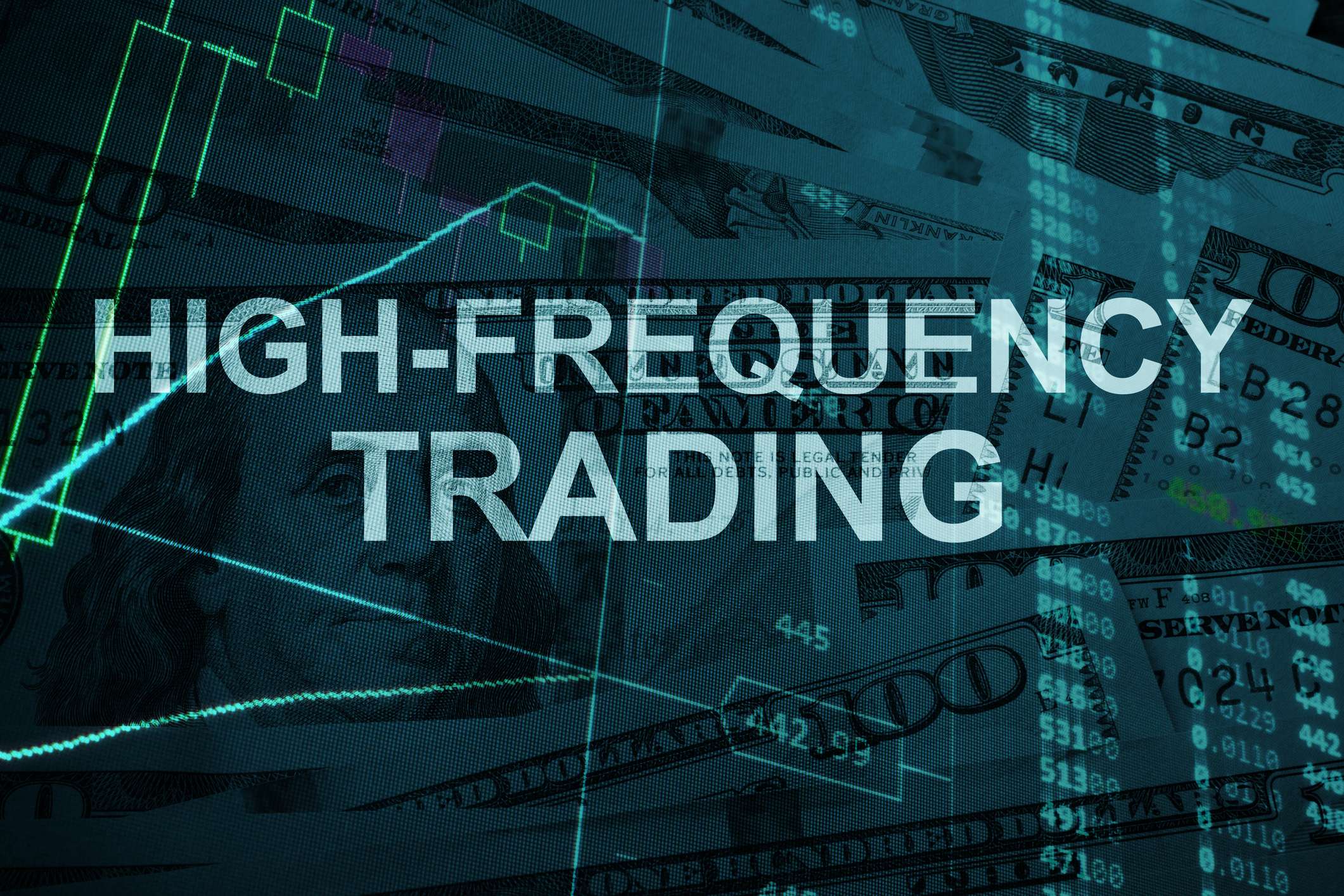
High-frequency trading (HFT) is a form of algorithmic trading that uses powerful computers and complex programs to execute thousands of trades in fractions of a second. It has transformed modern financial markets by increasing speed, liquidity, and efficiency—but also raised concerns about fairness and stability.
High-frequency trading emerged in the early 2000s as technological advances allowed financial firms to process market data and execute trades faster than ever before. HFT firms use sophisticated algorithms to analyze multiple markets and identify short-term opportunities. These trades are often held for mere seconds or milliseconds, and profits are made by exploiting tiny price discrepancies across assets or exchanges.
One of the defining features of HFT is its reliance on speed. Firms invest heavily in infrastructure—such as co-location services near exchange servers and fiber-optic cables—to gain microsecond advantages over competitors. This race for speed has led to a technological arms race, where milliseconds can mean millions in profit.
HFT contributes significantly to market liquidity, meaning it helps ensure that buyers and sellers can transact quickly at stable prices. By constantly placing and updating orders, HFT firms narrow bid-ask spreads and reduce transaction costs for other market participants. This has made markets more efficient and accessible, especially for retail investors.
However, HFT is not without controversy. Critics argue that it creates an uneven playing field, where firms with access to advanced technology and capital can dominate markets. Concerns about market manipulation—such as quote stuffing (flooding the market with orders to slow competitors) or spoofing (placing fake orders to move prices)—have led to increased regulatory scrutiny.
The 2010 Flash Crash is often cited as a cautionary example of HFT’s potential risks. During this event, the Dow Jones Industrial Average plunged nearly 1,000 points in minutes before rebounding. Investigations revealed that automated trading systems, including HFT algorithms, contributed to the sudden loss of liquidity and extreme volatility.
Regulators have responded by implementing safeguards such as circuit breakers, which pause trading during extreme price movements, and requiring firms to register and disclose their trading strategies. The Securities and Exchange Commission (SEC) and Commodity Futures Trading Commission (CFTC) continue to monitor HFT’s impact on market integrity.
Despite its challenges, HFT remains a dominant force in global finance. It accounts for a significant portion of trading volume in equities, futures, and foreign exchange markets. Many institutional investors rely on HFT strategies to manage large portfolios and hedge risks.
In conclusion, high-frequency trading represents both the promise and peril of technological innovation in finance. While it enhances market efficiency and liquidity, it also introduces new risks and ethical dilemmas.
As markets evolve, balancing innovation with fairness and stability will be essential to ensuring that HFT serves the broader interests of investors and the economy.
SPEAKING: Dr. Marcinko will be speaking and lecturing, signing and opining, teaching and preaching, storming and performing at many locations throughout the USA this year! His tour of witty and serious pontifications may be scheduled on a planned or ad-hoc basis; for public or private meetings and gatherings; formally, informally, or over lunch or dinner. All medical societies, financial advisory firms or Broker-Dealers are encouraged to submit an RFP for speaking engagements: CONTACT: Ann Miller RN MHA at MarcinkoAdvisors@outlook.com
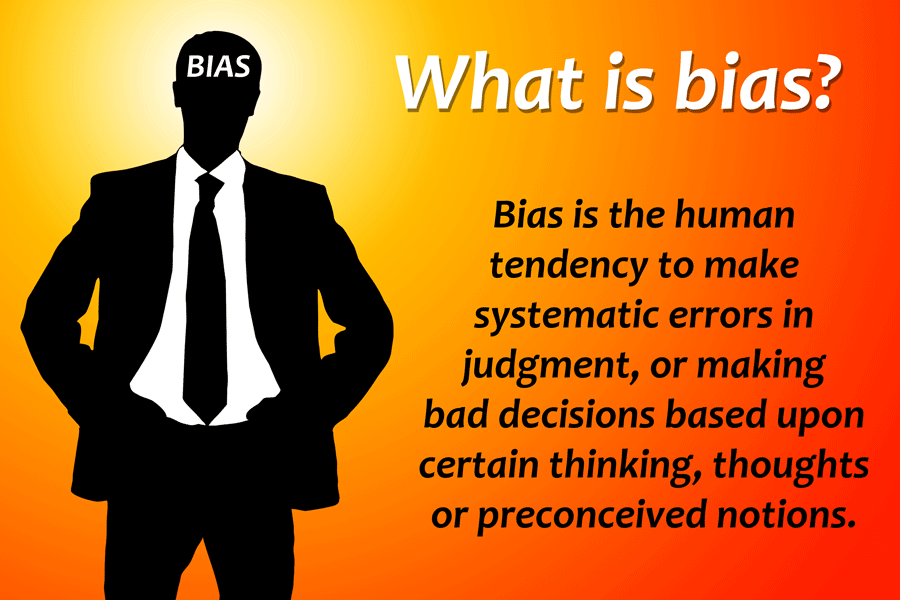
The following are 4 common financial psychological biases. Some are learned while others are genetically determined (and often socially reinforced). While this essay focuses on the financial and investing implications of these biases, they are prevalent in most areas in life.
Loss aversion affected many investors during the stock market crash of 2007-08 or the flash crash of May 6, 2010 also known as the crash of 2:45. During the crash, many people decided they couldn’t afford to lose more and sold their investments.
Of course, this caused the investors to sell at market troughs and miss the quick, dramatic recovery.
Overconfident investing happens when we believe we can out-smart other investors via market timing or through quick, frequent trading.
Data convincingly shows that people who trade most often under-perform the market by a significant margin over time.
Mental accounting takes place when we assign different values to money depending on where we got it.
For instance, even though we may have an aggressive saving goal for the year, it is likely easier for us to save money that we worked for than money that was given to us as a gift.
Herd mentality makes it very hard for humans to not take action when everyone around us does.
For example, we may hear stories of people making significant profits buying, fixing up, and flipping homes and have the desire to get in on the action, even though we have no experience in real estate.
FIVE INVESTING MISTAKES OF DOCTORS; PLUS 1 VITAL TIP
As a former US Securities and Exchange Commission [SEC] Registered Investment Advisor [RIA] and business school professor of economics and finance, I’ve seen many mistakes that doctors must be aware of, and most importantly, avoid. So, here are the top 5 investing mistakes along with suggested guideline solutions.
Mistake 1: Failing to Diversify Investment but Beware Di-Worsification
A single investment may become a large portion of your portfolio as a result of solid returns lulling you into a false sense of security. The Magnificent Seven stocks are a current example:
Apple, up +5,064%% since 1/18/2008
Amazon, up +30,328% since 9/6/2002
Alphabet, up +1,200% since 7/20/2012
Tesla, up +21,713% since 11/16/2012
Meta, up +684% since 2/20/2015
Microsoft, up +22% since 12/21/2023
Nvidia, up +80,797% since 4/15/2005
Guideline: The Magnificent Seven [7] has grown from 9% of the S&P 500 at the end of 2013 to 31% at the end of 2024! That means even if you don’t own them, you’re still very exposed if you have an Index Fund [IF] or Exchange Traded Fund [ETF] that tracks the market. Accordingly, diversification is the only free lunch in investing which can reduce portfolio risk. But, remember the Wall Street insider aphorism that states: “Di-Versification Means Always Having to Say Your Sorry.”
The term “Di-Worsification” was coined by legendary investor Peter Lynch in his book, One Up On Wall Street to refer to over-diversifying an investment portfolio in such a way that it reduces your overall risk-return characteristics. In other words, the potential return rises with an increase in risk and invested money can render higher profits only if willing to accept a higher possibility of losses [1].
A podiatrist can easily fall into the trap of chasing securities or mutual funds showing the highest return. It is almost an article of faith that they should only purchase mutual funds sporting the best recent performance. But in fact, it may actually pay to shun mutual funds with strong recent performance. Unfortunately, many struggle to appreciate the benefits of their investment strategy because in jaunty markets, people tend to run after strong performance and purchase last year’s winners.
Similarly, in a market downturn, investors tend to move to lower-risk investment options, which can lead to missed opportunities during subsequent market recoveries. The extent of underperformance by individual investors has often been the most awful during bear markets. Academic studies have consistently shown that the returns achieved by the typical stock or bond fund investors have lagged substantially.
Guideline: Understand chasing performance does not work.Continually monitor your investments and don’t feel the need to invest in the hottest fund or asset category. In fact, it is much better to increase investments in poor performing categories (i.e. buy low). Also keep in remind rebalancing of assets each year is key. If stocks perform poorly and bonds do exceptionally well, then rebalance at the end of the year. In following this strategy, this will force a doctor into buying low and selling high each year.
Often doctors make their investment decisions under the belief that stocks will consistently give them solid double-digit returns. But the stock markets go through extended long-term cycles.
In examining stock market history, there have been 6 secular bull markets (market goes up for an extended period) and 5 secular bear markets (market goes down) since 1900. There have been five distinct secular bull markets in the past 100+ years. Each bull market lasted for an extended period and rewarded investors.
For example, if an investor had started investing in stocks either at the top of the markets in 1966 or 2000, future stock market returns would have been exceptionally below average for the proceeding decade. On the other hand, those investors fortunate enough to start building wealth in 1982 would have enjoyed a near two-decade period of well above average stock market returns. They key element to remember is that future historical returns in stocks are not guaranteed. If stock market returns are poor, one must consider that he or she will have to accept lower projected returns and ultimately save more money to make up for the shortfall. For example,
The May 6th, 2010, flash crash, also known as the crash of 2:45, was a United States trillion-dollar stock market plunge which started at 2:32 pm EST and lasted for approximately 36 minutes.
And, investors who have embraced the “buy the dip” strategy in 2025 have been handsomely rewarded, with the S&P 500 delivering its strongest post-pull back returns in over three decades.
According to research from Bespoke Investment Group, the S&P 500 has gained an average of 0.36% in the trading session following a down day so far in 2025. The only year with a comparable performance was 2020, which saw a 0.32% average post-dip gain [2].
The most recent example came on May 27, 2025 when the S&P 500 surged more than 2% after falling 0.7% in the final session before the holiday weekend. The rally was sparked by President Trump’s decision to scale back huge previously threatened tariffs on EU —a recurring catalyst behind many of 2025’s rebound.
Guideline: Beware of projecting forward historical returns. Doctors should realize that the stock markets are inherently volatile and that, while it is easy to rely on past historical averages, there are long periods of time where returns and risk deviate meaningfully from historical averages.
Some doctors believe they are “smarter than the market” and can time when to jump in and buy stocks or sell everything and go to cash. Wouldn’t it be nice to have the clairvoyance to be out of stocks on the market’s worst days and in on the best days?
Using the S&P 500 Index, our agile imaginary doctor-investor managed to steer clear of the worst market day each year from January 1st, 1992 to March 31st, 2012. The outcome: s/he compiled a 12.42% annualized return (including reinvestment of dividends and capital gains) during the 20+ years, sufficient to compound a $10,000 investment into $107,100.
But what about another unfortunate doctor-investor that had the mistiming to be out of the market on the best day of each year. This ill-fated investor’s portfolio returned only 4.31% annualized from January 1992 – March 2012, increasing the $10,000 portfolio value to just $23,500 during the 20 years. The design of timing markets may sound easy, but for most all investors it is a losing strategy.
More contemporaneously on December 18th 2024, the DJIA plummeted 2.5%, while the S&P 500 declined 3% and the NASDAQ tumbled 3.5%
Guideline: If it looks too good to be true, it probably is. While jumping into the market at its low and selling right at the high is appealing in theory, we should recognize the difficulties and potential opportunity and trading costs associated with trying to time the stock market in practice. In general, colleagues are be best served by matching their investment with their time horizon and looking past the peaks / valleys along the way.
Mistake 5: Failing to Recognize the Impact of Fees and Expenses
A free dinner seminar or a polished stock-broker sales pitch may hide the total underlying costs of an investment. So, fees absolutely matter.
The first costing step is determining what the fees actually are. In a mutual fund, these costs are found in the company’s obligatory “Fund Facts”. This manuscript clearly outlines all the fees paid–including up front fees (commissions and loads), deferred sales charges and any switching fees. Fund management expense ratios are also part of the overall cost. Trading costs within the fund can also impact performance.
Here is a list of the traditional mutual fund fees:
Front End Load: The commission charged to purchase a fund through a stock broker or financial advisor. The commission reduces the amount you have available to invest. Thus, if you start with $100,000 to invest, and the advisor charges up to an 8 percent front end load, you end up actually investing $92,000.
Deferred Sales Charge (DSC) or Back End Load: Imposed if you sell your position in the mutual fund within a pre-specified period of time (normally one – five years). It is initiated at a higher start percentage (i.e. as high as 10 percent) and declines over a specific period of time.
Operating Fees: Costs of the mutual fund including the management fee rewarded to the manager for investment services. It also includes legal, custodial, auditing and marketing fees.
Annual Administration Fee: Many mutual fund companies also charge a fee just for administering the account – usually under $100-150 per year.
Guideline: Know and understand all fees.
For example: A 1 percent disparity in fees may not seem like much but it makes a considerable impact over a long time period.
Consider a $100,000 portfolio that earns 8 percent before fees, grows to $320,714 after 20 years if the investor pays a 2 percent operating fee. In comparison, if s/he opted for a fund that charged a more reasonable 1 percent fee, after 20 years, the portfolio grows to be $386,968 – a divergence of over $66,000!
This is the value of passive or index investing. In the case of an index fund, fees are generally under 0.5 percent, thus offering even more savings over a long period of time.
One Vital Tip: Investing Time is on Your Side
Despite thousands of TV shows, podcasts, textbooks, opinions and university studies on investing, it really only has three simple components. Amount invested, rate of return and time. By far, the most important item is time! For example:
Nvidia: if you invested $1,000 in 2009, you’d have $338,103 today.
Apple: if you invested $1,000 in 2008, you’d have $48,005 today.
Netflix: if you invested $1,000 in 2004, you’d have $495,679 today.
Unfortunately, this list of investing mistakes is still being made by many doctors. Fortunately, by recognizing and acting to mitigate them, your results may be more financially fruitful and mentally quieting.
REFERENCES:
1. Lynch, Peter: One Up on Wall Street [How to Use What You Already Know to Make Money in the Market]: Simon and Shuster (2nd edition) New York, 2000.
1. Marcinko, DE; Comprehensive Financial Planning Strategies for Doctors and Advisors [Best Practices from Leading Consultants and Certified Medical Planners™] Productivity Press, New York, 2017.
2. Marcinko, DE: Dictionary of Health Economics and Finance. Springer Publishing Company, New York, 2006.
3. Marcinko, DE; Risk Management, Liability Insurance, and Asset Protection Strategies for Doctors and Advisors [Best Practices from Leading Consultants and Certified Medical Planners™] CRC Press, New York, 2015.
BIO: As a former university Professor and Endowed Department Chair in Austrian Economics, Finance and Entrepreneurship, the author was a NYSE Registered Investment Advisor and Certified Financial Planner for a decade. Later, he was a private equity and wealth manager
SPEAKING: Dr. Marcinko will be speaking and lecturing, signing and opining, teaching and preaching, storming and performing at many locations throughout the USA this year! His tour of witty and serious pontifications may be scheduled on a planned or ad-hoc basis; for public or private meetings and gatherings; formally, informally, or over lunch or dinner. All medical societies, financial advisory firms or Broker-Dealers are encouraged to submit an RFP for speaking engagements: CONTACT: Ann Miller RN MHA at MarcinkoAdvisors@outlook.com -OR-http://www.MarcinkoAssociates.com
The stock market just reached an all time high, crossing 15,000 for the first time.
But, within three minutes during last April 23, 2013, the Dow Jones Industrial Average lost nearly 150 points, and approximately $136 billion of market value was wiped out. The recovery was just as fast, and markets returned to having a profitable session (both the Dow and the S&P 500 were up over 1% for the day). The crash and recovery both happened so fast that many Americans, and physician-investors, weren’t even aware of the events.
So what happened?
On Tweeting
Believe it or not, the crash was caused by a tweet – a 140 character message posted on Twitter. The Associated Press Twitter account — which has nearly 2 million followers — was hacked and a false tweet of “Breaking: Two Explosions in the White House and Barack Obama is Injured” was posted. The message was quickly debunked by the President’s staff and markets corrected themselves. Both the crash and recovery took place in less than five minutes.
Lessons Learned
Several lessons were learned that day.
First, the power of social media is now undeniable. This was caused by a simple twelve-word lie on the internet. Further, information about the market collapse and recovery were widespread via Twitter and Facebook instantaneously, while the whole episode was over before television networks had a chance to report the events.
Second, it’s amazing how fragile our world is these days. News regarding terrorism has the potential to dramatically affect the market as well as other important aspects of our lives. It’s concerning how the world might respond if the President really was injured. (Interestingly, however, the market didn’t suffer after the Boston Marathon tragedy.)
Third, it is fascinating to examine how different asset categories responded in a time of perceived crisis. Investors build diversified portfolios hoping that when one asset category collapses, another asset class will rally. Some investors swear that gold will be the asset to own when the world struggles. Yet, when the market experienced a flash crash, gold did not rally but treasury bonds and the Japanese Yen did. Gold investors shouldn’t be as confident in their investment after this experience.
Finally, automated trading platforms have become more prevalent in the stock market. These tools execute mandatory, instant sell orders in defined market environments. When the crash occurred, algorithms read headlines and saw the initial market reaction and computers created automatic sell orders at what turned out to be the worst possible time. Traders utilizing automatic trading mechanisms with stop-loss orders suffered exaggerated losses, as they sold right after the market dip and didn’t participate in the recovery. This is a potential weakness of automatic trading that many didn’t recognize.
Assessment
Why are many physician-investors unaware of this unusual market event? In reality, this drastic swing didn’t affect most investors hoping to improve their retirement. Individuals with a long-term investment strategy built around their risk tolerance don’t need to worry about these types of short-term market errors. At the end of the day, “buy-and-hold” investors had nothing to worry about and came out ahead. Perhaps we should be bragging via Twitter…
Your thoughts and comments on this ME-P are appreciated. Feel free to review our top-left column, and top-right sidebar materials, links, URLs and related websites, too. Then, subscribe to the ME-P. It is fast, free and secure.
Speaker: If you need a moderator or speaker for an upcoming event, Dr. David E. Marcinko; MBA – Publisher-in-Chief of the Medical Executive-Post – is available for seminar or speaking engagements. Contact: MarcinkoAdvisors@msn.com
OUR OTHER PRINT BOOKS AND RELATED INFORMATION SOURCES:
After a short period of saving more of their disposable income at the depths of the recent recession, Americans are returning to recent historical patterns of spending more and saving less.
Usually this trend indicates “happy days are here again” as the decline in savings means consumers’ confidence is rising. That is not the case today. Consumer confidence is just half of what it was at the peak of the “good old days” of 2007. That year our national savings rate was 2.1%, just above its post-WWII low in 2005 of 1.5%.
A Jobless Recovery?
As millions of jobs disappeared and consumers hunkered down during the 2008-09 recession, our savings rate almost tripled. In 2008 it was 6.2%. This thriftiness didn’t last long; by the fall of 2011 our savings rate was back to a paltry 3.6%.
American Not Always Big Spenders
We were not always such spenders. During the four years of WWII we saved over 20% of disposable income annually. Between 1974 and 1992 the savings rate often bounced between 7% and 11%. Since 1992, the beginning of the unprecedented 18-year bull market in stocks, our personal savings rate reflected the good times in the economy and averaged just 4%.
Savings Rate Decline
One possible reason for the decline in the savings rate in the past three years may be that we’re paying off all the consumer debt that got us into trouble in the first place. In 2000 our individual debt load (including student loans and mortgages) was $19,750 per person. In the fall of 2011 it was $36,420, 8.6% less than the 2008 high but 85% higher than the 2000 amount.
Running out of Money?
While Americans are not substantially reducing their debt, their equity in home ownership plunged from $12.9 trillion in 2006 to $6.2 trillion in 2011. No wonder consumer confidence is so low.
It appears our return to low savings rates isn’t the result of renewed optimism, paying down personal debt, or a surging economy, but rather that Americans are running out of money in the face of staggering personal debt and declining net worth. This leaves them incredibly vulnerable to another downturn in the economy.
Ironically, Americans’ personal finances are a reflection of our government’s fiscal woes. Washington also finds itself compromised to respond to a national emergency because of a debt that exceeds our national income.
Personal Three-Pronged Approach
There isn’t much you and I can do about our government’s over-indebtedness and overspending except to vote for politicians that promise to end the insanity and hold them accountable. But, we can take better care of our own affairs with a three-pronged approach.
1. Get out of debt. We may not be able to earn more or work harder, but I’ll guarantee you that we can spend less.
2. Start saving for emergencies. You need one savings account for periodic expenses like medical deductibles and car repairs. A second is for bona fide emergencies like losing your job or the death of a spouse. It should represent six to 12 times your monthly expenses.
3. Start investing for financial independence. Ideally, you need to put aside 15% to 35% of your income for the time you no longer can or want to work.
Assessment
The hardest part of this approach is becoming willing to downsize your lifestyle. Too many of us say we are willing to cut spending and economize until it actually comes time to do it. In the two decades before the recession, Americans got out of the habit of making hard decisions in our own best interests. However, as our historical patterns show, we’ve treated ourselves with “tough love” in the past. When we have to, we can do it again.
Conclusion
And so, your thoughts and comments on this ME-P are appreciated. When it comes to consumer confidence and savings rates, are doctors and medical professionals just like the rest of us?
Please review our top-left column, and top-right sidebar materials, links, URLs and related websites, too. Then, subscribe to the ME-P. It is fast, free and secure.
Speaker:If you need a moderator or speaker for an upcoming event, Dr. David E. Marcinko; MBA – Publisher-in-Chief of the Medical Executive-Post – is available for seminar or speaking engagements. Contact: MarcinkoAdvisors@msn.com
Our Other Print Books and Related Information Sources:
Subscribe Now:Did you like this Medical Executive-Post, or find it helpful, interesting and informative? Want to get the latest ME-Ps delivered to your email box each morning? Just subscribe using the link below. You can unsubscribe at any time. Security is assured.
Posted on March 2, 2012 by Dr. David Edward Marcinko MBA MEd CMP™
Investing Hero or Zero … On Market Timing or NOT!
By Staff Reporters
Here at the ME-P, we believe we have some of the most intelligent and savvy readers in the blog-o-sphere. And – why not?
Most are physicians, nurses and medical specialist of all stripes. Others are CPAs, financial advisors and wealth managers. And, some are medical management and HIT consultants with PhDs and MBAs, etc. More than a few more even have dual and triple degrees and professional designations, like www.CertifiedMedicalPlanner.com
The Question
Accordingly, our friends over at The Finance Buff recently asked:
Q:Do you remember those days last summer when the Dow went down 400 points one day and then it went up 400 points the next day, before it went down another 400 points the following day?
Going Granular
Well – if you do – what did you, or your clients do about it? Did you invest more, stay put, bail out or something else? Go granular on us and your fellow ME-P readers, subscribers and lurkers.
Assessment
Please tell us who you are, what you did during the “flash-crash” a few years ago, or last summer’s mini-meltdown, and how it turned out in hindsight?
Conclusion
And so, your thoughts and comments on this ME-P are appreciated. Please review our top-left column, and top-right sidebar materials, links, URLs and related websites, too. Then, subscribe to the ME-P. It is fast, free and secure.
Speaker: If you need a moderator or speaker for an upcoming event, Dr. David E. Marcinko; MBA – Publisher-in-Chief of the Medical Executive-Post – is available for seminar or speaking engagements. Contact: MarcinkoAdvisors@msn.com
Our Other Print Books and Related Information Sources:
Subscribe Now:Did you like this Medical Executive-Post, or find it helpful, interesting and informative? Want to get the latest ME-Ps delivered to your email box each morning? Just subscribe using the link below. You can unsubscribe at any time. Security is assured.
Posted on April 23, 2011 by Dr. David Edward Marcinko MBA MEd CMP™
A Survey Poll
Doctor, have you considered switching your financial advisor due to higher fees or poor portfolio performance since the “flash-crash” of 2008? Please vote and opine.
VOTE:
Conclusion
And so, your thoughts and comments on this ME-P are appreciated. Feel free to review our top-left column, and top-right sidebar materials, links, URLs and related websites, too. Then, subscribe to the ME-P. It is fast, free and secure.
Speaker: If you need a moderator or speaker for an upcoming event, Dr. David E. Marcinko; MBA – Publisher-in-Chief of the Medical Executive-Post – is available for seminar or speaking engagements. Contact: MarcinkoAdvisors@msn.com
Subscribe Now:Did you like this Medical Executive-Post, or find it helpful, interesting and informative? Want to get the latest ME-Ps delivered to your email box each morning? Just subscribe using the link below. You can unsubscribe at any time. Security is assured.
Posted on September 6, 2010 by Dr. David Edward Marcinko MBA MEd CMP™
Understanding the Decision
By Somnath Basu PhD, MBA
Should we save or spend? What’s good for me and my family? Is the time right for us to be buoyant and optimistic about the future? How do we decide what fraction of our income to spend and how much to save? Isn’t spending a good thing for the economy as we are constantly being reminded about? If we do not spend now, how are we going to feel about all these unfulfilled wants and needs that we have especially when we see others around us fulfilling? How much should I spend for gifts during this holiday season – is that not a good idea to bring cheer to my family? It is a very perplexing set of questions that constantly sway our mind as we try to grapple with what we feel should otherwise be moderately simple decisions. In arriving at these seemingly easy decisions, consumers are facing some of the toughest issues in their everyday lives. It may be useful to dig a bit deeper into the issues related to spending and saving decisions so that we may understand a bit of their complexities and make prudent choices whose outcomes will clearly validate our reasons for doing so.
The Save or Spend Decision
If the decision to save or spend is problematic, it is because it is neither simple nor anything new. We have coped with these same decisions through many generations, and more. The understanding we have collectively arrived at is, however, worth visiting. When we spend, we receive immediate gratification. This “feel good” feeling is so good that we are willing to sacrifice a lot in order to attain this feeling. Saving, on the other hand, is bereft of any such immediate good feeling. The only good feeling that can accrue to us is that we have this “felt’ promise to ourselves that a moment in the future will feel better than both the loss of satisfaction from immediate gratification of wants and the hurt of having unsatisfied wants. Alternately, we may want to save because we feel threatened that a future situation may arise that may lead to more misery tomorrow than the joy gained today. Thus, the main question in trying to answer whether to save or not is whether it is a promise or a foreboding about the future.
Attitudinal Sea Change
Over the last 25 years, our attitude towards spending has undergone a sea change. Even until the early 1980s we were saving in double digits as a nation. Since then, we have slowly moved away from this psyche and have adapted our lifestyles towards spending and consumption on a scale we have never experienced before, historically. By 2006, we were actually spending about one percent more than what we were earning. This change was stimulated by many factors including the plentiful inflow of cheap products from China, a steady rise in income, a considerable increase in the promotion of mass consumption through enticing advertisements in practically all media, the access to cheap credit sources, increasing house prices and the accompanying ability to borrow from the increase in its equity value, etc. Above all else, this shift from saving to spending was overwhelmingly reinforced by the feeling of empowerment in being able to command goods and services for consumption and the enjoyment from the increase in our standards of living that came from our new found affluence. Whereas every generation before us (baby boomers) had sought to leave more for their kids than what they themselves inherited, we reasoned with ourselves that educating our children was sufficient for them to look after themselves. This attitude allowed us also to spend and consume more not only without guilt, but also with pleasure. More so than ever, we got addicted to spending. Nothing felt better than spending.
The Flash Crash of 2008-09
Then came the great recession of 2008-09! The economy plunged, companies laid off workers by the thousands, people who had bought homes even if they could not afford it, on the promise that house prices would never go down, lost their homes. Moreover, the cheap Chinese goods we got used to were being produced by our own national companies so that the economic rebound was now being hailed as a jobless recovery. We had outsourced away all we had for some corporate bottom line and had impoverished ourselves in the process. Only now, we had no savings for the rainy day that had befallen us.
Americans Saving Again
Perhaps one of the more pleasant surprises from this recession is that we turned the clock around on saving and in the short span of two or three years we have our savings level back at five percent. Why did it happen this way in spite of our government encouraging us to spend our way out of this recession? Primarily, this change has come about from the possibility of losing our jobs or enduring deep cuts in our incomes. This fear today is more real than ever before and it seems to have taught us a “savings” lesson that we have all learned. When deciding on whether and how much to spend, we should take absolutely no chances in first putting away a small nest egg for a rainy day or “emergency” fund, in more technical terms. It is imperative that we defend our families in the event of losses in job and income so that we can bear out whatever future storms come by our way. It is only after we have done so should we consider spending. A six-month contingency fund [even more for medical professionals, according to ME-P Editor Dr. David E. Marcinko] should be perhaps the most staple item in our household budget. It is heartening to see the resiliency that runs through our nation’s citizens as we collectively undo our habit of reckless spending.
Assessment
Once we have our emergency nest egg in place, we should consider our spending pleasure. Going “cold turkey” on spending is not advisable either; maybe a gradual weaning away from this compelling habit. Ask yourselves before you spend whether it is a “need” or a “want”. Healthy food and holiday cheer for the family, basic transportation expenses and healthcare are needs. Starbucks coffee is a want. As we prudently spend on needs and wean away from wants we also save. And saving is not only for our future “feel good” consumption. It is also for the immensely gratifying feeling that we will leave something for our children, through whom we will live in the future.
NOTE: Dr. Somnath Basu is a Professor of Finance at California Lutheran University and the Director of its California Institute of Finance. He is also the creator of the innovative AgeBander technology www.agebander.com for planning retirement needs.
Conclusion
And so, your thoughts and comments on this ME-P are appreciated. Is this portrayal accurate or even applicable to medical professionals? Feel free to review our top-left column, and top-right sidebar materials, links, URLs and related websites, too. Then, subscribe to the ME-P. It is fast, free and secure.
Speaker:If you need a moderator or speaker for an upcoming event, Dr. David E. Marcinko; MBA – Publisher-in-Chief of the Medical Executive-Post – is available for seminar or speaking engagements. Contact: MarcinkoAdvisors@msn.com
Other Print Books and Related Information Sources:
Subscribe Now: Did you like this Medical Executive-Post, or find it helpful, interesting and informative? Want to get the latest ME-Ps delivered to your email box each morning? Just subscribe using the link below. You can unsubscribe at any time. Security is assured.







 Support our online development, and advance our onground research initiatives in free market economics, as we seek to showcase the brightest Next-Gen minds.
THE ME-P DISCLAIMER: Posts, comments and opinions do not necessarily represent iMBA, Inc., but become our property after submission. Copyright © 2006 to-date. iMBA, Inc allows colleges, universities, medical and financial professionals and related clinics, hospitals and non-profit healthcare organizations to distribute our proprietary essays, photos, videos, audios and other documents; etc. However, please review copyright and usage information for each individual asset before submission to us, and/or placement on your publication or web site. Attestation references, citations and/or back-links are required. All other assets are property of the individual copyright holder.
Support our online development, and advance our onground research initiatives in free market economics, as we seek to showcase the brightest Next-Gen minds.
THE ME-P DISCLAIMER: Posts, comments and opinions do not necessarily represent iMBA, Inc., but become our property after submission. Copyright © 2006 to-date. iMBA, Inc allows colleges, universities, medical and financial professionals and related clinics, hospitals and non-profit healthcare organizations to distribute our proprietary essays, photos, videos, audios and other documents; etc. However, please review copyright and usage information for each individual asset before submission to us, and/or placement on your publication or web site. Attestation references, citations and/or back-links are required. All other assets are property of the individual copyright holder.
















 The Leading Business Education Network for Doctors, Financial Advisors and Health Industry Consultants