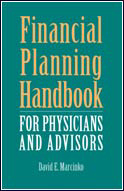
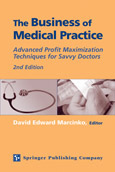
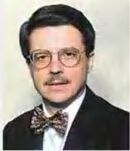
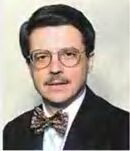
Consulting for the ME-P

Talk to Us

By Ann Miller; RN, MHA

[Executive Director]solo-consultant

We would like to better understand who is visiting the Medical Executive-Post, and what you like, or do not like, about our blog site, print journal and/or communications forum. Most of all, we wish to know who is just visiting versus who is posting, commenting and subscribing; and why?

Assessment

Your responses are confidential, and will only be used for internal use to improve the website blog. We will not sell your information to anyone, ever!

Conclusion

And so, your thoughts and comments on this Medical Executive-Post are appreciated. Please send in your considered responses to me at: MarcinkoAdvisors.@msn.com

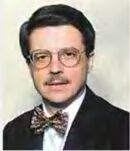
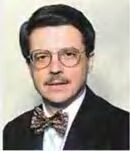
Speaker: If you need a moderator or speaker for an upcoming event, Dr. David E. Marcinko; MBA – Publisher-in-Chief of the Executive-Post – is available for seminar or speaking engagements. Contact: MarcinkoAdvisors@msn.com  or Bio: www.stpub.com/pubs/authors/MARCINKO.htm

Get our Widget: Get this widget!

Subscribe Now: Did you like this Medical Executive-Post, or find it helpful, interesting and informative? Want to get the latest E-Ps delivered to your email box each morning? Just subscribe using the link below. You can unsubscribe at any time. Security is assured.

Link: http://feeds.feedburner.com/HealthcareFinancialsthePostForcxos

Physician Household Borrowing and/or Investing

Join Our Mailing List

Deciding What Works?

[By Staff Reporters]fp-book4

Another way of asking the above titled question might be, “Is it smart for a doctor’s household to build savings while they are getting out of debt?”  

Financial Priorities

In the first instance, the doctor already has debt and would be increasing the terms of any loans by deferring some of the payments to savings, which is equivalent to borrowing the same amount.

In the second instance, the doctor would be taking on debt to save more money. The answer is that it makes sense to borrow money for investment purposes only if the financial gains derived from the investment are larger than the financial benefits of paying off the debt. But, who can know for sure?

www.MedicalBusinessAdvisors.com

Minimum Account Payments

Assuming that a medical professional has more debt than needed, and doesn’t make contributions to a retirement account, the concern becomes: [1] should he/she make minimum payments to the debt and contribute to a retirement account; or [2] should he/she make the maximum payments toward the debt or loans, etc?

Downside Risks

It is important to understand the downside risks of a lower payment strategy. Just as stocks return more than bonds due to their higher risk, the lower payment strategy returns more because of its’ higher risk. Taking on debt to finance an investment is riskier than paying off debt for a number of reasons.

First, the US economy may continue its’ current depressionary spiral, and investments and savings could disappear as financial institutions fail. This would leave the doctor with debt that he or she could not service.

Second, the rate-of-return required to decide whether or not to borrow for investment purposes may not be achieved, leaving the doctor in worse financial shape than if he or she had just paid off the debt.

Assessment

Ultimately, the doctor must decide if the added risks are worth the possible gain. But, the services of a fiduciary financial advisor may also be required. However, some doctors may not be ready to receive the sort of “tough-love” required in this case. 

Channel Surfing the ME-P

Have you visited our other topic channels? Established to facilitate idea exchange and link our community together, the value of these topics is dependent upon your input. Please take a minute to visit. And, to prevent that annoying spam, we ask that you register. It is fast, free and secure.

Conclusion

Your thoughts and comments on this ME-P are appreciated. Feel free to review our top-left column, and top-right sidebar materials, links, URLs and related websites, too. Then, subscribe to the ME-P. It is fast, free and secure.

Speaker: If you need a moderator or speaker for an upcoming event, Dr. David E. Marcinko; MBA – Publisher-in-Chief of the Medical Executive-Post – is available for seminar or speaking engagements. Contact: MarcinkoAdvisors@msn.com

OUR OTHER PRINT BOOKS AND RELATED INFORMATION SOURCES:

Comprehensive Financial Planning Strategies for Doctors and Advisors: Best Practices from Leading Consultants and Certified Medical Planners(TM)

Debt Consolidation for Physicians

Advantages and Disadvantages

By Staff Reportersfp-book5

The main advantage of debt consolidation is that it allows a doctor to make one payment instead of many, and this helps avoid late fees for missed payments. The doctor may save time by having to make only one payment per month instead of many.

Other Advantages

Another advantage is that debt consolidation promotes self-discipline by transferring credit card debt (and other lines of credit) that does not require mandatory principal payments into a fixed-term loan – with mandatory payments that include both principal and interest. This is a useful tool for doctors who may find it difficult to make more than the minimum payments on their loans because they spend too much. It should be obvious that budgeting should go hand-in-hand with this process, because if the doctor continues to spend at the former level, yet now has a mandatory payment, the result can be financially devastating.

A final advantage to debt consolidation is it may result in a lower overall interest rate. This is, of course, conditional on the lender providing the consolidation.

Disadvantages

One disadvantage of debt consolidation is that it can lock a doctor into mandatory payments. Depending on the situation, this can be either a blessing or a curse. It becomes a curse when the fixed payments are so high that he/she can no longer make the full debt payments each month. Depending on the lender, and the terms of the consolidation loan, this could result in the loan being called. The effects of this are obviously detrimental to the doctor.

Other Disadvantages

A second disadvantage is that the doctor loses flexibility when he or she takes on a fixed payment that is larger than the combination of all smaller minimum payments. The fixed-payment schedule becomes detrimental when h/she has an unexpected reduction in income. The doctor without a fixed-payment schedule can increase payments to many small individual loans, and if income reduction occurs, drop the payments back down to the lower level. Then; when normal levels of income return, the higher payments can be resumed.insurance-book2

Assessment

Making larger payments requires discipline; because a lack of same was likely causative of the debt in the first place.

Conclusion

Your thoughts and comments on this Medical Executive-Post are appreciated. Have you ever been in this situation? Feel free to opine anonymously.

Speaker: If you need a moderator or speaker for an upcoming event, Dr. David E. Marcinko; MBA – Publisher-in-Chief of the Executive-Post – is available for seminar or speaking engagements. Contact: MarcinkoAdvisors@msn.com  or Bio: www.stpub.com/pubs/authors/MARCINKO.htm

Get our Widget: Get this widget!

Our Other Print Books and Related Information Sources:

Practice Management: http://www.springerpub.com/prod.aspx?prod_id=23759

Physician Financial Planning: http://www.jbpub.com/catalog/0763745790

Medical Risk Management: http://www.jbpub.com/catalog/9780763733421

Healthcare Organizations: www.HealthcareFinancials.com

Health Administration Terms: www.HealthDictionarySeries.com

Physician Advisors: www.CertifiedMedicalPlanner.com

Get our Widget: Get this widget!

Subscribe Now: Did you like this Medical Executive-Post, or find it helpful, interesting and informative? Want to get the latest E-Ps delivered to your email box each morning? Just subscribe using the link below. You can unsubscribe at any time. Security is assured.

Link: http://feeds.feedburner.com/HealthcareFinancialsthePostForcxos

Physician Cash Maximization Rules

One Doctor- Advisor’s [How-To] Diatribe

[By Dr. David Edward Marcinko; MBA]

[Publisher-in-Chief] www.CertifiedMedicalPlanner.orgdr-david-marcinko4

For some doctors – even more than laymen – cash management is the pivotal issue in the financial planning process. Accumulation of investment assets cannot occur if cash inflows do not exceed cash outflows. On the other hand, accumulated assets are eventually spent to fund expenses during planned time periods when cash outflow exceeds inflow.

Inflation

Traditionally, financial advisors have opined that inflation has a dramatic impact on both ends of the cash management spectrum because inflation has a compounding effect. That compounding effect means that a mere ¼% change in planning assumptions about anticipated inflation can have more significant influence over long-term projected outcomes than a 5% change in the amount of a particular item of budgeted income or expense. Well, true enough if projected linearly using some Monte-Carlo type software simulation. But, in the real word, economists appreciate cost and efficiency improvements [email over snail mail] and the potential for substitution of goods [diesel fuel for gasoline – chicken for steak, etc].

fp-book2

Be More Like … my Dad

On the other hand, far too few of my fellow medical colleagues – and financial advisors – are like my dad. Not well educated by academic standards, but with common sense that seems a precious commodity, today.

Dave, he used to tell me – and still does at age 84:

“Invest your money for growth carefully – and take some risks – but don’t be too afraid of inflation.”

 Why not, dad?

“Because; if you’re not a conspicuous consumer, you’ll have less to worry about.”

Cash Management

Well, most of us are not like my dad; me included. But, his depression-mentality has never completely worn off. A doctor’s household can maximize the cash available for investing by setting up the account in this manner.

1. The first step is to open a checking account, money market account, and a brokerage account. The money market account is often included in a brokerage account.

2. The second step is to initiate electronic direct deposit of the paycheck into the money market account.

3. The third step is to determine the amount of cash reserve needed. As mentioned elsewhere on this ME-P, we are suggesting 3-5 years of cash-reserves on-hand, as an emergency fund for most medical professionals.

Once, when, and if, the amount of the reserve is determined and achieved, any extra money should be transferred to the brokerage account and invested according to personal goals, objectives and risk-tolerance. A small balance of a few thousand dollars can be kept in the checking account to prevent overdrafts. Beyond the few thousand dollars, the checking account should serve as a pass-through account where money is transferred from the money market account to cover checks written for the budgeted expenses.

Example of Managing Cash Reserve Amountsbiz-book1

A physician client recently asked me to help him increase his savings. He explained that he had a very detailed realistic budget, but had a hard time staying within the budget when cash was available; as he lectured occasionally and was fortunate to have a few extra dollars every now and then.

Recommendations

As a financial planner, and the founder of an online educational-certification program for physician focused advisors, I recommend that he set up his checking, money market and investment accounts and have his medical practice directly deposit his paycheck in the money market account. He then was to transfer only enough money to his checking account each month, to cover his very carefully budgeted and spread-sheet driven expenses. Furthermore, his money market account was to be equal to our predetermined cash reserve needs, with any excess cash transferred to his investment account and according to his financial and investing plan.

Assessment

Of course, his carefully constructed budget included no cash reserves or emergency fund!  He forgot to budget cash! And so; the usual conundrum ensued.

Conclusion

Your thoughts and comments on this ME-P are appreciated. Feel free to review our top-left column, and top-right sidebar materials, links, URLs and related websites, too. Then, subscribe to the ME-P. It is fast, free and secure.

Link: http://feeds.feedburner.com/HealthcareFinancialsthePostForcxos

Speaker: If you need a moderator or speaker for an upcoming event, Dr. David E. Marcinko; MBA – Publisher-in-Chief of the Medical Executive-Post – is available for seminar or speaking engagements. Contact: MarcinkoAdvisors@msn.com

OUR OTHER PRINT BOOKS AND RELATED INFORMATION SOURCES:

LEXICONS: http://www.springerpub.com/Search/marcinko
PHYSICIANS: www.MedicalBusinessAdvisors.com
PRACTICES: www.BusinessofMedicalPractice.com
HOSPITALS: http://www.crcpress.com/product/isbn/9781466558731
CLINICS: http://www.crcpress.com/product/isbn/9781439879900
ADVISORS: www.CertifiedMedicalPlanner.org
BLOG: www.MedicalExecutivePost.com

Product Details  Product Details

Comprehensive Financial Planning Strategies for Doctors and Advisors: Best Practices from Leading Consultants and Certified Medical Planners™

Upcoming Health Economics Interview with Dr. David Marcinko

Coming Soon from Medical Business News, Inc

By Ann Miller; RN, MHA

ME-P Executive-Directordr-david-marcinko22

Medical Business News, Inc., the publisher of Medical News of Arkansas, is a leading source for healthcare industry news that is truly useful. With a professional readership comprised of physicians and key industry decision makers, Medical News publications are devoted entirely to healthcare issues that impact both clinical and administrative best practices. Written and edited specifically for healthcare professionals, MBN writers work with experts at the local, regional and national level to keep stakeholders informed about the ever-evolving healthcare system.

Out Reach

It is no wonder then, why local market MNA editor Jennifer Boulden recently contacted us to arrange an interview with Dr. David Edward Marcinko, our Publisher-in-Chief, who is also a former insurance agent, registered investment advisor, health economist and Certified Financial Planner™

Link: www.MedicalBusinessAdvisors.com  

Interview Topics

The wide open topic in this environment of medically specific lethargy and macro economic insecurity – personal and business planning for physicians. Of course, since this is a broad field, we will use the rating and ranking system of this blog to help Jennifer and her staff, winnow down categories to top-of-mind concerns of our ME-P subscribers and her MNA readers.

Link: www.HealthcareFinancials.com

Assessment

But, we also ask you to send in any particular issues that you may have in order to make the interview helpful and exciting for all concerned.

Link: www.HealthDictionarySeries.com

Conclusion

And so, your thoughts and comments on this Medical Executive-Post are appreciated.

Link: www.CertifiedMedicalPlanner.com

Speaker: If you need a moderator or speaker for an upcoming event, Dr. David E. Marcinko; MBA – Publisher-in-Chief of the Executive-Post – is available for seminar or speaking engagements. Contact: MarcinkoAdvisors@msn.com  or Bio: www.stpub.com/pubs/authors/MARCINKO.htm

Get our Widget: Get this widget!

Subscribe Now: Did you like this Medical Executive-Post, or find it helpful, interesting and informative? Want to get the latest E-Ps delivered to your email box each morning? Just subscribe using the link below. You can unsubscribe at any time. Security is assured.

Link: http://feeds.feedburner.com/HealthcareFinancialsthePostForcxos

A Due-Diligence ‘Condom’ for Physician Investors

Join Our Mailing List

Using Financial Advisors with Increased Safety

[By Dr. David Edward Marcinko; MBA, CMP™]dr-david-marcinko8

Following the Bernie Madoff investment scheme, and related financial industry scandals, here are seven “red-flags” that should have alerted physician-investors to proceed with extreme caution. Always consider them before making an investment with any financial advisor [FA], registered representative [RR] or financial advisory firm, regardless of reputation, size, referral recommendation or so-called industry certifications and designations. In other words, according to Robert James Cimasi; MHA, AVA, and a Certified Medical Planner™ from Health Capital Consultants LLC, of St. Louis, MO;” trust no one and paddle your own canoe.”

Red Flags of Cautious Investing

As a former insurance agent, financial advisor, registered representative, investment advisor and Certified Financial Planner™ for more than a decade, the existence of any one of the following items may be a “red-flag” of caution to any investor:

  • Acting as its’ own custodian, clearance firm or broker-dealer, etc.
  • Lack of a well-known accounting firm review with regular reporting.
  • Unreliable or sporadic written performance reports.
  • Rates-of-return that don’t seem to track industry benchmarks.
  • Seeming avoidance of regulatory oversight, transparency or review.
  • Lack of recognized written fiduciary accountability in favor of lower brokerage “sales suitability” standards.
  • No Investment Policy Statement [IPS]. 

Assessment

Let a word to the wise be sufficient going forward. But, in hindsight, a healthy dose of skepticism might have prevented this situation in the first place. As is the usual case, fear and greed often seem to rule the day. Just as there is no such thing as safe sex – just safer sex – there is no thing as safe intermediary investing. But, exercising some common sense will surely make investing with any financial advisor much safer. It’s like a condom for your money. 

For more information on the topic of fiduciary standards – which we have championed for the last ten years in our books, texts, white-papers, journal and online educational Certified Medical Planner™ program for FAs – watch out for our exclusive Medical Executive-Post interview with Bennett Aikin AIF®, Communications Coordinator of www.fi360.com coming in March. Ben, an Accredited Investment Fiduciary® did a great job with the tough questions submitted by our own Ann Miller; RN, MHA and Hope Hetico; RN, MHA, CMP™. Don’t miss it!

Disclaimer

I am the Managing Partner for http://www.CertifiedMedicalPlanner.org and I agree with this message.

Conclusion

Your thoughts and comments on this ME-P are appreciated. Feel free to review our top-left column, and top-right sidebar materials, links, URLs and related websites, too. Then, subscribe to the ME-P. It is fast, free and secure.

Speaker: If you need a moderator or speaker for an upcoming event, Dr. David E. Marcinko; MBA – Publisher-in-Chief of the Medical Executive-Post – is available for seminar or speaking engagements. Contact: MarcinkoAdvisors@msn.com

OUR OTHER PRINT BOOKS AND RELATED INFORMATION SOURCES:

Product Details

***

RIA Merger Mania and the Medical PPMC Fiasco

What is Old is New Again -or- Lessons Learned

By Dr. David Edward Marcinko; MBA, CMP™

 dr-david-marcinko9According to the article Great Expectations-Disappointing Realities that recently appeared in Registered Representative, a trade magazine for the financial services industry, by John Churchill, the booming stock market of the last five years saw many Registered Investment Advisory [RIA] firms sell a portion of their future cash flows in return for cash and stock in an acquiring consolidating firm. This is known as a roll-up, or consolidator, business model. I am quite familiar with it, as both a doctor and financial advisor. I believe my dual perspective of both camps is somewhat unique, as well.

The NYSE Collapse

As the stock market collapsed in 2008-09, many RIAs who previously sold stakes to these “roll-up” consolidator firms began scrambling to pay quarterly preferred disbursements.  What gives, many implored? As a reformed Certified Financial Planner™, RIA representative, financial advisor and insurance agent, I can draw many parallels from these present day RIA consolidators to the similar Physician Practice Management Corporation roll-up fiasco of 1999-2000? Indeed, I can, and will [www.HealthcareFinancials.com]

My Experience with Medical Practice Consolidators

As a clinician and surgeon, I was the past president of a privately held regional Physician Practice Management Corporation [PPMC] in the Midwest. I assumed this route about a decade ago, by happenstance and background, when I helped consolidate 95 solo medical practices with about $50 million in revenues. But, our small company’s IPO roll-up attempt was aborted due to adverse market conditions, in 1999. Fortunately, a conservative business model based on debt, not the equity which was all the rage at the time, saved us right before the crash of 2000. So, we harvested fiscally conservative physicians who lost only a few operational start-up bucks; but no significant dollars.

On the other hand, those PPMCs roll-ups based on equity lost much more. In fact, according to the Cain Brothers index of public PPMCs, more than 95% of all equity value was lost by doctor-investors hoping to cash in on Wall Street’s riches they did not rightly deserve; not by practicing medicine but by betting on rising stock prices. So, projecting a repeat disaster from medicine, to the contemporary RIA consolidator business model, was not a great leap for me. And unfortunately, this was one of the few times I was all too correct in my prognostications.

PPMC’s Today

The type of medical consolidator or roll-up, formally called the Physician Practice Management Corporation [PPMC], was left for dead by the year 1999. Even survivors like Pediatrix Medical Group saw its stock drop precipitously. And, more than a few private medical practices had to be bought back by the same physicians that sold out to the PPMCs originally.

RIA Example

I sure hope this does not occur with FAs, as well. But, if an entity is being bought back and accounts receivables are being purchased, FAs should be careful not to pick this item up as income twice. The costs can be immense to the RIA practice, as later clients of mine learned the hard way.

Buy-Backs

For example, let’s say a family practice [or RIA?] purchased itself back from a PPMC, or RIA consolidator. Part of the mandatory purchase price, approximately $200,000 (the approximate net realizable value of the accounts receivable), was paid to the PPMC to buy back accounts receivable [ARs] generated by the physicians buying back their practice. Now, if an office administrator unknowingly begins recording the cash receipts specifically attributable to the purchased accounts receivable as patient fee income; trouble begins to brew. If left uncorrected, this error can incorrectly added $200,000 in income to this practice and cost it (a C Corporation) approximately $70,000 in additional income tax ($200,000 in fees x 35% tax rate). The error in the above example is that the PPMC [or RIA consolidator] must record the portion of the purchase price it received for the accounts receivable as patient [advisory] fee income. The buyer practice has merely traded one asset – cash – for another asset, the accounts receivable [ARs].  When the practice collects these particular receivables, the credit is applied against the purchased accounts receivable (an asset), rather than to patient [RIA] fees.  

RIA Revolution Follows PPMC Evolution

Today, surviving medical PPMCs are evolving from first generation multi-specialty national concerns, to second generation regional single specialty groups [my type], to third generation regional concerns, and finally to fourth generation Internet enabled service companies providing both business to business [B2B] solutions to affiliated medical practices, as well as business like consumer health solutions to plan members [healthcare 2.0]. I trust this sort of positive morphing will occur, over time, with the RIA consolidators. Perhaps yes, or no [www.HealthDictionarySeries.com]

RIA Consolidators

Among the most distressed RIA roll-up entities today may be the publically traded National Financial Partners and its more than 180 acquired firms, with more than 320 members in 41 states and Puerto Rico. NFP specializes in life insurance and wealth transfers, corporate and executive benefits, and financial planning and investment advisory services. Jessica M. Bibliowicz has been NFP’s President and CEO since inception in 1999. She is the daughter of Sandy Weill, and a member of the Board of Overseers for the Weill Medical College and Graduate School of Medical Sciences of Cornell University. NFP’s stock has declined from a high of $56 more than a year ago, to a current trading range of $3-4.           

And the Question Is?

And so, the question that MDs and RIAs should have asked when contemplating this business model was simply this: would I but the stock of an acquiring roll-up company if I were not part of the deal?

Valuable Consideration

Why? When MDs and RIAs sell to a consolidator, part of their “valuable consideration” is stock equity, so confidence and a conscientious work ethic is important. But, these “‘sell-out” entities are not retirement vehicles according to former financial advisor Hope Rachel Hetico; RN, MHA, CMP™ – a nurse executive and managing partner for www.MedicalBusinessAdvisors.com. Hope is also managing editor of this blog forum.

Assessment

More pointedly, according to one seller mentioned in the Churchill article,

“the whole [consolidator] pyramid is built on cash flows based on incremental growth and hugely optimistic projections of that growth”.  

Conclusion

Rest assured, the consolidator business model can be very successful; just think H. Wayne Huizenga’s Blockbuster Video and Waste Management, Inc. And so, your thoughts and comments on this Medical Executive-Post are appreciated? Why didn’t consolidation work in medicine, or with the RIAs? Or, reframed, why did consolidation work in the garbage collections industry and video store space? Can the fiercely independent RIA space learn something from the fiercely independent medical space?

Speaker: If you need a moderator or speaker for an upcoming event, Dr. David E. Marcinko; MBA – Publisher-in-Chief of the Executive-Post – is available for seminar or speaking engagements. Contact: MarcinkoAdvisors@msn.com  or Bio: www.stpub.com/pubs/authors/MARCINKO.htm

Our Other Print Books and Related Information Sources:

Practice Management: http://www.springerpub.com/prod.aspx?prod_id=23759

Physician Financial Planning: http://www.jbpub.com/catalog/0763745790

Medical Risk Management: http://www.jbpub.com/catalog/9780763733421

Healthcare Organizations: www.HealthcareFinancials.com

Health Administration Terms: www.HealthDictionarySeries.com

Physician Advisors: www.CertifiedMedicalPlanner.com

Subscribe Now: Did you like this Medical Executive-Post, or find it helpful, interesting and informative? Want to get the latest E-Ps delivered to your email box each morning? Just subscribe using the link below. You can unsubscribe at any time. Security is assured.

Link: http://feeds.feedburner.com/HealthcareFinancialsthePostForcxos


Financial Planning for Physicians and Advisors Textbook

Join Our Mailing List

Foreword and Book Review

[By Frank A. Cappiello; MBA]fp-book

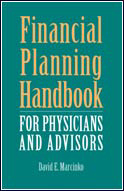
Financial Planning for Physicians and Advisors is essentially a “how-to book” on finance, financial planning and related topics for healthcare providers.

Fortunately for patients, medicine requires a high degree of professional training, both in terms of science and technology. Unfortunately for providers, it affords little time for acquiring medical practice management skills, or learning about the financial aspects of business or investment planning. 

An Unusual Book

More to the point, this is an unusual textbook on financial planning for two reasons.

First, it is a detailed guide for physician’s seeking the complex road to success and profit in the confusing healthcare industrial complex.  Rarely does one see such clarity of presentation, without the usual jargon that often discourages those trying to learn such a foreign and forbidding subject, as finance. 

Second, the subject matter is focused for medical providers who work in one of the fastest growing industries in the United States. The contributors hope that by integrating both disciplines of finance and medical management, they will help foster affordable and profitable healthcare for our nation, which is so entrepreneurial, yet aging.

A Wall Street Career

In my thirty-five years on Wall Street, I have observed that physicians are particularly disadvantaged when it comes to anything regarding finance.  Most medical professionals have enough on their mind practicing their specialty and keeping up with healthcare technology and practice trends, that planning for their financial future is often forgotten.

Financial planning and good investment practices require a solid background of how companies work in the “real world”, and an awareness of how they function within the economy. These economic essentials are vital to understanding business, as principles like budgeting, risk management, cash flow analysis, fiscal benchmarking and rudimentary accounting are presented in this book.

Furthermore, the necessity of keeping up with state and federal insurance legislation, the Health Insurance Portability and Accountability Act and other complex managed care contracting issues, places a continual burden on the individual practitioner, group or medical network seeking to stay abreast of current developments.

A Personal Knowledge Endeavor

But, the text focuses on financial planning and how the healthcare professional can increase personal knowledge and skills in this area. 

The coverage is both broad and yet detailed, ranging from basic macroeconomic factors that affect our national economy, such as the Gross Domestic Product (a single figure that summarize the business activity of the US), to the more mundane activities of maintaining cash flow, tax reduction strategies, home mortgages and even correcting credit card reporting errors.

Sophisticated Topics

More sophisticated topics include: debt and equity investment vehicles, derivatives, mutual fund and hedge fund investing, portfolio management and risk analysis, and the new laws on tax, retirement and estate planning. The book rightly concludes with practice succession planning for doctors, and begins with a chapter on the psychological meaning of money itself.

Assessment

It seems to me that all those in healthcare are well-served by reading this book with its format and step-by-step setup process for financial success, in terms of starting and ultimately surviving in a complicated business full of pitfalls and misinformation.  Most useful will be the extremely detailed table of contents that allows the user to quickly pinpoint an area of interest, and get started answering a problem.

Simply put, my recommendation is to read: Financial Planning for Physicians and Advisors, and “reap”.

Note:

Frank A. Cappiello; MBA
President, McCullough, Andrews & Cappiello, Inc
10751 Falls Road Suite 250
Lutherville, MD  21093
Distinguished Visiting Professor of
Finance
Loyola College, Maryland

Former Guest Panelist; Wall $treet Week with Louis Rukeyser TV

Conclusion

Your thoughts and comments on this ME-P are appreciated. Feel free to review our top-left column, and top-right sidebar materials, links, URLs and related websites, too. Then, subscribe to the ME-P. It is fast, free and secure.

Speaker: If you need a moderator or speaker for an upcoming event, Dr. David E. Marcinko; MBA – Publisher-in-Chief of the Medical Executive-Post – is available for seminar or speaking engagements. Contact: MarcinkoAdvisors@msn.com

OUR OTHER PRINT BOOKS AND RELATED INFORMATION SOURCES:

Product DetailsProduct Details


Baby Boomers Financially Unprepared

Potential Medical Disability Survey

Staff Reporters

According to findings from a recent Harris Interactive survey conducted on behalf of America’s Health Insurance Plans (AHIP) between April 25 – 29, 2008, baby boomers are financially unprepared if they themselves, or the primary wage earner in their household, suffered a medical disability and was unable to work for an extended period of time.

Survey findings:

  • More than half (55 percent) of baby boomers said that they are either not at all or somewhat unprepared financially should they themselves or the primary wage earner in their household became disabled.
  • One in five (22 percent) say they are “not at all prepared” if a disability occurred.
  • Conversely, only 15 percent report that they are very or extremely prepared for a potential disability.
  • More than half (55 percent) say that it is at least somewhat likely that they would tap into their retirement savings in the event that they or the primary wage earner in their household became disabled and could not work for an extended period.
  • Nearly a third (32 percent) reported that it is extremely/very likely/likely that they would need to tap into retirement savings.
  • Nearly one in five boomers (19 percent) reports that it is not at all likely that they would tap into retirement savings.
  • 17 percent report that they do not have any retirement savings at all.

Source: Harris Interactive Inc.

Assessment

What does this survey reveal to doctors, hospitals, financial advisors and the entire health insurance industry?

Conclusion

Please opine and comment.

Related Information Sources:

Practice Management: http://www.springerpub.com/prod.aspx?prod_id=23759

Physician Financial Planning: http://www.jbpub.com/catalog/0763745790

Medical Risk Management: http://www.jbpub.com/catalog/9780763733421

Healthcare Organizations: www.HealthcareFinancials.com

Health Administration Terms: www.HealthDictionarySeries.com

Physician Advisors: www.CertifiedMedicalPlanner.com

Speaker: If you need a moderator or speaker for an upcoming event, Dr. David E. Marcinko; MBA – Publisher-in-Chief of the Executive-Post – is available for seminar or speaking engagements. Contact: MarcinkoAdvisors@msn.com  or Bio: www.stpub.com/pubs/authors/MARCINKO.htm

Subscribe Now: Did you like this Executive-Post, or find it helpful, interesting and informative? Want to get the latest E-Ps delivered to your email box each morning? Just subscribe using the link below. You can unsubscribe at any time. Security is assured.

Link: http://feeds.feedburner.com/HealthcareFinancialsthePostForcxos

Copyright 2008 iMBA Inc: All rights reserved, USA, unless otherwise noted. Use is restricted to Executive-Post subscribers only. No redistribution is allowed. To avoid violation of iMBA Inc copyright restrictions and redistribution policy, please register for your own free Executive-Post membership. Detailed information and registration links are available at:

Link: http://feeds.feedburner.com/HealthcareFinancialsthePostForcxos

Referrals: Thank you in advance for your electronic referrals to the Executive-Post.

Ensuring the Welfare of a Disabled Child

Special Financial Planning Techniques Required

By Roger J. Warrum

If a doctor or medical professional has a mentally or physically disabled child, special estate provisions are needed to ensure the continued care and comfort of that child after the parents’ deaths.

Estate Planning

When designing an estate plan for a doctor with a disabled child, it must provide not only financial security, but personal security as well—without jeopardizing the medical practice as a business entity. The plan must allow the child to continue functioning and making some sort of contribution, according to his or her abilities and lifestyle.

Direct Bequests

In some cases, funds left directly to the child at death may be attached and used by the government. Consequently, direct bequests may not be the best option.

If a doctor wishes to leave the child shares in a family business as a means of support, for example, the best way is to establish a trust that will define how the stock can be converted to cash and how that cash will be spent for the benefit of the child.

To represent the child’s best interests, the doctor might appoint a pair of trustees: one with the financial expertise to invest the trust or assets well -and- another individual who will look out for the child’s welfare to act as the child’s guardian.

Spendthrift Trust

A “discretionary” spend thrift trust is used to provide the trustee discretion to decide when the money will be spent and on what spent.

If the trust is set up solely for the “maintenance” of a disabled child, a state organization caring for the child can attempt to attach the funds.

However, if the trust document specifies the money is to be used for the “benefit and enjoyment” of the child, the state usually is unable to attach the assets.

The share of the estate provided for the disabled child may differ from the share of other children. In many cases, a disabled child requires more funds to care for his or her needs than his or her siblings might require.

Important Issues

When designing an estate plan for the parent(s) of a disabled child, a number of issues must be decided:

• To whom does the doctor want to entrust the care of the child?

• What is the doctor’s wishes regarding the child’s development?

• How should the trust be funded; for example the trust could use a life insurance policy or be funded with other assets?

Assessment

The key elements in planning for a disabled child include:

1. Establishing a trust to be used for the benefit and enjoyment of the child, which cannot be attached by a state or institution should the child need to be institutionalized;

2. Helping to select a guardian, specifying more than one in order of priority;

3. Helping to prepare a letter to the guardian stating desires and wishes for the child; and,

4. Planning to fund the trust and determining the amount to be placed in the trust.

Conclusion

Your thoughts, opinions and experiences with this limited-focus topic are appreciated; please comment? What other issues are involved?

Related Information Sources:

Practice Management: http://www.springerpub.com/prod.aspx?prod_id=23759

Physician Financial Planning: http://www.jbpub.com/catalog/0763745790

Medical Risk Management: http://www.jbpub.com/catalog/9780763733421

Healthcare Organizations: www.HealthcareFinancials.com

Health Administration Terms: www.HealthDictionarySeries.com

Physician Advisors: www.CertifiedMedicalPlanner.com

Subscribe Now: Did you like this Executive-Post, or find it helpful, interesting and informative? Want to get the latest E-Ps delivered to your email box each morning? Just subscribe using the link below. You can unsubscribe at any time. Security is assured.

Link: http://feeds.feedburner.com/HealthcareFinancialsthePostForcxos

Referrals: Thank you in advance for your electronic referrals to the Executive-Post.

Ask a Financial Advisor

Certified Medical Planner

Second-to-Die Life Insurance

QUESTION: Why has second-to-die life insurance become so popular with medical professionals and others?

Conclusion

Your thoughts and comments on this ME-P are appreciated. Feel free to review our top-left column, and top-right sidebar materials, links, URLs and related websites, too. Then, subscribe to the ME-P. It is fast, free and secure.

Link: http://feeds.feedburner.com/HealthcareFinancialsthePostForcxos

Speaker: If you need a moderator or speaker for an upcoming event, Dr. David E. Marcinko; MBA – Publisher-in-Chief of the Medical Executive-Post – is available for seminar or speaking engagements. Contact: MarcinkoAdvisors@msn.com

OUR OTHER PRINT BOOKS AND RELATED INFORMATION SOURCES:

LEXICONS: http://www.springerpub.com/Search/marcinko
PHYSICIANS: www.MedicalBusinessAdvisors.com
PRACTICES: www.BusinessofMedicalPractice.com
HOSPITALS: http://www.crcpress.com/product/isbn/9781466558731
CLINICS: http://www.crcpress.com/product/isbn/9781439879900
ADVISORS: www.CertifiedMedicalPlanner.org
BLOG: www.MedicalExecutivePost.com

Product DetailsProduct DetailsProduct Details

Product Details  Product Details

Financial Planning & Plan Construction for Physicians

On Crafting a Personal Financial Plan [A Fundamental Overview]

By Dr. David Edward Marcinko; MBA CMP

Editor-in-Chief [Executive-Post]

For a review of financial planning and financial plan construction for physicians, and all medical professionals, please read this important white-paper:

Fundamentals of Financial Planning and Plan Construction for Physicians

http://209.85.165.104/search?q=cache:ci42C7BBGiIJ:www.medicalbusinessadvisors.com/financial%2520planning1.doc+david+marcinko+mba&hl=en&ct=clnk&cd=77&gl=us

Conclusion

And so, after review, is this a DIY project or is it time to call in a professional? Of course, execution and continuous monitoring is the next step.

Financial planning info: www.jbpub.com/catalog/0763745790/

Risk management info: www.jbpub.com/catalog/9780763733421/

Practice management info: www.springerpub.com/prod.aspx?prod_id=23759

Fiduciary Advisors: www.CertifiedMedicalPlanner.com

Institutional info: www.HealthcareFinancials.com 

Additional terms: www.HealthDictionarySeries.com

Speaker: If you need a moderator or a speaker for an upcoming event, Dr. David Edward Marcinko; MBA – Editor and Publisher-in-Chief – is available for speaking engagements. Contact him at: MarcinkoAdvisors@msn.com

Children with Special Needs

Types of Related Trusts

Staff Writers 

A trust can be established to insure that funds are available for a disabled child’s lifestyle. If funds are left directly to a physician’s child at the age of majority, Medicaid is lost until their funds are spent down. The type of trust chosen is therefore critical.

Medicaid, Payback or OBRA 93 Trust:  

First authorized by the Omnibus Budget Resolution Act of 1993, allows the trust for pay for non-essentials.  The specific language must be written in to the exact letter. Upon the death of the child the Medicaid bill is repaid from the funds remaining in the trust, and thus the Medicaid and SSI benefits continue to be available to the child during her lifetime.  The payback trust is more advantageous when established at an early age.  The funds in the trust can then be stretched out to last over an extended period, hopefully the child’s lifetime.  Here are two examples where such a trust is an effective vehicle.   

In the first case, a payback trust is set up for a 21-year-old with $100,000.  During his lifetime the Trust spends $92,000.  The Medicaid bill is $75,000.  Medicaid receives the remaining $8,000 and the bill is considered paid in full. 

In the second case, a payback trust of $350,000 is set up for a 35-year-old.  Upon the child’s death, the trust has assets of $225,000 and the Medicaid costs due are $75,000.  The trust then meets its Medicaid obligation and the remaining $150,000 is available for other beneficiaries.   

Other effective trust vehicles include a community trust, master trust and special needs trust, each with its own set of rules. 

Community Trust:

This trust is managed by a community foundation of volunteer trustees so the issue of dealing with trustee death is erased. This trust vehicle greatly expands the window of opportunity to those who may not have the time, expertise or funds to establish a private trust, to receive the benefits of a trust.  

Master Trust: 

May be established by a community or by an organization and is administered along the lines of a Community trust.

Special Needs Trust:  

This trust may maintain Medicaid and Social Security benefits, without having the payback clause. Unfortunately, this trust is sometimes challenged as it entails more risk than a payback trust and must be considered carefully before selection.

For example, a situation where this may be put in place is when gifting by family members is used to support the specialized schooling of a disabled child.

The Crummey Trust: 

Trust named after the D. Clifford Crummey family who first set it up to deny the annual gift tax exclusion. A Crummey Trust does not give the child any right to income but does give the right to withdraw the amount of each gift up to 30 days after it is made. Since the withdrawal right begins immediately after the gift is made, it is considered a present interest. If the child does not withdraw the gift within the 30 days, the withdrawal right lapses and the money remains in the trust until the child attains a designated distribution age. 

Of course, parents must still convince the child not to withdraw. However, if the child decides to withdraw, s/he can only access the amount of the most recent gift; not the entire trust. Thereafter, parents can eliminate all future withdrawal opportunities by not making any more gifts. The property in the trust remains intact and grows until distributed.  This private trust option and its language must be specific to avoid disqualification. 

The Charitable Remainder Trust:


This is an irrevocable trust with the beneficiary enjoying the trust funds and the charity receiving the remainder upon death.  The tax exempt status of a CRT may make the funds in the trust last longer.  If the charity is a nonprofit organization involved in the caring of special needs children, the physician’s family can show gratitude with a CRT.  

The Irrevocable Life Insurance Trust: 

An ILIT may be used in tandem with the various trust vehicles to assure continued funding for the child after one or both parents have died. 

Which of the above trust types have you used and what were the results?

Funeral Expenses

The Perilous Last Economic Journey

By Staff Writers

Join Our Mailing List

As a physician or other medical professional, perhaps you have not considered the immediate cost of death related activities; in other words – your funeral and its follow-up last expenses. 

When one considers the cost of a funeral, with casket, embalming, burial and other itemized costs and service related expenses, the average price tag is about $8,500 and of course, purchasing the burial plot is extra. The cost of the average cremation is about $850.   

Further information relating to burial finances, can be obtained from Consumer Caskets USA at 800-611-8778, the Choice in Dying at 88-989-9455, and the Funeral and Memorial Society of America at 802-482-3437. All have internet web sites. 

Remember, life is a perilous journey.

Assessment

Have you planned for funeral follow-up and/or last living expenses?

Channel Surfing the ME-P

Have you visited our other topic channels? Established to facilitate idea exchange and link our community together, the value of these topics is dependent upon your input. Please take a minute to visit. And, to prevent that annoying spam, we ask that you register. It is fast, free and secure.

Conclusion

Your thoughts and comments on this ME-P are appreciated. Feel free to review our top-left column, and top-right sidebar materials, links, URLs and related websites, too. Then, subscribe to the ME-P. It is fast, free and secure.

Speaker: If you need a moderator or speaker for an upcoming event, Dr. David E. Marcinko; MBA – Publisher-in-Chief of the Medical Executive-Post – is available for seminar or speaking engagements. Contact: MarcinkoAdvisors@msn.com

OUR OTHER PRINT BOOKS AND RELATED INFORMATION SOURCES:

Product Details  Product Details

Financial Windfalls

Join Our Mailing List

Successfully Handling the Brass Ring

[By Staff Writers]

If you are a physician or healthcare executive who is fortunate enough to win the lottery, or receive a large inheritance, the following simple rules will help maintain your emotional stability, as well as financial health.

###

Dollars

###

· Deposit cash into a money market account in your name or into a joint account with your spouse, and limit access. If a doctor is the executor of an estate, be aware that significant tax benefits may result by freezing the estate for six months and using the alternate valuation method of size determination. Similarly, if a windfall is in the form of securities, make sure they are titled correctly.  Limit those to whom you tell about your luck.

· Hire a Registered Investment Advisor (RIA), Certified Medical Planner™, CPA or other financial fiduciary to lead your team of lawyers and insurance agents. Get tax advice immediately.

· Do not quit your job, sell your practice, or initially disrupt your life materially. 

· Maintain your normal routine.

· Limit your new expenditures and consider your lifestyle options.

· Redefine your financial plans, and continue to save and invest.

· Pay down your debt and recall that non-deductible debt costs the stated APR, while deductible debt costs less if you itemize.

· Review your insurance policies, will, estate plan or trusts.

· Avoid friends or relatives who petition you for money.

· Consider charitable interests and gifting strategies carefully.

· Exercise, stay healthy and enjoy your windfall.

Assessment

Now, if you won the lottery; your experiences – no matter how major or minor – are appreciated.

Conclusion

Your thoughts and comments on this ME-P are appreciated. Feel free to review our top-left column, and top-right sidebar materials, links, URLs and related websites, too. Then, subscribe to the ME-P. It is fast, free and secure.

Link: http://feeds.feedburner.com/HealthcareFinancialsthePostForcxos

Speaker: If you need a moderator or speaker for an upcoming event, Dr. David E. Marcinko; MBA – Publisher-in-Chief of the Medical Executive-Post – is available for seminar or speaking engagements. Contact: MarcinkoAdvisors@msn.com

OUR OTHER PRINT BOOKS AND RELATED INFORMATION SOURCES:

DICTIONARIES: http://www.springerpub.com/Search/marcinko
PHYSICIANS: www.MedicalBusinessAdvisors.com
PRACTICES: www.BusinessofMedicalPractice.com
HOSPITALS: http://www.crcpress.com/product/isbn/9781466558731
CLINICS: http://www.crcpress.com/product/isbn/9781439879900
BLOG: www.MedicalExecutivePost.com
FINANCE: Financial Planning for Physicians and Advisors
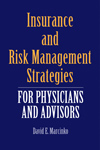
INSURANCE: Risk Management and Insurance Strategies for Physicians and Advisors

Product Details  Product Details

Alternative Financial Clout

Join Our Mailing List

On the Gay Financial Network [GFN]

[By Staff Writers]

A useful resource to supplement the financial knowledge of gay medical or lay professionals is the Gay Financial Network www.gfn.com

Gays and lesbians control more than $800 billion, according to the network, and the nations’ most gay friendly companies include IBM, AT&T, Bank of America Corp., Google, Yahoo, Mobil Corp., and Hewlett-Packard Co., according to the network.

By its own estimates, there are more than 25 million homosexuals in the USA, and more than 10 million are on-line. About 75 percent of the network’s members are men, 25 percent women, and the majority aged 30-50. Sixty percent visit the site daily, and about 15 percent earn more than $100,000. 

Assessment

And, the fact that this information is geared toward alternative lifestyles should not let it be an impediment toward using the information.  

For example, did you know that the same penalties associated with pension plans and estate tax laws, also impact unmarried straight couples in the same manner as a gay couple?

*** GFN

***

Conclusion

Your thoughts and comments on this ME-P are appreciated. Feel free to review our top-left column, and top-right sidebar materials, links, URLs and related websites, too. Then, subscribe to the ME-P. It is fast, free and secure.

Speaker: If you need a moderator or speaker for an upcoming event, Dr. David E. Marcinko; MBA – Publisher-in-Chief of the Medical Executive-Post – is available for seminar or speaking engagements. Contact: MarcinkoAdvisors@msn.com

OUR OTHER PRINT BOOKS AND RELATED INFORMATION SOURCES:

 Product Details

Alternative Lifestyles

Understanding Exactly What’s at Risk

Staff Writers


A function of Social Security is to be an old age pension plan supplement.  It also offers survivor benefits for a physician’s spouse and children.  The benefit is not paid to a live-in companion, however. 

Social Security also offers a disability payment for those unable to work.  This benefit will be available to those who qualify, but calculated at a single individual’s rate for those unmarried. 

One area where a bonus may be earned is the old age pension program. This will be paid to every qualifying individual.

In other words, if both you and your significant other qualify for maximum benefits, these will be received for your lifetime.  You will not be subject to a reduced survivor benefit.

Medicare pays health insurance benefits based upon the individual.  These benefits will be affected by a non-traditional relationship.  Yet, the family pieces of this puzzle are missing under current Medicaid guidelines.

Marriage Benefits 

The federal and state governments, as well as corporate America, confer many benefits, protections and obligations to married couples, among them: 

  • Assumption of spouse pension
  • Automatic housing lease transfer
  • Automatic inheritance
  • Bereavement leave
  • Burial determination
  • Child custody
  • Confidentiality of conversations
  • Crime victim’s recovery benefits
  • Divorce and domestic violence protection
  • Exemption on property tax upon partner’s death
  • Family leave to care for sick partner
  • Immunity from testimony against spouse
  • Insurance benefits and breaks
  • Joint adoption, foster care and custody
  • Joint bankruptcy
  • Joint parenting to care for partner
  • Medical decisions on behalf of partner
  • Property rights
  • Reduced rate membership
  • Social security benefits
  • Tax advantages
  • Visitation of partner’s children
  • Visitation of partner in hospital or prison
  • Wrongful death benefits

The Estate Tax Penalty 

Estate law is unforgiving and its penalties are truly gender and relationship blind.

As an example, the powerful first tool in a well-written estate plan, the unlimited marital deduction, is not possible.   This is a fact which must be recognized and dealt with in a proactive manner. 

Do not be misled by your local or state law that may recognize a relationship involving a significant other. The federal estate tax code simply does not exist for such a relationship. 

Have you been affected by any of the above?

Non-Traditional Relationships

Minimizing the Impact

Staff Writersfp-book3

Social Security regulations are set in stone.  To combat reduced disability payments it is advised that both partners in a non-traditional relationship purchase additional disability insurance, above and beyond what may be offered from your medical office or hospital group plan. 

And, to combat the lack of death benefit from Social Security and some restrictive hospital or medical employer plans, it is recommended that sufficient life insurance be purchased on both parties. 

View this as a business buy-sell arrangement, so that one either partner will be left with sufficient financial means if an untimely death should take place. 

A charitable remainder trust, for estate planning, may be an appropriate document that allows a medical professional with an alternative lifestyle to insure an income stream for the rest of both partner’s lives.  It may result in reduced estate taxes, relief from capital gains, and the opportunity to diversify your investments. In this way, the legacy that is left to a significant other comes without familial meddling. 

In early 2000, the Vermont Supreme Court recognized that committed gay couples deserve the same rights and benefits, in the eyes of the law, as heterosexual couples.

So, going forward from 2008, some experts hope the above machinations may not be required much longer. Nevertheless, on the positive side, there are a few financial benefits to being unmarried.  

For example, although they can’t file joint income tax returns, or use each other’s deductions to shelter income, unmarrieds do avoid the so-called but eviscerated marriage penalty that occured when both parties had high paying jobs, such as medical professionals. 

Assessment

Moreover, if one partner is wealthy, unmarried couples can take advantage of estate freeze techniques, unavailable to married couples since 1990, to reduce gift and estate taxes. 

And so, have you been affected by any of the above?

Product Details  Product Details

UGMAs and UTMAs


Titling Assets Correctly

Staff Writers 


Generally, medical professionals should not save in a child’s name.  Yes, there is a small tax break, but all the assets in their name diminish the amount of financial aid available to them.  

Also, your child can take control of the assets at age 18 or 21, depending on your state’s law. 

Other drawbacks to be aware of include:

· The custodian has the power to invest and draw funds for the benefit of the child; but who defines – what is a benefit?

· Earned income will be taxed at the child’s rate.

· The gift is irrevocable, and may be included in your estate for federal tax purposes, if you die prior to the age of majority. 

The Uniform Gift to Minors Act (UGMA) and the slightly different Uniform Transfers to Minors Act (UTMA) are therefore usually not helpful when it comes to financial aid, and not using them will ensure that you will decide how to spend the funds. 

What is your experience in this area relative to college savings?

Rent versus Buy

When is Renting a Home Less Expensive than Buying?

[By Staff Writers]

Join Our Mailing List

It usually makes sense to rent a home – rather than purchase one – when the period of time you will stay in the home is short or undetermined.

Why? The reason for this is the high cost of purchasing and selling a home. 

When a physician purchases a home, he or she must pay an amount varying from the total price in cash to at least 0-3% down; and hopefully up to the traditional 20% or beyond to remove PMI – especially after the recent mortgage industry meltdown with today’s tight credit markets because of the sub-prime mortgage fiasco.

Recall, that about 13% of first mortgages that originated in 2005 and 2006 had down payments of less than 10%, according to the Mortgage Bankers Association. An additional 1% of the mortgages surpassed the value of the property.

And, if the home is purchased for cash, a majority of the expense of purchasing and selling comes in the selling via commissions and excise taxes.

Sound too much like a Pollyanna? Well, one must understand that mortgage securities are now so complex that it’s often hard to know who actually owns the underling property. If the doctor finances a home, he or she has to pay closing costs on the mortgage as well as the back-end commissions and excise taxes.  

So, it’s obvious that owning a home for a short period of time can be very costly unless the home experiences a dramatic rise in appraised value during the (short) ownership period. And, it surely did in some areas, in the past.  But, because each situation will vary, it is important to build a spreadsheet model that encompasses all of the important information when analyzing the situation. 

The Contemporary Scene for Homes

Currently, more doctors should probably concentrate on debt reduction and establishing their careers – and rent their homes. Of course, this strategy does drive up rental fees in the short term. But, home “flipping” did the same thing to prices and resulted in our current mortgage mess. 

Current Theme for Apartments 

Apartment asking rents posted their biggest increase of 2007 in the third quarter, jumping 4.2% from a year ago, to an average of $1,015 per unit, according to industry sources. And vacancy, which had edged up slightly earlier in the year because of apartment construction, tightened up in the last quarter to an average of 5.6% from 5.7% the same time a year ago. Thus, the outlook is rosy for landlords in 2008, but murky for homeowners.

Row Homes

Assessment

Hopefully in the future, home prices may shrink – and physician economic stability increase – to the point that home ownership becomes the delight it should be; rather than the burden it has become for many doctors. 

Do you rent or own? How has your strategy worked for you? Do you view your home as a place to live – or an investment? Why, or why not?

Conclusion

Your thoughts and comments on this ME-P are appreciated. Feel free to review our top-left column, and top-right sidebar materials, links, URLs and related websites, too. Then, subscribe to the ME-P. It is fast, free and secure.

Link: http://feeds.feedburner.com/HealthcareFinancialsthePostForcxos

Speaker: If you need a moderator or speaker for an upcoming event, Dr. David E. Marcinko; MBA – Publisher-in-Chief of the Medical Executive-Post – is available for seminar or speaking engagements. Contact: MarcinkoAdvisors@msn.com

OUR OTHER PRINT BOOKS AND RELATED INFORMATION SOURCES:

DICTIONARIES: http://www.springerpub.com/Search/marcinko
PHYSICIANS: www.MedicalBusinessAdvisors.com
PRACTICES: www.BusinessofMedicalPractice.com
HOSPITALS: http://www.crcpress.com/product/isbn/9781466558731
CLINICS: http://www.crcpress.com/product/isbn/9781439879900
BLOG: www.MedicalExecutivePost.com
FINANCE: Financial Planning for Physicians and Advisors
INSURANCE: Risk Management and Insurance Strategies for Physicians and Advisors

Product Details  Product Details

Auto Ownership Costs for Docs

Join Our Mailing List

What are the Costs of Physician Automobile Ownership?

[By Staff Writers]

XJ-V8-LWB Jaguar touring sedan

Automobiles are generally the fourth largest expense of a physician’s household; right behind student loans and/or practice start up costs; and home ownership loans.

The largest automobile-related expense is purchase of the car, either in the form of a monthly payment or cash.  

Other expenses include gas [especially when over $3/gal], maintenance, repairs, taxes, and insurance. Insurance is generally the next largest expenses in the automobile category unless a large repair is necessary, a factor mostly dependent on the age and type of the car.

For some cars, repairs may be the second largest expense. Maintenance costs vary depending on such factors as the age and mechanical complexity of a vehicle. Generally, money spent on regular maintenance will reduce future repair costs. 

Like the cars themselves, auto leases are generally poor deals and are not investments; merely interest payments on a depreciating consumer asset.

Assessment

What do you think about the fascination of doctor’s with “luxury” automobiles? 

Channel Surfing the ME-P

Have you visited our other topic channels? Established to facilitate idea exchange and link our community together, the value of these topics is dependent upon your input. Please take a minute to visit. And, to prevent that annoying spam, we ask that you register. It is fast, free and secure.

Waxed Jaguar

Conclusion

Your thoughts and comments on this ME-P are appreciated. Feel free to review our top-left column, and top-right sidebar materials, links, URLs and related websites, too. Then, subscribe to the ME-P. It is fast, free and secure.

Speaker: If you need a moderator or speaker for an upcoming event, Dr. David E. Marcinko; MBA – Publisher-in-Chief of the Medical Executive-Post – is available for seminar or speaking engagements. Contact: MarcinkoAdvisors@msn.com

OUR OTHER PRINT BOOKS AND RELATED INFORMATION SOURCES:

Product Details  Product Details

Physician Homestead Affordability

Join Our Mailing List

What are the Costs of Physician Home Ownership?

[By Staff Writers]

Home ownership for the physician or other medical professional can be a very rewarding experience that gives the owner a real sense of security, especially when the home is free and clear of a mortgage.  Home ownership can also be very expensive, and is generally the largest expense of a household; sans the physician’s medical practice itself. And, there are many costs to home ownership. 

First, to acquire a home, the physician home owner must make a down payment and pay closing costs on the mortgage. The down payment is usually a minimum of 5% of the purchase price, although some mortgage programs allow as little as 3% down or even nothing with interest-only deals available. The closing costs can run as high as 3% with no buy-down on the interest rate. 

Second, the physician home owner must service the mortgage with the usual monthly payments of principal and interest. This is usually the largest expense associated with home ownership. 

Third, the physician home owner must pay all of the utilities associated with the property. The mandatory utilities are water/sewer/garbage, electricity and/or gas, and local telephone. These expenses can be substantial. Water/sewer/garbage services can total over $150 per month. Electricity and gas bills usually total a minimum of $250 per month for an average-sized four-bedroom, three-bath home. 

Fourth, the physician home owner must pay property taxes, a substantial expense. As an example, property taxes average approximately 1-2% of fair market value computed on appraised value rather than the fair market value. This translates into thousands of dollars per year. 

Fifth, the physician home owner must maintain the home. These expenses include small and large home repairs and maintenance, landscaping, gardening, and remodeling. Large home repairs can include replacing a roof, painting the interior and exterior, replacing carpeting, and repairing water damage. Small home repairs and maintenance often include repairing leaky faucets, damaged flooring, broken windows, and walls that children thought would make a great coloring board. 

Sixth, the physician home owner must insure the home for property damage and liability damage related to the home. This expense varies widely but will be a minimum of several hundred dollars per year. 

The following is an example of the monthly costs of home ownership for a new doctor who owns a house worth $200,000 and has a $160,000 mortgage with an 8% rate and a 30-year term. So, a lower rate today looks even better, right? 

  • Mortgage payment: $1,174       
  • Property taxes: $166     
  • Utilities: $450
  • Insurance: $30
  • Maintenance: $300

Total $2,120

These numbers do not include large repair and maintenance expenses. When these expenses occur, they are usually paid for in a lump sum, rather than being amortized over the years of their useful life. The lump-sum cost does not include the amount of earnings lost on the money used for the expenditure.

In order to amortize these items, the physician home owner would have to borrow the money to pay for them, but this would result in additional interest expense.  

Drs. Home

There are also exit costs to home ownership. When a doctor wants to sell a home, he or she must pay a sales commission of approximately 6% and an excise tax that varies state to state. Of course, FSBO is also a sales option. 

Q: What is the biggest impediment to a home loan down payment?

A: A student loan and/or an existing automobile loan.

Q: What is the biggest impediment to a practice start-up loan; office down payment, or medical group buy-in situation?

A: A home loan; school loan and/or automobile loan.

Note, the vicious consumer debt-cycle which differentiates wants from needs!

Rents on the Upswing for 2008

On the other hand, apartment asking-rents posted their biggest increase of 2007 in the third quarter, jumping 4.2% from a year ago, to an average of $1,015 per unit, according to industry sources. And vacancy, which had edged up slightly earlier in the year because of apartment construction, tightened up in the last quarter to an average of 5.6% from 5.7% the same time a year ago. Thus, the outlook is rosy for landlords in 2008, but not necessarily the same for homeowners.

Conclusion

Now, how does the above traditional philosophy seem in light of the recent mortgage debt debacle? 

Risk Management, Liability Insurance, and Asset Protection Strategies for Doctors and Advisors: Best Practices from Leading Consultants and Certified Medical Planners™8Comprehensive Financial Planning Strategies for Doctors and Advisors: Best Practices from Leading Consultants and Certified Medical Planners™

The Financial Services Industry Explained

Join Our Mailing List

Financial Services Sales Professionals   

By: Dr. David E. Marcinko; MBA, CMP™ 

[Publisher-in-Chief]

DEM 2013It has been said that there are more than 95 financial services designations in the business; and most are suspect credentials. A college degree may not even be required for most of them. 

And, the quest to find true guidance is clothed in mystery and subterfuge in the business. 

Why? It’s because the industry promotes a low standard of care, known as “suitability”; when a much higher fiduciary standard – to work on behalf of the client like a physician – should be required. 

If you don’t believe me, just look in the classified ad section of your local newspaper under “sales positions”, for job listings for these folks.  

So, when you select any type adviser, get this fiduciary standard-of-care statement in writing.  Just think of the “golden rule”, as you ponder these traditional credentials. 

What is an Insurance Agent? 

No one, especially doctors, likes to pay life and disability insurance premiums. Inadequate coverage, however, can completely devastate your family or medical practice, by quickly wiping out a lifetime of asset accumulation and business equity.

Buying and maintaining the right amount and type of coverage from solid insurance companies at a reasonable price eliminates these risks in a very efficient manner.  Unfortunately, an essential and relatively simple concept like risk transfer has evolved into an area that makes many doctors downright queasy.

The easiest way to handle this issue is to get consensus agreement from a core team of financial advisors as to the amount and types of coverage.

Once that is accomplished, appropriate insurance agents can be contacted.  The agents should be captive agents with insurance companies with policies known to be good for the coverage in question. Otherwise, independent agents with access to a large number of companies and products can be contacted.

Regardless, in addition to the usual questioning regarding competence and a background check, the agent should be aware that the core team will review all proposals.  Proposals should include what is known as a ledger statement.

A Chartered Life Underwriter (CLU) as granted by the American College, or Chartered Financial Consultant (ChFC), are two valid insurance designations demonstrating a focused expertise in the insurance business.  But, these still are typically commission sales agents who work for their respective firms, or themselves, but not necessarily you. The saying goes “insurance is sold not bought.”

As a reformed insurance agent myself, I sold all sorts of personal and other business insurance, too.  

Some years ago, the American Society of CLU and ChFC, in Bryn Mawr, Pa., reconsidered its own strategy of insurance as the organization changed its name to the Society of Financial Services Professionals to appeal to a broader base of financial practitioners beyond the insurance products it traditionally provided. 

What is a Stock Broker [Registered Representative]? 

A full service retail or discount stock broker, regardless of compensation schedule, is also known as a registered representative. Other names include financial advisor, financial consultant, financial planner, Vice President, etc. Nevertheless, they are still stock-brokers and not fiduciaries. 

Typically, the national test known as a Series #7 (General Securities License) examination and state specific Series #63 license is needed, along with Securities Exchange Commission (SEC) registration through the National Association of Securities Dealers (NASD) to become a stockbroker.  The industry touts them as rigorous; they are not as I passed mine after studying for a weekend. Since a commission may be involved – and performance based incentives are allowed – always be aware of costs.  

Again, regardless, of nomenclature derivative, the goal of these folks is to sell financial products; and earn a commission or fee. You also typically sign away your right to litigate when you enter into a brokerage contract. 

What is a Registered Investment Advisor?

This securities license, obtained after passing the easy Series # 65 examination, allows the designee to charge for giving unbiased securities advice on retirement plans and portfolio management, although not necessarily sell securities or insurance products. 

An RIA, or RIA representative, is usually a fiduciary, and should work for the interest of the client. A registered-representative, financial consultant, Certified Financial Planner™, or stockbroker does not necessarily have to be. 

What is a Certified Financial Planner™? 

Some believe that the premier personal financial planning designation of choice for the Financial Planning Association (FPA) – originally located in Atlanta, then Denver and now Washington, DC and founded in 1969 – is board Certification in Financial Planning.  This independent, designation represents a person who has completed a 24 month course of study at an accredited institution and passed the two day, comprehensive Certified Financial Planner Board of Standards Examination. This test encompasses all aspects of the financial planning process, including insurance, economic principles, taxation, investments and retirement benefits planning. 

An ethics, continuing education and confidentiality requirement is also mandated for this designation [www.FPANet.org].  But, be warned however, a CFP is not necessarily a fiduciary and does not have to act on your behalf, or with your best interests in mind.  

And, conflicts of interest do not necessarily have to be disclosed. There is much dissention in the industry regarding this situation, as I remain a former-reformed Certified Financial Planner™.

Still, the association’s marketing clout is powerful.

What is a Chartered Financial Analyst™? 

A Chartered Financial Analysis™ will usually work for a brokerage house and follow one or a few publicly traded companies. CFA analysts may manage institutional money or run a mutual fund and have ethics requirements.  This is a tough standard. I experienced it first-hand in business school. 

Unfortunately, the previously unbiased nature of some Wall Street experts has been questioned lately with the collapse of such stocks as HealthSouth and others.  Some authorities now feel that analysts have become merely promoters of the followed company, since sell recommendations are rarely made and CFAs or non-CFAs may cozy up to insiders and corporate executives as they curry their favor.

Contact the Association for Investment Management and Research (www.AIMR.org); now [www.CFAInstitute.org]. 

Q: Why is knowledge of the above important to physician-investors?

A: To avoid being ripped off!

Don’t believe me? Recall the tale of Dr. Debasis Kanjilal, a pediatrician from New York who put more than $500,000 into the dot.com company, InfoSpace, a few years ago, upon the advice of Merrill Lynch’s star analyst Henry Bloget. Is it any wonder that when the company crashed, the analyst was sued, and Merrill settled out of court? Other analysts, such as Mary Meeker of Morgan Stanley, Dean Witter and Jack Grubman from Salomon Smith Barney, are involved in similar fiascos.  Remember; forewarned is forearmed

8 Things your Financial Planner Won’t Tell You: http://articles.moneycentral.msn.com/RetirementandWills/CreateaPlan/8ThingsYourFinancialPlannerWontTellYou

Conclusion

Your thoughts and comments on this ME-P are appreciated. Feel free to review our top-left column, and top-right sidebar materials, links, URLs and related websites, too. Then, subscribe to the ME-P. It is fast, free and secure.

Speaker: If you need a moderator or speaker for an upcoming event, Dr. David E. Marcinko; MBA – Publisher-in-Chief of the Medical Executive-Post – is available for seminar or speaking engagements. Contact: MarcinkoAdvisors@msn.com

OUR OTHER PRINT BOOKS AND RELATED INFORMATION SOURCES:

Product DetailsProduct Details


Annuity Insurance Products

Join Our Mailing List

A Brief Overview of Annuities for Physicians

[By Gary A. Cook, MSFS, CFP®, CLU, ChFC, RHU, LUTCF, CMP™ (Hon)]

[By Kathy D. Belteau, CFP®, CLU, ChFC, FLMI]

[By Philip E. Taylor, CLU, ChFC, FLMI]fp-book1

 Introduction

Annuities were reportedly first used by Babylonian landowners to set aside income from a specific piece of farmland to reward soldiers or loyal assistants for the rest of their lives.

Today’s annuities substitute cash for farmland; however the concept is the same. In 1770, the first annuities were sold in the United States and were issued by church corporations for the benefit of ministers and their families. Annuities have grown on a tax-deferred basis since enactment of the Federal Income Tax Code in 1913.  They began to gain widespread acceptance in the early 1980s when interest rates credited exceeded 10%.  During the last two decades, annuities have been the fastest growing sector of premiums for life insurance companies.

Nevertheless, are they actually “needed” by contemporary physicians – – or merely “sold” to them? 

An annuity is a legal contract between an insurance company and the owner of the contract. The insurance company makes specific guarantees in consideration of money being deposited with the company.

Annuities are generally classified as fixed or variable – deferred or immediate.  As their names indicate, deferred annuities are designed as saving funds to accumulate for future use.They are growth-oriented products where the tax on the interest earned is deferred until the money is withdrawn.  An immediate annuity is used for systematically withdrawing money without concern for the money lasting until the end.  The insurance company assumes this risk.

Deferred Annuities

The deferred annuity contract, like a permanent life insurance policy, has been found by some to be a convenient method of accumulating wealth.  Funds can be placed in deferred annuities in a lump sum, called Single Premium Deferred Annuities, or periodically over time, called Flexible Premium Deferred Annuities.  Either way, the funds placed in a deferred annuity grow without current taxation (tax-deferred).  .

Fixed Deferred Annuity

Fixed deferred annuities provide a guaranteed minimum return of return (usually around 3 percent per year) and typically credit a higher, competitive rate based on the current economic conditions.

Fixed annuities are usually considered conservative investments as the principal (premium) is guaranteed not to vary in value. Insurance companies are required by state insurance laws to maintain a reserve fund equal to the total value of fixed annuities.  Fixed annuities are also protected by State Guaranty Fund Laws. 

Example: 

Dr. Park, a retired physician, desires a safe financial vehicle for $100,000 of her excess savings.  She doesn’t need the earnings of this investment for current income and also wants to reduce her income tax liability.  She decides to purchase a fixed deferred annuity with her $100,000.  The annuity guarantees a 3 percent annual return and the current rate is 6 percent. 

After the first year, $6,000 of interest is credited to the annuity and Dr. Park has no current income taxes as a result.  If the 6 percent interest rate does not change, after 3 years, the annuity will have $119,102 of value.

Variable Deferred Annuity

Recently, variable deferred annuities have become very popular.  Like fixed annuities, variable deferred annuities offer tax-deferred growth, but this is where the similarities end.  Variable annuities are not guaranteed.  The appreciation or depreciation in value is totally dependent on market conditions.

Variable deferred annuities assets are maintained in separate accounts (similar to mutual funds) that provide different investment opportunities.  Most of the separate accounts have stock market exposure, and therefore, variable annuities do not offer a guaranteed rate of return.

But, the upside potential is typically much greater than that of a fixed annuity. The value of a variable deferred annuity will fluctuate with the values of the investments within the chosen separate accounts.  Although similar to mutual funds, there are some key differences.  These include:

·  A variable annuity provides tax deferral whereas a regular mutual fund does not

·  If a variable annuity loses money because of poor separate account performance, and the owner dies, most annuities guarantee at least a return of principal to the heirs.  This guarantee of principal only applies if the annuity owner dies.  If the annuity value decreases below the amount paid in, and the annuity is surrendered while the owner is alive, the actual cash value is all that is available.

·  When money is eventually withdrawn from a deferred annuity, it is taxable at ordinary income tax rates.  With taxable mutual funds, they can be liquidated and taxed at lower, capital gains rates.

·  There is also a 10 percent penalty if the annuity owner is under 59½ when money is withdrawn.  There is no such charge for withdrawals from a mutual fund.

· The fees charged inside of a variable annuity (called mortality and expense charges) are typically more than the fees charged by a regular mutual fund. 

Assessment

Variable deferred annuities are sensible for physicians who want stock market exposure while minimizing taxes.  Most financial advisors and Certified Medical Planners™ [CMP™] recommend regular mutual funds when the investment time horizon is under 10 years.  But if the time horizon is more than 10 years, variable annuities may occasionally become more attractive because of the additional earnings from tax-deferral. 

Both types of deferred annuities are subject to surrender charges.  Surrender charges are applied if the annuity owner surrenders the policy during the surrender period, which typically run for 5 to 10 years from the purchase date.  The charge usually decreases each year until it reaches zero.  The purpose of the charge is to discourage early surrender of the annuity. 

Equity Index Annuity 

The equity index annuity combines the basic elements of both the variable and the fixed annuity. The credited interest earnings are generally linked to a percent of increase in an index, such as the Standard & Poor’s 500 Composite Stock Price Index (S&P 500). This percentage is called the Participation Rate and may be guaranteed for a specified period of up to 10 years or adjusted annually. Thus, the physician annuity owner is able to participate in a portion of market gains while limiting the risk of loss. 

Typically, the indexed annuity has a fixed principal, with the insurance company and contract owner sharing the investment risk.  If the S&P 500 Index goes up, so do interest earnings.  If it declines, the insurance company guarantees the principal.   

So, the physician contract owner accepts the risk of an unknown interest yield based on the growth or decline of the S&P 500.  Medical professionals and healthcare practitioners should pay particular attention to surrender penalties, asset management fees and any monthly caps on appreciation. 

Immediate Annuities

Immediate annuities provide a guaranteed income stream.  An immediate annuity can be purchased with a single deposit of funds, possibly from savings or a pension distribution, or it can be the end result of the deferred annuity, commonly referred to as annuitization.  Just like deferred annuities, immediate annuities can also be fixed or variable.  

Immediate annuities can be set up to provide periodic payments to the policy owner annually, semiannually, quarterly or monthly.  The annuity payments can be paid over life or for a finite number of years.  They can also be paid over the life of a single individual or over two lives. 

Insurance Agent Commissions

Immediate Fixed Annuity

Immediate fixed annuities typically pay a specified amount of money for as long as the annuitant lives.They may also be arranged to only pay for a specified period of time, i.e., 20 years.  They often contain a guaranteed payout period, such that, if the annuitant lives less than the guaranteed number of years, the heirs will receive the remainder of the guaranteed payments. 

A note of caution here, as the selection of an immediate annuity is an irrevocable decision! 

Example: 

Dr. Jones is 70 years old and retired.  He is only of average wealth, but is concerned that if he lives too long, he could deplete his savings.  He decides to use $100,000 and purchase a lifetime immediate annuity with 20 years certain.  The insurance company promises to pay him $7,000 per year as long as he lives. If Dr. Jones dies four years after purchase, he would only have received $28,000 out of a $100,000 investment.  However, his heirs will receive $7,000 for the next 16 years.  If Dr. Jones survives to the age of 98, he would have received $196,000 (or 28 years of $7,000).

Immediate Variable Annuity

Immediate variable annuities provide income payments to the annuitant that fluctuates with the returns of the separate accounts chosen.  The theory is that since the stock market has historically risen over time, the annuity payments will rise over time and keep pace with inflation.   If this is indeed what happens, it is a good purchase, but it cannot be guaranteed. 

Some companies will, at a minimum, provide a guarantee of a low minimum monthly payment no matter how poorly the separate accounts perform.

Split annuities

A popular method of adding income and yet still accumulating savings is through the use of two separate annuity policies.  Part of the funds is placed in an immediate annuity to provide monthly income.  The balance is placed in a deferred annuity grows to the total value of the premium paid for both annuities.  

The income that is received from the Immediate Annuity includes a portion of the initial premium, as well as the taxable interest earned.   Only the portion of income that is interest is taxable. The ratio between the annuity principal and interest being paid out is called an Exclusion Ratio. 

Example:

Dr. Jeanne Jones has put $100,000 into a 5-year non-tax deferred vehicle at 5%. The earnings to supplement Jeanne’s retirement is $25,000.  With a combined federal and state tax of 33%, the net after tax income would be $16,750. Jeanne takes the same $100,000 using the split annuity concept she would receive $24,444 over the 5 years.  Based on an exclusion ration of 89%, her total taxable amount is $2,797.  This would yield $923 in taxes at the same 33% tax rate.  Jeanne would have $23,521 of spendable income with the split annuity compared to the $16,750.

Qualified Annuities

The term qualified refers to those annuities which permit tax-deductible contributions under one of the Internal Revenue Code (IRC) sections, i.e., § 408 Individual Retirement Accounts (IRA), § 403(b) Tax Sheltered Annuities, § 401(k) Voluntary Profit Savings Plans.  Qualified annuities can also result from a rollover from such a plan.  

Assessment

Currently, there is much lively debate in the industry as to whether an annuity, which is tax-deferred by nature, should be used as a funding vehicle within a tax-qualified plan, i.e., a tax-shelter within a tax-shelter.  Since the investment options within the annuity are also generally available to the plan participant without the additional management expenses of the annuity policy, it is felt this could be a breach of fiduciary responsibility. And, most insurance agents are not fiduciaries. 

Both the National Association of Securities Dealers (NASD) and the Securities and Exchange Commission (SEC) have gone on record as criticizing these sales.  

However, there are numerous examples of deferred annuities that have outperformed similar investment-category mutual funds, even after taking the annuity expenses into account. 

Conclusion

Your thoughts and comments on this ME-P are appreciated. Feel free to review our top-left column, and top-right sidebar materials, links, URLs and related websites, too. Then, subscribe to the ME-P. It is fast, free and secure.

Speaker: If you need a moderator or speaker for an upcoming event, Dr. David E. Marcinko; MBA – Publisher-in-Chief of the Medical Executive-Post – is available for seminar or speaking engagements. Contact: MarcinkoAdvisors@msn.com

OUR OTHER PRINT BOOKS AND RELATED INFORMATION SOURCES:


About the Federal Reserve [FOMC]

Join Our Mailing List

Always in the News … but, What Does the Federal Reserve Do?

[By Staff Writers]Great Seal

Money lending, or extending credit, is probably one of the oldest professions. It precedes the creation of currency. It wasn’t long ago that the term “usury” was used to describe the charging of interest on borrowed money. Today it is associated with an unlawful rate of interest.  The usury rate is the maximum rate that may be charged for loans made by non-regulated lenders. The rate is calculated and disclosed on the last day of each month by the Treasury commissioner.   

Federal Reserve Activities

The price of the commodity “money” is its interest rate. There are two types of short term interest rates: the discount rate is what the Federal Reserve charges member banks, and the Federal Funds rate is what the member banks charge each other.  A third rate, known as the prime rate, is what banks charge to their most creditworthy clients. Be aware however, that the law of supply and demand determines long-term interest rates, not the Federal Reserve banking stem. 

Perhaps the most vital functions of the Federal Reserve itself includes keeping member banks afloat; providing a system of check collecting and clearance; supplying member banks with paper currency reserve balances; supervising and regulating member banks; and regulating the supply of money and credit.  The Federal Open Market Committee (FOMC) achieves these short-term goals in the following two ways: 

  1. By decreasing the overall money supply, the Federal Reserve sells government securities, forcing member banks to pay for them with dollars. This shrinks free reserves and the capability of banks to supply funds to personal and business owns, such as medical professionals. The borrowed money ultimately leaves the money supply. This is called a tight or contractionary monetary policy.
  2. By increasing the overall money supply, the Federal Reserve buys government securities paying banks with dollars. This expands free reserves and the capability of banks to supply funds to personal and business borrowers, such as medical professionals. The money ultimately enters the money supply. This is called an easy or expansionary money policy.

Of course, the ability to make new loans and increase the money supply is controlled by FOMC reserve requirements. For example, an increase in the reserve requirement lowers free reserves, reduces the ability to borrow, and is contractionary. On the other hand, a decrease in the reserve requirements, raises free reserves, and is expantionary. If the FOMC removes additional reserves, this extraction could begin a painful contraction process as interest rates rise, potentially causing stock market prices to fall.

Assessment

Physicians should be aware that many experts today expect the Fed to ease and lower rates in the coming future because of a slowing economy.

Conclusion

Your thoughts and comments on this ME-P are appreciated. Feel free to review our top-left column, and top-right sidebar materials, links, URLs and related websites, too. Then, subscribe to the ME-P. It is fast, free and secure.

Link: http://feeds.feedburner.com/HealthcareFinancialsthePostForcxos

Speaker: If you need a moderator or speaker for an upcoming event, Dr. David E. Marcinko; MBA – Publisher-in-Chief of the Medical Executive-Post – is available for seminar or speaking engagements. Contact: MarcinkoAdvisors@msn.com

OUR OTHER PRINT BOOKS AND RELATED INFORMATION SOURCES:

DICTIONARIES: http://www.springerpub.com/Search/marcinko
PHYSICIANS: www.MedicalBusinessAdvisors.com
PRACTICES: www.BusinessofMedicalPractice.com
HOSPITALS: http://www.crcpress.com/product/isbn/9781466558731
CLINICS: http://www.crcpress.com/product/isbn/9781439879900
BLOG: www.MedicalExecutivePost.com
FINANCE: Financial Planning for Physicians and Advisors
INSURANCE: Risk Management and Insurance Strategies for Physicians and Advisors

Product DetailsProduct Details

Economic Crisis Management

Personal Financial Stress Management for Physicians

Dr. David E. Marcinko; MBA, CMP™

[Publisher in Chief]

Dr. David E. Marcinko MBAThe physician who remains in practice long enough is sure to undergo some adverse situation that may negatively affect his financial life. When it occurs, you must have a crisis management plan in place to deal successfully with the matter. In fact, the following three scenarios typically occur somewhere along life’s journey for the average doctor:                       

· Office Crisis Management

· Employment Crisis Management

· Financial Windfall Crisis Management.

1. Office Crisis Management

Crisis management is a matter of perception versus reality. For example, a high profile patient may die under your watch inducing a PR fiasco. But, then again, such a celebrity had confidence in you in the first place, so all is not lost. Therefore, honest spin control is needed when tragedy strikes: 

· Stay calm and relaxed; but act immediately

· Release detrimental but accurate information and stay neutral

· Educate your staff and local community

· Fix the problem, or minimize recurrence

· Continually release information

· Monitor and report your strategy to all affected parties. 

2. Employment Crisis Management

Sooner or later the employed doctor will be terminated or reduced. Or, a partnership will dissolve; a major local employer will relocate or your hospital will close. If you become aware of impending job loss, the following may help: 

· Decrease retirement contributions to the minimum company match

· Place retirement contribution differences in an after-tax emergency fund

· Eliminate unnecessary payroll deductions and deposit the difference to cash

· Replace group term life insurance with personal term or universal life

·Take your old group term life insurance policy with you, if possible

· Establish a home equity line of credit to verify employment

· Borrow against your pension plan as a last resort.

After you loose your job, negotiate your departure and execute the following: 

· Prioritize fixed monthly bills: rent or mortgage; car payments, utility bills; minimum credit card payments; and restructured long-term debt.

· Consider liquidating assets: emergency fund, checking accounts, investments, or assets held in a child’s name

· Review coverage and increase deductibles on homeowner’s and automobile insurance

· Sell stocks or mutual funds; personal valuables like furnishings, jewelry or real estate; and assets not in pensions or annuities

· Keep or rollover any lump-sum pension or savings plan distribution to your new practice. Pay taxes and penalties as a last resort

· Apply for unemployment insurance and review COBRA coverage

· Consider a high-deductible health plan using tax-deferred dollars. 

3. Financial Windfalls

Although ironic, a financial windfall may be more problematic than short-term financial disadvantage. Consider these suggestions:

· Be discrete; don’t quit practice or disrupt your life materially

· Deposit cash into a money market account and limit access

· Title securities correctly

· Redefine your financial plans, and continue to save and invest

· Pay down non-deductible debt

· Review insurance policies, will, estate plan or trusts

· As an executor, be aware of estate tax freeze benefits using the alternate valuation method

· Consider charitable gifting carefully. 

Hire an Expert 

If any of the above occurs, get tax advice immediately, retain an attorney and hire a financial professional. And, unlike stock-brokers and most financial designees, the Certified Medical Planner© is an emerging new financial-advisor subspecialist and fiduciary with focused medical specificity. 

Conclusion

Your thoughts and comments on this ME-P are appreciated. Feel free to review our top-left column, and top-right sidebar materials, links, URLs and related websites, too. Then, subscribe to the ME-P. It is fast, free and secure.

Link: http://feeds.feedburner.com/HealthcareFinancialsthePostForcxos

Speaker: If you need a moderator or speaker for an upcoming event, Dr. David E. Marcinko; MBA – Publisher-in-Chief of the Medical Executive-Post – is available for seminar or speaking engagements. Contact: MarcinkoAdvisors@msn.com

OUR OTHER PRINT BOOKS AND RELATED INFORMATION SOURCES:

DICTIONARIES: http://www.springerpub.com/Search/marcinko
PHYSICIANS: www.MedicalBusinessAdvisors.com
PRACTICES: www.BusinessofMedicalPractice.com
HOSPITALS: http://www.crcpress.com/product/isbn/9781466558731
CLINICS: http://www.crcpress.com/product/isbn/9781439879900
BLOG: www.MedicalExecutivePost.com
FINANCE: Financial Planning for Physicians and Advisors
INSURANCE: Risk Management and Insurance Strategies for Physicians and Advisors

Product Details  Product Details

[PHYSICIAN FOCUSED FINANCIAL PLANNING AND RISK MANAGEMENT COMPANION TEXTBOOK SET]

                              Risk Management, Liability Insurance, and Asset Protection Strategies for Doctors and Advisors: Best Practices from Leading Consultants and Certified Medical Planners™  

Comprehensive Financial Planning Strategies for Doctors and Advisors: Best Practices from Leading Consultants and Certified Medical Planners™

Invite Dr. Marcinko