MONEY SCRIPTS: Fundamental Subconscious Beliefs and Economic Behavioral Patterns Defined

SALES PSYCHOLOGY FOR INVESTMENT ADVISORS, FINANCIAL ADVISORS, INSURANCE AGENTS, WEALTH MANAGERS AND FINANCIAL PLANNERS

By Dr. David Edward Marcinko; MBA MEd CMP®

http://www.MarcinkoAssociates.com

***
***

SPONSOR: http://www.CertifiedMedicalPlanner.org

***
***

Stocks were decimated yesterday in the first full trading day following President Trump’s tariff announcement. It was the biggest single-day decline since the start of the Covid-19 pandemic in March 2020. Every Magnificent Seven stock was battered—Apple worst of all. And so perhaps it is a good time to discuss the concept of “Money Scripts”.

***

Money Scripts are unconscious beliefs about money that are typically only partially true, are developed in childhood, and drive adult financial behaviors. Money scripts may be the result of “financial flashpoints,” which are salient early experiences around money that have a lasting impact in adulthood. Money scripts are often passed down through the generations and social groups often share similar money scripts. And so, we argue that Money scripts are at the root of all illogical, ill-advised, self-destructive, or self-limiting financial behaviors.

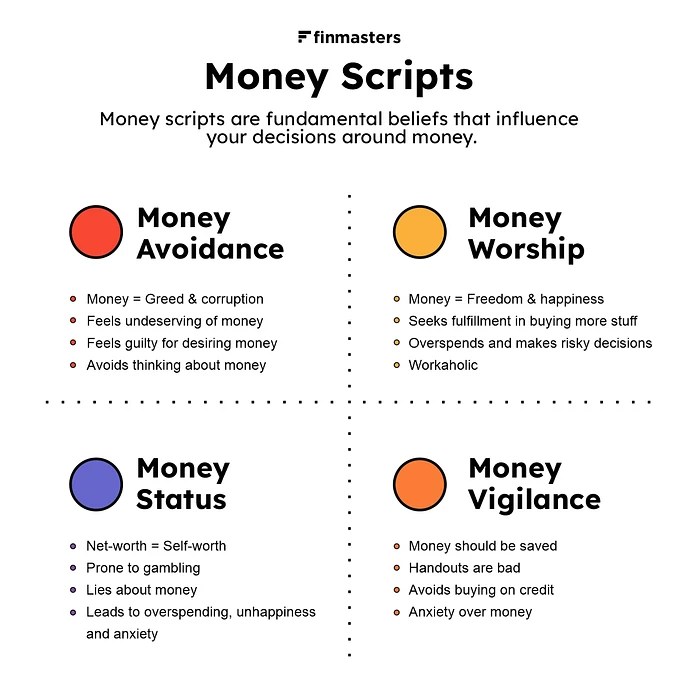
In research at Kansas State University [KSU], researchers identified four distinct Money script patterns, which are associated with financial health and predict financial behaviors. These include: (a) money avoidance, (b) money worship, (c) money status, and (d) money vigilance [personal communication Brad Klontz, PsyD, CFP®, Kenneth Shubin-Stein, MD, MPH, MS, CFA and Sonya Britt, PhD, CFP®].

And so, we all like to think our financial decisions are fully rational, but the truth is that our subconscious beliefs have a dramatic impact on our money and financial decisions. These money scripts are important to know and understand. A summary is below:

            Money Avoidance

Money avoidance scripts are illustrated by beliefs such as “Rich people are greedy,” “It is not okay to have more than you need,” and “I do not deserve a lot of money when others have less than me.” Money avoiders believe that money is bad or that they do not deserve money. They believe that wealthy people are corrupt and there is virtue in living with less money. They may sabotage their financial success or give money away even though they cannot afford to do so. Money avoidance scripts may be associated with lower income and lower net worth and predict financial behaviors including ignoring bank statements, overspending, financial dependence on others, financial enabling of others, and having trouble sticking to a budget.

            Money Worship 

Money worship is typified by beliefs such as “More money will make you happier,” “You can never have enough money,” and “Money would solve all my problems.” Money worshipers are convinced that money is the key to happiness. At the same time, they believe that one can never have enough. Money worships have lower income, lower net worth, and higher credit card debt. They are more likely to be hoarders, spend compulsively, and put work ahead of family.

            Money Status

Money status scripts include “I will not buy something unless it is new,” “Your self-worth equals you net worth,” and “If something isn’t considered the ‘best’ it is not worth buying.” Money status seekers see net worth and self-worth as being synonymous. They pretend to have more money than they do and tend to overspend as a result. They often grew up in poorer families and believe that the universe should take care of their financial needs if they live a virtuous life. Money status scripts are associated with compulsive gambling, overspending, being financially dependent on others, and lying to one’s spouse about spending.

            Money Vigilance

Money vigilant beliefs include “It is important to save for a rainy day,” “You should always look for the best deal, even if it takes more time,” and “I would be a nervous wreck if I did not have an emergency fund.” The money vigilants are alert, watchful and concerned about their financial welfare. They are more likely to save and less likely to buy on credit. As a result, they tend to have higher income and higher net worth. They also have a tendency to be anxious about money and are secretive about their financial status outside of their household. While money vigilance is associated with frugality and saving, excessive anxiety can keep someone from enjoying the benefits that money can provide.

Identification

When money scripts are identified, it is helpful to examine where they came from. A simple behavioral finance technique involves reflecting on the following questions:

  • What three lessons did you learn about money from your mother?
  • What three lessons did you learn about money from your father?
  • What is your first memory around money?
  • What is your most painful money memory?
  • What is your most joyful money memory?
  • What money scripts emerged for you from this experience?
  • How have they helped you?
  • How have they hurt you?
  • What money scripts do you need to change?

Conclusion

Ideally, from a balanced middle ground, we can see past the limitations of money scripts, our self and others who are polarized. Those who believe “Money is meant to be spent” or “Money is meant to be saved” have a world view that results in extreme positions. Labeling them as “correct” or “wrong” is not a useful way to try to shift anyone’s polarized money script beliefs.

EDUCATION: Books

SPEAKING: Dr. Marcinko will be speaking and lecturing, signing and opining, teaching and preaching, storming and performing at many locations throughout the USA this year! His tour of witty and serious pontifications may be scheduled on a planned or ad-hoc basis; for public or private meetings and gatherings; formally, informally, or over lunch or dinner. All medical societies, financial advisory firms or Broker-Dealers are encouraged to submit a RFP for speaking engagements: CONTACT: MarcinkoAdvisors@outlook.com 

COMMENTS APPRECIATED

Read, Refer, Like and Subscribe

***

***

How to Reduce Patient Wait Times?

On Patient Satisfaction

[By Dr. David Edward Marcinko MBA MEd]

DEM blue

The traditional linear patient scheduling system is slowly being abandoned by modern medical practitioners; in all venues (medical practices, clinics, hospitals and various other healthcare entities).

Why? Waiting room times are too long!

According to this infographic put together by the folks at evisit.com the amount of time patients spend waiting in your office have a huge effect when it comes to patient satisfaction.

For example, did you know that the national average wait time is currently around 21 minutes!

***

reducepatientwaittime_infographic

 [Click to Enlarge]

Patient Scheduling Issues

Most mature doctors follow a linear (series-singular) time allocation strategy for scheduling patients (i.e., every 15 or 20 minutes).  This can create bottlenecks because of emergencies, late patients, traffic jams, absent office personal, paperwork delays, etc.

Therefore, as proposed by colleague Dr. Neal Baum MD, a practicing urologist in New Orleans, one of these three newer scheduling approaches might prove more useful.  

1. Customized Scheduling

The bottleneck problem may be reduced by trying to customize, estimate or project the time needed for the patient’s next office visit. For example:  CPT #99211 (5 minutes), #99212 (10 minutes), #99213 (15 minutes), #99214 (25 minutes), or #99215 (40 minutes). Occasionally, extra time is need, and can be accommodated, if the allocated times are not too tightly scheduled.   

2. Wave Scheduling

Some patient populations do not mind a brief 20-30 minute wait prior to seeing the doctor.  Wave scheduling assumes that no patient will wait longer than this time period, and that for every three patients; two will be on time and one will be late. This model begins by scheduling the three patients on the hour; and works like this. The first patient is seen on schedule, while the second and third wait for a few minutes.  The later two patients are booked at 20 minutes past the hour and one or both may wait a brief time. One patient is scheduled for 40 minutes past the hour. The doctor then has 20 minutes to finish with the last three patients and may then get back on schedule before the end of the hour. 

3. Bundle Scheduling

Bundling involves scheduling like-patient activities in blocks of time to increase efficiency.  For example, schedule minor surgical checkups on Monday morning, immunizations on Tuesday afternoon, and routine physical examinations on Wednesday evening, or make Thursday kid’s day and Friday senior citizens day. Do not be too rigid, but by scheduling similar activities together, assembly-line efficiency is achieved without assembly line mentality, and allows you to develop the most economically profitable operational flow process possible for the office.  

Patient Self Scheduling (Internet Based Access Management)

New software programs, and internet cloud applications, allow patients to schedule their own appointments over the internet. The software allows solo or individual group physicians with a practice to set their own parameters of time, availability and even insurance plans. Through a series of interrogatories, the program confirms each appointment. When the patient arrives, a software tracker communicates with office staff and follows the patients from check-in, to procedures, to checkout.

Today, many hospitals have even abandoned the check-in or admissions, department. It has been replaced by access management systems.

***

hospital

***

Waiting Room Strategies 

In any potentially detrimental situation, delineate what the staff can do to make it right. A service paradox exists and timely, appropriate action can sometimes build more patient internal satisfaction than if the situation had never occurred.

Take the wait for example. It is not enough to just have policies in place that help prevent a prolonged wait from occurring. There must also be policies in place that ameliorate an adverse situation when it does arise. This can involve placating a patient over long wait, or, reassuring a patient about an empty waiting room.

  • An apology form you and/or the staff might be one technique, “I’m so sorry to keep you waiting. Doctor X and I really try to stay on schedule because we know how valuable your time is.”
  • Offering some refreshments might be another.
  • In extreme cases, giving the patient a beeper and turning them loose until you see them may work.

Many patients will be impressed you have even considered how the wait affects them. Sometimes the above management techniques, if the wait is not too offensive, can actually build more patient satisfaction than just seeing them on time.

Conclusion

Your thoughts and comments on this ME-P are appreciated. Feel free to review our top-left column, and top-right sidebar materials, links, URLs and related websites, too. Then, subscribe to the ME-P. It is fast, free and secure.

More:

Speaker: If you need a moderator or speaker for an upcoming event, Dr. David E. Marcinko; MBA – Publisher-in-Chief of the Medical Executive-Post – is available for seminar or speaking engagements. Contact: MarcinkoAdvisors@msn.com

OUR OTHER PRINT BOOKS AND RELATED INFORMATION SOURCES:

Product Details

Product DetailsProduct Details

OFTEN NEEDED: A Business, Medical Management or Financial SECOND Opinion?

SPONSOR: http://www.MARCINKOASSOCIATES.com

***

***

When You May Need a Business, Management or Financial Second Opinion?

The Marcinko & Associates second opinion service is a physician-to-advisor telephone or e-mail portal that connects independent financial and business management professionals and consultants, with doctors or healthcare executives desiring affordable and unbiased financial or business advice on an as-needed, pay-per-use basis.

Medical professionals and healthcare executives can now receive direct access to us in the areas of Practice Enhancement, Investing, Financial Planning, Asset Allocation, Portfolio Management, Insurance, Mortgage and Lending, Practice Management, Information Technology, Human Resources and Employee Benefits.

This Marcinko & Associates service is designed to fill a growing need for medically focused financial or managerial advice that traditional consultants have not been able to serve. For example, situations in which you could benefit from a personal financial planning second opinion include: 

READ HERE: https://marcinkoassociates.com/opinions-second/

COMMENTS APPRECIATED

Thank You

***

***

DOCTORS & DENTISTS: Obtain a Financial Planning and Economic Education Consultation

You’ve Earned a Reduced Rate Second-Opinion in 2024

***

SPONSOR: http://www.CertifiedMedicalPlanner.org

SPONSOR: http://www.MARCINKOASSOCIATES.com

***

We have partnered with fiduciary focused financial advisors and fee-only financial consultants who understand the needs of doctors, dentists and medical professionals. More importantly, they understand how the healthcare industrial complex is currently in flux.

READ: https://marcinkoassociates.com/financial-planning/

INVITATION: So, If you are a colleague, schedule a conversation with one of them to review your goals to see if they can help.

ANN MILLER RN MHA CMP

Please email us at: MarcinkoAdvisors@msn.com

***

***

DAILY UPDATE: World Kindness Day 2023

***

SPONSOR: http://www.MarcinkoAssociates.com

***

World Kindness Day, an international holiday that was formed in 1998, to promote kindness throughout the world and is observed annually on November 13th as part of the World Kindness Movement. It is observed in many countries including the United States, Canada, Japan, Australia and the U.A.E. World Kindness Day presents us with the opportunity to reflect upon one of the most important and unifying human principles. On a day devoted to the positive potential of both large and small acts of kindness, try to promote and diffuse this crucial quality that brings people of every kind together. 

***

And, stocks markets are on a roll with almost too many trophies to hand out. The NASDAQ had its best day since May on Friday, while the S&P 500 has gained for nine of the last 10 sessions, rising 7.2% in that period. Falling bond yields have investors thinking the market is poised for a rally to close out 2023.

CITE: https://www.r2library.com/Resource

COMMENTS APPRECIATED

Thank You

***

***

ECONOMY: Still Strong

By Staff Reporters

SPONSOR: http://www.MarcinkoAssociates.com

***

***

In the last 20 months, the US Federal Reserve has jacked up interest rates to a 22-year high to tame soaring inflation. And inflation has come down to about half of its June 2022 peak. But the economy is still strong.

The Fed’s rate-hiking jamboree was expected to slow hiring, spending, and broader economic growth as unfortunate side effects of popping the inflation balloon. However, a series of recent reports shows that the US economy is still roaring in the ’20s:

  • Jobs: Employers smashed expectations by adding 336,000 jobs in September, and the unemployment rate remains at a low level of 3.8%.
  • Spending: Retail sales also blew past estimates in September, a sign that American consumers remain the undisputed shopping world champs. This probably helped: Americans’ household wealth surged 37% from 2019 to 2022, according to Fed data released on Wednesday. That’s more than double the second-highest increase on record.
  • Economy: After the strong retail sales numbers came out this week, Morgan Stanley raised its Q3 economic growth outlook to 4.9% from 4.5%. Context: One year ago this week, Bloomberg economists predicted a 100% chance of a recession…within a year.

SUBSCRIBE TO THE ME-P TODAY

Thank You

***

***

CIGNA: Busted PxDx [Procedure-to-Diagnose]

By Dr. David Edward Marcinko MBA CMP

***

***

(AP) — A federal lawsuit alleges that health insurance giant CIGNA used a computer algorithm to automatically reject hundreds of thousands of patient claims without examining them individually as required by California law.

RELATED: https://medicalexecutivepost.com/2022/09/18/ama-joins-class-action-suit-against-cigna/

***

The class-action lawsuit, just filed in federal court in Sacramento, says CIGNA Corp. and CIGNA Health and Life Insurance Co. rejected more than 300,000 payment claims in just two months last year.

RELATED: https://medicalexecutivepost.com/2022/07/21/my-conversation-with-an-anonymous-cigna-representative/

The company used an algorithm called PXDX, shorthand for ”procedure-to-diagnosis,” to identify whether claims met certain requirements, spending an average of just 1.2 seconds on each review, according to the lawsuit.

CITE: https://www.r2library.com/Resource

Huge batches of claims were then sent on to doctors who signed off on the denials, the lawsuit said.

***

PODCAST: https://medicalexecutivepost.com/2023/07/01/podcast-the-cigna-group-ceo/

***

COMMENTS APPRECIATED

Thank You

***

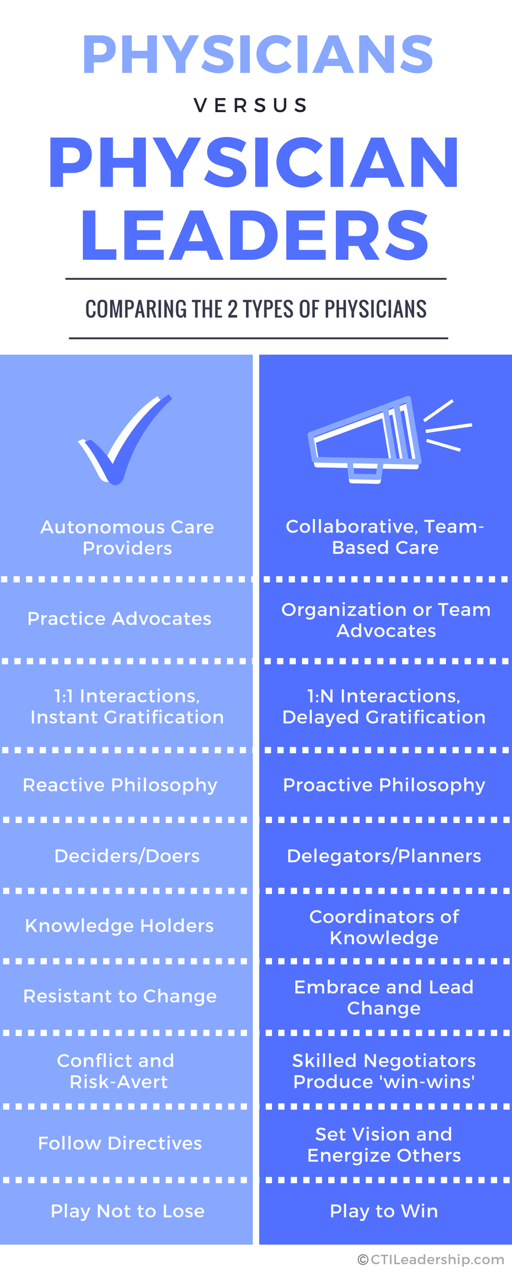
Healthcare Leadership V.S. Management

Understanding the Difference

[By Dr. David Edward Marcinko MBA]

DEM blueMany times, individuals will use the terms management and leadership synonymously. In actuality the terms have significantly different meanings.

For example, Warren Bennis describes the difference between managers and leaders as “Managers do things right, Leaders the right thing.”

Managers are those individuals who have as their primary function managing a team of people and their activities. In effect, managers are those who have been given their authority by the nature of their role and ensure that the work gets done by focusing on day to day tasks and their activities.

On other hand, a leader’s approach is generally innate in its approach. Good leadership skills are difficult to learn because they are far more behavioral in nature than those skills needed for management. Leaders are also very focused on change recognizing that continual improvement can be achieved in their people and their activities can be a great step towards continued success.

Training Camps

Perhaps some of the best training grounds for the development of leaders are the military. The Marine Corps slogan is “A Few Good Men” and the military academies at Annapolis (Navy), New London, Connecticut (Coast Guard), Colorado Springs (Air Force), and West Point (Army) all have as their main mission, the development of leaders.

This is done by a number of different techniques. At graduation, the new officers, regardless of the branch of service, have been taught, and more importantly, have internalized the following: communicate the missions, sensitivity matters, real respect is earned, trust and challenge your soldiers. It is due to these lessons that many graduates of the military academies go on to positions of leadership in the private sector as well as in government.  Communicating the mission refers to conveying to those who work with us what are practice is hoping to accomplish and the role of each employee in achieving that goal. Given an understanding and awareness of the mission, when confronted with a barrier, employees are able to face hard problems when there is no well-defined approach by which to deal with them.

***

IRA advice and leadership

***

Sensitivity Does Matter

This is my area to improve; as I can be glib on occasion.

A leader treats each employee with respect and dignity, regardless of race, gender, cultural background or particular role they actually perform in the practice. Consider how many legal suits are filed against any type of organization, whether it is a medical practice or a large manufacturing facility due to perceived disparate treatment towards the employee based on race, religion, gender sexual preference or other non-work related issues.

Real respect is earned – Having initials after one’s name and the wearing of a lab coat does not automatically entitle an individual to respect. Formal authority has been found to be one of the least effective forms of influence. Only by earning the respect of your staff as well as your patients can you be sure that your intent will be carried out when you are not present. Setting the example in performance and conduct, rather than ‘do as I say, not as I do,” level of activity enables one to exert influence far greater than titles.

Trust and challenge your employees – How many times have practices sought to hire the best and brightest only to second guess the employee. Eric Schmidt, the CEO of Google, describes his management philosophy as having “… an employee base in which everybody is doing exactly what they want every day.” Obviously there are certain policies and procedures, but at the same time, the leader enables decision making to the lowest possible level. This also enables employees to question why certain policies and procedures are still being followed when more effective and efficient methods are available.  (How the Army Prepared Me to Work at Google, Doug Raymond, Harvard Business)

The phrase “Physician, heal thyself” (Luke 4:23, King James Version) means that we have to attend to our own faults, in preference to pointing out the faults of others. The phrase alludes to the readiness of physicians to heal sickness in others while sometimes not being able or will to heal themselves.

By the same token, it now is necessary for us to learn how to manage ourselves. It suggests that physicians, while often being able to help the sick, cannot always do so, and when sick themselves are no better placed than anyone else (Gary Martin, phrases.org.uk/meanings/281850.html, 2010).

***

Feet

***

Self-Development

“We will have to learn how to develop ourselves. We will have to place ourselves outside the boundaries where we can make the greatest contribution. And we will have to stay mentally alert and engaged during a 50-year working life, which means knowing how and when to change the work we do” (Managing Oneself, Harvard Business Review – Jan. 2005 – pp 100-109, by Peter Drucker).

Although one’s IQ and certain personality characteristics are more or less innate and appear to remain stable over time there are individual capabilities that enable leadership and can be developed. Enhancement of these capabilities can lead to the individual being able to carry out the leadership tasks of setting direction, gaining commitment, and creating alignment. These capabilities include self-management capabilities, social capabilities and work facilitation capabilities.

***

***

Assessment

Without question, while it is possible to cram for at test and graduate at the top of one’s class, that does not assure   leadership ability. We all know at least one person who scores at the highest levels on cognitive measures but would be incapable of pouring liquid out of a boot if the instructions were written on the heel.

So, here is my philosophy:

  • Leadership: By example and thru transparency with collaboration [Do the right thing]
  • Management: By walking-around thru tangible / intangible metrics [Doing things right].

Channel Surfing the ME-P

Have you visited our other topic channels? Established to facilitate idea exchange and link our community together, the value of these topics is dependent upon your input. Please take a minute to visit. And, to prevent that annoying spam, we ask that you register. It is fast, free and secure.

 ***

Conclusion

Your thoughts and comments on this ME-P are appreciated. Feel free to review our top-left column, and top-right sidebar materials, links, URLs and related websites, too. Then, subscribe to the ME-P. It is fast, free and secure.

Speaker: If you need a moderator or speaker for an upcoming event, Dr. David E. Marcinko; MBA – Publisher-in-Chief of the Medical Executive-Post – is available for seminar or speaking engagements. Contact: MarcinkoAdvisors@msn.com

OUR OTHER PRINT BOOKS AND RELATED INFORMATION SOURCES:

Product DetailsProduct Details

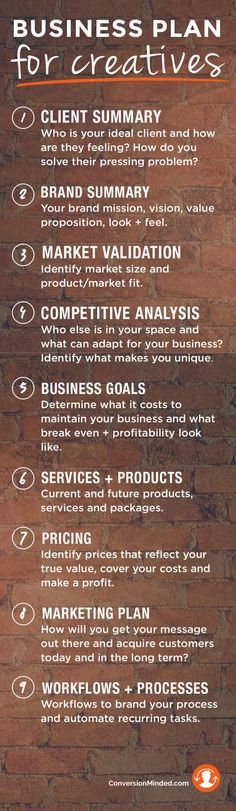
Business Plan for Creatives … and Doctors!

CMP logo

A Detailed Plan for Medical Professionals

By Dr. David Edward Marcinko MBA CMP

http://www.CertifiedMedicalPlanner.org

***

***

MBA Business Plan CAPSTONE Outline

PODCAST Transcript: Podcast

Conclusion

Your thoughts and comments on this ME-P are appreciated. Feel free to review our top-left column, and top-right sidebar materials, links, urls and related websites, too. Then, subscribe to the ME-P. It is fast, free and secure.

Speaker: If you need a moderator or speaker for an upcoming event, Dr. David E. Marcinko; MBA – Publisher-in-Chief of the Medical Executive-Post – is available for seminar or speaking engagements. Contact: MarcinkoAdvisors@msn.com

OUR OTHER PRINT BOOKS AND RELATED INFORMATION SOURCES:

[PRIVATE MEDICAL PRACTICE BUSINESS MANAGEMENT TEXTBOOK – 3rd.  Edition]

Product DetailsProduct Details

  [Foreword Dr. Hashem MD PhD] *** [Foreword Dr. Silva MD MBA]

***

DAVID EDWARD MARCINKO IS AT YOUR SERVICE IN 2021

DAVID EDWARD MARCINKO IS AT YOUR SERVICE IN 2020-2021

INVITATION:

EDITOR

TO SCHEDULE A SEMINAR, SPEAKING ENGAGEMENT, POD OR VLOG-CAST:
Contact: Ann Miller RN MHA CMP®
MarcinkoAdvisors@msn.com
770-448-0769
Thank You
***

FREE FINANCIAL & BUSINESS ADVISORY CONSULTATIONS

iMBA IS NOW OFFERING FREE FINANCIAL & BUSINESS ADVISORY CONSULTATIONS

***

By Ann Miller RN MHA CMP®
[Executive Director]
***
The Institute of Medical Business Advisors [iMBA, Inc] is now offering free 30 minute phone or Skype® video consultations and second opinions to physicians, nurses and medical colleagues, on a limited scheduling and time basis, during the current Corona Virus outbreak 24/7.
***
***
According to Professor and CEO Dr. David Edward Marcinko MBA, “this is our small way to help give back to colleagues who are so clinically vital to the US public health system and wellness of the country.” Topics include a plethora of personal financial planning and / or medical practice management business issues.
***
SCHEDULE A CONSULT:
***
BUSINESS, FINANCE, INVESTING AND INSURANCE TEXTS FOR DOCTORS
***
FOR PHYSICIAN-EXECUTIVES AND MEDICAL CXOs
THANK YOU
***


IBM and Google Health

Join Our Mailing List

[Partners for Online Personal Health Records

By Staff Reporters]

computer-hardwareAccording to MarketWire, February 5, 2009, IBM, Google and the Continua Health Alliance [CHA] announced new software that will enable personal medical devices used for patient monitoring, screening and routine evaluation to automatically stream data results into a patient’s Google Health Account [GHA] or other Personal Health Records [PHR].

PHR Value Extension

This breakthrough extends the value of PHRs to patients and also helps to ensure that such records are current and accurate at all times. Once stored in a PHR, the data can also be shared with physicians and other members of the extended care network at a user’s discretion.

Daschle and e-Health Reform

Of course,Tom Daschle’s recent decision to withdraw his nomination as the Department of Health and Human Services [DHHS] secretary clouds hopes that President Obama will make significant progress on health-care reform in his first 100 days in the White House. But the problems of unaffordable medical bills and millions of uninsured are not going away, and a deepening recession has more Americans feeling worried about their jobs and insecure about their health benefits.

Assessment

The breakthrough of this triumvirate extends the value of PHRs to consumers and also helps to ensure that such records are current and accurate at all times. Once stored in a PHR, the data can also be shared with physicians and other members of the extended care network at a user’s discretion.

Channel Surfing the ME-P

Have you visited our other topic channels? Established to facilitate idea exchange and link our community together, the value of these topics is dependent upon your input. Please take a minute to visit. And, to prevent that annoying spam, we ask that you register. It is fast, free and secure.

google3

Conclusion

Your thoughts and comments on this ME-P are appreciated. Feel free to review our top-left column, and top-right sidebar materials, links, URLs and related websites, too. Then, subscribe to the ME-P. It is fast, free and secure.

Speaker: If you need a moderator or speaker for an upcoming event, Dr. David E. Marcinko; MBA – Publisher-in-Chief of the Medical Executive-Post – is available for seminar or speaking engagements. Contact: MarcinkoAdvisors@msn.com

OUR OTHER PRINT BOOKS AND RELATED INFORMATION SOURCES:

Product DetailsProduct DetailsProduct Details