Financial Self-Discovery for Medical Professionals

By Dr. David Edward Marcinko; MBA MEd CMP

PHYSICIAN COACHING: https://marcinkoassociates.com/process-what-we-do/

***

***

SPONSOR: http://www.CertifiedMedicalPlanner.org

A Financial Self Discovery Questionnaire for Medical Professionals

For understanding your relationship with money, it is important to be aware of yourself in the contexts of culture, family, value systems and experience.  These questions will help you.  This is a process of self-discovery.  To fully benefit from this exploration, please address them in writing.  You will simply not get the full value from it if you just breeze through and give mental answers.  While it is recommended that you first answer these questions by yourself, many people relate that they have enjoyed the experience of sharing them with others who are important to them. 

As you answer these questions, be conscious of your feelings, actually describing them in writing as part of your process. 

Childhood

  • What is your first memory of money?
  • What is your happiest moment with Money? Your most unhappy?
  • Name the miscellaneous money messages you received as a child.
  • How were you confronted with the knowledge of differing economic circumstances among people, that there were people “richer” than you and people “poorer” than you?

Cultural heritage

  • What is your cultural heritage and how has it interfaced with money?
  • To the best of your knowledge, how has it been impacted by the money forces?  Be specific.  
  • To the best of your knowledge, does this circumstance have any motive related to Money?
  • Speculate about the manners in which your forebears’ money decisions continue to affect you today? 

Family

  • How is/was the subject of money addressed by your church or the religious traditions of your forebears?
  • What happened to your parents or grandparents during the Depression?
  • How did your family communicate about money?
  • How?  Be as specific as you can be, but remember that we are more concerned about impacts upon you than historical veracity.
  • When did your family migrate to America (or its current location)?
  • What else do you know about your family’s economic circumstances historically?

Your parents

  • How did your mother and father address money?
  • How did they differ in their money attitudes?
  • How did they address money in their relationship?
  • Did they argue or maintain strict silence?
  • How do you feel about that today?

Please do your best to answer the same questions regarding your life or business partner(s) and their parents.

Childhood: Revisited

  • How did you relate to money as a child?  Did you feel “poor” or “rich”? 
    Relatively?  Or, absolutely?  Why?
  • Were you anxious about money?
    Did you receive an allowance?  If so, describe amounts and responsibilities.
  • Did you have household responsibilities?
  • Did you get paid regardless of performance?
  • Did you work for money?

If not, please describe your thoughts and feelings about that.

***

***

Same questions, as a teenager, young adult, older adult.

Credit

  • When did you first acquire something on credit?
  • When did you first acquire a credit card?
  • What did it represent to you when you first held it in your hands?
  • Describe your feelings about credit.
  • Do you have trouble living within your means?
  • Do you have debt?

Adulthood

  • Have your attitudes shifted during your adult life?  Describe.

Why did you choose your personal path? 
a)      Would you do it again?
b)      Describe your feelings about credit.

Adult attitudes

  • Are you money motivated? 
    If so, please explain why?  If not, why not? 
    How do you feel about your present financial situation? 
    Are you financially fearful or resentful?  How do you feel about that?
  • Will you inherit money?  How does that make you feel?
  • If you are well off today, how do you feel about the money situations of others? 
    If you feel poor, same question. 
  • How do you feel about begging?  Welfare?
    If you are well off today, why are you working?
  • Do you worry about your financial future?
  • Are you generous or stingy?  Do you treat?  Do you tip?
  • Do you give more than you receive or the reverse?  Would others agree?
  • Could you ask a close relative for a business loan?  For rent/grocery money?
  • Could you subsidize a non-related friend?  How would you feel if that friend bought something you deemed frivolous? 
  • Do you judge others by how you perceive they deal with their Money?
    Do you feel guilty about your prosperity?
    Are your siblings prosperous?
  • What part does money play in your spiritual life?
  • Do you “live” your Money values?

Conclusion

There may be other questions that would be useful to you.  Others may occur to you as you progress in your life’s journey. The point is to know your personal money issues and their ramifications for your life, work, and personal mission. 

This will be a “work-in-process” with answers both complex and incomplete.  Don’t worry. 

Just incorporate fine-tuning into your life’s process.

COMMENTS APPRECIATED

Read, Like, Refer and Subscribe

***

***

PHYSICIANS: Beware “Zombie” Debt and “Phantom” Debt Collectors

By Staff Reporters

SPONSOR: http://www.MarcinkoAssociates.com

***

***

According to Wikipedia, Phantom debt or zombie debt is a debt that is old, defaulted, or not owed and is somehow still being pursued for collection to be paid by the presumed debtor. It generally refers to debt that is more than 3 years old, is long forgotten about or belonged to someone else – like someone with the same name or a deceased parent. The amount owed can grow to hundreds or thousands of dollars more than what was originally owed.

BROKE DOCTORS: https://medicalexecutivepost.com/2025/08/02/doctors-going-broke-and-living-paycheck-to-paycheck/

An example of this is from George Miller. George missed an 11 cent Verizon bill and seven years later it had grown to $4,000.00.

Sometimes it was never owed, was owed by a deceased parent, or that was previously owed by the presumed debtor, but was previously paid in full, settled, discharged via bankruptcy or a dismissed court case, is beyond the statute of limitations, or is otherwise not legally collectible, but that a collection agency or other similar service is aggressively attempting to collect, often fraudulently.

***

***

While the concept of phantom debt is quite old, it has gotten a lot of attention since the 1990s.

Very often, collectors of phantom debt use intimidating, abusive, or otherwise illegal tactics in an attempt to collect phantom debt that include frequent phone calls, calls to the victim’s place of employment, or threats of scary consequences against the victim that sometimes include arrest and/or criminal prosecution. In the USA, such tactics violate the Fair Debt Collection Practices Act [FDCPA]

The source of phantom debt may be from collectors who buy the debt from other collectors for pennies on the dollar, some of which take action that is not legal in order to collect that debt. Unlawful techniques used include suing or threatening to sue, re-aging the debt on the victim’s credit report to circumvent limits on reporting, or falsely promising to remove a negative credit report entry in exchange for a partial payment.

PSYCHOLOGY MONEY: https://medicalexecutivepost.com/2025/04/08/psychology-a-money-relationship-questionnaire-for-doctors/

COMMENTS APPRECIATED

EDUCATION: Books

SPEAKING: Dr. Marcinko will be speaking and lecturing, signing and opining, teaching and preaching, storming and performing at many locations throughout the USA this year! His tour of witty and serious pontifications may be scheduled on a planned or ad-hoc basis; for public or private meetings and gatherings; formally, informally, or over lunch or dinner. All medical societies, financial advisory firms or Broker-Dealers are encouraged to submit an RFP for speaking engagements: CONTACT: Ann Miller RN MHA at MarcinkoAdvisors@outlook.com -OR- http://www.MarcinkoAssociates.com

Like and Subscribe

***

***

Moodys, Stocks, Bonds and UnitedHealth

By Staff Reporters

***

***

Moody’s decision couldn’t dampen the mood on Wall Street yesterday; despite tariffs and credit, etc..

Stocks rose even as bond yields spiked in response to the rating agency’s decision to downgrade the US’ credit.

And, UnitedHealth popped as investors decided to buy the dip the insurer faced last week amid a slew of bad news.

COMMENTS APPRECIATED

Like and Refer

***

***

PHYSICIAN CREDIT: Ratings, Scoring, Errors and Repair Services

ALMOST ALL ABOUT CREDIT

By Staff Reporters

***

***

Credit Rating and Scoring

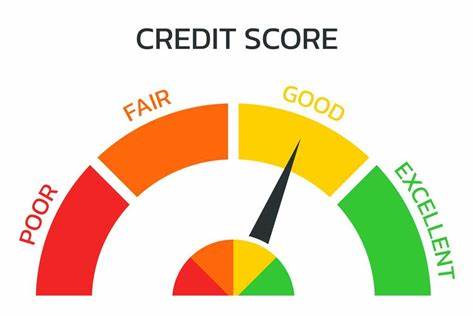
The category in which a credit agency classifies you is based upon payment history.  Recently, credit reporting agencies have shifted away from ratings to a system known as credit scoring. Your score is determined by proprietary formulas that are based on your credit history, the higher the better. The practical benefits of this scoring system are numerous.

First, medical professionals do not need to be experts at deciphering credit reports since the same scoring system is used by many different companies.

Correcting Credit Report Errors

A credit bureau is not the place to get an item to be fixed on your credit report. Rather, you must take it up directly with the credit issuer. In any case, a late payment noted on a credit report by a durable medical equipment vendor, for example, has to be addressed directly with that merchant. The DME merchant then has 30 days to acknowledge your complaint and respond to you. In the meantime, you do not have to pay for the disputed items.  Most credit errors cannot be reported or kept on your credit report for more than seven years.

For legitimate late payments you should contact the credit grantor and negotiate to take one of the following steps. Be tenacious, and either remove the late payment or write a letter explaining that the problem has been resolved and you now are a good credit risk again. This letter is a powerful tool and should be saved with other permanent financial records. The industry term for it is a letter of correction.

Credit Repair Services

Credit repair services are oversold and their claims tend to be exaggerated. They do not have an inside track to the consumer reporting agencies.  Good credit repair services are experienced in communicating with creditors and can help with legitimate repairs.  They cannot restore your credit rating or your good name. 

However, realize that with some time and effort you can accomplish the same results yourself.

CITE: https://www.r2library.com/Resource/Title/0826102549

COMMENTS APPRECIATED

Please Like, Refer and Subscribe!

***

***

CREDIT: All About Contractual Agreements

By Staff Reporters

SPONSOR: http://www.MarcinkoAssociates.com

DEFINITIONS

What Is CREDIT? Credit is a contractual agreement in which a borrower receives a sum of money or something else of value and commits to repaying the lender later, typically with interest. Credit is also the creditworthiness or credit history of an individual or a company. Good credit tells lenders you have a history of reliably repaying what you owe on loans. Establishing good credit is essential to getting a loan.

***

Credit Analysis is a form of financial analysis used primarily to determine the financial strength of the issuer of a security, and the ability of that issuer to provide timely payment of interest and principal to investors in the issuer’s debt securities. Credit analysis is typically an important component of security analysis and selection in credit-sensitive bond sectors such as the corporate bond market and the municipal bond market.

Credit Default Swap Index (CDX) is a credit derivative, based on a basket of CDS, which can be used to hedge credit risk or speculate on changes in credit quality.

Credit Default Swaps (CDS) are credit derivative contracts between two counter parties that can be used to hedge credit risk or speculate on changes in the credit quality of a corporation or government entity.

Credit Quality reflects the financial strength of the issuer of a security, and the ability of that issuer to provide timely payment of interest and principal to investors in the issuer’s securities. Common measurements of credit quality include the credit ratings provided by credit rating agencies such as Standard & Poor’s and Moody’s. Credit quality and credit quality perceptions are a key component of the daily market pricing of fixed-income securities, along with maturity, inflation expectations and interest rate levels.

Credit Rating Agency (CRA) is a company that assigns credit ratings for issuers of certain types of debt obligations as well as the debt instruments themselves. In the United States, the Securities and Exchange Commission (SEC) permits investment banks and broker-dealers to use credit ratings from “Nationally Recognized Statistical Rating Organizations” (NRSRO) for similar purposes. As of January 2012, nine organizations were designated as NRSROs, including the “Big Three” which are Standard and Poor’s, Moody’s Investor Services and Fitch Ratings.

A Credit Rating Downgrade by a credit rating agency (such as Standard & Poor’s, Moody’s or Fitch), of reducing its credit rating for a debt issuer and/or security. This is based on the agency’s evaluation, indicating, to the agency, a decline in the issuer’s financial stability, increasing the possibility of default (defined below). A downgrade should not to be confused with a default; a debt security can be downgraded without defaulting. (And, conversely, a debt issuer can suddenly default without being downgraded first–credit ratings and credit rating agencies are not infallible.)

Credit Ratings are measurements of credit quality provided by credit rating agencies). Those provided by Standard & Poor’s typically are the most widely quoted and distributed, and range from AAA (highest quality; perceived as least likely to default) down to D (in default). Securities and issuers rated AAA to BBB are considered/perceived to be “investment-grade”; those below BBB are considered/perceived to be non-investment-grade or more speculative.

Credit Risk is the risk that the inability or perceived inability of the issuers of debt securities to make interest and principal payments will cause the value of those securities to decrease. Changes in the credit ratings of debt securities could have a similar effect.

Credit Risk Transfer Securities (CRTS) are the unsecured obligations of the GSEs (Government Sponsored Enterprises). Although cash flows are linked to prepays and defaults of the reference mortgage loans, the securities are unsecured loans, backed by general credit rather than by specified assets.

CITE: https://www.r2library.com/Resource/Title/0826102549

COMMENTS APPRECIATED

Please Subscribe!

***

***

US Credit Card Balances & Microsoft Stock Both Jump

By Staff Reporters

***

***

US credit card balances have jumped to a record $1.08 trillion, according to the New York Federal Reserve.

Nevertheless, Stocks rose for the seventh straight day on Tuesday, giving the NASDAQ and S&P 500 their longest winning streaks since 2021. The surge was fueled by a rally in Big Tech and a growing consensus that the Federal Reserve Bank is done raising interest rates. Chief among the tech revelers was Microsoft, which finished the day at an all-time high amid strong demand for its cloud computing services.

CITE: https://www.r2library.com/Resource

COMMENTS APPRECIATED

Thank You

***

***

PODCAST: Ray Dalio on How the Economy Works in Healthcare

Ray Dalio’s ‘How the Economy Works’ Applied to Healthcare … Credit Cycles and Healthcare Policy

By Eric Bricker MD

***

***

CITE: https://www.r2library.com/Resource/Title/0826102549

RELATED: https://www.msn.com/en-us/money/savingandinvesting/ray-dalio-warns-stagflation-will-send-america-back-to-the-1970s/ar-AAVSYgF

COMMENTS APPRECIATED

Thank You

Subscribe to the Medical Executive-Post

***

RELATED: https://www.amazon.com/Comprehensive-Financial-Planning-Strategies-Advisors/dp/1482240289/ref=sr_1_1?ie=UTF8&qid=1418580820&sr=8-1&keywords=david+marcinko

***

Tax Deductions versus Tax Credits

By Staff Reporters

***

What is a tax deduction?

A deduction reduces the amount of income you pay taxes on, which means you could pay less in taxes. You subtract deductions from your income before calculating how much taxes you owe. How much a deduction saves you depends on your income tax bracket.

To calculate how much a deduction could reduce your taxes, you multiply the amount of the deduction by your marginal tax rate. For example, if a deduction is worth $5,000 and you are in the 10% tax bracket (the lowest), the deduction would reduce your taxes by $500.

A deduction’s value to you is tied to your tax rate. So if you’re paying a higher tax rate, you can reap more of a deduction’s benefit. The lower your tax rate, the less benefit a deduction will have for you. Imagine that you take a $5,000 deduction, but you’re in the 35% tax bracket — the second highest. Now you’re saving $1,750 in taxes.

CITE: https://www.r2library.com/Resource/Title/082610254

What is a tax credit?

On the other hand, a credit is a dollar-for-dollar reduction in the amount of tax you owe. For example, if you qualify for a $1,000 tax credit of some kind and owe $5,000 in taxes, that credit will reduce your tax burden to $4,000.

***

But – Do Not Claim Too Many Tax Deductions

Deductions are enticing to taxpayers because they can reduce the amount of your income before you calculate the tax you owe, which in turn might significantly lower how much you have to pay in taxes or increase your refund. But that doesn’t mean you should go wild writing things off on your tax returns, as experts say claiming too many deductions is the most common reason people end up getting audited by the IRS.

Don’t try writing off deductions that are no longer accepted by the IRS. The tax code has changed over the years, and there are some things the tax agency no longer recognizes. You should remember that some of the tax write-offs were terminated by the IRS, including deductions on alimony, moving expenses, and any expenses related to investing, hobbies, and tax preparation.

***

Comments Appreciated

THANK YOU

Subscribe to the Medical Executive-Post

***

***

PODCAST: Ray Dalio on How the Healthcare Economy Works

Economy Works’ Applied to Healthcare … Credit Cycles and Healthcare Policy

By Eric Bricker MD

***

***

COMMENTS APPRECIATED

Subscribe to the ME-P

Thank You

HEALTH ECONOMICS CITE: https://www.r2library.com/Resource/Title/0826102549

RICARDIAN DEMAND HEALTH ECONOMICS: https://medicalexecutivepost.com/2021/12/14/ricardian-derived-demand-economics-in-medicine/

RISING HEALTH CARE COSTS: https://medicalexecutivepost.com/2018/03/11/medical-treatment-costs-becoming-expensive-25-factors/

***

***

Dr. Marcinko Interviewed on the Physician Credit Crunch

Financial Experts Share Tips on Obtaining Loans to Start or Expand a Medical Practice

By Michael Gibbons

Editor: ADVANCE Newsmagazines

Maybe you’re a young dermatologist or plastic surgeon who dreams of starting your own practice. Or maybe you’re an established professional but want to expand your palette of anti-aging services. Either way, you’ve probably made an unpleasant discovery: Banks are leery about lending today. Global recessions with seemingly no end in sight tend to give loan officers sticky fingers.HO-JFMS-CD-ROM

Dermatologists and Plastic Surgeons

We have it on good authority that dermatologists and plastic surgeons as a group are less affected by this problem than physicians in some other branches of medicine. Still, there’s no better time than now to absorb some sound advice on how to approach banks for loans—whether you’re a fresh-faced newcomer to the fresh-face business or a wrinkled veteran at eliminating wrinkles.

Start Small

There’s no soft-soaping it: Starting a healthy aging practice is much harder than expanding an existing practice, even in the flushest of times.

“For young dermatologists starting out, I recommend you start small,” advises Jerome Potozkin, MD, who offers facial rejuvenation, liposuction, body contouring and dermatological care through his practice in Walnut Creek, CA. “You can always expand. Keep your overhead low. Know what your credit score is and do everything you can to improve it. Pay your bills on time.”

Lasers aren’t cheap. Besides the initial acquisition costs, a service contract can cost $7,000 to $12,000 a year, according to Dr. Potozkin. “Don’t feel you have to buy every new laser under the sun,” he says. “In fact, renting rather than purchasing is an option many companies offer. When your volume is low you can rent and schedule laser days—although the pitfall there is you don’t have lasers available whenever patients come in.”

Also, young dermatologists “will probably have an easier time getting a loan if they go to a relatively underserved area, as opposed to an area that has a large number of dermatologists per capita,” says Dr. Potozkin, who began practicing 10 years ago. “There are two schools of thought on this: Go where you want to live to start a practice or go to where there’s a need and be instantly successful. I chose the former. It took me longer to get started but I’m very happy where I am.”

Patience, Prudence and Passiondem2

Be patient, prudent, passionate—and start with a spare office and as little debt as possible, advises Dr. David E. Marcinko MBA, a financial advisor and Certified Medical Planner™. Marcinko, a health economist,  is CEO of the Institute of Medical Business Advisors Inc., a national physician and medical practice consulting firm based in Norcross, GA www.MedicalBusinessAdvisors.com

“Patients are looking for passion from you, not lavish trappings,” Dr. Marcinko says. “When a banker or a loan officer sees $175,000 or more of debt they are loath to give a loan—and it’s hard to blame them. Purchase a home after you become a private practitioner. You need to be as close to debt-free as you can be.

Exit Strategy

“Another thing bankers want to know is, ‘If we give you a loan and you start a practice and it fails, how will we be paid back?’ They want an exit strategy.”

The good news is dermatology “remains a very lucrative specialty, and in most parts of the country they are in a shortage position, particularly with the aging population,” says Sandra McGraw, JD, MBA, principal and CEO of the Health Care Group, a financial and legal consulting firm based in Plymouth Meeting, PA., that advises the American Academy of Dermatology, among other groups.

“I would start with a realistic business plan for why you think this practice can succeed, in the specific location,” McGraw says. “How many patients do you expect to see? How will they know you are there and available? Remember that banks lend to all kinds of people, so keep your numbers realistic. Overestimating expenses is as bad as underestimating them. Then determine how you want the money—usually a fixed loan for a period of time and then a line of credit as you get your practice going and sometimes need the cash flow.”biz-book

Expanding a Practice

Established dermatologists should have an easier time getting loans to expand their practices. They have, one hopes, a track record of success and assets to put up as collateral.

Mid-career physicians “have cash flow, physician assets and equity to some degree in a house and personal assets,” Dr. Marcinko observes. “Banks can attach loans to personal assets and savings accounts. Ninety-nine percent of times you must sign a personal asset guarantee. Mid-lifers have assets young ones don’t, so mid-lifers aren’t quite the risk. They have businesses that have value and cash flow. Banks like cash flow.”

However, even veterans must do some homework before approaching a bank. “You still want to establish why you want the money and how the expansion will increase your income,” McGraw says.

Another tip: If the bank has loans out with reputable vendors, you might ask the loan officer to recommend them to you as potential contractors. “Sometimes keeping it local and supporting others with loans at the bank can be helpful,” she says.

Assessment

Dr. Marcinko adds, “Bankers today want you to come in with a well-reasoned, well-thought-out and well-written business plan. Give bankers a 30-second elevator speech on why you are different. It’s really important to ask yourself, ‘What can I offer the community as a doctor in my specialty that nobody else can?’ If you bill yourself as the first dermatologist to do laser surgery, that’s a perceived advantage. You purchased the equipment and learned to use it. But anyone can do that. If you can come up with something that nobody else has or can do, that’s how you’re successful in anything.”

Link: Dr. Marcinko Interview

Link: https://medicalexecutivepost.com/wp-content/uploads/2009/08/dr-marcinko-interview.pdf

Conclusion

And so, your thoughts and comments on this Medical Executive-Post are appreciated. Tell us what you think. Feel free to review our top-left column, and top-right sidebar materials, links, URLs and related websites, too. Then, be sure to subscribe to the ME-P. It is fast, free and secure.

Link: http://feeds.feedburner.com/HealthcareFinancialsthePostForcxos

Speaker: If you need a moderator or speaker for an upcoming event, Dr. David E. Marcinko; MBA – Publisher-in-Chief of the Executive-Post – is available for seminar or speaking engagements. Contact: MarcinkoAdvisors@msn.com

Sponsors Welcomed

And, credible sponsors and like-minded advertisers are always welcomed.

Link: https://healthcarefinancials.wordpress.com/2007/11/11/advertise

Understanding Managed Bond Funds

Considerations for the Physician-Investor

By Staff Reportersdhimc-book11

Proper diversification among types of bonds is an important investment objective. The maturity schedule and the number of issuers are often very important, along with the issuers’ creditworthiness.

Individual Constraints

The constraints on purchases of individual bond issues often put the physician-investor at a disadvantage. Minimum amounts of investments are imposed by the marketplace or the issuer. Many doctor-investors find it impractical to meet these requirements and also obtain proper diversification (the amount of portfolio funds committed to debt-based securities simply is not large enough to obtain diversification and at the same time meet the other limitations). Accordingly, many investors find mutual funds devoted to debt-based securities most effective in achieving diversification.

A Large Marketplace

The mutual fund marketplace has many types of bond funds, and diversification can be obtained quite easily. The investor with a relatively reduced amount to invest in debt-based securities should consider using mutual funds.

Assessment

For more terminology information, please refer to the Dictionary of Health Economics and Finance.

www.HealthDictionarySeries.com

Conclusion

And so, your thoughts and comments on this Medical Executive-Post are appreciated?

Link: http://feeds.feedburner.com/HealthcareFinancialsthePostForcxos

Speaker: If you need a moderator or speaker for an upcoming event, Dr. David E. Marcinko; MBA – Publisher-in-Chief of the Executive-Post – is available for seminar or speaking engagements. Contact: MarcinkoAdvisors@msn.com  or Bio: www.stpub.com/pubs/authors/MARCINKO.htm

Get our Widget: Get this widget!

Our Other Print Books and Related Information Sources:

Practice Management: http://www.springerpub.com/prod.aspx?prod_id=23759

Physician Financial Planning: http://www.jbpub.com/catalog/0763745790

Medical Risk Management: http://www.jbpub.com/catalog/9780763733421

Healthcare Organizations: www.HealthcareFinancials.com

Health Administration Terms: www.HealthDictionarySeries.com

Physician Advisors: www.CertifiedMedicalPlanner.com

Subscribe Now: Did you like this Medical Executive-Post, or find it helpful, interesting and informative? Want to get the latest E-Ps delivered to your email box each morning? Just subscribe using the link below. You can unsubscribe at any time. Security is assured.

Link: http://feeds.feedburner.com/HealthcareFinancialsthePostForcxos