INSURANCE AGENTS: Salary and Payment Mechanisms

By Dr. David Edward Marcinko MBA MEd CMP and Copilot A.I.

SPONSOR: http://www.CertifiedMedicalPlanner.org

***

***

Insurance agents are primarily paid through commissions, but may also earn salaries, bonuses, and fees depending on their employment model and the types of policies they sell.

Insurance agents play a vital role in helping individuals and businesses navigate the complex world of insurance. Their compensation structures vary widely, influenced by factors such as the type of insurance they sell, whether they work independently or for a company, and the specific agreements they have with insurers. Understanding how insurance agents are paid is essential for consumers who want to make informed decisions and for aspiring agents considering a career in the industry.

The most common form of compensation for insurance agents is commission-based pay. Agents earn a percentage of the premium paid by the customer when they successfully sell a policy. These commissions can vary depending on the type of insurance. For example, first-year commissions for auto and homeowners insurance typically range from 5% to 20%, while commercial property and casualty policies may offer 10% to 15%. Life insurance policies often provide higher initial commissions, sometimes exceeding 50% of the first-year premium, followed by smaller renewal commissions in subsequent years.

There are two main types of insurance agents: captive agents and independent agents. Captive agents work exclusively for one insurance company and usually receive a combination of salary and commissions. Their compensation may also include performance bonuses and incentives tied to sales targets. Independent agents, on the other hand, represent multiple insurers and rely more heavily on commissions. They have the flexibility to offer a wider range of products, but their income is directly tied to their ability to sell policies and maintain client relationships.

***

***

In addition to commissions, some agents earn fees for services such as policy reviews, risk assessments, or consulting. These fees are more common in commercial insurance or financial planning contexts, where agents provide specialized expertise. However, fee-based compensation is less prevalent in personal lines of insurance like auto or home coverage.

Bonuses and incentives are another component of agent compensation. Insurance companies often reward agents for meeting sales quotas, retaining clients, or selling specific types of policies. These bonuses can significantly boost an agent’s income, but they may also create potential conflicts of interest if agents prioritize higher-paying products over client needs.

Some agents, particularly those employed by large firms or call centers, receive a fixed salary. This model provides stability but may limit earning potential compared to commission-based roles. Salaried agents may still receive performance bonuses or profit-sharing depending on company policy.

Ultimately, an insurance agent’s earnings depend on their business model, experience, and ability to build a loyal client base. While commissions remain the cornerstone of insurance compensation, the rise of fee-based services and hybrid models reflects a shift toward more transparent and client-focused practices.

Consumers should feel empowered to ask agents about their compensation structure to ensure they receive unbiased advice tailored to their needs.

COMMENTS APPRECIATED

EDUCATION: Books

SPEAKING: Dr. Marcinko will be speaking and lecturing, signing and opining, teaching and preaching, storming and performing at many locations throughout the USA this year! His tour of witty and serious pontifications may be scheduled on a planned or ad-hoc basis; for public or private meetings and gatherings; formally, informally, or over lunch or dinner. All medical societies, financial advisory firms or Broker-Dealers are encouraged to submit a RFP for speaking engagements: MarcinkoAdvisors@outlook.com

Like, Refer and Subscribe

***

***

FINANCIAL ADVISORY FEES: What All Doctors Must Know

SPONSOR: http://www.MarcinkoAssociates.com

***

By Dr. David Edward Marcinko MBA MEd CMP

WHAT YOU “MUST KNOW“ ABOUT FINANCIAL ADVISORY FEES

Investment fees still matter despite dropping dramatically over the past several decades due to computer automation, algorithms and artificial intelligence, etc. And, they can make a big difference to your financial health. So, before buying any investment, it’s vital to uncover all real financial advisor and stock broker costs.

HEDGE FUND FEES: https://medicalexecutivepost.com/2025/04/18/stocks-basic-definitions/

SIX TYPES OF FEES AND EXPENSES

1. Up-front salesperson commissions. It is easy to ask; “If I buy this investment today and want to get out tomorrow, how much money do I get back?” If the answer is not “all your money,” the difference is probably upfront fees and commissions. These fees may run as high as 30% of the money invested. If you were to earn 5% a year on the investment, it would take 8 years just to break even.

2. Ongoing advisory fees. These are monthly, quarterly, or annual fees paid to advisors for their investment advice and oversight. This includes working with you to pick the asset classes, set diversification, select a portfolio manager, optimize taxes, re-balance holdings and other periodic tasks.

These fees have many names including wrap fee or investment advisory fees. The normal “rule of thumb” is 1% of assets managed, although fees can range from 0 to 7%. Today, it can even be as low as .5%. It can be charged even if the advisor receives an upfront commission. It can be easy to see, or hidden in the fine print.

3. Additional service fees. Find out specifically what services are included financial advisory fees. Additional fees for financial planning or other services are rarely disclosed. They can range from minimal hand-holding focused on your investments to comprehensive financial planning.

4. Ongoing managerial expense ratio fees. These are incredibly well hidden that you may not see them in your statements or invoices. The only way to know is to read the prospectus or other third party analysis, like Morningstar.com. And, they can vary greatly for the same investment, depending on the class of share you buy.

For example, American Fund’s New Perspective Fund’s expense ratio ranges from 0.45% to 1.54%.  The average expense ratio of a mutual fund that invests in stocks is 1.35%. Conversely, the average expense ratio of a Vanguard S&P 500 Fund is 0.10%. The difference of 1.25% is staggering over time.

5. Miscellaneous fees. Some advisors charge $50 – $100 a year per account to open or close an account, and even fees to dollar cost average your funds into the market.

6. Transaction fees. Every time you buy or sell a fund, a fee is typically paid to a custodian. These can range from $5 to hundreds of dollars per transaction.

7. Fee Only: Paid directly by clients for their services and can’t receive other sources of compensation, such as payments from fund providers. Act as a fiduciary, meaning they are obligated to put their clients’ interests first

8. Fee Based: Paid by clients but also via other sources, such as commissions from financial products that clients purchase. Brokers and dealers (or registered representatives) are simply required to sell products that are “suitable” for their clients.

A “suitable” investment is defined by FINRA as one that fits the level of risk that an investor is willing and able, as measured by personal financial circumstances, to take on. The Financial Industry Regulatory Authority is a private American corporation that acts as a Self Regulatory Organization (SRO) that regulates member stock brokerage firms and exchange markets. These criteria must be met. It is not enough to state that an investor has a risk-friendly investment profile. In addition, they must be in a financial position to take certain chances with their money. It is also necessary for them to

A hedge fund is a limited partnership of private investors whose money is managed by professional fund managers who use a wide range of strategies; including leveraging [debt] or trading of non-traditional assets [real-estate, collectible, commodities, cyrpto-currency, etc] to earn above-average returns. Hedge funds are considered a risky alternative investment and usually require a high minimum investment or net worth. This person is known as an “accredited investor” or “Regulation D” investor by the US Securities Exchange Commission and must have the following attributes:

  • A net worth, combined with spouse, of over $1 million, not including primary residence
  • An income of over $200,000 individually, or $300,000 with a spouse, in each of the past two years

Not a fiduciary.

Ways to minimize fees

Choose the fee structure. The fee structure should align with your needs. Consider the type of advice you seek, the number of times needed and the complexity of your financial situation. You can always negotiating tactics are free to ask for a better deal.

Compare fees. It is essential to research and compare different fees. Be sure to read the fine print for details or costs that are not a base fee.

Robo-advisors: For simple investment goals, with little specificity, robo-advisors may be a cost-effective option. They charge lower fees than conventional financial advisors and provide an automated, algorithmic approach to managing your investments. 

Assessment

The average cost of working with a human financial advisor in 2024 was 0.5% to 2.0% of assets managed, $200 to $400 per hourly consultation, a flat fee of $1,000 to $3,000 for a one-time service, and/or a 3% to 6% commission fee on the product types sold.

ADVISORY FEES: https://medicalexecutivepost.com/2025/02/26/be-aware-financial-advisory-fees-fee-based-versus-fee-only/

Conclusion

When ruminating over financial advisory fees; read and understand the contract with disclosures, do not sign a confidentiality or non-disclosure agreement, and do not waive your right to a lawsuit. According to colleague Dr. Charles F. Fenton IIII JD, forced legal settlements almost always favor the advisor over the client.

References and Readings:

1. https://www.capitalgroup.com [American Funds]

2. Marcinko, DE and Hetico, HR; Comprehensive Financial Planning Strategies for Doctors and Advisors [Best Practices from Leading Consultants and Certified Medical Planners™] Productivity Press, New York, 2017. 

3. Marcinko, DE: Dictionary of Health Economics and Finance. Springer Publishing Company, NY 2006

EDUCATION: Books

SPEAKING: Dr. Marcinko will be speaking and lecturing, signing and opining, teaching and preaching, storming and performing at many locations throughout the USA this year! His tour of witty and serious pontifications may be scheduled on a planned or ad-hoc basis; for public or private meetings and gatherings; formally, informally, or over lunch or dinner. All medical societies, financial advisory firms or Broker-Dealers are encouraged to submit a RFP for speaking engagements: MarcinkoAdvisors@outlook.com 

COMMENTS APPRECIATED

Refer, Like and Subscribe

***

***

Real Estate Agent VERSUS Realtor?

By AI

***

***

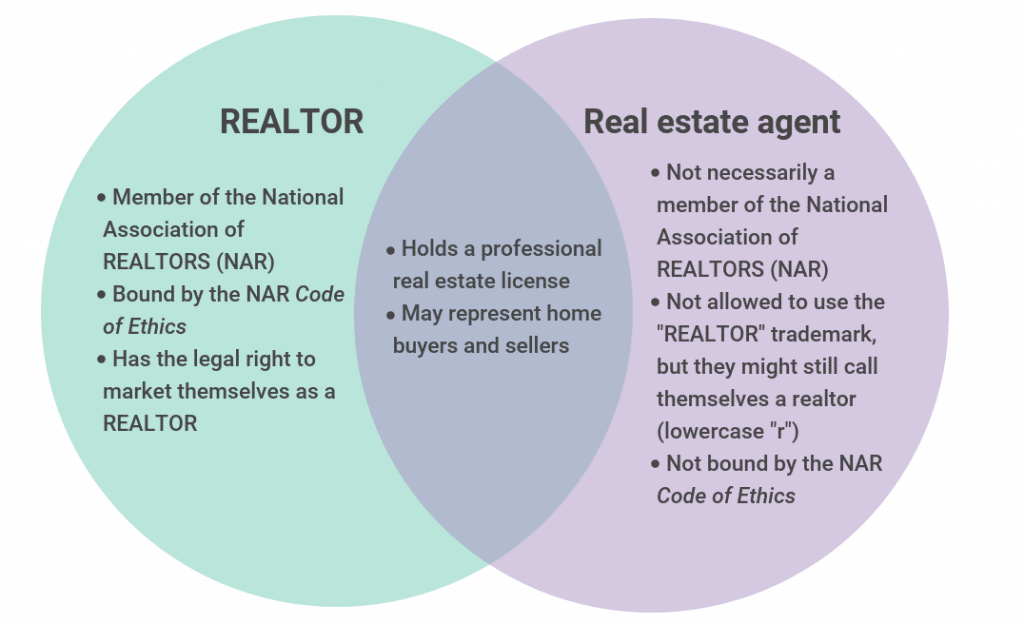
The terms “real estate agent” and “realtor” are often used interchangeably to describe a licensed professional who can help you buy or sell a home. But the terms have different meanings. 

Real Estate Investing: https://medicalexecutivepost.com/2025/04/14/physicians-on-real-estate-investing/

  • A realtor is a licensed salesperson who belongs to the National Association of Realtors (NAR), and must comply with NAR’s code of ethics. The term is capitalized when describing a NAR member, and NAR owns the trademark.
  • A real estate agent is simply a licensed salesperson who does not belong to NAR, and refers to any individual who holds a real estate salesperson’s license.

REITS: https://medicalexecutivepost.com/2024/08/13/on-non-traded-real-estate-investment-trusts-reits/

Should you hire a real estate agent or a realtor? Agents who belong to NAR aren’t necessarily better than non-member agents. NAR is just a trade association — not a licensing body — so membership is optional. 

Commercial RE: https://medicalexecutivepost.com/2013/09/10/financial-freedom-through-commercial-real-estate-education-and-investing/

COMMENTS APPRECIATED

Like and Refer

***

***

EARNED INCOME: Defined

By Staff Reporters

SPONSOR: http://www.MarcinkoAssociates.com

***

***

What Counts as ‘Earned Income’?

The IRS defines earned income as money you get for working, including the following:

  • Wages
  • Commissions
  • Bonuses
  • Tips
  • Honorariums for speaking, writing or taking part in a conference or convention
  • Self-employment income

Income that doesn’t qualify includes:

  • Taxable pension payments
  • Interest income
  • Dividends
  • Rental income
  • Alimony
  • Withdrawals from Roth IRAs or other non-taxable retirement accounts
  • Annuity income
  • Welfare benefits
  • Unemployment compensation
  • Worker’s compensation payments
  • Social Security income.

Cite: https://www.irs.gov/credits-deductions/individuals/earned-income-tax-credit/earned-income-and-earned-income-tax-credit-eitc-tables

COMMENTS APPRECIATED

Refer and Subscribe

***

***

DAILY UPDATE: NAR Commissions Down as Stock Markets Rise

MEDICAL EXECUTIVE-POST TODAY’S NEWSLETTER BRIEFING

***

Essays, Opinions and Curated News in Health Economics, Investing, Business, Management and Financial Planning for Physician Entrepreneurs and their Savvy Advisors and Consultants

Serving Almost One Million Doctors, Financial Advisors and Medical Management Consultants Daily

A Partner of the Institute of Medical Business Advisors , Inc.

http://www.MedicalBusinessAdvisors.com

SPONSORED BY: Marcinko & Associates, Inc.

***

http://www.MarcinkoAssociates.com

Daily Update Provided By Staff Reporters Since 2007.
How May We Serve You?
© Copyright Institute of Medical Business Advisors, Inc. All rights reserved. 2024

REFER A COLLEAGUE: MarcinkoAdvisors@msn.com

SPONSORSHIPS AVAILABLE: https://medicalexecutivepost.com/sponsors/

ADVERTISE ON THE ME-P: https://tinyurl.com/ytb5955z

Your Referral Count -0-

On last Saturday, a class-action settlement with the National Association of Realtors (NAR) went into effect, ripping up the playbook on how real estate agents are compensated. The NAR was accused of artificially inflating commission rates, which have historically ranged from 5% to 6%, a higher fee than the rest of the world. Consumer advocates hope the new rules will lead to lower commissions, shift power away from agents, and add transparency into what’s been an opaque system.

CITE: https://www.r2library.com/Resource

What’s up

  • AMD rose 4.52% on the news that it will acquire server manufacturer ZT Systems for $4.9 billion. While this escalates the AI arms race, competitor Nvidia rose 4.35% regardless.
  • FuboTV soared yet another 17.65% after a judge temporarily blocked the launch of a sports streaming service created by Disney, Warner Bros. Discovery, and Fox last week.
  • McDonald’s climbed 3.25% after Evercore ISI analysts raised their price target for the stock to $320 per share.
  • Zim Integrated Shipping Services rocketed 16.74% higher after the marine shipping company posted impressive earnings and raised its full-year guidance.

What’s down

  • Trump Media & Technology Group fell 3.56% as the Democratic National Convention kicks off in Chicago today, with investors fretful that the stock could be more volatile than usual during the event.
  • HP sank 3.65% after Morgan Stanley analysts downgraded the stock from Equal Weight to Overweight, though they kept their price target the same.
  • Sweetgreen dropped 6.82% thanks to Piper Sandler analysts downgrading the stock from Overweight to Neutral after the company’s big pop last week made shares too pricey.

CITE: https://tinyurl.com/2h47urt5

Here’s where the major benchmarks ended:

  • The S&P 500 index rose 54.00 points (0.97%) to 5,608.25; the Dow Jones Industrial Average® ($DJI) added 236.77 points (0.58%) to 40,896.53; the NASDAQ Composite®($COMP) points increased 245.05 (1.39%) to 17, 876.77.
  • The 10-year Treasury note yield (TNX) fell about two basis points to just under 3.87%.
  • The CBOE Volatility Index® (VIX) fell to 14.61, near one-month lows.

CITE: https://tinyurl.com/tj8smmes

Stat: 12%. That’s how much mpox vaccine maker Bavarian Nordic’s stock shot up after the WHO declared a global health emergency. (Fortune)

COMMENTS APPRECIATED

PLEASE SUBSCRIBE: MarcinkoAdvisors@msn.com

Thank You

***

***

***

***

EDUCATIONAL TEXTBOOKS: https://tinyurl.com/4zdxuuwf

***

Broker Compensation for Debt-Based Securities

Understanding Commission Methods for Selling Investments

By Staff Reporters

steveBrokers earn commissions on debt instruments based on the spread, or markup, between the price at which the broker can secure the bond and the price at which it is sold.

Bond Funds

In the case of bond funds, the fund charges a management fee and/or an expense fee. There may or may not be a load, or commission, paid to a broker.

Assessmentdhimc-book10

For more terminology information, please refer to the Dictionary of Health Economics and Finance.

www.HealthDictionarySeries.com

Conclusion

And so, your thoughts and comments on this Medical Executive-Post are appreciated?

Link: http://feeds.feedburner.com/HealthcareFinancialsthePostForcxos

Speaker: If you need a moderator or speaker for an upcoming event, Dr. David E. Marcinko; MBA – Publisher-in-Chief of the Executive-Post – is available for seminar or speaking engagements. Contact: MarcinkoAdvisors@msn.com  or Bio: www.stpub.com/pubs/authors/MARCINKO.htm

Get our Widget: Get this widget!

Our Other Print Books and Related Information Sources:

Practice Management: http://www.springerpub.com/prod.aspx?prod_id=23759

Physician Financial Planning: http://www.jbpub.com/catalog/0763745790

Medical Risk Management: http://www.jbpub.com/catalog/9780763733421

Healthcare Organizations: www.HealthcareFinancials.com

Health Administration Terms: www.HealthDictionarySeries.com

Physician Advisors: www.CertifiedMedicalPlanner.com

Subscribe Now: Did you like this Medical Executive-Post, or find it helpful, interesting and informative? Want to get the latest E-Ps delivered to your email box each morning? Just subscribe using the link below. You can unsubscribe at any time. Security is assured.

Link: http://feeds.feedburner.com/HealthcareFinancialsthePostForcxos

Medical Real Estate Investments

Join Our Mailing List

Physician’s Need to Understand Compensation Methods

[By Staff Reporters]

Property Managers

Medical property managers are compensated for their services on an hourly or fee basis. In addition, they may be reimbursed for expenses related to the maintenance of the property, such as materials, and they may also pay for expenses incurred by subcontractors.

Fees

Fees usually are based on a percentage of gross collected rents, but are negotiable. Property managers of larger medical complexes may receive higher fees than managers of small complexes because of the details involved in managing larger properties. Fees also are affected by the total pro-forma income stream. In general, the better a manager enhances the property’s performance, the more the manager is paid.

Barter

Some owners pay fees and provide rent-free units for resident medical managers to handle on-site leasing; or for offices for managers to take care of buildings warranting on-site property management. Bartered phantom income may be reportable to the IRS.

fp-book11

Real Estate Brokers

Each state has specific requirements regarding the sales and leasing of medical, commercial and other real estate. Every state, however, has the clear and mandatory requirement that no commission or fee can be paid to anyone who is not licensed in that state as a real estate broker, an associate broker, or sales agent if the person represents or works on behalf of another. All fees and commissions must be paid to the company employing the broker, associate broker, or sales agent. Violation of these laws can have serious consequences to both the principal and the real estate broker.

Hybrid Compensation

A medical real estate broker is usually compensated by either a negotiated fee or a negotiated commission; or hybrid of both methods. Neither fees for work or commissions earned are set or standardized in any way. The amount earned or the amount paid is the result of an agreement. The agreement or contract must be in writing, under the Statute of Frauds, just as all real estate offers and contracts must be in writing sales or on leases of more than one year.

Commissions

If a broker is working on commission, h/she is paid only when she is successful and the sales transaction closes and title is passed to the buyer. Sales commission is established either in a Listing Agreement or a Buyers Brokerage Agreement. No fee is due if the sale does not occur. Rates of commission vary widely by city, region, and state. The amount of commission usually is a percentage of the sales price or a set amount. The percentage of commission is dependent on competition; effort required; to some degree, the size of the transaction; and market activity. For example, the sale of a large regional shopping center might be a 3% commission whereas the sale of a small retail building under $1 million might warrant a 7% commission.

Lease Execution Warrants Payment

Leasing commissions are based on gross rental income over the term of the lease, are due when the lease is executed by both landlord and tenant, and can be paid at one of the following times:

  1. On execution of the lease.
  2. Partly on lease execution and partly on occupancy; or
  3. On occupancy, depending on the landlord’s written agreement with the broker.

Leasing commissions usually are a negotiated percentage of gross rents, with the percentage varying dependent on type of lease. For example, the percentage rate of commission might be more on a net lease, in which the tenant pays all expenses, than if the same lease were structured on a gross or fully serviced basis; or in which the landlord provides services within the rents due. Commission on ground leases might range up to 10% and office space might range from 4% to 6%.

Example:

Term: 5 years (60 months)         

Monthly rental rate: $1,000 per month     

Gross rental income under the lease: $1,000 x 60 = $60,000        

Commission calculation (using a 6% rate): $60,000 x 6% = $3,600           

The fees paid under sales and leases are usually split between the colleague brokers working on the transaction and are shared between the listing agent and the selling or leasing agent under a co-brokerage agreement between the brokers. This too is a negotiated percentage. It is common for commissions to be split on a 50/50 basis, but it is not the rule. How the commission is divided between brokers depends on the transaction. The commission is often shared evenly between cooperating brokers, but the split ultimately is the seller and listing agent’s decision.

Hard-to-Move Properties

On extremely difficult medical real estate properties [as is seen in many parts of the country today], incentive splits may be offered. Incentive splits offer the selling or leasing agent a greater share of the commission if he or she is successful. Under commission agreements between a seller and a broker, or a buyer and a broker, in which the broker is representing a buyer, nothing is earned until the transaction is complete and the broker has added value, unless spelled out to the contrary in the agreement or the broker is working on a fee basis. On a typical sale, commissions are paid through escrow at closing. Leasing commissions are usually, but not always, paid upon lease execution.

Other forms of payment for property managers and real estate brokers

It has become increasingly common for medical property managers and real estate brokers, particularly when representing a buyer or a tenant, to work on a contractual basis. In these instances, the parties are paid on an hourly or set-fee basis, regardless of whether the transaction is completed. In some cases, a principal may decide he wants only some of the services offered, such as a lease review, and those are also paid on a negotiated basis for the service provided.

Assessment

Combinations of fixed fees and commission incentives also are common, but in most all cases there is not a set amount or standard fee charged by all brokers.

Conclusion

Your thoughts and comments on this ME-P are appreciated. Feel free to review our top-left column, and top-right sidebar materials, links, URLs and related websites, too. Then, subscribe to the ME-P. It is fast, free and secure.

Link: http://feeds.feedburner.com/HealthcareFinancialsthePostForcxos

Speaker: If you need a moderator or speaker for an upcoming event, Dr. David E. Marcinko; MBA – Publisher-in-Chief of the Medical Executive-Post – is available for seminar or speaking engagements. Contact: MarcinkoAdvisors@msn.com

OUR OTHER PRINT BOOKS AND RELATED INFORMATION SOURCES:

LEXICONS: http://www.springerpub.com/Search/marcinko
PHYSICIANS: www.MedicalBusinessAdvisors.com
PRACTICES: www.BusinessofMedicalPractice.com
HOSPITALS: http://www.crcpress.com/product/isbn/9781466558731
CLINICS: http://www.crcpress.com/product/isbn/9781439879900
ADVISORS: www.CertifiedMedicalPlanner.org
BLOG: www.MedicalExecutivePost.com

Product Details  Product Details

Some Insight on Medicare Advantage Plans

Join Our Mailing List

Enter the Bounty Hunter Insurance Agents

dem21

[By Dr. David Edward Marcinko; MBA]

[Publisher-in-Chief]

As a health insurance agent and industry insider for more than a decade, I know first hand that the agents and brokers who enroll senior citizens in Medicare Advantage (MA) plans often make more on those members than the health plans themselves. 

Example:

For example, up to $400-600 can be spent on an insurance agent/broker fee by the health plan, contributing to a total member acquisition cost that can exceed 10% of the premium dollar. And, this commission fee or bounty on “grandma” – much like a bulls-eye target on her back – was much higher back in the day. Hence, all the “free” seminars, luncheons, trinkets and other senior citizen freebies cloaked as information dissemination.

Acquisition Costs High

Even if Medicare Advantage plans could deliver the actual health care benefits at a considerably lower cost than traditional Medicare Fee for Service (FFS); it is very possible that the entire savings could be consumed by member acquisition costs.

Assessment

Now, as a doctor, insurance agent, financial advisor, health economist and future MC patient, I believe that traditional Medicare is a very tough act to follow; and is still the best deal around, by far. Now, try to convince my dad.

Conclusion

Your thoughts and comments on this ME-P are appreciated. Feel free to review our top-left column, and top-right sidebar materials, links, URLs and related websites, too. Then, subscribe to the ME-P. It is fast, free and secure.

Link: http://feeds.feedburner.com/HealthcareFinancialsthePostForcxos

Speaker: If you need a moderator or speaker for an upcoming event, Dr. David E. Marcinko; MBA – Publisher-in-Chief of the Medical Executive-Post – is available for seminar or speaking engagements. Contact: MarcinkoAdvisors@msn.com

OUR OTHER PRINT BOOKS AND RELATED INFORMATION SOURCES:

DICTIONARIES: http://www.springerpub.com/Search/marcinko
PHYSICIANS: www.MedicalBusinessAdvisors.com
PRACTICES: www.BusinessofMedicalPractice.com
HOSPITALS: http://www.crcpress.com/product/isbn/9781466558731
CLINICS: http://www.crcpress.com/product/isbn/9781439879900
BLOG: www.MedicalExecutivePost.com
FINANCE: Financial Planning for Physicians and Advisors
INSURANCE: Risk Management and Insurance Strategies for Physicians and Advisors

Product DetailsProduct DetailsProduct Details

Product Details  Product Details

Advisors Fees vs. Brokerage Commissions

Join Our Mailing List

Beware Assets-under-Management [AUMs]

[Dr. David Edward Marcinko MBA, CMP™]

dem-thinking

I don’t think that doctor-colleagues realize how much more a fee-based financial planner – or financial advisor – might take from a physician-client using an assets-under-management [AUM] subscription business model; than a traditional commission-based stock broker? Of course, commissions are what stock-brokers earn; and “broker” is a bad word today. The more politically correct term seems to be “planner” or “advisor” or “vice-president” or ‘wealth manager”; and these folks earn “fees” along with their confusing nom de plumes. But should they?

Example:

Look at 1% of $100,000 which comes to $1,000 per year. If a doctor-client is in it “for the long haul,” we can see why financial advisors want this money for the “long haul.” Twenty years of this model comes out to nearly $20,000 in fees [assuming zero growth]. If a financial advisor was going to stick the doctor in some investment and leave him alone, would it not have been better to take a one-time $5,000 commission, say at 5%? This way the doctor-client keeps the remaining $15,000. If the money actually grows over time – which it should in the long run – the advisor earns even more.

False Arguments

Now, don’t try to accept the false argument that this puts financial advisors “on the same side of the fence”, as the physician-client or that it allows advisors to take better care them. First off, clients should be taken care of, well. But, it also encourages the advisor to “risk-more to earn more”, and/or to goad the doctor-client into putting more money into the subscription-based account, rather than paying off the mortgage, for example. In fact, the recent mortgage crisis and stock market meltdown suggests that this deceptive argument may have been more common than realized. So, why not ask your advisor/broker to explain both ways s/he gets paid; and then decide for yourself – fees versus commissions?

Assessment

Of course, in today’s world of “assets-under-management,” the word “commission” is taboo. No “real financial planner” takes commissions; he or she would rather manage investments for a “fee” that lasts forever.

PS: Financial advisors really don’t mange most of these accounts, anyway. They are aggregated and outsourced to other firms, for a small sub-fee [a bit less than the original 1%]. The advisor then sends a nice quarterly report to the doctor, as if they did all the work!  Now, do you realize why the best name for these folks is “asset gatherers”; they often do little more than market and sell.

Conclusion

Your thoughts and comments on this ME-P are appreciated. Feel free to review our top-left column, and top-right sidebar materials, links, URLs and related websites, too. Then, subscribe to the ME-P. It is fast, free and secure.

Speaker: If you need a moderator or speaker for an upcoming event, Dr. David E. Marcinko; MBA – Publisher-in-Chief of the Medical Executive-Post – is available for seminar or speaking engagements. Contact: MarcinkoAdvisors@msn.com

OUR OTHER PRINT BOOKS AND RELATED INFORMATION SOURCES:

Product Details  Product Details

Product Details


Exposing Medicare and Insurance Sales Commission Scams

Join Our Mailing List

Some Agents and Brokers May Be Cashing-In

By Dr. David Edward Marcinko; MBA, CMP™

[Publisher-in-Chief]

According to the Associated Press, on October 25, 2008, Medicare Advantage’s agents stand to make $500 to $550 this year. This happens by enrolling a beneficiary into one of their HMO type managed care type plans, while the agents could make another $500 for every year the beneficiary stays with the plan. It represents a financial reward that is raising concerns that agents and brokers will work too aggressively to enroll people into HMO plans that don’t meet their health needs; or where traditional Medicare may be a better personal fit.

CMS to Take Action

Representative Peter Stark (D-California) has urged the Centers for Medicare and Medicaid Services [CMS] to consider capping the commissions, while Kerry Weems, the acting administrator for CMS, said the agency plans to take action soon.

Insurance Policy “Twisting” and “Churning”

According to the Dictionary of Health Insurance and Managed Care, and others:www.HealthDictionarySeries.com:

  • Policy Twisting is the use of trickery to get someone to lapse an insurance policy and purchase a new one; usually in another company.

  • Policy Churning is a related fraudulent practice where an agent tricks a policy holder to fund a new one with the same insurer. Important information about the full consequences of their action is dishonestly withheld.

Both tactics are typically done to increase sales agent/broker commission income.

Scam Alerts

Although much more common with life insurance policies, each state has an insurance department that will help you if you think you’ve been scammed. Visit their website or office and you’ll get help on what to do. Many reputable insurance companies will quickly compensate you once it’s established that you were a victim of such fraud. Make sure you don’t waste you time by complaining to an insurer’s branch office. Contact the main office for swift response.

Assessment

America‘s Health Insurance Plans [AHIPs], the trade group representing insurers, encouraged CMS to develop clear and consistent standards, while two of the major players in the program, Humana Corporation and UnitedHealth Group both said that they welcomed regulation of insurance agent commissions. WellPoint and Cigna are the two other major health insurance companies in this country.

Conclusion

Your thoughts and comments on this ME-P are appreciated. Feel free to review our top-left column, and top-right sidebar materials, links, URLs and related websites, too. Then, subscribe to the ME-P. It is fast, free and secure.

Speaker: If you need a moderator or speaker for an upcoming event, Dr. David E. Marcinko; MBA – Publisher-in-Chief of the Medical Executive-Post – is available for seminar or speaking engagements. Contact: MarcinkoAdvisors@msn.com

OUR OTHER PRINT BOOKS AND RELATED INFORMATION SOURCES:

Product DetailsProduct DetailsProduct Details

Product Details  Product Details