MARCINKO & ASSOCIATES: Core Operating Values

SPONSOR: http://www.MarcinkoAssociates.com

***

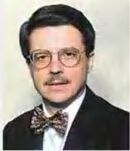
By Dr. David Edward Marcinko MBA MEd

***

D. E. Marcinko & Associates Core Operating Values

9.   We act with honesty, integrity and are always straightforward.
8.   We strive to be innovative, creative, iconoclastic, and flexible.
7.   We admit and learn from mistakes and don’t repeat them.
6.   We work hard always as competitors are trying to catch up.
5.   We treat others with dignity and respect.
4.   We are the onus of consulting advice for the well being of others.
3.   We fight complacency as former success is in the past.
2.   The best management styles are timeless, not timely.
1.   Our clients are colleagues and always come first.

EDUCATION: Books

SPEAKING: Dr. Marcinko will be speaking and lecturing, signing and opining, teaching and preaching, storming and performing at many locations throughout the USA this year! His tour of witty and serious pontifications may be scheduled on a planned or ad-hoc basis; for public or private meetings and gatherings; formally, informally, or over lunch or dinner. All medical societies, financial advisory firms or Broker-Dealers are encouraged to submit a RFP for speaking engagements: MarcinkoAdvisors@outlook.com 

COMMENTS APPRECIATED

Refer and Subscribe

Doctor Entrepreneur's Podcast | Libsyn Directory

***

Are Primary Care Doctors Becoming More Like Financial Advisors?

Hospitals [BDs] “versus” Family Practitioners [FAs]

By Dr. David Edward Marcinko; MBA, CMP™

[Editor-in-Chief]

The Big Mistake

Those who believe that hospitals need medical specialists like radiologists, pathologists and oncologists, more than primary care doctors, are mistaken. And, those doctors who believe that the majority of “financial advisors” work for their clients are also mistaken. Here’s why in analogy format.

Why Hospitals Need PCPs

Hospitals generally need primary care physicians, more than specialists, because insurance contracts can be negotiated from a position of strength. A solid [large] primary care panel is a must-have for most insurance contracts. Just recall more than a decade ago – when PCPs were told of an emerging new renaissance where they would reign in place of the medical specialists? It never happened then, but it may happen now following healthcare reform.

Also, recall that the growth of fiduciary Registered Investment Advisors [RIAs] was slow until the stock market collapse of 2008. The pace is accelerating today with the political dawn of financial reform.

Patient’s Love their PCPs – Not their Hospitals

Moreover, please realize that few patients shop around for specialists, or hospitals, as they do for PCPs. OK, the OB-GYNs are unique in that they can play a dual role – as specialist and primary care doctor – just ask my wife who would rather eat nails than change her [female] female doctor.

Hospitals also need PCPs as referring physicians to generate business through their ERs, admissions department, outpatient centers, and/or by ordering invasive and non-invasive radiology tests, images, scans or laboratory tests, and/or sending patients to specialists who will do expensive procedures or surgery in their ORs, hospital and/or related facilities.

Doesn’t this sound like a stock broker working for his wire-house or broker-dealer?  

www.HealthcareFinancials.com

The PCP Loss Leader

Primary care is a loss-leader to hospitals as they make little money directly off medical practices, but can generate a great deal from the referrals and procedures the grass-roots docs generate; especially if they “play the game” like commissioned stockbrokers. And, consider brilliant medical diagnosticians, like TV’s Gregory House MD, and all those tests and procedures they can do – just to be sure!

No wonder that physician-executives and hospital administrators like Dr. Lisa Cuddy of the Princeton-Plainsboro Teaching Hospital, in New Jersey, love them.

Ditto for wire-house office managers and stock-brokerage OSJs [Office of Supervisory Jurisdiction] who love their “top producers”, brokers and FAs.

[picapp align=”none” wrap=”false” link=”term=operating+room&iid=288202″ src=”0284/9dbd59b4-ffc4-49c4-8b2e-3b568f74dc9d.jpg?adImageId=12660700&imageId=288202″ width=”380″ height=”253″ /]

Conflicted Missions

Unfortunately, this shifts the mission of PCPs from keeping patients out of the hospital – as physical and fiscal advocate – to sending them to the hospital as a “heavy admitter-referrer” with resulting perks and swagger.

Thus, “success” of the PCP from a hospital perspective is not to avoid referrals or costly procedures, but to gather them.  However, success is a matter of perspective that may be very unfortunate for the patient, state or federal payer, private employer and/or insurance company.

Financial Advisor Analog

Does this PCP conundrum sound like the conflicted situation found with many “independent” financial advisors today? Are PCPs becoming mere patient gatherers, or profit generating shills, for their hospitals, employers or healthcare systems? Where does one’s duty rest? Are we doctor’s or medical product/procedure merchants?

www.CertifiedMedicalPlanner.com

Conclusion

And so, your thoughts and comments on this ME-P are appreciated. Is this analogy correct, or not. Is it too harsh or too gentle – and for whom?

Feel free to review our top-left column, and top-right sidebar materials, links, URLs and related websites, too. Then, be sure to subscribe. It is fast, free and secure.

Link: http://feeds.feedburner.com/HealthcareFinancialsthePostForcxos

Speaker: If you need a moderator or speaker for an upcoming event, Dr. David E. Marcinko; MBA – Publisher-in-Chief of the Medical Executive-Post – is available for seminar or speaking engagements. Contact: MarcinkoAdvisors@msn.com

Get our Widget: Get this widget!

Our Other Print Books and Related Information Sources:

Practice Management: http://www.springerpub.com/prod.aspx?prod_id=23759

Physician Financial Planning: http://www.jbpub.com/catalog/0763745790

Medical Risk Management: http://www.jbpub.com/catalog/9780763733421

Healthcare Organizations: www.HealthcareFinancials.com

Health Administration Terms: www.HealthDictionarySeries.com

Physician Advisors: www.CertifiedMedicalPlanner.com

Subscribe Now: Did you like this Medical Executive-Post, or find it helpful, interesting and informative? Want to get the latest ME-Ps delivered to your email box each morning? Just subscribe using the link below. You can unsubscribe at any time. Security is assured.

Link: http://feeds.feedburner.com/HealthcareFinancialsthePostForcxos

Sponsors Welcomed

And, credible sponsors and like-minded advertisers are always welcomed.

Link: https://healthcarefinancials.wordpress.com/2007/11/11/advertise

Stock Broker Report Card Survey

Join Our Mailing List

Doctor – Does your Broker Make the Grade?

[By Staff Reporters]Medical staff

Dear Colleagues,

Does your stock-broker or brokerage firm make the grade?

Be sure to participate in the annual broker report cards survey. And, if you work for Merrill Lynch, UBS, Morgan Stanley Smith Barney, Wells Fargo Advisors or Edward Jones, this trade magazine [Registered Rep] survey is for you.

Assessment

Click here to participate!

Channel Surfing the ME-P

Have you visited our other topic channels? Established to facilitate idea exchange and link our community together, the value of these topics is dependent upon your input. Please take a minute to visit. And, to prevent that annoying spam, we ask that you register. It is fast, free and secure.

Conclusion

Your thoughts and comments on this ME-P are appreciated. Feel free to review our top-left column, and top-right sidebar materials, links, URLs and related websites, too. Then, subscribe to the ME-P. It is fast, free and secure.

Speaker: If you need a moderator or speaker for an upcoming event, Dr. David E. Marcinko; MBA – Publisher-in-Chief of the Medical Executive-Post – is available for seminar or speaking engagements. Contact: MarcinkoAdvisors@msn.com

OUR OTHER PRINT BOOKS AND RELATED INFORMATION SOURCES:

Product Details  Product Details

Upcoming Health Economics Interview with Dr. David Marcinko

Coming Soon from Medical Business News, Inc

By Ann Miller; RN, MHA

ME-P Executive-Directordr-david-marcinko22

Medical Business News, Inc., the publisher of Medical News of Arkansas, is a leading source for healthcare industry news that is truly useful. With a professional readership comprised of physicians and key industry decision makers, Medical News publications are devoted entirely to healthcare issues that impact both clinical and administrative best practices. Written and edited specifically for healthcare professionals, MBN writers work with experts at the local, regional and national level to keep stakeholders informed about the ever-evolving healthcare system.

Out Reach

It is no wonder then, why local market MNA editor Jennifer Boulden recently contacted us to arrange an interview with Dr. David Edward Marcinko, our Publisher-in-Chief, who is also a former insurance agent, registered investment advisor, health economist and Certified Financial Planner™

Link: www.MedicalBusinessAdvisors.com  

Interview Topics

The wide open topic in this environment of medically specific lethargy and macro economic insecurity – personal and business planning for physicians. Of course, since this is a broad field, we will use the rating and ranking system of this blog to help Jennifer and her staff, winnow down categories to top-of-mind concerns of our ME-P subscribers and her MNA readers.

Link: www.HealthcareFinancials.com

Assessment

But, we also ask you to send in any particular issues that you may have in order to make the interview helpful and exciting for all concerned.

Link: www.HealthDictionarySeries.com

Conclusion

And so, your thoughts and comments on this Medical Executive-Post are appreciated.

Link: www.CertifiedMedicalPlanner.com

Speaker: If you need a moderator or speaker for an upcoming event, Dr. David E. Marcinko; MBA – Publisher-in-Chief of the Executive-Post – is available for seminar or speaking engagements. Contact: MarcinkoAdvisors@msn.com  or Bio: www.stpub.com/pubs/authors/MARCINKO.htm

Get our Widget: Get this widget!

Subscribe Now: Did you like this Medical Executive-Post, or find it helpful, interesting and informative? Want to get the latest E-Ps delivered to your email box each morning? Just subscribe using the link below. You can unsubscribe at any time. Security is assured.

Link: http://feeds.feedburner.com/HealthcareFinancialsthePostForcxos

Financial Product Sales, Communication and Management

Techniques-of-Art for Financial Advisors

By Robert Ayrer and ME-P Staff Writers

stk127013rke

Before any piece of work that requires communication can be understood, the context must be established.  Without context, words have very little reality; and without reality, there can be no communication. Communication is the “transfer of meaning.”

Introduction

The lack of a definitive role of the marketing function (and the sales function, and the difference between the two) for financial advisors [FAs], has contributed to the lack of clarity required for the achievement of sales targets. The fuzzy line between “targets” and “goals” has left most financial product salesmen, OSJs [Office of Supervisory Jurisdiction] and sales managers without the “tools to manage.” In this context, we will define the financial sales person’s role as the “person responsible for the execution of the corporate, or personal, sales plan, which includes the short term marketing of the company.”

Marketing versus Sales

Long term strategic marketing is a very sophisticated process, requiring highly trained people that are not involved with the mundane, day-to-day activities of the enterprise.  Unfortunately, this type of “marketing” is done by too few businesses, RIAs, BDs, and FAs.

The “marketing plan”, as defined by Malcolm H. B. McDonald, Director of the Cranfield Marketing Planning Centre, of the Cranfield School of Management, is a comprehensive business plan, incorporating and integrating all of the elements of business; the four “P’s” — Product, Price, Place and Promotion. More often than not, financial sales organizations and RIAs are run by people with “Director of Sales & Marketing” titles.  This use of the “marketing” title often confuses the difference between marketing and sales. For our purposes, we will include the very short term marketing function in the sales department’s role.

Dirty Ear Marketing

This “very short term marketing” required of the FA or sales person is what is called “The dirty ear” marketing.  The “dirty ear” comes from “keeping an ear to the ground” to detect changes in the market that would affect the assumptions that support the marketing plan and the company sales plan.

It has been said that the American plains Indians could drive a stick into the ground, put the end of the stick to their ear and tell if the buffalo herd was within twenty miles — and, by bending the stick, tell in which direction.  The more sophisticated tracker could tell whether the herd was approaching or going away.

It is this short term, close in, change in direction of the market (herd) upon which the assumptions of the marketing and sales plan are based, that should be the concern of the sales department or financial advisor and business owners. 

Of Bull and Bear Markets

For example, during times of economic expansion, and bull markets, the purchasing authority for many items is transferred down the reporting chain to the lowest possible responsible level of management. At this level a sales person or FA may only require one or two calls to complete the selling process with a buying authority. This authority level would dictate the activity of sales people in achieving their personal sales plan and achieving their targets and goals. 

During a recession however, as is occurring now, authority to buy may be withdrawn from the customary buying level, designating someone at a higher level as the “buyer.” The financial sales person still must go through the traditional contact at the lower level. These contacts can now only say “no”. They cannot say “yes.” By adding another level of decision making to the buying process, additional activity will be required to make the average sale. You cannot double the activity required to make a sale and make the same number of sales!  Don’t make the mistake of thinking that working harder is the answer, as there is only a finite amount of time available to get to your prospects. Your options are; change the plan; adjust the sales budget; add more sales representatives.

The Sales Cycle

Continuing a sales plan based upon the assumption of a two-call sales cycle when the market requires a three or four call cycle will take your sales plan out of reality.  The key to both a good marketing plan and a good sales plan is “reality.”  It is the FA or sales manager’s prime function to see that the sales organization is working in “reality” by constantly testing the basic assumptions of the sales plan.

The challenge to every financial services business owner, sales manager and every FA sales person is to stay focused on the prime objective of a sales person – processing the sale.  To maintain focus on the sales objective, the activities of a sales person should be looked at in two categories; “tasks” and “selling objectives.”  The tasks are those activities that all sales people are required to do to service clients – handle back-charges, warranty claims, stocking services, point of sale maintenance, etc.  The selling objectives are defined by the sales progression used in the sales strategy.

Processing the Sale

To give better understanding to this concept, consider the following.  If you find a local bank that offers a certificate of deposit that is paying a good return, and you put $10,000 on deposit, you have made an “investment.”  It is an “investment” because you expect your money back with a profit.  To find this investment opportunity you must be focused externally (not within your own business).  And, investments are a source of new capital.

If, on the other hand you take the $10,000 and purchase a car for your business, your focus is internal to your business, solving a problem of transportation, and you will only realize gain by reducing an existing or potential expense. You will not realize any new capital from this expenditure.  This use of the $10,000 is an “expense.”

Internal and External Focus

To generalize, if your focus is external and you are seeking to generate new capital by exploiting new opportunities, this is an investment.  If your focus is internal, and you are solving problems (the activities that come after the sale), the time and money spent is an expense.

Tasks and Objectives

Sales people sometimes lose sight of the difference between the “tasks” (internally focused after sales activities that are expenses to the company) and the sales “objectives” (opportunity seeking activity that will result in generating new capital through sales). Although we must service the task items, we can avoid “buying” the customer’s problem (forgetting that the customer’s problem is our opportunity).  The way we make sure we maintain focus on the opportunity rather than the problem – is to link every task with a sales objective. 

Management Reporting

Historically, we have asked sales people and FAs to report to management through an activity report that usually records the “task” items but ignores the opportunity items. To use the reporting system as a training and management tool, stop requiring the typical activity and expense reports.

Instead, ask your sales people fill out an “Opportunity” report and an “Investment” report.  It is true; “What gets measured gets improved!”  If you want your sales people to be externally focused and seek opportunities, investing in accounts rather than “solving problems” and spending money (“expense” items), measure and report on the opportunities and investments.  It is more positive to run an investment department for your business rather than a cost center.

Managing For Results

Peter Drucker observes that “… there are no profit centers in a business; there are only cost centers.”  The profits centers are external.  Again, quoting Drucker; “Results are obtained by exploiting opportunities, not by solving problems!”

Assessment

The above offering is intended to help financial advisors and sales people “manage” themselves, and for the sales people who have assumed the mantle of OSJ or “manager”, etc

Conclusion

And so, your thoughts and comments on this Medical Executive-Post are appreciated.

Speaker:If you need a moderator or speaker for an upcoming event, Dr. David E. Marcinko; MBA – Publisher-in-Chief of the Medical Executive-Post – is available for seminar or speaking engagements. Contact: MarcinkoAdvisors@msn.com 

Our Other Print Books and Related Information Sources:

Practice Management: http://www.springerpub.com/prod.aspx?prod_id=23759

Physician Financial Planning: http://www.jbpub.com/catalog/0763745790

Medical Risk Management: http://www.jbpub.com/catalog/9780763733421

Physician Advisors: www.CertifiedMedicalPlanner.org

Subscribe Now:Did you like this Medical Executive-Post, or find it helpful, interesting and informative? Want to get the latest ME-Ps delivered to your email box each morning? Just subscribe using the link below. You can unsubscribe at any time. Security is assured.

Link: http://feeds.feedburner.com/HealthcareFinancialsthePostForcxos

Product DetailsProduct DetailsProduct Details

A Due-Diligence ‘Condom’ for Physician Investors

Join Our Mailing List

Using Financial Advisors with Increased Safety

[By Dr. David Edward Marcinko; MBA, CMP™]dr-david-marcinko8

Following the Bernie Madoff investment scheme, and related financial industry scandals, here are seven “red-flags” that should have alerted physician-investors to proceed with extreme caution. Always consider them before making an investment with any financial advisor [FA], registered representative [RR] or financial advisory firm, regardless of reputation, size, referral recommendation or so-called industry certifications and designations. In other words, according to Robert James Cimasi; MHA, AVA, and a Certified Medical Planner™ from Health Capital Consultants LLC, of St. Louis, MO;” trust no one and paddle your own canoe.”

Red Flags of Cautious Investing

As a former insurance agent, financial advisor, registered representative, investment advisor and Certified Financial Planner™ for more than a decade, the existence of any one of the following items may be a “red-flag” of caution to any investor:

  • Acting as its’ own custodian, clearance firm or broker-dealer, etc.
  • Lack of a well-known accounting firm review with regular reporting.
  • Unreliable or sporadic written performance reports.
  • Rates-of-return that don’t seem to track industry benchmarks.
  • Seeming avoidance of regulatory oversight, transparency or review.
  • Lack of recognized written fiduciary accountability in favor of lower brokerage “sales suitability” standards.
  • No Investment Policy Statement [IPS]. 

Assessment

Let a word to the wise be sufficient going forward. But, in hindsight, a healthy dose of skepticism might have prevented this situation in the first place. As is the usual case, fear and greed often seem to rule the day. Just as there is no such thing as safe sex – just safer sex – there is no thing as safe intermediary investing. But, exercising some common sense will surely make investing with any financial advisor much safer. It’s like a condom for your money. 

For more information on the topic of fiduciary standards – which we have championed for the last ten years in our books, texts, white-papers, journal and online educational Certified Medical Planner™ program for FAs – watch out for our exclusive Medical Executive-Post interview with Bennett Aikin AIF®, Communications Coordinator of www.fi360.com coming in March. Ben, an Accredited Investment Fiduciary® did a great job with the tough questions submitted by our own Ann Miller; RN, MHA and Hope Hetico; RN, MHA, CMP™. Don’t miss it!

Disclaimer

I am the Managing Partner for http://www.CertifiedMedicalPlanner.org and I agree with this message.

Conclusion

Your thoughts and comments on this ME-P are appreciated. Feel free to review our top-left column, and top-right sidebar materials, links, URLs and related websites, too. Then, subscribe to the ME-P. It is fast, free and secure.

Speaker: If you need a moderator or speaker for an upcoming event, Dr. David E. Marcinko; MBA – Publisher-in-Chief of the Medical Executive-Post – is available for seminar or speaking engagements. Contact: MarcinkoAdvisors@msn.com

OUR OTHER PRINT BOOKS AND RELATED INFORMATION SOURCES:

Product Details

***