The Cost of Headaches

Join Our Mailing List

Treatment Expenses 1999-2010

By http://www.MCOL.com

Headaches

Channel Surfing the ME-P

Have you visited our other topic channels? Established to facilitate idea exchange and link our community together, the value of these topics is dependent upon your input. Please take a minute to visit. And, to prevent that annoying spam, we ask that you register. It is fast, free and secure.

Conclusion

Your thoughts and comments on this ME-P are appreciated. Feel free to review our top-left column, and top-right sidebar materials, links, URLs and related websites, too. Then, subscribe to the ME-P. It is fast, free and secure.

Speaker: If you need a moderator or speaker for an upcoming event, Dr. David E. Marcinko; MBA – Publisher-in-Chief of the Medical Executive-Post – is available for seminar or speaking engagements. Contact: MarcinkoAdvisors@msn.com

OUR OTHER PRINT BOOKS AND RELATED INFORMATION SOURCES:

Product DetailsProduct Details

An Educational Niche Resource Supporting Doctors and their Consulting Advisors

Join Our Mailing List

By Eugene Schmuckler PhD MBA MEd CTS [Academic Provost]

About the Medical Executive-Post

We are an emerging online and onground community that connects medical professionals with financial advisors and management consultants.

We participate in a variety of insightful educational seminars, teaching conferences and national workshops. We produce journals, textbooks and handbooks, white-papers, CDs and award-winning dictionaries. And, our didactic heritage includes innovative R&D, litigation support, opinions for engaged private clients and media sourcing in the sectors we passionately serve.

Through the balanced collaboration of this rich-media sharing and ranking forum, we have become a leading network at the intersection of healthcare administration, practice management, medical economics, business strategy and financial planning for doctors and their consulting advisors. Even if not seeking our products or services, we hope this knowledge silo is useful to you.

In the Health 2.0 era of political reform, our goal is to: “bridge the gap between practice mission and financial solidarity for all medical professionals.”

More: Letterhead.iMBA_Inc.

***

niche

 ***

Enter the Certified Medical Planners™

There is no certification program, course of study or professional designation for FAs who wish to enter the lucrative financial planning space serving physicians and healthcare professionals.

That’s why the R&D efforts of our governing board of physician-directors, accountants, financial advisors, academics and health economists identified the need for integrated personal financial planning and medical practice management as an effective first step in the survival and wealth building life-cycle for physicians, nurses, healthcare executives, administrators and all medical professionals.

Now – more than ever – desperate doctors of all ages are turning to knowledge able financial advisors and medical management consultants for help. Symbiotically too, generalist advisors are finding that the mutual need for extreme niche synergy is obvious.

But, there was no established curriculum or educational program; no corpus of knowledge or codifying terms-of-art; no academic gravitas or fiduciary accountability; and certainly no identifying professional designation that demonstrated integrated subject matter expertise for the increasingly unique healthcare focused financial advisory niche … Until Now!

Enter the Certified Medical Planner™ charter professional designation. And, CMPs™ are FIDUCIARIES, 24/7.

FAs

Video: http://vimeo.com/84247360

An Interview with Bennett Aikin AIF®

Physician-Investors and the “F” Word

More:

Channel Surfing the ME-P

Have you visited our other topic channels? Established to facilitate idea exchange and link our community together, the value of these topics is dependent upon your input. Please take a minute to visit. And, to prevent that annoying spam, we ask that you register. It is fast, free and secure.

Conclusion

Your thoughts and comments on this ME-P are appreciated. Feel free to review our top-left column, and top-right sidebar materials, links, URLs and related websites, too. Then, subscribe to the ME-P. It is fast, free and secure.

Speaker: If you need a moderator or speaker for an upcoming event, Dr. David E. Marcinko; MBA – Publisher-in-Chief of the Medical Executive-Post – is available for seminar or speaking engagements. Contact: MarcinkoAdvisors@msn.com

OUR OTHER PRINT BOOKS AND RELATED INFORMATION SOURCES:

Comprehensive Financial Planning Strategies for Doctors and Advisors: Best Practices from Leading Consultants and Certified Medical Planners(TM)

How may we assist you?

← Back

Thank you for your response. ✨

About the INSTITUTE OF MEDICAL BUSINESS ADVISORS, Inc.

Join Our Mailing List

About

INSTITUTE OF MEDICAL BUSINESS ADVISORS, Inc.

  ***

The Institute of Medical Business Advisors, Inc provides a team of experienced, senior level consultants led by iMBA Chief Executive Officer Dr. David Edward Marcinko MBA CMPMBBS [Hon] and President Hope Rachel Hetico RN MHA CMP™ to provide going contact with our clients throughout all phases of each project, with most of the communications between iMBA and the key client participants flowing through this Senior Team.

Product Details

iMBA Inc., and its skilled staff of certified professionals have many years of significant experience, enjoy a national reputation in the healthcare consulting field, and are supported by an unsurpassed research and support staff of CPAs, MBAs, MPHs, PhDs, CMPs™, CFPs® and JDs to maintain a thorough and extensive knowledge of the healthcare environment.

Product Details

The iMBA team approach emphasizes providing superior service in a timely, cost-effective manner to our clients by working together to focus on identifying and presenting solutions for our clients’ unique, individual needs.

Product Details

The iMBA Inc project team’s exclusive focus on the healthcare industry provides a unique advantage for our clients.  Over the years, our industry specialization has allowed iMBA to maintain instantaneous access to a comprehensive collection of healthcare industry-focused data comprised of both historically-significant resources as well as the most recent information available.  iMBA Inc’s specific, in-depth knowledge and understanding of the “value drivers” in various healthcare markets, in addition to the transaction marketplace for healthcare entities, will provide you with a level of confidence unsurpassed in the public health, health economics, management, administration, and financial planning and consulting fields.

 Product DetailsProduct DetailsProduct Details

iMBA Inc’s information resources and network of healthcare industry textbook resources enhanced by our professional consultants and research staff, ensure that the iMBA project team will maintain the highest level of knowledge regarding the current and future trends of the specific specialty market related to the project, as well as the healthcare industry overall, which serves as the “foundation” for each of our client engagements.

Product Details  Product Details

Ann Miller RN MHA

www.MedicalBusinessAdvisors.com

Financial Advisor Education Letterhead CMP

Solicitation Letterhead.iMBA, Inc

Sample iMBA Engagements

iMBA Seminar Topics

***

Financial Planning MDs 2015

Comprehensive Financial Planning Strategies for Doctors and Advisors: Best Practices from Leading Consultants and Certified Medical Planners™

***

About “OOP” National Health Care Expenses

Join Our Mailing List

Detailing “Out-Of-Pocket” Expenses not included in Federal NHE Calculations

By http://www.MCOL.com

Expenses

More:

Channel Surfing the ME-P

Have you visited our other topic channels? Established to facilitate idea exchange and link our community together, the value of these topics is dependent upon your input. Please take a minute to visit. And, to prevent that annoying spam, we ask that you register. It is fast, free and secure.

Conclusion

Your thoughts and comments on this ME-P are appreciated. Feel free to review our top-left column, and top-right sidebar materials, links, URLs and related websites, too. Then, subscribe to the ME-P. It is fast, free and secure.

Speaker: If you need a moderator or speaker for an upcoming event, Dr. David E. Marcinko; MBA – Publisher-in-Chief of the Medical Executive-Post – is available for seminar or speaking engagements. Contact: MarcinkoAdvisors@msn.com

OUR OTHER PRINT BOOKS AND RELATED INFORMATION SOURCES:

Product DetailsProduct Details

The PP-ACA [Game Changer for Health Care Financing]

Join Our Mailing List 

The fuel which fires the self-funded engine of employee health and welfare plans

[By William Rusteberg]

A SPECIAL ME-P REPORT

PP-ACA Taxes for 2015

Introduction

The Affordable Care Act (ACA) has had a fundamental impact on health care financing in this country. It has effectively provided added incentives for plan sponsors to consider modified self-funding arrangements for their employee health and welfare plans in lieu of fully-insured plans. The advantages of doing so are clear.

Health care costs continue to rise despite passage of the ACA. While the ACA addresses many aspects surrounding the delivery of health care, it does little or nothing to identify and offer solutions to constantly rising costs. On the contrary, many ACA provisions are driving cost up.

Plan sponsors have a choice between assuming a passive strategy with little or no control through fully-insured funding arrangements or the alternative. The alternative affords more control and less cost. It rewards innovation and creativity. It utilizes all the tools a risk manager requires as part of his trade.

More plan sponsors are turning to self-funding in response to the ACA.

Product DetailsProduct DetailsProduct Details

The Market Leading Up To the ACA

The financial and benefit advantages of self-funded health and welfare plans became evident with the passage of the Employee Retirement Income Security Act (ERISA) of 1974. Dramatic growth in self-funding occurred when ERISA preemption, clarified legal environment, rising health care costs, widespread use of risk management, the cost containment movement (Managed Care) and high interest rates were all being experienced.

Fully insured plans continued to be a large segment of the market, especially among smaller employer groups. However, a significant number larger groups remaining fully-insured moved towards minimum premium plans, or plans which were rated retrospectively on an administration cost plus basis. This approach among larger employers mirrored self-funding advantages to some degree, however the insurance companies ultimately bore the entire risk and maintained full control over plan expenses and claim costs. These types of fully-insured funding arrangements were the carrier’s response to the growing phenomenon and popularity of self-funding.

With the advent of managed care in the early 1980’s, the entire dynamics of health care delivery changed. Third party intermediaries became an important element in the health care equation.  These intermediaries performed valuable services in cost containment which initially had a positive impact on health care benefits and costs to the advantage of both the consumer and payer.

Carefully selected health care givers were aggregated into exclusive networks of preferred providers. The theory behind the scheme was valid; selected health care providers would agree to discount their usual fees for service in return for more patients. Steerage was accomplished by rewarding consumers with improved benefits when seeking care through these “preferred” providers. All worked well, with health care costs temporarily softening.

Consumers no longer had to satisfy deductibles to receive most care. Instead, co-pays as low as $10 to see a doctor became the norm. Prescription drugs benefits, now accounting for as much as 25% of a plan’s total spend in today’s market, were easily accessed by paying a small co-pay. Access to care became easier and affordable. Utilization increased.

With increased utilization, consumers began to demand more doctors and hospitals to be added to networks. Over time, just about every doctor and hospital in a given geographic area were all on networks. Competition among insurance companies hinged upon who had the broadest network. The pressure to add medical providers became intense. A seller’s market for medical providers became an established trend that continues to this day. Preferred Provider Organizations (PPO) thus gained the advantage of a seller’s market they created while end users became subject to a weakened and impotent buyer’s market.

Over time PPO’s lost their core characteristic. There was no longer any steerage. The scheme that worked so well in the beginning began to unravel. Costs increased dramatically, year after year.

Plan sponsors failed to recognize the slow progression towards failure of managed care. They continued to subscribe to the theory behind managed care based upon reliance of advice and guidance from “trusted” insurance companies, third party administrators, agents, brokers and insurance experts posing as consultants. Unfortunately, and unknown to plan sponsors, these trusted advisors maintained a vested interest in continuing the scheme. A de facto conspiracy of third party intermediaries formed. The conspiracy continues to this day. It is one of the health care industry’s best kept secrets.

No one can dispute that managed care has failed. Health care costs have continued to increase at double digits year after year, becoming unaffordable for most Americans. Plan Sponsors, concerned and desperate for answers and solutions continue to rely on advice and guidance from third party intermediaries whose vested interests is in maintaining the status quo. To more and more employers health care costs can mean the difference between profit and loss.

The perception that private enterprise has failed in reining in costs is widespread. Private and public budgets can no longer sustain the current level of spending, let alone future health care inflation.

Pointing to failure of the market to keep medical costs affordable, many looked to government for solutions.

Product DetailsProduct Details

The Affordable Care Act & The Impact on Health Care Financing

With the passage of the ACA, we find ourselves in a dynamic and somewhat unpredictable market, particularly the political dimensions as the ACA continues to evolve. However, we do know to a large degree, how the market will be affected and what plan sponsors must do to maintain affordable health care for their employees.

The ACA’s most significant impact centers upon how group medical plans will be financially structured for years to come. The ACA effectively makes fully-insured plans less attractive while providing advantages to self-funded arrangements. Carriers have come to recognize this and are moving to increase their market share. Currently the BUCA’s (Blue Cross, United HealthCare, Cigna and Aetna) administer more self-funded business than fully-insured business on their respective large group blocks of business. They are now actively expanding this funding method to the small group market.

The ACA’s universal intent is to provide government mandated means for affordable health care for all Americans. However, the ACA as it is now written does not address cost of care nor does it mandate parameters around which cost of care is to be based. Instead, the ACA mandates rigid requirements that address what insurance companies can offer in the way of benefits, as well as profit and operating margins. There is nothing in the Act that addresses what medical providers charge and what they are paid.

These far reaching rules have dramatically impacted fully-insured plans. All ACA mandates apply to these plans, whereas self-funded plans are exempt from many of them. Fully-insured plans are effectively handcuffed affording little leeway to be proactive and innovative in plan design and cost basis. Unlike self-funded plans, little can be done to control costs under fully insured plans.

An example of a reverse outcome of good intentions pertains to the Minimum Loss Ratio mandate required of all fully insured plans but exempted under self-funded plans. Fully insured large groups are required to maintain a loss ratio wherein health care claims cannot be less than 85% of premium leaving insurance companies with15% of premium to cover their costs and earn profits. However this has had a reverse effect, the opposite of which is higher costs. The greater the cost (claims), the greater the profit to the insurance company. Fifteen percent of a larger number is larger than 15% of a smaller number.

Insurance companies remaining in the fully-insured market have little or no incentive to reduce health care costs except to remain competitive in the market. With only a handful of fully-insured carriers in any given market there is less competition. Shadow pricing between competitors can very often be an effective means of maximizing insurance company profits at the expense of the plan sponsor and plan participants. A 15% operating and profit margin becomes greater when insurance rates are higher.

A good example of a constricted market can be found in San Antonio, Texas, a market we know well. There are only four major players in the fully-insured market: Blue Cross, United Healthcare, Aetna and Humana. Employer groups who continue to fully-insure will contract with one of these four carriers.

The Lower Rio Grande Valley in deep South Texas, on the other hand, has only one major carrier in the fully-insured market. Blue Cross is the dominant carrier, with occasional, cyclical and short lived forays into the Valley by Aetna and Humana..

Fully insured health insurance carriers have developed proprietary provider networks as an integral part of their insurance plans. None to our knowledge market plans that do not utilize their PPO network as part of the offering. There is an economic reason for this and it has nothing to do with lowering health care costs.

To insure continuing higher profits, health claim costs must continue to escalate. Third party intermediaries negotiate provider agreements in secrecy with both parties agreeing to non-disclose of terms, conditions and pricing to the public. It is our opinion that if you are not allowed to see a contract you are probably paying more than you should. Plan sponsors have simply become third party beneficiaries, accessing provider agreements they cannot see, examine or audit.

Fully insured group medical insurance in today’s market requires accessing proprietary, secretive PPO contracts. These contracts drive costs up each year primarily due to automatic escalator clauses. Other contract provisions include provider re-pricing fees and shared savings provisions based on egregious charge master rates no one ever pays. There are other contract provisions that guarantee continued cost increases but we will save that discussion for another day.

Self-funding provides plan sponsors a means to comply with the ACA with less restrictive mandates and lower costs. In addition, plan sponsors have the ability to design benefits that are far more flexible. They gain the freedom to choose provider reimbursement methods based on transparency, benchmarked off costs instead of phony discounts based on inflated sticker prices no one ever pays. They have the ability to eliminate expensive third party intermediaries that bring no value, They have the ability to directly contract with willing providers based on transparent benchmarking, achieving savings of 20% or more.

The ACA’s adverse impact on fully insured plans include community rating and minimum essential benefit requirements, 3:1 age band rating, pre-existing condition inclusion, and benefit expansions. All of these mandates drive cost up.

A self-funded plan is not subject to community rating nor are they required to include all ten (10) essential benefits. In addition, self-funded plans are not subject to the 3:1 rating rule and can mitigate pre-existing inclusion through selective lasers. Lasers are an underwriting technique that increases exposure/costs only when a loss occurs. If no loss occurs, there is no effective additional load to plan costs unlike fully-insured plans that load the premium costs at the beginning of the plan year, effectively passing on a cost that may or may not be necessary.

Complementing the advantages of self-funding under the ACA, ERISA preempts the state’s ability to mandate health insurance contract terms and benefits, impose premium taxes, impose underwriting constraints and mandated premiums (varies by state) and limit employee benefit plan options.

Product Details  Product Details

The Future under the ACA

Health care costs continue to escalate. Both private and public sector budgets can no longer sustain the current level of spending, let alone future health care inflation.

Over 170 million Americans are insured through employer sponsored health plans today. These employers, fearing the effects of the ACA on their bottom line, are concerned and desperate for answers and solutions to ever increasing health care costs. To more and more of them health care costs can mean the difference between profit and loss.

Acceptance to change, historically, has been slow among employers who have traditionally relied on third party intermediaries to guide them through the complicated maze of our health care system. The ACA has effectively changed that mindset among many plan sponsors.

We are seeing a movement away from managed care by some employers, and to a lesser degree, by health care providers, particularly health care professionals. Employers, for the first time, are questioning managed care contracts they cannot see but upon which their health care costs are based.

We are seeing a major shift to self-funded arrangements which enable plan sponsors to effectively manage costs through avoidance of certain ACA requirements, underwriting advantages, and pro-active risk management.

Assessment

Product Details

Although ERISA was passed into law over 35 years ago, with the advent of the ACA more plan sponsors are accepting full fiduciary responsibility to assure that plan assets are expended prudently and in the best interests of plan participants.

Conclusion

As it stands today, the ACA is the fuel which fires the self-funded engine of employee health and welfare plans, providing flexibility, control and lower costs. It is the parking brakes of fully-insured plans.

About the Author

Bill Rusteberg is a fee based insurance consultant and principal of RiskManagers.us since 1998. He has been involved in the insurance industry for over 41 years specializing in self-funded employee welfare plans. Bill has spoken nationally on continuing changes affecting our health care delivery system, most recently at the Physician Hospital of America (PHA) annual forum in 2013 and the Health Care Administrators Association (HCAA) Executive Forum in 2014. Bill walks his audience through the complicated maze of the American health care delivery system. He exposes industry secrets that drive costs by outlining specific findings not generally known to Plan Sponsors. Bill offers common sense solutions to ever increasing health care costs. Armed with the knowledge industry insiders have kept hidden for years, Plan Sponsors are, for the first time, empowered to negotiate with insurance companies, managed care organizations and other third party intermediaries from a position of strength and can better achieve cost effective health care for their employees while often improving benefits at the same time. Bill is a licensed Risk Manager, Life & Health Counselor, Property & Casualty / Life & Health Insurance agent and Surplus Lines broker in Texas. He holds reciprocal licenses in several other states.

About RiskManagers.us

RiskMangers.us is a specialty company in the benefits market that, while not an insurance company, works directly with health entities, medical providers, and businesses to identify and develop cost effective benefits packages, emphasizing transparency and fairness in direct reimbursement compensation methods

Conclusion

Your thoughts and comments on this ME-P are appreciated. Feel free to review our top-left column, and top-right sidebar materials, links, URLs and related websites, too. Then, subscribe to the ME-P. It is fast, free and secure.

Speaker: If you need a moderator or speaker for an upcoming event, Dr. David E. Marcinko; MBA – Publisher-in-Chief of the Medical Executive-Post – is available for seminar or speaking engagements. Contact: MarcinkoAdvisors@msn.com

OUR OTHER PRINT BOOKS AND RELATED INFORMATION SOURCES:

Financial Planning MDs 2015

Comprehensive Financial Planning Strategies for Doctors and Advisors: Best Practices from Leading Consultants and Certified Medical Planners™

How Using a ‘Scorecard’ Can Smooth Your Hospital’s Transition to a Population Health-Based Reimbursement Model

Join Our Mailing List

Transforming Business and Operating Models

[By Russ Richmond MD]

Russ Richmond MDDr. Marcinko and ME-P,

The US healthcare system’s myriad of problems again seized the headlines recently with the release of an Institute of Medicine report, which found that 30 percent of healthcare spending in 2009 – around $750 billion – was wasted. Citing the “urgent need for a system-wide transformation,” the report blamed the lack of coordination at every point in the system for the massive amount of money wasted in healthcare each year.

One critical area in particular need of transformation is the business and operating model that drives healthcare in the US. There is broad-based agreement across the healthcare industry that the current fee-for-service model does not work, and needs to be changed. The sweeping health reform law enacted in 2010 included a range of more holistic, value-based payment structures that are now being referred to as “populatiobn health.”

Population health is an integrated care model that incentivizes the healthcare system to keep patients healthy, thus lowering costs and increasing quality. In this value-based healthcare approach, patient care is better coordinated and shared between different providers. Key population health models include:

  • Bundled/Episodic Payments – This is where provider groups are reimbursed based on an expected cost for a clinically defined episode of care.
  • Accountable Care Organizations (ACOs) – This new model ties provider reimbursement to quality and reduction in the total cost of care for a population of patients.

Both of these care approaches aim to reduce care utilization through prevention programs, case/disease management and integrated care coordination, including better information transfer across different providers. Equally important, they are focused on reducing the cost of treatment by managing physician misuse and overuse and driving volumes to lower cost settings of care.

The shift to coordinated care is rapidly picking up steam across the country. According to a recent American Hospital Association survey of hospital chief executives, some 98 percent of respondents agree that hospitals should investigate and implement population health management strategies. Anecdotally, the hospital leaders participating in the survey indicated that it is not “if” they will have to pursue these risk sharing strategies, but “when.”

Even with healthcare providers now realizing that migrating to a population health approach is inevitable, there is still significant confusion about the crucial details of implementing these models. Hospital managements are worried about being left behind in the headlong rush toward adoption of ACOs and other value-based reimbursement models. Against this backdrop, healthcare providers now confront a growing list of urgent questions:

  • Which of the emerging population health-based care models is right for our hospital?
  • How much risk is prudent for our hospital with these new reimbursement models?
  • Should we move to an ACO, or is that too big of a jump for our hospital?
  • How does our management team even start to plan effectively to make the shift to a prevention-focused care and reimbursement model? Where do we begin?
  • What is the optimal time-frame for making these changes?

Using a “Scorecard” to Assess Your Population Health Readiness

So, how do hospital leaders break through the confusion and uncertainty to put their institutions on a clear path toward a successful population health-based future?

An effective way for hospitals to manage this process is by using a “scorecard” based on industry benchmarks to assess their relative readiness for – or current performance in – adopting a value-based reimbursement model.

The scorecard contains metrics that quantify the financial and volume impact on a hospital when it transitions to a population health-based reimbursement model. These metrics can be grouped into a range of key categories – i.e., top 5% high-cost patients, non- urgent emergency department visits, avoidable admissions, readmissions, physician overuse, outpatient procedures performed in lower cost settings, and proportion of one-day inpatient procedures done as outpatient. Hospital managements can address each of these categories in order to reduce per-member, per-month costs of care.

For example, new risk-sharing models have created more impetus for physicians and health systems to work together to prevent avoidable admissions. In 2011 alone, potentially avoidable admissions accounted for 10-14 percent of total inpatient admissions for most hospitals. With the growing push to reduce avoidable admissions, an average 300-bed hospital could potentially lose $9.5 million in annual contribution, as they would no longer obtain volume/revenue from these avoidable hospitalizations. On the flip side, if a hospital doesn’t prevent avoidable hospitalizations, they would be penalized for these unnecessary visits.

The emerging population health landscape has also resulted in hospitals experiencing growing competition from lower cost settings such as Ambulatory Surgery Centers (ASCs). Over the past decade, the number of ASC operating rooms has doubled. Historically, ASCs and hospitals shared in the growth of common procedures such as shoulder arthroscopy. But, with 60 percent of hospitals now within a 5 minutes drive from an ASC, and given the industry’s accelerating shift to population health models, ASC’s price advantage puts hospitals at a competitive disadvantage.

The scorecard gives hospital executives the ability to accurately assess the financial and volume impacts of population health-based reimbursement models to their institution. This is critical in identifying opportunities for improvement, setting priorities, and making key strategic and operational decisions that will help guide a hospital through periods of great change and uncertainty.

Population-Health

Key Principles for Implementing Population Health

Through our work helping hospitals to prepare for a coordinated care future through strategic assessment tools like scorecards, we have identified three key principles that help to drive a successful transition:

1. First, the entire organization needs to embrace change – To engineer a successful shift to one of the new risk sharing business models, your hospital’s management team – indeed the entire organization – will need to embrace change. The fact is, much of that change is already happening right now, so it makes sense to manage it in a way that works best for your hospital’s specific needs and culture. The scorecard process will help your senior management team to clarify goals, assumptions and priorities around where the hospital needs to go, and how best to get there, in the population health future.

2. Plan for “evolutionary” change – Moving to a new value-based health system need not involve a wrenching “revolution” for your hospital. Indeed, jumping headfirst into the unknown is a recipe for disaster for most providers. Taking well planned, incremental steps is usually the best and least disruptive way to evolve to a fundamentally different reimbursement and care model like population health. For example, some hospitals are starting with their own employee populations to experiment with ACO-like care models.

3. Learn to love data – It’s an article of faith in management that you can’t improve it if you can’t measure it. At the core of the population health scorecard assessment approach is the imperative to collect the right data, analyze them, and then continually measure your actions and results as your hospital travels along the population health journey. Data are essential for effective decision making, and also for implementing a new risk sharing reimbursement model at your institution.

Implementing the fundamental changes necessary to meet the historic challenges now confronting healthcare providers has been compared to swapping out the engines in a jet plane – while it is still airborne! As daunting as that metaphor sounds, hospitals can successfully evolve to the population health-based future if they take the right steps to plan for the changes and implement them in a methodical, data-driven fashion.

Careful planning and practical assessment tools like the scorecard help hospital leaders make smarter strategic decisions around value-based healthcare.

About the Author

Dr. Russ Richmond is the CEO of Objective Health, part of the global McKinsey healthcare practice, which serves hundreds of public- and private-sector organizations worldwide. He is passionate about the use of data to manage health and to improve healthcare performance. Dr. Richmond holds an MD from the University of Cincinnati and a BS in Biology from the University of Michigan.

Conclusion

Your thoughts and comments on this ME-P are appreciated. Feel free to review our top-left column, and top-right sidebar materials, links, URLs and related websites, too. Then, subscribe to the ME-P. It is fast, free and secure.

Speaker: If you need a moderator or speaker for an upcoming event, Dr. David E. Marcinko; MBA – Publisher-in-Chief of the Medical Executive-Post – is available for seminar or speaking engagements. Contact: MarcinkoAdvisors@msn.com

OUR OTHER PRINT BOOKS AND RELATED INFORMATION SOURCES:


Product DetailsProduct DetailsProduct Details

Product Details  Product Details

Product DetailsProduct Details

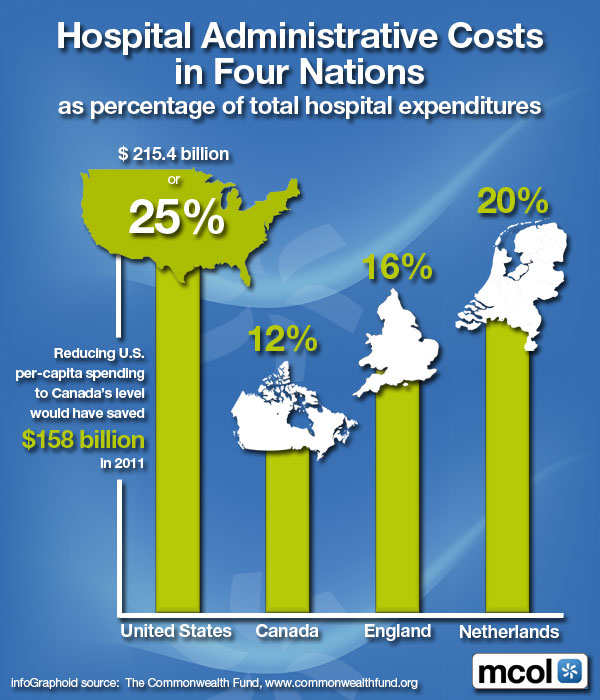
Hospital Admission Costs

Join Our Mailing List

In Four Nations

By http://www.MCOL.com

ImageProxy

Conclusion

Your thoughts and comments on this ME-P are appreciated. Feel free to review our top-left column, and top-right sidebar materials, links, URLs and related websites, too. Then, subscribe to the ME-P. It is fast, free and secure.

Speaker: If you need a moderator or speaker for an upcoming event, Dr. David E. Marcinko; MBA – Publisher-in-Chief of the Medical Executive-Post – is available for seminar or speaking engagements. Contact: MarcinkoAdvisors@msn.com

OUR OTHER PRINT BOOKS AND RELATED INFORMATION SOURCES:

Financial Planning MDs 2015

Comprehensive Financial Planning Strategies for Doctors and Advisors: Best Practices from Leading Consultants

The Health Economics of Moderate Coffee Consumption

Join Our Mailing List

Financial and Life Expectation Advantages?

By http://www.MCOL.com

***

coffee

***

***

Conclusion

Your thoughts and comments on this ME-P are appreciated. Feel free to review our top-left column, and top-right sidebar materials, links, URLs and related websites, too. Then, subscribe to the ME-P. It is fast, free and secure.

Speaker: If you need a moderator or speaker for an upcoming event, Dr. David E. Marcinko; MBA – Publisher-in-Chief of the Medical Executive-Post – is available for seminar or speaking engagements. Contact: MarcinkoAdvisors@msn.com

OUR OTHER PRINT BOOKS AND RELATED INFORMATION SOURCES:

Product DetailsProduct Details


Is Medical Licensing Really Necessary?

Licensing Doctors – Do Economists Agree?

[By Staff Reporters]

In the US, the various state medical boards dictate the rules for physician licensure and discipline. Would-be physicians must complete an approved medical training program and pass a standardized test.

Scope-of-practice laws prohibit other health professionals from offering similar services.

***

Google School of Medicine

[Google School of Medicine]

***

Given the resources involved in licensing doctors, taxpayers might be surprised to learn that the link between licensing and service quality is tenuous at best.

In fact, some economists like Shirley Svorny PhD, who’ve examined the market for physician services, may view medical licensing as a constraint on the efficient combination of inputs and a drag on innovations in health care and medical education.

Assessment

More:

Conclusion

Your thoughts and comments on this ME-P are appreciated. Feel free to review our top-left column, and top-right sidebar materials, links, URLs and related websites, too. Then, subscribe to the ME-P. It is fast, free and secure.

Speaker: If you need a moderator or speaker for an upcoming event, Dr. David E. Marcinko; MBA – Publisher-in-Chief of the Medical Executive-Post – is available for seminar or speaking engagements. Contact: MarcinkoAdvisors@msn.com

OUR OTHER PRINT BOOKS AND RELATED INFORMATION SOURCES:

Product DetailsProduct Details

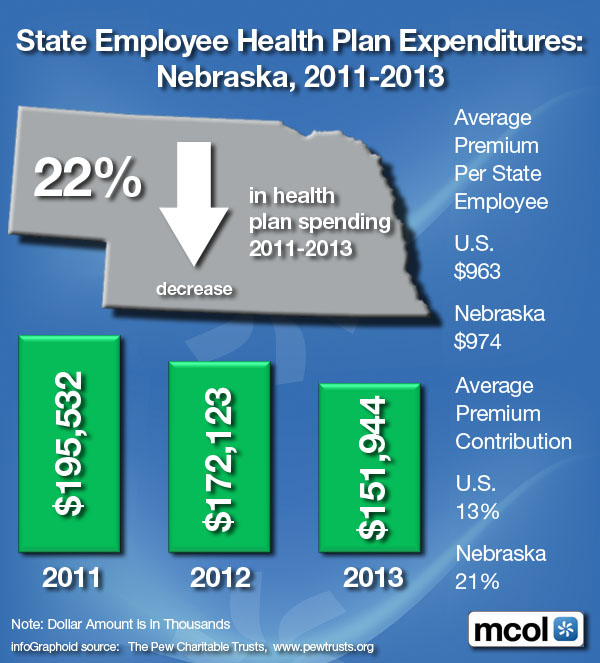
State Employee Health Plan Expenditures

Join Our Mailing List

Nebraska [2011-2013]

By http://www.MCOL.com

Nebraska

Conclusion

Your thoughts and comments on this ME-P are appreciated. Feel free to review our top-left column, and top-right sidebar materials, links, URLs and related websites, too. Then, subscribe to the ME-P. It is fast, free and secure.

Speaker: If you need a moderator or speaker for an upcoming event, Dr. David E. Marcinko; MBA – Publisher-in-Chief of the Medical Executive-Post – is available for seminar or speaking engagements. Contact: MarcinkoAdvisors@msn.com

OUR OTHER PRINT BOOKS AND RELATED INFORMATION SOURCES:

Product DetailsProduct Details


Product Details

Reading List on Healthcare Variations and Spending Costs

Join Our Mailing List

NBER Bulletin on Aging and Health — 2014 No. 1

[By Staff Reporters]‏

The 2014 No. 1 Bulletin includes the articles below:

1) Regional Variation in Health Care: Physician Beliefs or Patient Preferences? by David Cutler, Jonathan Skinner, Ariel Dora Stern, and David Wennberg http://www.nber.org/aginghealth/2014no1/w19320.html

2) The Recent Slowdown in Health Care Spending: Explanations and Predictions by Amitabh Chandra, Jonathan Holmes, and Jonathan Skinner http://www.nber.org/aginghealth/2014no1/w19700.html

Assessment

Abstracts of Selected Other NBER Working Papers: http://www.nber.org/aginghealth/2014no1/WorkingPaperSummaries.html

Conclusion

Your thoughts and comments on this ME-P are appreciated. Feel free to review our top-left column, and top-right sidebar materials, links, URLs and related websites, too. Then, subscribe to the ME-P. It is fast, free and secure.

Speaker: If you need a moderator or speaker for an upcoming event, Dr. David E. Marcinko; MBA – Publisher-in-Chief of the Medical Executive-Post – is available for seminar or speaking engagements. Contact: MarcinkoAdvisors@msn.com

OUR OTHER PRINT BOOKS AND RELATED INFORMATION SOURCES:

Product DetailsProduct Details

Six groups that will shape mHealth apps of the future

Join Our Mailing List 

A Special ME-P Report

The Distinct Segment Publishers

By Ralf-Gordon Jahns and Markus Pohl

ralphmarkus


Introduction

Dr. Marcinko and ME-P Readers and Subscribers,

Did you know that mHealth app publishers can be grouped into 6 distinct segments?

Segments differ mainly by goals, business approaches and performance. Their desire to help others distinguishes them from the rest of the app community. Knowing these segments is a pre-requisite for all those who wish to successfully participate in the new mHealth app ecosystem.

The Publishers

So, who is behind the 100,000 mHealth apps published in today’s app stores? How do the publishers differ in terms of motivation, development tool usage and satisfaction about goals achieved? The mHealth app publisher segmentation distinguishes 6 groups of current mHealth app publishers. This segmentation is based on the results of themHealth App Developer Economics 2014study.

A deeper knowledge about the mHealth app publishers is essential to all health market participants who wish to successfully navigate inside the newly emerging mHealth app ecosystem.

mHealth app publishers are not like game or tool app developers. 46% publish apps, because they want to help others. They also have objectives like revenue generation or raising brand awareness, but this “altruistic” attitude clearly distinguishes them from the rest of the app economy.

Within the six mHealth app companies, publishers with a strong medical background and those who leverage existing app development tools & APIs seem to accomplish their goals better than those who do that to a lesser extent.

Traditional healthcare players like Pharma, Med-tech or insurance companies have not been able to define their role in the market yet. Established Healthcare Players are the only segment “mainly not” satisfied with their goal achievement.

These are the profiles of the 6 distinct mHealth app publisher segments:

1) Established healthcare players:

This group includes Pharma, hospitals, health insurance and Med-tech companies, representing 3.4% of the total number of app publishers. These players usually belong to the mHealth app publishers with > 5,000 employees. Their primary objective for being in the market is to raise brand awareness and they have published the largest number of mHealth apps. Nevertheless, average reach in terms of downloads is far below the market’s average. App publishers in this group are so far the least satisfied with the achievements in the mHealth app market. The usage of tools and APIs to improve the efficiency of the app development process and app monitoring as well as the value of the app is below its competitors.

2) App specialists:

App specialists are small companies, which typically hire 3-10 employees. They have entered the mHealth app market in order to benefit from its potential. They have an app developer background and are familiar with available development and support tools. The share of medical experts on board is relatively low. This group constitutes 14% of the mHealth app publisher community.

3) Helpers:

Helpers’ primary motivation for publishing apps is to help others and they are usually organized into small companies of 3-10 employees. Revenue generation is only a minor factor. Typically Helpers have already achieved or over-achieved their goals. In terms of downloads, they have the highest share of companies (61%) that achieved less than 5,000 downloads last year. Helpers represent 32% of the market.

4) Medical specialists:

Medical specialists leverage their medical know-how to develop mobile apps. Similar to the Helper group, Medical specialist have a large share of members who publish apps to help others. By far they have partly reached their goals. They have the highest share of companies, which in 2013 earned more than USD 1m with their mHealth app portfolio. They represent 20% of the market.

5) Fitness specialists:

This group of app developers represents around 10% of the total mHealth app developer community. They primarily develop fitness apps with a clear objective to generate revenue. They connect more often to medical databases and sensors and use app development tools above average. The usual company size is 11-100 employees.

6) Connecters:

This group of mHealth app publishers represents 18% of the total mHealth app developer community. Their strategy is to create value rich apps by enabling connection to other apps, sensors and databases. This group generates the highest average revenue and has the highest goal achievement level.

Apps

Assessment 

The mHealth app publisher segmentation is a snapshot of the current state of the market. It will change as segments become more important (medical specialists) or new groups appear.  One of the main questions will be if and how traditional healthcare players will be able to compete with these small and agile companies that are driving the market today.

More:

Conclusion

Your thoughts and comments on this ME-P are appreciated. Feel free to review our top-left column, and top-right sidebar materials, links, URLs and related websites, too. Then, subscribe to the ME-P. It is fast, free and secure.

Link: http://feeds.feedburner.com/HealthcareFinancialsthePostForcxos

References:

Link to blog post:

http://mhealtheconomics.com/mhealth-segmentation-of-app-publishers-business-approaches/

Link to graph:

http://mhealtheconomics.com/wp-content/uploads/2014/05/research2guidance_mHealth_6_segments_business_approaches.jpg

Link to free report:

http://mhealtheconomics.com/mhealth-developer-economics-report/

Speaker: If you need a moderator or speaker for an upcoming event, Dr. David E. Marcinko; MBA – Publisher-in-Chief of the Medical Executive-Post – is available for seminar or speaking engagements. Contact: MarcinkoAdvisors@msn.com

OUR OTHER PRINT BOOKS AND RELATED INFORMATION SOURCES:

Product Details

Product DetailsProduct Details

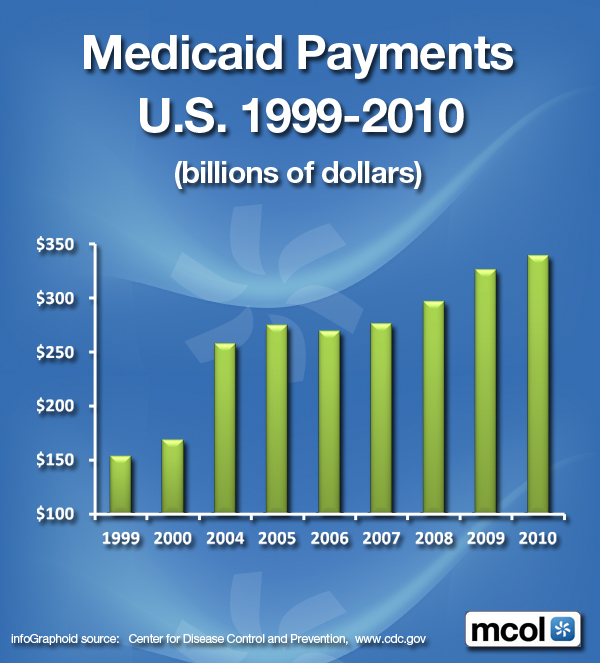
On Medicaid Payment Amounts

Join Our Mailing List

In the USA 1999-2010

http://www.MCOL.com

Medicaid

Conclusion

Your thoughts and comments on this ME-P are appreciated. Feel free to review our top-left column, and top-right sidebar materials, links, URLs and related websites, too. Then, subscribe to the ME-P. It is fast, free and secure.

Speaker: If you need a moderator or speaker for an upcoming event, Dr. David E. Marcinko; MBA – Publisher-in-Chief of the Medical Executive-Post – is available for seminar or speaking engagements. Contact: MarcinkoAdvisors@msn.com

OUR OTHER PRINT BOOKS AND RELATED INFORMATION SOURCES:

Product DetailsProduct Details

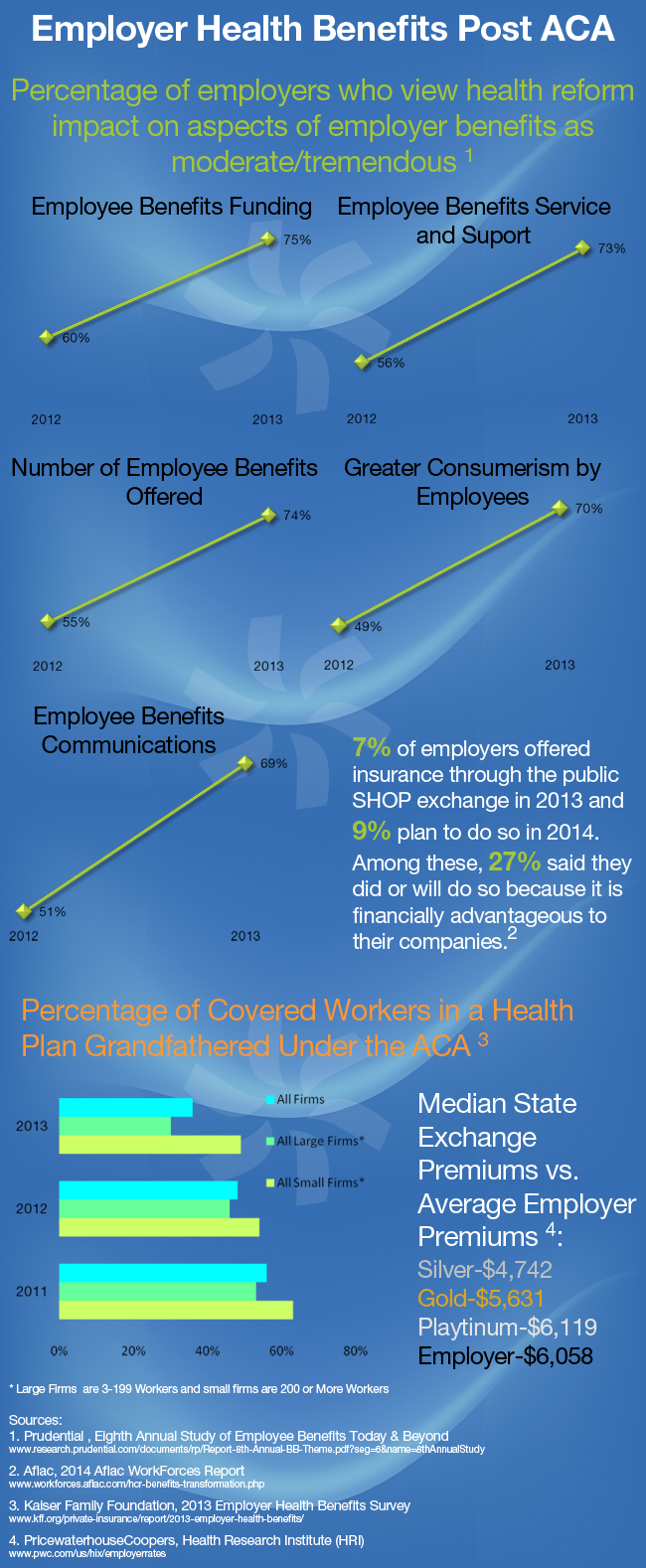
Employer Health Benefits Post PP-ACA

Join Our Mailing List

Percentage of Employers who View Health Reform Impact on Aspects of Employer Benefits as Moderate / Tremendous

By http://www.MCOL.com

ImageProxy

 HealthcareWebSummit Events

Upcoming Webinars:

On Demand: IBM Webcast: Using Analytics to Improve Outcomes at the Point of Care
On Demand: A Fresh Approach to CDH: 5 Ways to Get In It to Win It
Predictive Modeling Web Summit June 4, 2014
Large Employers and Exchanges: Minimum Standards and Private HIX Considerations June 5, 2014
Cigna’s Collaborative Care Strategy: Engaging Healthcare Professionals June 18, 2014
Provider Contracts and Quality Measurement June 19, 2014
Understanding Medicare DSH Changes-Hospital/Medicare Advantage Plan Implications June 24, 2014
Accountable Care at a Tipping Point: Oliver Wyman ACO Research Findings June 27, 2014
2015 Medical Cost Trends & Implications: PwC Research Behind the Numbers July 15, 2014
Readmissions Web Summit August 14, 2014
Accountable Care Web Summit December 11, 2014

Flash Drives of Past Events

Conclusion

Your thoughts and comments on this ME-P are appreciated. Feel free to review our top-left column, and top-right sidebar materials, links, URLs and related websites, too. Then, subscribe to the ME-P. It is fast, free and secure.

Link: http://feeds.feedburner.com/HealthcareFinancialsthePostForcxos

Speaker: If you need a moderator or speaker for an upcoming event, Dr. David E. Marcinko; MBA – Publisher-in-Chief of the Medical Executive-Post – is available for seminar or speaking engagements. Contact: MarcinkoAdvisors@msn.com

OUR OTHER PRINT BOOKS AND RELATED INFORMATION SOURCES:

Product DetailsProduct DetailsProduct Details


On Hospital Price Transparency and Estimating Out-of-Pocket Expenses

Join Our Mailing List

When it comes to health care, determining medical costs can be complicated

[By Dr. David Edward Marcinko MBA CMP™]

Dr David E Marcinko MBAAt Baptist Memorial Health Care, they’re trying to make things a little easier to understand. That’s why they built Expense Navigator, an out-of-pocket medical cost estimator tool. As a doctor, patient and financial advisor, this is vital information.

Expense Navigator is a key step in Baptist’s effort to become a leader in price transparency in U.S. health care. Patients can use the medical cost estimator tool to estimate out-of-pocket costs for hundreds of hospital inpatient or outpatient procedures.

They can also get a customized estimate for care at Baptist Memorial Hospital-Memphis or 13 other affiliated hospitals in West Tennessee, North Mississippi and East Arkansas.

So, whether you have Medicare, other insurance or are uninsured, the Expense Navigator may help you better plan for Baptist medical expenses.

Some of the Procedures Listed

  • MRI
  • CAT Scan (CT)
  • Emergency Visits (ER)
  • Mammogram
  • Orthopedic Procedures
  • X-Ray
  • Ultrasound
  • Childbirth
  • Bone Imaging
  • Cardiac Procedures
  • Appendectomy
  • Chemotherapy
  • Laparoscopy (Scope)
  • Pulmonary Procedures
  • Upper GI
  • Lower GI
  • Spinal Tap
  • Lab Tests
  • Diabetes Treatment

Free, out-of-pocket medical cost estimates are available for the following hospitals in Tennessee, Mississippi and Arkansas

Tennessee

Mississippi

Arkansas

Keyboard

Conclusion

Your thoughts and comments on this ME-P are appreciated. Feel free to review our top-left column, and top-right sidebar materials, links, URLs and related websites, too. Then, subscribe to the ME-P. It is fast, free and secure.

Link: http://feeds.feedburner.com/HealthcareFinancialsthePostForcxos

Speaker: If you need a moderator or speaker for an upcoming event, Dr. David E. Marcinko; MBA – Publisher-in-Chief of the Medical Executive-Post – is available for seminar or speaking engagements. Contact: MarcinkoAdvisors@msn.com

OUR OTHER PRINT BOOKS AND RELATED INFORMATION SOURCES:

Product DetailsProduct Details

Product Details

3 Reasons Doctors Are Ditching Insurance And Offering Care For Cash

Join Our Mailing List 

Moving away from public healthcare and towards private models

[By Jessica Socheski]

jsWith the new healthcare system in effect, many doctors are moving away from public healthcare and towards private models. Instead of taking insurance, programs like the corporate wellness plans from MDVIP and other direct primary care doctors are choosing to deal in cash only with their patients. And in essence, they are cutting out the expense of a middleman insurance company.

Many doctors have taken it upon themselves to create a model that helps more than it hinders. Here are three reasons why doctors are choosing private healthcare over public.

1. The Patient Comes First

For many people, the new healthcare insurance price has skyrocketed, making it difficult to pay for healthcare let alone use it when needing a doctor. Direct primary care doctors provide their basic or preventative care that their patients can afford without using their insurance and meeting high deductibles.

Doctors who have embraced this model find they are able to offer their patients a variety of services for less money. This offers people the chance to receive quality care without paying an exorbitant amount. Without this model, many people would avoid the doctor all together, which could lead to serious undiscovered health problems.

2. Waiting Game

Since the Affordable Care Act, hospitals, urgent care, and public healthcare offices have noticed an increase in patients, leaving both waiting rooms and doctors inundated with patients. Unfortunately, this leaves doctors and nurses trying to juggle too many patients without enough help to accommodate them. Doctors are overworked and rushed, unable to spend a proper amount of time with a patient.

Consequently, the current healthcare model has pushed many public healthcare doctors towards privatized hair, leaving an even larger doctor deficit and nurse shortage in the public sector. But since these doctors have turned to private healthcare as their new business model, doctors have the time and availability to meet with their patients and build a relationship with them.

Under private healthcare, patients can schedule appointments with their doctors to have a proper visit where both the physician and patient feels they been given an adequate amount of time—the doctor for diagnosing and the patient for quality care.

3. Doctor Freedom

The direct primary healthcare model is not something entirely new. But it is just now growing in popularity as doctors and patients search for relief from a problematic system. Before congress passed legislation in 1973 that led to the expansion of prepaid health plans, the majority of physicians operated in a fee-for-service model.

Under insured health plans, physicians had little flexibility in determining what services they could provide and how to cut costs for their practices. Some insurance companies even dictate the hours during which doctors can be paid.

 Three Reasons Doctors Are Ditching Insurance And Offering Care For Cash

Image Source: http://www.newyorkmedicalservices.com

Assessment

By moving away from insured health, doctors are able to remove the shackles and dictate how they believe their patients should be cared for. Dr. Villarreal, a doctor in Laredo, Texas, states in regards to his direct primary business model, “To me, there’s no other way I would practice medicine. You feel like you’re a doctor again.”

Conclusion

Your thoughts and comments on this ME-P are appreciated. Feel free to review our top-left column, and top-right sidebar materials, links, URLs and related websites, too. Then, subscribe to the ME-P. It is fast, free and secure.

Link: http://feeds.feedburner.com/HealthcareFinancialsthePostForcxos

Speaker: If you need a moderator or speaker for an upcoming event, Dr. David E. Marcinko; MBA – Publisher-in-Chief of the Medical Executive-Post – is available for seminar or speaking engagements. Contact: MarcinkoAdvisors@msn.com

OUR OTHER PRINT BOOKS AND RELATED INFORMATION SOURCES:

Product DetailsProduct Details

Product Details

Racial Disparities in Life Expectancy at Birth

Join Our Mailing List

For the United States

By http://www.MCOL.com

Life Spans

Conclusion

Your thoughts and comments on this ME-P are appreciated. Feel free to review our top-left column, and top-right sidebar materials, links, URLs and related websites, too. Then, subscribe to the ME-P. It is fast, free and secure.

Link: http://feeds.feedburner.com/HealthcareFinancialsthePostForcxos

Speaker: If you need a moderator or speaker for an upcoming event, Dr. David E. Marcinko; MBA – Publisher-in-Chief of the Medical Executive-Post – is available for seminar or speaking engagements. Contact: MarcinkoAdvisors@msn.com

OUR OTHER PRINT BOOKS AND RELATED INFORMATION SOURCES:

Product DetailsProduct DetailsProduct Details

Product DetailsProduct Details

Product Details


On the Future of Nursing Practice

 Join Our Mailing List

Focus on Scope of Practice

[By Staff Reporters]

Transforming the health care system to meet the demand for safe, quality, and affordable care will require a fundamental rethinking of the roles of many health care professionals, including nurses. The 2010 Affordable Care Act represents the broadest health care overhaul since the 1965 creation of the Medicare and Medicaid programs, but nurses are unable to fully participate in the resulting evolution of the U.S. health care system. This is true for nurses at all levels, whether they practice in schools or community and public health centers or acute care settings. A variety of historical, cultural, regulatory, and policy barriers limit nurses’ ability to contribute to widespread and meaningful change.

In 2008, the Robert Wood Johnson Foundation (RWJF) and the Institute of Medicine (IOM) launched a two-year initiative to respond to the need to assess and transform the nursing profession. The IOM appointed the Committee on the RWJF Initiative on the Future of Nursing, at the IOM, with the purpose of producing a report that would make recommendations for an action-oriented blueprint for the future of nursing.

As part of its report, the committee considered the obstacles all nurses encounter as they take on new roles in the transformation of health care in the United States. While challenges face nurses at all levels, the committee took particular note of the legal barriers in many states that prohibit advance practice registered nurses (APRNs) from practicing to their full education and training. The committee determined that such constraints will have to be lifted in order for nurses to assume the responsibilities they can and should be taking during this time of great need.

***

RN

***

The Changing Health Care System

In the 21st century, the health challenges facing the nation have shifted dramatically. The health care system is in the midst of great change as care providers discover new ways to provide patient-centered care; to deliver more primary care as opposed to specialty care; and to deliver more care in the community rather than the acute care setting. Nurses are well poised to meet these needs by virtue of their numbers, scientific knowledge, and adaptive capacity, and health care organizations would benefit from taking advantage of the contributions nurses can make.

Assessment

As the health care system has expanded over the past 40 years, the education and roles of APRNs, in particular, have evolved in such a way that nurses now enter the workplace qualified to provide more services than had been the case previously. Yet while APRNs are educated and trained to do more, some physicians challenge expanding scopes of practice for nurses. The committee stresses that physicians are highly trained and skilled providers and that some services clearly should be provided by physicians, who have received more extensive and specialized education and training than APRNs. However, given the great need for more affordable health care, nurses should be playing a larger role in the health care system, both in delivering care and in decision making about care.

The committee argues that APRNs are not acting as physician extenders or substitutes. They work throughout the entirety of health care, from health promotion and disease prevention to early diagnosis to prevent or limit disability. APRNs sometimes provide services that many people associate with physicians, such as assessing patient conditions or ordering and evaluating tests, but they also incorporate a range of services from other disciplines, including social work, nutrition, and physical therapy.

Conclusion

Your thoughts and comments on this ME-P are appreciated. Feel free to review our top-left column, and top-right sidebar materials, links, URLs and related websites, too. Then, subscribe to the ME-P. It is fast, free and secure.

Link: http://feeds.feedburner.com/HealthcareFinancialsthePostForcxos

Speaker: If you need a moderator or speaker for an upcoming event, Dr. David E. Marcinko; MBA – Publisher-in-Chief of the Medical Executive-Post – is available for seminar or speaking engagements. Contact: MarcinkoAdvisors@msn.com

OUR OTHER PRINT BOOKS AND RELATED INFORMATION SOURCES:


Product DetailsProduct DetailsProduct Details

Product DetailsProduct Details

Product Details

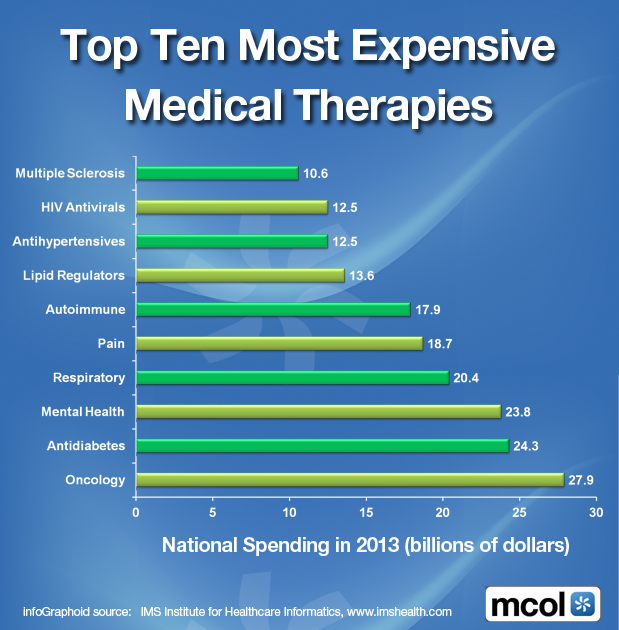
Identifying the Most Expensive Medical Therapies

Join Our Mailing List

A “Top-Ten” List

http://www.MCOL.com

ImageProxy

Conclusion

Your thoughts and comments on this ME-P are appreciated. Feel free to review our top-left column, and top-right sidebar materials, links, URLs and related websites, too. Then, subscribe to the ME-P. It is fast, free and secure.

Link: http://feeds.feedburner.com/HealthcareFinancialsthePostForcxos

Speaker: If you need a moderator or speaker for an upcoming event, Dr. David E. Marcinko; MBA – Publisher-in-Chief of the Medical Executive-Post – is available for seminar or speaking engagements. Contact: MarcinkoAdvisors@msn.com

OUR OTHER PRINT BOOKS AND RELATED INFORMATION SOURCES:

Product DetailsProduct DetailsProduct Details

Product DetailsProduct Details

Product Details


On Physician Pay Rising

Join Our Mailing List

A New Medscape Report

[By Staff Reporters]

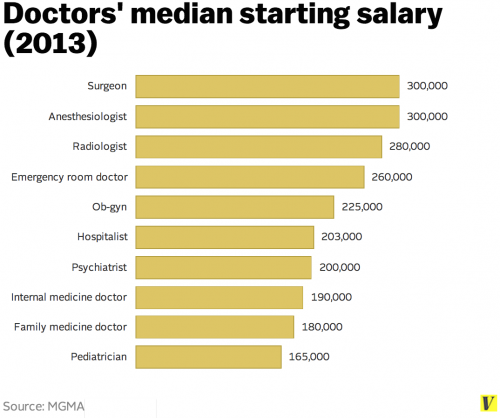
Doctor salary

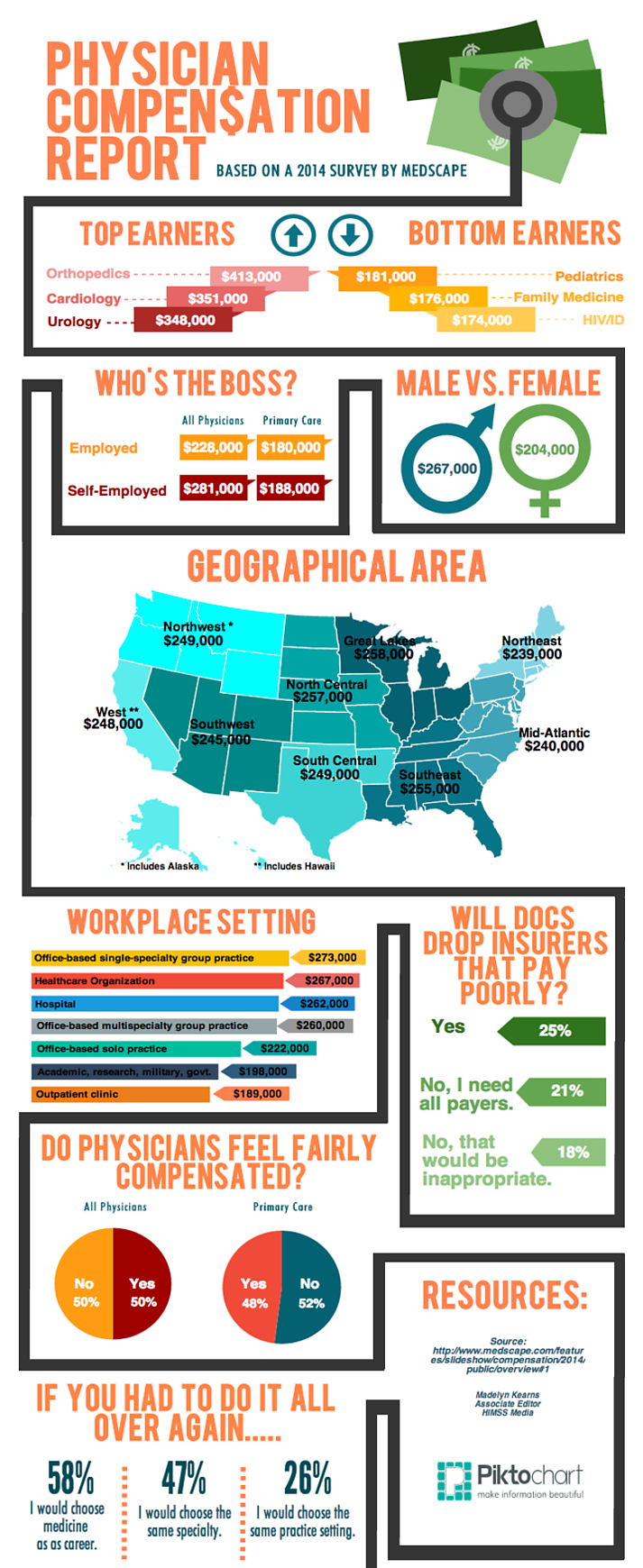
Physicians working in office-based solo practices and single-specialty practices saw a modest increase in their paychecks from 2012 to 2013, according to the lastest installment of Medscape’s annual Physician Compensation Report.

***

MD

***

Conclusion

Your thoughts and comments on this ME-P are appreciated. Feel free to review our top-left column, and top-right sidebar materials, links, URLs and related websites, too. Then, subscribe to the ME-P. It is fast, free and secure.

Link: http://feeds.feedburner.com/HealthcareFinancialsthePostForcxos

Speaker: If you need a moderator or speaker for an upcoming event, Dr. David E. Marcinko; MBA – Publisher-in-Chief of the Medical Executive-Post – is available for seminar or speaking engagements. Contact: MarcinkoAdvisors@msn.com

OUR OTHER PRINT BOOKS AND RELATED INFORMATION SOURCES:


Product DetailsProduct DetailsProduct Details

Product DetailsProduct Details

Product Details

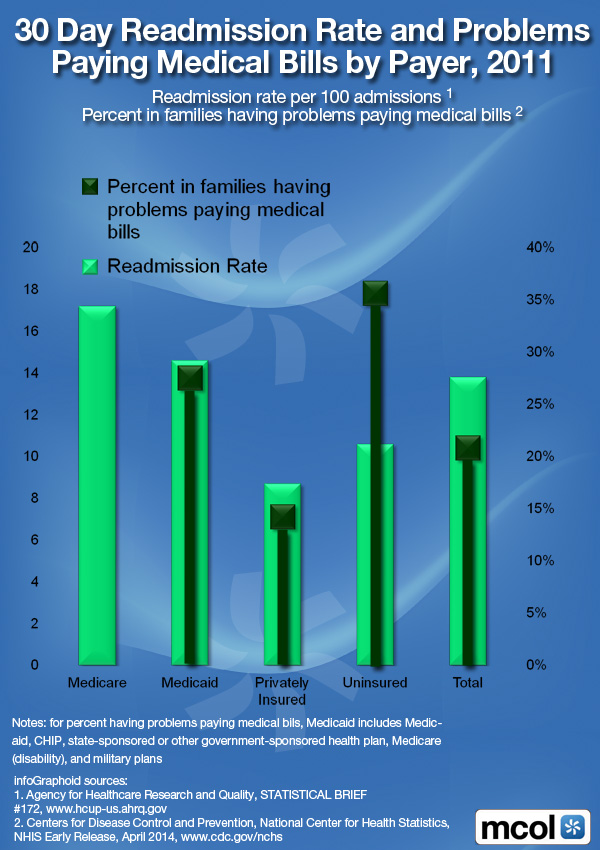
On Hospital 30 Day Re-Admission Rates

Join Our Mailing List

And … Problems Paying Medical Bills for 2011

By http://www.MOCL.com

ImageProxy

Conclusion

Your thoughts and comments on this ME-P are appreciated. Feel free to review our top-left column, and top-right sidebar materials, links, URLs and related websites, too. Then, subscribe to the ME-P. It is fast, free and secure.

Link: http://feeds.feedburner.com/HealthcareFinancialsthePostForcxos

Speaker: If you need a moderator or speaker for an upcoming event, Dr. David E. Marcinko; MBA – Publisher-in-Chief of the Medical Executive-Post – is available for seminar or speaking engagements. Contact: MarcinkoAdvisors@msn.com

OUR OTHER PRINT BOOKS AND RELATED INFORMATION SOURCES:

Product DetailsProduct Details

Product Details

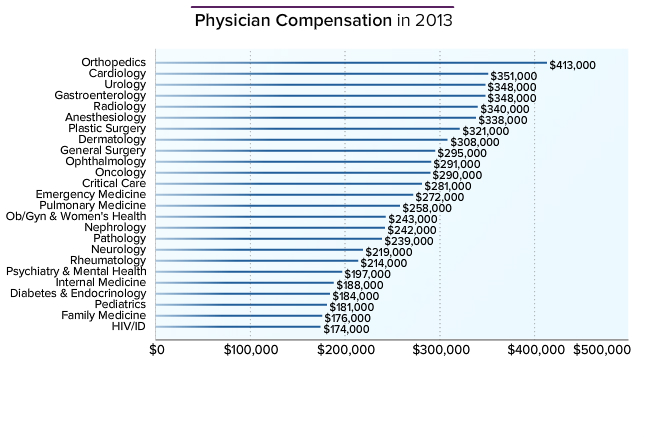
2013 Physician Compensation Report

Join Our Mailing List

Salary Update

By MedScape

Doc Comp

[Click to Enlarge]

Full Report:

More:

Conclusion

Your thoughts and comments on this ME-P are appreciated. Feel free to review our top-left column, and top-right sidebar materials, links, URLs and related websites, too. Then, subscribe to the ME-P. It is fast, free and secure.

Link: http://feeds.feedburner.com/HealthcareFinancialsthePostForcxos

Speaker: If you need a moderator or speaker for an upcoming event, Dr. David E. Marcinko; MBA – Publisher-in-Chief of the Medical Executive-Post – is available for seminar or speaking engagements. Contact: MarcinkoAdvisors@msn.com

OUR OTHER PRINT BOOKS AND RELATED INFORMATION SOURCES:

Product Details

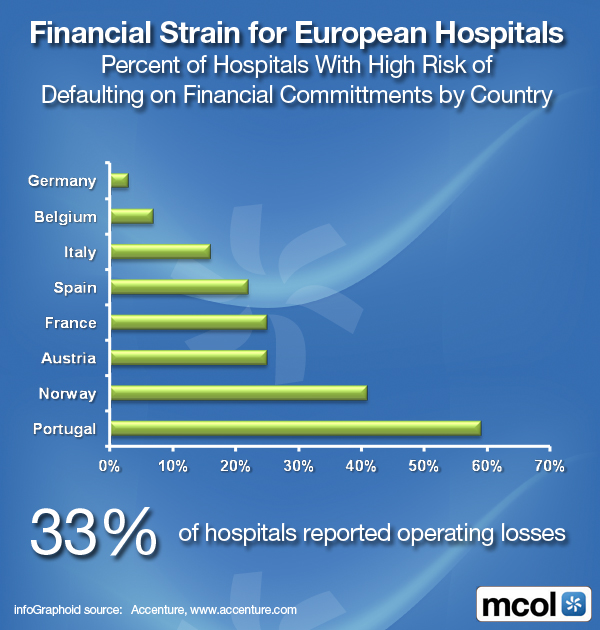
Financial Strain for European Hospitals‏

Join Our Mailing List

Percentage with High-Risk Default Potential by Country 

[By www.MCOL.com]

E

More:

Conclusion

Your thoughts and comments on this ME-P are appreciated. Feel free to review our top-left column, and top-right sidebar materials, links, URLs and related websites, too. Then, subscribe to the ME-P. It is fast, free and secure.

Link: http://feeds.feedburner.com/HealthcareFinancialsthePostForcxos

Speaker: If you need a moderator or speaker for an upcoming event, Dr. David E. Marcinko; MBA – Publisher-in-Chief of the Medical Executive-Post – is available for seminar or speaking engagements. Contact: MarcinkoAdvisors@msn.com

OUR OTHER PRINT BOOKS AND RELATED INFORMATION SOURCES:

Product DetailsProduct Details

Product Details


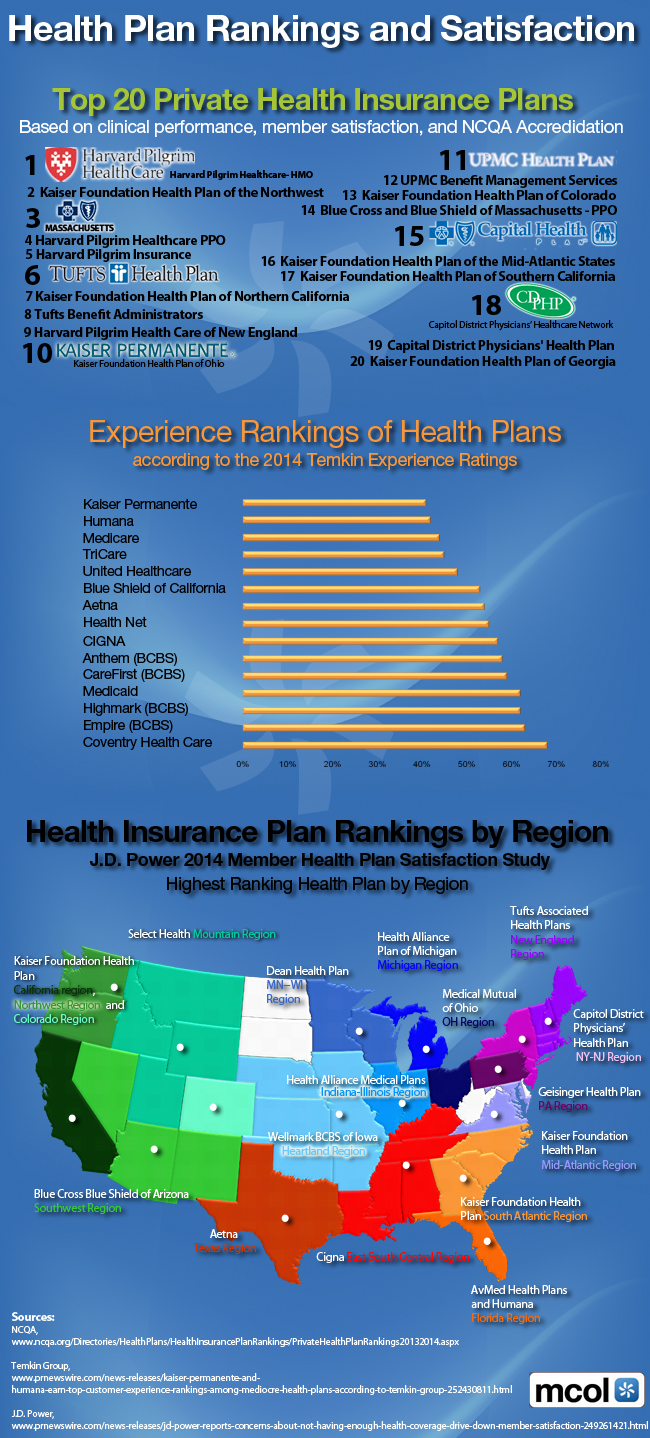
Health Plan Rankings and Satisfaction‏

Join Our Mailing List

 Top 20 Private Health Insurance Plans [HIPs]

By www. MCOL.com

ImageProxy 1

Conclusion

Your thoughts and comments on this ME-P are appreciated. Feel free to review our top-left column, and top-right sidebar materials, links, URLs and related websites, too. Then, subscribe to the ME-P. It is fast, free and secure.

Link: http://feeds.feedburner.com/HealthcareFinancialsthePostForcxos

Speaker: If you need a moderator or speaker for an upcoming event, Dr. David E. Marcinko; MBA – Publisher-in-Chief of the Medical Executive-Post – is available for seminar or speaking engagements. Contact: MarcinkoAdvisors@msn.com

OUR OTHER PRINT BOOKS AND RELATED INFORMATION SOURCES:

Product DetailsProduct Details

Product Details


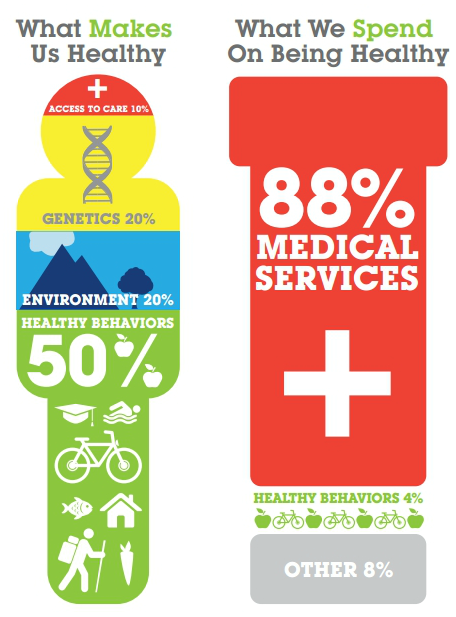
Does Health Care Contribute to Health?

Join Our Mailing List

And … How much does it cost?

By staff reporters

As Ezra Klein noted, The Bipartisan Policy Center included this infographic in their report on obesity and its economic consequences (PDF).

health-infographic

Assessment

Is this graphic even accurate?

Conclusion

Your thoughts and comments on this ME-P are appreciated. Feel free to review our top-left column, and top-right sidebar materials, links, URLs and related websites, too. Then, subscribe to the ME-P. It is fast, free and secure.

Link: http://feeds.feedburner.com/HealthcareFinancialsthePostForcxos

Speaker: If you need a moderator or speaker for an upcoming event, Dr. David E. Marcinko; MBA – Publisher-in-Chief of the Medical Executive-Post – is available for seminar or speaking engagements. Contact: MarcinkoAdvisors@msn.com

OUR OTHER PRINT BOOKS AND RELATED INFORMATION SOURCES:

Product DetailsProduct Details

Product Details


The State SHOP Market-Places 2014

Join Our Mailing List

Total Number of Plans for Small Employers 2014

SHOP

Conclusion

Your thoughts and comments on this ME-P are appreciated. Feel free to review our top-left column, and top-right sidebar materials, links, URLs and related websites, too. Then, subscribe to the ME-P. It is fast, free and secure.

Link: http://feeds.feedburner.com/HealthcareFinancialsthePostForcxos

Speaker: If you need a moderator or speaker for an upcoming event, Dr. David E. Marcinko; MBA – Publisher-in-Chief of the Medical Executive-Post – is available for seminar or speaking engagements. Contact: MarcinkoAdvisors@msn.com

OUR OTHER PRINT BOOKS AND RELATED INFORMATION SOURCES:

Product DetailsProduct Details

Product Details

How “Leaner” Hospitals Can Be Profitable in 2014

    Our Newest Textbooks with Checklists

Buy from Amazon

Learn How to Profit and Thrive in the PP-ACA Era

BOOK FOREWORD / TESTIMONIAL

###

Financial Management Strategies for Hospitals and Healthcare Organizations: Tools, Techniques, Checklists and Case Studies

###

National Health Expenditure Growth

Join Our Mailing List

A Report from the Office of the Actuary

Source: Centers for Medicare & Medicaid Services

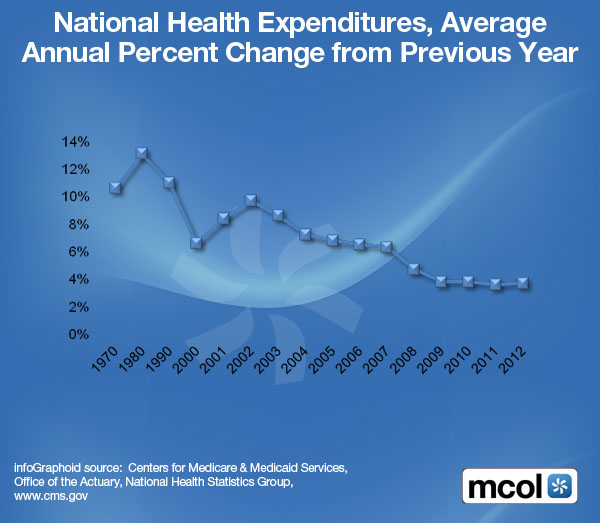
According to the Centers for Medicare & Medicaid Services (CMS) Office of the Actuary, overall national health expenditures grew at an annual rate of 3.7 percent in 2012, marking the fourth consecutive year of low growth. Health spending as a share of gross domestic product fell slightly from 17.3 percent in 2011 to 17.2 percent in 2012.

Private Insurance

Private health insurance spending growth remained low. Private health insurance spending continued to grow at a low rate, increasing 3.2 percent in 2012 compared to 3.4 percent growth in 2011. Medicare spending growth continued to be low. Despite a large uptick in Medicare enrollment, Medicare spending growth slowed slightly in 2012, increasing by 4.8 percent compared to 5.0 percent growth in 2011.

The Totals for MC/MD

Total Medicare spending per enrollee grew by only 0.7 percent in 2012. Medicaid spending continued to grow at a historically low rate. Total Medicaid spending grew 3.3 percent in 2012. While an increase over 2011, this increase still represents historically low overall growth rates tied to improved economic conditions, as well as efforts by states to control costs.

Rx Drugs

Prescription drug spending growth was low. Retail prescription drug spending slowed in 2012, growing only 0.4 percent as the result of numerous drugs losing their patent protection, leading to increased sales of lower-cost generics. Nursing home spending growth slowed.

Pharma

Assessment

Spending for freestanding nursing care facilities and continuing care retirement communities increased by only 1.6 percent in 2012, down from 4.3 percent growth in 2011, due to a one-time Medicare rate adjustment for skilled nursing facilities.

Conclusion

Your thoughts and comments on this ME-P are appreciated. Feel free to review our top-left column, and top-right sidebar materials, links, URLs and related websites, too. Then, subscribe to the ME-P. It is fast, free and secure.

Link: http://feeds.feedburner.com/HealthcareFinancialsthePostForcxos

Speaker: If you need a moderator or speaker for an upcoming event, Dr. David E. Marcinko; MBA – Publisher-in-Chief of the Medical Executive-Post – is available for seminar or speaking engagements. Contact: MarcinkoAdvisors@msn.com

OUR OTHER PRINT BOOKS AND RELATED INFORMATION SOURCES:

DICTIONARIES: http://www.springerpub.com/Search/marcinko
PHYSICIANS: www.MedicalBusinessAdvisors.com
PRACTICES: www.BusinessofMedicalPractice.com
HOSPITALS: http://www.crcpress.com/product/isbn/9781466558731
CLINICS: http://www.crcpress.com/product/isbn/9781439879900
BLOG: www.MedicalExecutivePost.com
FINANCE: Financial Planning for Physicians and Advisors
INSURANCE: Risk Management and Insurance Strategies for Physicians and Advisors

Product DetailsProduct Details

Product Details

Reviewing National Health Expenditures

Join Our Mailing List

Average Annual Percent Change from the Previous Year

By www.MCOL.com

ImageProxy

Conclusion

Your thoughts and comments on this ME-P are appreciated. Feel free to review our top-left column, and top-right sidebar materials, links, URLs and related websites, too. Then, subscribe to the ME-P. It is fast, free and secure.

Link: http://feeds.feedburner.com/HealthcareFinancialsthePostForcxos

Speaker: If you need a moderator or speaker for an upcoming event, Dr. David E. Marcinko; MBA – Publisher-in-Chief of the Medical Executive-Post – is available for seminar or speaking engagements. Contact: MarcinkoAdvisors@msn.com

OUR OTHER PRINT BOOKS AND RELATED INFORMATION SOURCES:

DICTIONARIES: http://www.springerpub.com/Search/marcinko
PHYSICIANS: www.MedicalBusinessAdvisors.com
PRACTICES: www.BusinessofMedicalPractice.com
HOSPITALS: http://www.crcpress.com/product/isbn/9781466558731
CLINICS: http://www.crcpress.com/product/isbn/9781439879900
BLOG: www.MedicalExecutivePost.com
FINANCE: Financial Planning for Physicians and Advisors
INSURANCE: Risk Management and Insurance Strategies for Physicians and Advisors

Product DetailsProduct Details

Product Details

Pity the Poor Hospitals?

Join Our Mailing List

A Historical Look-Back to the Future?

wayne-firebaugh

By Wayne Firebaugh CPA, CFP® CMP™

www.CertifiedMedicalPlanner.org

Dr. Malcolm T. MacEachern, Director of Hospital Activities for the American College of Surgeons, presciently observed that:

… our hospitals are now involved in the worst financial crisis they have ever experienced. It is absolutely necessary to all of us to put our heads together and try to find some solution. If we are to have effective results we must have concerted and coordinated immediate action. … Repeated adjustments of expenses to income have been made. Never before has there been such a careful analysis of hospital accounting and study of financial policies. It is entirely possible for us to inaugurate improvements in business methods which will lead to greater ways and means of financing hospitals in the future. … It is true that all hospitals have already trimmed their sales to better meet the financial conditions of their respective communities. This has been chiefly through economies of administration. There has been more or less universal reduction in personnel and salaries; many economies have been effected. Everything possible has been done to reduce expenditures but this has not been sufficient to bring about immediate relief in the majority of instances. The continuance of the present economic conditions will force hospitals generally to further action. The time has come when this problem must be given even greater thought, both from its community and from its national aspect. [1]

In Agreement

Many health administration and endowment managers would agree that Dr. MacEachern accurately describes today’s healthcare funding environment. Although they might be startled to learn that Dr. MacEachern made these observations in 1932, there is the old truism that there is nothing new under the sun.

Today

More current healthcare statistics after the November 7th 2012 presidential election and Patient Protection-Affordable Care Act confirmation, suggest that the financial crises are much the same for today’s hospitals as they were for hospitals during the Great Depression.  The American Hospital Association (AHA) recently reported a number of gloomy statistics for hospitals: [2]

  • Hospitals provided $39 billion in uncompensated care to patients in 2010 representing 5.8% of their expenses.
  • Technology costs are soaring as traditional technologies such as X-Ray machines, for $175,000, are being replaced by contemporary technologies such as CAT Scanners at $1 million, that are in turn being replaced by CT Functional Imaging with PET Scans costing $2.3 million. Even such a “simple” instrument as a scalpel that costs $20, is being replaced by equipment for electrocautery costing $12,000, that is then being replaced by harmonic scalpels costing $30,000.

More Metrics

A further review added more daunting numbers: [3]

  • In 2010, 22.4% of hospitals reported a negative total margin.
  • From 1997 through 2009, hospitals saw a small net surplus from government payments from sources such as Medicare and Medicaid deteriorate into a deficit approaching $35 billion.
  • Emergency departments in 47% of all hospitals report operating at, or over, capacity partially reflecting an approximate 10% decline in the number of emergency departments since 1991.
  • The average age of hospital plants has increased 22.5% from 8.0 years to 9.8 years in just fifteen years.
  • From 2003 through September 2007, hospital bond downgrades have outpaced hospital bond upgrades by 19%.

In a time when so much seems different yet so much seems the same, hospitals are increasingly viewing their endowments as a source of help. But what is an endowment?

Latin Roots

The same Latin words that give rise to the word “dowry” also give rise to the word endowment.[4] Interestingly, the concepts of a dowry and an endowment are in many ways similar. Both are typically viewed as gifts for continuing support or maintenance.

With respect to the healthcare entity, an endowment is generally used to smooth variations in operating results and to fund extra programs or plant purchases. Any entity that enjoys the support of an endowment also encounters the conflicting objectives between current income and future growth.

Hospital

Assessment

Dean William Inge, a 19th century cleric and author, aptly noted that: “Worry is interest paid on trouble before it is due.”

When managing an endowment, it is important that the institution focus its attention on those items that it can control rather than worrying about those it cannot control. Successful endowment managers seem to agree that there are at least two major areas subject to the endowment’s control: asset allocation (also known as investment policy) and payout policy.

More:

Conclusion

Your thoughts and comments on this ME-P are appreciated. Feel free to review our top-left column, and top-right sidebar materials, links, URLs and related websites, too. Then, subscribe to the ME-P. It is fast, free and secure.

Link: http://feeds.feedburner.com/HealthcareFinancialsthePostForcxos

Speaker: If you need a moderator or speaker for an upcoming event, Dr. David E. Marcinko; MBA – Publisher-in-Chief of the Medical Executive-Post – is available for seminar or speaking engagements. Contact: MarcinkoAdvisors@msn.com

OUR OTHER PRINT BOOKS AND RELATED INFORMATION SOURCES:

DICTIONARIES: http://www.springerpub.com/Search/marcinko
PHYSICIANS: www.MedicalBusinessAdvisors.com
PRACTICES: www.BusinessofMedicalPractice.com
HOSPITALS: http://www.crcpress.com/product/isbn/9781466558731
CLINICS: http://www.crcpress.com/product/isbn/9781439879900
BLOG: www.MedicalExecutivePost.com
FINANCE: Financial Planning for Physicians and Advisors
INSURANCE: Risk Management and Insurance Strategies for Physicians and Advisors


[1]   MacEachern, M.T., MD. “Some Economic Problems Affecting Hospitals Today and Suggestions for Their Solution.” The Bulletin of the American Hospital Association. July 1932.

[2]   Steinberg, C. Overview of the U.S. Healthcare System.  American Hospital Association (2003). Carline Steinburg is Vice President, Health Trends Analysis, for AHA.

[3]   “Trends Affecting Hospitals and Health Systems.”  TrendWatch Chartbook 2010.  American Hospital Association (2010).

[4]   Merriam-Webster Online.

Product DetailsProduct Details

Percentage of Americans Putting Off Medical Treatment Because of Costs

Join Our Mailing List

Do we really know?

www.MCOL.com

Health costs

Assessment

Conclusion

Your thoughts and comments on this ME-P are appreciated. Feel free to review our top-left column, and top-right sidebar materials, links, URLs and related websites, too. Then, subscribe to the ME-P. It is fast, free and secure.

Link: http://feeds.feedburner.com/HealthcareFinancialsthePostForcxos

Speaker: If you need a moderator or speaker for an upcoming event, Dr. David E. Marcinko; MBA – Publisher-in-Chief of the Medical Executive-Post – is available for seminar or speaking engagements. Contact: MarcinkoAdvisors@msn.com

OUR OTHER PRINT BOOKS AND RELATED INFORMATION SOURCES:

DICTIONARIES: http://www.springerpub.com/Search/marcinko
PHYSICIANS: www.MedicalBusinessAdvisors.com
PRACTICES: www.BusinessofMedicalPractice.com
HOSPITALS: http://www.crcpress.com/product/isbn/9781466558731
CLINICS: http://www.crcpress.com/product/isbn/9781439879900
BLOG: www.MedicalExecutivePost.com
FINANCE: Financial Planning for Physicians and Advisors
INSURANCE: Risk Management and Insurance Strategies for Physicians and Advisors

Product DetailsProduct Details

Product Details

Percentages of Patients Experiencing Cost-Related Healthcare Access Problems

Join Our Mailing List

An Infographic by Country

By www.MCOL.com

dem

Assessment

Now, compare this to healthcare access difficulties in the USA.

Conclusion

Your thoughts and comments on this ME-P are appreciated. Feel free to review our top-left column, and top-right sidebar materials, links, URLs and related websites, too. Then, subscribe to the ME-P. It is fast, free and secure.

Link: http://feeds.feedburner.com/HealthcareFinancialsthePostForcxos

Speaker: If you need a moderator or speaker for an upcoming event, Dr. David E. Marcinko; MBA – Publisher-in-Chief of the Medical Executive-Post – is available for seminar or speaking engagements. Contact: MarcinkoAdvisors@msn.com

OUR OTHER PRINT BOOKS AND RELATED INFORMATION SOURCES:

DICTIONARIES: http://www.springerpub.com/Search/marcinko
PHYSICIANS: www.MedicalBusinessAdvisors.com
PRACTICES: www.BusinessofMedicalPractice.com
HOSPITALS: http://www.crcpress.com/product/isbn/9781466558731
CLINICS: http://www.crcpress.com/product/isbn/9781439879900
ADVISORS: www.CertifiedMedicalPlanner.org
PODIATRISTS: www.PodiatryPrep.com
BLOG: www.MedicalExecutivePost.com
FINANCE: Financial Planning for Physicians and Advisors
INSURANCE: Risk Management and Insurance Strategies for Physicians and Advisors

Product DetailsProduct DetailsProduct Details

Product Details  Product Details

Product DetailsProduct Details

Product Details

Top 12 Articles [Health Administration Reading List]

Join Our Mailing List

By Staff Reporters via Austin Frakt PhD

On Health Economics, Finance and Insurance, Quality Care and Organizational Behavior

1. Substantial Health And Economic Returns From Delayed Aging May Warrant A New Focus For Medical Research

By Dana Goldman and others (Health Affairs)

2. Trends Underlying Employer Sponsored Health Insurance Growth For Americans Younger Than Age Sixty-Five

By Carolina-Nicole Herrera and others (Health Affairs)

3. Accountable Care Organization Formation Is Associated With Integrated Systems But Not High Medical Spending

By David Auerbach, Hangsheng Liu, Peter Hussey, Christopher Lau, and Ateev Mehrotra (Health Affairs)

4. The Quality Of Care Delivered To Patients Within The Same Hospital Varies By Insurance Type

By Christine S. Spencer, Darrell J. Gaskin, and Eric T. Roberts  (Health Affairs)

5. Understanding State Variation In Health Insurance Dynamics Can Help Tailor Enrollment Strategies For ACA Expansion

By John Graves and Katherine Swartz (Health Affairs)

6. When Medicare Cuts Hospital Prices, Seniors Use Less Inpatient Care

By Chapin White and Tracy Yee (Health Affairs)

7. More Americans Living Longer With Cardiovascular Disease Will Increase Costs While Lowering Quality Of Life

By Ankur Pandya, Thomas Gaziano, Milton Weinstein, and David Cutler (Health Affairs)

8. Surgical Skill and Complication Rates after Bariatric Surgery

By John Birkmeyer and others (New England Journal of Medicine)

Reading list

9. Who Is in Control? The Determinants of Patient Adherence with Medication Therapy

By Sergei Koulayev, Niels Skipper and Emilia Simeonova (National Bureau of Economic Research)

10. Fifty Years of Family Planning: New Evidence on the Long-Run Effects of Increasing Access to Contraception

By Martha Bailey (National Bureau of Economic Research)

11. Identifying the Health Production Function: The Case of Hospitals

By John Romley and Neeraj Sood (National Bureau of Economic Research)

12. ACA Standoff

By Jeffrey Drazen and Gregory Curfman (New England Journal of Medicine)

Assessment

Feel free to send us links to your own hot topic reading list so that we may share.

Conclusion

Your thoughts and comments on this ME-P are appreciated. Feel free to review our top-left column, and top-right sidebar materials, links, URLs and related websites, too. Then, subscribe to the ME-P. It is fast, free and secure.

Link: http://feeds.feedburner.com/HealthcareFinancialsthePostForcxos

Speaker: If you need a moderator or speaker for an upcoming event, Dr. David E. Marcinko; MBA – Publisher-in-Chief of the Medical Executive-Post – is available for seminar or speaking engagements. Contact: MarcinkoAdvisors@msn.com

OUR OTHER PRINT BOOKS AND RELATED INFORMATION SOURCES:

LEXICONS: http://www.springerpub.com/Search/marcinko
PHYSICIANS: www.MedicalBusinessAdvisors.com
PRACTICES: www.BusinessofMedicalPractice.com
HOSPITALS: http://www.crcpress.com/product/isbn/9781466558731
CLINICS: http://www.crcpress.com/product/isbn/9781439879900
ADVISORS: www.CertifiedMedicalPlanner.org
PODIATRISTS: www.PodiatryPrep.com
BLOG: www.MedicalExecutivePost.com

Product DetailsProduct Details

Product Details

How affordable is the new health care law – Really?

Join Our Mailing List 

Calculate your costs

[By Staff Reporters]

The Affordable Care Act is going to change health care for tens of millions of Americans.

But, what about the cost?

LET’S BEGIN

ACA

###

NOW CALCULATE

Whether you’re an individual who has health insurance or needs it, or a small business owner, you need to know how health care reform affects you.

What’s it going to cost? What’s happening in your state?

### 8C9220491-tdy-130929-aca-calculator-4x3-606p_blocks_desktop_large

### 

Link: http://www.nbcnews.com/health/how-affordable-new-health-care-law-really-calculate-your-cost-8C11296290

Conclusion

Your thoughts and comments on this ME-P are appreciated. Feel free to review our top-left column, and top-right sidebar materials, links, URLs and related websites, too. Then, subscribe to the ME-P. It is fast, free and secure.

Link: http://feeds.feedburner.com/HealthcareFinancialsthePostForcxos

Speaker: If you need a moderator or speaker for an upcoming event, Dr. David E. Marcinko; MBA – Publisher-in-Chief of the Medical Executive-Post – is available for seminar or speaking engagements. Contact: MarcinkoAdvisors@msn.com

OUR OTHER PRINT BOOKS AND RELATED INFORMATION SOURCES:

Health Dictionary Series: http://www.springerpub.com/Search/marcinko

Practice Management: http://www.springerpub.com/product/9780826105752

Physician Financial Planning: http://www.jbpub.com/catalog/0763745790

Medical Risk Management: http://www.jbpub.com/catalog/9780763733421

Hospitals: http://www.crcpress.com/product/isbn/9781439879900

Physician Advisors: www.CertifiedMedicalPlanner.org

Product DetailsProduct DetailsProduct Details

Product Details  Product Details

Product DetailsProduct Details

Some Modern Issues Impacting Hospital Revenue Cycles

Join Our Mailing List

By Carol S. Miller RN CPM MHA

By Dr. David Edward Marcinko MBA CMP™

Carol S. Miller “Collectively the healthcare industry spends over $350 Billion to submit and process claims while still working with cumbersome workflows, inefficient processes, and a changing landscape marked by increasing out-of-pocket cost for patients as well as increasing operating costs.”

The Norm Continues Downhill

For many years hospitals and healthcare organizations have struggled to maintain and improve their operating margins.  They continue to face a widening gap between their operating costs and the revenues required to cover not only current costs, but also to finance strategic growth initiatives and investments.

Faced with increased operational costs and associated declines in rates of reimbursement, many healthcare hospital executives and leaders are concerned that they will not achieve margin targets.  To stabilize the internal financial issue, some hospital have focused on lowering expenses in order to save costs – an area they control and an area that will show an immediate impact; however, that is not the best solution.

Beware Cost Reductions

Hospital executives are concerned with the effect that these reductions may have on patient quality and service.  Finding ways to maximize workflow to lower operating costs is vital.  Every dollar not collected negatively impacts short- and long term capital projects, lowers patient satisfaction scores and possibly affects quality of patient care.

Status Today

Hospitals, healthcare organizations and all medical providers are under great pressure to collect revenue in order to remain solvent. And so, here are some of the issues impacting the modern hospital revenue cycle as Obama-Care, or the PP-ACA of 2010, is launched next month?

Issues Impacting the Revenue Cycle

Several of the major leading issues facing the revenue cycle are:

  • Impact of Consumer-driven Health – This process has emerged as a new approach to the traditional managed care system, shifting payment flows and introducing new “non-traditional” parties into the claims processing workflow.  As market adoption enters the mainstream, consumer-driven health stands to alter the healthcare landscape more dramatically than anything we have seen since the advent of managed care.  This process places more financial responsibility on the consumer to encourage value-drive healthcare spending decisions.
  • Competing high-priority projects –Hospitals are feeling pressured to maximize collections primarily because they know changes are coming down the pike due to healthcare reform and they know they will need to juggle these major initiatives along with the day-to-day revenue cycle operations.
  • Lack of skilled resources in several areas – Hospital have struggled to find the right personnel with sufficient knowledge of project management, clinical documentation improvement, coding and other revenue cycle functions, resulting in inefficient operations.
  • Narrowing margins – Declines in reimbursement are forcing hospitals to look at their organization to determine if they can increase efficiencies and automate to save money.  Hospitals are faced with the potential of increased cost to upgrade and adapt clinical software while not meeting budget projections.  There are a number of factors contributing to the financial pressure including inefficient administrative processes such as redundant data collection, manual processes, and repetitive rework of claims submissions.  Also included are organizations using outdated processes and legacy technologies.
  • Significant market changes – Regardless of what happens with the Patient Protection and Affordable Care Act, hospitals will have to deal with fluctuating amounts of insured and uninsured patients and variable payments.
  • Limited access to capital – With the trend towards more complex and expensive systems, industry may not have the internal resources and funding to build and manage these systems that keep pace with the trends.
  • Need to optimize revenue – There are five core areas hospitals have to examine carefully and they are:
    • ICD-10 – This is an entirely new coding and health information technology issue but is also a revenue issues
    • System integration – Hospitals need to look at integrating software and hardware systems that can combine patient account billing, collections and electronic health records.
    • Clinical documentation – Meaningful use will require detailed documentation in order for payment to be made and this is another revenue issue.
    • Billing and claims management – Reducing denials and reject claims, training staff, improving point-of-service collections and decreasing delays in patient billing can improve the revenue cycle productivity,
    • Contract analysis – Hospitals need to focus more on negotiating rates with insurers in order to increase revenue.

Hospital

Conclusion

Your thoughts and comments on this ME-P are appreciated. Feel free to review our top-left column, and top-right sidebar materials, links, URLs and related websites, too. Then, subscribe to the ME-P. It is fast, free and secure.

Speaker: If you need a moderator or speaker for an upcoming event, Dr. David E. Marcinko; MBA – Publisher-in-Chief of the Medical Executive-Post – is available for seminar or speaking engagements. Contact: MarcinkoAdvisors@msn.com

OUR OTHER PRINT BOOKS AND RELATED INFORMATION SOURCES:

Product Details

Product DetailsProduct Details

***

Upcoming Webinars and Health Administration Essays around the Net

Join Our Mailing List

By Staff Reporters

Some Topics of Interest for ME-P Readers

###

US capitol

###

Assessment

Enjoy these informative private sector and government publications.

Conclusion

Your thoughts and comments on this ME-P are appreciated. Feel free to review our top-left column, and top-right sidebar materials, links, URLs and related websites, too. Then, subscribe to the ME-P. It is fast, free and secure.

Link: http://feeds.feedburner.com/HealthcareFinancialsthePostForcxos

Speaker: If you need a moderator or speaker for an upcoming event, Dr. David E. Marcinko; MBA – Publisher-in-Chief of the Medical Executive-Post – is available for seminar or speaking engagements. Contact: MarcinkoAdvisors@msn.com

OUR OTHER PRINT BOOKS AND RELATED INFORMATION SOURCES:

Health Dictionary Series: http://www.springerpub.com/Search/marcinko

Practice Management: http://www.springerpub.com/product/9780826105752

Physician Financial Planning: http://www.jbpub.com/catalog/0763745790

Medical Risk Management: http://www.jbpub.com/catalog/9780763733421

Hospitals: http://www.crcpress.com/product/isbn/9781439879900

Physician Advisors: www.CertifiedMedicalPlanner.org

Product DetailsProduct DetailsProduct Details

Product Details  Product Details

Product DetailsProduct Details

The Percentage of Covered Employees by Type of Health Plan

Join Our Mailing List

From 1988 to 2000

###

Health Plans

###

Conclusion

Your thoughts and comments on this ME-P are appreciated. Feel free to review our top-left column, and top-right sidebar materials, links, URLs and related websites, too. Then, subscribe to the ME-P. It is fast, free and secure.

Link: http://feeds.feedburner.com/HealthcareFinancialsthePostForcxos

Speaker: If you need a moderator or speaker for an upcoming event, Dr. David E. Marcinko; MBA – Publisher-in-Chief of the Medical Executive-Post – is available for seminar or speaking engagements. Contact: MarcinkoAdvisors@msn.com

OUR OTHER PRINT BOOKS AND RELATED INFORMATION SOURCES:

Health Dictionary Series: http://www.springerpub.com/Search/marcinko

Practice Management: http://www.springerpub.com/product/9780826105752

Physician Financial Planning: http://www.jbpub.com/catalog/0763745790

Medical Risk Management: http://www.jbpub.com/catalog/9780763733421

Hospitals: http://www.crcpress.com/product/isbn/9781439879900

Physician Advisors: www.CertifiedMedicalPlanner.org

Product DetailsProduct Details

Afghanistan and Iraq’s Healthcare Costs

Join Our Mailing List

An Informative Infographic

###

war

###

Assessment

Over the next 40 years, Afghanistan and Iraq veterans will need an estimated $750 billion in healthcare, a challenge for the VA to innovate, especially when treating soldiers who grew up with the Internet.

Conclusion

Your thoughts and comments on this ME-P are appreciated. Feel free to review our top-left column, and top-right sidebar materials, links, URLs and related websites, too. Then, subscribe to the ME-P. It is fast, free and secure.

Link: http://feeds.feedburner.com/HealthcareFinancialsthePostForcxos

Speaker: If you need a moderator or speaker for an upcoming event, Dr. David E. Marcinko; MBA – Publisher-in-Chief of the Medical Executive-Post – is available for seminar or speaking engagements. Contact: MarcinkoAdvisors@msn.com

OUR OTHER PRINT BOOKS AND RELATED INFORMATION SOURCES:

Health Dictionary Series: http://www.springerpub.com/Search/marcinko

Practice Management: http://www.springerpub.com/product/9780826105752

Physician Financial Planning: http://www.jbpub.com/catalog/0763745790

Medical Risk Management: http://www.jbpub.com/catalog/9780763733421

Hospitals: http://www.crcpress.com/product/isbn/9781439879900

Physician Advisors: www.CertifiedMedicalPlanner.org

Product DetailsProduct DetailsProduct Details

Product Details  Product Details

Product DetailsProduct Details

Ground Breaking Book Explains Why Accountable Care Organizations May Be the Answer the Health Care Industry Has Been Seeking!

Join Our Mailing List

Book Reviews, with Testimonial, by ME-P Founding Publisher Dr. David Edward Marcinko MBA CMP®

PRESS RELEASE!

August 23, 2013CRC Press / Productivity Press is pleased to announce the publication of  Accountable Care Organizations: Value Metrics and Capital Formation authored by nationally recognized healthcare expert, Robert James Cimasi. This dynamic book explores the historical background and evolution of the highly anticipated ACO model which is rapidly expanding since its adoption as part of the Affordable Care Act, commonly referred to as Obama Care. The book describes the basis for the development of value metrics and capital formation analyses that are foundational to assessing capacity for change in healthcare organizations considering the development of an ACO, as well as, the current efficacy of the model.

Book Reviews

“Bob Cimasi has done it again. As a thought leader in contemporary healthcare matters, his new book, Accountable Care Organizations: Value Metrics and Capital Formation, establishes and explains, in plain terms, the operational and financial DNA and genomic construct and understanding for any organization considering the development and operations of an ACO…a must read and resource for any healthcare industry executive.”

-Roger W. Logan, MS, CPA/ABV, ASA, Senior Vice President of Phoenix Children’s Hospital

“Accountable Care Organizations is the first comprehensive text on capital formation and value metrics for this new healthcare business model… I can think of no one more qualified to write it than Bob Cimasi at Health Capital Consultants … it is destined to become a classic work … read, review, refer, and profit by this valuable resource.”

-Dr. David Edward Marcinko MBA CMP® of the Institute of Medical Business Advisors, Inc Atlanta, GA

“As both a healthcare management educator and as a consultant who has worked on health and professional services transactional advisory work for many years, I applaud the ambitious undertaking of Bob Cimasi’s latest book, Accountable Care Organizations: Value Metrics and Capital Formation. Cimasi’s description of the complex history and evolution of the US health system provides a useful framework for students and professionals who may lack a detailed background in the field. This should help them better understand both how we have arrived at the ACO approach, and how it might work. This addressing capital and valuation information is also uncommon in the literature on ACOs. It should provide a valuable contribution to the field, especially given that a some surveys of healthcare leaders have pointed to access to capital and to a lesser but still important degree, agreement on valuation, as concerns as they consider acquisitions, mergers, and other affiliations towards forming/joining ACOs or similar organizations to help deal with the changing reimbursement and competitive environment.”

-R. Brooke Hollis, MBA/HHSA, Executive Director, Sloan Program in Health Administration, Cornell University and Managing Member, Hollis Associates Acquisition Advisors, LLC

The book examines the Four Pillars of Value in the Healthcare Industry: regulatory, reimbursement, competition and technology in addressing the value metrics of ACOs, including requirements for capital formation, financial feasibility, and economic returns. It focuses the discussion of non-monetary value on a review of aspects of population health within the context of such objectives as improved quality outcomes and access to care. It also examines the positive externalities of the ACO model, including results for third parties outside the basic construct of the ACO contracts shared savings payments. The potential role and opportunities for consultants in assisting their provider clients in the consideration, development, implementation, and operation of an ACO are also discussed.

###

Accountable Care Organizations

###

About the Author:

Robert James Cimasi, MHA, ASA, FRICS, MCBA, AVA, CM&AA, CMP® is CEO of Health Capital Consultants (HCC), a nationally recognized healthcare financial and economic consulting firm headquartered in St. Louis, Missouri, since 1993. Cimasi has more than 30 years of experience in serving clients in over 45 states, with a professional focus on the financial and economic aspects of healthcare service sector entities including feasibility analysis and forecasting; valuation consulting and capital formation services; healthcare industry transactions including joint ventures, mergers, acquisitions, and divestitures; certificate-of-need and other regulatory and policy planning consulting; and, litigation support and expert testimony.

Mr. Cimasi has served for many years as faculty in both an academic and professional basis for continuing education courses, and he has provided testimony before federal and state legislative committees and has served as an expert witness in numerous court cases. He is a nationally known speaker on healthcare industry topics, the author of several books, including A Guide to Consulting Services for Emerging Healthcare Organizations (John Wiley & Sons, 1999), The U.S. Healthcare Certificate of Need Sourcebook (Beard Books, 2005), The Adviser’s Guide to Healthcare (AICPA, 2010), and Healthcare Valuation: The Financial Appraisal of Enterprises, Assets, and Services (John Wiley & Sons, 2013), as well as numerous chapters, published articles, research papers and case studies, and is often quoted by healthcare industry press.


UPDATE:
Top Five Videos Trending in The Last Month On HealthShareTV
  1. Accountable Care Directory 2014
  2. Achieving Quality in Accountable Care Organizations
  3. High-Performing Care Coordination in a Patient/Family-Centered Medical Home
  4. ‘Aetna’s Medicare Advantage Collaborative Initiatives’
  5. Aligning High Performance in Medication Safety to Improve Patient Outcomes and Reduce Readmissions

Source: HealthShareTV

###

Product DetailsProduct Details
 

Commercial Health Plans’ Medical Loss Ratio [2nd Quarter 2013]

Join Our Mailing List

By http://www.MCOL.com

The 85% Rule

###

ImageProxy

###

Conclusion

Your thoughts and comments on this ME-P are appreciated. Feel free to review our top-left column, and top-right sidebar materials, links, URLs and related websites, too. Then, subscribe to the ME-P. It is fast, free and secure.

Link: http://feeds.feedburner.com/HealthcareFinancialsthePostForcxos

Speaker: If you need a moderator or speaker for an upcoming event, Dr. David E. Marcinko; MBA – Publisher-in-Chief of the Medical Executive-Post – is available for seminar or speaking engagements. Contact: MarcinkoAdvisors@msn.com

OUR OTHER PRINT BOOKS AND RELATED INFORMATION SOURCES:

DICTIONARIES: http://www.springerpub.com/Search/marcinko
PHYSICIANS: www.MedicalBusinessAdvisors.com
PRACTICES: www.BusinessofMedicalPractice.com
HOSPITALS: http://www.crcpress.com/product/isbn/9781466558731
CLINICS: http://www.crcpress.com/product/isbn/9781439879900
BLOG: www.MedicalExecutivePost.com
FINANCE: Financial Planning for Physicians and Advisors
INSURANCE: Risk Management and Insurance Strategies for Physicians and Advisors


Product DetailsProduct DetailsProduct Details

Product Details  Product Details

Product DetailsProduct Details

Why Hospitals Should Use Financial Management Checklists

Join Our Mailing List

Financial Management Strategies for Hospital and Healthcare Organizations [Tools, Techniques, Checklists and Case Studies]

By Neil H. Baum MD

Dr. BaumIt is fitting that ME-P Editor Dr. David Edward Marcinko MBA CMP™ and his fellow experts, have laid out a plan of action in Financial Management Strategies for Hospital and Healthcare Organizations: Tools, Techniques, Checklists and Case Studies that physicians, nurse-executives, administrators and institutional Chief Executive Officers, Chief Financial Officers, MBAs, lawyers and healthcare accountants can follow to help move healthcare financial fitness forward during these unchartered waters.

In medicine – It all began with Dr. Atul Gawande, a surgeon at Massachusetts General Hospital, who reviewed the airline industry and their use of checklists prior to take off of an airplane.

The history of aviation checklists began in 1934 when Boeing was in the final process of testing a U.S. Army fighter plane with a potential contract of nearly 200 planes riding on the final test of the plane. The test aircraft made a normal taxi and takeoff. It began a smooth climb, but then suddenly stalled. The aircraft turned on one wing and fell, bursting into flames upon impact killing two of the test pilots. The investigation found pilot error as the cause. One of the pilots who was unfamiliar with the aircraft had neglected to release the elevator lock prior to take off. The contract with Boeing was in jeopardy.

Thus, the pilots sat down and put their heads together. What was needed was some way of making sure that everything to prevent crashes was being done; that nothing was overlooked. What resulted was a pilot’s checklist developed before takeoff, during flight, before landing, and after landing. These checklists for the pilot and co-pilot made sure that nothing was forgotten and safety of the planes was insured.

Medical Care and Hospitals

So, what does airline safety have to with medical care and hospitals?

There are so many activities that take place in medicine such as the operating room, that are far too complicated to be left to memory of doctors, nurses, anesthesiologists, and others involved in the surgical care of patients.  Dr. Gawande identified the key components of a surgical procedure which include the name of the patient, the procedure to be performed, the estimated length of the procedure, whether the right or left side is the surgical target, how much blood loss is anticipated, whether antibiotics have been given prior to making the incision, and the anesthetic risk of the patient.  This use of a checklist which takes approximately 30 seconds has not only prevented wrong side surgery but also instills a discipline of higher performance.

###

Financial Management Strategies for Hospitals and Healthcare Organizations

Financial Management Strategies for Hospitals and Healthcare Organizations: Tools, Techniques, Checklists and Case Studies

###

From the Clinic to the Boardroom

And so, should [can] we port the clinical checklist example of Atul Gawande for use with non-clinical topics like hospital financial management and administration?

Assessment

Yes – We have a challenge and the Financial Management Strategies for Hospital and Healthcare Organizations: Tools, Techniques, Checklists and Case Studies is a step in the direction to make all of the stakeholders in the healthcare arena become sensitive to reducing and controlling costs and at the same time preserve quality of care.

This can be done.  I suggest you start by reading, using and referring to this excellent book.

And so, what is my final advice? Read the Book!

Some of you who will read this book are CXOs COOs, Chief Medical Officers and maybe even COS. (Chiefs of Staff). But, all of you should become CLOs (Chief Life Officers)!  Read this book and the initials CLO will appear after your name!

Note:

Neil H. Baum MD is a Clinical Associate Professor of Urology at the Tulane Medical School, New Orleans, LA. He is also a thought-leader for this ME-P. 

Conclusion

Your thoughts and comments on this ME-P are appreciated. Feel free to review our top-left column, and top-right sidebar materials, links, URLs and related websites, too. Then, subscribe to the ME-P. It is fast, free and secure.

Speaker: If you need a moderator or speaker for an upcoming event, Dr. David E. Marcinko; MBA – Publisher-in-Chief of the Medical Executive-Post – is available for seminar or speaking engagements. Contact: MarcinkoAdvisors@msn.com

OUR OTHER PRINT BOOKS AND RELATED INFORMATION SOURCES:

Product DetailsProduct DetailsProduct Details

Product DetailsProduct Details

Recommended Readings for Financial Advisors from the No. 1 NBER Bulletin on Aging and Health for 2013

Join Our Mailing List

By Staff Reporters

The 2013 No. 1 Bulletin includes the articles below:

1)  Do Retirement Savings Policies Increase Total Retirement Saving?
by Raj Chetty, John Friedman, Soren Leth-Petersen, Torben Nielsen, and Tore Olsen

http://www.nber.org/bah/2013no1/w18565.html

2)  Behavioral Hazard in Health Insurance
by Katherine Baicker, Sendhil Mullainathan, and Joshua Schwartzstein

http://www.nber.org/bah/2013no1/w18468.html

3)  The Revenue Demands of Public Employee Pension Promises
by Robert Novy-Marx and Joshua Rauh

http://www.nber.org/bah/2013no1/w18489.html

4)  What Makes Annuitization More Appealing?
by John Beshears, James Choi, David Laibson, Brigitte Madrian, and Stephen Zeldes

http://www.nber.org/bah/2013no1/w18869.html

5)  The Prevalence and Economic Consequences of Disability
by Bruce Meyer and Wallace Mok

http://www.nber.org/bah/2013no1/w18575.html

Source: View a printable PDF copy of the at: http://www.nber.org/aginghealth/2013no1/2013no1.pdf

Conclusion

Your thoughts and comments on this ME-P are appreciated. Feel free to review our top-left column, and top-right sidebar materials, links, URLs and related websites, too. Then, subscribe to the ME-P. It is fast, free and secure.

Link: http://feeds.feedburner.com/HealthcareFinancialsthePostForcxos

Speaker: If you need a moderator or speaker for an upcoming event, Dr. David E. Marcinko; MBA – Publisher-in-Chief of the Medical Executive-Post – is available for seminar or speaking engagements. Contact: MarcinkoAdvisors@msn.com

OUR OTHER PRINT BOOKS AND RELATED INFORMATION SOURCES:

Health Dictionary Series: http://www.springerpub.com/Search/marcinko

Practice Management: http://www.springerpub.com/product/9780826105752

Physician Financial Planning: http://www.jbpub.com/catalog/0763745790

Medical Risk Management: http://www.jbpub.com/catalog/9780763733421

Hospitals: http://www.crcpress.com/product/isbn/9781439879900

Physician Advisors: www.CertifiedMedicalPlanner.org

Product DetailsProduct DetailsProduct Details

Product Details  Product Details

Example Total Expenditures on Health

Join Our Mailing List

International Per Capita Total Spending

By: http://www.MCOL.com

###

costs

###

More:

Conclusion

Your thoughts and comments on this ME-P are appreciated. Feel free to review our top-left column, and top-right sidebar materials, links, URLs and related websites, too. Then, subscribe to the ME-P. It is fast, free and secure.

Link: http://feeds.feedburner.com/HealthcareFinancialsthePostForcxos

Speaker: If you need a moderator or speaker for an upcoming event, Dr. David E. Marcinko; MBA – Publisher-in-Chief of the Medical Executive-Post – is available for seminar or speaking engagements. Contact: MarcinkoAdvisors@msn.com

OUR OTHER PRINT BOOKS AND RELATED INFORMATION SOURCES:

Health Dictionary Series: http://www.springerpub.com/Search/marcinko

Practice Management: http://www.springerpub.com/product/9780826105752

Physician Financial Planning: http://www.jbpub.com/catalog/0763745790

Medical Risk Management: http://www.jbpub.com/catalog/9780763733421

Hospitals: http://www.crcpress.com/product/isbn/9781439879900

Physician Advisors: www.CertifiedMedicalPlanner.org

Product DetailsProduct DetailsProduct Details

PP-ACA Physician Ownership Provisions

Join Our Mailing List

Understanding the “whole hospital exception” to the Stark laws

By Dr. David Edward Marcinko MBA CMP®

www.CertifiedMedicalPlanner.org

Dr. David E. Marcinko MBAThis was a big week for healthcare reform, wasn’t it? Some provisions of the PP-ACA requiring the employer mandates were delayed another year; until January 1, 2015.

But, before passage of the ACA in 2010, the “whole hospital exception” to the Stark law allowed physicians to have an ownership interest in a hospital to which those physicians refer patients, provided the physician is invested in the whole hospital and not a subdivision of the hospital, with no limitations as to the amount or extent of physician ownership, on either an aggregate or individual basis.

Prohibitions

Now, according to colleague Robert James Cimasi MHA, AVA, ASA, MCBA, CMP®, of www.HealthCapital.com, The ACA completely prohibits physician-owned hospitals which were not Medicare-certified by December 31, 2010.

[1] The ACA allows hospitals with a provider agreement prior to December 31, 2010 to continue Medicare participation if they meet the following four criteria: (1) located in a county with a population growth rate of at least150% the state’s population growth over the last 5 years; (2) have Medicaid inpatient admission percentage of at least the average of all hospitals in the county; (3) located in a state with below-national-average bed capacity; and, (4) have bed occupancy rate greater than state average. [2]

Grandfathered

A very limited number of physician-owned hospital existing in 2010 met or were close to meeting all 4 of criteria.[3] The Reconciliation Act provided a limited exception to the ACA growth restrictions for grandfathered physician owned hospitals that treat the highest percentage of Medicaid patients in their county (and are not the sole hospital in a county).[4]

###

Financial Management Strategies for Hospitals and Healthcare Organizations: Tools, Techniques, Checklists and…

### 

Assessment

Based on these provisions, the 2010 healthcare reform legislation will likely have a considerable negative impact on physician-owned hospitals, in terms of impeding development of new hospitals and expansion of existing hospitals.

Conclusion

Your thoughts and comments on this ME-P are appreciated. Feel free to review our top-left column, and top-right sidebar materials, links, URLs and related websites, too. Then, subscribe to the ME-P. It is fast, free and secure.

Link: http://feeds.feedburner.com/HealthcareFinancialsthePostForcxos

Speaker: If you need a moderator or speaker for an upcoming event, Dr. David E. Marcinko; MBA – Publisher-in-Chief of the Medical Executive-Post – is available for seminar or speaking engagements. Contact: MarcinkoAdvisors@msn.com

OUR OTHER PRINT BOOKS AND RELATED INFORMATION SOURCES:

Health Dictionary Series: http://www.springerpub.com/Search/marcinko

Practice Management: http://www.springerpub.com/product/9780826105752

Physician Financial Planning: http://www.jbpub.com/catalog/0763745790

Medical Risk Management: http://www.jbpub.com/catalog/9780763733421

Hospitals: http://www.crcpress.com/product/isbn/9781439879900

Physician Advisors: www.CertifiedMedicalPlanner.org


[1]       “Section-by-Section Analysis with Changes Made by Title X and Reconciliation included within Titles I-IX,” Democratic Policy Committee, http://dpc.senate.gov/healthreformbill/healthbill96.pdf (Accessed 5/24/2010).

[2]       “Section-by-Section Analysis with Changes Made by Title X and Reconciliation included within Titles I-IX,” Democratic Policy Committee, http://dpc.senate.gov/healthreformbill/healthbill96.pdf (Accessed 5/24/2010).

[3]       “Healthcare Reform: A Brief Analysis on How it Impacts ASCs and Physician-OwnedHospitals – 10 Observations”, By Scott Becker, Leigh Page, and Rob Kurtz, Becker’s Hospital Review, http://www.beckersorthopedicandspine.com/news-a-analysis/legal-a-regulatory/1193-healthcare-reform-abrief- analysis-on-how-it-impacts-ascs-and-physician-owned-hospitals-10-observations (Accessed 5/20/10).

[4]       “Section-by-Section Analysis with Changes Made by Title X and Reconciliation included within Titles I-IX,” Democratic Policy Committee, http://dpc.senate.gov/healthreformbill/healthbill96.pdf (Accessed 5/24/2010).

Product DetailsProduct Details

Will Future Doctors Need a Medical License?

Join Our Mailing List 

Licensing Doctors – Do Economists Agree?

By Dr. David Edward Marcinko MBA CMP™

[Editor-in-Chief]

Dr. MarcinkoChallenging conventional wisdom is something I like to think … that I do.

After all, I am considered a healthcare ‘thought-leader”, and to the extent possible, we publish outside traditional box thinking on this Medical Executive-Post.

It’s all Relative

But, I am a piker compared to Shirley Svorny PhD.

Who is she?

Dr. Shirley Svorny is chair of the economics department at California State University, Northridge, and she holds a PhD in economics from UCLA

Medical Licensure Issues

Now, remember the old saying, “if everyone is thinking alike, then nobody is thinking”.

Well, a while back, Dr. Svorny wondered if a medical degree is a barrier – rather than enabler – of affordable healthcare. Enter the PP-ACA of 2010.

As an expert on the regulation of health care professionals, including medical professional licensing, she has participated in health policy summits organized by Cato and the Texas Public Policy Foundation. She argued that licensure not only fails to protect consumers from incompetent physicians, but, by raising barriers to entry, makes health care more expensive and less accessible.

Institutional oversight and a sophisticated network of private accrediting and certification organizations, all motivated by the need to protect reputations and avoid legal liability, offer whatever consumer protections exist today. Malpractice attorneys, and monetary gain motives, too!

Her Published Abstract

“Despite the wide reach of medical licensing in health care production through its impact on the nature and cost of care, it has been all but ignored in debates over health care reform.

This paper pulls together statements made by economists whose expertise is in the area of health economics or, more specifically, medical licensure and discipline. Economists who have examined the market for physician services in the United States generally view state licensing as a means by which to enforce cartel-like restrictions on entry that benefit physicians at the expense of consumers. Medical licensing is seen as a constraint on the efficient combination of inputs, a drag on innovations in health care and medical education, and a significant barrier to effective, cost efficient health care.”

Full paper link:  2004-08-svorny-reach_concl

jester_hat

Am I Thought-Leader?

Am I a thought leader? Well, I don’t rightly know; that’s for others to decide. But, I do know that this essay was published a decade ago; in 2004, and at a time before the ME-P’s existence.

And so, based on this essay, Dr. Svorny is surely a “thought-leader” in my opinion

More about Dr. Svorny

In 1986-87, Dr. Svorny managed an industry risk group at Security Pacific Bank. She was a Milken Institute Affiliated Scholar and served as director of the San Fernando Valley Economic Research Center at Cal State Northridge. She has published articles in Economics of Education Review, Contemporary Economic Policy, Urban Affairs Review, Public Choice, Regional Science and Urban Economics, Cato Journal, Applied Economics, The Journal of Medical Licensure and Discipline, The Energy Journal, Economic Inquiry, and the Journal of Labor Research. Her opinion articles have appeared in the Los Angeles Times and the Los Angeles Daily News. Her research interests are in the areas of urban, labor, and health economics.

Assessment

Do traditionalists or collective healthcare reform advocates and health economists react rationally; or irrationally on this issue? What do you think?

Conclusion

Your thoughts and comments on this ME-P are appreciated. Feel free to review our top-left column, and top-right sidebar materials, links, URLs and related websites, too. Then, subscribe to the ME-P. It is fast, free and secure.

Speaker: If you need a moderator or speaker for an upcoming event, Dr. David E. Marcinko; MBA – Publisher-in-Chief of the Medical Executive-Post – is available for seminar or speaking engagements. Contact: MarcinkoAdvisors@msn.com

***

Risk Management, Liability Insurance, and Asset Protection Strategies for Doctors and Advisors: Best Practices from Leading Consultants and Certified Medical Planners™8Comprehensive Financial Planning Strategies for Doctors and Advisors: Best Practices from Leading Consultants and Certified Medical Planners™

Understanding the Spoils of Healthcare Fraud and Abuse

Self Explanatory – Need we say more?

By ME-P Staff Writers

###

Picture1

[Click on image to enlarge]

###

Assessment

Conclusion

Your thoughts and comments on this ME-P are appreciated. Feel free to review our top-left column, and top-right sidebar materials, links, URLs and related websites, too. Then, subscribe to the ME-P. It is fast, free and secure.

Speaker: If you need a moderator or speaker for an upcoming event, Dr. David E. Marcinko; MBA – Publisher-in-Chief of the Medical Executive-Post – is available for seminar or speaking engagements. Contact: MarcinkoAdvisors@msn.com

OUR OTHER PRINT BOOKS AND RELATED INFORMATION SOURCES:

Product Details

Product DetailsProduct Details

A Hospital Industry Outlook for 2013

Join Our Mailing List

One Expert’s Opinion

By Ann Miller RN MHA

[Managing Editor]

The ME-P and nation recently celebrated National Hospital Week for 2013. And so, what better time than now to ask health economist and financial expert Robert James Cimasi MHA, ASA, AVA, CMP for his take on the industry outlook. www.HealthCapital.com

cimasiHistory Background and Overview

The U.S. Healthcare Delivery System is facing what is perhaps its greatest challenge in the expected demand for increased health services from the aging of the “baby-boom” generation, the fastest-growing segment of the population.

The enactment of healthcare reform in March 2010, requiring increased insurance coverage requirements for individuals and employers, will also increase patient demand for hospital inpatient and outpatient services in the coming years.

Hospital Industry 

The hospital industry continues to face many challenges in the changing healthcare environment, including workforce shortages, rising healthcare costs to provide care, and difficulty acquiring needed capital. With consistent financial stresses, hospitals in some areas appear to be struggling.

However, general acute-care hospitals recorded record high profits of $35.2 billion in 2006, an increase of over 20% from 2005.  Total net revenues for general acute-care hospitals were $587.1 billion, resulting in an average profit margin of 6% (the highest since 1997, when the average profit margin was 6.7%).

While the demand for healthcare continues to rise, the site of service also continues to evolve as more procedures are performed on an outpatient basis and by freestanding facilities rather than by inpatient acute care hospitals.  As evidence of this trend, the number of freestanding ambulatory care surgery centers increased from 2,864 in 2000 to 5,197 in 2006.

U.S. healthcare costs are again increasing after their rate of growth slowed in the mid-1990s.

In 2009, total national health expenditures (NHE) in the U.S. grew to $2.5 trillion, a 5.7% increase from 2008.  Meanwhile, the nation’s gross domestic product (GDP) shrank by 1.1%, and as a result, NHE increased from 16.2% to 17.3% of the GDP: the largest one-year increase-in history. Additionally, healthcare spending has been projected to grow to 19.6% by 2016. The potential impact of the 2010 healthcare reform legislation to reduce rising healthcare expenditures is yet uncertain.

According to a 2002 study conducted by the Blue Cross and Blue Shield Association (BCBSA), inpatient costs are responsive to hospital market organization.  Each 1% increase in for-profit hospital market share is associated with a 2% increase in inpatient expenditure per person.  Conversely, each 1% increase in network hospital market share corresponds to a 1% decrease in inpatient expenditures.

Risk Sharing

As healthcare costs again continue to rise faster than inflation in the overall economy in 2013, driven by advances in technology and treatment (as well as the growing baby-boomer population), pressures to reduce costs, such as those included in the ACA will result in a changed paradigm for healthcare delivery.

Reimbursement mechanisms are increasingly designed to control costs and access, and hospitals must continually adjust to deal with increasing pressure to contain reimbursement and utilization levels; ie., share financial risks.

The Marketplace

The healthcare marketplace continues to experience dramatic change as the business of healthcare becomes increasingly competitive, particularly in the outpatient ancillary services arena.  Providers and payors continue to seek to control costs and markets. Legal and regulatory issues also affect change as providers adapt to new opportunities and restrictions.

In particular, there are a wide variety of cost, operational, and regulatory pressures impacting the specialty and surgical hospital industry.

Of course, these pressures are offset by the stable and increasing demand for hospital services, particularly for those hospitals already in operation.

national-hospital-week

Assessment

Bob feels that hospitals that are operationally efficient will continue to be successful within this environment; others will not. How about you?

More: Financial Management Strategies for Hospitals and Healthcare Organizations : Tools, Techniques, Checklists and Case Studies

More: Arkansas Medical News Interviews Dr. Marcinko

Conclusion

Your thoughts and comments on this ME-P are appreciated. Feel free to review our top-left column, and top-right sidebar materials, links, URLs and related websites, too. Then, subscribe to the ME-P. It is fast, free and secure.

Link: http://feeds.feedburner.com/HealthcareFinancialsthePostForcxos

Speaker: If you need a moderator or speaker for an upcoming event, Dr. David E. Marcinko; MBA – Publisher-in-Chief of the Medical Executive-Post – is available for seminar or speaking engagements. Contact: MarcinkoAdvisors@msn.com

OUR OTHER PRINT BOOKS AND RELATED INFORMATION SOURCES:

Health Dictionary Series: http://www.springerpub.com/Search/marcinko

Practice Management: http://www.springerpub.com/product/9780826105752

Physician Financial Planning: http://www.jbpub.com/catalog/0763745790

Medical Risk Management: http://www.jbpub.com/catalog/9780763733421

Hospitals: http://www.crcpress.com/product/isbn/9781439879900

Physician Advisors: www.CertifiedMedicalPlanner.org

Product Details

Doubting the Accountable Care Organization B-Model

New Healthcare Business Model or Edsel Model?

Join Our Mailing List 

By David Edward Marcinko MBA http://www.CertifiedMedicalPlanner.org

[Publisher-in-Chief]

Dr. Marcinko with ME-P FansDefined by Professor Michael Porter at Harvard Business School, value is defined as a function of outcomes and costs. Therefore to achieve high value we must deliver the best possible outcomes in the most efficient way, outcomes which matter from the perspective of the individual receiving healthcare and not provider process measures or targets.

Sir Muir Gray expanded on the idea of technical value (outcomes/costs) to specifically describe ‘personal value’ and ‘allocative value’, encouraging us to focus also on shared decision making, individual preferences for care and ensuring that resources are allocated for maximum value.

Healthcare Value and ACOs

According to our Medical Executive-Post Health Dictionary Series of administrative terms http://www.HealthDictionarySeries.org  and health economist and colleague Robert James Cimasi MHA, ASA, AVA CMP™ of www.HealthCapital.com; an ACO is a healthcare organization in which a set of providers, usually large physician groups and hospitals, are held accountable for the cost and quality of care delivered to a specific local population.

ACOs aim to affect provider’s patient expenditures and outcomes by integrating clinical and administrative departments to coordinate care and share financial risk.

ACO Launch

Since their four-page introduction in the PP-ACA of 2010, ACOs have been implemented in both the Federal and commercial healthcare markets, with 32 Pioneer ACOs selected (on December 19, 2011), 116 Federal applications accepted (on April 10, 2012 and July 9, 2012), and at least 160 or more Commercial ACOs in existence today.

Federal Contracts

Federal ACO contracts are established between an ACO and CMS, and are regulated under the CMS Medicare Shared Savings Program (MSSP) Final Rule, published November 2, 2011.  ACOs participating in the MSSP are accountable for the health outcomes, represented by 33 quality metrics, and Medicare beneficiary expenditures of a prospectively assigned population of Medicare beneficiaries.

If a Federal ACO achieves Medicare beneficiary expenditures below a CMS established benchmark (and meets quality targets), they are eligible to receive a portion of the achieved Medicare beneficiary expenditure savings, in the form of a shared savings payment.

Commercial Contracts

Commercial ACO contracts are not limited by any specific legislation, only by the contract between the ACO and a commercial payor.

In addition to shared savings models, Commercial ACOs may incentivize lower costs and improved patient outcomes through reimbursement models that share risk between the payor and the providers, i.e., pay for performance compensation arrangements and/or partial to full capitation.

Although commercial ACOs experience a greater degree of flexibility in their structure and reimbursement, the principals for success for both Federal ACOs and Commercial ACOs are similar.

###

Eidsel

Dr. David E. Marcinko with 1960 Ford Edsel

[© iMBA, Inc. All rights reserved, USA.]

[The Edsel was an automobile marque that was planned, developed, and manufactured by the Ford Motor Company during the 1958, 1959, and 1960 model years. With the Edsel, Ford had expected to make significant inroads into the market share of both General Motors and Chrysler and close the gap between itself and GM in the domestic American automotive market. But, contrary to Ford’s internal plans and projections, the Edsel never gained popularity with contemporary American car buyers and sold poorly. The Ford Motor Company lost millions of dollars on the Edsel’s development, manufacturing and marketing].

More:


Update

Junking the Merit-Based Incentive Payment System (MIPS) would undoubtedly let the proverbial air out of the MACRA balloon, dealing a significant blow to the value-based reimbursement shift; right?

Assessment

Although nearly any healthcare enterprise can integrate and become an ACO, larger enterprises, may be best suited for ACO status.

Larger organizations are more able to accommodate the significant capital requirements of ACO development, implementation, and operation (e.g., healthcare information technology), and sustain the sufficient number of beneficiaries to have a significant impact on quality and cost metrics.

Conclusion

But, will this new B-Model work? Isn’t leading doctors in a shared collaborative effort a bit like herding cats? And, what about patients, HIEs, outcomes management, data analytics and … Population Health via our colleague David B. Nash MD MBA of Thomas Jefferson University, often considered the “father” of Pop Health?

OR, what about the developing IRS scandal and full PP-ACA launch in 2014? Will it affect federal funding, full roll-out, or even repeal of the entire Act?

Your thoughts and comments on this ME-P are appreciated. Feel free to review our top-left column, and top-right sidebar materials, links, URLs and related websites, too. Then, subscribe to the ME-P. It is fast, free and secure.

Link: http://feeds.feedburner.com/HealthcareFinancialsthePostForcxos

Speaker: If you need a moderator or speaker for an upcoming event, Dr. David E. Marcinko; MBA – Publisher-in-Chief of the Medical Executive-Post – is available for seminar or speaking engagements. Contact: MarcinkoAdvisors@msn.com

OUR OTHER PRINT BOOKS AND RELATED INFORMATION SOURCES:

DICTIONARIES: http://www.springerpub.com/Search/marcinko
PHYSICIANS: www.MedicalBusinessAdvisors.com
PRACTICES: www.BusinessofMedicalPractice.com
HOSPITALS: http://www.crcpress.com/product/isbn/9781466558731
CLINICS: http://www.crcpress.com/product/isbn/9781439879900
BLOG: www.MedicalExecutivePost.com
FINANCE: Financial Planning for Physicians and Advisors
INSURANCE: Risk Management and Insurance Strategies for Physicians and Advisors

Product DetailsProduct Details

Purchase ME-P Textbooks, Handbooks and Dictionaries to Thrive

 Our Library is Growing … thanks to you

Join Our Mailing List

By Ann Miller RN MHA

[ME-P Executive-Director]

We have been publishing the Medical Executive-Post for more than eight years now. And, with almost 3,000 formal posts, by the nation’s brightest experts, we have a treasure trove of information available to you.

So now, for the first time, all this information – and more – has been codified, updated, copy-righted and copy-protected in print form for your purchase and use. All have been edited by our Publisher – Dr. David Edward Marcinko and Professor Hope Rachel Hetico.

Just click on an image below to order.
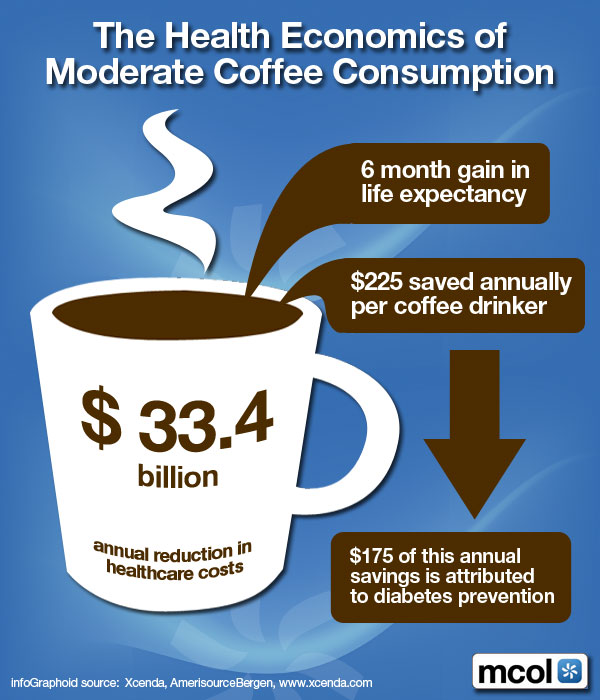
Product DetailsProduct DetailsProduct Details

Product Details  Product Details

Product DetailsProduct Details

Assessment

Purchase our white papers, too: https://medicalexecutivepost.com/white-papers/

Conclusion

Your thoughts and comments on this ME-P are appreciated. Feel free to review our top-left column, and top-right sidebar materials, links, URLs and related websites, too. Then, subscribe to the ME-P. It is fast, free and secure.

Link: http://feeds.feedburner.com/HealthcareFinancialsthePostForcxos

Speaker: If you need a moderator or speaker for an upcoming event, Dr. David E. Marcinko; MBA – Publisher-in-Chief of the Medical Executive-Post – is available for seminar or speaking engagements. Contact: MarcinkoAdvisors@msn.com

OUR OTHER PRINT BOOKS AND RELATED INFORMATION SOURCES:

Health Dictionary Series: http://www.springerpub.com/Search/marcinko

Practice Management: http://www.springerpub.com/product/9780826105752

Physician Financial Planning: http://www.jbpub.com/catalog/0763745790

Medical Risk Management: http://www.jbpub.com/catalog/9780763733421

Hospitals: http://www.crcpress.com/product/isbn/9781439879900

Physician Advisors: www.CertifiedMedicalPlanner.org

Business%20Optimization

Understanding the Domestic “Shadow Economy”

Join Our Mailing List 

Is the US Economy Strong OR Not?

By Dr. David Edward Marcinko MBA

www.CertifiedMedicalPlanner.org

Dr David E Marcinko MBARecently, new highs for the DJIA and some better than expected jobs numbers pointed an outward sign of the US  economy’s continued — though sluggish — recovery from the Great Recession.

Workers in the Shadows

But, there may be another explanation for why consumers keep spending more despite higher payroll taxes and more pain at the gas pump.

Edgar Feige PhD Speaks

That reason is a thriving shadow economy, estimated to have reached as much as $2 trillion last year, according to a study (.pdf file) co-written by Edgar Feige, an economist at the University of Wisconsin-Madison.

Assessment

A shadow economy is one where workers turn to employment that pays under-the-table. While that sometimes includes illegal activity, such as drug dealing, much of the shadow economy today appears to be in areas like service work such as babysitting; medicine, eye, foot and dental care; and working construction jobs for cash.

More

Money

Channel Surfing the ME-P

Have you visited our other topic channels? Established to facilitate idea exchange and link our community together, the value of these topics is dependent upon your input. Please take a minute to visit. And, to prevent that annoying spam, we ask that you register. It is fast, free and secure.

Conclusion

And so, are new medical practice business models like retainer and concierge medicine, direct/private pay, or cash care more or less prone to participation in the underground healthcare economy?

Your thoughts and comments on this ME-P are appreciated. Feel free to review our top-left column, and top-right sidebar materials, links, URLs and related websites, too. Then, subscribe to the ME-P. It is fast, free and secure.

Speaker: If you need a moderator or speaker for an upcoming event, Dr. David E. Marcinko; MBA – Publisher-in-Chief of the Medical Executive-Post – is available for seminar or speaking engagements. Contact: MarcinkoAdvisors@msn.com

OUR OTHER PRINT BOOKS AND RELATED INFORMATION SOURCES:

Product Details  Product Details