MONKEY-POX: Domestic Outbreak and PUBLIC HEALTH EMERGENCY

By Staff Reporters

***

***

Amid a monkey-pox outbreak in the United States that has been declared a public health emergency, the nation’s top infectious-diseases expert, Anthony S. Fauci, said people should be paying attention but not panicking.

Fauci recently told WTOP News that people do not need to change the way they live their lives but should monitor the situation and adjust behaviors as more information becomes available. “You never blow off any emerging infection when you don’t know yet where it’s going,” he explained. “You pay attention to it. You follow it. Then you respond to it in an appropriate manner.”

CITE: https://www.cdc.gov/poxvirus/monkeypox/index.html

READ: https://news.yahoo.com/monkeypox-now-national-public-health-122136476.html

***

COMMENTS APPRECIATED

Thank You

***

DHIMC: https://www.amazon.com/Dictionary-Health-Insurance-Managed-Care/dp/0826149944/ref=sr_1_4?ie=UTF8&s=books&qid=1275315485&sr=1-4

***

Mature Company Stocks Are Not Bonds

Dividends bring tangible and intangible benefits

vitaly

By Vitaliy Katsenelson CFA


You can also listen to the article here, or by clicking on the buttons below:

Like many professional investors, I love companies that pay dividends. Dividends bring tangible and intangible benefits: Over the last hundred years, half of total stock returns came from dividends.

In a world where earnings often represent the creative output of CFOs’ imaginations, dividends are paid out of cash flows, and thus are proof that a company’s earnings are real.

Finally, a company that pays out a significant dividend has to have much greater discipline in managing the business, because a significant dividend creates another cash cost, so management has less cash to burn in empire-building acquisitions.

Mature Company Stocks Are Not Bonds

***

[PHYSICIAN FOCUSED FINANCIAL PLANNING AND RISK MANAGEMENT COMPANION TEXTBOOK SET]

Comprehensive Financial Planning Strategies for Doctors and Advisors: Best Practices from Leading Consultants and Certified Medical Planners™

Risk Management, Liability Insurance, and Asset Protection Strategies for Doctors and Advisors: Best Practices from Leading Consultants and Certified Medical Planners™

On Marketing, Advertising and Sales; etc.

Including Public Relations, Risk, Change and Crisis Management

By Dr. David Edward Marcinko MBA

Marketing is the business process of identifying, anticipating and satisfying customers’ needs and wants. It is your unique value proposition or strategic competitive advantage. Marketers can direct product to other businesses or directly to consumers.

Advertising is a marketing communication that employs an openly sponsored, non-personal message to promote or sell a product, service or idea. Sponsors of advertising are typically businesses wishing to promote their products or services. Advertising is communicated through various mass media, including traditional media such as newspapers, magazines, television, radio, outdoor advertising or direct mail; and new media such as search results, blogs, social media, websites or text messages. The actual presentation of the message in a medium is referred to as an advertisement, or “ad” or advert for short.

Advertising is differentiated from public relations in that an advertiser pays for and has control over the message. It differs from personal selling in that the message is non-personal, i.e., not directed to a particular individual. We pay for advertising but pray for public relations.

Sales are activities related to selling or the number of goods or services sold in a given targeted time period. The seller, or the provider of the goods or services, completes a sale in response to an acquisition, appropriation, requisition, or a direct interaction with the buyer at the point of sale. There is a passing of title (property or ownership) of the item, and the settlement of a price, in which agreement is reached on a price for which transfer of ownership of the item will occur. The seller, not the purchaser, typically executes the sale and it may be completed prior to the obligation of payment. In the case of indirect interaction, a person who sells goods or service on behalf of the owner is known as a salesman or saleswoman or salesperson, but this often refers to someone selling goods in a store/shop, in which case other terms are also common, including salesclerk, shop assistant, and retail clerk.

Change management is the discipline that guides how we prepare, equip and support individuals to successfully adopt change in order to drive organizational success and outcomes.

Crisis management is the identification of threats to an organization and its stakeholders, and the methods used by the organization to deal with these threats.

***

***

Risk management is the identification, evaluation, and prioritization of risks (defined in ISO 31000 as the effect of uncertainty on objectives) followed by coordinated and economical application of resources to minimize, monitor, and control the probability or impact of unfortunate events or to maximize the realization of opportunities.

Assessment: Your thoughts are appreciated from a healthcare perspective.

***
Product DetailsProduct DetailsProduct Details
***

UPDATE: Recession, Goldman Sachs, and Tesla

By Staff Reporters

***

***

The director of the nonpartisan Congressional Budget Office [CBO] added his voice Thursday to those economists who say it’s unclear if the economy has hit a downturn, despite posting two straight quarterly drops in growth. “The U.S. economy shows signs of slowing, but whether the economy is currently in a recession is difficult to say,” wrote CBO Director Phillip Swagel in a letter to Sen. Lindsey Graham (R-S.C.). “It is possible that, in retrospect, it will become apparent that the economy moved into recession sometime this year. However, that is not clear from data that were available at the beginning of August,” Swagel added.

Goldman Sachs said its credit card unit is under investigation by the Consumer Financial Protection Bureau, a federal agency tasked with protecting Americans from financial abuse. In a securities filing, Goldman said the CFPB is examining a number of the company’s credit card account management practices, including refunds, resolving billing errors, advertisements and reporting to credit bureaus. And, in a statement to CBS MoneyWatch, Goldman said the bank “is cooperating with the CFPB on this matter.”

Finally, shares of electric vehicle maker Tesla rallied in after-hours trading as the company won shareholder approval for a 3:1 stock split, the second such move in two years, as the world’s most valuable automaker looks to make its stock more affordable.

***

COMMENTS APPRECIATED

Thank You

***

FINANCIAL PLANNING: https://www.routledge.com/Comprehensive-Financial-Planning-Strategies-for-Doctors-and-Advisors-Best/Marcinko-Hetico/p/book/9781482240283

****

CMS Issues 2023 Physician Fee Schedule Proposed Rule

PHYSICIAN REIMBURSEMENT

CMS Issues 2023 Physician Fee Schedule Proposed Rule

On July 7, 2022, the Centers for Medicare & Medicaid Services (CMS) released its proposed Medicare Physician Fee Schedule (MPFS) for calendar year (CY) 2023. Arguably the most noteworthy provision in the proposed rule is the agency’s suggested cut to physician payments. However, the rule also includes a number of other policy proposals, including changes to Medicare accountable care organizations (ACOs), behavioral health care, cancer screening, and dental care. (Read more…)

***

***
COMMENTS APPRECIATED

Thank You
***

BUSINESS: https://www.amazon.com/Business-Medical-Practice-Transformational-Doctors/dp/0826105750/ref=sr_1_9?ie=UTF8&qid=1448163039&sr=8-9&keywords=david+marcinko
***

Physician Mistreatment by Patients, Visitors and Doctors

By UPI News and Staff Reporters

***

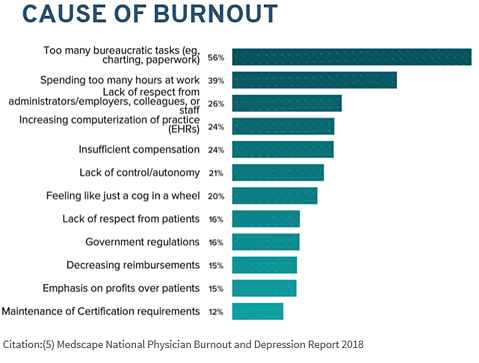
Nearly 1 in 4 hospital doctors are mistreated at work by patients, visitors and other doctors, and female doctors are nearly two times more likely than male doctors to face this abuse, a new study reveals.

***

***

“All members of the healthcare team share the responsibility to mitigate mistreatment,” said senior study author Dr. Mickey Trockel, a clinical professor of psychiatry and behavioral sciences at the Stanford University School of Medicine and director of Evidence Based Innovation for the Stanford WellMD/WellPhD Center.

LINK: https://www.msn.com/en-us/health/medical/1-in-4-hospital-physicians-face-mistreatment-by-patients-visitors/ar-AAXa6Jp?li=BBnb7Kz

MD Burnout: https://medicalexecutivepost.com/2017/12/03/u-s-hospitals-feeling-the-pain-of-physician-burnout/

***

COMMENTS APPRECIATED

Thank You

https://www.amazon.com/Business-Medical-Practice-Transformational-Doctors/dp/0826105750/ref=sr_1_9?ie=UTF8&qid=1448163039&sr=8-9&keywords=david+marcinko

***

PODCAST: Surescripts [Gatekeeper for Electronic Prescribing Explained]

By Eric Bricker MD

***

***

COMMENTS APPRECIATED

Thank You

***

CITE: https://www.r2library.com/Resource/Title/082610254

DHIT: https://www.amazon.com/Dictionary-Health-Information-Technology-Security/dp/0826149952/ref=sr_1_5?ie=UTF8&s=books&qid=1254413315&sr=1-5

***

Inflation Reduction Act of 2022

By Claire

***

***

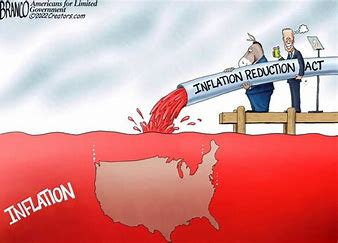
While the Inflation Reduction Act of 2022 looks good on paper, it will actually do more harm than good if it passes. The plan would hurt working-class taxpayers and small business owners across the country.

***

READ: https://wealthofgeeks.com/irs-expansion/

MORE: https://www.democrats.senate.gov/imo/media/doc/inflation_reduction_act_one_page_summary.pdf

FINANCIAL PLANNING: https://www.amazon.com/Comprehensive-Financial-Planning-Strategies-Advisors/dp/1482240289/ref=sr_1_1?ie=UTF8&qid=1418580820&sr=8-1&keywords=david+marcinko

COMMENTS APPRECIATED

Thank You

***

PODCASTS: HEDIS Explained

Healthcare Effectiveness Data & Information Set

By Eric Bricker MD

***

***

COMMENTS APPRECIATED

Thank You

***

#2 PODCAST: https://www.ahealthcarez.com/how-hedis-quality-scores-work

***

AMA ECONOMICS: https://medicalexecutivepost.com/2022/08/01/ama-to-teach-medical-students-about-health-economics/

Health Economics: https://medicalexecutivepost.com/2022/07/31/podcast-history-applied-to-health-economics/

DHEF: https://www.amazon.com/Dictionary-Health-Insurance-Managed-Care/dp/0826149944/ref=sr_1_4?ie=UTF8&s=books&qid=1275315485&sr=1-4

***

Hospital Consolidation: Trends, Impacts & Outlook

By NIHCM

***

***

READ HERE: https://nihcm.org/publications/hospital-consolidation-trends-impacts-outlook

CITE: https://www.r2library.com/Resource/Title/082610254

MORE: https://www.amazon.com/Financial-Management-Strategies-Healthcare-Organizations/dp/1466558733/ref=sr_1_3?ie=UTF8&qid=1380743521&sr=8-3&keywords=david+marcinko

***

COMMENTS APPRECIATED

Thank You

***

Activity Based Medical Cost Accounting and Management

NON-TRADITIONAL ACCOUNTING METHODS KNOWN IN THE BUSINESS COMMUNITY BUT NOT USED IN HOSPITALS OR HEALTH CARE ORGANIZATIONS

By Dr. David Edward Marcinko; MBA CMP® CPHQ

CMP logo

SPONSOR: http://www.CertifiedMedicalPlanner.org

Sooner or later – as a practicing physician – you will want to ascertain and then demonstrate the cost effectiveness of your medical care. By using the process of Activity Based Cost (ABC) Management, you will be able to do so.  

ALAS: But, if you’re using a traditional accounting system – like most all hospitals today that use the fictional “average wholesale cost” method – you won’t know a thing about your medical practice or clinic activity costs. Hence, again like most all hospitals, fees become simply vacuous.

Managerial Accounting Assignment Help in Australia

Here’s how: https://medicalexecutivepost.com/2007/12/15/activity-based-cost-medical-management/

HOW TO READ A SCIENTIFIC PAPER: https://medicalexecutivepost.com/2021/04/09/how-to-read-and-understand-a-scientific-paper/

DETAILED WHITE PAPERIN-PROGRESS [thru editing but before peer-reviewed publication]: https://medicalexecutivepost.com/wp-content/uploads/2007/12/abcm.pdf

ASSESSMENT: Your thoughts are appreciated.

ORDER TEXTBOOK: https://www.amazon.com/Business-Medical-Practice-Transformational-Doctors/dp/0826105750/ref=sr_1_9?s=books&ie=UTF8&qid=1287563112&sr=1-9

Product Details
Product Details

ORDER TEXTBOOK: https://www.amazon.com/Financial-Management-Strategies-Healthcare-Organizations/dp/1466558733/ref=sr_1_3?ie=UTF8&qid=1380743521&sr=8-3&keywords=david+marcinko

THANK YOU

***

Medical Practice Human Resource Budgets

Join Our Mailing List

Seeking Optimal FTE-to-Doctor Ratios

 [DR. DAVID E. MARCINKO MBA]

The full-time-equivalent (FTE) – to doctor (provider) – ratio of a medical practice is often more useful to know than the total amount of staff salary expense, according to industry experts like Dr. Jon Hultman MBA, of Los Angeles, CA.  

Why? Because comparable salaries have a wide geographic variance; and it is just more expensive to practice in New York City, than it is in Phenix City, Alabama.  

Introduction 

Payroll (human resources) typically is the largest singe expense and cost-driver of most medical practices. So, an optimal staffing ratio must be determined for every practice, considering quality, productivity and patient satisfaction at the lowest possible cost.

Reducing the FTE ratio, and hence overhead salary expenses, is desirable only when it does not lower productivity, quality or patient satisfaction. 

Most FTE ratios are significantly high, with no corresponding benefit to the typical medical practice (if there even is such an entity).

Moreover, this FTE excess establishes an environment for which “idle-time” for any given point is about 30%. And, corresponding redundant or unnecessary “task-time” is about 25%. 

In fact, it is often a management truism that smaller FTE ratios may be consistent with higher levels of productivity. On the other hand, lower FTE ratios may actually be consistent with lower levels of productivity, lower medical care quality and higher costs; all other things being equal. 

 The NAHC Review

The National Association of Healthcare Consultants (NAHC), Statistical Report 2000, is summarized below and was considered reliable at the time because the numbers were reported by accountants, not doctors. More current information is now available.

Nevertheless, these benchmarks may serve as a cogent starting-point for HR budget analysis and FTE evaluation:

Specialty                                FTE Ratio 

  • Ophthalmology                     5.19
  • OB/GYN                                 4.35
  • Dermatology                         4.30
  • Otolaryngology                     4.22
  • Hematology                          4.19
  • Oncology                               4.19
  • Family Practice                      4.18
  • Orthopedic Surgery               4.12
  • Pediatrics                              3.79
  • Gastroenterology                  3.75
  • Internal Medicine                  3.51
  • Dentistry                               3.00
  • Urology                                 2.94
  • Podiatry                                2.94
  • Neurology                             2.70
  • General Surgery                   2.50

Assessment

Now, consider the specialty FTE-to-physician ratios listed above – index them over time for your medical specialty – and consider that famed investor Warren Buffett once said,

“There is a right size of staff for any business operation. For every dollar of sales (professional service income), there is an appropriate level of expense.”  

And so, how does your medical practice, clinic or healthcare organization stack-up to current NAHC benchmarks and their resulting HR budgets?

Conclusion

Your thoughts and comments on this ME-P are appreciated. Feel free to review our top-left column, and top-right sidebar materials, links, URLs and related websites, too. Then, subscribe to the ME-P. It is fast, free and secure.

Speaker: If you need a moderator or speaker for an upcoming event, Dr. David E. Marcinko; MBA – Publisher-in-Chief of the Medical Executive-Post – is available for seminar or speaking engagements. Contact: MarcinkoAdvisors@msn.com

OUR OTHER PRINT BOOKS AND RELATED INFORMATION SOURCES:

Product Details