How Proprietary HIT Vendors May Demolish Health Reform

Top Five Issues from the Longman Report

By Staff ReportersNetwork

Here are the top five quotes from the Longman Report. The author, Phillip Longman, is a senior fellow at the New America Foundation and the author of: “Best Care Anywhere: Why VA Health Care Is Better than Yours as well as The Next Progressive Era: A Blueprint for Broad Prosperity.

http://www.newamerica.net/people/phillip_longman

The List 

1. Twenty years after the digital revolution, only an astonishing 1.5 percent of hospitals have integrated information technology systems. Almost all experts agree that in order to begin to deal with the problems of the health care system, this has to change. 

2. Done right, digitized health care could help save the nation from insolvency while improving and extending millions of lives at the same time. Done wrong, it could reconfirm Americans’ deepest suspicions of government and set back the cause of health care reform for yet another generation. 

3. Thanks to the stimulus bill, $20 billion is about to be poured into buggy, expensive, proprietary software that will not bring the benefits the Obama administration hopes for. Rather, it will amount to a giant bailout of a health IT industry whose business model has never really worked. 

4. The VA’s open-source software allowed a nurse in Topeka, Kansas, to adapt for her own work a bar-code scanner she saw used at a rental-car agency. Her innovation cut the number of medication-dispensing errors in half at some facilities, and saved thousands of lives. 

5. While a few large institutions have managed to make meaningful use of proprietary health IT, these systems have just as often been expensive failures. In 2003, Cedars-Sinai Medical Center in Los Angeles tore out a “state-of-the-art” $34 million proprietary system after doctors rebelled and refused to use it.

Assessment 

http://www.newamerica.net/publications/articles/2004/the_best_care_anywhere 

Conclusion

And so, your thoughts and comments on this Medical Executive-Post are appreciated. Feel free to review our top-left column, and top-right sidebar materials, links, URLs and related websites, too. Then, be sure to subscribe to the ME-P. It is fast, free and secure.

Link: http://feeds.feedburner.com/HealthcareFinancialsthePostForcxos

Speaker: If you need a moderator or speaker for an upcoming event, Dr. David E. Marcinko; MBA – Publisher-in-Chief of the Executive-Post – is available for seminar or speaking engagements. Contact: MarcinkoAdvisors@msn.com 

Get our Widget: Get this widget!

Our Other Print Books and Related Information Sources:

Practice Management: http://www.springerpub.com/prod.aspx?prod_id=23759

Physician Financial Planning: http://www.jbpub.com/catalog/0763745790

Medical Risk Management: http://www.jbpub.com/catalog/9780763733421

Healthcare Organizations: www.HealthcareFinancials.com

Health Administration Terms: www.HealthDictionarySeries.com

Physician Advisors: www.CertifiedMedicalPlanner.com

Take the Hospital eHR Implementation Challenge!

Illustrative Case Model – Are You CMP™ Worthy?

By Staff Reporters Washington DC

The fictitional Washington Hospital is embroiled in the healthcare reform debate and interested in implementing an electronic health record (EHR) for its major clinic areas. The flagship hospital currently utilizes a legacy-based system and several of the clinics have independently purchased software programs to provide a more inclusive electronic data base particular to that clinic.

Scenario

In addition, each of the software programs purchased in specific clinics has been modified to serve their own needs. The other satellite hospitals and clinics are not linked to the flagship hospital and have independent systems, applications and software in place. The hospital is interested in obtaining one EHR system that can be used in a standardized and uniform methodology and process throughout all of its hospitals and clinics.

Key Issues

Should the Washington Hospital?

1) Abandon the clinic’s software programs in lieu of a more centralized EHR?

2) Assess various EHR systems for healthcare providers available in the marketplace, comparing a series of hospital and clinic developed requirements against vendor capabilities?

3) Obtain an EHR product that provides interface to the existing clinic software products?

4) Assess whether the EHR vendors totally comply with HIPAA and privacy regulations as well as update their systems automatically with HIPAA changes?

5) Have the vendors assess the existing system/applications/software programs currently in use at each of the hospitals and clinics and determine the best application configuration?

6) Utilize the internal Information Technology staff to develop an interface solution?

Assessment

Medical management consultants, are you up to answering this challenge? We dare you to respond! Visit: www.CertifiedMedicalPlanner.com

Conclusion

And so, your thoughts and comments on this Medical Executive-Post are appreciated. Feel free to review our top-left column, and top-right sidebar materials, links, URLs and related websites, too. Then, be sure to subscribe to the ME-P. It is fast, free and secure.

Link: http://feeds.feedburner.com/HealthcareFinancialsthePostForcxos

Speaker: If you need a moderator or speaker for an upcoming event, Dr. David E. Marcinko; MBA – Publisher-in-Chief of the Executive-Post – is available for seminar or speaking engagements. Contact: MarcinkoAdvisors@msn.com 

Get our Widget: Get this widget!

Our Other Print Books and Related Information Sources:

Practice Management: http://www.springerpub.com/prod.aspx?prod_id=23759

Physician Financial Planning: http://www.jbpub.com/catalog/0763745790

Medical Risk Management: http://www.jbpub.com/catalog/9780763733421

Healthcare Organizations: www.HealthcareFinancials.com

Health Administration Terms: www.HealthDictionarySeries.com

Physician Advisors: www.CertifiedMedicalPlanner.com

On Regional Extension Centers [RECs]

Join Our Mailing List

Another New Governmental Machination?

[By Staff Reporters]

A Regional (health information) Extension Center [REC] is similar to a Health Information Organization [HIO] that brings together healthcare stakeholders within a defined geographic area and governs Health Information Exchange [HIE] among them for the purpose of improving health and care in that community.

Fundamental to this definition is the meaning of Health Information Exchange and Health Information Organization. A Health Information Organization (HIO) is an organization that oversees and governs the exchange of health-related information among organizations according to nationally recognized standards.

Thus, the goal of an REC is to act as a local support organization to help doctors install electronic health records and use them to achieve improved quality, efficiency, and continuity of care.

Past and Present

The RECs are based on the example of agricultural extension offices, established over 100 years ago by Congress, which offered rural outreach and educational services across the country.

Today, the HITECH Act amends Title XXX of the Public Health Service Act by adding Section 3012, Health Information Technology Implementation Assistance. This section provides supportive services for the rest of the HITECH Act. Section 3012 (a) establishes the Health Information Technology Extension Program (Extension Program). The Extension Program provides grants for the establishment of Health Information Technology 

Assessment

Link: Regional Extension Center

Link: http://www.chhs.ca.gov/initiatives/HealthInfoEx/Documents/SUMMIT%20DOCUMENTS/RECSummitSlides_FinalDraft-7-15.pdf

Link: HIT Extension Program – Regional Centers Cooperative Agreement Program

Conclusion

Your thoughts and comments on this ME-P are appreciated. Feel free to review our top-left column, and top-right sidebar materials, links, URLs and related websites, too. Then, subscribe to the ME-P. It is fast, free and secure.

Link: http://feeds.feedburner.com/HealthcareFinancialsthePostForcxos

Speaker: If you need a moderator or speaker for an upcoming event, Dr. David E. Marcinko; MBA – Publisher-in-Chief of the Medical Executive-Post – is available for seminar or speaking engagements. Contact: MarcinkoAdvisors@msn.com

OUR OTHER PRINT BOOKS AND RELATED INFORMATION SOURCES:

Product DetailsProduct Details

Product Details

About HealthDataRights.org

Mitigating the Unintended Consequences of HIPAA

By Staff ReportersWaiting for Medical Records

Many patients and pundits opine how today’s HIPAA regulations [written in the relative paper based stone age] say that while doctors must provide a copy of your records, they can take a month to do so. And, if they want, they can say that’s not enough and take another month. However, when a patient needs medical care; that time-line is not acceptable.

Enter a Website and Start a Movement

According to the website www.HealthDataRights.org, in an era when technology allows personal health information to be more easily stored, updated, accessed and exchanged, the following rights should be self-evident and inalienable. We the people:

  • Have the right to our own health data.
  • Have the right to know the source of each health data element.
  • Have the right to take possession of a complete copy of our individual health data, without delay, at minimal or no cost; if data exist in computable form, they must be made available in that form.
  • Have the right to share our health data with others as we see fit.

Assessment

These principles express basic human rights as well as essential elements of health care that is participatory, Health 2.0 appropriate and in the interests of each patient. No law or policy should abridge these rights.

Conclusion

And so, your thoughts and comments on this Medical Executive-Post are appreciated. Visit the site, join the movement by signing their petition, and tell us what you think. Feel free to review our top-left column, and top-right sidebar materials, links, URLs and related websites, too. Then, be sure to subscribe to the ME-P. It is fast, free and secure.

Link: http://feeds.feedburner.com/HealthcareFinancialsthePostForcxos

Speaker: If you need a moderator or speaker for an upcoming event, Dr. David E. Marcinko; MBA – Publisher-in-Chief of the Executive-Post – is available for seminar or speaking engagements. Contact: MarcinkoAdvisors@msn.com 

Get our Widget: Get this widget!

Our Other Print Books and Related Information Sources:

Practice Management: http://www.springerpub.com/prod.aspx?prod_id=23759

Physician Financial Planning: http://www.jbpub.com/catalog/0763745790

Medical Risk Management: http://www.jbpub.com/catalog/9780763733421

Healthcare Organizations: www.HealthcareFinancials.com

Health Administration Terms: www.HealthDictionarySeries.com

Physician Advisors: www.CertifiedMedicalPlanner.com

Subscribe Now: Did you like this Medical Executive-Post, or find it helpful, interesting and informative? Want to get the latest ME-Ps delivered to your email box each morning? Just subscribe using the link below. You can unsubscribe at any time. Security is assured.

Link: http://feeds.feedburner.com/HealthcareFinancialsthePostForcxos

Sponsors Welcomed

And, credible sponsors and like-minded advertisers are always welcomed.

Link: https://healthcarefinancials.wordpress.com/2007/11/11/advertise

Integration of Hospital Automatic Data Collection Technologies

Review of Automatic Data Collection Equipment

By David J. Piasecki, with
Hope Hetico; RN, MHA

While hardware costs of automatic data collection [ADC] equipment continue to come down for hospital and healthcare organizations, the cost of integration will often prove to be the project buster. Software and integration costs will often be several times the cost of the hardware, especially in smaller health system operations where only a few devices will be used. Integration of ADC technologies is also far from standardized.

www.HealthcareFinancials.comHO-JFMS-CD-ROM

Example:

For example, when implementing a system with portable terminals, one integrator may create a program on the terminals that will write directly to the file on the host system, another may create programs on a separate server to do this, another may write or modify a program on your host system and use terminal emulation software, and another may use a screen mapping tool to reformat an existing program to be used on the portable device. So, make sure to speak with several integrators to ensure the best solution. Also, make sure to participate heavily in equipment selection and program/process design (prompts, data input) to ensure a system that provides the highest levels of accuracy and productivity.

Real-Time Locator System 

A real-time locator system (RTLS) uses RFID technology that provides the objects they are attached to the ability to transmit their current location.  The system requires some type of RFID tag to be attached to each object that needs to be tracked, and RF transmitters/receivers located throughout the facility to determine the location and send information to a computerized tracking system. While it sounds like a great way to eliminate “lost” inventory, the systems are still too costly for most inventory-tracking operations and are more likely to be used to track more valuable assets.

Screen Mapping/Screen Scraping

This software provides the functionality to change the arrangement of data fields on a computer screen that accesses a mainframe computer program. Screen mapping is frequently used in combination with terminal-emulation software to “remap” data fields from a standard mainframe program to be used on the smaller screen of a portable hand-held device.

Speech-Based Technology

Speech-based technology, also known as voice technology is really composed of two technologies:  (1) voice directed, which converts computer data into audible commands, and (2) speech recognition, which allows user voice input to be converted into data.  Portable voice systems consist of a headset with a microphone and a wearable computer.

Terminal Emulation

Software used on desktop and portable computers is available that allows the computer to act like a terminal connected to a mainframe system. If you have a networked desktop PC and are accessing mainframe programs (green screen programs) you are using terminal emulation. Terminal emulation is also a common method used to connect portable computers (as in pharmacy bar-code ADC systems) to mainframe software.

Warehouse Management System

Computer software designed specifically for managing the movement and storage of materials throughout the healthcare system warehouse or chain of command generally controls the following three operations:  (1) put-away, (2) replenishment, and (3) picking.  The key to these systems is the logic to direct these operations to specific locations based on user-defined criteria.  Warehouse Management Systems (WMSs) are often set up to integrate with ADC systems. 

Conclusion

And so, your thoughts and comments on this Medical Executive-Post are appreciated. Can you think of any other data integration technologies?  Tell us what you think. Feel free to review our top-left column, and top-right sidebar materials, links, URLs and related websites, too. Then, be sure to subscribe to the ME-P. It is fast, free and secure.

Link: http://feeds.feedburner.com/HealthcareFinancialsthePostForcxos

Speaker: If you need a moderator or speaker for an upcoming event, Dr. David E. Marcinko; MBA – Publisher-in-Chief of the Executive-Post – is available for seminar or speaking engagements. Contact: MarcinkoAdvisors@msn.com 

Get our Widget: Get this widget!

Our Other Print Books and Related Information Sources:

Practice Management: http://www.springerpub.com/prod.aspx?prod_id=23759

Physician Financial Planning: http://www.jbpub.com/catalog/0763745790

Medical Risk Management: http://www.jbpub.com/catalog/9780763733421

Healthcare Organizations: www.HealthcareFinancials.com

Health Administration Terms: www.HealthDictionarySeries.com

Physician Advisors: www.CertifiedMedicalPlanner.com

Subscribe Now: Did you like this Medical Executive-Post, or find it helpful, interesting and informative? Want to get the latest ME-Ps delivered to your email box each morning? Just subscribe using the link below. You can unsubscribe at any time. Security is assured.

Link: http://feeds.feedburner.com/HealthcareFinancialsthePostForcxos

Sponsors Welcomed

And, credible sponsors and like-minded advertisers are always welcomed.

Link: https://healthcarefinancials.wordpress.com/2007/11/11/advertise

Borges versus Kvedar Video eHR Debate

Join Our Mailing List

The Great HIT Debate

[By Staff Reporters]Boxing Gloves

All ME-P subscribers and readers are invited to watch a debate between Dr. Alberto Borges and Dr. Joseph Kvedar. In the original broadcast, by HCPLive, both participants were asked some very interesting questions about health information technology [HIT] when posed to them. And so, if you were unable to attend the live event, it is now re-broadcasted in podcast form for your review.

About Alberto A. Borges; MD

Al Borges is Founder and CEO of the MS Office eMR Project http://www.msofficeemrproject.com He is the project author, visionary and main content developer for the independent website. As a board certified physician, he practices oncology, hematology, and internal medicine in Arlington, Virginia. He is also a clinical professor at the George Washington University Medical School. Dr. Borges is a colleague and thought-leader for the ME-P

About Joseph C. Kvedar; MD

Joe Kvedar is the Founder and Director of the Center for Connected Health http://www.connected-health.org The Center is known for applying communications technology and online resources to increase access and improve the delivery of quality medical services and patient care outside of the traditional medical setting.  A division of Partners HealthCare; the Center for Connected Health works with Harvard Medical School-affiliated teaching hospitals, including Massachusetts General and Brigham and Women’s Hospitals. Dr. Kvedar is also a board-certified dermatologist and Associate Professor of Dermatology at Harvard Medical School

Podcast Link: http://www.hcplive.com/hcplive/great_debate

Assessment

Feel free to email questions, or to post follow-up comments, for all our viewers to consider and respond. The principals are asked to weigh-in, as well.

And the Winner is … ?

Conclusion

Your thoughts and comments on this ME-P are appreciated. Feel free to review our top-left column, and top-right sidebar materials, links, URLs and related websites, too. Then, subscribe to the ME-P. It is fast, free and secure.

Speaker: If you need a moderator or speaker for an upcoming event, Dr. David E. Marcinko; MBA – Publisher-in-Chief of the Medical Executive-Post – is available for seminar or speaking engagements. Contact: MarcinkoAdvisors@msn.com

OUR OTHER PRINT BOOKS AND RELATED INFORMATION SOURCES:


Product DetailsProduct DetailsProduct Details

Product Details  Product Details

   Product Details 

Hospital Automated Data Collection

Understanding Data Capture Technologies

By David J. Piasecki, with
Hope Hetico; RN, MHA

Automated data collection (ADC), also known as automated data capture, automated identification (AutoID) or automated identification and data capture (AIDC), consists of many different technologies. Bar codes, voice systems, RFID, OCR, laser scanners, vehicle mounted and wearable computers are all part of ADC management and hospital inventory activities.

www.HealthcareFinancials.comHO-JFMS-CD-ROM

Six-Figure Projects

However, the fear of six-figure project costs often prevent many small to mid-sized hospitals and healthcare systems from taking advantage of these technologies. The key to implementing cost-effective ADC systems is to know what technologies are available and the amount of integration needed to implement them. Applying this processing knowledge in a healthcare organization will help in developing the scope of any project. Limiting projects to or prioritizing by those applications that have a high benefit/cost ratio allows these operational improvement technologies within a reasonable budget. 

Example:

For example, adding a keyboard-wedge bar-code scanner to an existing personal computer (PC) or blade terminal in a nursing station is a very low-cost method for applying ADC to existing hospital reporting applications. This type of hardware is inexpensive and the only real programming required is to add a bar code to the proper form (work order, pick and delivery slip, etc).

Review of the ADC Technologies

Some of the current hospital data capture technologies include the following:

a. Bar Codes

b. Bar-Code Scanners

Laser or CCD 

Auto-Discrimination

Keyboard-Wedge Scanners 

Fixed-Position Scanners

c. Portable Computers

d. Batch versus Radio Frequency

e. Hand-Held Devices

f. Vehicle-Mounted Devices

g. Wearable Systems

h. Voice Technology

i. Optical Character Recognition

j. Light Systems

Assessment

Driven by a need for improved data capture, asset management, staff mobility and standardized medication administration to name a few benefits, hospitals are likely to invest much more heavily in ADC and Wi-Fi technologies over the next five years, according to this new research report.

Link: http://www.eweek.com/c/a/Health-Care-IT/WiFi-Healthcare-Systems-to-Hit-49B-878082/

Conclusion

And so, your thoughts and comments on this Medical Executive-Post are appreciated. Tell us what you think. Can you think of any other hospital data capture technologies? Feel free to review our top-left column, and top-right sidebar materials, links, URLs and related websites, too. Then, be sure to subscribe to the ME-P. It is fast, free and secure.

Link: http://feeds.feedburner.com/HealthcareFinancialsthePostForcxos

Speaker: If you need a moderator or speaker for an upcoming event, Dr. David E. Marcinko; MBA – Publisher-in-Chief of the Executive-Post – is available for seminar or speaking engagements. Contact: MarcinkoAdvisors@msn.com 

Get our Widget: Get this widget!

Our Other Print Books and Related Information Sources:

Practice Management: http://www.springerpub.com/prod.aspx?prod_id=23759

Physician Financial Planning: http://www.jbpub.com/catalog/0763745790

Medical Risk Management: http://www.jbpub.com/catalog/9780763733421

Healthcare Organizations: www.HealthcareFinancials.com

Health Administration Terms: www.HealthDictionarySeries.com

Physician Advisors: www.CertifiedMedicalPlanner.com

Subscribe Now: Did you like this Medical Executive-Post, or find it helpful, interesting and informative? Want to get the latest ME-Ps delivered to your email box each morning? Just subscribe using the link below. You can unsubscribe at any time. Security is assured.

Link: http://feeds.feedburner.com/HealthcareFinancialsthePostForcxos

Sponsors Welcomed

And, credible sponsors and like-minded advertisers are always welcomed.

Link: https://healthcarefinancials.wordpress.com/2007/11/11/advertise

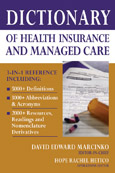
Dictionary of Health Insurance and Managed Care

ADVERTISEMENT

Whither the Dictionary of Health Insurance and Managed Care?

HDS

A simple query that demands a cogent answer!

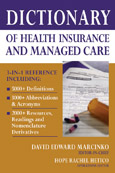
Why do we need the Dictionary of Health Insurance and Managed Care, and, why do payers, providers, benefits managers, consultants, and consumers need a credible and unbiased source of explanations for their health insurance needs and managed care products?

The Answer is Clear!

Health care is the most rapidly changing domestic industry. The revolution occurring in health insurance and managed care delivery is particularly fast. Some might even suggest these machinations were malignant, as many industry segments, professionals, and patients suffer because of them. And so, because knowledge is power in times of great flux, codified information protects all people from physical, as well as economic harm.

We appreciate the support of our sponsors. So, click-on on the links and review all dictionary products.

Link: http://healthdictionaryseries.com/TechnologySecurity.aspx

Link: http://www.findbookprices.com/author/Hope_Hetico

Subscribe Now: Did you like this Medical Executive-Post, or find it helpful, interesting and informative? Want to get the latest ME-Ps delivered to your email box each morning? Just subscribe using the link below. You can unsubscribe at any time. Security is assured.

Link: http://feeds.feedburner.com/HealthcareFinancialsthePostForcxos

Sponsors Welcomed

And, credible sponsors and like-minded advertisers are always welcomed.

Link: https://healthcarefinancials.wordpress.com/2007/11/11/advertise

Product DetailsProduct DetailsProduct Details

About MeaningfulUse.org

Join Our Mailing List

A Dedicated Terminology Website

By Staff Reporters

Understanding and defining the new era of healthcare information technology in America.

The ARRA and HITECH concept of “meaningful use” for e-MRs is nebulous and ill defined. This new website is intended to be a collaborative destination site in order to promote the national dialogue and education around the term, “meaningful use”, by providing the HIT community a single-central location to access resources, influence and discuss the definition of “meaningful use” and learn how to take advantage of the HITECH stimulus funds.

HDSAssessment

According to the site, registration for the www.MeaningfulUse.org discussion board is only used for the purpose of posting and will not be used for any marketing purposes. The site is supported by the Association of Medical Directors of Information Systems (AMDIS) and sponsored by Compuware Corporation.

Conclusion

Your thoughts and comments on this ME-P are appreciated. Feel free to review our top-left column, and top-right sidebar materials, links, URLs and related websites, too. Then, subscribe to the ME-P. It is fast, free and secure.

Speaker: If you need a moderator or speaker for an upcoming event, Dr. David E. Marcinko; MBA – Publisher-in-Chief of the Medical Executive-Post – is available for seminar or speaking engagements. Contact: MarcinkoAdvisors@msn.com

OUR OTHER PRINT BOOKS AND RELATED INFORMATION SOURCES:

Product DetailsProduct Details

Product DetailsProduct DetailsProduct Details

On Healthcare Intranets and Extranets

Join Our Mailing List

A Primer for Physicians and Medical Executives

Dr. Mata

By Richard J. Mata; MD, MS, CMP™ [Hon]

According to the “Dictionary of Heath Information and Technology”,

“An intranet is a private network that uses Internet Protocols, network connectivity, and possibly the public telecommunication system to securely share part of an organization’s information or operations with its employees”.

Sometimes the term refers only to the most visible service, the internal website.  The same concepts and technologies of the Internet, such as clients and servers running on the Internet protocol suite, are used to build an intranet.

Uses in Healthcare

An intranet is commonly used to provide communication and application services.  The advantages of using an intranet in the healthcare setting include the following:

  • Medical Workforce productivity: Intranets can help employees quickly find and view information and applications relevant to their roles and responsibilities.  Via a simple-to-use web browser interface, users can access data held in any database the organization wants to make available, anytime and  subject to security provisions — from anywhere, increasing employees’ ability to perform their jobs faster, more accurately, and with confidence that they have the right information.
  • Time: With intranets, healthcare organizations can make more information available to employees on a “pull” basis (i.e., employees can link to relevant information at a time that suits them) rather than being deluged indiscriminately by e-mails.
  • Communication: Intranets can serve as powerful tools for communication within a healthcare organization; vertically and horizontally.

Vulnerability and Security Protection

Intranets, like other IT systems, need to be protected by security systems. Any intranet is vulnerable to attack by people intent on destruction or on stealing corporate data. The open nature of the Internet and TCP/IP protocols expose a corporation to attack.  Intranets require a variety of security measures, including hardware and software combinations that provide control of traffic; encryption and passwords to validate users; and software tools to prevent and cure viruses, block objectionable sites, and monitor traffic.

Multiple Lines of Defense

The first line of defense is a firewall and these are commonly set up using proxy servers, which allow system administrators to track all traffic coming in and out of an intranet. Another layer of sophistication is added by using a bastion server firewall, configured to withstand and prevent unauthorized access or services. It is typically segmented from the rest of the intranet in its own subnet or perimeter network. In this way, if the server is broken into, the rest of the intranet won’t be compromised.

Authentication Systems

Authentication systems are an important part of any intranet security scheme. They are used to ensure that anyone trying to log into the intranet or any of its resources is the person they claim to be. Authentication systems typically use user names, passwords, fingerprints and iris scans, and various encryption systems.

Protection and Monitoring

Server-based software is used to protect an intranet and its data. Virus-checking software can check every file coming into the intranet to make sure that it is virus-free, and site-blocking software can bar people on the intranet from getting objectionable material. Monitoring software tracks where people have gone and what services they have used, such as HTTP for Web access.

Filtering Systems and Routers

One way of ensuring that the wrong people or erroneous data can’t get into the intranet is to use a filtering router. This is a special kind of router that examines the IP address and header information in every packet coming into the network, and allows in only those packets that have addresses or other data, like e-mail, that the system administrator has decided should be allowed into the intranet. Increasingly, intranets are being used to deliver tools and applications, e.g., collaboration (to facilitate working in groups and for teleconferences) or sophisticated corporate directories, sales and customer relationship management (CRM) tools, project management, etc, to advance productivity. Intranets are also being used as Health 2.0 culture change platforms

Metrics

Intranet traffic, like public-facing website traffic, is better understood by using web metrics software to track overall activity, as well as through surveys of users. Intranet User experience, editorial, and technology teams work together to produce in-house sites. Most commonly, intranets are owned by the communications, HR or IT areas of large healthcare organizations, or some combination of the three.

Assessment

When part of an intranet is made accessible to customers, partners, suppliers, patients, or others outside the healthcare organization – that part becomes part of an extranet.

Conclusion

Your thoughts and comments on this ME-P are appreciated. Feel free to review our top-left column, and top-right sidebar materials, links, URLs and related websites, too. Then, subscribe to the ME-P. It is fast, free and secure.

Link: http://feeds.feedburner.com/HealthcareFinancialsthePostForcxos

Speaker: If you need a moderator or speaker for an upcoming event, Dr. David E. Marcinko; MBA – Publisher-in-Chief of the Medical Executive-Post – is available for seminar or speaking engagements. Contact: MarcinkoAdvisors@msn.com

OUR OTHER PRINT BOOKS AND RELATED INFORMATION SOURCES:

Product DetailsProduct DetailsProduct Details

Product DetailsProduct Details

***

About the MS Office® eMR Project

Programming a Powerful eMR – or – Jumping the Shark?

By Ann Miller; RN, MHA

Recently we communicated with Al Borges MD, founder of the Office eMR Project. He is quite an innovative guy. His passion – eMRs for the physician masses – through an infra-structure already largely in place?DrBHP2

The Problem: You want to use a great eMR but you can’t afford to pay for it.

You have a growing medical office that is completely paper based, and wish to capture the efficiencies of an electronic medical record (eMR) system. But, many eMR systems on the market are complicated, expensive and have been known to actually slow down the typical office workflow. You have used the MS Office® suite of software products in the past and appreciate its power, but you don’t know how to use it to set up a great eMR that perfectly suits your needs.

An Alternative

Alternatively, you can purchase an inexpensive MS Office® based proprietary eMR, but you might wish to write an add-in to incorporate add certain features to this basic, but excellent eMR platform. So, what do [can] you do?

CCHIT Takes a Hit

http://www.emrupdate.com/blogs/emrinterviews/archive/2006/10/09/CCHIT-takes-a-hit-from-Washington_2C00_-D.C.-area-doctor-who-claims-new-certification-group-restrains-free-trade-in-EMR-_2800_Electronic-Medical-Record_2900_-software.aspx

https://healthcarefinancials.wordpress.com/2009/03/02/cchit-is-prejudiced-and-lacks-diversity-%e2%80%93-an-indictment/

A Solution: Open Source Programs

According to Dr. Borges, one may use his web site to get the answers to program your eMR. His site discusses these very issues. It is continuously growing, with a host of free programs, position papers and forum discussions that touch on a wide variety of topics. These include general information on the use of MS Office® in the medical office, programming the various components of MS Office®, and those political topics that affect how we use health information technology [HIT].

Two Program Versions

There are 2 major eMR programs available – the MS Word® eMR Project (MSWP) and the MS Access® eMR Project (MSAP). But, is the Office eMR Project of Alberto truly an interoperable solution – a digital solution – or something else?

Website: http://www.msofficeemrproject.comThe Shark

Jumping the Shark

Jumping the Shark is a phrase coined by Jon Hein and used by TV critics to denote the point in a show where the plot veers off into absurd story lines in a desperate attempt to attract viewers. Shows that have “jumped the shark” are typically deemed to have passed their peak. On the other hand, is Dr. Borges a Cassandra at his peak … who just happens to be correct? 

MSFT Discussion Groups for Al Borges, MD

http://www.microsoft.com/office/community/en-us/default.mspx?query=alborg&dg=&cat=en-us-office&lang=en&cr=US&pt=3a4e9862-cdce-4bdc-8664-91038e3eb1e9&catlist=&dglist=&ptlist=&exp=&sloc=en-us

Making eHRs Illegal?

For example, did you know that the democrats want to make use of non certified eHRs illegal in NJ? The bill allegedly provides specifically as follows:

“On or after January 1, 2011, no person or entity is permitted to sell, offer for sale, give, furnish, or otherwise distribute to any person or entity in this State a health information technology product that has not been certified by CCHIT.  A person or entity that violates this provision is liable to a civil penalty of not less than $1,000 for the first violation, not less than $2,500 for the second violation, and $5,000 for the third and each subsequent violation, to be collected pursuant to the “Penalty Enforcement Law of 1999,” P.L.1999, c.274 (C.2A:58-10 et seq.).”

Link: http://www.njleg.state.nj.us/2008/Bills/A4000/3934_I1.HTM

Conclusion

And so, your thoughts and comments on this Medical Executive-Post are appreciated. Is the Office eMR Project a panacea to the eMR conundrum, or a hybrid? What about CCHIT; is it certified – does it have to be? Users and early-adopters, we need your opinions! Has the “shark been jumped” here; or not? Tell us what you think. Feel free to review our top-left column, and top-right sidebar materials, links, URLs and related websites, too. Then, be sure to subscribe to the ME-P. It is fast, free and secure.

Link: http://feeds.feedburner.com/HealthcareFinancialsthePostForcxos

Speaker: If you need a moderator or speaker for an upcoming event, Dr. David E. Marcinko; MBA – Publisher-in-Chief of the Executive-Post – is available for seminar or speaking engagements. Contact: MarcinkoAdvisors@msn.com  or Bio: www.stpub.com/pubs/authors/MARCINKO.htm

Get our Widget: Get this widget!

Our Other Print Books and Related Information Sources:

Practice Management: http://www.springerpub.com/prod.aspx?prod_id=23759

Physician Financial Planning: http://www.jbpub.com/catalog/0763745790

Medical Risk Management: http://www.jbpub.com/catalog/9780763733421

Healthcare Organizations: www.HealthcareFinancials.com

Health Administration Terms: www.HealthDictionarySeries.com

Physician Advisors: www.CertifiedMedicalPlanner.com

Subscribe Now: Did you like this Medical Executive-Post, or find it helpful, interesting and informative? Want to get the latest ME-Ps delivered to your email box each morning? Just subscribe using the link below. You can unsubscribe at any time. Security is assured.

Link: http://feeds.feedburner.com/HealthcareFinancialsthePostForcxos

Sponsors Welcomed

And, credible sponsors and like-minded advertisers are always welcomed.

Link: https://healthcarefinancials.wordpress.com/2007/11/11/advertise

Military Electronic Dental Records [eDRs]

US Defense Department Leads the Way

By Staff Reporters

MilitaryAccording to Peter Bauxbaum on May 13, 2009, the Defense Health Information Management System [DHIMS] is in the process of deploying AHLTA [Armed Forces Health Longitudinal Technology Application] Dental; a module eDR included with the new AHLTA 3.3 release.

It is the U.S. military’s first integrated dental and medical electronic health record.

Link: http://govhealthit.com/articles/2009/05/13/dod-electronic-dental-record.aspx?s=GHIT_190509

Assessment

And so, when will eHRs for osteopaths [eOsteoRs], podiatrists [ePodRs] and optometrists [eOptRs] become available? Is this an occasion when the military is an early HIT adopter?

Conclusion

Your thoughts and comments on this ME-P are appreciated. Feel free to review our top-left column, and top-right sidebar materials, links, URLs and related websites, too. Then, subscribe to the ME-P. It is fast, free and secure.

Link: http://feeds.feedburner.com/HealthcareFinancialsthePostForcxos

Speaker: If you need a moderator or speaker for an upcoming event, Dr. David E. Marcinko; MBA – Publisher-in-Chief of the Medical Executive-Post – is available for seminar or speaking engagements. Contact: MarcinkoAdvisors@msn.com

OUR OTHER PRINT BOOKS AND RELATED INFORMATION SOURCES:

DICTIONARIES: http://www.springerpub.com/Search/marcinko
PHYSICIANS: www.MedicalBusinessAdvisors.com
PRACTICES: www.BusinessofMedicalPractice.com
HOSPITALS: http://www.crcpress.com/product/isbn/9781466558731
CLINICS: http://www.crcpress.com/product/isbn/9781439879900
BLOG: www.MedicalExecutivePost.com
FINANCE: Financial Planning for Physicians and Advisors
INSURANCE: Risk Management and Insurance Strategies for Physicians

Product DetailsProduct Details

American Recovery and Reinvestment Act Primer for Physicians

Free ARRA Webinar Series

By Staff Reporters

Resident LaptopAre you ready to maximize American Recovery and Reinvestment Act (ARRA) opportunities in your medical practice?

The Webinar Series

This webinar series is designed to support physician practices as they prepare for a new health care environment. As new information becomes available, experts and health care leaders representing diverse sectors will review key components of ARRA and offer insights on the impact to the physician community.

Topic: Stimulus 101: Basics of the Health Information Technology Provisions

When: Thursday, May 21, 12:00 PM CST

Presenters:

  • Glen Tullman, Chief Executive Officer – Allscripts
  • Margaret Garikes, Director of Federal Affairs – AMA

Assessment

Plus, hear from practices using eHR systems and how they made the transition.

Registration: https://cc.readytalk.com/cc/schedule/display.do?udc=1ip8sqjax7frw

Conclusion

And so, your thoughts and comments on this Medical Executive-Post, and webinar series, are appreciated; especially from seminar participants. Feel free to review our top-left column, and top-right sidebar materials, links, URLs and related websites, too. Then, be sure to subscribe to the ME-P. It is fast, free and secure.

Link: http://feeds.feedburner.com/HealthcareFinancialsthePostForcxos

Speaker: If you need a moderator or speaker for an upcoming event, Dr. David E. Marcinko; MBA – Publisher-in-Chief of the Executive-Post – is available for seminar or speaking engagements. Contact: MarcinkoAdvisors@msn.com  or Bio: www.stpub.com/pubs/authors/MARCINKO.htm

On Medical and Other Patient-Centric Specialty Homes

New Guidelines Released

By Dr. David Edward Marcinko; MBA, CMP™

[Publisher-in-Chief]

dem23According to Chris Silva, AMA News on May, 12 2009, new medical home guidelines have just been released.

Physician Input

Four physician organizations have developed new guidelines for medical home projects to ensure consistency and help define how a patient-centered home model should look. The 16 guidelines include recommendations on who should collaborate on the projects, how they should choose practices to participate, what type of support should be provided to practices, how practices should be reimbursed, and what each project should do to analyze and report results.

Link: http://www.ama-assn.org/amednews/2009/05/11/gvse0512.htm

Assessment

Physician groups hope clarity and consistency will lead to broader acceptance of the programs. But, what about mental health homes or dental homes; how about podiatry or optometric homes, etc? What about patient mobility?

Is this concept even viable given our increasingly mobile society? Or, is this philosophy fixed in the last century; especially in light of the Obama Administration’s HIT, and eHR initiatives? Was the fluid health 2.0 culture even considered? What are we missing?

Conclusion

Your thoughts and comments on this ME-P are appreciated. Feel free to review our top-left column, and top-right sidebar materials, links, URLs and related websites, too. Then, subscribe to the ME-P. It is fast, free and secure.

Speaker: If you need a moderator or speaker for an upcoming event, Dr. David E. Marcinko; MBA – Publisher-in-Chief of the Medical Executive-Post – is available for seminar or speaking engagements. Contact: MarcinkoAdvisors@msn.com

OUR OTHER PRINT BOOKS AND RELATED INFORMATION SOURCES:

Product Details

On HIT Cost Savings

Real or Imagined SolutionsUS Capitol

According to David M. Cutler, of the Center for American Progress Fund [CAPF] on May 11, 2009, health care will be the major challenge to the federal budget in coming decades. Rising health costs will account for nearly all of the expected increase in government spending relative to gross domestic product [GDP].

Healthcare Costs and GDP

Health care currently accounts for 16 percent of domestic GDP, and that share is forecast to nearly double in the next quarter century. Spending money on health care is not bad, but wasting money is very bad.

Link: http://www.americanprogressaction.org/issues/2009/05/health_modernization.htmlHIT

HIT to the Rescue

But, $600 billion might be saved over the next ten years, and $9 trillion saved over the next 25 years, if HIT initiatives are used; says the CAPF.

Assessment

Estimates suggest that a third or more of medical spending—perhaps $700 billion per year—is not known to be worth the cost. Wasting hundreds of billions of dollars on inefficient health care is a luxury the country cannot afford.

Conclusion

And so, your thoughts and comments on this Medical Executive-Post are appreciated? Feel free to review our top-left column, and top-right sidebar materials, links, URLs and related websites, too. Then, be sure to subscribe to the ME-P. It is fast, free and secure.

Link: http://feeds.feedburner.com/HealthcareFinancialsthePostForcxos

Speaker: If you need a moderator or speaker for an upcoming event, Dr. David E. Marcinko; MBA – Publisher-in-Chief of the Executive-Post – is available for seminar or speaking engagements. Contact: MarcinkoAdvisors@msn.com  or Bio: www.stpub.com/pubs/authors/MARCINKO.htm

Subscribe Now: Did you like this Medical Executive-Post, or find it helpful, interesting and informative? Want to get the latest ME-Ps delivered to your email box each morning? Just subscribe using the link below. You can unsubscribe at any time. Security is assured.

Link: http://feeds.feedburner.com/HealthcareFinancialsthePostForcxos

About HealthCareTownHall.com

The Great eHR Debates

By Staff Writers

US CapitolMilliman hosts this blog to encourage an informed dialogue about healthcare reform. Healthcare is complicated, and there is no single, silver-bullet answer to the question of “How do we best improve the current system?”  But thoughtful discussions will help move reform in the right direction and mend the fractured system.

Assessment

A shout-out of thanks, for this link, goes to Jeremy Engdahl Johnson of Healthcare Town Hall.

Link: http://www.healthcaretownhall.com/

Conclusion

And so, your thoughts and comments on this Medical Executive-Post are appreciated? Feel free to review our top-left column, and top-right sidebar materials, links, URLs and related websites, too. Then, be sure to subscribe to the ME-P. It is fast, free and secure.

Link: http://feeds.feedburner.com/HealthcareFinancialsthePostForcxos

Speaker: If you need a moderator or speaker for an upcoming event, Dr. David E. Marcinko; MBA – Publisher-in-Chief of the Executive-Post – is available for seminar or speaking engagements. Contact: MarcinkoAdvisors@msn.com  or Bio: www.stpub.com/pubs/authors/MARCINKO.htm

Get our Widget: Get this widget!

Our Other Print Books and Related Information Sources:

Practice Management: http://www.springerpub.com/prod.aspx?prod_id=23759

Physician Financial Planning: http://www.jbpub.com/catalog/0763745790

Medical Risk Management: http://www.jbpub.com/catalog/9780763733421

Healthcare Organizations: www.HealthcareFinancials.com

Health Administration Terms: www.HealthDictionarySeries.com

Physician Advisors: www.CertifiedMedicalPlanner.com

Subscribe Now: Did you like this Medical Executive-Post, or find it helpful, interesting and informative? Want to get the latest ME-Ps delivered to your email box each morning? Just subscribe using the link below. You can unsubscribe at any time. Security is assured.

Link: http://feeds.feedburner.com/HealthcareFinancialsthePostForcxos

Allscript’s Glenn Tullman is Video Interviewed

Join Our Mailing List

Video Clip from the HIMSS Meeting

By Ann Miller; RN, MHA

[Executive-Director]

stk323168rknThere is a major controversy in the modern healthcare community over eMRs and how to pay for them; or even if they are effective in improving medical outcomes. Of course, by eMRs we mean interoperable medical records that span the pan-healthcare ecosystem; and not just the stand-alone digital records that many, if not most, physicians use in their daily practices to some degree or another.

Link: https://healthcarefinancials.wordpress.com/2009/03/10/on-the-hitech-act-of-2009/

Proponents

As readers of the ME-P are aware, one vocal camp supports certification and eMR industry mandates, standards, and governmental initiatives, etc. The recent $20 billion taxpayer input from the Obama Administration, courtesy of HITECH, further emboldens CCHIT and related wonks.

Opponents

One the other hand, one vocal ME-P opponent is dentist Darrell Pruitt. He and many others believe that current eMRs may be too expensive, unwieldy, and counter-productive. This camp advocates a mix of other data sources, technology processes and doctor/patient education to get us where we need to be in terms of improving medial outcomes; quicker and less expensively.

Assessment

Rather than read, research and write more on this controversy, which was apparently a red-hot topic at the recent HIMSS meeting, we have embedded a video link of Glen Tullman [CEO of Allscripts] and Mark Leavitt, [Chair of CCHIT], below.

Link: https://healthcarefinancials.wordpress.com/2009/03/02/cchit-is-prejudiced-and-lacks-diversity-%e2%80%93-an-indictment/

It even includes a clip of Jonathan Bush, CEO of AthenaHealth. And, although they don’t all agree; some common ground may be developing in this controversial issue.

Source: This link originally appeared on The Health Care Blog [THCB], by Matthew Holt.

Link: http://www.thehealthcareblog.com/the_health_care_blog/2009/04/cats-and-dogs-on-film–tullman-leavitt-bush.html#comments

Disclaimer:We are members of AHIMA, HIMSS, MS-HUG and SUNSHINE. We just released the Dictionary of Health Information Technology and Security, with Foreword by Chief Medical Information Officer Richard J. Mata; MD MS MS-CIS, of Johns Hopkins University; and the second edition of the Business of Medical Practice with Foreword by Ahmad Hashem; MD PhD, who was the Global Productivity Manager for the Microsoft Healthcare Solutions Group at the time.

Conclusion

Your thoughts and comments on this ME-P are appreciated. Feel free to review our top-left column, and top-right sidebar materials, links, URLs and related websites, too. Then, subscribe to the ME-P. It is fast, free and secure.

Speaker: If you need a moderator or speaker for an upcoming event, Dr. David E. Marcinko; MBA – Publisher-in-Chief of the Medical Executive-Post – is available for seminar or speaking engagements. Contact: MarcinkoAdvisors@msn.com

OUR OTHER PRINT BOOKS AND RELATED INFORMATION SOURCES:


Product Details 

On Continuity of Medical Care and HIMSS

Join Our Mailing List

Considering Pay-for-Retention [P-4-R]

By Darrell K Pruitt; DDSpruitt5

Here is the question on lots of minds these days; how can we change the way medical providers are paid so they are both incentivized and adequately compensated to provide consistent, high-quality, patient-centered medical homes?

My Novel Idea

Here is a solid, common sense idea; increase providers’ pay gradually according to how long the doctors retain patients – who are free to choose any doctor they wish.  Consistency is the mortar of a medical home [i.e., pay-4-retention]. 

An Ounce of Prevention 

If prevention, which predates eHRs by thousands of years, is more than just a modern buzzword, the nation can still shave much more expense from health care by promoting continual, personalized care for consumers than from digital health records alone – void of prevention incentives. Who in the audience still cannot understand that concept? Think of it this way. How do business leaders in the land of the free retain the best employees? They pay bonuses. Even waiters get tips to encourage interest in providing service consumers will return for. What do US physicians get?  Guaranteed cuts in their Medicaid payments over the next decade. Physicians no longer encourage their children to become doctors. Surprised? Scared? 

Consumers Should Rule 

In place of consumers ruling their healthcare in the US, well-positioned, giant stakeholders have persuaded lawmakers to offer physicians bonus money (that will later be taken away), not for curing patients, but for using digital records “in a meaningful manner.” It’s called “Mark and Michael Leavitts’ Clicking for Cash.”  Since the rules are made up along the way, they change like the weather. That is why the larger and more progressive medical facilities pay bonuses to retain their best “Coders” and other informatics specialists who keep up with the current Ingenix-styled games in order to maximize profits. It is my opinion that health care IT’s complexity works well with the economic stimulus plan to improve employment in the nation. Entrepreneurial stakeholders will continue to be movie-star popular right up until the complete collapse of Medicare.  Then they’ll be impossible to find www.HealthDictionarySeries.com

HIMSS 

Have you ever heard of HIMSS?

“The Healthcare Information and Management Systems Society (HIMSS) is the healthcare industry’s membership organization exclusively focused on providing leadership for the optimal use of healthcare information technology (IT) and management systems for the betterment of healthcare.”

– From the HIMSS Web site.

HIMSS Annual Meeting 

A week ago, HIMSS convened its annual convention in Chicago. The keynote speakers for the four day event were actor Dennis Quaid; followed by the Chairman and CEO of Kaiser Foundation Health Plan, George C. Halvorson; then the economist and former Chairman, Board of Governors of the Federal Reserve, Alan Greenspan, and finally; Jerry M. Linenger, MD, MSSM, MPH, PhD, Captain, Medical Corps, USN (Ret.), NASA Astronaut, and Space Analyst, NBC News. As one can tell, healthcare IT has lots of momentum. In fact, Dave Roberts, the HIMSS vice president for government relations confidently told Bob Brewin on NextGov.com

“The e-records initiative is an entitlement program like Social Security.” 

http://www.nextgov.com/nextgov/ng_20090406_1509.phpdhimc-book9

Another Entitlement Program – Entitlement for Whom

In Regina Herzlinger’s 2007 book “Who Killed Health Care?” the Harvard School of Business professor argues that entitled stakeholders, including a few ambitious members of HIMSS, are destroying health care in the name of reform. In the first half of her 260 page book, she spells out entrepreneurial malfeasance in simple well-annotated terms. In the last half, she describes why Consumer-Driven Health Care [CDHC] makes sense to her. Professor Herzlinger does not specifically mention the words “medical home” in her book, yet she emphasizes the importance of continuity of care. To promote continuity, she suggests that managed care insurance policies be extended to three years duration and longer.  Although she also does not mention dentistry, it is obvious to me that since chronic illnesses like diabetes are exacerbated by poor oral health, continuity of care in dentistry is of special importance.  It occasionally takes years to improve some patients’ oral health care. And sometimes we fail.

Assessment 

If these assumptions about continuity of care are accurate, it follows that the physical and economic health of the nation depends on long-term medical insurance contracts with employers and freedom-of-choice in providers. So is prevention worth holding ourselves accountable to consumers for once? Maybe it is just me, but I think unprecedented truth in healthcare will soon emerge regardless of stakeholders’ needs for confusion and obscurity.  It is called consumerism.  And it goes hand-in-hand with the Hippocratic Oath, the free-market and common sense.

Conclusion

Your thoughts and comments on this ME-P are appreciated. Feel free to review our top-left column, and top-right sidebar materials, links, URLs and related websites, too. Then, subscribe to the ME-P. It is fast, free and secure.

Link: http://feeds.feedburner.com/HealthcareFinancialsthePostForcxos

Speaker: If you need a moderator or speaker for an upcoming event, Dr. David E. Marcinko; MBA – Publisher-in-Chief of the Medical Executive-Post – is available for seminar or speaking engagements. Contact: MarcinkoAdvisors@msn.com

OUR OTHER PRINT BOOKS AND RELATED INFORMATION SOURCES:

Health Dictionary Series: http://www.springerpub.com/Search/marcinko

Practice Management: http://www.springerpub.com/product/9780826105752

Physician Financial Planning: http://www.jbpub.com/catalog/0763745790

Medical Risk Management: http://www.jbpub.com/catalog/9780763733421

Hospitals: http://www.crcpress.com/product/isbn/9781439879900

Physician Advisors: www.CertifiedMedicalPlanner.org

Product DetailsProduct DetailsProduct Details

Product Details  Product Details

Product DetailsProduct Details

Social Media in Health 2.0

Join Our Mailing List

Emerging Collaborative Trends

[By Staff Reporters]

stk166326rkeAll readers of the ME-P are aware that social media is going to play a significant role in health 2.0 initiatives going forward.

Social Media Use Growing

According to Dan Bowman of FierceHealthIT, on April 3, 2009, whether we want it to happen or not, social media – much like mobile technology – is going to play a big role in the future of healthcare. From professional networks, to collaborative consumer media and doctor rating websites, healthcare professionals across the nation are jumping on the bandwagon. And, with the federal government pushing physicians’ offices to utilize electronic medical records, it is only a matter of time before healthcare make a concerted push into social media, as well.

Publishers and Editors

“As a medical, practice management and health economics writer for almost four decades, I appreciated how electronic connectivity and social media facilitates communication in a quick and effective manner, and allows broadcast to large groups of people”

Dr. David Edward Marcinko; MBA

[ME-P Publisher-in-Chief]

The Research

A Manhattan Research survey found that 60 million US healthcare consumers use social media to find healthcare information online. A similar survey found that 60 percent of physicians are interested in, or are already using physician social networks. That same study concluded that “physicians who are currently participating in online physician communities and social networks write a mean of 24 more prescriptions a week than” their more old-fashioned counterparts.

Assessment

Of course, more Rxs – or more medical care for that matter – is not a quality indicator at all. Nevertheless, social media is not to be taken lightly.

Link: http://www.fiercehealthit.com/tags/ozmosis?utm_medium=nl&utm_source=internal&cmp-id=EMC-NL-FHI&dest=FHI

Conclusion

Your thoughts and comments on this ME-P are appreciated. Feel free to review our top-left column, and top-right sidebar materials, links, URLs and related websites, too. Then, subscribe to the ME-P. It is fast, free and secure.

Speaker: If you need a moderator or speaker for an upcoming event, Dr. David E. Marcinko; MBA – Publisher-in-Chief of the Medical Executive-Post – is available for seminar or speaking engagements. Contact: MarcinkoAdvisors@msn.com

OUR OTHER PRINT BOOKS AND RELATED INFORMATION SOURCES:

Product Details

*** 

Opinion Poll on eMRs

SPONSORED ADVERTISEMENT

www.MedicalBusinessAdvisors.com

Please Vote

Medicare and Medicaid Health IT Network Proposal

Governmental Initiative for the Elderly and Poor

By Staff Reporters200298593-001

According to Nancy Ferris of Government Health IT, on Mar 18, 2009, a rapid learning health information data network could close some gaps in medical knowledge and cut costs for Medicare and Medicaid recipients.

A Congressional Letter

In a letter to Congress, a group of health policy experts urged creation of a network to share information on Medicare and Medicaid patients in order to improve treatment received. In particular, Lynn Etheredge, one signatory of the letter, wants information to be shared on “dual eligible’s”. This term is defined as low income, elderly patients who receive money for medical care from both Medicare [Federal] and Medicaid [State] sources.dhimc-book6

www.HealthDictionarySeries.com

According to Etheredge, there are 7 million such dually-eligible patients in the US, which represents 40 percent of Medicaid spending, and 25 percent of Medicare spending. Etheredge and the others suggest that a network backed by government policy would hasten treatments for everyone.

Assessment

Others who signed the letter include Kenneth Kizer, who created the health-records system for the Department of Veteran Affairs; Commonwealth Fund President Karen Davis; National Quality Forum [NQF] President and CEO Janet Corrigan and National Committee for Quality Assurance [NCQA] President Margaret O’Kane. 

Link: http://govhealthit.com/articles/2009/03/18/network-for-data-on-medicaid-medicare-patients.aspx

Conclusion

And so, your thoughts and comments on this Medical Executive-Post are appreciated. One conclusion of this letter was that“[Researchers] spend way too much time simply acquiring data.” Do you agree, why or why not? Please opine. Will networked eHRs, eMRs and eDRs really save money and time; or cost money and time? Can they be inter-operable and connected on a nationally networked basis that is cost-effective, secure and available to all providers? What about CCHIT, and other vendors?

Link: http://feeds.feedburner.com/HealthcareFinancialsthePostForcxos

Speaker: If you need a moderator or speaker for an upcoming event, Dr. David E. Marcinko; MBA – Publisher-in-Chief of the Medical Executive-Post – is available for seminar or speaking engagements. Contact: MarcinkoAdvisors@msn.com  or Bio: www.stpub.com/pubs/authors/MARCINKO.htm

Get our Widget: Get this widget!

Our Other Print Books and Related Information Sources:

Practice Management: http://www.springerpub.com/prod.aspx?prod_id=23759

Physician Financial Planning: http://www.jbpub.com/catalog/0763745790

Medical Risk Management: http://www.jbpub.com/catalog/9780763733421

Healthcare Organizations: www.HealthcareFinancials.com

Health Administration Terms: www.HealthDictionarySeries.com

Physician Advisors: www.CertifiedMedicalPlanner.com

Subscribe Now:Did you like this Medical Executive-Post, or find it helpful, interesting and informative? Want to get the latest ME-Ps delivered to your email box each morning? Just subscribe using the link below. You can unsubscribe at any time. Security is assured.

Link: http://feeds.feedburner.com/HealthcareFinancialsthePostForcxos


Product DetailsProduct DetailsProduct Details       

Wal-Mart’s Health Information Technolgy Game Plan

CCHIT Meet Sam Walton

By Darrell K. Pruitt; DDSpruitt3

Dana Blankenhorn posted an article recently on zdnet titled “Wal-Mart Selling Windows Health Records.”

Link: http://healthcare.zdnet.com/?p=1966

After reading it, I opened a good, cost-effective fortified breakfast wine and began hammering out my comment that I copied below, long before the sun came up.  Hope you enjoy it.  I’m going to get some sleep. 

Looks Like Rein

Coach Glen Tullman’s traditionally favored and tough Allscripts-Misys team originating in CCHIT meets Walton’s consumer-supported, nimble team from Arkansas in front of Sam’s home town crowd. As a sports fan and occasional off-color commentator standing on the sidelines, Dana, I think this ball game could get exciting. The weather is perfect for sloppy, poor conditions and heaven knows that these two ideologies share history.

Wal-Mart HIT 

Some odds-makers say Wal-mart’s success in selling healthcare IT at Sam’s Club prices and quality is likely to take off in their patented free-market style in the next few months. 

The big question is; could this threaten federally-favored Allscripts’ early advantage? 

For example; if things get competitive, and the value of MDRX starts to falter under natural pressure, will Trustee Tullman call on the reserve strength of his exclusive Club CCHIT to out-flank the quick and slippery Sam’s Club wide-ended attorneys?  Some say that if CCHIT suddenly selects surprising, deceptive and occasionally lame applications for certification requirements – that happen to already reflect Allscripts pre-determined game plan – it is a cinch to give Tullman’s team a head start around their strong side with a pulling guard or three from the right (weak side) to lead interference.

Assessment 

Will Sam protest such a rule? You bet. It could get messy. Snot could fly. 

Here is the question on this reporter’s mind. If close calls are occasionally ruled in the home team’s favor, will Tullman move on down the road? I like to watch the cheerleaders.

Conclusion

And so, your thoughts and comments on this Medical Executive-Post are appreciated.

Speaker: If you need a moderator or speaker for an upcoming event, Dr. David E. Marcinko; MBA – Publisher-in-Chief of the Medical Executive-Post – is available for seminar or speaking engagements. Contact: MarcinkoAdvisors@msn.com  or Bio: www.stpub.com/pubs/authors/MARCINKO.htm

Get our Widget: Get this widget!

Our Other Print Books and Related Information Sources:

Practice Management: http://www.springerpub.com/prod.aspx?prod_id=23759

Physician Financial Planning: http://www.jbpub.com/catalog/0763745790

Medical Risk Management: http://www.jbpub.com/catalog/9780763733421

Healthcare Organizations: www.HealthcareFinancials.com

Health Administration Terms: www.HealthDictionarySeries.com

Physician Advisors: www.CertifiedMedicalPlanner.com

Subscribe Now:Did you like this Medical Executive-Post, or find it helpful, interesting and informative? Want to get the latest ME-Ps delivered to your email box each morning? Just subscribe using the link below. You can unsubscribe at any time. Security is assured.

Link: http://feeds.feedburner.com/HealthcareFinancialsthePostForcxos


Product DetailsProduct DetailsProduct Details       


On the HITECH Act of 2009

The American Recovery and Reinvestment Act

By Staff Reportersdigital-signature2

On February 17, 2009, President Obama signed into law the American Recovery and Reinvestment Act [ARRA]. According to some, the law provides an opportunity to transform healthcare in the United States.

HIT

The law also provides $19 billion in health information technology [HIT] funding to ensure widespread adoption and use of interoperable HIT systems like the electronic health records funding provision. But, as ME-P readers are aware; this is not apparently for electronic Dental Records [eDRs]; and CCHIT is no advocate of professional diversity.

Link: https://healthcarefinancials.wordpress.com/2009/03/02/cchit-is-prejudiced-and-lacks-diversity-%e2%80%93-an-indictment

HITECH

Obama’s signing of the Health Information Technology for Economic and Clinical Health (HITECH) Act [a portion of the stimulus package] recognized the importance of HIT as the foundation for health care reform and cost savings.

Assessment

Is this report correct? Read all 187 pages and decide.

Link: HITECH http://democrats.science.house.gov/Media/File/Commdocs/HealthIT%20Bill.pdf

Conclusion

And so, your thoughts and comments on this Medical Executive-Post are appreciated.

Speaker: If you need a moderator or speaker for an upcoming event, Dr. David E. Marcinko; MBA – Publisher-in-Chief of the Executive-Post – is available for seminar or speaking engagements. Contact: MarcinkoAdvisors@msn.com  or Bio: www.stpub.com/pubs/authors/MARCINKO.htm

Get our Widget: Get this widget!

Our Other Print Books and Related Information Sources:

Practice Management: http://www.springerpub.com/prod.aspx?prod_id=23759

Physician Financial Planning: http://www.jbpub.com/catalog/0763745790

Medical Risk Management: http://www.jbpub.com/catalog/9780763733421

Healthcare Organizations: www.HealthcareFinancials.com

Health Administration Terms: www.HealthDictionarySeries.com

Physician Advisors: www.CertifiedMedicalPlanner.com

Subscribe Now: Did you like this Medical Executive-Post, or find it helpful, interesting and informative? Want to get the latest Medical E-Ps delivered to your email box each morning? Just subscribe using the link below. You can unsubscribe at any time. Security is assured.

Link: http://feeds.feedburner.com/HealthcareFinancialsthePostForcxos

Product Details 

Sherlock Health Plan Management Navigator

Information System Implications on Health Plans

By Douglas B. Sherlock; MBA, CFAcomputer-hardware

Messrs. and Mesdames

Attached, please find the February 2009 edition of our Health Plan Management Navigator.
Link: sherlock-company

The Sherlock Expense Evaluation Report

In this month’s edition, we endeavor to better understand the functional area of information systems [IS] and its implications on health plans. Information systems, based on the results from out 2008 Sherlock Expense Evaluation Report (SEER) displayed overall anti-scalability in costs. In order to better comprehend IS and its influence on health plans overall, we performed numerous analyses that looked at relationships between IS and other aspects, such as scalability, variety of product offerings, commitment to ASO products and other functional areas.

Assessment

The results suggest that scale does not appear to play a role in IS costs and that more of a concentration in ASO products seemed to lower IS costs. It also appears that management of information systems, in the context of its support to other functional areas, is an inexact science.

Conclusion

Additional information about SEER is available at www.sherlockco.com/seer.shtml or; by contacting me at: sherlock@sherlockco.com

Subscribe Now: Did you like this Medical Executive-Post, or find it helpful, interesting and informative? Want to get the latest E-Ps delivered to your email box each morning? Just subscribe using the link below. You can unsubscribe at any time. Security is assured.

Link: http://feeds.feedburner.com/HealthcareFinancialsthePostForcxos

Get our Widget: Get this widget!

Problems with HIT in Minnesota

The Continuing eHR Saga

By Darrell K. Pruitt; DDSpruitt2

If you were one of fifty governors who decide to jump off a cliff because flying looks so cool, would you proudly race to be the first to grab the air? Blissfully, Minnesota Governor Tim Pawlenty is way ahead of the pack. He’s so confident in healthcare information technology [IT]  that he doesn’t even have to watch where he’s going – leaving him free to smile for the cameras. Now that’s cool.

Initial Ambitious Plans

Attention ME-P readers! Please gather around to watch a world-class belly-flop of a gutsy statewide eHR mandate. A few years ago, Governor Pawlenty had ambitious plans to lead the nation with an interoperable eHR system that was touted to include all providers – that means Minnesota dentists as well. Your landing could be vertical and abrupt, Pawlenty.

CCHIT Approved? 

In fairness to a brick, back in 2005 Pawlenty could not have predicted the economic collapse that began three years later, nor could he have known about the subsequent $19 billion eHR money that would be made available to providers – but only if they purchase healthcare IT software that is approved by the Certification Commission for Healthcare Information Technology (CCHIT).

CCHIT Laggards 

Even if the descending Pawlenty could have predicted the recent changes in the terrain, including the CCHIT qualification, he would have never guessed that to this day in March of 2009, the certifying commission would still be yet to certify even one single electronic dental record – thereby blocking Minnesota dentists from copious federal help in their efforts to become compliant in Pawlenty’s brave new state.

“The government is actually looking for places to spend the money where there is a strong likelihood of success stories”.

Mike Ubl

Executive Director Minnesota Health Information Exchange

[Owned by Blue Cross Blue Shield of Minnesota, HealthPartners, Medica, Fairview Health Services, UCare and the Minnesota Department of Health].

Link: http://www.twincities.com/ci_11830085

And that after this is accomplished, and the brave new world begins – When all men are paid for existing and no man must pay for his sins”.

-Rudyard Kipling

The CCHIT qualification was incredibly bad luck for Pawlenty’s nifty ideas of interoperability with all providers. When Minnesota dentists discover that they must pay $30 thousand for software they don’t want in order to practice in paradise, some may just swallow their pride, sell the portable ice-fishing house, and move to slow-moving Iowa.

Dentists, MDA and the ADA News

Why the surprisingly quick landing? If Pawlenty actually gave any consideration for dentistry at all, just like everyone else, he must have assumed that dentists’ concerns about digital records would be adequately attended to by the Minnesota Dental Association [MDA] and the American Dental Association. It was easy to make that mistake because of the enthusiasm for eDRs radiating from ADA Headquarters and expressed in confident terms in ADA News Online articles that have since stopped appearing.  Most eDR enthusiasts naturally assumed that by now the majority of dentists in the nation would be saving money, lives and trees with paperless practices. However, the ADA has been nowhere to be found for a long time. As it turns out, the professional organization has still not yet even contacted the certifying commission. We know this, because when I personally contacted CCHIT a few weeks ago, it caught them off guard. I was told that I was one of the first to ever mention dentistry.

Link: https://healthcarefinancials.wordpress.com/2009/03/02/cchit-is-prejudiced-and-lacks-diversity-%e2%80%93-an-indictmen

No Endorsements

To show how far the ADA has slipped, and as an example of its flagging influence on membership, I doubt that more than 5% of American dentists have made the ADA-endorsed leap from paper to digital. Why should they? It makes good business sense to wait, and most dentists are not techno-silly. Consider this; Even if a dentist is happy with a costly eDR system that demanded unanticipated time and effort to learn, in less than a year, CCHIT could determine that his or her favorite system is not worthy of certification because it does not integrate with physicians’ one-size-fits-all, CCHIT-certified eMRs. Tough luck, Minnesota dentists! Uncertified eDRs will be outlawed, while favored, large healthcare IT companies in Madison and Chicago will profit and pay more state taxes with Twin-Cities’ dollars. By then, all the stimulus money will be gone and lawmakers will no longer be giddy about eHRs due to the imminent explosion of data breaches everywhere caused by moving too fast. No return on investment [ROI] there. 

Assessment 

Still, Tim Pawlenty could have never known, yet away he sails with a stupid grin on his face.

Conclusion

And so, your thoughts and comments on this Medical Executive-Post are appreciated.

Speaker: If you need a moderator or speaker for an upcoming event, Dr. David E. Marcinko; MBA – Publisher-in-Chief of the Executive-Post – is available for seminar or speaking engagements. Contact: MarcinkoAdvisors@msn.com  or Bio: www.stpub.com/pubs/authors/MARCINKO.htm

Get our Widget: Get this widget!

Our Other Print Books and Related Information Sources:

Practice Management: http://www.springerpub.com/prod.aspx?prod_id=23759

Physician Financial Planning: http://www.jbpub.com/catalog/0763745790

Medical Risk Management: http://www.jbpub.com/catalog/9780763733421

Healthcare Organizations: www.HealthcareFinancials.com

Health Administration Terms: www.HealthDictionarySeries.com

Physician Advisors: www.CertifiedMedicalPlanner.com

Subscribe Now: Did you like this Medical Executive-Post, or find it helpful, interesting and informative? Want to get the latest E-Ps delivered to your email box each morning? Just subscribe using the link below. You can unsubscribe at any time. Security is assured.

Link: http://feeds.feedburner.com/HealthcareFinancialsthePostForcxos

Don’t Rush Into eHRs

Join Our Mailing List

Address Medical ID Theft

1-darrellpruitt

[By Darrell Pruitt; DDS]

Yesterday, an important message titled “Don’t Rush eHRs Without Addressing Medical ID Theft” was posted on ModernHealthcare.com by Martin Ethridgehill, a provider training specialist with Blue Cross and Blue Shield of New Mexico.

Link: http://www.modernhealthcare.com/apps/pbcs.dll/article?AID=/20090302/REG/303029965

Mr. Ethridgehill points out that if a patient’s electronic medical identity is stolen by someone for health insurance benefits, critical information about the patient can be imperceptibly altered, leading to accidental death in an emergency room for any number of reasons.  Furthermore, he points out that even if the real patient is aware that his or her record is tainted by a false patient’s data, it is very difficult to get the comingled record cleared up.

I have also read elsewhere that HIPAA actually impedes resolution of the nightmare because the Rule also protects the privacy of the false patient – prohibiting the real patient from examining his or her own health record.

Reasons to Go Slow 

Ethridgehill is particularly critical of the EHR industry which lately has downplayed the importance of patient privacy in order to sell dangerous products.  He gives these reasons for the need to slow down in the rush for interoperability:

  • “Adding safety and records mitigation protocols ensures patient safety as an ongoing concept and practice.”
  • “No industry would be allowed to operate, where the officials in charge of it stated that the market or other bodies would be responsible for creating safety procedures. Can you imagine if the auto industry stated, “We make cars, let the market figure out how to regulate safety”? I doubt that Congress or any other body would consider these people as remotely credible, yet I hear time and time again these statements being made in public and private forums by executives, lobbyists, and even so-called healthcare leaders.”
  • “For the public and providers to embrace a product that has no regulation, no built-in safeguards and obviously no importance to safety from the makers of these products, why would Congress expect the American public or healthcare providers to embrace a product or concept that involves the unregulated risk of injury, death, or staggering liability opportunities, let alone without any hope of remedy or proper relief?”

Conclusion

Your thoughts and comments on this ME-P are appreciated. Feel free to review our top-left column, and top-right sidebar materials, links, URLs and related websites, too. Then, subscribe to the ME-P. It is fast, free and secure.

Speaker: If you need a moderator or speaker for an upcoming event, Dr. David E. Marcinko; MBA – Publisher-in-Chief of the Medical Executive-Post – is available for seminar or speaking engagements. Contact: MarcinkoAdvisors@msn.com

OUR OTHER PRINT BOOKS AND RELATED INFORMATION SOURCES:

Doctors Censoring Patients

Join Our Mailing List

Another Emerging Ethical Dilemma

[By Hope Rachel Hetico; RN, MHA, CMP™]hetico6

Much has been said, and much has been written, about the various healthcare 2.0 initiatives and the new-wave patient collaborative schemes among medical stakeholders. Even our federal government, vis-a-vie, the American Recovery and Reinvestment Act [ARRA], of 2009 [“stimulus”] has increased funding related to health information technology [HIT] for physicians, hospitals and healthcare organizations; hopefully to benefit us all.

Information Technology Money

In fact, according to Steve Lieber, President of the Health Information Management Systems Society [HIMSS], about $20 billion will be investment into health information technology [HIT] at one time. Some money will flow into the current calendar year, some dollars will flow in subsequent years, and some funding will be available until spent.

Consumer-Oriented Websites

And so, it comes with surprise and dismay to me that some doctors may be telling their patients to censor themselves – or find another physician. This, of course, is anathema to consumer oriented websites like RateMDs and Vitals.com, etc. These sites give internet users the chance to recommend and review physicians and hospitals nationwide.

Unethical Behavior

But, some ethicists believe that such self-interested behavior is not professional and when a doctor acts primarily out of self-interest, it is ethically suspect. For example, according to Fox News on February 19, 2009, among groups spearheading the move to censor is a company called Medical Justice® which says it’s only helping protect doctors from online libel as an “emerging threat” within the medical profession. Founder Dr. Jeffrey Segal, a former neurosurgeon robustly supports the consumer rating sites in theory, but in practice they aren’t properly monitored and can do irreparable harm to a doctor’s reputation – especially when people pretending to be former patients write phony reviews.

Assessment

Medical Justice® has been mentioned on this forum before, and according to its website

Medical Justice® creates a practice infrastructure to prevent, deter, and respond to frivolous medical malpractice suits.  A membership-based organization, Medical Justice® is relentlessly committed to protecting physicians’ reputations and practices.

Link: http://www.medicaljustice.com

The Center for Peer Review Justice is also a related group of physicians, podiatrists, dentists and osteopaths who have witnessed the perversion of medical peer review by malice and bad faith.

Link: https://healthcarefinancials.wordpress.com/2008/04/17/physician-peer-review

Industry Indignation Index: 65

Channel Surfing the ME-P

Have you visited our other topic channels? Established to facilitate idea exchange and link our community together, the value of these topics is dependent upon your input. Please take a minute to visit. And, to prevent that annoying spam, we ask that you register. It is fast, free and secure.

Conclusion

Your thoughts and comments on this ME-P are appreciated. Feel free to review our top-left column, and top-right sidebar materials, links, URLs and related websites, too. Then, subscribe to the ME-P. It is fast, free and secure.

Speaker: If you need a moderator or speaker for an upcoming event, Dr. David E. Marcinko; MBA – Publisher-in-Chief of the Medical Executive-Post – is available for seminar or speaking engagements. Contact: MarcinkoAdvisors@msn.com

OUR OTHER PRINT BOOKS AND RELATED INFORMATION SOURCES:

Product DetailsProduct DetailsProduct Details

New-Wave Medical Quality Resources

Beyond Traditional Administrative Databases

Staff Reporters

ho-journal15Physician blogger, and Harvard University CTO, John Halamka MD recently opined about some emerging new medical quality data sources for the industry.

Traditional Sources

As all ME-P subscribers know, traditional data sources are derived from, and usually include, administrative claims data information aggregated from many sources and silos.

www.HealthcareFinancials.com

Emerging Sources

But, newer sources of data for medical quality analysis go beyond administrative data and includes electronic repositories like eHRs, PHRs, eMRs and Healthcare Information Exchange [HIE] resources, where available.

www.HealthDictionarySeries.com

Assessment

For a few more examples:

Link: http://www.thehealthcareblog.com/the_health_care_blog/2009/02/index.html

Conclusion

And so, your thoughts and comments on this Medical Executive-Post, and original post, are appreciated.

Are these database silos secure, and do patients know that, or how, their hopefully blinded information is redacted and used?  Will the health insurance industry use this information to further “slice and dice” ratings levels for their insured’s? Will it then be securitized, re-aggregated and resold again for non-healthcare related purposes like home, auto or life insurance; or other yet to be developed risk-management products and services?

Is this transparent and fair to patients? What are the legal and ethical implications, if any? Thought leaders please opine?

Speaker: If you need a moderator or speaker for an upcoming event, Dr. David E. Marcinko; MBA – Publisher-in-Chief of the Executive-Post – is available for seminar or speaking engagements. Contact: MarcinkoAdvisors@msn.com  or Bio: www.stpub.com/pubs/authors/MARCINKO.htm

Get our Widget: Get this widget!

Our Other Print Books and Related Information Sources:

Practice Management: http://www.springerpub.com/prod.aspx?prod_id=23759

Physician Financial Planning: http://www.jbpub.com/catalog/0763745790

Medical Risk Management: http://www.jbpub.com/catalog/9780763733421

Healthcare Organizations: www.HealthcareFinancials.com

Health Administration Terms: www.HealthDictionarySeries.com

Physician Advisors: www.CertifiedMedicalPlanner.com

Get our Widget: Get this widget!

Subscribe Now: Did you like this Medical Executive-Post, or find it helpful, interesting and informative? Want to get the latest E-Ps delivered to your email box each morning? Just subscribe using the link below. You can unsubscribe at any time. Security is assured.

Link: http://feeds.feedburner.com/HealthcareFinancialsthePostForcxos

IBM and Google Health

Join Our Mailing List

[Partners for Online Personal Health Records

By Staff Reporters]

computer-hardwareAccording to MarketWire, February 5, 2009, IBM, Google and the Continua Health Alliance [CHA] announced new software that will enable personal medical devices used for patient monitoring, screening and routine evaluation to automatically stream data results into a patient’s Google Health Account [GHA] or other Personal Health Records [PHR].

PHR Value Extension

This breakthrough extends the value of PHRs to patients and also helps to ensure that such records are current and accurate at all times. Once stored in a PHR, the data can also be shared with physicians and other members of the extended care network at a user’s discretion.

Daschle and e-Health Reform

Of course,Tom Daschle’s recent decision to withdraw his nomination as the Department of Health and Human Services [DHHS] secretary clouds hopes that President Obama will make significant progress on health-care reform in his first 100 days in the White House. But the problems of unaffordable medical bills and millions of uninsured are not going away, and a deepening recession has more Americans feeling worried about their jobs and insecure about their health benefits.

Assessment

The breakthrough of this triumvirate extends the value of PHRs to consumers and also helps to ensure that such records are current and accurate at all times. Once stored in a PHR, the data can also be shared with physicians and other members of the extended care network at a user’s discretion.

Channel Surfing the ME-P

Have you visited our other topic channels? Established to facilitate idea exchange and link our community together, the value of these topics is dependent upon your input. Please take a minute to visit. And, to prevent that annoying spam, we ask that you register. It is fast, free and secure.

google3

Conclusion

Your thoughts and comments on this ME-P are appreciated. Feel free to review our top-left column, and top-right sidebar materials, links, URLs and related websites, too. Then, subscribe to the ME-P. It is fast, free and secure.

Speaker: If you need a moderator or speaker for an upcoming event, Dr. David E. Marcinko; MBA – Publisher-in-Chief of the Medical Executive-Post – is available for seminar or speaking engagements. Contact: MarcinkoAdvisors@msn.com

OUR OTHER PRINT BOOKS AND RELATED INFORMATION SOURCES:

Product DetailsProduct DetailsProduct Details

About Healthcare Financials.com

Healthcare Organizations [Financial Management Strategies]

By Hope Rachel Hetico; RN, MHA
Managing Editor
hetico3

This 2-volume, quarterly subscription print publication will reshape the hospital management landscape by following three important principles www.HealthcareFinancials.com

1. World Class Advisory Board

First, we have assembled a world-class editorial advisory board and independent team of contributors and asked them to draw on their experience in economic thought leadership and managerial decision making in the healthcare industrial complex. Like many readers, each struggles mightily with the decreasing revenues, increasing costs, and high consumer expectations in today’s competitive healthcare marketplace.  Yet, their practical experience and applied operating vision is a source of objective information, informed opinion, and crucial information for this manual and its quarterly updates.

2. Writing Style

Second, our writing style allows us to condense a great deal of information into each quarterly issue.  We integrate prose, applications and regulatory perspectives with real-world case models, as well as charts, tables, diagrams, sample contracts, and checklists.  The result is a comprehensive oeuvre of financial management and operation strategies, vital to all healthcare facility administrators, comptrollers, physician-executives, and consulting business advisors.

3. Compelling Content

Third, as editors, we prefer engaged readers who demand compelling content. According to conventional wisdom, printed manuals like this one should be a relic of the past, from an era before instant messaging and high-speed connectivity. Our experience shows just the opposite. Applied healthcare economics and management literature has grown exponentially in the past decade and the plethora of Internet information makes updates that sort through the clutter and provide strategic analysis all the more valuable. Oh, it should provide some personality and wit, too! Don’t forget, beneath the spreadsheets, profit and loss statements, and financial models are patients, colleagues and investors who depend on you.

Assessment

ho-journal1

Rest assured, Healthcare Organizations [Financial Management Strategies] will become an important peer-reviewed vehicle for the advancement of working knowledge and the dissemination of research information and best practices in our field. In the years ahead, we trust these principles will enhance utility and add value to both your print and this e-companion subscription.

Conclusion

Most importantly, we hope to increase your return on investment. If you have any comments or would like to contribute material or suggest topics for a future update, please contact us.

Speaker: If you need a moderator or speaker for an upcoming event, Dr. David E. Marcinko; MBA – Publisher-in-Chief of the Executive-Post – is available for seminar or speaking engagements. Contact: MarcinkoAdvisors@msn.com  or Bio: www.stpub.com/pubs/authors/MARCINKO.htm

Subscribe Now: Did you like this Medical Executive-Post, or find it helpful, interesting and informative? Want to get the latest E-Ps delivered to your email box each morning? Just subscribe using the link below. You can unsubscribe at any time. Security is assured.

Link: http://feeds.feedburner.com/HealthcareFinancialsthePostForcxos

An Open Letter on eMRs from Hayward Zwerling MD

On eMRs Dangers and Expenses

Submitted by Darrell K. Prutt; DDS55909808

Like communicable diseases that nobody wants to discuss; eMRs are dangerous, incredibly expensive and not worth having for free.  

A Fresh Look at eMRs

A couple of weeks ago, Hayward Zwerling, M.D. uncovered a fresh look at what makes current eMRs so lame, and clinically described the underlying problem in a blunt way that only a doctor with clinical experience can do. Dr. Zwerling’s informative comment on Boston.com is in response to Lisa Wangsness’ Jan. 1 article, “Letter highlights hurdles in digitizing health records.”  

We should have known that CCHIT would draw parasites for natural reasons.   

http://people.boston.com/articles/nation/?p=articlecomments&activityId=6778798549471809193

Dr. Hayward Zweling Speaks

Under the Federal Government’s direction, CCHIT has been given the task of promoting IT (information technology) within the health care industry. Approximately half of CCHIT’s Board of Directors work for medical insurance companies, commercial medical informatic companies, physicians employed by very large group practices or eMR companies. As a result, CCHIT’s priorities have been tailored to reflect the interests of it’s Board of Directors, rather than the needs of the physicians and the health interests of our society at large.

CCHIT Force

CCHIT is now attempting to coerce physicians to purchase specific, expensive and “CCHIT certified” electronic medical record programs, which are designed to collect medical information. This information is “quantified; ” thereby creating a huge repository of all US healthcare interactions. As 16% of the US GDP is spent on healthcare, the amount of information that will be stored in these databases is massive and will eventually be available (for sale) to third parties. One can logically conclude that those organizations that have access to this information will be able to exert a hugh influence on the future of US healthcare.

Enter the Non-CCHIT Vendors

There are now several hundred non-CCHIT certified eMRs on the market which provide low cost and innovative solutions that are not otherwise available to physicians. If CCHIT’s influence remains unchecked, many small eMR companies will be forced out of business. The end result will be extremely disruptive to small medical practices, while forcing them to adopt expensive and bloated software while creating a frighteningly comprehensive healthcare database.

Unique Position

As a practicing physician who also has more than 15 years experience incorporating IT into small medical practice, I am in a unique position to understand the needs of the healthcare community and the potential of health IT. I am a firm believer that the appropriate use of health IT can improve the quality of healthcare. However, it is my opinion that the Federal Government needs to force the Certification Commission for Health Information Technology to alter their priorities so that they mirror the needs of the the majority of the medical community, rather than the interests of CCHIT’s Board of Directors and their representative companies. This can only be accomplished by replacing CCHIT’s Board of Directors, who has a financial interest in the health information technology industry, with people who have no financial connection to the medical-health IT-pharmaceutical industrial complex.

Eisenhower’s Farewell Address

In President Eisenhower’s Farewell Address, he said ” … we must guard against the acquisition of unwarranted influence … by the military-industrial complex … Only an alert and knowledgeable citizenry can compel the proper meshing of the huge industrial and military machinery … so that … liberty may prosper …”

The size of US’s medical-health IT-pharmaceutical industrial complex now rivals the size of its’ military-industrial complex and the parallel between the two industries is too obvious to be discounted. If we choose to ignore this historical precedent, then the future of healthcare in the USA will be controlled by several powerful industries, whose priorities do not necessarily parallel the health interests of our society. And once these industries take control of the health industry, their political influence will ensure that they will remain in control for many decades into the future.

Hayward Zwerling; MD, FACP, FACE

President, ComChart Medical Software

The Lowell Diabetes & Endocrine Center

Information Resources, LLC, Denver, Colorado

Speaker: If you need a moderator or speaker for an upcoming event, Dr. David E. Marcinko; MBA – Publisher-in-Chief of the Executive-Post – is available for seminar or speaking engagements. Contact: MarcinkoAdvisors@msn.com  or Bio: www.stpub.com/pubs/authors/MARCINKO.htm

Subscribe Now: Did you like this Medical Executive-Post, or find it helpful, interesting and informative? Want to get the latest ME-Ps delivered to your email box each morning? Just subscribe using the link below. You can unsubscribe at any time. Security is assured.

Link: http://feeds.feedburner.com/HealthcareFinancialsthePostForcxos

Product DetailsProduct DetailsProduct Details       

ADA Mission Creep

Will that Be “Paper” or “Electrons?”pruitt1

[By Darrell K. Pruitt; DDS]

What is the mission of the American Dental Association? Is it the ADA’s obligation to keep failing dental insurance companies afloat – regardless of how much it raises the cost of providing dental care in the nation? Even necessary fee increases limit access. And so, what can the ADA possibly be thinking?

ADA News Online 

Recently, an article written by Arlene Furlong was posted on the ADA News Online with the title, “ADA studies scanning – Paper claim filers may benefit from sending scanned, printed radiographic images.”

http://www.ada.org/prof/resources/pubs/adanews/adanewsarticle.asp?articleid=3319

Of Possible Benefit 

The title promises that paper claim filers may benefit from scanned radiographic images. Do you know who definitely will benefit if radiographs don’t have to be returned to dentists? Two Dental insurance companies who were quoted in the article: American Health Insurance Plans [AHIP] and Delta Dental Plans Association [DDPA]. See: “Such a ‘Sleazy’ Company”.

https://healthcarefinancials.wordpress.com/2008/09/19/%E2%80%9Csuch-a-sleazy-company%E2%80%9D/

Outline of Arlene Furlong’s Article:

THE PROBLEM

“Dentists and their office staff report frustration in trying to keep track of varying policies.”

THE CAUSE

“Third-party payers continue to use different criteria to determine when images are needed to support claims adjudication, and if and how those radiographs will be returned to dentists.”

THE QUALIFIED SOLUTION

“Dentists who use digital radiography and file electronic claims can easily submit images electronically.”

THE COST

“Standard images, including single periapical films, panorex films and full-mouth films were scanned on four different scanners priced between $99 and $299.”

In addition, in order for a dentist to legally transmit digital patient information contained in one scanned periapical radiograph, one must be a HIPAA-covered entity. Furlong failed to mention the HIPAA liability that is not a problem with paper. It happens often when she writes articles as a favor to eHR stakeholders.

ADA CONCLUSION

Dr. Jeffrey Sameroff, a member of the ADA Councils on Dental Practice and Dental Benefit Programs (CDP) says:

“We still recommend dentists file electronic claims, but this option might be the next best thing for dentists who still submit on paper.”

THE QUALIFICATION

“Delta Dental Plans Association [DDPA} members told the councils that printed images from scanned radiographs would be adequate for initial claim review.”

Blue Cross Blue Shield Association and the National Association of Dental Plans [NADP] did not respond.

Ambiguous

The ambiguity and non-committal is obviously the reason that in spite of Dr. Sameroff’s enthusiasm, Furlong can only promise that it may or may not benefit ADA members to follow the advice in her article – but that we should nevertheless do it anyway just to get along with everyone. [The issue of whether the method of sending insurance companies radiographs affects dental care for patients is not addressed].

My Critique

This means that even after buying a scanner, Delta Dental can capriciously make the dentist still send the originals anyway. How good is that investment? Does it provide hope of a return, or does it encourage stakeholders to delay payments to dentists and pocket the interest? When insurance consultants question my ability to properly diagnose dental problems without actually meeting my patients, I will always mail them original radiographs that I expect to be returned because I think it should cost the insurance company a token amount of money to demand information from me.  Who cares if the US Post Office pockets some profit.  Postal workers need jobs too.

Unfettered

Without some sort of restraint, why should Delta Dental stop second-guessing me if delaying payment costs them nothing – even when I am expected to provide for free whatever they request to help their clients receive the benefit that Delta owes them?

What exactly is the mission of the ADA?

I would be a very foolish businessman to fall for this transparent trick – perpetrated by the ADA Councils on Dental Practice and Dental Benefit Programs (CDP). Of course, I’m not new in the neighborhood. I recall a similar article from May 9, 2006 by Arlene Furlong that most ADA members either never read or don’t remember. Its optimistic title is “It’s time to apply for a national provider identifier.” http://www.ada.org/prof/resources/topics/npi.asp

Selling Points

In order to persuade members to “volunteer” for the NPI, Furlong provided three selling points. As you can see for yourself, they are as laughable as Dr. Jeffrey Sameroff’s comments:

1. Providers, including dentists, will not have to maintain multiple, arbitrary identifiers required by dental plans, nor remember which number to use with which plan.

2. Electronic claims function more efficiently by introducing another element of standardization to processing.

3. It contains no vital intelligence about the provider’s name, location, specialty, patients or qualifications.

Rationalization

And so, to think that the best of Furlong’s three rationalizations – for “volunteering” – for an NPI number! The very best reason she gives for ADA members to trustingly expose their businesses’ proprietary information as FOIA – disclosable data – data which would otherwise be considered Constitutionally-protected private business information – is so that dental office managers will not have to remember numerous numbers.

DDPA 

What will sleazy dental insurance companies like Delta Dental do with the FOIA-disclosable information that ADA members are tricked into allowing them to manipulate?  Delta Dental, with the help of Arlene Furlong and the CDP, will determine American dentists’ reputations and pay scales according to their proprietary algorithms which will always seem to favor Delta Dental’s profitability and not their clients’ welfare.  It is called “P4P,” or Pay-for-Performance and it is part of George Bush’s mandate for healthcare reform.

Assessment

The CDP, a rogue collection of ambitious stakeholders, not practicing dentists, has expensive solutions that are desperately reaching for non-problems to solve. For every dollar I must raise my fees for even good ideas, a child in my neighborhood goes to bed with a toothache. Shouldn’t the ADA be more concerned about access to care than insurance companies’ postage expense?

Conclusion

Your thoughts and comments on this ME-P are appreciated. Feel free to review our top-left column, and top-right sidebar materials, links, URLs and related websites, too. Then, subscribe to the ME-P. It is fast, free and secure.

Speaker: If you need a moderator or speaker for an upcoming event, Dr. David E. Marcinko; MBA – Publisher-in-Chief of the Medical Executive-Post – is available for seminar or speaking engagements. Contact: MarcinkoAdvisors@msn.com

OUR OTHER PRINT BOOKS AND RELATED INFORMATION SOURCES:


Product DetailsProduct Details

HIT and Privacy Issues

Join Our Mailing List

Complications Retard Links to Medical Data

[By Staff Reporters]56371998

According to the New York Times, January 18, 2009, President-elect Barack Obama’s plan to link up doctors and hospitals with new information technology, as part of an ambitious job-creation program, is imperiled by a bitter and seemingly intractable dispute over how to protect the privacy of electronic medical records [eMRs and eHRs].

Health Law Policy and Administration

Lawmakers, caught in a cross-fire of lobbying by the health care industry and consumer groups, have thus far been unable to agree on privacy safeguards that would allow patients to control the use of their medical records.

Congress Steps-In

Congressional leaders plan to provide $20 billion for such technology in an economic stimulus bill whose cost could top $825 billion. The Times reported in a speech outlining his economic recovery plan, that Mr. Obama said, “We will make the immediate investments necessary to ensure that within five years all of America’s medical records are computerized.”

Assessment

Digital medical records could prevent medical errors, save lives and create hundreds of thousands of jobs, as Mr. Obama has said in the past. But, can they really? Many posts and comments on this blog suggest otherwise. 

Channel Surfing the ME-P

Have you visited our other topic channels? Established to facilitate idea exchange and link our community together, the value of these topics is dependent upon your input. Please take a minute to visit. And, to prevent that annoying spam, we ask that you register. It is fast, free and secure.

Conclusion

Your thoughts and comments on this ME-P are appreciated. Feel free to review our top-left column, and top-right sidebar materials, links, URLs and related websites, too. Then, subscribe to the ME-P. It is fast, free and secure.

Speaker: If you need a moderator or speaker for an upcoming event, Dr. David E. Marcinko; MBA – Publisher-in-Chief of the Medical Executive-Post – is available for seminar or speaking engagements. Contact: MarcinkoAdvisors@msn.com

OUR OTHER PRINT BOOKS AND RELATED INFORMATION SOURCES:

Product DetailsProduct DetailsProduct Details

[Un] Predictable HIM Behavior

Predictable Reaction – Unknown Results

By Darrell K. Pruitt; DDSpruitt8

I posted this on the PennWell forum, and notified Lisa A. Algeo, editor of Advance for Health Information Professionals website, that I intend to adjust her reputation. 

http://community.pennwelldentalgroup.com/forum/topics/itching-to-start-something-in?page=1&commentId=2013420%3AComment%3A23719&x=1#2013420Comment23719

A few weeks ago, on December 15, when I posted “Itching to Start Something in HIM’s neighborhood,” I think we all suspected that my Advance website project would not end well for Advance. 

http://community.pennwelldentalgroup.com/forum/topics/itching-to-start-something-in

This is how I closed the initial comment of the doomed conversation:  “If I get any action, I’ll post it here on this thread. If there are no responses from the stakeholders, we’ll have some fun with the website itself.”

Time to Have Fun 

You knew it would happen. I consider it my civic duty to make an example of the Advance website and its archaic, slow-moving editorial policies.  I intend to make it clear to impressionable good ol’ boys that these days, customers should never be taken for granted.  Any one of us can reach out and grab you.  And now, the time has come to publicly adjust the reputation of an editor to show you how it is done.

Advance for Health Information Professionals

It looks like the information management specialists at the Advance for Health Information Professionals website cannot manage this provider’s information. That is regrettable, but it is as predictable as human nature in the absence of competition. The leaders of the Advance website, which caters to healthcare IT vendors, forgot that providers like me are the market.  That is a predictable poor business habit that reliably develops when there is lack of accountability in the marketplace.  It was this mentality produced the 1975 East-German Trabant automobile – the worst car ever.  Four years later, similar market protectionism in the US spawned the 1979 Ford Pinto – the second worst car ever.  Now we have eMRs that are so poor that they require Medicare kick-backs to entice doctors to even try them. 

History to Decide

In a few years, history could easily show that value and safety in healthcare didn’t matter as much to the Obama administration as preserving American jobs in the healthcare IT industry. That would be a harmful and avoidable waste.  As far as I can tell, it is up to me to stop healthcare IT before it gets to dentistry, any way I can.  If it becomes entertainment, so be it. Up until today, I had been graciously allowed to post occasional comments following the inviting Advance article “Help Write the History of HIM (Health Information Management).”  (no byline)

http://community.pennwelldentalgroup.com/forum/topics/will-pawlenty-drive-dentistry

Medical Executive-Post

Over the last month, I provided the website some of my best (polite) work.  Versions of the several of the pieces I posted on the Advance website went on to become fairly popular with Medical Executive-Post’s audience.

https://healthcarefinancials.wordpress.com/?s=darrell+pruitt+dds

Creative Disagreements 

Even though I was admittedly looking for a [polite] fight going into this adventure, I still thought there was a chance that information professionals, of all people, would be interested in an accurate history of HIM – including the perspective of a provider who is on the business end of their expensive and dangerous products.  As incredible as it sounds, it turns out that some information professionals don’t want truth at all. Creative history is not beyond the ethics of this type of ambitious, mandate-hugging collection of entrepreneurs.

Many of you who should know better; still cite a widely discredited 2005 Rand study that estimates that $77 billion will be saved in healthcare if providers will just go ahead and purchase expensive IT products. It makes no difference to this crowd that the study – funded by healthcare IT interests – was transparently one sided in favor of those who purchased the results as a business investment.

Advance Editor Responds 

Yesterday, shortly after submitting “Will Pawlenty drive dentistry out of Minnesota?” to the Advance website, I received the following email from Lisa A. Algeo, editor of Advance for Health Information Professionals (except dentists).

Hi Mr. Pruitt;

“I’m going to stop posting your comments, as they really aren’t relevant toward the article you’re posting on. Our audience does not consist of dentists.”

Sincerely,

Lisa A. Algeo

Editor

LAlgeo@advanceweb.com

Assessment

It is my opinion that Lisa A. Algeo and Advance for Health Information Professionals are irrelevant.  Now let’s see if I can make my opinion stick on Google, just like I did for another Advance contributor, Mark Rempe, vice president of Iron Mountain Health Information Services. 

Reference: (See “Bad move, Mark Rempe”) http://community.pennwelldentalgroup.com/forum/topics/itching-to-start-something-in?page=1&commentId=2013420%3AComment%3A22893&x=1#2013420Comment22893

Or; just googlesearch his name – my comment will return to his first page soon. Information is the product and digitalization the tool. Not the other way around. 

Conclusion

And so, your thoughts and comments on this Medical Executive-Post are appreciated. Was this predictable HIM behavior from Advance? 

Note: Dr. Pruitt blogs at PenWell and others sites, where this post first appeared.

Speaker: If you need a moderator or speaker for an upcoming event, Dr. David E. Marcinko; MBA – Publisher-in-Chief of the Executive-Post – is available for seminar or speaking engagements. Contact: MarcinkoAdvisors@msn.com  or Bio: www.stpub.com/pubs/authors/MARCINKO.htm

Our Other Print Books and Related Information Sources:

Practice Management: http://www.springerpub.com/prod.aspx?prod_id=23759

Physician Financial Planning: http://www.jbpub.com/catalog/0763745790

Medical Risk Management: http://www.jbpub.com/catalog/9780763733421

Healthcare Organizations: www.HealthcareFinancials.com

Health Administration Terms: www.HealthDictionarySeries.com

Physician Advisors: www.CertifiedMedicalPlanner.com

Subscribe Now: Did you like this Medical Executive-Post, or find it helpful, interesting and informative? Want to get the latest E-Ps delivered to your email box each morning? Just subscribe using the link below. You can unsubscribe at any time. Security is assured.

Link: http://feeds.feedburner.com/HealthcareFinancialsthePostForcxos

About Hyoumanity

The Persistent Non-Diagnosis Dilemma

By Dr. David Edward Marcinko; MBA, CMP™dr-david-marcinko4

It is well known that computerized information systems [CIS] are increasingly being used to analyze the cost-effectiveness and quality of care given by medical providers. And, providers are slowly receiving clarity in the methods used to track their practice patterns, whether the tracking includes the cost of the practice, quality of care (such as frequency of preventive services that a practice provides), and/or outcomes monitoring.

Using information systems for such purposes is part of the growing field of medical informatics, which can be defined as the applied science at the junction of the disciplines of medicine, business, and information technology, which supports the healthcare delivery process and promotes measurable improvements in both quality of care and cost-effectiveness [Source: Medical College of Wisconsin, and www.HealthDictionarySeries.com].

Health Risk Assessment Data

Although HRA data are not generally used to profile care processes per se, such measures help to determine which members are at highest risk for chronic illness in the future, such as heart disease. And, according to our Business of Medical Practice print-book colleague – Brent A. Metfessel MD, MIS – patients usually fill out such surveys directly, as many Internet sites have sprung up which include free HRAs and calculation of risk scores. Included in HRA surveys are smoking history, dietary habits, general health questions, energy levels, emotional health, driving habits, and other parameters. Providers may use these results as guides to ascertain which members need the most intensive intervention and thus help prevent poor future outcomes http://www.springerpub.com/prod.aspx?prod_id=23759

None address the emerging problem of persistent non-diagnosis, however.

The Problem

Therefore, Bradley Kittredge of Hyoumanity suggests that a significant dilemma is emerging when addressing – or not addressing – HRA data relative to persistent non-diagnosis. In other words, the persistent non-diagnosis dilemma may represent a significant under-recognized and under-addressed emerging problem in our healthcare system today.

Not Iatric

This situation is unlike iatrogenic conditions which may be defined as those conditions that are physician induced [complications, “never-events”, allergic reactions, un-necessary treatments, interventions and/or surgery, etc]. More formally; iatros means physician in Greek, and-genic, meaning induced-by, is derived from the International Scientific Vocabulary [ISV]. Combined, of course, they become iatrogenic, meaning physician-induced. Iatrogenic disease is obviously, then, disease which is caused by a physician [www.iatrogenic.org].

The Definition

Blogger Kittredge – an MBA/MPH candidate for 2009 at the Haas School of Business at UC Berkeley and a Brian Maxwell Fellow – defines persistent non-diagnosis as:

“any patient who experiences clinical symptoms that five or more doctors are unable to diagnose.”

And, he opines that every day, thousands of Americans are desperately seeking answers to complex medical conditions that doctors are unable to diagnose.

Quality Improvement Initiatives

Findings ways to improve the process of diagnosis and the handling of these tough cases for both patients and doctors will reduce costs, improve health outcomes, and dramatically impact lives. It is the stuff of such medical quality improvement icons like Robert M. Wachter MD, Professor and Associate Chairman of the Department of Medicine at UCSF and my colleague and print-journal Foreword contributor David B. Nash; MD, MBA of the Jefferson Medical College in Philadelphia, PA www.HealthcareFinancials.com

Assessment

Currently, Brad is working to build an online tool to assist with complex and difficult diagnoses, which he considers among the biggest problems in medical care. His technical off-spring, Hyoumanity, is committed to improving awareness and understanding of the prevalence, causes, and implications of persistent non-diagnosis – and misdiagnosis – and to the development of tools to assist and empower patients and doctors to resolve complex cases [http://hyoumanity.blogspot.com]. We wish him well.

Conclusion

And so, your thoughts and comments on this Medical Executive-Post are appreciated.

Speaker: If you need a moderator or speaker for an upcoming event, Dr. David E. Marcinko; MBA – Publisher-in-Chief of the Executive-Post – is available for seminar or speaking engagements. Contact: MarcinkoAdvisors@msn.com  or Bio: www.stpub.com/pubs/authors/MARCINKO.htm

Our Other Print Books and Related Information Sources:

Practice Management: http://www.springerpub.com/prod.aspx?prod_id=23759

Physician Financial Planning: http://www.jbpub.com/catalog/0763745790

Medical Risk Management: http://www.jbpub.com/catalog/9780763733421

Healthcare Organizations: www.HealthcareFinancials.com

Health Administration Terms: www.HealthDictionarySeries.com

Physician Advisors: www.CertifiedMedicalPlanner.com

Subscribe Now: Did you like this Medical Executive-Post, or find it helpful, interesting and informative? Want to get the latest E-Ps delivered to your email box each morning? Just subscribe using the link below. It’s free. You can unsubscribe at any time. Security is assured.

Link: http://feeds.feedburner.com/HealthcareFinancialsthePostForcxos

Healthcare Economics Stimulus

The $100-B Question

Staff Reporterscapital

Reporting in a January 6, 2009 article in Politico, Chris Frates says the healthcare industry could potentially gain more than $100 billion from the $775 billion economic stimulus plan that President-elect Obama and congressional Democrats are now assembling.


Insiders Speak

Frates reports that some pundits opine the vast majority [$80 billion] will be earmarked for state Medicaid programs. Apparently, President-elect Obama now realizes that many states have been put into a bad financial position, with failing budgets and increasing pressure on Medicaid programs, and massive layoffs across the country.

Health IT Earmarks

The other $20 billion would likely go to updating medical care delivery with health information technology. The money probably will be distributed as pay-for-performance [P4P] rewards, with some of it being used as grants to hospitals and healthcare systems that need help building IT infrastructures.

Assessment

Link: http://www.politico.com/news/stories/0109/17119.html

Conclusion

And so, your thoughts and comments on this Medical Executive-Post are appreciated. Can Obama achieve his stated healthcare goal of complete eMR adoption within five years?

Speaker: If you need a moderator or speaker for an upcoming event, Dr. David E. Marcinko; MBA – Publisher-in-Chief of the Executive-Post – is available for seminar or speaking engagements. Contact: MarcinkoAdvisors@msn.com  or Bio: www.stpub.com/pubs/authors/MARCINKO.htm

Subscribe Now: Did you like this Medical Executive-Post, or find it helpful, interesting and informative? Want to get the latest E-Ps delivered to your email box each morning? Just subscribe using the link below. It’s free. You can unsubscribe at any time. Security is assured.

Link: http://feeds.feedburner.com/HealthcareFinancialsthePostForcxos

The Case Against Inter-Operable eHRs

Let the Conversation Begin

pruitt1

By Darrell Kellus Pruitt; DDS

If someone says computerization in dentistry is inevitable, remind them that the metric system is inevitable as well.  Sometimes inevitable takes a long time though – even when it makes sense.  Interoperable dental records don’t.

Contrary to what healthcare IT stakeholders promise to win financing from a newbie Obama administration, interoperable eDRs will increase my cost of providing care, increase my liability as a businessman and endanger my patients’ health and welfare. Those are just three of many reasons why I intend to firmly stand in the way of their adoption until security problems are resolved to my satisfaction. I dare not grow discouraged, for there are far too many depending on me. 

If my grandchildren are to benefit from the miracles of trusted Open Source Evidence Based Dentistry, we must not allow today’s temporary collection of reckless stakeholders to burn consumers’ trust in eDRs even once. 

It is for these reasons that I watch very closely for the mention of eHRs on the Internet.  I am particularly alerted to danger when someone tells lawmakers that they have their own special plans for my patients’ dental records – without first discussing them with me.  I’m funny that way about my Hippocratic obligations and I don’t care what anyone thinks.

The Professor and IT Advocate

Valerie Powell, PhD., a professor of informatics at Robert Morris University, began commenting about dentistry and eHRs on ModernHealthcare.com in April.  She has posted five comments.  Her most recent appeared on November 25, and it was in response to my counterpoint titled “Dentistry EHRs not necessarily inevitable.”

http://modernhealthcare.com/article/20081124/REG/311249951

I continued my point-by-point critique of her uninformed ideas right here on the Medical Executive-Post in an article titled “Dental eHR Controversy Continues.”

https://healthcarefinancials.wordpress.com/2008/11/28/much-more-on-dentistry-and-the-ehr-controversy/

Valerie Powell never returned a response.

www.HealthDictionarySeries.com

Today, Powell’s name popped up on my google-alert.  She was interviewed for an article posted on the Pittsburgh Tribune-Review, written by Allison M. Heinrichs and titled “Experts lobby to add key dental data to medical records.”

http://www.pittsburghlive.com/x/pittsburghtrib/s_603452.html

She and her lobby went over my head.  That was wrong, as well as foolish.

I must say this in defense of her courage, however. In the last two years, Valerie Powell PhD., is the only person in the US who is publicly pushing for interoperable health records in dentistry.  She continues to hopefully plod along even though there are no longer any dentists promoting them – from what I can tell.  The ADA long ago gave up on unwittingly pushing dentists to go paperless. In fact, because of the palpable resentment among membership over being misled about the NPI number, the ADA Department of Dental Informatics [ADA-DDI] no longer even suggests that members sign up for them.  Just ask the department for yourself at NPI@ada.org

Tell them I sent you. They know who I am.

Even the eHR debate that limped along on PennWell was seemingly unnoticed by not only representatives from the ADA Department of Dental Informatics [ADA-DDI] but also by software vendors whose very market awaited their responses.  There still must be a dozen or so unanswered questions about eHRs in dentistry featured on this thread.  Does it not seem strange to anyone else that dental software firms are not tripping all over each other to get the names of their products in front of thousands of dentists for virtually no cost?  Transparency on the Internet certainly beats traditional advertisement if a business can tolerate the matching accountability.

Other than Dr. Powell, why do you think healthcare IT stakeholders are so shy?  And when they do speak up, why do they continue to over-stretch worn out rationalizations rather than offer tangible reasons for eHR adoption in dentistry? 

For example, the lame Hurricane Katrina excuse for digitalization of dental records was stupid even before it was approved by some committee as a talking point.  For anyone here in west Texas, it sounds really, really silly.  Here is another almost extinct slow-moving talking-point I like to lampoon, “Someone can steal paper charts just as easily as they can steal digital records.”  Is there anyone in the nation who can argue that point successfully?  Please step forward; Your audience awaits. 

Recently, I heard a fresh, incredible reason why dentists should computerize – malpractice protection.  Someone who really should have known better told me with a straight face that there are not only more negligence lawsuits filed in dentistry than digital privacy breaches, but that if a dentist has a paperless practice, almost all malpractice lawsuits could be prevented.  I find it hard to believe that a dentist could be so naïve.  Or worse, that a dentist would assume a colleague is so naïve.

Regardless of bald lies mixed in with irrelevant talking points, some rationalizations for connectivity are better than others.  But that still does not mean dentists must computerize their practices to accomplish worthy goals.  For example, one thing Dr. Powell understands on a professional level is the importance of dental health in overall health.

“The research shows that there is a close relationship between diabetes and periodontal disease, also with stroke, respiratory disease, and kidney disease. Some research shows that certain oral diseases are associated with conditions that lead to low birth weight.  And yet dentists and physicians aren’t communicating. I really don’t believe we’re going to get an optimal improvement in clinical care until we take care of this problem.”

Valerie Powell, PhD [Piittsburgh Tribune-Review]

Dr. Powell’s goal is sound, and I cannot argue with her about the urgent need for better communications between all healthcare providers.  In fact, with the sudden downturn in the economy, it so important that we quickly gain control of the expensive and preventable chronic illnesses she mentions, that the nation cannot afford to wait until dentists are paperless.  That could be decades.  The $25 billion bailout that the healthcare IT industry is requesting will be squandered in part for political favors by members of Dr. Powell’s lobby.  I call that churning profits.  That was the old, inefficient way of doing things in dentistry.

We need something now and we need something that will cost virtually nothing.  We need a system for better communications that can be erected in less than six months and will allow taxpayers to keep their $25 billion.  Above all, in order to make this work, we must avoid HIPAA as much as possible.

I’ve put some thought to the serious problem that Dr. Powell describes.  I think I have found a hybrid solution that will not require dentists to become HIPAA-covered entities to communicate more effectively with physicians’ computers.  In fact, physicians also don’t have to be covered entities.  And no, it is not a person-to-person phone call – an increasingly underrated form of communication in my opinion that also does not require HIPAA’s involvement. 

Do you know what the solution is yet? 

Keep reading. There’s more. A solution?

My solution would allow e-prescribing to occur in dentistry, without the dentist having to “volunteer” for a dangerous NPI number.  This would help Glen Tullman, the shy CEO of Allscripts – a monster stakeholder in e-prescriptions.  Otherwise, poor Glen is fresh out of ideas.

http://community.pennwelldentalgroup.com/forum/topics/glen-tullman-ceo-of-allscripts?page=1&commentId=2013420%3AComment%3A22103&x=1#2013420Comment22103

Committees just do not creative thinkers make.

That’s not all! The hardware necessary already exists in most dental offices, and can be obtained for less than $200 at any electronics store.  And just wait until my solution is combined with state-of-the-art voice-recognition capabilities.  All communications with physicians and pharmacies could be done chair-side in the presence of the dental patient without having to store their identifying information digitally anywhere.  All that is needed is a universally acceptable paper format and an acknowledgement that paper is going nowhere soon – thank goodness. 

So what is the revolutionary idea?  It is so simple it will knock you down.

(Drum roll)…  Make eDRs and eMRs compatible with common fax machines as a requirement for ONCHIT accreditation.

Wow!  Now how difficult was that?

Assessment

I invite Dr. Valerie Powell, Dr. Franklin Din, or anyone else interested in finding a solution rather than funding, to discuss with me problems with my idea.  I happen to think it is a cheap, common sense solution that will give us all the benefits Powell promises without excessively endangering anyone other than dental software vendors looking for bailout money. Another difference is my plan has a chance in hell of working www.HealthcareFinancials.com

Conclusion

And so, your thoughts and comments on this Medical Executive-Post are appreciated. What do you think? What is your plan? Let the conversation begin.

Note: Dr. Pruitt blogs at PenWell and others sites, where this post first appeared.

Speaker: If you need a moderator or speaker for an upcoming event, Dr. David E. Marcinko; MBA – Publisher-in-Chief of the Executive-Post – is available for seminar or speaking engagements. Contact: MarcinkoAdvisors@msn.com  or Bio: www.stpub.com/pubs/authors/MARCINKO.htm

Subscribe Now: Did you like this Medical Executive-Post, or find it helpful, interesting and informative? Want to get the latest E-Ps delivered to your email box each morning? Just subscribe using the link below. You can unsubscribe at any time. Security is assured.

Link: http://feeds.feedburner.com/HealthcareFinancialsthePostForcxos

Obama and Health IT

Works Progress Administration

capital

By Darrell K. Pruitt; DDS

In an article posted on www.ModernHealthcare.com HITS staff writer Matthew DoBias writes: 


“President-elect Barack Obama said that his economic recovery plan to create 2.5 million new jobs in part will rely on ‘technology and healthcare modernization,’ a nod toward increasing the use of health information technology among physicians and hospitals as well as the trained staff who will be needed to run it.”

http://www.modernhealthcare.com/article/20081126/REG/311269965

Economic Recovery

The title of the article is “Obama links healthcare reform to economic recovery.”

http://www.modernhealthcare.com/article/20081126/REG/311269965

More Expenses

I was afraid that this would happen. It looks like American citizens are going to help pay for economic recovery through the additional medical expenses necessary for trained healthcare IT staff.  I guess it is still a far better plan for getting us out of a depression than a world war.

As a healthcare provider who has many patients who will go without dental care if I raise my fees to cover the cost of healthcare IT, plus the additional costs of HIPAA compliance, doesn’t that make Obama’s plans counter to the Hippocratic Oath?  Don’t forget the indisputable fact that electronic dental records are more likely to cause dental patients harm than good.

Assessment

Obama scares me. When a customer enters my place of business, they want to pay for safe dentistry, not mandated, busy work jobs carrying tremendous liability that are designed to stimulate the economy.

Conclusion

And so, your thoughts and comments on this Executive-Post are appreciated.

Speaker: If you need a moderator or speaker for an upcoming event, Dr. David E. Marcinko; MBA – Publisher-in-Chief of the Executive-Post – is available for seminar or speaking engagements. Contact: MarcinkoAdvisors@msn.com  or Bio: www.stpub.com/pubs/authors/MARCINKO.htm

Subscribe Now: Did you like this Executive-Post, or find it helpful, interesting and informative? Want to get the latest E-Ps delivered to your email box each morning? Just subscribe using the link below. You can unsubscribe at any time. Security is assured.

Link: http://feeds.feedburner.com/HealthcareFinancialsthePostForcxos

Dental eHR Controversy Continues

Response to Valerie Powell, PhDpruitt2

By Darrell K. Pruitt; DDS

Dear Valerie, 

This is a response to statements in www.ModernHealthcare.com, although to address all of the issues will probably be more space than they will want to devote to this. So, I’ll leave it to them to decide how much, if any, they would like to post.

Starting from the Top

Valerie Powell asks whether a dentist would face liability under HIPAA if electronic health data were stolen. Of course they would.  And in six months the FTC will be interested in data breaches as well. The “Red Flag Rules” were not eliminated, they were just delayed.

Practice Interference 

She asks whether the thefts would interfere with the dentist’s practice. Yes again – in many unpleasant ways. For example, if there is a data breach connected to a series of identity thefts from a dental office, the HHS Office of Civil Rights, state investigators or even the FBI can confiscate the dentist’s computer to investigate.  A search warrant would shut down an office much more unexpectedly than paper floating away in a hurricane.  By the way, using Hurricane Katrina as a reason for dentists to go digital is merely a weak rationalization commonly used by those who would de-value paper records to increase the relative value of digital.    

Self-Reporting 

If the dentist is able to self-report the breach before finding out from law officials, even before the inspectors arrive, ready to teach the careless dentist a good lesson as an example to others, the dentist would be obligated to contact every one of his or her patients as soon as possible to tell them, “I am terribly sorry to inform you that your social security number, date of birth, health insurance information and other valuable items have been stolen from my office.  However, I will assist you in watching for identity thefts for the next few years at my expense.”

The Ponemon Institute Report 

A couple of years ago, the Ponemon Institute estimated that it costs almost $200 per patient to do this.  For a small dental practice with only 2500 active patients, that is half a million dollars – even before the fines arrive.

Economic Costs 

But wait, there is more. If the immediate financial costs do not bankrupt the practice, Ponemon once estimated that 20% of the clients will never return to a business that fumbled their identity. I think Ponemon is an optimist. Ponemon’s estimate is not based on breaches from dental practices. I think at least a third of dental patients would immediately leave and probably seek out a dentist who uses paper records. And that is when they will find me.

Conclusion

And so, your thoughts and comments on this Executive-Post, and continuing discourse, are appreciated.

Speaker: If you need a moderator or speaker for an upcoming event, Dr. David E. Marcinko; MBA – Publisher-in-Chief of the Executive-Post – is available for seminar or speaking engagements. Contact: MarcinkoAdvisors@msn.com  or Bio: www.stpub.com/pubs/authors/MARCINKO.htm

Subscribe Now: Did you like this Medical Executive-Post, or find it helpful, interesting and informative? Want to get the latest ME-Ps delivered to your email box each morning? Just subscribe using the link below. You can unsubscribe at any time. Security is assured.

Link: http://feeds.feedburner.com/HealthcareFinancialsthePostForcxos

Product DetailsProduct DetailsProduct Details       


Extortion Argument for HIT De-Identification

A Really Scary Tale

By D. Kellus Pruitt; DDSpruitt

Upon arriving at the office early one morning recently, Dr. Smith logged on to the Internet to check her email. Among the usual pieces of junk email, one from Nigeria caught her eye. She recognized the name of one of her patients, written in bold letters. She thought, “That’s odd.” Smith opened the email to read more.

The Threat 

“I am revealing the name of your patient, who lives on Oak Street, as proof that your computer has been hacked. I have social security numbers, birthdates, insurance information … You name it, and I’ve got it. It will go on the market in 24 hours if you do not do exactly what I say …” (This is the start of price negotiations – for the first time).

The Decision 

What will Dr. Smith do? At the very best, she can hope that it’s a bluff. Nevertheless she must contact not only the FBI, but every one of her patients who are at risk of identity theft. That alone will bankrupt her practice because a large portion of her patients will never return. They will look for dentists with paper records. The very worse thing she could do is pay the ransom. In the end, how much did the bad guy risk to destroy a wonderful career, even if it was a bluff, or a devastatingly mean trick? You can relax now; this story is fiction. Here is the non-fiction.

NEWS FLASH!

“Script said the new letters were received by Express Script clients in recent days and is similar to the letter it first received. That letter included personal information on 75 people covered by Express Scripts, including birth dates, social security numbers and prescription information. The sender demanded money from the company, under the threat of exposing records of millions of patients.” – BusinessWeek [11.11.08]

More: http://www.businessweek.com/ap/financialnews/D94CVLJO0.htm

Lose the Threat 

Dentists must lose this danger or lose their computers. Let’s temporarily put aside our dreams about how wonderful technology might become and open our minds to ways to go around insurmountable obstacles instead of pretending everything is wonderful in stakeholder land. For once, let’s seriously look into de-identifying our patients’ electronic dental records already. Forget about HIPAA and inspections. Forget about AHIC Successor Inc. Forget about CCHIT, CMS and even the HHS. Forget about Newt Gingrich and the past, present and future Presidents of the American Dental Association who prefer to be irrelevant than to discuss anything bad about electronic dental records. And especially forget, with prejudice, executives of dental insurance companies who demand interoperability on their NPI-driven terms. Let’s sidestep the biggest mistake in healthcare history. It does not have to be ours.

More Info:  Dictionary of Health Information Technology and Security 

www.HealthDictionarySeries.com

Not a Fete’ Accompli 

Some leaders who have poor understanding of the modern marketplace would lead ADA members to believe that there is nothing that can be done to stop eHRs in the United States of America, no matter how expensive, dangerous and lousy stakeholder interests make them. Why; “cause I said so?”

Example:

Let me give you an example: “If we don’t participate, then who knows what will happen regarding the dental part of the eHR? eHR is on the way.” – Dr. John S. Findley, President of the ADA in “President-Elect’s Interview: Part 2,” ADA News Online (ADA members only).

More: http://adabei.com/members/resources/pubs/adanews/081006_findley.asp

If we don’t participate, Dr. Findley, dentistry will proceed with safe paper records like it has for a century or so.  I have clearly shown that far worse things could happen.  Shouldn’t we “first do no-harm” to our dental patients?  What happened to the ethics of the American Dental Association?

Stakeholder Optimism 

Even though optimistic stakeholders, hobbyists and hangers-on disagree with me, electronic dental records are not inevitable. At least they are not inevitable in the next decade or so.  They can easily become so lousy and so mistrusted by doctors and patients alike that they will set back miracles from Open Source Evidence-Based Dentistry forever. They are almost there already because of ambitious stakeholders, hobbyists and slow-moving hangers-on; like Dr. John S. Findley.

Assessment

Remember, decades ago the US was supposed to be on the metric system.  Sometimes inevitability takes so long that you might as well just forget about it.  And, the metric system even makes sense.

Conclusion

Unlike medical records which must remain secure even if de-identified, nobody, I repeat, nobody cares about breached dental histories. Physicians may have no choice. Dentists do! As always, your thoughts and comments on this Executive-Post are appreciated.

Related Information Sources:

Practice Management: http://www.springerpub.com/prod.aspx?prod_id=23759

Physician Financial Planning: http://www.jbpub.com/catalog/0763745790

Medical Risk Management: http://www.jbpub.com/catalog/9780763733421

Healthcare Organizations: www.HealthcareFinancials.com

Health Administration Terms: www.HealthDictionarySeries.com

Physician Advisors: www.CertifiedMedicalPlanner.com

Speaker: If you need a moderator or speaker for an upcoming event, Dr. David E. Marcinko; MBA – Publisher-in-Chief of the Executive-Post – is available for seminar or speaking engagements. Contact: MarcinkoAdvisors@msn.com  or Bio: www.stpub.com/pubs/authors/MARCINKO.htm

Subscribe Now: Did you like this Executive-Post, or find it helpful, interesting and informative? Want to get the latest E-Ps delivered to your email box each morning? Just subscribe using the link below. You can unsubscribe at any time. Security is assured.

Link: http://feeds.feedburner.com/HealthcareFinancialsthePostForcxos


Clinical Information Systems

More than Hospital Administration Technology 

Staff Reporters

In contrast to hospital administration systems [HASs], according to Richard Mata MD MIS, clinical information systems [CISs] deal directly with patient care processes and results. Clinical system sophistication varies widely from hospital to hospital and has the strongest presence in tertiary care centers. And, some hospitals have become nearly “paperless” due to the installation of leading edge clinical information systems.

Leading Edge Hospitals

Several leaders have emerged in the field of clinical informatics, most of which are tertiary care centers and teaching hospitals. Whereas the typical hospital only has about 3 to 5% of its budget allocated toward information systems, these medical centers often have a much greater percentage earmarked for such systems.

Functions and Functions

Hospital clinical information systems [CISs] encompass a wide range of features and functions, and modules may include the following:

  • pharmacy information systems which may include bar coding and drug interaction checking;
  • computer physician order entry [CPOE] systems allowing clinicians to directly order tests and treatments on line. These systems can also check for selected appropriateness of care parameters;
  • other departmental systems such as laboratory information systems [LISs], radiology systems, and intensive care clinical computing; and
  • electronic medical record (eMR) systems, which allow physician orders, free text clinical notes, decision support, radiology images, and other areas to be nearly fully computerized, allowing a “paperless” medical institution.

High Start-Up Costs

Both budget outlays and implementation strategies for these systems are highly variable and require much deliberation and foresight. The start-up costs of these systems can vary from several hundred thousand dollars for a departmental system in a community hospital to tens of millions of dollars for EMR systems in large centers.

Assessment

In addition, ROI calculations become more subjective, as ROI is more dependent on cost avoidance (e.g., from fewer medical errors, more efficient work processes) rather than revenue generation. However, improvements in quality of care from well thought-out development and implementation can still provide significant financial returns.

More info: www.HealthcareFinancials.com

Conclusion

Please contribute your own thoughts, experiences, questions, knowledge and comments on this topic for the benefit of all our Executive-Post readers.

Related Information Sources:

Practice Management: http://www.springerpub.com/prod.aspx?prod_id=23759

Physician Financial Planning: http://www.jbpub.com/catalog/0763745790

Medical Risk Management: http://www.jbpub.com/catalog/9780763733421

Healthcare Organizations: www.HealthcareFinancials.com

Health Administration Terms: www.HealthDictionarySeries.com

Physician Advisors: www.CertifiedMedicalPlanner.com

Speaker: If you need a moderator or speaker for an upcoming event, Dr. David E. Marcinko; MBA – Publisher-in-Chief of the Executive-Post – is available for seminar or speaking engagements. Contact: MarcinkoAdvisors@msn.com  or Bio: www.stpub.com/pubs/authors/MARCINKO.htm

Subscribe Now: Did you like this Executive-Post, or find it helpful, interesting and informative? Want to get the latest E-Ps delivered to your email box each morning? Just subscribe using the link below. You can unsubscribe at any time. Security is assured.

Link: http://feeds.feedburner.com/HealthcareFinancialsthePostForcxos


Ending Governmental Barriers to e-Prescribing

Join Our Mailing List
AMA’s – HOD Wants End to Governmental e-Prescribing Barriers
[By Staff Writers]

According to Modern Healthcare [June, 2008] the American Medical Association’s-House of Delegates [HODs] adopted a resolution calling for an end to government-imposed barriers to e-prescribing.

The Resolution

The resolution called for the removal of all federal Medicare and state Medicaid requirements mandating the use of paper prescription forms for certain drugs – that the AMA initiate discussions with the federal Drug Enforcement Administration to allow e-prescribing of schedule 2 drugs – and that Medicare or Medicaid payments not be contingent upon adoption of e-prescribing.

Assessment

The resolution also called on the AMA to work with federal and private entities to ensure universal acceptance by pharmacies of electronically transmitted prescriptions.

Pills

Assessment

Should we really bite the [Medicare] “hand that feeds us?”

Conclusion

Your thoughts and comments on this ME-P are appreciated. Feel free to review our top-left column, and top-right sidebar materials, links, URLs and related websites, too. Then, subscribe to the ME-P. It is fast, free and secure.

Link: http://feeds.feedburner.com/HealthcareFinancialsthePostForcxos

Speaker: If you need a moderator or speaker for an upcoming event, Dr. David E. Marcinko; MBA – Publisher-in-Chief of the Medical Executive-Post – is available for seminar or speaking engagements. Contact: MarcinkoAdvisors@msn.com

OUR OTHER PRINT BOOKS AND RELATED INFORMATION SOURCES:

Product DetailsProduct DetailsProduct Details