My “One” Criterion for Hiring Physician Consultants and Doctor Advisors

More about the Frightening “F” Word

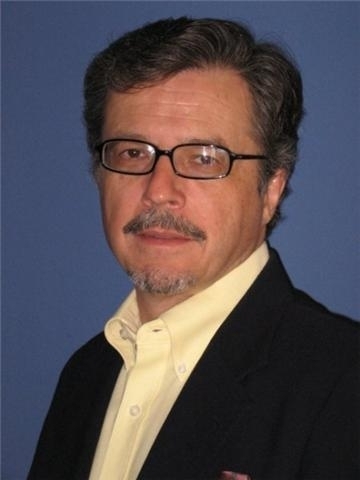
Dr. David Edward Marcinko MBA CMP™

[Publisher-in-Chief]

As you begin to search for a medical practice business advisor or healthcare consultant, be sure to contact the advisor and request a short initial meeting that should be free of charge.

Just as you would select your own physician, you should base your consulting decision on credentials, experience and especially education. Fee schedules are probably of least importance. And, by understanding the “F” word, you stand the best chance of finding an advisor that’s right for your budget, practice and personality.

The Traditional View

The traditional view of medical management consulting, or the financial advisory or financial planning business, is not of a fiduciary. Historically, in the view of many, attorneys, doctors, CPAs and the clergy are proto-typical fiduciaries, as are the small but emerging class of contemporary Certified Medical Planners [CMP™]. They have a clear duty to put the best interests of their clients, patients, congregation, etc., above their own and to disclose conflicts of interest, etc. Too many others who retain this title function as poseurs.

Link: www.CertifiedMedicalPlanner.com

The stock market collapse, SEC debacle, home mortgage and real estate fiascos of the past few years, all highlight the lack of general accounting, financial, business and advisory oversight of Wall Street, the NASD/FINRA and related private and government monitoring agencies. This includes financial and investment advisors, wealth managers and healthcare consultants.

Fiduciary Definition

According to Bennett Aikin, Accredited Investment Fiduciary [AIF®], a fiduciary consultant is someone who offers advice, or manages the assets of another person and stands in a special relationship of trust, confidence, and/or legal responsibility [personal communication].

Link: https://medicalexecutivepost.com/2009/03/01/an-interview-with-bennett-aikin-aif%c2%ae/

Financial designations that indicate fiduciary duty do not exist absent the proto-types mentioned above. Rather, it is function that determines who is a fiduciary; not designations, certifications or licenses to hold a particular trade-mark, service-mark or registration-mark.

So, a fiduciary advisory, according to these definitions can be held accountable for a breach in fiduciary duty, regardless of any expertise they do, or do not have. This underscores the critical nature of understanding the fiduciary standard and delegating certain duties to qualified “professionals” who can fulfill the parts of the process that a non-qualified fiduciary cannot.

Fiduciary? – Get it in Writing!

But, this does not mean it is impossible to find a healthcare consultant who accepts fiduciary responsibility and acknowledges the same. The best way to rectify confusion is to get fiduciary status acknowledged in writing and review all of the necessary steps in the fiduciary process to ensure fulfillment. An acknowledgement of fiduciary status letter can even be a simple checklist to ensure the entire fiduciary process is being covered.

Link: www.CertifiedMedicalPlanner.com

About http://www.fi360.com

Public resources for understanding the fiduciary process and for choosing appropriate consultants include the Department of Labor, the AICPA’s Personal Financial Planning division, and iMBA Inc. Private resources are available from the law firm of Reish Luftman Reicher & Cohen. The firm specializes in employee-benefits law and is considered leading ERISA experts. More resources from www.fi360.com include:

  • Fiduciary Standard of Excellence
  • Safe Steward Document
  • Stewardship Handbook
  • Legal Memorandum Handbook

Conclusion

And so, your thoughts and comments on this ME-P are appreciated. Feel free to review our top-left column, and top-right sidebar materials, links, URLs and related websites, too. Then, subscribe to the ME-P. It is fast, free and secure.

Link: http://feeds.feedburner.com/HealthcareFinancialsthePostForcxos

Speaker: If you need a moderator or speaker for an upcoming event, Dr. David E. Marcinko; MBA – Publisher-in-Chief of the Medical Executive-Post – is available for seminar or speaking engagements. Contact: MarcinkoAdvisors@msn.com

Our Other Print Books and Related Information Sources:

Health Dictionary Series: http://www.springerpub.com/Search/marcinko

Practice Management: http://www.springerpub.com/product/9780826105752

Physician Financial Planning: http://www.jbpub.com/catalog/0763745790

Medical Risk Management: http://www.jbpub.com/catalog/9780763733421

Healthcare Organizations: www.HealthcareFinancials.com

Physician Advisors: www.CertifiedMedicalPlanner.com

Subscribe Now: Did you like this Medical Executive-Post, or find it helpful, interesting and informative? Want to get the latest ME-Ps delivered to your email box each morning? Just subscribe using the link below. You can unsubscribe at any time. Security is assured.

Link: http://feeds.feedburner.com/HealthcareFinancialsthePostForcxos

Sponsors Welcomed: And, credible sponsors and like-minded advertisers are always welcomed.

Link: https://healthcarefinancials.wordpress.com/2007/11/11/advertise


Product DetailsProduct DetailsProduct Details       

Product Details  Product Details

   Product Details

The Uniform Prudent Investor Act versus Fiduciary Accountability

Join Our Mailing List

A Primer and Review for Financial Advisors

By Dr. David Edward Marcinko MBA, CMP™

www.CertifiedMedicalPlanner.org

More than a decade ago Charles L. Stanley, CFP™ gave an overview of the legislation and highlights areas of change for financial advisors and planners and to the financial services industry. To date, the Uniform Prudent Investor Act (UPIA) has been enacted in most states. Essentially, the act changed the legal criteria for “prudent investing” for trusts. All assets owned by a trust are considered “investments” for purposes of the Uniform Prudent Investor Act. Consequently, if a trust owns a life insurance policy or an annuity, it is considered an “investment” for purposes of the UPIA. Trustees and their advisors are subject to the act.

Background Review

The UPIA (California Probate Code Article 2.5) was adopted by the Uniform Conference of Commissioners on Uniform State Laws in 1994. When determining whether or not certain investing is “prudent,” the standard is applied to the whole portfolio rather than to individual investments.

The UPIA radically changes the analysis of risk. The UPIA considers that risk is unavoidable. For example, fixed income instruments carry the risk of loss of purchasing power, even though the principal may not be reduced in terms of real numbers. Risk is often desirable so long as it is sufficiently compensated. The UPIA seeks to compel the trustees to analyze the trade-offs between risks and returns, taking into consideration the needs and objectives of the trust.

Restrictions Reduced

The restrictions on what type of investments can be held in trust have been eliminated. The trustee can invest in anything that plays an appropriate role in achieving the risk/return objectives of the trust and that meets the other requirements of prudent investment. The trustee’s duty to diversify trust assets is codified in the UPIA. It is now recognized that proper effective diversification may enhance returns and/or reduce risk at the same time.

The UPIA rejected the traditional trust rule that generally prohibited “delegation of duty” by trustees, especially the duty of investment of trust assets. Delegation is now permitted, subject to safeguards. Agents are now made liable if they do not follow the new law.

What Must a Trustee Do to Comply with the Act?

According to Stanley, to comply with the UPIA, trustees must review trust assets and make and implement decisions to either keep or discard assets in order to bring the trust portfolio into compliance with the purposes, terms, distribution requirements, and other circumstances of the trust:

  • The trustee must diversify the assets of the trust unless it is prudent not to do so (16048). For example, it would not be acceptable for the trust to hold all municipal bonds.
  • The trustee must either comply with the Act in full or have the trust amended to restrict the requirements to diversify trust assets.
  • The trustee must delegate if he or she believes that he or she doesn’t the expertise to perform certain functions, this is particularly anticipated in the area of investment management. The trustee is expected to document all of the above to be available for review either by beneficiaries and/or courts should they become involved. This includes a written Investment Policy Statement. The act doesn’t specifically require this, but how would one prove they had been acting as a prudent trustee without documentation?
  • The trustee must periodically review the circumstances, assets and any professional delegates whom he or she has retained to assist him or her. The portfolio must be periodically rebalanced to maintain the established risk/reward characteristics identified in the Investment Policy Statement. This is not specifically stated, but is implied in ¤16047(b) and is a part of proper portfolio management under Modern Portfolio Theory. The act requires the costs of management to be “reasonable.”
  • The trustee must deal impartially with beneficiaries when there are two or more beneficiaries and must invest impartially, taking into account the differing interests of the beneficiaries.

Note: In most states, trust language can draft the trustee out of any and all requirements of the Uniform Prudent Investor Act. Many attorneys are doing this. So check trust language carefully.

Assessment

This essay is not a “final answer” in regard to compliance with the Uniform Prudent Investor Act. Financial advisors should consult with a competent attorney if you have any questions about a specific application with a specific physician investor or other client.

http://www.amazon.com/Financial-Planning-Handbook-Physicians-Advisors/dp/0763745790/ref=sr_1_1?ie=UTF8&s=books&qid=1276795609&sr=1-1

Conclusion

And so, your thoughts and comments on this ME-P are appreciated. How has the fiduciary standard altered the above Act; or the current Dodd-Frank Act [Wall Street Reform and Consumer Protection Act]? Feel free to review our top-left column, and top-right sidebar materials, links, URLs and related websites, too. Then, subscribe to the ME-P. It is fast, free and secure.

Speaker: If you need a moderator or speaker for an upcoming event, Dr. David E. Marcinko; MBA – Publisher-in-Chief of the Medical Executive-Post – is available for seminar or speaking engagements. Contact: MarcinkoAdvisors@msn.com

OUR OTHER PRINT BOOKS AND RELATED INFORMATION SOURCES:

Product Details  Product Details

What is the Role of a Physician-Focused Financial Advisor?

Changing Times – Demand Changing Roles

By Dr. David Edward Marcinko MBA, CMP™

Editor-in-Chief

www.HealthcareFinancials.com

As a financial advisor for more than 15 years, it has been my experience that many doctors who require assistance in developing a comprehensive personal financial plan also need help with implementing any investment planning recommendations. While perhaps not so true before the “flash-crash” of 2008-09, the issue seems especially true today as retirement portfolios have been decimated, and the specter of healthcare reform is no longer just a threat but a political reality. The mindset of hubris has been replaced by a tone of fear in many medical colleagues.

The Financial Advisors

Physician investors who develop an investment plan may use a competent financial advisor [FA] or other specialist in the investment area. A financial advisor can help clients understand their current financial situations and develop strategies for achieving their goals. Other FAs are specialists that help clients design and implement plans for investing. Still others use a more comprehensive approach to the entire financial planning process with extreme degrees of healthcare specificity

www.CertifiedMedicalPlanner.com

These Certified Medical Planners™ are fiduciaries at all times and put client needs first as registered investment advisors [RIAs], not commissioned sales agents or mere stock-brokers despite often confusing monikers.

Implementation

Implementation may be accomplished using professionally managed portfolios and mutual funds. The following shows how a plan may be implemented with an advisor assisting the physician-investor. The process may include:

• Developing investment policy and strategies

• Selecting and implementing managed portfolios and mutual funds

• Evaluating performance on a periodic basis

• Periodically reviewing and adjusting the investment plan as required

Note: The advisor may provide all of the investment services, or the physician investor may use other advisors in the process.

Example: 

A financial planner has developed a number of financial planning recommendations for a client. One recommendation is to develop a written investment plan, review current investments, and implement changes. The planner has recommended an investment advisor experienced in selecting and monitoring managed portfolios and mutual funds. The financial planner will meet with the client and advisor initially and once each year to monitor the plan.

Example: 

A financial planner has developed a financial plan for a client. The financial planner specializes in developing investment policy but not in implementing investments. The financial planner will use asset allocation software and develop a written long-term plan for the client. The doctor-client will work with a major brokerage firm to implement the plan using managed portfolios and mutual funds. The financial planner will monitor the brokerage firm and help the client evaluate performance.

Example:

A financial planner has developed a financial plan for a physician-client and will assist the client in developing asset allocation strategies. The planner has extensive knowledge in implementing the asset allocation strategies using managed portfolios and mutual funds. The planner will select and monitor the choices. The planner will provide the client with a quarterly performance report and meet with the client every six months to review the plan and strategies.

Assessment

Understanding the above is more critical than ever as physician-income continues to shrink going forward in the era of healthcare reform.

Conclusion

And so, your thoughts and comments on this ME-P are appreciated. Feel free to review our top-left column, and top-right sidebar materials, links, URLs and related websites, too. Do you seek professional assistance with your investing needs, or do you go-it-alone; why or why not? Then, subscribe to the ME-P. It is fast, free and secure.

Speaker: If you need a moderator or speaker for an upcoming event, Dr. David E. Marcinko; MBA – Publisher-in-Chief of the Medical Executive-Post – is available for seminar or speaking engagements. Contact: MarcinkoAdvisors@msn.com and http://www.springerpub.com/Search/marcinko

Get our Widget: Get this widget!

Our Other Print Books and Related Information Sources:

Health Dictionary Series: http://www.springerpub.com/Search/marcinko

Practice Management: http://www.springerpub.com/product/9780826105752

Physician Financial Planning: http://www.jbpub.com/catalog/0763745790

Medical Risk Management: http://www.jbpub.com/catalog/9780763733421

Healthcare Organizations: www.HealthcareFinancials.com

Physician Advisors: www.CertifiedMedicalPlanner.com

Subscribe Now: Did you like this Medical Executive-Post, or find it helpful, interesting and informative? Want to get the latest ME-Ps delivered to your email box each morning? Just subscribe using the link below. You can unsubscribe at any time. Security is assured.

Link: http://feeds.feedburner.com/HealthcareFinancialsthePostForcxos

Sponsors Welcomed: And, credible sponsors and like-minded advertisers are always welcomed.

Link: https://healthcarefinancials.wordpress.com/2007/11/11/advertise


Product DetailsProduct DetailsProduct Details       

Product Details  Product Details

   Product Details 

Are Primary Care Doctors Becoming More Like Financial Advisors?

Hospitals [BDs] “versus” Family Practitioners [FAs]

By Dr. David Edward Marcinko; MBA, CMP™

[Editor-in-Chief]

The Big Mistake

Those who believe that hospitals need medical specialists like radiologists, pathologists and oncologists, more than primary care doctors, are mistaken. And, those doctors who believe that the majority of “financial advisors” work for their clients are also mistaken. Here’s why in analogy format.

Why Hospitals Need PCPs

Hospitals generally need primary care physicians, more than specialists, because insurance contracts can be negotiated from a position of strength. A solid [large] primary care panel is a must-have for most insurance contracts. Just recall more than a decade ago – when PCPs were told of an emerging new renaissance where they would reign in place of the medical specialists? It never happened then, but it may happen now following healthcare reform.

Also, recall that the growth of fiduciary Registered Investment Advisors [RIAs] was slow until the stock market collapse of 2008. The pace is accelerating today with the political dawn of financial reform.

Patient’s Love their PCPs – Not their Hospitals

Moreover, please realize that few patients shop around for specialists, or hospitals, as they do for PCPs. OK, the OB-GYNs are unique in that they can play a dual role – as specialist and primary care doctor – just ask my wife who would rather eat nails than change her [female] female doctor.

Hospitals also need PCPs as referring physicians to generate business through their ERs, admissions department, outpatient centers, and/or by ordering invasive and non-invasive radiology tests, images, scans or laboratory tests, and/or sending patients to specialists who will do expensive procedures or surgery in their ORs, hospital and/or related facilities.

Doesn’t this sound like a stock broker working for his wire-house or broker-dealer?  

www.HealthcareFinancials.com

The PCP Loss Leader

Primary care is a loss-leader to hospitals as they make little money directly off medical practices, but can generate a great deal from the referrals and procedures the grass-roots docs generate; especially if they “play the game” like commissioned stockbrokers. And, consider brilliant medical diagnosticians, like TV’s Gregory House MD, and all those tests and procedures they can do – just to be sure!

No wonder that physician-executives and hospital administrators like Dr. Lisa Cuddy of the Princeton-Plainsboro Teaching Hospital, in New Jersey, love them.

Ditto for wire-house office managers and stock-brokerage OSJs [Office of Supervisory Jurisdiction] who love their “top producers”, brokers and FAs.

[picapp align=”none” wrap=”false” link=”term=operating+room&iid=288202″ src=”0284/9dbd59b4-ffc4-49c4-8b2e-3b568f74dc9d.jpg?adImageId=12660700&imageId=288202″ width=”380″ height=”253″ /]

Conflicted Missions

Unfortunately, this shifts the mission of PCPs from keeping patients out of the hospital – as physical and fiscal advocate – to sending them to the hospital as a “heavy admitter-referrer” with resulting perks and swagger.

Thus, “success” of the PCP from a hospital perspective is not to avoid referrals or costly procedures, but to gather them.  However, success is a matter of perspective that may be very unfortunate for the patient, state or federal payer, private employer and/or insurance company.

Financial Advisor Analog

Does this PCP conundrum sound like the conflicted situation found with many “independent” financial advisors today? Are PCPs becoming mere patient gatherers, or profit generating shills, for their hospitals, employers or healthcare systems? Where does one’s duty rest? Are we doctor’s or medical product/procedure merchants?

www.CertifiedMedicalPlanner.com

Conclusion

And so, your thoughts and comments on this ME-P are appreciated. Is this analogy correct, or not. Is it too harsh or too gentle – and for whom?

Feel free to review our top-left column, and top-right sidebar materials, links, URLs and related websites, too. Then, be sure to subscribe. It is fast, free and secure.

Link: http://feeds.feedburner.com/HealthcareFinancialsthePostForcxos

Speaker: If you need a moderator or speaker for an upcoming event, Dr. David E. Marcinko; MBA – Publisher-in-Chief of the Medical Executive-Post – is available for seminar or speaking engagements. Contact: MarcinkoAdvisors@msn.com

Get our Widget: Get this widget!

Our Other Print Books and Related Information Sources:

Practice Management: http://www.springerpub.com/prod.aspx?prod_id=23759

Physician Financial Planning: http://www.jbpub.com/catalog/0763745790

Medical Risk Management: http://www.jbpub.com/catalog/9780763733421

Healthcare Organizations: www.HealthcareFinancials.com

Health Administration Terms: www.HealthDictionarySeries.com

Physician Advisors: www.CertifiedMedicalPlanner.com

Subscribe Now: Did you like this Medical Executive-Post, or find it helpful, interesting and informative? Want to get the latest ME-Ps delivered to your email box each morning? Just subscribe using the link below. You can unsubscribe at any time. Security is assured.

Link: http://feeds.feedburner.com/HealthcareFinancialsthePostForcxos

Sponsors Welcomed

And, credible sponsors and like-minded advertisers are always welcomed.

Link: https://healthcarefinancials.wordpress.com/2007/11/11/advertise

Retirement Plan Risks for Physician-Employers

Join Our Mailing List

Advantages Well Known – Disadvantages Not So

By Brian J. Knabe, MD

[Certified Medical Planner™ candidate]

A source of risk often overlooked by the physician-employer is the risk involved in offering a retirement plan.

Medical practice owners, like other small business owners, find several advantages to starting a retirement plan. The plan can be used to allow the owners to save money in a tax-advantaged manner, and a generous retirement plan can help to attract and retain quality employees.

Administration Risks 

The recent “Great Recession” and turbulence in the stock market have highlighted the risks involved in administering these plans. There is a long history of fraud and neglect in the field of retirement savings plans, and a series of legislative efforts have been enacted to counter these abuses.

Current standards are based primarily on four federal laws, the Employee Retirement Income Security Act (ERISA), the Uniform Prudent Investors Act (UPIA), the Management of Public Employee Retirement Systems Act (MPERS), and the Pension Protection Act of 2006 (PPA).

ERISA Standards 

According to ERISA standards, you may be considered a fiduciary for a retirement plan if you meet any of the following tests:

  • You exercise discretionary authority or control over plan assets or plan management.
  • You are specifically identified in the written documents of a plan as a named fiduciary.
  • You have discretionary responsibility in the administration of the plan.
  • You manage the plan or its assets or render investment advice for a fee.

Recent court decisions have found fiduciaries to be personally liable, even for acts of which they were unaware or in areas not considered within their scope of responsibility. Acting with good intentions or in good faith is not an acceptable defense. Neither is ignorance of your responsibilities.

www.CertifiedMedicalPlanner.com

Liability Mitigation 

The liability of the administrator (or business owner) can be diminished by taking these steps:

  • Act in a procedurally prudent manner.
  • Diversify investments to minimize the risk of large losses.
  • Provide sufficient information and education to employees to enable them to exercise control over their investments.
  • Offer a broad, diversified investment menu having at least three (preferably five or six) “core” alternatives, each of which must be diversified.

Assessment

The most efficient way to meet these and other requirements is to hire a retirement plan provider which is a certified as a fiduciary, and which accepts “co-fiduciary” status along with the practice owner.  The Centre for Fiduciary Excellence (CEFEX) offers certification as a fiduciary.

For more information, see www.savantcapital.com/cefex.

Savant Capital Management, Inc®

190 Buckley Drive

Rockford, IL 61107

Tel 815-227-0300

Fax 815-226-2195

bknabe@savantcapital.com

Channel Surfing the ME-P

Have you visited our other topic channels? Established to facilitate idea exchange and link our community together, the value of these topics is dependent upon your input. Please take a minute to visit. And, to prevent that annoying spam, we ask that you register. It is fast, free and secure.

Conclusion

Your thoughts and comments on this ME-P are appreciated. Feel free to review our top-left column, and top-right sidebar materials, links, URLs and related websites, too. Then, subscribe to the ME-P. It is fast, free and secure.

Speaker: If you need a moderator or speaker for an upcoming event, Dr. David E. Marcinko; MBA – Publisher-in-Chief of the Medical Executive-Post – is available for seminar or speaking engagements. Contact: MarcinkoAdvisors@msn.com

OUR OTHER PRINT BOOKS AND RELATED INFORMATION SOURCES:

Product Details  Product Details

Financial Advisory Reform Going Down in Flames

A [False] Hobson’s Choice*

By Staff Reporters

In political Washington DC, according to Ian Salisbury, almost anything will fly if you can make an argument it will benefit the middle class. It worked in the fight against requiring advisors to act in clients’ best interests … Say what?

Is this the case of a classic Hobson’s choice?

[picapp align=”none” wrap=”false” link=”term=bank+reform&iid=8227139″ src=”c/3/0/3/Sen_Dodd_Discusses_655e.jpg?adImageId=12270785&imageId=8227139″ width=”380″ height=”570″ /]

The Strategy

Yep, its true! At least, this strategy worked for the National Association of Insurance and Financial Advisors [NAIFA], which fought a recent proposal that would have made all financial advisors act in clients’ best interests … you know – the “F” word.

Assessment

It seems that there are few protections for the public from unscrupulous FAs, stockbrokers, and insurance agents. And, few wish to become fiduciaries.

http://www.fa-mag.com/online-extras/5406-a-phony-argument.html

*A Hobson’s choice is a free, usually economic, choice in which only one option is offered.

Conclusion

And so, your thoughts and comments on this ME-P are appreciated. Please visit: www.CertifiedMedicalPlanner.com

As former certified financial planner, insurance agent, stockbroker, surgeon and this ME-P publisher Dr. David Edward Marcinko MBA, CMP™ has always opined to physician colleagues: it is “buyer-beware” out there!

Feel free to review our top-left column, and top-right sidebar materials, links, URLs and related websites, too. Then, be sure to subscribe to the ME-P. It is fast, free and secure.

Speaker: If you need a moderator or speaker for an upcoming event, Dr. David E. Marcinko; MBA – Publisher-in-Chief of the Medical Executive-Post – is available for seminar or speaking engagements. Contact: MarcinkoAdvisors@msn.com

Get our Widget: Get this widget!

Our Other Print Books and Related Information Sources:

Practice Management: http://www.springerpub.com/prod.aspx?prod_id=23759

Physician Financial Planning: http://www.jbpub.com/catalog/0763745790

Medical Risk Management: http://www.jbpub.com/catalog/9780763733421

Healthcare Organizations: www.HealthcareFinancials.com

Health Administration Terms: www.HealthDictionarySeries.com

Physician Advisors: www.CertifiedMedicalPlanner.com

Subscribe Now: Did you like this Medical Executive-Post, or find it helpful, interesting and informative? Want to get the latest ME-Ps delivered to your email box each morning? Just subscribe using the link below. You can unsubscribe at any time. Security is assured.

Link: http://feeds.feedburner.com/HealthcareFinancialsthePostForcxos

Sponsors Welcomed

And, credible sponsors and like-minded advertisers are always welcomed.

Link: https://healthcarefinancials.wordpress.com/2007/11/11/advertise

On Employer Based Health Insurance Premium Costs

Join Our Mailing List

One Client’s Comparative Expense Analysis Experience

By Dr. David Edward Marcinko; MBA

[Publisher-in-Chief]

Hospital Costs

A colleague posted an interesting essay recently on his blog The Incidental Economist. Austin Frakt PhD is a health economist with an educational background in physics and engineering. After receiving a PhD in statistical and applied mathematics, he spent four years at a research and consulting firm conducting policy evaluations for various federal health agencies. Here is the post.

Link: http://theincidentaleconomist.com/index.php?s=Kaiser%2FHRET+

The Survey

In his essay, Austin reported these figures from a cited survey:

“The 2009 Kaiser/HRET employer health benefits survey found that employees pay 17% of the $4,824 annual premium for single coverage and 27% of the $13,375 annual premium for family coverage (all average figures)”.

Case Report Model

So, if the survey is correct, it got me thinking about how much a long-time client paid as a doctor-employer, when she last practiced in a certain medical group back in 2000. And, especially about how much she would be paying today if still in business with the same group. This brief case-report with comparative expense analysis [CEA} is the up-shot.

My Client’s Story

Her health insurance premium costs including doctor-partners, was about $13,500 annually, per employee. This was a sunk cost, but an above the AGI line deductible business expense to the practice and entirely employer paid as a fringe benefit [all valid corporate expenses are deductible as there is no AGI line on a business tax return]. She and her three partners were both very magnanimous to their employees, and naïve. They became virtually insolvent a few years later and were bought out by a larger medical group for a pittance. Today, they are grunt employee doctors in a 25 plus physician group practice.

My Numbers

Now, if I crunched the numbers correctly as an citizen economist, on my HP12-C calculator, using health insurance inflation rates of 3%, 5% and 7% respectively for a decade [low], she would be now be paying somewhere between $18,143 and $21,990 and $26,556 in 2010 [dangerously assuming linear economics]. Each of her 15-18 employees at the time was a female, head of household, with 1-4 dependents of their own; no singles. Her own family unit included a professional husband and young daughter in private elementary school. They were the most health conscious of the bunch.

Her Situation

So, she left the group in 2000, and we transitioned her to solo private practice with a HD-HCP indemnity-styled [better] plan that pays 100% after her $5,000, and later $10,000, deductible. She has 100% prescription drug coverage, no OB coverage and no networks, second opinions or pre-certification requirements. Today, she has more than $50-K in the savings portion [cash account earning 3.5%, tax deferred].

Her Reaction

As she just turned age 55, there as was significant jump in her family coverage premiums from about $1,350/quarter to $1,650/quarter! Of course, her carrier offered a ten percent discount to $1,485 quarter, when she pitched a fit, and completed a health and wellness survey which “they” verified.

My Intervention

So, I used my “insider” knowledge as a doctor, financial advisor and insurance agent and went back to the open market place for coverage. Her new direct halth insurance coverage [she used a non-fiduciary insurance agent intermediary previously] is better, and her premium is only $1,248/quarter or about $5,000 annually to age 58. Bye, bye insurance agent. Link:  www.CertifiedMedicalPlanner.com

Now, if we use the non-inflated [a conservative unlikely scenario] 27% employee premium contribution for the present value projections of $18,143 and $21,990 and $26,556 today – each employee would be responsible for about $4,898, $5,937 and $7,170 respectively [please again recall both our conservative nature and the repeat danger of linear economic assumptions].

Where Did the Money Go?

So, under the 3-5% health insurance inflation scenario, my client would have been contributing about $5,417 for her heath insurance. This is very close to what she is annually paying now! So, where did the much larger employer’s contribution portion of the money go? Probably to overhead costs, marketing, advertising, sales and commissions, HR, high-risk pool premiums, ie … down the drain?

What did my client do with the monetary difference? Well, she paid all family doctor and drug bills that were under the high-deductible threshold; some went to her annual family health club membership dues, covered extras and various “wants and nice-to-haves”, and the remainder of course, went into her savings account portion. In other words … not down the drain.

There is an additional $1.000 “catch up” savings provision for those over age 55. She paid it – to herself.

The Road Ahead – More Expensive

I informed my colleague-client that there likely will be another big premium jump when she turns 58, 60 and age 62 respectively. We will report back to ME-P readers on market competition and related health insurance pricing at that time, ceteris paribus.

Assessment

Does the competitive open marketplace find a way to reduce HI costs– sooner or later? High Deductible HealthCare Plans were launched as a temporary pilot project in 1997 and initially sold poorly. In the past few years however, there has been a boom in HD-HCPs and the pilot project was made permanent. What other HI innovations may be in the future?

Of course, President Obama was against them in his original healthcare reform plan. But, now in his weakened political position, they seem acceptable to him. So, go figure. Utility depends on political winds, not economic efficacy, I suppose. 

Conclusion

Your thoughts and comments on this ME-P are appreciated. Feel free to review our top-left column, and top-right sidebar materials, links, URLs and related websites, too. Then, subscribe to the ME-P. It is fast, free and secure.

Speaker: If you need a moderator or speaker for an upcoming event, Dr. David E. Marcinko; MBA – Publisher-in-Chief of the Medical Executive-Post – is available for seminar or speaking engagements. Contact: MarcinkoAdvisors@msn.com

OUR OTHER PRINT BOOKS AND RELATED INFORMATION SOURCES:

Product DetailsProduct Details

Doctors versus Retail Bankers

Understanding Modern Reality

By Dr. David Edward Marcinko; MBA, CMP™

[Publisher-in-Chief]Dr. David E. Marcinko MBA

Doctors often carry notoriously heavy debt loads. Beyond the costs of a medical education are substantial costs for equipping, launching and staffing a practice. Technology changes fast these days and capital is required frequently. And, the era of eMRs, ARRA, HI-TECH and Obama-Care is upon us!

“I‘m a Banker – I’m Here to Help”

Unfortunately, retail bankers are now very conservative by nature; and the liquidity squeeze and financial meltdown of 2008-2009 makes credit even more difficult to obtain. It may be increasingly difficult to borrow money, especially since modern bankers know that a medical degree is no longer the guarantee of a steady and high income that it once was in the past. As more than one banker has often opined to me,

“We don’t usually loan money to doctors who really need it.”

Nevertheless, the more business a physician does with a bank, the better the terms that can be obtained; even thought hey may also not have a clue about what the practitioner can do to better compete in the managed care arena.

Why Big-Banks Hate Customers

http://articles.moneycentral.msn.com/Investing/JubaksJournal/why-big-banks-hate-banking.aspx

Local Community

Some bankers do have a good concept of local community politics however, for those not familiar with a practice venue. They frequently can provide references to more focused advisors, and bankers generally do not charge a fee for their advice. But, banks selling products are doing so according to their governing regulations as “prudent experts” under ERISA, and are not necessarily held to a fiduciary standard in any broader sense.

Join Our Mailing List

Conclusion

And so, your thoughts and comments on this Medical Executive-Post are appreciated. Feel free to review our top-left column, and top-right sidebar materials, links, URLs and related websites, too. Then, be sure to subscribe to the ME-P. It is fast, free and secure.

Link: http://feeds.feedburner.com/HealthcareFinancialsthePostForcxos

Speaker: If you need a moderator or speaker for an upcoming event, Dr. David E. Marcinko; MBA – Publisher-in-Chief of the Executive-Post – is available for seminar or speaking engagements. Contact: MarcinkoAdvisors@msn.com 

Get our Widget: Get this widget!

Our Other Print Books and Related Information Sources:

Practice Management: http://www.springerpub.com/prod.aspx?prod_id=23759

Physician Financial Planning: http://www.jbpub.com/catalog/0763745790

Medical Risk Management: http://www.jbpub.com/catalog/9780763733421

Healthcare Organizations: www.HealthcareFinancials.com

Health Administration Terms: www.HealthDictionarySeries.com

Physician Advisors: www.CertifiedMedicalPlanner.com

Sponsors Welcomed

And, credible sponsors and like-minded advertisers are always welcomed.

Link: https://healthcarefinancials.wordpress.com/2007/11/11/advertise

I Jealously “Shake my Fist” at Somnath Basu PhD

On CFP® Mis [Trust] – One Doctor’s Painful Personal Experience

[“So Sorry to Say it … but I Told You So”]

By: Dr David Edward Marcinko; FACFAS, MBA, CMP™

[Publisher-in-Chief]dem21

According to Somnath Basu, writing on April 6, 2009 in Financial Advisor a trade magazine, the painful truth is that many financial practitioners are merely sales people masquerading, as financial planners [FPs] and/or financial advisors [FAs] in an industry whose ethical practices have a shameful track record. Well, I agree, and completely. This includes some who hold the Certified Financial Planner® designation, as well as the more than 98 other lesser related organizations, logo marks and credentialing agencies [none of which demand ERISA-like fiduciary responsibility]. For more on this topic, the ME-P went right to the source last month, in an exclusive interview with Ben Aiken; AIF® of Fi360.com  

fp-book4

The CFP® Credential – What Credential?

Basu further writes that stockbrokers and insurance agents who earn commissions from buying and selling stocks, insurance and other financial products realize that a Certified Financial Planner® credential will help grow the volume of their business or branch them into other related and lucrative products and services. After all, there are more than 55,000 of these “credentialed” folks. And, this marketing designation seems to have won the cultural wars in the hearts and minds of an unsuspecting – i.e., duped public; probably because of sheer numbers. Didn’t a CFP Board CEO state that its’ primary goal was growth, a few years ago? Can you say “masses of asses”, as the oft quoted Bill Gates of Microsoft used to say when only 2,000 micro-softies defeated 400,000 IBMers during the PC operating system wars of the early 1980’s. Quantity, and marketing money, can trump quality in the public-relations business; ya’ know … if you repeat the lie often enough … yada … yada … yada! Yet, as the so-called leading industry designation, the CFP® entry-barrier standard is woefully low. Moreover, the SEC’s [FINRA] Series #7 general securities licensure sales examination is not worth much more than a weekend’s study attention, even to the uninitiated.

insurance-book2

Easy In – Worth Less Out

In our experience, we agree with Basu and others who suggest that scores of lightly educated, and sometimes wholly in-articulate and impatient individuals are zipping through the CFP® Board of Standards approved curriculum in three to six months of online, on-ground, or “self-study”. But, that some can do so without a bachelor’s degree when they join wire-houses and financial institutions, which cannot be trusted to adequately train them, is an abomination. And, even more sadly, some of these CFP™ mark-holders, and other folks, believe they have actually received an “education” from same. Of course, their writing skills are often non-existent and I have cringed when told that, in their opinion, advertiser-driven trade magazines constitute “peer-reviewed” and academic publications. Incidentally, have you noticed how thin these trade-rags are getting lately? Much like the print newspaper industry, are they becoming dinosaurs? One agent even told me, point-blank, that his CLU designation was the equivalent of an “academic PhD in insurance.” This was at an industry seminar, where he thought I was a lay insurance prospect.

THINK: No critical thinking skills.

biz-book4

Education

There is another sentiment that may be applied in many of these cases; “hubris.” I mean, these CFP® people … just don’t know – how much they don’t know.”  The very real difference between training versus education is unknown to many wire-houses and FAs, isn’t it? And, please don’t get me started on the differences in pedagogy, heutagogy and androgogy. Moreover, it’s sad when we see truly educated youngsters become goaded by wire-houses into thinking that these practices are de-rigor for the industry. One such applicant to our Certified Medical Planner™ program, for example, had both an undergraduate degree in finance and a graduate degree in economics from the prestigious Johns Hopkins University – in my home town of Baltimore, MD [name available upon request]. He was told, in his Smith Barney wire-house training program, to eschew CMP™ accountability and RIA fiduciary responsibility, when working with potential physician and lay clients; but to get his CFP® designation to gather more clients. To mimic my now 12 year-old daughter; it seems that: SEC Suitability Rules – and – Fiduciary Accountability Drools. And, to quote Hollywood’s “Mr. T”; I pity the fools, er-a, I mean clients. But, T was an actor, and this is serious business.

cmp-logo1

Of CEU Credits and Ethics

Beside trade-marks and logos, we are all aware that continuing education, and a code of ethics, is another important marketing and advertising component of state insurance agents and CFP licensees. It’s that old “be” – or “pretend to be” – a trusted advisor clap-trap. Well, I say horse-feathers for two reasons. First, both my insurance and CFP® Continuing Educational Unit [CEU] requirements were completed by my daughter [while age 7-10], by filling in the sequentially identical and bubble-coded, multiple-choice, answer-blanks each year. Second, this included the mandatory “ethics” portions of each test. When I complained to my CEU vendor, and state insurance department, I was told to “enjoy-the-break.”  My daughter even got fatigued after the third of fourth time she took the “home-based tests” for me.  After I opened my big mouth, the exact order of questions was changed to increase acuity, but remained essentially the same, nevertheless. My daughter got bored, and quit taking the tests for me, shortly thereafter. She always “passed.”dhimc-book3

Thus, like Basu, I also find that far too many financial advisors are unwilling to devote the time necessary to achieve a sound education that will help attain their goals, and would rather sell variable or whole life products than simple term life, even when the suitability argument overwhelmingly suggests so, for a higher payday. We not only have met sale folks without undergraduate degrees, but also too many of those with only a HS diploma, or GED. Perhaps this is why a popular business truism suggests that the quickest way for the uneducated/under educated class to make big bucks, is in sales. Just note the many classified ads for financial advisors placed in the newspaper job-section, under the heading “sales.” Or, in more youthful cultural terms, “fake it – until you make it.”

Of the iMBA, Inc Experience

According to Executive Director Ann Miller RN MHA, and my experience at the Institute of Medical Business Advisors, Inc:

“Far too many financial advisors who contact us about matriculation in our online Certified Medical Planner™ program – in health economics and management for medical professionals – don’t even know what a Curriculum Vitae [CV] is? Instead, they send in Million Dollar Roundtable awards, Million Dollar Producer awards, or similar sales accomplishments as resume’ boosters. It is also not unusual for them to list some sort of college participation on their resumes, and websites, but no school affiliation or dates of graduation, etc. And, they become furious to learn that we require a college degree for our fiduciary focused CMP™ program, and not from an online institution, either. The onslaught of follow-up nasty phone-calls; faxes and emails are laughable [frightening] too.”  

www.MedicalBusinessAdvisors.com

Assessment

More often than not, it is the financial institutions that FAs and CFP™ certificants’ work for that reward sales behavior with higher commissions, rather than salaries; which encourage such behavior and create the vicious cycles that are now the norm.

THINK: ML, AIG, Citi, WAMU, Wachovia, Hartford, Prudential, etc.

Note: Original author of Restoring Trust in the CFP Mark, Somnath Basu PhD, is program director of the California Institute of Finance in the School of Business at California Lutheran University where he’s also a professor of finance. He can be reached at (805) 493 3980 or basu@callutheran.edu. We have asked him to respond further.

My Story: I am a retired surgeon and former Certified Financial Planner® who resigned my “marketing trademark” over the long-standing fiduciary flap. I watched this chicanery for more than a decade after protesting to magazines like Investment Advisor, Financial Advisor, Registered Rep, Financial Planner, the FPA, etc; up to, and even including the CFP® Board of Standards; to no avail. Feel free to contact me for a copy of a 43 page fax, and other supportive documentation from the CFP® Board of Standards – and their outsourced intellectual property attorneys – over a Federal trademark infringement lawsuit they tried to institute against me for innocent website errors placed by a visually impaired intern. Obviously, they disliked the launch of our CMP™ program. As a health economist and devotee of Ken Arrow PhD, I polity resigned my license, as holding no utility for me, to the shocked CFP Board. They later offered to consider re-instatement for a mere $600 fee with letter of explanation, to which I politely declined. Of course, my first thought after living in the streets of South Philadelphia while in medical school, during the pre-Rocky era, was to say f*** off – but I didn’t. Nevertheless, I still seem to be on their mailing list, years later. No doubt, the list is sold, and re-sold, to various advertisers for much geld. And, why shouldn’t they; an extra bachelor, master and medical degree holder on their PR roster looks pretty good. I distrust the CFP® Board almost as much as I distrust the AMA, and its parsed and disastrous big-pharma funding policies. Right is right – wrong is wrong – and you can’t fool all of the people, all of the time, especially in this age of internet transparency.

Shaking my Fist at Somnath … in Envy

And so, why do I shake my fist at Somnath Basu? It’s admittedly with congratulations, and a bit of schadenfreude, because he wrote an article more eloquently than I ever could, and will likely receive much more publicity [good or slings-arrows] for doing so. You know, it’s very true that one is never a prophet in his own tribe. Oh well, Mazel Tov anyway for stating the obvious, Somnath. The financial services industry – and more specifically – the CFP® emperor have no clothes! Duh!

ho-journal5

Good Guys and White Hats

Now that Basu’s article has appeared in Financial Advisor News e-magazine, the other industry trade magazines are sure to follow the CFP® certification denigration reportage, in copy-cat fashion. And, the fiduciary flap is just getting started. This is indeed unfortunate, because I do know many fine CFP® certificants, and non-CFP® certified financial advisors, who are well-educated, honest and work very diligently on behalf of their clients. It’s just a shame the public has no way of knowing about them – there is no white hat imprimatur or designation for same – most of whom are Registered Investment Advisors [RIAs] or RIA reps. For example, we know great folks like Douglas B. Sherlock MBA, CFA; Robert James Cimasi MHA, AVA, CMP™; J. Wayne Firebaugh, Jr CPA, CFP®, CMP™; Lawrence E. Howes MBA, CFP®; Pati Trites PhD; Gary A. Cook MSFS, CFP®, CLU; Tom Muldowney MSFS, CLU, CFP®, CMP™;  Jeffrey S. Coons PhD, CFP®; Alex Kimura MBA, CFP®; Ken Shubin-Stein MD, CFA; and Hope Hetico RN, MHA, CMP™; etc. And, to use a medical term, there are TNTC [too many, to count] more … thankfully!

Conclusion

Your thoughts and comments on this ME-P are appreciated. Feel free to review our top-left column, and top-right sidebar materials, links, URLs and related websites, too. Then, subscribe to the ME-P. It is fast, free and secure.

Speaker: If you need a moderator or speaker for an upcoming event, Dr. David E. Marcinko; MBA – Publisher-in-Chief of the Medical Executive-Post – is available for seminar or speaking engagements. Contact: MarcinkoAdvisors@msn.com

OUR OTHER PRINT BOOKS AND RELATED INFORMATION SOURCES:

Product DetailsProduct DetailsProduct Details

  Product DetailsProduct Details

Product Details

About Fi360.com

Education for Financial Fiduciaries

Staff Reportersnyse1

According to the firm and website, www.Fi360.com offers a full circle approach to investment fiduciary education, practice management and support that has established it as the go-to source for investment fiduciary insights.


The Term “Fiduciary” Defined?

And, Fi360 defines an investment “Fiduciary” as:

“Someone who is managing the assets of another person and stands in a special relationship of trust, confidence, and/or legal responsibility”

Related definitional info: www.HealthDictionarySeries.com

Practitioner Based

With substantiated best-practices as a foundation, the firm offers training, tools and resources that are essential for fiduciaries and those who provide services to fiduciaries to effectively and successfully manage their roles and responsibilities. Fi360 say it is committed to assisting those who rely on their education programs, Web-based analytical software and resources to achieve success.

Training

Fi360 offers both AIF® and AIFA® training curriculums. The AIF® curriculum instructs investment fiduciaries on how to fulfill their duties to a defined standard of care. The AIFA® curriculum instructs participants on how to assess the conformance of investment fiduciaries to a Global Fiduciary Standard of Excellence [GFSE] using an ISO-like assessment process. These training curriculums are available in both classroom and Web-based settings; customized program are also available. Participants who successfully complete the programs, submit dues, agree to a code of ethics and meet other prerequisites may earn the AIF® or AIFA® designations, respectively.

Goals and Objectives

The goal of Fi360 is to help investment fiduciaries manage their responsibilities. But, according to Bennet Aiken AIF®, Fi360 Communications Coordinator, it is important to realize that AIF® / AIFA® designees are not required to be fiduciaries. While these designations are symbolic of training, knowledge and ongoing fiduciary development, they do not mean certification holders will always be acting as a fiduciary.

Assessment

Publications, blogs, articles, national conferences, assessments and more material for the collective and ongoing support of the fiduciary community are available; many for free and/or for the general public.

Conclusion

And so, your thoughts and comments on this Medical Executive-Post are appreciated. But, why would a healthcare institution, medical practice, clinic or individual physician-investor hire anyone who will not act as a fiduciary and put their interests first; especially an AIF®/AIFA certification holder?

Note: Beginning today, and for the entire month of March 2009, we will be posting an exclusive interview with Bennett Aikin AIF®, the Communications Coordinator for fi360.com. Our topic will be on the rules, regulations and very definition of the modern financial fiduciary. Perhaps he can explain it all? Don’t miss it!

Speaker: If you need a moderator or speaker for an upcoming event, Dr. David E. Marcinko; MBA – Publisher-in-Chief of the Executive-Post – is available for seminar or speaking engagements. Contact: MarcinkoAdvisors@msn.com  or Bio: www.stpub.com/pubs/authors/MARCINKO.htm

Our Other Print Books and Related Information Sources:

Practice Management: http://www.springerpub.com/prod.aspx?prod_id=23759

Physician Financial Planning: http://www.jbpub.com/catalog/0763745790

Medical Risk Management: http://www.jbpub.com/catalog/9780763733421

Healthcare Organizations: www.HealthcareFinancials.com

Health Administration Terms: www.HealthDictionarySeries.com

Physician Advisors: www.CertifiedMedicalPlanner.com

Subscribe Now: Did you like this Medical Executive-Post, or find it helpful, interesting and informative? Want to get the latest E-Ps delivered to your email box each morning? Just subscribe using the link below. You can unsubscribe at any time. Security is assured.

Link: http://feeds.feedburner.com/HealthcareFinancialsthePostForcxos


A Due-Diligence ‘Condom’ for Physician Investors

Join Our Mailing List

Using Financial Advisors with Increased Safety

[By Dr. David Edward Marcinko; MBA, CMP™]dr-david-marcinko8

Following the Bernie Madoff investment scheme, and related financial industry scandals, here are seven “red-flags” that should have alerted physician-investors to proceed with extreme caution. Always consider them before making an investment with any financial advisor [FA], registered representative [RR] or financial advisory firm, regardless of reputation, size, referral recommendation or so-called industry certifications and designations. In other words, according to Robert James Cimasi; MHA, AVA, and a Certified Medical Planner™ from Health Capital Consultants LLC, of St. Louis, MO;” trust no one and paddle your own canoe.”

Red Flags of Cautious Investing

As a former insurance agent, financial advisor, registered representative, investment advisor and Certified Financial Planner™ for more than a decade, the existence of any one of the following items may be a “red-flag” of caution to any investor:

  • Acting as its’ own custodian, clearance firm or broker-dealer, etc.
  • Lack of a well-known accounting firm review with regular reporting.
  • Unreliable or sporadic written performance reports.
  • Rates-of-return that don’t seem to track industry benchmarks.
  • Seeming avoidance of regulatory oversight, transparency or review.
  • Lack of recognized written fiduciary accountability in favor of lower brokerage “sales suitability” standards.
  • No Investment Policy Statement [IPS]. 

Assessment

Let a word to the wise be sufficient going forward. But, in hindsight, a healthy dose of skepticism might have prevented this situation in the first place. As is the usual case, fear and greed often seem to rule the day. Just as there is no such thing as safe sex – just safer sex – there is no thing as safe intermediary investing. But, exercising some common sense will surely make investing with any financial advisor much safer. It’s like a condom for your money. 

For more information on the topic of fiduciary standards – which we have championed for the last ten years in our books, texts, white-papers, journal and online educational Certified Medical Planner™ program for FAs – watch out for our exclusive Medical Executive-Post interview with Bennett Aikin AIF®, Communications Coordinator of www.fi360.com coming in March. Ben, an Accredited Investment Fiduciary® did a great job with the tough questions submitted by our own Ann Miller; RN, MHA and Hope Hetico; RN, MHA, CMP™. Don’t miss it!

Disclaimer

I am the Managing Partner for http://www.CertifiedMedicalPlanner.org and I agree with this message.

Conclusion

Your thoughts and comments on this ME-P are appreciated. Feel free to review our top-left column, and top-right sidebar materials, links, URLs and related websites, too. Then, subscribe to the ME-P. It is fast, free and secure.

Speaker: If you need a moderator or speaker for an upcoming event, Dr. David E. Marcinko; MBA – Publisher-in-Chief of the Medical Executive-Post – is available for seminar or speaking engagements. Contact: MarcinkoAdvisors@msn.com

OUR OTHER PRINT BOOKS AND RELATED INFORMATION SOURCES:

Product Details

***

Protecting Your Pension

A Book Report for “Dummies”

Staff Reportersnyse

According to one review, this aptly-titled book Protecting Your Pension for Dummies [Wiley-July 2007, 978-0-470-10213] has proven to be prophetic in its early warnings against money-hungry financial advisors [FAs].

Watch the “Advisors”

The text, written by pension litigators Robert D. Gary and Jori Bloom Naegele, cautioned about hidden fees for financial advisors, lack of benchmarks for financial performance, inappropriate and risky investments, and heavily weighted distribution of plan investments in shaky company stock; etc. In other words, the traditional industry “bar of suitability”, is both ethically and legally low.

Assessment

For example, did you know that the financial services [read “sales”] industry has no definition for the term “financial advisor?”  According to one source, it can be a “butcher, baker or candle-stick maker.” Of course, there are many fine financial services salesmen and consultants “out-there”. But, finding one may be difficult. And, does it not seem that an increasingly number of pundits, like the authors of this book, and others, suggest their numbers are fewer and farther between than the industry itself suggests?

Terms: www.HealthDictionarySeries.com

Conclusion

And so, your thoughts and comments on this Medical Executive-Post are appreciated. Are medical professionals, and the lay public, finally realizing that far too many of these FAs [read stock-brokers] are not fiduciaries working on your behalf; do not have to disclose conflicts of interest, and do not put client interests first?

Speaker: If you need a moderator or speaker for an upcoming event, Dr. David E. Marcinko; MBA – Publisher-in-Chief of the Executive-Post – is available for seminar or speaking engagements. Contact: MarcinkoAdvisors@msn.com  or Bio: www.stpub.com/pubs/authors/MARCINKO.htm

Our Other Print Books and Related Information Sources:

Practice Management: http://www.springerpub.com/prod.aspx?prod_id=23759

Physician Financial Planning: http://www.jbpub.com/catalog/0763745790

Medical Risk Management: http://www.jbpub.com/catalog/9780763733421

Healthcare Organizations: www.HealthcareFinancials.com

Health Administration Terms: www.HealthDictionarySeries.com

Physician Advisors: www.CertifiedMedicalPlanner.com

Subscribe Now: Did you like this Medical Executive-Post, or find it helpful, interesting and informative? Want to get the latest E-Ps delivered to your email box each morning? Just subscribe using the link below. You can unsubscribe at any time. Security is assured.

Link: http://feeds.feedburner.com/HealthcareFinancialsthePostForcxos

Financial Advisory “F” Bomb

Placing Client Interest before Self-Interest

Staff Writers

cmp-logo5

We are taking an informal poll, and are asking two key questions of financial intermediary modernity.


#1. As a financial advisor, regardless of designation, do you require a brokerage arbitration agreement; or not? Why or why not?

#2. Does this document place client interest first – as in a true fiduciary relationship – at all times? Please explain your rationale.

#3. Regardless of your philosophy – pro or con – regarding the use of arbitration agreements, do you give clients the option of selecting a fiduciary relationship; or not? Is it in writing?  

Conclusion

And so, your thoughts and comments on this Medical Executive-Post are appreciated. Please respond; clients, doctors, laymen and FAs; etc. Is this query the ultimate “F” bomb?

Speaker: If you need a moderator or speaker for an upcoming event, Dr. David E. Marcinko; MBA – Publisher-in-Chief of the Executive-Post – is available for seminar or speaking engagements. Contact: MarcinkoAdvisors@msn.com  or Bio: www.stpub.com/pubs/authors/MARCINKO.htm

Our Other Print Books and Related Information Sources:

Practice Management: http://www.springerpub.com/prod.aspx?prod_id=23759

Physician Financial Planning: http://www.jbpub.com/catalog/0763745790

Medical Risk Management: http://www.jbpub.com/catalog/9780763733421

Healthcare Organizations: www.HealthcareFinancials.com

Health Administration Terms: www.HealthDictionarySeries.com

Physician Advisors: www.CertifiedMedicalPlanner.com

Subscribe Now: Did you like this Medical Executive-Post, or find it helpful, interesting and informative? Want to get the latest E-Ps delivered to your email box each morning? Just subscribe using the link below. You can unsubscribe at any time. Security is assured.

Link: http://feeds.feedburner.com/HealthcareFinancialsthePostForcxos

Fiduciary Burden of Participant-Directed Investment Plans

Join Our Mailing List

An Emerging Issue for Physician-Executives

[By Jeffery S. Coons; PhD, CFP]

Managing Principal-Manning & Napier Advisors, Inc

fp-book1

The goal of designing a participant-directed investment menu should be to provide enough diversification of roles to allow participants to make an appropriate trade-off between risk and return, without having so many roles as to create participant confusion. 

Medical Administrative Burden

Ultimately, the burden on plan administrators and physician executives is to adequately educate employees and is largely driven by the investment decisions we require them to make in the plan, with more choices necessitating a greater understanding of the fundamental differences between and appropriate role for each choice.  The logical questions that arise when selecting options on a menu are:

  • Are there clear differences among the options?
  • Are these differentiating characteristics inherent to the option or potentially fleeting?
  • Are the differences among options easily communicated to and understood by the typical plan participant?
  • Most importantly, if participants are given choice among these different options, can the decisions they make reasonably be expected to result in an appropriate long-term investment program?

Fiduciary Concerns and Liabilities

All this adds up to additional fiduciary concerns for the health care entity and plan sponsor. 

For example, can the typical participant understand growth and value as concepts when even the experts can not agree on their definitions? The use of style based menus for self-directed plans bring this issue to the forefront. What about investment strategy?  What choices are we expecting the participant to make when offering growth and value styles for one basic asset class role? 

Finally, beyond the responsibility to provide effective education, what other fiduciary issues are associated with style categorization for a participant-directed investment menu?

Effective Style Communications

Consider whether the differences among manager styles can be effectively communicated to the average participant.  Because the general style categories of “growth” and “value” are not well defined, we are expecting the participant to understand how the manager is making investments in a fundamental manner and the differences in risk/return characteristics of these alternative approaches.  This exercise is difficult for investment professionals and trustees, so it will be even more unlikely to be properly understood by an average participant.

Given Assumptions

Let’s assume for the moment that there is an effective means for understanding the different risk and return characteristics of two managers investing in what is ultimately the same basic asset class.  When allowing the choice of these two differing approaches, what decision can the participant make?  There are four possibilities:

  1. Select the single manager whose investment philosophy makes the most sense overall to the participant;
  2. Time the decision of when to move from one management philosophy to another;
  3. Split the allocation between the two managers; or,
  4. Give up from confusion and do not participate in the plan.

We have already discussed the difficulty of the first choice, so let’s consider the second possibility.  This decision is an extremely risky choice that typically leads to poor or even catastrophic performance. 

Why?  Timing decisions such as this are typically based upon recent past performance, which is cyclical in nature.  In essence, investors generally chase after yesterday’s returns and invest in funds after their period of strong relative performance.  The strong flows into S&P 500 Index funds and growth/momentum firms of today were preceded by flows into value/fundamentally-oriented investment firms a few years ago. 

In fact, a Journal of Investing academic article in the Summer of 1998 (“Mutual Fund Performance: A Question of Style”) found that mutual funds changing their investment style had the worst performance of any style individually.

Allocation Choices

The next choice is to split the allocation between growth and value.  While this approach may mean that the participant will not under-perform significantly when any one style is out-of-favor, it also means that the participant will generally never out-perform either.

Nevertheless, by combining two halves of the same basic universe within an asset class, it is likely that the basic performance of the asset class will result (i.e., index-like returns).  Since the participant is paying the higher expenses of active, value-added mutual funds, the end result is likely to be index-like returns less the significantly greater fees and consistent under-performance over the long-term.

Assessment

While there may be participants who can handle the investment process, the previous discussion illustrates why it remains an open question whether educational efforts and typical menu choices provided by plan fiduciaries will be adequate from a regulatory and legal standpoint.

However, while it is unreasonable for participants to select the single best manager, it is reasonable for trustees to choose managers by defining investment policy and objectives that focus on characteristics like broad asset classes. 

And; do you think that by creating an investment menu that removes soft, overlapping, and largely qualitative distinctions such as style; plan sponsors can take a significant step toward mitigating the potential for participant confusion that inevitably could lead to litigation?

Conclusion

Your thoughts and comments on this ME-P are appreciated. Feel free to review our top-left column, and top-right sidebar materials, links, URLs and related websites, too. Then, subscribe to the ME-P. It is fast, free and secure.

Link: http://feeds.feedburner.com/HealthcareFinancialsthePostForcxos

Speaker: If you need a moderator or speaker for an upcoming event, Dr. David E. Marcinko; MBA – Publisher-in-Chief of the Medical Executive-Post – is available for seminar or speaking engagements. Contact: MarcinkoAdvisors@msn.com

OUR OTHER PRINT BOOKS AND RELATED INFORMATION SOURCES:

DICTIONARIES: http://www.springerpub.com/Search/marcinko
PHYSICIANS: www.MedicalBusinessAdvisors.com
PRACTICES: www.BusinessofMedicalPractice.com
HOSPITALS: http://www.crcpress.com/product/isbn/9781466558731
CLINICS: http://www.crcpress.com/product/isbn/9781439879900
BLOG: www.MedicalExecutivePost.com
FINANCE: Financial Planning for Physicians and Advisors
INSURANCE: Risk Management and Insurance Strategies for Physicians and Advisors


Product Details  Product Details