REVERSAL OF FORTUNE: For E.S.G. Investors?

Environmental, Social and Governance Investing

SPONSOR: http://www.MarcinkoAssociates.com

***

***

An Informed Op-Ed Piece

By Dr. David Edward Marcinko; MBA MEd

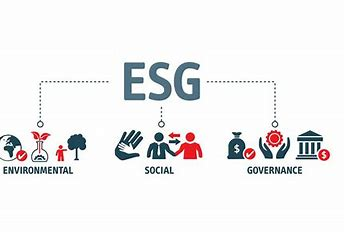
As many medical, dental and podiatric colleagues are aware, Environmental, Social and Governance (ESG) investing refers to a set of standards for a company’s behavior used by socially conscious investors to screen potential investments. Over the last decade, or so, I have seen many investors pursing this laudable aim.

Yet, more than 80% of private equity fund managers have now stepped away from at least one deal due to ESG concerns, according to the 2023 BDO Private Capital Survey. The reasons are complex, and point towards fund managers’ sentiment towards risk-reward in the current economic environment.

This retreat from ESG is due to backlash from conservatives who are critical of the idea that mutual fund managers should be considering any other factor but a company’s share holders in their investment decisions. Accusations of “Greenwashing” have also plagued many ESG funds, which is when an asset management firm charging higher fees or a specific thematic fund without actually delivering a unique investment strategic competitive advantage.

Greenwashing is the process of conveying a false impression or misleading information about how a company’s products are environmentally sound. Greenwashing involves making an unsubstantiated claim to deceive consumers and / or investors into believing that a company’s products are environmentally friendly or have a greater positive environmental impact than they actually do. Greenwashing may also occur when a company attempts to emphasize sustainable aspects of a product to overshadow the company’s involvement in environmentally damaging practices.

ESG: https://medicalexecutivepost.com/2023/09/23/mas-and-esg-profit/

***

***

According to internationally known linguistics and cognitive science Professor, Mackenzie Hope Marcinko PhD of the University of Delaware, greenwashing is performed through the use of environmental imagery, misleading labels, cognitive biases and tendencies hiding tradeoffs. Greenwashing is also a play on the term “Whitewashing,” which means using false information to intentionally hide wrongdoing, errors or an unpleasant situation in an attempt to make it seem less bad than it really is.

To be sure, uncertainty around ESG regulations in the USA is leading financial deal makers to tread carefully. For example, Jim Clayton MBA, a private equity advisor also from the University of Delaware recently stated:

  • We’re a year past when the SEC said they were going to issue ESG reporting standards for public filers which has created more noise in the system.”
  • “People are nervous about what I would call ESG-intense exposed industries, in other words, those with “heavy carbon footprints”.

MORE ESG: https://medicalexecutivepost.com/2023/03/27/on-socially-responsible-investing-2/

And, a federal judge in Texas said that American Airlines violated federal law by basing investment decisions for its employee retirement plan on environmental, social, and other non-financial factors. The ruling in January 2025 by US District Judge Reed O’Connor appeared to be the first of its kind amid growing backlash by conservatives to an uptick in socially-conscious investing. O’Connor said American had breached its legal duty to make investment decisions based solely on the financial interests of 401(k) plan beneficiaries by allowing BlackRock, its asset manager and a major shareholder, to focus on environmental, social and corporate governance (ESG) factors.

Even the State of Florida pulled $2 billion from the investment management firm BlackRock in the largest divestment ever made. Florida Governor Ron DeSantis claimed that by taking ESG standards into account when making investment decisions, the firm isn’t prioritizing the financial bottom line for Floridians.

Assessment

But, for a few years at least, things were indeed good. In 2020 and 2021, ESG funds outperformed the market by ~4.3%.

Conclusion

So, always remember [caveat emptor]: let the buyer beware!

References and Readings:

1. 2023 BDO Private Capital Survey: https://insights.bdo.com/2023-BDO-Private-Capital-Survey.html

2. Marcinko, DE; Comprehensive Financial Planning Strategies for Doctors and Advisors [Best Practices from Leading Consultants and Certified Medical Planners™] Productivity Press, New York, 2017 

3. Marcinko, DE: Dictionary of Health Economics and Finance. Springer Publishing Company, NY 2006.

4. Zymeri, Jeff: ‘Not Going to Fly Here’ [DeSantis Signs Far-Reaching Anti-ESG Bill into Law]. 2023: https://www.yahoo.com/news/not-going-fly-desantis-signs-121648679.html

COMMENTS APPRECIATED

Refer and Like

***

EDUCATION: Books

SPEAKING: Dr. Marcinko will be speaking and lecturing, signing and opining, teaching and preaching, storming and performing at many locations throughout the USA this year! His tour of witty and serious pontifications may be scheduled on a planned or ad-hoc basis; for public or private meetings and gatherings; formally, informally, or over lunch or dinner. All medical societies, financial advisory firms or Broker-Dealers are encouraged to submit a RFP for speaking engagements: MarcinkoAdvisors@outlook.com 

***

***

SUSTAINABILITY Defined

By Staff Reporters

***

***

Sustainability focuses on meeting the needs of the present without compromising the ability of future generations to meet their needs. There are many different approaches to Sustainability, with motives varying from positive societal impact, to wanting to achieve competitive financial results, or both.

Methods of sustainable investing include active share ownership, integration of ESG factors, thematic investing, impact investing and exclusion among others.

COMMENTS APPRECIATED

Refer and Subscribe

***

***

SECTOR ALLOCATION: Mutual Funds

By Staff Reporters

Sponsor: http://www.MarcinkoAssociates.com

***

***

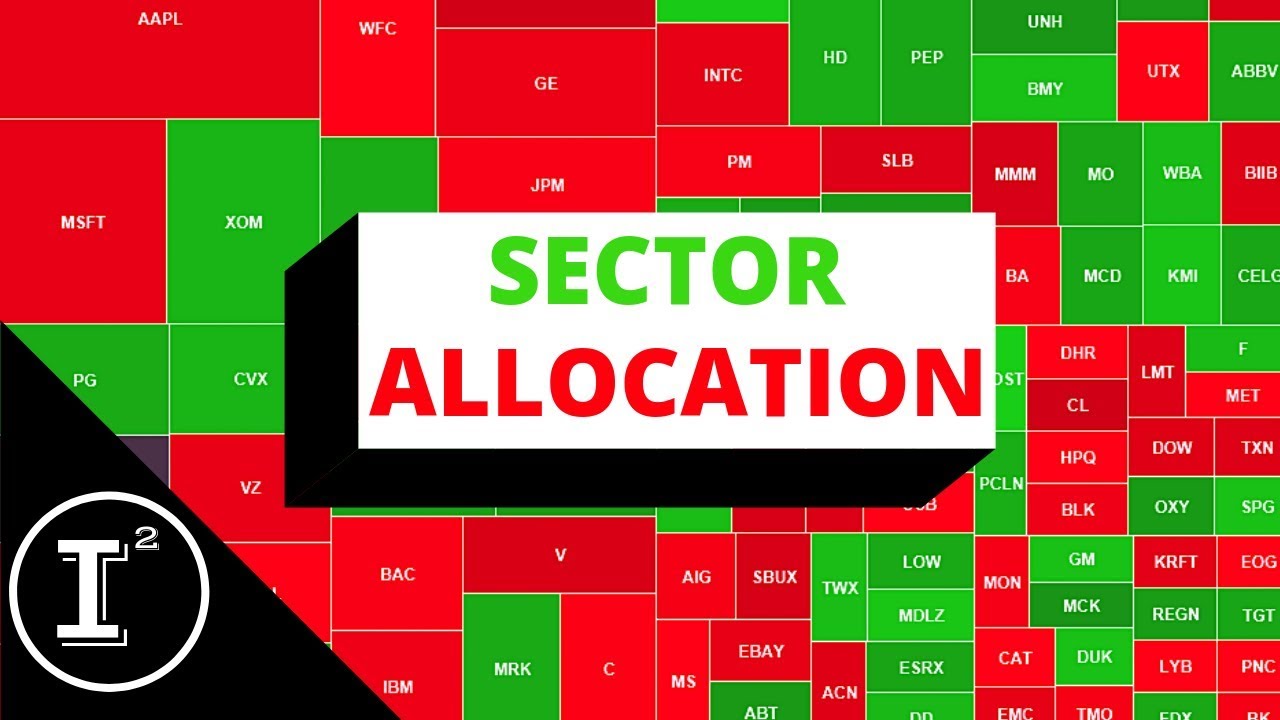
Sector allocation in an equity or fixed-income context refers to a portfolio managers’ decision to invest in a particular broad market sector or industry.

A sector allocation or breakdown can help an investor observe the investment allocations of a mutual or other fund. Fund companies regularly provide sector reporting in their marketing materials. Sector investing can influence investments in the fund. A fund may target a specific sector such as technology, or seek to diversify among many sectors.

Some funds may have restraints on sector investments. This may occur with environmental, social, and governance (ESG) focused funds. These funds seek to exclude industries or companies that their investors consider undesirable for various reasons such as tobacco producers or oil exploration companies.

The ultimate sector allocation decision is likely to combine macroeconomic views with judgments about inter-sector and intra-sector relative values, among other reasons.

COMMENTS APPRECIATED

Subscribe and Refer Today

***

***

ENTITLEMENT PROGRAMS: Criteria and Integration

DEFINITIONS

By Staff Reporters

***

***

Entitlement programs: From an economic overview or government budgeting perspective, entitlement programs are types of government programs that provide individuals with personal financial benefits (or sometimes special government-provided goods or services) to which an indefinite (but usually large) number of potential beneficiaries have a legal right when they meet specified eligibility requirements. The beneficiaries are normally individuals, but can also be organizations. The most important examples at the federal level in the U.S. include Social Security, Medicare, and Medicaid.

Environmental, Social, Governance (ESG) Criteria: The risk and/or opportunity to a company’s market valuation resulting from environmental, social and governance (ESG) factors. Depending on the sector, environmental and social factors include, but are not limited to, 1) climate change, 2) water stress, 3) product safety and quality (supply chain and manufacturing), 4) cybersecurity and data privacy, and 5) human capital management. Regardless of the sector, governance factors include: 1) business (mis)conduct, 2) board composition, independence and entrenchment, 3) accounting practices, 4) ownership structure, and 5) executive pay-for-sustainability performance alignment.

Environmental, Social, Governance (ESG) Integration: The structural incorporation of financially-relevant information on Environmental, Social and Governance (ESG) factors into the investment decision-making process.

COMMENTS APPRECIATED

Please Subscribe and Like!

***

***

DAILY UPDATE: State Farm & Berkshire Hathaway as ESG Retreats and Markets Rise

MEDICAL EXECUTIVE-POST TODAY’S NEWSLETTER BRIEFING

***

Essays, Opinions and Curated News in Health Economics, Investing, Business, Management and Financial Planning for Physician Entrepreneurs and their Savvy Advisors and Consultants

Serving Almost One Million Doctors, Financial Advisors and Medical Management Consultants Daily

A Partner of the Institute of Medical Business Advisors , Inc.

http://www.MedicalBusinessAdvisors.com

SPONSORED BY: Marcinko & Associates, Inc.

***

http://www.MarcinkoAssociates.com

Daily Update Provided By Staff Reporters Since 2007.
How May We Serve You?
© Copyright Institute of Medical Business Advisors, Inc. All rights reserved. 2024

REFER A COLLEAGUE: MarcinkoAdvisors@msn.com

SPONSORSHIPS AVAILABLE: https://medicalexecutivepost.com/sponsors/

ADVERTISE ON THE ME-P: https://tinyurl.com/ytb5955z

Your Referral Count -0-

Stat: Over 90%. That’s the percentage of the insurance industry’s uptick in fossil fuel securities investment coming from just two firms, State Farm and Berkshire Hathaway. (The Wall Street Journal)

CITE: https://www.r2library.com/Resource

Stocks up

  • Southwest Airlines ascended 5.42% after the company laid out its growth plans in an attempt to fend off an activist investor attack.
  • Starbucks climbed 1.93% thanks to an upgrade from Bernstein analysts who foresee a “grande comeback” for the coffee chain.
  • CarMax revved 5% higher after posting strong second-quarter earnings, beating both top and bottom line forecasts.
  • Jabil jumped 11.65% after the electronics parts manufacturer announced impressive earnings and revealed plans to cut costs.
  • Bilibili, which sounds like you’re trying to get your friend William’s attention, popped 15.44% after Goldman Sachs analysts upgraded the Chinese internet company.

Stocks down

  • Super Micro Computer plunged 12.17% on the news that the Department of Justice is launching a probe into the tech company, a few weeks after note short seller Hindenburg Research published a report alleging “accounting manipulation.”
  • Sonos, makers of your favorite subwoofer, sank 4.45% after a rare “double downgrade” by Morgan Stanley analysts, who demoted the stock from a positive “overweight” all the way to a negative “underweight.”
  • Oil stocks took a big hit today after Saudi Arabia announced it will increase its oil production next month. Diamondback Energy fell 6.46%, Shell dropped 3.91%, and ConocoPhillips lost 3.23%.

CITE: https://tinyurl.com/2h47urt5

Here’s where the major benchmarks ended:

  • The S&P 500® index (SPX) rose 23.11 points (0.40%) to 5,745.37; the Dow Jones Industrial Average® ($DJI) added 260.36 points (0.62%) to 42,175.11; the NASDAQ Composite® ($COMP) increased 108.08 points (0.60%) to 18,190.29.
  • The 10-year Treasury note yield (TNX) climbed one basis point to 3.79%.
  • The CBOE Volatility Index® (VIX) was steady at 15.57.

CITE: https://tinyurl.com/tj8smmes

A retreat from ESG is due to backlash from conservatives who are critical of the idea that fund managers should be considering any other factor but a company’s shareholders in their investment decisions. Accusations of “greenwashing” have also plagued many ESG funds, which is when an asset management firm charges higher fees for a specific thematic fund without actually delivering a unique investment strategy.

Visualize: How private equity tangled banks in a web of debt, from the Financial Times.

COMMENTS APPRECIATED

PLEASE SUBSCRIBE: MarcinkoAdvisors@msn.com

Thank You

***

***

***

***

EDUCATIONAL TEXTBOOKS: https://tinyurl.com/4zdxuuwf

***

PODCAST: Health Insurance Denials Contradict DEI, ESG and Fairness Initiatives

By Eric Bricker MD

***

***

CITE: https://www.r2library.com/Resource/Title/0826102549

***

ORDER: https://www.amazon.com/Dictionary-Health-Insurance-Managed-Care/dp/0826149944/ref=sr_1_4?ie=UTF8&s=books&qid=1275315485&sr=1-4

***

COMMENTS APPRECIATED

Thank You

***

15 YEAR JOURNEY: From Active to Passive Investing?

By Staff Reporters

***

***

Historical Review

As can now be discerned 15 years later, two trends emerged from the aftermath of the 2008 financial crisis. One was a new type of investment that concentrated capital among a small number of firms. The other was left-wing activism in the style of Occupy Wall Street. Combined, these trends helped empower Wall Street behemoths to push much of the corporate wokeness that is so common today. The financial meltdown precipitated a transition from active to passive investment.

Definitions

Active investment is what one typically thinks of as investing — making risky stock purchases in an attempt to beat the market in the short-term.

More: https://medicalexecutivepost.com/2023/03/06/understanding-active-asset-allocation/

Passive investment, on the other hand, requires much less effort. According to Investopedia, it is a long-term strategy where investors try to “replicate market performance by constructing well-diversified portfolios” (e.g. mutual funds) typically based on a “representative benchmark” like the S&P 500 index.  In other words, it bets on the market rather than against it.

More: https://medicalexecutivepost.com/2015/03/19/more-on-passive-investing-for-physicians/

Dichotomy

Passive investing took off after the financial crisis when investors realized it wasn’t worth trying to beat the market. Why pay a broker a one to two percent fee every year to actively manage your assets, especially when the downturn revealed they often under-performed the regular market returns? Many opted for passive asset management that cost a fraction of a brokerage fee.

More: https://medicalexecutivepost.com/2022/03/09/active-or-passive-investing-pursuits/

Today

In fact, one study found that between 2008 and 2015, active funds lost $800 billion while passive funds gained over $1 trillion in new investment. As of 2019, more money is now invested in passive than in active funds.

Cite: https://www.cambridge.org/core/journals/business-and-politics/article/hidden-power-of-the-big-three-passive-index-funds-reconcentration-of-corporate-ownership-and-new-financial-risk/30AD689509AAD62F5B677E916C28C4B6

***

***

COMMENTS APPRECIATED

Thank You

***

M&As and ESG = PROFIT?

SPONSOR

http://www.MARCINKOASSOCIATES.com

By Staff Reporters

***

***

Companies’ ESG efforts can prove profitable when it comes to M&As, according to a recent KPMG US ESG survey, which showed that 41% of business leaders see ESG as a major source of financial value during M&As.

ESG: https://medicalexecutivepost.com/2023/03/27/on-socially-responsible-investing-2/

The survey polled 201 business leaders with ESG responsibilities at companies with more than $1 billion in revenue. Respondents were asked to rate how much value ESG brought them in different areas on a seven-point scale. KPMG interpreted scores of six or seven as indicative of major financial value.

Maybe Not: https://medicalexecutivepost.com/2023/07/18/esg-investing-reversal-of-fortune/

The findings are in line with KPMG’s recent ESG Due Diligence Survey, which found that ESG weaknesses can spell trouble during M&As. In that survey, 53% of corporate investors said they had canceled business deals because of ESG weaknesses uncovered during due diligence. A recent BDO survey likewise found that more than 80% of private equity fund managers have walked away from a deal due to ESG concerns.

VENTURE CAPITAL: https://marcinkoassociates.com/fmv-appraisals/

***

COMMENTS APPRECIATED

Thank You

***

***

RELATED TEXTBOOKS

DOCTORS:

“Insurance & Risk Management Strategies for Doctors” https://tinyurl.com/ydx9kd93

“Fiduciary Financial Planning for Physicians” https://tinyurl.com/y7f5pnox

“Business of Medical Practice 2.0” https://tinyurl.com/yb3x6wr8

HOSPITALS:

“Financial Management Strategies for Hospitals” https://tinyurl.com/yagu567d

“Operational Strategies for Clinics and Hospitals” https://tinyurl.com/y9avbrq5

***

ESG Investing: Not So Hot … Anymore?

By Staff Reporters

Environmental, Social, and Corporate Governance

Florida is pulling $2 billion from BlackRock in the largest divestment ever made as part of the growing vendetta against Environmental, Social, and Governance (ESG) investing practices. Florida Governor Ron DeSantis and other Republican leaders claim that by taking ESG standards into account when making investment decisions, the firm isn’t prioritizing the bottom line. But, for a few years, things were good. In 2020 and 2021, ESG funds outperformed the market by ~4.3%.

DEFINITION: According to Wikipedia, ESG (environmental, social, and corporate governance) data reflect the externalities (costs to others) an organization is generating with respect to the environment, to society and to corporate governance. ESG data can be used by investors to assess the material risk the organization is taking and by the organization itself as metrics for strategic and managerial purposes. Investors may also use ESG data beyond assessing material risks to the organization in their evaluation of enterprise value, specifically by designing models based on assumptions that the identification, assessment and management of sustainability-related risks and opportunities in respect to all organizational stakeholders leads to higher long-term risk-adjusted return. Organizational stakeholders include but not limited to customers, suppliers, employees, leadership, and the environment.

CITE: https://www.r2library.com/Resource/Title/082610254

Since 2020, there has been accelerating interest in overlaying ESG data with the Sustainable Development Goals (SDGs), developed based on work by United Nations beginning in the 1980s.

LINK: http://www.ESG.org

The term ESG was popularly used first in a 2004 report titled “Who Cares Wins”, which was a joint initiative of financial institutions at the invitation of UN. In less than 20 years, the ESG movement has grown from a corporate social responsibility initiative launched by the United Nations into a global phenomenon representing more than US$30 trillion in assets under management. In the year 2019 alone, capital totaling US$17.67 billion flowed into ESG-linked products, an almost 525 percent increase from 2015, according to Morningstar, Inc.. Critics claim ESG linked-products have not had and are unlikely to have the intended impact of raising the cost of capital for polluting firms, and have accused the movement of greenwashing.

PODCAST: https://medicalexecutivepost.com/2022/10/10/podcast-what-is-financial-green-washing/

Now All Mad

DeSantis ran his most recent campaign on fighting the “woke ideology” he believes is infiltrating the state. As part of the fight, Florida passed a resolution in August that said ESG standards should be ignored when investing state funds.

And he’s not the only one:

  • Other Republican-controlled states, including Missouri and Louisiana, have moved almost $1.3 billion away from BlackRock for similar reasons.
  • Texas flagged BlackRock as a financial firm that boycotts the state’s energy industry (something BlackRock has denied).

Meanwhile, Democrats aren’t happy either…they criticize BlackRock and ESG investing in general for not going far enough (and for using lax standards that let oil giants onto lists of ESG investments).

Bottom line: According to the Morning Brew, BlackRock and Florida are now cursed to yell “How could you prioritize politics over returns?” back and forth for eternity, and the debate over ESG investing is far from over. Republicans are poised to take over the House—after a campaign season that BlackRock poured record cash into—so we’re likely to see more drama play out at the federal level soon.

***

COMMENTS APPRECIATED

Thank You

***

ORDER: https://www.routledge.com/Comprehensive-Financial-Planning-Strategies-for-Doctors-and-Advisors-Best/Marcinko-Hetico/p/book/9781482240283

***