About “Comments” on the Medical Executive-Post

Join Our Mailing List

One of Just Many Ways to Interact with Us

By Ann Miller RN MHA

[Executive-Director]

If you are not reading our subscriber “comments”, you are not getting all you can from each Medical Executive-Post. And, if you are not reading the links in each post, you are not getting all you can from the ME-P.

Industry Specificity

Then, purchase our textbooks, white-papers, handbooks, dictionaries and CDs for deeper integrated and peer-reviewed industry specificity.

Consulting Too!

And, we are now scheduling private consultations, events and corporate engagements, too. Online and on-ground seminars and private appointments are also available! But for now, read and learn from the comments  tab. It’s fast, free and secure!

Conclusion

So, there are several ways to interact with the ME-P, and more are scheduled in the future.

Speaker: If you need a moderator or speaker for an upcoming event, Dr. David E. Marcinko; MBA – Publisher-in-Chief of the Medical Executive-Post – is available for seminar or speaking engagements. Contact: MarcinkoAdvisors@msn.com

OUR OTHER PRINT BOOKS AND RELATED INFORMATION SOURCES:

***

Product DetailsProduct DetailsProduct Details

Product Details

Product DetailsProduct Details

Risk Management, Liability Insurance, and Asset Protection Strategies for Doctors and Advisors: Best Practices from Leading Consultants and Certified Medical Planners™8Comprehensive Financial Planning Strategies for Doctors and Advisors: Best Practices from Leading Consultants and Certified Medical Planners™

***


New AIDS Data in America

Join Our Mailing List

What the Atlanta HIV Data Tells Us About Public Health in America

BY MAITHRI VANGALA

Maithri Vangala is a former editor with The Health Care Blog.

This article was initially published in Georgia Health News.

***

ImageProxy2

National HIV Testing Day

ImageProxy3

By muttermuseum on Instagram

***

More:

Conclusion

Your thoughts and comments on this ME-P are appreciated. Feel free to review our top-left column, and top-right sidebar materials, links, URLs and related websites, too. Then, subscribe to the ME-P. It is fast, free and secure.

Speaker: If you need a moderator or speaker for an upcoming event, Dr. David E. Marcinko; MBA – Publisher-in-Chief of the Medical Executive-Post – is available for seminar or speaking engagements. Contact: MarcinkoAdvisors@msn.com

OUR OTHER PRINT BOOKS AND RELATED INFORMATION SOURCES:

Product DetailsProduct DetailsProduct Details

[Mike Stahl PhD MBA] *** [Foreword Dr.Mata MD CIS] *** [Dr. Getzen PhD]

APPRECIATING PHYSICIAN EMPLOYEE BUSINESS CREDENTIALING RISKS

Join Our Mailing List 

LIABILITY FOR PHYSICIAN-EXECUTIVES AND MEDICAL EMPLOYERS

IKE[By Ike Devji  JD]

Many medical practice employees, including doctors, nurses, and various clinical assistants must be very specifically credentialed based on both the specifics of your practice and third-party payer contracts.

This additional condition of employment requires a variety of credentialing compliance best practices.

Why is This Such a Big Deal, What’s the Worst that Could Happen?

  • Once an error is identified in any one area of your billing practices, you should expect other areas, even non-related ones with lower compliance burdens, to be examined;
  • You face potential civil and criminal liability for billing third-party payers that contractually require specific credentialed care providers;
  • Your practice may face a loss of revenue due to failure to comply and substantial disruption of practice cash flow if an audit or questions arise;
  • You are subject to reputational damage, stress, and substantial legal fees easily in the six-figure or seven figure range;
  • Increased medical malpractice risk for potentially not providing the required reasonable standard of care if a non-credentialed employee is in the chain of treatment for an affected patient;
  • It may also potentially induce your liability insurance carriers to either completely exclude an event or reduce applicable coverage.

Although this process can be managed internally with the right training and by a variety of existing administrative staff, there is professional help available at nearly every scale, from small practices to hospitals. Many practices, especially smaller ones that don’t have full time HR managers, find that outsourcing this issue is a time and cost efficient form of risk management of this important issue. Outside professional resources are generally known as credentialing organizations (COs), which operate under the wider banner of HR and employee background-check services. Many of these services have accredited certified provider credentialing specialists that can work with your office and staff as outsourced compliance experts.

The biggest benefit a CO can offer is that the best of them go beyond providing just a snapshot of your current credentialing; they also offer a long-range plan to help you implement and maintain it.

***

Niche

***

Some Advantages of Outsourcing this Issue to a Credentialing Organization

  1. They manage credentialing proactively instead of reactively and can help avoid loss of time, efficiency and revenue when, for instance, doctors or staff are taken out of the office to complete massive amounts of CME all at once on a short deadline;
  2. COs are typically better equipped to respond quickly to staff changes including the on-boarding of new staff or doctors, and can help identify and verify what is required to bring any new staff into compliance;
  3. They typically have software systems that are more consistent and reliable than the self-created systems implemented by most practices internally, typically Excel spreadsheets that need to be manually updated and checked;
  4. Using CO software systems is often time and cost efficient in related areas, like insurance credentialing and can help manage a variety of functions including background check compliance, immunizations and hospital privilege policy compliance, as just a few examples.

Risk management in this area again requires that your practice is proactive and discovers and corrects any credentialing gaps in your office before they are an unwelcome surprise discovered by a third party. The liability and financial jeopardy is ultimately that of the practice owners and managers regardless of whether you outsource to a CO or not.

Proactively addressing this serious issue starts with a few simple steps:

  • Have a specific written plan to determine and verify all the required credentialing compliance of each employee and to maintain their compliance status. This applies to both statutory compliance required by law and any other credentialing required as a provider that bills third parties under specific and enforceable contractual requirements;
  • Make a specific person accountable for managing this process and check on that management at least quarterly;
  • Implement appropriate specialty insurance coverage where possible to help protect against any gaps or errors including RAC audit insurance.

  ***industry

***

Conclusion

Your thoughts and comments on this ME-P are appreciated. Feel free to review our top-left column, and top-right sidebar materials, links, URLs and related websites, too. Then, subscribe to the ME-P. It is fast, free and secure.

ABOUT

Mr. Ike Devji is Of-Counsel with Lodmell & Lodmell PC and is the firm’s former managing attorney. He is the Executive Vice-President of the Wealthy 100 ™, a Phoenix Arizona based wealth management and wealth strategy firm with a network of advisors across the United States.  Mr. Devji selectively consults and provides asset protection services to high-net worth, high liability clients nationwide. Ike has spoken to literally thousands of physicians, allied medical professionals and other high-net worth clients across the country. He provides continuing legal education on this subject to other attorneys and regularly lectures at the request of leading medical practice management and investment management groups, including most recently; MultiFinancial Securities, Greenbook Financial, ING, ING TRUST, Comprehensive Wealth Management, CFO Advisors, numerous banks, and both Lorman and the National Business Institute, among others.

Speaker: If you need a moderator or speaker for an upcoming event, Dr. David E. Marcinko; MBA – Publisher-in-Chief of the Medical Executive-Post – is available for seminar or speaking engagements. Contact: MarcinkoAdvisors@msn.com

OUR OTHER PRINT BOOKS AND RELATED INFORMATION SOURCES:

***

[PHYSICIAN FOCUSED FINANCIAL PLANNING AND RISK MANAGEMENT COMPANION TEXTBOOK SET]

  Risk Management, Liability Insurance, and Asset Protection Strategies for Doctors and Advisors: Best Practices from Leading Consultants and Certified Medical Planners™ Comprehensive Financial Planning Strategies for Doctors and Advisors: Best Practices from Leading Consultants and Certified Medical Planners™

***

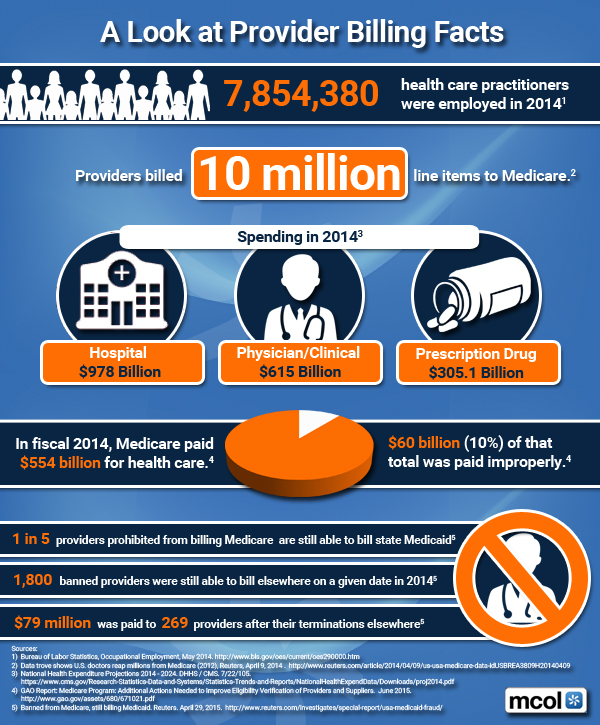
Medical Provider Billing Facts for 2014

Join Our Mailing List 

A Look at Medicare Spending

By http://www.MCOL.com

***

billing

***

Conclusion

Your thoughts and comments on this ME-P are appreciated. Feel free to review our top-left column, and top-right sidebar materials, links, URLs and related websites, too. Then, subscribe to the ME-P. It is fast, free and secure.

Speaker: If you need a moderator or speaker for an upcoming event, Dr. David E. Marcinko; MBA – Publisher-in-Chief of the Medical Executive-Post – is available for seminar or speaking engagements. Contact: MarcinkoAdvisors@msn.com

OUR OTHER PRINT BOOKS AND RELATED INFORMATION SOURCES:

[HOSPITAL OPERATIONS, ORGANIZATIONAL BEHAVIOR AND FINANCIAL MANAGEMENT COMPANION TEXTBOOK SET]

Product DetailsProduct Details

[Foreword Dr. Phillips MD JD MBA LLM] *** [Foreword Dr. Nash MD MBA FACP]

***

The Need for Anti-Trust and OIG Investigation of Physician Health Programs

Join Our Mailing List

Sunshine is the Best Disinfectant!

Langan MD

By Michael Lawrence Langan, M.D.

***

The Need for Anti-Trust and OIG Investigation of Physician Health Programs—Sunshine is the Best Disinfectant!

***

Mutter

***

Conclusion

Your thoughts and comments on this ME-P are appreciated. Feel free to review our top-left column, and top-right sidebar materials, links, URLs and related websites, too. Then, subscribe to the ME-P. It is fast, free and secure.

Speaker: If you need a moderator or speaker for an upcoming event, Dr. David E. Marcinko; MBA – Publisher-in-Chief of the Medical Executive-Post – is available for seminar or speaking engagements. Contact: MarcinkoAdvisors@msn.com

OUR OTHER PRINT BOOKS AND RELATED INFORMATION SOURCES:

[HOSPITAL OPERATIONS, ORGANIZATIONAL BEHAVIOR AND FINANCIAL MANAGEMENT COMPANION TEXTBOOK SET]

Product DetailsProduct Details

[Foreword Dr. Phillips MD JD MBA LLM] *** [Foreword Dr. Nash MD MBA FACP]

***

NEW REPORT HIGHLIGHTS DELAYED DIAGNOSIS AND CAREGIVER BURDEN IN LEWY BODY DEMENTIAS

Join Our Mailing List

By the Lewy Body Dementia Association http://www.lbda.org/

Nearly 80% of people with Lewy body dementias (LBD) received a diagnosis for a different cognitive, movement or psychiatric disorder before ultimately learning they had LBD, according to the Lewy Body Dementia Association’s Caregiver Burden in Lewy Body Dementias, released recently.

This new report reveals people with LBD and their caregivers face barriers to obtaining an early LBD diagnosis. Caregivers rate specialists and general practitioners as inadequate in discussing disease progression. Additionally, caregivers experience moderate to severe emotional burden, and most experience a sense of isolation because so few people know about LBD.

***

ST19

***

NEW REPORT HIGHLIGHTS DELAYED DIAGNOSIS AND CAREGIVER BURDEN IN LEWY BODY DEMENTIAS

More:

Conclusion

Your thoughts and comments on this ME-P are appreciated. Feel free to review our top-left column, and top-right sidebar materials, links, URLs and related websites, too. Then, subscribe to the ME-P. It is fast, free and secure.

Speaker: If you need a moderator or speaker for an upcoming event, Dr. David E. Marcinko; MBA – Publisher-in-Chief of the Medical Executive-Post – is available for seminar or speaking engagements. Contact: MarcinkoAdvisors@msn.com

OUR OTHER PRINT BOOKS AND RELATED INFORMATION SOURCES:

[HEALTH INSURANCE, MANAGED CARE, ECONOMICS, FINANCE AND HEALTH INFORMATION TECHNOLOGY COMPANION DICTIONARY SET]

      Product DetailsProduct DetailsProduct Details

***

The Ever Changing “Standard of Medical Care”

Join Our Mailing List

Lard and Nicotine

Via Hend:

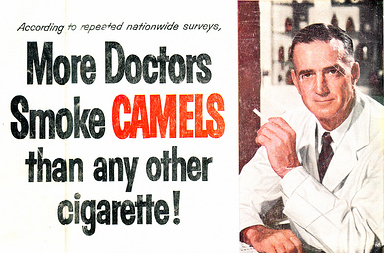
According to Wikipedia, a standard of care is a medical or psychological treatment guideline, and can be general or specific. It specifies appropriate treatment based on scientific evidence and collaboration between medical and/or psychological professionals involved in the treatment of a given condition.

Some common examples:

1. Diagnostic and treatment process that a clinician should follow for a certain type of patient, illness, or clinical circumstance. Adjuvant chemotherapy for lung cancer is “a new standard of care, but not necessarily the only standard of care”. (New England Journal of Medicine, 2004)

2. In legal terms, the level at which an ordinary, prudent professional with the same training and experience in good standing in a same or similar community would practice under the same or similar circumstances. An “average” standard would not apply because in that case at least half of any group of practitioners would not qualify. The medical malpractice plaintiff must establish the appropriate standard of care and demonstrate that the standard of care has been breached, with expert testimony.

3. A physician also has a “duty to inform” a patient of any material risks or fiduciary interests of the physician that might cause the patient to reconsider a procedure, and may be liable if injury occurs due to the undisclosed risk, and the patient can prove that if he had been informed he would not have gone through with the procedure, without benefit of hindsight. (Informed Consent Rule.) Full disclosure of all material risks incident to treatment must be fully disclosed, unless doing so would impair urgent treatment. As it relates to mental health professionals standard of care, the California Supreme Court, held that these professionals have “duty to protect” individuals who are specifically threatened by a patient. [Tarasoff v. Regents of the University of California, 17 Cal. 3d 425, 551 P.2d 334, 131 Cal. Rptr. 14 (Cal. 1976)].

4. A recipient of pro bono (free) services (either legal or medical) is entitled to expect the same standard of care as a person who pays for the same services, to prevent an indigent person from being entitled to only substandard care.

Source: https://en.wikipedia.org/wiki/Standard_of_care

***

B2Q2bSgCUAAu4Aw

***

doctors-smoke-camel

***

Assessment

We may not recommend this today, but back in the day…..?

More:

Conclusion

Your thoughts and comments on this ME-P are appreciated. Feel free to review our top-left column, and top-right sidebar materials, links, URLs and related websites, too. Then, subscribe to the ME-P. It is fast, free and secure.

Speaker: If you need a moderator or speaker for an upcoming event, Dr. David E. Marcinko; MBA – Publisher-in-Chief of the Medical Executive-Post – is available for seminar or speaking engagements. Contact: MarcinkoAdvisors@msn.com

OUR OTHER PRINT BOOKS AND RELATED INFORMATION SOURCES:

Risk Management, Liability Insurance, and Asset Protection Strategies for Doctors and Advisors: Best Practices from Leading Consultants and Certified Medical Planners™8Comprehensive Financial Planning Strategies for Doctors and Advisors: Best Practices from Leading Consultants and Certified Medical Planners™

Dealing with Patients Who Refuse to Pay

Join Our Mailing List 

Is your credit card on file?

[By Ann Miller RN MHA]

Handling patients with high deductibles health care plans and/or who refuse to pay in the ACA era is a growing financial risk for private medical practitioners. To help ameliorate the issue, some doctors are using a “credit card on file” program.

Enter “Credit-Card-on-File” Programs

Athenahealth has such a program where, once each year, the doctor swipes the credit card of each patient. Athena’s credit card partner (Elavon) stores the credit card information securely. The patient signs a one-year contract that gives permission to bill that card for any outstanding balances. This is the same concept as having a hotel swipe your credit card when you check-in but not bill you until you have checked-out.

Then, as soon as insurance has adjudicated the claim, the patient receives an email informing them that their credit card will be charged for the remaining balance in 5 days. If they have any issue with the bill they can contact the doctor’s office in that 5 day period. If not, their credit card is automatically charged for the balance due after 5 days. No work on the doctor’s office part is required once the card is swiped.

***

Reading the Fine Print of a Legal Agreement

Reading the Fine Print of a CC on file agreement

***

Assessment

Advantages include no need to send out patient statements, and days-in-AR for patient balances is reduced. And, essentially no staff time is spent collecting patient balances.

Another company (managemypractice.com) offers helpful online courses on how to set this up a credit card on file program regardless of system used.

Conclusion

Your thoughts and comments on this ME-P are appreciated. Feel free to review our top-left column, and top-right sidebar materials, links, URLs and related websites, too. Then, subscribe to the ME-P. It is fast, free and secure.

Speaker: If you need a moderator or speaker for an upcoming event, Dr. David E. Marcinko; MBA – Publisher-in-Chief of the Medical Executive-Post – is available for seminar or speaking engagements. Contact: MarcinkoAdvisors@msn.com

OUR OTHER PRINT BOOKS AND RELATED INFORMATION SOURCES:

Risk Management, Liability Insurance, and Asset Protection Strategies for Doctors and Advisors: Best Practices from Leading Consultants and Certified Medical Planners™8Comprehensive Financial Planning Strategies for Doctors and Advisors: Best Practices from Leading Consultants and Certified Medical Planners™

“This comprehensive text book provides an in-depth presentation of the cyber security and real risk management, asset protection and insurance issues facing all medical profession today. It is far beyond the mere medical malpractice concerns I faced when originally entering practice decades ago.”

Dr. Barbara s. Schlefman MA [Family Foot Care, PA, Tucker, Georgia]

***


Online Doctor Reputation Management

Join Our Mailing List

How doctors can protect their online reputation

A continuing series on physician online reputation.  Created in partnership with The Doctors Company as part of their social media resources for physicians

Conclusion

Your thoughts and comments on this ME-P are appreciated. Feel free to review our top-left column, and top-right sidebar materials, links, URLs and related websites, too. Then, subscribe to the ME-P. It is fast, free and secure.

Speaker: If you need a moderator or speaker for an upcoming event, Dr. David E. Marcinko; MBA – Publisher-in-Chief of the Medical Executive-Post – is available for seminar or speaking engagements. Contact: MarcinkoAdvisors@msn.com

OUR OTHER PRINT BOOKS AND RELATED INFORMATION SOURCES:

Product Details

 [Foreword Dr.Mata MD CIS]

Frankly Speaking on Patient Safety

Join Our Mailing List

First, do no harm

By Frank Phillips

This phrase is a cherished one throughout healthcare, and a principle by which healthcare facilities and providers alike always seek to abide.

So, in 1999, when the Institute of Medicine published their now famous “To Err is Human” report, individuals and organizations both inside and outside of healthcare were shocked by the findings that an estimated 98,000 people a year die due to mistakes in hospitals. In the years since that report, much has changed in healthcare, but what about patient safety?

What is the scope of the problem, what progress has been made and what are the solutions? Take a look.

***Frankly Speaking

***

Conclusion

Your thoughts and comments on this ME-P are appreciated. Feel free to review our top-left column, and top-right sidebar materials, links, URLs and related websites, too. Then, subscribe to the ME-P. It is fast, free and secure.

Speaker: If you need a moderator or speaker for an upcoming event, Dr. David E. Marcinko; MBA – Publisher-in-Chief of the Medical Executive-Post – is available for seminar or speaking engagements. Contact: MarcinkoAdvisors@msn.com

OUR OTHER PRINT BOOKS AND RELATED INFORMATION SOURCES:

[HEALTH INSURANCE, MANAGED CARE, ECONOMICS, FINANCE AND HEALTH INFORMATION TECHNOLOGY COMPANION DICTIONARY SET]

      Product DetailsProduct DetailsProduct Details

***

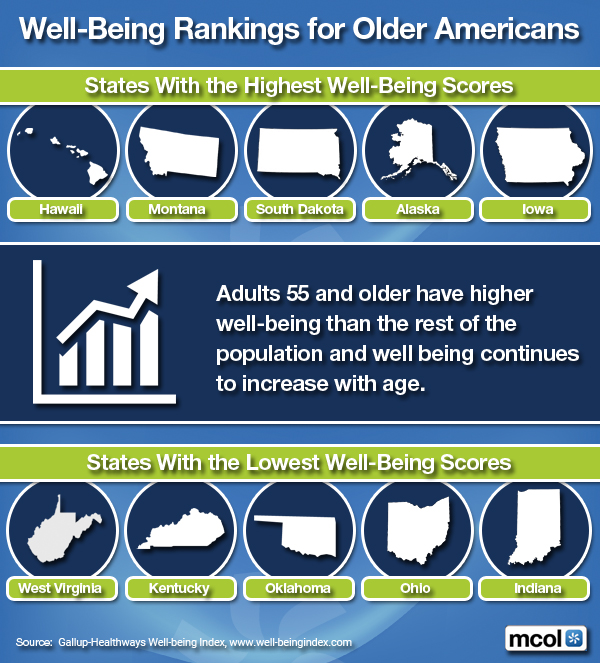
Well-Being Rankings for Older Americans

Join Our Mailing List

States with the Highest Scores

By http://www.MCOL.com

***

ImageProxy-2

***

Conclusion

Your thoughts and comments on this ME-P are appreciated. Feel free to review our top-left column, and top-right sidebar materials, links, URLs and related websites, too. Then, subscribe to the ME-P. It is fast, free and secure.

Speaker: If you need a moderator or speaker for an upcoming event, Dr. David E. Marcinko; MBA – Publisher-in-Chief of the Medical Executive-Post – is available for seminar or speaking engagements. Contact: MarcinkoAdvisors@msn.com

OUR OTHER PRINT BOOKS AND RELATED INFORMATION SOURCES:

Risk Management, Liability Insurance, and Asset Protection Strategies for Doctors and Advisors: Best Practices from Leading Consultants and Certified Medical Planners™8Comprehensive Financial Planning Strategies for Doctors and Advisors: Best Practices from Leading Consultants and Certified Medical Planners™

“With time at a premium, and so much vital information packed into one well organized resource, this comprehensive textbook should be on the desk of everyone serving in the healthcare ecosystem. The time you spend reading this frank and compelling book will be richly rewarded.”

Dr. J. Wesley Boyd MD PhD MA

[Harvard Medical School, Boston, Massachusetts, USA]

Health Organizations Slammed by Cyber Breaches

Join Our Mailing List

Top TEN Health Organizations Slammed by Cyber Breaches

Last year, the FBI released a private notice to the healthcare industry warning providers that their cybersecurity systems are lax compared to other industries, according to Reuters.

The notice reportedly stated, “The healthcare industry is not as resilient to cyber intrusions compared to financial and retail sectors, therefore the possibilities of increased cyber intrusions is likely.”

More: http://managedhealthcareexecutive.modernmedicine.com/managed-healthcare-executive/news/ten-health-organizations-slammed-cyber-breaches?page=0,1

***

lock

READ: Under Attack: Executives Face Rising Cybersecurity Risks

***

Considering the recent outbreak of major breaches affecting the industry, it appears that those concerns were warranted. The healthcare industry accounted for 43% of major data breaches reported in 2014, according to the Identity Theft Resource Center.

While 2015 data are not yet available, the steady stream of cybersecurity breaches has continued, and many organizations have already reported major breaches. Here are 10 recent victims.

Conclusion

Your thoughts and comments on this ME-P are appreciated. Feel free to review our top-left column, and top-right sidebar materials, links, URLs and related websites, too. Then, subscribe to the ME-P. It is fast, free and secure.

Speaker: If you need a moderator or speaker for an upcoming event, Dr. David E. Marcinko; MBA – Publisher-in-Chief of the Medical Executive-Post – is available for seminar or speaking engagements. Contact: MarcinkoAdvisors@msn.com

OUR OTHER PRINT BOOKS AND RELATED INFORMATION SOURCES:

***

[Foreword Dr.Mata MD CIS]

***

  Risk Management, Liability Insurance, and Asset Protection Strategies for Doctors and Advisors: Best Practices from Leading Consultants and Certified Medical Planners™

***

“Physicians have more complex liability challenges to overcome in their lifetime, and less time to do it, than other professionals. Combined with a focus on practicing their discipline, many sadly fail to plan for their own future. They need trustworthy advice on how to effectively protect themselves, families and practice, from the many overt and covert risks that could potentially disrupt years of hard work. Fortunately, this advice is contained within Risk Management, Liability Insurance, And Asset Protection Strategies For Doctors And Advisors [Best Practices From Leading Consultants And Certified Medical Planners™].

Written by Dr. David Edward Marcinko, Nurse Hope Rachel Hetico and their team of risk managers, accountants, insurance agents, attorneys and physicians, it is uniquely positioned as an integration of applied, academic and peer-reviewed strategies and research, with case studies, from top consultants and Certified Medical Planners™. It contains the latest principles of risk management and asset protection strategies for the specific challenges of modern physicians. My belief is that any doctor who reads and applies even just a portion of this collective wisdom will be fiscally rewarded. The Institute of Medical Business Advisors has produced another outstanding reference for physicians that provide peace of mind in this unique marketplace! In my opinion, it is a mandatory read for all medical professionals.”

David K. Luke MS-PFP, MIM, CMP™ [Net Worth Advisory Group, Inc., Sandy, Utah, USA

http://www.CertifiedMedicalPlanner.org

The Surgeons Scorecard

Join Our Mailing List

Coming Soon: ProPublica’s Surgeon Scorecard

***

sergtech

***

Millions of patients a year undergo common elective operations – things like knee and hip replacements or gall bladder removals.

But, there’s almost no information available about the quality of surgeons who do them. ProPublica analyzed 2.3 million Medicare operations and identified 67,000 patients who suffered serious complications as a result: infections, uncontrollable bleeding, even death.

We’ll be reporting the complication rates of 17,000 surgeons — so patients can make an informed choice.

***

Product DetailsProduct Details

[Foreword J. Phillips MD JD MBA] [Foreword D. Nash MD MBA]

Conclusion

Your thoughts and comments on this ME-P are appreciated. Feel free to review our top-left column, and top-right sidebar materials, links, URLs and related websites, too. Then, subscribe to the ME-P. It is fast, free and secure.

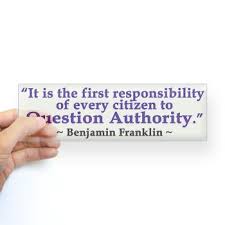
Question Authority: The Need for Anti-Authoritarians in the Medical Profession

Join Our Mailing List

Michael Lawrence Langan, M.D.

[Boston, Massachusetts]

M.D. Harvard Medical School, Massachusetts General Hospital 1997-2013. Geriatric Medicine, Internal Medicine

***

iMBA Inc Textbooks

Product DetailsProduct Details

Risk Management, Liability Insurance, and Asset Protection Strategies for Doctors and Advisors: Best Practices from Leading Consultants and Certified Medical Planners™8Comprehensive Financial Planning Strategies for Doctors and Advisors: Best Practices from Leading Consultants and Certified Medical Planners™

Disrupted Physician

Screen Shot 2015-05-30 at 7.27.10 PM
Anti-authoritarians question whether an authority is a legitimate one before taking that authority seriously.  images-24To evaluate the legitimacy of  an authority it is necessary to:
1. Assess whether they actually know what they are talking about.
2. Assess whether the authorities are honest in their intentions.  When anti-authoritarians assess an authority to be illegitimate, they challenge and resist that authority.
There is a paucity of anti-authoritarianism in the medical community concerning groups who have gained tremendous sway in the regulation of the medical profession.    There is an absence of anti-authoritarian questioning  of  what is essentially illegitimate and irrational authority.
images-26In order for these organizations to maintain power it is necessary that their authoritative opinion remain unquestioned and unchallenged.  Consciously manufactured propaganda has persuaded regulatory and public opinion of their value and to maintain power it is necessary that this authority remain insulated from outside evaluation because the entire system is based…

View original post 301 more words

Transparency Program Obscures Pharma Payments to RNs and PAs

Join Our Mailing List

New data largely excludes nurse practitioners and physician assistants

By Charles Ornstein | @charlesornstein  |  Pro Publica

New data on drug and device company payments to doctors largely excludes nurse practitioners and physician assistants, though they play an ever-larger role in health care.

One advanced-practice nurse pleaded guilty last month to taking drug company kickbacks.

NOTE: This story was co-published with NPR’s Shots blog.

pill mill

More:

http://www.propublica.org/article/transparency-program-obscures-pharma-payments-nurses-physician-assistants?utm_source=et&utm_medium=email&utm_campaign=dailynewsletter&utm_content=&utm_name=

Conclusion

Your thoughts and comments on this ME-P are appreciated. Feel free to review our top-left column, and top-right sidebar materials, links, URLs and related websites, too. Then, subscribe to the ME-P. It is fast, free and secure.

Speaker: If you need a moderator or speaker for an upcoming event, Dr. David E. Marcinko; MBA – Publisher-in-Chief of the Medical Executive-Post – is available for seminar or speaking engagements. Contact: MarcinkoAdvisors@msn.com

OUR OTHER PRINT BOOKS AND RELATED INFORMATION SOURCES:

Risk Management, Liability Insurance, and Asset Protection Strategies for Doctors and Advisors: Best Practices from Leading Consultants and Certified Medical Planners™8Risk Management, Liability Insurance, and Asset Protection Strategies for Doctors and Advisors: Best Practices from Leading Consultants and Certified Medical Planners™

Although this book targets physicians, I was pleased to see that it also addressed the risk management, financial planning and employment benefit needs of nurses; physical, respiratory, and occupational therapists; CRNAs, hospitalists, and other members of the health care team….highly readable, practical, and understandable.

Nurse Cecelia T. Perez RN [Hospital Operating Room Manager, Ellicott City, Maryland

Using Deposits and Withdrawals to Rebalance Your Portfolio

Join Our Mailing List 

Benefits of portfolio rebalancing well documented

[By Lon Jefferies MBA CFP®] http://www.NetWorthAdvice.com

Lon JefferiesThe benefits of rebalancing a portfolio are well documented. Constant and routine rebalancing forces a physician or any investor to lighten the portfolio positions that have recently performed well and use the resulting funds to buy more shares of the assets in the portfolio that have remained flat or even declined in value. In other words, rebalancing causes the investor to sell high and buy low.

Most financial professionals recommend rebalancing your portfolio at least once a year (I rebalance my clients’ portfolios on a semi-annual basis).

However, the tax status of an investment account can have a significant impact on a rebalancing strategy. While investments within a tax-advantaged account like a traditional or Roth IRA can be sold without tax implications, selling appreciated assets in a taxable investment accounts will create a capital gains liability.

Consequently, while rebalancing within a tax-advantaged account should be a no-brainer, investors should carefully consider the tax implications that may result from rebalancing a normal investment account.

***

prt_320x212_1397595292

[Routine Portfolio Rebalancing]

***

For this reason, investors should view every deposit to or withdrawal from a taxable investment account as a chance to rebalance. Depositing new money is a free opportunity to buy more of the positions in which the portfolio is underweight.

Example:

For example, suppose an investment account of $100,000 has a target asset allocation of 50% stocks and 50% bonds ($50,000 invested in both). After a year in which stocks made 10% and bonds were flat, the portfolio would consist of $55,000 of stocks and $50,000 of bonds, for a total account balance of $105,000. If at this point the investor would like to invest an additional $5,000, the entire contribution should be placed in bonds, bringing the actual portfolio allocation back to 50% stocks and 50% bonds ($55,000 in each).

Of course, this same strategy can be implemented regardless of the size of the additional contribution. If the investor wanted to contribute $10,000 in year two, the total account value would be $115,000 ($105k current balance + $10k new money). In order to get back to our 50% stock and 50% bond targets, we would want $57,500 in each position. With $55,000 already invested in stocks, we would only want to invest $2,500 of the new money into stocks and place the remaining $7,500 into bonds, bringing both portions of the portfolio up to their targets.

Taking withdrawals from a taxable investment account should also be viewed as an opportunity to rebalance. Rebalancing via withdrawals may not be free as it is when rebalancing is done when new funds are deposited because appreciated assets are likely sold, creating a tax liability. However, when a withdrawal is taken from a taxable account, it is still wise to sell overweight asset categories to produce the funds needed for the distribution.

Example:

Let’s return to our previous example of a 50% stock and 50% bond target portfolio that had grown to $55,000 of stock and $50,000 of bonds. If the investor then wanted to withdraw $10,000, he could take the entire distribution out of bonds which would allow him to free up the amount needed without creating a tax liability. However, the resulting portfolio would consist of $55,000 of stocks and $40,000 of bonds – a ratio of approximately 58% stocks and 42% bonds.

This is a significantly more volatile portfolio than the target 50% / 50% portfolio. For example, in 2008 a portfolio that consisted of 50% large cap stocks and 50% long term government bonds lost -7.16%. Meanwhile, a portfolio of 58% stocks and 42% bonds lost -11.93% over the same period – a 66.6% increase in volatility.

Alternatively, I’d suggest using the $10,000 withdrawal to rebalance the portfolio, bringing the resulting $95,000 portfolio back to 50% stocks and 50% bonds ($47,500 in each). Of course, to do this, the investor would liquidate $7,500 of stocks and $2,500 of bonds. Although this could potentially create a small capital gains tax liability, this is a tax bill that will need to be paid at some point anyhow, and the investor will maintain a portfolio with the target amount of volatility.

Further, remember that the long-term capital gains rate (which applies to any capital assets held for over a year) is a favorable tax rate. For single filers with a taxable income of less than $37,450 and joint filers with a taxable income of less than $74,900, the capital gains tax rate is actually 0%!

Additionally, for single filers with a taxable income of between $37,450 and $406,750 and joint filers with a taxable income of between $74,900 and $457,600, the capital gains tax rate is only 15%. Consequently, the investor can likely rebalance the portfolio back to the target allocation via the withdrawal while incurring only a nominal tax bill.

***

healthfinance

***

Assessment

While rebalancing provides a significant increase in investment return over long time periods, tax implications should be considered when determining whether or not to rebalance a taxable investment account. However, depositing money to or withdrawing money from these accounts provides a favorable opportunity to obtain the return premium rebalancing creates while minimizing tax implications.

Conclusion

Your thoughts and comments on this ME-P are appreciated. Feel free to review our top-left column, and top-right sidebar materials, links, URLs and related websites, too. Then, subscribe to the ME-P. It is fast, free and secure.

Speaker: If you need a moderator or speaker for an upcoming event, Dr. David E. Marcinko; MBA – Publisher-in-Chief of the Medical Executive-Post – is available for seminar or speaking engagements. Contact: MarcinkoAdvisors@msn.com

OUR OTHER PRINT BOOKS AND RELATED INFORMATION SOURCES:

Risk Management, Liability Insurance, and Asset Protection Strategies for Doctors and Advisors: Best Practices from Leading Consultants and Certified Medical Planners™8Comprehensive Financial Planning Strategies for Doctors and Advisors: Best Practices from Leading Consultants and Certified Medical Planners™

Physicians are notoriously excellent at diagnosing and treating medical conditions. However, they are also notoriously deficient in managing the business aspects of their medical practices. Most will earn $20-30 million in their medical lifetime, but few know how to create wealth for themselves and their families. This book will help fill the void in physicians’ financial education. I have two recommendations: 1) every physician, young and old, should read this book; and 2) read it a second time!

Dr. Neil Baum MD [Clinical Associate Professor of Urology, Tulane Medical School, New Orleans, Louisiana]

http://www.CertifiedMedicalPlanner.org

Enter the CMPs

DOCs – Declare your INDEPENDENCE Day!

Join Our Mailing List

By Pamela Wible MD via Ann Miller RN MHA

***

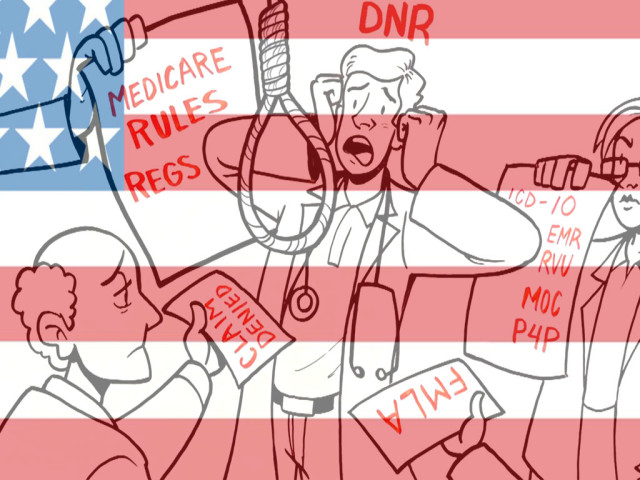
9 out of 10 doctors wouldn’t recommend medicine as a profession

Doctors4th-640x480

 Why?

***
Here are a few factoids.
  • Pages in U.S. tax code: 74,608
  • Pages of Medicare regulations by which physicians must abide: > 132,000
  • Current number of diagnostic and procedure codes doctors must know: 17,000
  • Number of codes docs are responsible for with new guidelines in October: >140,000.
  • Percent of working hours doctors spend on non-patient-related paperwork: 22 percent
  • Percent of working hours doctors spend on patient-related paperwork: > 60 percent
  • Percent of time doctors spend looking at computers instead of patients: 40 percent
  • Percent of working hours new doctors spend face-to-face with patients: 12 percent
  • Which is how many minutes per patient: 8

Assessment

Maybe that’s why over 1 million Americans will lose their doctors to suicide this year.

More:

Join me this July 4th weekend to declare your independence

LINK: https://www.youtube.com/watch?v=VDF0kJpVpXw&feature=player_embedded

LINK: youtube https://www.youtube.com/watch?v=VDF0kJpVpXw?feature=player_detailpage&w=640&h=360

Update on Health Insurance Coverage in the USA

Join Our Mailing List

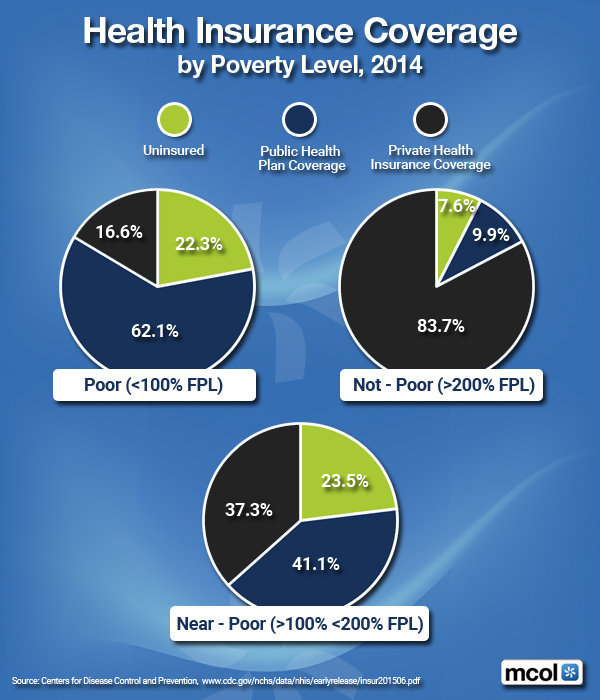
By Poverty Level in 2014

By http://www.MCOL.com

Conclusion

Your thoughts and comments on this ME-P are appreciated. Feel free to review our top-left column, and top-right sidebar materials, links, URLs and related websites, too. Then, subscribe to the ME-P. It is fast, free and secure.

Speaker: If you need a moderator or speaker for an upcoming event, Dr. David E. Marcinko; MBA – Publisher-in-Chief of the Medical Executive-Post – is available for seminar or speaking engagements. Contact: MarcinkoAdvisors@msn.com

OUR OTHER PRINT BOOKS AND RELATED INFORMATION SOURCES:

Comprehensive Financial Planning Strategies for Doctors and Advisors: Best Practices from Leading Consultants and Certified Medical Planners™

There is no other comprehensive book like it to help doctors, nurses, and other medical providers accumulate and preserve the wealth that their years of education and hard work have earned them.

Jason Dyken MD MBA [Dyken Wealth Strategies, Gulf Shores, Alabama]

Risk Management, Liability Insurance, and Asset Protection Strategies for Doctors and Advisors: Best Practices from Leading Consultants and Certified Medical Planners™

I have read these texts and used consulting services from the Institute of Medical Business of Advisors, Inc., on several occasions. 

MARSHA LEE; DO [Radiologists, Norcross, GA]

Drug Companies and Doctors [A Story of Corruption]

Join Our Mailing List

Product DetailsProduct Details

Risk Management, Liability Insurance, and Asset Protection Strategies for Doctors and Advisors: Best Practices from Leading Consultants and Certified Medical Planners™8Comprehensive Financial Planning Strategies for Doctors and Advisors: Best Practices from Leading Consultants and Certified Medical Planners™

Disrupted Physician

Drug Companies and Doctors: A Story of Corruption.

What we need is a Marcia Angell to take on the multi-billion dollar drug and alcohol testing, assessment and treatment industry.

Screen Shot 2015-06-01 at 7.22.25 PMWhile all eyes were focused on the drug companies these multi-billion dollar industries erected a scaffold of immunity and profit by removing (and blocking) themselves from essentially all aspects of accountability; answerability, justification for actions and the ability to be punished by outside actors.    The 2009 quote in reference to “big pharma”  is just as applicable to the drug and alcohol testing industry,”  the inpatient assessment and treatment centers and the “authorities” pushing public policy and swaying public opinion to accept irrational and illegitimate authoritative opinion as truth.

And unlike the pharmaceutical industries carefully constructed “bent science” which requires a keen eye and critical analysis , the evidence-base supporting the testing, assessment and treatment industry rests on a foundation that can…

View original post 541 more words

UNDERSTANDING MEDICAL PRACTICE CYBER SECURITY RISKS

Join Our Mailing List 

A SPECIAL ME-P REPORT

Risk Management, Liability Insurance, and Asset Protection Strategies for Doctors and Advisors: Best Practices from Leading Consultants and Certified Medical Planners™

Mitigations for the Digital Health Era

Shahid N. Shah MS

[By Shahid N. Shah MS]

There has been a tremendous explosion of information technology (IT) in healthcare caused by billions of dollars of government incentives for usage of digital healthcare tools.

But, IT systems face threats with significant adverse impacts on institutional assets, patients, and partners if sensitive data is ever compromised. Every health enterprise is required to confidentiality, integrity and availability of its information assets (this is called “information assurance” or IA). Confidentiality means private or confidential information must not be disclosed to unauthorized persons. Integrity means that the information can be changed only in an authorized manner so as to maintain the correctness of the information. Availability defines the characteristic that information systems work as intended and all services are available to its users whenever necessary.

It is well known that healthcare organizations face and have been mitigating many risks such as investment risk, budgetary risk, program management risk, safety risk, and inventory risk for many years. What’s new in the last decade or so is that organizations must now manage information assurance risks related to operating its information systems because information systems. IT is now just as a critical an asset as most other infrastructure managed by health systems. It is important that information security risks are given the same or more importance and priority as given to other organizational risks.

As health records move from paper native to digital native, it’s vital that organizations have information risk management programs and security procedures that woven into the culture of the organization. For this to happen, basic requirements of information security must be defined and implemented as part of both the operational and management processes. A framework that provides guidance on how to perform these activities, and the co-ordination required between these activities is needed.

***

hacker

[Black Hat Medical Hacker]

***

INTRODUCTION

The Risk Management Framework (RMF), supported by the National Institute of Standards and Technology (NIST) provides this framework. The NIST 800 series publications provide a structured approach to achieve risk management. It provides broad guidance and not necessarily all the prescriptions, which means it can be tailored to meet the organization’s specific needs and providing the flexibility needed for the different organizations. Using the NIST RMF helps organizations with risk management not only in a repeatable manner, but also with greater efficiency and effectiveness. Healthcare information assurance is complex and without a framework that takes into account a broad risk management approach, it is difficult to consider all the intricacies involved.

The NIST Risk Management Framework consists of a six step process designed to guide organizations in managing the risks in their information systems.

The various steps as defined in the NIST specifications are the following:

  • Categorize the information system and the information processed, stored, and transmitted by that system based on an impact analysis.
  • Select an initial set of baseline security controls for the information system based on the security categorization; tailoring and supplementing the security control baseline as needed based on an organizational assessment of risk and local conditions
  • Implement the security controls and describe how the controls are employed within the information system and its environment of operation.
  • Assess the security controls using appropriate assessment procedures to determine the extent to which the controls are implemented correctly, operating as intended, and producing the desired outcome with respect to meeting the security requirements for the system.
  • Authorize information system operation based on a determination of the risk to organizational operations and assets, individuals, other organizations, and the Nation resulting from the operation of the information system and the decision that this risk is acceptable.
  • Monitor the security controls in the information system on an ongoing basis including assessing control effectiveness, documenting changes to the system or its environment of operation, conducting security impact analyses of the associated changes, and reporting the security state of the system to designated organizational officials.

All information systems process, store and transmit information. What is the possible impact if a worst case scenario occurs that causes endangers this information? A structured way to find out the potential impact on the confidentiality, integrity and availability of information can be done through the first step of NIST RMP, the categorization of information systems.

***

keyboard

[Triple Redundant Passwords and Encryption]

***

The NIST SP 800-60 [1, 2, 3 4] provides such guidance. The potential impact is assigned qualitative values – low, moderate, or high. Based on these impact levels for each of the information type contained in the system, the high water mark level is calculated, that helps in selecting the appropriate controls in the subsequent steps.

Organizations need to mitigate risks adequately by selecting an appropriate set of controls that would work effectively. In the selection of security controls step, the set of controls are chosen based on the categorization of the information system, the high water mark and the goals of the organizations.

These baseline controls are selected from NIST SP 800-53 [5] specification, one of three sets of baseline controls, corresponding to low, moderate, high impact rating of the information system. These baseline controls can be modified to meet specific business needs and organization goals. These tailored controls can be supplemented with additional controls, if needed, to meet unique organizational policies and environment factors and its security requirements and its risk appetite. The minimum assurance requirements need to be specified here.

All the activities necessary for having the selected controls in place, is done in the implementation of security controls step. The implementation of the selected security controls will have an impact on the organization risks and its effects. NIST SP 800-70 [6, 7] can be used as guidance for the implementation. An implementation strategy has to be planned and the actions have to be defined and the implementation plan needs to be reviewed and approved, before the implementation is done.

Once the controls are implemented, then the assessment of security controls is done to find out whether the controls have been correctly implemented, working as intended, and giving the desired output with respect to the security requirements. In short, whether the applied security controls are indeed the right ones, done in the right way, giving the right outcome. NIST SP 800-53 [5], NIST 800-53A [6], NIST 800-115 [8-11] can provide the necessary guidance, here. 

***

md-defeated-

[Frustrated Physician]

***

The authorization of information systems is an official management decision, authorizing that the information system can be made operational, with the identified risks mitigated and the residual risks accepted, and is accountable for any adverse impacts on the confidentiality, integrity and availability of information systems. If the authorizing personnel find that the risks are not mitigated and hence can compromise the sensitive information, they can deny authorizing the information system. NIST SP 800-37 [2] provides guidance on authorization. The authorizing personnel are to be involved actively throughout the risk management process.

Risk management is not one-time process, that once it is done, it is forgotten. It is a continuous process, to be integrated with day-to-day activities. One of the key aspects of any risk management is the monitoring of security controls to check whether the controls are performing as intended. The main focus of monitoring security controls is to know whether the controls are still effective over a period time, given the changes that occur in the information systems — the changes in hardware, software and firmware, the changes in environment factors, operating conditions etc. NIST SP 800-37 [2] provides guidance about this. And, if the security controls are found to be ineffective, the cycle starts again, with either re-categorization or selecting another set of baseline controls, or assessing the effectiveness of the controls once more etc.

Regardless, in all the steps in risk management framework, one of the important aspects is communication. Appropriate documents needed to be generated in all the steps, reviewed and kept up-to-date.

Organizational risk management provides great benefits to the organization because it helps to prioritize the resources, increase interoperability, and reduce costs incurred due to the adverse effects. It helps to prevent unauthorized access to personally identifiable information which will lead to security breaches. 

Channel Surfing

Have you visited our other topic channels? Established to facilitate idea exchange and link our community together, the value of these topics is dependent upon your input. Please take a minute to visit. And, to prevent that annoying spam, we ask that you register.

Link: http://feeds.feedburner.com/HealthcareFinancialsthePostForcxos

ABOUT 

Mr. Shahid N. Shah is an internationally recognized healthcare thought-leader across the Internet. He is a consultant to various federal agencies on technology matters and winner of Federal Computer Week’s coveted “Fed 100″ Award, in 2009. Over a twenty year career, he built multiple clinical solutions and helped design-deploy an electronic health record solution for the American Red Cross and two web-based eMRs used by hundreds of physicians with many large groupware and collaboration sites. As ex-CTO for a billion dollar division of CardinalHealth, he helped design advanced clinical interfaces for medical devices and hospitals. Mr. Shah is senior technology strategy advisor to NIH’s SBIR/STTR program helping small businesses commercialize healthcare applications. He runs four successful blogs: At http://shahid.shah.org he writes about architecture issues; at http://www.healthcareguy.com he provides valuable insights on applying technology in health care; at http://www.federalarchitect.com he advises senior federal technologists; and at http://www.hitsphere.com he gives a glimpse of HIT as an aggregator. Mr. Shah is a Microsoft MVP (Solutions Architect) Award Winner for 2007, and a Microsoft MVP (Solutions Architect) Award Winner for 2006. He also served as a HIMSS Enterprise IT Committee Member. Mr. Shah received a BS in computer science from the Pennsylvania State University and MS in Technology Management from the University of Maryland. 

Conclusion

Your thoughts and comments on this ME-P are appreciated. Feel free to review our top-left column, and top-right sidebar materials, links, URLs and related websites, too. Then, subscribe to the ME-P. It is fast, free and secure.

***

Risk Management, Liability Insurance, and Asset Protection Strategies for Doctors and Advisors: Best Practices from Leading Consultants and Certified Medical Planners™

***

READINGS

[1] National Institute of Standards and Technology Special Publication 800-30 Revision 1, Guide for Conducting Risk Assessments, http://csrc.nist.gov/publications/nistpubs/800-30-rev1/sp800_30_r1.pdf

[2] National Institute of Standards and Technology Special Publication 800-37 Revision 1, Guide for Applying the Risk Management Framework to Federal Information Systems, http://csrc.nist.gov/publications/nistpubs/800-37-rev1/sp800-37-rev1-final.pdf

[3] National Institute of Standards and Technology Special Publication 800-60 Volume I Revision 1, Guide for Mapping Types of Information and Information Systems to Security Categories, http://csrc.nist.gov/publications/nistpubs/800-60-rev1/SP800-60_Vol1-Rev1.pdf

[4] National Institute of Standards and Technology Special Publication 800-60 Volume II Revision 1,  Appendices to Guide for Mapping Types of Information and Information Systems to Security Categories, http://csrc.nist.gov/publications/nistpubs/800-60-rev1/SP800-60_Vol2-Rev1.pdf

[5] National Institute of Standards and Technology Special Publication 800-53 Revision 4, Security and Privacy Controls for Federal Information Systems and Organizations, http://nvlpubs.nist.gov/nistpubs/SpecialPublications/NIST.SP.800-53r4.pdf

[6] National Institute of Standards and Technology Special Publication 800-53A Revision 4, Assessing Security and Privacy Controls in Federal Information Systems and Organizations, http://nvlpubs.nist.gov/nistpubs/SpecialPublications/NIST.SP.800-53Ar4.pdf

[7] National Institute of Standards and Technology Special Publication 800-70 Revision 2, National Checklist Program – Guidelines for Checklist Users and Developers Recommendations of the National Institute of Standards and Technology for IT Products, http://csrc.nist.gov/publications/nistpubs/800-70-rev2/SP800-70-rev2.pdf

[8] National Institute of Standards and Technology Special Publication 800-115, Technical Guide to Information Security Testing and Assessment, http://csrc.nist.gov/publications/nistpubs/800-115/SP800-115.pdf

[9] National Institute of Standards and Technology Special Publication 800-137, Information Security, http://csrc.nist.gov/publications/nistpubs/800-137/SP800-137-Final.pdf

[10] U.S. Department of Health and Human Services, HIPAA Security Series, Security Standards: Technical Safeguards, http://www.hhs.gov/ocr/privacy/hipaa/administrative/securityrule/techsafeguards.pdf

[11] U.S. Department of Health and Human Services, HIPAA Security Series, Security Standards: Physical Safeguards, http://www.hhs.gov/ocr/privacy/hipaa/administrative/securityrule/physsafeguards.pdf

Speaker: If you need a moderator or speaker for an upcoming event, Dr. David E. Marcinko; MBA – Publisher-in-Chief of the Medical Executive-Post – is available for seminar or speaking engagements. Contact: MarcinkoAdvisors@msn.com

OUR OTHER PRINT BOOKS AND RELATED INFORMATION SOURCES:

Risk Management, Liability Insurance, and Asset Protection Strategies for Doctors and Advisors: Best Practices from Leading Consultants and Certified Medical Planners™8Comprehensive Financial Planning Strategies for Doctors and Advisors: Best Practices from Leading Consultants and Certified Medical Planners™

About Moritz Moszkowski

And …. the Black Swans

[By Vitaliy Katsenelson  CFA] write-us@imausa.com 

Today I wanted to share with you undeservedly underrated and under-recorded composer that in my not so humble opinion deserve to be over-rated and over-recorded.

He lived in the golden age of the late romantic, early modern period of classical music, that is, the late 19th to early 20th century.

Lifestyle

I want to share with you the Piano Concerto in E minor by Moritz Moszkowski (part 1part 2 and part 3), German-Jewish composer born in Breslau, Prussia (now Poland).

***

mm

***

According to that most trusted source, Wikipedia, he was very popular in his day but died in poverty, “sold all his copyrights and invested the whole lot in German, Polish and Russian bonds and securities, which were rendered worthless on the outbreak of the war.”

Assessment

Now, I am not trying to draw parallels between the early 20th century and today, but when he poured his life savings into German government bonds, he probably could not imagine that they would be wiped out – there is a black swan for you!

***

Ex-Cathedra black swan

*** 

Conclusion

Your thoughts and comments on this ME-P are appreciated. Feel free to review our top-left column, and top-right sidebar materials, links, URLs and related websites, too. Then, subscribe to the ME-P. It is fast, free and secure.

Speaker: If you need a moderator or speaker for an upcoming event, Dr. David E. Marcinko; MBA – Publisher-in-Chief of the Medical Executive-Post – is available for seminar or speaking engagements. Contact: MarcinkoAdvisors@msn.com

OUR OTHER PRINT BOOKS AND RELATED INFORMATION SOURCES:

Risk Management, Liability Insurance, and Asset Protection Strategies for Doctors and Advisors: Best Practices from Leading Consultants and Certified Medical Planners™8Comprehensive Financial Planning Strategies for Doctors and Advisors: Best Practices from Leading Consultants and Certified Medical Planners™


BENEFITS OF A HEALTHCARE COMPLIANCE PROGRAM

Join Our Mailing List 

Reality versus Perception

By Carol Miller RN MHA

Carol S. MillerThere are many associated benefits of a healthcare or medical practice compliance program, some of which are only perceived whereas others are very definitive.  Most providers try to comply with the rules and regulations and what is or is not covered by different insurance programs.

Risk Management and Quality Initiatives

Regardless of their ethical and quality processes in their office practice, the decision to develop and implement a compliance program still is an important and needed business decision.  The processes involved in a compliance program can help improve the organization’s performance by providing basic principles in quality improvement which can help improve the provider’s bottom line.

The Benefits

Several benefits of a compliance program are:

  • Improving the quality of patient care
  • Servicing as a resource for information about compliance-related issues
  • Saving time, money, and associated apprehensions during audits or reviews
  • Preventing or identifying improper conduct with systems for evaluation and correction
  • Providing training for employees and contracted services to recognize fraud and abuse
  • Providing a way for employees to report potential problems
  • Demonstrating to staff and community that the practice is committed to honesty and appropriate conduct
  • Minimizing loss associated with false claims through early recognition and reporting, and decreasing the provider’s exposure to civil penalties, sanctions and other administrative actions, such as exclusion

The OIG

The OIG has developed a series of voluntary compliance program guidance documents directed at various segments of the healthcare industry, such as hospitals, nursing homes, third-party billers, durable medical equipment suppliers, clinical laboratories, home health agencies, hospices, nursing facilities, ambulance suppliers, pharmaceutical manufacturers, physician practices, and others, to encourage the development and use of internal controls to monitor adherence to statutes, regulations and program requirements.

***

Safe

***

Fraud and Abuse, Too!

The OIG documents also identify fraud and abuse risks to watch out for when creating a programs

ABOUT

Ms. Carol S. Miller has an extensive healthcare background in operations, business development and capture in both the public and private sector. Over the last 10 years she has provided management support to projects in the Department of Health and Human Services, Veterans Affairs, and Department of Defense medical programs. In most recent years, Carol has served as Vice President and Senior Account Executive for NCI Information Systems, Inc., Assistant Vice President at SAIC, and Program Manager at MITRE. She has led the successful capture of large IDIQ/GWAC programs, managed the operations of multiple government contracts, interacted with many government key executives, and increased the new account portfolios for each firm she supported. She earned her MBA from Marymount University; BS in Business from Saint Joseph’s College, and BS in Nursing from the University of Pittsburgh. She is a Certified PMI Project Management Professional (PMP) (PMI PMP) and a Certified HIPAA Professional (CHP), with Top Secret Security clearance issued by the DoD in 2006. Ms. Miller is also a HIMSS Fellow.

CASE MODEL: Compliance

Assessment

The documents provide principles to follow when developing a compliance program that best suits the organization’s needs.

Conclusion

Your thoughts and comments on this ME-P are appreciated. Feel free to review our top-left column, and top-right sidebar materials, links, URLs and related websites, too. Then, subscribe to the ME-P. It is fast, free and secure.

Speaker: If you need a moderator or speaker for an upcoming event, Dr. David E. Marcinko; MBA – Publisher-in-Chief of the Medical Executive-Post – is available for seminar or speaking engagements. Contact: MarcinkoAdvisors@msn.com

OUR OTHER PRINT BOOKS AND RELATED INFORMATION SOURCES:

Comprehensive Financial Planning Strategies for Doctors and Advisors: Best Practices from Leading Consultants and Certified Medical Planners(TM) 

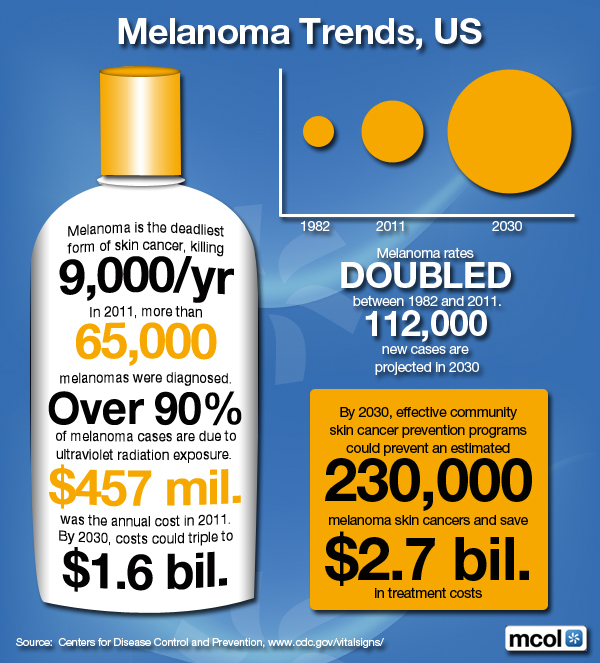
Malignant Melanoma Trends

Join Our Mailing List 

USA Trends – It is Summer-time

By http://www.MCOL.com

***

melanoma

***

Conclusion

Your thoughts and comments on this ME-P are appreciated. Feel free to review our top-left column, and top-right sidebar materials, links, URLs and related websites, too. Then, subscribe to the ME-P. It is fast, free and secure.

Speaker: If you need a moderator or speaker for an upcoming event, Dr. David E. Marcinko; MBA – Publisher-in-Chief of the Medical Executive-Post – is available for seminar or speaking engagements. Contact: MarcinkoAdvisors@msn.com

OUR OTHER PRINT BOOKS AND RELATED INFORMATION SOURCES:

Product DetailsProduct Details

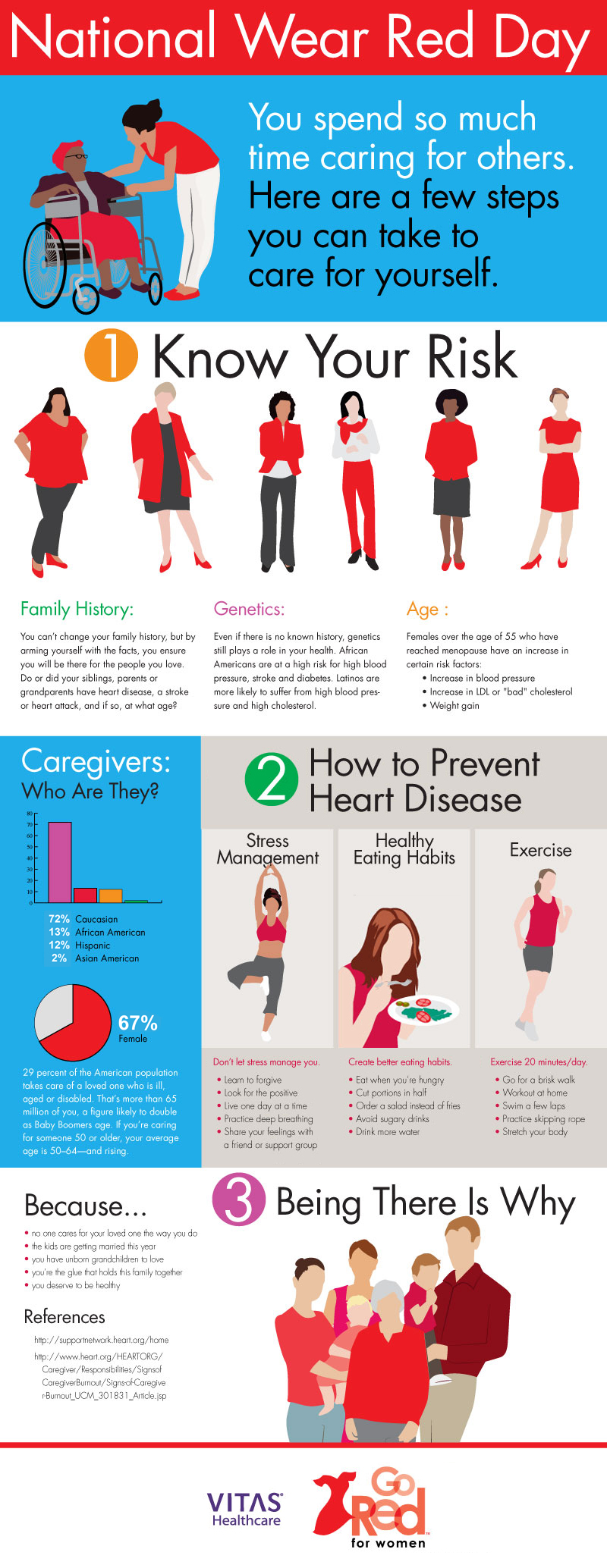
Heart Disease Prevention for Caregivers

[By Samantha Wanner]

Heart disease is the number one killer of women, killing more than all forms of cancer combined. That’s why VITAS Healthcare has partnered with the American Heart Association to raise awareness of heart disease so caregivers can live healthier, longer lives.

As a physician or caregiver, you spend much of your time caring for those around you, and it’s easy to ignore your heart health. When you compromise your health, you compromise the care that you provide to those around you.

***

image

***

Start by Taking Control

Knowledge is power and understanding your family history of heart disease is the first step in understanding your risk.

Lifestyle choices play a major role in heart disease prevention. Make sure you manage your stress levels, develop better eating habits and exercise 20 minutes per day.

You are not alone in your journey to heart health. The American Heart Association is your resource for heart health.

***

heart-health

***

Learn More About Caregiving:

Channel Surfing

Have you visited our other topic channels? Established to facilitate idea exchange and link our community together, the value of these topics is dependent upon your input. Please take a minute to visit. And, to prevent that annoying spam, we ask that you register.

Link: http://feeds.feedburner.com/HealthcareFinancialsthePostForcxos

Conclusion

Your thoughts and comments on this ME-P are appreciated. Feel free to review our top-left column, and top-right sidebar materials, links, URLs and related websites, too. Then, subscribe to the ME-P. It is fast, free and secure.

Speaker: If you need a moderator or speaker for an upcoming event, Dr. David E. Marcinko; MBA – Publisher-in-Chief of the Medical Executive-Post – is available for seminar or speaking engagements. Contact: MarcinkoAdvisors@msn.com

OUR OTHER PRINT BOOKS AND RELATED INFORMATION SOURCES:

Product DetailsProduct Details

About IBM Watson “Doctor Evidence”

Join Our Mailing List

What it is … How it works

Doctor Evidence is a leader in technological solutions for Evidence-Based Medicine (EBM) with a mission to support efforts of healthcare providers and patients to gain access to important evidence-based knowledge, based on the most timely and relevant medical evidence and related analytics, to inform clinical decisions and improve the health and wellbeing of patients worldwide.

This specialty software and services company’s methodology uses a Digital Outcome Conversion (DOC™) approach for transforming data from published clinical studies, epidemiological databases, and other sources, into reusable and updatable databases.

***

untitled

Doctor Evidence brings valuable health data to IBM Watson Ecosystem

***

More:

Conclusion

Your thoughts and comments on this ME-P are appreciated. Feel free to review our top-left column, and top-right sidebar materials, links, URLs and related websites, too. Then, subscribe to the ME-P. It is fast, free and secure.

Speaker: If you need a moderator or speaker for an upcoming event, Dr. David E. Marcinko; MBA – Publisher-in-Chief of the Medical Executive-Post – is available for seminar or speaking engagements. Contact: MarcinkoAdvisors@msn.com

OUR OTHER PRINT BOOKS AND RELATED INFORMATION SOURCES:

Product DetailsProduct Details

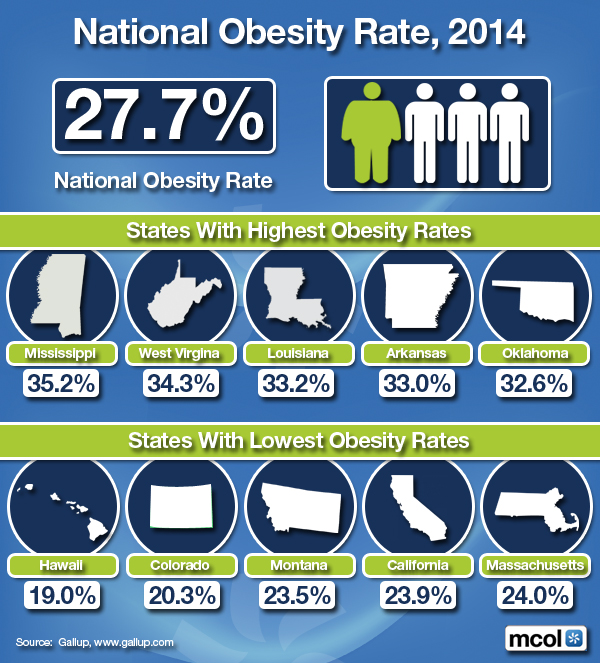
On National Obesity Rates?

Join Our Mailing List

By State for 2014

By http://www.MCOL.com

***

ImageProxy

***

Channel Surfing

Have you visited our other topic channels? Established to facilitate idea exchange and link our community together, the value of these topics is dependent upon your input. Please take a minute to visit. And, to prevent that annoying spam, we ask that you register.

Link: http://feeds.feedburner.com/HealthcareFinancialsthePostForcxos

More:

Conclusion

Your thoughts and comments on this ME-P are appreciated. Feel free to review our top-left column, and top-right sidebar materials, links, URLs and related websites, too. Then, subscribe to the ME-P. It is fast, free and secure.

Speaker: If you need a moderator or speaker for an upcoming event, Dr. David E. Marcinko; MBA – Publisher-in-Chief of the Medical Executive-Post – is available for seminar or speaking engagements. Contact: MarcinkoAdvisors@msn.com

OUR OTHER PRINT BOOKS AND RELATED INFORMATION SOURCES:

Product DetailsProduct DetailsProduct Details

Great Book Gifts for Medical School and Health Care Graduates

Join Our Mailing List

[By Staff reporters]

An Educational Resource Supporting Doctors, Universities and Consulting Advisors  

We are an emerging online and onground community that connects medical professionals with financial advisors and management consultants. We participate in a variety of insightful educational seminars, teaching conferences and national workshops. We produce journals, textbooks and handbooks, white-papers, CDs and award-winning dictionaries. And, our didactic heritage includes innovative R&D, litigation support, opinions for engaged private clients and media sourcing in the sectors we passionately serve.

Through the balanced collaboration of this rich-media sharing and ranking forum, we have become a leading network at the intersection of healthcare administration, practice management, medical economics, business strategy and financial planning for doctors and their consulting advisors. Even if not seeking our products or services, we hope this knowledge silo is useful to you.

In the Health 2.0 era of political reform, our goal is to: “bridge the gap between practice mission and financial solidarity for all medical professionals.”

Join the ME-P Nation today … and tell us what you think! 

  ***gifts

***

  OUR BOOKS, TEXTS AND DICTIONARIES ARE VITAL SURVIVAL TOOLS FOR ALL PHYSICIANS … AND THEIR CONSULTING ADVISORS

***

Product Details

Product DetailsProduct Details

       Product DetailsProduct DetailsProduct Details

Risk Management, Liability Insurance, and Asset Protection Strategies for Doctors and Advisors: Best Practices from Leading Consultants and Certified Medical Planners™8Comprehensive Financial Planning Strategies for Doctors and Advisors: Best Practices from Leading Consultants and Certified Medical Planners™

***

Channel Surfing

Have you visited our other topic channels? Established to facilitate idea exchange and link our community together, the value of these topics is dependent upon your input. Please take a minute to visit. And, to prevent that annoying spam, we ask that you register.

Link: http://feeds.feedburner.com/HealthcareFinancialsthePostForcxos

More:

Conclusion

Your thoughts and comments on this ME-P are appreciated. Feel free to review our top-left column, and top-right sidebar materials, links, URLs and related websites, too. Then, subscribe to the ME-P. It is fast, free and secure.

Speaker: If you need a moderator or speaker for an upcoming event, Dr. David E. Marcinko; MBA – Publisher-in-Chief of the Medical Executive-Post – is available for seminar or speaking engagements. Contact: MarcinkoAdvisors@msn.com

OUR OTHER PRINT BOOKS AND RELATED INFORMATION SOURCES:

Join Our Mailing List

Inviting Patients to Read Their Doctors’ Notes

Join Our Mailing List 

About OpenNotes

[By Staff Reporters]

In an OpenNotes study, researchers examined the impact on patients and doctors when patients were allowed access to their doctors’ notes via a secure EHR Internet portal. Through the use of surveys, patients’ benefits, concerns, and behaviors, as well as physicians workload, were measured.

***

ME-P electronic typewriter

***

The Players

Beth Israel Deaconess Medical Center (BIDMC) in Boston, Geisinger Health System (GHS) in Pennsylvania, and Harborview Medical Center (HMC) in Seattle were selected for this quasi-experimental year-long study.

The Study

The study included 105 physicians and 13,564 of their patients. Patients were notified when their notes were available, but whether or not to open the note was at their own discretion. The authors analyzed both pre- and post-intervention surveys from the physicians who completed the study; 99 physicians submitted both pre- and post-intervention surveys. Of the patients who viewed at least one note, 41 percent completed post-intervention surveys.

***

eHRs

***

The Results

Almost 99 percent of patients at BIDMC, GHS, and HMC wanted to have continued access to their visit notes at the completion of the study; no physician elected to end this practice. Although a limited geographic area was represented, the positive feedback and clinically relevant benefits demonstrate the potential for a widespread adoption of OpenNotes. Moreover, it may be a powerful tool in helping improve the lives of patients.

Citation: Inviting Patients to Read Their Doctors’ Notes: Author(s): Delbanco, T; Walker, J; Bell, SK and Darrer, JD et; al: American College of Physicians, Annals of Internal Medicine, October 2012.

***

patient

***

Assessment

Open Notes, a grantee of the Robert Wood Johnson Foundation, was developed to demonstrate and evaluate the impact on both patients and clinicians of fully sharing (through an electronic patient portal) all encounter notes between patients and their primary care providers.

More: SOAP[IER] eMRs [Beware the Alphabet Soup Switcher-Roo]

Even More:

Building a Better Electronic Health Record

Free Our Health Records: Get Your Health Records
and Help Save Lives


Conclusion

Your thoughts and comments on this ME-P are appreciated. Feel free to review our top-left column, and top-right sidebar materials, links, URLs and related websites, too. Then, subscribe to the ME-P. It is fast, free and secure.

Speaker: If you need a moderator or speaker for an upcoming event, Dr. David E. Marcinko; MBA – Publisher-in-Chief of the Medical Executive-Post – is available for seminar or speaking engagements. Contact: MarcinkoAdvisors@msn.com

OUR OTHER PRINT BOOKS AND RELATED INFORMATION SOURCES:

Product Details

A Possible New Niche Area for [Health-Law] Attorneys?

Competent, Ethical and Fair Legal Representation for Doctors

By Michael Lawrence Langan MD

Wretched creatures are compelled by the severity of the torture to confess things they have never done and so by cruel butchery innocent lives are taken; and by new alchemy, gold and silver are coined from human blood.– Father Cornelius Loos (1592)

***


17th-century-tribunal

[“PHP-Approved Attorneys”]

Competent, Ethical and Fair Legal Representation for Doctors

***

Channel Surfing

Have you visited our other topic channels? Established to facilitate idea exchange and link our community together, the value of these topics is dependent upon your input. Please take a minute to visit. And, to prevent that annoying spam, we ask that you register.

Link: http://feeds.feedburner.com/HealthcareFinancialsthePostForcxos

Conclusion

Your thoughts and comments on this ME-P are appreciated. Feel free to review our top-left column, and top-right sidebar materials, links, URLs and related websites, too. Then, subscribe to the ME-P. It is fast, free and secure.

Speaker: If you need a moderator or speaker for an upcoming event, Dr. David E. Marcinko; MBA – Publisher-in-Chief of the Medical Executive-Post – is available for seminar or speaking engagements. Contact: MarcinkoAdvisors@msn.com

OUR OTHER PRINT BOOKS AND RELATED INFORMATION SOURCES:

Risk Management, Liability Insurance, and Asset Protection Strategies for Doctors and Advisors: Best Practices from Leading Consultants and Certified Medical Planners™8Comprehensive Financial Planning Strategies for Doctors and Advisors: Best Practices from Leading Consultants and Certified Medical Planners™

Incentive Programs to Urge Smokers to Quit [NEJM]

Join Our Mailing List

Lessons from Behavioral Science

[Posted by Rachel Wolfson]

Many of the major public health issues currently threatening our population, including smoking and obesity, require lifestyle and behavioral changes.

Effecting these changes in patients has been challenging, but a deeper understanding of the forces that drive human behavior could inspire the design of better programs leading to behavioral change

***

ImageProxy

***

More:

Conclusion

Your thoughts and comments on this ME-P are appreciated. Feel free to review our top-left column, and top-right sidebar materials, links, URLs and related websites, too. Then, subscribe to the ME-P. It is fast, free and secure.

Speaker: If you need a moderator or speaker for an upcoming event, Dr. David E. Marcinko; MBA – Publisher-in-Chief of the Medical Executive-Post – is available for seminar or speaking engagements. Contact: MarcinkoAdvisors@msn.com

OUR OTHER PRINT BOOKS AND RELATED INFORMATION SOURCES:

Product DetailsProduct DetailsProduct Details

WHAT EVERY DOCTOR MUST APPRECIATE … Liability?

Join Our Mailing List

About our litigation system for 2019-2020

[By Dr. David Edward Marcinko MBA]

LINK: https://medicalexecutivepost.com/dr-david-marcinkos-bookings/

Dr. Marcinko MBADoctors depend on their trusted advisors to be a source of information on a wide variety of complex topics.

As we have seen, one of the areas in which physicians are increasingly seeking guidance from their attorney, accountant, consultant or financial advisor is in the area of risk management, insurance planning and asset protection.

Risk management

The best experts and consultants seek to create safe steady growth and avoid losses and exposures to things like malpractice judgments integrated with asset protection. A natural extension of this stewardship is making sure that the growth and balance of assets are safe from exposure to an increasingly predatory and hostile litigation system. Most doctors have obvious daily risks like malpractice exposures.

Other sources of exposure are more insidious, such as merely being affluent and visible, owning income property, or something as simple as owning and driving a car every day. The numbers are staggering; we are at a point in our litigation system where we have 70,000 lawsuits filed per day in the United States alone, many without any real merit.

Unfortunately being “right” is not enough to keep physicians safe.

Why doctors are concerned?

As illustrated by the numbers above and below, awards continue to spiral out of control, fueled by litigation attorneys who have become partners in lawsuits and who are economically incentivized to create and magnify adversarial relations between parties who might otherwise reach some reasonable, if not amicable, settlement.

So, here are additional facts about our litigation system to consider, for 2015-16:

  • The average medical malpractice award is now $3.9 MM, and some authorities put this number substantially higher;
  • The average legal costs of settling a frivolous lawsuit is $91,000 – plus the actual settlement amount itself.

The average sexual harassment suit against a small medical practice produces a verdict of $530,000. Employees are suing more often, winning more often and winning proportionally larger judgments. They win 75% of the time. Moreover, only the top 5% of Americans has a net worth of over $1MM. Using this baseline, it’s pretty easy to see where even a doctor who is worth only a few million dollars fits in on the food chain.

Here is more proof why doctors and allied medical providers are sued:

  • MDs are high net-worth, high liability, or they will be soon (i.e. new practitioners)
  • DOs have assets that would be difficult to replace if lost or reduced
  • DPMs have professional surgical liability
  • DDSs have employees and own their own practice
  • CRNs are highly visible, traceable, and or collectible
  • ODs own liability generating assets, i.e. rental property
  • NPs and ANPs have a spouse and/or children.

***

meeting-room-

***

Assessment

What doctors and all medical professionals must take to heart is that litigation attorneys are in business. Just like any business, including a medical practice, they have weekly meetings in which they examine growth, cash flow, revenue goals and new leads or opportunities. This economic motivation is a key and explains in part why we see awards rising and why plaintiffs’ attorneys regularly seek and obtain awards above the limits of applicable liability insurance policies.

Conclusion

Your thoughts and comments on this ME-P are appreciated. Feel free to review our top-left column, and top-right sidebar materials, links, URLs and related websites, too. Then, subscribe to the ME-P. It is fast, free and secure.

Speaker: If you need a moderator or speaker for an upcoming event, Dr. David E. Marcinko; MBA – Publisher-in-Chief of the Medical Executive-Post – is available for seminar or speaking engagements. Contact: MarcinkoAdvisors@msn.com

OUR OTHER PRINT BOOKS AND RELATED INFORMATION SOURCES:

Comprehensive Financial Planning Strategies for Doctors and Advisors: Best Practices from Leading Consultants and Certified Medical Planners(TM) 

The Preventing and Reducing Improper Medicare and Medicaid Expenditures Act

Join Our Mailing List 

The PRIME Act

[By Carol Miller RN MBA PMP]

Carol S. Miller

First there was Amazon PRIME; now there is another PRIME.

The Act

This Act was introduced into congress in 2013 and contains a number of provisions that would increase rewards and incentives for those who uncover healthcare fraud, as well as heighten penalties for those who commit it.

What it is

The PRIME  Act would enact stronger penalties for Medicare and Medicaid fraud; curb improper or mistaken payments made by Medicare and Medicaid; establish stronger fraud and waste prevention strategies with Medicare and Medicaid to help phase out the practice of “pay and chase” (i.e., recouping monies already erroneously paid to providers instead of detecting problems on the front end); curb the theft of physician identities; expand the fraud identification and reporting work of the Senior Medicare patrol; take steps to help states identify and prevent Medicaid overpayments; and improve the sharing of fraud data across state and federal agencies and programs.

***

199H

***

HIPAA

The law directs the Secretary to develop a plan to revise the incentive program under HIPAA for the reporting of fraud and abuse to encourage greater participation by individuals reporting Medicare fraud and abuse.

Assessment

The law also requires the plan to include certain recommendations for ways to enhance rewards for individuals reporting and an extension of the incentive program to the Medicaid program.

Conclusion

Your thoughts and comments on this ME-P are appreciated. Feel free to review our top-left column, and top-right sidebar materials, links, URLs and related websites, too. Then, subscribe to the ME-P. It is fast, free and secure.

ABOUT

Ms. Carol S. Miller has an extensive healthcare background in operations, business development and capture in both the public and private sector. Over the last 10 years she has provided management support to projects in the Department of Health and Human Services, Veterans Affairs, and Department of Defense medical programs. In most recent years, Carol has served as Vice President and Senior Account Executive for NCI Information Systems, Inc., Assistant Vice President at SAIC, and Program Manager at MITRE. She has led the successful capture of large IDIQ/GWAC programs, managed the operations of multiple government contracts, interacted with many government key executives, and increased the new account portfolios for each firm she supported. She earned her MBA from Marymount University; BS in Business from Saint Joseph’s College, and BS in Nursing from the University of Pittsburgh. She is a Certified PMI Project Management Professional (PMP) (PMI PMP) and a Certified HIPAA Professional (CHP), with Top Secret Security clearance issued by the DoD in 2006. Ms. Miller is also a HIMSS Fellow.

Speaker: If you need a moderator or speaker for an upcoming event, Dr. David E. Marcinko; MBA – Publisher-in-Chief of the Medical Executive-Post – is available for seminar or speaking engagements. Contact: MarcinkoAdvisors@msn.com

OUR OTHER PRINT BOOKS AND RELATED INFORMATION SOURCES:

Comprehensive Financial Planning Strategies for Doctors and Advisors: Best Practices from Leading Consultants and Certified Medical Planners(TM) 

Product DetailsProduct Details

USA Cancer Survival Rate Trends

Join Our Mailing List

USA: 1990-2010

By http://www.MCOL.com

ImageProxy

Conclusion

Your thoughts and comments on this ME-P are appreciated. Feel free to review our top-left column, and top-right sidebar materials, links, URLs and related websites, too. Then, subscribe to the ME-P. It is fast, free and secure.

Speaker: If you need a moderator or speaker for an upcoming event, Dr. David E. Marcinko; MBA – Publisher-in-Chief of the Medical Executive-Post – is available for seminar or speaking engagements. Contact: MarcinkoAdvisors@msn.com

OUR OTHER PRINT BOOKS AND RELATED INFORMATION SOURCES:

Product DetailsProduct Details

Moving the Goalpost [Criminal Violations of HIPAA by PHS, Quest and USDTL]

Join Our Mailing List

clinical drug trials

Disrupted Physician

imgres-22

Information obtained under HIPAA Privacy Rule

1.August 6, 2014 to Langan with health materials   2. Quest-Clinical

PastedGraphic-1

The elements of a criminal offense under HIPAA are fairly straightforward.  To commit a “criminal offense” under HIPAA, a person must knowingly and in violation of the HIPAA rules do one (or more) of the following three things.:  use or cause to be used a unique health identifier, obtain individually identifiable health information relating to an individual or disclose individually identifiable health information to another  person.   Criminal penalties under HIPAA, tiered in accordance with the seriousness of the offense, range from a fine of up to $50,000 and/or imprisonment up to a year for a simple violation to a fine up to $100,000 and/or imprisonment up to five years for an offense committed under a false pretense and a fine up to $250000 and/or imprisonment up to ten years for an…

View original post 3,591 more words

Video on Six Costly Investment Behaviors

Join Our Mailing List

Pathetic results compared to the markets

[Principal of MZ Capital Management]

[Contributor to Morningstar and Physicians Practice]

Most investors are very good at hurting themselves financially. According to latest release of Dalbar’s Quantitative Analysis of Investor Behavior (QAIB), the average investor has a return of only 2.6% over the last ten years. That’s pathetic compared to what the markets gave. See the chart below, over the same period, the S&P 500 gave an annualized return of 7.4% and the bond market gave 4.6%.

***

ImageProxy

[Click to Enlarge]

***

Investor behaviors are such a big drag on investment returns that Nobel Prize winner Daniel Kahneman, an Israeli American, advised Israel’s Pension Authority to send out statements once a quarter instead of once a month. Since when Israel’s pensioners don’t get their statements, they don’t do stupid things to their accounts.

So what are those behaviors that are so costly to investment returns? Please watch this five minute long video produced by Independence Advisors.

In a nutshell, the emotional reactions (such as herding) that had helped our hunter-gatherer forebears survive so well and thus are hard-wired into our brains are literally hazardous to successful investing. In a way, the value of an advisor like myself is to separate your emotions from your money.

Assessment

So, how does this relate to physicians and other medical professionals; better or worse?

Conclusion

Your thoughts and comments on this ME-P are appreciated. Feel free to review our top-left column, and top-right sidebar materials, links, URLs and related websites, too. Then, subscribe to the ME-P. It is fast, free and secure.

Speaker: If you need a moderator or speaker for an upcoming event, Dr. David E. Marcinko; MBA – Publisher-in-Chief of the Medical Executive-Post – is available for seminar or speaking engagements. Contact: MarcinkoAdvisors@msn.com

OUR OTHER PRINT BOOKS AND RELATED INFORMATION SOURCES:

Comprehensive Financial Planning Strategies for Doctors and Advisors: Best Practices from Leading Consultants and Certified Medical Planners(TM)

The Evolution of Care Bundles for Sepsis

Join Our Mailing List 

Latest complimentary resource reviews the rationale for bundled interventions

WH

[By Winifred Hayes RN PhD]

Sepsis is a deadly condition with a high mortality rate.

In an effort to improve survival in patients with sepsis, clinicians have adopted care bundles—sets of clear evidence-based practices that, when reliably performed together, result in better patient outcomes than when they are implemented individually. The Evolution of Care Bundles for Sepsis, the latest white paper from Hayes, Inc., reviews how and why sepsis care bundles came to be and discusses how they may evolve in the future.

“Sepsis may lead to death in a large percentage of patients who come to the hospital for treatment,” says David Wade, MD, FACS, Chief Medical Officer at Hayes, Inc., and the author of the white paper. “Rapid treatment within the first few hours of diagnosis is the key to reducing mortality and morbidity.”

Studies

Many studies have reinforced the importance of early diagnosis and rapid treatment. Dr. Wade explains, “In thinking about this, I am struck by a phrase that comes from the world of fighter pilots and aerial combat. When you talk to fighter pilots about dog fighting, a phrase repeatedly rises to top as the most important thing. That phrase is Speed is Life. Sepsis is similar; the sooner you realize what is going on and start doing something about it, the better chance the patient will have of surviving.”

Care Bundles

Care bundles enable clinicians to act quickly and strategically. In the United States, the most widely known sepsis care bundles are those published by the Surviving Sepsis Campaign. Interesting developments in sepsis management also are coming out of the United Kingdom, where clinicians have embraced the Sepsis Six 1-hour bundle, a set of 6 interventions to be performed within 1 hour of diagnosis.

Download your complimentary copy of The Evolution of Care Bundles for Sepsis today to learn more about how these practices are improving survival for patients with sepsis.

About Hayes, Inc.

ImageProxy

Achieving best patient outcomes by using proven medical technologies is the basis on which Hayes was founded. Our team of analysts and clinicians is a trusted resource for unbiased and timely research, evidence analysis, and guidance that drive effective health care and contribute to cost management. For over 25 years, Hayes has been empowering clinicians, health plan policymakers, and government agencies in their mission to make sound evidence-based decisions that balance cost, quality and patient outcomes.

More:

Conclusion

Your thoughts and comments on this ME-P are appreciated. Feel free to review our top-left column, and top-right sidebar materials, links, URLs and related websites, too. Then, subscribe to the ME-P. It is fast, free and secure.

Speaker: If you need a moderator or speaker for an upcoming event, Dr. David E. Marcinko; MBA – Publisher-in-Chief of the Medical Executive-Post – is available for seminar or speaking engagements. Contact: MarcinkoAdvisors@msn.com

OUR OTHER PRINT BOOKS AND RELATED INFORMATION SOURCES:

Product DetailsProduct Details

The Disability Insurance Disconnect

Join Our Mailing List

An Infographic

By DisabilityCanHappen.org

Think you’re invincible? You’re not alone. Most working Americans, and even some physicians, drastically underestimate the odds of experiencing an income-interrupting injury or illness that will last an extended period of time.

***

acccidents

***

Now consider that more than one in four of today’s 20-year-olds will have their income interrupted by a disability before they retire. That’s because some top causes of long-term disabilities aren’t catastrophic accidents, but common, everyday health issues like back pain, heart disease, arthritis, cancer, even pregnancy.

Yet; no matter how healthy, everybody has a risk that is too high to ignore.

***

Ankle-Leg Trauma

[Copyright David Edward Marcinko and iMBA Inc., All rights reserved. USA]

***

Assessment

You’ve probably protected your most prized possessions from damages and accidents, but what about the resource that makes all others possible — your paycheck? Learn more about the causes of disability and how you can defend your income from them at DisabilityCanHappen.org

***

disability

[Click to Enlarge]

More:

Conclusion

Your thoughts and comments on this ME-P are appreciated. Feel free to review our top-left column, and top-right sidebar materials, links, URLs and related websites, too. Then, subscribe to the ME-P. It is fast, free and secure.

Speaker: If you need a moderator or speaker for an upcoming event, Dr. David E. Marcinko; MBA – Publisher-in-Chief of the Medical Executive-Post – is available for seminar or speaking engagements. Contact: MarcinkoAdvisors@msn.com

OUR OTHER PRINT BOOKS AND RELATED INFORMATION SOURCES:

Comprehensive Financial Planning Strategies for Doctors and Advisors: Best Practices from Leading Consultants and Certified Medical Planners(TM) 

Death in the Digital Age

Join Our Mailing List

On Digital Assets

By co-operativefuneralcare.co.uk

An infographic to show the key statistics from our recent report which highlights how the growing use of digital channels in our daily lives can cause additional stress for bereaved loved ones.

***

Death-in-the-digital-age-infographic-the-co-operative-funeralcare-1024

Are You A Top Performing Financial Advisor?

Join Our Mailing List

An Infographic

[By Gabriel Lalonde]

To gain a better understanding of how today’s investment advisor’s are running their practices, Maximizer Software commissioned an original study based on surveys with 903 financial advisers from Canada and the United States.

The goal of the survey was to identify specific issues and trends that make investment advisers more successful.

***

WME-Infographic_highres-1024x664

[Click to Enlarge]

***

Unique

The infographic above illustrates what sets top investment advisers apart from the rest of their peers.

Assessment

To find out how your practice can become a top performer take a look at our report! 

More:

Conclusion

Your thoughts and comments on this ME-P are appreciated. Feel free to review our top-left column, and top-right sidebar materials, links, URLs and related websites, too. Then, subscribe to the ME-P. It is fast, free and secure.

Speaker: If you need a moderator or speaker for an upcoming event, Dr. David E. Marcinko; MBA – Publisher-in-Chief of the Medical Executive-Post – is available for seminar or speaking engagements. Contact: MarcinkoAdvisors@msn.com

OUR OTHER PRINT BOOKS AND RELATED INFORMATION SOURCES:

Comprehensive Financial Planning Strategies for Doctors and Advisors: Best Practices from Leading Consultants and Certified Medical Planners(TM)

On The State Licensing Process of Physicians

Join Our Mailing List

By State Medical Boards

robert-cimasitodd-zigrang

By ROBERT JAMES CIMASI; MHA, ASA, FRICS, MCBA, AVA, CM&AA, CMP

By TODD A. ZIGRANG; MBA, MHA, ASA, FACHE

(C) Health Capital Consultants, LLC All rights reserved. St. Louis, MO USA

A SPECIAL ME-P REPORT

USA

http://www.HealthCapital.com

Every state and the District of Columbia require the licensure of all allopathic (M.D.) and osteopathic (D.O.) physicians [1] Although the specific criteria for licensure vary by state, each state requires candidates to submit proof of completion of the requisite number of years of graduate medical education and passage of examinations verifying that “the physician is ready and able to practice competently and safely in an independent setting [2].

Moral Character

Additionally, a physician applying for licensure is typically required to have “good moral character,” absent his or her involvement in illegal activities [3] Most physicians satisfy the exam requirement by submitting proof of their successful completion of the United States Medical Licensing Examination (USMLE) or the Comprehensive Osteopathic Medical Licensing Examination (COMLEX-USA) to the licensure board [4] However, as some practicing physicians may have been licensed under a previously administered exam, certain state licensing boards may consider a combination of other examinations sufficient to meet licensure requirements, so long as those exams were completed prior to 2000 [5]

Of State Medical Boards

The licensure of physicians is governed by a state medical board, the “primary responsibility” of which board, according to the Federation of State Medical Boards, is to “protect consumers of health care by ensuring that all physicians…are properly licensed and comply with various laws and regulations pertaining to the practice of medicine[6] To accomplish this goal, state legislatures have delegated certain powers to the state’s medical board, including the power to grant, suspend, and revoke licenses; conduct investigations into complaints against physicians; and, release guidelines related to best medical practices [7] State medical boards have traditionally consisted solely of physicians; however, there has recently been an increase in the number of non-physician board members on state medical boards [8].

History

Over the last 50 years, state medical boards have faced intense scrutiny regarding their commitment to disciplining physicians based on quality concerns [9] In 1960, the American Medical Association (AMA) heard “sobering” facts from the Federation of State Medical Boards that “much confusion over the definitions and objectives exists” related to state medical board enforcement of medical standards [10] From 1963 to 1967, 0.06% of all physicians were subject to discipline, while in 1981, 0.14% of all physicians were subject to discipline, due in large part to the problems identified by the AMA [11] Although the rate of physician discipline rose eightfold by the mid-1990s, to date, there are continuing concerns regarding state medical board enforcement of quality standards.

A March 2011 report by advocacy group Public Citizen found that over 55% of physicians who faced clinical privilege disciplines by hospitals from 1990 to 2009 did not have a corresponding action from a state medical board [12] Additionally, in 2011, state medical boards imposed 3.06 “serious disciplinary actions” (e.g., revocations, surrenders, suspensions, and probations of medical licenses) per 1,000 physicians, an increase from the 2010 rate of 2.97 per 1,000, but a decrease from the 2004 rate of 3.72 per 1,000 [13] Numerous reasons have been offered to explain the disparity in quality enforcement by state medical boards, the most prominent being that physicians are loath to report fellow physicians for major disciplinary actions such as licensure revocation[14]

***

nurses

***

Assessment

Other reasons include a focus by state medical boards on “character-related misconduct” over clinical quality standards [15] as well as a lack of resources to investigate and enforce quality standards, which forces state medical boards to rely on physicians and hospitals to “police” themselves [16].

More:

Channel Surfing the ME-P

Have you visited our other topic channels? Established to facilitate idea exchange and link our community together, the value of these topics is dependent upon your input. Please take a minute to visit. And, to prevent that annoying spam, we ask that you register. It is fast, free and secure.

© 2015 HCC, LLC. All rights reserved. USA

Conclusion

Your thoughts and comments on this ME-P are appreciated. Feel free to review our top-left column, and top-right sidebar materials, links, URLs and related websites, too. Then, subscribe to the ME-P. It is fast, free and secure.

Speaker: If you need a moderator or speaker for an upcoming event, Dr. David E. Marcinko; MBA – Publisher-in-Chief of the Medical Executive-Post – is available for seminar or speaking engagements. Contact: MarcinkoAdvisors@msn.com

OUR OTHER PRINT BOOKS AND RELATED INFORMATION SOURCES:

 REFERENCES

[1]       “State Medical Boards: Future Challenges for Regulation and Quality Enhancement of Medical Care,” By James N. Thompson, Journal of Legal Medicine, Vol. 33, No. 9 (January-March 2012).

[2]       “State Medical Boards: Future Challenges for Regulation and Quality Enhancement of Medical Care,” By James N. Thompson, Journal of Legal Medicine, Vol. 33, No. 9 (January-March 2012); “Healthcare Valuation: The Four Pillars of Healthcare Value,” By Robert James Cimasi, MHA, ASA, FRICS, MCBA, AVA, CM&AA, Hoboken, NJ: John Wiley & Sons, Inc., 2014, p. 449-450.

[3]       “Medical Practice: Education and Licensure,” in “Legal Medicine,” By S. Sandy Sanbar et al., 6th Ed., Mosby, 2004, p. 81.

[4]       “Medical Licensure,” American Medical Association, 2014, http://www.ama-assn.org/ama/pub/education-careers/becoming-physician/medical-licensure.page, (Accessed 12/19/14); “COMLEX-USA,” National Board of Osteopathic Medical Examiners, 2014, http://www.nbome.org/exams-faq.asp (Accessed 12/19/14).

[5]       “Medical Licensure,” American Medical Association, 2014, http://www.ama-assn.org/ama/pub/education-careers/becoming-physician/medical-licensure.page, (Accessed on 12/19/14); “Healthcare Valuation: The Four Pillars of Healthcare Value,” By Robert James Cimasi, MHA, ASA, FRICS, MCBA, AVA, CM&AA, Hoboken, NJ: John Wiley & Sons, Inc., 2014, p. 450.

[6]       “What is a State Medical Board?” Federation of State Medical Boards, 2014, http://www.fsmb.org/policy/what-is-a-smb-faq (Accessed 12/19/14).

[7]       “What is a State Medical Board?” Federation of State Medical Boards, 2014, http://www.fsmb.org/policy/what-is-a-smb-faq (Accessed 12/19/14).

[8]       “What is a State Medical Board?” Federation of State Medical Boards, 2014, http://www.fsmb.org/policy/what-is-a-smb-faq (Accessed 12/19/14); “Character, Competence, and the Principles of Medical Discipline,” By Nadia N. Sawicki, Journal of Health Care Law & Policy, Vol. 13, No. 1, 2010, p. 291.

[9]       “Character, Competence, and the Principles of Medical Discipline,” By Nadia N. Sawicki, Journal of Health Care Law & Policy, Vol. 13, No. 1, 2010, p. 287, n. 7; “To Err is Human: Building a Safer Health System – Summary,” Institute of Medicine, 2000, http://www.iom.edu/~/media/Files/Report%20Files/1999/To-Err-is-Human/To%20Err%20is%20Human%201999%20%20report%20brief.pdf (Accessed 12/19/14).

[10]     “Medical Licensure Statistics for 1960,” Journal of the American Medical Association, Vol. 176, No. 8 (May 27, 1961), p. 694.

[11]     “Medical Licensing Board Characteristics and Physician Discipline: An Empirical Analysis,” By Mark T. Law & Zeynep K. Hansen, Journal of Health Politics, Policy and Law, Vol. 35, No. 1 (February 2010), p. 66.

[12]     “State Medical Boards Fail to Discipline Doctors with Hospital Actions Against Them,” By Alan Levine et al., Public Citizen, March 2011, http://www.citizen.org/documents/1937.pdf (Accessed 12/19/14).

[13]     “Public Citizen’s Health Research Group Ranking of the Rate of State Medical Boards’ Serious Disciplinary Actions, 2009-2011,” By Sidney M. Wolfe, M.D., et al., Public Citizen, May 17, 2012, http://www.citizen.org/documents/2034.pdf (Accessed 12/19/14).

[14]     “Medical Boards are Too Lax, Critics Claim,” By Wayne J. Guglielmo, MA, MedScape, October 17, 2014, http://www.medscape.com/viewarticle/833141 (Accessed 12/3/14);

[15]     “Character, Competence, and the Principles of Medical Discipline,” By Nadia N. Sawicki, Journal of Health Care Law & Policy, Vol. 13, No. 1, 2010, p. 287.

[16]     “Medical Licensing Board Characteristics and Physician Discipline: An Empirical Analysis,” By Mark T. Law & Zeynep K. Hansen, Journal of Health Politics, Policy and Law, Vol. 35, No. 1 (February 2010), p. 90; “Medical Licensure Statistics for 1960,” Journal of the American Medical Association, Vol. 176, No. 8, May 27, 1961, p. 694.

NC Update: H543v2 – 04152015

Comprehensive Financial Planning Strategies for Doctors and Advisors: Best Practices from Leading Consultants and Certified Medical Planners(TM)* 8

Product DetailsProduct Details

Do You Have These Horrible Investments in Your Portfolio?

Join Our Mailing List 

Beware Structured Products and Annuities

By Michael Zhuang

Principal of MZ Capital Management

[Contributor to Morningstar and Physicians Practice]

Recently, I had a new client. As part of the on-boarding process, I examined her old portfolio and found some things I didn’t recognize.

***

Cusip Symbol Description Return
25190A104 N/A Deutsche Bk AG London BRH Ret Opt Secs Lkd Ishare MSCI Mexico Capped -21.15%
25190A203 N/A Deutsche Bk AG London BRH Ret Opt Secs Lkd Ishare Euro STOXX 50 Idx -26.60%
90273L815 N/A USB AG London BRH Notes Five 15 -22.30%

***

Structured Products

What these products have in common is they don’t have a ticker symbol, meaning they are not publicly traded securities. They also have weird descriptions and they all lost a lot of money.

I called Fidelity (my custodian firm) to find out what they were and how I could get rid of them. I was told that they are structured products created by the bank(s) to shove into their clients’ accounts (The managing “advisor” works for UBS).

That rang a bell! My very first job was a financial engineer for a French bank – Societe Generale. My job was to create structured products that had appealing features and made the bank a lot of profits. Now, that I finally see them in action from, the client side of the equation; I am not proud.

Annuities

But, these structured products are not nearly as bad as an Allianz annuity that a client bought from an insurance agent “friend” a while back. He bought the annuity eleven years ago for $150-k, and over the years, saw it steadily increases in value to $189-k.

Then, there came a time when he needed the money. So, he called to cash out and was shocked to discover there was a $62-k surrender charge. In other words, he was able to get $127-k back. I subsequently called Allianz on his behalf to find out when the surrender charge would end and was told there was no end! In other words, there would always be a huge surrender charge.

***

insurance

***

What the Heck!

So, what in the heck does that value of $189-k really mean, when every time you want to take out the “value”, you have to pay a hefty ⅓ surrender charge?

Alas, Allianz explained the client can annuitize and take the amount out over ten years (or twenty years,) during which no interest will be accrued.  So, they will take your principal -or- they will take your interest, either way they screw you.

More:

Assessment 

Do you have structured products or annuities in your portfolio? Don’t know – Find out, now!

Conclusion

Your thoughts and comments on this ME-P are appreciated. Feel free to review our top-left column, and top-right sidebar materials, links, URLs and related websites, too. Then, subscribe to the ME-P. It is fast, free and secure.

Speaker: If you need a moderator or speaker for an upcoming event, Dr. David E. Marcinko; MBA – Publisher-in-Chief of the Medical Executive-Post – is available for seminar or speaking engagements. Contact: MarcinkoAdvisors@msn.com

OUR OTHER PRINT BOOKS AND RELATED INFORMATION SOURCES:

Comprehensive Financial Planning Strategies for Doctors and Advisors: Best Practices from Leading Consultants and Certified Medical Planners(TM)

Emotional Intelligence [EQ] in Medicine

Join Our Mailing List 

The Five Basic Non-Cognitive Competencies

[By Render S. Davis MHA CHE]

[By Dr. David Edward Marcinko MBA]

DEM white shirt

Many of us have encountered a person who may intellectually be at upper levels, but whose ability to interact with others appears to that of one who is highly immature.

This is the individual who is prone to becoming angry easily, verbally attacks co-workers, is perceived as lacking in compassion and empathy, and cannot understand why it is difficult to get others to cooperate with them and their agendas

[THINK: Sheldon Cooper PhD D.Sc MA BA of the The Big Bank Theory TV show].

Enter Daniel Goleman

The concept of Emotional Intelligence [EQ] was brought into the public domain when Daniel Goleman authored a book entitled, Emotional Intelligence.”

According to Goleman, emotional intelligence consists of four basic non-cognitive competencies: self awareness, social awareness, self management and social skills. These are skills which influence the manner in which people handle themselves and their relationships with others.  Goleman’s position was that these competencies play a bigger role than cognitive intelligence in determining success in life and in the workplace.

***

robo

***

Five Domains

He and others contend that emotional intelligence involves abilities that may be categorized into five domains:

  • Self awareness: Observing and recognizing a feeling as it happens.
  • Managing emotions: Handling feelings so that they are appropriate; realizing what is behind a feeling; finding ways to handle fears and anxieties, anger and sadness.
  • Motivating oneself; Channeling emotions in the service of a goal; emotional self control; delaying gratification and stifling impulses.
  • Empathy: Sensitivity to others’ feelings and concerns and taking their perspective appreciating the differences in how people feel about things.
  • Handling relationships: Managing emotions in others; social competence and social skills.

Source: Emotional Intelligence: what is and why it matters” – Cary Cherniss, PhD, presented at the annual conference of the Society of Industrial and Organizational Psychology, April 2000.

The Importance of Emotional Intelligence in the Workplace

Mike Poskey, in “The Importance of Emotional Intelligence in the Workplace.” continued his definition by stating that emotional intelligence is considered to involve emotional empathy; attention to, and discrimination of one’s emotions; accurate recognition of one’s own and others’ moods; mood management or control over emotions; response with appropriate emotions and behaviors in various life situations (especially to stress and difficult situations); and balancing of honest expression of emotions against courtesy, consideration, and respect.

***

head

***

A Set of Competencies

In 1995, Goleman then expanded on the works of Howard Gardner, Peter Salovey and John Mayer. He further defined Emotional Intelligence as a set of competencies demonstrating the ability one has to recognize his or her behaviors, moods and impulses and to manage them best, according to the situation.

Channel Surfing the ME-P

Have you visited our other topic channels? Established to facilitate idea exchange and link our community together, the value of these topics is dependent upon your input. Please take a minute to visit. And, to prevent that annoying spam, we ask that you register. It is fast, free and secure.

More:

***

Assessment

So, how does all this relate to medical practice today? Please … do tell us!

Conclusion

Your thoughts and comments on this ME-P are appreciated. Feel free to review our top-left column, and top-right sidebar materials, links, URLs and related websites, too. Then, subscribe to the ME-P. It is fast, free and secure.

About the Co-Author

Render Davis was a Certified Healthcare Executive, now retired from Crawford Long Hospital at Emory University, in Atlanta, GA He served as Assistant Administrator for General Services, Policy Development, and Regulatory Affairs from 1977-95.  He is a founding board member of the Health Care Ethics Consortium of Georgia and served on the consortium’s Executive Committee, Advisory Board, Futility Task Force, Strategic Planning Committee, and chaired the Annual Conference Planning Committee, for many years.  

Speaker: If you need a moderator or speaker for an upcoming event, Dr. David E. Marcinko; MBA – Publisher-in-Chief of the Medical Executive-Post – is available for seminar or speaking engagements. Contact: MarcinkoAdvisors@msn.com

OUR OTHER PRINT BOOKS AND RELATED INFORMATION SOURCES:

Comprehensive Financial Planning Strategies for Doctors and Advisors: Best Practices from Leading Consultants and Certified Medical Planners(TM)* 8

Product Details

Ethical Implications of “Mystery Patient Shoppers” and Secretly Recording Conversations With Physicians

Join Our Mailing List

[By Staff Reporters]

CONVERSATIONS RECORDED WITH PHYSICIANS

With recent advances in technology, smart phones can become recording devices with the touch of a button. This technological capability gives patients and their families the ability to easily and surreptitiously record conversations with physicians. The frequency of such recordings or whether they even occur is unknown. The ubiquity of smart phones, however, suggests the potential for secret recordings to occur.

Link: http://jama.jamanetwork.com/article.aspx?articleID=2204226#jvp150030r8

As of January 2014, 58% of Americans owned a smart phone, including 83% of young adults. Although recording conversations with physicians may provide some benefit for patients and their families, secret recordings can undermine patient-physician relationships and ultimately affect the provision of health care.

Source: Michelle Rodriguez, JD; Jason Morrow, MD, PhD; Ali Seifi, MD. JAMA March 12, 2015. doi:10.1001/jama.2015.2424

***

Phone

***

“MYSTERY PATIENT SHOPPER” RISKS

In 2014, the Department of Health and Human Services proposed a “mystery shopper” program to gauge primary-care physicians’ timeliness in accepting new patients, according to a notice in the Federal Register. The plan calls for contacting 4,185 primary-care physicians—465 in each of nine as-yet-unnamed states—twice, once by someone pretending to be a new patient who has private insurance and once by someone pretending to be a publicly insured patient.

Link: https://www.fiercehealthcare.com/practices/more-patients-are-recording-doctor-visits

Scenarios will involve patients with both urgent medical concerns and those requesting a routine medical exam. The purpose of this program is to assess the timeliness with which primary-care services could be provided, gain insight into reasons why availability is lacking, and provide current information on primary-care availability and accessibility.

***

woman

***

Assessment

Ethical or NOT?

Now, what about doctors recording patients?

Link: https://www.kevinmd.com/blog/2016/06/doctors-patients-secretly-record.html

VA Update: https://www.research.va.gov/currents/0318-Mystery-shopper-model-being-used-to-boost-VA-care.cfm

Conclusion

Your thoughts and comments on this ME-P are appreciated. Feel free to review our top-left column, and top-right sidebar materials, links, URLs and related websites, too. Then, subscribe to the ME-P. It is fast, free and secure.

Speaker: If you need a moderator or speaker for an upcoming event, Dr. David E. Marcinko; MBA – Publisher-in-Chief of the Medical Executive-Post – is available for seminar or speaking engagements. Contact: MarcinkoAdvisors@msn.com

OUR OTHER PRINT BOOKS AND RELATED INFORMATION SOURCES:

Comprehensive Financial Planning Strategies for Doctors and Advisors: Best Practices from Leading Consultants and Certified Medical Planners(TM)

***

Invite Dr. Marcinko

Emerging New-Wave Cloud Technology for HIPAA

Join Our Mailing List

Securing Electronic Communication in the Cloud

[By Carol S. Miller BSN MBA PMP]

Carol S. MillerTo help hospitals and health systems comply with burdens of the Health Insurance Portability and Accountability Act [HIPAA] regulations, best practices are emerging for securing all electronic communication – cloud, wireless, and texting –  of protected health information.

These new technologies will continually be evolving with hospitals, providers and patients move to new means of communication.

And so, below is a very brief description of one: cloud solutions.

Cloud Solutions

Cloud solutions are becoming a needed commodity in treating patients today but also present a risk to privacy and security violation.  Despite the advantages of cloud computing, organizations are often hesitant to use it because of concerns about security and compliance.

Specifically, they fear potential unauthorized access to patient data and the accompanying liability and reputation damage resulting from the need to report HIPAA breaches. While these concerns are understandable, a review of data on HIPAA breaches published by the HHS shows that these concerns are misplaced.

In fact, by using a cloud-based service with an appropriate security and compliance infrastructure, a facility can significantly reduce its compliance risk.

***

USB drive

[A.I. and the “SINGULARITY”]*

***

Because HIPAA compliance involves stringent privacy and security protections for electronic protected health information (PHI), many cloud providers are balking at signing new Business-Associate agreements.

Most cloud-technology providers, such as Box and Dropbox, do not include the built-in privacy protections that guarantee HIPAA compliance. Because many cloud storage companies store plaintext data on their servers, PHI is especially vulnerable to breaches and compliance violations.

Note:

The SINGULARITY is that hypothetical moment in time when Artificial Intelligence [AI] will have progressed to the point of a greater-than-human intelligence.

Channel Surfing the ME-P

Have you visited our other topic channels? Established to facilitate idea exchange and link our community together, the value of these topics is dependent upon your input. Please take a minute to visit. And, to prevent that annoying spam, we ask that you register. It is fast, free and secure.

ABOUT THE AUTHOR

  • Carol S. Miller; BSN, MBA, PMP
  • ACT IAC Executive Committee Vice Chair at-Large
  • HIMSS NCA Board Member
  • President – Miller Consulting Group
  • 7344 Hooking Road
  • McLean, VA 22101
  • Phone: 703-407-4704
  • Fax: 703-790-3257
  • email: millerconsultgroup@gmail.com

Conclusion

Your thoughts and comments on this ME-P are appreciated. Feel free to review our top-left column, and top-right sidebar materials, links, URLs and related websites, too. Then, subscribe to the ME-P. It is fast, free and secure.

Speaker: If you need a moderator or speaker for an upcoming event, Dr. David E. Marcinko; MBA – Publisher-in-Chief of the Medical Executive-Post – is available for seminar or speaking engagements. Contact: MarcinkoAdvisors@msn.com

OUR OTHER PRINT BOOKS AND RELATED INFORMATION SOURCES:

Product Details

NPCs Info-Graphic on Comparative Effectiveness Research

Join Our Mailing List

National Pharmaceutical Council

[By Staff Reporters]

The National Pharmaceutical Council’s fourth annual survey of health care stakeholders sheds some light on the environment for comparative effectiveness research (CER) and health care decision-making.

***

CER-Survey

***

Questions

  • How important is CER?
  • Which organizations play key roles in the CER effort?
  • How long will it take to see the impact of CER on decision making?

Assessment

Find the answers to these questions and more in this info graphic. (Source: National Pharmaceutical Council, 2014)

Channel Surfing the ME-P

Have you visited our other topic channels? Established to facilitate idea exchange and link our community together, the value of these topics is dependent upon your input. Please take a minute to visit. And, to prevent that annoying spam, we ask that you register. It is fast, free and secure.

More:

Conclusion

Your thoughts and comments on this ME-P are appreciated. Feel free to review our top-left column, and top-right sidebar materials, links, URLs and related websites, too. Then, subscribe to the ME-P. It is fast, free and secure.

Speaker: If you need a moderator or speaker for an upcoming event, Dr. David E. Marcinko; MBA – Publisher-in-Chief of the Medical Executive-Post – is available for seminar or speaking engagements. Contact: MarcinkoAdvisors@msn.com

OUR OTHER PRINT BOOKS AND RELATED INFORMATION SOURCES:

Product DetailsProduct Details

On the FBI’s Medicare Fraud Strike Forces

Join Our Mailing List

$6.5 Billion in Cash

Edward Bukstel

[By Edward Bukstel]

ME-P SPECIAL REPORT

FBI’s Medicare Fraud Strike Forces Strikes $6.5 Billion in Cash.

***

Miami based Home Health Agency owner guilty of Medicare fraud,  The Medicare Fraud Strike Force since its inception in March 2007, is now operating in nine cities across the country, has charged nearly 2,100 defendants who have collectively billed the Medicare program for more than $6.5 billion.

***

benjamin-bills3

***

 In addition, the HHS Centers for Medicare & Medicaid Services, working in conjunction with the HHS-OIG, are taking steps to increase accountability and decrease the presence of fraudulent providers.

***

Channel Surfing the ME-P

Have you visited our other topic channels? Established to facilitate idea exchange and link our community together, the value of these topics is dependent upon your input. Please take a minute to visit. And, to prevent that annoying spam, we ask that you register. It is fast, free and secure.

***

Money

***

More:

Conclusion

Your thoughts and comments on this ME-P are appreciated. Feel free to review our top-left column, and top-right sidebar materials, links, URLs and related websites, too. Then, subscribe to the ME-P. It is fast, free and secure.

Speaker: If you need a moderator or speaker for an upcoming event, Dr. David E. Marcinko; MBA – Publisher-in-Chief of the Medical Executive-Post – is available for seminar or speaking engagements. Contact: MarcinkoAdvisors@msn.com

OUR OTHER PRINT BOOKS AND RELATED INFORMATION SOURCES:

Product DetailsProduct Details

Understanding State Medical Board Structures

Join Our Mailing List

 “The Tale of Two Boards”

[By Eric A. Dover MD]

[By Michael Lawrence Langan MD]

SOAR

***

The great majority of States have in reality two Medical Boards. All States have a “Board Proper” and all but a handful have an “Administrative Board”.

First Board

The “Board Proper” is, depending on the State, made up of seven to sixteen individuals. There will be a President (Chairperson) and President Elect. The Board Members are “volunteers”, typically placed by the State Governor. The individuals who constitute the Board may vary greatly and are somewhat determined by the medical disciplines overseen by the Medical Board. Oklahoma presently separates Medical Doctors (M.D.) and (D.O.) into two Boards http://www.okmedicalboard.org/

Other Medical Boards may oversee Physician Assistants (P.A.), Midwives, Respiratory Therapists, Podiatrists, Athletic Trainers, etc., who may or may not have direct Board representation. All States have M.D.s on the Board, and some Boards are all M.D.s. Others members of the Board may include D.O.s, P.A.s, Podiatrists, Midwives, Respiratory Therapists, a representative from the Secretary of State’s office, the Commissioner of State Boards or an Educational Director. Many, but not all Medical Boards, will have anywhere from one to three Public Members.

Some States require Public Member(s) come from a specific profession such as a lawyer or hospital administrator. Other States have no such qualifications; therefore the Public Member can be from any profession.

Second Board

The “Administrative Board” is the other Medical Board. They run the operation throughout the year. Their personnel, structure and operation vary widely from State to State.

Most States will have an Executive Director who supervises the Board.   Some states, such as New Mexico http://www.nmmb.state.nm.us/ or Indiana http://www.in.gov/pla/3638.htm, use a State Board Director for all boards, and don’t have a specific Executive Director.

Pennsylvania uses a State Administrator in lieu of an Executive Director. Individuals filling these positions are either legally or administratively trained.

http://www.dos.pa.gov/ProfessionalLicensing/BoardsCommissions/Medicine/Pages/default.aspx#.VOO-ZfZ0zIU

Many States have a Medical Director. They are physicians whose tasks, for example, may include working with Investigators, lending medical expertise or working on Board Committees. Many other State Medical Boards, such as Delaware don’t have one. http://dpr.delaware.gov/boards/medicalpractice/members.shtml

Medical Boards are divided regarding in-house Legal Staff. Oregon has in-house legal staff, but also relies upon a single Assistant Attorney General from the State Department of Justice   http://www.oregon.gov/OMB/Pages/index.aspx.

In Pennsylvania, all State Boards use the Office of General Council for legally related issues. http://www.dos.pa.gov/ProfessionalLicensing/BoardsCommissions/Medicine/Pages/default.aspx#.VOO-ZfZ0zIU.

***

professor

***

Assessment

Each State handles their Medical Board investigations differently. Some have in-house investigators. They may be ex-police officers, which are common, but they don’t have to be.

California’s Investigators are called “Peace Officers” and they aren’t typically ex-police http://www.mbc.ca.gov/

In North Dakota, the Board Members act as the investigative staff and will hire outside investigators if necessary https://www.ndbomex.org/

In Delaware, investigations are handled for all Boards by the Division of Professional Regulation http://dpr.delaware.gov/boards/medicalpractice/members.shtml.

About the Authors

Dr. Eric Dover is a board certified family practice and primary care physician in Portland, Oregon. He is a graduate of the University of California at Los Angeles [UCLA] School of Medicine.

Dr. Michael L. Langan graduated from Oregon Health Sciences University School of Medicine, Portland Oregon as a Medical Doctor 21 years ago. He had his residency training of Geriatric Medicine-Internal Medicine at Beth Israel Deaconess Medicine Center and Internal Medicine at St Vincent Hospital Medicine Center.

Channel Surfing the ME-P

Have you visited our other topic channels? Established to facilitate idea exchange and link our community together, the value of these topics is dependent upon your input. Please take a minute to visit. And, to prevent that annoying spam, we ask that you register. It is fast, free and secure.

Conclusion

Your thoughts and comments on this ME-P are appreciated. Feel free to review our top-left column, and top-right sidebar materials, links, URLs and related websites, too. Then, subscribe to the ME-P. It is fast, free and secure.

Speaker: If you need a moderator or speaker for an upcoming event, Dr. David E. Marcinko; MBA – Publisher-in-Chief of the Medical Executive-Post – is available for seminar or speaking engagements. Contact: MarcinkoAdvisors@msn.com

OUR OTHER PRINT BOOKS AND RELATED INFORMATION SOURCES:

Comprehensive Financial Planning Strategies for Doctors and Advisors: Best Practices from Leading Consultants and Certified Medical Planners(TM)* 8


Understanding the National Practitioner Data Bank (NPDB)

Join Our Mailing List 

What it Is – How it Works?

[By Eric A. Dover MD]

The NPDB, also known as the Data Bank, was written into HCQIA [Health Care Quality Indicators].  It is the national database for all physician reports.

Reporting Entities

Entities that are required to report physicians to this government program are:

  • Medical malpractice payers
  • State health care practitioner licensing and certification authorities
  • Hospitals
  • Other health care entities with formal peer review (HMOs, group practices, managed care organizations)
  • Professional societies with formal peer review
  • Federal and State Government agencies
  • Health insurance companies
  • The information collected by the NPDB includes:
  • Medical malpractice actions against a healthcare provider
  • Any adverse licensure actions by Medical Boards or peer review entities, including revocation, reprimand, censure, suspension, probation or dismissal or closure of any proceedings by reason of the practitioner surrendering the license or leaving the State or jurisdiction.
  • Adverse clinical privileging actions
  • Adverse professional society membership actions
  • Private accreditation organization negative actions or findings against health care practitioners
  • Criminal convictions that are health care-related
  • Exclusions from Federal or State health care programs
  • Entities that can query the NPDB include:
  • Hospitals, health care entities and professional societies with formal peer review
  • State health care practitioner licensing and certification authorities
  • Agencies or contractors administering Federal health care programs
  • State agencies administering State health care programs
  • State Medicaid Fraud Units
  • U.S. Comptroller General, U.S. Attorney General and other law enforcement
  • Self query by health care practitioner
  • Plaintiff’s attorney/pro se plaintiffs, but under limited circumstances
  • “Quality Improvement Organizations”
  • Researchers (statistical data only)
  • Federal and State Government agencies
  • Health plans
  • Researchers (Statistical data only)

Source: http://www.npdb.hrsa.gov/

***

npdb

***

Physician Reportage

Once a physician is reported to the NPDB, their career, if they still have one, is dramatically changed forever.  There is no expungement process to remove defamatory physician reports, whether true or not.  The stain is there forever.  You have the opportunity to write a rebuttal for what it’s worth.  Actions reported to the National Practitioner Data Bank by one entity will most likely trigger cross investigations and actions by other entities.

Source: http://www.drlaw.com/Articles/White-Paper—The-Targeting-of-Physicians—Insigh.aspx

Assessment

It is easy to extrapolate the simplicity of destroying a physician’s career, psyche and family with the untenable protections afforded by HCQIA to those responsible for the destruction.

Channel Surfing the ME-P

Have you visited our other topic channels? Established to facilitate idea exchange and link our community together, the value of these topics is dependent upon your input. Please take a minute to visit. And, to prevent that annoying spam, we ask that you register. It is fast, free and secure.

About

Dr. Eric Dover is a board certified family practice and primary care physician in Portland, Oregon. He is a graduate of the University of California at Los Angeles [UCLA] School of Medicine.

Conclusion

Your thoughts and comments on this ME-P are appreciated. Feel free to review our top-left column, and top-right sidebar materials, links, URLs and related websites, too. Then, subscribe to the ME-P. It is fast, free and secure.

Speaker: If you need a moderator or speaker for an upcoming event, Dr. David E. Marcinko; MBA – Publisher-in-Chief of the Medical Executive-Post – is available for seminar or speaking engagements. Contact: MarcinkoAdvisors@msn.com

OUR OTHER PRINT BOOKS AND RELATED INFORMATION SOURCES:

Comprehensive Financial Planning Strategies for Doctors and Advisors: Best Practices from Leading Consultants and Certified Medical Planners(TM)* 8

The Impact of Medical Identity Theft on Health Care

Join Our Mailing List

Health Plan Related Breaches Since 2009

By http://www.MCOL.com

ImageProxy

Channel Surfing the ME-P

Have you visited our other topic channels? Established to facilitate idea exchange and link our community together, the value of these topics is dependent upon your input. Please take a minute to visit. And, to prevent that annoying spam, we ask that you register. It is fast, free and secure.

More:

Conclusion

How does this relate to emails? Your thoughts and comments on this ME-P are appreciated. Feel free to review our top-left column, and top-right sidebar materials, links, URLs and related websites, too. Then, subscribe to the ME-P. It is fast, free and secure.

Speaker: If you need a moderator or speaker for an upcoming event, Dr. David E. Marcinko; MBA – Publisher-in-Chief of the Medical Executive-Post – is available for seminar or speaking engagements. Contact: MarcinkoAdvisors@msn.com

OUR OTHER PRINT BOOKS AND RELATED INFORMATION SOURCES:


Product DetailsProduct Details


Is there a Migration of Patients to Paper-Based Dentists?

Join Our Mailing List 

Paper Medical Records Become Popular Again?

[By Kellus Pruitt DDS]

1-darrellpruitt

Starting long ago, I warned that as more dental patients are notified of data breaches – some more than once – we are likely to witness an event mandate stakeholders said would never happen: A migration of patients to paper-based dentists.

Now, because of the rapidly escalating costs and liabilities, defiant, slow adopters of electronic dental records [EDRs] can not only expect to provide dental care at a lower cost than “paperless practices,” but patients are on course to learn that some dentists do not put their patients at risk of medical identity theft by putting identities on computers.

Just sit back and watch!

The Ponemon Institute

In February, the Ponemon Institute published  their “Fifth Annual Study on Medical Identity Theft.”

 “Consumers expect healthcare providers to be proactive in preventing and detecting medical identity theft. Although many respondents are not confident in the security practices of their healthcare provider, 79 percent of respondents say it is important for healthcare providers to ensure the privacy of their health records. Forty-eight percent say they would consider changing healthcare providers if their medical records were lost or stolen. If such a breach occurred, 40 percent say prompt notification by the organization responsible for safeguarding this information is important.”

The Paper-Gold Standard? 

So if your patients start asking you not to put their identities – including medical records – on your computers, what will you do, Doc?

Since encryption is a non-starter in dentistry for solid, business reasons, and will make paperless practices even less competitive with paper-based, would you consider employing staff which knows how to use pegboard, ledger cards and lots of carbon paper (The gold standard of security)?

Or, would you prefer not to give up computerization, yet keep your patients safe?

*** paper

***

More:

Assessment

De-identification of primary electronic dental records is sounding better all the time. Am I right? If patients’ identities are not available, they cannot be hacked.

Channel Surfing the ME-P

Have you visited our other topic channels? Established to facilitate idea exchange and link our community together, the value of these topics is dependent upon your input. Please take a minute to visit. And, to prevent that annoying spam, we ask that you register. It is fast, free and secure.

Conclusion

How does this relate to emails? Your thoughts and comments on this ME-P are appreciated. Feel free to review our top-left column, and top-right sidebar materials, links, URLs and related websites, too. Then, subscribe to the ME-P. It is fast, free and secure.

Speaker: If you need a moderator or speaker for an upcoming event, Dr. David E. Marcinko; MBA – Publisher-in-Chief of the Medical Executive-Post – is available for seminar or speaking engagements. Contact: MarcinkoAdvisors@msn.com

OUR OTHER PRINT BOOKS AND RELATED INFORMATION SOURCES: