Bitcoin …. SLOWS

And, we don’t mean price!

[By MIT Technology Review]

Bitcoin transactions have always been slow, but now they are expensive too, which means that small transactions are no longer worth it. The average cost has gone from less than a dollar at the beginning of 2017 to more than $40 per transaction yesterday, as the growing demand for new transactions has exceeded the network’s capacity to confirm them. Arguments over what to do about the bottleneck have grown into a full-fledged Bitcoin civil war.

One proposed solution is to build a secondary network that lets people transact “off-chain.” Some exchanges already allow users to exchange Bitcoin with each other without using the main blockchain. But in the context of blockchain research and development, “off-chain” means something more sophisticated.

The challenge: Bitcoin maintains its distributed ledger by having each computer running the Bitcoin software, called a “node,” process every single transaction. This is the essence of its decentralized nature, but it also makes the process of confirming transactions very slow, at least compared with traditional credit card networks. (Bitcoin can handle only a few transactions per second, whereas Visa can handle thousands.) Ethereum, the second largest public blockchain system, works similarly, which is why the network was brought to a near standstill recently by a mega-popular new platform for trading digital cats.

Finding a faster, more efficient way to confirm transactions on public blockchains would also reduce fees. Ideally, not every node would have to validate every transaction. But the trick will be achieving this without compromising the rest of the network’s trust.

How off-chain payments would work: It’s possible for multiple users to set up a “state channel,” in which a part of the main blockchain is locked in a certain state and can only be unlocked if each of the users signs off. The individuals can then send payments among themselves in a cryptographically-secure way, but without touching the main blockchain. At some point, users can update the state on the real chain to validate all of the transactions in between. The idea is that this principle can be extended to build a more complex payment network made of multiple channels, with a system for routing payments through them.

The players: One project aimed at creating a “layer two” for Bitcoin that would facilitate off-chain microtransactions is called the Lightning Network. An effort to achieve a similar goal for Ethereum is called the Raiden Network.

The current state of the tech: The Lightning and Raiden networks are still in the early stages of development, and each faces significant technical challenges. A simplified version of the Raiden Network that makes it possible to set up unidirectional payment channels is already available, however. The Lightning Network is said to have achieved a major milestone earlier this month when developers sent two Lightning transactions over the Bitcoin blockchain.

bitcoin

Conclusion

Your thoughts and comments on this ME-P are appreciated. Feel free to review our top-left column, and top-right sidebar materials, links, urls and related websites, too. Then, subscribe to the ME-P. It is fast, free and secure.

Speaker: If you need a moderator or speaker for an upcoming event, Dr. David E. Marcinko; MBA – Publisher-in-Chief of the Medical Executive-Post – is available for seminar or speaking engagements. https://medicalexecutivepost.com/dr-david-marcinkos-bookings/

Contact: MarcinkoAdvisors@msn.com

Subscribe: MEDICAL EXECUTIVE POST for curated news, essays, opinions and analysis from the public health, economics, finance, marketing, I.T, business and policy management ecosystem.

The Merk Investing Outlook for 2018

What can possible go wrong in 2018?

By Axel G. Merk

Dear Dr. David E Marcinko and ME-P Readers,

With the stock market and Bitcoin reaching all-time highs, what can possible go wrong?

****

In offering my thoughts on 2018, I see my role in reminding investors to stress test their portfolios. Is your portfolio built of straw, sticks or brick?

***

http://www.merkinvestments.com/insights/2017/2017-12-07.php?utm_source=merk&utm_medium=link&utm_campaign=merk-campaign&registered=yes

***

Conclusion

Your thoughts and comments on this ME-P are appreciated. Feel free to review our top-left column, and top-right sidebar materials, links, URLs and related websites, too. Then, subscribe to the ME-P. It is fast, free and secure.

Speaker: If you need a moderator or speaker for an upcoming event, Dr. David E. Marcinko; MBA – Publisher-in-Chief of the Medical Executive-Post – is available for seminar or speaking engagements.

Book Marcinko: https://medicalexecutivepost.com/dr-david-marcinkos-bookings/

Subscribe: MEDICAL EXECUTIVE POST for curated news, essays, opinions and analysis from the public health, economics, finance, marketing, IT, business and policy management ecosystem.

***

A New Term: The “Investor Class”

On the Impending Tax Reform Legislation

By Anonymous Physician

In any discussion of the current tax reform bills, a new buzzword has popped up: “the investor class.” This seems especially true during the current bitcoin craze. Every time I’ve heard this term on a political talk show, it has been used derogatorily to frame the proposed tax changes as resulting in “the rich getting richer” and the “poor getting poorer.”

Definitions

In every instance, “the rich” and “the investor class” were used interchangeably. This is no more accurate than using the terms “millionaire” and “billionaire” as if they are the same, which they certainly are not. A million-dollar investment portfolio will safely produce $30,000 a year in income. A billion-dollar portfolio will produce $30,000,000. That’s a big, big difference.

Equating “the investor class” with “the rich” is just as absurd. To illustrate, here is some information from a 2008 poll of 24,000 voters by Zogby International. According to an article by CEO John Zogby, “Who Belongs To The Investor Class,” which appeared in Forbes on February 12, 2009, 38% of those surveyed identified themselves as being in the investor class.

Of this 38%, almost two-thirds had a household income under $100,000, 44% did not have college degrees, 15% were Hispanic or African American, and 15% held blue-collar jobs. This last number is especially interesting because blue-collar workers made up only 21% of the total of those surveyed.

However, the most surprising statistic from the survey was this: of the people who said they were not in the investor class (62% of those surveyed), more than half had money in a 401(k) retirement plan. This means they were investors.

***

https://www.amazon.com/Comprehensive-Financial-Planning-Strategies-Advisors/dp/1482240289/ref=sr_1_1?ie=UTF8&qid=1418580820&sr=8-1&keywords=david+marcinko

***

Obviously these folks saw the “investor class” as people other than themselves. My guess is that being an investor has a negative connotation with most Americans, perhaps related to the idea that “investor” equals “millionaire” equals “the rich.”

This is especially unfortunate, because if you don’t become an investor, your future isn’t all that rosy. Becoming an investor is mandatory if you want to provide for yourself in retirement. The alternatives—winning the lottery or eking out a meager existence on Social Security—are extremely unlikely or extremely unappealing.

Ironically, despite claims to the contrary, the proposed tax changes do not even favor the “investor class.” For decades Congress has taxed the profits from investments differently than ordinary income. This tax, the capital gains tax, is generally lower than the income tax rate charged on your earned income.

IRS

Neither the House or the Senate bill changes the way the IRS taxes capital gains. Instead, both versions would actually penalize investors. With lowering the ordinary income brackets, there will be cases where investors will actually pay a higher tax on their capital gains than on their ordinary income. I am guessing this may be an unintended consequence of the proposed act. However, it will be part of the new tax law unless the conference committee changes the capital gains tax brackets to match the new expanded brackets.

Regardless of the final version of the tax plan that becomes law, I suggest being skeptical about the term “investor class.” It is not the same as “wealthy.” Anyone using it probably has an agenda rooted in resentment of the rich.

Assessment

The real investor class is broad and easy to join. You belong to it already if you put even a small amount each month into an IRA or a 401(k) plan at work. OR, if you contribute to a 529 college savings plan for your kids. OR, if you have any money invested in mutual funds through an online brokerage. If you are wise enough to invest for the future, you are a part of the investor class.

Conclusion

Your thoughts and comments on this ME-P are appreciated. Feel free to review our top-left column, and top-right sidebar materials, links, URLs and related websites, too. Then, subscribe to the ME-P. It is fast, free and secure.

Speaker: If you need a moderator or speaker for an upcoming event, Dr. David E. Marcinko; MBA – Publisher-in-Chief of the Medical Executive-Post – is available for seminar or speaking engagements.

Subscribe: MEDICAL EXECUTIVE POST for curated news, essays, opinions and analysis from the public health, economics, finance, marketing, IT, business and policy management ecosystem.

***

Bitcoin – “Millennials Fake Gold”

Bitcoin – The  Digital Generation’s Gold Surrogate

By Vitaliy Katsenelson CFA

I’ve been asked about Bitcoin a lot lately. I’ haven’t written anything about it because I find myself in an uncomfortable place in agreeing with the mainstream media: It’s a bubble.

Bitcoin started out as what I’d call “millennial gold” – the young (digital) generation looked at it as their gold substitute.

http://contrarianedge.com/2017/12/01/bitcoin-millennials-fake-gold/

***

Conclusion

Your thoughts and comments on this ME-P are appreciated. Feel free to review our top-left column, and top-right sidebar materials, links, URLs and related websites, too. Then, subscribe to the ME-P. It is fast, free and secure.

Speaker: If you need a moderator or speaker for an upcoming event, Dr. David E. Marcinko; MBA – Publisher-in-Chief of the Medical Executive-Post – is available for seminar or speaking engagements.

Book Marcinko: https://medicalexecutivepost.com/dr-david-marcinkos-bookings/

Subscribe: MEDICAL EXECUTIVE POST for curated news, essays, opinions and analysis from the public health, economics, finance, marketing, IT, business and policy management ecosystem.

***

Appreciating Post Cyber Monday Stock Market Volatility

Join Our Mailing List

Living with Ambiguity [Is it Friend or Foe?]

By Robert Klosterman CFP® http://www.whiteoakswealth.com/

The stock market was down a bit last month and up last week, and then down today; back and forth, rising and falling and rising again the last few years, etc, etc.

Now: 23 557 DJIA

Whipsaw is the word I’ve heard to describe it lately. And, without a doubt, the question that gets asked the most is “How do you like this volatility?”

My reply, without exception, is “I LOVE volatility. I do prefer upside volatility to downside though”. The response is a smile or an outright laugh. Of course, few physicians or laymen I have ever met get worried about upside price movements in investing.

Third Quarter 2017

The third quarter of 2017 – post election results – clearly experienced both major up and downside volatility with the recent emphasis on the upside. Investors that fully invested in equities saw their portfolios rise in the positive and record-breaking direction.

Europe

The market pundits have a daily hero to pin the market movements on. Europe, Syria, Russia and Putin, Turkey, Greece, US Congress stalemates and other forces like the death of Fidel Castro are some of the most recent “good guys” that have given rise to Mr. Market’s positivity. Did we mention  Donald Trump?

How Long?

The bigger question is how long will these issues persist? Established societies, often described as western economies, have some significant headwinds facing them for the next few years: high debt, mounting costs of social insurance programs, and the likelihood of higher taxes to solve the problems.

There is nothing new or unique about that last sentence. There seems to be a wide consensus on those points and coupled with the record low interest rates, investors seem to have few traditional options to consider. It appears likely that it will take a few years to resolve these issues and provide a platform for above average growth.

Strategies

There are a number of strategies that can utilize volatility including Long-Short, Mean Reversion, Managed Futures and Market Neutral, etc [previously noted on this ME-P]. These provide returns in a secular bear market that may continue for a few more years.

Link: https://medicalexecutivepost.com/2007/11/28/what-is-a-market-neutral-fund/

It’s also important to recognize that while the US and Western Europe maybe having to face the headwinds there are economies in parts of the world that will likely experience above average growth rates for the next few years. For the most part, these emerging markets include Brazil, Russia, India and China (BRIC). A strong dollar not-withstanding.

BRIC Analogs to the USA

In the 1870‘s, the US was an emerging market the same way the BRIC economies are today’s emerging markets; developmentally analogous. Whereas the US and Western Europe face many headwinds, some of these emerging economies actually have wind in their backs. Trade surplus, demographics, low debt and low cost of Government are some of the key advantages. These countries’ standard of living is changing to the positive, and they have a large percentage of their population that can move up and be a purchaser of goods and services where previously they could not.

Income Generation

Another important focus will be on income generation. For many years the income portion of an investment in equities was half or more of its return. Only in recent years has the largest portion come from capital gains. We are likely “back to the old days” in order to achieve returns that will offset inflation and meet longer-term investment goals

Opportunities exist in a variety of areas, including real estate, Mortgage Backed Securities, Private Equity and others to have more focus on income as a dominant portion of the total return.

Assessment

Volatility is going to be with us and it would be wonderful to have the confidence needed to say the emphasis would be on upside volatility, but that is not the case right now. The optimum strategies are to align portfolios with the world we live in today.

IOW: Doctors, medical professionals and all investors must learn to “live with ambiguity.”

About the Author

Robert J. Klosterman® has been listed as one of the Top 250 Financial Advisors in the United States by Worth Magazine. He has also been recognized as one of the top 150 Financial Advisors by Mutual Fund Magazine, Medical Economics and Bloomberg’s Wealth Manager Magazine. Bob’s published quotes appear frequently in dozen’s of local and national publications, including USA Today, the New York Times, Minneapolis Star Tribune, CFP Today, Barron’s and Fortune.

Channel Surfing the ME-P

Have you visited our other topic channels? Established to facilitate idea exchange and link our community together, the value of these topics is dependent upon your input. Please take a minute to visit. And, to prevent that annoying spam, we ask that you register. It is fast, free and secure.

Conclusion

Your thoughts and comments on this ME-P are appreciated. Feel free to review our top-left column, and top-right sidebar materials, links, URLs and related websites, too. Then, subscribe to the ME-P. It is fast, free and secure.

Speaker: If you need a moderator or speaker for an upcoming event, Dr. David E. Marcinko; MBA – Publisher-in-Chief of the Medical Executive-Post – is available for seminar or speaking engagements. Contact: MarcinkoAdvisors@msn.com

OUR OTHER PRINT BOOKS AND RELATED INFORMATION SOURCES:

Product Details  Product Details

***

Comprehensive Financial Planning Strategies for Doctors and Advisors: Best Practices from Leading Consultants and Certified Medical Planners(TM)

***

An End of Year Financial Check List

Important for your Financial Health

By Patrick Bourbon CFA

The last few weeks of the year are often a mad rush so we thought that it is a good time to share this checklist of important items to consider before the calendar year ends, all related to your investments and finances so that you can reach your goals and dreams faster.

1. Review your IRA – 401(k) / 403(b) retirement accounts – Are you on track for a comfortable retirement?
2. Start tax planning! It’s not too early to think about taxes – Asset location & Tax efficiency
3. Rebalance your portfolio
4. Harvest your capital losses
5. Check your emergency fund
6. Review your insurance policies
7. Contribute to your Health Spending Account
8. Take your Required Minimum Distribution
9. Contribute to your 529 Plan
10. Determine your net worth
11. Check your credit score
12. Check your beneficiaries
13. Update your estate plan
14. Maximize your business deductions
15. Spending and automated savings – You want to look ahead

Assessment

Short and sweet.

Conclusion

Your thoughts and comments on this ME-P are appreciated. Feel free to review our top-left column, and top-right sidebar materials, links, urls and related websites, too. Then, subscribe to the ME-P. It is fast, free and secure.

Speaker: If you need a moderator or speaker for an upcoming event, Dr. David E. Marcinko; MBA – Publisher-in-Chief of the Medical Executive-Post – is available for seminar or speaking engagements.

Book Marcinko: https://medicalexecutivepost.com/dr-david-marcinkos-bookings/

Subscribe: MEDICAL EXECUTIVE POST for curated news, essays, opinions and analysis from the public health, economics, finance, marketing, I.T, business and policy management ecosystem.

***

Regulator Floats Idea of Merging Banks and Commerce

On the Bank of Amazon? Wal-Bank, Face-Bank, etc.

https://www.bloomberg.com/news/articles/2017-11-08/banking-commerce-divide-may-be-unnecessary-u-s-regulator-says

Conclusion

Your thoughts and comments on this ME-P are appreciated. Feel free to review our top-left column, and top-right sidebar materials, links, urls and related websites, too. Then, subscribe to the ME-P. It is fast, free and secure.

Speaker: If you need a moderator or speaker for an upcoming event, Dr. David E. Marcinko; MBA – Publisher-in-Chief of the Medical Executive-Post – is available for seminar or speaking engagements.

EDITOR

Contact: MarcinkoAdvisors@msn.com

***

APPLE and the iPhone X

Now Apple must show what’s next after iPhone X

By  Vitaliy Katsenelson CFA

The iPhone X is likely to be a phenomenal success for Apple. But its success will not be driven by anything new that the new phone packs inside. Instead, its success will be based on the phone’s screen size. Essentially, iPhone X provides the same screen real-estate as an iPhone Plus, but with the sleeker form factor of the iPhone 7 or 8.

Apple has done a great job at changing the paradigm of our thinking about the iPhone. If you only care about making phone calls, then an iPhone 4 is good enough. Why pay for more? You probably don’t even need to upgrade your phone for years, as long as the battery keeps holding its charge. However, for most, the actual “phone” function is the least important of the iPhone.

Earnings

From an earnings perspective, iPhone X will be a tremendous boost. It will increase the average selling price per unit by a few hundred dollars, which should help not just sales, but profit margins as well. This is actually healthy for both Apple and the entire iPhone ecosystem (including DRAM and solid state drive makers — for example, we still have a large position in Micron Technology). People were also postponing buying new iPhones while waiting for the iPhone X; thus, the number of units sold will probably exceed most optimistic expectations.

What is next?

Then the question becomes, What is next? Higher-priced iPhones will also change the dynamics of the upgrade cycle. Apple is going to have a harder time convincing iFanatics to shell out $1,000-$1,200 every year (or even every two years). The upgrade cycle will likely be elongating to three or four years.

***

***

Thus, any blow-out success of iPhone X in 2017 and early 2018 will be coming at the expense of future years. Even if you are a loyal Apple shareholder, you have to be prepared for this.

Assessment

Absent a new category of products, Apple is turning into a fully ripe stock. Yes, it will look statistically cheap based on 2018 earnings, but that will not be the case if you look at 2019 or 2020 earnings.

As all the excitement subsides, Apple stock will have to answer an extremely important question: What is next? After all, the value of any business is a lot more than the earnings generated next year, but far beyond that.

Conclusion

Your thoughts and comments on this ME-P are appreciated. Feel free to review our top-left column, and top-right sidebar materials, links, urls and related websites, too. Then, subscribe to the ME-P. It is fast, free and secure.

Speaker: If you need a moderator or speaker for an upcoming event, Dr. David E. Marcinko; MBA – Publisher-in-Chief of the Medical Executive-Post – is available for seminar or speaking engagements.

Contact: MarcinkoAdvisors@msn.com

Subscribe: MEDICAL EXECUTIVE POST for curated news, essays, opinions and analysis from the public health, economics, finance, marketing, I.T, business and policy management ecosystem.

***

On “Forced” Required Minimum Distributions

Mandatory RMDs

By Rick Kahler CFP®

Planning is important for all things financial, including retirement, which is inevitable no matter how far into the future it may seem. The financial decisions you make in your 20s through your 60s will greatly impact the quality of your lifestyle during retirement. Social Security and family won’t be enough to get you through 30 years of retirement. If you haven’t worked for a branch of government, you will rely heavily on income you’ve stashed in 401(k)s and IRAs.

Traditional IRAs

One of the big advantages of a traditional IRA or 401(k) is being able to save pre-tax dollars and let them grow tax deferred until you need them. Hopefully, when you take the distributions in retirement, you will be in a lower tax bracket than when you made the contribution. The downside is that traditional IRA funds become 100% taxable when you withdraw them.

Deferrals

Deferring distributions from your IRA only works until age 70½, when you’ll be forced to take money out whether you want to or not. This is called a Required Minimum Distribution, or RMD. If, at age 70½, you don’t need to withdraw funds to live on but are faced with an annual RMD, there are several things you can do to minimize your tax hit.

The easiest is don’t stop earning an income if you have a substantial 401(k). Employees are not required to take RMDs when they are still working, even part-time. This only applies to your employer’s 401(k). You will need to take RMDs from personal IRAs or 401(k)s and IRAs from previous employer plans.

***

***

However, if you plan ahead you may be able to bypass this. If you have IRAs that are rollovers from previous 401(k)s, your employer may allow you to roll them into your current plan. By consolidating previous qualified employer plans into your current plan, you can defer taking an RMD until you quit working.

If you give to charities, you can give any portion or all of your RMD to a charity and not pay any taxes on the distribution. This can really save you a lot of money if you are currently giving to charities out of taxable accounts. When you turn 70½, simply redirect your charitable giving from taxable accounts to your IRA. You can give up to $100,000 annually without paying taxes on those distributions.

Another strategy we use commonly with clients is converting traditional IRA funds to Roth IRAs. Money in a Roth is not subject to RMDs. Of course, the downside is that you must pay taxes on the funds converted from your traditional IRA to a Roth.

For a conversion to make financial sense, two important factors must apply. You generally want to do a Roth conversion when your current tax bracket is lower than you anticipate it will be in the future. The most obvious scenario here is when you delay Social Security until age 70 and you are currently in a 10% or 15% tax bracket. It’s highly possible that Social Security and RMDs all kicking in at the same time may put you into the 25% tax bracket. Moving as much money at the 15% bracket prior to age 70 can make a lot of sense. It’s also important that the money to pay the taxes needs to come from a taxable account.

Assessment

As with all financial strategies that are crammed into a 600-word article, there are variations and nuances I am not able to go into. If you think one of these strategies may apply to you, don’t try it on your own. First get advice from a competent tax advisor or financial professional.

Conclusion

Your thoughts and comments on this ME-P are appreciated. Feel free to review our top-left column, and top-right sidebar materials, links, urls and related websites, too. Then, subscribe to the ME-P. It is fast, free and secure.

Speaker: If you need a moderator or speaker for an upcoming event, Dr. David E. Marcinko; MBA – Publisher-in-Chief of the Medical Executive-Post – is available for seminar or speaking engagements.

Contact: MarcinkoAdvisors@msn.com

Subscribe: MEDICAL EXECUTIVE POST for curated news, essays, opinions and analysis from the public health, economics, finance, marketing, I.T, business and policy management ecosystem.

http://www.CertifiedMedicalPlanner.org

***

On Ethereum Smart Contracts

Breeding digital cats might help you figure out Ethereum

[By MIT Technology Review]

Bitcoin’s younger cousin has its own programming language that people can use to write so-called smart contracts, applications that run on processing power provided by computers on the network.

Confused?

A new game that lets you use Ethereum smart contracts to breed digital cats might help.

https://motherboard.vice.com/en_us/article/bj78jv/cryptokitties-blockchain-cats-axiom-zen-game?utm_campaign=21ae94a9da-EMAIL_CAMPAIGN_2017_10_24&utm_medium=email&utm_source=MIT+Technology+Review&utm_term=0_997ed6f472-21ae94a9da-154253973

Conclusion

Your thoughts and comments on this ME-P are appreciated. Feel free to review our top-left column, and top-right sidebar materials, links, urls and related websites, too. Then, subscribe to the ME-P. It is fast, free and secure.

Speaker: If you need a moderator or speaker for an upcoming event, Dr. David E. Marcinko; MBA – Publisher-in-Chief of the Medical Executive-Post – is available for seminar or speaking engagements.

Contact: MarcinkoAdvisors@msn.com

Subscribe: MEDICAL EXECUTIVE POST for curated news, essays, opinions and analysis from the public health, economics, finance, marketing, I.T, business and policy management ecosystem.

***

On Investing Risk Tolerance

Determining Risk Tolerance

By Rick Kahler CFP®

If you are new to investing, or if you aren’t sure how much risk you are taking in your current portfolio, it may be helpful to spend a little time to determine your risk tolerance.

A good place to start is by taking a few risk tolerance surveys. A variety of free assessments are available online; three examples are at Vanguard, Schwab, and Morningstar.

Examples:

I like surveys that express your risk in terms of downside volatility, or how much loss you could tolerate. Most will express the downside in terms of how far your portfolio would have to go down over a 12-month period before you would jump out.

Unless you only look at your portfolio once a year (which I highly recommend), you most likely won’t tend to think of a decline in your investments as being over a 12-month period. Because we all “anchor” on the highest value, it’s more typical to compare a portfolio’s peak value to its lowest point. You may want to ask yourself how far would the markets need to drop from their highs before you would want to get out “before it’s all gone.” It’s important to understand that the peak to trough drop will usually be much higher than the annual drop. For example, in 2008-2009 the peak to bottom drop in some portfolios was 40% when the 12-month drop was closer to 20%.

What is the right number for you?

So, as the Sleep Number bed commercials ask, what is the right number for you?

If your 12-month tolerance is a 15% drop, you will need to be in a very conservative portfolio, perhaps something like an allocation of 25% in equities and 75% in fixed income investments like bonds. If your tolerance is 25%, a 50/50 allocation may fit. For a tolerance of 35%, maybe a 75/25 allocation will be comfortable.

Don’t take these numbers as gospel. There are many, many variables that will determine what is right for you. I use these simply to give you a context that the less of a drop you can stomach in your portfolio before selling out, the lower your allocation needs to be to equities and the higher your allocation needs to be to fixed income.

If your answer to the question of how much risk you are taking in your investment portfolio is, “I have no clue,” now is the perfect time to get a clue. Why? We are in the ninth year of a bull market in stocks, the third longest in history. Also, 22 out of 23 of the last bear markets bottomed in the first two years of the Presidential cycle.

******

If you find yourself taking too much risk in your portfolio, lighten up on equities and increase your allocation to bonds. Lightening up doesn’t mean selling out of equities. It may mean shifting a 70/30 allocation to a 60/40 or a 50/50. Maybe it means adding some asset classes or investment strategies that do well when stocks drop. Sometimes a slight tweak can do a great deal to keep you in the market when the economy looks to be in a death spiral.

The time to do that tweaking is before the stock market crashes (goes into a bear market), not after. As the six months from September 2008 to February 2009 reminded us, bear markets develop very quickly.

Assessment

The important thing is to take action today to become aware of the risk that is in your portfolio and assess whether you need to make a change.

Conclusion

Your thoughts and comments on this ME-P are appreciated. Feel free to review our top-left column, and top-right sidebar materials, links, urls and related websites, too. Then, subscribe to the ME-P. It is fast, free and secure.

Speaker: If you need a moderator or speaker for an upcoming event, Dr. David E. Marcinko; MBA – Publisher-in-Chief of the Medical Executive-Post – is available for seminar or speaking engagements.

Contact: MarcinkoAdvisors@msn.com

Subscribe: MEDICAL EXECUTIVE POST for curated news, essays, opinions and analysis from the public health, economics, finance, marketing, I.T, business and policy management ecosystem.

***

Risk Management, Liability Insurance, and Asset Protection Strategies for Doctors and Advisors: Best Practices from Leading Consultants and Certified Medical Planners™8Comprehensive Financial Planning Strategies for Doctors and Advisors: Best Practices from Leading Consultants and Certified Medical Planners™


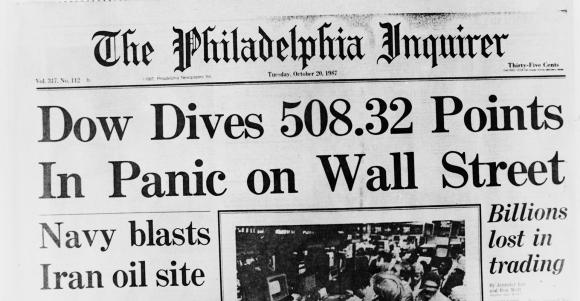
Remembering the Stock-Market “Crash” of 1987

It was 30 years ago … today!

***

https://en.wikipedia.org/wiki/Black_Monday_(1987)

***

Three reasons the next crash may be worse than 1987

http://www.marketwatch.com/story/three-reasons-the-next-crash-may-be-worse-than-1987s-2017-10-18

***

Thirty years ago this week, Wall Street slid into the abyss

https://www.msn.com/en-us/money/markets/thirty-years-ago-this-week-wall-street-slid-into-the-abyss/ar-AAtI5va?li=BBnbfcN

***

Conclusion

Your thoughts and comments on this ME-P are appreciated. Feel free to review our top-left column, and top-right sidebar materials, links, URLs and related websites, too. Then, subscribe to the ME-P. It is fast, free and secure.

Speaker: If you need a moderator or speaker for an upcoming event, Dr. David E. Marcinko; MBA – Publisher-in-Chief of the Medical Executive-Post – is available for seminar or speaking engagements.

Contact: MarcinkoAdvisors@msn.com

Is money more instinctual than cognitive?

On Financial Therapy

By Rick Kahler MS CFP®

My research in psychology, along with 35 years of experience working with people and their finances, suggests that how we handle money is more instinctual than cognitive.

It’s more a factor of our brains’ hard-wiring than it is learned intelligence. Apparently, some people are just wired to do money well and others are not.

This can sound like a complete copout. The idea that you either have the money gene or you don’t seems simplistic. Yet I believe there is some truth to it.

R&D

Researcher and educator Russ Hudson finds that two centuries of data suggest every human being has three basic instincts that are necessary for survival: social (for getting along with others), sexual (for extending ourselves through generations), and self-preservation (for maintaining our physical life and functioning).

For most of us, these three are not equally balanced. One tends to be dominant, a second supports the dominant one, and the third and weakest one typically creates a blind spot. The dominant and weakest instincts give us the most trouble.

Evidence supports the idea that those with a dominant instinct of self-preservation tend to instinctually be successful savers. They are the people who find it relatively easy to, in the words of the late Dick Wagner, “Spend less, save more, and don’t do anything stupid.”

This doesn’t mean they have a good relationship with money; that they sleep peacefully at night, don’t worry about money, or are not obsessed with money. It doesn’t mean they are happy. But it does mean they tend to be frugal, which is the common denominator of accumulating wealth. They understand instinctually that you can’t spend more than you receive if you are going to thrive and prosper financially. Living life on the edge or focusing on the welfare of others is instinctually foreign to them.

******

On the other hand

Someone with a dominant social or sexual instinct may be living hand to mouth, but be blissfully happy doing so. What’s instinctually foreign to them is learning to manage money prudently and take care of themselves financially.

As Jonathan Clements recently wrote in his HumbleDollar blog, “Why is change so difficult? Improving behavior is toughest when it means bucking our hardwired instincts. Intellectually, we may know we should exercise more, lose weight and save more—and yet our instincts keep telling us to stay on the couch, eat Cheez Doodles and shop online.” That’s why more financial education or discipline isn’t enough to motivate most Americans toward finding financial wellness.

For those who don’t have self-preservation as the dominant instinct, the enormity of learning to practice more self-preserving financial habits can feel depressing and hopeless. Yet it is certainly possible. It just isn’t going to be easy.

Idea

One approach that may be helpful is to get assistance and support from others. Clements says he has come to believe the best thing to do is tell friends about your financial goals like saving money for a down payment on a home, paying off a debt, or increasing your retirement plan contributions. This can help motivate you to commit to following through.

Announcing an intention to friends with the hope that the shame of not following through will motivate you to create a new behavior may work for a few. Yet for most, it probably won’t help to change a hard-wired instinct.

Assessment

A better idea might be finding and reporting  to an accountability partner who would kindly, without scolding or shaming, help motivate you to establish a habit.

Even better may be engaging a financial therapist to help you with the hard work of cultivating new instinctual behaviors.

Conclusion

Your thoughts and comments on this ME-P are appreciated. Feel free to review our top-left column, and top-right sidebar materials, links, urls and related websites, too. Then, subscribe to the ME-P. It is fast, free and secure.

Speaker: If you need a moderator or speaker for an upcoming event, Dr. David E. Marcinko; MBA – Publisher-in-Chief of the Medical Executive-Post – is available for seminar or speaking engagements.

Contact: MarcinkoAdvisors@msn.com

Subscribe: MEDICAL EXECUTIVE POST for curated news, essays, opinions and analysis from the public health, economics, finance, marketing, I.T, business and policy management ecosystem.

***

When You are Not a Financial Numbers Cruncher?

“When I see big numbers in an article, my brain just skips over them”

By Rick Kahler MS CFP®

If you are not a natural number cruncher, you may be like one of my clients who says, “When I see big numbers in an article, my brain just skips over them.” Unfortunately, skipping over numbers can lead to serious misunderstandings.

Here are three questions to ask that can help you clarify those big numbers:

1. What’s the time period? The reported cost or savings of something is completely irrelevant unless you know the length of time over which it is calculated.

For example, the August 11 Wall Street Journal included this headline: “U.S. Is Overhauling Its Nuclear Arsenal.” A secondary headline below read, “A $1 trillion revamp begun under Obama is under way as tensions rise with North Korea.”

It would be reasonable to assume this means an up-front cost of $1 trillion, which might strike you as outrageous, especially if you know the total U.S. annual budget is around $4 trillion. Yet reading the article would make clear that the $1 trillion price tag is over 30 years. This breaks down to an expense of $33 billion a year, roughly six percent of the $550 billion annual defense budget. A headline reading, “6% of annual defense budget to be spent modernizing the nuclear arsenal,” is less likely to make the hairs on your neck stand up in horror.

It’s no different than my saying I plan to spend $100,000 fixing up my house, which has a market value of $200,000. If you assume I’ll spend this immediately, it sounds shocking. But over 30 years it comes to $3,330 a year, which is a reasonable amount to spend on annual maintenance.

This tactic of lumping together multiple year’s expenditures is frequently employed when someone wants to make an expense or a savings seem far larger than it really is.

2. Does the number include interest? If I said the average home in Rapid City, SD, cost $648,679, local residents who know the average home price is around $200,000 might call me a liar. Yet the cost of mortgage interest over 30 years on that $200,000 house brings the total to $648,679. This larger number might seem deceptive, because our society refers to the cost of something based on today’s cash price, not in terms of the total initial cost plus interest.

3. Did you read the whole article carefully? If you speed read and miss the minutia, numbers can be misleading. In recent weeks, the Rapid City Journal has published several articles on the controversial issue of remodeling or replacing the city’s civic center. A July 9th article cited the cost of a new civic center as $182 million; on the second page the cost of a previous proposal for a civic center that was defeated in a public vote was listed as $180 million. A quick read would make it appear the new proposal would cost $2 million more than the previous proposal.

A closer read would show that the $182 million for the new center included interest over 30 years, while the $180 million number for the former included no interest. With interest, the cost of the previous proposal would have been $340 million to $420 million, numbers which did appear elsewhere in the article. If we compare actual cost without interest, the estimated cost of the new proposal is around $100 million to $130 million, which is $50 million to $80 million less than the $180 million cost of the previous proposal.

Assessment

You don’t have to be a “numbers person” to understand big numbers in media reports. You just need (with the help of a calculator, if necessary) to read carefully.

Conclusion

Your thoughts and comments on this ME-P are appreciated. Feel free to review our top-left column, and top-right sidebar materials, links, urls and related websites, too. Then, subscribe to the ME-P. It is fast, free and secure.

Speaker: If you need a moderator or speaker for an upcoming event, Dr. David E. Marcinko; MBA – Publisher-in-Chief of the Medical Executive-Post – is available for seminar or speaking engagements.

Contact: MarcinkoAdvisors@msn.com

***

What the heck is an Initial Coin Offering anyway?

 Wither the I.C.O.

By MIT Technology Review

bitcoin

You may have heard a buzz surrounding the new fundraising tool known as an ICO, which is how many new blockchain startups are raising cash.

But for those of you who are too embarrassed to ask, let us tell you what they’re all about.

 Conclusion

Your thoughts and comments on this ME-P are appreciated. Feel free to review our top-left column, and top-right sidebar materials, links, urls and related websites, too. Then, subscribe to the ME-P. It is fast, free and secure.

Speaker: If you need a moderator or speaker for an upcoming event, Dr. David E. Marcinko; MBA – Publisher-in-Chief of the Medical Executive-Post – is available for seminar or speaking engagements. Contact: MarcinkoAdvisors@msn.com

OUR OTHER PRINT BOOKS AND RELATED INFORMATION SOURCES:

Risk Management, Liability Insurance, and Asset Protection Strategies for Doctors and Advisors: Best Practices from Leading Consultants and Certified Medical Planners™8Comprehensive Financial Planning Strategies for Doctors and Advisors: Best Practices from Leading Consultants and Certified Medical Planners™

***


Bitcoins for Retirement?

 In a Balanced Portfolio?

By Rick Kahler CFP®

A reader recently sent me the following email: “As you know, there are ‘market experts’ pitching bitcoins as an ‘investment’. Has a Huge YTD gain. I’d bet a lot of your readers would like to know if a bitcoin position has a place in a balanced financial portfolio.”

I always appreciate hearing from readers, especially when they challenge me with topics I would normally not have considered. Bitcoins are not something to which I’ve paid serious attention.

How they Work

First, let me explain that a Bitcoin is a type of digital currency which is traded person to person. It is not backed by a government or considered legal tender. While Bitcoin is one of the earliest and most widely known digital currency systems, it is not the only one that is available. These are sometimes called “altcoin,” “virtual currency,” or crypto-currency.”

Unlike government-created currencies where a central bank controls the creation of the currency, Bitcoins are uncontrolled or tracked by any government. This allows people to send or receive money across borders freely, with none of the restrictions, tracking, or caps that are normally placed on transactions by governments.

A digital money system has an inherent problem common to all money systems. How do you keep the currency, especially one that is entirely digital, from being counterfeited? What stops someone from creating Bitcoins or selling the same Bitcoin multiple times?

The solution is a type of open source, public ledger that tracks every Bitcoin transaction from the beginning of Bitcoin time. It makes it virtually impossible to cheat. The creation of new Bitcoins is controlled via a process called mining. Only a limited number of new Bitcoins are allowed into the system annually, similar to how the precious metal supply gradually expands annually based on the mining of new metal.

The market in trading Bitcoins is probably as “free” as a currency market can get. The price of Bitcoins is based on supply and demand. Since Bitcoin was only created in 2009, it has less than a decade of performance to evaluate, but throughout its short history the price has fluctuated wildly. For example, it reached $31 in July of 2011, then dropped back to $2 by that December. In November of 2013 it hit a high of $1,242. The following month, the price dropped to $600, rebounded, crashed, and eventually stabilized to a range of $650 to $800.

The reader who asked me about Bitcoin was certainly right about its impressive 2017 year-to-date performance. On January 1, 2017, a Bitcoin sold for $496.90. As of August 19 it closed at $4,109.10, nearly a ten-fold increase in just eight months.

***

***

Operating History

An article on Investopedia offers a good overview of Bitcoin‘s operation and history.

It also describes some of the risks to evaluate before considering it as an investment. These include the relative novelty and lack of track record of digital currency, the possibilities for hacking and fraud, the uncertainties of future regulation, and the competition of other developing virtual currency systems. It also points out that Bitcoin transactions are similar to dealing with cash. They are “permanent and irreversible,” with “no third party or a payment processor, as in the case of a debit or credit card – hence, no source of protection or appeal if there is a problem.”

Assessment

While I like the libertarian freedom of the idea of a currency uncontrolled by government intervention, I don’t consider owning such a currency an investment. I do consider buying or selling digital currencies like Bitcoin a speculation. Like other speculative investments, these do not belong in any retirement portfolio. 

Conclusion

Your thoughts and comments on this ME-P are appreciated. Feel free to review our top-left column, and top-right sidebar materials, links, urls and related websites, too. Then, subscribe to the ME-P. It is fast, free and secure.

Speaker: If you need a moderator or speaker for an upcoming event, Dr. David E. Marcinko; MBA – Publisher-in-Chief of the Medical Executive-Post – is available for seminar or speaking engagements. Contact: MarcinkoAdvisors@msn.com

OUR OTHER PRINT BOOKS AND RELATED INFORMATION SOURCES:

Risk Management, Liability Insurance, and Asset Protection Strategies for Doctors and Advisors: Best Practices from Leading Consultants and Certified Medical Planners™8Comprehensive Financial Planning Strategies for Doctors and Advisors: Best Practices from Leading Consultants and Certified Medical Planners™

***

Royal College of General Practitioners Recommends: “Comprehensive Financial Planning Strategies for Doctors and Advisors”

 Join Our Mailing List

Comprehensive Financial Planning Strategies for Doctors and Advisors

RECOMMENDATION

***

rcgp-logo

Drawing on the expertise of multi-degreed doctors, and multi-certified financial advisors, Comprehensive Financial Planning Strategies for Doctors and Advisors [Best Practices from Leading Consultants and Certified Medical Planners™] will shape the industry landscape for the next generation as the current ecosystem strives to keep pace.

Traditional generic products and sales-driven advice will yield to a new breed of deeply informed financial advisor or Certified Medical Planner™.

The profession is set to be transformed by “cognitive-disruptors” that will significantly impact the $2.8 trillion healthcare marketplace for those financial consultants serving this challenging sector. There will be winners and losers.

The text, which contains 24 chapters and champions healthcare providers while informing financial advisors, is divided into four sections compete with glossary of terms, Certified Medical Planner™ curriculum content, and related information sources.

cmp

http://www.CertifiedMedicalPlanner.org

1. For ALL medical providers and financial industry practitioners
2. For NEW medical providers and financial industry practitioners
3. For MID-CAREER medical providers and financial industry practitioners
4. For MATURE medical providers and financial industry practitioners

Using an engaging style, the book is filled with authoritative guidance and healthcare-centered discussions, providing the tools and techniques to create a personalized financial plan using professional advice.

Comprehensive coverage includes topics likes behavioral finance, modern portfolio theory, the capital asset pricing model, and arbitrage pricing theory; as well as insider insights on commercial real estate; high frequency trading platforms and robo-advisors; the Patriot and Sarbanes–Oxley Acts; hospital endowment fund management, ethical wills, giving, and legacy planning; and divorce and other special situations.

The result is a codified “must-have” book, for all health industry participants, and those seeking advice from the growing cadre of financial consultants and Certified Medical Planners™ who seek to “do well by doing good,” dispensing granular physician-centric financial advice:

Omnia pro medicus-clientis

  Risk Management, Liability Insurance, and Asset Protection Strategies for Doctors and Advisors: Best Practices from Leading Consultants and Certified Medical Planners™8Comprehensive Financial Planning Strategies for Doctors and Advisors: Best Practices from Leading Consultants and Certified Medical Planners™

DR. DAVID EDWARD MARCINKO MBA CMP™

ISBN Number: 9781482240283

Number of pages: 744

Publisher: CRC Press

reward

AWARDS

***

Why Amazon will NOT kill this business!

Why Amazon Will Not Kill This Business

By Vitaliy Katsenelson CFA

Conclusion

Your thoughts and comments on this ME-P are appreciated. Feel free to review our top-left column, and top-right sidebar materials, links, urls and related websites, too. Then, subscribe to the ME-P. It is fast, free and secure.

Speaker: If you need a moderator or speaker for an upcoming event, Dr. David E. Marcinko; MBA – Publisher-in-Chief of the Medical Executive-Post – is available for seminar or speaking engagements. Contact: MarcinkoAdvisors@msn.com

OUR OTHER PRINT BOOKS AND RELATED INFORMATION SOURCES:

Risk Management, Liability Insurance, and Asset Protection Strategies for Doctors and Advisors: Best Practices from Leading Consultants and Certified Medical Planners™8Comprehensive Financial Planning Strategies for Doctors and Advisors: Best Practices from Leading Consultants and Certified Medical Planners™

***

How to Invest the Dale Carnegie Way

How to Invest the Dale Carnegie Way

By Vitaliy Katsenelson, CFA
The first time I read Dale Carnegie’s How to Win Friends and Influence People was in 1990. I was living in Russia; the Cold War had just ended.

Capitalist American books suddenly became very popular. Carnegie’s was one of the first to be translated into Russian and was “the book to read.” Everyone wanted to be a capitalist, and this book was supposed to make me a better one.

I decided, however, that it was stuffed with disingenuous fluff — that it taught the reader how to not be authentic; it turned you into a fake.


Conclusion

Your thoughts and comments on this ME-P are appreciated. Feel free to review our top-left column, and top-right sidebar materials, links, urls and related websites, too. Then, subscribe to the ME-P. It is fast, free and secure.

Speaker: If you need a moderator or speaker for an upcoming event, Dr. David E. Marcinko; MBA – Publisher-in-Chief of the Medical Executive-Post – is available for seminar or speaking engagements. Contact: marcinkoadvisors@msn.com

OUR OTHER PRINT BOOKS AND RELATED INFORMATION SOURCES:

Comprehensive Financial Planning Strategies for Doctors and Advisors: Best Practices from Leading Consultants and Certified Medical Planners™

***

What I Didn’t Know Then?

About Money

[By Rick Kahler MS CFP®]

Fifty years ago I scraped together $100 that I earned moving lawns and invested in my first stocks. I had heard a person could make a lot of money owning stocks. The ones I bought were all very small regional companies that I selected with the help of a stock broker who said they had great promise. They all eventually went out of business.

The next time I had some money to invest, at age 19, I bought a house. My $1,000 down payment grew into $4,000 in a couple of years. I took that money and invested it into the futures market. Within days it was gone.

It probably isn’t a surprise that, after these painful lessons, I put my investable dollars into buying real estate. It took me 10 years to even consider investing money into the stock market.

While I did okay investing in real estate, my foray into more liquid investments could have been much less painful had I known then what I know now.

Here’s what I finally learned: buying individual stocks and trying to beat the market is a game very, very, very few people do well at.

Had I taken that first $100 and purchased an index fund that invested in the 500 largest companies in the US (the S&P 500), 50 years later my $100 would have grown to $12,600, which is 10.2% a year. But I didn’t know that then.

My kids, however, are a little smarter. Six years ago they invested around $100 each into the Vanguard Dividend Appreciation Fund that owns just over 100 large company stocks. Their $100 is now worth around $300, which is a little over 20% a year. If that return would continue, at the 50-year anniversary of their original $100 investment they would each have just over $920,000. While I will guarantee you the 20% returns will not continue, they are well on their way to doing far better with their initial $100 investments than I did with mine.

Which leads me to wonder if the growth of their stock investments is likely to equal the growth of the past 50 years. According to Jonathon Clements of HumbleDollar.com, in a July 1, 2017 blog post , repeating the returns of the past is probably unlikely.

First he contends that because of “the aging of America and the accompanying slow growth in the workforce, the current century’s real economic growth has been sluggish, averaging 1.9% a year over the past 17 calendar years. That’s likely to continue.”

If you take real economic growth of 2%, add inflation of 2%, and add the average 2% dividend yield of stocks, you are looking at a 6% long-term return. Based on Clements’s math, that means $100 will grow to $1,840 in 50 years. That’s a fraction of the $12,600 accumulation of the past 50 years.

***

***

Clements notes the focus here is on just US stocks, suggesting the outlook for international stocks is much brighter. Other asset classes that could also do well are real estate and commodities.

Assessment

he bottom line is often the same: placing your bets on one stock, one asset class, or one country carries with it a high amount of risk. Most long-term investors need to seriously consider diversifying their nest egg globally in several asset classes. While such investors will never hit a home run, they will also never have to forfeit the game.

After my early attempts at investing, it took me a long time to learn what I didn’t know then. My hope is that writing about my mistakes can help others learn sooner what I do know now. 

Conclusion

Your thoughts and comments on this ME-P are appreciated. Feel free to review our top-left column, and top-right sidebar materials, links, urls and related websites, too. Then, subscribe to the ME-P. It is fast, free and secure.

Speaker: If you need a moderator or speaker for an upcoming event, Dr. David E. Marcinko; MBA – Publisher-in-Chief of the Medical Executive-Post – is available for seminar or speaking engagements. Contact: marcinkoadvisors@msn.com

OUR OTHER PRINT BOOKS AND RELATED INFORMATION SOURCES:

Comprehensive Financial Planning Strategies for Doctors and Advisors: Best Practices from Leading Consultants and Certified Medical Planners™

***

The New DOL Rule Survey

A Conversation?

[By Rick Kahler MS CFP®]

I recently learned about an unexpected response to the new Department of Labor rule which mandates that all financial advisors and brokers act as fiduciaries (that is, in the best interest of the consumer) when dealing with customers’ retirement plans.

This means brokers will be discouraged from selling high fee and commission products to a customer’s IRA or similar retirement plan. The ruling may force many brokers to revamp for IRA products that have lower fees and commissions.

The Survey

However, according to a J. D. Power survey as reported in Financial Planning, customers are not happy with their brokers charging them lower fees. While the survey found that the clients of fee-only advisors were “generally more satisfied with what they pay their firm,” it also found that commission-based clients are going to leave in droves if their advisors switch to a lower-cost, fee-only model.

Let me get this straight

A broker who until now has owed no fiduciary duty to the customer, and who sells high fee and commission products to that customer, will now be forced by their company to place the consumer’s interest first. When dealing with the customer’s IRA, the broker cannot receive commissions and can only earn a lower fee. The broker places a low-fee product in the client’s IRA.

The result?

The client is so upset they will take their business to another firm.

According to J. D. Powers, that is correct. Their survey says around 60% of the customers of brokerage firms that may have to switch to fee-only when dealing with customer’s IRAs will “probably” or “definitely” take their business to another firm.

***

***

I am imagining the following conversation between a customer and a broker

Broker:

“Because of the new DOL regulations I can no longer sell you a high fee and commission variable annuity to be owned by your IRA. To comply with the ruling, my company has eliminated the 7% upfront commission on this annuity; we will now charge you a 1% annual fee. They also reduced the annual management expenses from 3% to 1%. Plus, now any advice I give you or product I recommend must be in your best interests.”

Customer:

“So you are eliminating the upfront 7% commission and replacing that with a 1% annual fee, which means 7% more of my money immediately goes to work for me in the investment, right?”

Broker:

“That’s right.”

Customer:

 “And instead of the upfront commission you are charging a new 1% annual fee, but reducing the annual management costs of the investments from 3% to 1%. So I’ll still make an additional 1% every year I own this, in addition to saving 7% up front, right?”

Broker:

“That’s right.”

Customer:

 “And further, you’re now going to look out for my best interests rather than the best interests of your company.”

Broker:

 “Yep.”

Customer:

“This is ridiculous. I’m outta here!”

Broker:

“Where are you going?”

Customer:

“To find a firm that will continue to sell me high commission, high fee products for my IRA and that will work against my best interests!”

Broker:

“You probably won’t find any. Every financial company selling investment products to IRAs has to comply.”

Customer:

 “I’ll find someone, somewhere. Goodbye!”

Assessment

This defies all logic. I can only make up stories as to why the survey found the majority of brokerage customers would leave. Might some believe the new fees would cost them more than they currently pay?

My best assumption is that there was no explanation of what “fee-only” or “fiduciary” meant. So, if the results of the J. D. Power survey don’t make a lot of sense to you, join the crowd.

Conclusion

Your thoughts and comments on this ME-P are appreciated. Feel free to review our top-left column, and top-right sidebar materials, links, urls and related websites, too. Then, subscribe to the ME-P. It is fast, free and secure.

Speaker: If you need a moderator or speaker for an upcoming event, Dr. David E. Marcinko; MBA – Publisher-in-Chief of the Medical Executive-Post – is available for seminar or speaking engagements. Contact: marcinkoadvisors@msn.com

OUR OTHER PRINT BOOKS AND RELATED INFORMATION SOURCES:

Comprehensive Financial Planning Strategies for Doctors and Advisors: Best Practices from Leading Consultants and Certified Medical Planners™

***

Mid-Year US Markets Investment Update 2017

Second Quarter 2017

[By Rick Kahler MS CFP®]

Most clients I have met with recently show surprise when I tell them the first half of the year was a good one for investors. As one client said,

“How is that possible with all the problems in the world?”

She ticked off the unrest in the Middle East, ISIS, our strained relations with Russia, the instability of North Korea, not to mention the tweeting antics of President Trump and Congress’s inability to fix health care or provide tax relief. To her, all these appear to be good reasons for markets to be going down, not up.

Her response isn’t unusual

Most people mistakenly assume that markets rise when there is good news and do poorly when there is turmoil and pessimism. Actually, it’s often the opposite.

The U.S. stock market has more than tripled in value during the runup that started in March 2009, when the world as we knew it seemed to be ending. The most recent quarter somehow managed to accelerate the upward trend. We have just experienced the third-best first half, in terms of U.S. market returns, of the 2000s.

Still, as good as markets were to investors, economic growth was admittedly meager in the first quarter. The U.S. GDP grew just 1.4% from the beginning of January to the end of March.

Round-up

The S&P 500 index of large company stocks gained 2.41% for the quarter and is up 8.08% in the first half of 2017. International stocks are finally delivering better returns to our portfolios than US stocks. The broad-based EAFE index of companies in developed foreign economies gained 5.03% in the recent quarter and is now up 11.83% for the first half of calendar 2017.

Real estate, as measured by the Wilshire U.S. REIT index, gained 1.78% during the year’s second quarter, posting a meager 1.82% rise for the year so far.

The energy sector, which was a big winner last year, has dragged down returns in 2017. The S&P GSCI index, which measures commodities returns, lost 7.25% for the quarter and is now down 11.94% for the year, due in part to a 20.43% drop in the S&P petroleum index. This proves once again the value of diversification. Just when you start to question the value of holding a certain investment or wonder why the entire portfolio isn’t crowded into one that is outperforming, the tide turns. If only this were predictable.

In the bond markets, longer-term Treasury rates haven’t budged, despite what you might have heard about the Fed raising interest rates. The coupon rates on 10-year Treasury bonds have dropped a bit to stand at 2.30% a year, while 30-year government bond yields have dropped in the last three months from 3.01% to 2.83%.

Some good news

The unemployment rate is at a near-record low of 4.7%, and wages grew at a 2.9% rate in December, the best increase since 2009. The underemployment rate, which combines the unemployment rate with part-time workers who would like to work full-time, has fallen to 9.2%, its lowest rate since 2008.

The current bull market is aging, however. The runup has lasted far longer than anybody would have expected after the 2008 crisis. Inevitably, although it’s impossible to predict exactly when, we are approaching a period when stock prices will go down. It is always good to remember that the stocks in your portfolio will eventually plunge by more than 20% (which is the definition of a bear market).

Assessment

This might be a good time to revisit your stock and bond allocations and be sure you are diversified into five or more asset classes.

 *** 

***

Conclusion

Your thoughts and comments on this ME-P are appreciated. Feel free to review our top-left column, and top-right sidebar materials, links, URLs and related websites, too. Then, subscribe to the ME-P. It is fast, free and secure.

Speaker: If you need a moderator or speaker for an upcoming event, Dr. David E. Marcinko; MBA – Publisher-in-Chief of the Medical Executive-Post – is available for seminar or speaking engagements. Contact: MarcinkoAdvisors@msn.com

OUR OTHER PRINT BOOKS AND RELATED INFORMATION SOURCES:

Risk Management, Liability Insurance, and Asset Protection Strategies for Doctors and Advisors: Best Practices from Leading Consultants and Certified Medical Planners™8Comprehensive Financial Planning Strategies for Doctors and Advisors: Best Practices from Leading Consultants and Certified Medical Planners™

***

Forget IPOs

Forget IPOs?

Initial Coin Offerings are how blockchain startups now offer investors a return,

but they’re certainly no less risky than Wall Street.

 *** 

 ***

Conclusion

Your thoughts and comments on this ME-P are appreciated. Feel free to review our top-left column, and top-right sidebar materials, links, URLs and related websites, too. Then, subscribe to the ME-P. It is fast, free and secure.

Speaker: If you need a moderator or speaker for an upcoming event, Dr. David E. Marcinko; MBA – Publisher-in-Chief of the Medical Executive-Post – is available for seminar or speaking engagements. Contact: MarcinkoAdvisors@msn.com

OUR OTHER PRINT BOOKS AND RELATED INFORMATION SOURCES:

Comprehensive Financial Planning Strategies for Doctors and Advisors: Best Practices from Leading Consultants and Certified Medical Planners™

***

Are your investment returns beating the market?

Join Our Mailing List 

A Mid 2017 Update

By Rick Kahler MS CFP®

The question isn’t as simple to answer as you might think.

First of all, “the market” isn’t easy to define. You can compare your investment returns to the Dow Jones Industrial Average, but that index is made up of only 30 large companies.

If your portfolio is properly diversified, it will include a much broader range of asset classes. My preference is eight or nine different classes held in index funds. A typical mix might include stocks from large, medium, and small companies in both the U. S. and foreign countries; international bonds; real estate investment trusts, commodities like wheat, gold, and oil; market neutral funds like managed futures; and Treasury Inflation Protected Securities.

It’s not really relevant to compare quarterly returns on such a diversified portfolio to the Dow.

Instead, many professionals recommend a four-part method to evaluate your portfolio’s performance in a more meaningful way:

  1. Take a long view.

The changes you see in a monthly or quarterly investment statement are purely the result of random movements in the market, what professionals call “white noise.” But you might be surprised to know that even one-year returns fall into the “white noise” category. It’s better to look at your performance over five years or more. It’s better still to evaluate through a full market cycle, from, say, the start of a bull market to the start of a new bull market.

However, you should remember that there are no clear markers on the roadside that say: “This line marks the start of a new bull market.”

  1. Compare your performance to your goals.

Suppose your financial plan indicates that your investments need to generate 2% returns above inflation in order for you to have a good chance of affording a long, comfortable retirement. If that’s your goal, chances are your portfolio is not designed to beat the market.

Instead, it represents a best guess as to what investments have the best chance of achieving that target return, through all the inevitable market ups and downs between now and your retirement date. If your real returns are negative over three to five years, that means you’re probably falling behind on your goals—and you might be taking too much risk in your portfolio.

  1. Recognize that some of your investments will go down even in strong bull markets.

The concept of diversification means that some of your holdings will inevitably move in opposite directions, return-wise, from others. Ideally, the overall trend will be upward—the investments are participating in the growth of the global economy, but not at the same rate and with a variety of setbacks along the way.

If you see some negative returns, understand that those are the investments you’re counting on to give you positive returns during times when other parts of your investment mix turn downward.

  1. When you look at your portfolio statements – don’t focus only on the bottom line.

Remember that the account total is only a snapshot showing the value of the account on one given day and that value constantly fluctuates, sometimes slightly and sometimes more widely.

Instead, make sure the investments listed are what you expect them to be. Look at the longer time periods rather than monthly or even quarterly changes. Notice which investments rose the most and which were down and you’ll have an indication of the overall economic climate.

***

***
Assessment

Maybe your overall portfolio beat the Dow this quarter or over this year to date; maybe it didn’t. Either way, that variation probably only represents white noise!

Conclusion

Your thoughts and comments on this ME-P are appreciated. Feel free to review our top-left column, and top-right sidebar materials, links, URLs and related websites, too. Then, subscribe to the ME-P. It is fast, free and secure.

Speaker: If you need a moderator or speaker for an upcoming event, Dr. David E. Marcinko; MBA – Publisher-in-Chief of the Medical Executive-Post – is available for seminar or speaking engagements. Contact: MarcinkoAdvisors@msn.com

OUR OTHER PRINT BOOKS AND RELATED INFORMATION SOURCES:

Risk Management, Liability Insurance, and Asset Protection Strategies for Doctors and Advisors: Best Practices from Leading Consultants and Certified Medical Planners™8Comprehensive Financial Planning Strategies for Doctors and Advisors: Best Practices from Leading Consultants and Certified Medical Planners™

[Dr. Cappiello PhD MBA] *** [Foreword Dr. Krieger MD MBA]

Front Matter with Foreword by Jason Dyken MD MBA

***

Finding high-quality companies; TODAY?

At attractive valuations

By Vitaliy Katsenelson, CFA

We are having a hard time finding high-quality companies at attractive valuations.

For us, this is not an academic frustration. We are constantly looking for new stocks by running stock screens, endlessly reading (blogs, research, magazines, newspapers), looking at holdings of investors we respect, talking to our large network of professional investors, attending conferences, scouring through ideas published on value investor networks, and finally, looking with frustration at our large (and growing) watch list of companies we’d like to buy at a significant margin of safety. The median stock on our watch list has to decline by about 35-40% to be an attractive buy.

But – maybe we’re too subjective

Instead of just asking you to take our word for it, in this letter we’ll show you a few charts that not only demonstrate our point but also show the magnitude of the stock market’s overvaluation and, more importantly, put it into historical context. 

***


 Finding High-Quality Companies Today

*** 

Conclusion

Your thoughts and comments on this ME-P are appreciated. Feel free to review our top-left column, and top-right sidebar materials, links, URLs and related websites, too. Then, subscribe to the ME-P. It is fast, free and secure.

Speaker: If you need a moderator or speaker for an upcoming event, Dr. David E. Marcinko; MBA – Publisher-in-Chief of the Medical Executive-Post – is available for seminar or speaking engagements. Contact: MarcinkoAdvisors@msn.com

OUR OTHER PRINT BOOKS AND RELATED INFORMATION SOURCES:

Comprehensive Financial Planning Strategies for Doctors and Advisors: Best Practices from Leading Consultants and Certified Medical Planners™

***

HEDGE FUNDS – A History Rooted in Medicine?

HEDGE FUNDS – Really Rooted in Medicine?

By Dr. David E. Marcinko MBA CMP™

http://www.CertifiedMedicalPlanner.org

The investment profession has come a long way since the door-to-door stock salesmen of the 1920s sold a willing public on worthless stock certificates. The stock market crash of 1929 and ensuing Great Depression of the 1930s forever changed the way investment operations are run. A bewildering array of laws and regulations sprung up, all geared to protecting the individual investor from fraud. These laws also set out specific guidelines on what types of investment can be marketed to the general public – and allowed for the creation of a set of investment products specifically not marketed to the general public.

These early-mid 20th century lawmakers specifically exempted from the definition of “general public,” for all practical purposes, those investors that meet certain minimum net worth guidelines. The lawmakers decided that wealth brings the sophistication required to evaluate, either independently or together with wise counsel, investment options that fall outside the mainstream.

Not surprisingly, an investment industry catering to such wealthy individuals, such as doctors and healthcare professionals, and qualifying institutions has sprung up.

***

READ MORE HERE

https://www.linkedin.com/pulse/hedge-funds-history-rooted-medicine-mbbs-dpm-mba-m-ed-cmp-

***

Conclusion

Your thoughts and comments on this ME-P are appreciated. Feel free to review our top-left column, and top-right sidebar materials, links, URLs and related websites, too. Then, subscribe to the ME-P. It is fast, free and secure.

Speaker: If you need a moderator or speaker for an upcoming event, Dr. David E. Marcinko; MBA – Publisher-in-Chief of the Medical Executive-Post – is available for seminar or speaking engagements. Contact: MarcinkoAdvisors@msn.com

OUR OTHER PRINT BOOKS AND RELATED INFORMATION SOURCES:

Risk Management, Liability Insurance, and Asset Protection Strategies for Doctors and Advisors: Best Practices from Leading Consultants and Certified Medical Planners™8Comprehensive Financial Planning Strategies for Doctors and Advisors: Best Practices from Leading Consultants and Certified Medical Planners™

***

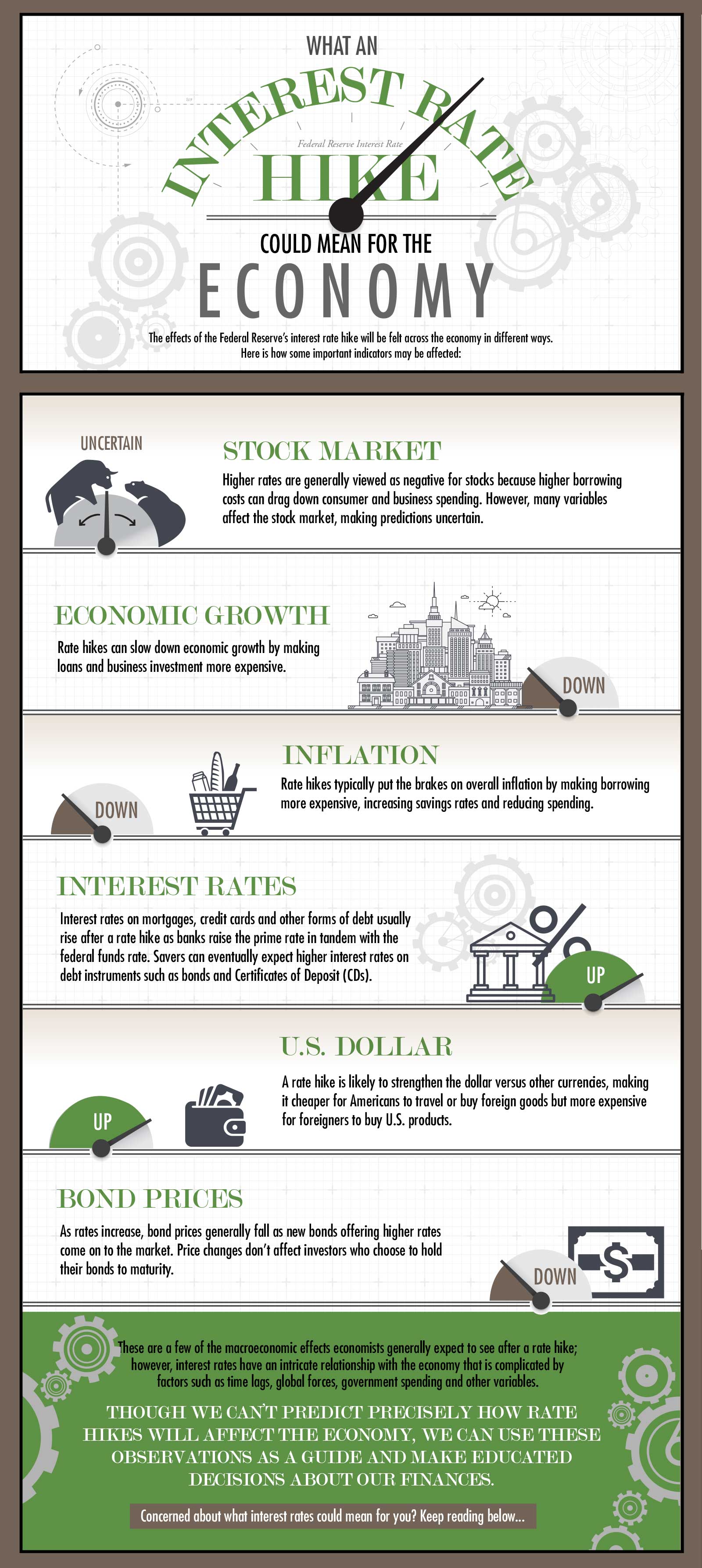
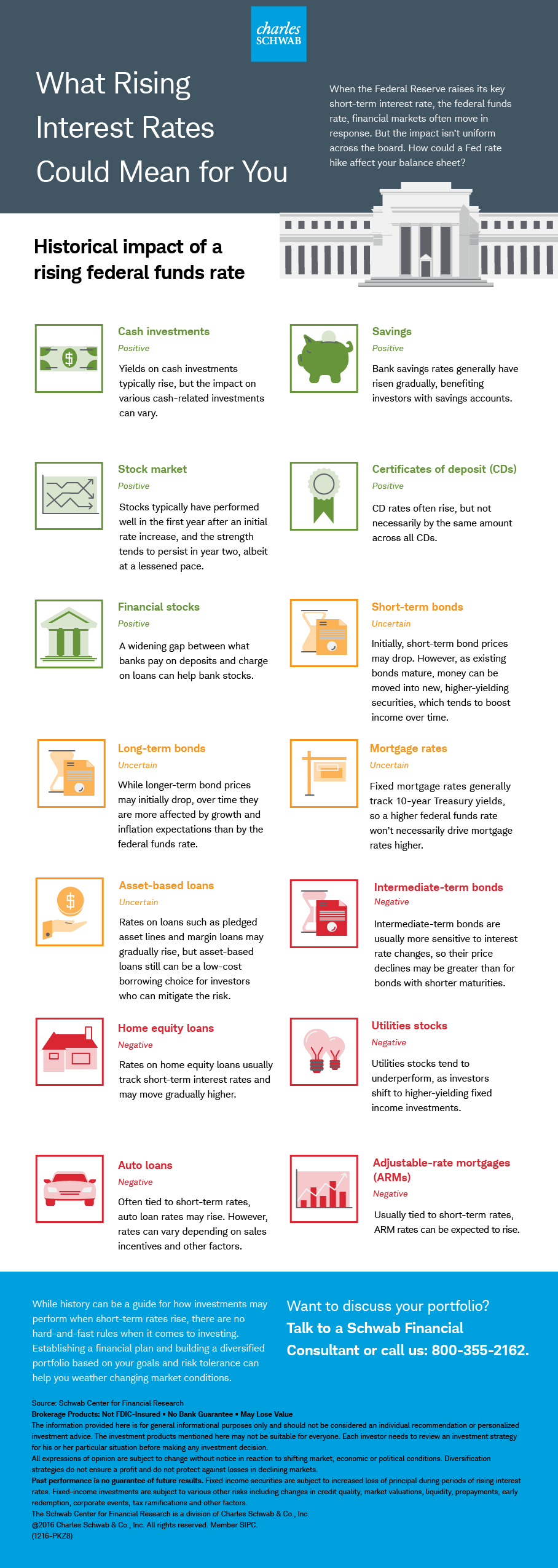
More on Recent Interest Rate Hikes

Impending IRs and … the Economy

By http://www.MCOL.com

***

***

Conclusion

Your thoughts and comments on this ME-P are appreciated. Feel free to review our top-left column, and top-right sidebar materials, links, URLs and related websites, too. Then, subscribe to the ME-P. It is fast, free and secure.

Speaker: If you need a moderator or speaker for an upcoming event, Dr. David E. Marcinko; MBA – Publisher-in-Chief of the Medical Executive-Post – is available for seminar or speaking engagements. Contact: MarcinkoAdvisors@msn.com

OUR OTHER PRINT BOOKS AND RELATED INFORMATION SOURCES:

Risk Management, Liability Insurance, and Asset Protection Strategies for Doctors and Advisors: Best Practices from Leading Consultants and Certified Medical Planners™8Comprehensive Financial Planning Strategies for Doctors and Advisors: Best Practices from Leading Consultants and Certified Medical Planners™

***

Peering at a high-frequency stock trading algorithm

On high-frequency trading algorithms

[By MIT Technology Review]

Readers – Here’s your chance to peer under the hood of a high-frequency trading algorithm. Or try your luck at setting up automated trades in a simulated stock market.

And plenty moreit’s part of the Wall Street Journal’s so-far-excellent series, “The Quants” on how technology has changed, and continues to change, Wall Street in ways both good and profitable … for some people, anyway.

***


***

Conclusion

Your thoughts and comments on this ME-P are appreciated. Feel free to review our top-left column, and top-right sidebar materials, links, URLs and related websites, too. Then, subscribe to the ME-P. It is fast, free and secure.

Speaker: If you need a moderator or speaker for an upcoming event, Dr. David E. Marcinko; MBA – Publisher-in-Chief of the Medical Executive-Post – is available for seminar or speaking engagements. Contact: MarcinkoAdvisors@msn.com

OUR OTHER PRINT BOOKS AND RELATED INFORMATION SOURCES:

Comprehensive Financial Planning Strategies for Doctors and Advisors: Best Practices from Leading Consultants and Certified Medical Planners™

***

The Warren Buffett & Charlie Munger Show

More on Value Investing

By Vitaliy Katsenelson CFA

***

The Warren Buffett & Charlie Munger Show

Conclusion

Your thoughts and comments on this ME-P are appreciated. Feel free to review our top-left column, and top-right sidebar materials, links, URLs and related websites, too. Then, subscribe to the ME-P. It is fast, free and secure.

Speaker: If you need a moderator or speaker for an upcoming event, Dr. David E. Marcinko; MBA – Publisher-in-Chief of the Medical Executive-Post – is available for seminar or speaking engagements. Contact: MarcinkoAdvisors@msn.com

OUR OTHER PRINT BOOKS AND RELATED INFORMATION SOURCES:

Comprehensive Financial Planning Strategies for Doctors and Advisors: Best Practices from Leading Consultants and Certified Medical Planners™

***

About U Stock Trade


The World’s First Retail Stock Trading Network

By staff reporters

To people looking to create financial opportunities, Ustocktrade is the first retail stock trading network that is bringing Wall Street to Main Street.

They aim to lower the barriers of entry to investing, empowering users—regardless of skill or experience level—to make trades and be part of a dynamic community all while contributing to a unique philanthropy.

***

***

A New Generation of Stock Traders

Ustockers launched in January 2016, wanting to change the face of stock trading. They started with a vision to democratize wealth by lowering the barriers of entry to stock trading with sophisticated yet affordable financial technology.

Assessment

Be sure to check em’ out: https://www.ustocktrade.com

More: The DARK POOL: http://www.msn.com/en-us/money/smallbusiness/dark-pool-for-college-kids-startup-bets-on-an-unusual-market/ar-BBA4keo?li=BBnbfcN

Conclusion

Your thoughts and comments on this ME-P are appreciated. Feel free to review our top-left column, and top-right sidebar materials, links, URLs and related websites, too. Then, subscribe to the ME-P. It is fast, free and secure.

Speaker: If you need a moderator or speaker for an upcoming event, Dr. David E. Marcinko; MBA – Publisher-in-Chief of the Medical Executive-Post – is available for seminar or speaking engagements. Contact: MarcinkoAdvisors@msn.com

OUR OTHER PRINT BOOKS AND RELATED INFORMATION SOURCES:

Risk Management, Liability Insurance, and Asset Protection Strategies for Doctors and Advisors: Best Practices from Leading Consultants and Certified Medical Planners™8Comprehensive Financial Planning Strategies for Doctors and Advisors: Best Practices from Leading Consultants and Certified Medical Planners™

***

Digital Apps Make Investing Accessible to Do-It-Yourselfers?

Financial Advisor Grant Moore Speaks

By Savant Capital Management

There’s an app for everything today. Financial advisor Grant Moore spoke about the pros and cons of digital apps for investing in the 815 magazine article, “Digital Apps Make Investing Accessible to Do-It-Yourselfers.”

***

 Digital Investing Aps

***

Conclusion

Your thoughts and comments on this ME-P are appreciated. Feel free to review our top-left column, and top-right sidebar materials, links, URLs and related websites, too. Then, subscribe to the ME-P. It is fast, free and secure.

Speaker: If you need a moderator or speaker for an upcoming event, Dr. David E. Marcinko; MBA – Publisher-in-Chief of the Medical Executive-Post – is available for seminar or speaking engagements. Contact: MarcinkoAdvisors@msn.com

OUR OTHER PRINT BOOKS AND RELATED INFORMATION SOURCES:

Risk Management, Liability Insurance, and Asset Protection Strategies for Doctors and Advisors: Best Practices from Leading Consultants and Certified Medical Planners™8Comprehensive Financial Planning Strategies for Doctors and Advisors: Best Practices from Leading Consultants and Certified Medical Planners™

***

Medical Practice as a New Asset Class?

Join Our Mailing List 

ORIGINAL RESEACH PUBLICATION SUBMISSION

[Medical Practice as a New Asset Class?]

By Ann Miller RN MHA

Academics and the financial services industry uses Modern Portfolio Theory [MPT] and the Capital Asset Pricing-Model [CAP-M] to make optimal investment allocations of different ‘asset’ classes to achieve a well balanced portfolio; according to some defined risk tolerance level or efficient frontier.

Assets

Equities, fixed income, real-estate, emerging markets, etc., are all asset classes into which investors, mutual, hedge fund or portfolio managers allocate capital. It is quite proper for them to do this as they seek to balance risk and potential returns.

And so, by creating a “new” asset class [medical practice], this concept opens the door to significant capital flows, advisory and management fees; if securitized-OR- at least help dampen portfolio risk for the individual physician executive investor.

Example:

As an example of this emerging new thought leadership, some  consider Social Security income an alternate asset class; while others like Paul Merriman [from a [Seattle-based investment advisory firm and Western Washington University’s School of Business and Economics] suggest that it is not an asset class at all. The idea is fundamentally flawed and should not be a part of anyone’s portfolio. 

Why? As classically defined, a financial asset is something that can be sold. Since Social Security cannot be sold, it has a market value of zero.

Assessment

However, in as much as a medical practice can be sold, the definition of “asset class” appears corroborated. Thus, the proper valuation and income stream determination for this ‘new” asset class becomes paramount for investment portfolio inclusion.

PROGRESS: Un-gated white paper work-in-progress.

FREE WHITE PAPER [Is Medical Practice a New Asset Class?] from iMBA, Inc.

SUBMISSION: To the Journal of Health Care Finance: Editorial team: J. Cawley, M. Chalkley, M.E. Chernew, D. Cutler, M. Lindeboom and E. Meara, N. Elsevier, NY

Conclusion

Your thoughts and comments on this ME-P are appreciated. Feel free to review our top-left column, and top-right sidebar materials, links, URLs and related websites, too. Then, subscribe to the ME-P. It is fast, free and secure.

Speaker: If you need a moderator or speaker for an upcoming event, Dr. David E. Marcinko; MBA – Publisher-in-Chief of the Medical Executive-Post – is available for seminar or speaking engagements. Contact: MarcinkoAdvisors@msn.com

OUR OTHER PRINT BOOKS AND RELATED INFORMATION SOURCES:

Full Disclosure: I was interim editor of the Journal of Health Care Finance during the sabbatical of Founding Editor-in-Chief, James Unland PhD, about a decade ago.

Risk Management, Liability Insurance, and Asset Protection Strategies for Doctors and Advisors: Best Practices from Leading Consultants and Certified Medical Planners™   Risk Management, Liability Insurance, and Asset Protection Strategies for Doctors and Advisors: Best Practices from Leading Consultants and Certified Medical Planners™

***

Why Cognizant Shines Brighter as a Stock Pick

Why Cognizant Shines Brighter as a Stock Pick

By Vitaliy Katsenelson, CFA

Originally written for Institutional Investor Magazine

Conclusion

Your thoughts and comments on this ME-P are appreciated. Feel free to review our top-left column, and top-right sidebar materials, links, URLs and related websites, too. Then, subscribe to the ME-P. It is fast, free and secure.

Speaker: If you need a moderator or speaker for an upcoming event, Dr. David E. Marcinko; MBA – Publisher-in-Chief of the Medical Executive-Post – is available for seminar or speaking engagements. Contact: MarcinkoAdvisors@msn.com

OUR OTHER PRINT BOOKS AND RELATED INFORMATION SOURCES:

Risk Management, Liability Insurance, and Asset Protection Strategies for Doctors and Advisors: Best Practices from Leading Consultants and Certified Medical Planners™8Comprehensive Financial Planning Strategies for Doctors and Advisors: Best Practices from Leading Consultants and Certified Medical Planners™

***

On Financial Product Sales Commissions

Join Our Mailing List

Rick Kahler MS CFPBy Rick Kahler MS CFP®

What’s wrong with earning a commission from the sale of a financial product?

Nothing. It isn’t any more inappropriate than a car salesperson earning a commission when you buy a vehicle.

Yet there’s one important difference. When you buy a car the roles are clear. You know going in that the salesperson is there to sell you their product. You understand it’s your responsibility to do your homework and know what you need and can afford.

Role Confusion

That clarity of roles is purposely clouded in the financial services industry. The “salespeople” are rarely referred to as such. Instead they call themselves creatively contrived variations like “financial advisor,” “financial planner,” “financial consultant,” or “financial representative.” The only advice a financial salesperson gives is in conjunction with the sales pitch to buy their product, where the incentive for them is receiving a commission.

This pretense that salespeople are working for the customer rather than the financial firm that employs them creates an inherent conflict of interest. The salesperson’s financial rewards come from pushing products versus giving client-oriented, comprehensive financial advice.

Conflict of interest

The conflict of interest resulted in many brokerage and insurance firms in the 1980’s providing incentives for their salespeople to push high commission products while hiding the high fees.

Examples:

  • Just one of many examples was described in a 1993 article in the Los Angeles Times. Prudential allowed salespeople to cheat customers out of $3 billion of losses invested into 700 Prudential limited partnerships that were high-risk and “rife with misconduct” while telling investors they were “safe, high-yield investments comparable to bank certificates of deposit.” The company finally agreed to a fine of $371 million, representing about 12% of what investors lost.

You might think that, 24 years later, things have changed and large financial firms selling products have changed. They haven’t.

  • One recent example was the $185 million fine paid by Wells Fargo over charging their customers fees for financial products they didn’t authorize.
  • Also, two years ago JPMorgan was fined $307 million for product pushing. Last year they were fined $264 million for their part in a vast foreign bribery scheme.
  • In 2015, one of the top JPMorgan representatives, Johnny Burris, who has been in the business for more than 25 years, refused to steer clients into proprietary JPMorgan funds that he felt had become rife with high fees. As reported in Financial Planning magazine, he was let go by the company.

But wait, that’s not all.

  • If you think Wells Fargo and JPMorgan’s fines were notable, think again. According to the Columbus Dispatch, Bank of America has paid $76.6 billion in 31 settlements from 2009 to 2016. During the same period, Chase Bank paid $38 billion in 22 settlements and Citigroup paid $15.8 billion in 15 settlement cases.

With a track record like this, you might think that consumers would be demanding wholesale changes in the way we regulate financial advice. They probably would be if they were personally aware of how hidden costs and fees cost the average investor thousands of dollars a year. No wonder that big financial firms can afford to pay billions in fines as a cost of doing business.

***

aamzlyk

***

Assessment

Other countries, including Australia, Canada, and the UK, have required a distinct separation of financial advice from financial sales. Hopefully the US won’t let another 24 years go by with no changes in the way we regulate companies that sell financial products. For those changes to be driven by consumer demand, more investors need to learn about the costs they pay and to realize that sellers of financial products are not that different from sellers of cars.

Conclusion

Your thoughts and comments on this ME-P are appreciated. Feel free to review our top-left column, and top-right sidebar materials, links, URLs and related websites, too. Then, subscribe to the ME-P. It is fast, free and secure.

Speaker: If you need a moderator or speaker for an upcoming event, Dr. David E. Marcinko; MBA – Publisher-in-Chief of the Medical Executive-Post – is available for seminar or speaking engagements. Contact: MarcinkoAdvisors@msn.com

OUR OTHER PRINT BOOKS AND RELATED INFORMATION SOURCES:

Comprehensive Financial Planning Strategies for Doctors and Advisors: Best Practices from Leading Consultants and Certified Medical Planners™

***

Top High Yield Dividend Stocks in the Financial Industry

Join Our Mailing List

The Financial Sector Yields

 tim

By TIMOTHY J. McINTOSH; MBA, MPH, CFP®, CMP™ [Hon]

The financial sector is a somewhat broad sector, although many of the industries within the sectors tend to move together.

In the last twelve months, the Financial Select Sector SPDR ETF (NYSE: XLF) increased 32%. This compared to an increase of 25% of the S&P 500 index. On a year to date basis, the sector is flat.

***

stock-exchange

Continue reading Top High Yield Dividend Stocks in the Financial Industry

***

Conclusion

Your thoughts and comments on this ME-P are appreciated. Feel free to review our top-left column, and top-right sidebar materials, links, URLs and related websites, too. Then, subscribe to the ME-P. It is fast, free and secure.

Speaker: If you need a moderator or speaker for an upcoming event, Dr. David E. Marcinko; MBA – Publisher-in-Chief of the Medical Executive-Post – is available for seminar or speaking engagements. Contact: MarcinkoAdvisors@msn.com

OUR OTHER PRINT BOOKS AND RELATED INFORMATION SOURCES:

Comprehensive Financial Planning Strategies for Doctors and Advisors: Best Practices from Leading Consultants and Certified Medical Planners™

***

Novartis (NVS) offers slight dividend increase, but future is bright.

Join Our Mailing List

timBy DividendMGR and TIMOTHY J. McINTOSH; MBA, MPH, CFP®, CMP™ [Hon]

Novartis’ (NYSE:NVS) dividend was increased by 1%. Its overall yield is 3.80%.  The firm started paying a dividend in 1993. Novartis AG (NYSE:NVS) is a large pharmaceutical firm based in Switzerland.

Its shares trade on the NYSE as an American Depository Receipt, or ADR. The company was created by the merger of Sandoz AG and Ciba-Geigy AG.

***

drugs

Continue reading Novartis (NVS) offers slight dividend increase, but future is bright.

Read more of this post

***

Conclusion

Your thoughts and comments on this ME-P are appreciated. Feel free to review our top-left column, and top-right sidebar materials, links, URLs and related websites, too. Then, subscribe to the ME-P. It is fast, free and secure.

Speaker: If you need a moderator or speaker for an upcoming event, Dr. David E. Marcinko; MBA – Publisher-in-Chief of the Medical Executive-Post – is available for seminar or speaking engagements. Contact: MarcinkoAdvisors@msn.com

OUR OTHER PRINT BOOKS AND RELATED INFORMATION SOURCES:

Comprehensive Financial Planning Strategies for Doctors and Advisors: Best Practices from Leading Consultants and Certified Medical Planners™

***

The Final Financial Round-Up for 2016

Join Our Mailing List

Rick Kahler MS CFP

By Rick Kahler CFP® http://www.KahlerFinancial.com

You know we are in a long-running bull market when you see people at the gym keeping one eye on their smart phones to see if the Dow Jones Industrial Average has finally breached the 20,000 mark.

With so much uncertainty at this time last year, nobody could have predicted double-digit returns on U.S. stocks at year-end. After all, the US stock market ended 2015 in negative territory and began 2016 with the worst start since 1930, falling 10% in two weeks.

The Markets

The markets eventually bottomed in mid-February and began a long, slow recovery, turning positive by the end of March. However, the going wasn’t easy. Global stock markets suffered a setback with the Brexit vote in the U.K. and endured another hard bump right after the elections.

In the end, the Dow finished 2016 at 19,762.60, a return of 13.4% for the year. International stocks of developed countries did not follow suit, finishing the year down 1.88%.

Related categories

In other categories, real estate investments, as measured by the Wilshire U.S. REIT index, finished up 7.24% for calendar 2016, and commodities, as measured by the S&P GSCI index, gained 27.77%.

The decades-long bond bull market is probably over, as interest rates have begun to rise. Even with the Federal Reserve rate increases, interest rate moves have not exactly been dramatic. Over the past year, rates on 10-year Treasury bonds have risen from 2.25% to 2.44%, while 30-year government bond yields have risen from 3.00% to 3.07%.

***

stock market

***

Unpredictable events in the investment world

As always, there were many unpredictable events in the investment world. Anyone lucky enough to have speculated on the Brazilian Bovespa index—comparable to the U.S. S&P 500—would have reaped a gain of 68.9% this year, despite all the headline drama around the Zika virus and political uncertainties reported on during the Olympic games. Russian stocks were up 51% for the year, despite the recent sanctions from the U.S. government and the lingering international sanctions related to the invasion of the Crimean peninsula.

What’s going to happen in 2017?

It’s clear that Donald Trump wants to accelerate America’s economic growth, but his policy prescription has not always been clear. Some traders expect the economy to respond positively with lower taxes and deregulatory policies.

However, it is helpful to remember that we are entering the ninth year of economic expansion, the fourth longest over the last 125 years. The first two years of a presidential term are not kind to the US stock markets. Since 1941 we have had 30 bear markets with 17 bear market lows occurring in the first year of the presidential term, 12 in the second year, one in the third year, and none in year four (the election year). Every year of this longstanding bull market, we have to look over our shoulders and wonder when and how it will end.

There are many unknowns around the globe

Growth in the U.S. since the financial crisis of 2008 has not exactly been robust; the U.S. GDP has averaged just 2.1% yearly increases. Still, the unemployment rate has slowly dropped from a post-recession peak of 10% to less than 5% currently. China’s economic growth has stalled for the second consecutive year, and a looming banking crisis in Italy could force the country to leave the Eurozone.

Markets always have a way of surprising us

Trying to time the market and get out in anticipation of a downturn is a loser’s game. The history of the markets has been a general upward trend that benefits long-term investors.

Assessment

As always, my advice is to broadly diversify your portfolio, periodically rebalance, and hang on for the long term.

Conclusion

Your thoughts and comments on this ME-P are appreciated. Feel free to review our top-left column, and top-right sidebar materials, links, URLs and related websites, too. Then, subscribe to the ME-P. It is fast, free and secure.

Speaker: If you need a moderator or speaker for an upcoming event, Dr. David E. Marcinko; MBA – Publisher-in-Chief of the Medical Executive-Post – is available for seminar or speaking engagements. Contact: MarcinkoAdvisors@msn.com

OUR OTHER PRINT BOOKS AND RELATED INFORMATION SOURCES:

Risk Management, Liability Insurance, and Asset Protection Strategies for Doctors and Advisors: Best Practices from Leading Consultants and Certified Medical Planners™8Comprehensive Financial Planning Strategies for Doctors and Advisors: Best Practices from Leading Consultants and Certified Medical Planners™

***

How financial advisers can get unstuck in 2017?

Join Our Mailing List

By Michael Gerber [Re-Post]

How financial advisers can get unstuck in the New Year

Most financial advisers started their firm because they had a dream for a different life and a vision of how to get there. Rather than taking their dream to the next level, too many advisers are stuck.

Michael Gerber discusses this trap in his book “The E-Myth.” What he describes translates perfectly into what happens when the adviser takes off their business-owner hat and stops working on their practice (Investment News).

***

networking advisors

***

Conclusion

Your thoughts and comments on this ME-P are appreciated. Feel free to review our top-left column, and top-right sidebar materials, links, URLs and related websites, too. Then, subscribe to the ME-P. It is fast, free and secure.

Speaker: If you need a moderator or speaker for an upcoming event, Dr. David E. Marcinko; MBA – Publisher-in-Chief of the Medical Executive-Post – is available for seminar or speaking engagements. Contact: MarcinkoAdvisors@msn.com

OUR OTHER PRINT BOOKS AND RELATED INFORMATION SOURCES:

Risk Management, Liability Insurance, and Asset Protection Strategies for Doctors and Advisors: Best Practices from Leading Consultants and Certified Medical Planners™8Comprehensive Financial Planning Strategies for Doctors and Advisors: Best Practices from Leading Consultants and Certified Medical Planners™

***

The Most Transformational Era in Financial Services Since the 1980s

Join Our Mailing List

A Retro-Spective End-of-Year Look Back

By Dara Albright Media

Epic Infographic Depicting Why 1981 Was a Defining Moment for the Financial Services Industry

***

most-transformational-era-in-financial-services-since-the-1980s-final-367x1024

***

Conclusion

Your thoughts and comments on this ME-P are appreciated. Feel free to review our top-left column, and top-right sidebar materials, links, URLs and related websites, too. Then, subscribe to the ME-P. It is fast, free and secure.

Speaker: If you need a moderator or speaker for an upcoming event, Dr. David E. Marcinko; MBA – Publisher-in-Chief of the Medical Executive-Post – is available for seminar or speaking engagements. Contact: MarcinkoAdvisors@msn.com

OUR OTHER PRINT BOOKS AND RELATED INFORMATION SOURCES:

 Risk Management, Liability Insurance, and Asset Protection Strategies for Doctors and Advisors: Best Practices from Leading Consultants and Certified Medical Planners™ Comprehensive Financial Planning Strategies for Doctors and Advisors: Best Practices from Leading Consultants and Certified Medical Planners™

***

The Role of Asset Classes

Join Our Mailing List

By Charles Schwab

Various Asset Classes and Diversification

***

infographic_web-1-updated_3

***

More:

Conclusion

Your thoughts and comments on this ME-P are appreciated. Feel free to review our top-left column, and top-right sidebar materials, links, URLs and related websites, too. Then, subscribe to the ME-P. It is fast, free and secure.

Speaker: If you need a moderator or speaker for an upcoming event, Dr. David E. Marcinko; MBA – Publisher-in-Chief of the Medical Executive-Post – is available for seminar or speaking engagements. Contact: MarcinkoAdvisors@msn.com

OUR OTHER PRINT BOOKS AND RELATED INFORMATION SOURCES:

Risk Management, Liability Insurance, and Asset Protection Strategies for Doctors and Advisors: Best Practices from Leading Consultants and Certified Medical Planners™8Comprehensive Financial Planning Strategies for Doctors and Advisors: Best Practices from Leading Consultants and Certified Medical Planners™

***

On Rising Interest Rates

Join Our Mailing List

By Charles Schwab

What They Could Mean for You

The FMOC rose interest rates today.

So, what does this mean for all of us?

***

infographic_120916_rising_interest_rates_mean_you_final

***

More:

Videos:

Assessment

Be aware that although the FED does indeed control overnight and short-term IRs; it is the market-place that controls longer-term rates. So, don’t fret.

-Dr. David Edward Marcinko MBA

No alt text provided for this image

Conclusion

Your thoughts and comments on this ME-P are appreciated. Feel free to review our top-left column, and top-right sidebar materials, links, URLs and related websites, too. Then, subscribe to the ME-P. It is fast, free and secure.

Speaker: If you need a moderator or speaker for an upcoming event, Dr. David E. Marcinko; MBA – Publisher-in-Chief of the Medical Executive-Post – is available for seminar or speaking engagements. Contact: MarcinkoAdvisors@msn.com

OUR OTHER PRINT BOOKS AND RELATED INFORMATION SOURCES:

Risk Management, Liability Insurance, and Asset Protection Strategies for Doctors and Advisors: Best Practices from Leading Consultants and Certified Medical Planners™8Comprehensive Financial Planning Strategies for Doctors and Advisors: Best Practices from Leading Consultants and Certified Medical Planners™

***

Money and Millennials?

Join Our Mailing List

By TD Waterhouse

Savings Goals

***

***

Conclusion

Your thoughts and comments on this ME-P are appreciated. Feel free to review our top-left column, and top-right sidebar materials, links, URLs and related websites, too. Then, subscribe to the ME-P. It is fast, free and secure.

Speaker: If you need a moderator or speaker for an upcoming event, Dr. David E. Marcinko; MBA – Publisher-in-Chief of the Medical Executive-Post – is available for seminar or speaking engagements. Contact: MarcinkoAdvisors@msn.com

OUR OTHER PRINT BOOKS AND RELATED INFORMATION SOURCES:

***

Risk Management, Liability Insurance, and Asset Protection Strategies for Doctors and Advisors: Best Practices from Leading Consultants and Certified Medical Planners™8Comprehensive Financial Planning Strategies for Doctors and Advisors: Best Practices from Leading Consultants and Certified Medical Planners™

***

What’s a “Tombstone”Ad?

Join Our Mailing List

Tombstone Advertising and the Securities Prospectus

DEM tie

By Dr. David E. Marcinko MBA CMP™

Despite certain SEC restriction, some idea of potential demand for a new securities issue can be gauged and have a bearing on pricing decisions.

For example, as CEO of a medical instrument company, or interested investor, would you rather see a great deal of interest in a potential new issue or not very much interest?

http://www.CertifiedMedicalPlanner.org

cmp

There is however, one kind of advertisement that the underwriter can publish during the cooling off period. It’s known as a tombstone ad. The ad makes it clear that it is only an announcement and does not constitute an offer to sell or solicit the issue, and that such an offering can only be made by prospectus.  SEC Rule 134 of the 1933 Act itself, refers to a tombstone ad as “communication not deemed a prospectus” because it makes reference to the prospectus in the ad. Tombstones have received their name because of the sparse nature of details found in them. However, the most popular use of the tombstone ad is to announce the effectiveness of a new issue, after it has been successfully issued. This promotes the success of both the underwriter, as well as the company.

http://www.HealthDictionarySeries.org

HDS

Since distributing securities involves potential liability to the investment bank, it will do everything possible to protect itself. So, near the end of the cooling off period, a meeting is held between the underwriter and the corporation. It is known as a due diligence meeting. At this meeting they both discuss amendments that are going to be necessary to make the registration statement complete and accurate. The corporate officers and the underwriters sign the final registration statement. They have civil liability for damages that result from omissions of material facts or misstatements of fact. They also have criminal liability if the distribution is done by use of fraudulent, manipulative, or deceptive means. Due diligence takes on a whole new meaning when incarceration from a half-hearted underwriting effort; can occur. The investment bank strives to ensure that there have been no material changes to the issuer or the terms of the issue since the registration statement was filed.

Again, as a physician, how would you feel if you were an investment banker raising capital for a new pharmaceutical company that had developed a drug product that was highly marketable. But, on the day after the issue was effective, there was a major news story indicating that the company was being sued for patent infringement? What effect do you think that would have on the market price of this new issue? It would probably plunge. How could this situation have been prevented? The due diligence meeting is more than a cocktail party or a gathering in a smoke filled room. Otherwise, the company would require specially trained people, to do a patent search lessening the likelihood of this scenario. At the due diligence meeting, work is done on the preparation of the final prospectus, but the investment bank does not set the public offering price or the effective date at this meeting. The SEC will eventually set the effective date for the registration and it is on that date that the final offering price will be determined.

Once the SEC sets the effective date, sales may be executed and money can be accepted by the investment bank. It is at this time that the final prospectus, similar to the red herring but without the red ink and with the missing numbers, is issued. A prospectus is an abbreviated form of the registration statement, distributed to purchasers, on and after the effective date of the registration. It is not the same as the registration statement. A typical registration statement consists of papers that stand more than a foot high; rarely does a prospectus go beyond 40 or 50 pages. All purchasers will receive a final prospectus and then it becomes permissible for the underwriter to provide sales literature.

Two Requirements

In addition to the requirement that a prospectus must be delivered to a purchaser of new issues no later than with confirmation of the trade, there are two other requirements which physicians, medical professionals and healthcare executive investors should know.

90-day: When an issuer has an initial public offering (IPO), there is generally a lack of publicly available material relating to the operations of that issuer.  Because of this, the SEC requires that all members of the underwriting group make available a prospectus on an IPO for a period of 90 days after the effective date. 

40-day: Once an issuer has gone public, there are a number of routine filings that must be made with the SEC so there is publicly available information regarding the financial condition of that issuer. Since additional information is now available, the SEC requires that, on all issues other than IPOs, any member of the underwriting group must make available a prospectus for a period of 40 days after the effective date.

Assessment

In the event that the investment bankers misgauged the marketplace, and the issue moves quite slowly, it is possible that information contained in the prospectus would be rendered obsolete by the SEC. Specifically, the SEC requires that any prospectus used more than 9 months after the effective date, may not have any financial information more than 16 months old. It can however, be amended or stickered, with updated information, as needed. 

Conclusion

Your thoughts and comments on this ME-P are appreciated. Feel free to review our top-left column, and top-right sidebar materials, links, URLs and related websites, too. Then, subscribe to the ME-P. It is fast, free and secure.

Speaker: If you need a moderator or speaker for an upcoming event, Dr. David E. Marcinko; MBA – Publisher-in-Chief of the Medical Executive-Post – is available for seminar or speaking engagements. Contact: MarcinkoAdvisors@msn.com

OUR OTHER PRINT BOOKS AND RELATED INFORMATION SOURCES:

Risk Management, Liability Insurance, and Asset Protection Strategies for Doctors and Advisors: Best Practices from Leading Consultants and Certified Medical Planners™8Comprehensive Financial Planning Strategies for Doctors and Advisors: Best Practices from Leading Consultants and Certified Medical Planners™

***

The POWER of Three

Join Our Mailing List

Rick Kahler MS CFP

By Rick Kahler MSFS CFP®

At a recent workshop sponsored by the Center for Action and Contemplation, I was introduced to a principle that could be a helpful way to frame and change hurtful money behaviors. It’s based on the work of Adrian Bejan, a professor of mechanical engineering at Duke University, whose Constructal Law describes the physics of life as a flow system.

Flow Systems

Flow systems consist of three interweaving forces: affirming (what moves or flows), denying (what opposes or resists), and reconciling (what brings the first two into a new relationship).

With a sailboat, for example, the affirming force is the wind. The denying force is the rudder. The reconciling force is the helmsman who figures out how to bring the two oppositional forces together. When the helmsman finds the right balance between the wind and the rudder, the boat sails forward. Without the helmsman there is no forward progress, and a sailboat floats aimlessly.

Law of Three

In human interaction, philosophers often refer to this principle as the Law of Three. One place we can see it is in the US government. We have an affirming force (a Democratic Senator, say) that proposes a bill and the denying force (perhaps a Republican House member) that opposes it. The result is gridlock unless the third reconciling force (perhaps moderate members of both parties) can merge mutually acceptable pieces of both the affirming and denying forces into new legislation.

It’s important to recognize that no force is inherently good or bad, and neither is the reconciliation always positive. For example, Hitler was the reconciling force of the two opposing forces in pre-WWII Germany.

***

SIB flow chart

The key to transformation—creating a new system or behavior—is becoming aware of the two conflicting forces and finding a way forward

***

How can we apply the Law of Three to our finances?

Take the example of a chronic overspender who tried for years to reduce his spending and live within his means. The problem was his love for “big boy” toys. There wasn’t a boat, ATV, motorcycle, or power tool that didn’t call to him. Predictably, like a sailboat without a helmsman, his financial ship was blown about aimlessly and in danger of sinking deeper and deeper in debt.

When he learned about the Law of Three, he initially thought the affirming force was his desire for financial solvency and the resisting force was his penchant for the toys. Actually it was just the opposite. The affirming force was his unrestrained desire for the toys and the resisting force was the nagging reminder of financial insolvency. He came to recognize that the missing third force was a conscious relationship with the toys.

He had a long-time pattern of struggling with the desire, unsuccessfully trying to resist it, and feeling ashamed and guilty when he finally gave in and bought the new toy. His first step toward change was to notice what went on emotionally when he began craving another toy, and he identified a pattern of feeling empty, lonely, and anxious at those times. Focusing on the anticipation of buying the new toy pushed aside the difficult feelings. He also came to see that he found much of his identity as the guy with the newest toy.

Assessment

With financial therapy, he was able to reconcile the historical causes of those emotions with the desire for the toys and financial solvency. This shift allowed him to greatly reduce his spending on toys but still occasionally and consciously buy one. He was able to live within his budget and begin funding a retirement plan. Becoming able to apply the reconciling force allowed him to move forward with his financial goals. 

Conclusion

Your thoughts and comments on this ME-P are appreciated. Feel free to review our top-left column, and top-right sidebar materials, links, URLs and related websites, too. Then, subscribe to the ME-P. It is fast, free and secure.

Speaker: If you need a moderator or speaker for an upcoming event, Dr. David E. Marcinko; MBA – Publisher-in-Chief of the Medical Executive-Post – is available for seminar or speaking engagements. Contact: MarcinkoAdvisors@msn.com

OUR OTHER PRINT BOOKS AND RELATED INFORMATION SOURCES:

Risk Management, Liability Insurance, and Asset Protection Strategies for Doctors and Advisors: Best Practices from Leading Consultants and Certified Medical Planners™8Comprehensive Financial Planning Strategies for Doctors and Advisors: Best Practices from Leading Consultants and Certified Medical Planners™

***


Good Companies Don’t Always Make Good Stocks

 Join Our Mailing List 

vitaly

By Vitaliy Katsenelson CFA

 Institutional Investor


Good Companies Don’t Always Make Good Stocks

Conclusion

Your thoughts and comments on this ME-P are appreciated. Feel free to review our top-left column, and top-right sidebar materials, links, URLs and related websites, too. Then, subscribe to the ME-P. It is fast, free and secure.

Speaker: If you need a moderator or speaker for an upcoming event, Dr. David E. Marcinko; MBA – Publisher-in-Chief of the Medical Executive-Post – is available for seminar or speaking engagements. Contact: MarcinkoAdvisors@msn.com

OUR OTHER PRINT BOOKS AND RELATED INFORMATION SOURCES:

Comprehensive Financial Planning Strategies for Doctors and Advisors: Best Practices from Leading Consultants and Certified Medical Planners™

***

Presidential Politics & Wall Street

Join Our Mailing List

and ….. Doctors!

Rick Kahler MS CFP

By Rick Kahler MS CFP®

Recently, I reported on a survey that found most investment advisors are expecting the presidential election to result in rough seas for both their businesses and their client’s long-term retirement portfolios.

As it turns out, I am in the minority of advisors that disagree with that belief.

Presidential Power?

This is why. Even though the U.S. President is often called the most powerful person in the world, our presidents don’t run the economy any more than they run the Congress or the Supreme Court. While they may have some influence over all three, that influence goes only so far.

Certainly the president, as head of the executive branch, has authority over enforcing or not enforcing the laws passed by Congress. We’ve witnessed this most notably with President Bush, who didn’t enforce some environmental laws, and President Obama, who has vigorously enforced them. This gives the president a lot of influence on enforcing regulations which impact business and consumers.

Enforcing or not enforcing regulations dealing with commerce and Wall Street can have some influence on the economy.

Executive Branch Powers

Still, Executive Branch powers include foreign affairs, ordering military actions, and making appointments to the courts. Congress enacts all laws and controls the spending. The Supreme Court decides if both the Executive Branch and the Congress comply with the Constitution. Presidents can certainly influence Congress, but they remain one cog of many cogs in the wheel of government.

While the president has an influence on the economy, it isn’t the major influence that the media or either political party make it out to be. People think a president has great power to fix an economy. Even presidential candidates believe their own rhetoric around what they can accomplish until they take up residence in the Oval Office and discover there are a plethora of constraints that mute their power. This is how the founding fathers designed our government, which is actually a good thing, especially in this election cycle.

Long Term Portfolios

That is why, viewed in the context of your long-term retirement portfolio, you need not worry about who becomes president. Could there be some short-term swings in the stock market? Certainly.

Will who is elected president in November make a difference in the long run … No?

Of More Concern

Of slightly more concern, and potentially more economically impactful, is if one party gains control of both the Executive Branch and Congress. The last time we saw that was in 2008-2010 when the Democrats controlled both houses of Congress and the Presidency. One of the biggest outcomes of that two-year run was the passing of the Affordable Health Care Act, which certainly had a large economic impact. Whether that impact was positive or negative depended on your economic status. For many of the uninsured working poor, it was a godsend. For anyone not qualifying for a subsidy on the exchanges, it was a massive increase in health premiums.

That said, I won’t be doing anything differently with my investments even if we have a Democratic or Republican sweep of the Congress and Presidency. If you have a globally diversified portfolio of many different asset classes, you have no need to make any adjustments.

And now … Doctors and Political Parties

*** original

Your Surgeon Is Probably a Republican, Your Psychiatrist

 ***

Assessment

While I am neutral as to the impact of the presidential election on my investment portfolio, that certainly does not mean I don’t care about the election or the person who represents our country in its highest office. I am going to vote, because elections do matter. The choices we make as voters, not only for president, but for Congress and state and local officials, do have an impact on the direction of our country.

MORE: President Trump vs. President Clinton: The impact on physicians

Conclusion

Your thoughts and comments on this ME-P are appreciated. Feel free to review our top-left column, and top-right sidebar materials, links, URLs and related websites, too. Then, subscribe to the ME-P. It is fast, free and secure.

Speaker: If you need a moderator or speaker for an upcoming event, Dr. David E. Marcinko; MBA – Publisher-in-Chief of the Medical Executive-Post – is available for seminar or speaking engagements. Contact: MarcinkoAdvisors@msn.com

OUR OTHER PRINT BOOKS AND RELATED INFORMATION SOURCES:

Risk Management, Liability Insurance, and Asset Protection Strategies for Doctors and Advisors: Best Practices from Leading Consultants and Certified Medical Planners™8Comprehensive Financial Planning Strategies for Doctors and Advisors: Best Practices from Leading Consultants and Certified Medical Planners™

***

The Financial Instability “Hypothesis”

Join Our Mailing List

By David Shahrestani

On January 13, 2010, the chief executives of four top Wall Street institutions gathered together in Washington to testify on what went wrong in the years leading up to the great recession …

***

journalism_grants_image

 Financial Instability Hypothesis

***

Conclusion

Your thoughts and comments on this ME-P are appreciated. Feel free to review our top-left column, and top-right sidebar materials, links, URLs and related websites, too. Then, subscribe to the ME-P. It is fast, free and secure.

Speaker: If you need a moderator or speaker for an upcoming event, Dr. David E. Marcinko; MBA – Publisher-in-Chief of the Medical Executive-Post – is available for seminar or speaking engagements. Contact: MarcinkoAdvisors@msn.com

OUR OTHER PRINT BOOKS AND RELATED INFORMATION SOURCES:

Risk Management, Liability Insurance, and Asset Protection Strategies for Doctors and Advisors: Best Practices from Leading Consultants and Certified Medical Planners™8Comprehensive Financial Planning Strategies for Doctors and Advisors: Best Practices from Leading Consultants and Certified Medical Planners™

***

The Massacre of Hedge Fund Business

Join Our Mailing List

By Michael Zhuang

Michael Zhuang

The Massacre of Hedge Fund Business

 ***
I took the sensationalist title from a CNBC article I read recently. The articles talks about,  and I quote,
” … hedge funds, as a category, is experiencing the worst quarter of outflows since the bottom of the financial crisis … there were an avalanche of stories about the industry’s nearly systematic underperforming.”
Readers of my newsletter and blog, The Investment Scientist,  can thank me later for warning them years ago.
Examples
On April 28, 2011, I published “A Balanced Portfolio to Avoid (II): Hedge Funds Don’t Deliver Outstanding Returns.” Let me quote my former self:
“Hedge funds are often peddled as an unique asset class that are uncorrelated with the market. In reality, hedge funds are as much an asset class as Las Vegas is.”
The unspoken message is: you should expect to lose money.
On August 15, 2012, I published “Why You should Avoid Hedge Funds.
” I wrote that article after I read the book by former hedge fund industry insider Simon Lack, “The Hedge Fund Mirage.”  I summarized the book in one sentence for my readers: “Between 1998 and 2010, hedge fund fees totaled $440 billion vs. $9 billion profits for investors.”
Note: Hedge fund performance reporting is voluntary – unprofitable hedge funds need not report – so even the $9 billion profit figure should be taken with a grain of salt.
On June 13, 2013, I was aghast at SEC Chairwoman Mary Jo White’s proposal to allow hedge funds to market to the public. That day, I wrote a sarcastic piece “Why Allowing Hedge Funds to Market to The Public is Such A Good Idea.”
In the concluding paragraph I wrote:
“What’s unfair about the existing hedge fund rule is that only the top 1% get that bragging right. The rest of us don’t even know such a wonderful opportunity exists to transfer our puny wealth to the hedge fund managers who are really the top 0.1%.”
***
dollar-1029742_640
***
Assessment
I hope somewhere out there a reader or two did not buy into the hedge fund hype because of my writings. That would make all the midnight oil I have burned worth it!

Conclusion

Your thoughts and comments on this ME-P are appreciated. Feel free to review our top-left column, and top-right sidebar materials, links, URLs and related websites, too. Then, subscribe to the ME-P. It is fast, free and secure.

Speaker: If you need a moderator or speaker for an upcoming event, Dr. David E. Marcinko; MBA – Publisher-in-Chief of the Medical Executive-Post – is available for seminar or speaking engagements. Contact: MarcinkoAdvisors@msn.com

OUR OTHER PRINT BOOKS AND RELATED INFORMATION SOURCES:

Risk Management, Liability Insurance, and Asset Protection Strategies for Doctors and Advisors: Best Practices from Leading Consultants and Certified Medical Planners™8Comprehensive Financial Planning Strategies for Doctors and Advisors: Best Practices from Leading Consultants and Certified Medical Planners™

***

Understanding Capital Investment Risks for Hospitals

Join Our Mailing List

Capital Investment Risks for Hospitals

By Calvin Weise CPA and Dr. David E. Marcinko MBA CMP®

www.CertifiedMedicalPlanner.org

Capital investments create risk. Risk is the uncertainty of future events. When hospitals make capital investments, they commit to costs that affect future periods. Those costs are known and relatively fixed. What is unknown are the benefits to be realized by those capital investments.

Capital Investments

For capital investments, risk is the certainty of future costs coupled with the uncertainty of future benefits. In some cases, while the future benefits are uncertain, there is a high degree of certainty that the benefits will exceed the costs. In these cases, risk can be very low. Risk may be better defined as the degree to which the uncertainty of unknown benefits will exceed the known and committed costs.

Capital Assets

When capital assets are purchased, both the burdens and the benefits of ownership are transferred to the owner. The burdens are primarily the costs associated with acquisition and installation. The benefits are primarily the revenues generated by operating the capital assets. Risk of ownership is created to the degree that the benefits are uncertain.

Manager Tasks

Hospital managers need to be skilled at putting hospital assets at risk. Without clear knowledge and understanding of the benefits and the burdens, hospitals can quickly find themselves at unacceptably high levels of risk. Risk must be continually assessed and evaluated in order to successfully put hospital assets at risk. Hospitals require many varied capital investments; their capital investments represent a risk portfolio. An effective combination of risky assets can often create risk that is less than the sum of the risk of each asset.

***

Hospital with paper MRs

***

Modern Portfolio Theory

Of course, financial managers have know this for years as a basic principle of Modern Portfolio Theory (MPT), first introduced by Harry Markowitz, PhD, with the paper “Portfolio Selection,” which appeared in the 1952 Journal of Finance. Thirty-eight years later, he shared a Nobel Prize with Merton Miller, PhD, and William Sharpe, PhD, for what has become a broad theory for securities asset selection; and hospital assets may be viewed as little different.

Prior to Markowitz’s work, investors focused on assessing the rewards and risks of individual securities in constructing a portfolio.

Risk Measure

Standard advice was to identify those that offered the best opportunities for gain with the least risk and then construct a portfolio from them. Following this advice, a hospital administrator might conclude that a positron emission tomography (PET) scanning machine offered good risk-reward characteristics, and pursue a strategy to compile a network of them in a given geographic area. Intuitively, this would be foolish. Markowitz formalized this intuition. Detailing the mathematics of diversity, he proposed that investors focus on selecting portfolios based on their overall risk-reward characteristics instead of merely compiling portfolios of securities, or capital assets that each individually has attractive risk-reward characteristics.

In a nutshell, just as investors should select portfolios not individual securities, so hospital administrators should select a wide spectrum of radiology services, not merely machines.

Assessment

Savvy hospital managers will mitigate ownership risk by constructing their portfolio of risky assets in a manner that lowers overall risk.

Conclusion

Your thoughts and comments on this ME-P are appreciated. Feel free to review our top-left column, and top-right sidebar materials, links, URLs and related websites, too. Then, subscribe to the ME-P. It is fast, free and secure.

Speaker: If you need a moderator or speaker for an upcoming event, Dr. David E. Marcinko; MBA – Publisher-in-Chief of the Medical Executive-Post – is available for seminar or speaking engagements. Contact: MarcinkoAdvisors@msn.com

OUR OTHER PRINT BOOKS AND RELATED INFORMATION SOURCES:

Product DetailsProduct Details

***