Supply Chain Service Management?
[By staff reporters]
***

***
 8
8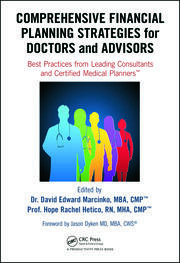
Share this:

Filed under: Investing | Tagged: Asset Lite Companies | Leave a comment »
ME-P SYNDICATIONS:
WSJ.com,
CNN.com,
Forbes.com,
WashingtonPost.com,
BusinessWeek.com,
USNews.com, Reuters.com,
TimeWarnerCable.com,
e-How.com,
News Alloy.com,
and Congress.org


BOARD CERTIFICATION EXAM STUDY GUIDES
Lower Extremity Trauma
[Click on Image to Enlarge]
The “Medical Executive-Post” is about connecting doctors, health care executives and modern consulting advisors. It’s about free-enterprise, business, practice, policy, personal financial planning and wealth building capitalism. We have an attitude that’s independent, outspoken, intelligent and so Next-Gen; often edgy, usually controversial. And, our consultants “got fly”, just like U. Read it! Write it! Post it! “Medical Executive-Post”. Call or email us for your FREE advertising and sales consultation TODAY [678.779.8597] Email: MarcinkoAdvisors@outlook.com



 ePodiatryConsentForms.com
 “Providing Management, Financial and Business Solutions for Modernity”
 Support our online development, and advance our onground research initiatives in free market economics, as we seek to showcase the brightest Next-Gen minds.
THE ME-P DISCLAIMER: Posts, comments and opinions do not necessarily represent iMBA, Inc., but become our property after submission. Copyright © 2006 to-date. iMBA, Inc allows colleges, universities, medical and financial professionals and related clinics, hospitals and non-profit healthcare organizations to distribute our proprietary essays, photos, videos, audios and other documents; etc. However, please review copyright and usage information for each individual asset before submission to us, and/or placement on your publication or web site. Attestation references, citations and/or back-links are required. All other assets are property of the individual copyright holder.
Support our online development, and advance our onground research initiatives in free market economics, as we seek to showcase the brightest Next-Gen minds.
THE ME-P DISCLAIMER: Posts, comments and opinions do not necessarily represent iMBA, Inc., but become our property after submission. Copyright © 2006 to-date. iMBA, Inc allows colleges, universities, medical and financial professionals and related clinics, hospitals and non-profit healthcare organizations to distribute our proprietary essays, photos, videos, audios and other documents; etc. However, please review copyright and usage information for each individual asset before submission to us, and/or placement on your publication or web site. Attestation references, citations and/or back-links are required. All other assets are property of the individual copyright holder.


Supply Chain Service Management?
[By staff reporters]
***
***
8
Filed under: Investing | Tagged: Asset Lite Companies | Leave a comment »
Investing in Financial Counseling
 By Rick Kahker MSFS CFP By Rick Kahker MSFS CFP
As a long-time advocate of blending financial planning with counseling, I’ve had years of seeing the benefit for clients. I have come to see financial counseling as an investment: one that can pay greater dividends than investments in a home, retirement account, or college education.
|
Filed under: Experts Invited, Investing, Op-Editorials | Tagged: Financial Counseling | Leave a comment »
My Interview with Danielle Town

By Vitaliy Katsenelson, CFA
Today I’d like to share with you an interview I did with my friend Danielle Town. Danielle is coauthor of Invested and runs the Rule #1 Finance blog with her father, Phil Town.
Danielle put me on the proverbial podcast couch; and though originally we were going to talk about investing, well, we talked about everything but investing. We ended up delving into many personal topics I rarely discuss. I went down memory lane about growing up in Soviet Russia, my family’s immigration to the US in 1991 and our first years in the US, my parents’ attitude towards money, budgeting, creativity, sleep, writing, a book I am working on, and more.
This interview ran so long it was broken up into two parts (Listen to Part 1 here and Part 2 here). I don’t think I could have done this interview talking to a stranger. It turned into a conversation between friends.
We decided that we are going to go back and talk about investing next time. Maybe we’ll do another interview when I see her in Switzerland in January, where we’ll both attend VALUEx Klosters.
Assessment: Your thoughts are appreciated.
BUSINESS, FINANCE, INVESTING AND INSURANCE TEXTS FOR DOCTORS:
THANK YOU
Filed under: Investing, Videos | Tagged: Danielle Town, Vitaliy Katsenelson CFA | Leave a comment »
Not Really a Safe – SAFE?
By Rick Kahler CFP®
I have routinely recommended that people use a bank safe deposit box to store valuable papers and small assets. These include documents like wills, trust documents, ethical wills, and unrecorded deeds. Valuable assets would include diamonds, gemstones, jewelry, bullion, and small collectables like rare coins, stamps, and trading cards.
The physical protection of a bank vault, plus a system of access requiring two keys kept by the customer and the bank, would seem to provide a great deal of security. Yet several recent news articles suggest safe deposit boxes may not be as safe as they seem.
Report
An article in the New York Times reported 44 robberies in the last five years related to safe deposit boxes. Even worse were numerous bank errors in which boxes were moved, misplaced, drilled open, or closed by mistake. A large Maryland bank closed several branches and lost hundreds of safe deposit boxes. One customer lost $500,000 worth of gold and gems.
In each case, banks vigorously fought any requirement to make their customers whole. Even more shocking, no provision of federal banking law regulates safe deposit boxes.
Nor do banks insure the belongings of customers who trustingly store their most precious valuables in safe deposit boxes. The risks fall on the renter. Wells Fargo’s safe deposit box contract caps the bank’s liability at $500. Citigroup limits it to 500 times the box’s annual rent. JPMorgan Chase has a $25,000 ceiling on its liability.
***

***
My Story
Decades ago, I placed some rare coins in a safe deposit box with a local bank. A few years ago I went to retrieve my valuables, only to find the bank had drilled open the box and sent the contents to the state as abandoned property. I learned that when I relocated my office, the change of address notification failed to carry through to the annual billing notice for the safe deposit box fee. After three years of non-payment, the bank chose to go through the effort of drilling open the box and shipping the contents to the State Treasurer’s office. It would have been simpler to spend a few minutes looking up my information and contacting me.
Eventually I was able to retrieve the contents of the box. I was lucky.
An international expert in rare watches stored 92 watches plus rare coins, worth millions, in a safe deposit box at a Wells Fargo bank branch. Wells Fargo had evicted another customer for non-payment and drilled open the wrong safe deposit box. The customer found his “safe” deposit box empty. Wells Fargo executives could only find 85 of his watches.
The customer sued. Wells Fargo admitted in court that its employees had mistakenly drilled into and terminated the box. The unrecovered items included gold coins and a watch estimated to be worth nearly a million dollars. After years of litigation and appeals, Wells Fargo has offered no restitution.
If a “safe” deposit box isn’t really safe, what can you do instead?
Here are a few suggestions.
1. Consider investing in a high-quality home safe for small valuables and important documents.
2. Scan all important documents and save copies in a secure online “vault.” Many financial planners provide such online backup storage.
3. If you do use a safe deposit box, choose one at the bank you use regularly and open it at least once a year.
4. No matter where you keep your valuables, insure them adequately. Standard homeowner coverage is probably not enough.
5. Share passwords and access codes with another trusted person.
Finally, ask before you store. Understand a bank’s policies and coverage limits before you trust it with your valuables.
Conclusion
Your thoughts and comments on this ME-P are appreciated. Feel free to review our top-left column, and top-right sidebar materials, links, URLs and related websites, too. Then, subscribe to the ME-P. It is fast, free and secure.
Link: http://feeds.feedburner.com/HealthcareFinancialsthePostForcxos
Speaker: If you need a moderator or speaker for an upcoming event, Dr. David E. Marcinko; MBA – Publisher-in-Chief of the Medical Executive-Post – is available for seminar or speaking engagements. Contact: MarcinkoAdvisors@msn.com
***
 8
8
***
Filed under: Investing, Risk Management | Tagged: banks, safety deposit box | 2 Comments »
HOW I EARN – AND YOU PROFIT!

By Dr. David E. Marcinko MBA
My fee is $250 per hour prorated, so you only pay for the time used. This fee covers almost any medical practice management, insurance and risk management, personal financial planning or investment-related topic, including document review, phone consultation, research, and written investment strategies.
I also offer a special program for first-time potential clients called a Physician Practice-Portfolio Second Opinion™. This all-inclusive $450 program takes about two hours in total and includes a pre-call document review, 60-minute phone consultation, and summary with observations and recommendations.
Docotor colleagues find this to to be a good value because their questions are answered under one fee.
So, it does not matter if you are a new, mid-career or mature practitioner, or where your money is invested or how much you have invested. Simply, I serve along side you as a fiduciary by upholding a duty of loyalty, fairness and good faith in all decision making.
At your professional service!
THANK YOU
Dr. David Edward Marcinko MBA MEd CMP™
Certified Medical Planner™
phone: 770-448-0769
MarcinkoAdvisors@msn.com
***
8
***
Filed under: Financial Planning, Investing | Leave a comment »

By Dr. David E. Marcinko MBA
Courtesy: www.CertifiedMedicalPlanner.org
Evaluating “Sham” Risk Aversion Determination Methodologies
BACK STORY: You visit a local financial advisor as a prospective client. S/he gives you a form to complete that purports to discern your investing risk tolerance?
FORM: It says: “Please indicate by ranking the items below from 1 to 4, with 1 being the most descriptive and 4 being the least descriptive”.
LINK: https://medicalexecutivepost.com/2009/12/28/risk-aversion-and-investment-alternatives/
EPIPHANY: After reviewing the form, you realize it is a superfluous one-size-fits-all risk reduction mechanism for the advisor. You identify the sheer malarkey of the exercise and leave in disgust. You ruminate to yourself – “there must be a better way,”
MORE: https://medicalexecutivepost.com/2017/10/24/on-investing-risk-tolerance/
And so, colleague Rick Kahler MSFS CFP® suggests alternative methods.
MORE: https://medicalexecutivepost.com/2017/10/18/on-retirement-planning-risks/
Your thoughts are appreciated.
***
 ***
***
BUSINESS, FINANCE AND ECONOMICS TEXTBOOKS FOR DOCTORS:
THANK YOU
8
***
Filed under: Investing, Op-Editorials | Tagged: financial metrics, financial shenanigans | 1 Comment »
Bonds an Investment Class Worth Some Excitement, Today?
By Rick Kahler CFP®
| “One thing I definitely don’t want in my portfolio is bonds,” a prospective client told me a few weeks ago. “Bonds are boring and don’t give good returns.”
Her confidence in her money script that bonds had no place in her portfolio was palpable. However, her understanding of the role bonds play in a portfolio was incomplete. I restrained myself from launching into a lecture on the importance of bonds and simply replied, “While it is true bonds can be boring, sometimes they can be phenomenally exciting.” Certainly stocks, commodities, and real estate investments are generally much more exciting. They are many times more volatile than bonds; in just a year it’s possible they might even gain or decline 50% in value. Meanwhile, individually held bonds and their mutual funds can crank out predictable coupon yields quarter after quarter after quarter, with one-third of the volatility of stocks. The cost of the lower volatility is that the long-term returns on bonds tend to be half to a third that of stocks. However, the bond market right now is anything but boring. So far this year, while stocks are back to prices roughly where they were in early 2018, a sharp fall in interest rates has caused bond investors to reap some significant capital gains. Bonds have an inverse relationship with interest rates. The value of most bonds increases when interest rates decline and go down when interest rates rise. ***
*** How significant are the gains in bonds? Since the beginning of 2019, investors in the 30-year Treasury bond have seen gains (interest plus price appreciation) of 26.4%. That would be an outstanding full year’s return for stocks. According to the Bloomberg Barclay’s U.S. Aggregate Bond Index, long-term bonds overall have generated a 23.5% return. Investment grade corporate bonds have returned 14.1%, while the 10-year Treasury note has gained 12.6%. Market observers have predicted for the last decade or so that bond rates have nowhere to go but up. What we’re seeing currently is a yield on the ten-year Treasury note of just under 1.47%. At the end of 2018 it was more than 3%. Will we see more of the same? It’s very hard to imagine that same 10-year Treasury falling another 1.5%—to zero yield. So the smart money says that most of the gains have already been taken, and anybody looking for 20-plus percent returns in long bonds going forward is just chasing them after the fact when returns are dropping. But how smart is smart? Just in case you agree and think interest rates have nowhere to go but up, consider that many countries in Europe actually have negative interest rates, where the investor or depositor pays to loan their money to organizations or banks. Another 1.5% fall to 0% interest rates could deliver similar 20% bond returns. Lessons Learned The lesson here is that even if you think of bonds as the boring part of your portfolio, there are times when they can add a little more kick to your returns than you might have expected. And in times of falling equity markets, they are an invaluable buffer against big losses. Still, with the long term probability that bonds produce a return half that of equities, there is a significant chance that they won’t sustain the 20-plus percent returns as rates stabilize and increase at some point in the future. Unlike the misinformed prospect I visited with, most investors over the age of 40 can benefit by having a substantial slice of their investment portfolio in bonds. Whether their returns are typically boring or occasionally exciting, bonds are an important asset class for diversified investors. Assessment: Your thoughts are appreciated. ***
*** |
Filed under: Investing | Tagged: bonds, Rick Kahler CFP | 1 Comment »
By staff reporters
***
READ HERE
***

***
8
***
Filed under: Investing, LifeStyle | Leave a comment »
Vitaliy Katsenelson, CFA
Student of Life
These pharnacy stocks are good businesses. In general they have solid balance sheets, above-average returns on capital, and they generate a lot of cash, which is used to pay dividends and buy back stock.
But, these defensive features have not mattered much lately, as we are entering the 10th year of uninterrupted economic expansion.
Accordingly, these companies are significantly undervalued. How under valued? Let’s answer that question by examining two stocks in our portfolio in closer detail.
***

Prescription Pill Bottles
***
***
***
Filed under: Drugs and Pharma, Investing | Tagged: By Vitaliy Katsenelson CFA, Drug-Distribution Stocks, Drugs, PBMs, Pharmacy Stocks | 1 Comment »
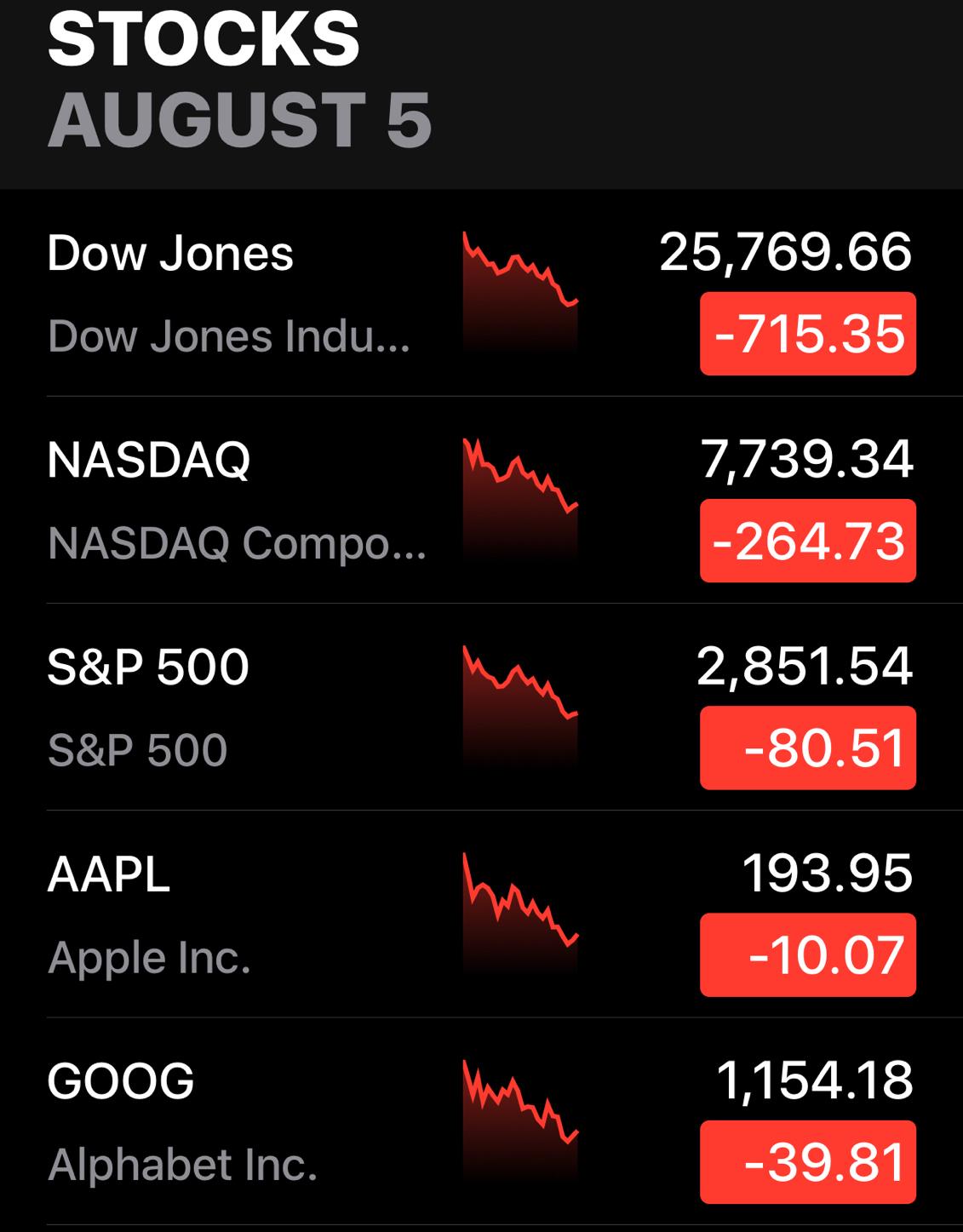
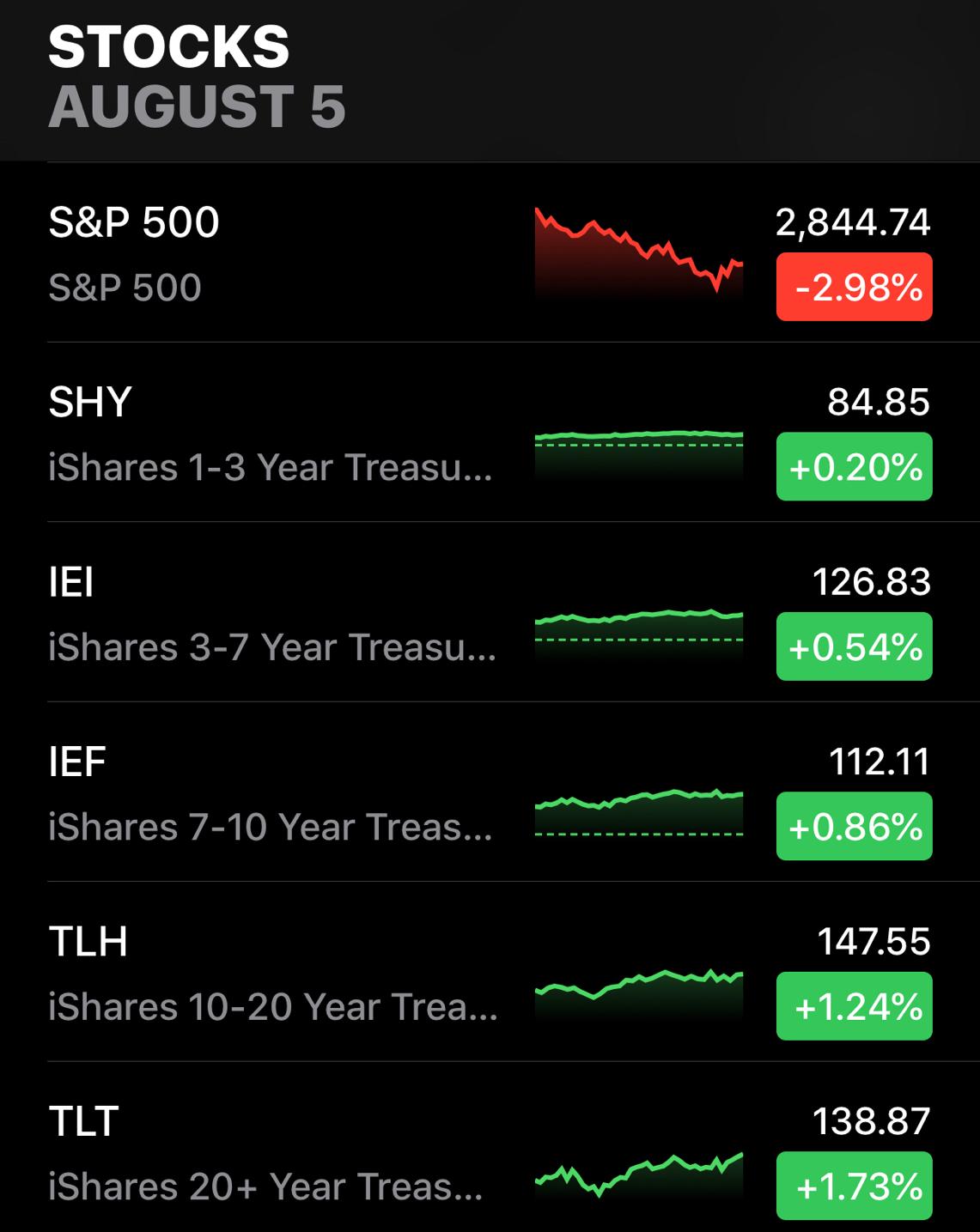
A Round-Up with “Sick” Infographic
***
***
***
8
***
***
Filed under: Investing | Tagged: August 5th 2019 Stocks | Leave a comment »
“Money is supposed to be spent!” “Money is supposed to be saved!”
By Rick Kahler CFP®
We may not hear talk-show participants shouting these opposing views at each other with the same level of anger that characterizes some of our political rhetoric. Yet the core polarization that pervades so much of today’s society also shows up in people’s beliefs about money.
I saw this polarization recently in a conversation with a group of friends in Europe. The topic of money came up, as it usually does when people find out one of my specialties as a financial advisor is financial therapy. The thinking of my friends was that money is meant to be spent, not saved. They felt that people who saved money were faithless and greedy hoarders who by their saving threatened the economic system.
At the other extreme, I know other people who strongly believe a person’s first duty is to save and invest. According to them, those who don’t save as much as possible for emergencies and retirement are foolish, deluded, irresponsible, and destined to live out their last days in poverty.
My friends who embrace the money script that “money is to be spent, not saved” are likely to also hold a money script that “the universe will provide.” They tend to fall into a category we label Money Avoiders. Those who embrace the money scripts that “money is to be saved and not spent,” who also believe “one can never really have enough money,” are in the category of Money Worshipers.
Like most other forms of polarized thinking, neither of these extremes is right. Nor is either belief wrong.
Money does need to be spent. The health of our economic system depends on transactions. It’s important that money flows through the selling and buying of goods and services. When a significant number of consumers stop spending, economic activity grinds to a halt. We saw the effect of this in the financial crises of 2008. It’s also important to spend money to take care of ourselves and our families. Saving or investing money to a point that we go without adequate food, shelter, health care, or similar necessities is not healthy.

***
Money also needs to be saved to provide a cushion against emergencies and to provide for our needs in retirement. My European friends enjoy a higher certainty of adequate income in retirement. For them, this is the universe providing, a strong government security net. However, those that live in many Asian countries are assured very little, if anything, in the way of retirement income. For them, the universe comes up short and depends upon the generosity of family to provide. Saving in an Asian culture is therefore much more important than if you live in a Scandinavian country.
Saving and investing for retirement is important for those of us in the US, as well. Without it, we face two dubious prospects: we can depend on family to provide or we can eke out a meager living on a Social Security payment of around $2,000 a month in retirement.
Those who are not polarized around money understand that both spending and saving are important for financial health. They can balance their spending and saving, applying both when necessary in their own lives.
Assessment
Ideally, from this balanced middle ground, someone can also see past the limitations of others who are polarized. Those who believe “Money is meant to be spent” or “Money is meant to be saved” have a world view that results in such an extreme position. Labeling them as “wrong” is not a useful way to try to shift anyone’s polarized beliefs.
Conclusion: Your thoughts are appreciated.
***
8
***
Filed under: Experts Invited, Investing | Tagged: Prioriting Money Beliefs, Rick Kahler CFP | Leave a comment »
[By Rick Kahler CFP]
“What do you think of the FIRE movement?” a reporter asked me recently. I told her I was ambivalent about it.
The FIRE acronym in this context stands for “Financial Independence, Retire Early.” While a Harris poll done in late 2018 found most people over 45 had never heard of the FIRE movement, it apparently has caught fire among millennials.
The focus of FIRE adherents is lifestyle more than finances. Two books are the foundation of the FIRE movement: Your Money or Your Life, written in 1992 by Vicki Robin and Joe Dominguez, and Early Retirement Extreme, written in 2010 by Jacob Lund Fisker. The concept was popularized in 2011 by blogger Peter Adeney (Mr. Money Mustache), who lives in Longmont, CO. At the age of 30, Adeney and his wife retired with a retirement fund of $600,000 and a paid-for home.
According to the reporter who interviewed me, many advisors have strong opinions against the FIRE movement. This may seem odd. After all, financial independence and retiring early is often a goal of those seeking financial planning. That was certainly one of my goals when I was the age of today’s millennials.
I find very little to criticize about adopting a frugal lifestyle and saving as much as possible. For decades I have suggested living on half of what you make, with a goal of reaching financial freedom as soon as possible. Some FIRE proponents do save up to 50% of their income, which is five times more than their peers, according to a January 21, 2019, InvestmentNews article by Greg Iacurci, “Advisors throw cold water on FIRE Movement.”
What makes many financial planners uncomfortable is the definition of “early.” In my day, early was age 50, not 30. In terms of FIRE, Adeney promotes a lifestyle of aggressive frugality with the goal of retiring as soon as possible, using a 4% withdrawal rate as a guideline to determine the nest egg you need to accumulate.
***

***
This raises two obvious issues that need clarification.
First, you need to earn enough to be able to live on 50 percent of your income. Relatively few young adults make that much. There is no magic income number, since the cost of living varies so much across the country.
One’s definition of frugality is also important. To some that may mean setting the thermostat at 68 all winter or driving a small fuel-efficient vehicle. For others it may mean chopping your own wood to heat your living space only with a wood-burning stove or doing without a car altogether. As with many things, the wisdom is knowing when frugality crosses the line to dangerous deprivation.
Finally, the earlier you retires the longer your retirement nest egg must last. With a 4% withdrawal rate, someone retiring at age 70 has a much higher probability of seeing their investment portfolio last for their lifetime than someone retiring at age 30. Also, the rate of return on the portfolio is critical. The higher the rate of return the longer the funds will last. If there is any potential problem with the FIRE formula it’s probably this.
Since the average 30 year old may live another 60 years, and assuming a 4% return net of mutual fund and advisor fees, I would make a strong argument for a 2 percent withdrawal rate. Someone age 50 could reasonably withdraw 3%, while someone age 60 or above could probably be safe at 4%.
Assessment:
As with any conflagration, playing with FIRE irresponsibly can end up burning down the house. But used wisely, it can sustain life and make living much more rewarding.
8
***
Filed under: Investing, Retirement and Benefits | Tagged: 4% rule, FIRE movement, retirement | Leave a comment »
Vitaliy Katsenelson CFA
***
***
8
***
Filed under: Investing | Tagged: value investing, Vitaliy Katsenelson CFA | 1 Comment »
The “Rules”
[By Rick Kahler CFP®]
In the business of selling financial products, the “good deal exemption” may be one of the most widely used “rules” most people have never heard of. You can’t find it in any rule book or statute. Even Google has never heard of it. Yet it is used on a daily basis.
The rules and laws surrounding the sale of financial products are complex and voluminous. Even with the best of intentions, it isn’t hard to run afoul of a rule.
Under the good deal exemption, however, a licensee can violate any rule or statute as long as the investment sold to the customer turns out to be a “good deal.” This is a tongue-in-cheek way of saying you can violate any rule you want as long as the customer doesn’t file a complaint or sue you. Which they will rarely do if the deal turns out to make them loads of money.
It’s when investments go bad that customers often complain or sue, not because they were aware of any securities violations, but because they lost money. It’s the ensuing investigation by the regulating body and the customer’s attorney that uncovers any violations.
Example:
Recently, I came across a perfect example of the good deal exemption. A married couple I knew, Arnie and Audrey, invested with Bernie (not his real name) 30 years ago as they neared retirement. He put their entire savings of about $310,000 into mutual funds that invested in common stocks. Because of a pension and Social Security, they didn’t need any income from their investments.
At the same time, Arnie put his investments into a revocable living trust, naming Audrey as the trustee and beneficiary. Eleven years later, when Audrey was 80, Arnie died.
Losing her husband’s pension income and one Social Security check, Audrey needed to start drawing $2,000 a month from the portfolio. While most advisors would have recommended reducing the risk and volatility of the portfolio by investing less in stocks and more in bonds, Bernie kept Audrey invested 100% in stocks. This is aggressive for any 80-year-old needing income from a portfolio. He made no changes as the years went by.
At 85, Audrey started showing signs of dementia. Bernie rightly suggested appointing someone other than herself as trustee. But rather than naming one of her three children (who didn’t trust Bernie and may have transferred the accounts), he convinced her to appoint his wife, who also worked in his office, as trustee. In any broker’s books, this was a serious ethics violation.
In the great recession of 2008-2009, when Audrey was 89, her portfolio lost just under half of its value, falling from $832,507 to $478,820. Had Bernie reallocated the portfolio before the crash to a mix of 50% stocks and 50% bonds, the loss would have been cut in half. To his credit, Bernie told her to stay the course and not sell out.
Recently, at age 99, Audrey died. Her account had done phenomenally well, being 100% invested in US stocks, which for the last 10 years was the best investment class on the planet. Her $478,820 had grown to $1,300,000, providing her a $2000 monthly income and a substantial estate that she left to her children.
Assessment
Despite the inappropriately risky investments and the ethics violations, Bernie and his wife are probably protected by the good deal exemption. Given their substantial inheritance, Audrey’s children are unlikely to sue.
This happy ending was due primarily to luck. Audrey lived long enough and at the right time so her portfolio recovered. However, if luck were a sound investment strategy, Las Vegas would be full of millionaires happily retired on their winnings.
Conclusion
Your thoughts are appreciated.
***
8
***
Filed under: Health Law & Policy, Investing | Tagged: "Good Deal Exemption", invve, Rick Kahler CFP, SEC | Leave a comment »
How can this possibly be fair?
By Rick Kahler MS CFP®
An April 29th headline in The New York Times got my attention: “Profitable Giants Like Amazon pay $0 in Corporate Taxes. Some Voters Are Sick of It.” My immediate reaction was outrage. Amazon had a 0% tax rate. My company’s overall tax rate was 24%, and its net profit was less than 0.000025% of Amazon’s. How can this possibly be fair?
The Times article, by Stephanie Saul and Patricia Cohen, gave few specifics but left the impression that Amazon simply gets out of paying taxes on its profits because of a legal, but unfair, manipulation of the tax code afforded only to wealthy corporations, leaving the heavy lifting to the rest of us poor saps.
I wanted to know how Amazon did it, so I did some research
First, let’s put the $11.1 billion profit into perspective. The past 18 months are the first time Amazon has shown any meaningful profit since 2011. Many of those years saw them losing billions of dollars.
The total value (market capitalization) that shareholders have invested in Amazon is $954 billion as of April 29, 2019. That means the 2018 profit of $11.1 billion represents an earnings yield of 1.16% return on investors’ money. The average earnings yield on a large US company is 4.5%, significantly higher than Amazon’s. While $11.1 billion sounds like a lot of money in dollar terms, when viewed in the amount of money it takes to generate those profits, Amazon’s financials are significantly subpar.
Amazon reduced their taxes to zero by primarily doing four things:
The article cited a carpet layer who had a profit of $18,000 and paid more in taxes than Amazon. He was so upset at this injustice that he joined the Socialist Party.
The article failed to mention that many of the same write-offs used by Amazon were available to him, too. If his business was incorporated, the tax bill on his profits was probably 21%, or $3,780. If he had reinvested his profit in a new carpet cleaning machine, had losses from previous years to carry forward, spent money on developing a new type of carpet cleaner, or paid his employees in stock, he would have paid nothing in taxes.
***

***
Assessment
Critics of big corporations might say such strategies would not be realistic for a one-person company. Yet I have seen many small business owners use them, particularly carrying forward losses that result from the essential start-up costs. The corporate tax code generally applies equally to all businesses and is meant to encourage small companies as well as large ones to take the risks necessary to create new jobs.
Conclusion
Your thoughts are appreciated.
***
8
***
Filed under: Experts Invited, Investing, Taxation | Tagged: Amazon, New York Times, Rick Kahler MS CFP® | Leave a comment »
By Vitaliy Katsenelson CFA

***
8
***
Filed under: Interviews, Investing, Videos | Tagged: Investing, Vitaliy Katsenelson CFA, Warren Buffet | Leave a comment »
No More “Candle Stick” Technical Stock Charts
[By Staff reporters]
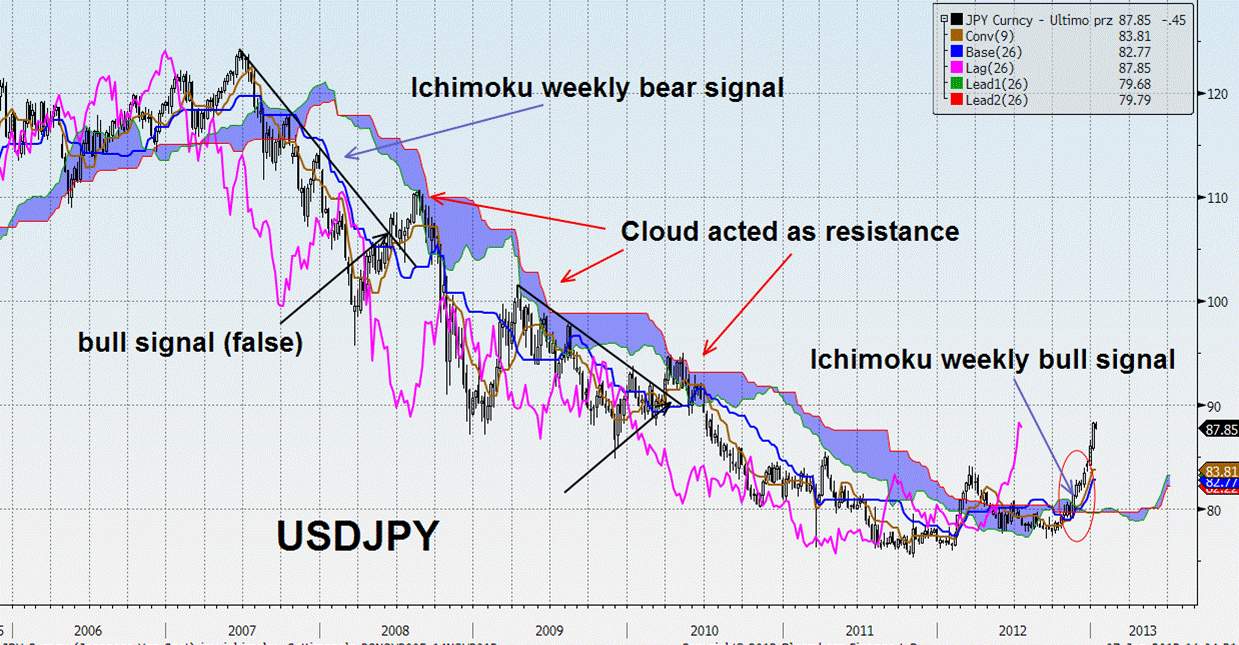
The Ichimoku Cloud is a collection of technical indicators that show support and resistance levels, as well as momentum and trend direction. It does this by taking multiple averages and plotting them on the chart. It also uses these figures to compute a “cloud” which attempts to forecast where the price may find support or resistance in the future.
***
8
[Dr. Cappiello PhD MBA] *** [Foreword Dr. Krieger MD MBA]
Front Matter with Foreword by Jason Dyken MD MBA
***
***
Filed under: Investing | Tagged: Ichimoku Cloud?, Technical analysis | Leave a comment »

|
|
|
|
|
|
Filed under: Investing | Tagged: Investing, stocks, Vitaliy Katsenelson CFA | Leave a comment »
The Beginners Guide
By Forbes Wealth
***

***
***
***
Filed under: Investing | Tagged: Bitcoin, cryptocurrency | 4 Comments »

SEC Failed to Rein in Investment Banks [April Fool’s Day – 2015]
By Ben Protess, ProPublica – October 1, 2008 5:01 pm EDT
Editor’s Note: This investigative report was first published ten years ago. And so, we ask you to consider – on this April Fool’s Day 2019 – how [if] things have changed since then?
***

***
The Securities and Exchange Commission [SEC] last week abolished the special regulatory program that it applied to Wall Street’s largest investment banks. Known as the “consolidated supervised entities” program, it relaxed the minimum capital requirements for firms that submitted to the commission’s oversight, and thus, in the view of some experts, helped create the current global financial crisis.
But, the SEC’s decision to ax the program currently affects no one, since three of the five firms that voluntarily joined the program previously collapsed and the other two reorganized.
The Decision – 18 Months Ago
The decision came last Friday, one day after the commission’s inspector general released a report [1] (PDF) detailing the program’s failed oversight of Bear Stearns before the firm collapsed in March. The commission’s chairman, Christopher Cox, a longtime opponent of industry regulation, said in a statement [2] that the report “validates and echoes the concerns” he had about the program, which had been voluntary for the five Wall Street titans since 2004.
The report found that the SEC division that oversees trading and markets was “not fulfilling its obligations. “These reports are another indictment of failed leadership,” said Sen. Charles Grassley (R-Iowa) who requested the inspector general’s investigation.
The SEC program, approved by the commission in 2004 under Cox’s predecessor, William Donaldson, allowed investment banks to increase their amount of leveraged debt. But, there was a tradeoff: Banks that participated allowed their broker-dealer operations and holding companies to be subject to SEC oversight. Previous to 2004, the SEC only had authority to oversee the banks’ broker dealers.
Longstanding SEC rules required the broker dealers to limit their debt-to-net-capital ratio and issue an early warning if they began to approach the limit. The limit was about 15-to-1, according to the inspector general report, meaning that for every $15 of debt, the banks were required to have $1 of equity.
But the 2004 “consolidated supervised entities” program revoked these limits. The new program also eliminated the requirement that firms keep a certain amount of capital as a cushion in case an asset defaults.
Bear Sterns
As a result, the oversight program created the conditions that helped cause the collapse of Bear Stearns. Bear had a gross debt ratio of about 33-to-1 prior to its demise, the inspector general found. The inspector general also found that Bear was fully compliant with the programs’ requirements when it collapsed, which raised “serious questions about whether the capital requirement amounts were adequate,” the report said.
The report quoted Lee Pickard, a former SEC official who helped write the original debt-limit requirements in 1975 and now argues the 2004 program is largely to blame for the current Wall Street crisis.
“The SEC gave up the very protections that caused these firms to go under,” Pickard said in an interview with ProPublica. “The SEC in 2004 thought it gained something in oversight, but in turn it gave up too much public protection. You don’t bargain in a way that causes you to give up serious protections.”
Pickard, now a senior partner at a Washington, D.C.-based law firm, estimated that prior to the 2004 program most firms never exceeded an 8-to-1 debt-to-net capital ratio.
The previous program “had an excellent track record in preserving the securities markets’ financial integrity and protecting customer assets,” Pickard wrote [3] in American Banker this August. The new program required “substantial SEC resources for complex oversight, which apparently are not always available.”
Asked if he believes the 2004 program was a direct cause of the current crisis, Pickard told ProPublica, “I’m afraid I do.”
The New York Times reported Saturday that the SEC created the program after “heavy lobbying” for the plan from the investment banks. The banks favored the SEC as their regulator, the Times reported, because that let them avoid regulation of their fast-growing European operations by the European Union, which has been threatening to impose its own rules since 2002.
SEC Spokesman
A SEC spokesman declined to comment for this article, referring inquires to Chairman Cox’s statement. In the statement, Cox admitted the program “was fundamentally flawed from the beginning.” But Cox, a former Republican congressman from California, offered mild support for the program as recently as July when he testified before the House Committee on Financial Services. The program, among other oversight efforts, Cox said, had “gone far to adapt the existing regulatory structure to today’s exigencies.” He added that legislative improvements were necessary as well, and has since told Congress that the program failed.
More Questions
So why did the commission not end the program sooner? Some say that the program’s flaws only recently became apparent. “As late as 2005, the program seemed to make a lot of sense,” said Charles Morris, a former banker who predicted the current financial crisis in his book written last year, The Trillion Dollar Meltdown [4]. The SEC “didn’t know it didn’t work until we had this stress.”
And leverage does not always spell trouble. In a strong economy, leverage can also be attractive because it can increase the profitability of banks through lending.
In his recent statement, Cox said the inspector general’s findings reflect a deeper problem: “the lack of specific legal authority for the SEC or any other agency to act as the regulator of these large investment bank holding companies.”
Secretary of the Treasury Henry Paulson has called for a refining of the regulatory structure to reflect the global and interconnected nature of today’s financial system. In any case, the program’s failure can be seen in the disappearance of the participating banks: Bear Stearns, Lehman Brothers, Merrill Lynch, Morgan Stanley and Goldman Sachs.

***
Assessment
Merrill Lynch’s leverage ratio was possibly as high as 40-to-1 this year and Lehman Brothers faced a ratio of about 30-to-1, according to Bloomberg [5].
The Fed and Treasury Department forced Bear Stearns into a merger with JPMorgan Chase in March. And the last two months, Lehman Brothers went bankrupt and sold their core U.S. business to British bank Barclays PLC, and Merrill Lynch was acquired by Bank of America. Morgan Stanley and Goldman Sachs, the two remaining large independent investment banks, changed their corporate structures to become bank holding companies, which are regulated by the Federal Reserve.
As these banks have folded or reorganized over the last several months, the Federal Reserve has largely assumed the SEC’s oversight responsibilities, though the commission will still have the power to regulate broker dealers.
Original Essay: http://www.propublica.org/article/flawed-sec-program-failed-to-rein-in-investment-banks-101
Conclusion
Your thoughts and comments on this ME-P are appreciated. Feel free to review our top-left column, and top-right sidebar materials, links, URLs and related websites, too. Then, subscribe to the ME-P. It is fast, free and secure.
Link: http://feeds.feedburner.com/HealthcareFinancialsthePostForcxos
Speaker: If you need a moderator or speaker for an upcoming event, Dr. David E. Marcinko; MBA – Publisher-in-Chief of the Medical Executive-Post – is available for seminar or speaking engagements. Contact: MarcinkoAdvisors@msn.com
OUR OTHER PRINT BOOKS AND RELATED INFORMATION SOURCES:
Filed under: Ethics, Investing | Tagged: American Banker, April Fool's Day, Bank of America, Bear Stearns, Ben Protess, Charles Grassley, Charles Morris, Christopher Cox, FDIC, Federal Reserve, Goldman Sachs, Henry Paulson, JPMorgan Chase, Lee Pickard, Lehman Brothers, Merrill Lynch, Morgan Stanley, SEC, Securities and Exchange Commission, Wall Street, William Donaldson | 10 Comments »
Based on Tax Considerations?

By Dr. David Edward Marcinko MBA
LINK: https://medicalexecutivepost.com/schedule-a-consultation/
One personal investing strategy is to place more conservative investments (those with lower expected returns) in a tax-deferred traditional IRA, 401-k, 403-b or similar, and more aggressive (higher-earning) assets in a taxable brokerage account or Roth IRA.
WHY? Each account is thus working hard but in very different ways.
HOW? The conservative funds in the traditional IRA or retirement accounts would fill any needs for safety as they grow more slowly – and the higher tax rate won’t take out as big of a bite.
Meanwhile, the more aggressive funds in a taxable brokerage accounts would grow more quickly, but be taxed at a lower rate.
Assessment: Any thoughts?
Subscribe: MEDICAL EXECUTIVE POST for curated news, essays, opinions and analysis from the public health, economics, finance, marketing, IT, business and policy management ecosystem.
MORE FOR DOCTORS:
“Insurance & Risk Management Strategies for Doctors” https://tinyurl.com/ydx9kd93
“Fiduciary Financial Planning for Physicians” https://tinyurl.com/y7f5pnox
“Business of Medical Practice 2.0” https://tinyurl.com/yb3x6wr8
***
Filed under: Investing, Retirement and Benefits, Taxation | Tagged: david marcinko, IRA, retirement planning, Roth IRA | Leave a comment »
Random Drivel?
[By Vitaly Katsenelson CFA]
What I am about to share with you is somewhat random drivel about a topic that has been very important to me in 2018 – time.
I am anything but an expert on it; and in fact, as you’ll see, this is something I fail in and am trying to fail less.
***
Conclusion
Your thoughts and comments on this ME-P are appreciated. Feel free to review our top-left column, and top-right sidebar materials, links, URLs and related websites, too. Then, subscribe to the ME-P. It is fast, free and secure.
Speaker: If you need a moderator or speaker for an upcoming event, Dr. David E. Marcinko; MBA – Publisher-in-Chief of the Medical Executive-Post – is available for seminar or speaking engagements.
Book Marcinko: https://medicalexecutivepost.com/dr-david-marcinkos-bookings/
Subscribe: MEDICAL EXECUTIVE POST for curated news, essays, opinions and analysis from the public health, economics, finance, marketing, IT, business and policy management ecosystem.
DOCTORS:
“Insurance & Risk Management Strategies for Doctors” https://tinyurl.com/ydx9kd93
“Fiduciary Financial Planning for Physicians” https://tinyurl.com/y7f5pnox
“Business of Medical Practice 2.0” https://tinyurl.com/yb3x6wr8
HOSPITALS:
“Financial Management Strategies for Hospitals” https://tinyurl.com/yagu567d
“Operational Strategies for Clinics and Hospitals” https://tinyurl.com/y9avbrq5
***
8
Filed under: Experts Invited, Information Technology, Investing | Tagged: Resetting Defaults for 2019, Vitaliy Katsenelson CFA | Leave a comment »
THE VANGUARD GROUP FOUNDER
[By Dr. David Edward Marcinko MBA]
John Bogle, who founded Vanguard and revolutionized retirement savings, dies at age 89.
***

http://www.philly.com/business/john-bogle-dead-vanguard-obituary-20190116.html
***
The Vanguard Group is an American registered investment advisor based in Malvern, Pennsylvania with over $5.1 trillion in assets under management. It is the largest provider of mutual funds and the second-largest provider of exchange-traded funds in the world after BlackRock’s iShares.
In addition to mutual funds and ETFs, Vanguard offers brokerage services, variable and fixed annuities, educational account services, financial planning, asset management, and trust services.
Assessment
I attended medical school in Philadelphia back in the day, which was not far from Malvern; PA. My girl friend at the time was at the Wharton School. So, we were thrilled to have the occasion to actually visit and tour Vanguard Headquarters. We were not able to meet Mr. Bogle but I am very grateful to him.
***
8
***
Filed under: Investing | Tagged: John C. Bogle, Vanguard | 4 Comments »
[By Dr. David E. Marcinko MBA]
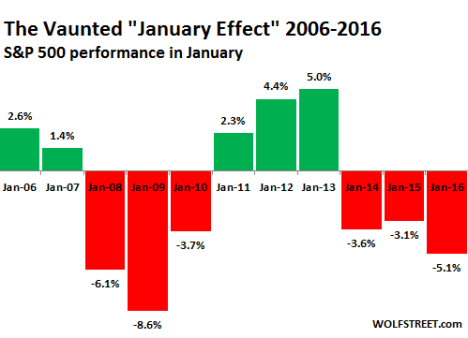
The January effect is a hypothesis that there is a seasonal anomaly in the financial market where securities’ prices increase in the month of January more than in any other month.
***
***
This calendar effect would create an opportunity for investors to buy stocks for lower prices before January and sell them after their value increases.
“Santa Clause Effect” or “Rally: https://medicalexecutivepost.com/2018/12/24/will-there-be-a-santa-clause-rally-this-year/
NOTE: Also known as the “Turn-of-the-Year Effect” and “Calendar Effect.”
Assessment
Your thoughts are appreciated.
RESOURCES:
“Insurance & Risk Management Strategies for Doctors” https://tinyurl.com/ydx9kd93
“Fiduciary Financial Planning for Physicians” https://tinyurl.com/y7f5pnox
“Business of Medical Practice 2.0” https://tinyurl.com/yb3x6wr8
THANK YOU
8
Filed under: iMBA, Inc., Investing | Tagged: Calendar Effect, January Effect, Turn-of-the-Year Effect | 2 Comments »
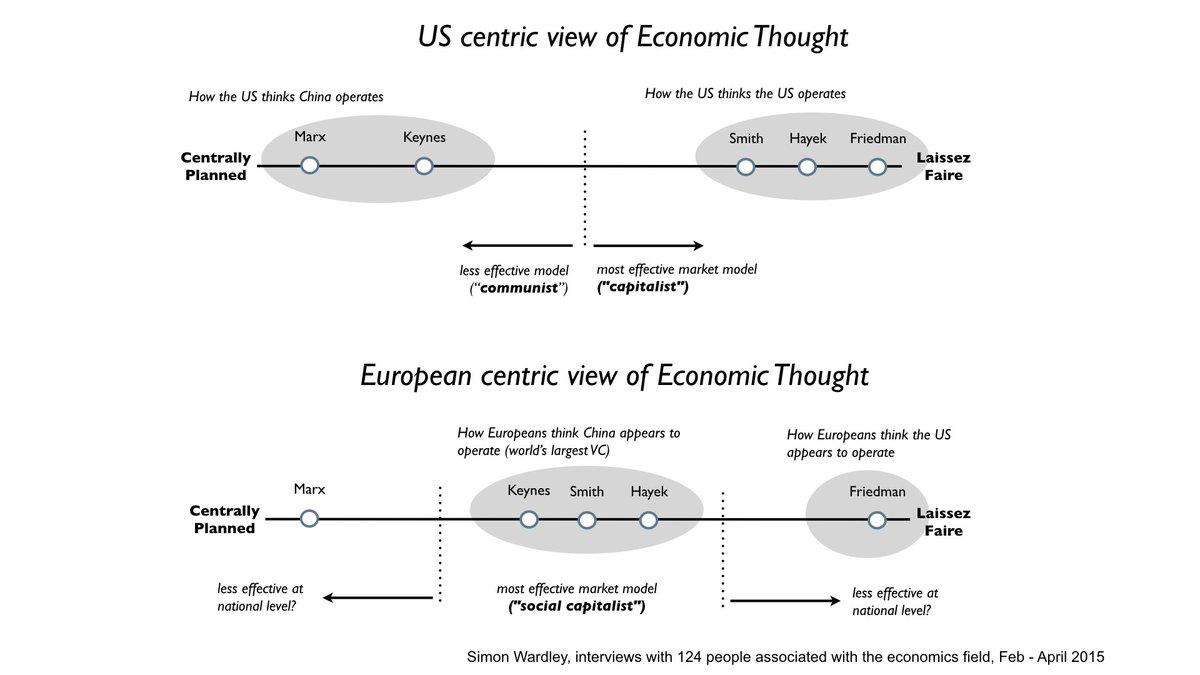
For Physician-Investors to Know
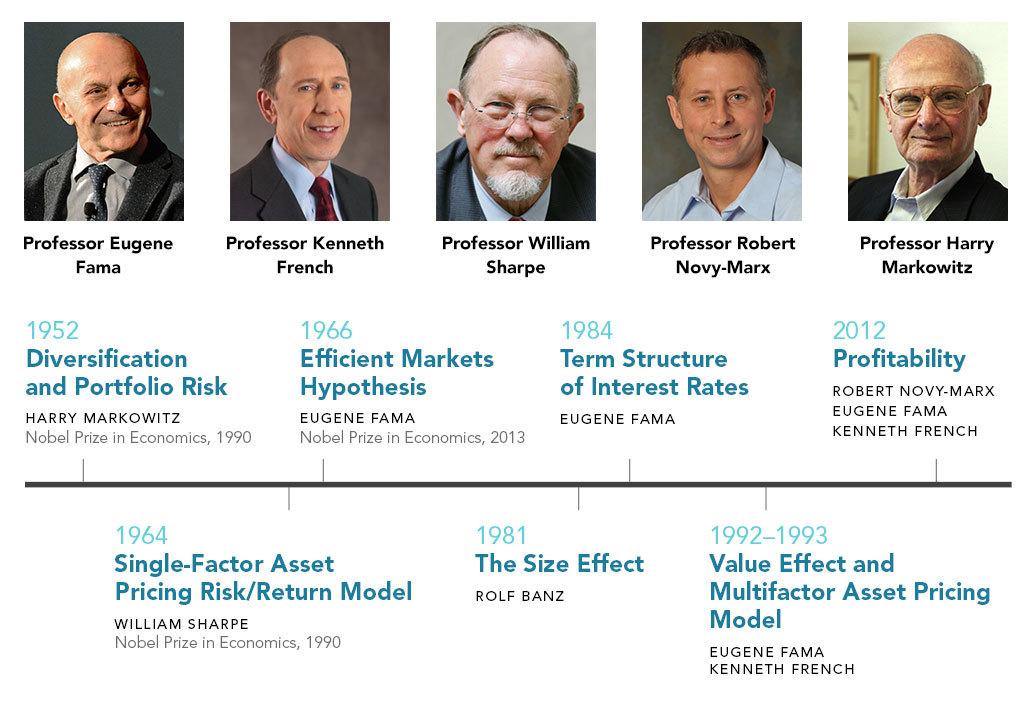
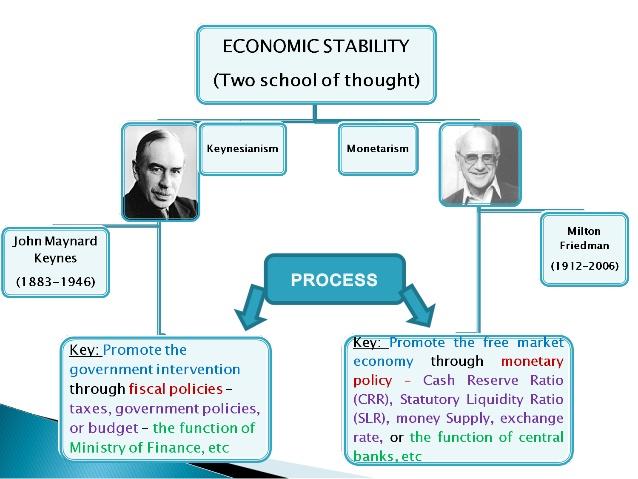
[By staff reporters]
***
***
***
***
Your thoughts are appreciated.
RESOURCES:
“Insurance & Risk Management Strategies for Doctors” https://tinyurl.com/ydx9kd93
“Fiduciary Financial Planning for Physicians” https://tinyurl.com/y7f5pnox
“Business of Medical Practice 2.0” https://tinyurl.com/yb3x6wr8
THANK YOU
8
Filed under: Health Economics, Investing | Tagged: Economists of Note, fama, french, Harry Markowitz, Novy-Marx, Sharpe | Leave a comment »

***
***
Book Dr. David Edward Marcinko CMP®, MBA, MBBS for your Next Medical, Pharma or Financial Services Seminar or Personal and Corporate Coaching Sessions
Dr. Dave Marcinko enjoys personal coaching and public speaking and gives as many talks each year as possible, at a variety of medical society and financial services conferences around the country and world.
These have included lectures and visiting professorships at major academic centers, keynote lectures for hospitals, economic seminars and health systems, keynote lectures at city and statewide financial coalitions, and annual keynote lectures for a variety of internal yearly meetings.
Topics Link: toc_ho
***

***
[Foreword Dr. Phillips MD JD MBA LLM] *** [Foreword Dr. Nash MD MBA FACP]
***
Filed under: Financial Planning, Health Economics, iMBA, Investing, Managed Care, Portfolio Management, Practice Management, Practice Worth, Risk Management, Touring with Marcinko | Tagged: David E. Marcinko, Financial Planning, Investing, medical practice management, Portfolio Management | Leave a comment »
What it is – How it works
[By staff reporters]
A fat-finger error is a keyboard input error or mouse misclick in the financial markets such as the stock market or foreign exchange market whereby an order to buy or sell is placed of far greater size than intended, for the wrong stock or contract, at the wrong price, or with any number of other input errors.
Automated systems within trading houses may catch fat-finger errors before they reach the market or such orders may be cancelled before they can be fulfilled. The larger the order, the more likely it is to be cancelled, as it may be an order larger than the amount of stock available in the market.
Fat-finger errors are a product of the electronic processing of orders which requires details to be input using keyboards. Before trading was computerised, erroneous orders were known as “out-trades” which could be cancelled before proceeding. Erroneous orders placed using computers may be harder or impossible to cancel.
***

***
MORE: https://en.wikipedia.org/wiki/Fat-finger_error
RELATED: https://medicalexecutivepost.com/2017/06/06/peering-at-a-high-frequency-stock-trading-algorithm/
Conclusion
Your thoughts and comments on this ME-P are appreciated. Feel free to review our top-left column, and top-right sidebar materials, links, URLs and related websites, too. Then, subscribe to the ME-P. It is fast, free and secure.
Speaker: If you need a moderator or speaker for an upcoming event, Dr. David E. Marcinko; MBA – Publisher-in-Chief of the Medical Executive-Post – is available for seminar or speaking engagements.
Book Marcinko: https://medicalexecutivepost.com/dr-david-marcinkos-bookings/
Subscribe: MEDICAL EXECUTIVE POST for curated news, essays, opinions and analysis from the public health, economics, finance, marketing, IT, business and policy management ecosystem.
DOCTORS:
“Insurance & Risk Management Strategies for Doctors” https://tinyurl.com/ydx9kd93
“Fiduciary Financial Planning for Physicians” https://tinyurl.com/y7f5pnox
“Business of Medical Practice 2.0” https://tinyurl.com/yb3x6wr8
HOSPITALS:
“Financial Management Strategies for Hospitals” https://tinyurl.com/yagu567d
“Operational Strategies for Clinics and Hospitals” https://tinyurl.com/y9avbrq5
***
8
Filed under: Investing | Tagged: Fat Finger | Leave a comment »
By Vitaliy Katsenelson CFA
Dear ME-P Readers,
You might want to listen to some great interviews by Roben on investment topics (his shows cover a wide variety of themes).
I am just scratching the surface here. You can listen to hundreds of other shows with Roben here, or look for Full Disclosure with Roben Farzad on your podcast app – just be careful, they are very addicting.

Conclusion
Your thoughts and comments on this ME-P are appreciated. Feel free to review our top-left column, and top-right sidebar materials, links, URLs and related websites, too. Then, subscribe to the ME-P. It is fast, free and secure.
Subscribe: MEDICAL EXECUTIVE POST for curated news, essays, opinions and analysis from the public health, economics, finance, marketing, IT, business and policy management ecosystem.
DOCTORS:
“Insurance & Risk Management Strategies for Doctors” https://tinyurl.com/ydx9kd93
“Fiduciary Financial Planning for Physicians” https://tinyurl.com/y7f5pnox
“Business of Medical Practice 2.0” https://tinyurl.com/yb3x6wr8
HOSPITALS:
“Financial Management Strategies for Hospitals” https://tinyurl.com/yagu567d
“Operational Strategies for Clinics and Hospitals” https://tinyurl.com/y9avbrq5
***
8
Filed under: Interviews, Investing, Videos | Tagged: investing podcasts, Vitaliy Katsenelson CFA | Leave a comment »
By Vitaliy Katsenelson CFA
***
I was interviewed by my friend Dan Ferris on the Stansberry Investor Hour show. My segment of the interview starts at the 22:22 mark (click here to listen).
If you’d like to dig deeper into some of the concepts I discussed, you can read the following articles:
1 – What quality means to us.
2 – Why we sold of ETFs and bought Treasuries
3 – How and why we are hedging our portfolios with options
4 – Why Amazon will not run McKesson out of business and why we like the stock and here is one more.
***

***
Conclusion
Your thoughts and comments on this ME-P are appreciated. Feel free to review our top-left column, and top-right sidebar materials, links, URLs and related websites, too. Then, subscribe to the ME-P. It is fast, free and secure.
Speaker: If you need a moderator or speaker for an upcoming event, Dr. David E. Marcinko; MBA – Publisher-in-Chief of the Medical Executive-Post – is available for seminar or speaking engagements.
Book Marcinko: https://medicalexecutivepost.com/dr-david-marcinkos-bookings/
Subscribe: MEDICAL EXECUTIVE POST for curated news, essays, opinions and analysis from the public health, economics, finance, marketing, IT, business and policy management ecosystem.
DOCTORS:
“Insurance & Risk Management Strategies for Doctors” https://tinyurl.com/ydx9kd93
“Fiduciary Financial Planning for Physicians” https://tinyurl.com/y7f5pnox
“Business of Medical Practice 2.0” https://tinyurl.com/yb3x6wr8
HOSPITALS:
“Financial Management Strategies for Hospitals” https://tinyurl.com/yagu567d
“Operational Strategies for Clinics and Hospitals” https://tinyurl.com/y9avbrq5
***8
Filed under: Experts Invited, Investing, Videos | Tagged: Stansberry Investor Hour Interview, Vitaliy Katsenelson CFA | Leave a comment »
|
Filed under: Experts Invited, Investing | Tagged: Vitaliy Katsenelson CFA | 1 Comment »
By Vitaliy Katsenelson CFA
***
Today I am going to share with you an article I wrote after the January 2018 stock market volatility index run-up. It’s as relevant today as it was then.
***
https://contrarianedge.com/how-a-volatile-stock-market-turns-investors-into-gamblers/
***
Conclusion
Your thoughts and comments on this ME-P are appreciated. Feel free to review our top-left column, and top-right sidebar materials, links, URLs and related websites, too. Then, subscribe to the ME-P. It is fast, free and secure.
Speaker: If you need a moderator or speaker for an upcoming event, Dr. David E. Marcinko; MBA – Publisher-in-Chief of the Medical Executive-Post – is available for seminar or speaking engagements.
Book Marcinko: https://medicalexecutivepost.com/dr-david-marcinkos-bookings/
Subscribe: MEDICAL EXECUTIVE POST for curated news, essays, opinions and analysis from the public health, economics, finance, marketing, IT, business and policy management ecosystem.
DOCTORS:
“Insurance & Risk Management Strategies for Doctors” https://tinyurl.com/ydx9kd93
“Fiduciary Financial Planning for Physicians” https://tinyurl.com/y7f5pnox
“Business of Medical Practice 2.0” https://tinyurl.com/yb3x6wr8
HOSPITALS:
“Financial Management Strategies for Hospitals” https://tinyurl.com/yagu567d
“Operational Strategies for Clinics and Hospitals” https://tinyurl.com/y9avbrq5
***
8
Filed under: Experts Invited, Investing, Videos | Tagged: A Stock Market Top?, Optimal Living Daily, Vitaliy Katsenelson CFA | 1 Comment »
By Vitaliy Katsenelson CFA
***
|
Filed under: Experts Invited, Investing | Tagged: Vitaliy Katsenelson CFA | Leave a comment »
Conspicuous Consumption by Definition
[By Dr. David Marcinko MBA and staff reporters]
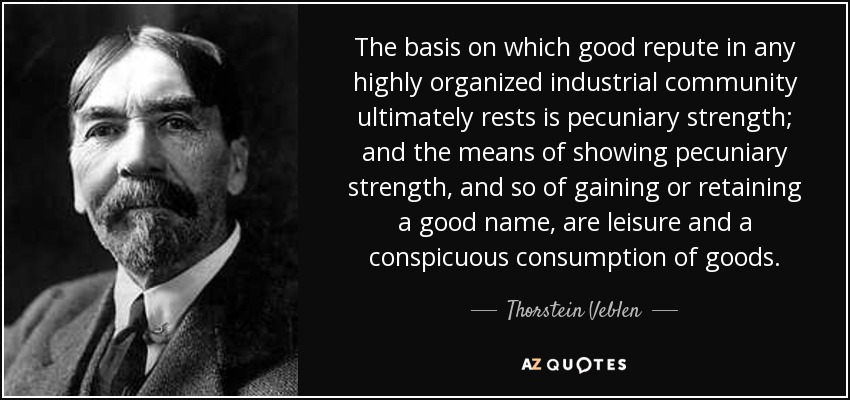
Conspicuous consumption is a term introduced by the Norwegian-American economist and sociologist Thorstein Veblen in his book “The Theory of the Leisure Class” published in 1899.
***

***
The term refers to consumers who buy expensive items to display wealth and income rather than to cover the real needs of the consumer. www.HealthDictionarySeries.org
A flashy consumer uses such behavior to maintain or gain higher social status. Most classes have a flashy consumer affect and influence over other classes, seeking to emulate the behavior.
***

The result, according to Veblen, is a society characterized by wasted time and money.
***
***
Assessment
Are doctors today, or yesterday, practitioners of this theory?
Conclusion
Your thoughts and comments on this ME-P are appreciated. Feel free to review our top-left column, and top-right sidebar materials, links, URLs and related websites, too. Then, subscribe to the ME-P. It is fast, free and secure.
Speaker: If you need a moderator or speaker for an upcoming event, Dr. David E. Marcinko; MBA – Publisher-in-Chief of the Medical Executive-Post – is available for seminar or speaking engagements.
Book Marcinko: https://medicalexecutivepost.com/dr-david-marcinkos-bookings/
Subscribe: MEDICAL EXECUTIVE POST for curated news, essays, opinions and analysis from the public health, economics, finance, marketing, IT, business and policy management ecosystem.
MORE FOR DOCTORS AND NURES:
“Insurance & Risk Management Strategies for Doctors” https://tinyurl.com/ydx9kd93
“Financial Management Strategies for Hospitals” https://tinyurl.com/yagu567d
“Operational Strategies for Clinics and Hospitals” https://tinyurl.com/y9avbrq5
8
***
Filed under: Ethics, Investing | Tagged: Conspicuous Consumption, Thorstein Veblen | 2 Comments »
| To my valued connections,
By Alan Yong I have serious concerns about the current state of ICO’s and their future potential could be in jeopardy, if the current trend continues. Please take a moment to read the following articles before investing in, participating with, giving legal advice on, or launching your own ICO. Personally, I believe that ICOs are the best tools for capital formation if properly regulated.
Investopedia report finds 80% of all ICO’s to be scams – 92% never reach exchange Alan Yong Provides Long Term Viability Solution for ICO’s ***
|
Conclusion
Your thoughts and comments on this ME-P are appreciated. Feel free to review our top-left column, and top-right sidebar materials, links, URLs and related websites, too. Then, subscribe to the ME-P. It is fast, free and secure.
Speaker: If you need a moderator or speaker for an upcoming event, Dr. David E. Marcinko; MBA – Publisher-in-Chief of the Medical Executive-Post – is available for seminar or speaking engagements.
Book Marcinko: https://medicalexecutivepost.com/dr-david-marcinkos-bookings/
Subscribe: MEDICAL EXECUTIVE POST for curated news, essays, opinions and analysis from the public health, economics, finance, marketing, IT, business and policy management ecosystem.
MORE FOR DOCTORS AND NURES:
“Insurance & Risk Management Strategies for Doctors” https://tinyurl.com/ydx9kd93
“Financial Management Strategies for Hospitals” https://tinyurl.com/yagu567d
“Operational Strategies for Clinics and Hospitals” https://tinyurl.com/y9avbrq5
Filed under: Investing | Tagged: Alan Yong, Bitcoin, crypto-currency, ICO's | Leave a comment »
Investors Have Misdiagnosed Amazon’s Push Into The Pharmacy Business |
By Vitaliy Katsenelson CFA
|
*** Companies everywhere, in every business, are paranoid about Amazon.com. This sort of paranoia is healthy for the long-term well-being of our investment portfolio, as it is creating interesting buying opportunities. A case in point: My firm spent a lot of time thinking about pharmacies when we were analyzing investments in McKesson and other drug distributors. We struggled with a question: How will the retail pharmaceutical industry look in the future? Or more precisely, how will Amazon’s entrance into the retail pharmacy business change this industry? Our inability to answer this question kept us away from retail pharmacies. Then we had a small but important insight that shifted our thinking on Walgreens Boots Alliance. The preponderance of drugs in the U.S. is consumed by an older population, whose habits change slowly or not at all. Accordingly, it’s likely that Amazon’s online pharmacy will not significantly impact the existing drug industry. Here’s why: Americans currently spend $450 billion a year on drugs. Walmart is the fourth-largest pharmacy in the U.S., with sales of $21 billion, or 4.6% of the company’s total sales. Let’s say that over the next five years Amazon gets to Walmart’s sales level of $21 billion. If the U.S. pharmaceutical industry grows 2% a year over that time, total drug sales will have increased by $45 billion, or the equivalent of two Walmarts (we are ignoring compounding here), to $495 billion. Walgreens, with its pharmacy selling about $70 billion a year, would barely notice Amazon’s presence. I’ve made this point before, but it is important to repeat: 10 years ago Amazon was not taken too seriously. Giants like Google, now Alphabet, and Microsoft ignored Amazon’s entry into cloud hosting, thinking “What does a bookseller know about the cloud?” They have regretted it ever since. Nowadays everyone is taking Amazon too seriously, bestowing CEO Jeff Bezos with walk-on-water-like superpowers. Boardrooms today are filled to overflowing with chatter about Amazon. There‘s admittedly a lot Corporate America can learn from Bezos (for instance, about ignoring short-term results), but Bezos is not superhuman and Amazon cannot bend the laws of economic gravity. Walgreens’ U.S. business, which is about 75% of its total sales, is impressive. A single stand-alone store produces revenues of about $10 million a year — $7 million in the pharmacy and $3 million in front-end sales (milk, candy bars, T-shirts, etc.) A single store fills about 121,000 scripts a year (up from 97,000 four years ago). Walgreens has one of the highest sales-per-square-foot numbers in the retail industry, at around $1,000 per-square-foot (compared to Walmart’s $450, Kroger’s $550, and Target’s $300). (Note that Tesco’s U.K. stores have sales per square foot of $1,100 — this is why we like the U.K. grocery business more than ones in the US). Walgreens also has an underutilized asset: the front end of the store. Think about it: The pharmacy takes up 20% of the floor space but generates 70% of revenue. In other words 80% of the store (the front end) brings in only 30% of revenue. Walgreens is experimenting with different ways to optimize this underutilized asset — it’s opening medical clinics and bringing LabCorp into its stores, for instance. In 2018 Walgreens bought 1,900 stores from Rite Aid, bringing its total U.S. store count up to around 10,000. Store-count growth days are behind Walgreens, but the scripts-per-store-growth will continue, since baby boomers are not getting any younger. Accordingly, total sales growth will continue at a level of at least 2%-3% a year. When retailers mature and cannot open new stores, their free cash flows explode. Which begs the question, what will Walgreens do with its cash? Already Walgreens is taking a quite different approach than its largest counterpart, CVS Health Corp. CVS owns one of the largest pharmacy benefit management (PBM) companies (a business that has a lot of political risk, as it’s ridden with conflicts of interest), and CVS is doubling down on complexity and buying Aetna , a health insurance company. CVS is trying to become an integrated healthcare provider. We don’t know if CVS will be successful in this endeavor, but the historical odds of success with acquisitions of this complexity clearly do not favor CVS. Walgreens is run by Stefano Pessina, who owns 13% of the company; and thus 13 cents of every dollar spent is his. Walgreens has therefore been deleveraging its business, buying back stock, and paying a dividend. Walgreens is expected to earn $6 a share in 2018. My estimate is that earnings, helped by the Rite Aid acquisition, same-store sales growth, and share buybacks (WBA repurchased 8% of its shares in 2018 and has an authorization to buy another 13%), will exceed $8 per share in 2021. ***
*** Assessment If Walgreens shares trade at 13 times its $8 earnings per share in three years, then the upside from here is about 70%; if it trades at 15 times then it’s a double (Walmart trades currently at 18 times estimated 2018 earnings, while Target is at 15 times). We bought Walgreens at a little over 10 times estimated 2018 earnings in July 2018. Walgreens is a better business than Target and at least as good a business as Walmart. At this valuation, heads we win, tails we win — the only question is by how much. |
Conclusion
Your thoughts and comments on this ME-P are appreciated. Feel free to review our top-left column, and top-right sidebar materials, links, URLs and related websites, too. Then, subscribe to the ME-P. It is fast, free and secure.
Speaker: If you need a moderator or speaker for an upcoming event, Dr. David E. Marcinko; MBA – Publisher-in-Chief of the Medical Executive-Post – is available for seminar or speaking engagements.
Book Marcinko: https://medicalexecutivepost.com/dr-david-marcinkos-bookings/
Subscribe: MEDICAL EXECUTIVE POST for curated news, essays, opinions and analysis from the public health, economics, finance, marketing, IT, business and policy management ecosystem.
MORE FOR DOCTORS AND NURES:
“Insurance & Risk Management Strategies for Doctors” https://tinyurl.com/ydx9kd93
“Financial Management Strategies for Hospitals” https://tinyurl.com/yagu567d
“Operational Strategies for Clinics and Hospitals” https://tinyurl.com/y9avbrq5
***
8
Filed under: Drugs and Pharma, Investing | Tagged: Amazon’s Push Into The Pharmacy Business, Vitaliy Katsenelson CFA | 1 Comment »
Top Ten Money Truisms
By Rick Kahler CFP®
Jonathan Clements is a longtime former columnist for the Wall Street Journal, editor of the HumbleDollar blog, and author whose latest book, From Here to Financial Happiness, comes out in September. I’ve long been a fan of his, and I appreciate his list of 41 Twitter-length truisms that pack a lot of wisdom into a few words.
Here are what I think are the top ten:
1. “We get just one shot at making the journey from birth to retirement. Flirting with financial disaster is not advisable.” I would add that flirting with financial disaster can come as much from being afraid to take action as from taking the wrong action.
2. “We are voracious acquirers of financial information, but mostly to buttress opinions we already hold.” I find very few people have open minds about money. Most hold on tightly to their money scripts because they are too frightened to entertain the notion that they don’t know.
3. “Picking superior investments is a crowded trade. Saving more is an easy win.” One of the least dramatic but most important components to creating wealth is frugality, whether it takes the form of choosing lower-fee investments or living below one’s means.
4. “What’s the difference between an equity-indexed annuity and an index fund? One needs an army of salespeople. The other sells itself.” I have never, ever had a client who purchased an annuity of any kind on their own accord. I have had scores who purchased index funds. Avoiding “investments” being aggressively pushed by salespeople can save you thousands and potentially make you millions.
5. “Cash value life insurance isn’t an investment, it’s a religion—and you’ll never meet a more prickly group of disciples.” I absolutely agree, and the proof is in the nasty comments that fill my email inbox every time I write about this topic.
6. “Draw up a list of your greatest pleasures in life. Then ask yourself: Do you need great wealth to enjoy any of them?” Of course you don’t need great wealth to spend time with those you love, drink in a gorgeous sunset, or do something nice for someone else. You do, however, need some financial well-being to make meaningful pleasures happen.
7. “When you’re ill, you realize how great it is to feel healthy. Money’s similar: When you’re broke, you realize how great it is to be solvent.” The flip side of this truism is the gratitude many of my clients feel for having financial security.
8. “A boat is not your financial friend, but a friend with a boat is.” Buying toys, tools, or other big-ticket items you rarely use and can barely afford is a common money mistake.
9. “Trying to beat the market is a game for the rich. Only they can afford the inevitable disappointing results.” Timing markets doesn’t work whether you are poor or rich; even the rich can only afford to be wrong for a while.
10. “The big financial risk isn’t dying early in retirement but, rather, living longer than we ever imagined.” Most people significantly underestimate how long they will live. That is why 48% start Social Security benefits at age 62 and another 48% start them at age 66. Only 4% wait until age 70, despite statistics showing the odds are this choice will net more lifetime income.

Assessment
I know that’s ten, but one more seems appropriate to end with: “Our only earthly immortality will be the recollection of others. Make sure those memories are good.” One of the ways we can be remembered fondly is through giving back to our communities with both our money and our time.
Conclusion
Your thoughts and comments on this ME-P are appreciated. Feel free to review our top-left column, and top-right sidebar materials, links, URLs and related websites, too. Then, subscribe to the ME-P. It is fast, free and secure.
Speaker: If you need a moderator or speaker for an upcoming event, Dr. David E. Marcinko; MBA – Publisher-in-Chief of the Medical Executive-Post – is available for seminar or speaking engagements.
Book Marcinko: https://medicalexecutivepost.com/dr-david-marcinkos-bookings/
Subscribe: MEDICAL EXECUTIVE POST for curated news, essays, opinions and analysis from the public health, economics, finance, marketing, IT, business and policy management ecosystem.
***
Filed under: Investing | Tagged: Rick Kahler CFP®, Top Ten Money Truisms | Leave a comment »
By Vitaliy Katsenelson, CFA
Conclusion
Your thoughts and comments on this ME-P are appreciated. Feel free to review our top-left column, and top-right sidebar materials, links, URLs and related websites, too. Then, subscribe to the ME-P. It is fast, free and secure.
Speaker: If you need a moderator or speaker for an upcoming event, Dr. David E. Marcinko; MBA – Publisher-in-Chief of the Medical Executive-Post – is available for seminar or speaking engagements.
Book Marcinko: https://medicalexecutivepost.com/dr-david-marcinkos-bookings/
Subscribe: MEDICAL EXECUTIVE POST for curated news, essays, opinions and analysis from the public health, economics, finance, marketing, IT, business and policy management ecosystem.
DOCTORS:
“Insurance & Risk Management Strategies for Doctors” https://tinyurl.com/ydx9kd93
“Fiduciary Financial Planning for Physicians” https://tinyurl.com/y7f5pnox
“Business of Medical Practice 2.0” https://tinyurl.com/yb3x6wr8
HOSPITALS:
“Financial Management Strategies for Hospitals” https://tinyurl.com/yagu567d
“Operational Strategies for Clinics and Hospitals” https://tinyurl.com/y9avbrq5
***
8
Filed under: Experts Invited, Investing | 1 Comment »
Questions I’d be Asking If I Owned Tesla Stock
By Vitaliy Katsenelson CFA
What happened to 345,000 reservations?
When Tesla’s Model 3 was released, it was supposed to be a $35,000 car. Four hundred thousand people, including yours truly, put down a $1,000 deposit to reserve their spots in line so they could get their hands on that marvel as soon as it became available. It was a brilliant move by Tesla, as it provided the company $400 million of interest-free financing — the biggest crowdfunding project ever.
Today, after some delays, the Model 3 is being produced. However, $35,000 seems to have been a fiction of CEO Elon Musk’s imagination. Though the car is getting great reviews from auto critics, the price for a bare-bones Model 3 starts at $49,000, and the tax incentives are fading away.
But something interesting happened recently. I received an email from Tesla that said: Model 3 is available to order, and no reservation is required in the U.S. We’re now offering all our best options — including our Long Range and Performance configurations with dual motor all-wheel drive. You can design and order yours today for delivery in approximately 2–4 months.
On the surface this sounds like great news, except that it begs a question: What happened to 345,000 orders? Let me explain. According to Bloomberg, which has been tracking Tesla’s production, to date (as of July 28, 2018) Tesla has produced 55,000 Model 3 cars. Since a $1,000 deposit was supposed to secure buyers a place in line, any car ordered today will only be delivered after orders that were placed years ago are fulfilled — after all, 400,000 people paid Tesla $1,000 to hold their places.
Thus there are only three possible explanations for the email I received. One is that Model 3 production is expected to accelerate at an exponential rate to 40,000 cars a week, starting now. However, Bloomberg estimates that Tesla’s normal production cadence of the Model 3 is closer to 2,825 cars a week, so this is a highly unlikely scenario.
Or two, maybe Tesla has been extremely liberal with its statement of a two-to-four month delivery schedule because it still has 345,000 cars to produce before it can start fulfilling new orders, and the company is using that email to raise additional funds from new customers making deposits. (The required deposit is now $2,500.)
There is a third explanation: The bulk of the original 400,000 orders were for a $35,000 car. When it came time to actually buy the car, consumers may have realized that the out-of-pocket expense was much more than expected and simply canceled their orders, draining Tesla’s balance sheet of $345 million.
How sound is Tesla’s balance sheet?
What Musk has achieved with Tesla and SpaceX is truly astounding. I have incredible respect for him, but he is also a magician playing a confidence game. If Musk can continue to convince the market that Tesla has a bright future, then the market will continue to finance Tesla’s losses, and maybe Musk will figure out how to produce the Model 3 more cheaply and then Tesla will sell hundreds of thousands of Model 3s and the future will be as bright as Musk paints it.
For that to happen, Tesla needs to maintain its high stock price, and investors have to believe that Musk is the Iron Man. Investors have to suspend belief, ignore current problems, and focus on the future. However, if the market loses confidence in Tesla and Musk, Tesla is done. This company is losing billions of dollars a year; it has an over-levered balance sheet. This is where Musk’s confidence game comes in.
If you believe in magic stop reading right now. Okay, you’ve been warned.
There is no magic. Magic is just the art of misdirection. The magician gets you to focus on the shiny object he holds in his left hand and you don’t see what he is doing with his right hand.
Musk has been showing us a lot of shiny objects. Some are real, like the success of SpaceX; some are superfluous, like sending a Tesla Roadster into space, and some are future promises on which Musk may or may not be able to deliver, like his futuristic underground railroad for cars (the hyperloop) and the Tesla truck, which is unlikely to be produced on time and at the promised price. The list is long in this category and never-ending; Musk’s futuristic thinking knows no bounds.
But importantly, these promises are the shiny objects that keep Tesla’s stock price high.
If I was a Tesla investor I’d be seriously worried about the company’s balance sheet. There are some ominous signs that Tesla’s financial situation is deteriorating rapidly. Tesla reportedly recently sent an email to its suppliers asking them to give some money back to help the company with its profitability.
Such requests are made by companies looking for Hail Mary solutions to significant financial problems. If suppliers start questioning Tesla’s financial viability, they’ll start shortening their accounts receivables periods and start requesting letters of credit. This would escalate the company’s problems. Hail Marys are acts of desperation. Putting this in the context of the likely Model 3 cancellations, — Tesla’s cash burn has likely gotten a lot worse.
How effective is Musk at running Tesla?
Tesla is Elon Musk. He has achieved more than many of us will achieve in a thousand lifetimes. But today Musk is running half a dozen companies (Tesla, SpaceX, Solar City, Boring, OpenAI, Hyperloop). To make matters worse, he is also an incredible micromanager. I read that he interviews (or at least used to) every new employee who joins Tesla and SpaceX.
It is clear that Musk is quite exhausted, and his behavior is becoming more erratic. In a conference call snafu in April, he called the British diver who saved the Thai cave kids a “pedo” on Twitter. This sort of thing undermines Musk’s Iron Man image — if he loses that, the confidence game is lost and Tesla is done.
Another red flag went up recently: Musk started to attack short sellers. A short seller who went under the name of Montana Sceptic posted negative research on Tesla on Twitter and SeekingAlpha. Elon Musk personally called the man’s employer and threatened a lawsuit if the employer didn’t silence Montana Sceptic. Historically, companies that have gone after short sellers have had something to hide or were playing a confidence game. (The short sellers were interfering with the misdirection to shiny objects.)
Assessment
Tesla investors are still fascinated by the shiny objects, but I note that CDS insurance on Tesla’s bonds prices in a 24% risk of default by 2025. I am not long or short the stock. But if I were long Tesla’s shares I’d be asking myself these questions. After all, you’re paying $50 billion for a company that trades completely on the spoils of future dreams.
Conclusion
Your thoughts and comments on this ME-P are appreciated. Feel free to review our top-left column, and top-right sidebar materials, links, URLs and related websites, too. Then, subscribe to the ME-P. It is fast, free and secure.
Speaker: If you need a moderator or speaker for an upcoming event, Dr. David E. Marcinko; MBA – Publisher-in-Chief of the Medical Executive-Post – is available for seminar or speaking engagements.
Book Marcinko: https://medicalexecutivepost.com/dr-david-marcinkos-bookings/
Subscribe: MEDICAL EXECUTIVE POST for curated news, essays, opinions and analysis from the public health, economics, finance, marketing, IT, business and policy management ecosystem.
DOCTORS:
“Insurance & Risk Management Strategies for Doctors” https://tinyurl.com/ydx9kd93
“Fiduciary Financial Planning for Physicians” https://tinyurl.com/y7f5pnox
“Business of Medical Practice 2.0” https://tinyurl.com/yb3x6wr8
HOSPITALS:
“Financial Management Strategies for Hospitals” https://tinyurl.com/yagu567d
“Operational Strategies for Clinics and Hospitals” https://tinyurl.com/y9avbrq5
***
8
Filed under: Experts Invited, Investing | Tagged: Tesla, Vitaliy Katsenelson CFA | 15 Comments »
Avoid These 2 Mistakes
By Rick Kahler CFP®
Investing through an IRA is a foundational method of retirement saving. Opening and contributing to an individual retirement account is not hard. That doesn’t mean IRAs are simple and easy to understand.
National Association of Personal Financial Advisors
I was reminded of this at the 2018 spring conference of the National Association of Personal Financial Advisors, where I attended a workshop by Jeff Levine of Fully Vested Advice, Inc., on “10 Critical IRA Mistakes.”
Top on his list of mistakes was failing to make charitable contributions out of your IRA when you are over 70½. These are called Qualified Charitable Distributions (QCDs). Here is why giving to charity directly from your IRA is a good idea.
For traditional IRAs, at age 70½ you must begin to withdraw required minimum distributions (RMDs) whether you want to or not. An RMD is taxable at ordinary income rates. Further, if you make a charitable donation and you are over age 65, you now must have over $13,300 of itemized deductions per person to get any portion of it deductible. By donating out of your IRA, you can reduce your RMD by an amount equal to your charitable gift. This makes your charitable gift 100% deductible and lowers your adjusted gross income, which can also help lower your Medicare premiums.
Here’s an example
Assume you are age 71, give $9,000 a year to charity, your property taxes on your home are $2,500, you are in the 22% tax bracket, and your RMD is $10,000. Without planning you will take your $10,000 RMD and pay $2,200 of income tax on it. Since you only have $11,500 in itemized deductions you will take the standard deduction of $13,300.
If instead you contribute $9,000 to charity out of your IRA, you reduce your taxable RMD from $10,000 to $1,000, slashing your tax liability on it from $2,200 to $220. The savings of $1,980 would cover most of your property tax.
If you make a QCD like this, it’s essential to inform your tax preparer. There is no required written evidence from your IRA custodian that your RMD needs to be offset by the amount of your gift. It’s your responsibility to tell your accountant so they report the correct reduced amount of the RMD on your tax return.
In Bankruptcy
Another significant source of mistakes is the complex asset protection rules for IRAs and retirement plans. Protection differs between bankruptcy and non-bankruptcy creditor actions.
In bankruptcy, all employer plans (ERISA), SEP and SIMPLE IRAs, and rollovers from retirement plans to IRAs are 100% protected from creditors. Amounts you personally contributed to traditional and Roth IRAs are protected up to a total of $1,283,025. However, inherited IRAs are not covered. You can see why it’s important to keep traditional, rollover and inherited IRAs in separate IRA accounts.
To make it even more complicated, different rules apply if creditors sue in non-bankruptcy proceedings. ERISA plans are 100% protected in all states. All IRAs are 100% protected in most states, except California, Georgia, Maine, Mississippi, Nebraska, South Dakota, and Wyoming, where they have limited to no protection.
Solo 401(k), SEP IRA, and SIMPLE IRA plans are fully protected from non-bankruptcy proceedings in about half of the states. The others, including South Dakota, have limited or no protection. If you live in one of these states and have a Solo 401(k), SEP, or SIMPLE, you want to roll it into an IRA as soon as circumstances allow.

Assessment
Mistakes like the two described here can be costly. To avoid them, especially if your circumstances are at all complex, it’s wise to get tax and IRA withdrawal advice from qualified financial advisors.
Conclusion
Your thoughts and comments on this ME-P are appreciated. Feel free to review our top-left column, and top-right sidebar materials, links, URLs and related websites, too. Then, subscribe to the ME-P. It is fast, free and secure.
Speaker: If you need a moderator or speaker for an upcoming event, Dr. David E. Marcinko; MBA – Publisher-in-Chief of the Medical Executive-Post – is available for seminar or speaking engagements.
Book Marcinko: https://medicalexecutivepost.com/dr-david-marcinkos-bookings/
Subscribe: MEDICAL EXECUTIVE POST for curated news, essays, opinions and analysis from the public health, economics, finance, marketing, IT, business and policy management ecosystem.
DOCTORS:
“Insurance & Risk Management Strategies for Doctors” https://tinyurl.com/ydx9kd93
“Fiduciary Financial Planning for Physicians” https://tinyurl.com/y7f5pnox
“Business of Medical Practice 2.0” https://tinyurl.com/yb3x6wr8
HOSPITALS:
“Financial Management Strategies for Hospitals” https://tinyurl.com/yagu567d
“Operational Strategies for Clinics and Hospitals” https://tinyurl.com/y9avbrq5
***
8
Filed under: Experts Invited, iMBA, Inc., Investing, Retirement and Benefits | Tagged: IRA, Qualified Charitable Distributions, Rick Kahler CFP® | 1 Comment »
What would you get if you crossed Warren Buffett, Richard Branson and Steve Jobs?
By Vitaliy Katsenelson CFA
Introduction
Masayoshi Son, the Korean-Japanese, University of California, Berkeley-educated founder of one of Japan’s most successful companies, SoftBank Group.
Like Buffett, Son is a tremendous capital allocator with a highly impressive record: Over the past nine and a half years, SoftBank’s investments have delivered a 45% annualized rate of return. A big chunk of this success can be attributed to one stock: Chinese e-commerce giant Alibaba, a $100 million investment SoftBank made in 2001 that is worth about $80 billion today.
Though you may put Alibaba in the (positive) black swan column, Son’s success as an investor goes well beyond it — the list of his investments that have brought multibagger returns is long. The 57-year-old Son is Japan’s richest person, and SoftBank, which he started in 1981 and owns 19% of, has a market capitalization of $72 billion.
Like Apple co-founder Jobs, Son is blessed with clairvoyance. He saw the internet as an transformative force well before that fact became common knowledge. In 1995 he invested in a then-tiny company, Yahoo!, earning six times his investment. But he didn’t stop there; he created a joint venture with Yahoo! by forming Yahoo! Japan, putting about $70 million into a company that today is worth around $8 billion. (Yahoo! Japan is a publicly traded company listed in Japan.)
What is shocking is that Son saw that the iPhone would revolutionize the telecom industry before Apple announced it or even invented it. See for yourself in this excerpt from an interview with Charlie Rose, where Son describes his conversation with Jobs in 2005 — two years before the iPhone was introduced:
“I brought my little drawing of [an] iPod with mobile capabilities. I gave [Jobs] my drawing, and Steve says, “Masa, you don’t give me your drawing. I have my own.” I said, “Well, I don’t need to give you my dirty paper, but once you have your product, give me for Japan.” He said, “Well, Masa, you are crazy. We have not talked to anybody, but you came to see me as the first guy. I give to you.”
Like Virgin Group founder Branson, who created Virgin Atlantic Airways in the U.K. to compete against the state-owned behemoth British Airways, Son started two telecom businesses in Japan — one fixed-line and one wireless — with which he challenged the state-owned NTT monopoly. In 2001, disgusted with Japan’s horrible broadband speeds, he convinced the government to deregulate the telecom industry. When no other companies emerged to rival NTT, Son took it upon himself to start a fixed-line competitor, Yahoo! BB (broadband). Thanks to him, now Japan enjoys one of the highest broadband speeds in the world and Yahoo! BB is a leading fixed-line telecom.
It took Son four years to bring his broadband business to profitability. This is how the Wall Street Journal described that period in 2012: “The problems at the broadband unit contributed to losses for the entire company for four consecutive years. Mr. Son set up an office in a meeting room 13 floors below his executive suite to be closer to the problem unit. He slept in the office at times and routinely summoned executives and partners for meetings late at night. . . . He worked out of the meeting room for 18 months, until the broadband unit had cut enough costs and moved enough customers to more lucrative plans.”

A normal person might have taken a break and enjoyed the fruits of his labor at that point, but not Son. Just as his broadband business went into the black, Son executed on his vision for the internet and bought Vodafone K.K., a struggling, poorly run wireless telecom in Japan. SoftBank paid about $15 billion, borrowing $10 billion.
Fast-forward eight years, and SoftBank Mobile is a success. It is one of the largest mobile companies in Japan, even faster-growing than DoCoMo (a subsidiary of almighty NTT). Today it spits out about $5 billion in operating profits annually — not bad for a $5 billion equity investment.
Son has a highly ambitious goal for SoftBank: He wants it to become one of the largest companies in the world. Unlike the average Wall Street CEO, whose time horizon has shrunk to quarters, Son thinks in centuries: He has a 300-year vision for SoftBank. Practically speaking, 300 years is a bit challenging even for long-term investors, but at the core of his vision Son is building a company that he wants to last forever (or 300 years, whichever comes first).
Son views SoftBank as an internet company and is committed to investing in internet companies in China and India. He believes that as these countries develop, their GDPs will eclipse those of the U.S. and Europe.
Jobs, Branson, Buffett — it is rare for somebody to embody strengths of each of these business giants. None of them has the qualities of the other two. Buffett is a business builder but does not run the companies in his portfolio. Branson is not a visionary — in his book Losing My Virginity he admits to not seeing analog music (CDs) being destroyed by digital music (iTunes) and demolishing his music store business. Jobs probably came the closest, as both a visionary and a business builder, but he was not known for his investing acumen.
Valuation (updated)
You’d think SoftBank would be priced to reflect Son’s premium. Instead, its stock currently trades at around a 50% discount to the fair value of its known assets (SoftBank has about 1,300 investments, many of them not consolidated on its financials).
The gap between what SoftBank is worth (its fair value) and its stock price has widened substantially over the last few years despite the stock’s appreciation. Our fair-value estimate of SoftBank shares is about $80.
Frustrated with SoftBank’s valuation, Son has begun to make strategic moves to deleverage SoftBank. Last February, SoftBank announced it may take its Japanese telecom business public. SoftBank is expected to sell about 30% of its stake and should raise about $20 billion.
SoftBank owns a large chuck of Didi, the largest Chinese ride-hailing company, a Chinese version of Uber, which in fact bought Uber’s assets in China. Didi is a privately held company. Recently SoftBank announced that it is going to sell its shares of Didi to Vision Fund for $20 billion. Vision Fund is a $100-billion private equity-like investment vehicle created by Son. SoftBank owns one-third of Vision fund and has an even larger economic interest in it.
And then there is Sprint — SoftBank owns 82% of its publicly listed shares. After dating T-Mobile for almost a year, Sprint and T-Mobile finally decided to merge. There is a chance that the government might not approve this merger, but we think the probability of approval is high. The telecom industry requires scale: the cost of a network (cell towers, equipment, and spectrum) is mostly fixed, and profitability of a carrier is for the most part determined by the number of users.
T-Mobile and Sprint are each half the size of giant incumbents Verizon Communications and AT&T, which achieved their size through dozens of acquisitions. The combination of Sprint and T-Mobile would reduce competition in the short run, but in the long run it would create a strong and viable competitor and thus stable prices for consumers. T-Mobile and (especially) Sprint on their own would eventually get marginalized into irrelevance by AT&T and Verizon by the large cost of 5G rollout.
If the merger goes through it would improve the optics of SoftBank’s balance sheet. SoftBank owns 82% of Sprint and thus has to consolidate Sprint’s $30 billion of debt on its balance sheet. Despite SoftBank’s control of Sprint, in the event of bankruptcy SoftBank is not liable for Sprint’s debt. After the merger SoftBank will own around 27% of the combined entity and thus, magically, the debt of the new company will migrate from SoftBank’s balance sheet to the balance sheet of Deutsche Telecom — the majority owner of T-Mobile.
Between the sale of Didi, the Japanese telecom IPO, and the Sprint/T-Mobile merger, SoftBank should see its debt drop by about $70 billion. The current discount between the fair value of SoftBank’s assets and its stock price is caused by the perception of enormous leverage, and as the leverage gets cured so will the perception.
Conclusion
There are many ways to look at SoftBank. You can think of it as buying a stock at a roughly 50% discount to the market value of its assets or as a way to buy Alibaba at less than half its current price. Alibaba is a great play on the Chinese consumer who is spending more and more money shopping online. Alibaba is synonymous with Chinese online shopping, whose growth may accelerate with higher smartphone penetration and, just as important, the ongoing rollout of a fast wireless LTE network.
You can also look at SoftBank as a vehicle through which to invest in emerging markets — not just China but India as well. It is almost like hiring the combination of Buffett, Branson and Jobs to go to work for you investing in markets whose economies in a few decades will surpass that of the U.S., while also investing in a segment of the economy — the internet — that is growing at a much faster rate than the overall economy. And, of course, you have Masayoshi Son, the Buffett-Branson-Jobs fusion, making these investments for you. With SoftBank at this valuation, you can ditch your emerging-markets mutual fund.

Additional thoughts
Some additional thoughts. I don’t expect every bet Mr. Son makes in Vision Fund to work out. Not at all. I look at Vision Fund as a portfolio of bets. For instance, his investment in WeWork and WeWork’s valuation make me cringe. I am also concerned that he feels the need to spend $100 billion all at once. There will be a time when this money will buy a lot more than it does today.
I feel uneasy that the $100 billion will be like a pig going through the python of Silicon Valley, inflating the prices of technology companies. But a few things let me sleep well owning Softbank: First, Mr. Son owns 20% of the company – every dollar Softbank spends, 20 cents are his. As Nassim Taleb would put it, Mr. Son has skin in the game. Second, the discount of Softbank stock to the fair value of its assets is so huge that it could absorb the blow-up of Vision Fund. And finally, I remind myself that I’d probably have had a similar feeling of uneasiness about Mr. Son’s decisions at any time in his 30-plus-year career (PCs in the ’80s, Internet in the ’90s, telecom Japan and internet in China in the ’00s). And this is when I remember Einstein’s quotes.
P.S.
To understand Mr. Son’s thinking, read my article on exponential growth. To understand the structure of Vision Fund, read this article.
Conclusion
Your thoughts and comments on this ME-P are appreciated. Feel free to review our top-left column, and top-right sidebar materials, links, URLs and related websites, too. Then, subscribe to the ME-P. It is fast, free and secure.
Speaker: If you need a moderator or speaker for an upcoming event, Dr. David E. Marcinko; MBA – Publisher-in-Chief of the Medical Executive-Post – is available for seminar or speaking engagements.
Book Marcinko: https://medicalexecutivepost.com/dr-david-marcinkos-bookings/
Subscribe: MEDICAL EXECUTIVE POST for curated news, essays, opinions and analysis from the public health, economics, finance, marketing, IT, business and policy management ecosystem.
DOCTORS:
“Insurance & Risk Management Strategies for Doctors” https://tinyurl.com/ydx9kd93
“Fiduciary Financial Planning for Physicians” https://tinyurl.com/y7f5pnox
“Business of Medical Practice 2.0” https://tinyurl.com/yb3x6wr8
HOSPITALS:
“Financial Management Strategies for Hospitals” https://tinyurl.com/yagu567d
“Operational Strategies for Clinics and Hospitals” https://tinyurl.com/y9avbrq5
8
Filed under: Experts Invited, Investing | Tagged: Active Value Investing, Richard Branson and Steve Jobs?, Vitaliy Katsenelson CFA | 1 Comment »
And, Elizabeth Holmes
EDITOR’S NOTE: We rarely reprint material verbatim on this ME-P. After all, what’s the point of repetition? Nevertheless, we feel compelled to do so for occasional stories of gravitas.
This is one such reprint.

Conclusion
Your thoughts and comments on this ME-P are appreciated. Feel free to review our top-left column, and top-right sidebar materials, links, URLs and related websites, too. Then, subscribe to the ME-P. It is fast, free and secure.
Speaker: If you need a moderator or speaker for an upcoming event, Dr. David E. Marcinko; MBA – Publisher-in-Chief of the Medical Executive-Post – is available for seminar or speaking engagements.
Book Marcinko: https://medicalexecutivepost.com/dr-david-marcinkos-bookings/
Subscribe: MEDICAL EXECUTIVE POST for curated news, essays, opinions and analysis from the public health, economics, finance, marketing, IT, business and policy management ecosystem.
DOCTORS:
“Insurance & Risk Management Strategies for Doctors” https://tinyurl.com/ydx9kd93
“Fiduciary Financial Planning for Physicians” https://tinyurl.com/y7f5pnox
“Business of Medical Practice 2.0” https://tinyurl.com/yb3x6wr8
HOSPITALS:
“Financial Management Strategies for Hospitals” https://tinyurl.com/yagu567d
“Operational Strategies for Clinics and Hospitals” https://tinyurl.com/y9avbrq5
***

Filed under: Investing, Research & Development, Risk Management | Tagged: Elizabeth Holmes, Theranos | 7 Comments »
|
|
|
***
8
Filed under: Investing | Tagged: Rick Kahler CFP®, Stock Market Predictions? | Leave a comment »
“Everybody gets weird around money.” This was one of many great one-liners about money from my good friend and financial philosopher, the late Dick Wagner, JD CFP. Dr. Moira Somers, a psychologist from Winnipeg, Canada, agrees. In her new book, Advice that Sticks, she says, “Most people are at least mildly crazy when it comes to money. I can say ‘crazy’ with some authority. I am, after all, a psychologist. I know crazy when I see it. And there is nothing—not full moons or federal elections or family get-togethers—that draws the crazy out of people faster than money.” Amen, sister! Somers also quotes Geneen Roth, whose book Lost and Found describes losing her life savings to Bernie Madoff: “It seems that money, even more than food, activates our survival instinct and makes wise, otherwise rational people behave like starving dogs. Any distorted or frozen patterns in our psyches will inevitably show up in our relationship with money, which makes it the ultimate repository for shadowy behavior.” Even economist John Maynard Keynes, in his 1936 book, The General Theory of Employment, Interest and Money, used the term “animal spirits” to describe the instincts and emotions that influence and guide human behavior around money. Craziness. Starving dogs. Animal Spirits. Shadowy behavior. If we’re all so weird around money, maybe the really crazy ones are those who sign up for a career of helping people with their money. Money carries an incredible emotional charge, notes Somers. “How else to explain what financial professionals encounter in their line of work?” I’ve certainly encountered money weirdness in many forms. Like the wealthy business owner who went ballistic over having to pay a 6.5% sales tax on my fee, even though every South Dakota service provider he deals with must charge sales tax. Or the couple that was dumbfounded to learn that their current spending level would leave them penniless in 10 years, even though their former financial planner had told them that repeatedly for the last 10 years. Or the couple that fired me as their financial planner because the only time they fought about money was when they came to see me. Another Wagnerism is that money is the most powerful and pervasive secular force on the planet. It touches everything in our lives: our physical, emotional, mental, and even spiritual well-being are all influenced for better or worse by money. As Somers says, “It shows up in their spending habits, job choices, and relationships. It shows up in their investment decisions and in their charitable giving. It shows up in the tone and the content of the conversations they have with you and other people in their life when money gets discussed.” Even having those conversations about money is what Wagner called “a 21st Century taboo.” No wonder that working with financial professionals brings out everyone’s money weirdness. Financial planners and financial therapists, unlike any other professionals, are at ground zero for dealing with clients’ dysfunctions and shadowy behaviors around money. If they are to have even a whisper of being successful, Somers says, their approach “requires a firm commitment to not adding to the problem through shaming, blaming, or firing them unnecessarily.” Once you become aware of your own particular weirdness around money, the challenge is to find financial professionals who can help you negotiate your problems rather than adding to them. You need advisors who understand their own money triggers, values, and beliefs, as well as having the skills to help you understand your own. To find such advisors, a good place to start your research is with the Financial Therapy Association. |

Conclusion
Your thoughts and comments on this ME-P are appreciated. Feel free to review our top-left column, and top-right sidebar materials, links, URLs and related websites, too. Then, subscribe to the ME-P. It is fast, free and secure.
Speaker: If you need a moderator or speaker for an upcoming event, Dr. David E. Marcinko; MBA – Publisher-in-Chief of the Medical Executive-Post – is available for seminar or speaking engagements.
Book Marcinko: https://medicalexecutivepost.com/dr-david-marcinkos-bookings/
Subscribe: MEDICAL EXECUTIVE POST for curated news, essays, opinions and analysis from the public health, economics, finance, marketing, IT, business and policy management ecosystem.
8
***
Filed under: Ethics, Investing | Tagged: Dick Wagner JD CFP™, Dr. Moira Somers, Geneen Roth, John Maynard Keynes, Rick Kahler CFP®, Weird Around Money | Leave a comment »
By Rick Kahler CFP®
***
|
|
|
Filed under: Investing | Tagged: Investing fees, Rick Kahler CFP® | 3 Comments »
Fiduciary Trust 101 – For Consumers and Insiders
***
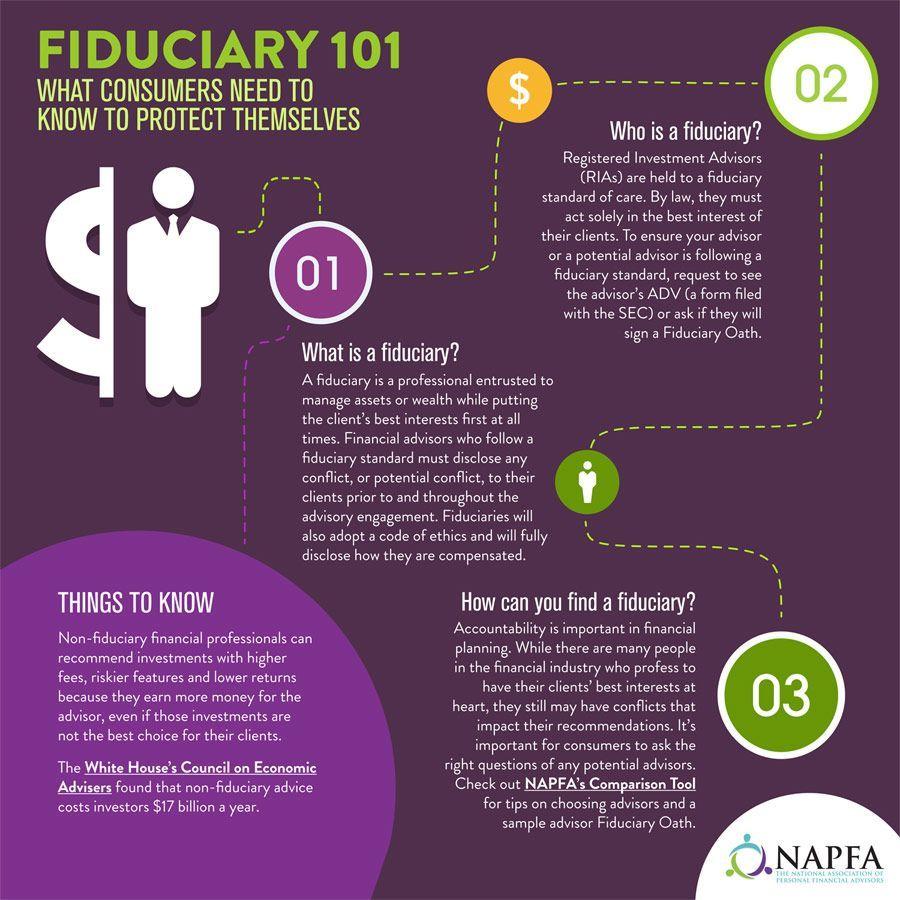
***

Assessment
For the financial services industry: An Interview with Bennett Aikin AIF®
Conclusion
Your thoughts and comments on this ME-P are appreciated. Feel free to review our top-left column, and top-right sidebar materials, links, URLs and related websites, too. Then, subscribe to the ME-P. It is fast, free and secure.
Speaker: If you need a moderator or speaker for an upcoming event, Dr. David E. Marcinko; MBA – Publisher-in-Chief of the Medical Executive-Post – is available for seminar or speaking engagements. https://medicalexecutivepost.com/dr-david-marcinkos-bookings/
Contact: MarcinkoAdvisors@msn.com
***
Filed under: Ethics, Investing | Tagged: center for fiduciary studies, fiduciary | 1 Comment »
On unrealistic expectations
By Rick Kahler CFP®
I have a complaint. The pot pie at one of my favorite restaurants doesn’t taste like a pot roast. I keep complaining, but nothing changes. I am thinking I may need to find a new restaurant because their cooking skills are just not living up to my expectations.
Or maybe I need to adjust my expectations. How can I expect a pot pie—a savory pastry with a mixture of potatoes, vegetables, and beef chunks—to taste like a beef pot roast? Even though beef is an ingredient in a pot pie, no reasonable diner would expect the two meals to taste the same.
Investing
But, that same reasonable diner might be perfectly comfortable expecting that their diversified investment portfolio should produce the same return as US stocks. This is just as unrealistic as it is to expect pot pie and pot roast to produce the same taste.
A diversified portfolio has a variety of investments in it, just as a pot pie has a variety of ingredients in it. A pot pie provides a complete meal with a nice balance of grain, veggies, and protein with a tasty blend of spices. A pot roast provides just one component of a balanced meal, a heavy dose of protein.
Likewise, a diversified portfolio is a meal in itself. A particular recipe that I like has the equivalent of a flour crust made of high quality bonds, high yield bonds, and Treasury Inflation Protected Securities. Stuffed inside is a delicious blend of real estate investment trusts, international stocks, US stocks, emerging market stocks, commodities, all flavored with managed futures, a long/short fund, and a put/write investment strategy.
The flavor of the diversified portfolio is completely different from an investment of just US stocks. Yet investors regularly try to compare the two.
EXAMPLE:
A few months ago, a reader wanted to know why her small account with a well-known brokerage house was doing three times better than her IRA managed by a fee-only advisor. She was thinking she should put all her IRA money with the brokerage firm.
Following up revealed the ingredients in her IRA: 30% was in a global mix of 1,100 high quality bonds, 300 high yield bonds, and 20 TIPS. The remaining 70% was in a global mix of 12,000 US, international and emerging market companies of all sizes, 300 real estate investment trusts, 21 commodities, a long/short fund with hundreds of positions, and a smattering of other investment strategies.
The small brokerage account had just one ingredient: 31 large US stocks.
Over the previous 15 months, the globally diversified portfolio had returned 9% and the 31 US stocks had returned 21%. Of course, the US stocks in her diversified portfolio had also returned 21%, but just like the chunks of beef in a pot pie, they only made up part of the mix, in this case 17%. So, comparing the diversified pot pie of her IRA return to the single-ingredient pot roast of her brokerage account was not valid.
Over the past nine years nothing has done better among major asset classes than US stocks. Any diversified portfolio will have underperformed them. That phenomenon will inevitably end. The time will come, sooner or later, when US stocks will be one of the worst performers of the decade.
***

***
Assessment
Just as a diversified portfolio will often garner smaller returns when US stocks rise, it will also have substantially higher returns when US stocks crash. At that time, those with diversified portfolios will be thankful that they stayed the course. And millions of other investors will be wishing they had ordered pot pie instead of pot roast.
Conclusion
Your thoughts and comments on this ME-P are appreciated. Feel free to review our top-left column, and top-right sidebar materials, links, URLs and related websites, too. Then, subscribe to the ME-P. It is fast, free and secure.
Speaker: If you need a moderator or speaker for an upcoming event, Dr. David E. Marcinko; MBA – Publisher-in-Chief of the Medical Executive-Post – is available for seminar or speaking engagements. https://medicalexecutivepost.com/dr-david-marcinkos-bookings/
Contact: MarcinkoAdvisors@msn.com
***
***
Filed under: Investing | Tagged: asset allocation, di-worsification, diversification, DJIA, Rick Kahler CFP®, S&P 500 | Leave a comment »
Options, Hurricanes and Hedging
By Vitaliy Katsenelson CFA
We always look at our investment process and ask ourselves, “What can we do better?” How can we increase returns and lower risk? We think we have found a new, sensible way to do both.
We can hedge a portion of our market exposure with put options. Put options are contracts that trade on an exchange that give buyer (us) a right, not an obligation, to sell stock (or in our case Exchanged Traded Fund, ETF that mimics a market index) at a specific price for a certain period of time. Put options are cash settled, so when we exercise it or it expires we get cash in lieu of its value. Buying put options is very similar to buying hurricane insurance. We pay a premium, and that is the only cost we bear. Let’s restate this: The only risk we take is that the hurricane doesn’t hit or, in our case, that the stock market doesn’t decline, in which case our premium was “wasted.”
When you buy hurricane insurance you don’t suddenly start wishing for a hurricane, but you do get peace of mind from knowing that if Richard or Betty (we name hurricane like we name pets – makes TV watching so much more exciting, especially if your name is Richard or Betty) pays you a visit, the insurance company will restore your house to its original state.
We look at options “insurance” the same way we look at any asset: It can make sense at one price but make no sense at another. As you will see, at today’s price they make a lot of sense.
For the sake of simplicity let’s make a few assumptions: First, your portfolio is 100% correlated to the stock market. Second, your portfolio is 100% invested. And finally, let’s assume we’d be buying put options to insure your whole portfolio. These assumptions will simplify our example – we’ll modify them later.
Based on our assumptions, we’d buy put options on ETFs that track a particular stock market index – let’s say the S&P 500. As of January 2018, if we were to buy options on the S&P 500 ETF, SPY, that expire in one year and that are 5% out of the money (they don’t start paying us until the S&P declines 5% or more – think of this 5% as our deductible), the cost of insuring the entire portfolio would be about 4% of its total value. For a $1 million portfolio it would be $40,000.
If the stock market decline is greater than 5%, the insurance kicks in. After a 5% decline the value of our stock options starts going up proportionally to the decline in the portfolio. If stock market falls 20%, the $1 million portfolio declines to $800,000, but this $200,000 loss is offset by the appreciation of our put options, which go up by roughly $150,000. Thus the value of the portfolio is now $950,000 (remember our 5% deductible). Actually that number will most likely be less – somewhere between $910,000 and $950,000, because we paid $40,000 for the put options.
Without getting too deep into the weeds, the price of an option is driven by two additional factors: time (options are not good wine; they get cheaper with age) and expected volatility, which we’ll discuss next.
Let’s say you are insuring a home somewhere on the Florida coast. The general formula to calculate the cost of insurance is probability of loss times severity of loss. According to a study by Colorado State University, the climatological probability that the coast of Florida will get hit by a major hurricane in any particular year is 21%, so once every five years or so.
A 21% probability doesn’t mean that a hurricane will pay a visit every fifth year; no, it actually means that over a 100-year period there will on average be 20 hurricanes hitting the Florida coast. Hurricanes may, however, decide to pay a visit two or three years in a row and then take eight or ten years off.
21% is the number an insurance company uses to figure out the intrinsic cost of the insurance. But this is where we have to draw a distinction between climatological probability of loss (intrinsic or true cost) and expected probability of loss.
There are other factors that go into the total cost of the insurance contract, including the size of the policy, its duration, and the deductible. But if you hold all these factors constant, the only number that fluctuates due to supply and demand in insurance market is the expected probability of loss.
A year after a hurricane, homeowners are still licking their wounds from last year’s Richard or Betty. The pain is so recent that those who were hit expect that hurricanes will happen a lot more often and thus the expected probability (in the eyes of these consumers) rises to … pick a number; let’s say 50% (a hurricane every two years). (The insurance industry may have had its capital depleted by recent hurricanes, which will also drive prices higher, but we’ll ignore this factor in our discussion.)
However, if there is no hurricane for a while, let’s say for eight years, the memory and the pain of the last hurricane fade away. A new wave of homeowners moves in, who have seen hurricanes only from the comfort of their leather couches on the Weather Channel. Now the expectation of another hurricane drops to, let’s say, 10% (a storm every ten years).
Thus, though expected probability and thus insurance cost has fluctuated dramatically from 50% to 10%, intrinsic value has not changed; it is still 21%. This example is extremely oversimplified, but the key point is still the same: A rational homeowner would want to buy insurance when no one expected a hurricane to visit Florida and lock in that price for as long as possible. If you are an insurance company you want to write as much insurance as you can when hurricanes are priced at 50% expected probability, and you want to be out of the market when they are priced at a 10% probability.
In the options market, expected probability of loss is expressed in terms of the volatility that is priced into options. Ten years of bull market have eroded even the most unpleasant memories of the 2008 decline. Fear has been replaced by euphoria that has been further amplified by the steady daily appreciation of stocks. The mindset that markets will never decline ever again has gradually seeped into the collective stock market psyche. This is why volatility is cheap! How cheap? Average volatility priced into options since 2004 was about 18%; today it is at 10%. In 2008 it reached 80%, and it has reached 40% a few times since 2008.
Volatility is quickly becoming one of the most interesting assets in the otherwise not very interesting stock market. But the situation in the stock market is even more interesting than in the hurricane insurance market.
Stock markets are fueled by two often contradictory forces: human emotions and movement towards fair value. Human emotions may divorce stocks from their fair value for a considerable period of time, but movement towards fair value can only be postponed but not suspended. During bull markets greed begets greed and stock market valuations go from cheap to average to high to super-high to extra-super-high – we are running out of superlatives, but we hope you get the point: Valuations march ever higher … until the music stops.
It is hard to know what will trigger the “stops” part, but in the late stage of the bull market, stock market behavior is driven less and less by fundamental factors and more and more resembles a Ponzi scheme (though market commentators come up with plenty of rational explanations to wrap around their “this time is different” narrative).
Stocks march higher until the market runs out of buyers and collapses under its own weight. This is how movement towards fair value takes place – except that, historically, markets have rarely stopped at fair value; they have fallen to levels well below fair value. (Vitaliy wrote two books on this subject – we’d be happy to send you copies.)
***

***
We are not meteorologists, but we believe there is an important difference between hurricanes and stocks. Just as when you flip a coin each flip is an independent event and completely unconnected to the previous flip, hurricanes are independent events – just because Richard paid a visit to Florida last year does not change the probability of Betty’s appearance next year. Betty is not aware of Richard’s past misdeeds.
In contrast, the probability of a significant market decline is not constant; it is dependent on past movements of stocks. As markets stretch higher and higher, bulk of the appreciation was driven by expansion of price to earnings. Market valuation which was already high went higher. The gap between the price and intrinsic value creates a rubber band-like tension. The wider the gap the greater the tension and risk of eventually embarking on the return trip towards fair value.
Thus, in the case of the hurricane the climatological probability of 21% of loss remains constant no matter whether Richard or Betty appears, but in the stock market the probability of a sharp decline (an equities hurricane) increases as the gap between price and fair value widens.
In other words, today the value of volatility has increased while its price is making new lows. This is why we believe volatility is one of the most interesting assets we see now.
We are not market timers. We have no idea what the stock market will do in 2018, but we look at buying put options as an opportunity to hedge our portfolios with what we believe is significantly undervalued insurance.
Let’s delve into the practicality of our hedging strategy and modify some assumptions we made in the oversimplified example above. First, our portfolios are not 100% correlated to market indices. Considering that we own high-quality companies that are significantly undervalued, we believe our stocks will (temporarily) decline less than the market if there is a significant correction. Second, we have a lot of cash, which doesn’t require hedging.
Let’s say your account is 60% invested. We only need to worry about hedging that 60%. And considering that our stocks will decline less than the market, we need to buy puts to protect less than 60%. How much less? Historically our stocks have declined a lot less than the market during significant sell-offs. Our average portfolio was down 17-18% in 2008 when markets were down 35-45%. Our guestimate, therefore, is that we need to hedge about half of 60% or 30% of the total portfolio. So the total cost of insuring the portfolio against a decline of 5% or greater for a year would be 1.2% (4% – the cost of “insuring” the total portfolio – times 30%).
You can see how this strategy can reduce risk, but can it increase returns? The answer is a bit more complex and has two parts: First, if the market takes a deep dive, our appreciated put options together with cash will have increased buying power, since everything around us will be cheaper. And second, depending of when it happens – how much time value is left in the option – the value of the option may jump dramatically, as the market will be pricing in not 10% volatility but a much higher number – 30%, 40%? – your guess is as good as ours.
IMA’s ultimate goal is produce good risk-adjusted returns while keeping volatility of our clients’ blood pressure level to a minimum. We try to achieve this through our conservative stock selection, our transparent (sometimes overly long) communication, and now through buying inexpensive insurance on the portion of your portfolio.
Assessment
Our view on what true risk is has not changed. To value investors, true risk is not volatility (a stock temporarily declining in price), but a permanent loss of capital (the stock price decline is permanent). Our hedging strategy goal is to take advantage of an undervalued asset – volatility – and to decrease your (future) blood pressure just a little.
Conclusion
Your thoughts and comments on this ME-P are appreciated. Feel free to review our top-left column, and top-right sidebar materials, links, URLs and related websites, too. Then, subscribe to the ME-P. It is fast, free and secure.
Speaker: If you need a moderator or speaker for an upcoming event, Dr. David E. Marcinko; MBA – Publisher-in-Chief of the Medical Executive-Post – is available for seminar or speaking engagements.
Book Marcinko: https://medicalexecutivepost.com/dr-david-marcinkos-bookings/
Subscribe: MEDICAL EXECUTIVE POST for curated news, essays, opinions and analysis from the public health, economics, finance, marketing, IT, business and policy management ecosystem.
***
***
Filed under: Investing | Tagged: hedge funds, Vitaliy Katsenelson CFA | Leave a comment »
On General Electric
By Vitaliy Katsenelson CFA
A lot of times I won’t have an insight into a business because I don’t understand it or because it’s too complex. GE is a great example today. I’m a value investor; I should be all over this stock that is making a generational low. Not at all. I looked at GE a half a dozen times over the years, and every single time I walked away without understanding the business or what it is worth.
Admiration?
To make things worse, despite GE’s being one of the most-admired companies in the US, I have always hated its culture. Jack Welch went into the corporate history books as the best American CEO ever. I’d argue that this history needs some serious rewriting. Welch built a company with a “beat this quarter” culture. Jack’s GE was not in the business of building moats and investing for the long run; he was in the business of beating quarters. In his book, Welch raved that from the early 2000s GE always beat Wall Street estimates. He was proud of how managers of one division were able to “come up with” a few more cents of earnings if another division fell short of its forecast. I kid you not – reread that sentence, three times. If I was at the SEC I’d investigating GE’s accounting.
GE played games with their earnings for a long time, but the reality that its cash flows couldn’t cover its dividend, which was supposedly half of its earnings, is what triggered a wake-up call for investors. GE is another reminder that it is incredibly dangerous to own a stock just because you like the dividend. Consistency of recurrence of dividend payments creates an optical illusion that the dividend will always will be there. Just think about it: GE’s dividend of 96 cents was half of what the company was expected to earn and it still couldn’t afford to pay it.
Polar opposite CEOs
I’d argue that Welch is on the opposite end of the spectrum from Jeff Bezos. Bezos doesn’t even know how to spell quarterly earnings. In one of his interviews Bezos explained that Amazon makes decision years out. So the current quarter’s report reflects decisions Amazon made several years ago. I don’t want to own companies that are run by the likes of Welch, but we own a few that are run by the likes of Bezos. When I hear management praise their ability to beat last quarter’s earnings, I run.
GE was ultimately destroyed by enormous capital misallocation. They assumed anything they touched with Six Sigma, independent of the price they paid, would turn to gold. So they didn’t care how much they paid for acquisitions. (I’ll discuss the topic “death by acquisition” next week in part two of this article.)
There is another lesson for me here. We always look for simplicity and transparency. If a company’s business is complex and opaque, we move on. One of the most important things in investing is what you do in between buying or selling a stock. After you buy it is just a matter of time before your initial assumptions come under fire. Maintaining rationality throughout your ownership of the company is paramount, and to do that you need to understand the business well. Thus (at least for us) the business cannot be opaque or overly complex. (We set an upper limit to the IQ required of us to understand the business.)
Assessment
So, that’s why I have no opinion on GE shares today.
Conclusion
Your thoughts and comments on this ME-P are appreciated. Feel free to review our top-left column, and top-right sidebar materials, links, URLs and related websites, too. Then, subscribe to the ME-P. It is fast, free and secure.
Speaker: If you need a moderator or speaker for an upcoming event, Dr. David E. Marcinko; MBA – Publisher-in-Chief of the Medical Executive-Post – is available for seminar or speaking engagements.
Book Marcinko: https://medicalexecutivepost.com/dr-david-marcinkos-bookings/
Subscribe: MEDICAL EXECUTIVE POST for curated news, essays, opinions and analysis from the public health, economics, finance, marketing, IT, business and policy management ecosystem.
***
***
Filed under: Investing | Tagged: By Vitaliy Katsenelson CFA, general electric | 4 Comments »
What it is – How it works
By staff reporters
HISTORY:
The Lorenz curve is a graphical representation of income inequality or wealth inequality developed by American economist Max Lorenz in 1905.
DEFINITION:
The graph plots percentiles of the population according to income or wealth on the horizontal axis. It plots cumulative income or wealth on the vertical axis, so that an x-value of 45 and a y-value of 14.2 would mean that the bottom 45% of the population controls 14.2% of the total income or wealth. http://www.HealthDictionarySeries.org
***
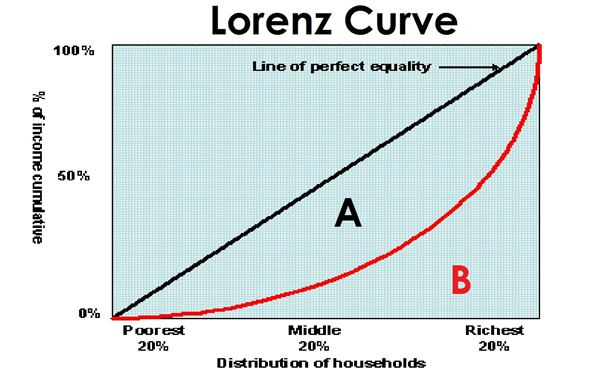
***
USE:
The concept is useful in describing inequality among the size of individuals in ecology and in studies of biodiversity, where the cumulative proportion of species is plotted against the cumulative proportion of individuals.
It is also useful in business modeling: e.g., in consumer finance, to measure the actual percentage y% of delinquencies attributable to the x% of people with worst risk scores.
MORE: https://www.investopedia.com/terms/l/lorenz-curve.asp
Conclusion
Your thoughts and comments on this ME-P are appreciated. Feel free to review our top-left column, and top-right sidebar materials, links, URLs and related websites, too. Then, subscribe to the ME-P. It is fast, free and secure.
Speaker: If you need a moderator or speaker for an upcoming event, Dr. David E. Marcinko; MBA – Publisher-in-Chief of the Medical Executive-Post – is available for seminar or speaking engagements. https://medicalexecutivepost.com/dr-david-marcinkos-bookings/
Contact: MarcinkoAdvisors@msn.com
***
Filed under: Financial Planning, Investing | Tagged: Lorenz curve | 1 Comment »
From Investors to Millionaires
By Rick Kahler CFP®
A few weeks ago I wrote about the increasing use of the term “Investor Class” as an inaccurate and generally disparaging synonym for the rich. https://medicalexecutivepost.com/2017/12/14/a-new-term-the-investor-class/
The same day I wrote that piece, a reader sent me an article by Christopher Ingraham that appeared December 7, 2017, in The Washington Post. It was titled, “Economy is creating millionaires at an astonishing pace. But what’s it doing for everyone else?” In it he refers to another group that he calls the “Millionaire Class.”
References
Ingraham references a paper, issued in November 2017 by New York University economist Edward N. Wolff, that finds the number of households with a net worth of $1 million (measured in constant 1995 dollars) increased from 2.4 million households in 1983 to 9.1 million in 2016, a growth of 279%. The total number of households increased by 50% during this period, meaning the number of millionaires increased at over five times the rate of increase of the overall population. Keep in mind that all these numbers refer not to income but to net worth—the total value of a household’s assets (including retirement accounts, homes, and other property), minus debts.
Wolff notes in his study that the bulk of the increase in the number of millionaire households happened between 1995 and 2001 and was due directly to the run-up in stock prices. He notes that more recently the increase in real estate values has nudged the number of millionaire households upward.
Ingraham writes that, “In 1983 fewer than 3% of households had a net worth greater than $1 million or more in constant 1995 dollars. By 2016 over 7% of households were worth that much.” His take is that the creation of all these new millionaires is more of what’s wrong with America. Yet there is another way of viewing it.
Ingraham refers to data from the Pew Research Center that finds the middle class is shrinking while the lower middle class and poor increased by 4%. He uses this as evidence of increasing income inequality as the poor get poorer and the rich get richer.
Confused?
Confusingly, data that I found and reported on in August of 2016 finds just the opposite. According to a study by Stephen J. Rose with the Urban Institute, between 1979 and 2014 every class of American became wealthier. The upper middle class (households earning between $100,000 and $350,000) increased from 12.9% to 29.4%. The poor (households earning under $30,000) contracted from 24.3% to 19.8%.
It isn’t astounding news that people who invest in stocks and real estate increase their wealth faster than those who don’t. These are the two asset classes that have the highest returns over almost any lengthy time period. If you want to build wealth you first need to be frugal—that is, have the ability to save money to invest—and then you need to invest in either businesses (stocks) or real estate.
Anyone with a few hundred dollars can own a slice of hundreds of the same stocks and real estate properties owned by the rich. Starting small and investing modest but consistent amounts over time is the way many people build wealth until they do indeed accumulate a net worth of a million dollars. This is not a sign of something wrong; it is an achievement worth celebrating.

Assessment
It seems to me all the reference to “investor classes” or “millionaire classes” is an attempt to shame and demagogue the uber rich. However, using these terms also shames everyday Americans who take pride in being responsible for their financial future and who take advantage of opportunities to provide security for that future.
Conclusion
Your thoughts and comments on this ME-P are appreciated. Feel free to review our top-left column, and top-right sidebar materials, links, URLs and related websites, too. Then, subscribe to the ME-P. It is fast, free and secure.
Speaker: If you need a moderator or speaker for an upcoming event, Dr. David E. Marcinko; MBA – Publisher-in-Chief of the Medical Executive-Post – is available for seminar or speaking engagements.
Book Marcinko: https://medicalexecutivepost.com/dr-david-marcinkos-bookings
Subscribe: MEDICAL EXECUTIVE POST for curated news, essays, opinions and analysis from the public health, economics, finance, marketing, IT, business and policy management ecosystem.
***
Filed under: Investing | Tagged: "Millionaire Class", “Investor Class”, Christopher Ingraham, Edward N. Wolff, Rick Kahler CFP® | Leave a comment »




 ***
***













 The Leading Business Education Network for Doctors, Financial Advisors and Health Industry Consultants