The Effect of the ACA on Self-Funded Plans & Free Market Medical Providers

Join Our Mailing List

By Maria Robles Meyers, Esq.

[Free Market Medical Association]

Obama Care
Download the presentation Here

Conclusion

Your thoughts and comments on this ME-P are appreciated. Feel free to review our top-left column, and top-right sidebar materials, links, URLs and related websites, too. Then, subscribe to the ME-P. It is fast, free and secure.

Speaker: If you need a moderator or speaker for an upcoming event, Dr. David E. Marcinko; MBA – Publisher-in-Chief of the Medical Executive-Post – is available for seminar or speaking engagements. Contact: MarcinkoAdvisors@msn.com

OUR OTHER PRINT BOOKS AND RELATED INFORMATION SOURCES:

 Product DetailsProduct Details

***

Find Your Doctor’s Payments

Join Our Mailing List

FBF300BA-321A-49FD-9289-0DE0AD63DCE5

 CMS’ Open Payments Program Posts 2015 Financial Data

***

 The Centers for Medicare & Medicaid Services (CMS) has published the 2015 Open Payments (sometimes called the “Sunshine Act”) data, along with newly submitted and updated payment records for 2013 and 2014, at https://openpaymentsdata.cms.gov.
The Open Payments program requires that transfers of value by drug, device, biological, and medical supply manufacturers to physicians and teaching hospitals be published on a public website.
***
physician investors

Portrait of two surgeons in a operating room viewing paper charts.

***
Assessment
 ***
In program year 2015, healthcare industry manufacturers reported $7.52 billion in payments and ownership and investment interests to physicians and teaching hospitals. This amount is comprised of 11.90 million total records attributable to 618,931 physicians and 1,116 teaching hospitals. To find out what any doctor received in 2015, click here.
 (((
Conclusion
 (((
Your thoughts and comments on this ME-P are appreciated. Feel free to review our top-left column, and top-right sidebar materials, links, URLs and related websites, too. Then, subscribe to the ME-P. It is fast, free and secure.

Speaker: If you need a moderator or speaker for an upcoming event, Dr. David E. Marcinko; MBA – Publisher-in-Chief of the Medical Executive-Post – is available for seminar or speaking engagements. Contact: MarcinkoAdvisors@msn.com

OUR OTHER PRINT BOOKS AND RELATED INFORMATION SOURCES:

Product DetailsProduct Details

***

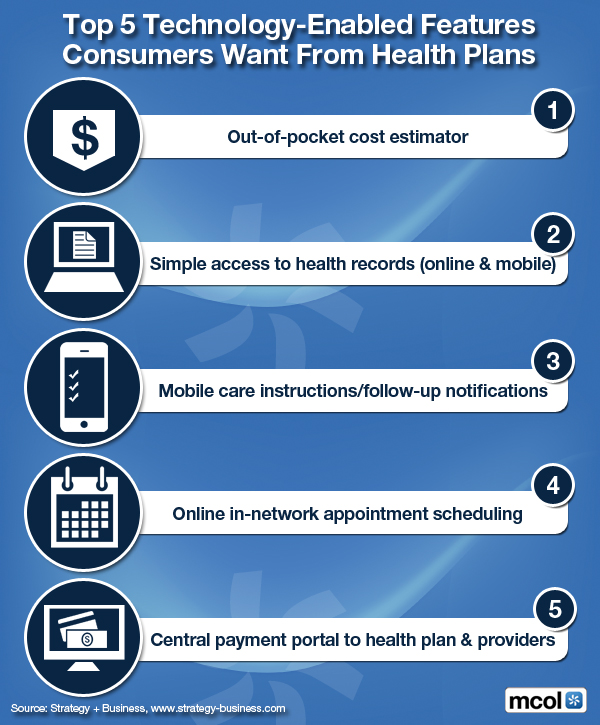
Top Five Technology Enabled Features for Health Plans

Join Our Mailing List

By http://www.MCOL.com

Sought by Consumers

***

ImageProxy

***

Conclusion

Your thoughts and comments on this ME-P are appreciated. Feel free to review our top-left column, and top-right sidebar materials, links, URLs and related websites, too. Then, subscribe to the ME-P. It is fast, free and secure.

Speaker: If you need a moderator or speaker for an upcoming event, Dr. David E. Marcinko; MBA – Publisher-in-Chief of the Medical Executive-Post – is available for seminar or speaking engagements. Contact: MarcinkoAdvisors@msn.com

OUR OTHER PRINT BOOKS AND RELATED INFORMATION SOURCES:

 Product DetailsProduct DetailsProduct Details

***

Fixing Social Security

Join Our Mailing List

Brian J. Knabe MD

By Brian J. Knabe; MD CMP© CFP®

http://www.SavantCapital.com

cmp-logo16

http://www.CertifiedMedicalPlanner.org

These days, as Congress debates the debt ceiling issue in our current political atmosphere, Social Security is suddenly front page news again.

Social Security

The first thing to understand is that there IS a solvency problem with Social Security.

Alice Munnell, Director for the Center for Retirement Research at Boston College University points out that, according to the Congressional Budget Office, the Office of Management and the Budget and the Government Accountability Office, the benefits promised to future retirees exceed the scheduled taxes that are projected to be taken in.

In fact, last year, Social Security began paying out more in benefits than it received in payroll taxes–years earlier than projected, due to the 2008 Great Recession.

The second thing to understand is that Social Security is not going away; too many people today and in the future depend on it for a crucial part of their retirement income.  Munnell notes that Social Security accounts for 87% of non-earned income for the poorest third of households over age 65, 70% for the middle third and 37% for the highest third.

The Question

So the question becomes: how can Congress bring Social Security back into revenue balance.

To help illustrate some of the trade-offs, the American Academy of Actuaries web site includes a game that allows all of us to fix Social Security–you can make your own adjustments here: http://www.actuary.org/content/try-your-hand-social-security-reform and discover a variety of ways to balance the books, some more painful than others.

Options:

You could, for example, move up by one year the day when people have to wait until age 67 to claim maximum benefits, and after that index the retirement age to maintain today’s ratio between expected retirement years and work years.  This, alone, would solve 20% of the funding problem, and some would argue that it should have been done years ago.

As an alternative, you could reduce the annual cost of living adjustments in Social Security payments by half a percentage point.  This would reduce the projected deficiency by 40%.  Of course, it would also erode the purchasing power of elderly people who count on Social Security for a significant part of their income.

We could reduce benefits by 5% for future retirees, which would solve 31% of the problem.

Or we could reduce the benefit formula for the top half of earners, who theoretically are less dependent on Social Security in retirement.  That would solve 43% of the projected Social Security deficit.  It would also mean that people who are able to fund a comfortable retirement will get much less out of the system than they put into it.

***

Mature Woman

***

On the other side of the ledger, we could incrementally increase the revenues going into the Social Security system.  For instance, if we raised the payroll tax rate from the current 6.2% to 6.7% for employees and employers, 48% of the shortfall would go away.  As an alternative, we could tax Social Security benefits like we do IRA and pension benefits, which would make up 14% of the projected shortfall.

Sans Fiscal Health 

As you can see, none of these proposals, by itself, will bring Social Security back to fiscal health.  If you’re looking for an out-of-the-box solution to add to the mix, consider an article in the Christian Science Monitor, where former U.S. Secretary of Labor Robert Reich notes that a big (and largely undiscussed) problem with Social Security is the shifting balance of workers paying into the system to retirees collecting from it.

Forty years ago, he says, there were five workers for every retiree; today, there are three.  In 20 years, perhaps less, the ratio will be 2:1–that is, every two workers in America will have to pay whatever is required to support one retiree’s Social Security benefits.

How would you fix this problem? 

Reich proposes that we allow more immigrants into the U.S.–that immigration reform and entitlement reform are linked. As the deficit debate goes forward, you’ll hear a lot more about how to “fix” Social Security.

Assessment

Consider this a cheat sheet on the options that various parties will eventually put on the table.

Sources: Alice Munnell:  http://blogs.smartmoney.com/encore/2011/07/11/saving-social-security-raising-taxes-vs-cutting-benefits/?mod=wsj_share_twitter

Robert Reich: http://www.csmonitor.com/Business/Robert-Reich/2010/0411/Immigration-Could-it-solve-Social-Security-Medicare-woes

Conclusion

Your thoughts and comments on this ME-P are appreciated. Feel free to review our top-left column, and top-right sidebar materials, links, URLs and related websites, too. Then, subscribe to the ME-P. It is fast, free and secure.

Speaker: If you need a moderator or speaker for an upcoming event, Dr. David E. Marcinko; MBA – Publisher-in-Chief of the Medical Executive-Post – is available for various engagements.

OUR OTHER PRINT BOOKS AND RELATED INFORMATION SOURCES:

Risk Management, Liability Insurance, and Asset Protection Strategies for Doctors and Advisors: Best Practices from Leading Consultants and Certified Medical Planners™  Risk Management, Liability Insurance, and Asset Protection Strategies for Doctors and Advisors: Best Practices from Leading Consultants and Certified Medical Planners™

***

Are you Being “Admitted” to the Hospital?

Join Our Mailing List

OR … just “Observed”?

Brian J. Knabe MD

By Brian J. Knabe, MD, CMP©, CFP®

Savant Capital Management

cmp-logo16

http://www.CertifiedMedicalPlanner.org

Much attention has been given in recent months to the unintended consequences of healthcare rules and laws.  Most of this has centered on the Affordable Care Act—employers discontinuing health plans for their employees, individuals being dropped from their privately purchased insurance, and other ill effects.  One subject that has not received much press, but which may affect many seniors, is changing rules for Medicare.

Medicare

Patients usually assume when they spend a night or more in a hospital that they have been “admitted.”  However, this is often not the case.  Medicare regulations and statutes require physicians and hospitals to predict at the time of initial hospitalization how long a patient will stay in the hospital.

A short stay—for a night or two– is classified as “observation,” while a longer stay can be classified as an “admission.”  While the difference between these may not be a primary concern for a sick patient wanting to receive necessary evaluation and treatment, it can make a significant difference for your pocketbook.

Observation status

Observation status is considered “outpatient” treatment, and as such can expose Medicare patients to unexpected expenses.  As outpatients, visits under observation status are not covered under Medicare Part A, which pays for hospital charges above a $1,184 deductible.  These outpatient services are billed under Medicare Part B, which requires patients to pay 20% of the cost and imposes no cap on their total out-of-pocket expenditures.

Moreover, observation patients must pay out of pocket for the medication they receive in the hospital.  Those with Medicare Part D prescription-drug plans can file claims for reimbursement, but they may receive little or no refund if their Part D plan doesn’t cover those specific medications.

SNF

Another unexpected consequence of hospital observation is subsequent nursing home coverage.  A stay in a Skilled Nursing Facility (SNF) is often covered by Medicare, as long as certain criteria are met.  One of those criteria is whether the SNF stay was preceded by a “qualifying hospital stay.”  An admission to a hospital might meet this criterion, but an observation stay will not, even if it extended for a number of days.  When a patient who meets Medicare’s admission requirement moves to a SNF, the program covers 100 percent of the first 20 days.  Patients are responsible for $152 daily co-pays for the next 80 days, if necessary.  On the other hand, patients leaving the hospital for a SNF after an observation stay pay the full cost out of pocket.

WSJ

According to a recent Wall Street Journal article, from 2004 to 2011 the number of observation services administered per Medicare beneficiary rose by almost 34%, while admissions per beneficiary declined 7.8%.  Why does this difference between admission and observation matter to hospitals?  It comes down to payment.  Hospitals are reimbursed less for outpatient services.  However, if it is determined after a hospitalization that a patient should have been kept under observation rather than admitted, Medicare will often deny payment to the hospital for the entire bill.  So hospitals are motivated to get it right, at least according to Medicare regulations.

hospital bills

What  to Do?

So, what can you do to protect yourself as a patient?  At the time of hospitalization, ask your physician whether you are being admitted or kept under observation.  Ask to speak to a case manager about the proper status of the hospital stay.  Ask your doctors if they suspect that rehabilitation services will be needed after the hospitalization, and if so, request their help in getting the decision to “observe” reversed prior to hospital discharge.

Assessment

For additional help, see the “Self Help Packet for Medicare Observation Status” at www.medicareadvocacy.org.

See more at: https://www.savantcapital.com/blog/are-you-being-admitted-to-the-hospital-or-just-observed/#sthash.EOOiPWOA.dpuf 

Conclusion

Your thoughts and comments on this ME-P are appreciated. Feel free to review our top-left column, and top-right sidebar materials, links, URLs and related websites, too. Then, subscribe to the ME-P. It is fast, free and secure.

Speaker: If you need a moderator or speaker for an upcoming event, Dr. David E. Marcinko; MBA – Publisher-in-Chief of the Medical Executive-Post – is available for seminar or speaking engagements. Contact: MarcinkoAdvisors@msn.com

OUR OTHER PRINT BOOKS AND RELATED INFORMATION SOURCES:

Product DetailsProduct Details

***


Managed Care Insurance Profits?

Join Our Mailing List

By Kel Kelly

2007 – 2017 Almost a decade ago?Flag_of_the_Red_Cross

***Figure1_11

***

Conclusion

Your thoughts and comments on this ME-P are appreciated. Feel free to review our top-left column, and top-right sidebar materials, links, URLs and related websites, too. Then, subscribe to the ME-P. It is fast, free and secure.

Speaker: If you need a moderator or speaker for an upcoming event, Dr. David E. Marcinko; MBA – Publisher-in-Chief of the Medical Executive-Post – is available for seminar or speaking engagements. Contact: MarcinkoAdvisors@msn.com

OUR OTHER PRINT BOOKS AND RELATED INFORMATION SOURCES:

Product DetailsProduct Details

***

The Future of Health Insurance?

Join Our Mailing List

Preparing for Dr. Big Brother

Bert Mesko

[By Bert Mesko MD PhD]

While futuristic technologies are becoming available in healthcare, patients often can’t access them and the cost of providing care continues to skyrocket.

However, innovations such as artificial intelligence (AI) and health sensors are set to reshape how healthcare insurance works and by doing so bring much needed reforms to healthcare as a whole.

***

Insurance

http://medicalfuturist.com/2016/04/13/the-future-of-health-insurance-preparing-for-dr-big-brother/

***

Conclusion

Your thoughts and comments on this ME-P are appreciated. Feel free to review our top-left column, and top-right sidebar materials, links, URLs and related websites, too. Then, subscribe to the ME-P. It is fast, free and secure.

Speaker: If you need a moderator or speaker for an upcoming event, Dr. David E. Marcinko; MBA – Publisher-in-Chief of the Medical Executive-Post – is available for seminar or speaking engagements. Contact: MarcinkoAdvisors@msn.com

OUR OTHER PRINT BOOKS AND RELATED INFORMATION SOURCES:

Product DetailsProduct DetailsProduct Details

***

Facing the Facts on Federal Entitlements

Join Our Mailing List

A Case for Reform

[By National Institute for Health Care Management]

The National Institute for Health Care Management (NIHCM) Foundation is a nonprofit, nonpartisan organization dedicated to improving the health of all Americans by spurring workable and creative solutions to pressing healthcare problems.

***

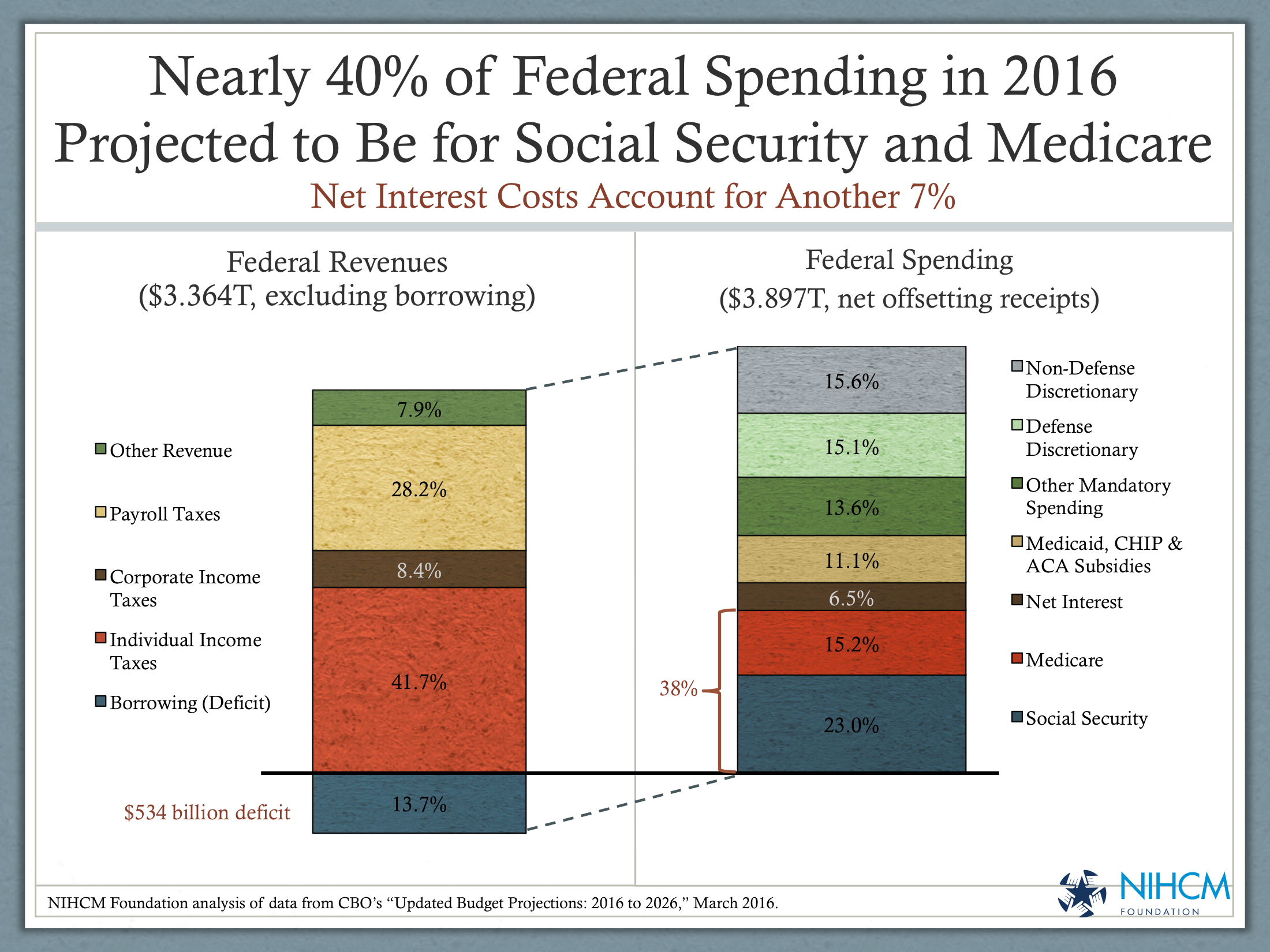
federal spending

NIHCM – Facing the Facts on Federal Entitlements: A Case for Reform

***

Conclusion

Your thoughts and comments on this ME-P are appreciated. Feel free to review our top-left column, and top-right sidebar materials, links, URLs and related websites, too. Then, subscribe to the ME-P. It is fast, free and secure.

Speaker: If you need a moderator or speaker for an upcoming event, Dr. David E. Marcinko; MBA – Publisher-in-Chief of the Medical Executive-Post – is available for seminar or speaking engagements. Contact: MarcinkoAdvisors@msn.com

OUR OTHER PRINT BOOKS AND RELATED INFORMATION SOURCES:

Product DetailsProduct Details

  [Foreword Dr. Hashem MD PhD] *** [Foreword Dr. Silva MD MBA]

***

American Society of Appraisers 2016-17 Election Results

Join Our Mailing List 

NEW ASA OFFICERS

[By Jennifer M. Aguilar]

Marketing and Communications Assistant

American Society of Appraisers

11107 Sunset Hills, Suite 310, Reston, VA 20190

Direct (703) 733-2120 | Fax (703) 742-8471 | jaguilar@appraisers.org

Hello ME-P Readers and Subscribers,

The  ASA is pleased to announce the results of ASA’s 2016-17 elections for the new International Officers, Board of Governors and Discipline Committee Officers and Members At-Large. Those elected will officially take office on July 1, 2016.

To learn more please see this PR attachment: ASA Election Results

Thank you in advance for sharing this information.

Conclusion

Your thoughts and comments on this ME-P are appreciated. Feel free to review our top-left column, and top-right sidebar materials, links, URLs and related websites, too. Then, subscribe to the ME-P. It is fast, free and secure.

Speaker: If you need a moderator or speaker for an upcoming event, Dr. David E. Marcinko; MBA – Publisher-in-Chief of the Medical Executive-Post – is available for seminar or speaking engagements. Contact: MarcinkoAdvisors@msn.com

OUR OTHER PRINT BOOKS AND RELATED INFORMATION SOURCES:

Risk Management, Liability Insurance, and Asset Protection Strategies for Doctors and Advisors: Best Practices from Leading Consultants and Certified Medical Planners™    Risk Management, Liability Insurance, and Asset Protection Strategies for Doctors and Advisors: Best Practices from Leading Consultants and Certified Medical Planners™

***

Retiree Health Insurance Trends

Join Our Mailing List

By http://www.MCOL.com

***

ImageProxy

***

Conclusion

Your thoughts and comments on this ME-P are appreciated. Feel free to review our top-left column, and top-right sidebar materials, links, URLs and related websites, too. Then, subscribe to the ME-P. It is fast, free and secure.

Speaker: If you need a moderator or speaker for an upcoming event, Dr. David E. Marcinko; MBA – Publisher-in-Chief of the Medical Executive-Post – is available for seminar or speaking engagements. Contact: MarcinkoAdvisors@msn.com

OUR OTHER PRINT BOOKS AND RELATED INFORMATION SOURCES:

Risk Management, Liability Insurance, and Asset Protection Strategies for Doctors and Advisors: Best Practices from Leading Consultants and Certified Medical Planners™8Comprehensive Financial Planning Strategies for Doctors and Advisors: Best Practices from Leading Consultants and Certified Medical Planners™

***

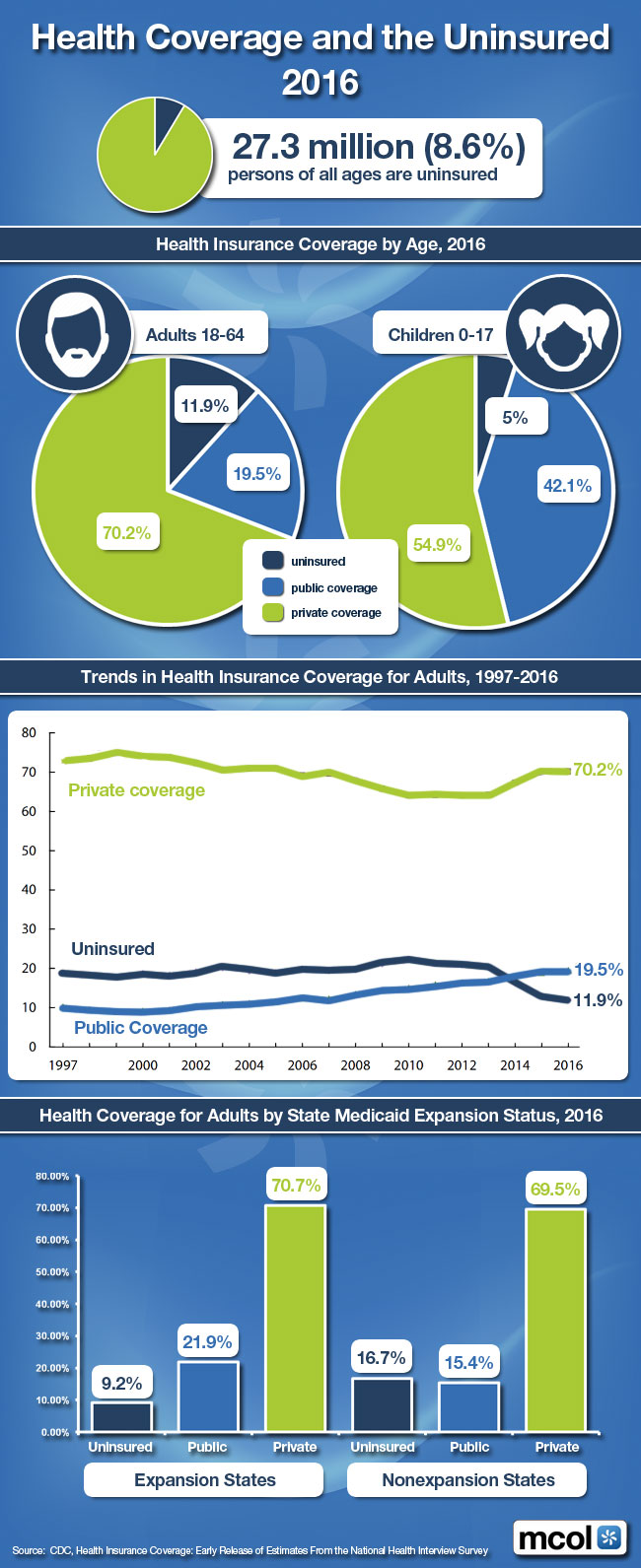
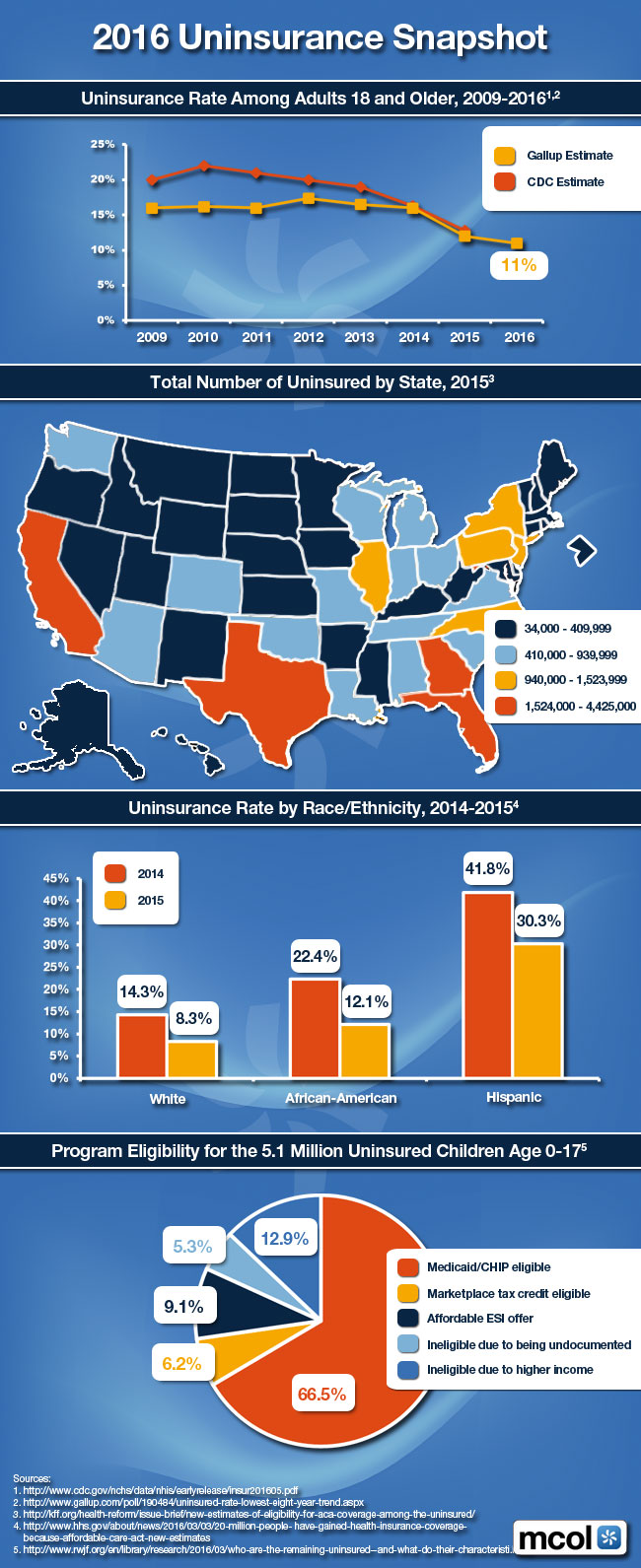
A Health Un-Insurance Snapshot

Join Our Mailing List

Snapshot for 2016

By http://www.MCOL.com

***

***

Conclusion

Your thoughts and comments on this ME-P are appreciated. Feel free to review our top-left column, and top-right sidebar materials, links, URLs and related websites, too. Then, subscribe to the ME-P. It is fast, free and secure.

Speaker: If you need a moderator or speaker for an upcoming event, Dr. David E. Marcinko; MBA – Publisher-in-Chief of the Medical Executive-Post – is available for seminar or speaking engagements. Contact: MarcinkoAdvisors@msn.com

OUR OTHER PRINT BOOKS AND RELATED INFORMATION SOURCES:

Product DetailsProduct DetailsProduct Details

***

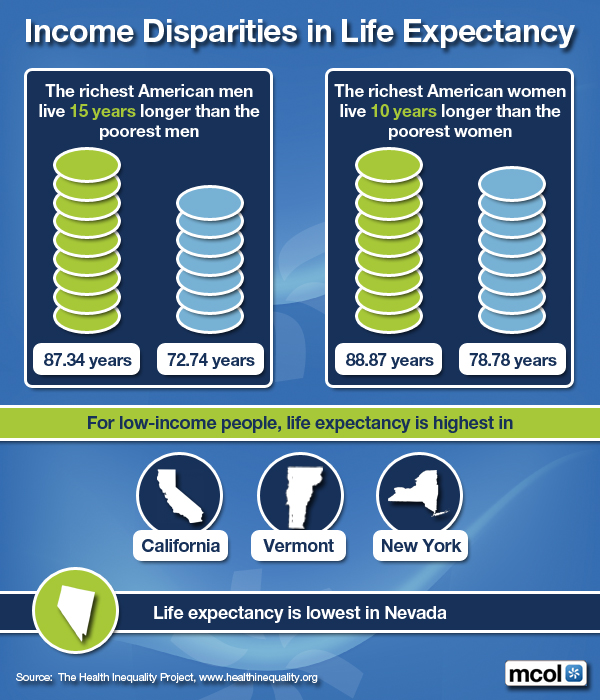
Life Expectancy Income Disparities

Join Our Mailing List

By http://www.MCOL.com

***

***

Conclusion

Your thoughts and comments on this ME-P are appreciated. Feel free to review our top-left column, and top-right sidebar materials, links, URLs and related websites, too. Then, subscribe to the ME-P. It is fast, free and secure.

Speaker: If you need a moderator or speaker for an upcoming event, Dr. David E. Marcinko; MBA – Publisher-in-Chief of the Medical Executive-Post – is available for seminar or speaking engagements. Contact: MarcinkoAdvisors@msn.com

OUR OTHER PRINT BOOKS AND RELATED INFORMATION SOURCES:

Product DetailsProduct DetailsProduct Details

***

On Pregnancy Ultra-Sound Price Variations

Join Our Mailing List

By http://www.MCOL.com

***

ultrasound

***

Conclusion

Your thoughts and comments on this ME-P are appreciated. Feel free to review our top-left column, and top-right sidebar materials, links, URLs and related websites, too. Then, subscribe to the ME-P. It is fast, free and secure.

Speaker: If you need a moderator or speaker for an upcoming event, Dr. David E. Marcinko; MBA – Publisher-in-Chief of the Medical Executive-Post – is available for seminar or speaking engagements. Contact: MarcinkoAdvisors@msn.com

OUR OTHER PRINT BOOKS AND RELATED INFORMATION SOURCES:

Risk Management, Liability Insurance, and Asset Protection Strategies for Doctors and Advisors: Best Practices from Leading Consultants and Certified Medical Planners™

***

Sherlock Health Administration Expense Benchmarks Invitation

Join Our Mailing List

Sherlock Benchmarks – Participation and Licensing

By Douglas B. Sherlock CFA

sherlock@sherlockco.com

thoughtSherlockHello All ME-P Readers and Subscribers:

This email invites your participation and/or licensing of the Sherlock Benchmarks.

A central effect of the Affordable Care Act is to sharply increase the incentive for health plans to minimize their administrative expenses. The Sherlock Benchmarks can be a catalyst to respond to these incentives since they identify and prioritize cost variances.

Use of the Sherlock Benchmarks reflects this:

• At least 40 health plans serving at least 40 million people with health insurance are so far committed as participants in this year’s Sherlock Benchmarking study.

• Of the 36 U.S. – based Blue Cross Blue Shield primary licensees, one-half are participating in this year’s Sherlock Benchmarking Study, either as an enterprise or through a subsidiary.

• Of the 13 members of the Alliance of Community Health Plans that are not focused on public programs or are staff-model plans, 11 are participating in this year’s Sherlock Benchmarking Study for Independent / Provider – Sponsored Health Plans.

• Most of the largest members of the Health Plan Alliance that are not focused on public programs are participating in this year’s Sherlock Benchmarking Study for Independent / Provider – Sponsored Health Plans.

• Health plans serving at least one-half of all insured Americans are licensed users of Sherlock Benchmarks since January 1, 2015.

Licensing and participation is available to all health plans

We have recently launched the Independent / Provider – Sponsored and Blue Cross Blue Shield surveys. There is still time, but the financial metrics survey form must be returned to us by the end of April.

So please contact me immediately if you wish to join these robust panels.

Our universes of Medicaid and Medicare plans will launch in a few months to avoid conflict with your Medicare bid process. If a plurality of your members are in either Medicare or Medicaid, please contact us about participation. Note that all costs are segmented by product as well as by function to assure an apples-to-apples comparison between the plans.

Licensing is available without participation. Licensing costs more but it entails less effort.  The 2016 Sherlock Benchmarks for Blue Cross Blue Shield Plans and Independent / Provider – Sponsored plans will be available beginning in July. The 2016 Sherlock Benchmarks for Medicare plans and Medicaid plans will be available beginning in September. 

Assessment

We look forward to working with you.

Conclusion

Your thoughts and comments on this ME-P are appreciated. Feel free to review our top-left column, and top-right sidebar materials, links, URLs and related websites, too. Then, subscribe to the ME-P. It is fast, free and secure.

Speaker: If you need a moderator or speaker for an upcoming event, Dr. David E. Marcinko; MBA – Publisher-in-Chief of the Medical Executive-Post – is available for seminar or speaking engagements. Contact: MarcinkoAdvisors@msn.com

OUR OTHER PRINT BOOKS AND RELATED INFORMATION SOURCES:

[HEALTH INSURANCE, MANAGED CARE, ECONOMICS, FINANCE AND HEALTH INFORMATION TECHNOLOGY COMPANION DICTIONARY SET]

      Product DetailsProduct DetailsProduct Details

 ***

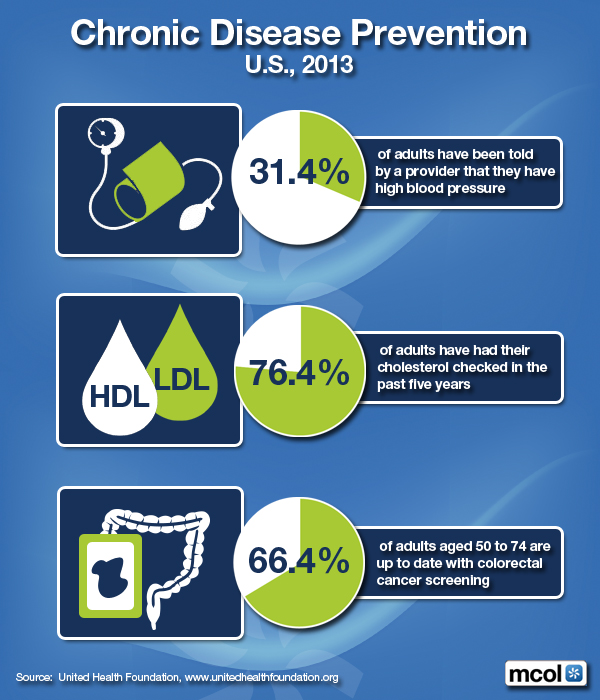
On Chronic Disease Prevention

Join Our Mailing List

By http://www.MCOL.com

In the USA for 2013

ImageProxy

Conclusion

Your thoughts and comments on this ME-P are appreciated. Feel free to review our top-left column, and top-right sidebar materials, links, URLs and related websites, too. Then, subscribe to the ME-P. It is fast, free and secure.

Speaker: If you need a moderator or speaker for an upcoming event, Dr. David E. Marcinko; MBA – Publisher-in-Chief of the Medical Executive-Post – is available for seminar or speaking engagements. Contact: MarcinkoAdvisors@msn.com

OUR OTHER PRINT BOOKS AND RELATED INFORMATION SOURCES:

Product DetailsProduct DetailsProduct Details

***

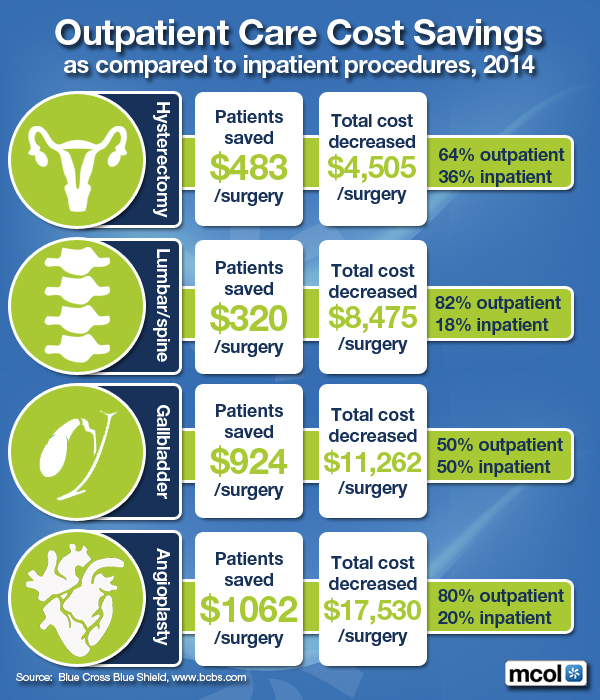
On Outpatient Care Cost Savings

Join Our Mailing List

Compared to Inpatient Procedures for 2014

By http://www.MCOL.com

***

ImageProxy

***

Conclusion

Your thoughts and comments on this ME-P are appreciated. Feel free to review our top-left column, and top-right sidebar materials, links, URLs and related websites, too. Then, subscribe to the ME-P. It is fast, free and secure.

Speaker: If you need a moderator or speaker for an upcoming event, Dr. David E. Marcinko; MBA – Publisher-in-Chief of the Medical Executive-Post – is available for seminar or speaking engagements. Contact: MarcinkoAdvisors@msn.com

OUR OTHER PRINT BOOKS AND RELATED INFORMATION SOURCES:

Product DetailsProduct DetailsProduct Details

The EXIT of Fee-For Service Medicine

Join Our Mailing List

By staff reporters http://www.CertifiedMedicalPlanner.org

EXIT FEE-FOR SERVICE MEDICINE

[Some Pundits say … Bye-Bye]

Continuing the health insurance industry’s march further away from fee-for-service medicine, UnitedHealth Group UNH +0.81% (UNH) will increase value-based payments to doctors and hospitals by 20 percent in 2015 to “north of $43 billion.”

UnitedHealth, considered a barometer for the health insurance industry given its size, is rapidly departing from the traditional fee-for-service approach that can lead to overtreatment and unnecessary medical tests and procedures.

51q8uN+DPEL__AA160_

http://www.BusinessofMedicalPractice.com

Value-based pay is tied to health outcomes, performance and quality of care provided. UnitedHealth’s pronouncements are in keeping with its previously stated commitment to increase payments that are tied to value-based arrangements to $65 billion by the end of 2018. Value-based payments come in a variety of forms.

***

blood+pressure+monitor

***

They include: pay-for-performance programs, patient-centered medical homes and accountable care organizations [ACOs], a rapidly emerging care delivery system that rewards doctors and hospitals for working together to improve quality and rein in costs.

Source: Bruce Japsen, Forbes

Conclusion

Your thoughts and comments on this ME-P are appreciated. Feel free to review our top-left column, and top-right sidebar materials, links, URLs and related websites, too. Then, subscribe to the ME-P. It is fast, free and secure.

Speaker: If you need a moderator or speaker for an upcoming event, Dr. David E. Marcinko; MBA – Publisher-in-Chief of the Medical Executive-Post – is available for seminar or speaking engagements. Contact: MarcinkoAdvisors@msn.com

OUR OTHER PRINT BOOKS AND RELATED INFORMATION SOURCES:

Risk Management, Liability Insurance and Asset Protection Strategies for Doctors and Advisors

[Best Practices from Leading Consultants and Certified Medical Planners™]

   Risk Management, Liability Insurance, and Asset Protection Strategies for Doctors and Advisors: Best Practices from Leading Consultants and Certified Medical Planners™

 Harvard Medical School

Boston Children’s Hospital – Psychiatrist

Yale University

***

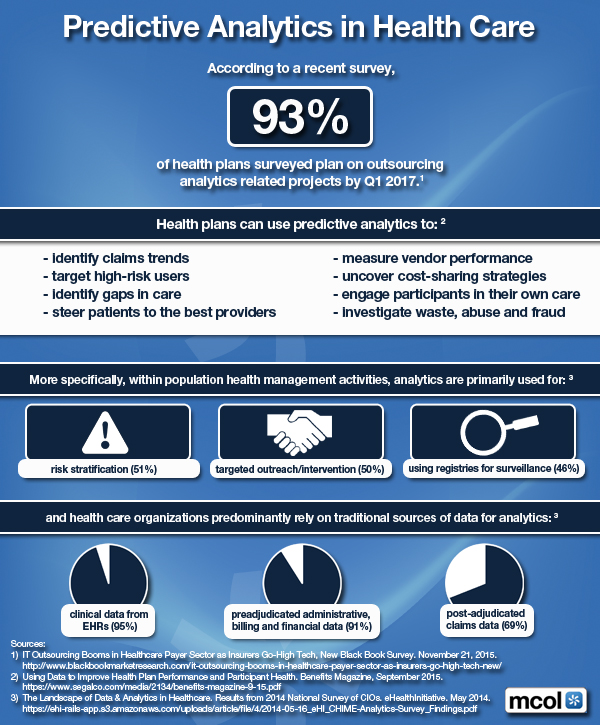
Predictive Analytics in Healthcare

Join Our Mailing List

By http://www.MCOL.com

***

ImageProxy

***

Assessment

http://www.BusinessofMedicalPractice.com

Conclusion

Your thoughts and comments on this ME-P are appreciated. Feel free to review our top-left column, and top-right sidebar materials, links, URLs and related websites, too. Then, subscribe to the ME-P. It is fast, free and secure.

Speaker: If you need a moderator or speaker for an upcoming event, Dr. David E. Marcinko; MBA – Publisher-in-Chief of the Medical Executive-Post – is available for seminar or speaking engagements. Contact: MarcinkoAdvisors@msn.com

OUR OTHER PRINT BOOKS AND RELATED INFORMATION SOURCES:

Product DetailsProduct DetailsProduct Details

***

USA State Well Being Rankings

Join Our Mailing List

By http://www.MCOL.com

Highest Well-Being Scores

***

ImageProxy

***

Conclusion

Your thoughts and comments on this ME-P are appreciated. Feel free to review our top-left column, and top-right sidebar materials, links, URLs and related websites, too. Then, subscribe to the ME-P. It is fast, free and secure.

Speaker: If you need a moderator or speaker for an upcoming event, Dr. David E. Marcinko; MBA – Publisher-in-Chief of the Medical Executive-Post – is available for seminar or speaking engagements. Contact: MarcinkoAdvisors@msn.com

OUR OTHER PRINT BOOKS AND RELATED INFORMATION SOURCES:

Product DetailsProduct DetailsProduct Details

***

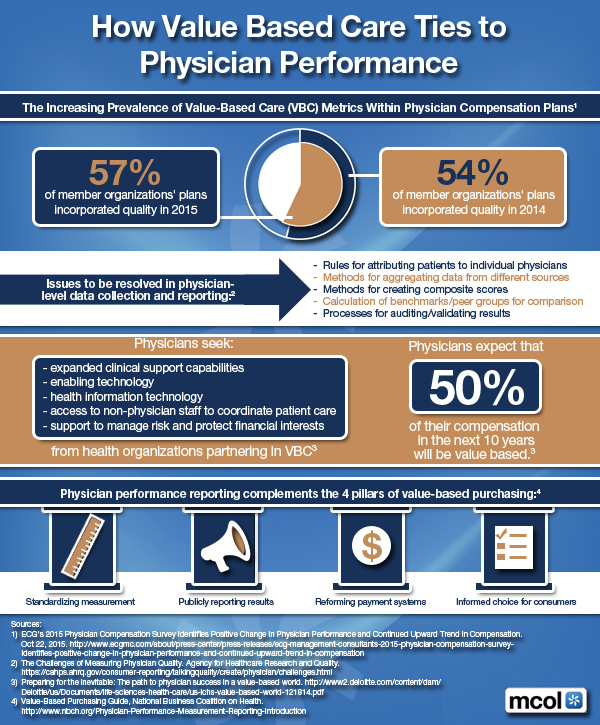
Value Based Care [VBC] and Physician Performance?

Join Our Mailing List

Prevalence and Metrics within Physician Compensation Plans 

By http://www.MCOL.com

***

ImageProxy

***

http://www.BusinessofMedicalPractice.com

Conclusion

Your thoughts and comments on this ME-P are appreciated. Feel free to review our top-left column, and top-right sidebar materials, links, URLs and related websites, too. Then, subscribe to the ME-P. It is fast, free and secure.

Speaker: If you need a moderator or speaker for an upcoming event, Dr. David E. Marcinko; MBA – Publisher-in-Chief of the Medical Executive-Post – is available for seminar or speaking engagements. Contact: MarcinkoAdvisors@msn.com

OUR OTHER PRINT BOOKS AND RELATED INFORMATION SOURCES:

Product DetailsProduct DetailsProduct Details

***

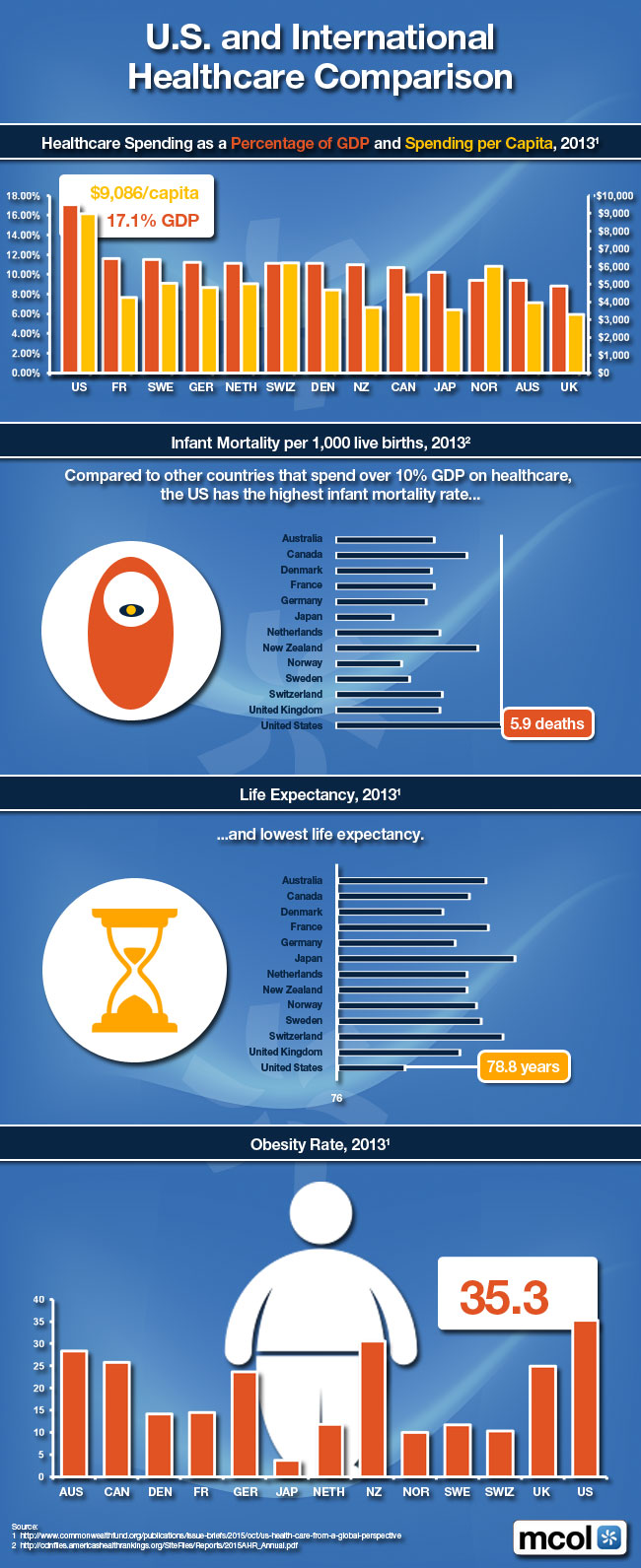
US and International Healthcare Comparison

Join Our Mailing List

By http://www.MCOL.com

As a Percentage of GDP and Spending Per Capita 2013

ImageProxy

Assessment

Your thoughts and comments on this ME-P are appreciated. Feel free to review our top-left column, and top-right sidebar materials, links, URLs and related websites, too. Then, subscribe to the ME-P. It is fast, free and secure.

Speaker: If you need a moderator or speaker for an upcoming event, Dr. David E. Marcinko; MBA – Publisher-in-Chief of the Medical Executive-Post – is available for seminar or speaking engagements. Contact: MarcinkoAdvisors@msn.com

OUR OTHER PRINT BOOKS AND RELATED INFORMATION SOURCES:

Product DetailsProduct DetailsProduct Details

***

The PP-ACA’s Impact on Medical Liability Insurance?

Join Our Mailing List 

A SPECIAL ME-P REPORT

robert-cimasi

BY ROBERT JAMES CIMASI; MHA, ASA, FRICS, MCBA, AVA, CM&AA, CMP

HEALTH CAPITAL CONSULTANTS, LLC

www.HealthCapital.com

Aside from differences in insurer behavior, malpractice lawsuit rates, and political responses at the state level, the ACA may also have an impact on the medical liability insurance market. Following several months of partisan controversy and political debate during President Obama’s first term, Congress passed the ACA in March 2010.[1] While not achieving a universal coverage insurance program or a single payor system, the 2010 healthcare reform legislation marked the beginning of a new era in healthcare reform, resulting in a paradigm change in the way healthcare services are delivered and paid for in the U.S.

Some of the ACA’s initiatives have already had significant impact upon many aspects of the healthcare delivery system, including: (1) increased regulatory scrutiny aimed at combating fraud and abuse and antitrust violations; (2) health plan regulation; (3) addressing physician shortages; (4) access to and quality of care initiatives; and, (5) increased attention to public health and wellness activities, among others.[2]

In contrast, the ACA’s impact on the medical liability insurance market, and the medical malpractice system, is relatively unknown. The Medical Liability Monitor’s 2010 annual rate survey noted that 41% of medical liability insurers did not believe that the ACA would impact medical liability insurance markets;[3] however, by 2011, as stated above, this attitude had changed to reflect increasing concerns about provider consolidation and self-insurance for professional liability by providers.[4] These concerns continue to reflect the thinking of medical liability insurers, in part, because there have been few, if any, answers to alleviate their concerns and measure the ACA’s impact on the incidence and cost of medical malpractice.

Some of the medical liability insurer concerns regarding the ACA’s impact stems from the reality that the only one of two sections of the ACA directly relating to medical liability insurance and the current medical malpractice system have been implemented. Section 6801 of the ACA simply provides a policy statement regarding medical malpractice, stating that the U.S. Senate believes that “health care reform presents an opportunity to address issues related to medical malpractice and medical liability insurance,” and encourages Congress, as a whole, to develop demonstration programs with the goal of discovering alternatives to the current civil litigation system for medical malpractice.[5] Additionally, Section 10607 of the ACA authorizes HHS to award grants to states “for the development, implementation, and evaluation of alternatives to current tort litigation” for medical malpractice claims.[6] This section allows HHS to make $50 million available for these demonstration projects subject to Congressional approval.[7] To date, neither Congress nor the President has requested funding for these projects.[8]

Even without these direct impacts, the medical malpractice system may still face changes as a result of the ACA. First, as providers consolidate with larger health systems, medical liability insurers fear the medical liability insurance market “will shrink as their former customers become their competitors.”[9] From 2011 to 2014, medical liability insurers consistently noted to the Medical Liability Monitor that hospital or ACO acquisitions of physician practices act as “the biggest threat to their market share” because of the entity’s ability to better absorb the risk related to malpractice liability.[10] In theory, this ability to absorb medical professional liability risk will allow higher rates of self-insurance, which can affect the rates of straight indemnity insurers.  Second, the number of malpractice claims is expected to increase as more individuals gain health insurance coverage as a result of ACA enactments.

Obama Care

A 2007 Journal of the American Medical Association study concluded that insured persons who suffer a chronic condition receive higher quality and increased care compared to non-insured persons; reinforcing earlier studies suggesting insured persons receive more care than uninsured persons.[11] Building on this premise, a RAND report on the ACA and liability insurance relationships estimated that with the expected influx of newly-insured individuals, particularly in states expanding Medicaid, more physician-patient encounters will increase the volume of overall medical errors, leading to an increase in medical malpractice lawsuits.[12] Consequently, the RAND report estimates that the number of liability payments in medical malpractice actions will increase by 3.4% between pre-ACA insurance plan enrollment and enrollment post-ACA implementation.[13]

Additionally, the RAND report argues that, due to an increase in insurance plan enrollment, medical malpractice payments per claim will actually decrease in states adopting limitations to the collateral source rule. Under the collateral source rule, the damage awards for injured parties do not take into account payments previously received from other sources; consequently, the damage award includes the value of funds collected by another source (e.g., insurance) while allowing the injured party to keep the benefits of that previous value received.[14] In the medical malpractice context, plaintiffs in states adopting the collateral source rule can collect from the physician (or his medical liability insurer) as well as keep the benefits of healthcare reimbursed by their own health insurer. However, some states limit the application of the collateral source rule in medical malpractice cases where the plaintiff’s health insurance already paid for care resulting from the negligent actions of the physician, thereby preventing the plaintiff from receiving this double windfall. As insurance rates rise, RAND estimates that payouts per claim will decrease by 0.6% nationally.[15] Considering the three effects together, RAND projects that total liability claim costs will increase by 2.8% nationally by 2016 as a result of the ACA.[16]

Conversely, other healthcare industry commentators argue that the ACA’s expansion of coverage to previously uninsured individuals, as well as quality of care initiatives, will actually decrease malpractice costs by reducing the number of adverse events suffered by patients.[17] In a 2010 editorial in the Journal of Law, Medicine, and Ethics, Mark A. Rothstein, the Director of Institute for Bioethics, Health Policy, & Law at the University of Louisville – Louis D. Brandeis School of Law, argued that quality and infrastructure initiatives such as increased EHR usage, expansion of outcomes research and use of evidence-based medical standards, and better care coordination, will limit the number of adverse events that provide the basis for a medical malpractice claim.[18] Further, Rothstein posited that, by simply being insured, “significant numbers of injured patients are likely to forego medical malpractice claims.”[19]

Although President Obama signed the ACA in 2010, the effects of this landmark law on the medical malpractice market remain hazy. The current trend toward healthcare consolidation, accountable care, and self-insurance mirrors similar consolidation practices in the mid-1990s, which increased competition in the medical liability insurance market and eroded proper underwriting practices. Nevertheless, other critical ACA effects remain unknown. The impact of the expansion of health insurance coverage will likely remain unclear for the near future because new enrollees began receiving coverage through health insurance exchanges in 2014, limiting the amount of exposure to healthcare interactions that could give rise to an adverse event and result in a medical malpractice suit. Additionally, the average length of litigation surrounding preventable adverse events lasts 43.1 months from the date of the incident to the date of resolution,[20] which limits medical liability insurers from realizing the full costs of a claim and the aggregate of claims in its risk pool.

RISK

Assessment

Now, assuming that increased enrollment does not affect the average length of medical malpractice litigation,[21] the average newly insured person who suffered a preventable adverse event in July 2014 will not resolve his or her claim until March 2018. With this lag time of almost four years between adverse events and claims, it is likely that the full impact of the ACA on the medical malpractice market and medical liability insurance premiums will not be fully known until the next decade.

Conclusion

Your thoughts and comments on this ME-P are appreciated. Feel free to review our top-left column, and top-right sidebar materials, links, URLs and related websites, too. Then, subscribe to the ME-P. It is fast, free and secure.

Speaker: If you need a moderator or speaker for an upcoming event, Dr. David E. Marcinko; MBA – Publisher-in-Chief of the Medical Executive-Post – is available for seminar or speaking engagements. Contact: MarcinkoAdvisors@msn.com

OUR OTHER PRINT BOOKS AND RELATED INFORMATION SOURCES:

References 

[1]      “Patient Protection and Affordable Care Act,” Public Law 111-148, 124 Stat. 119 (March 23, 2010); “Health Care and Education Reconciliation Act” Public Law 111-152, 124 Stat. 1029 (March 25, 2010).

[2]       “Restructuring, Consolidation in Health Care Make Reform Top Health Law Issue for 2010,” By Susan Carhart et al., BNA Health Law Reporter, Vol. 19, No. 5 (January 8, 2010).

[3]       “Now Hard & Crunchy on the Outside: Could Strong Financials be Hiding a Market That’s Growing Soft Within?” By Chad C. Karls, FCAS, MAAA, Medical Liability Monitor, Vol. 35, No. 10, October 2010, p. 4.

[4]       “From Crunchy Candy to Simmering Frogs: Waiting and Hoping for a Hardening Market as the Market Trends Slowly, Steadily Softer,” By Chad C. Karls, FCAS, MAAA, Medical Liability Monitor, Vol. 36, No. 10 (October 2011), p. 5.

[5]       “Patient Protection and Affordable Care Act,” Public Law 111-148, 124 Stat. 804 (March 23, 2010).

[6]       “Patient Protection and Affordable Care Act,” Public Law 111-148, 124 Stat. 1009 (March 23, 2010).

[7]       “Patient Protection and Affordable Care Act,” Public Law 111-148, 124 Stat. 1014 (March 23, 2010).

[8]       “Medical Liability Reform – Demonstration Grants,” American College of Physicians, 2013, http://www.acponline.org/advocacy/where_we_stand/assets/iii12-medical-liability-reform-demo.pdf (Accessed 12/23/14).

[9]       “From Crunchy Candy to Simmering Frogs: Waiting and Hoping for a Hardening Market as the Market Trends Slowly, Steadily Softer,” By Chad C. Karls, FCAS, MAAA, Medical Liability Monitor, Vol. 36, No. 10 (October 2011), p. 5.

[10]     “The Slinky Effect: With Medical Professional Liability Insurance Rates Continuing to – Slowly and Steadily – Decline During the Most Recent Soft Market, It Appears It will Take Several More Years Before the Market Hardens and Rates Accelerate Upward,” By Chad C. Karls, FCAS, MAAA, Medical Liability Monitor, Vol. 39, No. 10 (October 2014), p. 6; “Casualty Actuarial Society Session Debates Potential Medical Professional Liability Implications of PPACA,” Medical Liability Monitor, Vol. 39, No. 7 (July 2014), p. 4.

[11]     “Insurance Coverage, Medical Care Use, and Short-Term Health Changes Following an Unintentional Injury or the Onset of a Chronic Condition,” By Jack Hadley, Ph.D., Journal of the American Medical Association, Vol. 297, No. 10 (March 14, 2007), p. 1080.

[12]     “How Will the Patient Protection and Affordable Care Act Affect Liability Insurance Costs?” By David I. Auerbach et al., RAND Corporation, 2014, p. 30.

[13]     “How Will the Patient Protection and Affordable Care Act Affect Liability Insurance Costs?” By David I. Auerbach et al., RAND Corporation, 2014, p. 30.

[14]     “How Will the Patient Protection and Affordable Care Act Affect Liability Insurance Costs?” By David I. Auerbach et al., RAND Corporation, 2014, p. 18.

[15]     “How Will the Patient Protection and Affordable Care Act Affect Liability Insurance Costs?” By David I. Auerbach et al., RAND Corporation, 2014, p. 18.

[16]     “How Will the Patient Protection and Affordable Care Act Affect Liability Insurance Costs?” By David I. Auerbach et al., RAND Corporation, 2014, p. 37.

[17]  “How Will the Patient Protection and Affordable Care Act Affect Liability Insurance Costs?” By David I. Auerbach et al., RAND Corporation, 2014, p. 40-41

[18]     “Currents in Contemporary Bioethics: Health Care Reform and Medical Malpractice Claims,” By Mark A. Rothstein, Journal of Law, Medicine, and Ethics, Winter 2010, p. 871.

[19]     “Currents in Contemporary Bioethics: Health Care Reform and Medical Malpractice Claims,” By Mark A. Rothstein, Journal of Law, Medicine, and Ethics, Winter 2010, p. 872.

[20]     “On Average, Physicians Spend Nearly 11 Percent of their 40-Year Careers with an Open, Unresolved Malpractice Claim,” By Seth A. Seabury et al., Health Affairs, Vol. 32, No. 1 (January 2013), p. 114.

[21]     This assumption is faulty, as it is unknown at this point whether or not claims will increase, whether insurers will or will not enter the market, and whether malpractice caseloads will increase due to the ACA.

Risk Management, Liability Insurance and Asset Protection Strategies for Doctors and Advisors

[Best Practices from Leading Consultants and Certified Medical Planners™]

   Risk Management, Liability Insurance, and Asset Protection Strategies for Doctors and Advisors: Best Practices from Leading Consultants and Certified Medical Planners™

 Harvard Medical School

Boston Children’s Hospital – Psychiatrist

Yale University

***

Comparing “Best-in-Class” Blue Cross Blue Shield Plans Against Their Peers

 Join Our Mailing List

Plan Management Navigator

thoughtSherlock

By Douglas B. Sherlock CFA

sherlock@sherlockco.com

This issue of Plan Management Navigator contains a summary of our analysis comparing “Best-in-Class” Blue Cross Blue Shield Plans and the other Plans that we refer to as “Peer” Plans.

Best-in-Class Plans operated with costs, excluding Sales and Marketing and Medical Management that were 32% lower than their Peers.

Low Staffing Ratios was the primary driver in the Best-in-Class cost advantage, while Staffing Costs per FTE and Non-Labor Costs per FTE were also lower.

The functional area of Information Systems was key in superior Best-in-Class performance. Economies of scale played no role in the ranking.

img1

Invitation to Participate in the 2016 Sherlock Benchmarking Study

Our highly valid, well-populated Benchmarks provide an unbiased ranking and helps prioritize activities that will have the greatest impact on improving your health plan’s overall operating performance.

The overwhelming proportion of health plans participating last year are participating this year, and we have added several plans. Please follow this link to see what last year’s participation looked like.

We will meet to finalize the content of the survey in February, distribute the survey forms in March, collect the completed surveys in May and publish beginning in late June or early July. Participation entails efforts on your part since useful outputs require relatively granular inputs. The cost is relatively modest.

Because of the calendar, if you are considering participation, please contact me as soon as convenient. We can answer questions and help get the paperwork out of the way.

Assessment

Thank you again for your continuing interest in the Sherlock Benchmarks. Please visit this link to find the January 2016 Plan Management Navigator.
Conclusion

Your thoughts and comments on this ME-P are appreciated. Feel free to review our top-left column, and top-right sidebar materials, links, URLs and related websites, too. Then, subscribe to the ME-P. It is fast, free and secure.

Speaker: If you need a moderator or speaker for an upcoming event, Dr. David E. Marcinko; MBA – Publisher-in-Chief of the Medical Executive-Post – is available for seminar or speaking engagements. Contact: MarcinkoAdvisors@msn.com

OUR OTHER PRINT BOOKS AND RELATED INFORMATION SOURCES:

HEALTH INSURANCE, MANAGED CARE, ECONOMICS, FINANCE AND HEALTH INFORMATION TECHNOLOGY COMPANION DICTIONARY SET

Product DetailsProduct DetailsProduct Details

***

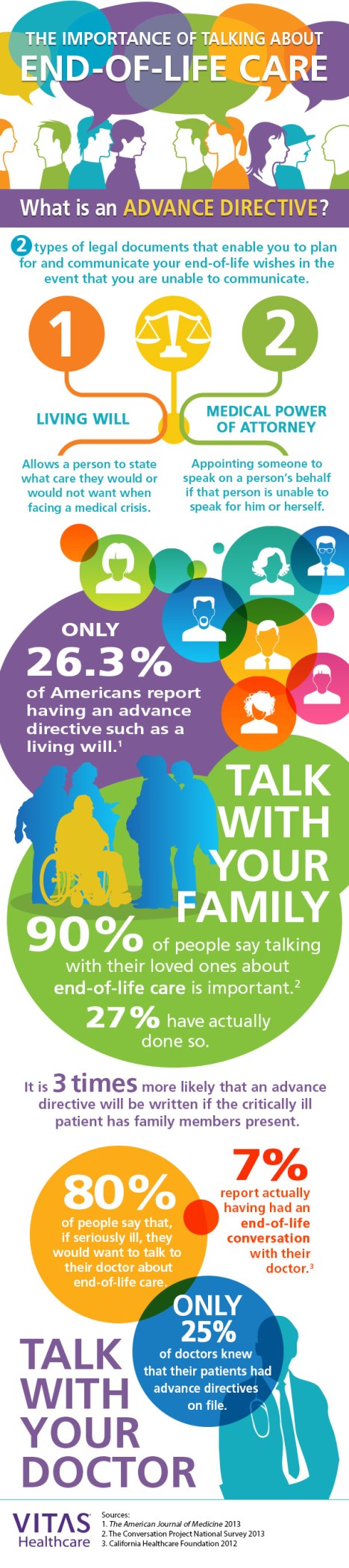
The Importance of Talking about End-of-Life Care

Join Our Mailing List

By Samantha Wanner  [VITAS Healthcare]

Watch this short animation to learn why advance directives are so important.

***

What Do You Want?

It’s not easy, but the medical treatments you would want near the end of life need to be discussed with others. If you never bring up the topic and you were unexpectedly incapacitated and unable to speak for yourself, your medical wishes would never be known.

Despite the topic’s importance, only 27% of Americans report having talked with their families about end-of-life care. The best way to make your medical wishes known is to create an advance directive and share it with your family and your doctor.

Advance Directives

An advance directive is actually two legal documents that enable you to plan and communicate your end-of-life wishes.  When you create your advance directive, you are being proactive about your medical care and sparing your loved ones from having to make difficult medical decisions in a time of crisis.

***

end_of_life_infographic

***

Assessment

Don’t wait for a crisis. Create your advance directive, share copies with your loved ones and doctor and keep your copy in an accessible location others can find.

Conclusion

Your thoughts and comments on this ME-P are appreciated. Feel free to review our top-left column, and top-right sidebar materials, links, URLs and related websites, too. Then, subscribe to the ME-P. It is fast, free and secure.

Speaker: If you need a moderator or speaker for an upcoming event, Dr. David E. Marcinko; MBA – Publisher-in-Chief of the Medical Executive-Post – is available for seminar or speaking engagements. Contact: MarcinkoAdvisors@msn.com

OUR OTHER PRINT BOOKS AND RELATED INFORMATION SOURCES:

            Risk Management, Liability Insurance, and Asset Protection Strategies for Doctors and Advisors: Best Practices from Leading Consultants and Certified Medical Planners™    Risk Management, Liability Insurance, and Asset Protection Strategies for Doctors and Advisors: Best Practices from Leading Consultants and Certified Medical Planners™

 Harvard Medical School

Yale University

***

Medicaid Expansion Impact

Join Our Mailing List

On Un-Insured Rates [2013-14]

By http://www.MCOL.com

ImageProxy

Conclusion

Your thoughts and comments on this ME-P are appreciated. Feel free to review our top-left column, and top-right sidebar materials, links, URLs and related websites, too. Then, subscribe to the ME-P. It is fast, free and secure.

Speaker: If you need a moderator or speaker for an upcoming event, Dr. David E. Marcinko; MBA – Publisher-in-Chief of the Medical Executive-Post – is available for seminar or speaking engagements. Contact: MarcinkoAdvisors@msn.com

OUR OTHER PRINT BOOKS AND RELATED INFORMATION SOURCES:

Product DetailsProduct DetailsProduct Details

***

Health Insurance Costs [circa 2016]

Join Our Mailing List 

The most devious tax increases in modern history? 

Rick Kahler MS CFP

By Rick Kahler MS CFP®

http://www.KahlerFinancuial.com  

A few months ago I scoffed when my wife told me about a report from CNN that the average individual, unsubsidized health insurance premium was going up over 60%.

After receiving my 2016 premium notice from Wellmark Blue Cross and Blue Shield, I’m no longer scoffing. My monthly premium for family coverage went from $1,400 to $2,140, an increase of $740, or 53%. According to healthcare.gov, the average Wellmark increase in South Dakota is 43%.

I immediately started looking for ways to decrease my premiums. This has become an annual ritual ever since Obamacare was pushed through Congress in 2010. Back then, my family health insurance policy (now considered a Platinum plan) had a low deductible with a maximum out-of-pocket of $3,500 and cost $660 a month.

Despite the President’s promise that “If you like your plan you can keep your plan,” I can’t even purchase that same plan today. If I could, I estimate it would cost over $3,500 a month. In order to keep health insurance affordable, each year I’ve reduced my coverage, increased my deductibles, and paid a higher premium than the year before.

***

kidney

***

I set out to analyze my options for 2016. After spending six hours crunching numbers and pouring over online calculators, I admitted defeat. There is no simple way to analyze plans to determine whether, based on your personal health care expenditures, you are better served to go with a copay or a deductible plan, a Bronze or a Silver plan, or if a Health Savings Account is preferable to a plan with coinsurance. All the online calculators I found were limited in scope and woefully generic. My health insurance agent didn’t know of any better ones, either.

Adding to my angst, while Wellmark makes policyholders’ year-to-date healthcare expenses available on its website, it doesn’t provide any breakdown of costs. You must figure out for yourself how many drug or doctor co-pays you had, the average cost of a copay visit, the average total costs of those visits, and any other information you need for any type of analysis.

This task was daunting for me, a financial planner and numbers guy. How are average consumers supposed to navigate it? The need for this information is so obvious, one wonders what the insurance companies are hiding by not providing it.

Ultimately, I selected a Bronze plan with no copays and an out-of-pocket cap of $11,900 on in-network providers and $18,500 on out-of-network providers. Based on my family’s average health care costs for the last three years, my out-of-pocket spending for premiums, covered drugs, and approved in-network medical providers will be $2,612 per month, or $31,344, in 2016. It was $11,420 in 2010. That’s an increase of 273%, or 18.3% a year.

By comparison, during the same time period medical costs only increased 16.0%, or 2.7% a year. The increase in premiums is clearly not about increasing health costs.
The $1,660 extra per month I had available to spend on consumer goods and services in 2010 is now going to insurance companies to subsidize the health care of others. This is a clear-cut example of a massive transfer of wealth.

Based on my family’s needs, if I earned $97,000 a year I would qualify for a subsidy of $912 a month. But since I earn over $98,000, I pay the full premium.

***

incontinence

***

Assessment

Clearly, the only people who find the Affordable Care Act affordable are those who receive a subsidy or who have preexisting conditions. For them, Obamacare was a godsend. For the rest of us, it turned out to be one of the most devious tax increases in modern history. 

Conclusion

Your thoughts and comments on this ME-P are appreciated. Feel free to review our top-left column, and top-right sidebar materials, links, URLs and related websites, too. Then, subscribe to the ME-P. It is fast, free and secure.

Speaker: If you need a moderator or speaker for an upcoming event, Dr. David E. Marcinko; MBA – Publisher-in-Chief of the Medical Executive-Post – is available for seminar or speaking engagements. Contact: MarcinkoAdvisors@msn.com

OUR OTHER PRINT BOOKS AND RELATED INFORMATION SOURCES:

Risk Management, Liability Insurance, and Asset Protection Strategies for Doctors and Advisors: Best Practices from Leading Consultants and Certified Medical Planners™  Risk Management, Liability Insurance, and Asset Protection Strategies for Doctors and Advisors: Best Practices from Leading Consultants and Certified Medical Planners™

***

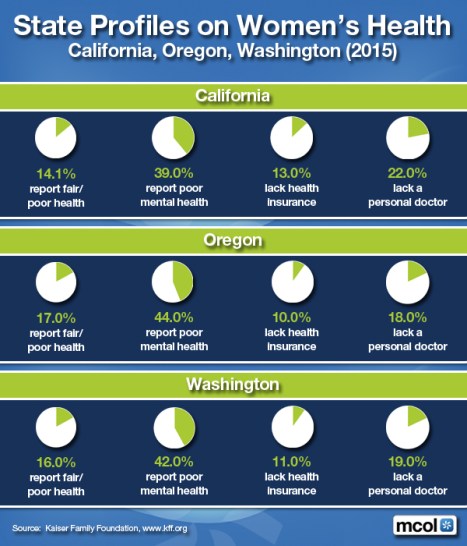
2015 State Profiles on Women’s Health‏

Join Our Mailing List

California, Oregon and Washington

By http://www.MCOL.com

***

ImageProxy

***

Conclusion

Your thoughts and comments on this ME-P are appreciated. Feel free to review our top-left column, and top-right sidebar materials, links, URLs and related websites, too. Then, subscribe to the ME-P. It is fast, free and secure.

Speaker: If you need a moderator or speaker for an upcoming event, Dr. David E. Marcinko; MBA – Publisher-in-Chief of the Medical Executive-Post – is available for seminar or speaking engagements. Contact: MarcinkoAdvisors@msn.com

OUR OTHER PRINT BOOKS AND RELATED INFORMATION SOURCES:

***

Product Details

http://www.BusinessofMedicalPractice.com

***

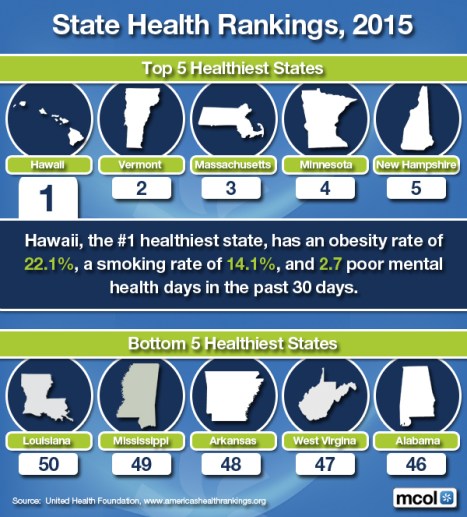
State Health Rankings

Join Our Mailing List

For 2015

By http://www.MCOL.com

***ImageProxy

***

Conclusion

Your thoughts and comments on this ME-P are appreciated. Feel free to review our top-left column, and top-right sidebar materials, links, URLs and related websites, too. Then, subscribe to the ME-P. It is fast, free and secure.

Speaker: If you need a moderator or speaker for an upcoming event, Dr. David E. Marcinko; MBA – Publisher-in-Chief of the Medical Executive-Post – is available for seminar or speaking engagements. Contact: MarcinkoAdvisors@msn.com

OUR OTHER PRINT BOOKS AND RELATED INFORMATION SOURCES:

***

[HOSPITAL OPERATIONS, ORGANIZATIONAL BEHAVIOR AND FINANCIAL MANAGEMENT COMPANION TEXTBOOK SET]

Product DetailsProduct Details

[Foreword Dr. Phillips MD JD MBA LLM] *** [Foreword Dr. Nash MD MBA FACP]

***

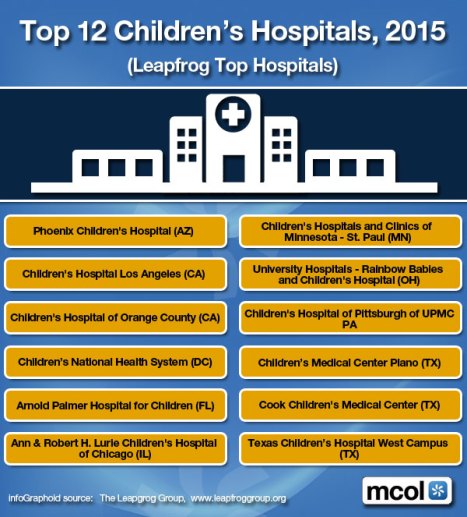
Top Twelve USA Pediatric Hospitals

Join Our Mailing List

Domestic Hospitals for 2015

By http://www.MCOL.com

***

ImageProxy

***

Conclusion

Your thoughts and comments on this ME-P are appreciated. Feel free to review our top-left column, and top-right sidebar materials, links, URLs and related websites, too. Then, subscribe to the ME-P. It is fast, free and secure.

Speaker: If you need a moderator or speaker for an upcoming event, Dr. David E. Marcinko; MBA – Publisher-in-Chief of the Medical Executive-Post – is available for seminar or speaking engagements. Contact: MarcinkoAdvisors@msn.com

OUR OTHER PRINT BOOKS AND RELATED INFORMATION SOURCES:

Product DetailsProduct Details

***

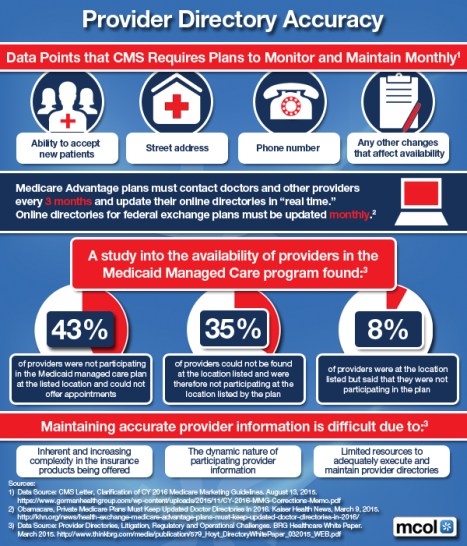
On Medical Provider Directory Accuracy?

Join Our Mailing List

By http://www.MCOL.com

***

ImageProxy1CUR6RZ6

***

Conclusion

Your thoughts and comments on this ME-P are appreciated. Feel free to review our top-left column, and top-right sidebar materials, links, URLs and related websites, too. Then, subscribe to the ME-P. It is fast, free and secure.

Speaker: If you need a moderator or speaker for an upcoming event, Dr. David E. Marcinko; MBA – Publisher-in-Chief of the Medical Executive-Post – is available for seminar or speaking engagements. Contact: MarcinkoAdvisors@msn.com

OUR OTHER PRINT BOOKS AND RELATED INFORMATION SOURCES:

***

[PRIVATE MEDICAL PRACTICE BUSINESS MANAGEMENT TEXTBOOK – 3rd.  Edition]

Product DetailsProduct Details

  [Foreword Dr. Hashem MD PhD] *** [Foreword Dr. Silva MD MBA]

***

On Criminal Penalties for Acts Involving Federal Healthcare Programs

Join Our Mailing List

“Knowingly and Willfully”

Carol S. Miller

[By Carol S. Miller RN MBA]

Individuals and entities are prohibited from “knowingly and willfully” making false statements or presentations in applying for benefits or payments under all federal and state healthcare programs. Individuals also are prohibited from fraudulently concealing or failing to disclose knowledge of an event relating to an initial or continued right to payments.

There is also prohibition against knowingly and willingly soliciting or receiving any remuneration (including any kickbacks, bribes, or rebates) directly or indirectly, in cash or in kind, in exchange for referrals. Violations may result in felony convictions with penalties including imprisonment and fines.

Individuals or entities can be excluded from Medicare and Medicaid and more than 200 other federal healthcare programs for a minimum of five years if there is one prior fraud or abuse conviction. Thee exclusions last for ten years and if there are two prior convictions, the exclusion can become permanent. The minimum period of discretionary exclusion is three years, unless DHHS determines that a different period is appropriate.

It is just as important to communicate to the employees when laws or regulations do not impact your organization, such as the Family Medical Leave Act (FMLA), the employment provisions of the Americans with Disabilities Act (ADA) or continuation of health benefits under the Consolidated Omnibus Budget Reconciliation Act (COBRA). These benefits apply only to organization with a specific number of employees, so smaller organizations are not necessarily required to offer these benefits.

***

business-valuation

***

However, the Patient Protection and Affordable Care Act (PPACA) provides a slightly different situation for the provider’s practice. PP-ACA mandated coverage, penalizing employers who failed to provide it, and creating mechanisms for people to pool risk and buy insurance collectively.

Further the Act stated: 1) all individuals not covered by an employer sponsored health plan, Medicare or Medicaid or other public insurance programs such as Tricare to secure an approved private-insurance policy or pay a penalty, unless the individual has a financial hardship or is a member of a recognized religious sect exempted by the Internal Revenue Service and 2) businesses, including larger medical practices which employ 50 or more people but do not offer health insurance to their full-time employees will pay a tax penalty if the government has subsidized a full-time employee’s healthcare through tax deductions or other means.

This is known as the employer mandate. What this means for the provider’s practice is that if the provider is offering healthcare benefits to their staff, the coverage needs to be comparable with the requirements stated in the PP-ACA and if the practice is not offering healthcare benefits, then the practice must direct the individual to one of the Health Insurance Exchanges that are offering individual coverage plans.

More:

Conclusion

Your thoughts and comments on this ME-P are appreciated. Feel free to review our top-left column, and top-right sidebar materials, links, URLs and related websites, too. Then, subscribe to the ME-P. It is fast, free and secure.

Speaker: If you need a moderator or speaker for an upcoming event, Dr. David E. Marcinko; MBA – Publisher-in-Chief of the Medical Executive-Post – is available for seminar or speaking engagements. Contact: MarcinkoAdvisors@msn.com

OUR OTHER PRINT BOOKS AND RELATED INFORMATION SOURCES:

***

[PHYSICIAN FOCUSED FINANCIAL PLANNING AND RISK MANAGEMENT COMPANION TEXTBOOK SET]

 Risk Management, Liability Insurance, and Asset Protection Strategies for Doctors and Advisors: Best Practices from Leading Consultants and Certified Medical Planners™  Comprehensive Financial Planning Strategies for Doctors and Advisors: Best Practices from Leading Consultants and Certified Medical Planners™

***

Newer Thoughts on Long Term Care Insurance

Join Our Mailing List

Most LTCI policies are SOLD… not Bought!

DEM white shirt

By Dr. David Edward Marcinko MBA CMP

To be sure, physicians and Financial Advisors are aware that there is a sometime need to recommend a LTCI policy to clients. Of course, in such cases, it is a good idea to work with a low load provider (or the physician or client’s agent).

The Need?

Yet, most LTCI policies are sold by insurance agents for big commissions; not bought, and that most statistics used to sell LTCI policies are fear-based and half-truths. I know, as I was a licensed insurance agent for more than a decade.

Even the Department of Health and Human Services [DHHS] gets into the fear mongering on their website quoting that “about 70 percent of people over age 65 require some type of long-term care services during their lifetime”

Source: http://www.longtermcare.gov/LTC/Main_Site/Planning/Index.aspx

Department of Health and Human Services

This may be a deceptive statistic as it omits the length of long-term care needed in these 70% of cases. And, it is not 3+ years in all these cases [our estimate is closer to 2.5]. With the stamp of approval by the Supreme Court of the United States SCOTUS on the PP-ACA, we may be looking at social LTCI in the US like other social medicine countries and give up on private LTCI insurance altogether.

Other Countries

Germany introduced mandatory long-term care insurance in 1995. Japan and France also have a LTCI tax funded insurance plan. And, the poor utilization and growing risks associated with long-term care insurance, are leading a growing number of insurance agents, financial advisors and Certified Medical Planners™ to recommend alternatives to their clients.

***

elderly

***

Assessment

To be a thought-leader ahead of the curve, the newest aging trend is away from LTCI and toward sheltering at home – living at home and dying at home. Perhaps, this is the way it should be.

Dying should not be a for-profit industry.

http://www.CertifiedMedicalPlanner.org

More:

Conclusion

Your thoughts and comments on this ME-P are appreciated. Feel free to review our top-left column, and top-right sidebar materials, links, URLs and related websites, too. Then, subscribe to the ME-P. It is fast, free and secure.

Speaker: If you need a moderator or speaker for an upcoming event, Dr. David E. Marcinko; MBA – Publisher-in-Chief of the Medical Executive-Post – is available for seminar or speaking engagements. Contact: MarcinkoAdvisors@msn.com

OUR OTHER PRINT BOOKS AND RELATED INFORMATION SOURCES:

***

[PHYSICIAN FOCUSED FINANCIAL PLANNING AND RISK MANAGEMENT COMPANION TEXTBOOK SET]

  Risk Management, Liability Insurance, and Asset Protection Strategies for Doctors and Advisors: Best Practices from Leading Consultants and Certified Medical Planners™    Comprehensive Financial Planning Strategies for Doctors and Advisors: Best Practices from Leading Consultants and Certified Medical Planners™

[Dr. Cappiello PhD MBA] *** [Foreword Dr. Krieger MD MBA]

***

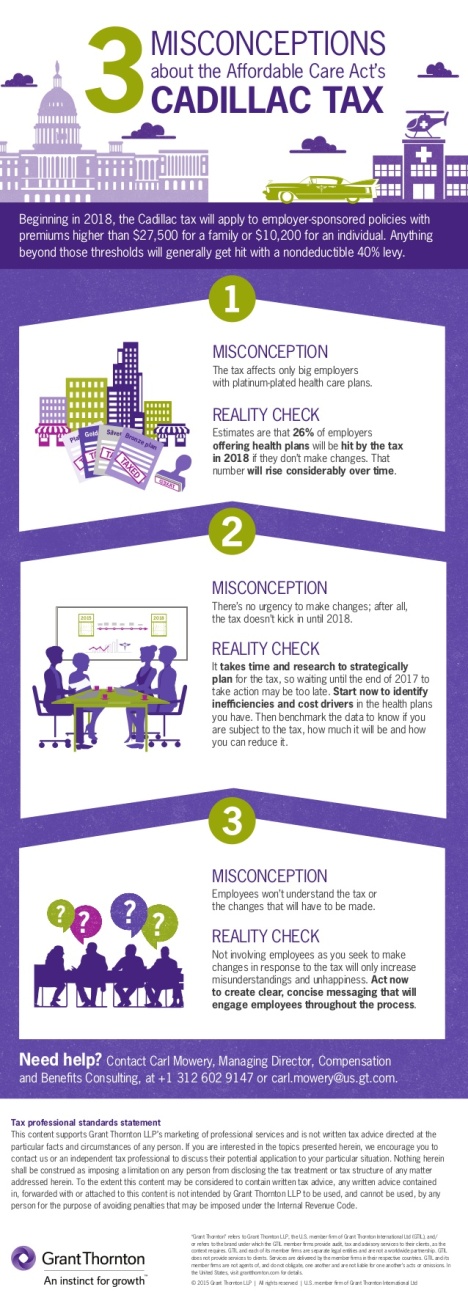
Three common misunderstandings and reality checks about the ACA’s Cadillac tax

Join Our Mailing List

Beginning in 2018

[By Grant Thornton]

***

3-misconceptions-about-the-affordable-care-acts-cadillac-tax-1-638

***

Conclusion

Your thoughts and comments on this ME-P are appreciated. Feel free to review our top-left column, and top-right sidebar materials, links, URLs and related websites, too. Then, subscribe to the ME-P. It is fast, free and secure.

Speaker: If you need a moderator or speaker for an upcoming event, Dr. David E. Marcinko; MBA – Publisher-in-Chief of the Medical Executive-Post – is available for seminar or speaking engagements. Contact: MarcinkoAdvisors@msn.com

OUR OTHER PRINT BOOKS AND RELATED INFORMATION SOURCES:

[PRIVATE MEDICAL PRACTICE BUSINESS MANAGEMENT TEXTBOOK – 3rd.  Edition]

Product DetailsProduct Details

  [Foreword Dr. Hashem MD PhD] *** [Foreword Dr. Silva MD MBA]

***

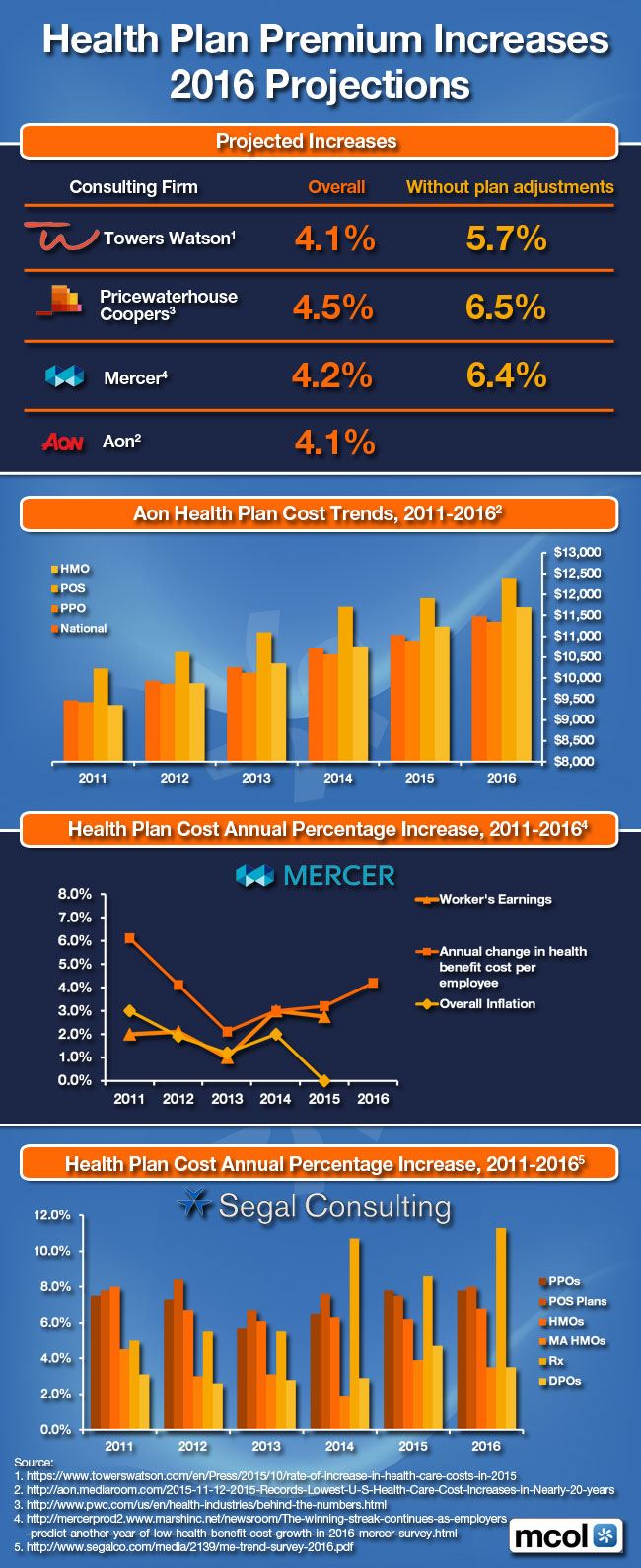
Health Plan Premium Increases for 2016

Join Our Mailing List

Projections for 2016

By http://www.MCOL.com

***

ImageProxy

***

Conclusion

Your thoughts and comments on this ME-P are appreciated. Feel free to review our top-left column, and top-right sidebar materials, links, URLs and related websites, too. Then, subscribe to the ME-P. It is fast, free and secure.

***

dollar-1029742_640

***

Speaker: If you need a moderator or speaker for an upcoming event, Dr. David E. Marcinko; MBA – Publisher-in-Chief of the Medical Executive-Post – is available for seminar or speaking engagements. Contact: MarcinkoAdvisors@msn.com

OUR OTHER PRINT BOOKS AND RELATED INFORMATION SOURCES:

 ***

[PHYSICIAN FOCUSED FINANCIAL PLANNING AND RISK MANAGEMENT COMPANION TEXTBOOK SET]

  Risk Management, Liability Insurance, and Asset Protection Strategies for Doctors and Advisors: Best Practices from Leading Consultants and Certified Medical Planners™   Comprehensive Financial Planning Strategies for Doctors and Advisors: Best Practices from Leading Consultants and Certified Medical Planners™

***


ME-P Health Economics, Financial Planning & Investing, Medical Practice, Risk Management and Insurance Textbooksfor Doctors and Advisors

ME-P At Your Service!

***

[PHYSICIAN FOCUSED FINANCIAL PLANNING AND RISK MANAGEMENT COMPANION TEXTBOOK SET]

  Risk Management, Liability Insurance, and Asset Protection Strategies for Doctors and Advisors: Best Practices from Leading Consultants and Certified Medical Planners™Comprehensive Financial Planning Strategies for Doctors and Advisors: Best Practices from Leading Consultants and Certified Medical Planners™

[HOSPITAL OPERATIONS, ORGANIZATIONAL BEHAVIOR AND FINANCIAL MANAGEMENT COMPANION TEXTBOOK SET]

Product DetailsProduct Details

[Foreword Dr. Phillips MD JD MBA LLM] *** [Foreword Dr. Nash MD MBA FACP]

[HEALTH INSURANCE, MANAGED CARE, ECONOMICS, FINANCE AND HEALTH INFORMATION TECHNOLOGY COMPANION DICTIONARY SET]

      Product DetailsProduct DetailsProduct Details

[Mike Stahl PhD MBA] *** [Foreword Dr.Mata MD CIS] *** [Dr. Getzen PhD]

***

Product Details

http://www.BusinessofMedicalPractice.com

***

Dr. David Edward Marcinko, editor-in-chief, is a next-generation apostle of Nobel Laureate Kenneth Joseph Arrow, PhD, as a health-care economist, insurance advisor, financial advisor, risk manager, and board-certified surgeon from Temple University in Philadelphia. In the past, he edited eight practice-management books, three medical textbooks and manuals in four languages, five financial planning yearbooks, dozens of interactive CD-ROMs, and three comprehensive health-care administration dictionaries. Internationally recognized for his clinical work, he is a distinguished visiting professor of surgery and a recipient of an honorary Bachelor of Medicine–Bachelor of Surgery (MBBS) degree from Marien Hospital in Aachen, Germany. He provides litigation support and expert witness testimony in state and federal court, with medical publications archived in the Library of Congress and the Library of Medicine at the National Institutes of Health.

***

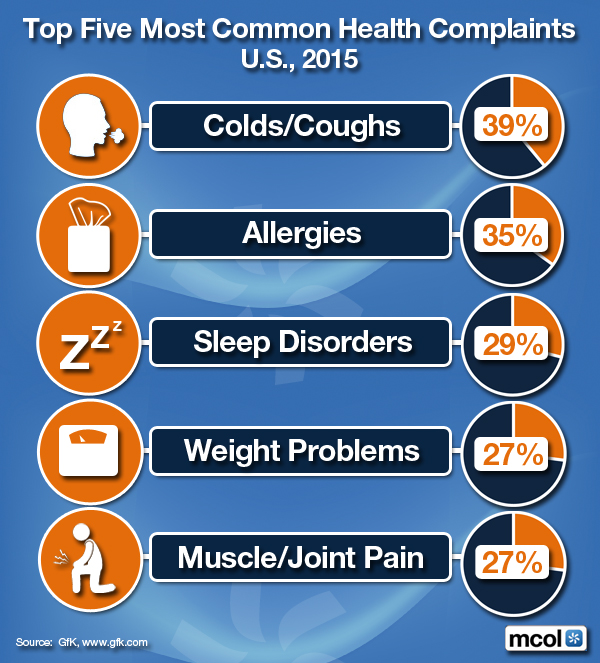
The Most Common Health Complaints in the USA

Join Our Mailing List

The Top  Five [5] Complaints – 2015

By http://www.MCOL.com

ImageProxy

Conclusion

Your thoughts and comments on this ME-P are appreciated. Feel free to review our top-left column, and top-right sidebar materials, links, URLs and related websites, too. Then, subscribe to the ME-P. It is fast, free and secure.

Speaker: If you need a moderator or speaker for an upcoming event, Dr. David E. Marcinko; MBA – Publisher-in-Chief of the Medical Executive-Post – is available for seminar or speaking engagements. Contact: MarcinkoAdvisors@msn.com

OUR OTHER PRINT BOOKS AND RELATED INFORMATION SOURCES:

***

[HEALTH INSURANCE, MANAGED CARE, ECONOMICS, FINANCE AND HEALTH INFORMATION TECHNOLOGY COMPANION DICTIONARY SET]

      Product DetailsProduct DetailsProduct Details

[Mike Stahl PhD MBA] *** [Foreword Dr.Mata MD CIS] *** [Dr. Getzen PhD]

***

A primer to tonight’s GOP debate

Join Our Mailing List

Health Entitlements & the Deficit

By Nancy Chockley PhD

NIHCM.org

Congress is poised to pass a budget plan that will raise funding levels for the next two years. While these changes are paid for, the plan does not include structural changes to the health entitlement programs that are a leading driver of our budget deficits and mounting debt.

The GOP presidential candidates are likely to discuss a variety of proposals for structural reforms to these programs during tonight’s debate.

As a primer to this important conversation, this chart story presents essential facts about spending for Medicare, Medicaid and the Affordable Care Act and the impact of these programs on the deficit.

http://www.nihcm.org/health-entitlement-spending-a-growing-threat#one

business-valuation1

See the rest of the story

***

[HEALTH INSURANCE, MANAGED CARE, ECONOMICS, FINANCE AND HEALTH INFORMATION TECHNOLOGY COMPANION DICTIONARY SET]

      Product DetailsProduct DetailsProduct Details

[Mike Stahl PhD MBA] *** [Foreword Dr.Mata MD CIS] *** [Dr. Getzen PhD]

***

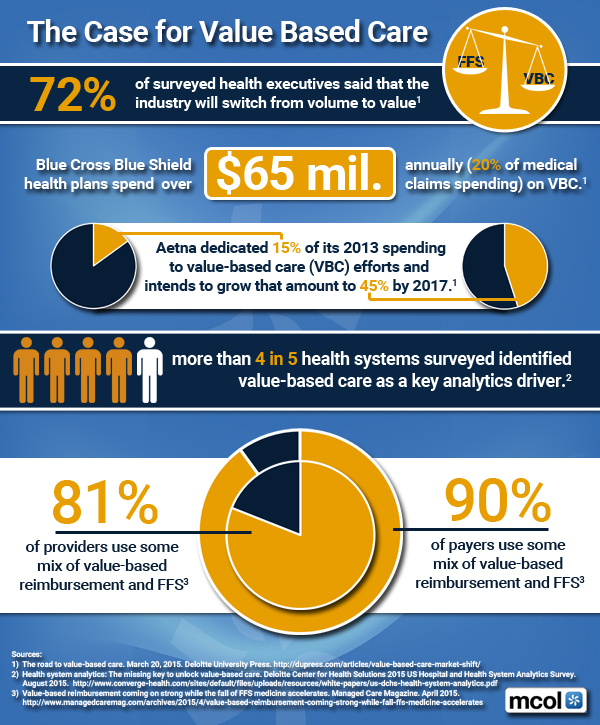
The Case for Value Based Medical Care

Join Our Mailing List

Migrating from Volume to … Value

By http://www.MCOL.com

***

ImageProxy

***

Assessment

Conclusion

Your thoughts and comments on this ME-P are appreciated. Feel free to review our top-left column, and top-right sidebar materials, links, URLs and related websites, too. Then, subscribe to the ME-P. It is fast, free and secure.

Speaker: If you need a moderator or speaker for an upcoming event, Dr. David E. Marcinko; MBA – Publisher-in-Chief of the Medical Executive-Post – is available for seminar or speaking engagements. Contact: MarcinkoAdvisors@msn.com

OUR OTHER PRINT BOOKS AND RELATED INFORMATION SOURCES:

***

[PRIVATE MEDICAL PRACTICE BUSINESS MANAGEMENT TEXTBOOK – 3rd.  Edition]

Product Details

  [Foreword Dr. Hashem MD PhD] *** [Foreword Dr. Silva MD MBA]

***

It’s open enrollment season for health insurance – Now What!

Join Our Mailing List

How do I compare my health insurance options during open enrollment?

Daniel J. Antokal MBA
[Financial Advisor]

daniel

The decisions you make during open enrollment season regarding health insurance are especially important, since you generally must stick with the options you choose until the next open enrollment season, unless you experience a “qualifying” event such as marriage or the birth of a child. As a result, you should take the time to carefully review the types of plans offered by your employer and consider all the costs associated with each plan.

With most health insurance plans, your employer will pay a portion of the premium and require you to pay the remainder through payroll deductions. When comparing different plans, keep in mind that even though a plan with a lower premium may seem like the most attractive option, it could have higher potential out-of-pocket costs.

You’ll want to review the copayments, deductibles, and coinsurance associated with each plan. This is an important step because these costs can greatly affect what you end up paying out-of-pocket.

When reviewing the costs of each plan, consider the following:

  • Does the plan have an individual or family deductible? If so, what is the amount that will have to be satisfied before your insurance coverage kicks in?
  • Are there copayments? If so what amounts are charged for doctor visits, specialists, hospital visits, and prescription drugs?
  • Will you have to pay any coinsurance once you’ve satisfied the deductible?

Specific features

You should also assess each plan’s coverage and specific features. For example, are there coverage exclusions or limitations that apply? Which expenses are fully or partially covered? Do you have the option to go to doctors who are outside your plan’s provider network? Does the plan offer additional types of coverage for vision, dental, or prescription drugs?

***

healthcare

***

Assessment

In the end, when reviewing your options, you’ll want to balance the coverage and features offered under each plan against the plan’s overall cost to determine which plan offers you the best value for your money. 

Conclusion

Your thoughts and comments on this ME-P are appreciated. Feel free to review our top-left column, and top-right sidebar materials, links, URLs and related websites, too. Then, subscribe to the ME-P. It is fast, free and secure.

Speaker: If you need a moderator or speaker for an upcoming event, Dr. David E. Marcinko; MBA – Publisher-in-Chief of the Medical Executive-Post – is available for seminar or speaking engagements. Contact: MarcinkoAdvisors@msn.com

OUR OTHER PRINT BOOKS AND RELATED INFORMATION SOURCES:

***

[PHYSICIAN FOCUSED FINANCIAL PLANNING AND RISK MANAGEMENT COMPANION TEXTBOOK SET]

  Risk Management, Liability Insurance, and Asset Protection Strategies for Doctors and Advisors: Best Practices from Leading Consultants and Certified Medical Planners™Comprehensive Financial Planning Strategies for Doctors and Advisors: Best Practices from Leading Consultants and Certified Medical Planners™

***

Finally – Why the Healthcare.gov Site Failed?

Join Our Mailing List

No … Really!

By Robert E.H. Khoo MD FRCS(C) FACS

http://www.colondoc.com

***

health care gov

Why the Healthcare.gov Site Failed

***

Conclusion

Your thoughts and comments on this ME-P are appreciated. Feel free to review our top-left column, and top-right sidebar materials, links, URLs and related websites, too. Then, subscribe to the ME-P. It is fast, free and secure.

Speaker: If you need a moderator or speaker for an upcoming event, Dr. David E. Marcinko; MBA – Publisher-in-Chief of the Medical Executive-Post – is available for seminar or speaking engagements. Contact: MarcinkoAdvisors@msn.com

OUR OTHER PRINT BOOKS AND RELATED INFORMATION SOURCES:

***

Product Details

***

New Tools for A Healthy Future

Join Our Mailing List

By Terri D. Wright, PhD, MPH                   

***

ImageProxy

***

APHA’s Policy Center Creates Tools for A Healthy Future

DEAR DAVID – The central challenge of the American Public Health Association is to create the healthiest nation in one generation. APHA’s Center for Public Health Policy was established almost 10 years ago to bring together analytical public health expertise and infuse the public health field with expert materials and tools in response to this challenge.

The Center embraces the public health issues that threaten population health. Our work is done through national and state partnerships and by leveraging resources across multiple sectors, including government, philanthropy and non-profit. Fundamental to all that we do: strategies to ensure health equity for all.

We invite you to learn about our work and stay abreast of our progress on producing resources for our members and constituents. The following priorities represent our core work to create a healthy nation:

  • Assuring health equity for all.
  • Promoting systems transformation to integrate public health and health care and improve population health.
  • Improving the natural and built environments to support health and create environmental justice.

We will keep you updated on our priority issues and encourage you to connect with our team.

We invite your feedback as we embark on this journey – phpolicycenter@apha.org

Sincerely,
Terri D Wright Signature

***

[HOSPITAL OPERATIONS, ORGANIZATIONAL [BEHAVIOR AND FINANCIAL MANAGEMENT COMPANION TEXTBOOK SET]

Product DetailsProduct Details

[Foreword Dr. Phillips MD JD MBA LLM] *** [Foreword Dr. Nash MD MBA FACP]

***

Racial Disparities in Health Insurance Coverage

Join Our Mailing List

For 2013

By http://www.MCOL.com

***

ImageProxy

***

Conclusion

Your thoughts and comments on this ME-P are appreciated. Feel free to review our top-left column, and top-right sidebar materials, links, URLs and related websites, too. Then, subscribe to the ME-P. It is fast, free and secure.

Speaker: If you need a moderator or speaker for an upcoming event, Dr. David E. Marcinko; MBA – Publisher-in-Chief of the Medical Executive-Post – is available for seminar or speaking engagements. Contact: MarcinkoAdvisors@msn.com

OUR OTHER PRINT BOOKS AND RELATED INFORMATION SOURCES:

[HEALTH INSURANCE, MANAGED CARE, ECONOMICS, FINANCE AND HEALTH INFORMATION TECHNOLOGY COMPANION DICTIONARY SET]

      Product DetailsProduct DetailsProduct Details

[Mike Stahl PhD MBA] *** [Foreword Dr.Mata MD CIS] *** [Dr. Getzen PhD]

***

Revelations on Consumer Driven Healthcare Plans

Join Our Mailing List

A 2015 Snapshot for HSAs

By http://www.MCOL.com

***

ImageProxy

***

Conclusion

Your thoughts and comments on this ME-P are appreciated. Feel free to review our top-left column, and top-right sidebar materials, links, URLs and related websites, too. Then, subscribe to the ME-P. It is fast, free and secure.

Speaker: If you need a moderator or speaker for an upcoming event, Dr. David E. Marcinko; MBA – Publisher-in-Chief of the Medical Executive-Post – is available for seminar or speaking engagements. Contact: MarcinkoAdvisors@msn.com

OUR OTHER PRINT BOOKS AND RELATED INFORMATION SOURCES:

***

Career Development, Products and Services

“The informed voice of a new generation of fiduciary advisors for healthcare”

CMP logo

http://www.CertifiedMedicalPlanner.org 

 Our New Text – “Take a Peek Inside – Now Available

Comprehensive Financial Planning Strategies for Doctors and Advisors: Best Practices from Leading Consultants and Certified Medical Planners(TM)

logos

“BY DOCTORS – FOR DOCTORS – PEER REVIEWED – FIDUCIARY FOCUSED”

***

Average Advance Payment of HIE Tax Credit Amounts

Join Our Mailing List

By Individual State [June 30, 2015]

http://www.MCOL.com

***

ImageProxy

***

Conclusion

Your thoughts and comments on this ME-P are appreciated. Feel free to review our top-left column, and top-right sidebar materials, links, URLs and related websites, too. Then, subscribe to the ME-P. It is fast, free and secure.

Speaker: If you need a moderator or speaker for an upcoming event, Dr. David E. Marcinko; MBA – Publisher-in-Chief of the Medical Executive-Post – is available for seminar or speaking engagements. Contact: MarcinkoAdvisors@msn.com

OUR OTHER PRINT BOOKS AND RELATED INFORMATION SOURCES:

***

[HOSPITAL OPERATIONS, ORGANIZATIONAL BEHAVIOR AND FINANCIAL MANAGEMENT COMPANION TEXTBOOK SET]

Product DetailsProduct Details

[Foreword Dr. Phillips MD JD MBA LLM]     [Foreword Dr. Nash MD MBA FACP]

***

Medical Provider Billing Facts for 2014

Join Our Mailing List 

A Look at Medicare Spending

By http://www.MCOL.com

***

billing

***

Conclusion

Your thoughts and comments on this ME-P are appreciated. Feel free to review our top-left column, and top-right sidebar materials, links, URLs and related websites, too. Then, subscribe to the ME-P. It is fast, free and secure.

Speaker: If you need a moderator or speaker for an upcoming event, Dr. David E. Marcinko; MBA – Publisher-in-Chief of the Medical Executive-Post – is available for seminar or speaking engagements. Contact: MarcinkoAdvisors@msn.com

OUR OTHER PRINT BOOKS AND RELATED INFORMATION SOURCES:

[HOSPITAL OPERATIONS, ORGANIZATIONAL BEHAVIOR AND FINANCIAL MANAGEMENT COMPANION TEXTBOOK SET]

Product DetailsProduct Details

[Foreword Dr. Phillips MD JD MBA LLM] *** [Foreword Dr. Nash MD MBA FACP]

***

Mid-Year 2015 Un-Insured Rates

Join Our Mailing List

Health Insurance by US State

By http://www.MCOL.com

ImageProxy

Conclusion

Your thoughts and comments on this ME-P are appreciated. Feel free to review our top-left column, and top-right sidebar materials, links, URLs and related websites, too. Then, subscribe to the ME-P. It is fast, free and secure.

Speaker: If you need a moderator or speaker for an upcoming event, Dr. David E. Marcinko; MBA – Publisher-in-Chief of the Medical Executive-Post – is available for seminar or speaking engagements. Contact: MarcinkoAdvisors@msn.com

OUR OTHER PRINT BOOKS AND RELATED INFORMATION SOURCES:

[HOSPITAL OPERATIONS, ORGANIZATIONAL BEHAVIOR AND FINANCIAL MANAGEMENT COMPANION TEXTBOOK SET]

Product DetailsProduct Details

***

Blue Cross Blue Shield, Independent / Provider – Sponsored Plans

Join Our Mailing List

Transcripts and Slides

DougBy Douglas B. Sherlock, CFA sherlock@sherlockco.com

The Affordable Care Act is intended to create strong incentives to reduce the administrative costs of health insurers. The medical loss ratio rules and the new ACA-related taxes are manifestations of this policy, and the recent announced business combinations between leading national health insurers are adaptations to these incentives.

It follows that the most recent rate of increase in health plan administrative expenses, excluding the new taxes, is dramatically lower than in recent years. Sherlock Company materials summarizing the results of our surveys are found below.

Independent / Provider – Sponsored Plans

Blue Cross Blue Shield Plans

Assessment

The contents above are a very small portion of the 1,000 page Sherlock Benchmarks for each of these universes. The Sherlock Benchmarks are essential tools to manage administrative costs for your health plan.

budget

Conclusion

Your thoughts and comments on this ME-P are appreciated. Feel free to review our top-left column, and top-right sidebar materials, links, URLs and related websites, too. Then, subscribe to the ME-P. It is fast, free and secure.

Speaker: If you need a moderator or speaker for an upcoming event, Dr. David E. Marcinko; MBA – Publisher-in-Chief of the Medical Executive-Post – is available for seminar or speaking engagements. Contact: MarcinkoAdvisors@msn.com

OUR OTHER PRINT BOOKS AND RELATED INFORMATION SOURCES:

Product DetailsProduct Details

[Foreword Dr. Phillips MD JD MBA LLM] *** [Foreword Dr. Nash MD MBA FACP]

***

National Mega Health Plans

Join Our Mailing List

Membership Top 10 Largest Plans

By http://www.MCOL.com

ImageProxy

Conclusion

Your thoughts and comments on this ME-P are appreciated. Feel free to review our top-left column, and top-right sidebar materials, links, URLs and related websites, too. Then, subscribe to the ME-P. It is fast, free and secure.

Speaker: If you need a moderator or speaker for an upcoming event, Dr. David E. Marcinko; MBA – Publisher-in-Chief of the Medical Executive-Post – is available for seminar or speaking engagements. Contact: MarcinkoAdvisors@msn.com

OUR OTHER PRINT BOOKS AND RELATED INFORMATION SOURCES:

[HEALTH INSURANCE, MANAGED CARE, ECONOMICS, FINANCE AND HEALTH INFORMATION TECHNOLOGY COMPANION DICTIONARY SET]

Product DetailsProduct DetailsProduct Details

[Mike Stahl PhD MBA] *** [Foreword Dr.Mata MD CIS] *** [Dr. Getzen PhD] 

***

David Belk MD Announces New Website [True Cost of Healthcare.net]

Join Our Mailing List

A Site Re-Design

belk[By David Belk MD]

Here’s the new website with a whole new look that’s been redesigned by Modern Creations: http://truecostofhealthcare.org

There are three new sections:

The first is a study of the prices of brand name medications. It shows that the price pharmacies in the US pay for brand name drugs have gone up an average of 40% in 2 1/2 years. That’s about 18 times the rate of inflation.

The other two new pages examine Medicare supplemental policies as well as Part D and Advantage programs:

The page on supplemental policies is an expansion of the blog I wrote 2 years ago on the subject. It answers just about any question you might have about what Medicare covers and how much you would expect to pay if you have Medicare and need medical treatment

***

 David Belk, M.D., Announces New Website

hospital bills

***

Assessment

Feel free to tell me what you think of it. Also, I’m sending this message from my new email address – truecostofhealthcare@gmail.com

Conclusion

Your thoughts and comments on this ME-P are appreciated. Feel free to review our top-left column, and top-right sidebar materials, links, URLs and related websites, too. Then, subscribe to the ME-P. It is fast, free and secure.

Speaker: If you need a moderator or speaker for an upcoming event, Dr. David E. Marcinko; MBA – Publisher-in-Chief of the Medical Executive-Post – is available for seminar or speaking engagements. Contact: MarcinkoAdvisors@msn.com

OUR OTHER PRINT BOOKS AND RELATED INFORMATION SOURCES:

Product DetailsProduct Details

“Navigating a course where sound organizational management is intertwined with financial acumen requires a strategy designed by subject-matter experts. Fortunately, Financial Management Strategies for Hospital and Healthcare Organizations: Tools, Techniques, Checklists and Case Studies provides that blueprint”

 —David B. Nash MD MBA Jefferson Medical College, Thomas Jefferson University, PA

On Medical Inflation Rising [Managed Care vs Reference Based Pricing]

Join Our Mailing List 

Beating Medical Trends

[By William Rusteberg]

www.RiskManagers.us (click on WEBLOG)

Medical inflation continues to rise at a rate above the growth rate in the economy. Facing rate increases year after year, plan sponsors, with their financial backs to the wall, have historically resorted to cost shifting. These continued failed attempts to control costs have driven some to seek alternate means to restore pricing sanity to health care. To many, the cost of health insurance can mean the difference between profit and loss.

The Problem

Understanding the cost of health care is directly related to what we agree to pay, more and more employers are questioning managed care contracts upon which their health care costs are based. Many are discovering the truth for the first time. Secretive contracts between health care givers and third party intermediaries contain provisions that guarantee continuous and systematic cost increases. Shared savings side agreements and other schemes found in the health industry economic chain help fuel raging health insurance costs.

Known as medical trend, cost increases have proven to be consistent and predictable. The expected rise in the cost of medical services over time is expressed as an annual percentage increase and is an important element in underwriting future risk. Medical trend is a dominant cost driver in rate making. The annual compounding effect can double or triple health care costs in just a few years.

“For managed care plans, the medical care inflation part of trend is a function of the changes in provider reimbursement rates that are negotiated. To the extent that such negotiations entail factors such as outliers and provider bonuses, the trend rate may be materially more than simply the weighted average increase in fees.” Kevin Gabriel, MBA, FSA, MAAA, Chief Actuary of Sierra Berkshire Associates, Inc.

Photo of hands of businesspeople during discussing

Photo of hands of businesspeople during discussing

The Solution

Moving away from managed care contracts, more and more employers are embracing a myriad of reference based pricing models. These models can vary in scope and reach; however all share certain common characteristics in conformance with prudent business practices. Price transparency and claim benchmarking are key elements.

In 2007 – 2008 we approached several of our clients to suggest something different to control costs. The concept was simple. Eschew managed care contracts in lieu of claim benchmarking off multiple data points such as Medicare reimbursement rates. Removing managed care contracts, i.e, PPO, and paying providers quickly, fairly and directly had an immediate impact on claim costs.

After 15 months we performed a study by running 100% of claims back through the prior PPO network reimbursement rates. This exercise proved a net savings of 43% above and beyond the PPO discounts we would have otherwise experienced. Instead of doing the same thing year after year, our clients did something different and it worked.

It has been seven years since our first client exited the managed care world.  Subsequently more clients have embarked on the same journey, most with equally good results. None have returned to the world of managed care.

stock market

The Evidence

Skeptics may ask “How have your clients fared over time? Have they won the battle against medical trend?” The answer may be found by reviewing the experience of four of our clients who have been on a reference based pricing model for five years or more.

Our study is based on actual paid, mature medical claims through succeeding plan years starting in the first year on reference based pricing benchmarked off the prior year under a managed care plan. All claims above stop loss levels have been excluded.

This abbreviated analysis does not recognize changing demographics and plan changes. For example the leveraging effect of higher deductibles will increase trend factors. Of particular importance it should be noted that plan changes occurred in each case through improved benefits supported by claim savings. This study includes medical claims only.

One must understand that medical trend is just one of the factors used to calculate renewal rates for health plans and stop loss insurance. Each year carriers set their own trend level based on various factors, including the current health care inflation rate, analysts’ forecasts and their own experiences. However, our clients are self-funded and thus bear most risk with actual trend directly affecting costs without the benefit of pooling to any significant degree.

Over the past several years, trend rates have consistently run 8-10% nationally, though certain regions have seen significantly higher or lower figures. Prescription drug trends (which are a component of this) have been more volatile. In the early 2000’s these trends were above 15%. They then fell back to single digit levels. But they have now returned to the teens.” – Kevin Gabriel, MBA, FSA, MAA

In comparing our client’s experience with average medical trend, we relied upon Heffernan Benefit Advisory Services – 2013 Trend Report; Historical Trend Factors. Based on this report, we are using 9.615% as average annual medical only trend factor.

statistics

Political Subdivision – 400 Employee Lives

This case has been on RBP for 7 years. They experienced poor claim years in 2010 and 2012. In 2012, for example, there were 14 large claims that approached or exceeded $125,000. Medical PEPM for 2014 and 2015 (to date) is less than 2008. Benefits have been improved; no deductible or co-insurance features with all benefits subject to co-pays only. Funding increase over seven years has been 15.6% or 2.23% per year.

Beating Medical Trends

Public School District – 900 Employee Lives

This case has demonstrated a consistent downward claim trend. Current PEPM (2015) is less than 2008-2009. No benefit reductions. Some benefit improvements. Plan funding has remained essentially static for the past five years. 

Beating Medical Trends

Medical Industry – 280 Employee Lives

Plan year 2012-2013 experienced an outlier year with several large claims and 34 pregnancies. Current medical PEPM is 16% higher than under managed care plan in 2008-2009, representing a 2.66% increase per year (sans outliers). This illustrates that higher utilization and outlier claims will result in increasing cost which would occur under either managed care or RBP model. However, RBP trend factor continues below industry benchmarks. 

Beating Medical Trends

Retail Business – 818 Employee Lives

This case has consistently been well below medical trend. Current medical PEPM is significantly lower than plan year 2008-2009. This case has not raised plan contributions in seven years.

Beating Medical Trends

Conclusion

Managed care has failed. Medical costs continue to soar. Providers are charging more and we continue to agree to blindly pay up through secretive contracts negotiated by vested interests. Medical trend has, and continues to be, consistently at double digits or close to it.

Cost plus insurance / reference based pricing is a proven method to maintain and even improve comprehensive coverage while at the same time keeping costs reasonable, predictable and consistent. Industry sources estimate reference based pricing plans represent 10% market share and rising. An east coast hedge fund, seeking opportunities in reference based pricing models, predicts reference based pricing will gain 60% market share within the next five years.

“What moves things is innovation. But it’s not easy to innovate in stagnant, hyper-regulated, captured sectors” – Max Borders  (www.fee.org)  Cost shifting under the Affordable Care Act will continue to fail to control costs.

Reference Based Pricing represents the last frontier in innovation to control health care costs in a tightly regulated and controlled market.

Plan sponsors can reasonably expect to reduce their health care costs below medical trend without benefit reductions or cost shifting of any kind.

Conclusion

Your thoughts and comments on this ME-P are appreciated. Feel free to review our top-left column, and top-right sidebar materials, links, URLs and related websites, too. Then, subscribe to the ME-P. It is fast, free and secure.

Speaker: If you need a moderator or speaker for an upcoming event, Dr. David E. Marcinko; MBA – Publisher-in-Chief of the Medical Executive-Post – is available for seminar or speaking engagements. Contact: MarcinkoAdvisors@msn.com

OUR OTHER PRINT BOOKS AND RELATED INFORMATION SOURCES:

 Product DetailsProduct Details

“Navigating a course where sound organizational management is intertwined with financial acumen requires a strategy designed by subject-matter experts. Fortunately, Financial Management Strategies for Hospital and Healthcare Organizations: Tools, Techniques, Checklists and Case Studies provides that blueprint”

 —David B. Nash MD MBA Jefferson Medical College, Thomas Jefferson University, PA