Protecting Your Pension

A Book Report for “Dummies”

Staff Reportersnyse

According to one review, this aptly-titled book Protecting Your Pension for Dummies [Wiley-July 2007, 978-0-470-10213] has proven to be prophetic in its early warnings against money-hungry financial advisors [FAs].

Watch the “Advisors”

The text, written by pension litigators Robert D. Gary and Jori Bloom Naegele, cautioned about hidden fees for financial advisors, lack of benchmarks for financial performance, inappropriate and risky investments, and heavily weighted distribution of plan investments in shaky company stock; etc. In other words, the traditional industry “bar of suitability”, is both ethically and legally low.

Assessment

For example, did you know that the financial services [read “sales”] industry has no definition for the term “financial advisor?”  According to one source, it can be a “butcher, baker or candle-stick maker.” Of course, there are many fine financial services salesmen and consultants “out-there”. But, finding one may be difficult. And, does it not seem that an increasingly number of pundits, like the authors of this book, and others, suggest their numbers are fewer and farther between than the industry itself suggests?

Terms: www.HealthDictionarySeries.com

Conclusion

And so, your thoughts and comments on this Medical Executive-Post are appreciated. Are medical professionals, and the lay public, finally realizing that far too many of these FAs [read stock-brokers] are not fiduciaries working on your behalf; do not have to disclose conflicts of interest, and do not put client interests first?

Speaker: If you need a moderator or speaker for an upcoming event, Dr. David E. Marcinko; MBA – Publisher-in-Chief of the Executive-Post – is available for seminar or speaking engagements. Contact: MarcinkoAdvisors@msn.com  or Bio: www.stpub.com/pubs/authors/MARCINKO.htm

Our Other Print Books and Related Information Sources:

Practice Management: http://www.springerpub.com/prod.aspx?prod_id=23759

Physician Financial Planning: http://www.jbpub.com/catalog/0763745790

Medical Risk Management: http://www.jbpub.com/catalog/9780763733421

Healthcare Organizations: www.HealthcareFinancials.com

Health Administration Terms: www.HealthDictionarySeries.com

Physician Advisors: www.CertifiedMedicalPlanner.com

Subscribe Now: Did you like this Medical Executive-Post, or find it helpful, interesting and informative? Want to get the latest E-Ps delivered to your email box each morning? Just subscribe using the link below. You can unsubscribe at any time. Security is assured.

Link: http://feeds.feedburner.com/HealthcareFinancialsthePostForcxos

About the Certified Medical Planner™ Designation

It’s all about Credibility … and Deep Knowledge

Staff Reporters

cmp-logo

The Certified Medical Planner™ program was launched in 2006 and its notoriety has grown with RIAs and fiduciary advisors of all stripes; while garnering the ire of industry RRs and brokers. Of course, the recent sub-prime mortgage fiasco, and Wall Street problems and shenanigans with banks and investment houses like Bear-Stearns, Lehman Brothers, USB, Wachovia, Fannie Mae and Freddie Mac, WaMu, SunTrust etc., are well known.

And so, what is the physician-investor to do? Select help from fiduciary–liable and physician focused consultants; suggest some pundits.

Fiduciary Accountability

A recent group of surveyed physicians said that fiduciary accountability, health economics expertise and medical management acumen mattered most to them when selecting a financial advisor [FA]. But, many did not know that the majority of financial “advisors” eschewed accountability.  Hence – the existence and very cause [raison de’tra] of the online Certified Medical Planer™

iMBA Survey

In addition, related research of physicians and medical practitioners reveal that:

  • 85% of those surveyed considered practice-related health economics information very important to them.
  • 756% objected to demeaning sales metaphors like “financial-doctor” or “physician for your finances” when informed of a non-fiduciary relationship.
  • 70% heavily favored processes and solutions to specific problems – or needs – versus a general sales or stock-broker approach.
  • 65% found the integrated financial advisor-medical management format more useful than a financial product sales presentation or generic financial services provider.
  • Most physicians respected the MBA, PhD and JD degrees, and CPA designation; while virtually all other designations were lightly known, including several industry vanguards.
  • 90% felt the finance-services sector knew little about the domestic healthcare industry.
  • Most physicians ranked financial-services industry ethics as “suspicious”, or not “trustworthy.”
  • Over 82% of physicians surveyed said they would like to lean more about any new medical and fiduciary-focused designation, like the Certified Medical Planner™ professional charter.

Source: Annual research conducted in 2006 and 2007 by iMBA Inc.

Assessment

Of course, the competitively based CMP™ program is not for everyone; and especially not for those financial advisors uninterested in either fiduciary accountability or the healthcare space.

Disclosure

Executive-Post Publisher-in-Chief, Dr. David Edward Marcinko; MBA, CMP™ is a former Certified Financial Planner™ and founder of the program www.CertifiedMedicalPlanner.com

Conclusion

Your thoughts and comments are appreciated. Is this certification and educational program, with logo trade-mark, needed in the healthcare space; why or why not?

Practice Management: http://www.springerpub.com/prod.aspx?prod_id=23759

Physician Financial Planning: http://www.jbpub.com/catalog/0763745790

Medical Risk Management: http://www.jbpub.com/catalog/9780763733421

Healthcare Organizations: www.HealthcareFinancials.com

Health Administration Terms: www.HealthDictionarySeries.com

Physician Advisors: www.CertifiedMedicalPlanner.com

Speaker: If you need a moderator or speaker for an upcoming event, Dr. David E. Marcinko; MBA – Publisher-in-Chief of the Executive-Post – is available for seminar or speaking engagements. Contact: MarcinkoAdvisors@msn.com  or Bio: www.stpub.com/pubs/authors/MARCINKO.htm

Subscribe Now: Did you like this Executive-Post, or find it helpful, interesting and informative? Want to get the latest E-Ps delivered to your email box each morning? Just subscribe using the link below. You can unsubscribe at any time. Security is assured.

Link: http://feeds.feedburner.com/HealthcareFinancialsthePostForcxos

Copyright 2008 iMBA Inc: All rights reserved, USA, unless otherwise noted. Use is restricted to Executive-Post subscribers only. No redistribution is allowed. To avoid violation of iMBA Inc copyright restrictions and redistribution policy, please register for your own free Executive-Post membership. Detailed information and registration links are available at:

Link: http://feeds.feedburner.com/HealthcareFinancialsthePostForcxos

Referrals: Thank you in advance for your electronic referrals to the Executive-Post

Medical School Debt Burdens

Join Our Mailing List

Tuition and Student Cost-of-Living Expenses

dr-david-marcinko1

[By Dr. David Edward Marcinko; MBA, CMP™]

According to the New York Times, December 19, 2008, almost one-quarter of U.S. medical students now graduate from medical school with $200,000 or more in debt. And, according to New England Journal of Medicine [NEJM], this is an expense that limits entry to the profession.

Median Costs

The median cost of attending a year of medical school, including all fees, is now $62,243 at private schools and $44,390 for state residents at public schools. Most of the $2.5 billion in financial assistance available to medical students comes in the form of non-subsidized loans, while few top schools have the resources to discount tuition for students from lower-income families. The steep costs may discourage low-income students from going to medical school, and sway graduates toward higher-earning specialties like radiology, surgery, invasive cardiology and gastroenterology; and away from lower-paying ones like primary care; well-know for sparse compensation and long hours [thinker versus doer].

Assessment

By way of comparison at Temple University in the late 1980’s, my annual tuition and lodging was in the $5,500 – $8,500 range. I was a bachelor without a vehicle, who shared a single room above an antique store on Pine Street, and worked part-time at Pennsylvania Hospital. I graduated debt-free. This frugality enabled me to take prime, but low paying internship, residency and fellowship programs which proved an excellent long-term decision.

Conclusion

Your thoughts and comments on this ME-P are appreciated. Feel free to review our top-left column, and top-right sidebar materials, links, URLs and related websites, too. Then, subscribe to the ME-P. It is fast, free and secure.

Link: http://feeds.feedburner.com/HealthcareFinancialsthePostForcxos

Speaker: If you need a moderator or speaker for an upcoming event, Dr. David E. Marcinko; MBA – Publisher-in-Chief of the Medical Executive-Post – is available for seminar or speaking engagements. Contact: MarcinkoAdvisors@msn.com

OUR OTHER PRINT BOOKS AND RELATED INFORMATION SOURCES:

DICTIONARIES: http://www.springerpub.com/Search/marcinko
PHYSICIANS: www.MedicalBusinessAdvisors.com
PRACTICES: www.BusinessofMedicalPractice.com
HOSPITALS: http://www.crcpress.com/product/isbn/9781466558731
CLINICS: http://www.crcpress.com/product/isbn/9781439879900
BLOG: www.MedicalExecutivePost.com
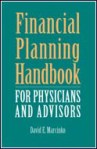
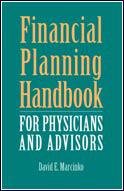
FINANCE: Financial Planning for Physicians and Advisors
INSURANCE: Risk Management and Insurance Strategies for Physicians and Advisors

Product Details  Product Details


Risk Management, Liability Insurance, and Asset Protection Strategies for Doctors and Advisors: Best Practices from Leading Consultants and Certified Medical Planners™8Comprehensive Financial Planning Strategies for Doctors and Advisors: Best Practices from Leading Consultants and Certified Medical Planners™

***

Complimentary Literature

Related Industry Affiliates

stk127239rke

Staff Reporters

All Medical Executive-Post readers and subscribers are invited to sign up for free health and financial industry trade magazines.

Healthcare

Browse through our extensive list of free health industry magazines, white papers, downloads and podcasts to find the titles that best match your skills and interests. Topics include medicine, nursing, dentistry, and health technology. Simply complete the application form and submit it. Remember to fill out the forms completely. All are absolutely free to professionals who qualify.

Link: http://associates.tradepub.com/?pt=cat&page=Heal

Finance

Browse through our extensive list of free financial management magazines, white papers, downloads and podcasts to find the titles that best match your skills and interests. Topics include financial planning, accounting, banking, investing and trading. Simply complete the application form and submit it. Remember to fill out the forms completely. All are absolutely free to professionals who qualify.

Link: http://associates.tradepub.com/?pt=cat&page=Fi

Speaker: If you need a moderator or speaker for an upcoming event, Dr. David E. Marcinko; MBA – Publisher-in-Chief of the Executive-Post – is available for seminar or speaking engagements. Contact: MarcinkoAdvisors@msn.com  or Bio: www.stpub.com/pubs/authors/MARCINKO.htm

Subscribe Now: Did you like this Medical Executive-Post, or find it helpful, interesting and informative? Want to get the latest E-Ps delivered to your email box each morning? Just subscribe using the link below. You can unsubscribe at any time. Security is assured.

Link: http://feeds.feedburner.com/HealthcareFinancialsthePostForcxos

About RRs and RIAs

Understanding Financial Sales “Titles”

Dr. David Edward Marcinko; MBA, CMP™dr-david-marcinko1

Registered Representative

A retail or discount stock broker, regardless of compensation schedule, is also known as a registered representative [RR]. Other names include financial advisor, financial consultant, financial planner, Vice President, Wealth Manager, etc. Typically, the less than rigorous national test known as a Series #7 (General Securities License) test, and state specific Series #63 license is needed, along with Securities Exchange Commission (SEC) registration through the National Association of Securities Dealers (NASD) to become a stockbroker [now Financial Industry Regulatory Authority – FINRA]. Since a commission may be involved, and performance based incentives are allowed, be aware of costs.

Registered Investment Advisor

This securities license, obtained after passing the Series # 65 examination, allows the designee to charge for giving “unbiased” securities advice on retirement plans and portfolio management, although not necessarily sell securities or insurance products. An RIA is also usually a fiduciary, while a RR, financial consultant or stockbroker is not.

About FINRA BrokerCheck

FINRA BrokerCheck is a free online tool to help investors check the professional background of current and former FINRA-registered securities firms and brokers. It should be the first-line resource when a physician or other investor is choosing whether to do business with a particular broker or brokerage firm www.FINRA.org


Features of FINRA BrokerCheck include:

Assessment

Do you seek “professional” assistance with your investing endeavors, or are you a DIY physician-investor?

Conclusion

And so, as a former holder of all the above titles, your thoughts and comments on this Medical Executive-Post are appreciated.  

Speaker: If you need a moderator or speaker for an upcoming event, Dr. David E. Marcinko; MBA – Publisher-in-Chief of the Executive-Post – is available for seminar or speaking engagements. Contact: MarcinkoAdvisors@msn.com  or Bio: www.stpub.com/pubs/authors/MARCINKO.htm

Our Other Print Books and Related Information Sources:

Practice Management: http://www.springerpub.com/prod.aspx?prod_id=23759

Physician Financial Planning: http://www.jbpub.com/catalog/0763745790

Medical Risk Management: http://www.jbpub.com/catalog/9780763733421

Healthcare Organizations: www.HealthcareFinancials.com

Health Administration Terms: www.HealthDictionarySeries.com

Physician Advisors: www.CertifiedMedicalPlanner.com

Subscribe Now: Did you like this Medical Executive-Post, or find it helpful, interesting and informative? Want to get the latest E-Ps delivered to your email box each morning? Just subscribe using the link below. You can unsubscribe at any time. Security is assured.

Link: http://feeds.feedburner.com/HealthcareFinancialsthePostForcxos

Understanding Earnings per Share

One Component of Fundamental Stock Analysis

Staff Reporters

Savvy physician-investors know that probably the most important influence on the price of a stock is reported earnings per share (EPS). Quarterly earnings are multiplied by 4 to simulate upcoming annual earnings, but sometimes “trailing 4 quarters” (i.e., actual) earnings are used. Analysts usually project earnings for several upcoming quarters, and those estimates are used to project the stock price.

Definition

Companies are required to report EPS within 45 days of quarter-end and within 90 days of year-end. According to the Dictionary of Health Economics and Finance [www.HealthDictionarySeries.com], EPS may be defined as follows:

EPS = Net income – Preferred dividends / Number of outstanding shares    

This formula has the same numerator as ROE—income available to common shareholders (after interest and taxes). Undiluted EPS is called primary EPS. If securities exist that are likely to be converted into outstanding common shares (such as convertible preferred stock that is likely to be called, or options held by management that are likely to be exercised), fully diluted EPS are also calculated. EPS states earnings on a per-share basis, which makes it easy to generate the P/E multiple.

Stock Listings

The P/E often appears on website or in newspaper stock listings. With the P/E, the dollar value of current earnings can be backed out using the current stock price. If newly reported earnings are higher than expected, the P/E ratio will be lower than it has been and the stock will be selling at a “discount” to its own prior P/E. If newly reported earnings are lower than expected, the

P/E ratio will be higher than it has been, and the stock is said to be selling at a “premium” to its prior P/E.

Discount/Premium Indicator

A stock’s P/E may also show it selling at a discount or premium to the P/E of the market (an index, like the S&P 500) or the average P/E of other companies in the industry. If compared to the market, it is said to be trading at a high or low relative multiple. Most doctors find that a very high P/E is hard to justify buying—it usually means expectations for future earnings are unrealistic. Small company stocks will tend to have higher P/E ratios than large company stocks. When the multiples of small companies approach those of large companies, it signals a good buying opportunity in small stocks.

Price Tracks Earnings

Over the long term, most charts will show that the price of the stock eventually tracks earnings. The principle of value investing is basically to capture the stock when earnings have risen but the stock price hasn’t caught up and to sell when the price of the stock fully reflects the earnings rise.

A Growth Indicator

A valuable way to look at P/E ratio is to compare it to growth rate. A fairly priced company will have a P/E approximately equal to its earnings growth rate (i.e., a multiple of 12 with an EPS growth rate of 12%). If the multiple is below the growth rate, the stock is considered a bargain. A rule of thumb: A growth rate twice the multiple is a good buy; a growth rate half the multiple means stay away.

The Power of Growth

Physician-investors should never underestimate the power of growth. Even though a company has a high P/E, if the growth rate is also high it will make more money because of the power of compounding. The P/E calculated without cash in the price of the stock could be considered a truer measure of what the operating assets of the company are earning. A physician-investor may break down companies’ P/E further, attempting to find multiples for each business segment of a company.

Assessment

As seen, if it is likely that convertible securities, warrants, rights, or any other stock equivalents outstanding will be converted into common stock, fully diluted EPS are calculated. The fully diluted calculation adds back interest on convertible securities, assuming it will not be paid, but increases the number of shares outstanding. For companies that pay dividends, the dividend payout ratio is calculated by dividing the annual dividend paid by the EPS. A low dividend payout ratio may not be bad—it could indicate that the company is likely to be able to maintain the dividend level. When the dividend payout ratio for the entire market is low, it indicates that the overall market is at a high.

Conclusion

The dividend yield is calculated by dividing the annual dividend by the current price per share. Yields may look particularly high when share price is depressed and may help sustain demand for stocks like utilities. As in analysis of bonds, valuation of the dividend stream (present value of future cash flow) is often used to determine the intrinsic worth of stocks that pay steady dividends.

And so, your thoughts and comments on this Medical Executive-Post are appreciated. With the recent stock market slump, is this traditional ratio due for a popularity comeback by next-gen physician-investors?

Related Information Sources:

Practice Management: http://www.springerpub.com/prod.aspx?prod_id=23759

Physician Financial Planning: http://www.jbpub.com/catalog/0763745790

Medical Risk Management: http://www.jbpub.com/catalog/9780763733421

Healthcare Organizations: www.HealthcareFinancials.com

Health Administration Terms: www.HealthDictionarySeries.com

Physician Advisors: www.CertifiedMedicalPlanner.com

Speaker: If you need a moderator or speaker for an upcoming event, Dr. David E. Marcinko; MBA – Publisher-in-Chief of the Executive-Post – is available for seminar or speaking engagements. Contact: MarcinkoAdvisors@msn.com  or Bio: www.stpub.com/pubs/authors/MARCINKO.htm

Subscribe Now: Did you like this Medical Executive-Post, or find it helpful, interesting and informative? Want to get the latest E-Ps delivered to your email box each morning? Just subscribe using the link below. You can unsubscribe at any time. Security is assured.

Link: http://feeds.feedburner.com/HealthcareFinancialsthePostForcxos

About Bond Brokers

Who they are – How they get paid

Staff Writers

According to the Dictionary of Health Economics and Finance, a bond-broker derives her or his income differently than a fee-for-service financial advisor with assets-under-management [AUMs]; not necessarily unlike a stock broker.

www.HealthDictionarySeries.com

Transaction Driven Commissions

In other words, bond-brokers use transaction-driven sales, and earn commissions based on turnover in a brokerage account or portfolio.

No Quarterly Management Fees

Although the bond-broker takes no quarterly management fees like a financial advisor, the broker’s advice may be colored by the commissions associated with bond issues he or she recommends; which results in an inherent conflict of interest in the broker relationship.

Assessment

Thus, the physician-investor must constantly be aware of the potential for being sold debt-based securities that may be more advantageous to the sales broker than the doctor’s portfolio. Realize too, that the current Credit Default Swap [CDS] fiasco on Wall Street today was prompted in many respects by aggressive bond-brokers! So, always remember Caveat Emptor!

Conclusion

While a bond or stock-broker may offer advice, the physician-investor makes the decisions and therefore is accountable for them. And so, your thoughts and comments on this Executive-Post are appreciated.

Related Information Sources:

Practice Management: http://www.springerpub.com/prod.aspx?prod_id=23759

Physician Financial Planning: http://www.jbpub.com/catalog/0763745790

Medical Risk Management: http://www.jbpub.com/catalog/9780763733421

Healthcare Organizations: www.HealthcareFinancials.com

Health Administration Terms: www.HealthDictionarySeries.com

Physician Advisors: www.CertifiedMedicalPlanner.com

Speaker: If you need a moderator or speaker for an upcoming event, Dr. David E. Marcinko; MBA – Publisher-in-Chief of the Executive-Post – is available for seminar or speaking engagements. Contact: MarcinkoAdvisors@msn.com  or Bio: www.stpub.com/pubs/authors/MARCINKO.htm

Subscribe Now: Did you like this Executive-Post, or find it helpful, interesting and informative? Want to get the latest E-Ps delivered to your email box each morning? Just subscribe using the link below. You can unsubscribe at any time. Security is assured.

Link: http://feeds.feedburner.com/HealthcareFinancialsthePostForcxos

Home Ownerships versus Stock Ownership

Understanding “Underwater” Differences

Staff Reporters

Join Our Mailing List 

Mark Cuban wrote an interesting piece on his website on November 11. On it, he asks; “so what’s the difference between being underwater on a mortgage and underwater on a stock?”

The Experts

According to Mark, the “experts” will tell you to hold the stock in hopes of it going up in value and then explain that those with homes worth less than their mortgages shouldn’t feel bad about breaking them and defaulting?

The Buy and Hold Scam

He thinks “Buy and Hold” for stocks is one of the all time great marketing scams. Ignore it; always. “Buy and Hold” for your house is a mantra you should always live by; the difference?

You can live in your house. You get utility from your house. You may get a deduction for interest paid on your tax bill. You can develop a positive emotional attachment to a house.”

The Stock Difference

A share of stock … well you can … you can look up the price anytime you want if you think that’s fun. There is no utility for a share of stock beyond its financial value. The value of a house is that it is your home. Moreover, “the fact that you may be underwater in your mortgage is of no relevance if you can make the payments. If you can make the payments on your mortgage, it shouldn’t matter if your house is worth 10 pct of your mortgage. If you can make the payments, make them.”

Example:

Furthermore, as Mark recalls, “I remember being freaked out watching as my rate on my Adjustable Rate Mortgage went up and up as I watched the value of my house go down. For 2 years my rate went up, my house value went down. Fortunately, I liked living there. I wasn’t building any equity, in fact, I was negative, but I was going to have to pay to live somewhere. On top of everything, my credit was bad enough and I didn’t want to make it any worse. In fact, I knew that if I didn’t make the payments on my house, my chances of ever owning a house again were none and none. So I kept paying the note every month; in spite of the financial pain.”

Changing Times

Then, Mark says, a funny thing happened. Interest rates started to go down. I didn’t even know it until I got my annual notice saying that my mortgage payment would go down. The value of my house wasn’t going up, but for the next several years, my payments went down. It took years, but I actually built equity in the house; which is exactly the point!

Assessment

Finally, says Cuban: “Buy and hold works when it comes to the home you live in. Turning in the keys because you have negative equity is a fool’s game. If you do, you will never own a home; you will be a renter forever“. Your home has far more value than its mark to market price because you can live in it. Do whatever you can to stick it out. It will pay off for you in the long run.

Conclusion

Attention profligate doctors, and financial advisors, your thoughts and comments on this Executive-Post are appreciated.

Related Information Sources:

Practice Management: http://www.springerpub.com/prod.aspx?prod_id=23759

Physician Financial Planning: http://www.jbpub.com/catalog/0763745790

Medical Risk Management: http://www.jbpub.com/catalog/9780763733421

Healthcare Organizations: www.HealthcareFinancials.com

Health Administration Terms: www.HealthDictionarySeries.com

Physician Advisors: www.CertifiedMedicalPlanner.com

Speaker: If you need a moderator or speaker for an upcoming event, Dr. David E. Marcinko; MBA – Publisher-in-Chief of the Executive-Post – is available for seminar or speaking engagements. Contact: MarcinkoAdvisors@msn.com  or Bio: www.stpub.com/pubs/authors/MARCINKO.htm

Subscribe Now: Did you like this Executive-Post, or find it helpful, interesting and informative? Want to get the latest E-Ps delivered to your email box each morning? Just subscribe using the link below. You can unsubscribe at any time. Security is assured.

Link: http://feeds.feedburner.com/HealthcareFinancialsthePostForcxos

Product Details  Product Details

Advisors Fees vs. Brokerage Commissions

Join Our Mailing List

Beware Assets-under-Management [AUMs]

[Dr. David Edward Marcinko MBA, CMP™]

dem-thinking

I don’t think that doctor-colleagues realize how much more a fee-based financial planner – or financial advisor – might take from a physician-client using an assets-under-management [AUM] subscription business model; than a traditional commission-based stock broker? Of course, commissions are what stock-brokers earn; and “broker” is a bad word today. The more politically correct term seems to be “planner” or “advisor” or “vice-president” or ‘wealth manager”; and these folks earn “fees” along with their confusing nom de plumes. But should they?

Example:

Look at 1% of $100,000 which comes to $1,000 per year. If a doctor-client is in it “for the long haul,” we can see why financial advisors want this money for the “long haul.” Twenty years of this model comes out to nearly $20,000 in fees [assuming zero growth]. If a financial advisor was going to stick the doctor in some investment and leave him alone, would it not have been better to take a one-time $5,000 commission, say at 5%? This way the doctor-client keeps the remaining $15,000. If the money actually grows over time – which it should in the long run – the advisor earns even more.

False Arguments

Now, don’t try to accept the false argument that this puts financial advisors “on the same side of the fence”, as the physician-client or that it allows advisors to take better care them. First off, clients should be taken care of, well. But, it also encourages the advisor to “risk-more to earn more”, and/or to goad the doctor-client into putting more money into the subscription-based account, rather than paying off the mortgage, for example. In fact, the recent mortgage crisis and stock market meltdown suggests that this deceptive argument may have been more common than realized. So, why not ask your advisor/broker to explain both ways s/he gets paid; and then decide for yourself – fees versus commissions?

Assessment

Of course, in today’s world of “assets-under-management,” the word “commission” is taboo. No “real financial planner” takes commissions; he or she would rather manage investments for a “fee” that lasts forever.

PS: Financial advisors really don’t mange most of these accounts, anyway. They are aggregated and outsourced to other firms, for a small sub-fee [a bit less than the original 1%]. The advisor then sends a nice quarterly report to the doctor, as if they did all the work!  Now, do you realize why the best name for these folks is “asset gatherers”; they often do little more than market and sell.

Conclusion

Your thoughts and comments on this ME-P are appreciated. Feel free to review our top-left column, and top-right sidebar materials, links, URLs and related websites, too. Then, subscribe to the ME-P. It is fast, free and secure.

Speaker: If you need a moderator or speaker for an upcoming event, Dr. David E. Marcinko; MBA – Publisher-in-Chief of the Medical Executive-Post – is available for seminar or speaking engagements. Contact: MarcinkoAdvisors@msn.com

OUR OTHER PRINT BOOKS AND RELATED INFORMATION SOURCES:

Product Details  Product Details

Product Details


Healthcare, Medicine and AIG

Hospitals, Doctors and Insurance Companies Affected

Staff Reporters

Join Our Mailing List 

The federal government recently announced a $100 billion rescue of American International Group [AIG], the largest insurer in the nation. Those involved in the business of insurance should know that it was the financial services operations and other non-insurance operations of AIG, and not its insurance companies, that forced the federal government to bail them out. Medical professionals should be aware, as well.

How it Happened

According to experts, the reason for AIG’s problems is two-fold. It is partly based in its dealings with credit default swaps, complicated financial instruments that investors use to protect themselves from bond defaults—which also caused the collapse of Lehman Brothers.

Insurers try to keep premiums low and profits high by investing. And while all insurers invest premiums in different forms of assets, AIG invested much of its enormous income in securities that were backed by sub-prime mortgages. As the mortgage-crisis came to a head, the value of those securities fell, creating financial problems for AIG. Insurers, like AIG, who attempted to profit from high risk investments found those investments to be so risky that they failed completely. When the investments failed, the insurer’s operating assets were reduced and it needed a major infusion of working capital. The federal loans, although enormous, are fully backed by saleable assets.

I Have AIG Insurance – Should I be Worried?

Generally no; because of the corporate structure of AIG. The holding company can be experiencing financial problems while the individual insurance company subsidiaries that agreed to insure you remain secure. They have more than adequate reserves to pay the claims anticipated. Each AIG branded insurer is a separate corporate entity that, by law, must maintain funds in secure reserves to pay claims presented.

And yet; First Professionals Insurance Company [FPIC] of Florida, recently told the SEC that it held securities with an amortized cost of $4.1 million in Lehman Brothers, $2.1M in American International Group, $2.5M in Morgan Stanley, $2.1M in Washington Mutual and $300,000 in Fannie Mae. 

Will AIG Claims be Paid?

Probably, yes. If the insurer has maintained adequate reserves, as required by state laws, there will be sufficient funds to pay all claims reasonably presented. If the individual insurer should fail, it will be taken over by the state where it is domiciled. If the insurer is faced with a catastrophe that it cannot cover and if your insurance is with an AIG company that is admitted to do business in your state, the state’s Insurance Guarantee Fund will pay your claim up to a limit that is usually no more than $500,000.  Of course, there is no absolute certainty in any situation relating to insurance, but the AIG companies are well-funded and very capable of handling all predictable claims.

On the one hand, if the insurer is put into receivership, the state regulator will use the insurer’s own assets to make payments before seeking funds from the insurance guarantee fund which is financed by assessments on all insurance companies that do business in the state. If, on the other hand, the AIG insurer is not admitted to do business in the state but does business through the surplus lines market, you are not protected by a guarantee fund and must be certain the insurer has the assets sufficient to cover any potential losses.

How Do I Determine That My Insurer Has Adequate Assets?

Contact your state department of insurance to determine if the insurer is admitted to do business and is protected by the Guarantee Fund. Also, check your policy; the insurer must tell you in writing if it is not admitted. Contact your state department of insurance to obtain financial documents filed by the insurer.

Assessment

The credit-crunch is on everywhere, and hospitals filing bankruptcy this quarter include: a two-hospital system in Honolulu; one in Pontiac, MI; Trinity Hospital in Erin, Tennessee; Century City Doctors Hospital in Beverly Hills, Lincoln Park Hospital in Chicago, and four hospital system Hospital Partners of America, in Charlotte [See www.HealthcareFinancials.com; November 2008 issue].

Assessment

Finally, conventional wisdom suggests a ratings reveiw of any policy provided the insurer by Bests. It should be at least “A” rated. Review financial ratings of the insurer issued by Standard & Poors. Of course, these have become suspect of late, too! So, search the Internet with a query including the name of the insurer and the words “financial problem.” Be sure to ask your insurance agent or broker.

Conclusion

Your thoughts and comments re appreciated.

Disclosure: Dr. David Edward Marcinko is the editor of Healthcare Organizations: [Financial Management Strategies] www.HealthcareFinancials.com

Speaker:If you need a moderator or speaker for an upcoming event, Dr. David E. Marcinko; MBA – Publisher-in-Chief of the Executive-Post – is available for seminar or speaking engagements. Contact: MarcinkoAdvisors@msn.com  or Bio: www.stpub.com/pubs/authors/MARCINKO.htm

Subscribe Now:Did you like this Executive-Post, or find it helpful, interesting and informative? Want to get the latest E-Ps delivered to your email box each morning? Just subscribe using the link below. You can unsubscribe at any time. Security is assured.

Product Details  Product Details

New-Wave Thoughts on Investing

Join Our Mailing List

Last-Gen” Financial Planning Concepts

[By Steve Schroeder]

[By Dr. David Edward Marcinko; MBA, CMP]

DEM 2013

Welcome to this op-ed piece where we take pot shots at commonly accepted financial planning industry standards to sharpen your investing skills and stimulate your mind. With the recent sub-prime mortgage fiasco, and Wall Street’s problems and shenanigans with banks and investment houses like Bear-Stearns, Lehman Brothers, USB, Wachovia, Fannie Mae and Freddie Mac, WaMu, Merrill Lynch, SunTrust and AIG, etc, rethinking strategy and “conventional wisdom” seems a prudent idea. What about Wells Fargo, more recently.
 And so, what is the physician-investor to do? Select help from fiduciary–liable and physician focused consultants; suggest some pundits http://www.CertifiedMedicalPlanner.org
 ***
We suggest you now take a minute to think “outside the box”?
In this post, and as a physician-investor, we want to take a crack at all of your favorite themes, including:
  • Buying low and selling high
  • Staying in for the long haul
  • Asset allocation
  • Automatic portfolio rebalancing
  • Fees vs. commissions
  • Institutional money managers
  • Market timing
  • Personal capital gains inside of mutual funds.
  • Reinvest those dividends.

Buying Low and Selling High

What a silly concept this is! First of all, what is “low” and what is “high”?  If a stock is at an all-time high—like Apple was recently, for example—does that mean you should not buy it? Of course not! It probably means you should; there are good reasons when the stock is at an all-time high. So, the real statement should be changed to: “buy high and sell higher.” All you need do is sell it higher than the price you bought it. Don’t worry about all the weird definitions of low, high, and medium; that’s all conjecture. Next time you meet with your financial advisor, tell him to buy high and sell higher!

Staying in the Market for the Long Haul

What does this mean—to ignore problems like the perennial ostrich? What if you see events in the world that could lead to serious decline? Does that mean you just stand pat and ignore everything? This sounds absurd to me! I think this mindset should be changed to staying in for the “U-Haul.”

In other words, as soon as it looks like a good time to move, I pack my stock blanket and go elsewhere. Now, does this mean to leave stocks; altogether? Maybe; or maybe not! There are all kinds of investment options, ETFs, etc, other than mutual funds. With all the new technology and research available, we should be looking at strategies, sectors, styles, methods, shorts, puts, options—all kinds of different things; rather than a mindset to sit and ignore news as it happens. Yes, we are in for the long haul, but we are going to change our long-haul strategy many, many times throughout the trip. This sounds obvious, but many doctors and financial planners sit with the exact same strategy for 30 years when the game has obviously changed. Staying in for the long haul does not have to mean staying with the same strategy.

Asset Allocation

This is like betting on every horse in a race to win. Are you guaranteed to have a winner? Yes, you have to have one because you are holding a winning ticket on the entire field. The key is targeting risk and reducing asset allocation. Go with the sectors that are hot, and get rid of the ones that are weak. We are telling you, a blind dog can find good sectors with all the information we have at our fingertips. Tell yourself to forget every horse to win, do good research, bet on the best ones, and target their risk. If you have too many “horses,” you avoid too much loss, but you also limit your gain by huge margins.

Automatic Portfolio Rebalancing

Wow, do we hate this one! Portfolio rebalancing is the Robin Hood of investments: it takes from the profitable to feed the losers. Doctor-investors may have some good sectors making large gains until an automatic rebalance program their profits to buy more losers! What’s up with that?

Counsel yourself not to be in certain sectors that have much greater risk with much less chance of return. Do you know how many investors were invested in Japan two decades ago or the financial sector today; and don’t even know it? And when you find out that your money was automatically pulled from large cap US funds to be the financial sector; you will not be happy.

Fees vs. Commissions

Do you realize how much more a fee-based Financial Advisor [FA] takes from the doctor-client than a commission-based planner?

Look at 1% of $100,000; this comes to $1,000 per year. If a client is in “for the long haul,” we can see why: you want his money for the long haul. Twenty years of this philosophy comes out to nearly $50,000 in fees!

If a FA was going to stick you in some investment and leave him alone, would it not have been better to take $5,000 from the company, not from the doctor’s account? This way you keep the $50,000.

Now, don’t try to argue that this puts FAs on the “same side of the fence as the client”, and allows FAs to take better care of them. It may foster excessive risk taking. Remember, the “advisor” gets less money for bonds or cash, so s/he will not encourage these asset classes under this payment system. And, don’t think for a moment that this service is customized for you. It is not! Why do you think it’s called a “turn-key” asset management program in the business? Automation! Or, can you say; mass-customization thru technology, for “masses-of-asses?”

Q: To financial advisors.

A: Why not give all your clients a choice? Why not explain two ways you could get paid and let them decide?

Institutional Money Managers

Here is a great idea—as long as doctors are institutions; and they are not! I work with people, not institutions. Institutional money managers, for the most part, have a pre-tax mindset because they are used to dealing with large amounts from 401(k)s, 403(b)s, annuities or pension plans. This means they manage in a preservation-of-capital mentality, rather than a growth mentality. Now, I’d guess that most doctors are not institutions and need a much better investment philosophy than holding thousands of stocks with numerous money managers. By selecting an institutional money manager, you have assured them of mediocrity.

Market Timing

Can you time the market? Of course you can. It opens at a certain time and it closes at a certain time. “Seriously”; what is market timing?

We often hear this term bantered about when somebody wants to change his or her investment strategy. Changing investment strategies is not timing the market. In 2008, maybe you ought to make it a goal to initiate a new strategy, rather than waiting for the declining manufacturing industry to kill you financially? Should you have done this a few years ago when the mortgage industry began to implode? How about September 2017.

Mutual Funds

Let’s wrap this up with one of our favorites. I hate mutual funds and so should you. Everyone gets to share in the gains and losses together. How sweet. How democratic; or is it socialistic? Can you imagine telling your patients to buy all kinds of drugs at a price that was paid three years ago even though he or she has never used them a day! Who would take that advice? Why leave yourself vulnerable to the whims of someone he or she does not even know? How about having control over what stocks are bought and sold? Can you imagine an investment option that does all of these things? The mutual fund was good when we did not have computers or discount brokerage houses. Today, you would be much better off buying a few bellwether stocks, or whatever, and just holding them forever.

As simple as this sounds, at least the client is buying something and paying tax on the price he or she paid, not what someone else paid three years ago. Times have changed. Understand how mutual funds work and select 15 or 20 of their diversified stocks and hold them. That is much better than any mutual fund.

Reinvest those dividends

Many folks believe that the markets advance two steps, for every step it retreats; sort of a truism. If you are of the same ilk, then reinvesting dividends automatically only assures that you will buy high, 66.67% of the time. It will also be tax inefficient and not allow you to have some dry powder [cash] available cash for extra-ordinary opportunities [i.e., buying low].

***

stock-exchange

***

Assessment

Well, we hope you have enjoyed this op-ed piece. As always, we’re happy to debate the issues we address here.

Conclusion

Your thoughts and comments on this ME-P are appreciated. Feel free to review our top-left column, and top-right sidebar materials, links, URLs and related websites, too. Then, subscribe to the ME-P. It is fast, free and secure.

Speaker: If you need a moderator or speaker for an upcoming event, Dr. David E. Marcinko; MBA – Publisher-in-Chief of the Medical Executive-Post – is available for seminar or speaking engagements. Contact: MarcinkoAdvisors@msn.com

OUR OTHER PRINT BOOKS AND RELATED INFORMATION SOURCES:

Risk Management, Liability Insurance, and Asset Protection Strategies for Doctors and Advisors: Best Practices from Leading Consultants and Certified Medical Planners™8Comprehensive Financial Planning Strategies for Doctors and Advisors: Best Practices from Leading Consultants and Certified Medical Planners™

***

Capital Formation Considerations for Hospitals

Understanding Risks and Rewards

By Calvin W. Weise CPA; and Staff Writers

All hospital and healthcare-entity capital investments create risk.

Definition of Risk

According to www.HealthDictionarySeries.com, risk is the uncertainty of future events. When hospitals make capital investments, they commit to costs that affect future periods. Those costs are known and relatively fixed. What are unknown are the benefits to be realized by those capital investments.

Capital Investment Risks

For capital investments, risk is the certainty of future costs coupled with the uncertainty of future benefits. In some cases, while the future benefits are uncertain, there is a high degree of certainty that the benefits will exceed the costs. In these cases; risk can be very low. Risk may be better defined as the degree to which the uncertainty of unknown benefits will exceed the known and committed costs.

Burdens and Benefits of Ownership

When capital assets are purchased, both the burdens and the benefits of ownership are transferred to the owner. The burdens are primarily the costs associated with acquisition and installation.

The benefits are primarily the revenues generated by operating the capital assets. Risk of ownership is created to the degree that the benefits are uncertain.

Balancing Act

Hospital managers need to be skilled at balancing and putting hospital assets at risk. Without clear knowledge and understanding of the benefits and the burdens, hospitals can quickly find themselves at unacceptably high levels of risk. Risk must be continually assessed and evaluated in order to successfully put hospital assets at risk. Hospitals and related entities require many varied capital investments; their capital investments represent a risk portfolio. An effective combination of risky assets can often create risk that is less than the sum of the risk of each asset.

Modern Portfolio Theory

Of course, financial managers have know this for years as a basic principle of Modern Portfolio Theory (MPT), first introduced by Harry Markowitz, PhD, with the paper ”Portfolio Selection,” which appeared in the 1952 Journal of Finance. Thirty-eight years later, he shared a Nobel Prize with Merton Miller, PhD, and William Sharpe, PhD, for what has become a broad theory for securities asset selection; and hospital assets may be viewed as little different.

Historical Review

Back in the day, prior to Markowitz’s work, investors focused on assessing the rewards and risks of individual securities in constructing a portfolio. Standard advice was to identify those that offered the best opportunities for gain, with the least risk, and then construct a portfolio from them.

Example:

Following this advice, a hospital administrator might conclude that a positron emission tomography (PET) scanning machine offered good risk-reward characteristics, and pursue a strategy to compile a network of them in a given geographic area.

Intuitively, this would be foolish. Markowitz formalized this intuition. Detailing the mathematics of diversity, he proposed that investors focus on selecting portfolios based on their overall risk-reward characteristics instead of merely compiling portfolios of securities, or capital assets that each individually has attractive risk-reward characteristics.

In a nutshell, just as physician-investors should select portfolios not individual securities, so hospital administrators should select a wide spectrum of radiology services, not merely machines.

Other Strategies

According to Dr. David Edward Marcinko, MBA, CMP™, the Publisher-in-Chief of this portal, some other risk and cost control strategies that will affect hospital ROI include:

  • CDHC and medical HSAs,
  • Universal health insurance,
  • eMRs and HIT investments,
  • P4P, and various
  • Medical quality improvement initiatives.

Assessment

Savvy hospital managers, financial advisors, physician and nurse executives, accountants and healthcare administrators should mitigate ownership risk by constructing their portfolio of risky assets in a manner that lowers overall risk www.HealthcareFinancials.com

Conclusion

Please subscribe and contribute your own thoughts, experiences, questions, knowledge and comments on this topic for the benefit of all our Executive-Post readers.

Related Information Sources:

Practice Management: http://www.springerpub.com/prod.aspx?prod_id=23759

Physician Financial Planning: http://www.jbpub.com/catalog/0763745790

Medical Risk Management: http://www.jbpub.com/catalog/9780763733421

Healthcare Organizations: www.HealthcareFinancials.com

Health Administration Terms: www.HealthDictionarySeries.com

Physician Advisors: www.CertifiedMedicalPlanner.com

Speaker: If you need a moderator or speaker for an upcoming event, Dr. David E. Marcinko; MBA – Publisher-in-Chief of the Executive-Post – is available for seminar or speaking engagements. Contact: MarcinkoAdvisors@msn.com  or Bio: www.stpub.com/pubs/authors/MARCINKO.htm

Subscribe Now: Did you like this Executive-Post, or find it helpful, interesting and informative? Want to get the latest E-Ps delivered to your email box each morning? Just subscribe using the link below. You can unsubscribe at any time. Security is assured.

Link: http://feeds.feedburner.com/HealthcareFinancialsthePostForcxos

Financial Industry Links

An Executive-Post List

Staff Writers

  1. Investment Company Institute (mutual fund industry)

Related Information Sources:

Practice Management: http://www.springerpub.com/prod.aspx?prod_id=23759

Physician Financial Planning: http://www.jbpub.com/catalog/0763745790

Medical Risk Management: http://www.jbpub.com/catalog/9780763733421

Healthcare Organizations: www.HealthcareFinancials.com

Health Administration Terms: www.HealthDictionarySeries.com

Physician Advisors: www.CertifiedMedicalPlanner.com

Speaker: If you need a moderator or speaker for an upcoming event, Dr. David E. Marcinko; MBA – Publisher-in-Chief of the Executive-Post – is available for seminar or speaking engagements. Contact: MarcinkoAdvisors@msn.com  or Bio: www.stpub.com/pubs/authors/MARCINKO.htm

Subscribe Now: Did you like this Executive-Post, or find it helpful, interesting and informative? Want to get the latest E-Ps delivered to your email box each morning? Just subscribe using the link below. You can unsubscribe at any time. Security is assured.

Link: http://feeds.feedburner.com/HealthcareFinancialsthePostForcxos

Understanding Sector Funds

Join Our Mailing List

Non-Diversified Risk Funds

[Staff Writers]

Although less than 10% of the total number of mutual funds are considered true sector funds, year after year, 40% or more of the top-performing funds have been sector funds. For physician-investors sold on a buy-and-hold strategy, sector funds may not be their cup of tea. Yet, sector funds offer an opportunity to outperform the market indices, possibly even substantially.

Definition

According to the financial and economic Dictionaries of DE Marcinko, HR Hetico and elsewhere, a sector fund may be defined as:

An open-ended mutual fund that seeks to limit its investments to a specific industry or economic sector, for example; technology, real estate or health care. These funds may involve a greater degree of risk than an investment in other mutual funds with greater diversification.

Typically sector funds are more volatile than the majority of growth funds. This volatility springs from: (1) the fact that the majority of stocks in a particular sector fund move together, thereby magnifying the fund’s movement; (2) the focus of the sector fund manager only on stocks in that sector, enabling him or her to target high potential stocks; and (3) the rotation of “in” and “out” sectors at particular times.

What’s a Doctor to Do?

A physician-investor in sector funds needs a strategy that will target sectors on the upswing and signal when to move out of declining funds.

When selecting sector funds, some like Editor-in-Chief Dr. David Edward Marcinko; MBA CMP™ recommend building a list of funds that are manageable, full of choices in all types of markets, diversified (three to four funds for an aggressive portfolio or 10–12 for a less aggressive approach); and liquid. Newer ETF sectors may also be used.

Balancing Act

Also, develop a healthy balance—not a “hit-or-miss” approach. Marcinko and others suggest using the “relative or weighted strength” approach for sector selection by computing the percent change in the price of funds over a certain number of days and then ranking them for short-term, intermediate, and long-term periods.

With respect to determining the proper timing for buying or selling, some suggest the use of an individual fund timing system, such as comparing the current Net Asset Value [NAV] of the sector against a moving average for 60 or 90 days or combining both short- and long-term moving averages.

Signaling

In creating buy-and-sell signals:

  • Keep it simple and manageable.
  • Do not look for perfection.
  • Practice patience.
  • Cut losses and let profits run.
  • Stick with your relative strength.
  • Buy/sell signals consistently.

Assessment

Most of all, be prepared to invest the time necessary to learn sector funds, especially after the 679 point market collapse today; courage!

Conclusion

Your thoughts and comments on this ME-P are appreciated. Feel free to review our top-left column, and top-right sidebar materials, links, URLs and related websites, too. Then, subscribe to the ME-P. It is fast, free and secure.

Speaker: If you need a moderator or speaker for an upcoming event, Dr. David E. Marcinko; MBA – Publisher-in-Chief of the Medical Executive-Post – is available for seminar or speaking engagements. Contact: MarcinkoAdvisors@msn.com

OUR OTHER PRINT BOOKS AND RELATED INFORMATION SOURCES:

Product DetailsProduct DetailsProduct Details

***

“Mea-Culpa” from Doctors

Grievous Physician Mistakes

Staff Reporters

Welcome to this op-ed piece where you send us your most grievous investing, medical practice management and/or financial planning mistakes.

As Wall Street unwinds, the problems with Bear-Stearns, Lehman Brothers, USB, Wachovia, Fannie Mae and Freddie Mac, WaMu, Merrill Lynch, SunTrust and AIG, etc, demand that we consider our past transgressions; along with a significant mea-culpa; not to repeat same.

And so, please send us your heart-felt errors so that others may learn from them. Feel free to remain anonymous, if you like. There is no limit to the number of times you can post.

Assessment

Remember, there are two types of mistakes:

  1. Medical practice management, and
  2. Investing and financial planning mistakes.

Conclusion 

Your comments are appreciated. We will begin with a few examples, cited below to get started.

Practice Management: http://www.springerpub.com/prod.aspx?prod_id=23759

Physician Financial Planning: http://www.jbpub.com/catalog/0763745790

Medical Risk Management: http://www.jbpub.com/catalog/9780763733421

Healthcare Organizations: www.HealthcareFinancials.com

Health Administration Terms: www.HealthDictionarySeries.com

Physician Advisors: www.CertifiedMedicalPlanner.com

Speaker: If you need a moderator or speaker for an upcoming event, Dr. David E. Marcinko; MBA – Publisher-in-Chief of the Executive-Post – is available for seminar or speaking engagements. Contact: MarcinkoAdvisors@msn.com  or Bio: www.stpub.com/pubs/authors/MARCINKO.htm

Subscribe Now: Did you like this Executive-Post, or find it helpful, interesting and informative? Want to get the latest E-Ps delivered to your email box each morning? Just subscribe using the link below. You can unsubscribe at any time. Security is assured.

Link: http://feeds.feedburner.com/HealthcareFinancialsthePostForcxos

Copyright 2008 iMBA Inc: All rights reserved, USA, unless otherwise noted. Use is restricted to Executive-Post subscribers only. No redistribution is allowed. To avoid violation of iMBA Inc copyright restrictions and redistribution policy, please register for your own free Executive-Post membership. Detailed information and registration links are available at:

Link: http://feeds.feedburner.com/HealthcareFinancialsthePostForcxos

Referrals: Thank you in advance for your electronic referrals to the Executive-Post

Financial Planning for Physicians and Advisors Textbook

Join Our Mailing List

Foreword and Book Review

[By Frank A. Cappiello; MBA]fp-book

Financial Planning for Physicians and Advisors is essentially a “how-to book” on finance, financial planning and related topics for healthcare providers.

Fortunately for patients, medicine requires a high degree of professional training, both in terms of science and technology. Unfortunately for providers, it affords little time for acquiring medical practice management skills, or learning about the financial aspects of business or investment planning. 

An Unusual Book

More to the point, this is an unusual textbook on financial planning for two reasons.

First, it is a detailed guide for physician’s seeking the complex road to success and profit in the confusing healthcare industrial complex.  Rarely does one see such clarity of presentation, without the usual jargon that often discourages those trying to learn such a foreign and forbidding subject, as finance. 

Second, the subject matter is focused for medical providers who work in one of the fastest growing industries in the United States. The contributors hope that by integrating both disciplines of finance and medical management, they will help foster affordable and profitable healthcare for our nation, which is so entrepreneurial, yet aging.

A Wall Street Career

In my thirty-five years on Wall Street, I have observed that physicians are particularly disadvantaged when it comes to anything regarding finance.  Most medical professionals have enough on their mind practicing their specialty and keeping up with healthcare technology and practice trends, that planning for their financial future is often forgotten.

Financial planning and good investment practices require a solid background of how companies work in the “real world”, and an awareness of how they function within the economy. These economic essentials are vital to understanding business, as principles like budgeting, risk management, cash flow analysis, fiscal benchmarking and rudimentary accounting are presented in this book.

Furthermore, the necessity of keeping up with state and federal insurance legislation, the Health Insurance Portability and Accountability Act and other complex managed care contracting issues, places a continual burden on the individual practitioner, group or medical network seeking to stay abreast of current developments.

A Personal Knowledge Endeavor

But, the text focuses on financial planning and how the healthcare professional can increase personal knowledge and skills in this area. 

The coverage is both broad and yet detailed, ranging from basic macroeconomic factors that affect our national economy, such as the Gross Domestic Product (a single figure that summarize the business activity of the US), to the more mundane activities of maintaining cash flow, tax reduction strategies, home mortgages and even correcting credit card reporting errors.

Sophisticated Topics

More sophisticated topics include: debt and equity investment vehicles, derivatives, mutual fund and hedge fund investing, portfolio management and risk analysis, and the new laws on tax, retirement and estate planning. The book rightly concludes with practice succession planning for doctors, and begins with a chapter on the psychological meaning of money itself.

Assessment

It seems to me that all those in healthcare are well-served by reading this book with its format and step-by-step setup process for financial success, in terms of starting and ultimately surviving in a complicated business full of pitfalls and misinformation.  Most useful will be the extremely detailed table of contents that allows the user to quickly pinpoint an area of interest, and get started answering a problem.

Simply put, my recommendation is to read: Financial Planning for Physicians and Advisors, and “reap”.

Note:

Frank A. Cappiello; MBA
President, McCullough, Andrews & Cappiello, Inc
10751 Falls Road Suite 250
Lutherville, MD  21093
Distinguished Visiting Professor of
Finance
Loyola College, Maryland

Former Guest Panelist; Wall $treet Week with Louis Rukeyser TV

Conclusion

Your thoughts and comments on this ME-P are appreciated. Feel free to review our top-left column, and top-right sidebar materials, links, URLs and related websites, too. Then, subscribe to the ME-P. It is fast, free and secure.

Speaker: If you need a moderator or speaker for an upcoming event, Dr. David E. Marcinko; MBA – Publisher-in-Chief of the Medical Executive-Post – is available for seminar or speaking engagements. Contact: MarcinkoAdvisors@msn.com

OUR OTHER PRINT BOOKS AND RELATED INFORMATION SOURCES:

Product DetailsProduct Details


MD Seeking an Advisor

Desperate Doctor Seeking Advice and/or Financial Advisor

Hi Ann Miller,

I have contacted you thru the Executive-Post before regarding financial advisement for myself and you have been helpful.

Currently, like many people, I am having tremendous financial problems. I am experiencing a negative personal cash flow and have had to increase my credit card debt to keep ahead of my obligations. I have also maximized my home equity line of credit.

I was wondering if you know of any way that I can obtain capital to help me get over this rough financial time that I am having. I have not had much success with my local bank or credit union.

All comments are appreciated, and I am willing to work with a professional financial advisor, as needed.

Thanks again for your help; and voice.

Anonymous, MD
Los Angeles, CA


Mutual Fund Selection Checklist

The Cautious Physician

Staff Reporters

After today’s 777 point drop on the DJIA; 200 points on the NASDAQ; and 106 points on the S&P; a new bailout reconfiguration is being planned in Washington to avert another calamity going forward. Some say, the current strife was brought about – in large measure – by the financial system operating the way financial operators told us it was supposed to function.  The money is needed, we are told, to bail out the financiers who assured us – up until just a couple of weeks ago – that the system they operated was sound and would need no rescue. So, what really gives? Since no one knows for sure, MDs should do the following regularly:

  • Check your taxation issues. Review your tax returns every year. Review line 53 of the federal tax Form 1040. Total and divide by 12 to show your total tax paid, on average, each month. The result will show excessive taxes paid because of taxable interest, dividends, and capital gain. You will often do yourself a favor by discovering assets that have not been discussed.
  • Check with the mutual fund companies that you do business with to see if they have tax-managed portfolios.
  • Double-check your arithmetic, and don’t worry so much about taxes that you forfeit by mixing too many income-producing bonds in a portfolio looking for long-term growth.
  • Check the fund prospectus and statement to see how much buying and selling are going on inside the fund so you can at least be aware of this and be able to educate your clients.
  • Look at companies who “manage” money managers such as SEI and Lockwood Financial, etc.

Assessment

How true, false or parsed are the above perspectives?

Conclusion

Your comments are appreciated?

Related Information Sources:

Practice Management: http://www.springerpub.com/prod.aspx?prod_id=23759

Physician Financial Planning: http://www.jbpub.com/catalog/0763745790

Medical Risk Management: http://www.jbpub.com/catalog/9780763733421

Healthcare Organizations: www.HealthcareFinancials.com

Health Administration Terms: www.HealthDictionarySeries.com

Physician Advisors: www.CertifiedMedicalPlanner.com

Speaker: If you need a moderator or speaker for an upcoming event, Dr. David E. Marcinko; MBA – Publisher-in-Chief of the Executive-Post – is available for seminar or speaking engagements. Contact: MarcinkoAdvisors@msn.com  or Bio: www.stpub.com/pubs/authors/MARCINKO.htm

Subscribe Now: Did you like this Executive-Post, or find it helpful, interesting and informative? Want to get the latest E-Ps delivered to your email box each morning? Just subscribe using the link below. You can unsubscribe at any time. Security is assured.

Link: http://feeds.feedburner.com/HealthcareFinancialsthePostForcxos

How to Hire a Medical Accountant

Seek Healthcare Specificity

Staff Reporters

Use these 25 questions to educate yourself about accountants. And, use this 25-point checklist on how to pick a good healthcare focused CPA. It can be a powerful list for any medical professional and might help you bring in extra money, immediately.

Other Areas

In the areas of estate planning and financial planning, it is essential that doctors have a good team of financial professionals. This usually involves, at the very least, a CPA, an attorney, and a fiduciary focused financial advisor [maybe].

CPAs

If you are a CPA for docs, use this list as a reference for your doctor-clients. By bringing up the concept of due diligence on your own, it strengthens your position and makes a perfect opportunity to ask for referrals. You may also want to use this list as a newsletter insert or advertisement of some sort. Put a brief notice at the top of the list stating that doctors should ask their CPAs these questions, and if they need someone who fulfills these requirements, you would be glad to meet with them to discuss the questions.

Financial Advisors

As an FA, use this list as a networking tool. Refer your clients to a competent CPA who you already do business with or would like to do business with. When you refer clients to a good CPA, you open the opportunity for him or her to return the favor. Send this list to your existing clients at tax time as a neutral third party to help them find a good CPA (they already have a good financial advisor—you).

Attorneys

As an attorney, use this list the same way a financial advisor or account would—to network with the top CPAs and MDs in town. You can make it a standard piece in your mailings or newsletters once a year. When you start giving leads to other financial professionals, it will open up referrals that will be beneficial to your business.

Certified Medical Planner®

And, if you are a CPA, FA or attorney, be sure to promote your hard-won credentials for healthcare specificity; like the Certified Medical Planner® designation, for example.

 25 Questions to Ask Your Future Accountant

  1. What designations or credentials do you have?
  2. Are you in practice full-time?
  3. How many years of experience do you have in tax practice?
  4. Do you do all your returns by computer?
  5. What are your fees, and do you have a schedule that I can see?
  6. Can you provide references from other businesses similar to my own?
  7. Do you use any checklists to maximize my deductions?
  8. How soon do you return calls from clients?
  9. Do you teach any tax courses or have you written for any tax publications?
  10. Are you conservative, aggressive, or somewhere in the middle?
  11. What review process do you use in order to ensure a quality product?
  12. Do you specialize in taxes?
  13. What percentage of your practice relates to taxes?
  14. What other accounting services do you personally perform?
  15. May I look at your tax library?
  16. What do you do after tax season?
  17. How often do you take tax courses?
  18. What is your attitude toward audits?
  19. How do you treat gray areas?
  20. Have you ever been disciplined by the IRS, the SEC, or any accounting society?
  21. How many other clients like myself do you have?
  22. Do you offer pre-year-end tax planning as part of your tax service? If so, is there      an extra fee for this?
  23. Are you generally familiar with current health law and managed care policy?
  24. Do you offer any tax planning during the year?
  25. Can you give me a recent tax planning tip or tax change that may benefit me?

Finally, and most importantly of all; how do all of the above synergize into medical and healthcare specificity, for me?

Assessment

As you likely now realize, this list is not for CPAs only; but as a due diligence reminder for most fiduciary financial advisors professionals or attorneys who wish to work with doctor clients; “often the most difficult clients in the business.”

Disclosure

Dr. David E. Marcinko MBA, our Publisher-in-Chief and former CFP®, is founder of the online CMP® program in healthcare economics, management and finance for advisors www.CertifiedMedicalPlanner.com

Conclusion

Your thoughts, opinions and comments are appreciated.

Practice Management: http://www.springerpub.com/prod.aspx?prod_id=23759

Physician Financial Planning: http://www.jbpub.com/catalog/0763745790

Medical Risk Management: http://www.jbpub.com/catalog/9780763733421

Healthcare Organizations: www.HealthcareFinancials.com

Health Administration Terms: www.HealthDictionarySeries.com

Physician Advisors: www.CertifiedMedicalPlanner.com

Speaker: If you need a moderator or speaker for an upcoming event, Dr. David E. Marcinko; MBA – Publisher-in-Chief of the Executive-Post – is available for seminar or speaking engagements. Contact: MarcinkoAdvisors@msn.com  or Bio: www.stpub.com/pubs/authors/MARCINKO.htm

Subscribe Now: Did you like this Executive-Post, or find it helpful, interesting and informative? Want to get the latest E-Ps delivered to your email box each morning? Just subscribe using the link below. You can unsubscribe at any time. Security is assured.

Link: http://feeds.feedburner.com/HealthcareFinancialsthePostForcxos

Copyright 2008 iMBA Inc: All rights reserved, USA, unless otherwise noted. Use is restricted to Executive-Post subscribers only. No redistribution is allowed. To avoid violation of iMBA Inc copyright restrictions and redistribution policy, please register for your own free Executive-Post membership. Detailed information and registration links are available at:

Link: http://feeds.feedburner.com/HealthcareFinancialsthePostForcxos

Referrals: Thank you in advance for your electronic referrals to the Executive-Post

Advantages of IMAs

A Doctor’s Case against Mutual Funds

By Dr. David Edward Marcinko; MBA CMP

Publisher-in-Chief

The case against Mutual Funds [MFs], and in favor of Individually Managed Accountants [IMAs]:

  • No unrealized capital gains
  • The ability of the physician-investor to dictate or organize a portfolio around current stocks
  • The manager is not obliged to buy additional securities, no matter how much money pours in
  • The physician’s portfolio is not subject to a pooled mentality
  • A physician-investor can own a specified number of securities without over diversifying
  • Lower fees and Lower commissions as portfolio grows
  • Ongoing customization in step with world trends
  • Hands-on or hands-off philosophy, as the investor prefers
  • Custom diversification blend-in strategies for low-basis stocks
  • Individual doctor recognition as to tax consequences.

Assessment

How true, false or parsed are the above perspectives?

Conclusion

Your comments are appreciated?

Practice Management: http://www.springerpub.com/prod.aspx?prod_id=23759

Physician Financial Planning: http://www.jbpub.com/catalog/0763745790

Medical Risk Management: http://www.jbpub.com/catalog/9780763733421

Healthcare Organizations: www.HealthcareFinancials.com

Health Administration Terms: www.HealthDictionarySeries.com

Physician Advisors: www.CertifiedMedicalPlanner.com

Speaker: If you need a moderator or speaker for an upcoming event, Dr. David E. Marcinko; MBA – Publisher-in-Chief of the Executive-Post – is available for seminar or speaking engagements. Contact: MarcinkoAdvisors@msn.com  or Bio: www.stpub.com/pubs/authors/MARCINKO.htm

Subscribe Now: Did you like this Executive-Post, or find it helpful, interesting and informative? Want to get the latest E-Ps delivered to your email box each morning? Just subscribe using the link below. You can unsubscribe at any time. Security is assured.

Link: http://feeds.feedburner.com/HealthcareFinancialsthePostForcxos

Copyright 2008 iMBA Inc: All rights reserved, USA, unless otherwise noted. Use is restricted to Executive-Post subscribers only. No redistribution is allowed. To avoid violation of iMBA Inc copyright restrictions and redistribution policy, please register for your own free Executive-Post membership. Detailed information and registration links are available at:

Link: http://feeds.feedburner.com/HealthcareFinancialsthePostForcxos

Referrals: Thank you in advance for your electronic referrals to the Executive-Post


SEC Rule 151-A and Insurance Agents

NAFA Criticizes the SEC

Staff Reportersinsurance-book

Insurance agents without securities licenses won’t be able to sell index annuities under this new proposed rule.

NAFA Opines

The National Association of Fixed Annuities (NAFA) recently took a firm stand against the Security & Exchange Commission’s (SEC) proposed Rule 151A, which would regulate index annuities as securities rather than as insurance products.

Insurance-Securities Hybrid Product

NAFA said in a statement issued in July that it “strongly disagrees with the SEC proposal and will pursue all available avenues of recourse,” including taking legal recourse, if required.

Assessment

NAFA Says Nix SEC Rule 151A.

Conclusion

In other words, if Rule 151A is adopted, insurance agents without securities licenses would not be able to sell Index Annuities [IAs].  IAs are investment products that combine both fixed income investments and equity index options so as to be able to leverage opportunities in both.

Please comment and opine; especially insurance agents, investment advisors and financial planners.

Speaker: If you need a moderator or speaker for an upcoming event, Dr. David E. Marcinko; MBA – Publisher-in-Chief of the Executive-Post – is available for seminar or speaking engagements. Contact: MarcinkoAdvisors@msn.com  or Bio: www.stpub.com/pubs/authors/MARCINKO.htm

Subscribe Now: Did you like this Executive-Post, or find it helpful, interesting and informative? Want to get the latest E-Ps delivered to your email box each morning? Just subscribe using the link below. You can unsubscribe at any time. Security is assured.

Link: http://feeds.feedburner.com/HealthcareFinancialsthePostForcxos

Copyright 2008 iMBA Inc: All rights reserved, USA, unless otherwise noted. Use is restricted to Executive-Post subscribers only. No redistribution is allowed. To avoid violation of iMBA Inc copyright restrictions and redistribution policy, please register for your own free Executive-Post membership. Detailed information and registration links are available at:

Link: http://feeds.feedburner.com/HealthcareFinancialsthePostForcxos

Referrals: Thank you in advance for your electronic referrals to the Executive-Post

Retail Banking Today

Ten Things your Bank and/or Banker Won’t Tell You

Staff Reporters

From: Smart Money

Do you assume that your bank serves your best interests? Do you believe that a big bank’s products are better than a smaller bank? Do you think that that your online bank account information is accurate or secure? If so, think again!

And don’t ever believe everything your bank, or banker, tells you.

Review

As readers of the Executive-Post know; medical, dental, allied healthcare and administration students of all stripes are increasingly in school-debt these days.

Assessment

Therefore, we trust this basic, but important, report will be reviewed by medical practitioners and administrators of all ages. Don’t let the bankers add to your economic misery.

Link: http://articles.moneycentral.msn.com/Banking/BetterBanking/10ThingsYourBankWontTellYou.aspx

Conclusion

Your comments are appreciated.

Speaker: If you need a moderator or speaker for an upcoming event, Dr. David E. Marcinko; MBA – Publisher-in-Chief of the Executive-Post – is available for seminar or speaking engagements. Contact: MarcinkoAdvisors@msn.com  or Bio: www.stpub.com/pubs/authors/MARCINKO.htm

Subscribe Now: Did you like this Executive-Post, or find it helpful, interesting and informative? Want to get the latest E-Ps delivered to your email box each morning? Just subscribe using the link below. You can unsubscribe at any time. Security is assured.

Link: http://feeds.feedburner.com/HealthcareFinancialsthePostForcxos

Copyright 2008 iMBA Inc: All rights reserved, USA, unless otherwise noted. Use is restricted to Executive-Post subscribers only. No redistribution is allowed. To avoid violation of iMBA Inc copyright restrictions and redistribution policy, please register for your own free Executive-Post membership. Detailed information and registration links are available at:

Link: http://feeds.feedburner.com/HealthcareFinancialsthePostForcxos

Referrals: Thank you in advance for your electronic referrals to the Executive-Post

Healthcare Stock Performance

Doing Well by Doing Good – To Date in 2008

By Staff Reporters

According to Anne Zieger of FierceHealthFinance, healthcare stocks are doing well.

The Standard & Poor’s Benchmark

With healthcare facing some of its biggest financial challenges in years, particularly a growth in bad debt and slides in federal reimbursement, you wouldn’t think that industry stocks would be doing too well.

An Illogical Market

As usual, however, the market has followed its own logic, bringing several healthcare stocks to high points and pushing up the overall value Standard & Poor’s healthcare stocks average by 4.4 percent (compared with a 7.9 percent drop in the overall index). 

Meanwhile, mutual funds focused on healthcare are up 6.84 percent over the past three months, according to Morningstar, the only category of stock funds in positive numbers during this period.

Big Pharma and Biotechnology Driven

And, San Francisco Chronicle analysts say that rising healthcare stock performance is driven more by biotechs and big-pharma than provider companies. Their strong performance is partly due to improved performance by the stocks themselves, but also due to investors running away from finance and energy as well. 

Healthcare stocks have also been pushed up by foreign investors with strong currencies, who have been on the prowl to take over U.S. companies with below-expected valuations.

The Gainers

Big gainers among the S&P 500 include generic drug-maker Barr, Amgen, Varian Medical Systems and King Pharmaceuticals. 

On the other hand, it’s not all good news in this sector, as several managed care companies have lost value, including UnitedHealth Group and Aetna.

Assessment

Of course, hospital companies like HMA and Tenet haven’t done well, lately.

Conclusion

You thoughts and comments are appreciated; especially from wealth managers, financial professionals, insiders or investment advisors.

Practice Management: http://www.springerpub.com/prod.aspx?prod_id=23759

Physician Financial Planning: http://www.jbpub.com/catalog/0763745790

Medical Risk Management: http://www.jbpub.com/catalog/9780763733421

Healthcare Organizations: www.HealthcareFinancials.com

Health Administration Terms: www.HealthDictionarySeries.com

Physician Advisors: www.CertifiedMedicalPlanner.com

Speaker: If you need a moderator or speaker for an upcoming event, Dr. David E. Marcinko; MBA – Publisher-in-Chief of the Executive-Post – is available for seminar or speaking engagements. Contact: MarcinkoAdvisors@msn.com  or Bio: www.stpub.com/pubs/authors/MARCINKO.htm

Subscribe Now: Did you like this Executive-Post, or find it helpful, interesting and informative? Want to get the latest E-Ps delivered to your email box each morning? Just subscribe using the link below. You can unsubscribe at any time. Security is assured.

Link: http://feeds.feedburner.com/HealthcareFinancialsthePostForcxos

Copyright 2008 iMBA Inc: All rights reserved, USA, unless otherwise noted. Use is restricted to Executive-Post subscribers only. No redistribution is allowed. To avoid violation of iMBA Inc copyright restrictions and redistribution policy, please register for your own free Executive-Post membership. Detailed information and registration links are available at:

Link: http://feeds.feedburner.com/HealthcareFinancialsthePostForcxos

Referrals: Thank you in advance for your electronic referrals to the Medical Executive-Post.

Defined Benefit Plans for Physicians

Making a Comeback in 2008?

[By Staff Reporters]fp-book1

During the past decade, defined benefit plans have fallen out of favor due to excessive red tape, high administration costs, and IRS scrutiny. However, some experts claim that this trend may be about to reverse.

Suited for Older Doctors

For an older physician-executive who has little in retirement savings, a few young employees (or no employees), but adequate income to start setting a great deal of it aside, the defined benefit plan makes a great deal of sense in that contributions are not limited as they are in defined contribution plans.

Considerations

However, there are other good reasons to reconsider a defined benefit plan.

For instance, a doctor-employer can take into consideration prior years of service and adjust the benefit formula to meet his or her needs. In certain cases, this could result in putting away everything a person makes each year.

The only snag is the interplay between the defined benefit and defined contribution limits that is mandated by Section 415(e) of the Internal Revenue Code. Defined contribution plans have annual contribution limits, while defined benefit plans have annual benefit limits. Under the pension changes signed into law in August 1996 as part of the minimum wage bill, Section 415(e) was eliminated on Jan. 1, 2000, removing this obstacle to the creation of new plans.

Limitations on Qualified Plans

Section 415 limits the amount of benefits that can be provided under qualified pension plans. These limits are indexed for inflation.

For 2007, a defined benefit plan cannot provide for the payment of benefits which exceed the lesser of $180,000 or 100% of the participant’s average compensation for the highest three consecutive years of service, i.e., the three consecutive years during which the participant had the greatest aggregate compensation. The amount of annual additions (i.e., employer contributions, employee contributions and forfeitures) that can be made to a defined contribution plan for 2007 is limited to the lesser of $45,000 or 100% of a participant’s compensation for the limitation year.

Over-Funding Risks

Defined benefit plans still suffer from the risk of over-funding. Excess accumulations can be effectively confiscated up to 50% between penalties, federal, state, and possibly local income tax. The likelihood of over-funding was exacerbated by some pension changes included in the General Agreement on Tariffs and Trade (GATT) passed in December 1994. These changes required use of the 30-year Treasury bond interest rate in calculating funding requirements.

Previously, lump-sum payouts were calculated using the Pension Benefit Guaranty Corporation [PBGC] interest rate, which was lower and more predictable than the T-bond rate. A higher rate results in a lower lump sum withdrawal at retirement.

Assessment

One solution is to keep the pension plan in place when the doctor-business owner retires if interest rates have increased. The doctor should take the maximum annual benefit from the plan and wait for interest rates to drop so that he or she can withdraw the remainder of the balance in a lump sum.

Link: http://www.mondaq.com/article.asp?articleid=51226

Conclusion

Your thoughts and comments on this ME-P are appreciated. Feel free to review our top-left column, and top-right sidebar materials, links, URLs and related websites, too. Then, subscribe to the ME-P. It is fast, free and secure.

Link: http://feeds.feedburner.com/HealthcareFinancialsthePostForcxos

Speaker: If you need a moderator or speaker for an upcoming event, Dr. David E. Marcinko; MBA – Publisher-in-Chief of the Medical Executive-Post – is available for seminar or speaking engagements. Contact: MarcinkoAdvisors@msn.com

OUR OTHER PRINT BOOKS AND RELATED INFORMATION SOURCES:

DICTIONARIES: http://www.springerpub.com/Search/marcinko
PHYSICIANS: www.MedicalBusinessAdvisors.com
PRACTICES: www.BusinessofMedicalPractice.com
HOSPITALS: http://www.crcpress.com/product/isbn/9781466558731
CLINICS: http://www.crcpress.com/product/isbn/9781439879900
BLOG: www.MedicalExecutivePost.com
FINANCE: Financial Planning for Physicians and Advisors
INSURANCE: Risk Management and Insurance Strategies for Physicians and Advisors

Product Details  Product Details

Next-Gen Health Accountants and Tax Advisors

Avoiding the “Managed Care Ripple Effect”

By Dr. David Edward Marcinko; MBA, CMP™

The healthcare industrial complex represents a large and diverse industry, and the livelihood of other synergistic professionals who advise doctors depend on it as well. These include CPAs, tax specialists and Enrolled Agents [EAs] who themselves wish to avoid the collateral ripple effects of the current healthcare debacle.

Unappreciated CPAs Working Diligently

The nation’s 330,000 or so CPAs know little about the new healthcare dynamics and managerial accounting mechanics. Many often feel as though they are laboring away in obscurity and that their doctor clients do not appreciate what they do or how hard they work.

If you are a CPA, your workweek is ridiculously long, especially January through April; and you often deliver bad news to your clients. You do not earn a generous salary, but you do receive their ire for your efforts.

The Epiphany

So, you begin to scratch your head and ponder, quietly at first, and then out loud. Perhaps managing the medical practice(s) of a physician, or providing consulting services to other medical professional is a business and financial planning opportunity that won’t require a new client base? You can keep your accounting practice during the first four months of the year, and supplement your income with something that may actually earn more than you are making now. 

A light then goes off in your head, epiphany!  Enter the CPA/PFS designation, exhorting doctor clients to “never underestimate the value”, through an additional 750 hours of financial planning experience and a six-hour comprehensive examination.

New Wave Terms and Definitions

However, new-wave terms such as capitated medicine; per member-per month fixed fees; payment withholds; activity based costing with CPT codes; utilization and acuity rates; and other investment, business and economic nomenclature is likely quite unfamiliar to you.

Furthermore, you may not have the temperament to be a fiduciary, responsible for the financial affairs of others. Then you realize that MBAs and actuaries may actually be the new denizens of the healthcare bean counting and practice management scene. Rather than present numerics of the historic past, they make logical and mathematical inferences about the future. Slowly, you realize that this has occurred because these professionals are proactive, not reactive, as the accounting profession is loosing its premier advisory position within the medical profession.

And, since some doctors are paid a fixed fee amount, regardless of the number of services performed, these futuristic projections are the most important accounting numbers in healthcare today.

Assessment

In fact, your research suggests that as a result, there are now several accountant managers and broker-dealers on the investment scene, as well as an increasing number of accounting-financial planning firms, such as Miller Ray & Houser Business Advisors and CPAs, in Atlanta, who set up a separate investment advisory firm to which they refer clients. 

Moreover, the AICPA is providing encouragement to CPAs who wish to provide more professional client services by building a financial planning practice for the new millennium.

Disclaimer: Dr. Marcinko, a member of the Microsoft accounting network, is Founder of the Certified Medial Planner™ program for all fiduciary advisors in health economics, finance and medical practice management www.CertifiedMedicalPlanner.com

Conclusion

Your thoughts are appreciated; please opine?

Practice Management: http://www.springerpub.com/prod.aspx?prod_id=23759

Physician Financial Planning: http://www.jbpub.com/catalog/0763745790

Medical Risk Management: http://www.jbpub.com/catalog/9780763733421

Healthcare Organizations: www.HealthcareFinancials.com

Health Administration Terms: www.HealthDictionarySeries.com

Physician Advisors: www.CertifiedMedicalPlanner.com

Speaker: If you need a moderator or speaker for an upcoming event, Dr. David E. Marcinko; MBA – Publisher-in-Chief of the Executive-Post – is available for seminar or speaking engagements. Contact: MarcinkoAdvisors@msn.com  or Bio: www.stpub.com/pubs/authors/MARCINKO.htm

Subscribe Now: Did you like this Executive-Post, or find it helpful, interesting and informative? Want to get the latest E-Ps delivered to your email box each morning? Just subscribe using the link below. You can unsubscribe at any time. Security is assured.

Link: http://feeds.feedburner.com/HealthcareFinancialsthePostForcxos

Copyright 2008 iMBA Inc: All rights reserved, USA, unless otherwise noted. Use is restricted to Executive-Post subscribers only. No redistribution is allowed. To avoid violation of iMBA Inc copyright restrictions and redistribution policy, please register for your own free Executive-Post membership. Detailed information and registration links are available at:

Link: http://feeds.feedburner.com/HealthcareFinancialsthePostForcxos

Referrals: Thank you in advance for your electronic referrals to the Executive-Post

Fractional Interests in Real-Estate

What is it Really Worth?

Staff Writers

If real-estate constitutes a large portion of your estate, as a mature physician, you should be familiar with how fractional interests are valued. This may be especially true during the current sub-prime mortgage debacle in this country.

It’s all About Control and Marketability

Fractional interests are generally subject to two general categories of valuation adjustments: [1] lack of control and [2] lack of marketability.

Lack of Control Discounts

Typically, appraisers first determine the value of the underlying real-estate asset as a single interest, applying one or a combination of approaches, including (1) the income approach, (2) the replacement cost approach, or (3) the comparable sales approach.

Determining Factors

In analyzing a fractional ownership interest, the appraiser needs to understand what investment risk and return factors change as the physician investor moves from fee-simple ownership to a fractional interest.

And, when the fractional interest is in the form of a partnership or other unincorporated business format, additional analysis will be necessary since these organizational forms are based upon contractual agreements among the investing parties, and upon state statutes that apply to each type.

It is usually somewhat difficult to obtain meaningful valuation data for fractional interests, and the total discounts realized are usually not separable into lack of control and lack of marketability factors. Numerous studies have been conducted by reputable valuation firms; with often ambiguous results.

Probably the most reliable data in determining lack of control discounts are those derived from the sale of minority blocks of stock of a real-estate corporation and those for publicly traded REITs.

Lack of Marketability Discounts

With respect to lack of marketability discounts, the best source appears to be sales of restricted stock, which show larger discounts for OTC stocks versus NYSE or ASE securities. These restricted stock studies cover a span from the late 1960s through today and traditionally indicated an average price discount of 35% until a few years ago. Today of course, this discount has increased with recent events.

Additional evidence comes from studies of IPOs by comparing the IPO stock price with the price at which the company’s stock traded in private transactions prior to the IPO. These studies indicate lack of marketability discounts of 40% to 50%, or more, in some cases today.

Assessment

Data from past studies provided appraisers, and physician-investors, with a solid arsenal of analytical weapons and data to draw from when a fractional ownership interest was to be appraised. Again, the situation has drastically changed in 2008, and into the near-future, at least.

Conclusion

Do you own any other fractional investments; like plans or boats? In today’s environment, how do you value fractional interests in real estate? Please comment and opine; the more experiential the better.

Related Information Sources:

Practice Management: http://www.springerpub.com/prod.aspx?prod_id=23759

Physician Financial Planning: http://www.jbpub.com/catalog/0763745790

Medical Risk Management: http://www.jbpub.com/catalog/9780763733421

Healthcare Organizations: www.HealthcareFinancials.com

Health Administration Terms: www.HealthDictionarySeries.com

Physician Advisors: www.CertifiedMedicalPlanner.com

Speaker: If you need a moderator or speaker for an upcoming event, Dr. David E. Marcinko; MBA – Publisher-in-Chief of the Executive-Post – is available for seminar or speaking engagements. Contact: MarcinkoAdvisors@msn.com  or Bio: www.stpub.com/pubs/authors/MARCINKO.htm

Subscribe Now: Did you like this Executive-Post, or find it helpful, interesting and informative? Want to get the latest E-Ps delivered to your email box each morning? Just subscribe using the link below. You can unsubscribe at any time. Security is assured.

Link: http://feeds.feedburner.com/HealthcareFinancialsthePostForcxos

Copyright 2008 iMBA Inc: All rights reserved, USA, unless otherwise noted. Use is restricted to Executive-Post subscribers only. No redistribution is allowed. To avoid violation of iMBA Inc copyright restrictions and redistribution policy, please register for your own free Executive-Post membership. Detailed information and registration links are available at:

Link: http://feeds.feedburner.com/HealthcareFinancialsthePostForcxos

Referrals: Thank you in advance for your electronic referrals to the Executive-Post.

Who’s a Crummey Power Holder?

IRS Attacks Crummey Powers

Staff Reporters

Join Our Mailing List 

In the [in]famous 1991 case of Cristofani v. Commissioner, the Tax Court ruled that the IRS had improperly disallowed gift-tax exclusions to contingent beneficiary grandchildren while allowing exclusions for withdrawal rights given to the donor’s children. The IRS had reasoned that the withdrawal rights of the contingent beneficiary grandchildren did not constitute gifts of present interests in property.

Literature Review

An article by Lawrence Brody and Stephen B. Daiker, “IRS Questioning Legitimacy of Crummey Powerholders” [Journal of Financial Planning, October 1996, pp. 34–35, Institute of Certified Financial Planners (303) 759-4900], presented the IRS’s position with respect to limited withdrawal powers given to trust beneficiaries to qualify transfers to the trust(s) as annual exclusion gifts.

Technical Advice Memorandum

In a July 1996 Technical Advice Memorandum [TAM], the IRS ruled that none of the withdrawal powers granted in that case were gifts of present interests in property and, therefore, did not entitle the donor to gift-tax annual exclusions. These particular irrevocable trusts did not require that actual notice of the withdrawal rights be given to the beneficiaries, and the powerholders had no beneficial trust interest other than the Crummey power.

Also, notices were given to powerholders only days prior to expiration of the withdrawal period, and the trust bank account was not funded until after expiration of the withdrawal period. The IRS also believed that there was a “prearranged understanding” that the Crummey withdrawal right would not be exercised or that doing so would result in unfavorable consequences—including possible disinheritance.

The IRS position

The IRS position seemed to be that if the powerholder has no economic interest in the trust to provide an incentive to allow the withdrawal right to lapse, the annual exclusion will not, in its view, be available. This common-sense approach to Crummey powerholders unfortunately does not clarify whose rights can or cannot be counted.

Assessment

Most likely, there will be additional litigation or rulings in this area, but it appears that medical practitioners, and their advisors, should ascertain that trusts require actual notice to beneficiaries of limited withdrawal rights; that timely notices and trust funding be provided; and that there be no evidence of a “prearranged understanding” regarding withdrawals.

Conclusion

Your thoughts on Crummey powers are appreciated; please opine and comment. Has the situation changed drastically, if at all, since this ruling?

Related Information Sources:

Practice Management: http://www.springerpub.com/prod.aspx?prod_id=23759

Physician Financial Planning: http://www.jbpub.com/catalog/0763745790

Medical Risk Management: http://www.jbpub.com/catalog/9780763733421

Healthcare Organizations: www.HealthcareFinancials.com

Health Administration Terms: www.HealthDictionarySeries.com

Physician Advisors: www.CertifiedMedicalPlanner.com

Speaker:If you need a moderator or speaker for an upcoming event, Dr. David E. Marcinko; MBA – Publisher-in-Chief of the Medical Executive-Post – is available for seminar or speaking engagements. Contact: MarcinkoAdvisors@msn.com 

Subscribe Now:Did you like this Medical Executive-Post, or find it helpful, interesting and informative? Want to get the latest ME-Ps delivered to your email box each morning? Just subscribe using the link below. You can unsubscribe at any time. Security is assured.

Link: http://feeds.feedburner.com/HealthcareFinancialsthePostForcxos

Copyright 2008 iMBA Inc: All rights reserved, USA, unless otherwise noted. Use is restricted to Medical Executive-Post subscribers only. No redistribution is allowed. To avoid violation of iMBA Inc copyright restrictions and redistribution policy, please register for your own free Medical Executive-Post membership. Detailed information and registration links are available at:

Link: http://feeds.feedburner.com/HealthcareFinancialsthePostForcxos

Referrals: Thank you in advance for your electronic referrals to the Medical Executive-Post.

Product Details  Product Details

Risky Non-Qualified Deferred Compensation Plans

Are They Worth the Risk to Physician Executives?

By Staff Reporters

Join Our Mailing List 

The use of nonqualified deferred compensation plans in corporate healthcare administration has grown substantially in the past 10 years; for several reasons.

Reasons for Popularity

For example, senior physician-executives are becoming subject to lower contribution and benefit limits in qualified plans, are involved in more mid-career change hires, are being subjected to greater emphasis on performance-based compensation, and may experience higher income tax rates in a potential democratic administration in 2009.

Any financial advisor who works with senior physician-executive clients participating in such plans must thoroughly understand how nonqualified plans work and how they can affect every aspect of an executive’s finances.

Advantages

The advantage of tax deferral offered by nonqualified plans may, however, be more than offset by the risks to which the funds in these plans are subjected. Physician-executives should carefully evaluate their exposure to a retirement income shortfall, which may result from having a major portion of one’s retirement nest egg tied to unsecured capital. Individual indemnity insurance may need to be purchased to protect against this risk.

Guidelines

Some useful guidelines for the physician-executive and his/her financial consultant follow:

  • Review nonqualified plan documents, especially when plan provisions require client action or change.
  • Summarize the provisions of previously signed deferral agreements and other nonqualified plan statements, especially amount, timing, and method of payouts.
  • Analyze financial security under various retirement scenarios.
  • Review current estate plan instruments to determine if trusts are funded with nonqualified plan assets.
  • Update the asset allocation model to reflect any constraints imposed by the nonqualified investments.
  • Plan for potential constructive receipt.
  • Modify projected annual cash flows to allow for additional Medicare tax payments.
  • Quantify future payments from all nonqualified plans and the effect on marginal tax rates.

Assessment

The risks involved in the tax deferral offered by nonqualified plans occur because a senior physician-executive may:

  • Bet his or her long-term security on the viability of a single company.
  • Become over-dependent on unsecured funds.
  • Incur extra estate taxes because of failure to properly plan for plan distributions.
  • Fail to diversify because of limited investment alternatives in the plan.
  • Become subject to the constructive receipt problem and possibly to FICA tax at an earlier than expected time.

Conclusion

Please comment and opine on the above relative to the current tax structure, as well as a potential future change by political fiat?

Related Information Sources:

Practice Management: http://www.springerpub.com/prod.aspx?prod_id=23759

Physician Financial Planning: http://www.jbpub.com/catalog/0763745790

Medical Risk Management: http://www.jbpub.com/catalog/9780763733421

Healthcare Organizations: www.HealthcareFinancials.com

Health Administration Terms: www.HealthDictionarySeries.com

Physician Advisors: www.CertifiedMedicalPlanner.com

Speaker: If you need a moderator or speaker for an upcoming event, Dr. David E. Marcinko; MBA – Publisher-in-Chief of the Medical Executive-Post – is available for seminar or speaking engagements. Contact: MarcinkoAdvisors@msn.com  or Bio: www.stpub.com/pubs/authors/MARCINKO.htm

Subscribe Now: Did you like this Medical Executive-Post, or find it helpful, interesting and informative? Want to get the latest ME-Ps delivered to your email box each morning? Just subscribe using the link below. You can unsubscribe at any time. Security is assured.

Link: http://feeds.feedburner.com/HealthcareFinancialsthePostForcxos

Copyright 2008 iMBA Inc: All rights reserved, USA, unless otherwise noted. Use is restricted to Medical Executive-Post subscribers only. No redistribution is allowed. To avoid violation of iMBA Inc copyright restrictions and redistribution policy, please register for your own free Medical Executive-Post membership. Detailed information and registration links are available at:

Link: http://feeds.feedburner.com/HealthcareFinancialsthePostForcxos

Referrals: Thank you in advance for your electronic referrals to the Medical Executive-Post.

Product DetailsProduct DetailsProduct Details       

Product Details  Product Details

   Product Details 

Fiduciary Burden of Participant-Directed Investment Plans

Join Our Mailing List

An Emerging Issue for Physician-Executives

[By Jeffery S. Coons; PhD, CFP]

Managing Principal-Manning & Napier Advisors, Inc

fp-book1

The goal of designing a participant-directed investment menu should be to provide enough diversification of roles to allow participants to make an appropriate trade-off between risk and return, without having so many roles as to create participant confusion. 

Medical Administrative Burden

Ultimately, the burden on plan administrators and physician executives is to adequately educate employees and is largely driven by the investment decisions we require them to make in the plan, with more choices necessitating a greater understanding of the fundamental differences between and appropriate role for each choice.  The logical questions that arise when selecting options on a menu are:

  • Are there clear differences among the options?
  • Are these differentiating characteristics inherent to the option or potentially fleeting?
  • Are the differences among options easily communicated to and understood by the typical plan participant?
  • Most importantly, if participants are given choice among these different options, can the decisions they make reasonably be expected to result in an appropriate long-term investment program?

Fiduciary Concerns and Liabilities

All this adds up to additional fiduciary concerns for the health care entity and plan sponsor. 

For example, can the typical participant understand growth and value as concepts when even the experts can not agree on their definitions? The use of style based menus for self-directed plans bring this issue to the forefront. What about investment strategy?  What choices are we expecting the participant to make when offering growth and value styles for one basic asset class role? 

Finally, beyond the responsibility to provide effective education, what other fiduciary issues are associated with style categorization for a participant-directed investment menu?

Effective Style Communications

Consider whether the differences among manager styles can be effectively communicated to the average participant.  Because the general style categories of “growth” and “value” are not well defined, we are expecting the participant to understand how the manager is making investments in a fundamental manner and the differences in risk/return characteristics of these alternative approaches.  This exercise is difficult for investment professionals and trustees, so it will be even more unlikely to be properly understood by an average participant.

Given Assumptions

Let’s assume for the moment that there is an effective means for understanding the different risk and return characteristics of two managers investing in what is ultimately the same basic asset class.  When allowing the choice of these two differing approaches, what decision can the participant make?  There are four possibilities:

  1. Select the single manager whose investment philosophy makes the most sense overall to the participant;
  2. Time the decision of when to move from one management philosophy to another;
  3. Split the allocation between the two managers; or,
  4. Give up from confusion and do not participate in the plan.

We have already discussed the difficulty of the first choice, so let’s consider the second possibility.  This decision is an extremely risky choice that typically leads to poor or even catastrophic performance. 

Why?  Timing decisions such as this are typically based upon recent past performance, which is cyclical in nature.  In essence, investors generally chase after yesterday’s returns and invest in funds after their period of strong relative performance.  The strong flows into S&P 500 Index funds and growth/momentum firms of today were preceded by flows into value/fundamentally-oriented investment firms a few years ago. 

In fact, a Journal of Investing academic article in the Summer of 1998 (“Mutual Fund Performance: A Question of Style”) found that mutual funds changing their investment style had the worst performance of any style individually.

Allocation Choices

The next choice is to split the allocation between growth and value.  While this approach may mean that the participant will not under-perform significantly when any one style is out-of-favor, it also means that the participant will generally never out-perform either.

Nevertheless, by combining two halves of the same basic universe within an asset class, it is likely that the basic performance of the asset class will result (i.e., index-like returns).  Since the participant is paying the higher expenses of active, value-added mutual funds, the end result is likely to be index-like returns less the significantly greater fees and consistent under-performance over the long-term.

Assessment

While there may be participants who can handle the investment process, the previous discussion illustrates why it remains an open question whether educational efforts and typical menu choices provided by plan fiduciaries will be adequate from a regulatory and legal standpoint.

However, while it is unreasonable for participants to select the single best manager, it is reasonable for trustees to choose managers by defining investment policy and objectives that focus on characteristics like broad asset classes. 

And; do you think that by creating an investment menu that removes soft, overlapping, and largely qualitative distinctions such as style; plan sponsors can take a significant step toward mitigating the potential for participant confusion that inevitably could lead to litigation?

Conclusion

Your thoughts and comments on this ME-P are appreciated. Feel free to review our top-left column, and top-right sidebar materials, links, URLs and related websites, too. Then, subscribe to the ME-P. It is fast, free and secure.

Link: http://feeds.feedburner.com/HealthcareFinancialsthePostForcxos

Speaker: If you need a moderator or speaker for an upcoming event, Dr. David E. Marcinko; MBA – Publisher-in-Chief of the Medical Executive-Post – is available for seminar or speaking engagements. Contact: MarcinkoAdvisors@msn.com

OUR OTHER PRINT BOOKS AND RELATED INFORMATION SOURCES:

DICTIONARIES: http://www.springerpub.com/Search/marcinko
PHYSICIANS: www.MedicalBusinessAdvisors.com
PRACTICES: www.BusinessofMedicalPractice.com
HOSPITALS: http://www.crcpress.com/product/isbn/9781466558731
CLINICS: http://www.crcpress.com/product/isbn/9781439879900
BLOG: www.MedicalExecutivePost.com
FINANCE: Financial Planning for Physicians and Advisors
INSURANCE: Risk Management and Insurance Strategies for Physicians and Advisors


Product Details  Product Details

Implications of Portfolio Withdrawals for Physician Investors

Obtaining Income in a Low Interest-Rate Economic Ecosystem

By Jeffery S. Coons; PhD, CFP®

Managing Principal-Manning & Napier Advisors, Inc

The general trend of declining interest rates experienced over the last decade and a-half, part of a long-term trend Manning & Napier Advisors, Inc. had focused on since the early 1980’s, created new challenges for managing investment portfolios with regular and significant cash withdrawals. And, this report will provide an analysis of the investment implications of withdrawals in light of the secular shift in the economic and market conditions; for all physician, healthcare executives, and financial advisors  The analysis aims to guide decisions as to the appropriate level of withdrawals from an account in this environment.

Restricted Ability to Generate Income

Declining interest rates restrict the ability to generate income from high quality investments, so a greater proportion of a given withdrawal requirement must come from the potential price appreciation of the securities. 

Of course, the inherently volatile nature of the financial markets makes price appreciation the less predictable of the sources of total return available to fund withdrawal needs. The natural questions that arise from this observation include:

·      What withdrawal rate inhibits the ability to pursue long-term capital growth as a primary investment objective?

·      What withdrawal rate may create a significant risk of a sustained deterioration of capital?

·      What is a reasonable range of withdrawal rates given the relatively low interest rate environment that we face?

Interest Rates and Dividend Yields

The answer to the first question can be derived by looking at interest rates and dividend yields of the recent past.  For example, with a dividend yield of 1.0%-2.0% on stocks (e.g., the current yield on the S&P 500 Index as of December 1999 is 1.2%) and yields on intermediate-term and long-term fixed income securities between 6.0% and 6.5% (e.g., as of December 1999, a one-year Treasury Bill has a yield of 6.0% and a thirty-year Treasury bond has a yield of 6.5%), growth-oriented portfolios should have generally produced a level of income adequate to allow 2.5%-3.5% withdrawals on an annual basis. 

Thus, rates of withdrawal of less than 3.5% generally should not inhibit the pursuit of long-term capital growth as a primary investment objective.

High End Results

To establish the high end of the achievable withdrawals under a management approach pursuing long-term capital growth, consider some additional historical evidence. 

For example, assume that withdrawals are taken from each of three portfolios (i.e., 100% stocks, 80% stocks/20% bonds, and 50% stocks/50% bonds using data from Ibbotson Associates, Inc.) starting at the beginning of 1973.  How many years did it take to regain the original capital of the portfolio? 

As can be seen in the table below, it took between 4-8 years for these portfolios to recover from the 1973-74 bear market with a 5.0% withdrawal rate.  If withdrawals are at a 7.5% rate per year, over ten years elapsed before the original capital was restored.  Finally, with a 10.0% withdrawal rate, it took between 13-15 years to restore the capital. 

While the 1973-74 bear market was severe, it is not the worst bear market that can be used to illustrate the risk of significant withdrawals taken when the portfolio’s market value is depressed.  The clear conclusion is that withdrawals of greater than 5.0% are a potential impediment to pursuing long-term capital growth, given the long periods required to restore capital for the various growth-oriented asset mixes offered in this analysis.


When Was Original (12/72) Capital Restored?


5.0% W/D

7.5% W/D

10.0% W/D

100%
Stock       


9/80

(7.75 years)


6/83

(10.5 years)


6/86

(14.5 years)


80% Stock/ 20% Bond


9/80

(7.75 years)


3/83

(10.25 years)


6/86

(14.5 years)


50% Stock/ 50% Bond


12/76

(4.0 years)


3/83

(10.25 years)


3/87

(15.25 years)


Understanding Market Value

Another key issue to remember is that the withdrawal rates above are a percentage of current market value, so the dollar value of the cash withdrawn from the account is assumed to decline in a bear market. 

However, most of us think of our withdrawal needs in terms of dollars instead of percentages (e.g., $50,000 from a $1,000,000 account, which translates to 5%).  If we attempt to maintain the dollar value of withdrawals in bear market periods, the percentage of current market value being withdrawn actually increases, and the impact on the portfolio far exceeds the example provided above. 

To demonstrate, consider maintaining withdrawals of $50,000, $75,000 and $100,000 on an account with a $1,000,000 market value as of 12/72 (see table below).  In the case of a $50,000 annual withdrawal, approximately 8-10 years elapse before the original $1,000,000 market value is restored.  If the withdrawals are $75,000 per year, 13 years elapse for the 50/50 asset mix and almost 19 years pass for the 80/20 asset mix before the $1,000,000 is restored.  For the 100% stock portfolio, nearly 25 years elapse before the original $1,000,000 is restored.

Finally, for $100,000 withdrawals off of a $1,000,000 market value in 1972, all capital in the account is depleted within 10-15 years given these withdrawals.  Thus, the risk of significant cash withdrawals having a detrimental impact on the ability to preserve and grow capital is much more pronounced when withdrawals remain high in dollar terms.


When Was Original Capital ($1,000,000 in 12/72) Restored?


$50,000 W/D

$75,000 W/D

$100,000 W/D

100% Stock


3/83

(10.25 years)


9/97

(24.75 years)


Capital Depleted

9/83


80% Stock/ 20% Bond


12/80

(8.0 years)


9/91

(18.75 years)


Capital Depleted

3/85


50% Stock/ 50% Bond


9/80

(7.75 years)


3/86

(13.25 years)


Capital Depleted

9/87


Pursuing Long-Term Capital Growth

So far, the major point we have established is that a withdrawal rate of 2.5%-3.5% may be achievable without hampering the pursuit of long-term capital growth, but withdrawals of 5% or greater may have a significant impact on the ability to manage for growth. 

Therefore, accounts expected to experience withdrawals of 4%-5% (or greater) should be managed with a goal of satisfying these withdrawal needs on a regular basis first, with the pursuit of capital growth taking secondary importance. 

However, the analysis provided above also implies that there is a rate of withdrawals that forces us to focus on capital preservation, because depletion of capital is a likely outcome. For withdrawals in the range of 10.0%, the example above shows that the risk of depletion of capital is significant at these high annual levels, especially if the withdrawals are on a dollar basis and not adjusted by the decline of current market value in a bear market.

In fact, with long-term U.S. government bond yields at approximately 6.0%-6.5%, annual withdrawals greater than 7.5% are likely to be too high to allow a manager to effectively pursue long-term capital growth without a high degree of risk to the capital of the account. That is, since attempts to provide returns above the current Treasury yields imply risk of volatility, and volatility can lead to the examples provided above, withdrawals at 7.5% or more and maintained on a dollar basis imply a high likelihood that original capital will be depleted over a 15-20 year period.  In general, the current level of yields in the market imply that management of a portfolio requiring over 7.5% per year in withdrawals faces a strong possibility of depleting capital under any scenario, and so portfolio management should focus on dampening market volatility so as to extend the life of the capital for as long as possible as it is drawn down.

Determining Appropriate Level of Withdrawals

The final question (i.e., the appropriate level of withdrawals) is driven by both the physician client’s need for the assets and the parameters outlined above:


1.    Withdrawals less than 3.5% of current market value should not inhibit the pursuit of long-term capital growth as a primary objective.

2.    Withdrawal rates between 3.6% and 7.4% require a primary focus on satisfying withdrawal needs over the market cycle, possibly with a secondary goal of long-term capital growth to protect future withdrawal needs.

3.    Withdrawal rates greater than 7.5% are likely to result in a depletion of capital, so the goal should be to manage the draw down of capital by dampening year-to-year volatility of the portfolio.


While we all would like to achieve capital growth, the ability to pursue growth-oriented strategies depends on the flexibility to moderate withdrawals, if required by market conditions, and on the overall reliance on these assets. 

As an example, an endowment or personal corpus can control its withdrawals to some extent, but there is a level beyond which the belt cannot be tightened without harming the services being funded. 

Another example comes from someone living primarily on an IRA account, especially after becoming accustomed to the high (and falling) interest rate/high asset return environment of the last fifteen years. Aggressively pursuing capital growth in the face of large withdrawals may result in exposure to significant risk of depletion of the IRA assets when other sources of income are unavailable.  If, on the other hand, the IRA was a small part of the wealth available in retirement, then there is some flexibility to work towards long-term capital growth. 

Finally, a defined benefit retirement plan may have an outside source of funding to help restore capital (i.e., contributions from the employer), but defined contribution and Taft-Hartley plans have much less of a safety net.  As a result, the risk taken to pursue growth in the face of significant withdrawals must take into account the nature of the assets and the problems associated with a deterioration of capital in the account.

Assessment

Portfolio withdrawals can have a significant impact on the ability of a wealth manager, or physician investor, to preserve capital and pursue long-term capital growth.  However, while lessening the level of withdrawals will help provide flexibility for the manager to pursue these goals, the need for the assets may require that withdrawals are maintained at a certain level.  Once withdrawals are minimized, the manager should focus on investment goals that correspond with this minimum level. 

If withdrawals are below 3% of current market value, pursuit of long-term capital growth can be a primary objective. Withdrawals between 4% and 7.5% of market value on an annual basis require a focus on working towards satisfying these annual needs. Long-term capital growth, in this case, should be a secondary goal. 

Finally, if withdrawals are above a 7.5% annual rate, then the investment management approach should focus on preserving capital and dampening market volatility so as to work towards allowing the assets to last as long as possible as they are drawn down.

Conclusion

As demonstrated above, income withdrawals can have a significant impact on the ability of a wealth manager, or physician investor, to preserve capital and pursue long-term capital growth. Does the current low interest-rate environment, and present financial ecosystem, mimic the above historic scenario and can it suggest strategies to be pursued today? Please opine and comment.

Related Information Sources:

Practice Management: http://www.springerpub.com/prod.aspx?prod_id=23759

Physician Financial Planning: http://www.jbpub.com/catalog/0763745790

Medical Risk Management: http://www.jbpub.com/catalog/9780763733421

Physician Advisors: www.CertifiedMedicalPlanner.org

Speaker:If you need a moderator or speaker for an upcoming event, Dr. David E. Marcinko; MBA – Publisher-in-Chief of the Medical Executive-Post – is available for seminar or speaking engagements. Contact: MarcinkoAdvisors@msn.com 

Subscribe Now:Did you like this Medical Executive-Post, or find it helpful, interesting and informative? Want to get the latest ME-Ps delivered to your email box each morning? Just subscribe using the link below. You can unsubscribe at any time. Security is assured.

Link: http://feeds.feedburner.com/HealthcareFinancialsthePostForcxos

Copyright 2008 iMBA Inc:All rights reserved, USA, unless otherwise noted. Use is restricted to Medical Executive-Post subscribers only. No redistribution is allowed. To avoid violation of iMBA Inc copyright restrictions and redistribution policy, please register for your own free Medical Executive-Post membership. Detailed information and registration links are available at:

Link: http://feeds.feedburner.com/HealthcareFinancialsthePostForcxos

Referrals:Thank you in advance for your electronic referrals to the Medical Executive-Post.

Product Details  Product Details


Risk Management: It’s Not All About Medical Malpractice Anymore

Book Review

By Murray J. Goodman; MD

In the narrow world of our day-to-day practice, orthopaedic surgeons often think of risk management strictly in terms of avoiding exposure to medical liability lawsuits. But, in the book Insurance and Risk Management Strategies for Physicians and Advisors, author, physician, and healthcare economist David E. Marcinko has assembled a cadre of experts who address the broader issue of risk management.

Link: http://www.amazon.com/Insurance-Management-Strategies-Physicians-Advisors/dp/0763733423/ref=sr_1_3?ie=UTF8&s=books&qid=1217606361&sr=1-3

15 Chapter Overview

This book examines the many important risks that we, as physicians, face daily in the practice of medicine. You may not think of life insurance, sexual harassment, Medicare fraud, marital divorce, and privacy issues as part of a risk management plan, but they are. Dr. Marcinko has written a book that provides an initial reference point for these diverse issues.

Each of the 15 chapters covers a single area, providing a broad overview as well as specific information and recommendations. This book addresses the personal, professional and business risks physicians face on a daily basis.

Personal Insurance Matters

The personal side of insurance is first, beginning with a discussion on insuring the doctor’s life. The chapter explains the various types of policies available, as well as various permutations and combinations of policy provisions. It briefly discusses both health insurance and long-term care insurance. It includes the critical features to look for in selecting a long-term care policy for yourself and the necessary criteria for successfully filing a claim under such a policy.

Practice Insurance Matters

Many orthopaedic practices are also small businesses, so property insurance and the business uses of life insurance, such as in buy-out and succession planning, are covered. The author reviews the use of restrictive covenants and employment contracts, providing examples of what works and what does not. One of the questions this chapter addresses is the difference in applicability between a restrictive covenant with regard to a departing employed physician and a restrictive covenant included in the sale of a medical practice.

Compliance Topics and Medical Workplace Regulations

Recent actions by the Department of Justice [DOJ] and activities of the Office of the Inspector General [OIG] regarding Medicare have focused attention on compliance issues. The text provides a good overview on medical documentation and healthcare compliance, including a summary of record-keeping obligations.

In addition, the author includes pointers on how a medical practice can avoid running afoul of the federal False Claims Act, fraud and abuse statutes, Stark and safe harbor laws, and the “alphabet soup” of HIPAA, OSHA, and ERISA regulations. Risks involved with serving as an expert witness, doing peer review and taking call are also covered. The discussions are as timely as those sponsored by the AAOS. The chapter on medical malpractice even includes a discussion of physician self-regulation and expert witness discipline.

Sexual Harassment Issues

The section on sexual harassment explains what constitutes a hostile work environment and what the physician’s role should be in risk avoidance. Complimenting an employee’s dress or telling a slightly off-color joke may seem innocent enough, but not if they meet the two criteria that determine offensive behavior and can lead to a lawsuit. Violence in the workplace is discussed as it relates to patients and employees, both as perpetrators and as victims. The author recommends that every orthopaedic practice have a policy and a plan in place to deal with these issues should they arise.

Malpractice Liability and Going to Court

One-quarter of the book is devoted to medical liability risks. Although the discussion of the medical liability crisis might be a bit dated and only too familiar to many readers, the section on the anatomy and procedures of a medical liability trial and the physician defendant’s role in that process is excellent. From subpoena to verdict, the process is laid out. Written by a malpractice attorney who is also a physician, the chapter provides solid advice on how to respond to the subpoena, secure the medical record [make an exact copy and seal it], and find personal counsel.

Pre-Nuptial Agreements, Divorce and Asset Protection

The financial risks of divorce are rarely covered in books geared to medical professionals, but this text examines them in detail. It also discusses prenuptial agreements and the special circumstances surrounding older divorcing medical professionals. Final chapters cover asset protection principles and how to select insurance and financial advisers who specialize in serving medical professionals.

Recommended Reading

Each chapter is authored by an expert in that particular field, but the text has a uniform consistency and approach, listing basic principles and citing specific examples to illustrate the issues involved. Ample references are provided, including written texts and articles, case law, and Internet Web sites. The table of contents is functional, and the index is well-organized for quick reference.

Insurance and Risk Management Strategies for Physicians and Advisors[Jones and Bartlett Publishers, Sudbury, Mass] is a comprehensive examination of risk management strategies. It does not provide specific legal or financial advice, but it does provide a background in many areas germane to the practical aspects of maintaining a medical practice in this millennium. Although not a stand-alone text, it gives the reader the vocabulary and information necessary to take many of these issues to the next level.

Assessment

“This book is recommended reading for those about to enter the practice of medicine; those already in practice will find it a helpful reference when seeking resources on a particular issue”.

Personal

My wife tells me that because it also addresses the personal and emotional issues affecting physicians’ lives, it is suitable for spouses as well.

Note: Murray J. Goodman, MD, is a member of the Medical Liability Committee. He can be reached at mj-goodman@comcast.net June 2008 AAOS Now http://www.aaos.org/news/aaosnow/jun08/managing2.asp

From the article of the same title AAOS Now (06/08) Goodman, Murray J.

http://www.asoa.org/resources/practice-mgmt-news/practice-management-news.cfm

Conclusion

Your thoughts and comments on this ME-P are appreciated. Feel free to review our top-left column, and top-right sidebar materials, links, URLs and related websites, too. Then, subscribe to the ME-P. It is fast, free and secure.

Link: http://feeds.feedburner.com/HealthcareFinancialsthePostForcxos

Speaker: If you need a moderator or speaker for an upcoming event, Dr. David E. Marcinko; MBA – Publisher-in-Chief of the Medical Executive-Post – is available for seminar or speaking engagements. Contact: MarcinkoAdvisors@msn.com

OUR OTHER PRINT BOOKS AND RELATED INFORMATION SOURCES:

LEXICONS: http://www.springerpub.com/Search/marcinko
PHYSICIANS: www.MedicalBusinessAdvisors.com
PRACTICES: www.BusinessofMedicalPractice.com
HOSPITALS: http://www.crcpress.com/product/isbn/9781466558731
CLINICS: http://www.crcpress.com/product/isbn/9781439879900
ADVISORS: www.CertifiedMedicalPlanner.org
PODIATRISTS: www.PodiatryPrep.com
BLOG: www.MedicalExecutivePost.com

Product Details  Product Details

Baby Boomers Financially Unprepared

Potential Medical Disability Survey

Staff Reporters

According to findings from a recent Harris Interactive survey conducted on behalf of America’s Health Insurance Plans (AHIP) between April 25 – 29, 2008, baby boomers are financially unprepared if they themselves, or the primary wage earner in their household, suffered a medical disability and was unable to work for an extended period of time.

Survey findings:

  • More than half (55 percent) of baby boomers said that they are either not at all or somewhat unprepared financially should they themselves or the primary wage earner in their household became disabled.
  • One in five (22 percent) say they are “not at all prepared” if a disability occurred.
  • Conversely, only 15 percent report that they are very or extremely prepared for a potential disability.
  • More than half (55 percent) say that it is at least somewhat likely that they would tap into their retirement savings in the event that they or the primary wage earner in their household became disabled and could not work for an extended period.
  • Nearly a third (32 percent) reported that it is extremely/very likely/likely that they would need to tap into retirement savings.
  • Nearly one in five boomers (19 percent) reports that it is not at all likely that they would tap into retirement savings.
  • 17 percent report that they do not have any retirement savings at all.

Source: Harris Interactive Inc.

Assessment

What does this survey reveal to doctors, hospitals, financial advisors and the entire health insurance industry?

Conclusion

Please opine and comment.

Related Information Sources:

Practice Management: http://www.springerpub.com/prod.aspx?prod_id=23759

Physician Financial Planning: http://www.jbpub.com/catalog/0763745790

Medical Risk Management: http://www.jbpub.com/catalog/9780763733421

Healthcare Organizations: www.HealthcareFinancials.com

Health Administration Terms: www.HealthDictionarySeries.com

Physician Advisors: www.CertifiedMedicalPlanner.com

Speaker: If you need a moderator or speaker for an upcoming event, Dr. David E. Marcinko; MBA – Publisher-in-Chief of the Executive-Post – is available for seminar or speaking engagements. Contact: MarcinkoAdvisors@msn.com  or Bio: www.stpub.com/pubs/authors/MARCINKO.htm

Subscribe Now: Did you like this Executive-Post, or find it helpful, interesting and informative? Want to get the latest E-Ps delivered to your email box each morning? Just subscribe using the link below. You can unsubscribe at any time. Security is assured.

Link: http://feeds.feedburner.com/HealthcareFinancialsthePostForcxos

Copyright 2008 iMBA Inc: All rights reserved, USA, unless otherwise noted. Use is restricted to Executive-Post subscribers only. No redistribution is allowed. To avoid violation of iMBA Inc copyright restrictions and redistribution policy, please register for your own free Executive-Post membership. Detailed information and registration links are available at:

Link: http://feeds.feedburner.com/HealthcareFinancialsthePostForcxos

Referrals: Thank you in advance for your electronic referrals to the Executive-Post.

Financial Advisors Not “Up” on Annuities?

Join Our Mailing List

Results of a New Survey

[By Staff Reporters]

In the interactive June edition of Investment Advisor magazine, Savita Iyer-Ahrestani reported on a new study of annuities.

Of course, subscribers of the Medical Executive-Post already know that more and more Americans are counting on financial advisors to help them prepare for a secure retirement; rightly or wrongly. And, this includes physicians and medical professionals.

But, what if the “advisors” are not up to the task – or even just product salesmen – as reported by Iyer-Ahrestani?

The Spectrem Group Survey

Mitch Politzer, senior VP of Lincoln, Nebraska-based Ameritas Advisor Services, had a suspicion that might be the case, so he teamed up with Chicago-based market research firm Spectrem Group and put together a survey aimed at testing advisor know-how and opinion on the kinds of investment products available on the market today.

Results

“The results of the survey showed that most financial advisors are really very skilled at investing for their clients, as they’re driven by equity markets (and to a lesser degree bond markets) and a desire to outperform industry benchmarks,” Politzer says.

“This works for the accumulation phase of a client’s life, yet advisors are less skilled when they have to shift gears for the phase of a client’s life when they’re interested in income and sustaining their assets.”

Gun-Shy on Annuities

Most advisors, Politzer says, seem to have dated beliefs about various retirement products, are slow to innovate, and most are gun-shy when it comes to annuities. According to the survey, 70% of advisors are concerned about locking their clients into a long-term retirement income product, and if they do, they would prefer the product not be an annuity.

Assessment

This survey of professional advisors shows strength in the “accumulation-phase” that is not matched when it comes to income and asset preservation during the “distribution-phase.” www.MedicalBusinessAdvisors.com

And, are FAs really shy about annuity product sales with their traditionally high commission rates?

Conclusion

Your thoughts and comments on this ME-P are appreciated. Feel free to review our top-left column, and top-right sidebar materials, links, URLs and related websites, too. Then, subscribe to the ME-P. It is fast, free and secure.

Speaker: If you need a moderator or speaker for an upcoming event, Dr. David E. Marcinko; MBA – Publisher-in-Chief of the Medical Executive-Post – is available for seminar or speaking engagements. Contact: MarcinkoAdvisors@msn.com

OUR OTHER PRINT BOOKS AND RELATED INFORMATION SOURCES:

Product Details  Product Details

Economics of Variable Annuities

The “Ups and Downs” of Variable Investments

[By Staff Writers]

Join Our Mailing List 

The chief advantage of variable annuities is that investment income or gains are not currently taxable. However, when distributions are made, all gain is ordinary income, even if substantially all of the gains realized on the investment were capital gains.

Investments made directly by a Family Owned Business [FOB] member, for example, does not achieve tax deferral. But, assuming the dividends and other income are small (e.g., a growth portfolio), and all gains are capital gains taxed at the maximum rate, then direct investment may be a far superior method of investment.

Forbes summed it up, saying, “Don’t be a sucker!”

Despite Forbes’ warning, variable annuities are not necessarily an easy investment decision.

Sales Growth

Sales of variable annuities have continued to grow despite the reduction of capital gain rates in the recent years of the Bush Presidency, and the future is unknown. But, if the deferral is long enough, or if the portfolio throws-off ordinary income (e.g., a bond portfolio), then variable annuities may be desirable. However, doctors and medical professionals should exercise caution about variable annuities.

Fees and Expenses

Variable annuity fees vary widely from carrier to carrier but in many cases they are still high, putting such investments at a competitive disadvantage. If the fees are reasonable, and the medical professional client intends to invest in high yield bonds (also know as junk bonds), then a variable annuity can be attractive.

The same is true for traders who move in and out of funds and earn a large amount of short-term capital gains. In any event, all doctors should check the fees charged by the insurance company because they vary widely. Some funds that charge fees also have outperformed other funds.

Taxation

Investing in traditional equity can give rise to dividends of 1.5% (the average) that is subject to taxation. Variable annuities shelter the dividends, but at a cost often reaching 1.25%. This is not exactly an attractive investment trade-off.

Capital Gains

In addition, all capital gains derived from the portfolio are taxable as ordinary income when distributed; also not a good result.

Distributions upon Death

Assets held outright get a step-up in basis upon death. Variable annuity distributions are income-in-respect-of-a-decedent. Thus, there is no step-up in basis. This is harsh taxation, and the combined estate and income taxes can be 100% (e.g. the decedent’s estate may be is subject to a 5% surtax).

Thus, a 55-60% estate tax and a 35-40% ordinary income tax rate results in 100% taxation and confiscation. Counting the limitation on a deduction, the effective tax rate might be 42%, causing the combined taxes to exceed 100%. If the estate taxes can be deducted from the income taxes, the taxation of variable annuities is lessened.

Moreover, if a family business client has a charitable interest, using income-in-respect-of-a-decedent property to fund a gift to charity is a sound planning idea (the charity pays no income taxes and gifts to charities are not subject to estate taxes). Here, variable annuities may have one big advantage; they can prevent creditors from reaching assets. However, if this is a concern then the same results can be achieved by using an asset protection trust.

globe

Assessment

Tax deferral always appeals to medical and other clients, but in some cases, variable annuity tax deferral may not be a effective tax planning tool. In addition, postmortem planning can help to reduce the tax burden to children.

Variable annuities require clear analysis and discussion. Doctors, and their accountants and financial advisors should discuss this issue before investing in them. The reason, quite simply, is that most doctors do not like to pay current tax and they may leap at a variable annuity which can result in increased taxation. How ironic!

Conclusion

Your thoughts and comments on this ME-P are appreciated. Feel free to review our top-left column, and top-right sidebar materials, links, URLs and related websites, too. Then, subscribe to the ME-P. It is fast, free and secure.

Link: http://feeds.feedburner.com/HealthcareFinancialsthePostForcxos

Speaker: If you need a moderator or speaker for an upcoming event, Dr. David E. Marcinko; MBA – Publisher-in-Chief of the Medical Executive-Post – is available for seminar or speaking engagements. Contact: MarcinkoAdvisors@msn.com

OUR OTHER PRINT BOOKS AND RELATED INFORMATION SOURCES:

DICTIONARIES: http://www.springerpub.com/Search/marcinko
PHYSICIANS: www.MedicalBusinessAdvisors.com
PRACTICES: www.BusinessofMedicalPractice.com
HOSPITALS: http://www.crcpress.com/product/isbn/9781466558731
CLINICS: http://www.crcpress.com/product/isbn/9781439879900
BLOG: www.MedicalExecutivePost.com
FINANCE: Financial Planning for Physicians and Advisors
INSURANCE: Risk Management and Insurance Strategies for Physicians and Advisors

Product Details  Product Details

“S” Corporation [Case Law] Tax Advantages

Family Owned Business [FOB]

Staff Writers

fp-book1

Some doctors understand the advantages that S corporations have over regularly taxed C corporations—and vice versa. But, an unfamiliar Tax Court decision, more than a decade ago, points up an advantage for S corporations that are sometimes overlooked.

Scenario

Suppose the owners of a family corporation are about to retire. Their children will buy their stock, giving them a note for the purchase price. The children will, of course, pay interest on the note.

Tax Difference

If the corporation is an S corporation, the younger generation will be able to write off their interest payments in full.

On the other hand, if it’s a C corporation, they may have few or no deductions.

Why the difference?

Because interest you pay to buy S corporation stock is considered “business” interest, and that’s fully deductible. On the other hand, interest paid to purchase C corporation stock is treated as “investment” interest. And the tax rules say that investment interest is deductible only to the extent of your investment income (dividends, interest income, etc.). If you don’t have any investment income, you get no deduction for your interest payments.

Naturally, that brings up another question: Why is the ownership of a C corporation considered an investment, while the ownership of an S corporation is treated as a business? For the answer to that, let’s look at the above mentioned Tax Court case.

Case Report

Three brothers, Milton, Leo, and Dale Russon, founded Russon Brothers Mortuary as a regular C corporation. The business did well, and the Russon brothers began training their four sons, Scott, Brent, Robert, and Gary, in the mortuary business.

Eventually, the four younger Russons were trained and actively involved in the business, and the older Russons were ready to hang up their hats. The younger Russons agreed to buy all the stock in Russon Brothers for $999,000. Each of the four younger Russons agreed to pay one-fourth of the purchase price, with 10% payable up front and the remainder to be paid in 180 equal monthly payments at 9% interest.

Agreement

The agreement gave the four younger Russons their right to exercise ownership rights, including “the right to all dividends from the stock,” subject to certain limitations. One of those limitations provided that the buyers could not “declare or pay any dividends or make any distributions” without written permission from the older Russons. After the sale, the four younger Russons continued to run the mortuary business, and their fathers retired.

On his tax returns following the sale, Scott Russon deducted the interest he paid on the purchase price for the Russon Brothers stock. However, the IRS denied the deduction on the grounds that the interest was subject to the investment-interest limitation.

Scott Russon countered that his interest should be treated as fully deductible business interest. After all, he bought the stock so that he and the other younger Russons could conduct the business full time and “earn a living.” Moreover, he contended that he couldn’t have purchased the stock as an investment since Russon Brothers had never paid a dividend in its entire history.

Tax Payer Loser

The Tax Court concluded that the Russon Brothers stock was “held for investment,” and the interest paid to acquire the stock was subject to the investment-interest limitation [Russon, 107 T.C. No. 15].

The court pointed out that property “held for investment” includes any property of the type which produces interest, dividend, or royalty income. And, in the court’s view, that means property that normally produces those types of income—regardless of whether it actually produces such income.

The tax law does not require corporate stock to pay a dividend before it becomes investment property. What’s more, the court pointed out that the definition of investment property is inclusive and applies uniformly to every taxpayer; it does not depend on a taxpayer’s mind-set when buying the property.

Finally, the court pointed out that the possibility of the Russon Brothers stock actually paying dividends was clearly contemplated by all the Russons when they drew up the sales agreement. The agreement gave the younger Russons the right to “all the dividends from the stock,” subject only to the written consent of the older Russons until the purchase price was fully paid.

S Corporation Advantage

If Russon Brothers had been an S corporation; it would have been a different story. The IRS has said that interest paid to buy an S corporation is treated as interest to purchase the corporation’s assets, not its stock [Notice 89-50]. Thus, the interest the Russons paid would have been treated as fully deductible business interest to the extent the assets were used in the corporation’s business [Notice 88-20]. And since virtually all of Russon Brothers’ assets were used in the active conduct of its mortuary business, Scott Russon would have been entitled to his deductions.

Assessment

There is one bright spot for astute doctors and other buyers of C corporations. You can switch. The IRS has ruled that once a C corporation is converted to an S corporation, interest paid thereafter will be treated as paid for the assets, not the stock. So your interest will become fully deductible business interest [Ltr. Rul. 9040066].

Conclusion

Of course, switching to an S corporation has other important tax consequences. So you will want to talk things over with your tax adviser before making a final decision. And so, your thoughts and comments are appreciated.

Related Information Sources:

Practice Management: http://www.springerpub.com/prod.aspx?prod_id=23759

Physician Financial Planning: http://www.jbpub.com/catalog/0763745790

Medical Risk Management: http://www.jbpub.com/catalog/9780763733421

Healthcare Organizations: www.HealthcareFinancials.com

Health Administration Terms: www.HealthDictionarySeries.com

Physician Advisors: www.CertifiedMedicalPlanner.com

Subscribe Now: Did you like this Executive-Post, or find it helpful, interesting and informative? Want to get the latest E-Ps delivered to your email box each morning? Just subscribe using the link below. You can unsubscribe at any time. Security is assured.

Link: http://feeds.feedburner.com/HealthcareFinancialsthePostForcxos

Referrals: Thank you in advance for your electronic referrals to the Executive-Post.

Marital Dissolution, Buy-Sell Agreements and Practice Value

Join Our Mailing List

Doctors, Divorce and Medical Practice Worth

[By Mark P. Gross; JD]

Determining how to value the business interest of each medical partner is a critical element of the buy-sell agreement.

Family law courts, however, have broad discretion about whether to accept or reject the validity and binding effects of the formula stated in these agreements. When assessing whether the formula is binding in the dissolution proceeding, the courts consider, in general: (1) the proximity of the date of the agreement to the date of the marital separation to ensure that the agreement was not entered into while contemplating a marital dissolution; (2) the existence of an independent motive outside of divorce for entering into the buy-sell agreement, (e.g., the desire to protect all shareholders against the affects of a business dissolution); and (3) whether the value determined by the formula used in the agreement is similar to the value produced by other methodologies.

Case Law

For example, in one case [Nichols v Nichols (1994) 27 Cal. App.4th 661, 671-672], these factors were enunciated. The attorney-husband became a partner shareholder and signed a stock purchase and sales agreement under which the price of the stock was determined by a formula based on the book value of all the firm’s assets, except its accounts receivable, goodwill and work in progress, etc. When the husband and wife began divorce proceedings, the husband’s expert valued the community interest of the husband’s stock according to the stock purchase agreement.

The wife’s expert valued the interest by the book value of the firm’s net assets including accounts receivable, goodwill, and work in progress. The dispute went to the family law court and the court ruled in favor of the husband. The appellate court upheld the decision.

The appellate court noted that the agreement was entered into eight years prior to separation and thus did not appear to anticipate the divorce. The firm had an independent motive for entering into the stock purchase agreement, (i.e., avoiding a major economic impact on the firm when a partner leaves). More importantly, the court found no evidence that the stock purchase agreement was designed to deprive the wife of any rights.

A Marital Settlement Agreement

In drafting the buy-sell agreement, the principals of any medical practice or business should view it as a marital settlement agreement.

In a separate divorce case [Slater v Slater (1979) 100 Cal. App. 3d 241, 245, 160], the asset being divided was the husband’s interest in his medical practice partnership.

During the parties’ marriage, the husband and wife both signed the partnership agreement which specifically provided that the partnership could buy back the husband’s interest upon his death, withdrawal, or expulsion. Under the agreement, the purchase price was to be the husband’s interest in the capital account plus the total of the accounts receivable [ARs] less than six months old.

The agreement further stated that “the partners agree that a portion of the purchase price as determined above includes the sale of their interest in the goodwill of the partnership, and in the event of their withdrawal or expulsion from the partnership, that they will not enter into the practice of medicine in that portion of Alameda County for a period of three years.”

Trial Court Proceedings

The trial court proceedings, in determining the value of the husband’s medical practice according to the partnership agreement, found it had a goodwill factor of zero.

The wife appealed claiming the trial court erred in setting a value of zero on the goodwill of the husband’s practice, pursuant to the withdrawal provision of the partnership agreement. The appellate court reversed the trial court’s decision with directions to value of the husband’s interest in the partnership. It rejected the husband’s contention that his wife was bound by the terms of the agreement—even though she had signed it. It found that the agreement was irrelevant because the asset being divided in the dissolution of marriage was not the husband’s contractual withdrawal rights; rather it was his interest in the partnership.

Therefore, the wife was not bound by the terms of the withdrawal provision, and the trial court was not precluded from valuing the goodwill of the husband’s practice. This is a troubling decision and probably an incorrect one.

Fair Market Valuation [FMV] Factors are Key

In order for a buyout plan to better withstand rigorous examination in the family law court, the buyout price should be related to fair market factors of the business and should not be intended to deprive the non-shareholder spouse of any community interest.

A formula should be used based on profitability instead of a fixed price (as in the actuarial business example), and an explanation for the formula should be developed. Having the spouse sign the agreement is probably a good idea.

Fiduciary Duty

Other issues in drafting a buy-sell agreement include breach of fiduciary duty.

California Family Code Section 721(b), for example, states that transactions between a husband and wife are subject to the general rules governing fiduciary relationships. Because the buyout provision is tantamount to an agreement disposing of a community asset, the rules governing fiduciary duties may apply and render the provision voidable or chargeable to the principal spouse for greater value. Therefore, a buy-sell agreement that too heavily favors the principal spouse may not be of any value in a dissolution proceeding.

Community Interest

Finally, when both parties in a divorce agree to the disposition of the community interest in the stock of a company upon dissolution of marriage, the rules governing disclosure apply, including disclosure of valuation. Neither spouse may dispose of community personal property for less than fair and reasonable value [FMV] without the written consent of the other, and each part has an obligation to fully disclose proper valuations of assets. In equitable distribution states, similar disclosure rules are applicable.

Assessment

Buy-sell agreements should be created early in the family-owned business. Once accomplished, unpleasant issues can be discussed before the emotional baggage weighs upon the parties’ sensibilities. It is much easier and more prudent to include the divorce scenario in the agreement up front instead of waiting until it becomes an issue (the agreement already deals with death, disability, and business dissolution). To ensure proper wording of the marital dissolution portion of the buy-sell agreement, a draft of the document should be reviewed by a family attorney prior to execution. With a solid plan in place in the event of divorce, the family business will be better able to weather the stormy events that can sometimes occur within a family.

What are your thoughts and opinions on this often contentious topic, from the spouse, doctor, legal and medical partner perspective? Your comments are appreciated.

About the Author: Mark P. Gross Esq. is a shareholder in the Encino, Calif., law firm of Alpert, Barr & Gross.

Conclusion

Your thoughts and comments on this ME-P are appreciated. Feel free to review our top-left column, and top-right sidebar materials, links, URLs and related websites, too. Then, subscribe to the ME-P. It is fast, free and secure.

Speaker: If you need a moderator or speaker for an upcoming event, Dr. David E. Marcinko; MBA – Publisher-in-Chief of the Medical Executive-Post – is available for seminar or speaking engagements. Contact: MarcinkoAdvisors@msn.com

OUR OTHER PRINT BOOKS AND RELATED INFORMATION SOURCES:

Product Details

Product Details  Product Details

The Annual Gift Exclusion

Avoid Estate Taxes by Giving-it-Away

Staff Reporters

A doctor may transfer up to $12,000 a year as a tax-free gift to another person. This also applies to gifts of present interests, which includes gifts (if they satisfy the rules of Section 2503 (c) of the Code) to trusts. If the doctor or other donor is married and the spouse consents to join in the gift, the tax-free exclusion is $24,000.

Gifting Limits

The annual tax-free transfer may not seem significant, to some, but there is no limit to the number of donees eligible for such gifts each year. If the gift program is started early and continued every year, it can result in substantial savings.

Example—A physician or other couple with three married children and three grandchildren can utilize the annual exclusion to gift up to [9 X $24,000] = $216,000 tax-free. If they consistently do this for twenty years, the tax-free transfer amount is $4.32 million. Had they not made such life transfers, the federal estate tax on this amount could deprive the family of several million dollars.

In making joint gifts, a gift tax return, Form 709, must be filed to indicate the non-owner spouse’s consent. If each spouse gives his or her separate property and no gift exceeds the annual exclusion, no gift-tax return is required.

The current $12,000 exclusion amount is indexed in $1,000 increments periodically for inflation.

Direct Gifts for Medical or Educational Purposes

There is no dollar limit on the amount a person can give each year for the benefit of another person’s medical care or education. However, the gift must be made directly to the medical or education provider (such as a hospital or college).

“Education” includes not only higher education, but also primary and secondary schooling as well (for example, prep school). These direct gifts can be made in addition to the annual gift amount specified above. This is especially useful for educational gifts since most high net worth individuals have medical coverage.

Like the annual exclusion, there is no family relationship requirement for making the gift.

Gifts to Qualified State Tuition Plans

Many states, like New York, now offer qualified tuition plans that allow tax-advantaged savings for higher education. These plans are fashioned like an IRA. The earnings on the contributions are not taxed annually but become taxable and are subject to penalties when withdrawn for non-qualified education expenses.

In addition, special gift-tax rules offer additional tax-saving opportunities. From a gift-tax perspective, the contributions are treated as present-interest gifts and qualify for the annual gift-tax exclusion. There is a special election that contributors can make which allows the gift to be treated as having been made repeatedly over five years.

Gifts up to the Exemption Amount

Even if gifts exceed the tax-free transfer limits, there may still not be current gift-tax cost to donors. Each person can give away up to the estate tax exemption amount which increased from $2 million to $3.5 million between 2006 and 2009.Of course, to the extent that the exemption amount is used to shelter lifetime transfers, it is not available to the donor’s estate.

Assessment

However, using the full exemption amount during life yields an important advantage. The appreciation on the amount transferred is also removed from the donor’s estate.

Conclusion

Your thoughts and comments on this ME-P are appreciated. Feel free to review our top-left column, and top-right sidebar materials, links, URLs and related websites, too. Then, subscribe to the ME-P. It is fast, free and secure.

Link: http://feeds.feedburner.com/HealthcareFinancialsthePostForcxos

Speaker: If you need a moderator or speaker for an upcoming event, Dr. David E. Marcinko; MBA – Publisher-in-Chief of the Medical Executive-Post – is available for seminar or speaking engagements. Contact: MarcinkoAdvisors@msn.com

Our Other Print Books and Related Information Sources:

Health Dictionary Series: http://www.springerpub.com/Search/marcinko

Practice Management: http://www.springerpub.com/product/9780826105752

Physician Financial Planning: http://www.jbpub.com/catalog/0763745790

Medical Risk Management: http://www.jbpub.com/catalog/9780763733421

Hospitals: http://www.crcpress.com/product/isbn/9781439879900

Physician Advisors: www.CertifiedMedicalPlanner.org

Product Details  Product Details

About Tax Record Retention

Join Our Mailing List

Which Ones to Keep—How Long?

[By Staff Writers]fp-book2

By law, we are all required to keep records the IRS could use to determine our tax liability accurately. And doctors, more than most, know what it’s like to keep records. So you should retain whatever papers and documents support or clarify your calculations. If the IRS thinks you owe it money, you—both as an individual taxpayer and as a medical business owner—must prove it wrong. Your records are your only real protection if the IRS sets its sights on you for an audit.

Query: But what papers? And how long does the IRS have to determine your taxes for any given year? Do you have to keep everything forever? He following information may provide some clarity to this query.

Individual Tax Records

Accuracy means more to the IRS than the form of recordkeeping you use. Even more important is thoroughness. While certain papers are more significant than others, all of them together build your case for stated adjusted gross income, taxable income, deductions, exemptions, etc. For example:

Income:

Your medical, and other, employment-related records are top priority. The basic ones are W-2s from your hospital, clinic or medial practice, W-2P (for recipients of pensions, annuities, and IRA payouts), and 1099s for freelance income, speaking and pharmaceutical fees, and royalties, etc. You will also need 1099s that show interest and dividend income, as well as stock brokerage statements and any other documents that contain information pertaining to the amount you report as income.

Deductions

Generally, to back up your various deductions, the records you keep should include all related canceled checks and receipts. Here are some specific deductions and their requirements:

Medical expenses:

Keep all canceled checks and receipts. Keep records of any expense reimbursed or paid directly by medical insurance and medical insurance policies on which you deduct the premium cost. The person on whose behalf payments were made should be noted on every check, bill, and receipt.

Mortgage interest:

Keep bank (or mortgage company) statements, notes, and canceled checks.

Child-care credit:

Maintain a record of the name and address of the person or center providing the care, copies of canceled checks, and receipts to verify costs, and amounts paid for household services during the year. The latter will allow you to differentiate costs if the IRS tries to claim your child-care payments were really for a housekeeper. If you pay an individual to provide child care, keep a record of his or her taxpayer ID number, since you need that to get the credit.

Alimony:

You should maintain a copy of the divorce decree, separate maintenance agreement, or other document that specified the basis for the payments; name and address of the ex-spouse to whom you made payments; and canceled alimony checks. If you made payments indirectly through insurance policies, annuity contracts, or endowments, keep the documents showing the source of the payments.

Charitable contributions:

To prove charitable contributions, keep canceled checks and receipts showing the donee’s name, plus the date and amount of the contributions. If you don’t have a check, you need other reliable records showing the same information. If contributions are made by credit card, keep the receipt, the bill, and a statement from the charity with the required information. If you make a contribution of above certain periodically indexed thresholds, or more, to a particular charity, you must get a written acknowledgment from the charity (letter, postcard, etc.). A canceled check is not enough. Generally speaking, if you make separate deminimus contributions each year, the written acknowledgment rule may not apply.

A donation of property will complicate recordkeeping. You need the same items as above, plus a description of the property and the place you made the contribution. You should also keep documents showing the method you used to determine the fair market value of the property, with a signed copy of appraisal reports, if any. If you have an agreement with the charitable organization regarding the use of the donated property, hang on to a copy of that as well.

For property, you will also need documents showing how and why you acquired the property and your cost or other basis (except for publicly traded securities) if you held it for less than one year. For property valued over certain thresholds, you must get a qualifying appraisal and keep a copy of the report

IRS

Business Tax Records

As a medical business owner, your recordkeeping requirements are more substantial. There are so many more soft spots where the IRS can probe. The following areas are of particular importance:

Depreciation:

Keep any records needed to establish the reasonableness of a depreciation deduction, such as the original sales receipt showing what you paid for the property. Records must show the yearly depreciation claimed.

Withholding:

Keep all compensation records. For each employee, show name, address, job, and Social Security number, total amount and date of each wage payment, and any other type or form of payment; amount of wages subject to withholding; amount of tax collected; employee W-4 forms; and any agreement with employees regarding additional withholding.

Travel and entertainment:

The IRS does not accept estimates. You must keep itemized bills and receipts, Back them up with a diary showing cost, time, place of travel or entertainment, business purpose, and business relationship of guests.

Also, you must keep a log of your business use of items, such as a car, pager, computer, or server; or PDA, ipod or cell phone, etc., that you use partly for business and partly for personal purposes. For travel, your diary should show the date of departure and return, plus how many days of the total trip were spent on business. If you are an independent medical contractor, keep a diary of your daily work activities. This will reinforce the specific items and pull them together.

How Long to Retain Records?

By law, you have to keep tax records “as long as material” to the administration of the tax law. Since the statute of limitations runs for three years from the time you file your return or the due date of the return (whichever is later), and the IRS is free to audit your return during this time, you want to keep the records at least that long. After an assessment, the IRS has six years to begin collecting, so you are up to nine years. But you then have two years to claim a refund after payment, giving you a grand total of 11 years.

This may seem extreme, and not everyone keeps records that long. Many individuals keep records for six years—the amount of time the IRS has to audit if it suspects a gross error—an underreporting of 25% or more of the gross income shown on your return.

The 11-year time frame is the maximum time frame for assessment, collection, and refund claim. Business owners would be wise to use that period as a rule of thumb, even if individual taxpayers don’t.

Homeowners—

Keep any documents connected to home ownership that have a bearing on your taxes, if any, for the entire time you own your home. If you sell your home, keep the documents as long after the last tax filing as they have a bearing on your tax records. Remember the newer rules for homeowner tax exemption.

Withholding—

These records are subject to a special four-year retention rule. Most doctors and medical business owners keep them longer.

Fraud

In the case of fraud, there is no limit on the time the IRS has to charge you. But here, the burden of proof shifts to the IRS, and you get the presumption of innocence. So you need not feel you have to keep records forever to protect yourself against such an accusation. 

Conclusion

Your thoughts and comments on this ME-P are appreciated. Feel free to review our top-left column, and top-right sidebar materials, links, URLs and related websites, too. Then, subscribe to the ME-P. It is fast, free and secure.

Speaker: If you need a moderator or speaker for an upcoming event, Dr. David E. Marcinko; MBA – Publisher-in-Chief of the Medical Executive-Post – is available for seminar or speaking engagements. Contact: MarcinkoAdvisors@msn.com

OUR OTHER PRINT BOOKS AND RELATED INFORMATION SOURCES:

Product Details  Product Details

Post-Nuptial Agreements for Doctors

Join Our Mailing List

Protecting Physician Business Assets

[By Dr. David E. Marcinko MBA]

Pre-nuptial agreements are becoming well known; but post-nuptial agreements are not so known.

Family Business Environment

Prenuptial agreements are increasingly common in family business environments. In some cases, the business owner or a shareholder’s agreement may require certain family members to enter into prenuptial agreements with their prospective spouses.

However, postnuptial agreements are becoming equally popular—and for the same reasons. They protect the family business if a family member divorces, becomes disabled, or dies.

State Laws Vary

Only a few states have laws governing the enforceability of postnuptial agreements.

For example, New York law makes no distinction between prenuptial and postnuptial agreements.

In other states, postnuptial agreements are valid only under specified conditions, which vary by state. In some cases, a postnuptial agreement is valid only if each spouse has a certain net worth. 

Another provision requires that each spouse be represented by counsel, while in some states couples must be married for two years before they can prepare a legally valid postnuptial agreement. Some states, such as North Carolina, require a court proceeding and a judge’s approval.

Where state law is silent, it is unclear whether postnuptial agreements will be enforced. New Jersey recently held that a postnuptial agreement was not valid because it was signed under duress. The spouse had said, “Either sign a postnuptial agreement, or there will be a divorce.”

Full Disclosure Needed

In the absence of duress, if there is full disclosure of financial assets and separate representation by counsel, postnuptial agreements should be valid.

For example, Donald Trump executed a postnuptial agreement with his first wife. She challenged it, but the court granted her the amount stipulated in the document ($25 million).

Assessment

Prenuptial agreements are a sensitive issue and can be difficult to propose; especially for physicians with other family business interests.

Postnuptial agreements can be equally problematic to discuss, but they too can offer some degree of protection for doctors with other family business interests.

Conclusion

Your thoughts and comments on this ME-P are appreciated. Feel free to review our top-left column, and top-right sidebar materials, links, URLs and related websites, too. Then, subscribe to the ME-P. It is fast, free and secure.

Link: http://feeds.feedburner.com/HealthcareFinancialsthePostForcxos

Speaker: If you need a moderator or speaker for an upcoming event, Dr. David E. Marcinko; MBA – Publisher-in-Chief of the Medical Executive-Post – is available for seminar or speaking engagements. Contact: MarcinkoAdvisors@msn.com

***

Risk Management, Liability Insurance, and Asset Protection Strategies for Doctors and Advisors: Best Practices from Leading Consultants and Certified Medical Planners™8Comprehensive Financial Planning Strategies for Doctors and Advisors: Best Practices from Leading Consultants and Certified Medical Planners™

***

Ensuring the Welfare of a Disabled Child

Special Financial Planning Techniques Required

By Roger J. Warrum

If a doctor or medical professional has a mentally or physically disabled child, special estate provisions are needed to ensure the continued care and comfort of that child after the parents’ deaths.

Estate Planning

When designing an estate plan for a doctor with a disabled child, it must provide not only financial security, but personal security as well—without jeopardizing the medical practice as a business entity. The plan must allow the child to continue functioning and making some sort of contribution, according to his or her abilities and lifestyle.

Direct Bequests

In some cases, funds left directly to the child at death may be attached and used by the government. Consequently, direct bequests may not be the best option.

If a doctor wishes to leave the child shares in a family business as a means of support, for example, the best way is to establish a trust that will define how the stock can be converted to cash and how that cash will be spent for the benefit of the child.

To represent the child’s best interests, the doctor might appoint a pair of trustees: one with the financial expertise to invest the trust or assets well -and- another individual who will look out for the child’s welfare to act as the child’s guardian.

Spendthrift Trust

A “discretionary” spend thrift trust is used to provide the trustee discretion to decide when the money will be spent and on what spent.

If the trust is set up solely for the “maintenance” of a disabled child, a state organization caring for the child can attempt to attach the funds.

However, if the trust document specifies the money is to be used for the “benefit and enjoyment” of the child, the state usually is unable to attach the assets.

The share of the estate provided for the disabled child may differ from the share of other children. In many cases, a disabled child requires more funds to care for his or her needs than his or her siblings might require.

Important Issues

When designing an estate plan for the parent(s) of a disabled child, a number of issues must be decided:

• To whom does the doctor want to entrust the care of the child?

• What is the doctor’s wishes regarding the child’s development?

• How should the trust be funded; for example the trust could use a life insurance policy or be funded with other assets?

Assessment

The key elements in planning for a disabled child include:

1. Establishing a trust to be used for the benefit and enjoyment of the child, which cannot be attached by a state or institution should the child need to be institutionalized;

2. Helping to select a guardian, specifying more than one in order of priority;

3. Helping to prepare a letter to the guardian stating desires and wishes for the child; and,

4. Planning to fund the trust and determining the amount to be placed in the trust.

Conclusion

Your thoughts, opinions and experiences with this limited-focus topic are appreciated; please comment? What other issues are involved?

Related Information Sources:

Practice Management: http://www.springerpub.com/prod.aspx?prod_id=23759

Physician Financial Planning: http://www.jbpub.com/catalog/0763745790

Medical Risk Management: http://www.jbpub.com/catalog/9780763733421

Healthcare Organizations: www.HealthcareFinancials.com

Health Administration Terms: www.HealthDictionarySeries.com

Physician Advisors: www.CertifiedMedicalPlanner.com

Subscribe Now: Did you like this Executive-Post, or find it helpful, interesting and informative? Want to get the latest E-Ps delivered to your email box each morning? Just subscribe using the link below. You can unsubscribe at any time. Security is assured.

Link: http://feeds.feedburner.com/HealthcareFinancialsthePostForcxos

Referrals: Thank you in advance for your electronic referrals to the Executive-Post.

The Uniform Prudent Investor’s Act

A Trust Primer for Physicians

By Charles L. Stanley; CFP™ ChFCfp-book1

Since inception, the Uniform Prudent Investor Act (UPIA) has changed the financial advisory landscape. Essentially, the act modified the legal criteria of “prudent investing” for trusts.

Now, all assets owned by a trust are considered “investments” for purposes of the Uniform Prudent Investor Act. Consequently, for example, if a trust owns a life insurance policy or an annuity, it is considered an investment for purposes of the UPIA. Anointed doctors, and other trustees and their advisors, are subject to the Act.

Background

The UPIA (California Probate Code Article 2.5) was adopted by the Uniform Conference of Commissioners on Uniform State Laws in 1994. When determining whether or not certain investing is “prudent,” the standard is applied to the whole portfolio rather than to individual investments.

Risk Analysis

The UPIA radically changes the analysis of risk. The UPIA considers risk as unavoidable. For example, fixed income instruments carry the risk of loss of purchasing power, even though the principal may not be reduced in terms of real numbers. Risk is often desirable so long as it is sufficiently compensated. The UPIA seeks to compel the trustees to analyze the trade-offs between risks and returns, taking into consideration the needs and objectives of the trust.

Restrictions Eliminated

The restrictions on what type of investments can be held in trust have been eliminated. The doctor trustee, or other, can invest in anything that plays an appropriate role in achieving the risk/return objectives of the trust and that meets the other requirements of prudent investment. The trustee’s duty to diversify trust assets is codified in the UPIA. It is now recognized that proper effective diversification may enhance returns and/or reduce risk at the same time.

Delegation of Duty Permitted

The UPIA rejected the traditional trust rule that generally prohibited “delegation of duty” by trustees, especially the duty of investment of trust assets. Delegation is now permitted, subject to safeguards. Agents are now made liable if they do not follow the new law.

What Must Trustees Do?

To comply with the UPIA, trustees must review trust assets (16049) and make and implement decisions to either keep or discard assets in order to bring the trust portfolio into compliance with the purposes, terms, distribution requirements, and other circumstances of the trust. For example: 

  • The trustee must diversify the assets of the trust unless it is prudent not to do so (16048). Accordingly, it would not be acceptable for the trust to hold all cash, or all municipal bonds.
  • The trustee must either comply with the Act in full or have the trust amended to restrict the requirements to diversify trust assets.
  • The trustee must delegate if he or she believes that he or she doesn’t the expertise to perform certain functions, this is particularly anticipated in the area of investment management.
  • The trustee is expected to document all of the above and to be available for review either by beneficiaries and/or courts should they become involved. This includes a written Investment Policy Statement [IPS], as previously discussed in the Executive-Post. The act doesn’t specifically require this, but how would one prove they had been acting as a prudent trustee without documentation?
  • The trustee must periodically review the circumstances, assets, and any professional delegates whom he or she has retained to assist him or her.
  • The portfolio must be periodically rebalanced to maintain the established risk/reward characteristics identified in the Investment Policy Statement [IPS]. This is also not specifically stated, but is implied in 16047(b) and is a part of proper portfolio management according to Modern Portfolio Theory [MPT].
  • The act requires the costs of management to be “reasonable.”
  • The trustee must deal impartially with beneficiaries when there are two or more beneficiaries and must invest impartially, taking into account the differing interests of the beneficiaries.

Assessment

In most states, trust language can draft the trustee out of any and all requirements of the Uniform Prudent Investor Act. Some attorneys are doing this. So medical professionals and others should check trust language carefully. This article is not a “final answer” in regard to compliance with the Uniform Prudent Investor Act. But, we seek your thoughts, ideas, experiences, opinions and comments on the UPIA; especially from medically focused financial advisors and estate attorneys. For example, are there other compliance issues to consider?

Conclusion

Your thoughts and comments on this ME-P are appreciated. Feel free to review our top-left column, and top-right sidebar materials, links, urls and related websites, too. Then, subscribe to the ME-P. It is fast, free and secure.

Speaker: If you need a moderator or speaker for an upcoming event, Dr. David E. Marcinko; MBA – Publisher-in-Chief of the Medical Executive-Post – is available for seminar or speaking engagements. Contact: MarcinkoAdvisors@msn.com

OUR OTHER PRINT BOOKS AND RELATED INFORMATION SOURCES:

Comprehensive Financial Planning Strategies for Doctors and Advisors: Best Practices from Leading Consultants and Certified Medical Planners™

***

Alimony versus Child Support

Tax Consequences for Physicians

[By Staff Writers]

Tax considerations are critical when preparing divorce agreements; and an understanding of the applicable sections of the Tax Code is essential for all medical professions in this situation.

In short, alimony is deductible for the payer while child support is not; so it is important for a separation agreement to stipulate that taxpayers report the payments in the same manner. If the person making the payment reports it as alimony, the recipient must include it in income.

The IRS Code Rules

However, when determining whether payments made to a former spouse are alimony or child support, the IRS looks not merely at the agreement, but at how the payments are used. The Code has specific rules for alimony. The payments must be: 

  • Made pursuant to a divorce decree or separation agreement,
  • Made by a payer who is not living in the same household as the recipient, and
  • Payments may not extend beyond the lifetime of either the payer or the recipient.

The last provision can be a trap under some divorce decrees. For example, a doctor makes monthly installments designated as alimony. However, lump-sum payments also designated as alimony are payable under the agreement. In some states, such payments must be made even if the former spouse dies. Alimony payments are not deductible when made to a former spouse after he or she has died.

Front Loaded Payments

In some divorce decrees, alimony payments are front-loaded. Large alimony payments are made in the early years, and then payments dwindle later on. The IRS sometimes challenges whether these arrangements actually are alimony. Property transferred during marriage that is incident to the divorce is not alimony. Such transfers have no tax consequences and should not be claimed as alimony.

Exceptions

While most physician-payers want support payments to be deductible, there are exceptions. In a recent case, the divorce decree ordered one spouse to pay alimony. However, the payer had very little taxable income. Most of his income was from tax-exempt bonds. After negotiations, it was agreed that the payer would not take the alimony deduction, and the recipient spouse would exclude the payment from income.

Child Support

Child support is not deductible for the payer, and the recipient may exclude it from income. However, the parent who has custody of the child or children receives the dependency exemption, but the parties can agree that the payer will receive the exemption(s), provided he or she contributes more than 50% to the costs of the child’s support.

For the non-custodial parent to claim the dependency exemption(s), IRS Form 8322 must be signed by the custodial parent and filed with the IRS. But, you may claim the exemption in alternating years, if you wish.

Assessment

In sum, when negotiating a divorce settlement, there are a number of tax traps to avoid. In some cases the payer may not want alimony payments to be deductible. In other cases payments designated as alimony may not qualify under the Code. The medical business advisor and attorney must determine what is best for his or her client.

Conclusion

Your thoughts and comments on this ME-P are appreciated. Feel free to review our top-left column, and top-right sidebar materials, links, URLs and related websites, too. Then, subscribe to the ME-P. It is fast, free and secure.

Link: http://feeds.feedburner.com/HealthcareFinancialsthePostForcxos

Speaker: If you need a moderator or speaker for an upcoming event, Dr. David E. Marcinko; MBA – Publisher-in-Chief of the Medical Executive-Post – is available for seminar or speaking engagements. Contact: MarcinkoAdvisors@msn.com

OUR OTHER PRINT BOOKS AND RELATED INFORMATION SOURCES:

DICTIONARIES: http://www.springerpub.com/Search/marcinko
PHYSICIANS: www.MedicalBusinessAdvisors.com
PRACTICES: www.BusinessofMedicalPractice.com
HOSPITALS: http://www.crcpress.com/product/isbn/9781466558731
CLINICS: http://www.crcpress.com/product/isbn/9781439879900
BLOG: www.MedicalExecutivePost.com
FINANCE: Financial Planning for Physicians and Advisors
INSURANCE: Risk Management and Insurance Strategies for Physicians and Advisors

Product Details  Product Details

Alternative Lifestyles and Physician-Partners

Join Our Mailing List

A Top-Ten Checklist

[By Staff Writers]

The Gay and Lesbian Medical Association [GLMA] represents the interests of more than 70,000 gay, lesbian or transgender [GLBT] physicians and medical students. GLMA was founded in 1981 as a network to combat homophobia within the medical profession www.Gay.com

And, gay rights advocates had reason to celebrate on both coasts recently, with New York set to recognize same-sex marriages performed elsewhere, and California preparing to begin issuing marriage licenses to gay couples in June.

Link: http://www.msnbc.msn.com/id/24857315

Partnership Checklist

And so, the top-ten financial planning issues listed below should be discussed with all domestic partners contemplating marriage or even co-habitation.  

Moreover, the physician partner of a gay/lesbian couple should consult a financial planner, and attorney, with experience in alternative lifestyles when appropriate.

1.   Wills

A.   Is any property jointly held?


B.   Are there any children? If so, are the children from the domestic partnership or previous partners/spouses?


C.   What bank accounts and investments should be considered?


2.   Life insurance

A.   What type of policy or policies is appropriate for the couple?


B.   Does the couple own a home and have a mortgage to protect?


C.   Do the families of each person approve of the relationship? If not, should “crossover policies” be obtained?


3.   Bank accounts

A.   How are the banking and bill-paying set up?


B.   Are any changes needed?


4.   Trusts

A.   Is a trust appropriate?


B.   Does the couple have an estate problem?


C.   Are there joint assets that should be split between beneficiaries?


5.   Deductions

A.   Who is entitled to the itemized deductions?


B.   What percentage does each partner pay?


C.   Is one partner eligible to be the dependant of the other?


6.   Capital assets

A.   Were there any sales of jointly held capital assets?


B.   Under whose Social Security number are the gains reported?


C.   Is a nominee Form 1099 necessary?


7.   Durable powers

A.   Medical (file with all doctors)


B.   Financial (file with tax professional and investments)


8.   Pensions

A.   Who is the beneficiary?


9.   Asset ownership

A.   How is the title held?


10.  Children

A.   Dependents—who gets the deduction?


B.   Head of household considerations


Conclusion

Your thoughts and comments on this ME-P are appreciated. Feel free to review our top-left column, and top-right sidebar materials, links, URLs and related websites, too. Then, subscribe to the ME-P. It is fast, free and secure.

Speaker: If you need a moderator or speaker for an upcoming event, Dr. David E. Marcinko; MBA – Publisher-in-Chief of the Medical Executive-Post – is available for seminar or speaking engagements. Contact: MarcinkoAdvisors@msn.com

OUR OTHER PRINT BOOKS AND RELATED INFORMATION SOURCES:

Product Details  Product Details

Doctors and Divorce Settlements

Join Our Mailing List

Effects on a Physician’s Financial Plan

[By John R. Connell, MBA, JD, CPA / PFS]

Just because a physician or other couple is getting divorced, does not mean that all previous financial planning has become untenable. The parties’ goals and objectives may remain the same. However, even though assets are divided equally, income and expenses rarely follow the same pattern.

Therefore, savings rates may decrease from previously projected levels. Consequently, the main planning activity for divorcing doctors and spouses may be segregating goals and objectives and fine-tuning the previous financial plan. This is where a healthcare focused financial advisor may be very helpful.

The Advisor

It is likely that a physician focused financial planner will be called upon to provide specific advice related to the actual divorce settlement. Such advice generally includes strategies for disposition of assets, determining reasonable levels of maintenance, and tax and other considerations.

The Process

It is important for the financial advisor providing advice to a first-time divorcing couple to help explain the divorce process to them [doctor client and/or spouse]:


  1. Generally, the first step in a divorce is the service of summons and petitions. The petition briefly states what is being requested. The party that commences the dissolution is, in most cases, the Petitioner (unless both parties commence, in which case each would be called Co-Petitioner).
  2. The person answering the petition files a response and is known thereafter as the Respondent. The response indicates the requests of the Respondent. In no-fault states, no wrongdoing is necessary to obtain a divorce. In states which do not have a no-fault provision, fault is generally required to allow the parties to divorce. Also, jurisdictions may have waiting periods that must pass before the divorce can be finalized. Because many domestic court dockets are quite full, the chances are that most cases will not be heard within the 90-day waiting period.
  3. Discovery may begin at this time. Discovery is used to determine the assets of the parties. Once the assets are determined, each asset must be categorized as either marital or non-marital.

At this point, it may be possible to propose a settlement. In most cases, however, some time will pass before settlement discussions begin.

Temporary Orders

It may become necessary for the case to proceed to the stage of Temporary Orders. At this point many items may be considered, including use of the assets, payment of debts, payments of attorneys’ and accountants’ fees, custody of children, and temporary maintenance. Then the court will issue Permanent Orders, which permanently decide the questions of custody of children, division of assets and debts, and provisions for maintenance and child support.

Separation Agreement

When the parties are amicable, court appearances may not be necessary and the parties may be able to create a separation agreement outlining issues related to custody, maintenance, property, and debt. The financial advisor should feel free, with the client’s permission, to discuss the process with the attorney handling the matter. Because divorces are governed by jurisdictional statutes, each advisor must educate him-or-herself regarding the statutes of his or her individual jurisdiction.

Areas to Consider

A survey of the general areas of financial planning suggests that typical advisory engagements will include cash flow and budgeting, analysis of net worth, estate planning, tax planning, and risk management, including life insurance, disability insurance, property insurance, and umbrella liability insurance. In addition, a planner may be called upon to provide advice on funding for education and other goals.

Post-Marriage Changes

In almost all situations, cash flow is most significantly affected by a divorce. The net worth of the parties will generally be halved, the tax situation may be significantly different, insurance matters may change, estate matters will probably be quite different, and planning for education and other goals may be significantly affected.

As with all financial planning engagements, the planner’s first step should be to understand the assets of the parties and cash flow so he or she can assist the client in formulating realistic goals and objectives. The more focused the goals and objectives, the better the results of the process will be.

Unusual Events

In a physician divorce situation, the financial planner may be faced with certain unusual issues that must be considered. Such items will likely have a significant effect on the future lives of the parties. Major other considerations can include the disposition of the family residence, division of retirement plans (especially with use of a Qualified Domestic Relations Order [QDRO]), structuring of property settlements and maintenance, deferred income taxes and their effects on the property settlement, and analysis of partnership interest and tax shelters, etc.

Assessment

Other physician specific or medical practice management topics include practice valuations and appraisals, practice succession planning, buy-sell agreements and restrictive covenants, potential partner dissolutions and a host of other considerations depending on specific circumstances.

Conclusion

Your thoughts and comments on this ME-P are appreciated. Feel free to review our top-left column, and top-right sidebar materials, links, URLs and related websites, too. Then, subscribe to the ME-P. It is fast, free and secure.

Link: http://feeds.feedburner.com/HealthcareFinancialsthePostForcxos

Speaker: If you need a moderator or speaker for an upcoming event, Dr. David E. Marcinko; MBA – Publisher-in-Chief of the Medical Executive-Post – is available for seminar or speaking engagements. Contact: MarcinkoAdvisors@msn.com

OUR OTHER PRINT BOOKS AND RELATED INFORMATION SOURCES:

LEXICONS: http://www.springerpub.com/Search/marcinko
PHYSICIANS: www.MedicalBusinessAdvisors.com
PRACTICES: www.BusinessofMedicalPractice.com
HOSPITALS: http://www.crcpress.com/product/isbn/9781466558731
CLINICS: http://www.crcpress.com/product/isbn/9781439879900
ADVISORS: www.CertifiedMedicalPlanner.org
BLOG: www.MedicalExecutivePost.com

Product Details  Product Details

What is a QDRO?

Physician Divorce Situation

Hello,

I am an internist who is in the midst of a divorce situation. My attorney is talking about something called a QDRO with respect to my retirement plan.

Question: What is a QDRO?

Thanks

Dr. Joseph Burton Rellim

Springfield, Ohio

***

Query on Variable Annuities?

Join Our Mailing List

Point-Counter Point Debates

Question:

Annuities are a controversial product in the financial services industry today; especially variable equity annuities. They are often touted as a solution to the retirement income question for medical professionals. Many sales consultants and financial advisors advocate their use; while others absolutely detest and abhor them. And, it has been said that annuities are often sold, but rarely purchased.

For example, insurance fee components are high, sales-loads are great, and most annuities are deferred, but few are annuitized. Some are even sold within qualified retirement plans by fear mongering salesmen/women.

And so, what is your opinion on this controversial subject and ever-evolving contentious financial product? Please omit the default “it depends on the client and situation” answer-of-choice; and clearly opine pro or con; and why.

Assessment

Parsing aside; will annuities remain a bane, or finally morph into a more transparent and efficient product in the future? And, what are some alternatives for physician investors and healthcare executives? Cogent, thoughtful and experienced repliers are appreciated; sales slogans and aphorisms are not. Please opine?

Conclusion

Your thoughts and comments on this ME-P are appreciated. Feel free to review our top-left column, and top-right sidebar materials, links, URLs and related websites, too. Then, subscribe to the ME-P. It is fast, free and secure.

Speaker: If you need a moderator or speaker for an upcoming event, Dr. David E. Marcinko; MBA – Publisher-in-Chief of the Medical Executive-Post – is available for seminar or speaking engagements. Contact: MarcinkoAdvisors@msn.com

OUR OTHER PRINT BOOKS AND RELATED INFORMATION SOURCES:

Comprehensive Financial Planning Strategies for Doctors and Advisors: Best Practices from Leading Consultants and Certified Medical Planners(TM)

High-Yield [Junk] Bonds

Join Our Mailing List

Understanding Junk Bonds

[By Staff Writers]

High Yield Bonds [HYBs] are debt issued by U.S. corporations that carry less than investment-grade ratings. They are also referred to as “junk bonds.” For the purpose of high-yield bonds; below investment grade means Ba or lower; as ranked by Moody’s, and BB or lower by Standard & Poor’s.

The Market

The market for high-yield bonds is large. A high-yield security compensates the physician-investor for the added risk by offering a higher coupon [interest rate] than could be obtained from investment-grade corporate bonds.

Many Types

Several types of bonds fall within the high-yield sector, including zero coupons, split coupon, increasing rate, floating rate, pay-in-kind, first mortgage, and equipment trust certificates.

These are structured just like other bonds bearing the same name; the only difference is the investment quality of the corporation issuing the debt. Because of the higher coupon [interest rate], there is a potential for higher total returns to the bondholder or physician-investor.

Risk

Because of their inherent risk, these bonds are an alternative for more aggressive physicians and fixed-income investors. They may also be attractive to equity physician-investors who are willing to assume the risk of the lower investment quality. These investors recognize that as the underlying credit quality of the issuer improves, the value of its bonds should increase as well.

Conclusion

Your thoughts and comments on this ME-P are appreciated. Feel free to review our top-left column, and top-right sidebar materials, links, URLs and related websites, too. Then, subscribe to the ME-P. It is fast, free and secure.

Link: http://feeds.feedburner.com/HealthcareFinancialsthePostForcxos

Speaker: If you need a moderator or speaker for an upcoming event, Dr. David E. Marcinko; MBA – Publisher-in-Chief of the Medical Executive-Post – is available for seminar or speaking engagements. Contact: MarcinkoAdvisors@msn.com

OUR OTHER PRINT BOOKS AND RELATED INFORMATION SOURCES:

DICTIONARIES: http://www.springerpub.com/Search/marcinko
PHYSICIANS: www.MedicalBusinessAdvisors.com
PRACTICES: www.BusinessofMedicalPractice.com
HOSPITALS: http://www.crcpress.com/product/isbn/9781466558731
CLINICS: http://www.crcpress.com/product/isbn/9781439879900
BLOG: www.MedicalExecutivePost.com
FINANCE: Financial Planning for Physicians and Advisors
INSURANCE: Risk Management and Insurance Strategies for Physicians and Advisors

Product Details  Product Details

Reverse Mortgages

Join Our Mailing List

How They Work – When Best Used

[By Staff Writers]

A reverse mortgage is a loan that pays the mortgagor (doctor-client) cash and at the same time does not require a payment. Instead, the loan accrues interest until the loan term is complete. The only security the mortgagee (lender) has is the home itself. It has no legal right to any asset or income. To visualize a reverse mortgage, think of it as having rising debt and falling equity. When you take out a reverse mortgage, you still own your home and are responsible for the upkeep, taxes, and insurance.

Several Options

There are many different payment options available. A doctor-client can get a lump sum at closing, periodic payments, a line of credit, or a combination of these three.

Costs

The costs of a reverse mortgage are very similar to a regular mortgage. The physician-client will have to pay many of the following: origination fees, closing costs, servicing fees, interest, and risk pooling fees.

Risk-pooling fees are a new type of fee unique to the reverse mortgage. It allows the mortgagee to self-insure loan losses due to varying circumstances.

TLAC

According to expert Larry Fowler, CPA, CFP™, a great way to analyze the cost of reverse mortgages is to use the “Total Annual Loan Cost” (TALC) rate. The TALC rate is a rate equivalent to the amount of interest that must be charged on the cash received by the physician-client to grow the cash to the level of the final amount due at the end of the loan term. A physician needs to know three items to be able to calculate the TALC rate: the amount owed; the cash advances made to the borrower, and the term of the loan. The federal Truth-in-Lending laws now require lenders to give TALC rate projections for every reverse mortgage.

Left-Over Provisions

Most reverse mortgages have provisions that explain how the leftover cash is distributed in the event that the home owner moves, sells the home, or dies. These provisions can become very important if any of the previous three situations occur. For this reason, it is very important that these provisions be clearly understood.

winter-house2

Assessment

Reverse mortgages should be used when a physician needs extra money, plans to stay in his/her home for a long period of time, does not want to make payments, and does not want to sell his/her home and move to a different one. The reason a doctor should stay a long period of time is that the TALC rate is usually highest in the beginning of the loan and drops off in the latter part of the loan.

Conclusion

Your thoughts and comments on this ME-P are appreciated. Feel free to review our top-left column, and top-right sidebar materials, links, URLs and related websites, too. Then, subscribe to the ME-P. It is fast, free and secure.

Link: http://feeds.feedburner.com/HealthcareFinancialsthePostForcxos

Speaker: If you need a moderator or speaker for an upcoming event, Dr. David E. Marcinko; MBA – Publisher-in-Chief of the Medical Executive-Post – is available for seminar or speaking engagements. Contact: MarcinkoAdvisors@msn.com

OUR OTHER PRINT BOOKS AND RELATED INFORMATION SOURCES:

Product Details  Product Details

Accredited Investment Fiduciary Analyst™

Join Our Mailing List

One Opinion on the AIFA

[By Dr. Ron Miller; CFP®, AIFA®]

There are over 5,000,000 fiduciaries around the country responsible for other people’s money and sitting on boards and investment committees. Many have had no formal training on their duties and responsibilities as fiduciaries.

The AIF™ and AIFA™

The AIF and the AIFA designations deal mainly with reviewing the fiduciary issues of the investment process, especially for Trusts, pension plans and Institutional money. For example:

  • Is the money being managed according to the basic documents (Investment Policy Statements, etc)?
  • Are fees reasonable?
  • Are the investments being monitored on a regular basis?
  • What are the criteria for the fund or manager being put on a watch list or removed? 
  • Are there any conflicts of interest or self-dealings?
  • Are the fiduciaries to the portfolios aware of their responsibilities?

AIF and AIFA™ Designation

The AIF designation is designed to give investment stewards formal training on the fiduciary issues. The AIFA designation goes a step further and permits the designee to formally certify that the organization he is hired to monitor is following the fiduciary investment process with no deficiencies or areas for improvement.

More info: www.Fi360.com

Channel Surfing the ME-P

Have you visited our other topic channels? Established to facilitate idea exchange and link our community together, the value of these topics is dependent upon your input. Please take a minute to visit. And, to prevent that annoying spam, we ask that you register. It is fast, free and secure.

Conclusion

Your thoughts and comments on this ME-P are appreciated. Feel free to review our top-left column, and top-right sidebar materials, links, URLs and related websites, too. Then, subscribe to the ME-P. It is fast, free and secure.

Speaker: If you need a moderator or speaker for an upcoming event, Dr. David E. Marcinko; MBA – Publisher-in-Chief of the Medical Executive-Post – is available for seminar or speaking engagements. Contact: MarcinkoAdvisors@msn.com

OUR OTHER PRINT BOOKS AND RELATED INFORMATION SOURCES:


Product Details  Product Details

Stock Options Query

Question:

My hospital wants to give me some stock options. I am a senior nurse manager. What are hospital stock options anyway, and why are they so popular? Should I ask for cash instead?

IOW: Show me the money! Please advise if you can.

Thank you.

PS: Great blog!

Samuel [Sam] M. Jefferson; RN

Baltimore, MD