A New Physician Compensation Report

Join Our Mailing List
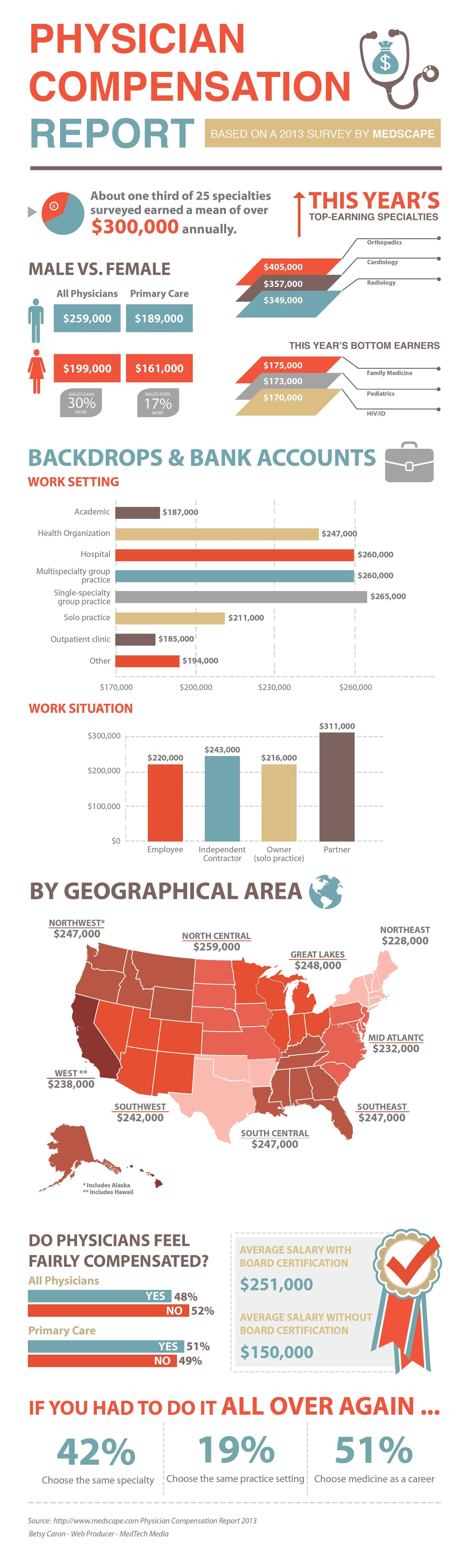
A Physician Compensation Infographic and Review

Doctors saw a small salary increases in 2012 but they were smaller than those in 2011, according to a physician compensation survey released this week by global consulting firm, the Hay Group.

For example, in 2011, physician salaries increased by 2.7 percent but 2012 saw they increased only by 2.5 percent.

####
Pay
More

Conclusion

Your thoughts and comments on this ME-P are appreciated. Feel free to review our top-left column, and top-right sidebar materials, links, URLs and related websites, too. Then, subscribe to the ME-P. It is fast, free and secure.

Link: http://feeds.feedburner.com/HealthcareFinancialsthePostForcxos

Speaker: If you need a moderator or speaker for an upcoming event, Dr. David E. Marcinko; MBA – Publisher-in-Chief of the Medical Executive-Post – is available for seminar or speaking engagements. Contact: MarcinkoAdvisors@msn.com

OUR OTHER PRINT BOOKS AND RELATED INFORMATION SOURCES:

Product DetailsProduct Details

Medical Director Needed for NovaSys Health

Join Our Mailing List

Physician Career Opportunity

By Paul Esselman

[Executive Vice President, and Managing Principal]

Cejka Executive Search

Dear Dr. Marcinko,

Centene Corporation is seeking a Medical Director for NovaSys Health, a full-service managed care company and health plan administrator based in Little Rock. This newly created position will be responsible for assisting in the development of a medical management infrastructure for the health plan as NovaSys expands their member base through the participation in the Arkansas Healthcare Exchange.

A Fortune 500 company, Centene is a national leader in low-cost solutions for high quality healthcare services for uninsured and underinsured patients. Centene’s subsidiary health plans bring better health outcomes to their 1.5 million members. Centene’s core philosophy is that quality healthcare is best delivered locally. This local approach enables them to provide accessible, high quality and culturally sensitive healthcare services to their members in their own communities.

The Medical Director will perform utilization review, quality assurance and medical review of services; oversee the activities of physician advisors; assist in provider network development and expansion; and participate in strategic program developments for improving quality of care while lowering costs. The Medical Director will also work closely with the Plan President and Vice President, Medical Management (RN) in establishing and carrying out the strategic vision of the organization working closely with external constituents as appropriate.

Successful candidates will be physician leaders with knowledge of quality improvement practices and familiarity with medical information systems, medical claims payment processing and coding. Knowledge of managed care, Medicaid and case management programs are preferred. Board certification in a recognized medical specialty, preferably in internal medicine, family practice, pediatrics or emergency medicine, and an active medical license are required.

###

inheritance

Assessment

Qualified candidates should submit their resumes for consideration to me:

Thank you. 

Paul Esselman Executive Vice President, Managing Principal Cejka Executive Search 4 CityPlace Dr., Ste. 300 St. Louis, MO 63141 314.236.4588 Office pesselman@cejkasearch.com http://www.cejkaexecutivesearch.com

Conclusion

Your thoughts and comments on this ME-P are appreciated. Feel free to review our top-left column, and top-right sidebar materials, links, URLs and related websites, too. Then, subscribe to the ME-P. It is fast, free and secure.

Speaker: If you need a moderator or speaker for an upcoming event, Dr. David E. Marcinko; MBA – Publisher-in-Chief of the Medical Executive-Post – is available for seminar or speaking engagements. Contact: MarcinkoAdvisors@msn.com

OUR OTHER PRINT BOOKS AND RELATED INFORMATION SOURCES:

Product DetailsProduct DetailsProduct Details

Product Details  Product Details

Product DetailsProduct Details

Do Nurses like EHRs?

Join Our Mailing List

Do RNs like using electronic health records?

[A seldom considered POV]

1-darrellpruitt

BY Darrell K. Pruitt DDS

Some Facebook comments:

Big problems when you have unexpected “downtimes”.

July 15 at 3:10pm · Like · 4

It is an absolute train wreck. I haven’t seen one record of mine that is not riddled with mistakes. Especially the allergies, they show me taking meds I’m allergic to and not taking meds I’m actually on. A true mess!! And now the records are all intertwined. I don’t like it at all!!

July 15 at 3:10pm · Like · 2

It is a nightmare!

July 15 at 3:18pm · Like

I retired just in time so I don’t have to deal with this fiasco.

July 15 at 3:19pm via mobile · Like · 2

IT SUCKS

July 15 at 3:19pm · Like

I don’t like them; my doctors don’t like them; how it will affect patient care is still a ‘jury out’ matter, but we can guess it will NOT help.

July 15 at 3:30pm · Like

Our Rural Community Healthcare system is just now switching over to this .. along with our hospital switching over to a totally new computer system .. the 2 systems do not talk to each other..In my personal experience I find that the “computer” world takes us away from Direct Patient Care (to busy playing “ring around the Rosie” on the computer).

July 15 at 3:40pm · Like · 4

I like them, but it is frustrating having “downtime.”

July 15 at 3:41pm · Like

I hear patients stating things like “my doctors don’t know who I am because they don’t look at me they are glued to the computer”. It saddens me patients feel less valued. I’ve worked in places where they’ve had paper charts and places computerized. Seems the computers are redundant and I personally prefer paper charts. Chart one assessment not one assessment 4 different places.

July 15 at 3:44pm via mobile · Like · 3

It looks to me like physicians are cutting and pasting old histories and physicals, complete with the errors. Doctors in a local ER charted complete physicals on me when they did not get closer than 5 feet away. The records are difficult to read, difficult to find information; and it is not number in chronological order.

July 15 at 3:47pm · Like

I dislike it. Besides the down time, I find it very impersonal. I don’t feel as if I am giving my full attention to my pt, nor do I feel my PCP is hearing what I’m saying . They are too busy putting in info on the computer. As for the down time you then have to work late to put in the info gathered while the system is down.

July 15 at 3:47pm via mobile · Like · 2

eHRs

Assessment

https://www.facebook.com/friendanurse/posts/654085127954821

More: On DIgital Deaths

http://www.bloomberg.com/news/2013-06-25/digital-health-records-risks-emerge-as-deaths-blamed-on-systems.html

(50+ other comments)

Conclusion

Your thoughts and comments on this ME-P are appreciated. Feel free to review our top-left column, and top-right sidebar materials, links, URLs and related websites, too. Then, subscribe to the ME-P. It is fast, free and secure.

Speaker: If you need a moderator or speaker for an upcoming event, Dr. David E. Marcinko; MBA – Publisher-in-Chief of the Medical Executive-Post – is available for seminar or speaking engagements. Contact: MarcinkoAdvisors@msn.com

OUR OTHER PRINT BOOKS AND RELATED INFORMATION SOURCES:

Product DetailsProduct DetailsProduct Details

Should Doctors Collect Treasures?

Join Our Mailing List

On Investing in Art and Collectibles

By Rick Kahler CFP®

Rick Kahler CFPAlmost everyone has a story about a cousin or an aunt who bought a box of junk at an auction and found in it a diamond ring worth several hundred dollars. Every once in a while a valuable painting by a famous artist turns up in someone’s attic. “Antiques Roadshow” sometimes features odd items that have been sitting around in someone’s house for years and that are appraised for thousands of dollars.

This doesn’t mean buying and selling art or collectibles is a good way to make money.

Collectibles

Buying art, antiques, or collectibles is extremely speculative, in part because values are so subjective. What a given item is worth depends entirely on what a collector might be willing to pay at any given time. A piece of pottery or jewelry might fluctuate considerably in value as trends come and go. Yesterday’s hot collectible (think Beanie Babies or Jim Beam bottles) might be tomorrow’s overpriced embarrassment.

Does this mean you should never buy art or antiques in hopes that they’ll increase in value? Not necessarily. I am suggesting, though, that investment shouldn’t be the primary reason for your purchase.

If you’re going to collect Art Deco jewelry or decorate your home with original artwork, do so because you like those things. Choose a painting because you want it hanging on your wall. Buy a carving or a pot because you want it. Collect iron toys or old books because you have fun searching for them at antique stores and garage sales. If your art or collectibles increase in value, consider it a nice bonus.

If you’re hanging onto a piece of art or an antique that you don’t like because you think it’s valuable and you think of it as an investment, why keep it? You could sell it and put the proceeds into your retirement portfolio. Then your investment wouldn’t be taking up space in your house, and you wouldn’t need to worry about maintaining it or insuring it. Another option would be to use the money to buy something you would enjoy owning.

Do the Research

If you do decide to sell an item, do some serious research and try to find out what it’s really worth. Don’t just stick a price on it for a garage sale or walk into an antiques store and take whatever they offer you. Get at least two or three estimates from dealers or other qualified experts. For something that’s potentially quite valuable, paying for an appraisal might be money well spent.

Finding valuable collectibles at rummage-sale prices is almost always sheer luck. Anyone who consistently makes money buying and selling art or collectibles has invested the time and effort to become an expert. Unless you’re willing to do the same—and you would enjoy it—don’t try to fund your retirement this way.

Making Memories

In the interests of full disclosure, I should confess that not all of my own purchases turn out perfectly. One of my travel memories is of the time I bought two hand-woven carpets at bargain prices. What made the purchase memorable was the experience of stuffing the bulky rolled-up rugs into a taxi and hauling them to the airport, only to find that the baggage handlers had gone on strike.

Those carpets still decorate the floors in our house. Are they worth more than I paid for them? After all the effort it took to get them home, I certainly hope so. But I bought them because I liked them and wanted them in my home.

Assessment

But, if my primary goal had been investing, I would have put the purchase price into several well-diversified mutual funds instead.

Conclusion

Your thoughts and comments on this ME-P are appreciated. Feel free to review our top-left column, and top-right sidebar materials, links, URLs and related websites, too. Then, subscribe to the ME-P. It is fast, free and secure.

Link: http://feeds.feedburner.com/HealthcareFinancialsthePostForcxos

Speaker: If you need a moderator or speaker for an upcoming event, Dr. David E. Marcinko; MBA – Publisher-in-Chief of the Medical Executive-Post – is available for seminar or speaking engagements. Contact: MarcinkoAdvisors@msn.com

OUR OTHER PRINT BOOKS AND RELATED INFORMATION SOURCES:

Risk Management, Liability Insurance, and Asset Protection Strategies for Doctors and Advisors: Best Practices from Leading Consultants and Certified Medical Planners™8Comprehensive Financial Planning Strategies for Doctors and Advisors: Best Practices from Leading Consultants and Certified Medical Planners™

***


Should You Comparison Shop for an Investment Advisor?

Join Our Mailing List

 Consumer’s Repot Not Available

By Rick Kahler CFP® www.KahlerFinancial.com

Rick Kahler CFPYou can spot comparison shoppers a few aisles away at any retail store. They are the ones carrying articles from Consumer Reports, badgering the salesperson with a million and one questions. People who manage money well are usually big fans of comparison shopping.

If comparison shopping is important before choosing a new refrigerator or lawn mower, it’s even more essential before choosing an investment advisor. Unfortunately, there is no easily available consumer’s report on advisors. Even more frustrating, those selling financial products often have incentives not to be forthcoming with the information that is crucial for comparing advisors.

A Focus on Investment Returns

One aspect of shopping for an investment advisor is to know what questions to ask. One common mistake is to focus on investment returns. Shoppers may ask for the average recent returns of the advisor’s portfolios or may want to know whether the advisor’s returns beat the market averages.

Problems:

There are several problems with focusing on returns.

First, the numbers mean nothing without also knowing how much risk the advisor took to produce the return. It’s like someone on a diet focusing only on fat grams without regard to total calories. Consuming ten soft drinks in a day may give you zero fat grams, but you could easily exceed your daily calorie limit before eating one bit of food.

Second, any unscrupulous advisor can put together a portfolio consisting of the hottest investment classes over the past 10 years and show you how fantastically they did.

Third, whether an advisor beats the market is overrated. Why? A whopping 97 percent of all mutual fund managers don’t generate an “average return” over 20 years. Just finding an advisor who has done so means you found someone in the top three percent.

Fourth, some financial advisors may show you a phenomenal track record for the short term (under 10 years). Since wise investing focuses on the long term, beating the averages over a short term isn’t necessarily significant.

Gamesmanship

If so many games can be played around returns, what questions should a savvy comparison shopper ask? Focus on one word: transparency. You want to find out if the returns, costs, and risk (standard deviation) of your portfolio will be clearly displayed and contrasted against appropriate benchmarks.

Transparency

Here is how to accomplish that goal. Most advisors have model portfolios. Ask them to show you the standard deviation and the expense ratio of their model over five and ten years. Ask them to contrast the return of the portfolio against a similar benchmark.

For example, if the portfolio has US stocks, US bonds, and foreign stocks, have them compare it to a benchmark of indexes proportionate to those asset classes.

Next, either ask the advisor to run a similar analysis on your existing portfolio or have one done independently. You may even have done better than the advisor’s model.

Ask the advisor to disclose all fees in addition to the expense ratios charged by mutual fund or sub-account managers. You need to find out how the advisor is paid and how much. Ask whether there are any wrap fees, transaction costs, administrative fees, mortality fees, redemption fees, annual 12b(1) fees, surrender charges, or up-front sales charges.

Referral

Assessment

Don’t be surprised if you get a bit of resistance when you ask for all this information. Brokerage firms, life insurance companies, and many commission-based advisors don’t have much incentive to give you this data and may not even be able to.

If you don’t get clear disclosure on fees and costs, keep asking. If you persist and still don’t get understandable answers, you may need to do more comparison shopping before you choose an advisor.

Conclusion

Your thoughts and comments on this ME-P are appreciated. Feel free to review our top-left column, and top-right sidebar materials, links, URLs and related websites, too. Then, subscribe to the ME-P. It is fast, free and secure.

Link: http://feeds.feedburner.com/HealthcareFinancialsthePostForcxos

Speaker: If you need a moderator or speaker for an upcoming event, Dr. David E. Marcinko; MBA – Publisher-in-Chief of the Medical Executive-Post – is available for seminar or speaking engagements. Contact: MarcinkoAdvisors@msn.com

OUR OTHER PRINT BOOKS AND RELATED INFORMATION SOURCES:

DICTIONARIES: http://www.springerpub.com/Search/marcinko
PHYSICIANS: www.MedicalBusinessAdvisors.com
PRACTICES: www.BusinessofMedicalPractice.com
HOSPITALS: http://www.crcpress.com/product/isbn/9781466558731
CLINICS: http://www.crcpress.com/product/isbn/9781439879900
BLOG: www.MedicalExecutivePost.com
FINANCE: Financial Planning for Physicians and Advisors
INSURANCE: Risk Management and Insurance Strategies for Physicians and Advisors

Product Details  Product Details

Why Hospitals Should Use Financial Management Checklists

Join Our Mailing List

Financial Management Strategies for Hospital and Healthcare Organizations [Tools, Techniques, Checklists and Case Studies]

By Neil H. Baum MD

Dr. BaumIt is fitting that ME-P Editor Dr. David Edward Marcinko MBA CMP™ and his fellow experts, have laid out a plan of action in Financial Management Strategies for Hospital and Healthcare Organizations: Tools, Techniques, Checklists and Case Studies that physicians, nurse-executives, administrators and institutional Chief Executive Officers, Chief Financial Officers, MBAs, lawyers and healthcare accountants can follow to help move healthcare financial fitness forward during these unchartered waters.

In medicine – It all began with Dr. Atul Gawande, a surgeon at Massachusetts General Hospital, who reviewed the airline industry and their use of checklists prior to take off of an airplane.

The history of aviation checklists began in 1934 when Boeing was in the final process of testing a U.S. Army fighter plane with a potential contract of nearly 200 planes riding on the final test of the plane. The test aircraft made a normal taxi and takeoff. It began a smooth climb, but then suddenly stalled. The aircraft turned on one wing and fell, bursting into flames upon impact killing two of the test pilots. The investigation found pilot error as the cause. One of the pilots who was unfamiliar with the aircraft had neglected to release the elevator lock prior to take off. The contract with Boeing was in jeopardy.

Thus, the pilots sat down and put their heads together. What was needed was some way of making sure that everything to prevent crashes was being done; that nothing was overlooked. What resulted was a pilot’s checklist developed before takeoff, during flight, before landing, and after landing. These checklists for the pilot and co-pilot made sure that nothing was forgotten and safety of the planes was insured.

Medical Care and Hospitals

So, what does airline safety have to with medical care and hospitals?

There are so many activities that take place in medicine such as the operating room, that are far too complicated to be left to memory of doctors, nurses, anesthesiologists, and others involved in the surgical care of patients.  Dr. Gawande identified the key components of a surgical procedure which include the name of the patient, the procedure to be performed, the estimated length of the procedure, whether the right or left side is the surgical target, how much blood loss is anticipated, whether antibiotics have been given prior to making the incision, and the anesthetic risk of the patient.  This use of a checklist which takes approximately 30 seconds has not only prevented wrong side surgery but also instills a discipline of higher performance.

###

Financial Management Strategies for Hospitals and Healthcare Organizations

Financial Management Strategies for Hospitals and Healthcare Organizations: Tools, Techniques, Checklists and Case Studies

###

From the Clinic to the Boardroom

And so, should [can] we port the clinical checklist example of Atul Gawande for use with non-clinical topics like hospital financial management and administration?

Assessment

Yes – We have a challenge and the Financial Management Strategies for Hospital and Healthcare Organizations: Tools, Techniques, Checklists and Case Studies is a step in the direction to make all of the stakeholders in the healthcare arena become sensitive to reducing and controlling costs and at the same time preserve quality of care.

This can be done.  I suggest you start by reading, using and referring to this excellent book.

And so, what is my final advice? Read the Book!

Some of you who will read this book are CXOs COOs, Chief Medical Officers and maybe even COS. (Chiefs of Staff). But, all of you should become CLOs (Chief Life Officers)!  Read this book and the initials CLO will appear after your name!

Note:

Neil H. Baum MD is a Clinical Associate Professor of Urology at the Tulane Medical School, New Orleans, LA. He is also a thought-leader for this ME-P. 

Conclusion

Your thoughts and comments on this ME-P are appreciated. Feel free to review our top-left column, and top-right sidebar materials, links, URLs and related websites, too. Then, subscribe to the ME-P. It is fast, free and secure.

Speaker: If you need a moderator or speaker for an upcoming event, Dr. David E. Marcinko; MBA – Publisher-in-Chief of the Medical Executive-Post – is available for seminar or speaking engagements. Contact: MarcinkoAdvisors@msn.com

OUR OTHER PRINT BOOKS AND RELATED INFORMATION SOURCES:

Product DetailsProduct DetailsProduct Details

Product DetailsProduct Details

Fake Sandwich Drug Concealment

Join Our Mailing List 

Hiding illegal drugs in a plastic “sandwich”

By Anonymous

[Click to View]

Fake Sandwich Concealment

Conclusion

Your thoughts and comments on this ME-P are appreciated. Feel free to review our top-left column, and top-right sidebar materials, links, URLs and related websites, too. Then, subscribe to the ME-P. It is fast, free and secure.

Speaker: If you need a moderator or speaker for an upcoming event, Dr. David E. Marcinko; MBA – Publisher-in-Chief of the Medical Executive-Post – is available for seminar or speaking engagements. Contact: MarcinkoAdvisors@msn.com

OUR OTHER PRINT BOOKS AND RELATED INFORMATION SOURCES:

Product DetailsProduct DetailsProduct Details

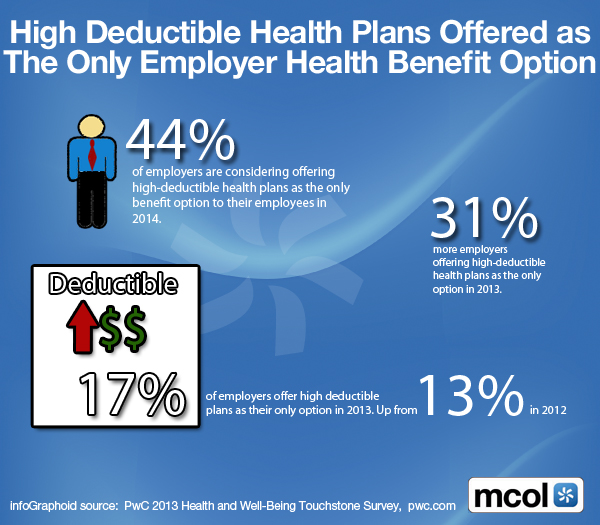
The High Deductible Health Plan Option?

Join Our Mailing List

As the Only Employer Health Benefit Choice!

By www.MCOL.com

###

HDHPs

###

More

Conclusion

Your thoughts and comments on this ME-P are appreciated. Feel free to review our top-left column, and top-right sidebar materials, links, URLs and related websites, too. Then, subscribe to the ME-P. It is fast, free and secure.

Link: http://feeds.feedburner.com/HealthcareFinancialsthePostForcxos

Speaker: If you need a moderator or speaker for an upcoming event, Dr. David E. Marcinko; MBA – Publisher-in-Chief of the Medical Executive-Post – is available for seminar or speaking engagements. Contact: MarcinkoAdvisors@msn.com

OUR OTHER PRINT BOOKS AND RELATED INFORMATION SOURCES:

Product DetailsProduct DetailsProduct Details

Product Details  Product Details

Are Doctors Spenders or Savers?

Join Our Mailing List 

Or … Just Delusional like the Rest of Us!

By Rick Kahler CFP® http://www.KahlerFinancial.com

Rick Kahler CFPAccording to Scarborough, a market research firm, only 9% of adults in the U.S. label themselves as spenders. This is the percentage that “mostly agrees” with the statement, “I am a spender rather than a saver.” On the opposite side, 29% “mostly disagree” with the statement and are considered savers. Presumably, the 62% in between consider themselves to have well-balanced financial habits that include both spending and saving.

Given these numbers, it would seem that most of the adults in this country ought to have healthy savings accounts. Unfortunately, that’s not the case.

Employee Benefit Research Institute

According to a report released in March 2013 by the Employee Benefit Research Institute, 57% of U.S. workers have less than $25,000 in total household investments and savings, not including the value of their homes. The Social Security Administration’s current figures show 34% of American workers have no savings set aside specifically for retirement.

Something doesn’t quite add up. Either a lot of Americans aren’t willing to admit that they are spenders, a lot of Americans are so poor that they can’t afford to save, or a lot of Americans are delusional.

Habits of Savors

Or maybe a lot of us just have different definitions of “saving.” Here are a few money habits that might encourage people to think of themselves as savers, but that don’t necessarily add up to being successful savers:

1. Buying things on sale. Waiting for discounts on items you need and want is a wise and standard practice for frugal shoppers. But you aren’t a saver if you buy bargains that you don’t need, might not even really want, or can’t afford. Maybe that $150 pair of shoes is half price. Yet if they will just sit in your closet, you haven’t saved $75. You’ve spent $75.

2. Having money in the bank. Yes, putting money into a savings account is the first place to start saving and a great habit to teach your kids. But once you have accumulated an emergency fund, keeping your money in the bank isn’t a good savings habit. Over time, savings accounts and CD’s don’t pay enough to keep pace with inflation. Money in the bank may be safe, but it isn’t really an investment because it isn’t growing. Mutual funds that include a well-diversified range of investments are far better places for your long-term retirement savings.

3. Not spending anything. There are times when choosing not to spend money now will only cost you more money later. Failing to maintain your car or do home repairs are two common non-spending habits that may seem like saving but actually turn into spending.

4. Saving for someone else. The time-tested advice to “pay yourself first” usually means taking money off the top for savings before you spend anything. Yet this has another application, as well. Make saving and investing for your own retirement your first priority. It needs to come ahead of saving for your kids’ college educations, weddings, or first homes. This may seem selfish or greedy, but in fact it’s the opposite. When you provide for your own financial well-being in retirement, your kids won’t end up having to help pay your bills.

###

spendthrift

Assessment

When we’re asked to label ourselves, it’s normal to tend to choose answers that fit the way we would like to think of ourselves. I’m sure most of us would prefer to think of ourselves as savers rather than spenders.

But, if we really want to become successful savers, we can’t settle for the money habits we wish we had. We need to look at the money habits we actually practice.

Psychologists and psychiatrists, please comment. Are doctors the same as the rest of us, or not?

Conclusion

Your thoughts and comments on this ME-P are appreciated. Feel free to review our top-left column, and top-right sidebar materials, links, URLs and related websites, too. Then, subscribe to the ME-P. It is fast, free and secure.

Link: http://feeds.feedburner.com/HealthcareFinancialsthePostForcxos

Speaker: If you need a moderator or speaker for an upcoming event, Dr. David E. Marcinko; MBA – Publisher-in-Chief of the Medical Executive-Post – is available for seminar or speaking engagements. Contact: MarcinkoAdvisors@msn.com

OUR OTHER PRINT BOOKS AND RELATED INFORMATION SOURCES:

Health Dictionary Series: http://www.springerpub.com/Search/marcinko

Practice Management: http://www.springerpub.com/product/9780826105752

Physician Financial Planning: http://www.jbpub.com/catalog/0763745790

Medical Risk Management: http://www.jbpub.com/catalog/9780763733421

Hospitals: http://www.crcpress.com/product/isbn/9781439879900

Physician Advisors: www.CertifiedMedicalPlanner.org

Product Details  Product Details

Recommended Readings for Financial Advisors from the No. 1 NBER Bulletin on Aging and Health for 2013

Join Our Mailing List

By Staff Reporters

The 2013 No. 1 Bulletin includes the articles below:

1)  Do Retirement Savings Policies Increase Total Retirement Saving?
by Raj Chetty, John Friedman, Soren Leth-Petersen, Torben Nielsen, and Tore Olsen

http://www.nber.org/bah/2013no1/w18565.html

2)  Behavioral Hazard in Health Insurance
by Katherine Baicker, Sendhil Mullainathan, and Joshua Schwartzstein

http://www.nber.org/bah/2013no1/w18468.html

3)  The Revenue Demands of Public Employee Pension Promises
by Robert Novy-Marx and Joshua Rauh

http://www.nber.org/bah/2013no1/w18489.html

4)  What Makes Annuitization More Appealing?
by John Beshears, James Choi, David Laibson, Brigitte Madrian, and Stephen Zeldes

http://www.nber.org/bah/2013no1/w18869.html

5)  The Prevalence and Economic Consequences of Disability
by Bruce Meyer and Wallace Mok

http://www.nber.org/bah/2013no1/w18575.html

Source: View a printable PDF copy of the at: http://www.nber.org/aginghealth/2013no1/2013no1.pdf

Conclusion

Your thoughts and comments on this ME-P are appreciated. Feel free to review our top-left column, and top-right sidebar materials, links, URLs and related websites, too. Then, subscribe to the ME-P. It is fast, free and secure.

Link: http://feeds.feedburner.com/HealthcareFinancialsthePostForcxos

Speaker: If you need a moderator or speaker for an upcoming event, Dr. David E. Marcinko; MBA – Publisher-in-Chief of the Medical Executive-Post – is available for seminar or speaking engagements. Contact: MarcinkoAdvisors@msn.com

OUR OTHER PRINT BOOKS AND RELATED INFORMATION SOURCES:

Health Dictionary Series: http://www.springerpub.com/Search/marcinko

Practice Management: http://www.springerpub.com/product/9780826105752

Physician Financial Planning: http://www.jbpub.com/catalog/0763745790

Medical Risk Management: http://www.jbpub.com/catalog/9780763733421

Hospitals: http://www.crcpress.com/product/isbn/9781439879900

Physician Advisors: www.CertifiedMedicalPlanner.org

Product DetailsProduct DetailsProduct Details

Product Details  Product Details

On Doctors Passing Wealth to Children

Join Our Mailing List 

Limiting your kid’s ability to tap principal

By Rick Kahler CFP® http://www.KahlerFinancial.com

Rick Kahler CFPWhen passing wealth to your kids, some medical professionals should consider creating a trust to limit the later generation’s ability to tap into the principal. Several astute readers suggested this strategy after my recent column citing research that shows 90% of inherited wealth is gone by the third generation.

Preserving Wealth

There is no question that a trust, done correctly, can go a long way to preserve wealth after the death of the wealth accumulator. Let’s explore what “done correctly” means.

1. Trust law is complex. Engage an accountant and attorney with strong skills and expertise in trusts.

2. Be sure the assets you intend to go into the trust will actually transfer.

Retirement plans like IRA’s, 401(k)’s, and profit sharing plans will pass to whomever you listed as the beneficiary. This must be the trust. In addition, the trust must include a number of special provisions in order for a retirement plan to be distributed according to your wishes and not as a fully taxable lump sum.

Annuities, insurance policies, and accounts with a TOD (transfer on death) clause will also pass to the named beneficiary.

Assets held in joint tenancy will not pass to the trust. Many married couples jointly own most of their major assets, such as the family home, investment real estate, brokerage accounts, or bank accounts.

3. Be sure there are enough assets in the trust to justify the trustee fees. Most professional corporate trustees charge $3,500 to $10,000 annually, or up to 1% of the trust assets. If a trust with $100,000 incurs an annual fee of $3,500, your hard-earned estate will benefit the trustee as much as your heirs. A trust probably doesn’t make financial sense if the total fees will exceed 2%.

4. If a trust still seems like a good strategy after the above caveats, the next question is how much to limit heirs’ ability to withdraw money. From an actuarial standpoint it’s fairly simple. If you limit annual withdrawals to 3% of the principal, there’s a strong probability of the money lasting several generations with its buying power intact. Provided, that is, the trustees pay close attention to the next point.

5. To generate sufficient returns to pay out up to 3% annually to heirs and also keep up with inflation, the majority of the portfolio must be invested in assets that will grow over time, such as stocks, real estate, and commodities. It needs to be broadly diversified among many asset classes and countries. The trustees must also limit the fees paid to manage the investments. Many corporate trustees have an inherent incentive to use their own bank’s mutual funds, which can have annual fees as high as 1.5%. One way to avoid this conflict of interest is to instruct the trustee to place the funds with a fee-only investment advisor who has a largely passive approach to managing money. This could cut the portfolio fees by 50% or more.

6. Finally, before setting up any trust, pay close attention to taxes. Congress recently increased the top income tax bracket to 39.6% on wealthy taxpayers. Any trust which keeps more than $11,950 of annual income is considered “wealthy.” So here is the problem. If the trust retains enough earnings to increase the principal to offset inflation, it will have to pay substantial income tax and will probably need to restrict withdrawals to 1 or 2%. All of a sudden a multi-million dollar inheritance becomes simply a source of secondary income similar to Social Security.

###

Tax and Financial Strategy 2012

Assessment

Trusts are valuable estate planning tools. But like any other powerful tools, they are best employed by someone with the skills to use them well.

More:

Conclusion

Your thoughts and comments on this ME-P are appreciated. Feel free to review our top-left column, and top-right sidebar materials, links, URLs and related websites, too. Then, subscribe to the ME-P. It is fast, free and secure.

Link: http://feeds.feedburner.com/HealthcareFinancialsthePostForcxos

Speaker: If you need a moderator or speaker for an upcoming event, Dr. David E. Marcinko; MBA – Publisher-in-Chief of the Medical Executive-Post – is available for seminar or speaking engagements. Contact: MarcinkoAdvisors@msn.com

OUR OTHER PRINT BOOKS AND RELATED INFORMATION SOURCES:

DICTIONARIES: http://www.springerpub.com/Search/marcinko
PHYSICIANS: www.MedicalBusinessAdvisors.com
PRACTICES: www.BusinessofMedicalPractice.com
HOSPITALS: http://www.crcpress.com/product/isbn/9781466558731
CLINICS: http://www.crcpress.com/product/isbn/9781439879900
BLOG: www.MedicalExecutivePost.com
FINANCE: Financial Planning for Physicians and Advisors
INSURANCE: Risk Management and Insurance Strategies for Physicians and Advisors

Product Details  Product Details

Example Total Expenditures on Health

Join Our Mailing List

International Per Capita Total Spending

By: http://www.MCOL.com

###

costs

###

More:

Conclusion

Your thoughts and comments on this ME-P are appreciated. Feel free to review our top-left column, and top-right sidebar materials, links, URLs and related websites, too. Then, subscribe to the ME-P. It is fast, free and secure.

Link: http://feeds.feedburner.com/HealthcareFinancialsthePostForcxos

Speaker: If you need a moderator or speaker for an upcoming event, Dr. David E. Marcinko; MBA – Publisher-in-Chief of the Medical Executive-Post – is available for seminar or speaking engagements. Contact: MarcinkoAdvisors@msn.com

OUR OTHER PRINT BOOKS AND RELATED INFORMATION SOURCES:

Health Dictionary Series: http://www.springerpub.com/Search/marcinko

Practice Management: http://www.springerpub.com/product/9780826105752

Physician Financial Planning: http://www.jbpub.com/catalog/0763745790

Medical Risk Management: http://www.jbpub.com/catalog/9780763733421

Hospitals: http://www.crcpress.com/product/isbn/9781439879900

Physician Advisors: www.CertifiedMedicalPlanner.org

Product DetailsProduct DetailsProduct Details

Ramadan Greetings 2013

Join Our Mailing List

Ramadan 2013 In Pictures: Muslims Celebrate Around The Globe (PHOTOS)

###

106014

###

[Tuesday July 9th to Wednesday August 7th 2013]

Product DetailsProduct DetailsProduct Details


The Doctor’s Path to Wealth?

And … for us all

By Rick Kahler CFP® http://www.KahlerFinancial.com

Rick Kahler CFPAfter three decades as a financial planner, working with successful wealth-builders, you’d think I would have a clear idea of the right path for creating wealth.

Instead, what I’ve learned is that there is no such thing. Here are just a few of the paths that aren’t the sure routes to wealth they might seem to be:

Several Paths

1. Education and career choices. Going into a field like law or medicine might seem to guarantee financial success. Not necessarily. I’ve seen many physicians, for example, who have accumulated significant wealth. I’ve seen just as many who live paycheck to paycheck.

2. High earnings. Again, this isn’t the reliable predictor of wealth it would seem to be. True, someone who spends decades in low-wage jobs is unlikely to be able to accumulate much financial security. But a person earning $1 million a year will not necessarily have a larger net worth than someone earning $75,000. I’ve seen people who worked as janitors, nurses, and mechanics become millionaires. I’ve worked with others, earning a hundred times more in careers like sales or entertainment, who reach retirement age with absolutely nothing.

3. Owning your own business. Many hard-working, creative entrepreneurs build successful businesses that provide wealth, not just for themselves, but for their children and grandchildren. Others might see a business or even a series of businesses fail. Still others might work hard all their lives but never achieve more than the equivalent of an average salary in their field.

4. Investment choices. Some people have had great success investing in various types of real estate, businesses, and commodities. Others have lost everything they ever owned investing in those same vehicles.

Some Commonalities

So, sorry, I can’t give you a simple list of the top ways to build wealth. There’s little commonality in how my successful clients have made their money. What I can suggest are a few ways to help you find your own path to accumulating wealth.

1. Define “wealth” in your own way. Maybe you’re willing to live frugally in order to accumulate enough money to feel secure that your needs will be met even if you live to be 100. Maybe wealth to you is living a lavish lifestyle and being willing to work hard to pay for it. You might see wealth as the satisfaction and responsibility of having your own business. Maybe it means being able to give generously. Or perhaps you define wealth as the freedom of owning little and traveling around the world on a bicycle.

2. Know what you are willing to sacrifice—and what you are not—in order to accumulate wealth. There’s nothing wrong with earning a high salary doing work you hate for a time, as part of an overall strategy to get you to doing something you love. But doing so for a lifetime is hardly the road to either happiness or wealth.

3. Think long term. The most reliable way to build lifetime wealth, with the lowest risk, is through a long-term commitment to diversified investing. Yet even those who are successful on riskier paths to wealth take the long view. Business owners may fail more than once before they succeed. And those who have made fortunes in high-risk investments have also lost fortunes. They understand that success is about taking calculated risks.

4. Learn to make conscious financial decisions. I’ve seen many intelligent, capable people stuck in financial chaos and poverty because of emotional pain and dysfunction. Emotional health may not be essential for building financial wealth. It is, however, essential if you want to use that wealth to support a rich and satisfying life.

###

Stock Market

More:

Conclusion

Your thoughts and comments on this ME-P are appreciated. Feel free to review our top-left column, and top-right sidebar materials, links, URLs and related websites, too. Then, subscribe to the ME-P. It is fast, free and secure.

Speaker: If you need a moderator or speaker for an upcoming event, Dr. David E. Marcinko; MBA – Publisher-in-Chief of the Medical Executive-Post – is available for seminar or speaking engagements. Contact: MarcinkoAdvisors@msn.com

OUR OTHER PRINT BOOKS AND RELATED INFORMATION SOURCES:

***

  Risk Management, Liability Insurance, and Asset Protection Strategies for Doctors and Advisors: Best Practices from Leading Consultants and Certified Medical Planners™8Comprehensive Financial Planning Strategies for Doctors and Advisors: Best Practices from Leading Consultants and Certified Medical Planners™

***

Invite Dr. Marcinko

***

Some Out-Sourced Medical Humor

Join Our Mailing List

Introducing The Health Scout

By Staff Reporters

We are delighted to refer our ME-P readers to Dalya Munves over at the Wing of Zock.

Dalya is a medical student at The University of Texas at Houston, where she just completed her first year. Before medical school, she earned a B.A. in Literary Studies with a Minor in Philosophy from The University of Texas at Dallas.

Sample

Assessment

Dalya is currently interested in specializing in Internal Medicine or Obstetrics and Gynecology. She blogs at The Health Scout and you can follow her on Twitter @HealthScoutBlog.

So; when you need a chuckle – just give her site a click!

Conclusion

Your thoughts and comments on this ME-P are appreciated. Feel free to review our top-left column, and top-right sidebar materials, links, URLs and related websites, too. Then, subscribe to the ME-P. It is fast, free and secure.

Speaker: If you need a moderator or speaker for an upcoming event, Dr. David E. Marcinko; MBA – Publisher-in-Chief of the Medical Executive-Post – is available for seminar or speaking engagements. Contact: MarcinkoAdvisors@msn.com

OUR OTHER PRINT BOOKS AND RELATED INFORMATION SOURCES:

Product DetailsProduct Details

Twelve Steps of Financial Independence for Doctors

Join Our Mailing List

A Basic Guide

By Lon Jefferies  MBA CFP® CMP®

Lon JeffriesWant to get your finances in order? Consider this comprehensive 12-step guide to address each element of your personal financial situation. In most cases, you should not address a step until all previous steps are satisfied.

1. 401(k) 403(b) Match: Without exception, if your employer matches 401(k) contributions, you should maximize whatever they’re offering. If it’s a dollar-for-dollar match, that’s an instant 100 percent return! Even the 50 percent return of a two-for-one match is irresistible.

2. Consumer Debt: Pay off your credit cards and all other unsecured loans, prioritizing the debts with the highest interest rates. Credit cards frequently charge rates as high as 30 percent. Paying off a card with 30 percent APR is comparable to getting a 30 percent investment return. Not completing this step will hamper your entire financial plan.

3. Cash Flow: You can’t develop wealth if you spend more than you make. Construct and follow a written budget to ensure you are living within your means. Your budget should include saving at least 10 percent of your gross income for retirement. Constantly compare actual spending with your budget and hold yourself accountable! Mint.com is an excellent free tool for this step.

4. Emergency Reserve: Develop a liquid savings account consisting of enough money to cover three to six months of expenses. These funds should only be utilized in crisis such as a job loss or medical emergency.

5. Life Insurance: If you have dependent children, you likely need life insurance. Cost-efficient coverage can frequently be obtained via your employer. To calculate the amount of coverage to purchase, first determine how much money your survivors would need to maintain a comfortable lifestyle, and then subtract any income they will generate as well as any savings you’ve accumulated. Alternatively, if you don’t have children in your household and your spouse is self-sufficient, you may not need life insurance coverage.

6. Disability Insurance: Getting hurt can completely derail your financial planning. A loss of income halts your savings and likely leads to increased debt. Obtain enough disability coverage to bridge the gap between earnings and expenses in the event of an injury. Coverage can frequently be purchased through your employer.

7. Estate Planning: Obtain a power of attorney, medical directive and living will. These documents allow you to designate the person you would like to make decisions for you if you become incapacitated. They also specify your preferences regarding life-prolonging medical treatments. Ensure both primary and contingent beneficiaries are assigned to your retirement accounts. Finally, develop a will or trust to ensure all other assets are distributed as you desire when you die.

8. Retirement Contributions: With risk exposures covered, it’s time to return to retirement planning efforts. Again, a 401(k) is an attractive retirement vehicle because it frequently offers an employer match and allows large annual contributions ($18,500 or $25,000 for individuals over age 50). If your employer doesn’t offer a 401(k), you can still contribute up to $6,500 (or $7,000 if over age 50) to an IRA. IRA contributions can be made on behalf of both spouses, even if only one is employed.

9. Traditional or Roth: The type of account that is best for you depends on when you want to pay taxes. A traditional retirement account allows an immediate tax deduction, the investments grow tax deferred, and the money isn’t taxed until the funds are withdrawn from the account. Alternatively, taxes are paid on Roth contributions immediately, but both contributions and growth are completely tax free when withdrawn during retirement. Put simply: will you be in a higher tax bracket now or when you withdraw the funds?

10. Asset Allocation: The most important investment decision you can make is how much of your portfolio will be invested in stocks versus bonds. A higher proportion of stocks leads to increased risk, but the potential for greater returns. The more time you have until the funds are needed, the more risk you can usually afford to take. Consequently, you should reduce the proportion of stocks in your portfolio as you approach retirement in order to minimize your risk factor. Identify an asset allocation that is aggressive enough to accomplish your investment goals while exposing you to an acceptable level of risk.

11. Get Caught Up: According to a recent Fidelity study, your nest egg should be one times your salary by age 35, three times your salary by 45, five times your salary by 55 and seven times your salary by 67.

12. Education Planning: Only after your retirement savings is where it should be can you focus on your children’s college education. At this point, explore a Utah Educational Savings Plan 529 (uesp.org) or a Coverdell Education Savings Account, both of which offer tax advantages if used for schooling.

Assessment

Does this mean you don’t need a financial advisor? Of course not! A qualified, comprehensive financial planner can add value, address shortcomings, and answer questions in each of these areas. Once you have completed each of these steps, you can be confident you have your financial ducks in a row.

###

healthcare-business

Conclusion

Your thoughts and comments on this ME-P are appreciated. Feel free to review our top-left column, and top-right sidebar materials, links, URLs and related websites, too. Then, subscribe to the ME-P. It is fast, free and secure.

Link: http://feeds.feedburner.com/HealthcareFinancialsthePostForcxos

Speaker: If you need a moderator or speaker for an upcoming event, Dr. David E. Marcinko; MBA – Publisher-in-Chief of the Medical Executive-Post – is available for seminar or speaking engagements. Contact: MarcinkoAdvisors@msn.com

Product DetailsProduct DetailsProduct Details

Product Details  Product Details

Risk Management, Liability Insurance, and Asset Protection Strategies for Doctors and Advisors: Best Practices from Leading Consultants and Certified Medical Planners™8Comprehensive Financial Planning Strategies for Doctors and Advisors: Best Practices from Leading Consultants and Certified Medical Planners™

PP-ACA Physician Ownership Provisions

Join Our Mailing List

Understanding the “whole hospital exception” to the Stark laws

By Dr. David Edward Marcinko MBA CMP®

www.CertifiedMedicalPlanner.org

Dr. David E. Marcinko MBAThis was a big week for healthcare reform, wasn’t it? Some provisions of the PP-ACA requiring the employer mandates were delayed another year; until January 1, 2015.

But, before passage of the ACA in 2010, the “whole hospital exception” to the Stark law allowed physicians to have an ownership interest in a hospital to which those physicians refer patients, provided the physician is invested in the whole hospital and not a subdivision of the hospital, with no limitations as to the amount or extent of physician ownership, on either an aggregate or individual basis.

Prohibitions

Now, according to colleague Robert James Cimasi MHA, AVA, ASA, MCBA, CMP®, of www.HealthCapital.com, The ACA completely prohibits physician-owned hospitals which were not Medicare-certified by December 31, 2010.

[1] The ACA allows hospitals with a provider agreement prior to December 31, 2010 to continue Medicare participation if they meet the following four criteria: (1) located in a county with a population growth rate of at least150% the state’s population growth over the last 5 years; (2) have Medicaid inpatient admission percentage of at least the average of all hospitals in the county; (3) located in a state with below-national-average bed capacity; and, (4) have bed occupancy rate greater than state average. [2]

Grandfathered

A very limited number of physician-owned hospital existing in 2010 met or were close to meeting all 4 of criteria.[3] The Reconciliation Act provided a limited exception to the ACA growth restrictions for grandfathered physician owned hospitals that treat the highest percentage of Medicaid patients in their county (and are not the sole hospital in a county).[4]

###

Financial Management Strategies for Hospitals and Healthcare Organizations: Tools, Techniques, Checklists and…

### 

Assessment

Based on these provisions, the 2010 healthcare reform legislation will likely have a considerable negative impact on physician-owned hospitals, in terms of impeding development of new hospitals and expansion of existing hospitals.

Conclusion

Your thoughts and comments on this ME-P are appreciated. Feel free to review our top-left column, and top-right sidebar materials, links, URLs and related websites, too. Then, subscribe to the ME-P. It is fast, free and secure.

Link: http://feeds.feedburner.com/HealthcareFinancialsthePostForcxos

Speaker: If you need a moderator or speaker for an upcoming event, Dr. David E. Marcinko; MBA – Publisher-in-Chief of the Medical Executive-Post – is available for seminar or speaking engagements. Contact: MarcinkoAdvisors@msn.com

OUR OTHER PRINT BOOKS AND RELATED INFORMATION SOURCES:

Health Dictionary Series: http://www.springerpub.com/Search/marcinko

Practice Management: http://www.springerpub.com/product/9780826105752

Physician Financial Planning: http://www.jbpub.com/catalog/0763745790

Medical Risk Management: http://www.jbpub.com/catalog/9780763733421

Hospitals: http://www.crcpress.com/product/isbn/9781439879900

Physician Advisors: www.CertifiedMedicalPlanner.org


[1]       “Section-by-Section Analysis with Changes Made by Title X and Reconciliation included within Titles I-IX,” Democratic Policy Committee, http://dpc.senate.gov/healthreformbill/healthbill96.pdf (Accessed 5/24/2010).

[2]       “Section-by-Section Analysis with Changes Made by Title X and Reconciliation included within Titles I-IX,” Democratic Policy Committee, http://dpc.senate.gov/healthreformbill/healthbill96.pdf (Accessed 5/24/2010).

[3]       “Healthcare Reform: A Brief Analysis on How it Impacts ASCs and Physician-OwnedHospitals – 10 Observations”, By Scott Becker, Leigh Page, and Rob Kurtz, Becker’s Hospital Review, http://www.beckersorthopedicandspine.com/news-a-analysis/legal-a-regulatory/1193-healthcare-reform-abrief- analysis-on-how-it-impacts-ascs-and-physician-owned-hospitals-10-observations (Accessed 5/20/10).

[4]       “Section-by-Section Analysis with Changes Made by Title X and Reconciliation included within Titles I-IX,” Democratic Policy Committee, http://dpc.senate.gov/healthreformbill/healthbill96.pdf (Accessed 5/24/2010).

Product DetailsProduct Details

The Most Common Sites of Automobile Accidents

Join Our Mailing List 

Doctors Be Aware

[By Dr. David Edward Marcinko MBA]

By Nalley Collision Center

Dr. David E. Marcinko jpeg

Even with the latest safety features, the risk of an automobile crash or collision is never far away from the minds of most drivers. This is especially the case for some doctors who may have a proclivity to drive expensive automobiles.

But, where are the most common sites for automobile accidents? With the summer upon us – and the long Independence Day weekend – we may have the answers.

The Sites

One popular old statistic suggested that most accidents occur near the home, and numerous road safety campaigns have encouraged drivers not to be complacent as they drive along the streets in their local neighborhood. But, there are also several more specific places where automobile accidents are most common.

Car Parks

Car parks and lots are confined spaces full of motorists engaging in difficult maneuvers around other vehicles, while pedestrians walk around them. In general, the accidents are minor scrapes and dents, but they are very common indeed.

Junctions

It’s not surprising that intersections between roads are likely to produce more than their fair share of accidents. Whether it’s a rear end crunch for the driver suddenly forced to stop while turning, or a side-impact caused by a momentary loss of concentration, junctions are common crash locations.

The good news is that traffic should normally be moving relatively slowly at intersections, so damage is often limited to little more than scratched paintwork and injured pride.

Stoplights

Although unregulated intersections can pose safety problems for drivers, stoplights themselves bring their own challenges. They regulate traffic flow, and can lead to rear end collisions when drivers have to stop suddenly. Sometimes one rear end impact can result in a pile-up as the cars behind also fail to stop in time in a chain reaction. As many stoplights are associated with pedestrian crossings, these accidents have the potential to be serious.

Country Roads

Driving along an empty country road, a driver could be forgiven for thinking that the risk of auto accidents would be low. Unfortunately this appears not to be the case. Country roads are common accident sites for two reasons.

The fact that they are so quiet, and often straight with little variety in the landscape, means that motorists can find themselves losing concentration (often even falling asleep) for just a couple of moments, which is all it takes for a car to end up in a ditch by the side of the road.

Also, of course, rural highways tend not to be as well maintained as busy urban routes, and potholes and other debris also contribute to accidents.

Busy Roads

But, if quiet country roads are common accident sites, so are busy two (or more) lane roads. The reason why busy roads are dangerous is that with several lanes of traffic in each direction, sometimes with no barrier, drivers have no way of avoiding a head-on collision if, for example, a vehicle drifts towards the road’s center, or if a car pulls out into oncoming traffic to overtake the vehicle in front without checking the road ahead.

###

jaguar

###

DEM's Jaguar

More:

Assessment

Doctors, medical professionals and all motorists, have their work cut out, with quiet roads, busy roads, unregulated junctions, stoplights and car parks all providing rich scope for accidents. What this really illustrates, however, is the extent to which drivers cannot afford to let their attention slip for an instant when behind the wheel.

Conclusion

Your thoughts and comments on this ME-P are appreciated. Feel free to review our top-left column, and top-right sidebar materials, links, URLs and related websites, too. Then, subscribe to the ME-P. It is fast, free and secure.

Link: http://feeds.feedburner.com/HealthcareFinancialsthePostForcxos

Speaker: If you need a moderator or speaker for an upcoming event, Dr. David E. Marcinko; MBA – Publisher-in-Chief of the Medical Executive-Post – is available for seminar or speaking engagements. Contact: MarcinkoAdvisors@msn.com

OUR OTHER PRINT BOOKS AND RELATED INFORMATION SOURCES:

Product Details  Product Details


Some Vital Survival Tools for Physicians and their Consulting Advisors

OUR BOOKS, TEXTS AND DICTIONARIES ARE VITAL SURVIVAL TOOLS FOR ALL PHYSICIANS … AND THEIR CONSULTING ADVISORS 

###

Product DetailsProduct DetailsProduct Details

Product Details  Product Details

Product DetailsProduct Details

Speaker: If you need a moderator or speaker for an upcoming event, Dr. David E. Marcinko; MBA – Publisher-in-Chief of the Medical Executive-Post – is available for seminar or speaking engagements. Contact: MarcinkoAdvisors@msn.com

      Join Our Mailing List

Events Planner: July 2013

ADVERTISEMENT

Events-Planner: JULY 2013

By Staff Writers
Calendar Calculator“Keeping track of important health economics and financial industry meetings, conferences and summits”

Welcome to this issue of the Medical Executive-Post and our Events-Planner. It contains the latest information on conferences, news, and relevant resources in healthcare finance, economics, research and development, business management, pharmaceutical pricing, and physician/entity reimbursement!  Watch for a new Events-Planner each month.

First, a little about us! The Medical Executive-Post is still a relative newcomer. But today, we have almost 500,000 visitors and readers each month from all over the country, in addition to our growing subscriber base. We have been a successful collaborative effort, thanks to your contributions.  As a result, we are adding new resources daily. And, we hope the website continues to provide the best place to go for journals, books, conferences, educational resources, tools, and other things you need to establish the value your healthcare consulting and financial advisory intervention.

So, enjoy the Medical Executive-Post and this monthly Events-Planner with our compliments.

A Look Ahead this Month – And now, the important dates:

  • July 21-24: ASHE Conference. Atlanta, GA
  • July 28-31: AHRMM Conference. San Diego, CA

MarcinkoAdvisors@msn.com

Speaker: If you need a moderator or speaker for an upcoming event, Dr. David E. Marcinko; MBA – Publisher-in-Chief of the Executive-Post – is available for seminar or speaking engagements. Contact: MarcinkoAdvisors@msn.com

Subscribe Now: Did you like this Medical Executive-Post, or find it helpful, interesting and informative? Want to get the latest E-Ps delivered to your email box each morning? Just subscribe using the link below. It’s free. You can unsubscribe at any time. Security is assured.

Link: http://feeds.feedburner.com/HealthcareFinancialsthePostForcxos

Product DetailsProduct DetailsProduct Details

Product Details  Product Details

Product DetailsProduct Details