Paradigm Shift to “Defined Health Contributions” from “Defined Health Benefits” Plans

What it is – How it Works

By Staff Reporters

Join Our Mailing List 

In the past, according to Robert James Cimasi MHA AVA CMP™ of Health Capital Consultants LLC in St. Louis MO, many employers had defined retirement benefits for employees. Today, most retirement benefits are in the form of 401K plans where companies make defined contributions, effectively shifting the financial risk of paying for retirement to employees.

Defined Health Contributions

Defined health contributions are similar to employer-funded defined retirement contributions like 401K plans. Currently, employers pay for some portion of about half of Americans’ health insurance. Traditional employer-funded plans are those for which the employee simply fills out a form; that is, an employer will offer one or possibly two health insurance plans, and the employee fills out application paperwork. The employer administers the plan and may charge the employee a portion of the monthly premium or pay the entire premium themselves. A defined contribution plan allows companies to shift the financial risk of paying for rising health insurance costs.

Defined Health Benefits

Although part of the “benefit” of a health benefit plan is that the employer also takes care of all the administrative paperwork related to the insurance, companies are increasingly uninvolved in the administration process, opting instead to let the employee decide which plan out of many choices suits them best. For example, if an employer typically spends about $5,000 per employee per year on health benefits, the employer would use that money as a “defined contribution.” The employee then has $5,000 to spend per year on benefits, but instead of using the employer-defined health plan, the employee may choose from a variety of HMOs, preferred provider organizations PPOs, or other health plans. If the insurance premiums rise above this amount, the employee must make up the difference.
dhimc-book24Defined Contribution Package

Many employers are currently offering a defined contribution package to their employees. The definition of “defined contributions,” however, can range from one in which employers are completely uninvolved in the administration of benefits and simply give their employees cash or vouchers for the amount contributed that they can use to buy coverage, to a more “defined choice model” where employers offer a variety of health options at differing price levels along with a premium dollar contribution, and a variety of other options in between.

Risk Shifting

Thus, defined contributions shift the financial risk from the employer to the employee. Defined care is not a replacement for managed care, but will probably cause managed care to adapt under these new systems. That is, HMOs, PPOs and other managed care plans still appear to be the main choices in a defined care environment, so they are in fact a part of the system.

Assessment

Another challenge with a defined health benefit program is that the concept of risk-pooling becomes more difficult. In traditional employer-sponsored plans, rates are usually based on the pool of employees; a chronically ill employee who tries to find insurance independently may face rates drastically higher than if they had participated in an employer-sponsored plan.

MORE: www.CertifiedMedicalPlanner.org

Conclusion

Your thoughts and comments on this ME-P are appreciated. Feel free to review our top-left column, and top-right sidebar materials, links, URLs and related websites, too. Then, subscribe to the ME-P. It is fast, free and secure.

Link: http://feeds.feedburner.com/HealthcareFinancialsthePostForcxos

Speaker: If you need a moderator or speaker for an upcoming event, Dr. David E. Marcinko; MBA – Publisher-in-Chief of the Medical Executive-Post – is available for seminar or speaking engagements. Contact: MarcinkoAdvisors@msn.com

OUR OTHER PRINT BOOKS AND RELATED INFORMATION SOURCES:

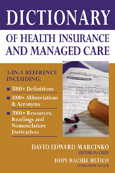
DICTIONARIES: http://www.springerpub.com/Search/marcinko
PHYSICIANS: www.MedicalBusinessAdvisors.com
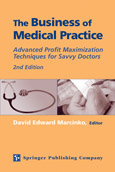
PRACTICES: www.BusinessofMedicalPractice.com
HOSPITALS: http://www.crcpress.com/product/isbn/9781466558731
CLINICS: http://www.crcpress.com/product/isbn/9781439879900
BLOG: www.MedicalExecutivePost.com
FINANCE: Financial Planning for Physicians and Advisors
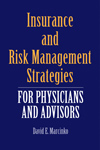
INSURANCE: Risk Management and Insurance Strategies for Physicians and Advisors

Product DetailsProduct Details

Product Details


Understanding the Emergency Medical Treatment and Active Labor Act

An Important and Contemporary Issue – Once Again

[By Patricia Trites; MPA, CHBC, CMP™ (Hon) with Staff Reporters]

tritesThe Emergency Medical Treatment and Active Labor Act (EMTALA) is receiving increasing scrutiny from prosecutors during these times of financials stress and credit tightening. The statute is intended to ensure that all patients who come to the emergency department of a hospital receive care, regardless of their insurance or ability to pay. Both hospitals and physicians need to work together to ensure compliance with the provisions of this law.

Triad of Requirements

EMTALA imposes three fundamental requirements upon hospitals that participate in the Medicare program with regard to patients requesting emergency care.

First, the hospital must conduct an appropriate medical screening examination to determine if an emergency medical condition exists.

Second, if the hospital determines that an emergency medical condition exists, it must either provide the treatment necessary to stabilize the emergency medical condition or comply with the statute’s requirements to affect a proper transfer of a patient whose condition has not been stabilized. A hospital is considered to have met this second requirement if an individual refuses the hospital’s offer of additional examination or treatment, or refuses to consent to a transfer, after having been informed of the risks and benefits of treatment.

Third, EMTALA’s requirement is activated if an individual’s emergency medical condition has not been stabilized.

Hospital Transfers

A hospital may not transfer an individual with an unstable emergency medical condition unless:

(1) the individual or his or her representative makes a written request for transfer to another medical facility after being informed of the risk of transfer and the transferring hospital’s obligation under the statute to provide additional examination or treatment;

(2) a physician has signed a certification summarizing the medical risks and benefits of a transfer and certifying that, based upon the information available at the time of transfer, the medical benefits reasonably expected from the transfer outweigh the increased risks; or

(3) a qualified medical person signs the certification after the physician, in consultation with the qualified medical person, has made the determination that the benefits of transfer outweigh the increased risks, if a physician is not physically present when the transfer decision is made. The physician must later countersign the certification.dhimc-book21

On-Call Responsibilities

One area of particular concern is physician on-call responsibilities. Physician practices whose members serve as on-call hospital emergency room physicians are advised to familiarize themselves with the hospital’s policies regarding on-call physicians. This can be done by reviewing the medical staff bylaws or policies and procedures of the hospital that must define the responsibility of on-call physicians to respond to, examine, and treat patients with emergency medical conditions. Physicians should also be aware of the requirement that, when medically indicated, on-call physicians must generally come to the hospital to examine the patient. Patients may be sent to see the on-call physician at a hospital-owned contiguous or on-campus facility to conduct or complete the medical screening examination due to the following reasons:

  • all persons with the same medical condition are moved to this location;
  • there is a bona fide medical reason to move the patient;
  • qualified medical personnel accompany the patient; and
  • teaching physicians may participate.

Channel Surfing the ME-P

Have you visited our other topic channels? Established to facilitate idea exchange and link our community together, the value of these topics is dependent upon your input. Please take a minute to visit. And, to prevent that annoying spam, we ask that you register. It is fast, free and secure.

Conclusion

Your thoughts and comments on this ME-P are appreciated. Feel free to review our top-left column, and top-right sidebar materials, links, URLs and related websites, too. Then, subscribe to the ME-P. It is fast, free and secure.

Speaker: If you need a moderator or speaker for an upcoming event, Dr. David E. Marcinko; MBA – Publisher-in-Chief of the Medical Executive-Post – is available for seminar or speaking engagements. Contact: MarcinkoAdvisors@msn.com

OUR OTHER PRINT BOOKS AND RELATED INFORMATION SOURCES:


Product DetailsProduct Details       

Product DetailsProduct Details

On Continuity of Medical Care and HIMSS

Join Our Mailing List

Considering Pay-for-Retention [P-4-R]

By Darrell K Pruitt; DDSpruitt5

Here is the question on lots of minds these days; how can we change the way medical providers are paid so they are both incentivized and adequately compensated to provide consistent, high-quality, patient-centered medical homes?

My Novel Idea

Here is a solid, common sense idea; increase providers’ pay gradually according to how long the doctors retain patients – who are free to choose any doctor they wish.  Consistency is the mortar of a medical home [i.e., pay-4-retention]. 

An Ounce of Prevention 

If prevention, which predates eHRs by thousands of years, is more than just a modern buzzword, the nation can still shave much more expense from health care by promoting continual, personalized care for consumers than from digital health records alone – void of prevention incentives. Who in the audience still cannot understand that concept? Think of it this way. How do business leaders in the land of the free retain the best employees? They pay bonuses. Even waiters get tips to encourage interest in providing service consumers will return for. What do US physicians get?  Guaranteed cuts in their Medicaid payments over the next decade. Physicians no longer encourage their children to become doctors. Surprised? Scared? 

Consumers Should Rule 

In place of consumers ruling their healthcare in the US, well-positioned, giant stakeholders have persuaded lawmakers to offer physicians bonus money (that will later be taken away), not for curing patients, but for using digital records “in a meaningful manner.” It’s called “Mark and Michael Leavitts’ Clicking for Cash.”  Since the rules are made up along the way, they change like the weather. That is why the larger and more progressive medical facilities pay bonuses to retain their best “Coders” and other informatics specialists who keep up with the current Ingenix-styled games in order to maximize profits. It is my opinion that health care IT’s complexity works well with the economic stimulus plan to improve employment in the nation. Entrepreneurial stakeholders will continue to be movie-star popular right up until the complete collapse of Medicare.  Then they’ll be impossible to find www.HealthDictionarySeries.com

HIMSS 

Have you ever heard of HIMSS?

“The Healthcare Information and Management Systems Society (HIMSS) is the healthcare industry’s membership organization exclusively focused on providing leadership for the optimal use of healthcare information technology (IT) and management systems for the betterment of healthcare.”

– From the HIMSS Web site.

HIMSS Annual Meeting 

A week ago, HIMSS convened its annual convention in Chicago. The keynote speakers for the four day event were actor Dennis Quaid; followed by the Chairman and CEO of Kaiser Foundation Health Plan, George C. Halvorson; then the economist and former Chairman, Board of Governors of the Federal Reserve, Alan Greenspan, and finally; Jerry M. Linenger, MD, MSSM, MPH, PhD, Captain, Medical Corps, USN (Ret.), NASA Astronaut, and Space Analyst, NBC News. As one can tell, healthcare IT has lots of momentum. In fact, Dave Roberts, the HIMSS vice president for government relations confidently told Bob Brewin on NextGov.com

“The e-records initiative is an entitlement program like Social Security.” 

http://www.nextgov.com/nextgov/ng_20090406_1509.phpdhimc-book9

Another Entitlement Program – Entitlement for Whom

In Regina Herzlinger’s 2007 book “Who Killed Health Care?” the Harvard School of Business professor argues that entitled stakeholders, including a few ambitious members of HIMSS, are destroying health care in the name of reform. In the first half of her 260 page book, she spells out entrepreneurial malfeasance in simple well-annotated terms. In the last half, she describes why Consumer-Driven Health Care [CDHC] makes sense to her. Professor Herzlinger does not specifically mention the words “medical home” in her book, yet she emphasizes the importance of continuity of care. To promote continuity, she suggests that managed care insurance policies be extended to three years duration and longer.  Although she also does not mention dentistry, it is obvious to me that since chronic illnesses like diabetes are exacerbated by poor oral health, continuity of care in dentistry is of special importance.  It occasionally takes years to improve some patients’ oral health care. And sometimes we fail.

Assessment 

If these assumptions about continuity of care are accurate, it follows that the physical and economic health of the nation depends on long-term medical insurance contracts with employers and freedom-of-choice in providers. So is prevention worth holding ourselves accountable to consumers for once? Maybe it is just me, but I think unprecedented truth in healthcare will soon emerge regardless of stakeholders’ needs for confusion and obscurity.  It is called consumerism.  And it goes hand-in-hand with the Hippocratic Oath, the free-market and common sense.

Conclusion

Your thoughts and comments on this ME-P are appreciated. Feel free to review our top-left column, and top-right sidebar materials, links, URLs and related websites, too. Then, subscribe to the ME-P. It is fast, free and secure.

Link: http://feeds.feedburner.com/HealthcareFinancialsthePostForcxos

Speaker: If you need a moderator or speaker for an upcoming event, Dr. David E. Marcinko; MBA – Publisher-in-Chief of the Medical Executive-Post – is available for seminar or speaking engagements. Contact: MarcinkoAdvisors@msn.com

OUR OTHER PRINT BOOKS AND RELATED INFORMATION SOURCES:

Health Dictionary Series: http://www.springerpub.com/Search/marcinko

Practice Management: http://www.springerpub.com/product/9780826105752

Physician Financial Planning: http://www.jbpub.com/catalog/0763745790

Medical Risk Management: http://www.jbpub.com/catalog/9780763733421

Hospitals: http://www.crcpress.com/product/isbn/9781439879900

Physician Advisors: www.CertifiedMedicalPlanner.org

Product DetailsProduct DetailsProduct Details

Product Details  Product Details

Product DetailsProduct Details

Independent Medical Practitioner as Solo Primary Care Surrogate

Join Our Mailing List

Doctors Facing a Bleak Future Business and Financial Planning Model

By Dr. David Edward Marcinko; MBA, CMP™

[Publisher-in-Chief]dem2

According to Physicians News, on March 19, 2009, the demand for family physicians is growing. Proposals for health system reform focus on increasing the number of primary care physicians in America. Yet, despite these trends, the number of future physicians who chose family medicine dipped this year, according to the 2009 National Resident Matching Program. What gives?

NRMP

The National Resident Matching Program [NRMP] recently announced that a total of 2,329 graduating medical students matched to family medicine training programs. This is a decrease in total student matches from 2008, when 2,404 family medicine residency positions were filled.

Primary Care Demand Explodes

Meanwhile, demand for primary care physicians continues to skyrocket. For example, in its most recent recruitment survey, Merritt Hawkins, a national physician recruiting company, reported primary care physician search assignments had more than doubled from 341 in 2003 to 848 last year. 

The Decline of Solo Medical Practitioners

Regular readers and subscribers to this Medical Executive- Post are aware of the declining number of solo medical practitioners; we have been sounding the alarm here, in our books, journal, speaking engagements and elsewhere for years now.dhimc-book4

In fact, the statistic that we often cite is that more than 40% of the nation’s physicians are employed doctors; not employers as in the past. This business model shift has occurred over the past decade or so, and has accelerated of late. The decline in solo and independent doctors has occurred elsewhere as well, but much more slowly [i.e., dentistry, podiatry and osteopathy] as these specialties have been somewhat isolated from the traditional allopathic mainstream.

Going forward, this solitary model seems to be a good thing, and a fortunate result of the un-intended consequence of previously keeping these folks out of the healthcare mainstream.

The Decline of Independent Medical Practitioners

Now, in the March 2009 issue of Healthcare Finance News, we learn that the number of hospital owned physician practices has been climbing over the last four years, according to the Medical Group Management Association [MGMA]. Think: PHOs back-in-the-day. ho-journal3

And, while this trend only marginally affects patients and patient care, it is quite disruptive to physicians, their families, personal wealth accumulation, retirement and estate planning endeavors.

For example, according to Professor Hope Rachel Hetico, RN, MHA, CMP™ of our firm www.MedicalBusinessAdvisors.com

“The professional good-will valuation component of a medical practice is being decimated. Today, some practices are being bought and sold for tangible asset value, only.

Assessment

Therefore, allow me to identify this emerging trend which suggests independent medical practice as reflective of solo primary medical care. In other words, as independence goes the way of the “dodo-bird”, so goes primary care practitioners precisely at a time when the later is needed more than the former.

Why? Employed doctors stay that way by making money for their employer and hospital-bosses. Specialists make more money than primary care doctors. So, if you want to stay an employed doctor; which specialty would you pursue?

Answer: The NRMP class this year spoke out loud and clear. Any specialty but primary care!

Channel Surfing the ME-P

Have you visited our other topic channels? Established to facilitate idea exchange and link our community together, the value of these topics is dependent upon your input. Please take a minute to visit. And, to prevent that annoying spam, we ask that you register. It is fast, free and secure.

Conclusion

Your thoughts and comments on this ME-P are appreciated. Feel free to review our top-left column, and top-right sidebar materials, links, URLs and related websites, too. Then, subscribe to the ME-P. It is fast, free and secure.

Speaker: If you need a moderator or speaker for an upcoming event, Dr. David E. Marcinko; MBA – Publisher-in-Chief of the Medical Executive-Post – is available for seminar or speaking engagements. Contact: MarcinkoAdvisors@msn.com

OUR OTHER PRINT BOOKS AND RELATED INFORMATION SOURCES:

Product DetailsProduct Details

Product Details 

Agenda for Financial Healthcare Change

coinsQuality Guru John Wennberg MD Targets Health Economics

By Staff Reporters

According to the New England Journal of Medicine, and as reported by blogger Matthew Holt in December 2008, the Dartmouth Atlas team has offered an “Agenda for Change” which laid out some practical tactics – for reducing medical practice variation – leading  to more standardized care patterns and rational economic spending.

Link: http://www.healthcarefinancenews.com/news/controlling-variations-spending-critical-healthcare-reform

The Original Pioneer

Written by oft cited John Wennberg MD (the godfather of medical practice variation research), Shannon Brownlee [author of the seminal book “Overtreated”] and colleagues, the “Agenda” includes financial incentives for Medicare providers that would share savings resulting from better organizing patient care and improving outcomes and efficiencies especially for people managing chronic conditions.

www.MedicalBusinessAdvisors.com

Note: Efficiency here means the best outcomes and quality at the lowest cost and resource utilization; and we might add at the most appropriate venue, delivery vehicle and time.

www.HealthDictionarySeries.com

Assessment

Until now, experts have blamed the healthcare growth in spending on advances in medical technology, but Elliott Fisher MD, another one of the study’s authors, says that differences in financial growth rates across regions show that advancing technology is only part of the explanation.

IOW: Controlling financial variations in spending, like those clinical variations in medical care via EBM, is critical to any type of healthcare reform.

Be sure to download and read the 25 page report here.

Link: http://www.dartmouthatlas.org/topics/agenda_for_change.pdf

Conclusion

Your thoughts and comments on this Medical Executive-Post are appreciated.

Speaker: If you need a moderator or speaker for an upcoming event, Dr. David E. Marcinko; MBA – Publisher-in-Chief of the Executive-Post – is available for seminar or speaking engagements. Contact: MarcinkoAdvisors@msn.com  or Bio: www.stpub.com/pubs/authors/MARCINKO.htm

Get our Widget: Get this widget!

Our Other Print Books and Related Information Sources:

Practice Management: http://www.springerpub.com/prod.aspx?prod_id=23759

Physician Financial Planning: http://www.jbpub.com/catalog/0763745790

Medical Risk Management: http://www.jbpub.com/catalog/9780763733421

Healthcare Organizations: www.HealthcareFinancials.com

Health Administration Terms: www.HealthDictionarySeries.com

Physician Advisors: www.CertifiedMedicalPlanner.com

Subscribe Now: Did you like this Medical Executive-Post, or find it helpful, interesting and informative? Want to get the latest E-Ps delivered to your email box each morning? Just subscribe using the link below. You can unsubscribe at any time. Security is assured.

Link: http://feeds.feedburner.com/HealthcareFinancialsthePostForcxos

On Emergency Funds for Physicians

dr-david-marcinko3Cash Reserves Now More Important Than Ever!

By Dr. David Edward Marcinko; MBA, CMP™

[Publisher-in-Chief]

CEO: www.MedicalBusinessAdvisors.com

This is a basic question in financial planning circles that has generated much activity in the medical community, of late. Previously considered so mundane – as to be dismissed by some haughty physicians – it has acquired increased urgency with the current financial meltdown.

What Security Level Desired?

Yet, the answer to this question is dependent upon the security level desired by the medical provider and his/her family. Traditionally, financial planners suggested most people with solid employment, and transferrable skills, have at least three months of living expenses (not including taxes) in a reserve fund that is easily accessible (i.e., liquid). The amount needed for a one-month reserve is equal to the amount of expenses for the month, rather than the amount of monthly income. This is because during no-income months – there is no income tax.

The Usual Checklist

We suggest the following questions as helpful in determining the amount of reserve needed by medical professionals:

1. How many incomes do you have in your household?

2. How secure is your current practice, or medical job?

3. Do you have other unrelated sources of income; medically or non-medically related?

4. How long would it take you to find another position in your specialty, if suddenly unemployed? [Hint: Assume one month per ten grand of income; at $150-k annually, this means searching for 15 months].

5. How much money do you spend, and save, each month?

6. Would you be willing [able] to lower your monthly [fixed or variable] expenses, if you were unemployed?

Many Factors to Considerinsurance-book1

But, many other factors come into play when determining how much money a particular physician and his/her family should have on hand. Does the family have one income or two? How stable is this income source? Does the doctor work for himself [managing partner], or is she employed [minority partner, associate, etc]? What kind of firm, company or hospital employs him; private, HMO, MCO, Federal or State entity? Does the family use all of the income each month? What about, life, health, disability or LTC insurance as fringe benefits? Does the family anticipate the possibility of large liability exposures and expenses occurring in the future (i.e., medical school or practice start-up debt, private tuition for the kids, medical expenses, liability suits etc.)? Are you willing to relocate for a new job?

Family Situation Appraisal

If the doctor is in a dual-income family – with stable incomes – and/or lives on a single income – the need for a liquid reserve is minimal; but still much more than for the average layman. On the other hand, if the doctor is a single individual, with an unstable income and she spends everything each month, the need for a liquid cash reserve is higher.

In the previous example, and in the stable past, the doctor may have opted for a six-to-nine month reserve if the need for security was high; and a three-to-six month reserve if the need for security was low. For the last five to seven years however, we have suggested to our medical clients that they expand this reserve cash corpus to 12-24 months; and as a blanket rule of thumb for all medical professionals. Of course, I was roundly criticized for it; until now.

Today, we are suggesting 3-5 years; with considerably less criticism. Cash is power, choice, swagger, potency, freedom and represents options. Acquire it!

Stashing the Cash

Once the amount of reserve is determined, the doctor should consider the appropriate investment vehicles for the reserve fund. At minimum, the reserve should be invested in a money market mutual fund with NAV @ 1.00 USD. Larger income earners may opt for tax-exempt money market mutual funds, as needed.  For larger reserves, an ultra-short term, no-low bond fund, might be appropriate for amounts over three months – in periods of deflation; not so during inflationary periods.

Assessment

Today, we recommend doctors keep 3-5 years of cash-on-hand. Yes, I am aware of the “paradox-of-thrift” conundrum. But, do you want to help the domestic GDP, or your family; you decide? Personally, my own concern is not the macro-economic milieu.

Full disclosure: I am a former insurance agent, registered investment advisor; board certified surgeon and Certified Financial Planner™

Conclusion

And so, your thoughts and comments on this Medical Executive-Post are appreciated. How stressed out are you, right now? You are sleepless if previously considered cash, as trash.

But, if sitting on a little pile; you should be sleeping like a baby.    

Link: http://feeds.feedburner.com/HealthcareFinancialsthePostForcxos

Speaker: If you need a moderator or speaker for an upcoming event, Dr. David E. Marcinko; MBA – Publisher-in-Chief of the Medical Executive-Post – is available for seminar or speaking engagements. Contact: MarcinkoAdvisors@msn.com

OUR OTHER PRINT BOOKS AND RELATED INFORMATION SOURCES:

LEXICONS: http://www.springerpub.com/Search/marcinko
PHYSICIANS: www.MedicalBusinessAdvisors.com
PRACTICES: www.BusinessofMedicalPractice.com
HOSPITALS: http://www.crcpress.com/product/isbn/9781466558731
CLINICS: http://www.crcpress.com/product/isbn/9781439879900
ADVISORS: www.CertifiedMedicalPlanner.org
BLOG: www.MedicalExecutivePost.com

***

Comprehensive Financial Planning Strategies for Doctors and Advisors: Best Practices from Leading Consultants and Certified Medical Planners(TM) 

Front Matter with Foreword by Jason Dyken MD MBA

logos

“BY DOCTORS – FOR DOCTORS – PEER REVIEWED – FIDUCIARY FOCUSED”

***

Enter our Writing Contest

You Must Submit – to Win

By Hope Hetico; RN, MHA, CMP™

Managing Editoridea2

Enter the Medical Executive Post submissions contest and just maybe you can become famous! Simply send in a written post about some aspect of the healthcare industrial complex, finance, administration, policy or health economics space that you are particularly knowledgeable about. Or, visit our topic channels for related ideas. Use you fertile imagination.

Rules

Submission must be original, not submitted elsewhere and under 1,000 words. Rest assured that grammar, spelling, citations and punctuation counts. Originality and thought-leadership is a must. Oh, you must be a subscriber and all copyright ownership will be transferred to us, as well. Your material may even be used in some iMBA, Inc print project or publication, now in-progress or in the future.

Grand Prize

Just think! You could become one of 3 finalists featured as an upcoming Medical Executive Post monthly column, with photographic byline, or even the grand prize winner who’ll receive our free best-selling hardcover textbook, the Business of Medical Practice.

Link: http://www.springerpub.com/prod.aspx?prod_id=23759

biz-book3

Contest Close

Submissions are due December 31, 2009. There are no limits to the number of times you may apply or the number of submissions you may send in. All results are final. The anonymous judges reserve the right of non-selection. And, we reserve the right to reject any content submission; for any reason perceived as reasonable, or unreasonable.

Conclusion

And so, your thoughts and comments on this Medical Executive-Post submissions contest are appreciated.

Subscribe Now: Did you like this Medical Executive-Post, or find it helpful, interesting and informative? Want to get the latest E-Ps delivered to your email box each morning? Just subscribe using the link below. You can unsubscribe at any time. Security is assured.

Link: http://feeds.feedburner.com/HealthcareFinancialsthePostForcxos

Speaker: If you need a moderator or speaker for an upcoming event, Dr. David E. Marcinko; MBA – Publisher-in-Chief of the Executive-Post – is available for seminar or speaking engagements.

Welcome Valued Vendors

Dear Colleaguesaward-cup2

Many thanks for reaching out to us.

Advertise with Us

If you want the opportunity to reach a personalized daily/weekly audience of health care industry insiders, innovators and watchers, the Medical Executive-Post may be right for you?

Movers-Shakers

We are discussed, read and viewed by medical students, physicians, dentists, podiatrists, optometrists and industry analysts; as well as healthcare administrators, financial advisors and planners, accountants, lawyers, office managers, CXOs, investors, Wall Street insiders and nurse-executives from health systems around the country.

Advertise with us and you’ll put your brand name in front of a smart & tightly focused Health 2.0 demographic; one at the forefront of our emerging healthcare marketplace of collaboratively informed, thought-leaders and professional “movers and shakers.”


Contact Us

And so, please feel free to contact us for additional sponsorship and/or advertising information.

www.HealthcareFinancials.wordpress.com

Thank you

Ann Miller

Executive Director

About Healthcare Financials.com

Healthcare Organizations [Financial Management Strategies]

By Hope Rachel Hetico; RN, MHA
Managing Editor
hetico3

This 2-volume, quarterly subscription print publication will reshape the hospital management landscape by following three important principles www.HealthcareFinancials.com

1. World Class Advisory Board

First, we have assembled a world-class editorial advisory board and independent team of contributors and asked them to draw on their experience in economic thought leadership and managerial decision making in the healthcare industrial complex. Like many readers, each struggles mightily with the decreasing revenues, increasing costs, and high consumer expectations in today’s competitive healthcare marketplace.  Yet, their practical experience and applied operating vision is a source of objective information, informed opinion, and crucial information for this manual and its quarterly updates.

2. Writing Style

Second, our writing style allows us to condense a great deal of information into each quarterly issue.  We integrate prose, applications and regulatory perspectives with real-world case models, as well as charts, tables, diagrams, sample contracts, and checklists.  The result is a comprehensive oeuvre of financial management and operation strategies, vital to all healthcare facility administrators, comptrollers, physician-executives, and consulting business advisors.

3. Compelling Content

Third, as editors, we prefer engaged readers who demand compelling content. According to conventional wisdom, printed manuals like this one should be a relic of the past, from an era before instant messaging and high-speed connectivity. Our experience shows just the opposite. Applied healthcare economics and management literature has grown exponentially in the past decade and the plethora of Internet information makes updates that sort through the clutter and provide strategic analysis all the more valuable. Oh, it should provide some personality and wit, too! Don’t forget, beneath the spreadsheets, profit and loss statements, and financial models are patients, colleagues and investors who depend on you.

Assessment

ho-journal1

Rest assured, Healthcare Organizations [Financial Management Strategies] will become an important peer-reviewed vehicle for the advancement of working knowledge and the dissemination of research information and best practices in our field. In the years ahead, we trust these principles will enhance utility and add value to both your print and this e-companion subscription.

Conclusion

Most importantly, we hope to increase your return on investment. If you have any comments or would like to contribute material or suggest topics for a future update, please contact us.

Speaker: If you need a moderator or speaker for an upcoming event, Dr. David E. Marcinko; MBA – Publisher-in-Chief of the Executive-Post – is available for seminar or speaking engagements. Contact: MarcinkoAdvisors@msn.com  or Bio: www.stpub.com/pubs/authors/MARCINKO.htm

Subscribe Now: Did you like this Medical Executive-Post, or find it helpful, interesting and informative? Want to get the latest E-Ps delivered to your email box each morning? Just subscribe using the link below. You can unsubscribe at any time. Security is assured.

Link: http://feeds.feedburner.com/HealthcareFinancialsthePostForcxos