Moodys, Stocks, Bonds and UnitedHealth

By Staff Reporters

***

***

Moody’s decision couldn’t dampen the mood on Wall Street yesterday; despite tariffs and credit, etc..

Stocks rose even as bond yields spiked in response to the rating agency’s decision to downgrade the US’ credit.

And, UnitedHealth popped as investors decided to buy the dip the insurer faced last week amid a slew of bad news.

COMMENTS APPRECIATED

Like and Refer

***

***

DAILY UPDATE: Gold, VIX and Stock Markets Up as 23andMe is Sold

MEDICAL EXECUTIVE-POST TODAY’S NEWSLETTER BRIEFING

***

Essays, Opinions and Curated News in Health Economics, Investing, Business, Management and Financial Planning for Physician Entrepreneurs and their Savvy Advisors and Consultants

Serving Almost One Million Doctors, Financial Advisors and Medical Management Consultants Daily

A Partner of the Institute of Medical Business Advisors , Inc.

http://www.MedicalBusinessAdvisors.com

SPONSORED BY: Marcinko & Associates, Inc.

***

http://www.MarcinkoAssociates.com

Daily Update Provided By Staff Reporters Since 2007.
How May We Serve You?
© Copyright Institute of Medical Business Advisors, Inc. All rights reserved. 2025

REFER A COLLEAGUE: MarcinkoAdvisors@outlook.com

SPONSORSHIPS AVAILABLE: https://medicalexecutivepost.com/sponsors/

ADVERTISE ON THE ME-P: https://tinyurl.com/ytb5955z

Your Referral Count -0-

CITE: https://www.r2library.com/Resource

  • When S&P downgraded the US’ credit rating in August 2011, it sparked the worst one-day decline in US stocks since the Great Financial Crisis. Today was the first day of trading after Moody’s downgraded the US’ credit rating, and while stocks sank at the open, they recovered a lot of lost ground after investors decided to buy the dip.
  • The downgrade pushed yields on 30-year Treasury bonds above 5% at the open, while 10-year yields rose to 4.55% at one point. But yields on both notes fell throughout the afternoon as buyers crept back into the bond market.
  • Gold was the big winner today as investors sought safety, while the CBOE Volatility Index, or VIX, popped higher.

CITE: https://tinyurl.com/2h47urt5

🟢 What’s up

  • Investors largely shrugged at Nvidia’s many announcements today, including the ability for customers to use non-Nvidia chips in Nvidia products. Shares rose just 0.13%.
  • UnitedHealth Group posted a 8.18% gain as investors turned their attention to the suddenly cheap health insurance giant.
  • Novavax exploded 15.01% higher thanks to the FDA’s approval of its new Covid-19 vaccine.
  • TXNM Energy popped 6.98% to an all-time high on the announcement that Blackstone will acquire the power provider for $11.5 billion.

What’s down

  • Tesla tumbled 2.25% after Chinese tech giant Xiaomi announced it will debut its Yu7 sports utility vehicle, a clear Tesla challenger in a key market, on Thursday.
  • Walmart lost 0.12% after Treasury Secretary Scott Bessent met with company leadership to discuss how the retailer could “eat the tariffs.”
  • Bath & Body Works sank 0.56% after the retailer named former Nike exec Daniel Heaf as its new CEO effective immediately.
  • Reddit fell 4.63% due to a downgrade from Wells Fargo analysts who think the social media platform will lose search traffic to Google AI.
  • Diageo is down 0.69% after the maker of Johnnie Walker whiskey said it will take an annual tariff hit of $150 million.
  • Alibaba dropped 0.40% on a New York Times report that the Trump Administration is concerned with Apple’s plan to use Alibaba AI on its iPhones.
  • JPMorgan fell 1% as shareholders at the bank’s investment division grapple with CEO Jamie Dimon’s departure.
  • Solar stocks sank after the Republican tax and spending bill moved forward with a commitment to end clean energy tax credits earlier than planned. First Solar fell 7.59%, SunRun lost 7.84%, and AES lost 4.10%.

CITE: https://tinyurl.com/tj8smmes

Regeneron Pharmaceuticals will buy 23andMe for $256 million.

Visualize: How private equity tangled banks in a web of debt, from the Financial Times.

COMMENTS APPRECIATED

PLEASE SUBSCRIBE: MarcinkoAdvisors@outlook.com

Thank You

***

***

***

***

EDUCATIONAL TEXTBOOKS: https://tinyurl.com/4zdxuuwf

***

ICE and Bank of America [BoA] Indices

By Staff Reporters

SPONSOR: http://www.MarcinkoAssociates.com

***

***

The ICE 3-Month USD LIBOR interest rate is the average interest rate at which a selection of banks in London are prepared to lend to one another in American dollars with a maturity of 3 months.

The Bank of America US High Yield Constrained Index is a market value-weighted index of all domestic high-yield bonds and Yankee high-yield bonds (issued by a foreign entity and denominated in U.S. dollars), including deferred interest bonds and payment-in-kind securities.

The ICE BofA BB-B US High Yield Constrained Index is composed of U.S. dollar-denominated corporate debt publicly issued in the U.S. market rated BB through B, based on an average of Moody’s, S&P and Fitch ratings, with issuer exposure capped at 2%.

ICE BofA U.S. Convertible Index tracks the performance of publicly issued, exchange-listed US dollar denominated convertible securities of US companies with at least $50 million face amount outstanding and at least one month remaining to the final conversion date. Index constituents are market capitalization-weighted and rebalanced monthly.

ICE BofA ML MOVE Index is a widely used measure of bond market volatility, similar to the VIX Index for stocks. The MOVE Index (also known as the Merrill Lynch Option Volatility Estimate) is a yield-curve-weighted index that tracks the market’s expectation of volatility in the U.S. bond market based on 1-month Treasury options.

ICE Exchange-Listed Preferred & Hybrid Securities Index tracks the performance of exchange-listed US dollar denominated hybrid debt, preferred stock and convertible preferred stock publicly issued by corporations in the US domestic market. Preferred stock and notes must have a minimum amount outstanding of $100 million; convertible preferred stock must have at least $50 million face amount outstanding. Index constituents are market capitalization-weighted subject to certain constraints. The index is re-balanced monthly.

COMMENTS APPRECIATED

Subscribe and Like

***

***

CREDIT: Much About Agreements!

By Staff Reporters

***

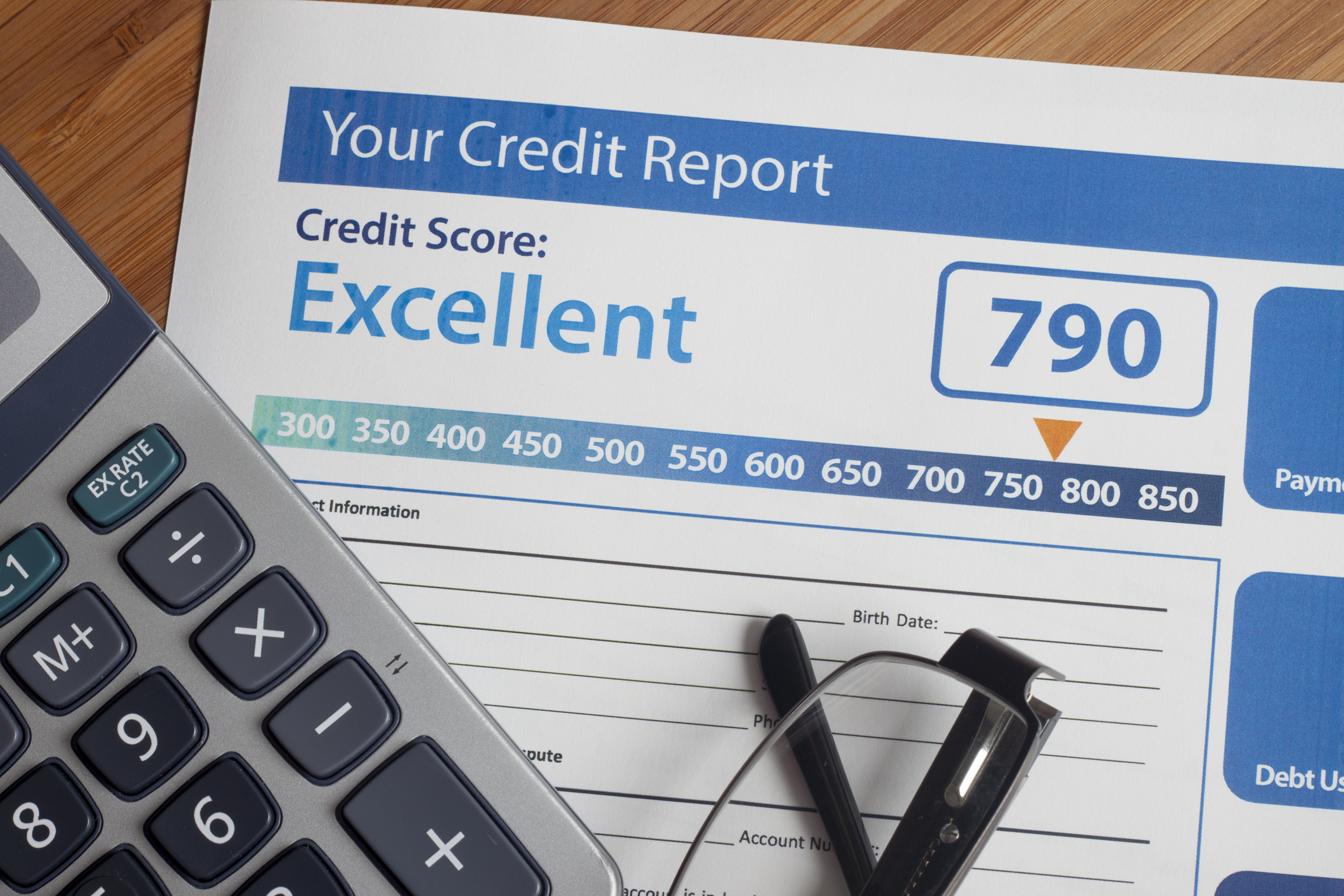
Credit report with score on a desk

***

Credit analysis is a form of financial analysis used primarily to determine the financial strength of the issuer of a security, and the ability of that issuer to provide timely payment of interest and principal to investors in the issuer’s debt securities. Credit analysis is typically an important component of security analysis and selection in credit-sensitive bond sectors such as the corporate bond market and the municipal bond market.

Credit default swap index (CDX) is a credit derivative, based on a basket of CDS, which can be used to hedge credit risk or speculate on changes in credit quality.

Credit default swaps (CDS) are credit derivative contracts between two counterparties that can be used to hedge credit risk or speculate on changes in the credit quality of a corporation or government entity.

Credit quality reflects the financial strength of the issuer of a security, and the ability of that issuer to provide timely payment of interest and principal to investors in the issuer’s securities. Common measurements of credit quality include the credit ratings provided by credit rating agencies such as Standard & Poor’s and Moody’s. Credit quality and credit quality perceptions are a key component of the daily market pricing of fixed-income securities, along with maturity, inflation expectations and interest rate levels.

Credit Rating Agency (CRA) is a company that assigns credit ratings for issuers of certain types of debt obligations as well as the debt instruments themselves. In the United States, the Securities and Exchange Commission (SEC) permits investment banks and broker-dealers to use credit ratings from “Nationally Recognized Statistical Rating Organizations” (NRSRO) for similar purposes. As of January 2012, nine organizations were designated as NRSROs, including the “Big Three” which are Standard and Poor’s, Moody’s Investor Services and Fitch Ratings.

Credit rating downgrade, by a credit rating agency (Standard & Poor’s, Moody’s or Fitch) means reducing its credit rating for a debt issuer and/or security. This is based on the agency’s evaluation, indicating, to the agency, a decline in the issuer’s financial stability, increasing the possibility of default. A downgrade should not to be confused with a default; a debt security can be downgraded without defaulting. And, conversely, a debt issuer can suddenly default without being downgraded first–credit ratings and credit rating agencies are not infallible.

Credit ratings are measurements of credit quality provided by credit rating agencies. Those provided by Standard & Poor’s typically are the most widely quoted and distributed, and range from AAA (highest quality; perceived as least likely to default) down to D (in default). Securities and issuers rated AAA to BBB are considered/perceived to be “investment-grade”; those below BBB are considered/perceived to be non-investment-grade or more speculative.

Credit risk is the inability or perceived inability of the issuers of debt securities to make interest and principal payments will cause the value of those securities to decrease. Changes in the credit ratings of debt securities could have a similar effect.

Credit Risk Transfer Securities (CRTS) are unsecured obligations of the GSEs (Government Sponsored Enterprises). Although cash flows are linked to prepays and defaults of the reference mortgage loans, the securities are unsecured loans, backed by general credit rather than by specified assets.

COMMENTS APPRECIATED

Subscribe and Refer Today!

***

***

CREDIT: All About Contractual Agreements

By Staff Reporters

SPONSOR: http://www.MarcinkoAssociates.com

DEFINITIONS

What Is CREDIT? Credit is a contractual agreement in which a borrower receives a sum of money or something else of value and commits to repaying the lender later, typically with interest. Credit is also the creditworthiness or credit history of an individual or a company. Good credit tells lenders you have a history of reliably repaying what you owe on loans. Establishing good credit is essential to getting a loan.

***

Credit Analysis is a form of financial analysis used primarily to determine the financial strength of the issuer of a security, and the ability of that issuer to provide timely payment of interest and principal to investors in the issuer’s debt securities. Credit analysis is typically an important component of security analysis and selection in credit-sensitive bond sectors such as the corporate bond market and the municipal bond market.

Credit Default Swap Index (CDX) is a credit derivative, based on a basket of CDS, which can be used to hedge credit risk or speculate on changes in credit quality.

Credit Default Swaps (CDS) are credit derivative contracts between two counter parties that can be used to hedge credit risk or speculate on changes in the credit quality of a corporation or government entity.

Credit Quality reflects the financial strength of the issuer of a security, and the ability of that issuer to provide timely payment of interest and principal to investors in the issuer’s securities. Common measurements of credit quality include the credit ratings provided by credit rating agencies such as Standard & Poor’s and Moody’s. Credit quality and credit quality perceptions are a key component of the daily market pricing of fixed-income securities, along with maturity, inflation expectations and interest rate levels.

Credit Rating Agency (CRA) is a company that assigns credit ratings for issuers of certain types of debt obligations as well as the debt instruments themselves. In the United States, the Securities and Exchange Commission (SEC) permits investment banks and broker-dealers to use credit ratings from “Nationally Recognized Statistical Rating Organizations” (NRSRO) for similar purposes. As of January 2012, nine organizations were designated as NRSROs, including the “Big Three” which are Standard and Poor’s, Moody’s Investor Services and Fitch Ratings.

A Credit Rating Downgrade by a credit rating agency (such as Standard & Poor’s, Moody’s or Fitch), of reducing its credit rating for a debt issuer and/or security. This is based on the agency’s evaluation, indicating, to the agency, a decline in the issuer’s financial stability, increasing the possibility of default (defined below). A downgrade should not to be confused with a default; a debt security can be downgraded without defaulting. (And, conversely, a debt issuer can suddenly default without being downgraded first–credit ratings and credit rating agencies are not infallible.)

Credit Ratings are measurements of credit quality provided by credit rating agencies). Those provided by Standard & Poor’s typically are the most widely quoted and distributed, and range from AAA (highest quality; perceived as least likely to default) down to D (in default). Securities and issuers rated AAA to BBB are considered/perceived to be “investment-grade”; those below BBB are considered/perceived to be non-investment-grade or more speculative.

Credit Risk is the risk that the inability or perceived inability of the issuers of debt securities to make interest and principal payments will cause the value of those securities to decrease. Changes in the credit ratings of debt securities could have a similar effect.

Credit Risk Transfer Securities (CRTS) are the unsecured obligations of the GSEs (Government Sponsored Enterprises). Although cash flows are linked to prepays and defaults of the reference mortgage loans, the securities are unsecured loans, backed by general credit rather than by specified assets.

CITE: https://www.r2library.com/Resource/Title/0826102549

COMMENTS APPRECIATED

Please Subscribe!

***

***

HOSPITAL OPERATING MARGINS: Non-Profits Still Down

By Staff Reporters

***

***

Operating margins at not-for-profit hospitals are expected to “gradually improve” in 2024 but will still lag far behind pre-pandemic levels, according to a January report from credit rating agency Fitch Ratings.

Median operating margins for not-for-profit hospitals dipped to record lows during the pandemic, falling to 0.2% in 2022, according to the agency, which has yet to report numbers for 2023. In 2019, the median not-for-profit hospital operating margin was 2.4%, according to Moody’s.

Despite signs that margins are improving, they’re still “nowhere near” where they were pre-2020, and a “larger expense base will keep huge gains unlikely,” according to Fitch.

CITE: https://www.r2library.com/Resource

“2024 will not be markedly better and certainly not the V-shaped recovery we’re hoping for,” Kevin Holloran, senior director and sector head at Fitch, said in a statement.

COMMENTS APPRECIATED

Thank You

***

***

***

DAILY UPDATE: Moody’s Down but Stocks Blast Off!

By Staff Reporters

Today is Veterans Day, when Americans honor all who have served our country in the armed forces. It’s celebrated on November 11th each year because on that morning in 1918 (at the 11th hour of the 11th day of the 11th month), the Allied nations and Germany signed an armistice that ended the fighting in World War I.

***

SPONSOR: MarcinkoAssociates.com

***

Moody’s credit rating agency downgraded its outlook on the US government from ‘stable’ to ‘negative’, citing the risks to the nation’s fiscal strength and the political polarization in Congress. The agency has maintained the US’s current top-grade AAA rating, but has raised the possibility that it may be cut in the future. While the move does not automatically mean it will downgrade America’s creditworthiness, it increases the chances. Even the prospect of a US downgrade could hurt Americans’ investment portfolios, make it even more expensive for them to borrow money, and make it more costly for the government to pay off its debts.

These effects would likely be even more painful if Moody’s does eventually downgrade the US debt. The nation’s diminished fiscal strength, undone by extreme partisanship in Washington, was a key driver of the action, according to a statement from Moody’s.

***

***

YET: Here is where the major benchmarks ended on Friday:

  • The S&P 500 Index was up 67.89 points (1.6%) at 4,415.24, up 1.3% for the week; the Dow Jones Industrial Average was up 391.16 points (1.2%) at 34,283.10, up 0.7% for the week; the NASDAQ Composite was up 276.66 points (2.1%) at 13,798.11, up 2.4% for the week.
  • The 10-year Treasury note yield was down about 1 basis point at 4.622%.
  • CBOE’s Volatility Index (VIX) was down 0.11 at 14.20.

Nearly every market sector gained Friday, with semiconductors and other tech shares leading the pack. The Philadelphia Semiconductor Index (SOX) jumped more than 4% to its highest level in more than two months. Consumer discretionary and energy companies were also strong, the latter thanks to a nearly-2% gain in crude oil futures.

But small-caps continued to lag their bigger counterparts, with the Russell 2000 Index (RUT) rising 1.1% Friday, though it was still down 3.1% for the week.

CITE: https://www.r2library.com/Resource

***

***

COMMENTS APPRECIATED

Thank You

***

DAILY UPDATE: T-Market Crash, Amazon Healthcare Launches as the Markets Take a Breather

By Staff Reporters

SPONSOR: http://www.MarcinkoAssociates.com

***

***

  • Big banks are sitting on $650 billion of unrealized losses, Moody’s has estimated.
  • It’s a sign even Wall Street’s best-known names are feeling the heat from the Treasury-market rout.
  • Crashing bond prices sank Silicon Valley Bank earlier this year, and there may be more chaos to come.

CITE: https://www.r2library.com/Resource

Yet, the billionaire Larry Fink says investors should be 100% in equities right now if they can handle it? Can you?

***

Amazon.com is turning to Prime members to bolster its healthcare business, an industry where the company has sought to expand for years. The tech giant just revealed plans to offer its millions of Amazon Prime subscribers a low-cost annual membership to One Medical, the primary-care business Amazon purchased for $3.9 billion earlier this year. Amazon says Prime subscribers can now become One Medical members for $9 a month, or $99 a year. The typical cost to become a One Medical member is $199 annually.

RxPass: https://medicalexecutivepost.com/2023/01/27/amazon-launches-rxpass-generic-drug-subscription-program/

Clinic: https://medicalexecutivepost.com/2022/12/01/amazon-healthcare-act-ii/

***

The S&P 500 continued to an eighth positive day, building on its longest hot streak in two years, while the Dow inched downward, ending its best run since July. Warner Bros. Discovery suffered its worst day since March 2021 after reporting that although Barbie raked in $1.5 billion for the company, it still lost money last quarter.

Here is where the major benchmarks ended:

  • The S&P 500 Index was up 4.40 points (0.1%) at 4,382.78; the Dow Jones Industrial Average was down 40.33 points (0.1%) at 34,112.27; the NASDAQ Composite was up 10.56 points (0.1%) at 13,650.41.
  • The 10-year Treasury note yield (TNX) was down about 6 basis points at 4.511%.
  • CBOE’s Volatility Index (VIX) was down 0.36 at 14.45.

Retailers and banks were among the weakest performers Wednesday. Energy stocks also slipped in step with WTI crude oil futures, which touched a 3½-month low of under $75 a barrel on escalating concern over global demand. Real estate was one of the few sectors to rise Wednesday.

The U.S. dollar index (DXY) rose to a seven-week high earlier in the day before fading.

COMMENTS APPRECIATED

Thank You

***

***

Vows of Change at Moody’s

But, the Flaws Remain the Same

By Jesse Eisinger ProPublica | @eisingerj 

Join Our Mailing List

In the aftermath of the financial crisis, nobody has gone to prison and there haven’t been any serious structural changes in the financial system. But at least everyone involved feels bad about it and has vowed to change, right? For Moody’s Investors Service, those pledges are empty, Bill Harrington says.

In this column, co-published with New York Times’ DealBook, I monitor the financial markets to hold companies, executives and government officials accountable for their actions.

A Window to the Debacle

Mr. Harrington was an analyst in the structured finance group at Moody’s for more than a decade, much of it spent rating collateralized debt obligations. He worked at Moody’s until the middle of last year, although he left the C.D.O. group in 2006. In his job, he had a window on the biggest debacle in the history of credit ratings. Companies like his allowed banks to pass off hundreds of billions worth of paper onto investors by waving their magic wands and deeming the securities investment-worthy.

Since then, the government has tried to change the ratings agencies. The Dodd-Frank financial reform law has some bold measures, like making the ratings firms liable for their judgments. Unfortunately, the rules are in danger of not being enforced because of budget constraints and resistance from the agencies.

But the biggest problems at Moody’s may have been cultural. The dominant ethos during the boom, instilled by Brian M. Clarkson, the former president and chief operating officer [1], was that customer service was Job 1. And the customers were the bankers.

Banker Customers

The ability for bankers to run the show has long been an obvious flaw in the ratings system for structured products. Investment banks create the securities and benefit when they receive generous ratings. Banks pay the agencies that supply the ratings. Yet the agencies are somehow supposed to hold the line with the people who are responsible for their paychecks.

To Moody’s credit, Mr. Clarkson is now gone. To Moody’s discredit, however, his philosophy is largely still in place, at least according to Mr. Harrington.

To the last day Mr. Harrington was there, he says, bankers remained hard-charging and aggressive advocates for their deals, sometimes to the point of abusing the analysts.

Wall Street ain’t beanbag, so that’s not surprising. The troubling aspect is that the Moody’s bosses acted like disinterested brokers between two sides in disputes with analysts, instead of standing up for the analysts and defending their independence. “That was the standard operating procedure that got worse and worse. We didn’t get the benefit of the doubt,” Mr. Harrington said.

When I asked Moody’s about Mr. Harrington’s experiences, a spokesman wrote in an e-mail: “We take strong exception to your characterization of Moody’s culture. We have always had an unwavering culture of integrity, analytical independence and objectivity and that culture has only grown stronger since the financial crisis.” He pointed to numerous efforts at Moody’s to improve the ratings process and to bolster Moody’s procedures.

In the spring of 2009, Mr. Harrington was working on a deal and a banker was persistently calling him. He returned the first call, but had other work that day and didn’t return the next two calls right away. “I thought caller ID served a purpose,” he said wryly.

Soon after, his boss alerted him to a call he’d received from Michael Kanef, the head of compliance. Mr. Kanef wanted to know why Mr. Harrington hadn’t returned the banker’s call. Mr. Harrington was shocked. Why was the head of compliance getting involved? But he got the apparent message: Analysts are to lean over backward for the bankers. That had been Mr. Clarkson’s philosophy, and now it was his successors’.

“The culture persists — and it’s being enforced by compliance department,” Mr. Harrington said.

So who is Mr. Kanef? Before he was the head of regulatory affairs and compliance, he was in charge of ratings on residential mortgage-backed securities [2]. Did such an executive deserve a promotion?

And then there is Raymond W. McDaniel, the chief executive throughout the housing boom, the bust and the entire financial crisis. He remains at the helm. And he had to swallow the bitter pill of more than $9 million in compensation last year. Indeed, most of Moody’s top management has been in place through the crisis.

Moody’s didn’t make Mr. Kanef or Mr. McDaniel available for comment.

The Blame Game

So if Moody’s doesn’t think the executives who ran the company were responsible for its collapse in reputation and contribution to the multitrillion-dollar financial crisis, who do they think is to blame? The analysts, Mr. Harrington says. The hard-working, low-level minions with little decision-making power.

Mr. McDaniel has conceded that sometimes “we drink the Kool-Aid.”

But that hardly makes the analysts to blame.

“If some analysts drank the Kool-Aid, it was only because management mixed and stirred it up and threatened that analysts wouldn’t get to heaven on the spaceship unless he or she drank it,” Mr. Harrington said.

Moody’s has recognized it has a disaster on its hands — a public relations disaster. Clients — the investors who use ratings — have been losing faith in the agencies. Mr. Harrington said that Moody’s executives marched analysts into meetings to explain how they were going to tell their clients about how much Moody’s had grown and learned from its mistakes. It was as if they were in “Communist re-education camp,” he said.

At one of these meetings, an analyst asked if they could be given training in how to deal with banker abuse, Mr. Harrington recalls. The suggestion was immediately shot down by the executive running the meeting.

Moody’s says that its retraining efforts are part of its continuing efforts to reach out to investors to improve its ratings.

Assessment

When Moody’s executives make public presentations, as when Mr. McDaniel testified [3] in front of the Financial Crisis Inquiry Commission, the overarching theme is that the agency’s problem was limited to the housing-related structured finance. Few people saw how fast and deep the housing market would crash. How could the ratings agencies?

A few weeks ago, Alan Greenspan penned an instantly notorious line: “With notably rare exceptions,” [4] he wrote, unfettered financial markets have worked well. Moody’s persists in believing that with notably rare exceptions, so too have credit ratings.

Full Article: http://www.propublica.org/thetrade/item/vows-of-change-at-moodys-but-the-flaws-remain-the-same/

Conclusion

And so, your thoughts and comments on this ME-P are appreciated. Feel free to review our top-left column, and top-right sidebar materials, links, URLs and related websites, too. Then, subscribe to the ME-P. It is fast, free and secure.

Link: http://feeds.feedburner.com/HealthcareFinancialsthePostForcxos

Speaker: If you need a moderator or speaker for an upcoming event, Dr. David E. Marcinko; MBA – Publisher-in-Chief of the Medical Executive-Post – is available for seminar or speaking engagements. Contact: MarcinkoAdvisors@msn.com

Our Other Print Books and Related Information Sources:

Health Dictionary Series: http://www.springerpub.com/Search/marcinko

Practice Management: http://www.springerpub.com/product/9780826105752

Physician Financial Planning: http://www.jbpub.com/catalog/0763745790

Medical Risk Management: http://www.jbpub.com/catalog/9780763733421

Healthcare Organizations: www.HealthcareFinancials.com

Physician Advisors: www.CertifiedMedicalPlanner.com

Subscribe Now: Did you like this Medical Executive-Post, or find it helpful, interesting and informative? Want to get the latest ME-Ps delivered to your email box each morning? Just subscribe using the link below. You can unsubscribe at any time. Security is assured.

Link: http://feeds.feedburner.com/HealthcareFinancialsthePostForcxos

Sponsors Welcomed: And, credible sponsors and like-minded advertisers are always welcomed.

Link: https://healthcarefinancials.wordpress.com/2007/11/11/advertise

Product DetailsProduct DetailsProduct Details       

Product Details  Product Details