HEDGE FUNDS: In Individual Retirement Accounts?

By Staff Reporters

SPONSOR: http://www.CertifiedMedicalPlanner.org

***

***

QUESTION: What is a Hedge Fund?

A hedge fund is a limited partnership of private investors whose money is pooled and managed by professional fund managers. These managers use a wide range of strategies, including leverage (borrowed money) and the trading of nontraditional assets, to earn above-average investment returns. A hedge fund investment is often considered a risky, alternative investment choice and usually requires a high minimum investment or net worth. Hedge funds typically target wealthy investors.

***

SPONSOR: http://www.MARCINKOASSOCIATES.com

***

QUESTION: Can I invest my Individual Retirement Account [IRA] in a Hedge Fund?

This is up to the manager, but there is no legal restriction on a hedge fund accepting individual retirement account (IRA) assets. IRA accounts are not well suited for funds that make extensive use of leverage, however. In such cases, the fund is likely to generate significant amounts of unrelated business taxable income (UBTI) – profits of the fund attributable to the use of leverage. The holder of an IRA account must pay taxes on UBTI, even if the UBTI was generated in an IRA account.

But, today’s hedge funds may or may not use leverage. Many hedge funds are not hedged at all, but rather are just specialized versions of regular long stock portfolios. If such funds do not use much leverage, IRA investors will not encounter much difficulty with UBTI and should not hesitate in considering these funds.

In considering whether to accept IRA money, hedge fund managers must consider several factors. If the only type of retirement money accepted by the hedge funds is IRA money, then the manager has no limit on how much retirement money the fund can accept. If, however, there are other types of retirement money invested in the fund, such as pension funds, IRA money will be counted towards a total of 25 percent of fund assets that can be invested in retirement accounts before the fund becomes subject to the Employment Retirement Income Security Act of 1974 (ERISA). Funds subject to ERISA regulations face a heavy administrative burden and more restrictions than most fund managers like.

Finally, IRA distributions from a hedge fund are subject to the standard 20 percent withholding unless the funds are directly rolled over to other qualified plans.

COMMENTS APPRECIATED

Read, Review, Like, Refer and Subscribe

***

***

DAILY UPDATE: Nike Lay-Offs & Retirement “Rule of 55” as Stock Markets Zoom Upward

MEDICAL EXECUTIVE-POST TODAY’S NEWSLETTER BRIEFING

***

Essays, Opinions and Curated News in Health Economics, Investing, Business, Management and Financial Planning for Physician Entrepreneurs and their Savvy Advisors and Consultants

Serving Almost One Million Doctors, Financial Advisors and Medical Management Consultants Daily

A Partner of the Institute of Medical Business Advisors , Inc.

http://www.MedicalBusinessAdvisors.com

SPONSORED BY: Marcinko & Associates, Inc.

***

http://www.MarcinkoAssociates.com

Daily Update Provided By Staff Reporters Since 2007.
How May We Serve You?
© Copyright Institute of Medical Business Advisors, Inc. All rights reserved. 20224

REFER A COLLEAGUE: MarcinkoAdvisors@msn.com

SPONSORSHIPS AVAILABLE: https://medicalexecutivepost.com/sponsors/

ADVERTISE ON THE ME-P: https://tinyurl.com/ytb5955z

***

Stat: 740. That’s how many employees Nike will lay off at its Oregon HQ before the end of June. In February, Nike CEO John Donahoe informed employees of the company’s plan to reduce 2% of its workforce, which would mean around 1,600 employees in total. (USA Today)

CITE: https://www.r2library.com/Resource

Let’s say you leave your job at any time during or after the calendar year you turn 55 (or age 50 if you’re a public safety employee with a government defined-benefit plan). Under a little-known separation-of-service provision, often referred to as the “rule of 55,” you may be able take distributions (though some plans may allow only one lump-sum withdrawal) from your 401(k), 403(b), or other qualified retirement plan free of the usual 10% early-withdrawal penalties. However, be aware that you’ll still owe ordinary income taxes on the amount distributed.  This exception applies only to the plan (including any consolidated accounts) that you were contributing to when you separated from service. It does not extend to IRAs.

CITE: https://tinyurl.com/2h47urt5

Here’s where the major benchmarks ended:

  • The S&P 500 index rose 59.95 points (1.2%) to 5,070.55; the Dow Jones Industrial Average gained 263.71 points (0.7%) to 38,503.69; the NASDAQ Composite® ($COMP) surged 245.33 points (1.6%) to 15,696.64.
  • The 10-year Treasury note yield (TNX) decreased about 2 basis points to 4.602%.
  • The CBOE Volatility Index® (VIX) fell 1.25 to 15.69.

Similar to Monday, chipmakers were among the market’s strongest areas, carrying the Philadelphia Semiconductor Index (SOX) to a 2.2% advance. Retailers and communication services shares were also strong. The Dow Jones Utility Index ($DJU) gained for the fifth straight day and ended at its highest level in over three months. The Russell 2000® Index (RUT) surged nearly 2%. 

CITE: https://tinyurl.com/tj8smmes

COMMENTS APPRECIATED

PLEASE SUBSCRIBE: MarcinkoAdvisors@msns.com

Thank You

***

***

***

***

EDUCATIONAL TEXTBOOKS: https://tinyurl.com/4zdxuuwf

***

INHERITED Retirement Accounts and Uncle Sam

IRS Tax Implications

By Staff Reporters

***

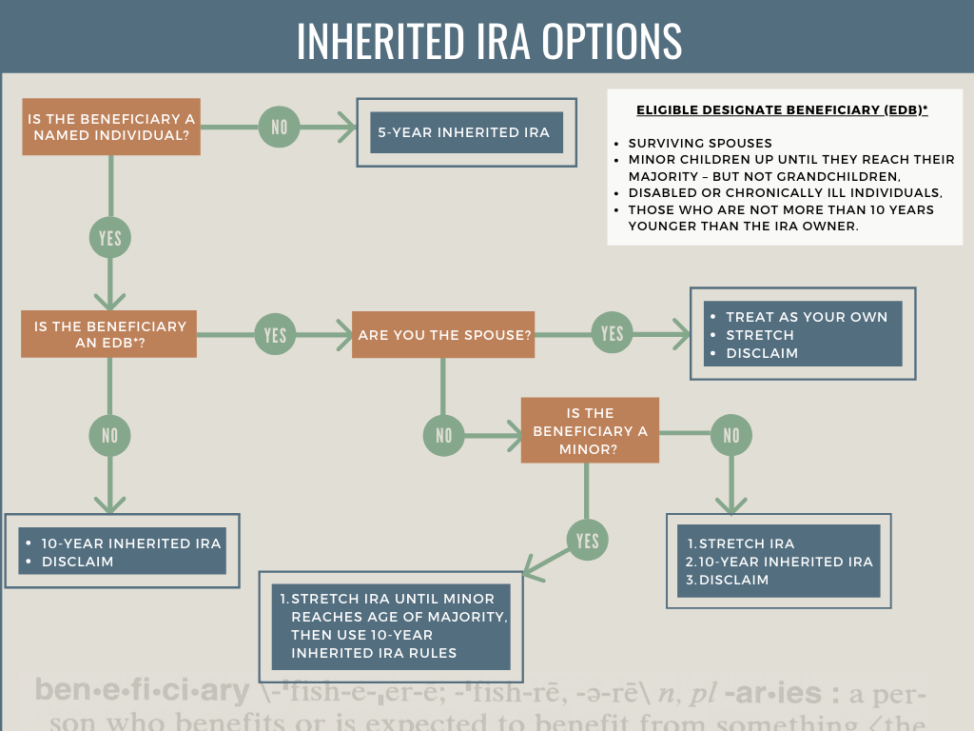
If you inherited a tax-deferred retirement plan, such as a traditional IRA, you’ll have to pay taxes on the money. But you can make the tax hit less onerous.

Spouses can roll the money into their own IRAs and postpone distributions—and taxes—until they’re 70½. All other beneficiaries who want to continue to benefit from tax-deferred growth must roll the money into a separate account known as an inherited IRA. Make sure the IRA is rolled directly into your inherited IRA. If you take a check, you won’t be allowed to deposit the money. Rather, the IRS will treat it as a distribution and you’ll owe taxes on the entire amount.

Once you’ve rolled the money into an inherited IRA, you must take required minimum distributions every year—and pay taxes on the money—based on your age and life expectancy. Deadlines are critical: You must take your first RMD by December 31st. of the year following the death of your parent (or whoever left you the account). Otherwise, you’ll be required to deplete the entire account within five years after the year following your parent’s death.

The December 31st. deadline is also important if you are one of several beneficiaries of an inherited IRA. If you fail to split the IRA among the beneficiaries by that date, your RMDs will be based on the life expectancy of the oldest beneficiary, which may force you to take larger distributions than if the RMDs were based on your age and life expectancy.

You can take out more than the RMD, but setting up an inherited IRA gives you more control over your tax liabilities. You can, for example, take the minimum amount required while you’re working, then increase withdrawals when you’re retired and in a lower tax bracket.

CITE: https://www.r2library.com/Resource/Title/0826102549

***

Have you Inherited an IRA? It's time to compare your options

***

Did you inherit a Roth IRA? And so, as long as the original owner funded the Roth at least five years before he or she died, you don’t have to pay taxes on the money. You can’t, however, let it grow tax-free forever. If you don’t need the money, you can transfer it to an inherited Roth IRA and take RMDs under the same rules governing a traditional inherited IRA. But with a Roth, your RMDs won’t be taxed.

***

COMMENTS APPRECIATED

Thank You

Subscribe to the Medical Executive-Post

***

***

Physician Creditor Protection for IRAs, Annuities and Insurance for 2014-15

Join Our Mailing List

A SPECIAL ME-P REPORT

###

Asset Protection Planning for Qualified and Non-Qualified Retirement Plans, IRAs, 403(b)s, Education IRAs (Coverdell ESAs), 529 Plans, UTMA Accounts, Health/Medical Savings Accounts (MSA/HSAs), Qualified and Non-Qualified Annuities, Long-Term Care Insurance, Disability Insurance and Group, Individual and Business Life Insurance [Ohio Focus]

By Edwin P. Morrow III; JD LLM MBA CFP® RFC®

[©2007-12-14. All rights reserved. USA]

EDITOR’S NOTE:

Hi Ann,

A couple years ago you posted an earlier version of the attached Asset Protection Outline. I updated it to include quite a bit more discussion of different protection levels for various kinds of accounts, and included more discussion of states other than Ohio, including a 50 state chart with IRA/403b protections.

So please delete the old one and replace with this one which contains more topics, including some substantial discussion of issues regarding current class action litigation jeopardizing asset protection for Schwab and Merrill Lynch IRAs.

Regards
Ed

###

The Importance of Asset Protection as Part of Financial and Estate Planning for Doctor’s and Medical Professionals

Asset Protection has become a ubiquitous buzz-word in the legal and financial community. It often means different things to different people. It may encompass anything from buying umbrella liability insurance to funding offshore trusts.

What is most likely to wipe out a client’s entire net worth? An investment scam, investment losses, a lawsuit, divorce or long-term health care expenses? “Asset Protection” may be construed to address all of these scenarios, but this outline will cover risk from non-spousal creditors as opposed to risk from bad investments, divorce, medical bills or excessive spending. Prudent business practice and limited liability entity use (LP, LLP, LLC, Corporation, etc) is the first line of defense against such risks. Similarly, good liability insurance and umbrella insurance coverage is paramount.

However, there is a palpable fear among many of frivolous lawsuits and rogue juries [especially among physicians and medical professionals]. Damages may exceed coverage limits. Moreover, insurance policies often have large gaps in coverage (e.g. intentional torts, “gross” negligence, asbestos or mold claims, sexual harassment).

As many doctors in Ohio know all too well, malpractice insurance companies can fail, too. Just as we advise clients regarding legal ways to legitimately avoid income and estate taxes or qualify for benefits, so we advise how to protect family assets from creditors. Ask your clients, “What level of asset protection do you want for yourself?

For the inheritance you leave to your family?” Do any clients answer “none” or “low”? Trusts that are mere beneficiary designation form or POD/TOD substitutes are going out of style in favor of “beneficiary-controlled trusts”, “inheritance trusts” and the like.

Table of Contents

While effort is made to ensure the material is accurate, this material is not intended as legal advice and no one may rely on it as such. Sections II(d), II(i), V, VI and XI were updated Feb 2012, but much of the material and citations have not been verified since 2010. Permission to reprint and share with fellow bar members is granted, but please contact author for updates if more than a year old.

T.O.C. [Page Number]

I. Importance of Asset Protection 2

II. State and Federal Protections Outside ERISA or Bankruptcy 4

a. Non-ERISA Qualified Plans: SEP, SIMPLE IRAs 5

b. Traditional and Roth IRAs, “Deemed IRAs” 7

c. Life Insurance 9

d. Long-Term Care, Accident/Disability Insurance 13

e. Non-Qualified Annuities 13

f. Education IRAs (now Coverdell ESAs) 16

g. 529 Plans 17

h. Miscellaneous State and Federal Benefits 18

i. HSAs, MSAs, FSAs, HRAs 18

III. Federal ERISA Protection Outside Bankruptcy 20

IV. Federal Bankruptcy Scheme of Creditor Protection 26

V. Non-Qualified Deferred Comp – Defying Easy Categorization 30

VI. Breaking the Plan – How Owners Can Lose Protection 32

(incl Prohibited Transactions and Schwab/Merrill Lynch IRA problems) 35

VII. Post-Mortem – Protections for a Decedent’s Estate 51

VIII. Post-Mortem – State Law Protections for Beneficiaries 52

IX. Post-Mortem – Bankruptcy Protections for Beneficiaries 54

X. Dangers and Advantages of Inheriting Through Trusts 56

XI. Piercing UTMA/UGMA and Other Third Party Created Trusts 59

XII. Exceptions for Spouses, Ex-Spouses and Dependents 61

XIII. Exceptions when the Federal Government (IRS) is Creditor 62

XIV. Fraudulent Transfer (UFTA) and Other Exceptions 68

XV. Disclaimer Issues – Why Ohio is Unique 69

XVI. Medicaid/Government Benefit Issues 71

XVII. Liability for Advisors 72

XVIII. Conflicts of Law – Multistate Issues 73

XIX. Conclusions 75

Appendices

A. Ohio exemptions – R.C. §2329.66 (excerpt), §3911.10, §3923.19 78

B. Bankruptcy exemptions – 11 U.S.C. § 522 excerpts 80

C. Florida IRA exemption – Fla Stat. § 222.21 (note-may be outdated) 85

D. Sal LaMendola’s Inherited IRA Win/Loss Case Chart 86

E. Multistate Statutory Debtor Exemption Chart 88

###

Assessment

This outline will discuss the sometimes substantial difference in legal treatment and protection for various investment vehicles and retirement accounts, with some further discussion of important issues to consider when trusts receive such assets.

Beware of general observations like: “retirement plans, insurance, IRAs and annuities are protected assets” – that may often be true, but Murphy’s law will make your client the exception to the general rules. The better part of this outline is pointing out those exceptions.

2012 WHITE PAPER LINK:

Creditor Protection for IRAs Annuities Insurance Nov 19 2010 WC CLE Feb 2012 update

***

2014 WHITE PAPER LINK UPDATE:

Optimal Basis Increase Trust Aug 2014

***

ABOUT THE AUTHOR:

Mr. Edwin P. Morrow III, a friend of the Medical Executive-Post, is a Wealth Specialist and Manager, Wealth Strategies Communications Ohio State Bar Association Certified Specialist, Estate Planning, Probate and Trust Law Key Private Bank Wealth Advisory Services. 10 W. Second St., 27th Floor Dayton, OH 45402. He is an ME-P “thought leader”.

Constructive criticism or other comments welcome.

Conclusion

Your thoughts and comments on this ME-P are appreciated. Feel free to review our top-left column, and top-right sidebar materials, links, URLs and related websites, too. Then, subscribe to the ME-P. It is fast, free and secure.

Speaker: If you need a moderator or speaker for an upcoming event, Dr. David E. Marcinko; MBA – Publisher-in-Chief of the Medical Executive-Post – is available for seminar or speaking engagements. Contact: MarcinkoAdvisors@msn.com

OUR OTHER PRINT BOOKS AND RELATED INFORMATION SOURCES:

Product Details  Product Details

Self-Directed IRAs for Medical Professionals

Join Our Mailing List

Eschewing Limited Investment Choices

[By Rick Kahler CFP® MS ChFC CCIM]

Most people, and medical professionals, with Individual Retirement Accounts [IRAs] open them with a bank or brokerage firm (the custodian) that limits what investments can go into the account. These custodians typically limit your investments to stocks, bonds and mutual funds with firms where they have distribution agreements.

The Self-Directed IRA

A little-known option that allows owners of an IRA to have unlimited control of the investments they can hold is the self-directed IRA. Assets permitted in self-directed IRAs include real estate, promissory notes, mortgages, tax lien certificates, US gold coins, and private placement securities.

For example, I have clients who use self-directed IRAs to hold promissory notes, mortgages, and contracts for deed. The IRA acts like a bank by making a loan (secured by real estate) to a non-related party. They can often earn 5% to 10% returns. Of course, there is also a significant risk of having to foreclose on the loan and losing a portion of the investment.

But, before you jump into a self-directed IRA, you need to do some homework. When you make an investment in a self-directed account, you are on your own. The custodian does little more than be sure your documents are in order. It’s up to you to do your own due diligence on the merits of the investment.

Beware the Unscrupulous Promoters

Self-directed IRAs are proving to be such a magnet for unscrupulous promoters of dubious investment schemes that the SEC has issued an investor alert warning owners against fraudulent promoters. The best advice is the old axiom, “if it sounds too good to be true, it probably is.”

Tips and Pearls

That said; Ed Slot, publisher of the IRA Advisor, has some tips for self-directed IRA owners:

  • Be sure the investment is allowed in an IRA. Life insurance, collectables, numismatic coins, and S-corporation stock are not allowed.
  • Don’t partner with or purchase anything from a “disqualified person,”—a spouse, child, grandchild, or someone acting in a fiduciary role for the IRA.
  • If you sell real estate held in a traditional IRA, gains will be taxed at ordinary income rates when the proceeds come out of the IRA instead of as long-term capital gains. Gains on real estate held in Roth IRAs, however, come out tax-free.
  • Don’t think putting your business into an IRA could allow profits to grow tax-free. The Unrelated Business Income Tax is levied on a business owned by a tax-exempt entity like an IRA.
  • The IRS prohibits a “disqualified person” from running or occupying any business or investment owned by your IRA. You or your extended family cannot farm land owned by your IRA. You cannot occupy, even for a day, a property owned by your IRA. Doing so nullifies your IRA and makes it completely taxable.
  • Investment real estate in an IRA might be best owned free and clear of any financing. The Unrelated Debt-Financed Income tax applies to mortgage loans. Also, personally guaranteeing a loan is a prohibited transaction that nullifies your IRA.
  • You must value the assets of the IRA annually. This is a no-brainer for stocks, bonds, and mutual funds, but for real estate it may mean paying for costly annual appraisals.
  • Real estate owned in an IRA must generate enough cash flow to pay all its expenses. Writing a personal check for repairs or loaning money to the IRA are prohibited transactions that make the IRA fully taxable.
  • Holding illiquid investments in a self-directed IRA poses a problem when you reach 70½ and must begin taking distributions.

Assessment

Self-directed IRAs can be a great tool to bolster retirement income, when used properly. Just be sure you consider all the pitfalls before taking the plunge.

Channel Surfing the ME-P

Have you visited our other topic channels? Established to facilitate idea exchange and link our community together, the value of these topics is dependent upon your input. Please take a minute to visit. And, to prevent that annoying spam, we ask that you register. It is fast, free and secure.

Conclusion

Your thoughts and comments on this ME-P are appreciated. Feel free to review our top-left column, and top-right sidebar materials, links, URLs and related websites, too. Then, subscribe to the ME-P. It is fast, free and secure.

Speaker: If you need a moderator or speaker for an upcoming event, Dr. David E. Marcinko; MBA – Publisher-in-Chief of the Medical Executive-Post – is available for seminar or speaking engagements. Contact: MarcinkoAdvisors@msn.com

OUR OTHER PRINT BOOKS AND RELATED INFORMATION SOURCES:

Product Details  Product Details

Creditor and Asset Protection Strategies for Medical and Other Professionals

IRAs, Education IRA [Coverdell Accounts], 529 Plans, Qualified and Non-Qualified Annuities and Insurance – in the State of Ohio

Join Our Mailing List

By Edwin P. Morrow III, J.D., LL.M., MBA, CFP®, RFC®
Wealth Specialist – Manager, Wealth Strategies Communications
Ohio State Bar Association Certified Specialist, Estate Planning, Probate and Trust Law – Key Private Bank – Wealth Advisory Services
10 W. Second St.
MailCode OH-18-00-2701
Dayton, OH 45402
(937) 285-5343 direct phone
(937) 422-8330 cell phone

Hi Ann and All ME-P Readers

Would you be interested in posting this article on creditor and asset protection and planning for retirement accounts and similar? It is highly useful for physicians and other professionals

[picapp align=”none” wrap=”false” link=”term=retirement+planning&iid=8453241″ src=”http://view.picapp.com/pictures.photo/image/8453241/investments-ira-401k-and/investments-ira-401k-and.jpg?size=500&imageId=8453241″ width=”353″ height=”484″ /]

Assessment

Link: Creditor Protection for IRAs Annuities Insurance August 2010 NBI CLE[1]

Conclusion

And so, your thoughts and comments on this ME-P are appreciated. Feel free to review our top-left column, and top-right sidebar materials, links, URLs and related websites, too. Then, subscribe to the ME-P. It is fast, free and secure.

Get our Widget: Get this widget!

Our Other Print Books and Related Information Sources:

Health Dictionary Series: http://www.springerpub.com/Search/marcinko

Practice Management: http://www.springerpub.com/product/9780826105752

Physician Financial Planning: http://www.jbpub.com/catalog/0763745790

Medical Risk Management: http://www.jbpub.com/catalog/9780763733421

Healthcare Organizations: www.HealthcareFinancials.com

Physician Advisors: www.CertifiedMedicalPlanner.com

Subscribe Now: Did you like this Medical Executive-Post, or find it helpful, interesting and informative? Want to get the latest ME-Ps delivered to your email box each morning? Just subscribe using the link below. You can unsubscribe at any time. Security is assured.

Link: http://feeds.feedburner.com/HealthcareFinancialsthePostForcxos

Sponsors Welcomed: And, credible sponsors and like-minded advertisers are always welcomed.

Link: https://healthcarefinancials.wordpress.com/2007/11/11/advertise

Product Details  Product Details

[Doctor’s] Guide to Roth IRAs

Get Rich Slowly

By Ann Miller RN, MHA

[Executive Director]

Join Our Mailing List

From time to time, our readers send in e-books, files or e-chapters, pamphlets or other material they have created for client, educational or marketing use. Some of it may be worthwhile; some not so.

Nevertheless, these publications are often a good place to start the conversation, or thought-process on related topics. They will be occasionally offered as a complimentary membership feature of the Medical Executive-Post. We trust they are beneficial to you.

Guide to Roth IRAs [author]

  • JD Roth

Link: The GRS Guide to Roth IRAs

Disclaimer

No advice is offered. We make no copyright claim to these works. Veracity and information should be considered time sensitive. Consult a professional for your situation.

Assessment

Feel free to send in your own material for the benefit of all Medical Executive-Post readers and subscribers. All works will be considered; but not necessarily published.

More

Conclusion

Your thoughts and comments on this ME-P are appreciated. Feel free to review our top-left column, and top-right sidebar materials, links, URLs and related websites, too. Then, subscribe to the ME-P. It is fast, free and secure.

Link: http://feeds.feedburner.com/HealthcareFinancialsthePostForcxos

Speaker: If you need a moderator or speaker for an upcoming event, Dr. David E. Marcinko; MBA – Publisher-in-Chief of the Medical Executive-Post – is available for seminar or speaking engagements. Contact: MarcinkoAdvisors@msn.com

OUR OTHER PRINT BOOKS AND RELATED INFORMATION SOURCES:

DICTIONARIES: http://www.springerpub.com/Search/marcinko
PHYSICIANS: www.MedicalBusinessAdvisors.com
PRACTICES: www.BusinessofMedicalPractice.com
HOSPITALS: http://www.crcpress.com/product/isbn/9781466558731
CLINICS: http://www.crcpress.com/product/isbn/9781439879900
BLOG: www.MedicalExecutivePost.com
FINANCE: Financial Planning for Physicians and Advisors
INSURANCE: Risk Management and Insurance Strategies for Physicians and Advisors

Product Details  Product Details

Kathleen Sebelius Please Pay Attention to Dr. Darrell Pruitt

Deferred Investment [An Incentive to Access]

By D. Kellus Pruitt; DDS

On Friday, the editor of the Chicago Dental Society’s [CDS] blog “Open Wide” posted a progressive, brief article titled, “State of Illinois offers incentive for dentists to treat Medicaid patients” (no byline).

http://chicagodentalsociety.blogspot.com/2009/12/state-of-illinois-offers-incentive-for.html

CDS says that last week, Governor Pat Quinn signed a law which allows Illinois dentists who treat Medicaid patients to accept payment deposited into a tax deferred investment portfolio instead of the traditional delayed, unpredictable payments that offer no tax advantages – only headaches.

Illinois Governor Quinn is a vast improvement over his predecessor. What was his name? He’s gone on to become a TV personality …. Oh yeah. Blagojevich!

I don’t know about you, but for me, Quinn’s incentive to access could offer not only more relief for those who cannot afford dental care in Texas, but it could also be a more or less painless way for dentists to fund IRAs – rather than having to do it at the last minute like I’ll do in a few months – just like every year. Instead of having an IRA hanging over my head, all I would have to do is donate my skills to help a few more people every now and then. That’s noble, charitable duty, friends – even with the Quinn incentive.

I especially respect current Medicaid dentists who work for nothing at all on the more profitable days.

To HHS Secretary Kathleen Sebelius

Pay attention. You only think you run the show.

The nations’ dentists you need aren’t being paid what they deserve, yet they put up with expensive and threatening CMS bureaucracy and struggle on – simply because they wish to ease suffering everyone else chooses to ignore.

Medicare dentists are American heroes to be sure. But let me warn you, Ms. Sebelius, they will turn on you hard and cold if you try to push them around. It’s time that you welcome real dentists to the bargaining table instead of ambitious ADA-approved stakeholders. You need us more than we need you, Ms. Sebelius. Forget the ADA. That is a foundation on which we can build … or not.

And this is for my stunned dentist colleagues in Texas who cross the street to ignore grandiose special bastards like me. Most of you detest the messy stuff I drag around, but nevertheless can’t stop watching from a safe distance. Rather than get your own hands messy, most of you simply pay the TDA to quietly and ineffectively hide or delay huge approaching problems. So what’s the trade-off? To remain “In the Loop,” you must obediently take up your differences with leadership in the approved, professional manner through designated ADA representatives. And. that’s so cute.

Now that you read about Quinn’s incentive, don’t you also hope that a TDA committee has already approved a draft of a deferred investment proposal to be offered to state lawmakers as soon as possible? After all, similar plans are already being tried in not only Illinois, but in four other states as well: Louisiana, Florida, Mississippi and Arkansas.

Hope as we may, nimrods, I fear those in Austin who should be paying attention to legislative opportunities such as this only heard about Quinn’s incentive to access law a minute or so ago at best.

Of Face Book Accounts

Both the TDA and the ADA desperately need functional Facebook accounts like Chicago Dental Society’s. By the way, it is the CDS which will be hosting their annual mid-winter dental conference in Chicago – reliably a tremendous meeting. This year it is Thursday-Saturday, Feb. 25-27, 2010 in the McCormick Place West Building.

http://www.cds.org/mwm_2010/

The TDA’s Facebook Wall is pristine white and graffiti-ready, and the spray paint is free to any artist who walks by. Not unexpectedly, it’s a mess. Nobody is joining, and whoever is in charge of managing the site is busy deleting unacceptable comments from a jerk who has no respect for anyone. (It’s not me). The TDA Facebook is in trouble, and it has been suggested that it should be shut down. It is indeed an embarrassment.

Assessment

Join Our Mailing List

Here’s something we’ll all laugh about later: The one dentist in Texas who could have sent the rogue artist on down the road (me), was kicked off for badmouthing BCBSTX and the NPI number as well as 13 other listed allegations, including posting pornography. I’ll let the TDA Director of Membership explain that and the other allegations if you are curious. I was not provided access to the evidence on which the sudden and uncontestable revocation of my TDA benefit was based. But there’s still hope because a friend of mine resented the way I was treated and complained to the TDA using the approved channels. That was 2 months ago. I wonder how well that one is progressing from the Austin City dump.

The ADA Facebook is no better. Over 1600 fans have piled up at the door waiting for the ADA’s grand opening, yet nothing is happening. What do you think is going on there?

If you’ve missed hearing from me for the last 2 weeks and have an inquisitive mind, I’ve been pursuing answers for such questions about ADA and TDA transparency on Twitter. They call me Proots.

Conclusion

Your thoughts and comments on this ME-P are appreciated. Feel free to review our top-left column, and top-right sidebar materials, links, URLs and related websites, too. Then, subscribe to the ME-P. It is fast, free and secure.

Link: http://feeds.feedburner.com/HealthcareFinancialsthePostForcxos

Speaker: If you need a moderator or speaker for an upcoming event, Dr. David E. Marcinko; MBA – Publisher-in-Chief of the Medical Executive-Post – is available for seminar or speaking engagements. Contact: MarcinkoAdvisors@msn.com

OUR OTHER PRINT BOOKS AND RELATED INFORMATION SOURCES:

DICTIONARIES: http://www.springerpub.com/Search/marcinko
PHYSICIANS: www.MedicalBusinessAdvisors.com
PRACTICES: www.BusinessofMedicalPractice.com
HOSPITALS: http://www.crcpress.com/product/isbn/9781466558731
CLINICS: http://www.crcpress.com/product/isbn/9781439879900
BLOG: www.MedicalExecutivePost.com
FINANCE: Financial Planning for Physicians and Advisors
INSURANCE: Risk Management and Insurance Strategies for Physicians and Advisors

Product Details