• Home
  • CMP™ e-CLASS
  • COACHING
  • DR. MARCINKO
  • SPONSORS
  • e-BOOKS
  • “MEDICAL EXECUTIVE-POST” Information & News Portal
  • Why Post Your e-Content or Print Publish with Us?
  • Job Posts Classified Ads
  • Why Subscribe to the ME-P?

The Leading Business Education Network for Doctors, Financial Advisors and Health Industry Consultants

Entries RSS | Comments RSS
  • Member Statistics

    • 1,085,695 Colleagues-to-Date [Sponsored by a generous R&D grant from iMBA, Inc.]
  • ME-P Information & Content Channels

  • Ann Miller RN MHA [Managing Editor]

    ME-P SYNDICATIONS:
    WSJ.com,
    CNN.com,
    Forbes.com,
    WashingtonPost.com,
    BusinessWeek.com,
    USNews.com, Reuters.com,
    TimeWarnerCable.com,
    e-How.com,
    News Alloy.com,
    and Congress.org

    Comprehensive Financial Planning Strategies for Doctors and Advisors: Best Practices from Leading Consultants and Certified Medical Planners(TM)

    Product Details

    Product Details

    Product Details

  • CERTIFIED MEDICAL PLANNER® program

    New "Self-Directed" Study Option SinceJanuary 1, 2020
  • Most Recent ME-Ps

    • CONSUMER SPENDING: Holidays
    • BREAKING NEWS! C.P.I. Rises Slightly!
    • Why Some Generation X Doctors Face Financial Retirement Struggles
    • BLOCK CHAIN: In Foot and Ankle Surgery
    • PSAs: Professional Services Agreements
    • HOW PAID: College Professors?
    • QUALIFIED: Investor Purchaser
    • BREAKING NEWS! US Unemployment Rises in November Despite Job Gains!
    • CINs: In Healthcare
    • AVATARS IN FINANCE: The Digital Revolution of Financial Services
    • Scaled or Tailored Disclosure
    • MUTUAL FUND: Back-End Loads
    • Where to Pull Money from First in Retirement?
    • DYNAMIC PRICING: In Medicine
    • Envelope Budgeting
    • AVATARS: In Medicine
    • FRANCHISES: In Medicine and Healthcare
    • RECESSION: A Heightened Risk in 2026?
    • AMT: Alternative Minimum Tax
    • The Lottery “Curse”
    • BLOCK CHAIN: In Financial Planning?
    • The Effects of OBBBA on Physicians and Medical Professionals
    • DEBIT CARDS: Beware a New Scam!
    • FINANCIAL ADVISOR COMMISSIONS: Fee-Only VERSUS Fee-Based Awareness
    • BREAKING NEWS! Jerome Powell Reduces FOMC Rates
  • PodiatryPrep.org


    BOARD CERTIFICATION EXAM STUDY GUIDES
    Lower Extremity Trauma
    [Click on Image to Enlarge]

  • ME-P Free Advertising Consultation

    The “Medical Executive-Post” is about connecting doctors, health care executives and modern consulting advisors. It’s about free-enterprise, business, practice, policy, personal financial planning and wealth building capitalism. We have an attitude that’s independent, outspoken, intelligent and so Next-Gen; often edgy, usually controversial. And, our consultants “got fly”, just like U. Read it! Write it! Post it! “Medical Executive-Post”. Call or email us for your FREE advertising and sales consultation TODAY [678.779.8597] Email: MarcinkoAdvisors@outlook.com

    Product Details

    Product Details

    Product Details
  • Medical & Surgical e-Consent Forms

    ePodiatryConsentForms.com
  • iMBA Inc., OFFICES

    Suite #5901 Wilbanks Drive, Norcross, Georgia, 30092 USA [1.678.779.8597]. Our location is real and we are now virtually enabled to assist new long distance clients and out-of-town colleagues.

  • ME-P Publishing

  • SEEKING INDUSTRY INFO PARTNERS?

    If you want the opportunity to work with leading health care industry insiders, innovators and watchers, the “ME-P” may be right for you? We are unbiased and operate at the nexus of theoretical and applied R&D. Collaborate with us and you’ll put your brand in front of a smart & tightly focused demographic; one at the forefront of our emerging healthcare free marketplace of informed and professional “movers and shakers.” Our Ad Rate Card is available upon request [678-779-8597].

  • Reader Comments, Quips, Opinions, News & Updates

    • ZEKE on STOCK MARKET CRASHES: More Likely in the Fall?
    • Stanley on Understanding Managerial Accounting Concepts
    • Mark on MEDICAL PRACTICE: Part-Time Physician Employment Difficulties
    • Persivia on 77% of Surveyed ACOs Use 6 or More EHR Systems
    • Duke on Health Insurance Companies in the USA
    • Securities Underwriting Information – Bruce's Vibe Coding Projects – AI Coding & More on About Tombstone Securities Advertising and the “New Issue” Propsectus
    • Jay on MEDICAL RISK MANAGEMENT, Liability Insurance and Asset Protection Strategies
    • Malik on FINANCIAL LIFE PLANNING? For Physicians and Medical Professionals
    • Frank DPT on DOCTORATE: Physical Therapy
    • Quentin on DAILY UPDATE: CVS Exits ACA Marketplace as Markets Flounder
    • Dalton on VALUE INVESTING: Lesson from the Blackjack Table
    • CLINT on Good Night H. Ed Roberts MD
    • Anonymous on Understanding Investment Fees: A Guide for Physicians
    • The Doc on DENTAL Care “Deserts”
    • Vox Populi on DENTAL Care “Deserts”
  • Start-Up Advice for Businesses, DRs and Entrepreneurs

    ImageProxy “Providing Management, Financial and Business Solutions for Modernity”
  • Up-Trending ME-Ps

    • "MEDICAL EXECUTIVE-POST" Information & News Portal
    • DRUG: Scheduling & Classifications with Examples
    • BLOCK CHAIN: In Foot and Ankle Surgery
    • Why Some Generation X Doctors Face Financial Retirement Struggles
    • HOW PAID: College Professors?
    • PHYSICIAN NET WORTH: Versus Average Family
    • METZLER'S Paradox
    • QUALIFIED: Investor Purchaser
    • Understanding Hobson's Choice in Medicine
    • Why Many Doctors Struggle Financially: 5 Key Reasons
  • Capitalism and Free Enterprise Advocacy

    Whether you’re a mature CXO, physician or start-up entrepreneur in need of management, financial, HR or business planning information on free markets and competition, the "Medical Executive-Post” is the online place to meet for Capitalism 2.0 collaboration. Support our online development, and advance our onground research initiatives in free market economics, as we seek to showcase the brightest Next-Gen minds. THE ME-P DISCLAIMER: Posts, comments and opinions do not necessarily represent iMBA, Inc., but become our property after submission. Copyright © 2006 to-date. iMBA, Inc allows colleges, universities, medical and financial professionals and related clinics, hospitals and non-profit healthcare organizations to distribute our proprietary essays, photos, videos, audios and other documents; etc. However, please review copyright and usage information for each individual asset before submission to us, and/or placement on your publication or web site. Attestation references, citations and/or back-links are required. All other assets are property of the individual copyright holder.
  • OIG Fraud Warnings

    Beware of health insurance marketplace scams OIG's Most Wanted Fugitives at oig.hhs.gov

PHARMACEUTICALS: Trump Tariff Plans

Posted on August 8, 2025 by Dr. David Edward Marcinko MBA MEd CMP™

By A.I. and Staff Reporters

SPONSOR: http://www.CertifiedMedicalPlanner.org

***

***

Trump says pharma tariffs could be as high as 250%

The president revealed that he plans to formally announce tariffs on the pharmaceutical industry “within the next week or so” in an attempt to force drug manufacturing to the US, he told CNBC several days ago.

PBMs: https://medicalexecutivepost.com/2019/01/18/on-pbms-pharmacy-benefits-management/

It would start with a “small” tariff, Trump said, before rising to 150% in a year to a year and a half, and eventually to 250%.

Pharma companies have argued that tariffs could drive up costs and threaten their ability to fund research for new medicines.

COMMENTS APPRECIATED

Like and Subscribe

***

***

Share this:

  • Share on Tumblr
  • Click to share on WhatsApp (Opens in new window) WhatsApp
  • Click to share on Reddit (Opens in new window) Reddit
  • More
  • Click to email a link to a friend (Opens in new window) Email
  • Click to print (Opens in new window) Print
Like Loading...

Filed under: "Ask-an-Advisor", Ask a Doctor, CMP Program, Drugs and Pharma, Health Economics, Health Insurance, Health Law & Policy, Healthcare Finance, iMBA, Inc., mental health | Tagged: AI, artificial intelligence, Big Pharma, certified medical planner, ChatGPT, CNBC, Donald Trump, drug prices, DRUG TARIFFS, Drugs, healthcare costs, medical costs, medicine, Morning Brew, openAI, PBMs, pharmaceutical industry, tariffs, Technology | Leave a comment »

DAILY UPDATE: PBMs and Healthcare A.I. as All Major Market Indexes Drop

Posted on December 18, 2024 by Dr. David Edward Marcinko MBA MEd CMP™

MEDICAL EXECUTIVE-POST – TODAY’S NEWSLETTER BRIEFING

***

Essays, Opinions and Curated News in Health Economics, Investing, Business, Management and Financial Planning for Physician Entrepreneurs and their Savvy Advisors and Consultants

“Serving Almost One Million Doctors, Financial Advisors and Medical Management Consultants Daily“

A Partner of the Institute of Medical Business Advisors , Inc.

http://www.MedicalBusinessAdvisors.com

SPONSORED BY: Marcinko & Associates, Inc.

***

http://www.MarcinkoAssociates.com

Daily Update Provided By Staff Reporters Since 2007.
How May We Serve You?
© Copyright Institute of Medical Business Advisors, Inc. All rights reserved. 2024

REFER A COLLEAGUE: MarcinkoAdvisors@msn.com

SPONSORSHIPS AVAILABLE: https://medicalexecutivepost.com/sponsors/

ADVERTISE ON THE ME-P: https://tinyurl.com/ytb5955z

Your Referral Count -0-

Stat: 97%. That’s how many healthcare leaders think A.I. will become important in healthcare over the next five years.

***

Pharmacy benefit managers (PBMs) are once again under pressure from federal leaders. A group of Democratic and Republican congresspeople proposed legislation that would attempt to prevent pharmacies from also owning PBMs. The three largest PBMs—CVS Health’s Caremark, Cigna’s Express Scripts, and UnitedHealth Group’s Optum Rx—currently operate pharmacies and administer more than 80% of the prescriptions in the US, and officials have linked this practice to drug price increases.

CITE: https://tinyurl.com/2h47urt5

US stocks fell across the board on Tuesday, with the Dow logging its biggest losing streak in 46 years. The Dow Jones Industrial Average (^DJI) finished the session down roughly 0.6%, registering its ninth straight day of losses. The last 9-day losing streak for the Dow was Feb. 1978. Prior to that, the index suffered an 11-day losing streak in 1974 and another in 1971.

The other major indexes dropped in tandem on Tuesday, with the benchmark S&P 500 (^GSPC) falling around 0.4% and the NASDAQ Composite (^IXIC) losing about 0.3% after the tech-heavy index closed at a record high on Monday.

CITE: https://tinyurl.com/tj8smmes

Visualize: How private equity tangled banks in a web of debt, from the Financial Times.

COMMENTS APPRECIATED

PLEASE SUBSCRIBE: MarcinkoAdvisors@msn.com

Thank You

***

***

***

***

EDUCATIONAL TEXTBOOKS: https://tinyurl.com/4zdxuuwf

***

Share this:

  • Share on Tumblr
  • Click to share on WhatsApp (Opens in new window) WhatsApp
  • Click to share on Reddit (Opens in new window) Reddit
  • More
  • Click to email a link to a friend (Opens in new window) Email
  • Click to print (Opens in new window) Print
Like Loading...

Filed under: "Ask-an-Advisor", "Doctors Only", Accounting, Drugs and Pharma, Ethics, Financial Planning, Funding Basics, Glossary Terms, Health Economics, Health Insurance, Health Law & Policy, Healthcare Finance, Information Technology, Investing, Marcinko Associates, Recommended Books, Sponsors | Tagged: AI, artificial intelligence, Artificial Intelligence Medicine, Caremark, Cigna, CVs, DJIA, DOW, drug prices, health, healthcare, Healthcare AI, Marcinko, NASDAQ, Optum Rx, PBM, PBMs, pharma, Pharmacy Benefits Managers, S&P 500, Technology, textbooks, TNX, UnitedHealth, VIX, WSJ | Leave a comment »

DAILY UPDATE: Name Brand Drug Prices Up as Corporate Earnings Week Awaits

Posted on February 5, 2024 by Dr. David Edward Marcinko MBA MEd CMP™

By Staff Reporters

***

***

As the federal government seeks to rein in drug prices, pharmaceutical companies this year have been raising prices on hundreds of name-brand drugs. A new analysis by the drug research firm 46brooklyn Research found that companies increased prices on 910 branded drugs in January, although the median increase was 4.7% – the lowest drug inflation rate in more than a decade, the analysis shows.

CITE: https://www.r2library.com/Resource

Whether you’re into (McDonald’s), (Disney), (Ford), (Chipotle), or paying extra for medicine (Eli Lilly), there’s an earnings report for you this week. A strong earnings season so far has helped push the major stock indexes to four straight weekly gains.

And, while Meta’s historic stock-pop hosted the headlines last week, Nvidia has quietly put together a phenomenal start to 2024. The chip-making giant added nearly $300 billion in market value in January, its biggest monthly gain ever. That’s one reason the S&P 500 is kicking off the week at a record high.

COMMENTS APPRECIATED

Thank You

***

***

Share this:

  • Share on Tumblr
  • Click to share on WhatsApp (Opens in new window) WhatsApp
  • Click to share on Reddit (Opens in new window) Reddit
  • More
  • Click to email a link to a friend (Opens in new window) Email
  • Click to print (Opens in new window) Print
Like Loading...

Filed under: Breaking News, Drugs and Pharma, Ethics, Experts Invited, Health Economics, Health Insurance, Healthcare Finance, Investing | Tagged: branded drugs, CBOE, Chipotle, Disney, DJIA, drug prices, Drugs, Eli Lily, FB, Ford, Meta, name brand, NSDAQ, Nvidia, pharma, S&P 500, VIX | Leave a comment »

CVS PHARMACY: Rx Drug Price Overhaul

Posted on December 8, 2023 by Dr. David Edward Marcinko MBA MEd CMP™

By Staff Reporters

***

***

CVS is overhauling how it prices prescription drugs

In a recent announcement, the company CVS promised that its new model would be more transparent than the current setup, which prices drugs based on complex reimbursement formulas that can make the costs of prescriptions confusing for consumers.

CITE: https://www.r2library.com/Resource/Title/082610254

The new model, called CVS CostVantage, is based on a simple equation: Drugs will cost what CVS paid for them, plus a limited markup and a flat fee to cover the services of fulfilling the prescriptions. That’s similar to a plan proposed by billionaire Mark Cuban, founder of Cost Plus Drugs, to bring accountability to drug pricing in the US.

MORE: https://medicalexecutivepost.com/2022/06/23/mark-cubans-cost-plus-drugs-com/

COMMENTS APPRECIATED

Thank You

***

***

Share this:

  • Share on Tumblr
  • Click to share on WhatsApp (Opens in new window) WhatsApp
  • Click to share on Reddit (Opens in new window) Reddit
  • More
  • Click to email a link to a friend (Opens in new window) Email
  • Click to print (Opens in new window) Print
Like Loading...

Filed under: "Doctors Only", Accounting, Drugs and Pharma, Ethics, Health Economics | Tagged: Cost plus Drugs, CVs, CVS cost advantage, drug prices, Mark Cuban, PBM, prescription drugs, prescriptions, Rx drugs | Leave a comment »

DAILY UPDATE: Apple Credit Card, Drug Prices and the Modest Stock Markets

Posted on November 29, 2023 by Dr. David Edward Marcinko MBA MEd CMP™

By Staff Reporters

***

SPONSOR: http://www.MarcinkoAssociates.com

***

Apple is pulling the plug on its credit card partnership with Goldman Sachs Group, the Wall Street Journal reported on Tuesday. The tech giant recently sent a proposal to the Wall Street bank to exit the contract in the next 12 to 15 months, the report said, citing people briefed on the matter.

***

Senators Elizabeth Warren (Democrat) and Mike Braun (Republican) sent a letter to the US Department of Health and Human Services last week, asking it to investigate whether large insurance companies are hiking prescription drug prices at pharmacies they own

***

***

Here is where the major benchmarks ended:

Here’s where the major benchmarks ended:

  • The S&P 500® index (SPX) was up 4.46 points (0.1%) at 4,554.89; the Dow Jones Industrial Average was up 83.51 points (0.2%) at 35,416.98; the NASDAQ Composite® (COMP) was up 40.73 points (0.3%) at 14,281.76.
  • The 10-year Treasury yield was down about 6 basis points at 4.33%.
  • The CBOE® Volatility Index (VIX) was little-changed at 12.69.

Semiconductor and transportation shares were among the weakest performers Tuesday, and regional banks were also under pressure. Small cap stocks also lagged. The Russell 2000® Index (RUT) fell about 0.4% for its lowest close in a week.

Retailers and utilities were among the firmest sectors. In other markets, the U.S. Dollar Index (DXY) weakened to its lowest level since mid-August, reflecting expectations that U.S. interest rates have peaked.

CITE: https://www.r2library.com/Resource

COMMENTS APPRECIATED

Thank You

***

***

Share this:

  • Share on Tumblr
  • Click to share on WhatsApp (Opens in new window) WhatsApp
  • Click to share on Reddit (Opens in new window) Reddit
  • More
  • Click to email a link to a friend (Opens in new window) Email
  • Click to print (Opens in new window) Print
Like Loading...

Filed under: Alternative Investments, Drugs and Pharma, Financial Planning, Funding Basics, Glossary Terms, Health Insurance, Healthcare Finance, Information Technology, Investing, Touring with Marcinko | Tagged: Apple, banks, credit card, crefit cards, DHHS, DJIAm, drug, drug prices, Drugs, DXY, energy, gold, Goldman Sachs Group, inflation, interest rates, IRS, Marcinko, markets, metals, Mike Braun, NASDAQ, oil, pharmacies, pharmacy, real-estate, Russell Index 2000, RUT, S&P 500, stock markets, TNX, utilities, Wall Street, Wall Street Journal, Warren, WSJ | Leave a comment »

DAILY UPDATE: Medicare Drug Price Negotiations as the Markets DROP

Posted on October 4, 2023 by Dr. David Edward Marcinko MBA MEd CMP™

By Staff Reporters

President Joe Biden announced yesterday that the manufacturers of all of the first 10 prescription drugs selected for Medicare’s first price negotiations have agreed to participate, clearing the way for talks that could lower their costs in coming years and give him a potential political win heading into next year’s election.

***

Wall Street SANK Tuesday as it focuses on the downside of a surprisingly strong job market. The S&P 500 was 1.5% lower in late trading and nearly back to where it was in May. The Dow Jones Industrial Average was down 475 points, or 1.4%, at 32,957 and wiped out the last of its gains made for the year so far. The NASDAQ composite was leading the market lower with a 2% drop as Big Tech stocks were among the market’s biggest losers.

***

The 16-year high on 10-year yields is probably the biggest factor weighing on equities. So, here is where the major benchmarks ended:

  • The S&P 500 Index was down 58.94 points (1.4%) at 4,229.45; the Dow Jones Industrial Average was down 430.97 points (1.3%) at 33,002.38; the NASDAQ Composite was down 248.31 points (1.9%) at 13,059.47.
  • The 10-year Treasury note yield was up about 11 basis points at 4.791%.
  • CBOE’s Volatility Index was up 2.17 at 19.78.

Energy shares were among the few gainers, as WTI crude oil futures rose for the first time in four sessions after dropping sharply from a 13-month high above $95 a barrel. The U.S. dollar index (DXY) strengthened for a third-straight day, touching its highest level since November, reflecting expectations that rates will remain high.

***

COMMENTS APPRECIATED

Thank You

***

***

Share this:

  • Share on Tumblr
  • Click to share on WhatsApp (Opens in new window) WhatsApp
  • Click to share on Reddit (Opens in new window) Reddit
  • More
  • Click to email a link to a friend (Opens in new window) Email
  • Click to print (Opens in new window) Print
Like Loading...

Filed under: "Ask-an-Advisor", "Doctors Only", Accounting, Alerts Sign-Up, Drugs and Pharma, Ethics, Investing | Tagged: CBOE, Centers for Medicare & Medicaid Services, CMS, CMSS, crdue oil, DJIA, DOW, Dow Jones Industrial Average, drug negotiations, drug prices, DXY, energy, market frops, medicare, medicare drug prices, NSDAQ, oil, Russell 2000, S&P 500, VIX, WTI | Leave a comment »

DAILY UPDATE: Medicare Drug Price Negotiations and the Markets

Posted on August 30, 2023 by Dr. David Edward Marcinko MBA MEd CMP™

By Staff Reporters

***

***

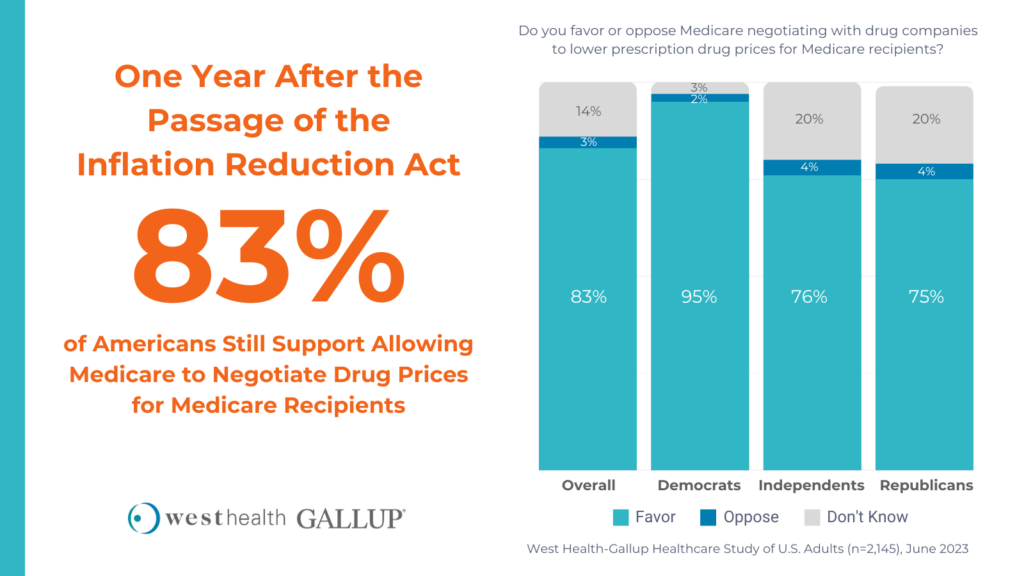
President Joe Biden’s signature Inflation Reduction Act (IRA), signed into law last year, allows the Medicare health program for Americans aged 65 and over to negotiate prices for some of its most costly drugs.

Medicines on the list include Merck & Co’s diabetes drug Januvia, Eliquis rival Xarelto from Johnson & Johnson, and AbbVie’s leukemia treatment Imbruvica. Other drugs on the list include Amgen’s rheumatoid arthritis drug Enbrel, Boehringer Ingelheim and Eli Lilly’s diabetes drug Jardiance, J&J’s arthritis and Crohn’s disease medicine Stelara and insulin from Novo Nordisk.

***

Here is where the major benchmarks ended:

  • The S&P 500® Index (SPX) was up 64.32 points (1.5%) at 4,497.63; the Dow Jones Industrial Average (DJIA) was up 292.69 points (0.9%) at 34,852.67; the NASDAQ Composite was up 238.63 points (1.7%) at 13,943.76.
  • The 10-year Treasury note yield (TNX) was down about 10 basis points at 4.112%.
  • CBOE’s Volatility Index (VIX) was down 0.62 at 14.46.

Technology, Communications Services and Retail shares were among the market’s strongest performers Tuesday. Energy stocks also climbed behind continued strength in crude oil futures, which closed at a two-week high.

The U.S. Dollar Index (DXY) fell along with expectations that interest rates will remain elevated.

***

ORDER: https://www.routledge.com/Comprehensive-Financial-Planning-Strategies-for-Doctors-and-Advisors-Best/Marcinko-Hetico/p/book/9781482240283

***

COMMENTS APPRECIATED

Thank You

***

Share this:

  • Share on Tumblr
  • Click to share on WhatsApp (Opens in new window) WhatsApp
  • Click to share on Reddit (Opens in new window) Reddit
  • More
  • Click to email a link to a friend (Opens in new window) Email
  • Click to print (Opens in new window) Print
Like Loading...

Filed under: "Advisors Only", "Doctors Only", Accounting, Alerts Sign-Up, Drugs and Pharma, Funding Basics, Investing | Tagged: AbbVie, AMGEN, CBOE, DJIA, DOW, drug prices, DXY, Eli Lilly, Inflation Reducation Act, IRA, Johnson & Johnson, medicare, Merck, NASDAQ, Novo Nordisk, S&P 500, TNX, US dollar index, VIX | Leave a comment »

DAILY UPDATE: Mark Cuban’s “Cost Plus Drugs” Company, Palintir and the Markets

Posted on August 10, 2023 by Dr. David Edward Marcinko MBA MEd CMP™

By Staff Reporters

Mark Cuban’s Cost Plus Drug Company has been on a partnering spree lately, and its latest collaborator is Scripta Insights, a digital health company that helps health plans and members find prescription savings.

Mark Cuban Launches Generic Drug Company

Scripta plans to incorporate Cost Plus Drugs’s discounted pricing into its Med Mapper, which “maps every drug on the market to every possible way to save,” according to Scripta.

MARK CUBAN’s: “Cost Plus Drugs”. com

***

Palantir stock fell 11% to $15.25 yesterday, its biggest drop since November 2022. With that decline, shares are now below their 50-day moving average, at $16.16, for the first time May. It’s broken its uptrend line, which sat around $17, and its first level of support, near $16. Worse still, the stock has fallen for six straight days and is 22% during its losing streak, the worst six-day stretch since May 2022.

***

Here is where the major benchmarks ended:

  • The S&P 500 Index was down 31.67 points (0.7%) at 4,467.71; the Dow Jones Industrial Average (DJIA) was down 191.13 points (0.5%) at 35,123.36; the NASDAQ Composite was down 162.31 points (1.2%) at 13,722.02.
  • The 10-year Treasury note yield (TNX) was down about 2 basis points at 4.004%.
  • CBOE’s Volatility Index (VIX) was little changed at 15.99.

Financial shares joined tech stocks in the laggard column Wednesday. The KBW Regional Banking Index (KRX) was down about 1%, while the Philadelphia Semiconductor Index (SOX) dropped about 1.4%. Energy stocks continued to outperform as crude oil futures gained nearly 2% and touched a nine-month high near $85 a barrel.

Oil’s recent rally reflects production cuts by top global producers and concern over supply disruptions stemming from the Russia-Ukraine war.

***

ORDER: https://www.routledge.com/Comprehensive-Financial-Planning-Strategies-for-Doctors-and-Advisors-Best/Marcinko-Hetico/p/book/9781482240283

***

COMMENTS APPRECIATED

Thank You

***

***

***

Share this:

  • Share on Tumblr
  • Click to share on WhatsApp (Opens in new window) WhatsApp
  • Click to share on Reddit (Opens in new window) Reddit
  • More
  • Click to email a link to a friend (Opens in new window) Email
  • Click to print (Opens in new window) Print
Like Loading...

Filed under: "Ask-an-Advisor", Alerts Sign-Up, Drugs and Pharma, Ethics, Experts Invited, Health Economics, Health Insurance, Healthcare Finance, Information Technology, Managed Care | Tagged: CBOE, cost plus drug company, DJIA, DOW, drug costs, drug prices, Mark Cuban, Med Mapper, NASDAQ, oil, Palantir, PBM, PBMs, S&P 500, Scripta, SOX, TNX, VIX | Leave a comment »

PHARMA: Will Americans Finally See Drug Prices Decrease?

Posted on November 4, 2022 by Dr. David Edward Marcinko MBA MEd CMP™

By Health Capital Consultants, LLC

***

***

According to the White House, “Americans pay two to three times as much as people in other countries for prescription drugs, and one in four Americans who take prescription drugs struggle to afford their medications. Nearly 3 in 10 American adults who take prescription drugs say that they have skipped doses, cut pills in half, or not filled prescriptions due to cost.” In an effort to combat this growing crisis, both the federal government and private companies have taken a number of steps over the past year aiming to lower drug prices. This Health Capital Topics article will review those actions and the potential unintended consequences of these actions.
(Read more…)

COMMENTS APPRECIATED

Thank You

CITE: https://www.r2library.com/Resource/Title/082610254

ORDER: https://www.amazon.com/Hospitals-Healthcare-Organizations-Management-Operational/dp/1439879907/ref=sr_1_4?s=books&ie=UTF8&qid=1334193619&sr=1-4

***

Share this:

  • Share on Tumblr
  • Click to share on WhatsApp (Opens in new window) WhatsApp
  • Click to share on Reddit (Opens in new window) Reddit
  • More
  • Click to email a link to a friend (Opens in new window) Email
  • Click to print (Opens in new window) Print
Like Loading...

Filed under: "Doctors Only", Drugs and Pharma, Experts Invited, Glossary Terms, Health Economics, Health Insurance | Tagged: drug prices, Drugs, Health Capital Consultants LLC, PBM, pharma, pharmacy, Pharmacy Benefits Managers, Will Americans Finally See Drug Prices Decrease? | Leave a comment »

PODCAST: Amazon Pharmacy VS. GoodRx Drug Prices

Posted on August 20, 2022 by Dr. David Edward Marcinko MBA MEd CMP™

A HEAD-2-HEAD COMPARISON

By Eric Bricker MD

****

***

YOUR COMMENTS ARE APPRECIATED.

MORE: https://www.amazon.com/Financial-Management-Strategies-Healthcare-Organizations/dp/1466558733/ref=sr_1_3?ie=UTF8&qid=1380743521&sr=8-3&keywords=david+marcinko

***

Share this:

  • Share on Tumblr
  • Click to share on WhatsApp (Opens in new window) WhatsApp
  • Click to share on Reddit (Opens in new window) Reddit
  • More
  • Click to email a link to a friend (Opens in new window) Email
  • Click to print (Opens in new window) Print
Like Loading...

Filed under: Drugs and Pharma, Experts Invited, Funding Basics, Health Economics, Health Insurance, Healthcare Finance, Videos | Tagged: amaxon pharmacy, Amazon, Amazon drugs, Amazon Pharmacy, cheaper drugs, discount drugs, drug costs, drug prices, Eric Bricker MD, GoodRx | Leave a comment »

The Drug Pricing “Theory of Relativity”

Posted on January 31, 2020 by Dr. David Edward Marcinko MBA MEd CMP™

ONE SIGN SAYS IT ALL

[By staff reporters]

***

***

Product DetailsProduct Details

***

Share this:

  • Share on Tumblr
  • Click to share on WhatsApp (Opens in new window) WhatsApp
  • Click to share on Reddit (Opens in new window) Reddit
  • More
  • Click to email a link to a friend (Opens in new window) Email
  • Click to print (Opens in new window) Print
Like Loading...

Filed under: Drugs and Pharma | Tagged: drug prices, narcan | Leave a comment »

When a Drug Coupon Helps You but Hurts Others

Posted on October 1, 2017 by Dr. David Edward Marcinko MBA MEd CMP™

When a Drug Coupon Helps You but Hurts Others

***

When a Drug Coupon Helps You but Hurts Others

Conclusion

Your thoughts and comments on this ME-P are appreciated. Feel free to review our top-left column, and top-right sidebar materials, links, urls and related websites, too. Then, subscribe to the ME-P. It is fast, free and secure.

Speaker: If you need a moderator or speaker for an upcoming event, Dr. David E. Marcinko; MBA – Publisher-in-Chief of the Medical Executive-Post – is available for seminar or speaking engagements.

Contact: MarcinkoAdvisors@msn.com

Share this:

  • Share on Tumblr
  • Click to share on WhatsApp (Opens in new window) WhatsApp
  • Click to share on Reddit (Opens in new window) Reddit
  • More
  • Click to email a link to a friend (Opens in new window) Email
  • Click to print (Opens in new window) Print
Like Loading...

Filed under: Drugs and Pharma, Health Economics | Tagged: drug prices, generic drugs, Generic Pharmaceuticals | Leave a comment »

A Better Approach to [Hospital] Cost Estimation

Posted on March 6, 2013 by Dr. David Edward Marcinko MBA MEd CMP™

Join Our Mailing List

Re-thinking the Ratios-of-Costs-to-Charges [RCCs] Financial Meter

By Russ Richmond MD

Russ Richmond MDUsing the ratios-of-costs-to-charges [RCCs] can lead hospitals down a garden-variety strategic path that’s wrong for them.

A strategically safer method of cost estimation can more accurately reveal costs.


At a Glance

  • Using ratios of costs to charges (RCCs) to estimate costs can cause hospitals to significantly over- or under-invest in service lines.
  • A focus on improving cost estimation in cost centers where physicians have significant control over operating expenses, such as drugs or implants, can strengthen decision making and strategic planning.
  • Connecting patient file information to purchasing data can lead to more accurate reflections of actual costs and help hospitals gain better visibility across service lines.

To put it bluntly, there is an almost complete lack of understanding of how much it costs to deliver patient care, much less how those costs compare with the outcomes achieved. Instead of focusing on the costs of treating individual patients with specific medical conditions over their full cycle of care, providers aggregate and analyze costs at the specialty or service department level.

—Professors Robert Kaplan and Michael Porter, “The Big Idea: How to Solve the Cost Crisis in Health Care,” Harvard Business Review, September 2011.

Of all the challenges hospitals face in today’s uncertain healthcare environment, estimating their costs might not be their top concern. However, the method most hospitals use to estimate their costs can have serious strategic and financial ramifications on their bottom line.

More than 60 percent of hospitals today use ratios of costs to charges (RCCs) as their primary cost estimation method, because true cost accounting is viewed as prohibitively expensive. But using RCCs to estimate costs can lead to significant problems for hospitals. For example, results of a recent study disclose that among 184 mid-sized community hospitals (i.e., with roughly 300 beds), the use of RCCs led 85 percent of the hospitals to overestimate the profitability of orthopedic surgery service lines. On average, the overestimates amounted to $1.2 million per year per hospital.

Such incorrect cost estimates can cascade into potentially serious strategic, financial, and operational issues. Because of faulty cost estimates, hospitals can over-invest—or under-invest—in service lines based only on high-level insight into the actual profitability of these areas. Either scenario has the potential to produce negative consequences.

Suboptimal strategic decision making based on faulty data and conclusions leads to suboptimal results. No hospital can afford such results and stay competitive in an industry of increased cost and pricing transparency.

So what’s the solution for hospitals? Even without switching to a full procedural cost-accounting system, hospitals can make adjustments that improve their cost estimating and thus strengthen their decision making and strategic planning. The operative principle is that hospitals should focus on improving cost estimating in cost centers where physicians have the most control of operating expenses—namely, drugs and implants.

Making the Right Cost Connections

Connecting patient file information, where costs are estimated, with purchasing data, which reflect actual costs, can produce a significant impact on a hospital’s pricing methodology. Drugs and implants, which represent 17 percent of a typical hospital’s total costs, are a good starting point for adoption of this approach.

Drugs. To better estimate drug prices, hospitals should make the patient file/purchasing data connection based on generic class, route of administration, and dosage. The patient charge file and the purchasing file can be connected using a common taxonomy. For instance, a hospital’s purchasing file may record a box of 10 Tylenol tablets as “10 Tylenol tablets of 325 mg,” while the charge may be recorded in the patient charge file as “Acetaminophen cap 325.” This results in a direct text mismatch for calculating cost, which can ultimately lead to faulty cost-estimating data. A common taxonomy would group these two entries into a common bucket to produce an accurate mapping of costs.

Implants. Implants are also a major price item for hospitals. To better estimate implant costs, the patient charge file and the purchasing file should be mapped using the implant log, using the same process described for mapping drug costs. The implant log is used by surgeons after an operation to log the type of procedure, detailed description of supplies used, and general comments.

When a physician orders a knee implant, the implant stock-keeping unit (SKU) number is often recorded in the implant log. If the SKU number in the implant log were mapped to the SKU number in the hospital’s purchasing file, the hospital would be better able to determine the actual cost for the implant. The cost could then be assigned to the patient file, resulting in a more accurate cost picture for orthopedic cases.

For example, to assign true implant costs to a patient who has undergone a knee replacement, a hospital would look up the implant SKU recorded in the implant log by the physician—in this example, SKU123. Then, the hospital would open the purchasing file and locate, for that particular month, the description and price for SKU123 (in this instance, XYZ knee replacement part; cost: $4,950). Next, the hospital would map the more detailed description and price for the implant to the patient charge file. This process can help to ensure that the true cost of the implant used by the physician is assigned to the patient’s charge file.

In some hospitals, the implant log, purchasing file, and patient charge file are part of the same system. For the majority of hospitals, however, the implant log is a separate electronic file, not connected with the other file system or systems. And in some hospitals, the implant log is manually managed.

A hospital can complement this process by comparing its drug and implant costs with price benchmarks from subscription-based national databases or with databases maintained by consulting firms. In our experience, a 65 percent match can be achieved by connecting the drug and implant purchasing files with the detailed charge files, as outlined above. By comparing these costs with price benchmarks from subscription-based or consulting-firm databases, a hospital can better determine how the prices it is paying for drugs and implants compare with national averages.

By connecting these data sets, hospitals can gain better visibility of what they are really spending across various service lines and operational functions.

Understanding a Rural Hospital’s True Costs

The experience of a 250-bed rural hospital in the north central United States provides a good example of the pitfalls of using RCCs to estimate costs. This hospital found itself making key strategic planning decisions based on misleading cost data.

In analyzing the drug usage data from two physicians (A and B) at the hospital, physician B appeared more cost-efficient than physician A at treating the same disease. However, on examining physician B’s actual drug expenditures, hospital leaders realized this physician’s costs were in fact higher than those of physician A (see the exhibitbelow).

###

f-richmond

###

If RCC costs are considered, physician A seems to be treating patients at a higher average cost per case than physician B. But if actual costs are considered, physician A is actually treating at a lower cost per case than physician B. Strategically, based on the RCC analysis, if the hospital encouraged all of its physicians to emulate physician B’s treatment approach, it would lose the opportunity to save money on every case.

The data generated by RCCs can be especially problematic in measuring the profitability of various hospital services lines. Because of these misleading cost data, the team at this rural hospital was under the impression it was making a healthy $477,000 profit annually from its orthopedic surgery group.

The reality was the hospital’s profit from this key service line was about $170,000 less—a material difference for a rural community hospital.

For years, the provider thought it was making money on hip replacement surgery, but those profits were much lower because costs of implants used in these orthopedic procedures were continually underestimated. An incorrect profitability picture such as this can wreak havoc on vital strategic-planning efforts.

The rural hospital is by no means an outlier in regard to its problems with cost estimation. The research finding cited at the beginning of this article suggests institutions regularly underestimate costs per orthopedic procedure (and the costs of implants) because of their use of RCCs.

Rising costs are at the heart of the cost challenges that are prevalent in health care. Healthcare reform was designed, in part, to help alleviate this persistent cost problem, but much work still needs to be done to fully understand the true costs of health care. Once these costs are better understood, the goal then must be to manage costs more effectively, efficiently, and sustainably. A critical starting point is for healthcare providers to have a more accurate and realistic picture of what their current costs are, not what they think costs may be.

By connecting key data sets and analyzing costs in a more systematic way, hospitals can develop a stronger and more accurate understanding of their actual costs. This system will provide more data visibility to enable hospital leaders to enhance strategic decision making related to key service lines, improving value.


About the Author

Russ Richmond, MD, is CEO, Objective Health, Waltham, Mass., and a member of HFMA’s Massachusetts-Rhode Island Chapter (russell_richmond@mckinsey.com).


Footnotes:
a. This amount is based on an average overestimation in contribution per orthopedic surgery case of $1,200 multiplied by an average of 1,000 cases annually per hospital.


###
Sidebar 1:  A Step-by-Step Guide to Improving Hospital Cost-Estimating Processes

Hospital leaders should follow four relatively easy-to-implement steps to improve their cost-estimating processes related to drugs and implants—two cost centers where physicians have significant control over operating expenses.

Step 1: Establish the Data Foundation
Ensure that the hospital has core data sets on which to develop. Keep the following practices in mind:

  • All encounters and detailed charges should be available in corresponding files.
  • All purchased drugs, implants, and other medical/surgical products should be available in a purchasing file (often provided by the group purchasing organization or distributor).
  • All implants should be tracked in electronic implant logs (e.g., in the operating room, intensive care unit, and cath lab).

Step 2: Assemble a Cost-Estimate Improvement Team

This team, which will lead the project, should include the following representatives:

  • Director of pharmacy, to provide guidance and sign-off on drug cost estimates
  • Materials manager, to provide guidance and sign-off on implant cost estimates
  • Chargemaster manager, to incorporate input from pharmacy and materials departments into the granular charge codes that are charged to patients
  • Analytics expert, to connect purchasing files, implant logs, and patient charge files
  • Strategy and finance leaders, to leverage the improved cost accounting to derive savings and align on growth strategy. 

Step 3: Connect the Data Sets

The analytics expert connects the data sets as described in the “Making the Right Cost Connections” section of this article. 

Step 4: Leverage Insights from True Cost Data

Three areas of understanding or capability can ensure that a hospital can put the cost data to effective strategic use.

Understanding of actual profitability of service lines/departments and definition of growth strategies.

A hospital with true cost data can understand which service lines drive most of its profit and which departments lead to maximum losses. This understanding enables hospitals to strategically define departments they should invest in and areas where they should become leaner. On the other hand, a hospital that uses ratios of costs to charges (RCCs) can, at best, give average estimates of service-line profitability, with the potential for categorizing unprofitable service lines as profitable and vice versa. 

Ability to accurately measure clinical variation in the hospital and use the measurements to guide meaningful conversations with your physicians.

A hospital with true cost data can run physician-level data profiles, such as average cost per case for each physician treating a particular disease. Such insight can support meaningful discussions with physician outliers that can influence changes in behavior and thus potentially reduce costs. Hospitals using RCCs cannot approach physicians with the same level of credibility, as seen in the rural hospital example on page 89. If hospitals instead focus on using actual costs in specific strategic costs centers, physicians once considered the hospital’s most cost-efficient may be exposed as the  organization’s most costly. 

Understanding of the impact of macro-purchasing factors such as drug shortages on the profitability of key service lines.  

A hospital that tracks actual costs can take macro-purchasing actors, such as drug shortages, and assign true costs on a daily or monthly basis, thereby allowing the effects of drug shortages on service-line profitability to be quantified. Alternatively, hospitals using RCC-based costing would average out the effects over a year, leading to inaccurate service-line profitability insight during times of drug shortages.


Sidebar 2: Improving Cost Estimates for Drugs: Action Steps by Department

IT Department

  • Create a taxonomy-based categorization tool. Assign each drug description into broad therapeutic class, dosage, and route of administration categories. This can be a string search and categorization tool, using regular expressions, to match a specific set of characters in a string (word).
  • Maintain a central database of drugs and categorizations to be used each month.

Pharmacy Department

  • When documenting purchased drugs, be sure to include compound, dosage, and route of administration information in the entry.
  • Ensure the detailed charge file has charge codes that reflect the individual drugs purchased each month.

Sidebar 3: Improving Cost Estimates for Implants: Action Steps by Department

IT Department

  • Bridge the implant log and the purchasing file. Identify the SKU number for the implant in the purchasing file as well as the implant log. Maintain or create a central database of implants and their SKUs (both the implant-log SKU and the purchasing-file SKU).
  • Connect the detailed charge file with the implant log, using the patient account number.

Purchasing Department

  • Ensure that purchased implants are assigned an internal SKU that can be mapped to the implant log SKU.
  • Ensure that the detailed charge file has charge codes that reflect the individual implants purchased each month. 

Conclusion

Your thoughts and comments on this ME-P are appreciated. Feel free to review our top-left column, and top-right sidebar materials, links, URLs and related websites, too. Then, subscribe to the ME-P. It is fast, free and secure.

Link: http://feeds.feedburner.com/HealthcareFinancialsthePostForcxos

Speaker: If you need a moderator or speaker for an upcoming event, Dr. David E. Marcinko; MBA – Publisher-in-Chief of the Medical Executive-Post – is available for seminar or speaking engagements. Contact: MarcinkoAdvisors@msn.com

OUR OTHER PRINT BOOKS AND RELATED INFORMATION SOURCES:

  • DICTIONARIES: http://www.springerpub.com/Search/marcinko
  • PHYSICIANS: www.MedicalBusinessAdvisors.com
  • PRACTICES: www.BusinessofMedicalPractice.com
  • HOSPITALS: http://www.crcpress.com/product/isbn/9781466558731
  • CLINICS: http://www.crcpress.com/product/isbn/9781439879900
  • ADVISORS: www.CertifiedMedicalPlanner.org
  • BLOG: www.MedicalExecutivePost.com
  • FINANCE:Financial Planning for Physicians and Advisors
  • INSURANCE:Risk Management and Insurance Strategies for Physicians and Advisors

Product DetailsProduct Details

Product Details

Share this:

  • Share on Tumblr
  • Click to share on WhatsApp (Opens in new window) WhatsApp
  • Click to share on Reddit (Opens in new window) Reddit
  • More
  • Click to email a link to a friend (Opens in new window) Email
  • Click to print (Opens in new window) Print
Like Loading...

Filed under: Health Economics, Healthcare Finance | Tagged: By Russ Richmond MD, costs to charges, drug prices, michael porter, Objective Health, ratio of costs to charges, RCCs | 3 Comments »

  • Calendar

    • December 2025
      M T W T F S S
      1234567
      891011121314
      15161718192021
      22232425262728
      293031  
      « Nov    
  • Advertising Info:

    • Advertise with Us!
    • Classified Ads
    • Dr. David E. Marcinko MBA
    • ME-P MAST HEAD
    • Support Med Executive-Post
  • Book Offerings:

    • Business of Medical Practice [Transformational Health 2.0 Skills for Doctors]
    • Comprehensive Financial Planning Strategies for Doctors and Advisors [Best Practices from Leading Certified Medical Planners™]
    • Financial Management Strategies for Hospitals [Tools, Techniques, Checklists and Case Studies]
    • Financial Planning Handbook For Physicians and Advisors
    • Hospitals & Healthcare Organizations [Management Strategies, Operational Techniques, Tools, Templates, and Case Studies]
    • Insurance and Risk Management Strategies for Physicians and Advisors
    • Risk Management, Liability Insurance, and Asset Protection Strategies for Doctor and Advisors [Best Practices from Leading Consultants and Certified Medical Planners™]
  • Dictionary Offerings:

    • Dictionary of Health Economics and Finance
    • Dictionary of Health Information Technology and Security
    • Dictionary of Health Insurance and Managed Care
  • Dr. David Marcinko [Publication List]

    • Google Scholar Search
    • National Institute of Health – Part I
    • National Institute of Health – Part II
  • Education Online:

    • CERTIFIED MEDICAL PLANNER® Program for Financial Advisors and Consultants
  • Health Dictionary Series Wiki Project

    • e-Health Dictionary Series®
  • Lower Extremity Medicine & Surgery

    • e-Podiatry Consent Forms®
    • Podiatry Board Exams and State Licensure Preparation
  • Pending NIHCM Grant Applications:

    • "Exposing Hobson's Choice and Rationing in Medicine"
  • Practice Lists:

    • eMRs, HIT and Security [Checklists & Case Models]
    • Medical Office Checklists [Checklists & Case Models]
    • Practice Case Examples [Checklists & Case Models]
  • Professor Marcinko

    • Comprehensive [CV] Website
    • Curriculum Development
    • Virtual Internet Chatting
  • Related Blogs:

    • Alert and Oriented
    • Association of Private Enterprise Education
    • Ayn Rand Institute
    • Benjamin Rush Institute
    • Data Breaches
    • e-Financial Consultants
    • European Center of Austrian Economics Foundation
    • FLIP IT Consulting
    • Foundation for Economic Education
    • Free Market Medical Association
    • Health Capital Consultants
    • Health Care Renewal
    • Health Economics
    • Healthcare Town Hall
    • International Health Economics Association
    • Library of Economics and Liberty
    • Ludwig von Mises Institute
    • Society for the Development of Austrian Economics
    • Taking Hayek Seriously
    • The Austrian Economics Center
    • Top 100 Economics Blogs
    • Uneasy Money
    • www.fi360.com
  • Speaker's Bureau:

    • Dr. David E. Marcinko MBA CMP™ [Publisher-in-Chief]
  • Thought-Leaders:

    • Ahmad Hashem; MD, PhD
    • Andrew Schwartz CPA
    • Anju D. Jessani; MBA APM®
    • Anthony Silva; MD MBA
    • Brian J. Knabe; MD CFP® CMP™
    • Carol S. Miller BSN MBA CMP™ [Hon]
    • Darrell K. Pruitt; DDS
    • David B. Nash; MD, MBA
    • David K. Luke MIM CMP™
    • Edwin Morrow; CFP® RFC
    • Edwin P. Morrow III; J.D., LL.M., MBA, CFP®, RFC®
    • Eric A. Dover MD
    • Frank A. Cappiello; PhD MBA
    • Gary L. Bode DPM CPA MSA CMP™ [Hon]
    • Ike Devji; JD
    • J. Christopher Miller JD
    • J. Wesley Boyd MD PhD
    • James Winston Phillips MD JD LLM MBA
    • Kernan T. Manion MD
    • Lloyd M. Krieger; MD, MBA
    • Michael J. Stahl; PhD MBA
    • Michael Lawrence Langan MD
    • Neil H. Baum MD MBA
    • Perry D'Alessio CPA
    • Richard A. Berning; MD
    • Rick Kahler MSFS CFP®
    • Rick Mata; MD, MS, CMP™
    • Shahid N. Shah; MS
    • Somnath Basu; PhD, MBA
    • Susan L. Theuns; PA-C, CPC, CHC, MA
    • Thomas A. Muldowney MSFS CFP AIF CMP™
    • Thomas E. Getzen; PhD
    • Timothy McIntosh MBA MPH CFP® CMP™ [Hon]
    • Vitaliy N. Katsenelson CFA
  • White Papers:

    • Competitive Modeling and Analysis in Healthcare

Blog at WordPress.com. WP Designer.

  • Subscribe Subscribed
    • The Leading Business Education Network for Doctors, Financial Advisors and Health Industry Consultants
    • Join 1,429 other subscribers
    • Already have a WordPress.com account? Log in now.
    • The Leading Business Education Network for Doctors, Financial Advisors and Health Industry Consultants
    • Subscribe Subscribed
    • Sign up
    • Log in
    • Report this content
    • View site in Reader
    • Manage subscriptions
    • Collapse this bar
 

Loading Comments...
 

    %d