BOARD CERTIFICATION EXAM STUDY GUIDES Lower Extremity Trauma
[Click on Image to Enlarge]
ME-P Free Advertising Consultation
The “Medical Executive-Post” is about connecting doctors, health care executives and modern consulting advisors. It’s about free-enterprise, business, practice, policy, personal financial planning and wealth building capitalism. We have an attitude that’s independent, outspoken, intelligent and so Next-Gen; often edgy, usually controversial. And, our consultants “got fly”, just like U. Read it! Write it! Post it! “Medical Executive-Post”. Call or email us for your FREE advertising and sales consultation TODAY [678.779.8597] Email: MarcinkoAdvisors@outlook.com
Medical & Surgical e-Consent Forms
ePodiatryConsentForms.com
iMBA Inc., OFFICES
Suite #5901 Wilbanks Drive, Norcross, Georgia, 30092 USA [1.678.779.8597]. Our location is real and we are now virtually enabled to assist new long distance clients and out-of-town colleagues.
ME-P Publishing
SEEKING INDUSTRY INFO PARTNERS?
If you want the opportunity to work with leading health care industry insiders, innovators and watchers, the “ME-P” may be right for you? We are unbiased and operate at the nexus of theoretical and applied R&D. Collaborate with us and you’ll put your brand in front of a smart & tightly focused demographic; one at the forefront of our emerging healthcare free marketplace of informed and professional “movers and shakers.” Our Ad Rate Card is available upon request [678-779-8597].
The Firm Foundation Theory of investing is one of the most influential approaches to stock valuation. It rests on the belief that every financial asset possesses an intrinsic value that can be objectively determined through careful analysis of its fundamentals. This theory contrasts sharply with more speculative approaches, such as the “Castle-in-the-Air” theory, which emphasizes crowd psychology and market sentiment.
At its core, the Firm Foundation Theory was popularized by economist John Burr Williams in his 1938 book The Theory of Investment Value. Williams argued that the intrinsic value of a stock is equal to the present value of all future dividends the company is expected to pay. In other words, the worth of a stock is not determined by short-term price movements or investor enthusiasm, but by the long-term cash flows it generates. This principle has become a cornerstone of fundamental analysis, influencing investors such as Warren Buffett, who is often cited as a practitioner of this approach.
The theory assumes that while market prices may fluctuate due to speculation, fear, or irrational exuberance, they will eventually regress toward intrinsic value. This creates opportunities for disciplined investors: when a stock trades below its intrinsic value, it represents a buying opportunity; when it trades above, it may be time to sell. Thus, the Firm Foundation Theory provides a rational framework for identifying mispriced securities and making long-term investment decisions.
***
***
One of the strengths of this theory is its emphasis on objective analysis. By focusing on dividends, earnings, and growth potential, it encourages investors to ground their decisions in measurable financial data rather than emotional impulses. This approach aligns with the broader philosophy of value investing, which seeks to purchase securities at a discount to their true worth. It also offers a counterbalance to speculative bubbles, reminding investors that prices untethered from fundamentals are unsustainable in the long run.
However, the Firm Foundation Theory is not without challenges. Forecasting future dividends and earnings is inherently uncertain. Companies may change their payout policies, face unexpected competition, or encounter macroeconomic shocks that alter their growth trajectory. Additionally, the theory assumes that markets will eventually correct mispricings, but in reality, irrational exuberance or pessimism can persist for extended periods. Critics argue that this makes the theory more idealistic than practical in certain contexts.
Despite these limitations, the Firm Foundation Theory remains a vital tool in the investor’s toolkit. It underpins many valuation models used today, including discounted cash flow (DCF) analysis, which extends Williams’s dividend-based approach to include broader measures of cash generation. By insisting that stocks have a calculable intrinsic value, the theory provides a disciplined lens through which investors can evaluate opportunities and avoid being swayed by market noise.
In conclusion, the Firm Foundation Theory offers a rational, fundamentals-driven perspective on investing. While it requires careful forecasting and is vulnerable to uncertainty, its emphasis on intrinsic value continues to guide prudent investors. By reminding us that stocks are ultimately worth the cash they return to shareholders, the theory stands as a bulwark against speculation and a foundation for long-term wealth building.
SPEAKING: Dr. Marcinko will be speaking and lecturing, signing and opining, teaching and preaching, storming and performing at many locations throughout the USA this year! His tour of witty and serious pontifications may be scheduled on a planned or ad-hoc basis; for public or private meetings and gatherings; formally, informally, or over lunch or dinner. All medical societies, financial advisory firms or Broker-Dealers are encouraged to submit an RFP for speaking engagements: CONTACT: Ann Miller RN MHA at MarcinkoAdvisors@outlook.com -OR-http://www.MarcinkoAssociates.com
Posted on December 31, 2025 by Dr. David Edward Marcinko MBA MEd CMP™
By Dr. David Edward Marcinko MBA MEd
***
***
Synthetic stocks represent one of the most intriguing innovations in contemporary financial markets. Unlike traditional shares, which grant direct ownership in a company, synthetic stocks are financial instruments designed to mimic the behavior of real stocks without requiring investors to actually hold the underlying asset. They are created through derivatives, contracts, or blockchain-based mechanisms that replicate the price movements and returns of equities. This concept has gained traction as technology reshapes investing, offering new opportunities and challenges for both retail and institutional participants.
What Are Synthetic Stocks?
At their core, synthetic stocks are contracts that simulate the performance of a real stock. For example, if a company’s share price rises by 10 percent, the synthetic version of that stock would also increase by the same amount. Investors gain exposure to the asset’s price movements, dividends, or other features without owning the actual shares. These instruments can be built using options, swaps, or tokenized assets on blockchain platforms. The goal is to provide flexibility and accessibility, especially in markets where direct ownership may be restricted or costly.
Advantages of Synthetic Stocks
Synthetic stocks offer several benefits that make them appealing to modern investors:
Accessibility: They allow individuals in regions with limited access to U.S. or global equities to participate in those markets.
Fractional Ownership: Synthetic instruments can be divided into smaller units, enabling investors to buy exposure to expensive stocks like Tesla or Amazon without needing large sums of capital.
Liquidity: Because they are often traded on digital platforms, synthetic stocks can provide faster and more efficient transactions.
Customization: Investors can tailor synthetic contracts to include specific features, such as dividend replication or leverage, depending on their risk appetite.
These advantages highlight how synthetic stocks democratize investing, making global markets more inclusive.
Risks and Challenges
Despite their promise, synthetic stocks also carry significant risks.
Counterparty Risk: Since synthetic instruments are contracts, investors rely on the issuer to honor obligations. If the issuer defaults, the investor may lose their capital.
Regulatory Uncertainty: Many jurisdictions are still grappling with how to classify and regulate synthetic assets, especially those built on blockchain. This creates potential legal and compliance challenges.
Market Volatility: Synthetic stocks mirror the volatility of real equities, meaning investors are still exposed to sharp price swings.
Complexity: Understanding the mechanics of synthetic instruments requires financial literacy. Without proper knowledge, retail investors may face unexpected losses.
These challenges underscore the importance of caution and education when engaging with synthetic markets.
***
***
Synthetic Stocks and Blockchain
One of the most exciting developments in synthetic stocks is their integration with blockchain technology. Platforms can issue tokenized versions of real equities, allowing investors to trade synthetic shares 24/7 across borders. Smart contracts automate dividend payments or price tracking, reducing reliance on intermediaries. This innovation not only enhances transparency but also expands access to markets previously limited by geography or regulation. However, blockchain-based synthetic stocks also raise questions about investor protection, taxation, and systemic risk.
The Future of Synthetic Stocks
Looking ahead, synthetic stocks are likely to play a growing role in global finance. As regulators establish clearer frameworks, these instruments could become mainstream tools for portfolio diversification. They may also serve as bridges between traditional finance and decentralized finance (DeFi), blending the stability of established markets with the innovation of digital platforms. For institutional investors, synthetic stocks could provide efficient hedging strategies, while retail investors may use them to gain exposure to assets that were once out of reach.
Conclusion
Synthetic stocks embody the evolving nature of financial markets in the digital age. By replicating the performance of real equities, they expand access, flexibility, and innovation for investors worldwide. Yet they also introduce new risks that require careful management and regulatory oversight. As technology continues to reshape finance, synthetic stocks stand as a symbol of both opportunity and caution. They remind us that while markets evolve, the balance between innovation and responsibility remains essential. For investors willing to learn and adapt, synthetic stocks may represent not just a trend, but a transformative force in the future of investing.
SPEAKING: Dr. Marcinko will be speaking and lecturing, signing and opining, teaching and preaching, storming and performing at many locations throughout the USA this year! His tour of witty and serious pontifications may be scheduled on a planned or ad-hoc basis; for public or private meetings and gatherings; formally, informally, or over lunch or dinner. All medical societies, financial advisory firms or Broker-Dealers are encouraged to submit an RFP for speaking engagements: CONTACT: Ann Miller RN MHA at MarcinkoAdvisors@outlook.com -OR-http://www.MarcinkoAssociates.com
FIVE INVESTING MISTAKES OF DOCTORS; PLUS 1 VITAL TIP
As a former US Securities and Exchange Commission [SEC] Registered Investment Advisor [RIA] and business school professor of economics and finance, I’ve seen many mistakes that doctors must be aware of, and most importantly, avoid. So, here are the top 5 investing mistakes along with suggested guideline solutions.
Mistake 1: Failing to Diversify Investment but Beware Di-Worsification
A single investment may become a large portion of your portfolio as a result of solid returns lulling you into a false sense of security. The Magnificent Seven stocks are a current example:
Apple, up +5,064%% since 1/18/2008
Amazon, up +30,328% since 9/6/2002
Alphabet, up +1,200% since 7/20/2012
Tesla, up +21,713% since 11/16/2012
Meta, up +684% since 2/20/2015
Microsoft, up +22% since 12/21/2023
Nvidia, up +80,797% since 4/15/2005
Guideline: The Magnificent Seven [7] has grown from 9% of the S&P 500 at the end of 2013 to 31% at the end of 2024! That means even if you don’t own them, you’re still very exposed if you have an Index Fund [IF] or Exchange Traded Fund [ETF] that tracks the market. Accordingly, diversification is the only free lunch in investing which can reduce portfolio risk. But, remember the Wall Street insider aphorism that states: “Di-Versification Means Always Having to Say Your Sorry.”
The term “Di-Worsification” was coined by legendary investor Peter Lynch in his book, One Up On Wall Street to refer to over-diversifying an investment portfolio in such a way that it reduces your overall risk-return characteristics. In other words, the potential return rises with an increase in risk and invested money can render higher profits only if willing to accept a higher possibility of losses [1].
A podiatrist can easily fall into the trap of chasing securities or mutual funds showing the highest return. It is almost an article of faith that they should only purchase mutual funds sporting the best recent performance. But in fact, it may actually pay to shun mutual funds with strong recent performance. Unfortunately, many struggle to appreciate the benefits of their investment strategy because in jaunty markets, people tend to run after strong performance and purchase last year’s winners.
Similarly, in a market downturn, investors tend to move to lower-risk investment options, which can lead to missed opportunities during subsequent market recoveries. The extent of underperformance by individual investors has often been the most awful during bear markets. Academic studies have consistently shown that the returns achieved by the typical stock or bond fund investors have lagged substantially.
Guideline: Understand chasing performance does not work.Continually monitor your investments and don’t feel the need to invest in the hottest fund or asset category. In fact, it is much better to increase investments in poor performing categories (i.e. buy low). Also keep in remind rebalancing of assets each year is key. If stocks perform poorly and bonds do exceptionally well, then rebalance at the end of the year. In following this strategy, this will force a doctor into buying low and selling high each year.
Often doctors make their investment decisions under the belief that stocks will consistently give them solid double-digit returns. But the stock markets go through extended long-term cycles.
In examining stock market history, there have been 6 secular bull markets (market goes up for an extended period) and 5 secular bear markets (market goes down) since 1900. There have been five distinct secular bull markets in the past 100+ years. Each bull market lasted for an extended period and rewarded investors.
For example, if an investor had started investing in stocks either at the top of the markets in 1966 or 2000, future stock market returns would have been exceptionally below average for the proceeding decade. On the other hand, those investors fortunate enough to start building wealth in 1982 would have enjoyed a near two-decade period of well above average stock market returns. They key element to remember is that future historical returns in stocks are not guaranteed. If stock market returns are poor, one must consider that he or she will have to accept lower projected returns and ultimately save more money to make up for the shortfall. For example,
The May 6th, 2010, flash crash, also known as the crash of 2:45, was a United States trillion-dollar stock market plunge which started at 2:32 pm EST and lasted for approximately 36 minutes.
And, investors who have embraced the “buy the dip” strategy in 2025 have been handsomely rewarded, with the S&P 500 delivering its strongest post-pull back returns in over three decades.
According to research from Bespoke Investment Group, the S&P 500 has gained an average of 0.36% in the trading session following a down day so far in 2025. The only year with a comparable performance was 2020, which saw a 0.32% average post-dip gain [2].
The most recent example came on May 27, 2025 when the S&P 500 surged more than 2% after falling 0.7% in the final session before the holiday weekend. The rally was sparked by President Trump’s decision to scale back huge previously threatened tariffs on EU —a recurring catalyst behind many of 2025’s rebound.
Guideline: Beware of projecting forward historical returns. Doctors should realize that the stock markets are inherently volatile and that, while it is easy to rely on past historical averages, there are long periods of time where returns and risk deviate meaningfully from historical averages.
Some doctors believe they are “smarter than the market” and can time when to jump in and buy stocks or sell everything and go to cash. Wouldn’t it be nice to have the clairvoyance to be out of stocks on the market’s worst days and in on the best days?
Using the S&P 500 Index, our agile imaginary doctor-investor managed to steer clear of the worst market day each year from January 1st, 1992 to March 31st, 2012. The outcome: s/he compiled a 12.42% annualized return (including reinvestment of dividends and capital gains) during the 20+ years, sufficient to compound a $10,000 investment into $107,100.
But what about another unfortunate doctor-investor that had the mistiming to be out of the market on the best day of each year. This ill-fated investor’s portfolio returned only 4.31% annualized from January 1992 – March 2012, increasing the $10,000 portfolio value to just $23,500 during the 20 years. The design of timing markets may sound easy, but for most all investors it is a losing strategy.
More contemporaneously on December 18th 2024, the DJIA plummeted 2.5%, while the S&P 500 declined 3% and the NASDAQ tumbled 3.5%
Guideline: If it looks too good to be true, it probably is. While jumping into the market at its low and selling right at the high is appealing in theory, we should recognize the difficulties and potential opportunity and trading costs associated with trying to time the stock market in practice. In general, colleagues are be best served by matching their investment with their time horizon and looking past the peaks / valleys along the way.
Mistake 5: Failing to Recognize the Impact of Fees and Expenses
A free dinner seminar or a polished stock-broker sales pitch may hide the total underlying costs of an investment. So, fees absolutely matter.
The first costing step is determining what the fees actually are. In a mutual fund, these costs are found in the company’s obligatory “Fund Facts”. This manuscript clearly outlines all the fees paid–including up front fees (commissions and loads), deferred sales charges and any switching fees. Fund management expense ratios are also part of the overall cost. Trading costs within the fund can also impact performance.
Here is a list of the traditional mutual fund fees:
Front End Load: The commission charged to purchase a fund through a stock broker or financial advisor. The commission reduces the amount you have available to invest. Thus, if you start with $100,000 to invest, and the advisor charges up to an 8 percent front end load, you end up actually investing $92,000.
Deferred Sales Charge (DSC) or Back End Load: Imposed if you sell your position in the mutual fund within a pre-specified period of time (normally one – five years). It is initiated at a higher start percentage (i.e. as high as 10 percent) and declines over a specific period of time.
Operating Fees: Costs of the mutual fund including the management fee rewarded to the manager for investment services. It also includes legal, custodial, auditing and marketing fees.
Annual Administration Fee: Many mutual fund companies also charge a fee just for administering the account – usually under $100-150 per year.
Guideline: Know and understand all fees.
For example: A 1 percent disparity in fees may not seem like much but it makes a considerable impact over a long time period.
Consider a $100,000 portfolio that earns 8 percent before fees, grows to $320,714 after 20 years if the investor pays a 2 percent operating fee. In comparison, if s/he opted for a fund that charged a more reasonable 1 percent fee, after 20 years, the portfolio grows to be $386,968 – a divergence of over $66,000!
This is the value of passive or index investing. In the case of an index fund, fees are generally under 0.5 percent, thus offering even more savings over a long period of time.
One Vital Tip: Investing Time is on Your Side
Despite thousands of TV shows, podcasts, textbooks, opinions and university studies on investing, it really only has three simple components. Amount invested, rate of return and time. By far, the most important item is time! For example:
Nvidia: if you invested $1,000 in 2009, you’d have $338,103 today.
Apple: if you invested $1,000 in 2008, you’d have $48,005 today.
Netflix: if you invested $1,000 in 2004, you’d have $495,679 today.
Unfortunately, this list of investing mistakes is still being made by many doctors. Fortunately, by recognizing and acting to mitigate them, your results may be more financially fruitful and mentally quieting.
REFERENCES:
1. Lynch, Peter: One Up on Wall Street [How to Use What You Already Know to Make Money in the Market]: Simon and Shuster (2nd edition) New York, 2000.
1. Marcinko, DE; Comprehensive Financial Planning Strategies for Doctors and Advisors [Best Practices from Leading Consultants and Certified Medical Planners™] Productivity Press, New York, 2017.
2. Marcinko, DE: Dictionary of Health Economics and Finance. Springer Publishing Company, New York, 2006.
3. Marcinko, DE; Risk Management, Liability Insurance, and Asset Protection Strategies for Doctors and Advisors [Best Practices from Leading Consultants and Certified Medical Planners™] CRC Press, New York, 2015.
BIO: As a former university Professor and Endowed Department Chair in Austrian Economics, Finance and Entrepreneurship, the author was a NYSE Registered Investment Advisor and Certified Financial Planner for a decade. Later, he was a private equity and wealth manager
SPEAKING: Dr. Marcinko will be speaking and lecturing, signing and opining, teaching and preaching, storming and performing at many locations throughout the USA this year! His tour of witty and serious pontifications may be scheduled on a planned or ad-hoc basis; for public or private meetings and gatherings; formally, informally, or over lunch or dinner. All medical societies, financial advisory firms or Broker-Dealers are encouraged to submit an RFP for speaking engagements: CONTACT: Ann Miller RN MHA at MarcinkoAdvisors@outlook.com -OR-http://www.MarcinkoAssociates.com
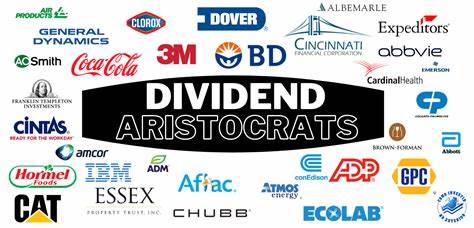
According to wikipedia, the S&P 500 Dividend Aristocrats is a stock market index composed of the companies in the S&P 500 index that have increased their dividends in each of the past 25 consecutive years. It was launched in May 2005.
There are other indexes of dividend aristocrats that vary with respect to market cap and minimum duration of consecutive yearly dividend increases. Components are added when they reach the 25-year threshold and are removed when they fail to increase their dividend during a calendar year or are removed from the S&P 500. However, a study found that the stock performance of companies improves after they are removed from the index The index has been recommended as an alternative to bonds for investors looking to generate income.
To invest in the index, there are several exchange traded funds (ETFs), which seek to replicate the performance of the index.
Posted on April 14, 2025 by Dr. David Edward Marcinko MBA MEd CMP™
OVER HEARD IN THE FINANCIAL ADVISOR’S LOUNGE
***
***
By Perry D’Alessio, CPA [D’Alessio Tocci & Pell LLP]
What I see in my accounting practice is that significant accumulation in younger physician portfolio growth is not happening as it once did. This is partially because confidence in the equity markets is still not what it was; but that doctors are also looking for better solutions to support their reduced incomes.
For example, I see older doctors with about 25 percent of their wealth in the market, and even in retirement years, do not rely much on that accumulation to live on. Of this 25 percent, about 80 percent is in their retirement plan, as tax breaks for funding are just too good to ignore.
What I do see is that about 50 percent of senior physician wealth is in rental real estate, both in a private residence that has a rental component, and mixed-use properties. It is this that provides a good portion of income in retirement.
***
***
QUESTION: So, could I add dialog about real estate as a long term solution for retirement?
Yes, as I believe a real estate concentration in the amount of 5 percent is optimal for a diversified portfolio, but in a very passive way through mutual or index funds that are invested in real estate holdings and not directly owning properties.
Today, as an option, we have the ability to take pension plan assets and transfer marketable securities for rental property to be held inside the plan collecting rents instead of dividends.
Real estate holdings never vary very much, tend to go up modestly, and have preferential tax treatment due to depreciation of the property against income.
If the definition of a security is title to a stream of cash flows, then the dividends a company is expected to pay to equity shareholders on a periodic basis (e.g., quarterly) are a clear source of return for an investor. A dividend is simply a distribution of (some portion of) the company’s earnings to equity shareholders. Like a bond yield, a stock’s dividend yield can be used to measure the income return on the stock.
To determine a stock’s dividend yield, the trailing year’s dividends per share paid are divided by the current stock price. However, a key difference between a dividend yield and a bond yield is the level of certainty that can be assumed regarding future payments, since a bond’s coupon is generally predetermined and its payment is expected to be senior to the payment of dividends.
After a company has determined that it has earned a profit, management has to decide what to do with those profits. One choice is to distribute the earnings to shareholders in the form of dividends, while another option is to reinvest the profits in the company. A company’s management may determine that the shareholders interest is best served by using the earnings to pursue growth opportunities (e.g., capital expansion, research & development, etc.) at the corporate level. Thus, when management believes that its investment opportunities are likely to produce a higher return than what investors’ could generate with their dividends or that reinvestment is needed to maintain its financial strength, the company will retain the earnings.
One of the biggest myths in investing is capital appreciation accounts for the largest part of investors’ gains. Dividends, or cash payments to shareholders, actually account for a substantial part of an equity investor’s total return. In fact since 1926, dividends have accounted for more than 40% of the total return of the S&P 500 stock index. In the last decade (2000-2009), the S&P 500’s total return of -9% would have been a heftier loss of -24% had it not been for the 15% contribution from dividends.
History has shown that dividends have been a powerful source of total return in a diversified investment portfolio, especially during periods of market turbulence. In examining the prior eight decades of stock market performance, dividends often account for more than 2/3 of the total return (1930s, 1940s, 1970s, & 2000s). If an investor avoided dividend paying stocks during these elongated time periods, most of the total gains would be lost.
***
DIVIDEND CONTRIBUTION OF S&P 500 RETURN BY DECADE
S&P 500
Cumulative
Dividends
Average
Price %
Dividend
Total
% of Total
Payout
Years
Change
Contribution*
Return
Return
Ratio**
1930s
-41.9%
56.0%
14.1%
>100%
90.1%
1940s
34.8%
100.3%
135.0%
74.3%
59.4%
1950s
256.7%
180.0%
436.7%
41.2%
54.6%
1960s
53.7%
54.2%
107.9%
50.2%
56.0%
1970s
17.2%
59.1%
76.4%
77.4%
45.5%
1980s
227.4%
143.1%
370.5%
38.6%
48.6%
1990s
315.7%
117.1%
432.8%
27.0%
47.6%
2000s
-24.1%
15.0%
-9.1%
>100%
35.3%
2010s
27.9%
8.4%
36.3%
23.1%
28.4%
as of 12/31/12
Source: Strategas
During those decades such as the 2000s where the stock market struggled to advance, dividends were a significant element for investor survival. This is not only due to the dividends alone, but also the risk element of stocks that pay dividends. Dividend stocks have historically provided lower overall volatility and stronger downside protection when markets decline. Since 1927, dividend stocks have consistently held up better than the broader market during downturns. You can measure downside risk through a statistic known as downside capture ratio.
Downside capture ratio is a statistical measure of overall performance in a down stock market. An investment category, or investment manager, who has a down-market ratio less than 100 has outperformed the index during a falling stock market.
For example, a down-market capture ratio of 80 indicates that the portfolio measure declined only 80% as much as the index during the period. The downside capture ratio of high-dividend-yielding stocks, since 1927, has been 81% or lower over various long-term periods. Put a better way, during months that the S&P 500 stock index fell, dividend stocks declined by nearly 19% less than the broader market.
***
DOWNSIDE AND UPSIDE CAPTURE RATIOS OF HIGH DIVIDEND STOCKS – 1927 TO 2011
SPEAKING: Dr. Marcinko will be speaking and lecturing, signing and opining, teaching and preaching, storming and performing at many locations throughout the USA this year! His tour of witty and serious pontifications may be scheduled on a planned or ad-hoc basis; for public or private meetings and gatherings; formally, informally, or over lunch or dinner. All medical societies, financial advisory firms or Broker-Dealers are encouraged to submit a RFP for speaking engagements: CONTACT: MarcinkoAdvisors@outlook.com
“Phantom Tax” or “Phantom Income” for direct owners of Treasury inflation-protected securities (TIPS) TIPS adjust their principal values and interest payments for inflation. As with other directly owned Treasury securities, TIPS principal, including the inflation adjustments, is not paid back to investors until the securities mature.
However, the principal adjustments are taxed by the IRS as income in the year in which they occur, even though no actual payments are made in those years to investors who own TIPS directly. This is why this income is called “phantom income” and the tax on it is known as the “phantom tax.”
Investors can avoid the phantom income/tax issue for TIPS by holding TIPS in tax-deferred retirement accounts. Mutual funds and Exchange Traded Funds (ETFs) typically take the “phantom” factor out of TIPS ownership by distributing the principal adjustments as taxable dividends.
As with direct ownership of TIPS, the tax consequences of these distributions by mutual funds and ETFs can be reduced by holding TIPS-owning instruments in tax-deferred retirement accounts
Posted on January 14, 2024 by Dr. David Edward Marcinko MBA MEd CMP™
By Staff Reporters
***
***
Walgreens doled out some tough medicine to its investors this week when it cut its quarterly dividend to shareholders nearly in half, in a move to conserve cash and strengthen its long-term financial position, according to CEO Tim Wentworth.
Illinois-based Walgreens Boots Alliance Inc (WBA), which operates one of the largest US drugstore chains, on Thursday declared a quarterly dividend of 25 cents per share, a reduction from 48 cents per share the previous quarter. The dividend will be payable on March 12th.
The move will allow Walgreens to increase cash flow and free up capital “to invest in sustainable growth initiatives in our pharmacy and healthcare businesses, which we believe will ultimately improve shareholder value,” Wentworth said in a statement.
Posted on August 7, 2022 by Dr. David Edward Marcinko MBA MEd CMP™
WHAT IS THE “EX-DIVIDEND” STOCK DATE?
By Staff Reporters
DEFINITION: Occurs when dividends are declared by a company’s board of directors, they are payable on a certain date (“payable date”) to shareholders recorded on the company’s books as of a stated earlier date (“record date”).
Purchasers of the stock on or after the record date are not entitled to receive the recently declared dividend, so the ex-dividend date is the number of days it takes to settle a trade before the record date (currently three business days). A stock’s price on its ex-dividend date appears in the newspaper with an X beside it.
Posted on August 6, 2022 by Dr. David Edward Marcinko MBA MEd CMP™
Dividends bring tangible and intangible benefits
By Vitaliy Katsenelson CFA
You can also listen to the article here, or by clicking on the buttons below:
Like many professional investors, I love companies that pay dividends. Dividends bring tangible and intangible benefits: Over the last hundred years, half of total stock returns came from dividends.
In a world where earnings often represent the creative output of CFOs’ imaginations, dividends are paid out of cash flows, and thus are proof that a company’s earnings are real.
Finally, a company that pays out a significant dividend has to have much greater discipline in managing the business, because a significant dividend creates another cash cost, so management has less cash to burn in empire-building acquisitions.
Posted on March 29, 2009 by Dr. David Edward Marcinko MBA MEd CMP™
Vital Information for Medical Professionals and Heathcare Workers
[By Staff Reporters]
To a large degree the decision to exercise a stock option will depend on whether the medical professional, hospital or other healthcare services employee is going to hold the stock following the exercise or is going to sell the stock immediately.
A Bifurcated Decision Point
1. If the employee intends to sell the stock, then he or she should try to time the exercise so that the stock is at its highest value.
2. If the employee is going to hold the acquired stock for future investment, then he or she should exercise the option as late as possible under the terms of the option agreement; the employee thus enjoys all upside potential without any investment and has nothing at risk.
Exceptions
There are two exceptions to the general rule:
1. First, if the rate of dividends is sufficient to cover the financing cost, or is at least equal to other investment returns, then exercise of the options makes sense.
2. Second, if the option is an Incentive Stock Option [ISO], the potential application of the alternative minimum tax (AMT) rules may force the employee to stagger the exercise.
Assessment
For more terminology information, please refer to the Dictionary of Health Economics and Finance.
Conclusion
And so, your thoughts and comments on this Medical Executive-Post are appreciated?
Speaker:If you need a moderator or speaker for an upcoming event, Dr. David E. Marcinko; MBA – Publisher-in-Chief of the Medical Executive-Post – is available for seminar or speaking engagements. Contact: MarcinkoAdvisors@msn.com
Our Other Print Books and Related Information Sources:
Subscribe Now:Did you like this Medical Executive-Post, or find it helpful, interesting and informative? Want to get the latest ME-Ps delivered to your email box each morning? Just subscribe using the link below. You can unsubscribe at any time. Security is assured.







 Support our online development, and advance our onground research initiatives in free market economics, as we seek to showcase the brightest Next-Gen minds.
THE ME-P DISCLAIMER: Posts, comments and opinions do not necessarily represent iMBA, Inc., but become our property after submission. Copyright © 2006 to-date. iMBA, Inc allows colleges, universities, medical and financial professionals and related clinics, hospitals and non-profit healthcare organizations to distribute our proprietary essays, photos, videos, audios and other documents; etc. However, please review copyright and usage information for each individual asset before submission to us, and/or placement on your publication or web site. Attestation references, citations and/or back-links are required. All other assets are property of the individual copyright holder.
Support our online development, and advance our onground research initiatives in free market economics, as we seek to showcase the brightest Next-Gen minds.
THE ME-P DISCLAIMER: Posts, comments and opinions do not necessarily represent iMBA, Inc., but become our property after submission. Copyright © 2006 to-date. iMBA, Inc allows colleges, universities, medical and financial professionals and related clinics, hospitals and non-profit healthcare organizations to distribute our proprietary essays, photos, videos, audios and other documents; etc. However, please review copyright and usage information for each individual asset before submission to us, and/or placement on your publication or web site. Attestation references, citations and/or back-links are required. All other assets are property of the individual copyright holder.




















 The Leading Business Education Network for Doctors, Financial Advisors and Health Industry Consultants