DAILY UPDATE: Wegovy, Home Health Medicare, Federal Budget Deficit and Organ Transplants as Stock Markets Set New Highs

MEDICAL EXECUTIVE-POST TODAY’S NEWSLETTER BRIEFING

***

Essays, Opinions and Curated News in Health Economics, Investing, Business, Management and Financial Planning for Physician Entrepreneurs and their Savvy Advisors and Consultants

Serving Almost One Million Doctors, Financial Advisors and Medical Management Consultants Daily

A Partner of the Institute of Medical Business Advisors , Inc.

http://www.MedicalBusinessAdvisors.com

SPONSORED BY: Marcinko & Associates, Inc.

***

http://www.MarcinkoAssociates.com

Daily Update Provided By Staff Reporters Since 2007.
How May We Serve You?
© Copyright Institute of Medical Business Advisors, Inc. All rights reserved. 2024

REFER A COLLEAGUE: MarcinkoAdvisors@msn.com

SPONSORSHIPS AVAILABLE: https://medicalexecutivepost.com/sponsors/

ADVERTISE ON THE ME-P: https://tinyurl.com/ytb5955z

Your Referral Count -0-

Kamala Harris announced a plan to broaden Medicare to cover home healthcare for the first time in an effort to help the “sandwich generation” of Americans who are taking care of both their children and their parents.

WeightWatchers said it will offer cheaper copycat versions of Novo Nordisk’s weight loss drug, Wegovy.

CITE: https://www.r2library.com/Resource

Stocks up

  • Reddit gained 0.31% thanks to Jefferies analysts, who debuted their coverage of the social media stock with a “buy” rating, praising the company’s AI potential.
  • Biogen climbed 1.90% after the FDA gave its treatment for kidney transplant patients a special Breakthrough Therapy Designation.
  • Cruise stocks sailed higher today, in spite of the oncoming hurricane in the Gulf of Mexico. Norwegian Cruise Line, Carnival, and Royal Caribbean popped 10.91%, 7.05%, and 5.26%, respectively, on upgrades from Citi analysts.
  • Astera Labs jumped 15.60% after it debuted a new family of data center switches built specifically for AI.
  • Helen of Troy soared 17.88% thanks to a stronger-than-expected earnings report from the struggling consumer goods manufacturer.
  • Arcadium Lithium continued to rocket higher today after mining behemoth Rio Tinto announced it’s buying the lithium miner for $5.85 per share. Arcadium shares rose 30.90%.

Stocks down

  • Boeing just can’t catch a break: Talks with striking machinists broke down and the airplane manufacturer withdrew its recent contract offer. Shares sank 3.41% on the news.
  • US-traded shares of German life sciences company Bayer dropped 6.96% after a US court decided it will hear arguments that products from Bayer brand Monsanto allegedly harmed people.
  • Trump Media & Technology Group finally settled down after a wild rally following a wild rally in Pennsylvania featuring Elon Musk, falling 5.64% today.

CITE: https://tinyurl.com/2h47urt5

Here’s where the major benchmarks ended:

  • The S&P 500® index (SPX) rose 40.91 points (0.71%) to 5,792.04, a new record-high close; the Dow Jones Industrial Average® ($DJI) added 431.63 points (1.03%) to 42,512.00, also a new closing high; and the NASDAQ Composite® ($COMP) increased 108.70 points (0.60%) to 18,291.62.
  • The 10-year Treasury note yield (TNX) climbed three basis points to 4.06%, the highest since late July.
  • The CBOE Volatility Index® (VIX) eased to 20.8.

CITE: https://tinyurl.com/tj8smmes

In 2023, about 36% of Hispanic or Latino candidates waiting for a transplant received one, compared to 58% of non-Hispanic white candidates, according to the US Department of Health and Human Services Office of Minority Health.

Stat: $1.8 trillion. That eye-watering number is the federal budget deficit as of September 30th, according to the Congressional Budget Office. Higher interest rates, and increases in Social Security and Medicare, are driving the budget gap. (the Wall Street Journal)

COMMENTS APPRECIATED

PLEASE SUBSCRIBE: MarcinkoAdvisors@msn.com

Thank You

***

***

***

***

EDUCATIONAL TEXTBOOKS: https://tinyurl.com/4zdxuuwf

***

DAILY UPDATE: KPMG Fined, Aging Doctors, Water Fluoridation Outcries, Medicare Part C Down, CBO Deficit with Inflation Up as Stock Markets Crash!

MEDICAL EXECUTIVE-POST Today’s Newsletter

***

Essays, Opinions and Curated News in Health Economics, Investing, Business, Management and Financial Planning for Physician Entrepreneurs and their Savvy Advisors and Consultants

Serving Almost One Million Doctors, Financial Advisors and Medical Management Consultants Daily

A Partner of the Institute of Medical Business Advisors , Inc.

http://www.MedicalBusinessAdvisors.com

SPONSORED BY: Marcinko & Associates, Inc.

***

http://www.MarcinkoAssociates.com

Daily Update Provided By Staff Reporters.
How May We Serve You?
© Copyright Institute of Medical Business Advisors, Inc. All rights reserved. 20224

REFER A COLLEAGUE: MarcinkoAdvisors@msn.com

***

NEW YORK (Reuters) -The U.S. accounting watchdog on Wednesday said it has hit KPMG Netherlands with a $25 million civil penalty, a record for the regulator, in response to “egregious” and widespread exam cheating at the foreign affiliate of the major audit firm.

CITE: https://www.r2library.com/Resource

As millions of Americans approach age 66, they face the inevitable question, is it time to retire? The physician population is aging alongside the general population—more than 40% of physicians in the U.S. will be 65 years or older within the next decade. In the case of surgeons, there is little guidance on how to best ensure their competency throughout their career and at the same time maintain patient safety while preserving mature physician dignity.

CITE: https://tinyurl.com/2h47urt5

It is a scenario playing out nationwide. From Oregon to Pennsylvania, hundreds of communities have in recent years either stopped adding fluoride to their water supplies or voted to prevent its addition. Supporters of such bans argue that people should be given the freedom of choice. The broad availability of over-the-counter dental products containing the mineral makes it no longer necessary to add to public water supplies, they say. The Centers for Disease Control and Prevention says that while store-bought products reduce tooth decay, the greatest protection comes when they are used in combination with water fluoridation.

CITE: https://tinyurl.com/tj8smmes

More health systems are going to be opting out of Medicare Advantage (MA) plans, George Hill, a managing director at Deutsche Bank in Boston, predicted Monday at a “Wall Street Comes to Washington” webinar hosted by the Brookings Institution. “I think you’re going to see more large provider organizations threaten to opt out of networks, particularly as it relates to MA,” Hill said, adding that there are a number of reasons for this. “Prior authorizations are the problem, claims denials are a huge problem, delayed payments and rates are the problem — barriers in access to care in all varieties are the problem.”

CITE: https://tinyurl.com/tj8smmes

The latest budget update from the nonpartisan Congressional Budget Office (CBO) found that the federal government has spent more on paying interest on the national debt than on the military in fiscal year 2024. The CBO’s budget report for March showed that the U.S. has spent $412 billion on military programs at the Department of Defense through the first half of FY-2024, according to preliminary figures from CBO and the Treasury Department. 

CITE: https://www.r2library.com/Resource

Consumer price increases remained high last month, boosted by gas, rents, and car insurance, the government said Wednesday in a report that will likely give pause to the Federal Reserve as it weighs when and by how much to cut interest rates this year. Prices outside the volatile food and energy categories rose 0.4% from February to March, the same accelerated pace as in the previous month. Measured from a year earlier, these core prices were up 3.8%, unchanged from the year-over-year rise in February. The Fed closely tracks core prices because they tend to provide a good read of where inflation is headed.

Here’s where the major benchmarks ended:

  • The S&P 500® index (SPX) dropped 49.27 points (1.0%) to 5,160.64; the Dow Jones Industrial Average lost 422.16 points (1.1%) to 38,461.51; the NASDAQ Composite® ($COMP) fell 136.28 points (0.8%) to 16,170.36.
  • The 10-year Treasury note yield (TNX) soared more than 18 basis points to 4.548%.
  • The CBOE Volatility Index® (VIX) jumped 0.82 to 15.80.

Interest-rate-sensitive sectors like banks, real estate, and utilities led Wednesday’s decliners. The KBW Regional Bank Index (KRX) tumbled 5% to its lowest point since late November. The small-cap Russell 2000® Index (RUT) lost 2.5%. Energy shares were among the few gainers as WTI Crude Oil (/CL) futures rebounded after three-straight losing sessions.

In other markets, the U.S. dollar index (DXY) jumped 1% to a five-month high amid expectations interest rates will remain elevated.

COMMENTS APPRECIATED

PLEASE SUBSCRIBE: MarcinkoAdvisors@msns.com

Thank You

***

***

***

ALL EDUCATIONAL TEXTBOOKS: https://tinyurl.com/4zdxuuwf

***

RISK: Default U.S.A.

By Staff Reporters

***

***

The U.S. risks defaulting on its debts as early as July unless the borrowing limit is raised, the nonpartisan Congressional Budget Office said in a report just released.

CITE: https://www.r2library.com/Resource/Title/0826102549

The federal government on January 19th reached its approximately $31.4 trillion debt ceiling — which legally caps how much the U.S. can borrow to pay for what tax and other revenue doesn’t cover — and the Treasury Department has since been using “extraordinary measures” along with its current cash flow to keep the government’s obligations paid.

“CBO estimates that under its baseline budget projections, the Treasury would exhaust those measures and run out of cash sometime between July and September of this year,” according to the report.

***

COMMENTS APPRECIATED

Thank You

***

ORDER: https://www.routledge.com/Comprehensive-Financial-Planning-Strategies-for-Doctors-and-Advisors-Best/Marcinko-Hetico/p/book/9781482240283

***

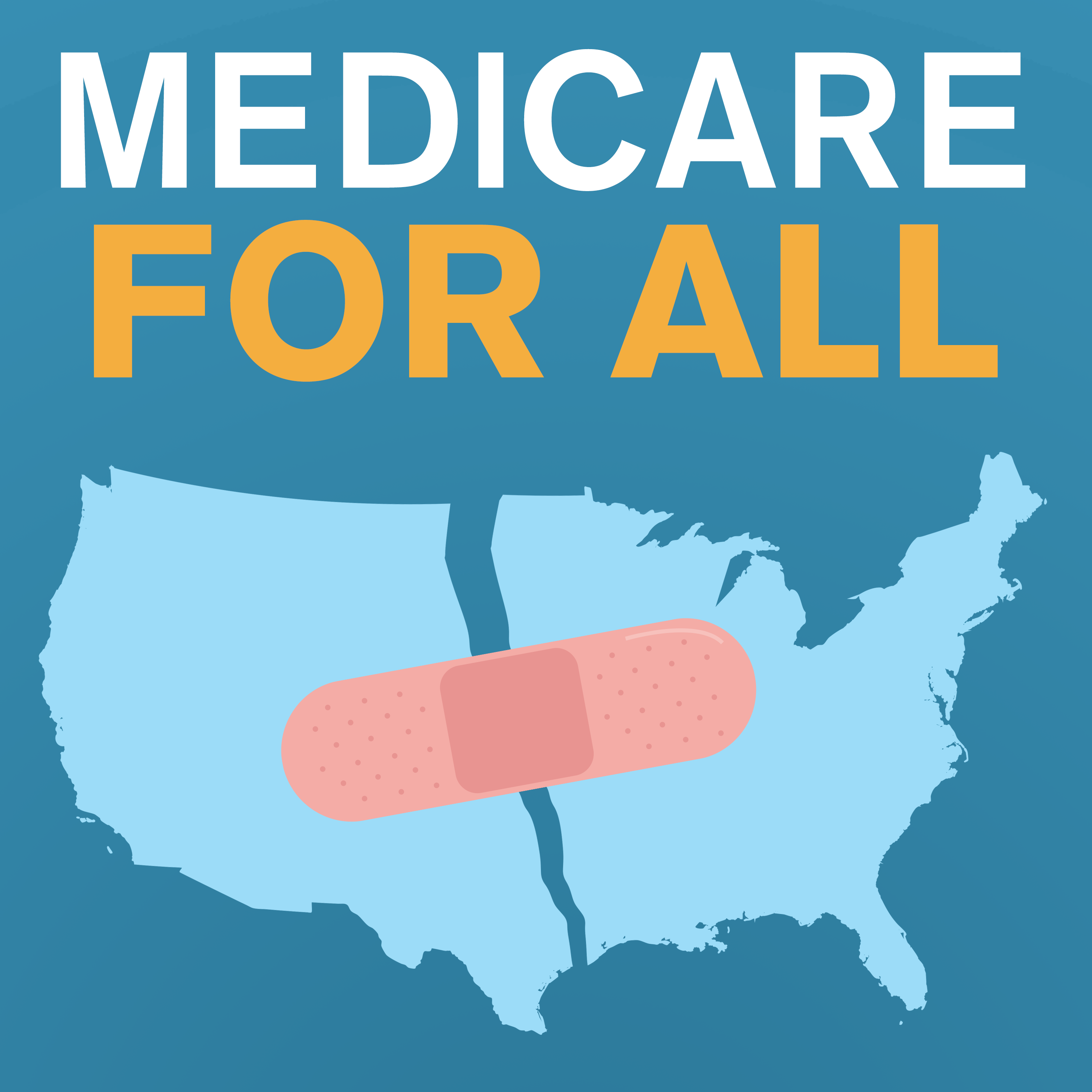
Medicare for All?

OR

Worse Care for All?

THE CBO OPINES

***

***

Senate Budget Committee Chairman Bernie Sanders (I-Vt.) has announced that as early as next week, his committee will hold a hearing “on the need to pass a Medicare for All single-payer program.”  

Sanders gets an “A” for passion, but an “F” in compassion.  

But, the non-partisan Congressional Budget Office has cautioned that Sanders’ Medicare for All bill would create “a shortage of providers, longer wait times, and changes in the quality of care.” 

MORE: https://www.msn.com/en-us/news/politics/medicare-for-all-would-mean-worse-care-for-all/ar-AAWVDo6?li=BBnb7Kz

CITE: https://www.r2library.com/Resource/Title/0826102549

***

COMMENTS APPRECIATED

Thank You

***

***

****

Average Annual Healthcare Growth Rates of Spending, Utilization and Price

By Staff Reporters

***

Average Annual Growth Rates of Spending, Utilization, and Prices

 •  Spending per person: commercial insurers (3.2% per year); Medicare fee for service (1.8% per year)
 •  Utilization per person: commercial insurers (0.4% per year); Medicare fee for service (0.5% per year)
 •  Prices paid to providers: commercial insurers (2.7% per year); Medicare fee for service (1.3% per year).

Notes: For hospitals and physicians’ services, 2013-2018
Source: Congressional Budget Office – January 2022

“The Prices That Commercial Health Insurers and Medicare Pay for Hospitals’ and Physicians’ Services”
 

***

COMMENTS APPRECIATED

Thank You

Subscribe to the Medical Executive-Post

***

***

***

Understanding the Domestic Unemployment Numbers

Join Our Mailing List

How Can Unemployment Be Going Down?

By Rick Kahler MS CFP® ChFC CCIM www.KahlerFinancial.com

In an economy that isn’t exactly robust, how can unemployment be going down? The recent drop in the unemployment rate from 8.1% to 7.8% caught almost everyone, including me, by surprise. The GDP grew by only 1.5% in the first quarter, and its growth was under 2% for the last 12 years. To get the economy moving again we will need growth of 3% a year.

It isn’t surprising that many pundits were questioning the timing within minutes after the latest unemployment numbers were announced. After all, unemployment is one of the major issues in the Presidential election. Former General Electric CEO Jack Welch and several Fox News commentators even suggested the administration was cooking the books.

The BLS

I don’t believe the Bureau of Labor Statistics is manipulating unemployment data. The process of computing the data is straightforward and transparent. Two surveys go into projecting the unemployment rate, one covering 400,000 businesses and the other questioning 60,000 households. The surveys ask about the number of full-time and part-time employees, whether the part-time employees really want full-time employment, and whether those without a job have looked for a job within the last month.

Cooked Books?

But that doesn’t mean the books aren’t cooked. They are.

“The way the government derives the unemployment numbers has changed significantly over the last 30 years,” writes John Mauldin, editor of the economic newsletter Thoughts from the Frontline, in the October 8, 2012, issue. “Whatever administration is involved, the new equations for determining unemployment result in a lower unemployment rate than they would have if the 1980’s methodology were still in place.”

The Changes

One of the more bizarre changes in the unemployment rate calculation is that people are not considered unemployed unless they have looked for a job in the last 30 days, even if they currently receive unemployment benefits. Mauldin says there are probably many people who haven’t looked for a job in the last 30 days and that most, if not all, of them would consider themselves unemployed. “If you’re not disabled and you’re receiving unemployment or welfare benefits I think you should be counted as unemployed,” he says. He estimates our actual unemployment rate is well over 12%, which doesn’t take into account the 50% of college graduates who are underemployed.

Don’t Blame Obama

Before you blame the Obama administration for the dumbing down of the unemployment rate, this is the same way the Bush administration calculated unemployment.

It’s the same story with the Consumer Price Index, which the government has continually tweaked to give the illusion of a lower CPI than if the 1980’s formula was used.

ShadowStats.com, run by John Williams, calculates the current unemployment and inflation rates using the formulas from the 1980’s. According to that methodology, Williams calculates the unemployment rate (U-6) is 15% and the CPI is 9%.

Regaining Jobs?

The economy has currently regained about half of the jobs lost in the Great Recession of 2008-2009. According to the Liscio Report, it will take another 40 months to reach the level of employment we had prior to the recession. That is if we don’t have another recession, which is doubtful. If all the tax increases slated for January 1 go into effect, the Congressional Budget Office says GDP will shrink 2.9%, which guarantees a recession.

Assessment

So, what was behind the fall in the unemployment rate this month? According to Mauldin, the entire drop came from an increase in part-time workers. He says, “That such significant numbers of people can only find part-time work is not a sign of a strong and growing economy.”

When we look a little deeper, maybe the latest unemployment numbers aren’t such a surprise after all.

Conclusion

Your thoughts and comments on this ME-P are appreciated. Feel free to review our top-left column, and top-right sidebar materials, links, URLs and related websites, too. Then, subscribe to the ME-P. It is fast, free and secure.

Speaker: If you need a moderator or speaker for an upcoming event, Dr. David E. Marcinko; MBA – Publisher-in-Chief of the Medical Executive-Post – is available for seminar or speaking engagements. Contact: MarcinkoAdvisors@msn.com

OUR OTHER PRINT BOOKS AND RELATED INFORMATION SOURCES:

Product Details  Product Details

CBO Director Elmendorf on Debt and Taxes

Join Our Mailing List

A CBO Political Review

By Children’s Home Society of Florida Foundation

The nonpartisan Congressional Budget Office (CBO) is responsible for providing Congress with financial estimates for future budget and tax policies. CBO Director Douglas Elmendorf testified before the Budget Committee of the House of Representatives on June 6.

Elmendorf started by noting that the public federal debt for the past 40 years has averaged 38% of the economy. At the end of 2008, the public debt was 40% of gross domestic product (GDP). By the end of 2012, the public debt will be 70% of GDP.

Elmendorf pointed out that there are two major trends that will substantially impact the federal budget. First, there are 78 million baby boomers that will be retiring and receiving benefits from Social Security and Medicare. Second, the cost of healthcare for the past decade has been increasing more rapidly than the general inflation rate. He suggests that this increasing cost for healthcare is going to continue for the foreseeable future.

Elmendorf then offered two scenarios for the future. He called these the “baseline scenario” and the “alternative scenario.”

Baseline Scenario

The baseline scenario assumes that the current law will be applicable. On January 1, 2013, the existing tax cuts will expire. In addition to higher tax rates, many individuals will be subject to alternative minimum tax. Finally, the 3.8% tax under the Affordable Care Act will apply starting in 2013.

With the substantial tax increases under the baseline scenario, federal tax revenue increases to 24% of the economy by the year 2037. Elmendorf noted that this would be the highest level of taxation since World War II. Under this scenario, the increasing tax revenue permits debt to be reduced from the current 70% to 53% of GDP by 2037.

The alternative scenario assumes that Congress will follow the pattern of the past four years. The tax cuts enacted in 2001 and 2003 will be extended. The alternative minimum tax exemptions will be indexed. The $5.12 million applicable exclusion amount for gift and estate taxes will continue (with indexed increases in future years). Medicare payment rates for physicians will continue to increase. This last provision has been called the “Doc Fix” in Washington. Finally, federal budgets will continue with the same general provisions that exist today.

Under the alternative scenario, the increasing deficits lead to public debt of 90% of GDP by 2022. With the rising expenditures for the baby boom generation, the public debt increases to 200% of GDP by 2037.

Elmendorf Opines

Elmendorf noted that many economists believe that this large debt may lead to creation of fewer new jobs. He suggested that it will be necessary to increase revenue and decrease spending substantially from projected levels to avoid a large increase in the national debt. He did not specify how this should be accomplished.

Assessment

Chairman of the Federal Reserve Ben Bernanke also testified before Congress this week. He pointed out that January 1 is a “fiscal cliff” that could have great impact on the nation. Bernanke believes that the scheduled increase in taxes and reduction in spending should be spaced out over time to avoid a dramatic impact in January. However, he also declined to offer any advice on specific ways to increase taxes or cut spending.

Editor’s Note: These discussions in Congress are preparations for the legislative session that will occur following the November election. Congress is debating the combination of tax increases and budget cuts to pass this year. In addition, preparations are being made for a major tax reform act in 2013.

Conclusion

Your thoughts and comments on this ME-P are appreciated. Feel free to review our top-left column, and top-right sidebar materials, links, URLs and related websites, too. Then, subscribe to the ME-P. It is fast, free and secure.

Link: http://feeds.feedburner.com/HealthcareFinancialsthePostForcxos

Speaker: If you need a moderator or speaker for an upcoming event, Dr. David E. Marcinko; MBA – Publisher-in-Chief of the Medical Executive-Post – is available for seminar or speaking engagements. Contact: MarcinkoAdvisors@msn.com

Our Other Print Books and Related Information Sources:

Health Dictionary Series: http://www.springerpub.com/Search/marcinko

Practice Management: http://www.springerpub.com/product/9780826105752

Physician Financial Planning: http://www.jbpub.com/catalog/0763745790

Medical Risk Management: http://www.jbpub.com/catalog/9780763733421

Hospitals: http://www.crcpress.com/product/isbn/9781439879900

Physician Advisors: www.CertifiedMedicalPlanner.org

Product DetailsProduct DetailsProduct Details

Product Details  Product Details

Product Details

Defining Comparative Medical Effectiveness

An Emerging Health Economics Issue

By Staff Reportersdhimc-book8

Comparative Medical Effectiveness [CME] is not a new healthcare term or health economics concept. Federal initiatives specifically promoting CME were authorized under the Medicare Modernization Act of 2003, but the genesis took root decades before.

Finally … a Hot Topic

Comparative Medical Effectiveness has recently become a hot topic again throughout the arena of health care stakeholders, due to funding and initiatives advanced by the Obama administration, and the positive and negative reactions drawn by different sectors of stakeholders.

Related to Evidence Based Outcomes

For stakeholders including numerous health care policy organizations, the health plan industry, and various health care provider organizations: public and private promotion of Comparative Medical Effectiveness reviews and processes offer the potential for more evidence-based, outcome-benefit or even cost-benefit driven information to improve the health care decision making for all parties. And, for stakeholders concerned about limiting the role of government and third parties in their level of regulation and control over the direct delivery of specific patient care, Comparative Medical Effectiveness may become a lightening rod due to perceived potential as to how the process and information could ultimately be applied.

Definition of the CBO Report

The Congressional Budget Office Report “Comparative Effectiveness: Issues and Options for an Expanded Federal Role” offers the definition that follows:

“As applied in the health care sector, an analysis of comparative medical effectiveness is simply a rigorous evaluation of the impact of different options that are available for treating a given medical condition for a particular set of patients. Such a study may compare similar treatments, such as competing drugs, or it may analyze very different approaches, such as surgery and drug therapy. The analysis may focus only on the relative medical benefits and risks of each option, or it may also weigh both the costs and the benefits of those options. In some cases, a given treatment may prove to be more effective clinically or more cost-effective for a broad range of patients, but frequently a key issue is determining which specific types of patients would benefit most from it. Related terms include cost–benefit analysis, technology assessment, and evidence-based medicine, although the latter concepts do not ordinarily take costs into account.”

Assessment

For related financial, economics, managed-care, insurance, health information technology and security, and health administrative terms and definitions of modernity, visit: http://www.springerpub.com/Search/marcinko

Conclusion

And so, your thoughts and comments on this Medical Executive-Post are appreciated. How do you define this term, and is its’ very definition evolving?

Health Dictionary Series: http://www.springerpub.com/Search/marcinko

Practice Management: http://www.springerpub.com/product/9780826105752

Physician Financial Planning: http://www.jbpub.com/catalog/0763745790

Medical Risk Management: http://www.jbpub.com/catalog/9780763733421

Hospitals: http://www.crcpress.com/product/isbn/9781439879900

Physician Advisors: www.CertifiedMedicalPlanner.org

Product DetailsProduct DetailsProduct Details      

1/3 of Medical Procedures Fail to Improve Health

A Startling Congressional Budget Office Report!

Staff Writers

Almost one-third of the procedures that doctors perform fail to improve a patient’s health!

Of course, this may come as quite a surprise to most citizens, but not so to readers of the Executive-Post, or the books, white-papers and dictionaries of its sponsor, the Institute of Medical Business Advisors, Inc [www.MedicalBusinessAdvisors.com]

Congressional Budget Office Report

Congressional Budget Office [CBO] Director Peter Orszag opined thusly to federal lawmakers in a recent special report. Mr. Orszag noted that the collective cost for these services top more than $700 billion each year, or roughly five percent of the nation’s total economy.

Misaligned payment, disparate health care costs and an overabundance of untested procedures have placed health care on a fiscally unsound path, which was likened to “running up credit card debt,” according to Modern Healthcare on June 18, 2008.

Assessment

Senate Finance Committee Chairman Max Baucus (D-Mont.) called on the CBO and Government Accountability Office [GAO] to study the potential development of an independent health reform board, possibly like the Federal Reserve Board [FRB] that would set health policy absent of political pressure.

Conclusion

Your thoughts and comments are appreciated. Do you believe the Orszag CBO report is more factually, or heuristically true; why or why not? Is it a startling report at all; or just medical de-rigueur?

Related Information Sources:

Practice Management: http://www.springerpub.com/prod.aspx?prod_id=23759

Physician Financial Planning: http://www.jbpub.com/catalog/0763745790

Medical Risk Management: http://www.jbpub.com/catalog/9780763733421

Healthcare Organizations: www.HealthcareFinancials.com

Health Administration Terms: www.HealthDictionarySeries.com

Physician Advisors: www.CertifiedMedicalPlanner.com

Speaker: If you need a moderator or speaker for an upcoming event, Dr. David E. Marcinko; MBA – Publisher-in-Chief of the Executive-Post – is available for seminar or speaking engagements. Contact: MarcinkoAdvisors@msn.com  or Bio: www.stpub.com/pubs/authors/MARCINKO.htm

Subscribe Now: Did you like this Executive-Post, or find it helpful, interesting and informative? Want to get the latest E-Ps delivered to your email box each morning? Just subscribe using the link below. You can unsubscribe at any time. Security is assured.

Link: http://feeds.feedburner.com/HealthcareFinancialsthePostForcxos

Referrals: Thank you in advance for your electronic referrals to the Executive-Post.