PHYSICIAN BANKRUPTCY: Six Total Types to Know!

By A.I. and Staff Reporters

SPONSOR: http://www.CertifiedMedicalPlanner.org

***

***

According to Medical Economics, there were 10 clinic and physician practices filing bankruptcy in 2024, making it the highest level of the last six years, according to a new analysis of cases with liabilities of at least $10 million.

Meanwhile, the Steward Health Care System bankruptcy, which was based in Massachusetts but making headlines across the nation, has become “the largest hospital sector bankruptcy by far in the last 30 years,” according to a new analysis by Gibbins Advisors, based in Nashville, Tennessee.

Health care bankruptcy filings totaled 57 last year, down from 79 in 2023, said “Healthcare Restructuring: Trends and Outlook.” The report analyzed Chapter 11 health care bankruptcy cases with liabilities of at least $10 million, since 2019.

Last year’s total was down 28% from 2023’s peak, but greater than the 2019 to 2022 average of 42 filings a year, the report said.

BROKE DOCTORS: https://medicalexecutivepost.com/2025/08/02/doctors-going-broke-and-living-paycheck-to-paycheck/

***

Bankruptcy, often considered a last financial resort, is a legal process that can help alleviate outstanding debts for individuals and businesses. Reasons to file for bankruptcy can include divorce, job loss, exorbitant medical bills or credit card debt.

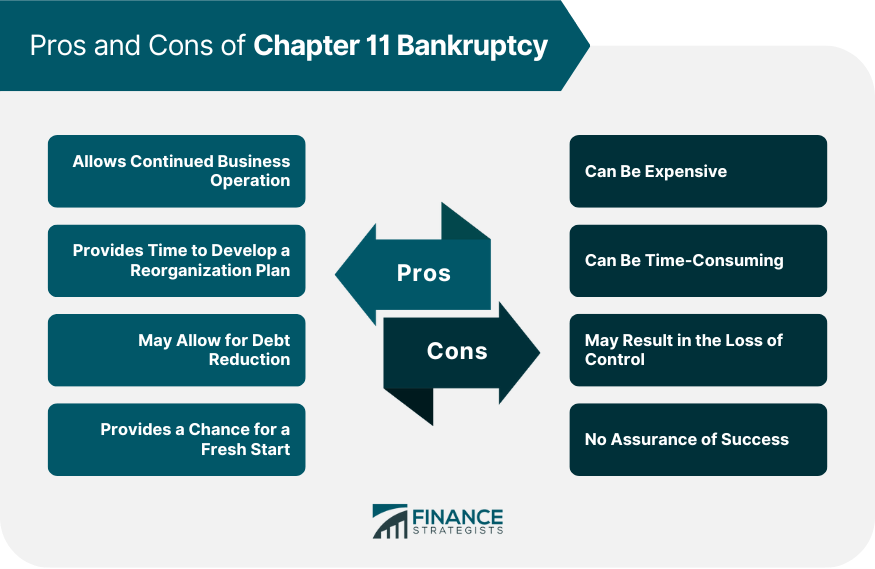
There are several types of bankruptcy — six, as a matter of fact. The two most common types of bankruptcy for individuals are Chapter 7 and Chapter 13.

But there are four other types as well: Chapter 9, Chapter 11, Chapter 12 and Chapter 15. And, the type of bankruptcy filed depends on the situation.

Regardless of which type, the process is typically the same: You’ll usually retain an attorney and make your case before a judge, who will then erase some debts or set up a repayment plan.

Also note that an eligibility requirement — for all bankruptcy chapters — is that you must undergo credit counseling within the 180 days before filing.

DOCTORS: https://medicalexecutivepost.com/2025/07/17/doctors-and-lawyers-often-arent-millionaires/

COMMENTS APPRECIATED

EDUCATION: Books

Like, Subscribe and Refer

***

***

SPECIAL PURPOSE VEHICLE: What it Is – When is It Needed?

***

A SPECIAL MEDICAL-EXECUTIVE-POST GUEST PRESENTATION

***

What Is a Special Purpose Vehicle (SPV)?

A special purpose vehicle is a subsidiary created by a parent company to isolate financial risk. It’s also called a special purpose entity (SPE). Its legal status as a separate company makes its obligations secure even if the parent company goes bankrupt. A special purpose vehicle is sometimes referred to as a bankruptcy-remote entity for this reason.

These vehicles can become a financially devastating way to hide company debt if accounting loopholes are exploited, as seen in the 2001 Enron scandal.

COMMENTS APPRECIATED

EDUCATION: Books

Like and Refer

***

***

VILLAGES HEALTH SYSTEM: Files Chapter 11 Bankruptcy

By A.I.

BREAKING NEWS!

***

***

The Villages Health System, LLC, a health care provider operating in The Villages, Florida, filed for Chapter 11 bankruptcy protection on July 3rd, 2025, in the United States Bankruptcy Court for the Middle District of Florida.

“The bankruptcy petition indicates significant financial challenges, with assets estimated between $50 million and $100 million and liabilities between $100 million and $500 million. The United States of America is listed as the largest creditor with a contingent, unliquidated claim of approximately $361 million. The filing indicates that funds will be available for distribution to unsecured creditors,”

RK Consultants reported on X, the former Twitter. 

COMMENTS APPRECIATED

Like and Subscribe

***

***

HEALTH INFORMATION TECHNOLOGY: Ransomware and Bankruptcy!

Bad things can happen in paperless practices, Doc

By Darrell Pruitt DDS

***

***

“Illinois Hospital First To Shut Down Completely After Ransomware Attack”

-By Karl Bode for Techdirt, Jun 16th 2023.

“Such attacks can have a chain reaction on already broken hospitals and health care systems. Health care workers are sometimes forced to resort to pen and paper for patient charts and prescriptions, increasing the risk of potentially fatal error. Delays in care can also prove fatal. And ransomware is only one of the problems that plague dated medical IT systems whose repair is being made increasingly costly and difficult by medical health care system manufacturers keen on monopolizing repair.”

Remember the MCNA (Managed Care of North America) data breach that was reported by Bill Toulas in Bleeping Computer on May 29th? There have been new developments.

LINK: https://www.bleepingcomputer.com/news/security/mcna-dental-data-breach-impacts-89-million-people-after-ransomware-attack/?fbclid=IwAR29pojexxoxDrrjIbcQqAAgnw17L5xqMXGxCnnDk_ZL0-kIv2PCniVaG0Y

“Patients of a Florida-based dental insurance provider brought a proposed class action lawsuit alleging negligence over a ransomware data breach that leaked the private information of more than 8.9 million people on the dark web, saying they face a lifetime risk of having their identities stolen.”

David Minsky for Law 360

[June 16th, 2023]

If you are still using paper records, don’t change now.

***

***

COMMENTS APPRECIATED

Thank You

***

BANKRUPTCIES: Health Care Companies

Spiked in 2023

By Staff Reporters

***

***

Healthcare company bankruptcies spiked in 2023 amid high interest rates, rising labor and supply costs, and an uptick in denials from payers, according to a January report from healthcare restructuring firm Gibbins Advisors.

For example, Seventy-nine healthcare companies filed for bankruptcy in 2023—the highest number since 2019, which saw 51 bankruptcies, according to the report. The volume of bankruptcies last year was nearly 2x as high as 2022 and over 3x the level seen in 2021.

“We saw a dramatic increase in healthcare bankruptcy filings in 2023, continuing the trend which began in mid-2022,” Clare Moylan, co-founder and principal at Gibbins Advisors, said in a statement. “Key observations from 2023 are the return of large bankruptcy cases with over $100 million in liabilities, and a spike in hospital filings, both of which appear to primarily be a result of Covid-19 pandemic-related protections ending.”

CITE: https://www.r2library.com/Resource

COMMENTS APPRECIATED

Thank You

***

***

TELE-HEALTH: The “Smile Direct Club” Frowns

By Staff Reporters

***

7.2 The Skull – Anatomy and Physiology

***

SmileDirectClub is the latest casualty of what some have dubbed a startup Mass Extinction Event.

The telehealth company that attempted to revolutionize traditional orthodontics just announced that it was winding down operations less than three months after it filed for Chapter 11 bankruptcy. At its peak, SmileDirectClub was valued at $8.9 billion and had raised $427 million as a private company before going public in 2019.

CITE: https://www.r2library.com/Resource/Title/082610254

COMMENTS APPRECIATED

Thank You

***

***

***

WEWORK: Maybe Not!

By Staff Reporters

***

***

WeWork, the co-working company that was valued at $47 billion four years ago just warned that there was “substantial doubt about our ability to continue as a going concern,” which means it could soon file for bankruptcy.

The We Company filed its Form S-1 for the IPO in August 2019. The following month, facing mounting pressure from investors based on disclosures in the S-1, company co-founder Adam Neumann resigned from his position as CEO and gave up majority voting control. Amid growing investor concerns over its corporate governance, valuation, and outlook for the business, the company formally withdrew its S-1 filing and announced the postponing of its IPO. At that time, the reported public valuation of the company was US $10 billion, a reduction from the $47 billion valuation it had achieved in January and less than the $12.8 billion it had raised since 2010.

The gradual return-to-work movement has not benefited WeWork as much as it anticipated: Memberships declined last quarter, and the company posted a net loss of $397 million.

***

***

COMMENTS APPRECIATED

Thank You

***

Why the Government is Not-Like Medical Professionals

Join Our Mailing List

An Endless Supply of US Dollars

By Rick Kahler MS CFP® ChFC CCIM www.KahlerFinancial.com

Is the United States in danger of bankruptcy? Contrary to what you may read in the media or hear from many politicians, no, it isn’t. The US Treasury will never run out of dollars. Unlike doctors and medical professionals, it’s impossible.

Reasons Why?

The reason is relatively simple. The US government owns a printing press. As long as goods, services, or obligations are priced in US dollars, the supply of dollars to our government to buy those goods and services is unlimited. This is not true of individual physicians, corporations, cities, states, and countries that don’t issue their own currency.

For most people, this is a hard concept to grasp, with good reason. The capacity of our government to create an unconstrained supply of dollars is a relatively new phenomenon.

The Gold Standard

Until 1971, all US currency was theoretically redeemable in gold. This was known as the gold standard. In the early decades of the 20th century, you could actually go to a bank and change your dollars for gold. That ability was terminated in 1933, but the dollar’s value was still tied to gold. This basically meant the only way the US government could create new dollars was by obtaining more gold, the supply of which only increases by the new amount of gold mined.

Nixon

In 1971 we had a paradigm change in monetary policy that many still don’t understand. President Nixon decoupled the dollar from the gold standard [Nixon also wanted to flood the country with MDs, and drive down physician income, by opening up medical school admissions]. It became a fiat currency, which is used as a medium of exchange but has no intrinsic value. Suddenly, the US government was no longer constrained by solvency issues and could never run out of money. It could create as many dollars as it wished ie; inflation].

Constraints

This didn’t mean it had no constraints. The major constraint to an issuer of fiat currency is inflation. However, creating money does not guarantee inflation if the newly created money is not spent. Japan, for example, is still fighting deflation even though they’ve been pumping money into reserves like crazy for 20 years.

What should have caused a massive rethinking and reeducating of the financial sector went relatively unnoticed. Text books, professors, economists, and politicians largely continued to follow many pre-1971 monetary principles that became irrelevant overnight.

Unlike the federal government, US states, cities, and other government entities cannot print money. They have to get it the old-fashioned way—from taxes, fees, or borrowing. It’s entirely possible for these entities to go bankrupt, just like individuals and corporations, if their outflow exceeds their inflow.

Europe

Interestingly, the same is true for member countries of the European Union. When in 1999 they adopted the Euro and gave up their sovereign right to print their own money, they took on the same status as states. Therefore, a country like Greece, which is a user of currency as a member of the European Union, can involuntarily default on its obligations.

This is a significant difference between the United States and Greece. While Greece can (and most likely will) go bankrupt because it doesn’t have an unlimited supply of Euros, the US can’t go bankrupt because it does have an unlimited supply of dollars.

The major threat that sovereign countries face is not running out of money, but devaluing their currency through inflation. A devalued currency is one that loses its purchasing power and often results in a lower standard of living.

Assessment

Just because the US can’t involuntarily default on its obligations doesn’t mean we can keep on over spending and pretend we don’t have any money worries. As a nation, we still need to acknowledge and deal with our serious financial problems. So should our doctors, financial planners and financial advisors.

Conclusion

Your thoughts and comments on this ME-P are appreciated. Feel free to review our top-left column, and top-right sidebar materials, links, URLs and related websites, too. Then, subscribe to the ME-P. It is fast, free and secure.

Link: http://feeds.feedburner.com/HealthcareFinancialsthePostForcxos

Speaker: If you need a moderator or speaker for an upcoming event, Dr. David E. Marcinko; MBA – Publisher-in-Chief of the Medical Executive-Post – is available for seminar or speaking engagements. Contact: MarcinkoAdvisors@msn.com

Our Other Print Books and Related Information Sources:

Health Dictionary Series: http://www.springerpub.com/Search/marcinko

Practice Management: http://www.springerpub.com/product/9780826105752

Physician Financial Planning: http://www.jbpub.com/catalog/0763745790

Medical Risk Management: http://www.jbpub.com/catalog/9780763733421

Hospitals: http://www.crcpress.com/product/isbn/9781439879900

Physician Advisors: www.CertifiedMedicalPlanner.org

Product Details  Product Details

What Hurts Your Credit Score?

Facts that Doctors – and All of Us – Should Know

Join Our Mailing List 

By freescore.com

Learn about the biggest factors that can hurt your credit score, from declaring bankruptcy and foreclosure to missing credit card payments and blowing off your bills entirely.

Conclusion

Your thoughts and comments on this ME-P are appreciated. Feel free to review our top-left column, and top-right sidebar materials, links, URLs and related websites, too. Then, subscribe to the ME-P. It is fast, free and secure.

Speaker: If you need a moderator or speaker for an upcoming event, Dr. David E. Marcinko; MBA – Publisher-in-Chief of the Medical Executive-Post – is available for seminar or speaking engagements. Contact: MarcinkoAdvisors@msn.com

OUR OTHER PRINT BOOKS AND RELATED INFORMATION SOURCES:

Product Details  Product Details

Healthcare, Medicine and AIG

Hospitals, Doctors and Insurance Companies Affected

Staff Reporters

Join Our Mailing List 

The federal government recently announced a $100 billion rescue of American International Group [AIG], the largest insurer in the nation. Those involved in the business of insurance should know that it was the financial services operations and other non-insurance operations of AIG, and not its insurance companies, that forced the federal government to bail them out. Medical professionals should be aware, as well.

How it Happened

According to experts, the reason for AIG’s problems is two-fold. It is partly based in its dealings with credit default swaps, complicated financial instruments that investors use to protect themselves from bond defaults—which also caused the collapse of Lehman Brothers.

Insurers try to keep premiums low and profits high by investing. And while all insurers invest premiums in different forms of assets, AIG invested much of its enormous income in securities that were backed by sub-prime mortgages. As the mortgage-crisis came to a head, the value of those securities fell, creating financial problems for AIG. Insurers, like AIG, who attempted to profit from high risk investments found those investments to be so risky that they failed completely. When the investments failed, the insurer’s operating assets were reduced and it needed a major infusion of working capital. The federal loans, although enormous, are fully backed by saleable assets.

I Have AIG Insurance – Should I be Worried?

Generally no; because of the corporate structure of AIG. The holding company can be experiencing financial problems while the individual insurance company subsidiaries that agreed to insure you remain secure. They have more than adequate reserves to pay the claims anticipated. Each AIG branded insurer is a separate corporate entity that, by law, must maintain funds in secure reserves to pay claims presented.

And yet; First Professionals Insurance Company [FPIC] of Florida, recently told the SEC that it held securities with an amortized cost of $4.1 million in Lehman Brothers, $2.1M in American International Group, $2.5M in Morgan Stanley, $2.1M in Washington Mutual and $300,000 in Fannie Mae. 

Will AIG Claims be Paid?

Probably, yes. If the insurer has maintained adequate reserves, as required by state laws, there will be sufficient funds to pay all claims reasonably presented. If the individual insurer should fail, it will be taken over by the state where it is domiciled. If the insurer is faced with a catastrophe that it cannot cover and if your insurance is with an AIG company that is admitted to do business in your state, the state’s Insurance Guarantee Fund will pay your claim up to a limit that is usually no more than $500,000.  Of course, there is no absolute certainty in any situation relating to insurance, but the AIG companies are well-funded and very capable of handling all predictable claims.

On the one hand, if the insurer is put into receivership, the state regulator will use the insurer’s own assets to make payments before seeking funds from the insurance guarantee fund which is financed by assessments on all insurance companies that do business in the state. If, on the other hand, the AIG insurer is not admitted to do business in the state but does business through the surplus lines market, you are not protected by a guarantee fund and must be certain the insurer has the assets sufficient to cover any potential losses.

How Do I Determine That My Insurer Has Adequate Assets?

Contact your state department of insurance to determine if the insurer is admitted to do business and is protected by the Guarantee Fund. Also, check your policy; the insurer must tell you in writing if it is not admitted. Contact your state department of insurance to obtain financial documents filed by the insurer.

Assessment

The credit-crunch is on everywhere, and hospitals filing bankruptcy this quarter include: a two-hospital system in Honolulu; one in Pontiac, MI; Trinity Hospital in Erin, Tennessee; Century City Doctors Hospital in Beverly Hills, Lincoln Park Hospital in Chicago, and four hospital system Hospital Partners of America, in Charlotte [See www.HealthcareFinancials.com; November 2008 issue].

Assessment

Finally, conventional wisdom suggests a ratings reveiw of any policy provided the insurer by Bests. It should be at least “A” rated. Review financial ratings of the insurer issued by Standard & Poors. Of course, these have become suspect of late, too! So, search the Internet with a query including the name of the insurer and the words “financial problem.” Be sure to ask your insurance agent or broker.

Conclusion

Your thoughts and comments re appreciated.

Disclosure: Dr. David Edward Marcinko is the editor of Healthcare Organizations: [Financial Management Strategies] www.HealthcareFinancials.com

Speaker:If you need a moderator or speaker for an upcoming event, Dr. David E. Marcinko; MBA – Publisher-in-Chief of the Executive-Post – is available for seminar or speaking engagements. Contact: MarcinkoAdvisors@msn.com  or Bio: www.stpub.com/pubs/authors/MARCINKO.htm

Subscribe Now:Did you like this Executive-Post, or find it helpful, interesting and informative? Want to get the latest E-Ps delivered to your email box each morning? Just subscribe using the link below. You can unsubscribe at any time. Security is assured.

Product Details  Product Details