BOARD CERTIFICATION EXAM STUDY GUIDES Lower Extremity Trauma
[Click on Image to Enlarge]
ME-P Free Advertising Consultation
The “Medical Executive-Post” is about connecting doctors, health care executives and modern consulting advisors. It’s about free-enterprise, business, practice, policy, personal financial planning and wealth building capitalism. We have an attitude that’s independent, outspoken, intelligent and so Next-Gen; often edgy, usually controversial. And, our consultants “got fly”, just like U. Read it! Write it! Post it! “Medical Executive-Post”. Call or email us for your FREE advertising and sales consultation TODAY [678.779.8597] Email: MarcinkoAdvisors@outlook.com
Medical & Surgical e-Consent Forms
ePodiatryConsentForms.com
iMBA Inc., OFFICES
Suite #5901 Wilbanks Drive, Norcross, Georgia, 30092 USA [1.678.779.8597]. Our location is real and we are now virtually enabled to assist new long distance clients and out-of-town colleagues.
ME-P Publishing
SEEKING INDUSTRY INFO PARTNERS?
If you want the opportunity to work with leading health care industry insiders, innovators and watchers, the “ME-P” may be right for you? We are unbiased and operate at the nexus of theoretical and applied R&D. Collaborate with us and you’ll put your brand in front of a smart & tightly focused demographic; one at the forefront of our emerging healthcare free marketplace of informed and professional “movers and shakers.” Our Ad Rate Card is available upon request [678-779-8597].
Posted on August 26, 2025 by Dr. David Edward Marcinko MBA MEd CMP™
By Dr. David Edward Marcinko MBA MEd
***
***
A paradox is a self-contradictory statement. And, the ancient Greeks were well aware that a paradox can take us outside our usual way of thinking. They combined the prefix para – (“beyond” or “outside of”) with the verb dokein (“to think”), forming paradoxos, an adjective meaning “contrary to expectation.” Latin speakers used that word as the basis for a noun paradoxum, which English speakers borrowed during the 1500s to create paradox.
***
***
Paradox of Education: Cumulative Advantage and Disadvantage
Classic Definition: Social status snowballs in either direction because people like associating with successful people, so doors are opened for them. And, folks avoid associating with unsuccessful people, for whom doors are closed.
Modern Circumstance: Education’s positive effect on health gets larger as people age. The large socioeconomic differences in health among older Americans mostly accrue earlier in adulthood on gradients set by educational attainment. Education develops abilities that help individuals gain control of their own lives, encouraging and enabling a healthy life.
Paradox Example: The health-related consequences of education cumulate on many levels, from the socioeconomic (including work and income) and behavioral (including health behaviors like exercising) to the physiological and intra-cellular. Some accumulations even influence each other.
In particular, a low sense of control over one’s own life accelerates physical impairment, which in turn decreases the sense of control. That feedback progressively concentrates good physical functioning and a firm sense of personal control together in the better educated while concentrating physical impairment and a sense of powerlessness together in the less well educated, creating large differences in health in old age.
SPEAKING: Dr. Marcinko will be speaking and lecturing, signing and opining, teaching and preaching, storming and performing at many locations throughout the USA this year! His tour of witty and serious pontifications may be scheduled on a planned or ad-hoc basis; for public or private meetings and gatherings; formally, informally, or over lunch or dinner. All medical societies, financial advisory firms or Broker-Dealers are encouraged to submit an RFP for speaking engagements: CONTACT: Ann Miller RN MHA at MarcinkoAdvisors@outlook.com -OR-http://www.MarcinkoAssociates.com
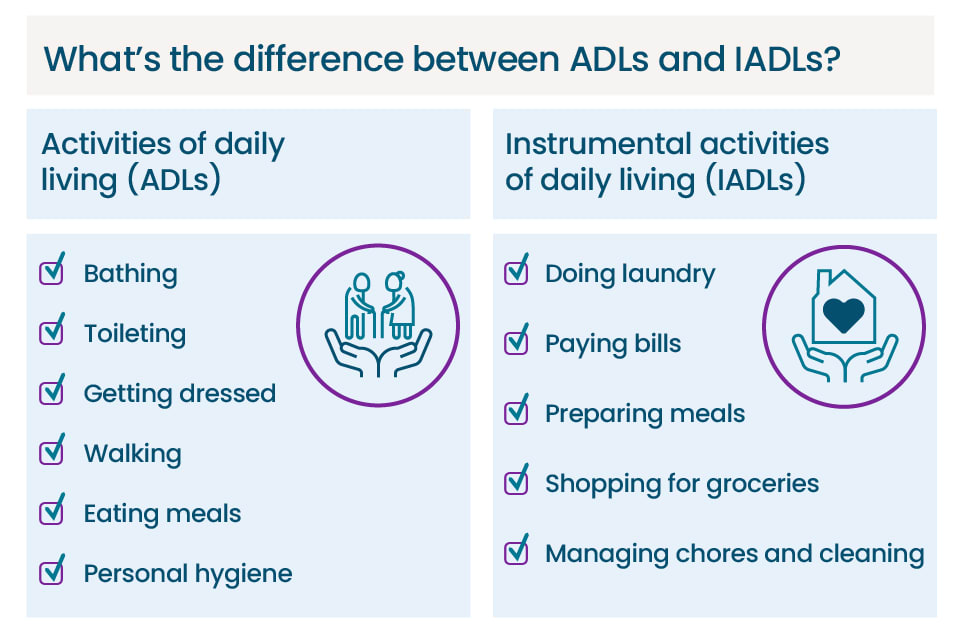
According to Leslie Kernisan MD MPH, these are the basic self-care tasks that we initially learn as very young children. They are sometimes referred to as “Basic Activities of Daily Living” (BADLs). They include:
Walking, or otherwise getting around the home or outside. The technical term for this is “ambulating.”
Feeding, as in being able to get food from a plate into one’s mouth.
Dressing and grooming, as in selecting clothes, putting them on, and adequately managing one’s personal appearance.
Toileting, which means getting to and from the toilet, using it appropriately, and cleaning oneself.
Bathing, which means washing one’s face and body in the bath or shower.
Transferring, which means being able to move from one body position to another. This includes being able to move from a bed to a chair, or into a wheelchair. This can also include the ability to stand up from a bed or chair in order to grasp a walker or other assistive device.
If a person is not fully independent with ADLs, then we usually include some information about the amount of assistance they require. ADLs were originally defined in the 1950s by a geriatrician named Sidney Katz, who was trying to define what it might look like for a person to recover to independence after a disabling event such as a stroke or hip fracture. So these measures are sometimes called the “Katz Index of Independence in Activities of Daily Living.”
***
***
Instrumental Activities of Daily Living (IADLs)
These are the self-care tasks we usually learn as teenagers. They require more complex thinking skills, including organizational skills. They include:
Managing finances, such as paying bills and managing financial assets.
Managing transportation, either via driving or by organizing other means of transport.
Shopping and meal preparation. This covers everything required to get a meal on the table. It also covers shopping for clothing and other items required for daily life.
Housecleaning and home maintenance. This means cleaning kitchens after eating, keeping one’s living space reasonably clean and tidy, and keeping up with home maintenance.
Managing communication, such as the telephone and mail.
Managing medications, which covers obtaining medications and taking them as directed.
Because managing IADLs requires a fair amount of cognitive skill, it’s common for IADLs to be affected when an older person is having difficulty with memory or thinking. For those older adults who develop Alzheimer’s disease or a related dementia, IADLs will usually be affected before ADLs are.
IADLs were defined about ten years after ADLs, by a psychologist named M.P. Lawton. Dr. Lawton felt there were more skills required to maintain independence than were listed on the original Katz ADL index, and hence created the “Lawton Instrumental Activities of Daily Living Scale.”
Posted on April 5, 2025 by Dr. David Edward Marcinko MBA MEd CMP™
WARNING – WARNING
By Dr. DavidEdwardMarcinko; MBA MEd
***
***
According to www.NPR.org, there are more than120,000 health care forums on the Internet with opinions ranging from pharmaceuticals, to sexual dysfunction, to acne. The same goes for commercial doctor blogs that promote lotions, balms and potions, diets and vitamins, minerals, herbs, drinks and elixirs, or various other ingest-ants, digest-ants or pharmaceuticals, etc.
And, to other doctors, the blogging craze is a new novelty where there are no rules, protocols, standards or precise figures on how many “medical-doctor” or related physician-blogs are “out there.” Unfortunately, too many recount gory ER scenes, or pictorially illustrate horrific medical conditions, or serious and traumatic injuries. Of course, others simply are medical practice websites, or those that entice patients into more lucrative plastic surgery or concierge medical practices. Some are from self-serving/credible plaintiff-seeking attorneys wishing to assist patients.
Not all physician blogs are geared toward practice information, marketing or medical sensationalism. In fact, just the opposite seems to be the case in extremely candid blogs, like “Ranting Docs”, “White Coat Rants,” “Grunt Docs”, “Cancer Doc,” “The Happy Hospitalist,” “Mom MD”, “Cross-Over Health”, “Angry Docs” and “M.D.O.D.,” which bills itself as “Random Thoughts from a Few Cantankerous American Physicians.”
According to some of these, they are more like personal journals, or public diaries, where doctors vent about reimbursement rates, difficult cases, medical mistakes, declining medical prestige and control, and/or what a “bummer” it is to have so many patients die; not pay, or who are indigent, noncompliant. We call these the “disgruntled doctor sites.” Some even talk about their own patients, coding issues, or various doctor-patient shenanigans.
But, according to psychiatrist and blogger Dr. Deborah Peel and others, the problem with blogging about patients is the danger that one will be able to identify themselves – the doctor – or that others who know them will be able to identify them.” Her affiliation, Patient Privacy Rights, rightly worries that patients might track back to the individual, and adversely affect their employment, health insurance or other aspects of life.
***
***
And, according to Dr. Jay S. Grife; MA Esq., it is certainly true that if a doctor violates a patient’s privacy there could be legal consequences. Under HIPAA, physicians could face fines or even jail time. In some states, patients can file a civil lawsuit if they believe a doctor has violated their privacy. Still, internet privacy issues are an evolving gray-area that if not wrong, may still be morally and ethically questionable [personal communication].
Our colleague Robert Wachter MD, author of the blog called “Wachter’s World,” says it’s important for doctors to be able to share cases, as long as they change the facts substantially. On the other hand, the author of “Wachter’s World” and a leading expert on patient safety alternately suggests “You might say we as doctors should never be talking about experiences with our patients online or in books or in articles.” But, he says that “patients shouldn’t take all the information on blogs at face value. Taken for what they are — unedited opinions, and in some cases entertainment — blogs can give readers some useful insight into the good, the bad and the ugly of the medical profession”. Link: http://www.the-hospitalist.org/blogs
Well, fair enough! But, doctors unhappy with their current medical career choice, or its modern evolution, should probably consider counseling or even career change guidance, re-education and re-engineering. It is very inappropriate to vent career frustrations in a public venue. It’s far better for the blog to be private and/or by invitation only; if at all [Personal communication].
We believe that a hybrid mash-up of both views can be wholly appropriate, or grossly inappropriate in some cases. Of course the devil is in the details; linguistics and semantics aside. Nevertheless; what is not addressed in electronic physician “mea-culpas” are the professional liability risks and concerns that are evolving in this quasi-professional, quasi-lay, communication forum.
***
***
Example: We have seen medical mistakes, and liability admissions of all sorts, freely and glibly presented. In fact,
“Some physicians find that the act of liability blogging as a professional confession that is useful in moving past their malpractice mistakes. And, it is also a useful way to begin a commitment to a better professional life of caring in the future. It helps eliminate the toxic residue and angst of professional liability and guilt. Moreover, as they are unburdened of past acts of omission or commission, doctors should remember to also forgive those who have wronged them. This helps greatly with the process and brings additional peace.”
However, although some may say that this electronic confession is good for the soul, it may not be good for your professional liability carrier, or you, when plaintiff’s attorneys release a legion of IT focused interns, or automated bots, searching online for your self-admissions and scouring for your self-incriminations. Of course, a direct connection to a specific patient may still not be made and no HIPAA violation is involved. But, a vivid imagination is not need needed to envision this type of blind medical malpractice discovery deposition query even now.
QUESTION:“Doctor Smith, I noted all the medical errors admitted on your blog. What other mistakes did you make in the care and treatment of my client?”
And so, the question of plausible deniability, or culpability, is easily raised. If you must journalize your thoughts for sanity or stress release; do it in print. And, don’t tell anyone about it so the diary won’t be subpoenaed. Then tear it up and throw it away. Remember, with risk management, “It is all about credibility.” Don’t trash yours! These thoughts may be especially important if you covet a medical career as a researcher, editor, educator, medical expert or something other than a working-class or employed physician.
SPEAKING: Dr. Marcinko will be speaking and lecturing, signing and opining, teaching and preaching, storming and performing at many locations throughout the USA this year! His tour of witty and serious pontifications may be scheduled on a planned or ad-hoc basis; for public or private meetings and gatherings; formally, informally, or over lunch or dinner. All medical societies, financial advisory firms or Broker-Dealers are encouraged to submit a RFP for speaking engagements: CONTACT: MarcinkoAdvisors@outlook.com
Stocks were decimated yesterday in the first full trading day following President Trump’s tariff announcement. It was the biggest single-day decline since the start of the Covid-19 pandemic in March 2020. Every Magnificent Seven stock was battered—Apple worst of all. And so perhaps it is a good time to discuss the concept of “Money Scripts”.
***
Money Scripts are unconscious beliefs about money that are typically only partially true, are developed in childhood, and drive adult financial behaviors. Money scripts may be the result of “financial flashpoints,” which are salient early experiences around money that have a lasting impact in adulthood. Money scripts are often passed down through the generations and social groups often share similar money scripts. And so, we argue that Money scripts are at the root of all illogical, ill-advised, self-destructive, or self-limiting financial behaviors.
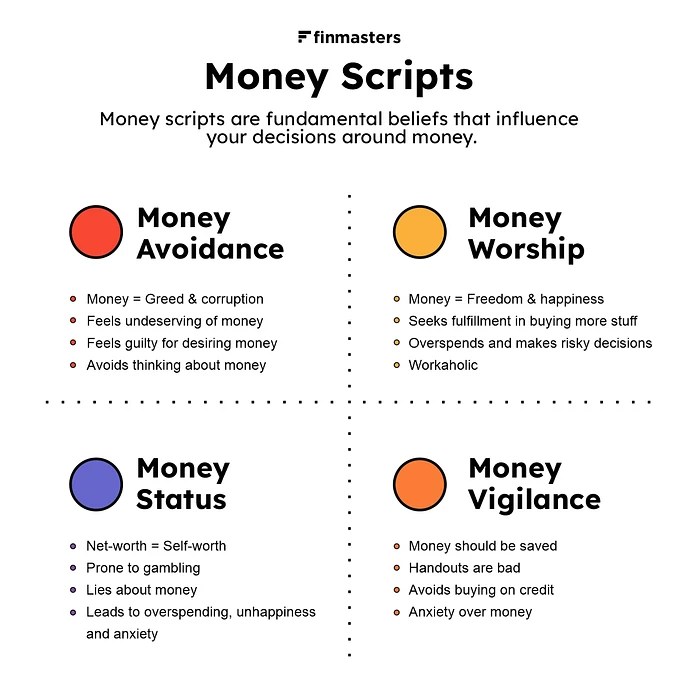
In research at Kansas State University [KSU], researchers identified four distinct Money script patterns, which are associated with financial health and predict financial behaviors. These include: (a) money avoidance, (b) money worship, (c) money status, and (d) money vigilance [personal communication Brad Klontz, PsyD, CFP®, Kenneth Shubin-Stein, MD, MPH, MS, CFA and Sonya Britt, PhD, CFP®].
And so, we all like to think our financial decisions are fully rational, but the truth is that our subconscious beliefs have a dramatic impact on our money and financial decisions. These money scripts are important to know and understand. A summary is below:
Money Avoidance
Money avoidance scripts are illustrated by beliefs such as “Rich people are greedy,”“It is not okay to have more than you need,” and “I do not deserve a lot of money when others have less than me.” Money avoiders believe that money is bad or that they do not deserve money. They believe that wealthy people are corrupt and there is virtue in living with less money. They may sabotage their financial success or give money away even though they cannot afford to do so. Money avoidance scripts may be associated with lower income and lower net worth and predict financial behaviors including ignoring bank statements, overspending, financial dependence on others, financial enabling of others, and having trouble sticking to a budget.
Money Worship
Money worship is typified by beliefs such as “More money will make you happier,” “You can never have enough money,” and “Money would solve all my problems.” Money worshipers are convinced that money is the key to happiness. At the same time, they believe that one can never have enough. Money worships have lower income, lower net worth, and higher credit card debt. They are more likely to be hoarders, spend compulsively, and put work ahead of family.
Money Status
Money status scripts include “I will not buy something unless it is new,” “Your self-worth equals you net worth,” and “If something isn’t considered the ‘best’ it is not worth buying.” Money status seekers see net worth and self-worth as being synonymous. They pretend to have more money than they do and tend to overspend as a result. They often grew up in poorer families and believe that the universe should take care of their financial needs if they live a virtuous life. Money status scripts are associated with compulsive gambling, overspending, being financially dependent on others, and lying to one’s spouse about spending.
Money Vigilance
Money vigilant beliefs include “It is important to save for a rainy day,” “You should always look for the best deal, even if it takes more time,” and “I would be a nervous wreck if I did not have an emergency fund.” The money vigilants are alert, watchful and concerned about their financial welfare. They are more likely to save and less likely to buy on credit. As a result, they tend to have higher income and higher net worth. They also have a tendency to be anxious about money and are secretive about their financial status outside of their household. While money vigilance is associated with frugality and saving, excessive anxiety can keep someone from enjoying the benefits that money can provide.
Identification
When money scripts are identified, it is helpful to examine where they came from. A simple behavioral finance technique involves reflecting on the following questions:
What three lessons did you learn about money from your mother?
What three lessons did you learn about money from your father?
What is your first memory around money?
What is your most painful money memory?
What is your most joyful money memory?
What money scripts emerged for you from this experience?
How have they helped you?
How have they hurt you?
What money scripts do you need to change?
Conclusion
Ideally, from a balanced middle ground, we can see past the limitations of money scripts, our self and others who are polarized. Those who believe “Money is meant to be spent” or “Money is meant to be saved” have a world view that results in extreme positions. Labeling them as “correct” or “wrong” is not a useful way to try to shift anyone’s polarized money script beliefs.
SPEAKING: Dr. Marcinko will be speaking and lecturing, signing and opining, teaching and preaching, storming and performing at many locations throughout the USA this year! His tour of witty and serious pontifications may be scheduled on a planned or ad-hoc basis; for public or private meetings and gatherings; formally, informally, or over lunch or dinner. All medical societies, financial advisory firms or Broker-Dealers are encouraged to submit a RFP for speaking engagements: CONTACT: MarcinkoAdvisors@outlook.com
Posted on February 7, 2025 by Dr. David Edward Marcinko MBA MEd CMP™
By Staff Reporters
***
***
The Pygmalion Effect, also known as the Rosenthal Effect, is a fascinating psychological phenomenon where higher expectations lead to an increase in performance. This concept originated from a study conducted by Robert Rosenthal and Lenore Jacobson in the 1960s. They discovered that when teachers were led to believe that certain students were expected to perform better academically, those students indeed showed significant improvement.
Here’s a brief overview of how the Pygmalion Effect works:
Expectation Setting: When someone in a position of authority (like a teacher or manager) has high expectations for an individual, they often communicate these expectations through subtle cues.
Behavioral Changes: The individual receiving these cues tends to internalize the expectations and changes their behavior accordingly. They might become more motivated, put in more effort, and show greater persistence.
Performance Improvement: As a result of these behavioral changes, the individual’s performance improves, thereby fulfilling the initial high expectations.
This effect highlights the power of positive reinforcement and belief in someone’s potential. It underscores the importance of fostering a supportive and encouraging environment, whether in educational settings, workplaces, or personal relationships.
If you’re interested in applying the Pygmalion Effect in your life, consider these tips:
Set High, Yet Realistic Expectations: Believe in the potential of those around you and communicate your confidence in their abilities.
Provide Support and Resources: Ensure that individuals have the tools and support they need to meet these expectations.
Offer Positive Feedback: Regularly acknowledge and celebrate progress and achievements to reinforce positive behavior.
Remember, the Pygmalion Effect is a powerful reminder that our beliefs and expectations can significantly influence the outcomes we see in others.
Posted on January 14, 2025 by Dr. David Edward Marcinko MBA MEd CMP™
By Staff Reporters
***
***
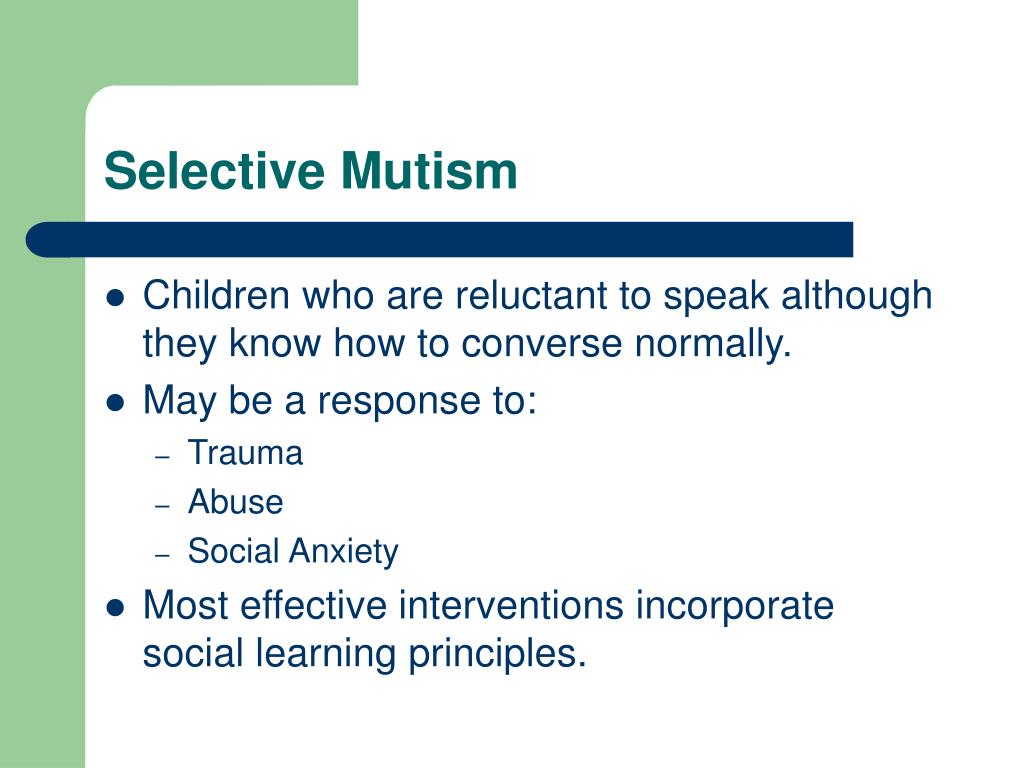
Selective Mutism: Some people experience selective mutism, a condition where intense trauma or anxiety leaves them temporarily unable to speak. It’s a defense mechanism that shields them from emotional overwhelm. It is characterized by:
A person’s inability to speak in certain social settings, even though they are otherwise capable of speech.
Triggers for selective mutism can include specific situations, places, or people.
People with SM can speak comfortably and communicate well in other settings, such as at home with family.
For many, according to colleague Dan Ariely PhD, this silence is involuntary, reflecting how deeply emotions affect speech.
Posted on January 11, 2025 by Dr. David Edward Marcinko MBA MEd CMP™
By Staff Reporters
***
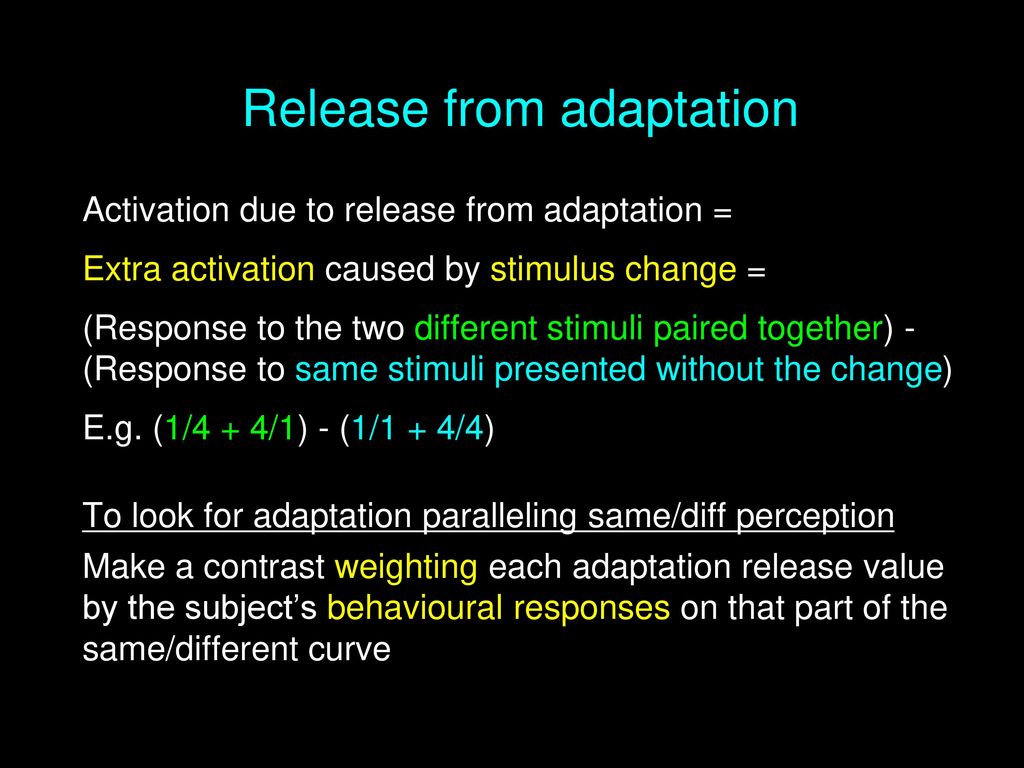
Activation due to release from adaptation = Extra activation caused by stimulus change = (Response to the two different stimuli paired together) – (Response to same stimuli presented without the change) E.g. (1/4 + 4/1) – (1/1 + 4/4) To look for adaptation paralleling same/diff perception. Make a contrast weighting each adaptation release value by the subject’s behavioural responses on that part of the same/different curve. Rajeev Raizada – UW MRI talk, Oct
***
Release from Adaptation is the joy you feel when something changes after becoming accustomed to it. It’s like the relief of a cool breeze after a hot day. Our brains get used to stimuli, making them less noticeable over time. When there’s a change, it’s like hitting the refresh button on our senses.
This is why, according to colleague Dan Ariely PhD, novelty feels so exciting and routine can become dull. So, inject some variety into your life to keep things fresh and enjoy the small releases from adaptation.
Posted on January 5, 2025 by Dr. David Edward Marcinko MBA MEd CMP™
By Reporters
***
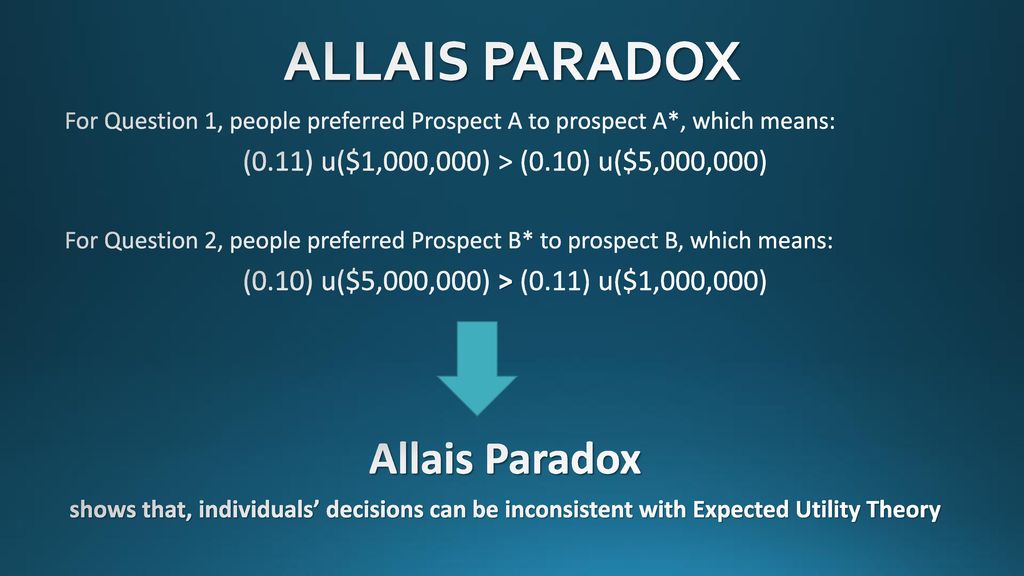
For Question 1, people preferred Prospect A to prospect A , which means: (0.11) u( 1,000,000) > (0.10) u( 5,000,000) For Question 2, people preferred Prospect B to prospect B, which means: (0.10) u( 5,000,000) > (0.11) u( 1,000,000) Allais Paradox. shows that, individuals’ decisions can be inconsistent with Expected Utility Theory.
***
Allais Paradox is a change in a possible outcome that is shared by different alternatives affects people’s choices among those alternatives, in contradiction with expected utility theory.
The Allais paradox is a choice problem designed by Maurice Allais 1953 to show an inconsistency of actual observed choices with the predictions of expected utility theory theory.
According to colleague Dan Ariely PhD, the Allais paradox demonstrates that individuals rarely make rational decisions consistently when required to do so immediately. The independence axiom of expected utility theory, which requires that the preferences of an individual should not change when altering two lotteries by equal proportions, was proven to be violated by the paradox.
Two years ago, prior to the 2022 election, mental health experts alerted the medical world to their version of an assessment scale for yet another new condition – “doomscrolling.”
As defined by the National Library of Medicine in the article, “Constant exposure to negative news on social media and news feeds could take the form of ‘doomscrolling’ which is commonly defined as a habit of scrolling through social media and news feeds where users obsessively seek for depressing and negative information.”
And so, formally Doomscrolling or doomsurfing is the act of spending an excessive amount of time reading large quantities of news, particularly negative news, on the web and social media. Doomscrolling can also be defined as the excessive consumption of short-form videos or social media content for an excessive period of time without stopping. The concept was coined around 2020, particularly in the context of the COVID pandemic.
Surveys and studies suggest doomscrolling is predominant among youth. It can be considered a form of internet addiction disorder. In 2019, a study by the National Academy of Sciences found that it can be linked to a decline in mental and physical health. Numerous reasons for doomscrolling have been cited, including negativity bias and FOMO [fear of missing out], and attempts at gaining control over uncertainty.
QUERY: What about the roaring stock market, post the 2024 presidential election. Fundamental analysis or FOMO?
If you’ve found yourself worrying about the stock market or money lately, you definitely have company. Money anxiety, also called financial anxiety, has become more common than ever after the presidential election of November 2024.
In fact, the American Psychological Association’s 2022 Stress in America Survey, 87 percent of people who responded listed inflation as a source of significant stress. The rise in prices for everything from fuel to food has people from all backgrounds worried, today. The researchers say, in fact, that no other issue has caused this much stress since the survey began in 2007.
When money and financial concerns cause ongoing stress in your life, you could eventually begin to experience some feelings of anxiety as a result. This anxiety can, in turn, have a negative impact on your quality of life.
***
Chrometophobia, commonly known as fear of money, is a psychological condition characterized by overwhelming anxiety and avoidance of currency; according to colleague Dan Ariely PhD.
Physician Financial Fear is probably the most common emotion among physicians. The fear of being wrong – as well as the fear of being correct! It can be debilitating, as in the corollary expression on fear: the paralysis of analysis.
According to Paul Karasik, there are four common investor and physician fears, which can be addressed by financial advisors and psychologists in the following manner:
Fear of making the wrong decision: ameliorated by being a teacher and educator.
Fear of change: ameliorated by providing an agenda, outline and/or plan.
Fear of giving up control: ameliorated by asking for permission and agreement.
Fear of losing self-esteem: ameliorated by serving the client first and communicating that sentiment in a positive manner.
Depression is Highest Among 18-25 Year Olds at 11%.
19% of US Adults Have Anxiety and 56% of Those with Anxiety Are Impaired By Their Condition.
12% of People with Diabetes Have Associated Depression… Resulting in Missed Appointments, Poorer Diet, Decreased Medication Adherence and Increased Complications.
To Address This Problem, The Intermountain Health System Incorporated a Mental Health Provider in Their Primary Care Clinics.
Results: Improved in Diabetes Care, Decreased Hospitalizations and Decreased ER Utilization.
Treating Mental Health Not Only Improves Mental Wellbeing, But Also Lowers Overall Healthcare Costs as Well.
Disclaimer: Dr. Bricker is the Chief Medical Officer of Virtual Care Company First Stop Health.
NOTE: If you or someone you know is considering suicide, please contact the National Suicide Prevention Lifeline at 1800-273-TALK (8255), text “help” to the Crisis Text Line at 741-741 or go to suicidepreventionlifeline.org.