About Regional Health Information Organizations

Join Our Mailing List

The RHIO Concept – Defined

Dr. Mata

[By Richard J. Mata MD, CIS, CMP™]

Regional Health Information Organizations (RHIOs), or data exchanges, are multi-stakeholder organizations.  They might include groups of hospitals, medical societies, payers, major employers, and other healthcare organizations.

Generally, these stakeholders are developing RHIOs with the goal of affecting the safety, quality, and efficiency of healthcare as well as improving access to healthcare by expanding the use of health information technology.  It is expected that RHIOs will be responsible for motivating and causing integration and information exchange in the nation’s revamped healthcare system

Assessment

Regions in the U.S. continue to use various definitions of “multi-stakeholder organizations.”  For instance, in Wichita, Kansas, the Clinics Patient Index is a software architecture as well as support environment that facilitates integration among outpatient clinics and hospital emergency departments.

And, what will be the affect of [HR 3590], or the Patient Protection and Affordable Care Act, on RHIOs?

Conclusion

Your thoughts and comments on this ME-P are appreciated. Feel free to review our top-left column, and top-right sidebar materials, links, URLs and related websites, too. Then, subscribe to the ME-P. It is fast, free and secure.

Speaker: If you need a moderator or speaker for an upcoming event, Dr. David E. Marcinko; MBA – Publisher-in-Chief of the Medical Executive-Post – is available for seminar or speaking engagements. Contact: MarcinkoAdvisors@msn.com

OUR OTHER PRINT BOOKS AND RELATED INFORMATION SOURCES:

Product DetailsProduct DetailsProduct Details


Defining Electronic Medical Record Systems

Join Our Mailing List

Does Linguistic Obfuscation Exacerbate our Use Ambivalence?

[By Dr. Richard J. Mata; CIS, CMP™]

[By Dr. David E. Marcinko; MBA, CMP™]

The 2003 Institute of Medicine (IOM) Patient Safety Report [1] described an EHR [2] as encompassing:

  • a longitudinal collection of electronic health information for and about persons;
  • [immediate] electronic access to person- and population-level information by authorized users;
  • provision of knowledge and decision-support systems [that enhance the quality, safety, and;
  • efficiency of patient care] with support for efficient processes for health care delivery.

The IOM Report

A 1997 IOM report, The Computer-Based Patient Record: An Essential Technology for Health Care, provides a more extensive definition:

A patient record system is a type of clinical information system, which is dedicated to collecting, storing, manipulating, and making available clinical information important to the delivery of patient care. The central focus of such systems is clinical data and not financial or billing information. Such systems may be limited in their scope to a single area of clinical information (e.g., dedicated to laboratory data), or they may be comprehensive and cover virtually every facet of clinical information pertinent to patient care (e.g., computer-based patient record systems).

The HIMSS Model

The EHR definitional model document developed by the Health Information and Management Systems Society (HIMSS, 2003) includes:

“a working definition of an EHR, attributes, key requirements to meet attributes, and measures or ‘evidence’ to assess the degree to which essential requirements have been met once EHR is implemented.”


The IOM Model

Another IOM report, Key Capabilities of an Electronic Health Record System [Tang, 2003], identifies a set of eight core care delivery functions that EHR systems should be capable of performing in order to promote greater safety, quality and efficiency in health care delivery:

8 Core Principles

Today, we realize that the eight core capabilities that Electronic Health [Medical] Records should possess are:

  1. — Health information and data. Having immediate access to key information – such as patients’ diagnoses, allergies, lab test results, and medications – would improve caregivers’ ability to make sound clinical decisions in a timely manner.
  2. — Result management. The ability for all providers participating in the care of a patient in multiple settings to quickly access new and past test results would increase patient safety and the effectiveness of care.
  3. — Order management. The ability to enter and store orders for prescriptions, tests, and other services in a computer-based system should enhance legibility, reduce duplication, and improve the speed with which orders are executed.
  4. — Decision support. Using reminders, prompts, and alerts, computerized decision-support systems would help improve compliance with best clinical practices, ensure regular screenings and other preventive practices, identify possible drug interactions, and facilitate diagnoses and treatments.
  5. — Electronic communication and connectivity. Efficient, secure, and readily accessible communication among providers and patients would improve the continuity of care, increase the timeliness of diagnoses and treatments, and reduce the frequency of adverse events.
  6. — Patient support. Tools that give patients access to their health records, provide interactive patient education, and help them carry out home monitoring and self-testing can improve control of chronic conditions, such as diabetes.
  7. — Administrative processes. Computerized administrative tools, such as scheduling systems, would greatly improve hospitals’ and clinics’ efficiency and provide more timely service to patients.
  8. — Reporting. Electronic data storage that employs uniform data standards will enable health care organizations to respond more quickly to federal, state, and private reporting requirements, including those that support patient safety and disease surveillance.” [3]

Assessment

With all the confusion surrounding terms like quality improvement and “meaningful use” which can mean major Federal dollars to the coffers of a medical practice, clinic or hospital; are we still confused about basic definitional terms?

And, does eMR linguistic obfuscation exacerbate our use ambivalence and encourage physician/dentist eMR avoidance?

Conclusion

Feel free to review our top-left column, and top-right sidebar materials, links, URLs and related websites, too. Then, be sure to subscribe. It is fast, free and secure.

References:

[1]   See http://www.himss.org/content/files/PatientSafetyFinalReport8252003.pdf.

[2]   EHR (electronic health record) is often used interchangeably with EMR (electronic medical record).  In this discussion, EHR will be used consistently.

[3]   See http://www.iom.edu/.

Product DetailsProduct DetailsProduct Details

About the National Health Information Network

Join Our Mailing List

The NHIN Defined

Dr. Mata

By Richard J. Mata MD, CIS, CMP™

On November 15, 2004, DHHS called for public comments on its plans for a National Health Information Network (NHIN) within ten years (see Federal Register, vol. 69, no. 219).

This would include establishing “interoperable” (easily exchanged) EHRs for all citizens.

DHHS Template

DHHS outlined four main purposes for the national network:

  1. inform clinical practice (with data from EHRs);
  2. interconnect clinicians so that they can exchange health information using advanced and secure electronic communication;
  3. personalize care with consumer-based health records and better information for consumers; and
  4. improve public health through advanced bio-surveillance methods and streamlined data collection for quality measurement and research.

Product Details  Assessment

What is the impact of the Patient Protection and Affordable Care Act on the NHIN? How close are the NHIN’s goals and original template to reality?

Your thoughts and commented are appreciated. Feel free to review our top-left column, and top-right sidebar materials, links, URLs and related websites, too. Then, be sure to subscribe. It is fast, free and secure.

Conclusion

Your thoughts and comments on this ME-P are appreciated. Feel free to review our top-left column, and top-right sidebar materials, links, URLs and related websites, too. Then, subscribe to the ME-P. It is fast, free and secure.

Speaker: If you need a moderator or speaker for an upcoming event, Dr. David E. Marcinko; MBA – Publisher-in-Chief of the Medical Executive-Post – is available for seminar or speaking engagements. Contact: MarcinkoAdvisors@msn.com

OUR OTHER PRINT BOOKS AND RELATED INFORMATION SOURCES:

Product Details

Product Details

On HIT Continuity Planning

Join Our Mailing List

Setting Up Your HIT Security System

Dr. MataBy Richard J. Mata, MD, CIS, CMP™ [Hon]

In order for a healthcare organization to thrive, it must be able to continue to function no matter what the circumstances are.

When disaster strikes, the organization must mobilize all the talent and resources needed to continue their operations and return to a normal state as soon as possible.

Time is money, and in today’s economy, an hour could be worth thousands of dollars.  Every department in an organization has responsibilities during a disaster.  Planning for a disaster and then dealing with it is a team effort by all parts of an organization.

Phases of Healthcare Business Continuity Planning

A system is required to realize this objective, and part of this system is healthcare entity business continuity planning (BCP).

Phase One: Set up a BCP Project

The first step is to set up a BCP project, which includes feedback from key members from all departments.  Appoint a project manager who has a solid background in the clinical and financial systems and functions that the organization deploys or services it provides.  The project manager can work with business and system analysts to document business flow and interactions with computerized systems that may go down, and how the organization will function on a manual system until service returns.

Phase Two: Review Emergencies and Assess Business Risk

The second phase involves reviewing the different types of emergencies that can arise and assessing the risks to the various business processes already documented.  This is accomplished following a system or service function.

Phase Three: Prepare for Emergencies

The third phase includes identifying of back-ups and recovery strategies to mitigate the effects of an emergency.  A storage area network (SAN) or redundant server could be used as back-ups.

Phase Four: Plan for Disaster Recovery

The fourth phase involves the development of procedures to be followed by a Disaster Recovery Team where human life may be at risk.  A disaster might be caused by weather, sabotage, or electrical power and be specific to the particular organization and its business and IT infrastructure.

Phase Five: Plan for Business Recovery

The fifth phase is critical, and involves developing detailed procedures for the recovery of the business.  Again, the BCP project manager could use each business or service procedure that was documented in phase two and detail which financial or clinical systems are involved, what would be done if the systems were down, and what the plan for recovering the system might be.

Phase Six: Test Business Recovery Procedures

The sixth phase involves simulating authentic emergencies and testing of the business recovery phase.  For example, how would business processes or services be affected by an electrical outage?  How fast can a power generator pick up the outage – and what might happen after a timely pause?  How would patients who were receiving mechanical support be affected?  What would happen to the clinical laboratory?

Phase Seven: Train the Staff

Phase seven covers the training of all employees in the procedures necessary to manage the business recovery process.  These are the procedures tested in phase six, which may require modification.

Phase Eight: Maintain the Currency of the Plan

Phase eight includes treating BCP as a dynamic project to be kept up to date to reflect all changes to business processes and employee structure.

Conclusion

Your thoughts and comments on this ME-P are appreciated. Feel free to review our top-left column, and top-right sidebar materials, links, URLs and related websites, too. Then, subscribe to the ME-P. It is fast, free and secure.

Speaker: If you need a moderator or speaker for an upcoming event, Dr. David E. Marcinko; MBA – Publisher-in-Chief of the Medical Executive-Post – is available for seminar or speaking engagements. Contact: MarcinkoAdvisors@msn.com

OUR OTHER PRINT BOOKS AND RELATED INFORMATION SOURCES:

Product DetailsProduct Details

How eMR Vendors May Mislead You

Challenging Assertions

By Shahid N. Shah MS

As the physician executive of your medical practice, it’s your job to challenge any eMR vendors’ assertions about why you need an eMR, especially during the selection and production demonstration phase.

Information Availability [Anytime – Anywhere]

The most important reason for the digitization of medical records is to make patient information available when the physician needs that information to either care for the patient or supply information to another caregiver.

Electronic medical records are not about the technology but about whether or not information is more readily available at the point of need.

Reasons to Purchase?

In no particular order, the major reasons given for the business case of eMRs by vendors include:

• Increase in staff productivity
• Increase of practice revenue and profit
• Reduce costs outright or control cost increases
• Improve clinical decision making
• Enhance documentation
• Improve patient care
• Reduce medical errors

Assessment

So, doctors beware! Challenge vendor “authority.”

Join Our Mailing List

Editor’s Note

Shahid N. Shah is an ME-P thought leader who is writing Chapter 13: “Interoperable e-MRs for the Small-Medium Sized Medical Practice” [On Being the CIO of your Own Office] for the third edition of the best selling book: Business of Medical Practice [Transformational Health 2.0 Skills for Doctors] to be released this fall by Springer Publishers, NY. He is also the CEO of Netspective Communications, LLC.

www.BusinessofMedicalPractice.com

Conclusion

And so, your thoughts and comments on this ME-P are appreciated. Feel free to review our top-left column, and top-right sidebar materials, links, URLs and related websites, too. Then, be sure to subscribe. It is fast, free and secure.

Speaker: If you need a moderator or speaker for an upcoming event, Mr. Shah and Dr. David E. Marcinko; MBA – Publisher-in-Chief of the Medical Executive-Post – are available for seminar or speaking engagements. Contact: MarcinkoAdvisors@msn.com

Get our Widget: Get this widget!

Our Other Print Books and Related Information Sources:

Practice Management: http://www.springerpub.com/prod.aspx?prod_id=23759

Physician Financial Planning: http://www.jbpub.com/catalog/0763745790

Medical Risk Management: http://www.jbpub.com/catalog/9780763733421

Healthcare Organizations: www.HealthcareFinancials.com

Health Administration Terms: www.HealthDictionarySeries.com

Physician Advisors: www.CertifiedMedicalPlanner.com

Subscribe Now: Did you like this Medical Executive-Post, or find it helpful, interesting and informative? Want to get the latest ME-Ps delivered to your email box each morning? Just subscribe using the link below. You can unsubscribe at any time. Security is assured.

Link: http://feeds.feedburner.com/HealthcareFinancialsthePostForcxos

Sponsors Welcomed: And, credible sponsors and like-minded advertisers are always welcomed.

Link: https://healthcarefinancials.wordpress.com/2007/11/11/advertise

Product Details

Is the Texas Dental Association too Authoritarian?

Join Our Mailing List

About Employee Mary Kay Linn

[By Darrell Kellus Pruitt; DDS]

Texas Dental Association Executive-Director Mary Kay Linn seems to think that TDA members owe her respect for some reason. I don’t see it. You get what you give TDA employee Mary Kay Linn.

Link: TDA response to Pruitt

I’ve attached the partially answered, authoritarian response from the TDA. I think it speaks for itself. And, I posted the following Twitterpoem today.

Mary Kay Linn, the executive director of the TDA just doesn’t get it.

@theTDA, I received the responses to some of the 30+ questions that were invited by the TDA. Linn’s evasion is transparent and regrettable.

@theTDA, when a Judicial Committee member delivered the PDF, he said Linn told him to tell me that “This is it. No more questions.”

Assessment

He added that: “There will be no follow up responses and that the very busy TDA staff spent far too much time on my questions already.” 

TDA Executive Director Mary Kay Linn, this will not end well for you.

Assessment

How responsive was the TDA; just right, under or overwhelming when pushed? Or, was Dr. Pruitt over-the-top? Does he expect too much from his professional association? Does almost every DDS except him know that the “emperor has no clothes?” Or, is he one member with critical thinking skills instead of blind [misplaced] faith?

Finally, is there an analogy here for the AMA, ADA, APMA, ANA, AOA, etc? Are the aging command-control medical association monopolies crashing down in the era of internet connectivity and professional networking? Do we need new norms and etiquette models of communication? Please opine.

Conclusion

Your thoughts and comments on this ME-P are appreciated. Feel free to review our top-left column, and top-right sidebar materials, links, URLs and related websites, too. Then, subscribe to the ME-P. It is fast, free and secure.

Link: http://feeds.feedburner.com/HealthcareFinancialsthePostForcxos

Speaker: If you need a moderator or speaker for an upcoming event, Dr. David E. Marcinko; MBA – Publisher-in-Chief of the Medical Executive-Post – is available for seminar or speaking engagements. Contact: MarcinkoAdvisors@msn.com

OUR OTHER PRINT BOOKS AND RELATED INFORMATION SOURCES:

DICTIONARIES: http://www.springerpub.com/Search/marcinko
PHYSICIANS: www.MedicalBusinessAdvisors.com
PRACTICES: www.BusinessofMedicalPractice.com
HOSPITALS: http://www.crcpress.com/product/isbn/9781466558731
CLINICS: http://www.crcpress.com/product/isbn/9781439879900
BLOG: www.MedicalExecutivePost.com
FINANCE: Financial Planning for Physicians and Advisors
INSURANCE: Risk Management and Insurance Strategies for Physicians and Advisors

Product Details

What is M-Health for Physicians?

On “Smart Phones” and Mobiles Devices

By Shahid N. Shah MS

M-Health or “mobile health” is an industry term for collectively defining those tools and technologies that can be used on “smart phones” like iPhone, Blackberry, Android, or on traditional mobile phones from various vendors.

Unlike traditional computers, almost every patient that walks into your medical office, as well as all your own staff, have mobile devices already. If you can find mobile applications that can help your practice you can immediately put to use without large capital expenses, network configuration, and other technical tasks.

www.MedicalBusinessAdvisors.com

The M-Health Initiative

According to the mHealth Initiative, there are 12 major “application clusters” in mobile health: patient communication, access to web-based resources, point of care documentation, disease management, education programs, professional communication, administrative applications, financial applications, emergency care, public health, clinical trials, and body area networks.

www.CertifiedMedicalPlanner.com

The Applications

Almost all of these applications are focused around the patient but most of them will be directly useful to you and your staff as well. Here’s how:

  • Improving physician-patient communications. You can get your staff to send out text messages, e-mails, photos, and other information about your practice to the patient before their visit. You can remind them about appointments, tell them what to expect, ask them for their insurance and check-in information, or let them send you their personal health record link. During the visit you can send them patient education information directly to their phones instead of handing out paper. After the visit you can send medication reminders, additional educational resources, and update to their personal health record, or ask them to join a Health 2.0 social network. PumpOne, GenerationOne, Intouch Clinical, Life:Wire, and Jitterbug phones all have great patient user experiences and you should tell your patients about them.
  • Faster access to information for you and your patients. There are countless web-based resources that are now at your fingertips on a phone. Patients can lookup providers, labs, testing services, etc. that you can refer them to; you can help them join clinical trials, and manage their health records online. None of these require a computer either in your office or in their home, it can all be done on the phone. Check out companies like Healthagen and iSeek.
  • Real-time documentation of office or hospital visits. Most of the things you want to do in your EMR are possible on a smart phone today. You can get your patient profiles, document an encounter with basic order management and lab results review capabilities, and immediate storage into either your own EMR or your hospital’s information system.
  • Help those patients with the most time-consuming treatments. You already know that disease management is an important part of managing the health of chronic patients; diabetes and hypertension are two perfect examples. Help enroll your patients into Diabetes Connect, MediNet, HealthCentral, and similar applications that can help track compliance with your medical treatment guidance. If they use these applications they can simply give you printouts or login credentials so that you can track their progress without doing any data entry yourself. There are patient tools for most common diseases.

Join Our Mailing List

Editor’s Note

Shahid N. Shah is an ME-P thought leader who is writing Chapter 13: “Interoperable e-MRs for the Small-Medium Sized Medical Practice” [On Being the CIO of your Own Office] for the third edition of the best selling book: Business of Medical Practice [Transformational Health 2.0 Skills for Doctors] to be released this fall by Springer Publishing, NY. He is also the CEO of Netspective Communications, LLC.

www.BusinessofMedicalPractice.com

Conclusion

And so, your thoughts and comments on this ME-P are appreciated. Feel free to review our top-left column, and top-right sidebar materials, links, URLs and related websites, too. Then, be sure to subscribe. It is fast, free and secure.

Speaker: If you need a moderator or speaker for an upcoming event, Mr. Shah and Dr. David E. Marcinko; MBA – Publisher-in-Chief of the Medical Executive-Post – are available for seminar or speaking engagements. Contact: MarcinkoAdvisors@msn.com

Get our Widget: Get this widget!

Our Other Print Books and Related Information Sources:

Practice Management: http://www.springerpub.com/prod.aspx?prod_id=23759

Physician Financial Planning: http://www.jbpub.com/catalog/0763745790

Medical Risk Management: http://www.jbpub.com/catalog/9780763733421

Healthcare Organizations: www.HealthcareFinancials.com

Health Administration Terms: www.HealthDictionarySeries.com

Physician Advisors: www.CertifiedMedicalPlanner.com

Subscribe Now: Did you like this Medical Executive-Post, or find it helpful, interesting and informative? Want to get the latest ME-Ps delivered to your email box each morning? Just subscribe using the link below. You can unsubscribe at any time. Security is assured.

Link: http://feeds.feedburner.com/HealthcareFinancialsthePostForcxos

Sponsors Welcomed: And, credible sponsors and like-minded advertisers are always welcomed.

Link: https://healthcarefinancials.wordpress.com/2007/11/11/advertise

On Hospital CPOE Systems [Part Two]

Join Our Mailing List

Computerized Physician Order Entry Systems

By Brent Metfessel; MD, MIS

A significant initial cost outlay for an organization-wide CPOE system is necessary, which for a large hospital may run into the tens of millions of dollars.  Understandably, the majority of the hospitals that have installed a CPOE system are large urban hospitals.  The up-front cost outlay may be prohibitive for smaller or rural hospitals unless there is an increase in outside revenue or third-party subsidies.

However, although it may take a few years before a positive ROI becomes manifest, there can be a significant financial return from such systems.

www.CPOE.org

Potential Benefits

The potential benefits of a CPOE system go beyond quality. Significant decreases in resource utilization can occur. In one study, inpatient costs were 12% lower and average Length of Stay (LOS) was 0.89 day shorter for patients residing on general medicine wards that used a CPOE system with decision support. Rather simple decision support tools can reap cost benefits as well. When a computerized antibiotic advisor was integrated with the ordering process, one institution realized a reduction in costs per patient ($26,325 vs. $35,283) and average LOS (10.0 days vs. 12.9 days), with all differences statistically significant.

Studies have shown that CPOE systems can significantly reduce medication error rates, including rates of serious errors.

For example, one large east coast hospital saw a 55% reduction in serious adverse medication errors after the system was installed. However, on occasion errors can actually be introduced due to the computing process; in particular, errors can be introduced if the provider accidentally selects the wrong medication from the list or drop-down menu.

Accordingly, a CPOE system should not be viewed as a replacement for the pharmacist in terms of checking for medication errors. In addition, proper user interface design such as highlighting every other line on the medication screen for better visibility and having the provider give a final check to the orders before sending are some ways of reducing this kind of error. Overall, error rates from incorrect order entry on the computer are much smaller than other medication errors prior to introduction of the system.

Appropriate use of a CPOE system helps prevent errors and quality of care deficiencies due to problems with the initiation of orders.  However, errors can also occur in the execution of orders, particularly with the administration of medications to patients.  Bar coding of medications, discussed previously, is a simple way to close the loop in medication error prevention as well as further increase the efficiency of workflow.

Despite its advantages, a CPOE system has been implemented on an organization-wide basis in only about 45% of all US hospitals and growth in implementations has been relatively slow, although about 67% plan to add a CPOE system in the next few years.  Implementing a CPOE system is not an easy task, and there is a significant risk of failure.  Most hospitals utilize vendors for implementation rather than attempting to develop the system in-house given the difficulty of hiring full-time IT talent that specializes in CPOE systems.

One critical feature of any CPOE system is to obtain physician buy-in to the technology, since they will be doing most of the ordering.  Actually, unless the system is of the highest sophistication, physicians may claim it takes more time to write orders using a CPOE system than using the paper chart, as there may be a number of drop-down menus to negotiate prior to arriving at the appropriate drug.  Real-time retrieval of information and electronic documentation, provision of on-line alerts, and the ability to use standard order sets (prepackaged sets of orders pertaining to a particular clinical condition or time period in an episode of care), when relevant, can make the net time spent on writing orders similar to using paper charts.

Doctor Acceptance

It is also important, for physician acceptance, to not overwhelm them with on-line alerts.  Clearly, the system needs to point out the more serious errors, but if the physician’s process is frequently interrupted by alerts, they may increasingly resist the system.

For example, medication allergy alerts may warn physicians not only of potential problems with medications that have an exact match to the allergen, but also, as a defensive maneuver (“better safe than sorry”), to other medications that have a related molecular structure,, even though the patient may already be taking such medication and tolerating it well.  Furthermore, allergies to medications that may result in life-threatening anaphylactic shock may not be distinguished from “sensitivities” that consist of side effects that are not true allergies and are usually much less serious.

Thus, the potential exists for frequent alert generation that would interrupt the work flow and require time spent to override the alerts, making the system difficult to use and leading to user resistance.  One suggested solution is to have a hierarchy of importance, with alerts for potentially life-threatening situations being allowed to interrupt the work flow and requiring specific override or acknowledgment, and alerts for less serious problems being “noninterruptive,” allowing easy visibility of the alert without requiring stoppage of the work flow.

Product DetailsProduct DetailsProduct Details

CPOE Pitfalls

Other pitfalls with respect to CPOE systems include the following:

  • crowded menus making it easy to select the wrong patient or wrong drug with the mouse;
  • fragmented information necessitating navigation through numerous screens to find the relevant information;
  • computer downtime (scheduled or unscheduled); and
  • location of terminals in busy places, which can lead to distractions and resulting incomplete or incorrect entries.

Intelligent, well-thought-out system designs can serve to mitigate many of these problems.  It is important that such difficulties appear on the systems designers’ “radar screen” and are explicitly considered in the implementation.

Pharmacists

As for pharmacists, a CPOE system will not take them out of the process. Although a CPOE system has the capability to capture many drug errors and remove the need for manual order entry, there will always be a need for pharmacists to not only give a second look at possible errors, but to take a more active role in patient care, including going on ward rounds for complex cases, defining optimal treatment, and giving consultative advice.

www.MedicalBusinessAdvisors.com

Assessment

A CPOE system has the potential to give physicians ready access to patient data anywhere in the hospital as well as at home or on the road, especially with Internet-based connections. This is significant given the difficulty in obtaining patient charts for mobile providers.

In today’s environment of high expectations for care quality and pay-for-performance initiatives, enhanced quality of care can translate into financial gain. Although there is a significant up-front allocation of funds for CPOE systems, given present trends the time may arrive where there is no longer a choice but to implement such a system.

Conclusion

Your thoughts and comments on this ME-P are appreciated. Feel free to review our top-left column, and top-right sidebar materials, links, URLs and related websites, too. Then, subscribe to the ME-P. It is fast, free and secure.

Link: http://feeds.feedburner.com/HealthcareFinancialsthePostForcxos

Speaker: If you need a moderator or speaker for an upcoming event, Dr. David E. Marcinko; MBA – Publisher-in-Chief of the Medical Executive-Post – is available for seminar or speaking engagements. Contact: MarcinkoAdvisors@msn.com

OUR OTHER PRINT BOOKS AND RELATED INFORMATION SOURCES:

DICTIONARIES: http://www.springerpub.com/Search/marcinko
PHYSICIANS: www.MedicalBusinessAdvisors.com
PRACTICES: www.BusinessofMedicalPractice.com
HOSPITALS: http://www.crcpress.com/product/isbn/9781466558731
CLINICS: http://www.crcpress.com/product/isbn/9781439879900
BLOG: www.MedicalExecutivePost.com
FINANCE: Financial Planning for Physicians and Advisors
INSURANCE: Risk Management and Insurance Strategies for Physicians and Advisors

Product Details

On Hospital CPOE Systems [Part One]

Join Our Mailing List

Computerized Physician Order Entry Systems

[By Brent Metfessel MD, MIS]

Since the late 1990s, there has been increasing pressure for hospitals to develop processes to ensure quality of care. The Institute of Medicine (IOM) has estimated the number of annual deaths from medical error to be 44,000 to 98,000.  Manual entry of orders, use of non-standard abbreviations, and poor legibility of orders and chart notes contribute to medical errors.  They also concluded that most errors are the result of system failures, not people failures.

www.CPOE.org

Other studies suggest that between 6.5% and 20% of hospitalized patients will experience an adverse drug event (ADE) during their stay. Both quality and cost of care suffer.  The cost for each ADE is estimated to be about $2,000 to $2,500, mainly resulting from longer lengths of stay. The National Committee on Vital and Health Statistics reported that about 23,000 hospital patients die annually from injuries linked specifically to the use of medications.

Join Our Mailing List

The Joint Commission and the Leapfrog Group

In addition, the Joint Commission and the Leapfrog Group, a consortium of large employers, have pushed patient safety as a high priority and hospitals are following suit. The Leapfrog Group in particular highlighted CPOE systems as one of the changes that would most improve patient safety.  These patient safety initiatives have further advanced CPOE systems, since these systems have the reduction of medical errors as a prime function.  State and federal legislatures have also stepped up activity in this regard.

For example, back in July 2004, the federal government strongly advocated for electronic medical records, including the creation of the Office of the National Coordinator for Health Information Technology to develop a National Health Information Network. Consequently, regional health information organizations have been established in many states, and these are used for the purpose of expediting the sharing and exchange of healthcare data and information, although there still remain issues in terms of providing adequate funding to these programs.

In addition, consideration was given to the allocation of grants and low-interest loans to aid hospitals in implementing healthcare technology solutions.  In 2000, California first enacted legislation (Senate Bill 1875) stating that as a condition of licensure, acute care hospitals, with the exception of small and rural hospitals, submit plans to implement technological solutions (such as CPOE systems) to substantially reduce medication-related errors by January 1, 2002. Hospitals in California had until January 1, 2005, to actually implement their medication error-reduction plans and make them operational. Unfortunately, many are still not in compliance today.

Health plans also entered the patient safety stage. In 2002, one large health plan in the northeast provided a 4% bonus to hospitals implementing a CPOE system and staffing intensive care units (ICUs) with “intensivists.” Today, this goal is almost the norm, but not yet reality for all.

More than Data Retrieval 

Many hospitals have “data retrieval” systems where a provider on the wards can obtain lab results and other information. A CPOE system, however, allows entry of data from the wards and is usually coupled with a “decision support” module that does just that — supports the provider in making decisions that maximize care quality and/or cost effectiveness.

In this application of HIT, physicians and possibly other providers enter hospital orders directly into the computer. Many vendors of such systems make special efforts to create an intuitive and user-friendly interface, with a variable range of customization possibilities. The physicians can enter orders either on a workstation on the ward or in some cases at the bedside.

Features of a True CPOE System

Basic features of CPOE should include the following:

  • Medication analysis system — A medication analysis program usually accompanies the order entry system. In such cases, either after order entry or interactively, the system checks for potential problems such as drug-drug interactions, duplicate orders, drug allergies and hypersensitivities, and dosage miscalculations. More sophisticated systems may also check for drug interactions with co-morbidities (e.g., psychiatric drugs that may increase blood pressure in a depressed patient with hypertension), drug-lab interactions (e.g., labs pointing to renal impairment that may adversely affect drug levels), and suggestions to use drugs with the same therapeutic effect but lower cost. Naturally, physicians have the option to decline the alerts and continue with the order. In fact, if there are alerts that providers are frequently overriding, providers will often provide feedback that can lead to modification of the alert paradigms. Encouraging feedback increases the robustness of the CPOE system and facilitates continuous quality improvement.
  • Order clarity — Reading the handwriting of providers is a legendary problem. Although many providers do perfectly well with legibility, other providers have difficulty due to being rushed, stressed, or due to trait factors. Since the orders are accessible directly on the workstation screen or from the printer, time is saved on callbacks to decipher illegible orders as well as preventing possible errors in order translation. A study in 1986 by Georgetown University Hospital (Washington, D.C.) noted that 16% of all manual medical records are illegible. Clarifying these orders takes professional time, and resources are spent duplicating the data; thus, real cost savings can be realized through the elimination of these processes.
  • Increased work efficiency — Instantaneous electronic transmittal of orders to radiology, laboratory, pharmacy, consulting services, or other departments replaces corresponding manual tasks. This increase in efficiency from a CPOE system has significant returns. In one hospital in the southeast, the time taken between drug order submission and receipt by the pharmacy was shortened from 96 minutes (using paper) to 3 minutes. Such an increase in efficiency can save labor costs and lead to earlier discharge of patients. The same hospital noted a 72% reduction in medication error rates during a three-month period after the system was implemented. Alerting providers to duplicate lab orders further saves costs from more efficient work processes. And, in another instance, the time from writing admission orders to execution of the orders decreased from about six hours to 30 minutes, underscoring CPOE system utility in making work processes more efficient; thus positively affecting the bottom line.

Assessment

In today’s environment of high expectations for care quality and pay-for-performance initiatives, enhanced quality of care can translate into financial gain. Although there is a significant up-front allocation of funds for CPOE systems, given present trends the time may arrive where there is no longer a choice but to implement such a system.

Conclusion

Although a Computerized Physician Order Entry system alone will reap significant benefits if intelligently implemented, in order to realize the greatest benefit a CPOE system should be rolled up into a fully functioning EMR system where feasible.

Your thoughts and comments on this ME-P are appreciated. Feel free to review our top-left column, and top-right sidebar materials, links, URLs and related websites, too. Then, subscribe to the ME-P. It is fast, free and secure.

Speaker: If you need a moderator or speaker for an upcoming event, Dr. David E. Marcinko; MBA – Publisher-in-Chief of the Medical Executive-Post – is available for seminar or speaking engagements. Contact: MarcinkoAdvisors@msn.com

OUR OTHER PRINT BOOKS AND RELATED INFORMATION SOURCES:

Product DetailsProduct Details


Why Hospital IT is Almost like a Retail Mall

Hospital Bar-Coding Systems

By Brent A. Metfessel; MD, MIS

www.HealthcareFinancials.com

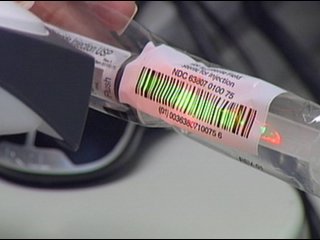
Given anticipated benefits in patient safety, the FDA required in April 2006, that bar codes be installed on all medications used in hospitals and dispensed based on a physician’s order.  The bar code must contain at least the National Drug Code (NDC) number, which specifically identifies the drug. 

Unfortunately, by 2008 only about 18% of hospitals used bedside bar coding systems. Nevertheless, this ruling heightened the priority of implementing hospital-wide systems for patient/drug matching using bar codes and implementation that is still growing rapidly today.

Procedures

Conceptually, the procedure for bar coding is as follows:

  • The drug is given to the nurse or other provider for administration to the patient.
  • Once in the patient’s room, the provider scans the bar code on the patient’s identification badge, which positively identifies the patient.
  • The medication container is then passed through the scanner, which then identifies the drug.
  • The computer matches the patient to the drug order.  If there is not a match, including drug, dosage, and time of administration, an alert is displayed in real-time, enabling correction of the error prior to drug administration.

Enter the FDA

The FDA estimates that over 500,000 fewer adverse events will occur over the next 20 years, a result of an expected 50% decrease in drug dispensing and administration errors. The decrease in pain, suffering, and lengths of stay from drug errors is estimated to result in $93 billion in savings over the next 20 years. 

Avoidance of litigation, decreased malpractice premiums, reduction in inventory carrying costs, and increase in revenue from more accurate billing result from the improvement in quality and efficiency of care.

This makes implementation of bar coding technology relatively low-risk, although there needs to be sufficient informatics capability to capture and store drug orders.

Estimated Cost Savings

For a bar coding system, a 300-bed hospital may expect up-front costs of $700,000 to $1.5 million with about $150,000 in maintenance fees annually.  The returns, however, in terms of improved patient safety and cost of care make an investment in bar coding technology one of the more cost-effective information systems investments.

Assessment

Also, given the increasing consumerism in healthcare, prospective patients will be more assured of care quality from a hospital investing in state-of-the-art technology in this area, giving the medical center a competitive advantage.

Conclusion

Thus, hospitals are becoming more like retail businesses every day … finally!

And so, your thoughts and comments on this ME-P are appreciated. Feel free to review our top-left column, and top-right sidebar materials, links, URLs and related websites, too. Then, be sure to subscribe. It is fast, free and secure.

Speaker: If you need a moderator or speaker for an upcoming event, Dr. David E. Marcinko; MBA – Publisher-in-Chief of the Medical Executive-Post – is available for seminar or speaking engagements. Contact: MarcinkoAdvisors@msn.com

Get our Widget: Get this widget!

Our Other Print Books and Related Information Sources:

Practice Management: http://www.springerpub.com/prod.aspx?prod_id=23759

Physician Financial Planning: http://www.jbpub.com/catalog/0763745790

Medical Risk Management: http://www.jbpub.com/catalog/9780763733421

Healthcare Organizations: www.HealthcareFinancials.com

Health Administration Terms: www.HealthDictionarySeries.com

Physician Advisors: www.CertifiedMedicalPlanner.com

Subscribe Now: Did you like this Medical Executive-Post, or find it helpful, interesting and informative? Want to get the latest ME-Ps delivered to your email box each morning? Just subscribe using the link below. You can unsubscribe at any time. Security is assured.

Link: http://feeds.feedburner.com/HealthcareFinancialsthePostForcxos

Sponsors Welcomed

And, credible sponsors and like-minded advertisers are always welcomed.

Link: https://healthcarefinancials.wordpress.com/2007/11/11/advertise

Product DetailsProduct DetailsProduct Details     

Doctors – Are You Using Health 2.0 Tools?

A New ME-P Survey

By Ann Miller RN, MHA

[Executive Director]

Join Our Mailing List

Web, or more specifically health 2.0, tools have made medical practice more interactive and collaborative for all stakeholders; doctors, patients, payers, hospitals, employers and third party insurance companies. 

But, what actually is Health 2.0? Do you embrace or fear it?

A Definition

Link: https://medicalexecutivepost.com/2010/02/19/health-2-0-empowers-patients/

Link: www.HealthDictionarySeries.com

Survey:

Now, it’s your turn.

Doctors, do you use Health 2.0 tools in your own medical practice [all specialties and degree designations are invited to opine]; either in the cloud [SaaS] or thru on-site programs? Please tell us why or why not! What tools do you use, the risks, benefits, results, costs, etc?

Get our Widget: Get this widget!

Our Other Print Books and Related Information Sources:

Practice Management: http://www.springerpub.com/prod.aspx?prod_id=23759

Physician Financial Planning: http://www.jbpub.com/catalog/0763745790

Medical Risk Management: http://www.jbpub.com/catalog/9780763733421

Healthcare Organizations: www.HealthcareFinancials.com

Health Administration Terms: www.HealthDictionarySeries.com

Physician Advisors: www.CertifiedMedicalPlanner.com

Subscribe Now: Did you like this Medical Executive-Post, or find it helpful, interesting and informative? Want to get the latest ME-Ps delivered to your email box each morning? Just subscribe using the link below. You can unsubscribe at any time. Security is assured.

Link: http://feeds.feedburner.com/HealthcareFinancialsthePostForcxos

Sponsors Welcomed

And, credible sponsors and like-minded advertisers are always welcomed.

Link: https://healthcarefinancials.wordpress.com/2007/11/11/advertise

Book Review of “Cyber War”

Join Our Mailing List

A Book Review 

[By Darrell K. Pruitt; DDS]

I’m reading “Cyber War” by Richard A. Clark. He served the Pentagon, the State Department, and the National Security Council under Presidents Reagan, Bush, Clinton and Bush. It’s sobering to learn that North Korea has already successfully pulled cyber-war tricks against a vulnerable US. But; to learn that North Korea doesn’t have any Internet vulnerabilities is frightening.

China

And what about China – want to see sophistication? Clark says that within the last year, Canadians discovered a highly sophisticated program they named “GhostNet.” It had infected over an estimated 1300 computers at several countries’ embassies around the world. Get this: The program had the capability to remotely turn on a computer’s camera and microphone without alerting the user and to send the information back to China. So how could such capabilities affect you and me?

GhostNet 

GhostNet had been working for almost 2 years before it was discovered. About the same time, US Intelligence leaked news that Chinese hackers had penetrated the US Power grid and left behind programs that can shut the grid down. Clark suggests that the Chinese intended us to find their program as a deterrent to our national will to intervene if China should find it necessary to annex Taiwan or even the Spratly Islands in the South China Sea – where the reefs shelter some of the largest remaining stocks of fish in the world, in addition to undeveloped oil and gas reserves that rival Kuwait’s.

Gates Speaks

Clark says that according to Defense Secretary Robert Gates, cyber attacks “could threaten the United States’ primary means to project its power and help its allies in the Pacific.”  Clark adds, “The problem is, however, that deterrence only works if the other side is listening. U.S. leaders may not have heard, or fully understood, what Beijing was trying to say. The U.S. has done little or nothing to fix the vulnerabilities in its power grid or in other civilian networks.”

Assessment

If they shut down our power grids, it will be chaos. Are we as a nation flying far too fast into the cloud?

What does this say about eMRs and eHRs, regional health information exchanges, cloud computing, and related health 2.0 initiatives and/or information technology? Sobering thoughts for the weekend.

Conclusion

Your thoughts and comments on this ME-P are appreciated. Feel free to review our top-left column, and top-right sidebar materials, links, URLs and related websites, too. Then, subscribe to the ME-P. It is fast, free and secure.

Speaker: If you need a moderator or speaker for an upcoming event, Dr. David E. Marcinko; MBA – Publisher-in-Chief of the Medical Executive-Post – is available for seminar or speaking engagements. Contact: MarcinkoAdvisors@msn.com

OUR OTHER PRINT BOOKS AND RELATED INFORMATION SOURCES:

 Product DetailsProduct Details


Sevocity® Announces Free Electronic Health Records (EHR) System

For Educators and Regional Extension Centers (REC)

ADVERTISEMENT

By Catherine G. Huddle

VP, Market Development

www.Sevocity.com

Ph: (210) 412-5653

True Internet / Cloud EHR System Ideal for Educating Providers, Clinical Staff, and REC Support Staff

San Antonio, TX –Sevocity, a division of Conceptual MindWorks, Inc. (CMI), today announced Sevocity U, its Internet-based Ambulatory Electronic Health Records (EHR) program for Regional Extension Centers (RECs), Local Extension Centers (LECs), Management Service Organizations (MSOs), Technical Colleges, Universities, Medical Schools, and other organizations needing a turn-key EHR for training.

The Program

Under the program, educational organizations will receive free use of the fully functional Sevocity EHR for up to 20 users (teachers and students) through a demonstration clinic specifically for the educational organization.   Because Sevocity is a true Internet-based EHR, these organizations will not need to purchase, install, or maintain any servers or special software.  All that is required to access the system is a standard personal computer and an Internet connection, making student access for training and practice easy for the educator.  Sevocity U demonstration clinics will use the fully functional production version of Sevocity EHR.

CCHIT Certified

Sevocity 08 is CCHIT Certified® by the Certification Commission for Healthcare Information Technology (CCHIT®) and meets the Commission’s ambulatory electronic health record (EHR) criteria for 2008.  Sevocity will release its next version of Sevocity EHR this summer, at which time the company will apply for CCHIT 2011.  Sevocity is also committed to “meaningful use” certification and plans to apply as soon as certification is available.  Sevocity’s customer agreement includes a commitment to certification and any other requirements for providers to receive EHR incentives under the American Reinvestment and Recovery Act of 2009 (ARRA).

“We developed this program because we recognize the tremendous challenge Regional Extension Centers and other educators have teaching clinicians and others about Electronic Health Records in a very short period of time and with limited funding,” stated Catherine Huddle, VP of Market Development with Sevocity.   “While more standardization of EHRs is coming, today most systems have the same basic functionality.  Because Sevocity is a true Internet-based EHR and is very easy to use, it provides the ideal platform for educators providing EHR training.”

Join Our Mailing List

Assessment

Sevocity is rolling out this program in phases. Phase I begins today with the availability of Sevocity to the first ten (10) educational organizations that apply. Interested organizations should contact Sevocity at 877-777-2298 or EHReducation@Sevocity.com.

About Sevocity

Based in San Antonio, Texas, Sevocity empowers physician practices and health centers to embrace electronic health record (EHRs) by providing an easy-to-use, Internet-based electronic health record system. Because Sevocity EHR is an Internet-based (or cloud computing) product that provides secure access to clinical information via the Internet, practices and health centers avoid the expensive upfront capital expenditure and ongoing maintenance costs associated with client/server offerings. For more information about Sevocity, visit www.sevocity.com or call (877) 777-2298.

Conclusion

And so, your thoughts and comments on this ME-P are appreciated. Use the product, or give them a click and tell us what you think.

Feel free to review our top-left column, and top-right sidebar materials, links, URLs and related websites, too. Then, be sure to subscribe. It is fast, free and secure.

Get our Widget: Get this widget!

Our Other Print Books and Related Information Sources:

Practice Management: http://www.springerpub.com/prod.aspx?prod_id=23759

Physician Financial Planning: http://www.jbpub.com/catalog/0763745790

Medical Risk Management: http://www.jbpub.com/catalog/9780763733421

Healthcare Organizations: www.HealthcareFinancials.com

Health Administration Terms: www.HealthDictionarySeries.com

Physician Advisors: www.CertifiedMedicalPlanner.com

Subscribe Now: Did you like this Medical Executive-Post, or find it helpful, interesting and informative? Want to get the latest ME-Ps delivered to your email box each morning? Just subscribe using the link below. You can unsubscribe at any time. Security is assured.

Link: http://feeds.feedburner.com/HealthcareFinancialsthePostForcxos

Sponsors Welcomed

And, credible sponsors and like-minded advertisers are always welcomed.

Link: https://healthcarefinancials.wordpress.com/2007/11/11/advertise

CRM Considerations for a Health 2.0 Medical Practice

Join Our Mailing List

The Build vs. Buy vs. Outsource Conundrum

By DeeVee Devarakonda MBA

There are several options to build, buy or outsource a medical practice Customer Resource Management infrastructure. And, there are advantages and disadvantages to all three options. I will review all three for our ME-P readers. 

Build:

Rapid technology advances are transforming the business landscape. This makes it very challenging for healthcare organizations to keep abreast of the technologies, to train and manage resources on tools, to grapple with cross-functional, cross-departmental dynamics and build the CRM application. In addition mergers/ acquisitions and other market realities can make CRM operations complex and distract healthcare organizations from delivering excellent patient experience.

It is very tempting for small healthcare organizations to think they can develop what they need in-house themselves. May be May be not. It is very essential to stay focused on your main business and see if the solution is available elsewhere. Figure out if you are in the business of whatever you are doing or let us say in the business to develop patient survey tool or a low-end database. It is best to get outside help wherever you are dealing with an initiative/ task that is not your core competence or where it is to your strategic advantage- be it time-to-value or cost savings.

Buy:

Depending on your business needs you can either buy CRM package solution and implement or build best of breed solutions that are suited to your business needs. You need to pay very close attention to what the software vendors are promising. Naturally they will be more interested in making the sale, than advising on whether it integrates well with your existing technologies, so the onus is on you as a buyer to ask the right questions and make appropriate purchases.

Outsource:

Especially for very young healthcare organizations today, outsourcing can be an option worth exploring to de-risk technology decisions. Outsourcing de-risks marketing program – avoids unnecessary, upfront, massive capital investment and will also equip the marketers with the flexibility to ramp up or down as situation demands. Outsourcing does not mean healthcare organizations can wash their hands off the CRM function. Still it is the business that will have to provide the strategic direction and control the CRM process and outcome. There are also Application Service Provider (ASP) solutions which de-risk technology decisions.

Assessment

One of the attractions of going the hosted route becomes very clear when you have a two doctor practice marketing medical services that require 24×7 availability of information, transaction and service. They have attractive pricing that encourage “pay as you go” paradigm which is of enormous help to young businesses. However, the disadvantages of an ASP [SaaS] are: 1) you can’t integrate with your other enterprise systems for patient 360-degree view 2) you can’t customize to reflect your exact needs 3) you can’t work offline, which can be a disadvantage if you are a mobile “new-wave” medical practice.

MORE: CRM Marketing

Channel Surfing the ME-P

Have you visited our other topic channels? Established to facilitate idea exchange and link our community together, the value of these topics is dependent upon your input. Please take a minute to visit. And, to prevent that annoying spam, we ask that you register. It is fast, free and secure.

Conclusion

Your thoughts and comments on this ME-P are appreciated. Feel free to review our top-left column, and top-right sidebar materials, links, URLs and related websites, too. Then, subscribe to the ME-P. It is fast, free and secure.

Speaker: If you need a moderator or speaker for an upcoming event, Dr. David E. Marcinko; MBA – Publisher-in-Chief of the Medical Executive-Post – is available for seminar or speaking engagements. Contact: MarcinkoAdvisors@msn.com

OUR OTHER PRINT BOOKS AND RELATED INFORMATION SOURCES:

Product DetailsProduct Details

***

About the Institute for Interactive Patient Care [IIPC]

Advancing the role and prevalence of patient and family engagement in the healthcare 2.0 era

By Staff Reporters

The Institute for Interactive Patient Care (IIPC) is a healthcare organization dedicated to empowering patients and improving health outcomes through direct patient engagement. Their mission is to foster widespread adoption of patient and family/caregiver engagement strategies, which are proven to optimize patient care outcomes.

[picapp align=”none” wrap=”false” link=”term=medical+care&iid=299749″ src=”0296/b744a919-026d-4cb2-8a9a-5edd2a9ce15d.jpg?adImageId=12868513&imageId=299749″ width=”317″ height=”480″ /]

Vision

The vision of IIPC and its’ national board of advisors is to create a forum through which healthcare leaders worldwide learn about and adopt best practices in patient engagement as a principle means of improving healthcare outcomes.  To achieve its mission, the IIPC engages in high quality research and advocates for advances in policy, standards and payment reform, all consistent with the mission of IIPC. The IIPC is governed by an independent National Advisory Board comprised of prominent leaders in healthcare. 

Responsibilities

Among its primary responsibilities, advisory members help oversee and validate research projects, as well as to guide the use and dissemination of information and findings from the research in order to promote establishment of patient engagement standards for all care providers. IIPC fills a unique role in healthcare by serving as a reliable source of information and evidence-based data on the impact and efficacy of patient and family/caregiver engagement.

Join Our Mailing List

Assessment

IIPC is a not for profit 501(3)(c) organization.

Link: http://www.instituteipc.org/research/

Conclusion

And so, your thoughts and comments on this ME-P are appreciated. Give the IIPC a click, and tell us what you think? Feel free to review our top-left column, and top-right sidebar materials, links, URLs and related websites, too. Then, be sure to subscribe. It is fast, free and secure.

Speaker: If you need a moderator or speaker for an upcoming event, Dr. David E. Marcinko; MBA – Publisher-in-Chief of the Medical Executive-Post – is available for seminar or speaking engagements. Contact: MarcinkoAdvisors@msn.com

Get our Widget: Get this widget!

Our Other Print Books and Related Information Sources:

Practice Management: http://www.springerpub.com/prod.aspx?prod_id=23759

Physician Financial Planning: http://www.jbpub.com/catalog/0763745790

Medical Risk Management: http://www.jbpub.com/catalog/9780763733421

Healthcare Organizations: www.HealthcareFinancials.com

Health Administration Terms: www.HealthDictionarySeries.com

Physician Advisors: www.CertifiedMedicalPlanner.com

Subscribe Now: Did you like this Medical Executive-Post, or find it helpful, interesting and informative? Want to get the latest ME-Ps delivered to your email box each morning? Just subscribe using the link below. You can unsubscribe at any time. Security is assured.

Link: http://feeds.feedburner.com/HealthcareFinancialsthePostForcxos

Sponsors Welcomed

And, credible sponsors and like-minded advertisers are always welcomed.

Link: https://healthcarefinancials.wordpress.com/2007/11/11/advertise

Seeking ME-P Readership Opinions on eMRs

ADVERTISEMENT

An Exercise in Crowd-Sourcing

By Chris Thorman

Senior Marketing Manager
www.SoftwareAdvice.com

I just finished an essay about market share in the EMR industry and I wanted to give ME-P readers a heads up about it.

Here is the link: http://www.softwareadvice.com/articles/medical/ehr-software-market-share-analysis-1051410/

Essay Content

In the article, I break down:

  • The size of the outpatient EMR market;
  • What EMR vendors have the most physicians using their system; and,
  • What EMR vendors have the most practices using their systems?

Assessment

As I’m sure you can imagine; it was a tough project to get accurate numbers on. And, I’d like to get more eyes on it so we can clear up any discrepancies.  Sort of a ME-P reader “crowd sourcing” project if you will. So, all thoughts on our findings are appreciated. I can be contacted directly here by email, or below: chris@softwareadvice.com

(512) 364-0118 
(800) 918-2764 (toll free)
(360) 838-7866 (fax)
Contact: MarcinkoAdvisors@msn.com

Get our Widget: Get this widget!

Our Other Print Books and Related Information Sources:

Practice Management: http://www.springerpub.com/prod.aspx?prod_id=23759

Physician Financial Planning: http://www.jbpub.com/catalog/0763745790

Medical Risk Management: http://www.jbpub.com/catalog/9780763733421

Healthcare Organizations: www.HealthcareFinancials.com

Health Administration Terms: www.HealthDictionarySeries.com

Physician Advisors: www.CertifiedMedicalPlanner.com

Subscribe Now: Did you like this Medical Executive-Post, or find it helpful, interesting and informative? Want to get the latest ME-Ps delivered to your email box each morning? Just subscribe using the link below. You can unsubscribe at any time. Security is assured.

Link: http://feeds.feedburner.com/HealthcareFinancialsthePostForcxos

Sponsors Welcomed

And, credible sponsors and like-minded advertisers are always welcomed.

Link: https://healthcarefinancials.wordpress.com/2007/11/11/advertise

Internet Marketing for Physicians

ADVERTISEMENT

Vital Checklist for Website Re-Design

By Theo Bennett

Dear Dr. Marcinko  

MoreVisibility has been developing and implementing successful online marketing programs since 1999.

So, please accept this whitepaper on modern web re-design at no cost or obligation to your readers.

Link: Website-Redesign-Checklist

Assessment

Those interested in learning more may contact me at the address below.

Client Strategist
MoreVisibility
925 South Federal Highway
Suite 750
Boca Raton, FL 33432
800.787.0497

tbennett@morevisibility.com

Get our Widget: Get this widget!

Our Other Print Books and Related Information Sources:

Practice Management: http://www.springerpub.com/prod.aspx?prod_id=23759

Physician Financial Planning: http://www.jbpub.com/catalog/0763745790

Medical Risk Management: http://www.jbpub.com/catalog/9780763733421

Healthcare Organizations: www.HealthcareFinancials.com

Health Administration Terms: www.HealthDictionarySeries.com

Physician Advisors: www.CertifiedMedicalPlanner.com

Subscribe Now: Did you like this Medical Executive-Post, or find it helpful, interesting and informative? Want to get the latest ME-Ps delivered to your email box each morning? Just subscribe using the link below. You can unsubscribe at any time. Security is assured.

Link: http://feeds.feedburner.com/HealthcareFinancialsthePostForcxos

Sponsors Welcomed

And, credible sponsors and like-minded advertisers are always welcomed.

Link: https://healthcarefinancials.wordpress.com/2007/11/11/advertise

PR Firm Behind Propaganda Videos Wins HIT Stimulus Contract

Ketchum Deep in Controversy

By Sebastian Jones and Michael Grabell

ProPublica – March 30, 2010 12:26 pm EDT

President Obama’s push for electronic medical records [1] has faced resistance from those who question whether health information technology systems can protect patient privacy. So last week, the U.S Department of Health and Human Services hired a public relations firm to try to win consumer trust.

The irony?

The firm chosen for the job — Ketchum Inc. [2] — was hip-deep in controversy a few years ago for producing a series of fake TV news stories that violated a federal ban on propaganda. The company also drew fire for channeling taxpayer funds to a conservative pundit to promote the Bush administration’s education policies.

About Ketchum

Ketchum, based in New York, is one of the world’s largest public relations firms, with a host of large corporate clients and a history of winning government contracts. Company spokeswoman Alicia Stetzer declined to answer questions about the $25.8 million contract, funded by the federal stimulus package. Nancy Szemraj, a spokeswoman for the government’s health IT initiative, said the PR firm won the contract over four other companies because of its ability to attract public acceptance. “Ketchum has a long rich history of doing outstanding communication outreach work for large social marketing endeavors,” Szemraj said. “They are very capable of moving the needle, with has to happen here.”

She noted that Ketchum’s work helped HHS enroll 35 million people in the Medicare prescription drug program. And she said all of the firm’s marketing ideas would be reviewed by senior managers at HHS.

Consumer advocates warned that the PR contract will only heighten skepticism about the security of online health records. A poll [3] conducted last year by NPR, the Kaiser Family Foundation and the Harvard School of Public Health found that roughly six in 10 Americans lack confidence in the privacy of online health records.

Public Suspicions

“The public has always been very suspicious over whether electronic health information will be safe,” said Dr. Deborah C. Peel, a physician and founder of the Coalition for Patient Privacy, which includes consumer, privacy and health groups. Peel called Ketchum a “very, very troubling choice because the last thing the public needs are more tricks being pulled on them.”

During the Bush administration, Ketchum and its former lobbying arm, the Washington Group, had several prominent Republicans on the payroll, including former New York Rep. Susan Molinari. In the last year, it has beefed up its Democratic credentials, hiring Jonathan Kopp, a member of the Obama campaign’s national media team, and Donald J. Foley, a longtime Democratic strategist.

Ketchum has continued to draw government work – particularly from HHS – despite a series of reports in 2004 [4] and 2005 [5], in which Government Accountability Office investigators found it had produced a series of video news releases that constituted “covert propaganda” because they did not disclose they were paid for by the federal government.

Join Our Mailing List 

The segments aired during local television broadcasts on at least 40 stations across the country. Designed to look like news reports, each concluded with a paid actor posing as a journalist reporting from Washington.

One series was produced for HHS in an effort to promote the Medicare prescription drug program to seniors. The others were paid for by the Department of Education. Overall, video news releases have become increasingly common, used by large public relations firms and companies to repackage advertisements as news. [6]

Prior Controversy

Ketchum was involved in a separate controversy in 2005, when reports surfaced that it had used taxpayer funds to pay syndicated columnist Armstrong Williams $240,000 to promote the No Child Left Behind [7] education bill during radio broadcasts as part of outreach to the African-American community.

In both instances, Ketchum defended its tactics. Stetzer referred reporters to a 2005 PR Week article, in which CEO Ray Kotcher said, “There is no indication that it was ever the intent of Ketchum or any of our people to mislead anyone.”

This time around, HHS has hired Ketchum to provide a “comprehensive campaign for communications and education,” to encourage doctors and hospitals to adopt health IT and to assure the public that their information will be safe.

Assessment

The campaign is part of the administration’s $26 billion health IT program, also backed by the stimulus package, which aims to spearhead the transition to online medical records through grants, bonuses to doctors and hospitals, and the development of national standards.

Link: http://www.propublica.org/ion/stimulus/item/pr-firm-behind-propaganda-videos-wins-stimulus-contract

Conclusion

And so, your thoughts and comments on this ME-P are appreciated. Feel free to review our top-left column, and top-right sidebar materials, links, URLs and related websites, too. Then, be sure to subscribe to the ME-P. It is fast, free and secure.

Get our Widget: Get this widget!

Our Other Print Books and Related Information Sources:

Practice Management: http://www.springerpub.com/prod.aspx?prod_id=23759

Physician Financial Planning: http://www.jbpub.com/catalog/0763745790

Medical Risk Management: http://www.jbpub.com/catalog/9780763733421

Healthcare Organizations: www.HealthcareFinancials.com

Health Administration Terms: www.HealthDictionarySeries.com

Physician Advisors: www.CertifiedMedicalPlanner.com

Subscribe Now: Did you like this Medical Executive-Post, or find it helpful, interesting and informative? Want to get the latest ME-Ps delivered to your email box each morning? Just subscribe using the link below. You can unsubscribe at any time. Security is assured.

Link: http://feeds.feedburner.com/HealthcareFinancialsthePostForcxos

Sponsors Welcomed

And, credible sponsors and like-minded advertisers are always welcomed.

Link: https://healthcarefinancials.wordpress.com/2007/11/11/advertise

   Product Details

Do We Have A False Sense of HIT Security?

Data Breaches More Common than Realized

By Darrell K. Pruitt; DDS

Here is an article titled “Report: Healthcare Organizations may have a False Sense of Data Security,” written by Neil Versel for FierceHealthIT.

http://www.fiercehealthit.com/story/report-healthcare-organizations-may-have-false-sense-data-security/2010-04-12?sms_ss=twitter#ixzz0kzNS6lq

Versel describes the results of a study commissioned by Nashville, Tenn-based Kroll Fraud Solutions. Kroll estimates that 19% of healthcare organizations in the nation suffered a data breach in the last 12 months. That number is up from 13% a year ago. It is based on this information that I estimate that in the last year, at least 24 million dental patients in the nation have been unknowingly exposed to the danger of identity theft. Everyone agrees that the only ethical thing for a dentist to do if he or she knows that patients’ identities have been exposed is to notify the patients and HHS. The shameful fact is, data breaches in dentistry are not being reported.

Enter the Dentists  

But, who can blame American dentists for underreporting breaches without first blaming the heavy-handed, stakeholder-friendly system that forces honest professionals to be dishonest? If a dentist self-reports a breach of 500 or more patients’ Protected Health Information (PHI) it can easily bankrupt a practice. The harm to one’s reputation in the community is just too great a disincentive for even the best of us, even without the added expense of patient notification, subsequent fines and lawsuits. It’s ugly, but that’s the hard, hidden truth about HITECH-HIPAA in dentistry – a piece of lame, one-sided “feel good” legislation that rather than preventing data breaches in dentists’ offices, it drives them underground. As healthcare providers, we should have warned our patients about the growing danger from electronic dental records long ago. Besides me, there are no practicing dentists discussing the topic. Why?

Accepting Ownership of the Dilemma  

Would anyone like to argue that the bi-partisan federal mandate for an interoperable, national eHR system relieves dentists of their obligations to the Hippocratic Oath? Let’s face it: Dentists’ computers continue to threaten up to 20% of dental patients in the nation. We cannot ignore it any longer, doctors.  Once we finally accept ownership of our problem, what are we going to do about it? I’ve suggested that we use common sense and simply remove the dangerous information from dental patients’ files. Anyone see any problem with this idea? Anyone have a better solution?

Assessment 

So what do the leaders of the ADA think of de-identification?


Conclusion

And so, your thoughts and comments on this ME-P are appreciated. Feel free to review our top-left column, and top-right sidebar materials, links, URLs and related websites, too. Then, be sure to subscribe. It is fast, free and secure.

Get our Widget: Get this widget!

Our Other Print Books and Related Information Sources:

Practice Management: http://www.springerpub.com/prod.aspx?prod_id=23759

Physician Financial Planning: http://www.jbpub.com/catalog/0763745790

Medical Risk Management: http://www.jbpub.com/catalog/9780763733421

Healthcare Organizations: www.HealthcareFinancials.com

Health Administration Terms: www.HealthDictionarySeries.com

Physician Advisors: www.CertifiedMedicalPlanner.com

Subscribe Now: Did you like this Medical Executive-Post, or find it helpful, interesting and informative? Want to get the latest ME-Ps delivered to your email box each morning? Just subscribe using the link below. You can unsubscribe at any time. Security is assured.

Link: http://feeds.feedburner.com/HealthcareFinancialsthePostForcxos

Sponsors Welcomed

And, credible sponsors and like-minded advertisers are always welcomed.

Link: https://healthcarefinancials.wordpress.com/2007/11/11/advertise

Good Night H. Ed Roberts MD

Medical Inventor, Bio-Engineering Pioneer and Colleague

[September 13, 1941 – April 1, 2010]

By Dr. David Edward Marcinko; MBA

[Publisher-in-Chief]

According to Wikipedia, Henry Edward “Ed” Roberts MD was an American engineer, entrepreneur and medical doctor who designed the first commercially successful personal computer in 1975. He is most often known as the “father of the PC.” He founded Micro Instrumentation and Telemetry Systems [MITS]) in 1970 to sell electronics kits to model rocketry hobbyists, but the first successful product was an electronic calculator kit that was featured on the cover of the November 1971 issue of Popular Electronics magazine. The calculators were very successful and sales topped one million dollars in 1973. But, a brutal calculator price war left the company deeply in debt by 1974. Roberts then developed the Altair 8800 personal computer that used the new Intel 8080 microprocessor. This was featured on the cover of the January 1975 issue of Popular Electronics, and hobbyists flooded MITS with orders for this $397 computer kit. Bill Gates and Paul Allen joined MITS to develop software and Altair BASIC was Microsoft’s first product. Roberts sold MITS in 1977 and retired to Georgia where he farmed, studied medicine and eventually became a small-town doctor after commencing medical school at age 39.

Link: http://en.wikipedia.org/wiki/Ed_Roberts_(computer_engineer)

My Connection to Ed

Almost 20 years ago, I co-founded a small medical education software company, for a tiny niche market. My partner was a computer “whiz kid”. I was the chief executive, brain-child and enfant terrible. We are still in business today.

Nevertheless, I decided to contact Ed because I had just received my first PC [Intel® 286 microprocessor] from a publishing company who had contracted with me to write a medical textbook; remember DOS and WordPerfect? I was also very familiar with Microsoft lore, especially relative to business thought and competitive analysis. Regular readers of the ME-P may even recall my mention of attending lectures by Michael Porter PhD [father of competitive analysis] while dating a girl who was attending Wharton Business School while I was a medical student in Philadelphia, back-in-the-day.

Anyway, I took it upon myself to write Ed for some advice. Remember, this was before the commercial internet was widely available. I used medicine as a mutual point of interest. Anyway; after no response, the incident was quickly forgotten because of a busy lifestyle, new medical practice, book-project, etc. I follow-upped about a year later and this time received an encouraging written reply from Ed. I treasure the letter to this day, almost as much as the ones I have from Louis Rukeyser [TV fame-died in 2006] and his uber-investor guest, Sir John Marks Templeton [son is a surgeon] who died in 2008. In 2005, Templeton wrote a brief memorandum predicting that within five years there would be financial chaos in the world. It was eventually made public in 2010.

Assessment

Ed practiced as an internist until his death, in Cochran – a city near Macon, GA. The population was 4,455 at the 2000 census. It is a very poor county in South Georgia, and many, if not most of Ed’s patients were on Medicaid and/or Medicare. He loved them dearly, and they loved him, too!

Conclusion

And so, your thoughts and comments on this Medical Executive-Post are appreciated. Although perhaps not as famous as Gates and Allen; we say with all due respect and admiration – good night Dr. Roberts – and thank you for the personal computer … your love of medicine and mankind … and for reaching out to me so very long ago!

Link: http://feeds.feedburner.com/HealthcareFinancialsthePostForcxos

Get our Widget: Get this widget!

Speaker: If you need a moderator or speaker for an upcoming event, Dr. David E. Marcinko; MBA – Publisher-in-Chief of the Medical Executive-Post – is available for seminar or speaking engagements. Contact: MarcinkoAdvisors@msn.com

Our Other Print Books and Related Information Sources:

Practice Management: http://www.springerpub.com/prod.aspx?prod_id=23759

Physician Financial Planning: http://www.jbpub.com/catalog/0763745790

Medical Risk Management: http://www.jbpub.com/catalog/9780763733421

Healthcare Organizations: www.HealthcareFinancials.com

Health Administration Terms: www.HealthDictionarySeries.com

Physician Advisors: www.CertifiedMedicalPlanner.com

Subscribe Now: Did you like this Medical Executive-Post, or find it helpful, interesting and informative? Want to get the latest ME-Ps delivered to your email box each morning? Just subscribe using the link below. You can unsubscribe at any time. Security is assured.

Link: http://feeds.feedburner.com/HealthcareFinancialsthePostForcxos

Sponsors Welcomed

And, credible sponsors and like-minded advertisers are always welcomed.

Link: https://healthcarefinancials.wordpress.com/2007/11/11/advertise

Product Details

Queries for the ADA Member Service Center

Four Questions for Consideration

[By Darrell K. Pruitt; DDS]

Dear ME-P Readers

I’m considering these four questions for the ADA Member Service Center to break the ice. What do you think?

Question 1 – The FTC’s Red Flags Rule is due to be enforced on June 10. If the Rule is not delayed for a fifth time and a dentist has a contractual relationship with CareCredit/GE or similar healthcare financing service, will that mean he or she will become a covered entity obligated to additional paperwork, liability and expense?

Question 2 – According to the “ADA National Oral Health Agenda” found on the Advocacy page, it states that one of the ways the ADA intends to reduce the cost of dental care is to promote health information technology. This goal was first posted several years ago. Considering the ever increasing liability of data breaches in healthcare, can consumers still expect to save money in dental care by visiting a paperless practice?

Question 3 – Am I correct to assume that soon the ADA.org Website will include the capability for direct discussions between members and leadership?

Question 4 – If interactive functions are indeed to be included in the new ADA Website, will there be any topics concerning ADA policy that will be closed to questions from membership?

Join Our Mailing List 

Editors Note: The incredible power of the internet is illustrated with this post relative to the phenomenon of “crowd-sourcing.” In this context, the term means to harvest the reach of social networking, like this ME-P, to solve a problem, or ask for input or opinions.

IOW: A knowledge seeker asks a question and participants respond.  PeerClip.com is an example of how “wisdom of the crowds” allows you to follow the latest opinions on interesting topics. In the medical practice management arena, you can also participate at the: www.BusinessofMedicalPractice.com, our newest 850 page book available this Fall.

Channel Surfing the ME-P Have you visited our other topic channels? Established to facilitate idea exchange and link our community together, the value of these topics is dependent upon your input. Please take a minute to visit. And, to prevent that annoying spam, we ask that you register. It is fast, free and secure.

Conclusion

Your thoughts and comments on this ME-P are appreciated. Feel free to review our top-left column, and top-right sidebar materials, links, URLs and related websites, too. Then, subscribe to the ME-P. It is fast, free and secure.

Speaker: If you need a moderator or speaker for an upcoming event, Dr. David E. Marcinko; MBA – Publisher-in-Chief of the Medical Executive-Post – is available for seminar or speaking engagements. Contact: MarcinkoAdvisors@msn.com

OUR OTHER PRINT BOOKS AND RELATED INFORMATION SOURCES:

 Product DetailsProduct Details

Dr. Deborah Peel vs. Ms. Mary Grealy on Patient Privacy

Physician versus Lobbyist

By Darrell K. Pruitt; DDS

On March 23, 2010 Dr. Deborah Peel, a psychiatrist in private practice and the founder of Patient Privacy Rights (www.patientprivacyrights.org) posted an opinion piece titled: “Your Medical Records Aren’t Secure” in the Wall Street Journal.

http://online.wsj.com/article/SB10001424052748703580904575132111888664060.html

Her still popular article soon picked up 217 comments – reflecting respectable interest in the conundrum. Since then, her message of caution has gained momentum on the Internet in the security industry, and has even spilled over into appearances on Fox News, MSNBC and PBS in the last week.

Dr. Peel’s Case

Dr. Peel argues that even though the President claims digital health records will reduce costs and improve quality, they could undermine safe and effective care if patients become afraid to confide in their doctors.

“The solution is to insist upon technologies that protect a patient’s right to consent to share any personal data. A step in this direction is to demand that no federal stimulus dollars be used to develop electronic systems that do not have these technologies.”

It is easy to understand why Dr. Peel’s opinions draw the ire of HIT stakeholders both inside and outside government.

Dr. Peel concludes:

“Privacy has been essential to the ethical practice of medicine since the time of Hippocrates in fifth century B.C. The success of health-care reform and electronic record systems requires the same foundation of informed consent patients have always had with paper records systems. But if we squander billions on a health-care system no one trusts, millions will seek treatment outside the system or not at all. The resulting data, filled with errors and omissions, will be worth less than the paper it isn’t written on.” 

Dr. Peel is currently on a campaign to encourage Americans to sign her “Do not disclose” petition.

http://patientprivacyrights.org/do-not-disclose/

HIT Stakeholders Speak Up

Recently, the Wall Street Journal featured an opposing opinion to Dr. Peel’s in an article titled “Industry Rep Calls Patient Privacy ‘Overblown’ Worry”

http://online.wsj.com/article/SB10001424052748704094104575144110418562490.html?mod=googlenews_wsj#articleTabs%3Darticle

Ms. Grealy’s Case

Mary R. Grealy, President of the Healthcare Leadership Council, a coalition of chief executives from the health-care industry, posted her objections to Dr. Peel’s warnings about the dangers of digital records versus paper:

“Dr. Peel seeks to frighten people into believing electronic health records are more vulnerable than paper ones, which is not the case. She fails to acknowledge the important role of the HIPAA in protecting health information, or the extraordinary steps hospitals, health plans and physicians have taken to assure confidentiality. Building upon HIPAA, federal laws adopted this year strongly encourage encryption of data included in electronic health records and have imposed new criminal and civil penalties for violating an individual’s privacy.” 

“More importantly, though, if Dr. Peel’s prescription for this hyperbolic problem were to be followed, it’s actually our health that will be less secure. Burdening patients with the responsibility of deciding what health information should be divulged and what should be shielded from medical professionals brings an infinite array of possible consequences. Would the average patient know what information a surgeon needs in order to perform a complex procedure? It’s highly doubtful”.

“In a broader sense, draconian restrictions on the essential flow of medical information would have society-wide repercussions. It would affect the ability of public health officials to report and track incidences of disease. It would undermine the Food and Drug Administration’s capability to monitor the quality and safety of medical products, and product recalls would be hampered”.

“Perhaps most importantly, medical research into lifesaving cures and treatments would be severely hindered by restricted access to health information. Stymieing the necessary transfer of data contained in one diagnosis, one prescription or one lab test could mean the difference between life and death. That is a very high price to pay in order to address overblown privacy concerns”.

Mary R. Grealy

[Washington]

_____________________________________

Assessment

Mary Grealy doesn’t have a petition to sign.

Whereas Dr. Peel turns to patients for support, Ms. Grealy, President of the Healthcare Leadership Council, a coalition of chief executives from the health-care industry, turns to Washington.

Conclusion

And so, your thoughts and comments on this ME-P are appreciated. Feel free to review our top-left column, and top-right sidebar materials, links, URLs and related websites, too. Then, be sure to subscribe to the ME-P. It is fast, free and secure.

Link: http://feeds.feedburner.com/HealthcareFinancialsthePostForcxos

Our Other Print Books and Related Information Sources:

Practice Management: http://www.springerpub.com/prod.aspx?prod_id=23759

Physician Financial Planning: http://www.jbpub.com/catalog/0763745790

Medical Risk Management: http://www.jbpub.com/catalog/9780763733421

Healthcare Organizations: www.HealthcareFinancials.com

Health Administration Terms: www.HealthDictionarySeries.com

Physician Advisors: www.CertifiedMedicalPlanner.com

Subscribe Now: Did you like this Medical Executive-Post, or find it helpful, interesting and informative? Want to get the latest ME-Ps delivered to your email box each morning? Just subscribe using the link below. You can unsubscribe at any time. Security is assured.

Link: http://feeds.feedburner.com/HealthcareFinancialsthePostForcxos

Sponsors Welcomed

And, credible sponsors and like-minded advertisers are always welcomed.

Link: https://healthcarefinancials.wordpress.com/2007/11/11/advertise

Product DetailsProduct DetailsProduct Details

About the Covestor Mutual Fund Portfolio Sharing Service

Certified Medical Planner

What it is – How it works

By Dr. David Edward Marcinko; MBA, CMP™

[Publisher-in-Chief]

Covestor, with offices in New York and London, is a web platform started by entrepreneurs Perry Blancher, Richard Tachta and Simon Veingard http://www.covestor.com. Their belief was that salaried mutual fund managers have no monopoly on investment talent and shouldn’t have a lock on the rewards that come with investment success. As financial services, and online netizens, they also believed in democratizing the investment management industry and helping proven self-investors compete with the large institutions. This is known as the power of “crowd-sourcing.” All core philosophies seem to be shared by this ME-P.

What it is

According to their website, Covestor is both a portfolio sharing service for proven self-investors and for those wishing to track them; where data is private, secure and anonymous. With Covestor, one can coat-tail successful investors and follow their real trade activity. Or, have their moves auto-traded for you by Covestor Investment Management. Members can also keep track of their investments andBuild a free track record comparable to professional mutual funds. Members earn fees for their hard work, and Manage a model that their clients can mirror thru shared management fees.

Profit Sharing Investors

Covestor investors sharing portfolios include professionals, full time amateurs and industry specialists. They are a serious bunch with an average reported portfolio size of over $200,000 (excluding cash). Positions are typically held in over 5,000 different equities; are based in 50 countries and span the full range of ages, backgrounds and styles.

Issues

As a doctor-investor, health economist and former certified financial planner, there are at least three issues needed to be raised about this firm.

The first is SEC/NASD/FINRA rules and applicable SRO and state regulations for brokers, RIAs, FAs and related others? The status of suitability versus fiduciary accountability for ERISA regulated plans is also questioned. The third [and least important] is the potential negative impact on traditional financial services “professionals.”

In other words, is this another example of how technology will flatten the “intermediary curve” and reduce the profit of middle sales-men and sales-women? Oh! What about medical specificity for our target audience?

www.CertifiedMedicalPlanner.org

Assessment

I am sure there are other issues as well. Your thoughts and comments on this ME-Pare appreciated; especially from financial services “professionals”, lawyers and FAs, etc, Give em’ a click and tell us what you think http://www.covestor.com?

Conclusion

Your thoughts and comments on this ME-P are appreciated. Feel free to review our top-left column, and top-right sidebar materials, links, URLs and related websites, too. Then, subscribe to the ME-P. It is fast, free and secure.

Link: http://feeds.feedburner.com/HealthcareFinancialsthePostForcxos

Speaker: If you need a moderator or speaker for an upcoming event, Dr. David E. Marcinko; MBA – Publisher-in-Chief of the Medical Executive-Post – is available for seminar or speaking engagements. Contact: MarcinkoAdvisors@msn.com

OUR OTHER PRINT BOOKS AND RELATED INFORMATION SOURCES:

DICTIONARIES: http://www.springerpub.com/Search/marcinko
PHYSICIANS: www.MedicalBusinessAdvisors.com
PRACTICES: www.BusinessofMedicalPractice.com
HOSPITALS: http://www.crcpress.com/product/isbn/9781466558731
CLINICS: http://www.crcpress.com/product/isbn/9781439879900
BLOG: www.MedicalExecutivePost.com
FINANCE: Financial Planning for Physicians and Advisors
INSURANCE: Risk Management and Insurance Strategies for Physicians and Advisors

Product Details  Product Details

About Guardian24/7 Premium Global Concierge Medical Care

What it is – How it works

[By Staff Reporters]

According to their website and TV infomercials, the principals of www.Guardian247.com developed the medical systems and protocols for the President of the United States [POTUS], senior White House officials and members of the President’s cabinet to ensure the best possible medical care anywhere in the world.

Today, the convergence of telemedicine technologies and reliable telecommunications has enabled a business model for this same level of service to be brought to the private sector – for the first time.

Telemedicine Enabled

Utilizing state of the art telemedicine broadband capability, and pre-positioned medical equipment, a team of former White House physicians administer services that are purportedly nearly as effectively as if they were on location, saving hours of time and anxiety for routine medical needs – and possibly saving a life in an emergency situation.

Like an Emergency Room

The company favors a core concept known as A ReadyRoom™ that is an installation of medical equipment, supplies and medications pre-placed and installed in a client’s primary residence and/or remote vacation home, jet or yacht. Custom-tailored to the needs and the client and his/her family and location, the ReadyRoom’s™ state of the art technology allows Guardian’s physicians to direct the proper use of the medicine, supplies and equipment either via telephonic or through advanced video teleconferencing links. The model is reminiscent of an emergency room; always on-call, available for use and expensive.  

Assessment

For those who recognize that their most important asset – is their health –  this company has a serious concierge medicine type solution that is not available to the masses. As CEO of Guardian 24/7, Jonathan Frye leads the company’s efforts to provide presidential-level medical care to clients; anywhere and anytime.

Conclusion

Your thoughts and comments on this ME-P are appreciated. Feel free to review our top-left column, and top-right sidebar materials, links, URLs and related websites, too. Then, subscribe to the ME-P. It is fast, free and secure.

Link: http://feeds.feedburner.com/HealthcareFinancialsthePostForcxos

Speaker: If you need a moderator or speaker for an upcoming event, Dr. David E. Marcinko; MBA – Publisher-in-Chief of the Medical Executive-Post – is available for seminar or speaking engagements. Contact: MarcinkoAdvisors@msn.com

OUR OTHER PRINT BOOKS AND RELATED INFORMATION SOURCES:


Product Details

eHRs and Clinical Trials

An Oft Neglected Topic

By Chris Thorman

I wanted to give the ME-P a heads up on an article I just finished about a neglected topic in the eHR debate concerning clinical trial participation.

It’s called: Electronic Health Records and Clinical Trials: An Incentive to Integrate.

The Argument

In the article, I make the argument that clinical trials should play a bigger role in whether or not to purchase eHR software because:

  • The potential profit from participating in clinical trials is so large that it dwarfs the HITECH Act incentives;
  • eHRs make clinical trial participation much easier than in the past; and,
  • eHR software has the potential to solve many of the problems that clinical trials face.

Editors Note: So, let’s try to spark some discussion on this oft-ignored topic. And, feel free to contact the author.

Chris Thorman
Senior Marketing Manager
Software Advice
(512) 364-0118

chris@softwareadvice.com

Conclusion

And so, your thoughts and comments on this ME-P are appreciated. Check out the essay and tell us what you think. Feel free to review our top-left column, and top-right sidebar materials, links, URLs and related websites, too. Then, be sure to subscribe to the ME-P. It is fast, free and secure.

Link: http://feeds.feedburner.com/HealthcareFinancialsthePostForcxos

Get our Widget: Get this widget!

Our Other Print Books and Related Information Sources:

Practice Management: http://www.springerpub.com/prod.aspx?prod_id=23759

Physician Financial Planning: http://www.jbpub.com/catalog/0763745790

Medical Risk Management: http://www.jbpub.com/catalog/9780763733421

Healthcare Organizations: www.HealthcareFinancials.com

Health Administration Terms: www.HealthDictionarySeries.com

Physician Advisors: www.CertifiedMedicalPlanner.com

Subscribe Now: Did you like this Medical Executive-Post, or find it helpful, interesting and informative? Want to get the latest ME-Ps delivered to your email box each morning? Just subscribe using the link below. You can unsubscribe at any time. Security is assured.

Link: http://feeds.feedburner.com/HealthcareFinancialsthePostForcxos

Sponsors Welcomed

And, credible sponsors and like-minded advertisers are always welcomed.

Link: https://healthcarefinancials.wordpress.com/2007/11/11/advertise

About Remember It Now Patient-Centric Health Services

What it is – How it works – Where is it from?

By David Edward Marcinko; MBA CMP™

[Publisher-in-Chief]

RememberItNow was a featured company at the recent 10th annual HIMSS conference. It reports to be the best way for patients to take control of their health, or the health care of loved-ones. Their simple to use, patient-centric eHealth services are available online, anytime. There is no software to download, or upgrades to manage. The firm helps patients remember to take their medications, create a care community, get organized, provide long-distance care, and more. It is designed to be simple to use and make life easier http://www.rememberitnow.com

Mission

The folks at RememberItNow believe patients should spend more time doing the things they enjoy, and less time worrying about taking medications, remembering appointments, tracking prescriptions, reordering supplies and scheduling medical care, etc. RememberItNow is privately funded.

Video: http://prezi.com/irjw0cqiv1cu/introducing-rememberitnow/

My story – Back in the Day

Almost ten years ago, I was invited to attend a venture capitalist technology forum at Georgia Tech University, here in Atlanta. One of the very smallest firms [non-health care] I reviewed was called RememberIt.com. It was billed as a personalized email and online reminder service. I discussed the concept with a very young red-haired man-child named Jeffrey Tacca, president and chief executive officer. He had no employees at the time. Although Jeff was impressive, I was not a fan of his concept.

Nevertheless, if I recall correctly, he received first round funding in the amount of $1.5 million dollars and was accepted into the Georgia Tech start-up business incubator. I tried to keep track of his company throughout the years, to little avail. But, later I learned that RememberIt.com merged with Boardroom, Inc [a large paid subscription firm that publishes newsletters targeting personal, business, health and finance issues], enabling them to enhance users’ experience by providing personalized tips and information from its silo of newsletters. For example, if a RememberIt.com user requested weekly reminders to lose weight, they also received links to related articles on topics such as healthy living or finding the right fitness routine, etc. Users also were able to log-on to track events, special occasions and other commitments. This is no longer a unique concept today, but was state-of-the-art back then.

Assessment

According to my investigations, RememberitNow.com is unrelated to the RemembIt.com of above. The firm is based in Orinda, CA and is headed up by Pamela Swingley [Founder] and Phil Wang [Engineer]. So, if I am mistaken – please tell me. We’d love to share this success story on the ME-P and I’d like to know what ever happened to Jeff Tacca?

Conclusion

And so, your thoughts and comments on this ME-P are appreciated. Give em’ a click and tell us what you think? Is this a very sophisticated solution, to a very minor problem?  Do we simply need to exchange bad habits, for good habits, regarding self health responsibility?

Feel free to review our top-left column, and top-right sidebar materials, links, URLs and related websites, too. Then, be sure to subscribe to the ME-P. It is fast, free and secure.

Link: http://feeds.feedburner.com/HealthcareFinancialsthePostForcxos

Speaker: If you need a moderator or speaker for an upcoming event, Dr. David E. Marcinko; MBA – Publisher-in-Chief of the Medical Executive-Post – is available for seminar or speaking engagements. Contact: MarcinkoAdvisors@msn.com

Get our Widget: Get this widget!

Our Other Print Books and Related Information Sources:

Practice Management: http://www.springerpub.com/prod.aspx?prod_id=23759

Physician Financial Planning: http://www.jbpub.com/catalog/0763745790

Medical Risk Management: http://www.jbpub.com/catalog/9780763733421

Physician Advisors: www.CertifiedMedicalPlanner.org

Subscribe Now: Did you like this Medical Executive-Post, or find it helpful, interesting and informative? Want to get the latest ME-Ps delivered to your email box each morning? Just subscribe using the link below. You can unsubscribe at any time. Security is assured.

Link: http://feeds.feedburner.com/HealthcareFinancialsthePostForcxos

Sponsors Welcomed

And, credible sponsors and like-minded advertisers are always welcomed.

Link: https://healthcarefinancials.wordpress.com/2007/11/11/advertise


Product Details

Ease Up – Managing Editor Bob Mitchell

By Darrell K. Pruitt; DDS

[picapp align=”none” wrap=”false” link=”term=doctors+computers&iid=131173″ src=”0127/4caf5e52-a89a-4ddb-a0b2-bf4b6789c92b.jpg?adImageId=11344576&imageId=131173″ width=”414″ height=”413″ /]

Two days ago, ADVANCE for Health Information Executives’ managing editor Bob Mitchell publicly criticized the author of last week’s Parade Magazine article, “Electronic Health Records Face Critics.” Personally, I thought it was cowardly for the editor to accuse Drew Jubera of journalistic recklessness without mentioning his name.

http://community.advanceweb.com/blogs/hx_1/archive/2010/03/16/critics-ehrs-don-t-save-money.aspx

According to Jubera

Jubera wrote:

“A new Harvard Medical School study suggests that electronic health records do not save hospitals money—and in fact often end up increasing costs. The Obama Administration has allocated $19 billion in federal stimulus funds to facilitate the shift from paper to electronic records – a move the Rand Corporation has projected could save up to $80 billion a year. Yet the Harvard study found no evidence of savings so far and little evidence that electronic records improve care.”

http://www.parade.com/news/intelligence-report/archive/100314-electronic-health-records-face-critics.html

Dis-Respects Harvard

Incredibly, Bob Mitchell discounts the Harvard Medical School study as being dated research – even though it is less than 5 months old. “I did some research and found that this study was released back in November 2009, even before meaningful use of an eHR had been defined by [ONCHIT] – or the Office of National Coordinator of Health IT.” As if defining meaningful use was meaningful! That’s humor.

Dis-Respects Parade

Furthermore, editor Mitchell has taken on the responsibility to shield his readers from harm caused by Parade Magazine authors whose ethics fall short of acceptable.

He writes:

“I’m concerned that the public is not being served and they will get the wrong impression of computers in health care, especially if it’s being reported by Parade, which reports celebrity, entertainment and health news.”

Of Healthcare Providers

Not so fast with those tricky pronoun phrases, Bob. Rather than being merely a healthcare stakeholder like you, I’m actually the healthcare provider whom you would have fund your enthusiasm. I think your broad statement that “all of us in healthcare know that digital is much better than paper” is journalistically foolish. In addition, your creativity threatens society much more than alleged exaggerations in Parade Magazine. You not only write about HIT as a career, but people generously call you a managing editor.

eMRs in Dentistry 

The next time you feel important enough to quietly insult writers on behalf of providers like me, remember that eMRs in dentistry will not save money over paper records and will unnecessarily increase the risk of identity theft for my patients … unless you disagree.

It would thrill me if you want to publicly debate the value of electronic dental records (How much do you know about dentistry?)

Assessment

For example, do you realize that if a computer containing thousands of patients’ identifying data is stolen in a burglary, and the dentist, or physician, does the right thing and reports the data breach, he or she will likely be bankrupt even before the HIPAA inspections and lawsuits?

The Ponemon Institute estimates that it will cost about $50 per record just to notify affected patients. A few weeks ago, the HHS was obligated to release information that a burglar stole a computer containing more than 9,000 records from a Missouri dental practice. Just to notify the affected patients will cost the practice almost half a million dollars. But wait. That’s not all. Since the loss involves over 500 individuals, news of the breach must be provided as a press release to the local media. As goes the dentist’s reputation, so goes the dentist’s career – all because of a simple burglary.

Conclusion

So what were you saying about dangerous, biased articles in Parade Magazine? The author whose ethics you criticize has a name. It is Drew Jubera. He’s an award-winning staff member of the Atlanta Journal-Constitution, in Atlanta GA – home of this ME-P.  I’ll make sure he also gets this message.

And so, your thoughts and comments on this ME-P are appreciated. Feel free to review our top-left column, and top-right sidebar materials, links, URLs and related websites, too. Then, be sure to subscribe to the ME-P. It is fast, free and secure.

Link: http://feeds.feedburner.com/HealthcareFinancialsthePostForcxos

Donate: www.e-junkie.com/ecom/gb.php?c=cart&i=641232&cl=109140&ejc=2

Get our Widget: Get this widget!

Our Other Print Books and Related Information Sources:

Practice Management: http://www.springerpub.com/prod.aspx?prod_id=23759

Physician Financial Planning: http://www.jbpub.com/catalog/0763745790

Medical Risk Management: http://www.jbpub.com/catalog/9780763733421

Healthcare Organizations: www.HealthcareFinancials.com

Health Administration Terms: www.HealthDictionarySeries.com

Physician Advisors: www.CertifiedMedicalPlanner.com

Subscribe Now: Did you like this Medical Executive-Post, or find it helpful, interesting and informative? Want to get the latest ME-Ps delivered to your email box each morning? Just subscribe using the link below. You can unsubscribe at any time. Security is assured.

Link: http://feeds.feedburner.com/HealthcareFinancialsthePostForcxos

Sponsors Welcomed

And, credible sponsors and like-minded advertisers are always welcomed.

Link: https://healthcarefinancials.wordpress.com/2007/11/11/advertise

Electronic Medical Records and Dentistry

A Note to Diane Rehm

[By Darrell K. Pruitt; DDS]

Dear Diane Rehm,

I always enjoy your show.

You add value to my drive to work.

As a dentist, I was especially interested in your March 10 show “Electronic Medical Records.”

http://wamu.org/programs/dr/10/03/10.php?utm_source=feedburner&utm_medium=feed&utm_campaign=Feed%3A+WAMU885DianeRehm+%28WAMU%3A+The+Diane+Rehm+Show%29&utm_content=FaceBook#30598

In all the excitement that surrounds the 19 billion dollars our grandchildren have unwittingly granted to physicians and hospitals for “meaningful” adoption of certified eMRs, you probably haven’t noticed that nobody is talking about including dentistry in the conversion from paper to digital. Do you find that odd?

Small and Mid Sized Practices

Like small and mid sized physicians’ practices, small dental practices are intended to be part of the federal mandate for interoperable eMR adoption – even without the help from stimulus money that physicians receive. You probably weren’t aware that the stimulus money will run out before HHS gets around to defining “meaningful use” of eMRs in dental office. That would be impossible, but nevertheless, I anticipate that the attempts will be entertaining. Physicians in small practices typically have tens of thousands of paper charts as thick as phone books. On the other hand, a busy solo dental practice, like the majority of practices in the US, might have 5,000 files that are very thin in comparison to files that involve the whole body instead of just the bottom third of the face. That makes sense, doesn’t it?

Marginal Benefits May Not Exceed Marginal Costs 

I listened to your guest Dr. Carol Horn, who practices internal medicine in private practice, as well as others involved in the actual delivery of healthcare. They list not only the benefits of eMR adoption, but in fairness, they also described the expense and liability of digital records that continue long after the tedious and dangerous conversion from paper to digital. In other words, it appears that the benefits for physicians barely make the effort worth the price, even with 19 billion dollars in help.

Editor’s Note: In economics, we say that the marginal benefits may not exceed the marginal costs; all things being equal.

Assessment 

And so, it occurs to me that if dentists are to be included in the plans for digital interoperability, we will be very, very slow adopters for natural reasons: like eMRs in physicians’ offices, eMRs in dentists’ offices are more expense and trouble than they are worth – even before considering the bankruptcy-level liability of a data breach.

Most of those who champion eMRs for the entire healthcare system in the nation don’t realize that the bottleneck in dental offices isn’t the front desk. It’s the dentist who is hopefully taking his or her time providing care with those hands instead of working a keyboard.

Conclusion

Your thoughts and comments on this ME-P are appreciated. Feel free to review our top-left column, and top-right sidebar materials, links, URLs and related websites, too. Then, subscribe to the ME-P. It is fast, free and secure.

Link: http://feeds.feedburner.com/HealthcareFinancialsthePostForcxos

Speaker: If you need a moderator or speaker for an upcoming event, Dr. David E. Marcinko; MBA – Publisher-in-Chief of the Medical Executive-Post – is available for seminar or speaking engagements. Contact: MarcinkoAdvisors@msn.com

OUR OTHER PRINT BOOKS AND RELATED INFORMATION SOURCES:

Product DetailsProduct DetailsProduct Details

Why eMRs Won’t Improve Patient Care or Reduce Costs

Deus Ex Machina – NOT

By Staff Reporters

Question

Have electronic medical records made a difference in patient care?

Answer

According to a new study looking at the digital medical record adoption of 3,000 hospitals, electronic records have made little difference in healthcare costs or the quality of medical care.

Assessment

That’s discouraging, considering that the government is investing billions of dollars into the technology.  

Related posts from Kevin Pho MD:

Conclusion

Join Our Mailing List

And so, your thoughts and comments on this ME-P are appreciated. Feel free to review our top-left column, and top-right sidebar materials, links, URLs and related websites, too. Then, be sure to subscribe to the ME-P. It is fast, free and secure.

Get our Widget: Get this widget!

Our Other Print Books and Related Information Sources:

Practice Management: http://www.springerpub.com/prod.aspx?prod_id=23759

Physician Financial Planning: http://www.jbpub.com/catalog/0763745790

Medical Risk Management: http://www.jbpub.com/catalog/9780763733421

Healthcare Organizations: www.HealthcareFinancials.com

Health Administration Terms: www.HealthDictionarySeries.com

Physician Advisors: www.CertifiedMedicalPlanner.com

Subscribe Now: Did you like this Medical Executive-Post, or find it helpful, interesting and informative? Want to get the latest ME-Ps delivered to your email box each morning? Just subscribe using the link below. You can unsubscribe at any time. Security is assured.

Link: http://feeds.feedburner.com/HealthcareFinancialsthePostForcxos

Sponsors Welcomed

And, credible sponsors and like-minded advertisers are always welcomed.

Link: https://healthcarefinancials.wordpress.com/2007/11/11/advertise

About Microsoft HealthVault Community Connect

Join Our Mailing List

Connecting Hospitals with Patients and Referring Physicians

[By Staff Reporters]

At the recent 2010 Annual Healthcare Information and Management Systems Society (HIMSS) Conference & Exhibition here in Atlanta, Microsoft announced Microsoft HealthVault Community Connect, a new software solution for hospitals designed to help them improve care coordination and engage patients and their families in managing their own health.

Improving Coordination of Care

HealthVault Community Connect reports to enable hospitals to give patients and referring physician’s access, after discharge, to electronic copies of the patient’s personal health data generated at the hospital. The product also lets patients pre-register for hospital appointments online using their electronic personal health information to populate hospital forms in advance.

Assessment

Microsoft HealthVault Community Connect lets hospitals exchange electronic patient health information with patients and referring doctors. The new solution is scheduled to be available in the third quarter of 2010.

http://www.microsoft.com/presspass/press/2010/mar10/03-01MSMiamiPR.mspx

Conclusion

So, give em’ a click and tell us what you think.

Your thoughts and comments on this ME-P are appreciated. Feel free to review our top-left column, and top-right sidebar materials, links, URLs and related websites, too. Then, subscribe to the ME-P. It is fast, free and secure.

Speaker: If you need a moderator or speaker for an upcoming event, Dr. David E. Marcinko; MBA – Publisher-in-Chief of the Medical Executive-Post – is available for seminar or speaking engagements. Contact: MarcinkoAdvisors@msn.com

OUR OTHER PRINT BOOKS AND RELATED INFORMATION SOURCES:


Product DetailsProduct DetailsProduct Details

A [Another] Doctors’ Problem with Electronic Medical Records

ME-P in the Forefront of “Reasonable” Skepticism

By Staff Reporters

There is no doubt that paper medical records can cause harm. They are easily lost and damaged, they disappear during emergencies, and they are often incomplete. 

With incorrect or missing information, doctors end up duplicating tests, making uninformed decisions and delaying care. 

Another POV

Well true enough, but redundancy also reduces the instantaneous and widespread electronic dissemination of incorrect information. For example, we’ve all seen patients allergic to the drug ampicillin, being confused with the drugs penicillin, amoxicillin, dicloxacillin, ticarcillin and bicillin, etc.

Now, just suppose an eMR patient history was inputted incorrectly by a doctor, nurse, or some medical assistant or lightly trained technical aide?  Instant error dissemination – times a zillion!

So, paper notes and medical charting redundancy does involve a bit of double-checking, which is a good thing!

THINK: Wrong sided surgery, never-events, etc.

The Skeptics

Patients – and all of us – deserve better, of course. And, we are naturally skeptical here at the ME-P. But, are electronic charts really the answer?

Alexander Friedman MD [Fellow in maternal-fetal medicine at the University of Pennsylvania], author of this new WSJ essay, sure doesn’t seem to think so. He joins these other experts, opining both for and against eMRs on this ME-P.

Channel: https://healthcarefinancials.wordpress.com/category/information-technology/

Assessment

Link: http://online.wsj.com/article/SB126599531264644979.html

Conclusion

And so, your thoughts and comments are appreciated. Tell us what you think about eMRs. Feel free to review our top-left column, and top-right sidebar materials, links, URLs and related websites, too! Then, be sure to subscribe to the ME-P. It is fast, free and secure.

Link: http://feeds.feedburner.com/HealthcareFinancialsthePostForcxos

Speaker: If you need a moderator or speaker for an upcoming event, Dr. David E. Marcinko; MBA – Publisher-in-Chief of the Medical Executive-Post – is available for seminar or speaking engagements. Contact: MarcinkoAdvisors@msn.com 

Get our Widget: Get this widget!

Our Other Print Books and Related Information Sources:

Practice Management: http://www.springerpub.com/prod.aspx?prod_id=23759

Physician Financial Planning: http://www.jbpub.com/catalog/0763745790

Medical Risk Management: http://www.jbpub.com/catalog/9780763733421

Healthcare Organizations: www.HealthcareFinancials.com

Health Administration Terms: www.HealthDictionarySeries.com

Physician Advisors: www.CertifiedMedicalPlanner.com

Subscribe Now: Did you like this Medical Executive-Post, or find it helpful, interesting and informative? Want to get the latest ME-Ps delivered to your email box each morning? Just subscribe using the link below. You can unsubscribe at any time. Security is assured.

Link: http://feeds.feedburner.com/HealthcareFinancialsthePostForcxos

Sponsors Welcomed

And, credible sponsors and like-minded advertisers are always welcomed.

Link: https://healthcarefinancials.wordpress.com/2007/11/11/advertise

About the eHealth Initiative and the Foundation for eHealth

What they are – How they work

By Staff Reporters

The eHealth Initiative and the Foundation for eHealth Initiative are independent, non-profit affiliated organizations, whose shared mission is to improve the quality, safety, and efficiency of healthcare information technology [HIT].

Protean Stakeholders

Both organizations are focused on engaging diverse stakeholders–including hospitals and other healthcare organizations, clinician, consumers and patient groups, employers and purchasers, health plans, manufacturers, public health agencies, academic and research institutions, and public sector stakeholders–to define and then implement specific actions that will address the quality, safety and efficiency challenges of domestic medical care through the use of interoperable HIT.

Membership

Since 2001, the eHealth Initiative has represented a diverse membership that is improving HIT. Over the years, eHI membership has grown to over 200 organizations.

Coalition Growth

In 2005, eHI launched the eHI Connecting Communities Membership, a rapidly growing coalition of leaders representing more than 200 state, regional and community-based initiatives focused on improving health through information exchange.

In 2009, eHI adopted the Information Therapy (Ix) Action Alliance. The IxAction Alliance, previously a part of the Center for Information Therapy – an eHI member – resides at the intersection of patient-centered care and HIT, focusing on issues relating to the prescription and use of targeted health information to help people make good health decisions and lead healthy lives.

Join Our Mailing List 

Assessment

The adoption of e-health initiatives promises to revolutionize health care in the United States by reducing errors, improving the quality of care delivered, reducing costs, and empowering consumers to better understand and address their own health care needs.

eHI is one of the few organization that represents all stakeholders in the industry. eHI advocates for the use of health IT that is practical, sustainable and addresses stakeholder needs, particularly those of patients.

Conclusion

So, give em’ a click and tell us what you think: www.eHealthInitiative.org Feel free to review our top-left column, and top-right sidebar materials, links, URLs and related websites, too. Then, be sure to subscribe to the ME-P. It is fast, free and secure.

Link: http://feeds.feedburner.com/HealthcareFinancialsthePostForcxos

Get our Widget: Get this widget!

Our Other Print Books and Related Information Sources:

Practice Management: http://www.springerpub.com/prod.aspx?prod_id=23759

Physician Financial Planning: http://www.jbpub.com/catalog/0763745790

Medical Risk Management: http://www.jbpub.com/catalog/9780763733421

Healthcare Organizations: www.HealthcareFinancials.com

Health Administration Terms: www.HealthDictionarySeries.com

Physician Advisors: www.CertifiedMedicalPlanner.com

Subscribe Now: Did you like this Medical Executive-Post, or find it helpful, interesting and informative? Want to get the latest ME-Ps delivered to your email box each morning? Just subscribe using the link below. You can unsubscribe at any time. Security is assured.

Link: http://feeds.feedburner.com/HealthcareFinancialsthePostForcxos

Sponsors Welcomed

And, credible sponsors and like-minded advertisers are always welcomed.

Link: https://healthcarefinancials.wordpress.com/2007/11/11/advertise

The FDA and eMR Regulation?

One HIT Futurist’s Opinion

By Staff Reporters

A few years ago, Shahid N. Shah wrote that the FDA should be paying closer attention to healthcare IT systems and consider regulating those systems; in other words – regulating them the same as any other drug, medical device or foodstuff.

After all, some healthcare IT systems can kill just as easily as inappropriate medical care.

Link: http://www.healthcareguy.com/2010/02/24/thank-goodness-the-fda-could-start-regulating-healthcare-it-systems/

Our View

We agree that hospital IT systems and eMRs can, do, and will kill when not used or implemented properly.

And, it’s a shame that we may need the government to improve quality; but perhaps the fear of regulation will do the trick. In fact, we’ve also warned of similar adverse unintended consequences of eMRs and related HIT systems, previously on this ME-P.

Link: https://healthcarefinancials.wordpress.com/2009/12/23/will-electronic-records-raise-the-legal-standard-of-care-and-increase-malpractice-risk/#comments

About Shahid Shah

Shahid is CEO of Netspective, a Java/.NET consultancy that specializes in healthcare IT with an emphasis on e-health, EMRs, data integration, and legacy modernization. He is also a valued thought-leader for the ME-P, who will be contributing the HIT chapter for the third edition of our best selling book: www.BusinessofMedicalPractice.com to be released later this Spring.

Conclusion

And so, your thoughts and comments on this ME-Pare appreciated. Should eMRs be regulated by the FDA? Does the FDA need to put even more on its plate and has it done a good job until now? Do we really need more governmental intervention in healthcare?

Your thoughts and comments on this ME-P are appreciated. Feel free to review our top-left column, and top-right sidebar materials, links, URLs and related websites, too. Then, subscribe to the ME-P. It is fast, free and secure.

Link: http://feeds.feedburner.com/HealthcareFinancialsthePostForcxos

Speaker: If you need a moderator or speaker for an upcoming event, Dr. David E. Marcinko; MBA – Publisher-in-Chief of the Medical Executive-Post – is available for seminar or speaking engagements. Contact: MarcinkoAdvisors@msn.com

OUR OTHER PRINT BOOKS AND RELATED INFORMATION SOURCES:

Product DetailsProduct DetailsProduct Details

Wall Street and athenahealth

More than just a Hiccup?

By Staff Reporters

According to TheStreet, health care information company AthenaHealth(ATHN Quote) just announced what seemed like a minor account hiccup.

Last night however, another accounting hiccup for AthenaHealth surfaced, and the health care information company announced that it will be postponing its fourth-quarter earnings.

Link: http://www.thestreet.com/story/10690575/1/athena-health-dives-on-accounting-issues.html

Assessment

Investors now fear that the seemingly isolated accounting events, one right on top of the other, could snowball.

According to one physician-investor,“this looks less like a hiccup, and more like a spasm of the diaphragm, which is innervated by the phrenic nerve.”

Conclusion

And so, your thoughts and comments on this ME-Pare appreciated. Feel free to review our top-left column, and top-right sidebar materials, links, URLs and related websites, too. Then, be sure to subscribe to the ME-P. It is fast, free and secure.

Link: http://feeds.feedburner.com/HealthcareFinancialsthePostForcxos

Speaker: If you need a moderator or speaker for an upcoming event, Dr. David E. Marcinko; MBA – Publisher-in-Chief of the Medical Executive-Post – is available for seminar or speaking engagements. Contact: MarcinkoAdvisors@msn.com

Our Other Print Books and Related Information Sources:

Practice Management: http://www.springerpub.com/prod.aspx?prod_id=23759

Physician Financial Planning: http://www.jbpub.com/catalog/0763745790

Medical Risk Management: http://www.jbpub.com/catalog/9780763733421

Subscribe Now: Did you like this Medical Executive-Post, or find it helpful, interesting and informative? Want to get the latest ME-Ps delivered to your email box each morning? Just subscribe using the link below. You can unsubscribe at any time. Security is assured.

Link: http://feeds.feedburner.com/HealthcareFinancialsthePostForcxos

Sponsors Welcomed: And, credible sponsors and like-minded advertisers are always welcomed.

Product Details  Product Details

Are You Prepared for a HIPAA Dental Audit?

Why – or Why Not?

By D. Kellus Pruitt; DDS

If you are a dentist and pay ADA dues year after year to be kept better informed about protecting your patients as well as your practice, your ignorance of HIPAA is not entirely your fault. The ADA clearly dropped the ball. Nevertheless, you could still suffer fines as high as $1.5 million for what our leaders failed to emphasize.

It’s time members accept the shameful truth about the ADA Department of Dental Informatics, headed by Ms. Jean Narcisi. Narcisi, working under the direction of ADA Sr. Vice President Dr. John Luther, has been abysmally negligent in preparing members for HITECH HIPAA, and now the compliance deadline is only days away. It’s been months since any information about HIPAA has been published in any ADA publications. Why?

HIPAA Avoidance 

Why do ADA leaders avoid discussing HIPAA? They are ashamed, not unlike embarrassed scam victims. About six years ago, Newt Gingrich visited ADA Headquarters and “lied” to ADA Delegates about the future of eHRs in the US. Then he bribed the ambitious career bureaucrats in the crowd with millions of dollars in federal grants to play along with the scam. I can only imagine that the Delegates must have been star-struck by the former Speaker of the House, because nobody dared asked the tough questions.

Newt’s Slick

So here I am, Ms. Jean Narcisi. I’m again doing your job because your mistakes I pointed out years ago now have you frozen in shame. If you disagree, and consider self-respect as something worth defending, let’s discuss your innocence in front of everyone – including the ADA members who pay your salary. Or, you can continue to hide from your responsibilities. This crap will catch up with you soon enough, Ms. Narcisi, and Dr. Luther no longer has the courage to stick his neck out to protect you. He’s also scared of me. You are alone.

Newsletters 

Dom Nicastro, senior managing editor at HCPro, edits the Briefings on HIPAA and Health Information Compliance Insider newsletters. He posted an informative article on HealthLeadersMedia.com today titled “HIPAA Compliance Questions to Ask as HITECH Date Nears.”

http://www.healthleadersmedia.com/page-1/TEC-246514/HIPAA-Compliance-Questions-to-Ask-as-HITECH-Date-Nears

The article features Chris Apgar, CISSP, president, Apgar & Associates, LLC, in Portland, Oregon. Mr. Apgar notes that “many covered entities and business associates have consistently failed to comply with the HIPAA Security Rule.” Apgar adds, “I find this over and over when conducting compliance audits.”

The lack of compliance described by Apgar is consistent with the results from my study in 2008, “HIPAA Rules and Dentistry.”

https://medicalexecutivepost.com/wp-content/uploads/2008/08/hipaa-survey-dentists4.pdf

Study Abstract

A survey of 18 dentists was performed using the Internet as a platform. The volunteer dentists’ anonymity was guaranteed. The dentists were presented with ten HIPAA compliancy requirements followed by a series of questions concerning their compliancy as well as the importance of the requirements in dental practices.

The range of compliancy was found to be from 0% for the requirement of a written workstation policy to 88% for that of password security. The average was 49%, meaning that less than half of the requirements are being respected by the dentists in this sample.

Frustrated at Mandates

Frustration with the tenets of the mandate, as well as open defiance is evident by the written responses. In addition, it appears that a dentist’s likelihood of satisfying a requirement is related to the dentist’s perceived importance of the requirement. Even though this is a limited pilot study, there is convincing evidence that more thorough investigation concerning the cost and benefits of the requirements need to be performed before enforcement of the HIPAA mandate is considered for the nation’s dental practices. 

HIPAA

Questions to Consider

Apgar says that the security rule requires covered entities to consider these questions:

  • Has a risk analysis been conducted lately? Was it properly documented? Were damages mitigated and were the risks acceptable?
  • Is privacy/security training current? Have new workforce members who will have access to personal health information (PHI) been adequately trained? Has refresher training for all staff been accomplished? Have security reminders been provided?
  • Are the office policies and procedures complete, current and enforceable? Are workforce members trained on the policies and procedures they are required to respect?
  • Has a comprehensive audit program been implemented? (The security rule requires three periodic audits and an “evaluation” or compliance audit). Are evaluations current? Have audit findings been addressed and documented?
  • Have up to date disaster recovery and emergency mode operations plans been communicated and recently tested?
  • Are CMS’ remote access guidelines being followed? (These are not part of the rule, but CMS earlier indicated remote access management would be included as audit criteria).
  • Are data in transit and data at rest encrypted? Are non-electronic PHI being protected?

Office of Civil Rights

Mr. Apgar adds that even though the Office of Civil Rights isn’t saying when audits will start, if a complaint is filed with OCR alleging ”willful neglect,” OCR is mandated by statute to investigate. The fines for “willful neglect” are much more devastating than fines for simple carelessness. And “willful neglect” is a subjective judgment call made by inspectors … who work on commission.

Assessment

Unfortunately for the nation’s dentists, the statute invites disgruntled patients and employees to celebrate revenge via federal inspectors. And, the more dentists are fined, the more the inspectors make. That can’t end well. Where are you hiding, Jean Narcisi? You’ve been silent far too long. Let’s talk. Don’t make me come get you.

Editor’s Note: The applicability of this post to all medical specialties is obvious.

Conclusion

Your thoughts and comments on this ME-P are appreciated. Feel free to review our top-left column, and top-right sidebar materials, links, URLs and related websites, too. Then, subscribe to the ME-P. It is fast, free and secure.

Link: http://feeds.feedburner.com/HealthcareFinancialsthePostForcxos

Speaker: If you need a moderator or speaker for an upcoming event, Dr. David E. Marcinko; MBA – Publisher-in-Chief of the Medical Executive-Post – is available for seminar or speaking engagements. Contact: MarcinkoAdvisors@msn.com

OUR OTHER PRINT BOOKS AND RELATED INFORMATION SOURCES:

DICTIONARIES: http://www.springerpub.com/Search/marcinko
PHYSICIANS: www.MedicalBusinessAdvisors.com
PRACTICES: www.BusinessofMedicalPractice.com
HOSPITALS: http://www.crcpress.com/product/isbn/9781466558731
CLINICS: http://www.crcpress.com/product/isbn/9781439879900
BLOG: www.MedicalExecutivePost.com
FINANCE: Financial Planning for Physicians and Advisors
INSURANCE: Risk Management and Insurance Strategies for Physicians and Advisors

Product Details 

Dr. William’s Video on Hip-Hop Health

It’s Not All about Health 2.0 and Technology

By Ann Miller; RN, MHA

Nearly 144,000 people die each year from stroke in the United States, making it the third leading cause of death in the country, according to the U.S. Centers for Disease Control and Prevention [CDC].

The Founder

Olajide Williams MD is the founder and director of the Hip Hop Public Health Education Center at Harlem Hospital, a series of health awareness programs that use music to teach pre-adolescents about strokes.

To combat these statistics, Williams and his staff host two-day sessions at Harlem elementary schools, coaching students through music about the warning signs and proper response to a stroke. Each student is then tasked to share what he or she learned with a parent or guardian at home.

Unique Business Model

Through a unique blend of community involvement and advocacy, Williams has proved that Health 2.0 technology isn’t the only solution to the pressing problems of health and wellness. The fact is, sometimes rap music and creativity are the best prescriptions.

Assessment

The center’s sponsors include GE, the New York City Council, and the National Stroke Association. Similar programs are being developed for obesity and cardiovascular health.

Link: http://www.healthymagination.com/stories/hip-hop-health/

Conclusion

And so, your thoughts and comments on this ME-P are appreciated. The purpose of this post is to demonstrate that we are NOT technophiles to the exclusion of common sense. Feel free to review our top-left column, and top-right sidebar materials, links, URLs and related websites, too. Then, be sure to subscribe to the ME-P. It is fast, free and secure.

Link: http://feeds.feedburner.com/HealthcareFinancialsthePostForcxos

Speaker: If you need a moderator or speaker for an upcoming event, Dr. David E. Marcinko; MBA – Publisher-in-Chief of the Medical Executive-Post – is available for seminar or speaking engagements. Contact: MarcinkoAdvisors@msn.com 

Get our Widget: Get this widget!

Our Other Print Books and Related Information Sources:

Practice Management: http://www.springerpub.com/prod.aspx?prod_id=23759

Physician Financial Planning: http://www.jbpub.com/catalog/0763745790

Medical Risk Management: http://www.jbpub.com/catalog/9780763733421

Healthcare Organizations: www.HealthcareFinancials.com

Health Administration Terms: www.HealthDictionarySeries.com

Physician Advisors: www.CertifiedMedicalPlanner.com

Subscribe Now: Did you like this Medical Executive-Post, or find it helpful, interesting and informative? Want to get the latest ME-Ps delivered to your email box each morning? Just subscribe using the link below. You can unsubscribe at any time. Security is assured.

Link: http://feeds.feedburner.com/HealthcareFinancialsthePostForcxos

Sponsors Welcomed

And, credible sponsors and like-minded advertisers are always welcomed.

Link: https://healthcarefinancials.wordpress.com/2007/11/11/advertise

Protected Health Information Data Breaches

Affecting 500 or More Individuals

[By Staff Reporters]

As required by section 13402(e)(4) of the HITECH Act, the Secretary must post a list of breaches of unsecured protected health information affecting 500 or more individuals.

The following breaches have been reported to the Secretary of the US Department of Health and Human Services [DHHS].

Full Report

This link was sent in by our own investigative reporter Darrell K. Pruitt, DDS.

Link: http://www.hhs.gov/ocr/privacy/hipaa/administrative/breachnotificationrule/postedbreaches.html

Assessment

Shall we await a response from Kathleen Sebelius, who was sworn in as the 21st Secretary of the Department of Health and Human Services (HHS) on April 28, 2009?

Currently, she leads the principal agency charged with keeping Americans healthy, ensuring they get the health care they need, and providing children, families, and seniors with the essential human services they depend on. She also oversees one of the largest civilian departments in the federal government, with nearly 80,000 employees.

Conclusion

Your thoughts and comments on this ME-P are appreciated. Feel free to review our top-left column, and top-right sidebar materials, links, URLs and related websites, too. Then, subscribe to the ME-P. It is fast, free and secure.

Link: http://feeds.feedburner.com/HealthcareFinancialsthePostForcxos

Speaker: If you need a moderator or speaker for an upcoming event, Dr. David E. Marcinko; MBA – Publisher-in-Chief of the Medical Executive-Post – is available for seminar or speaking engagements. Contact: MarcinkoAdvisors@msn.com

OUR OTHER PRINT BOOKS AND RELATED INFORMATION SOURCES:

DICTIONARIES: http://www.springerpub.com/Search/marcinko
PHYSICIANS: www.MedicalBusinessAdvisors.com
PRACTICES: www.BusinessofMedicalPractice.com
HOSPITALS: http://www.crcpress.com/product/isbn/9781466558731
CLINICS: http://www.crcpress.com/product/isbn/9781439879900
BLOG: www.MedicalExecutivePost.com
FINANCE: Financial Planning for Physicians and Advisors
INSURANCE: Risk Management and Insurance Strategies for Physicians and Advisors

Product DetailsProduct Details

Product Details

Dr. Mark Leavitt says “Trust me”

On eMRs – Just Go for IT

By Darrell K. Pruitt; DDS

Neil Versel, a frequent contributor to FierceEMR, posted an article titled “CCHIT’s Leavitt: Don’t wait for final rules to proceed with EHR.”

http://www.fierceemr.com/story/cchits-leavitt-dont-wait-final-rules-proceed-ehr/2010-02-18#comment-778

Half-Baked Ideas 

Even though many states are spending eHR stimulus bucks as fast as they can on half-baked, expensive ideas that enrich HIT stakeholders, most physicians and most all dentists are delaying investing tens of thousands of dollars in HIT fantasy until HHS Secretary Kathleen Sebelius gets her act together. Sebelius is in way over her head. She hasn’t even settled on the definition of “meaningful use” for crying out loud.

Soon to Be Former CCHIT Leader 

Foot-dragging upsets the soon to be former head of CCHIT Dr. Mark Leavitt. He says doctors should put caution aside and just go for it.

“We believe that it’s risky for providers to wait until all the federal rules are final. If you wait to purchase an eHR until the rules are final and the accreditation process for certifying bodies is complete, I will put my reputation on the line and say that you will not achieve meaningful use in 2011.”

Assessment 

So, Dr. Leavitt, even as you are no longer wanted at CCHIT and are leaving in less than six weeks, you promise American doctors that your reputation is like (stimulus) money in the bank. Will you co-sign loan agreements? Talk is cheap, Dude.

Conclusion

And so, your thoughts and comments on this ME-P are appreciated. Feel free to review our top-left column, and top-right sidebar materials, links, URLs and related websites, too. Then, be sure to subscribe to the ME-P. It is fast, free and secure.

Link: http://feeds.feedburner.com/HealthcareFinancialsthePostForcxos

Speaker: If you need a moderator or speaker for an upcoming event, Dr. David E. Marcinko; MBA – Publisher-in-Chief of the Medical Executive-Post – is available for seminar or speaking engagements. Contact: MarcinkoAdvisors@msn.com 

Get our Widget: Get this widget!

Our Other Print Books and Related Information Sources:

Practice Management: http://www.springerpub.com/prod.aspx?prod_id=23759

Physician Financial Planning: http://www.jbpub.com/catalog/0763745790

Medical Risk Management: http://www.jbpub.com/catalog/9780763733421

Healthcare Organizations: www.HealthcareFinancials.com

Health Administration Terms: www.HealthDictionarySeries.com

Physician Advisors: www.CertifiedMedicalPlanner.com

Subscribe Now: Did you like this Medical Executive-Post, or find it helpful, interesting and informative? Want to get the latest ME-Ps delivered to your email box each morning? Just subscribe using the link below. You can unsubscribe at any time. Security is assured.

Link: http://feeds.feedburner.com/HealthcareFinancialsthePostForcxos

Sponsors Welcomed

And, credible sponsors and like-minded advertisers are always welcomed.

Link: https://healthcarefinancials.wordpress.com/2007/11/11/advertise

Sales of Dental Equipment and eDRs Down

Peterson Dental Supply Reveals a Decline

By Darrell K. Pruitt; DDS

Yesterday, Kevin Henry posted “Dental news of the day for Thursday, Feb. 18” on the DentistryiQ Blog.

The source for the day’s dental news was a sales report provided by Patterson Dental Supply.

http://community.pennwelldentalgroup.com/profiles/blogs/dental-news-of-the-day-for

Soft Sales

“Sales of dental equipment and software declined 10% from the year-earlier level, which was consistent with Patterson’s forecast for this period.”

If one remembers the economy at the last of 2008, it is not difficult to understand why Patterson’s analysts forecast that sales of dental equipment would drop. But, how did they know that sales of Patterson EagleSoft, their clinical and practice management software would also fall by 10%? I find it interesting that their accurate prediction was made shortly after Patterson announced the release of EagleSoft Version 15.00 on October 10, 2008. That must have been discouraging to EagleSoft employees.

When is the last time you’ve heard of a company roll-out of a new version of software – expecting it to be even less successful the previous version? That’s interesting.

Health Policy and Politics 

What makes Patterson’s valiant prediction of a decline in software sales even more remarkable is that a year ago, President-elect Barack Obama was giddy enthusiastic for digital health records, which includes Patterson’s EagleSoft. Not to say I told you so [maybe-a-little], but Patterson’s analysts obviously recognized what I did long before: Digital dental records are losing popularity among dentists. What’s more, none of my patients have ever said that they wish I had digital dental records. Dental patients simply do not desire them.

As a matter of fact, some have expressed relief that my paper records are more secure than anyone’s digital records. They also like not having to sign HIPAA forms – a meaningless waste of trees and appointment time.

Insightful or clueless dentist?

Assessment 

A year after Patterson privately admitted doubt about paperless dental practices, the slow-moving ADA House of Delegates met in Hawaii in October ‘09 and officially encouraged ADA members to adopt eDRs. Why doesn’t the American Dental Association know at least as much about dentistry as Patterson Dental?

This is an intriguing time in dental history. I can’t wait until the ADA opens up about their mistakes in dental informatics. One of these days we’ll all have a good laugh about their lame, expensive shenanigans.

Conclusion

Your thoughts and comments on this ME-P are appreciated. Feel free to review our top-left column, and top-right sidebar materials, links, URLs and related websites, too. Then, subscribe to the ME-P. It is fast, free and secure.

Link: http://feeds.feedburner.com/HealthcareFinancialsthePostForcxos

Speaker: If you need a moderator or speaker for an upcoming event, Dr. David E. Marcinko; MBA – Publisher-in-Chief of the Medical Executive-Post – is available for seminar or speaking engagements. Contact: MarcinkoAdvisors@msn.com

OUR OTHER PRINT BOOKS AND RELATED INFORMATION SOURCES:

DICTIONARIES: http://www.springerpub.com/Search/marcinko
PHYSICIANS: www.MedicalBusinessAdvisors.com
PRACTICES: www.BusinessofMedicalPractice.com
HOSPITALS: http://www.crcpress.com/product/isbn/9781466558731
CLINICS: http://www.crcpress.com/product/isbn/9781439879900
BLOG: www.MedicalExecutivePost.com
FINANCE: Financial Planning for Physicians and Advisors
INSURANCE: Risk Management and Insurance Strategies for Physicians and Advisors

Product DetailsProduct Details

About Disruptive Women in Healthcare™

Online Since September 2008

By Staff Reporters

According to their website, Disruptive Women in Healthcare™ seeks to serve as a platform for provocative ideas, thoughts, and solutions in the health sphere.

They recognize that to accomplish this, a call on experts outside of the health industry is required

Service Goals

The founding Disruptive Women have audacious hopes for their blog.  Furthermore, they say:

We’re not managing change;

We’re not thriving on chaos;

We’re not waiting for cures;

We’re driving change;

We’re creating chaos;

We’re finding cures;

IOW: They’re disrupting the health care status quo.

Blog Goals

To become the “go to” health care blog that is recognized as a petri dish for fresh ideas and bold solutions.

Assessment

Open to all. Disruptive Women in Health Care™ is not intended to be positioned left, right or center. It will be what the authors — and those who comment — make it. Their goal is to generate as many wide-ranging posts as possible.

Link: http://www.disruptivewomen.net

Conclusion

And so, your thoughts and comments on this ME-P are appreciated.  Give em’ a click and tell us what you think.

Feel free to review our top-left column, and top-right sidebar materials, links, URLs and related websites, too! Then, be sure to subscribe to the ME-P. It is fast, free and secure.

Link: http://feeds.feedburner.com/HealthcareFinancialsthePostForcxos

Get our Widget: Get this widget!

Our Other Print Books and Related Information Sources:

Practice Management: http://www.springerpub.com/prod.aspx?prod_id=23759

Physician Financial Planning: http://www.jbpub.com/catalog/0763745790

Medical Risk Management: http://www.jbpub.com/catalog/9780763733421

Healthcare Organizations: www.HealthcareFinancials.com

Health Administration Terms: www.HealthDictionarySeries.com

Physician Advisors: www.CertifiedMedicalPlanner.com

Subscribe Now: Did you like this Medical Executive-Post, or find it helpful, interesting and informative? Want to get the latest ME-Ps delivered to your email box each morning? Just subscribe using the link below. You can unsubscribe at any time. Security is assured.

Link: http://feeds.feedburner.com/HealthcareFinancialsthePostForcxos

Sponsors Welcomed

And, credible sponsors and like-minded advertisers are always welcomed.

Link: https://healthcarefinancials.wordpress.com/2007/11/11/advertise

HealthyMagination and Direct to Consumer [D2C] eMRs?

About HealthyMagination.com from GE

By Staff Reporters

Just imagine … the broadcast TV or radio commercial fades in, as the announcer says:

“Almost everyone wants to make healthier choices, but they don’t always know how. The amount of information available on wellness, nutrition and exercise is overwhelming, to say the least. Even when we do know how to improve our health, we often try to make sweeping changes or set goals that seem too daunting to reach.”

What it is

Healthymagination, from General Electric, is a consumer directed internet site, with new D2C TV commercial about becoming healthier, through the sharing of imaginative ideas and proven solutions. It goes beyond innovations in the fields of technology and medicine, celebrating the people behind these advancements.

Seeking to build stronger relationships between patients and doctors, GE created healthymagination to gather, share and discuss healthy ideas and illustrative stories.

Story link: http://www.healthymagination.com/stories/

Participatory Projects for Patients

Because healthymagination is about becoming healthier together, it takes the form of multiple projects that patients can participate in, whether they are looking to change a lifestyle or fine-tune an approach to health.

According to GE, making healthy decisions should be easy … and fun.

Link: http://www.healthymagination.com/projects/

Info and Video for Doctors

There is also a portal for medical professionals, promoting GE eMRs, of course.

Link: http://www.ge.com/innovation/emr/index.html

Due Diligence RFP

And, good preliminary questions for all physicians to ask any eMR vendor are:

  • What is the cost per physician license?
  • Do you have any existing clients in our specialty?
  • Does your system come pre-loaded with templates for my specialty?
  • Is your company the developers of the software or is it re-branded from another vendor?
  • Is your system client/server based or ASP based?
  • Does your system include practice management software?
  • How many clients does your company have?
  • Is your system HL7 compliant?
  • How long has your company been in business?
  • Is your development done overseas?
  • Is support done overseas?
  • Is your software CCHIT certified? If not, why?
  • How often is the software updated?

Assessment

Let us hope that the health 2.0 participatory patient of the future doesn’t select a physician based on the proprietary eMRs s/he uses, as seen on a television commercial, much like the D2C [direct-to-consumer] pharmaceutical industry of today.

IOW: Will that be Allscripts, Cerner or GE, etc? Or, listen to narrator and actor Morgan Freeman intone on a TV spot: “Ask your doctor if XYZ electronic medical records are right for you.” 

Conclusion

And so, your thoughts and comments on this ME-P are appreciated. Give em’ a click, and tell us what you think about: www.HealthyMagination.com Then – please be sure to subscribe to the ME-P. It is fast, free and secure.

Link: http://feeds.feedburner.com/HealthcareFinancialsthePostForcxos

Get our Widget: Get this widget!

Our Other Print Books and Related Information Sources:

Practice Management: http://www.springerpub.com/prod.aspx?prod_id=23759

Physician Financial Planning: http://www.jbpub.com/catalog/0763745790

Medical Risk Management: http://www.jbpub.com/catalog/9780763733421

Healthcare Organizations: www.HealthcareFinancials.com

Health Administration Terms: www.HealthDictionarySeries.com

Physician Advisors: www.CertifiedMedicalPlanner.com

Subscribe Now: Did you like this Medical Executive-Post, or find it helpful, interesting and informative? Want to get the latest ME-Ps delivered to your email box each morning? Just subscribe using the link below. You can unsubscribe at any time. Security is assured.

Link: http://feeds.feedburner.com/HealthcareFinancialsthePostForcxos

Video on the Intel Digital Hospital

About the Integrated Digital Hospital

By Staff Reporters

Improving Medical Care Delivery

How does the integrated digital hospital streamline workflows and improve care? View this video for one opinion.

Link: Launch video (WMV 6MB)

Healthcare IT’s Business Value

Now, see how Intel and Cerner helped Banner Health, one of the largest U.S. nonprofit healthcare systems evaluate the bottom-line impact of a holistic-care transformation initiative.

Link: Banner Intel Case Study

Conclusion

And so, your thoughts and comments on this ME-P are appreciated. Give both links  a click and tell us what you think. Feel free to review our top-left column, and top-right sidebar materials, links, URLs and related websites, too! Then, be sure to subscribe to the ME-P. It is fast, free and secure.

Link: http://feeds.feedburner.com/HealthcareFinancialsthePostForcxos

Get our Widget: Get this widget!

Our Other Print Books and Related Information Sources:

Practice Management: http://www.springerpub.com/prod.aspx?prod_id=23759

Physician Financial Planning: http://www.jbpub.com/catalog/0763745790

Medical Risk Management: http://www.jbpub.com/catalog/9780763733421

Healthcare Organizations: www.HealthcareFinancials.com

Health Administration Terms: www.HealthDictionarySeries.com

Physician Advisors: www.CertifiedMedicalPlanner.com

Subscribe Now: Did you like this Medical Executive-Post, or find it helpful, interesting and informative? Want to get the latest ME-Ps delivered to your email box each morning? Just subscribe using the link below. You can unsubscribe at any time. Security is assured.

Link: http://feeds.feedburner.com/HealthcareFinancialsthePostForcxos

Practicing Medicine in the Web 2.0 Era

A Slide-Show Visual Presentation

By Ann Miller; RN, MHA

[Executive-Director]

Here at the ME-P, we are always searching the relevant universe for interesting people, innovative ideas and novel approaches for unique and competitive healthcare delivery models. And so, we think we’ve found a winner in this presentation by Dr. Bertalan Mesko.  

About the Author

The author of Practicing Medicine in the Web 2.0 Era is Bertalan Mesko of Debrecen, Hungary.

He was a medical student at University of Debrecen, is a medical blogger, and the founder of www.Webicina.com

In Dr. Bert’s Opinion  

Link: http://www.slideshare.net/NCurse/practicing-medicine-in-the-web-20-era-1207689

Assessment

If you’ve enjoyed the show, you will also appreciate these related slideshow presentations by various other authors:

1. Medicine 2.0 – A Brief Description

http://www.slideshare.net/maxedmond/medicine-20-brief-description

2. How Web 2.0 is Changing Medicine

http://www.slideshare.net/kuchmuch/how-web-20-is-changing-medicine-42583

3. Assessment on the Quality of Medical Wikis

http://www.slideshare.net/Pudliszek/assessment-of-the-quality-of-medical-wikis

Join Our Mailing List 

Concluding HIT Definitions: http://www.springerpub.com/results.aspx?srch=marcinko

Please take a minute to opine. And, to prevent that annoying spam, we ask that you register for the ME-P.  

Get our Widget: Get this widget!

ADVETISEMENT

Our Other Print Books and Related Information Sources:

Practice Management: http://www.springerpub.com/prod.aspx?prod_id=23759

Physician Financial Planning: http://www.jbpub.com/catalog/0763745790

Medical Risk Management: http://www.jbpub.com/catalog/9780763733421

Healthcare Organizations: www.HealthcareFinancials.com

Health Administration Terms: www.HealthDictionarySeries.com

Physician Advisors: www.CertifiedMedicalPlanner.com

Sponsors Welcomed

Credible sponsors and like-minded advertisers are always welcomed.

About Medical Clinical IT Groupware

What it is – how it works

By Staff Reporters

According to Bill Crounse MD of Microsoft,

clinical medical groupware is a new and evolving model for the development and deployment of health IT platforms and applications, the characteristics of which include use of the Internet and the Web as a platform, explicit design for health data exchange and online communication among providers and patients/consumers, a modular or component architecture upon which applications can be aggregated to meet specific clinical and workflow tasks; while allowing interface standards and protocols for data exchange to emerge in a market-driven manner.  

Distribution Platforms

Clinical medical groupware applications can be distributed as software-as-as-service, and are intended to support today’s mobile health care environment by supplying the right information, at the right time and the right place.

Link: http://blogs.msdn.com/healthblog/archive/2009/09/14/learn-more-about-clinical-groupware.aspx

Assessments

Advocates of the clinical medical groupware approach are not limited to software developers and technologists, but also include practicing physicians, executives and managers from health care provider organizations and care management companies, patient advocates, and leaders in life sciences, home monitoring, and medical device manufacturing firms.

Conclusion

And so, your thoughts and comments on this ME-P are appreciated. What is your experience with CMG? Feel free to review our top-left column, and top-right sidebar materials, links, URLs and related websites, too. Then, be sure to subscribe to the ME-P. It is fast, free and secure.

Link: http://feeds.feedburner.com/HealthcareFinancialsthePostForcxos

Speaker: If you need a moderator or speaker for an upcoming event, Dr. David E. Marcinko; MBA – Publisher-in-Chief of the Executive-Post – is available for seminar or speaking engagements. Contact: MarcinkoAdvisors@msn.com 

Get our Widget: Get this widget!

Our Other Print Books and Related Information Sources:

Practice Management: http://www.springerpub.com/prod.aspx?prod_id=23759

Physician Financial Planning: http://www.jbpub.com/catalog/0763745790

Medical Risk Management: http://www.jbpub.com/catalog/9780763733421

Healthcare Organizations: www.HealthcareFinancials.com

Health Administration Terms: www.HealthDictionarySeries.com

Physician Advisors: www.CertifiedMedicalPlanner.com

Subscribe Now: Did you like this Medical Executive-Post, or find it helpful, interesting and informative? Want to get the latest ME-Ps delivered to your email box each morning? Just subscribe using the link below. You can unsubscribe at any time. Security is assured.

Link: http://feeds.feedburner.com/HealthcareFinancialsthePostForcxos

Sponsors Welcomed

And, credible sponsors and like-minded advertisers are always welcomed.

Link: https://healthcarefinancials.wordpress.com/2007/11/11/advertise

Top Hospital Administration and Healthcare Business Blogs

Join Our Mailing List

The Top 50 List for 2009

[By Staff Reporters]

According to some experts, one of the best things you can do for your career in health care is to read a variety of blogs to help you get some insight into how things work from an administrative standpoint. This can be very helpful as you learn about different aspects of hospital administration and the business of health care.

Assessment

From IT, economics and finance, to healthcare policy and law, to management leadership and being a hospital CEO or private medical practice physician, there is a great deal of information out there.

So, here are some of the top 50 hospital administration and health business blogs available:

List: http://mastersinhealthcareonline.com/2009/top-50-hospital-administration-business-blogs/

Conclusion

Your thoughts and comments on this ME-P are appreciated. Feel free to review our top-left column, and top-right sidebar materials, links, URLs and related websites, too. Then, subscribe to the ME-P. It is fast, free and secure.

Speaker: If you need a moderator or speaker for an upcoming event, Dr. David E. Marcinko; MBA – Publisher-in-Chief of the Medical Executive-Post – is available for seminar or speaking engagements. Contact: MarcinkoAdvisors@msn.com

OUR OTHER PRINT BOOKS AND RELATED INFORMATION SOURCES:

Product DetailsProduct DetailsProduct Details

VIDEO: Cool New HIT Gadget for Physicians?

3D Head-Tracking Interface

By Ann Miller; RN, MHA

[Executive-Director]

According to SoftwareAdvice.com, Apple is the hottest topic in the tech blogosphere these days. Even if you ignore all news of the “iSlate,” and the new tablet PC, dozens of rumors abound.

Head Tracking Technology

One interesting idea is a patent for 3-Dimensional head-tracking. Instead of using a mouse and keyboard, Mac users simply move their head or body to control an image on screen. Some think this technology would perfect for healthcare.

Video Presentation

Here’s a short video from Houston Neal to help you visualize the device:

http://www.softwareadvice.com/articles/medical/apple-3d-head-tracking-for-doctors-1011410/

Conclusion

Feel free to review our top-left column, and top-right sidebar materials, links, URLs and related websites, too. Then, be sure to subscribe to the ME-P. It is fast, free and secure.

Get our Widget: Get this widget!

Our Other Print Books and Related Information Sources:

Practice Management: http://www.springerpub.com/prod.aspx?prod_id=23759

Physician Financial Planning: http://www.jbpub.com/catalog/0763745790

Medical Risk Management: http://www.jbpub.com/catalog/9780763733421

Healthcare Organizations: www.HealthcareFinancials.com

Health Administration Terms: www.HealthDictionarySeries.com

Physician Advisors: www.CertifiedMedicalPlanner.com