EMRs and Patient Safety

Exploring the Shibboleths

Staff Writers

A new study by University of Alberta and the Canadian Health System suggests that while Electronic Medical Records [EMRs] might provide a patient safety boost, not much is known about the full benefits of this technology.  

Despite assumptions that EMRs improve clinical workflow and medical care quality, there’s little evidence-based research to document this outcome. 

It was also noted that there’s a definite cultural impact on health organizations when they adopt EMRs. And so, it seems there’s a need to go out and challenge some shibboleths and EMR assumptions a bit more. What are your experienced impressions?

Conclusion

What do you think? On face value, the study does more to document the unknown impact of EMRs, than it does known patient care outcomes. And so, your thoughts and comments on this Executive-Post are appreciated.

Related Information Sources:

Practice Management: http://www.springerpub.com/prod.aspx?prod_id=23759

Physician Financial Planning: http://www.jbpub.com/catalog/0763745790

Medical Risk Management: http://www.jbpub.com/catalog/9780763733421

Healthcare Organizations: www.HealthcareFinancials.com

Health Administration Terms: www.HealthDictionarySeries.com

Physician Advisors: www.CertifiedMedicalPlanner.com

Speaker: If you need a moderator or speaker for an upcoming event, Dr. David E. Marcinko; MBA – Publisher-in-Chief of the Executive-Post – is available for seminar or speaking engagements. Contact: MarcinkoAdvisors@msn.com  or Bio: www.stpub.com/pubs/authors/MARCINKO.htm

Subscribe Now: Did you like this Executive-Post, or find it helpful, interesting and informative? Want to get the latest E-Ps delivered to your email box each morning? Just subscribe using the link below. You can unsubscribe at any time. Security is assured.

Link: http://feeds.feedburner.com/HealthcareFinancialsthePostForcxos

Supply and Demand in Medical Care

The Imperfect Competitive Medical Marketplace

By Dr. David Edward Marcinko; MBA, CMP™

By Hope Rachel Hetico; RN, MHA, CMP™biz-book1 

The issue is not how to fill or reuse empty beds. In this changing environment, hospitals and health systems must focus on streamlining and simplifying operational processes, facilitating case management, promoting the least costly setting for care delivery, and optimizing resource sharing among departments. When hospitals have addressed these issues, then solutions to the “bed problem” will be obvious.

-Cynthia Hayward, 1996

How and why the current healthcare imbroglio happened is very complex, but here is a brief synopsis of current supply-demand inequalities.

A Definition of Medical Care 

Medical care is defined as the finite examination and treatment of patients, for monetary compensation. Among other reasons, changes in patient demand may occur as a result of the absence or presence of health insurance plans or the encouragement of additional treatments by profit maximizing providers. 

Health Economics 101 

Changes in supply occur as a result of physician shortages or surpluses and a host of other factors. Until recently, a glut of physicians has caused them to become “price takers,” selling a homogenous service.

How else could aggregate HMO fee schedules drop to some percentage below prevailing Medicare or Medicaid rates in some instances? Or, how else could otherwise qualified physicians be de-selected from managed healthcare plans because of large (successful equates with expensive) practices? 

The Supply-Demand Curve 

A graphical representation of this economic relationship produces the classic downward sloping demand curve and the upward sloping supply curve. At some point in time however, the treatment plan is completed, the patient is satisfied, and additional services are not needed. This is known as market equilibrium.  

When an industry becomes more competitive – either by too much supply or too little demand – market equilibrium fees tend to become elastic while patient volume becomes very sensitive to even small changes in price. This may be where we have arrived, right now relative to medical price elasticity. 

Medical Price Elasticity 

In a managed care environment, every covered service has a low price ceiling and every “non-covered” service has its own price elasticity.   

Traditionally, medical services were inelastic to price changes and considered a growth industry since a fee increase would also increase revenues.  Now, the marketplace has become resistant to pricing pressure by physician oversupply and managed care.  

Generally, a pricing coefficient greater than one is considered elastic, while a coefficient less than one is inelastic.

Interestingly, exact unity prevails when elasticity of supply is exactly equal to one.  

In the golden days of medicine, the price elasticity of medical care was greater than 1, now it is about .35 and diminishing 

Meaning to Doctors 

Financially, all this means that many doctors are “taking what they’re given (by HMOs, CMS, etc), because they’re working for a living”.   

Younger doctors under 40 are especially inclined to work for less since they have had little exposure to fee-for-service compensation. Older doctors are retiring. Middle-Agers are frustrated. 

Additionally, physicians have an increasingly smaller share of the medical marketplace because of so-called medical care extenders, such as PAs and nurse practitioner’s.

Some health plans have even done away with many true allied healthcare professionals, such as RN’s or CRNAs, in favor of trained, not educated, and less costly technicians.  

Conclusion

Join Our Mailing List

Despite the financial impact of managed care on doctors, patients may also be hurt physically as the economic cost of medical re-intervention is often much more than the cost of the proposed initial professional care.  

For example, a study by Deloitte & Touche a few years ago, reported employee satisfaction was decreasing about 10 percent per year, as healthcare coverage represented a fiscal and economic time bomb on corporate books. 

How would you comment on the above in light of the IOM on medical errors and mistakes, findings a few years back?

Link: http://feeds.feedburner.com/HealthcareFinancialsthePostForcxos

Speaker: If you need a moderator or speaker for an upcoming event, Dr. David E. Marcinko; MBA – Publisher-in-Chief of the Medical Executive-Post – is available for seminar or speaking engagements. Contact: MarcinkoAdvisors@msn.com

OUR OTHER PRINT BOOKS AND RELATED INFORMATION SOURCES:

DICTIONARIES: http://www.springerpub.com/Search/marcinko
PHYSICIANS: www.MedicalBusinessAdvisors.com
PRACTICES: www.BusinessofMedicalPractice.com
HOSPITALS: http://www.crcpress.com/product/isbn/9781466558731
CLINICS: http://www.crcpress.com/product/isbn/9781439879900
BLOG: www.MedicalExecutivePost.com
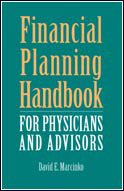
FINANCE: Financial Planning for Physicians and Advisors
INSURANCE: Risk Management and Insurance Strategies for Physicians and Advisors

Product Details

 Product DetailsProduct DetailsProduct Details

A Decade of Desperate Patients

Patients Disenfranchised from the System

Staff Writers 

“When was the last time you had freedom of choice in, of all places, a hospital? One choice is no choice at all, and it only makes people feel frustrated and powerless. People have a fundamental need to choose for themselves-give your customers the power of choice.”

-Roger Dow and Susan Cook, 1996 

Examples of patients disconnected form the domestic US healthcare system abound. Here are just three for consideration from the past decade: 

The Disconnected and Disenfranchised 

  1. An HMO cost cutting measure, known as the Drop in Group Medical Appointment (DRGMA) is particularly onerous to some patients. In this largely still voluntary model, group visits of 10-15 patients take place simultaneously. During each visit, patients are examined in the group or privately, charts are reviewed, vital signs are taken, medications adjusted, tests are ordered and results discussed.
  2. Virtual e-health visits took a step forward recently as the First Health Group became the first managed care organization to establish another voluntary cost cutting program that eventually will pay doctors about $25 for online consultations with disembodied patients conducted via their web site.
  3. In a most unusual court case, a physician and six patients covered by Kaiser Permanente file suit accusing it of endangering patients’ lives by forcing them to accept double size pills. The plaintiffs alleged that the HMO forced them to buy medication at a higher dose and then split the pills in half. Some pharmaceutical and medical experts opine that the practice is harmful to patients; others support it.

More Patient Concerns 

And, according to Charles S. Lauer, publisher of the Modern Physician, through a study conducted by ARA Marketing and HBOC McKesson which appeared in the Harris Interactive Healthcare News a few years back, other pressing patient concerns include:

· 60 percent: “forgetting to ask all my questions when I am with my doctor, and

· 29 percent: “not having enough time with my doctor”, since the amount of face time between patient and doctors now amounts to about three-five minutes. 

In a more recent study, Harvard University reported that half of U.S. physicians believe their ability to deliver quality healthcare has deteriorated in the past five years.  

In yet another example, according to a survey of the Employee Benefits Research Institute (EBRI):

· Only 23 percent of employees considered themselves familiar with managed care.

· Fewer than 27 percent said that healthcare has gotten better in the last five years.

· Only 43 percent of those who received care expressed high satisfaction with its quality.

·  Almost 40 percent said they were not pleased with healthcare costs, despite HMOs.  

Conclusion 

Is it no wonder that patients, along with their healthcare providers are increasingly becoming despondent over the domestic healthcare imbroglio?  

Please, send us your comments, examples and most importantly – your solutions to the disconnect?

For related info: The Business of Medical Practice [Advanced Profit Maximization Techniques for Savvy Doctors]
http://www.springerpub.com/prod.aspx?prod_id=23759 

Kindred Hospital Liability Policy

Join Our Mailing List

The Medical Waiver Issue

[By Staff Writers] 

Recently, Kindred Hospital of Wyoming Valley, PA has come under fire from two attorneys who fear patients may be signing away their rights to seek a jury trial if they are injured through malpractice.  

Introduction 

Kindred Hospital, a long term acute care facility, is asking patients to sign a waiver that would mandate any claim for injuries go through mediation or binding arbitration. These are alternative legal processes utilized in lieu of filing a lawsuit.

According to the hospital, such voluntary waivers benefit the patient by allowing for faster resolution of malpractice claims. 

Not so Fast! 

But, lawyers who reviewed the document say they are concerned that it is being presented to patients who, because they are under duress due to their illness, might not understand its implications. 

Enter the Guidance Counselors 

Upon investigation, Kindred said that admissions counselors review documents to ensure patients understand it, and do not attempt to pressure them in any way. Patients also have the right to revoke the document within five days of signing it, according to the Times Leader; in February 2007.  

Assessment

Kindred Healthcare operates various types of health care facilities nationwide where the form is used. Is anyone familiar with these folks who can make an informed opinion on this tactic?

Hospital with paper MRs

Channel Surfing the ME-P

Have you visited our other topic channels? Established to facilitate idea exchange and link our community together, the value of these topics is dependent upon your input. Please take a minute to visit. And, to prevent that annoying spam, we ask that you register. It is fast, free and secure.

Conclusion

Your thoughts and comments on this ME-P are appreciated. Feel free to review our top-left column, and top-right sidebar materials, links, URLs and related websites, too. Then, subscribe to the ME-P. It is fast, free and secure.

Speaker: If you need a moderator or speaker for an upcoming event, Dr. David E. Marcinko; MBA – Publisher-in-Chief of the Medical Executive-Post – is available for seminar or speaking engagements. Contact: MarcinkoAdvisors@msn.com

OUR OTHER PRINT BOOKS AND RELATED INFORMATION SOURCES:

Product DetailsProduct Details


Insurance Agents – Raising the Bar

[Few] Insurance Agents Learn About Modern Health Economics  

Staff Writers  insurance-book

As a registered health underwriter [RHU], insurance counselor, long-term care or life insurance agent, it seems that almost everyone today is also acquiring a general securities license, or becoming a “financial advisor.”

Introduction 

Currently, about 240,000 of the nation’s life insurance agents – down from more than one million in 1965 – are being pressured to move toward financial planning as distribution of insurance products over the Internet spreads like wildfire.

Meanwhile, the same insurance and investment companies that are knocking on your door are also courting the medical professionals with their practice enhancement and risk management programs. 

The Pondering 

So, even if you were not interested in doing financial planning for doctor’s, you have seen the status of the American College erode as your own business has declined because of the World Wide Web. 

And, in the eyes of your former golden goose doctor-clients, you may have become a charlatan as everyone is clamoring for a piece of your insurance business and cloaking it off in the guise of the contemporary topic of the day; medical practice management, healthcare business consulting and personal financial planning for physicians.  

Think this is an exaggerated statement? A prior – and oft repeated – survey first conducted by Deloitte & Touche Consulting Group of New York, found insurance agents ranked last in having the trust of a wide selection of the public!  

So you ponder and consider how to regain this lost trust and try to understand contemporary managed medical care and the current healthcare industrial complex?  

But, how do you learn about it at this stage in your career? 

  • What ever happened to the traditional indemnity health insurance, with its deductibles and 80/20 patient responsibility?
  • Where did the whole-life insurance policy buyer go, with its fat-profits for me and my sponsoring company?
  • How did I become a dinosaur insurance sales-agent?  

The Realization 

It was so easy to sell insurance in the good old days – your product provided good coverage – and the agent made a nice sales profit. So what – if it was expensive for the client?  Now, you realize that making a living will be more difficult in the future.  Like all the struggling collateral advisors in healthcare, you find yourself asking; how do I talk the talk and walk the walk – in this new era of insurance change and health reform turmoil?  

The Epiphany 

Slowly, as you study and re-engineer, you become empowered with knowledge for new risk management derivatives that provide added-value to physician clients.

And, you learn to integrate physician-focused financial planning concepts with medical practice management principles.  You learn something about health-economics and you seek to become a “fiduciary” and actually work for the client; not the insurance company. 

You are no longer just an insurance salesman, but are becoming a trusted advisor for the medical community.  You are slowly recreating your career and may successfully avoid the managed care “ripple effect”, after all. 

Educational information: www.CertifiedMedicalPlanner.com

Related Info: http://www.jbpub.com/catalog/9780763733421

Professional Relations 101

Establishing Rapport within Your Medical Community

Staff Writers 

The following are useful “tips and pearls” to enhance your awareness among known and unknown physician colleagues in your area: 

  • Send office announcements to all health professionals in the community. Include pharmacies, pediatricians, family practitioners, nursing and convalescent facilities. All are potential sources of patient referrals.
  • Meet other health professionals personally and establish a one-to-one relationship with them. This will serve to educate them to your abilities and practice.
  • Send written reports to all practitioners who refer patients.
  • Do not hesitate to refer patients for consultations, as indicated. This is not only good business sense but good medicine.
  • Use novel business cards, such as the new CD-ROMs cut into the size of a standard business card, by One Voice Technologies, of San Diego. For about a dollar, depending upon quantity, you can order a labeled disc with all the business information of a standard card, which also functions as a CD-ROM containing up to 100 megabytes of multi-media data about your practice.

So, how did you establish yourself and practice brand, in your local area? 

For related info: The Business of Medical Practice [Advanced Profit Maximization Techniques for Savvy Doctors]
http://www.springerpub.com/prod.aspx?prod_id=23759 


Medical Practice Business Insurance

More Needed than Just Medical Malpractice Insurance

 By Staff Writers

Join Our Mailing List 

There are several insurance, risk management and related liability mattes that physicians face today. These include, but are not limited to the following issues:  

1. New Thoughts on Malpractice Liability Insurance: 

The Capitation Liability Theory of malpractice views liability management and premium costs in light of the managed care revolution.  For example, although the indemnity reimbursement model was the bedrock of healthcare financing, the incidence of litigation is believed to be the most frequent in this system.

Similarly, errors of commission, which may be more likely in a fee-based system, are easier to prove than errors of omission in a fixed system.  

Conversely, a capitated reimbursement system suggests the level of malpractice risk, and associated litigation, decreases as the volume of capitated care increases.  

 Therefore, since the future is unknown, choose a malpractice insurance company rated “A” or better by AM Best (http://www.ambest.com). True indications of a strong company are often reflected in the firm’s net premium to surplus ratio, where a lower ratio is better and the industry average is about .81; net liability to surplus ratio, which the industry average is 4.1; net average ratio, where the industry average is 4.9; and reserve-to-surplus ratio, in which the industry average is about 3.6-4.1. (Physicians Insurers Association of America) 

2. Fire, Theft and Liability Insurance: 

Fire and theft insurance is used to cover office equipment and contents, while leasehold insurance protects against loss due to the termination of a favorable lease caused by the insured perils. 

3. Worker’s Compensation Insurance:  

Worker’s compensation is mandatory to cover a loss of income, medical expenses, and rehabilitation. Most states also have established second-injury funds which are designed to compensate employee’s who suffer a second disability injury and thus shield the employer physician from the increased costs associated with a second injury.

4. Business Interruption / Loss of Income Protection Insurance: 

This covers the ongoing medical offices expenses and income loss, because of office damage, and continues during the Period of Restoration.  Most business interruption is written on an indemnity basis, and consists of two broad types: Business Income Coverage Form (Add Extra Expense) and Business Income Coverage Form (Without Extra Expense).  

Either type requires co-insurance and both require a choice of three income coverage forms: (1) business income including rental value, (2) business income excluding rental value, and (3) rental value only. Consideration should also be made for man / woman insurance and account’s receivable insurance.  

5. Dishonesty Insurance: 

A Fidelity Insurance Bond protects the doctor employer against employee dishonesty and covers the loss of money, securities or other property resulting from acts by the bonded person.

In a Surety bond, one party (surety) agrees to be responsible to a second party (obligee) for the obligations of a third party (the principal).

In medicine, surety bonds are used in situations in which one of the parties insists on a guarantee of indemnity if the second party fails to perform a specific act. Such a requirement may arise in connection with professional medical employment contracts or other situations in which there may be doubt concerning the ability to perform medical or office related business tasks.

6. Billing Errors & Omissions Insurance

This coverage protects you against liability for unintentional billing errors when you bill a third party, including Medicare/Medicaid, or managed care organizations. This is usually a separate policy that provides limits of liability from $100,000/$100,000, up to $1 million/$1 million to cover both defense and indemnity costs. 

Other endorsements may also be obtained to pay civil fines, penalties, judgments and settlements, or increased limits of liability, up to $1 million/$1 million. All terms, conditions and limitations are outlined in the actual policy form

Conclusion

What other types of medical practice risks are out there, and how do you mitigate them; if at all?

For more related information:Risk Management and Insurance for Physicians and Advisors” http://www.jbpub.com/catalog/9780763733421

Product Details  Product Details

The Health Insurance Paradigm Shift

Medical Industry Changes to Wholesale Mentality

Staff Writers  

Until a decade ago, most doctors were probably more concerned with acquiring, maintaining or improving their medical acumen than worrying about practice management or personal financial planning.

And this was a good strategy, until recently. 

Introduction 

Variably, since 1990-2000 or so, medical professionals have not only worked harder to earn a living, but that living has not been as lucrative as it once was. Doctors today are working longer hours, diagnosing and treating patients faster; and augmenting their fear of malpractice with the fear of compliance audits like HIPAA, and literally risk their lives as they treat an increasing number of patients infected with HIV, herpes and hepatitis C; etc.  

What do they get for all their trouble? Slowly, a lifestyle that is sinking lower than many of the middle class patients they treat.

The Dramatic Shift

This is a dramatic change from the way things used to be in medicine. Some pundits even use the expression “health insurance payment paradigm shift” because the way doctors practice medicine – and the manner in which they get paid – has drastically changed.

This change has been from an individual retail mentality – to a wholesale and collective one. 

Other experts argue that this is a better deal for patients, while others document that there are more uninsured or underinsured patients than ever before.  

Nevertheless, a study done a few years ago revealed that almost 45 percent of all physicians are now corporate employees, and that private doctors do 40 percent less pro bono charity work than they did in the fee-for-service reimbursement system.  

Why; because they can no longer afford to work for free. 

Medicine’s Lost Professional Status 

Regardless of philosophy, one thing is certain: medical professionals have lost their financial clout, professional status and social standing; as some hospitals are even paid by the U.S. government not to train certain specialist physicians.  

And, twenty percent of medical schools are affiliated with business schools and practitioners are experiencing profound depression because of the managed care insurance crisis. 

Assessment 

The medical profession and healthcare industry is experiencing a professional crisis of conscience; a personal crisis of economics, and a very real problem that hurts everyone, doctor, payer and patient alike.   

Conclusion 

How and why this shift happened is very complex, but there are three main factors involved: (1) demand and supply side inequalities, (2) healthcare technology cost escalation, and (3) socio-political timing and demographics.  

What are your own causative thoughts, and/or local and national ideas on the shifting debacle?

For more related information:Risk Management and Insurance for Physicians and Advisors” http://www.jbpub.com/catalog/9780763733421 

Medical Accounts Receivable and Collections

Join Our Mailing List

Working Hard for the A.R. Money

[By Staff Writers]  

Just as location is a critical element in locating a medical practice, collecting your ARs is an important critical element in maintaining the financial health of your medical practice. Your practice is not a bank and an effective billing system should be complemented by an efficient collection system.  

Policy Setting 

A policy that is too conservative may results in poor collection rates while an aggressive policy may be counterproductive and increase liability.  Have collectors call early and often. Waiting only encourages patients to pay late.

Use the 80/20 rule and concentrate on your biggest accounts first.  Get non-performing receivables off the books. Accounts over about 120 day should be turned over to third party agents. Out-sourcing to collection agencies vary significantly in terms of quality and results.  Most charge from 30 to 50% of what they collect.

Collection Agency Selection Criteria 

According to John Broderick, an executive staffing consultant from New York, the following should be considered when selecting a collection agency or using in-house personnel: 

  • Assertiveness and Analytical Skills: Collectors should be able to break a billing problem into component parts and aggressively pursue each part without being unduly tactless.
  • Creativeness and Curiosity: Collectors should keep abreast of new computer and software technology and pursue innovative philosophies related to the billing process.
  • Empathy and Communicativeness: Collectors should be able to communicate with both patients and doctors, yet still be able to put themselves in others’ shoes to view problems from each perspective.
  • Perspective and Stability:  Collectors should be able to see the patients entire economic picture and maintain an emotionally objective and neutral attitude toward the collection process.
  • Integrity and Tenacity: Collectors should have steadfast attitude and still earn the trust of clients, relative and the doctor employer. Collections should be in immediately since waiting 
  • Salary: An entry level full time office billing collector should be familiar with all States laws regarding the collection process and be paid in the mid 20-Ks per annum.  If not, after some time he or she may take their experience and training to another office for considerably more compensation.

Claims Court 

Remember, small claims court is the last avenue for payment. Often a decision has to be made whether to forgive or “write off” a patient’s balance if indemnity insurance coverage is maintained and this decision is best made on an individual basis.  

Unfortunately, malpractice claims have resulted by pursing past due accounts too aggressively.  This is especially true with surgical patients and it is best to pursue payment diplomatically, gently and often forgivingly.

Assessment

You could be losing money if your practice is still using a traditional checking account for its daily cash activities.

One way to make your cash work more effectively is to open a cash management account with a brokerage firm. This will ensure that your practice’s money is earning a much higher rate of interest. 

Channel Surfing the ME-P

Have you visited our other topic channels? Established to facilitate idea exchange and link our community together, the value of these topics is dependent upon your input. Please take a minute to visit. And, to prevent that annoying spam, we ask that you register. It is fast, free and secure.

Conclusion

Your thoughts and comments on this ME-P are appreciated. Feel free to review our top-left column, and top-right sidebar materials, links, URLs and related websites, too. Then, subscribe to the ME-P. It is fast, free and secure.

Speaker: If you need a moderator or speaker for an upcoming event, Dr. David E. Marcinko; MBA – Publisher-in-Chief of the Medical Executive-Post – is available for seminar or speaking engagements. Contact: MarcinkoAdvisors@msn.com

OUR OTHER PRINT BOOKS AND RELATED INFORMATION SOURCES:

Product DetailsProduct Details

Cultivating Complimentary Medical Practitioners

Join Our Mailing List

Increasing Referrals from the Alternative Medical Community

[By Staff Writers]

Introduction 

Recent medical marketing surveys indicate that almost one-third of most managed care plan patients already use some form of complementary medicine and one-third more are considering exploring these new, and often ancient, techniques. Nationally, it is estimated that American are spending over $ 20 billion per year, including 600 million visits annually on complementary and alternative medicine; and these figures will  increase in the future. 

What is Alternative Medicine? 

Complementary medicine covers a broad range of topics, philosophies and approaches, such as: herbal formulas, acupuncture, chiropractors, massage therapy, mind-body techniques, neurofeedback, nutritional therapy and traditional Chinese medicine. 

What Common Conditions are Treated? 

The following symptoms have shown treatment success when conventional medicine has not produced the results that both patients and physicians desire:

· allergies

· anxiety

· back pain

· cluster headaches

· depression

· digestive problems

· headaches

· sprains and strains 

How Legitimate is Complementary Medicine? 

In a word; increasingly. For example, more than 50 US medical schools now teach some sort of alternative medicine as part of their standard medical curriculum. Managed Care Organizations such as Oxford Health Plans, in Norwalk, Conn., HealthCare Plan, in Buffalo, NY, HealthEast, in St. Paul, MN, and Pre-paid Health Plan of Syracuse, NY, all have panels of non-traditional healthcare providers. Now, there are far too many-to count; today. 

Should Traditionalists learn about these concepts?

Yes, but only if you want your practice to flourish. Cultivating these referral sources is also an excellent marketing idea.

***

0b985530904385_56389b1c01809

[Bang the Complimentary Drum]

**

Visionary Thoughts 

According to Dr. Rob Gleser, an internist in Denver, some medical doctors dismiss alternative care out of fear:

“What it comes down to is fear of change. But integrating our practice with alternative medicine, allows us to practice as more effective physicians And, I believe we make a better income than if we were concentrating only on traditional care”. 

What are your thoughts on the matter? Do you refer, and receive referrals, from the alternative medical community?

Assessment

Please comment on your experiences; positive or negative?

Conclusion

Feel free to review our top-left column, and top-right sidebar materials, links, URLs and related websites, too. Then, subscribe to the ME-P. It is fast, free and secure.

Speaker: If you need a moderator or speaker for an upcoming event, Dr. David E. Marcinko; MBA – Publisher-in-Chief of the Medical Executive-Post – is available for seminar or speaking engagements. Contact: MarcinkoAdvisors@msn.com

OUR OTHER PRINT BOOKS AND RELATED INFORMATION SOURCES:

Product DetailsProduct DetailsProduct Details

***

The Medical Practice Advertising Plan

New Advertising Methodologies Needed Today

chicago

By Dr. David Marcinko MBA and Staff Writers 

A well-defined advertising plan – not needed only a decade ago – is an essential part of medical practice business success today. Your medical practice advertising should be visually stimulating and include several more rational considerations, as listed below. 

Plan Components 

  • Goals:  The objectives of any advertising plan should be reasonable and quantifiable.  For example, a new advertising scheme will not likely generate 300 new patients a month, but it may provide marginal additions of 5-10.
  • Communication Channels:  Typical channels of advertising include: print: (coupons, office brochures, newsletter, bill stuffers, billboards, signs), audio (radio) and telecommunications (message “hold” buttons, beepers and pagers). Sometimes, even the media becomes the message, as is the case of the world-wide-web.  Certainly, the use of telemedicine in the next decade will increase as the promise and security of quality healthcare, at any time and in any place, becomes a reality.
  • Message Credibility:  The advertising message must be delivered in such a way as to build, change or reinforce patient and payer attitudes.  Advertising has shown that the more honest, fair and unbiased the audience perceives the source to be, the more credible the message; and the more likely the attitudes will shift toward the source’s position.
  • Reinforcement:   An advertisement must be repeated for several reasons: to emphasize the message, keep the audience from forgetting the message and save the costs of producing more messages.

New Trend Assessment 

Marketing and advertising plans and tasks are increasingly being out-sourced by both new and existing medical offices. Such firms offer a wide range of state-of-the-art marketing services to help build a practice.  These activities include, but are not limited to: subscription newsletters; strategic, direct and in-house marketing workshops; brochure, print and website development; direct mail, podcasting or broadcasting announcements; and a large and established advertising agency exclusively services healthcare professionals, interactively and online; etc.  

Conclusion

Medical providers that currently are served by outsourcing advertising and marketing firms include: physicians, dentists, podiatrists, chiropractors, veterinarians, psychotherapists, and hearing care and eye care professionals. 

There is even a new educational service for accounting professionals who work with physicians; and an online educational program for financial advisors, management consultants and related economics professionals who work in the healthcare industry. www,CertifiedMedicalPlanner.org

Assessment

And so, do you have a marketing plan, and more importantly, how well do you execute it?

Conclusion

As always, your thoughts and comments are appreciated. 

Speaker: If you need a moderator or speaker for an upcoming event, Dr. David E. Marcinko; MBA – Publisher-in-Chief of the Executive-Post – is available for seminar or speaking engagements. Contact:

Subscribe Now: Did you like this Medical Executive-Post, or find it helpful, interesting and informative? Want to get the latest ME-Ps delivered to your email box each morning? Just subscribe using the link below. You can unsubscribe at any time. Security is assured.

Link: http://feeds.feedburner.com/HealthcareFinancialsthePostForcxos

***

Constructing Your Personalized Portfolio

Self Portfolio Management

By Clifton McIntire; CIMA, CFP®

By Lisa McIntire; CIMA, CFP®fp-book

Most individual investment portfolios are simply a list of stocks.  Doctors with such lists usually know the cost of each position and when they acquired it. It is not unusual to find inherited low cost stocks in the account that have been held for many years. But, this list is not an investment portfolio. 

Introduction 

In order to self create and monitor an investment portfolio for personal, office, or medical foundation use, the physician investor should ask himself three questions: 

  1. How much do I have invested?
  2. How much did I make on my investments?
  3. How much risk did I take to get that rate of return?

Most doctors and health care professionals know how much money they have invested.  If they don’t, they can add a few statements together to obtain a total. Few actually know the rate of return achieved last year – or so far this year.  Everyone can get this number by simply subtracting the ending balance from the beginning balance and dividing the difference.  But few take the time to do it.  

Why? A typical response to the question is, “We’re doing fine.” But ask how much risk is in the portfolio and help is needed. Nobel laureate Harry Markowitz, Ph.D. said, “If you take more risk, you deserve more return.”  Using standard deviation, he referred to the “variability of returns;” in other words, how much the portfolio goes up and down; its volatility. How – and even whether or not – to create and manage your own portfolio is the topic of this essay. 

Creating the Portfolio 

First, you must determine what to do with your investments.  How much risk can be taken and what is the time frame?  You must understand the concept of risk vs. reward and write an investment policy statement [IPS].  Next, the assets that will be used for investment must be selected.  This involves asset allocation and mixing different styles of investment management to achieve the desired results, and is the point where you go it alone, or professional investment managers are selected.  Be sure to review expenses, like account and service fees, commissions and compares mutual funds with private money management. 

Once the initial portfolio is in place, the performance must be monitored to assure compliance with the investment policy.  Here’s where you consider 401k and 403b plans, pension plans, retirement accounts, as well as how to change doctor trustees or managers when necessary. 

Finally, consider the role of professional consultants. Now after all of this, if you still want to do it yourself rather than be a doctor, the entire process will be professionally outlined along with the steps taken to improve returns and reduce risk. 

The Investment Policy Statement

You would not think of starting to build a house without a set of construction drawings and detailed written specifications. An Investment Policy Statement (IPS) sets forth plans and specifications for the portfolio just like construction drawings and detailed written specifications tell the contractor how to build a house. The physician who writes the IPS is like the architect who draws up plans for a building.  Both must ask many questions to determine the wishes of the owner.  The same is true with a portfolio.   

Fred Rice, a Senior Vice President of Carolinas Physicians Network in Charlotte, North Carolina who writes medical institutional and foundation IPS documents explains,  “To me, the Investment Policy Statement is the most important investment document.  It must be a clear statement of precisely what you want your money to do for you.  Everyone involved; physicians, board members, money managers, administrators, investment consultants and beneficiaries of the trust must have a single clear statement of investment parameters.  There should be no misunderstanding of who is to do what and how they are supposed to do it with a properly written Investment Policy Statement.” 

Investment Policy Statements written for institutions or individuals has several component parts:                                               

  • Statement of Purpose
  • Statement of Responsibilities
  • Objectives and Goals
  • Guidelines
  • Performance Review
  • Communication

IPS Components 

First, discuss why you are writing the document and what you are trying to accomplish.  This is the Statement of Purpose. The Statement of Responsibilities identifies the parties associated with the portfolio and the functions, responsibilities and activities of each with respect to management of the assets. Then, establish some Objectives and Goals for risk tolerance and expected returns. Which assets (stocks, bonds, cash, international, emerging markets, etc) will you use?  What return do you desire net after inflation? Net after taxes?  Net after fees and commissions? Now, what direction can you give to the selection of securities? In the Guidelines section, you need to identify specific securities or types of securities that you want to use in the portfolio and which are to be excluded. Discuss benchmarks, the use of margin, foreign stocks, short selling, futures trading, etc. The Performance Review section involves how to measure performance, what benchmark we will use and how we will critique management performance. 

Finally, you want to deal with procedures for Reporting and Communications. Quarterly reports are usually required. You will need to make a complete performance measurement and analysis. In reality, the solo dentist’s written IPS can be as simple as a single page. For a hospital, it can be an elaborate, detailed and multi-paged tome. 

Stock Purchases and Inheritance 

Purchased stocks have a definite cost basis; it is what it is. But, when you inherit securities, a new cost basis is established (the price of the stock on the date of death or six months later—the executor of the estate makes this determination). Even though there would be no capital gain liability if the stock were sold immediately after date of death, most people simply don’t do anything, just hold the stock.  

Taxes

Of course taxes should be considered when selling securities but the investment merit should be the overriding factor. 

Mr. L. Eddie Dutton, CPA says, “First make an investment decision and if it fits into the tax plan, so much the better.  Doctors often wonder where they will get the money to pay the taxes.  We say to get it from the sale of the appreciated stock.  Cry all the way to the bank with your profit.” 

Dr. Ernest Duty, a very successful private investor advises “Ask yourself this question: If you had the money instead of the stock, would you buy the stock?  If your answer is ‘Yes’ then, hold on to the stock but if you say ‘No, I wouldn’t buy that stock today, then sell it.” 

Arranging by Industry Sector

Take the list of your of stocks, and arrange them according to sector to see which sectors are overweighed or under weighted. Using the S&P 500 as our benchmark, you see that there are 500 stocks in the average, sorted into 89 industries and 11 economic sectors. Let’s just settle for 10 of the 11 economic sectors since the “transportation” sector is very small and we do not have enough money to buy into all 89 industries, let alone each of the 500 companies. This is not a handicap since you would not want to own all the stocks or industries, even if you could. 

Now, let’s make some decisions on how to weight our portfolio among the sectors. Do not forget cash (money market fund) so that if it there is a market correction we can be proactive buyers. This is known as “target” weighting.

Portfolio Diversification 

It has been determined that somewhere between 22 and 30 positions are necessary to achieve proper diversification.  After you pass 30, you are just adding names. There is little benefit to diversification beyond 30 positions. We want to reduce risk. There are two types of risk related to investing in stocks: systematic and unsystematic.

Systematic risk is inherent in the market itself.  Market risk describes the phenomena that all securities tend to move up when the market moves up and down when the market goes down.  As an example, assume Ben Bernanke, the Chairman of the Federal Reserve, unexpectedly announces an increase in interest rates of .25 percent, the market would fall and that includes most stocks. There is very little that we can do about systematic risk. Diversification does not help. The Fidelity Magellan Mutual Fund, with 890 different issues, certainly one of the most diversified portfolios, fell 31 percent in the 60 days following the correction of October 1987. 

Unsystematic risk however, is more company specific and can be reduced.  This is risk associated exclusively with a particular company.  GM autoworkers go out on strike – again. Phillip Morris loses a big lawsuit unexpectedly.  Cisco’s routers are oversold. Intel expects PC sales to drop.  A promising new Google technology bombs, etc. Any event that is only to affect a single company presents unsystematic risk. We can diversify away unsystematic risk to the point where it will not have a major impact on our portfolio.  A good rule of thumb is “No more than 10 percent in any one industry (note that we said industry, there are 89 industries versus 11 sectors) and no more than 5 percent in anyone stock initially.  Theoretically you would have 20 stocks with 5 percent in each but when a single position appreciated to the point where it was 10 percent of your holdings, you would begin to sell off portions to reduce your exposure in that single issue.   

Portfolio Time Frame 

Successful physician investors have, without exception, a long-range philosophy. We asked one such physician “old-timer” to name the best investment he ever made. He replied, “Jefferson Pilot. It just kept going up, increasing the dividend and splitting the stock over and over again. During the forty years that I owned Jefferson Pilot, it was a real good performer. There was one ten-year period when it did absolutely nothing, flatter than a pancake, but other than that it did beautifully.”  Very few doctors are willing to hold on for ten years; very few of have done as well. They were also never “married” to the stock. To them it was an investment not a person, a belief, a creed, or anything of more value than the latest stock quotation. But they did their homework. They bought the stock as if they were buying the whole company. They liked the management, industry, products, and potential; never just because someone else thought it was a good idea. 

Selecting the Assets

Asset allocation is the most important decision you will make in effecting your total return in keeping with your risk tolerance.  It has been said that over 90 percent of the variability of returns come from asset allocation. This is a hard concept to grasp.  Most doctors believe that picking the right stocks (those that go up fast) is all that is necessary to be successful.  That certainly would make you successful but it just isn’t that simple. Over an extended period of time, if stocks go up and you own a diversified portfolio of stocks, your portfolio will most likely be worth more. If on the other hand, bonds go up (and stocks go down) your portfolio will most likely be worth less. A combination of asset classes is the better way to go.  That is why professional money managers spend so much time and money on the subject of asset allocation. 

Periodically, the “C” section in the Wall Street Journal illustrates various asset allocation models proposed by major brokerage firms. These firms are attempting to forecast the best asset mix going forward. The same information is easily found on the Internet. Most asset allocation models and studies illustrate historical data giving various combinations of asset classes that can best satisfy your investment risk and return objectives. Basic asset allocation assigns a percentage weighting to stocks, bonds, cash, and international stocks.  A more elaborate proposal would include various classes of these four main categories. 

Types of Stocks 

Stocks can be broken down into small, mid and large capitalization. Value and growth styles are also used to diversify the mix.  Bonds can be of varying quality and maturity as well as corporate, government, and municipal. The first thing to realize about asset allocation is that it can reduce risk. Most healthcare professionals would initially assume that a portfolio made up of 100 percent U.S. Government bonds would be as stable as it gets. Yet, the lowest standard deviation (risk) is actually 80 percent bonds and 20 percent stocks.

Adding “international” stocks to a portfolio made up of exclusively U.S. investments also reduces our standard deviation over a long period of time. There is a feeling among doctors that international stocks are risky. By themselves they are a more volatile asset class but they have historically had a very low correlation to domestic stocks and therefore, over time will reduce overall volatility. 

Correlation Co-Efficients

Correlation is used in reference to assets selected for use in the portfolio; and can be statistically represented in co-efficient statistics.  Low “correlation” means that when one asset class goes up 50 percent, the other asset class goes up by a lesser amount, let us say 10 percent.  Inverse “correlation” means two asset classes go in different directions (when one goes up, the other goes down).  You want to have a group of assets that have low, or in some cases, even inverse “correlation” to reduce the volatility of the account. Note that historically, the “most favored asset class” often changes from year to year.  Therefore, asset allocation is the most important investment decision you will make. 

Whither Self-Management? 

If you elect to mange your own portfolio, you are going to be competing with the best investment talent in the world.  Like physicians, many investment professionals have studied and practiced for years to attain the level of competence they enjoy. They have been educated in some of the finest schools in the world and initially practiced under the tutelage of the most successful in the profession. And, they are making the decision to buy only after listening to extensive presentations from analysts who not only read most of what is published on the company, but personally visited the management as well as the companies’ banker, insurance people, union, and competitors. 

Assessment 

Investing and managing your own portfolio, the pension plan of your office, or the endowment fund of your hospital is serious business. It should not be a hobby. You need the best advice you can obtain, because mistakes may not be discovered until it is too late. 

Conclusion 

Remember, when considering money management, be sure to understand the ultimate fiscal consequences and your own personal liability; and going forward – be sure to tell us how you do?

Note: For related info: http://www.jbpub.com/catalog/9780763733421

ADV: Essential Form for Physician-Investors

ADV: Parts I and II Defined

Staff Writers 

An ADV is a form that is kept on file with the Securities & Exchange Commission [SEC]. It contains critical financial information about a Registered Investment Advisor (RIA), and/or an RIA representative.  

A Two-Part Form:  

Part 1: Discloses specific information about an RIA that is important to regulators (name, number of employees, form of the organization, nature of the business, etc.). 

Part 2:  This part acts as a disclosure document for clients of the business entity and includes information such as services provided and fees levied, whether the investment advisor acts as a broker-dealer and transacts securities, and so on. It is also known as the Uniform Application for Investment Advisor Registration.

To request a copy of Form ADV you can usually contact the SEC branch closest to you. Even better yet; be sure to request it before you invest with any “advisor” or firm.

And so, have you ever invested without reviewing this form; and how did it work out for you? Were you even familiar with this important form before reading this post?


The Medical Office Appraisal Process

Understanding Different Methodologies

 By Dr. David Edward Marcinko; MBA, CMP™

By Hope Rachel Hetico; RN, MHA, CMP™

Much needs to be done before a medical practice can be sold for a premium. In fact, the following should be done before the actual practice appraisal process even begins:

· Choose an appraiser who understands the managed health care industry.

· Acquire historic financial information and consolidated financial statements, operating statistics, tax returns, CPT®, utilization and acuity rates.

·Eliminate one-time, non-recurring expenses, adjusted or normalized for excessive or below normal expenses.

·Understand key assumptions used in financial projections. 

Know USPAP Rules

According to Bridget Bourgeois CPA – a former medical practice valuation specialist from the American Appraisers Association – the IRS first issued guidelines in 1995, suggesting that appraisers use the general methods of the Uniform Standards of Professional Appraisal Practices.  USPAP recognizes three approaches to medical practice valuation: the income method, market method and cost method. Very few physicians are aware of them. 

[1] Capitalization Method 

The excess earnings or capitalization method estimates value by dividing normalized historical or current income by an appropriate rate of return for the buyer. This method does not require assumptions.

Discounted Method: 

Discounted cash flow analysis requires assumptions to estimate practice value by discounting future net cash flows to their present worth based on market rates of return required by an investor. Understanding some of the key assumptions produce a meaningful estimate of practice value:

·Projections of future practice revenues, productivity, reimbursement trends and shifts in payer mix.

·Projections of practice cost structures and projected physician compensation.

·After-tax practice cash flows.

·Reinvestments to replace equipment or other assets.

·Residual practice value at the end of the forecast period.

·Discount rate based on the practice specific weighted average cost of capital.

·  Practice efficiencies, operations and competitive market conditions 

The DCF analysis consistently produces higher values than other methods of estimating practice value because there may be supportable reasons to forecast improvements in future practice performance. 

[2] Marketplace Multiples 

Market transaction multiples are ratios developed by correlating actual practice sale prices to key practice performance measurements. Common multiples include comparisons of sale price to revenues, sale price to earnings before interest and taxes (EBIT), sale price to earnings before interest, taxes, and depreciation allowance (EBITDA), gross revenue, net revenue, and the sale price to number of physicians.  Market transaction multiples are typically limited to serving as a benchmark for testing the reasonableness of the other approached. They are not practice specific and are probably best relegated to history. 

[3] Cost Approach 

The cost approach calls for the identification and separate valuation of all the practice assets, including goodwill, depreciated over 15 years. Moreover, the cost approach is more labor intensive than using the business enterprise analysis to estimate practice value; especially for a new practice which typically include the expenses involved in the acquisition of space, office furnishings, equipment, marketing, advertising, staff development; and losses incurred during the start-up period. This estimate of “replacement cost or cost avoidance” value represents an upper limit (or ceiling) of value, and is generally not considered useful in estimating the value of a going concern medical practice. 

Conclusion: 

If not currently contemplating the sale or merger of your clinic or medial practice; periodic valuation is still a valuable organic growth ingredient in these changing times of healthcare reform. 

Has your practice been appraised within the last three years?
For related info: The Business of Medical Practice [Advanced Profit Maximization Techniques for Savvy Doctors]
http://www.springerpub.com/prod.aspx?prod_id=23759 
Speaker: If you need a moderator or a speaker for an upcoming event, Dr. David Edward Marcinko; MBA is available for speaking engagements. Contact him at: MarcinkoAdvisors@msn.com

Product DetailsProduct Details


The Equity Advantaged Medical Practice

Building Medical Practice Value

By Dr. David Edward Marciniko MBA

In the competitive environment an equity-advantaged medical practice is not likely going to come from adding more HMO / ACO patients as a business strategy, or shifting your target market. You do it by making your practice worth buying to someone else.

In other words, a brand identity is the hallmark of increased practice value in the future. But, just what determines practice equity since there is no magic rule of thumb?  

Creating Practice Value 

The following helpful general suggestions are offered by valuation specialist Mark Tibergien CPA, formerly of the accounting firm Moss-Adams LLP, and have been modified below for medical practitioners regardless of degree or specialty designation:

· Maintain good financial records including all consolidated accounting statements for the last three years. Learn what was budgeted, what was spent, and what was at variance. 

· Monitor key specialty financial ratios, such as profitability ratios, creditor ratios and long-term debt management ratios. Continually mine the data for useful information and then implement changes on your own behalf.

· Be profitable and think long term by retaining capital and generating a business return. 

· Eliminate unnecessary practice expenses or non-recurring costs and eliminate any special perks of business ownership.

· Have a buy-sell agreement since it spells out the manner in which a physician can buy into the practice and how the practice will buy out an owner. Typically, buy-sell agreements also cover such topics as appraisal and valuation methods, accounts receivable equalization, excess earnings (profits) distribution, buy in/out time span, interest rate ranges, goodwill rates, tax deductibility of buyout payments and a host of other issues import to the involved principals. Have it reviewed once every one to two years.

· Pay yourself a usual, customary and reasonable salary for your specialty. Otherwise practice [business] goodwill value may be built-up, or depleted. 

· Practice using the correct business form for you. This may be as either as a sole proprietor, general partnership, S corporation, professional corporation, C corporation or limited liability corporation/partnership.

· Build a transferable patient base because if you create systems that revolve around either a few managed care contracts, or even yourself, it is difficult to transfer the business to someone else. Also, if you project yourself as the medical guru for your area, patients will have a hard time accepting a new doctor or organization. By focusing on something larger than yourself, such as group practice, you will begin to develop a business that others can operate easily.

· Use proper management information systems like EMRs without spending too much on your information technology gadgetry. You do not necessarily need to become an early adopter of the newest or untested information technology systems, but do become an adopter of mature products. 

· Have a covenant not to compete, which is an agreement whereby one party commits himself to not practicing for a period of time, within a geographical area, or with members of a defined population. According to healthcare law expert Frederick Wm. LaCava; Ph.D, JD, arguments can arise because of two sets of circumstances: [1] sale of a practice, or [2] as a term of an employment agreement. The law treats the two types quite differently, favoring agreements as part of the sale of a practice, and entertaining challenges to covenants in employment contracts. 

· Understand that practice [business] goodwill is the value attributed to ongoing business name recognition, location, telephone numbers, logos and all those things which would make a potential patient come to one doctor’s office rather than another’s. The IRS recognizes it as an economic as well as a value-added benefit. 

· Unlike practice [business] goodwill, personal goodwill is attributed to a specific doctor; it has little to no value since it “goes to the grave” with its attributor.

· Maintain services, responsiveness and consistency with your patients and referring doctors. This is critical because if you do not build strong relationships with these local players, premium value just isn’t there. A new doctor will not be able to rely on those established relationships going forward.

· Maintain compliance with all appropriate agencies [HIPAA, OSHA, EMTALA, EEOC, etc].

· Identify the right buyer and make sure the buyer has the necessary capital and you are not taking all of the risks in the transaction. You may or may not want to share financial risk with the buyer and you also may want a good personality match, since your life blood probably went into building the practice and you should want it to flourish going forward. 

Assessment 

Develop a forward thinking business and appraisal plan, since all doctors should plan to sell their practices at some point in the future. By understanding how practices are valued, you can create tremendous value for yourself.

Conclusion 

Contemporary physicians have a huge opportunity to build equity value into their medical practice. Whether or not this is becomes a reality – by focusing on creating maximum value – you can still design and modify your practice to enhance its value and achieve everything dreamed about when it was first begun, many years ago.

***

Product DetailsProduct Details

Managed Care Cost Reduction Strategies

Join Our Mailing List
A Methodology Review

By Staff Writers

There are many methods that payers use to control healthcare costs – from the perspective of the practicing physician – as some are reviewed below:

Cost Control Types:

Utilization Review [UR] refers to all the ways a managed care organization or HMO attempts to assure contracted physicians use available resources in the most cost-effective ways, either through prospective, concurrent or retrospective means.

Pre-Certification [PC] is a form of prospective review, while discharge planning and case management are a form of on-site and remote case management, respectively.

All are examined in light of medical guidelines and medical standards.  

Guidelines are interventions or treatments where the outcome of therapy is considered certain, or occurs more than 80 percent of the time. Guidelines are used for the more mundane, ordinary or usual medical problems.  

Standards are interventions or treatments where the outcome of care is considered uncertain, and a favorable outcome occurs less than 20 percent of the time.

Concurrent Case Management [CCM] was specifically developed as a response to soaring medical costs since it is been estimated that one percent of the American population is responsible for 30 percent of all medical costs, and five percent is responsible for half of all costs. Some claim that case managers save between $3-7 for every dollar spent and can reduce an HMO plan’s overall costs, by one to four percent.  

Retrospective Utilization Review [RUR] consists of peer and patterns review to purge physician outliers from the system through a form of economic credentialing.

Claims Review [CR] scrutinizes medical claims for improprieties, overcharges, surcharges or mistakes. For example, individual instances of the following medical services and billing practices are not “prima facie” evidence of over utilization. Reviewed in a larger context however, they may be indicative of an abusive pattern or trend that has developed or may be evolving, like these: 

  • Bill Fragmentation: Concurrent billing for services on separate forms, or at different times, or for services considered an integral portion of the primary service or procedure (“split fee billing”).
  • Claimant Billing: Claimant payment for services normally disallowed, reduced or denied.
  • Common Referral: Excessive patient referral among similar providers, for unnecessary diagnostic tests.
  • Cross Billing: Bill submissions to different payers which would normally be reduced.
  • Double Billing: Duplicate bill submission to enhance payment.
  • Missed Modifiers: Excluding code modifiers to upgrade payment.
  • Non-Disclosure: Referral in the face of financial interest.
  • Non-Rendered Services: Billing for services not rendered or required at the level required.
  • Over-Billing: Exorbitant billing beyond UCR to third party payers.
  • Over-Itemization: Claims submission for services normally considered an integral part of the primary service (“fragmentation” or “unbundling”).
  • Over-Prescribing: Prescription of services in excess of those not considered medically necessary.
  • Over-Utilization: Performance of medically unnecessary services.
  • Substandard Care: Care or services not meeting acceptable or professional national standards.
  • Unnecessary Follow-up: Prolonged care without medical need.
  • Upcoding: Billing for services at a level greater than provided.

When faced with the above, further physician review and/or discussion with the provider/plan may be required for the amelioration of any disputes.  

What has been your experience with the dispute resolution process – friend or foe?

Product DetailsProduct DetailsProduct Details

Enticing HMOs for Practice Acceptance

Take Care … Your Wishes

Staff Writers   


When, and if, you decide to be included in an HMO network, keep in mind the following considerations just as the HMO itself considers whether or not to include your practice in their network: 


· Is there a local need for your practice?

· Is your practice respected in the medical community?

· Is it profitable enough so that HMOs feel sure in your future survival?

· Do you pursue a strategic plan that affords a seamless union should you decide to sell or merge at a later date.

· Do you have the HR, capital and IT service to synergize with the plan?

· Are you familiar with basic business, managerial and financial principals; including an understanding of horizontal and vertical integration, cost principals and cost-volume-profit analysis?

· Are you willing to treat all conditions and patient types in your specialty?

· Is your office readily accessible with barrier free design (OSHA)?

· Is your office HIPAA, EMTALA, EMR, etc compliant?

· Do you have the appropriate emergency resuscitation equipment?

· If a part time office, is it open at least 20 hours / week?

· Do you offer 24/7 on-call coverage?


Remember, you can always appeal a declination, or renegotiate a contract after expiration.

So, what is you experience in the matter?

For related info: The Business of Medical Practice [Advanced Profit Maximization Techniques for Savvy Doctors]
http://www.springerpub.com/prod.aspx?prod_id=23759 

Children with Special Needs

Types of Related Trusts

Staff Writers 

A trust can be established to insure that funds are available for a disabled child’s lifestyle. If funds are left directly to a physician’s child at the age of majority, Medicaid is lost until their funds are spent down. The type of trust chosen is therefore critical.

Medicaid, Payback or OBRA 93 Trust:  

First authorized by the Omnibus Budget Resolution Act of 1993, allows the trust for pay for non-essentials.  The specific language must be written in to the exact letter. Upon the death of the child the Medicaid bill is repaid from the funds remaining in the trust, and thus the Medicaid and SSI benefits continue to be available to the child during her lifetime.  The payback trust is more advantageous when established at an early age.  The funds in the trust can then be stretched out to last over an extended period, hopefully the child’s lifetime.  Here are two examples where such a trust is an effective vehicle.   

In the first case, a payback trust is set up for a 21-year-old with $100,000.  During his lifetime the Trust spends $92,000.  The Medicaid bill is $75,000.  Medicaid receives the remaining $8,000 and the bill is considered paid in full. 

In the second case, a payback trust of $350,000 is set up for a 35-year-old.  Upon the child’s death, the trust has assets of $225,000 and the Medicaid costs due are $75,000.  The trust then meets its Medicaid obligation and the remaining $150,000 is available for other beneficiaries.   

Other effective trust vehicles include a community trust, master trust and special needs trust, each with its own set of rules. 

Community Trust:

This trust is managed by a community foundation of volunteer trustees so the issue of dealing with trustee death is erased. This trust vehicle greatly expands the window of opportunity to those who may not have the time, expertise or funds to establish a private trust, to receive the benefits of a trust.  

Master Trust: 

May be established by a community or by an organization and is administered along the lines of a Community trust.

Special Needs Trust:  

This trust may maintain Medicaid and Social Security benefits, without having the payback clause. Unfortunately, this trust is sometimes challenged as it entails more risk than a payback trust and must be considered carefully before selection.

For example, a situation where this may be put in place is when gifting by family members is used to support the specialized schooling of a disabled child.

The Crummey Trust: 

Trust named after the D. Clifford Crummey family who first set it up to deny the annual gift tax exclusion. A Crummey Trust does not give the child any right to income but does give the right to withdraw the amount of each gift up to 30 days after it is made. Since the withdrawal right begins immediately after the gift is made, it is considered a present interest. If the child does not withdraw the gift within the 30 days, the withdrawal right lapses and the money remains in the trust until the child attains a designated distribution age. 

Of course, parents must still convince the child not to withdraw. However, if the child decides to withdraw, s/he can only access the amount of the most recent gift; not the entire trust. Thereafter, parents can eliminate all future withdrawal opportunities by not making any more gifts. The property in the trust remains intact and grows until distributed.  This private trust option and its language must be specific to avoid disqualification. 

The Charitable Remainder Trust:


This is an irrevocable trust with the beneficiary enjoying the trust funds and the charity receiving the remainder upon death.  The tax exempt status of a CRT may make the funds in the trust last longer.  If the charity is a nonprofit organization involved in the caring of special needs children, the physician’s family can show gratitude with a CRT.  

The Irrevocable Life Insurance Trust: 

An ILIT may be used in tandem with the various trust vehicles to assure continued funding for the child after one or both parents have died. 

Which of the above trust types have you used and what were the results?

Funeral Expenses

The Perilous Last Economic Journey

By Staff Writers

Join Our Mailing List

As a physician or other medical professional, perhaps you have not considered the immediate cost of death related activities; in other words – your funeral and its follow-up last expenses. 

When one considers the cost of a funeral, with casket, embalming, burial and other itemized costs and service related expenses, the average price tag is about $8,500 and of course, purchasing the burial plot is extra. The cost of the average cremation is about $850.   

Further information relating to burial finances, can be obtained from Consumer Caskets USA at 800-611-8778, the Choice in Dying at 88-989-9455, and the Funeral and Memorial Society of America at 802-482-3437. All have internet web sites. 

Remember, life is a perilous journey.

Assessment

Have you planned for funeral follow-up and/or last living expenses?

Channel Surfing the ME-P

Have you visited our other topic channels? Established to facilitate idea exchange and link our community together, the value of these topics is dependent upon your input. Please take a minute to visit. And, to prevent that annoying spam, we ask that you register. It is fast, free and secure.

Conclusion

Your thoughts and comments on this ME-P are appreciated. Feel free to review our top-left column, and top-right sidebar materials, links, URLs and related websites, too. Then, subscribe to the ME-P. It is fast, free and secure.

Speaker: If you need a moderator or speaker for an upcoming event, Dr. David E. Marcinko; MBA – Publisher-in-Chief of the Medical Executive-Post – is available for seminar or speaking engagements. Contact: MarcinkoAdvisors@msn.com

OUR OTHER PRINT BOOKS AND RELATED INFORMATION SOURCES:

Product Details  Product Details

401-k and 403-b Retirement Plans

The Time to Change Allocations

Join Our Mailing List

By Clifton McIntire; CIMA, CFP®

By Lisa McIntire; CIMA, CFP®fp-book1 

401k and 403b plans offer great opportunity to change asset allocations.   

For example, Karen Markland, a Certified Registered Nurse Anesthetist at Carolina’s Medical Center, found it was relatively easy to shift from bonds to stocks some years ago. No taxes or commissions were involved. A simple phone call moved her allocation from 40 percent bonds, 50 percent stocks and 10 percent international to 20 percent bonds, 70 percent stocks and 10 percent international after a recent stock market decline. 

One point of caution when using 401k or 403-b plans for asset allocation is required. Quite often the trustees of 401k plans will decide on a single group of mutual funds for the participants. Not all funds in the group are worthy of your money.

Jean Surber, a Certified Registered Nurse Anesthetist at Presbyterian Hospital, did not have a good international option and so had to limit her allocation in that 401k plan to stocks, bonds and cash. She used her Individual Retirement Account (IRA) at a brokerage firm for international investing.

Employed healthcare professionals should “max out” on their 401k/403b plans. You should put all that you are allowed into your 401k/403b plan, unless the selection of managers is so bad that even with the tremendous tax break and “dollar cost averaging” of monthly contributions, the envisioned end results would be small.  

For example, the simple compounding of $10,000 at age 30 investing $416 per month and experiencing a 10 percent annual rate of return would provide $1,905,788 at age 65. 

Wake-Up Call 

The Federal Government annually mails a detailed explanation of social security benefits to its workers.  This is an attempt to remind people that social security fulfills only part of their retirement income needs. To many, this will be a wake up call. The status of 401k or 403b plans is normally sent to participants’ quarterly. This is an excellent time to do some asset allocation and review manager performance.  Since most 401ks and 403bs use mutual funds and/or ETFs, and offer daily valuations by telephone, you don’t have to wait for the quarterly report, which is often received 60 days after the end of the quarter. When changes are made in the allocation of existing positions, the percentage allocation of future contributions should be made as well. 

For example, when Karen Markland repositioned her 401k portfolio, she also changed her future contribution percentages. 

Information Sources 

Morningstar, a Chicago based company that analyzes and computes statistics on most of the mutual funds produces a monthly report that you can review at the library, or online at home.Most banks and brokerage firms subscribe to this service. They can send you an up to date single page analysis of each of your funds; or an internet syndication feed. This is good material, well researched, but it is historical data.“Past performance is no assurance of future results.” 

The Morningstar system rates funds from 1 star (worst) to 5 stars (best).  This is sometimes referred to as the Sesame Street method of selecting mutual funds.  If you can count to 5, you can pick the best fund. Using this report alone is like driving on an Interstate highway at 80 miles per hour using only the rear view mirror (that can be fatal). 

Why; it’s because fund portfolio managers’ change. Good managers are hired away by their competitors; bad managers are fired. Managers themselves are not always consistent in maintaining their style or in their performance. Morningstar and the Internet is a good place to start because you can review a lot of information at a single setting. You can see historical returns, sector weightings, manager tenure, investment style, costs (except trading commission expense) and statistics concerning risk. However, Morningstar’s independence has been questioned of late. Nevertheless, it is from these and many similar sources that you may learn of the performance you can reasonably expect. 

Few physician managers, but many financial advisors are well versed in a variety of mutual funds. Representatives of the funds call on them frequently.  Many brokerage firms perform independent due diligence research. Mutual funds are a large part of the Financial Services Industry and you can expect the availability of extensive information. 

Stay the Course 

Most 401k and 403b plans should be invested for growth of capital. You are generally talking about long-term investment objectives.You should be very reluctant to withdraw funds from this tax-sheltered environment.  Unfortunately far too often, the participant becomes discouraged, (usually in a down market cycle) and moves the money out of stocks and into a money market fund at the wrong time. 

It is not unusual to see doctor participants assume a very defensive posture a year or so before retirement. This is shortsighted. The investments are meant to provide income and growth of capital for many years, not just until retirement. Upon retirement the funds will be rolled out directly into an IRA and invested with almost the same asset allocation. 

Conclusion

Your thoughts and comments on this ME-P are appreciated. Feel free to review our top-left column, and top-right sidebar materials, links, URLs and related websites, too. Then, subscribe to the ME-P. It is fast, free and secure.

Link: http://feeds.feedburner.com/HealthcareFinancialsthePostForcxos

Speaker: If you need a moderator or speaker for an upcoming event, Dr. David E. Marcinko; MBA – Publisher-in-Chief of the Medical Executive-Post – is available for seminar or speaking engagements. Contact: MarcinkoAdvisors@msn.com

OUR OTHER PRINT BOOKS AND RELATED INFORMATION SOURCES:

DICTIONARIES: http://www.springerpub.com/Search/marcinko
PHYSICIANS: www.MedicalBusinessAdvisors.com
PRACTICES: www.BusinessofMedicalPractice.com
HOSPITALS: http://www.crcpress.com/product/isbn/9781466558731
CLINICS: http://www.crcpress.com/product/isbn/9781439879900
ADVISORS: www.CertifiedMedicalPlanner.org
PODIATRISTS: www.PodiatryPrep.com
BLOG: www.MedicalExecutivePost.com
FINANCE: Financial Planning for Physicians and Advisors
INSURANCE: Risk Management and Insurance Strategies for Physicians and Advisors


Product Details  Product Details

Terminal Illness and Anatomic Gifts

Placing your Affairs in Order

By Dr. David E. Marcinko MBA 

As a doctor, you face the realities of death on a daily basis. 

And so, if you are yourself diagnosed with a terminal illness the following may not be helpful to you, but might be of help your survivors:

· Increase liquidity to cover the costs of pre- and post- death expenses.

· Contract your local social security office to determine eligibility for  disability and death benefits.

· Determine the contents, and those you wish to have access to your safety deposit box(es).

· Since some states do not have death taxes, consider changing your domicile.

· Preserve your testimony to any outstanding claims or litigation regarding personal or professional affairs, through a formal legal deposition or other means. 

Also, as a lay or medical professional, consider organ donation since the supply of donated organs is dwarfed by the demand for them.  The Coalition on Donation is on a campaign to raise awareness of this need.  The decision to be an organ donation is personal and some healthcare professionals have philosophical or religious beliefs that prohibit this option. 

However, if you decide to be an organ donor, documentation and communication are the critical steps to insuring your wishes are carried out.

First, contact your local motor vehicle department and inform your family and loved ones. Then, inform your own personal physician in writing, and wear a donor identification bracelet – or something similar – that fits in your wallet or purse, so your wishes are known.

Assessment: Has the above information helped you turn a potential financial disaster into a manageable pitfall?

***

Risk Management, Liability Insurance, and Asset Protection Strategies for Doctors and Advisors: Best Practices from Leading Consultants and Certified Medical Planners™8Comprehensive Financial Planning Strategies for Doctors and Advisors: Best Practices from Leading Consultants and Certified Medical Planners™

Financial Windfalls

Join Our Mailing List

Successfully Handling the Brass Ring

[By Staff Writers]

If you are a physician or healthcare executive who is fortunate enough to win the lottery, or receive a large inheritance, the following simple rules will help maintain your emotional stability, as well as financial health.

###

Dollars

###

· Deposit cash into a money market account in your name or into a joint account with your spouse, and limit access. If a doctor is the executor of an estate, be aware that significant tax benefits may result by freezing the estate for six months and using the alternate valuation method of size determination. Similarly, if a windfall is in the form of securities, make sure they are titled correctly.  Limit those to whom you tell about your luck.

· Hire a Registered Investment Advisor (RIA), Certified Medical Planner™, CPA or other financial fiduciary to lead your team of lawyers and insurance agents. Get tax advice immediately.

· Do not quit your job, sell your practice, or initially disrupt your life materially. 

· Maintain your normal routine.

· Limit your new expenditures and consider your lifestyle options.

· Redefine your financial plans, and continue to save and invest.

· Pay down your debt and recall that non-deductible debt costs the stated APR, while deductible debt costs less if you itemize.

· Review your insurance policies, will, estate plan or trusts.

· Avoid friends or relatives who petition you for money.

· Consider charitable interests and gifting strategies carefully.

· Exercise, stay healthy and enjoy your windfall.

Assessment

Now, if you won the lottery; your experiences – no matter how major or minor – are appreciated.

Conclusion

Your thoughts and comments on this ME-P are appreciated. Feel free to review our top-left column, and top-right sidebar materials, links, URLs and related websites, too. Then, subscribe to the ME-P. It is fast, free and secure.

Link: http://feeds.feedburner.com/HealthcareFinancialsthePostForcxos

Speaker: If you need a moderator or speaker for an upcoming event, Dr. David E. Marcinko; MBA – Publisher-in-Chief of the Medical Executive-Post – is available for seminar or speaking engagements. Contact: MarcinkoAdvisors@msn.com

OUR OTHER PRINT BOOKS AND RELATED INFORMATION SOURCES:

DICTIONARIES: http://www.springerpub.com/Search/marcinko
PHYSICIANS: www.MedicalBusinessAdvisors.com
PRACTICES: www.BusinessofMedicalPractice.com
HOSPITALS: http://www.crcpress.com/product/isbn/9781466558731
CLINICS: http://www.crcpress.com/product/isbn/9781439879900
BLOG: www.MedicalExecutivePost.com
FINANCE: Financial Planning for Physicians and Advisors
INSURANCE: Risk Management and Insurance Strategies for Physicians and Advisors

Product Details  Product Details

Alternative Financial Clout

Join Our Mailing List

On the Gay Financial Network [GFN]

[By Staff Writers]

A useful resource to supplement the financial knowledge of gay medical or lay professionals is the Gay Financial Network www.gfn.com

Gays and lesbians control more than $800 billion, according to the network, and the nations’ most gay friendly companies include IBM, AT&T, Bank of America Corp., Google, Yahoo, Mobil Corp., and Hewlett-Packard Co., according to the network.

By its own estimates, there are more than 25 million homosexuals in the USA, and more than 10 million are on-line. About 75 percent of the network’s members are men, 25 percent women, and the majority aged 30-50. Sixty percent visit the site daily, and about 15 percent earn more than $100,000. 

Assessment

And, the fact that this information is geared toward alternative lifestyles should not let it be an impediment toward using the information.  

For example, did you know that the same penalties associated with pension plans and estate tax laws, also impact unmarried straight couples in the same manner as a gay couple?

*** GFN

***

Conclusion

Your thoughts and comments on this ME-P are appreciated. Feel free to review our top-left column, and top-right sidebar materials, links, URLs and related websites, too. Then, subscribe to the ME-P. It is fast, free and secure.

Speaker: If you need a moderator or speaker for an upcoming event, Dr. David E. Marcinko; MBA – Publisher-in-Chief of the Medical Executive-Post – is available for seminar or speaking engagements. Contact: MarcinkoAdvisors@msn.com

OUR OTHER PRINT BOOKS AND RELATED INFORMATION SOURCES:

 Product Details

Alternative Lifestyles

Understanding Exactly What’s at Risk

Staff Writers


A function of Social Security is to be an old age pension plan supplement.  It also offers survivor benefits for a physician’s spouse and children.  The benefit is not paid to a live-in companion, however. 

Social Security also offers a disability payment for those unable to work.  This benefit will be available to those who qualify, but calculated at a single individual’s rate for those unmarried. 

One area where a bonus may be earned is the old age pension program. This will be paid to every qualifying individual.

In other words, if both you and your significant other qualify for maximum benefits, these will be received for your lifetime.  You will not be subject to a reduced survivor benefit.

Medicare pays health insurance benefits based upon the individual.  These benefits will be affected by a non-traditional relationship.  Yet, the family pieces of this puzzle are missing under current Medicaid guidelines.

Marriage Benefits 

The federal and state governments, as well as corporate America, confer many benefits, protections and obligations to married couples, among them: 

  • Assumption of spouse pension
  • Automatic housing lease transfer
  • Automatic inheritance
  • Bereavement leave
  • Burial determination
  • Child custody
  • Confidentiality of conversations
  • Crime victim’s recovery benefits
  • Divorce and domestic violence protection
  • Exemption on property tax upon partner’s death
  • Family leave to care for sick partner
  • Immunity from testimony against spouse
  • Insurance benefits and breaks
  • Joint adoption, foster care and custody
  • Joint bankruptcy
  • Joint parenting to care for partner
  • Medical decisions on behalf of partner
  • Property rights
  • Reduced rate membership
  • Social security benefits
  • Tax advantages
  • Visitation of partner’s children
  • Visitation of partner in hospital or prison
  • Wrongful death benefits

The Estate Tax Penalty 

Estate law is unforgiving and its penalties are truly gender and relationship blind.

As an example, the powerful first tool in a well-written estate plan, the unlimited marital deduction, is not possible.   This is a fact which must be recognized and dealt with in a proactive manner. 

Do not be misled by your local or state law that may recognize a relationship involving a significant other. The federal estate tax code simply does not exist for such a relationship. 

Have you been affected by any of the above?

Non-Traditional Relationships

Minimizing the Impact

Staff Writersfp-book3

Social Security regulations are set in stone.  To combat reduced disability payments it is advised that both partners in a non-traditional relationship purchase additional disability insurance, above and beyond what may be offered from your medical office or hospital group plan. 

And, to combat the lack of death benefit from Social Security and some restrictive hospital or medical employer plans, it is recommended that sufficient life insurance be purchased on both parties. 

View this as a business buy-sell arrangement, so that one either partner will be left with sufficient financial means if an untimely death should take place. 

A charitable remainder trust, for estate planning, may be an appropriate document that allows a medical professional with an alternative lifestyle to insure an income stream for the rest of both partner’s lives.  It may result in reduced estate taxes, relief from capital gains, and the opportunity to diversify your investments. In this way, the legacy that is left to a significant other comes without familial meddling. 

In early 2000, the Vermont Supreme Court recognized that committed gay couples deserve the same rights and benefits, in the eyes of the law, as heterosexual couples.

So, going forward from 2008, some experts hope the above machinations may not be required much longer. Nevertheless, on the positive side, there are a few financial benefits to being unmarried.  

For example, although they can’t file joint income tax returns, or use each other’s deductions to shelter income, unmarrieds do avoid the so-called but eviscerated marriage penalty that occured when both parties had high paying jobs, such as medical professionals. 

Assessment

Moreover, if one partner is wealthy, unmarried couples can take advantage of estate freeze techniques, unavailable to married couples since 1990, to reduce gift and estate taxes. 

And so, have you been affected by any of the above?

Product Details  Product Details

Medicare – Simply Unsustainable

Medicare and Medicaid Spending Growth

Staff Writers 


Like Michael Palmer’s song, “Irresistible”, it seems that Medicare and Medicaid spending would — if unaddressed — continue to grow faster than the economy over the next 75 years. According to the Congressional Budget Office; it’s also very unsustainable. 

The culprits are physician and hospitals reimbursement methods and new technology and treatments that drive costs.

“The main message of this study is that, without changes in federal law, federal spending on Medicare and Medicaid is on a path that cannot be sustained,” stated the CBO report of November 13th 2007. 

According to the CBO, by 2030, federal Medicare and Medicaid spending will consume about 8% of the gross domestic product, a measure of the total value of goods and services produced.

Of that, 0.8 percentage points would be from the effect of aging.

And, by 2082, federal Medicare and Medicaid spending would eat up 18.5% of the gross domestic product, with the effect of aging representing just 1.7 percentage points. 

What is the answer to this unsustainable [irresistible] dilemma?

Honoraria Controversy – Ties that Bind

Pharmaceutical / Medical Device Industry Bedfellows

By Staff Writers   

The Journal of the American Medical Association recently reported that nearly two-thirds of academic leaders surveyed at 125 US medical schools and the nation’s 15 largest teaching hospitals have financial ties to the medical industry. 

Serving as paid consultants or thought leaders – accepting industry money for free meals, honoraria and drinks were among the most common practices reported by the heads of academic departments.

Moreover, researchers said drug companies and makers of medical devices often use these connections to influence doctors to use products that aren’t necessarily in the patient’s best interest.

Overall, 60 percent of department heads reported some type of personal financial relationship with the industry, while 27 percent said they had recently served as a paid consultant.

The same percentage reported serving on a company scientific advisory board, and 21 percent who headed departments of medical specialties closely related to patient care said they had served on speakers’ bureaus for industry.

And so, is this ethical or acceptable to you; or just standard industry practice?


   Product Details 


UGMAs and UTMAs


Titling Assets Correctly

Staff Writers 


Generally, medical professionals should not save in a child’s name.  Yes, there is a small tax break, but all the assets in their name diminish the amount of financial aid available to them.  

Also, your child can take control of the assets at age 18 or 21, depending on your state’s law. 

Other drawbacks to be aware of include:

· The custodian has the power to invest and draw funds for the benefit of the child; but who defines – what is a benefit?

· Earned income will be taxed at the child’s rate.

· The gift is irrevocable, and may be included in your estate for federal tax purposes, if you die prior to the age of majority. 

The Uniform Gift to Minors Act (UGMA) and the slightly different Uniform Transfers to Minors Act (UTMA) are therefore usually not helpful when it comes to financial aid, and not using them will ensure that you will decide how to spend the funds. 

What is your experience in this area relative to college savings?

Non-Resident Alien Physicians

Dual Citizenship

Staff Writers 


There may be a number of reasons why a foreign medical professional, especially a physician, may choose to remain a non-resident alien.

But, few realize that the U.S. income tax applies worldwide, and when a doctor becomes a U.S. dual citizen, the IRS is with them forever. 

Also, there is the $100,000 annual limitation on gifts to a non-citizen spouse. At his death, a doctor can’t leave his possessions to a non-citizen spouse since the U.S. government is concerned that the foreign survivor will take her inheritance to her home country.  

Accordingly, the estate is tax immediately after the first death. Separate savings accounts may mitigate this so that the dual citizen spouse can acquire assets personally, and have something to pass on to children.   

Otherwise, any assets that can’t be proven at least a one half contribution, even if jointly owned, will be taxed as if they solely belong to the American citizen spouse.   

Now, since the number of H-1B visas for healthcare workers can change dramatically by political fiat, is an increase in potential dual – or non-citizen – medical professionals likely in the years ahead?

The Non-Citizen Spouse

IRS Code Differences

Staff Writers  

Currently, the IRS offers an unlimited estate tax deduction (unlimited marital deduction) by which any spouse can receive an estate tax free, regardless of amount.  

However, the IRS Code has a much different view of a non-citizen spouse, limiting the marital deduction for a legal resident alien to only $100,000.  

Fortunately, this spouse is offered a safe harbor in the Qualified Domestic Trust.  The QDOT has the effect of narrowing the gap between a citizen and non-citizen spouse and is a valuable tool when draw up according to the IRS Code.  

Thus, sans a proper QDOT, the non-citizen spouse of a physician is subject to the same treatment as a non-spouse beneficiary.  

Now, is it fair that the rules are somewhat less favorable for a non-citizen spouse who is not a resident alien? 

Get our Widget: Get this widget!

Our Other Print Books and Related Information Sources:

Practice Management: http://www.springerpub.com/prod.aspx?prod_id=23759

Physician Financial Planning: http://www.jbpub.com/catalog/0763745790

Medical Risk Management: http://www.jbpub.com/catalog/9780763733421

Healthcare Organizations: www.HealthcareFinancials.com

Health Administration Terms: www.HealthDictionarySeries.com

Physician Advisors: www.CertifiedMedicalPlanner.com

Subscribe Now: Did you like this Medical Executive-Post, or find it helpful, interesting and informative? Want to get the latest ME-Ps delivered to your email box each morning? Just subscribe using the link below. You can unsubscribe at any time. Security is assured.

Link: http://feeds.feedburner.com/HealthcareFinancialsthePostForcxos

Sponsors Welcomed

And, credible sponsors and like-minded advertisers are always welcomed.

Link: https://healthcarefinancials.wordpress.com/2007/11/11/advertise

A Different Breed of Healthcare Advisor

The New Financial Planners and Investment Advisors

Staff Writersfp-book4 

The healthcare industrial complex represents a large and diverse industry, and the livelihood of other synergistic financial professionals and consultants who advise doctors depend on it.  These include financial planners and investment advisors who themselves wish to avoid the collateral damage and negative ripple effects of healthcare reform. 

Introduction 

As a financial planner, investment advisor or general securities registered representative, you understand that the financial service sector is going to become the next great growth opportunity of the 21st Century.  Even H & R Block and the Charles Schwab Corporation are trying to build medical professional interest in their respective firms and compete with your independent practice. They are fervently wooing away one group or another to interface with their embryonic management, accounting or advisory programs. As are the banks; like SunTrust.

The Pondering 

Meanwhile, more than 260,000 of the nation’s brokers are moving into the investment advisory and financial planning business because securities sales and transactions are being commoditized by the internet’s World Wide Web.

A survey conducted a few years back clearly demonstrated the dominance of fiduciary consultants and registered investment advisors (RIAs) over stockbrokers, among clients 35-49 years old. With the average Merrill Lynch private client well over 60, it’s easy to ponder the future vulnerability of this business model.  When asked to determine the added value of key industry players, baby boomers in a recent Dalbar study ranked fiduciaries first, followed by financial planners, stockbrokers, CPAs, mutual fund companies, insurance agents, and commercial bankers, respectively.  

Even however, if you are a financial planner or CFP® – and despite the proliferation of investment advisors – evidence suggests that your individual impact is still narrow within the healthcare industrial complex and with individual physicians.

The Realization 

Among the challenges you face to broaden your influence is to offer your physician clients new value-added services, perhaps by establishing your expertise in the medical niche and capitalize on being different. You must not be just another of the more than 250,000 or so individuals who claim to be financial planners, with a collective universe of an additional 700,000 or so who purport to be financial advisors, in some fashion or another. 

The Niche

You must begin to develop the strategic competitive advantage of medical niche practice management knowledge to synergize with your existing financial service and product line. Integrated practice management and true physician-focused financial planning will also become much more competitive among physicians because of the above fusion. 

Now, no one is suggesting therefore that you abandon your core financial advisory business for medical management. It is merely a fact that healthcare has drastically changed during the past decade, and the knowledge that you used yesterday is no longer enough for the future.  

And, medical practice management is the natural outgrowth of traditional financial planning for doctors which is synergistically central to the implementation of a contemporary medical office business plan.

Finally, you realize that the most successful physician focused financial planners therefore, will be those who incorporate practice management services into their truly informed niche practices. 

The Epiphany 

A light then goes off in your head, epiphany! 

Enter the Certified Medical Planner™ professional designation program. 

For more information: www.CertifiedMedicalPlanner.com

Reformed Accountants

Certified Public Accountants and EAs

Staff Writers           The healthcare industrial complex represents a large and diverse industry, and the livelihood of other synergistic financial professionals and consultants who advise doctors depend on it.  These include financial accounting professionals who themselves wish to avoid the collateral damage and negative ripple effects of the current healthcare reform debacle. 

Introduction 

The nation’s 330,000 or so CPAs and Enrolled Agents [EAs] know little about the new healthcare dynamics and managerial accounting mechanics. Many often feel as though they are laboring away in obscurity and that their doctor clients do not appreciate what they do or how hard they work. 

If you are an accountant, your work-week is ridiculously long, especially January through April; and you often deliver bad news to your clients. You do not earn a generous salary, but you do receive their ire for your efforts.  

The Pondering 

So, you begin to scratch your head and ponder, quietly at first, and then out loud.  Perhaps managing the medical practice(s) of a physician, or providing consulting services to other medical professional is a business and financial planning opportunity that won’t require a new client base? You can keep your accounting practice during the first four months of the year, and supplement your income with something that may actually earn more than you are making now.

However, terms such as capitated medicine; per-member & per-month fixed fees; payment withholds; activity based costing with CPT® codes; utilization and acuity rates; and much more investment and financial nomenclature is quite unfamiliar to you. 

Then you appreciate that MBAs and actuaries may actually be the new denizens of the healthcare bean counting and practice management scene. Rather than present numbers of the historic past, they make logical and mathematical inferences about the future.

The Realization 

Slowly, you realize more precisely that the accounting profession may be loosing its premier advisory position within the medical profession. 

In fact, your research suggests that as a result, there are now several accountant managers and broker-dealers on the investment scene, as well as an increasing number of accounting-financial planning firms.  

The Epiphany 

A light then goes off in your head, epiphany!  Enter the Certified Medical Planner™ professional designation. 

For more information: www.CertifiedMedicalPlanner.com

More Docs in the Pipeline

2007: Largest Medical School Class Ever

Staff Writers


The 2007 entering class to U.S. medical schools is the largest in the nation’s history, according to the Association of American Medical Colleges.

The number of first-year enrollees totaled almost 17,800 students, a 2.3 percent increase over 2006, while more than 42,300 individuals applied to enter medical school in 2007, an increase of 8.2 percent over 2006. 

Nearly 32,000 were first-time applicants, while the number of black male applicants and Hispanic male applicants both increased by 9.2 percent.

And, the number of black males who ultimately were accepted and enrolled in medical school increased by 5.3 percent, a rate nearly double that of the first-year entrant increase overall. 

So, how will this doctor-pipeline affect – if at all – the current healthcare supply-demand equation?

Practice Revenues Slow

Rising Practice Operating Costs Implicated

Staff Writers


The Medical Group Management Association (MGMA) recently reported that operating costs rose faster than revenue in many medical group practices in 2006. 


OB/GYN groups, for example, experienced a 2.3 percent bump in median total medical revenue per full- time-equivalent (FTE) physician, but their median total operating cost per FTE physician rose 7.1 percent.  


Multi-specialty practices did about the same – a 7.4 percent cost increase outpaced a 1.8 percent rise in revenue. Several specialty practices watched their revenues decline or flatten.  


Cardiology practices posted a 0.7 percent decrease in median total medical revenue and a 3 percent increase in total operating cost, while family practice fared about the same with a 0.65 percent decline in revenue and a 2.1 percent bump in cost.


General surgery groups reported a decline in revenue of nearly 2.9 percent and a 1.2 percent increase in cost.

How has your medical specialty and/or clinic or healthcare entity been affected?

For related info: The Business of Medical Practice [Advanced Profit Maximization Techniques for Savvy Doctors]
http://www.springerpub.com/prod.aspx?prod_id=23759 

CMS to Purchase Software for Docs

Doctors to be Paid for EMR Adoption

Staff Reporters 

The CMS recently reported that it wants 1,200 small physician practices to participate in a new government pilot project that will give higher Medicare payments to doctors who adopt electronic medical records.

The agency has not determined how it will choose the practices or its incentive payments.  

The AMA emphasized the financial challenges health information technology poses for physician practices and noted that, while HIT will save money for the health care system, only 11 percent of the return on investment will go to the physicians who are expected to pay for it.

The AMA urged Congress to consider financial help, such as grants, loans, increased reimbursement for HIT use, as well as tax credits for doctors purchasing EMR technology.  

Is this fair? In what other industry does the government pay for IT investments; any thoughts?

Pay-for-Performance Blunders

Join Our Mailing List

P4P Confusion Reigns

[By Staff Writers] 

dhimc-book1The Minnesota Medical Association recently reported that its P4P initiatives create confusion and unnecessary administrative work for medical providers.

The association looked at programs by Blue Cross and Blue Shield, Bridges to Excellence, HealthPartners, Medica, PreferredOne, UCare and the CMS; complaining that the nine pay-for-performance programs used by state insurers each have subtle differences and often measure performance differently.

The study also found that the programs seldom adjust for variations in patients’ condition, and don’t take into account economic or demographic differences among patient groups. 

Assessment

And so, will P4P initiatives be just another administrative nightmare, or promote real medical quality improvements.

Conclusion

Your thoughts and comments on this ME-P are appreciated. Feel free to review our top-left column, and top-right sidebar materials, links, URLs and related websites, too. Then, subscribe to the ME-P. It is fast, free and secure.

Link: http://feeds.feedburner.com/HealthcareFinancialsthePostForcxos

Speaker: If you need a moderator or speaker for an upcoming event, Dr. David E. Marcinko; MBA – Publisher-in-Chief of the Medical Executive-Post – is available for seminar or speaking engagements. Contact: MarcinkoAdvisors@msn.com

OUR OTHER PRINT BOOKS AND RELATED INFORMATION SOURCES:

DICTIONARIES: http://www.springerpub.com/Search/marcinko
PHYSICIANS: www.MedicalBusinessAdvisors.com
PRACTICES: www.BusinessofMedicalPractice.com
HOSPITALS: http://www.crcpress.com/product/isbn/9781466558731
CLINICS: http://www.crcpress.com/product/isbn/9781439879900
BLOG: www.MedicalExecutivePost.com
FINANCE: Financial Planning for Physicians and Advisors
INSURANCE: Risk Management and Insurance Strategies for Physicians and Advisors

Product DetailsProduct DetailsProduct Details

Ask a Consultant

Ask an Executive Post Consultant [beta version] 

Finally … electronic, fax or telephonic advice for healthcare executives and medical professionals that is:


• Objective, medically focused and personalized
• Rendered by medical management consultants and financial advisors
• Offered free of charge – for fist time users – by phone, fax, public or secure e-mail transmission.


The Executive Post Advice Forum™ is an executive-to-advisor e-mail platform that connects independent financial professionals and medical management consultants, with doctors or healthcare executives desiring unbiased financial, health economics or business advice on a complimentary initial basis. The relationship can then be continued if a mutual fit exists; depending on your impressions of the advisor, need, fees, venue, expertise, etc.   

Medical professionals and healthcare executives can now receive direct free access to consulting professionals in the areas of Practice Enhancement, Investing, Financial Planning, Asset Allocation, Portfolio Management, Taxes, Insurance, Mortgage and Lending, Practice Management, Information Technology, Human Resources, Profit Augmentation, Accounting, Operations and Strategy, and Employee Benefits, etc. 

The Executive Post Advice Forum™ is designed to fill a growing need for medically focused financial or managerial advice that traditional consultants have not been able to serve.

Now, with this platform, all Post viewers can receive unbiased information and objective business opinions on their own terms, anytime-anywhere. All free for first time users; in either public or private settings.

The Post Advice Forum™ eliminates conflicts of interest by providing advice on a free initial basis. To further assist our doctor / healthcare executives and blog community members; consulting advisors can then be contracted for ongoing engagements subject to existing state laws, licensure and the usual, customary and reasonable protocol and nature of the consultant. 

So, ultimately you pay only for only what you want and need. We do not sell financial or business products. The result is a unique “no pressure”, and “no conflicts-of-interest experience.”  

Get started with your free consultation, now.  Use either public or private forums; but we do favor transparent postings for all to benefit. 

How the Post Advice Forum™ Works:


  1. Contact a listed consultant by email, fax or phone
  2. Set up a free initial conference using your venue of choice              
  3. Select a public post or private format (fax, email or telephone)
  4. Execute the private conference call, fax, email; or public post
  5. Continue or reject further contact with the consultant.  

Collegiality and privacy is maintained and controlled by you. 

The Post is not affiliated with consultants, nor are we responsible for relationships or engagement outcomes; if any. As always in this type of situation, caveat emptor.

So, get started now!

“Ask a Consultant” in the message-box, below. 

Have a question about the operation of your healthcare entity, or your personal financial situation? Your question will be answered within three to five business days.

← Back

Thank you for your response. ✨


Malpractice Crisis – What Crisis?

Join Our Mailing List

State Tort Reform Improves Liability Climates

[By Staff Writers]

The American Medical Association (AMA) recently reduced the number of states in liability “crisis” to 17 by the end of 2007, down from 21 in 2006, while upgrading Arkansas, Georgia, Mississippi and West Virginia to a more “moderate” liability environment.  

Before passing various tort reforms of the past few years, those states had been listed as being in “crisis” because unaffordable insurance premiums were forcing physicians to retire early, give up high-risk procedures or leave the state. 

Still, pundits caution that some legislative changes have yet to take hold, and other states face legal threats, preventing significant decreases in premiums. 

What do you think – is the malpractice liability crisis over?

Conclusion

Your thoughts and comments on this ME-P are appreciated. Feel free to review our top-left column, and top-right sidebar materials, links, URLs and related websites, too. Then, subscribe to the ME-P. It is fast, free and secure.

Speaker: If you need a moderator or speaker for an upcoming event, Dr. David E. Marcinko; MBA – Publisher-in-Chief of the Medical Executive-Post – is available for seminar or speaking engagements. Contact: MarcinkoAdvisors@msn.com

OUR OTHER PRINT BOOKS AND RELATED INFORMATION SOURCES:

Product Details  Product Details


New CMS Premiums and Deductibles

Join Our Mailing List

2008 Medicare Part A and B

[By Staff Writers]

Green DollarsCMS annually updates Medicare Beneficiary premiums, deductibles and co-payments, using formula driven adjustments set by statute.

As a reminder, Medicare Part A pays for inpatient hospital, skilled nursing facility and some home health care and Part B refers to outpatient expenses and pays doctors. About 99 percent of Medicare beneficiaries do not pay a premium for Part A services, since they have at least 40 quarters for Medicare-covered employment. 

The Part A deductible is the beneficiary’s only cost sharing for up to 60 days of Medicare-covered inpatient hospital care, but additional cost sharing applies after 60 days.

Medicare Part B covers physician services, outpatient hospital services, certain home health services, durable medical equipment and other items.  

2008 Premium and Deductible Levels* 

  • Part A Monthly Premium: $423.00 Part B Monthly Premium: $96.40*
  • Part A Annual Deductible: $1,024.00 Part B Annual Deductible: $135.00

And now for 2010

Due to the lack of a cost of living increase for 2010 in Social Security benefits, 75% of all Medicare beneficiaries were already exempt from any Part B premium increase in 2010. Currently, single earners above $85,000 and couples above $170,000 are not exempt and would likely be seeing a larger than normal increase to help off-set the lack of increases from the rest of the beneficiaries. This may change.

*Note: standard premium rate before income-related monthly adjustments

A Matter of Law 

Now, by statute, the standard Medicare Part B premium must be sufficient to cover 25 percent of the program’s costs, with Medicare bearing the remaining 75 percent. 

So, what do you think of similar statutory formulas that are used to determine the Medicare Part B deductible, the Part A deductible for hospital stays and other enrollee contributions?

Channel Surfing

Have you visited our other topic channels? Established to facilitate idea exchange and link our community together, the value of these topics is dependent upon your input. Please take a minute to visit. And, to prevent that annoying spam, we ask that you register.

Conclusion

Your thoughts and comments on this ME-P are appreciated. Feel free to review our top-left column, and top-right sidebar materials, links, URLs and related websites, too. Then, subscribe to the ME-P. It is fast, free and secure.

Link: http://feeds.feedburner.com/HealthcareFinancialsthePostForcxos

Speaker: If you need a moderator or speaker for an upcoming event, Dr. David E. Marcinko; MBA – Publisher-in-Chief of the Medical Executive-Post – is available for seminar or speaking engagements. Contact: MarcinkoAdvisors@msn.com

OUR OTHER PRINT BOOKS AND RELATED INFORMATION SOURCES:

DICTIONARIES: http://www.springerpub.com/Search/marcinko
PHYSICIANS: www.MedicalBusinessAdvisors.com
PRACTICES: www.BusinessofMedicalPractice.com
HOSPITALS: http://www.crcpress.com/product/isbn/9781466558731
CLINICS: http://www.crcpress.com/product/isbn/9781439879900
BLOG: www.MedicalExecutivePost.com
FINANCE: Financial Planning for Physicians and Advisors
INSURANCE: Risk Management and Insurance Strategies for Physicians and Advisors

Product DetailsProduct DetailsProduct Details

2008 – 2014 Medicare Part D Rates

Join Our Mailing List

Premium Increases for Seniors

[By Staff Writers]

Medicare Past D, the prescription drug benefit set forth under the MMA is variable by the plan vendor, with premium rates set on an annual basis. 

Cost sharing is subsidized for qualified Medicaid/Medicare crossovers and specified low-income beneficiaries. The MMA allows for the deductible and variable coinsurance coverage levels to increase on an annual basis in subsequent years.

The standard benefit and cost sharing for 2008 is:

·  Annual Deductible of $275;

·  25% Coinsurance for covered drugs costs between $276 and $2,510;

· 100% Coinsurance (no plan coverage) of the cost of covered drugs between $2,511 and $5,726.25;

·  The Maximum beneficiary annual out of pocket, which determines the upper limit of no plan coverage as stated above is $4,050; and

·  5% coinsurance of the cost of covered drugs above $5,726.25 (or a co-payment of $2.25 for covered generics and $5.60 for covered brand-name drugs-whichever is greater). 

Assessment

Now, in accordance with the Medicare Modernization Act, single beneficiaries and married couples with annual incomes exceeding a specified amount now pay a higher percentage of the cost of Medicare Part B coverage, through the Part B premium. 

These higher-income beneficiaries will pay a monthly premium equal to 35, 50, 65, or 80% of the total cost, depending on their income level, by the end of the 3-year transition period that started in 2007.

Conclusion

Your thoughts and comments on this ME-P are appreciated. Feel free to review our top-left column, and top-right sidebar materials, links, URLs and related websites, too. Then, subscribe to the ME-P. It is fast, free and secure.

Link: http://feeds.feedburner.com/HealthcareFinancialsthePostForcxos

Speaker: If you need a moderator or speaker for an upcoming event, Dr. David E. Marcinko; MBA – Publisher-in-Chief of the Medical Executive-Post – is available for seminar or speaking engagements. Contact: MarcinkoAdvisors@msn.com

OUR OTHER PRINT BOOKS AND RELATED INFORMATION SOURCES:

DICTIONARIES: http://www.springerpub.com/Search/marcinko
PHYSICIANS: www.MedicalBusinessAdvisors.com
PRACTICES: www.BusinessofMedicalPractice.com
HOSPITALS: http://www.crcpress.com/product/isbn/9781466558731
CLINICS: http://www.crcpress.com/product/isbn/9781439879900
BLOG: www.MedicalExecutivePost.com
FINANCE: Financial Planning for Physicians and Advisors
INSURANCE: Risk Management and Insurance Strategies for Physicians and Advisors

Product DetailsProduct DetailsProduct Details

2008 CMS Updates for HDHCPs

 Join Our Mailing List 

HDHCP Minimum Deductibles

[By Staff Writers]

For 2008, the minimum annual deductible amounts are unchanged from 2007:

  • Single Minimum Deductible: $1,100
  • Family Minimum Deductible: $2,200 

HDHP Maximum Out of Pocket Expense:

The 2008 maximum out of pocket amounts are:

  • Single Annual Maximum: $5,600
  • Family Annual Maximum: $11,200 

Maximum Annual HSA Contributions:

The 2008 maximum for HSA contributions are:

  • Single Annual Contribution: $2,900
  • Family Annual Contributions: $5,800

Conclusion

Your thoughts and comments on this ME-P are appreciated. Feel free to review our top-left column, and top-right sidebar materials, links, URLs and related websites, too. Then, subscribe to the ME-P. It is fast, free and secure.

Link: http://feeds.feedburner.com/HealthcareFinancialsthePostForcxos

Speaker: If you need a moderator or speaker for an upcoming event, Dr. David E. Marcinko; MBA – Publisher-in-Chief of the Medical Executive-Post – is available for seminar or speaking engagements. Contact: MarcinkoAdvisors@msn.com

OUR OTHER PRINT BOOKS AND RELATED INFORMATION SOURCES:

LEXICONS: http://www.springerpub.com/Search/marcinko
PHYSICIANS: www.MedicalBusinessAdvisors.com
PRACTICES: www.BusinessofMedicalPractice.com
HOSPITALS: http://www.crcpress.com/product/isbn/9781466558731
CLINICS: http://www.crcpress.com/product/isbn/9781439879900
ADVISORS: www.CertifiedMedicalPlanner.org
BLOG: www.MedicalExecutivePost.com


Product Details  Product Details

Fewer Drugs for the Old Folks

Join Our Mailing List

Medicare Part D

[By Staff Writers]

The CMS reported in USA Today that Medicare beneficiaries are likely to see a smaller number of drugs covered under Part D plans next year, as insurers revise offerings and the government reduces hundreds of products from a list of approved drugs.  

On average, the number of drugs offered by the 10 insurers with the largest enrollment shrank by 26 percent from this year to next. Two of the largest insurers – UnitedHealth and Humana – saw drops of 30 percent in some of their plans, from more than 3,750 drugs to just more than 2,620. The drop came mainly because of changes made by Medicare, which shrank the list of drugs it will pay for – reducing those that have been pulled by the FDA, are no longer being made, had duplicative billing codes or were drugs deemed “less than effective”.  

Medicare officials and insurers opine that most beneficiaries are unlikely to be affected, and that enrollees taking drugs that were pulled will usually be able to find alternates, or can go through an appeals process to try to stay on their current drugs. 

And so, do “fewer covered drugs” help or hurt Medicare D recipients?

Conclusion

Your thoughts and comments on this ME-P are appreciated. Feel free to review our top-left column, and top-right sidebar materials, links, URLs and related websites, too. Then, subscribe to the ME-P. It is fast, free and secure.

Link: http://feeds.feedburner.com/HealthcareFinancialsthePostForcxos

Speaker: If you need a moderator or speaker for an upcoming event, Dr. David E. Marcinko; MBA – Publisher-in-Chief of the Medical Executive-Post – is available for seminar or speaking engagements. Contact: MarcinkoAdvisors@msn.com

OUR OTHER PRINT BOOKS AND RELATED INFORMATION SOURCES:

LEXICONS: http://www.springerpub.com/Search/marcinko
PHYSICIANS: www.MedicalBusinessAdvisors.com
PRACTICES: www.BusinessofMedicalPractice.com
HOSPITALS: http://www.crcpress.com/product/isbn/9781466558731
CLINICS: http://www.crcpress.com/product/isbn/9781439879900
ADVISORS: www.CertifiedMedicalPlanner.org
BLOG: www.MedicalExecutivePost.com

Product DetailsProduct DetailsProduct Details

A New EMR Consortium

Boost for EMR Security?

Staff Writers


Nine companies in the health care industry have banded together to create a set of security standards to better protect the information in electronic medical records [EMRs].  

The companies, including HCA, Humana and Highmark Inc., have committed to use the security practices which they will develop along with Health Information Trust Alliance LLC (Hitrust), a Texas- based organization created to oversee the project. To date, Hitrust has received 40 more applications from other companies hoping to participate; with a goal of 155 by the end of February, 2008. 

Although health care companies are currently required by HIPAA to secure protected health information (PHI), the law is vague and each organization is allowed to determine what steps to take on its own. This often requires health entities to audit the data protection practices of business partners and related covered entities.

And so, will this new consortium be a boon to HIT, or just another “new” consortium boon-dongle?

More info: http://www.amazon.com/Dictionary-Health-Information-Technology-Security/dp/0826149952/ref=pd_bbs_sr_4?ie=UTF8&s=books&qid=1197123377&sr=8-4

The Pharmaceutical Industry

Join Our Mailing List

Prognosis for Big Pharma

[By Staff Writers]

According to the Wall Street Journal, generic drug competition is expected to wipe $67 billion from top pharmaceutical companies’ annual U.S. sales between 2007 and 2012.

Why? More than three dozen drugs lose patent protection; roughly half of the companies’ combined 2007 U.S. sales.  

Moreover, during the five years from 2002 through 2006, the industry brought to market 43 percent fewer new chemical-based drugs than in the last five years of the 1990s, despite doubling R&D spending. 

Assessment

And so, what do you think about this grim prognosis for big pharma as patents expire and the industry is failing to find new drugs to replace existing ones?

Product DetailsProduct DetailsProduct Details

***

Seeking Deeper Knowledge and Wisdom

Experts Invited … A Call for Professionally Generated Content

Are you a health economist, policy wonk, attorney or accountant, HR or HIT guru, CXO or industry expert in a specific topic or subject related to medical practice management, or physician-focused financial planning?  

Healthcare Financialsthe Executive Post is always looking for subject-matter experts and would like to hear from you. 

You may be called upon to do one or more of the following: 

· Serve as section editor for the Executive Post

· Blog comments and opinions on the Executive Post

· Author book chapters, manuscripts or articles

· Speak at a seminar or present for an educational program

· Facilitate an online education discussion or course

· Receive a referral or engagement

· Provide feedback on a particular matter … and more! 

Contact MarcinkoAdvisors@msn.com to submit your name and your area of interest; or call 770.448.0769.  

Lead the discussion. No topic is too small or too large!  Share your expertise – help us produce industry leading books, newsletters, white-papers, presentations, guides and innovative R&D projects.

Link to Us 

Feel free to link to our forum blog site. Just let us know by sending an email with the name and address of your site, the contact information of the webmaster, and a brief description of products or services offered on the site. 

We also have several new resources for potential contributing authors. For example: Do you have an idea on how to publicize your work? Did you set up a website or blog and are looking to link to the Executive Post Homepage? Do you have a project idea? If so, we want to hear from you.

Send an email or give us a call and let us know how we can help MarcinkoAdvisors@msn.com or 770.448.0769

Want to Take Your Professional Journalism Career to the Next Level?

wis

As you know, our two volume 1,200 page print periodical, Healthcare Organizations (Financial Management Strategies) was successfully launched more than a two years ago and is now updated in a regular quarterly fashion.

Accordingly, we would be honored for you to consider a brand new or updated contribution to most any existing chapter in your field of healthcare finance and economics, for a low-effort contribution. Our goal is to help physician colleagues, health care organizations, hospitals and medical executives benefit from nationally known experts, as an essential platform for success in the healthcare industry.

Editorial support is available, and all would enjoy increasing subject-matter notoriety, exposure and public relations in an erudite and credible fashion.

And so, please advise and thanks again for your consideration. A sample TOC and more info are available upon request.

Ann Miller, RN (Executive Director)

INSTITUTE MEDICAL BUSINESS ADVISORS, Inc

US Corporate Headquarters
Peachtree Plantation – West
Suite #5901 Wilbanks Drive
Norcross, Georgia, 30092-1141 USA
Ph: 770.448.0769 and Fax: 775.361.8831

E-MAIL: MarcinkoAdvisors@msn.com

©2000-2018 Institute of Medical Business Advisors Inc: Atlanta; West Palm Beach; Baltimore; Leland; Marquette; and Helsinki.  All rights reserved. USA.
CONFIDENTIALITY NOTICE: This message and any attachments is confidential. If you receive it by mistake, please notify the sender and delete it from your system. Any unauthorized use or dissemination is strictly prohibited.
OPT-IN PERMISSION: If this message is unwanted, please reply with the word “cancel” to be removed from our list-serve.


Reducing Medicare Payment Denials and Reductions

Start with Diagnosis Coding Documentation Guidelines

By Patricia A Trites; MPA, CHBC, CPC, CHCC, CHCO, CMP™(Hon) 

[CEO: Healthcare Compliance Resources, Inc]

A 2003 audit of Medicare claims by the Office of the Inspector General (OIG) found that Medicare fee-for-service payments that did not comply with all of the Medicare laws and regulation was $13.3 billion in fiscal years 2001 and 2002. 

Improper payments in 2002 occurred mostly in three areas: medically unnecessary services (57.1 percent), documentation deficiencies (28.6 percent) and miscoding (14.3 percent).

And so, how do you prevent or reduce denials or reduction of payment when claims are adjudicated as “not medically necessary”?  

Begin by following the diagnosis coding documentation guidelines, which are: 

  • Code to the ultimate specificity. There is a significant difference between 716.90, Arthritis, Type and Site Not Otherwise Specified, and 716.39, Menopausal Arthritis, Multiple Sites-Joints.
  • Use Additional Codes and Underlying Disease Codes. Many conditions require, by medical-record coding rules, that you use two ICD-9 codes and that these codes are put in the appropriate order. For example, 533.30 Peptic Ulcer-Acute and Without Obstruction, and 041.86, Due to Helicobacter Pylori Infection.
  • Use multiple codes to fully describe the encounter. This includes coding any additional co-morbidities and/or signs and symptoms that affect the patient’s current encounter.
  • Choose the appropriate principals diagnosis and properly sequence secondary codes. List first the ICD-9-CM code for the diagnosis, condition, problem, or other reason for encounter/visit shown in the medical record to be chiefly responsible for the services provided. Then list additional codes that describe any co-existing conditions or symptoms.
  • Avoid using .8 and .9 “catch-all” codes. In the ICD-9 system, descriptions and digits are provided for times when a physician lack information about a patient’s exact condition or diagnosis. The codes commonly end in .8 or .9 and are commonly referred to as catch-all codes. Under Medicare coding guidelines, these codes should be used only when the specific information required to code correctly is unknown or unattainable. 

Do you use a professional coder in your healthcare entity; or do you do-it-yourself?

Get our Widget: Get this widget!

Our Other Print Books and Related Information Sources:

Practice Management: http://www.springerpub.com/prod.aspx?prod_id=23759

Physician Financial Planning: http://www.jbpub.com/catalog/0763745790

Medical Risk Management: http://www.jbpub.com/catalog/9780763733421

Healthcare Organizations: www.HealthcareFinancials.com

Health Administration Terms: www.HealthDictionarySeries.com

Physician Advisors: www.CertifiedMedicalPlanner.com

Subscribe Now: Did you like this Medical Executive-Post, or find it helpful, interesting and informative? Want to get the latest ME-Ps delivered to your email box each morning? Just subscribe using the link below. You can unsubscribe at any time. Security is assured.

Link: http://feeds.feedburner.com/HealthcareFinancialsthePostForcxos

For more information: http://www.mgma.com/store.aspx?i=519&kc=ECN

Product Details

Appraising a Medical Practice

Types and Levels of Medical Practice Appraisal Services 

By Dr. David Edward Marcinko; MBA

Staff Writers

Medical office valuation is as much art as managerial accounting science. And, most physicians are unaware that – much like CPT® codes and office visits – there are several levels of acuity which may be obtained for various reasons.

Although not standardized, the following are typical valuation engagement types for the industry.

Comprehensive Valuation 

An extensive service designed to provide physician-owners and/or potential purchasers with an unambiguous opinion range on the value of a medical practice, Ambulatory Surgery Center or healthcare entity. It is supported by all procedures that appraisers deem relevant to the engagement with onsite visit mandatory.  This valuation type is suitable for contentious situations like divorce, partnership dissolution, sale, etc.

The report includes a formal written Opinion of Value suitable for litigation support activities like depositions and trial. It is also useful for external reporting to bankers, investors, the public, etc.

An onsite visit is usually included. This valuation type generally adheres to appropriate USAP [Uniform Standards of Professional Appraisal Practice] guidelines

Limited Valuation

This type of engagement is the next step down in acuity from a comprehensive appraisal as it lacks the performance of additional procedures that are suggested in an USPAP appraisal.  This type of assignment can be considered an “agreed upon procedures” appraisal that should be used in circumstances where the client is the only user of the appraisal, or as an organic internal practice growth ingredient; but not for external reporting. 

An onsite visit is usually not needed for this US mail or fax delivered valuation. A formal Opinion of Value is not rendered.  

Informal Ad-Hoc Valuation 

This is the lowest level engagement where the appraiser is to provide a very gross and non-specific approximate indication of value based upon the performance of limited benchmark procedures of the firm.

No onsite visit is needed. Neither a written report nor an Opinion of Value is rendered.  May be a voice based consultation. 

Forensic Investigations  

These services are comprehensive, extra-ordinary, expensive and used for medical income and personal asset determinations and tracings; but not as an essential component of most medical practice valuation services. Often used in criminal investigations, and/or upon IRS, legal and/or FBI request. 

C.Y.A. 

This report is an opinion whether or not a medical practice valuation is required. It is ideal for the physician client or health law attorney who is unsure if a practice has value or as a way to “cover your assets.” 

Conclusion 

The above impressions and levels of service are subject to change depending on circumstances and the operating policies and procedures of the individual appraiser, or consulting firm. Nevertheless, they represent a cogent basis for further investigation. 

What have your medical practice appraisal and valuation experiences been like? 

More information: http://www.springerpub.com/prod.aspx?prod_id=23759

The Employed Physician Business Model

Employed Doctors Enjoy Several Compensation Options

By Dr. David Edward Marcinko; MBA, CMP™

biz-book1According to corporate medical recruiter Kris Barlow RN MBA, physicians can select from various employment models that may include fringe benefit packages (life, health, dental, disability insurance; medical society and hospital dues, journals, vacations, auto, and CEUs, etc.) equal to 25-40% of salary [personal communication]. 

And, this medical business model is fast growing as the various types below demonstrate. 

Independent Contractor or Employee 

A payer has the right to control or direct only the result of the work done by an independent contractor, and not the means or methods of accomplishing the result.

By contrast, anyone who performs services for another is an employee if he or she can control what will be done and how it will be done. Employed physicians are usually not compensated as independent contractors. 

New Practitioner Salaries: 

Published annually for new practitioners by The Health Care Group®, the Physician Starting Salary Survey collects and collates nationwide data on new physician employment compensation.

The guide reports first, second and third year of starting physicians’ salary and incentives, but with large high-low spreads. It also includes information about co-ownership provisions, benefits and restrictive covenants.

The survey is categorized by specialty and results are based on information provided by medical practices, health care advisors, physicians, and health care consultants across the country. The figures represent basic elements of the bid/ask process for establishing optimal salary and benefit amounts for new physicians entering private practice.

Available for no charge from the Health Care Group (800.473.0030 or www.HealthCareGroup.com) 

Public Equity Relationships 

The public equity roll-up model of medical partnerships in the late 1990s offered employed physicians experience within a large group whose decisions were made by managers.  Compensation was controlled and replaced with the stress of investor expectations, as Physician Practice Management Corporations (PPMCs) needed to grow revenues by 10-15% annually to maintain price-to-earnings ratios. If stock was held in a growing PPMC, physician employees shared in both practice and corporate compensation

But, by 2007, a survey of the Cain Brothers Physician Practice Management Corporation Index of public PPMCs, revealed a market capitalization loss of more than 95% since inception.

Newer Healthcare Delivery and Physician Compensation Models

Today, whether independent or employed, physicians can pursue several creative compensation models not available a decade ago:

MSO Contracting: 

According to consultant Jeffrey Peters, physicians maintain private practice in this model, but contract with a management services organization to relieve administrative burdens. Physicians maintain control with less stress, but, as MSO contracts are expensive (18-45% revenue), compensation diminishes, and rests on MSO competence.

Locum Tenens Practitioner:

Locum Tenens (LT) is an alternative to full-time employment for most specialties. Some younger physicians enjoy the travel, while mature physicians like to practice at their leisure.

Employment factors to consider include: firm reputation, malpractice insurance, credentialing, travel and relocation expenses (which are negotiable).  However, a LT firm typically will not cover taxes. 

Cash Based Compensation:  

A Cash Based Compensation (CBC) model attracts patients who pay cash for desirable services, such as surgeons who dispense scar reducers or in areas such as pain relief, weight loss, aesthetic procedures, and natural health.  

Any well-rounded CBC program should include: patient demand; low entry cost; little marketing costs; existing employees to administer the program; and an operational plan. With time and effort, profit for physician compensation may increase 10-20% annually.

Values Based Health Insurance Model:

According to some pundits,instead of the one size fits all approach of traditional health insurance, a “clinically-sensitive” cost-sharing system that supports co-payments related to evidence-based value for targeted patients seems plausible. 

In this model, out-of-pocket costs are based on price and a cost/quality tradeoff in clinical circumstances: low co-payments for interventions of highest value, and higher co-payments for interventions with little proven health benefit. Smarter benefit packages are designed to combine disease management with cost sharing to address spending growth.

Global Healthcare Model: 

American businesses are extending their cost-cutting initiatives to include offshore employee medical benefits, and facilities like the Bumrungrad Hospital in Bangkok, Thailand (cosmetic surgery), the Apollo Hospital in New Delhi, India (cardiac and orthopedic surgery) are premier examples for surgical care. Both are internationally recognized institutions that resemble five-star hotels equipped with the latest medical technology.  

Countries such as Finland, England and Canada are also catering to the English-speaking crowd, while dentistry is especially popular in Mexico and Costa Rica. Although this is still considered “medical tourism,” Mercer Health and Benefits was recently retained by three Fortune 500 companies interested in contracting with offshore hospitals and JCAHO has accredited 88 foreign hospitals through a joint international commission.  

To be sure, when India can discount costs up to 80%, the effects on domestic hospital reimbursement and physician compensation may be assumed to increase downward compensation pressures.

dhimc-book1Conclusion

Regardless of the salaried compensation model, its review and understanding is vital for long-term success.

How have the above compensation models affected your medical practice business model, and salary, if any?

Speaker: If you need a moderator or a speaker for an upcoming event, Dr. David Edward Marcinko; MBA is available for speaking engagements. Contact him at: MarcinkoAdvisors@msn.com

Product Details

The Independent Physician Business Model

Self-Employed Physician Compensation Models Vary

By Dr. David Edward Marcinko; MBA, CMP™

By Hope Rachel Hetico; RN, MHA, CMP™ 

According to medical benefits consultant Eric Galtress, physicians can still select from traditional self-employment compensation models [personal communications] as outlined below.  

But, the trend does seem to be against self-employment.  

Independent Physicians 

A self-employed physician has great freedom but less security, because relationships with an employer are defined in return for a set compensation. Typically, this option is ideal for those who desire control, don’t work well in structured environments, and are committed to maximizing personal compensation.

Same-Specialty Group Partnerships

A same-specialty partnership is more restrictive than independent practice, and must balance control with the security that comes from working with colleagues along a continuum-of-care. Internal competition may be fierce, but partners maintain some autonomy while reaping rewards from economies of scale. More personal time is available too, but compensation is based on individual and group performance.

Multi-Specialty Group Partnerships

The partners of a multi-specialty group have even more restrictions, but harvest power from an expanded group of physicians and the presence of a vertically integrated referral chain. Because more disciplines are within the group, a partner might be well-positioned to capture additional prospective payment contracts.

The Compensation versus Value Paradox 

Regardless of the model, physician compensation is inversely related to practice value.

In other words, the more a doctor takes home in compensation, the less the practice is worth and vice versa. This is the difference between a short-term and long-term compensation strategy.

In-Sourced Entrepreneurs 

The classic example is an inpatient specialist or hospitalist. The National Association of Inpatient Physicians (NAIP) estimated the model encompassed 40,000 hospitalists in 2005, with an average salary of $171,001. Both figures are growing.

Out-Sourced Entrepreneurs

Some physicians are risk-tolerant and utility-neutral when seeking other compensation opportunities.

For example, Vanderbilt University-trained neurologist Michel Burry, MD is a hedge fund manager at Scion Capital, LLC; Dimitri Sokoloff, MD, MBA is a venture capitalist on Wall Street; and Harvard-trained emergency room physician Gigi Hirsch, MD, is the founder of a pharmaceutical industry physician executive search firm.

Conclusion

Regardless of the independent business or physician compensation model, degree or medical specialty, its review and understanding is vital for long-term success.

Now, going forward, will the independent medical business model survive; or is it domed?

More info: http://www.springerpub.com/prod.aspx?prod_id=23759

Speaker: If you need a moderator or a speaker for an upcoming event, Dr. David Edward Marcinko; MBA is available for speaking engagements. Contact him at: MarcinkoAdvisors@msn.com


Medical “Goodwill” – Does it Still Exist?

What is the Medical Practice Goodwill Conundrum?

By Dr. David Edward Marcinko; MBA, CMP™

By Hope Rachel Hetico; RN, MHA, CMP™ 

biz-book6 In the context of long-term compensation for a lifetime of work, mature medical practitioners of all types often erroneously focus on the intangible of “goodwill” upon retirement; especially relative to medical practice worth.    

Definition

Goodwill is defined as “The ability of a business to generate income in excess of a normal rate on assets due to superior managerial skills, market position, new product technology, etc.  In the purchase of a business, goodwill represents the difference between the purchase price and the value of the net assets.” 

Yet, there are two types of goodwill, with one far more compensable than the other.  

Physician Goodwill  

Personal goodwill results from the charisma and reputation of a specific doctor. Its attributes accrue solely to the individual, are not transferable and can’t be sold. They have no economic value. Nevertheless, young uninformed physicians may over-compensate retiring doctors for this non-existent “asset.” 

Business Goodwill

Medical practice entity goodwill, on the other hand, may be transferred and is defined as the unidentified residual attributes that contribute to the propensity of patients and managed care contracts (and their revenue streams) to return in the future (Schilbach v. Commissioner, T.C. Memo 1991-556).  

However, one must appreciate the: (i) impact of a changing environment; (ii) practice transfer activity in a local market which can augment or blunt goodwill value; and the (iii) determination of whether patients or HMOs return because of goodwill or are mandated by contractual obligations.

A good medical practice is not necessarily a good business, and retiring group practice doctors can no longer extract excess compensation for this intangible asset.

Moreover, astute younger physicians should not over-pay for it, either.

So, what is your economic experience in the matter; as an emerging, mature or retiring physician?

Speaker: If you need a moderator or a speaker for an upcoming event, Dr. David Edward Marcinko; MBA is available for speaking engagements. Contact him at: MarcinkoAdvisors@msn.com  

Product DetailsProduct Details

Comprehensive Financial Planning Strategies for Doctors and Advisors: Best Practices from Leading Consultants and Certified Medical Planners™

***

Invite Dr. Marcinko

***