DAILY UPDATE: VA EHR Snafu and Stock Market Volatility

MEDICAL EXECUTIVE-POST TODAY’S NEWSLETTER BRIEFING

***

Essays, Opinions and Curated News in Health Economics, Investing, Business, Management and Financial Planning for Physician Entrepreneurs and their Savvy Advisors and Consultants

Serving Almost One Million Doctors, Financial Advisors and Medical Management Consultants Daily

A Partner of the Institute of Medical Business Advisors , Inc.

http://www.MedicalBusinessAdvisors.com

SPONSORED BY: Marcinko & Associates, Inc.

***

http://www.MarcinkoAssociates.com

Daily Update Provided By Staff Reporters Since 2007.
How May We Serve You?
© Copyright Institute of Medical Business Advisors, Inc. All rights reserved. 2025

REFER A COLLEAGUE: MarcinkoAdvisors@outlook.com

SPONSORSHIPS AVAILABLE: https://medicalexecutivepost.com/sponsors/

ADVERTISE ON THE ME-P: https://tinyurl.com/ytb5955z

Your Referral Count -0-

CITE: https://www.r2library.com/Resource

e Department of Veterans Affairs announced plans last week to accelerate the rollout of its embattled electronic health records system. Lawmakers, meanwhile, continue to call for oversight despite concerns over the future of the modernization program. The VA added nine new medical facilities in Ohio, Kentucky, Indiana, and Alaska to the deployment schedule, along with four sites in Michigan that will launch in 2026 after the program expansion has largely been on hold since April 2023, when the agency acknowledged glitches in the system had contributed to at least four veterans’ deaths and “catastrophic harm” to others.

CITE: https://tinyurl.com/2h47urt5

After a roller coaster day, the Dow closed lower by 349 points, or 0.91%. The broader S&P 500 fell 0.23%. The NASDAQ Composite was 0.1% higher after fluctuating between gains and losses. Wall Street’s fear gauge, the CBOE Volatility Index, or VIX, on Monday closed at the highest level since the Covid pandemic as investors fretted over the market’s next move. The VIX surpassed an intraday level of 50 points midday Monday, a rare level associated with extreme volatility.

CITE: https://tinyurl.com/tj8smmes

Visualize: How private equity tangled banks in a web of debt, from the Financial Times.

COMMENTS APPRECIATED

PLEASE SUBSCRIBE: MarcinkoAdvisors@outlook.com

Thank You

***

***

***

***

EDUCATIONAL TEXTBOOKS: https://tinyurl.com/4zdxuuwf

***

DAILY UPDATE: Veterans Scammed as 3 Major Markets Drop

MEDICAL EXECUTIVE-POST TODAY’S NEWSLETTER BRIEFING

***

Essays, Opinions and Curated News in Health Economics, Investing, Business, Management and Financial Planning for Physician Entrepreneurs and their Savvy Advisors and Consultants

Serving Almost One Million Doctors, Financial Advisors and Medical Management Consultants Daily

A Partner of the Institute of Medical Business Advisors , Inc.

http://www.MedicalBusinessAdvisors.com

SPONSORED BY: Marcinko & Associates, Inc.

***

http://www.MarcinkoAssociates.com

Daily Update Provided By Staff Reporters Since 2007.
How May We Serve You?
© Copyright Institute of Medical Business Advisors, Inc. All rights reserved. 2024

REFER A COLLEAGUE: MarcinkoAdvisors@outlook.com

SPONSORSHIPS AVAILABLE: https://medicalexecutivepost.com/sponsors/

ADVERTISE ON THE ME-P: https://tinyurl.com/ytb5955z

Your Referral Count -0-

CITE: https://www.r2library.com/Resource

Read: Health insurers reportedly took billions of dollars from Medicare to cover veterans who didn’t use services. (the Wall Street Journal)

CITE: https://tinyurl.com/2h47urt5

US stocks closed the holiday week on a downbeat note as Wall Street slogged to the finish of a largely triumphant year.

The S&P 500 (^GSPC) lost 1.1%, while the tech-heavy NASDAQ Composite (^IXIC) shed 1.5% Friday at the close. The Dow Jones Industrial Average (^DJI) gave up 0.8%. Meanwhile, the 10-year Treasury yield (^TNX) hovered near seven-month highs around 4.6%.

After stacking impressive gains this year, some of the biggest names in tech lost ground as investors took profits, rebalance portfolios, or reassessed their lofty valuations. Tesla (TSLA) lost 5%. Nvidia (NVDA) gave up c2%, while Amazon (AMZN) decreased by 1%.

Wall Street has just three trading days remaining in a 2024 full of big gains, but markets have been unable to mount a “Santa Claus” rally into the end of the year.

CITE: https://tinyurl.com/tj8smmes

Visualize: How private equity tangled banks in a web of debt, from the Financial Times.

COMMENTS APPRECIATED

PLEASE SUBSCRIBE: MarcinkoAdvisors@outlook.com

Thank You

***

***

***

***

EDUCATIONAL TEXTBOOKS: https://tinyurl.com/4zdxuuwf

***

FEDERAL HEALTH PROGRAMS: Defined

By Staff Reporters

***

***

Theranos founder and ex-CEO Elizabeth Holmes was just banned from US federal health care programs for nine decades, according to the US the health department. Holmes was sentenced in November 2022 to 11 years in prison following a trial that determined she knew her blood-testing startup, which was founded in 2003 and which claimed to be able to test for a range of diseases and risks with one finger prick, produced inaccurate and faulty results. Before government probes, Theranos raised hundreds of millions of dollars, named prominent former U.S. officials to its board, and explored a partnership with the U.S. military to use its tests on the battlefield.

So, just what is a Federal Health Care Program?

Federal Health Care Program means any plan or program that provides health benefits, whether directly, through insurance, or otherwise, which is funded directly, in whole or in part, by the United States Government, including, but not limited to, Medicare, Medicaid/MediCal, managed Medicare/Medicaid/MediCal, TriCare/VA/CHAMPUS, SCHIP, Federal Employees Health Benefit Plan, Indian Health Services, Health Services for Peace Corp Volunteers, Railroad Retirement Benefits Black Lung Program, Services Provided to Federal Prisoners, and Pre- Existing Condition Insurance Plans (PCIPs).

COMMENTS APPRECIATED

Thank You

***

***

WALL $TREET: Memorial Day 2023

WALL STREET

By Dr. David Edward Marcinko MBA

***

Memorial Day 2023: U.S. exchanges are closed today, May 29th, for Memorial Day

***

***

***

COMMENTS APPRECIATED

Thank You

***

***

Understanding the Mental Healthcare Regulatory Environment

Join Our Mailing List

Appreciating the Rules

[By Carol Miller; RN, MBA]

Carol S. MillerLocal counties and municipalities are the primary providers of state mental healthcare for patients who lack private insurance coverage for such care.

Both children and adults may be eligible to receive assistance.

These counties provide a wide range of psychiatric and counseling services to the residents in their community as well as other types of assistance such as:

  • treatment services related to substance abuse;
  • housing;
  • employment services;
  • information and education service;
  • referrals;
  • consultative services to schools, courts and other agencies;
  • after-care services; and other related activities.

mental

Rules and Regulations

Accordingly, regulations from federal, state, and county governments have an impact on the day-to-day operations, procedures and processes of a county mental health center. Traditionally, there are three main types of regulations.

Federal Regulations — The United States healthcare system is guided by programs such as those established under the Centers for Medicare and Medicaid (in the case of county mental health programs, Medicaid is especially important), Americans with Disabilities Act (ADA), Occupational Safety and Health Administration (OSHA), Health Insurance Portability and Accountability Act (HIPAA), and others.

State Regulations — These include general legislative guidelines, state management of benefits and reimbursement of the Medicaid program, and state allocations of budgets, which impact the centers’ operations.

County Regulations — Each county defines its own County Mental Health Program and decides which services will be provided or excluded.

Assessment

County facilities generally include outpatient clinics, county mental health programs, short-term psychiatric facilities, day-care centers, de-toxification centers, residential rehabilitation centers for substance abuse, long-term care psychiatric facilities, and Veterans Affairs (VA) psychiatric centers. The county centers may be co-located with other county services such as social services, occupational rehabilitation services, information technology services, human resources, maintenance services, and others or may be independently located.

Conclusion

Your thoughts and comments on this ME-P are appreciated. Feel free to review our top-left column, and top-right sidebar materials, links, URLs and related websites, too. Then, subscribe to the ME-P. It is fast, free and secure.

Speaker: If you need a moderator or speaker for an upcoming event, Dr. David E. Marcinko; MBA – Publisher-in-Chief of the Medical Executive-Post – is available for seminar or speaking engagements. Contact: MarcinkoAdvisors@msn.com

OUR OTHER PRINT BOOKS AND RELATED INFORMATION SOURCES:

Product DetailsProduct Details

A Veteran’s Suicide in Front of VA Clinic

Self Immolation

[By staff reporters]

A veteran committed suicide by setting himself on fire in front of a New Jersey VA clinic after staff at the clinic repeatedly failed to ensure he received adequate mental health care, an investigation of the death found.

Department of Veterans Affairs staff canceled an appointment Charles Ingram had in fall 2015 because a provider was unavailable, didn’t follow up to reschedule, and when he walked into the clinic to ask for an appointment, they didn’t schedule it until three months later, the VA inspector general found.

Ingram, a 51-year-old Gulf War veteran, had been approved to receive treatment at a non-VA facility, but no one at VA contacted him or scheduled the appointment.

***

https://www.usatoday.com/story/news/politics/2017/11/15/vet-set-himself-fire-after-long-va-waits-appointment-cancellation-investigation-finds/866834001/#:~:text=WASHINGTON%20%E2%80%94%20A%20veteran%20committed%20suicide%20by%20setting,to%20ensure%20he%20received%20adequate%20mental%20health%20

***

Continue reading

EPIC V.A. Fail Admitted?

Still Seeking Private Medical Care?

[By Dr. David E. Marcinko MBA]

The Department of Veterans Affairs is preparing to shift billions of dollars from government-run veterans’ hospitals to private health care providers, setting the stage for the biggest transformation of the veterans’ medical system in a generation.

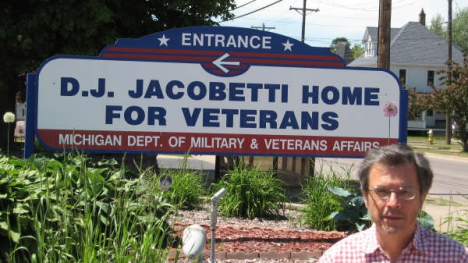
Jacobetti VA

More options and more choice?

LINK: http://www.msn.com/en-us/news/us/va-seeks-to-redirect-billions-of-dollars-into-private-care/ar-BBS9suJ?li=BBnbfcL

Assessment

  • So, do you agree?
  • Why -OR- Why Not?

***

Product DetailsProduct Details

HITECH: A politically-correct Scam?

Update on HITECH

By Kellus Pruitt DDS

“How bad science can lead to bad science journalism — and bad policy – This is what happens when news organizations don’t catch lousy studies.”

By Stephen Soumerai and Ross Koppel for The Washington Post, June 7, 2017/

Https://www.washingtonpost.com/posteverything/wp/2017/06/07/how-bad-science-can-lead-to-bad-science-journalism-and-bad-policy/?Utm_term=.631e0a2d022c#comments

Soumerai and Koppel:  “As researchers who focus on health care, we see news coverage of badly designed studies constantly. And we’re concerned that breathless reporting on bad science can result in costly, ineffective and even harmful national policies.”

You mean like HITECH?

Since the HITECH Act was passed in 2009, it has been well-documented that not only were the premises of the law fiction, but the law itself has always favored healthcare stakeholders like Cerner at the expense of patients and their doctors – the healthcare principals.

The grandest blunder in medical history gained traction in 1999 with an Institute of Medicine (IOM) report titled, “To Err is Human,” which promises that EHRs should have already saved 100,000 lives a year … Not even close. Not unlike the dangerous research bias described in Soumerai and Koppel’s article that was posted recently, several researchers have also pointed out that the studies cited in the IOM report did not show that people were dying from medical errors that health information technology could detect or correct.

The questionable IOM report was followed in 2005 by a tainted RAND Corporation report which promised savings of $77 billion annually… Wrong again!

***

untitled

***

Shortly after the report was published, rumors quickly spread that the data for the study were cherry-picked by those with software to sell. By 2011, the passage of time revealed that RAND had clearly made a vendor-friendly mistake, forcing RAND to disown their study – but not before its optimistic conclusion was instrumental in the successful passage of the HITECH Act in 2009 (two years after Minnesota lawmakers had already passed the doomed EHR mandate based on the same tainted RAND results).

Political Fiat

Then presidential candidate Hillary Clinton was only one of many lawmakers to quote the RAND study. Almost everyone the nation was suckered in. Ultimately, it was revealed that the study’s vendor-friendly conclusion was largely financed by software giant Cerner, who continues to profit from years of misinformation.

(See: “In 2nd Look, Few Savings From Digital Records,” by Reed Abelson and Julie Creswell, New York Times, Jan. 10, 2013).

Http://www.nytimes.com/2013/01/11/business/electronic-records-systems-have-not-reduced-health-costs-report-says.html

In fact, it was announced last Monday that Cerner, which is responsible for the most dishonest research in the history of health information technology, has been awarded the Department of Veterans Affairs contract for the VA’s next-generation electronic health records system.

Assessment

Dishonesty wins.

Conclusion

Your thoughts and comments on this ME-P are appreciated. Feel free to review our top-left column, and top-right sidebar materials, links, URLs and related websites, too. Then, subscribe to the ME-P. It is fast, free and secure.

Speaker: If you need a moderator or speaker for an upcoming event, Dr. David E. Marcinko; MBA – Publisher-in-Chief of the Medical Executive-Post – is available for seminar or speaking engagements. Contact: MarcinkoAdvisors@msn.com

OUR OTHER PRINT BOOKS AND RELATED INFORMATION SOURCES:

Product DetailsProduct Details

***


Is the VA Worth Saving?

Join Our Mailing List 

Veterans Affairs discovers off-label use for HIPAA [Whistleblower Control?]

1-darrellpruitt

[By Darrell K. Pruitt DDS]

“VA uses patient privacy to go after whistleblowers, critics say,” by Joe Davidson for The Washington Post, July 17, 2014.

http://www.washingtonpost.com/politics/federal_government/va-uses-patient-privacy-to-go-after-whistleblowers-critics-say/2014/07/17/bafa7a02-0dcb-11e4-b8e5-d0de80767fc2_story.html

Davidson writes:

“Citing patient privacy, managers have threatened VA employees or retaliated against those who complain about agency misconduct, according to a key congressman and the union that represents most of the department’s employees.”

Chairman Jeff Miller Speaks

Rep. Jeff Miller (R-Fla.), who as chairman of the House Committee on Veterans’ Affairs is leading a probe into the cover-up of long waiting times for VA patients, tells the Washington Post that the “VA routinely uses HIPAA as an excuse to punish into submission employees who dare to speak out.”

Davidson adds that in a letter to President Obama earlier this month, Miller said,

“If VA cannot protect whistleblowers who reveal corruption it is not a system worth saving.”

As it turns out, the VA is no stranger to HIPAA. In 2006, the VA agreed to pay a $20 million fine because an agency employee took home records on 26.5 million veterans that were subsequently stolen by a burglar. The lost data included names, Social Security numbers, dates of birth and medical information.

***

Hospital with paper MRs

***

In 2012, six years following breach, a humble Roger Baker, the CEO of Veterans Affairs, told reporters,

“Nobody wants to have that same birthmark that we had relative to that laptop. I can tell you for certain that it has had a huge and lasting impact on the VA.”

(See: “6 lasting effects of 2006 VA data breach on privacy, security,” by Mary Mosquera, for GovHealthIT.com, May 24, 2012)

http://www.govhealthit.com/news/6-lasting-effects-2006-va-data-breach-privacy-security#.U8lufPldWz4

Assessment 

I agree with Rep. Miller. The VA is not worth saving.

Conclusion

Your thoughts and comments on this ME-P are appreciated. Feel free to review our top-left column, and top-right sidebar materials, links, URLs and related websites, too. Then, subscribe to the ME-P. It is fast, free and secure.

Speaker: If you need a moderator or speaker for an upcoming event, Dr. David E. Marcinko; MBA – Publisher-in-Chief of the Medical Executive-Post – is available for seminar or speaking engagements. Contact: MarcinkoAdvisors@msn.com

OUR OTHER PRINT BOOKS AND RELATED INFORMATION SOURCES:

Product DetailsProduct Details

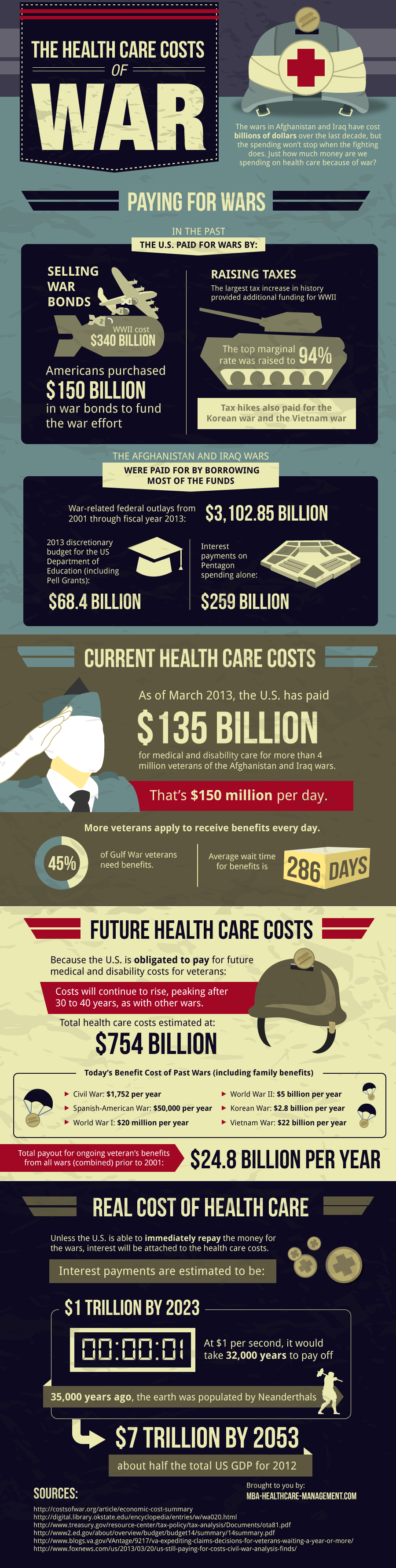
Afghanistan and Iraq’s Healthcare Costs

Join Our Mailing List

An Informative Infographic

###

war

###

Assessment

Over the next 40 years, Afghanistan and Iraq veterans will need an estimated $750 billion in healthcare, a challenge for the VA to innovate, especially when treating soldiers who grew up with the Internet.

Conclusion

Your thoughts and comments on this ME-P are appreciated. Feel free to review our top-left column, and top-right sidebar materials, links, URLs and related websites, too. Then, subscribe to the ME-P. It is fast, free and secure.

Link: http://feeds.feedburner.com/HealthcareFinancialsthePostForcxos

Speaker: If you need a moderator or speaker for an upcoming event, Dr. David E. Marcinko; MBA – Publisher-in-Chief of the Medical Executive-Post – is available for seminar or speaking engagements. Contact: MarcinkoAdvisors@msn.com

OUR OTHER PRINT BOOKS AND RELATED INFORMATION SOURCES:

Health Dictionary Series: http://www.springerpub.com/Search/marcinko

Practice Management: http://www.springerpub.com/product/9780826105752

Physician Financial Planning: http://www.jbpub.com/catalog/0763745790

Medical Risk Management: http://www.jbpub.com/catalog/9780763733421

Hospitals: http://www.crcpress.com/product/isbn/9781439879900

Physician Advisors: www.CertifiedMedicalPlanner.org

Product DetailsProduct DetailsProduct Details

Product Details  Product Details

Product DetailsProduct Details

Grading the Public Options That Already Exist

Understanding Existing Healthcare Plans

By Sabrina Shankman, www.ProPublica.org

October 28, 2009 12:27 pm EDT

2007 Healthcare Costs

What might a public health option look like in practice? One way to find out is to look at what’s already out there.

Link: http://www.propublica.org/ion/health-care-reform/item/grading-the-public-options-that-already-exist-1028

Assessment

Join Our Mailing List

Conclusion

And so, your thoughts and comments on this Medical Executive-Post are appreciated. Feel free to review our top-left column, and top-right sidebar materials, links, URLs and related websites, too. Then, be sure to subscribe to the ME-P. It is fast, free and secure.

Get our Widget: Get this widget!

Our Other Print Books and Related Information Sources:

Practice Management: http://www.springerpub.com/prod.aspx?prod_id=23759

Physician Financial Planning: http://www.jbpub.com/catalog/0763745790

Medical Risk Management: http://www.jbpub.com/catalog/9780763733421

Healthcare Organizations: www.HealthcareFinancials.com

Health Administration Terms: www.HealthDictionarySeries.com

Physician Advisors: www.CertifiedMedicalPlanner.com

Sponsors Welcomed

And, credible sponsors and like-minded advertisers are always welcomed.

Link: https://healthcarefinancials.wordpress.com/2007/11/11/advertise

In Severe Pandemic, Officials Ponder Disconnecting Ventilators

Understanding the So-Called New York Protocol

By Sheri Fink

ProPublica NewsEmergency Sign

With scant public input, state and federal officials are pushing ahead with plans that — during a severe flu outbreak — would deny use of scarce ventilators by some patients to assure they would be available for patients judged to benefit the most from them. 

The plans have been drawn up to give doctors specific guidelines for extreme circumstances, and they include procedures under which patients who weren’t improving would be removed from life support with or without permission of the families. 

The plans are designed to go into effect if the U.S. were struck by a severe flu pandemic comparable to the 1918 outbreak that killed an estimated 50 million people worldwide. State and federal health officials have concluded that such a pandemic would sicken far more people needing ventilators than could be treated by the available supplies. 

VA Guidelines

Many of the draft guidelines, including those drawn up by the Veterans Health Administration, are based in part on a draft plan New York officials posted on a state web site two years ago and subsequently published in an academic journal. The New York protocol, which is still being finalized, also calls for hospitals to withhold ventilators from patients with serious chronic conditions such as kidney failure, cancers that have spread and have a poor prognosis, or “severe, irreversible neurological” conditions that are likely to be deadly. 

New York officials are studying possible legal grounds under which the governor could suspend a state law that bars doctors from removing patients from life support without the express consent of the patient or his or her authorized health agent. 

Medicare Payment

State and federal officials involved with drafting the plans say they have been disquieted by this summer’s uproar over whether Medicare should pay for end-of-life consultations with families. They acknowledged that the measures under discussion go far beyond anything the public understands about how hospitals might handle a severe pandemic. 

By every indication, state and federal officials expect to weather this year’s flu season without having to ration ventilators. That assumes that the H1N1 virus will not mutate into a more serious killer, the vaccines against it and the other seasonal flus will continue to prove effective, and any dramatic surges in the number of patients in need of ventilators will occur in different parts of the U.S. at different times. 

In recent months, New York officials have met three times with physicians, respiratory therapists and administrators to rehearse how their plan might play out in hospitals in a severe epidemic. In one of those “tabletop exercises,” participants suggested that the names of triage officers charged with making life and death choices among patients at each hospital should be kept secret. The secrecy would be needed, participants said in interviews, to avoid pressure and blame from colleagues caring for patients who were selected to be taken off life support. 

When they posted their plan on the web in coordination with a video conference in 2007, New York officials promised to solicit public input. Since then, they have consulted with medical and legal professionals and other experts, but few members of the general public, and the plan has remained unchanged. They declined to make the comments they have gathered immediately available for review, and those comments are not published on the Health Department’s Web site

In the initial proposal, officials called public review “an important component in fulfilling the ethical obligation to promote transparency and just guidelines.” 

The academic publication of the plan envisaged the use of focus groups to solicit comment from “a range of community members, including parents, older adults, people with disabilities, and communities of color.” Those have not been held. 

Beth Roxland, the current executive director of the New York State Task Force on Life and the Law, said the ethicists included in the state’s planning process focused largely on vulnerable populations. “Even if we didn’t have direct input from vulnerable populations,” she said, “their interests have been well accounted for.” Roxland said that public comment solicited when the ventilator plan was posted on the Health Department Web site was “sparse.” 

Dr. Guthrie Birkhead, Deputy Commissioner of the Office of Public Health for New York State said he wondered whether it was possible to get the public to accept the plans. “In the absence of an extreme emergency, I don’t know. How do you even engage them to explain it to them?” 

Even so, other states, hospital systems and the Veterans Health Administration—which has 153 medical centers across all states — have drafted protocols that are based in part on New York’s plan. The inclusion and exclusion criteria for access to ventilators, however, are different. For example, under the current drafts, a patient on dialysis would be considered for a ventilator in a VA hospital in New York during a severe pandemic, but not in another New York hospital that followed the State’s plan, which excludes dialysis patients. The VA’s exclusion criteria are looser because the patient population it is charged with serving is typically older and sicker than in other acute care hospitals. Different states, reflecting different values, have also established different criteria for who gets access to lifesaving resources. 

IOM Input

The Institute of Medicine, an independent national advisory body, is expected to release a report on Thursday morning, at the request of the U.S. Department of Health and Human Services, that will recommend broad guidelines to help guide planners crafting altered standards of care in emergencies. At an open meeting held to inform the report on Sept. 1, participants described successful public exercises related to allocating scarce resources in Utah and in a Centers for Disease Control and Prevention study conducted in Seattle. 

Questions about how hospitals would handle massive demand for life support equipment arose when New York state health department officials ran exercises based on a scenarios involving H5N1 avian influenza.

“They kept running out of ventilators,” said Dr. Tia Powell, director of the Montefiore-Einstein Center for Bioethics and former executive director of the New York State Task Force on Life and the Law, which was asked to address the problem. “They immediately recognized this is the worst thing we’ve ever imagined. What on earth are we going to do?” 

Officials calculated that 18,000 additional New Yorkers would require ventilators in the peak week of a flu outbreak as deadly as the 1918 pandemic. Only a thousand machines would be available, the officials estimated. The state’s acute care hospitals in 2005 had about 6000 ventilators, 85% of which were normally in use. A moderately severe pandemic would have resulted in a shortfall of 1256 ventilators, health officials found. 

In 2006, New York planners convened a group of experts in disaster medicine, bioethics and public policy to come up with a response. After months of discussion, the group produced the system for allocating ventilators. They first recommended a number of ways that hospitals could stretch supply, for example by canceling all elective surgeries during a severe pandemic. The state has also since purchased and stockpiled 1700 Pulmonetic Systems LTV 1200 ventilators (Cardinal Health Inc., NYSE) — enough to deal with a moderate pandemic but not one of 1918 scale. 

Officials realized those two measures alone would not be enough to meet demand in a worst-case scenario. Ventilators were costly, required highly trained operators, and used oxygen, which could be limited in a disaster. 

Ventilator Rationing

The group then drew up plans for rationing of ventilators. The goal, participants said, was to save as many lives as possible while adhering to an ethical framework. This represented a departure from the usual medical standard of care, which focuses on doing everything possible to save each individual life. Setting out guidelines in advance of a crisis was a way to avoid putting exhausted, stressed front line health professionals in the position of having to come up with criteria for making excruciating life and death decisions in the midst of a crisis, as many New Orleans health professionals had to do after Hurricane Katrina.

The group based its plans, in part, on a 2006 protocol developed by health officials in Ontario, Canada which relied on quantitative assessments of organ function to decide which patients would have preference for an intensive care unit bed. The tool, known as the Sequential Organ Failure Assessment (SOFA) score, is not designed to predict survival, and not validated for use in children, but the experts adopted it in light of the lack of an appropriate alternative triage system. 

This summer, New York officials brought the state’s plan to groups from several New York hospitals for the tabletop exercises. They met behind closed doors to assess how hospitals might implement the proposed measures if the H1N1 pandemic turned unexpectedly severe this fall. In the fictional scenario, paramedics were ordered not to place breathing tubes into patients until physicians “can assess whether they meet the criteria to be placed on a ventilator.’’ 

Problems were immediately apparent. Dr. Kenneth Prager, a professor of medicine and director of clinical ethics at Columbia University Medical Center, was concerned about the lack of awareness of the plan among the larger public and the majority of the medical community. Societal input “is totally absent,” he said and called for more outreach to the public. “Maybe society will say, ‘We don’t agree with your plan. You may think it’s ethically OK; we don’t.'” 

The Protocol

The protocol, he said, would also place a great burden on clinicians charged with selecting which patients would be removed from life support. Physicians were concerned doctors involved in the legitimate and painful selection processes might be inappropriately construed as “death squads.” “We facetiously dubbed them the ‘death squad’ or the ‘guys in the back room’,” Prager said. He envisioned family members breaking down and screaming when they found out their loved ones would be disconnected from ventilators. “It really is a nightmare.” 

Even so, he felt that the plan – and its effort to save the greatest number of patients – was ethically appropriate. “If we don’t use triage, people will die who would have otherwise been saved,” he said, because a number of ventilators are “being used to prolong the dying process of patients with virtually no chance of surviving.” 

Doctors at the exercises feared that they would be sued by angry patients if they followed the draft guidelines. “There’s absolutely no legal backing for physicians,” said Lauren Ferrante, a medical resident at Columbia University Medical Center. “Who’s to say we’re not going to get sued for malpractice?” 

New York State law forbids doctors from removing living patients from ventilators or other life support except in cases where the patient has clearly stated such wishes, for example in a living will, or through his or her legal health care agent. Other sources of liability could come from federal and state anti-discrimination laws or claims of denial of due process. 

New York officials said they were currently working out legal options for implementing the plans, such as gubernatorial emergency declarations or emergency legislation. 

“You can take something today that’s not necessarily active and overnight flip the switch and make it into something that has those teeth in it,” said Dr. Powell, who served on the committee that drafted the plan.

Dr. Powell cautioned that it is critically important to maintain flexibility in the guidelines. Any rationing measures taken in a disaster must be calibrated to need and severity. 

Guidelines can also promote investment in new technology, such as cheaper, easier to use ventilators that would make rationing less likely. Already at least one company, St. Louis-based Allied Healthcare Products, is marketing a line of ventilators specifically for use in disasters. 

Some states, including Louisiana and Indiana, have adopted laws that immunize health professionals against civil lawsuits for their work in disasters. Other states, including Colorado, have drawn up a series of relevant executive orders that could be applied to address these issues.

Assessment 

Dr. Carl Schultz, a professor of emergency medicine at the University of California at Irvine and co-editor of the forthcoming textbook, Koenig and Schultz’s Disaster Medicine (Cambridge University Press), is one of the few open critics of the establishment of altered standards of care for disasters. He says the idea “has both monetary and regulatory attractiveness” to governments and companies because it relieves them of having to strive to provide better care. “The problem with lowering the standard of care is where do you stop? How low do you go? If you don’t want to put any more resources in disaster response, you keep lowering the standard.” 

Federal officials disagree. “Our goal is always to provide the highest standard of care under the circumstances,” said RADM Ann Knebel, deputy director of preparedness and planning at the Office of the Assistant Secretary for Preparedness and Response, Department of Health and Human Services. “If you don’t plan, then you are less likely to be able to reuse, reallocate and maximize the resources at your disposal, because you have people who’ve never thought about how they’d respond to those circumstances.”

Note: Sheri Fink is a reporter for the ProPublica news service, which first published this article.

Join Our Mailing List

Conclusion

And so, your thoughts and comments on this Medical Executive-Post are appreciated. Feel free to review our top-left column, and top-right sidebar materials, links, URLs and related websites, too. Then, be sure to subscribe to the ME-P. It is fast, free and secure.

Link: http://feeds.feedburner.com/HealthcareFinancialsthePostForcxos

Get our Widget: Get this widget!

Our Other Print Books and Related Information Sources:

Practice Management: http://www.springerpub.com/prod.aspx?prod_id=23759

Physician Financial Planning: http://www.jbpub.com/catalog/0763745790

Medical Risk Management: http://www.jbpub.com/catalog/9780763733421

Healthcare Organizations: www.HealthcareFinancials.com

Health Administration Terms: www.HealthDictionarySeries.com

Physician Advisors: www.CertifiedMedicalPlanner.com

The VistA Client Server System

Join Our Mailing List

What it is – How it works

By ME-P Staff ReportersME-P Rack Servers

According to Dr. Richard Mata MS, a client-server system configuration occurs when one or more “repository” computers [ known as “servers”] store large amounts of data but perform limited processing. Communicating with the server(s) are client workstations that perform much of the data processing and often have graphical user interfaces (GUIs) for ease of use.

High Functionality

Both customizability and resource use is high, depending on the desired sophistication. Many clinical medical information systems that process data directly related to patient care use this configuration.

VA Example

For instance, the Veterans Health Administration, which has implemented what is likely the largest integrated healthcare information system in the United States, uses client-server architecture. Known as the Veterans Health Information Systems and Technology Architecture (VistA), this system provides technology infrastructure to about 1,300 care facilities, including hospitals and medical centers, outpatient facilities, and long-term care centers. VistA utilizes a client-server architecture that links together workstations and personal computers using software that is accessed via a graphical user interface.

Assessment

Overall, for hospitals that have the financial and manpower resources for a significant investment in IT, client-server architectures are the fastest-growing and typically the most preferred of the system architectures, due in large part to their local adaptability and flexibility to meet changing hospital and medical center needs.

Conclusion

Your thoughts and comments on this ME-P are appreciated. Feel free to review our top-left column, and top-right sidebar materials, links, URLs and related websites, too. Then, subscribe to the ME-P. It is fast, free and secure.

Link: http://feeds.feedburner.com/HealthcareFinancialsthePostForcxos

Speaker: If you need a moderator or speaker for an upcoming event, Dr. David E. Marcinko; MBA – Publisher-in-Chief of the Medical Executive-Post – is available for seminar or speaking engagements. Contact: MarcinkoAdvisors@msn.com

OUR OTHER PRINT BOOKS AND RELATED INFORMATION SOURCES:


Product DetailsProduct Details     Product Details

How Proprietary HIT Vendors May Demolish Health Reform

Top Five Issues from the Longman Report

By Staff ReportersNetwork

Here are the top five quotes from the Longman Report. The author, Phillip Longman, is a senior fellow at the New America Foundation and the author of: “Best Care Anywhere: Why VA Health Care Is Better than Yours as well as The Next Progressive Era: A Blueprint for Broad Prosperity.

http://www.newamerica.net/people/phillip_longman

The List 

1. Twenty years after the digital revolution, only an astonishing 1.5 percent of hospitals have integrated information technology systems. Almost all experts agree that in order to begin to deal with the problems of the health care system, this has to change. 

2. Done right, digitized health care could help save the nation from insolvency while improving and extending millions of lives at the same time. Done wrong, it could reconfirm Americans’ deepest suspicions of government and set back the cause of health care reform for yet another generation. 

3. Thanks to the stimulus bill, $20 billion is about to be poured into buggy, expensive, proprietary software that will not bring the benefits the Obama administration hopes for. Rather, it will amount to a giant bailout of a health IT industry whose business model has never really worked. 

4. The VA’s open-source software allowed a nurse in Topeka, Kansas, to adapt for her own work a bar-code scanner she saw used at a rental-car agency. Her innovation cut the number of medication-dispensing errors in half at some facilities, and saved thousands of lives. 

5. While a few large institutions have managed to make meaningful use of proprietary health IT, these systems have just as often been expensive failures. In 2003, Cedars-Sinai Medical Center in Los Angeles tore out a “state-of-the-art” $34 million proprietary system after doctors rebelled and refused to use it.

Assessment 

http://www.newamerica.net/publications/articles/2004/the_best_care_anywhere 

Conclusion

And so, your thoughts and comments on this Medical Executive-Post are appreciated. Feel free to review our top-left column, and top-right sidebar materials, links, URLs and related websites, too. Then, be sure to subscribe to the ME-P. It is fast, free and secure.

Link: http://feeds.feedburner.com/HealthcareFinancialsthePostForcxos

Speaker: If you need a moderator or speaker for an upcoming event, Dr. David E. Marcinko; MBA – Publisher-in-Chief of the Executive-Post – is available for seminar or speaking engagements. Contact: MarcinkoAdvisors@msn.com 

Get our Widget: Get this widget!

Our Other Print Books and Related Information Sources:

Practice Management: http://www.springerpub.com/prod.aspx?prod_id=23759

Physician Financial Planning: http://www.jbpub.com/catalog/0763745790

Medical Risk Management: http://www.jbpub.com/catalog/9780763733421

Healthcare Organizations: www.HealthcareFinancials.com

Health Administration Terms: www.HealthDictionarySeries.com

Physician Advisors: www.CertifiedMedicalPlanner.com

Henry Louis Gehrig, eMRs and Healthcare Reform

What’s the “Iron Horse” Got to Do with Health IT?

By Dr. David Edward Marcinko; MBA, CMP™

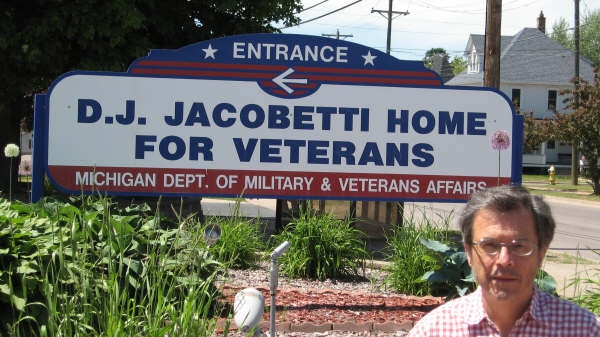
[Publisher-in-Chief]Jacobetti VA

According to UPI reports from Charlestown, WVa on August 24 2009, at least 1,200 veterans across the country were mistakenly told by the Veterans Administration [VA] that they suffered from a fatal neurological disorder.

Link: http://www.msnbc.msn.com/id/32541579/ns/health-health_care/

Panicked Veterans

One of the leaders of a Gulf War veterans group is reported to have said that panicked veterans from the states of Alabama, Florida, Kansas, North Carolina, West Virginia and Wyoming contacted the group about the error. Denise Nichols, the vice president of the National Gulf War Resource Center, reportedly blamed a “coding error” for the mistake. In medicine, we call this a “false positive.”

About Henry Louis “Lou” Gehrig

Henry Louis “Lou” Gehrig (June 19, 1903 – June 2, 1941), born Ludwig Heinrich Gehrig, was an American baseball player in the 1920s and 1930s; chiefly remembered for his prowess as a hitter, the longevity of his consecutive games played record and the pathos of his tearful farewell from baseball at age 36, when he was stricken with a fatal disease. Of course, Gehrig was known as the “The Iron Horse” for his durability. Yet, the irony is that Amyotrophic Lateral Sclerosis [ALS], or Lou Gehrig’s disease [sometimes also called Maladie de Charcot] is progressive and fatal. Lou died in 1941 after developing the illness. Will the same death-spiral happen to eHRs and Obama care?

Link: http://www.lougehrig.com

Assessment

Having rotated through the VA system as a young medical student back-in-the-day, I have never been a fan. It smacked of socialized medicine and government plutocracy, and was never a leading-edge example of domestic healthcare, in my informed opinion. Recent HIPAA administrative, security, IT and clinical medical errors are well known. So, to blame the mix-up on an insurance billing and “coding error” seems somewhat disingenuous. Especially now, at a time when eMRs and the Obama Administration’s healthcare reform itself is being vigorously debated by the citizenry. I mean, are there no human checks and balances? Would there be any human intervention if a public healthcare policy was adopted?

Of course, we have written about military medicine previously on this Medical Executive-Post, and devoted an entire channel to it. And, I do realize that more than fifty percent of us receive similar governmental care in some form, or another [Medicare, Medicaid, CHIPS, the Indian and Prison Healthcare Systems, etc].

Link: https://healthcarefinancials.wordpress.com/category/military-medicine/

Nevertheless, shall we give a new moniker to this mistake? How about “Lou Gehrig’s coding error”, and document it in our www.HealthDictionarySeries.com

Conclusion

And so, your thoughts and comments on this Medical Executive-Post are appreciated. Is it even fair to relate this “isolated incident” to the current healthcare reform debate, the eMR conundrum and/or similar discussions on health Information Technology [IT]? Tell us what you think. Feel free to review our top-left column, and top-right sidebar materials, links, URLs and related websites, too. Then, be sure to subscribe to the ME-P. It is fast, free and secure.

Link: http://feeds.feedburner.com/HealthcareFinancialsthePostForcxos

Speaker: If you need a moderator or speaker for an upcoming event, Dr. David E. Marcinko; MBA – Publisher-in-Chief of the Executive-Post – is available for seminar or speaking engagements. Contact: MarcinkoAdvisors@msn.com 

Get our Widget: Get this widget!

Our Other Print Books and Related Information Sources:

Practice Management: http://www.springerpub.com/prod.aspx?prod_id=23759

Physician Financial Planning: http://www.jbpub.com/catalog/0763745790

Medical Risk Management: http://www.jbpub.com/catalog/9780763733421

Healthcare Organizations: www.HealthcareFinancials.com

Health Administration Terms: www.HealthDictionarySeries.com

Physician Advisors: www.CertifiedMedicalPlanner.com

Subscribe Now: Did you like this Medical Executive-Post, or find it helpful, interesting and informative? Want to get the latest ME-Ps delivered to your email box each morning? Just subscribe using the link below. You can unsubscribe at any time. Security is assured.

Link: http://feeds.feedburner.com/HealthcareFinancialsthePostForcxos

Sponsors Welcomed

And, credible sponsors and like-minded advertisers are always welcomed.

Link: https://healthcarefinancials.wordpress.com/2007/11/11/advertise