COUPLES: “one is a spender and one is a saver”

On Couples and Money

By Rick Kahler CFP®

“With couples, usually one is a spender and one is a saver.”

I’ve heard this many times, and I’ve even said it myself. Money issues are one of the most common areas of stress between partners, and conflicting views over spending and saving is a major contributor.

However, a recent study done by Brigham Young University and Kansas State University led me to see marital money issues in a new way. The study, published last year in the Journal of Financial Planning under the title “Tightwads and Spenders: Predicting Financial Conflict in Couple Relationships,” found that partners’ perceptions of each other’s money behavior often does not match reality. The fact that you may see your partner as a spender has actually no correlation to whether they are. Yet there is a huge correlation between thinking your partner is a spender and experiencing financial conflict in the marriage.

Study

Ashley LeBaron, a BYU graduate student and co-author of the study, said this in a BYU News article published August 15, 2017: “The fact that partners’ perceptions of each other’s spending behaviors were so predictive of financial conflict suggests that when it comes to the impact of finances on relationships, perceptions may be just as important, if not more important, than reality.”

As it turns out, the highest contributors to financial conflict between partners weren’t disagreements over how much to fund children’s education, save toward retirement, or spend on a vacation or a car. It was whether one partner considered the other partner a spender or a tightwad—regardless of their actual spending patterns.

If you want to bring more harmony and objectivity around money to your couple-ship, you might consider taking the following steps:

1. Define “spender” in your own words. What does it mean to you if someone is a spender?
2. Define “tightwad” in your own words.
3. Think of your definition of “spender.” Write down all the one-word feelings that you can identify when you think of a spender.
4. Do the same with your definition of “tightwad.”
5. Write a list of all the evidence you can think of that your partner is a spender. Stick with the facts, not a projection. For example, a statement that “my partner spends too much money on coffee” is a projection. Instead, “Three days a week, my partner spends $2.50 on an Americano at Starbucks,” is an observation.
6. In the same way, list all the evidence that your partner is a tightwad.
7. Repeat steps 5 and 6, but about yourself.
8. Look back at the one-word feelings you listed in step 3. Which of those might your partner feel about your spending?
9. Consider which of the one-word feelings you listed in step 4 that your partner might feel about your saving.
10. Now, give this exercise to your partner to complete.

***

***

Finally, select a time to compare answers. Choose one of you to go first while the other listens with absolutely no interruptions, cross talk, or comment. This is hard, but crucial. When the first partner is done, then switch roles without any comments.

If your partner isn’t willing to participate, consider doing this exercise on your own. The insight you gain could be valuable.

Assessment

If the level of money conflict in your relationship is so high that you can’t even imagine doing this exercise together, you also might consider setting up an appointment with a financial therapist. Conflicts over money can be resolved, but it often takes both partners having the willingness do so. Even more, it often takes one or both partners having the courage to ask for help.

Conclusion

Your thoughts and comments on this ME-P are appreciated. Feel free to review our top-left column, and top-right sidebar materials, links, URLs and related websites, too. Then, subscribe to the ME-P. It is fast, free and secure.

Speaker: If you need a moderator or speaker for an upcoming event, Dr. David E. Marcinko; MBA – Publisher-in-Chief of the Medical Executive-Post – is available for seminar or speaking engagements.

Book Marcinko: https://medicalexecutivepost.com/dr-david-marcinkos-bookings/
Subscribe: MEDICAL EXECUTIVE POST for curated news, essays, opinions and analysis from the public health, economics, finance, marketing, IT, business and policy management ecosystem.

***

CALIFORNIA LAUNCHES INVESTIGATION FOLLOWING STUNNING ADMISSION BY AETNA MEDICAL DIRECTOR

A CNN Exclusive

(CNN) California’s insurance commissioner has launched an investigation into Aetna after learning a former medical director for the insurer admitted under oath he never looked at patients’ records when deciding whether to approve or deny care.

California Insurance Commissioner Dave Jones expressed outrage after CNN showed him a transcript of the testimony and said his office is looking into how widespread the practice is within Aetna.

http://www.cnn.com/2018/02/11/health/aetna-california-investigation/index.html

Conclusion

Your thoughts and comments on this ME-P are appreciated. Feel free to review our top-left column, and top-right sidebar materials, links, URLs and related websites, too. Then, subscribe to the ME-P. It is fast, free and secure.

Speaker: If you need a moderator or speaker for an upcoming event, Dr. David E. Marcinko; MBA – Publisher-in-Chief of the Medical Executive-Post – is available for seminar or speaking engagements. https://medicalexecutivepost.com/dr-david-marcinkos-bookings/

Contact: MarcinkoAdvisors@msn.com

***

More on Physician Burn-Out

And … Depression

***

***

Conclusion

Your thoughts and comments on this ME-P are appreciated. Feel free to review our top-left column, and top-right sidebar materials, links, URLs and related websites, too. Then, subscribe to the ME-P. It is fast, free and secure.

Speaker: If you need a moderator or speaker for an upcoming event, Dr. David E. Marcinko; MBA – Publisher-in-Chief of the Medical Executive-Post – is available for seminar or speaking engagements.

Book Marcinko: https://medicalexecutivepost.com/dr-david-marcinkos-bookings

Subscribe: MEDICAL EXECUTIVE POST for curated news, essays, opinions and analysis from the public health, economics, finance, marketing, IT, business and policy management ecosystem.

***

Risk Management, Liability Insurance, and Asset Protection Strategies for Doctors and Advisors: Best Practices from Leading Consultants and Certified Medical Planners™

MONEY: Spend it -OR- Give it Away

MONEY: The two choices

By Rick Kahler CFP®

A colleague recently reminded me that there are ultimately two things we can do with money: spend it or give it away. That’s it.

At first glance, this seems too simplistic. What about saving? What about investing for our future security? What about creating wealth?

Even when we are in the process of accumulating money and building wealth, we do so for the inevitable day we choose to spend it or give it away. Investing for retirement is about providing money to spend when we’re no longer earning an income. And whatever we have left at the end of life is ultimately given away.

Furthermore, the decision to spend or give away money is always a choice, even when it may seem we have no choice.

Here is why 

Most money experts break spending into “discretionary” and “non-discretionary” categories. Another way to frame this is “wants” and “needs.” Discretionary spending includes items that we want which aren’t necessary for survival, such as entertainment, vacations, designer clothes, and gourmet food. Non-discretionary items, or needs, include basic housing, food, clothing, and transportation.

Discretionary spending is clearly a choice. Yet even though we may tell ourselves we have “no choice” but to spend money on non-discretionary needs, fundamentally we always have a choice.

We may think we make the mortgage or rent payment because we “have” to, but actually it’s a choice because the alternative is to find a new place to live or be homeless. We make the car payment because we choose not to walk or use public transportation. We may choose to work at a job we dislike because it allows us to spend money on other choices we deem more important than job satisfaction. We choose to pay our taxes in order to avoid serious consequences like heavy fines or even going to jail.

We choose to earn and spend our funds in the ways we do, not because we “have to,” but because there is a payoff that makes the choice worthwhile.

Giving money away may seem more obviously a matter of choice. Yet giving to charity or to family members out of guilt or a sense of obligation sometimes seems like a “must.”

The choice

Yet in every case, it’s still a choice. Even when we give because it seems to be the only way to avoid detrimental or catastrophic consequences, we’re still making a choice. In some cases, choosing not to give (to a child, for example) may result in some wonderfully rich life lessons or behavioral changes.

The one time it seems that we really have no choice on whether we spend or give away our money is when we die. But even then, the choices about giving what we have left are made during our lifetime. Those who don’t do estate planning are choosing to let others decide how their money will be given away, with those decisions constrained by the provisions of their state’s laws.

Assessment

The bottom line is that when it comes to spending or giving money, we always have a choice. Ultimately, all of the money we choose not to spend while we are alive is money we are choosing to give away after death.

When we view our spending and giving as a matter of choice, it may be easier to see the importance of making money choices thoughtfully and consciously. The way we use our financial resources is crucial both for supporting our own life aspirations and for giving back to our families and communities. Choosing to spend consciously and give wisely is one more way we can choose to live richer, more fulfilling lives.

Conclusion

Your thoughts and comments on this ME-P are appreciated. Feel free to review our top-left column, and top-right sidebar materials, links, URLs and related websites, too. Then, subscribe to the ME-P. It is fast, free and secure.

Speaker: If you need a moderator or speaker for an upcoming event, Dr. David E. Marcinko; MBA – Publisher-in-Chief of the Medical Executive-Post – is available for seminar or speaking engagements.

Book Marcinko: https://medicalexecutivepost.com/dr-david-marcinkos-bookings

Subscribe: MEDICAL EXECUTIVE POST for curated news, essays, opinions and analysis from the public health, economics, finance, marketing, IT, business and policy management ecosystem.

***

Spirituality and Financial Planning

What does spirituality have to do with financial planning?

By Rick Kahler CFP®

That was my first thought when Stephen Brody, CFP, ChFC, EdD, contacted me about being interviewed for his doctoral dissertation on “Assessing Spirituality in Financial Life Planning.” The incongruity of the idea intrigued me, so I agreed.

Definitions: http://www.HealthDictionarySeries.org

Financial life planning

In order to understand Brody’s work, I first needed to know his definitions of both financial life planning and spirituality. Financial life planning is an integrated approach sometimes described by terms such as client-centered financial planning. It includes investment advising, but the scope of the engagement is much broader and emphasizes clients’ overall well-being.

Brody writes that financial life planning “is literally a matter of connecting your money and your values with your life. . . .the life of the client becomes the axis around which the financial plan develops and evolves. The client is at the center of the plan, and the money is simply the details to support a life well lived.”

Spirituality

Spirituality, for many people, is equal to religion. I used to believe that a spiritual person was a religious person and one couldn’t be a religious person without being a spiritual person.

That is not Brody’s definition of spirituality, which he views on a faith-neutral basis. One of his cited definitions of spirituality that makes sense to me is that it relates to searching for meaning, purpose, and a moral framework for connecting with self, others, and the ultimate reality.

Methodologies

Financial life planners use a number of methodologies which lead clients to a greater level of meaning and well-being. They look at money as a tool that supports someone in finding and living a life of meaning and purpose. Seen from this perspective, I have to agree that what a financial life planner does is spiritual. After all, I’ve never heard of someone’s last words being, “Life was so good—my financial planner helped me earn 5.76% compounded annually for 20 years.”

Brody’s research finds there are three types of intelligence needed by a financial life planner. They are IQ (intellectual intelligence), EQ (emotional intelligence), and SQ (spiritual intelligence). Brody describes IQ, which deals with knowledge, as the learning stage of the financial planning process. I contend that education is 50% of what a financial planner does. The psychological factors of dealing with money require EQ, or what he calls the understanding stage.

Brody defines SQ as “The ability to behave with wisdom and compassion, all the while maintaining inner and outer peace, regardless of the situation.” This refers to the character and moral factor involved in planning, which Brody suggests is the enlightening stage. This is where money supports meaning.

Like both intellectual and emotional intelligence, spiritual intelligence has its own skill set. Brody discusses 21 specific skills. Eight of them are summed up in just being aware of things like one’s own world view, purpose, values, and limitations.

From his research, Brody suggests that the ideal financial planning engagement is based on deep and meaningful conversations. He says it is “a process that seeks the development of the whole person,” as opposed to just focusing on concerns like rates of return and tax strategies. From these more meaningful conversations comes “a discovery and awareness that leads to the understanding of your life’s meaning, purpose, and moral framework.”

One participant in the survey said that appropriately sequenced questions help clients have a “glide path into self-discovery” and greater clarity of what’s important to them in life.

Assessment

From that understanding, planner and client can work together co-create a financial plan that aligns with the person’s vision of their ideal self and supports a fulfilling life.

Conclusion

Your thoughts and comments on this ME-P are appreciated. Feel free to review our top-left column, and top-right sidebar materials, links, URLs and related websites, too. Then, subscribe to the ME-P. It is fast, free and secure.

Speaker: If you need a moderator or speaker for an upcoming event, Dr. David E. Marcinko; MBA – Publisher-in-Chief of the Medical Executive-Post – is available for seminar or speaking engagements.

Book Marcinko: https://medicalexecutivepost.com/dr-david-marcinkos-bookings/

Subscribe: MEDICAL EXECUTIVE POST for curated news, essays, opinions and analysis from the public health, economics, finance, marketing, IT, business and policy management ecosystem.

***

Comprehensive Financial Planning Strategies for Doctors and Advisors: Best Practices from Leading Consultants and Certified Medical Planners™

ON STATE MEDICAL BOARDS

A Brief History

By Eric A. Dover MD

The first medical board was established in Connecticut in 1792 by the state legislature. It consisted of a group of physicians who evaluated the competency of physicians wishing to practice in the State. Medical Boards eventually evolved and became very powerful with the addition of Medical Practice Acts containing a plethora of administrative rules. The Medical Boards stated mission was, and still is, the protection, health and safety of the public. State Boards formed a national group, the Federation of State Medical Boards (FSMB), in 1912. The FSMB was the first institution to publically list names of disciplined physicians in a monthly bulletin.

In the 1980’s and 1990’s there were a number of high profile cases involving physicians and public safety. One such case, international in scope, concerned surgeon Dr. Jayant Patel. Significant news coverage regarding his surgical outcomes and knowledge resulted in the heightened questioning of Medical Boards and whether they were actually fulfilling their mission of protecting public health and safety. The Oregon Medical Board (OMB) was scrutinized for allegedly “ignoring” 79 complaints, and at least three deaths, attributed to Dr. Patel’s surgical care from 1989 to 1998. The OMB abdicated all responsibility for the situation with a myriad of excuses for why they had no control over this physician or the HMO he worked for.

OMB

The OMB then came to the state legislature with a “fix” to supposedly prevent any further such incidents. The OMB advocated for greater authority over physicians and greater independence from government oversight. With the din of the press and public, the Oregon Legislature gladly granted the OMB their wish. Other states followed Oregon’s example. Not a single individual associated with the OMB, whether administrative or board member was investigated in any meaningful way for their horrendous dereliction of duty. Not one of them had their license restricted, suspended or revoked for such serious offenses. None of them were ordered to pay out of pocket to go to “programs” for competency evaluations, psychological examinations or “courses” to help them become better board members. No one resigned, nor was anyone dismissed, from their position of power. The OMB’s inaction led to a number of deaths and numerous patients with chronic post-surgical medical disorders, yet all individuals involved with the OMB were protected from malpractice lawsuits

Case examples

With cases such as Dr. Patel’s featured prominently in the mainstream media, Medical Boards nationwide came under intense public pressure and scrutiny as it became clear they were not fulfilling their mission of protecting the public’s health and safety. The public saw physicians as a privileged class, protected by their colleagues and Medical Boards. They were correct to a degree. Public safety groups like Public Citizen, who had been taking Medical Boards, hospitals and large clinics to task for years regarding what they felt was a lack of physician oversight and discipline, began ranking state medical boards based on how many disciplinary actions they handed out each year. In their 2011 report, Public Citizen’s Health Research Group Ranking of the Rate of State Medical Boards’ Serious Disciplinary Actions, 2009-2011, the authors made the erroneous assumption that the greater the number of physician “disciplines” (actions) per 1000 physicians, the better job that State’s Medical Board was doing. Therefore, at 6.79 actions per 1000 physicians, Wyoming was doing the “best” job and at 1.33 actions per 1000 physicians, South Carolina was doing the “worst” job.

https://www.crcpress.com/Risk-Management-Liability-Insurance-and-Asset-Protection-Strategies-for/Marcinko-Hetico/p/book/9781498725989

Medical boards vary state -2- state 

Medical Boards vary remarkably from state to state. There are only two constants among them. First, each state has a Medical Board. Second, the Board makes all final decisions concerning licensees. Otherwise, there’s no consistency when it comes to what’s sandwiched in between. The Medical Board’s authority is grounded in the States Medical Practice Act, which gives them the authority to enforce laws for licensing, monitoring and disciplining physicians in the state. Every state has its own unique laws and processes, but every medical practice act covers the basics regarding oversight of physicians practicing medicine in the State.

Assessment

The U.S. Federation of State Medical Boards (FSMB) periodically issues guidelines on the essential elements of a medical practice act.

Conclusion

Your thoughts and comments on this ME-P are appreciated. Feel free to review our top-left column, and top-right sidebar materials, links, urls and related websites, too. Then, subscribe to the ME-P. It is fast, free and secure.

Speaker: If you need a moderator or speaker for an upcoming event, Dr. David E. Marcinko; MBA – Publisher-in-Chief of the Medical Executive-Post – is available for seminar or speaking engagements.

Contact: MarcinkoAdvisors@msn.com

Subscribe: MEDICAL EXECUTIVE POST for curated news, essays, opinions and analysis from the public health, economics, finance, marketing, I.T, business and policy management ecosystem.

***

Risk Management, Liability Insurance, and Asset Protection Strategies for Doctors and Advisors: Best Practices from Leading Consultants and Certified Medical Planners™

CONSENSUAL AMOROUS RELATIONSHIPS IN MEDICINE?

NON-CONSENSUAL AMOROUS RELATIONSHIPS DEFINED

By Vicki L. Buba JD

Risk Management, Liability Insurance, and Asset Protection Strategies for Doctors and Advisors: Best Practices from Leading Consultants and Certified Medical Planners™

By Dr. David Edward Marcinko MBA CMP™

http://www.CertifiedMedicalPlanner.org

An “Amorous Relationship” is defined as a consensual romantic, sexual or dating relationship. This definition excludes marital unions. The term also encompasses those relationships in which amorous or romantic feelings exist without physical intimacy and which, when acted upon by the faculty or staff member, exceed the reasonable boundaries of what a person of ordinary sensibilities would believe to be a collegial or professional relationship. The faculty/student and supervisor/employee relationship should not be jeopardized by question of favoritism or fairness in professional judgment.

Furthermore, whether the consent by a student or employee in such relationship is indeed voluntary is suspect due to the imbalance of power and authority between the parties. All members of the healthcare entity should be aware that initial consent to a romantic relationship does not preclude the potential for charges of conflict of interest, or for charges of sexual harassment arising from the conflict of interest, particularly when students and employees not involved in the relationship claim they have been disadvantaged by the relationship. A faculty, staff member or graduate assistant who enters into an “Amorous Relationship” with a student under his or her supervision, or a supervisor who enters into an “Amorous Relationship” with an employee under his or her supervision, must realize that if a charge of sexual harassment is subsequently lodged, it will be exceedingly difficult to prove blamelessness on grounds of mutual consent. This policy is superseded by the laws governing inability to consent based on age.

HANDLING ROMANTIC PATIENT ADVANCES

While physicians vary in their approaches to managing flirtatious patients, many agree that nipping the behavior in the bud is critical to maintaining professionalism and upholding ethical standards. “It’s flattering to have a flirtatious patient,” said Dr. William P. Scherer MS, Professor of Radiology at the Barry University School of Medicine, Boca Raton, Florida. “But, we have an obligation to protect the integrity of our medical profession, and to our marital contracts and spousal relationships and family, and to act professionally at all times” [personal communication].

Dr. Scherer finds it helpful to put some professional distance between himself and a flirtatious patient. “I have no problem saying to a patient: I appreciate what interests you may have, but I have to draw the line to take proper professional care of you, instead.”

And a good way to derails flirtatious behavior from patients is by deflecting their unwelcome comments. “And, you can’t act sheepish about it.” When a patient’s remark crosses the line from complimentary to something uncomfortable, the doctor may either curtly laugh it off or ignore it. “I don’t acknowledge the statement and immediately move the conversation into something clinical in order to put the rest of the visit in a serious tone.”

On the other hand, Dr. Barbara S. Schlefman MS, a fitness trainer and retired podiatrist, instructed her nurses to have another staffer accompany them into an examination room when a patient is known for being flirtatious was waiting to be seen; and to leave the door open [personal communication].

Likewise, other physicians use a “more is merrier” approach for themselves and their staff as a defense against flirtatious behavior. This is a problem that can be avoided by having physicians never see patients alone. So, as Dr. Schlefman advised, be sure to always a nurse or medical assistant in the room with the physician, even if you have to see somebody in the office on call after hours. And, be sure to have a call schedule for the nursing and medical assistant staff that includes patients of both genders, regardless of physician gender, since flirtatious behavior can be same-sex flirtatious behavior. Fortunately, adjunct or visiting clinical professors, or doctors on a medical school clinical teaching staff, rarely have patient encounters without a medical student, intern, resident fellow or nurse in the room during examinations.

Recognize the Signs

While it’s important that physicians don’t act on a flirtatious patient’s advances, it’s equally critical to recognize subtle flirtatious signs from a patient; according to Donna Petrozzello MD, an otolaryngologist at the California Sinus Centers.

A patient that maintains unusually long eye contact with their doctor, or engages in talk not related to their visit, or makes a habit of touching the physicians when not medically necessary may be flirting. Additionally, doctors can protect themselves when performing some common procedures that put the physician in close proximity to a patient’s face, breasts, genitals, legs and even feet. That closeness could turn a clinical exam into a flirtatious event. Wearing a mask to perform each of these local or regional examinations is not only for the purposes of infection control but gives the added benefit of establishing some personal space and protection, to avoid any potential misunderstanding. For example, auscultating lungs through a shirt, not underneath, is a good idea with this type of exam on a young woman patient.

[Two icons of romantic relationships]

Continue reading

On Organ Harvesting

The Financial and Human Side

By staff reporters

NOTE: We recently received this anonymous message and post it for your critical analysis. No proof or disproof of authenticity is offered. It has been checked for viruses and other malicious miscreants.

Dear ME-P Friends,

Sorry for disturbing you, but we really need your support. We have put up a petition on our website infouncensoredchina.net It’s against the forcible removal of organs from innocent practitioners of Falun Gong in China. Please sign this plea. We need your voice to stop these crimes against humankind.

Feeding your family by selling a kidney?

We have read and heard about poor people in cities and country sides who, in order to pay off family debts are taken advantage of by illegal agents.

In one of the readers’ correspondence columns in the International Herald Tribune, a man in Chennai offered to sell his kidney in order to feed his family. That man was driven by the needs of life. He was jobless, and his wife and three kids were hungry.

This case touched the hearts of a lot of people such that, in the end, he did not have to sell his kidney, because a wealthy individual helped him by offering him some money and an employment.

In other situations, a kidney “sale” may occur for mutual benefit. The effort to save a person with kidney failure becomes the focus, not the process of selling the organ. The situations in these two cases conjure a strong sense of compassion and support. This is completely different from the anomaly to which Falun Gong practitioners in China are subjected. A cruel form of killing people for their organs is taking place on a huge scale in China, a circumstance far from humanity.

Before the Chinese government cracked down on the peaceful meditation practice on July 20, 1999, at least 70 million people were practicing Falun Gong around the country. Falun Dafa followers who live by the principles of truthfulness, kindness and forbearance, were victimized by former president Jiang Zemin, who could not accept the growing popularity of the practice. Since Jiang banned Falun Dafa over 16 years ago, practitioners have been systematically imprisoned tortured, and killed for their organs.

***

***

Assessment

There is substantial evidence stating that Chinese transplantation centers, as well as the police departments, military, and judicial systems, are making large monetary profits by taking the lives of healthy, innocent people, namely Falun Gong practitioners and other prisoners of conscience.

More information about these crimes can be found on the website.

Conclusion

Your thoughts and comments on this ME-P are appreciated. Feel free to review our top-left column, and top-right sidebar materials, links, urls and related websites, too. Then, subscribe to the ME-P. It is fast, free and secure.

Speaker: If you need a moderator or speaker for an upcoming event, Dr. David E. Marcinko; MBA – Publisher-in-Chief of the Medical Executive-Post – is available for seminar or speaking engagements. Contact: MarcinkoAdvisors@msn.com

OUR OTHER PRINT BOOKS AND RELATED INFORMATION SOURCES:

Join Our Mailing List 


On the Department of Labor “Fiduciary Rule”

Join Our Mailing List

Rick Kahler MS CFP

By Rick Kahler MSFS CFP®

Both fee-only financial planning firms and companies that sell financial products are beginning to see some unintended consequences from the recent Department of Labor fiduciary rule.

The rule requires that all financial advisors who deal with an investor’s retirement accounts, including those who sell products, be held to a fiduciary standard. In the past, only RIA’s who are regulated by the SEC were held to such a standard.

The DoL intended the rule to discourage financial salespeople from placing high fee and commission products in retirement accounts. For fee-only advisers, one unintended consequence is an increase in documentation and paperwork, which increases the cost of doing business.

Another unintended consequence that could actually end up hurting consumers may be on the issue of churning.

Churning

Churning describes a broker excessively and needlessly making a lot of trades in a client’s account to generate extra commissions. FINRA, the agency that oversees the sale of financial products, has long discouraged churning, though often the practice only comes to light when a consumer files a complaint.

Still, regulators’ success in discouraging churning has given rise to fee-based brokerage and wrap accounts. These accounts do not compensate brokers on the number and frequency of transactions, but on an ongoing management or advisory fee. It can be a flat fee or one that is determined by a percentage of the assets in the account. This mode of compensation takes away a broker’s incentive to churn accounts. That has to be a good thing, right? Well, not necessarily, if you are a regulator.

***

dol

***

Now, according to financial planner and writer Michael Kitces, the regulators are concerned they have been “too successful” in motivating brokers to charge management fees. Kitces notes the new DoL fiduciary rule will continue to spur a massive shift towards various forms of fee-based brokerage and advisory accounts, giving rise to an emerging new problem: reverse churning.

Reverse Churning

He says reverse churning “is where an advisor charges an ongoing investment management fee … but fails to provide any substantive ongoing investment services.” The broker places a consumer in an investment, collects the annual fee, and never touches the account again. Regulators are worried that brokers have gone from too much activity (churning) to not enough (reverse churning).

With the rise in popularity of passive investing, there is growing interest in the use of ETFs, index funds, and other passive investment vehicles. Passive investing is often framed as a “leave it and forget it” strategy that needs little attention. A lot of research validates that a passive investment strategy is usually superior to an active strategy with more buying and selling of securities.

Kitces notes that while the regulatory concern about reverse churning is appropriate, it “raises troubling concerns when paired with the growing popularity of using index funds, ETFs, and passive investment approaches. How is an advisor supposed to justify an ongoing advisory fee when the right thing for the client to do might really be to do nothing? And what if the bulk of the advisor’s AUM fee is actually for other non-investment (i.e., financial planning) services, paired together with an otherwise passive investment portfolio?”

Assessment

Regulators will probably need to address the difference between reverse churning and implementing a prudent passive investment strategy. That won’t happen before there is a lot of confusion that demands clarification. In the meanwhile, fee-only advisors who embrace a passive investment strategy will have to add another layer of busywork by documenting what they actively do for clients on an ongoing basis. Clearly, this will be easier for fiduciary advisors who also provide financial planning than for those who only provide investment advice. 

Conclusion

Your thoughts and comments on this ME-P are appreciated. Feel free to review our top-left column, and top-right sidebar materials, links, URLs and related websites, too. Then, subscribe to the ME-P. It is fast, free and secure.

Speaker: If you need a moderator or speaker for an upcoming event, Dr. David E. Marcinko; MBA – Publisher-in-Chief of the Medical Executive-Post – is available for seminar or speaking engagements. Contact: MarcinkoAdvisors@msn.com

OUR OTHER PRINT BOOKS AND RELATED INFORMATION SOURCES:

 Comprehensive Financial Planning Strategies for Doctors and Advisors: Best Practices from Leading Consultants and Certified Medical Planners™

***

On “Financial Advisor” Salesmen and Saleswomen

UGH! Financial Services still not a real Profession


By Dr. David Edward Marcinko MBA MEd Certified Medical Planner™

http://www.CertifiedMedicalPlanner.org

Introduction

A few weeks ago I received the following unsolicited email job exhortation:

Dear David,

Our xxx/ooo office is currently hiring “Financial Advisors” with Series 7 and 63 Certifications. The minimum requirements include: high school diploma or GED equivalent, 6+ months of experience in customer service and experience in a sales environment. We offer paid training and access to full benefits.

Learn more about this position and apply today: xxx/ooo

***    *** 

Assessment

GED; a very high credentials bar, indeed!

NOTE: My friend and colleague, the late great Dick Wagner JD CFP™ who wrote extensively about financial planning as a “profession”, would be mortified.  

Conclusion

Your thoughts and comments on this ME-P are appreciated. Feel free to review our top-left column, and top-right sidebar materials, links, urls and related websites, too. Then, subscribe to the ME-P. It is fast, free and secure.

Speaker: If you need a moderator or speaker for an upcoming event, Dr. David E. Marcinko; MBA – Publisher-in-Chief of the Medical Executive-Post – is available for seminar or speaking engagements. Contact: MarcinkoAdvisors@msn.com

OUR OTHER PRINT BOOKS AND RELATED INFORMATION SOURCES:

Risk Management, Liability Insurance, and Asset Protection Strategies for Doctors and Advisors: Best Practices from Leading Consultants and Certified Medical Planners™8Comprehensive Financial Planning Strategies for Doctors and Advisors: Best Practices from Leading Consultants and Certified Medical Planners™

***

“Weasel Phrases,” “Framing” and “Data-Dredging” is Not Science

Making the Data Fit the Hypothesis in the Rehab Racket — Disrupted Physician

By Michael  Langan MD

“Weasel Phrases,” “Framing” and “Data-Dredging” is Not Science: Making the Data Fit the Hypothesis in the Rehab Racket — Disrupted Physician

Conclusion

Your thoughts and comments on this ME-P are appreciated. Feel free to review our top-left column, and top-right sidebar materials, links, URLs and related websites, too. Then, subscribe to the ME-P. It is fast, free and secure.

Speaker: If you need a moderator or speaker for an upcoming event, Dr. David E. Marcinko; MBA – Publisher-in-Chief of the Medical Executive-Post – is available for seminar or speaking engagements. Contact: MarcinkoAdvisors@msn.com

OUR OTHER PRINT BOOKS AND RELATED INFORMATION SOURCES:

Product DetailsProduct Details

***

The Top Medical Specialties with the Biggest Potential in the Future

The Medical Futurist

[By Bertalan Meskó, MD PhD]

Some say technology will replace 80% of doctors in the future. I disagree.

Instead, technology will finally allow doctors to focus on what makes them good physicians: treating patients and innovating, while automation does the repetitive part of the work.

While every specialty will benefit from digital health, some will especially thrive due to these innovations.

Here, I enlisted the medical fields with the biggest potential for development in the future. Read more.

*** 

***

Conclusion

Your thoughts and comments on this ME-P are appreciated. Feel free to review our top-left column, and top-right sidebar materials, links, urls and related websites, too. Then, subscribe to the ME-P. It is fast, free and secure.

Speaker: If you need a moderator or speaker for an upcoming event, Dr. David E. Marcinko; MBA – Publisher-in-Chief of the Medical Executive-Post – is available for seminar or speaking engagements. Contact: marcinkoadvisors@msn.com

OUR OTHER PRINT BOOKS AND RELATED INFORMATION SOURCES:

Product DetailsProduct Details

*** 


The New DOL Rule Survey

A Conversation?

[By Rick Kahler MS CFP®]

I recently learned about an unexpected response to the new Department of Labor rule which mandates that all financial advisors and brokers act as fiduciaries (that is, in the best interest of the consumer) when dealing with customers’ retirement plans.

This means brokers will be discouraged from selling high fee and commission products to a customer’s IRA or similar retirement plan. The ruling may force many brokers to revamp for IRA products that have lower fees and commissions.

The Survey

However, according to a J. D. Power survey as reported in Financial Planning, customers are not happy with their brokers charging them lower fees. While the survey found that the clients of fee-only advisors were “generally more satisfied with what they pay their firm,” it also found that commission-based clients are going to leave in droves if their advisors switch to a lower-cost, fee-only model.

Let me get this straight

A broker who until now has owed no fiduciary duty to the customer, and who sells high fee and commission products to that customer, will now be forced by their company to place the consumer’s interest first. When dealing with the customer’s IRA, the broker cannot receive commissions and can only earn a lower fee. The broker places a low-fee product in the client’s IRA.

The result?

The client is so upset they will take their business to another firm.

According to J. D. Powers, that is correct. Their survey says around 60% of the customers of brokerage firms that may have to switch to fee-only when dealing with customer’s IRAs will “probably” or “definitely” take their business to another firm.

***

***

I am imagining the following conversation between a customer and a broker

Broker:

“Because of the new DOL regulations I can no longer sell you a high fee and commission variable annuity to be owned by your IRA. To comply with the ruling, my company has eliminated the 7% upfront commission on this annuity; we will now charge you a 1% annual fee. They also reduced the annual management expenses from 3% to 1%. Plus, now any advice I give you or product I recommend must be in your best interests.”

Customer:

“So you are eliminating the upfront 7% commission and replacing that with a 1% annual fee, which means 7% more of my money immediately goes to work for me in the investment, right?”

Broker:

“That’s right.”

Customer:

 “And instead of the upfront commission you are charging a new 1% annual fee, but reducing the annual management costs of the investments from 3% to 1%. So I’ll still make an additional 1% every year I own this, in addition to saving 7% up front, right?”

Broker:

“That’s right.”

Customer:

 “And further, you’re now going to look out for my best interests rather than the best interests of your company.”

Broker:

 “Yep.”

Customer:

“This is ridiculous. I’m outta here!”

Broker:

“Where are you going?”

Customer:

“To find a firm that will continue to sell me high commission, high fee products for my IRA and that will work against my best interests!”

Broker:

“You probably won’t find any. Every financial company selling investment products to IRAs has to comply.”

Customer:

 “I’ll find someone, somewhere. Goodbye!”

Assessment

This defies all logic. I can only make up stories as to why the survey found the majority of brokerage customers would leave. Might some believe the new fees would cost them more than they currently pay?

My best assumption is that there was no explanation of what “fee-only” or “fiduciary” meant. So, if the results of the J. D. Power survey don’t make a lot of sense to you, join the crowd.

Conclusion

Your thoughts and comments on this ME-P are appreciated. Feel free to review our top-left column, and top-right sidebar materials, links, urls and related websites, too. Then, subscribe to the ME-P. It is fast, free and secure.

Speaker: If you need a moderator or speaker for an upcoming event, Dr. David E. Marcinko; MBA – Publisher-in-Chief of the Medical Executive-Post – is available for seminar or speaking engagements. Contact: marcinkoadvisors@msn.com

OUR OTHER PRINT BOOKS AND RELATED INFORMATION SOURCES:

Comprehensive Financial Planning Strategies for Doctors and Advisors: Best Practices from Leading Consultants and Certified Medical Planners™

***

The Need for Antitrust Investigation of Physician Health Programs and their “PHP-Approved” Assessment and Treatment Centers

Monopolies, Self-Referrals and Shell Games

By Michael Langan MD

Monopolies, Self-Referral and Shell Games: The Need for Antitrust Investigation of Physician Health Programs and their “PHP-Approved” Assessment and Treatment Centers

***

Conclusion

Your thoughts and comments on this ME-P are appreciated. Feel free to review our top-left column, and top-right sidebar materials, links, URLs and related websites, too. Then, subscribe to the ME-P. It is fast, free and secure.

Speaker: If you need a moderator or speaker for an upcoming event, Dr. David E. Marcinko; MBA – Publisher-in-Chief of the Medical Executive-Post – is available for seminar or speaking engagements. Contact: MarcinkoAdvisors@msn.com

OUR OTHER PRINT BOOKS AND RELATED INFORMATION SOURCES:

Product DetailsProduct Details

***

About the HappyMD.com

Fighting Physician Burn-Out

[By staff reporters]

Since 2011, http://www.TheHappyMD.com has been the leader in the prevention of physician burnout for individual doctors and healthcare organizations.

If you want to understand, prevent and treat physician burnout – whether you are an individual doctor – or CEO of a multi-state healthcare organization –  or someone else; this site will be helpful to you.

***

***

Assessment

The site is run by Dike Drummond MD, a Mayo trained family practice physician and leading coach, trainer and consultant.

CLICK HERE for Dr. Drummond’s full Bio

Assessment:

We’ve written abot physician burnout before on the ME-P; so check em’ out and tell us what you think.

Conclusion

Your thoughts and comments on this ME-P are appreciated. Feel free to review our top-left column, and top-right sidebar materials, links, URLs and related websites, too. Then, subscribe to the ME-P. It is fast, free and secure.

Speaker: If you need a moderator or speaker for an upcoming event, Dr. David E. Marcinko; MBA – Publisher-in-Chief of the Medical Executive-Post – is available for seminar or speaking engagements. Contact: MarcinkoAdvisors@msn.com

OUR OTHER PRINT BOOKS AND RELATED INFORMATION SOURCES:

Product DetailsProduct Details

***

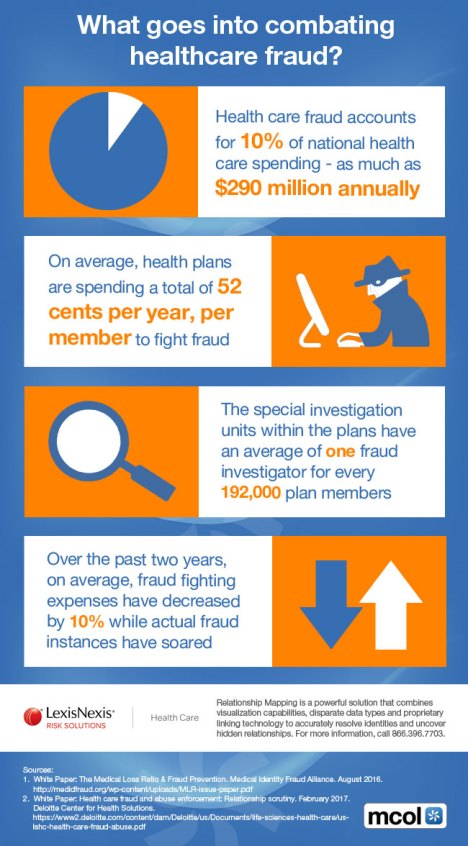
Combating Healthcare Fraud?

By http://www.MCOL.com

In Healthcare Plans and Accounts

***

 graphoid042617

***

Conclusion

Your thoughts and comments on this ME-P are appreciated. Feel free to review our top-left column, and top-right sidebar materials, links, URLs and related websites, too. Then, subscribe to the ME-P. It is fast, free and secure.

Speaker: If you need a moderator or speaker for an upcoming event, Dr. David E. Marcinko; MBA – Publisher-in-Chief of the Medical Executive-Post – is available for seminar or speaking engagements. Contact: MarcinkoAdvisors@msn.com

OUR OTHER PRINT BOOKS AND RELATED INFORMATION SOURCES:

Risk Management, Liability Insurance, and Asset Protection Strategies for Doctors and Advisors: Best Practices from Leading Consultants and Certified Medical Planners™      Risk Management, Liability Insurance, and Asset Protection Strategies for Doctors and Advisors: Best Practices from Leading Consultants and Certified Medical Planners™

***

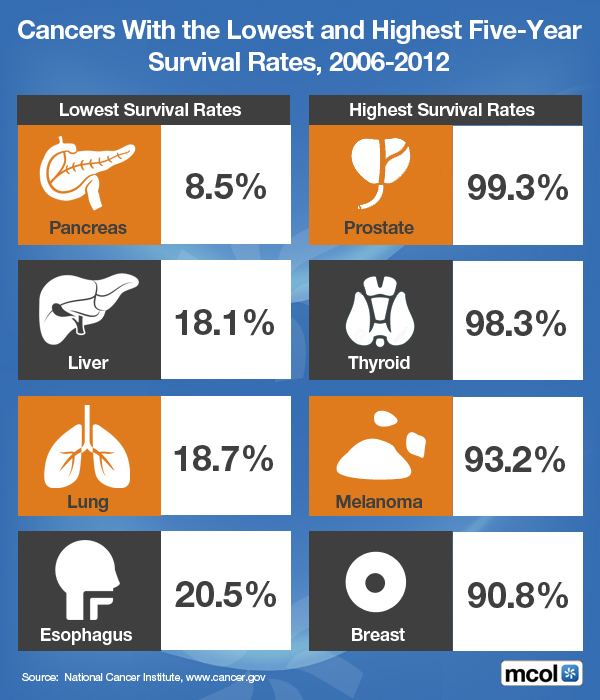
Cancer Lowest and Highest Survival Rates

Five Year: 2006-2012

By http://www.MCOL.com

***

***

Conclusion

Your thoughts and comments on this ME-P are appreciated. Feel free to review our top-left column, and top-right sidebar materials, links, URLs and related websites, too. Then, subscribe to the ME-P. It is fast, free and secure.

Speaker: If you need a moderator or speaker for an upcoming event, Dr. David E. Marcinko; MBA – Publisher-in-Chief of the Medical Executive-Post – is available for seminar or speaking engagements. Contact: MarcinkoAdvisors@msn.com

OUR OTHER PRINT BOOKS AND RELATED INFORMATION SOURCES:

Product DetailsProduct Details

***

Courts Examine Use of Statistical Sampling in False Claims Act Cases

Courts Examine Use of Statistical Sampling in False Claims Act Cases 

By Robert James Cimasi MHA CMP™
***
The False Claims Act (FCA) continues to grow in strength as the federal government and relators increase their use of the law to recover billions of dollars from companies that violate the Act’s provisions. Developments in the application and interpretation of the FCA, particularly in regard to the issue of statistical sampling in proving damages, may significantly influence the regulatory risk to healthcare enterprises, in light of the significant volume of recoveries received by the government under this law for healthcare fraud and abuse violations.
***
In recent months, interpretation of the FCA influenced the outcome of two prominent healthcare fraud and abuse cases: (1) U.S. ex rel. Michaels v. Agape Senior Community (Agape), originating in the U.S. District Court for the District of South Carolina and heard by the U.S. Court of Appeals for the 4th Circuit; and, (2) U.S. ex rel. Ruckh v. Genoa Healthcare Consulting, Inc. (Genoa), in the U.S. District Court for the Middle District of Florida. The cases, both of which explored the utilization of statistical sampling in proving damages under the FCA, leave unclear the standards associated with the admissibility of expert testimony in this context.
***
Assessment
***
This Health Capital Topics article summarizes the Agape and Genoa cases, and discusses the role that statistical sampling may play in future FCA actions. (Read more…)

***

Conclusion

Your thoughts and comments on this ME-P are appreciated. Feel free to review our top-left column, and top-right sidebar materials, links, URLs and related websites, too. Then, subscribe to the ME-P. It is fast, free and secure.

Speaker: If you need a moderator or speaker for an upcoming event, Dr. David E. Marcinko; MBA – Publisher-in-Chief of the Medical Executive-Post – is available for seminar or speaking engagements. Contact: MarcinkoAdvisors@msn.com

OUR OTHER PRINT BOOKS AND RELATED INFORMATION SOURCES:

Product DetailsProduct Details

***

Unrecognized Corporate Psychopathy in the Medical Profession

Join Our Mailing List

Langan MD

By Michael Lawrence Langan MD

In his book Without Conscience, Dr. Robert Hare notes: “If we can’t spot them, we are doomed to be their victims, both as individuals and as a society. ”

Dr. Clive Boddy in Corporate Psychopaths observes that “unethical leaders create unethical followers, which in turn create unethical companies and society suffers as a result.”

And more […]

***

 Snakes in Smocks: Unrecognized Corporate Psychopathy in the Medical ProfessionDisrupted Physician

***

Conclusion

Your thoughts and comments on this ME-P are appreciated. Feel free to review our top-left column, and top-right sidebar materials, links, URLs and related websites, too. Then, subscribe to the ME-P. It is fast, free and secure.

Speaker: If you need a moderator or speaker for an upcoming event, Dr. David E. Marcinko; MBA – Publisher-in-Chief of the Medical Executive-Post – is available for seminar or speaking engagements. Contact: MarcinkoAdvisors@msn.com

OUR OTHER PRINT BOOKS AND RELATED INFORMATION SOURCES:

 Risk Management, Liability Insurance, and Asset Protection Strategies for Doctors and Advisors: Best Practices from Leading Consultants and Certified Medical Planners™

***

Physician Health Programs are NOT Above the Law

Join Our Mailing List

Originally posted on Disrupted Physician 

Are Physician Health Programs (PHPs) above the Law?

By Michael Lawrence Langan MD

Unable to get law enforcement to take cognizance of reported abuse, many doctors I have spoken with believe that the actors involved are impervious to criminal liability.

***

***

 Physician Health Programs (PHPs) are not above the law; They just think they are — Disrupted Physician

Conclusion

Your thoughts and comments on this ME-P are appreciated. Feel free to review our top-left column, and top-right sidebar materials, links, URLs and related websites, too. Then, subscribe to the ME-P. It is fast, free and secure.

Speaker: If you need a moderator or speaker for an upcoming event, Dr. David E. Marcinko; MBA – Publisher-in-Chief of the Medical Executive-Post – is available for seminar or speaking engagements. Contact: MarcinkoAdvisors@msn.com

OUR OTHER PRINT BOOKS AND RELATED INFORMATION SOURCES:

Risk Management, Liability Insurance, and Asset Protection Strategies for Doctors and Advisors: Best Practices from Leading Consultants and Certified Medical Planners™  Risk Management, Liability Insurance, and Asset Protection Strategies for Doctors and Advisors: Best Practices from Leading Consultants and Certified Medical Planners™

***

The impact of illegitimate authority on regulation of the medical profession

Join Our Mailing List

The overdue need for critical analysis

Langan MD

By Michael Lawrence Langan MD

It is not wisdom but Authority that makes a lawThomas Hobbes

In Questions of science, the authority of a thousand is not worth the humble reasoning of a single individual— Galileo Galilei

Regulatory Decisions and Public Policy Making

***


***

The impact of illegitimate authority on regulation of the medical profession: The overdue need for critical analsysis — Disrupted Physician

Conclusion

Your thoughts and comments on this ME-P are appreciated. Feel free to review our top-left column, and top-right sidebar materials, links, URLs and related websites, too. Then, subscribe to the ME-P. It is fast, free and secure.

Speaker: If you need a moderator or speaker for an upcoming event, Dr. David E. Marcinko; MBA – Publisher-in-Chief of the Medical Executive-Post – is available for seminar or speaking engagements. Contact: MarcinkoAdvisors@msn.com

OUR OTHER PRINT BOOKS AND RELATED INFORMATION SOURCES:

Risk Management, Liability Insurance, and Asset Protection Strategies for Doctors and Advisors: Best Practices from Leading Consultants and Certified Medical Planners™

***

On Financial Product Sales Commissions

Join Our Mailing List

Rick Kahler MS CFPBy Rick Kahler MS CFP®

What’s wrong with earning a commission from the sale of a financial product?

Nothing. It isn’t any more inappropriate than a car salesperson earning a commission when you buy a vehicle.

Yet there’s one important difference. When you buy a car the roles are clear. You know going in that the salesperson is there to sell you their product. You understand it’s your responsibility to do your homework and know what you need and can afford.

Role Confusion

That clarity of roles is purposely clouded in the financial services industry. The “salespeople” are rarely referred to as such. Instead they call themselves creatively contrived variations like “financial advisor,” “financial planner,” “financial consultant,” or “financial representative.” The only advice a financial salesperson gives is in conjunction with the sales pitch to buy their product, where the incentive for them is receiving a commission.

This pretense that salespeople are working for the customer rather than the financial firm that employs them creates an inherent conflict of interest. The salesperson’s financial rewards come from pushing products versus giving client-oriented, comprehensive financial advice.

Conflict of interest

The conflict of interest resulted in many brokerage and insurance firms in the 1980’s providing incentives for their salespeople to push high commission products while hiding the high fees.

Examples:

  • Just one of many examples was described in a 1993 article in the Los Angeles Times. Prudential allowed salespeople to cheat customers out of $3 billion of losses invested into 700 Prudential limited partnerships that were high-risk and “rife with misconduct” while telling investors they were “safe, high-yield investments comparable to bank certificates of deposit.” The company finally agreed to a fine of $371 million, representing about 12% of what investors lost.

You might think that, 24 years later, things have changed and large financial firms selling products have changed. They haven’t.

  • One recent example was the $185 million fine paid by Wells Fargo over charging their customers fees for financial products they didn’t authorize.
  • Also, two years ago JPMorgan was fined $307 million for product pushing. Last year they were fined $264 million for their part in a vast foreign bribery scheme.
  • In 2015, one of the top JPMorgan representatives, Johnny Burris, who has been in the business for more than 25 years, refused to steer clients into proprietary JPMorgan funds that he felt had become rife with high fees. As reported in Financial Planning magazine, he was let go by the company.

But wait, that’s not all.

  • If you think Wells Fargo and JPMorgan’s fines were notable, think again. According to the Columbus Dispatch, Bank of America has paid $76.6 billion in 31 settlements from 2009 to 2016. During the same period, Chase Bank paid $38 billion in 22 settlements and Citigroup paid $15.8 billion in 15 settlement cases.

With a track record like this, you might think that consumers would be demanding wholesale changes in the way we regulate financial advice. They probably would be if they were personally aware of how hidden costs and fees cost the average investor thousands of dollars a year. No wonder that big financial firms can afford to pay billions in fines as a cost of doing business.

***

aamzlyk

***

Assessment

Other countries, including Australia, Canada, and the UK, have required a distinct separation of financial advice from financial sales. Hopefully the US won’t let another 24 years go by with no changes in the way we regulate companies that sell financial products. For those changes to be driven by consumer demand, more investors need to learn about the costs they pay and to realize that sellers of financial products are not that different from sellers of cars.

Conclusion

Your thoughts and comments on this ME-P are appreciated. Feel free to review our top-left column, and top-right sidebar materials, links, URLs and related websites, too. Then, subscribe to the ME-P. It is fast, free and secure.

Speaker: If you need a moderator or speaker for an upcoming event, Dr. David E. Marcinko; MBA – Publisher-in-Chief of the Medical Executive-Post – is available for seminar or speaking engagements. Contact: MarcinkoAdvisors@msn.com

OUR OTHER PRINT BOOKS AND RELATED INFORMATION SOURCES:

Comprehensive Financial Planning Strategies for Doctors and Advisors: Best Practices from Leading Consultants and Certified Medical Planners™

***

Healthcare Policy on Health and Ethics

Join Our Mailing List

By Ben’s Bitter Blog

Healthcare Policy on Health and Ethics Healthcare policy is defined as “decisions, plans, and actions that are undertaken to achieve specific health care goals within a society” (WHO, 2016).

Do you believe that your life is affected by healthcare policy?

YES. The policy directs which doctor you can see, which hospital you can visit, and […]

***

dc7jRLqc9

Healthcare Policy on Health and Ethics

***

WHITE PAPER: Ethics Dr. Marcinko

Conclusion

Your thoughts and comments on this ME-P are appreciated. Feel free to review our top-left column, and top-right sidebar materials, links, URLs and related websites, too. Then, subscribe to the ME-P. It is fast, free and secure.

Speaker: If you need a moderator or speaker for an upcoming event, Dr. David E. Marcinko; MBA – Publisher-in-Chief of the Medical Executive-Post – is available for seminar or speaking engagements. Contact: MarcinkoAdvisors@msn.com

OUR OTHER PRINT BOOKS AND RELATED INFORMATION SOURCES:

Product Details

***

Some Behavioral Finance Publications to Review

Join Our Mailing List

Selected Classic Readings of Interest

[By ME-P Staff Reporters]

share

[iMBA Inc., PHYSICIAN FOCUSED FINANCIAL PLANNING AND RISK MANAGEMENT TEXTBOOK SET]

          Risk Management, Liability Insurance, and Asset Protection Strategies for Doctors and Advisors: Best Practices from Leading Consultants and Certified Medical Planners™8Comprehensive Financial Planning Strategies for Doctors and Advisors: Best Practices from Leading Consultants and Certified Medical Planners™                 8

 I worked with a Certified Medical Planner™ on several occasions in the past, and will do so again in the future. This book codified the vast body of knowledge that helped in all facets of my financial life and professional medical practice.

Dr. James E. Williams DABPS [Foot and Ankle Surgeon, Conyers, Georgia]

There is a constantly changing field for rules, regulations, taxes, insurance, compliance, and investments. This book assists readers, and their financial advisors, in keeping up with what’s going on in the healthcare field that all doctors need to know.

Patricia Raskob CFP® EA ATA [Raskob Kambourian Financial Advisors, Tucson, Arizona]

On the “Care-Taking” of Your Financial Affairs

Join Our Mailing List

Rick Kahler MS CFP

By Rick Kahler MS CFP®

One area that few seniors prepare for is arranging for someone else to handle their financial affairs when they can no longer fully care for themselves.

This is easy to put off, for three primary reasons.

First, there are a lot of difficult emotions involved with the thought of losing our cognitive ability and the inherent freedom to financially care for ourselves. This is something we have done for ourselves all our lives, so it’s very hard to imagine not being able to do so.

Second, for many of us the loss of cognitive ability is slow and almost unrecognizable. There isn’t an urgency that suggests we need to do anything soon. Often by the time we do realize we need help, it’s too late for us to arrange for it.

Finally, while we’re in good health we tend not to consider the possibility of a sudden catastrophic health event. Yet such a crisis can leave us without a plan and no way in which to have any say in what happens.

National Association of Personal Financial Advisors

Fortunately, if you are reading this you have time to prepare. The following information is based on the work of Carolyn McClanahan, MD CFP®, particularly a presentation given to the National Association of Personal Financial Advisors in May of 2016.

She suggests the major questions to answer are:

  1. Who will be in charge?
  2. Are the right documents in place?
  3. How will you monitor your decline?
  4. Do you have a written investment policy?
  5. How will the transition occur?

Who will be in charge?

Choosing a trusted third party to take over bill paying, investment management, and financial caretaking is essential. Options include a spouse, a child or other relative, a friend, a professional bookkeeper, or a financial planner. For couples, the odds are that both partners won’t lose their ability to handle financial affairs at the same time. If one spouse handles most of the money matters, it’s important that the noninvolved spouse becomes involved in the bill paying routine and understands the basics of the couple’s finances. If you are the caretaking or surviving spouse, or if you are single, designating a financial caretaker is crucial.

***

200298593-001

***

Are the right documents in place?

The most important document is your power of attorney that names the person or organization who will be in charge of your finances. If the bulk of your net worth is in retirement accounts, annuities, and jointly owned, another option is to create a living trust, place everything you own individually in it, and identify the successor trustee who is in charge when you can no longer make decisions.

How will you monitor your decline?

It’s important to have some written agreement in place—even if for no one but yourself—that lists the triggering events which will indicate to you the time has come to transfer the control to someone else. It’s up to you to determine what these triggers are and to self-assess every few years.

Do you have a written investment policy?

And is it current? This is a good time to review your investment policy, making sure it’s been updated to reflect your changing cash flow needs and asset allocation. You might also evaluate your ownership of any complicated and illiquid assets like real estate or closely held business interests. It may be wise to simplify and liquidate them while you’re still capable of managing them, before it’s time to pass responsibility to a surrogate.

Assessment

Once you’ve answered these four questions, it’s time to consider the last step that will be addressed in a future ME-P: how the transition should take place?

Five Reasons Families Fight Over Estates

Conclusion

Your thoughts and comments on this ME-P are appreciated. Feel free to review our top-left column, and top-right sidebar materials, links, URLs and related websites, too. Then, subscribe to the ME-P. It is fast, free and secure.

Speaker: If you need a moderator or speaker for an upcoming event, Dr. David E. Marcinko; MBA – Publisher-in-Chief of the Medical Executive-Post – is available for seminar or speaking engagements. Contact: MarcinkoAdvisors@msn.com

OUR OTHER PRINT BOOKS AND RELATED INFORMATION SOURCES:

Comprehensive Financial Planning Strategies for Doctors and Advisors: Best Practices from Leading Consultants and Certified Medical Planners™

***

One Man’s Quest to Hack His Own Genes

Join Our Mailing List

A Repost by Antonio Regalado

When Brian Hanley set out to test a gene therapy, he started with himself

When Brian Hanley set out to test a new gene therapy, he needed a subject. So, he started with … himself.

In a plastic surgeon’s office in Davis, California, Hanley had genes, which he had designed himself, injected into his thigh. The hope: they would make his body produce more of a potent hormone that would hopefully increase his strength, stamina, and life span.

Hanley has a PhD in microbiology, but his experiment is independent, unapproved by the FDA, and funded by savings. He claims to be “informed consent personified,” while ethicists argue that “experimenting with yourself is a very, very deep conflict of interest.”

Our own Antonio Regalado met Hanley to find out why he did it, what he thinks his project could prove—and how he prepared for the possibility of something going wrong.

***

untitled

*** 

Conclusion

Your thoughts and comments on this ME-P are appreciated. Feel free to review our top-left column, and top-right sidebar materials, links, URLs and related websites, too. Then, subscribe to the ME-P. It is fast, free and secure.

Speaker: If you need a moderator or speaker for an upcoming event, Dr. David E. Marcinko; MBA – Publisher-in-Chief of the Medical Executive-Post – is available for seminar or speaking engagements. Contact: MarcinkoAdvisors@msn.com

OUR OTHER PRINT BOOKS AND RELATED INFORMATION SOURCES:

Product DetailsProduct DetailsProduct Details

***

Deciding Whether To Refer a Colleague to a Physician Health Program

Given the authority that PHPs often have over the ability of physicians to practice medicine, their power is enormous and not necessarily wielded appropriately. Deciding Whether To Refer a Colleague to a Physician Health Program J. Wesley Boyd, MD, PhD Physicians should exercise caution in referring a possibly impaired colleague to a physician health progr… […]

Deciding Whether To Refer a Colleague to a Physician Health Program, Oct 15 –

AMA Journal of Ethics – J. Wesley Boyd, M.D., PhD — Disrupted Physician

***

Product DetailsProduct Details

***

Fake Academe – Looking Much Like the Real Thing

Join Our Mailing List

On Fake Academe

By Kevin Carey [UPSHOT]

Sham scholarly publications and academic conferences without rigor reflect a legitimate problem: too many PhD holders chasing too few credentials.

diploma

Fake Academe, Looking Much Like the Real Thing

***

Assessment

Not infrequently, I get invited to these conferences and seminars? In fact, my most recent invitation was only last week; in Abu Dhabi. Scams are still easy to spot.

-Dr. David Edward Marcinko MBA

[ME-P Publisher]

MORE: Free Market for Education? Economists Generally Don’t Buy It

Your thoughts and comments on this ME-P are appreciated. Feel free to review our top-left column, and top-right sidebar materials, links, URLs and related websites, too. Then, subscribe to the ME-P. It is fast, free and secure.

Speaker: If you need a moderator or speaker for an upcoming event, Dr. David E. Marcinko; MBA – Publisher-in-Chief of the Medical Executive-Post – is available for seminar or speaking engagements. Contact: MarcinkoAdvisors@msn.com

OUR OTHER PRINT BOOKS AND RELATED INFORMATION SOURCES:

Risk Management, Liability Insurance, and Asset Protection Strategies for Doctors and Advisors: Best Practices from Leading Consultants and Certified Medical Planners™8Comprehensive Financial Planning Strategies for Doctors and Advisors: Best Practices from Leading Consultants and Certified Medical Planners™

***

How debt affects the income to happiness ratio?

Join Our Mailing List

Debt and Un-Happiness

Rick Kahler MS CFP

By Rick Kahler CFP®

I have written previously about the plethora of research that shows a link between income and happiness.

Most of those studies find that the more money people bring in, the happier they are—until earnings exceed $75,000, at which time the correlation declines.

What I’ve never thought to address when I have reported on these studies is how debt affects the income to happiness ratio. I inherently assumed that the income level was free of consumer debt, meaning the individual lived on what they made. The only debt I assumed was a mortgage payment, that also included property taxes and insurance, of no more than 25% of income. This means a family earning $75,000 has a maximum housing cost of 1,500 per month.

In Rapid City, SD, that will get you a very comfortable, upper middle-class home or rental.

Further, I assumed any increase in income meant no corresponding increase in consumer debt. A few comments from readers who didn’t understand my unwritten assumption opened my eyes.

***

broken PC

UNHAPPINESS

***

Example:

One man—I’ll call him Sean—said my data must be flawed.

For him, a significant increase in income when he graduated from college did not increase his well-being but actually created increased ill-being. When Sean graduated from college he was earning $20,000 at his minimum wage job but had no debt. Upon graduation he secured a position paying $70,000 a year, which theoretically should have had him doing a financial happy dance.

Here’s what happened instead:

He upgraded his paid-off clunker for a brand new car, taking on a $45,000 debt with an $823 a month payment. From dorm living at his state school of about $500 a month, he went to a $1,500 a month mortgage payment on a starter home he bought for $225,000 with a $25,000 down payment gifted to him by his grandparents. To furnish the house, he ran up a $20,000 balance on his credit card, which meant monthly payments of $750. His student debt of $80,000 kicked in, with payments of $750 a month. That’s $3,323 a month in additional spending, or $39,876 a year, and a total debt of $345,000. That means his $70,000 new job was actually the equivalent of earning $30,124 a year with no debt.

No wonder he wasn’t happier.

The Studies

A study from Purdue, “Debt and Subjective Well-being: The Other Side of the Income-Happiness Coin,” published in the Journal of Happiness Studies, finds my hunch was right. More income coupled with more debt does not mean more happiness. In fact, as in Sean’s case, it often means just the opposite.

The study specifically targeted the impact of college loan debt on students who had been out of college and in the work force for seven years. The study found the higher the debt to income ratio, the lower the overall happiness.

In another study from the University of Wisconsin-Madison, “Household Debt and Adult Depressive Symptoms,” researchers Lawrence M. Berger, J. Michael Collins, and Laura Cuesta found that consumer debt is positively associated with ill-being and greater depression. The groups most affected by consumer debt are those less educated or who are approaching retirement age.

Assessment

My recommendation for financial well-being is that, if you have to borrow to buy something other than real estate, don’t.

  • Keeping your financial obligations to a sensible amount of long-term housing debt is the best foundation for building financial well-being.
  • Don’t let an increase in income lure you into an increase in debt.

When you keep your consumer debt load small, earning more money is much more likely to increase your overall happiness and well-being.

MORE:

Conclusion

Your thoughts and comments on this ME-P are appreciated. Feel free to review our top-left column, and top-right sidebar materials, links, URLs and related websites, too. Then, subscribe to the ME-P. It is fast, free and secure.

Speaker: If you need a moderator or speaker for an upcoming event, Dr. David E. Marcinko; MBA – Publisher-in-Chief of the Medical Executive-Post – is available for seminar or speaking engagements. Contact: MarcinkoAdvisors@msn.com

OUR OTHER PRINT BOOKS AND RELATED INFORMATION SOURCES:

Risk Management, Liability Insurance, and Asset Protection Strategies for Doctors and Advisors: Best Practices from Leading Consultants and Certified Medical Planners™    Comprehensive Financial Planning Strategies for Doctors and Advisors: Best Practices from Leading Consultants and Certified Medical Planners™

***

Why we cannot assume CFP® equals “Fiduciary”

Join Our Mailing List

Rick Kahler MS CFP

By Rick Kahler MS CFP®

One of the most important ways to find competent and trustworthy investment advisers is to be sure they owe you a fiduciary duty.

This means the advisers’ legal and ethical responsibility is to act in your best interests, not their own or their employer’s.

An ongoing legal case featured in an October 31 article by Ann Marsh in the online Financial Planning magazine highlights both the importance and the difficulty of finding a fiduciary adviser. (Disclosure: I am one of several advisers quoted in the article.)

The whistleblower case against J. P. Morgan involves an adviser and former J. P. Morgan employee, Johnny Burris, who says he was fired after refusing to give in to pressure to sell some of his employer’s high-priced products that he did not believe to be in his clients’ best interest.

Importance?

Here is why this case is important to anyone looking for financial advice: many advisers at investment firms like J. P. Morgan hold the Certified Financial Planner (CFP) designation. According to the website of the CFP Board of Standards, the organization that awards the certification, CFP’s are required “to put your interests ahead of their own at all times and to provide their financial planning services as a ‘fiduciary’—acting in the best interest of their financial planning clients.”

This sounds straightforward enough. Since 2008, the CFP Board has positioned the CFP designation as an indicator that an adviser will put clients’ interest first.

Unfortunately, that isn’t quite accurate.

Here is the tricky part: Advisers who sell financial products are allowed to “wear two hats” in their interaction with consumers. Any time they are giving financial advice and acting as financial planners (as defined by the CFP Board), they are expected to act in the best interest of the client/customer.

Yet if they don’t give any financial advice other than what is ancillary to the sale (a very confusing concept) of financial products to the same client/customer, that fiduciary requirement does not apply. The consumer is apparently expected to have the exceptional discernment and knowledge to know which hat is being worn at any given time.

As a consumer, you can assume that advisers holding the CFP® designation have completed many hours of education and passed tests to assess their professional competence.

However, because of the CFP Board’s hairsplitting, you cannot assume “CFP” equals “fiduciary.”

You still have to ask two essential questions:

The first is “In this engagement with me, who are you primarily responsible to, me or your company?” An adviser employed by a brokerage house or investment bank is very likely to be held most responsible to their company and expected to sell that firm’s financial products. This sets up a conflict of interest, in that the products with the highest fees will make the most money for the firm and the adviser, while those with lower fees may well be in the best interest of the clients.

A CFP® adviser who works for an independent financial planning firm may be less likely to be pressured to sell a given line of products. They also may do enough financial planning to be required to be a fiduciary.

However, you still need to ask the second question: “How do you get paid?” Any adviser who receives income from selling financial products cannot fully represent clients as a fiduciary without first overcoming an inherent conflict of interest.

***

stock market

***

Assessment

An adviser who doesn’t sell any products, who gives investment advice, and whose income comes solely from client fees is answerable and responsible to those clients as a fiduciary. You can trust that such a fee-only adviser will genuinely put your interests first. 

Conclusion

Your thoughts and comments on this ME-P are appreciated. Feel free to review our top-left column, and top-right sidebar materials, links, URLs and related websites, too. Then, subscribe to the ME-P. It is fast, free and secure.

Speaker: If you need a moderator or speaker for an upcoming event, Dr. David E. Marcinko; MBA – Publisher-in-Chief of the Medical Executive-Post – is available for seminar or speaking engagements. Contact: MarcinkoAdvisors@msn.com

OUR OTHER PRINT BOOKS AND RELATED INFORMATION SOURCES:

Risk Management, Liability Insurance, and Asset Protection Strategies for Doctors and Advisors: Best Practices from Leading Consultants and Certified Medical Planners™     Comprehensive Financial Planning Strategies for Doctors and Advisors: Best Practices from Leading Consultants and Certified Medical Planners™

***

Integrity and Accountability—The Declining State of Physician Health and the Urgent Need for Ethical and Evidence-Based Leadership

Join Our Mailing List

By Michael Lawrence Langan MD

***

***

Integrity and Accountability—The Declining State of Physician Health and the Urgent Need for Ethical and Evidence-Based Leadership — Disrupted Physician

Conclusion

Your thoughts and comments on this ME-P are appreciated. Feel free to review our top-left column, and top-right sidebar materials, links, URLs and related websites, too. Then, subscribe to the ME-P. It is fast, free and secure.

Speaker: If you need a moderator or speaker for an upcoming event, Dr. David E. Marcinko; MBA – Publisher-in-Chief of the Medical Executive-Post – is available for seminar or speaking engagements. Contact: MarcinkoAdvisors@msn.com

OUR OTHER PRINT BOOKS AND RELATED INFORMATION SOURCES:

Product DetailsProduct DetailsProduct Details

***

Prescription Drug Bitterness

Join Our Mailing List

By Ben’s Bitter Blog

I just read the other day that there are only two countries in the world that allow prescription drugs to be advertised on television and one of those is the Good Ole USA.

***

***

I have to say that I feel bad for the rest of the world because you guys are missing out on something […]

Prescription Drug BitternessBen’s Bitter Blog

Conclusion

Your thoughts and comments on this ME-P are appreciated. Feel free to review our top-left column, and top-right sidebar materials, links, URLs and related websites, too. Then, subscribe to the ME-P. It is fast, free and secure.

Speaker: If you need a moderator or speaker for an upcoming event, Dr. David E. Marcinko; MBA – Publisher-in-Chief of the Medical Executive-Post – is available for seminar or speaking engagements. Contact: MarcinkoAdvisors@msn.com

OUR OTHER PRINT BOOKS AND RELATED INFORMATION SOURCES:

Product Details

***

Doctor Bitterness

Join Our Mailing List

By Ben Gardner [Ben’s Bitter Blog]

Most people would be surprised to know this about me, but I am neither invincible or indestructible. Because of this, from time to time, I get sick.

***

***

Sometimes I even have pain. I am very bitter about this, but it is something even I have to deal with. When my drug of choice, Aleve, isn’t […]

Doctor BitternessBen’s Bitter Blog

Conclusion

Your thoughts and comments on this ME-P are appreciated. Feel free to review our top-left column, and top-right sidebar materials, links, URLs and related websites, too. Then, subscribe to the ME-P. It is fast, free and secure.

Speaker: If you need a moderator or speaker for an upcoming event, Dr. David E. Marcinko; MBA – Publisher-in-Chief of the Medical Executive-Post – is available for seminar or speaking engagements. Contact: MarcinkoAdvisors@msn.com

OUR OTHER PRINT BOOKS AND RELATED INFORMATION SOURCES:

Product DetailsProduct Details

***

Competent, Ethical and Fair Legal Representation for Doctors

Join Our Mailing List

 —A Possible New Niche Area for Lawyers?

Langan MD

By Michael Lawrence Langan, M.D.

Wretched creatures are compelled by the severity of the torture to confess things they have never done and so by cruel butchery innocent lives are taken; and by new alchemy, gold and silver are coi…

Competent, Ethical and Fair Legal Representation for Doctors —A Possible New Niche area for Lawyers.

*** 

Conclusion

Your thoughts and comments on this ME-P are appreciated. Feel free to review our top-left column, and top-right sidebar materials, links, URLs and related websites, too. Then, subscribe to the ME-P. It is fast, free and secure.

Speaker: If you need a moderator or speaker for an upcoming event, Dr. David E. Marcinko; MBA – Publisher-in-Chief of the Medical Executive-Post – is available for seminar or speaking engagements. Contact: MarcinkoAdvisors@msn.com

OUR OTHER PRINT BOOKS AND RELATED INFORMATION SOURCES:

Risk Management, Liability Insurance, and Asset Protection Strategies for Doctors and Advisors: Best Practices from Leading Consultants and Certified Medical Planners™8Comprehensive Financial Planning Strategies for Doctors and Advisors: Best Practices from Leading Consultants and Certified Medical Planners™

***

The PRIME Act

Join Our Mailing List 

Preventing and Reducing Improper Medicare and Medicaid Expenditures Act

demBy Dr. David Edward Marcinko MBA

http://www.CertifiedMedicalPlanner.org

This Act was introduced into congress in 2013 and contains a number of provisions that would increase rewards and incentives for those who uncover healthcare fraud, as well as heighten penalties for those who commit it.

The PRIME Act

The PRIME Act would enact stronger penalties for Medicare and Medicaid fraud; curb improper or mistaken payments made by Medicare and Medicaid; establish stronger fraud and waste prevention strategies with Medicare and Medicaid to help phase out the practice of “pay and chase” (i.e., recouping monies already erroneously paid to providers instead of detecting problems on the front end); curb the theft of physician identities; expand the fraud identification and reporting work of the Senior Medicare patrol; take steps to help states identify and prevent Medicaid overpayments; and improve the sharing of fraud data across state and federal agencies and programs.

fraud

Assessment

The law directs the Secretary to develop a plan to revise the incentive program under HIPAA for the reporting of fraud and abuse to encourage greater participation by individuals reporting Medicare fraud and abuse.

And, it also requires the plan to include certain recommendations for ways to enhance rewards for individuals reporting and an extension of the incentive program to the Medicaid program.

MORE: Ten Ways to Prevent Fraud [Consumer]

Conclusion

Your thoughts and comments on this ME-P are appreciated. Feel free to review our top-left column, and top-right sidebar materials, links, URLs and related websites, too. Then, subscribe to the ME-P. It is fast, free and secure.

Speaker: If you need a moderator or speaker for an upcoming event, Dr. David E. Marcinko; MBA – Publisher-in-Chief of the Medical Executive-Post – is available for seminar or speaking engagements. Contact: MarcinkoAdvisors@msn.com

OUR OTHER PRINT BOOKS AND RELATED INFORMATION SOURCES:

Risk Management, Liability Insurance, and Asset Protection Strategies for Doctors and Advisors: Best Practices from Leading Consultants and Certified Medical Planners™   Risk Management, Liability Insurance, and Asset Protection Strategies for Doctors and Advisors: Best Practices from Leading Consultants and Certified Medical Planners™

***

50 Things Every Gentleman Should Know

Join Our Mailing List 

Practical Psychology

54f358d389279a6e9f0b59d95f51461a

By Gus

A gentleman is one who puts more into the world than he takes out.

-George Bernard Shaw

According to a recent article in Salon, the “radical” act of paying attention to each other.…

***

210_1

***

50 Things Every Gentleman Should Know, presented by Practical Psychology

Conclusion

Your thoughts and comments on this ME-P are appreciated. Feel free to review our top-left column, and top-right sidebar materials, links, URLs and related websites, too. Then, subscribe to the ME-P. It is fast, free and secure.

Speaker: If you need a moderator or speaker for an upcoming event, Dr. David E. Marcinko; MBA – Publisher-in-Chief of the Medical Executive-Post – is available for seminar or speaking engagements. Contact: MarcinkoAdvisors@msn.com

OUR OTHER PRINT BOOKS AND RELATED INFORMATION SOURCES:

***

Reasons to Remember Death, by the School of Life

Join Our Mailing List 

Daily Dose

By Gus-

https://www.wisedrugged.com

Remembering that I’ll be dead soon is the most important tool I’ve ever encountered to help me make the big choices in life.

-Steve Jobs [In the spirit of Halloween being …]

***

327_1

***

Daily Dose: Reasons to Remember Death, by the School of Life

Conclusion

Your thoughts and comments on this ME-P are appreciated. Feel free to review our top-left column, and top-right sidebar materials, links, URLs and related websites, too. Then, subscribe to the ME-P. It is fast, free and secure.

Speaker: If you need a moderator or speaker for an upcoming event, Dr. David E. Marcinko; MBA – Publisher-in-Chief of the Medical Executive-Post – is available for seminar or speaking engagements. Contact: MarcinkoAdvisors@msn.com

OUR OTHER PRINT BOOKS AND RELATED INFORMATION SOURCES:

Product Details

***

What is the right relationship to money?

Join Our Mailing List

Money often costs too much.

-Ralph Waldo Emerson

By Gus: https://www.wisedrugged.com

Presented By J. Krishnamurti

As the Dow Jones soars to new peaks, it seems many of us feel a sense of security within the realm of money.

Less preoccupation maybe? Is th…

***

Money

***

What is the right relationship to money? presented by J. Krishnamurti

Conclusion

Your thoughts and comments on this ME-P are appreciated. Feel free to review our top-left column, and top-right sidebar materials, links, URLs and related websites, too. Then, subscribe to the ME-P. It is fast, free and secure.

Speaker: If you need a moderator or speaker for an upcoming event, Dr. David E. Marcinko; MBA – Publisher-in-Chief of the Medical Executive-Post – is available for seminar or speaking engagements. Contact: MarcinkoAdvisors@msn.com

OUR OTHER PRINT BOOKS AND RELATED INFORMATION SOURCES:

Product Details

***

On Prospect Theory

Join Our Mailing List

And … the reality of decision making!

By David Shahrestani

In the early 1980s, Daniel Kahneman and Amos Tverskey proved in numerous experiments that the reality of decision making differed greatly from the assumptions held by economists.

They published their findings in Prospect Theory: An analysis of decision making under risk, which quickly became one of the most cited papers in all of economics. To […]

***

285e8c18796363_562d1c0223d65

Human Nature #9: Prospect Theory — Wiser Daily

***

Conclusion

Your thoughts and comments on this ME-P are appreciated. Feel free to review our top-left column, and top-right sidebar materials, links, URLs and related websites, too. Then, subscribe to the ME-P. It is fast, free and secure.

Speaker: If you need a moderator or speaker for an upcoming event, Dr. David E. Marcinko; MBA – Publisher-in-Chief of the Medical Executive-Post – is available for seminar or speaking engagements. Contact: MarcinkoAdvisors@msn.com

OUR OTHER PRINT BOOKS AND RELATED INFORMATION SOURCES:

Risk Management, Liability Insurance, and Asset Protection Strategies for Doctors and Advisors: Best Practices from Leading Consultants and Certified Medical Planners™

***

Are You a One Percenter?

Join Our Mailing List

Well … Are you Doctor?

Rick Kahler MS CFP

By Rick Kahler MSFS CFP

What would it take for you to become a one percenter? How much net worth would put you in the wealthiest one percent in the United States?

In a recent discussion with a colleague, I suggested this number was $1.2 million. He said $9 million. Turns out the real answer, which is surprisingly hard to find, probably falls somewhere in between $1.2 million and $9 million. I have read several articles that put it in the range of $3 to $5 million.

Joshua Kennon, author of The Complete Idiot’s Guide to Investing, 3rd Edition, discusses this topic in more detail in an article posted to his blog in September 2011. He cites several sources and points out the differing methods used by the Federal Reserve Board (which uses the $9 million figure) and the IRS (which favors $1.2 million) to arrive at their numbers.

Regardless of the net worth needed to enter the top 1%, the media usually focuses on the amount of a household’s annual income as what really determines what makes someone rich. We know the income of the rich is growing faster than the income of the poor and middle class. What isn’t reported as often is that the percentage of Americans considered “rich” is also increasing by leaps and bounds. This is different from the rich getting richer. This means an increasing number of Americans are joining the ranks of the rich and the upper middle class.

***

untitled

***

In June 2016, Stephen J. Rose, a nationally recognized labor economist affiliated with the Income and Benefits Policy Center at the Urban Institute, published a report titled “The Growing Size and Incomes of the Upper Middle Class.” His research covered a 36-year period from 1979 through 2014. He found that the number of households earning $350,000 or more a year (adjusted for inflation) increased eighteen times, from 0.1% of the population in 1979 to 1.8% in 2014. The upper middle class, those households earning between $100,000 to $350,000, increased two and one-half times, from 12.9% to 29.4%.

With more people earning more money and moving into the rich and upper middle class categories, it would stand to reason that fewer people would be left in the categories of middle class, lower middle class, and poor. The middle class, households earning $50,000 to $100,000, shrank from 38.8% to 32.0%. The lower middle class, households earning from $30,000 to $50,000, declined from 23.9% to 17.1%. The poor, households earning under $30,000, contracted from 24.3% to 19.8%.

Good News?

That is really good news. It means that today, the average American is earning more money than was the case 36 years ago. Perhaps our economic system isn’t as broken as some would have us believe.

With so many political candidates and activists focused on issues like income inequality, it’s easy to assume that more and more Americans are sinking to the bottom economically. Before making such assumptions, it’s important to factor in real data like that cited in Rose’s report.

The plight of those who unfortunately remain on the bottom is a real concern that deserves attention. Yet it is only one part of the whole picture. Many others are able to move upward, an individual and societal accomplishment that is worth celebrating.

Assessment

Instead of taking more from those who do succeed, it would be more useful to focus on what we can do to help others emulate them. The middle and upper middle classes tend to receive less attention than either the poor or the rich, yet these categories make up the majority of Americans. There is always room for others to join them. 

Conclusion

Your thoughts and comments on this ME-P are appreciated. Feel free to review our top-left column, and top-right sidebar materials, links, URLs and related websites, too. Then, subscribe to the ME-P. It is fast, free and secure.

Speaker: If you need a moderator or speaker for an upcoming event, Dr. David E. Marcinko; MBA – Publisher-in-Chief of the Medical Executive-Post – is available for seminar or speaking engagements. Contact: MarcinkoAdvisors@msn.com

OUR OTHER PRINT BOOKS AND RELATED INFORMATION SOURCES:

Comprehensive Financial Planning Strategies for Doctors and Advisors: Best Practices from Leading Consultants and Certified Medical Planners™

***

Request Medical School Administrators Question PHP Authority to Prevent Future Medical Profession Brain Drain

Join Our Mailing List

[Pediatric] Physician Health Programs

Langan MD[By Michael Lawrence Langan MD]

Physician Health Programs (PHPs) are now targeting medical students and the stories I am hearing are heartbreaking.   Medical students who do not fit the diagnostic criteria for psychological probl…

 Request Medical School Administrators Question PHP Authority to Prevent Future Medical Profession Brain Drain

Conclusion

Your thoughts and comments on this ME-P are appreciated. Feel free to review our top-left column, and top-right sidebar materials, links, URLs and related websites, too. Then, subscribe to the ME-P. It is fast, free and secure.

Speaker: If you need a moderator or speaker for an upcoming event, Dr. David E. Marcinko; MBA – Publisher-in-Chief of the Medical Executive-Post – is available for seminar or speaking engagements. Contact: MarcinkoAdvisors@msn.com

OUR OTHER PRINT BOOKS AND RELATED INFORMATION SOURCES:

Risk Management, Liability Insurance, and Asset Protection Strategies for Doctors and Advisors: Best Practices from Leading Consultants and Certified Medical Planners™

***

Today happens only once!

Join Our Mailing List 

In the end … We are guaranteed nothing

By Michael P. Jones MD

To fret over the past and put things off on the future only squanders today.

Be kind to yourself. Be kind to others. Become the person that you always wanted to be.

Look around and find the good things because they are out there.

When I can do that, my days are full and rich and satisfying, and I feel like I help make the lives of people around me better, too.

And in the end, that’s all that matters.

***

942ef818796363_562d14c1238cb

***

ABOUT

Michael P. Jones is a gastroenterologist.

Conclusion

Your thoughts and comments on this ME-P are appreciated. Feel free to review our top-left column, and top-right sidebar materials, links, URLs and related websites, too. Then, subscribe to the ME-P. It is fast, free and secure.

Speaker: If you need a moderator or speaker for an upcoming event, Dr. David E. Marcinko; MBA – Publisher-in-Chief of the Medical Executive-Post – is available for seminar or speaking engagements. Contact: MarcinkoAdvisors@msn.com

OUR OTHER PRINT BOOKS AND RELATED INFORMATION SOURCES:

Product Details

***

Gay Doctor Coerced by Physician Health Program (PHP) into mandated 12-step treatment and monitoring for sex addiction: The slippery slope begins

Join Our Mailing List

Langan MD[By Michael Lawrence Langan MD]

State Physician Health Programs – coercion, control and abuse. This anecdote concerning  a gay doctor’s revelation he liked his non monogamous lifestyle leading  to a forced acceptance of a &#… …

 Gay Doctor coerced by Physician Health Program (PHP) into mandated 12-step treatment and monitoring for sex addiction: The slippery slope begins

Conclusion

Your thoughts and comments on this ME-P are appreciated. Feel free to review our top-left column, and top-right sidebar materials, links, URLs and related websites, too. Then, subscribe to the ME-P. It is fast, free and secure.

Speaker: If you need a moderator or speaker for an upcoming event, Dr. David E. Marcinko; MBA – Publisher-in-Chief of the Medical Executive-Post – is available for seminar or speaking engagements. Contact: MarcinkoAdvisors@msn.com

OUR OTHER PRINT BOOKS AND RELATED INFORMATION SOURCES:

Risk Management, Liability Insurance, and Asset Protection Strategies for Doctors and Advisors: Best Practices from Leading Consultants and Certified Medical Planners™

***

An Open Letter to Senator Elizabeth Warren Regarding Laboratory Developed Tests, Physician Health Programs and Institutional Injustice

Join Our Mailing List

Langan MD[By Michael Lawrence Langan MD]

I can think of nothing more institutionally unjust than an unregulated zero-tolerance monitoring program with no oversight using unregulated drug and alcohol testing of unknown validity.   But that…

An Open Letter to Senator Elizabeth Warren Regarding Laboratory Developed Tests, Physician Health Programs and Institutional Injustice

Conclusion

Your thoughts and comments on this ME-P are appreciated. Feel free to review our top-left column, and top-right sidebar materials, links, URLs and related websites, too. Then, subscribe to the ME-P. It is fast, free and secure.

Speaker: If you need a moderator or speaker for an upcoming event, Dr. David E. Marcinko; MBA – Publisher-in-Chief of the Medical Executive-Post – is available for seminar or speaking engagements. Contact: MarcinkoAdvisors@msn.com

OUR OTHER PRINT BOOKS AND RELATED INFORMATION SOURCES:

Risk Management, Liability Insurance, and Asset Protection Strategies for Doctors and Advisors: Best Practices from Leading Consultants and Certified Medical Planners™

***

R.I.P. Donald Henderson MD

Join Our Mailing List

By David E. Marcinko MBBS DPM MBA

Donald Henderson, an American doctor and public health official who led the successful global drive to wipe out smallpox in the 1960s and ’70s, credited with saving tens of millions of lives, has died. He was 87.

306

[Donald Henderson MD]

http://www.msn.com/en-us/health/medical/da-henderson-doctor-who-eradicated-smallpox-dies/ar-BBvSTZe?ocid=U348DHP

smallpox-vaccination-scar

[Vaccination Scar]

Johns Hopkins Vaccine Initiative

Dr. Henderson was founder of The Johns Hopkins Vaccine Initiative [JHVI] which promotes collaborative and interdisciplinary  vaccine research,  education, and implementation efforts to improve health worldwide.

Assessment

The JHVI is a Johns Hopkins Bloomberg School of Public Health affiliate in my home town of Baltimore, MD. 

Conclusion

Your thoughts and comments on this ME-P are appreciated. Feel free to review our top-left column, and top-right sidebar materials, links, URLs and related websites, too. Then, subscribe to the ME-P. It is fast, free and secure.

Speaker: If you need a moderator or speaker for an upcoming event, Dr. David E. Marcinko; MBA – Publisher-in-Chief of the Medical Executive-Post – is available for seminar or speaking engagements. Contact: MarcinkoAdvisors@msn.com

OUR OTHER PRINT BOOKS AND RELATED INFORMATION SOURCES:

Product DetailsProduct DetailsProduct Details

***

The Regulatory Capture of American Medicine by the Drug and Alcohol Testing, Assessment and Treatment Industry

Join Our Mailing List

Regulatory Capture?

Langan MD

[By Michael Lawrence Langan MD]

Regulatory capture is a form of government failure that occurs when a regulatory agency created to act in the public interest, instead advances the commercial or political concerns of special interest groups that dominate the industry or sector it is charged with regulating and introduced in an article by George J. Stigler in 1971 entitled The Theory of Economic Regulation. The main idea of the article can be summarized in Stigler’s (1971: 3) affirmation that:

“…as a rule, regulation is acquired by the industry and is designed and operated primarily for its benefits.”

The Regulatory Capture of American Medicine by the Drug and Alcohol Testing, Assessment and Treatment Industry

Conclusion

Your thoughts and comments on this ME-P are appreciated. Feel free to review our top-left column, and top-right sidebar materials, links, URLs and related websites, too. Then, subscribe to the ME-P. It is fast, free and secure.

Speaker: If you need a moderator or speaker for an upcoming event, Dr. David E. Marcinko; MBA – Publisher-in-Chief of the Medical Executive-Post – is available for seminar or speaking engagements. Contact: MarcinkoAdvisors@msn.com

OUR OTHER PRINT BOOKS AND RELATED INFORMATION SOURCES:

Risk Management, Liability Insurance, and Asset Protection Strategies for Doctors and Advisors: Best Practices from Leading Consultants and Certified Medical Planners™

***

Samaritan Ministries and Patient Centered Doctors

Join Our Mailing List

A Free Market Medical Association Slide Show Presentation

By James Lansberry

[Free Market Medical Association]

 Patient-information-right

Download the presentation Here

Conclusion

Your thoughts and comments on this ME-P are appreciated. Feel free to review our top-left column, and top-right sidebar materials, links, URLs and related websites, too. Then, subscribe to the ME-P. It is fast, free and secure.

Speaker: If you need a moderator or speaker for an upcoming event, Dr. David E. Marcinko; MBA – Publisher-in-Chief of the Medical Executive-Post – is available for seminar or speaking engagements. Contact: MarcinkoAdvisors@msn.com

OUR OTHER PRINT BOOKS AND RELATED INFORMATION SOURCES:

Product DetailsProduct Details

***

How to Die Like a Doctor!

Join Our Mailing List

Brian J. Knabe MD

By Brian J. Knabe; MD CMP© CFP®

http://www.SavantCapital.com

cmp-logo16

http://www.CertifiedMedicalPlanner.org

If you want to fix the problem of rising costs in the U.S. healthcare system, or at least reduce the looming Medicare/Medicaid entitlement burden, there’s a surprisingly easy solution.

Washington

In Washington policy circles, it has been estimated that more than 80% of all the dollars spent on healthcare in the U.S. are incurred in the last nine days of a person’s life. Many times, the money is spent keeping a person alive in a vegetative state, prolonging an incurable illness or painful conditions where there is little to no chance of recovery. The money is not just wasted; it may actually be used to prolong suffering when recovery is not an option. It doesn’t have to be this way.

Forbes

In an ongoing blog on the Forbes website, emergency room physician and financial planner Carolyn McClanahan MD tells us that doctors are among the best at avoiding this dismal fate at the end of their lives by taking a few simple recautions.

Dying like a doctor, she says, starts with understanding that we all get sick and die. Most people know this, but don’t realize it deep down, which is why individuals who experience near-death experiences–making death a more prominent part of their awareness–often choose to live more vital and productive lives thereafter, determined to make every second count.

As McClanahan says,

“When we live with no regrets, death isn’t scary.”

Doctors also see first-hand situations in which an unconscious person goes through a battery of procedures that keeps them alive until Friday, when they otherwise would have died the previous Tuesday.

McClanahan recommends that laypersons get a closer look at the transition from life to death by volunteering at your local hospice. Finally, doctors understand the power of documentation. They make sure they have a living will that describes how they want to be treated when faced with a serious accident or illness. They’ll have an advance directive which provides written instructions regarding their medical care preferences. In an earlier blog post, McClanahan stated that it is best to focus on outcome rather than actions.

Her favorite example is the routine question: “Do you want CPR?” –which, she says, seldom works at the end of life, will crush the bones in your chest and will become just another charge on the “superbill” the hospital sends the insurance company after your death.

The Flip

If instead you turn the question around, and make it: “What type of lifestyle is acceptable to you?” –then you might answer, “As long as I can use my brain, even if I can’t move, I want to be kept going.” That means you would be okay being a quadriplegic, but don’t want to be kept alive in a persistent vegetative state. Both of these documents will be entrusted to members of the family, or placed in a safe place that is accessible to your loved ones. They’ll go alongside a medical power of attorney, which empowers a friend or relative to make financial decisions when you are unable to.

Doctors also know to designate a health care agent who understands their wishes and will act accordingly when the hospital medical team presses for permission to keep them alive when there is little chance of recovery.

McClanahan tells the story of her own father, who was diagnosed with lung cancer. The doctors recommended chemotherapy and radiation. When he decided to forego this painful treatment, the doctors were indignant, and predicted he would be dead within six months. He lived three more years, and the hospice was a blessing at the end. He was one of the few non-physician Americans who had the knowledge and the documentation to die with dignity.

Assessment

Like a doctor. 

Conclusion

Your thoughts and comments on this ME-P are appreciated. Feel free to review our top-left column, and top-right sidebar materials, links, URLs and related websites, too. Then, subscribe to the ME-P. It is fast, free and secure.

Speaker: If you need a moderator or speaker for an upcoming event, Dr. David E. Marcinko; MBA – Publisher-in-Chief of the Medical Executive-Post – is available for seminar or speaking engagements. Contact: MarcinkoAdvisors@msn.com

OUR OTHER PRINT BOOKS AND RELATED INFORMATION SOURCES:

***

Risk Management, Liability Insurance, and Asset Protection Strategies for Doctors and Advisors: Best Practices from Leading Consultants and Certified Medical Planners™8Comprehensive Financial Planning Strategies for Doctors and Advisors: Best Practices from Leading Consultants and Certified Medical Planners™

***

American Mortality Trends

Join Our Mailing List

For 2000 – 2015

By http://www.MCOL.com

***

ImageProxy

***

Conclusion

Your thoughts and comments on this ME-P are appreciated. Feel free to review our top-left column, and top-right sidebar materials, links, URLs and related websites, too. Then, subscribe to the ME-P. It is fast, free and secure.

Speaker: If you need a moderator or speaker for an upcoming event, Dr. David E. Marcinko; MBA – Publisher-in-Chief of the Medical Executive-Post – is available for seminar or speaking engagements. Contact: MarcinkoAdvisors@msn.com

OUR OTHER PRINT BOOKS AND RELATED INFORMATION SOURCES:

 Product DetailsProduct DetailsProduct Details

***