TIME VALUE MONEY: Present Dollars – Future Dollars

BY DR. DAVID EDWARD MARCINKO; MBA MEd CMP™

SPONSOR: http://www.MarcinkoAssociates.com

***

***

[A] Marketability and Liquidity

Marketability and liquidity are two concepts that are interrelated but often confused by the medical professional. Marketability deals with the speed at which an asset can be turned into cash. Liquidity, on the other hand, deals with an asset that can be turned to cash without a significant loss of value. A physician’s practice may still be good investment, but is it not particularly marketable or liquid. A common stock traded on the New York Stock Exchange can be easily sold for its quoted fair market value.

[B] The Time Value of Money

To the young physician starting a career, the time value of money is not a primary concern. It involves spending dollars in the future compared with spending today. Paying off high student loans while earning a relatively low salary leaves barely enough for present personal consumption. In the past, the rationale to spend today, forsaking the future, was not only a function of necessity but stemmed from the probability that future income would grow appreciably higher. Today, this is no longer a given for medical professionals.

In the simplest terms, a dollar today is worth more than a dollar tomorrow. The supply and demand for a dollar today to be paid back in the future is what determines interest rates.  This calls for an understanding of the concepts of present and future value.

Present value is what you have today. So a dollar is a worth a dollar.Future value is what that dollar will grow to when compounded at a given interest rate. If you started with 100 dollars and earned 10 percent for five years, you would end up with 161 dollars.

Year                  Paying                  Interest                 Ending                Interest

                      Amount of                 Factor                 Amount              (annual)

1                       $ 100                       1.10                  $ 110.00                 $ 10.00

2                          110                       1.10                     121.00                    11.00

3                          121                       1.10                     133.10                    12.10                               

4                          133.10                  1.10                     146.41                    13.31

5                          146.41                  1.10                     161.05                    14.64      

                                                                                                                 $ 61.05

Whenever you do not have a financial calculator, such as a Hewlett-Packard 12-C, Texas Instruments BA III plus, apps, SAAS, or computer spreadsheet or handy, you can figure future value with this formula.

FV = PV (1 + i)^N

FV is future value and PV is present value. The periodic interest rate is represented by the i. The number of periods being compounded is the n. The N means to the power of some number. In the example above, the equation would appear as follows:

FV = $100(1+.1)^2

FV = $100(1.21)

FV = $121

                                                                                                   N

Likewise, the formula for present value is: PV = amount / (1 + i )

Other time value of money concepts, easily determined with a calculator, or interest table include the future value of multiple (equal) cash flows (ordinary annuity); conversion to an annuity due; the present value of multiple (equal) cash flows (ordinary annuity); and the conversion to an annuity due.

Example: Determining a Funding Amount

Dr. Smith has a daughter who plays the piano very well. He wishes to accumulate funds for his daughter Mackenzie’s advanced music education. He estimates that she will need $6,000 per year in today’s dollars, and will start school at age 18. She is 10 years old now. Costs are expected to increase 6 percent annually. Dr. Smith and his financial advisor believe that he can earn 9 percent after tax on his funds. How much is required?

Step # 1: Determine the future value of $6,000, 8 years from now. Or, what will Mackenzie’s first-year piano school cost, considering inflation?

Using a financial calculator, such as the HP 12-C: @ 8n (years), 6i (interest rate); $ 6,000 PV; the future value is $9,563

Step # 2: Next, determine the lump sum necessary to provide the above amount at the start of each year (present value annuity due).

Again, using the HP12-C @ $9,563 PMT; g7 (PVAD); 4 N; 1.09/1.06 i; the present value is $36, 702.  

Step # 3: Compute the annual savings required at the end of each year (ordinary annuity) to provide the lump sum needed at age 18.

Finally, calculate with the HP 12-C @ g8 (ordinary annuity); $ 36,702 FV; 8N; 9i, and solve for PMT = $ 3,328.

EDUCATION: Books

SPEAKING: Dr. Marcinko will be speaking and lecturing, signing and opining, teaching and preaching, storming and performing at many locations throughout the USA this year! His tour of witty and serious pontifications may be scheduled on a planned or ad-hoc basis; for public or private meetings and gatherings; formally, informally, or over lunch or dinner. All medical societies, financial advisory firms or Broker-Dealers are encouraged to submit a RFP for speaking engagements: MarcinkoAdvisors@outlook.com 

COMMENTS APPRECIATED

Subscribe, Refer and Like.
***

***

DAILY UPDATE: Pharmacies v. PBMs as Stock Markets Tank!

MEDICAL EXECUTIVE-POST TODAY’S NEWSLETTER BRIEFING

***

Essays, Opinions and Curated News in Health Economics, Investing, Business, Management and Financial Planning for Physician Entrepreneurs and their Savvy Advisors and Consultants

Serving Almost One Million Doctors, Financial Advisors and Medical Management Consultants Daily

A Partner of the Institute of Medical Business Advisors , Inc.

http://www.MedicalBusinessAdvisors.com

SPONSORED BY: Marcinko & Associates, Inc.

***

http://www.MarcinkoAssociates.com

Daily Update Provided By Staff Reporters Since 2007.
How May We Serve You?
© Copyright Institute of Medical Business Advisors, Inc. All rights reserved. 2025

REFER A COLLEAGUE: MarcinkoAdvisors@outlook.com

SPONSORSHIPS AVAILABLE: https://medicalexecutivepost.com/sponsors/

ADVERTISE ON THE ME-P: https://tinyurl.com/ytb5955z

Your Referral Count -0-

CITE: https://www.r2library.com/Resource

Independent pharmacies and pharmacy benefit managers (PBMs) are at odds over a proposed rule change from the Centers for Medicare and Medicaid Services (CMS) over the Medicare Part D program. Pharmacies vs. PBMs

CITE: https://tinyurl.com/2h47urt5

US stocks plummeted on Monday afternoon, as selling accelerated in the last hour of trading after President Trump indicated there was “no room left” for tariff negotiations with Canada and Mexico, with levies against both countries set to go into effect tomorrow.

The S&P 500 (^GSPC) fell 1.7% while the tech-heavy NASDAQ Composite (^IXIC) dropped 2.6%. The Dow Jones Industrial Average (^DJI) fell more than 600 points, or almost 1.5%, as the major US indexes came off a volatile week and a losing February.

Tech led the sell-off with shares of Nvidia (NVDA) tanking more than 8%. All of the “Magnificent 7” stocks declined.

CITE: https://tinyurl.com/tj8smmes

Visualize: How private equity tangled banks in a web of debt, from the Financial Times.

COMMENTS APPRECIATED

PLEASE SUBSCRIBE: MarcinkoAdvisors@outlook.com

Thank You

***

***

***

***

EDUCATIONAL TEXTBOOKS: https://tinyurl.com/4zdxuuwf

***

SIGNS: Aging Check-Up

How to check for signs of aging?

By Staff Reporters

***

***

Standing on one leg

Dr. Claudio Gil Araujo’s 12-year study in Brazil of 1,702 people enlisted participants to try the above exercise (it was then repeated on the other leg.) One hundred and twenty-three people died in the 10 years that followed – equivalent to an 84 per cent heightened risk of death, when adjustments for underlying conditions, age and sex were made. 

Causation has yet to be established. However: “this rapid and objective feedback… adds useful information regarding mortality risk in middle-aged and older men and women,” the paper reports.

And, the findings of the study has led to Araujo pushing for balance tests to be part of health screenings for the elderly due to correlation between poor balance and various medical conditions – from hearing loss to severe diseases such as Parkinson’s and Alzheimer’s.

Even if you are considered to be a healthy adult, the inability to balance on one leg for over 20 seconds could be linked to an increased risk of small blood vessel damage in the brain, reduced cognitive function and strokes.

EDUCATION: Books

COMMENTS APPRECIATED

Refer and Subscribe

***

***

IRS: Three Year Rule

DEFINITION

By Staff Reporters

***

***

The IRS three-year rule, formally known as the statute of limitations, establishes a three-year window from the date you file your tax return or the due date of the return, whichever is later. During this period, both you and the IRS can make changes to your tax return. This means you have three years to claim a refund if you discover you overpaid, and the IRS has three years to audit your return or assess additional taxes if they find discrepancies.

This rule isn’t just about setting deadlines — it’s about creating a fair playing field. It gives taxpayers enough time to discover and correct mistakes while also allowing the IRS a reasonable time frame to verify the accuracy of returns. The clock typically starts ticking on April 15th of the year following the tax year, unless you filed early or received an extension.

However, there are important exceptions to this rule. If you underreport your income by more than 25%, the IRS gets six years to audit your return. And if you never file a return or file a fraudulent one, there is no statute of limitations. The IRS can come knocking at any time.

For most taxpayers, though, once three years have passed, the IRS can no longer come back and demand more money.

COMMENTS APPRECIATED

Refer, Read and Subscribe

***

***

STOCKS: Fractional Shares for Young Medical Professionals

By Staff Reporters

***

***

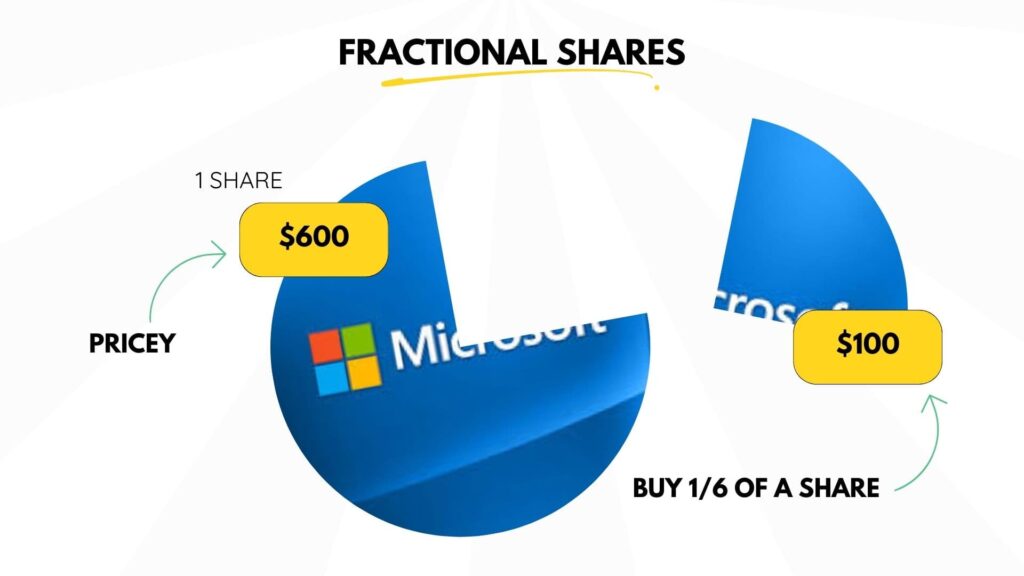
Suppose, as a medical or nursing school student, or new practitioner, you want to invest in a company, but its stock price may be higher than what you want, or can afford, to pay.

Instead of buying a whole share of stock, you can buy a fractional share, which is a “slice” of stock that represents a partial share, for very little money (ie., $5 at Charles Schwab).

***

***

Example: If a company’s stock is selling at $1,000 a share and you were buying $200 worth of it, you would own 0.2 (20%) of a share. With stock slices, investing has never been more accessible.

COMMENTS APPRECIATED

Refer, Like and Subscribe

EDUCATION: Books

***

***

PARADOX OF EDUCATION: Cumulative Advantage and Disadvantage

By Staff Reporters

***

***

Classic Definition: Social status snowballs in either direction because people like associating with successful people, so doors are opened for them, and avoid associating with unsuccessful people, for whom doors are closed.

Modern Circumstance: Education’s positive effect on health gets larger as people age. The large socioeconomic differences in health among older Americans mostly accrue earlier in adulthood on gradients set by educational attainment. Education develops abilities that help individuals gain control of their own lives, encouraging and enabling a healthy life.

Paradox Example: The health-related consequences of education accumulate on many levels, from the socioeconomic (including work and income) and behavioral (including health behaviors like exercising) to the physiological and intra-cellular. Some accumulations influence each other.

In particular, a low sense of control over one’s own life accelerates physical impairment, which in turn decreases the sense of control. That feedback progressively concentrates good physical functioning and a firm sense of personal control together in the better educated while concentrating physical impairment and a sense of powerlessness together in the less well educated, creating large differences in health in old age.

COMMENTS APPRECIATED

Refer, Reply and Subscribe

EDUCATION: Books

***

IPO: Road Show with Pros and Cons

By Staff Reporters

SPONSOR: http://www.MarcinkoAssociates.com

***

***

What Is a Roadshow?

In general, a roadshow is a series of meetings or presentations in which key members of a private company, usually executives, pitch the initial public offering, or IPO, to prospective investors. Effectively, the company is taking its branding message on the road to meet with investors in different cities, hence the name.

The IPO roadshow presentation is an important part of the IPO process in which a company sells new shares to the public for the first time. Whether a company’s IPO succeeds or not can hinge on interest generated among investors before the stock makes its debut on an exchange.

There are also some cases where company executives will embark on a road show to meet with investors to talk about their company, even if they’re not planning an IPO.

Pros and Cons of a Roadshow

According to Rebecca Lake, if the company goes public and no one buys its shares, then the IPO ends up being a flop, which can affect the company’s success in the near and long term. If the company experiences an IPO pop, in which its price goes much higher than its initial offering price, it could be a sign that underwriters mispriced the stock.

A roadshow is also important for helping determine how to price the company’s stock when the IPO launches. If the roadshow ends up being a smashing success, for example, that can cause the underwriters to adjust their expectations for the stock’s IPO price.

On the other hand, if the roadshow doesn’t seem to be generating much buzz around the company at all, that could cause the price to be adjusted downward.

In a worst-case scenario, the company may decide to pull the plug on the IPO altogether or to go a different route, such as a private IPO placement.

COMMENTS APPRECIATED

Refer, Like and Subscribe

***

***

MAGNIFICENT SEVEN: Companies Defined

By Copilot

***

***

The “Magnificent Seven” refers to a group of seven technology giants that have significantly influenced the stock market. These companies are:

  1. Alphabet (GOOGL)
  2. Amazon (AMZN)
  3. Apple (AAPL)
  4. Meta Platforms (META)
  5. Microsoft (MSFT)
  6. Nvidia (NVDA)
  7. Tesla (TSLA)

Why Are They Significant?

These companies are at the forefront of technological innovation, driving advancements in artificial intelligence, cloud computing, e-commerce, social media, and electric vehicles. Their market dominance and financial performance have a substantial impact on major stock indices like the S&P 5002.

Performance

  • Alphabet: Despite a 31% climb over the past year, Alphabet remains the cheapest of the group, trading at 20 times forward earnings estimates.
  • Amazon: Amazon’s cloud unit is delivering an annual revenue run rate of $115 billion thanks to its AI offerings.
  • Apple: Apple has seen a 989% total return for investors over the past decade.
  • Meta Platforms: Meta is the best-performing stock year-to-date among the Magnificent Seven, up over 25%.
  • Microsoft: Microsoft has generated a 989% total return for investors over the past decade.
  • Nvidia: Nvidia remains the best performer over the past year, up 55%.
  • Tesla: Tesla is the worst-performing stock in the group for 2025, down 25.66% year-to-date.

These companies have reshaped industries and become powerhouses in the global economy, wielding significant influence over market trends and investor sentiment.

COMMENTS APPRECIATED

Refer, Like and Subscribe

EDUCATION: Books

***

***

HONEYPOTS versus HONEYNETS: Information Technology

By Staff Reporters

***

***

What is Honeypot?

A Honeypot is a network-attached system used as a trap for cyber-attackers to detect and study the tricks and types of attacks used by hackers. It acts as a potential target on the internet and informs the defenders about any unauthorized attempt at the information system.

Honeypots are mostly used by large companies and organizations involved in cybersecurity. It helps cybersecurity researchers to learn about the different types of attacks used by attackers. It is suspected that even cyber criminals use these honeypots to decoy researchers and spread wrong information. The cost of a honeypot is generally high because it requires specialized skills and resources to implement a system such that it appears to provide an organization’s resources while still preventing attacks at the back end and access to any production system.

Advantages of Honeypot

  • Acts as a rich source of information and helps collect real-time data.
  • Identifies malicious activity even if encryption is used.
  • Wastes hackers’ time and resources.
  • Improves security.

Disadvantages of Honeypot

  • Being distinguishable from production systems, it can be easily identified by experienced attackers.
  • Having a narrow field of view, it can only identify direct attacks.
  • A honeypot once attacked can be used to attack other systems.
  • Fingerprinting(an attacker can identify the true identity of a honeypot ).

What is Honeynet?

A honeynet is made up of two or more honeypots connected via a network. Having a linked network of honeypots can be beneficial. It allows organizations to trace how an attacker interacts with a single resource or network point while also monitoring how a hacker moves between network points and interacts with numerous points at the same time.

The goal is to induce hackers to believe that they have successfully breached the network. Having more false network destinations makes the arrangement appear more realistic.

COMMENTS APPRECIATED

Refer, Like and Subscribe

EDUCATION: Books

***

***

STOCK DIVIDENDS: Company Earnings Distribution

BY DR. DAVID EDWARD MARCINKO; MBA MEd CMP™

***

SPONSOR: http://www.MarcinkoAssociates.com

DEFINITION

If the definition of a security is title to a stream of cash flows, then the dividends a company is expected to pay to equity shareholders on a periodic basis (e.g., quarterly) are a clear source of return for an investor.  A dividend is simply a distribution of (some portion of) the company’s earnings to equity shareholders.  Like a bond yield, a stock’s dividend yield can be used to measure the income return on the stock. 

To determine a stock’s dividend yield, the trailing year’s dividends per share paid are divided by the current stock price.  However, a key difference between a dividend yield and a bond yield is the level of certainty that can be assumed regarding future payments, since a bond’s coupon is generally predetermined and its payment is expected to be senior to the payment of dividends.

After a company has determined that it has earned a profit, management has to decide what to do with those profits.  One choice is to distribute the earnings to shareholders in the form of dividends, while another option is to reinvest the profits in the company.  A company’s management may determine that the shareholders interest is best served by using the earnings to pursue growth opportunities (e.g., capital expansion, research & development, etc.) at the corporate level.  Thus, when management believes that its investment opportunities are likely to produce a higher return than what investors’ could generate with their dividends or that reinvestment is needed to maintain its financial strength, the company will retain the earnings. 

One of the biggest myths in investing is capital appreciation accounts for the largest part of investors’ gains. Dividends, or cash payments to shareholders, actually account for a substantial part of an equity investor’s total return. In fact since 1926, dividends have accounted for more than 40% of the total return of the S&P 500 stock index. In the last decade (2000-2009), the S&P 500’s total return of -9% would have been a heftier loss of -24% had it not been for the 15% contribution from dividends.

History has shown that dividends have been a powerful source of total return in a diversified investment portfolio, especially during periods of market turbulence. In examining the prior eight decades of stock market performance, dividends often account for more than 2/3 of the total return (1930s, 1940s, 1970s, & 2000s).  If an investor avoided dividend paying stocks during these elongated time periods, most of the total gains would be lost. 

***

DIVIDEND CONTRIBUTION OF S&P 500 RETURN BY DECADE   
 S&P 500 CumulativeDividendsAverage 
 Price %DividendTotal% of TotalPayout 
YearsChangeContribution*ReturnReturnRatio** 
       
1930s-41.9%56.0%14.1%>100%90.1% 
1940s34.8%100.3%135.0%74.3%59.4% 
1950s256.7%180.0%436.7%41.2%54.6% 
1960s53.7%54.2%107.9%50.2%56.0% 
1970s17.2%59.1%76.4%77.4%45.5% 
1980s227.4%143.1%370.5%38.6%48.6% 
1990s315.7%117.1%432.8%27.0%47.6% 
2000s-24.1%15.0%-9.1%>100%35.3% 
2010s27.9%8.4%36.3%23.1%28.4% 
as of 12/31/12      

Source: Strategas

During those decades such as the 2000s where the stock market struggled to advance, dividends were a significant element for investor survival.  This is not only due to the dividends alone, but also the risk element of stocks that pay dividends.  Dividend stocks have historically provided lower overall volatility and stronger downside protection when markets decline. Since 1927, dividend stocks have consistently held up better than the broader market during downturns. You can measure downside risk through a statistic known as downside capture ratio.

Downside capture ratio is a statistical measure of overall performance in a down stock market. An investment category, or investment manager, who has a down-market ratio less than 100 has outperformed the index during a falling stock market. 

For example, a down-market capture ratio of 80 indicates that the portfolio measure declined only 80% as much as the index during the period. The downside capture ratio of high-dividend-yielding stocks, since 1927, has been 81% or lower over various long-term periods.  Put a better way, during months that the S&P 500 stock index fell, dividend stocks declined by nearly 19% less than the broader market.

***

DOWNSIDE AND UPSIDE CAPTURE RATIOS OF HIGH DIVIDEND STOCKS – 1927 TO 2011  
The lower the number, the better    
                                                                            Downside 
                                                                              Capture Ratio 
   
Since 192781.53 
50-year67.45 
30-year65.86 
20-year65.83 
10-year81.61 
   

Source: Kenneth French as of 12/31/11

EDUCATION: Books

SPEAKING: Dr. Marcinko will be speaking and lecturing, signing and opining, teaching and preaching, storming and performing at many locations throughout the USA this year! His tour of witty and serious pontifications may be scheduled on a planned or ad-hoc basis; for public or private meetings and gatherings; formally, informally, or over lunch or dinner. All medical societies, financial advisory firms or Broker-Dealers are encouraged to submit a RFP for speaking engagements: CONTACT: MarcinkoAdvisors@outlook.com 

COMMENTS APPRECIATED

Refer, Subscribe and Like

***

***

DENTISTS: Prescribing Limits

Rx – What Dentists Can’t Do

By Staff Reporters

***

***

Dentists are limited to prescribing medications that address oral and dental health only.

For example, they cannot provide prescriptions for conditions unrelated to dentistry, such as chronic illnesses like diabetes or respiratory infections. Additionally, dentists do not prescribe medications for mental health or hormonal issues.

These limitations ensure that dental professionals focus strictly on oral health and leave more complex medical issues to general physicians or specialists. This distinction helps protect patients from receiving inappropriate or harmful treatments outside the dentist’s expertise.

COMMENTS APPRECIATED

Refer and Subscribe

***

***

A NEW NORM: Revising Financial Planning Principles for Physicians?

DR. DAVID EDWARD MARCINKO; MBA MEd CMP

SPONSOR: http://www.MarcinkoAssociates.com

***

In 1972, Nobel Laureate Kenneth J. Arrow, PhD shocked academe’ by identifying health economics as a separate and distinct field. Yet, the seemingly disparate insurance, tax, risk management and financial planning principles that he also studied are just now becoming transparent to some medical professionals and their financial advisors. Despite the fact that a basic, but hardly promoted premise of this new wave financial planning era, is imprecision.

More: https://medicalexecutivepost.com/2024/11/09/arrow-information-paradox/

Nevertheless, to informed cognoscenti like Certified Medical Planners™, the principles served as predecessors to the modern physician-focused financial advisory niche sector. In 2004, Arrow was selected as one of eight recipients of the National Medal of Science for his innovative views.

More: http://www.CertifiedMedicalPlanner.org

And now, as a long bull market may be over, and if the current “new-normal” prevails – meaning a 4.5% real annualized rate of return on equities and a 1.5% real rate on bonds – wealth accumulation for all may be reduced.

An Imprecise Science

There is a major variable, dominant in any marketplace that pushes an economy in a forward direction. It is called consumerism. This became apparent while waiting in a doctor’s office one recent afternoon.

Scenario:

The front office receptionist, who appeared to be about 21 years old, was breaking for lunch and her replacement, who appeared not much older, came over to assist. Realizing the propensity for a long wait, one was taken by the size of waiting room and the number of patients coming in and out of the office. [Americans consume healthcare and a lot of it]. There was another notable peculiarity. The sample prescription bags being carried out the door were no match for the bags under everyone’s eyes, including the doctor’s. The office staff was probably working overtime, if not two jobs, and the doctor was working harder and faster in a managed care system.

Assessment

Why? So they all could afford to buy and voraciously consume for their children and themselves. Americans indeed work longer hours than any other industrialized nation.

Conclusion

Finally, as women medical professionals entered the workforce in unprecedented numbers, the stock markets reached an all time high in 2025, even as money was spent at a feverish pace as the Federal Reserve pumped out money in inflammatory fashion.

EDUCATION: Books

SPEAKING: Dr. Marcinko will be speaking and lecturing, signing and opining, teaching and preaching, storming and performing at many locations throughout the USA this year! His tour of witty and serious pontifications may be scheduled on a planned or ad-hoc basis; for public or private meetings and gatherings; formally, informally, or over lunch or dinner. All medical societies, financial advisory firms or Broker-Dealers are encouraged to submit a RFP for speaking engagements: CONTACT: MarcinkoAdvisors@outlook.com 

COMMENTS APPRECIATED

Refer, Like and Subscribe

***

***

DAILY UPDATE: Human Biological Age as Stock Markets Blast Off

MEDICAL EXECUTIVE-POST TODAY’S NEWSLETTER BRIEFING

***

Essays, Opinions and Curated News in Health Economics, Investing, Business, Management and Financial Planning for Physician Entrepreneurs and their Savvy Advisors and Consultants

Serving Almost One Million Doctors, Financial Advisors and Medical Management Consultants Daily

A Partner of the Institute of Medical Business Advisors , Inc.

http://www.MedicalBusinessAdvisors.com

SPONSORED BY: Marcinko & Associates, Inc.

***

http://www.MarcinkoAssociates.com

Daily Update Provided By Staff Reporters Since 2007.
How May We Serve You?
© Copyright Institute of Medical Business Advisors, Inc. All rights reserved. 2025

REFER A COLLEAGUE: MarcinkoAdvisors@outlook.com

SPONSORSHIPS AVAILABLE: https://medicalexecutivepost.com/sponsors/

ADVERTISE ON THE ME-P: https://tinyurl.com/ytb5955z

Your Referral Count -0-

CITE: https://www.r2library.com/Resource

Read: Inside the rise—and questionable reliability—of commercial tests for “biological age.” (Nature)

CITE: https://tinyurl.com/2h47urt5

US stocks gained ground Friday following a key inflation reading that largely met expectations and as fresh tariff threats added to uncertainty over Big Tech prospects. The S&P 500 (^GSPC) gained 1.6%%, while the tech-heavy NASDAQ Composite (^IXIC) was up about 1.5% after suffering a Nvidia-led (NVDA) sell-off on Thursday. The Dow Jones Industrial Average (^DJI) climbed 1.3%. All three major averages reversed earlier losses, sending February off with a relief rally.

Markets wrapped the month February with sharp weekly and monthly losses after suffering the buffets of tariff moves. The NASDAQ shed close to 5% in February, while the S&P 500 and Dow suffered drops of around 2%.

CITE: https://tinyurl.com/tj8smmes

Visualize: How private equity tangled banks in a web of debt, from the Financial Times.

COMMENTS APPRECIATED

PLEASE SUBSCRIBE: MarcinkoAdvisors@outlook.com

Thank You

***

***

***

***

EDUCATIONAL TEXTBOOKS: https://tinyurl.com/4zdxuuwf

***