How Medical and Financial Professionals can Teach their Children Fiscal Discipline

Join Our Mailing List

Exercising Pediatric Fiscal Discipline

By Andrew D. Schwartz CPA

Andrew SchwartzI’m a CPA and my wife is a CFP (Certified Financial Planner). Many ME-P readers are the same; or are doctors or nurses; or MBAs, PhD, CFAs; or other learned professionals, etc.

Even so, I think together we’ve done a lousy job teaching our two kids – Jonathan (age 15) and Lizzie (age 14) – much about personal finances. We have also done little to help them learn anything about exercising fiscal discipline.

Over the years, we’ve toyed with monthly allowances and paying our kids for doing their household chores. The problem is that we have never been consistent with doling out the promised $20 per month or with enforcing the rules they need to follow to even be eligible to receive their allowance.

Our Allowance System

So my family’s allowance system has evolved to something like this:

Child: “Dad and/or Mom, I’m getting together with friends. Can I have some money?”

Parent: “Sure thing, Jonathan and/or Lizzie. Will $20 be sufficient?”

Well, as my kids continue to grow up, we have reached the point where this conversation happens pretty regularly. Our kids have no incentive not to ask us for money, since we have a track record of giving them money whenever they ask. And they also don’t have an incentive to try to earn any money on their own, since we have gladly been supporting 100% of their spending.

Change is Coming

That’s all about to change. Financial responsibility for the Schwartz Clan, here we come. As a parent of a teenager, you might be asking, “How will you pull this off Andrew?”

For Christmas/Chanukah last winter, we gave each child a Pass Card issued by American Express.  These cards are only available to kids 13 or older.

Enter AMEX

According to American Express, “Pass is a prepaid reloadable Card parents give to teens. It’s safer than cash, and unlike a debit or credit card, teens can only spend what’s preloaded on the Card.” For my two kids, we loaded each card with $100, and then will reload the card on the tenth of each month with their $25 allowance.

Pass cardholders can spend money on the prepaid card pretty much anywhere that takes credit cards. And while parents do have the right to deny their kids access to cash from ATMs, we decided to set up the cards to allow ATM withdrawals. We can change this setting at any time, however. The first ATM transaction each month is free for each kid, and then there is a charge of $2 per withdrawal.

The Thought Process

In theory, when either kid spends all the money on the card, they are out of money until they next receive the $25 on the tenth of the month. Here is where my wife and I will need to exercise some parental discipline and not just dole out more spending money.

Instead, we need to try to use this opportunity to remind Jonathan or Lizzie that if they want to spend more than $25 per month, they can always babysit, shovel snow or rake leaves for our neighbors, work at my office during tax season, or try to find another job that hires 14 and 15 year-old kids to earn extra money.

Referral

Other Advantages

For parents, the Pass Card has a nifty web interface that allows parents the opportunity to view balance and purchase history online at any time, transfer additional funds into the card, or tweak the amount or frequency of the automatic reloads. Teens will also be able to logon to the Pass website under a separate login to monitor balances and activity.

According to the site, the Pass Card also provides your child some additional benefits similar to the benefits that come with the AMEX card, including:

  • Purchase Protection if an item purchased with the Pass Card breaks within 90 days
  • Roadside Assistance if your child’s car won’t start
  • Global Assist Services to provide your child with emergency services while traveling

Assessment

I hope the Pass Card works out well for my family and helps my wife and I teach my kids a little about personal finances and fiscal discipline.

Conclusion

Your thoughts and comments on this ME-P are appreciated. Feel free to review our top-left column, and top-right sidebar materials, links, URLs and related websites, too. Then, subscribe to the ME-P. It is fast, free and secure.

Speaker: If you need a moderator or speaker for an upcoming event, Dr. David E. Marcinko; MBA – Publisher-in-Chief of the Medical Executive-Post – is available for seminar or speaking engagements. Contact: MarcinkoAdvisors@msn.com

OUR OTHER PRINT BOOKS AND RELATED INFORMATION SOURCES:

Product DetailsProduct DetailsProduct Details

Product Details  Product Details

Product DetailsProduct Details

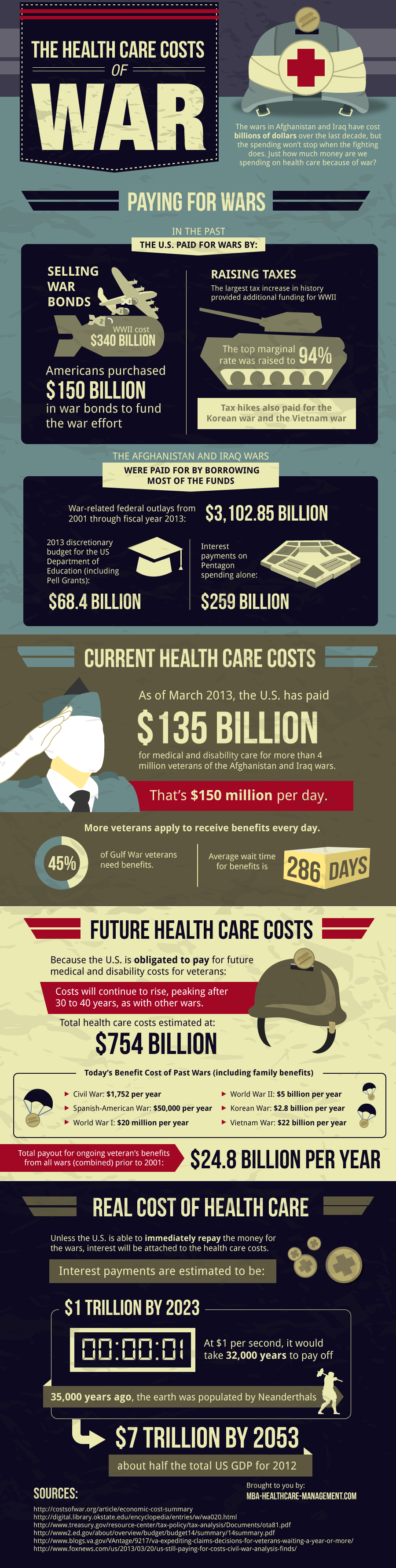
Afghanistan and Iraq’s Healthcare Costs

Join Our Mailing List

An Informative Infographic

###

war

###

Assessment

Over the next 40 years, Afghanistan and Iraq veterans will need an estimated $750 billion in healthcare, a challenge for the VA to innovate, especially when treating soldiers who grew up with the Internet.

Conclusion

Your thoughts and comments on this ME-P are appreciated. Feel free to review our top-left column, and top-right sidebar materials, links, URLs and related websites, too. Then, subscribe to the ME-P. It is fast, free and secure.

Link: http://feeds.feedburner.com/HealthcareFinancialsthePostForcxos

Speaker: If you need a moderator or speaker for an upcoming event, Dr. David E. Marcinko; MBA – Publisher-in-Chief of the Medical Executive-Post – is available for seminar or speaking engagements. Contact: MarcinkoAdvisors@msn.com

OUR OTHER PRINT BOOKS AND RELATED INFORMATION SOURCES:

Health Dictionary Series: http://www.springerpub.com/Search/marcinko

Practice Management: http://www.springerpub.com/product/9780826105752

Physician Financial Planning: http://www.jbpub.com/catalog/0763745790

Medical Risk Management: http://www.jbpub.com/catalog/9780763733421

Hospitals: http://www.crcpress.com/product/isbn/9781439879900

Physician Advisors: www.CertifiedMedicalPlanner.org

Product DetailsProduct DetailsProduct Details

Product Details  Product Details

Product DetailsProduct Details

R.I.P. Muriel “Mickie” Siebert

Join Our Mailing List

On Muriel Siebert

“Mickie” Siebert, founder of the brokerage firm that bears her name, Muriel Siebert & Co. Inc., bought a seat on the New York Stock Exchange in 1967.

She was one of the pioneers in the discount brokerage field, as she transformed Muriel Siebert & Company (now a subsidiary of Siebert Financial) into a discount brokerage in 1975, on the first day that Big Board members were allowed to negotiate commissions; the so-called “May Day” decision.

BORN: Sept. 12, 1932, in Cleveland.

DIED: Aug. 24, 2013, in New York.

EDUCATION: Attended Western Reserve University (now Case Western Reserve University) 1949-1952.

FAMILY: Never married and did not have any children.

Link: http://news.msn.com/obits/muriel-siebert-first-woman-member-of-the-nyse-dies?ocid=ansnews11

##

NYSE

###

Assessment

She was the first woman to become a member of the New York Stock Exchange [NYSE].

Visit: www.SiebertNet.com

Conclusion

Your thoughts and comments on this ME-P are appreciated. Feel free to review our top-left column, and top-right sidebar materials, links, URLs and related websites, too. Then, subscribe to the ME-P. It is fast, free and secure.

Link: http://feeds.feedburner.com/HealthcareFinancialsthePostForcxos

Speaker: If you need a moderator or speaker for an upcoming event, Dr. David E. Marcinko; MBA – Publisher-in-Chief of the Medical Executive-Post – is available for seminar or speaking engagements. Contact: MarcinkoAdvisors@msn.com

OUR OTHER PRINT BOOKS AND RELATED INFORMATION SOURCES:

Health Dictionary Series: http://www.springerpub.com/Search/marcinko

Practice Management: http://www.springerpub.com/product/9780826105752

Physician Financial Planning: http://www.jbpub.com/catalog/0763745790

Medical Risk Management: http://www.jbpub.com/catalog/9780763733421

Hospitals: http://www.crcpress.com/product/isbn/9781439879900

Physician Advisors: www.CertifiedMedicalPlanner.org

Product Details  Product Details

On Aging and Getting Better with Age

Join Our Mailing List

Consumer Reports on Health

By Rick Kahler CFP® http://www.KahlerFinancial.com

Rick Kahler CFP

How old is “old?” I don’t know exactly, but after my recent birthday I can say that it’s much older than 58. My 12-year-old son told me, “Dad, I’ve always thought of people who are over 60 as being really old. I don’t think of you as really old, so guess I will need to redefine what is old.”

Old Enough?

Still, I am old enough to know from personal experience that the body begins to slow down and fall apart as we age. I also know from working with clients that aging can be expensive. One of the biggest threats to a retirement nest egg, besides the possibility of outliving it, is the high cost of medical care for increasing health needs.

All this leaves me wondering if there is anything good about getting older.

Consumer Reports on Health

Well, yes, there is. A recent article in Consumer Reports on Health found there are some things that actually get better with age:

1. You get wiser.

This one seems intuitively obvious to me, but as I once heard a researcher say, “If you can’t measure something, it doesn’t exist.” Research conducted by the Universities of Texas and Michigan found that significantly more older people ranked in the top 20% in wisdom performance and the group with an average age of 65 consistently outperformed younger participants. Maybe there’s some truth to the joke about parents seeming to get smarter as their kids get older.

2. You have fewer difficult emotions.

A Gallup survey found that people in their 70’s and 80’s reported less stress, worry, and anger than younger respondents. I found it curious that stress peaks at age 25 and steadily declines, dropping rapidly from age 60 to 73. I guess that leaves me something to look forward to in a couple of years.

3. You become happier.

This was a surprise, especially given my projection that increasing aches and pains probably increase unhappiness. Again, the devil is in the definition of “happiness”. I suggest that we often equate happiness with well-being, which can be broken into three segments: physical, emotional, and financial. Stanford University found that aging is actually associated with increased emotional well-being. The article didn’t mention physical and financial well-being. Based on my experience, I expect that physical well-being decreases with age and financial well-being is dependent upon a complex host of variables.

4. Your marriage gets better.

The Journal of Social and Personal Relationships found that older couples experience greater satisfaction and positive experiences with each other. The report also says happily married older people have better health, quality of life, and relationships with their children and friends. I think that is another one of those intuitively obvious facts that researchers still feel they must validate.

5. Your relationships get deeper and richer.

While younger people have more friends, the quality of older people’s relationships becomes richer. A study done by Case Western Reserve University found that volunteering was the most consistent predictor of cognitive well-being in people over age 72.

Assessment

Even with all these positives, old age isn’t exactly something to look forward to. Yet it doesn’t mean our golden years will necessarily be overridden with tarnish and rust. Living a healthy lifestyle and planning financially for retirement can certainly help make aging more comfortable. And clearly, aging is better than the alternative of not being around to grow old; especially when we factor in one last advantage of aging.

I haven’t yet experienced this personally, but I hear plenty about it from clients and friends. According to these sources, the best thing about aging is grandchildren.

Conclusion

Your thoughts and comments on this ME-P are appreciated. Feel free to review our top-left column, and top-right sidebar materials, links, URLs and related websites, too. Then, subscribe to the ME-P. It is fast, free and secure.

Link: http://feeds.feedburner.com/HealthcareFinancialsthePostForcxos

Speaker: If you need a moderator or speaker for an upcoming event, Dr. David E. Marcinko; MBA – Publisher-in-Chief of the Medical Executive-Post – is available for seminar or speaking engagements. Contact: MarcinkoAdvisors@msn.com

OUR OTHER PRINT BOOKS AND RELATED INFORMATION SOURCES:

Health Dictionary Series: http://www.springerpub.com/Search/marcinko

Practice Management: http://www.springerpub.com/product/9780826105752

Physician Financial Planning: http://www.jbpub.com/catalog/0763745790

Medical Risk Management: http://www.jbpub.com/catalog/9780763733421

Hospitals: http://www.crcpress.com/product/isbn/9781439879900

Physician Advisors: www.CertifiedMedicalPlanner.org

Product Details  Product Details

Product DetailsProduct Details

Comprehensive Financial Planning Strategies for Doctors and Advisors: Best Practices from Leading Consultants and Certified Medical Planners™

IRS Offers New Simplified Home-Office Deduction

Join Our Mailing List

Effective January 1, 2013

By Andrew D. Schwartz CPA

Andrew SchwartzThe IRS has introduced a simplified option for many home-based businesses and some home-based workers to use to figure their deductions for the business use of their home, effective January 1, 2013.

The new optional deduction, capped at $1,500 per year based on $5 a square foot for up to 300 square feet, will reduce the paperwork and recordkeeping burden on small businesses by an estimated 1.6 million hours annually.

An Easy Path

The new option provides eligible taxpayers an easier path to claiming the home office deduction. Currently, they are generally required to fill out a 43-line Form 8829, often with complex calculations of allocated expenses, depreciation and carryovers of unused deductions. Taxpayers claiming the optional deduction will complete a significantly simplified form.

No Allocation

Though homeowners using the new option cannot depreciate the portion of their home used in a trade or business, they can claim allowable mortgage interest, real estate taxes and casualty losses on the home as itemized deductions on Schedule A of their tax return.  These deductions need not be allocated between personal and business use, as is required under the regular method.

Business expenses unrelated to the home, such as advertising, supplies and wages paid to employees are still fully deductible.

Restrictions

Current restrictions on the home office deduction, such as the requirement that a home office must be used regularly and exclusively for business and the limit tied to the income derived from the particular business, still apply under the new option.

Drs. Home

Assessment

The new simplified option is available starting with the 2013 return which most taxpayers file early in 2014.

Conclusion

Your thoughts and comments on this ME-P are appreciated. Feel free to review our top-left column, and top-right sidebar materials, links, URLs and related websites, too. Then, subscribe to the ME-P. It is fast, free and secure.

Speaker: If you need a moderator or speaker for an upcoming event, Dr. David E. Marcinko; MBA – Publisher-in-Chief of the Medical Executive-Post – is available for seminar or speaking engagements. Contact: MarcinkoAdvisors@msn.com

OUR OTHER PRINT BOOKS AND RELATED INFORMATION SOURCES:

Product Details  Product Details

Product DetailsProduct Details

Ground Breaking Book Explains Why Accountable Care Organizations May Be the Answer the Health Care Industry Has Been Seeking!

Join Our Mailing List

Book Reviews, with Testimonial, by ME-P Founding Publisher Dr. David Edward Marcinko MBA CMP®

PRESS RELEASE!

August 23, 2013CRC Press / Productivity Press is pleased to announce the publication of  Accountable Care Organizations: Value Metrics and Capital Formation authored by nationally recognized healthcare expert, Robert James Cimasi. This dynamic book explores the historical background and evolution of the highly anticipated ACO model which is rapidly expanding since its adoption as part of the Affordable Care Act, commonly referred to as Obama Care. The book describes the basis for the development of value metrics and capital formation analyses that are foundational to assessing capacity for change in healthcare organizations considering the development of an ACO, as well as, the current efficacy of the model.

Book Reviews

“Bob Cimasi has done it again. As a thought leader in contemporary healthcare matters, his new book, Accountable Care Organizations: Value Metrics and Capital Formation, establishes and explains, in plain terms, the operational and financial DNA and genomic construct and understanding for any organization considering the development and operations of an ACO…a must read and resource for any healthcare industry executive.”

-Roger W. Logan, MS, CPA/ABV, ASA, Senior Vice President of Phoenix Children’s Hospital

“Accountable Care Organizations is the first comprehensive text on capital formation and value metrics for this new healthcare business model… I can think of no one more qualified to write it than Bob Cimasi at Health Capital Consultants … it is destined to become a classic work … read, review, refer, and profit by this valuable resource.”

-Dr. David Edward Marcinko MBA CMP® of the Institute of Medical Business Advisors, Inc Atlanta, GA

“As both a healthcare management educator and as a consultant who has worked on health and professional services transactional advisory work for many years, I applaud the ambitious undertaking of Bob Cimasi’s latest book, Accountable Care Organizations: Value Metrics and Capital Formation. Cimasi’s description of the complex history and evolution of the US health system provides a useful framework for students and professionals who may lack a detailed background in the field. This should help them better understand both how we have arrived at the ACO approach, and how it might work. This addressing capital and valuation information is also uncommon in the literature on ACOs. It should provide a valuable contribution to the field, especially given that a some surveys of healthcare leaders have pointed to access to capital and to a lesser but still important degree, agreement on valuation, as concerns as they consider acquisitions, mergers, and other affiliations towards forming/joining ACOs or similar organizations to help deal with the changing reimbursement and competitive environment.”

-R. Brooke Hollis, MBA/HHSA, Executive Director, Sloan Program in Health Administration, Cornell University and Managing Member, Hollis Associates Acquisition Advisors, LLC

The book examines the Four Pillars of Value in the Healthcare Industry: regulatory, reimbursement, competition and technology in addressing the value metrics of ACOs, including requirements for capital formation, financial feasibility, and economic returns. It focuses the discussion of non-monetary value on a review of aspects of population health within the context of such objectives as improved quality outcomes and access to care. It also examines the positive externalities of the ACO model, including results for third parties outside the basic construct of the ACO contracts shared savings payments. The potential role and opportunities for consultants in assisting their provider clients in the consideration, development, implementation, and operation of an ACO are also discussed.

###

Accountable Care Organizations

###

About the Author:

Robert James Cimasi, MHA, ASA, FRICS, MCBA, AVA, CM&AA, CMP® is CEO of Health Capital Consultants (HCC), a nationally recognized healthcare financial and economic consulting firm headquartered in St. Louis, Missouri, since 1993. Cimasi has more than 30 years of experience in serving clients in over 45 states, with a professional focus on the financial and economic aspects of healthcare service sector entities including feasibility analysis and forecasting; valuation consulting and capital formation services; healthcare industry transactions including joint ventures, mergers, acquisitions, and divestitures; certificate-of-need and other regulatory and policy planning consulting; and, litigation support and expert testimony.

Mr. Cimasi has served for many years as faculty in both an academic and professional basis for continuing education courses, and he has provided testimony before federal and state legislative committees and has served as an expert witness in numerous court cases. He is a nationally known speaker on healthcare industry topics, the author of several books, including A Guide to Consulting Services for Emerging Healthcare Organizations (John Wiley & Sons, 1999), The U.S. Healthcare Certificate of Need Sourcebook (Beard Books, 2005), The Adviser’s Guide to Healthcare (AICPA, 2010), and Healthcare Valuation: The Financial Appraisal of Enterprises, Assets, and Services (John Wiley & Sons, 2013), as well as numerous chapters, published articles, research papers and case studies, and is often quoted by healthcare industry press.


UPDATE:
Top Five Videos Trending in The Last Month On HealthShareTV
  1. Accountable Care Directory 2014
  2. Achieving Quality in Accountable Care Organizations
  3. High-Performing Care Coordination in a Patient/Family-Centered Medical Home
  4. ‘Aetna’s Medicare Advantage Collaborative Initiatives’
  5. Aligning High Performance in Medication Safety to Improve Patient Outcomes and Reduce Readmissions

Source: HealthShareTV

###

Product DetailsProduct Details
 

How a Doctor’s Job Seach May Lower Taxes

Join Our Mailing List 

Same line-of-work Tax Tips

By Andrew D. Schwartz CPA

Andrew SchwartzSummer is often a time when doctors and other people make major life decisions. Common events include buying a home, getting married or changing jobs; especially for hospitalist physicians.

If you’re looking for a new job in your same line of work, you may be able to claim a tax deduction for some of your job hunting expenses.

The Tax Tips

Here are seven things the IRS wants you to know about deducting these costs:

1. Your expenses must be for a job search in your current occupation. You may not deduct expenses related to a search for a job in a new occupation. If your employer or another party reimburses you for an expense, you may not deduct it.

2. You can deduct employment and job placement agency fees you pay while looking for a job.

3. You can deduct the cost of preparing and mailing copies of your résumé to prospective employers.

4. If you travel to look for a new job, you may be able to deduct your travel expenses. However, you can only deduct them if the trip is primarily to look for a new job.

5. You can’t deduct job search expenses if there was a substantial break between the end of your last job and the time you began looking for a new one.

6. You can’t deduct job search expenses if you’re looking for a job for the first time.

7. You usually will claim job search expenses as a miscellaneous itemized deduction. You can deduct only the amount of your total miscellaneous deductions that exceed two percent of your adjusted gross income.

###

jobs

###

Conclusion

Your thoughts and comments on this ME-P are appreciated. Feel free to review our top-left column, and top-right sidebar materials, links, URLs and related websites, too. Then, subscribe to the ME-P. It is fast, free and secure.

Link: http://feeds.feedburner.com/HealthcareFinancialsthePostForcxos

Speaker: If you need a moderator or speaker for an upcoming event, Dr. David E. Marcinko; MBA – Publisher-in-Chief of the Medical Executive-Post – is available for seminar or speaking engagements. Contact: MarcinkoAdvisors@msn.com

OUR OTHER PRINT BOOKS AND RELATED INFORMATION SOURCES:

Product Details  Product Details

Product DetailsProduct Details

Passive Investing with a “Steroid Twist”

Join Our Mailing List 

A Core and Satellite Philosophy

By Rick Kahler CFP® http://www.KahlerFinancial.com

Rick Kahler CFP“Keep your hands away from your investments and back away from the market reports.”

That pretty much sums up passive investing, the approach I have practiced for years. I’ve preached it for years, too, and did so in a recent column. The wisest way to build wealth is by investing in a variety of asset classes, setting target allocations in each asset class, and then taking your hands off except to periodically rebalance to the original target allocations.

For most of us, including doctors, the best way to invest in an asset class is to give our funds to a mutual fund manager who will purchase the appropriate investments. Mutual fund managers have a choice of actively or passively managing the money you give them to invest.

Passivity 

Passive managers try to match market indexes, which are groups of companies representing a cross-section of a certain type of investment. The most popular index in the world is probably the S&P 500 index, which consists of the largest 500 companies in the United States. Another popular index is the Dow Jones Industrial Index which is made up of 30 companies. When we consider the US has almost 10,000 companies, we can quickly see that many indexes represent just a segment of the entire market.

Research indicates it is very hard to beat an index, especially with stocks, bonds, real estate investment trusts, and commodities. I prefer to keep about 80% of my investment portfolio in a broad variety of passively managed investments in these asset classes.

Timing or Strategy?

Where do I put the other 20%? In mutual funds with active managers who try to earn returns similar to stocks and bonds and that are not correlated to either.

This may seem to make me a hypocrite. I’ve been saying for years not to be a market timer, and now here I am suggesting you do just the opposite with a portion of your portfolio. Not hypocrisy at all. What I’ve preached for many years is that neither you nor I have any business timing investments. That doesn’t mean no one should ever do it.

So, is it timing or strategy?

Core and Satellite Philosophy

It can be wise to put a small portion [satellite] of our portfolios [core] into various investment strategies with active managers. The key is to find managers who have a disciplined approach that eliminates emotion and who have long-term track records of success. These strategies include managers who attempt to time markets by shorting stocks they think will decline in value and buying stocks they think will rise.

It also includes one investment strategy, managed futures, that I call “timing on steroids.”

###

Bull markets

###

Rationale

My reason for including some actively managed funds is to have part of my investment portfolio that is not correlated to stocks. I want these investments to have a positive return over a long period, but also to move in opposition to other major asset classes, especially stocks. So when stocks are up, I am not fazed if my managed futures are down. And, when stocks are down, I am thankful when my managed futures are up. If both asset classes earn 6 to 9% over a long period of time, I’m happy.

So, call it … passive investing with a steroid twist.

Assessment

So I stand by my commitment to passive investing. It’s based on research suggesting that timing the markets is a loser’s game.

Yet part of passive investing is having a fully diversified portfolio. This includes having a small portion—20% or less—in mutual funds with disciplined, successful active managers. My job is to research and find those managers. Then it’s okay to let them time their hearts out. I just make sure I don’t try to time the timers.

More:

Conclusion

Your thoughts and comments on this ME-P are appreciated. Feel free to review our top-left column, and top-right sidebar materials, links, URLs and related websites, too. Then, subscribe to the ME-P. It is fast, free and secure.

Link: http://feeds.feedburner.com/HealthcareFinancialsthePostForcxos

Speaker: If you need a moderator or speaker for an upcoming event, Dr. David E. Marcinko; MBA – Publisher-in-Chief of the Medical Executive-Post – is available for seminar or speaking engagements. Contact: MarcinkoAdvisors@msn.com

OUR OTHER PRINT BOOKS AND RELATED INFORMATION SOURCES:

DICTIONARIES: http://www.springerpub.com/Search/marcinko
PHYSICIANS: www.MedicalBusinessAdvisors.com
PRACTICES: www.BusinessofMedicalPractice.com
HOSPITALS: http://www.crcpress.com/product/isbn/9781466558731
CLINICS: http://www.crcpress.com/product/isbn/9781439879900
BLOG: www.MedicalExecutivePost.com
FINANCE: Financial Planning for Physicians and Advisors
INSURANCE: Risk Management and Insurance Strategies for Physicians and Advisors

***

  Risk Management, Liability Insurance, and Asset Protection Strategies for Doctors and Advisors: Best Practices from Leading Consultants and Certified Medical Planners™8Comprehensive Financial Planning Strategies for Doctors and Advisors: Best Practices from Leading Consultants and Certified Medical Planners™

On Mentally Ill Inmates

Join Our Mailing List
###
By Christie Thompson
[This story was co-produced with WNYC]

In New York, inmates diagnosed with “serious” disorders have been protected from solitary confinement. But, since that policy began, the number of inmates diagnosed with such disorders has dropped.

###

Hospital

###

Link: New York Promised Help for Mentally Ill Inmates – But Still Sticks Many in Solitary

Conclusion

Your thoughts and comments on this ME-P are appreciated. Feel free to review our top-left column, and top-right sidebar materials, links, URLs and related websites, too. Then, subscribe to the ME-P. It is fast, free and secure.

Link: http://feeds.feedburner.com/HealthcareFinancialsthePostForcxos

Speaker: If you need a moderator or speaker for an upcoming event, Dr. David E. Marcinko; MBA – Publisher-in-Chief of the Medical Executive-Post – is available for seminar or speaking engagements. Contact: MarcinkoAdvisors@msn.com

OUR OTHER PRINT BOOKS AND RELATED INFORMATION SOURCES:

Health Dictionary Series: http://www.springerpub.com/Search/marcinko

Practice Management: http://www.springerpub.com/product/9780826105752

Physician Financial Planning: http://www.jbpub.com/catalog/0763745790

Medical Risk Management: http://www.jbpub.com/catalog/9780763733421

Hospitals: http://www.crcpress.com/product/isbn/9781439879900

Physician Advisors: www.CertifiedMedicalPlanner.org

Product DetailsProduct Details

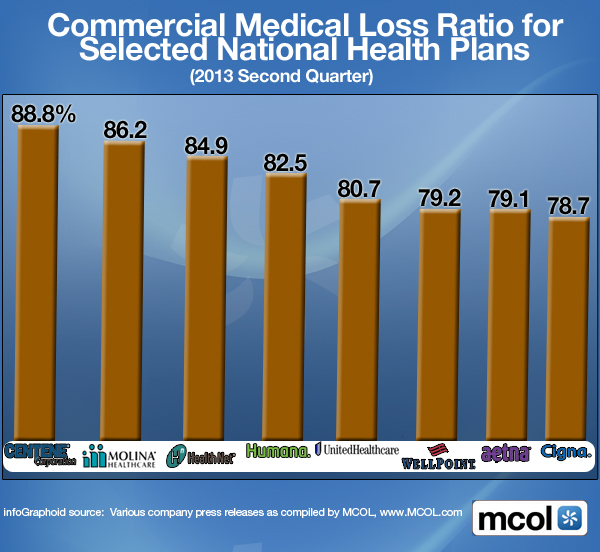
Commercial Health Plans’ Medical Loss Ratio [2nd Quarter 2013]

Join Our Mailing List

By http://www.MCOL.com

The 85% Rule

###

ImageProxy

###

Conclusion

Your thoughts and comments on this ME-P are appreciated. Feel free to review our top-left column, and top-right sidebar materials, links, URLs and related websites, too. Then, subscribe to the ME-P. It is fast, free and secure.

Link: http://feeds.feedburner.com/HealthcareFinancialsthePostForcxos

Speaker: If you need a moderator or speaker for an upcoming event, Dr. David E. Marcinko; MBA – Publisher-in-Chief of the Medical Executive-Post – is available for seminar or speaking engagements. Contact: MarcinkoAdvisors@msn.com

OUR OTHER PRINT BOOKS AND RELATED INFORMATION SOURCES:

DICTIONARIES: http://www.springerpub.com/Search/marcinko
PHYSICIANS: www.MedicalBusinessAdvisors.com
PRACTICES: www.BusinessofMedicalPractice.com
HOSPITALS: http://www.crcpress.com/product/isbn/9781466558731
CLINICS: http://www.crcpress.com/product/isbn/9781439879900
BLOG: www.MedicalExecutivePost.com
FINANCE: Financial Planning for Physicians and Advisors
INSURANCE: Risk Management and Insurance Strategies for Physicians and Advisors


Product DetailsProduct DetailsProduct Details

Product Details  Product Details

Product DetailsProduct Details

The Danger of Used Health Information Technology

Join Our Mailing List

Remember to destroy that hard drive!

By D. Kellus Pruitt DDS

1-darrellpruittNEWS FLASH!

Affinity Health Plan to Pay $1.2 Million+ for HIPAA Violations -The HHS Office for Civil Rights on August 14 sent the industry a message on the importance of erasing protected health information on hardware being sold, recycled or returned,” by Joseph Goedert, HealthDataManagement.

http://www.healthdatamanagement.com/news/breach-notification-hipaa-privacy-security-affinity-46483-1.html

Talk about bad luck

A photocopier once leased by Affinity Health was purchased by CBS Evening News – which discovered that the copier’s hard drive contains 344,579 individuals’ unencrypted Protected Health Information.

The Response

In response to the federal investigation triggered by the CBS discovery, the Office of Civil Rights announced: “OCR’s investigation indicated that Affinity impermissibly disclosed the protected health information of these affected individuals when it returned multiple photocopiers to leasing agents without erasing the data contained on the copier hard drives.

Moreover ….

In addition, the investigation revealed that Affinity failed to incorporate the electronic protected information stored on photocopier hard drives in its analysis of risks and vulnerabilities as required by the Security Rule, and failed to implement policies and procedures when returning the photocopiers to its leasing agents.”

Assessment

Before disposing of used technology, remember to destroy the hard drive.

Conclusion

Your thoughts and comments on this ME-P are appreciated. Feel free to review our top-left column, and top-right sidebar materials, links, URLs and related websites, too. Then, subscribe to the ME-P. It is fast, free and secure.

Link: http://feeds.feedburner.com/HealthcareFinancialsthePostForcxos

Speaker: If you need a moderator or speaker for an upcoming event, Dr. David E. Marcinko; MBA – Publisher-in-Chief of the Medical Executive-Post – is available for seminar or speaking engagements. Contact: MarcinkoAdvisors@msn.com

OUR OTHER PRINT BOOKS AND RELATED INFORMATION SOURCES:

DICTIONARIES: http://www.springerpub.com/Search/marcinko
PHYSICIANS: www.MedicalBusinessAdvisors.com
PRACTICES: www.BusinessofMedicalPractice.com
HOSPITALS: http://www.crcpress.com/product/isbn/9781466558731
CLINICS: http://www.crcpress.com/product/isbn/9781439879900
BLOG: www.MedicalExecutivePost.com
FINANCE: Financial Planning for Physicians and Advisors
INSURANCE: Risk Management and Insurance Strategies for Physicians and Advisors

Product DetailsProduct Details

On Overspending and Overeating?

Join Our Mailing List 

Is there a Causal Relationship?

Rick Kahler CFPBy Rick Kahler CFP® http://www.KahlerFinancial.com

Over the years, I’ve noticed a commonality among people with money problems. Many of them are also overweight. Is there a relationship between overspending and overeating?

Behavioral science

Until now, I couldn’t be sure my experience was anything more than circumstantial. But I recently read about a 2009 study done by Dr. Eva Munster at the University of Mainz in Germany. It found that people who were in deep consumer debt were 2.5 times more likely to be overweight than those who were debt free. This confirms what I’ve observed over the past 15 years.

It isn’t possible to pinpoint one simple reason for this link. Among the causes I’ve seen suggested are overeating because of the stress of being in debt, difficulty buying healthful food with limited income, or an inability to delay gratification in both spending and eating.

Based on my work with people in financial trouble, however, I suspect a deeper root cause. Just as chronic money problems aren’t about the money, chronic weight problems probably aren’t about the food.

Evidence?

For supporting evidence, I went to an expert: my daughter. London recently took a graduate level course in previewing medicine. I asked her what the medical link between overspending and overeating might be. She explained that sugar is addictive and lights up the same part of the brain that narcotics do. It produces a euphoric response within the brain that calls for more of the substance when the euphoria subsides.

She wondered whether people addicted to sugar might overspend on junk food to feed their addiction. They might also spend money they really don’t have on diets, fitness centers, and the higher medical costs associated with being overweight.

I pointed out that I spend a lot on healthy food that costs more than junk food. I also spend money on a fitness center and medical costs to pay for the damage I do to my body compulsively working out. “Well, I guess my argument doesn’t hold much weight,” she quipped.

She pondered for a moment. “Oh, I think I got it. I’ll bet for some people spending money lights up the same part of the brain as sugar and narcotics?”

###

Obesity in the USA

###

Bingo!

That is why the key to changing any addictive behavior—eating, drinking, using drugs, or overspending—is not simply about eliminating the substance or the activity. Something else just pops up to take its place. That’s why many people who successfully stop drinking gain weight or get into serious money problems. The brain just substitutes one dopamine producer for another.

The ultimate answer is a sort of “rewiring” of the brain to create new neuropathways that do not require the harmful substance or activity to produce the same euphoric event. The latest research on the brain tells us this rewiring is completely doable.

I’ve seen that permanently changing the most entrenched damaging money behaviors takes more than knowledge about money or budgeting. Experts on obesity tell us the solution to permanently losing weight rarely lies with learning more about nutrition or finding the right diet. Making deep life changes such as these requires looking into the past. This recovery process takes time, effort, and money. It’s a path that many people are just not willing to follow.

Assessment

But there may be some good news. If the underlying causes for overeating and overspending are the same, then doing the work to recover from one is likely to help someone recover from the other, as well. It’s a sort of “two for the price of one” sale. In terms of long-term financial, physical, and emotional well-being, it seems like a bargain.

More: Are Doctors Spenders or Savers?

Conclusion

Your thoughts and comments on this ME-P are appreciated. Feel free to review our top-left column, and top-right sidebar materials, links, URLs and related websites, too. Then, subscribe to the ME-P. It is fast, free and secure.

Link: http://feeds.feedburner.com/HealthcareFinancialsthePostForcxos

Speaker: If you need a moderator or speaker for an upcoming event, Dr. David E. Marcinko; MBA – Publisher-in-Chief of the Medical Executive-Post – is available for seminar or speaking engagements. Contact: MarcinkoAdvisors@msn.com

OUR OTHER PRINT BOOKS AND RELATED INFORMATION SOURCES:

Health Dictionary Series: http://www.springerpub.com/Search/marcinko

Practice Management: http://www.springerpub.com/product/9780826105752

Physician Financial Planning: http://www.jbpub.com/catalog/0763745790

Medical Risk Management: http://www.jbpub.com/catalog/9780763733421

Hospitals: http://www.crcpress.com/product/isbn/9781439879900

Physician Advisors: www.CertifiedMedicalPlanner.org

Product Details  Product Details

How to Reach Your Career Goals Faster

Join Our Mailing List

A Three Step Program

By Marie Abrahms

We all have the ability to reach our career goals in everyday life.

For many people, this involves obtaining a big paycheck. While for others like FAs and allied healthcare professionals, doing what you love is important. Regardless, most of us might like a little extra aid in order to progress down our career paths.

So, if you wish to reach your goals, below are three things that that can be done in order to augment your career path.

1. Further Your Education

In order to look more inviting to prospective employers you should do things to improve your CV. One strategy is simply by continuing college. An MBA, by way of example, can make it likelier that you’ll be able to uncover a higher paying job.

Moreover, this is easier if you have use of a http://www.amerasiaconsulting.com MBA admissions consultant that will steer you from the right direction and still provide the guidance you need.

2. Promote Your Self on Networking Sites

If you wish to advance inside your career, you must create as many opportunities as you can. There are many work-at-home opportunities available online, in case you are prepared to spend some more time developing them. You’ll find popular networking sites such as LinkedIn and CareerBuilder to promote your resume.

Although they offer no guarantees, they certainly improve your chances.

##

Amerasia-3-1

##

3. Study the Success of Others

When you have chosen the career path you want to capture, you could take advice from others who have already managed to rise in their particular field. You’ll find books, classes and even mentoring programs where you stand to study the secrets of the pros.

###

Amerasia-3-2

###

Assessment

Should you be prepared to take a positive step towards reaching your work goals, visit http://www.amerasiaconsulting.com where you will discover the assistance you’ll need to achieve the MBA degree that may help you meet your employment objectives.

Good luck!

###

Professional Wake Up Call

ADVERTISEMENT

A Survey on Applications in Mobile Healthcare

Join Our Mailing List
University of Delaware Research

By Thomas Martin
Doctoral Candidate
School of Public Policy and Administration
University of Delaware
412 992 1285
trm@udel.edu

Dear Dr. Marcinko,

The University of Delaware is conducting a study to assess provider attitudes towards applications “Apps” in healthcare settings. Mobile devices hold great promise for reshaping the “time and place” where an individual receives care.

Key Topics

The research tool evaluates a number of key topics emerging in the healthcare space:

  • Opinions on the integration of apps into the Meaningful Use program
  • Characteristics important to users when downloading an app
  • Assessing desirable pricing structures

I’d like to invite you and the ME=P readers to provide us with feedback on how you leverage Apps in the healthcare setting. The research instrument should take no more than 10 minutes to complete and all responses will remain confidential. The results may be published in a scholarly journal or industry research publication.

ME-P Respondents Should Be:

• U.S. Providers, Physicians, or Nurses
• IT Staff involved in Health IT and mobile decisions

smart phone mobile ME-P

Assessment

If you have any questions, please do not hesitate to contact (PI) at trm@Udel.edu, tmartin@himss.org or follow this link to the Survey:

Take the Survey

Or copy and paste the URL below into your internet browser:
https://delaware.qualtrics.com/WRQualtricsSurveyEngine/?Q_SS=6GwUOhdbw9Z193f_1Te8TH0W0ZEYMGF&_=1

Conclusion

Your thoughts and comments on this ME-P are appreciated. Feel free to review our top-left column, and top-right sidebar materials, links, URLs and related websites, too. Then, subscribe to the ME-P. It is fast, free and secure.
Link: http://feeds.feedburner.com/HealthcareFinancialsthePostForcxos

Speaker: If you need a moderator or speaker for an upcoming event, Dr. David E. Marcinko; MBA – Publisher-in-Chief of the Medical Executive-Post – is available for seminar or speaking engagements. Contact: MarcinkoAdvisors@msn.com

OUR OTHER PRINT BOOKS AND RELATED INFORMATION SOURCES:

Health Dictionary Series: http://www.springerpub.com/Search/marcinko
Practice Management: http://www.springerpub.com/product/9780826105752
Physician Financial Planning: http://www.jbpub.com/catalog/0763745790
Medical Risk Management: http://www.jbpub.com/catalog/9780763733421
Hospitals: http://www.crcpress.com/product/isbn/9781439879900
Physician Advisors: http://www.CertifiedMedicalPlanner.org

Product DetailsProduct DetailsProduct Details

Product Details  Product Details

Product DetailsProduct Details

Is Passive Investing Right for You?

Join Our Mailing List

On the “Buy low and Sell high” Strategy 

By Rick Kahler CFP® http://www.KahlerFinancial.com

Rick Kahler CFP“Buy low and sell high.” That was my simple approach when I was a smart young investment advisor. I poured over a company’s balance sheet, earnings statements, and forecasted returns. Then I bought those companies that were bargains and waited for my gains to roll in. More times than not, they did—eventually.

The problem came with the “not” and “eventually.” A majority of my picks did go up in value, but the minority that were “nots” still lost enough to have a negative impact on my bottom line. Even more frustrating, some of my “nots” turned into gains “eventually” after I sold them.

My investment returns were similar to findings from Dalbar, Inc., a financial services research firm. Dalbar’s studies have shown that average active investors barely beat inflation over the long term. They significantly underperform investors who put their money in an index fund of stocks and leave it alone.

So much for my early investment brilliance! Over the past 40 years, I’ve learned that with every passing year I know less than I thought I did the year before. I’ve proven to myself I have no idea where any market is going tomorrow, next month, next year, or in the next 10 years.

This awareness has led me to become increasingly passive in my investments. In passive investing, rather than trying to time the buying and selling of winners and losers, you instead buy a representative sample of the entire market. This is possible in any market: bonds, stocks, real estate investment trusts, or commodities. You simply buy mutual funds and exchange-traded funds (ETF’s) called index funds.

Benefits

The two biggest benefits of passive investing are cost and diversification.

Costs

Index funds have incredibly low costs, with annual fees as low as 0.1%. Contrast that with the average equity fund that costs 1.5%, fifteen times more. According to research, 97% of active mutual fund managers don’t beat the index over 20 years. Even the 3% who do must beat the index by more than the 1.5% fee they charge, in order for their investors to come out ahead.

Diversification

The smaller number of stocks owned – the more my fortunes are tied to those few companies. It’s the old adage, “don’t put all your eggs in one basket.” By owning index funds, I own hundreds or thousands of securities. While I will never hit a home run, I also will never strike out. My returns will be “average.” Investing may be one of the few professions where being average puts you in the 97th percentile of all investment managers.

The NaySayers

Not all of my peers agree with this philosophy. Many very smart investment advisors jumped off the passive investing bandwagon after 2008 and returned to tactical asset allocation, which is another name for timing the markets.

###

cropped-the-medical-executive-post3.jpg

###

Harold’ Strategy

A noted investment advisor, Harold Evensky MBA CFP® of Evensky & Katz, addressed this issue at a conference last year. After the 2008 crisis, his firm hired researchers to evaluate whether they could find any tactical strategies that would have avoided the crisis. They found some that, in hindsight, would have worked. Yet he didn’t feel those strategies could be comfortably applied looking forward. Instead, the firm decided to add a 20% allocation to non-correlated alternative investments, something I’ve done since the late 90’s. In other words, they increased their clients’ diversification.

Assessment

The bottom line is that passive investing actually gives you more control. It allows you to focus on reducing costs and taxes, the aspects of investing you can control. It frees you from trying to beat the market and worrying over what you can’t control.

Conclusion

Your thoughts and comments on this ME-P are appreciated. Feel free to review our top-left column, and top-right sidebar materials, links, URLs and related websites, too. Then, subscribe to the ME-P. It is fast, free and secure.

Link: http://feeds.feedburner.com/HealthcareFinancialsthePostForcxos

Speaker: If you need a moderator or speaker for an upcoming event, Dr. David E. Marcinko; MBA – Publisher-in-Chief of the Medical Executive-Post – is available for seminar or speaking engagements. Contact: MarcinkoAdvisors@msn.com

OUR OTHER PRINT BOOKS AND RELATED INFORMATION SOURCES:

Health Dictionary Series: http://www.springerpub.com/Search/marcinko

Practice Management: http://www.springerpub.com/product/9780826105752

Physician Financial Planning: http://www.jbpub.com/catalog/0763745790

Medical Risk Management: http://www.jbpub.com/catalog/9780763733421

Hospitals: http://www.crcpress.com/product/isbn/9781439879900

Physician Advisors: www.CertifiedMedicalPlanner.org

Product DetailsProduct DetailsProduct Details

Product Details  Product Details

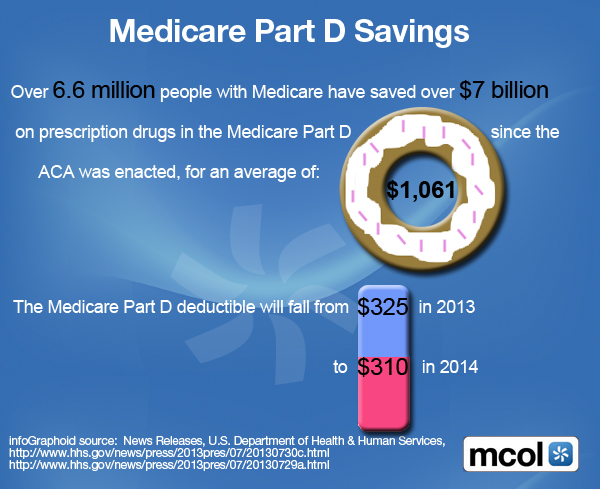
On Medicare Part D Savings?

Join Our Mailing List

An infographic

By www.MCOL.com

###

MC-D

###

More

Conclusion

Your thoughts and comments on this ME-P are appreciated. Feel free to review our top-left column, and top-right sidebar materials, links, URLs and related websites, too. Then, subscribe to the ME-P. It is fast, free and secure.

Link: http://feeds.feedburner.com/HealthcareFinancialsthePostForcxos

Speaker: If you need a moderator or speaker for an upcoming event, Dr. David E. Marcinko; MBA – Publisher-in-Chief of the Medical Executive-Post – is available for seminar or speaking engagements. Contact: MarcinkoAdvisors@msn.com

OUR OTHER PRINT BOOKS AND RELATED INFORMATION SOURCES:

DICTIONARIES: http://www.springerpub.com/Search/marcinko
PHYSICIANS: www.MedicalBusinessAdvisors.com
PRACTICES: www.BusinessofMedicalPractice.com
HOSPITALS: http://www.crcpress.com/product/isbn/9781466558731
CLINICS: http://www.crcpress.com/product/isbn/9781439879900
BLOG: www.MedicalExecutivePost.com
FINANCE: Financial Planning for Physicians and Advisors
INSURANCE: Risk Management and Insurance Strategies for Physicians and Advisors

Product DetailsProduct Details

About the ICD-10 Hub

Join Our Mailing List
Free Transition Information and News

[By Staff Reporters]

ICD-10 Hub is a leading source of information about ICD-10 news and events.

Sponsored by the AAPC and Navicure, this website is dedicated to being an essential resource to help practices and HIT vendors understand how this transition will impact the entire industry and how every organization can properly prepare.

loop11

Assessment

So, give em’ a click, and tell us what you think?

http://icd10hub.com/

Conclusion

Your thoughts and comments on this ME-P are appreciated. Feel free to review our top-left column, and top-right sidebar materials, links, URLs and related websites, too. Then, subscribe to the ME-P. It is fast, free and secure.
Link: http://feeds.feedburner.com/HealthcareFinancialsthePostForcxos

Speaker: If you need a moderator or speaker for an upcoming event, Dr. David E. Marcinko; MBA – Publisher-in-Chief of the Medical Executive-Post – is available for seminar or speaking engagements. Contact: MarcinkoAdvisors@msn.com

OUR OTHER PRINT BOOKS AND RELATED INFORMATION SOURCES:
Health Dictionary Series: http://www.springerpub.com/Search/marcinko
Practice Management: http://www.springerpub.com/product/9780826105752
Physician Financial Planning: http://www.jbpub.com/catalog/0763745790
Medical Risk Management: http://www.jbpub.com/catalog/9780763733421
Hospitals: http://www.crcpress.com/product/isbn/9781439879900
Physician Advisors: http://www.CertifiedMedicalPlanner.org

Product DetailsProduct Details

Doctors as Private Financiers?

Join Our Mailing List

Doctors Acting as Lenders, White-Knights and Venture Capitalists

By Rick Kahler CFP® http://www.KahlerFinancial.com

Rick Kahler CFP

Every now and then I get a call from a doctor client wanting my opinion about starting a business with a friend, investing money in a business owned by a family member, or co-signing a loan to help a family member buy a business. Being in business with family is something I know a little bit about, having been in partnership with my father and brother for 40 years. Going into business with family members or close friends can carry a high degree of risk, both financially and emotionally.

In part this is because it is uncomfortable or difficult to ask the necessary dollars-and-cents questions. We don’t want to seem uncaring, unsupportive, or untrusting. We are concerned about damaging the relationship. Yet the relationship is far more likely to suffer if we don’t ask those questions and the venture fails.

My Rules

The following are some things to consider before you invest or go into business with someone close to you:

1. Don’t even consider putting money into a business without seeing a detailed business plan. Ask the same questions about risks, costs, and potential profits that you would ask if this person were not a family member.

2. Insist that the person at least talk to other possible investors who aren’t emotionally involved. This will give both of you some feedback from neutral third parties about the validity of the opportunity. A banker or a potential investor who isn’t a family member will ask questions you may not even think of asking.

3. Do your own research and seek out some independent advice. A financial advisor or someone with a lot of business experience can be a valuable source of questions, information, and alternatives.

4. Ask yourself whether you want to be involved in this business. Does it support your own goals? Do you know anything about this field or have any interest in it? Sometimes people invest on behalf of family members because they feel they “should.” Yet, had those same proposals come from acquaintances or business colleagues, they would almost certainly have said no without a second thought.

5. Try to think of other ways you might be supportive without putting money into the venture. Maybe you can think of lower-risk alternatives or other possible sources of funding. Remember, too, that if your wish is to support and encourage family members, helping them jump into an unacceptably risky investment isn’t exactly doing them any favors.

6. Pay close attention to any difficult feeling you are experiencing when considering investing in this enterprise. Explore any feelings like fear, anxiety, or sadness to determine if there is further wisdom to be gleaned. Perhaps you may be unconsciously ignoring some crucial warning signs.

7. Communicate clearly. Emphasize from the beginning that protecting the relationship is your most important consideration. If you decide not to get involved, be direct about it. Saying no right away is more respectful than is stringing the person along because you don’t want to hurt someone’s feelings. Yes, choosing not to invest in a family member’s project may cause some tension in the relationship. That’s minor compared to the damage the relationship could incur if you invest and the business fails.

###

Achievement

Assessment

Sometimes, the best way for a successful doctor to support a family member’s financial well-being is to turn down an investment request. If outside parties are not willing to commit funds to a project, maybe there’s a message there that both of you need to hear. If you wouldn’t make an investment on its own merits, you almost certainly shouldn’t make it just because it involves a friend or family member.

Conclusion

Your thoughts and comments on this ME-P are appreciated. Feel free to review our top-left column, and top-right sidebar materials, links, URLs and related websites, too. Then, subscribe to the ME-P. It is fast, free and secure.

Link: http://feeds.feedburner.com/HealthcareFinancialsthePostForcxos

Speaker: If you need a moderator or speaker for an upcoming event, Dr. David E. Marcinko; MBA – Publisher-in-Chief of the Medical Executive-Post – is available for seminar or speaking engagements. Contact: MarcinkoAdvisors@msn.com

OUR OTHER PRINT BOOKS AND RELATED INFORMATION SOURCES:

Health Dictionary Series: http://www.springerpub.com/Search/marcinko

Practice Management: http://www.springerpub.com/product/9780826105752

Physician Financial Planning: http://www.jbpub.com/catalog/0763745790

Medical Risk Management: http://www.jbpub.com/catalog/9780763733421

Hospitals: http://www.crcpress.com/product/isbn/9781439879900

Physician Advisors: www.CertifiedMedicalPlanner.org

Product Details  Product Details

Will Healthcare Reform Impact a Spine Surgeon’s Retirement Plan?

Certified Medical Planner

Q&A With Dr. Brian Knabe of Savant Capital Management

Brian J. Knabe MDBy Ann Miller RN MHA

Brian Knabe MD CFP® CMP® is a former medical physician turned financial advisor at Savant Capital Management, a fee-only wealth management firm.

Here, he discusses the smartest moves for spine surgeons at various stages in their careers to ensure an enjoyable retirement.

###

retirement

LINK: Will Healthcare Reform Impact a Spine Surgeon’s Retirement Plan? Q&A With Dr. Brian Knabe of Savant Capital Management

More

Conclusion

Your thoughts and comments on this ME-P are appreciated. Feel free to review our top-left column, and top-right sidebar materials, links, URLs and related websites, too. Then, subscribe to the ME-P. It is fast, free and secure.

Link: http://feeds.feedburner.com/HealthcareFinancialsthePostForcxos

Speaker: If you need a moderator or speaker for an upcoming event, Dr. David E. Marcinko; MBA – Publisher-in-Chief of the Medical Executive-Post – is available for seminar or speaking engagements. Contact: MarcinkoAdvisors@msn.com

OUR OTHER PRINT BOOKS AND RELATED INFORMATION SOURCES:

DICTIONARIES: http://www.springerpub.com/Search/marcinko
PHYSICIANS: www.MedicalBusinessAdvisors.com
PRACTICES: www.BusinessofMedicalPractice.com
HOSPITALS: http://www.crcpress.com/product/isbn/9781466558731
CLINICS: http://www.crcpress.com/product/isbn/9781439879900
BLOG: www.MedicalExecutivePost.com
FINANCE: Financial Planning for Physicians and Advisors
INSURANCE: Risk Management and Insurance Strategies for Physicians and Advisors

Product Details  Product Details

Product DetailsProduct Details