Physician V. Doctor V. Provider V. Prescriber V. Medical Others

HEALTHCARE DEFINITIONS

By Staff Reporters

SPONSOR: http://www.CertifiedMedicalPlanner.org

***

***

When you visit health clinic or hospital for a medical appointment, you’ll be seen by a doctor, healthcare provider and/or medical prescriber. But what do these words really mean?

***

***

Doctors / Physicians

Doctor of Medicine (MD), Doctor of Podiatric Medicine (DPM), Doctor of Osteopathy (DO, or Doctor of Dental Surgery (DDS/DMD). Doctors, also known as physicians, have extensive prescription privileges across various specialties. They can diagnose medical conditions, prescribe medication, and oversee the overall management of patient care. Doctors include general practitioners, specialists such as cardiologists or dermatologists, and surgeons. Their prescription authority encompasses a wide range of medications to address acute and chronic health conditions, ranging from antibiotics to specialized treatments for complex diseases.

MORE: https://medicalexecutivepost.com/2023/06/17/the-md-versus-do-degree/

***

***

Medical Providers

A medical provider is a general term that encompasses a wide range of education levels, skill-sets, and specializations. A provider could be a Physician Assistant (PA), Nurse Practitioner (NP), Clinical Nurse Specialist (CNS), Doctor of Medicine (MD), Doctor of Podiatric Medicine (DPM), Dentist (DDSDMD) or Doctor of Osteopathy (DO).

***

Medical Drug Prescribers

Generally, psychologists and therapists do not have prescription privileges. They focus on psychotherapy and counseling rather than medication management. However, some jurisdictions may grant limited prescription rights to psychologists who undergo additional training and certification. Like psychologists, therapists typically do not have prescription privileges. They focus on providing counseling and psychotherapy to address mental health issues and emotional concerns.

PHARMACISTS: https://medicalexecutivepost.com/2025/02/12/pharmd-doctor-of-pharmacy/

Psychiatrists are medical doctors (MD/DO) who specialize in the diagnosis and treatment of mental health disorders. They have full prescription privileges and can prescribe a wide range of medications to manage psychiatric conditions.

In most cases, physical therapists do not have the authority to prescribe medication. They primarily focus on rehabilitation and physical interventions to improve mobility and function.

MORE: https://medicalexecutivepost.com/2025/02/23/doctorate-physical-therapy/

Nurse practitioners are advanced practice nurses with the authority to diagnose, treat, and prescribe medication independently in many states and countries. They undergo extensive education and training, which allows them to provide a wide range of healthcare services, including medication management.

Similar to nurse practitioners, psychiatric nurse practitioners have the authority to prescribe medication for mental health conditions. They specialize in psychiatric and mental health care, offering comprehensive treatment that may include medication management.

Chiropractors primarily focus on diagnosing and treating musculoskeletal disorders through manual adjustments and therapies. They do not have surgical or prescription privileges in most jurisdictions.

Optometrists are trained to diagnose and treat vision problems, including prescribing corrective lenses and medications for certain eye conditions such as infections or inflammation.

Registered nurses typically do not have prescription privileges. They work under the direction of physicians and nurse practitioners, assisting with patient care but not prescribing medication themselves.

Dentists have limited prescription privileges related to dental care, such as antibiotics or pain medications for dental procedures. However, they do not have the authority to prescribe general medications outside of their scope of practice.

Nutritionists typically do not have prescription privileges. They specialize in providing dietary advice and counseling to promote health and well-being through nutrition but do not prescribe medication.

Depending on their scope of practice and legal regulations in their jurisdiction, nurse midwives may have limited prescription privileges for certain medications related to prenatal care, childbirth, and postpartum care.

MORE: http://www.HealthDictionarySeries.org

COMMENTS APPRECIATED

Like and Refer

***

***

DAILY UPDATE: Mike Burry MD, Private Equity in Health Systems, Drug Shortages, United Health Stock Sale and the Change Healthcare Hack as the Stock Markets Re-Collapse!

MEDICAL EXECUTIVE-POST TODAY’S NEWSLETTER BRIEFING

***

Essays, Opinions and Curated News in Health Economics, Investing, Business, Management and Financial Planning for Physician Entrepreneurs and their Savvy Advisors and Consultants

Serving Almost One Million Doctors, Financial Advisors and Medical Management Consultants Daily

A Partner of the Institute of Medical Business Advisors , Inc.

http://www.MedicalBusinessAdvisors.com

SPONSORED BY: Marcinko & Associates, Inc.

***

http://www.MarcinkoAssociates.com

Daily Update Provided By Staff Reporters Since 2007.
How May We Serve You?
© Copyright Institute of Medical Business Advisors, Inc. All rights reserved. 20224

REFER A COLLEAGUE: MarcinkoAdvisors@msn.com

SPONSORSHIPS AVAILABLE: https://medicalexecutivepost.com/sponsors/

ADVERTISE ON THE ME-P: https://tinyurl.com/ytb5955z

***

  • Medical colleague and our financial planning for physicians textbook contributor Michael Burry MD predicted a second inflation surge, and price growth re-accelerated in March,. 2024.
  • The “Big Short” investor first warned of inflation in April 2020, over two years before it peaked.
  • Burry expected a recession, rate cuts, and stimulus spending to reignite inflation.

CITE: https://www.r2library.com/Resource

A growing number of drugs are in short supply around the U.S., according to pharmacists. 

In the first three months of the year, there were 323 active medication shortages, surpassing the previous high of 320 shortages in 2014, according to a survey by the American Society of Health-System Pharmacists (ASHP) and Utah Drug Information Service. It also amounts to the most shortages since the trade group started keeping track in 2001. “All drug classes are vulnerable to shortages. Some of the most worrying shortages involve generic sterile injectable medications, including cancer chemotherapy drugs and emergency medications stored in hospital crash carts and procedural areas,” ASHP said in a statement

CITE: https://tinyurl.com/2h47urt5

Scheduling an appointment with a primary care doctor who belongs to a large health system might cause an increase in health care spending, according to a recent study. Such physicians tend to make more referrals to specialists, and emergency room visits and hospitalizations sometimes increase, according to the research out of Harvard T.H. Chan School of Public Health.

In short, physicians who work for health care systems like hospitals are more likely to recommend that patients use other services within those systems, compared with independent physicians. For the study — which was published in JAMA Health Forum, a journal of the American Medical Association — researchers analyzed the experiences of more than 4 million patients in Massachusetts.

CITE: https://tinyurl.com/tj8smmes

UnitedHealth Chairman Stephen Hemsley and other executives sold $102 million in company stock months before a federal antitrust probe became public, Bloomberg reported.

***

Small physician practices are still struggling in the wake of February’s Change Healthcare cyberattack, according to an American Medical Association (AMA) survey released Wednesday.

More than half of ~1,400 respondents (55%) reported that they’ve had to use personal funds to cover their practice’s expenses due to the cyberattack’s effects on cash flow. Practices across the country have been unable to fill prescriptions or process insurance claims as Change Healthcare systems went offline, Healthcare Brew previously reported. About two-thirds of respondents said they’ve experienced restrictions to core functions, such as suspending claim payments (36%), not being able to submit claims (32%), and not being able to obtain electronic remittance advice (39%), according to the survey.

CITE: https://tinyurl.com/2h47urt5

Here’s where the major benchmarks ended:

  • The S&P 500 index fell 75.65 points (1.5%) to 5,123.41, down 1.6% for the week; the Dow Jones Industrial Averagelost 475.84 points (1.2%) to 37,983.24, down 2.4% for the week; the NASDAQ Composite® ($COMP) dropped 267.10 points (1.6%) to 16,175.09, down 0.5% for the week.
  • The 10-year Treasury note yield (TNX) fell more than 5 basis points to 4.52%, still up about 12 basis points for the week.
  • The CBOE Volatility Index® (VIX) rose 2.38 to 17.30.

Semiconductor shares were also among the weakest performers Friday as chip makers reversed Thursday’s sharp gains. The Philadelphia Semiconductor Index (SOX) dropped more than 3% and ended with its third straight weekly decline. Energy companies were also under pressure after crude oil prices retreated from the morning rally. Oil futures are still up 20% this year. The small-cap Russell 2000® Index (RUT) lost 1.9% and posted a 2.9% drop for the week.

In other markets, the U.S. dollar index (DXY) strengthened to a five-month high and gained 1.7% this week, reflecting beliefs the hotter-than-expected inflation readings earlier this week will keep interest rates elevated. Volatility based on the VIX jumped to its highest level since late October.

COMMENTS APPRECIATED

PLEASE SUBSCRIBE: MarcinkoAdvisors@msns.com

Thank You

***

***

***

***

EDUCATIONAL TEXTBOOKS: https://tinyurl.com/4zdxuuwf

***

WALGREENS: Pharmacists Walk-Off Job

By Staff Reporters

***

***

Pharmacy employees at Walgreens across the country walked off the job yesterday, citing harsh working conditions created by undersized staff that leave them unable to safely fill prescriptions while meeting the demands of a busy vaccine season. The three-day walkout was organized entirely via social media, as the group lacks a centralized labor union like the WGA and UAW.

CITE: https://www.r2library.com/Resource

COMMENTS APPRECIATED

Thank You

***

***

PHARMACISTS: Stage CVS Health Walk-Out?

By Staff Reporters

***

***

Nearly two dozen pharmacists at the nation’s largest retail pharmacy chain staged a walkout in the Kansas City metro area this week over working conditions they say put CVS Health pharmacists and patients at risk. 

***

The walkout began Thursday and continued into Friday. Organizers said they had shuttered numerous pharmacies across the metro area, which covers a portion of eastern Kansas and western Missouri. Some pharmacies outside the metro area also have joined. They estimated at least 22 locations had closed.

CITE: https://www.r2library.com/Resource

While the group’s specific complaints focus on store staffing and quotas, the walkout reflects a rising outcry from pharmacists at several national pharmacy chains. They say their work requirements leave them unable to safely fill and verify prescriptions, putting patients at risk of serious harm or even death.

***

COMMENTS APPRECIATED

Thank You

***

***

PHARMACISTS: Retail Burnout Shortage?

By Staff Reporters

***

***

DEFINITION: Retail pharmacist work in a retail setting rather than in a hospital. They are responsible for dispensing and controlling both prescription and non-prescription medicine, advising customers on general healthcare and must work to high legal and ethical guidelines.

CITE: https://www.r2library.com/Resource/Title/082610254

Today, retail pharmacies across the board are struggling to hire and retain enough pharmacists and pharmacy technicians to keep up with the increased pandemic-related demand for vaccinations and prescriptions. On top of that, pharmacist burnout has prompted companies like Walgreens to reduce the workloads of their employees.

The stakes are high. A decline in pharmacy school enrollees and a seemingly tight job market for those graduates makes it hard to replace departing staff.

“One of the challenges in healthcare in general is that it has been a difficult couple of years for those working in this industry. And pharmacy isn’t immune to that,” said Nate Shenck, a managing director and senior partner at Boston Consulting Group.

To tackle the worker shortage, Walgreens announced it would invest $265 million in its pharmacy staff in FY 2023. Those funds are earmarked for raises, additional training and career development opportunities, and larger scholarships for pharmacy students, Erin Loverher, a spokesperson at Walgreens, said via email.

MORE: https://www.msn.com/en-us/money/companies/pharmacies-are-cutting-hours-and-closing-stores-what-it-means-for-customers/ar-AA15iBOC?cvid=bfc3491382f64937b71476a89016ae5b

PS: Some retailers, such as CVS and Kroger, are limiting the sale of children’s pain relievers. Demand for pediatric pain meds has spiked due to the “tripledemic” of respiratory illnesses spreading right now.

***

ORDER: https://www.amazon.com/Dictionary-Health-Insurance-Managed-Care/dp/0826149944/ref=sr_1_4?ie=UTF8&s=books&qid=1275315485&sr=1-4

***

COMMENTS APPRECIATED

Thank You

***

PHARMACISTS PODCAST: Job Effectiveness?

By Staff Reporters

****

54% of Pharmacists Lack Time to Complete Their Job Effectively

According to the “2022 Medication Access Report“:

 •  54% of pharmacists said they lack time to complete their job effectively.
 •  Of the 54%, 81% cited inadequate staffing and 73% cited time-consuming administrative tasks.
 •  Physicians felt strained by unprecedented demands, with 42% reporting burnout and 69% feeling depressed.

Source: CoverMyMeds via PR Newswire, February 8, 2022

***

***

COMMENTS APPRECIATED

Thank You

Subscribe to the Medical Executive_Post

***

***

***

PHARMACISTS: Leaving this Public Health Workforce

By NIHCM Foundation

This infographic takes a close look at the pharmacist workforce and its role in the COVID-19 response.

Pharmacists are trusted and accessible, with 90% of Americans living within five miles of a pharmacy. They are well-positioned to address vaccine hesitancy and ensure equitable COVID-19 vaccine distribution and access. Leveraging and supporting pharmacists could help address public health priorities both during and after the corona virus pandemic.

Hello Psychologist Career Counselling Centre - 9369160546 ...

LINK: https://nihcm.org/publications/pharmacist-infographic

OPIOID CRISIS RISING: https://medicalexecutivepost.com/2019/08/22/the-opioid-crisis-rising-2000-2017/

OPIOID CRISIS COSTS: https://medicalexecutivepost.com/2019/10/20/the-opioid-epidemic-cost-distribution/

OPIOID CRISIS PODCAST: https://freemanbeyondthewall.libsyn.com/episode-169-the-opioid-crisis

Your thoughts are appreciated.

THANK YOU

***

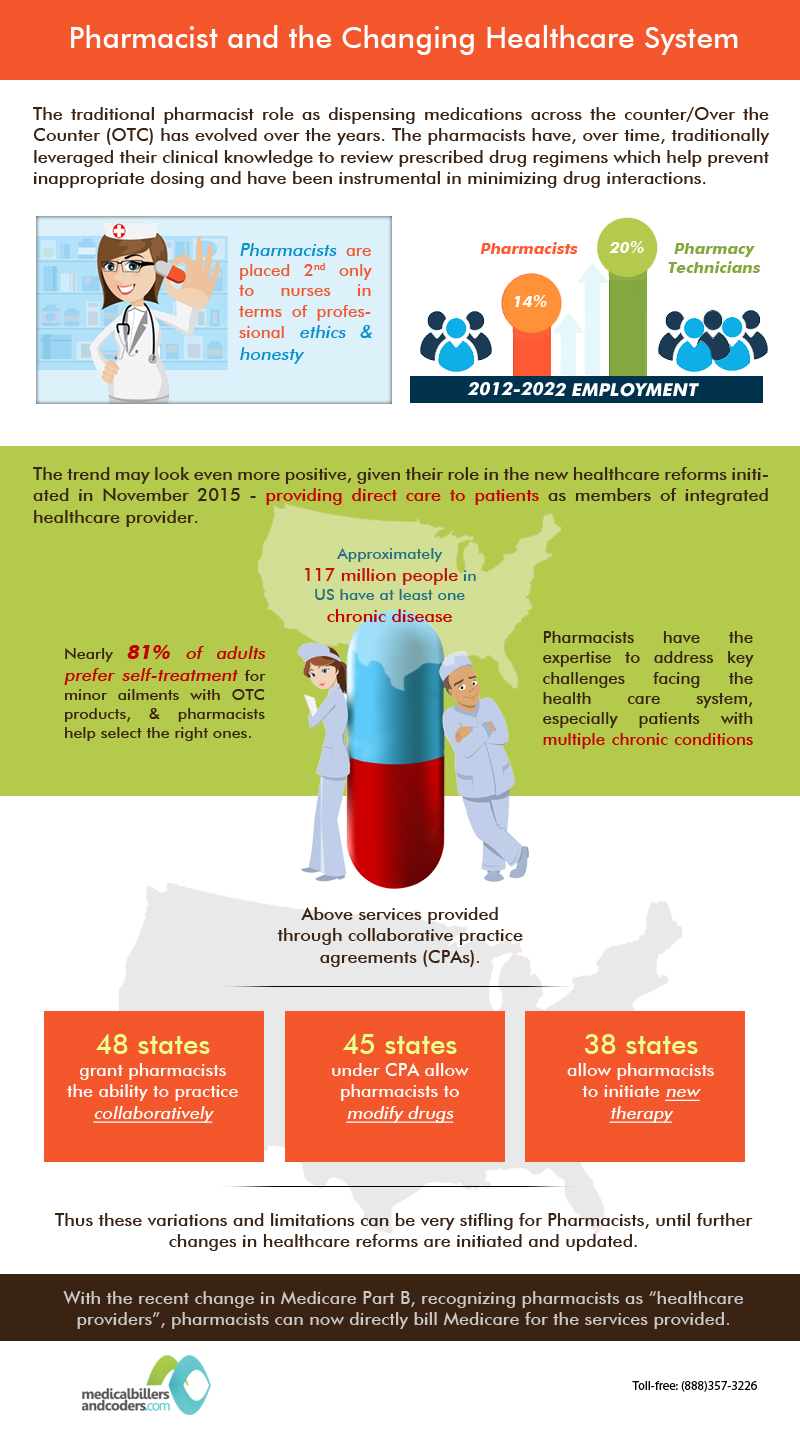
Pharmacists in the Healthcare System

Join Our Mailing List 

Changing Roles

By http://www.MCOL.com

***

ImageProxy

***

Conclusion

Your thoughts and comments on this ME-P are appreciated. Feel free to review our top-left column, and top-right sidebar materials, links, URLs and related websites, too. Then, subscribe to the ME-P. It is fast, free and secure.

Speaker: If you need a moderator or speaker for an upcoming event, Dr. David E. Marcinko; MBA – Publisher-in-Chief of the Medical Executive-Post – is available for seminar or speaking engagements. Contact: MarcinkoAdvisors@msn.com

OUR OTHER PRINT BOOKS AND RELATED INFORMATION SOURCES:

Product DetailsProduct DetailsProduct Details

***

On Hospital CPOE Systems [Part Two]

Join Our Mailing List

Computerized Physician Order Entry Systems

By Brent Metfessel; MD, MIS

A significant initial cost outlay for an organization-wide CPOE system is necessary, which for a large hospital may run into the tens of millions of dollars.  Understandably, the majority of the hospitals that have installed a CPOE system are large urban hospitals.  The up-front cost outlay may be prohibitive for smaller or rural hospitals unless there is an increase in outside revenue or third-party subsidies.

However, although it may take a few years before a positive ROI becomes manifest, there can be a significant financial return from such systems.

www.CPOE.org

Potential Benefits

The potential benefits of a CPOE system go beyond quality. Significant decreases in resource utilization can occur. In one study, inpatient costs were 12% lower and average Length of Stay (LOS) was 0.89 day shorter for patients residing on general medicine wards that used a CPOE system with decision support. Rather simple decision support tools can reap cost benefits as well. When a computerized antibiotic advisor was integrated with the ordering process, one institution realized a reduction in costs per patient ($26,325 vs. $35,283) and average LOS (10.0 days vs. 12.9 days), with all differences statistically significant.

Studies have shown that CPOE systems can significantly reduce medication error rates, including rates of serious errors.

For example, one large east coast hospital saw a 55% reduction in serious adverse medication errors after the system was installed. However, on occasion errors can actually be introduced due to the computing process; in particular, errors can be introduced if the provider accidentally selects the wrong medication from the list or drop-down menu.

Accordingly, a CPOE system should not be viewed as a replacement for the pharmacist in terms of checking for medication errors. In addition, proper user interface design such as highlighting every other line on the medication screen for better visibility and having the provider give a final check to the orders before sending are some ways of reducing this kind of error. Overall, error rates from incorrect order entry on the computer are much smaller than other medication errors prior to introduction of the system.

Appropriate use of a CPOE system helps prevent errors and quality of care deficiencies due to problems with the initiation of orders.  However, errors can also occur in the execution of orders, particularly with the administration of medications to patients.  Bar coding of medications, discussed previously, is a simple way to close the loop in medication error prevention as well as further increase the efficiency of workflow.

Despite its advantages, a CPOE system has been implemented on an organization-wide basis in only about 45% of all US hospitals and growth in implementations has been relatively slow, although about 67% plan to add a CPOE system in the next few years.  Implementing a CPOE system is not an easy task, and there is a significant risk of failure.  Most hospitals utilize vendors for implementation rather than attempting to develop the system in-house given the difficulty of hiring full-time IT talent that specializes in CPOE systems.

One critical feature of any CPOE system is to obtain physician buy-in to the technology, since they will be doing most of the ordering.  Actually, unless the system is of the highest sophistication, physicians may claim it takes more time to write orders using a CPOE system than using the paper chart, as there may be a number of drop-down menus to negotiate prior to arriving at the appropriate drug.  Real-time retrieval of information and electronic documentation, provision of on-line alerts, and the ability to use standard order sets (prepackaged sets of orders pertaining to a particular clinical condition or time period in an episode of care), when relevant, can make the net time spent on writing orders similar to using paper charts.

Doctor Acceptance

It is also important, for physician acceptance, to not overwhelm them with on-line alerts.  Clearly, the system needs to point out the more serious errors, but if the physician’s process is frequently interrupted by alerts, they may increasingly resist the system.

For example, medication allergy alerts may warn physicians not only of potential problems with medications that have an exact match to the allergen, but also, as a defensive maneuver (“better safe than sorry”), to other medications that have a related molecular structure,, even though the patient may already be taking such medication and tolerating it well.  Furthermore, allergies to medications that may result in life-threatening anaphylactic shock may not be distinguished from “sensitivities” that consist of side effects that are not true allergies and are usually much less serious.

Thus, the potential exists for frequent alert generation that would interrupt the work flow and require time spent to override the alerts, making the system difficult to use and leading to user resistance.  One suggested solution is to have a hierarchy of importance, with alerts for potentially life-threatening situations being allowed to interrupt the work flow and requiring specific override or acknowledgment, and alerts for less serious problems being “noninterruptive,” allowing easy visibility of the alert without requiring stoppage of the work flow.

Product DetailsProduct DetailsProduct Details

CPOE Pitfalls

Other pitfalls with respect to CPOE systems include the following:

  • crowded menus making it easy to select the wrong patient or wrong drug with the mouse;
  • fragmented information necessitating navigation through numerous screens to find the relevant information;
  • computer downtime (scheduled or unscheduled); and
  • location of terminals in busy places, which can lead to distractions and resulting incomplete or incorrect entries.

Intelligent, well-thought-out system designs can serve to mitigate many of these problems.  It is important that such difficulties appear on the systems designers’ “radar screen” and are explicitly considered in the implementation.

Pharmacists

As for pharmacists, a CPOE system will not take them out of the process. Although a CPOE system has the capability to capture many drug errors and remove the need for manual order entry, there will always be a need for pharmacists to not only give a second look at possible errors, but to take a more active role in patient care, including going on ward rounds for complex cases, defining optimal treatment, and giving consultative advice.

www.MedicalBusinessAdvisors.com

Assessment

A CPOE system has the potential to give physicians ready access to patient data anywhere in the hospital as well as at home or on the road, especially with Internet-based connections. This is significant given the difficulty in obtaining patient charts for mobile providers.

In today’s environment of high expectations for care quality and pay-for-performance initiatives, enhanced quality of care can translate into financial gain. Although there is a significant up-front allocation of funds for CPOE systems, given present trends the time may arrive where there is no longer a choice but to implement such a system.

Conclusion

Your thoughts and comments on this ME-P are appreciated. Feel free to review our top-left column, and top-right sidebar materials, links, URLs and related websites, too. Then, subscribe to the ME-P. It is fast, free and secure.

Link: http://feeds.feedburner.com/HealthcareFinancialsthePostForcxos

Speaker: If you need a moderator or speaker for an upcoming event, Dr. David E. Marcinko; MBA – Publisher-in-Chief of the Medical Executive-Post – is available for seminar or speaking engagements. Contact: MarcinkoAdvisors@msn.com

OUR OTHER PRINT BOOKS AND RELATED INFORMATION SOURCES:

DICTIONARIES: http://www.springerpub.com/Search/marcinko
PHYSICIANS: www.MedicalBusinessAdvisors.com
PRACTICES: www.BusinessofMedicalPractice.com
HOSPITALS: http://www.crcpress.com/product/isbn/9781466558731
CLINICS: http://www.crcpress.com/product/isbn/9781439879900
BLOG: www.MedicalExecutivePost.com
FINANCE: Financial Planning for Physicians and Advisors
INSURANCE: Risk Management and Insurance Strategies for Physicians and Advisors

Product Details

How You Can Investigate Your State’s Oversight of Its Nurses

Reporting Recipe

By Charles Ornstein and Tracy Weber, ProPublica – March 3, 2010 5:38 pm EDT

cropped-me-p-mast-head-nurses.jpg

Nursing boards – and other agencies that oversee such professionals as pharmacists, dentists and mortgage brokers – do not get nearly enough scrutiny. These boards are charged with protecting consumers from unscrupulous or incompetent professionals, but some provide almost no public information about what they do or how they’re run. They are sometimes led by ill-qualified political appointees and lack sufficient personnel. But should these boring bureaucracies fail, the implications for your health, finances, and home can be dire.

Assessment

We realize that many newsrooms face competing priorities and limited resources, so we’re making our reporting recipe public.

Visit our special site with our complete how-to investigation guide [1], with information on all 50 states.

Conclusion

And so, your thoughts and comments on this ME-P are appreciated.

Get our Widget: Get this widget!

Our Other Print Books and Related Information Sources:

Practice Management: http://www.springerpub.com/prod.aspx?prod_id=23759

Physician Financial Planning: http://www.jbpub.com/catalog/0763745790

Medical Risk Management: http://www.jbpub.com/catalog/9780763733421

Healthcare Organizations: www.HealthcareFinancials.com

Health Administration Terms: www.HealthDictionarySeries.com

Physician Advisors: www.CertifiedMedicalPlanner.com

Subscribe Now: Did you like this Medical Executive-Post, or find it helpful, interesting and informative? Want to get the latest ME-Ps delivered to your email box each morning? Just subscribe using the link below. You can unsubscribe at any time. Security is assured.

Link: http://feeds.feedburner.com/HealthcareFinancialsthePostForcxos

Sponsors Welcomed

And, credible sponsors and like-minded advertisers are always welcomed.

Link: https://healthcarefinancials.wordpress.com/2007/11/11/advertise