AGREE: Consistency and Group-Think Commitment Tendency

“lemming effect” or “group-think”

By Staff Reporters

***
***

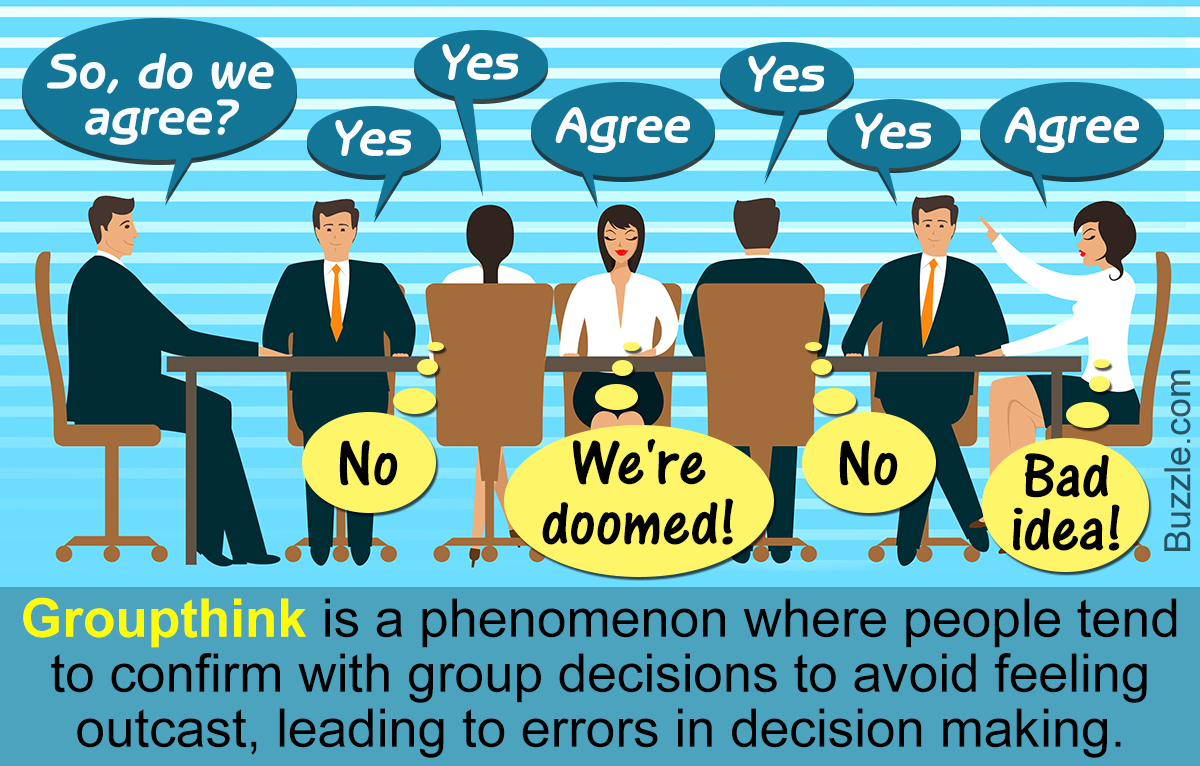
According to psychologist and colleague Dan Ariely PhD, human beings have evolved – probably both genetically and socially – to be consistent.  It is easier and safer to deal with others if they honor their commitments and if they behave in a consistent and predictable manner over time. This allows people to work together and build trust that is needed for repeat dealings and to accomplish complex tasks. 

In the jungle, this trust was necessary to for humans to successfully work as a team to catch animals for dinner, or fight common threats.  In business and life it is preferable to work with others who exhibit these tendencies.  Unfortunately, the downside of these traits is that people make errors in judgment because of the strong desire not to change, or be different (“lemming effect” or “group-think”).  So the result is that most people will seek out data that supports a prior stated belief or decision and ignore negative data, by not “thinking outside the box”. 

Additionally, future decisions will be unduly influenced by the desire to appear consistent with prior decisions, thus decreasing the ability to be rational and objective.  The more people state their beliefs or decisions, the less likely they are to change even in the face of strong evidence that they should do so.  This bias results in a strong force in most people causing them to avoid or quickly resolve the cognitive dissonance that occurs when a person who thinks of themselves as being consistent and committed to prior statements and actions encounters evidence that indicates that prior actions may have been a mistake.  It is particularly important therefore for advisors to be aware that their communications with clients and the press clouds the advisor’s ability to seek out and process information that may prove current beliefs incorrect. 

Since this is obviously irrational, one must actively seek out negative information, and be very careful about what is said and written, being aware that the more you shout it out, the more you pound it in.

COMMENTS APPRECIATED

Subscribe Today!

***

***

MOTIVATION: “Rose Colored” Reasoning

By Staff Reporters

***

***

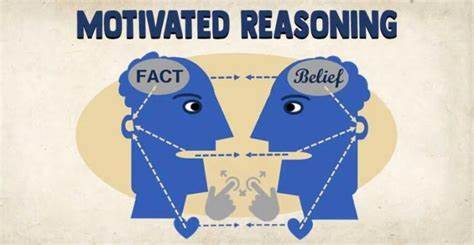
Motivated Reasoning is the tendency to process information in a way that aligns with your desires and preconceptions. It’s like having rose-colored glasses for your beliefs.

Motivated reasoning (motivational reasoning bias) is a cognitive and social response in which we, consciously or sub-consciously, allow emotion-loaded motivational biases to affect how new information is perceived. Individuals tend to favor evidence that coincides with their current beliefs and reject new information that contradicts them, despite contrary evidence.

According to Wikipedia, motivated reasoning can be classified into two categories: 1) Accuracy-oriented (non-directional), in which the motive is to arrive at an accurate conclusion, irrespective of the individual’s beliefs, and 2) Goal-oriented (directional), in which the motive is to arrive at a particular conclusion.

Furthermore, colleague Dan Ariely PhD suggests that when we encounter any new information, we twist and turn it to fit our existing views. This mental gymnastics helps us avoid cognitive dissonance but can also lead us astray.

So, next time you’re defending your viewpoint, ask yourself: am I seeing this clearly, or is it motivated reasoning at play?

COMMENTS APPRECIATED

Subscribe Today!

***

***

BERTRANDS: Paradox in Probability Theory with Video

WHAT IS RANDOM?

By Staff Reporters

***

***

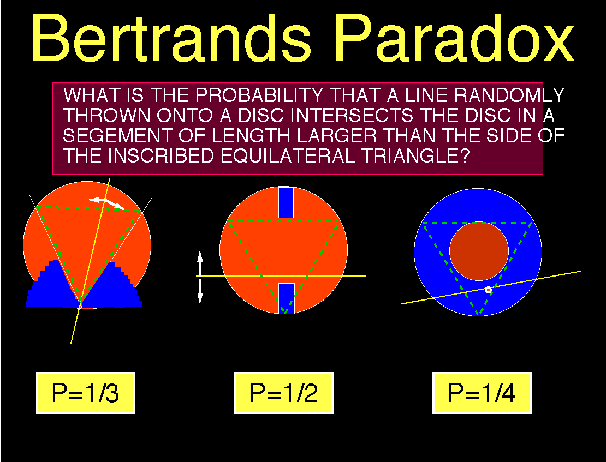
Bertrand’s Paradox is a problem within probability theory first suggested by the French Mathematician Joseph Bertrand (1822–1900) in his 1889 work ‘Calcul des Probabilites’. It sets a physical problem that seems very simple but leads to differing probabilities unless its procedure is more clearly defined.

Based on constructing a random chord in a circle, Bertrand’s paradox involves a single mathematical problem with three reasonable but different solutions. It’s less a paradox and more a cautionary tale. It’s really asking the question: What exactly do you mean by random?

IOW: According to Dan Ariely PhD, two players reaching a state of Nash equilibrium both find themselves with no profits gained via exploitation.

Consequently, over the years the Bertrand paradox has inspired debate, with papers arguing what the true solution is: www.bertrands-paradox.com.

Update: The people from Numberphile and 3Blue1Brown produced a video on YouTube describing and explaining the Bertrand paradox.

COMMENTS APPRECIATED

Subscribe and Like
***

***

COMPETITION Paradox

By Staff Reporters

***

***

Definition of the Paradox of Competition

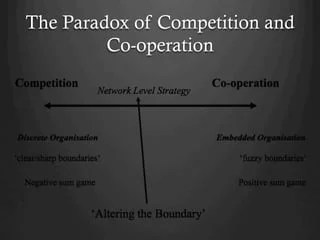
The Paradox of Competition refers to the complex and often counterintuitive effects competitive behaviors can have within markets and industries. Generally, competition is seen as a positive force that drives innovation, lowers prices, and improves quality and choice for consumers. However, the paradox lies in the fact that intense competition can sometimes lead to negative outcomes, such as diminished profitability for companies, reduced incentives to innovate, and the potential for a race to the bottom in terms of quality and sustainability.

According to colleague Dan Ariely PhD, understanding the nuances of the Paradox of Competition reveals the complexity of market dynamics and the importance of strategic, informed approaches to competition, both from businesses and regulators.

This paradox challenges the conventional wisdom that competition is universally beneficial, highlighting the need for a more nuanced view of how competitive forces shape markets and societies.

COMMENTS APPRECIATED

Refer, Like and Subscribe

***

***

PARADOXICAL: Persuasion

By Staff Reporters

***

***

QUESTION: Ever tried convincing someone by arguing against your own point?

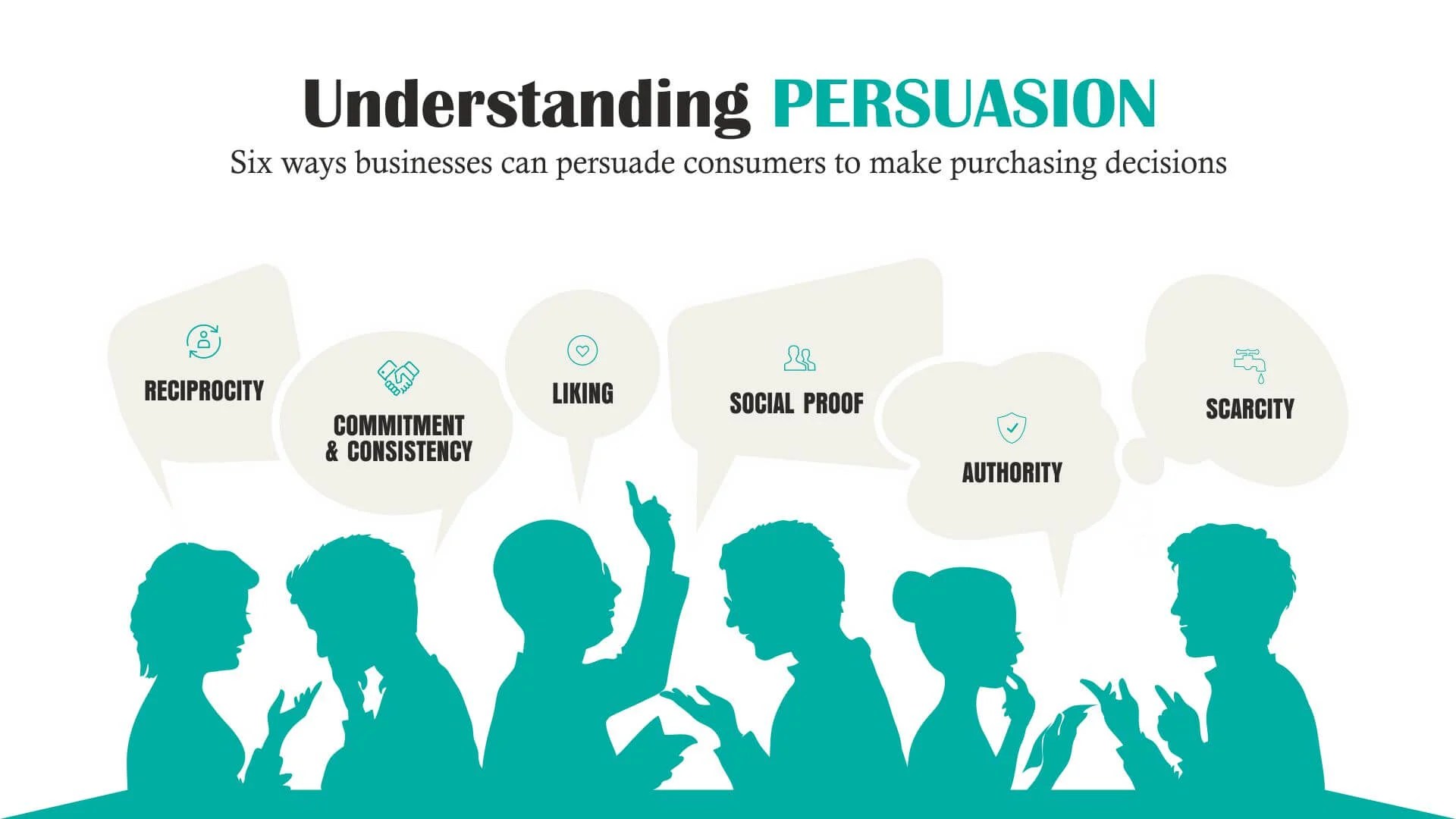
If so, that’s paradoxical persuasion. It’s like reverse psychology’s sophisticated cousin. By presenting the opposite argument, you make people defend your original point. It’s a mental judo move, using their own momentum against them. Next time you want someone to agree with you, try saying, “You’re right, maybe we shouldn’t get pizza.”

So, according to Dan Ariely PhD, watch as they passionately argue why pizza is, in fact, the best choice for dinner.

COMMENTS APPRECIATED

Subscribe Today!

***

***

HABITUATION: Repetitive Stimuli

By Staff Reporters

***

***

Habituation is your brain’s way of tuning out repetitive stimuli. It’s like background noise – after a while, you stop noticing it. This mental autopilot helps us focus on new and important information, but it can also make us overlook the familiar. It’s why you might not notice a smell in your house that’s obvious to a visitor.

To combat habituation, according to colleague Dan Ariely PhD, try changing up your routine and environment. Fresh experiences keep your brain engaged and alert.


COMMENTS APPRECIATED

Subscribe and Refer

***

***

BACKFIRE: Mind Effect

By Staff Reporters

SPONSOR: http://www.MarcinkoAssociates.com

***

***

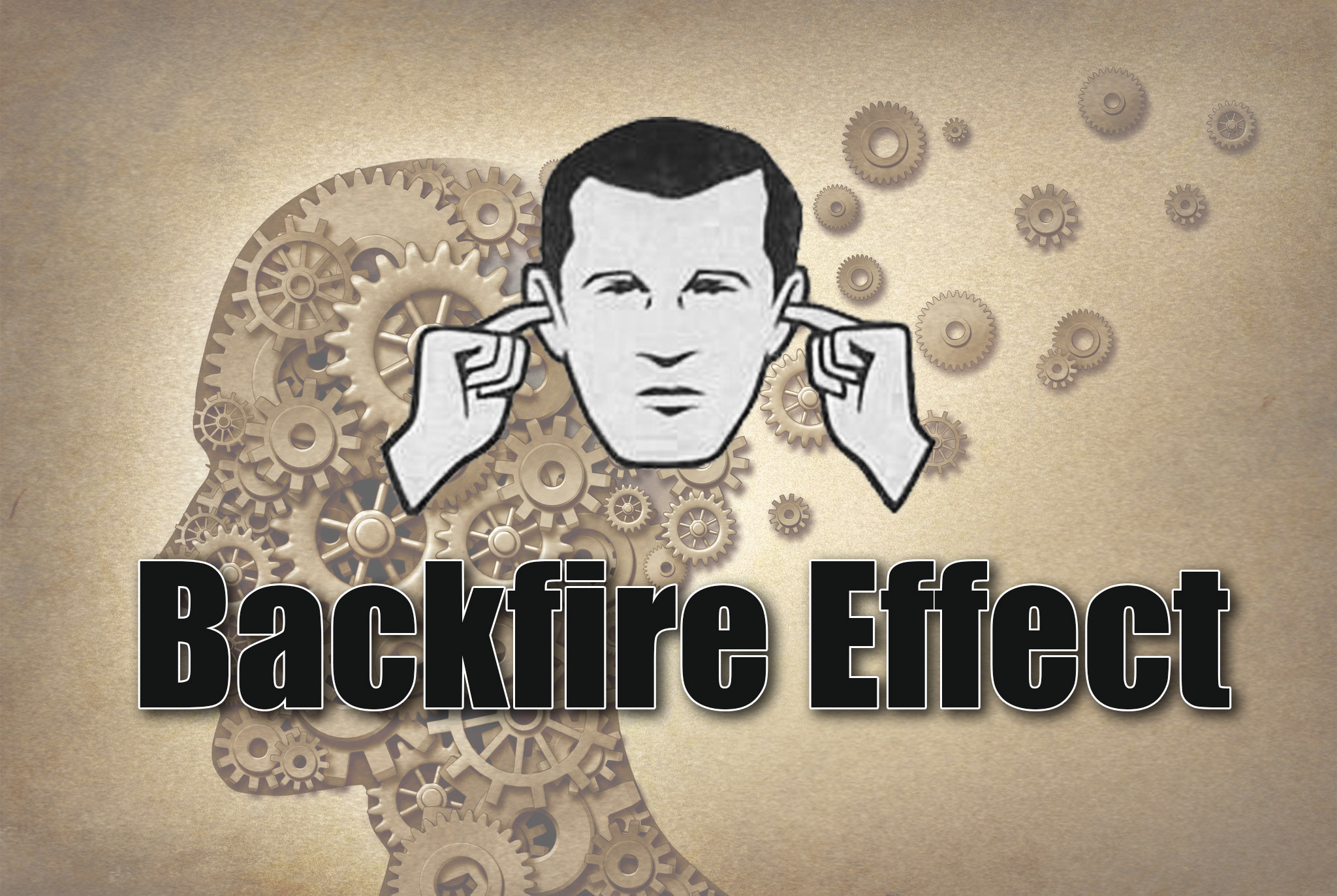
The Backfire Effect refers to the strengthening of a belief even after it has been challenged.

Cook and Lewandowsky (2011) explain it very well in the context of changing people’s minds in their Debunking Handbook. The backfire effect may work based on the same foundation as Declinism, in that we do not like change. It is also similar to negativity bias, in that we wish to avoid losing and other negative outcomes—in this case, one’s idea is being challenged or rejected (i.e. perceived as being made out to be “wrong”) and thus, they may hold on tighter to the idea than they had before.

However, according to colleague Dan Ariely PhD, there are caveats to the backfire effect—for example, we also tend to abandon a belief if there’s enough evidence against it with regard to specific facts.

***

COMMENTS APPRECIATED

Subscribe and Refer

***

WITNESS Stress Issues

By Staff Reporters

DEFINED

***

***

Witness Stress is caused by witnessing a traumatic event and can lead to memory issues and confusion, affecting how accurately we remember details. This stress makes eyewitness testimonies more prone to error.

According to colleague Dan Ariily PhD, it highlights the role of stress in memory distortion and why additional support is often necessary for witnesses.

COMMENTS APPRECIATED

Subscribe and Refer Today!

***

***

CHOICE: Overload Paradox

By Dr. David Edward Marcinko MBA MEd CMP

SPONSOR: http://www.MarcinkoAssociates.com

***

***

Choice Overload is the difficulty in making a decision when faced with too many options. It’s like standing in front of an ice cream counter with 31 flavors and feeling paralyzed.

Among personal decision-makers, a prevention focus is activated and people are more satisfied with their choices after choosing among few options compared to many options, i.e. choice overload. However, individuals can also experience a reverse choice overload effect when acting as proxy decision-maker, too.

It is widely accepted that having more choices is inherently positive. When there are more available options from which to choose, an individual is more likely to be able to select the particular option that is the best fit and most likely to satisfy them. Choice is typically thought to be related to personal freedom and enhanced well-being.

Therefore, according to colleague Neal Baum MD, for most individuals the ultimate goal is to constantly maximize their choices in life to increase their overall satisfaction and well-being. The decision-making process, however, is a complex cognitive task that does not always lead to positive outcomes.

Thus, while having options is generally good, too many choices can lead to anxiety and decision fatigue. This is why curated selections and recommendations are so popular – they simplify the decision-making process’ according to another colleague Dan Ariely PhD.

So, when you’re overwhelmed by choices, narrow them down to a manageable number and make your decision easier.

COMMENTS APPRECIATED

Please Subscribe!

***

***

ATTENTION: Direct and Misdirected

By Staff Reporters

***

***

Humans use cognitive information to Direct Attention to relevant objects (targets) in a visual scene. Information such as the target’s color or location is represented as a ‘perceptual set’. Similarly, advance information about the required response to a target is represented as a ‘motor set’.

***

MisDirected Attention however is like polishing the brass on the Titanic while ignoring the iceberg. Our brains love details, sometimes too much. We focus on the minutiae and miss what’s really important. This is why you might spend more time choosing a font than writing the actual content.

For example, have you ever spent hours perfecting the details of a project only to miss the big picture? That’s misdirected attention, according to Dan Ariely PhD.

Always remember, it’s easy to get lost in the weeds. Keep an eyes on the horizon.

COMMENTS APPRECIATED

Subscribe Today!

***

***

COCKTAIL: Party Effect

By Staff Reporters

***

***

The cocktail party effect is the ability of the human hearing and auditory system to focus one’s listening attention on a particular speaker in a noisy environment, such as a crowded party. This allows people to focus on a specific conversation while filtering out other nearby conversations and background noise.

Consider that you’re at a crowded party, noise everywhere, but you hear your name mentioned across the room. How? Welcome to the Cocktail Party Effect.

Your brain is like a highly trained butler, filtering out the background chatter to catch something personally relevant. It’s not just your name, either; it could be juicy gossip or a mention of free pizza or an exciting new stock tip you’ve been considering; or even an IPO.

So, according to psychologist colleague Dan Ariely PhD, this selective attention keeps us sane in a noisy world, helping us focus on the things that matter – like whether that person just said “free drinks” or “freeloading, or “free-stock trading.”

COMMENTS APPRECIATED

Please Subscribe!

Thank You

***

***

CHARITY LURE: Identifiable Victim Effect

IDENTIFIABLE PERPETRATOR EFFECT

By Staff Reporters

***

***

According to colleague Dan Ariely PhD, the The Identifiable Victim Effect [IVE] is why we’re more moved by one person’s story than by statistics. It’s easier to empathize with a single, identifiable victim than with a faceless group. Charities know this and often highlight individual stories to tug at our heartstrings. It’s a powerful reminder that our compassion is wired for personal connections.

The identifiable victim effect has two components. People are more inclined to help an identified victim than an unidentified one, and people are more inclined to help a single identified victim than a group of identified victims. Although helping an identified victim may be commendable, the identifiable victim effect is considered a cognitive bias. From a consequential point of view, the cognitive error is the failure to offer N times as much help to N unidentified victims.

The identifiable victim effect has a mirror image that is sometimes called the identifiable perpetrator effect. Research has shown that individuals are more inclined to mete out punishment, even at their own expense, when they are punishing a specific, identified perpetrator.

So, when you hear a touching story that makes you want to help, remember: it’s your brain responding to the power of a single, human face.

COMMENTS APPRECIATED

Thank You

***

***

AVOIDANT BEHAVIOR: Disease and Illness

COMMON SENSE PUBLIC AND POPULATION HEALTH

By Staff Reporters

***

***

According to colleague Dan Ariely PhD, Disease Avoidant Behavior are the actions we take to avoid illness, often driven by instinctive or learned responses. It’s why we wash our hands obsessively during flu season, wear a balaclava mask and/or avoid people who are sneezing or coughing.

Note: A balaclava is a form of cloth headgear designed to expose only part of the face, usually the eyes and mouth. Depending on style and how it is worn, only the eyes, mouth and nose, or just the front of the face are unprotected. Versions with enough of a full face opening may be rolled into a hat to cover the crown of the head or folded down as a collar around the neck.

This behavior is rooted in our evolutionary survival instincts, helping us steer clear of contagious health threats like RSV, COVID and the winter flu. While it’s usually a good thing, excessive disease avoidant behavior can lead to anxiety and social isolation.

So, balance caution with common sense and public/population health directives to stay healthy and sane.

COMMENTS APPRECIATED

Thank You

***

***

Publications Related to Behavioral Finance, Economics and Money

Join Our Mailing List

Interesting Articles by Dan Ariely PhD

NOTE: Dan is the Irrational Economist: He blogs at: http://danariely.com/

By Staff Reporters

LIST:

Conclusion

Your thoughts and comments on this ME-P are appreciated. Feel free to review our top-left column, and top-right sidebar materials, links, URLs and related websites, too. Then, subscribe to the ME-P. It is fast, free and secure.

Link: http://feeds.feedburner.com/HealthcareFinancialsthePostForcxos

Speaker: If you need a moderator or speaker for an upcoming event, Dr. David E. Marcinko; MBA – Publisher-in-Chief of the Medical Executive-Post – is available for seminar or speaking engagements. Contact: MarcinkoAdvisors@msn.com

OUR OTHER PRINT BOOKS AND RELATED INFORMATION SOURCES:

DICTIONARIES: http://www.springerpub.com/Search/marcinko
PHYSICIANS: www.MedicalBusinessAdvisors.com
PRACTICES: www.BusinessofMedicalPractice.com
HOSPITALS: http://www.crcpress.com/product/isbn/9781466558731
CLINICS: http://www.crcpress.com/product/isbn/9781439879900
BLOG: www.MedicalExecutivePost.com
FINANCE: Financial Planning for Physicians and Advisors
INSURANCE: Risk Management and Insurance Strategies for Physicians and Advisors

Product Details

Social-Norms versus Market-Norms in Healthcare Reimbursement

Rogue Thoughts on Toppling the Current Payment System

By Dr. David Edward Marcinko MBA, CMP™

[ME-P Editor-in-Chief]

Recently, I reviewed a copy of “Predictably Irrational” by fellow blogger Dan Ariely, PhD. Dan is the James B. Duke Professor of Behavioral Economics at Duke University and a founding member of the Center for Advanced Hindsight.

In the book, he examines some of the positive effects that irrationality has in our lives and offers a new look on how irrational decisions might influence our personal lives and our workplace experiences. I found the chapter on social-norms v. market-norms particularly interesting and wondered about its’ applicability to healthcare economics and reimbursement.

Example:

Dan sites the example of various fund raising charitable goods that had been set at market prices [the norm in this country – little retail negotiating takes place in the USA], but that he recently chose to experiment and make them donation-based instead. 

The Difference

What a difference it made! He cites the case of one woman who bought a cupcake and reached for a dollar bill when asked about the price.  When told there was no set price, but donations-only were accepted, she put the one bill back in her wallet and pulled out a ten-spot. 

References and Research

Assessment

So, please allow me to use this trivial example and suggest a limited switch experiment to social-norms – instead of market-norms in some cases of healthcare reimbursement – perhaps starting with non-surgical, non-specialty, primary care providers [GPs, internists, FPs, DNPs, podiatrists, etc], or any “willing provider” for that matter. What do you think would happen?

Conclusion

And so, your thoughts and comments on this ME-P are appreciated. Is this idea too far out – or thought provoking enough for further consideration? Feel free to review our top-left column, and top-right sidebar materials, links, URLs and related websites, too. Then, subscribe to the ME-P. It is fast, free and secure.

Speaker: If you need a moderator or speaker for an upcoming event, Dr. David E. Marcinko; MBA – Publisher-in-Chief of the Medical Executive-Post – is available for seminar or speaking engagements. Contact: MarcinkoAdvisors@msn.com and http://www.springerpub.com/Search/marcinko

Get our Widget: Get this widget!

Our Other Print Books and Related Information Sources:

Health Dictionary Series: http://www.springerpub.com/Search/marcinko

Practice Management: http://www.springerpub.com/product/9780826105752

Physician Financial Planning: http://www.jbpub.com/catalog/0763745790

Medical Risk Management: http://www.jbpub.com/catalog/9780763733421

Healthcare Organizations: www.HealthcareFinancials.com

Physician Advisors: www.CertifiedMedicalPlanner.com

Subscribe Now: Did you like this Medical Executive-Post, or find it helpful, interesting and informative? Want to get the latest ME-Ps delivered to your email box each morning? Just subscribe using the link below. You can unsubscribe at any time. Security is assured.

Link: http://feeds.feedburner.com/HealthcareFinancialsthePostForcxos

Sponsors Welcomed: And, credible sponsors and like-minded advertisers are always welcomed.

Link: https://healthcarefinancials.wordpress.com/2007/11/11/advertise

Product DetailsProduct DetailsProduct Details       

Product Details  Product Details

   Product Details