BOARD CERTIFICATION EXAM STUDY GUIDES Lower Extremity Trauma
[Click on Image to Enlarge]
ME-P Free Advertising Consultation
The “Medical Executive-Post” is about connecting doctors, health care executives and modern consulting advisors. It’s about free-enterprise, business, practice, policy, personal financial planning and wealth building capitalism. We have an attitude that’s independent, outspoken, intelligent and so Next-Gen; often edgy, usually controversial. And, our consultants “got fly”, just like U. Read it! Write it! Post it! “Medical Executive-Post”. Call or email us for your FREE advertising and sales consultation TODAY [678.779.8597] E-mail: MarcinkoAdvisors1738@outlook.com
Medical & Surgical e-Consent Forms
ePodiatryConsentForms.com
iMBA Inc., OFFICES
Suite #5901 Wilbanks Drive, Norcross, Georgia, 30092 USA [1.678.779.8597]. Our location is real and we are now virtually enabled to assist new long distance clients and out-of-town colleagues.
ME-P Publishing
SEEKING INDUSTRY INFO PARTNERS?
If you want the opportunity to work with leading health care industry insiders, innovators and watchers, the “ME-P” may be right for you? We are unbiased and operate at the nexus of theoretical and applied R&D. Collaborate with us and you’ll put your brand in front of a smart & tightly focused demographic; one at the forefront of our emerging healthcare free marketplace of informed and professional “movers and shakers.” Our Ad Rate Card is available upon request [678-779-8597].
Posted on February 22, 2022 by Dr. David Edward Marcinko MBA MEd CMP™
Virtual Currency – Real Taxation
By Staff Reporters
What you need to report to the IRS
The IRS treats virtual currencies as property, which means they’re taxed similarly to stocks. If all you did was purchase cryptocurrency with U.S. dollars, and those assets have been sitting untouched in an exchange or your cryptocurrency wallet, you shouldn’t need to worry about reporting to the IRS.
***
Reporting is required when certain events come into play, most commonly:
Trading one cryptocurrency for another.
Selling cryptocurrency for fiat dollars (government-issued currency).
Using cryptocurrency to buy goods or services (e.g., paying for a cup of coffee with cryptocurrency).
A critical distinction to make is that triggering a taxable event doesn’t necessarily mean you’ll owe taxes, said Andrew Gordon, an Illinois-based certified public accountant and tax attorney. Just because you have to report a transaction doesn’t mean you’ll end up owing the IRS for it.
Posted on January 25, 2022 by Dr. David Edward Marcinko MBA MEd CMP™
FOR PHYSICIANS AND ALL OF US!
Br. Dr. David E. Marcinko MBA
By Staff Reporters
***
It’s been announced that January 24th 2022 is the official start of the tax filing season. This means it’s that time of year again to buy some pricey tax software and prepare your return on your own, hire a tax prep pro, CPA, or take advantage of the Free File Program from the IRS.
A Capital Gain [CG] occurs when you sell something for more than you spent to acquire it. This happens with investments, but it also applies to personal property, such as a car. Every physician and taxpayer should understand these basic facts about capital gains taxes.
Capital gains aren’t just for doctors or rich people
Anyone who sells a capital asset should know that capital gains tax may apply. And as the Internal Revenue Service points out, just about everything you own qualifies as a capital asset. That’s the case whether you bought it as an investment, such as stocks or property, or for personal use, such as a car or a big-screen TV.
If you sell something for more than your “basis” in the item, then the difference is a capital gain, and you’ll need to report that gain on your taxes. Your basis is usually what you paid for the item. It includes not only the price of the item, but any other costs you had to pay to acquire it, including:
Sales taxes, excise taxes and other taxes and fees
Shipping and handling costs
Installation and setup charges
In addition, money spent on improvements that increase the value of the asset—such as a new addition to a building—can be added to your basis. Depreciation of an asset can reduce your basis.
In most cases, your home is exempt
The single biggest asset many people have is their home, and depending on the real estate market, a homeowner might realize a huge capital gain on a sale. The good news is that the tax code allows you to exclude some or all of such a gain from capital gains tax, as long as you meet three conditions:
You owned the home for a total of at least two years in the five-year period before the sale.
You used the home as your primary residence for a total of at least two years in that same five-year period.
You haven’t excluded the gain from another home sale in the two-year period before the sale.
If you meet these conditions, you can exclude up to $250,000 of your gain if you’re single, $500,000 if you’re married filing jointly.
Length of ownership matters
If you sell an asset after owning it for more than a year, any gain you have is a “long-term” capital gain. If you sell an asset you’ve owned for a year or less, though, it’s a “short-term” capital gain. How much your gain is taxed depends on how long you owned the asset before selling.
The tax bite from short-term gains is significantly larger than that from long-term gains – typically 10-20% higher.
This difference in tax treatment is one of the advantages a “buy-and-hold” investment strategy has over a strategy that involves frequent buying and selling, as in day trading.
People in the lowest tax brackets usually don’t have to pay any tax on long-term capital gains. The difference between short and long term, then, can literally be the difference between taxes and no taxes.
Capital losses can offset capital gains
As anyone with much investment experience can tell you, things don’t always go up in value. They go down, too. If you sell something for less than its basis, you have a capital loss. Capital losses from investments—but not from the sale of personal property—can be used to offset capital gains.
If you have $50,000 in long-term gains from the sale of one stock, but $20,000 in long-term losses from the sale of another, then you may only be taxed on $30,000 worth of long-term capital gains.
$50,000 – $20,000 = $30,000 long-term capital gains
If capital losses exceed capital gains, you may be able to use the loss to offset up to $3,000 of other income. If you have more than $3,000 in excess capital losses, the amount over $3,000 can be carried forward to future years to offset capital gains or income in those years.
Business income isn’t a capital gain
If you operate a business that buys and sells items, your gains from such sales will be considered—and taxed as—business income rather than capital gains.
For example, many people buy items at antique stores and garage sales and then resell them in online auctions. Do this in a businesslike manner and with the intention of making a profit, and the IRS will view it as a business.
The money you pay out for items is a business expense.
The money you receive is business revenue.
The difference between them is business income, subject to employment taxes.
Whether you have stock, bonds, ETFs, cryptocurrency, rental property income or other investments, this info is vital to increase your tax knowledge and understanding all while doing your taxes.
Posted on January 9, 2022 by Dr. David Edward Marcinko MBA MEd CMP™
Understanding Risks and Benefits
By Timothy J. McIntosh CFP® MPH CFA CMP®
Medical professionals might not know rupees from ringgits, but any investor should consider the benefits of currency investing. Buying currencies allow for a hedge against the U.S. dollar and also permit for an investor to take advantage of major movements of foreign currencies for profit.
Today, it is easier than ever to invest in currencies through mutual funds or exchange traded funds. U.S. investors are impacted by foreign currency fluctuations through international stock and bond exposure.
Advantages
The advantage of investing in currencies is the investment generally has limited correlation with other real or liquid assets. Medical professionals can initiate the process of currency investing by starting a forex account. In many instances, an account can be opened with minimal investment.
Taxation
One caveat is the tax consequences, as currency-based profits are taxed as ordinary income rather than the more favorable capital gains rate.
The commercial use of Bitcoin, illicit or otherwise, is currently diminutive compared to its use by speculators, which has led to extreme price volatility. Companies and merchants have an enticement to recognize the currency because transaction fees are lower than the 2 to 3% classically imposed by the major credit card companies like Visa®.
Assessment
Given the fact that Bitcoin is a new currency with extreme volatility, medical professionals should be very cautious with any potential investment.
Your thoughts and comments on this ME-P are appreciated. Feel free to review our top-left column, and top-right sidebar materials, links, URLs and related websites, too. Then, subscribe to the ME-P. It is fast, free and secure.
Speaker: If you need a moderator or speaker for an upcoming event, Dr. David E. Marcinko; MBA – Publisher-in-Chief of the Medical Executive-Post – is available for seminar or speaking engagements. Contact: MarcinkoAdvisors@msn.com
OUR OTHER PRINT BOOKS AND RELATED INFORMATION SOURCES:
Posted on January 9, 2022 by Dr. David Edward Marcinko MBA MEd CMP™
***
By Staff Reporters
According to Wikipedia, a cryptocurrency, crypto-currency, or crypto is a collection of binary data which is designed to work as a medium of exchange. Individual coin ownership records are stored in a ledger, which is a computerized database using strong cryptography to secure transaction records, to control the creation of additional coins, and to verify the transfer of coin ownership. Cryptocurrencies are generally fiat currencies, as they are not backed by or convertible into a commodity. Some crypto schemes use validators to maintain the cryptocurrency. In a proof-of-stake model, owners put up their tokens as collateral. In return, they get authority over the token in proportion to the amount they stake. Generally, these token stakers get additional ownership in the token over time via network fees, newly minted tokens or other such reward mechanisms.
Cryptocurrency does not exist in physical form (like paper money) and is typically not issued by a central authority. Cryptocurrencies typically use decentralized control as opposed to a central bank digital currency (CBDC). When a cryptocurrency is minted or created prior to issuance or issued by a single issuer, it is generally considered centralized. When implemented with decentralized control, each cryptocurrency works through distributed ledger technology, typically a blockchain, that serves as a public financial transaction database.
A cryptocurrency is a tradable digital asset or digital form of money, built on blockchain technology that only exists online. Cryptocurrencies use encryption to authenticate and protect transactions, hence their name. There are currently over a thousand different cryptocurrencies in the world, and many see them as the key to a fairer future economy.
Bitcoin, first released as open-source software in 2009, is the first decentralized cryptocurrency. Since the release of bitcoin, many other cryptocurrencies have been created.
***
***
Enter GAS
Gas refers to the unit that measures the amount of computational effort required to execute specific operations on the cryptocurrency Ethereum network. Since each Ethereum transaction requires computational resources to execute, each transaction requires a fee. Gas refers to the fee required to conduct a transaction on Ethereum successfully.
Gas fees are paid in Ethereum’s native currency, ether (ETH). Gas prices are denoted in gwei, which itself is a denomination of ETH – each gwei is equal to 0.000000001 ETH (10-9 ETH).
For example: Instead of saying that your gas costs 0.000000001 ether, you can say your gas costs 1 gwei. The word ‘gwei’ itself means ‘giga-wei’, and it is equal to 1,000,000,000 wei. Wei itself (named after Wei Dai, creator of b-money) is the smallest unit of ETH
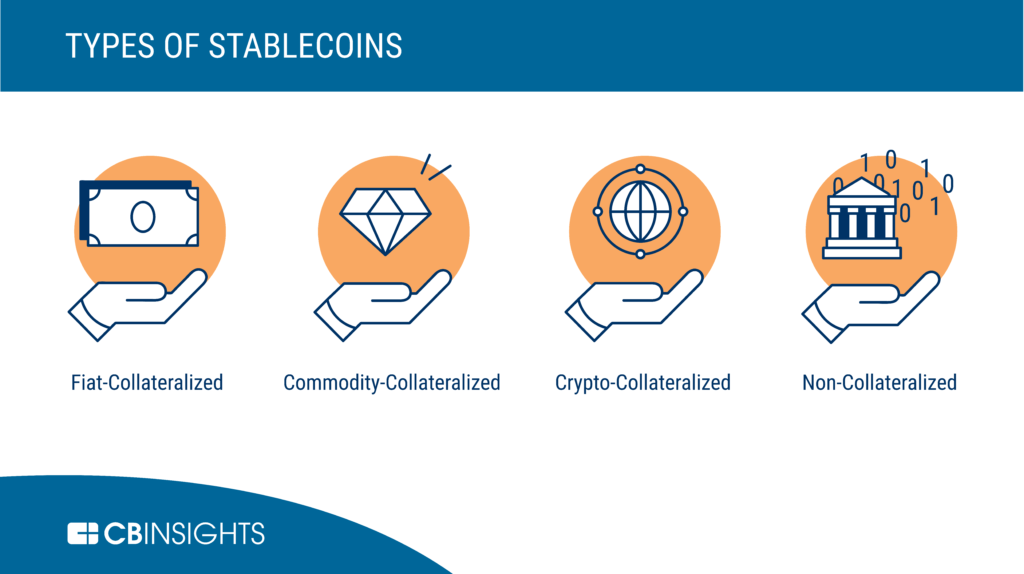
DEFINITION: Stablecoins are blockchain-based digital currencies that have been created with the aim to have a stable value. Stablecoins achieve price-stability through various different methods such as a peg against a fiat currency or a commodity, through collateralization against other cryptocurrencies or through algorithmic coin supply management.
Every stable coin includes a specific set of mechanisms that mostly behave in the same way. In general, stable coins keep collateral of the asset and manage the supply. In this way, they incentivize the market, which allows trade of the coin for no more or less than $1.
A stable coin can be considered the best depending on several factors: It should be stable. PAX is one the most stable stablecoin. It should be liquid and available on most exchanges. It should be backed by FIAT. PAX is 100% collateralized in US bank accounts. It should be regulated. It should be redeemable.
A decentralized autonomous organization (DAO), sometimes called a decentralized autonomous corporation (DAC), is an organization represented by rules encoded as a computer program that is transparent, controlled by the organization members and not influenced by a central government. A DAO’s financial transaction record and program rules are maintained on a blockchain. The precise legal status of this type of business organization is unclear.
A well-known example, intended for venture capital funding, was The DAO, which launched with $150 million in crowdfunding in June 2016, and was nearly immediately hacked and drained of US$50 million in cryptocurrency. The hack was reversed in the following weeks, and the money restored, via a hard fork of the Ethereum blockchain: the Ethereum miners and clients switched to the new fork.
Posted on December 7, 2017 by Dr. David Edward Marcinko MBA MEd CMP™
Bitcoin – The Digital Generation’s Gold Surrogate
By Vitaliy Katsenelson CFA
I’ve been asked about Bitcoin a lot lately. I’ haven’t written anything about it because I find myself in an uncomfortable place in agreeing with the mainstream media: It’s a bubble.
Bitcoin started out as what I’d call “millennial gold” – the young (digital) generation looked at it as their gold substitute.
Your thoughts and comments on this ME-P are appreciated. Feel free to review our top-left column, and top-right sidebar materials, links, URLs and related websites, too. Then, subscribe to the ME-P. It is fast, free and secure.
Speaker: If you need a moderator or speaker for an upcoming event, Dr. David E. Marcinko; MBA – Publisher-in-Chief of the Medical Executive-Post – is available for seminar or speaking engagements.
Subscribe: MEDICAL EXECUTIVE POST for curated news, essays, opinions and analysis from the public health, economics, finance, marketing, IT, business and policy management ecosystem.
Posted on September 10, 2017 by Dr. David Edward Marcinko MBA MEd CMP™
In a Balanced Portfolio?
By Rick Kahler CFP®
A reader recently sent me the following email: “As you know, there are ‘market experts’ pitching bitcoins as an ‘investment’. Has a Huge YTD gain. I’d bet a lot of your readers would like to know if a bitcoin position has a place in a balanced financial portfolio.”
I always appreciate hearing from readers, especially when they challenge me with topics I would normally not have considered. Bitcoins are not something to which I’ve paid serious attention.
How they Work
First, let me explain that a Bitcoin is a type of digital currency which is traded person to person. It is not backed by a government or considered legal tender. While Bitcoin is one of the earliest and most widely known digital currency systems, it is not the only one that is available. These are sometimes called “altcoin,” “virtual currency,” or crypto-currency.”
Unlike government-created currencies where a central bank controls the creation of the currency, Bitcoins are uncontrolled or tracked by any government. This allows people to send or receive money across borders freely, with none of the restrictions, tracking, or caps that are normally placed on transactions by governments.
A digital money system has an inherent problem common to all money systems. How do you keep the currency, especially one that is entirely digital, from being counterfeited? What stops someone from creating Bitcoins or selling the same Bitcoin multiple times?
The solution is a type of open source, public ledger that tracks every Bitcoin transaction from the beginning of Bitcoin time. It makes it virtually impossible to cheat. The creation of new Bitcoins is controlled via a process called mining. Only a limited number of new Bitcoins are allowed into the system annually, similar to how the precious metal supply gradually expands annually based on the mining of new metal.
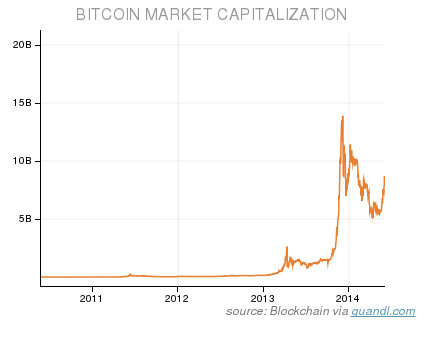
The market in trading Bitcoins is probably as “free” as a currency market can get. The price of Bitcoins is based on supply and demand. Since Bitcoin was only created in 2009, it has less than a decade of performance to evaluate, but throughout its short history the price has fluctuated wildly. For example, it reached $31 in July of 2011, then dropped back to $2 by that December. In November of 2013 it hit a high of $1,242. The following month, the price dropped to $600, rebounded, crashed, and eventually stabilized to a range of $650 to $800.
The reader who asked me about Bitcoin was certainly right about its impressive 2017 year-to-date performance. On January 1, 2017, a Bitcoin sold for $496.90. As of August 19 it closed at $4,109.10, nearly a ten-fold increase in just eight months.
It also describes some of the risks to evaluate before considering it as an investment. These include the relative novelty and lack of track record of digital currency, the possibilities for hacking and fraud, the uncertainties of future regulation, and the competition of other developing virtual currency systems. It also points out that Bitcoin transactions are similar to dealing with cash. They are “permanent and irreversible,” with “no third party or a payment processor, as in the case of a debit or credit card – hence, no source of protection or appeal if there is a problem.”
Assessment
While I like the libertarian freedom of the idea of a currency uncontrolled by government intervention, I don’t consider owning such a currency an investment. I do consider buying or selling digital currencies like Bitcoin a speculation. Like other speculative investments, these do not belong in any retirement portfolio.
Conclusion
Your thoughts and comments on this ME-P are appreciated. Feel free to review our top-left column, and top-right sidebar materials, links, urls and related websites, too. Then, subscribe to the ME-P. It is fast, free and secure.
Speaker: If you need a moderator or speaker for an upcoming event, Dr. David E. Marcinko; MBA – Publisher-in-Chief of the Medical Executive-Post – is available for seminar or speaking engagements. Contact: MarcinkoAdvisors@msn.com
OUR OTHER PRINT BOOKS AND RELATED INFORMATION SOURCES:







 Support our online development, and advance our onground research initiatives in free market economics, as we seek to showcase the brightest Next-Gen minds.
THE ME-P DISCLAIMER: Posts, comments and opinions do not necessarily represent iMBA, Inc., but become our property after submission. Copyright © 2006 to-date. iMBA, Inc allows colleges, universities, medical and financial professionals and related clinics, hospitals and non-profit healthcare organizations to distribute our proprietary essays, photos, videos, audios and other documents; etc. However, please review copyright and usage information for each individual asset before submission to us, and/or placement on your publication or web site. Attestation references, citations and/or back-links are required. All other assets are property of the individual copyright holder.
Support our online development, and advance our onground research initiatives in free market economics, as we seek to showcase the brightest Next-Gen minds.
THE ME-P DISCLAIMER: Posts, comments and opinions do not necessarily represent iMBA, Inc., but become our property after submission. Copyright © 2006 to-date. iMBA, Inc allows colleges, universities, medical and financial professionals and related clinics, hospitals and non-profit healthcare organizations to distribute our proprietary essays, photos, videos, audios and other documents; etc. However, please review copyright and usage information for each individual asset before submission to us, and/or placement on your publication or web site. Attestation references, citations and/or back-links are required. All other assets are property of the individual copyright holder.









![DR. DAVID EDWARD MARCINKO FACFAS MBA CFP MBBS [Hon] [Executive Summary] - PDF Free Download](https://educationdocbox.com/docs-images/75/71938560/images/8-1.jpg)







 The Leading Business Education Network for Doctors, Financial Advisors and Health Industry Consultants